
QUARTERLY MARKET REPORT
2026 - Q3
QUARTERLY MARKET REPORT
2026 - Q3
Supply Chain & Energy
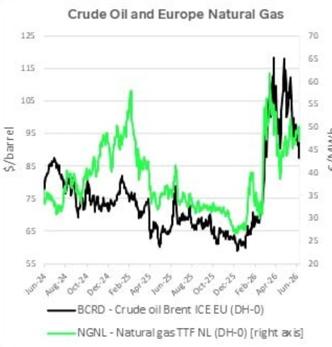
In the third quarter, the market environment is likely to remain marked by uncertainty. Although the ceasefire agreed between the US and Iran has eased tensions in the Middle East for now, there is still no reliable signal of a swift return to normal conditions. In particular, the Strait of Hormuz remains a sensitive factor for oil, LNG, and transport flows.
As a result, volatile energy prices, higher insurance premiums, and only gradually declining freight rates are still to be expected. Even if the extreme swings from the second quarter do not necessarily continue, the risk of delays, longer lead times, and higher logistics costs remains. In addition, the summer and holiday season may further tighten transport capacity in some areas.

QUARTERLY MARKET REPORT
2026 - Q3
Packaging
With the application of the EU Packaging and Packaging Waste Regulation (PPWR) beginning on 12 August 2026, packaging reduction, recyclability, and reusable systems will move even further into focus. For hotels, gastronomy, and related supply chains, this means additional pressure to adapt procurement, disposal, and packaging concepts. Sustainable packaging alternatives such as paper, cardboard, or bio-based materials are likely to remain at a relatively high price level despite the regulatory tailwind, as raw material, energy, and capacity factors continue to drive cost volatility. At the same time, the paper and cardboard market remains well utilized, which suggests little short-term relief in availability or pricing. Overall, Q3 is expected to be shaped by rising sustainability requirements alongside still challenging procurement conditions.

QUARTERLY MARKET REPORT
2026 - Q3
Fruit & Veg
Citrus Fruits
Overseas supply is now becoming increasingly important as the seasonal switch from European to non-European origin is imminent. Against this background, the market is expected to remain firm overall, with continued price volatility in the coming weeks..
Oranges remain under pressure in the market: available volumes are limited, while demand in the European market remains strong. As a result, a firm to slightly rising price level is still expected, especially for good quality and consistent sizing.
Limes remain a dynamic market in Q3/2026. Supply from South America is currently more stable, but strong demand and increased Brazilian volumes are keeping price pressure high. Organic limes in particular continue to benefit from solid premium demand.
Cherries
The cherry season is starting later than usual in several origin countries this year. In Spain and Greece, growers remain broadly confident despite weather-related challenges, especially for later varieties. In Germany as well, cool weather in late April and early May has delayed fruit development, meaning domestic cherries will reach the market later than normal.
At the same time, weather-related losses in early imports from Spain and Turkey have strengthened the position of local produce. For Q3/26, the market is expected to see moderate to slightly declining prices, supported by an above-average German harvest and higher import volumes. In retail, low-priced promotional offers are likely to remain an important factor.
QUARTERLY MARKET REPORT
2026 - Q3
Fruit & Veg
Stone fruit
Peaches and apricots in Southern Europe are showing a clear seasonal price decline, in line with the start of the main harvest and rising supply volumes. In Spain and France, prices have fallen noticeably over the past few weeks, while wide price spreads remain across sizes, quality levels, and marketing structures. Warm weather is supporting sales, but so far it has not fully offset the pressure from larger volumes.
Processed fruit such as prunes and Turkish dried apricots is proving much more stable to firm. Tight inventories and a different supplydemand balance are supporting prices in this segment. Fresh plum prices in Europe are only partially comparable at the moment, as no current June 2026 quotes are available; in the US, prices have also been trending lower recently
Tomatoes
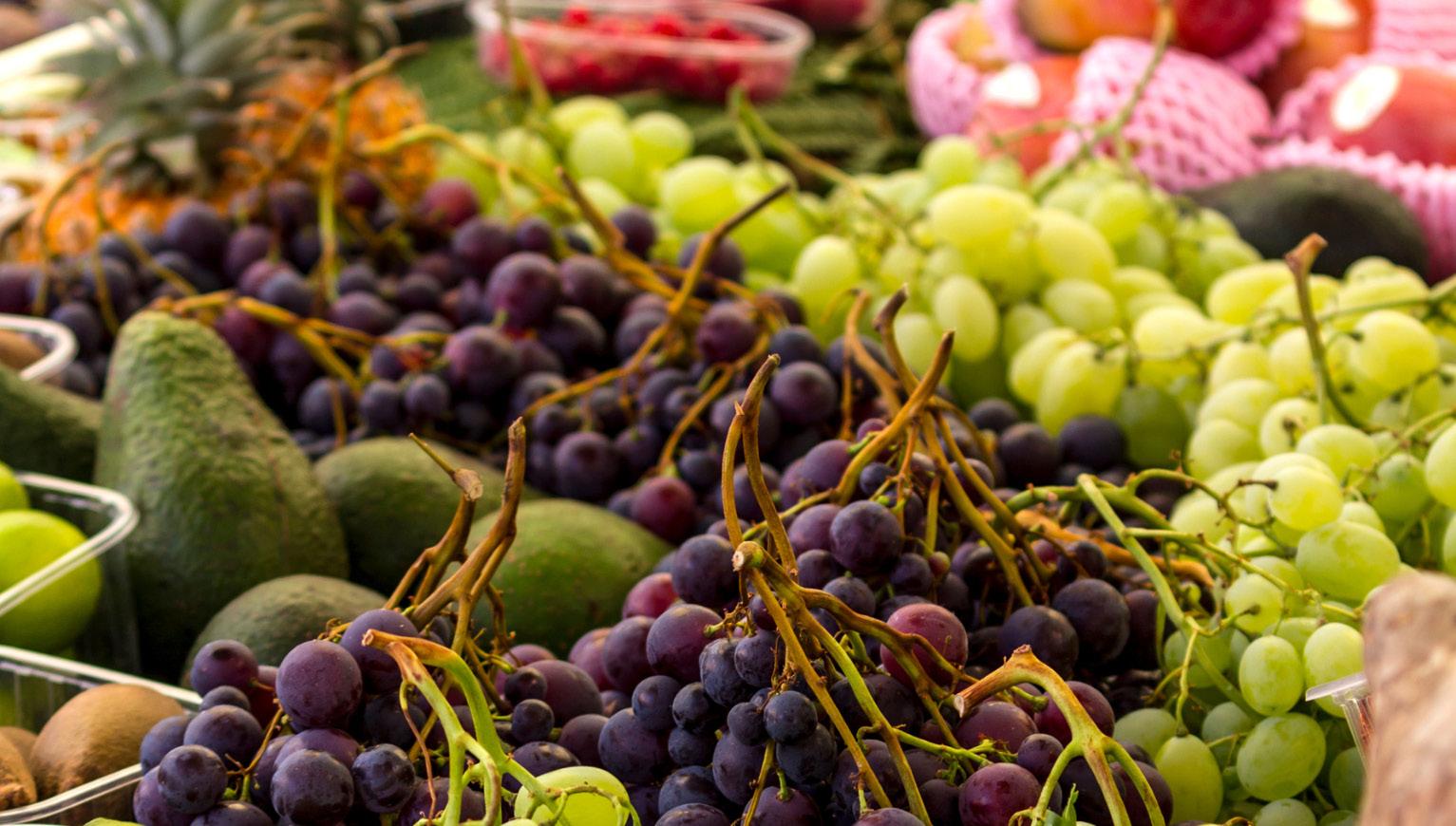
With the harvest peak in domestic openfield and greenhouse production, supply is expected to increase seasonally in the third quarter, which should put downward pressure on prices. At the same time, the market remains vulnerable to weather-related fluctuations: drought or heavy rainfall can still lead to shortterm supply gaps in some regions, especially for premium and specialty varieties.
Internationally, the market also remains relevant, as Germany imports a large share of its demand and global developments, for example from Southern Europe, North Africa, or Chile have a direct impact on availability. Early industrial demand is also tying up growing regions in countries such as Spain, Italy, and Chile before the main harvest, which can further tighten supply for the fresh market.
QUARTERLY MARKET REPORT
2026 - Q3
Fruit & Veg
Bell peppers
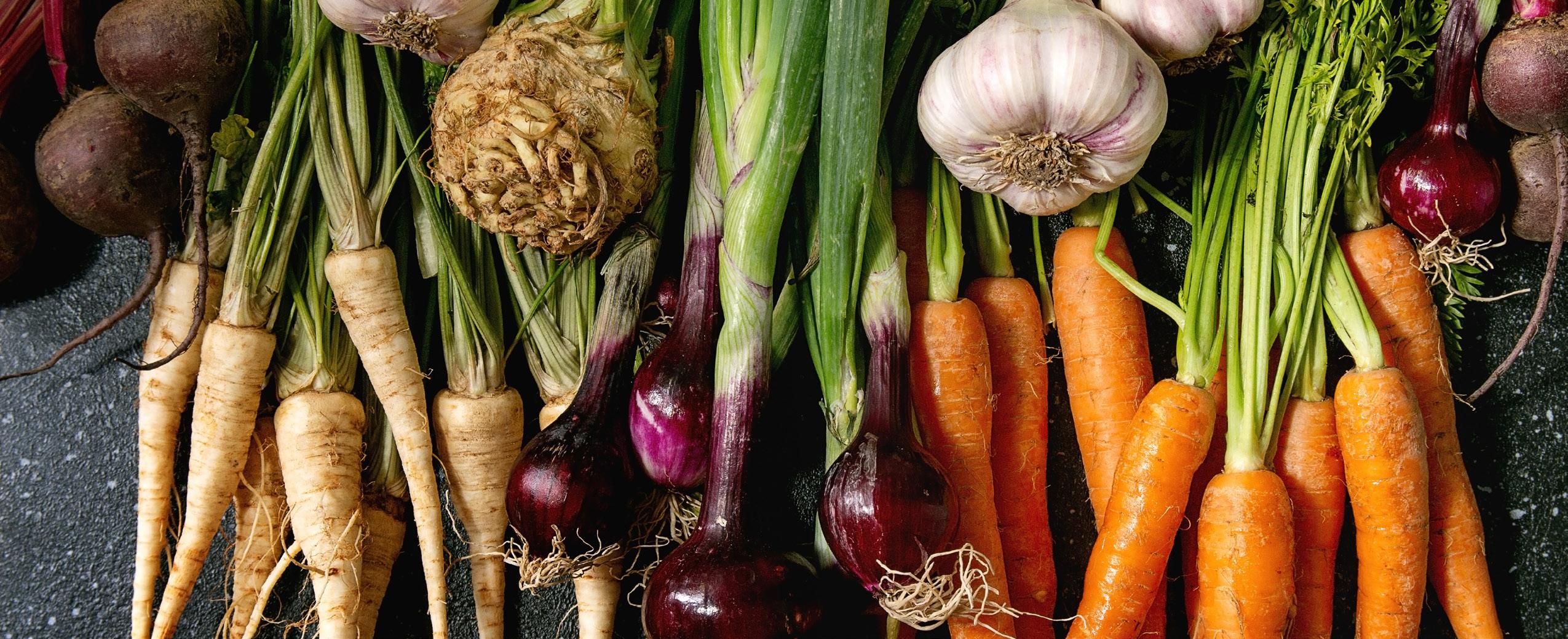
In Q3, the paprika market is expected to ease as domestic open-field supply from Germany and the Netherlands starts to enter the market in larger volumes. This seasonal influx typically increases availability and puts downward pressure on consumer prices.
At the same time, demand remains strong, while earlier supply shortages in Spain and weatherrelated delays kept prices elevated in the first half of the year. As a result, the market may normalize in summer, but pricing could remain firm for premium and specialty varieties.
Cucumber
In Q3 2026, cucumber prices are expected to remain stable and tend to be lower as regional open-field and greenhouse production in Germany ramps up, boosting supply and putting pressure on retail prices.
At the same time, the market remains vulnerable to weather-related disruptions.
Periods of humidity, sudden heat spikes, and fungal diseases such as downy mildew can damage crops and tighten local supply, which may lead to short-term price spikes, especially if harvest losses or high crop protection costs occur.
QUARTERLY MARKET REPORT
2026 - Q3
Meat & Poultry
Beef
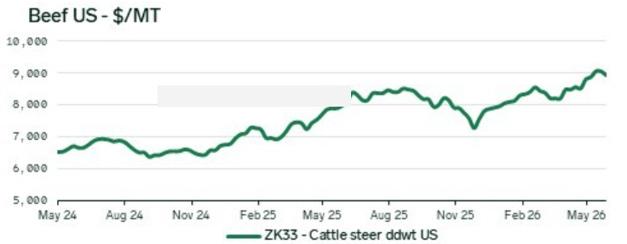
Beef prices are expected to remain at a very high level in Q3 2026, with a stable to slightly firmer trend. Tight global supplies, lower slaughter volumes worldwide, and structurally high production costs continue to support the market, while any relief in consumer prices is likely to come only in the coming years. agriculture.
Producer prices for slaughter cattle and cows are still at record levels, and there is no meaningful price correction in sight.
High feed and housing costs are adding to the strength of the market, although imports remain the main factor that could soften price spikes in the near term.
In Europe, the market is still broadly balanced, but rising Brazilian beef inflows could add some competitive pressure at the margin. Overall, the base case for Q3 is a firm market with only limited downside, rather than a broader price decline.
QUARTERLY MARKET REPORT
2026 - Q3
Meat & Poultry
Lamp
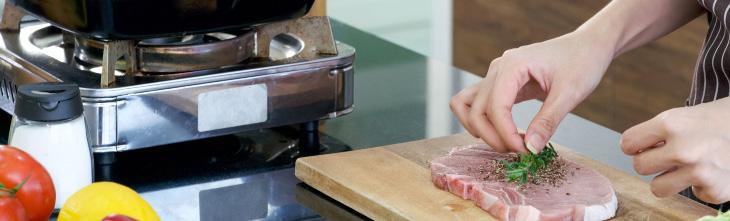
The European lamb market remains at recordhigh levels. Falling production volumes across key producing countries are keeping prices exceptionally elevated, with base prices in Ireland around €9.70 to €10.10 per kg carcass weight and UK prices rising to the equivalent of more than €10.80 per kg.
The main driver in Q3 2026 is tight supply: shrinking national and European sheep flocks are reducing slaughter numbers, with analysts forecasting a further decline of around 11% in lamb slaughtering this year.
At the same time, demand remains solid in retail and around festive occasions, which is continuing to support producer prices. In short, the market is likely to stay tight and firmly priced, with only limited relief expected in the near term.
QUARTERLY MARKET REPORT
2026 - Q3
Meat & Poultry
Poultry
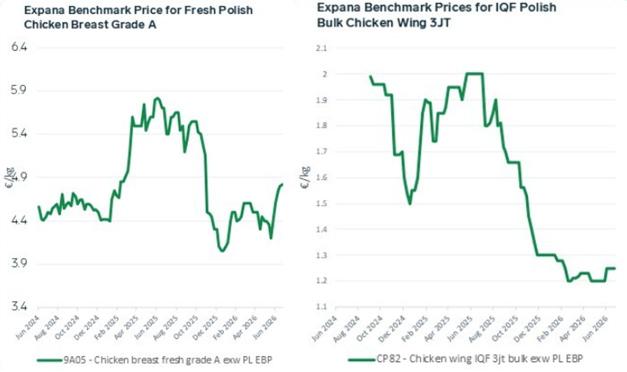
In Q3 2026, poultry prices are expected to remain stable to slightly higher at a generally elevated level. Lower feed costs are supporting production, but firm demand — including from the grilling season — together with geopolitical uncertainty is keeping the market well supported.
Western Europe remains broadly balanced and well supplied, with broiler carcass prices in the Netherlands and Belgium holding steady. In Poland, the picture is more mixed: chicken breast has benefited from stronger demand and rising prices, while carcasses and wings have eased somewhat. Ongoing HPAI outbreaks and the return of Newcastle disease continue to weigh on sentiment, even though summer consumption and a gradual recovery in supply are helping to ease pressure
QUARTERLY MARKET REPORT
2026 - Q3
Fish & Seafood
Cod
Cod prices are expected to stay very high in Q3 2026, supported by sharply reduced quotas and tight supply across the North Sea and Barents Sea. The 2026 TACs were cut significantly, including a 44% reduction for German North Sea cod and a 16% drop in the Barents Sea quota, which is now at its lowest level since 1991.
Fresh cod is therefore likely to remain scarce, while demand is still relatively resilient. Elevated energy and freight costs add further support to prices, and the market is not expected to ease meaningfully in the near term.
Salmon
Salmon prices are expected to rise noticeably in Q3 2026, driven by tighter supply from Norway, the main producer. After a weaker 2025, analysts now see a meaningful price
recovery, with year-on-year gains of around 14% as supply constraints tighten the market.
The benchmark price was already around NOK 70 per kg in mid-June, and market signals suggest further firmness through the third quarter. Lower wild salmon catches in Russia, higher production costs, and reduced availability across farmed supply are all adding support to prices, even though recent summer export prices showed some short-term volatility.
Demand remains resilient, so the market appears more constrained by fish availability than by weak consumption. Overall, Q3 points to a firmer pricing environment, with salmon standing out as one of the stronger seafood markets this year.
QUARTERLY MARKET REPORT
2026 - Q3
Dairy
Milk
The global milk market is expected to stabilize in Q3 2026 as production growth slows and milk volumes level off. This should improve the chances of a price recovery after the sharp decline seen in the first half of the year.
On the domestic side, recent measures have started to reduce milk deliveries, but volumes are still running above last year’s level. Regional production in May remained higher than a year earlier, supported by cool weather, good feed availability, and delayed summer grazing.
Farmgate prices appear to be bottoming out, though the market remains under pressure from high volumes in butter and cheese. Skim milk powder continues to provide some support, while transport costs and logistics challenges remain a burden. Seasonal bonuses stay unchanged, and the market for organic milk is also under close watch due to production still being well above last year’s level.

QUARTERLY MARKET REPORT
2026 - Q3
Dairy
Butter
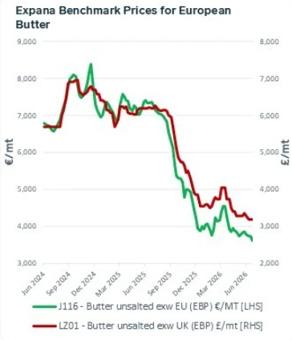
Butter prices are expected to stabilize at a low to moderate level after a sharp decline in recent months. Seasonal summer demand is relatively quiet, while ample cream availability is keeping the market broadly balanced for now.
Consumer prices for branded butter remain fairly steady, and no major price jumps are expected in retail as cream supply is sufficient. Bulk butter for industrial use is weaker, as buyers are currently cautious and demand is subdued.
On the supply side, global milk production growth is expected to flatten in Q3, and summer heat could also temper milk deliveries in Europe, which may help reduce the oversupply seen earlier in the year.
Export opportunities are currently more attractive than domestic sales in some cases, but it is still too early to say how much this will affect local buying prices.

QUARTERLY MARKET REPORT
2026 - Q3
Dairy
Cheese
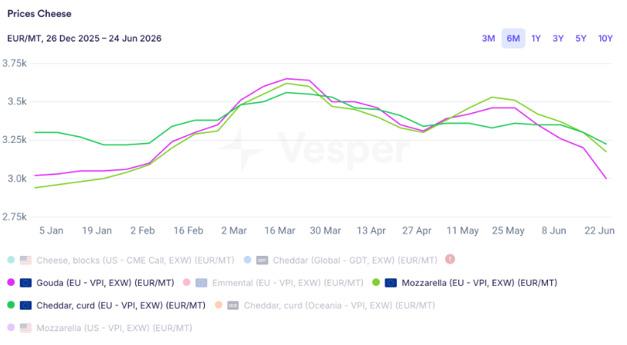
The cheese market has moved further away from its spring peak as summer demand has taken hold and many buyers have already covered most of their Q3 needs. Overall sentiment remains weak, with spot trading increasingly competitive, although limited supply is still preventing a sharper price correction.
Standard cheese categories remain under pressure, especially mozzarella and gouda, where prices have softened as buying interest faded after the main Q3 coverage phase.
Emmental is holding up somewhat better, while cagliata shows a rare small gain, standing out as one of the few products resisting the broader summer weakness.
Looking ahead, a potential heat period could reduce milk output and tighten raw material availability, which may provide some support to mozzarella and fresh dairy products later in the quarter. For now, however, the market tone is still bearish to stable, with the strongest pressure in volume cheeses and more resilient pricing in niche or premium segments
QUARTERLY MARKET REPORT
2026 - Q3
Wheat & Oil
Wheat
The wheat market is expected to remain supported in Q3 2026, but with weather-driven volatility as the main feature. Lower production expectations in the EU and the US, together with shrinking global inventories, are keeping the market firm ahead of the main harvest, although recent price action has been under pressure in the spot market and on Euronext.
In Europe, new-crop wheat has come under selling pressure, with Hamburg bids and Euronext September wheat easing recently before stabilising again. At the same time, analysts still point to tighter global supply, and weather developments will remain critical for price direction over the coming weeks
Oil
For Q3 2026, the rapeseed market is likely to remain firm to stable. Global demand for vegetable oils remains strong, and rapeseed oil continues to benefit from biodiesel demand, which should keep overall price levels supported.
At the same time, upside potential looks limited. The EU is still expecting a large crop, while rapeseed prices remain closely tied to energy markets and crude oil developments. With oil demand forecasts having been revised lower and crude prices coming under pressure, the market is more likely to stay supported than to launch into a sharp rally.
Additional support comes from biodiesel policies, including Indonesia’s B50 program, but ample EU supply should help cap extreme price spikes. Overall, the outlook is firm but not explosive.

QUARTERLY MARKET REPORT
2026 - Q3
Wheat & Oil
Sunflower
The outlook for sunflower oil in Q3 2026 points to a stable to slightly firmer market. After some recent fluctuations, prices have settled again and are still above last year’s level, with market participants advising buyers to cover needs before the end of the quarter. tradingeconomics+2
Supply is expected to remain comfortable overall, but the market is supported by robust global demand for edible oils and biodiesel use. At the same time, the new harvest only starts in July, with first new-crop oil expected in August and September, so weather conditions during grain filling and harvest remain a key risk factor for final output.commodity-board+2
There is still some upside support from strong export demand out of Ukraine and continued demand for vegetable oils in general, but the market is unlikely to see extreme price spikes because EU supply is relatively ample.
Overall, the balance looks firm but contained.
Olive
Prices are expected to remain high and volatile. Critically low global stocks, elevated production and logistics costs, and limited availability of higher-quality grades are likely to keep the market tight through the third quarter.
Consumers and industry users are therefore advised to cover needs early, as no meaningful relief back to historical lows is expected in the near term. In the organic segment, a price premium remains standard, while premium and regular retail grades also stay at elevated levels.
Further volatility may come from climate and harvest uncertainty in the Mediterranean region. Overall, the market remains tight, expensive, and weather-sensitive.

QUARTERLY MARKET REPORT
2026 - Q3
Coffee & Sugar
Coffee
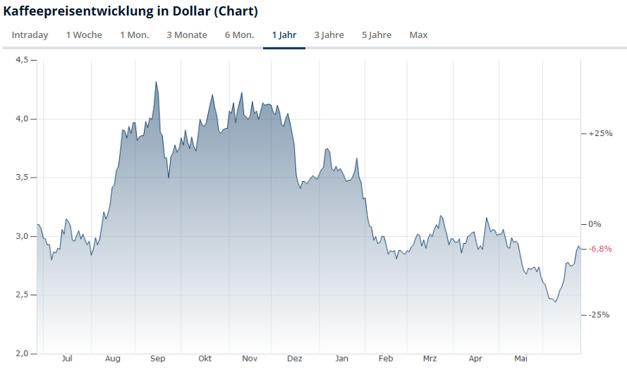
Coffee prices are expected to remain high and volatile in Q3 2026. The market is being shaped by international harvests, Brazil’s crop outlook, and currency swings, so consumers in Germany will likely continue to see elevated prices in supermarkets and cafés.
Arabica futures are currently trading at a relatively high level, and analysts expect the market to settle above pre-shock price ranges rather than return to earlier lows.
Brazil’s improved crop forecast has eased some pressure, but global demand remains strong enough to prevent a major price correction.
Weather risks in key growing regions also remain a concern, with droughts and irregular rainfall threatening both yield and quality. Overall, the outlook is still firm, costly, and weather-sensitive.
QUARTERLY MARKET REPORT
2026 - Q3
Coffee & Sugar
Sugar
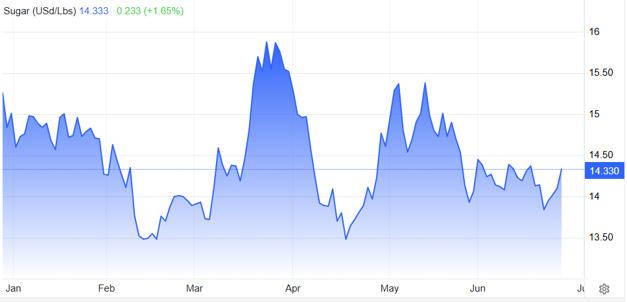
Prices are expected to stay low to moderate in Q3 2026.
The world price is around 14.1 US cents per lb, with only limited upside in the near term.
The market is being held back by a global surplus: supply is growing faster than consumption. Better production in key regions such as India is also improving availability.businesstoday+2
Lower prices are already weighing on producers, including Südzucker, which is seeing pressure on its sugar segment