If you’re reading this, you have taken one of the best possible steps and we welcome you to a day filled with the joy of music, learning, inspiration and warmth.
At the heart of Step Inside the Music is our commitment to give you, our audience, the best possible musical experience. Going to a concert shouldn’t just involve attending the same old places, sitting in tired old seats and being once-removed from the music by the barrier of stage, rules and regulations. Like the tree that falls in the woods, music is meant to be not only heard, but felt by all people, not just musicians.
But we as musicians are incredibly lucky because we are usually the only ones to feel the instruments vibrating through the air, from under our feet and coursing through our bodies.
Today this changes.
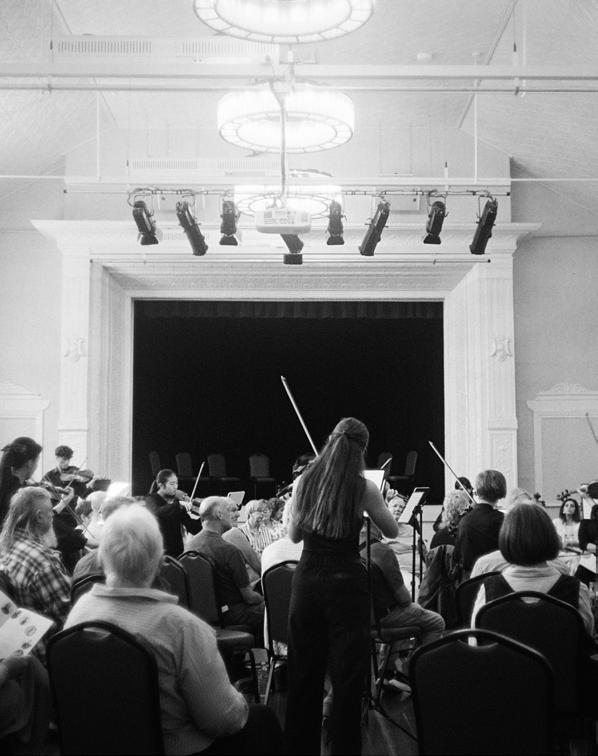
In our three concerts, we invite you to sit as closely as you wish to the musicians, to feel the vibrations coming through the floor and dancing between the instruments. To see the sweat on our brows as we tackle the intricacy of the works and to feel the almost explosive bubbling of excitement of the young musicians as they’re given a rare chance to perform alongside Ensemble Q players and some of the top players in the country.
Within Step Inside the Music we embrace Australian music and fold it in our arms with some of the most loved music from across the span of generations from baroque to today. We are proud to have created two new works that will be given their world premieres in this afternoon’s final concert. Paul Dean has composed a brilliant work for The Australian Voices and an ensemble of string players that evoke the antithesis of the title ‘Calming Night Thoughts’. And then the focus of many months of work by not one, but nine composers - Queensland Nocturnes. This work evokes the evening sounds across Queensland through nine extraordinary compositional voices. Six emerging composers were mentored by Paul Dean and our 2026 Composer in Residence, Anne Cawrse, and The Australian Voices director John Rotar has contributed his own Curlew call to the stage.
Our commitment to nurturing future generations is brought to the fore with our four-tiered mentorship model of professionals, emerging artists, tertiary students and Mini Q members all working together in a great big bowl of inspiration. We are delighted to feature the extremely talented young composer Angela Zhang with her work ‘Rising from the Ruins’, which in turn gives Queensland Conservatorium graduate Hanuelle Lovell the chance to shine as soloist. We warmly welcome The Australian Voices, directed by John Rotar, and the very talented flautists from the University of Queensland, directed by Patrick Nolan.
We are hugely grateful to the Queensland Government through Arts Queensland for their generous funding of this special event, and to Brisbane City Council, 4MBS Festival of Classics and Raw Mint Video for the valuable parts that they all play in making this an extraordinary event for Queensland.
There is so much to love about today’s program, we hope you enjoy every moment of it and look forward to hearing about your favourite moments.
Trish & Paul Dean, co-Artistic Directors
STEP INSIDE THE MUSIC - PROGRAM OVERVIEW
Sandgate Town Hall - Saturday 16 May 2026
CONCERT ONE 11.30am
All works will be interspersed with ANNE CAWRSE Ruby, for solo clarinet
TOMASO ALBINONI String Sonata à 5 in G major Op 2 no 1
ANTONIO VIVALDI Bassoon Concerto in E minor RV 484 Soloist: David Mitchell
JS BACH Brandenburg Concerto No.6 in B-flat major, BWV 1051
Directed by Roger Benedict
ANTONIO VIVALDI L’Estro Armonico Concerto X (Concerto for four violins) RV580
Please enjoy lunch at one of the local cafes while we reset the hall
CONCERT TWO 1.30pm
WOLFGANG AMADEUS MOZART Divertimento in F major K 138
IAN CLARKE “Within....”
ANNE CAWRSE In Spaces Between
TAYLEE JUREKIE-ROFE & LISA WALSHAM A Double Dose
RALPH VAUGHAN WILLIAMS Lark Ascending
ANGELA ZHANG Rising from the Ruins (World Premiere)
Soloist: Hanuelle Lovell
Please enjoy a glass of bubbles and cake in the rear of the hall while we reset
CONCERT THREE 3pm
NINE COMPOSERS Queensland Nocturnes (World Premiere)
Composers: Anne Cawrse, Curtis Morgan, John Rotar, Caterina Micola von Furstenrecht, Felicity Handreck, Chelsea Bode, Paul Dean, Myella Jago, Taylee Jurekie-Rofe
ĒRIKS EŠENVALDS In Paradisum
Trish Dean, Roger Benedict with The Australian Voices
PAUL DEAN Calming Night Thoughts (World Premiere)
ARNOLD SCHOENBERG Verklärte Nacht
CONCERT ONE 11.30am
All the baroque concerti below will be interspersed with ANNE CAWRSE Ruby Paul Dean, clarinet
TOMASO ALBINONI (1671–1751) String Sonata à 5 in G major, Op. 2 No. 1
I. Grave II. Allegro III. Adagio IV. Allegro
ANTONIO VIVALDI (1678–1741) Bassoon Concerto in E minor, RV 484
I. Allegro poco II. Andante III. Allegro Soloist: David Mitchell
JOHANN SEBASTIAN BACH (1685–1750) Brandenburg Concerto No. 6 in B-flat major, BWV 1051
I. Allegro II. Adagio ma non tanto III. Allegro Directed by Roger Benedict
ANTONIO VIVALDI (1678–1741)
Concerto for Four Violins in B minor, RV 580 (from L’Estro Armonico, Op. 3)
I. Allegro II. Largo – Larghetto III. Allegro Soloists: Glenn Christensen, Hanuelle Lovell, Coco Li, Alessandro Martinez
TOMASO ALBINONI (1671–1751)
String Sonata à 5 in G major, Op. 2 No. 1
I. Grave II. Allegro III. Adagio IV. Allegro Published in 1700, Albinoni’s Op. 2 set reflects the flourishing of instrumental music in Baroque Venice, where he was among the earliest composers to focus primarily on instrumental forms rather than opera. The Sonata à 5 follows the Italian sonata da chiesa model, typically unfolding in a sequence of contrasting slow and fast movements.
Scored for five parts, the work creates a rich, conversational texture, with the upper voices weaving expressive melodic lines over a supportive bass. Albinoni’s writing is marked by clarity, balance and an elegant lyricism, qualities that would influence later composers, including Vivaldi. This sonata offers both refinement and vitality, capturing the poised character of early 18th-century Venetian style.
ANTONIO VIVALDI (1678–1741)
Bassoon Concerto in E minor, RV 484
I. Allegro poco II. Andante III. Allegro Vivaldi’s remarkable output includes nearly forty concertos for bassoon, an instrument that, in his time, was only just emerging as a virtuosic solo voice. Many of these works were likely written for the talented musicians of the Ospedale della Pietà in Venice, where Vivaldi was employed, and they reveal both his flair for invention and his deep understanding of the instrument’s expressive and technical possibilities.
JOHANN SEBASTIAN BACH (1685–1750)
Brandenburg Concerto No. 6 in B-flat major, BWV 1051
I. Allegro II. Adagio ma non tanto III. Allegro
Two violas step forward, not quite soloists, not quite part of the crowd, with the darker voices of the ensemble gathered around them. The music doesn’t reach upward so much as it settles in, finding its weight and colour somewhere in the middle.
The first movement moves steadily, ideas turning over between the players. The Adagio draws things closer, the lines quieter, more exposed. By the final movement, there’s a lift in energy, but the sound never quite loses its depth.
It feels like music shaped from within—voices listening, adjusting, finding their place alongside one another.
ANTONIO VIVALDI (1678–1741)
Concerto for Four Violins in B minor, RV 580 (from L’Estro Armonico, Op. 3)
I. Allegro II. Largo – Larghetto III. Allegro
Published in 1711 as part of Vivaldi’s influential L’Estro Armonico (The Harmonic Inspiration), this concerto is one of a group of works that helped establish the concerto as a central Baroque form. The set was widely circulated across Europe and admired for its clarity of structure and vitality of invention.
Scored for four solo violins and strings, the concerto expands the usual solo–tutti contrast into a more complex web of interaction. The outer movements are built on the ritornello principle, with recurring orchestral passages framing episodes in which the four soloists exchange material in close imitation and dialogue. Rather than presenting a single dominant voice, Vivaldi creates a shifting hierarchy, with the solo parts continually rebalancing the texture.
The central Largo–Larghetto offers a marked contrast, reducing the texture and allowing for a more sustained, expressive line.
ANNE CAWRSE Ruby
Ruby is a piece for solo clarinet, inspired by a person who was special in the life of the performer, who died unexpectedly at 19 after becoming suddenly sick in April 2021. The aim of the piece is to capture and express her unique character, and the way that she brought pleasure and happiness to all who knew her. The piece also draws inspiration from her artwork, in particular, images of the unique and beautiful Blue Mountains area in which she lived.
Musically, Ruby begins in a place of fragility; slowly and cautiously, it creeps forward towards joy. Winding arpeggios and scales unfold as a reflection of the natural beauty of Florabella Pass in the Blue Mountains, and small, articulated motifs provide echoes of bird song. Towards the end of the work, the music breaks free into joyous and spirited dance, imbued with a generous dose of character, spirit and natural cheekiness.
CONCERT TWO 1.30pm
WOLFGANG AMADEUS MOZART (1756–1791) Divertimento in F major, K. 138 (“Salzburg Symphony No. 3”)
RALPH VAUGHAN WILLIAMS Lark Ascending Soloist: Glenn Christensen
ANGELA ZHANG Rising from the Ruins (World Premiere) Soloist: Hanuelle Lovell
WOLFGANG AMADEUS MOZART Divertimento in F major K 138 I. Allegro II. Andante III. Presto
Composed in Salzburg in 1772, when Mozart was sixteen, this work forms part of a group of three pieces often known as the “Salzburg Symphonies.” Although Mozart labelled them divertimenti, their three-movement, fast–slow–fast design and tightly argued textures place them close to the early Italian symphony. K.138 is the most intricate of the set. The opening Allegro is more contrapuntal in character, with ideas exchanged and developed across the ensemble rather than presented as a single, unified gesture. The Andante offers contrast, its lyricism supported by gently shifting harmonies and inner detail. The final Presto is quick and finely articulated, its energy driven by rhythmic precision and clarity of line. Even at this early stage, Mozart’s control of texture and form is striking, with each movement shaped by a strong sense of direction and balance.
IAN CLARKE “Within....”
The personal musical inspiration, character, soul of “Within” is rather difficult to describe; this is reflected in the title perhaps. Some mileage may be made out of the fact that the original sketch was made in the same year as my solo flute piece Zoom Tube was completed. Therefore musical explorations of the flute and former influences were probably at play. In a technical sense there can be some subtle and more obvious parallels drawn with these pieces should the listener be familiar with them; which is not at all a requirement.
It is fundamentally in three/four sections with close harmony breath sounds in the opening & closing and an evocative melodic line using microtonal passing notes and grace note articulations. This line is carried by the first flute at the beginning and is passed around the group as the piece progresses with the alto and bass flutes employed in their rather haunting higher registers. In the more brooding and rhythmic 2nd section several devices including percussive articulation, singing and playing, breath ramps and intricate tremolo patterns are used to build to a grand, tempestuous reprise of the main theme on piccolo & alto. This then gives way to the haunting ebb & flow of the final section.
ANNE CAWRSE in spaces between - a passacaglia for string quartet (2019)
‘in spaces between’ is a meditation upon the struggle of finding inspiration to compose within the small spaces in one’s life. This is an experience all composers must deal with at one time or another, yet it seems especially pertinent to the life of the working mother, who also happens to be a composer. Where is the space to allow thoughts and ideas to flow freely? What happens to one’s voice when their ideas are squeezed into such narrow, tight spaces?
The work’s opening chorale - naive, simplistic, hopeful - is interrupted again and again as it attempts to ‘become’ something. A series of episodes or variations, built upon an often disguised ground bass, explore alternate states of confinement, monotony and uncertainty, eventually giving way to inspiration. This piece was hard work. Be it life imitating art, or vice versa, I often felt I was wrenching the notes into existence, despite my clarity of concept. Whether or not the sound world here speaks of the issue it seeks to reflect, the process of writing it certainly did.
Finally, in celebration of a 20-year association with the wonderful Zephyr Quartet, the theme for this work is borrowed from the first piece I ever composed for them, Repetito, it too a passacaglia.
LISA WALSHAM &
TAYLEE
JUREKIE-ROFE A Double Dose
Scored for Soprano, piccolo, flute, alto and bass, this is a humorous and clever work utilising children’s poems with extensive use of Sprechstimme.
(Concert 2 - continued)
RALPH VAUGHAN WILLIAMS Lark Ascending
Solo violin - Glenn Christensen
One of the most memorable sights of the British countryside in spring and early summer is the courting flight of the skylark. The bird ascends in steps while singing continuously. He hovers for a short while then rises almost vertically to a new point of pause, and then on and up until almost lost from sight. Shelley called the skylark “blythe spirit” and Wordsworth called him the “ethereal minstrel” The Victorian poet George Meredith in his poem “The Lark Ascending” associates the lark with rural English life:
‘Tis love of earth that he instils, And ever winging up and up, Our valley is his golden cup, And he the wine which overflows The dreams of labour in the town; He sings the sap, the quickened veins; The wedding song of sun and rains He is, the dance of children, thanks Of sowers, shout of primrose-banks, And eye of violets while they breathe;
It was this poem that inspired Vaughan Williams to write one of his best loved and most enduring works.
The lark is depicted by the solo violin. The piece opens with a beautiful cadenza, played very quietly and delicately, that describes the hovering flight of the bird climbing higher and higher. The music avoids any tonal centre, and is written without bars giving the soloist an almost improvisatory freedom to describe the ethereal minstrel. The cadenza returns in the middle and at the end of the work, and the two intervening episodes draw on English folk music idioms. The solo violin combines with the orchestra to become the woods and brooks, the meadows green and the dance of children, blending into an intensely beautiful and idyllic tableaux of English life.
The composition was begun in 1914, but was put aside during the first world war. It was completed in 1920 and first performed by its dedicatee Marie Hall on the 14th June 1921, with the orchestra conducted by Adrian Boult. In many ways the work was an escape from the hard realities of a changing way of life. A critic wrote of the first performance, “It showed supreme disregard for the ways of today or yesterday. It dreamed itself along”. In his dreaming Vaughan Williams creates a picture of a perfect world as he saw it.
Duncan Gillies
ANGELA ZHANG Rising from the Ruins (World Premiere)
Solo violin - Hanuelle Lovell
Were dreams only meant to be dreamt? Or were they meant to be fulfilled? There is always something quite tragic about letting go of unfulfilled dreams and the culmination of many choices that have gone away in an instant. In the past couple of years, I have watched those close to me chase their childhood dreams that were already broken once before just to feel a sense of accomplishment. I decided to incorporate their determination and resilience into Rising from the Ruins, such that the piece would bring a sense of accomplishment through dynamic runs and chords that would reignite a melody rising above the challenges. It is also a reminder to immerse yourself in the journey rather than fret about the end results.
Angela Zhang
CONCERT THREE 3pm
NINE COMPOSERS Queensland Nocturnes (World Premiere)
Composers: Anne Cawrse, Curtis Morgan, John Rotar, Caterina Micola von Furstenrecht, Felicity Handreck, Chelsea Bode, Paul Dean, Myella Jago, Taylee Jurekie-Rofe
ĒRIKS EŠENVALDS In Paradisum
Trish Dean, Roger Benedict with The Australian Voices
PAUL DEAN Calming Night Thoughts (World Premiere)
ARNOLD SCHOENBERG Verklärte Nacht
QUEENSLAND NOCTURNES (World Premiere)
By Anne Cawrse, Curtis Morgan, John Rotar, Caterina Micola von Furstenrecht, Felicity Handreck, Chelsea Bode, Paul Dean, Myella Jago, Taylee Jurekie-Rofe
1. Anne Cawrse On the Nature of Moonlight
2. Curtis Morgan Night Walk
3. John Rotar The Curlew
4. Caterina Micola von Furstenrecht Stargazing
5. Felicity Handreck Moths in the Streetlight
6. Chelsea Bode In the Dead of Night
7. Paul Dean EK431
8. Myella Jago Stormy Night
9. Taylee Jurekie-Rofe The Possum
The inspiration behind Queensland Nocturnes was to create a multi-composer work that depicted a uniquely Queensland story, utilising a unique mentorship model between student/emerging composers and award winning established composers. Each composer had this to say about their nocturne:
Anne Cawrse - On the Nature of Moonlight
This short work is intended as a meditation on and brief exploration of the piano nocturnes of John Field and Frederic Chopin, taking as fodder the opening bar of Chopin’s Nocturne Op. 9 No. 1.
Curtis Morgan - NIght Walk
What inspired my piece was simply just the idea of walking through the Brisbane botanical gardens at nighttime, how the scenery would make you feel. This led to the piece being developed around 2 melodic ideas that could integrate together seamlessly, meant to be about you connecting with what you are seeing on your walk. The melodies are led by the clarinet and violins, which at first play separately, but merge together halfway through to show the connection. I used the cellos as the driving rhythm, meant to symbolise the walking itself, with them using a pizzicato ostinato all the way through.
John Rotar - The Curlew
What could be a more distinctive sound of a Queensland Nocturnal soundscape than the eerie call of the Curlew. In indigenous cultures it was commonly associated with death, mourning, or a messenger from the spirit world but for me, it just sounds like home! My piece today attempts to capture the rustle of the bush and the haunting, almost human sounds of the Curlew, and the extreme high cello register I always feel has one of the most vocal qualities of any instrument.
Caterina Micola von Furstenrecht - Stargazing “Stargazing” is an impressionist piece that aims to paint the colours and shapes of the Milky Way in central Queensland away from light pollution. As it is only a minute long, it acts as a timelapse of the changes and movement of stars across the sky over the course of a night. In particular, it aims to depict the underlying swirling of our solar system as it orbits our galaxy, and the many colours and movements of the giant celestial bodies that light up our skies away from the ever-present glow of city lights.
Felicity Handreck - Moths in the Streetlight Moths in the Streetlight was inspired by the many winged creatures I observe flitting through the streets at night, often searching for a beam of hope. This nocturne unfolds with a sense of unease depicted through a sustained chord which remains for the entirety of the piece. Fluttering trills, tremolos, dynamic swells and a curiously returning motif are weaved throughout the scene adding to the disquiet. The journey ends on an eery note as a moth, full of expectance rushes for a streetlamp, but the light turns off leaving all in darkness.
Chelsea Bode - In the Dead of Night
In the Dead of Night explores what happens after nightfall when the world goes still and quiet. Inspired by the sounds that I’ve heard waking up in the middle of the night, this piece emulates the journey from midnight through to sunrise. It explores various textures and techniques to add layers of wonder, excitement, anxiety, and foreboding. I have refrained from creating a main theme for this work and have leaned heavily into dissonant harmonies as this better represents the inconsistent beauty of nature and its many forms. Please enjoy!
Paul Dean - EK431
EK431 (a love letter to Brisbane at 2am)
This piece comes from a very specific and increasingly unwelcome ritual. Several mornings a week, at around 1:50am, Emirates EK431 departs Brisbane with absolute certainty, and any remaining chance of sleep disappears with it.
Scored for a small ensemble, the music circles that moment when the city should be silent but isn’t. A low, persistent disturbance grows into something harder to ignore, cutting through what would otherwise be a perfectly good night.
Myella Jago - Stormy Night
‘Stormy Night’ is dedicated to Cooper. I wrote my Nocturne about a stormy summer’s night lying next to my partner, reminiscing on my favourite memories while my partner is sleeping. My Nocturne comprises of atmospheric rain sounds, lightning, thunder, and breathing sounds in the bassoon.
Taylee Jurekie-Rofe - The Possum
This piece explores the quiet, nocturnal world of a possum through shifting textures and colour. It opens with a sneaky bassoon solo, setting a sense of cautious movement and curiosity. Unique harmonies are woven throughout the piece, suggesting the animal’s adventurous, inquisitive nature. In the final section, the upper winds and strings build into a crescendo of chromatic spirals, depicting the possum’s sudden leap through the trees.
SUNDAYS BY THE LAKE SERIES GHD Auditorium - Advanced engineering building, UQ
ĒRIKS EŠENVALDS In Paradisum
Accompanied by solo viola and cello, whose fluttering tremolandos represent the gently-beating wings of angels who lead us into paradise, it is a setting of the Requiem Mass antiphon that is sung as the body is taken from the church for burial. The choral writing is homophonic throughout, while strings sing a series of exquisite descants that eventually achieve an “eternal rest” as their star-like harmonics fade into eternity.
PAUL DEAN Calming Night Thoughts (World Premiere)
Calming Night Thoughts grew out of the familiar fiction that night-time is for rest. The title is, of course, optimistic. The piece traces the mental drift that sets in once the lights are off and the mind decides it is finally safe to rehearse everything at once.
Rather than a single narrative, the work moves through a loose accumulation of anxieties and half-formed fixations. World politics jostle with the comparatively trivial but no less emotionally charged. The Ashes loom large, as do the fluctuating fortunes of the Brisbane Lions and West Ham United, whose performances have an uncanny ability to intrude into moments supposedly reserved for sleep. These thoughts are accompanied by the oddly calming, yet faintly infuriating, sound of the family dog, Mia, lapping water in the middle of the night. None of these thoughts arrive in an orderly fashion. They overlap, interrupt one another, and occasionally spiral.
The music reflects this unsettled interior landscape. Lines fragment, reassemble, and sometimes fixate obsessively on small ideas before being abruptly derailed. Moments of apparent calm are rarely stable and tend to give way to something more agitated or questioning. The instruments and singers operate both collectively and independently, at times reinforcing a shared unease, at others pulling in different directions, as thoughts so often do in the small hours.
Despite the restless surface, Calming Night Thoughts is not without humour. There is an implicit acknowledgement that many of these worries are disproportionate, even absurd, particularly when weighed against one another. The piece does not seek resolution so much as recognition: an honest portrait of the mind at night, when the world’s problems, sporting disappointments, private obsessions, and nocturnal domestic soundtracks all insist on being considered, immediately, and in the dark.
Text (by the composer)
Have I ever been good at anything
No one will like this piece
The world is finished
How am I going to get this done
West Ham will be relegated
Without sleep how can I function
I’m not good at this
Great! Let’s think about that last Mozart Concerto again
I haven’t done enough I will be too tired to do anything tomorrow
I’m a failure generally
Oh, don’t don’t Trump - you went there!
I shouldn’t conduct opera
I can’t believe how bad the Lion’s defence was Will Australia ever find another good batsmen I should’ve practiced the Widmann more
Oh please don’t think it - you went there… TRUMP! ICE! Greenland! Venezuela? Tariffs! Stop!
Well at least we are winning the ashes
And the Lions and both Broncos teams won Will Australia ever find another good batsmen
Mia (our dog) drinks in seven eight
At 3am it makes me smile
But then, burns a track in my tired night brain At 4am the birds join the track
First the maggies, then the butcher birds
And the non stop chirp of the chicks
More joyous than Trump and self doubt More calming than watching Poms fall
And thinking of one’s own demise
The birds take me to the new day
And then I see my Angel Thoughts of wrong dissolve
I sink to sleep in her arms and soul
Snooze AH!
ARNOLD SCHOENBERG Verklärte Nacht (Transfigured Night) Op. 4
It is undeserved that people flee for the exit when they see Schoenberg’s name. While his later work can be challening, “Transfigured Night” is some of the most stunning music ever written. Based on the eponymous poem by German expressionist poet Richard Dehmel, both are divided into five parts (the music is played without any audible break between sections): the first stanza describes a man and woman walking through a dark forest on a moonlit night; the second, a woman’s impassioned confession of a sin she committed before they met (she is pregnant) and her fears of rejection; the third stanza her stumbling walk as she waits for the hammer to drop; the fourth, the man’s loving acceptance of her and the child; and the fifth, the couple walking through a world now transformed from a “bare cold wood” into a “high, bright night.”
Dehmel believed that a single act of compassion can transform the world and Schoeberg wanted both the piece and the audience to undergo a transformation. Apart from a literal harmonic transformation (the piece starts in D Minor and ends in D Major) there are musical references to the poem throughout the piece: listen for the anguished confession of the woman near the beginning played by Viola I, or the loving acceptance of the man played by the Cello I after a turbulent section that ends in darkness and doubt. Schoenberg felt that music can be “pure” storytelling and the poem was, in fact, superfluous; in this way the piece breaks free from the text from which it takes its inspiration.
I first heard Transfigured Night at Lincoln Center as a teenager and I remember the performance vividly. I knew none of the philosophy but had heard of Schoenberg and was curious what the fuss was about. By the brooding entrance of the violin, viola, and cello in the second measure I was hooked; three-quarters into the piece the tears began to flow. Read the poem, yes, and then....put it away. Sit back and let sound wash over you in a journey that begins in darkness through fear, dread, and despair but eventually leads to hope, acceptance, and, for me, a joyous sense of wonder. Program notes by David Yang
RICHARD FEDOR LEOPOLD DEHMEL (1863 – 1920)
‘Transfigured Night’ (Verklärte Nacht) (English translation by Mary Whittall)
Two people are walking through a bare, cold wood; the moon keeps pace with them and draws their gaze. The moon moves along above tall oak trees, there is no wisp of cloud to obscure the radiance to which the black, jagged tips reach up.
A woman’s voice speaks:
“I am carrying a child, and not by you. I am walking here with you in a state of sin. I have offended grievously against myself. I despaired of happiness, and yet I still felt a grievous longing for life’s fullness, for a mother’s joys and duties; and so I sinned, and so I yielded, shuddering, my sex to the embrace of a stranger, and even thought myself blessed. Now life has taken its revenge, and I have met you, met you.”
She walks on, stumbling. She looks up; the moon keeps pace. Her dark gaze drowns in light.
A man’s voice speaks:
“Do not let the child you have conceived be a burden on your soul.
Look, how brightly the universe shines! Splendour falls on everything around, you are voyaging with me on a cold sea, but there is the glow of an inner warmth from you in me, from me in you.
That warmth will transfigure the stranger’s child, and you bear it me, begot by me. You have transfused me with splendour, you have made a child of me.”
He puts an arm about her strong hips. Their breath embraces in the air.
Two people walk on through the high, bright night.
FEATURED COMPOSERS
Anne Cawrse is an award-winning Australian composer whose acoustic solo, chamber, orchestral and vocal works blend lyrical melody, rhythmic agility and an imaginative harmonic language. Drawn to text and the voices of female writers, she is a leading composer of art song and choral music, and has been the most commissioned composer of the acclaimed Adelaide Chamber Singers. Raised in Freeling, South Australia, Cawrse studied composition at the Elder Conservatorium, completing a PhD in 2008. She is in demand across Australia, with major commissions from the Adelaide and Melbourne Symphony Orchestras, Australian String Quartet, Plexus Ensemble, Benaud Trio and Zephyr Quartet. Her first opera, Innocence, was developed with State Opera South Australia; music from the work featured at She Speaks, the mini-festival she curated celebrating women composers. Cawrse’s honours include the 2021 APRA/AMC Chamber Work of the Year (A Room of Her Own) and the South Australian Luminary Award, alongside recognition in the Paul Lowin Orchestral Prize and numerous national awards. She is active as a lecturer at the Elder Conservatorium and enjoys life by the beach with her family.
Anne holds the position of 2026 Composer in Residence for Ensemble Q Australia.
As a composer, Paul Dean is one of Australia’s most significant voices, receiving the 2022 Paul Lowin Prize for Symphony No. 1 “Black Summer” and the 2023 APRA Art Music Award for Work of the Year – Large Ensemble for his Concerto for Double Bass and Orchestra. Black Summer, commissioned by the Australian World Orchestra, has since been performed and recorded by the Queensland Symphony Orchestra and Tasmanian Symphony Orchestra. He was Composer in Residence with the Melbourne Symphony Orchestra in 2019 and at the Australian Festival of Chamber Music in 2022, and his opera Dry River Run premiered in 2018 at the Queensland Conservatorium. Dean has been commissioned by leading artists and ensembles including Jack Liebeck, Anthony Marwood, Torleif Thedéen, Andrew Goodwin, Daniel de Borah, Marshall McGuire, the Brodsky Quartet, Flinders Quartet and Melbourne Piano Trio. His Horn Concerto, written for Andrew Bain, was commissioned by the Aspen Music Festival in collaboration with the Adelaide Symphony Orchestra and premiered in 2022. Recent highlights include his Cello Concerto for Wind Quintet, toured nationally by Musica Viva Australia with Trish Dean; the APRA Award-winning Double Bass Concerto, premiered by the Queensland Symphony Orchestra with Phoebe Russell at the Queensland Performing Arts Centre; Symphony No. 2 “Youth” for the Queensland Youth Symphony; and Symphony No. 3 “The Great Barrier Reef” for the Queensland Symphony Orchestra. His String Quartet No. 2 was recently premiered at the Melbourne Recital Centre by the Orava Quartet.
John Rotar (b. 1995) has had over 130 works commissioned, recorded or performed, including by the Queensland Symphony Orchestra, Melbourne Symphony Orchestra, Camerata - Queensland’s Chamber Orchestra, the Australian Youth Orchestra, The Australian Voices, Southern Cross Soloists, Queensland Ballet Academy, Expressions Dance Company, Flinders String Quartet, Queensland Youth Orchestras, UQ Symphony Orchestra among many others. John has held compositional residencies with Queensland Youth Orchestras, Flinders String Quartet, The Australian Voices, Camerata - Queensland’s Chamber Orchestra as well as being the arranger/composer in residence with the Southern Cross Soloists since 2014.
John’s work has also garnered such awards as the 2013 National Wagner Society competition, 2015 Artology Fanfare Prize, 2015 Percy Briar Memorial Prize, 2016 Jean Bogan national piano composition prize, 2017 UQ composition Prize, 2018 Künstlerhaus Boswil International choral composition competition, 2021 Cybec 21st Century composers program, 2021 The ANAM set project as well as being a finalist for the 2021 Queensland Music Awards as well as numerous other awards and scholarships.
Angela Zhang (b. 2006) is a Brisbane-based composer and multi-instrumentalist, currently in her second year at The University of Queensland studying Music and Science. Already recognised for her “boldly expressive” and “intricately woven” style, she has received national attention for her early works. In 2023, Angela collaborated with composer John Rotar and The Australian Voices on The Crow and the Lily at the TAV Young Composer School, and was a finalist in the Queensland Conservatorium’s Score It! competition with her sinfonietta Cadence. Her chamber work Nocturne for clarinet, violin, and cello premiered at the UQ Art Museum as part of the Spectrum Festival and was featured in last year’s Sounscapes and Stories - A One Day Festival by Ensemble Q. She has been selected as one of 4 composers nationwide for the Melbourne Symphony Orchestra’s Cybec program in 2026.. Also a violinist and violist, Angela performs with the UQ Symphony Orchestra and is an active member of Sketch. She currently studies composition at The University of Queensland with Paul Dean.
STUDENT COMPOSERS OF THE QUEENSLAND NOCTURNES include
Chelsea Bode
Felicity Handreck
Myella Jago
Taylee Jurekie-Rofe
Caterina Micola von Furstenrecht
Curtis Morgan
These composers study composition at The University of Queensland School of Music. Ensemble Q facilitated mentorship sessions on their Queensland Nocturne compositions with Anne Cawrse and Paul Dean.
ENSEMBLE Q IS GOING ON TOUR!
ENSEMBLE Q With ed le brocq
Tues 14 July St Paul's Cathedral, rockhampton
Thurs 16 - Sun 19 July Mackay Chamber music festival
Mon 20 July Denise glasgow performing arts centre, Townsville
WED 22 JULY UTzon room, SYDNEY OPERA HOUSE FRI 24 JULY MELBOURNE RECITAL CENTRE
Sun 26 July Bunjil Arts Centre, VIC (2 performances) Sat 8 Aug St Luke's cathedral Toowoomba
Sun 9 Aug HOTA, Gold coast (2 performances)
plus free workshops and residencies in the following schools:
Rockhampton State High School
Rockhampton Grammar School
Yeppoon State High School
Pimlico State High School, Townsville Ryan Catholic College, Townsville
Centenary Heights High School, Toowoomba and all feeder primary schools of the above
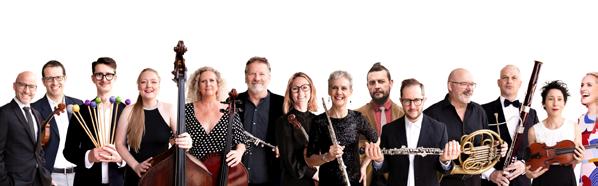
With a core artist list of some of the finest musicians in Australia, ENSEMBLE Q is directed by Co-Artistic Directors cellist Trish Dean and clarinetist Paul Dean. Born in 2017 out of a desire to create an ensemble with virtuosic integrity and a dedication to performance of undiscovered masterpieces, Ensemble Q has earned an enviable reputation for brilliant programming and the highest performance standard. The ensemble brings together some of Australia’s leading musicians in their fields, with members hailing from Principal seats in the Queensland, Melbourne and Sydney Symphony Orchestras, Melbourne Chamber Orchestra, soloists and chamber musicians on the national touring network, and leading faculty at Queensland Conservatorium. Ensemble Q performs at the Queensland Performing Arts Centre (QPAC) and multiple venues across Australia. From its inception they were Ensemble in Residence at the Queensland Conservatorium Griffith University before taking up the position of Company in Residence at QPAC from 2022 - 24.
Ensemble Q have been selected as both national and regional touring artists for Musica Viva with a highly successful national Australian tour with didgeridoo artist William Barton in October 2024. They have appeared at festivals including the Australian Festival of Chamber Music, George Town Festival (Penang), Brisbane Festival, Bellingen Muse and the Queensland Music Festival. The ensemble has performed regionally in NSW and QLD and several times at the Ukaria Cultural Centre in SA, and in its own boutique concert series in Sydney. They are regular artists for ABC Classic and 4MBS Classic FM and QPAC Digital.
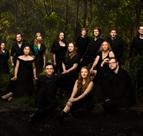
Since its founding in 1993 by Graeme Morton and Stephen Leek, THE AUSTRALIAN VOICES (TAV) has championed the creation and performance of new Australian music. Early on, the group forged a distinctive sound through the original musical language of Stephen Leek and a new generation of composers, capturing something uniquely Australian in spirit and expression.
Under Gordon Hamilton (2009–2021), TAV entered the 21st century with daring works such as Toy Story 3 = Awesome and Robert Davidson’s acclaimed setting of Julia Gillard’s “misogyny” speech. The choir also built a reputation for ambitious collaborations, from Mozart re-imaginings with Omega Ensemble to Sinking Cities with Camerata and Raphael Karlen, and commissioning 22 new works during the pandemic under the theme Far and Near.
Now led by Artistic Director John Rotar, TAV celebrated its 30th anniversary with two 2024 album releases, continuing its role at the forefront of Australian choral music.
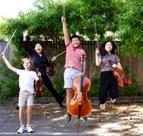
MINI Q comprises four 13-14 year old stars who took the eye of Ensemble Q directors Trish & Paul Dean, when they were performing with the Queensland Youth Orchestra. With the tyranny of distance and time, but great desire to play incredible music together, Ensemble Q created Mini Q and brought these four young stars together as a quartet. The intention is that they will grow up together and become one of the finest young quartets in Australia, through their mentored school holiday sessions, performance opportunities and projects such as the One Day Festival, where they get to perform alongside the big guys. Watch that space. Mini Q is Alessandro Martinez & Coco LI on violins, Serena Kang on viola and Samuel Wu on cello.
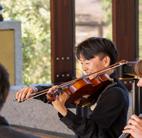
Coco Li, Mini Q member, 2026 Winner QSO Young Instrumentalist’s Prize
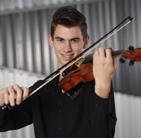
Alessandro Martinez, Mini Q member
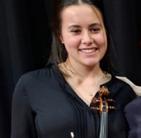
Amira Ryan, current UQ student
Viola
Roger Benedict, Conductor, viola soloist, former principal violist Sydney Symphony Orchestra
Felix Hughes-Chivers, current ANAM student
Jinha Kim, current UQ student
Serena Kang, Mini Q member
Cello
Trish Dean, Ensemble Q Co-Artistic Director & CEO
Rory Smith, Artistic Associate Camerata, Co-Artistic Director, Ensemble Cherubim Mercedes zu Hohenlohe, current UQ student
Samuel Wu, Mini Q member
Bass
Phoebe Russell, Ensemble Q core member and Principal Bass QSO
Harpischord
Brett Sturdy
Clarinet
Paul Dean, Ensemble Q Co-Artistic Director, Kinnane Professor at UQ
Flutes
Amanda Wong, Belinda Wong, Corina Palafox and Taylee Jurekie-Rofe
Katherine Xin, Brianna Duval, Indigo Barrett, Tom Mallet, Charlotte Nunn, Monash Lal Directed by Patrick Nolan
Bassoon
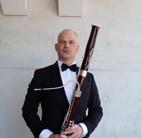
David Mitchell, Ensemble Q core member and Associate Principal Bassoon, QSO
Narrator (A Double Dose)
Rachael McFarlane
None of this would be possible without our production team: Buck Buckingham- Operations Manager
Amira Ryan - Production Assistant Gavin Rebetzke - Photographer
TODAY’S EVENT IS BEING FILMED BY TNEE DYER, RAW MINT rawmint.video
MERCedes zu hohenlohe, cello
JINHA KIM, VIOLA
INDIA SMITH, violin
JOHNNY KELLY, violin
rory smith, cello
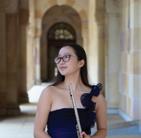
HANUELLE LOVELL, violin
feilx hughes-chivers, viola
AMANDA WONG, FLUTE
Ensemble Q’s Step Inside the Music is proudly part of the 2026 4MBS Festival of Classics
ENSEMBLE Q PARTNERS & SUPPORTERS
Ensemble Q acknowledges and thanks the following brilliant partners for their generous support
Ensemble Q is supported by the Queensland Government through Arts Queensland.
We warmly thank our key donors who help us present our programs and enrich the cultural platform of Australia
Major artists
Philip Bacon AO
Professor Ian Frazer AC and Caroline Frazer
Maestros
Di Haskell & Ken Robinson
Di Jameson OAM and Frank Mercurio
Andrew Johnston
Helen Mair
Dr Philip Aitken and Dr Susan Urqhuart
Dr Sheena Burnell
Mark Wakely
Professor Paul Dean
Soloists
Ruth Bereson
Dinah Blunt
Vicki Brooke
Marilyn Christiansen
Kathleen Clifford
Robert & Christine Dagworthy
Brisbane Forum Inc
Joan and Barry Miskin
Nigel and Siân Hall
Jennette Johnstone
Gavin Rebetzke
David Siddle & Christa Critchley
Ensemble
Georgia and Nick Martin
Alan Wilson
Len & Wendy McPherson
Robyn Evans
Joan and Barry Miskin
Margaret Gibbs
Denise Wadley
Robert Boughen
(in memory of Christina Boughen)
Sheena Boughen & Bill Caldicott
Nancy Underhill
Anthony Browell
Jennifer Jones
Pamela Leuzinger
Jo Moss
Gillian Pauli
Lisa Rochfort
Denise Salvestro
Ensemble Q Australia Inc is a non-profit company listed on the Register of Cultural Organisations and can receive tax deductible donations to assist our operational expenses. ABN 66494650123