Pharmacy Practice + Business - November/December 2024
CLEARING THE PATH FOR IPGs
SHAMS QAEND IS DETERMINED TO HELP INTERNATIONAL PHARMACY GRADUATES THRIVE IN CANADA
PLUS
MINOR AILMENTS
Navigating high-risk self-care products in older adults
5 TIPS Optimizing levothyroxine therapy
CLINICAL FEATURE What’s new in vaccines?
“Being able to help transform the lives of IPGs who are struggling is one of the greatest achievements of my life and I couldn’t be prouder.”
— Shams Qaend
INSIDE
3 CE lessons each worth 1.25 CEUs
NEWS FOR YOUR TRINTELLIX PATIENTS
the cost* at pharmacy. It works just like any drug
Now they can save money on their prescription with the Patient Choice Card Program
Pr Trintellix® (vortioxetine) is indicated for the treatment of MDD (Major Depressive Disorder) in adults.1
Introducing the TRINTELLIX Patient Choice Card – helping your patients get 5% off their TRINTELLIX prescription cost at the pharmacy.* It can be used with their existing drug plan or on its own.
1
Get your patients to visit trintellix-support.ca to download their TRINTELLIX Patient Choice Card
2
Tell them to present their TRINTELLIX Patient Choice Card at the pharmacy along with their TRINTELLIX prescription
Consult the Product Monograph at www.trintellixmonograph.ca for important information about contraindications, serious warnings and precautions, other warnings and precautions, adverse reactions, interactions, dosing instructions and conditions of clinical use not discussed in this piece. The Product Monograph is also available by calling 1-800-586-2325.
* The TRINTELLIX Patient Choice Card Program is available in all provinces except Quebec.
Reference: 1.
5 / Editor’s Message
My 10 takeaways from Pharmacy U Vancouver / By Vicki Wood
7 / Drug News
A review of new launches, new indications, new dosage forms, discontinued drugs and Health Canada advisories / By Lu-Ann Murdoch
14 / Practice Experts
Minor Ailment Therapeutics
/ By Nardine Nakhla P. 14
Practical Diabetes / By Shelley Diamond P. 21
Adverse Reactions / By Sandra Knowles P. 24
29 / 5 Tips
Optimizing levothyroxine therapy / By Nicole Domanski
31 / CE Lesson
An overview of conjunctivitis (1.25 CEUs) / Karen Riley
39 / Clinical Feature
What’s new in vaccines? Catching up on new vaccine development in Canada / By Sherilyn Houle
46 / Cover Story
Innovator Shams Qaend is clearing the path for international pharmacy graduates / By Rosalind Stefanac / Photography By Mike Ford
54 / The Closer
A Dose of Prosperity—Diversifying your revenue streams / By Amy Oliver
20 Eglinton Ave. West, Suite 1800, Toronto, ON M4R 1K8 (877) 687-7321 Fax (888) 889-9522 www.canadianhealthcarenetwork.ca
BRAND MANAGEMENT
SVP, CANADA, HEALTHCARE Donna Kerry (416) 786-6315 – dkerry@ensembleiq.com
EDITORIAL
EDITOR Vicki Wood vwood@ensembleiq.com
EDITOR, CANADIAN HEALTHCARE NETWORK Martha Porado mporado@ensembleiq.com
Subscriptions (PRINT): $90.00 per year, 2 year $153.60, Outside Canada $153.60 per year, Single Copy $14.40, Groups $73.20, Outside Canada Single Copy $19.20. Subscriptions (DIGITAL): $53.00 per year, 2 year $90.00. Pharmacy Practice + Business is published 7 times per year except for occasional combined, expanded or premium issues, which count as two subscription issues.
To subscribe or renew, go online to www.canadianhealthcarenetwork.ca/subscribe, or email pharmacypractice@canadianhealthcarenetwork.ca
CORPORATE OFFICERS
CHIEF EXECUTIVE OFFICER Jennifer Litterick
CHIEF FINANCIAL OFFICER Jane Volland
CHIEF PEOPLE OFFICER Ann Jadown
CHIEF OPERATING OFFICER Derek Estey
Mail Preferences: Occasionally we make our subscriber list available to reputable companies whose products or services may be of interest to you. If you do not want your name to be made available please contact us at pharmacypractice@canadianhealthcarenetwork.ca.
It was chilly and rainy in Vancouver on November 2, but inside the downtown conference centre where hundreds of pharmacists were gathered for a day of learning and catching up with friends, the atmosphere was warm and collegial—and the ideas were flowing.
With 28 educational sessions running throughout the day, the most challenging aspect of a Pharmacy U event is the fear of missing out on whatever people are learning in the sessions you aren’t attending.
In our post-event survey, we ask attendees, “Did you learn something today that you can take back and implement right away?”
An overwhelming 98% of attendees said they did, and I'm not surprised. I learned plenty that would be instantly impactful in pharmacy practice. In the spirit of David Letterman’s much-missed Top Ten lists, here are 10 things I learned at Pharmacy U Vancouver that could make a difference:
10. There is actually some evidence for the use of natural health products in the treatment of children’s cough and cold.
9. There are a multitude of ways to combine long- and/or shortacting nicotine replacement therapy and/or pharmaceuticals (or even all three!) to help a patient quit smoking.
8. The amount of time and time of day one is visiting high-risk areas can determine the need for certain travel vaccines.
7. Think of addiction as a treatable chronic disease.
6. Assume that every person you see in the pharmacy is under-immunized.
5. More than 60% of the one in four Canadians with allergic rhinitis (AR) do not have their AR under control.
4. One key to the success of Nova Scotia’s Community Pharmacy Primary Care clinics was convincing pharmacy staff to ask people to book an appointment. (This was no problem for the patients, however.)
3. Appointments, synching chronic meds and separating dispensing from clinical services are essential to ensure that pharmacists can provide quality care without burning out.
2. The secret to effective, happy and not-stressed pharmacists? Enough pharmacy technicians working to their full scope.
1. And finally, I learned that pharmacists have the medical knowledge, emotional intelligence and skills to perform heroic, life-saving acts when the opportunity arises.
Pharmacy U Toronto is set for Saturday, April 5, 2025. I personally can’t wait. Hope to see you there, so we can keep learning!
VICKI WOOD EDITOR
For adult patients with insomnia
PrQUVIVIQ® (daridorexant) is indicated for the management of adult patients with insomnia, characterized by difficulties with sleep onset and/or sleep maintenance.1
* Some patients may be treated with QUVIVIQ® 25 mg once per night. Please consult the Product Monograph for complete dosing information.
Mechanism of action†
QUVIVIQ® is a dual orexin receptor antagonist (DORA)
QUVIVIQ® antagonizes the activation of orexin receptors by the orexin neuropeptides and consequently decreases the wake drive, allowing sleep to occur.
QUVIVIQ® acts on both orexin 1 and orexin 2 receptors and is equipotent on both.
† Clinical significance is unknown.
Connect to a Product Specialist.
Scan the QR code or email at: hcp.ca@idorsia.com.
Consult the Product Monograph at https://pro.idorsia.ca/product-monograph for important information about:
• Contraindications in patients with narcolepsy; using concomitant strong CYP3A4 inhibitor.
• Relevant warnings and precautions regarding concomitant use of CNS depressants, alcohol use, next-day somnolence, sleep paralysis, hallucinations and cataplexy-like symptoms, worsening of depression and suicidal ideation, comorbid diagnosis, complex sleep behaviours, non-medicinal use of sedative drugs, withdrawal symptoms, rebound insomnia, driving or operating heavy machinery, patients with severe obstructive sleep apnea, patients with severe chronic obstructive pulmonary disease, patients with thyroid abnormalities, breast-feeding, geriatric patients, pediatrics.
• Conditions of clinical use, adverse reactions, drug interactions (particularly interactions with CYP3A4), and dosing instructions.
The Product Monograph is also available by calling 1-888-646-1764.
Drug News
NEW PRODUCTS
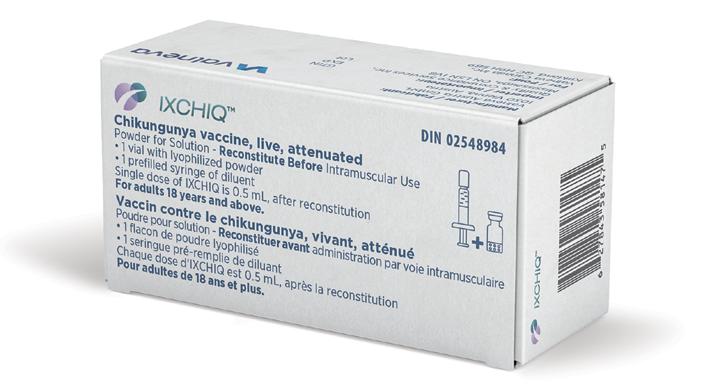
Ixchiq: first chikungunya vaccine chikungunya vaccine, live, attenuated; powder for solution for intramuscular (IM) injection, Valneva Canada.
INDICATIONS Active immunization in individuals ≥ 18 years of age for the prevention of disease caused by the chikungunya virus.
ACTION Mechanism of protection has not been determined. Elicits chikungunya virus-specific immune responses against all globally circulating chikungunya virus genotypes.
DOSAGE Single 0.5 mL dose given IM (after reconstitution). The need for a booster dose has not been established.
ADMINISTRATION Reconstitute the lyophilized powder with the sterile water diluent provided with the vaccine (consult product monograph for details). Inject IM into the deltoid muscle.
ADVERSE EFFECTS MOST COMMON: Injection site reactions (e.g., tenderness, pain), headache, fatigue, myalgia/muscle pain, arthralgia/joint pain, fever. MOST SERIOUS: Severe chikungunya-like adverse reactions (i.e., fever ≥38°C and one or more of the following: arthralgia or arthritis, myalgia, headache, back pain, rash, lymphadenopathy, or certain neurological, cardiac or ocular symptoms that occur with an onset within 30 days after vaccination) and which prevent daily activity and/or require medical intervention. The median onset of chikungunya-like adverse reactions is three days (range 0–10 days) after vaccination and the median duration of reactions is four days (range 1 day to at least 6 months). Women of childbearing potential should be advised to avoid pregnancy for one month following
A review of new launches, new indications, new dosage forms and Health Canada advisories
CLINICAL EDITOR LU-ANN MURDOCH, RPh, BScPhm, ACPR
vaccination. Vaccine viremia can occur three to seven days after vaccination and is resolved by 14 days after vaccination; potential for transmission of the vaccine virus from mother to infant through breastmilk is unknown. Possible immediate allergic reactions, including anaphylaxis.
DRUG INTERACTIONS Currently no data on the safety and immunogenicity of concomitant administration of Ixchiq with other vaccines.
STORAGE/STABILITY Store vial and diluent in a refrigerator (2°C–8°C). After reconstitution, if not used immediately, store the reconstituted vaccine at room temperature and administer within 30 minutes.
SUPPLIED A single-dose vial of lyophilized powder to be reconstituted with the supplied prefilled syringe of diluent (sterile water for injection). When reconstituted, each 0.5 mL dose of the vaccine contains not less than 3.0 log10 TCID50 of live attenuated chikungunya virus.
COMMENTS Development of chikungunya virus infection is thought to convey lifelong immunity. Vaccination with Ixchiq may not protect all individuals; continue to use personal protection measures against mosquito bites after vaccination.
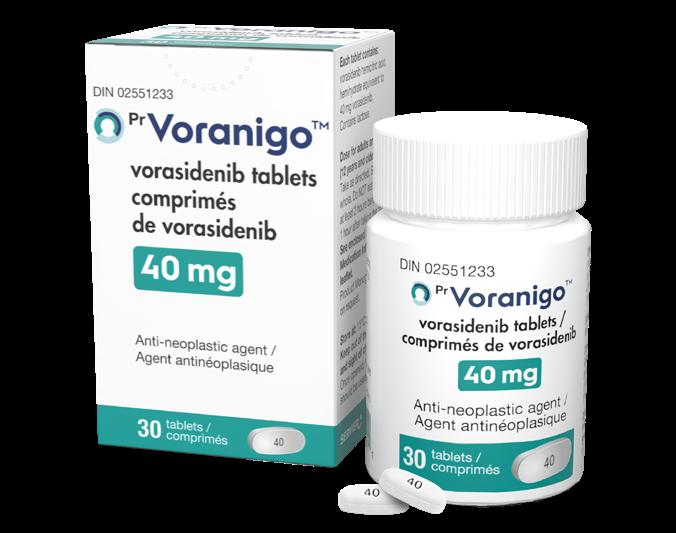
Voranigo: new oral antineoplastic vorasidenib 10 mg and 40 mg tablets, Servier.
INDICATIONS Treatment of Grade 2a astrocytoma or oligodendroglioma with a susceptible isocitrate dehydrogenase-1 (IDH1) mutation or isocitrate dehydrogenase-2 (IDH2) mutation in adults and children aged 12 years or older following surgical intervention. ACTION A small molecule inhibitor of IDH1 and IDH2 enzymes. It blocks
the mutated form of the IDH1 or IDH2 protein in specific brain cancers, which helps to slow or stop cancer growth.
DOSAGE Patients ≥ 12 years of age: Body weight ≥ 40 kg—40 mg orally once daily. Body weight < 40 kg—20 mg orally once daily. Dose interruption or reduction may be required to manage adverse reactions; consult product monograph for details.
ADMINISTRATION Take once daily, at about the same time each day. Patients should not eat food at least two hours before and one hour after taking a dose. Swallow tablets whole with a glass of water. Do not split, crush or chew tablets.
ADVERSE EFFECTS MOST COMMON: Increases in alanine transaminase (ALT), aspartate transaminase (AST) and gamma-glutamyl transferase (GGT); fatigue, diarrhea, abdominal pain, decreased appetite, gastroesophageal reflux disease. MOST SERIOUS: Increases in ALT and AST.
DRUG INTERACTIONS Avoid concomitant use with a moderate (e.g., ciprofloxacin) or strong (e.g., fluvoxamine) CYP1A2 inhibitor; moderate CYP1A2 inducers (e.g., phenytoin, rifampin) and smoking tobacco; and narrow therapeutic index CYP2C19 and CYP3A4 substrates (e.g., carbamazepine, tacrolimus). May decrease concentrations of hormonal contraceptives, leading to contraception failure; concomitant use of a barrier method of contraception is recommended during treatment and for at least three months after the last dose.
STORAGE/STABILITY Store at room temperature (15°C–30°C). Once opened, use within 60 days.
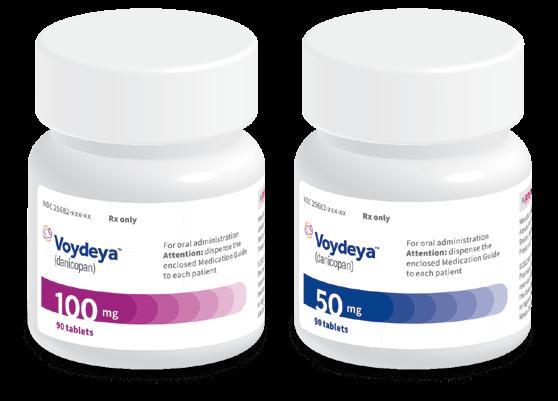
Voydeya: an oral complement inhibitor danicopan 50 mg and 100 mg tablets, Alexion Pharma.
INDICATIONS An add-on to ravulizumab or eculizumab for the treatment of adults with paroxysmal nocturnal hemoglobinuria who have residual hemolytic anemia due to extravascular hemolysis (EVH).
ACTION A complement inhibitor. Binds reversibly to complement Factor D and selectively inhibits the alternative complement pathway. Acts proximally in the alternative pathway of the complement cascade to control preferentially C3 fragment-mediated EVH.
DOSAGE Recommended starting dose is 150 mg three times daily, with doses given approximately eight hours apart (± 2 hours). Dosage can be increased to 200 mg three times a day if a patient’s hemoglobin level has not increased by at least 2 g/dL after four weeks of therapy, if a patient required a transfusion within the previous four weeks, or to achieve an appropriate hemoglobin response based on clinical judgement. If treatment discontinuation is necessary, the dose should be tapered over a six-day period; see product monograph for details.
ADMINISTRATION May be taken with or without food.
ADVERSE EFFECTS MOST COMMON:
Headache, increase in ALT. May increase total cholesterol and LDL-cholesterol; some patients may require cholesterollowering medications. MOST SERIOUS: Pancreatitis, increase in blood bilirubin and liver enzymes, cholecystitis. May predispose patients to serious infections caused by encapsulated bacteria, including Neisseria meningitidis and Streptococcus pneumoniae; risk of infection can be reduced by vaccinating all patients against these bacteria at least two weeks before receiving the first dose of danicopan.
DRUG INTERACTIONS Predominantly cleared by non-CYP450-based metabolism; therefore, a low likelihood of CYPbased drug–drug interactions. Inhibits P-glycoprotein (P-gp); concomitant administration with a P-gp substrate known to have a narrow therapeutic range (e.g., digoxin, tacrolimus) may require dose adjustment of the P-gp substrate.
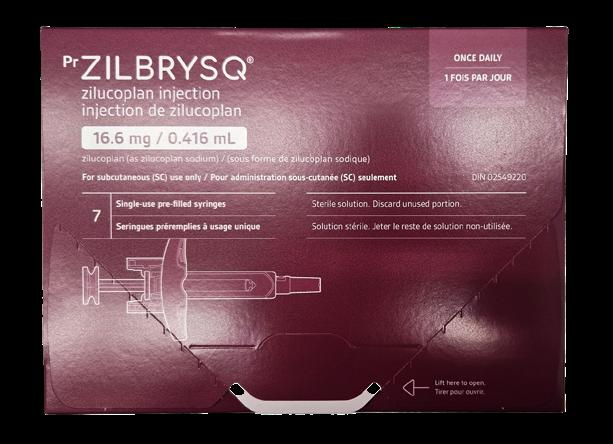
Zilbrysq for myasthenia gravis
zilucoplan 40 mg/mL solution for SC injection (as zilucoplan sodium); 16.6 mg/0.416 mL, 23 mg/0.574 mL and 32.4 mg/0.81 mL single-dose prefilled syringes, UCB Canada.
INDICATIONS Treatment of generalized myasthenia gravis in adults who are
anti-acetylcholine receptor antibody positive. Note: Patients continued to receive standard therapy (e.g., parasympathomimetics, systemic corticosteroids, immunosuppressants) throughout the pivotal trial.
ACTION A synthetic peptide that binds to and blocks complement protein C5, which is part of the immune system that causes inflammation. This helps prevent the immune system from attacking and damaging signals between the nerves and muscles in the body.
DOSAGE Recommended daily dosage is based on body weight: < 56 kg—16.6 mg; ≥ 56 kg to < 77 kg—23 mg; ≥ 77 kg–32.4 mg.
ADMINISTRATION Administer by subcutaneous injection into the front of the thighs, abdomen or back of the upper arms. Rotate injection sites. Patients and caregivers can be trained to give injections.
ADVERSE EFFECTS MOST COMMON: Injection site reactions, upper respiratory tract infections and diarrhea. Morphea has been reported; most of the cases began more than one year after start of treatment, but were mild or moderate in severity and did not lead to treatment discontinuation.
MOST SERIOUS: Meningococcal infections may occur and can become rapidly lifethreatening or fatal if not recognized and treated early; patients must be vaccinated against Neisseria meningitidis before starting zilucoplan treatment. May increase pancreatic enzymes (lipase and amylase); monitor levels before starting zilucoplan treatment. Discontinue zilucoplan in patients with suspected pancreatitis and initiate appropriate management until pancreatitis is ruled out or has resolved. Potential for immunogenicity.
DRUG INTERACTIONS Drug interactions are unlikely; not a substrate of major cytochrome CYP450 enzymes (1A2, 2B6, 2C8, 2C9, 2C19, 2D6, and 3A) or transporters (P-gp, BCRP, OATP1B1, OATP1B3). Has the potential to reduce the complement-dependent pharmacodynamic effects of rituximab.
STORAGE/STABILITY Store in a refrigerator (2°C–8°C). Keep prefilled syringe in the
original carton, to protect from light. Patients may keep prefilled syringe at room temperature (up to 30°C) for a maximum three months if stored in the original carton to protect from light.
COMMENTS Available through a controlled distribution program. Prescribers must enroll patients, confirm vaccination with meningococcal vaccine, counsel patients about the risk of meningococcal infection, and provide patients with a patient/ carer guide and patient safety card.
OTHER NEW PRODUCTS
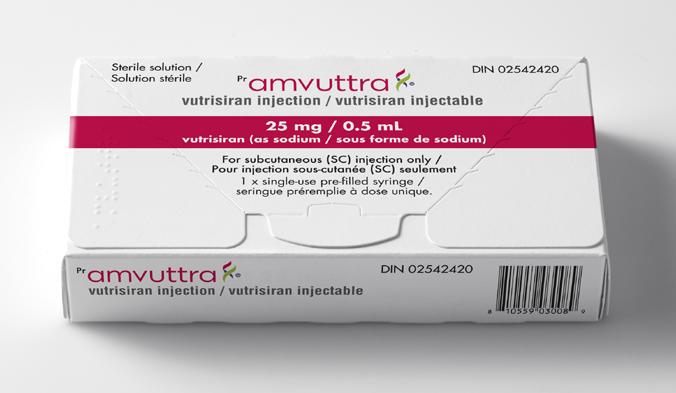
Amvuttra
vutrisiran 25 mg/0.5 mL (as vutrisiran sodium) solution for SC injection; single-use prefilled syringe, Alnylam Canada/Innomar Strategies.
INDICATIONS Treatment of stage 1 or stage 2 polyneuropathy in adults with hereditary transthyretin-mediated amyloidosis.
DOSAGE 25 mg SC every three months. Inject SC into the abdomen, thighs or upper arms.
COMMENTS Must be ordered through Innomar Strategies. Patients must be enrolled in the Alnylam Assist program (https://www.alnylamassist.com/)
Comirnaty
COVID-19 mRNA vaccine, Omicron KP.2 variant; suspension for IM injection, BioNTech/Pfizer.
INDICATIONS Active immunization against COVID-19 in individuals six months of age or older. Issued marketing authorization with terms and conditions that must be met to establish the continued quality, safety and effectiveness of the vaccine.
DOSAGE Age ≥ 12 years: Single dose of 0.3 mL IM (use 30 µg per dose product). Give at least three to six months after the most recent dose of a COVID-19 vaccine, for individuals who have previously been vaccinated with a COVID-19 vaccine. Age 5–11 years: Single dose of 0.3 mL IM (use 10 µg per dose product). Give at least six months after the most recent dose of a COVID-19 vaccine, for individuals who have previously been vaccinated with a
COVID-19 vaccine. Age 6 months–4 years who have not completed a COVID-19 primary course: Give a three-dose course (0.3 mL/dose IM; use 3 µg per dose product). Administer the second dose three weeks after the first dose, followed by a third dose administered at least eight weeks after the second dose. If a primary vaccination course with Comirnaty XBB.1.5 vaccine was already started, the three-dose course may be complete with Comirnaty (KP.2 variant). Age 6 months–4 years who have completed a COVID-19 primary course: Give a single dose of 0.3 mL IM (use 3 µg per dose product). Administer at least six months after the most recent dose of a COVID-19 vaccine.
Imdelltra
tarlatamab for injection, lyophilized powder for solution for intravenous (IV) infusion; 1 mg and 10 mg vials, Amgen.
INDICATIONS Treatment of adults with extensive stage small cell lung cancer with disease progression on or after at least two prior lines of therapy, including platinum-based chemotherapy. Issued market authorization with conditions, pending the results of trials to verify the drug’s clinical benefit.
DOSAGE Administered in a step-up dosing schedule to reduce the incidence and severity of cytokine release syndrome. Start with 1 mg by IV infusion over one hour on day 1, then 10 mg on days 8 and 15, and every two weeks thereafter. Drug may have to be withheld to manage certain adverse effects; consult product monograph for details.
Nuvaxovid
COVID-19 vaccine (recombinant protein, adjuvanted), Omicron JN.1 variant; suspension for IM injection, 5 µg/0.5 mL dose, multidose vial containing five doses, Novavax/Innomar Strategies.
INDICATIONS Active immunization against COVID-19 in individuals 12 years of age or older. Issued marketing authorization with terms and conditions that must be met to establish the continued quality, safety and effectiveness of the vaccine.
DOSAGE A single dose (0.5 mL) for individuals ≥ 12 years of age who have received a COVID-19 vaccine primary series; administer at least six months after the most recent dose of COVID-19 vaccine. A two-dose series (0.5 mL/dose) is recommended for individuals ≥ 12 years
of age who have not received a COVID-19 vaccine primary series. Administer the second dose three weeks after the first dose.
Spikevax
COVID-19 mRNA vaccine, Omicron KP.2 variant; dispersion for IM injection, 0.1 mg/mL in 2.5 mL multidose vials, Moderna.
INDICATIONS Active immunization against COVID-19 in individuals six months of age or older. Issued marketing authorization with terms and conditions that must be met to establish the continued quality, safety and effectiveness of the vaccine.
DOSAGE Individuals ≥ 12 years of age: One 50 µg (0.5 mL) dose IM. If previously vaccinated with a COVID-19 vaccine, administer at least six months after the previous COVID-19 vaccine dose. Individuals 5–11 years of age: One 25 µg (0.25 mL) dose IM. If previously vaccinated with a COVID-19 vaccine, administer at least six months after the previous COVID-19 vaccine dose. Individuals 6 months to 4 years of age: Not previously vaccinated: two (2) doses of 25 µg (0.25 mL) each IM, given four weeks apart. Previously vaccinated with one or more doses: One dose of 25 µg (0.25 mL) IM, given at least six months after the previous COVID-19 vaccine dose.
Tyenne
tocilizumab for injection (IV and SC dosage forms), Fresenius Kabi.
INDICATIONS Approved for use in the treatment of several conditions: rheumatoid arthritis (IV and SC dosage forms), giant cell arteritis (SC), polyarticular juvenile idiopathic arthritis (IV or SC), systemic juvenile idiopathic arthritis (IV or SC), cytokine release syndrome (IV) and COVID-19 in hospitalized adults (IV).
DOSAGE Varies according to therapeutic indication and route of administration; consult product monograph for details.
SUPPLIED 20 mg/mL concentrate solution for IV infusion in 80 mg/4 mL, 200 mg/10 mL and 400 mg/20 mL vials; 162 mg/0.9 mL solution for SC injection in single-dose prefilled syringe and autoinjector.
COMMENTS First biosimilar to Actemra to be marketed in Canada.
Uplizna
inebilizumab 10 mg/mL solution for IV infusion; 100 mg/ 10 mL single-dose vial, Horizon Therapeutics/Amgen.
INDICATIONS Monotherapy for the treatment of adults with neuromyelitis optica spectrum disorders who are anti-aquaporin-4 immunoglobulin G seropositive.
DOSAGE Initial dose: 300 mg by IV infusion, followed two weeks later by a second 300 mg IV infusion. Subsequent doses (starting 6 months from the first infusion): 300 mg by IV infusion every six months. Consult product monograph for details.
NEW INDICATIONS
Cabometyx
cabozantinib tablets, Ipsen Biopharmaceuticals.
REVISED INDICATION Now indicated for the treatment of advanced renal cell carcinoma in treatment-naïve adults with intermediate or poor risk, and in adults who have received prior therapy. (Formerly indicated for adults who had received prior vascular endothelial growth factor [VEGF]targeted therapy. Also indicated for use in the treatment of hepatocellular carcinoma and differentiated thyroid carcinoma.)
DOSAGE Consult product monograph for details.
Constella
linaclotide capsules, AbbVie.
NEW INDICATION Treatment of functional constipation in children six to 17 years of age. Contraindicated in children under six years of age because it may cause severe dehydration. (Also approved earlier for use in the treatment of irritable bowel syndrome with constipation [IBS-C] in adults and chronic idiopathic constipation in adults.)
DOSAGE Functional constipation in children 6–17 years of age: 72 µg once daily on an empty stomach, at least 30 minutes before a meal. For children who are unable to swallow the capsules whole, the capsules can be opened and administered orally in applesauce or with water, or administered with water via a nasogastric or gastric tube; see detailed instructions in the product monograph.
Dupixent
dupilumab solution for subcutaneous injection, Sanofi-aventis.
EXPANDED INDICATION Now indicated for the treatment of eosinophilic esophagitis in patients one year of age or older and weighing at least 15 kg. (Formerly indicated
for this use in patients ≥ 12 years of age and weighing ≥ 40 kg. Also indicated for use in the treatment of atopic dermatitis, asthma, chronic rhinosinusitis with nasal polyposis, and prurigo nodularis.)
DOSAGE Eosinophilic esophagitis: Dosage is based on body weight: 15 kg to < 30 kg—200 mg SC every other week; 30 kg to < 40 kg—300 mg SC every other week; ≥ 40 kg—300 mg SC every week.
Imfinzi
durvalumab concentrate for solution for IV infusion, AstraZeneca.
NEW INDICATION First-line treatment of unresectable hepatocellular carcinoma, in combination with tremelimumab, in adults who require systemic therapy. (Also approved earlier for use as monotherapy for the first-line treatment of adults with unresectable hepatocellular carcinoma who require systemic therapy, as well as for use in the treatment of urothelial carcinoma, nonsmall cell lung cancer, small cell lung cancer and biliary tract cancer.)
DOSAGE Unresectable hepatocellular carcinoma, in combination with tremelimumab: tremelimumab 300 mg as a single dose by IV infusion, followed by durvalumab 1500 mg by IV infusion on Day 1 of Cycle 1. Continue durvalumab 1500 mg IV as a single agent every four weeks, until disease progression or unacceptable toxicity occurs. Patients with a body weight of ≤ 30 kg must receive weight-based dosing; see product monograph for details.
Keytruda
pembrolizumab solution for IV infusion, Merck.
NEW INDICATION Treatment of unresectable locally advanced or metastatic urothelial cancer (mUC), in combination with enfortumab vedotin, in adults with no prior systemic therapy for mUC. (Also approved for treatment of numerous other cancers; consult product monograph for details.)
DOSAGE Unresectable locally advanced or metastatic urothelial cancer, in combination with enfortumab vedotin: pembrolizumab 200 mg every three weeks or 400 mg every six weeks administered as an IV infusion over 30 minutes. Use in combination with enfortumab vedotin 1.25 mg/kg by IV infusion over 30 minutes on Days 1 and 8 of each 21-day cycle.
Reblozyl
luspatercept lyophilized powder for solution for SC injection, Bristol-Myers Squibb.
NEW INDICATION Treatment of adults with transfusion-dependent anemia due to very low- to intermediate-risk myelodysplastic syndromes (MDS) who have not been previously treated with an erythropoiesis stimulating agent (ESA-naïve). (Also approved earlier for the treatment of adults with transfusiondependent anemia resulting from very low- to intermediate-risk MDS who have failed or are unsuitable for erythropoietinbased therapy, and for treatment of adults with red blood cell transfusion-dependent anemia associated with beta-thalassemia.)
DOSAGE Recommended starting dose is 1 mg/kg every three weeks by SC injection. Consult product monograph for details on dosage adjustment.
HEALTH CANADA ADVISORIES Olanzapine: risk of SIADH and hyponatremia
A Health Canada safety review, based on limited available evidence, could not rule out a link between olanzapine and the risks of syndrome of inappropriate secretion of antidiuretic hormone (SIADH) and hyponatremia. As a result, Canadian product monographs olanzapinecontaining products are being updated to include the potential risks of SIADH and hyponatremia. SIADH is a condition in which the body makes too much antidiuretic hormone (ADH), causing water retention, which commonly leads to hyponatremia. Symptoms of hyponatremia include muscle cramps, tremor, headache, nausea and vomiting. If blood sodium levels drop too low or too quickly, symptoms may progress to seizures, coma and respiratory arrest, which can be life-threatening or fatal.
Lu-Ann Murdoch is a consulting clinical editor for Pharmacy Practice + Business and drug information consultant for Pharmacist’s Letter
Further details about these advisories and safety reviews can be obtained from the MedEffect Canada website: https://www.canada.ca/en/health-canada/ services/drugs-health-products/medeffect-canada. html and https://dhpp.hpfb-dgpsa.ca/review-docum ents?search=&f%5B0%5D=content_type%3Assr
CELEBRATING 10 YEARS OF INVOKANA®1*
Thank you for your continuous support and combined efforts over the past decade. We’re looking forward to many more years of collaboration.
As of 2020: INVOKANA® (canagliflozin) is indicated as an adjunct to diet, exercise, and standard-of-care therapy to reduce the risk of end-stage kidney disease, doubling of serum creatinine, and CV death in adult patients with type 2 diabetes mellitus and diabetic nephropathy with albuminuria (>33.9 mg/mmol).2,3
As of 2018: INVOKANA® is also indicated as an adjunct to diet, exercise, and standard-of-care therapy to reduce the risk of major adverse cardiovascular events (CV death, nonfatal MI, and nonfatal stroke) in adults with type 2 diabetes mellitus and established CVD.2,3
As of 2014: INVOKANA® is also indicated for monotherapy as an adjunct to diet and exercise to improve glycemic control in adult patients with type 2 diabetes mellitus for whom metformin is inappropriate due to contraindications or intolerance.2,3
As of 2017: INVOKANA® is also indicated for use in adult patients with type 2 diabetes mellitus to improve glycemic control in combination with:
• metformin
• sulfonylurea (with or without metformin)
• pioglitazone with metformin
• metformin and sitagliptin
• insulin (with or without metformin)
when the therapy listed above, along with diet and exercise, does not provide adequate glycemic control.2,3
Please consult the Product Monograph available at www.janssen.com/canada/ourmedicines for important information relating to clinical use, contraindications, serious warnings and precautions, adverse reactions, drug interactions, and dosage and administration that has not been discussed in this piece.
The Product Monograph is also available by calling us at 1-800-567-3331.
CV=cardiovascular; CVD=cardiovascular disease.
* Clinical significance has not been established
References: 1. INVOKANA® Notice of Compliance. Janssen Inc. May 23, 2014.
2. INVOKANA® (canagliflozin) Product Monograph. Janssen Inc. March 11, 2024.
3. Data on file, Janssen Inc. March 8, 2022.
The image depicted contains models and is being used for illustrative purposes only. 19 Green Belt Drive | Toronto, Ontario | M3C 1L9 | www.janssen.com/canada
Scan to order INVOKANA® samples or to connect with your INVOKANA® representative.
What is Awiqli® indicated for?
Awiqli® (insulin icodec injection) is indicated for the once-weekly treatment of adults with diabetes mellitus to improve glycemic control. 2
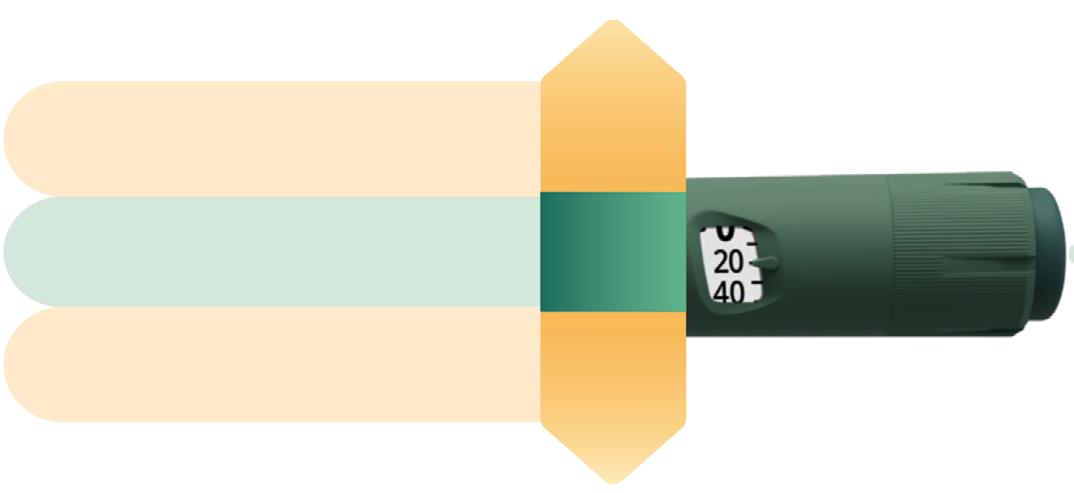
How is Awiqli® supplied? Awiqli® comes in a 1.5 mL and a 3.0 mL FlexTouch® pen. 2
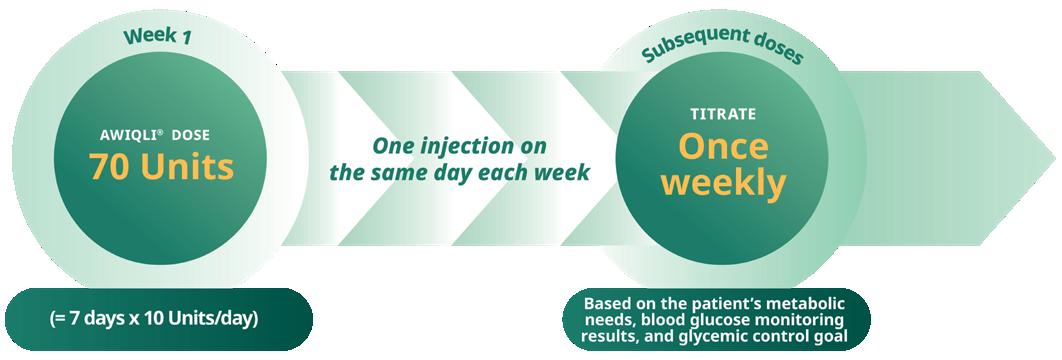
• Awiqli® should be injected subcutaneously once weekly on any day of the week, but preferably the same day each week. 2
• Awiqli® FlexTouch® pens are co-packaged with the NovoFine® Plus needles.
• A new needle must be used for each injection. 2
How should insulin-naïve patients with T2DM be started on Awiqli®?
The recommended once-weekly starting dose of Awiqli® for insulin-naïve patients with T2DM is 70 Units. 2
What is the starting dose for patients with T2DM already on basal insulin therapy and switching to Awiqli®?
The recommended once-weekly starting dose for patients with T2DM already on basal insulin therapy is the current daily basal insulin dose x7. 2
For patients requiring a one-time additional dose
Depending on the patient’s glycemic control and hypoglycemia history, for the first dose only (week 1), a one-time additional dose of 50% of Awiqli® may be administered. When assessing the need for a onetime additional dose, the risk of hypoglycemic events (due to potential medication errors) should be weighed against temporary worsening of glycemic control (hyperglycemia). 2
The one-time additional dose MUST NOT be added for the second injection onward.
Since patients may forget to remove the one-time additional dose after the first injection, instruct them to check that they inject the correct dose, especially for the first and second injections. 2
Please refer to the Product Monograph for complete dosing information and additional dosing information for patients with type 1 diabetes.
What is the titration schedule for Awiqli®?
Titration should be based on the patient’s metabolic needs, blood glucose monitoring results, and glycemic goal. 2
Example titration schedule
In the ONWARDS clinical trials, the dose of Awiqli® was titrated weekly in ±20 Unit increments.3,4
Weekly dose adjustments were based on three pre-breakfast SMBG values.†
Titrate up
If mean pre-breakfast SMBG value is above target range
No change
If mean pre-breakfast SMBG value is within target range
Titrate down
If lowest pre-breakfast SMBG value is bellow target range
Is there coverage for Awiqli®?
Awiqli® may be covered by private insurance. Instruct your patients to check with their provider.5
Subsequentdoses
* Comparative clinical significance not established.
** For complete dosing and administration information, please refer to the Product Monograph.
† In ONWARDS 1 and 3, dose adjustments were based on three pre-breakfast SMBG readings (on the two days prior to and on the day of titration). Titration was based on the lowest reading value, if any of the three SMBG readings were below the lower limit of the target glucose range. If all three SMBG readings were above this limit, titration was based on the mean of the readings.3,4
‡ Glycemic control was defined as change in A1C from baseline.
SMBG: self-measured blood glucose.
How did Awiqli® compare with Tresiba® and insulin glargine U100 in head-to-head trials in insulin-naïve patients with T2DM?
Awiqli® demonstrated greater glycemic control‡ vs. once-daily basal insulins Tresiba® and insulin glargine U100. 2
ONWARDS 3 study¶: Awiqli® vs. Tresiba®
Patients: Insulin-naïve with T2DM on OAD(s) or GLP-1 RA
At week 26, the estimated mean A1C change from baseline was -1.57% with Awiqli® vs. -1.36% with Tresiba®; non-inferiority and superiority were confirmed. 2,3
ETD (95% CI): -0.21% (-0.34, -0.08). Non-inferiority of Awiqli® vs. Tresiba® confirmed (p<0.001). Superiority in favour of Awiqli® confirmed (p=0.0016). 2,3
(n=294) Tresiba® (n=294)
No statistically significant differences in hypoglycemic events (clinically significant or severe£§) observed with once-weekly Awiqli® vs. Tresiba® at week 26. 2
Incidence per PYE: Awiqli®, 0.31 (n=293); Tresiba®, 0.15 (n=293; p=0.1091)2
ONWARDS 1 study¥: Awiqli® vs. Insulin glargine U100
Patients: Insulin-naïve with T2DM on OAD(s) or GLP-1 RA
At week 52, the estimated mean A1C change from baseline was -1.55% with Awiqli® vs. -1.35% with insulin glargine U100; non-inferiority and superiority were confirmed. 2,4 ETD (95% CI): -0.19% (-0.36, -0.03). Non-inferiority of Awiqli® vs. insulin glargine U100 confirmed (p<0.001). Superiority in favour of Awiqli® confirmed (p=0.021).2,4
(n=492)
No statistically significant differences in hypoglycemic events (clinically significant or severe£§) observed with once-weekly Awiqli® vs. insulin glargine U100 at week 52. 2 Incidence per PYE: Awiqli®, 0.30 (n=492); insulin glargine U100, 0.16 (n=492; p=0.0611)2
Contraindications:
• During episodes of hypoglycemia
• In patients who are hypersensitive to this drug or to any ingredient in the formulation, including any non-medicinal ingredient, or component of the container
Most serious warnings and precautions: Hypoglycemia is the most common adverse effect of insulin products including Awiqli®. As with all insulin products the timing of hypoglycemia may differ.
• Glucose monitoring is required.
• Uncorrected hypoglycemic or hyperglycemic reactions can cause loss of consciousness, coma, and/or death.
• Switching a patient between another type, brand, or manufacturer of insulin and Awiqli® should be done under medical supervision and may result in the need for a change in dosage. Changes in insulin regimen from other insulins to Awiqli® may result in increased risk of hypoglycemia or hyperglycemia. Awiqli® must not be administered more frequently than once a week.
• Medication errors have been reported in which patients accidentally administer shortacting insulin instead of basal (long-acting) insulin. Specific attention should be paid when switching from a daily basal insulin to Awiqli®, which is administered weekly.
• Inspect Awiqli® visually prior to administration and use only if the solution appears clear and colourless.
• Never mix Awiqli® with any other insulin.
• Awiqli® must not be used in combination with other long-acting (basal) insulins (e.g., insulin detemir, insulin glargine, or insulin degludec).
• Never administer Awiqli® by intramuscular (IM) injection, intravenously (IV), or with an insulin infusion pump.
Administration:
• Inspect visually prior to administration and use only if the solution appears clear and colourless
• Do not mix with any other insulin, administer intravenously, administer intramuscularly, or use in insulin infusion pumps
• For patients requiring a one-time additional dose please refer to the Product Monograph Other relevant warnings and precautions:
• Refer to respective product monographs for concomitant oral antidiabetic agents for their warnings and precautions
• Stress or concomitant illness, especially infections and febrile conditions, may change insulin requirements
• Risks associated with sharing insulin delivery devices
• Fluid retention and congestive heart failure with concomitant use of a peroxisome proliferator-activated receptor (PPAR) gamma agonist
• Driving and operating machinery
• Changes in insulin regimen
• Hypokalemia
• Patients with hepatic or renal dysfunction
• Risk of immune responses (e.g., hypersensitivity reactions, lipodystrophy and cutaneous amyloidosis, injection site and local allergic reactions)
• Antibody production
• Diabetic retinopathy
• Pregnant and nursing women or women of childbearing potential
• Pediatrics
• Geriatrics
For more information:
Please consult the Product Monograph at www.AwiqliPM-e.ca for more information relating to adverse reactions, drug interactions, and dosing information which have not been discussed in this piece. The Product Monograph is also available by calling us at 1-800-465-4334.
Scan to visit Awiqli.ca�
¶ ONWARDS 3: 588 insulin-naïve adult patients with inadequately controlled T2DM on ≥1 oral antidiabetic agents or a GLP-1 RA were randomized to Awiqli® once weekly or Tresiba® U100 once daily in a 26-week, randomized, double-blinded, active-controlled, parallel-group, multicentre, multinational, treat-to-target trial. Pre-trial non-insulin antidiabetic medications were continued as background therapy in both treatment arms throughout the entire trial except for sulfonylureas and glinides, which were reduced at randomization by approximately 50% at the discretion of the investigator. The primary endpoint of the trial was the difference in change from baseline in A1C between insulin Awiqli® and Tresiba® after 26 weeks of treatment to a non-inferiority limit of 0.3%.2
# Missing values were imputed using multiple imputation based on the change from LAOT-WOB value (last available on-treatment without initiation of bolus insulin for more than 2 weeks) for subjects who had an intercurrent event, but have a measurement at the landmark visit. In ONWARDS 3, there were 3.8% of subjects in the Awiqli® arm and 3.1% in the Tresiba® arm for whom A1C data were missing at week 26.
£ Clinically significant hypoglycemia was defined as a plasma glucose <3.0 mmol/L, confirmed with a blood glucose meter.2
§ Severe hypoglycemia was defined as hypoglycemia associated with severe cognitive impairment requiring external assistance for recovery.2
¥ ONWARDS 1: 984 insulin-naïve adult patients with inadequately controlled T2DM on ≥1 oral antidiabetic agents or a GLP-1 RA were randomized to Awiqli® once weekly or insulin glargine U100 once daily in a 52-week, randomized, open-label, active-controlled, parallel-group, multicentre, multinational, treat-to-target trial. Pre-trial non-insulin antidiabetic medications were continued as background therapy in both treatment arms throughout the entire trial except for sulfonylureas and glinides, which were discontinued at randomization. The primary endpoint of the trial was the difference in change from baseline in A1C between insulin Awiqli® and insulin glargine U100 after 52 weeks of treatment to a non-inferiority limit of 0.3%.2
1. Data on file. 2. Awiqli® Product Monograph. Novo Nordisk Canada Inc. March 12, 2024. 3. Lingvay I, et al. JAMA . 2023;330(3):228–237. 4. Rosenstock J, et al. N Engl J Med 2023;389(4):297–308. 5. Data on file – Coverage.
All trademarks and registered trademarks are the property of their respective owners. Awiqli® is a registered trademark of Novo Nordisk A/S and used under license by Novo Nordisk Canada Inc. Novo Nordisk Canada Inc., Tel: (905) 629-4222 or 1-800-465-4334. www.novonordisk.ca
Awiqli®
Practice Experts
MINOR AILMENT THERAPEUTICS
By Nardine Nakhla / P. 14
PRACTICAL DIABETES
By Shelley Diamond / P. 21
Natural doesn’t mean neutral: Navigating high-risk self-care products in older adults
Case
RT, a 72-year-old male, visits your pharmacy seeking advice for joint pain and insomnia. He has been taking glucosamine for arthritis, along with diphenhydramine and valerian root to help with sleep. Recently, he has been experiencing daytime drowsiness and digestive discomfort, which he suspects are due to these supplements. Additionally, RT occasionally uses nonprescription-strength ibuprofen, but has noticed worsening acid reflux, despite being on a prescription-strength proton pump inhibitor (PPI) for his pre-existing (diagnosed) gastroesophageal reflux disease (GERD).
He also adequately manages hypertension with medication but cannot recall the name. RT is frustrated that his symptoms persist, despite following supplement recommendations from friends. He also suffers from mild depression, which he prefers to self-manage.
Background
The use of over-the-counter (OTC) and natural health products (NHPs) is widespread among older adults, largely due to the perception that these products are safe and “natural.” However, older adults are particularly vulnerable to the risks associated with these products, including drug interactions, adverse effects and therapeutic duplication.1 The rising prevalence of multimorbidity, frailty and polypharmacy among older adults amplifies the risk of unintended misuse, highlighting the critical role of
Our pharmacist experts share information and ideas to support your daily practice
ADVERSE REACTIONS
By Sandra Knowles / P. 24
FIGURE 1
Key Findings on Nonprescription & Natural Health Product Polypharmacy among Middle-Aged and Older Canadians4
Prevalence of Polypharmacy:
• 21% of Canadian adults used five or more prescription medications.
• 21% used five or more nonprescription medications.
• 16% used at least three prescription and three nonprescription medications concurrently.
Gender Differences:
• Women had a higher prevalence of nonprescription and concurrent prescription and nonprescription medication use compared to men.
Age-Related Patterns:
• Older adults (65 and above) had a higher prevalence of both prescription and nonprescription/ natural health product polypharmacy than middle-aged individuals (4564), indicating an increased burden of medication use with age.
Role of Healthcare Providers:
• The study highlighted the critical role of healthcare providers, particularly pharmacists, in managing and optimizing polypharmacy in older adults, with a focus on OTC and NHP use.
pharmacists in managing these risks.2-4 Many older adults frequently turn to OTCs and NHPs to manage symptoms such as joint pain or insomnia.2,5 Unfortunately, healthcare providers are often unaware of the extent of patient reliance on these products. Like many patients, RT did not disclose his use of NHPs or OTCs during healthcare provider consultations, and healthcare professionals may not always inquire thoroughly.6 This communication gap is further widened by the limited availability of patient-friendly information on the risks, effectiveness and quality of these
PharmD
Potentially inappropriate nonprescription medications for older adults9
• Risk of GI bleeding & ulcers: High doses or chronic use increases the risk of gastrointestinal (GI) bleeding and ulcers.
• Renal dysfunction: Can exacerbate renal dysfunction, especially with chronic use.
• Cardiovascular concerns: May raise blood pressure and increase the risk of heart failure, particularly in those with pre-existing conditions. The risks are heightened when used with other medications or alcohol.
• Hepatotoxicity: High doses or chronic use can lead to liver damage and acute liver failure.
• Accidental overdose: Older adults are at risk due to the presence of acetaminophen in over 400 products, which increases the chances of unintentional overdose, especially with alcohol or prolonged use.
• GI bleeding risk: High doses or chronic use increases the risk of GI bleeding.
• Risk of misdiagnosis: Symptoms of chronic salicylate poisoning (e.g., confusion, memory loss, chest pain, shortness of breath) may mimic dementia, heart disease or other conditions.
• Functional decline: Can lead to a decrease in the ability for self-care
• Risk of dehydration & constipation: Can lead to severe constipation and fluid loss.
• Neurotoxicity: Prolonged use may cause cognitive decline, balance issues, and an increased risk of falls in older adults.
• Anticholinergic effects: Increase the risk of confusion, urinary retention and constipation
• Sedative effects: Heighten risk of dizziness, falls and fractures
• Cognitive and physical safety concerns: May exacerbate cognitive decline and significantly raise fall-related injury risks
• Risk of C. difficile infection: Long-term use can increase the risk of Clostridioides difficile infection, which can cause severe diarrhea and potentially life-threatening inflammation of the colon, particularly in older adults who may already be vulnerable to infections.
• Bone loss and fracture risk: Chronic use can interfere with calcium absorption, leading to reduced bone density over time. This increases the risk of osteoporosis and fractures, particularly in older adults who are already at higher risk for bone loss.
• Anticholinergic effects: Can cause cognitive impairment, confusion, dry mouth, urinary retention and constipation.
• Sedative effects: Increase the risk of falls, especially in older adults with mobility issues.
• Aspiration risk: Can lead to aspiration pneumonia, particularly in older adults with swallowing difficulties.
• Nutritional deficiencies: Chronic use may interfere with the absorption of fatsoluble vitamins (A, D, E, K), leading to deficiencies.
• Cardiac risk: High doses can cause serious cardiac side effects, including lifethreatening arrhythmias.
• Misuse potential: In very high doses, loperamide can produce opioid-like effects, leading to potential misuse.
• Constipation risk: May cause significant constipation, leading to gastrointestinal complications.
• Risk of serotonin syndrome: Cough suppressants and decongestants can increase the risk of serotonin syndrome when combined with other medications.
• Cardiac risk: Decongestants can increase blood pressure, which can be problematic for patients with hypertension.
• Blood glucose increase: Decongestants can raise blood glucose levels in patients with type 2 diabetes.
• Unintentional overdose: The presence of analgesics like acetaminophen in combination products increases the risk of accidental overdose.
products. Consequently, many older adults underestimate the potential dangers of nonprescription products, believing that anything available without a prescription is inherently low risk.1 About 7% of older adults have major depressive disorder, and 10% suffer from insomnia.5 These conditions are associated with negative outcomes, such as reduced quality of life, increased frailty, dementia risk, mortality and higher utilization of healthcare services. Current treatments for these conditions are not always optimal, and evidence suggests that many older adults prefer
to self-manage.5 Part of this selfmanagement involves using OTCs and NHPs that claim to treat or prevent conditions like depression and insomnia, such as St. John’s wort or first-generation antihistamines like diphenhydramine.5
A recent Canadian study, based on the Canadian Health Measures Survey, found that polypharmacy was common among Canadian adults. In fact, 84.4% of individuals aged 40–79 reported using at least one OTC or NHP. Furthermore, 30.9% of respondents stated they were using two or more of each prescription and OTC/NHP (totalling four or more
medications). Notably, 15.8% reported taking three or more of both categories (prescription and OTC/NHP). These estimates were all higher in women than in men.4 Figure 1 summarizes other key findings of this study.4
Concerns with OTC and NHP use in older adults
1. Polypharmacy and drug interactions: Combining prescription medications with OTCs and NHPs significantly increases the risk of drug interactions. In older adults, polypharmacy (≥ 5 medications) is common due to the presence of multiple chronic conditions such as hypertension, arthritis and diabetes. Adding unmonitored NHPs, such as ginseng, St. John’s wort, or omega-3s, can lead to serious interactions. For example, St. John’s wort can reduce the effectiveness of antidepressants and antihypertensives, while nonsteroidal anti-inflammatory drugs (NSAIDs) can exacerbate hypertension and cause kidney damage when combined with antihypertensive drugs.7
2. Age-related pharmacokinetic changes: Aging alters how medications are metabolized, distributed and excreted, leading to possible drug accumulation and increased risk of side effects. Reduced liver and kidney function makes older adults more susceptible to adverse effects, even from seemingly safe products. For instance, diphenhydramine and valerian root can cause excessive drowsiness and confusion, raising the risk of falls. Additionally, NHPs are less regulated than prescription and OTC medicines, leading to inconsistent dosages and purity, which can result in underdosing (ineffectiveness) or overdosing (toxicity). Pharmacists should steer patients towards regulated products (i.e., those with a Drug Identification Number [DIN] or Natural Product Number [NPN]) and emphasize the importance of discussing all OTC and NHP use with healthcare providers. Doing so ensures patients are using tested, high-quality options, while open communication with healthcare providers helps safeguard their overall health.
3. Risks of inappropriate use and misuse: Older adults are prone to unintentional misuse of OTCs and NHPs due to many factors including
TABLE 2
Potentially Inappropriate Natural Health Products for Older Adults10
Ginkgo biloba
• Increased bleeding risk
• May potentiate seizures
• Decreases effectiveness of other medications
Glucosamine
• May affect insulin resistance or worsen blood glucose control in patients with diabetes or prediabetes
• May cause side effects such as nausea, diarrhea or indigestion
• May increase bleeding risk, especially in those taking anticoagulants
Omega-3 fatty acids
(n-3 polyunsaturated fatty acids)
• May increase bleeding risk, especially in those taking anticoagulants
• May reduce blood pressure
St. John’s wort (Hypericum perforatum)
• CYP enzyme interactions
• Risk of serotonin syndrome
• Decreased effectiveness of other medications
Valerian root
• Sedation and drowsiness: increased risk of falls
• Interactions with medications (e.g., benzodiazepines, sleeping pills)
• Potential for dependency
Vitamin E
• increased bleeding risk
Calcium Supplements
• Constipation
• Hypercalcemia
• Hypercalciuria
• Higher rates of dysphagia and swallowing issues
cognitive impairment, difficulty reading labels or underestimating risks. Despite recent improvements in drug label legibility (Health Canada increased the minimum font size from 4 to 6 points), older adults with cognitive impairment or visual limitations may still struggle to understand dosage instructions, leading to unintentional misuse and prolonged use of these products at higher-than-recommended doses. This increases the risk of adverse effects, drug interactions and hospitalizations. Therapeutic duplication—such as taking multiple products containing acetaminophen—raises the risk of liver toxicity, particularly in those with compromised liver function.
4. Lack of awareness of risks: Many older adults and their caregivers mistakenly perceive OTCs and NHPs as safe or “natural” alternatives to prescription medications. This misconception, combined with healthcare providers often not being aware of their use, increases the risk of adverse events. It is crucial for healthcare providers to
actively inquire about the use of these products during consultations to ensure safe medication practices.
Pharmacists can consult Tables 1 and 2 to help identify potentially inappropriate nonprescription and natural health products for older adults.7,8
Case analysis
In RT’s case, his use of OTC NSAIDs (ibuprofen) for joint pain, alongside his hypertension medication and proton pump inhibitor (PPI), likely contributes to his worsening acid reflux and could possibly lead to uncontrolled blood pressure. NSAIDs are known to exacerbate gastrointestinal issues like acid reflux and can interfere with blood pressure control. A safer alternative, such as acetaminophen, should be considered for managing pain without affecting his blood pressure.
RT’s use of glucosamine for arthritis may also be contributing to his digestive discomfort, as glucosamine can cause nausea and bloating. These side effects may be more pronounced, given his age and pre-existing GERD. Older adults like RT are particularly prone to gastrointestinal side effects due to age-related changes in digestion and metabolism. Prolonged or incorrect use of laxatives, antacids or other common OTCs (such as PPIs) can further lead to nutrient malabsorption and electrolyte imbalances, exacerbating his existing health issues.
RT’s use of diphenhydramine and valerian root for insomnia is likely causing his daytime drowsiness. Both are known to cause sedation and confusion, particularly in older adults, which can increase the risk of falls and other safety concerns. These effects are worsened by age-related pharmacokinetic changes, such as reduced liver and kidney function, which slow drug clearance from the body.
Finally, RT’s self-management of mild depressive symptoms with supplements and OTC medications raises concerns about drug interactions and ineffectiveness. Many older adults prefer nonprescription solutions, but pharmacists should assess whether these are appropriate, given his complex medication regimen. RT’s frustration with persistent symptoms highlights the need for a comprehensive
medication review and the importance of discussing all OTC and NHP use with his healthcare providers.
Case recommendation
To help RT, your primary goal should be to optimize his symptom management while minimizing drug interactions and adverse effects. Here are the key steps:
1. Comprehensive medication review: Conduct a thorough review of all OTCs and NHPs RT is taking. Emphasize the importance of communicating all supplement use with healthcare providers to avoid interactions and therapeutic duplication, particularly with his hypertension and acid reflux medications.
2. Switch pain management: Recommend switching from OTC ibuprofen to a safer alternative like acetaminophen to manage his joint pain. Acetaminophen has fewer gastrointestinal and cardiovascular side effects compared to NSAIDs, especially for patients with hypertension and acid reflux. Ensure RT understands the proper dosage to avoid unintentional overdose, especially given the potential presence of acetaminophen in other products he may be taking.
3. Address digestive discomfort: Discuss the possibility that his glucosamine supplement may be contributing to his digestive issues. If the symptoms persist, consider recommending a glucosamine-free joint supplement or alternative therapies for arthritis relief. Review his PPI use to ensure it is still necessary and is being used correctly, as prolonged use may contribute to nutrient malabsorption.8
4. Improve sleep management: Given RT’s daytime drowsiness, recommend discontinuing or reducing his use of diphenhydramine and valerian root, both of which can cause sedation and confusion in older adults, increasing the risk of falls. Instead, suggest nonpharmacologic sleep aids or, if needed, short-term use of safer alternatives for insomnia. Encourage sleep hygiene practices, such as maintaining a regular sleep schedule, reducing caffeine intake and creating a restful sleep environment.
5. Monitor mental health: Given RT’s mild depressive symptoms, refer him to his healthcare provider to discuss appropriate treatments or lifestyle modifications. While self-managing mild depression is common, it’s important to monitor for worsening symptoms and avoid relying solely on unproven supplements like St. John’s wort, which can have significant drug interactions.
6. Central geriatric principle, “Start Low and Go Slow”: As RT is an older adult, and potentially frail, follow the principle of “Start Low and Go Slow” when making any medication changes. This approach reduces the risk of adverse effects, given any age-related pharmacokinetic and pharmacodynamic changes. Keep in mind that research is limited on how medications affect frail older adults, and there can be significant variability in how individuals respond to therapy.
By following these steps, you can help RT achieve better symptom control while minimizing the risk of drug interactions and adverse events.
Conclusion
As the population ages and the use of NHPs and OTCs increases, it is essential for healthcare providers—especially pharmacists—to take a proactive role in engaging older adults about self-care product use. By identifying potential risks, managing drug interactions, and providing clear guidance on safe and effective usage, pharmacists can help older adults avoid unintentional misuse and adverse effects. The pharmacist’s role is critical in ensuring that older adults like RT can manage their health safely while avoiding the dangers of high-risk NHP and OTC use. With appropriate education, monitoring and communication, we can reduce the risks associated with NHP and OTC use in this vulnerable population, ensuring better outcomes and improved quality of life.
Dr. Nardine Nakhla is a practising community pharmacist and a faculty member at the University of Waterloo School of Pharmacy.
REFERENCES
1. Qato DM, Alexander GC, Conti RM, et al. Use of prescription and over-the-counter medications and dietary supplements among older adults in the United States. JAMA 2008;300:286778. doi:10.1001/jama.2008.892.
2. Ford KL, Jorgenson DJ, Landry EJL, et al. Vitamin and mineral supplement use in medically complex, community-living, older adults. Appl Physiol Nutr Metab 2019:44(4):4503. doi:10.1139/apnm-2018-0515.
3. Qato DM, Wilder J, Schumm LP, et al. Changes in prescription and over-the-counter medication and dietary supplement use among older adults in the United States, 2005 vs 2011. JAMA Intern Med 2016;176(4):473-82. doi:10.1001/jamainternmed.2015.8581.
4. Harris DA, Guo Y, Nakhla N, et al. Prevalence of prescription and non-prescription polypharmacy by frailty and sex among middle-aged and older Canadians. Health Rep 2022;33(6):3-16. doi:10.25318/82-003-x202200600001-eng.
5. Frost R, Mathew S, Thomas V, et al. A scoping review of over-the-counter products for depression, anxiety and insomnia in older people. BMC Complement Med Ther 2024;24(1):275. doi:10.1186/s12906-024-04585-0.
6. Silverstein DD, Spiegel AD. Are physicians aware of the risks of alternative medicine? J Community Health 2001;26(3):159-74. doi:10.1023/a:1010303528081.
7. Izzo AA, Ernst E. Interactions between herbal medicines and prescribed drugs: an updated systematic review. Drugs 2009;69(13):1777-98. doi:10.2165/11317010-000000000-00000.
8. Freedberg DE, Kim LS, Yang YX. The risks and benefits of long-term use of proton pump inhibitors: Expert review and best practice advice from the American Gastroenterological Association. Gastroenterology 2017;152(4):70615. doi:10.1053/j.gastro.2017.01.031.
9. Nakhla N. Patient self-care and minor ailments. Compendium of Therapeutic Choices for Minor Ailments. Canadian Pharmacists Association; 2019.
10. Skulas-Ray AC, Wilson PWF, Harris WS, et al. Omega-3 fatty acids for the management of hypertriglyceridemia: a science advisory From the American Heart Association. Circulation 2019;140(12):e673-e691. doi:10.1161/CIR.0000000000000709.
By Dragana Skokovic-Sunjic, RPh BScPhm NCMP
Upon successful completion of this continuing education lesson, you will be better able to:
1. Recognize the symptoms of perimenopause and menopause and their effect on overall health
2. Summarize the latest recommendations for vasomotor symptom relief, and the benefits and risks of hormonal and nonhormonal options
3. Describe common misconceptions associated with menopausal symptoms and provide evidence-based advice to patients and prescribers
4. Determine the pharmacist’s role in advising patients deciding on approaches to menopausal symptom management
By Sherilyn Houle, BSP, PhD, CTH, AFTM RCPS(Glasg)
Upon successful completion of this continuing education lesson, you will be better able to:
1. Describe key differences in viral epidemiology and sequelae between COVID‑19 and influenza
2. Define populations at elevated risk of severe outcomes from COVID‑19, influenza, pneumococcal disease, and RSV
3. Educate patients on why COVID‑19 vaccines have been updated and why they may be recommended outside of the respiratory virus season
Have you considered
for your patients?
about
More than 156,000 patients in Canada have been prescribed REXULTI across its 3 indications since its launch in 2017.1,2*
What is REXULTI indicated for?
PrREXULTI® (brexpiprazole) is indicated for:5
• Treatment of schizophrenia (SZ) in adults.
• Use as an adjunct to antidepressants for the treatment of major depressive disorder (MDD) in adult patients with an inadequate response to prior antidepressant treatments during the current episode.
• Symptomatic management of agitation associated with Alzheimer’s dementia (AAD) in patients with aggressive behaviour, unresponsive to non-pharmacological approaches.
What is an example of a patient with MDD for which Rexulti may be considered?
Meet Catherine†
• 34-year-old teacher diagnosed with MDD
• Current episode ongoing for 6 months
▶ Treatment: Currently on antidepressant treatment.
▶ Current presentation:
• Has experienced some improvement but expresses frustration that her medication is not providing enough relief.
• Complains of pervasive sad mood and anxious symptoms due to her depression.
• Has not been able to fully engage in routine family activities in the past months.
CANMAT guidelines recommendation
* Clinical significance is unknown.
** See guidelines for complete recommendations.
† Fictional case. May not be representative of the general population.
‡ Results from a phase 3, 6-week, randomized, double-blind, placebo-controlled fixed-dose trial in adult patients who fulfilled the DSM-IV-TR criteria for MDD, with or without symptoms of anxiety, had an inadequate response to 1–3 prior antidepressant treatment(s) in current episode and an inadequate response during 8 weeks of prospective antidepressant treatment. Patients remained on background antidepressant treatment and were randomized to receive adjunct placebo (n=191) or adjunct REXULTI (0.5 mg/day for week 1, 1 mg/day for week 2, 2 mg/day for week 3 onward; n=187).
IN MDD:
What was the efficacy data for REXULTI in the PYXIS clinical trial?
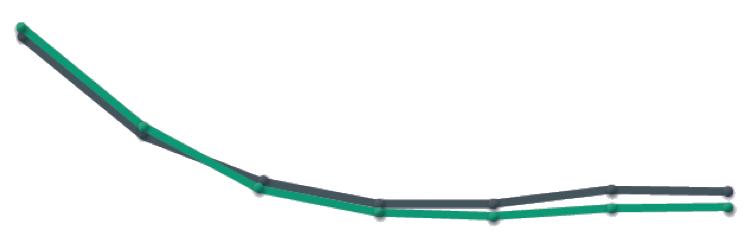
As shown in the pivotal PYXIS trial, REXULTI demonstrated efficacy as an adjunctive treatment for MDD at week 6 for both primary and secondary endpoints.5,6‡
▶ Primary endpoint
When taken with an antidepressant, adding REXULTI improved depression symptoms, as measured by MADRS at week 6 (clinician-rated).5,6‡
Depressive symptoms (MADRS Total score)
Demonstrated improvement as early as week 1
3.12-point greater reduction for patients treated with antidepressant + PrREXULTI® 2 mg/day vs. antidepressant + placebo at week 6 (p=0.0001) 2
Adapted from Product Monograph and Thase et al. (inclu. Supplementary Material)
▶ Key secondary endpoint
REXULTI demonstrated improvement in functioning at week 6, as measured by the SDS Mean score.5,6‡
Functional impairment (SDS Mean score)
Statistically significant greater improvement in SDS Mean score for patients treated with antidepressant + PrREXULTI® 2 mg/day than with antidepressant + placebo at week 6 (p<0.05)
Adapted from Product Monograph and Thase et al. Supplementary Material
Demonstrated SDS domain results at week 6
The social life and family life domains showed statistically significant improvement for patients taking antidepressant + REXULTI 2 mg/day vs. antidepressant + placebo (-1.54 vs. -1.04, p=0.0323; -1.33 vs. -0.73, p=0.0129; respectively), while the work/school domain did not (-1.09 vs. -0.90, p=0.4771).
IN AAD:
What was the efficacy data for PrREXULTI® in the AAD clinical trial Study 11?
In REXULTI’s AAD pivotal trial, REXULTI demonstrated efficacy in improving the frequency of manifestations of agitation symptoms at week 12.5,7§
▶ Primary endpoint
REXULTI demonstrated improvement in the frequency of manifestations of agitation symptoms, observed at week 12 as measured by the CMAI (clinician rated).5,7§
CMAI Total score at week 12
Adapted from Product Monograph and Lee et al. 2023
What is the tolerability profile of REXULTI
in trials of patients with MDD and AAD?
REXULTI was demonstrated to be generally well tolerated. The tables below outline the most commonly reported adverse events in trials of patients with MDD and AAD.
MDD: Treatment-emergent adverse events (TEAEs) with incidence of ≥5% in any antidepressant + REXULTI dose group (1 to 3 mg) and greater than antidepressant + placebo group in short-term Phase 3 clinical trials.5
AAD: TEAEs with incidence of ≥2% in any REXULTI dose group (0.5 to 3 mg) and greater than placebo group in 12-week, placebo-controlled, fixed-dose and flexible dose trials.5
Adapted from Product Monograph
Adverse events reported as reasons for discontinuation of treatment in four phase 3, 6-week, placebo-controlled trials.5
• REXULTI + antidepressant: 2.4% (37/1520)
• placebo + antidepressant: 0.7% (8/1132)
The maximum approved dose of REXULTI for MDD in Canada is 2 mg/day. No additional benefit was demonstrated at doses greater than 2 mg/day.
§ Results from a 12-week, randomized, double-blind, placebo-controlled fixed-dose trial in adult patients with: a probable Alzheimer’s disease diagnosis as per NINCDS-ADRDA Criteria; MMSE ≥5 and ≤22; Total score of ≥4 on the agitation/aggression item of the NPI/NPI-NH; exhibited sufficient agitation behaviours at time of entry to warrant use of pharmacotherapy, after excluding other factors; and met criteria for CMAI Factor 1 Aggressive Behaviours (To meet this criterion, one of the following must be displayed: 1) aggressive behaviours occurring several times per week, or 2) ≥2 aggressive behaviours occurring once or twice per week, or ≥3 aggressive behaviours occurring less than once per week.). Patients received REXULTI 2 mg/day or 3 mg/day (n=225), or placebo (n=116).
Discontinuation rates due to adverse events5
• REXULTI: 6.3% (41/655)
• placebo: 3.4% (13/388)
What is the recommended dosing for REXULTI?
REXULTI provides simple once-daily dosing and can be taken with or without food. Dosage should be maintained at the lowest effective level and patients should be periodically reassessed to determine continued need and appropriate dosage for treatment.5
MDD
▶ Recommended dosing
Adapted from Product Monograph ▶
The required length of adjunctive treatment with REXULTI is not known. When prescribed as an adjunct to antidepressants in the treatment of MDD, REXULTI should be used for the shortest period of time that is clinically indicated.
CANMAT: Canadian Network for Mood and Anxiety Treatments; MADRS: Montgomery-Asberg Depression Rating Scale (a 10-item physician-administered questionnaire rating patients’ symptoms of apparent sadness, reported sadness, inner tension, reduced sleep, reduced appetite, concentration difficulties, lassitude, inability to feel, pessimistic thoughts and suicidal thoughts, on a scale from 0 to 6 with higher values reflecting more severe symptoms); LS: least squares; SDS: Sheehan Disability Scale (a 3-item self-rated instrument used to assess functional impairment in three domains, with higher values reflecting greater impairment); DSM-IV-TR: Diagnostic and Statistical Manual of Mental Disorders, Fourth Edition, Text Revision; CMAI: Cohen-Mansfield Agitation Inventory (a clinicianrated questionnaire consisting of 29 items, which assess the frequency of manifestations of agitated behaviours in elderly patients, based on caregiver input); CGI-S: Clinical Global Impression Severity; NINCDS-ADRDA: National Institute of Neurological and Communicative Disorders and Stroke and the Alzheimer’s Disease and Related Disorders Association; MMSE: Mini-Mental State Examination; NPI/NPI-NH: Neuropsychiatric Inventory/Neuropsychiatric Inventory Nursing Home.
▶ Recommended dosing
1.
from Product Monograph
▶ Recommended dose titration
Recommended dosing
▶ Dose titration
Adapted from Product Monograph
See the Product Monograph for complete dosing, titration and administration information.
Clinical use:
Consider PrRexulti® for patients like Catherine.
PrREXULTI® is not indicated as an as needed (PRN) treatment for AAD. It may take up to six to eight weeks after REXULTI initiation to demonstrate significant clinical efficacy. The efficacy and safety of REXULTI in the treatment of AAD were demonstrated in two 12-week, randomized, double-blind, placebo-controlled, fixed dose trials in adult patients. When considering the use of REXULTI for the treatment of AAD, clinicians are advised to assess the risks and benefits of the use of REXULTI in elderly patients with AAD keeping in mind the increased risk of mortality in this patient population treated with antipsychotics and the risk predictors for stroke or existing cardiovascular comorbidities.
When considering the use of REXULTI as adjunctive treatment in MDD, clinicians must take into account the safety concerns associated with antipsychotic drugs, a class of drugs to which REXULTI belongs. Safety concerns of this class include: weight gain; hyperlipidemia; hyperglycaemia; tardive dyskinesia; and neuroleptic malignant syndrome. REXULTI should only be prescribed in patients with MDD by clinicians who are aware of the importance and are experienced in the early detection and management of the safety issues associated with this class of drugs. The efficacy and safety of REXULTI in the adjunctive treatment of MDD were demonstrated in 6-week, double-blind, placebo-controlled trials in adult patients. Therefore, the required length of adjunctive treatment with REXULTI is not known. When prescribed as an adjunct to antidepressants in the treatment of MDD, REXULTI should be used for the shortest period of time that is clinically indicated. It
is not known whether efficacy in adjunct treatment is due to REXULTI alone or from combined treatment with an antidepressant.
• The safety and efficacy of REXULTI have not been systematically evaluated in SZ or MDD patients ≥65 years of age, or in AAD patients ≥90 years of age. Use caution when treating geriatric patients.
• REXULTI is not indicated in pediatric patients (<18 years) and its use is not recommended in this population.
Most serious warnings and precautions:
Increased mortality in elderly patients with dementia: Elderly patients with dementia treated with atypical antipsychotic drugs are at an increased risk of death compared to placebo. Analyses of 13 placebo-controlled trials with various atypical antipsychotics (modal duration of 10 weeks) in these patients showed a mean 1.6-fold increase in the death rate in the drug-treated patients. Although the causes of death were varied, most of the deaths appeared to be either cardiovascular (e.g., heart failure, sudden death) or infectious (e.g., pneumonia) in nature.
Other relevant warnings and precautions:
• Body temperature regulation
• Risk of falls and somnolence
• Contains lactose
• Orthostatic hypotension
• Risk of QT prolongation
• Evaluate patients for a history of drug abuse
• Driving and operating machinery
• Reports of hyperglycemia and diabetic ketoacidosis
• Weight gain
• Dyslipidemia
• Hyperprolactinemia
• Priapism
• Risk of leukopenia/neutropenia
• Venous thromboembolism
• Serious hypersensitivity reactions
• Neuroleptic malignant syndrome
• Tardive dyskinesia
• Risk of seizures/convulsions
• Risk of suicide
• Risk of impulse-control disorders/compulsive behaviours
• Severe cutaneous adverse reactions
• Dysphagia
• Should not be used during pregnancy or breast-feeding
• Caution when used in geriatric patient populations due to potential increased risk of cerebrovascular adverse events, including fatalities.
• Monitoring and laboratory tests: blood glucose, fasting lipid profile and body weight, complete blood count (CBC), white blood cell (WBC) and differential counts, prolactin and blood pressure, should be monitored at baseline and periodically throughout treatment.
For more information:
Please consult the Product Monograph at www.rexultimonograph.ca for important information relating to adverse reactions, drug interactions, and dosing information, which have not been discussed in this piece. The Product Monograph is also available by calling us at 1-877-341-9245
References:
1. Health Canada. Notice of Compliance information, February 2024. 2. Data on File. Lundbeck Canada Inc., February 2024. 3. Lam RW, Kennedy SH, Adams C, et al. Canadian Network for Mood and Anxiety Treatments (CANMAT) 2023 Update on Clinical Guidelines for Management of Major Depressive Disorder in Adults. Can J Psychiatry. 2024;1–47. 4. Data on File. Lundbeck Canada Inc., July 2024. 5. REXULTI Product Monograph. Otsuka Pharmaceutical Co., Ltd. 2024. 6. Thase ME, Youakim JM, Skuban A, et al. Efficacy and safety of adjunctive brexpiprazole 2 mg in major depressive disorder: A phase 3, randomized, placebo-controlled study in patients with inadequate response to antidepressants. J Clin Psychiatry. 2015;76(9):1224–1231. (incl. supplementary) 7. Lee D, Slomkowski M, Hefting N, et al. Brexpiprazole for the Treatment of Agitation in Alzheimer Dementia: A Randomized Clinical Trial. JAMA Neurol. 2023;80(12):1307–1316.
All trademarks identified by a ® or a TM are protected trademarks (registered or unregistered) of their owners or licensors.
For more information, please visit www.otsukacanadatm-mc.ca
Diabetes and the use of sugar substitutes
As the prevalence of diabetes continues to rise in Canada, managing blood glucose levels remains a primary concern for individuals with this condition. Among the various dietary modifications recommended for people with diabetes, the use of sugar substitutes has gained significant attention.
Artificial sweeteners, sugar alcohols and steviol glycosides – what are the differences?
Sugar alcohols, artificial sweeteners and steviol glycosides are not the same, although they are used as sugar substitutes in various food products. As there has been a lot of press regarding the safety of sugar alternatives, it is important to highlight their key differences.
SUGAR ALCOHOLS1
What they are: Sugar alcohols, also known as polyols, are a type of carbohydrate. Despite the name, they do not contain alcohol.
Calories: They are usually calorie-free or have very few calories.
Impact on blood glucose: They do not raise blood glucose levels, making them popular in diet drinks and products aimed at people managing diabetes.
Usage: Found in diet sodas, sugar-free desserts, and tabletop sweeteners (e.g., Splenda, Equal).
Side effects: Some people may experience headaches, digestive issues or other sensitivities, though these are relatively rare.
STEVIOL GLYCOSIDES1
What they are: Derived from the leaves of the Stevia rebaudiana plant, Stevia is 200–300 times sweeter than sugar.
Stevia-based sweeteners, examples: Stevia, Truvia, Krisda, Pure Via. Calories: They are usually calorie-free or have very few calories.
Impact on blood glucose: They do not raise blood glucose levels.
Usage: Found in tabletop sweeteners and are also added to drinks, breakfast cereals, yogurt, fillings, gum, spreads, baked products and snack foods.
Side effects: Some Stevia products contain added sugar alcohols and may cause gastrointestinal symptoms. Stevia is also known to be a vasodilator and should be used with caution in those with chronic low blood pressure and/or those taking blood pressure medications.
Benefits and Considerations of Artificial Sweeteners in Diabetes Management
For individuals with diabetes, artificial sweeteners offer several potential benefits:
Weight management
By providing sweetness without the calories, artificial sweeteners have been intended to support weight loss or maintenance efforts, which are often critical in managing type 2 diabetes. Although they were originally thought to reduce insulin resistance and obesity, data in animal models and humans suggest that the effects of artificial sweeteners may actually contribute to metabolic syndrome and the obesity
Advise patients to use sugar substitutes in moderation, emphasizing that they are a tool to complement, not replace, a healthy diet.
epidemic as they lead to decreased satiety, alter glucose homeostasis, and are associated with increased caloric consumption and weight gain.2 Studies have also demonstrated the potential for artificial sweeteners to change the host microbiome and as a result, worsen glycemic control owing to changes in the gut microbiota; however, there is currently no unanimous consensus on this effect due to conflicting studies.3
No effect on glycemic control
Human meta-analyses have reported that artificial sweeteners do not result in weight loss or improved glucose control.4 Artificial sweeteners are included in many sweet foods and were anticipated to be a “sugar” substitute in patients with diabetes.5 However, substituting sugar-sweetened food and beverages with those that have been artificially sweetened may not be as beneficial as once thought.6 There is a general concern that the use of artificial sweeteners may lead to overconsumption of sweet foods and beverages, under the assumption that these are “healthy” or “free” foods. This could inadvertently lead to an increase in caloric intake from other sources.
Cardiovascular risk
A growing body of evidence suggests that artificial sweeteners in general, but especially sugar alcohols like erythritol, appear to promote or foster an enhanced clotting risk. A 2023 study demonstrated that erythritol is both associated with incident MACE (major adverse cardiovascular event) risk and fosters enhanced thrombosis.7 Another study in 2024 reinforced this finding.8 In 2023, the World Health Organization issued a warning that artificial sweeteners such as aspartame and stevia (which
is often blended with erythritol) were linked to a greater risk of type 2 diabetes, cardiovascular disease and death in adults.9 Based on these and other studies, including the use of another sugar alcohol, xylitol,10 people with an increased risk of heart disease or blood clotting should avoid the sugar alternatives erythritol and xylitol entirely.
Link to cancer
There has been controversy as to the relationship between artificial sweeteners and cancer over the years. A 2021 meta-analysis of case control studies examining the relationship between the use of artificial sweeteners and cancer found that there is no sufficient evidence to show whether the use of artificial sweeteners increases or decreases the risk of cancer.11 A recent hazard and risk assessment on the use of aspartame by the World Health Organization classified aspartame as possibly carcinogenic to humans (Group 2B, 3rd highest out of 4 classifications) on the basis of limited evidence for cancer in humans (specifically hepatocellular carcinoma).12 More data from large clinical trials are needed to clarify the relationship between artificial sweeteners and cancer. Current evidence suggests that they are safe when consumed within acceptable daily intake (ADI) levels, but more research is needed to fully understand their longterm effects. ADIs for various artificial sweeteners are available at: https://www. diabetes.ca/DiabetesCanadaWebsite/ media/Managing-My-Diabetes/Tools%20 and%20Resources/sugars-and-sweeteners. pdf?ext=.pdf
Talking with patients about sugar substitutes
As trusted healthcare professionals, pharmacists have an important role in educating patients about the safe use of sugar substitutes. Here are some key points to consider when counselling patients with diabetes:
• Encourage patients to choose a sugar substitute based on their taste preference, cooking needs, and any specific health conditions (e.g., avoiding aspartame in phenylketonuria).
• Advise patients to use sugar substitutes in moderation, emphasizing that they are a tool to complement, not replace, a healthy diet. Encourage a focus on whole, nutrient-dense foods.
• Educate patients on reading food labels, to identify hidden sources of sugar substitutes and to be aware of the quantities consumed in order to avoid exceeding the ADI level.
• Suggest that patients monitor their blood glucose levels after consuming products with sugar substitutes to understand their personal glycemic response, as individual reactions may vary.
• Keep abreast of the latest research and guidelines on sugar substitutes, as the landscape of diabetes management is continually evolving.
Summary
Given the mixed evidence on their health effects, there is a clear need for further research to fully elucidate the role of sugar substitutes in metabolic health and their suitability as part of dietary interventions for patients with diabetes.
Shelley Diamond is a pharmacist and co-founder of www.diabetescarecommunity.ca, an extensive online resource for Canadians living with diabetes, their families and healthcare professionals.
REFERENCES
1. Diabetes Canada. Sugars and sweeteners. https://guidelines.diabetes.ca/GuideLines/ media/Docs/Patient%20Resources/sugars-andsweeteners.pdf (accessed September 22, 2024).
2. Pearlman M, Obert J, Casey L. The association between artificial sweeteners and obesity. Curr Gastroenterol Rep 2017;19(12):64.
3. Conz A, Salmona M, Diomede L. Effect of non-nutritive sweeteners on the gut microbiota. Nutrients 2023;15(8):1869.
4. Iizuka K. Is the use of artificial sweeteners beneficial for patients with diabetes mellitus? The advantages and disadvantages of artificial sweeteners. Nutrients 2022;14(21):4446.
5. Evert AB, Dennison M, Gardner CD, et al. Nutrition therapy for adults with diabetes or prediabetes: a consensus report. Diabetes Care 2019;42:731-54.
6. Nichol AD, Holle MJ, An R. Glycemic impact of nonnutritive sweeteners: a systematic review and meta-analysis of randomized controlled trials. Eur J Clin Nutr 2018;72:796-804.
7. Witkowski M, Nemet I, Alamri H, et al. The artificial sweetener erythritol and cardiovascular event risk. Nat Med 2023;29:710-8.
8. Witkowski M, Wilcox J, Province V, et al. Ingestion of the non-nutritive sweetener erythritol, but not glucose, enhances platelet reactivity and thrombosis potential in healthy volunteers – brief report.
Arterioscler Thromb Vasc Biol 2024;44(9):2136-41.
9. World Health Organization. Use of nonsugar sweeteners: WHO guideline. May 15, 2023. https://iris.who.int/bitstream/hand le/10665/367660/9789240073616-eng. pdf?sequence=1 (accessed September 4, 2024).
10. Witkowski M, Nemet I, Li XS, et al. Xylitol is prothrombotic and associated with cardiovascular risk. Eur Heart J 2024;45:2439-52.
11. Liu L, Zhang P, Wang Y, et al. The relationship between the use of artificial sweeteners and cancer: a meta-analysis of case-control studies. Food Sci Nutr 2021;9:4589-97.
12. World Health Organization. Aspartame hazard and risk assessment results released. July 14, 2023. https://www.who.int/news/item/14-072023-aspartame-hazard-and-risk-assessmentresults-released (accessed September 1, 2024).
Protect and relieve your
symptom relief from heartburn associated
favourable safety profile with no reported
patients are required to
discontinue use of PPIs before an H. pylori test3
patients in recurrent use or
EsopH® has been clinically proven to provide fast and e ective symptom relief associated with acid-reflux and heartburn1†
In a study of 154 NERD patients, EsopH® was demonstrated to be significantly more e ective in providing symptom relief vs. placebo (heartburn, retrosternal pain, regurgitation, and acid taste). The proportion of patients with at least a 3-point reduction in the total symptom score‡ at the end of 2 weeks was: EsopH® 52.6% (40/76); placebo 32.1% (25/78).1†
Adapted from Savarino V., et al. All patients were also on acid suppression with standard dose PPIs
EsopH® liquid gel should be taken orally after each meal and at bedtime up to 4x a day2
EsopH® is conveniently packaged in a single-dose sachet2
% of patients with a Total Symptom Score reduction of at least 3 points
After taking EsopH®, patients should avoid food and liquids for 30 minutes1,2
92% of patients evaluated (n=7230) gave positive feedback on palatability1
Recommended use: Acid reflux therapy. For temporary relief of heartburn and discomfort due to a burning sensation in the esophagus. Helps relieve heartburn associated with excess stomach acid and its backward flow by protecting the esophageal mucosa. Cautions and Warnings: If symptoms worsen, consult a health care practitioner. If you are pregnant or breastfeeding, consult a healthcare practitioner prior to use. Consult a health care practitioner if you are taking any prescription medication. Do not exceed the recommended dose. Do not use the product after expiry date. Store in a cool, dry place, away from sources of heat. Do not freeze. Keep out of reach of children. Contra-Indications: Avoid use in the case of known or suspected hypersensitivity to any of its components. References: 1.Savarino V, et al. Alimentary Pharmacol Ther 2017;45(5):631-642. 2.EsopH Health Canada Product Licence. 2024. https://health-products.canada.ca/lnhpd-bdpsnh/info?licence=80086600. 3.Gąsiorowska A. Otolaryngol Pol 2020;74(4):40-45.
† Multicentre, randomised, placebo-controlled 2-week trial of 154 patients with NERD. Symptoms included heartburn, acid regurgitation, retrosternal pain and acid taste in the mouth. Patients were randomised to receive one standard dose of a PPI (30 min before breakfast) + 10 mL (1 stick) of EsopH® (single dose stick formulation) or placebo (with the same taste and viscosity, packed in identical, sequentially numbered, containers) q.d.s., that is 1 h after each daily meal, and at bedtime for a 14-day treatment period. Patients were also on acid suppression with standard dose PPIs. Any other prescription or OTC therapy was discontinued. The only medications permitted were antacids or alginate-containing formulations in case of symptom occurrence. The primary endpoint was the proportion of patients with at least a 3-point reduction in the total symptom score at the final visit. ‡ Total symptom score: This was calculated by collecting and computing the intensity of each patient’s symptom (on the basis of the RDQ questionnaire at the final visit) and comparing it with the baseline values, obtained at the end of the run in/wash out period (visit 2). Typical symptoms were evaluated according to a 5-degree Likert scale:
reflux disease questionnaire
EsopH® n=76
Placebo n=78
Adverse drug events in outpatient settings
SANDRA KNOWLES BScPhm
Adverse events (AEs) in the inpatient setting are well studied and have been documented in approximately 24% of admissions; adverse drug events (ADEs) are the leading cause. However, data are scarce on ADEs in the outpatient setting. A recent study reported on the incidence, severity and preventability of ADEs in the outpatient setting.
Researchers analyzed ADEs identified through a retrospective electronic health records review of 13,416 outpatient encounters in 3,323 patients in 2018. Nurse reviewers analyzed potential triggers and a physician adjudicated them, ranked severity and assessed preventability.
Overall, 5.0% of patients experienced an ADE. A total of 198 ADEs were identified among 170 patients (mean age 60). Most patients experienced one ADE (87%), although two ADEs were documented in 10% of patients, and
3% experienced three or more ADEs. Cardiovascular drugs were the most frequent drug class resulting in an ADE (25%), followed by central nervous system drugs (14%) and anti-infective agents (14%). No fatal ADEs were identified, but 1% were life-threatening, 14% were serious and 85% were significant. Overall, 22% of the ADEs were considered preventable.
Implications for pharmacists
ADEs in the outpatient setting are common, occurring in approximately 5% of patients. Of these, 22% are considered preventable. Pharmacists can assist in the prevention of some of these ADEs. Specific prevention strategies identified in the study included training/ education/communication, monitoring and clinical decision support.
REFERENCES
Wasserman RL, Edrees HH, Amato MG, et al. Frequency and preventability of adverse drug events in the outpatient setting. BMJ Qual Saf 2024 (published ahead of print)
Levine DM, Syrowatka A, Salmasian H, et al. The safety of outpatient health care: review of electronic health records. Ann Intern Med 2024;177:738-48.
ADEs in the outpatient setting are common, occuring in approximately 5% of patients. Of these, 22% are considered preventable.
Antihypertensives and eczematous
dermatitis
Rates of eczematous dermatitis (also known as atopic eczema or atopic dermatitis) have been increasing among older adults, with about 8% of adults older than 60 years having prevalent disease. When considering a diagnosis of adult atopic eczema, clinicians need to rule out a potential adverse drug reaction as part of their investigation. In order to evaluate the potential association between antihypertensive drugs and a diagnosis of eczematous dermatitis among older adults, a longitudinal cohort study was conducted using data from primary care practices in the United Kingdom. Among a study sample of 1,561,358 older adults (mean age 67 years; 54% women) over a period of six years, the overall prevalence of eczematous
dermatitis was 6.7%. Among those who received an antihypertensive drug prescription, the incidence of eczematous dermatitis was 12 per 1,000 patient-years, compared to nine per 1,000 in those who did not receive antihypertensive medications; any antihypertensive drug use was associated with a 29% higher risk for eczematous dermatitis.
Assuming a population of 14.5 million older adults in the UK, antihypertensive medications may be associated with 43,500 new cases of eczematous dermatitis annually among older adults; in Canada, there may be approximately 20,000 new cases. The association was greatest for diuretic drugs, calcium channel blockers, angiotensin receptor blockers and alpha blockers, and smallest
for angiotensin-converting enzyme (ACE) inhibitors and beta-blockers.
Implications for pharmacists
For older patients with eczematous dermatitis that is bothersome and does not respond to treatment, and who are receiving a diuretic or a calcium channel blocker, a switch to a different antihypertensive medication (e.g., ACE inhibitor or beta-blocker) could be considered. However, it should be noted that skin reactions may take months to clear after drug discontinuation.
with Sunnybrook Health Sciences Centre in Toronto.
REFERENCE
Ye M, Chan LN, Douglas I, et al. Antihypertensive medications and eczematous dermatitis in older adults. JAMA Dermatol 2024;160:710-6.
Sandra Knowles is a drug information pharmacist
Learning objectives
Upon successful completion of this continuing education lesson, you will be better able to:
1. Describe the impact of climate change on the risk of insect-borne diseases during travel.
2. Explain the epidemiology, clinical presentation, outcomes and risks of common mosquito-borne diseases.
3. Determine the non-pharmacological recommendations for the protection against mosquito-borne diseases.
4. Discuss the different vaccine options to protect against different mosquito-borne diseases related to travel.
Instructions
1. After carefully reading this lesson, review the test questions. Answer online at eCortex.ca.
2. To pass the test and earn your continuing education credit(s), a grade of at least 70% (7 out of 10) is required.
3. Complete the required course feedback at eCortex.ca.
DISCLOSURES
Disclosures available at eCortex.ca
TAKE THIS COURSE AT:
Taking the Bite Out of Travel: Mosquito-Borne Diseases in Travel Health
By Michael Boivin, Bsc. Phm, RPH, CDE
e COVID-19 pandemic vastly disrupted travel, with almost zero travel occurring outside of Canada during 2020 and 2021.(1) Travel has increased dramatically since the li ing of public health restrictions. In June 2024, the number of Canadians returning from international travel was approximately 90% of pre-pandemic (June 2019) levels.(1) ere is also an increasing number of Canadians travelling to all parts of the world. is type of exposure to di erent countries, cultures, and activities can signi cantly increase health risks for international travellers, as they could be exposed to infectious diseases and potentially bring those diseases from one country to another.(2)
Climate Change is Impacting Travel-Related Diseases
Travel-related health risks will likely evolve as the world continues to experience the impacts of climate change.(3) e warming of the environment has signi cant impact on health through exposure to heat, drought and re.(3) A warming planet is also impacting the transmission of arthropod-borne, food-borne and water-borne diseases.(3) Climate factors such as temperature, rainfall and meteorological events, can in uence disease epidemiology and the transmission of disease.(4) Mosquitoborne diseases (e.g., dengue, malaria, Japanese encephalitis, chikungunya) are impacted by climate factors that can in uence habitats for mosquito survival, breeding and transmission.(4) Many diseases that were uncommon outside of subtropical and tropical areas of the world are expected to expand to more geographical regions and have longer transmission periods.(4) Locally transmitted cases of dengue, chikungunya and malaria have been reported in the United States.(5) e impact of climate change on vector-borne diseases is reviewed in Table 1.
With this ongoing impact of climate change and the increase in spread of many of these mosquito-borne diseases, every pharmacist should be comfortable discussing the risks, outcomes and steps that travellers can take to lower their risk of these diseases while travelling. This is important as the role of pharmacists in administering certain travel vaccines and prescribing prophylactic medications in the future will likely change as scope continues to expand.
Mosquito-borne travelrelated diseases
There are a variety of mosquito-borne diseases that are important for travellers. The most common are:
• Dengue
• Zika
• Chikungunya
• Japanese encephalitis
• Malaria
• Yellow fever
DENGUE
The dengue virus (DENV) is a small, single stranded RNA virus.(6) Dengue is caused by any of the four dengue virus serotypes: DENVs 1–4.(7) It belongs to the genus Flavivirus in the family Flaviviridae.(6) West Nile virus, Zika virus and tick-borne encephalitis virus are other known members of the genus Flavivirus.(6)
Epidemiology: Dengue is endemic throughout the tropics and subtropics and occurs in >100 countries and destinations worldwide, including Puerto Rico, the US Virgin Islands, and US–affiliated Pacific Islands.(8) The incidence of dengue among travellers to the tropics has increased in recent years, and dengue burden is expected to continue to grow in sub-Saharan Africa, Latin America and Asia, with estimates of >50 million febrile illness cases per year.(8) As mentioned, there have been cases of locally transmitted dengue in the US, primarily in the southern states of Florida and Texas.(5)
What this means for travellers: There is elevated and continuous risk of dengue in common travel areas such as the Caribbean and Mexico.(8)
Vector: Dengue is transmitted from person to person via the bite of an
infected mosquito.(6) Of these, the primary vector is Aedes aegypti, which is a highly domestic mosquito, a day biter, breeding in water containers in peri-domestic areas.(6)
Clinical presentation: An estimated 40%–80% of DENV infections are asymptomatic.(8) After an incubation of 3 to 7 days, symptomatic patients will develop an abrupt onset of symptoms.(6) The clinical course of dengue follows three phases (Table 2).(6) The clinical symptoms in the early phase are nonspecific and the differential diagnosis of dengue fever is very broad and can be difficult.(6)
Complications: Severe dengue can lead to shock or respiratory distress due to severe plasma leakage.(8) Severe bleeding can also occur.(8) Severe organ (e.g., heart and liver) involvement and failure can lead to the death of the infected person.(8)
ZIKA
Zika virus is a single-stranded RNA virus of the Flaviviridae family, genus Flavivirus (9)
Epidemiology: Zika virus (ZIKV) occurs in tropical and subtropical regions.(9) Globally, 87 countries and territories have recorded mosquito-borne transmission of ZIKV as of July 2019 and distributed across four of the six WHO Regions.(10) Since 2017, the number of reported Zika virus disease cases has declined worldwide, but occasional increases in cases have been noted from some countries.(9) Areas of outbreak since have occurred through the tropical and subtropical Americas, Pacific regions and the coast of West Africa territories.(10)
Vector: Transmission occurs through the bite of an infected Aedes species mosquito.(9) Intrauterine, perinatal, sexual, laboratory and possible transfusion-associated transmission have been reported.(9) As mentioned with dengue, Aedes is a day biter.
Clinical presentation: Most Zika virus infections are asymptomatic.(9) Only 1 in 4 people infected with Zika virus are believed to develop symptoms.(11)
After an incubation period of 3 to 14 days, symptomatic patients will usually develop mild symptoms that last for 2 to 7 days.(11) Most people recover fully
without severe complications and only require simple supportive care.(11) The most common symptoms are:(11)
• Retro-orbital pain
• Low-grade fever (37.8 °C to 38.5 °C)
• General non-specific symptoms, such as:
- myalgia
- asthenia (physical weakness)
- headaches
• Transient arthritis or arthralgia with possible joint swelling
- mainly in the smaller joints of the hands and feet
• Maculopapular rash often spreading from the face to the body
• Conjunctival hyperemia or bilateral non-purulent conjunctivitis
Complications: Severe disease requiring hospitalization and death is uncommon.(9) Guillain-Barré syndrome and rare reports of encephalopathy, meningoencephalitis, myelitis, uveitis, and severe thrombocytopenia have been associated with Zika virus infection.(9) A major complication is the risk of congenital Zika syndrome.(11) There are structural and functional deficits seen with congenital Zika infection (Table 3).(11) Approximately one in 10 fetuses or infants whose mothers had Zika virus during pregnancy had congenital anomalies.(11) Babies with congenital Zika syndrome often experience significant developmental challenges, including difficulty sleeping, feeding, communicating and controlling muscular movement. They also often experience seizures and hearing and vision problems.(11)
CHIKUNGUNYA
The chikungunya virus (CHIKV), an RNA virus in the alphavirus genus of the family Togaviridae.(13) The name chikungunya derives from a word in the Kimakonde language, meaning “to become contorted”.(13)
Epidemiology: Chikungunya virus occurs in tropical and subtropical regions and has been reported in more than 110 countries.(14) It often causes large outbreaks with high attack rates, affecting up to 75% of the population in areas where the virus is circulating.(14) Outbreaks of chikungunya have occurred in Africa,
the Americas, Asia, Europe, and islands in the Indian and Pacific Oceans.
Risk to travelers is greatest in areas experiencing ongoing chikungunya epidemics. Most epidemics occur during the tropical rainy season and abate during the dry season.(14)
Vector: Chikungunya virus is transmitted to humans via the bite of an infected mosquito of the Aedes spp., predominantly Aedes aegypti and Ae. albopictus (14)
Clinical presentation: Approximately 3%–28% of people infected with chikungunya virus will remain asymptomatic.(14) After an incubation period of 3-7 days (range 1-12 days) symptomatic individuals will develop a sudden onset of:(13,14)
• High fever (Normally lasts for ≤ 1 week and can be biphasic)
• Joint pains
- Typically severe, can be debilitating, and usually involve multiple joints, typically bilateral and symmetric
- Joint pain occurs most commonly in hands and feet but can affect more proximal joints
• Other symptoms include conjunctivitis, headache, myalgia, nausea, vomiting, or a rash (maculopapular on trunk and extremities)
Acute symptoms of chikungunya typically resolve in 7–10 days.(14)
Complications: Some patients will have a relapse of rheumatologic symptoms (e.g., polyarthralgia, polyarthritis, tenosynovitis, Raynaud syndrome) in the months after acute illness. Studies have reported variable proportions, ranging from 5% to 80%, of patients with persistent joint pains, and prolonged fatigue, for months or years after their illness. (14) Recent meta-analyses have reported a chronicity rate of approximately 43% at three months, highlighting the physical, psychological and social impact of the debilitating symptoms that can persist for months or years.(16,17)
Newborns infected during delivery and older people with underlying medical conditions may become severely ill and CHIKV infection can increase the risk of death.(13)
Travel resource: The CDC provides a map and tables showing countries
with current outbreaks and countries that have had evidence of chikungunya virus transmission among people within the last 5 years. It can be accessed at: https://www.cdc.gov/ chikungunya/data-maps/index.html
JAPANESE ENCEPHALITIS
Japanese encephalitis (JE) virus is a single-stranded RNA virus that belongs to the genus Flavivirus and is closely related to dengue, West Nile, and Saint Louis encephalitis viruses.(18)
Epidemiology: JE virus is the most common vaccine-preventable cause of encephalitis in Asia, occurring throughout most of Asia and parts of the western Pacific.(18) Transmission principally occurs in rural agricultural areas, often associated with rice cultivation and flood irrigation.(18) In temperate areas of Asia, transmission is seasonal, and human disease usually peaks in summer and fall. In the subtropics and tropics, seasonal transmission varies with monsoon rains and irrigation practices and might be prolonged or even occur year round.(18)
Vector: JE virus is transmitted to humans through the bite of an infected mosquito, primarily Culex species.(18) These mosquitoes tend to be night-time biters.
Clinical Presentation: Most infections are asymptomatic, with less than 1% of people infected with JE virus developing clinical disease.(18) After an incubation period of 5 to 15 days, symptoms usually begin a sudden onset of:(18)
• Fever
• Headache
• Vomiting
If clinical symptoms develop, the prognosis is poor.(19)
Complications: Acute encephalitis is the most common symptomatic presentation. After the non-specific symptoms, patients can develop mental status changes, focal neurologic deficits, generalized weakness, and movement disorders might develop over the next few days.(18) Patients will commonly develop parkinsonian syndrome and others could develop acute flaccid paralysis.(18)
Approximately 20-30% of patients die and, among survivors, about 50% will
develop long- term neurological and/or psychological sequelae.(19)
Travel resource: The CDC provides a map and tables showing areas at risk for Japanese encephalitis. It can be viewed at https://www.cdc.gov/japanese-encephalitis/data-maps/index.html
MALARIA
Malaria in humans is caused by protozoan parasites of the genus Plasmodium, including Plasmodium falciparum, P. malariae, P. ovale, and P. vivax (20)
Epidemiology: Malaria is a major international public health problem.(20) Globally, it is estimated to be responsible to over 600,000 deaths in 2022.(21) Malaria transmission occurs in large areas of Africa, Latin America, and parts of the Caribbean, Eastern Europe, the South Pacific, and in Asia including South Asia, Southeast Asia, and the Middle East.(20)
Travel resource: The Committee to Advise on Tropical Medicine and Travel (CATMAT) have produced a map showing the malaria country status. It can be viewed at https://www.canada.ca/en/public-health/services/catmat/canadian-recommendations-prevention-treatment-malaria/chapter-1-introduction.html#f1
Vector: Plasmodium species are transmitted by the bite of an infective female Anopheles mosquito.(20) The biting activity of Anopheles mosquitoes, the primary vectors for malaria worldwide, varies with the species.(22) Peak biting activity for Anopheles gambiae, for example, the primary malaria vector in Africa, is between 3–6 a.m. Peak biting activity for Anopheles albimanus, an important malaria vector in Central and South America, is between 10–11 p.m.(22)
Clinical presentation: Clinical manifestations of malaria are dependent on the age and immune status of the host.(23) The spectrum of clinical effects ranges from asymptomatic parasitemia and uncomplicated malaria to severe malaria and potentially death.(23)
After an incubation period of 10-15 days, the most common early symptoms of malaria are fever, headache and chills.(24) Symptoms may be mild for some people, especially for those who have had a malaria infection before.(24)
Complications: Severe malaria can
present with symptoms of confusion and dyspnea. In severe disease, acute kidney injury, acute respiratory distress syndrome, mental confusion, seizures, coma, and death can occur.(20) Malaria could be fatal even when treated, which is why prevention is always preferable to treating infections after they occur.(20)
YELLOW FEVER
Yellow fever (YF) virus is a singlestranded RNA virus that belongs to the genus Flavivirus (26)
Epidemiology: As of 2023, 34 countries in Africa and 13 countries in Central and South America are either endemic for, or have regions that are endemic for, yellow fever.(27) Countries with risk for yellow fever transmission are reviewed in Table 4.
Travel tool: The CDC yellow book has a tool that provides malaria and yellow fever recommendations for healthcare professionals. It can be accessed at: Yellow Fever Vaccine & Malaria Prevention Information, by Country
Vector: Vectorborne transmission of YF virus occurs via the bite of an infected mosquito, primarily Aedes or Haemagogus spp.(26) Like other conditions transmitted by this mosquito, they tend to be more active during the day.(26)
Clinical presentation: Most people infected with YF virus have minimal or no symptoms and are unlikely to seek medical attention.(26) After an incubation period of 3 6 days, symptomatic patients will commonly present with:(26)
• Fever
• Muscle pain
• Headache
• Loss of appetite
• Nausea or vomiting
In most cases, symptoms disappear after 3 to 4 days.(27)
Complications: A small percentage of patients enter a second, more toxic phase within 24 hours of recovering from initial symptoms.(27) High fever returns and several body systems are affected, usually the liver and the kidneys.(27) In this phase, people are likely to develop jaundice, and abdominal pain with vomiting.(27) Bleeding can occur from the mouth, nose, eyes, or stomach. Half of the patients who enter the toxic phase die within 7 to10 days.(27)
Preventing mosquito-borne infections
There are three main strategies to reduce a traveller’s risk of mosquitoborne infections:(22)
• Mosquito bite prevention
• Chemoprophylaxis (Malaria)
• Vaccination (chikungunya, Japanese encephalitis, yellow fever)
MOSQUITO BITE PREVENTION
All travellers to areas where these diseases are endemic should be encouraged to take measures to reduce their risk of mosquito bites. Table 5 provides recommendations for travellers. Table 6 reviews the recommendations for insect repellant application.
CHEMOPROPHYLAXIS
Malaria chemoprophylaxis is a strategy to reduce malaria risk by taking a medicine before, during and after travel.(20) The choice of regimen will depend upon:(20)
• Presence of antimalarial drug resistance in the area of travel
• Length of travel
• The patient’s other medical conditions
• Allergy history
• Other medications prescribed or already being taken
• Potential side effects
• Cost of the antimalarial Table 7 provides a summary of the main malaria chemoprophylaxis agents.
VACCINATION
Depending on the area of travel, risk of exposure and the risk:benefit considerations of the traveller, they may be candidate for one of the vaccines to protect against mosquitoborne infections (Table 8).
What can pharmacists do in practice?
With climate change and an increase in the number of Canadian travellers, there will be increased risk of exposure to mosquitoborne conditions when travelling. Pharmacists are encouraged to ask patients about future travel plans, provide education about the risks of mosquitoborne infections, and provide strategies to reduce their risk.
Pharmacists trained in travel medicine could consider discussions about vaccines and chemoprophylaxis agents to reduce risk. Others can refer patients to a travel clinic for a travel health consultation.
Through regular education and counselling, pharmacists can play a key role in reducing the burden of these mosquitoborne diseases in their patients who travel throughout the world.
Tables, figures and references are online at eCortex.ca.
Answer the questions for the CE lesson, and view additional interactive elements at eCortex.ca. Search using all or part of the course title
FACULTY Taking the Bite Out of Travel: Mosquito-Borne Diseases in Travel Health
ABOUT THE AUTHOR
Michael Boivin is a clinical pharmacist consultant, developer of continuing education and the president of CommPharm Consulting Inc. His passion in continuing health education has led to the development of more than 400 accredited continuing education activities for pharmacists, physicians of family, specialists and related health
professionals. Although education is a priority, he still maintains a clinical practice to ensure optimal patient management in his community.
REVIEWERS
All lessons are reviewed by pharmacists for accuracy, currency and relevance to current pharmacy practice.
CE Project Manager: Rosalind Stefanac
CE
This lesson is published by EnsembleIQ: 20 Eglinton Ave. West, Suite 1800 Toronto, ON M4R 1K8
Phone: 877.687.7321 Fax: 888.889.9522
CE queries: email ecortex@canadianhealthcarenetwork.ca
of the publisher.
Designer: Shawn Samson
5 Tips PEARLS YOU CAN USE IN YOUR PRACTICE NOW
Optimizing levothyroxine therapy
By Nicole Domanski, BSc, PharmD, RPh, ACPR
Thyroid disease is one of the most underdiagnosed health conditions around the world.1 In Canada, it is estimated that about one in 10 people have some type of thyroid condition, but as many as 50% are undiagnosed.2 Hypothyroidism is the most common thyroid disorder, affecting about five in 100 individuals; if misdiagnosed or untreated, the consequences can have significant and long-term health impacts.1,3,4 For anyone diagnosed with hypothyroidism, thyroid hormone replacement with levothyroxine is recognized as the first-line treatment option.4,5
Pharmacists can play an important role in screening patients for hypothyroidism through early recognition of the common signs and symptoms. By identifying patients that may warrant further investigation and referring accordingly, pharmacists can help decrease the rate of missed diagnosis and facilitate timely access to treatment. Pharmacists are also ideally situated to assess for medication nonresponse and can educate on common drug and food interactions that may interfere with levothyroxine absorption and therapeutic effect. Furthermore, as the role of pharmacists in Canada continues to grow and expand, pharmacists should gain confidence in understanding and interpreting basic blood work to make recommendations on medication dose adjustments.
These five tips can help pharmacists gain confidence in optimizing levothyroxine therapy.
1Recognize the common signs and symptoms of hypothyroidism—diagnosis is easily missed
Hypothyroidism can be thought of as the body’s engine “slowing down.” As a result, the most common signs and symptoms include fatigue, weight gain, sensitivity to cold, voice changes, poor appetite, dry and coarse skin, brittle hair or nails, constipation, menstrual cycle irregularities, depression and poor concentration.3-5 In more serious cases, these symptoms may be accompanied by a decrease in the patient’s mental status, decrease in body temperature, and decreases in blood pressure, heart rate and/or respiration rate.3-5 The opposite is true for patients who may be overtreated; they may experience
signs of hyperthyroidism, such as weight loss, heat intolerance, tremor and palpitations, which have been reported in more than 20% of those treated with a thyroid hormone.5,6
Pharmacists can play an important role in screening patients for hypothyroidism.
Gain confidence in understanding thyroid function tests
Three main tests are ordered for patients with hypothyroidism: thyroid stimulating hormone (TSH), free thyroxine (FT4) and free triiodothyronine (FT3).5,6 TSH is the main hormone released by the pituitary gland, in response to the needs of the body; it signals the pituitary gland to produce thyroid hormones as needed (Figure 1) 7 FT4 and FT3 are the two main hormones
released by the thyroid gland and collectively make up the “thyroid hormones.”7 In the setting of hypothyroidism, the thyroid gland fails to produce sufficient amounts of FT4 and FT3 and supplementation with synthetic thyroid hormones, such as levothyroxine, is required to restore optimal function of this pathway (Figure 2). 3,5,7 In the general adult population (excluding pregnant women and older people), a normal TSH level is defined as 0.45–4.50 mIU/L and values > 10 mIU/L are
generally indicative of patients that would benefit from levothyroxine treatment.5,6,8,9 TSH is the most sensitive and specific test for the investigation and management of hypothyroidism.5,6 TSH elevations beyond 4.50 mIU/L (but < 10 mIU/L) with low FT4 level values may also be indicative of hypothyroidism; however, FT4 and FT3 alone should not be used to diagnose hypothyroidism or to make levothyroxine dose adjustments in patients with hypothyroidism.5,8,10
Be patient in monitoring and testing
It is recommended to wait at least six to eight weeks after initiating levothyroxine therapy, or after every dose adjustment, before rechecking the TSH level.5,6 In most people, once the TSH level is stable and within normal limits, it indicates an adequate levothyroxine replacement dose and additional testing every 12 months is considered acceptable.5,6,8 If testing reveals an abnormal result, then more frequent monitoring is recommended together with medication dose adjustments as needed, until the TSH stabilizes in the normal range.5,6 However, when interpreting thyroid function tests, it is important to correlate what happened with the patient during the last eight weeks and rule out nonadherence (i.e., missed doses), malabsorption and drug interactions. More
frequent monitoring may also be needed in special circumstances such as pregnancy, major weight change or initiation of new medications that may interact.9 If you ever notice that the TSH level remains out of range, despite corrected levels of FT4 or FT3, the patient would warrant further investigation for conditions such as pituitary or hypothalamic disease.5,10
4Recommend a regimen for optimal adherence and absorption in newly diagnosed patients
Ideally, levothyroxine should be taken on an empty stomach with water, at a consistent time each day.11 Acidity in the stomach has been suspected to increase absorption, while high gastric pH (low acidity) may decrease absorption.12 This is why it is important to educate patients to take levothyroxine at least 30 minutes before breakfast or a minimum of three hours after dinner
(e.g., at bedtime), and avoid coadministration with antacids or proton pump inhibitors (PPIs).5,11 Levothyroxine should also be spaced from any supplements containing iron or calcium, or bile acid sequestrants (i.e., cholestyramine, colesevelam, colestipol), by at least four hours as these products are known to decrease levothyroxine absorption.5,11
5
Ensure consistency in levothyroxine administration in stable patients on long-term therapy
Despite the aforementioned recommendations for optimal drug absorption, in patients taking levothyroxine on an alternate schedule, for example with food or only one hour apart from iron- or calcium-containing supplements, but their TSH is within normal levels, changing their administration regimen is not recommended.9 By that point in the patient’s
treatment journey, the dose has likely been adjusted (i.e., increased) to account for the possible interactions that may be interfering with absorption. Recommending changes that may increase medication absorption in a patient that has achieved normal thyroid levels will likely destabilize hormone levels and lead to unnecessary testing, monitoring and dose adjustments.
Summary
Hypothyroidism is a common but underdiagnosed medical condition. Pharmacists can play an important role in screening, treatment and longterm management. Levothyroxine is the first-line treatment option for hypothyroidism, but requires monitoring and possible dose adjustments. While commonly known products, such as antacids, PPIs, bile acid sequestrants, iron and calcium, interact with levothyroxine, pharmacists should still do a diligent review of all the patient’s medications and supplements to check for possible interactions. Meanwhile, those on long-term therapy with stable blood work should be
encouraged to continue their regimen without adjustments.
Nicole Domanski (nicole.domanski@ ubc.ca) is a clinical pharmacist at the Pharmacists Clinic and lecturer within the Faculty of Pharmaceutical Sciences, both located at the University of British Columbia, Vancouver campus, which is the traditional, ancestral, unceded territory of the speaking (Musqueam people).
REFERENCES
1. Stoll K. Disparities in thyroid screening and medication use in Quebec, Canada. Health Equity 2019;3(1):328-35. doi:10.1089/ heq.2018.0051.
2. Thyroid Foundation Of Canada. Hypothyroidism. https://thyroid.ca/ thyroid-disease-2/thyroid-patientguides/hypothyroidism/ (accessed June 6, 2024).
3. Thyroid Foundation Of Canada. About thyroid disease. https://thyroid. ca/thyroid-disease/ (accessed June 6, 2024).
5. Garber JR, Cobin RH, Gharib H, et al. Clinical practice guidelines for hypothyroidism in adults: cosponsored by the American Association of Clinical Endocrinologists and the American Thyroid Association. Endocr Pract 2012;18(6):988-1028. doi:10.4158/EP12280.GL.
6. Toward Optimized Practice Endocrine Working Group. Investigation and management of primary thyroid dysfunction clinical practice guideline. April 2014; Edmonton, AB. https://www. albertadoctors.org/media/xyug2rpu/ thyroid-guideline.pdf (accessed June 8, 2024).
7. Cleveland Clinic. Thyroid hormone: what it is & function. https:// my.clevelandclinic.org/health/ articles/22391-thyroid-hormone (accessed June 7, 2024).
8. Jonklaas J, Bianco AC, Bauer AJ, et al. Guidelines for the treatment of hypothyroidism: prepared by the American Thyroid Association Task Force on Thyroid Hormone Replacement. Thyroid 2014;24(12):1670-751. doi:10.1089/thy.2014.0028.
9. Sawka AM, Jonklaas J. Hypothyroidism. CMAJ 2015;187(3):205. doi:10.1503/cmaj.141596
10. Canadian Society of Endocrinology and Metabolism. Five things physicians and patients should question. Choosing Wisely Canada; 2014. www.choosingwiselycanada. org/recommendations/ endocrinology-and-metabolism (accessed June 7, 2024).
11. Eghtedari B, Correa R. Levothyroxine. Updated August 28, 2023. In: StatPearls [Internet]; Treasure Island, FL: StatPearls Publishing. https://www.ncbi.nlm.nih. gov/books/NBK539808/ (accessed July 11, 2024).
12. Ianiro G, Mangiola F, Di Rienzo TA, et al. Levothyroxine absorption in health and disease, and new therapeutic perspectives. Eur Rev Med Pharmacol Sci 2014;18(4):451-6.
FIGURE 1
Normal thyroid function
FIGURE 2
Thyroid Function in Hypothyroidism
Approved by CCCEP for
1.25 CEUs
CCCEP #1329-2024-3826-I-P
This lesson has been approved for 1.25 CEUs by the Canadian Council on Continuing Education in Pharmacy. Check eCortex.ca for expiry dates.
LEARNING OBJECTIVES
Upon successful completion of this continuing education lesson, you will be better able to:
1. Identify the main types of conjunctivitis, symptoms, and other distinguishing features.
2. Identify red flags that would warrant referral to a physician.
3. Describe non-pharmacologic and pharmacologic management of various types of conjunctivitis.
4. Outline key counselling tips for patients with conjunctivitis.
INSTRUCTIONS
1. After carefully reading this lesson, study each question and select the one answer you believe to be correct. For immediate results answer online at eCortex.ca.
2. To pass this lesson, a grade of at least 70% (6 out of 8) is required. If you pass, your CEU(s) will be recorded with the relevant provincial authority(ies). (Note: some provinces require individual pharmacists to notify them.)
ANSWERING
For immediate results, answer online at eCortex.ca
Conjunctivitis is the most common cause of “red eye.” It is an inflammatory condition of the membrane that lines the eyelid and covers the exposed surface of the sclera.1 The inflammation of the conjunctiva can be hyperacute, acute, or chronic in presentation.2 The etiology is generally categorized as infectious or non-infectious.1,3
Conjunctivitis affects many individuals worldwide and is a common reason for patients’ visits to general medical and ophthalmology clinics. Those assessments occupy a great proportion of medical office visits and impose a great economic burden to the healthcare system.3
Pharmacists are well-suited to manage this common medical condition as a minor ailment. Minor ailment prescribing by pharmacists focuses
on the acute presentation. In some jurisdictions, pharmacists’ scope of practice includes patient assessment and initiation of prescription therapy for acute conjunctivitis. Pharmacists in other jurisdictions without such authority will be limited to non-pharmacological approaches and non-prescription agents. All pharmacists are responsible for referral of patients to an appropriate primary care provider if further medical evaluation is warranted.
Main types of conjunctivitis
Differentiating between the various causes of acute conjunctivitis can be challenging due to overlapping symptoms and a lack of diagnostic tests. Factors that can affect the prevalence/frequency of subtypes of conjunctivitis include patient age and season of the year. Infectious
PHARMACY PRACTICE + BUSINESS NATIONAL CONTINUING EDUCATION PROGRAM
An Overview of Conjunctivitis
conjunctivitis is commonly caused by viruses and bacteria. Non-infectious conjunctivitis is mostly commonly due to allergic reactions.4,5
Viral conjunctivitis is the most common type of infectious conjunctivitis causing up to 80% of all cases of acute conjunctivitis. Adenovirus infections are the most prevalent virus (65%–90% of the cases, peaking in summer months) followed by herpes simplex virus (HSV).4 COVID-19 ophthalmic infections have also been a concern as COVID-19 infection can lead to ophthalmic inflammation.6 Other causative viruses include varicella zoster virus (VZV) and molluscum contagiosum.4,7 Many causes of viral conjunctivitis are misdiagnosed as bacterial conjunctivitis.8
The second most common type of conjunctivitis is bacterial conjunctivitis. It is more common in neonates or sexually active young people and is responsible for 50%–75% of cases in children in the winter months. Common bacterial causes include Staphylococcus species, Haemophilus influenzae, Streptococcus species, Moraxella catarrhalis and gram-negative intestinal bacterial.9 The hyperacute form of bacterial conjunctivitis is caused by either Neisseria gonorrhoeae or Chlamydia trachomatis and is sight threatening and rapidly progressive.5,7 See Table 1 for additional details.
Allergic conjunctivitis and chemical/ toxin-induced conjunctivitis are the most common non-infectious types of conjunctivitis. Allergic conjunctivitis occurs less frequently compared to other types of conjunctivitis, affecting 15%–40% of the population, mostly during the spring and summer months.2-4,10 Allergic conjunctivitis is distinguished from viral or bacterial conjunctivitis by severe itching and exposure to allergens. Chemical/toxin-induced conjunctivitis is largely due to benzalkonium chloride, an antimicrobial agent, in eye drop preparations and found in chlorine in swimming pools. If benzalkonium chloride is the causative agent for conjunctivitis, conjunctivitis may be resolved by stopping the offending agents.4
Clinical signs and symptoms
Clinical signs and symptoms used to help diagnosis infectious conjunctivitis include generalized eye redness, eye discharge, eyelashes stuck together in the morning, a gritty feeling in the eye, eyelid or conjunctival edema and symptoms presenting in one or both eyes.3
It is also important to assess symptoms in the context of additional questions about patient history, exposure to individuals with conjunctivitis, history of recent upper respiratory infection or exposure to COVID-19, history of present and past cold sores, history of contact lens use or rheumatological disease and any evidence of recurrent pattern of occurrence.5,10,11
Viral conjunctivitis presents as a sudden onset of generalized eye redness, serous (watery) discharge, burning, foreign body sensation and minimal itching. Symptoms usually begin unilaterally and may progress to bilateral involvement. Some adenovirus serotypes are associated with more severe infections such as keratoconjunctivitis, which affects visual acuity and involves the lymph nodes on both sides of the neck.4,7,12,13
Bacteria conjunctivitis presents with mucopurulent or purulent eye discharge (viscous, yellow green in colour), generalized redness and minimal itching. Acute bacterial conjunctivitis (symptoms present for < 2 weeks) usually begins unilaterally and affects the other eye in one to two days. Having the eyes crusted with matter and eye lashes stuck together is a strong predictor for positive results on bacterial culture. In bacterial conjunctivitis, purulent discharge is more likely to be copious all day long despite wiping the discharge away compared to viral infections that are cleared upon awakening and less likely to return for the rest of the day.3,4
It is recommended to delay antibiotic prescribing for minor self-limiting illnesses, particularly given the high prevalence of viral conjunctivitis that is underappreciated. Patients are often prescribed antibiotics even for viral illnesses.7-9
Allergic conjunctivitis is usually associated with moderate to severe ocular
itching (cardinal symptom), generalized redness, tearing, watery or mucoid (ropy) discharge, mild eyelid swelling and bilateral presentation. Allergic conjunctivitis often gets worse in the presence of a known allergen and often occurs in a seasonal pattern. Symptoms persist throughout the day and as long as the allergen exposure continues and does not resolve like infectious causes that are self-limiting.2,12
Other conditions to consider in the differential diagnosis include dry eye disease and blepharitis and the diagnoses associated with red flags. Dry eye disease may present with red eye and a gritty feeling due to lack of moisture.
Chronic bacterial conjunctivitis often develops in association with blepharitis, which is an inflammatory bacterial colonization of the eyelid margins that may present with red eye, burning and itching and is most commonly cause by Staphylococcus species or other bacteria.2-5
Other more serious conditions such as angle-closure glaucoma, herpes simplex virus keratitis, herpes zoster ophthalmicus, infectious keratitis and iritis present with alarm symptoms (discussed below).3
A summary of clinical features of suspected acute conjunctivitis can be found in Table 1
Red flags
It is important for pharmacists to recognize alarm symptoms or “red flags” that warrant referral to an ophthalmologist or medical practitioner as soon as possible.1-,5,9,12 Red flags/alarm symptoms include severe eye redness, decreased vision or blurred vision, moderate to severe eye pain, severe photophobia or coloured halos around lights, painful pupillary reactions or pupils that are unequal in size, periorbital edema and tenderness, suspected trauma, or vesicles on the tip of the nose, forehead, and eyelid.
Identifying these alarm symptoms helps to differentiate conjunctivitis from other causes of “red eye” associated with severe sight- or life-threatening
TABLE 1
Clinical features of Suspected Acute Conjunctivitis 2-5,7,10 Type
Viral (adenoviral, HSV, VZV)
Bacterial Nongonococcal gonococcal
Bacterial Gonococcal
Bacterial Chlamydial
Allergic
An Overview of Conjunctivitis
Generalized Minimal Serous, mucoid, mucoserous
Generalized Minimal Purulent, mucopurulent
Generalized Minimal Hyperpurulent
Often begins with other symptoms of viral infections such as fever, sore throat or lymphadenopathy (50%)
Occasional fever and sore throat
Sight threatening
Occasional fever and sore throat
High prevalence of corneal perforation
Sight threatening
Generalized Minimal Mucopurulent Lymphadenopathy common
Generalized Severe Watery, mucoid none
*Definitions: Serous–watery, clear; Mucoid–stringy whitish; Mucoserous–stringy, yellow tinged; Purulent (pus)–creamy white or yellowish in colour; Mucopurulent (mucus and pus)–viscous, white or yellow-green in colour; Hyperpurulent (fountain of pus)–copious viscous, yellow, green in colour. HSV–herpes simplex virus; VZV–varicella zoster virus
consequences. These more serious conditions include acute anterior uveitis or iritis, infectious keratitis, angle-closure glaucoma, corneal trauma or infection, herpes simplex virus (HSV) keratitis, herpes zoster ophthalmicus, anterior segment tumours or subconjunctival hemorrhage.
Contact lens wearers with conjunctivitis symptoms are at high risk of corneal ulcers; as such, all patients who wear contact lenses should be referred for further evaluation by an eye care professional.
Red flags are summarized in Table 2 1-5,9,12
Management of various types of conjunctivitis
Nonpharmacologic recommendations2-5,14-16 Similar nonpharmacologic recommendations apply to the management of conjunctivitis no matter what the cause.
Cold water eye compresses may provide a soothing effect for allergic or viral conjunctivitis. Warm compresses or soaks are beneficial to help to loosen stuck eyelids in the case of bacterial infections. Sterile saline or refrigerated commercial eye washes may be useful to irrigate the conjunctival sac and to remove conjunctival secretions with any cause. Preservative-free products may
help to decrease the risk of preservativerelated irritation as a side effect. Eyelid wipes may be helpful for lid hygiene. Avoidance of any environmental triggers, such as smoke or other irritants, may also be helpful if they are contributing to the symptoms.
Infection prevention and control measures are a very important part of the patient education for viral and bacterial infections to minimize the spread of viral and bacterial infections. Patients, family members and healthcare providers should ensure they use proper handwashing techniques with soap and water and be instructed to avoid direct hand-to-eye contact to prevent cross contamination and transmission of the infection. Patients with eye infections should have designated towels not used by others. The College of Optometrists of Ontario recommends a dilute (1:10) bleach solution to disinfect healthcare office surfaces based on the Public Health guidelines for disinfection.14
Children prescribed antibacterial treatment can return to school within 24 to 48 hours of starting the treatment. Patients with viral infections should be kept out of school until there is no ocular discharge (~3–7 days). The Hospital for Sick Children, Toronto provides guidance and recommendations for parents about conjunctivitis.15
TABLE 2
Red Flag Symptoms
2,3,5
Decreased vision or blurred vision
Moderate or severe eye pain
Severe photophobia or halos
Pupillary abnormalities
Foreign body in eye or severe foreign body sensation in the eye
Focal redness (especially unilateral involvement)
Any history of trauma or any soft tissue swelling near the eye, around the eye or on the eyelids
Rash or vesicles on face, around eye, eyelid or nose
Severe headache with nausea
Contact lens use
Contact lens wearers with conjunctivitis should be advised to stop using contact lenses and be referred immediately. It is also important to inquire about the use of other eye products that could be contaminated or expired and recommend replacement of these products. Patients should also be counselled about replacing potentially contaminated makeup products, such as mascara, and the replacement/sanitization of makeup brushes.
An Overview of Conjunctivitis
A thorough medication review should also be executed to identify medications that can worsen eye conditions such as anticholinergicinduced dry eye or overuse of topical decongestants/vasoconstrictors that may cause rebound hyperemia. A more extensive list of medications associated with dry eye disease can be found elsewhere. (Friesen Dry eye)
Pharmacologic Treatments10,14
Nonprescription ocular lubricants and saline or commercial eyewashes are first-line treatment options for all types of conjunctivitis. They provide comfort by washing out debris or allergens and can be used prior to instilling other products. Common artificial tears or ocular lubricants contain carboxymethylcellulose, hypromellose (hydroxypropyl methylcellulose), propylene glycol and polyethylene glycol or polyvinyl alcohol. Products without preservatives such as benzalkonium chloride are preferred to decrease the risk of reaction to the preservative and to reduce the risk of contamination of the eye drop because they are single use. Nonprescription ocular lubricant products can be found in Table 3.
Viral conjunctivitis 2-5,7
Conjunctivitis due to adenovirus is highly
contagious but is usually self-limiting. A spontaneous cure may occur within one to two weeks and serious complications are rare. Management of viral conjunctivitis is typically supportive with the focus on infection control to prevent transmission of the virus to others while viral shedding continues for approximately 2 weeks after onset of symptoms.
Available treatment options for pharmacists prescribing for viral conjunctivitis provide symptomatic relief only. Chilled artificial tears, ophthalmic antihistamines or antihistamine/decongestant combinations may help alleviate symptoms. Patients with varicella zoster virus induced conjunctivitis need a referral, as prescription topical and systemic antiviral agents are recommended. Antibiotics have not been shown to protect against secondary bacterial infections and may lead to antimicrobial resistance. Patients should be referred to an optometrist or ophthalmologist if symptoms worsen or do not resolve after three days of symptomatic treatment.
In addition to common artificial tears or ocular lubricants, ophthalmic antihistamines or decongestants/ vasoconstrictors may help reduce itching but are not routinely indicated. Ophthalmic vasoconstrictor use alone should be limited to three or four days per month and no more than three days in
Supportive care for conjunctivitis: ocular lubricants 2,5,10,18
Drugs
Ophthalmic Lubricants (First-line adjuvants to improve patient comfort)
a row due to risk of developing rebound hyperemia.
2-5
Bacterial conjunctivitis
Acute bacterial conjunctivitis is usually self-limiting, resolving within seven to ten days. Most cases occur in children. Topical antibiotics reduce the duration of bacterial conjunctivitis but there is no difference in the outcome of sightthreatening complications between use of topical antibiotics and placebo.3,11
Mild cases of bacterial conjunctivitis with small amounts of discharge or burning can be treated with polymyxin B-gramicidin combinations. Polymyxin B-gramicidin combinations are not reliably bactericidal so if no improvement occurs within 48 hours of starting the treatment, the patient should be referred to an eye care practitioner or other medical provider.
Moderate infections with more copious amounts of discharge, burning and tearing should receive standard empiric treatment with a broad-spectrum antibacterial such as erythromycin, trimethoprim/polymyxin B, tobramycin or fusidic acid.
Ophthalmic fluoroquinolone antibiotics such as besifloxacin, ciprofloxacin, gatifloxacin, moxifloxacin and ofloxacin are generally reserved for more serious infections such as bacterial keratitis.5
Decreased signs/symptoms within 3 days.
Preservative toxicity
Ointment formulations may be best used at bedtime for longer acting relieve without daytime vision.
Apply to inside of lower lid at bedtime Watch for blurry vision
Patient self-monitoring daily. Healthcare provider follow up in 3 days.
TABLE 3
Pharmacists should refer to their scope of practice guidelines in their jurisdictions if prescribing antibacterial ophthalmic agents for conjunctivitis. Pharmacists, for example, in Ontario cannot prescribe ophthalmic fluoroquinolone antibiotics.17
Anti-infectives for conjunctivitis can be found in Table 4.
Allergic Conjunctivitis 3,4,5,16
The first approach to treating allergic conjunctivitis should be to identify and remove or reduce exposure to allergens. Outdoor triggers include pollens and grasses, while examples of indoor triggers
include dust mites, molds or animal dander.
Pharmacologic options help to reduce or prevent allergic symptoms. Artificial tears or saline solutions may help with itching or dry eyes. Oral antihistamines may help to reduce allergic reaction symptoms but may exacerbate dry eye or cause systemic side effects.
First-line ophthalmic treatment for seasonal or perennial allergic conjunctivitis, in addition to ophthalmic lubricants, is a prescription dual-acting ophthalmic antihistamine with mast cell stabilizing properties. Available agents include olopatadine, ketotifen or
bepotastine. If the patient has a history of allergic conjunctivitis and is anticipating an exposure to an allergen, starting a ophthalmic mast cell stabilizers such as sodium cromoglycate or lodoxamide prior to the anticipated start of symptoms may be prescribed as these agents taken a few weeks to exert their mast cell stabilizing effects.
Ophthalmic antihistamine/ vasoconstrictor combination therapy or ophthalmic vasoconstrictor monotherapy is second-line therapy as they treat redness but do not help with itching or treat allergy symptoms. Examples include antazoline 0.51%/naphazoline 0.051%,
0.3% ophthalmic solution 0.3% ophthalmic ointment
Trimethoprim 0.1%/ polymyxin B sulfate eye drops 10,000 units/mL
1–2 drops Q4H. Max 6 doses/day for 5 days.
½ inch ointment or 1.25 cm ribbon into conjunctival sac BID-TID
1–2 drops Q3H. Max 6 doses/day for 7 days for mild to moderate infections.
1-2 drops Q1H until improvement then 1-2 drops Q3H for more severe infections
For ≥ 1 year of age. Screen for contraindications to aminoglycosides Follow up in 2 days
For ≥ 2 months of age
Follow up in 2 days
Fluoroquinolones
Besifloxacin eye drops
Ciprofloxacin eye drops eye ointment
Gatifloxacin eye drops
Moxifloxacin eye drops
Ofloxacin eye drops
*Dependent
1 drop TID x 5 to 7 days
Days 1 and 2: 1–2 drops Q2H while awake x 2 days. Days 3-5:2 drops Q4H while awake for 5 days.
Ointment: 1.25 cm TID x 2 days then BID x 5 days
Days 1 and 2: 1 drop Q2H while awake up to 8 times daily. Days 3-7:
1 drop QID while awake.
1 drop TID x 7 days
1–2 drops QID x 7 days
Ciprofloxacin above 1 year of age
Gatifloxacin 1 year of age and older
Chronic use of antibacterials can cause corneal epithelial toxicity, allergy, and bacterial resistance.
Reserved for severe infections. Requires a referral to medical providers due to scope of practice in some province.
An Overview of Conjunctivitis
pheniramine/naphazoline combinations, or naphazoline or tetrahydrozoline alone. Anti-allergy agents for conjunctivitis can be found in Table 5.
Key counselling tips for patients with conjunctivitis2-5,10
General counselling tips
Patient instructions for proper use of eye drops or eye ointments are available at www.safemedication.com/how-to-usemedication.
Eye ointments are preferred for children, and patients with excessive tearing or trouble using their hands. Eye drops are preferred for adults or teenagers, if using the product multiple times, a day as ointment can blur vision. Patients should be counselled to avoid touching the eye dropper tip or allowing the tip to touch the eyelids, around the eyes or any other surface to avoid contamination. Some patients may react to preservatives in artificial tears and other ophthalmic products. If eye
irritation from eye lubricant products occurs, single-use, preservative-free product options are available.
Spacing eye drops about 5 to 10 minutes apart is important when patients are prescribed more than one type of eye drop.
If symptoms get worse after 48 hours of treatment, patients should stop medication use and consult an eye care professional or medical practitioner for further evaluation.
Unused portions of eye drops, or eye ointments should be discarded after treatment is completed to avoid using contaminated or expired products.
Viral conjunctivitis
Adenovirus conjunctivitis is very contagious. It may be transmitted up to 50% of the time and is spread through contaminated fingers, medical devices, contaminated water at swimming pools and by sharing personal items.3,14
Ophthalmic vasoconstrictor use alone should be limited to a maximum of three or four days per month and no more
than three days in a row due to risk of developing rebound hyperemia.
Bacterial conjunctivitis
The goals of therapy are to make the patient feel better, eradicate the infection, avoid cross contamination of others and to prevent recurrence. In adults, consider using a wait-and-see approach for three days before treatment with antibacterials, as many cases of bacterial infections are generally self-limiting in adults.3
In children with bacterial conjunctivitis, topical antibiotics can help the symptoms go away faster and lower the chances of infection spreading so they can return to school or daycare within 24 hours after initiating antibacterial agents. Symptom improvement should occur within one to two days and patients should be symptom free in five to seven days. If symptoms do not completely resolve, it is important to see an eye care professional or primary care provider for further follow up.15
Allergic conjunctivitis
Avoidance of allergens is an important action for patients. Decreasing exposure to environmental triggers, both outdoors and indoors, can help decrease symptoms. Washing hands and avoiding touching or rubbing the eyes is helpful. Cold eye compresses may help decrease ocular pruritus and provide symptom relief.5
Possible side effects of ophthalmic antihistamine/mast cell stabilizers include stinging, burning, itching, and tearing.5
REFERENCES
1. Morrow G, Abbott R, Conjunctivitis. Am Fam Physician 1998;57(4):735-46.
2. Jackson W. Bruce. Red Eye. In: Compendium of Therapeutic Choices Ottawa, ON, Canadian Pharmacists Association 2019. Last updated Sept. 8, 2022.
3. Azari A, Arabi A. Conjunctivitis: A Systematic Review. J Ophthalmic Vis Res 2020;15 (3):372-95.
4. Azari AA, Barney NP. Conjunctivitis: a systemic review of diagnosis and treatment. JAMA 2013;310(16):1721-9.
5. Friesen A. Conjunctivitis. In: Compendium of Therapeutics for Minor Ailments. Canadian Pharmacists Association 2019. Last updated Nov 30, 2022.
6. Pace J et al. Ophthalmic Presentations and Manifestations of COVID-19: A Systematic Review of Global Observations. Cureus 2023; 15(6): e40695.
7. Yeu E, Hauswirth S. A review of the differential diagnosis of acute infectious conjunctivitis: implications for treatment and management. Clin Ophthalmol 2020;1(4):805-13.
8. Everitt HA, Little PS, Smith PWF. A randomized
QUESTIONS
For the following questions, assume the pharmacist practices in a province that allows prescribing of prescription ophthalmic agents for treatment of acute conjunctivitis.
AB is a 39-year-old female who presents with a 2-day history of redness and tearing in her eyes. Serous fluid is excreting from her eyes but neither are glued shut when she awakens. Once she blinks, she can easily clear any accumulated debris from her eyes. She is not complaining of any vision loss, itchiness or pain, but is experiencing mild discomfort. She does not wear contact lenses and has not had any problems previously with her eyes. There has not been any recent exposure to anyone with an upper respiratory infection or COVID-19 that she is aware of. She has no significant medical history and does not take any medications.
An Overview of Conjunctivitis
controlled trial of management strategies for acute infective conjunctivitis in general practice. BMJ 2006;333(7563):321.
9. Hovding G. Acute bacterial conjunctivitis. Acta Ophthalmol 2008;86:5-17.
10. Friesen A. Dry Eye. In: Compendium of Therapeutics for Minor Ailments. ON: Canadian Pharmacists Association 2019. Last updated April 24, 2019.
11. Shields T, Sloane PD. A comparison of eye problems in primary care and ophthalmology practices. Fam Med 1991; 23:544-546.
12. Duncan J. Symptoms of Ocular Disease. Current Medical Diagnosis and Treatment 2023.
13. Seyed Alinaghi S,Mehraeen E, Afzalian A et al. Ocular manifestations of COVID-10: A Systematic review of current evidence. Prev Med Rep 2024: 38: 102608. Published 2024 Jan14. Doic10.1016/j.pmedr 2024, 102608.
14. Public Health Ontario available at https://www. publichealthontario.ca/-/media/documents/a/2018/ at-a-glance-ipac-pss-disinfectant-tables.pdf?la=en Accessed April 15, 2024.
15. SickKids. About Kids Health. Pink eye (conjunctivitis). https://www.aboutkidshealth.ca/ article?contentid=782&language=english (accessed February 19, 2024).
16. Patel DS, Arunakirinathan M, Stuart A, et al. Allergic eye disease. BMJ 2017;359:j4706.
17. Schedule 4 of O. Reg. 202/94 Accessed Feb 20, 2024, Drugs eligible for prescribing under Schedule 4 of O. Reg 202/94 https://www.ocpinfo.com/ wp-content/uploads/2023/08/Drugs-eligible-forprescribing-under-SCHEDULE-4-of-O-REG-202-94. pdf, Minor Ailments: Drug Classes and Specified Drugs (Schedule 4 of O. Reg 202/94) https://www. ocpinfo.com/wp-content/uploads/2023/07/minorailments-drug-classes-and-specified-drugs.pdf
18. Health Canada. Drug Product Database (reviewed for individual products). https://www.canada.ca/en/ health-canada/services/drugs-health-products/drugproducts/drug-product-database.html (accessed February 20, 2024).
CE LESSON IS FREE!
An Overview of Conjunctivitis
AUTHOR BIO
Karen Riley is a practicing as a community and hospital pharmacist. She received a Doctorate of Pharmacy (PharmD) from the University of Florida and a Bachelor of Pharmacy (BScPhm) from the University of Toronto. She is a Board-Certified Pharmacotherapy Specialist (BCPS), Board Certified Geriatric Pharmacist (BCGP), Board Certified Ambulatory Care Pharmacist (BCACP), and a Certified Diabetes Educator (CDE). She is immunized certified in Ontario and the US.
Her current primary career focus is providing medication therapy management services to patients in her community. She is a Professor at Lambton College in the Pharmacy Technician Program. She acts in a consultant capacity with various companies to develop and deliver educational pharmacy programs to various audiences. She also practices as a part-time hospital telepharmacist for Northwest Telepharmacy.
Karen is a Professional Committee Appointee for the Ontario College of Pharmacists (OCP), the OCP Pharmacy Examining Board of Canada representative and the OPA Continuing Education Coordinator.
1) Which of the following is the most likely cause of AB’s conjunctivitis?
a) Bacterial
b) Viral
c) Allergic
d) Chemical-induced
2) What is the most appropriate recommendation for AB?
You recommend:
a) Referral to her primary care provider for further evaluation
b) Cool compresses and polyvinyl alcohol 1.4% lubricating eye drops 1-2 drops TID to QID in both eyes for 7 days
c) Warm compresses and polymyxin
B-gramicidin eye drops 1-2 drops 4 to 6 times daily in both eyes for 7 days
d) Warm compresses and tobramycin 0.3% eye drops 1-2 drops every 4 hours in both eyes for 7 days
CE PROJECT MANAGER
Rosalind Stefanac
CE CLINICAL EDITOR
Lu-Ann Murdoch, RPh, BScPhm, ACPR
CE MANAGING EDITOR
Vicki Wood
vwood@ensembleiq.com
CE DESIGNER
Nancy Peterman
This lesson is published by EnsembleIQ: 20 Eglinton Ave. West, Suite 1800, Toronto, ON, M4R 1K8 Phone: 877.687.7321 Fax: 888.889.9522
CE queries email: ecortex@canadianhealthcarenetwork.ca
No part of this CE lesson may be reproduced, in whole or in part, without the written permission of the publisher.
AA is a 16-year-old female who presents to the community pharmacy with complaints of one red eye, purulent discharge but no pain, photophobia or disturbances in vision. She reports that she started using contact lenses about a week ago.
3) Which of the following is the most appropriate recommendation to give to AA?
a) Referral to her primary care provider for further evaluation
b) Cool polyvinyl alcohol 1.4% lubricating eye drops 1-2 drops TID to QID for 7 days
c) Polymyxin B-gramicidin eye drops 1-2 drops 4 to 6 times daily for 7 days
d) Warm compresses and tobramycin 0.3% eye drops instill 1-2 drops every 4 hours for 7 days
JM is an 18-year-old college student who presents with one red eye that also has tearing and mucopurulent discharge. He does not wear contact lenses. Upon further questioning, you discover that both eyes are stuck shut in the morning, he has significant discharge throughout the day, his lids are swollen and he is experiencing a slight reduction in vision. He is new to this area and this is the first time he has been away from home. He also indicates that he has been participating in high-risk sexual behaviour and would like some more information.
4) Which of the following is the most likely cause of JM’s conjunctivitis?
a) Bacterial
b) Viral
c) Allergic
d) Chemical-induced
5) Which of the following is the most appropriate recommendation for JM?
a) Referral to the college’s health department and eye care professional/optometrist
b) Cool compresses and polyvinyl alcohol 1.4% lubricating eye drops 1-2 drops QID along with naphazoline 0.0151%/ antazoline 0.51% eye drops QID for 7 days.
c) Warm compresses and polymyxin Bgramicidin eye drops 1-2 drops QID for 7 days.
d) Warm compresses and erythromycin eye ointment 3 times daily for 2 weeks
SM is a 22-year-old mother presents with complaints of red eyes and tearing. She describes a greenish-coloured eye discharge greatest in the morning but also persisting throughout the day. She thinks that she might have picked up her 13-month-old daughter’s eye infection that is currently being treated by her daughter’s pediatrician with an antibiotic.
6) Which of the following is the most likely cause of this patient’s conjunctivitis?
a) Bacterial
b) Viral
c) Allergic
d) Chemical-induced
7) Which of the following is the most appropriate recommendation for SM?
a) Referral to her primary care provider for further evaluation
b) Cool polyvinyl alcohol 1.4% lubricating eye drops 1-2 drops TID to QID to both eyes for 7 days
c) Naphazoline 0.051%/antazoline 0.51% eye drops 1-2 drops QID to both eyes and polymyxin-B gramicidin eye drops 1-2 drops QID for 3 days.
d) Warm compresses and tobramycin 0.3% eye drops 1-2 drops every 4 hours to both eyes for 7 days.
JC is a 21-year-old male. He presents with a 3-day history of redness, itchiness and serous discharge in both eyes. He does not have any pain and is not a contact lens wearer. He reports that he has seasonal ragweed allergies and hay fever in the fall months especially. The eye itchiness is impairing his ability to work. He has recently moved to an area that has more open field close by. He has no other medical history.
8) What is the most appropriate nonpharmacologic recommendation for JC?
a) Warm compresses only
b) Use only eye drops with benzalkonium chloride
c) Avoid environmental triggers outside, as much as possible.
d) Wash hands frequently
9) What is the best pharmacologic recommendation for JC for allergic eyes?
a) Tetrahydrolozine 0.05% eye drops 1 to 2 drops BID-QID prn in both eyes.
b) Olopatadine 0.2% eye drops 1 drop daily in both eyes
c) Polyvinyl alcohol 1.4% lubricating eye drops 1 to 2 drops TID to QID in both eyes
d) Polymyxin B-gramicidin eye/ear drops 1 to 2 drops QID in both eyes
COMPLETE LESSON
This live CE lesson, including interactive questions can be found online at eCortex.ca
Quick Search: CCCEP # 1329-2024-3826-I-P Check eCortex.ca for expiry dates.
CLINICAL FEATURE
What’s new in vaccines?
Catching up on new vaccine developments in Canada
By Sherilyn Houle, BSP, PhD, CTH, AFTM RCPS(Glasg)
Since the start of the COVID-19 pandemic, there has been a lot of coverage of new vaccines, and for good reason. While the pandemic resulted in the unprecedented rapid development and mass administration of vaccines against COVID-19, an additional 12 new vaccine products were approved for use in Canada for diseases other than COVID-19 or influenza since 2020,1 including four for diseases that were not previously vaccine-preventable. This steady pace of new approvals is likely to persist, with 988 candidate vaccines in the global research and development pipeline (from preclinical through phase 3 trials) as of January 2023,2 including products targeting HIV infection, malaria and dengue.
Given this rapid pace of growth, it can be challenging to keep current. As pharmacists are a trusted and common point of contact for people specifically seeking vaccines or with indications for vaccination, this article offers an overview of vaccines recently approved and/or marketed in Canada to help make sense of all these recent changes.
Twelve new vaccine products have been recently approved for use in Canada for diseases other than COVID-19 or influenza. These include diseases with existing vaccines and newly vaccine-preventable diseases, as well as two pandemic influenza vaccines.
NEW VACCINES APPROVED AND/OR MARKETED SINCE 2020, BY INDICATION
CHIKUNGUNYA
Chikungunya is a mosquito-borne virus endemic in tropical and subtropical regions worldwide. More than 100 countries have been affected within the last five years, including the Caribbean countries of Barbados, Jamaica and Saint Lucia, as well as Mexico and countries in Central America.3 In June 2024, Health Canada approved the first vaccine against chikungunya, Ixchiq, a live attenuated vaccine indicated for use in those age ≥ 18 years. It is administered as a single intramuscular (IM) dose.4
Phase 3 trial safety and immunogenicity data (with measures of seroprotection based on earlier studies where sera from vaccinated humans was transferred to nonhuman primates that were then challenged with chikungunya virus) found seroprotection was induced in 98.9% (95% confidence interval [CI] 96.7%–99.8%) of vaccine recipients 28 days postvaccination, persisting among 96.3% of recipients through day 180.5 Adverse effects occurring with > 10% frequency included headache (32.0% for vaccine vs. 15.5% for placebo), fatigue (28.7% vs. 13.3%), myalgia (24.3% vs. 7.9%), arthralgia (18.0% vs. 6.1%), injection site pain (13.4% vs. 9.8%), fever (13.9% vs. 1.3%) and nausea (11.3% vs. 6.1%). No differences related to immunogenicity or safety were observed between the 18–64 years of age and ≥ 65 years subgroups.5
CHOLERA
Vaxchora is approved for the prevention of diarrheal disease caused by Vibrio cholerae serogroup O1 in people two to 64 years of age.6 It is a single-dose, live attenuated oral vaccine that is reconstituted by the patient prior to administration. Vaxchora
should be taken at least 10 days prior to potential exposure. To protect the vaccine from the acidic environment of the stomach, it is consumed after adding the active component to a solution containing a buffer. The vaccine should be taken at least one hour before or one hour after any food or drink to avoid any interference with the protective effect of the buffer.6
A phase 3 trial among healthy adults randomized to vaccine or placebo, and to challenge with live V. cholerae at 10 days or three months or no challenge, found vaccine efficacy against moderate to severe diarrhea to be 90.3% (95%CI 62.7%–100%) for those challenged at 10 days and 79.5% (95%CI 49.9%–100%) for those challenged at three months.7 The duration of protection is unknown, and the need for or timing of revaccination or booster doses has not yet been established.6 Adverse reactions occurring more frequently in vaccine vs. placebo recipients in adults were headache (28.9% vs. 23.6%) and diarrhea (3.6% vs. 1.6%), and in children included tiredness (35.7% vs. 30.7%), abdominal pain (27.8% vs. 18.7%) and lack of appetite (21.4% vs. 14.7%).6
Vaxchora is the second vaccine marketed in Canada against cholera, alongside Dukoral. Both are oral vaccines with similar reconstitution processes, and both are indicated for ages two years or older. Key differences between Dukoral vs. Vaxchora include an additional indication for protection against heatlabile toxin producing enterotoxigenic Escherichia coli (LTETEC) for Dukoral, and regimens of two or three doses for Dukoral depending on age and reason for use versus a single dose for Vaxchora.8 The duration of protection of Dukoral against cholera is six months for children two to six years of age and two years for people six years or older, and when used to prevent LT-ETEC diarrhea it is three months across all ages.8
The Committee to Advise on Tropical Medicine and Travel (CATMAT) has not yet released a comparative recommendation for use of these vaccines in Canadian travellers.
EBOLA
Ervebo is the only vaccine available (on a restricted basis) in Canada for protection against Ebola virus disease for adults ≥ 18 years of age; it is administered as a single IM dose.9,10 As it is a live vaccine, to reduce potential spread of Ebola, patients are advised to ensure the injection site or any subsequent vesicles (occurring among 1.5% of vaccine recipients) are covered with a bandage until there is no visible fluid leakage. They should also avoid close contact with high-risk individuals for at least six weeks following vaccination, including those who are immunocompromised, pregnant or breastfeeding, or less than one year of age.9
Studies of Ervebo have only been performed in the context of outbreaks and post-exposure prophylaxis of healthcare and laboratory workers,10 but have demonstrated nearly 100% (95%CI 63.5%–100%) efficacy over 10–31 days. However, the duration of protection is not known.9 Adverse reactions to Ervebo are similar to other injectable vaccines, including injection site pain, swelling or redness, fever or chills, headache, fatigue, and myalgia or arthralgia.9
Despite being a live vaccine indicated in adults, given the severity of Ebola, the Canadian Immunization Guide states it may be considered for use in children, during pregnancy, or in those who are immunocompromised following exposure to the virus and should ideally be given within 72 hours, but can be given up to 10 days post-exposure.10
Access in Canada is currently restricted to the National Emergency Strategic Stockpile11 for management of exposures and potential outbreaks. It is not available for routine use or for use among travellers.
HEPATITIS B
PreHevbrio is a recombinant hepatitis B vaccine indicated for adults ≥ 18 years of age, given as a series of three IM doses at 0, 1 and 6 months.12 It contains three antigens found on the surface of the hepatitis B virus (S, pre-S1, pre-S2) compared with other hepatitis B vaccines (Engerix-B, Recombivax HB, Twinrix) that contain only S protein; pre-S1 and pre-S2 are known to be more immunogenic than S.13 Another difference is that PreHevbrio is manufactured in mammalian cells (Chinese hamster ovary) rather than yeast, which is expected to result in recombinant proteins more similar in conformation to the virus that infects humans.14 This means that antibodies developed against the proteins in the vaccine can be expected to better align with proteins encountered through natural infection.
Phase 3 randomized controlled trials of PreHevbrio vs. Engerix-B evaluated noninferiority in seroprotection rates in adults age ≥ 18 years and superiority in adults ≥ 45 years. Both endpoints were met, with a difference of 14.9% (95%CI 11.2%–18.6%) favouring PreHevbrio in those ≥ 18 years and 16.4% (95%CI 12.2%–20.7%) in those ≥ 45 years.12,15 Adverse effects from PreHevbrio are similar to other hepatitis B vaccines and include injection site pain, tenderness, itching, myalgia, fatigue and headache.12,15
The National Advisory Committee on Immunization (NACI) has not yet deliberated on the use of PreHevbrio in Canada, and interchangeability of PreHevbrio with monovalent hepatitis B vaccines has not been determined.
MENINGOCOCCAL DISEASE
1 Age groups and comparator vaccines for noninferiority studies of MenQuadfi16
MenQuadfi is a conjugate vaccine indicated for protection against meningococcal disease (groups A, C, Y, W) among people ≥ 12 months of age. It is administered as a single IM dose.16 Adolescents and adults at continued risk of meningococcal disease who were vaccinated with a different quadrivalent meningococcal vaccine can receive a single dose of MenQuadfi as a booster if four or more years have elapsed since the previous vaccine.16 No data are available on the need for or timing of booster doses among people who have received MenQuadfi. Noninferiority of MenQuadfi has been demonstrated versus the three other available quadrivalent conjugate meningococcal vaccines across all four serogroups (see Table 1 for age groups and comparator vaccines studied).16 Pharmacists must be aware of different age indications across the various products: Menactra (9 months–55 years),17 MenQuadfi (≥ 12 months),16 Menveo (2 months–55 years),18 and Nimenrix (6 weeks–55 years).19 Adverse reactions with MenQuadfi across all ages
Continuing Education PROGRAM
Gynecology Health Forum for Pharmacists
By Dr. Jamie Kroft, MD, FRCSC and Kerry Roberts, Pharmacist
Learning Objectives:
1. Determine the impact of uterine fibroids, endometriosis, and contraception on gynecologic health.
2. Direct patients on the appropriate use and potential side effects of pharmacotherapy for endometriosis and uterine fibroids.
3. Guide patients on the appropriate use, risks, and benefits of contraception, including combined oral contraceptives.
4. Understand how best to communicate with patients regarding the use of contraception and pharmacotherapy for uterine fibroids and endometriosis.
This program is made possible through funding from AbbVie Corporation
TABLE
include injection site pain, redness or swelling, as well as myalgia, malaise, headache and fever. Children under two years of age have also experienced vomiting, drowsiness, irritability and lost appetite.16
NACI has not yet deliberated on the use of MenQuadfi,20 and the anticipated timing of its marketing in Canada is currently uncertain.
PNEUMOCOCCAL DISEASE
Three conjugate vaccines against pneumococcal disease have been recently approved, with two currently indicated for patients age six weeks of age or older (Prevnar 20 [20-valent] and Vaxneuvance [15-valent]) and one indicated for adults 18 years of age and older (Capvaxive [21-valent]).21,22 Other pneumococcal vaccines marketed in Canada include Pneumovax 23 (23-valent polysaccharide, indicated for age ≥ 2 years),23 Prevnar 13 (13-valent conjugate, age ≥ 6 weeks),24 and Synflorix (10-valent conjugate, age 6 weeks–5 years).25
Currently, no efficacy or effectiveness data are available for either Prevnar 20 or Vaxneuvance;26 however, NACI concluded that Prevnar 20 and Vaxneuvance offer sufficient immune responses compared to other conjugate vaccines for shared serotypes among both children and adults. These vaccines also have the added benefits of providing protection against additional serotypes, and superior responses to Pneumovax 23 for shared serotypes in immunocompetent adults ≥ 65 years of age.21,27 No differences in safety or tolerability were noted across vaccines.
Capvaxive contains eight serotypes not included in other pneumococcal vaccines (15A, 15C, 16F, 23A, 23B, 24F, 31 and 35B) and has demonstrated cross-protection against 6A and 15C, ultimately receiving approval to protect against 23 serotypes.22 Phase 3 trials in pneumococcal vaccine-naïve adults demonstrated noninferior immunogenicity versus Prevnar 20 for the 10 serotypes common to both vaccines, and superiority for all but one of the 11 serotypes not contained in Prevnar 20.28 A trial conducted among adults aged ≥ 50 years who had received Pneumovax 23, Prevnar 13 and/or Vaxneuvance at least one year prior to study enrollment found that Capvaxive was immunogenic regardless of previous vaccine(s) received.29 Comparable immunogenicity among serotypes shared with Vaxneuvance and Pneumovax 23 was observed. Similar tolerability and safety profiles were also observed across vaccines in both studies.
Given the above immunogenicity and safety data, and knowledge that conjugate vaccines offer benefits over polysaccharide vaccines including a more robust and longer-lasting immune response and effectiveness in children < 2 years of age,30 NACI recommends the use of Prevnar 20 and Vaxneuvance at the public health level over other vaccines (see Table 2) 27 NACI has not yet deliberated on the use of Capvaxive.
RESPIRATORY SYNCYTIAL VIRUS (RSV)
Three vaccines for the prevention of lower respiratory tract disease caused by RSV are now approved in Canada:
• Abrysvo:31 Recombinant, single-dose IM vaccine without an adjuvant. Indicated for adults age ≥ 60 years and for use between 32–36 weeks of pregnancy to protect the infant during their first six months of life.
• Arexvy:32 Recombinant, single-dose IM vaccine containing the AS01E adjuvant. Indicated for adults age ≥ 60 years and for adults 50–59 years who are at increased risk for RSV
TABLE 2
NACI recommendations for use of pneumococcal vaccines at the public health level21,26
Population Recommendation(s)
Pediatric
< 5 years of age, not at increased risk of IPD
< 18 years of age, at increased risk of IPD, who have not initiated or not completed a pneumococcal vaccine series
< 18 years of age with medical, environmental, or living condition risk factors and who have completed an immunization schedule with Prevnar 13 or Vaxneuvance
< 18 years of age and received a hematopoietic stem cell transplant
Adult
Pneumococcal vaccine naïve or unknown vaccination status and any of:
• ≥ 65 years of age
• 50–64 years of age and at higher risk
• 18–49 and immunocompromised
≥ 65 years of age and previously immunized with either Pneumovax 23 alone or Prevnar 13 followed by Pneumovax 23
≥ 65 years of age and previously immunized with Prevnar 13 alone
≥ 18 years of age and received a hematopoietic stem cell transplant
• Either Vaxneuvance or Prevnar 20 (strong recommendation)
• Prevnar 20 if initiating their vaccine series (strong recommendation)
• Prevnar 20 to complete vaccine series started with Prevnar 13 or Vaxneuvance (strong recommendation)
• One additional dose of Prevnar 20 (strong recommendation)
• 4 total doses of Prevnar 20 (strong recommendation)
• Prevnar 20 (strong recommendation)
• Alternative: Vaxneuvance followed by Pneumovax 23, separated by 1 year for 50–64 and ≥ 65 age groups, or 8 weeks if immunocompromised (discretionary recommendation)
• Prevnar 20 given at least 5 years from the last dose of a previous pneumococcal vaccine (strong recommendation)
• Prevnar 20 given at least 1 year from the last dose of Prevnar 13 (discretionary recommendation)
• Prevnar 20 as primary series of 3 doses + 1 booster dose (strong recommendation)
IPD–invasive pneumococcal disease; NACI–National Advisory Committee on Immunization
disease. In a phase III clinical trial, increased risk was defined as having pre-existing and stable disease including chronic pulmonary disease (e.g., COPD, asthma and others), chronic cardiovascular disease (e.g., chronic heart failure, coronary artery disease, cardiac arrhythmia), diabetes, chronic kidney disease or chronic liver disease.
• mRESVIA:33 mRNA-based, single-dose IM vaccine. Indicated for adults age ≥ 60 years.
When interpreting vaccine efficacy data, pharmacists should be aware of differing clinical definitions of RSV-associated lower respiratory tract infections across studies, making direct comparison of results and vaccines potentially problematic. With this in mind, Arexvy trials in adults age ≥ 60 years found vaccine efficacy of 82.6% and 94.1% against RSV infection and severe infection, respectively, after one RSV season, and 74.5% and 82.7%, respectively, after two RSV seasons.34 Noninferiority of the immune response (RSV-A and RSV-B neutralization titres) was demonstrated between adults age 50–59 with or without increased risk when compared against titres observed among a cohort age ≥ 60 years.35 In older adults, Abrysvo clinical trials reported vaccine efficacy of 65.1% and 88.9% against RSV infection with two or more or three or more signs/symptoms, respectively, after one RSV season, and 55.7% and 77.8%,
New vaccines approved in Canada since 2020
Ixchiq CHIKUNGUNYA ≥ 18 years Live attenuated 0.5 mL IM single dose
Vaxchora CHOLERA 2–64 years Live attenuated Single oral dose ≥ 10 days before potential exposure to cholera. Vaccine must be consumed within 15 minutes of reconstitution.
Ervebo EBOLA ≥ 18 years Live attenuated 1 mL IM single dose
Other Considerations
• Reconstituted vaccine can be stored at room temperature for up to 30 minutes
• While immunity from wild-type chikungunya infection is presumed to be life-long, need for a booster dose of the vaccine has not been determined
• Powder sachets are reconstituted by patient prior to administration. For children ages 2–5 years, half of the solution made from sachet 1 (buffer) should be discarded before adding the contents of sachet 2 (active component) to reduce the volume of liquid children need to consume
• Avoid eating or drinking one hour before through one hour after administration
• Sachets should be stored in the refrigerator, but can be stored at room temperature for up to 12 hours prior to reconstitution
• Stored at -80°C to -60°C. Once thawed, it can be stored for up to 14 days under refrigeration
• Injection site or any vesicles need to be covered until there is no visible fluid leakage, and direct contact with those at high risk should be avoided for at least 6 weeks post-vaccination
• Not available for routine use or for travellers (potential exception for humanitarian workers going to affected areas)
PreHevbrio HEPATITIS B ≥ 18 years
MenQuadfi MENINGOCOCCAL DISEASE (GROUPS A, C, Y, W) ≥ 12 months
Arexvy ≥ 60 years; 50–59 years at increased risk of RSV disease
mRESVIA ≥ 60 years
Recombinant 1 mL IM at 0, 1, and 6 months
Conjugate 0.5 mL IM single dose
Conjugate (21-valent)
0.5 mL IM
Conjugate (20-valent) 0.5 mL IM (single dose for most, 3+1 doses for HSCT recipients)
Conjugate (15-valent)
0.5 mL IM
Recombinant 0.5 mL IM
Recombinant with adjuvant 0.5 mL IM
mRNA-based 0.5 mL IM
SMALLPOX ≥ 16 years Live A droplet (0.0025 mL) administered by percutaneous scarification (15 jabs with a bifurcated needle)
Foclivia PANDEMIC INFLUENZA ≥ 6 months
Panenza
H5N1, subunit, with adjuvant
Two 0.5 mL IM doses at least 21 days apart
H1N1, split virion Age 6–35 months: Two 0.25 mL IM doses at least 21 days apart
Age ≥ 3 years: Two 0.5 mL IM doses at least 21 days apart
• Contains 3 hepatitis B surface antigens vs. 1 with other marketed hepatitis B vaccines
• Demonstrated noninferiority to Engerix-B among adults ≥ 18 years and superiority in adults ≥ 45 years
• Interchangeability with other vaccines not yet determined
• Adolescents/adults at ongoing risk can receive a single dose of MenQuadfi as a booster if ≥ 4 years have passed since receiving a different quadrivalent meningococcal vaccine
• Noninferiority vs. other quadrivalent conjugate vaccines established across all 4 serogroups
• Contains 21 serotypes (8 not included in other vaccines) and offers cross-protection against an additional 2 serotypes
• Noninferior immunogenicity for shared serotypes across other vaccines, including in those age ≥ 50 years and previously vaccinated against pneumococcal disease
• Similar tolerability and safety profile as other pneumococcal vaccines
• NACI recommends preferential use of these vaccines over previously available options in both pediatric and adult populations at the public health level, including additional doses for those previously vaccinated against pneumococcal disease. No statement to date on role of Capvaxive.
• See Table 2 for vaccine spacing considerations among those who were previously vaccinated
• Duration of protection from both vaccines is at least 2 RSV seasons when used in those ≥ 60 years of age
• Abrysvo provides at least 6 months of protection to newborns when given during pregnancy
• Supplied as a frozen dispersion in a prefilled syringe
• Individual syringes must be thawed in the refrigerator for 60 minutes or at room temperature for 45 minutes. Thawing of cartons of 10 vaccines takes 2 hours and 35 minutes and 2 hours and 20 minutes, respectively. Any vaccines thawed in the refrigerator must stand at room temperature for an additional 15 minutes before administration. Those thawed at room temperature are ready for use at the end of the thawing period
• Access restricted to those at high risk (e.g., laboratory workers) or in the context of a smallpox case
• Strain composition to be determined by the World Health Organization upon declaring a pandemic
ACAM2000
This steady pace of new approvals is likely to persist, with 988 candidate vaccines in the global research and development pipeline (from preclinical through phase 3 trials) as of January, 2023.
respectively, after two RSV seasons.36 mRESVIA’s phase III clinical trial reported vaccine efficacy of 83.7% and 82.4% against RSV infection with two or more or three or more signs/symptoms, respectively, after a median 3.7 months of follow-up, and 63.3% and 63.0%, respectively, after a median 8.6 months of follow-up.33 This research is ongoing with a planned follow-up of 24 months. When given in pregnancy, Abrysvo was found to protect infants against medically attended severe lower respiratory tract RSV illness with vaccine efficacy of 81.8% at three months and 69.4% at six months.37
Adverse effects are generally similar across vaccines; however, rates of local injection site pain are higher among recipients of Arexvy than Abrysvo and mRESVIA (60.9% vs. 40.6% and 55.9%, respectively),31-33 which may be attributable to the adjuvant component in Arexvy.
SMALLPOX, MPOX
ACAM2000, authorized in December 2023, is a live vaccinia virus vaccine approved for use among those ≥ 16 years of age at high risk for smallpox infection.38 It should only be administered following training on administration of the vaccine by percutaneous scarification (uses a multiple-puncture technique with a bifurcated needle).39 Serious warnings exist related to myocarditis and/or pericarditis (5.7 cases per 1,000 recipients), as well as neurologic (e.g., encephalitis, encephalomyelitis), dermatologic (severe vaccinia skin infection; erythema multiforme major, including Stevens-Johnson syndrome) and ocular (keratitis, corneal scarring) complications.38 Given the eradication of naturally occurring smallpox worldwide and risks of morbidity and mortality from vaccination, access to ACAM2000 is restricted by the Public Health Agency of Canada. In addition, Imvamune (live attenuated, nonreplicating smallpox vaccine), which was initially authorized in 2013 for
emergency use by the government, was subsequently approved in November 2020 for immunization against smallpox, mpox and related orthopoxviruses in those ≥ 18 years of age and at high risk for exposure.40 NACI recommends that individuals at high risk of mpox receive two doses of Imvamune as pre- or post-exposure prophylaxis as part of a routine immunization program.41
A NOTE ON PANDEMIC INFLUENZA VACCINES
Considering recent surveillance of H5N1 influenza cases,42 pandemic influenza vaccines will be briefly discussed. The Canadian Pandemic Influenza Preparedness Plan43 includes establishing contracts with some manufacturers to ensure access to vaccines that will be made available during an officially declared pandemic. Two IM vaccines have been approved in Canada for this purpose, both indicated for individuals ≥ 6 months of age:
• Foclivia, an H5N1 pandemic influenza vaccine adjuvanted with MF59,44 the same adjuvant as in the Fluad influenza vaccine.45
• Panenza, an H1N1 pandemic influenza vaccine not containing an adjuvant.46
Both are given as a series of two doses at least 21 days apart, with a lower dose of Panenza used for those under three years of age. Strains to be used in both vaccines will be updated based on recommendations from the World Health Organization (WHO) upon declaration of a pandemic.
HOW TO KEEP CURRENT
Pharmacists have adopted a key position as vaccinators in the community, with increasing involvement in care related to both routine immunization programs and privately purchased vaccines; however, staying current on changes in vaccine product availability and use is challenging. To support this, pharmacists can subscribe to two resources for updates by email:
• New or changed NACI statements and the Canadian Immunization Guide: https://www.canada.ca/en/public-health/ services/immunization/national-advisory-committee-onimmunization-naci.html
• Pharmacy Practice + Business news e-newsletter: https://www.canadianhealthcarenetwork.ca/news
SUMMARY
Twelve new vaccine products have been recently approved for use in Canada for diseases other than COVID-19 or influenza. These include diseases with existing vaccines (cholera, hepatitis B, meningococcal disease, pneumococcal disease, smallpox) and newly vaccine-preventable diseases (chikungunya, Ebola, RSV), as well as two pandemic influenza vaccines as summarized in Table 3
Sherilyn Houle (sherilyn.houle@uwaterloo.ca) is an Associate Professor, University of Waterloo School of Pharmacy, in Waterloo, ON. Dr. Houle has practice experience in an international travel and immunizations clinic and research and teaching interests in pharmacy practice related to immunizations and travel medicine. She is the chair-elect of the Pharmacist Professional Group of the International Society of Travel Medicine and a member of the Ontario Immunization Advisory Committee.
References
Available in the online version of this article. Simply open camera phone over QR Code or enter the article title in the home page search box at CanadianHealthcareNetwork.ca
CLEARING THE PATH FOR IPG s
Shams Qaend is determined to help international pharmacy graduates thrive in Canada
By Rosalind Stefanac / Photography by Mike Ford
International Pharmacy Graduates (IPGs) now make up more than third of all pharmacists in this country according to the Canadian Institute of Health Information. Yet in completing licensure to be able to practise and find suitable work in Canada, their path to pharmacy practice is often filled with hardship and grief.
“From broken hearts and shattered dreams to joy and success.”
Pharmacist Shams Qaend
experienced this first-hand when she immigrated from Jordan in 2018 and struggled to find work despite all her experience. She went on to meet many international pharmacists facing the same challenges, so she made it her mission to become a voice for IPGs across the country and develop ways to ease their path to licensure “from broken hearts and shattered dreams to joy and success.”
Today, not only is Qaend an IPG advocate providing consulting services for the Canadian Pharmacists Association and others, she developed her own pharmacy education platform called RxCourse Institute (https://www.rxcourse.com/), which has 2,000 members and has already helped more than 500 IPGs with pharmacy licensure processes. On top of this, she is a fulltime pharmacist at a Shoppers Drug Mart in Etobicoke, Ontario.
Qaend, who completed her PharmD from the University of Jordan in 2016 and was rapidly advancing in clinical research roles, recalls the endless rejections in trying to find a research job during her first year in Ontario. “I had no Canadian experience and I didn’t know a single person who could refer me,” she says. “I felt very alone and like I was pressing redial on a phone with zero contacts.”
She eventually took a job as a pharmacy assistant but really struggled. “It was the hardest thing as it was so fast-paced and the pharmacists weren’t very friendly—I still remember those days when they yelled at me,” she says. “I cried a lot during that first year.”
Qaend was involved in a survey of more than 550 IPGs that provided some pretty telling results:
91% of IPGs said they didn’t plan to become pharmacists in Canada because the process was too costly, and 82% said it was too time consuming.
In an effort to get back into the workplace as a licensed pharmacist she decided to take the IPG bridging program through the University of Toronto to make some professional contacts. But then the pandemic hit, everything went virtual and the lack of connection continued. “I was at home and decided to do something in the meantime and developed the RxCourse platform,” she says, noting that it was modeled on a platform she had developed for her classmates in Jordan to help house important academic information. “The first thing I thought of was, ‘let’s make videos and webinars to help people’ and my first one was a preparation course for the evaluating exam.” (Working together with instructors Mohamed Habash and Dr. Omar Aimer, the platform currently offers courses to prepare IPGs for passing the
Pharmacy Examination Board of Canada’s [PEBC] exams, as well as courses on drug safety and pharmacovigilance for those wanted to get into pharmaceutical industry roles.)
While developing the platform she also encouraged IPG students to share their stories and discovered how traumatic some of their situations were. “One had been struggling with the licensure process for four years and it was negatively impacting her marriage; and others were barely surviving financially,” she says. This prompted her to develop YouTube videos with tips on preparing for the exam and finding work in Canada in both English and her native Arabic, which have amassed some 100,000 views to date.
When classes resumed in-person, Qaend became the bridging program’s class core representative and continued her quest to help IPGs struggling to fit in. “Being single [without dependents] and with my family here, I realized I wasn’t facing as many hardships as they were and I felt like God put me in a situation where I should help and support them.”
One day Qaend reached out to Danielle Paes on LinkedIn to congratulate her on becoming CPhA’s Chief Pharmacist Officer and this started a conversation. Paes eventually asked Qaend to participate at the association’s annual conference on a panel about diversity, equity and inclusion—and the rest is history.
“From very early on in our interactions, Shams demonstrated leadership [and] shared her strong desire to apply her acquired knowledge and skills to support our healthcare system,” says Paes. “She’s a bright, confident and ambitious young pharmacist with a positive, can-do attitude, so naturally we’ve sought her input, feedback and engagement on key files related to our advocacy work, including topics on pharmacy workforce and wellness.”
In fact, Qaend has been a key contributor for CPhA’s new IPG Mentorship and Integration project, which provides resources, virtual learning sessions and mentorship to IPGs. Qaend has participated in two webinars already.
At CPhA, she was involved in a survey of more than 550 IPGs that provided some pretty telling results. For example, 91% of IPGs said they didn’t plan to become pharmacists in Canada because the process was too costly, and 82% said it was too time consuming. The vast majority couldn’t find a pharmacy to volunteer in and of those in unpaid jobs, 43% said they did not feel safe, respected or part of the team. “That’s why this program at CPhA is so important as it is taking the hand of an IPG from day one to the day they get their license,” says Qaend.
She was also one of almost 200 IPGs who took part in the Pilot Program to Prepare for Practical Training (P4T) from the National Association of Pharmacy Regulatory Authorities (NAPRA), where she was matched with a mentor from Shoppers who helped her in finding her current position. The NAPRA program no longer exists but has served as a useful template for CPhA in developing its IPG program.
Qaend admits she has a lot on her plate these days, but says she never hesitates to outsource tasks when needed. “If I’m being squeezed, I’ll hire contractors to do things for me,” she says.
Going forward she will continue to help create “a community of IPGs” through RxCourse, her social media platforms and CPhA. “Being able to help transform the lives of IPGs who are struggling is one of the greatest achievements of my life and I couldn’t be prouder,” says Qaend.
Rosalind Stefanac is a Toronto writer specializing in pharmacy and retail journalism.
Learning objectives
Upon successful completion of this continuing education lesson, you will be better able to:
1. Describe key differences in viral epidemiology and sequelae between COVID-19 and influenza
2. Define populations at elevated risk of severe outcomes from COVID-19, influenza, pneumococcal disease, and RSV
3. Educate patients on why COVID-19 vaccines have been updated and why they may be recommended outside of the respiratory virus season
Instructions
1. After carefully reading this lesson, review the test questions. Answer online at eCortex.ca.
2. To pass the test and earn your continuing education credit(s), a grade of at least 70% (5 out of 6) is required.
3. Complete the required course feedback at eCortex.ca.
DISCLOSURES
Disclosures available at eCortex.ca
TAKE THIS COURSE AT:
CCCEP #1329-2024-3871-I-P
COVID-19 is not the flu:
How differences across viruses and vaccines impact patient care
By Sherilyn Houle, BSP, PhD, CTH, AFTM
Gayle is 67 years old and has recently moved to your community, transferring her prescriptions to your pharmacy. You perform a medication review which reveals that she has recently been diagnosed with chronic obstructive pulmonary disease (COPD), has hypertension (controlled with drug therapy) and obesity (body mass index [BMI] 31.2 kg/m 2), and currently smokes approximately 15 cigarettes per day. She and her partner live independently in a nearby apartment. She was vaccinated against pneumococcal disease (with the 20-valent conjugate vaccine) at the time of her COPD diagnosis and completed
the primary series against COVID-19 in 2021. While she is willing to consider vaccination against shingles and RSV she doesn’t intend to get vaccinated against in uenza or receive any additional vaccinations against COVID-19, stating that “the u is just a bad cold, and COVID-19 is no di erent. I don’t go out much in winter, anyway.” is lesson will describe and di erentiate COVID-19 and in uenza and discuss opportunities to e ciently identify, educate, and vaccinate individuals at high risk of severe illness from these and other respiratory viruses. Before you begin, test your knowledge below:
INTERACTIVE: QUESTION
All vaccine-preventable respiratory viruses (COVID-19, influenza, pneumococcal disease, respiratory syncytial virus) follow a seasonal pattern, with most cases occurring in Canada between October and April each year. TRUE or FALSE?
Go online to eCortex to view results.
INTERACTIVE: QUESTION
National Advisory Committee on Immunization (NACI) guidelines specify priority populations for vaccination based on high-risk criteria. Match each criterion below to the vaccine(s) it meets priority eligibility for:
Vaccine(s)
Cardiac disorder
Chronic kidney disease
Diabetes
Immunocompromised due to disease or therapy
Morbid obesity (BMI ≥40 kg/m2)
Pregnancy
Resident of long term care facility
Schizophrenia
Seizure disorder
Vaccines:
1. Influenza only
2. COVID‑19 only
3. Both COVID‑19 and influenza
Go online to eCortex to view results.
Why are some respiratory viruses seasonal? Is COVID-19 seasonal?
Temperature and humidity can impact both the risk of viral spread and the effectiveness of host immune factors. In winter months, lower humidity and lower temperatures enhance the stabil ity of some respiratory viruses while also supporting their transmissibility as aerosols by allowing them to stay airborne for longer than they would in more humid air.(1) Dry air also impairs the function of cilia on respiratory epithelial cells and leads to a thicker mucous layer, making the clearing of trapped viruses more difficult,(1) and greater time spent indoors may con tribute to spread. Apart from years impacted by preventive measures to reduce the spread of COVID‑19 through physical distancing and mask ing, Canada experiences relatively pre dictable seasonality of influenza, res piratory syncytial virus (RSV), human
coronavirus (other than COVID‑19), and human metapneumovirus from mid October through April.(2)
Wastewater testing for COVID‑19 in Canada has not established a seasonal pattern to viral activity to date;(3) how ever, it takes time for patterns (if any) to emerge for novel pathogens as activity in initial years can be impacted by:(4)
• The existence of an immune naïve population initially, with immunity generated following initial exposures, including the potential for hybrid immunity following both natural exposure and vaccination;
• Variable timing of introducing interventions related to prevention, testing, and treatment; and
• The emergence of new variants which may differ in transmissibility and/or their propensity to cause symptom atic or more serious illness.
While modelling is predicting an eventual seasonal winter pattern for COVID‑19 in North America, it is likely that not enough time has elapsed to establish this seasonality.(4) This is in contrast with influenza and RSV which are well established as endemic, undergo slower antigenic change than COVID‑19, and have very low case counts in summer months while cases of COVID‑19 remain active. For example, since the isolation of the original strain of COVID‑19 in January 2020, numerous variants of concern (e.g., alpha, delta, omicron) including multiple sublineages have been identified,(5) whereas new antigenic vari ants for influenza A/H3N2 viruses arise only every three to five years.(6)
This lack of seasonality coupled with the ongoing emergence of new variants means that COVID‑19 vaccines must be regularly updated (potentially more than once in a calendar year, in contrast to annual reformulation of influenza vac cines) and potentially introduced even outside of the respiratory virus season.
What this means for Gayle: It is important to clearly position new
COVID‑19 vaccines as updated vac cines rather than boosters, as they offer protection against new variants rather than boosting immune responses already generated to previous variants. While Gayle has completed a primary series of COVID‑19 vaccination against the original strain, viral mutations and waning of immune protection from the primary series now leaves her largely unprotected, and she has risk factors for severe COVID‑19 should infection occur.
Are COVID-19 and influenza similar in presentation and complications?
Respiratory viruses often present similarly, precluding diagnosis based on signs and symptoms alone. Research among over 60,000 residents of England from 2006 2011 (Flu Watch surveil lance program) and 2020 2022 (Virus Watch program) that prospectively collected data on respiratory symptoms and test results from both self testing for COVID‑19 as well as tests con ducted within the National Health Service found significant overlap in presentation across respiratory viruses as well as across variants of concern for COVID‑19, as illustrated in Figure 1.(7) Other than impaired taste or smell experienced by some individuals with COVID‑19 and a higher frequency of fever and headache among those with influenza compared to other respiratory viruses, influenza and COVID‑19 can indeed appear like the common cold and other respiratory viruses. In addition, the symptom profile can differ across COVID‑19 variants. Because of this, symptoms alone cannot differentiate these infections. However, the potential for complications does differ signifi cantly and is a key reason for vaccination against influenza and COVID‑19.
Unlike the generally self limiting nature of the common cold, COVID‑19 and influenza illness can range from mild to severe and include systemic impact. Complications can include pneumonia (viral or secondary
TABLE 1 Complications of COVID‑19 and influenza
Pneumonia
Cardiac complications
• Secondary infections are generally uncommon with COVID‑19;(11) however, 15 30% of those hospitalized with COVID‑19 experience viral pneumonia and associated respiratory distress(12)
• Incidence of AMI is 5.9 times higher in first 14 days following COVID‑19 diagnosis vs. baseline(14) and can persist beyond recovery(15)
• 22% of patients diagnosed with new heart failure during hospitalization for COVID‑19 had no other CV risk factors(16)
• Arrhythmias and other conduction complications including QTc prolongation and atrial fibrillation have also been reported,(17) as well as stroke, myocarditis, and venous thromboembolism(18)
Central nervous system involvement
Other systemic complications
• Incidence of ischemic stroke is 12.9 times higher in the first 14 days following COVID‑19 diagnosis vs. baseline(14)
• Encephalopathy, movement disorders, ataxia, and seizures may also occur(22)
• Respiratory failure requiring mechanical ventilation occurs in 10 24% of those hospitalized with COVID‑19(25 27)
• Incidence of approximately 0.5% among healthy young individuals and ≥2.5% among older individuals or those with predisposing conditions(13)
• Among approximately 90,000 U.S. adults with lab confirmed influenza (mean age 69 years), 11.7% had a subsequent acute CV event, most commonly acute heart failure or acute ischemic heart disease(19)
• Risk for AMI is 6.05 times higher in the first 7 days after positive test for influenza vs. baseline risk(20)
• Myocarditis and pericarditis are also potential complications(21)
• Associated with seizures, encephalopathy, encephalitis, stroke, and Guillain Barré Syndrome (GBS)(23)
• Risk of GBS >16 times higher than baseline risk within 30 days of influenza like illness(24)
• Multiorgan failure, respiratory failure, acute kidney injury and renal failure have been associated with influenza(28)
bacterial causes), cardiac events, central nervous system involvement, and other systemic illness as summarized in Table 1. Exacerbation of underlying chronic diseases including cardiac or respiratory disease or diabetes is also a known complication.(8-10)
A unique consideration with COVID-19 is the potential for postCOVID condition (also referred to as ‘Long COVID’), defined as an “infection-associated chronic condition that can occur after SARS-CoV-2 infection … and is present for at least 3 months as a continuous, relapsing and remitting, or progressive disease state that affects one or more organ systems.”(29) The true prevalence is likely under-reported, with estimates of up to 18% that may differ by variant and vaccination status, among other factors.(30-34) Symptoms vary widely but can include post-exertional malaise, fatigue, brain fog, dizziness, gastrointestinal symptoms, and loss of or change in
smell or taste, among others,(35) contributing to activity limitations among 4.5% of the U.S. population.(34) Canadian data also shows that the risk of experiencing “Long COVID” increases with the number of COVID infections experienced.(36) Vaccination is effective at reducing the severity of illness should infection occur. Depending on the season, 7.5%22.7% of influenza hospitalizations were estimated to be averted from vaccination in the United States from 2010-2016,(37) and vaccine effectiveness of COVID-19 vaccination targeting the XBB.1.5 variant against hospitalization was found to be 66.8% within 4 weeks of vaccination and 57.1% within 10 weeks.(38) The 13-valent pneumococcal conjugate vaccine demonstrated 6.7% vaccine effectiveness against hospitalization for pneumonia among adults aged 65 and older.(39) Research on the effectiveness of RSV vaccination in older adults on hospitalization is ongoing.
What this means for Gayle: Mild presentations of COVID‑19 and influ enza may be indistinguishable from the common cold; however, the spectrum of illness is much broader, with the potential for respiratory, cardiac, and other systemic complications that can lead to hospitalization, long term mor bidity (including the potential for ‘Long COVID’), or death. Vaccination offers protection against more severe illness, which Gayle has risk factors for.
Identifying patients at high risk of severe outcomes from respiratory infections
The National Advisory Committee on Immunization (NACI) has identified characteristics and populations at elevated risk of severe outcomes from respiratory infections, which may guide patient screening efforts and eligibility for vaccination at the provincial and territorial level. Risk factors for COVID -19, influenza, pneumococcal disease, and RSV are summarized in Table 2.
In addition to the above, individuals who are capable of transmitting illness to those at high risk (e.g., healthcare workers, childcare providers) and those who provide essential community services may also be prioritized for vaccination.(40-42) RSV vaccination is also indicated in pregnancy to offer protection for newborns in their first 6 months of life.(45-46)
What this means for Gayle: Gayle’s diagnoses of COPD and hypertension coupled with obesity and smoking status makes her high risk of all four vac cine preventable respiratory diseases.
Making it happen in pharmacy practice
As demonstrated above, overlap commonly exists whereby the presence of one characteristic can indicate elevated risk for multiple respiratory infections. Pharmacists are encouraged to consider all vaccines a patient may benefit from
when conducting risk-based screening or administering other vaccines. When more than one vaccine is indicated, co-administration should be offered to reduce the number of visits required and avoid delays in attaining protection.(47) As non-live vaccines (with the exception of the intranasal influenza vaccine), all vaccines discussed here can be co-administered or given at any time relative to other vaccines. Automation of this screening at the point of patients scheduling a vaccine appointment or other professional service or completing informed consent paperwork offers efficiency within busy pharmacy practices. Engagement of all pharmacy team members to their full scope – including the utilization of regulated pharmacy technicians in an immunizer role where available – further supports efficient integration of screening and co-administration into workflow.(48)
Ideally, vaccination against currently circulating COVID-19 variants is recommended as soon as an updated vaccine is available; however, complacency, vaccine fatigue, and patient concerns about the safety of receiving multiple COVID-19 vaccinations have contributed to declining vaccination rates over time.(49-50) While COVID-19 vaccination may not yet follow a seasonal pattern, administration of influenza and other seasonal vaccines offers an opportunity to also assess COVID-19 immunization status. As influenza vaccination rates generally exceed the uptake of vaccination against the XBB.1.5 variant of COVID-19 (e.g., influenza vaccination rates in 2022/2023 were 43% among
adults age 18-64 and 74% among those age ≥65, versus for the XBB.1.5 formulation of COVID-19 vaccine were 10.4% among those age 18-59 and 45.3% among those age ≥60),(49,51-52) many patients presenting for influenza vaccine will also be out-of-date on their COVID-19 vaccination. As influenza vaccination rates are also higher among those at high risk of influenza vs. those not at high risk,(49) these interactions are an ideal time to also screen for the other vaccine-preventable diseases a patient is likely also at high risk for. Patients presenting for an influenza vaccine who are out-of-date on their COVID-19 vaccination can also be educated that U.S. hospitalization rates in 2022-23 were 4.6 times higher for COVID-19 than influenza overall, and 5 times higher among adults aged ≥65 years.(53) If they are concerned about contracting influenza they should also be concerned about COVID-19.
What this means for Gayle: As she has expressed interest in the RSV vaccine, this opportunity can be leveraged to provide education on overlapping risk factors for, and complications from, other vaccine-preventable respiratory infections and offer co-administration. When co-administering, both arms should be used as injection sites when possible, and if more than one vaccine is administered per limb, the injection sites should be spaced apart by at least 1 inch.(54) Clinical documentation should also record which vaccine was given at each site to facilitate monitoring for local reactions.
FACULTY
COVID‑19
is not the flu:
Keeping current
Changes in respiratory virus activity over time, vaccine compositions, and recommendations can make keeping current a challenge. Table 3 lists resources to assist pharmacists with staying informed on topics that impact providing patient care related to vaccination.
Conclusion
COVID-19, unlike influenza and RSV, does not yet have established seasonality in Canada, and emerging variants continue to necessitate the updating of variants included in vaccines. Complacency and vaccine fatigue have also negatively impacted COVID-19 vaccination rates with updated vaccines over time. While mild presentations of COVID-19 and influenza may be consistent with the common cold, their spectrum of severity is much broader and can contribute to complications affecting multiple body systems. Many risk factors for severe COVID-19 overlap with other vaccine-preventable diseases such as influenza, pneumococcal disease, and RSV. Opportunities should be taken to screen for high-risk patients across multiple infections simultaneously and offer co-administration of vaccines as indicated, recognizing that vaccination also benefits those without risk factors for severe disease.
Tables, figures and references are online at eCortex.ca.
Answer the questions for the CE lesson, and view additional interactive elements at eCortex.ca. Search using all or part of the course title
How differences across viruses and vaccines impact patient care
ABOUT THE AUTHOR
Sherilyn Houle is an Associate Professor at the University of Waterloo School of Pharmacy, holding a Bachelor of Science in Pharmacy from the University of Saskatchewan, PhD from the University of Alberta, and Certificate in Travel Health from the International Society of Travel Medicine. She has practice experience spanning hospital, home care,
community, and travel and immunization clinic settings, with research, teaching, and practice interests including immunizations, travel medicine, and pharmacy practice to full scope.
REVIEWERS
All lessons are reviewed by pharmacists for accuracy, currency and relevance to current pharmacy practice.
CE Project Manager: Rosalind Stefanac
CE Designer: Shawn Samson
This lesson is published by EnsembleIQ: 20 Eglinton Ave. West, Suite 1800 Toronto, ON M4R 1K8 Phone: 877.687.7321 Fax: 888.889.9522 CE queries: email ecortex@canadianhealthcarenetwork.ca No part of this CE lesson may be reproduced, in whole or in part, without the written permission of the publisher.
course at eCortex.ca
Quick Wins for COPD: Pharmacist Strategies for Effective Management
By Michæl Boivin, Bsc. Phm, RPH, CDE
Upon successful completion of this continuing education lesson, you will be better able to:
1. Describe the key recommendations from the Canadian Thoracic Society (CTS) guidelines for COPD management.
2. Determine interventions the pharmacist can implement to improve outcomes in patients with COPD.
3. Explain the impact of acute exacerbations on mortality and morbidity.
4. Apply current guideline recommendations to reduce exacerbation risk in patients with COPD seen in pharmacy practice.
Supported by educational funding from
Taking the Bite Out of Travel: Mosquito-Borne Diseases in Travel Health
By Michael Boivin, Bsc. Phm, RPH, CDE
Upon successful completion of this continuing education lesson, you will be better able to:
1. Describe the impact of climate change on the risk of insect-borne diseases during travel.
2. Explain the epidemiology, clinical presentation, outcomes and risks of common mosquito-borne diseases.
3. Determine the non-pharmacological recommendations for the protection against mosquito-borne diseases.
4. Discuss the different vaccine options to protect against different mosquito-borne diseases related to travel.
Supported by educational funding from Valneva
Learning objectives
by Dragana Skokovic-Sunjic, RPh BScPhm MSCP
After participating in this learning activity, pharmacy technicians will be able to:
• Recognize the symptoms of perimenopause and menopause and their effect on overall health
• Summarize the latest recommendations for vasomotor symptom relief, focusing on the benefits and risks of hormonal options
• Describe common misconceptions associated with menopausal symptoms and treatment options
• Determine the potential role of pharmacy technicians in identifying and communicating with patients suffering from menopause-related symptoms
The Closer
CREATIVE THOUGHTS AND SMART IDEAS FOR PHARMACY OWNERS AND MANAGERS
A DOSE OF PROSPERITY
Diversifying your revenue streams
AMY OLIVER MBA, BScPh, RPh, PMP, CLC
Recent events, such as the service fee cuts in Alberta, underscore the volatility of government funding and highlight the need for pharmacies to diversify their revenue streams. By exploring innovative cash-paying health service offerings and leveraging available grants, pharmacies can create a more resilient business model while enhancing patient care.
1. Identify niche health services
Incorporating cash-paying services can significantly enhance a pharmacy’s revenue potential.
One effective strategy for community pharmacies is to identify and incorporate niche health services that leverage the unique skills and interests of their staff. This is a way to meet specific community needs while generating additional revenue and driving employee engagement and enthusiasm about areas of care. Community pharmacies can diversify their offerings by exploring niche health services that align with their staff’s skills and interests. Options include on-call consultations for immediate care, subscription programs for regular health check-ins, and targeted services focused on geriatrics, pediatrics, women’s health, or preventive medicine. Establishing chronic disease management programs for conditions like diabetes and hypertension can enhance patient support and education, positioning pharmacies as essential healthcare partners. By incorporating these specialized services, pharmacies can increase revenue and strengthen their role in the healthcare landscape.
2. Explore cash-paying services
Incorporating cash-paying services can significantly enhance a pharmacy’s revenue potential. Here are a few examples we have supported clients with developing: membership programs that provide patients with increased access to services, priority consultations and health-tracking tools, fostering loyalty and steady revenue; engaging health and wellness workshops on topics like healthy cooking and fitness that position the pharmacy as a community health hub; personalized fitness and nutritional coaching that encourages healthier lifestyle choices; chronic
disease management kits, complete with monitoring tools and educational resources; and prenatal care and baby programs that support expectant parents with educational sessions and consultations. For instance, a recent initiative in a community pharmacy involved providing invaluable resources for first-time parents navigating their many questions. Work with an advisor to find the best options tailored to your pharmacy's and community's needs.
3. Seek grant opportunities
Various grant programs in Canada support healthcare innovation and community health initiatives, and pharmacies should actively pursue these funding opportunities to enhance their service offerings. Federal and provincial governments provide grants for projects aimed at improving health outcomes, especially for underserved populations, so it’s beneficial to research local health authorities and funding agencies for relevant programs. Collaborating with local nonprofit organizations focused on health education and wellness can also lead to joint funding applications, amplifying the impact of pharmacy services. Additionally, pharmacies interested in developing new services or conducting studies related to health outcomes can apply for research grants from universities and health institutions that offer funding for innovative health-related initiatives.
Diversifying revenue streams is essential for longterm sustainability and growth. The unpredictability of publicly funded services, as demonstrated by recent cuts, emphasizes the importance of creating alternative income sources. By exploring niche health services, incorporating cash-paying offerings, seeking grants, and fostering partnerships, pharmacies can reduce their dependence on government funding and build a robust business model that prioritizes patient care. Embracing innovation and adapting to the evolving healthcare landscape will not only strengthen pharmacies’ financial stability, but also enhance their role as trusted healthcare providers in their communities.
Amy Oliver is an experienced pharmacy executive and the founder of Amy Oliver + Co (www.amyoliver.ca) and host of The Healthy Business Series and The Pocket Society. She offers advisory services, certified professional coaching, and business training to owners looking to master their strategy, management and leadership on their journey to excellence.
YOUR MINOR MOUTH SORE SUPPORT TEAM
Cleanses hard-to-reach areas of the mouth Kills bacteria
Soothing mint avour
Film-forming gel
Temporarily relieves pain caused by canker sores
Temporarily relieves pain due to minor irritation or injury of the mouth and gums
OVER 300,000 CANADIANS AND OVER 8 MILLION PATIENTS GLOBALLY HAVE RECEIVED AREXVY. 1*
AREXVY is a vaccine indicated for the prevention of lower respiratory tract disease (LRTD) caused by respiratory syncytial virus (RSV) in adults 60 years of age and older.2
Please consult the Product Monograph at gsk.ca/AREXVY/PM for important information relating to warnings, precautions, adverse reactions, drug interactions, and dosing. To request a Product Monograph or to report an adverse event, please call 1-800-387-7374.
* Clinical significance unknown.
† Comparative clinical significance unknown.
References: 1. Data on file. GSK. 2. AREXVY Product Monograph. GlaxoSmithKline Inc.