Expert Viewpoint: What companies need to do to safeguard employees who travel abroad
8
Four digital-first brands look to make their mark in physical retail.
9
California’s new plastic packaging law has implications for retailers.
STORE SPACES
12
Modular construction prioritizes speed, consistency and repeatability at scale.
14
Value global retailer Primark counts Manhattan flagship as milestone in its ongoing U.S. expansion.
15
Trending Stores: Abercrombie & Fitch unveils new design concept.
16
Designing retail spaces to attract Gen Z 17
Vendor Q&A: KPS Global’s Robert Sorba discusses how retailers can maximize the life of cooler and freezer equipment.
A look at how shopping center owners and operators are transforming properties in response to changing consumer trends and increased online shopping.
Vendor Q&A: Amit Acharya of NCR Voyix speaks about the benefits of cloud-to-edge unified commerce, AI and next-gen checkout for in-store performance.
Retailers focus holiday tech plans on customer convenience, delivery speed and employee effectiveness — with help from AI.
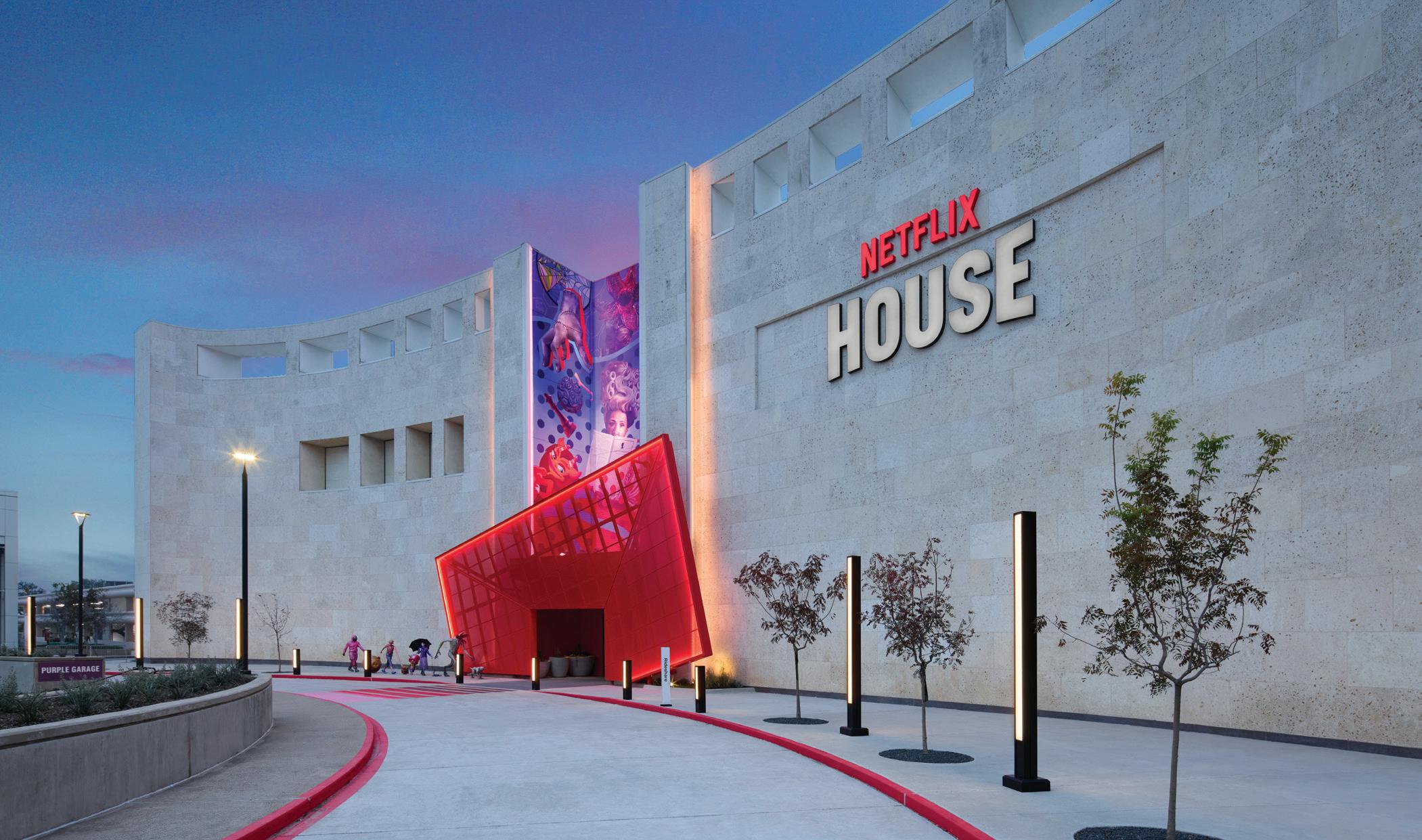
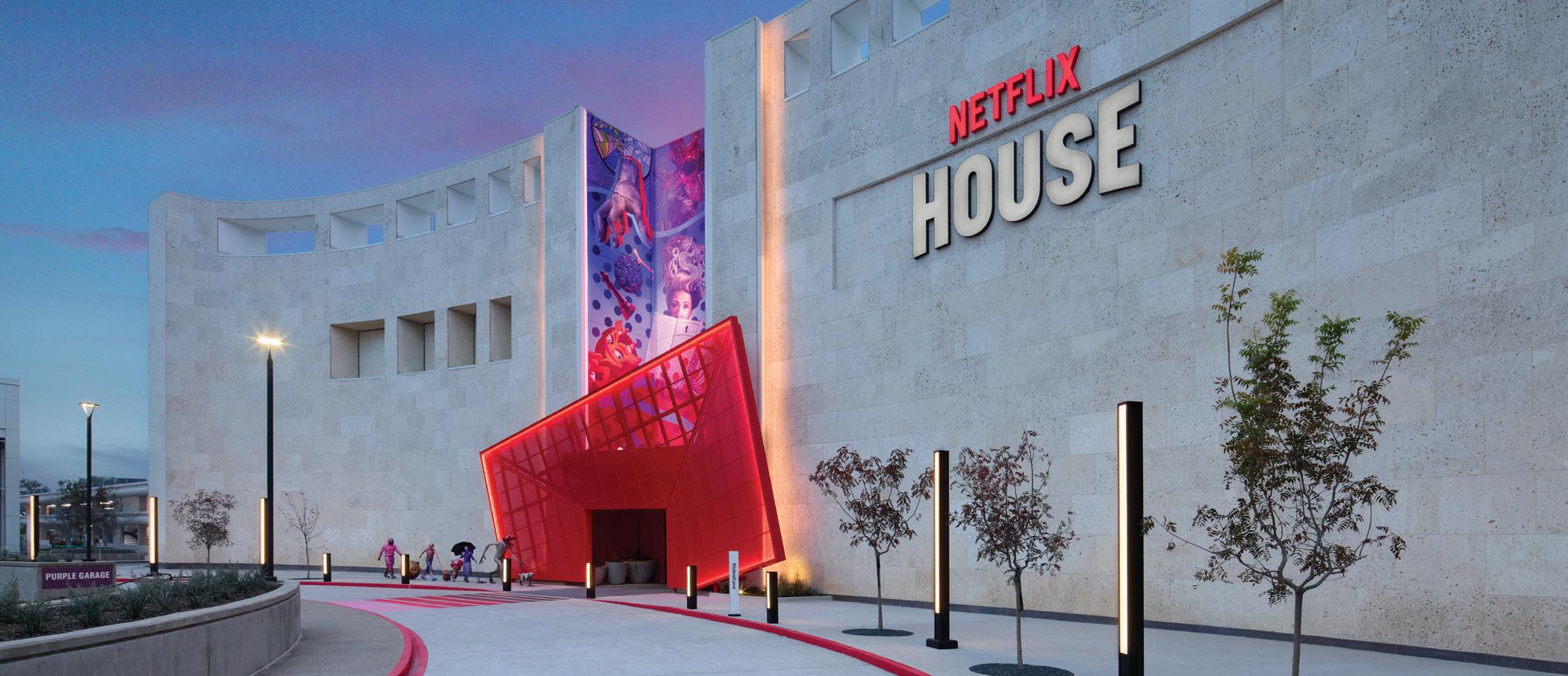
The opening of Netflix House at Galleria Dallas has helped drive consistent traffic to the property. (Image courtesy of Netflix)
2026 Mid-Year Recap
Amid consumer anxiety, sticky inflation, economic uncertainty and high fuel prices due to the Mideast conflict, it’s been a challenging year so far for the retail industry.
On another front, retailers were hopeful that trade tensions were simmering as tariffs expired. But that notion was put to rest in late July when the administration imposed new tariffs ranging from 10% to 12.5% on imports from more than 80 countries.
As for shoppers, they seem more value-focused than ever as they prioritize price over most everything else. It’s not surprising then that this year’s back-to-school shopping season is shaping up as one of the most promotional in years, with retailers promising low low prices. It’s also not surprising that many retailers have cut their full-year outlooks due to cautious consumer spending and softer demand.
The industry also has seen its fair share of retail dealmaking — including a resurgence in IPOs — during the first half of the year. Here’s a recap.
• Grocery giant The Kroger Co. agreed to acquire Giant Eagle Inc. for $1.65 billion.
• Walmart entered into a reported $1.4 billion deal to acquire France’s Vibe.co, a self-serve connected TV (CTV) advertising platform designed to simplify advertising for small and mid-sized businesses and mid-market brands.
• The Pep Boys-Manny, Moe & Jack Holding Corp. agreed to be acquired by the largest tire dealership in the U.S., Mavis Tire Express Services Corp., for $700 million in cash.
• Authentic Brands Group expanded its portfolio with the addition of century-old denim brand Lee to its portfolio in a deal valued at up to $1 billion.
• WHP Global entered in a joint venture with G-111 Apparel Group to acquire Marc Jacobs from LVMH Moët Hennessy Louis Vuitton. Reports put the deal at $850 million.
• Sleep Number Corp. won bankruptcy court approval for the sale of substantially all its assets and ongoing business operations to Sleep Country Canada in a deal that creates the second largest global sleep retailer.
• Etsy agreed to sell the U.K. apparel resale site Depop to eBay for $1.2 billion.
• The reborn Bed, Bath & Beyond made a number of deals as it continued to reinvent itself as an “Everything Home Company.”
In addition to acquiring The Container Store for $150 million, the company closed on an agreement to buy The Brand House Collective (formerly Kirkland’s Home). It also bought two home services, adding installation, renovation, construction and project-execution capabilities to its offerings. Bed, Bath & Beyond also signed a letter of intent to acquire the equity interests and substantially all assets of F9 Brands Inc., which owns and operates Lumber Liquidators as well as Cabinets To Go, Gracious Home / Thos. Baker, and Southwind Building Products.
• In a deal criticized for a mash-up of strange bedfellows, Shein, an online, budget-priced ultra-fast-fashion retailer founded in China, is acquiring Everlane, a premium U.S. apparel brand known for its sustainability ethos, ethical practices and “radical transparency.”
• The IPO market made a comeback in 2026, with a number of retailers getting in on the action, including Men’s Wearhouse owner Tailored Brands and Cumberland Farms Ltd., which have filed registration statements.
Bob’s Discount Furniture launched its offering, with plans to more than double its store count to over 500 stores by 2035. Gen Z fave apparel retailer Reformation is targeting a $1 billion valuation in its IPO.
As summer winds down, one of the most shocking deals of the year remains GameStop’s pursuit of eBay. While its initial bid of $56 billion was rejected by the marketplace giant, GameStop isn’t giving up. The company recently increased its 5% stake in eBay to 9.8%.
Marianne Wilson mwilson@chainstoreage.com
BRAND MANAGEMENT
Vice President & Group Publisher, SPECS Chairman Gary Esposito gesposito@ensembleiq.com
EDITORIAL
Editor Marianne Wilson mwilson@ensembleiq.com
Technology Editor Dan Berthiaume dberthiaume@ensembleiq.com
Real Estate Editor Al Urbanski aurbanski@ensembleiq.com
Online Editor Zachary Russell zrussell@ensembleiq.com
ADVERTISING SALES & BUSINESS
Midwest & South Sales Manager Michael Morrissey mmorrissey@ensembleiq.com
Senior Account Executive Nick Lipere NLipere@ensembleiq.com
Production Manager Patricia Wisser pwisser@ensembleiq.com
SUBSCRIPTION SERVICES
List Rental mbriganti@anteriad.com
Subscription Questions contact@chainstoreage.com
CORPORATE OFFICERS
Chief Executive Officer Jennifer Litterick Chief Financial Officer Jane Volland Chief People Officer Ann Jadown
Derek Estey
Beyond Travel Insurance
Safeguarding employees abroad requires preparation, intelligence and support
By James Henderson
Business travel has always carried a certain degree of risk, but that risk became magnified as geopolitical tensions across the world rose this year. Companies are facing a new reality: Sending employees abroad requires far more than booking flights and hotels.
In the current global environment, companies must rethink their approach to duty of care. Protecting employees is no longer a reactive exercise — it demands proactive planning, real-time intelligence and the ability to quickly respond to unsafe conditions that evolve quickly.
Duty of care now extends far beyond compliance. It encompasses a company’s legal and ethical responsibility to anticipate risks, prepare employees and provide support throughout their journey.
This begins with robust pre-travel risk assessments tailored to each destination. Organizations must evaluate political stability, health risks, infrastructure reliability and the availability of local support. Employees should be equipped with the right documentation, from visas and insurance details to medical records and emergency contacts, ensuring they are prepared for both routine travel and unexpected disruption.
Preparation also includes pre-departure briefings that go beyond logistics. Employees should understand local cultural considerations, security protocols and contingency procedures.
But preparation alone is not enough. Once employees are on the ground, access to real-time intelligence becomes critical. Organizations need the ability to monitor developments, communicate updates and provide immediate support if conditions change. This includes access to vetted local partners, secure transportation options and quality medical care.
Evacuation Planning
As global instability increases, evacuation planning has become a central component
of corporate risk management. Healix has seen a sustained surge in demand from organizations seeking guidance on how and when to move employees out of highrisk areas, particularly in the Middle East.
Initially, many of these enquiries were exploratory, with companies looking to understand what evacuation scenarios might involve. However, as the conflict has evolved and travel disruption has intensified, those conversations have shifted toward action.
In addition, there has been a notable volume of serious inquiries that have not ultimately resulted in evacuations, as well as a constant flow of tentative queries from organizations closely monitoring the situation. This reflects a broader trend of companies no longer waiting for conditions to deteriorate fully before seeking support — they are actively scenario-planning in real time.
Two key factors are driving this trend. The first is operational disruption. Airspace closures, restricted flight paths and intermittent airport shutdowns are making travel across the region increasingly difficult. In some locations, viable exit routes can disappear with little notice.
The second is business continuity pressure. Organizations are reaching a point where the absence of key personnel begins to impact operations. In these cases, companies are choosing to relocate staff even when the immediate security environment remains relatively stable.
This has led to a range of responses. Some organizations are maintaining staff in places where essential services, such as food, water and medical care, remain accessible and the security situation is manageable. Others are taking a more precautionary approach, extracting employees early to avoid the risk of being unable to do so later.
At the heart of these decisions is timing. One of the most significant risks businesses face is waiting too long to act. In
volatile environments, conditions can change within hours — a route that is open today may be closed tomorrow, leaving employees stranded and limiting evacuation options.
As a result, companies are placing greater emphasis on identifying clear operational triggers, specific conditions that signal when to escalate response measures. These may include changes in security levels, disruptions to transportation infrastructure, or the loss of reliable access to essential services.
Another growing challenge for businesses is the high volume of information available during a crisis. Employees and decision-makers alike are often confronted with a flood of updates from news outlets, social media and unofficial sources, much of which can be incomplete or inaccurate. In this environment, access to verified, real-time intelligence is essential. Companies need clear, actionable insights that enable them to make informed decisions quickly and confidently.
Proactive Approach to Employee Safety
As global risks continue to evolve, one thing is clear: Employee safety is now central to business resilience. Organizations can no longer rely on static policies or reactive measures. Instead, they must adopt a proactive, intelligence-led approach to travel risk management.
This means preparing employees before they travel, supporting them while they are on the ground, and making timely decisions when conditions change.
In a world where disruption can unfold in real time, the companies that invest in preparation, intelligence and support will be best positioned to protect both their people and their operations.
James Henderson is CEO of Healix International, which helps companies manage travel and security risks.
Making the Move
Digital-first furniture brands step into physical retail
By Marianne Wilson
Digitally native brands are continuing to establish a physical presence — and that includes the furniture category which has seen an influx of new players despite a challenging market environment.
Here’s a look at four digital-first furniture brands that are looking to meet their customers in the real world.
7th Avenue
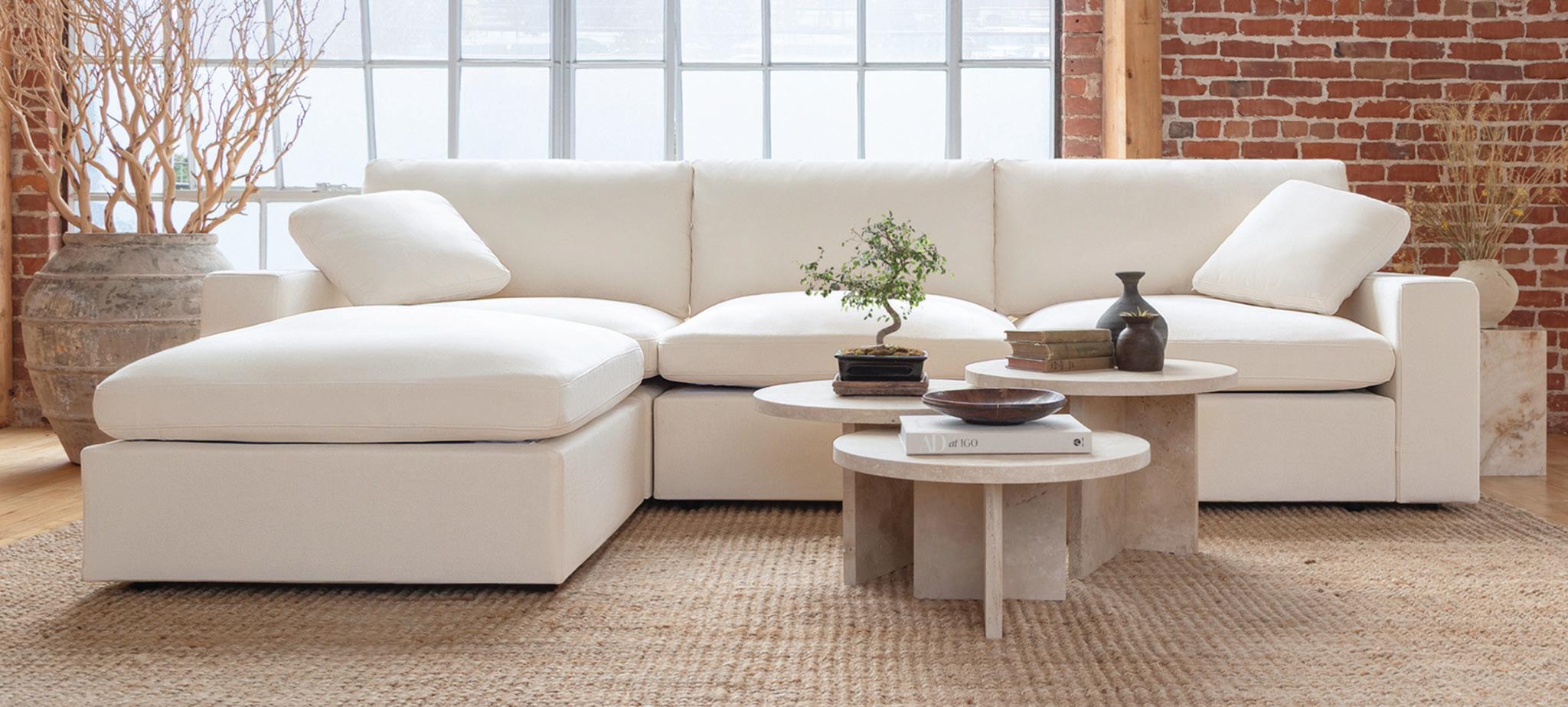
Best known for its higher-end modular sofas and contemporary aesthetics, 7th Avenue has been accelerating its retail expansion.
The Los Angles-based manufacturer and retailer, which was founded in 2022, has 22 showrooms (up from 15 at the beginning of the year) in major U.S. markets, including Los Angeles, New York City, Las Vegas, Nashville, Dallas, Denver, Philadelphia, Miami and more. Additional openings are planned by yearend.
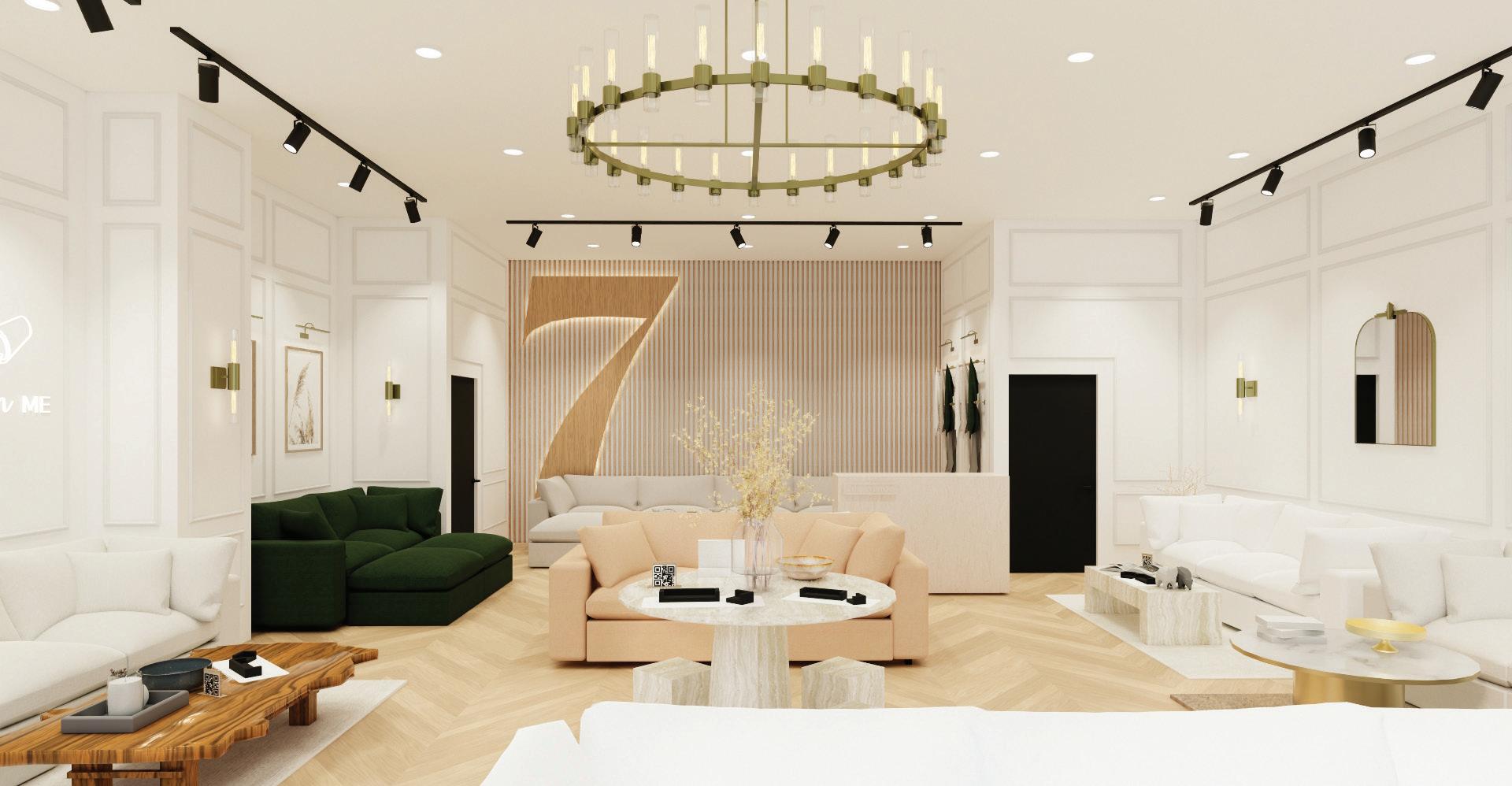
Unlike a traditional furniture store, every 7th Avenue showroom is designed as an experiential space. Customers can style modular layouts in real living-room vignettes, surrounded by the brand’s signature European white oak flooring, custom travertine tables and aged-brass lighting. In addition, every location boasts the brand’s signature “Come Spill On Me” neon sign. (The company says its signature sofas feature proprietary
water-repellent, stain-resistant fabric that is PFAS-free, along with fully removable and machine-washable covers.)
Each customer is assigned to a dedicated sales and design consultant to walk them through fabrics, configurations and how layouts could best function in their own home. While 7th Avenue encourages scheduled appointments, walk-ins are also welcome. So are pets.
“Every showroom we open is thoughtfully and intentionally designed to be an aspirationally attainable space — one where it feels warm and welcoming, yet it is still elevated,” said Josh Stinson, co-founder and COO of 7th Avenue.
“Customers can walk in with their families and experience our entire fabric offering, take part in a real spill test, test the modular functionality and see for themselves how one of the most
important purchases in their home will withstand the realities of everyday life.”
7th Avenue’s real estate strategy includes prime urban locations such as Manhattan’s Nolita area and Boston’s Newbury Street, lifestyle centers and enclosed malls. Recent openings include a 1,255-sq.-ft. location at Broadway Plaza, an open-air center in Walnut Creek, Calif.
Povison
Modern furniture brand Povison, which bills itself as “The World’s No. 1 Fully Assembled Furniture Brand,” unveiled its first permanent store in June, a 6,800-sq.ft. location in Los Angeles. The opening followed the company’s successful L.A. pop-up last year.
Founded in 2020, Povison specializes in furniture with a mid-century modern design aesthetic. The assortment spans living room, dining room, bedroom and outdoor. Tech — such as motorizing and lighting — is incorporated into many of its products.
“While we built Povison online, it’s always been intended for real homes and lived-in spaces,” said Ayden Lin, founder of Povison. “The opening of our flagship store brings this vision to life, creating a physical touchpoint for our customers to see how Povison seamlessly fits into their lives. The entry into physical retail marks the beginning of an explosive growth phase for us, and we plan to expand to other markets following Los Angeles.”
Povison has opened a 6,800-sq.-ft. location in Los Angeles. (Image courtesy of Povison)
7th Avenue’s newest U.S. location is in Walnut Creek, Calif. (Image courtesy of 7th Avenue)
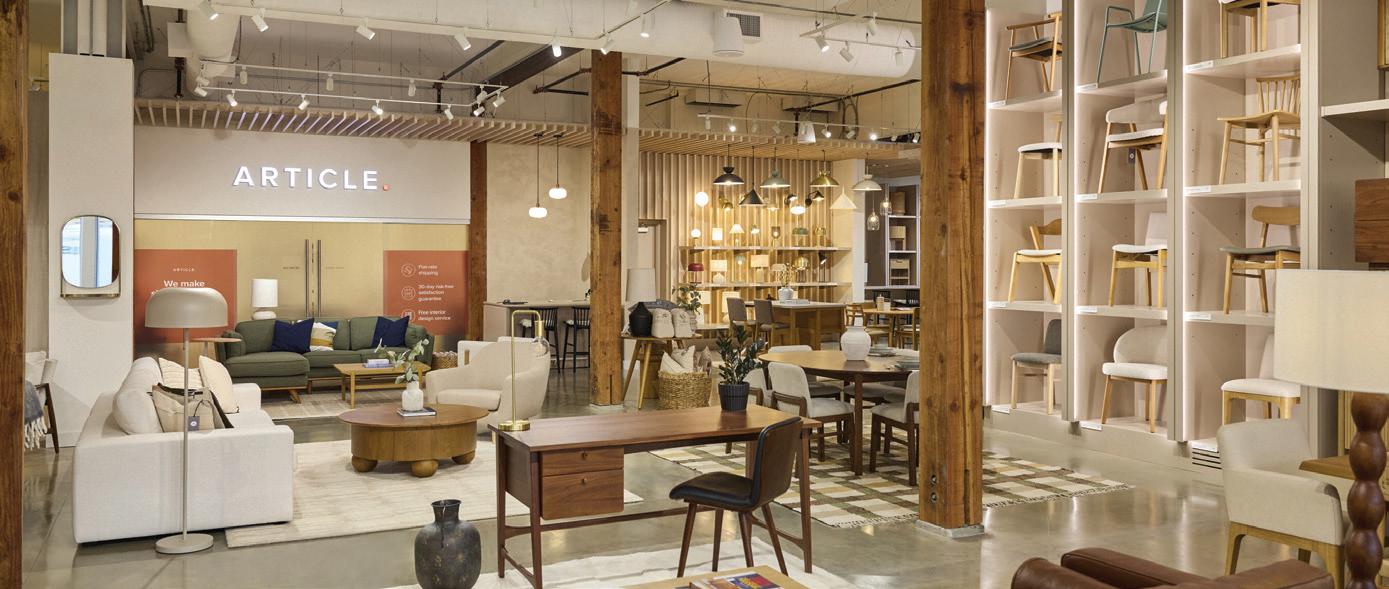
Article
Canadian furniture company Article is on track to make its U.S. physical retail debut by the end of 2026 as part of its broader strategy to build a scalable retail footprint across North America.
Article will open its first two U.S. locations in the fall, in San Francisco’s Design District, and at the Bellevue Collection, a high-end urban shopping center in the Seattle suburb of Bellevue. Additional locations will follow.
The company said it selected locations on the West Coast based on historically strong e-commerce performance as part of a strategy to build on its existing customer base.
The stores, which will average 7,500 to 8,200 sq. ft., will be designed to make it easier for customers and interior designers to visualize their spaces and make purchase decisions, and feature curated vignettes and an extensive swatch library. Free interior design services will be available for customers who need support with room layouts and design plans.
Customers will be able to shop for furniture in person and order in-store, with select décor and accent items available to purchase in-store.
“We see physical retail as an extension of the business we built online and are approaching expansion with discipline,” said Aamir Baig, co-founder and CEO of Article. “The West Coast has always been core to our business and represents roughly a quarter of total purchases. It’s where our company is headquartered and where we built early infrastructure to support customer demand. Expanding our retail footprint to California and Washington is a natural next step.”
Founded online in 2013, Article opened its first store in 2024, in Vancouver, B.C.
Cozey
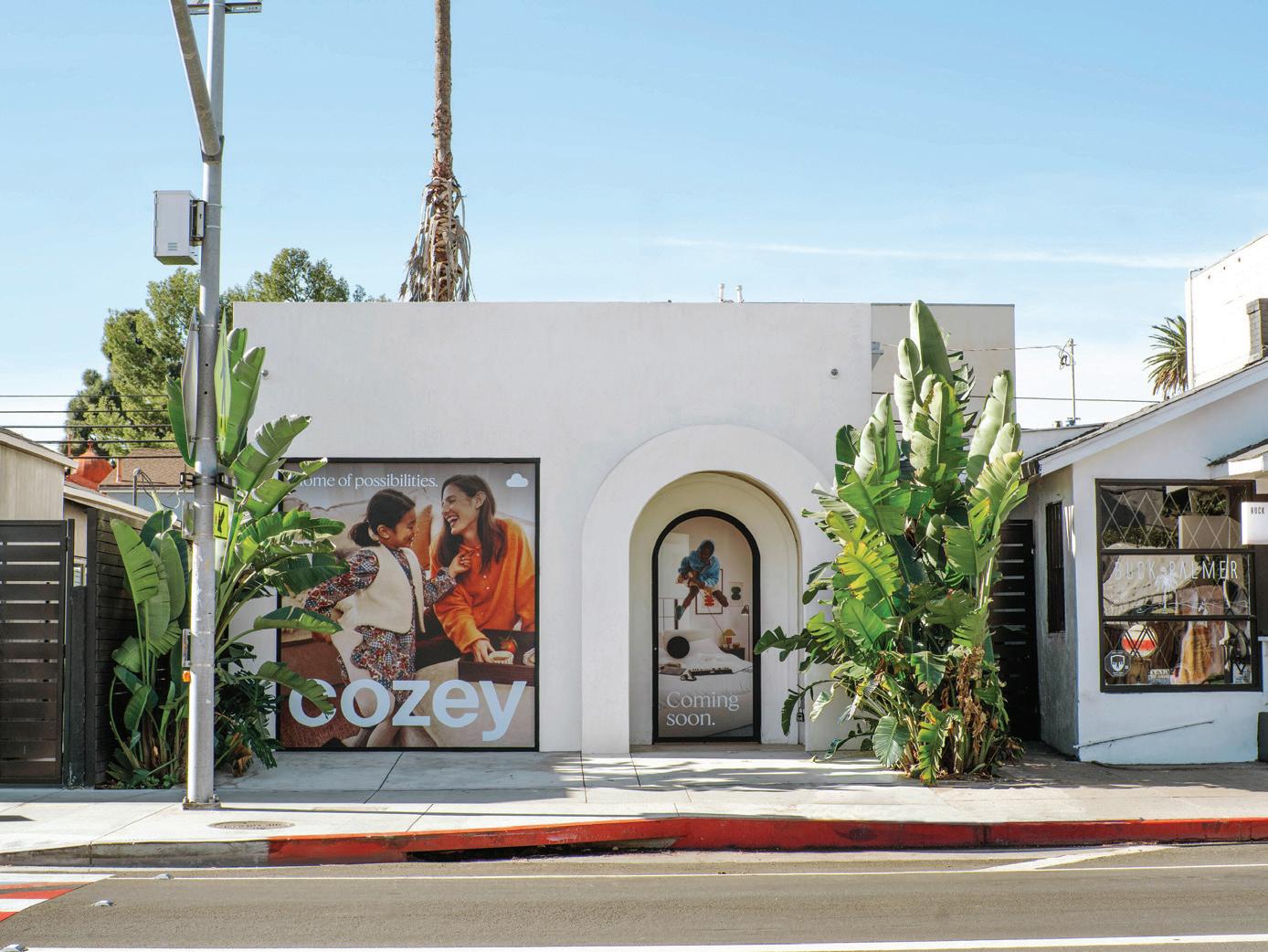
Another Canadian import, Cozey, is expanding in the physical space with pop-ups as its prepares to open its first permanent U.S. store. The Montrealbased furniture brand currently operates four stores across Canada, with locations in Toronto, Vancouver, Calgary and Montreal.
Cozey recently opened a temporary location in Chicago’s affluent Gold Coast neighborhood. Scheduled to remain open until March 2027, the 5,345-sq.ft. pop-up features a curated mix of Cozey’s most popular and newest products, ranging from the brand’s signature modular seating and new modular bed system to washable rugs, storage options and more.
“Opening in Chicago is an exciting next step for Cozey,” said Cozey CEO
and founder Frédéric Aubé. “We’ve seen incredible momentum for the brand so far this year, and as we continue to scale, physical retail remains an important part of our growth and how we connect with customers. As with all our locations, we follow where the demand is, and so we’re very excited to bring the Cozey experience to the city and its residents.”
The Chicago outpost came on the heels of a temporary Cozey store in the Los Angeles area. Located in Venice Beach, the 5,000-sq.-ft. pop-up is open until December.
Cozey plans to open its permanent U.S. store by yearend, in a nine-story mixeduse building in Manhattan’s Flatiron District on Fifth Avenue. The company will occupy 5,372 sq. ft. on the ground floor and 4,774 sq. ft. on the lower level of the building.
The brand says the Flatiron flagship will reflect its “immersive retail concept” featuring thoughtfully designed showroom environments where customers can experience and customize its modular furniture collections firsthand.
“Our first permanent U.S. flagship in New York City is a major step in Cozey’s growth journey,” said Aubé.
Cozey’s Venice Beach pop-up is open until December. (Credit: CNW Group/Cozey Inc.)
Article’s first physical store is in Vancouver, B.C. (Credit: CNW Group/Article)
Landmark Law Takes Effect
Why
California’s new plastic packaging law should be on every retailer’s radar
By Christopher “Smitty” Smith
California’ s Plastic Pollution Prevention and Packaging Producer Responsibility Act, known as SB 54, is reshaping how businesses manage packaging materials sold into the state.
With permanent regulations now in effect and key compliance deadlines having passed, retailers can no longer afford to treat the law as a future concern. Even businesses that do not manufacture packaging or consider themselves “producers” should not assume SB 54 has no bearing on their operations. In fact, that assumption may be one of the most expensive mistakes a retailer can make.
Much of the discussion surrounding SB 54 has focused on producers, leading many retailers to believe the law applies only to manufacturers, packaging companies and consumer goods brands. In practice, however, determining whether a business has obligations under the law is rarely that simple, and the law’s reach may be broader than many retailers realize.
Don’t Assume You’re Exempt
Retailers that sell packaged products in California must determine whether they have obligations under the law and, if not, whether they can demonstrate that conclusion to regulators. Simply deciding internally that SB 54 does not apply is not enough and exposes retailers to liability for penalties and fees under SB 54.
The first step for retailers is understanding where they fit within California’s evolving extended producer responsibility framework. Depending on how products are sourced, packaged and sold, a retailer may have responsibilities that are not immediately obvious.
Even companies that ultimately determine they are not covered must still seek express confirmation from the State of California that they are exempt from compliance obligations.
The cost of not going through that process or getting it wrong can be significant. California’s regulators are focused
on building a comprehensive system for tracking and reducing packaging waste. Businesses that fail to engage with that process will find themselves facing future penalties, enforcement actions or reporting obligations that become far more difficult and expensive to address after the fact.
Business Risks Extend Beyond Regulators
For retailers, the risks associated with SB 54 are not limited to penalties, potential enforcement actions or reporting obligations. The law’s implications can extend throughout the supply chain, creating exposure in places many businesses may not expect. Retailers routinely certify compliance with applicable laws and regulations through supplier agreements and commercial contracts. Those certifications often occur as part of normal business operations and may not specifically mention SB 54. Nevertheless, companies that affirm compliance without first understanding their obligations could create contractual exposure in addition to regulatory risk.
A retailer that incorrectly certifies compliance could face disputes with suppliers, manufacturers or other business partners that are seeking to manage their own obligations under an increasingly complex regulatory environment.
As environmental regulations become more common, businesses can expect compliance representations to receive greater scrutiny from counterparties throughout the supply chain.
Compliance Can Create Competitive Advantage
While the risks of noncompliance are significant, focusing solely on potential penalties and enforcement misses the broader business opportunity.
Viewed through a strategic lens, SB 54 gives retailers a reason to take a closer look at packaging decisions, supplier relationships and the processes that support long-term compliance.
Businesses that proactively assess their obligations often discover opportunities to reduce reporting burdens, improve packaging efficiency and increase the use of recyclable materials. Retailers can also work with suppliers to explore packaging alternatives that may lower future compliance costs and simplify reporting requirements. Those conversations are likely to become increasingly important as similar legislation gains momentum across the country. California is not operating in isolation. Other states are have their own plastic packaging extended producer responsibility programs, and more are expected to follow. Retailers that establish internal processes today will be better positioned to navigate future requirements as the regulatory landscape expands.
Perhaps the greatest benefit of acting now is certainty and risk mitigation. Companies that understand their obligations and document their compliance position can move forward with confidence. They can respond to supplier inquiries, address regulatory questions and make operational decisions without the uncertainty that accompanies unresolved compliance risks.
By contrast, businesses that ignore or postpone the analysis will eventually find themselves scrambling to respond to enforcement actions, unexpected fees or costly disputes. SB 54 represents a broader shift in how states are approaching packaging waste and environmental accountability. Whether a retailer ultimately falls within the law’s scope or not, the time for waiting on the sidelines has passed.
Retailers do not need to have every answer immediately. They do, however, need to ask the right questions now. The cost of determining whether SB 54 applies is almost always lower than the cost of discovering too late that it did.
Christopher “Smitty” Smith is a partner in the environmental practice group of full-service national law firm Saul Ewing.
Modular By Design
Smarter retail rollouts for speed, consistency and scale
By Eric Price
Whether replacing an aging location, rebuilding after a closure or executing a multi-store rollout, extended construction timelines carry real risk to the bottom line. Every additional week of construction is more site cost and less revenue.
Traditional site-built projects often struggle to meet aggressive schedules, particularly when labor coordination is challenged and site mobility is compromised.
Volumetric modular and panelized construction are gaining traction because they directly address these pressures. When applied early, modular design becomes more than a construction approach — it becomes a delivery strategy that prioritizes speed, consistency and repeatability at scale.
Modular Methodologies
One of the most common misconceptions about modular construction is that it is a shortcut. But the reality is that modular projects often require more upfront planning than traditional builds. Design decisions are made earlier, coordination is tighter and alignment across teams happens sooner. It’s all parties on board, all hands on deck. The front-loaded effort is exactly what makes faster delivery possible.
By shifting a significant portion of construction offsite into a factory environment, modular delivery allows fabrication to happen at the same time as site preparation. Foundations and utilities can move forward while building components are being produced.
When modules arrive onsite, installation is fast and predictable. ”Nested” construction, which might include panelized walls, volumetric rooms and HVAC/equipment “cassettes,” offer deeper time and cost savings by leveraging specialized offsite manufacturing partners and reducing reliance on traditional general contractor labor.
For example, on one of our recent projects, the building went from a concrete slab to a fully assembled structure in a
Modular delivery is not a universal solution. It works best when there is a clear commitment to scale.
matter of days. The steel-building framework was constructed and inspected in the factory and fitted out with QSR kitchen equipment, anchored and ready to serve. This approach allows multiple subs to complete their work offsite, reducing the construction timeline from many months to roughly a week, except for the finishing touches and startup.
For reconstruction and replacement projects, this compressed onsite timeline can make a meaningful difference by dodging the rainy season or capturing key sales dates. With the right site conditions, it’s possible to keep an existing store operational while a new building is constructed, an approach that limits downtime and helps mitigate customer loss. Speed is not about convenience — speed is a necessity.
Site Considerations
Site considerations need to be evaluated early. Modular delivery places specific demands on site selection that need to be understood upfront. Sites must be large enough to accommodate delivery and installation of oversized building components.
Volumetric modules are transported by semi-truck. Road restrictions, turning radii and staging space all affect whether modular delivery is feasible. In some markets, truck access alone can rule out otherwise attractive sites. If a location cannot safely or legally accommodate large delivery vehicles, modular construction may not be the right solution. Space is also a factor. Modular
reconstruction works best when there is enough room to build a new structure while an existing store remains open. Without that flexibility, some of the speed advantage can be reduced. These realities do not diminish the value of modular delivery, but they do reinforce the need to evaluate site feasibility early, alongside design and rollout planning.
Scale
Scale is where modular makes sense. Modular delivery is not a universal solution. It works best when there is a clear commitment to scale. Developing a modular prototype requires investment. The first project will carry a high cost because it includes prototype adaptation, buy-in from operational partners, vendors and quite possibly some deviations from brand standards. Once the modular design team works through the upfront challenges, the reward is a prototype ready for deployment across multiple locations. At scale, modular systems create predictability. Construction timelines become more predictable, and costs controlled. Each successive project benefits from lessons learned on the previous one. This repeatability allows teams to focus less on starting new projects again and again and more on executing a singular proven approach. Over time, that consistency reduces risk and supports faster rollout schedules across portfolios.
Designing for Consistency
As retail portfolios grow, inconsistency can become a real challenge. Small variations in layout or planning decisions can add up, especially when projects are delivered one at a time.
Modular planning addresses this by standardizing the core elements of the store prototype. Circulation paths, service zones and operational adjacencies are designed as repeatable components rather than reworked for every site.
Maintaining that discipline is essential. The underlying system needs to stay consistent so that speed and predictability are not lost as rollouts accelerate. Integrating design and manufacturing early.
Modular projects benefit from early coordination among designers, manufacturers and operators. Bringing these groups together earlier in the process helps reduce uncertainty and improves execution.
Early coordination allows architects to design with fabrication, logistics and installation sequencing in mind. Understanding delivery constraints and tolerances upfront leads to clearer decisions and fewer adjustments later.
Operator input also needs to be part of the conversation early on. Retail workflows, staffing patterns and customer sequencing should inform modular components from the beginning so they function as intended once stores open. This approach works best when teams agree early on the prototype and remain committed to executing it consistently.
Delivery
Modular design requires organizations to commit early, make decisions sooner and limit deviation over time. In return, it offers faster delivery, greater predictability and the ability to scale without starting from scratch each time.
Maximizing these benefits depends heavily on experience. Working with designers and planners who understand modular delivery, site constraints and rollout strategy helps avoid mistakes that can erode speed and cost advantages. Early guidance on feasibility, prototype discipline and coordination is often what separates successful modular programs from those that struggle to deliver on their promise.
When applied thoughtfully, at the right scale and with the right partners, modular design becomes a strategic asset, allowing retailers to move faster, rebuild with more certainty and protect revenue in an increasingly demanding environment.
Eric Price is commercial studio director at Lowney Architecture,
ADVANCE DOCK LIFTS ARE
DOCK LIFTS VERSUS NOTHING:
Unloading trucks without any equipment is ver y slow and puts dock personnel at risk for shoulder, back and metatarsal injuries. Also, goods may be damaged.
DOCK LIFTS VERSUS CONVEYOR UNLOADING:
Conveyor unloading is 2 to 3 times slower than using a dock lift. It leaves personnel at risk of shoulder, back and metatarsal injuries and goods are at risk
DOCK LIFTS VERSUS TRUCK TAILGATES:
Tailgates and their maintenance are more expensive than dock lifts Tailgates reduce truck payload and increase vehicle wear Tailgate platfor ms are smaller and do not offer handrail protection available on dock lifts, more risk for operators and cargo.
DOCK LIFTS VERSUS DOCK LEVELERS:
Dock levelers can only ser ve a limited range of truck heights (usually 8”) so they cannot ser ve all size trucks An Advance dock lift can ser vice any size truck without limitations.
Primark Goes Big in Manhattan
Value global retailer continues U.S. expansion with more stores on the way
By Deena Amato-McCoy
Nearly 11 years after it entered the U.S. market with a single store in Boston, Primark has made its long-awaited Manhattan debut.
The Irish-born, global budget-friendly fashion and home retailer opened a flagship on 34th Street in busy Herald Square, near Penn Station and across from the Macy’s flagship. The four-level, 75,000-sq.-ft. location features 54,000 sq. ft. of retail space showcasing Primark’s full product range, which spans women’s fashion and accessories, menswear, children’s clothing and home goods.It houses 35 fitting rooms spread across two levels.
The price points reflect Primark’s extreme value positioning, with women’s denim starting at $12 and men’s T-shirts at $5. The average price is about $10.
Primark has been planning its Herald Square location “for years, however, it only took 30 weeks to bring to life,” Kevin Tulip, president of Primark U.S., told Chain Store Age.
“We created a layout and assortment that appeals to the New York City shopper — whether they are a local, or an international or domestic tourist,” he explained. “New York City shoppers have an expectation. We will continue to analyze shopper patterns to reshape our layout and refit assortments based on their behaviors. Our goal is to feature the most dynamic store possible.”
The 34th Street entrance leads customers into the “Trend Area” — a fashion hub for women’s wear. The space will rotate regularly, and will feature new partnerships and high-demand collections.
The first floor also features “Primark Scene,” which focuses on new pieces, The “Primark Edit” section highlights classic styles across contemporary wear in more premium fabrics.
The second floor includes women’s lingerie, footwear, beauty and accessories. The lower level is dedicated to menswear.
The top floor is dedicated to children, spanning newborns to 15-year-olds.
The section leans heavily into licensing partnerships, including K-Pop Demon Hunters, Disney and local sports teams.
On the opposite side of the floor is the home section, which includes bedding, lighting, luggage and seasonal essentials. Design: Primark’s trademark pastel blue and white branding is highlighted throughout the store, which was formerly home to Old Navy. The entire space, including the fitting rooms, is created with recycled and sustainable materials. The cash wraps are encased in sustainable materials and metals.
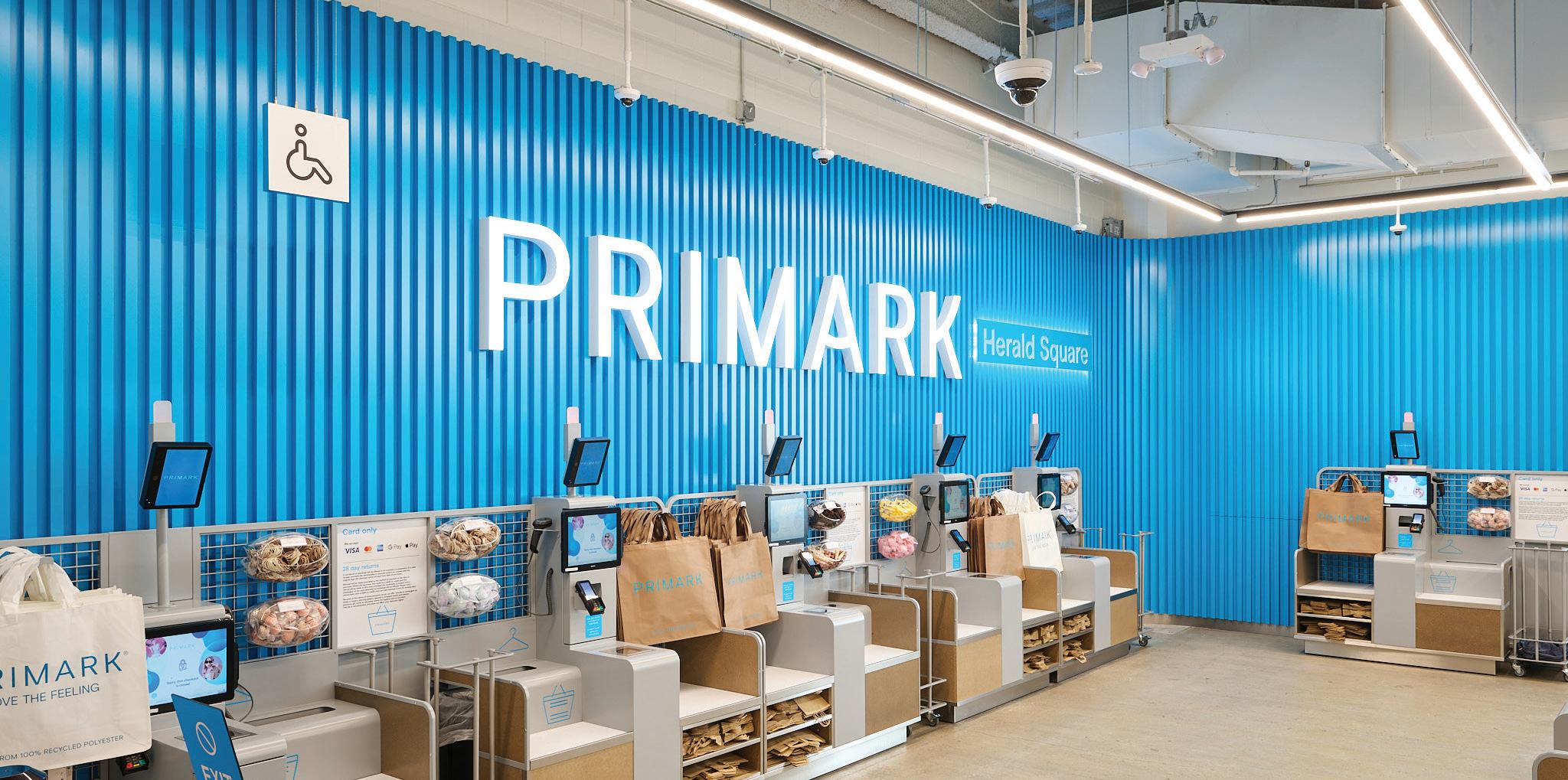
In designing the checkout experience, Primark wanted to give customers the flexibility to check out the way they are most comfortable, Tulip said. To that end, the store has both traditional and self-checkout options.
“The self-checkout sections are manned by up to three hosts available to help shoppers with their checkout experience, and also scan customer receipts enabling shoppers to leave the gated self-checkout area,” Tulip added.
The self-checkout solution includes a substantial basket that fits all of shoppers’ merchandise, an integrated scanner panel as well as a handheld scanner making it easy to scan all merchandise, Tulip added.
Expansion: Primark had described its Manhattan flagship opening as a defining moment in its U.S. growth story. Since the store opened, Primark has added several more locations, including its first-ever outpostin Indiana, at Castleton Square Mall in Indianapolis, and its seventh location in Texas, at Willowbrook Mall in Houston. At press time, Primark had 44 U.S. stores, with more locations planned to open by yearend.With a real estate strategy that combines high-profile urban flagships with suburban mall stores, Primark has been opening roughly 10 to 12 U.S. stores per year.
“The exciting thing about the United States is how different each customer segment really is,” Tulip said. “Upstate New York is vastly different from southern Florida, for example. We will continue to learn from the population in each area, and create assortments and experiences based on what the consumers teach us — and need.”
Founded in Ireland in 1969, Primark has more than 485 stores across 19 countries in Europe, the U.S, and the Middle East. The company is owned by Associated British Foods, which earlier this year announced plans to separate its foods business (FoodCo) from its retail business, with Primark spun off into a stand-alone company on the London Stock Exchange.
Primark’s Manhattan flagship features both traditional staffed and self-checkout stations across its floors.
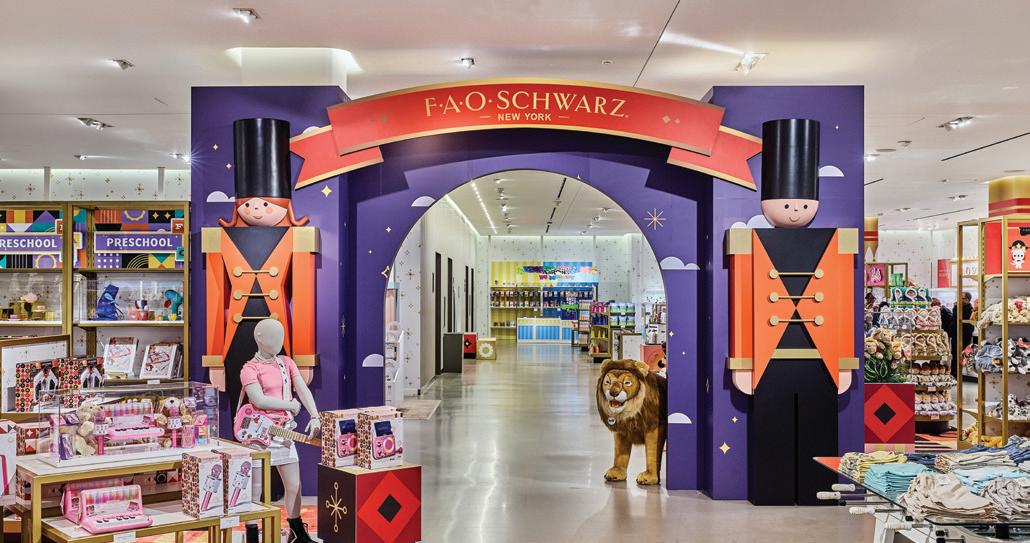
Abercrombie & Fitch unveiled a new design concept, dubbed “Heritage Meets Modern,” at its new three-level, 10,000-sq.-ft. SoHo store in downtown Manhattan. The format blends archival storytelling that honors the brand’s 134-year history in New York City with updated designs. Curated archive displays throughout the entry and stairway showcase apparel and memorabilia that connect Abercrombie’s New York heritage to its modern-day evolution. Heritage-inspired furnishings throughout the space reflect the brand’s longstanding connection to sporting, travel and discovery. Additional store highlights include a dedicated “activation space” inspired by a classic New York hotel bar. … Popular Korean beauty and skincare company Olive Young has made its U.S. store debut with an 8,647-sq.ft. outpost in Pasadena, Calif. With some 400 brands and 5,000 SKUs, the store is designed to offer a personalized and immersive beauty shopping experience with such features as a “try before you buy” section and complimentary services, from skin scans to scalp analysis. … Legendary toy retailer FAO Schwarz has opened a 5,000-sq.-ft. shop in Nordstrom’s New York City flagship on 57th Street and Broadway. In addition, FAO will open a store-within-astore concept, dubbed “The Jewel Box,” in eight Nordstrom stores across the country. Each curated space will feature immersive branded activations, live toy demonstrations and storytelling moments. The toy brand is also now available on Nordstrom.com, with a curated assortment launching
across all Nordstrom doors later this year. … In what’s called a first for a global beauty retailer, Sephora is rolling out “Quiet Hours” across its entire store footprint. At specified times, Sephora stores will turn down the music and adjust screens to create a calmer atmosphere with fewer distractions. The initiative aims to give customers a more peaceful shopping experience amid a low-sensory environment. … Nike has opened a temporary location on Broadway in New York City’s SoHo neighborhood. Tailored for NYC sports culture and local athletes, the space features a customization zone, “Nike By You,” where shoppers can personalize select footwear and apparel with exclusive accessories and graphics created by local artists. It also houses a dedicated Jordan Brand retail area. The store will transition throughout the year to reflect major local sporting moments such as the US Open and the New York City Marathon.
Designing Retail Spaces to Attract Gen Z
By Marianne Wilson
As Gen Z’s spending power continues to rise, projected to surpass $12 trillion globally by 2030, the generation is redefining what physical retail looks and feels like.
Rather than abandoning brick-andmortar, Gen Z is transforming it into a destination for connection, discovery and experience. For retailers and developers, this shift demands a new approach to design, one that blends digital influence with immersive, flexible and socially driven environments.
In an interview with Chain Store Age, Christina Faleyretail studio director and managing associate at TPG Architecture, shared key strategies for creating retail spaces that resonate with Gen Z, from experience-driven programming to designing for the seamless interplay between online and in-store engagement.
Gen Z has recently been credited for reshaping the future of retail. What distinguishes this generation from others in how they engage with physical retail environments?
Unlike previous generations that were more accepting of standardized, one-sizefits-all environments, Gen Z expects retail spaces to reflect authenticity, individuality and purpose. Having grown up with constant access to digital content, they have highly personalized preferences and gravitate toward brands and environments that align with their identity and values. They’re less interested in passive consumption and more focused on connection, seeking retail experiences that feel intentional, culturally relevant, and worth the effort of visiting in person. Physical retail environments must be designed with thoughtful curation, meaningful interactions and purposeful storytelling.
How is the concept of “experience the new anchor tenant” influencing the way retail spaces are programmed and designed today?
Experience is no longer an added layer — it’s becoming the foundation of how
retail is conceived, transforming stores into destinations that offer meaningful interactions beyond the transaction. Limited edition collections, pop-ups and collaborations, for instance, help create a sense of exclusivity that can drive foot traffic.
Product personalization moments, such as embroidery services for apparel, customizable sneaker laces or signature scents, allow customers to become part of the brand’s story, strengthening their emotional connection through physical space.
What are some successful strategies for engaging Gen Z shoppers?
Across our recent work, we’re seeing a shift towards more participatory retail, where customers are actively involved in the experience.
Customization and co-creation are key drivers, whether through product personalization or hands-on moments that allow customers to engage directly with the brand. Also, integrating education and live demonstrations as foundational elements of the store experience can be very effective.
These types of interactions create a stronger sense of ownership, and are far more memorable than traditional merchandising, and ultimately deepen the connection between customer and brand.
How do you see Gen Z influencing the evolution of retail environments over the next five to 10 years. What should brands and developers be doing now to stay ahead?
Retail is no longer competing simply with other stores — it’s competing with how people choose to spend their time. Visiting a store is a conscious decision, and that shift is accelerating how quickly retail environments need to evolve. What used to be a seven- to 10-year refresh cycle is compressing.
Brands can no longer rely on static environments; spaces need to feel current,
relevant, and culturally in tune. A store that feels even a few years out of sync today risks becoming irrelevant far faster than it would have a decade ago.
This creates a challenge: designing spaces that respond to the current moment without becoming overly trend-driven. Flexibility can extend the life of a space, but the expectation for change isn’t going away — well-designed environments will need to refresh more frequently.
At the same time, Gen Z’s expectations will continue to evolve, and hot on their heels is Gen Alpha, who are already beginning to influence the market with an even stronger emphasis on immediacy and identity.
For brands and developers, the focus should be on creating environments that can evolve while maintaining a clear identity. The most successful spaces will be those that stay relevant as they age — not just those that launch well.
Flexibility seems critical as trends evolve rapidly. How can retail environments be designed to meet this need?
For us, flexibility isn’t about making everything movable or temporary; it’s about building a system that can evolve without losing clarity. The strongest environments have a clear structure and strategic adjacencies with layers of adaptability built into how the space operates.
We’re designing modular fixture systems and creating zones that can shift between product, activation, and content without requiring a full reset. Ceiling infrastructure, lighting, and display strategies all need to support that flexibility from day one.
A key component in this is operational ease. If the team can’t quickly adapt the space, it doesn’t work. Instead of constant change, the goal is the ability to stay relevant over time while maintaining a strong, consistent point of view.
Extending the Life of Walk-ins
Chain Store Age recently spoke with Robert Sorba, president of KPS Global, about trends in retail coolers and freezers and how retailers can maximize the life of this type of equipment.
What are the latest trends in coolers and freezers?
Two major trends we’re seeing in the walk-in space are a large focus on energy efficiency and an emphasis on repair solutions to extend the life of coolers and freezers.
Retailers want to reduce operating costs while maintaining product quality. Small issues can increase energy use, add strain to the refrigeration system and accelerate wear on the box itself, leading to higher costs.
The other trend, and the one we see accelerating most, is extending the life of walk-ins. Rather than replacing an entire walk-in, more retailers are turning to thermal liner panels, batten strips, replacement doors and replacement parts to restore performance and extend equipment life at a fraction of the cost of replacement.
KPS Global can help retailers assess the condition of their walk-ins and determine the best path forward.
What’s the biggest mistake retailers make when it comes to cold storage solutions?
One of the most common issues we see is leaving walk-in doors open longer than necessary. Every time warm, humid air enters a cooler or freezer, the refrigeration system must work harder to recover. That extra load can lead to ice buildup, condensation, temperature swings, higher energy consumption and damage to the walk-in.
Many retailers are aware of this but ensuring compliance at a store level is an ongoing effort. Something as simple as minimizing door-open time and confirming doors properly close and seal can make a difference and lead to long-term cost savings.
What type of upkeep do coolers and freezers in stores require?
Upkeep starts with routine visual
inspections. Store teams should watch for ice buildup, condensation and damaged gaskets or seals, since those often signal a larger issue.
Basic cleanliness matters, too. Keeping shelves and surfaces clean, handling spills quickly, and checking hardware like hinges and latches are all a part of normal maintenance. For added support, KPS Global offers surveys that assess box conditions and catch problems before they develop.
Tell us about KPS Global and the products it provides.
KPS Global manufactures insulated metal panels and walk-in solutions for controlled environments. Our core panel offerings include wood rail, high-density polyurethane (HDR) and FusionFrame, a structural core paired with polyurethane that delivers the strength of a framed panel with the thermal performance of foam. Beyond new construction, we offer a full portfolio of restore and aftermarket solutions, including replacement doors, thermal liner panels, batten strips and replacement parts, along with technical services support for on-site surveys and installation.
What does the technical services offering cover?
Our technical services team is built to help retailers get the most out of their existing walk-ins. It starts with on-site assessments and surveys, where our technicians evaluate the condition of the unit and diagnose issues such as performance loss, icing and
condensation. From there, we provide clear repair and restoration recommendations tailored to what is needed to extend the life of the walk-in for years to come.
How does KPS Global help retailer operators extend the life of walk-ins and freezer equipment?
We offer a full portfolio of solutions designed to restore walk-ins back to peak performance without the cost and disruption of a full replacement. Thermal linear panels help improve insulation performance while addressing corrosion, damaged surfaces and temperature loss. Batten strips cover exposed seams and damaged areas to improve appearance, sanitation and thermal performance. Replacement doors help restore efficiency without replacing the entire walk-in, while replacement parts such as hardware, gaskets and sweeps help keep equipment running properly. Paired with a strong preventive maintenance program, KPS Global aftermarket offerings can help extend the life of existing equipment.
Can KPS Global troubleshoot equipment problems?
KPS Global offers a full troubleshooting support program through our Technical Services team regardless of manufacturer. We regularly help retailers work through issues such as icing, condensation, damaged panels, corrosion, door problems and temperature inconsistencies. Our technicians focus on finding the root cause rather than just treating the symptoms. From there, we recommend the most effective path forward, whether that involves a targeted repair or a larger replacement project when needed.
What is one piece of advice to give retailers about this equipment?
Be proactive. The best way to maximize the life of a walk-in cooler or freezer is to stay ahead of maintenance. Routine inspections and repairs make a meaningful difference in performance, efficiency and how many years you get out of your walk-in.
TOP 10 Retail Center EXPERIENCES
2026
1. EASTON TOWN CENTER (STEINER + ASSOCIATES)
2. CROCKER PARK (STARK ENTERPRISES)
3. TUSCAN VILLAGE
4. AMERICAN DREAM (TRIPLE FIVE)
5. MALL OF AMERICA (TRIPLE FIVE) 6. BLUE STAR SHOPPING CENTER (LMC)
EASTWOOD MALL (CAFARO) 8. MARKET STREET (TRADEMARK)
PARK WEST VILLAGE (CASTO)
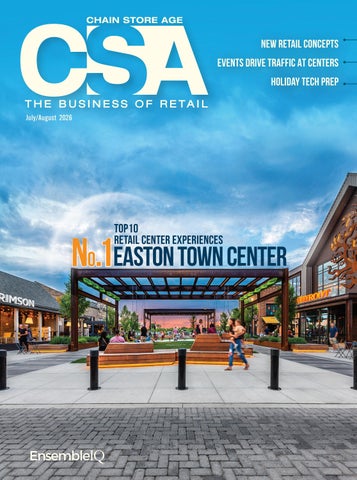
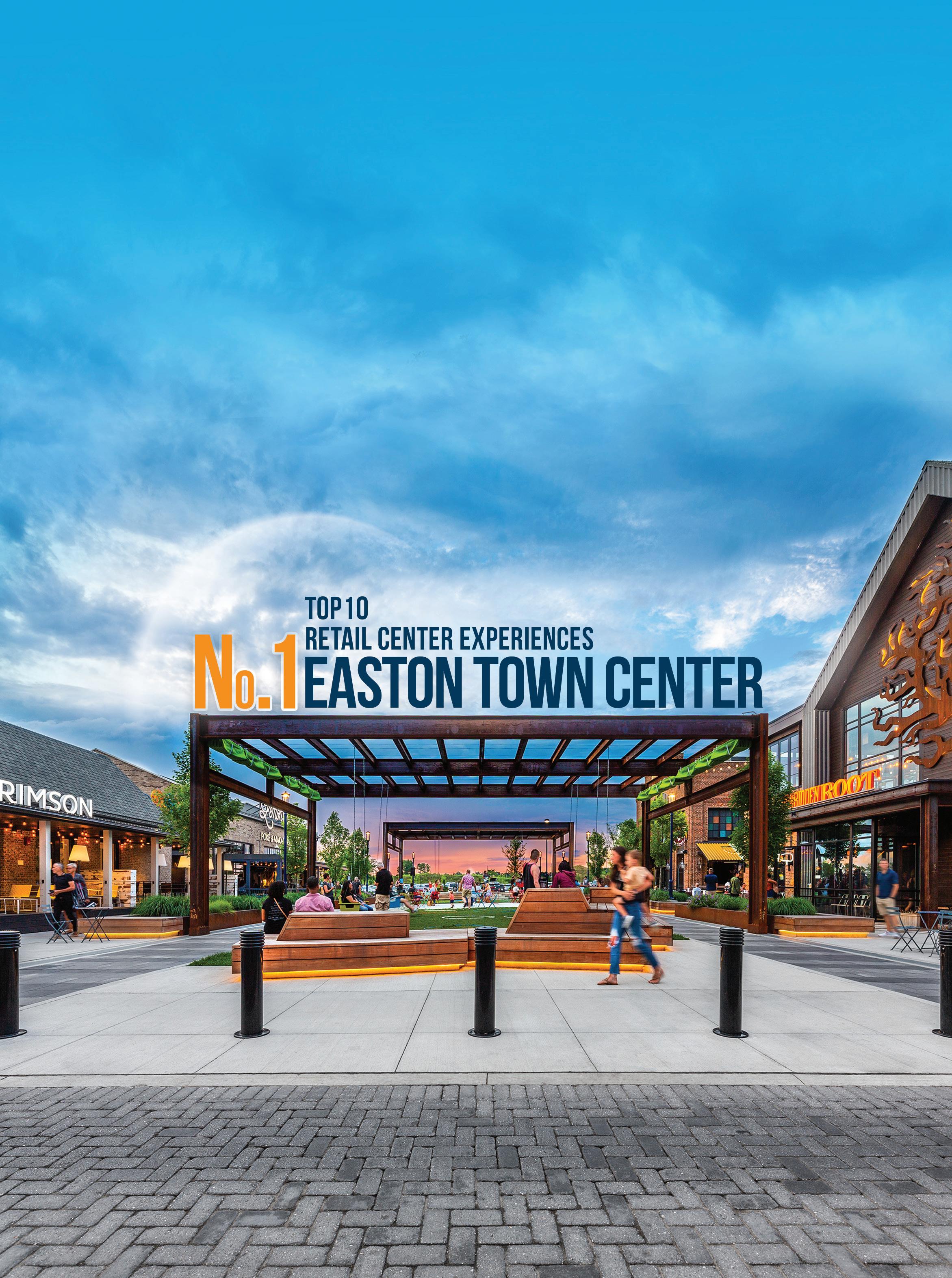
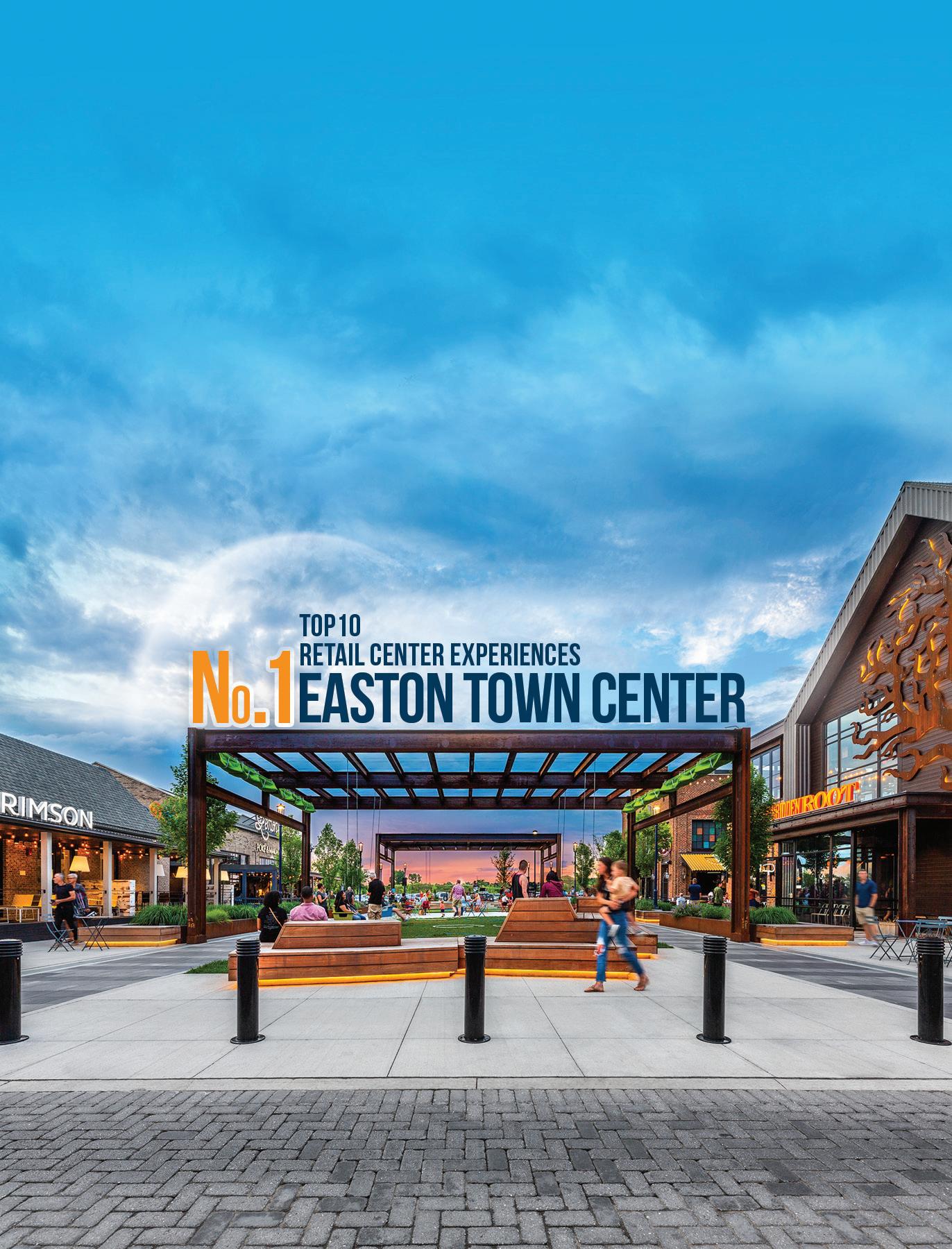
EASTON TOWN CENTER
Columbus, Ohio
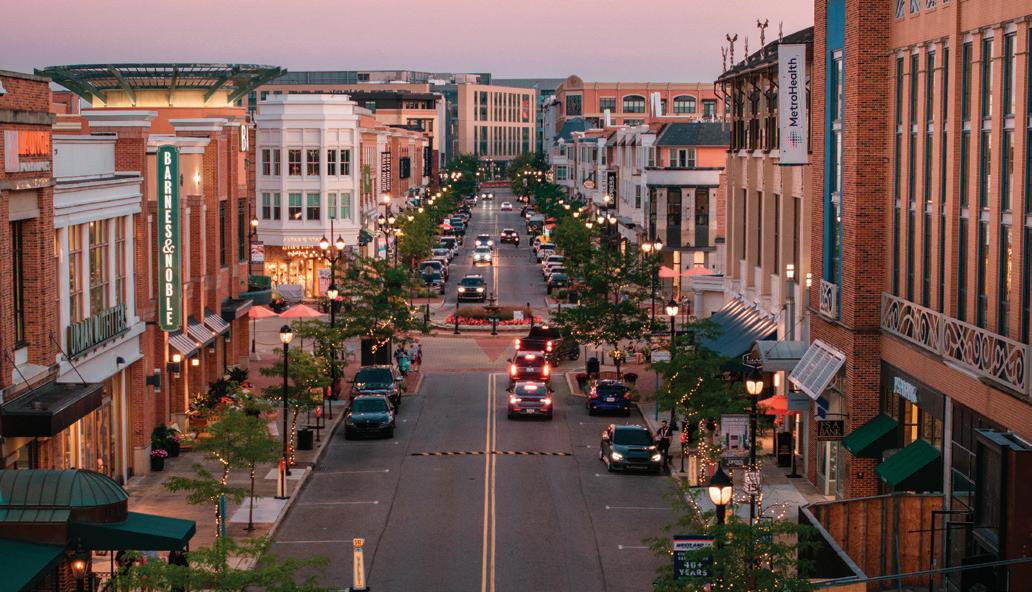
This is the fourth time that Easton Town Center has headed Chain Store Age’s ”Top 10 Retail Center Experiences” list since it debuted in 2018, and the first sentence on the center’s 2026 nomination form deftly summed up why… Easton stands alone because of its willingness to continuously reinvent itself.
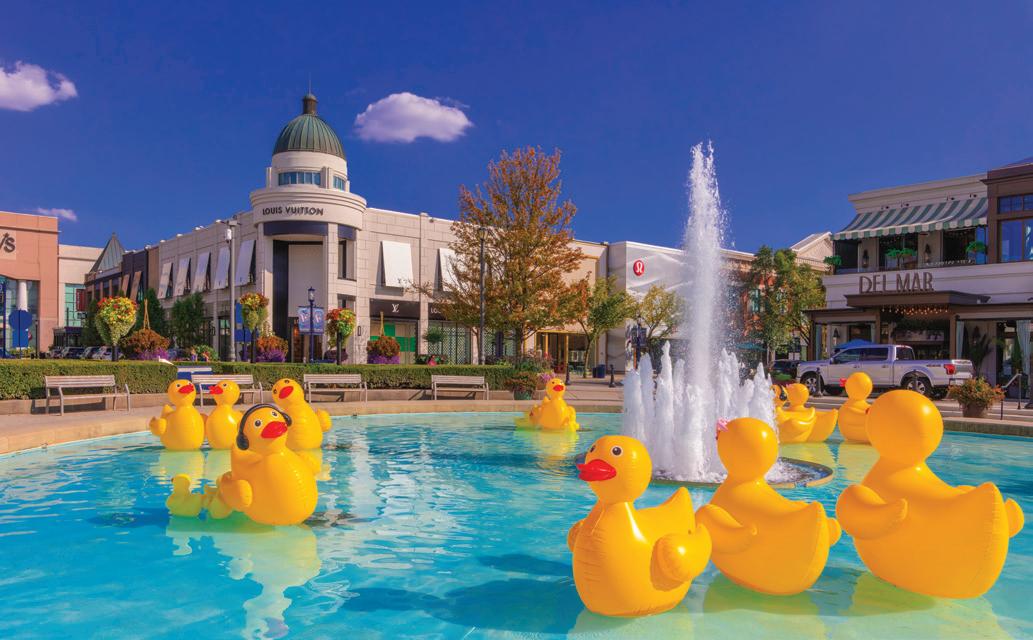
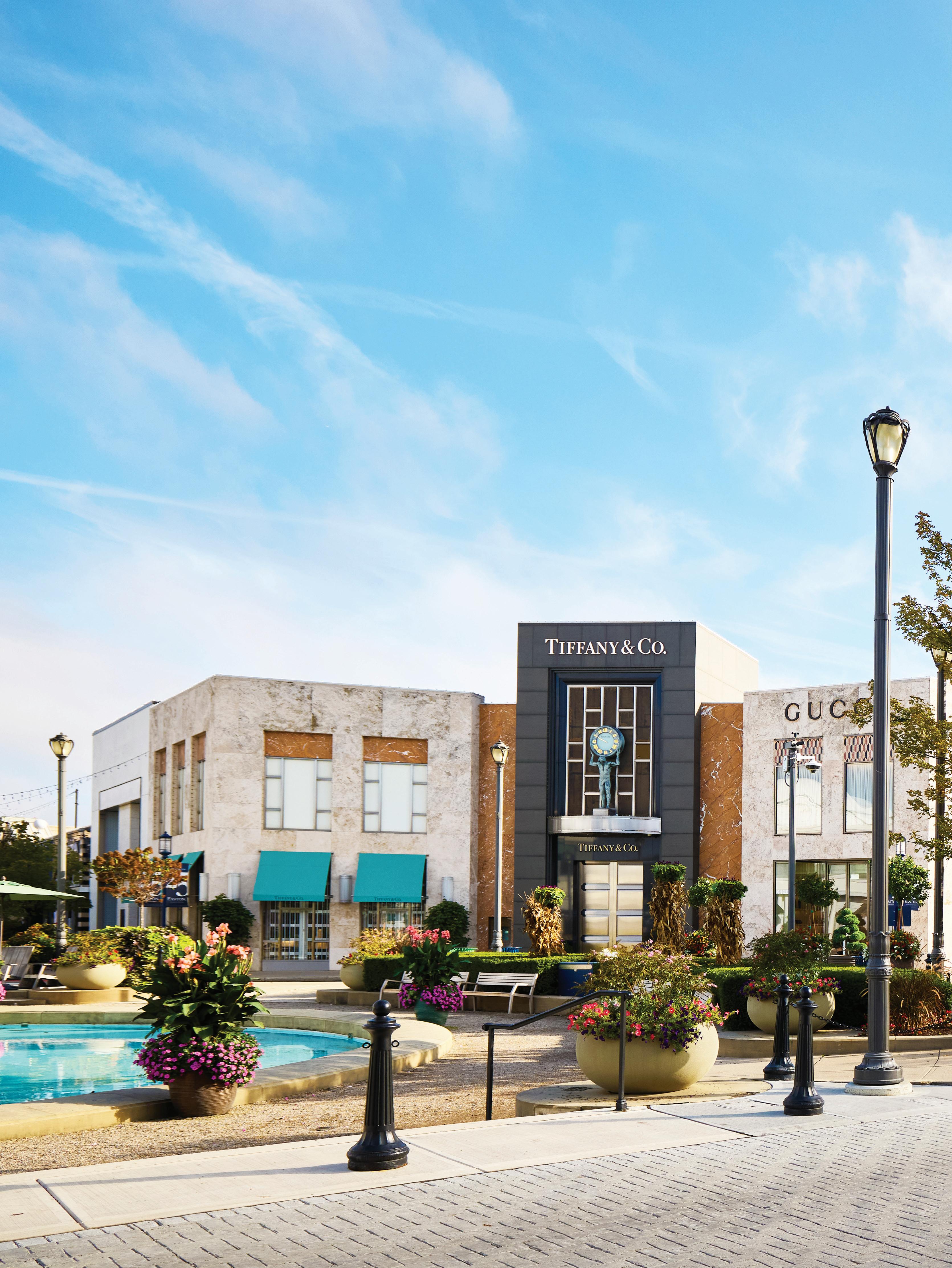
■ In 2022, Steiner + Associates--the developer of the property owned by Limited Brands and The Georgetown Company-created a luxury district inhabited by brands that include Tiffany & Co., Gucci, Kendra Scott, Golden Goose, Coach, and Peter Millar. It’s a lineup one is more likely to find on Fifth Avenue in New York, Rodeo Drive in Los Angeles or Chicago’s Miracle Mile—not off Interstate 270 in Columbus.
■ Instead of seeking another single user for Easton’s Smith & Wollensky footprint, Steiner transformed the space into multiple storefronts, introducing Bar Italia, Suitsupply and Patek Philippe.
■ When consumer habits shifted away from experimental retail concepts like Amazon Style, Steiner quickly reclaimed the footprint and reconfigured the space into three new storefront opportunities—Williams-Sonoma, Pottery Barn Kids and Miniso.
■ Five years ago, Easton added a 16-acre project phase providing 140,000 square feet of new restaurant, retail and hotel space. This latest addition to the town center was designed to support art exhibitions, farmers, markets and live music on its Yard Stage. New builds and store buildouts happen quickly at Easton because Steiner fields its own seven-employee construction unit.
“We spend a long time thinking about merchandise. We’re regularly evaluating our adjacencies. We’re always thinking about how we can support a retailer’s growth and create more value for them over time,” said Easton’s senior VP of leasing Spencer Jordan.
Food and beverage tenants occupy roughly 20% of Easton’s inline gross leasable area outside the anchors. The culinary mix runs from local brands such as Napa kitchen + bar, Northstar Café and Brassica on the local end to popular national brands the likes of Cooper’s Hawk and The Cheesecake Factory.
The center’s upscale dining tier runs from Cameron Mitchell’s two-story Del Mar restaurant to Bar Italia and Mastro’s Steakhouse.
“Something that is unique to us is that our focus is not on moving our merchandise mix. We are just under two million square feet,” Jordan noted. “On food and beverage, specifically, we’re not focused on more food, but more cuisines. We are very intentional about not overloading ourselves.”
Brands that open at Easton often continue to expand and reinvest in their spaces over time. Louis Vuitton, Abercrombie, Diamond Cellar and Lululemon each expanded their footprints after establishing operations at the center, while Del Mar and Cooper’s Hawk refreshed and modernized their restaurant spaces.
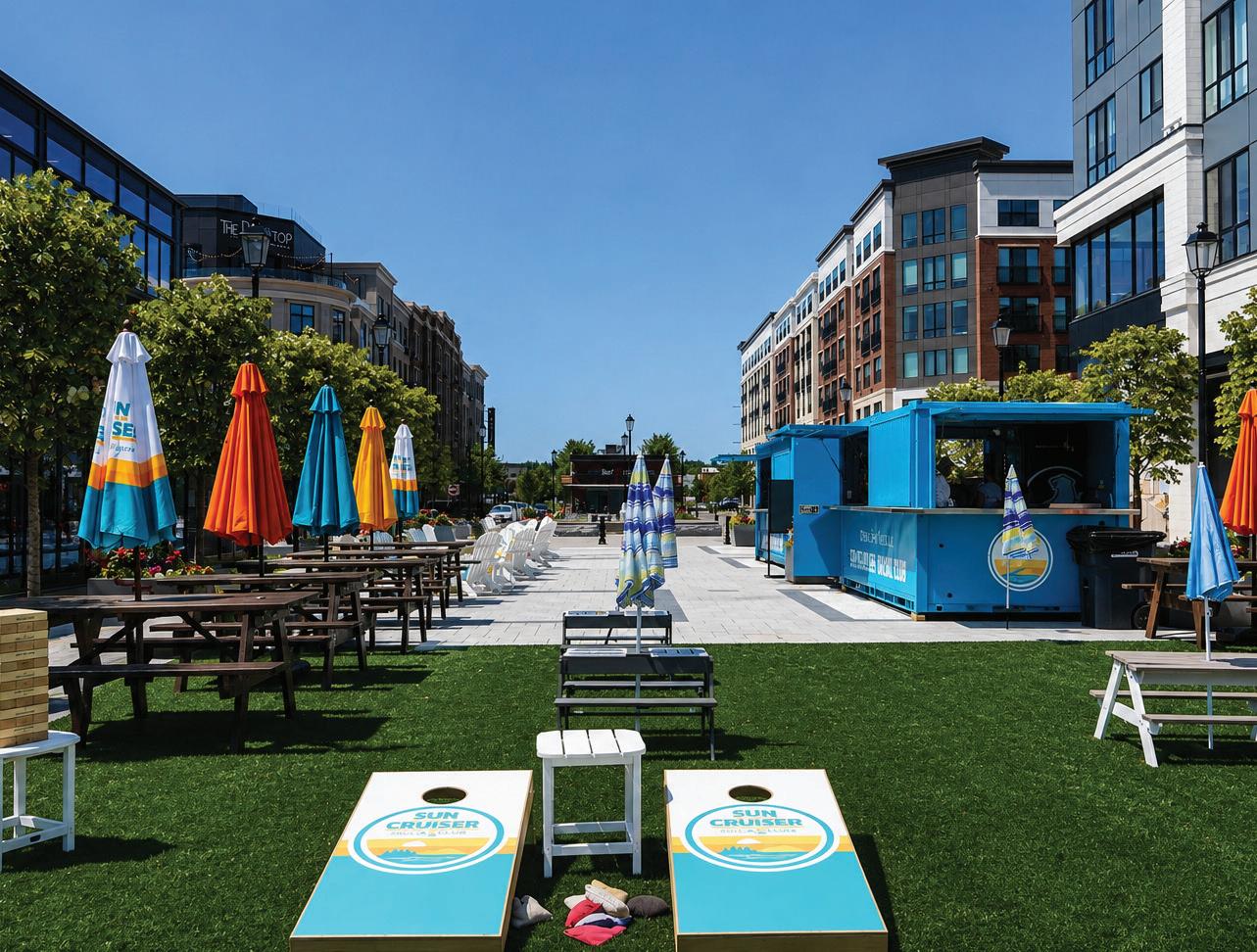
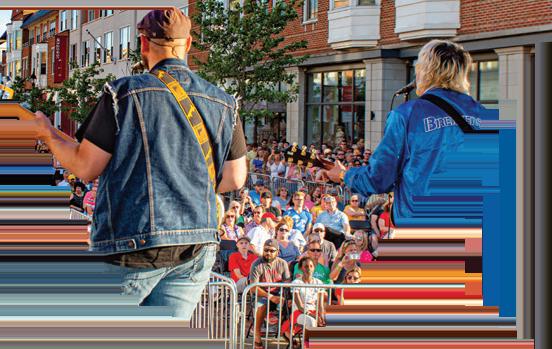
Easton events are plentiful and well thought-out. On Thursday evenings from May to September, “Groove is at The Yard” presents live music ranging from funk to acoustic to rock. “Friday Night Flicks” offers movies outdoor on the Town Square. “Yoga on the Square” draws a recurring morning crowd and “Chalk the Block” activates the center with public art created in real time. And the land’s No. 1 retail experience continues to run in the lead pack of centers with meaningful retail center metrics. It draws more than 18 million visitors a year.
“Dwell time has always been our strength,” Jordan observed. “Our merchandising strategy reflects that.”
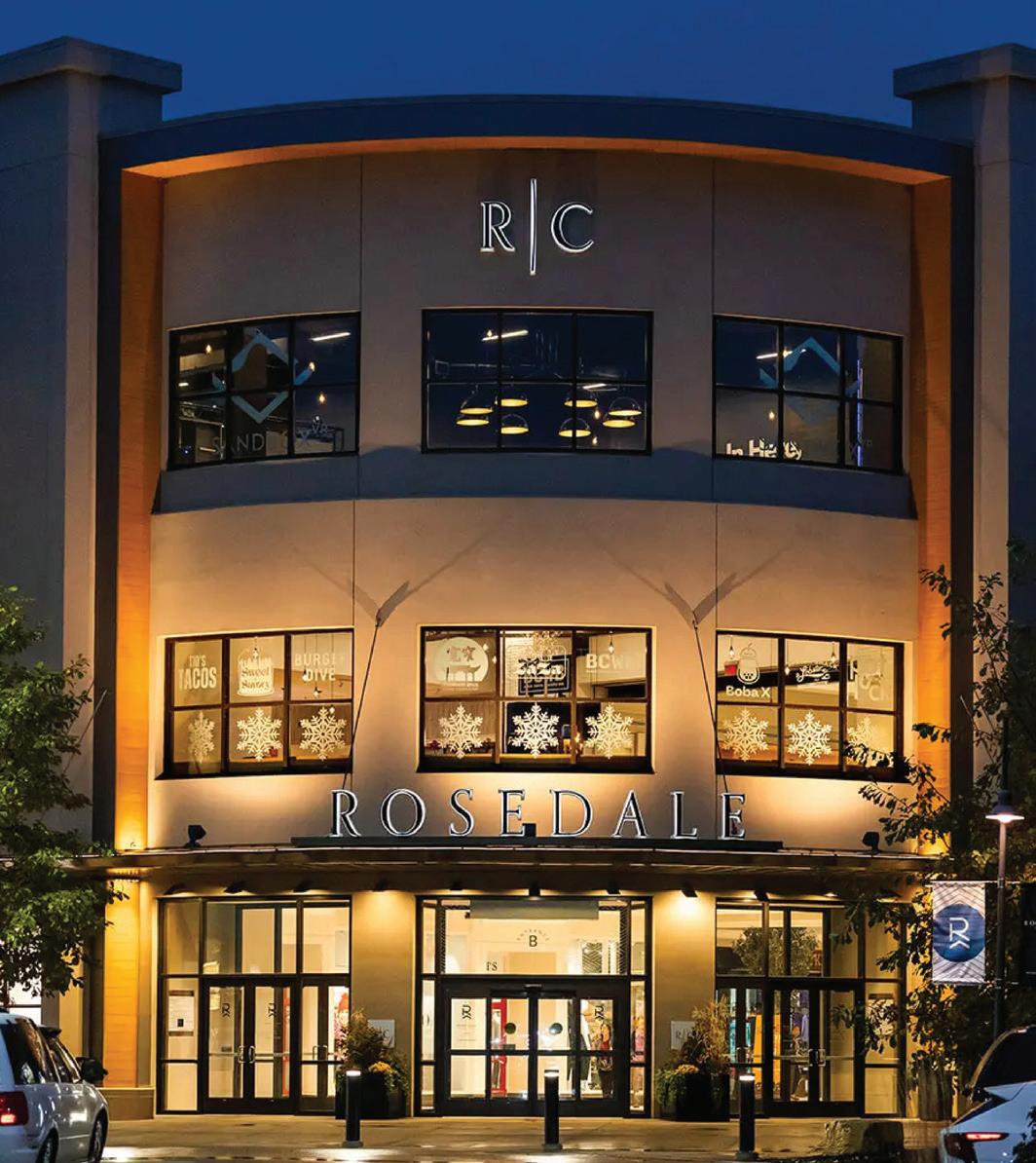
ROSEDALE (JLL)
CROCKER PARK
Westlake, Ohio
Retail space construction in this year’s second quarter was well below the 10-year average, and much of it has been invested in mixed-use projects in Sun Belt states--mostly boxy apartment buildings with street level retail.
Two decades ago, developer Bob Stark had the same idea, but there was nothing boxy about the revolutionary mixed-use center he built in a western suburb of Cleveland. The challenge he posed to himself when setting out to design Crocker Park was, “Can you urbanize suburbia?”
“At Crocker Park, retail, dining, entertainment, office, residential, and hospitality are not simply co-located but fully connected, allowing guests to move effortlessly from one experience to the next,” said Bob’s son Ezra Stark, the current CEO of Stark Enterprises in Westlake, Ohio.
Spanning approximately 4.5 million square feet, the center brings together national retailers, local boutiques, dining, entertainment, office space, hospitality and residential into a single destination that serves both as a regional draw and an everyday community hub.
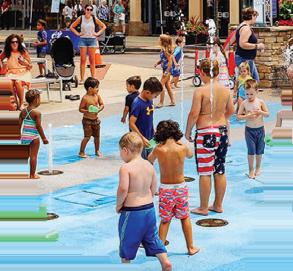
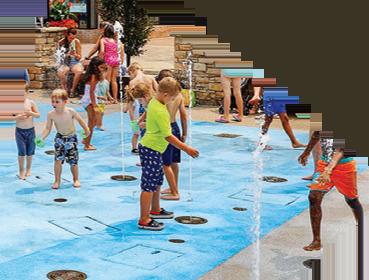
Families visit the Splash Pad, Movies in the Park, seasonal events, and open green spaces. Young professionals and residents enjoy patios, fitness, nightlife, and walkable convenience. Office tenants benefit from a vibrant environment with dining, retail, and services just by walking out the door.
Crocker Park Living, with more than 500 apartments and townhomes, is fully integrated into the property. Bob Stark got the idea for his center-supreme when he was in New York City on business, observing office workers and apartment residents exiting and interweaving through restaurants and shops.
The retail component is densely curated with top brands. Names such as Macy’s, Apple, Arhaus, LL Bean, LA Fitness, and Toys
“R” Us are intermingled block-by-block with food and beverage choices that include Bibibop Asian Grill, Five Guys, Hangry Joe’s Hot Chicken & Wings, and Mikey’s Pizza.
Overall event attendance at Crocker Park increased by 22% year over year, with particularly strong growth in signature and recurring programming such as “Movies in the Park.”
“Nothing in Crocker Park is homogenous or formulaic,” Stark noted. “Stores and the apartments above them are not tied together with common architecture. We even brought in brick from the 1800s to lay down in the alleyways. You’re transported to New England.”
TUSCAN VILLAGE
Salem, N.H.
The biggest, boldest, and best-tenanted shopping center in the Boston metro sits just across Massachusetts’ northern border in New Hampshire, 35 miles from downtown.
Tuscan Village opened five years ago in Salem just off Interstate 93, and in that time has emerged as one of the nation’s most complete mixed-use communities, with 1,200 apartments, a Mass General healthcare center, and a newly opened Whole Foods.
Its retail lineup is chock with upscale brands that draw visitations from a 40-mile circumference. Among them are Williams Sonoma, Nike, L.L. Bean, Pottery Barn, Arhaus, West Elm, The Container Store and Lovesac.
Food and beverage tenants include two center-branded selections—Tuscan Market and Tuscan Kitchen—along with The Capital Grille, Sweetgreen, Shake Shack, Crumbl Cookies and Tavern in the Square.
The center’s event schedule runs seven days a week, year-round.
“We have events going on every day—music, cooking classes, cornhole, shuffleboard games,” said Tuscan Village’s director of marketing and business development Diggy Lawson. “We drew 6.6 million visitors in 2025 and we’re on a pace to hit seven million in 2026.”
Tuscan Village’s events throughout the year include its Holiday Shoppes program, concerts, car shows, and outdoor movie nights to dog adoption, wellness activations, local artist showcases, and seasonal festivals. The center engineers events on an ongoing basis to consistently drive visitation beyond standard shopping hours, encouraging guests to stay longer and return more frequently.
By partnering with local vendors, nonprofits, and community organizations, the property has become a true gathering place centered on connection, entertainment, and experience - not just shopping.
AMERICAN DREAM
East Rutherford, N.J.
What much bigger promotional break could an already formidable piece of retail real estate get than having the FIFA World Cup soccer final played in its backyard?
Spain’s capture of its second World Cup at New York/New Jersey Stadium (nee MetLife Stadium; the insurance company wasn’t a World Cup sponsor) sits just a bicycle kick across the parking lot from Triple Five’s Meadowlands megamall. And American Dream, well, got to live the dream!
World Cup-themed events and promotions crowded the events calendar at the 3 million square foot center starting last October. A partial look at the lineup it presented to soccer fans included… A two-day soccer exhibition called the “Legends Match” inside the mall at which football fanatics got to meet and greet soccer legends that included Carlos Valderrama, Sergio Goycochea, and Oscar Cordboa.
In January, Adidas entered American Dream with a flagship soccer-only store featuring footwear, performance gear, and Adidas Originals.
In March, the mall opened “The Messi Experience,” a multiroom, nine-installation journey giving fans of the Argentinian superstar Lionel Messi. Employing holographic visuals and cinematic audio, fans got to step into Messi’s childhood bedroom and explore a replica of his locker room.
And Build-a-Bear Workshop introduced a soccer-themed overlay for their concept to get young children—many for whom soccer was their first sport—to take part in World Cup celebrations.
World Cup promotions in American Dream ran heavy for more than a month leading up to the game, and mall management estimated that two million fans from around the globe would train or bus or take Exit 16W off the New Jersey Turnpike to honor the hallowed ground.
“In retail, when you’re in the right place at the right time with the right brands and the right guests,” said American Dream’s CMO Adam Petrick, “you really are on top of the world.”
MALL OF AMERICA
Bloomington, Minn.
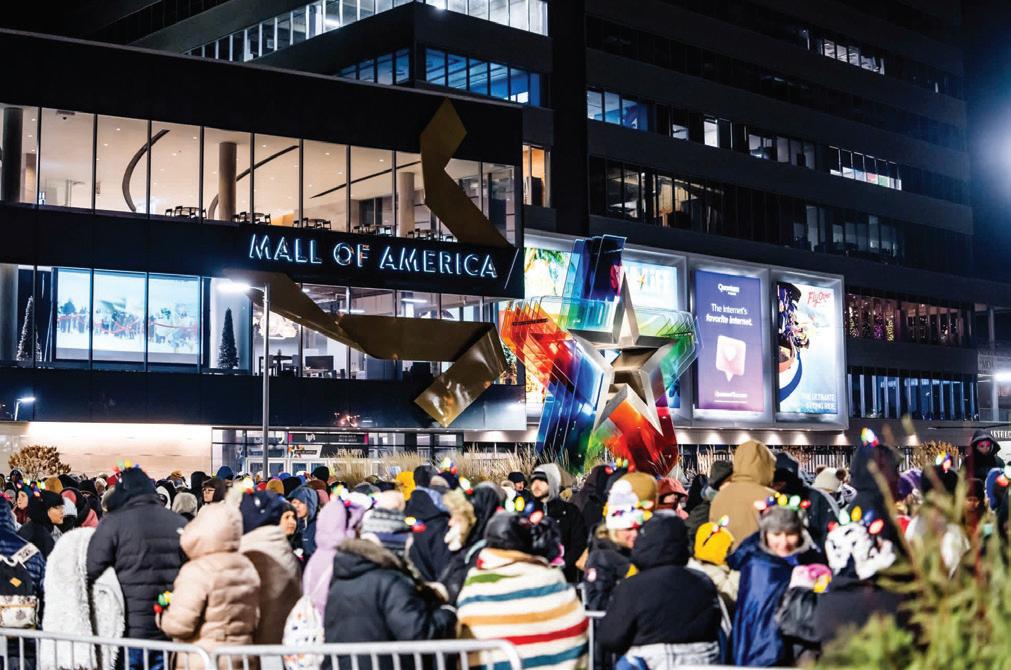
On the night before Black Friday 2025, temperatures were in the 20s in Bloomington, Minn., yet the atmosphere was much warmer in the parking lot of Mall of America due to the massive encampment of people eager to be the first to cash in on the cornucopian deals awaiting them inside the nation’s largest retail venue.
More than 14,000 guests arrived within the first hour of its doors being opened. By the end of the day, more than 235,000 had coursed through MOA’s 5.6 million square feet. Visitations over the holiday weekend exceeded half-a-million—a number larger than the population of nearby Minneapolis.
“Mall of America stands apart on a national level not simply because of its size, but because of its ability to continuously redefine what a modern retail and entertainment destination can be,” said the merchandising mammoth’s CMO Jill Renslow. “It operates as a dynamic platform where experiential retail, storytelling, and innovation, come together to create moments that cannot be replicated anywhere else in America.”
Mall of America serves as the nation’s top test track for new brands and international brands. Its most recent lineup of digitally native tenants includes the Samsung Experience Store, CardVault by Tom Brady, Pop Mart, and Mango. It scouts many of these tenants with a robust and expanding pop-up program, 10 of which have launched in the past year.
The Triple Five-owned mega-mall is now expanding its influence outside of its massive physical space with curated experiences such as an “ultimate staycation.” “Creators” stayed at an MOA partner hotel, took part activations such as a Lululemon sound bath, and attended last October’s Jonas Brothers concert at the Brand Casino Arena in St. Paul in a decked-out VIP suite.
The staycation generated more than 2.6 million organic impressions, featured 40 brands, and inspired nearly 500 pieces of organic content.
Hosting more than 300 events annually, Mall of America generated more than 140 million social media impressions. It has 170,000 Instagram followers and 313,000 TikTok followers. In 2024, MOA won 7 million TikTok likes.
Blue Star Shopping Center
BLUE STAR SHOPPING CENTER
Watchung, N.J.
Not every great retail experience requires 3 million square feet, an indoor ski slope or a theme park. Blue Star’s distinction is different. It is one of the nation’s clearest examples of how a thoughtfully merchandised, open-air suburban center can generate amplified visitations typically associated with much larger destinations.
Over the past few years, Blue Star’s operator, Levin Management Corp. (LMC), executed a major reshuffling of spaces to accommodate footprints for both long-time tenants and exciting new brands.
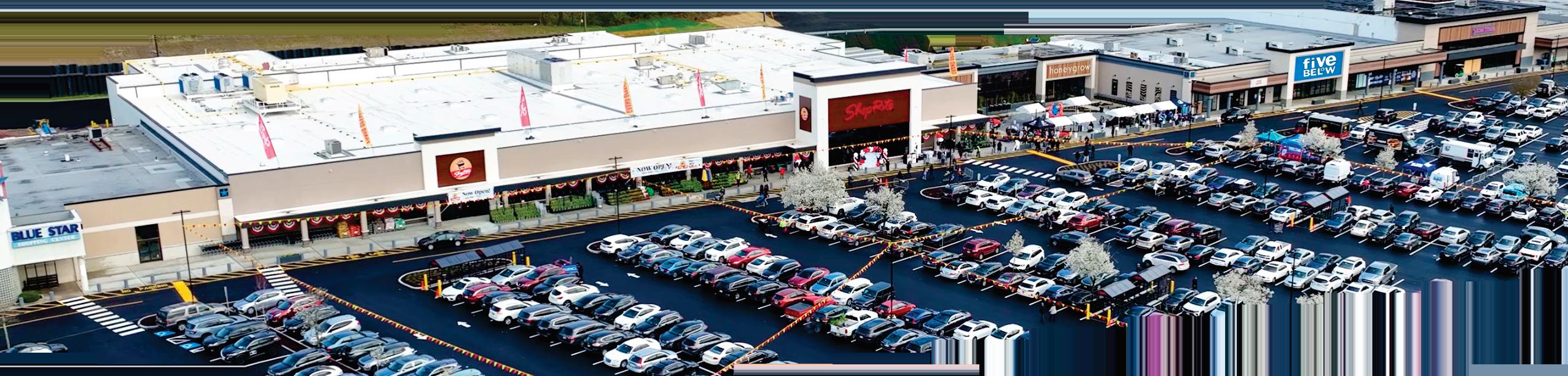
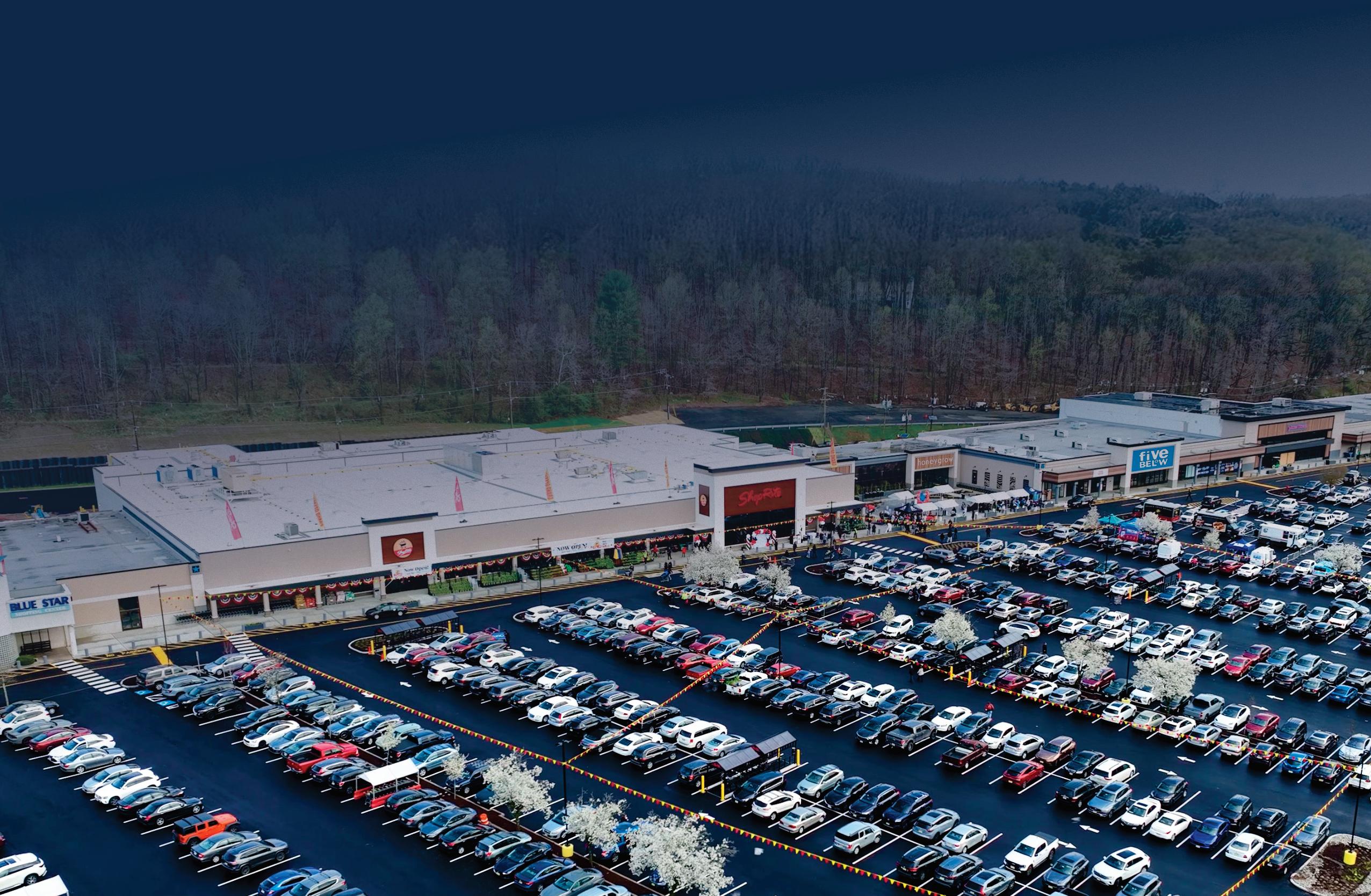
To make room for a new 72,000-sq.-ft. ShopRite at the 55-yearold center that resides on northern New Jersey’s Route 22, a busy retail corridor, LMC performed a major reshuffling of tenants both old and new. It moved long-time tenant Marshalls’ into a 27,000-sq.-ft. space at the grocer’s vacated site along with Burlington, a new arrival at Blue Star.
Other new tenants that opened at the center in the past year included Taco Bell in a 2,900-sq.-ft location and Nails Spa & Beyond in a 5,800-sq.-ft. space.
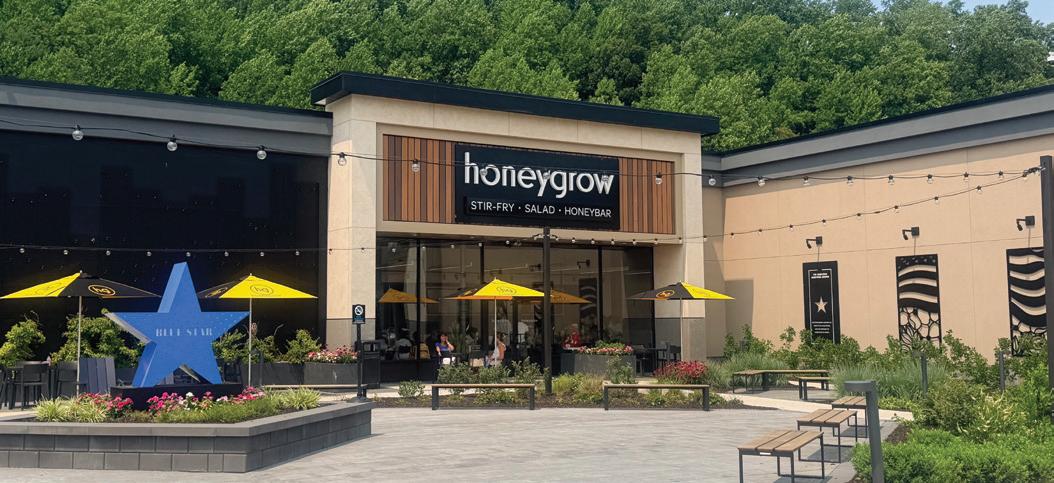
Honeygrow — a fast-casual concept that specializes in customizable stir-fries, salads and honeybars — recently opened at Blue Star in a 2,400-sq.-ft. space. Sakura Teriyaki recently signed a lease for a 4,000-sq.-ft. freestanding restaurant with a dedicated pickup drive-thru.
Another new brand at Blue Star, Back Nine Golf, stays open 24-hours a day to help duffers to tune up their games in fullswing simulator bays.
“Our vision for the makeover of Blue Star was to create a complementary mix. It’s a place where you can do almost all of your typical retail shopping,” said Sid Singer, LMC’s VP of leasing. “We brought in a Planet Fitness to drive multiple, per-week visits, and we’ve introduced some new entertainment brands. One of them that’s doing very well is I-Smash. They have Smash Rooms where folks can release their pent-up energy, smashing up old TVs with sledgehammers and bats.”
In June of this year, LMC released Placer.ai data revealing that Blue Star drew 3.8 million visitors in the first year of its renovation—a remarkable 40% increase over the previous year.
“The 40% increase in visits is not a one-time spike,” said Melissa Sievwright, LMC’s VP of marketing. “It reflects the success of a leasing strategy built around a simple question: Does what we’ve done at Blue Star give people another reason to leave home and come here?”
EASTWOOD MALL
Niles, Ohio
It holds more than 200 retailers, restaurants, and entertainment venues—the largest selection of consumer offerings in eastern Ohio and western Pennsylvania.
It is home to the only Bass Pro Shops within a 50-mile radius and the largest department store in the trade area, a 180,000-sq.-ft. Boscovs.
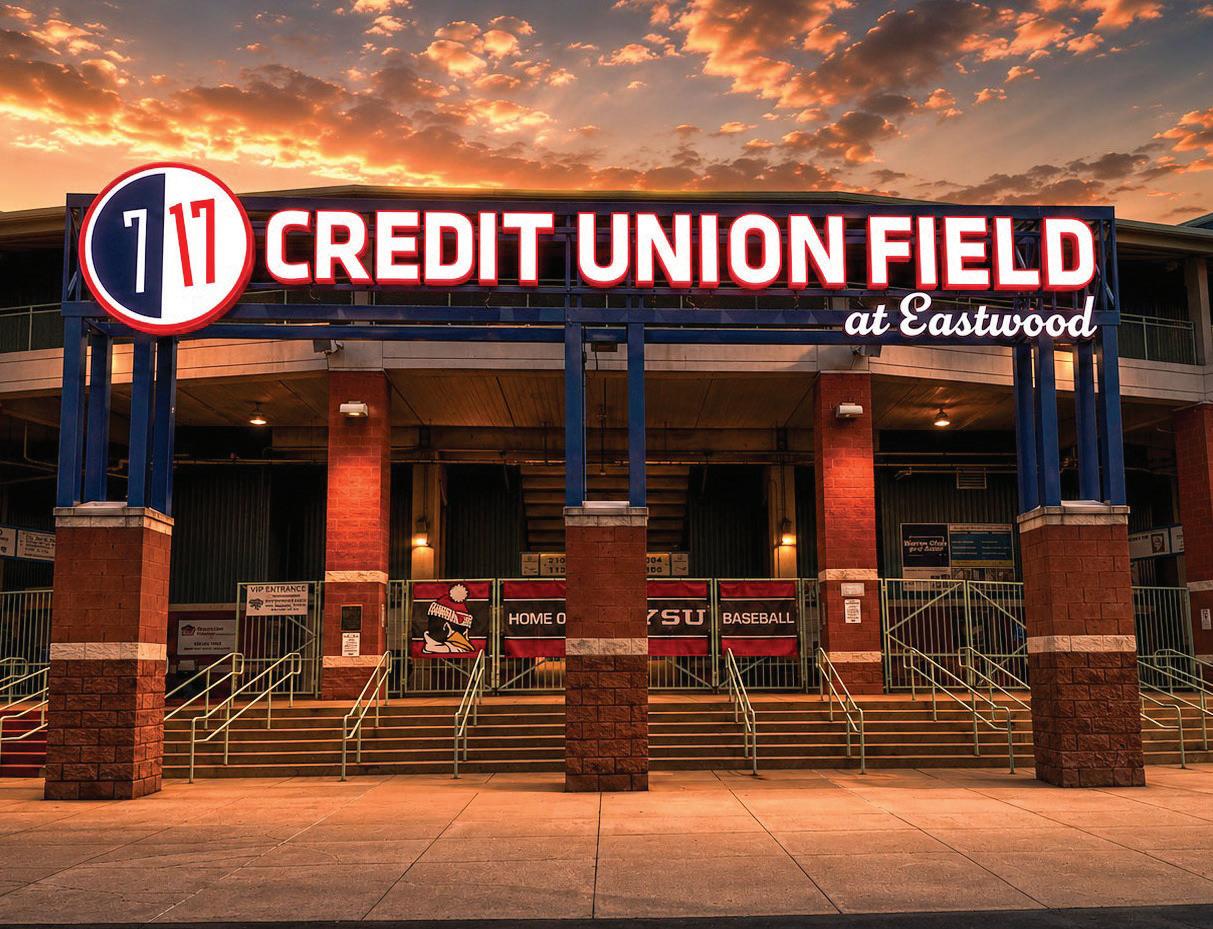
And--though we can’t be absolutely sure about this—it’s the only shopping center in the land that contains a minor league baseball stadium, home field of the Mahoning Valley Scrappers.
“Eastwood Mall is a city within a city. Actually, it spans two different municipalities,” said Cafaro Properties co-president Anthony Cafaro Jr., whose grandfather turned a golf course into one of the nation’s largest shopping centers. “When it opened in 1969, it was anchored by May Company, Strouss, Montgomery Ward, A&P, and Wooworth’s. Today we have three million square feet of retail in the mall and six different power centers.”
Eastwood Mall is the prime retail and entertainment destination in eastern Ohio and draws customers from as far as 100 miles away to shop its plethora of brands. Over the past five years, more than 20 new brands have opened at the complex. Among them are Meijer, HomeGoods, Dave & Busters, Macy’s Backstage and Sierra.
Recently arrived food and beverage brands include Raising Canes, Popeye’s Louisiana Kitchen, Bibibop and Bubbles Tea & Juice.
Regal Cinemas Eastwood just completed an extensive renovation with luxury seating, improved concessions, and improved projection technology
“Eastwood may not be the highest grossing mall in the nation, but what we’ve accomplished over all these years is designing a conglomeration of retail, restaurants, and entertainment scaled for middle markets,” Cafaro said. “That’s what we’ve been able to do for more than 57 years.”
Every visit matters
Where customers return, tenants stay, and value grows.
At JLL, w manag r tail and mix d-us prop rti s with a hospitality-first mindset—creating experiences that connect with shoppers and turn everyday visits into lasting impressions.
Our Property Management teams bring an ownership approach to your spaces—curating moments that draw shoppers in, keep them lingering longer and bring them back again.
The result? Increased visits. Longer dwell time. Higher sales. Improved tenant retention. And measurable value delivered for our clients. Because in retail and mixed-use, experience isn’t extra—it’s everything.
MARKET STREET – THE WOODLANDS
The Woodlands, Texas
In 1974, oil industry investor George Mitchell used the HUD Title VII program to establish The Woodlands, a new community that he envisioned would “entice city slickers looking for a far-flung suburban quality of life” 20 miles north of Houston off Interstate 45.
One key component of his project was a retail center that would serve as The Woodlands’ downtown. So Mitchell contacted mixed-use retail pioneer Terry Montesi, founder of the Fort Worth-based Trademark Property Company, to take on the job.
“Market Street today is the Central Park and heart-and-soul for the entire community,” said Montesi. “When we first opened it 23 years ago, we were competing with the local mall, but in the last decade we have not lost a key tenant to the mall. “
The 560,000-sq.-ft. destination features nearly 400,000 square feet of retail that includes 11 restaurants, a luxury cinema, 115,000 square feet of office space, and a 70-room Hyatt Centric hotel.
Office tenants and H-E-B generate daytime visitation, while restaurants, a luxury cinema, hotel guests, and evening events drive activity well beyond traditional shopping hours.
Guests can shop luxury brands such as Yves Saint Laurent, Louis Vuitton, and Gucci while enjoying chef-driven dining concepts such as Mastro’s Ocean Club, Tommy Bahama, True Food Kitchen and Local Public Eatery.
“Market Street was one of the first two suburban mixed-use town centers that focused on creating a new experience for shoppers—Easton Town Center being the other,” Montesi remarked. “Since then, the movement has been on a steady climb.”
PARK WEST VILLAGE
Morrisville, N.C.
A modern-day indication of the importance of certain retail centers is scoring the first and only Dutch Bros Coffee location in their state. Park West Village was the recent honoree in North Carolina, and long lines of quaffers of espresso-laden Caramelizers and Annihilators stretched out for weeks.
“The fact that we landed the first Dutch Bros shows how Park West Village is a target for highly desirable brands,” said Rich Roy, VP of retail services at Casto, the owner of the center.
The 627,000-sq.-ft. open-air community center that sits halfway between Raleigh and Durham off Route 54 presents sought-after brands that include Shake Shack, Nordstrom Rack and Trader Joe’s. But its tenant roster is also jammed with uses that resonate with the residents of 600-plus apartments at Park West Village, as well as other high-income dwellers of North Carolina’s Research Triangle.
Uses at the center tick off highly targeted boxes that include the Perspire Sauna Studio, Blake Interiors, Visionworks, Fifth Third Bank and Liberty Mutual Insurance.
Park West events are big draws. Its “Live in the District” concert series –which features live music, food trucks and local breweries--brings visitors to the center on weekday evenings in the summer.
The “Fall Festival” held annually before Halloween offers hayrides, costume contests, and center-wide trick-or-treating.
“What distinguishes Park West Village is its ability to continuously reinvent itself while remaining deeply connected to the needs of the community,” Roy noted.
“The center’s unique strength lies in its ability to blend everyday convenience with destination-worthy experiences.”
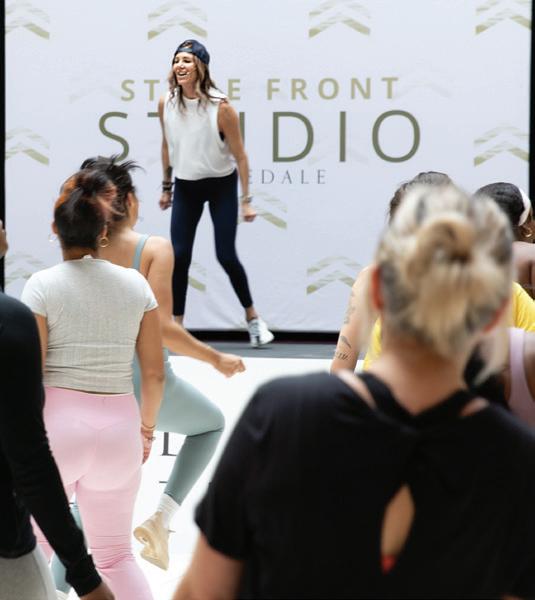
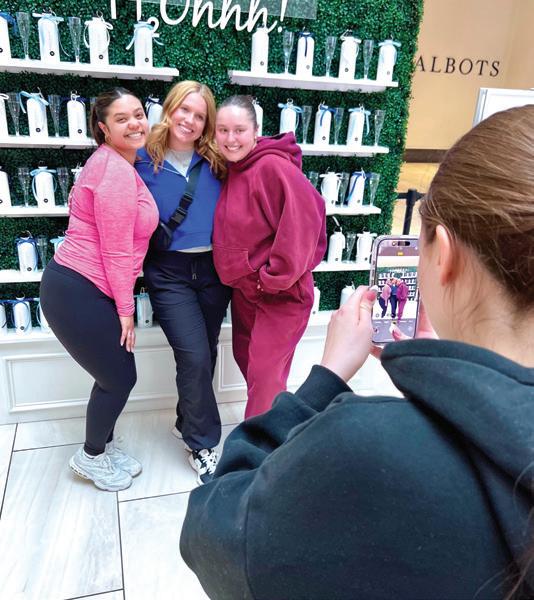
ROSEDALE CENTER
Twin Cities, Minn.
Minnesota has been called “The Heart of Nordic America.” More than 43% of the state’s population identify themselves ethnically as Norwegians, Swedes and Danes descended from the Scandinavians who settled there in the 19th Century.
Rosedale Center--a million-square-foot mall situated between two highway cloverleaf exits four miles north of downtown Minneapolis-has been a prime Twin Cities shopping destination since it opened in 1969.
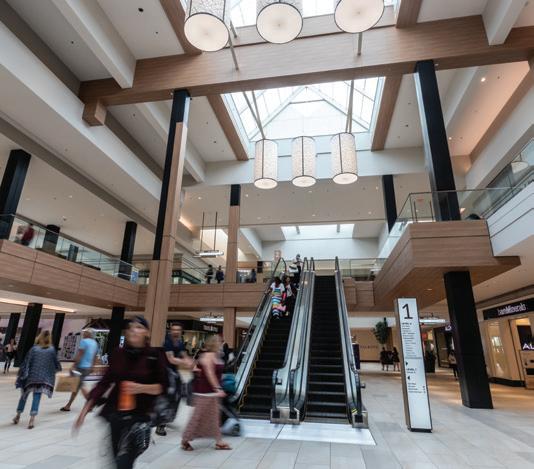
Seven years ago, it strengthened its bond with local shoppers with an interior re-design it calls “Scandinavian-chic.”
“It’s very different from any other mall in the market. It’s a very clean design with soft lighting, soft seating, natural wood and neutral color,” said Lisa Crain, a VP group manager of JLL, which owns and operates Rosedale Center. “Tenants want their own brands to shine, and that’s what draws them to Rosedale.”
Equally positioned between the Twin Cities of Minneapolis and St. Paul, Rosedale holds 150 retailers and restaurants, has easy freeway access and offers complimentary covered parking.
A recent multi-million-dollar expansion to the tenant list included an 82,000-sq.ft. flagship Dick’s Sporting Goods and a 140,000-sq.-ft. Von Maur department store as a premier anchor tenant.
New food-and-beverage offerings include Baldamar—an 8,000-sq.-ft, 264-seat American steakhouse on a perimeter outparcel. Rosedale’s Potluck Food Hall showcases Minnesota’s culinary scene with a rotating collection of local restaurants and food retailers.
Over the past five years, Rosedale has added nearly 30 new brands to its tenant roster that include Ikea, Pottery Barn, Lululemon, Abercrombie & Fitch, Hollister, and Raising Cane’s.
“We’re constantly reinventing ourselves with new and unique tenants. The Baldamar steakhouse has been a huge traffic driver for us,” said Crane.
In 2025, Rosedale Center recorded a 16% increase in foot traffic over 2024.
The ‘third place’ race
How entertainment and restaurant tenants, green spaces and more have become essential to thriving centers
By Zachary Russell
In the past, retail centers mostly served as a place for consumers to shop for a few hours and head home with a new outfit from an apparel chain or department store. But times have changed.
Increased competition between retail brands, partially fueled by the explosion of e-commerce in the 2010s, has led shopping center owners and operators to find new ways to offer value to consumers.
Through improvements like having a well-rounded and ontrend tenant mix, green spaces and a slate of family-friendly events, America’s most successful and innovative retail centers have evolved into spaces for consumers to dine, gather and socialize in one location.
The
evolving tenant mix
At shopping centers of all sizes and markets, leasing teams are diversifying tenant mixes to attract guests throughout the day. Entertainment venues, unique food and beverage chains, and on-trend soft goods retailers are among the top new tenants popping up in retail properties.
Levin Management Corporation (LMC), which manages properties across five East Coast states, has added several entertainment and activity-based tenants across its portfolio in recent years. In 2025 alone. LMC signed over 150,000 square feet of leases in the entertainment, fitness and wellness categories.
“Over time, the makeup of shopping centers changes as online
purchases have satisfied some consumer needs,” said Matthew Harding, CEO of LMC. “Coming out of COVID, there was a lot of spending on experiences and travel. We’ve seen that dial back a little bit as the cost has gone up. An increasing number of folks are looking to do things close to home, so we’re trying to provide reasons for customers to visit and stay.”
LMC’s recent entertainment signings are highlighted by indoor playground Kid’s Empire at Mayfair Shopping Center in Commack, N.Y., trampoline park Bounce Air Adventure Park at Rutgers Plaza in Somerset, N.J., and the immersive entertainment venue Activate Games at St. Georges Crossing in Woodbridge, N.J. Other additions include golf simulators and indoor pickleball venues.
When combined with the addition of trending fast-casual chains and unique eateries on top of the tried-and-true off-price retailers, LMC’s centers are becoming places that guests visit more than just once per week for a grocery trip, according to Harding.
“Activate Games at St. Georges Crossing has been a terrific addition to the shopping center. They took a space that was formerly occupied by West Marine,” he said. “At the center, we have a new Korean barbecue restaurant, Popeye’s, Jersey Mike’s, and then TJ Maxx and Burlington which opened recently.”
From surviving to thriving
The crown jewel of Trademark Property Company’s portfolio, Galleria Dallas, has seen a substantial boost in traffic since it
The opening of Netflix House at Galleria Dallas has helped drive consistent traffic to the property. (Image courtesy of Netflix)
added a key entertainment tenant. While the mall has undergone several upgrades since Trademark purchased it in 2018, the addition of the Netflix House entertainment venue late last year has been instrumental in bringing new life to the center.
Spanning more than 100,000 sq. ft., Netflix House Dallas is designed as an entertainment destination where fans can “explore, taste, play and shop” their favorite shows and movies in real life, according to Trademark. Visitors can dine at Netflix Bites, a casual, full-service restaurant, and shop exclusive Netflixbranded local merchandise.
“In the first four months Netflix House was open, traffic in the entire Galleria Dallas went up 14% per month on average,” said Trademark CEO Terry Montesi. “That’s been a real change agent. Galleria Dallas is a conventional mall and a really good piece of real estate, but with the right moves, we’ve been able to go from surviving to thriving in a big way.”
Should all centers sit flat?
Mixed uses are another way that retail centers are keeping things fresh and drawing in new traffic. Casto’s Hamilton Quarter property in New Albany, Ohio, northeast of Columbus, is home to The Ohio State University’s 31-acre Wexner Medical Center campus, which sits alongside retail tenants such as Target, Five Below, Hobby Lobby and more, as well as multi-family residential units and office space.
When multiple anchor tenants paused their expansion at the property following the onset of the COVID-19 pandemic, Casto looked to bring in a new use with high on-site employment that would add a new dimension to Hamilton Quarter.
“It’s a lovely example of how, maybe unexpectedly, we found somebody that’s really ingrained in the community and brings an important element to the area,” said Sydney Federer, VP of retail leasing at Casto. “It was something that we paused on, especially with its ambulatory care component, but now we look back and think ‘wow, what a great decision that was.’”
Throughout the rest of Casto’s Midwest and Southeast portfolio, medical and fitness-oriented tenants, as well as local eateries and bars, are playing a key role in keeping a diverse mix beyond just the
standard discount and soft goods retailers. Federer noted a sense of “complacency” for some retail center operators which can prevent them from adding something new, with the Wexner Medical Center being a prime example of revolutionizing a property.
“One of the things we’ve done over the course of the last 10 years is explored mixed use,” Federer said. “Maybe a site is not supposed to sit flat. Maybe it’s supposed to go vertical and maybe we’re supposed to have a density element to it. We’ve been pleasantly surprised by how residents enjoy that experience.”
Going green
A diverse mix of tenants may be crucial in attracting guests to the shopping center, but green spaces and gathering areas are highly necessary to help increase dwell times.
Trademark’s Montesi added that part of the transformation of Galleria Dallas also included a greater investment in enhanced outdoor seating and public spaces.
“If we’re designing a retail center, it would be a rare case that we wouldn’t put some sort of public space,” he said. “I can name several projects where we had the public spaces attract as many or more people than some of the retail anchors do. Public spaces are extremely important and have evolved to become the ‘heart and soul’ of a retail mixed-use project.”
At Yorktown Center in suburban Chicago, Pacific Retail Capital Partners (PRCP) recently announced the opening of The Square, a new outdoor gathering space that marked the completion of the
first phase of the center’s ongoing redevelopment. The green space is just one aspect of the property’s evolution since PRCP purchased it in 2012, which has included a more curated selection of retail and dining tenants and the addition of more residential units.
The property is now tied together by The Square, which will host pop-up markets, live music, art activations, seasonal celebrations, community events and more.
“If you go back to when we bought Yorktown, it was a traditional mall,” said Steve Casella, executive VP of leasing at PRCP. “Prior to COVID, there were 475 multi-family units, but there was no connectivity necessarily to the center. When we partnered with Synergy Construction Group, we had the ability to create a green space that was a gathering space for all and add another 275 multi-family units right at the main entrance.”
Paul Chase, president of lifestyle property management at JLL, said that increased investments in public areas have taken off post-pandemic as consumers crave new experiences.
“I would say in the last five years, you’ve seen activated green spaces become critical to leasing and merchandising,” he said, citing Manhattan Village in Manhattan Beach, Calif., as a prime example of how a green space can bring new life to a center.
“Maybe it’s driven by the continued competition for online shopping and different ways to drive traffic,” he said.
“Centers are using green spaces as a way to pull people out of their houses and create loyalty.”
A new green space has been central to the redevelopment of Yorktown Center in Lombard, Ill. (Image courtesy of Ian McClellan, Marie Douglas Media)
Give EV Drivers a New Reason to Stop, Shop and Stay
The State of California is offering more than $55 million in incentives for direct current fast chargers that can cover up to 100% of eligible equipment and installation costs. Fast charging can:
Charge many EVs in 15–20 minutes
Attract more drivers and customers to your location
Applications open in October 2026 and February 2027 through the California Electric Vehicle Infrastructure Project. Projects must be ready to build, and funding will be awarded on a first-come, first-served basis.
Increase customer dwell time and spending
Be installed and managed by an EV charging provider
Start planning now to improve your chances of securing funding.
Stores emerge as product discovery hubs
Online shopping is now a weekly habit for two-thirds of U.S. households, up from two-in-five households in 2019, according to recent data from Numerator.
While consumers are increasingly relying on e-commerce, the in-store experience is still key. Numerator’s data revealed that the top sources for product discovery are at physical stores (55%) and through friends & family (55%).
A recent survey from ICSC echoed the sentiment. Sixty-one percent of respondents said they value the ability to see or try on products in person before buying, while 44% value easier returns and exchanges at physical stores.
Consumers’ affinity for brick-andmortar retail is leading brands to look for new ways to make visiting physical locations more immersive and enjoyable for consumers – which in turn boosts visits to shopping centers.
“The physical store is the backbone of omnichannel,” said Scott Schnuckel, managing director of Americas retail at CBRE. “Approximately 80% of retail sales are still done through brick-and-mortar stores. Even though people are buying more online, they’re still utilizing the store to achieve what they want.”
The newfound investment in making stores more appealing is most often seen in the apparel and beauty categories. More curated and limited-time assortments, try-on areas and enhanced product presentation through well-designed displays are all methods by which retailers are improving the in-store experience.
“I can go to the store and pick my white t-shirt out of the pile of white t-shirts, or I can just buy the white t-shirt online, and that’s not much fun,” said Schnuckel. “But now, more and more retailers are curating things inside the store, presenting merchandise differently and creating moments of inspiration. That’s been a boon for them and a lift overall for shopping centers.”
Events and activations
Green spaces at shopping centers aren’t just for sitting and enjoying a meal or a cup of coffee. Increasingly, properties that have invested in green spaces are generating consistent traffic by hosting outdoor events and activations – often partnering with fan favorite retail brands to do so.
“People want to connect with others – they want to have experiences,” said Chase. “But you have to build something that creates that dynamic to pull them out. The more successful centers are creating green space that’s activated, and has curated placemaking partnerships with the retailers.”
Since Manhattan Village’s The Plaza opened in early 2021, it has become an activated space that allows for guests to linger between shopping and dining, with events taking center stage. In addition to yoga and outdoor activities, Manhattan Village hosted a series of 2026 FIFA World Cup watch parties at The Plaza.
JLL said the initial event on June 12 attracted approximately 4,000 people, with retailers getting involved with product giveaways, and food and beverage tenants seeing full patios as the global soccer event kicked off.
“It goes back to that craving to be around people, to be outside and to socialize,” Chase said. “Our business is getting better at that, and we’re finding that the retailers are getting better at that. The most successful retailers are the ones that offer phenomenal experiences.”
Of course, a larger shopper means more room for more grandiose events, so it’s no surprise that Mall of America (as well as its sister property American Dream) sets the standard when it comes to live, and often free, entertainment.
“Consumers don’t look to separate shopping from entertainment – they expect those experiences to happen together,” said Jill Renslow, chief marketing officer at Mall of America. “Events are part of what differentiates us.”
While events have played a key role at Mall of America since the property opened in 1992, the programming has
evolved throughout the years to keep up with changing consumer interests while still offering something for everybody.
The rise of Asian retailers and dining brands have gone hand-in-hand with events Mall of America has hosted, including a free concert from the group K-pop Katseye last year, which marked the kickoff of the band’s Beautiful Chaos Tour and was hosted in partnership with retailer Kpop Nara.
Later this summer, Asian food festival Panda Fest will take place outside Mall of America, all while the wrestling world is gathered inside the center for WWE SummerSlam. World Cup watch parties have taken place at the complex since the global tournament began, allowing soccer fans to take a break from shopping and dining to catch the action.
“Ryan Day” Mall of America’s event schedule even incorporates lighthearted viral trends. The mall will soon host a “Ryan Day” event – which aims to set a record for the most people sharing the same first name to consecutively ride a roller coaster. The mall’s rotunda will be converted to the “Rytunda” for the day, and those named Ryan will get to ride the Nickelodeon Universe roller coaster for free.
“It’s so perfect for us because we love to do things that are unique, quirky and different,” said Renslow, adding that social media is key for keeping up with both retail and entertainment trends.
She noted that while most events at the center are free, tiered packages can allow for guests to gain more value from the events.
“People are willing to pay a premium for a special experience,” Renslow noted. “When you look at wrestling, for example, you can have seating for a general audience that everybody can enjoy and partake in, but then you can have a VIP experience. People are starving for in-person experience, and we are able to deliver that through these retail and entertainment channels and create a ‘third place’ that people are looking to come to.”
Simplifying Store Ops With Unified Commerce
By Dan Berthiaume
Chain Store Age recently spoke with Amit Acharya, global head of retail technology for NCR Voyix, a leading provider of unified commerce technology for retailers and restaurants, about the benefits of cloud-toedge unified commerce, AI and next-gen checkout for in-store performance.
How can retailers simplify operations at scale with cloud-to-edge unified commerce in the store?
Retailers are under tremendous pressure to do more with less. They are managing labor constraints, rising operating costs, increasing customer expectations and a growing number of technologies across stores and channels. Adding more systems is not the answer.
Instead, retailers can simplify operations through a unified commerce approach that connects store, digital, payments, loyalty, inventory, fulfillment and insights on a common platform.
What retailers ultimately need is the ability to make a change once and have it consistently deployed and managed across the enterprise.
What measurable outcomes can retailers obtain by integrating AI into their existing store environments?
The most successful AI initiatives are not focused on the technology itself. They are focused on measurable business outcomes. Retailers are using AI to improve checkout accuracy, reduce manual effort, optimize labor allocation, identify shrink risks, improve inventory visibility and provide faster operational insights.
These outcomes directly impact profitability, productivity and customer satisfaction. One of the most important shifts we’re seeing is that retailers are not looking for standalone AI projects. They want AI embedded into the systems and workflows they already use every day.
AI is most effective when it quietly improves everyday experiences for shoppers
and store associates rather than creating additional processes to manage.
As in-store checkout evolves, how can retailers balance speed, trust and profitability?
Checkout is one of the most important moments in the retail journey. It is where customer experience, operational efficiency and profitability intersect. Retailers cannot optimize checkout for speed alone. They must balance convenience with security, automation with human engagement and throughput with profitability.
Customers expect fast and frictionless experiences, but they also expect accuracy, trust and consistency. The future of checkout is not about a single technology. It is about orchestrating multiple experiences, including traditional lanes, self-checkout, mobile checkout, payments, loyalty, digital engagement and emerging AI-enabled experiences.
The retailers making the most progress are using data and intelligent automation to reduce exceptions, improve associate productivity and identify potential issues before they impact the shopper experience.
How is Agentic AI changing the store experience and how will it continue to do so in the next few years?
Agentic AI moves retail technology beyond simply recording transactions and presenting information by enabling
systems to understand goals, make recommendations, orchestrate workflows and help drive outcomes.
In the near term, this may include helping store managers prioritize tasks, proactively identifying operational issues before they impact the business, recommending inventory actions, optimizing labor allocation, assisting associates with real-time decision-making or helping customer service teams resolve issues faster.
For shoppers, it can create more personalized and context-aware experiences throughout their journey..
The winners will not necessarily be the retailers with the most visible AI. They will be the retailers whose stores operate more efficiently, whose associates are more productive, whose foodservice and kitchen operations run more smoothly and whose customers experience fewer points of friction.
How can NCR Voyix help retailers meet these types of store-level and omnichannel challenges?
At NCR Voyix, we believe retailers should not have to choose between innovation and operational reliability. Through the Voyix Commerce Platform, we help retailers bring together the capabilities required to run modern commerce, including POS, self-checkout, payments, loyalty, back office, supply chain, insights, digital commerce and services, on a connected foundation designed for scale.
As retail keeps evolving toward more connected, intelligent and autonomous operations, NCR Voyix is focused on helping retailers simplify complexity, modernize at their own pace and build a foundation for the next generation of commerce. Our goal is not only to help retailers run stores more efficiently today, but to position them for the opportunities emerging across AI, unified commerce, agent-driven experiences and the continued convergence of retail and foodservice.
Amit Acharya, global head of retail technology, NCR Voyix.
How Prime Day shoppers got smart — and social
Getting smart
Beyond mobile, other, newer technologies are also having what appears to be a positive impact on Prime Day. AI traffic to U.S. retail sites (measured by shoppers clicking on a link) increased 89% year over year during Prime Day, Adobe data indicates, and converted 40% better than traffic from other channels. This is a notable shift from Prime Day 2025, where Adobe found that AI traffic converted 23% worse.
The most recent edition of the annual Amazon sales extravaganza known as Prime Day is the latest indicator that shoppers are adopting next-gen technologies. Amazon Prime Day 2026 is a wrap. The best news of all for Amazon and online retail in general is that according to data from Adobe, U.S. retailers drove $26.4 billion in online spend during the entire four-day Prime Day period, representing 9.3% growth year-over-year and trending above Adobe’s initial forecast of $26.3 billion, up 9% year over year.
Numerator analysis indicates there was softness in average order size and average household spend. In addition, the percentage of Prime Day customers who said the event was their primary reason for shopping declined from 2025 and the impact of the event occurring in June instead of July is not yet fully known. However, the financials seem basically solid.
One trend that is apparent from this year’s results is the use advanced shopping tools to find and purchase Prime Day bargains. Here are a few examples.
Prime Day on the go
Traditional desktop shoppers continue declining as a total share of Prime Day activity. At the same time, Adobe data indicates that mobile shopping hit an all-time high, driving 54.2% of online sales and contributing a record $14.2 billion in spend. This reflects basic societal trends of consumers, especially younger consumers who make more discretionary purchases, relying on their smartphones as their primary connected devices for all digital activities. It reinforces Prime Day’s immersion into broader e-commerce trends.
This suggests the growing consumer ability to find products using AI search with conversational language makes them more likely to buy, and as a leader in AI-enabled shopping Amazon stands to gain.
An influential social event
It is also notable that while social media only drove a 4.4% share of revenue, the channel is growing the fastest as a source of Prime Day revenue (up 15.8% year over year).
Of particular interest, influencers converted shoppers (individuals making a purchase after seeing influencer content) 11 times more than social networks overall. Affiliates and partners also drove the highest “add-to-cart rates” at 9%, along with checkout initiation at 56%, outpacing social media overall at 3% and 28%, respectively.
Amazon has also been increasing its presence in affiliate and social shopping with initiatives such as its recent direct linkage of creator storefronts to their Pinterest accounts and presumably will have more programs like this in place nest year.
Looking ahead
Based on some of the weaker signals tracked by Numerator, Amazon should still work on ways to boost Prime Day’s appeal as a primary reason to shop. Many of these could encompass newer technologies, leveraging its platforms such as Twitch and Prime Video for alternative promotions and programming, working with third-party influencer partners (such as its Pinterest) creator program, or adding gamification elements to create additional buzz.
Dan Berthiaume dberthiaume@chainstoreage.com
Holiday Tech Prep: Making the season smart, fast and efficient
Retailers are combining smart technology and smarter strategy to ensure holiday success.
By Dan Berthiaume
Retailers are focusing their holiday technology plans on customer convenience, delivery speed and employee effectiveness — with a heaping helping of AI. The holiday season seems to come faster every year, but especially so for retailers who in many cases have already begun their early holiday promotions. For 2026, retailers are zeroing in on agentic AIbased customer engagement, fast delivery and workforce augmentation as technology-enabled initiatives to stay ahead of the holiday rush, whenever it arrives.
Agentic AI – very personal computing
Agentic AI builds upon the prescriptive capabilities of generative AI to streamline enterprise workflows even further by analyzing massive amounts of data in nearreal-time and then automatically taking action based on the results.
Retail may not be quite at the point where agentic AI is assumed, but it is omnipresent in the retail enterprise. In January, Google released its Universal Commerce Protocol (UCP), an open standard for agentic AI-based commerce intended to cover the entire shopping journey from discovery and buying to post-purchase support and has rolled out several updates since.
Retailers have been embracing UCP, which enables activities such as search, checkout and payment within the Google Gemini agentic AI platform. Many retailers have also introduced search, checkout and payment within popular agentic environments such as ChatGPT and Perplexity.
An increasing number of retailers are also offering conversational search. Leveraging the natural language capabilities of agentic AI, retailers let customers search for products based on factors such as where they’ll be going, what they’ll be
doing and who’ll they be with.
For example, before the advent of conversational search, a customer shopping for family and friends on their holiday gift list would individually search for products. During each search, they would drill down based on attributes such as price, age of recipient and personal interests. With conversational search (which customers can perform via agentic AI platforms) consumers can instead describe their needs for each individual gift in detail and then search products that match their needs as determined by the event.
This means the previously mentioned shopper could say, “I have a 25-year-old cousin in Denver who is an experienced outdoorsman and loves winter camping.” The AI search engine would then generate
highly targeted product recommendations based on those specifications.
To ensure their products will show up in conversational searches, retailers need to include attributes beyond traditional features such as color and size. So “camping tent” needs to be described by factors such as specific materials, what climates or parts of the country it is ideally suited for and the level of user expertise it is appropriate for.
However they choose to integrate agentic AI into their holiday technology preparation, retailers should remember to keep “humans in the loop” and not turn over mission-critical tasks or processes requiring complex judgment to machines without human supervision and input.
Retailers will use Agentic AI to personalize the customer shopping journey at scale.
Delivery – almost as quick as Santa’s sleigh
The two biggest U.S. retailers — Amazon and Walmart — have both taken major steps in recent months since to gain yet another competitive edge by being quicker with delivery — as in products delivered in as a little as an hour, or even less for orders fulfilled by drone.
For most retailers, providing this type of delivery speed at scale, especially during the infrastructural strain of peak holiday season, is difficult. But there are still several ways retailers that may not have the size or resources of major Tier I players like Amazon and Walmart can make sure holiday shoppers get their online purchases in plenty of time to place under the tree.
The easiest way for a retailer to enhance the speed of online deliveries is to partner with a third-party platform, such as Instacart, DoorDash or Uber Eats.
The major on-demand delivery platforms can all offer delivery in at least some markets in 30 or even 15 minutes or less, and DoorDash and Uber Eats also offer some drone delivery options which can potentially cut delivery time even more.
In addition, Walmart and Amazon both provide their own hosted third-party delivery services which can fulfill customer orders in 30 minutes or less, and drone companies such as Wing, Flytrex and Zipline will all partner directly with retailers.
The biggest potential drawback of any of these options is that retailers must pay commissions on orders filled by third-party partners which can run as high as 30% of the order subtotal.
Retailers with a brick-and-mortar store fleet have the option of turning it into a built-in local distribution network.
While delivering from existing brickand-mortar stores eliminates the need to invest in any new physical infrastructure, starting up isn’t as simple as loading trucks from a store’s back room. Retailers will need to reconfigure store layout to accommodate the space needed for picking and packing online orders, train associates in how to receive, pick and pack online orders (which may necessitate equipping them with mobile scanning devices) and also reprogram order and inventory
management systems to manage this new method of filling digital purchases.
Workforce augmentation – racing with the machine
Despite widespread predictions that 2026 would see retailers use AI to eliminate headcount, what has been happening instead in many cases is retailers are leveraging solutions such as AI, automation and mobile apps to help employees accomplish more work, more accurately and more efficiently.
MIT professor Erik Brynjolfsson has dubbed this strategy of using technology to complement, rather than replace, human employees, “racing with the machine.” As the holiday rush approaches, now is the time for retailers to evaluate how they can use leading-edge technology to augment, rather than replace or minimize, their workforce throughout the enterprise.
For example, Kohl’s is piloting an AI analytics tool running on Google Cloud conversational analytics in the Google Looker reporting/dashboard solution for visualizing and reporting on that data. With the tool, associates can ask straightforward questions to compare
product trends by category or brand or better understand what may be driving sales, without needing to pull multiple reports or manually compile data.
Robots can also serve as a tool for retailers to increase employee effectiveness.
Regional Midwest supermarket retailer B&R Stores is deploying the Simbe store intelligence platform and Tally autonomous shelf-scanning robot at select locations to scan and record real-time, shelf-level data on product availability pricing, and placement.
Tally automates those tasks, freeing associates to focus on higher-level replenishment, store execution and customer service workflows.
On the back end, Walmart is integrating Internet of Things devices into its supply chain to obtain a real-time view of pallets at scale. The discounter is deploying Wiliot IoT Pixel ambient technology throughout its supply chain.
Connecting millions of Pixel devices, which rely on “ambient” power sources such as radio waves rather than batteries for power, to its AI supply chain technology, Walmart real-time insight into exactly what merchandise is owned and where it is at any moment.
Fast delivery is key to holiday shopper satisfaction.