
Every year on June 23, we mark International Women in Engineering Day (INWED) — a global celebration of women who work in the engineering profession.
Across Canada, progress is being made through Engineers Canada’s 30 by 30 initiative, which aims to increase the representation of women in engineering to 30 per cent by 2030.
In the weeks leading up to #INWED26, Engineers
Nova Scotia invited the community to nominate inspiring women who are shaping the future of engineering via our biweekly e-newsletter and our social media channels.

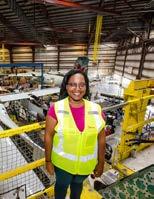

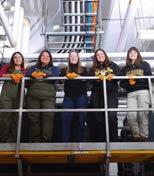
This year’s publication shares the stories of women from those nominations from around the province, with interviews from students just starting out on their engineering journey, women who have moved to Canada to start or re-start their careers, and engineers who have been in the field for decades.
If you would like to nominate a colleague for next year’s INWED publication, you can email publications@ engineersnovascotia.ca with a couple of paragraphs about your nominee.
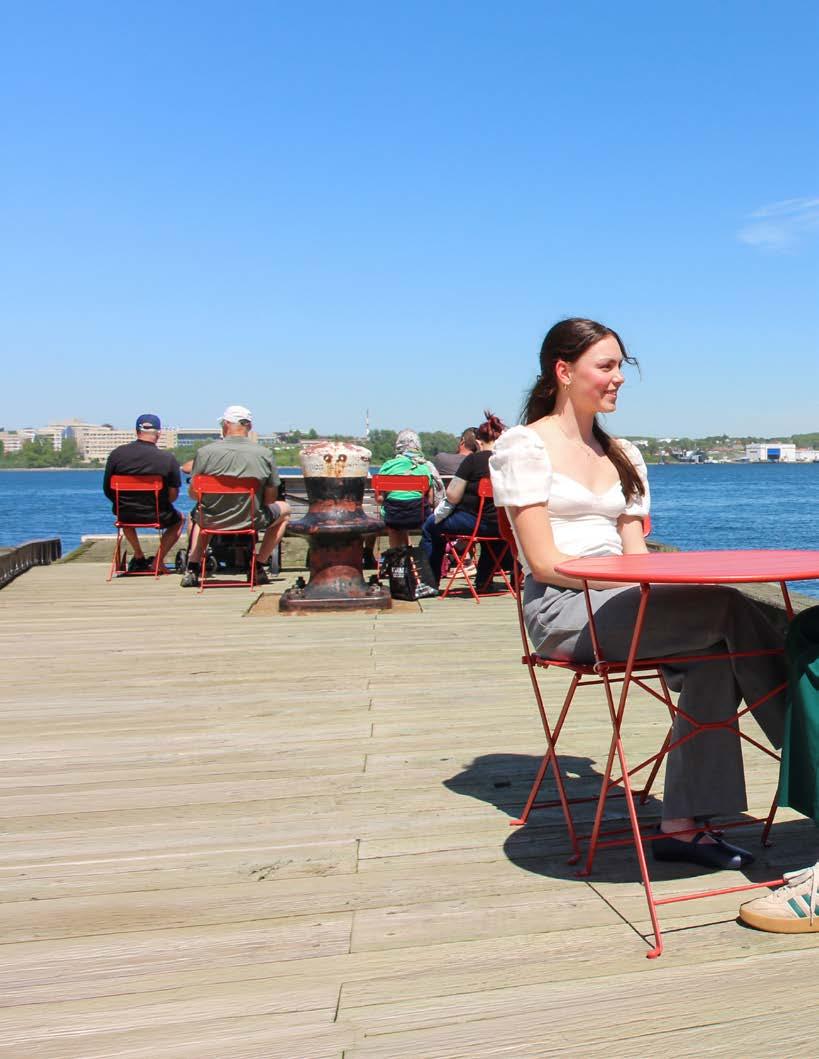
A passion for community and problem-solving is guiding Eryn Marsh’s early journey in engineering. After recently graduating from Acadia University, she is preparing to continue her engineering studies at Dalhousie University this fall.
Eryn's path into engineering was shaped by a moment of inspiration in high school. While exploring postsecondary options, she came across an article about engineering students working in an underserved community to build a sustainable water filtration system. That story shifted her perspective, showing her that engineering could be about more than machines and math. It could be a way to create meaningful change.
Women made up a relatively small portion of the students, and Eryn came to understand that building community required intention. “I was at a conference and one of the speakers was talking about how the people you meet and the connections you make in university are what drive your career." At Acadia, Eryn served as co-president of the Women in Engineering group, where she worked to build a stronger sense of belonging among women through events, outreach, and partnerships with other universities. “It is hard to make connections as young women studying engineering and the Women in Engineering community has brought us together, making a male-dominated field feel less scary to be a part of. The importance of these groups is to support each other and know that you always have a friend around.”
Looking ahead, Eryn is particularly interested in urban design, and the role engineers play in shaping communities. She emphasizes that meaningful engineering work must include consultation with the people it impacts. It means listening to communities, understanding their needs, and designing solutions that reflect those perspectives.
Eryn likes that complexity of moving beyond solving equations to navigating interconnected challenges that span technical, social, and environmental considerations. “It’s not only a math problem… it’s a complicated problem that involves all these different factors,” she explains.
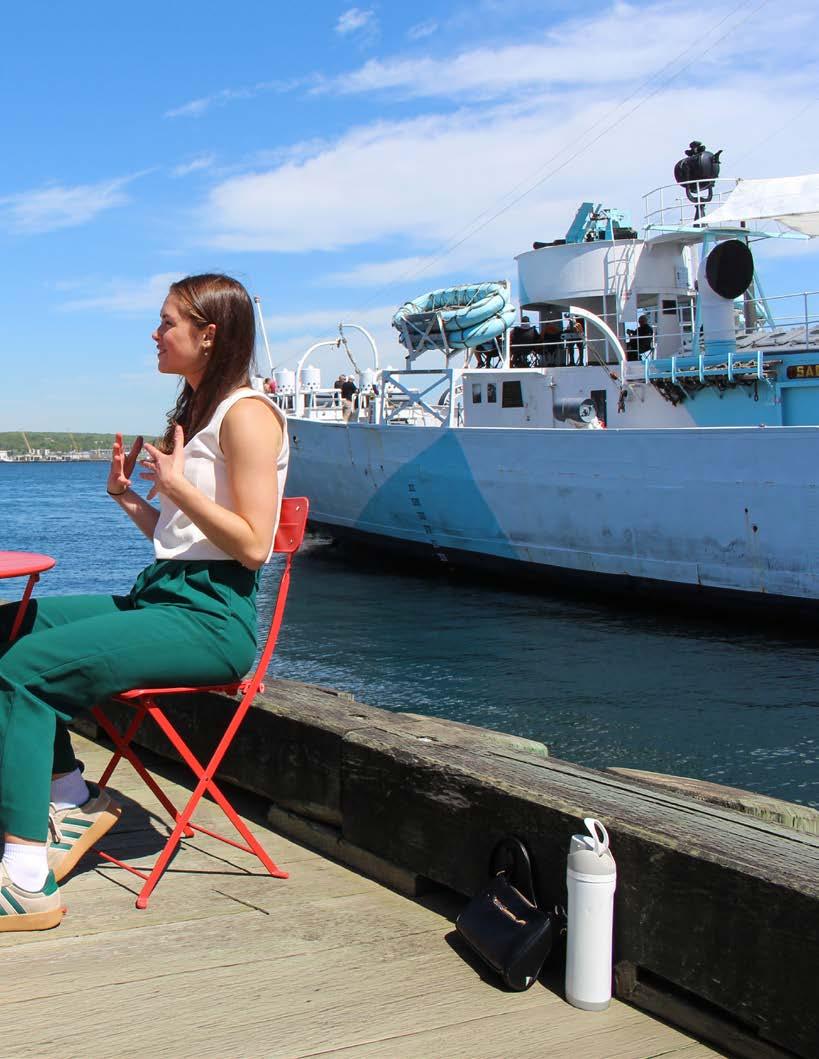
A strong sense of curiosity and a passion for community have shaped Havelie VanHelden’s journey into engineering. What Havelie enjoys most about engineering is its ability to go beyond equations and connect with the world around it. She sees engineering as a discipline that requires understanding of people and context. It’s not just solving isolated problems but recognizing how projects fit within larger communities.
That perspective has shaped her involvement with the Women in Engineering group at Acadia University, where she has helped foster an inclusive and supportive environment for students.
For Havelie, one of the most important lessons in university is the value of connection. She encourages students to say yes to opportunities, build relationships, and find their community. By doing so, students not only succeed academically, but also create a support system that makes the journey more meaningful.
“Engineering really brought Eryn (Marsh) and I together. And having that person to kind of bounce ideas off and just have fun with really is such an important part of community.”
Havelies passion for outreach is equally impactful. One of my long-term goals is to become a professor and create learning environments which encourage creative thinking in engineering. “As a civil engineer, I want to pursue the idea of "designing community" - building with intention to bring people together. I also hope to continue developing these skills through my involvement with the Women in Engineering Society and Engineers Without Borders group at Dalhousie University this coming year.”
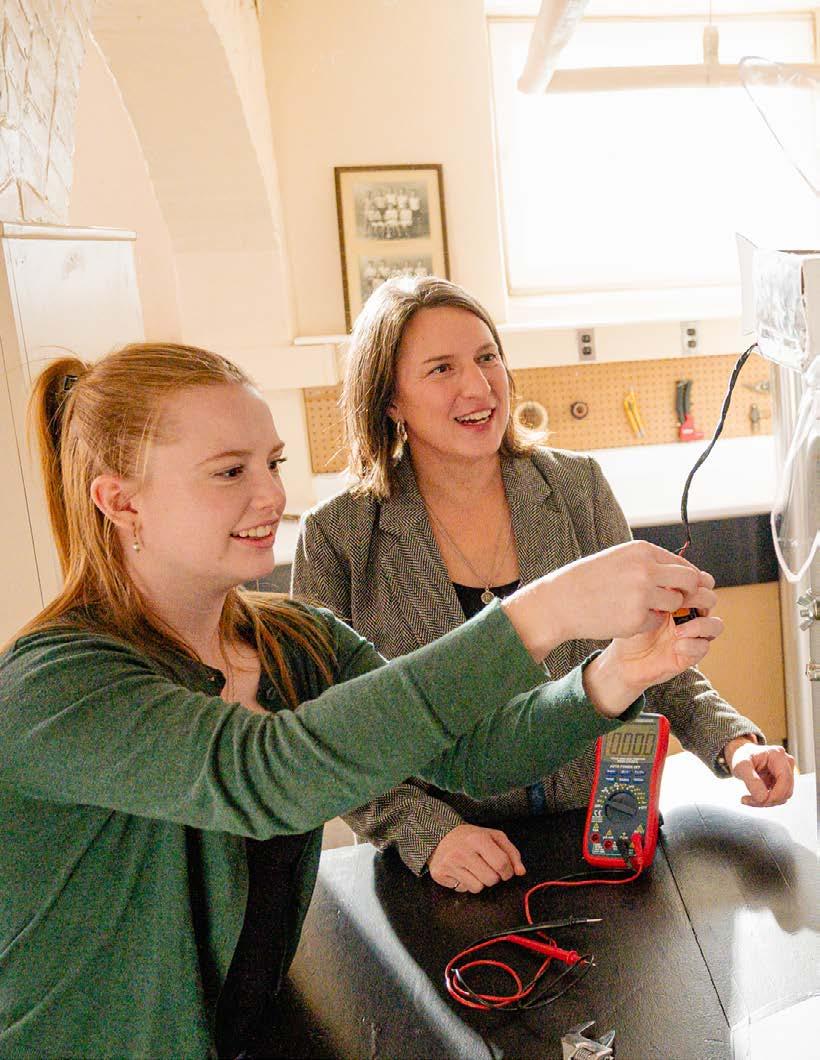
Dr. Jennie Rand, FEC, P.Eng. was drawn to the discipline of civil engineering for its versatility and the ability to work anywhere in the world.
After graduation she worked as a consultant in town planning, construction, and project management. “I had stayed very close to home all through my undergraduate degree, and I got the itch to go and explore.” She jumped on a research opportunity in California. “I loved every bit of it, partly because it was in California, but also I just really valued the research team and the loved project that I was working on.” Rand obtained her Ph.D. and is now a professor at Acadia University, teaching the next generation of engineers.
Her career has given her a long-term perspective on the both the rewards of engineering and the barriers women continue to face in the profession. Many of them are not overt, but cumulative barriers, which has been described as “death by a thousand cuts,” where subtle, repeated messaging can make women feel unwelcome or undervalued over time.
“It’s often small, easily dismissed behaviours that may seem insignificant in isolation”, Rand explains. “Even at this stage in my career, I continue to have people talking over me or not waiting for what I have to say. Sometimes my ideas aren’t taken seriously until they were echoed by somebody else. Over time these repeated actions, whether intentional or not, can accumulate into a message that you are not valued."
At times, the messages directed at women are explicit and deeply harmful. Women students have shared accounts of inappropriate comments and negative workplace experiences tied to their gender, and a colleague recently received anonymous hate mail. Whether intentional or not, and whether overt or subtle, these behaviours contribute to an unwelcoming and exclusionary culture within the profession.
These cultural challenges are often reinforced by systemic issues. Rand points to a lack of representation as a critical barrier. Without visible role models in leadership, it becomes harder for women to see themselves in those positions. And leadership must play a central role in any transformation. “Good leadership is often when people have empathy and are good listeners. Those traits are not necessarily traditionally celebrated. It's who speaks the loudest and appears decisive,” explains Rand. “That perception of leadership needs to shift, because I think good leaders are often those who are most able to connect with people.”

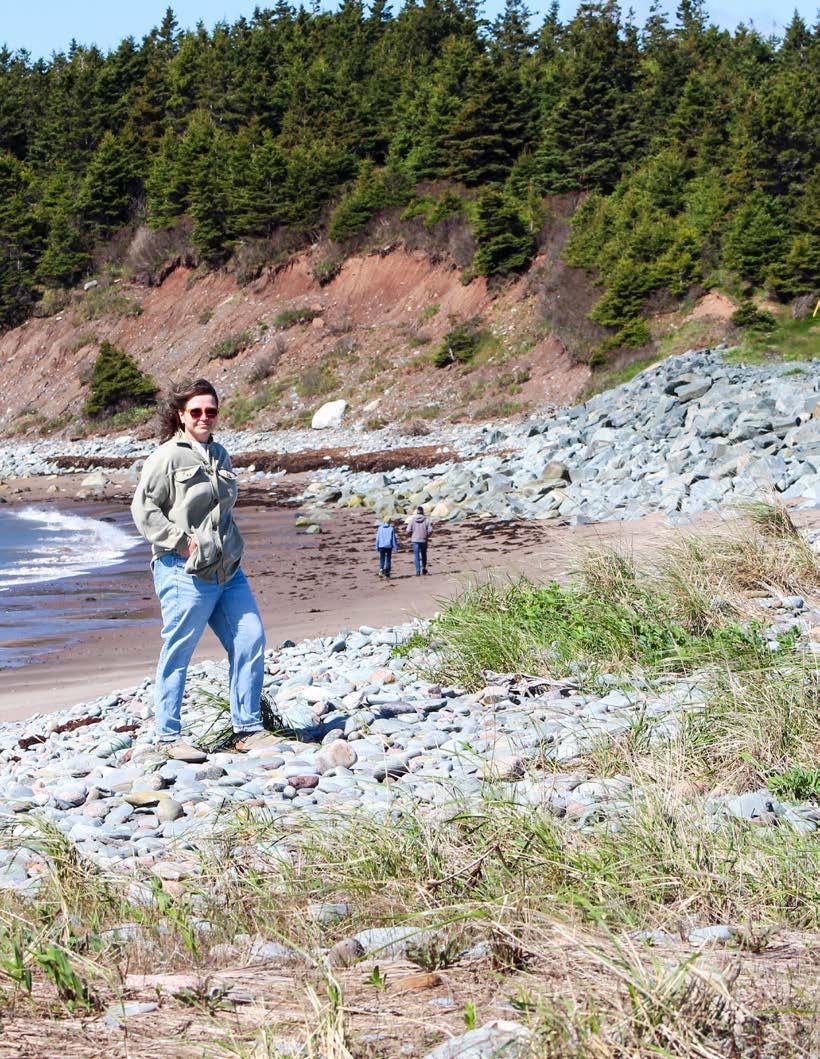
Originally on track for a science-based career in medicine and chemistry, Mirella Jupic, P.Eng., made a pivotal decision during university to switch into engineering after realizing she missed the hands-on application of her studies. Growing up helping her father with construction projects at home reinforced her interest in building and design, ultimately guiding her toward this discipline. Today, she works with the Nova Scotia Department of Public Works, where she serves in an acting role as a senior highway planning engineer, focusing on major transportation initiatives across the province.
During her transition into engineering studies, Mirella noticed a stark difference in gender representation compared to general sciences. While science programs had a strong presence of women, engineering classrooms were still predominantly male. This contrast highlighted the ongoing need to encourage more women into the field.
One of her greatest career achievements to date is the Highway 101 Cambridge Interchange project. After inheriting a long-standing project file, she reworked its planning, built relationships with stakeholders, and carried the project through to detailed design. Now under construction, the project represents years of dedication and stands as a milestone in her career.
“I had the opportunity to rework the planning file completely, meet with Annapolis Valley First Nation and establish that relationship again. And I got to carry it through completely to detailed design."
Mirella is involved in long-term planning for the province’s highway network in her current role, including future twinning projects along key corridors such as Highway 104 and Highway 107. Her work requires balancing technical considerations with broader planning priorities like climate change mitigation to helping shape infrastructure that will serve communities for decades to come.
Through her work, Mirella demonstrates how engineering combines vision and practical problem solving to make transportation safer in communities across Nova Scotia.
Originally from India, Rona Maria James, EIT, earned her degree in civil engineering before pursuing a master’s in structural engineering. She went on to work as both an assistant professor and practicing engineer before relocating to Canada.
Her early journey in India was shaped early by her father, who encouraged her to pursue civil engineering despite societal expectations. In a country where many women were steered toward other roles, he emphasized the discipline’s broad opportunities and global relevance. That encouragement helped her build the confidence to enter and thrive in a traditionally male-dominated field.
Over the past several years, she has contributed to more than 100 projects. Today, she leads complex assignments—coordinating consultants, meeting clients, and working on large-scale healthcare infrastructure projects.
What draws Rona Maria to structural engineering is its dynamic, problem-solving nature. While calculations and theory form the foundation, she emphasizes that true expertise is built in the field, with concrete, steel, and wood. Real-world conditions rarely mirror textbook scenarios, and adapting to unexpected challenges becomes part of the profession. For James, each on-site problem is an opportunity to learn, grow, and refine her approach.
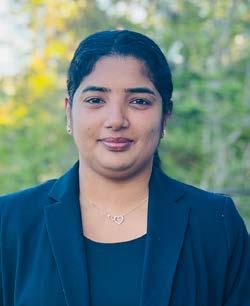
“Get into the field. It’s not just about what’s on paper."
For Rona Maria, structural engineering is not only about designing safe and resilient structures. It is about continuously learning, adapting, and shaping the built environment in meaningful ways. James encourages emerging engineers to step beyond theoretical learning and gain exposure to real construction environments, materials, and evolving technologies. Gaining hands-on experience and keeping up with evolving materials and technologies are all key to long-term success.
A passion for problem-solving and a willingness to step outside her comfort zone have defined Lindsay Naugler, P.Eng., in her career in engineering. A civil engineering graduate from Dalhousie University, she has spent the past nine years with Lindsay Construction, rising from project coordinator to senior project manager while building a reputation in healthcare infrastructure projects.
One of the highlights of Lindsay's career has been her work on the Cape Breton Regional Hospital redevelopment. Taking a major role in this large-scale complex build challenged her early in her leadership journey, grew her confidence and demonstrated her ability to lead.
Lindsay’s path into engineering was shaped by both her strengths and the people around her. Drawn to math and physics, she initially considered a general science degree before her father suggested engineering as a natural fit. Her passion for structural analysis and problem solving quickly confirmed she had found the right field. She also credits a colleague, Carleigh Bell, as an early inspiration. “She showed me not only what confident leadership looks like, but also what supporting and uplifting other women in the industry is supposed to look like. And that really has stuck with me every step of the way.”
Despite progress, Lindsay notes that barriers remain—particularly around visibility. When women do not see others like themselves in leadership roles, it can be difficult to envision a future in the field. Increasing representation, she believes, is key to creating a sense of belonging and opening doors for the next generation.
“Empathy really creates this sense of trust and community within a team."
In leadership, she observes that women often bring a strong sense of empathy, helping build trust within teams and fostering high performance.
For young engineers, Lindsay’s advice is to stay curious and speak up. Asking questions and embracing uncertainty, she says, are essential steps toward growth.
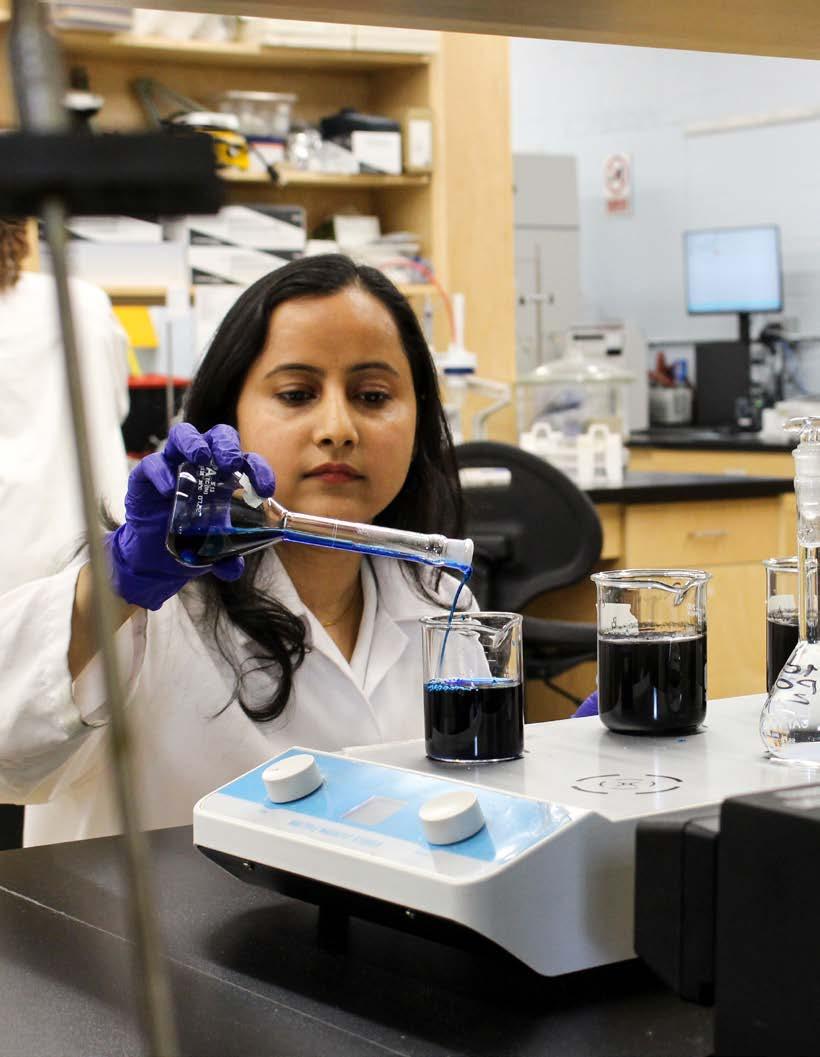
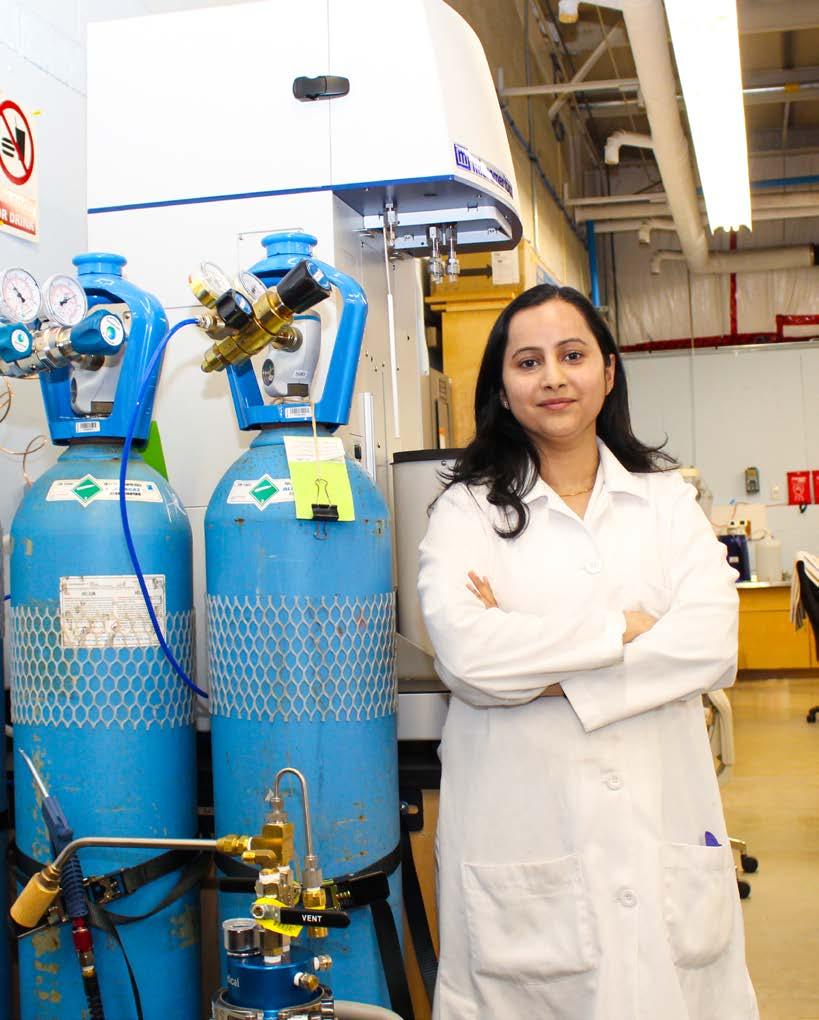
For Himadri Rajput, P.Eng., engineering is blend of scientific curiosity and a commitment to protecting the environment. As an environmental engineer and researcher, her work is driven by a desire to create solutions that make an immediate impact on communities.
Himadri’s career has taken her from India to the United Arab Emirates and now to Canada, where she focuses on advanced wastewater treatment, working as a postdoctoral fellow in the Department of Engineering at Dalhousie University Agricultural Campus in Truro.
Her research explores how biomass waste can be transformed into engineered materials capable of breaking down pollutants such as dyes, pharmaceuticals, and pesticides which are contaminants commonly found in industrial and agricultural runoff. She describes her work as “making use of advanced oxidation technologies and trying to break down the most commonly found environmental pollutants.”
“I feel more visible over here, like my efforts are more supported here."
Her path into engineering was inspired early, shaped by a family deeply rooted in education. Both of her parents worked in STEM, and her mother was a trailblazer in mathematics education. Her mother’s perseverance left a lasting impression. “Growing up, I have closely watched her strength and resilience,” Himadri says. “As you grow up, you start to see the tough parts of life. When you are a kid, you are very protected by your parents and your loved ones. Once you enter university, and life becomes a little more tough, just moving forward is the way to go.”
Today, Himadri is passionate about opening doors for the next generation with outreach activities that generate excitement and possibility. “STEM-related hands-on activities can really encourage young people to pursue a career in science,” she explains. “I see the spark in their eyes.”
What she loves most about engineering is its potential to transform innovation into solutions that protect both people and the planet.
A passion for problem-solving and a strong connection to both science and creativity have shaped Jessica Goodland, P.Eng. and her path in engineering. Growing up in northern Newfoundland, her interest began early through science fairs, supported by parents who encouraged curiosity and learning. Reflecting on those early experiences, she says, “I was always a big fan of science and numbers… to actually put it into motion was something that I really appreciated.”
Initially starting in mechanical engineering, Jessica’s path evolved as she explored architecture before ultimately finding her place in civil engineering with a focus on structural design. Her background in architecture continues to inform her work today, allowing her to better understand the intent behind design decisions. Rather than approaching projects from a purely structural standpoint, she values collaboration, noting that her role is “not to come in and just cover architects’ plans with posts and beams,” but to support the overall vision while ensuring it is safe and buildable.
Today, Jessica works primarily on residential and small-scale projects, supporting homeowners, builders, and designers. Her work ranges from assessing structural elements in existing homes to contributing to custom builds, always with a focus on practical, client-centered solutions.
Throughout her career, she has experienced both the challenges and momentum of a changing industry. She highlights the importance of male allies who speak out when they witness inequity, while also emphasizing the need for individuals to advocate for themselves and others.
For Jessica, representation is critical. Seeing others who share similar backgrounds or experiences makes it easier to imagine a place in engineering. “If you see someone that looks like you… it’s easier for you to envision yourself in that position,” she says.
Her advice to future engineers is simple: work hard, build strong connections, and stay open to learning so that their career includes collaboration and growth.
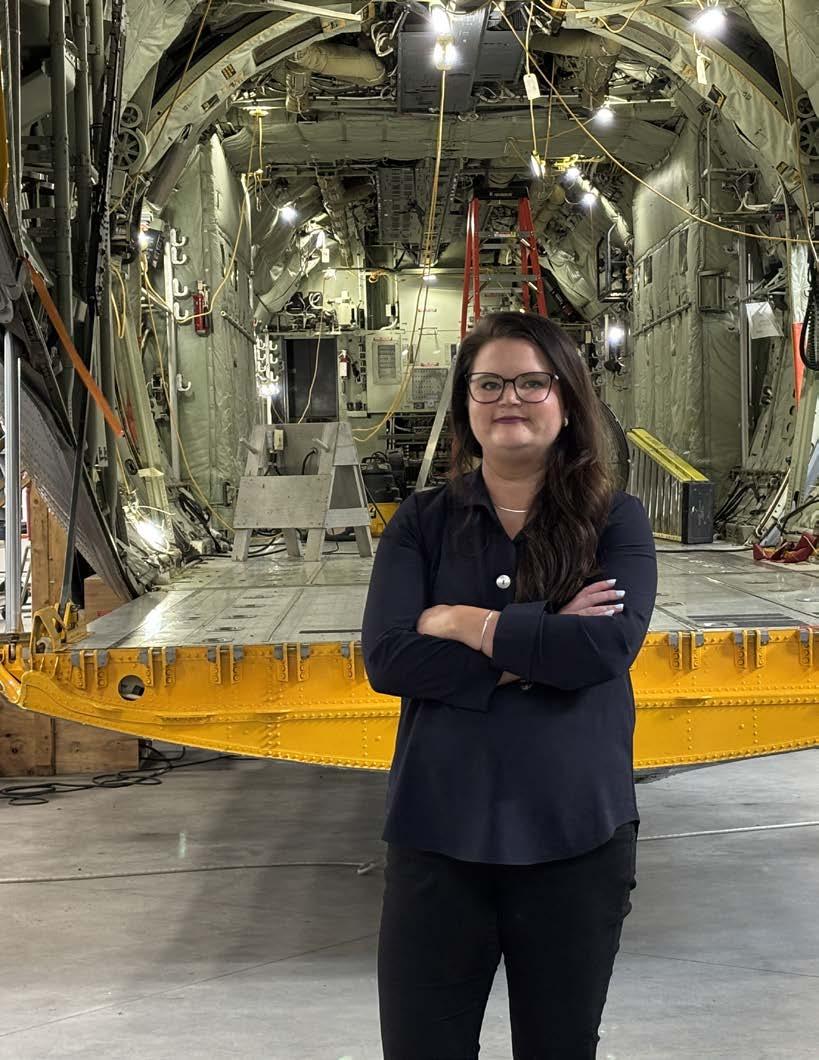

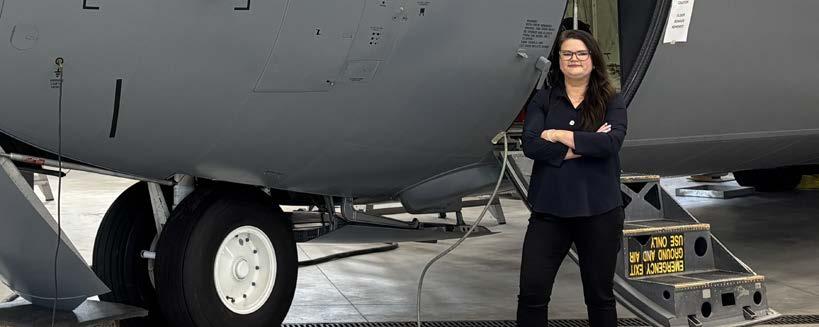
Mila MacLean, P.Eng., was originally drawn to science and problem-solving, and began her post-secondary journey in agriculture before discovering industrial engineering. She found this field better matched her logical, systems-focused thinking. After completing her diploma and degree, including co-op terms with Canada Post and Michelin, she joined IMP Aerospace in 2009.
Since then, Mila’s career has steadily progressed across a wide range of roles and then into leadership positions. She has built extensive experience in aerospace and defense. Today, she serves in a senior leadership role overseeing aircraft production, managing large teams, and complex operations. Her journey, she notes, was not strictly planned but shaped by recognizing and embracing opportunities as they arose.
Throughout her career, Mila has also witnessed encouraging changes in the number of women entering engineering. In her graduating class, women made up just a small portion of students, but she has since seen that number grow significantly among co-op students and new graduates.
She has observed some differences in approach between young engineers, noting that many women entering industrial engineering demonstrate a keen interest in applying logic to real-world problems.
For students considering engineering, Mila emphasizes the importance of staying open to new opportunities. She encourages them to explore different paths, even if they are uncertain at first, and to trust the process of discovering where their strengths lie.
She advises young engineers to remember that they are not yet the subject matter expert. “I find my female students are more apt to take the advice of ‘You're not the expert’. Make sure you go and find out who knows what. Ask more questions.”
Ultimately, Mila’s advice is grounded in her own experience: remain curious, be adaptable, and take the opportunities that come your way. In a field as diverse as engineering, those principles can lead to unexpected and rewarding career paths.
Engineering, for Melissa Fraser, P.Eng., is about solving real-world problems that directly impact communities and the environment. As a process engineer specializing in water and wastewater treatment, her work combines technical expertise with a strong sense of purpose.
Melissa is currently involved in a range of projects addressing pressing water challenges, including upgrading infrastructure and responding to emerging contaminants. One of her most notable efforts is contributing to a major project in Moncton focused on improving a water treatment plant’s resiliency to harmful algal blooms, commonly known as bluegreen algae. She also works on assessing aging facilities and evaluating how systems will perform over the next 20 years, while addressing new regulatory demands and contaminants of concern.
Addressing blue-green algae requires both preventative and treatmentbased solutions. Melissa explains that the first step is managing nutrients in source water to limit algae growth. When blooms do occur, advanced treatment technologies using methods such as activated carbon filtration, ozone oxidation, or advanced oxidation processes are needed, which are effective but often costly and not yet widely implemented in Atlantic Canada.
What Melissa enjoys most about her work is the opportunity to solve problems that directly impact people’s everyday lives. She values the ability to contribute to practical improvements in water systems, noting that even small changes can have lasting effects on communities.
“I enjoy the problem-solving aspect for sure and knowing that you can make a lasting impact on a community."
For young engineers, her advice is simple: stay curious and proactive. She encourages students to “be a sponge” and seek out learning opportunities through conversations and networking, adding that those interactions can help uncover new directions and opportunities over time.
Through her work, Melissa shows how engineering can protect public health and build more resilient communities.
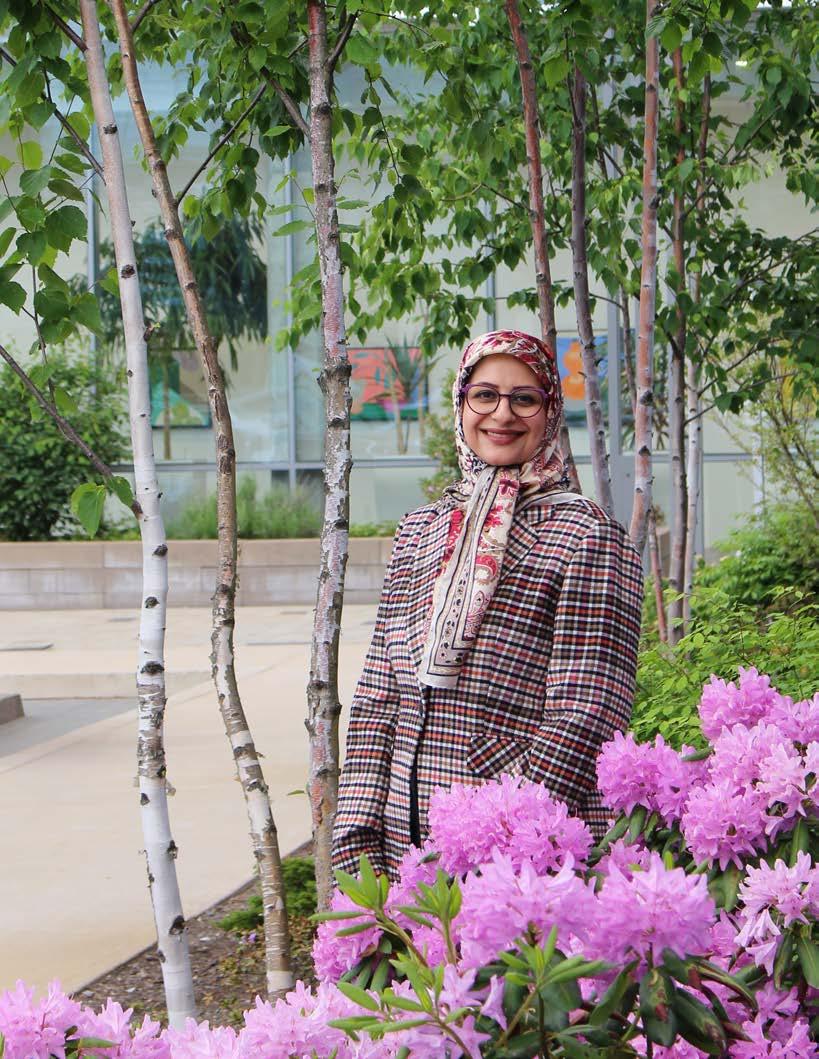

A passion for learning and a determination to pursue her goals have guided Niloofar Sahebalzamani’s journey. With a master’s degree in electrical engineering, specializing in electronics, she graduated in 2015 from university in Tehran. Today, while working in the banking sector at RBC, she remains firmly connected to her engineering aspirations and continues to build skills and pursue opportunities within the profession.
Niloofar’s interest in engineering was sparked early, influenced by a family deeply rooted in science and technical fields. Encouraged by relatives, including her mother who emphasized the importance of building a strong future, she developed a love for mathematics and problem-solving that naturally led her toward engineering.
Becoming an Engineer-in-Training (EIT) last year was a significant milestone in her journey. Despite currently working outside her original discipline, she saw earning the designation as an important step toward remaining engaged in the profession and preparing for future opportunities. She continues to invest in her development, attending conferences, improving her technical skills, and staying connected to the engineering community, so she is ready when the right role emerges.
Looking ahead, Niloofar is focused on building a meaningful engineering career in Canada. Her goal is not only to grow professionally but also to contribute to the field in ways that inspire others. She believes that women in engineering have an important role to play in shaping the future and creating positive change.
“Always follow your dreams, never give up."
For others considering a similar path, her advice is clear: stay committed and don’t lose sight of your goals. She encourages aspiring engineers to keep learning, remain open to opportunities, and persist—even when progress feels slow. Challenges and setbacks, she notes, are part of the journey, but perseverance and belief in one’s aspirations can ultimately lead to success.
Through her determination and resilience, Niloofar exemplifies how passion and persistence can keep dreams within reach.
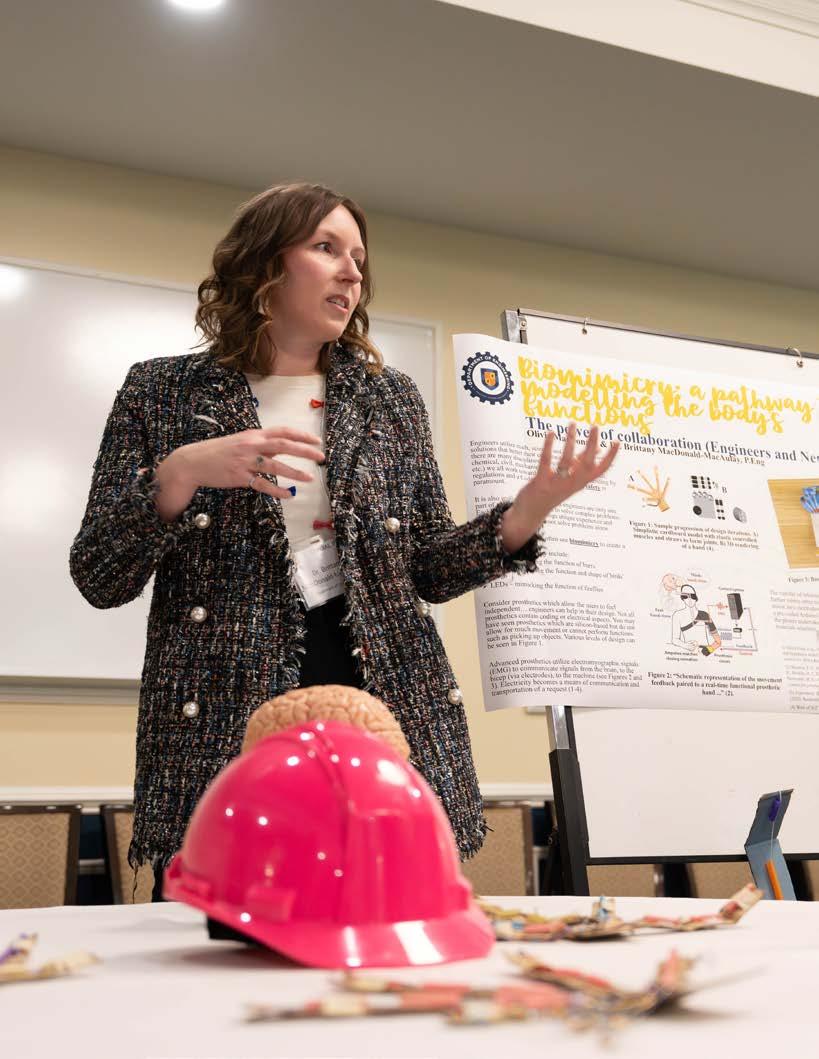
Dr. Brittany MacDonald-MacAulay, P.Eng, PhD, MES, BSc, PMP®, LEED® Green Associate™, CSSC-CSSBB, CSSC-CLSSWB, ProCert AMP, EP®, CSM®. has spent her career creating opportunities for students to see themselves in engineering. A faculty member at St. Francis Xavier University (StFX), she combines teaching, mentorship, and outreach to help shape the next generation of engineers.
At StFX, Brittany has been deeply involved in student support and engagement initiatives, including co-founding the Women in Engineering Society. Established to foster a welcoming and inclusive environment, the society offers students a space to connect, share experiences, and access academic support. Whether through study sessions, discussions, or campus events, the goal is to ensure all students feel supported in their engineering journey.
A key part of her work focuses on outreach, bringing engineering into communities and classrooms to inspire young people. Through these events, she often encounters similar questions from students curious about the field—what engineers do, what they can build, and how their work impacts the world. She highlights the breadth of the profession, emphasizing that engineering is not only about solving technical problems, but about creativity, collaboration, and making a difference in people’s lives.
Brittany believes outreach is essential in breaking down misconceptions and sparking interest early. By engaging with youth directly, she helps make engineering more accessible and encourages students to see it as a career path.
For students in engineering, her advice is to build a supportive network. “It’s important to surround yourself with people who will lift you up, who will support you. You need people you can reach out to; have those tough conversations with or talk to about something really exciting. Align yourself with people who align with your goals.”

For Jillian Flanagan, P.Eng., a dynamic career has been grounded in curiosity and adaptability. Flanagan’s decision to pursue chemical engineering was made after an early period of uncertainty in broadly focused engineering courses. A summer role at an industrial site with water chemistry issues helped crystallize her direction. Working alongside engineers in a hands-on environment confirmed she had found the right engineering discipline.
Now working in a leadership role focused on water infrastructure, Jillian applies nearly two decades of experience across industries including mining, power, pulp and paper, and energy. She manages projects, grows business, and leads a team.
Throughout her career, Jillian has learned firsthand the importance of allyship in engineering. “We all have the same credentials, right? I have had that experience in meetings, where clients have outwardly questioned my background. And I said to my colleagues afterwards, ‘Have they ever questioned your degree?’” She notes that becoming an effective ally requires self-awareness and awareness of those around you. People need to understand how communication styles, biases, and workplace norms can impact others and when (and how) to change them.
She emphasizes that organizational culture plays an important role in creating an environment that fosters belonging and increases productivity. Flexibility in the workplace—particularly for those balancing caregiving responsibilities—is not a concession, but an essential. “There's not enough sick time in the year for one person to take children to all their appointments,” she explains. Rather than relying on rigid policies, Jillian believes leaders must take a more proactive approach, recognizing burnout, recommending time away when needed, and creating environments that allow employees to succeed both professionally and personally. She believes there is an incredible amount of opportunity to be had in the engineering field right now, and it needs all hands on deck.
A passion for fieldwork and a willingness to embrace new experiences have shaped Ellen Jansen’s path in engineering. Originally from Ontario, she pursued her education in Nova Scotia. Along the way, she gained valuable co-op experience with organizations including Environment Canada, the Geological Survey of Canada, and BGC Engineering— where she now works full-time.
After graduating in 2022, Jansen, now an Engineer-In-Training, joined BGC and quickly immersed herself in geotechnical work, with a strong focus on field-based projects. Her early career has included construction monitoring at a tailings dam in Northern Ontario, where she collaborated closely with contractors to ensure designs were executed safely and effectively.
Working in remote construction environments has also highlighted ongoing challenges for women in engineering. Ellen notes that, in some cases, her expertise has been questioned in ways her male colleagues’ has not. She recalls moments when contractors “won’t believe you… and then your male counterpart says it, and they just go right along.”
Despite these challenges, Jansen has found inspiration in the leaders around her. One of the most influential figures in Ellen’s early career is Geneviève, an engineer from Quebec with BGC, whose leadership style has left a lasting impression. “I think a lot of women come in again to construction and they almost try and mimic what the men do to make sure that they don't stand out and that they're accepted in this group.” Rather than conforming to the traditionally rigid expectations often seen in construction environments, Genevieve led with authenticity and approachability.
“I think it's important to just be; and be treated with respect with your authentic personality."
What she enjoys most about her discipline is the hands-on nature of the work. The opportunity to be in the field, solve problems in real time, and connect site investigation, design, and construction has been her favorite part of the job.
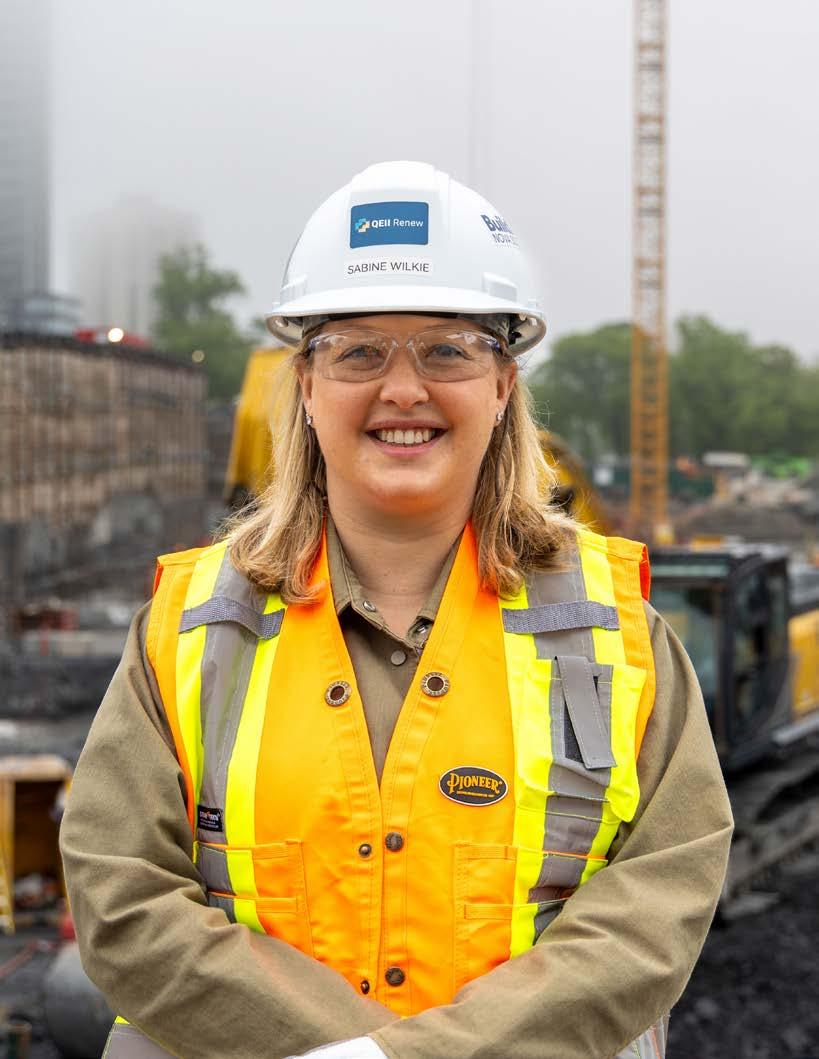
Sabine Wilkie, P.Eng., has followed a path through engineering that has taken her across industries ranging from energy, infrastructure, and healthcare. Along the way, she has developed a broad skill set that has supported her progression into senior leadership roles.
Today, Sabine works on healthcare-related projects with Build Nova Scotia, applying both technical knowledge and leadership experience to guide complex initiatives. “An engineering degree can take you to a variety of places in your career,” she notes, highlighting how the flexibility of an engineering degree meant her own journey has taken her to places beyond her initial expectations.
Reflecting on her early education, Sabine recalls being part of a small cohort of women in her class. Over her career, she has seen encouraging changes, particularly in the healthcare sector, where more women are entering, staying, and advancing. This shift has helped foster environments where collaboration and inclusion are becoming more common.

“You can seek community outside of work. In our day-to-day workplaces in engineering, the reality is we won’t have a workplace community, especially if you're one of three women out of 70 people. That's a big disparity there."
Sabine emphasizes the impact of community networks that provide mentorship, support, and opportunities that are not always present in traditional workplace structures. “There are some really great communities being built by women for women. That really does help build community and support leadership advancement,” she says.
For those entering engineering today, Sabine’s advice is grounded in confidence. She encourages young engineers to trust themselves, ask questions, and move forward even when unsure. “Don’t be afraid to step forward messily… you would be surprised by how much progress is made that way,” she advises, emphasizing that growth often comes from taking those first imperfect steps.