










Discovering home shores that make you feel a world away

















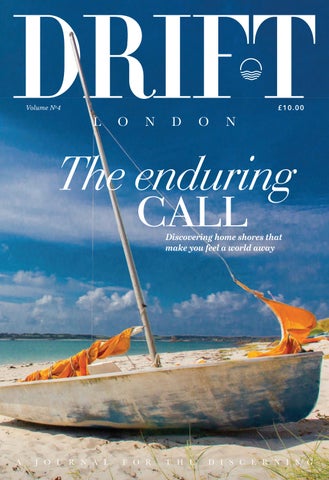
Discovering home shores that make you feel a world away
1. the act of driving something along
. the flow or the velocity of the current of a river or ocean stream
. to become driven or carried along, as by a current of water, wind, or air
. to move or float smoothly and effortlessly
We invite you to continue your lifestyle voyage online. Find inspiring stories and uncover more luxury content on nstagram dri corn a . oin our e c usi e e ourna communit at dri corn a .co.uk to recei e recipes, re ie s and insider kno edge o some o orn a s most o ed u ur destinations.
dri ourna .co.uk
dri ourna uk
A JOURNAL FOR THE DISCERNING




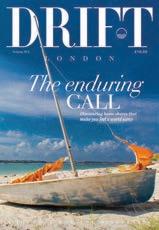
On the cover



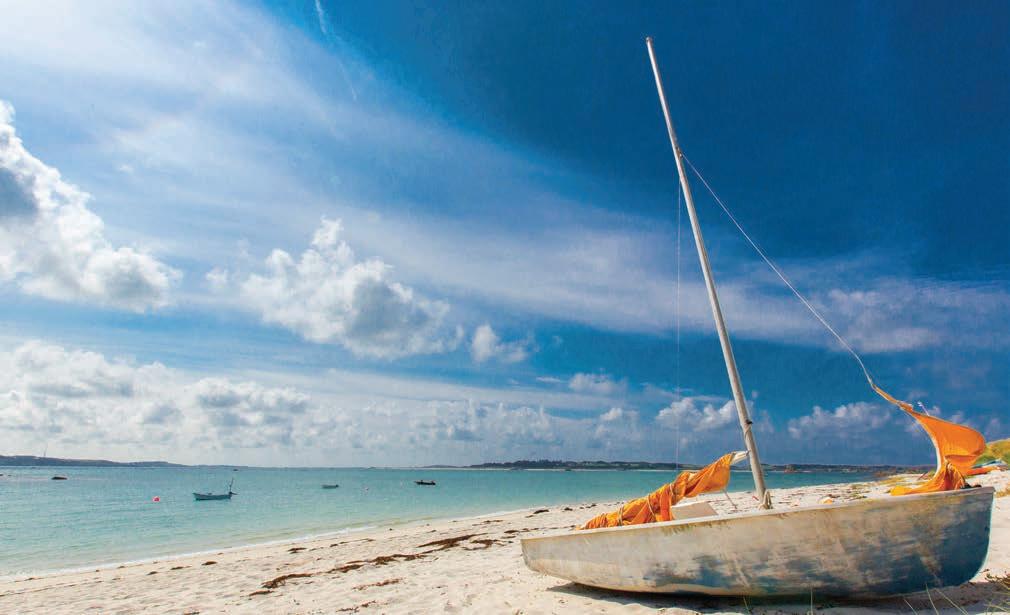
The allure of Karma St. Martins on the Iles of Scilly, as featured from page . karmaresortdestinations.com/karma- st-martins/ karma.stmartins



Head of Client Management
Des Glover des.glover@levenmediagroup.co.uk
Partnership Executive
Shannon Witter
shannon.witter@levenmediagroup.co.uk
Chairman & Founder
Andy Forster andy.forster@levenmediagroup.co.uk
CEO
Ben ratchett ben.pratchett@levenmediagroup.co.uk
DRIFT is published by:
Leven Media Group LTD
Holbrook, The Moors, orthleven, Cornwall T www.levenmediagroup.co.uk


Editor
Hannah Tapping hannah.tapping@levenmediagroup.co.uk
Assistant Editor amie Crocker
jamie.crocker@levenmediagroup.co.uk
Creative Designer
Spencer Hawes spencer.hawes@levenmediagroup.co.uk
Finance & HR Manager
Charlotte Forster charlotte.forster@levenmediagroup.co.uk
ISSN 2632-9891
© All rights reserved. Material may not be re-produced without the permission of Leven Media Group Ltd. While DRIFT will take every care to help readers with reports on properties and features, neither Leven Media Group Ltd nor its contributors can accept any liability for reader dissatisfaction arising from editorial features, editorial or advertising featured in these pages. Leven Media Group Ltd strongly advises viewing any property prior to purchasing or considerations over any financial decisions. Leven Media Group reserves the right to accept or reject any article or material supplied for publication or to edit such material prior to publication. Leven Media Group Ltd cannot take responsibility for loss or damage of supplied materials. The opinions expressed or advice given in the publication are the views of the individual authors and do not necessarily represent the views or policies of
Leven Media Group Ltd. It is suggested that further advice is taken over any actions resulting from reading any part of this magazine. Leven Media Group Ltd is a multi-platform media business with a passion for everything Cornish. Visit www.levenmediagroup. co.uk to find out more. ur mission is to create AD-WATCHI C media opportunities marrying together consumers with the fabulous businesses across Cornwall. ur publishing and marketing teams are specialists in creating print and online communications, devised to achieve a range of marketing objectives. With over 20 years of marketing, brand management and maga ine experience we develop effective communications that deliver your message in a credible and creative way. We operate across all media channels, including: print, online and video.
There is a curious alchemy to the South West. Cross an invisible threshold somewhere beyond the city’s reach and the rhythm of life softens almost imperceptibly; distances become irrelevant, time stretches and the air changes. It is extraordinary how a journey of just a few hours can feel as though you have travelled to another country. We often chase the promise of escape in far-flung destinations, believing luxury lies somewhere beyond a passport stamp, yet some of the most restorative places are waiting on our own coastline, where there’s an understanding that true luxury is less about excess than experience. It is found in beautifully considered hotels that emerge effortlessly from the landscape, in homes designed to frame the ever-changing horizon, and in interiors that echo the colours and textures of the coast itself. Across the South West, a remarkable collection of architects,
designers, makers and hoteliers are redefining what it means to retreat well, creating spaces that feel at once deeply rooted and world-class. Here, the landscape becomes part of the design. Morning light spills across pale stone floors windows are positioned not to admire a view, but to invite it inside; natural materials weather gracefully against salt air, while craftsmanship takes precedence over fashion. There is a confidence in this restrained approach formed from a belief that beauty needn’t shout to be noticed. erhaps that is why the South West feels so transformative. This issue of DRIFT London celebrates that sense of escape, as we journey through places and landscape which together create something memorable. A reminder that extraordinary experiences exist not at the end of the world, but just beyond the city’s edge. Sometimes, the greatest luxury is simply finding space to breathe.



We have an exceptional and loyal team here at Leven Media Group but as a fast-growth business we’re always interested in talking to outstanding individuals. If you’re a superstar of extraordinary talent then we would love to hear from you.
Call us on 01326 574842 or email enquiries@levenmediagroup.co.uk Visit driftjournal.co.uk to read more about our writers.
Providing life changing opportunities for young people across the UK www.diveprojectcornwall.co.uk





















St
Finding peace and relaxation off the beaten track
Shaping
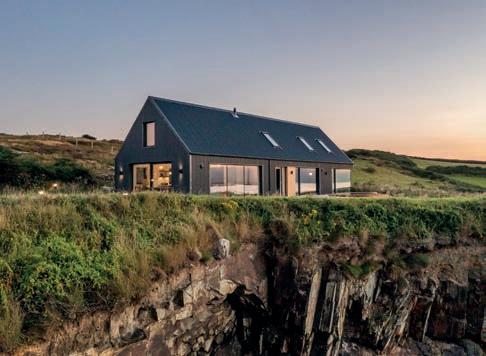
As though set into the cliff face itself
An island hotel that’s a world away
VESP designs high-quality architecture that roots itself in the sensitive landscapes
An authority in the Cornwall prime property market
The
Guiding
Taking
Family
Making
Holiday homes designed for generations 100 FIRED WITH PASSSION
The glass artist who refuses to become moribund
Maintaining a local identity
PLANS
Presenting the case for a planning consultant
Tradition can still have plenty of piquancy 124 PLACES OF TRANSITION
A septet of Cornish retreats
BEYOND THE BRIEF
The thoughtful impact of positive design
THE EDGE OF CONTROL
Trudie Moore shapes colour into artworks
THE HEART OF THE MATTER
Designing from the inside out 146 A CULINARY JOURNEY
A foray into the flavours of Topsham’s seafood
150 THE FRUIT OF IMAGINATION
Bringing something new to the Cornish spirit scene 156
PLOT THICKENS
A novel that is both entertaining and authentic 158 SHAPED BY THE GANNEL
Creating homes that belong on Pentire’s shoreline









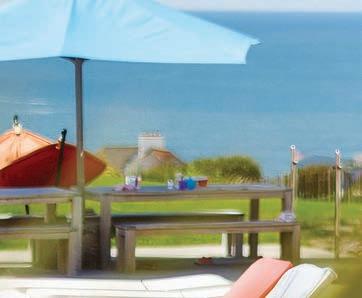
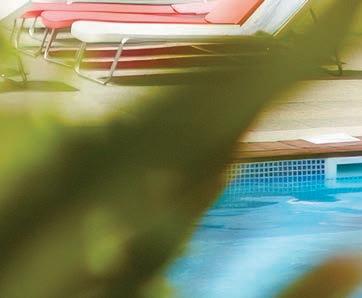

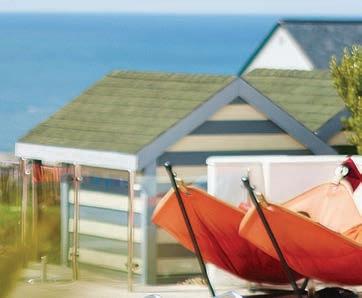
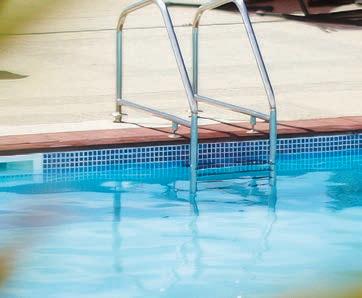



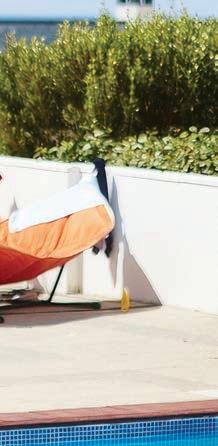
St Moritz Hotel on the north Cornish coast has always been one of the great escapes.
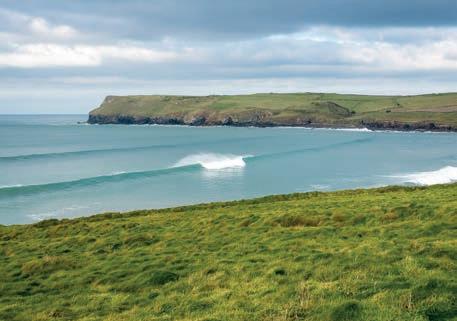
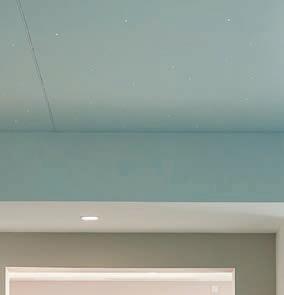
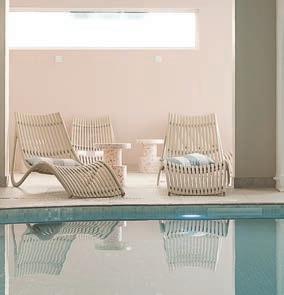
It begins, as all great retreats do, with the sea. Beyond the hedgerows of north Cornwall, where the Atlantic rolls in with metronomic grace and the land falls away in soft cliffs and secret coves, the white silhouette of the St Moritz Hotel stands sentinel above Greenaway Beach. The art deco-inspired building has presided over this stretch of coastline since the 1930s, when it drew the rich and the famous to one of Britain’s most dramatic shores. But this is not some stiff-lipped seaside relic. Instead, St Moritz is a hybrid; a hotel, yes, but one that refuses to be only that, with self-catering room combinations allowing for effortless stays.
restore themselves. St Moritz, it turns out, has become rather good at that. This season, the introduction of Salt in Your Soul combines adventurous activities, mindful practices and a new active programme to create the ultimate northcoast retreat. To have salt in your soul, the thinking goes, is to be drawn to the sea, to feel its pull in the bones. Whether you are a returning guest, drawn back to this stretch of coast year on year by something deeper than habit, or a first-time visitor still to discover what the Atlantic can do for a tired mind, St Moritz meets you where you are. The invitation is simple and open come and find the salt in yours.
Today, it draws a different kind of pilgrim one seeking not merely a beautiful place to stay, but a place in which to genuinely
What distinguishes St Moritz from its contemporaries is the remarkable flexibility of its accommodation offering. A collection
of coastal houses, sea view apartments, garden retreats and interconnected room pods combine the ease of hotel living with the freedom of independent escape. The pod concept is particularly inspired a suite, a king room and a cosy room connected by a private hallway, combining to create something closer to a private apartment than a conventional hotel stay, ideal for families and groups who want both togetherness and space. The coastal houses and apartments take the offering further still, perfect for those who want the amenities and reassurance of a hotel alongside a more independent rhythm. St Moritz, in this sense, offers the best of both worlds, and it wears that distinction effortlessly.
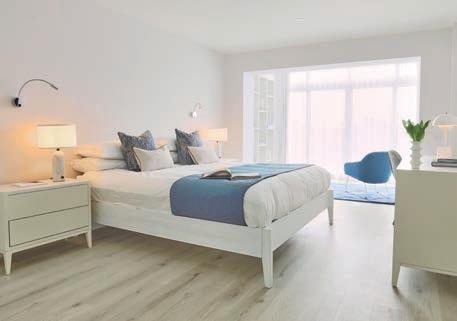
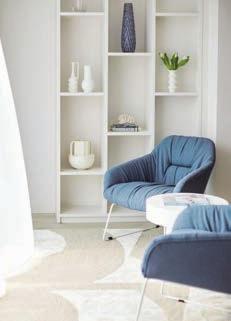
Floorplans are open, sightlines unobstructed, and the kitchens offer ritualised spaces where guests can gather around bowls of wild samphire, scallops from the morning market and local fi chilled just enough to catch the light from an Atlantic sunset. atural fibres, neutral palettes and raw textures speak of their surroundings the kind of interiors that ask nothing of you except that you slow down. To wake here is to understand immediately why people return, the quality of the morning light
off the water, framed by the clean lines of a well-considered room, recalibrating the senses before the day has even begun.
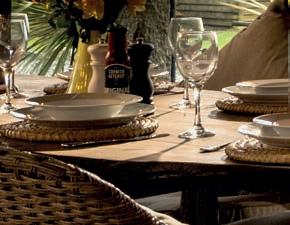
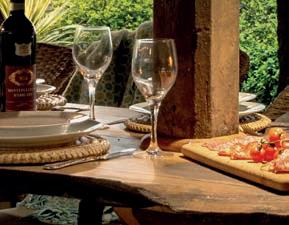
What also sets these stays apart is the detail. Imagine hosting an impromptu dinner party on the terrace, orchestrated with the help of the hotel’s concierge linens, flowers, a private chef and a three-course menu that began that morning on Padstow’s harbourside. It’s not about providing more, as the location, view and accommodation speak for themselves, it’s more about making every detail matter more. A mantra, it turns out, we can all learn from.
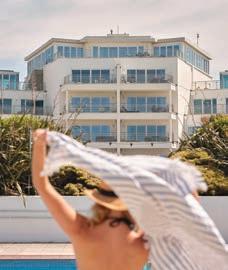
The genius of the new Salt in our Soul framework lies in its understanding that no two guests are the same and no two days unfold the same way. St Morit speaks of the ebb and the flow a natural oscillation between a desire for adventure and a need for stillness and structures its offering accordingly. The hotel’s active timetable is the high tide expression of this idea aqua fit in the indoor pool, morning yoga in the Seaside space with views that make the practice feel more like meditation, Hot ilates, coastal walks from reception and SUP Pilates sessions on the outdoor pool
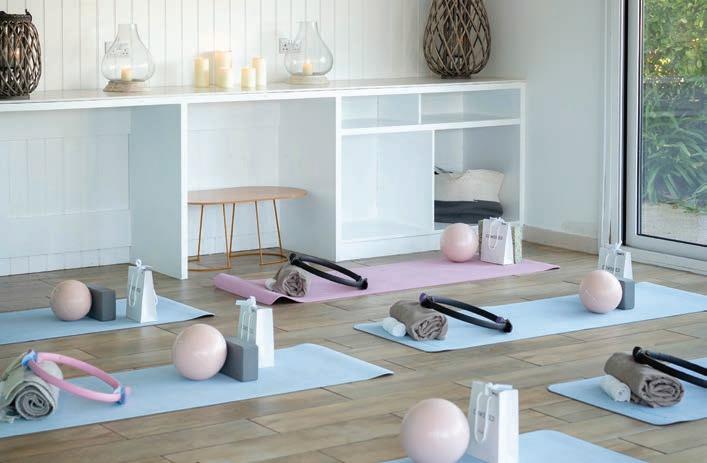

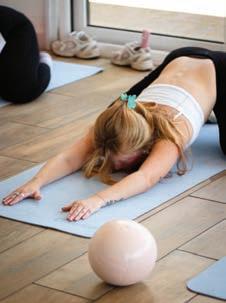
through the spring and summer season. Sound bath evenings, held monthly as the light fades, bring an immersive, restorative close to the week. The message is clear whether you arrive hungry for coastal adventure or craving only stillness and warmth, there is a rhythm here for you.
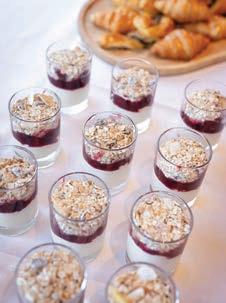
A wellness offering is only as good as what it feeds you, and at St Moritz, the hotel’s all-day food philosophy, is the nutritional backbone of the Salt in our Soul experience, constructed with real intelligence and care. The day begins with a breakfast that earns its place at the high tide table. Fresh juices, artisan breads with Cornish butter, overnight oats with plum and chia seeds and a revolving menu of hot dishes. Think steamed hen’s eggs with sliced avocado and back bacon, banana and date porridge, granola with stewed fruits and yogurt, so you can fuel rather than merely satisfy. Through the day, the caf menu takes over nourish pots, wraps, bagels and bowls as beautiful to look at as they are to eat. A green goddess Caesar salad with golden kimchi and roasted almonds a chicken and avocado protein wrap with lemon tahini dressing; a smoked salmon and cream cheese bagel with fresh dill. Date and tahini energy
squares and almond butter protein balls bridge the gap between sessions with the kind of considered snacking that feels like self-care rather than compromise. Stone-baked pi as are available to take away, perfect for a cosy evening after a long day on the water, while sourdough with Cornish butter and marinated olives make for the kind of unhurried aperitivo hour the terrace was designed to accommodate.
Come evening, the hotel’s brasserie comes into its own. Menus form around ingredients rather than dictating to them, anchored in what local growers, foragers and fishermen offer that week, with vegetables from Restharrow Farm, asparagus from St Enodoc, bass and mackerel from local boats off ock. an-roasted hake with harissa, olives and chickpeas chicken schnitzel with frisée and pancetta; ricotta dumplings with heritage tomato and British pesto. The raw materials are the story, and the kitchen’s job is simply to listen.
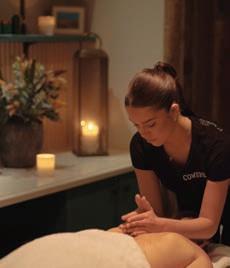
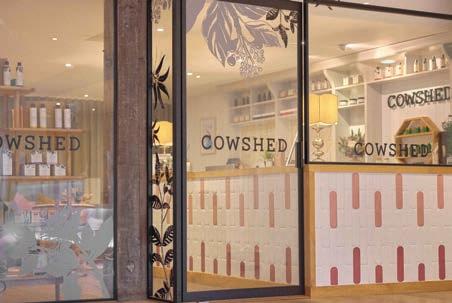
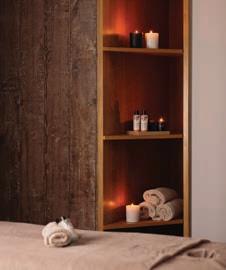
The Cowshed Spa remains the low tide heart of the St Morit experience to this day the only Cowshed outside of Soho House properties in the world, and a destination in
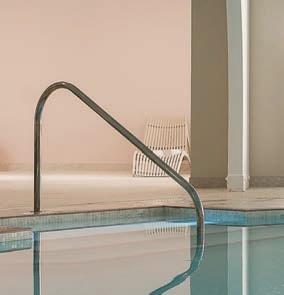
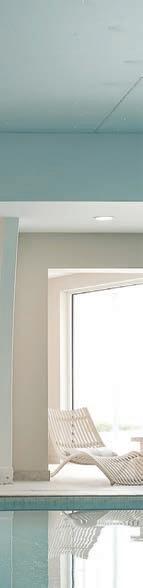
its own right. Adopting the original Cowshed philosophy of injecting country calm into busy lives, its treatment-led therapies are rooted in English country garden botanicals and mirror the hotel’s broader aesthetic with a rustic-luxe sensibility that feels entirely at home here. Beyond the spa, the indoor and outdoor pools, sauna, steam room, tennis courts and gym form the infrastructure of a stay calibrated entirely to your needs. The outdoor pool, heated by biomass and ringed by manicured gardens and hammocks, anchors those long Cornish afternoons that feel suspended from ordinary time. Yet even here, you can step lightly, enjoying a cocktail by the pool to the sound of a laid-back summer DJ set, or retreat to your private patio, the scent of the sea and genuine Cornish stillness.



In place of over-structured schedules, guests are encouraged to co-create their own experience. ne evening, a barefoot stroll on the beach followed by dinner in the brasserie. The next, a visit to one of the nearby restaurants, chauffeured in the hotel’s complimentary electric minibus. A surf lesson with Wavehunters in the morning a boat to ock for lunch.
A tour of a biodynamic vineyard one day, a quiet afternoon on the lawn with a book the next. The concierge team can arrange everything from watersports with Camel Ski School to restaurant bookings and private chef experiences well-versed hosts who understand that true luxury is the freedom to choose your own version of a place.


And perhaps this is what makes St Morit feel so particular. It doesn’t seek to da le in the ways luxury often does, rather it cultivates an elegance of choice. Guests don’t arrive for one version of Cornwall, but to write their own. The hotel’s success lies in how it sidesteps the usual binaries but not being simply a hotel, nor a set of holiday lets, but a design-led sanctuary where freedom is expertly scaffolded by care.
You come to St Moritz for the view. You stay for the silence, the suppers, the stillness that good design and good service can bring, and for the uncommon sense that here, at the edge of the land and the beginning of the Atlantic, something in you has been restored. Make your pilgrimage to the sea and leave with salt in your soul.
stmoritzhotel.co.uk


WORDS BY HANNAH TAPPING
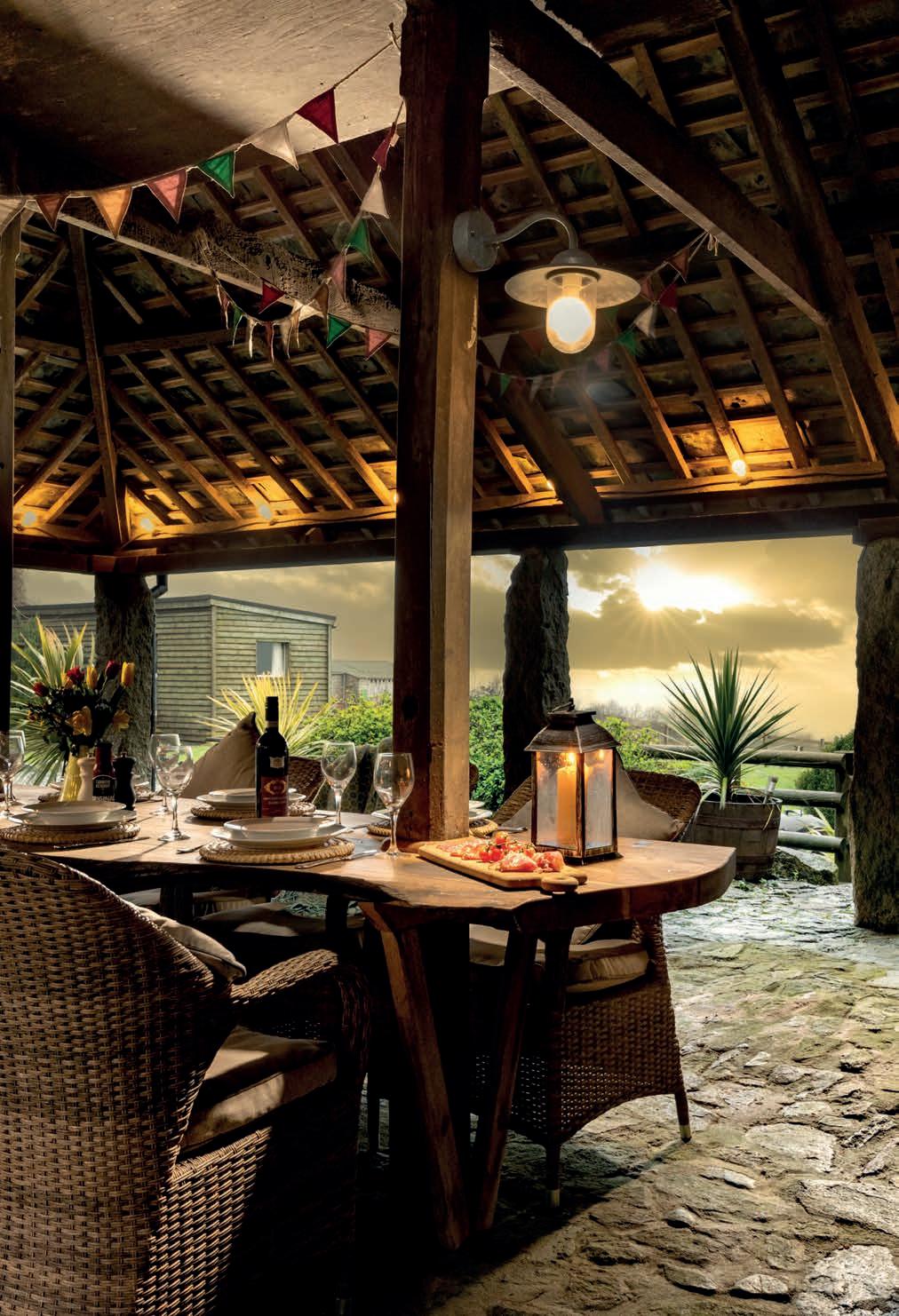
Finding peace and relaxation in luxury surroundings, off the beaten track.
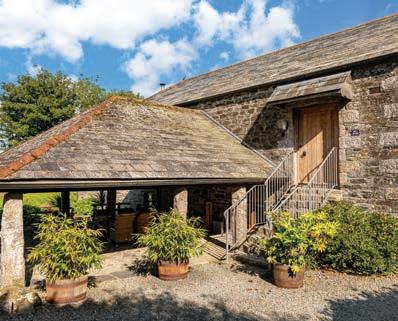
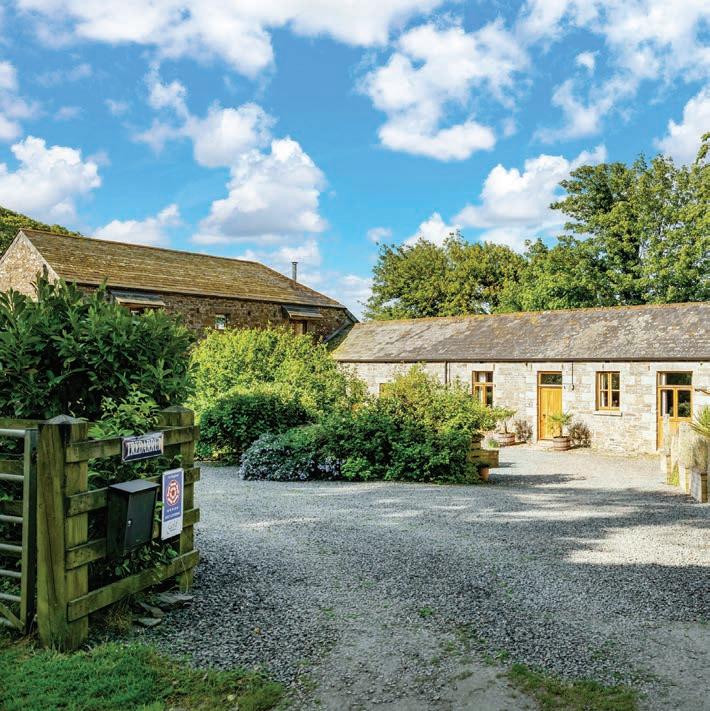
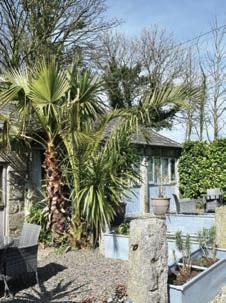
The moment you realise you have stopped checking the time, is a moment unheralded by grand entrances or glittering excess, but rather by a gentle appreciation of the surroundings. At Tredarrup, a collection of beautifully converted holiday cottages set on a working farm in the Cornish countryside, that feeling arrives quickly. Turn off the road, pass through the granite gateposts and follow the private track towards the farm, and the pace of life at once begins to change. The traffic noise disappears and as landscape opens out, the only real question becomes whether to go exploring or just to stay exactly where you are.


The journey from London is predominantly via major roads, with the final stretch across the A30 and the A39 making the property remarkably straightforward to reach. Once there, guests are within easy driving distance of some of North Cornwall’s most celebrated beaches, villages and attractions, while enjoying the rare luxury of retreating from the crowds at the end of the day.


For those travelling down from the capital, that sense of escape is particularly appealing. Tredarrup is far enough from the city to feel like a genuine change of scene, yet considerably more accessible than many visitors might imagine.


The property is the result of a dramatic lifestyle change for its owners Nicky and Mark, who moved from London to Cornwall after decades in the capital. The decision to make Tredarrup their home was, by their own account, not entirely part of the original plan. Sometimes, however, the right place has a way of rewriting the brief. Today, the farm offers four high-end self-catering cottages, each with its own character and private space, alongside a warm, personal approach that comes from the owners living on site. That combination
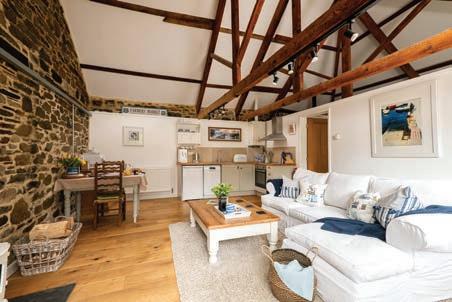
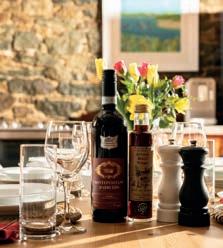
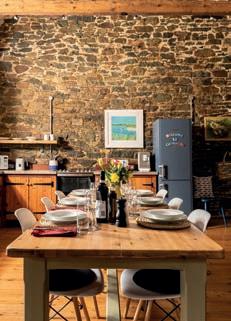
of independence and hospitality is one of Tredarrup’s greatest strengths. Guests have the freedom of a selfcatering escape, but without the familiar frustrations of arriving at a property only to discover that the essentials have been forgotten. The cottages are thoughtfully equipped with everything needed for a genuinely comfortable stay, from beautiful crockery, cutlery and glassware to highquality kitchen appliances. There are also the practical details that make an enormous difference: dishwasher tablets, bin bags, foil and cooking essentials are all provided, meaning that a short break does not begin with an unwanted supermarket trip.
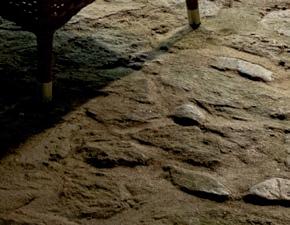
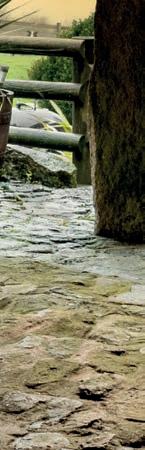
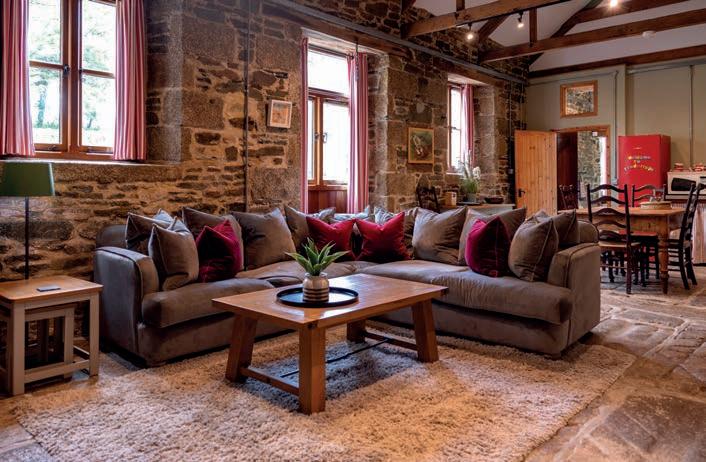
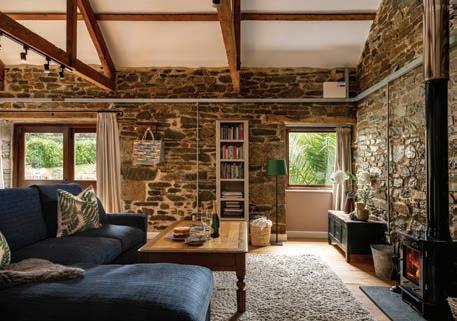
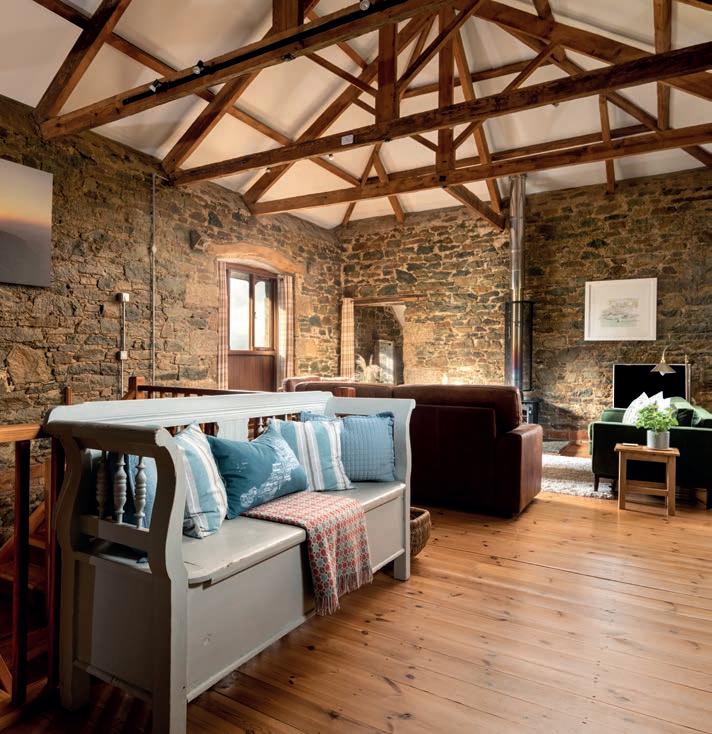
The interiors are equally considered. Original stone floors and wooden flooring sit alongside beautiful, high-end furnishings, with leather or velvet sofas softened by throws and cushions. Bedrooms feature generous king-size beds dressed in Egyptian cotton bedding, while fluffy towels and bathrobes add a hotellike sense of indulgence. Toiletries are provided, and every cottage has a television with Netflix and superfast Wi-Fi for those evenings when the weather, or simply the desire to stay in, wins out.
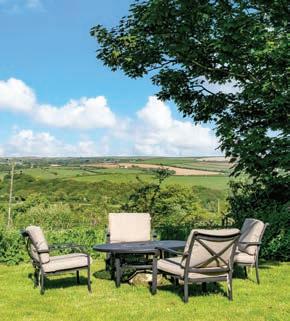
lived in. There are bookshelves filled with novels, cookbooks, maps and local guides, along with binoculars and compasses for guests who want to venture out and explore. Outside, each cottage has its own seating area, barbecue and fire pit, while the communal grounds offer sun loungers and wide views across the Allen Valley. At the end of the day, the sunset becomes an event in itself, with the last light slipping across the landscape and an unhurried evening waiting to follow.
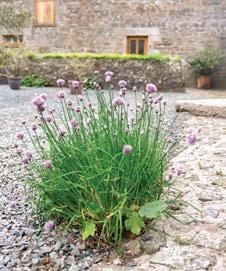
The sense of welcome begins before guests have properly unpacked. Each cottage receives a generous arrival hamper featuring tea, coffee, biscuits, cheese and other treats, alongside the ingredients needed to settle in comfortably. Bean-to-cup coffee machines provide a proper morning ritual, while the attention to detail extends to the fourlegged members of the family. Tredarrup is not merely dog-tolerant; dogs are genuinely welcomed. A dedicated canine welcome pack includes blankets, towels, poo bags, treats and a toy, making it clear that bringing a dog is not an inconvenience to be managed but part of the experience.
Yet, this is not luxury that feels precious or over-styled. Tredarrup is designed to be
That dog-friendly philosophy is particularly valuable because luxury and dogs do not always go hand in hand. At Tredarrup, the two have been thoughtfully
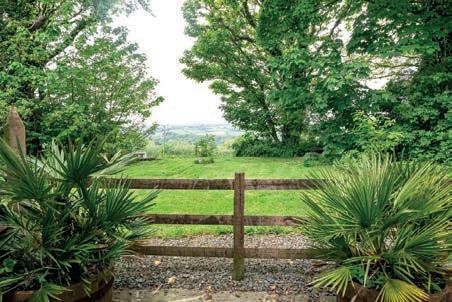
reconciled. The surrounding farm provides plenty of space, with walks available directly from the property and further opportunities to explore nearby countryside and Bodmin Moor. There is even a secure garden attached to one of the cottages. Guests are expected to be responsible dog owners, naturally, but the overall approach is relaxed and welcoming rather than restrictive.
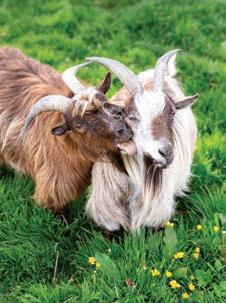
Families are equally well catered for. The farm is home to pygmy goats, sheep, hens, a goose and running ducks, and animal feeding can become part of the holiday experience. Children can collect eggs and meet the animals, while adults can enjoy the simple pleasure of watching a family day unfold without needing to organise an itinerary. One of the property’s greatest luxuries is precisely this flexibility: a day can be spent exploring Cornwall, or it can be spent doing very little at all.
That choice is central to the Tredarrup experience. Couples can retreat to the privacy of their cottage for long, lazy mornings and leisurely evenings. Families can use the accommodation as a comfortable base for days out to the Eden Project, the coast or the surrounding villages. Larger groups can book all four cottages together, creating a natural setting for multi-generational gatherings, milestone birthdays and celebrations while allowing each household to retain its own space.
Location is another compelling reason to choose Tredarrup. The nearest beaches are within easy reach, while Boscastle, Port Isaac, Tintagel and Bude are all accessible for day trips. Bodmin Moor is close enough for walking and cycling, and the property provides a useful base for discovering both the north coast and Cornwall’s inland landscapes. The Eden Project, the Lost Gardens of Heligan and the gardens, farm shops and villages of the wider county are all within reach too.
The real advantage, however, is what happens when you return. Cornwall’s most famous coastal destinations can be gloriously beautiful, but in high season they can also be gloriously busy. Tredarrup offers the best of both worlds: beaches, restaurants and attractions within easy reach, followed by the restorative quiet of the farm. There is no need to negotiate a crowded resort or navigate a busy holiday park. Instead, guests return to a private, peaceful setting where the day’s only remaining decision may be whether to light the fire pit or settle in beside the wood burner.
The personal touch is subtle but significant. Because the owners live on site, help and local knowledge are close at hand, without the sense of intrusion that can sometimes accompany a more traditional hosted stay. A comprehensive digital guide provides
recommendations for restaurants, farm shops, attractions, children’s activities and dog-friendly beaches, while personal suggestions are available when guests want them. It is the kind of service that makes a destination feel easier to navigate without ever dictating how a holiday should be spent.
There is also a pleasing sense that Tredarrup is evolving with purpose. The owners are exploring future possibilities including small boutique weddings and retreat experiences, while remaining selective about what fits the character of the farm. Not every fashionable holiday feature is automatically embraced. The absence of hot tubs, for example, is deliberate: the focus is on the landscape, the quality of the accommodation and the slower rhythm of rural life rather than on adding amenities for their own sake.
from a high-end stay, while the farm offers something more difficult to manufacture: space, quiet and a genuine sense of place.
For those seeking a Cornish escape without the stress of a complicated journey, Tredarrup makes a persuasive case. It offers the coast without requiring guests to stay in the thick of the crowds; the countryside without sacrificing comfort; and a dogfriendly welcome without compromising on style. Most importantly, it creates the conditions for a holiday that feels completely restorative.
That authenticity is what makes Tredarrup feel so distinctive. It is luxury, certainly, but it is a grounded form of luxury: warm, comfortable, beautifully equipped and connected to its surroundings. The cottages provide the quality one expects
The greatest endorsement may be that guests do not always want to leave. Some extend their stays, others arrive with plans to explore and find themselves happily spending days on the farm instead. That is the magic of Tredarrup: it gives you every reason to go out and discover Cornwall, but just as many reasons to stay put. In a world that increasingly prizes experiences, it is a rare pleasure to find somewhere that makes doing less feel like the ultimate luxury.
tredarrup.com
CROCKER
Cornwall architects shaping durable, low-energy buildings through integrated design delivery.
Projects rarely begin with drawings. They begin with discussions about performance, materials and the practical realities of building in Cornwall – heat loss, airtightness, ventilation, salt-laden air and planning constraints often enter the conversation before questions of appearance. For ARCO2 Architects, these early exchanges establish the framework for everything that follows, informing decisions that remain consistent from initial briefing through to completion.
Founded in 2003, ARCO2 Architects set out with a clear commitment to sustainable, low-energy architecture. At a time when energy-efficient construction occupied a more specialist corner of the industry, the practice focused on reducing operational energy demand, improving building performance and addressing the environmental impact of construction. More than two decades later, that commitment continues to define its work. Passive House methodology now underpins much of the practice’s portfolio. Three certified assive House designers work within the team, bringing detailed technical knowledge to projects that are conceived as complete environmental systems. Insulation, airtightness,
ventilation and renewable energy technologies are considered together from the outset, creating buildings designed to deliver predictable levels of comfort and efficiency throughout the year.
Recognition has followed. The practice has received more than 110 awards, including national honours, yet growth has remained measured. The practice continues to work at a scale that allows close involvement throughout the life of a project, with continuity maintained by the same core team from concept through to handover. That continuity strengthened in 2016 with the creation of ADD Sustainable Construction Ltd. The decision emerged from years of experience working alongside external contractors, where the successful delivery of high-performance buildings depended upon close coordination and meticulous execution. Bringing construction inhouse established a direct route between design and delivery, allowing architects, project managers, site managers and quantity surveyors to operate within a single framework. The benefits become apparent in the technical details that define low-energy construction. Continuous insulation, airtight building envelopes, triple glazing and mechanical
ventilation with heat recovery are standard components of the practice’s approach. Renewable technologies, including airsource and ground-source heat pumps, photovoltaic arrays and battery storage systems, are incorporated as part of a coherent strategy developed alongside the architecture itself. Each element supports the others, contributing to buildings that function efficiently in everyday use.
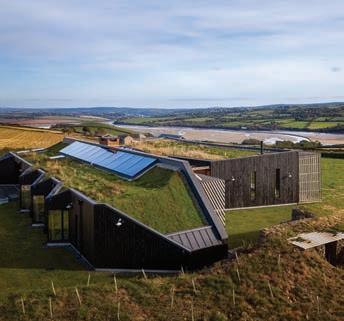
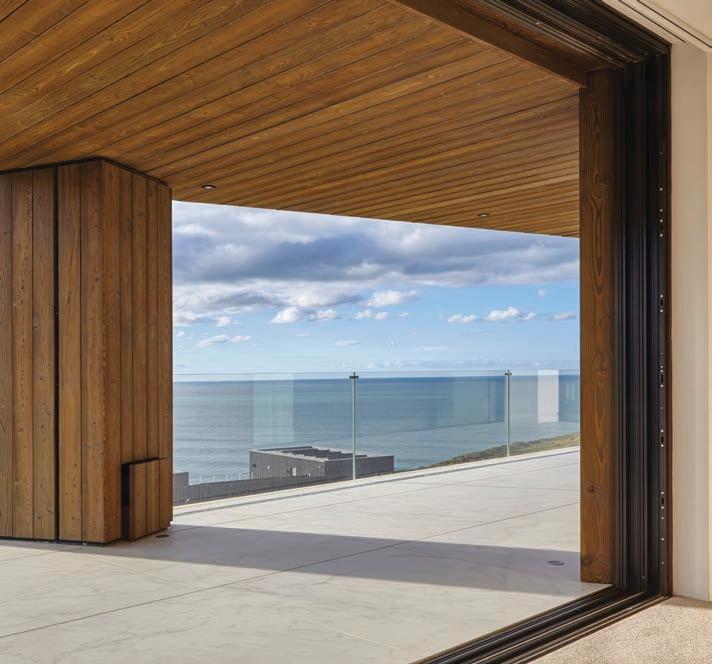
Most projects are located within Cornwall, though the practice occasionally works beyond the Tamar. This regional focus brings a detailed understanding of the environmental conditions that influence design decisions. Coastal sites introduce exposure to wind, driving rain and airborne salt. Inland settings present different challenges, shaped by topography, vegetation and local microclimates. Such factors influence orientation, form, material specification and construction detailing from the earliest stages of a project.
Planning considerations add another layer of complexity. Many sites occupy designated landscapes or environmentally sensitive locations where new development receives close scrutiny. Buildings are frequently assessed from multiple viewpoints across considerable distances, making questions of scale, proportion and visual impact particularly important.
ARCO2 approaches these conditions through careful attention to form and material. Buildings draw upon familiar proportions found within the region while employing contemporary construction techniques that meet current performance standards. Materials are selected with durability in mind, especially where coastal exposure places additional demands upon external finishes and fixings. Long-
term maintenance forms part of the conversation from the beginning, ensuring buildings retain their integrity under challenging conditions.
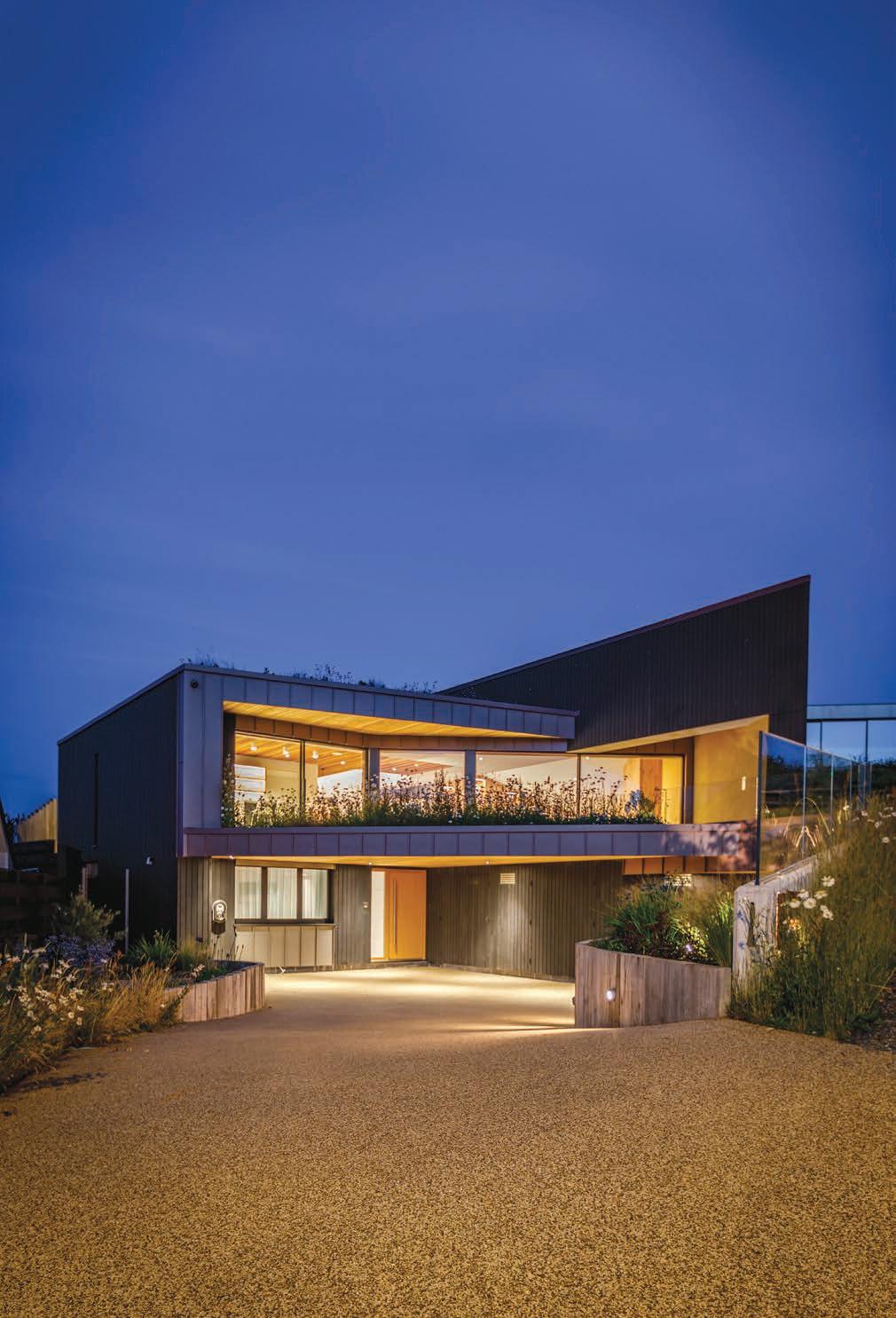
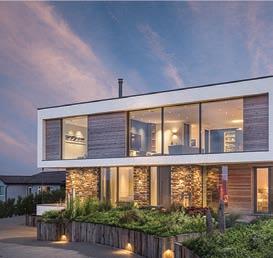
Projects such as Sandunes, Edge O Cliff and eflections at ortwrinkle demonstrate this approach across markedly different sites. ach responds directly to its surroundings through orientation, shelter and environmental performance. Window placement is carefully considered to manage daylight, solar gain and outlook, while the building envelope maintains consistent thermal performance throughout changing seasons. These projects illustrate how architectural decisions and environmental objectives are developed in tandem.
The practice maintains a clear architectural position. Regional identity emerges through proportion, materials and site response, creating buildings that belong to their setting while reflecting contemporary methods of construction. New work contributes to an evolving architectural record, adding another layer to Cornwall’s built environment without relying on imitation.
Replacement dwellings and substantial refurbishments account for a significant proportion of the practice’s workload. Many existing properties present opportunities to improve energy performance, comfort and longevity through comprehensive redevelopment. Clients often arrive with a strong interest in sustainable construction and a desire to create homes that support long-term environmental goals. Those ambitions align closely with the practice’s expertise, allowing projects to develop around clear performance targets from the outset. Economic realities remain an important consideration. Land values and


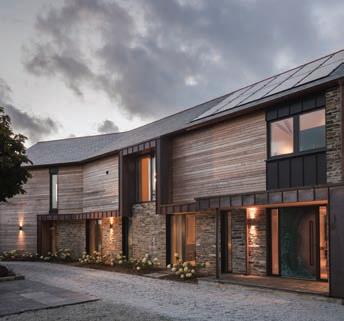
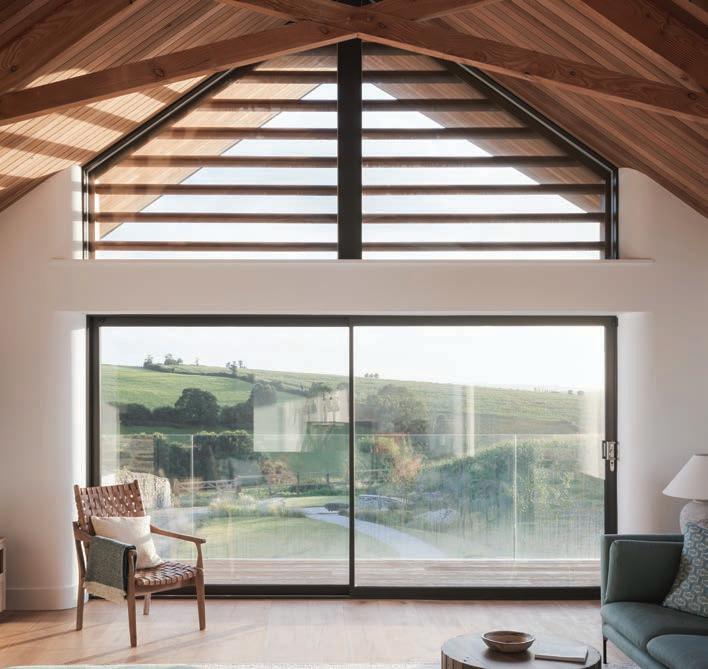
construction costs shape the feasibility of residential development throughout Cornwall, influencing decisions from the earliest stages of design. ARCO2 works within these constraints while maintaining the performance standards that define its projects. Questions surrounding housing affordability and supply form part of the broader landscape in which the practice operates, affecting clients, communities and the construction sector alike. The firm’s portfolio once extended across education, community buildings and affordable housing. ver time, attention concentrated on residential architecture, where project structures allow for a greater degree of design involvement and technical refinement. This focus has enabled the team to develop proposals in considerable depth, carrying ideas through to construction with a high level of control.
Housing developments across the country often rely upon standardised models that can overlook local conditions and character. ARCO2 takes a different route, using site-specific responses informed by environmental understanding, construction knowledge and regional context. Contemporary technology supports this process, though the underlying objective remains straightforward: creating buildings that respond directly to where they are built and how they will be used.
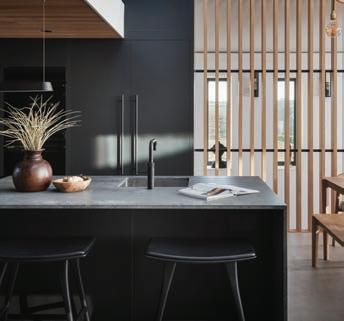
The practice’s own office offers insight into these principles. Converted during the company’s early years, it incorporates natural insulation materials, breathable construction techniques and plantbased finishes. Sheep’s wool insulation sits alongside recycled materials within the building fabric, while natural oils and low-impact products contribute to the interior environment. The space has evolved over the years, with planting integrated throughout the office.
A mature passion flower threads its way through the building, becoming part of the everyday setting in which the team works.
Education and professional development continue to play an important role within the practice. Students regularly undertake placements, gaining experience across both design and construction stages. Several have progressed into professional architectural careers before returning to join the practice. This continuity supports a culture in which knowledge is shared through direct participation in projects and an understanding of how buildings move from drawing board to completed structure.
Collaboration remains central to the delivery of every scheme. Structural engineers, consultants and specialist contractors contribute throughout the process, with coordination maintained from initial design stages onwards. Digital modelling and analysis tools support decision-making, while practical site experience informs ongoing refinement as projects progress.
Across its portfolio, ARCO2 Architects follows a consistent methodology shaped by energy performance, material behaviour and site conditions. Each decision contributes to a broader objective: delivering buildings that perform as intended, support the needs of their occupants and respond intelligently to their environment. In Cornwall, where environmental conditions and landscape considerations carry particular significance, that approach has established a distinctive body of work. Design and construction operate in close alignment, with every stage reinforcing the next to create buildings built for enduring performance.
arco2.co.uk
WORDS BY ROSIE CATTRELL

As though set into the cliff face itself,
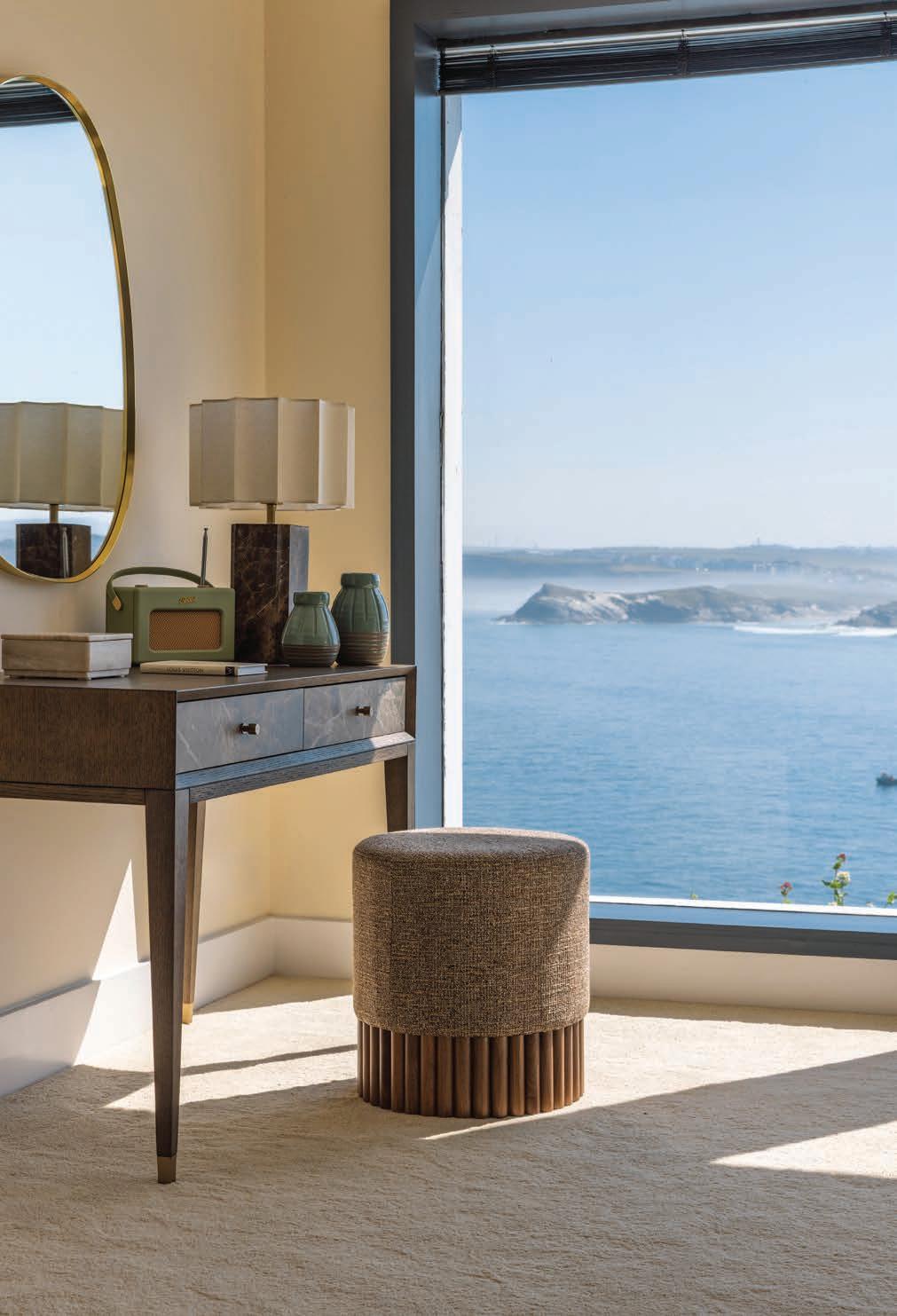
The Lookout draws you out into the endless seascape that wraps itself around this unique self-catering residence.
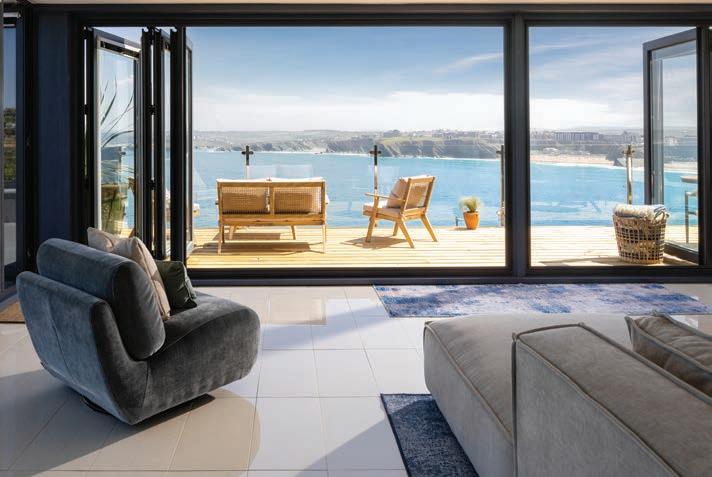
As Jacques Cousteau so beautifully put in his 1971 book Life and Death in a Coral Sea, “The sea, once it casts its spell, holds one in its net of wonder forever.” Lingering barefooted in the sunlit warmth of The Lookout’s decked balcony, it certainly feels that way. There is a certain pull that draws your gaze along Newquay’s beachspeckled north coast and out across an endless expanse of ocean. With the day’s first coffee held in both hands, elbows resting on the glass balustrade, a hypnotic calm seems to descend, seasoned with sea salt air.
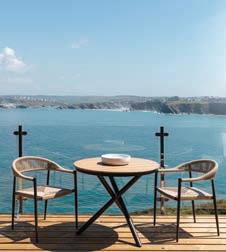
The latest addition to The Cornwall Hotel Collection, The Atlantic in Newquay joined an established group of historic luxury hotels across the Duchy this March to sit alongside The Greenbank, The Falmouth
and The Alverton. While enhancements are expected to be introduced gradually to bring it up to scratch with its thriving sister hotels, The Lookout stands apart as a jewel in the collection’s ever-expanding crown. A first for the Cornish hotelier group, the recently completed residence represents an unusual opportunity for guests to relish the freedom that comes with a self-catering property, with the added comfort of The Atlantic’s leisure facilities and warm hospitality.
Set only steps from the hotel’s grand entrance, an unassuming white door gives no hint as to the diamond within. A turn of the key and a small flight of stairs invite curious guests to round the corner and discover for themselves what it truly means to fall under the spell of Cornwall’s wild north coast. At
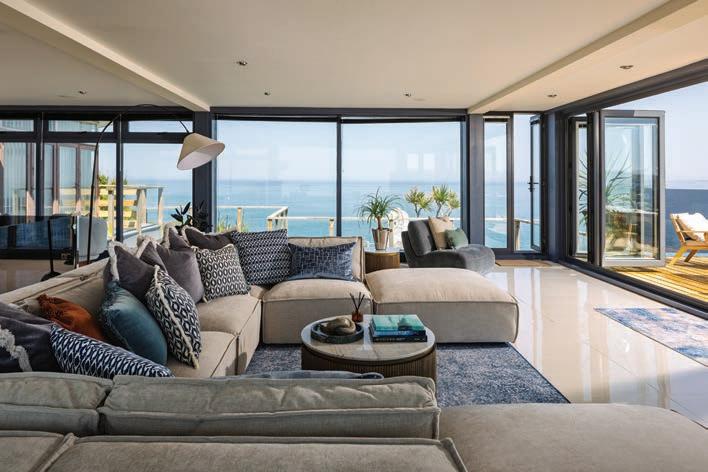
first, the apartment’s carefully curated interiors may go unnoticed. Caught in the pull of the panoramic seascape framed in floor-to-ceiling glass, suitcases have a habit of slipping from loosening fingers to be momentarily forgotten. A cream grand piano stands patiently to the side, and brand-new furnishings await appreciation as the first few minutes are lost to the quiet comprehension of the view. Vast, all-encompassing and inescapable, this is the draw of The Lookout.
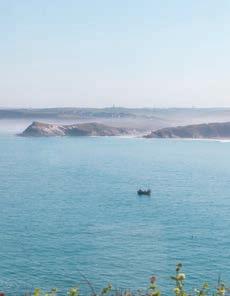
To the right, the sweep of beaches that edge Newquay’s border, each beckoning sea swimmers and sunbathers alike. To the left, a vast hori on that begs exploration with a set of binoculars as gulls drift in the warm air overhead.
nce the first glance begins to digest, the enchanting interiors can no longer be ignored. Thoughtfully designed by a local designer, the living area centres around the breathtaking vista that surrounds it on three sides. A luxurious sink-into sofa made for friends and families to gather together at the day’s beginning and end needs no other focus than the scene outside, although a midsi ed television means cosy film nights are always on the cards.
Cool creams and blues set a tranquil tone, with luxurious cushions and textiles inviting a moment of calm with a glass of something chilled in hand. A large contemporary dining table with comfortable navy blue chairs caters for evenings spent setting the world to rights, and the welcome hamper waiting on the kitchen counter offers a bottle or two to pop in the fridge and some local treats to try.
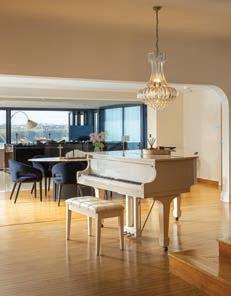
Downstairs, a soft cream carpet leads you into the impressive master suite, where a comfortable super king bed is positioned to make you feel set adrift out on the tides, lulled to sleep before waking again to endless sparkling seas. A cosy sofa bed makes room for two more guests in a more intimate sitting area, warmed with burnt orange furnishings.
Through a set of double doors, another bedroom houses twin beds and a set of bunk beds, made for hushed, conspiratorial conversations of memories already made and adventures ahead. A spacious, modern bathroom with a walk-in waterfall shower means sandy toes can be rinsed in comfort, while walk-in wardrobes suggest there’s no need to live out of the suitcase.
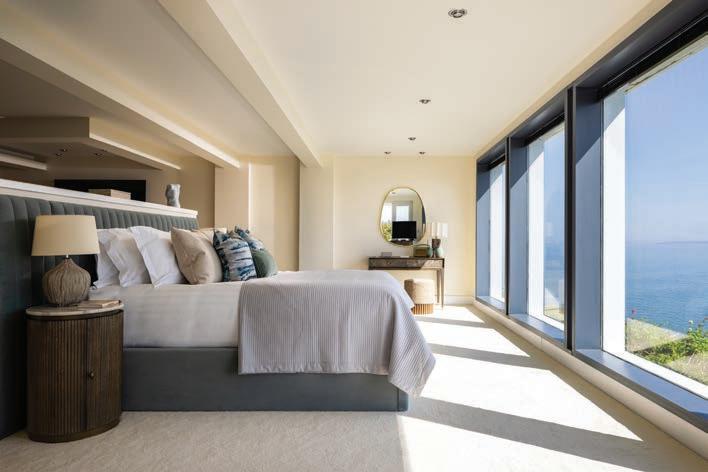
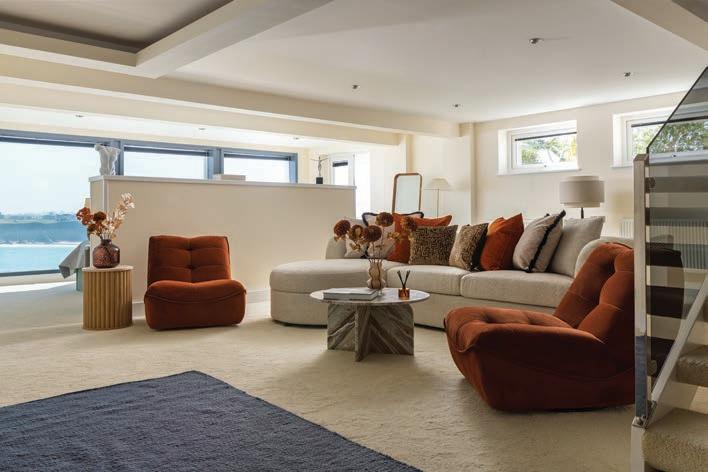
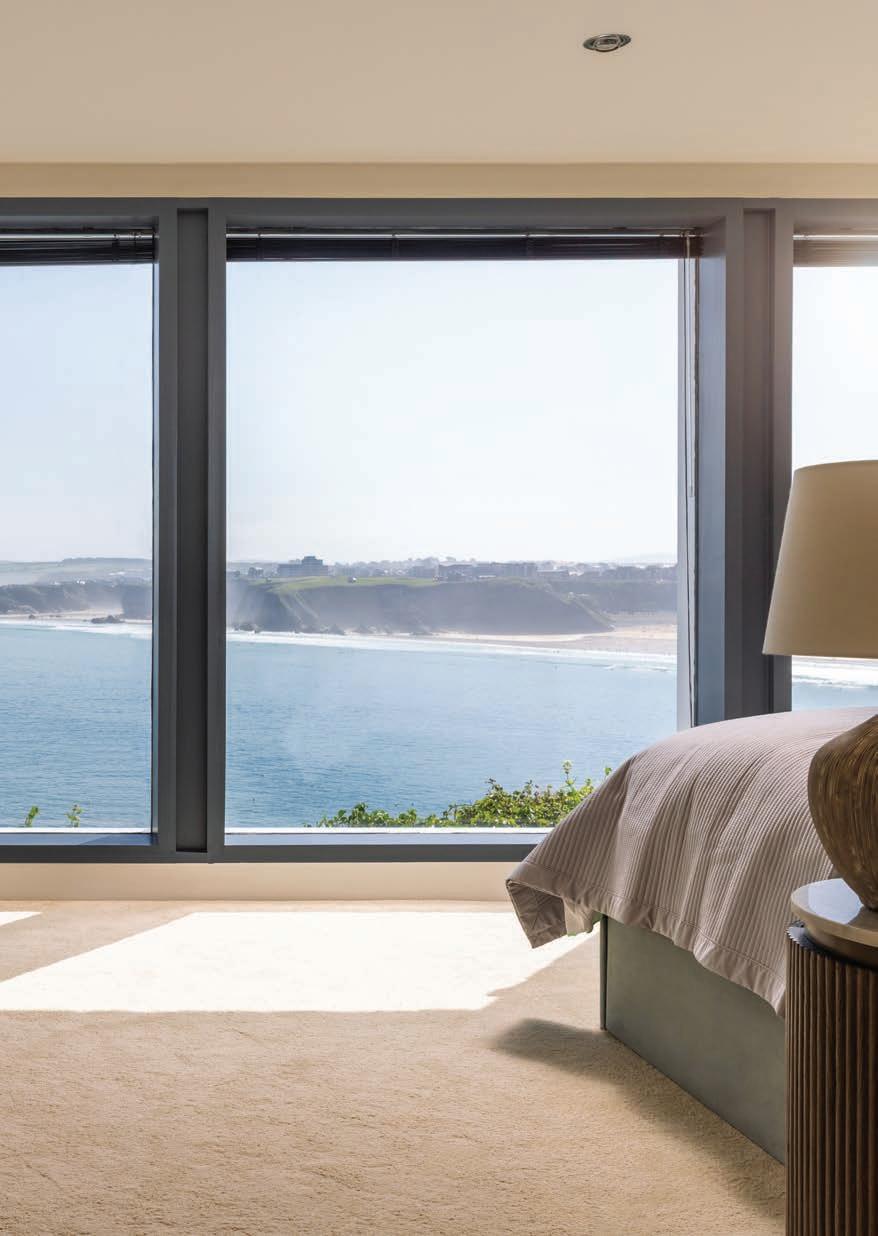
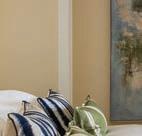
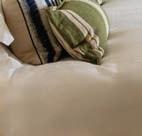


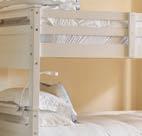
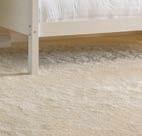

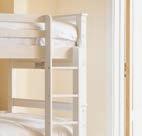
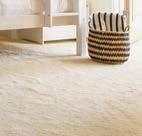

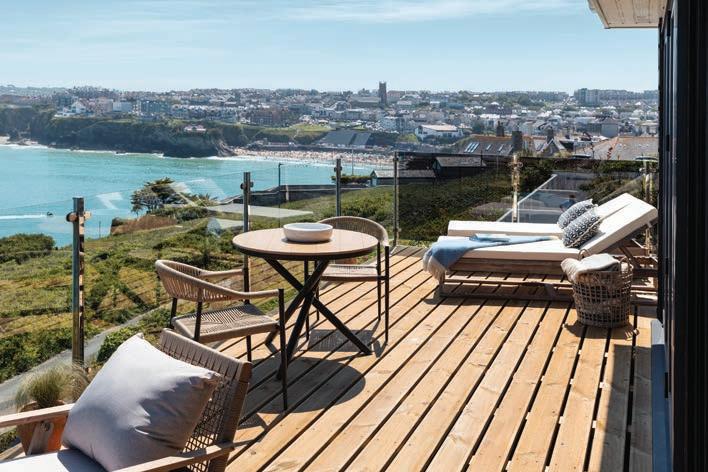
Ahead of its official opening in une, The Lookout welcomed actress Helen Flanagan and her family as its first guests. We’ve had the loveliest stay in Cornwall at the brand-new luxury residence, The Lookout at The Atlantic Hotel in Newquay,” she admitted on Instagram. “It’s such a stunning family space and the perfect little escape together. The Lookout opens soon and honestly... it’s so special.”
Wandering from room to room, it’s easy to imagine little ones claiming preferred bunk beds, gazing out across the water to pick the beach of the day, or wrapping up warm in one of the Atlantic blankets from the basket by the balcony for a night of stargazing on one of the sun loungers. And yet the apartment also paints a picture of friends gathering for endless days and sun-soaked evenings in each other’s company, raising a glass to fleeting moments together.
setting of our hotels and The Lookout does exactly that – showcasing one of the most spectacular coastal locations in Cornwall while creating a beautiful space for families and friends to come together.
“As custodians of some of Cornwall’s most loved historic hotels, we take great pride in investing thoughtfully and sensitively, ensuring these special places continue to be enjoyed for generations to come. The Lookout is a wonderful example of that approach and a glimpse of the exciting future ahead.”
“The Lookout represents an exciting new chapter for The Atlantic and we’re delighted to have welcomed so many guests through the door,” says Ben Young, Managing Director of The Cornwall Hotel Collection. “We’ve always believed in celebrating the unique character and
With The Atlantic’s spa facilities on hand, a spell in the sauna and steam rooms or a dip in the indoor heated pool come free of charge and a seat in Silk’s Bar and Restaurant is always available for those who’d like to book in advance. When the first cup of coffee is drunk and the day is laid out ahead from the balcony’s rare vantage point, there’s no end to the possibilities that a stay at The Lookout offers, each day full of promise. After all, in places like this, where the natural world invites the kind of quiet immersion Ralph Waldo Emerson so admired, it’s easy to “live in the sunshine, swim the sea and drink the wild air.”
atlantichotelnewquay.co.uk
WORDS BY JAMIE CROCKER

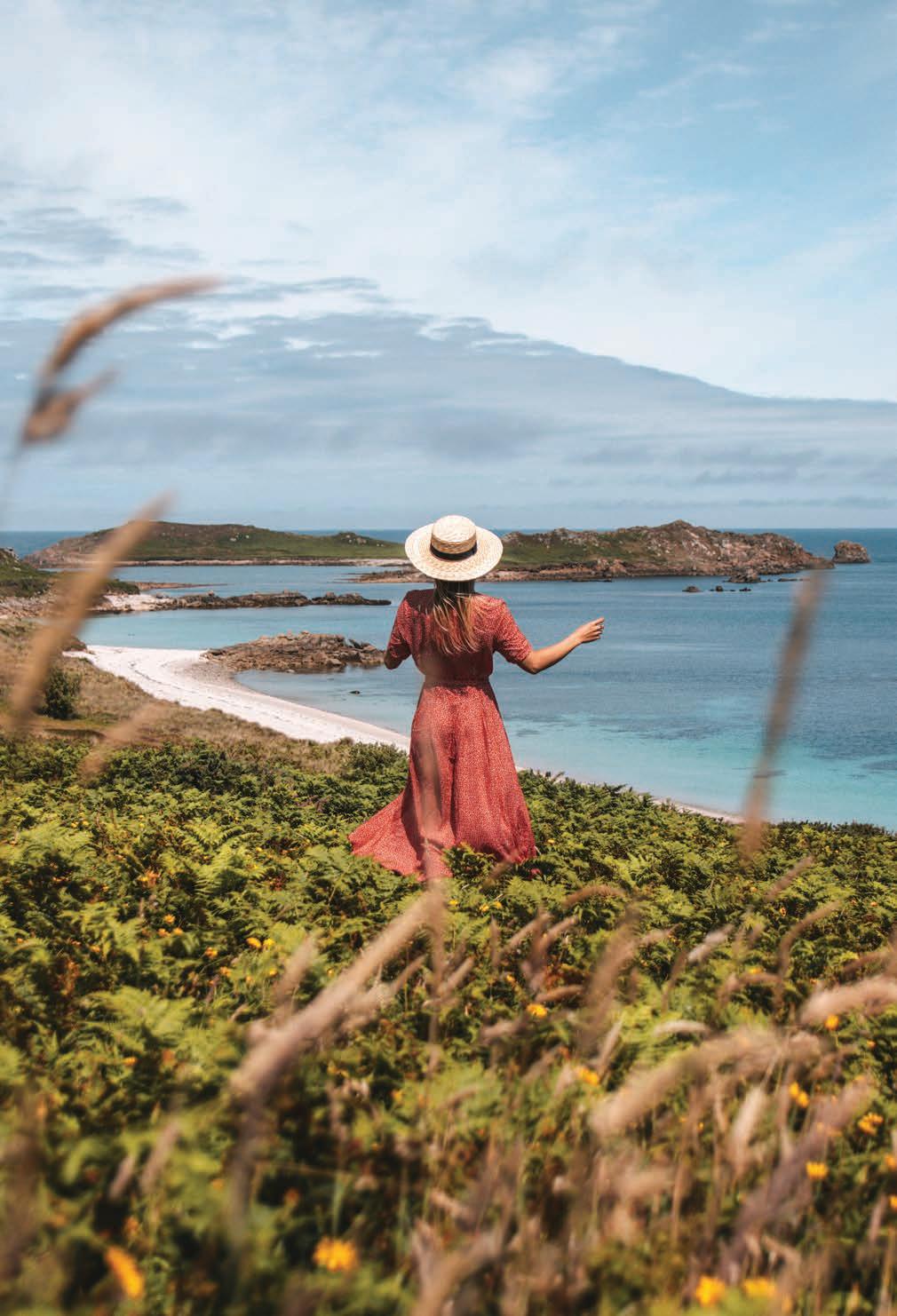
An island hotel that encourages a feeling of being a world away.
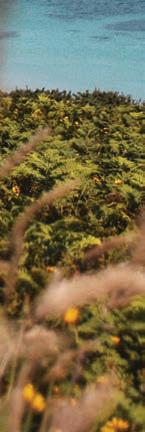
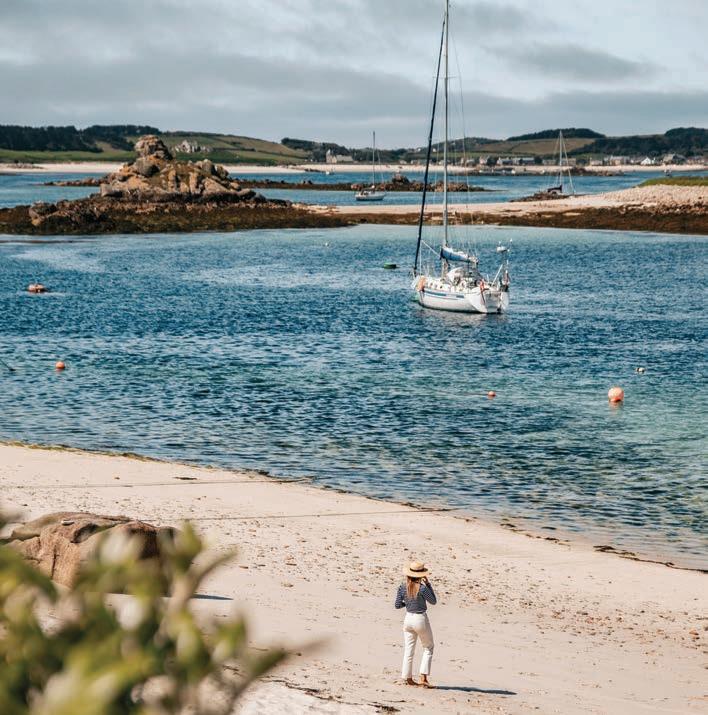
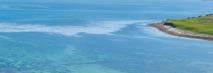
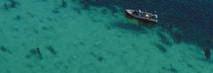
Twenty-eight miles beyond mainland Cornwall, the Isles of Scilly form an outpost that feels sagaciously removed from the daily rush of the United Kingdom. The archipelago, unwilling to advertise its presence too much, lies low in the Atlantic, a scatter of islands and rocky outcrops surrounded by water that often carries a colour more usually associated with warmer latitudes. Boats crisscross the sound between islands bouyed up by the lilt of the waves, while seabirds wheel overhead, and the Gulf Stream moderates the climate so effectively that subtropical plants grow in the shelter of old stone walls. It is a landscape that draws the curious, where visitors quickly discover something familiar and yet peculiarly unfamiliar, a foreign land inhabited by friends.
heathland and its shoreline folding into beaches of pale sand. Life here adopts a pace determined largely by the tide and the weather. There are farms and a handful of small businesses maintained by a real community. For visitors, the appeal is simple: space to walk, clear water for swimming in under skies that remain primordially dark once the sun drops below the horizon.
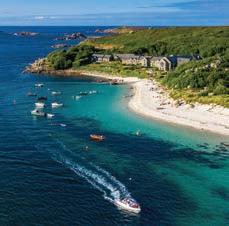
Among the inhabited islands, St Martin’s maintains a unique character. It lies towards the eastern edge of the group, long and narrow, its spine rising to low
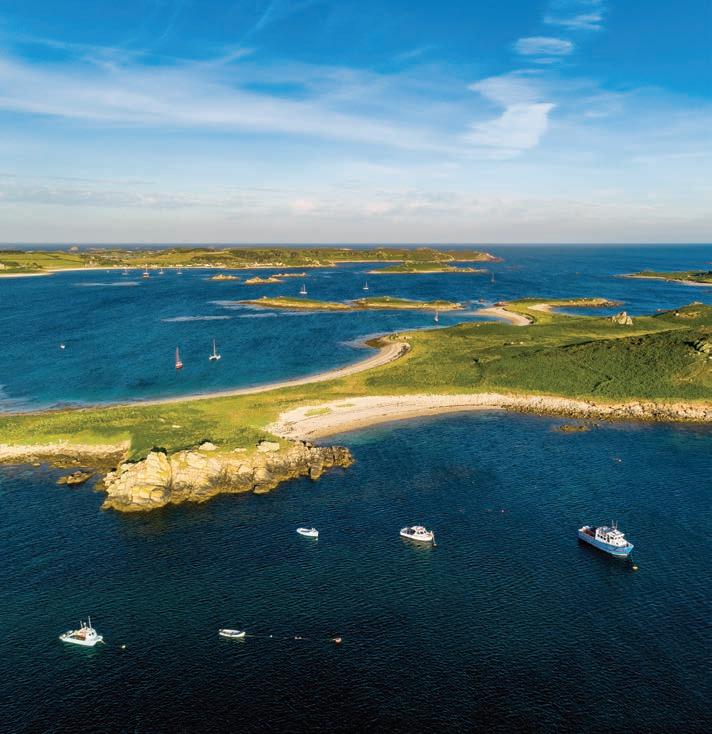
Set above the shore on the island’s western side stands Karma St. Martin’s, the island’s only hotel, an establishment that has developed into one of the Isles of Scilly’s most comfortable places to stay. The property occupies a slope above Tean Sound, facing the neighbouring island of Tean and the wider Atlantic beyond. A group of granite buildings arranged along terraces form the heart of the hotel, their lines softened by gardens and salt-tolerant planting. From the outside, it has the appearance of a traditional island property that has grown organically over time rather than being parachuted in overnight.
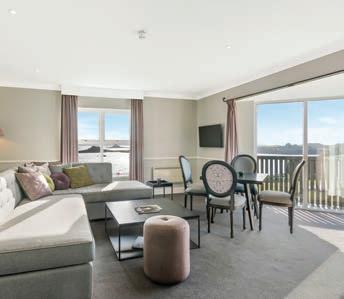
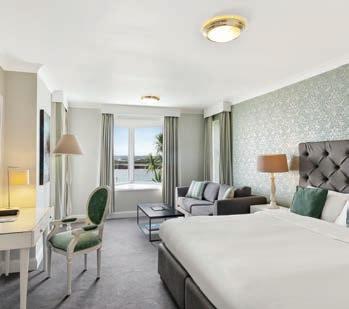
Thirty guest rooms are spread throughout the buildings, each arranged to make the most of the view. Windows open towards the sea and most rooms include terraces or balconies that allow guests to sit outside when the weather allows, which it frequently does thanks to the warming influence of the Gulf Stream. The interiors draw lightly on the colours of the surrounding landscape: pale woods and simple fabrics which don't distract the eye, allowing the view to take centre stage. Nothing about the design is demanding beyond its requirements.
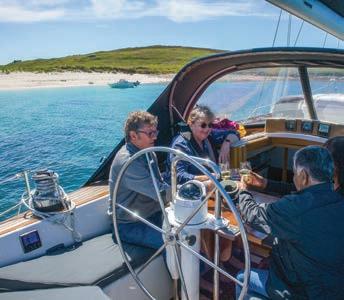
Guests can arrive at Karma St. Martin’s in several ways. Many travel by fixedwing aircraft or helicopter from the mainland, landing on nearby St Mary’s before continuing by boat. Others choose the slower but more romantic crossing aboard the passenger ferry from Penzance. However the journey is made, the final stage often involves a small inter-island boat ride, luggage stacked neatly beside the skipper while passengers watch the water shift between shades of turquoise and green. By the time the boat pulls into Higher Town quay on St Martin’s, most travellers have already begun to settle into island pace.
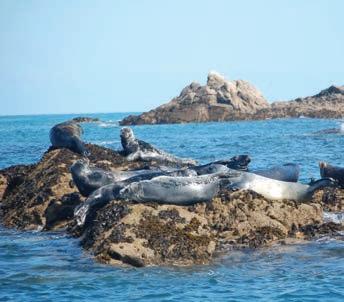
The hotel’s position makes it easy to reach the island’s network of paths. These tracks follow old field boundaries and low ridges, connecting beaches, farms and small outposts of human settlement. Walkers can circle the island in a few hours, though many choose to stretch the journey across a day, stopping to watch seals resting on offshore rocks or to study the view across the archipelago. On clear days the
neighbouring islands appear as layered silhouettes, each separated by channels where boats chug between communities.
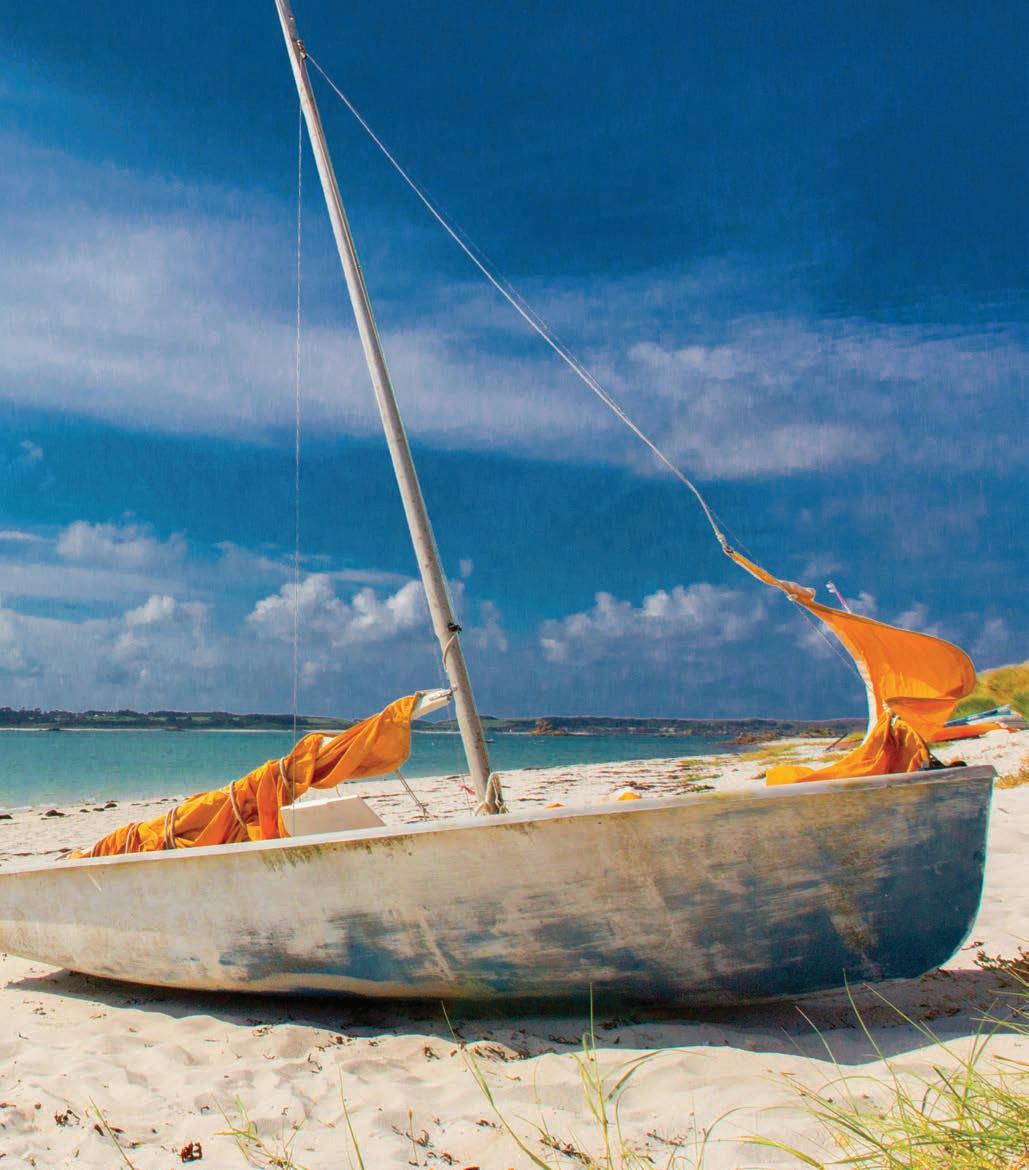
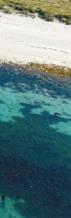
Lowertown Beach, only a short walk from the hotel, offers one of the island’s most striking stretches of sand. At low tide the water retreats to reveal long shallows and rippled sandbars, creating a wide expanse ideal for swimming or simply wandering. Families often spend entire afternoons here, while others carry picnics prepared by the hotel kitchen and settle among the dunes. The sea is clear enough to invite snorkelling and kayaking, both of which the hotel can arrange for guests interested in exploring the surrounding coves.
Island life has always been shaped by the sea, and that influence extends naturally to the hotel’s dining room. The Sir Cloudesley Shovell restaurant has held two AA Rosettes since 2018, a recognition that reflects the kitchen’s commitment to seasonal ingredients and fine dining. Fishing boats working around the islands land crab, lobster and scallops throughout the year, and much of this catch appears on the menu within hours of arriving ashore. The cooking style pays homage to the ingredients, allowing the freshness of the produce to dictate the way.
A typical evening might begin with handpicked crab paired with garden herbs, followed by grilled lobster or locally caught fish served alongside island-grown vegetables. The kitchen also sources produce from mainland Cornwall and St Martin’s growers, whose small fields yield herbs, salads and occasional fruit. Desserts often take advantage of
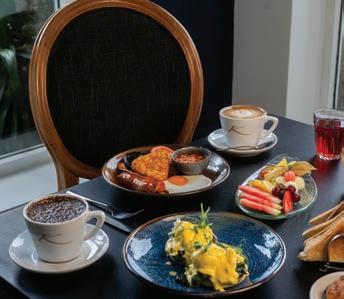
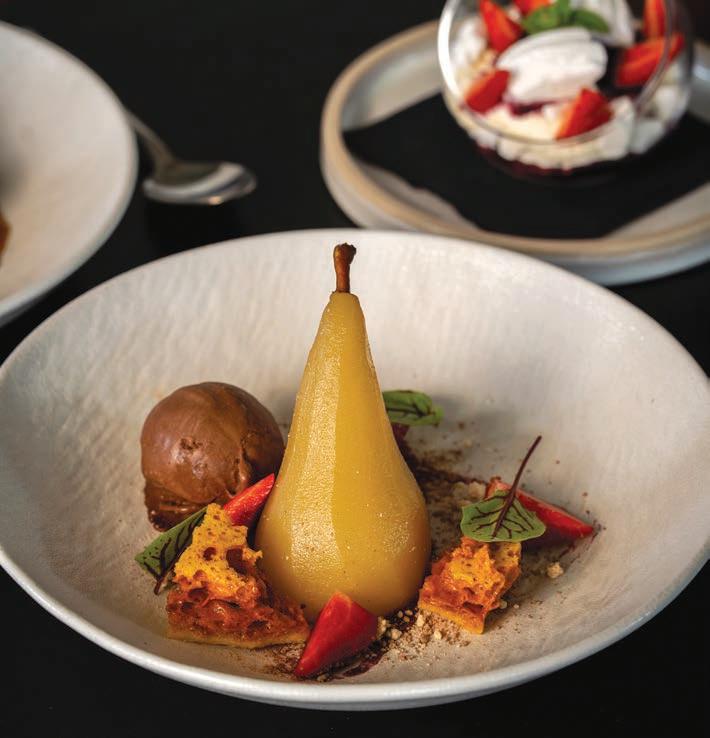
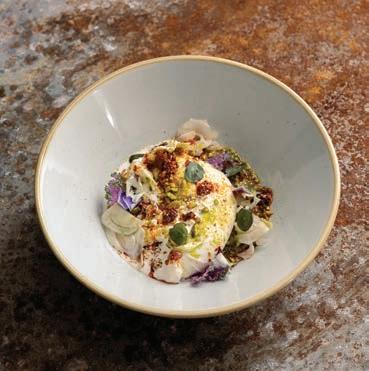
ABOVE Temptation on a plate
hedgerow berries in late summer and autumn, while the wine list ranges from familiar European regions to bottles chosen to complement seafood.
Lunch is relaxed. Guests might return from a morning swim to find the terrace tables set for light meals and fresh bread, or collect hampers prepared for a day spent exploring the island’s more distant beaches. Afternoon tea remains a popular ritual, particularly when the sun drops behind the terrace and the view across Tean Sound takes on a softer light.
Karma St. Martin’s has also built a reputation as a welcoming place for travellers accompanied by dogs. The Isles of Scilly are well suited to animals as the paths are plentiful and beaches are rarely crowded. The hotel accommodates pets in designated rooms and public areas, allowing owners to explore the island without the complication of leaving their companions behind.
While many guests are content to remain on St Martin’s, the wider archipelago encourages exploration. Regular boats connect the inhabited islands, making it possible to spend a day visiting Tresco, Bryher or St Agnes before returning in time for dinner. Tresco is known for its Abbey Garden, where plants from across the world thrive in the mild climate. Bryher presents a contrast, its western side facing the full force of Atlantic weather while the eastern shore remains sheltered. Each island offers a slightly different character, yet all share the same sense of distance from mainland pressures.
Seasonality shapes life here. Spring arrives early, coaxed by the mild climate, and fields of narcissi begin to flower while much of Britain still waits for the first signs of growth. Coastal habitats fill with seabirds returning to breeding sites, and the water begins to warm enough for the first determined swimmers. Walk Scilly, an annual festival held across the islands, brings visitors eager to learn about local wildlife and geology from experienced guides.
Summer delivers longer days and the warmest sea temperatures of the year. Boats become busier as visitors move between islands, and the beaches take on the bright clarity often associated with mediterranean waters. Even then, the Isles of Scilly rarely feel crowded. The limited number of accommodation beds across the archipelago naturally controls the pace of tourism, ensuring that wide stretches of coast remain unoccupied for much of the day.
Autumn offers a mellow mood as the heather darkens across the hinterland and migratory birds arrive in large numbers, attracting enthusiasts from across Europe. The water retains warmth long after the mainland has cooled, encouraging lateseason swims. The annual Taste of Scilly festival highlights local produce and brings chefs, growers and fishermen together in a series of events that celebrate the islands’ food culture.
Early October introduces another dimension to the calendar. Karma St. Martin’s hosts a jazz gathering centred











on performances by pianist Ben Waters and visiting musicians. Evenings in the hotel’s dining room or adjacent spaces fill with energetic boogie-woogie and blues, drawing audiences from afar. Around the same time, the archipelago participates in Dark Skies Week, when astronomers and enthusiasts gather for observations and talks organised through the COSMOS Community Observatory on St Martin’s. With minimal light pollution, the night sky here offers a rare opportunity to see the Milky Way clearly arching overhead.
Such events bring an element of vitality and exuberance to the closing months of the year, yet the hotel retains its essential character. Staffing often includes people who have spent many seasons on the islands, and their familiarity with local life gives the service a sense of embedded confidence. Visitors are quickly acquainted with where to watch the sunset, which path leads to a hidden cove, or how the tides affect the day’s swimming.





What draws people back to Karma St. Martin’s repeatedly is a sense of residing abroad for a while, but without the hassle of having to pass through airports and customs checks. Days tend to organise themselves around simple activities: a walk along the coast, lunch outdoors, a boat trip to a neighbouring island, then dinner as the sky darkens over Tean Sound.
As dusk descends, the hotel’s lights flicker into life, mirrored in the sea that still holds the sunset’s last glow. Boats ease back to their moorings, and the island grows quiet, save for the gentle pull of the tide. Guests, returning from a day of exploration, linger on the terrace, sharing a final drink as the first stars appear. In that suspended moment, the distance from the mainland feels more than physical as Karma St. Martin’s transforms into a place that exists beyond time and context, rare and unbound.
karmaresortdestinations.com/karmast-martins/




WORDS BY HANNAH TAPPING





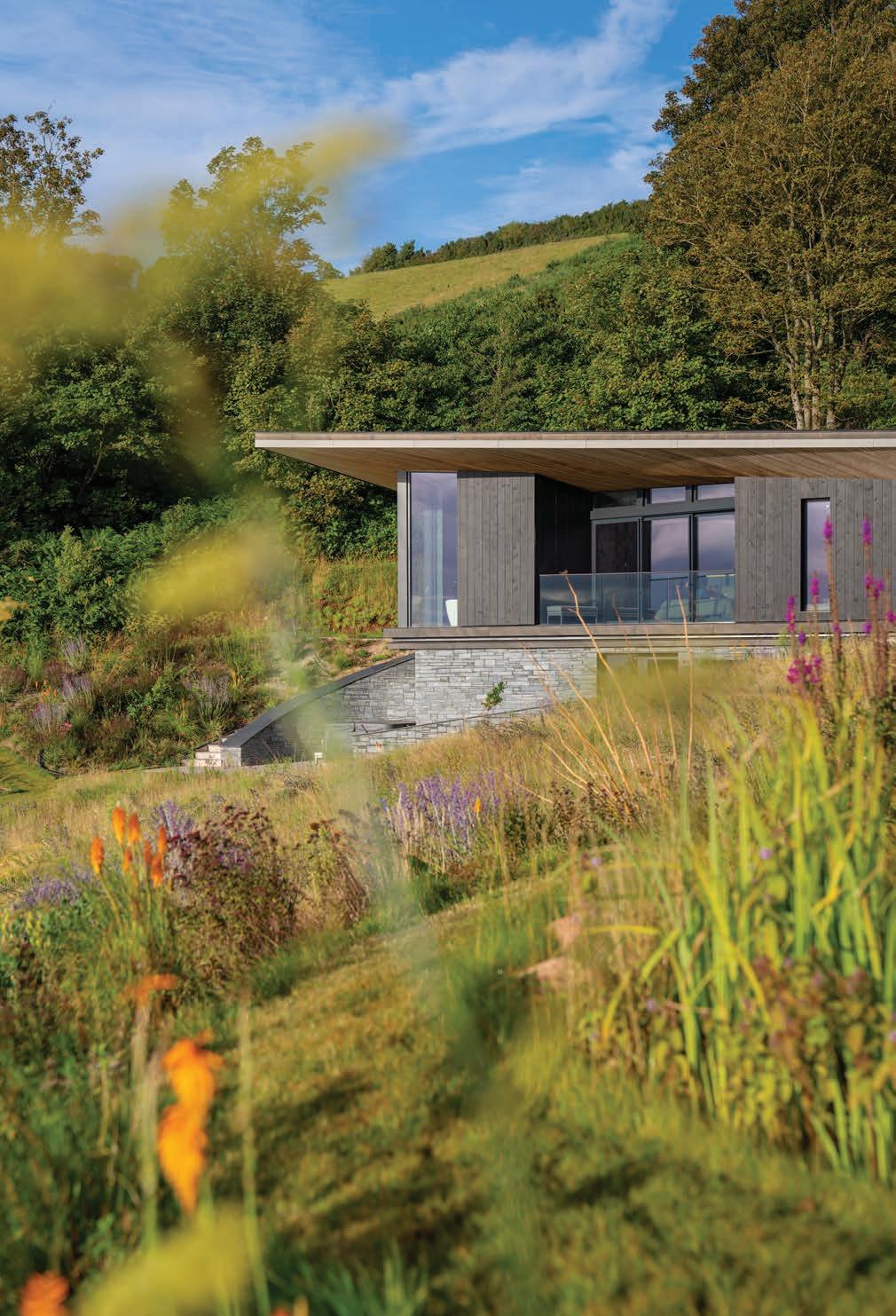
With a new home of its own in Ashburton and a decade of exceptional work, architectural practice VESP designs high-quality architecture that roots itself in the sensitive landscapes of coast and moorland.
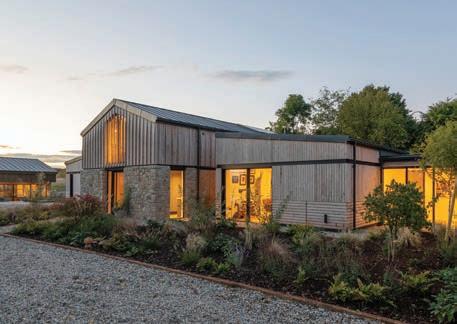
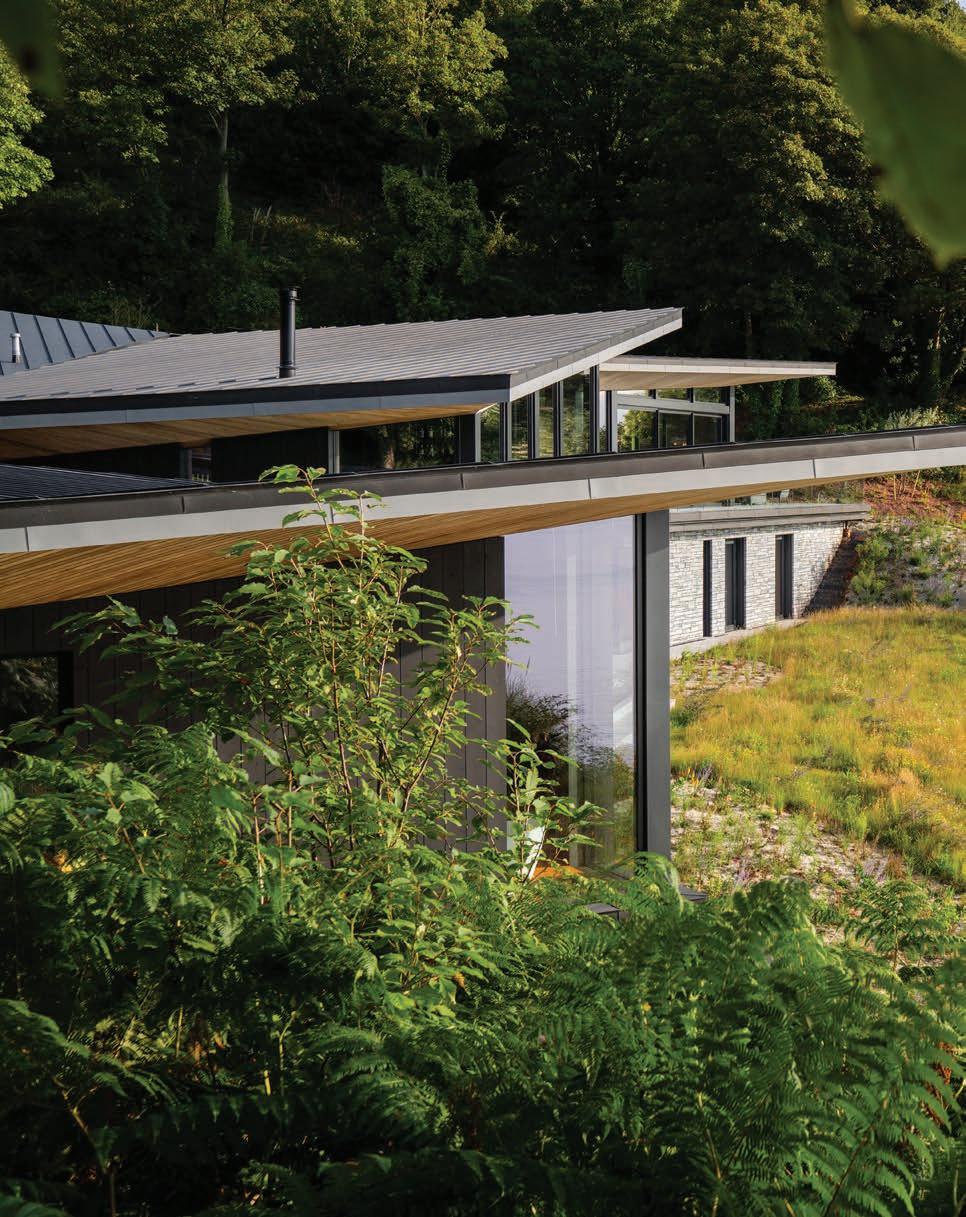
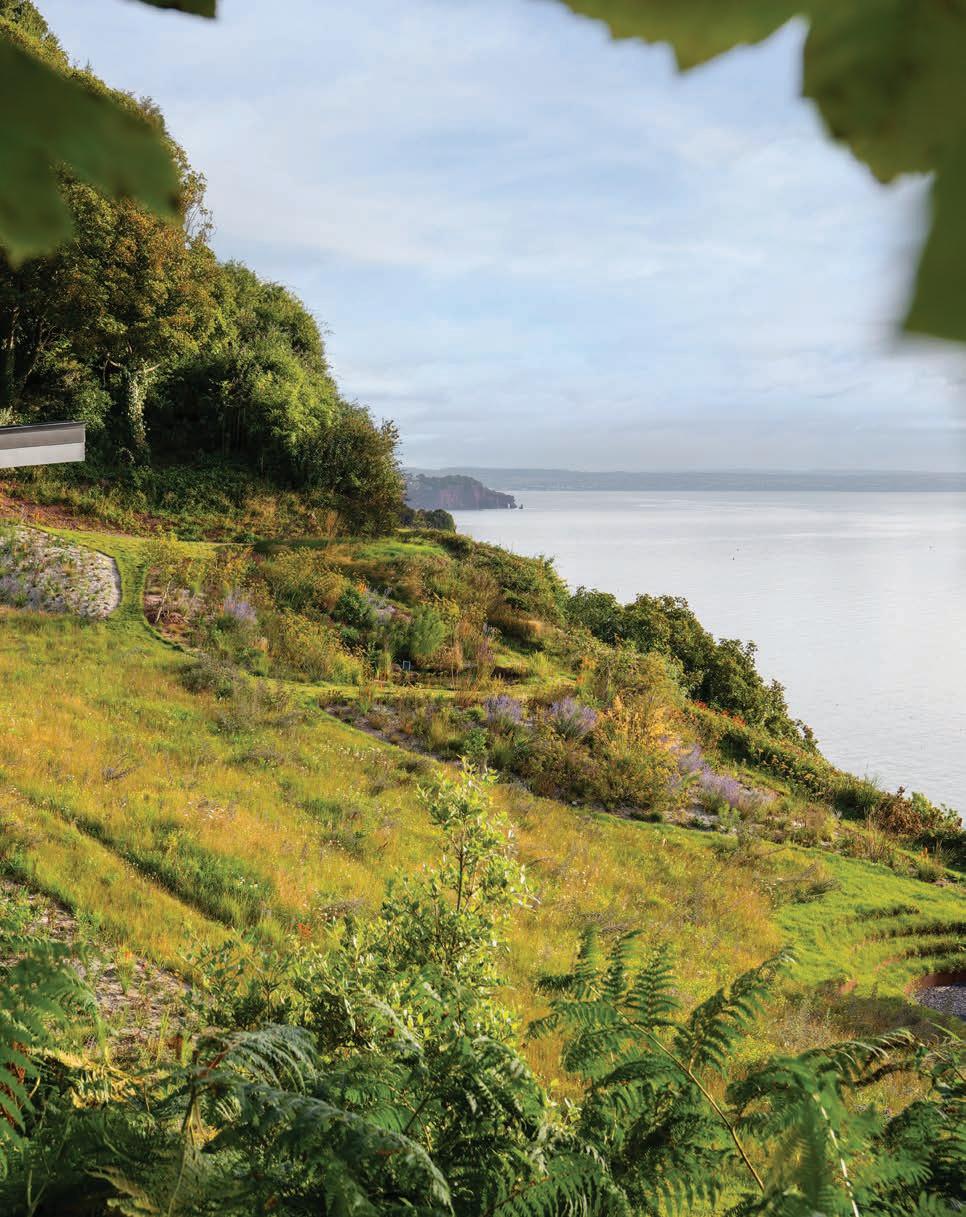
There is a house above the Shaldon coastline in South Devon where the building seems to have grown out of the hillside itself. Seen from the sea, it emerges as a bold two-storey statement of glass and dark timber; from the lane behind, it barely registers, a single-storey pavilion settling into the slope. A terrace bridges the approach and below it, the living spaces open wide to uninterrupted views of the water. This is Labrador Bay House, one of the stand-out projects in the portfolio of Devon-based architects VESP, and it captures something essential about the practice’s way of working: that great architecture should be rooted in place and shaped by the people who will inhabit it.
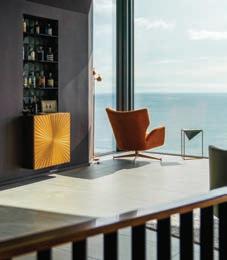
VESP is entering its 20th year, and this January the practice marked the milestone in fitting style by moving into a new studio in Ashburton that it designed and built for itself. “It’s a high-performance building, beautiful inside and out,” says director Ian. “It says everything about what we want to be as architects, and what we can offer our clients. For a practice that has long let its buildings do the talking, having a home of its own feels both overdue and wholly right.
The story of VESP begins, improbably, in Malaysia. Founding director Eilir Sheryn and his wife Frederieke also an architect met at a practice in uala Lumpur in the early s, at a time when the recession had sent a generation of young
European architects abroad in search of work. Returning to London, Eilir joined the respected firm Squire and artners before the couple eventually made their way to Devon with four young children to set up their own practice. Fellow director Ian followed, having studied in Cardiff before finding himself drawn to the South West. Today the team numbers twelve, all working from the new Ashburton office. We’re proud to say we have ten of the most talented young architects in Devon,” says Eilir, “and they all take a full and active part in the design process.”
This collaborative spirit runs through everything VESP designs. Rather than channelling all creative decisions through a single vision, each project is assigned to an architect chosen for their affinity with the brief and the client, while the directors remain closely involved throughout. “Our challenge is to create something new every time; to keep pushing ourselves and redefining what we do, says ilir. egular internal reviews ensure that ideas are tested and earned at every stage and the energy of the studio feeds directly into the work. “It’s a real exchange of ideas,” adds Ian. We work closely with our clients to understand their aspirations and lifestyle.
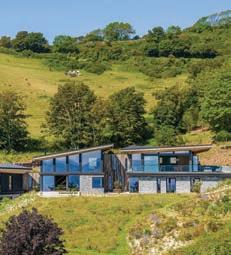
This collaborative design process ensures the architecture is perfectly suited to them.” The practice’s design philosophy is, as Eilir puts it, unashamedly modernist, yet the work is far from dogmatic. We love that relationship between respecting the old and introducing the new, with a legible difference between the two, he explains. We embrace modern construction technologies, but use traditional materials.” Local stone, timber, lime render, slate and zinc recur across projects, anchoring each building to its landscape. qually, VESP has embraced digital tools with enthusiasm: advanced 3D modelling allows the team to interrogate the design holistically, walk clients through their future homes at an early stage, and resolve construction details long before work begins on site. “Everything is millimetreaccurate,” says Eilir . “It’s an incredible tool.”
That rigour tells in a portfolio that moves confidently across coast, countryside and listed buildings alike. Labrador Bay House, completed in 2022, remains a landmark scheme. Approached from the lane, it reads as a single-storey stone wall standing between the visitor and the sea view beyond; only as you move through does the architecture reveal itself floating planar
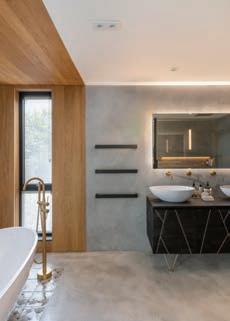
roofs above stone, with the glassy, lightfilled elevations that face the water coming slowly into view.
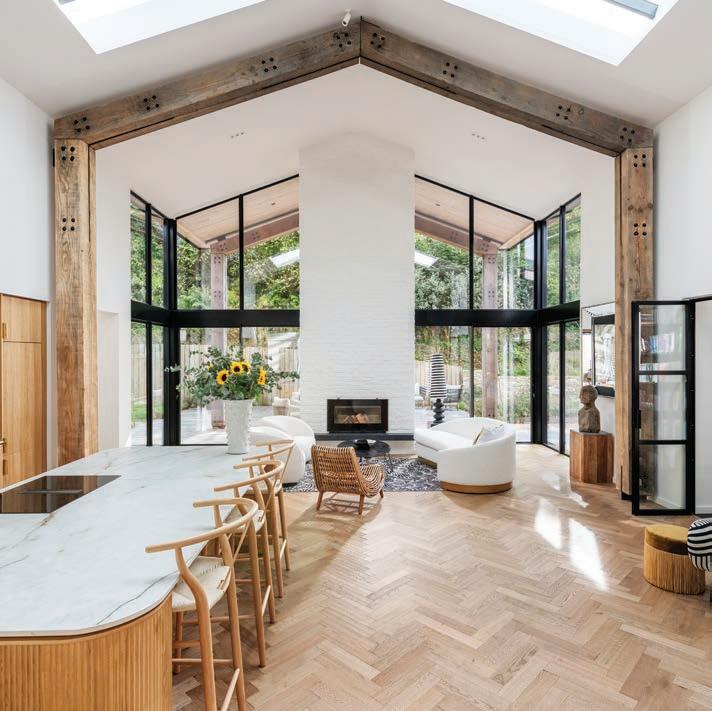
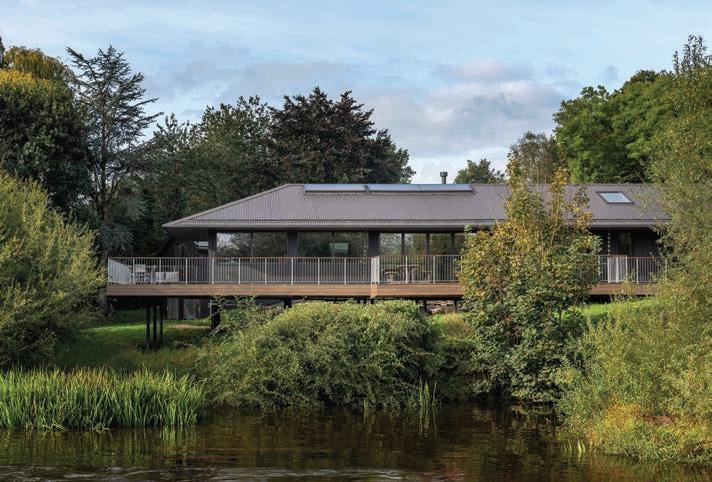
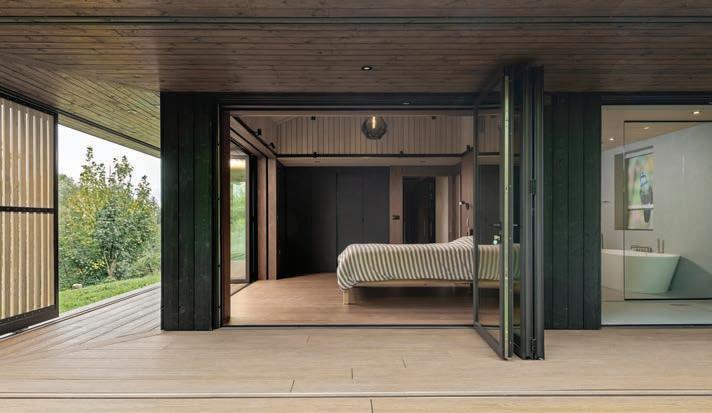
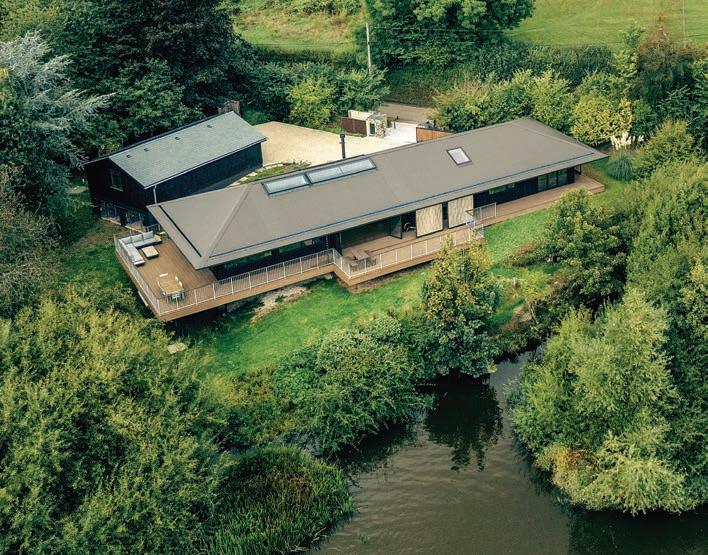
The contrasts elsewhere within the portfolio are equally striking. High Dorsley, a Class Q barn conversion designed for a couple who love having family to stay, delivers a generous central living volume flanked by a private master wing on one side and a dedicated guest suite on the other: “a contemporary agricultural barn aesthetic,” as Ian describes it. Stipperstones, a riverside home just outside xeter took a different approach entirely; single-storey pavilion on stilts set above flood level, its screens and glazing folding open on all sides to the tree
canopy and the River Exe below. The client was an avid birdwatcher, so “opening the house up to the river and the views, so that he could sit there and enjoy the wildlife, was imperative,” explains Ian.
With a full programme of projects moving on-site over the coming year and a new home of its own in the heart of Devon, VESP is entering the next decade with momentum and confidence. For a practice built on the belief that every building should be a unique response to its place and to the people within it, the best work may well be still to come.
vesp.uk





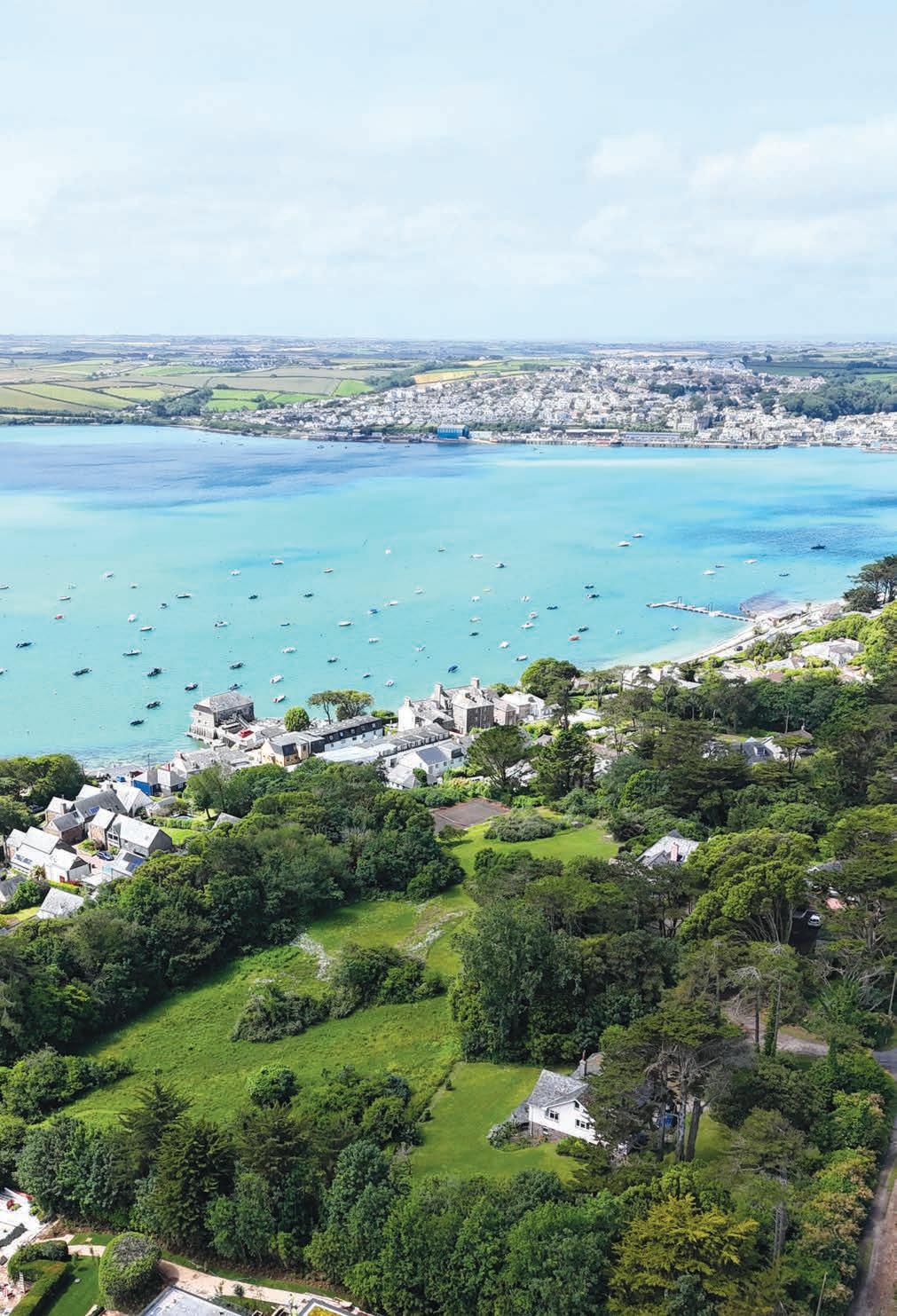




With an unrivalled understanding of the Cornwall prime property market, John Bray Estates brings an authority that is having a profound effect on buyers and sellers alike
Ask an agent who has sold in Cornwall through both the scramble years and the settling that followed, and they will tell you the buyer has changed. The ones who arrived post-Covid came chasing space and an escape hatch. Four or five years on, those still looking have done the maths. They want a property that works as hard as a Chelsea townhouse, not a holiday folly that sits empty from October to March. This is the maturing of the second-home market: fewer impulse purchases, more considered ones, often from buyers who have rented in the area first, or inherited a family connection to Cornwall and are now formalising it with real money and true intent. The prime Cornwall buyer of 2026 is not escaping anywhere, rather, they are choosing something specific and they expect the property to justify that choice. And now, more than ever, that choice is wide and varied.
Perhaps no agency recognises this as much as John Bray Estates whose knowledge and expertise when it comes to selling prime properties on Cornwall’s north coast is second to none. Managing Partner Josephine Ashby tells me: “Supply is the biggest game changer in the market. We are seeing high levels and really good stock, with exciting properties available privately as well as at all levels of the market. More choice means less urgency and so, for buyers who know precisely what they are looking for, it is an incredible time to find something exceptional.”
What buyers are choosing has changed in its detail. Wellness has stopped meaning a spa treatment and started meaning proximity to a swimming spot reached on foot, to a coastal path that can be run before breakfast, to a kitchen built for people who actually cook. Design has overtaken square footage as the deciding factor, as buyers who have spent a decade living well in London are
not prepared to accept less in Cornwall, and an architect’s signature on a renovation now carries as much weight as a sea view. Sustainability has moved from a talking point to due diligence and privacy – always Cornwall’s understood currency – has become more exact in its demands.
A growing number of buyers are relocating outright, following their instincts to a logical conclusion and seeking a house built to hold a whole working life, rather than a mere fortnight in August. The map of desire has also shifted, with the estuaries drawing buyers away from open coast, offering a slower register of Cornish life. In land, towns built to be lived in across all 12 months, are outperforming seasonal hotspots among buyers who intend to make their home here, not just visit. Under Josephine’s expert guidance, we take a look at six exceptional homes that span the full gamut.
The waterside opportunity
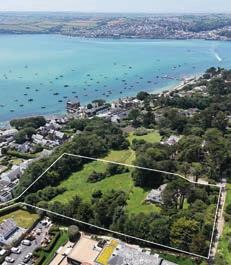
Fron (Rock, PL27 6LD – excess £5,950m) invites the use of every superlative you can find. Its breathtaking and timeless position in one of the country’s most coveted coastal locations, is matched only by the size of the plot which sits at an extraordinary two acres – a rare find in today’s market. Owned by the same family for over a century, this much-loved, multi-generational retreat offers rare privacy and a profound connection to its extraordinary surroundings. Currently offered as a fourbedroom family home, its leafy grounds surrounded by mature trees afford a unique sense of privacy. While its gardens neighbour the renowned St Enodoc Golf Course and a short stroll takes you to the newly opened St Enodoc Hotel reimagined by Michelin-star chef Paul Ainsworth.
The coastal retreat
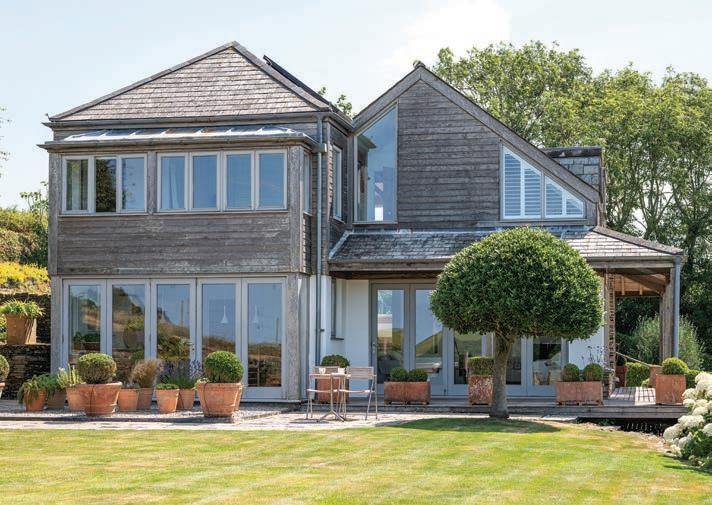
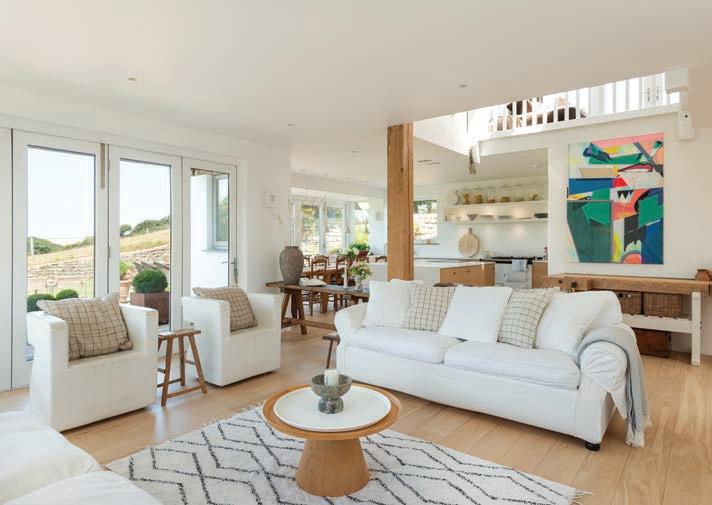
Little Tremiro (Port Isaac, PL29 3SR – £1.895m guide) captures the essence of coastal Cornwall. This beautiful four-bedroom home built in 2005, combines contemporary design with timeless oak craftsmanship. Arranged across two light-filled floors, the heart of the home is an impressive open-plan living space, where expansive glazing frames the landscaped gardens and draws the outside in. A striking galleried landing enhances the sense of space and flow, while warm natural materials create an atmosphere that is both elegant and welcoming. Accessed via a private, gated drive within lush grounds, the property enjoys an enviable position just moments from the dramatic scenery of the South West Coast Path and the much-loved harbour villages of Port Isaac and Port Gaverne.
The modern beach house
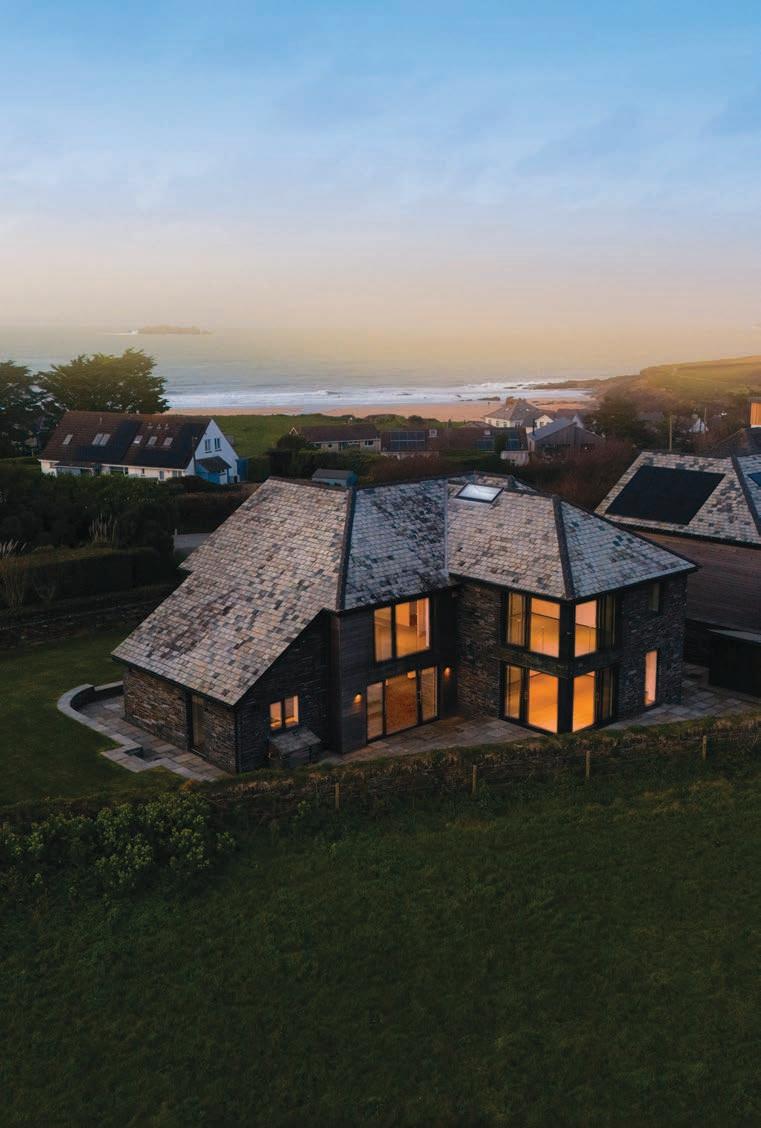
Talskiddy (Harlyn Bay, PL28 8SE – £2.3m guide) sits in an elevated position, footsteps from the surf at Harlyn Bay. Design by Laurence Associates and completed in 2024, Talskiddy combines sustainable design with refined, high-spec introits. Its five luxurious bedrooms are all en suite and its bespoke open-plan kitchen and dining space has been expertly designed for both everyday living and entertaining. The exterior is built with Cornish stone, aged cedar, together with a reclaimed Delabole slate roof. Contemporary lines are complemented by a carefully curated palette of natural materials and bespoke detailing throughout. Being within walking distance of the championship golf links at Trevose Golf Club and the soughtafter beaches and much-loved amenities of the Seven Bays coastline makes this an enviable opportunity to enjoy north-coast living at its finest.
The family find
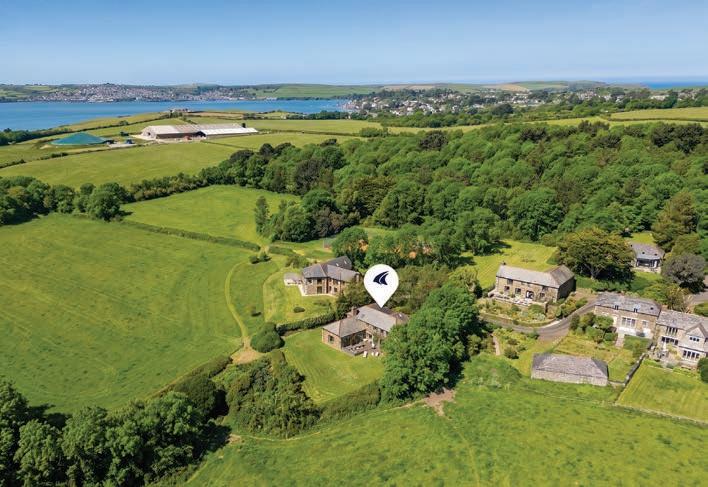
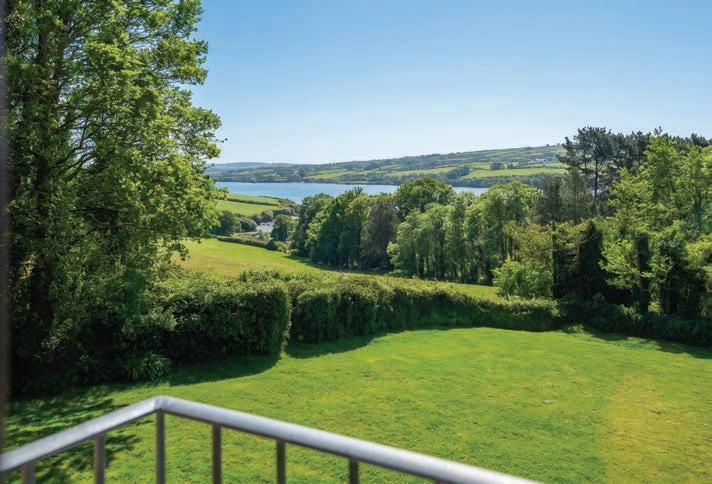
The Old Granary (St Minver, PL27 6RL – £2.85m guide) is a unique and rare opportunity to enjoy a large family house in a private and elevated position with sweeping views down the Camel Estuary. Boasting six bedrooms and four bathrooms, this sympathetically converted barn is set within the exquisite manicured grounds of Cant Farm.
Just moments from the sought-after town of Rock, a footpath leads right down to the water’s edge. Its stone frontage, draped in mature wisteria and clematis blends a timeless character with contemporary interiors designed for modern living. Currently a successful holiday let, The Old Granary offers a refined rural retreat for family living.
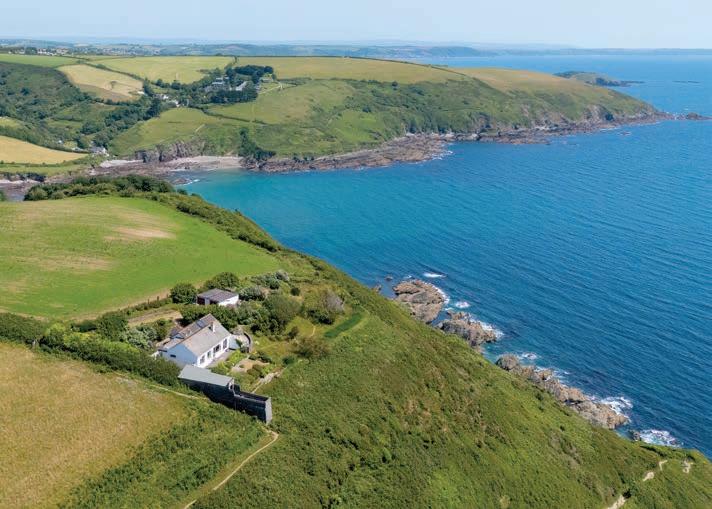
The ocean escape Down End Cottage (Talland Bay, PL13 2JH – excess £1,5m) is situated in an incredible, elevated position, above the South West Coast Path. A prime example of an exceedingly rare coastal property set within an Area of Outstanding Natural Beauty, it commands breathtaking 180-degree views across the Atlantic Ocean. The existing single-story building has four bedrooms, while outside two generous patios and a ‘lookout’ make the most of the impressive views. This much-loved detached home, which sits between the fishing communities of Looe and Polperro presents a truly exceptional opportunity to acquire a landmark property with significant potential for redevelopment or enhancement, subject to the necessary planning consents.
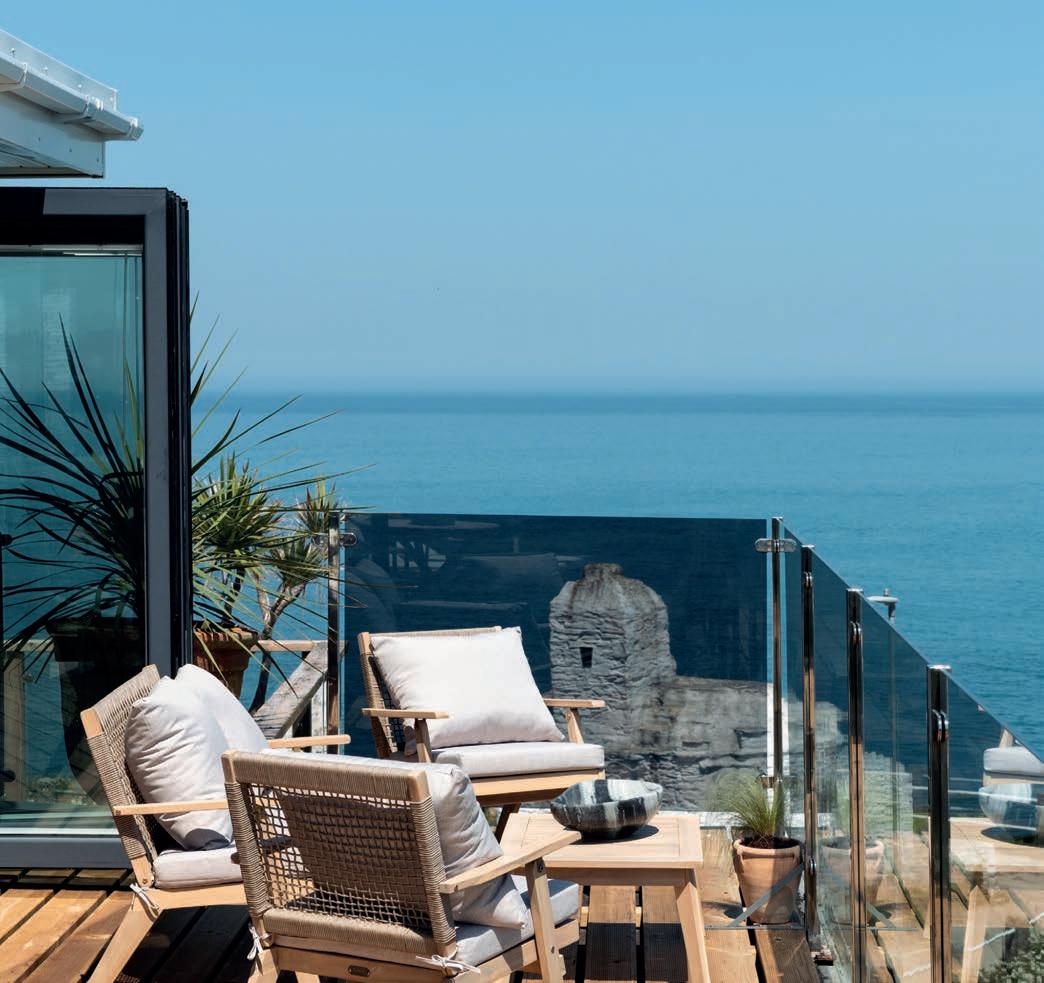
Lookout at The Atlantic
A newly redesigned luxury coastal retreat, perched above the Atlantic Ocean with sweeping sea views, available to book now.
A newly redesigned luxury coastal retreat, perched above the Atlantic Ocean with sweeping sea views, available to book now.
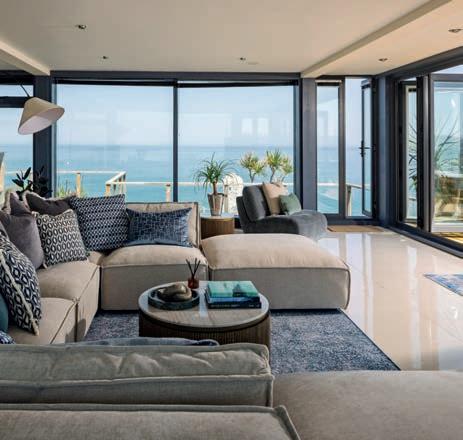
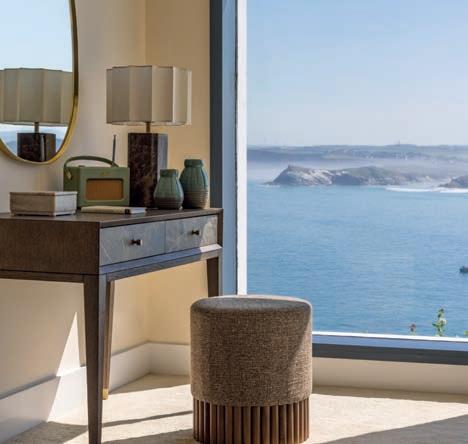
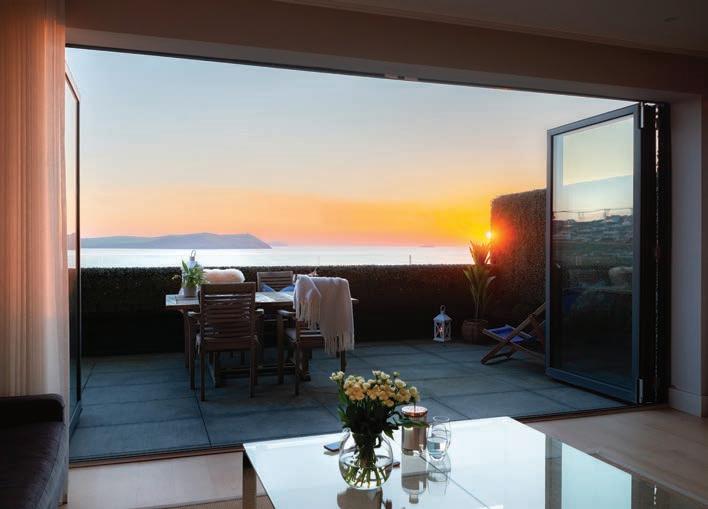
The lock-up-and-leave
Penhale (New Polzeath, PL27 6US –£795,000 guide) is the kind of stylish beachfront apartment that brings Marseille-vibes to Cornish shores. Set on the ground floor of the sought-after Polzeath Beach House on Atlantic errace, this is refined coastal living at its best. Bi-fold doors open out to let sea air and warm sunshine in and, whether it’s the sound of the waves or the warm glow of a Polzeath sunset, both can be enjoyed from its light and airy interiors.
Providing a comfortable and easy-tomaintain base for relaxed beach days or coastal adventures, Penhale is perfectly positioned. Polzeath’s famous surf break is footsteps away, while miles of scenic coastal walks are on the doorstep. With Rock, Daymer Bay and Padstow
just around the corner, this turnkey apartment is a great investment.
“In the current market, for all its complexity global uncertainty, shifting buyer confidence, and the nervous energy that follows a Budget and precedes geopolitical events, has not diminished what Cornwall represents to those who love it. Economic and political uncertainty drives focus back to the places that offer a sense of security and belonging,” sums up Josephine. For outof-county buyers weighing up where that sense of belonging might actually be found, she is unapologetic about her own conclusion. “Perhaps I’m biased, but wouldn’t you buy in Cornwall before anywhere else?”
johnbrayestates.co.uk
Penhale, New Polzeath


WORDS BY JAMIE CROCKER



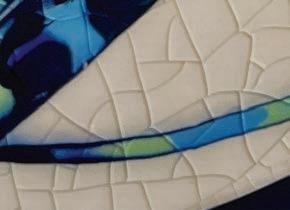
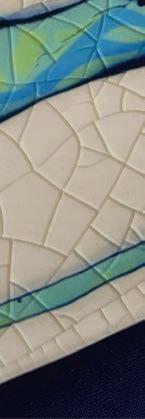

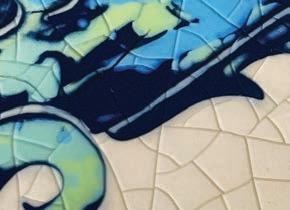
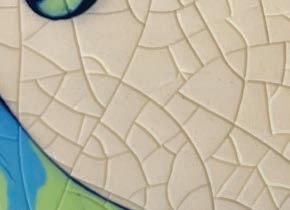
The creative force behind Alchemy Tiles inhabits a world informed by the supple compliance of her chosen material and a centuries-old technique.
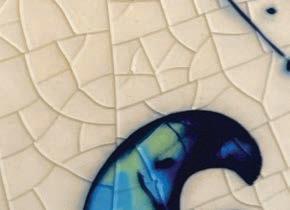
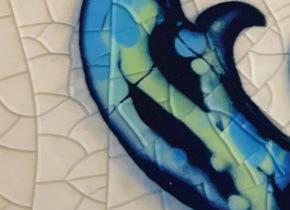
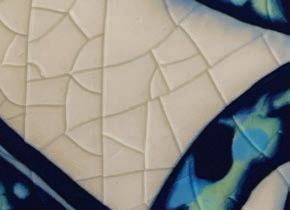
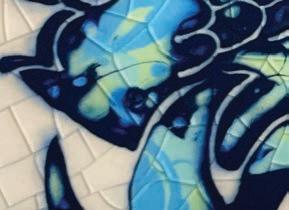
Mel Chambers is that force. But before delving further, it is worth pausing to consider the history and technique that underpin this craft. Carving its way along ancient paths, from the 13th century onwards, through France, across the channel and into England, the art of encaustic tile making has had mixed fortunes. Favoured as a form of practical embellishment, no church, monastery or palace could open its doors without relying upon their colourful and intricate designs to bring a space to life. However, as the heady enthusiasm of the Renaissance waned, so did interest in this form of interior enhancement, particularly in this country, partly due to the dissolution of the monasteries. It wasn’t until the Victorian era, and the subsequent Gothic revival that heralded renewed interest in all things medieval, that encaustic tile making reached the height of its popularity. This fascination with a halcyon past was a reaction against the industrialisation, urbanisation and social changes of the 19th century. Victorians frequently contrasted their ‘modern’ world, seen as dirty, rational, and materialistic, with
a romanticised image of the medieval period as spiritual, beautiful and authentic. Led by figures such as William Morris and ohn Ruskin, there was an advocacy for a return to handcrafted goods and the freedom’ of the medieval craftsman, a rejection of massproduced and machine-made goods.
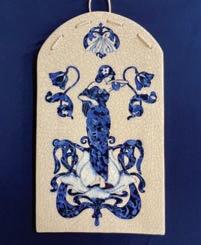
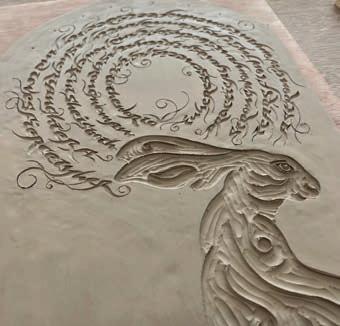
So, what is encaustic tile making? The name ‘encaustic’ comes from the Greek word enkaustikos, meaning ‘to burn in,’ which refers to the process of heating and setting the coloured clays into the tile’s surface. Traditional encaustic tiles made entirely from clay use an inlay method rather than surface decoration. A base tile is created, and while it is still leather-hard, its surface is stamped or impressed with a carved design to create shallow recesses. A contrasting liquid clay, or slip, is then pressed into these recesses, and the excess is scraped away so the pattern remains only where it was impressed. The tile is then dried carefully to prevent distortion. nce dry, the tile is fired in a kiln to harden it, and in many cases, finished with a clear gla e and fired again. Because the pattern is physically inlaid into
the body of the tile, it does not wear off like a surface print.
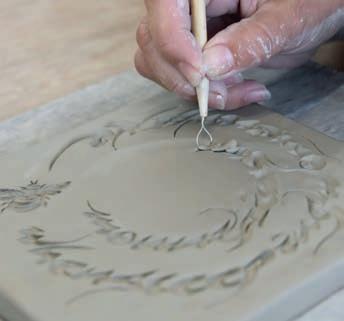
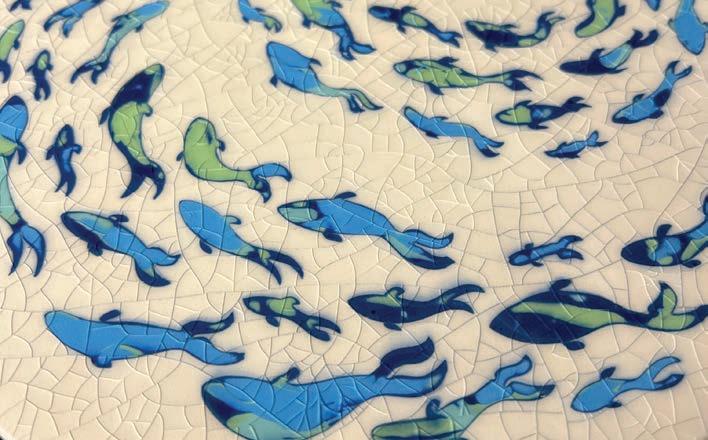
Mel’s work, however, diverges from this traditional mould-and-stamp method. Rather than relying upon templates or repeated forms, she carves directly into wet clay completely freehand, cutting both pattern and tile shape by hand. It is a painstaking process that allows complete freedom of design, colour and layout, unrestricted by standardised dimensions or pre-existing moulds. The result is that no two pieces can ever be exactly replicated, even if she wished them to be. So although she works within the inlay tradition, one that retains clear relevance as interiors move away from standardised finishes and return to materials that show evidence of making, her approach makes her the only practitioner working in such an instinctive and highly individual way, where the hand remains visible in every line, contour and incision. As she says, What dilutes craft is when it becomes mass-produced and highly manufactured, when it follows a trend only to be forgotten. My work is rooted in something much slower and more enduring.”
Her tiles connect historical reference with present-day use, while the character of clay, oxides and stains shifts with sourcing and is absorbed into the process, adding to the individuality of each piece she creates.
Every commission begins with a client narrative, where listening precedes carving and form develops through dialogue, drawing upon place, memory or association, which Mel interprets into carved surfaces where personal detail sits alongside a wider reference. The clay records gesture and toolmark, so meaning is carried not
only through image but through the act of making itself. ust like the clay, the story reveals itself over time. My role is to honour that, to create something that feels true to the person, the memory, or the moment it represents. By the time the piece is finished, it holds more than an image or a design. It holds a presence. Something that can be lived with, remembered, and returned to over time.”
Material decisions follow permaculture principles of ‘earth care, people care and fair share,’ with traceable sourcing, reuse and waste reduction built into studio routines. Environmental impact is treated as an ongoing consideration, with emphasis placed on durability and long-term use.
The installation of what she produces remains integral to the practice, with Mel overseeing layout from initial drawing to final placement, accounting for sockets, edges and structural interruptions as part of the design. Consideration of grout, sealant and junctions runs alongside carving, allowing the work to resolve itself within the building as a continuous surface.
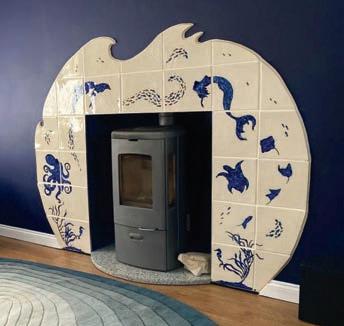
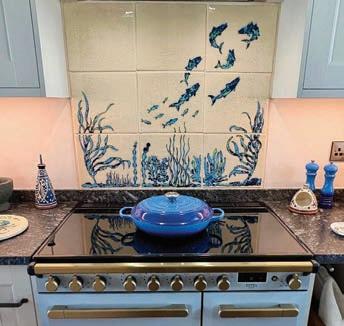
ncaustic tiles have found a confident place in contemporary interiors, valued for their durability and individual graphic clarity. In kitchens, they are ideal for splashbacks, where pattern can offset pared-back cabinetry and modern fittings. Bathrooms benefit from their water resistance, with tiles bringing structure to floors, shower enclosures and vanity surrounds. Living areas adopt them more sparingly a fireplace facing, a section of floor, or a feature wall that introduces a focal point without overwhelming a room. What story would your tiles tell?
alchemytiles.com
WORDS BY JAMIE CROCKER
Guiding complex builds, from aspiration to completion.
The construction of a private home frequently starts with a vision of how life might unfold within a set of walls not yet built. Between the first sketch and the day a client turns a key in the front door lies a process of extraordinary complexity. Each project depends upon the careful orchestration of countless moving parts. Decisions must be made, specialists coordinated, budgets monitored and expectations managed. It is within the space between expectation and execution that Huers Construction Consultancy has established its sphere of influence.
Founded by Matt Dixon MCIOB, the consultancy operates across Cornwall, the Cotswolds and London, overseeing highly specified residential projects whose ambition is often matched only by their complexity. The company occupies a role that is sometimes overlooked outside the industry, yet increasingly recognised by clients who understand the value of experienced project leadership. Architects design, engineers calculate, contractors build and specialists
contribute their expertise. Huers provides the structure that allows those moving parts to work together effectively.
For Matt, the consultancy emerged naturally from a career spent delivering construction projects from the contractor’s side of the industry. After nearly years building and leading an award-winning construction company, he found himself increasingly drawn towards the aspects of the work that sat beyond the physical act of construction itself.
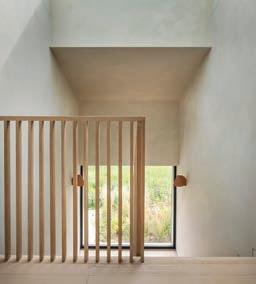
Although his company was producing projects of considerable quality, it was the challenge of delivering highly detailed private homes that held particular appeal. He enjoyed working directly with clients, helping them navigate decisions and drawing the best from the wider professional team. Project management offered an opportunity to focus on precisely those areas.
That transition was informed by a recurring observation. Too often, responsibility for coordinating a project appeared fragmented.
An architect might visit the site periodically while communication between consultants, contractors and clients remained dispersed. Decisions could become disconnected from one another. pportunities for efficiency were missed, allowing small issues to develop into larger ones.
Matt saw the need for an overarching role that brought structure and accountability to the process. The aim was not to control every conversation but to ensure that conversations happened at the right time, between the right people, with the interests of the client remaining at the centre of every decision. The result is a consultancy built around scrutiny and communication. And although those qualities may sound straightforward, delivering them consistently across a multi-million-pound residential project is considerably less so.
Luxury residential construction has changed significantly with the last decade bearing witness to a rise in expectations. Technology has become more sophisticated. Environmental considerations have moved from the margins of discussion to the centre. Clients commissioning substantial homes now arrive with a greater awareness of design possibilities, yet often face a construction process that remains unfamiliar.
According to Matt, misconceptions tend to emerge in two areas from the outset: time and cost. Both are understandable. Architectural imagery presents finished buildings in a state of completion, offering little indication of the months or years of planning, procurement and coordination required to reach that point. Costs can appear equally abstract until every element of a project is examined in detail.
Creating certainty begins with transparency. Huers invests considerable effort in developing carefully structured contracts that clearly define responsibilities, costs and expectations. The objective is straightforward: clients should understand where their money is being spent and why. Programme management demands equal attention. Few homeowners relish the prospect of construction extending indefinitely around them. ealistic schedules therefore become essential, supported by regular monitoring and close engagement with contractors to ensure progress remains aligned with agreed milestones.
Yet there is also a balancing act, with clients understandably wishing to move into their homes as soon as possible set against a timeline that is required to produce a quality construction. The challenge lies in maintaining momentum without compromising standards. In Matt’s view, almost anything can be achieved when the budget supports the ambition. Delivering that ambition successfully depends upon creating a programme that remains both realistic and disciplined throughout the life of the project.
The importance of coordination becomes even more apparent once construction begins. Architects are focused on preserving the integrity of the design, while engineers prioritise technical performance. Contractors must consider buildability and sequencing, suppliers manage lead times and logistics, and interior designers introduce further layers of detail and decision-making. Landscape architects, too, bring their own perspective to the process. With so many disciplines working towards the same goal from different vantage points,
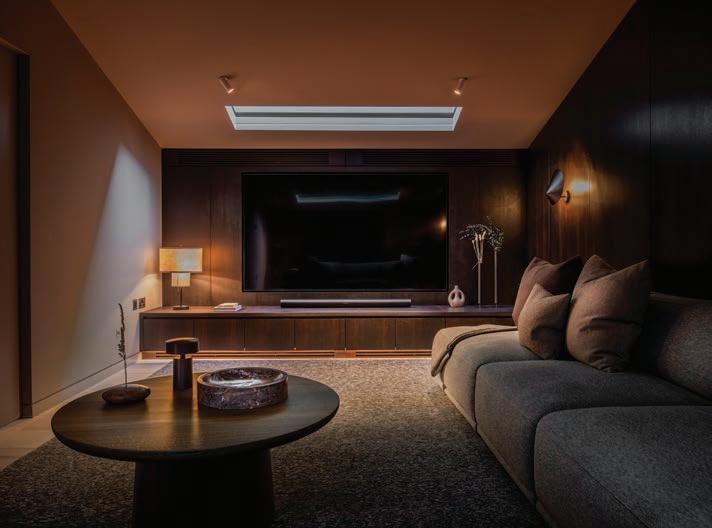
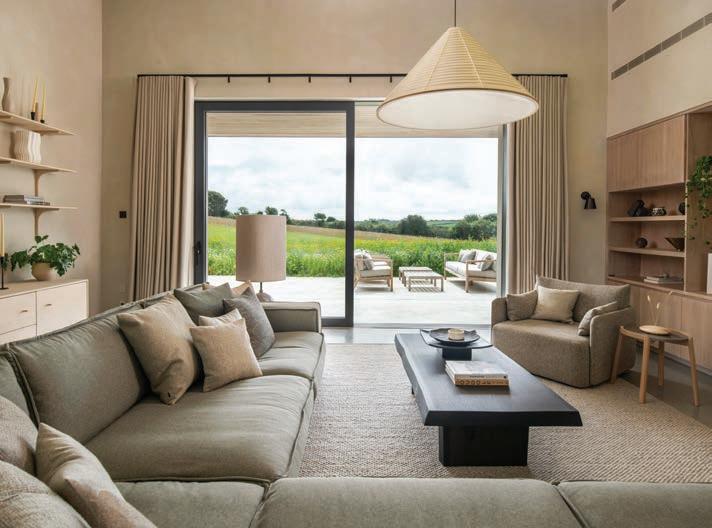
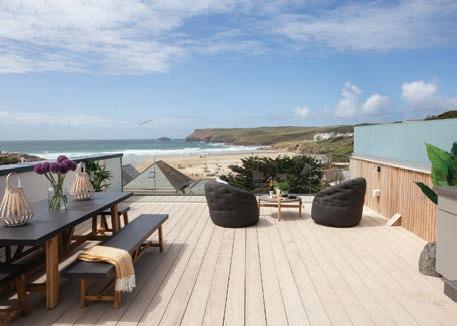
tensions can easily arise when priorities begin to compete.
Managing those competing agendas requires diplomacy, patience and determination in equal measure. Matt describes the process as maintaining focus on the end goal while ensuring that every participant remembers who they are ultimately working for. Keeping the client’s interests at the forefront of discussions provides a common reference point that helps move projects forward, even when opinions differ.
Sustainability now sits high on the agenda for virtually every client. What was once viewed as an optional consideration has become an expectation. Contemporary homeowners increasingly seek buildings that perform efficiently throughout their lifespan while remaining comfortable, attractive and practical places to live. Interest has expanded beyond the architecture itself to encompass landscape design, lighting design and integrated technologies that improve everyday living.
Technology, however, is expected to simplify life, not complicate it. Sophisticated building management systems are now judged on their ability to make homes intuitive and enjoyable to occupy.
At the same time, aesthetic priorities have matured. Clients are investing in homes that feel enduring and personal. The objective is not to create spaces that impress for a season but to create homes that reflect the character and aspirations of the people who live within them. The pursuit of this ideal often finds expression through materials. Across both Cornwall and the Cotswolds, traditional building materials continue to
exert a powerful influence on contemporary residential design. Local stone, leadwork and established craft skills remain highly sought after, even as projects embrace advanced glazing systems, renewable technologies and sophisticated environmental controls. The challenge lies in successfully bringing those elements together.
Huers actively seeks contractors capable of working across both traditional and contemporary disciplines. A stone wall may incorporate modern detailing. A hand-crafted roof may sit alongside solar technology and rainwater harvesting systems. Historic materials can coexist comfortably with contemporary architecture when sufficient thought is applied to their integration.
Of course, even the most carefully planned project encounters challenges. Construction remains vulnerable to cost escalation and programme drift, particularly when significant changes are introduced after work has commenced. In Matt’s experience, alterations to specification once a project is on site remain one of the most common causes of both delays and increased expenditure. Preparation, therefore, becomes a form of risk management.
Huers invests substantial time during the pre-construction phase, helping clients make key decisions before contractors arrive on site. The more certainty established in advance, the greater the likelihood that costs and the programme will remain stable.
When changes do occur, proactive management becomes essential. egular monitoring allows emerging issues to be identified early, with costs and progress
reviewed frequently. The emphasis throughout rests on visibility.
As a member of the Chartered Institute of Building, Matt places great importance on ethics, accountability and competence, standards he expects across the entire project team. Contractors are rigorously vetted, with accreditations, insurance arrangements and commercial practices all subjected to scrutiny, while equal weight is given to integrity and reliability – qualities that resist easy measurement yet quickly reveal themselves over the course of a project. Such scrutiny reflects a broader understanding that residential construction carries responsibilities extending beyond budgets and programmes.
There is also a moral dimension to a development. Large private homes inevitably consume resources. Their impact can extend beyond site boundaries into surrounding landscapes and communities. Sustainability functions as a significant driver across Huers’ projects. Clients are encouraged to consider decisions that improve environmental performance while enhancing the quality of the finished home. Occasionally, those conversations can prove uncomfortable, yet they remain necessary. A building that sits comfortably within its setting, performs efficiently and has been delivered with consideration for its wider impact creates a stronger outcome for everyone involved.
The same principle applies to relationships throughout the supply chain. Construction has long wrestled with issues surrounding payment practices and commercial pressures. While consultants cannot
directly control agreements between main contractors and their subcontractors, they can influence the standards expected of those they engage. Huers seeks assurances that contractors pay suppliers fairly and promptly. egular site attendance also creates visibility, and because of this, concerns will emerge before they develop into serious disputes.
Ultimately, however, discussions about procurement, sustainability and project management all return to a simpler set of imperatives. Matt highlights the fact that it’s the client’s experience that ultimately matters most. Construction projects can become stressful undertakings, particularly when significant financial and emotional investment is involved. They are commissioning more than buildings; they are creating the backdrop to family life, celebrations, routines and memories.
When a project progresses according to the programme, remains aligned with the budget and results in a home that genuinely reflects the personality of its owner, success has been achieved. The finest projects are not defined solely by square footage, specifications or construction value but how successfully they translate an individual’s aspirations into a place that feels unmistakably their own.
Huers Construction Consultancy focuses considerable attention on everything that happens before completion. For clients embarking on the creation of an exceptional home, that process may prove every bit as valuable as the finished building itself.
huers.uk @huersconstructionconsultancy
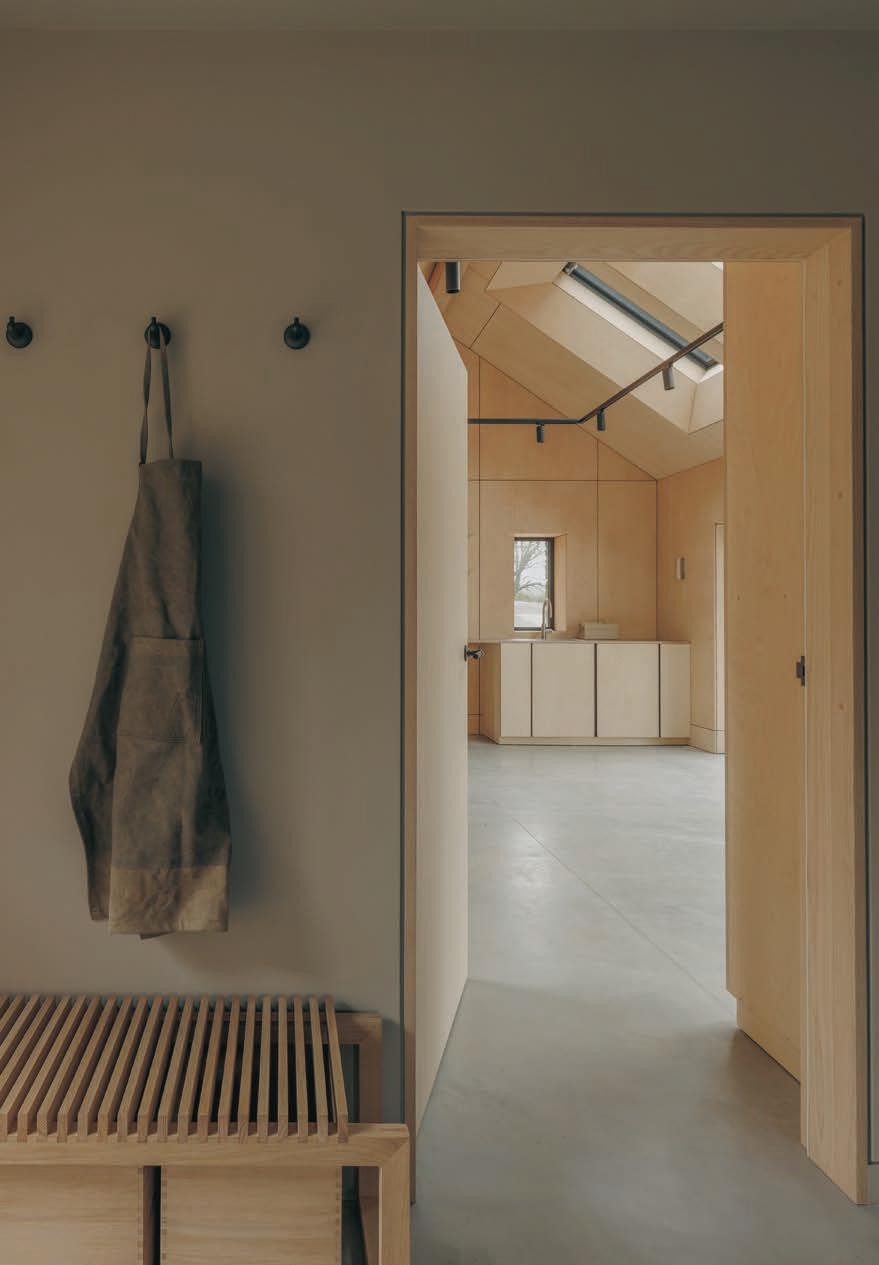
WORDS BY HANNAH TAPPING
The first thing you notice about alm Court etreats is the veranda, with a flight of white steps rising majestically to meet its front poorch. ou might just be minutes from olperro, but little about this says Cornwall its painted timber, deep eaves and proportions place it in warmer climes. That, as it turns out, is rather the point. The main house, alm Court, was built in the s, designed by an American architect and it sat there being fabulous until Luca and her husband found it in . It’s little sister, alm Lodge came later and both houses have been furnished slowly, over years of travel.
The aesthetic is very deliberately built rather than bought off a shelf. alm Court draws on the laid-back Mediterranean beach style of Ibi a, the Balearics and Luca and her husband’s love of America from California to the West Coast and ast Coast and out to The Hamptons. Inspiration comes from the desert in the form of neutral colours and natural materials such as rattan and jute. ops of colourful artwork are inspired by Luca’s husband’s career in the music
industry and there are touches of music culture running throughout the whole house, including original signed posters. This is set to a backdrop of a pastel palette inspired by S designer elly Wearstler’s California Collection of sun-soaked colours in collaboration with Farrow Ball. The whole space feels light, airy and spacious, and there’s even a curated seasonal playlist for guests to enjoy, setting the mood and enhancing the feeling of being on holiday even further.
alm Court is built for larger groups think families, multi-generational gettogethers, anniversaries or big birthdays. It has a games room with a pool table, large screen television, sink-into sofas and that impressive music memorabilia is always a talking point with guests. A large, elegant dining room seats around a vast bespoke table the place for setting the world to rights over multiple courses. Six individually styled bedrooms offer tranquillity and a sound night’s sleep for all. Step outside and you’ll find a hot tub and two terraces one with a fire pit and the other with lounge seating and space to eat making outdoor
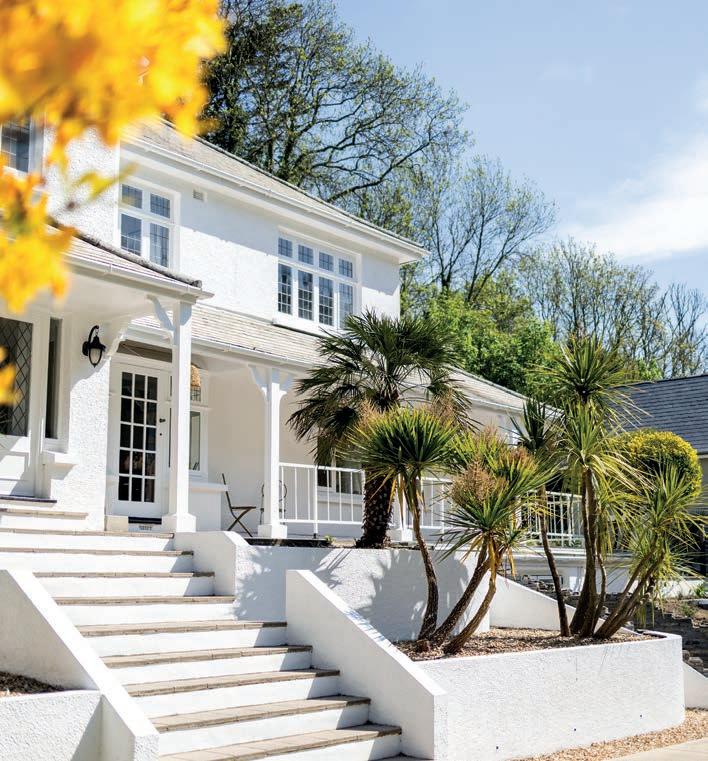
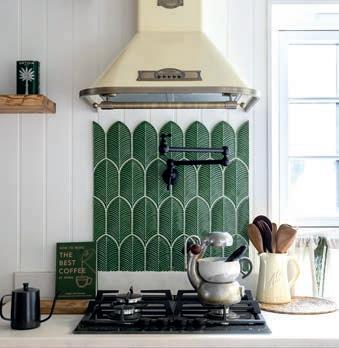
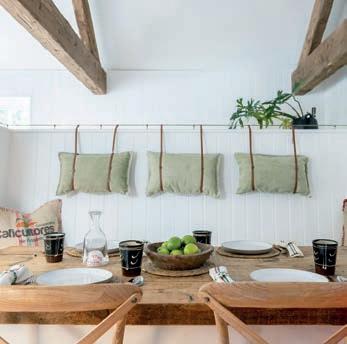
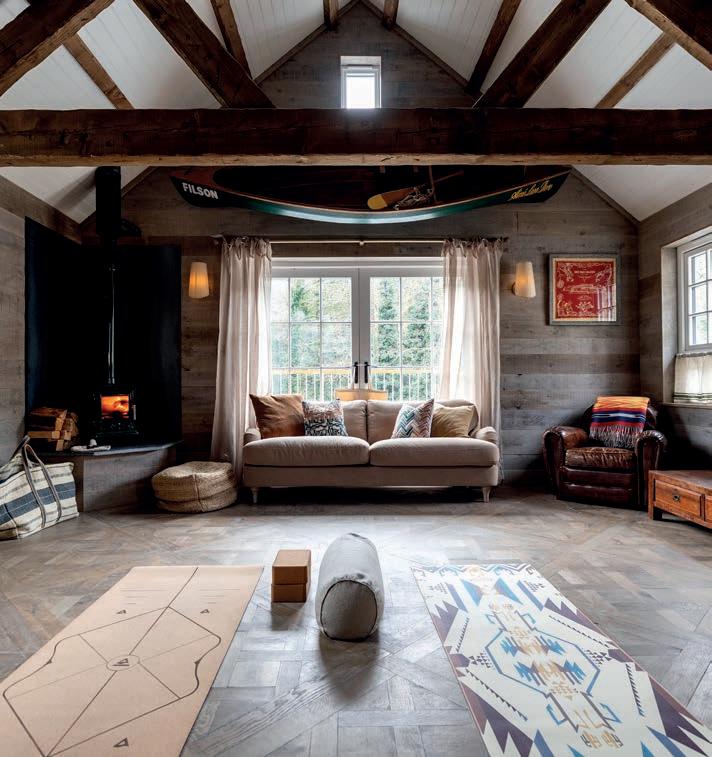
ABOVE & INSET alm Lodge
living effortless. alm Lodge, brand new for , is perhaps the more surprising and unexpected of the two, being smaller and more intimate, suited to couples, romantic getaways, or walkers in the quieter shoulder months. This two-bedroom, wooden-clad American ranch style home is blended with the clean, bree y coastal aesthetic of the Hamptons and antucket, inspired by the homes of alph Lauren. very detail has been carefully curated, down to the Americana prints on the walls. It’s calm, cosy and coastal, but with a distinct character of its own in deliberate contrast to alm Court’s beachy warmth. This juxtaposition makes for an interesting design conversation two very different reference points but with the same instinct for laidback, considered living. Both properties can be booked separately or taken together for bigger gatherings.
well as welcoming new retreat ideas and collaborations from like-minded people.
The Golden Autumn cean Flow oga etreat from th to th ctober will be an intimate five-day retreat created for women needing to slow down, reconnect with themselves and embrace the next chapter. Golden Autumn offers the time and support to pause, reflect and return home feeling lighter calmer and more connected. This retreat will include undalini yoga, breathwork, meditation, nervous system practices, sound healing, sauna, coastal walks.
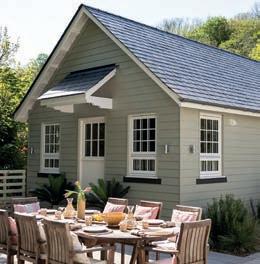
The design of each property at alm Court has a purpose beyond the aesthetic, as they lend themselves naturally to hosting creative, wellbeing retreats. uiet, secluded and tranquil, there is ample space for facilitators with room to practice yoga or other mindful practices. The wood-clad interiors and peacful corners throughout the houses and gardens give everything a reflective, unrushed feel. Facilitators can also dry-hire the space, with local chefs, teachers and activities arranged for them.
As well as designing interiors for clients in London, Bristol and Bath, Luca also cohosts retreats herself and is looking forward to two very special escapes this year, as
From the th to th ctober, alm Court will play host to The Conscious Home Design with Intention etreat. ver this five-day immersive experience guests will discover how their home can become a sanctuary that supports wellbeing. A topic close to my heart, we’ll cover colour psychology, biophilic design, sensory design, make mindful mood boards and meeting Cornish makers, with coastal walks and a sound journey session, explains Luca.
The location is stunning in itself and a major part of what makes alm Court etreats so special. We are just a short stroll from the historic fishing harbour of olperro, with the South West Coast ath running in both directions, says Luca. It’s a real escape from the city to something much more considered, which I believe is something we all need right now. Staying at alm Court etreats is slow luxury, done properly.
palmcourtretreats.co.uk

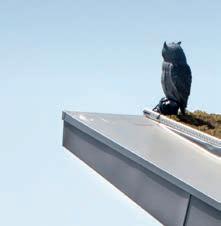





WORDS BY JAMIE CROCKER
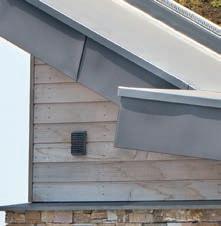
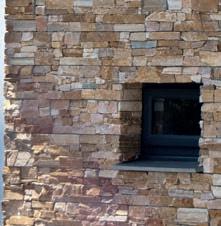


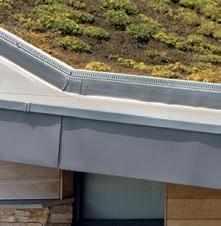
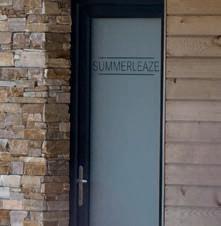




Family stewardship has shaped a Cornish experience with lasting appeal.
We find out how the tension between operating as a holiday park whilst remaining good stewards of the land and environment is resolved into something that satisfies both exigencies.
Wooda Farm Holiday Park has been family-owned since the 1970s. How has that continuity shaped the way the business feels today, both for you internally and for guests arriving on site?
ooda is something that’s grown alongside our family over generations. It began as a working farm, then gradually evolved into a holiday park, but that sense of stewardship has never really changed.
For guests, I think that translates into something uni ue. here’s a feeling of being welcomed somewhere that’s genuinely lived in and cared for, layered over time. And because we’re so personally invested, that warmth and consistency tend to segue into the experience.
In an era where many holiday parks are owned by large groups, what do you think guests gain, tangibly and emotionally, by choosing a family-run, independent business like Wooda?

Internally, it creates a very long-term mindset. e’re not making decisions for the next season we’re thinking about the next decade, or even the next generation. here’s a real sense of responsibility, not ust to the business, but to the land and to the legacy of our family who built it.
As we’re independent, everything we do is shaped by our own values rather than a centralised model. hat means we can be more considerate in how the park looks and feels, how spaces are used and how guests move through it.
angibly, that might be the uality of accommodation, the layout of the park, or the way facilities are integrated into the landscape. ut emotionally, I think
it goes deeper than that. Guests often tell us it feels more personal, less like they’re visiting a product, and more like they’re staying somewhere with a story.
here’s also a level of flexibility. e can respond to people, adapt and make decisions uickly and intuitively.
The site has evolved from a working fa m in a fi e a h liday a How do you retain that sense of rural a hen i i y hile e in a li hed luxury experience?
For us, the key has always been to evolve gently rather than overhaul. he farm is still very much part of ooda’s identity you can see it in the layout, the open spaces, even in the remnants of the original buildings and history across the site.
It’s definitely something we’re very mindful of. here’s always a temptation in tourism to increase capacity, but we’ve taken a more measured approach. ooda sits within around acres of parkland, and that space is one of its defining ualities.
ather than adding more, we focus on improving what’s already here, enhancing accommodation, refining facilities, and maintaining generous spacing. e also encourage guests to engage with Cornwall in a slightly different way by exploring uieter spots, visiting outside of peak times where possible and embracing a slower pace.
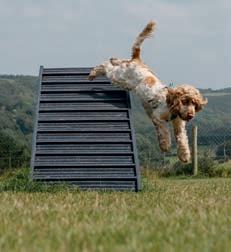
hen we’ve introduced more premium accommodation or facilities, it’s been about complementing. he lodges, holiday homes and spaces are designed to sit comfortably within the landscape. Luxury is about uality, comfort and thoughtfulness. It’s waking up to sea views, having space around you, and feeling connected to where you are.
Cornwall is increasingly busy, particularly in peak season. How do you balance growth and demand with preserving the sense of space, calm and connection to nature that Wooda is known for?
There’s a strong emphasis on nature, wildlife and sustainability at Wooda, from conservation work throughh to encouraging guests to engage with the landscape. How much of that is a business decision, and how much is rooted in family values?
efore ooda was a holiday park, it was a working farm, so there’s always been a connection to the land and an understanding of its importance.
hat naturally extends into how we run the business today. ustainability is something we’ve always believed in and have gradually built into everything we do. Of course, it also aligns with what guests are increasingly looking for.
e’re custodians of this space, and we must protect it for future generations.
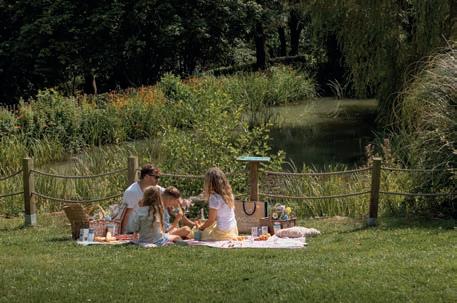
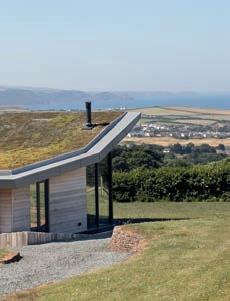
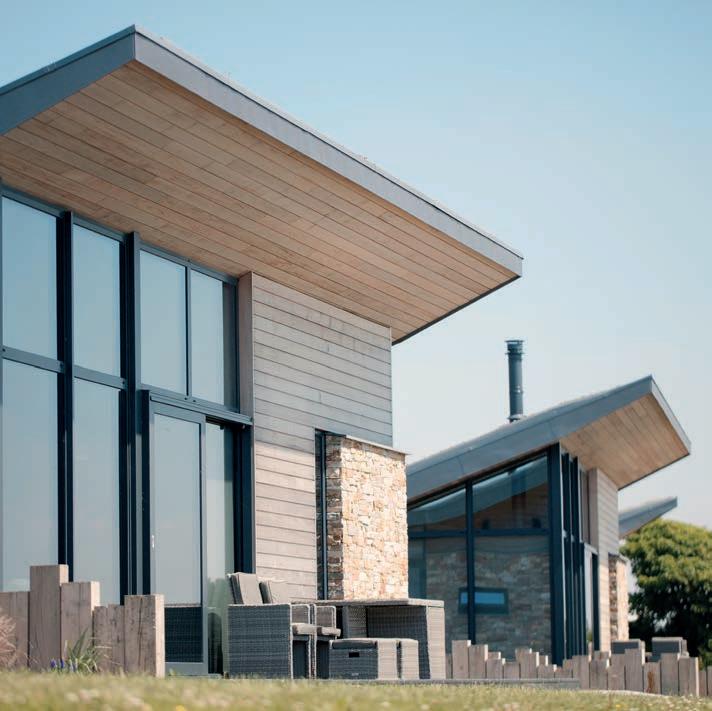
ABOVE he astonishing view from Gwelva ill
What does a “typical” Wooda guest look like today, and how has that changed over the years as travel habits and e e a i n ha e hi ed
istorically, it was very much families returning year after year, and we still have that, which is incredibly special. ut now we also see couples, dog-owners, van-lifers and guests who might previously have chosen hotels or international travel.
here’s also been a shift in expectations. eople are looking for higher uality and more considered experiences, whether that’s in accommodation, food, or the overall atmosphere. At the same time, there’s a growing desire for something simpler space, nature, and meaningful time together.
ad ust plans, or simply take the time to listen and help.
hose decisions might seem small, but they’re often the ones that guests remember most. It’s about treating people as individuals, not ust bookings.
As Cornwall’s tourism industry becomes more commercialised, do you ever feel pressure to scale up in ways that might compromise Wooda’s identity, or is staying independent a conscious resistance to that trend?
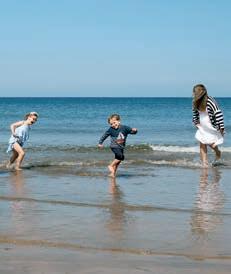
ein family n en im lie a m e personal touch. Can you share a moment or story where that independence allowed you to do something for a guest that a larger, more commercial operation simply couldn’t?
It’s often the uieter moments that stay with you. e’ve had situations where guests have arrived during di cult times such as bereavements, illness and other unexpected circumstances, so being independent means we can respond empathetically. e can move bookings,
Growth isn’t something we’re against, but it has to be the right kind of growth. If something compromises the sense of space, the connection to the land, or the personal feel of the park, then it’s not something we’d pursue.
e’re not a holiday park built around clubhouses or swimming pools. Our guests aren’t coming to ooda for that kind of experience.
hat we offer instead is a new holiday park experience something uieter and more considered a countryside retreat centred on uality, where entertainment might look like a local musician playing as the sun sets, or encouraging guests to immerse themselves in nature, whether that’s coastal walks or a swim in the sea pool.
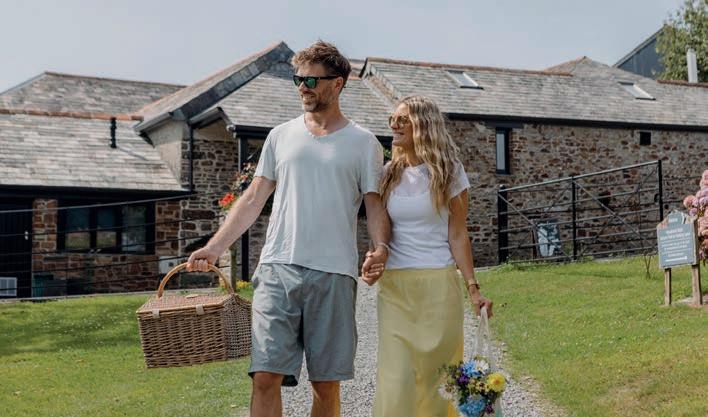
The e en de a e a nd i m impact on local communities in Cornwall. How does Wooda navigate being both a successful holiday destination and a responsible local business rooted in the area?
It’s an important conversation, and one we’re very conscious of. ourism is a vital part of Cornwall’s economy, but it has to be managed in a way that genuinely supports local communities rather than putting pressure on them.
oliday parks like ooda have long been a core part of that infrastructure. e’re designed to accommodate visitors in a way that’s planned, managed and integrated into the landscape. here’s existing investment in facilities, space, and environmental considerations, which means we can support tourism without placing the same strain on housing or local resources.
For us, being a responsible business means thinking beyond our own boundaries. e support local suppliers, employ locally, and encourage guests to engage with Cornwall in a way that benefits the wider area. It’s about being part of the community, not ust operating within it and ensuring that tourism works for Cornwall, not against it.
Finally, when guests leave Wooda, what feeling or memory do you most hope they carry with them, and how does that tie back to being a family-run Cornish business rather than a corporate brand?
ore than anything, I hope they leave feeling like they’ve had proper time to slow down and reconnect. hether that’s children exploring the outdoors, families spending uninterrupted time together, or couples finding a bit of calm, those are the moments that matter.
wooda.co.uk
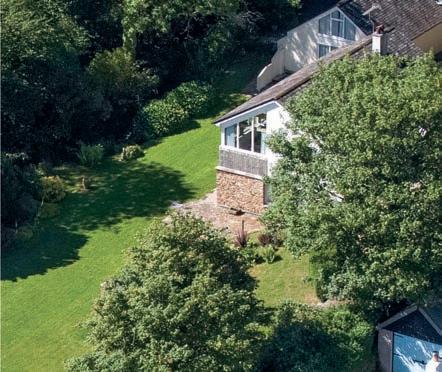
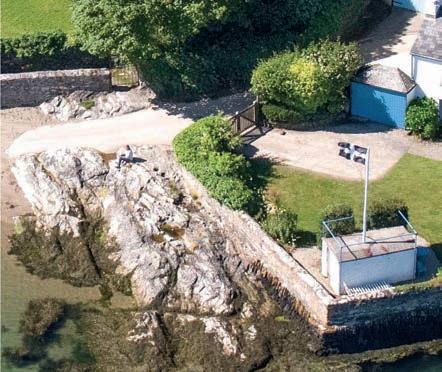
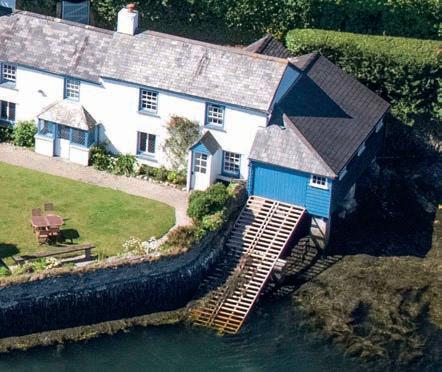



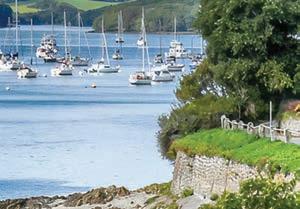

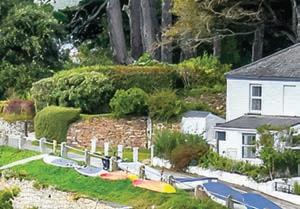
WORDS BY HANNAH TAPPING
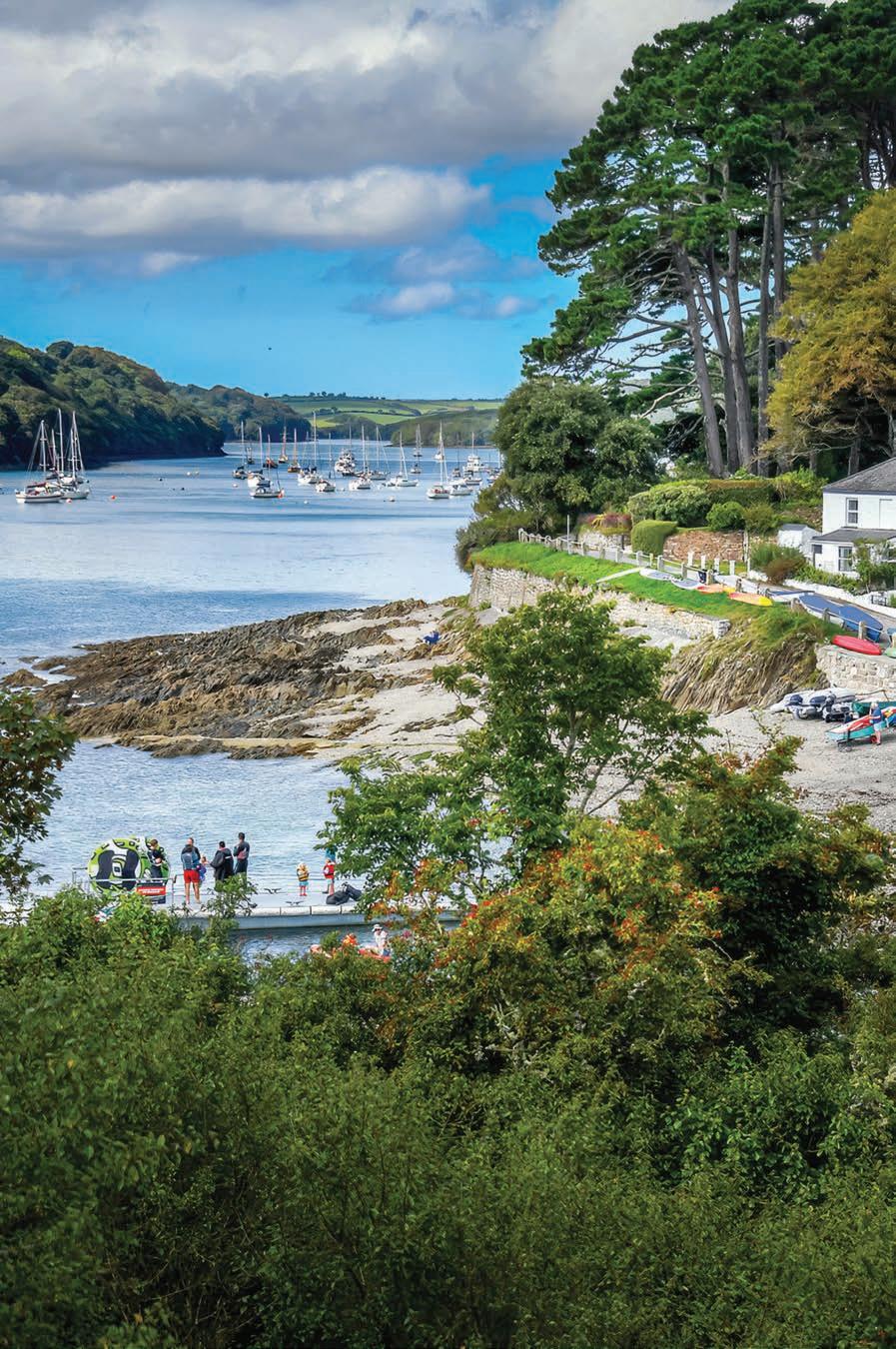
Half past nine on a still morning and the Helford River is doing what it does best. The water lies flat and dark beneath the oaks, so glassy it could be mistaken for something poured rather than tidal. heron holds its ground on the shore below Helford Passage beach. Breaking the silence an engine turns over, and the first water taxi of the day slips away from the pontoon, leaving barely a wake behind it.
This is a river that strips away all the noise, uite literally. There s no motorway roar, no marina tannoy, no ueue of trailers backed up at a public slipway; just oak woods running to the waterline, a scatter of swing moorings holding boats that barely stir, and the Ferryboat Inn s terrace already catching
the first of the sun. Walk around the rocks past the old pillbox and you will find the sign marking the river s de-restriction zone yourself, right where the undersea cable comes ashore. From there it is two minutes of easy motoring before the whole of Falmouth Bay opens out in front of you and the throttle finally goes down.
B arine is a familyrun operation providing moorings, marine services and much more from the private beach at elford assage. ffering some of the most exclusive swing and beach moorings you ll find in the , B arine takes the stress out of bringing or keeping your boat here. The moorings are fully serviced and available from st pril to st ctober either on a seasonal or temporary basis. For trailered boats,

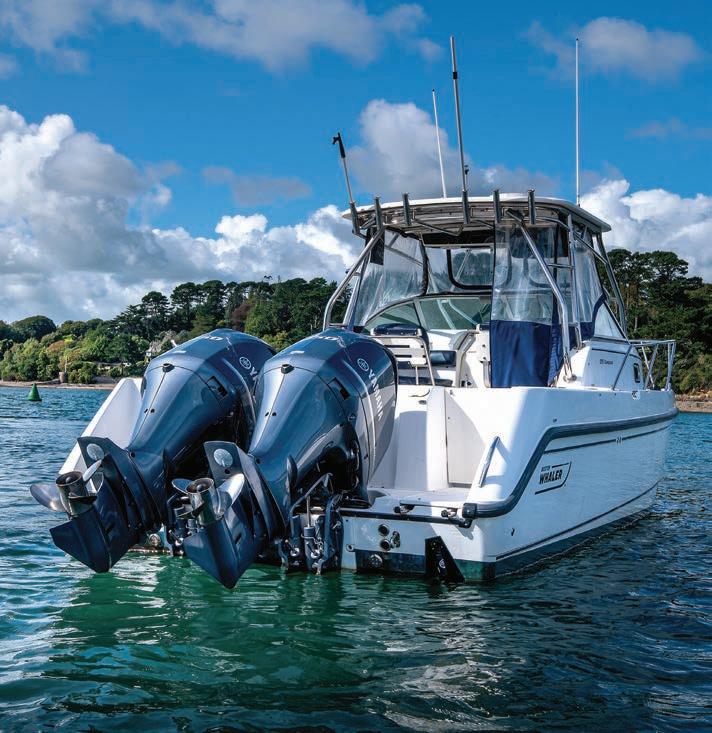
they also offer a launch and recovery from their beach slipway, with boat storage available at competitive rates. Included in the service is use of the water taxi out to your mooring and back, which operates from the beach pontoon daily. There is free use of a beach punt or, for those who prefer to use their own tender, beach moorings are available.
The appeal, for anyone used to trailering a boat down from London, the ome Counties or further north, is that B removes every piece of friction between the and the water. wner hil Brewer puts it simply: What we aim to do is take away all the pain of arriving with your boat. ou give the boat to us, we make it ready and then you simply relax. ome clients take advantage of the full package offered by B, which includes secure winter boat storage. Come the start of the new season, hil and his team will service and makeready, putting the boat out on a mooring ready for arrival. thers may choose to trailer their boats down. gain, all you need do is hand over your boat to B and they will take care of the rest, right down to launch and storing of your trailer. ust imagine, having your boat waiting on the water no faffing with a slipway ueue, no tricky reversing manoeuvres and no worries about where to store your trailer.
For anyone with a bigger yacht, the same principle applies at a larger scale. ne of
hil s clients sails down from cotland each year to take a mooring for the season, then sails home again in the autumn. Whatever the vessel, the offer is the same. B currently has moorings and growing, of which are held on a seasonal basis by returning owners, ten kept deliberately free for anyone wanting to duck in for lunch at The Ferryboat Inn. short-stay mooring costs just pounds for three hours, which includes being ferried in to the beach or pontoon and collected again afterwards.
B s team are all ualified commercial skippers, and tuition is available by the hour, whether that means a refresher for an experienced owner, a first introduction for a partner who has never taken the helm, or proper grounding for someone buying their first boat. hil is candid about why this matters more than owners often admit: For a large number of boat owners, it s probably never occurred to them what happens if the person who normally drives the boat is taken ill out in the middle of the bay. Who s going to drive it back safely s hil says, it is often less about ignorance and more about embarrassment: ou might have been a boat owner for many years but may still not know how to do something. It s about breaking down those barriers and making people feel comfortable to ask for help.
round boats spend the winter in B s fully gated, secure , s uare foot
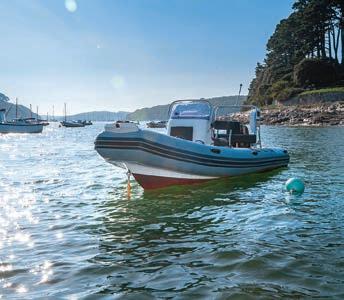
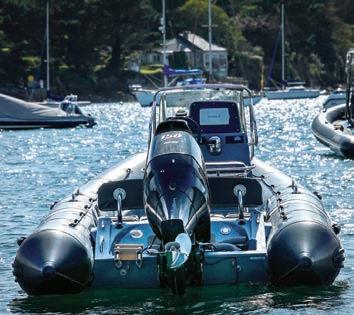
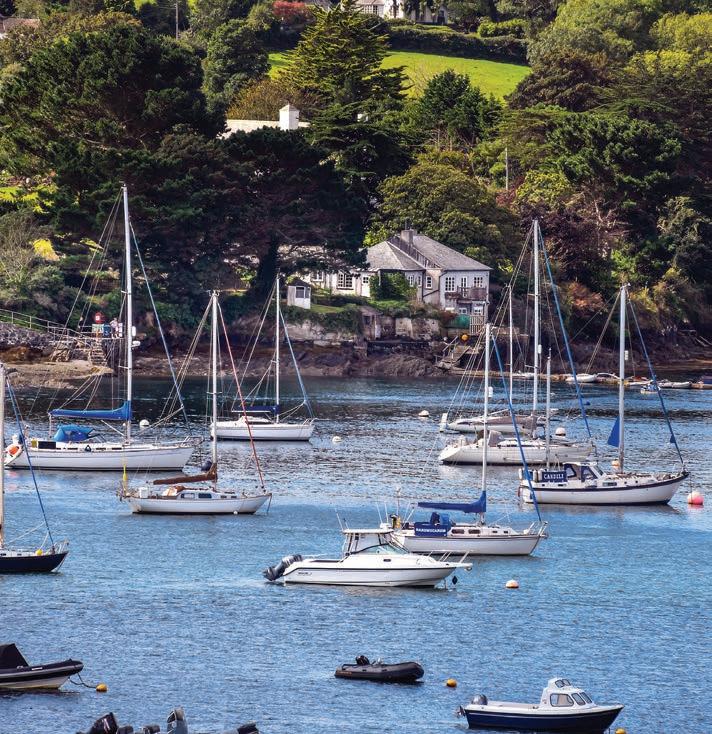

SWAP THE CITY FOR THE CORNISH COAST






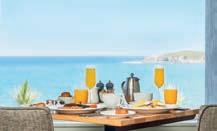







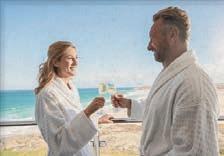




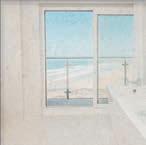



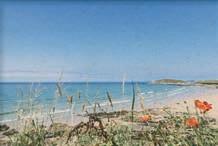






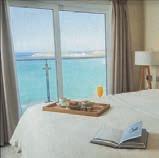











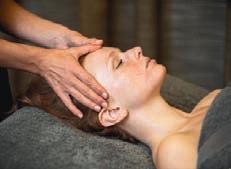

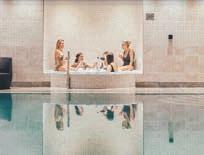



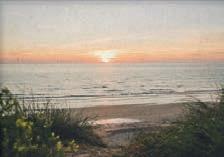



The Summer Spa Edit has landed at Fistral Beach Hotel and Spa. A one-night break. Unmissable moments. Limited dates.



storage unit, with both undercover and open-air options. Some are owned locally, while others belong to away-owners, for whom HRB coordinates access for engineers of the client’s choice throughout the winter months, with servicing handled by brand-specific specialists.
If you have little ones to entertain, then sister company, elford iver Boats offers and kayak hire throughout the summer months from the beach. HRB Marine also runs its own small brokerage, matching boats and buyers largely through word of mouth among its own client base, a useful route for anyone put off by the usual private-sale minefield.
However, it is perhaps what lies beyond the mooring that is the real draw. From Helford assage there is access to more than sixty beaches by boat, and within minutes of clearing the de-restriction you are into Falmouth Bay, with Mylor, St Mawes, St Just in Roseland, Restronguet Creek all within easy reach for a long lunch or a lazy afternoon at anchor. There’s a fortnight’s worth of exploring here, without ever needing to repeat a creek.
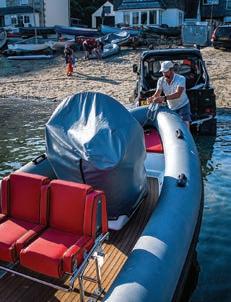
Lunch itself is not short of options. The Hotel Tresanton in St Mawes for those wanting linen napkins with their view, while the andora Inn does a very good lunch eaten with your feet still slightly damp. Back at base, the Ferryboat Inn sits right on elford assage beach, or take the water taxi across to The Shipwrights Arms for a change of pace. On the right afternoon, light does something here that makes the place look more like a Greek island than a corner of Cornwall. The difference is that here nobody needs a passport or a long journey to appreciate it.
HRB also works in close partnership with local holiday cottage companies, so even finding the right accommodation doesn’t have to be hassle. s hil puts it, the philosophy is simple: “We simply want to make our client’s experience as easy and as stressfree as possible.”
On the Helford, that experience starts the moment you arrive and ends, several contented weeks later, wondering why anywhere else ever seemed necessary.
hrbmarine.co.uk




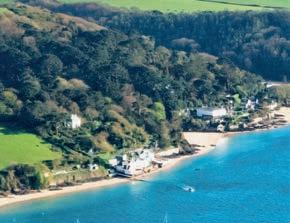
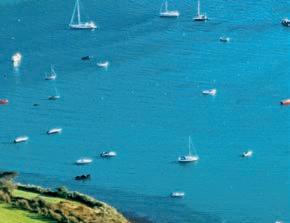
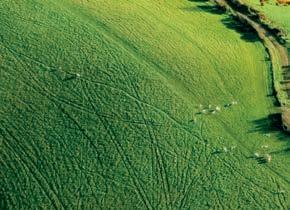

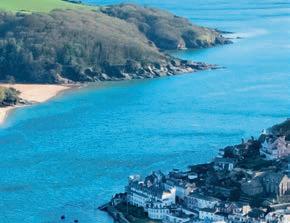
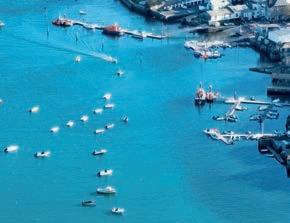
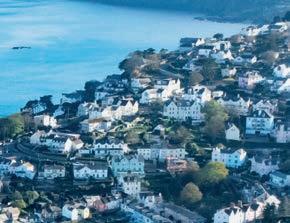

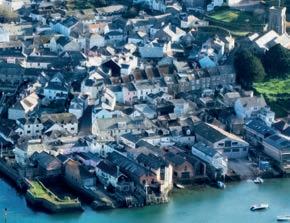
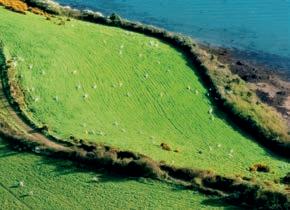


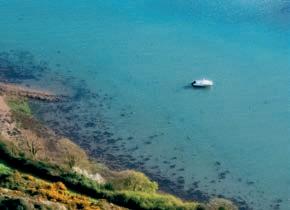

WORDS BY JAMIE CROCKER TO RETURN A place

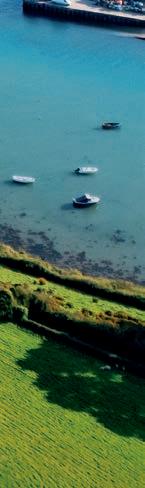

Holiday homes designed for generations on South Devon’s spectacular coastline.
Positioned on the South West Coast Path above Soar Mill Cove and only five minutes from alcombe, this collection of contemporary holiday homes presents owners with the opportunity to en oy one of ritain’s bestloved coastal destinations before returning to a home designed for space, comfort and complete relaxation. ays can begin on the water, continue over long lunches beside the estuary and end watching the evening light stretch across open countryside from a private terrace, all without the bustle that naturally accompanies one of the region’s most popular sailing towns.
he development occupies a setting that en oys sunshine throughout the day, making the most of its elevated position above the surrounding landscape. rotected ational rust land borders the estate, while nearby walking routes lead across olberry own, through ast oar ature eserve and towards the dramatic cliffs that define this stretch of coastline. oar ill Cove lies only a short walk
away, providing easy access to a beach recognised among The Times’ op beaches. From the front door, owners can spend the day exploring coastal paths, launching paddleboards or kayaks from alcombe, or simply discovering the many caf s, restaurants and independent shops that have made the town one of evon’s most desirable destinations.
he homes themselves have been designed to make full use of these surroundings. orking alongside an architect-led construction company, the developers created three individual layouts that respond to the character of the site while maintaining a consistent approach to uality and craftsmanship. aulted ceilings increase the sense of volume throughout the living spaces, while expansive floor-toceiling aluminium windows draw natural light deep into each property and frame changing views across the countryside. imber interiors introduce warmth and texture, creating spaces that feel welcoming in every season.
ach property provides approximately s uare feet of accommodation, with layouts tailored to different styles of ownership. he olberry offers three bedrooms, including a principal en-suite bedroom, family bathroom and children’s bunk room complete with a fibre optic starlight ceiling. Living accommodation occupies one end of the property, creating a clear distinction between entertaining and sleeping spaces, with French doors opening directly onto the terrace.
he igbury follows the same three-bedroom arrangement but places the kitchen, dining and sitting room at the centre of the home, allowing family life to revolve around a generous open living space with bedrooms positioned either side. A terrace extending the full length of the property strengthens the connection between indoors and outside, making summer dining and entertaining particularly en oyable.
while en oying additional comfort during longer stays.
pecification has been given e ual attention. osch appliances, including an oven, microwave, dishwasher, fridgefree er, washer-dryer and wine cooler, are fitted as standard, allowing owners to begin en oying their property immediately. igh-speed internet supports both leisure and remote working, while optional additions such as ors log burners, onos in-ceiling speakers and air conditioning enable buyers to tailor their home to suit the way they intend to use it throughout the year. nvironmental performance formed part of the design from the outset.
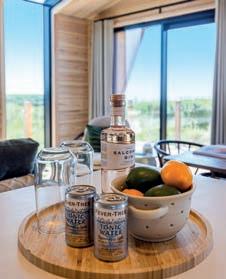
For buyers seeking a different arrangement, he hurlestone offers two bedrooms, replacing the bunk room with an enlarged principal suite that includes a walk-in wardrobe alongside a spacious en-suite bathroom. he result is a layout well suited to couples who regularly welcome family and friends
very property is fully electric and built using structural insulated panels to achieve high levels of thermal e ciency. Air source heat pumps provide heating and hot water, while smart learning thermostats monitor patterns of occupation and automatically optimise energy use. urable materials have also been selected with longevity in mind. hermowood cladding carries a -year warranty, and powder-coated aluminium windows have been chosen for their resistance to the effects of the coastal environment, helping maintain both appearance and performance over many years.
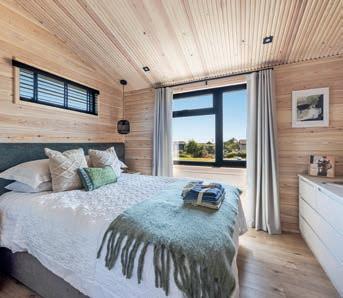
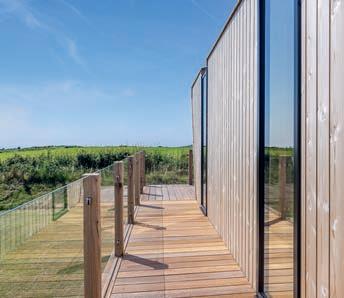
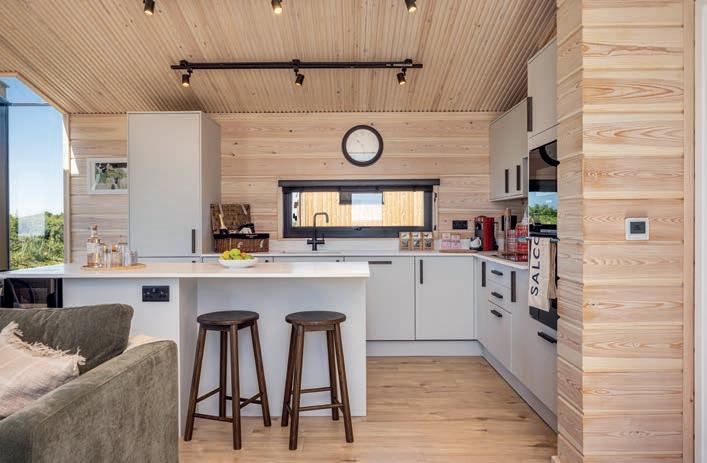
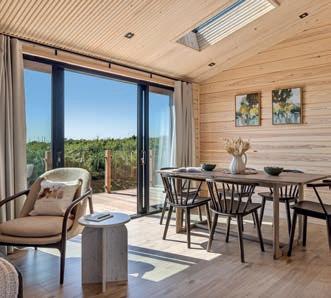
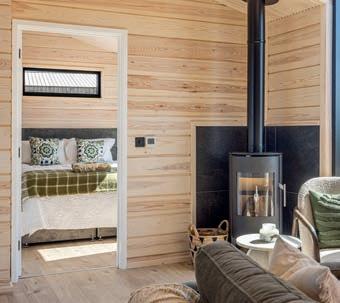
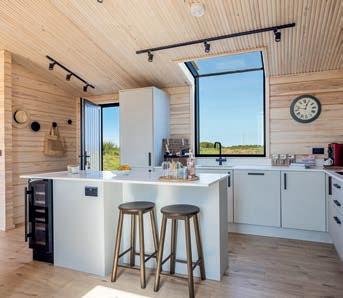
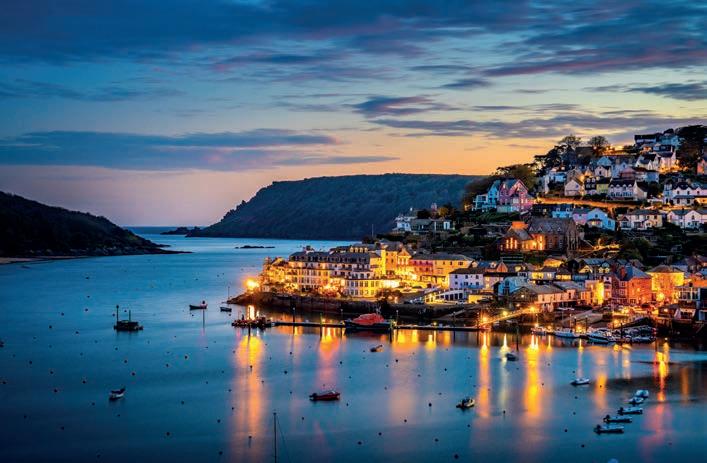
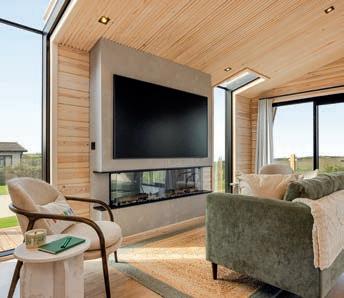
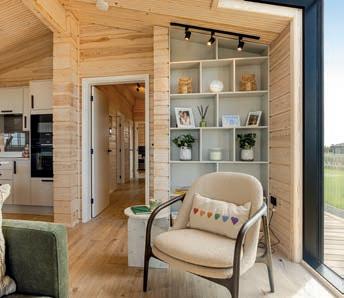
Ownership extends beyond the individual homes. he olt Club provides an exclusive space for residents, offering complimentary refreshments, comfortable lounges, dedicated work areas, a yoga studio and fitness suite e uipped with eloton machines and free weights. Outside, a landscaped courtyard with barbecue facilities creates opportunities to meet neighbours or gather with family after a day spent exploring the coast. It is an extension of the homes themselves, adding another dimension to life on the estate.
ractical considerations have also shaped the ownership experience. uyers benefit from a -year lease, creating an asset that can be passed from one generation to the next. For many families, this transforms a holiday home into something with genuine long-term significance, establishing a place where memories can continue to accumulate over decades of shared holidays and celebrations.
he financial advantages are e ually compelling. here is no stamp duty payable on purchase and no council tax to pay, making ownership considerably more attractive than many comparable opportunities. A concierge service is also available for owners wishing to let their property when it is not in use, providing professional management alongside the potential to generate income while retaining complete flexibility over personal use.
alcombe itself continues to play an important role in the appeal of he oar. enowned for sailing, paddleboarding,
kayaking and beautiful estuary walks, the town offers a lively calendar of events alongside excellent restaurants, galleries and independent retailers. oat storage close to the development makes it easier for owners to en oy time on the water without securing a mooring within the town itself, while the short ourney back to he oar means evenings are spent surrounded by open countryside instead of tra c and crowds.
hroughout the development, careful attention has been paid to transparency. rospective owners are guided through every aspect of the homes, from construction methods and warranties to the flexibility offered by each layout. hat straightforward approach reflects the wider ambitions for the estate creating a community of owners who value exceptional surroundings, thoughtful design and the freedom to en oy outh evon in whatever way suits them best.
he oar succeeds because it brings together elements that are increasingly di cult to find in a single destination. Outstanding scenery, direct access to one of ngland’s finest stretches of coastline, beautifully considered homes, strong environmental credentials and meaningful long-term ownership combine to create an opportunity that extends well beyond the traditional holiday home. For families who want to spend more time beside the sea, en oy everything alcombe has to offer and return each evening to a home designed for comfort, it is an address that promises enduring rewards.
thesoarsalcombe.com
WORDS BY JAMIE CROCKER
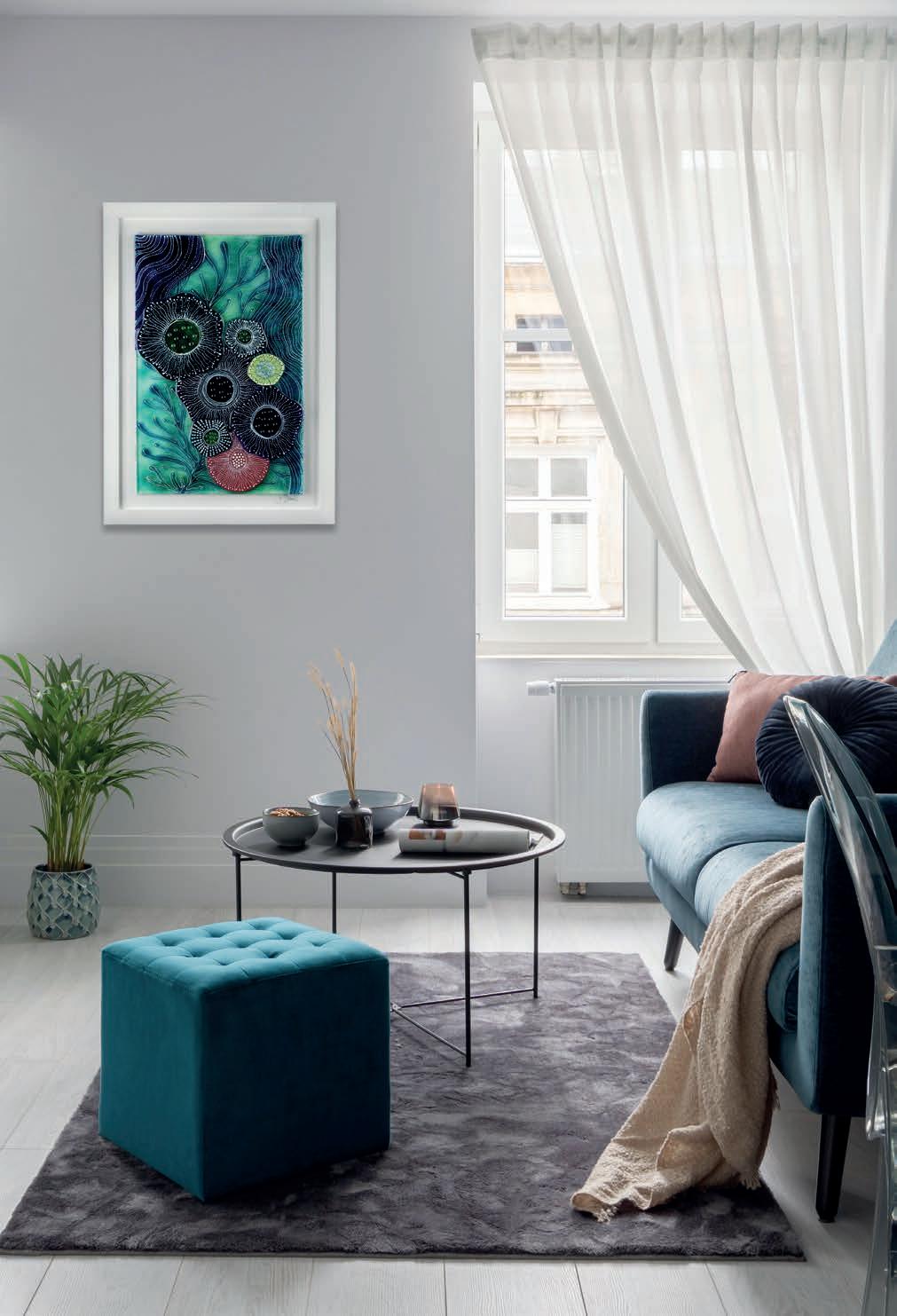
The glass artist whose Cornish work refuses to become moribund.
There are days when Jo knows exactly what she needs to achieve. A commission has a deadline, a client is expecting samples or a gallery requires stock. Then there are days when the work begins with little more than an idea and a willingness to experiment. It is this uncertainty, inherent within the nature of the process, that still excites her.
fter more than years working with glass, o continues to find satisfaction in not knowing precisely what will emerge. Experience allows her to make informed choices, yet she remains drawn to the element of surprise that sits at the heart of the process. The kiln has a habit of confounding expectation, allowing reactions to unfold, colours to shift and deepen, and textures to develop in ways that remain beyond complete control. In doing so, the material retains a delinquent independence that keeps complacency at bay, encouraging a restless curiosity that refuses to permit the comforts of smug repetition.
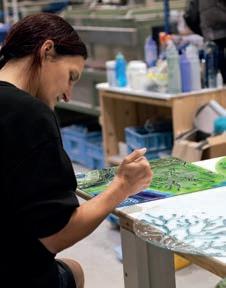
Across Cornwall, her glassware has become instantly recognisable. Coastal influences run through much of her work, with fish drifting across panels, sea blues appearing in endless variations and surfaces seeming to have been shaped by currents or weather. She expresses the Cornish seascape as a fluid wellspring of ideas rather than a subject to be uantified, named and sealed in amber like a creature that has long since perished.
Her entire approach makes for an unusual business. Jo runs not just a studio but a growing retail operation, with shops in Truro and Dartmouth alongside her Launceston base, and she is currently exploring other locations that feel right, further afield. The expansion has been driven by financial necessity as much as ambition. Rents have risen sharply since Covid, glass costs have climbed , energy bills have spiralled, and the business reached a point where breaking even required more sales than a single Cornish market could support.
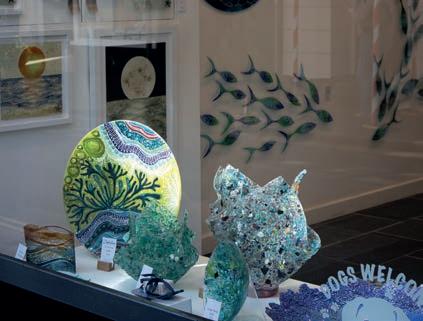
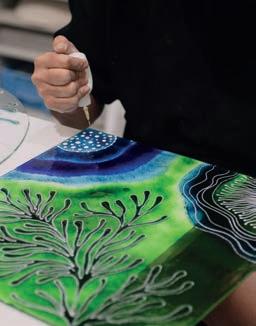
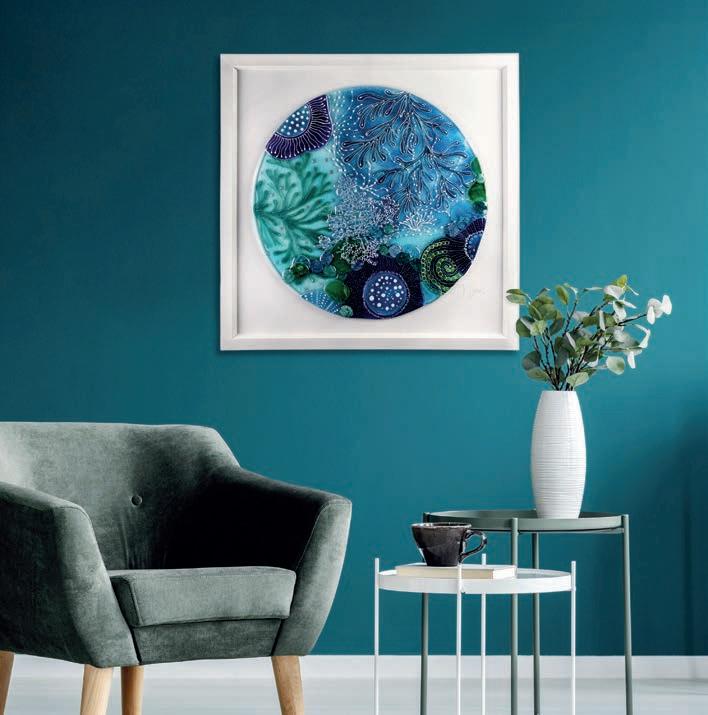
So she did what any pragmatist would do: she opened more shops.
What has surprised her is where the audience came from. At the Dartmouth opening, of visitors already knew her work. The remaining had never heard of her – a new set of patrons, drawn to the same aesthetics that have always animated her pieces. Truro, which she had doubted because it is not coastal, turned out to be a stronghold. In fact, her research has shown that places that have a high cluster of independent traders are the ideal setting for her wares. For anyone who’s visited Cirencester, or Whitstable in Kent, whose high street has been described as among the most diverse in the country, this symbiotic relationship will be obvious.
The business logic here is not complicated; it curiously aligns itself with what informs her pieces – sink or swim.
seen the copies: badly made pieces in gift shops, objects that bear a superficial resemblance to her work but lack anything underneath. he does not find this particularly threatening and explains why with characteristic directness. She has already moved on. Whatever someone is copying now, is work she has left behind.
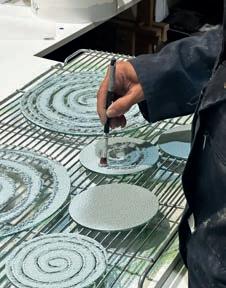
o owns Glass has, over years, built something that imitators find difficult to replicate in full. The brand is strong enough that its presence on the high street signals something to a particular kind of customer – someone who wants an object made by a person who cares deeply about how it was made and whose personality and vision resonate within that piece. This quintessence matters more and more as fused glass has grown in popularity, bringing with it a wider market and, inevitably, a lower tier of product. Jo has
The techniques that make her pieces distinctive are largely her own invention, developed over years of studio practice that has no fixed endpoint. There are around 15 projects in progress at any given time, alongside commissions that arrive with their own deadlines and requirements. She has a particular affection for larger statement pieces –circular windows a metre across, splashbacks at a metre and a half by a metre, wall installations that function as an environment rather than just decoration. Given a genuinely open brief, the kind that specifies a theme and a space and then stands back, she produces work that she regards as closest to what she is actually capable of. The commissions where a client effectively dictates placement and content fish here, detail there are a different kind of job. killed craft, certainly, but not the same thing.
Teaching forms another strand of the work. Jo runs masterclasses, including sessions in Spain where she has recently been spending more time, and what the teaching reveals about her practice is
instructive. In a recent one-to-two session with long-standing clients, one student could surrender to the uncertainty of the process. They could place materials, put them in the kiln, and wait with genuine openness for the result. The other could not. She needed to know what was coming, wanted to control the outcome, and found the not-knowing actively distressing. The contrast was, as o reflects, uite revealing about personality. Her own position is firmly with the first student. The surprise, when the kiln opens, is where the wideeyed, eager anticipation finds satisfaction.
Spain is beginning to exert its own sanguine persistence on her work. The palette Jo has used for years is coastal, relying upon blues, deep greens, the colours she encounters every day in Cornwall. In inland Spain, the landscape runs to warm autumnal tones: rusts, yellow and orange, colours she has not worked with much and which re uire a different chemistry to achieve. It is a landscape that cannot be ignored by someone of Jo’s temperament, slowly inveigling its way into her creative process – hard blue skies, ochre hills and terraces of olive trees that seem to hold the sun long after evening falls. In such a country, where light strikes stone with fierce clarity and colours glow as if fired from within, an artisan such as o will find every molten creation touched
by the amber of the earth, the white blaze of distant villages, and the shifting cobalt of the Mediterranean beyond the hills. She is experimenting, cautiously and without rushing the process. The Cornish influence on her current output remains strong, and she knows that a genuine shift will take years to work through. But it is happening. The sketchbooks are accumulating. The projects are there, waiting.
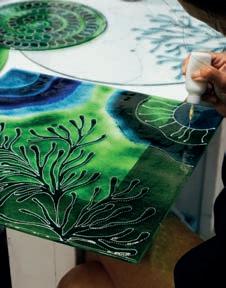
What sustains all of this, through the rent reviews and the copyists and the years of operating close to the edge, is something she finds difficult to articulate as strategy but has no difficulty locating in herself. She loves the work. She has loved it for years. There have been moments, for example, a kiln disaster during a commission long ago for the British Transport Museum, completed while carrying her infant son and running entirely on adrenaline and necessity, when another person without the sustaining passion would have faltered. She did not decide that. She has never decided that. The business continues because she cannot imagine doing anything else, and the work continues because she has not yet made the piece she is working towards. A total of 15 sketchbooks suggest she never quite will.
jodowns.com
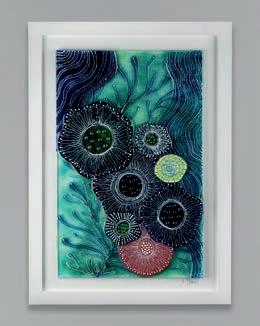

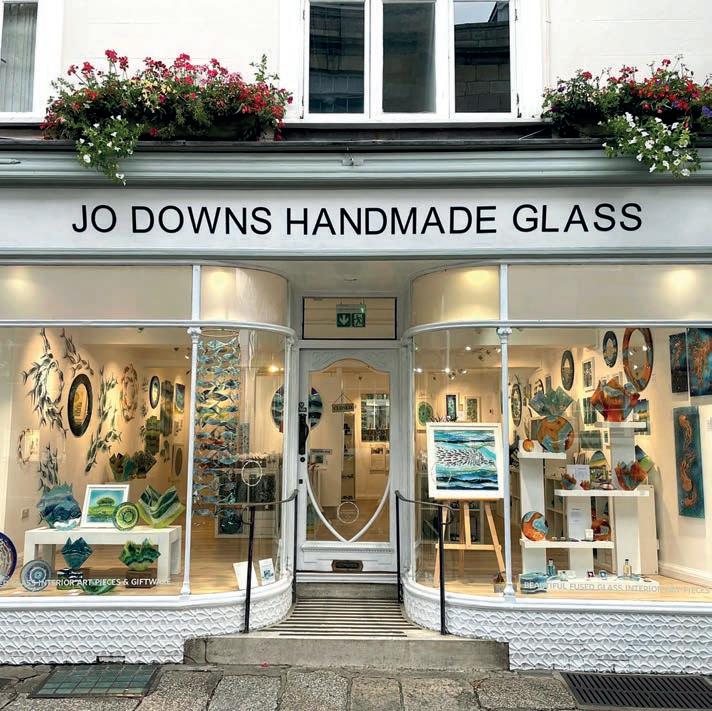

WORDS BY JAMIE CROCKER




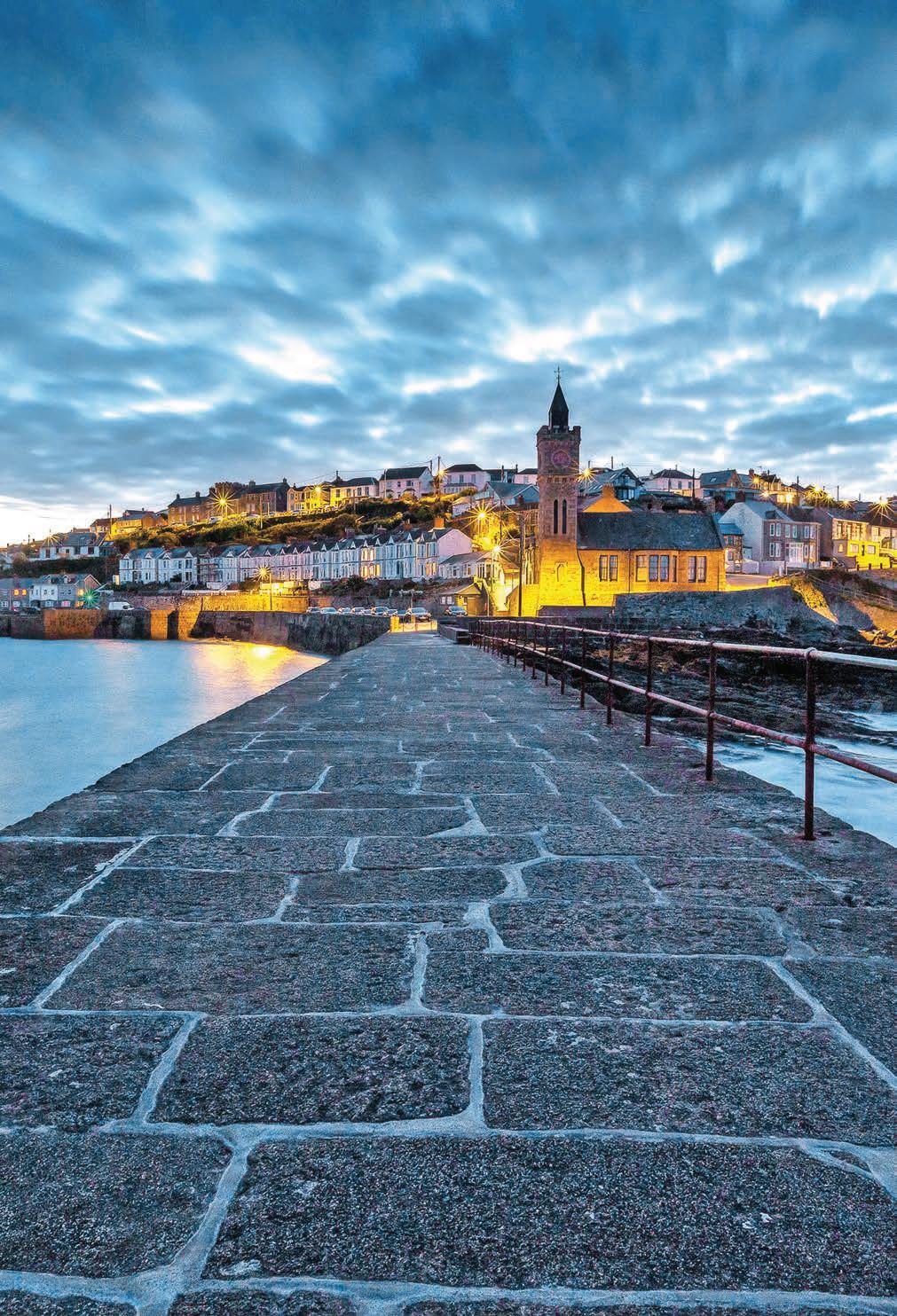
Maintaining a local identity underpins this Porthleven-based holiday letting company.
As with any company, growth is, in most instances, part of the process of continued existence. There is usually a price to pay, though, as core values are exchanged for profit and connection to community becomes compromised. This is not the case with Mounts Bay Holidays – here’s why.
When Mounts Bay Holidays began life as Porthleven Holiday Cottages in 2007, ha e ifi a in he l al h liday market did the founders believe needed fillin and h ha ha i inal e evolved over the past nineteen years?
The holiday letting landscape looked very different then. ost owners either advertised privately or were represented by large agencies that often lacked local knowledge and personal service. Our idea was simple: create a company that genuinely understood Porthleven, knew every property inside out and offered guests a much more personal experience.
Nineteen years later, that original purpose remains unchanged. We still believe that local knowledge matters, that owners deserve a relationship with real people rather than a call centre, and that guests value honest recommendations and personal service. What has evolved, though, is our reach.
We can now represent properties across the whole of Mount’s Bay, but our commitment to being a local, independent business remains the same.
The company describes itself as independent and deeply local. Can you give three examples of decisions you have made in recent years that would likely ha e een made di e en ly y a la e national holiday-let agency?
Firstly, we’ve deliberately limited our growth. We only take on properties that we believe fit our portfolio and that we can properly support. A larger agency might prioritise volume; we prioritise quality.
Secondly, we invest heavily in local content and destination marketing. Rather than simply selling accommodation, we spend time showcasing the villages, beaches, walks and businesses that make this corner of Cornwall special.
Thirdly, we’re able to make decisions quickly and personally. If an owner needs support, a guest has a special request or a property needs tailored marketing, we don’t have layers of approval to work through. We know our owners, our guests and our properties personally, which makes a huge difference.
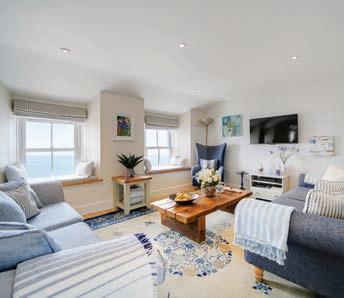
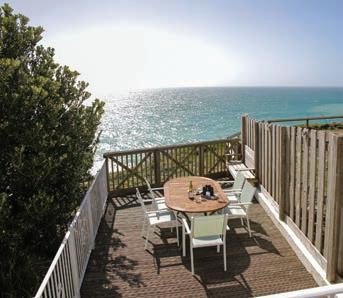
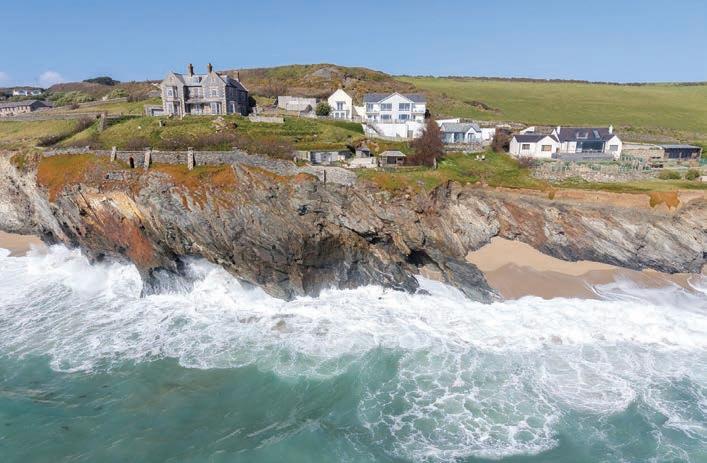
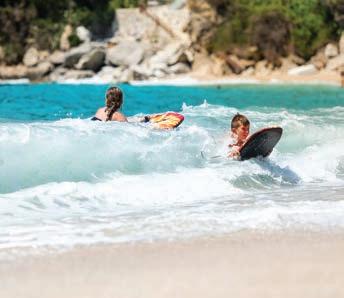
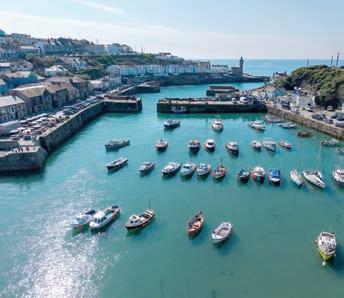
Why was 2026 the right moment to change the name from Porthleven Holiday Cottages to Mounts Bay Holidays, and were there any concerns about stepping away from a brand that had built recognition over nearly two decades?
he business has grown significantly over the past few years. While Porthleven remains at the heart of what we do, we are now expanding to represent beautiful properties across Mount’s Bay. The new name reflects who we have already become. We wanted a brand that better represented both our geographical reach and our ambitions for the future.
Of course, there was some nervousness about moving away from a name that people knew and trusted. Nearly twenty years of reputation is something you don’t tinker with lightly. Ultimately, though, we felt that the trust we have built comes from our service, relationships and local expertise rather than the name itself. Mounts Bay Holidays gives us room to grow while staying true to our roots.
Mount’s Bay covers a diverse stretch of coastline. What qualities are you looking for when deciding whether a property or location belongs within the Mounts Bay Holidays portfolio?
The location is important, but so is the experience a property offers. e look for homes that help guests connect with the area, whether that’s a harbourside cottage in Porthleven, a sea-view apartment overlooking Mount’s Bay or a family home within walking distance of the beach. We also look for owners who care about their properties and the guest experience.
The most successful holiday homes aren’t necessarily the largest or most luxurious; they’re the ones where thought and care have gone into every detail. Many guests see only the finished holiday experience.
What happens behind the scenes, from booking to departure, that most people would be surprised to learn about?
Before guests arrive, properties are professionally cleaned, inspected and prepared. Maintenance issues are resolved, welcome information is updated, and arrival details are checked.
Throughout the year we’re constantly reviewing pricing, monitoring bookings, updating listings, creating marketing campaigns and responding to guest enquiries. On top of that, there are the unexpected challenges that every holiday business faces, from storm damage and plumbing emergencies to last-minute travel disruptions. The aim is that guests never notice any of this. If we’ve done our job properly, their holiday feels effortless.
Property owners have a growing number of management companies to choose from. What feedback do you hear most en f m ne h m e hei properties to Mounts Bay Holidays from another agency?
The most common comment we hear is that they finally feel looked after. any owners tell us they felt like just another number with their previous agency. They struggled to speak to the same person twice or felt disconnected from decisions being made about their property.
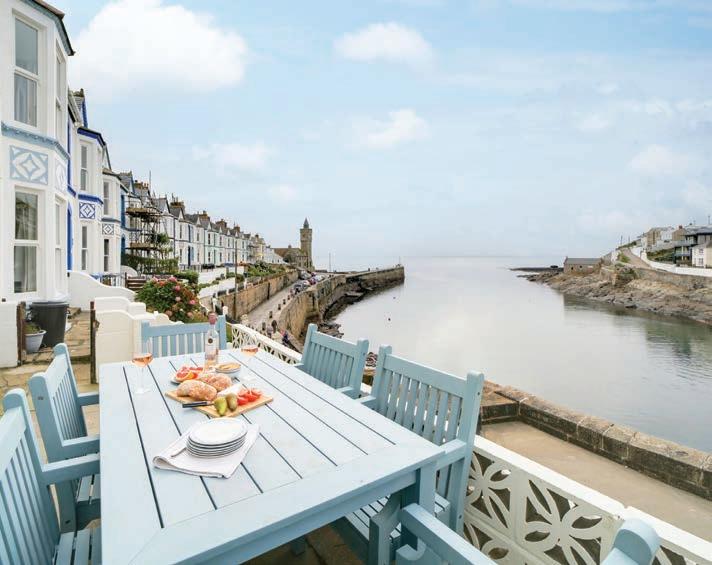
Owners often appreciate that we’re accessible, transparent and proactive. They know who they’re speaking to, they receive honest advice, and they feel involved in the process. That’s something we’re very proud of. Our owners know that we are here, we know their property, and we are able to offer first-hand knowledge to potential guests.
Cornwall continues to wrestle with questions surrounding housing availability, second homes and tourism. How does Mounts Bay Holidays view its role within that wider debate, and what responsibility does the business feel it has towards the communities in which it operates?
It’s an important conversation, and one that doesn’t have simple answers. Tourism is a major part of Cornwall’s economy and supports thousands of local jobs and businesses, but it’s equally important that communities remain vibrant places to live and work year-round. As a local business, we understand both sides of that discussion. We encourage guests to support local businesses, explore responsibly and engage with the communities they visit. We also work closely with property owners to help them operate successful holiday homes in a way that contributes positively to the local economy. Ultimately, we believe tourism works best when it benefits both visitors and the communities that welcome them.
ABOVE Harbour View, Porthleven
Your website highlights care, community and sustainable tourism. Can you point to measurable actions or outcomes that demonstrate those values in practice?
One of the most visible examples is our commitment to promoting local businesses. Every year we direct thousands of guests towards local restaurants, cafés, shops, attractions and activity providers through our recommendations, guides and communications. We’ve also invested heavily in creating detailed destination content that encourages guests to explore beyond the obvious hotspots, helping spread visitor spending throughout the area
On the operational side, we’re increasingly encouraging longer stays, reducing unnecessary printed materials and supporting owners who wish to introduce more sustainable practices within their properties. in ahead fi e years, what would success look like for Mounts Bay Holidays? Are there particular places, services or partnerships you hope to develop across Mount’s Bay?
businesses, expanding our destination content and continuing to raise the standard of service we provide. We’d also love to develop more partnerships that help guests experience the area in a deeper and more meaningful way.
Every holiday business promises personal service, local knowledge and memorable ay ha e iden e ld y e a sceptical guest or property owner that Mounts Bay Holidays genuinely delivers something distinctive and does not simply rely on familiar industry language?
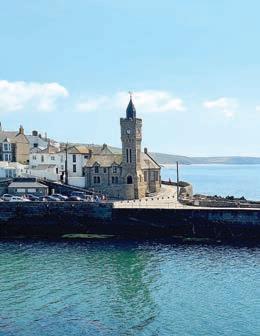
We want to become the most trusted holiday letting company in Mount’s Bay for both owners and guests. That means strengthening our relationships with local
We’d encourage them to speak to us, read our reviews and meet the team. Every member of our team lives locally and spends time in the places we recommend. We visit the properties we represent, know the owners personally and deal directly with guests from booking through to departure.
Many of our owners have been with us for years, and a significant proportion of our bookings come from returning guests who choose to holiday with us time and time again. For us, personal service matters. It’s the way we’ve always worked, and it’s the reason owners and guests have trusted us for nearly twenty years.
mountsbayholidays.co.uk

WORDS BY HANNAH TAPPING
Presenting the case for a planning consultant: why they should be your rst call
Planning a development project can feel deceptively straightforward at the outset. Whether it’s extending a home, converting a rural building or bringing forward a larger scheme, the instinct is often to focus on design first. But in reality, the success of any project is determined much earlier – at the point where risk, policy and feasibility are properly understood.
For Rebecca Boyde, Director of Coast to Country Town Planning, this is where the real value lies: reducing uncertainty from the very beginning so clients can move forward with confidence. ith over 15 years’ experience – including a decade within local government – Rebecca established Coast to Country Town Planning as an independent consultancy managing the entire planning process on behalf of its clients, from initial feasibility and site appraisal through to the discharge of precommencement conditions and, where
required, handover to contractors. Coast To Country Town Planning was established as a practice primarily covering the South West, while maintaining a growing London presence and active instructions in Essex, Dorset and beyond.
The diversity of authority types is, she says, one of the most stimulating aspects of her work. “I’ll see a really unique way of looking at an interpretation of the policy in Kensington and Chelsea and consider how that approach could be applied to clients’ applications elsewhere in the UK.”
Rebecca brings an insider’s understanding of how planning decisions are made. Having worked across a wide range of applications, from householder developments through to more complex and sensitive schemes, she understands both the technical requirements and the broader pressures that shape decision-making.
“My experience gives me a clear view of how planning authorities approach proposals, how policy is applied and where the key risks typically sit,” she explains. “That allows me to guide clients towards solutions that are realistic, policy-aligned and ultimately more likely to succeed.”
his approach often begins by challenging assumptions early. Rather than progressing a proposal that may face obstacles further down the line, Rebecca works with clients to test ideas at the outset, identifying constraints, assessing feasibility and refining the direction before significant time and cost are committed. he benefit of this early-stage input is simple but significant avoiding unnecessary redesign, reducing the risk of refusal and saving both time and money across the lifecycle of a project.
Coast to Country Town Planning supports clients through the entire planning ourney. hile every pro ect is different, the process typically follows a clear path: starting with feasibility and site appraisal, moving into strategy and positioning, assembling the right consultant team, managing the application process and supporting delivery through to conditions discharge and handover where required. By structuring the process in this way, clients are able to see clearly how their project will progress and where key decisions need to be made – bringing greater clarity to what can otherwise feel like a complex and uncertain environment.
A key differentiator is ebecca’s role as a single point of coordination throughout. For most projects, she brings together and manages a multidisciplinary team, which may include architects, transport consultants, ecologists, heritage specialists and other technical advisors. Rather than the client navigating multiple inputs independently, Coast to Country Town Planning provides a joined-up service, ensuring that all disciplines are aligned and working towards a shared objective.
“It’s about putting the right team in place and making sure everything is properly coordinated,” she says. “Clients don’t need to manage a do en different conversations – they have a clear line of sight and a single point of accountability.” This coordinated approach is particularly valuable as the complexity of planning continues to increase. Even relatively modest schemes can require input across access, drainage, ecology, heritage, and environmental considerations. In addition, changing policy requirements and local variations between authorities mean that no two applications are ever quite the same.
ebecca’s experience across different regions – from the South West to London and beyond – provides valuable perspective in navigating these differences. xposure to a wide range of authorities allows her to adapt strategies, apply lessons learned and position applications appropriately depending on the context.
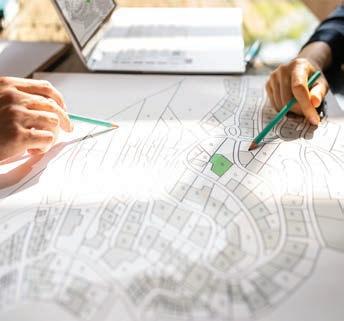












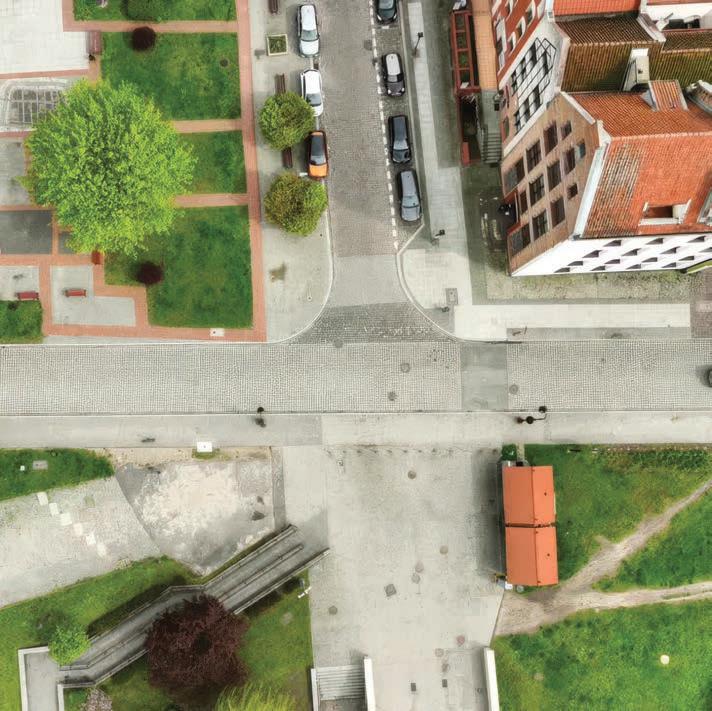












Alongside proactive applications, Coast to Country Town Planning also supports clients in more complex or timesensitive situations. This can include retrospective applications, where works have already taken place, or projects requiring a pragmatic, risk-aware approach to move forward at pace. In each case, the focus remains the same: helping clients make informed decisions with a clear understanding of the risks involved. For clients, this translates into a more structured, considered and ultimately more predictable process. By addressing uncertainty early, aligning proposals with policy and coordinating the right expertise, the likelihood of delay, redesign or refusal is significantly reduced.
Just as importantly, Rebecca’s network forms a key part of the service offering. Over time, she has developed trusted relationships across a wide range of professional disciplines – from legal and finance through to specialist
consultants – enabling her to bring in the right expertise at the right time and ensure each project is properly supported. Whether supporting a single property extension, a heritage-led refurbishment or a larger residential scheme, the underlying principles remain consistent: understand the constraints, develop a clear strategy, assemble the right team and manage the process with care and precision.
In an environment where planning is becoming increasingly complex and resource-intensive, that early clarity is more valuable than ever. For clients, it means making better decisions from the outset, with a clearer understanding of what is achievable and a much stronger foundation for success. “In planning, uncertainty is where projects tend to lose time and momentum,” Rebecca says. “Our role is to remove as much of that uncertainty as possible at the outset, so clients can move forward with clarity and confidence.
ctcplanning co uk




WORDS BY JAMIE CROCKER









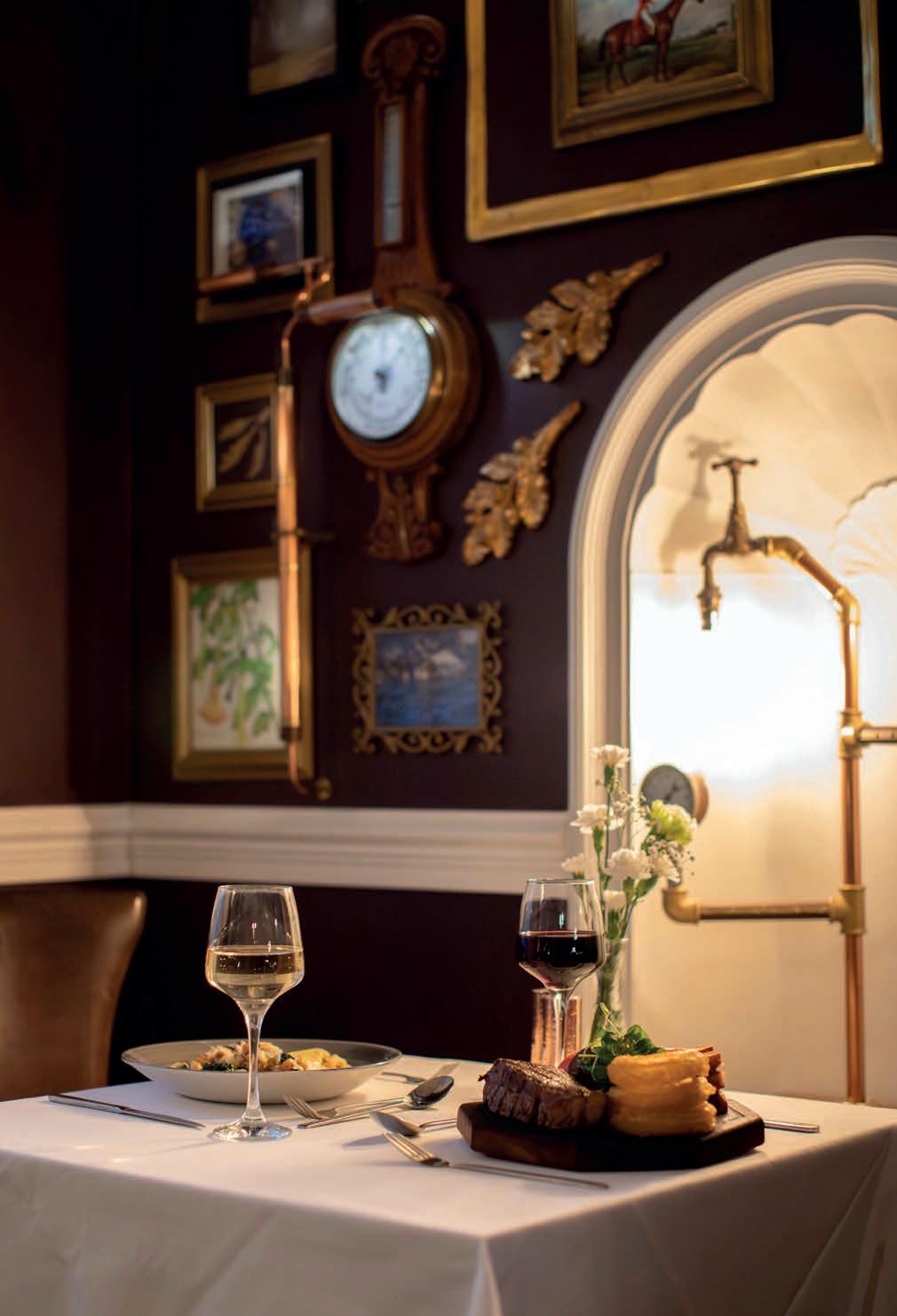
A grand Cornish hotel proves tradition can still have plenty of piquancy.
The Dining Galleries Restaurant resides within one of Cornwall’s more distinctive hotels, a place that has been part country house, part gathering point for decades. There is nothing minimal about its décor. Portraits watch from the walls while careful detailing hints at the county’s past. Upholstery favours richness rather than restraint, contributing to an atmosphere that sits somewhere between a traditional hotel dining room and a slightly mischievous stage set. It feels designed for a leisurely dinner, where lo uaciousness is discouraged in favour of conversation, as well as consumption, at a more considered pace.
By 8pm, on an unusually rainless evening in early March, my wife and I are being ushered into this space by a member of Penventon Hotel’s cadre of experienced staff. e are seated and ready to be indulged. Menus appeared as smoothly as cards dealt at the start of a familiar game. They were reassuringly clear with
recognisable dishes, sound ingredients and combinations that didn’t suggest that they’d been concocted in a fever dream. Increasingly, restaurant menus read like metrical compositions in the style of a romantic poet, but here, the list enunciated itself straightforwardly.
My wife decided to go with a classic king prawn cocktail. The dish has had a peculiar journey through British food culture. It began life as a symbol of aspiration, became a cliché and is now returning as a menu stalwart that suggests it never really deserved to be ostracised because of the company it was forced to keep. The version here arrived exactly as one would wish: generous prawns resting in Marie Rose sauce, accompanied by boiled egg and slices of brown bread with butter.
The prawns themselves were plump and cool, the sauce properly balanced between sweetness, acidity and that faint whisper of paprika that gives the whole thing its character.
My own starter was chicken liver and cognac pâté with red onion and ale chutney served alongside toasted brioche. If the prawn cocktail was about nostalgia treated with a newfound reverence, the pâté was about richness, glorifying in its unwavering tradition as the starter of choice. The texture was pleasingly smooth without becoming paste-like, the liver flavour deepened by the cognac. he chutney brought a necessary sharpness, its sweetness edged with the faint and hoppy bitterness of ale. Brioche can sometimes push dishes into unnecessary sweet-laden indulgence, but here it played the correct role: warm, lightly toasted and acting as a buttery platform for the pâté.
One of the enduring pleasures of hotel dining rooms such as this is the cast of characters that they draw in. A little discreet observation and guarded comment feels almost obligatory – rather as in Hotel du Lac – and we found it hard to resist. Couples celebrating anniversaries and families enjoying an evening that feels just a shade more special, naturally catch the eye, while regulars, on easy terms with the staff, invite a moment’s attention of their own. In the Dining Galleries, all of this unfolds against a gentle hum of conversation in an atmosphere that carries both a sense of occasion and a hint of guilty pleasure.
Our entre s arrived with su cient space to allow our first courses to be appreciated in their own right. My wife had chosen the eight-ounce fillet steak served with peppercorn sauce, roasted tomato, a
portobello mushroom, fries and dressed rocket. A fillet steak can sometimes feel like a test of a kitchen’s nerve. Cook it properly and it becomes an indulgence worth the price. Miss the mark and it quickly reveals its leathery faults.
Cooked to the requested medium rare, it arrived with a properly seared exterior giving way to a tender interior. The peppercorn sauce was robust with no fiery temper, carrying ust enough heat to remind you of its presence without smothering the beef.
The supporting cast did their job without fuss. Fries were crisp and golden. The mushroom had absorbed enough heat from the grill to become almost meaty in texture. ocket provided a necessary flash of bitterness against the richness of the steak and sauce.
My own main dish was char-grilled chicken supreme served with a bubble and squeak croquette, corn purée and pancetta. Chicken can often be the most cautious option on a menu, chosen when diners feel uncertain. Here, it proved anything but dull.
The chicken itself was moist with a skin that had caught just enough char from the grill to bring a smoky depth. The bubble and squeak croquette was perhaps the most enjoyable element on the plate. Crisp on the outside and soft within, it carried that familiarity of potato and cabbage cooked together until they form something far greater than the sum of their parts.
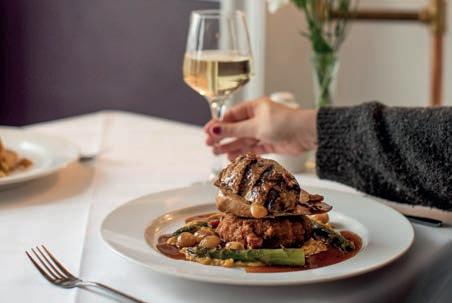
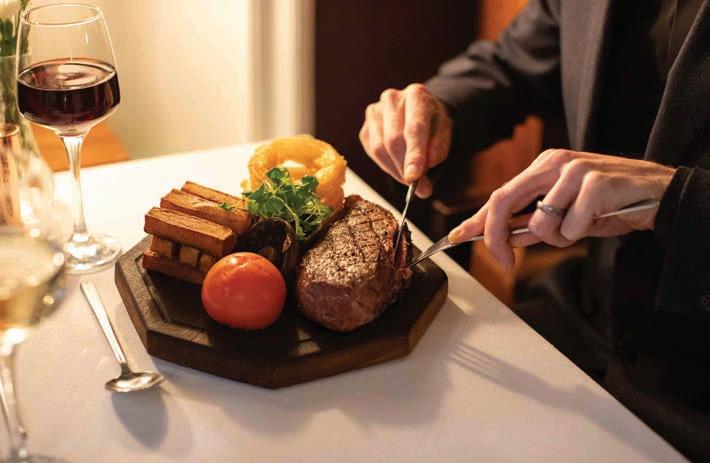
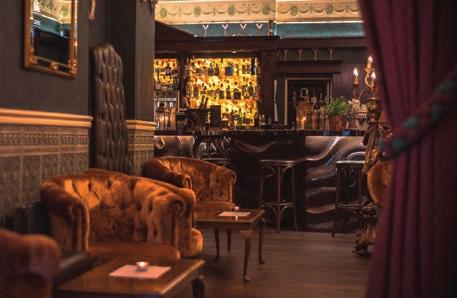
Corn purée added sweetness while pancetta introduced salty crunch. The effect was carefully udged and felt like a dish constructed by someone who understands that comfort food still benefits from precision rather than being slathered onto the plate like a school dinner.
By this point, the room had settled fully into its rhythm. Glasses were refilled, plates cleared, and small conversations built across the room, all underpinned by service that deserves a mention. It was attentive without being overbearing, the young staff showing skills beyond their years, with no one imploring you to ‘enjoy’ as they headed back to the kitchen
Dessert menus appeared. Resistance felt unnecessary. My wife ordered Mrs P’s tiramisu, described as an indulgent original Venetian family recipe. Tiramisu is one of those desserts that can easily become heavy-handed if misjudged. Too
much mascarpone and it cloys. Too much coffee and it sharpens unpleasantly.
This version leaned toward generosity but remained balanced. Layers of coffee-soaked sponge alternated with mascarpone cream that was rich yet airy. A cocoa dusting provided the final bitterness needed to prevent the whole thing from drifting into sweetness overload. It was, and always will be, a dessert designed for enjoyment.
I opted for the warm rhubarb almond frangipane tart accompanied by spiced rhubarb compote and clotted cream. Rhubarb remains one of Britain’s (and my) most reliable dessert companions, its sharpness capable of cutting through sugar and butter with consistent determination. It arrived warm enough to release the scent of almonds. The frangipane was soft and nutty, offering a layer of support to the rhubarb. The compote carried gentle spice, which lifted the fruit without
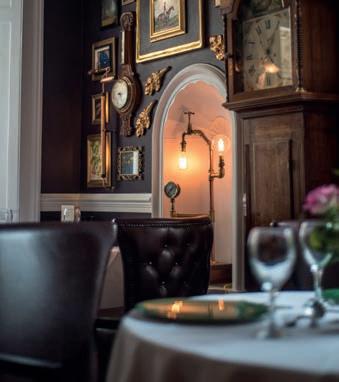
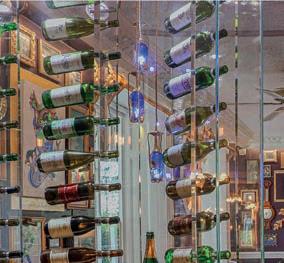
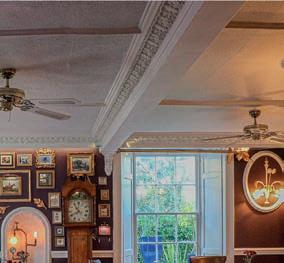
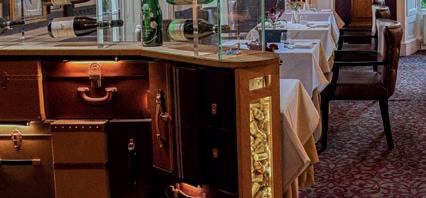
overwhelming it. A spoonful of clotted cream added that inevitable Cornish indulgence, bringing the whole plate home.
Drinks had been simple. My wife chose a glass of Rioja with her meal. I stayed with elderflower cordial during dinner before finishing with a double espresso alongside dessert.
Establishments such as the Dining Galleries do not attempt the anxious reinvention of themselves every sixmonths, as seen in many city restaurants. Instead, they rely on consistency, hospitality and a menu that is the right side of the disturbingly experimental.
There is a tendency in modern restaurant dining to search for novelty for its own sake. Yet evenings like this remind us that novelty is not always the point. Sometimes the point is to be conventional by ordering
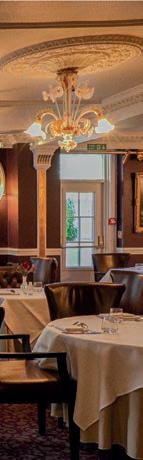
a prawn cocktail that tastes exactly as we want it to, a steak cooked to a point where it can’t be improved upon or a pudding that leaves you feeling happy.
As we left the hotel, the night air carried the faint smell of rain. Inside, the restaurant continued its steady work of courting guests who had come for the same reason we had: the pleasure of an unrushed dinner in a place that is comfortable with offering hospitality that acknowledges a past but has an eye on the future too.
Not every restaurant needs to shout for attention – although the Dining Galleries has ust been awarded its first AA osette – some simply keep the dining room full and the plates real. At the Penventon, on a Saturday evening in March, that seemed entirely su cient.
penventon.co.uk
WORDS BY JAMIE CROCKER
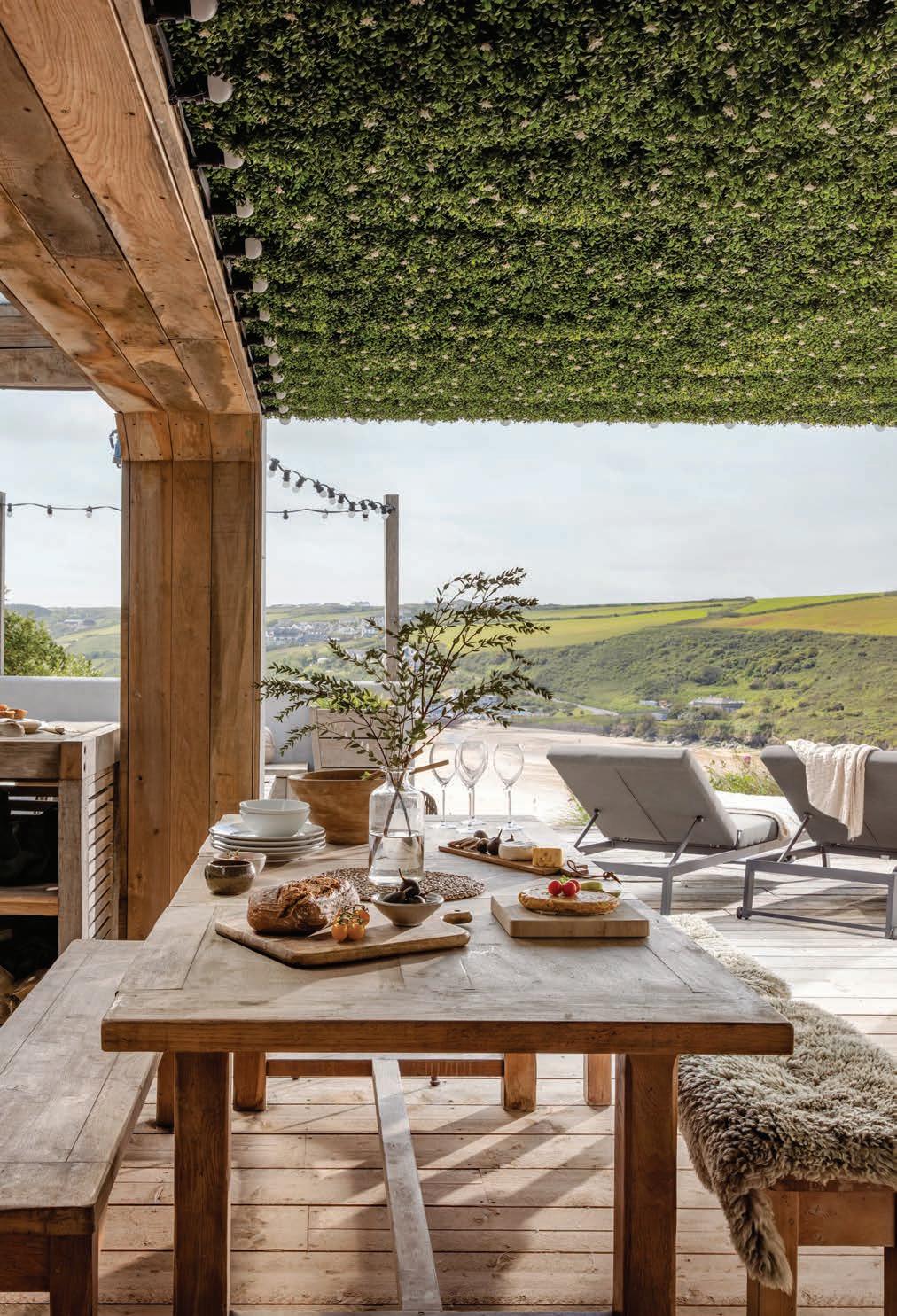
A septet of Cornish retreats proving that a holiday by the sea can still feel like discovery.
Cornwall has always had a complicated relationship with its own beauty. The county doesn’t flinch at exalting in its cliffs and coves whilst postcards have flattened its beaches and azure Mediterranean-like waters into cliché, yet anyone who has stood at the top of a coastal path at Sennen or awgan orth at first light or as the sun descends into the ocean knows that the place still has the capacity to surprise. e explore this phenomenon with Beach Retreats, a company that has built an exclusive collection of self-catering homes that capture this.
Their newest addition to the Iconic Set, Trenalt, which sleeps eight, occupies a position at awgan orth where tur uoise water meets golden cliffs with an abruptness that visitors describe, almost without exception, as startling. he house itself has been restored rather than rebuilt,
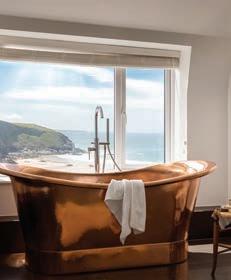
carrying with it the proportions and uirks of the original beach house, newly fitted with an outdoor kitchen and a hot tub positioned for star-watching. Guests can feast outside, watch the sun fold itself into the sea through floor-to-ceiling glass, and sleep within walking distance of sand that does not require a car to reach. It’s a cli op sanctuary that is craving attention.
The Cro , also sleeping eight, on the Li ard eninsula, takes a different approach to the same remit. Coverack is a fishing village that has resisted most forms of major, modern intervention, and The Cro sits within it like a piece of architectural memory par uet floors, an oak staircase, a reclaimed marble floor in the conservatory. he effect recalls the kind of waterside ambience found along the French iviera, though the climate and the light are unmistakably Cornish.
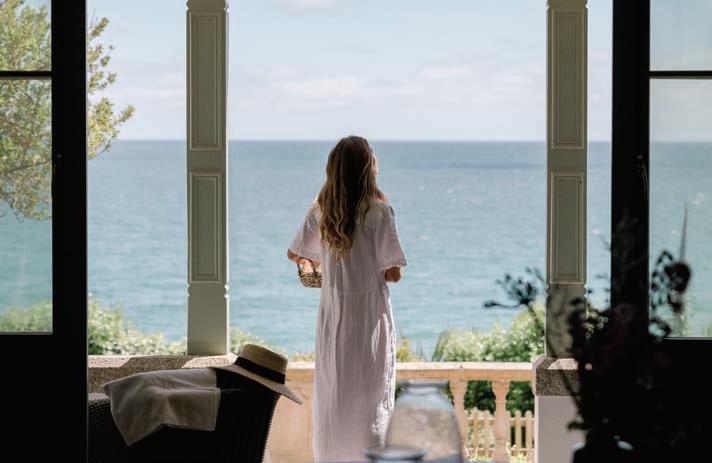
A hot tub sits seconds from the water while most rooms offer a sea view, inducing soporific contentment as the sound of waves cast their spell upon the most reluctant sleeper.
Further west, at Sennen, two properties demonstrate how differently a cli op can be read. Gwynver Beach House tilts in the direction of Scandinavian restraint: sleek interiors, generous glass, and a path opposite the front door that delivers guests onto Gwynver each within moments. olphins are regularly spotted from this stretch of coast, and the walk along to ennen Cove gives the day a shape beyond simply lying on sand. It’s a great surfing spot too. North Rocks, close by, takes its cue from a Mediterranean villa transplanted onto nglish cliff turf. It has a pool, a Finnish sauna with sea views, an ice bath, and stone
walls that suggest a country house rather than a beach hut. Guests at orth ocks are encouraged to alternate between heat and cold, between the rugged coast path at the end of the garden and the comfort of an interior built for slowing down. he two houses, separated by little more than a headland, offer entirely different registers of the same coastline.
Watergate Lodge, on the north coast, brings eco-conscious architecture to the e uation. he house has been designed with a Scandinavian twist and built to draw the outside in five en-suite bedrooms open via sliding doors onto a courtyard shaped more like the Mediterranean than the Atlantic, framed by trees and surrounded by evergreen hills that roll down towards atergate ay. Fire pits and candlelit dinners are part of the proposition, as is the
ABOVE
Croft
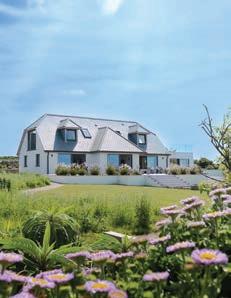
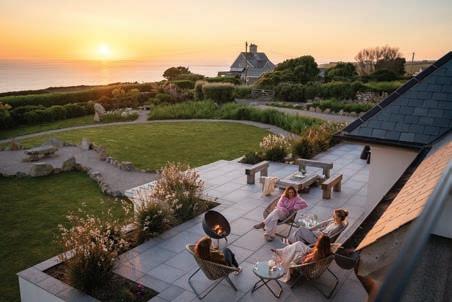
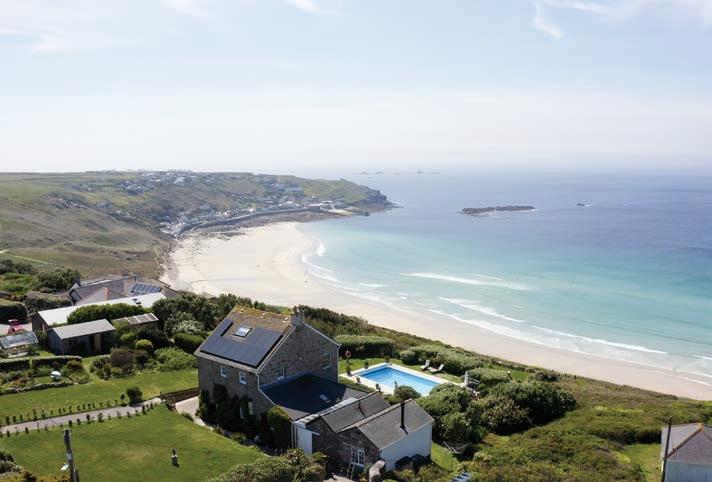
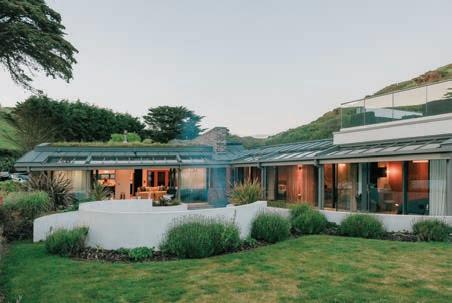
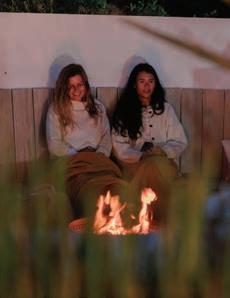
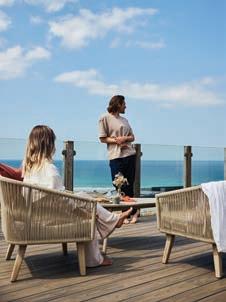
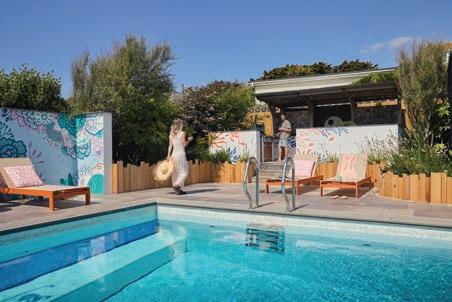
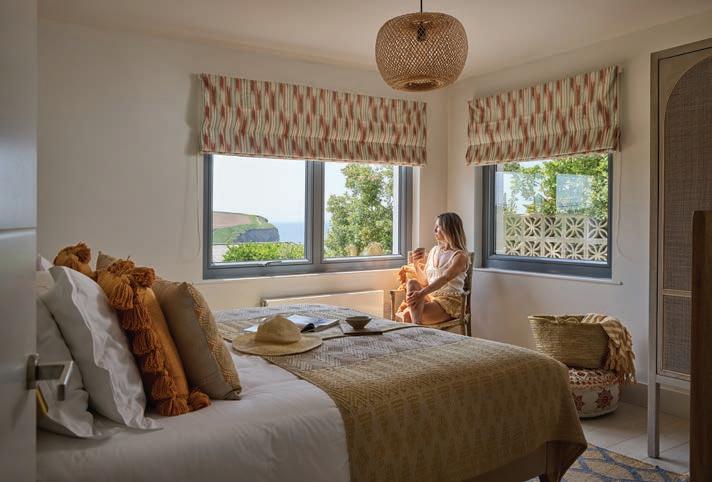
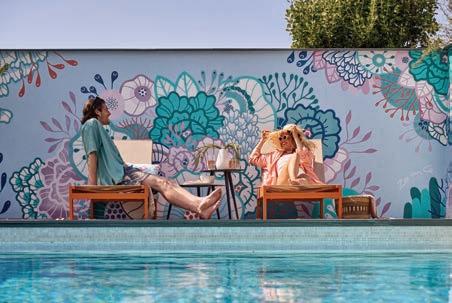
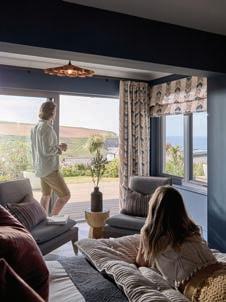
ABOVE he each ouse
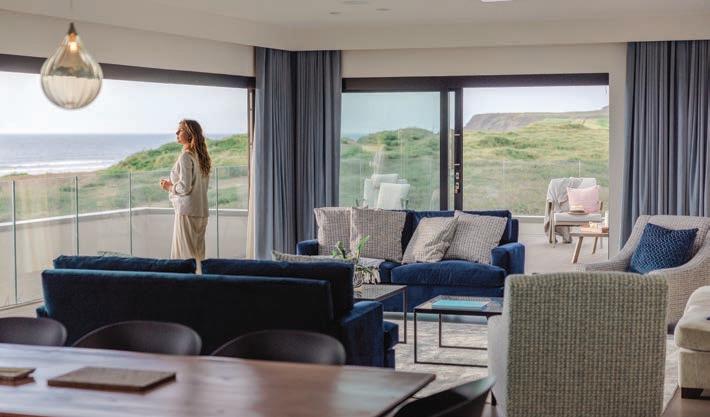
sense that the garden and the shoreline are barely separated.
The Beach House at awgan orth, designed internally by icola O’ ara, pursues a related but distinct mood, drawing on alibu rather than Scandinavia, with a surf-inspired feel and an outdoor dining area built for cooking up a feast within sight of the sea. alt air reaches the terrace within seconds of stepping outside.
Gaia, at Widemouth Bay, may be the most deliberately restorative of the collection. A yoga studio, sauna and hot tub sit alongside floor-to-ceiling glass that frames a coastline known for dramatic sunsets and crashing waves. he house sits directly on the beach, close enough that checking the surf does not re uire leaving the bed, and close enough that a car becomes unnecessary for the length of a
stay. ooking within the Iconic et carries a further incentive. Guests receive a voucher to spend with Cornish Food ox ahead of arrival, filling the kitchen with local produce before the holiday even begins, alongside a set of full-si ed bath and body products from land&water, made from natural, vegan ingredients drawn from the same elements the houses overlook.
Every property in the Iconic Set is united by the same raison d’ tre beautiful design, generous space, and sea views you’ll find yourself returning to, day after day. nited by an attentiveness to detail to light, to material, to the precise relationship between a building and the water beside it, these retreats simply remove the obstacles between being able to forget about the usual grind and total relaxation.
beachretreats.co.uk/guides/the-iconic-set
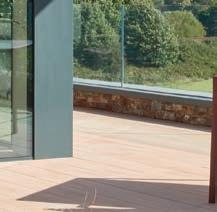
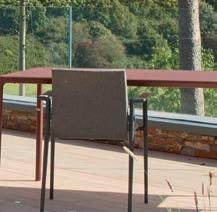


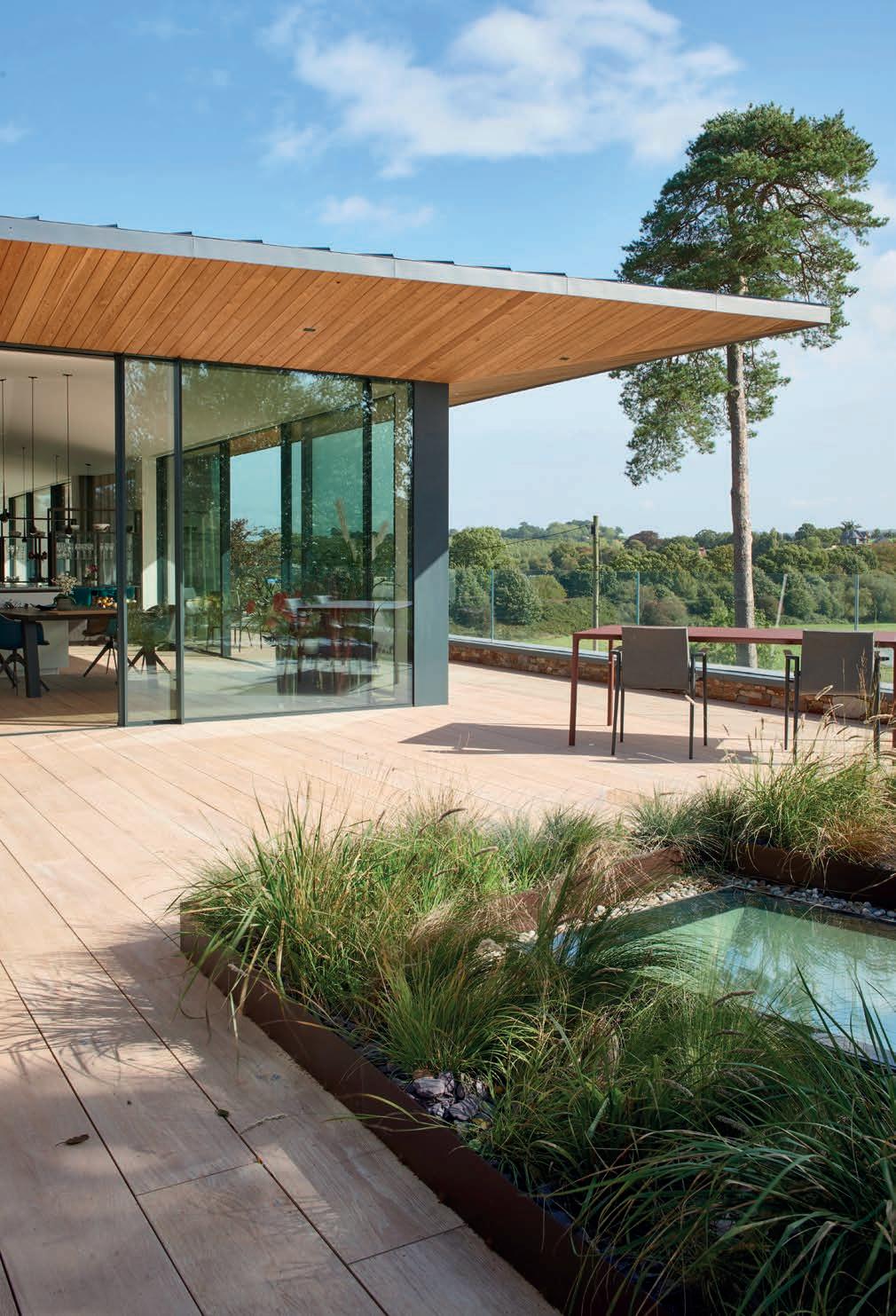
BThe thoughtful impact of positive design.
arc Architects approaches every project as a careful response to both the people who will inhabit a building and the landscape that surrounds it. From contemporary coastal homes to ambitious conversions, their work combines thoughtful design, environmental responsibility and a deep understanding of how architecture can enrich everyday life.
Can you walk us through how a project begins, from that very fi n e a i n i h a client?
It begins with listening. From the first meeting, we are trying to understand how our clients live, what matters to them and what they truly need from their home. We establish the brief, assess the site, planning policy and practical considerations, then produce a report that helps clients understand the process ahead.
design, contractor selection, construction and snagging, staying involved until the client is happy with the finished building.
Your work spans the South West, one of the most scenically dramatic and environmentally sensitive landscapes in he n y he he i a li an estuary or a valley, how does the landscape shape a project and do you feel it is a collaborator?
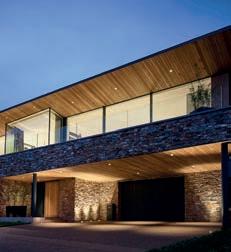
We then develop initial design options, using those early conversations to test ideas and refine priorities. Once a preferred design emerges, we introduce budget discussions to ensure the brief and costs align. From there, we move through planning, technical
Absolutely. We are always sensitive to the landscape and try to create architecture that sits quietly within its surroundings.
Sanctuary House is a good example, where natural materials, landscaped bunds and wildflower planting allow the building to blend into its setting. In contrast, a cli op pro ect in the west of Ireland re uired a different response. We argued successfully for dark corrugated cladding because it reflected the surrounding heather and allowed the building to recede into the landscape.
Working with the landscape rather than against it is always a huge consideration.
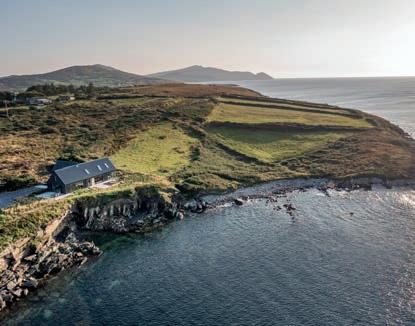
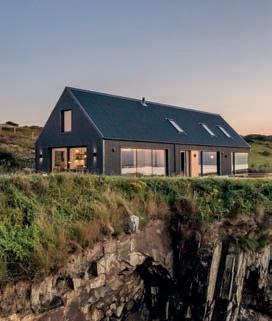
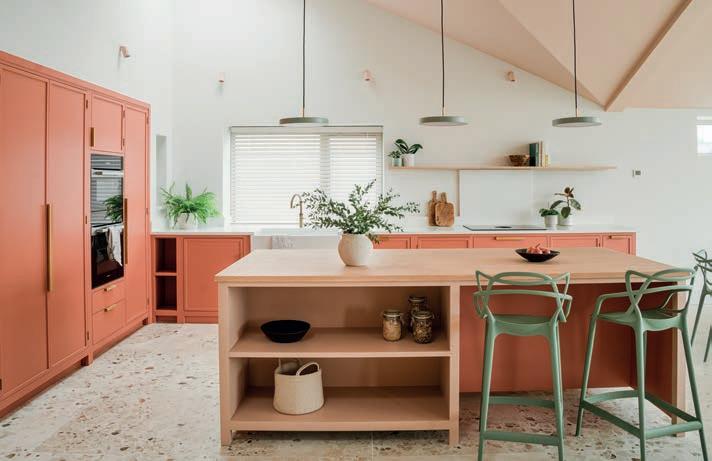
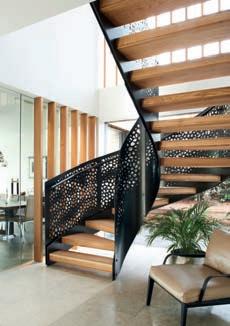
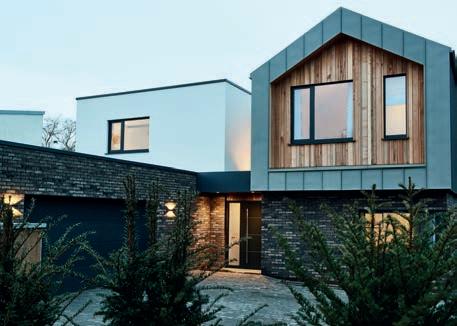
Sustainability sits at the heart of your hil hy f m fa i fi n i n to Passivhaus standards. How do you make sure that conversation feel exciting and aspirational for clients, rather than a list of technical constraints?
We focus on comfort. A sustainable home is generally far more comfortable than an unsustainable one, which makes the conversation much easier.
he fabric of the building influences temperature, air quality and overall wellbeing. Good insulation, ventilation and acoustic performance all improve daily life while reducing environmental impact. We are also increasingly focused on embodied carbon and the use of natural materials.
Planning policy is moving in the same direction, so these considerations are becoming essential. The challenge is balancing sustainability with budget, but that is where the craft lies, and it is genuinely exciting.
Projects such as The Reservoir, The Hatchery and Sanctuary House suggest a strong sense of narrative and place in your d indi id al e find their identity? Does it emerge from the site, the client, or somewhere in between?
Very much from both. Every project is bespoke to its client and setting, so the process is about understanding the sense of place and weaving in the aspirations of the people who will live there.
That sense of excitement is important. Building a home is a long process, and
clients need to feel that moment of certainty before moving forward.
he eservoir reflected a client with a wonderful sense of humour, while The Hatchery grew from the character of a former sea urchin facility and a close collaboration with the client. Each project earns its own identity.
Glazing, and the relationship between inside and out, appears repeatedly across your portfolio. What is it about that threshold, the moment a room opens to the land a e ha y find a hi e ally compelling?
We are lucky to build in beautiful places, so our aim is often to let the landscape become the focus rather than the building itself.
We blur the threshold between inside and out through level access, carefully chosen materials and large areas of glazing. The result is a stronger connection to nature and a greater sense of place.
Glazing can also frame views in a very deliberate way. Small adjustments to a window opening or reveal can capture a particular aspect of the landscape and create moments of joy that clients may only fully appreciate once they experience them.
Luxury can mean many things: grandeur, restraint, materiality, light. What does genuine luxury mean to Barc, and how d e i di e f m im ly e en i e
For us, luxury is about creating a home that is tailored entirely to the people
who live in it. very family has different priorities, and designing around those needs is a genuine luxury.
We think carefully about how a home will function both now and in the future, particularly if it is intended to be a forever home. Accessibility and adaptability are often considered from the outset.
Luxury is also about knowing where investment matters. Experience teaches you which materials and products justify the cost. It is not about spending more; it is about spending wisely.
Building biology and the use of natural materials are becoming increasingly important considerations in contemporary home design. What drew you to that approach, and how do those choices in en e he heal h mf and l n term performance of the homes you create?
Fabric-first is really about comfort. It ensures a home remains warm in winter, cool in summer and pleasant to live in throughout the year.
We are continually learning more about how materials perform. Natural materials such as wood fibre insulation can help regulate temperature and improve indoor comfort, while breathable construction methods can enhance air quality.
Ventilation is equally important. Systems such as mechanical ventilation with heat recovery provide fresh, filtered air while retaining warmth. It is about making all the elements work together to create a healthier and more enjoyable home.
The South West has attracted a new wave of people relocating, building and investing in exceptional homes. What are the most interesting briefs arriving at Barc right now, and what do they tell you about how people want to live?
Over the last few years there has been a real influx of people moving to the outh est in search of a stronger connection to nature and a different pace of life.
Many briefs focus on adaptable spaces, entertaining family and friends, and making the most of the outdoors. e often work with people approaching retirement, buying second homes or planning a permanent move.
Accessibility, landscape design and indooroutdoor living feature strongly. Ultimately, people are moving here to enjoy the environment, and our role is to ensure their home supports the life they came here for.
Architecture at this level is an intensely collaborative and personal process. What makes a great client relationship, and is there a project that stands out as a moment where that collaboration produced something neither party could have arrived at alone?
It is a very collaborative process, and the strongest projects emerge from strong relationships. The better we understand our clients, the easier it becomes to create something that truly reflects them.
A good example is Lyme Bay View. The client, Clare, is a garden designer with a wonderful eye for interiors, and we worked
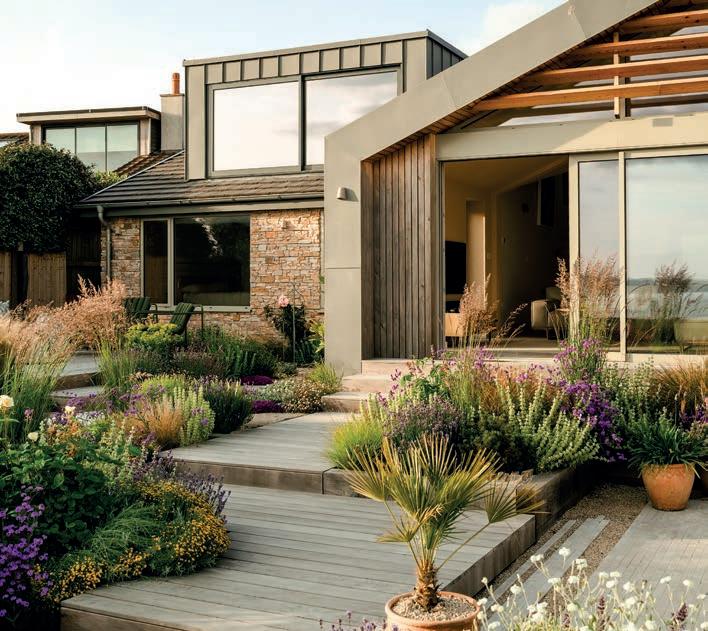
closely together, along with the builder, to create a seamless relationship between house and garden.
The shared vision and willingness to be bold resulted in a home that was recently shortlisted for a RIBA award, which felt like a testament to the collaboration.
If you could design any building, for any site in the world, with no constraints whatsoever, what would it be, and why?
It would almost certainly be somewhere rural, either coastal or set within a forested, mountainous landscape. What interests us most is responding sensitively to nature and
creating architecture that enhances rather than dominates its surroundings.
There can be a perception that building in remarkable places inevitably harms them, but I believe thoughtful design can contribute positively through planting, biodiversity and careful integration with the landscape.
In truth, it would probably still be in the South West. We are fortunate to work in a region we genuinely love, and every project introduces us to somewhere new and unexpected.
barcarchitects.com
WORDS BY JAMIE CROCKER
Trudie Moore shapes colour into artworks that bring their own contemplative reward.
Trudie Moore processes and articulates several ideas at the same time. They are tested across several works at once, each carrying its own line of enquiry while remaining connected through colour, material and process. The approach allows one painting to answer questions raised by another, giving each the freedom to develop with its own character. It also reflects an active mind, one that finds clarity through careful focus and disciplined decisionmaking. Every work grows through a sequence of considered choices, with the artist responding to what unfolds in front of her instead of forcing a fixed outcome.
That willingness to let the work evolve has become central to her practice. Trudie discovered that paintings conceived too rigidly often lose their vitality, while unexpected shifts in the behaviour of paint can introduce an energy impossible to plan.
A run of colour, an unforeseen edge or a subtle interaction between materials becomes part of the conversation taking place across the surface. ven after years of working on a large scale, the first gesture still carries a sense of commitment, demanding confidence before the painting begins to reveal its direction.
Colour has occupied Trudie’s attention since attending workshops led by Bridget Riley during the 1990s. Matching a single hue taught her the value of precision and sustained observation, lessons that continue to shape every canvas. Her palette has gradually become lighter and more distilled, filled with luminous tones that carry an emotional charge while retaining remarkable clarity. Those colours have developed alongside her experience of Cornwall, where light, weather and the physical ualities of the landscape find their way into the work through feeling instead of representation.

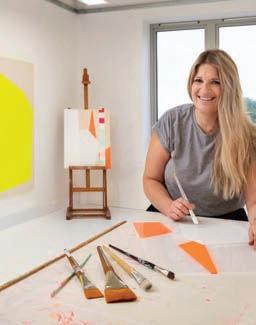
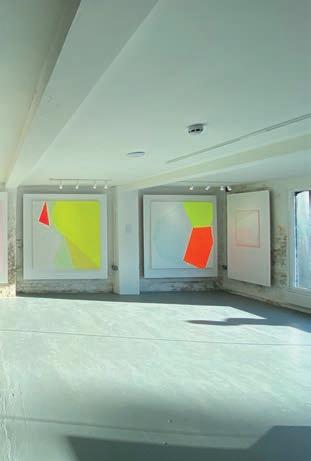

er practice extends beyond paint into acrylic constructions and installations that project colour into the surrounding space. Trudie describes these works as experiences that engage both body and mind, inviting viewers to respond physically as light shifts across translucent surfaces. She has watched people instinctively move closer, stand taller and become visibly animated in front of the work, confirming her belief that abstraction communicates through sensation as much as intellect.
That conviction also informs her view of the audience. She believes artists carry a responsibility to make contemporary art accessible, encouraging conversation without diluting complexity. hrough exhibitions, educational work with young people and a direct, open approach, she seeks to build confidence in looking. If visitors leave with a feeling that stays with them, she considers the work complete trudiemoore.co.uk
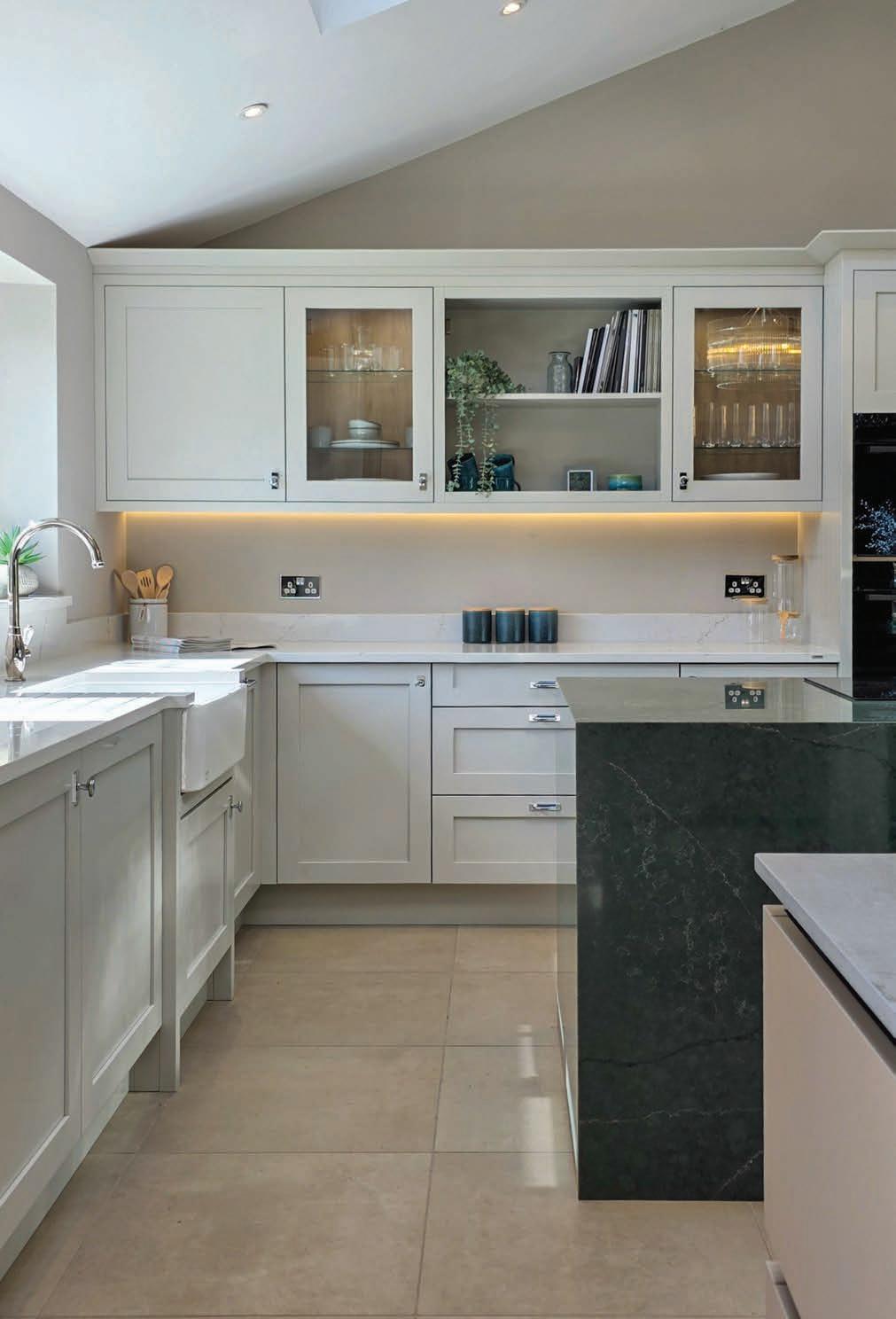
There is a question that Kyle and the team behind Keynvor Kitchens ask every new client before anything else is committed to paper. Not what they want, but what they don’t like about their current kitchen. It sounds disarmingly simple, but it is precisely this inversion – beginning with frustration rather than aspiration that defines the eynvor offer. efore a line is drawn or a finish selected, the team take care to understand how a person actually moves through their kitchen: where the friction is, what the daily irritations are, where the logic breaks down. “We like to have the conversation of who does the cooking? Which area do you use most? What storage do you need? And then ultimately, what’s the dream? Only once we have the answers to all those questions does our lead designer begin.”
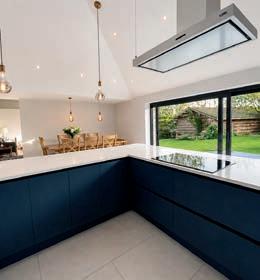
Keynvor Kitchens knows only too well that the kitchen can be the most emotional room in a home and, as such, deserves more than a transactional relationship with its designer. he studio offers a fully bespoke design service, working from an independent product range that spans traditional English cabinetry to handle-less German-style kitchens, where finishes, heights, configurations and details can be adjusted to suit the individual client rather than having to work from a predetermined catalogue. “Such is the depth and breadth of options available to us, that we are able to offer a bespoke design without the cost of a bespoke product,” Kyle explains. “Although we can do fully bespoke as well!” The team know their products inside and out, ensuring the end result is
always on point. The showroom, carefully curated rather than overwhelming, is arranged to illustrate the full breadth of the range: a modern shaker in solid timber sits alongside a true in-frame kitchen in the most traditional English style; a handleless Novus range designed around drawers and clean lines; worktops in quartz, stone and laminate. very finish, every proportion, every hardware choice is on the table.
A defining element to the eynvor approach is an insistence on knowing the client before knowing the kitchen. Kyle visits homes, measures spaces, studies light and flow. here architect plans exist – for extensions, new builds or significant remodels – they will design from those drawings, often visualising the entire room, not just the kitchen within it. “We tend to take it one step further and draw the full room, so that client can visualise the design in 3D.” Clients are then sent home with an instruction that sounds, as Kyle admits, a little odd: “Can you pretend to make dinner in that kitchen and tell me where you’re going to get your spices from?” The exercise consistently reveals what no mood board or material sample can: the small, overlooked habits that a well-designed kitchen should accommodate invisibly.
The kitchen that emerges from this process is created by accumulated intelligence: the placement of a food waste bin, the depth
of wall units to accommodate a plate collection, the relationship between prep zones and lighting, the height of a plinth for someone who is tall or manages a bad back. Every detail is considered, as is shown in a current commission whereby Keynvor are designing a bespoke breakfast unit that accommodates the morning family rush.
The studio carries no buying arrangements with any single supplier and takes no commissions that might skew a recommendation. The result is advice that is genuinely independent – if a different brand works better and costs less, then all for the better.
udgets at eynvor itchens range from under £15,000 for a thoughtfully resolved smaller kitchen, including appliances and worktops, to well over six figures for commissions where high-end appliances, hand-painted cabinetry and double-profile stone worktops are specified from the outset. At the upper end, Keynvor’s knowledge of product and supply chain is as much a part of the service as the design itself.
he kitchen fitting at the core of both operations is carried out by a small team of expert fitters with years of experience across residential and commercial installations. Kyle’s lead installer, a long-term collaborator, brings a standard of finish
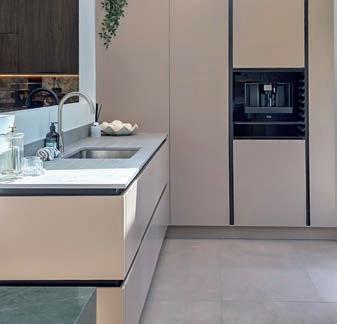
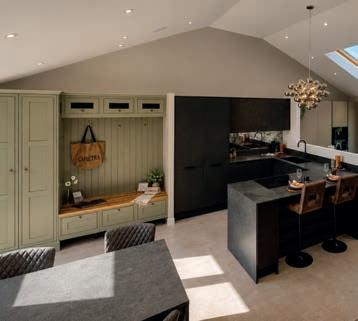
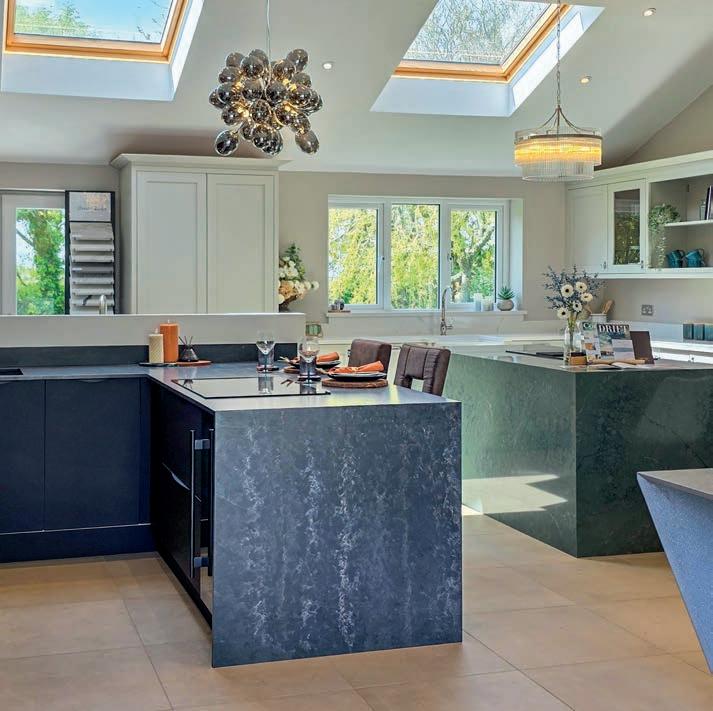
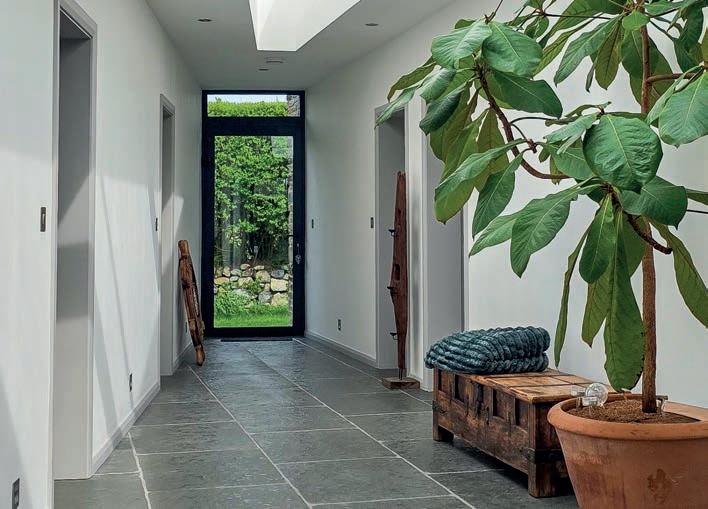
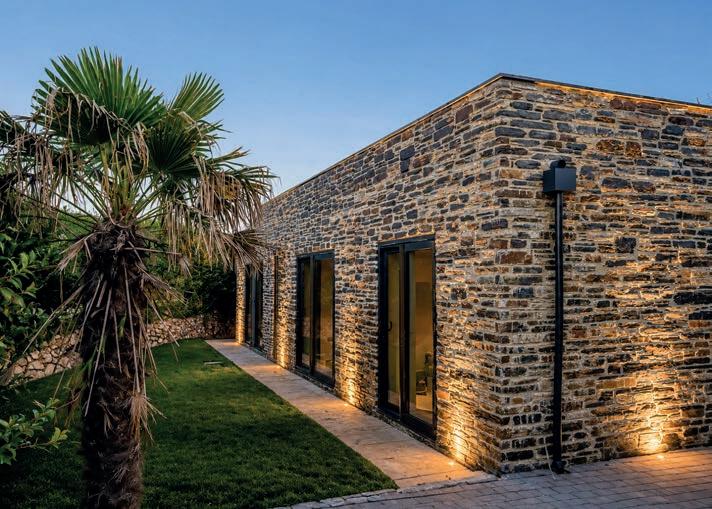
that the directors consider non-negotiable. This precision is replicated across the whole programme. Lighting is another discipline that Keynvor takes unusually seriously. “If you’re not thinking carefully about lighting, especially around where you cook, you can get into all sorts of trouble,” advises Kyle. The prep zone and the pendant over the island are planned together with the kitchen layout, not added afterwards under pressure from a site visit. The team maps the points at which a client will cut vegetables, plate up, fill a kettle, open a bin lid, reach for a spice and lights them accordingly. Rather than being peripheral concerns, these are what separate a kitchen that is merely beautiful from one that works.
Alongside the kitchens business sits Keynvor Construction, directed by Kyle whose background spans project management, property development and new builds across the South West. The two arms of the business are distinct but deliberately integrated: together, Keynvor Group offer a genuinely end-to-end service that takes a project from architectural brief through to a completed, fully fitted interiors.
“Our involvement can begin long before construction starts, says yle. y working with architects and clients at the planning stage, we help shape projects from the ground up and manage every detail through to a successful completion.”
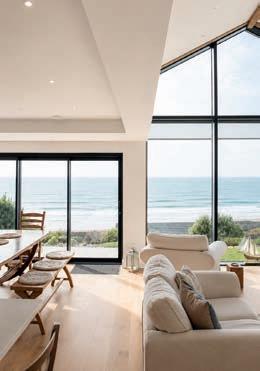
For clients, this means a single point of contact at every stage of a build or renovation. Subcontractors are sourced, scheduled and managed by Kyle. With an impressive network of trusted trades behind him, Kyle can bring together the right expertise for any project. “You’ll only ever speak to me or a specific member of the Keynvor team” Kyle explains, “and that’s an integral part of the service we offer. eynvor works predominantly on a cost-plus model, designed to protect the client from the hidden contingencies and inflated margins that characterise more opaque contracting arrangements. It offers our customers transparency,” says Kyle. “They know at all times where their money is going and where their spending is, which means they can keep an eye on their own budgets.”
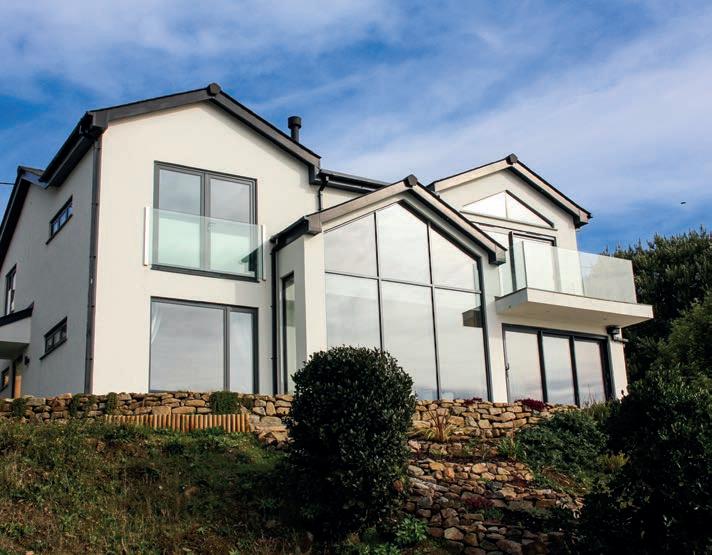
Kyle has managed projects of considerable complexity in Cornwall, including a new build on the Lizard that required seven years of planning and extensive negotiation with the ational rust before finally being approved. He has worked on commercial fitouts, run student accommodation portfolios in ristol and managed multiple site programmes. The breadth of that experience now feeds directly into what eynvor can offer budget management, programme scheduling and the kind of oversight that means a kitchen can be fitted in a matter of days – the team completed a London commission to installation-ready
stage in two days, ahead of stone templating – without any of that e ciency being felt as pressure by the client.
nderpinning all of what eynvor offers is a principled resistance to the kind of presentation-over-performance that is often encountered elsewhere and that they have no interest in replicating. The foundations of Keynvor, independent, transparent, genuinely invested in the client’s result rather than its own, are, in the end, what make them worth commissioning.
keynvorgroup.com
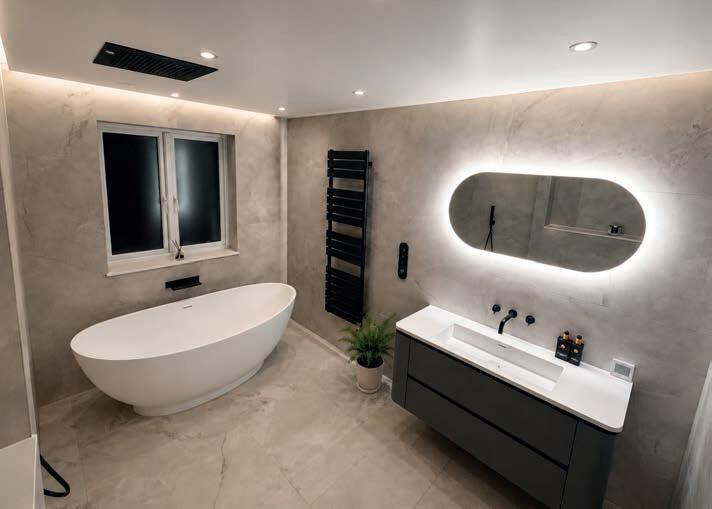
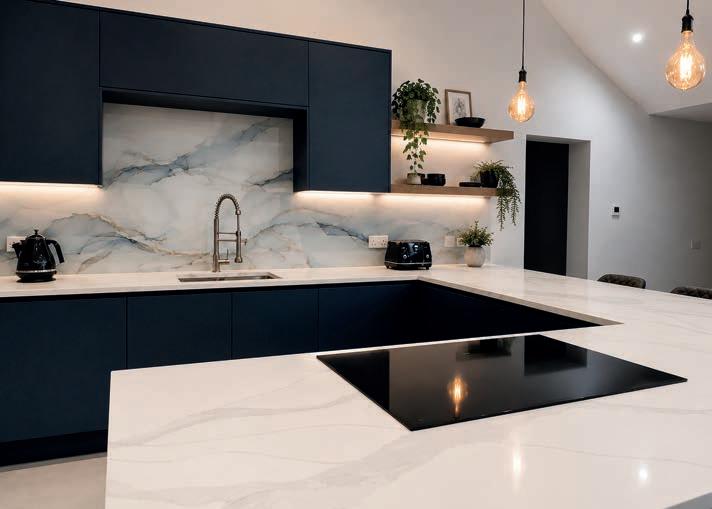
WORDS BY JAMIE CROCKER
An in itation to fo a into the a ou s of o sha s ich seafoo histo
I’ve tried. I really have. It’s been a lifetime spent trying to cure myself of an aversion that has left me feeling that I’m missing out on something special.
In oyan, a Dali-esque platter of shellfish winked at me from the open window of a beachside restaurant like an edible sculpture. I admired it enormously, right up to the point where someone suggested we enter the establishment and try it for ourselves. In Cambrai, my eldest son, all of eleven years old, demolished a bucket of moules with the swagger of a Breton fisherman, while I sought refuge in the altogether less adventurous embrace of steak tartare. There is, it seems, something hardwired within me that simply refuses anything hauled ashore by net, line or lobster pot. I can admire seafood all day long I just don’t appear to possess the final, crucial ingredient required to eat it.
So, it was with a great deal of reluctance that I decided to order the Cornish market fish. As the waiter walked away after taking our order, my only thought was, ‘what have I done?!’ If only I’d had the courage to shout across the dining room to call
him back to say that it had been a terrible mistake and that what I really wanted was the Lashbrook Farm Crispy pork chop accompanied by Asian salad, pickled Daikon, Goma dressing and a Japanese curry sauce. On this particular Saturday evening, at the Galley Restaurant in Topsham, courage was somewhere outside enjoying the harbourside view. Recognising my angst-contorted face, my wife reached for my hand under the table, looked into my eyes and said, ‘It’s going to be okay.’
Thank goodness for wine. A glass of The Galley White from the Pays d’Oc region of France brought with its citrus notes and general lightness a refreshing sense of calm. Having proposed a toast, my wife was congratulating our decision to break the journey to Cornwall in this small harbour town. A choice that does not come easily to those seeking sun, sea and surf in one of England’s top holiday counties. It’s usually a question of packing the car up the night before and setting off at some ungodly hour to avoid everyone else, who weirdly have also decided to do the same thing, so you still end up getting caught in the bottlenecks along the A or A as you make your way west. You just can’t win. Or can you?
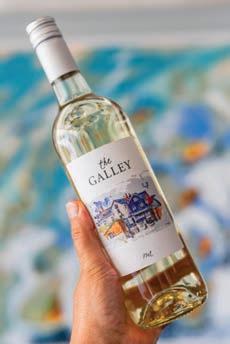
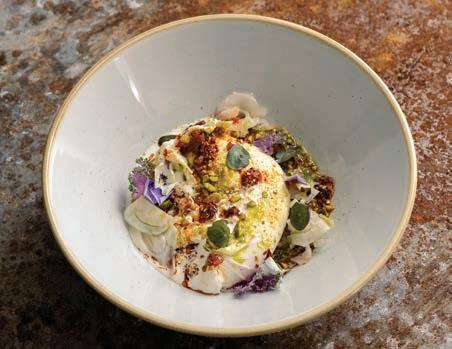
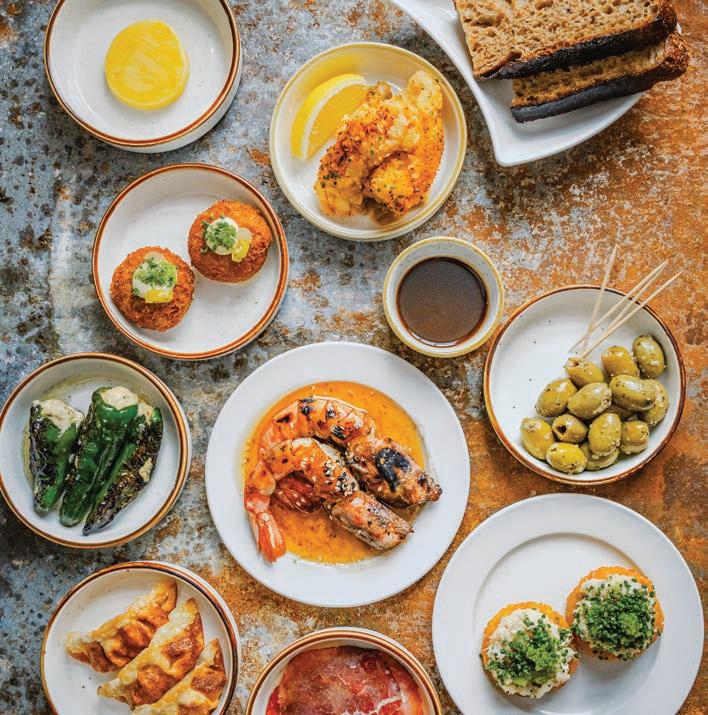
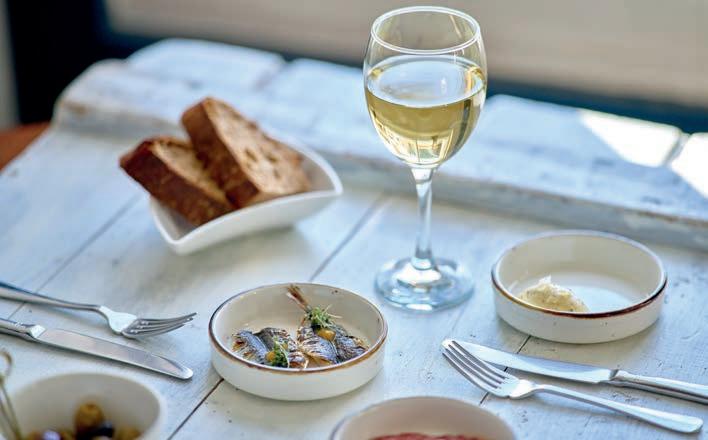
In days of yore, when I was a child, travelling to Prussia Cove or Penzance meant a two-day journey in my father’s Morris Traveller, with a stop-over in the Cotswolds to break the journey and to let my mother recover from moving at a mind-numbing fifty miles an hour all day. It was a civilised affair.
For our particular sojourn, we’d decided to heretically dip our wheels into those halcyon days of slower journeying. Topsham seemed a logical place to break the journey, affording us a leisurely start in the morning and the opportunity to appreciate some relaxed dining in the evening, after a stroll around what reads like one of the kingdom’s more appealing small towns – Dutch-inspired architecture, interesting maritime history and a stunning waterfront where my courage was still hanging out. So far so good – if only I hadn’t ordered the fish dish.
Tearing off a chunk of sourdough supplied by the local Hylsten Bakery I began to mull over my choice. At least the starter I’d opted for would plug a hole until breakfast. A frisson of expectation suddenly ran around our quartet as the expression on my daughter’s face indicated that she’d intuitively spotted our order heading towards us. It was as if an invisible herald had silently announced its imminent arrival to her.
lates of St Austell mussels, grilled ox tongue and Chew Valley burrata – two of each were soon placed before us. As it happened, the starters were magnificent, as one would expect from an awardwinning restaurant. Each dish bore the unmistakable touch of head chef Han Wang, whose subtle astern influences elevated the familiar: a hint of coriander and lime here, an accompanying Thai salad there.
Buoyed by such an impressive opening, my earlier trepidation about ordering fish for the main course began to seem entirely misplaced.
When we’d finished and our empty dishes were whisked away with the confident surety of a professional, we sat back and awaited the arrival of our main courses. Two plates of rosecco battered fish and chips were delivered with the same aplomb, as well as the pork dish that looked incredible to my envious eyes. Oh, to have been my daughter at that moment. Mine was last. Of course, I was naturally wary of my first impression. It looked like art on a plate, as if prepared by a consummate practitioner who knows their gouache from their tempera. This was fish, though; a quick swig and I girded myself for the disappointment.
Oh, my word. Surely this couldn’t be happening. There was no negative reflex response that I normally must endure when taking a first mouthful of something that has lived in water. This was edible. More than this – to describe it as good, both in terms of taste and texture, would be like saying Anthony Hopkins is a passable actor. I hadn’t been this overwhelmed since dining in Lyon back in the early s. I was beginning to mentally picture myself walking to the kitchen to congratulate Han on this culinary achievement. The fish flaked away, falling into the clam and white miso chowder that
it had previously been sitting on top of, the chilli pickle mussels and bonito flakes and herbs elevating the experience to something that can only really be expressed by tasting it for yourself. I was converted – at least on this evening at the Galley.
We talked and laughed, enjoying what was put before us, including an array of desserts, that I unfortunately don’t have the space to wax lyrical about here. At some point in the evening, Patrick, the owner, came over to see if we were happy. We fell into chatting about his passion for buying local and having retained the Michelin Bib Gourmand since .
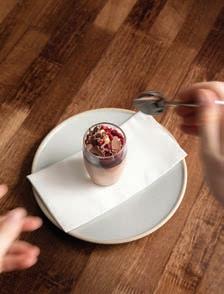
So, if you consider yourself a gastronaut who is compromised by an aversion to seafood, or someone who enjoys all that is put before them, if it’s prepared with care, then the Galley at Topsham is the place for you. And if you’re a Cornwall addict into the bargain, who regularly travels there, then why not do what we did? Book a room for the night, wander around the harbour and dine at this wonderful little restaurant. Or alternatively make it your lunch stop on the way home when you’ll be able to feast from the Prix Fixe menu. It will provide that added dimension that has been missing from your trips to the west country in the past.
galle estau ant co u




WORDS BY HANNAH TAPPING



Combining the purity of Cornwall’s unspoilt natural resources with a desire to bring something new to the Cornish spirit scene.
Brian Farmer and his family have come across something that seems to have so far been overlooked in the Duchy. Blending local ingredients and rich orchard flavours with a long-established tradition, Moorland Distillery has landed firmly on the map of Cornish artisan spirits. ack in we found ourselves determined to make a truly Cornish product from scratch a product that could be purchased for that special occasion and that would be attractive to the ever-growing tourist trade, explains rian.
owever, it seemed that many gin producers at the time were sourcing ingredients from outside the county, which was something the Farmer family didn’t want to do. After spending many hours attending craft fairs, food and drink festivals, and

trawling supermarket alcohol shelves to find that missing Cornish beverage, they soon came to realise that a true Cornish apple brandy, produced in the traditional way from fruit wine, was missing from the market. e had found a potential product and research indicated that most ‘true’ fruit brandies were distilled using a traditional copper pot still and matured in oak barrels, explains rian. o, throwing caution to the wind, we located and imported a -litre copper still from Germany. nter the affectionately named, usie.
ith a vision to produce a truly Cornish product made from scratch, in Cornwall, by the Cornish, the Farmer team set out to lay the foundations for oorland istillery. tarting with apple uice, which is fermented into apple wine using selected yeasts, a process which

is common to all true brandies, the low wines are transferred to the copper still, usie, and gently heated to extract the apple wine spirit. Only the very heart of the distilled alcohol is used to produce our Apple randy, rian continues, being settled briefly before being laid to rest’ in oak barrels, sealed with beeswax and left to mature. Our cellar is well ventilated which provides the advantage of barrels being exposed, to some degree, to the infamous Cornish mi le’. arly trials have shown us that this unique combination of quality natural ingredients, pure spirit, prolonged contact with oak and climate has the potential to produce an outstanding brandy. e stored our first brandy in the summer of and we launched our one-year-old’ fresh bottles in the summer of .
After further research, a Cornish apple schnapps was added to the collection. ade from a careful blend of spirit, apple uice and spring water, the oorland istillery Apple chnapps is produced at 8% and 20%. The 8% can be served over ice or with a mixer and includes honey from their own bees that live in the apple orchard. The 20% can also be served over ice, but is more popular as a base for a cocktail with prosecco, ginger ale or champagne.
espite some di cult trading years during the Covid pandemic, rian and his family have kept oorland istillery afloat, and together are finding success. rian elaborates e have an I expert who keeps the infrastructure up and running, an engineer who solves all our e uipment running issues and another son who is













brimming with confidence when facing customers. Alongside this my wife, our mission control’, has an expert eye for detail on our image which includes label design, marketing material, stall design and anything that re uires that special input. I mainly focus on production, spending endless hours in the distillery or as some people call it, my man cave’.
hile it was not their intention to produce a wide range of products, attending shows and events has given the team a valuable insight into what niche products are desperately missed and no longer available. ecause we produce randy, we were asked many times, if we could make Lovage and hrub, rian tells us.
umour has it, shipwrecked barrels of rum and brandy were hidden off Cornish shores, to be smuggled ashore in darkness. As the barrels were submerged in salt water it tainted the spirits and therefore Lovage and hrub were a popular addition used to mask the taste. Lovage and hrub
were made for centuries by hillips of ristol, who, when they ceased trading, took the recipes with them. o, we started out on a ourney to reproduce these much-loved herbal cordials. It took us months to produce a Lovage made from natural ingredients that customers tell us tastes exactly the same as the original. And hrub ell after many trials, and failures, we’re there
oorland istillery now offers a sweet and indulgent Cherry randy alongside its Apple randy and Apple chnapps, as well as a five and ten-year-old randy, plus their beloved um. ith all the flavours of a Cornish orchard blended into a tantalising product, it comes as no surprise that as many locals are buying the products as are sold into tourism, and it’s clear many are looking forward to what’s next for Moorland Distillery.
moorlanddistillery.co.uk
WORDS BY HANNAH TAPPING
Former medieval Cornish language scholar turned crime writer, Myrna Combellack, delivers a novel that is both entertaining and authentic in equal measure.
When Myrna Combellack sits down to write crime fiction, she brings something rare to the page: authenticity forged from decades of living between Cornwall’s two worlds. As a former academic specialising in medieval Cornish language at the niversity of xeter, and later a schoolteacher who experienced the realities of life both locally and abroad, yrna understands the stark contrasts that define modern Cornwall and she’s not afraid to write about them.

er latest novel, Lithium Betty, plunges readers into a Gothic thriller set against the backdrop of Cornwall’s mining heritage and its uncertain future. he story follows etty, a carer who discovers a body in a remote cli op castle and becomes entangled in a sinister conspiracy involving a corrupt police commissioner, international mining interests and a mineral rights wrangle.
yrna’s ourney to crime fiction writing began in childhood. orn in , she grew up as an only child in a remote
Cornish village where drinking water had to be fetched from a natural spring on Carn arth, half a mile away. yrna tells me: “I began reading and writing as soon as I could. ithout electricity, there was no entertainment, except learning to play the piano, sewing, knitting, cooking and walking. I knew every road and lane for miles around. I remember men in brightly coloured, short sleeved shirts wandering about the lanes. They were miners returning from abroad. The hillsides were littered with heavy mining equipment and in the valley, there were the remains of the tin stamps, which my mother remembered working. There were cold arsenic flues and engine houses. A child could stay out all day, but we were warned never to stray off the path, because the ground, covered in heather and gorse, could give way, and you could be lost forever in some shaft. It might take months to find you.
chool was school, continues yrna, “with a map on the wall with a lot of pink, which depicted ritish territories.
Cornwall was special. It gave fast steam and the industrial revolution to the world. In the graveyards, the headstones recorded not only those who had remained or returned to the parish, but also those who died in exico, outh Africa, Australia, South America and the United States. Our family had cousins in all of those places, so the wide world was already a familiar place. After studying nglish at university, I then worked for many years for the University of xeter as an academic, still watching and scribbling, and I’ve never stopped writing fiction set in real Cornwall.
espite her literary background, yrna is refreshingly pragmatic about her craft. orking with her mentor Oliver arris, a spy thriller writer, she learned the mathematics of successful crime fiction a dead body within five pages, complications building to three- uarters through, then the unravelling. “It can be done almost mathematically, she admits. Yet within these structures, yrna’s distinctive voice emerges, one that is humorous, gritty, and unflinchingly honest about Cornwall’s economic realities. “There are rich pickings in Cornwall for the writer who is able to observe with a keen eye, she tells me. inston Graham is a case in point. In his historical Poldark novels, he researched the complexities of mining, banking and political influences on his characters, rich and poor.
mineral wealth, local communities desperate for prosperity and the collision between heritage and development.
Lithium Betty opens with its protagonist arriving at a cli op castle inspired by Carn rea but larger, more Gothic to care for the elderly Lady Legeia, only to find her already dead. What unfolds is part murder mystery, part social commentary, as etty navigates three very weird sisters, a corrupt police commissioner with designs on mineral rights and her own husband’s mysterious connection to an international mining conglomerate. While the novel’s setting is fictional, it evokes Camborne and edruth, mining towns where prosperity has departed and hope hinges on lithium and tin extraction. y the end, the international company has transformed the castle into its European headquarters. It’s a tale that’s ambiguous, unsettling and deliberately so. “It’s quite kind of sinister, the way the international company works, Myrna notes.

Her tongue-in-cheek approach asks uncomfortable questions about who truly benefits when Cornwall becomes a commodity and Myrna is committed to showing her readers something beyond the Cornwall that exists when the visitors leave, when the mine closures bite, when the choice is one of survival. It’s this tension, between romance and reality, heritage and progress, insider and outsider, that makes yrna’s crime fiction genuinely compelling.
Researching for Lithium Betty, yrna delved deep into Cornwall’s mining traditions, its history, government grants and the environmental implications. The novel grapples with real tensions: international companies eyeing Cornwall’s
Lithium Betty by Myrna Combellack (PBK, RRP £18.00, November 2025) is published by Lendal Press. valleypressuk.com
WORDS BY HANNAH TAPPING
Design begins with the landscape, creating homes that belong on Pentire’s shoreline.
Standing above the Gannel Estuary on Pentire, Gannel Waterside looks across the River Gannel, Penpol Creek and the fields that rise towards Crantock, with an outlook that changes by the hour as Cornish skies drift overhead. It is a setting that has always rewarded careful observation, and one that has guided every stage of this new collection of homes. The development comprises eighteen two-bedroom apartments, two four-bedroom penthouses and four fourbedroom houses, each planned to make full use of its position while respecting the landscape that gives the place its identity. ff-plan reservations are now being taken, with prices ranging from £695,000 to £1.9 million.
The relationship between building and landscape rests at the centre of the project. Acorn’s design team began by studying the existing contours, mature Monterey cypress trees and woodland character before establishing the arrangement of the buildings. Views across the estuary remain open, planting has been retained wherever possible and new habitats have been introduced through green roofs, resilient coastal planting and biodiversity measures.
This approach extends beyond appearance. Sustainable drainage systems form part of the wider environmental strategy, supporting a development intended to sit comfortably within its surroundings while responding to the demands of contemporary living.
Clean lines, generous glazing and broad terraces acknowledge the site’s coastal setting while making subtle reference to Pentire’s Art Deco legacy. Inside, the emphasis relies on light, space and outlook. Large windows pull the estuary into daily life, while balconies, roof terraces, gardens and direct water access encourage residents to spend time outdoors whenever conditions invite. From the apartments to the larger family houses, each home has been arranged to create a natural flow between interior rooms and the landscape beyond. The result feels considered, practical and appropriate to its surroundings.
The specification reflects that same level of care. German-made Schüller kitchens form the heart of every home, complemented by integrated appliances and, within the houses, dedicated utility rooms and pantries. Contemporary bathrooms
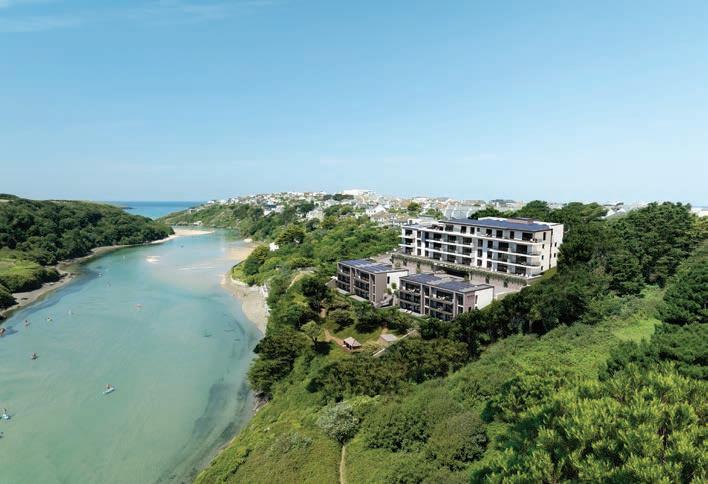
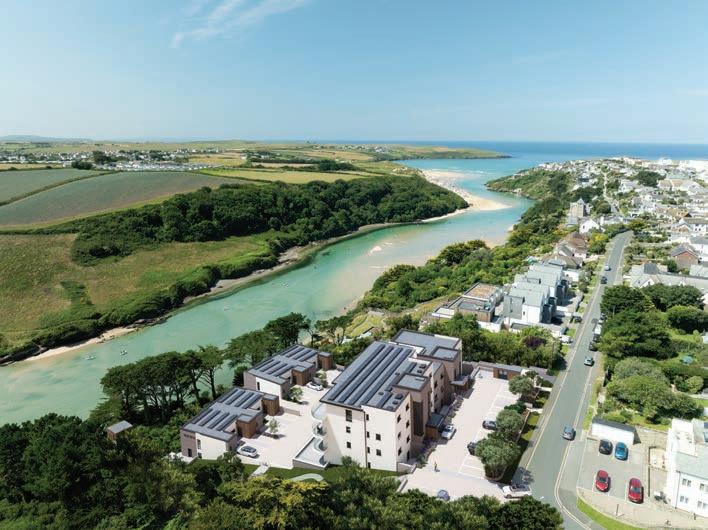


continue the restrained design language, while underfloor heating provides year-round comfort. arndean flooring runs through the principal living spaces of the apartments and houses, with porcelain tiling featuring in the penthouses. Outside, tiled terraces include integrated lighting and allocated parking is provided for every property. ach space includes an electric vehicle charging point and communal surf and kayak stores acknowledge the rhythms of life beside the estuary. A ten-year structural warranty offers additional reassurance for purchasers looking ahead with confidence.
he peninsula reaches into the Atlantic between Fistral each and Crantock each, placing coast, estuary and countryside within easy reach of one another.
Fistral lies around five minutes on foot from Gannel Waterside, while Crantock’s broad sands and ational rust-backed dunes sit across the estuary. addleboarding, kayaking, sailing and swimming all form part of everyday life on the Gannel, with direct access from the development making spontaneous outings an appealing prospect. eyond the water, residents find caf s, restaurants and coastal walks close at hand, together with straightforward road, rail and air connections linking ew uay with the rest of the country.
Among entire’s familiar pleasures sits Fern it Caf , well known locally for fresh seafood and especially its crab sandwiches, while the outh est Coast ath offers miles of walking in either direction.
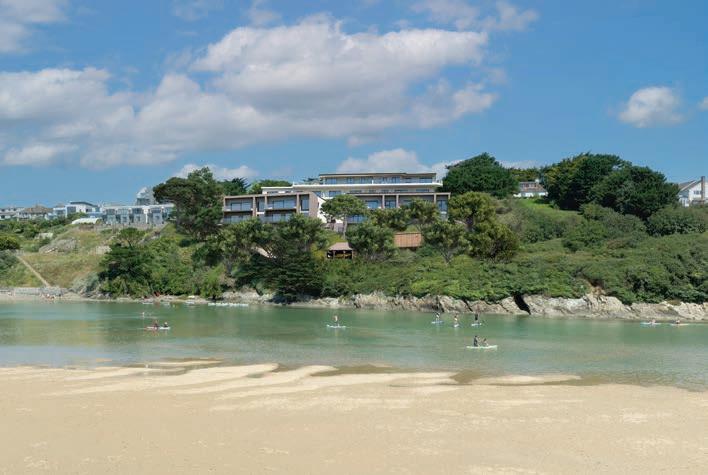














A morning paddle before work, lunch overlooking the estuary or an evening walk across the headland all become realistic possibilities when home sits within easy reach of both coast and town. Gannel aterside has been planned with that lifestyle in mind, recognising that the value of a home extends beyond its walls.
nvironmental performance has received e ual attention. igh-performance insulation, triple gla ing, air source heat pumps and solar panels contribute to lower energy demand across the development, reflecting Acorn lue’s wider commitment to creating homes that combine longevity with e cient operation. he company has spent more than three decades delivering residential developments and regeneration pro ects across the outh est and beyond, establishing a reputation for careful site selection and thoughtful design. In Cornwall, its portfolio has




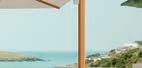

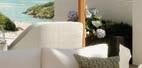





consistently focused on locations where architecture and landscape deserve e ual consideration, and Gannel Waterside continues that approach with confidence.
very successful home begins with an understanding of place. At Gannel Waterside, that understanding can be seen in the preservation of mature trees, the orientation of each building towards the estuary, the uality of the materials selected and the practical details that support life on the water. ogether they create a development that feels well- udged from every angle. For buyers seeking a permanent home, a coastal base or an investment in one of Cornwall’s most desirable settings, Gannel Waterside is an opportunity do ust that.
For further information, or to register interest, visit the website.
acornpropertygroup.org


Escape • Unwind • Reconnect.
Nestled in the Cornish countryside, Old Lanwarnick o ers luxury self-catering cottages and glamping pods within 34 acres of peaceful private grounds.
Blending historic charm with modern comfort, it’s a tranquil retreat surrounded by nature, friendly alpacas and woodland walks — with beautiful beaches just 15 minutes away.