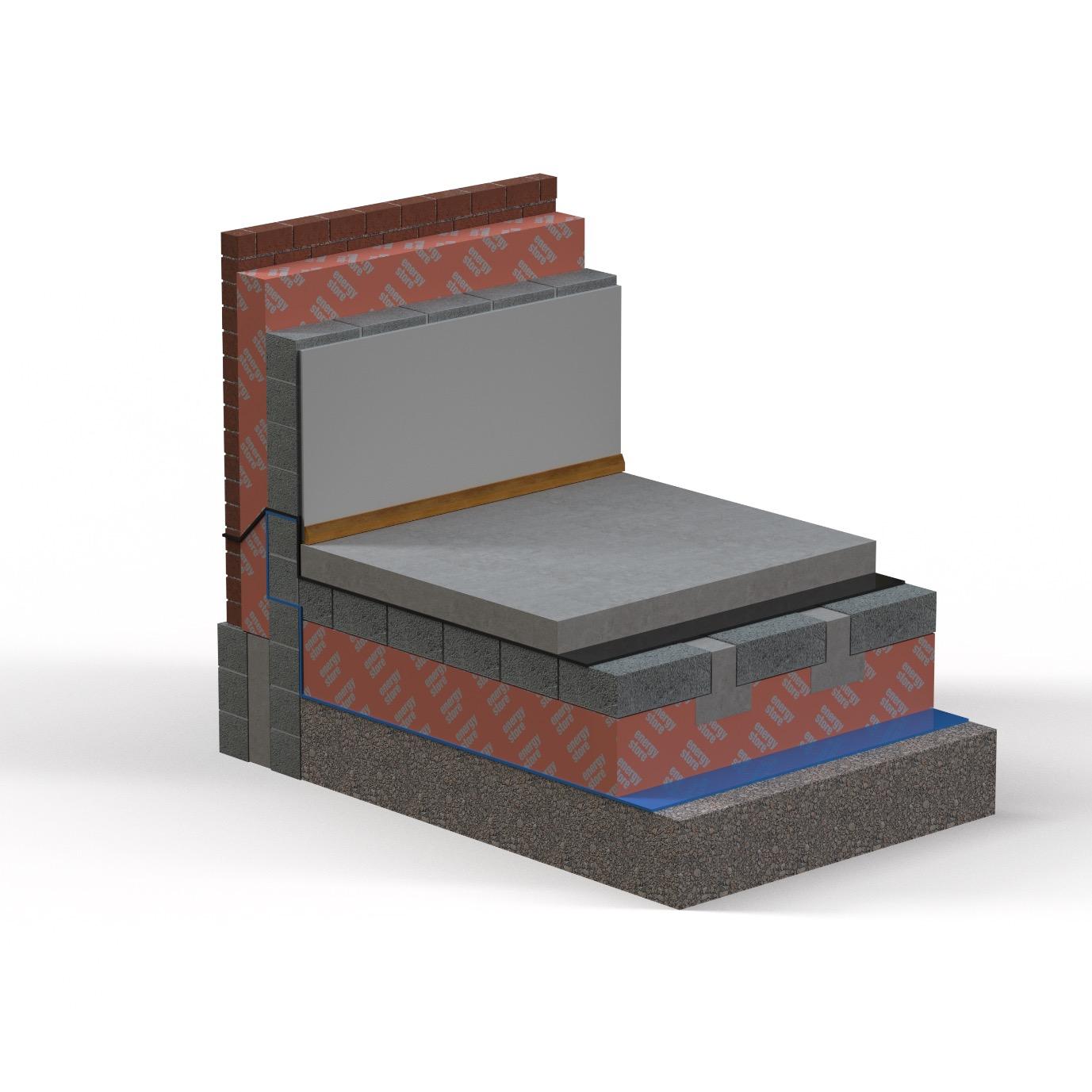
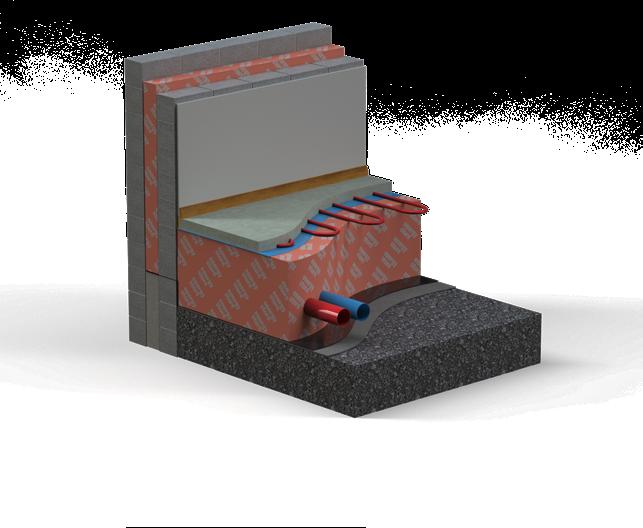
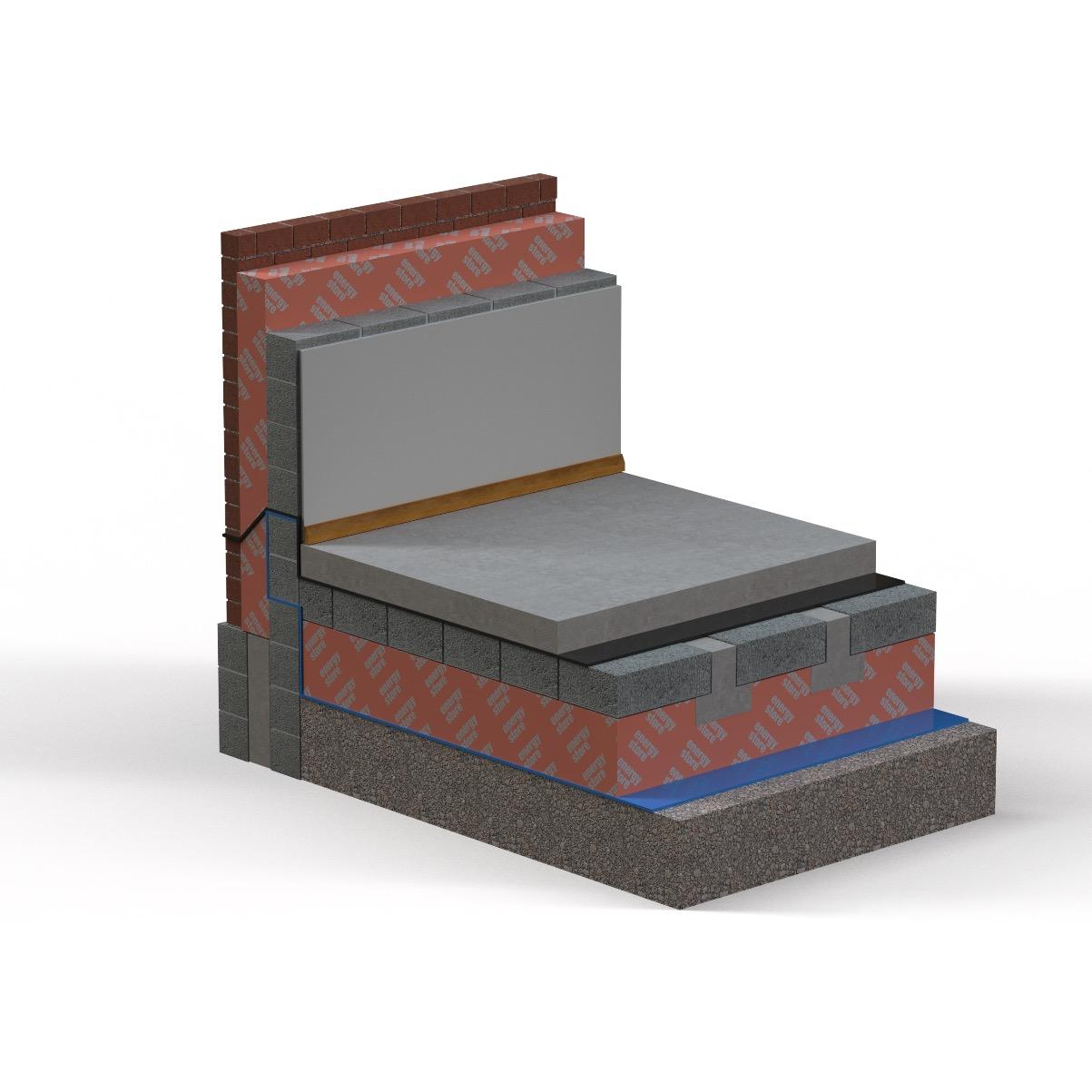
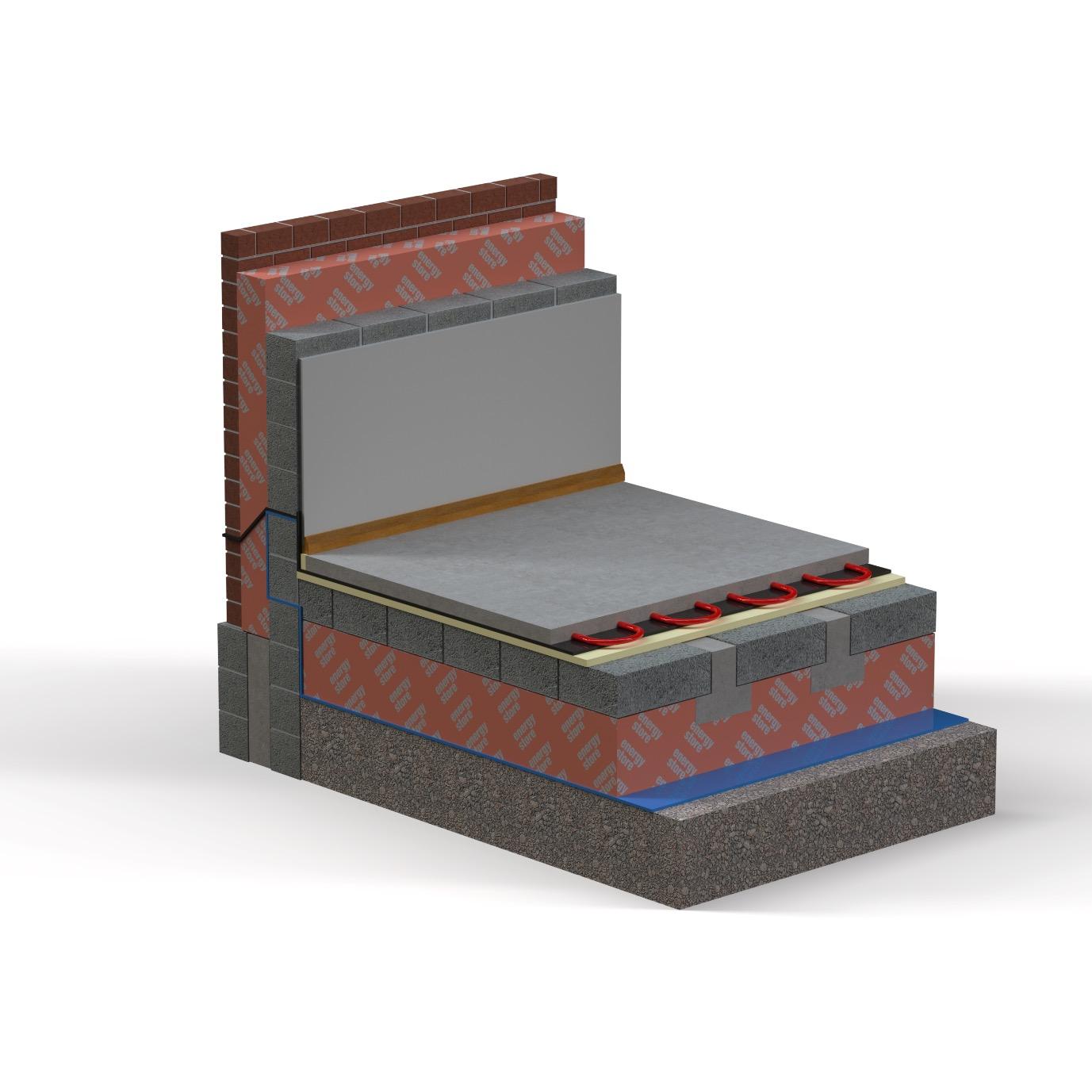
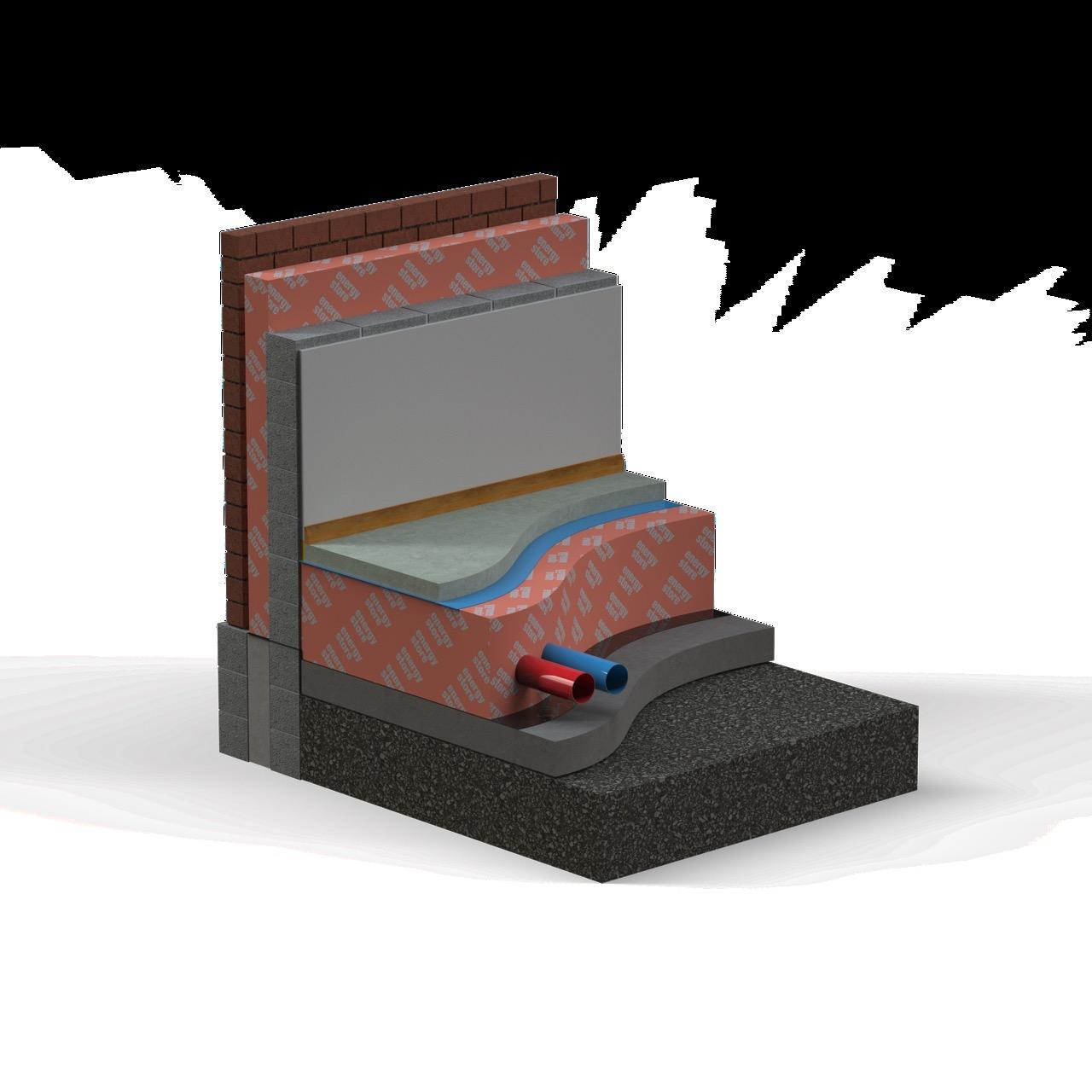
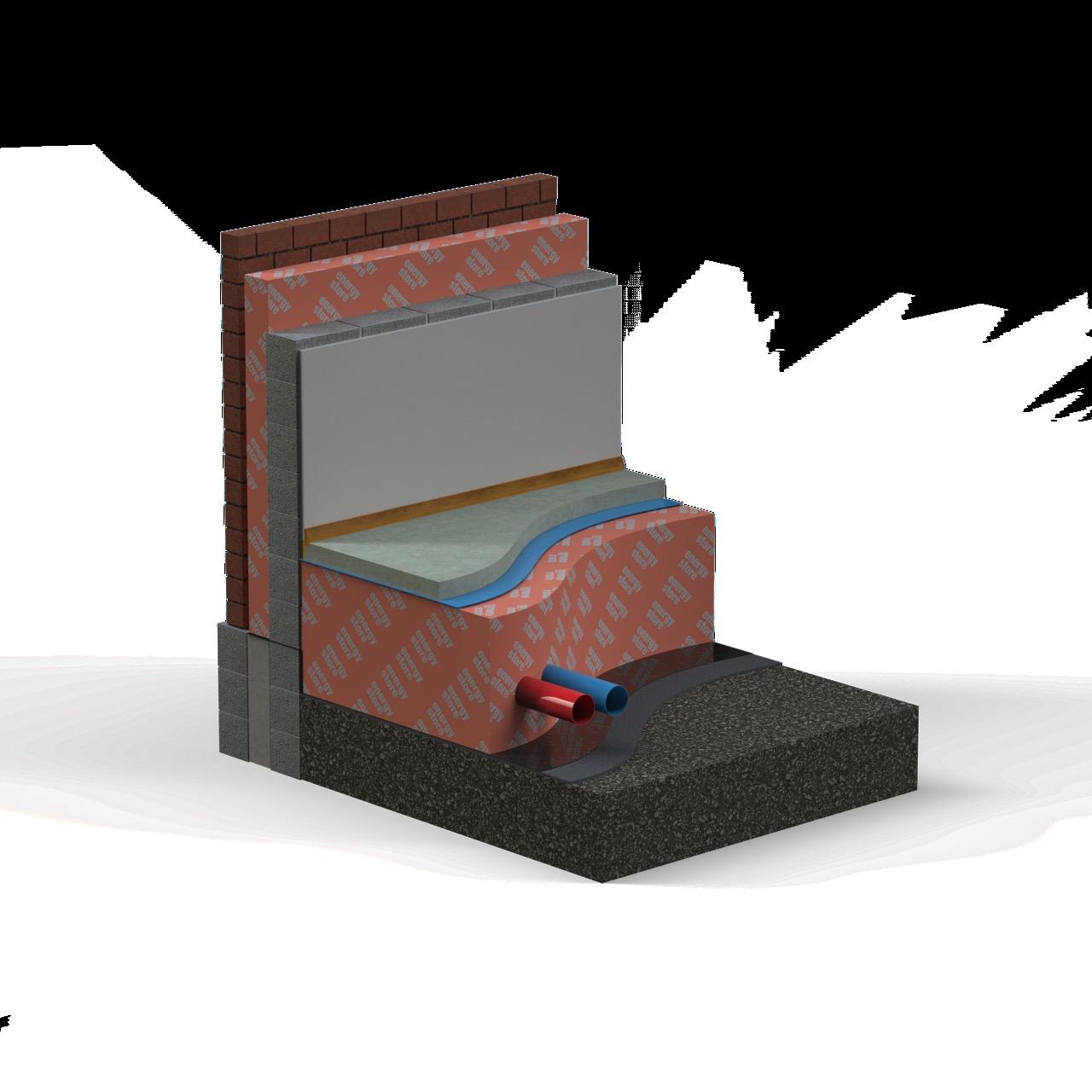
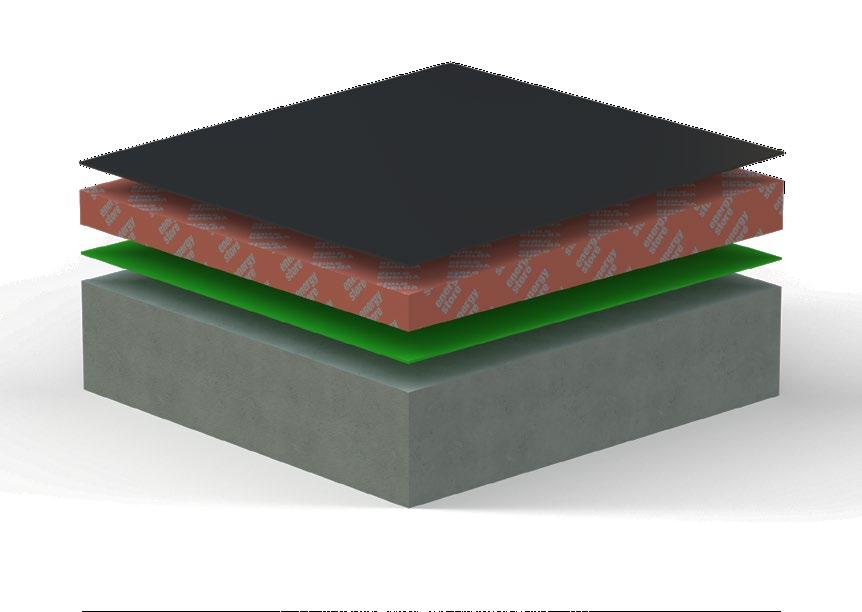
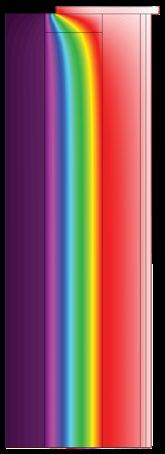
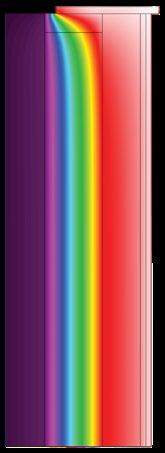
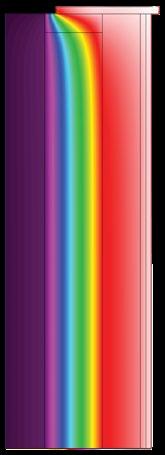
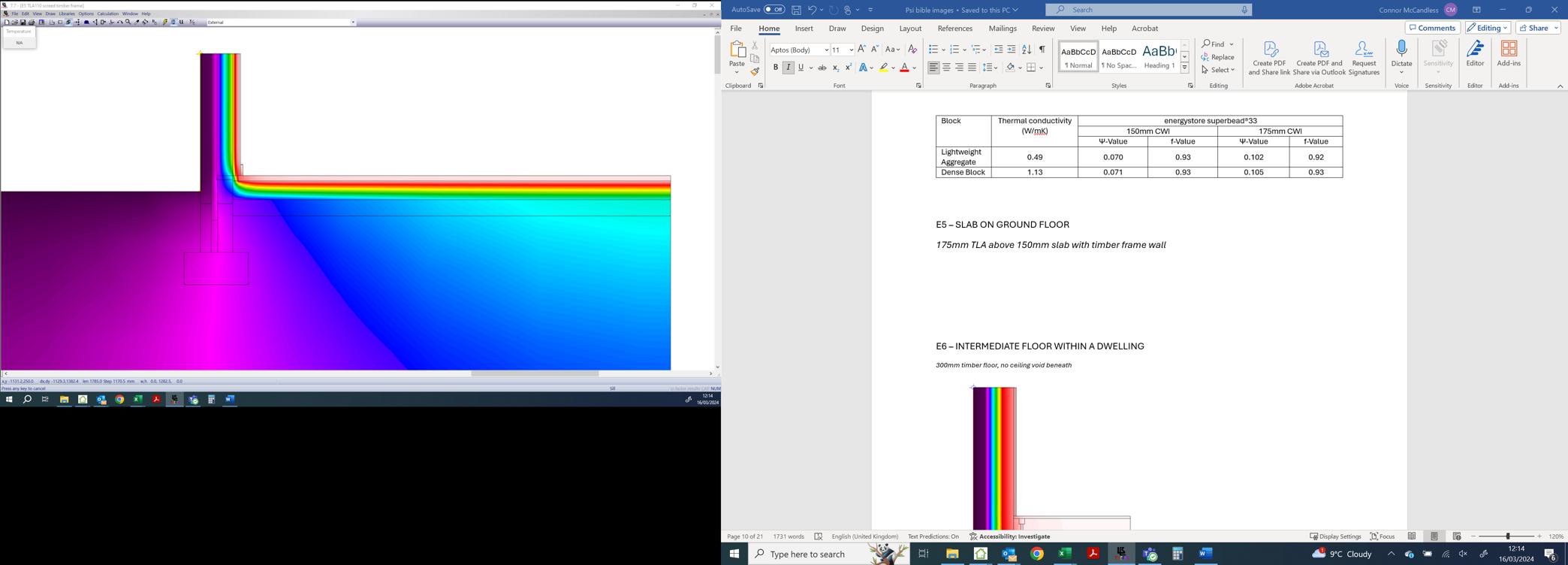
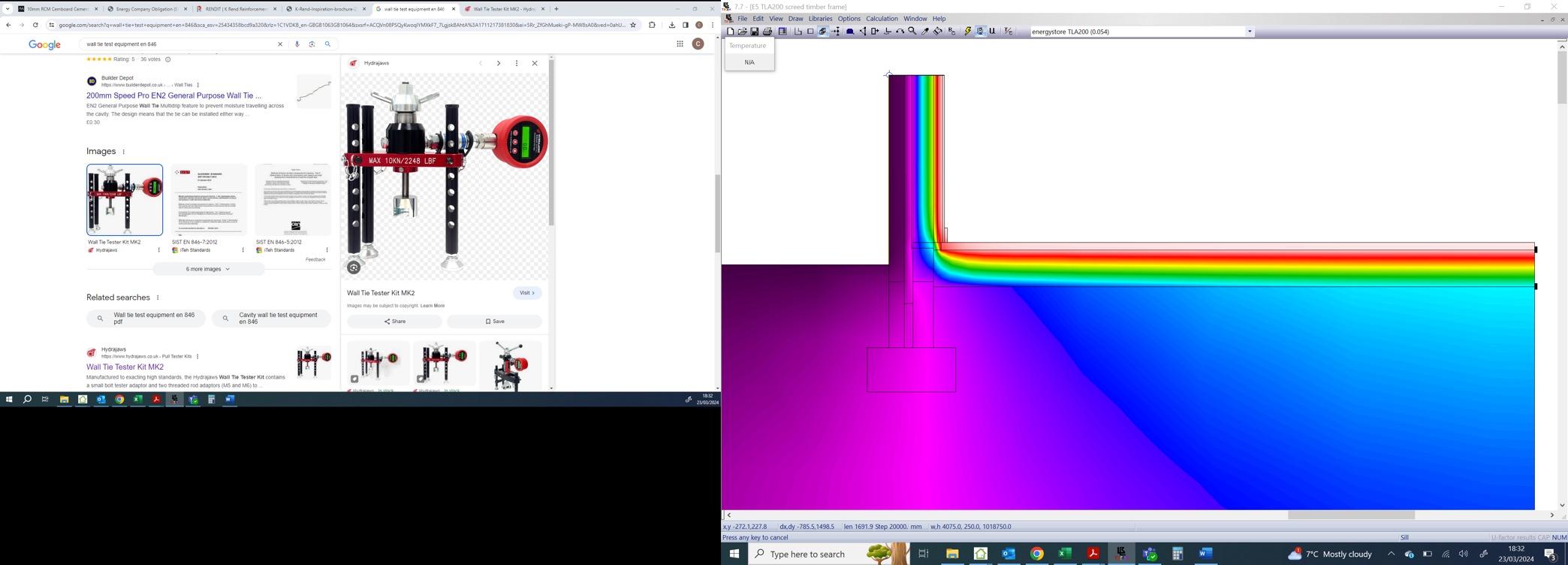
Ground Floor TLA200 on Hardcore with screed finish
Flat Roofs (Average Thickness)
E1 Steel lintel with perforated baseplate
E3 Window sill
E4 Window jamb
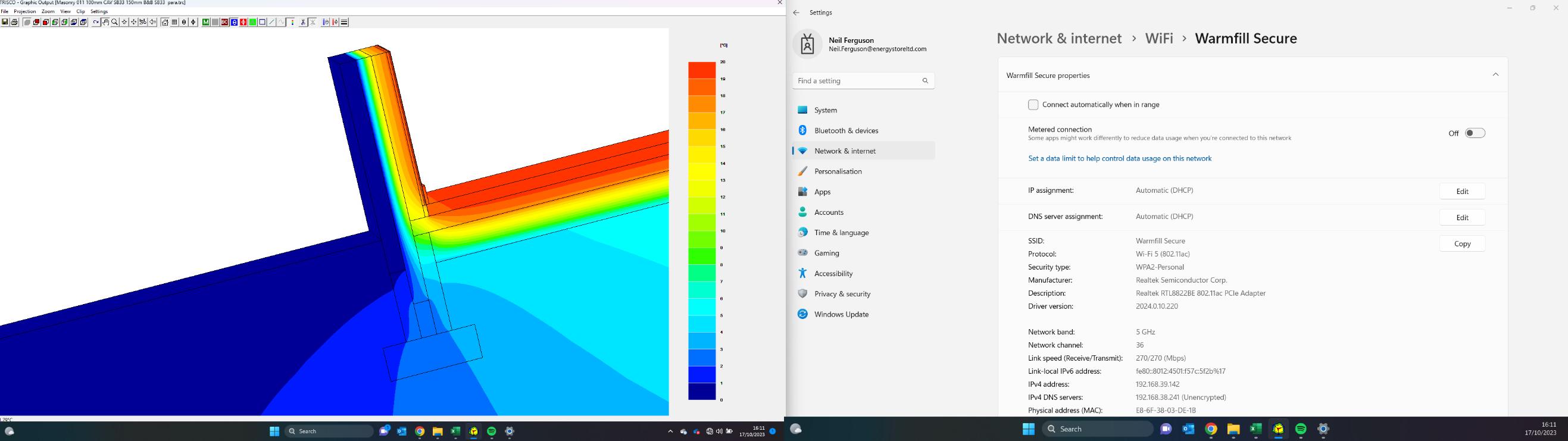
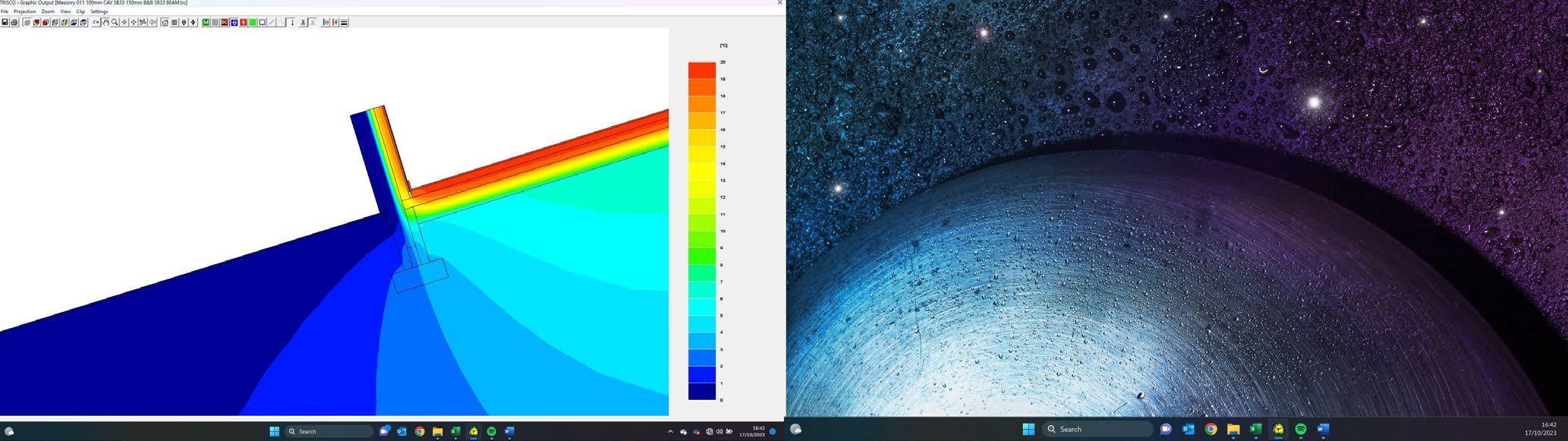
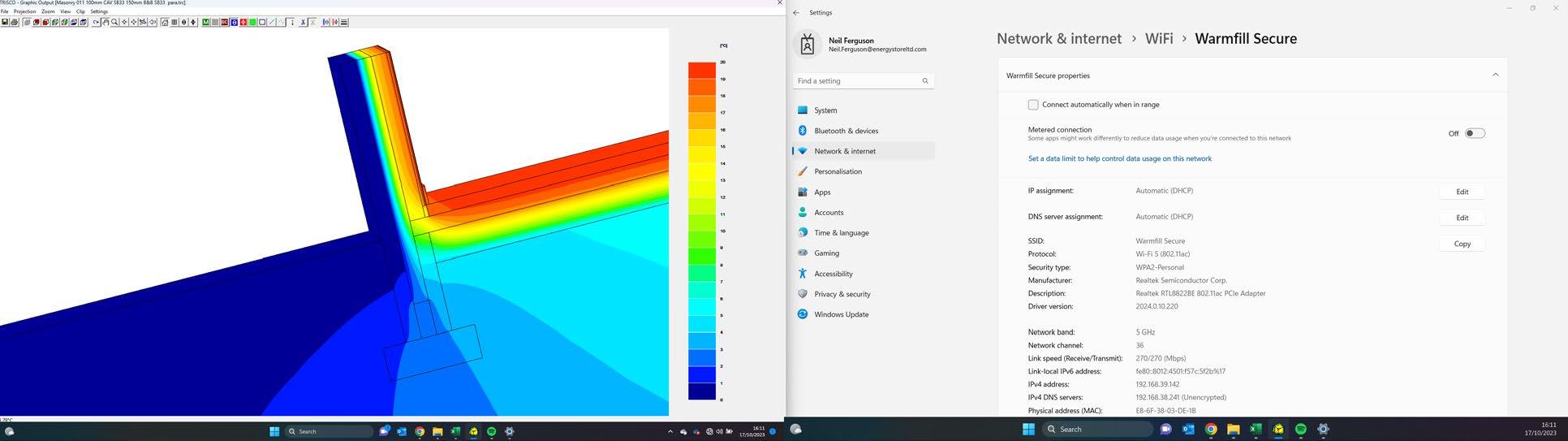
E5 - Beam & Block floor
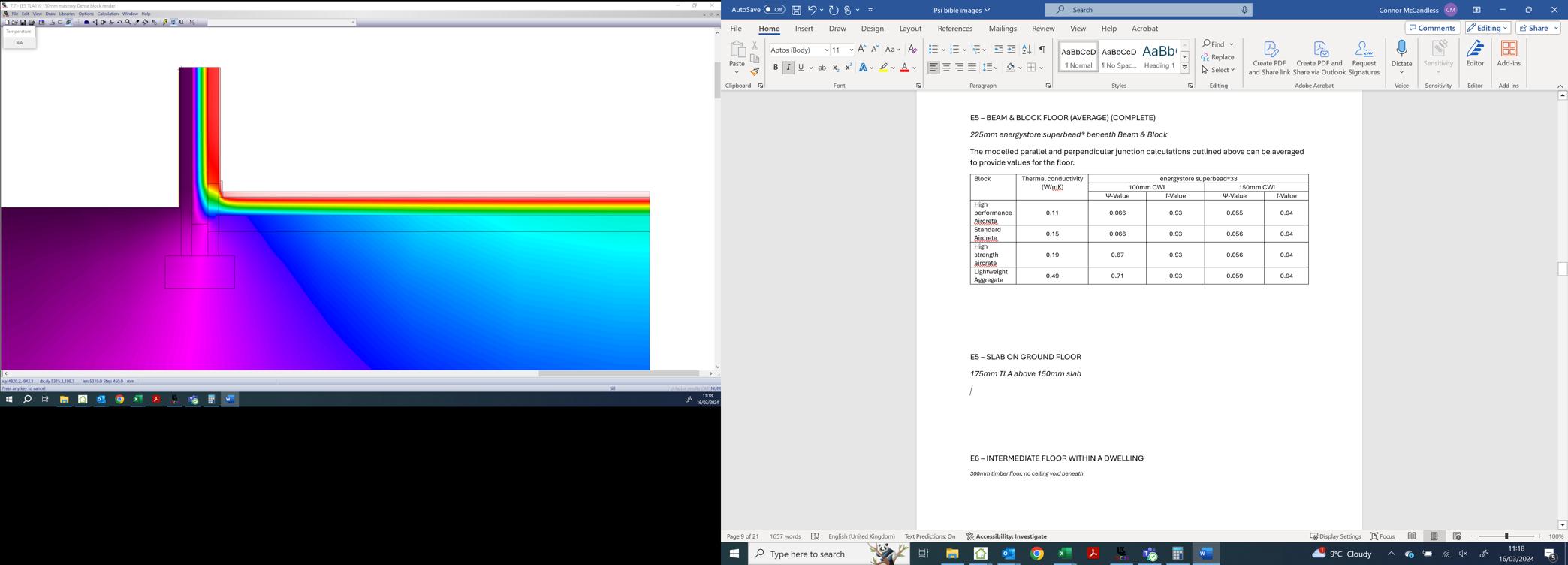
E5 - Slab on ground floor
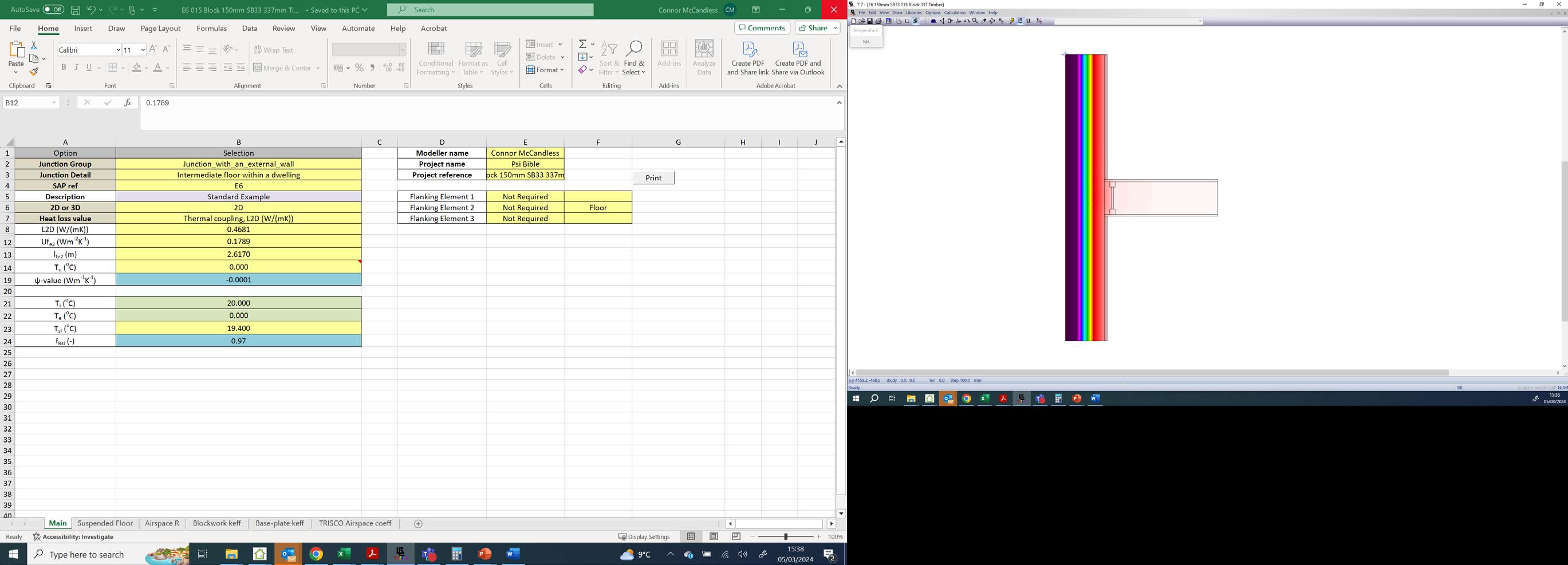
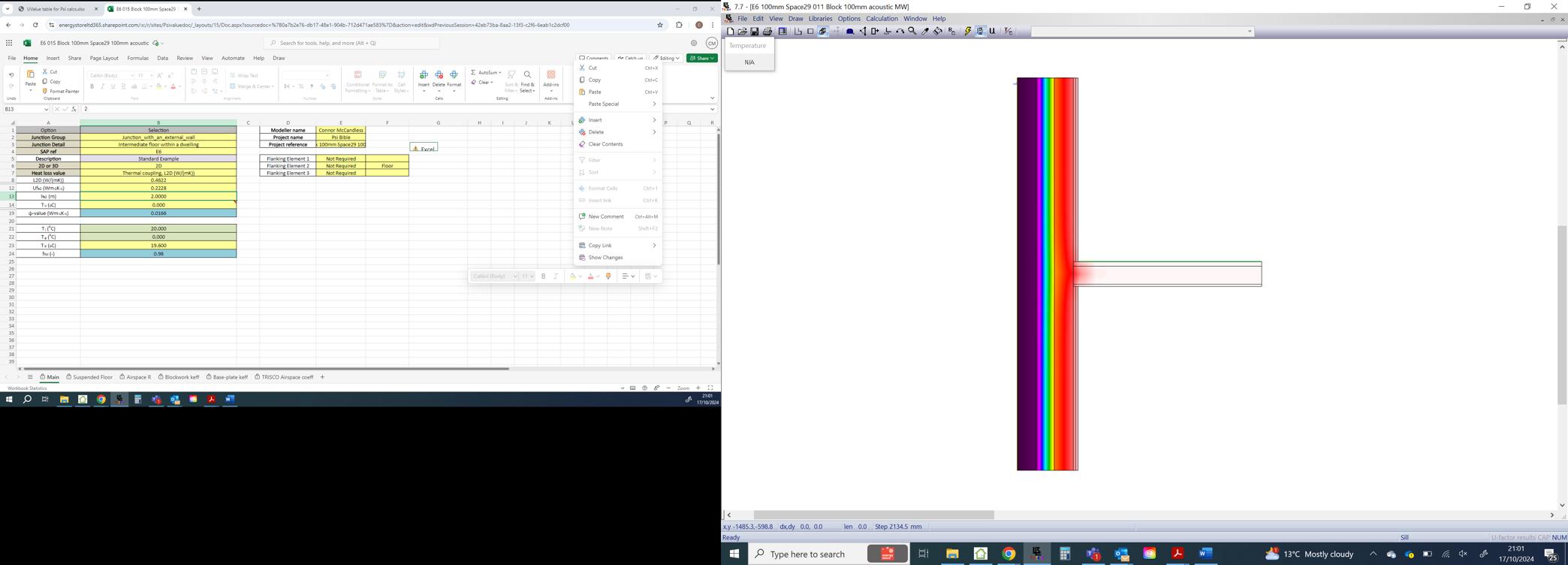
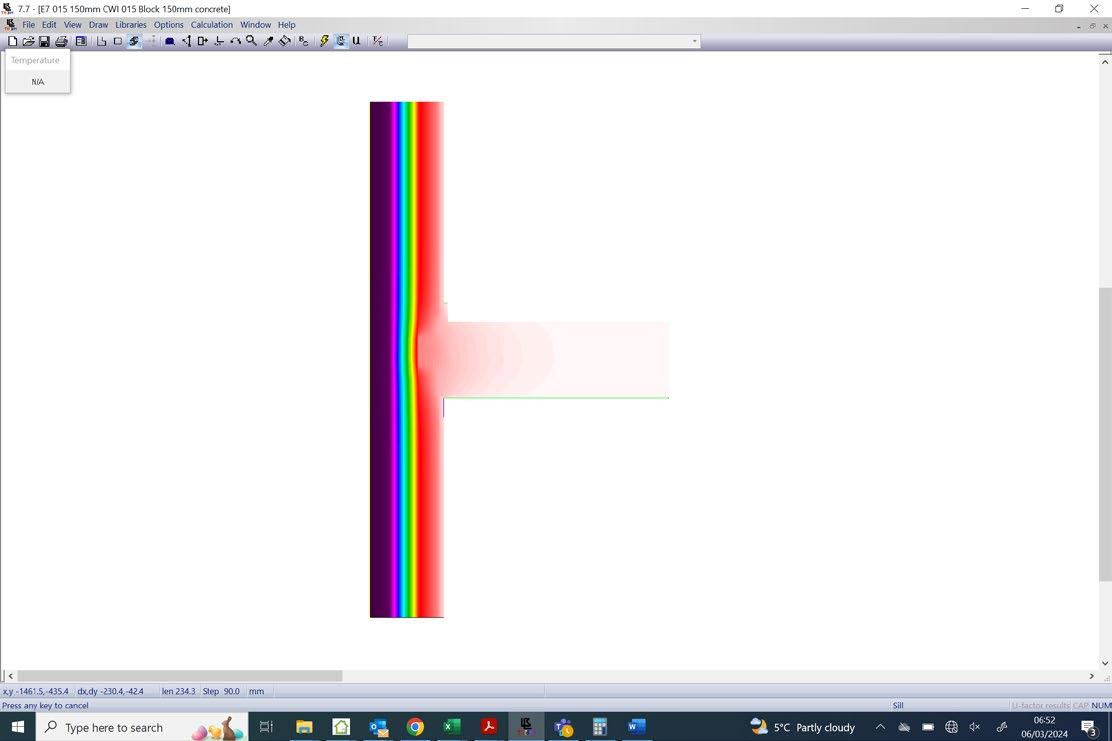
E6 - Intermediate floor within a dwelling
E7 - Separating floor between dwellings
E10 - Eaves insulation at ceiling level
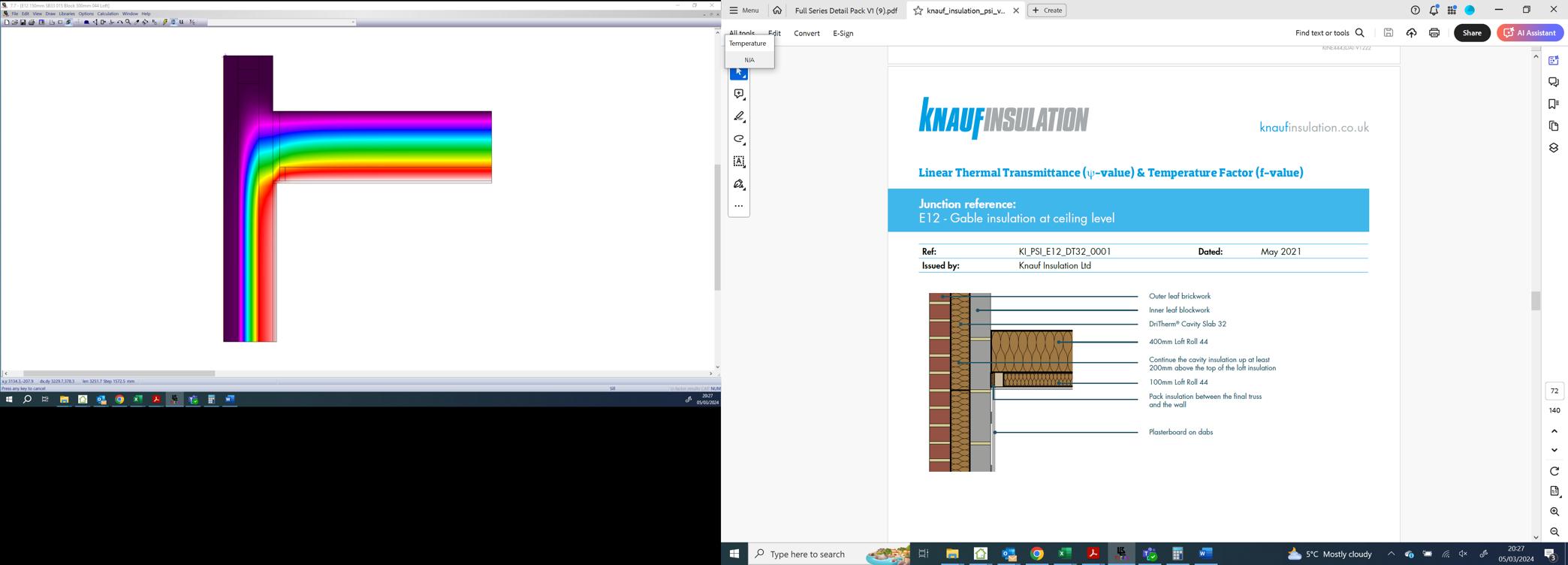
E12 - Gable insulation at ceiling level
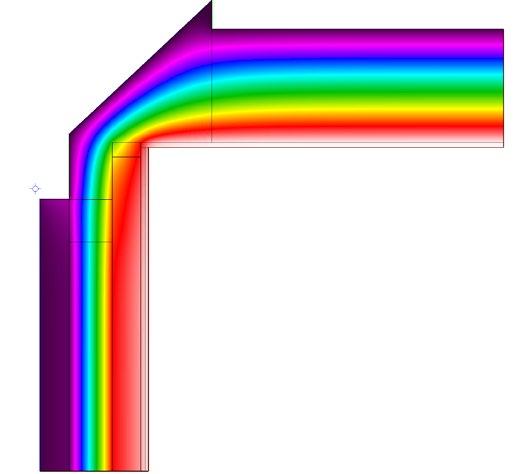
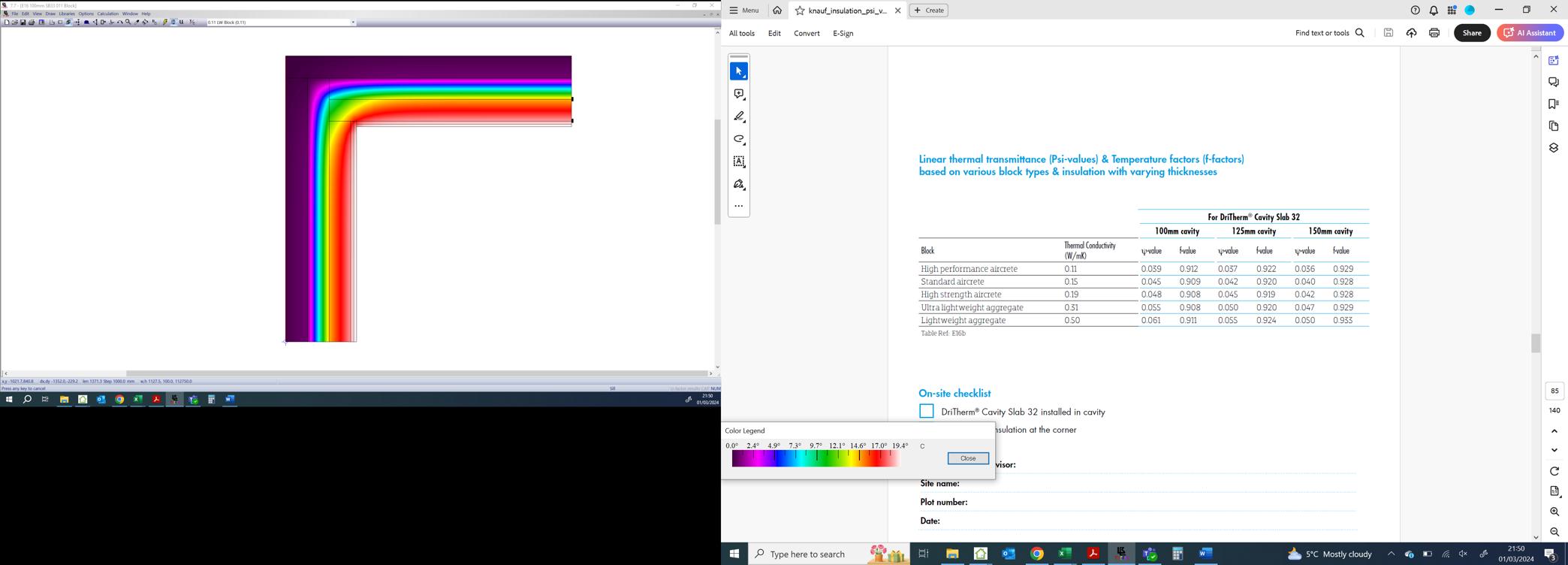
E16 - Corner normal
E17 - Corner inverted
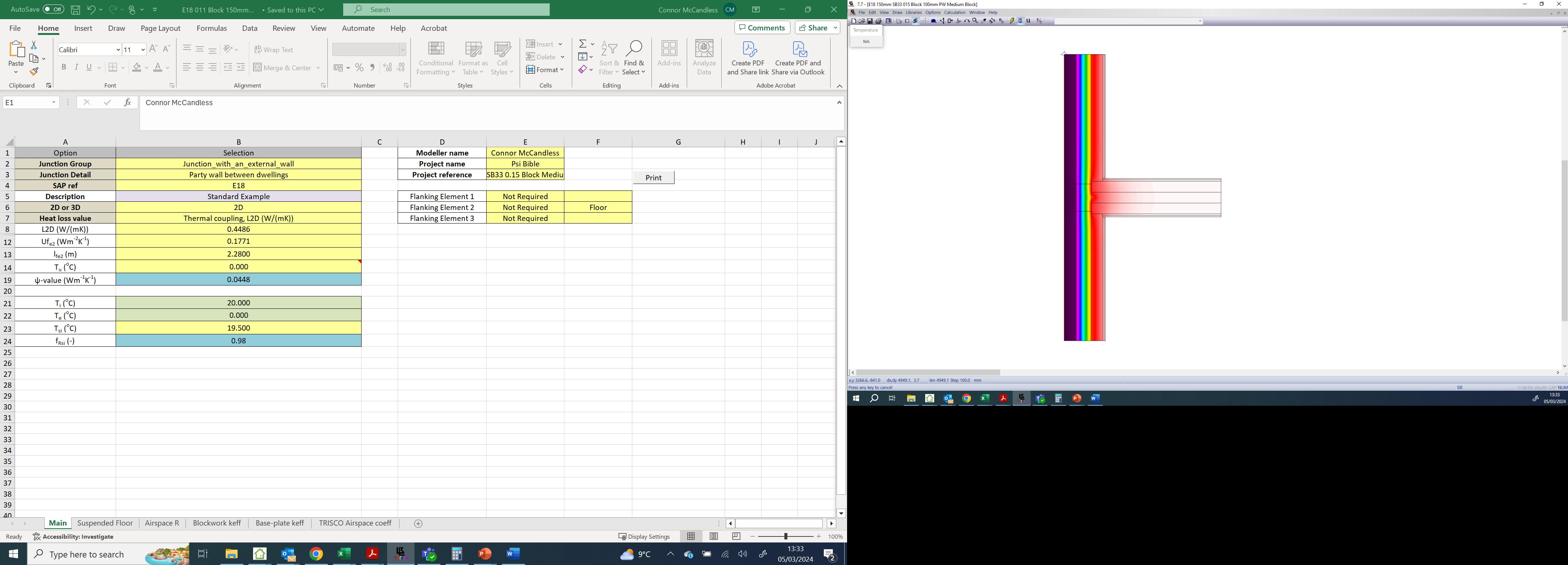
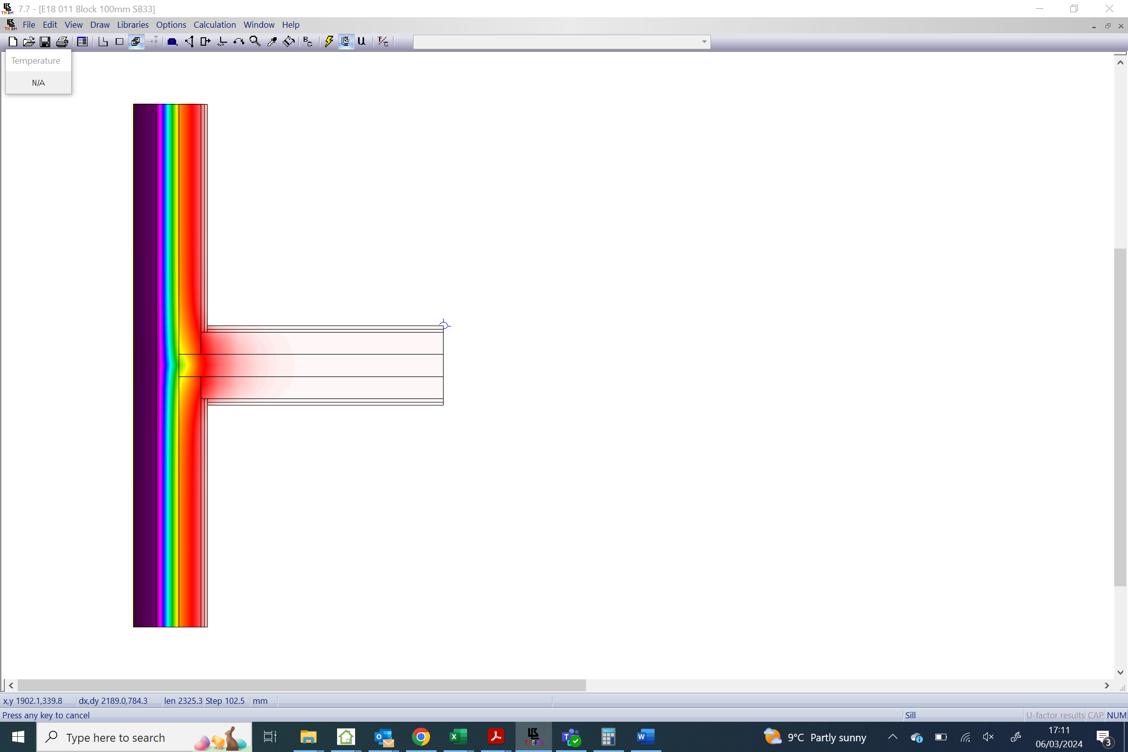
E18 - Separating wall between dwellings
Material properties used in calculations
To help with fabric energy efficiency compliance assessments under SAP, BER and HEM, energystore has produced a range of thermal bridging calculations which can be used to calculate Psi-values.
U-Values provide a standardised unit to assess the rate at which heat flows through a building element such as windows, walls, roofs and floors.
Psi-values measure the rate of heat lost through junctions where two elements meet. Psi-values for all junctions are measures in a standard unit of watts per metre Kelvin (W/mK).
The thermal bridging guide calculations include a range of standard details using energystore’s products in a range of external wall and ground floor details.
Calculations throughout this document have been completed using the methodology outlined in EN ISO 6946: 2017, EN ISO 10211: 2017 and in accordance with BR 497: Conventions for calculating linear thermal transmittance and temperature factors (2nd edition).
Whilst every effort is made to ensure the accuracy of the calculations throughout this document, please note that the specifications, design and production of products are subject to change.
The calculation provided is arecommendation only and energystore does not give any warranty or representation whatsoever
in connection with or assume liability for the accuracy, timeliness, reliability or completeness of the calculation.
The calculation is based on information provided to energystore. energystore accepts no liability for errors or omissions in the input data or errors resulting from any inaccuracy of input data. In no event shall energystore be liable for any losses or damages arising out of or in connection with use of the calculation.
Any deviation from the details used as part of this calculation will result in the calculation being inaccurate; recalculations
should be requested. Extreme caution was observed when putting together and processing the information, texts and illustrations in this document. Nevertheless, errors cannot quite be ruled out. energystore cannot assume legal responsibility or any liability whatever for incorrect information and the consequences thereof.
The publisher and editors will be grateful for improvement suggestions and details of possible errors pointed out.
OUR PRODUCTS
energystore provide a range of products that can be used to help designers and builders comply with the energy efficiency requirement of Building Regulations throughout the UK & Ireland.
energystore superbead®
superbead is an injected expanded polystyrene (eps) bead bonded with an adhesive designed for use in multiple cavity wall scenarios.
There are two grades of superbead, energystore superbead33 (declared thermal conductivity 0.033) or energystore superbead32 (declared thermal conductivity 0.032).
Insulation Applications include
Masonry cavity wall
Party wall
Timber frame
Injected Beam & Block
(European patent no 4079990)
energystore TLA®
TLA combines eps beads coated in a specially formulated additive with cement and water to create a pourable insulation.
This poured insulation offers an A2- s1, d0 fire rating solution for floor and roof insulation.
Insulation Applications include
Suspended ground floor
Slab on ground floor
Intermediate floor
Roof
energystore spacebead®
spacebead combines eps beads, aerogel and adhesive to create next-generation injected insulation.
The patent ptending CWI system is designed for use in new & existing buildings up to 18m in height. energystore spacebead® has declared thermal conductivity of 0.029.
There are two cases, with beams parallel and perpendicular to the wall. The tables below set out average psi-values. It is possible to use the average scores for the value of the floor in compliance calculations.
There are two cases, with beams parallel and perpendicular to the wall. The tables below set out average psi-values. It is possible to use the average scores for the value of the floor in compliance calculations.
Spec:
225mm energystore superbead® beneath Beam & Block
E6 INTERMEDIATE FLOOR WITHIN A DWELLING
Spec:
300mm timber floor, no ceiling void beneath, no insulation