Advert Space Director Emlyn Freeman emlynfreeman@littlegatepublishing.com
Project Director Andrew Richards andrew@littlegatepublishing.com
Commercial Manager James Hamilton james@littlegatepublishing.com
Lead Designer Adam Knights
Research Kristina Palmer-Holt
Editorial Research David Reilly
Corporate Director Anthony Letchumaman anthonyl@littlegatepublishing.com
Founder and CEO Stephen Warman stevewarman@littlegatepublishing.com
For enquiries or subscriptions contact info@littlegatepublishing.com +44 1603 296 100
ENDEAVOUR MAGAZINE is published by Littlegate Publishing LTD which is a Registered Company in the United Kingdom.
Company Registration: 404 2112 62
VAT registration number: 13572767
343 City Road 147 Queens Road London 79 Norwich
EC1 V1LR NR1 3PN
Littlegate Publishing Ltd does not accept responsibility for omissions or errors. The points of view expressed in articles by attributing writers and/or in advertisements included in this magazine do not necessarily represent those of the publisher. Any resemblance to real persons, living or dead is purely coincidental. Whilst every effort is made to ensure the accuracy of the information contained within this magazine, no legal responsibility will be accepted by the publishers for loss arising from use of information published. All rights reserved. No part of this publication may be reproduced or stored in a retrievable system or transmitted in any form or by any means without the prior written consent of the publisher.
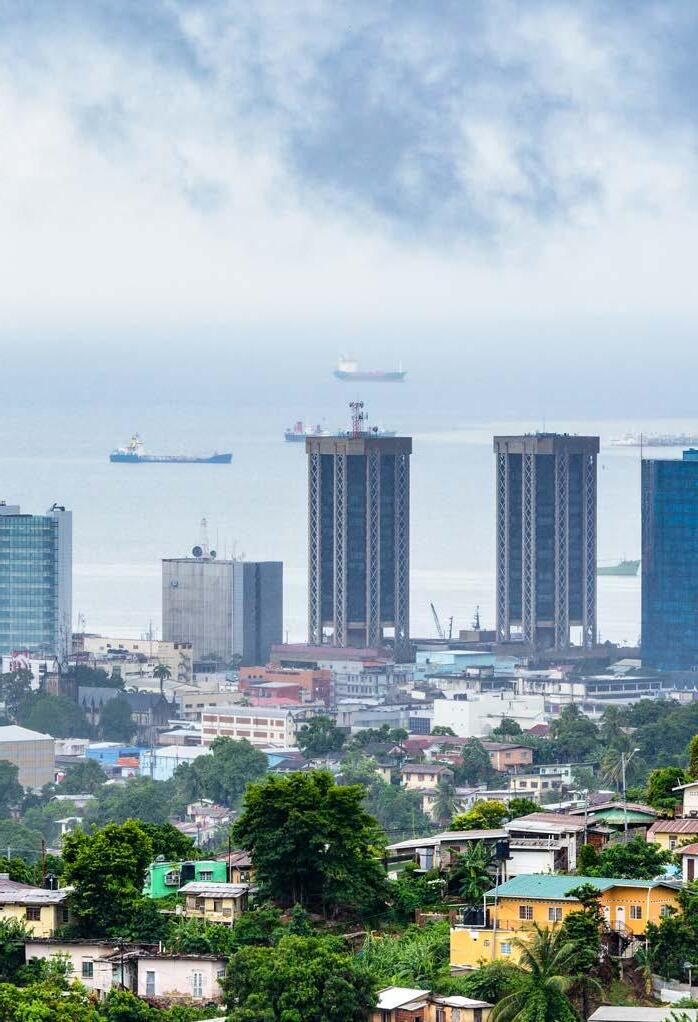
We kick off this edition of Endeavour Magazine with an expansive feature on BP Trinidad and Tobago, highlighting the company’s role across the region’s energy sector. Supported by a plethora of offshore platforms and development fields, including the Ginger and Cypre projects, we got to highlight how BP Trinidad and Tobago are bringing vital energy resources online to support the region’s longterm hydrocarbon development. We are thrilled to have CENNAV Limited show lead support for this feature.
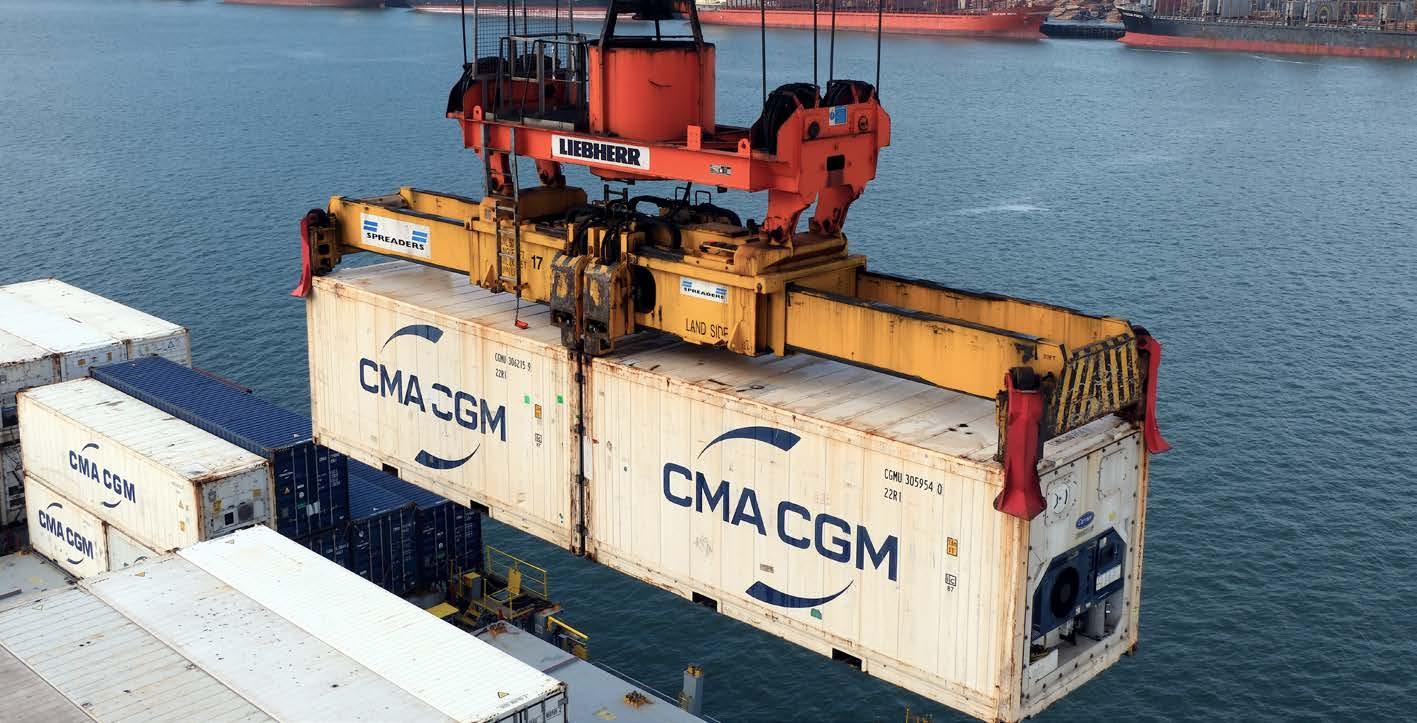
In this edition, we also bring you valuable insights across CMA CGM’s global shipping portfolio, focusing here on its operations in New Zealand and South Africa. We got to see how CMA CGM continues to support global shipping, linking key ports around both New Zealand and South Africa with the world to support both local and international trade. We are glad to have Steelbro showing vital support for the CMA CGM New Zealand feature, and Transglobal leading support for the CMA CGM South Africa feature.
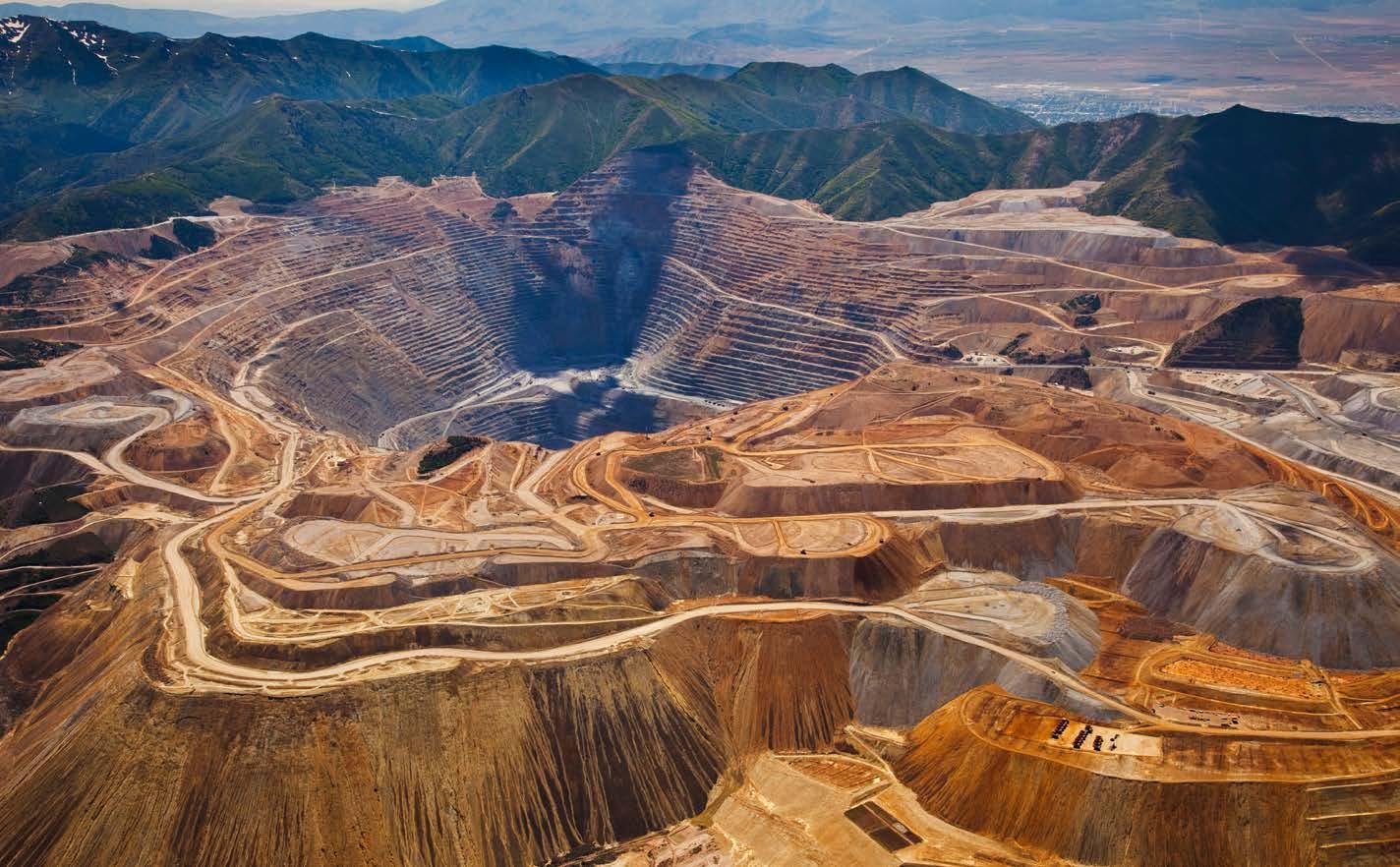
This month, we also got to speak with Gustavo Bravo, Mining and Metals Director at WSP, overseeing the company’s operations in Latin America and the Caribbean. Speaking with Bravo, he highlighted the company’s commitment to working closely with its clients to develop projects within the Metal and Mining sectors that are both technically and commercially robust, whilst being delivered in the most responsible way possible. by Carley Fallows
Asia/Oceania
Wolf Escapes from Zoo in South Korea
A wolf from the Daejeon O-World Zoo and Theme Park in South Korea escaped its enclosure after burrowing under a fence. The wolf, a two-year-old male called Neukgu, was born in 2024 as part of a conservation programme to help restore the Korean wolf, which was previously considered to be extinct in the wild.
In response to the wolf’s escape, 300 personnel were deployed to track down the animal, and a local elementary school was closed as a precaution. To help support the search mission, thermal imaging was used to capture the wolf moving along a wooded hillside near the zoo in the days after its escape. Drone cameras were also deployed; however, heavy rain meant they had to be withdrawn. Thankfully, the wolf has now been safely recaptured and returned to the Zoo.
Earthquakes Hit Japan
A 7.7 magnitude earthquake hit off Japan’s coastline, at a depth of 10km and close to the country’s main island of Honshu. The quake triggered tsunami warnings, with waves up to 80cm measured, and so evacuation orders were issued for more than 170,000 people across several prefectures. The tsunami warning and advisories were lifted a few hours after the initial earthquake; however, the country was left on high alert, fearing further quakes could occur over the following week, producing larger waves.
Japan is used to earthquakes due to its location on the Ring of Fire, a seismically and volcanically active zone, which experiences 1,500 earthquakes a year and is responsible for around 10% of earthquakes measuring 6.0 magnitude worldwide.
Flash Flooding in New Zealand’s Capital
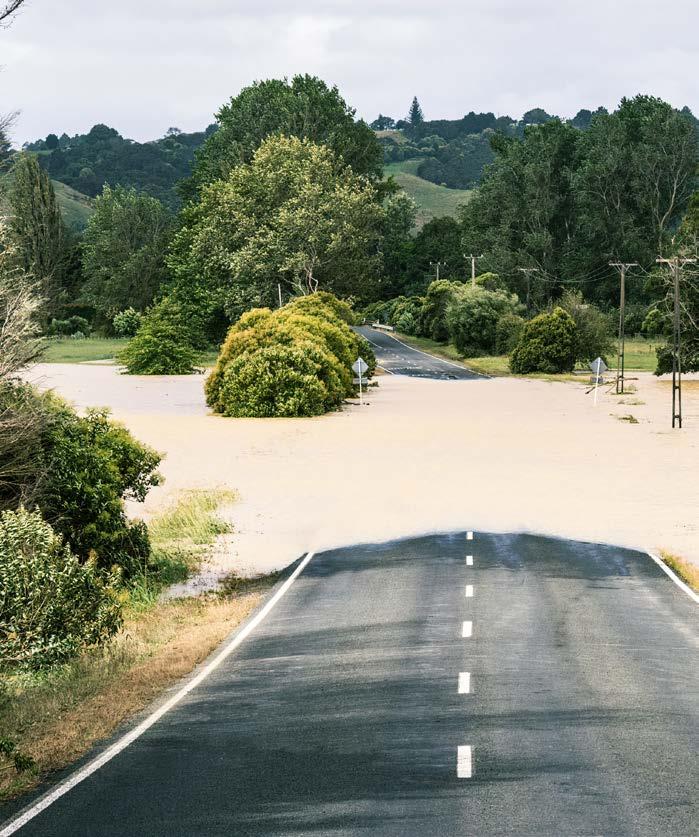
Heavy rainfall across New Zealand’s capital of Wellington resulted in flash flooding, which caused widespread destruction across the city. Vehicles became submerged, whilst trees were uprooted and homes were damaged by landslides. The torrential rainfall resulted in 77mm of rain falling in just one hour, which caused such extreme flash flooding. More than a dozen people were evacuated, and no casualties have been reported.
The flooding hit the capital less than a week after Cyclone Vaianu moved across the North Island, bringing with it extreme weather conditions and significant rainfall. Extreme weather conditions such as this are not uncommon in New Zealand; however, research continues to show that extreme weather events such as flooding are becoming more common in the country and are thought to be linked to climate change.
Africa
Bee Project to Protect Farmland in Tanzania
In Tanzania, elephants and farmers often have a complicated relationship as many elephants enter farmland in search of crops, but this often destroys entire harvests, leading to severe food and economic insecurity. Elephants have even injured people when they enter human-populated areas, causing a big problem when it comes to coexisting in the same space. However, a bee project in Worcester has been working on developing a ‘beehive fence’. Bees are thought to be a useful and natural option because elephants are known to stay away from bees and so fences made of beehives could offer a good solution to protect farmland.
The bee project, spearheaded by Rachel Monger, is working with Emmanuel International to support communities in the Ruaha National Park, where elephants are known to frequently destroy crops and injure people. The project plans to install 600 hives, offering a ‘beehive fence’ that is hoped to act as a natural deterrent to the elephants. In addition, the beehives will also offer additional income for residents who can sell the honey and beeswax produced from the hives. The project hopes to offer a solution that protects elephants, whilst enhancing food and economic security.
Bat Protection Campaign in Nigeria
Iroro Tanshi, a scientist from Nigeria, has been working to protect endangered bats across the country. Tanshi has developed a community-led campaign which would protect bats, which are often threatened by wildfires. The campaign works to help stop wildfires, which threaten the habitats of bats, and so the project brings together a community fire brigade to stop serious wildfires from breaking out. The project’s work centres on the Afi Mountain Wildlife Sanctuary, where it has already prevented many wildfires and saved the homes of bats in the process.
For her work as part of the community project, Tanshi has received the 2026 Goldman Environmental Prize for Africa, recognising her community-led wildfire prevention campaigns to protect the endangered bat populations in Nigeria. A key part of the project is also to educate people on wildfires and prevention, whilst also highlighting the importance of bats and their role in the ecosystem.
Chimpanzee Group Divide in Uganda
Researchers in Uganda have highlighted a ‘civil war’ happening within one of the world’s largest known groups of wild chimpanzees. The group of Ngogo chimpanzees have been in Uganda’s Kibale National Park for many years; however, in the last 8 years, the group seems to have split, leading to 24 killings, 17 of which were infants. The two groups, known to researchers as Western and Central, previously existed in a singular group of nearly 200. However, in 2015, a divide was starting to show when Western chimpanzees ran away and were chased by the Central Group. Following this, there was a 6-week period of avoidance between the two sets, and when they did meet, these interactions became increasingly intense and aggressive.
Causes of the divide are being attributed by researchers to three likely catalysts, which include the deaths of 5 adult males and one adult female, a change in the alpha male, and the deaths of 25 chimpanzees as a result of a respiratory epidemic in 217. These are all thought to have contributed to such a divide between the two groups, resulting in the current violence between them.
Artemis II Crew Complete Mission
Nasa’s Artemis II mission splashed back down to Earth earlier last month, following the 10-day trip that saw it travel around the moon, further from Earth than any other humans have gone before. The mission was part of the wider Artemis Space Program, which plans to deliver increasingly difficult space missions over the coming years, with the goal of landing humans on the moon once again and then setting the exploration foundations for the first crewed flights to Mars.
A significant moment in the mission was when the crew lost contact with the Earth, as expected, for 40 minutes as they passed behind the moon out of sight of Earth. During this time, the astronauts collected images and data about the lunar surface to report back to Earth. The Orion Spacecraft splashed down on 11th April in the Pacific Ocean, and the images and research gathered will now be pivotal for setting the plans out for the next step of the space mission.
Grey Whales in San Francisco Causing Concern
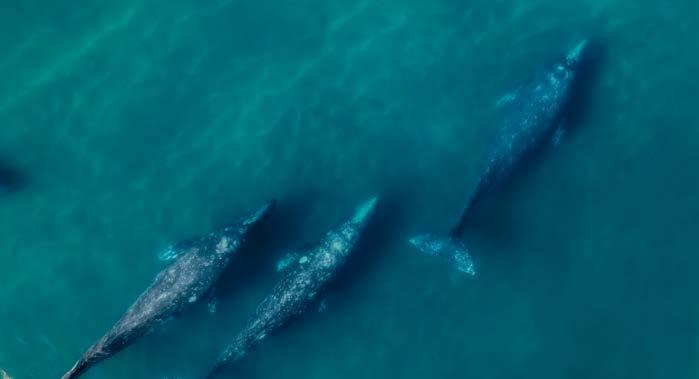
Eastern North Pacific grey whales have been increasingly showing up in the San Francisco Bay. The whales previously did not stop at the Bay, neither consistently nor seasonally, instead bypassing it for their known migration route to California and then back up to the Arctic. However, many that have been arriving at the bay are adult and juvenile males, but one noticeable characteristic is that many are observed to be skinnier than they normally would be at this time of the year.
In fact, an increasing number of whales are being found dead across the wider San Francisco Bay. This points to issues of food, which may be caused by climate change, causing a shift in the food ecosystem for them. This may be why they are being drawn into the bay. This draw for food away from its traditional routes could be putting the whales in danger, with many of their deaths thought to be from being hit by vessels. Furthermore, the researchers have also noted that calf counts are low, which might be signalling a low birth rate, meaning that the population of the whales are not recovering in the same way it previously might have. All of these factors are causing key concerns for the species and their role in global ecosystems.
Apple’s Tim Cook Steps Down
Following 15 years at the helm of Apple, Tim Cook will step down from the company. Cook was responsible for expanding the company’s iPhone product into an expansive company with many segments, including those branching into wearables, digital services and health.
Cook is set to be replaced by John Ternus, who is currently the Senior Vice President of Hardware and Engineering at Apple. Ternus is set to help the company develop into the future, backed by the most rapidly evolving technology in the history of computing. One of the key developments of Apple’s future will be with AI and the way it will reshape the company’s products going forward. For this, Ternus’ deep understanding of Apple’s hardware will be vital for achieving the company’s AI ambitions.
FASTER LIFTS FEWER HANDS GREATER EFFICIENCY
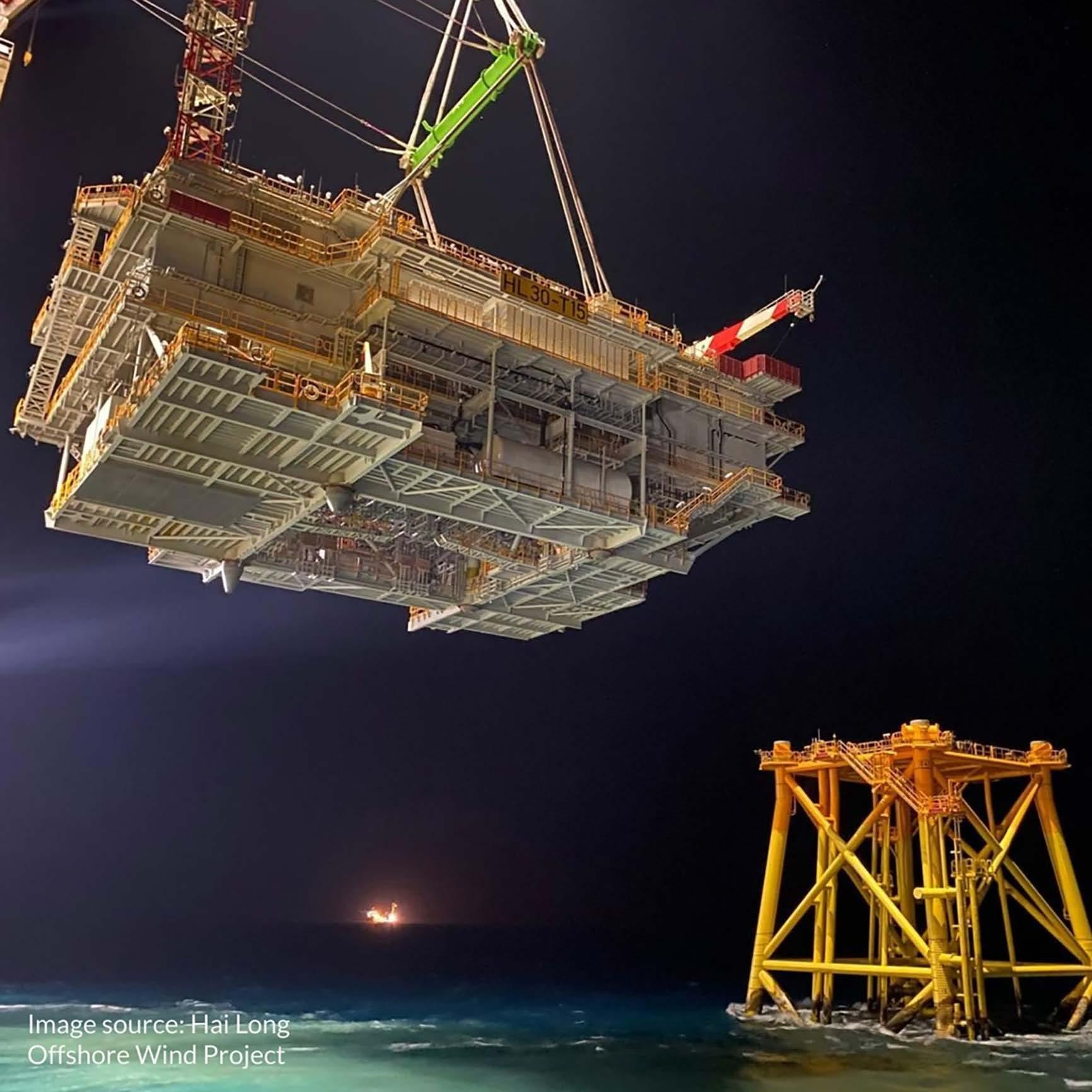
CSBC-DEME Wind Engineering (CDWE) installed its second offshore substation using ROPES BY BAKAERT, powered by BEXCO’s Ultraline® Slings made with Dyneema® SK78®, a lighter, high-strength alternative to traditional steel
FASTER LIFTS
FEWER HANDS GREATER EFFICIENCY
CSBC-DEME Wind Engineering (CDWE) installed its second offshore substation using ROPES BY BAKAERT, powe by BEXCO’s Ultraline® Slings made with Dyneema® SK78®, a lighter, high-strength alternative to traditional steel
This resulted in faster lifts, fewer hands and better efficiency offshore.
This resulted in faster lifts, fewer hands and better efficiency offshore.
For CTRL System Technologies Nigeria Ltd and Nigerian operators, this isn’t just innovation, it’s a shift in how we operate our lifts. Lightweight slings mean easier mobilization, reduced risk, and no compromise on performance. From FPSOs to fabrication yards, CTRL in collaboration with BEXCO is driving smarter, safer, and more costeffective lifting solutions across Nigeria’s energy landscape. Sometimes, the lighter way really is the stronger one.
CSBC-DEME Wind Engineering (CDWE) installed its second of by BEXCO’s Ultraline® Slings made with Dyneema® SK78® steel
For CTRL System Technologies Nigeria Ltd and Nigerian operators, this isn’t just innovation, it’s a shift in how operate our lifts Lightweight slings mean easier mobilization, reduced risk, and no compromise on performan From FPSOs to fabrication yards, CTRL in collaboration with BEXCO is driving smarter, safer, and more costeffective lifting solutions across Nigeria’s energy landscape. Sometimes, the lighter way really is the stronger one
This resulted in faster lifts, fewer hands and better efficien For CTRL System Technologies Nigeria Ltd and Nigerian oper operate our lifts Lightweight slings mean easier mobilizatio
From FPSOs to fabrication yards, CTRL in collaboration with effective lifting solutions across Nigeria’s energy landscape Sometimes, the lighter way really is the stronger one
Middle East
Beach Infrastructure Development Project in Dubai
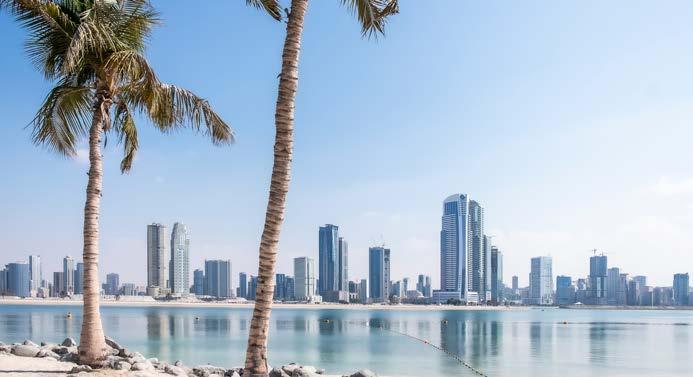
A vital beach infrastructure development project is being set out in Dubai across a range of projects as part of a DH500 million investment. The Al Mamzar Beaches development will be a flagship strategic beach project for Dubai, aiming to deliver a unique family destination. The project will reflect Dubai’s efforts to enhance beach infrastructure and, in the process, transform the city’s coastlines into a world-class urban and tourism hub.
The project aligns with Dubai’s Quality of Life Strategy 2033, which will focus on enhancing open public spaces, promoting healthy lifestyles and improving community wellbeing. Plus, it supports the Dubai 2040 Urban Master Plan to enhance beachfront development and strengthen its urban infrastructure to meet the city’s Blue and Green Spaces Roadmap 2030.
Major Urban Development in Saudi Arabia
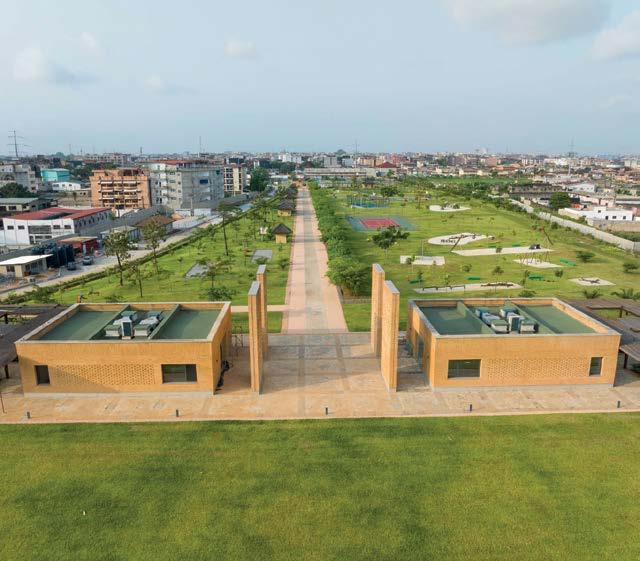
Launched in 2019, the King Salman Park will be a major mega-project for Riyadh spanning more than 17.2 sq. km. The Park will offer a vast green area, including a wide range of artistic, cultural and sporting attractions, activities, and multiple areas of outstanding natural beauty. Included in the park will be a Royal Arts Complex and the Visitors Pavilion. The massive urban development is currently under construction.
The project was launched as part of the Saudi Vision 2030, with the development designed to be the world’s largest city park, aimed at boosting green space and improving quality of life. In March, the King Salman Park foundation secured more than $3.8 billion in new private-sector commitments at the MIPIM 2026 Real Estate Conference, including a landmark $3 billion fund backed by international investors to develop the major mixed-use district.
UAE Leaves OPEC
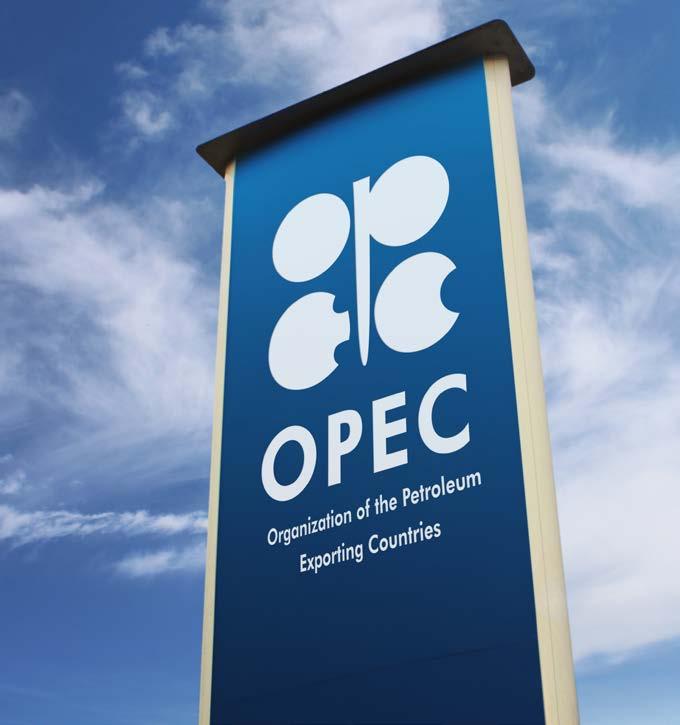
OPEC, the Organisation of Petroleum Exporting Countries, is an organisation spanning mainly Gulf oil exporters, which has for many decades controlled the price of crude oil by decreasing or increasing production and allocating quotas across its membership. However, the United Arab Emirates, which is the second most important swing producer under OPEC, has announced its decision to exit from the organisation.
This comes after OPEC limited the UAE’s production to 3-3.5 million barrels per day, resulting in lost revenues for the country. Furthermore, the exit from Open reflects a long-standing economic and strategic divergence, with the UAE prioritising investment return and production flexibility. Outside of OPEC, the UAE will be able to increase its policy independence and exceed production caps.
Europe
First Woman to Head Coach Union Berlin Football Team
Marie-Louise Eta has been appointed head coach for Union Berlin, making her the first female head coach in Europe’s top five leagues. The appointment comes following Steffen Baumgart’s removal from the head coach position, allowing Eta to step up from her assistant coaching position to lead the men’s side. Eta had already been the first female in Bundesliga history to occupy a first-team coaching position, having already led the club’s under-19s and coached the Germany Women’s youth sides. Her appointment was met with widespread approval across the club, having previously stepped in over the years, including during a suspension for the previous head coach in 2024. However, she will now formally lead the club, bringing her expertise in the sport to coaching the team.
Chaos Caused by the EU’s New Entry-Exit System
The new European Entry-Exit System (EES) has been rolled out across Europe for all non-EU travellers. The system replaces manual passport stamps with fingerprints and photos taken at the border to track those in the Schengen area. The goal of the new system is to strengthen the area’s security. However, its opening weekend saw chaos across European airports as many passengers experienced significant delays, with some even missing their flights altogether. Previously, border authorities were allowed to suspend operations of EES if waiting times were excessive. However, now only a partial suspension is allowed. Airports are now asking for greater flexibility for when larger passenger numbers are seen in the summer months to help prevent delays.
Sub-Two Hour Marathon Time in London
Last weekend saw the return of the London Marathon, where history was made with one runner completing the race in under two hours. Sabastian Sawe completed the 26 and a bit mile course in 1 hour, 59 minutes and 30 seconds. This time places Sawe as a world record holder, beating the previous record set by Kelvin Kiptum’s time of 2 hours and 35 seconds. However, Sawe was not the only runner who surpassed Kiptum’s record, with Yomif Kejelcha and Jacob Kiplimo, both crossing the finish line under Kiptum’s previous record-breaking time. Across the course, Sawe was running at a significant speed, taking only 17 seconds to cover 100 metres. This was a speed he seemed to maintain across the course, securing his place as a world record champion with the fastest official marathon time in history. The London Marathon 2026 saw 59,830 athletes compete, with typical running times for experienced amateurs sitting around 3-4 hours.
BP Trinidad and Tobago
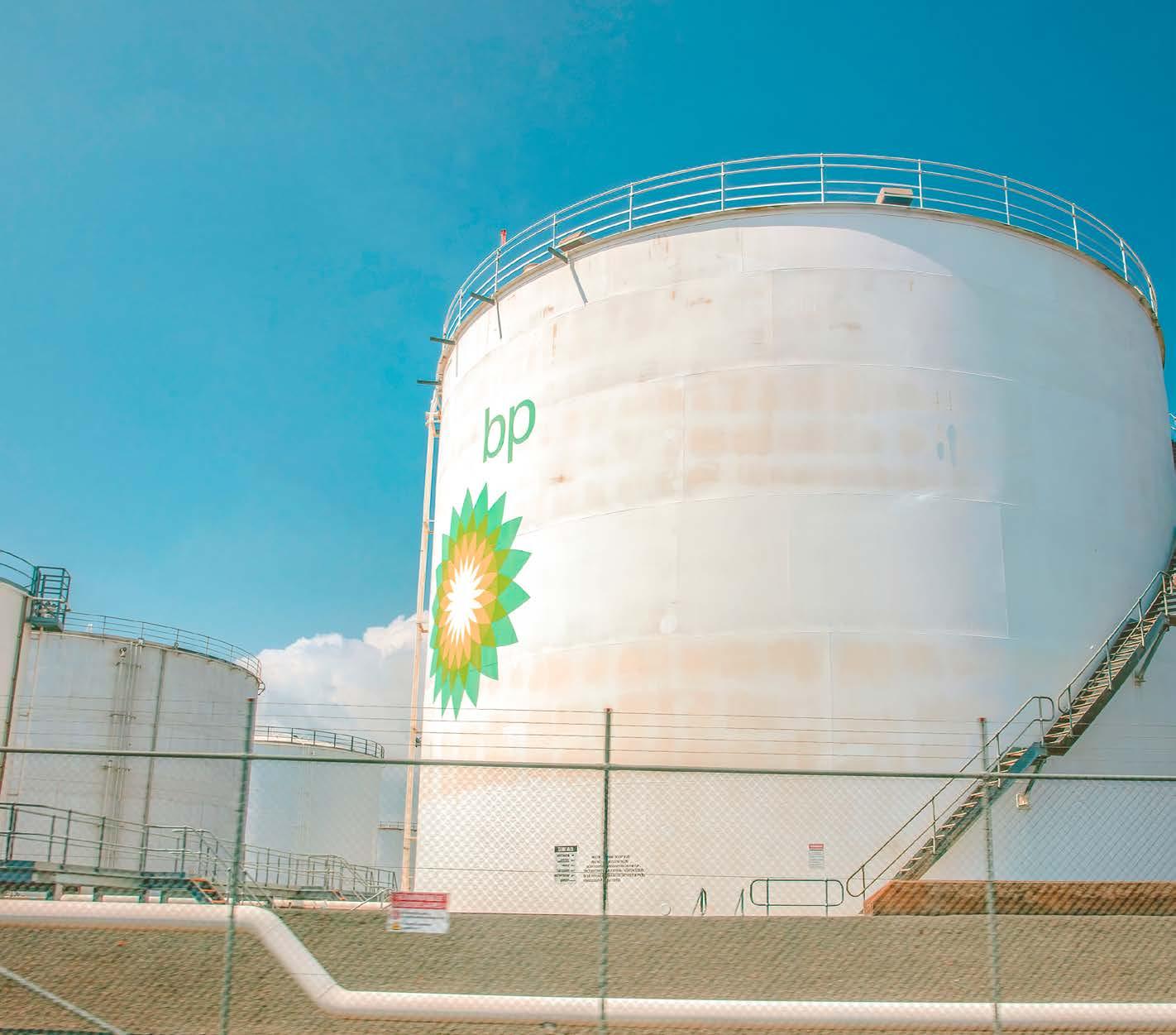
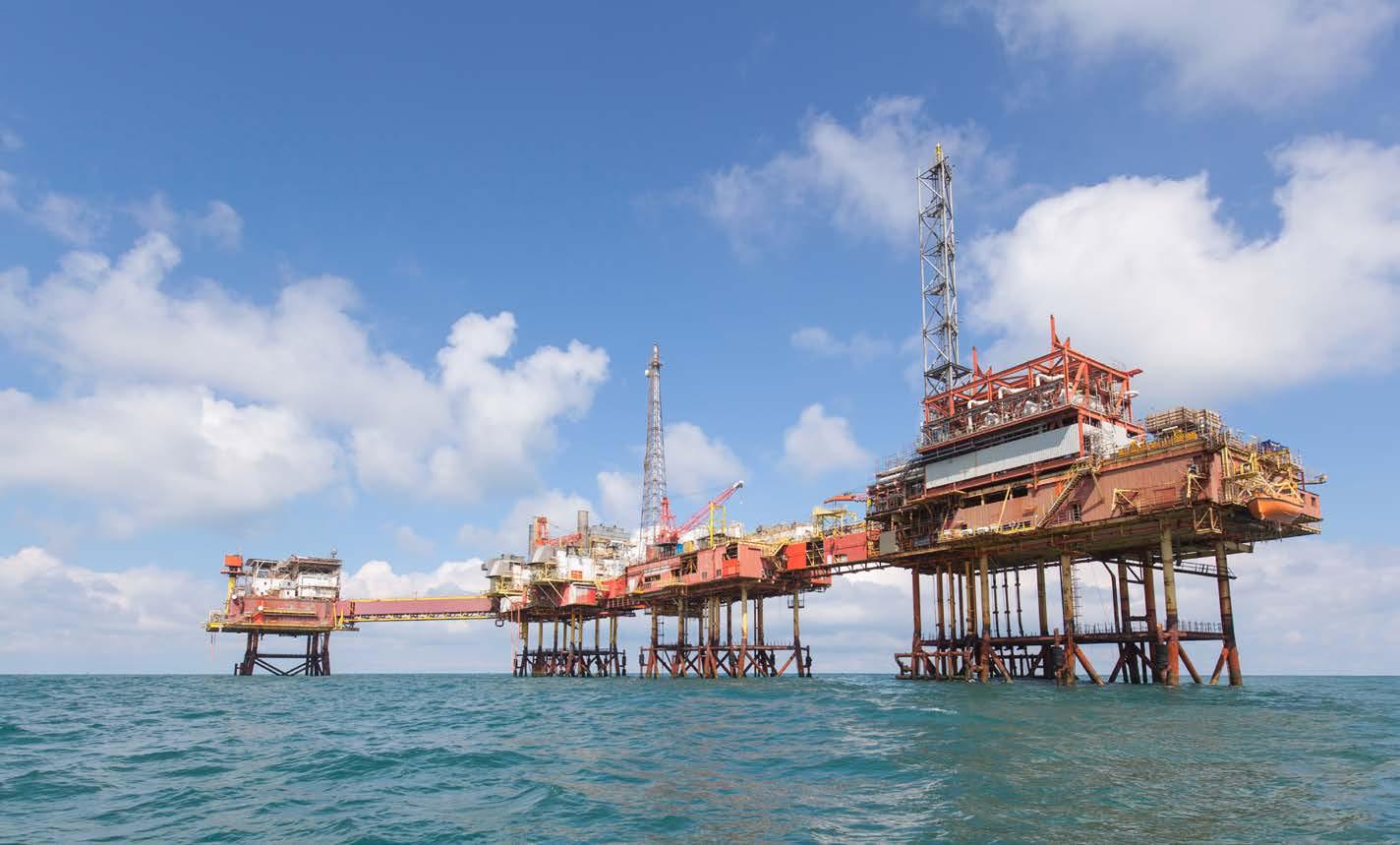
As the country’s largest hydrocarbon producer, BP Trinidad and Tobago (BPTT) operates 12 offshore platforms and three subsea installations across the region, which account for around half of the nation’s total gas production. Now 65 years since its first development in the country, BPTT has positioned itself as a key energy developer for the nation, championing the country’s natural gas production. Across its deep-water projects, BPTT is committed to ensuring that every development and new project works towards the future, supported by sustainability practices designed to improve people’s lives and care for the planet in the process.
Since 1960, BPTT has been a key part of Trinidad and Tobago’s energy story. From its very first wells to its gas development projects of today, the company has been committed to delivering vital hydrocarbon projects designed to enhance the country’s energy sector. Today, the majority of BPTT’s operations are largely located off the southeast coast of Trinidad, where the company has 12 offshore platforms, three subsea installations and two onshore processing facilities.
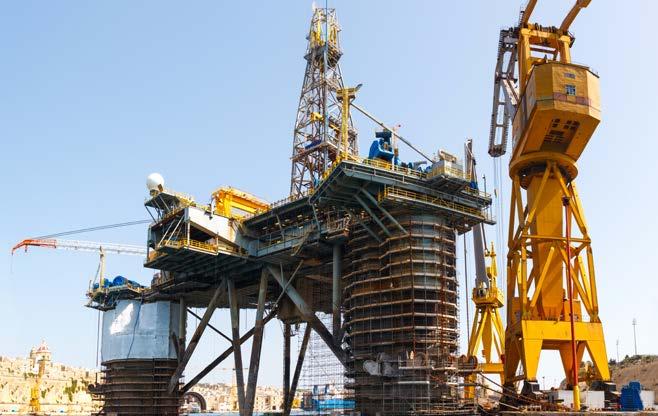
One of the most significant current projects carried out by BPTT is the Cypre Project, which is the third subsea development for the company in Trinidad and Tobago. The project encompasses 7 subsea wells and subsea trees, which are tied back into the company’s existing Juniper Platform’s infrastructure. The Juniper Platform is the 14th platform developed in Trinidad and was designed to develop the Corallita and Latana gas fields. However, the platform is now being utilised by BPTT to enhance its production at the current Cypre Project development by leveraging its existing
FOOD SAFETY STARTS HERE
TRUSTED MARINE SUPPLY EXCELLENCE FOR OVER 70 YEARS
Paria Ship Suppliers Limited delivers reliable, highquality ship provisions on time—at the quayside or offshore. With strategic locations in Port of Spain and San Juan, exclusive global partnerships, and strict quality control standards, we ensure seamless supply chain solutions for shipping, offshore, and catering operations across Trinidad and Tobago.
At Paria Ship Suppliers Limited, we don’t just supply ships — we build long-term partnerships, supported by an experienced Sales and Quality Management team continually developing new markets and innovative solutions. Contact us today and Partner with Paria Ship Suppliers Limited today to keep your operations moving with confidence.
Quality. Reliability. Experience.
2026 and pursuit of API 16AR certification signal bold steps into subsea markets and technology
systems and proactive risk controls, the company embeds green practices into its operations while
BP Trinidad and Tobago
Cennav Limited: The Ship Agency Built for the Demands of Modern Maritime Trade
When Cennav Limited was established in 2021, its founders identified a clear gap in the Trinidad and Tobago maritime market — a need for an agile, relationship-driven agency capable of handling the full spectrum of liquid and dry bulk trade operations without compromise.
In a short time, Cennav has built an impressive portfolio of clients and partnerships. The company acts as ship and cargo brokers for ArcelorMittal and a number of international steel traders, managing the export of wire rod coils, steel billets, and direct reduced iron ore (DRI). It has simultaneously developed a strong presence in the tanker sector, providing vessel agency and logistics support for major petrochemical facilities including the Atlas and Titan Plants, and has grown expertise in the import of olefins, base oils, and dry bulk barytes. But it is Cennav’s full-service ship agency offering that sets the company apart. From crew changes and cash-to-master deliveries, to port authority liaison, bunker coordination, waste disposal, and emergency support — every aspect of a vessel’s port stay is handled with precision and care.
The company’s vision is unambiguous: to be the most effective and competitive ship agency and chartering operation in the region, built on long-term client relationships and consistent performance. With core values of integrity, professionalism, and service embedded at every level, Cennav is fast becoming the trusted name in Caribbean maritime logistics.
Visit cennavltd.co.tt to find out how Cennav Limited can support your next operation.
infrastructure in the region. The Cypre Project is located 78km from the Trinidad coastline, and the Cypre gas field sits within the East Mayaro Block at depths of up to 80 metres.
In November 2025, BPTT announced that it had safely completed its seven-well drilling program for Cypre, following the delivery of the project’s first gas 7 months earlier in April. First gas was achieved following the drilling of the initial 4 wells in 2024, and by the third quarter of 2025, BPTT had completed the drilling and completions programs for the final three Phase 2 subsea wells. Now that all the wells have been completed, the project is expected to produce approximately 45,000 barrels of oil equivalent per day at its peak.
David Campbell, BPTT President, outlined in the press release announcing the delivery of Cypre’s wells that “Completion of these wells and the gas delivered mark a safe and successful delivery for bp and Trinidad and Tobago. This achievement underscores our commitment to maximising production from the Columbus Basin and reflects a significant investment and BPTT’s continued dedication to the country’s energy sector.”
Vital Subsea Development
BP Trinidad and Tobago
Campbell’s comments highlight the valuable role that Cypre will play in the future of Trinidad and Tobago’s energy sector, as a vital project delivered with expertise to enhance the country’s energy potential.
However, Campbell continues, “This is the latest achievement in a year of strong delivery from BPTT, including the bp-operated Frangipani gas discovery and working with our joint venture partner EOG, to deliver first gas from the Mento major project. We look forward to continuing our collaboration with the Government and other stakeholders to unlock Trinidad and Tobago’s energy future”. Campbell’s comments here allow us to understand the vast scope of BPTT’s operations across the country’s energy sector. With so many vital energy projects, BPTT is bringing vital investment into the country’s hydrocarbon market, supported by key partnerships across the global energy sector. A key partnership in Trinidad and Tobago, as highlighted by Campbell, is the Mento Project, which safely delivered first gas in May 2025. The project is part of a 50/50 joint venture between BPTTT and EOG Resources Trinidad Ltd (EOG), with EOG as the operator. Mento, which features a 12-slot attended facility, is one of BPTT’s top major projects in the country and is expected to start up worldwide production between 2025 and 2027. Once it reaches maximum production, Mento is expected to significantly add to the existing oil production already seen across BPTT’s upstream energy portfolio.
One of the other key developments currently in progress under BPTT is the Ginger Project. The Ginger Project, once completed, will be BPTT’s fourth subsea development, spanning 4 subsea wells and subsea trees, which will tie back to the existing Mahogany B Platform, and then flow onto Juniper. In 2025, BPTT completed the first well of the project, with drilling expected to continue in 2026. Alongside this, BPTT are progressing the fabrication operations required for 2026 offshore topside and subsea construction to begin. First gas is expected in 2027 and will add to BPTT’s top 10 projects that it is delivering between 2025 and 2027. Once completed, the Ginger Project is expected to have the capacity to produce an average gas production of 62 thousand barrels of oil equivalent per day.
With such vital hydrocarbon developments offshore Trinidad and Tobago, BPTT remains committed to ensuring that its energy development is achieved alongside vital sustainability projects. One of the most significant sustainability projects
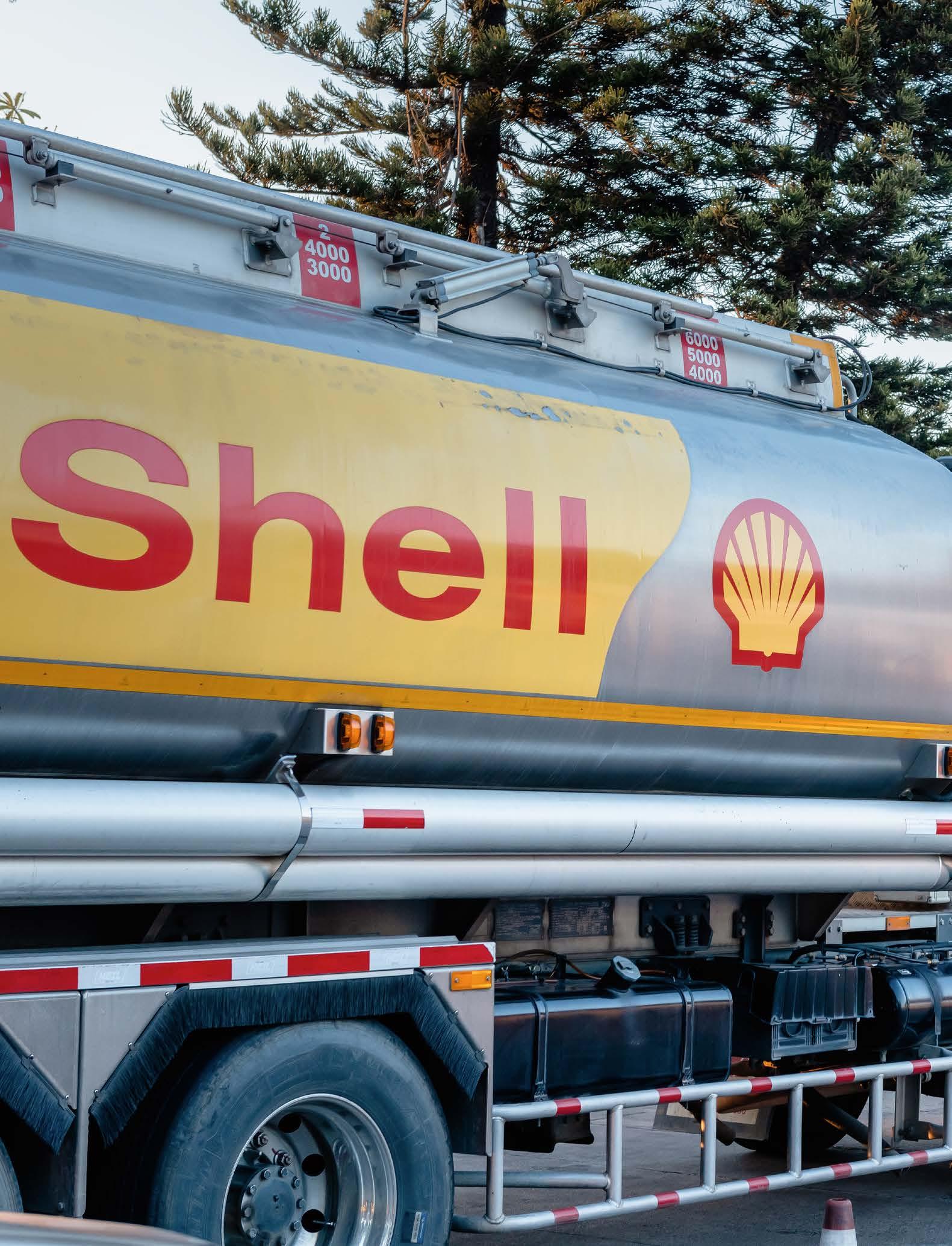
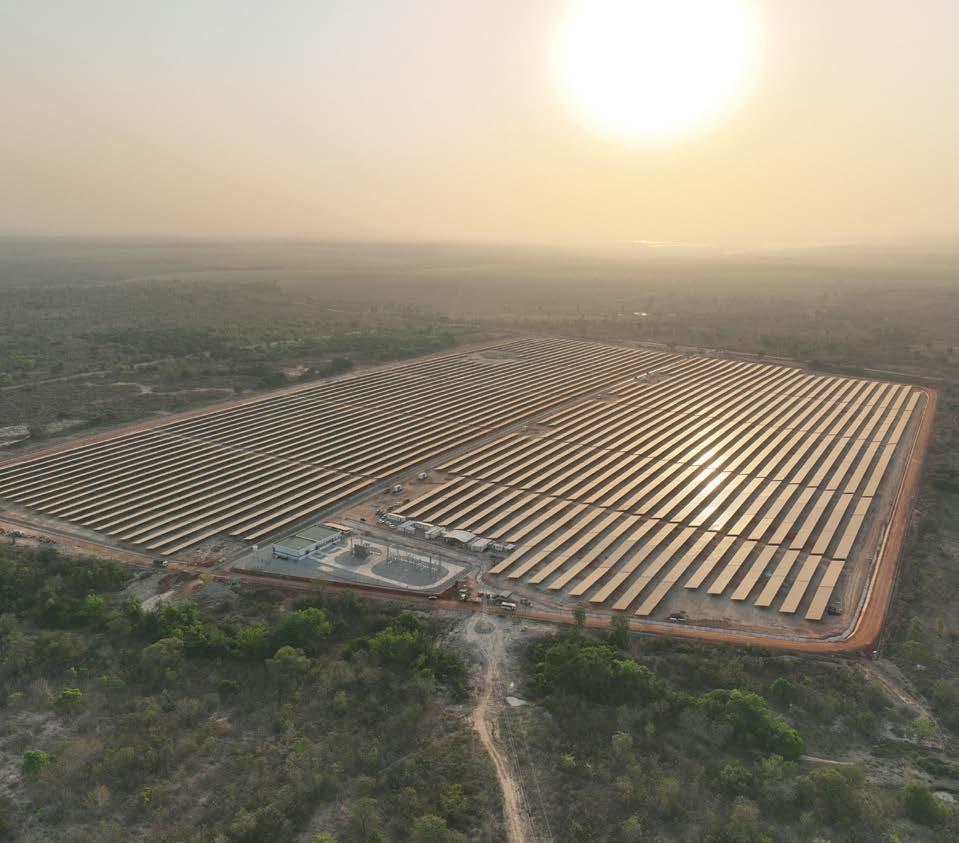
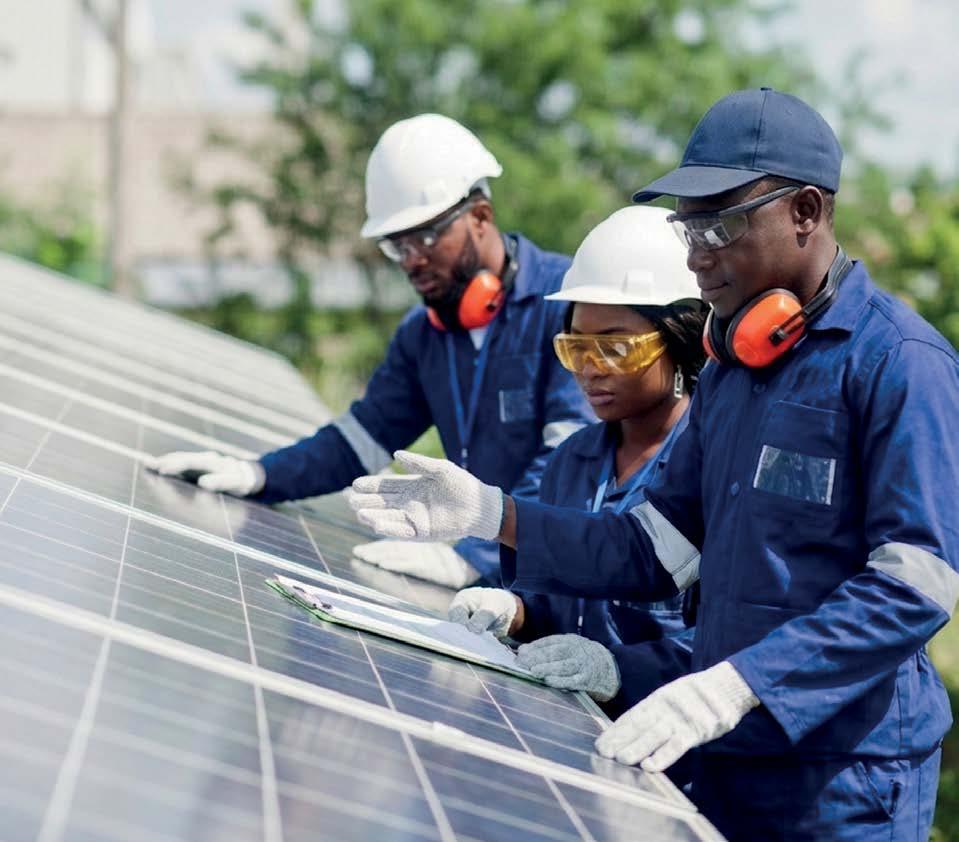
for Trinidad and Tobago is a large-scale solar project, in partnership with Shell plc. The partnership will see two sites, Brechin Castle and Orange Grove, developed to create the country’s first utility-scale solar project. The project is planned to produce over 300,000 megawatt-hours (MWh) of electricity per year, which will be enough to power just over 40,000 homes and, in the process, will cut carbon emissions. The solar plants are currently being constructed by consortium partners BP Alternative Energy Trinidad and Tobago (BPATT) and Shell Renewables Caribbean (Shell). Once operational, the sites will provide up to 112 Megawatts Alternating Current (MWac). With such a vital development, BPTT is focused on ensuring that throughout its operations, it remains focused on delivering vital
projects that meet the carbon reduction goals of the future, whilst delivering sustainable energy options for today.
As Trinidad and Tobago’s largest hydrocarbon producer, BPTT is delivering vital subsea energy developments that are making gas resources more readily available across the country. As we have seen from the Cypre and Ginger Projects, BPTT is set on enhancing its existing infrastructure to bring more gas resources online and support the continued development of Trinidad and Tobago’s energy development. However, all of these operations are underpinned by a firm commitment to sustainability that ensures that its projects, operations and developments are moving the energy sector towards a carbon-reduced future.
CMA CGM New Zealand
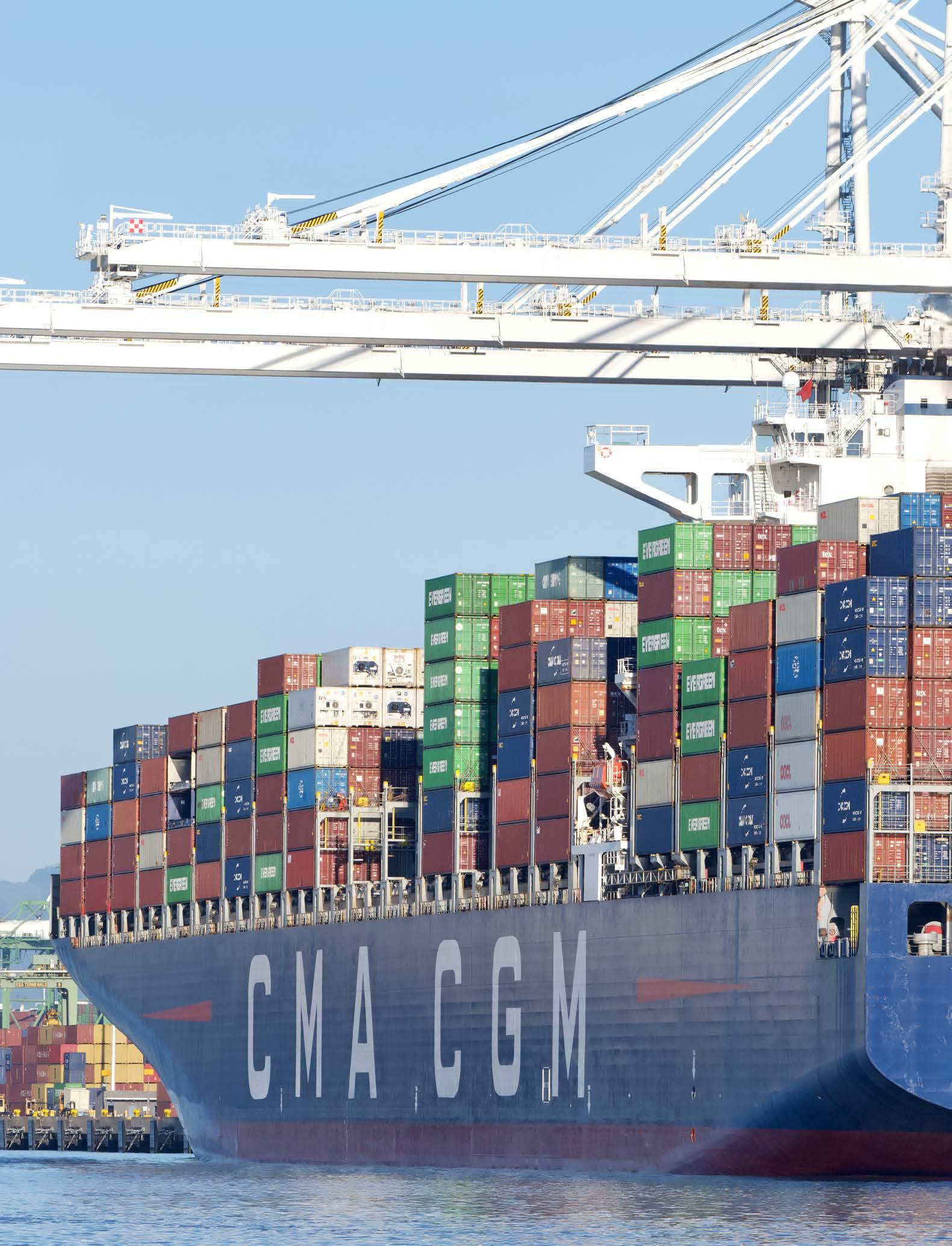
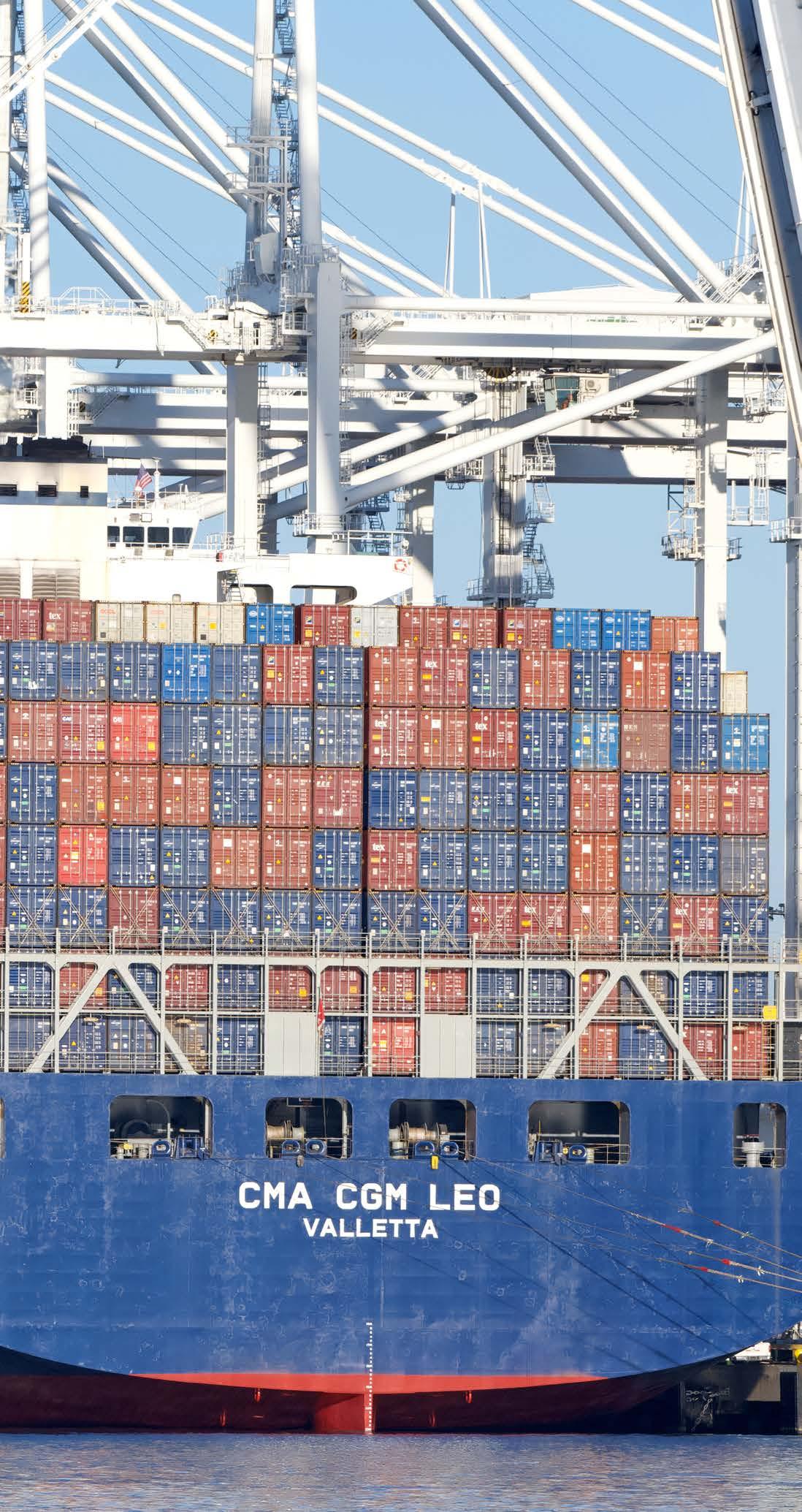
With more than 400 local agencies and operations in more than 170 countries worldwide, CMA CGM is a leading global smart transport solutions company that is committed to supporting its customers’ cargo connectivity across international supply chains. With operations spanning the entire shipping and logistics sector, covering sea, land, air and logistics solutions, it’s no surprise that today CMA CGM is a leading shipping company supporting customers with all their logistics needs across the globe. One area of particular development is in New Zealand, where CMA CGM today operates through its wholly owned subsidiary CMA CGM Group Agencies (New Zealand) Limited (CMA CGM New Zealand). Through its subsidiary, CMA CGM continues to play a critical role in advancing New Zealand’s economy, supporting a significant portion of the country’s international trade volume.
CMA CGM has been operating in New Zealand for over 25 years, offering extensive maritime shipping, coastal services and integrated logistics through its subsidiary CEVA Logistics. CMA CGM’s expansion into New Zealand came following its acquisition of Australian National Line (ANL) in 1998, a major operator across the entire Oceania region. The acquisition allowed CMA CGM to acquire a strong presence in the region, which the company has only continued to build upon in the last two decades. In 2008, CMA CGM relocated its New Zealand services to the Port of Tauranga, and by 2011, it launched the ANZEX service, which directly connected New Zealand with Asia and Fiji. Then in 2016, the local agency’s name was updated from CMA CGM & ANL Agencies (New Zealand) Ltd to CMA CGM Group Agencies (New Zealand) Ltd, under which the local division now operates.
Today, CMA CGM New Zealand offers 11 services from 9 ports of call, offering extensive containerised shipping services covering major ports such as Auckland, Tauranga, Lyttelton, Wellington and Napier. Across the region, CMA CGM offers 7 key services that connect New Zealand and the wider Oceania region with key hubs around the globe. One of the most significant services is the ANEZ ANL service, which offers a weekly service connecting NorthEast Asia, including China and Taiwan, directly with
New Zealand. Other key services connecting New Zealand with Asia include the KIX ANL, PAX ANL, and TTZ-Trans ANL. KIZ ANL specifically connects SouthEast Asia and North Asia to Auckland and Tauranga. ANL remains a key aspect of all of these routes, operating under CMA CGM to enhance New Zealand’s international shipping sector, helping move import and export goods between the Oceania region and end markets. Across many of these services, CMA CGM New Zealand offer extensive inland intermodal solutions across the country to help its customers seamlessly move from the ports and onto their inland destinations.
One of the most significant ports of CMA CGM New Zealand’s operations is the Port of Tauranga. The port is the largest and most efficient port in the country, operated as a major international freight gateway for New Zealand’s import and export industries. With the infrastructure to handle the largest container vessels that arrive at the country’s shores, the Port of Tauranga is responsible for handling around a third of New Zealand’s total cargo, with around 40% accounting for exports. The port provides vital transportation links via state highways and railways to help move cargo from the port and onto key destinations such as Hamilton, Auckland and the central North Island. With a significant container
Supporting Oceania Supply Chains
operation at the port, it is home to the Tauranga Container Terminal, which is located at Sulphur Point. The terminal is New Zealand’s largest and most efficient, handling around 41% of all shipping containers at the port across its 9 ship-to-shore cranes and 53 straddle carriers, which are linked by leading-edge technology. Thus, with a wealth of shipping operations, the port is primed to deliver significant economic and environmental benefits for importers and exporters.
CMA CGM New Zealand operates from the Port of Tauranga, offering regular shipping services which utilise the Tauranga Terminal to enhance regional connectivity. Furthermore, CMA CGM then leverages the existing rail-linked inland terminal at Metro Port in Auckland to further enhance regional connectivity and help customers from across the country reach both local and international markets via CMA CGM New Zealand’s shipping services. Therefore, the Tauranga Terminal at Sulphur Point serves as a primary cargo, container and shipping hub that supports all of CMA CGM New Zealand’s operations in the region for enhanced connectivity.
Another key port served by CMA CGM New Zealand is the Port of Auckland. The port is home to a network of freight hubs throughout the North Islands, as well as the main cruise port for New
LIFT
Effortlessly
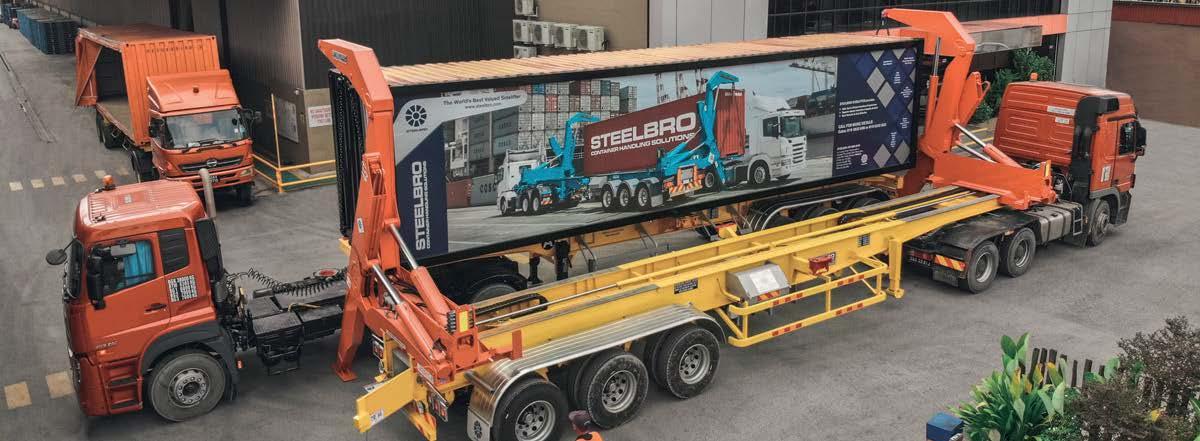
Specially designed for low tare weight and quick stabiliser deployment, the 36 tonne SB363 sidelifter helps you lift fast.
CMA CGM New Zealand
Zealand. Thanks to its location, the port is the most direct route to the Auckland market, and so it is widely used for import and export cargo into the city. In fact, nearly three-quarters of the country’s inbound cargo arrives in the country via the Port of Auckland. From here, cargo can then be quickly and cost-effectively moved from the port and into the city of Auckland to support local businesses.
Much like the Port of Tauranga, the Port of Auckland’s Fergusson Container Terminal is also key to shipments into the region, offering a dedicated container handling facility, which is home to the largest and most sophisticated straddle carrier fleet in New Zealand. The fleet is made up almost entirely of hybrid diesel-electric machines, with the capacity to lift two 20-foot containers at a time. This offers the port a distinctive advantage over other ports in the country, helping to facilitate a key hub for cargo handling in New Zealand. Beyond the Fergusson Container Terminal is the Jellicoe Warf, a key multi-cargo facility, which handles breakbulk, steel, timber, dry and liquid bulk, and vehicles arriving in New Zealand. Across the Port of Auckland, CMA CGM New Zealand operates major shipping lines, with the Jellicoe Wharf playing a key role specifically in supporting container shipping. Therefore, the port is met with regular shipping
schedules that connect the infrastructure and terminals of the Port of Auckland with global trade routes through CMA CGM New Zealand’s operations.
The largest port of New Zealand’s South Island is the port of Lyttelton, which provides a key container terminal, dry dock, inland Cit Depot and Midland port that sees billions of dollars’ worth of imports and exports arrive at the port each year. The port serves Christchurch, Canterbury and the wider South Islands, with profitability, safety and collaboration woven into its port operations to support its customer cargo delivery. Therefore, CMA CGM operates a regular container vessel service from the Port of Lyttelton, which connects the South Island’s industries with local and global trade routes. In fact, CMA CGM Ouvea and CMA CGM Lekki vessels frequent the port’s Lyttelton Container Terminal, supported by local port services to connect the region’s businesses to the world. This is possible thanks to the port playing a key role in the wider Oceania Trade network, which connects New Zealand to North and South-East Asia.
A pivotal link in CMA CGM New Zealand’s local network is the Port of Napier, which connects local businesses to global trade markets, whilst also being a key tourism hub. The Port of Napier is home to the fourth-largest container port in the
PORT AGENCY & MARINE SERVICES
A trusted provider to the maritime industry since 1847
Don’t settle for anything less than the best. Join our extensive list of satisfied customers who have experienced the Inchcape advantage.
Our knowledgeable staff, unrivaled global network, and commitment to innovation make us the trusted partner you need for all your port agency and marine service needs.
Contact Inchcape Shipping Services today and unlock a world of possibilities.
country, and a crucial cargo gateway for the central North Island. The port handles key commodities such as logs, timber, pulp, fruit and wine, which are transported in a range of container, bulk and breakbulk services. To facilitate this movement, the port comprises a 10-hectare container depot, which has over 1,000 reefer points and 6 wharves, including a 350m berth for large cruise vessels to support the region’s tourism industry. CMA CGM facilitates key container services to the Port, focusing particularly on connecting Hawke’s Bay to global markets, supported by ANL’s regular port calls to support local exporters with its global network.
The final key port that helps CMA CGM support shipping across New Zealand is the Wellington Harbour, which is operated by CenterPort. The port is one of the busiest in New Zealand by ship movement, largely thanks to its location at the centre of the country in a naturally sheltered, deep-water harbour. This ideal location allows the port to offer a wide variety of cargo and logistics services, connecting the port’s multi-modal transport network, which helps move cargo from the port and towards regional freight hubs. Here, CMA CGM utilises the Wellington Container Terminal to support coastal routes departures connecting to larger international shipping lines traversing the globe towards the Americas and Europe.
To help enhance connectivity from New Zealand and other Oceania countries, CMA CGM announced in December 2025 the introduction of a new KEA service, which will run between the US East Coast and Oceania. The service will support the existing Panama Direct Line (RTW PAD), which already offers a dedicated weekly service connecting Europe, the US East Coast and Latin America, with Australia and New
Zealand. Therefore, KEA will add to this vital route, offering a dedicated route moving from Philadelphia to Charleston, then Balboa, Tauranga, Sydney, Melbourne, and Port Chalmers, and then back to Tauranga before moving to Manzanillo, Cartagena, and returning to Philadelphia and Charleston. Together, RTW PAD and KEA will provide two weekly departures on the US East Coast-Oceania corridor, establishing CMA CGM as the only carrier able to offer such weekly departures for trade along this route.
To help enhance trade along this route, KEA will also include dedicated fast services designed specifically for fresh fruits and frozen food travelling from the Oceania regions towards the US East Coast. This is pivotal for New Zealand as the country is a global leader in the fresh fruit export marketing, with kiwi fruits accounting for 56% of fresh produce exports, alongside apples, which make up as much as 26% of fresh fruit exports. Thus, with CMA CGM New Zealand’s vital hubs across the country and the wider Oceania region, the company plays a vital role in supporting businesses across the region with vital access to global markets.
It’s clear that across CMA CGM New Zealand’s network, the central goal is to enhance the connectivity of the region to help businesses and industries thrive. With the company’s network extending across many of the country’s vital ports, CMA CGM New Zealand offers a reliable service across the country to ensure both local and global supply chains can thrive. With the new introduction of the KEA service, CMA CGM is well placed to continue to support local businesses across New Zealand and the wider Oceanian region, and help them access global markets for their continued economic success.
As one of the world’s foremost professional services firms, WSP brings together engineering, advisory and science-based expertise to create a positive impact on the communities and industries it serves. WSP’s operations span the full spectrum of sectors, including Mining and Metals, Earth and Environment, Energy and Resources, Industry, Property and Buildings, Transport and Infrastructure, and Water solutions. With these sectors forming the backbone of WSP’s business, the company can address diverse client needs through tailored, high-quality services. Across these operations, WSP remains focused on delivering key projects with sustainability, digital solutions and infrastructure resilience in mind. To highlight WSP’s innovative role, we spoke with Gustavo Bravo, Mining and Metals Director overseeing Latin America and the Caribbean at WSP, who told us about the company’s work in the region’s diverse and dynamic Mining and Metals sector.
WSP’s operations today span the globe, with a portfolio of remarkable projects centred on driving positive change. Each project is driven by the company’s deep local knowledge, which enables it to inspire, guide and collaborate with its clients to deliver projects that meet their unique needs, backed by technical expertise and innovative thinking. In the Mining and Metals division specifically, WSP maintains a global presence with operations in Latin America and the Caribbean, representing a significant focus for the company. These operations are supported by offices in Mexico, Colombia, Peru, Brazil, Chile and Argentina, which provide strategic support throughout the region to help advance innovation and excellence within the mining industry. Across the world, WSP has over 5,200 employees on the ground offering deep local knowledge, with the reach and capability of an international firm. Within this regional community, WSP has more than 1,400 specialists dedicated to the Mining and Metals sectors, who provide technical breadth and project experience to support its clients across the full mining life cycle, taking projects from studies and design, through to delivery.
When we asked Gustavo Bravo, Mining and Metals Director, about the current state of the mining and metals industry in which WSP operates, he outlined that “Mining and metals finds itself at the centre of two powerful, and often compelling forces: the world’s accelerating push to decarbonise and electrify,
Supporting Latin America’s Metals and Mining Sector
and the reality that new supply is increasingly difficult to deliver. Demand fundamentals remain compelling – particularly for the critical mineral that underpins the energy transition, from copper and nickel to lithium and rare earths – yet the industry is being asked to do more with less, as ore bodies become deeper, lower grade and more complex.” Bravo’s comments highlight a central challenge for the mining and minerals sector, as many renewable energy solutions still require critical minerals to deliver them, but not always the infrastructure or resources to do so.
Bravo continues, “Against this backdrop, operators are navigating persistent cost inflation, constrained access to skilled labour and specialist equipment, and supply-chain and logistics pressures that can quickly erode project economics”. Bravo thus highlights how the energy transition, changing market demands, and supply chain challenges are all contributing to volatility in the sector, and, in turn, this affects how projects, capital allocation and investments are delivered. Therefore, the metals and mining sector is a critical but often challenging industry seeking to deliver
projects that drive progress, whilst tackling the challenges that such developments pose.
According to Bravo, what sets WSP apart from its rivals is that it works closely with its clients by pairing local, on-the-ground delivery with its globally backed industry knowledge. The projects are then supported by teams embedded across key mining jurisdictions, offering an informed understanding of the region’s regulatory pathways, stakeholder and community expectations, as well as the practical realities required to build and operate assets across diverse geographies and climates. Bravo adds, “At the same time, we can draw rapidly on world-class specialists across engineering, advisory and science-based disciplines to tackle complex challenges end-to-end: from early studies, permitting and social performance through design, construction support, operations, water stewardships, tailings governance and closure”. As highlighted by Bravo, this blend of proximity and capability enables WSP to help clients deliver their projects from concept through execution, whilst proactively managing risks. The resulting projects are then not only technically and commercially
robust but also resilient and responsibly delivered for the communities in which they operate.
In fact, when we asked Bravo, who has been guiding the Metals and Mining regional vision since 2021, what the best part of what WSP has to offer, he outlined, “We pride ourselves on delivering tailored solutions for the Mining and Metals sector, blending our extensive local expertise with the power of a world-class digital network. Our team of professionals brings both deep industry knowledge and a collaborative spirit, ensuring every project benefits from best-in-class insights and innovation – wherever it’s needed.” This builds upon Bravo’s own philosophy of success: ‘Placing clients at the core of everything we do is essential for achieving true success. By understanding their needs and going the extra mile, we create lasting relationships and deliver results that truly matter”. We can see Bravo’s philosophy across WSP’s Mining and Metals division, as every project utilises its network of expertise to deliver innovative and tailored projects backed by data and technological innovation for its long-term and responsible success.
As WSP looks towards the future, its central goal for its Mining and Metals division is growth. Through growth, WSP hopes to be able to expand its share of the region’s most important programmes and position itself as the go-to partner for clients developing and sustaining the next generation of assets across Latin America. To achieve this, WSP plans to deepen its presence in key mining jurisdictions,
scaling its ability to move seamlessly from studies to execution, and broadening its support for clients investing in production expansion, debottlenecking and new developments, particularly in critical minerals that underpin electrification and the energy transition. Speaking on this, Bravo said, “To enable that growth sustainably, we will continue to invest in integrated, end-to-end delivery that brings together engineering, environmental and social performance, permitting, and project delivery capability, helping clients progress with greater speed, certainty and predictability”.
Bravo outlines that WSP will also strengthen its differentiated capability in areas that increasingly determine project viability, including decarbonised pathways, electrification-ready design, resilient infrastructure, responsible water stewardships and robust tailings governance. At the same time, WSP will advance its digital and data-led ways of working whilst developing the region’s multidisciplinary teams through talent development and long-term partnerships with clients and communities.
WSP’s focus on community development remains a key pillar of its operations, especially in Latin America, where it aims to create lasting value in the communities in which mining and metal operations
Supporting Latin America’s Metals and
are taking place. To achieve this, WSP goes beyond project delivery and ensures that every project also centres on outcomes that positively benefit those locally. To achieve this, as outlined by Bravo, WSP prioritises early and meaningful stakeholder engagement, supporting clients with social performance and permitting processes, and designing solutions that strengthen safety, environmental protection and long-term resilience. Bravo also notes that “We also invest in local capability – employing and developing local talent, partnering with local suppliers where possible, and sharing knowledge through training and skills transfer – so that projects leave behind expertise as well as infrastructure.”
A key aspect of WSP’s community development is the role that sustainability continues to play in its operations. This is particularly important in the Metals and Mining sector as sustainability is increasingly central to how mining projects are conceived, permitted and financed. Thus, WSP have been embedding sustainability into its dayto-day delivery and the advice it provides to mining clients across Latin America. Speaking on this, Bravo outlines the role of WSP, to help operators “reduce their environmental footprint through decarbonisation and electrification roadmaps, energy and emissions modelling, and designs that enable cleaner power and more efficient operations over the long term”.
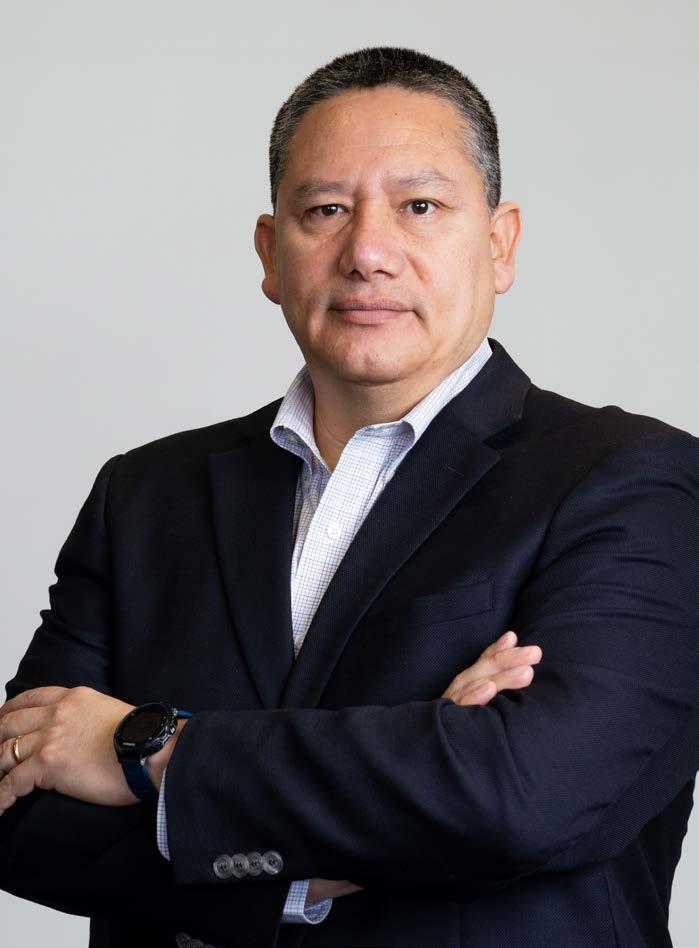
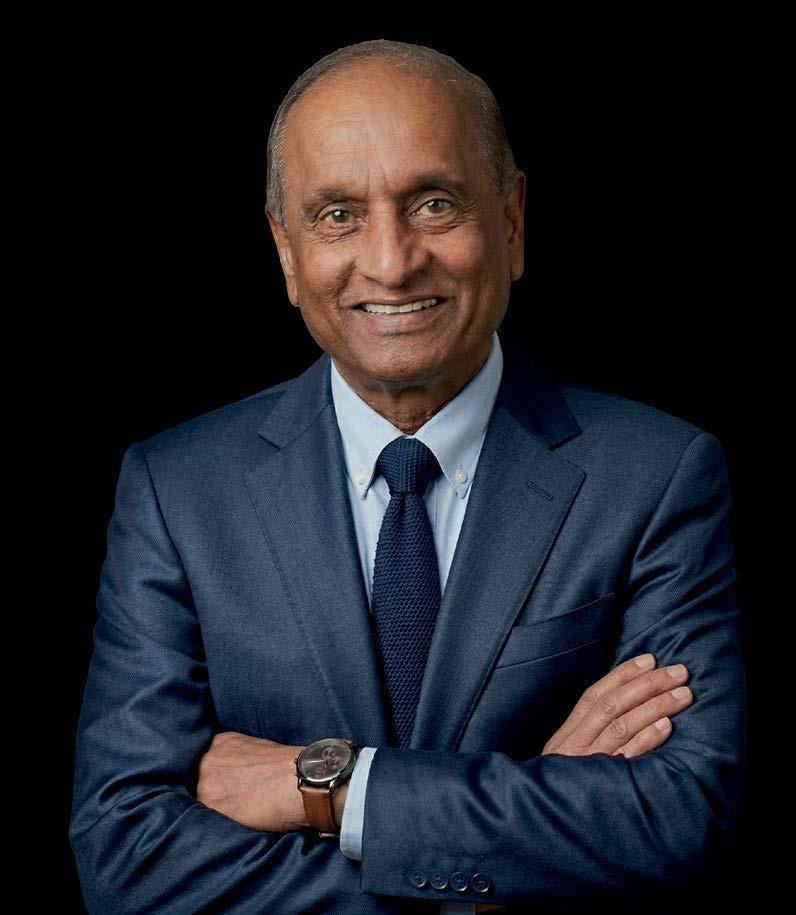
Gustavo Bravo, Mining and Metals Director for Latin America, WSP
Bravo adds, “We are also placing a strong emphasis on water stewardship – supporting strategies that prioritise reuse, efficiency and resilient supply in water-stressed regions – alongside rigorous approaches to tailings governance and risk management that reflect the heightened expectations of regulators, investors and future-read, while creating measurable improvements in environmental performance and long-term resilience”. As we can see from Bravo’s comments, sustainability remains a core pillar of WSP’s operations, especially in the Metals and Mining sector, where sustainability is a key focus for future development.
It’s clear from our conversation with Gustavo Bravo that the Mining and Metals division is a key focus for development for WSP, with its operation in Latin America and the Caribbean supporting the delivery of vital mining projects towards the global energy transition. Across WSP’s operations, there remains a key focus on centring the local community to ensure that every project and development works with and supports them, in job creation, infrastructure development, and sustainable practices. We look forward to seeing how the Mining and Metals division of WSP will continue to grow over the coming years under Gustavo Bravo’s vital guidance, as it continues to deliver critical engineering, advisory and technology-backed mining projects.
Maersk Turkey
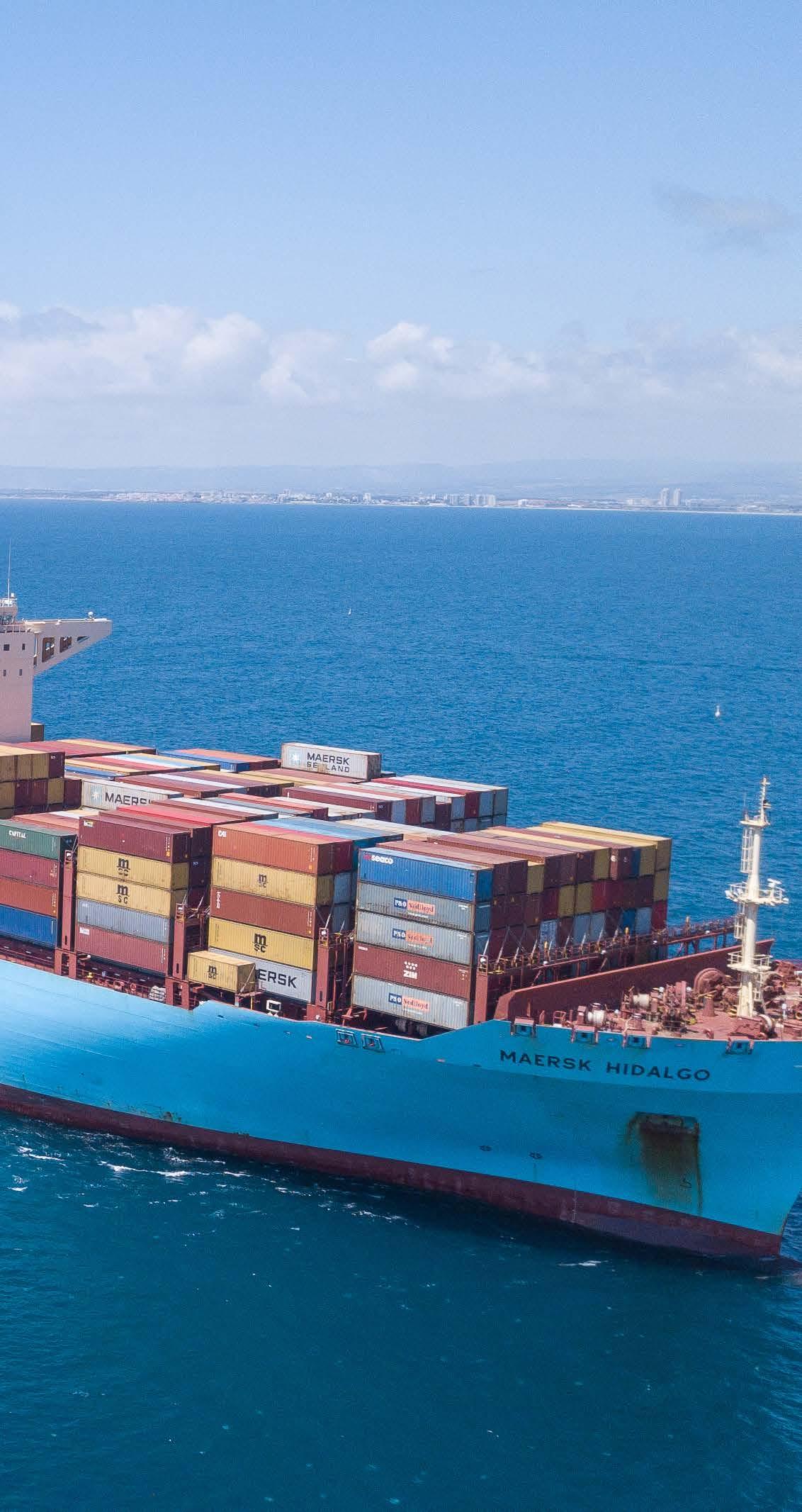
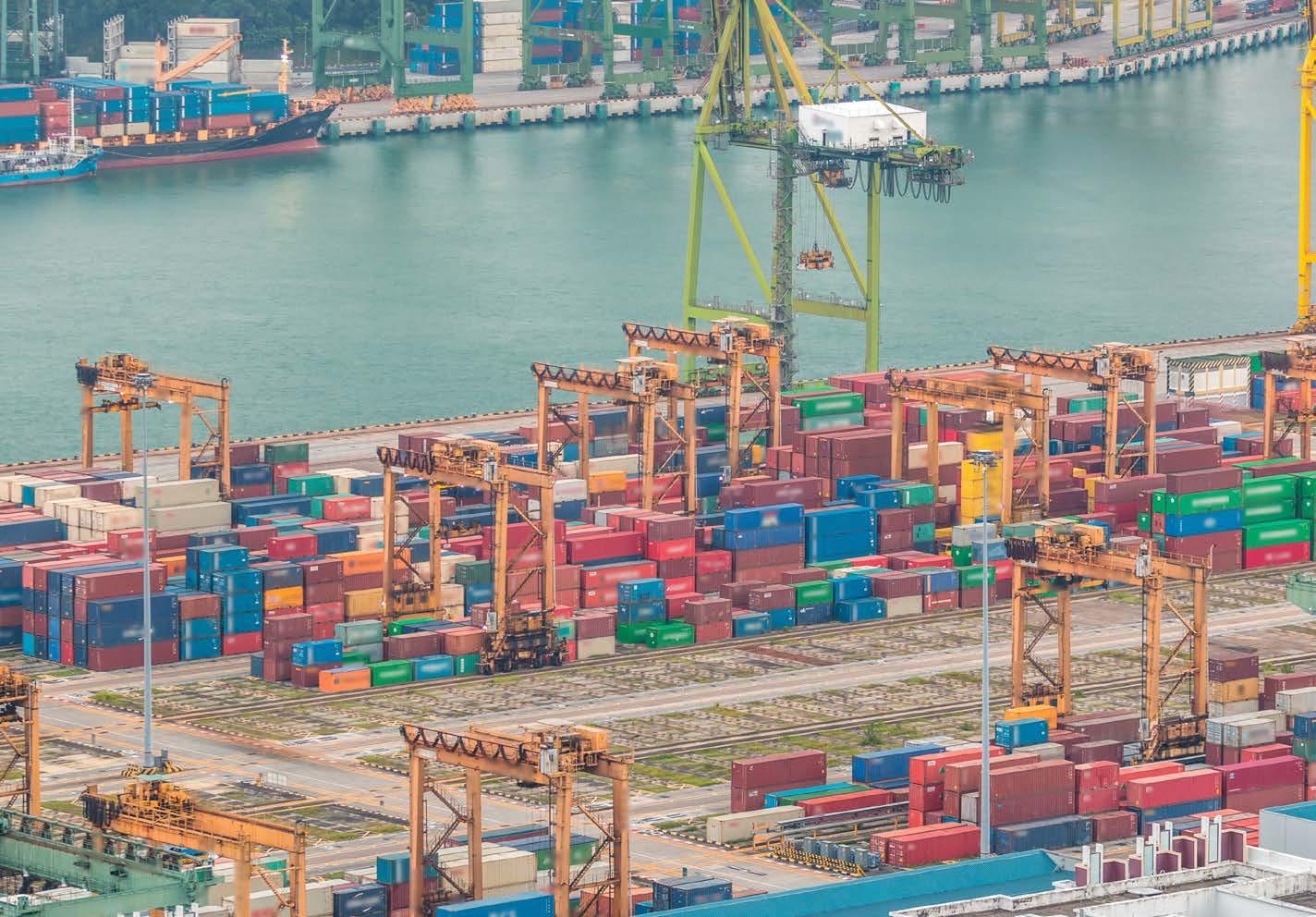
Turkey is a thriving hub for trade, connecting businesses across the country with markets spanning Europe, the Middle East and Asia. Every year, the country’s cargo trade contributes significantly to its economic development, with key industries such as vehicles and automotive parts, machinery, refined petroleum, textiles and jewellery making up its export markets. These products serve global markets, with a particular focus on Germany, the United Kingdom, the United States, Iraq and Italy. To support such a diverse export market, global shipping and logistics company Maersk offers comprehensive logistics services across the country, combining ocean transport with inland services, air freight and contract logistics. Now, more than 30 years since Maersk began operation in Turkey, the company plays a vital role in supporting its long-term economic success and enhancing its role in global supply chains in the process.
Maersk has been operating in Turkey since 1993, offering vital shipping, logistics, warehousing and customs services that serve the country’s key import and export markets. Across Maersk’s operations in Turkey, the company offers regular services from 7 key Turkish ports, which are then connected via its vast ocean fleet to shipping lines and markets around the world. Some of the most significant ports and port areas covered by Maersk’s operations are the Port of Ambarli, the Mersin International Port, the Aliağa Port Complex, and the port and industrial logistics hub of İzmit Körfezi. Across these ports and cargo hubs, Maersk is committed to enhancing global trade, solidifying each port and port area as vital nodes in Maersk’s global shipping network.
One of the most significant ports in Turkey served by Maersk is the Ambarli Port, which is the largest container port complex in the country. The port, located 34km west of Istanbul’s centre, is a modern facility serving as a critical entryway for maritime trade into one of the country’s major cities. Having been initially developed to enhance Turkey’s logistics and trade capabilities, the port has grown significantly, and it is now a leading container shipping hub playing a pivotal role along the region’s supply chains. The port connects with global trade routes which reach Europe, Asia and
Managing Risks at Sea - An Introduction
In today’s complex global shipping environment, risk is not an exception but the norm. From volatile weather patterns and geopolitical tensions to evolving regulatory frameworks and cyber threats, shipowners and operators face an expanding spectrum of challenges. Against this backdrop, ship and marine insurance has evolved beyond a financial safety net into a strategic pillar of modern risk management.
Marine insurance is no longer just about indemnity after a loss. It is increasingly about prevention, foresight, and resilience. The most forward-thinking shipping companies are leveraging insurance not only to protect assets but also to enhance operational efficiency and safeguard long-term profitability.
At its core, ship and marine insurance covers a wide array of exposures: hull and machinery damage, cargo loss, protection and indemnity (P&I) liabilities, environmental risks, and more recently, cyber incidents. However, the real value lies in how these policies are structured and integrated into a broader risk management framework.
Effective risk management begins with understanding. Insurers today are working closely with shipowners to assess vessel conditions, trading routes, crew competency, and maintenance practices. Through data driven insights and predictive analytics, potential risks can be identified before they escalate into costly incidents. This proactive approach allows operators to make informed decisions, whether it’s rerouting a vessel to avoid severe weather or upgrading onboard systems to meet new compliance standards.
Another critical dimension is loss prevention. Leading insurers now provide advisory services, safety audits, and training programs aimed at reducing the frequency and severity of claims. These initiatives not only improve safety outcomes but also lead to more favorable premium terms over time. In an industry where
margins are often tight, such efficiencies can make a significant difference.
Environmental responsibility is also reshaping marine risk management. With stricter regulations on emissions and pollution, shipowners must navigate compliance risks alongside operational ones. Insurance solutions are adapting accordingly, offering specialized coverage for environmental liabilities and supporting investments in greener technologies. This alignment between risk management and sustainability is becoming a key differentiator in the market.
Moreover, the digital transformation of shipping introduces both opportunities and vulnerabilities. As vessels become more connected, the risk of cyberattacks grows. Marine insurance providers are responding with tailored cyber coverage and risk assessment tools, helping operators secure their digital infrastructure while maintaining business continuity.
Ultimately, ship and marine insurance is about partnership. The relationship between insurer and insured is shifting from transactional to collaborative. By sharing expertise, data, and strategic insights, both parties can better anticipate risks and respond effectively when incidents occur.
Within this evolving environment, Türk P&I stands out as a provider well positioned to meet the demands of modern shipping. With a strong foundation in the maritime sector and an expanding international footprint, the company combines regional expertise with global service capabilities. Its dedicated focus on marine insurance, supported by a solid reinsurance structure and a wide correspondent network, allows it to respond effectively to complex claims worldwide. Already covering almost 10,000 units on a global scale, Türk P&I continues to demonstrate its capacity and reliability in serving the maritime industry, standing ready to assist shipowners in navigating today’s evolving risks.
Maersk Turkey
the Middle East, and so, sees more than 1.5 million twenty-equivalent units (TEUs) passing through the port every year.
A critical component of the Port of Ambarli is its dedicated container terminal, which is equipped with automated cranes, as well as advanced cargo handling and storage facilities to support seamless operations that keep cargo moving seamlessly in and out of the country. Furthermore, the port even benefits from a Free Trade Zone status, and so it is a pivotal hub for supply chain movement, thanks to its tax incentives for importers. Beyond the port, cargo can easily be moved across major highways and railways that connect directly to the port, supporting efficient movement of cargo across the country.
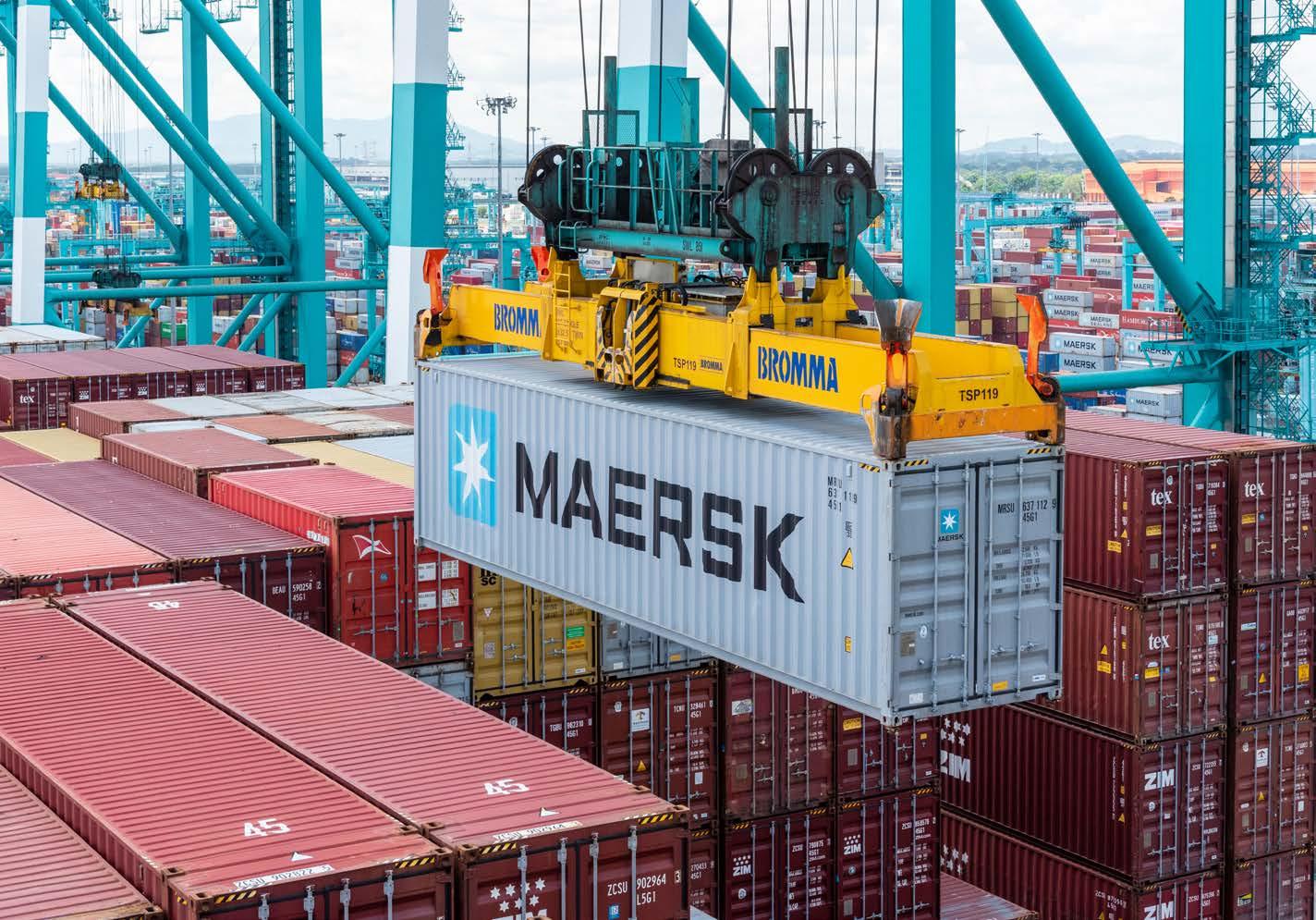
For Maersk, the Port of Ambarli serves as a key hub for both Black Sea and Aegean feeder services, connecting global routes with international shipping lines through regular services to and from the port. In fact, one of the most significant parts of the port is the Marport Container Terminal, which is located within the Port of Ambarli complex and comprises a Main and West terminal. These terminals are responsible for handling almost half of all the container volume moving throughout the Ambarli region. Therefore, for Maersk, the Port of Ambarli presents a vital hub with the necessary supporting infrastructure to support global logistics operations, to ensure its customers benefit from
efficient, reliable and safe cargo operations across the port.
The Mersin International Port is another key hub for Turkey’s global trade, located strategically along major maritime routes, whilst being adjacent to a diversified and fast-growing hinterland. The Port is one of the main container ports serving the Mediterranean Region, connecting key shipping routes travelling across the Mediterranean with Western Europe, the Far East, North America and North Africa. Therefore, the port provides vital access to markets in Turkey and across the Eastern Mediterranean region. Maersk has a strong and active operational presence at the Mersin International Port, offering comprehensive ocean transport, inland haulage, and specialised services for both dry and reefer cargo arriving at the port. Thus, the port continues to play a leading role in global supply chains, and so Maersk utilises it as a vital hub connecting customers across the region with global shipping lines traversing the globe.
In İzmir, the Port of İzmir (Port of Alsancak) and Aliağa Port Complex play key roles in the country’s overall cargo operations, delivering İzmir as a major industrial maritime hub, focused on oil, bulk cargo, and chemical handling. Maersk operations in İzmir centre on the Nemport Terminal in Aliağa, which is designed to handle a range of container services traversing the Mediterranean region. This focus comes following Maersk’s announcement in January 2026 that it would no longer be calling at the SOCAR Complex in Aliağa and would instead call at the Nemport Terminal along its SLC Aegean Sea Service. Nemport is the first private container port in the Aegean region and is located in Aliağa. The port operates as a key gateway for trade for the region, with the port seeing an ever-increasing container handling volume. The shift from the SOCAR Complex to Namport highlights Maersk’s commitment to improving reliability for its customers by enabling better supply chain planning for its customers across the network.
Much like Aliağa, the Port of İzmit Körfezi is a critical industrial and logistics hub serving Turkey, spanning more than 35 specialised terminals handling container, liquid bulk and general cargo. Key facilities within the hub include the Yilport Gebze/ Körfez, DP World Yarınca and Evyap Port Terminals. With a wealth of key terminals across the area, İzmit holds a significant role in the shipping industry of Turkey, serving as a logistics hub primed to connect with shipping lines across the Mediterranean, and so it serves as a critical transhipment hub. Here, Maersk serves the maritime hub with its logistics and container services centring on the terminals.
Connecting Business to the World
As we can see, Turkey is home to a plethora of key ports which support its shipping and logistics industry and help it solidify its place as a key global hub for cargo operations. These operations are supported by Maersk’s extensive shipping and logistics services, leveraging each port and district’s transport connections, both across inland and global shipping lines. Furthermore, thanks to these ports and the vital services of Maersk, customers across Turkey can access global markets, whilst global markets can reach key destinations within Turkey. With such a diverse array of commodities seen across Turkey’s shipping network, each shipment requires its own set of risk management and insurance policies. For this, Maersk offers a hybrid insurance model across its global networks, utilising both its own insurance company and partnerships with global insurance providers to ensure that all cargo is protected from origin to destination.
For Maersk, it understands that cargo can get damaged at any step of its journey on the way to its destination, and so it works to ensure that its customers’ cargo is supported by the best insurance solutions on the market. Its insurance policies cover a whole range of cargo types, taking into consideration their unique needs, to provide customers with peace of mind knowing their shipment is protected from warehouse to warehouse. Typical things covered by Maersk’s
insurance policies are loss or damage during warehousing or during warehouse transit, often regardless of the transportation provider, as well as protection for natural catastrophes, General Average (GA), war risk, and strikes.
Beyond this, Maersk also has a ‘Value Protect’ cover, which adds an extended liability product on top of its insurance policies. Value Protect is a simple add-on product that extends the liability for terms of carriage to cover aspects that are not usually included in traditional insurance terms, and can include things such as delays and fire. This addition can be added to any customer’s contract or shipment, adding yet another layer of peace of mind. Both Maersk’s insurance policies and Value Protect help ensure customers know that their shipments are safe and protected with Maersk, who are committed to keeping cargo moving and supply chains supported all across the world.
Across Maersk’s operations in Turkey, we can see how the company connects the region’s vital ports and port complexes with its global network to enhance global connectivity and support Turkish businesses in reaching international markets every day. Supported by Maersk’s breadth of experience in the global shipping sector, customers across Turkey and the wider region rely on Maersk to support their supply chains with leading shipping and logistics solutions, backed by reliable insurance policies.
TotalEnergies E&P Angola
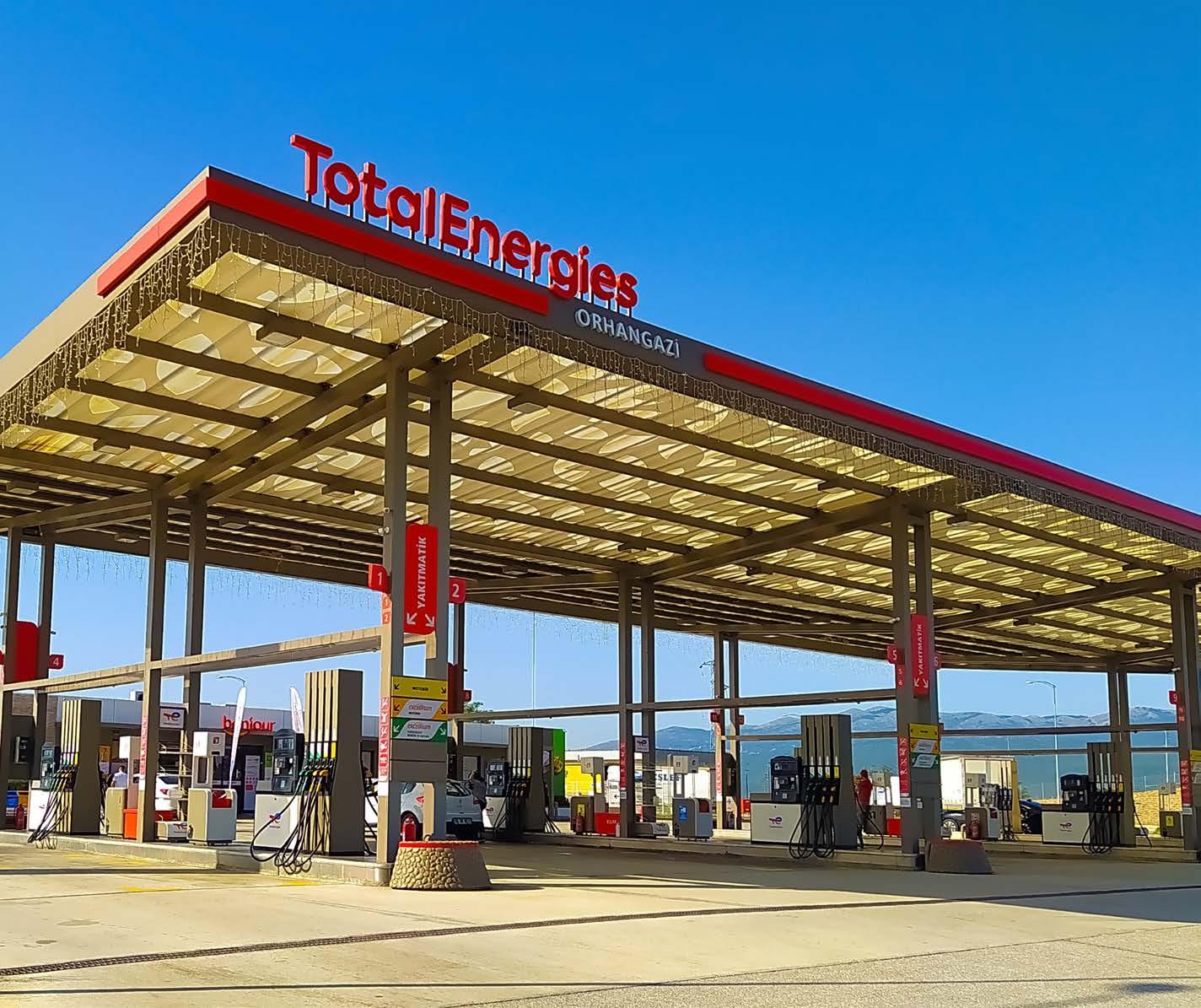
TotalEnergies is a global energy company known for its vast role across the energy industry. Today, TotalEnergies holds an expansive portfolio of 120 energy projects spanning from oil to biofuels, natural gas, green gases, renewables and even electricity. The company is focused on vital energy developments across the world that will continue to enhance the global energy sector and build its reputation as a leading international energy brand. In Angola, TotalEnergies has been a leading energy player for more than 70 years. Within the country, TotalEnergies holds a portfolio responsible for producing close to half of the country’s oil production across 4 major oil fields. For this reason, TotalEnergies has continued to develop energy projects across Angola through its experience within the deepwater sector to deliver vital oil resources for the country, whilst working towards implementing measures to meet the country’s sustainable energy future.
TotalEnergies began operations in Angola in 1953 and is now the leading oil operator in the country, with operations spanning the whole oil delivery pipeline from upstream exploration and production to downstream service stations. However, the company’s focus in recent years has been on its deep offshore operated assets, which are responsible for 45% of the country’s total oil production. With such a vast amount of the country’s oil coming from TotalEnergies projects, it’s no surprise that the company is now a vital player within the country’s energy sector, supporting its delivery of energy to the country and beyond.
One of the most notable deposits being used for the production of petroleum in Angola is the Kwanza Basin. The basin is the third largest crude producer in Africa and is located both on and offshore of Angola in the north of Cape Santa Maria. The basin is the first location that saw vital exploration for Angola’s energy sector and so remains a vital pillar of the country’s oil development and expansion. Across this basin, TotalEnergies operates several deep and ultra-deep offshore oil licenses, including 4 production vessels in Block 17. Block 17 is operated by TotalEnergies and has worked with partners Equinor, ExxonMobil, BP, ANPG and Sonangol to expand the block’s production licenses in recent years. The block, located 150 kilometres (km) off
the Angolan coastline, ranges from depths of 600 to 1,400 metres (m) and has produced close to 3 million barrels of oil since it began development in 2001. The block is serviced by four floating production, storage and offloading (FPSO) units: Girassol, Dalia, Pazflor and CLOV. These FPSOs currently produce approximately 440,000 barrels of oil equivalent per day, with more than 1 billion barrels yet to be produced as of 2019.
TotalEnergies’ developments in Block 17 add to its existing developments in the Kaombo project, which first launched in 2014 as an ultra-deep offshore exploration and production project in Block 32. The project, in which TotalEnergies has a 30% stake, is unique and complex, with many of its operations taking place at depths of 1950 metres. At this depth, specialised technology is implemented by TotalEnergies to combat the extreme temperatures and pressure conditions presented whilst delivering oil production at this depth. However, this is where TotalEnergies specialises, and so it has delivered the project with advanced and innovative expertise to meet the unique conditions of operating at this depth. Furthermore, the project’s reserves are estimated to produce 658 million barrels of oil, with a 230-barrel-per-day capacity. To achieve this potential, TotalEnergies operates 59 wells across
Ranked. Trusted. Angolan.
Since 2004, FBL Advogados has been the trusted legal partner for international businesses operating in Angola and across Southern Africa. One of the continent's oldest and most respected firms, we combine rigorous local knowledge with the highest standards of international practice — giving clients the clarity and confidence to act decisively in complex markets.
PRACTICE AREAS
• Corporate, M&A & Private Investment
• Natural Resources, Oil & Gas
• Employment Law
• Banking & Finance
• Administrative & Tax Law
• Real Estate & Land Rights • Litigation & Arbitration
• Criminal & Compliance
• Competition Law
Why FBL Advogados
• 20+ years at the heart of Angola’s legal market
• Internationally ranked — Chambers Global & Legal 500
• Multilingual team — fluent across jurisdictions and cultures
For further information please visit fbladvogados.com
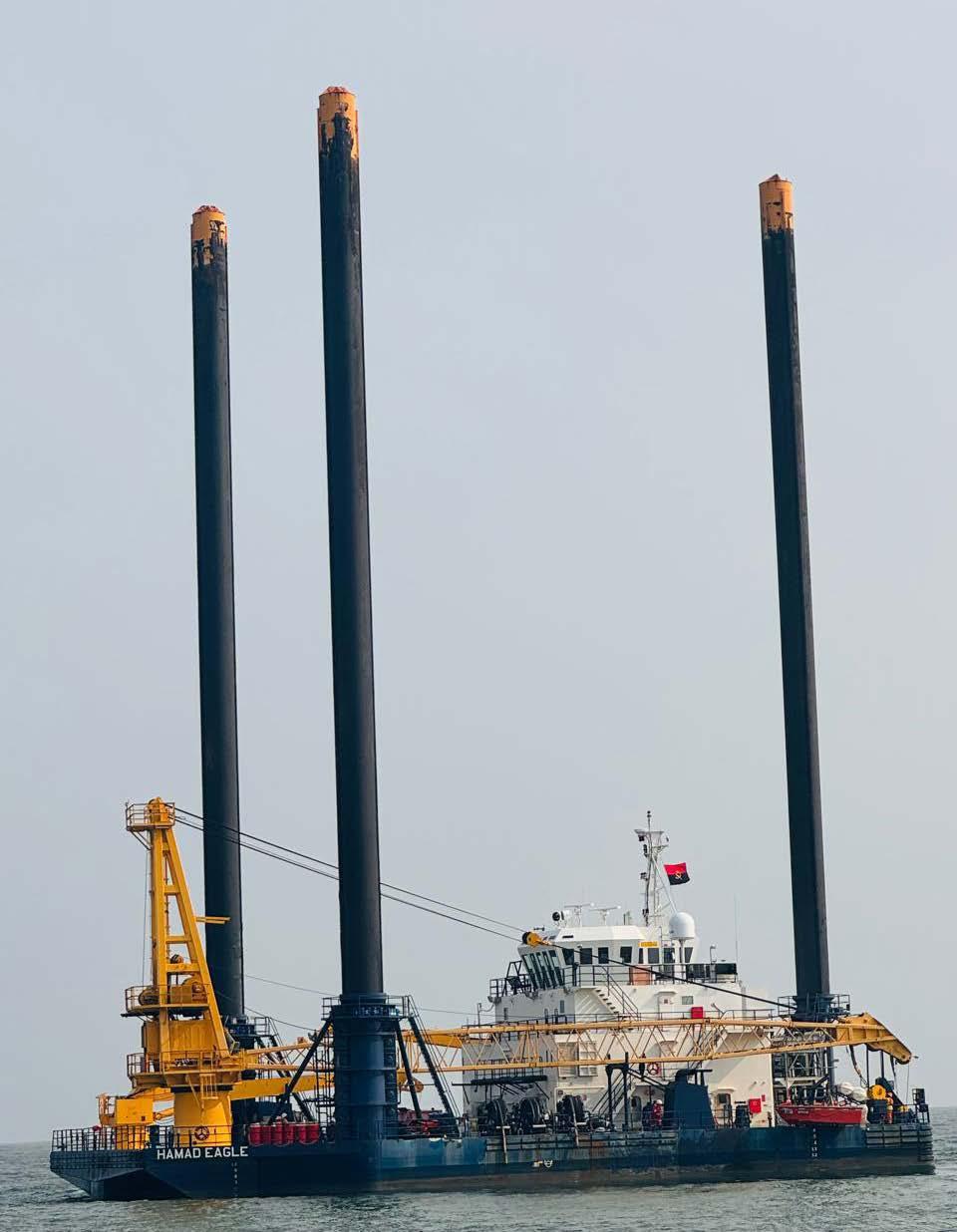
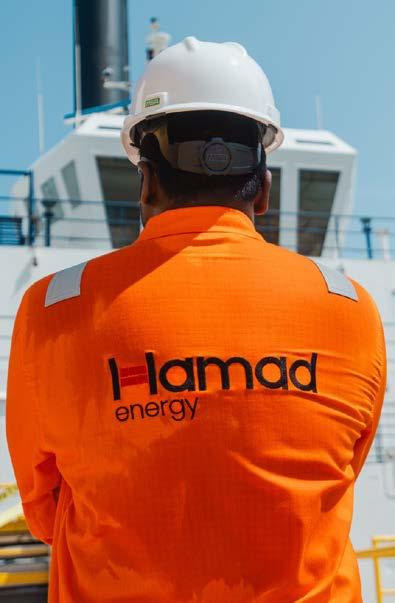
Your trusted leader in Angola’s Oil and Gas industry, offering innovative and reliable solutions tailored to the sector's dynamic needs.
We specialize in end-to-end project execution across EPCI, offshore operations, and marine solutions. From cutting-edge technology interventions to safe, sustainable practices, Hamad Energy enhances performance, safety, and efficiency for offshore oil and gas operations.
OUR EXPERTISE INCLUDES:
• P&A Operations
• Decommissioning Services
• Supply of Chemicals and Associated Services
• Engineering, Procurement, Construction And
• Installation Services
• Subsea Operations (including ROVs and Diving)
• Marine fleet supply services
• Installation, Maintenance and Repair Services
WHY PARTNER WITH HAMAD ENERGY?
We collaborate with leading multinationals and uphold the highest national and international safety and quality standards. With over a decade of experience driving key structural projects, Hamad Energy remains committed to delivering excellence, innovation, and sustainability in every solution we provide.
TotalEnergies E&P Angola
the 6 oil fields (Gengibre, Gindungo, Caril, Canela, Mostarda and Louro), which together form one of the largest subsea well systems for Angola. In turn, the development of this system reinforced TotalEnergies’ commitment to delivering ultra-deep offshore production through leading technical expertise.
To manage the capacity and control the cost of the operations, TotalEnergies built two new floating production storage and offloading (FPSO) vessels: Kaombo Norte and Kaombo Sul. Production began from Kaombo Norte in 2018 across the Gengibre, Gindungo and Caril fields, with Kaombo Sul producing oil just eight months later from the remaining Canela, Mostarda and Louro fields. Each vessel can produce 115,000 barrels per day and continues to develop the oil industry for Angola every day.
Just last year, TotalEnergies set out on a new development for Angola with the introduction of the Kaminho Project. The project is in partnership with Petronas and Sonangol, who signed a Final Investment Decision in May 2024. The project outlined would see a crude tanker converted into a
FPSO unit, which would be connected to the Block 11 and Block 20 subsea production networks along the Angolan coastline. The project is set for completion in 2028 and will deliver an all-electric vessel with a capacity of 70,000 barrels per day. The project will not only expand Angola’s oil production potential for the country but will also work towards building a more sustainable future through its all-electric design, which will eliminate routine flaring.
Beyond this, TotalEnergies continues to carry out several enclosed flare projects, which are currently being rolled out and examined across its FPSO operations for Angola. However, what remains vital throughout all of TotalEnergies’ operations in Angola is that each one is designed to help reduce their carbon intensity and so help deliver more sustainable energy projects. This focus on sustainability remains a key focus for TotalEnergies both in Angola and across its global operations. TotalEnergies has firmly placed sustainable development at the heart of its strategies, project delivery and operations to help contribute towards the energy sector whilst also supporting the well-being of the planet.
2024 marked a key year for TotalEnergies as it launched projects in Angola, along with those in Suriname and Brazil, all of which have a lower emissions intensity than the average seen across
Connecting business with strategy across Angola, Mozambique and Portugal. AVM Advogados brings deep local knowledge and internationally recognised expertise to every mandate.
POWERING YOUR BUSINESS WITH RELIABLE MAINTENANCE SOLUTIONS
Since 2014, GEPLI Angola has been helping small and medium- sized businesses stay up and running with expert electromechanical maintenance and power system support. From electrical installations to generator and UPS servicing, we keep your operations efficient, safe, and stress-free.
Our Key Services:
• Preventive & Predictive Equipment Maintenance
• UPS & Voltage Stabilizer Installation and Support
Whether you're managing an office, workshop, or small factory – GEPLI ANGOLA delivers dependable service and fast response across Angola.
CONTACT US TODAY
Bairro Nelito Soares, Rua C - 6, Casa nº10w comercial@gepliangola.co.ao | (+244) 222 730 566 | gepliangola.co.ao
TotalEnergies E&P Angola
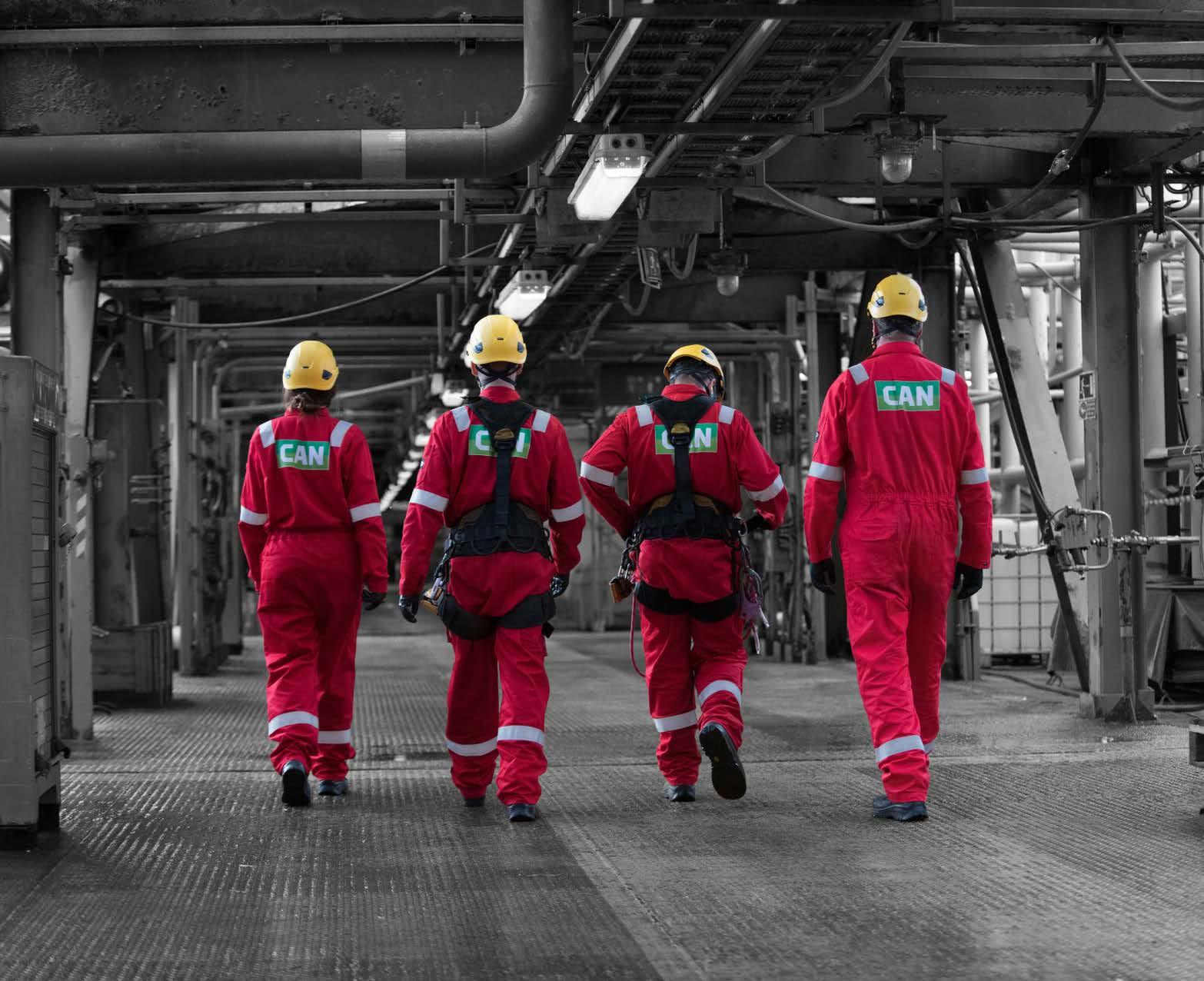
CAN West Africa
CAN West Africa, an integral part of CAN Group, delivers a comprehensive range of engineering and inspection solutions across the energy industry.
Solutions-driven and always aiming to exceed client expectations, CAN West Africa is committed to servicing the integrity, maintenance and operational needs of the region’s energy industry, adding value through smart solutions and a fully optimised service delivery.
CAN has had continuous presence in the region since 2004, servicing a number of oil and gas operators safely and efficiently. Our team are integral to this; an empowered, integrated and experienced workforce who continually provide high-quality services focused on driving exceptional outcomes.
A local company with a global reach, CAN West Africa is your trusted partner for asset integrity.
the global TotalEnergies portfolio. The company also shut down two gas turbines in Angola last year across Block 17 (Dalia and Pazflor), which has reduced carbon dioxide output by 29 kilo tonnes of carbon dioxide equivalent (kt CO2e/year), saving 13 cubic millimetres per year (Mm3/year) of fuel. By saving energy across its operation, TotalEnergies can contribute to the collective effort for energy efficiency, which in the process helps to reduce greenhouse gas emissions and lower costs for its projects in the process too.
For TotalEnergies, Angola provides an expansive and exciting development location where it has continued to bring vital resources to market through its innovative offshore exploration and development projects. However, across these projects, we have seen a keen focus towards sustainability, as TotalEnergies works to move the company’s operations towards a more greenhouse gas-reduced future. Therefore, through TotalEnergies’ work with vital local and global stakeholders within the energy sector, the company is leading the way towards delivering the vital energy resources needed for Angola, whilst working to protect the planet at the same time.
LOCAL COMPANY GLOBAL REACH
Delivering market-leading engineering and inspection solutions to enhance asset integrity, ensure safety and drive operational
As a globally integrated logistics company, Maersk connects customers worldwide, strengthening supply chains through its expertise across the international shipping sector. Currently, Maersk is present in more than 130 countries and employs around 100,000 people across its global network. One of the key areas of Maersk’s development in recent months is in the Asia Pacific, where Maersk serves major and strategic hubs that are fundamental to the region’s global connectivity. Thus, Maersk is on a mission to deliver its best-in-class customer service to rapidly expand its integrated logistics and container shipping footprint across the Asia Pacific.
The Asia Pacific region plays a key role in global trade, especially as the globe moves towards enhanced digitalisation. Today, electronics and machinery are key exports for China, Taiwan and South Korea, whilst refined petroleum and chemicals are exported from places such as Singapore and India. For Vietnam, Bangladesh and Pakistan, textiles and apparel dominate export markets. Plus, Australia leads the way in critical mineral and rare earth exports. Whilst key imports for the region include petroleum and crude oil, electronic components, including integrated circuits and raw materials for manufacturing, as well as agricultural goods and high-tech machinery spurring the region’s push towards automation and industrial expansion. Therefore, with 18 of the busiest ports globally, the Asia Pacific presents a wealth of export and import markets that Maersk serves to connect customers and businesses across the region with the world.
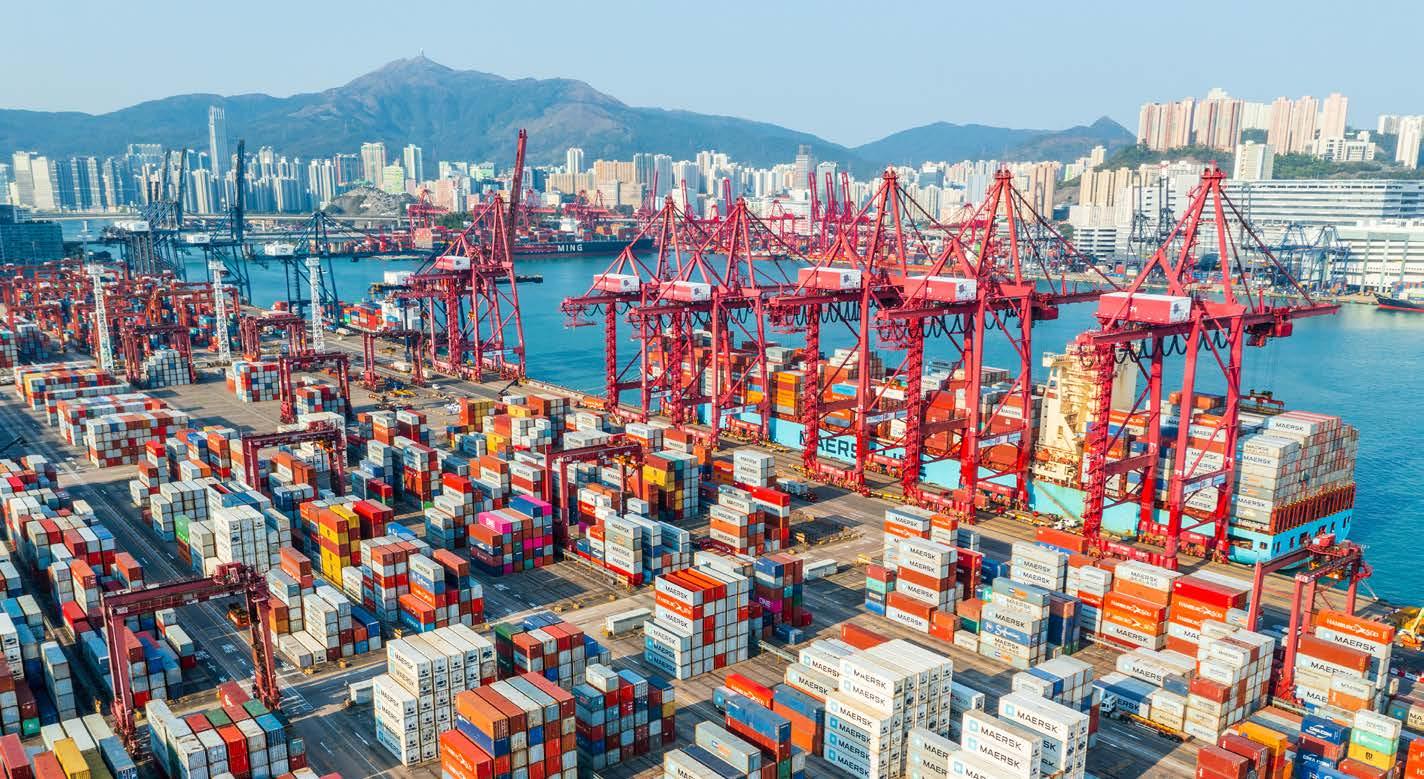
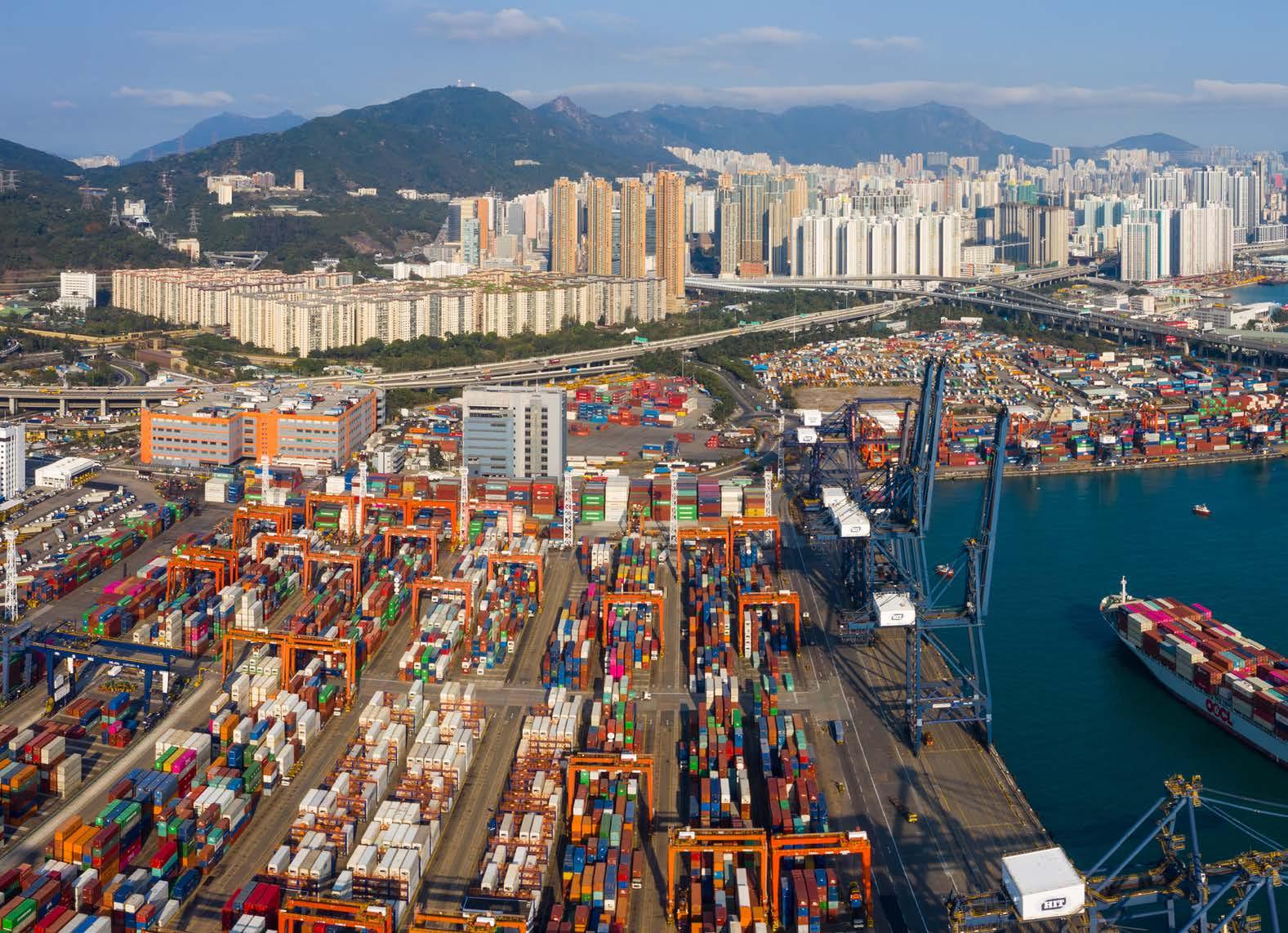
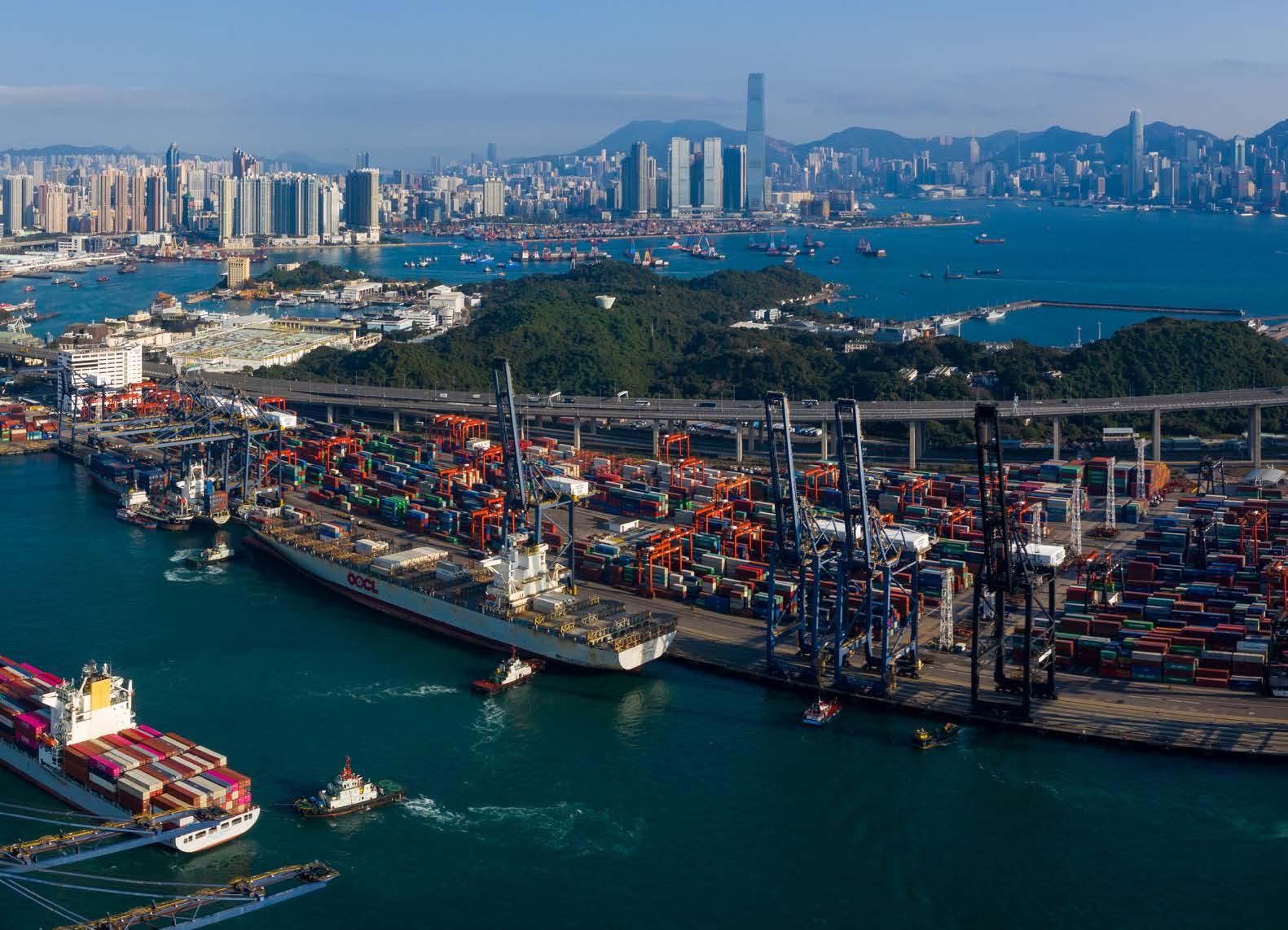
One of the most significant markets for global trade is China, where Maersk serves top-tier hubs supporting global logistics. These ports include Shanghai, Ningbo-Zhoushan, Xiamen in East China, Hong Kong, Yantian (Shenzhen), Nansha (Guangzhou) and Chiwan in South China, and Qingdao, Tianjin, Dalian, and Incheon in North China. If we look at the Port of Hong Kong, Maersk operates extensively across the port, supporting its trade connecting mainland China with destinations across the globe. Therefore, the Port of Hong Kong today is a vital, world-class deepwater hub serving the South China Sea, which specialises in containerised trade
Maersk Asia Pacific
and transhipment. The port is located in Victoria Harbour, and is one of the busiest global ports spanning 9 container terminals at Kwai Tsing and extensive cargo handling capabilities.
Hong Kong has long been a key hub for global development, which is the world’s third-ranked global financial centre, and is the ninth largest exporter and eighth largest importer. Therefore, Maersk’s operations from the Port of Hong Kong are vital as the port has long played a key role in the development and prosperity of the region. Thanks to its strategic location, the port serves trade travelling along Far East shipping routes, and so it is now the geographical centre of the fast-developing Asia-Pacific basin, which handled 13.7 million twenty-equivalent units (TEUs) of containers in 2024.
A key facility serving Maersk in Hong Kong is the Kwai Chung-Tsing Yi Container Terminals, which handles more than 20 million TEUs of cargo a year. The 9 terminals of the facility span 24 deepwater berths, which are capable of handling ultra-large container vessels. Maersk serves these terminals, offering regular schedules to support its customers’
supply chains to and from Hong Kong, supported by ocean-going and river-trade vessels.
One of the most significant ports in the Asia Pacific region is the Port of Shanghai, which is the busiest container port in the world in terms of cargo tonnage, a title the port has held for the last 16 years. Just last year, the Port handled over 55.06 million TEUs, setting a new record for global throughput. Maersk serves the port with vital logistics services that help support shipping across its global network. However, in November 2025, Maersk announced the opening of its flagship logistics centre in Shanghai’s Lin-gang area. The Lingang Flagship Logistics Centre was built following a USD 140 million investment by Maersk to deliver the state-of-the-art facility that offers up to 147,000 square meters of storage space. The Centre offers a full suite of fulfilment services, and it is designed to serve customers across both China and AsiaPacific, as well as the world.
The Lin-gang Flagship Logistics Centre will offer 4 core capabilities, which include an export distribution centre, import distribution centre, regional/global hub, and cross-border e-commerce. Throughout these core offerings, Maersk also provides value-added services such as temperature-controlled storage and customised solutions to ensure it can meet its diverse and growing customer needs. To support its delivery, the logistics centre will be powered by advanced warehouse management software and
Serving Vital Shipping Hubs
an automated system to reduce costs, improve accuracy and boost operational efficiency. The facility is now integrated into Maersk’s ocean, air and land services, which create a network whose scale drives synergy and enables Maersk to deliver more efficient and cost-effective solutions.
Speaking on the opening of the Lin-gang Flagship Logistics Centre, Vincent Clerc, CEO of Maersk, outlined: “Our new state-of-the-art logistics centre in Lin-gang is another milestone in the implementation of Maersk’s integrated logistics strategy in the Chinese market. China is not only the world’s largest exporter but also a key consumer market.” Clerc continues, “This facility significantly enhances our omnichannel fulfilment capabilities and further strengthens the connection between China and international markets. It’s another testament to our commitment towards continuously evolving our logistics solutions, helping customers overcome trade challenges and unlock new growth opportunities”. As we can see from Clerc’s comments, Maersk’s development of the facility will vastly help its delivery of shipping and logistics services across the region and is now positioned to serve both domestic and international customers linking with the Shanghai Yangshan Port. Thanks to its enhanced connectivity, the facility is now one of Maersk’s most strategic nodes for global shipping. We cannot talk about shipping and trade across the Asia Pacific without mentioning the Port of Tanjung Pelepas (PTP) in Malaysia, which acts as
Maersk Asia Pacific
a primary transhipment centre supporting both Malaysia and Singapore’s international trade. PTP is a strategically located port, which is located at the convergence of the main East-West shipping lanes. The port is equipped with state-of-the-art facilities, equipment and information technology systems. Supported by this infrastructure, the port delivers reliable, efficient and advanced services to major shipping lines such as Maersk. For Maersk, it has been connecting Malaysian businesses to the world since 1974, and today, through the Port of Klang and Port of Tanjung Pelepas, Maersk delivers integrated end-to-end logistics, including transhipment operations at the Port of Tanjung Pelepas.
One of the most significant hubs for Maersk in Malaysia is its Mega Distribution Centre, which was launched in November 2025. The Maersk Mega Distribution Centre enables the fast and reliable distribution of cargo across the Asia Pacific. The facility spans nearly 180,000 square meters, with up to 100,000 pallet positions, handling a wide range of commodities, ranging from fast-moving consumer goods, food and beverage items, footwear, and apparel. The multi-client hub is located in Shah Alam and provides direct access to major highways, including North-South Expressway
(PLUs), ELITE Highway, and Shah Alam Expressway (KESAS). Therefore, with enhanced connectivity, the distribution centre provides a strategic hub for Maersk that helps support transhipment operations for countries across the Asia-Pacific region.
The Maersk Mega Distribution Centre is Maersk’s largest contract logistics facility in Asia Pacific, which is designed to boost local warehouse capacity by over 30%, serving key sectors such as electronics, retail, and food/beverages. Following the launch of the facility at the end of 2025, KS Chang, Head of Maersk Contract Logistics Asia Pacific, outlined, “this facility marks one of Maersk’s most significant milestone investments in Asia Pacific and stands among our largest contract logistics sites globally. This hub reinforced our integrated capabilities to deliver reliable, flexible supply chains and modern, automated solutions that will help customers scale and reach local consumers more effectively”.
KS Chang’s comments highlight how vital the facility is for enhancing Maersk’s operations across Asia to support its customers’ supply chains by facilitating the movement of goods from origin and all the way until they reach their end markets. Thus, the Maersk Mega Distribution Centre is an important
hub for customers across the Asia Pacific, connecting their services through the ports, into its warehousing solutions, and then on its trucking links. The Maersk Mega Distribution Centre now has daily links to major cities across Malaysia, including Ipoh, Penang, Johor, Malacca, and Kota Bharu.
To support a reliable, efficient and sustainable network across East-West shipping avenues, Maersk outlined in 2025 a long-term operational alliance with Hapag-Lloyd. The alliance is called the Gemini Cooperation, which brings together the two companies’ expertise, fleets, terminal asset bases, and network vision to deliver a partnership that enhances each other’s networks for a more efficient shipping network. The main aspect of the agreement will see the two work together to enhance schedule reliability to more than 90% by utilising 29 mainliner services and dedicated shuttles to and from major hubs. This aims to develop a strengthened East-West shipping network, which will cut costs and capitalise on demand. The EastWest network will cover services including the Asia/ US West Coast, Asia/US East Coast, Asia/Middle East, Asia/Mediterranean, Asia/North Europe, Middle EastIndian/Europe, and Transatlantic trade scopes.
As we can see from the vital Gemini Cooperation, Maersk is working with other key leaders in the global shipping and logistics sector to enhance its network across Asia Pacific, and ensure that customers, clients and businesses across the region are supported by leading and integrated shipping services that are focused on fast, reliable and cost-effective shipping solutions from start to finish. Working with Hapag-Lloyd, Maersk can deliver more flexible and reliable shipping solutions that can make a difference to its customers’ supply chains, businesses and the wider industry as a whole.
Overall, across the Asia Pacific, Maersk delivers a diverse range of shipping solutions, meeting the wealth of thriving markets across the vast area with the vital and customised shipping solutions needed to get its customers’ products from their origin to their destination with speed and reliability, whilst being cost-effective. Utilising the company’s years of experience across the globe, Maersk can deliver integrated shipping services, whilst working alongside key partners such as Hapag-Lloyd and ports, to deliver vital logistics facilities and hubs to enhance shipping across the Asia Pacific, so businesses can thrive.
Shell Canada
For many years, Canada has been a powerhouse within the global energy sector, bringing together the vital oil and gas reserves of the country while working to deliver critical renewable energy resources needed for the future. With such a wealth of energy projects and potential across the country, Shell has long played a key role in Canada’s energy development and today has operations spanning the upstream, downstream, integrated gas and renewables sector. Therefore, Shell’s operations cover everything from initial exploration to the production, refining and manufacturing of fuels, and even in developing energy solutions for customers. However, a key driver of its future development remains focused on helping the country reach net-zero greenhouse gas emissions by 2050, and so the sector, along with Shell, is working to implement more renewable energy developments across the country.
Shell began its operations in Canada in 1911, and now, over a century later, is fully integrated into every aspect of the country’s energy sector. Today, Shell Canada operates as an energy and petrochemical company under the global Shell group’s portfolio, delivering a diverse range of projects and facilities across Canada to support the country’s energy development now and for the future. Some of the key projects under Shell Canada include LNG Canada, the Scotford Complex, Groundbirch and Gold Creek, as well as carbon capture projects. All of these projects are delivering vital oil and gas resources to market, whilst being underpinned by emission reducing operations.
LNG Canada is one of the most significant developments for Shell Canada, as it is the largest private-sector energy investment in Canada’s history. The joint venture company of LNG Canada is comprised of 5 global energy companies, all of which have substantial experience in the liquefied natural gas (LNG) sector. Shell Canada holds a 40% interest in LNG Canada alongside PETRONAS, PetroChina, Mitsubishi Corporation and KOGAS. The Joint Venture aims to spearhead responsible LNG development in Canada, with the goal of becoming a top 5 LNG producer globally. LNG Canada operations span an export facility in Kitimat, British Columbia, that processes and stores LNG. Then the facility encompasses LNG loading lines, a marine terminal, a rail yard, a water treatment facility, flare tacks, and workforce accommodation to help support the operations of the facility every day.
The facility will export LNG from two processing units with a total capacity of 14 million tonnes per annum (mpta) of LNG. Therefore, the facility is a vital hub for LNG development that will significantly contribute to Canada’s LNG production and deliver
essential LNG fuels not only Canadian use, but for use around the globe. In June 2025, LNG Canada announced that the first cargo of LNG had left the export facility in Kitimat. Speaking on the announcement, Cedric Cremers, Shell’s President of Integrated Gas, said, “LNG Canada grows our leading integrated gas portfolio, providing a reliable supply of LNG to markets, most notably in Asia”. Cremers continues, “We expect that supplying LNG will be the biggest contribution Shell will make to the energy transition over the next decade, and projects like LNG Canada position our portfolio to achieve this”. As we can see from Cremers’ comments, LNG Canada is and will continue to play a key role under Shell’s integrated gas portfolio, helping to deliver vital resources that are pivotal to achieving global energy transition goals.
Aside from its significant LNG production, the project has already employed 50,000 to date and has secured more than CAD 5.8 billion in contracts. Many of these have been awarded to local and indigenous businesses in British Columbia, highlighting the role of LNG Canada not just in the energy market but in the local socio-economic development of British Columbia for many years to come. Thus, LNG Canada provides a new source of economic development for the region, whilst helping to deliver competitive,
Shell Canada
secure and reliable energy in a vital partnership with local communities. Over the coming years, LNG Canada’s export facility is expected to expand, doubling the facility’s capacity to 28 mtpa by the early 2030s. The project’s phase 2 expansion is expected to take a Final Investment Decision (FID) in 2026.
Another key development of Shell Canada is the Groundbirch project, which is a natural gas production operation located in northeast British Columbia. The project spans 500 producing gas wells and four gas plants, which produce methane, natural gas liquids and condensate. The resources are produced from the Montney formation, which is located 2,500 metres below ground, trapped in a mixture of siltstone and shale. Groundbirch uses drilling technology, including several wells that help access the natural gas resources, whilst minimising its footprint and land disturbance in the process. Alongside this, Gold Creek, another key project delivering vital resources across the Montney Formation for Shell Canada is operating. The Gold Creek project uncovers shale oil and gas across 30 on stream wells. These wells currently produce around 3,000 barrels of equivalent oil per day. Thus, with significant shale oil and gas delivery, Gold Creek, much like Groundbirch, play a significant
Your Cargo, Delivered with Confidence - Since 1981
Europe Caribbean Line (ECL) is your trusted partner for dependable, Fortnightly breakbulk and project cargo services between North & West Europe, the Caribbean, and the North Coast of South America. Our versatile fleet of multi-purpose vessels, equipped with heavy-lift capabilities (up to 150 metric tons), ensures your cargo moves safely and efficiently—no matter the size, shape, or complexity.
Our Vertraco Reefer Service offers weekly sailings from Northern Europe to Suriname & Guyana—delivering palletized, refrigerated, and break-bulk cargo in just 12 days.
Europe Caribbean Line – Dependable. Flexible. Proven.
role in supporting the energy transition, by helping Shell Canada meet the energy demands of today, whilst working towards the future of global energy development.
One of the most significant developments under Shell Canada is the Shell Scotford Complex, which consists of a bitumen upgrader, oil refinery, chemicals plant and the Quest Carbon Capture and Storage (CCS) Facility. The complex is divided into 4 key steps, the first of which is the Bitumen Upgrader, which processes heavy, raw crude oil into lighter, high-quality synthetic crude oil. Then, the complex’s Oil Refinery refines the synthetic crude oil into everyday products such as gasoline, diesel and jet fuel. From here, byproducts are processed through the chemical plant into styrene monomer and ethylene glycol, which are used in manufacturing. The final step is the Quest Carbon Capture and Storage (CSS) Facility, which captures carbon dioxide produced during operations and stores it safely deep underground.
Throughout the oil delivery process at the Shell Scotford Complex, sustainability remains a key priority, and this is exemplified by the Quest CCS Facility. For Shell, it is committed to working to reduce emissions throughout its projects, whilst delivering the vital resources needed to power our everyday lives. Thus, with the development of the Quest CSS Facility, Shell Canada are highlighting the importance of such processes, and working with the government, customers and partners to advance the adoption of carbon capture operations not just in Canada but across the global energy sector. The Quest CCS Facility was previously operated by Shell Canada on behalf of the Athabasca Oil Sands Project (AOSP), which held a 90% ownership interest in the asset, with Shell Canada holding the remaining 10%. However, in November 2025, Shell completed an asset swap which saw it increase its interest in the Scotford Upgrade and Quest CCS facility to 20%, giving AOSP its remaining 10% interest in the Albian Sands mines. This increase in interest highlights Shell Canada’s commitment to delivering energy projects and assets that are working towards delivering a more sustainable future.
An exciting upcoming development of Shell Canada is the Polaris Carbon Capture project. The project is designed to capture around 650,000 tonnes of carbon dioxide annually from the Scotford refinery and chemical complex. The project will work alongside the Quest CCS Facility to help reduce emissions from the site. In June 2024, Shell Canada announced the FID for Polaris Carbon Capture, along with the FID for the Atlas Storage Hub. The Atlas Storage Hub will be a multi-phase open access hub, developed, owned and operated in partnership between Shell Canada
and ATCO EnPower to provide customers in the area with transportation and sequestration services for all their carbon dioxide emissions. Speaking on the announcement of both FIDs, Hulbert Vigeveno, Shell’s Downstream, Renewable and Energy Solutions Director outlines that, “The Polaris and Atlas projects are important steps in reducing emissions from our own operations”. Vigeveno also notes that in line with the Paris Agreement, these projects will help Canada achieve its climate goals, reducing overall emissions produced by the Shell’s oil and gas operations within Canada. Both projects are expected to begin operation towards the end of 2028.
Across Shell Canada’s operations, there is a keen focus on bringing vital oil and gas resources to market, but in the most sustainable way possible. Across every development, asset, and project, Shell Canada’s projects are underpinned by a drive to cut emissions, capture carbon and protect the communities it works within for the future. From the vital work of LNG Canada to the Scotford Complex, and even the upcoming Polaris CCS Facility and Atlas Storage Hub developments, Shell Canada is spearheading vital oil and gas development that will support the world towards the energy transition, whilst providing the energy infrastructure needed to support sustainable energy delivery for the future.
Rewilding Argentina: The Patagonia Project
Written by Carley Fallows
Working with national and provincial governments, Rewilding Argentina is a critical non-governmental organisation (NGO) that is working to reverse the extinction crisis the world currently faces for many species. Through vital projects spanning national parks in Argentina, the NGO is committed to recovering complete and functional ecosystems through rewilding projects that respect the value of all species. In delivering such projects, Rewilding Argentina is focused on delivering development models that allow rural communities to live in harmony with the natural environment.
Akey development of Rewilding Argentina is The Patagonia Project, which is working to conserve large areas of the Patagonian Steppe and surrounding plateaus. The national park is located in the northeast of Santa Cruz Province, and features unique towering basalt buttes, multiple lagoons, volcanic cones, and expansive deep ravines of the Patagonia Steppe. Despite the region’s beauty, it is a vulnerable location to climate change and land overuse. These factors have resulted in land experiencing a significant decline, with years of sheep farming leaving the landscape damaged and the soil degraded. Thus, the park, which is home to a rich ecosystem, has been experiencing a significant wildlife decline. Therefore, Rewilding Argentina is working to unite the park with Chile to form a large binational park and nature-based tourism destination. The envisioned plan would see widespread conservation across the park, whilst supporting the natural and cultural values of the land.
To help protect the species across the park from extinction and population reductions, Rewilding Argentina is working with the Freyja Foundation to help recover species populations across the Patagonian Steppe. The Freyja Foundation operations span wildlife monitoring and
management, as well as environmental restoration, eradication of invasive species and outreach. Such operations are needed within the Patagonia National Park because the ecological processes of the park, such as depredation and migrations, have been altered as a result of species populations dwindling, causing negative impacts on the park’s environment. Thus, Rewilding Argentina is working to reintroduce species that are currently absent in the park, whilst increasing the number of species that currently live there but have experienced significant population reductions in recent years. It is hoped that through environmental conservation, rewilding, and species reintroduction, the park will become a thriving tourist destination known for its variety of wildlife, where you can witness a complete ecosystem with your own eyes. Thus, Rewilding Argentina is also working with other organisations to design and develop the public access to nature-based tourism infrastructure across the park. In the process, this plans to help support local ventures such as hiking and wildlife watching. Therefore, by working with local and provincial authorities, Rewilding Argentina plans to deliver the Patagonia Park as one of the most recognised wildlife destinations in South America.
Across Rewilding Argentina’s operation in Patagonia Park, the NGO highlights the necessary work to restore vital ecosystems to their former glory, whilst working with vital stakeholders to support the conservation of the site for many years to come, supported by key industries such as tourism. With a plethora of projects under its portfolio, Rewilding Argentina is helping to reverse the extinction crisis and cement Argentina’s place as a hub for thriving wildlife ecosystems.
Located at the southernmost tip of Africa, South Africa is a globally significant hub for shipping activity, serving as a vital gateway to the continent and a key stop along many international shipping routes. Along these routes, South Africa connects with markets in Asia, Europe, the Americas and across Africa, supporting both local and international trade. Key industries driving South Africa’s trade are mining, agriculture, automotive manufacturing and technology products. With a wealth of key trade commodities and a significant role in global supply chains, leading shipping and logistics providers, such as CMA CGM, operate extensively across South Africa to provide reliable shipping services. For CMA CGM, its solutions are backed by extensive ocean, air and inland transportation networks, which bring together its global expertise to help connect South African businesses to the world.
For over 15 years, CMA CGM has been present in South Africa, providing customers with advanced global shipping solutions spanning a wide range of shipping lines. In South Africa, CMA CGM’s operations are delivered by CMA CGM Shipping Agencies South Africa (Pty) Ltd, the company’s South African agent operating under the global CMA CGM Group. Through CMA CGM South Africa’s global network, South African customers gain access to key global shipping routes that connect to destinations in Asia, the Middle East, the Indian Sub-Continent, Africa, the Mediterranean and both North and South America. These services include SHAKA, ASAF, MIDAS1, MIDAS2 and SSA, and are supported by CMA CGM’s inland logistics subsidiary, CEVA Logistics. In South Africa, CEVA Logistics works alongside CMA CGM’s fleets to offer complete doorto-door services that support customers’ supply chains from start to finish.
One of the most significant ports in South Africa, which is served by CMA CGM’s operations, is the Port of Durban, where the South African division of the company is headquartered. The Port of Durban is the fourth largest port in the Southern Hemisphere and offers 58 berths supported by a technologically advanced infrastructure to track and process the more than 30 million tons of cargo that pass through the port every year. For this reason, the port is home
to a range of terminals, including one of the largest shipping terminals on the African continent, which connects to vital international shipping routes and sees the arrival of 4500 million commercial vessels every year. The port is specifically designed for container, automotive and liquid bulk operations, as well as dry bulk, break bulk and various multipurpose cargo services. With such diverse cargo infrastructure at the Port of Durban, CMA CGM is able to offer a plethora of shipping services connecting the port to businesses across the world.
However, one of the most vital aspects of the Port’s infrastructure is its dedicated Roll-on/RollOff Terminal, which is operated by Transnet Port Terminals. The terminal specialises in handling wheeled cargo, ideal for automotive products including vehicles, trucks and trailers. For South Africa, the automotive market is a key aspect of its global trade, and so the dedicated terminal helps solidify the Port’s place as a hub for South Africa’s automotive sector. Therefore, CMA CGM utilises the Roll-on/Roll-off terminal to help connect the South African automotive industry to the world, offering a vital gateway into the country’s automotive market.
Another significant port for CMA CGM in South Africa is the Port of Cape Town, where the company has a local office. The port is an artificial
Connecting South Africa to the World
TRANSGLOBAL
In todayˇs logistics landscape, moving cargo is no longer just about transportation; itˇs about precision, compliance, and the ability to manage complexity without compromise. At Transglobal Cargo, we have built our reputation on handling the types of shipments others often avoid: high-risk, high-value, and operationally demanding cargo across global markets.
With over three decades of industry experience, our team specializes in project cargo, dangerous goods (Class 1 9), explosives, and military-grade logistics. These are not standard shipments but they require legal certification, strict regulatory control, and absolute attention to detail at every stage of the supply chain.
Our approach is simple: we donˇt treat logistics as a transaction, but as a responsibility. Whether we are managing oversized industrial equipment, hazardous materials, or time-critical defense consignments, our focus remains on safety, compliance, and execution excellence.
Operating from South Africa and serving international trade routes, we combine local expertise with global reach to deliver solutions that are both reliable and tailored to each clientˇs needs. Every shipment we handle reflects our commitment to professionalism, trust, and long-term partnerships.
At Transglobal Cargo, we donˇt just move cargo; we manage complexity with confidence!
CMA CGM South Africa
commercial seaport strategically located in Table Bay. The Port, managed by Transnet National Ports Authority, is one of the premier ports in the Western Cape region, and offers vital port services spanning container, liquid bulk, dry bulk and breakbulk commodities. One of the most significant aspects of the port’s infrastructure is its container terminal, which recently underwent a 5.4 million rand expansion to double its capacity to now serve 1.5 million twenty equivalent units (TEUs) of cargo a year. The development saw the expansion of the container berths, which enable large container vessels to access the terminal where they are met with ship-to-shore cranes with double lift capacity.
YOUR TRUSTED LOGISTICS PARTNER IN NAMIBIA
Based in Walvis Bay, ADM Heavy Haulage CC provides comprehensive logistics solutions, including clearing & forwarding, abnormal transport, bonded warehousing, project management, and construction equipment rental. With a customer-first approach, competitive pricing, and a commitment to excellence, we ensure safe, efficient, and seamless transportation across Africa.
Across the terminal, a variety of cargo is handled; however, one of the vital industries served by the terminal is the agricultural sector. The port is vital to agricultural exports due to its location close to the key agricultural hinterland. Therefore, the Port of Cape Town is a premier fruit export and fishing hub, which offers temperature-controlled operations across the handling and storage of products. These services are met with CMA CGM’s reefer vessels that offer temperature-controlled shipping solutions to ensure that products, especially perishables, arrive at their destination in the best condition possible. Therefore, with Cape Town being a prominent agricultural and wine exporter, CMA CGM offers an extensive reefer capacity to transport perishable goods around the world, supported by the company’s vital feeder and global shipping lines.
Another key port serving South Africa is the Port of Ngqura, which is situated in the Algoa Bay. The Port is the newest port developed in South Africa’s port system and is located midway between the ports of Durban and Cape Town. Annually, the port handles over 6 million tonnes of cargo, arriving on around 400 vessel calls each year. One of the big
advantages of the port is that it is located within the Coega Special Economic Zone (SEZ) offering vital tax incentives for importers, making the port a key hub for shipments arriving in South Africa. Over the next 30 years, the annual tonnage of the port is expected to increase significantly, rising to around 110 million tons of cargo a year.
Furthermore, the Port of Ngqura is geared to support shipments along the West and East coasts of Africa, as well as European and Asian trade routes. The port consists of a 4-berth container terminal, each with a depth of 16 metres, with 10 ship-to-shore cranes. In 2025, CMA CGM focused its operations on the port, strategically transitioning its operations away from the Port of Elizabeth and towards the Port of Ngqura. Therefore, the Port of Ngqura now acts as the primary destination for shipments for the Indian Subcontinent and the Middle East Gulf. Here, the port serves as a vital destination and transhipment hub for South Africa, which has been integrated into CMA CGM’s expansive global network, connecting businesses in South Africa to the world. Beyond its shipping fleet, CMA CGM’s services are complemented by CEVA Logistics, ensuring seamless intermodal transport across South Africa.
To further enhance CMA CGM’s operation in South Africa, Johannesburg operates as a key
Connecting South Africa to the World
hub for inland logistics. The city connects and supports the coastal ports of Durban, Cape Town and Ngqura. Here, CMA CGM’s subsidiary, CEVA Logistics, offers extensive warehousing, freight forwarding and logistics services to support cargo moving across the country. In fact, to further enhance the connectivity of South Africa, and in particular Johannesburg, CMA CGM is currently focused on developing air and rail freight solutions across South Africa, including the development of a major commercial hub in Johannesburg to support countrywide logistics.
Across South Africa, CMA CGM offers an extensive fleet of ocean and land transport solutions that bring cargo from across global shipping lines and deliver it to the country’s strategic ports, enabling access to South African markets. For businesses across South Africa, they benefit from CMA CGM’s global network, helping deliver vital products, such as agricultural and automotive commodities, to end markets in order to support the continued economic development of South Africa. With the shipping industry only expected to grow over the coming years, we look forward to seeing how CMA CGM will continue to optimise its global fleet to support supply chains travelling across South Africa and towards international markets.
Industrial and Designer Valves (IDV) serves the Petrochem and Bulk Fuel Storage Industry.
We stock, supply and support products related to these industries.
We distribute to all of South Africa and to a number of African countries. Our products and services are internationally approved and certified.
We are stockists and sole agents for the following brands:
CERTIFICATIONS AND APPROVALS:
API 6A, API 6D, API 600, API 607, API 594, API 598, API 526, API 527, API 520, API 545, API Q1, CE/PED, ISO 9001, ISO 14001, ISO/TS 29001, OHSAS 18001, CRN, GOST, SIL, BS1868, NACE
TotalEnergies E&P
Nigeria has long been a key player in the global energy market, producing significant oil and gas resources thanks to its location across part of the Niger Delta Basin, a major geological and oil-producing region in Africa. Therefore, to support the development of the country’s vast energy resources, key energy companies such as TotalEnergies have been operating in Nigeria for many years to bring these resources to market. In Nigeria, TotalEnergies draws on its expertise across the global energy sector to support energy projects that span the entire oil and gas value chain. Today, the bulk of TotalEnergies’ operations in Nigeria focus on the country’s upstream exploration and production sector. Within this sector, TotalEnergies operates through its subsidiary TotalEnergies EP Nigeria Limited (TEPNG), which is committed to developing the country’s vital hydrocarbon resources to drive significant economic development, whilst also supporting the communities in which its operations are located.
TEPNG has been delivering vital exploration and production projects in Nigeria since 1962, and has already added more than 3.6 billion barrels of oil equivalent to Nigeria’s hydrocarbon production to date. A significant part of the country’s offshore development has been delivered in partnership between TEPNG, the Government of Nigeria and the Nigerian National Petroleum Corporation (NNPC), as well as several indigenous companies. One of the most significant partnerships is the NNPC/TEPNG Joint Venture, in which TEPNG holds a 40% take. The NNPC/TEPNG Joint Venture spans several oil and gas blocks in Nigeria and the partnership carries out exploration, production and processing of both crude oil and natural gas. Many of these ventures span the West Delta basin, a prolific hydrocarbon province, and so are pivotal to the delivery of significant oil and gas resources for the country.
One of the most significant oil fields offshore Nigeria is the Egina field (OML 130), which was first discovered in 2003. The oil field, located 150km off the Nigerian coast, is located at depths of 1,4001,700m and is owned in partnership between TEPNG as the operator, and NNPC, CNNOC, SAPETRO and Prime 130. The Egina field encompasses 44 subsea wells, which are connected to a Floating Production Storage and Offloading (FPSO) vessel, which has the capacity to hold up to 2.3 million barrels of oil. The FPSO is one of the largest of its type built by TotalEnergies and helps the field to produce 200,000 barrels of oil per day, accounting for close to 10% of Nigeria’s total oil production.
Trusted by international and national oil companies since 2006.
When reliability isn’t optional, choose the partner that IOCs and NOCs trust.
Homeland Integrated Offshore Services (HIOSL) delivers worldclass marine logistics, EPCIC, subsea construction, and technical manpower — on time, on spec, offshore and onshore.
HIOSL is a multi-disciplinary engineering and maritime services company providing end-to-end support for upstream oil and gas operations. Our capabilities span:
• Engineering, Procurement, Construction & Installation (EPCIC)
• Subsea construction & offshore maintenance
• Technical manpower supply
• AGO supply to onshore & offshore installations
• Casing, tubing & drill pipe supply
Nigeria’s Most Trusted Offshore Services Partner
Fuelling Nigeria’s Future
Homeland Integrated Offshore Services Limited
Delivering Offshore Excellence. Driving Indigenous Leadership. Enabling Global Partnerships.
Homeland Integrated Offshore Services Limited (HIOSL) is a leading indigenous marine and offshore services company, established in 2006, with nearly two decades of proven operational excellence within Nigeria’s oil and gas sector. The company owns and operates a growing fleet of offshore support vessels and has successfully deployed several vessels across multiple offshore campaigns and longterm contracts. Our operations currently support major International Oil Companies (IOCs), including ExxonMobil (ESSO), TotalEnergies, Shell Nigeria, Chevron Nigeria Limited, and SEPLAT Energy. HIOSL offers an integrated suite of offshore services, including:
• Engineering, Procurement, Construction and Installation (EPCI)
• Supply of Automotive Gas Oil (AGO) • Technical Manpower Support Services
• Oil Country Tubular Goods (OCTG) Services • Port Facility Security and Marine Risk Assessment Services
Across these services, HIOSL has established a strong reputation for responsiveness and execution discipline, supported by over 15 years of continuous offshore operational support. This expertise has allowed HIOSL to develop its Guardian Fleet, which meets stringent ICO technical requirements and helps support the company’s efficient procurement and project delivery systems.
Today, HIOSL has established a strong, long-standing relationships with leading international oil operators, including Shell Nigeria and TotalEnergies Nigeria. With Shell Nigeria, HIOSL deploys fast security vessels for Bonga field operations, provides PSV support for drilling campaigns, and offers technical manpower services for both brownfield and greenfield projects. Then, for TotalEnergies Nigeria, HIOSL deploys multiple PSCs across offshore campaigns, as well as security vessel operations and AGO offshore supply and procurement of critical operational spares. Alongside its vital work with TotalEnergies and Shell, HIOSL also deploys jack-up barges, accommodation and construction vessels to other international oil companies.
For HIOSL, its performance across international oil operations reflects the company’s operational reliability, safety, compliance and consistency in the delivery of services to international standards. Thus, HIOSL is not just a service provider, but a strategic execution partner within the offshore energy value chain that is committed to advancing indigenous capacity in line with the Nigerian Content Act, aligning with global operational and safety standards, whilst building long-term value-driven partnerships with international operators.
Furthermore, HIOSL remains committed to making a significant contribution to local content through Nigerian workforce development. This includes training and development programs for Nigerian seafarers and technical personnel, alongside structured cadet and trainee programs. Furthermore, HISOL continues to support local vendors and supply chain partners, whilst remaining actively engaged in host communities, offering employment opportunities across its operations.
As HIOSL looks towards the future, its long-term vision is to become a fully integrated offshore solutions company with a strong regional and international footprint. Therefore, HIOSL is open to collaborating with international companies to create a value chain ecosystem. Furthermore, to actively position itself for the future, HIOSL is focused on fleet expansion with environmentally compliant vessels, participating in high-value offshore tenders, strategic partnerships and consortium-led project execution, and digital transformation across its operations and procurement.
“At Homeland, we are building more than a service company, we are building a platform for African excellence in offshore energy. Our commitment is to deliver world class solutions, develop indigenous capacity, and partner with global stakeholders to shape a more resilient and sustainable energy future.” www.hiosl.com • info@hiosl.com • +234 803 444 7309
TotalEnergies E&P Nigeria
Over the years, the Egina field has seen vital infrastructural developments under TEPNG to help it continue to meet oil and gas demands. However, one of the most exciting developments for Egina was announced in 2019 when the oil field achieved net-zero routine flaring across the development. The field was able to achieve this thanks to the gas compression system installed at the field, which allowed it to become the first oil project in Nigeria to reach this milestone of zero routine flaring. This significant step highlights TotalEnergies’ commitment to cutting emissions to deliver a more sustainable energy sector. In fact, Nigeria was one of the first countries where TotalEnergies led projects to detect and measure the methane emissions of its oil and gas facilities, utilising its cutting-edge AUSEA technology. This technology, made available through NNPC through a corporation agreement in 2023, ensures that TEPNG can routinely monitor the emissions from its projects to help mitigate and limit the impact of its operations on global warming.
A key example of TotalEnergies’ focus on delivering projects with low emissions was seen when TEPNG announced that it had begun production at the Akpo West site within the PML2 license. Akpo was the first deep offshore project operated by TEPNG in Nigeria, and when it began production in
2009, it had a production plateau of 180,000 barrels of condensate per day with a storage capacity of 2 million barrels of stabilised liquid hydrocarbon. However, in 2024, new developments began across the Akpo field, with the Akpo West deposit being tied back to the existing Akpo FPSO facility. The integration of Akpo West into the existing facilities added 14,000 barrels of condensate production per day and is expected to see up to 4 million cubic metres of gas per day by 2028. By leveraging the development with the existing infrastructure, TEPNG is able to keep costs low and, in the process, limit its emissions. This development highlights that by working with CNOOC (45% interest), Sapetro (15%), Prime 130 (16%) and the Nigerian National Petroleum Company Ltd on the PML2 project, TotalEnergies (24%) is utilising the expertise and experience of the partnership to bring key condensate production to Nigeria, whilst working towards its strategy to deliver low emission and low cost operations that can deliver significant gas potential to the region in the process.
Another key license for TEPNG is the OML 58 license, a mature onshore field located in the Niger Delta. TEPNG operates the OML58 onshore licence with a 40% interest and is developed under the Ubeta Gas Development in partnership with NNPC, who hold a 60% interest. Estimated to be a $550 million investment, the development is set to begin production in 2027 and is designed to deliver a production lifespan of 20 years. The Ubeta Gas Field development project will see engineering design, construction, drilling, and commissioning of a sixwell gas production cluster; the Ubeta Production Cluster (UPC). The project will deliver a stable gas supply for the operations of Nigeria Liquefied Natural Gas, a liquefied natural gas facility situated on Bonny Island, which is undergoing an expansion to increase its capacity from 22 to 30 million tonnes per annum. The drilling campaign is expected to span 1.5 years and is expected to begin operations in the second quarter of 2026, with a single rig deployed to develop the 6 wells.
As TotalEnergies expands its portfolio across Nigeria, the company announced in September 2025 that it had been awarded Two Offshore Exploration Permits following the 2024 Exploration Round, as organised by the Nigerian Upstream Petroleum Regulatory Commission. TotalEnergies will hold an 80% ownership of the PPL 200 and PPL2001 exploration licences, in partnership with South Atlantic Petroleum, which will hold a 20% ownership. Development across the licenses, which sit within the West Delta Basin, includes a drilling program for one exploration well. Upon the announcing the awarding of the permit, Kevin McLachlan, Senior Vice-President of Exploration at TotalEnergies at the time, outlined that “TotalEnergies is honoured to be the first international company to be awarded exploration licences in a bid round in Nigeria in more than a decade, marking a new milestone in our long-term partnership with the country”. McLachlan continues, “These promising block captures are fully aligned with our strategy of strengthening our Exploration portfolio with drill-ready and highimpact prospects, that have the potential for lowcost and low-emissions development from new discoveries in our core areas of expertise”.
McLachlan’s comments highlight the valuable and future-focused developments that TotalEnergies,
and especially TEPNG, is all about. TPENG is committed to delivering vital energy resources in a low-cost and low-emissions way that will enhance Nigeria’s energy sector and leverage its expertise in the offshore sector to deliver significant benefits for the country in the process. By doing so, TEPNG can strengthen its role across Nigeria’s energy sector, and in the process highlight its role as a leading energy company operating across Africa.
In November 2025, TotalEnergies also announced that it was increasing its interest in the OPL 257 block, following the signing of an agreement with Conoil Producing Limited (Conoil), under which TotalEnergies will acquire a 50% operated interest in
Redefining Industrial Cleaning and Waste Management!
From Nigeria to Uganda, TIG sets the standard in professional, innovative, and technology-driven solutions. Proudly listed on the Nigerian Stock Exchange and certified to global standards (ISO 14001, 9001 & 45001), we deliver tailor-made services that keep businesses safe, sustainable, and future-ready.
With a multidisciplinary workforce and a passion for excellence, TIG is your trusted partner in cleaning smarter, managing waste responsibly, and protecting what matters most. The Initiates Group – Innovation at work. Safety at heart.
We offer comprehensive range of services to meet the diverse needs of the waste management and industrial cleaning sectors.
INDUSTRIAL CLEANERS
• Tank & FPSO sludge evacuation
• Tank and Vessel Cleaning
• Boiler and Heat Exchanger (tube and fin) cleaning
the block from Conoil. Meanwhile, Conoil will acquire the 40% participating interest held by TotalEnergies in Block OML 136 offshore Nigeria. Once completed, subject to customary conditions and regulatory approvals, TotalEnergies’ interest in OPL 257 will increase from 40% to 90%, with Conoil retaining the final 10% interest in the block. Speaking on the announcement, Mike Sangster, Senior VicePresident for Exploration at TotalEnergies, outlined, “This transaction, built on our longstanding partnership with Conoil, will enable TotalEnergies to proceed with the appraisal of the Egina South discovery, an attractive tie-back opportunity for Engine FPSO. This fits perfectly with our strategy to leverage existing production facilities to profitably develop additional resources and to focus on our operated gas and offshore oil assets in Nigeria”. These announcements follow TotalEnergies’ divestment of its non-operated assets in the Bonga Field in May 2025. The agreement, completed in November 2025, outlined TotalEnergies’ sale of its 12.5% non-operated interest in the field to Shell Nigeria Exploration and Production Company Ltd. (SNEPCo) (10%) and Nigeria Agip Exploration (2.5%) for an aggregated amount of $510 million. Speaking on the initial agreement in May 2025, Nicholas Terraz, President of Exploration and Production at TotalEnergies, said, “TotalEnergies continues to actively high-grade its Upstream portfolio, to focus on assets with low technical costs and low emissions, and to lower its cash breakeven”. Terraz continues, “In Nigeria, the Company is focused on its operated gas and offshore oil assets and
The Initiates Group
At The Initiates Group (TIG), we are more than just a service provider—we are pioneers in industrial cleaning and waste management across Nigeria and Uganda. Powered by innovation and backed by years of experience, we deliver world-class solutions that keep industries safe, efficient, and environmentally responsible.
From hazardous waste incineration and e-waste processing to wastewater treatment and asbestos management, TIG leads the way in providing tailored waste management services that meet global standards. Our specialized technologies, including advanced thermal desorption units, ensure we treat contaminated materials with precision and care, protecting both people and the planet.
The Initiates Group also excel in industrial cleaning services designed to keep operations running smoothly. Whether it’s sludge evacuation from tanks and FPSOs, vessel cleaning, jetting, or pipe maintenance, our multidisciplinary workforce tackles the toughest jobs with professionalism and expertise. Every project reflects our commitment to safety, quality, and innovation.
At TIG, we don’t just clean and manage waste— we create sustainable solutions. Guided by strong health, safety, environmental, and quality frameworks, alongside a robust local content policy, we work to build value for clients while supporting the communities where we operate.
https://www.initiatesgroup.com
TotalEnergies E&P Nigeria
is currently progressing the development of the Ubeta project, designed to sustain gas supply to Nigeria LNG”. Terraz’s comments highlight TotalEnergies’ vital move to solidify its place within Nigeria’s energy sector by focusing on its operated assets and sustainable energy delivery options for the future of the country’s energy development.
Furthermore, in January 2026, TotalEnergies also announced that its subsidiary TotalEnergies EP Nigeria had signed a Sale and Purchase Agreement (SPA) with Vaaris. The agreement, once completed, will see TotalEnergies sell to Vaaris its 10% participating interest in all its rights and obligations in 15 licenses of Renaissance JV, which is producing mainly oil, with production of around 16,000 barrels equivalent per day. In addition, TotalEnergies EP Nigeria will also transfer its 10% participating interest in the 3 other licenses of Renaissance JV, which are producing mainly gas. Meanwhile, TotalEnergies will retain a full economic interest in the licences of Renaissance JV, which currently account for roughly 50% of Nigeria’s total LNG gas supply.
As TotalEnergies looks towards the future, the company has outlined a recent farmout agreement to sell a 40% participation in the PPL 2000 and PPL 2001 exploration licences offshore Nigeria to Star Deep Water Petroleum Limited, which is a Chevron company. The licences cover an area of roughly 2,000 square kilometres and were awarded to a consortium of TotalEnergies and South Atlantic Petroleum following the 2024 Exploration Round organised by the Nigeria Upstream Petroleum Regulatory Commission. The agreement will see TotalEnergies remain operator
of the project with a 40% participation, alongside Chevron (40% through Star Deep Water Petroleum Limited), and South Atlantic Petroleum (20%). The agreement is a significant partnership for Chevron and TotalEnergies, who have already been working together on offshore exploration leases offshore the US.
Speaking on this, Mike Sangster said, “After launching our joint venture in the US offshore in June, we’re delighted to now expand our collaboration to Nigeria to unlock new resources in the West Delta basin.” Sangster continues, “This new joint venture aims at derisking and developing new opportunities in Nigeria, in line with the objectives of the country”. Therefore, as we can see from Sangster’s comments, the vital partnership between these two companies, once completed, will vastly enhance their collaboration across the global offshore exploration sectors, bringing together the two companies’ expertise to develop Nigeria’s hydrocarbon sector towards the future.
Across TEPNG’s operation in Nigeria, there is a keen focus on developing vital oil and gas deposits that can develop alongside existing infrastructure to keep costs low. However, one of the key aspects of all of its developments is delivering its projects with low emissions in mind, to protect the sector both now and for the future. With the recent expansion of TotalEnergies’ role across Nigeria, the company continues to solidify its place as a leader in Nigeria’s energy sector, set on delivering vital hydrocarbons for the future, whilst protecting the people and planet of today.
Endeavour Mining plc
With a portfolio spanning multiple low-cost, long-life assets, Endeavour Mining (Endeavour) is a leading mineral producer in Africa. Its portfolio centres on West Africa, where it operates key mining assets in Côte d’Ivoire, Senegal, and Burkina Faso, as well as many other vital development projects and exploration assets within the Birimian Greenstone Belt. In Côte d’Ivoire specifically, Endeavour operates the Ity and Lafigué Mines, which have experienced significant growth in recent years and are now delivering vital gold resources for the country. Across its exploration, mining, and prospective operations, Endeavour is focused on delivering both near and long-term growth opportunities, in line with its prospect pipeline and exploration strategy.
Côte d’Ivoire has been a key hub for gold production in recent years, with gold mining across the Birimian Greenstone Belt experiencing significant development. Today, Côte d’Ivoire aims to become one of the largest gold producers in Africa by 2030 and, in turn, see the industry provide vital economic development for the country. Thus, with such vital gold-mining resources in the country, Endeavour is focused on expansion, exploration, and investment activities to support Côte d’Ivoire’s gold-producing future.
One of the most significant mines in Côte d’Ivoire is the Ity Mine, which is an open-pit mining operation located in the west of the country. The mine is one of Endeavour’s cornerstone mining assets and has been operating since 1991, when the first gold was poured from the project. Now, 35 years later, the Ity Mine has produced more than 1.4 million ounces (Moz) of gold. Endeavour acquired the Ity Mine in 2015 and later increased its stake to 85% in 2018. Now, the Ity Mine is owned by Endeavour with an 85% interest, alongside the Government of Côte d’Ivoire (10%) and Société pour le Développement Minier de la Côte d’Ivoire (SODEMI) (5%). In 2025, the Ity Mine saw 319 thousand ounces (koz) of gold produced, and reported around $1,195 per ounce All-In Sustaining Costs (AISC).
Delivering Vital Gold Resources in Côte
One of the most significant developments at the Ity Mine was the commissioning of a Carbon-inLeach (CIL) Plant. The CIL Plant was built in early 2019, a year after Endeavour expanded its stake in the mine, and was designed to significantly boost the gold recovery and product capacity of the Ity Mine. The CIL Plant was initially built with a 3 Mega tons per annum (Mtpa) capacity; however, it was expanded to 4 Mtpa, and then to 5 Mtpa by late 2019. Having replaced a former heap leach operation, the CIL Plant has continued to support the mine over the last 7 years, maintaining an annualised throughput exceeding 5 Mtpa. Therefore, under Endeavour, the Ity Mine is now one of the company’s many goldproducing assets, delivering vital gold resources for West Africa.
As the Ity Mine looks towards the future, Endeavour is set to target between 1.0 and 1.5 million ounces (Moz) of mineral resources between 2026 and 2030. This follows Endeavour seeing the Ity Mine increase its reserves by 50% in 2024, and so its near-term exploration efforts are planned to focus on targets along the Ity trend. These include the Gbampleu, Guimapleu, Guya and Monta-Bâ targets, all of which are within the Toulepleu permit. Alongside these, the Mahapleu and Goleu targets are also planned to be explored.
Another significant development sits is the Gbampleu target, located just 22km south of the Ity processing plant. The drilling at the site is currently focused on confirming the continuity of mineralisation at depth, where local highgrade zones of mineralisation have already been identified. Thus, the site is thought to be associated with a large intrusion-related gold system that could deliver vital resources for both Endeavour and Côte d’Ivoire in the long term. Therefore, for Endeavour, the Toulepleu permit represents a longterm resource potential for the country. Scoping studies are currently underway at the mine.
The other significant mining project under Endeavour in Côte d’Ivoire is the Lafigué Mine. The Lafigué Mine is located in the north-central region of the country, towards the north end of the Birimianaged Oumé-Fetekro Greenstone Belt. Endeavour holds 80% ownership of the Lafigué Mine, alongside the Government of Côte d’Ivoire (10%) and SODEMI (10%). Endeavour began exploration at the Fetekro property in March 2017, following a key assessment of its exploration tenements, which identified the mine as a top-priority target. Today, the Lafigué Mine is the fifth project developed by Endeavour in West Africa in the last decade, and was delivered on budget and ahead of schedule.
In 2024, Endeavour announced that it had poured the first gold from the Lafigué Mine, marking the
successful delivery of the project. Speaking on this achievement, Ian Cockerill, Chief Executive Officer of Endeavour Mining, said, “We are proud to have achieved our first solid pour at Lafigué, which, alongside the first gold pour at the SabodalaMassawa BIOX® expansion that we achieved in April, marks the successful completion of the recent phase of investment and growth that we started in Q2-2022. We now begin a new phase of increased free cash flow generation, de-levering and enhanced shareholder returns.”
Cockerill adds, “With the current phase of organic growth completed, we are now focused on quickly ramping up our recent development projects to maximise their returns and support our near-term capital allocation priorities of de-levering our balance sheet and enhancing our shareholder returns.”
As we can see from Cockerill’s comments, Endeavour is set to continue enhancing the Lafigué Mine and its surrounding resource potential, to bring significant resources and economic development to support its operations and shareholders for many years to come.
Building Africa's Tomorrow, Today.
Half a century of construction at the heart of West Africa. For over 50 years, PFO Africa has been building the infrastructure that structures the continent: roads, hydraulic works, industrial platforms, operational buildings. This mastery of construction in demanding environments is the foundation on which our offer to the mining sector rests.
An integrated value chain designed for the most isolated sites. PFO Africa structures an integrated offer adapted to the mining sector around four complementary areas of expertise: infrastructure, renewable energy, facility management and post-exploitation rehabilitation. One partner, one contract, zero handover risk across the full mining lifecycle.
mining infrastructure: we build in isolated areas, under logistical and environmental constraints. This is the core of our business, and what we bring to mining operators across West Africa.
Returning sites to a viable state.
Decontamination, remediation, ecological reconversion: we integrate these considerations from the design phase, so that post-mining becomes a commitment honoured, not an obligation endured.
CONSTRUCTION
Buildings, roads, hydraulics & urban infrastructure across West Africa.
RENEWABLE ENERGY
50 MW photovoltaic plants — clean power for West Africa’s future.
FACILITY MANAGEMENT
40+ multitechnical services across 400,000m² of managed assets
In terms of future development, Lafigué is a greenfield discovery, in which Endeavour has already discovered over 3 Moz of Measured and Indicated (M&I) Mineral Resources since it began operations on the asset in 2018. Thus, with strong exploration potential, the Lafigué Mine will continue to be a key target for Endeavour going forward to further extend Lafigué’s resources, whilst testing several additional exploration targets identified within 10km of the original Lafigué pit.
In December 2025, Endeavour outlined its exploration outlook for the next 5 years. The plan highlights the company’s target to discover 1215Moz of mineral resources, at a cost of less than $40 per ounce between 2026 and 2030. Endeavour aims to maintain and extend mine lives beyond a 10year target across near mine brownfield exploration, through the targeted discovery of 6-9Moz of mineral resources. Then, for greenfield exploration targets, the focus will be on the discovery of 6Moz of mineral resources, including between two and three new standalone cornerstone greenfield projects that will focus on West Africa. Then, for new exploration, Endeavour will build upon the successful completion of two previous exploration campaigns over the 2016-2025 period, which delivered 20.7Moz of M&I resources, equivalent to 2.4 times the production
Our job is to make any construction project work for you, no matter the size. In fact, think of us as your construction partner from beginning to end.
THE LEADING DISTRIBUTOR OF WORLD-RENOWNED, UNBEATABLE HYDRAULIC HAMMERS AND PEDESTAL BOOM SYSTEMS
POWER. PRECISION. PERFORMANCE!
Blasting Solutions You Can Rely On!
Founded in 1893, the EPC Groupe is one of the global leaders in the manufacturing, storage, and distribution of explosives, particularly in the drilling and blasting sector. With over 130 years of experience, the EPC Groupe is known for providing effective solutions, technological innovations, and a high level of service quality to its clients. The group has 39 subsidiaries operating in 27 countries across all continents.
EPC Côte d’Ivoire (EPC CI), which started its operations in 2013, has become a key player in the civil explosives industry for Mining and Quarrying, thanks to investments in human capital, local manufacturing, and the use of modern technologies.
So far, EPC CI manufactures and markets bulk and cartridge explosives, providing blasting services to both quarries and large mining companies operating in Côte d’Ivoire, including Endeavour Mining (ITY), Allied Gold (Bonikro and Agbaou), Perseus Mining (Yaouré and Sissingué), and Tietto Minerals (Abujar).
On the Africa area, with over 500 experts and operations in Burkina Faso, Benin, Cameroon, Côte d’Ivoire, Gabon, Guinea, and Senegal, we are committed to safety, efficiency and cutting-edge technology in the mining industries.
EXPERTS IN
Looking for world-class blasting & drilling solutions?
Contact our experts today and take your projects to the next level! afrique.epc-groupe.com
Delivering Vital Gold Resources in Côte d’Ivoire
depletion, at a discovery cost of less than $25 per ounce. This included two cornerstone greenfield projects, Lafigué and Assafou, which were discovered in this period at a discovery cost of $12 per ounce and $11 per ounce, respectively. Thus, as Endeavour looks towards the future, key exploration will remain central to its capital allocation, with an average annual exploration spend expected to exceed $100m over the 2026-2030 period.
Speaking on Endeavour Mining’s exploration outlook over the coming years, Ian Cockerill, outlined, “Since 2016, we have consistently generated significant value through the drill bit. We have replaced more than double our production depletion with high-quality, high-grade ounces, allowing us to extend mine lives and improve our asset quality. In doing so, we have discovered two top-tier greenfield projects that have been quickly advanced to become cornerstone projects in our portfolio.” Cockerill continues, “Our strong track record, highly prospective land packages and high calibre team give us the confidence to set a
new, ambitious exploration target; the discovery of between 12 and 15 million ounces of resources over the next five years at a discovery cost of less than $40 per ounce.” We can see from Cockerill’s comments that Endeavour’s exploration operations continue to bring vital high-quality and high-grade resources to its portfolio, and this will remain a key focus for the company’s exploration operations over the coming years.
Across Endeavour’s portfolio in West Africa, and specifically its exploration operations in Côte d’Ivoire, the company is focused on offering vital near-term and long-term growth assets. Both the Ity and Lafigué Mines present a wealth of exploration potential, alongside the key deposits nearby, with the central goal to deliver high-quality mineral resources. Across its portfolio, Endeavour continues to enhance West Africa’s role as a global mineral producer, supported by the company’s track record of operational excellence, project development and exploration operations.
A New Chapter for Aviation in Rwanda
Bugesera International Airport
Bugesera International Airport
Rwanda today is a hub for economic development with vital investments being made within the country to support business, tourism and trade, in order to transform the lives of Rwandans in the process. A key driver of this development is Rwanda’s National Strategy for Transformation and Vision 2050, which sees the country focusing on infrastructure development to drive economic growth, regional integration and global connectivity. A key part of this infrastructural development surrounds the tourism industry, for which Rwanda is a hot spot, thanks to its location at the heart of the African continent. Thus, to support the continued development of Rwanda and enhance its global connectivity, a new airport, the Bugasera International Airport, is currently being developed, and once it is completed, the airport will serve as a major hub for global connectivity in Africa.
The Bugasera International Airport is a new airport development project for Rwanda that is set to bring a new chapter to the country’s global connectivity, whilst enhancing the economic development of Rwanda through trade and tourism. The airport’s development comes following the nearby Kigali International Airport experiencing surging passenger demand, which has seen the airport operating at max capacity. Therefore, the Bugasera International Airport will help support the Kigali International Airport and offer an alternative to Ethiopia’s Addis Ababa Bole International Airport, connecting passengers more easily to the heart of the continent. Thus, once built, the Bugasera International Airport will offer a centralised alternative hub that will position the country as a major gateway into East Africa and function as a catalyst for economic growth, tourism, and development in Rwanda.
The original foundations of the Bugasera International Airport development began in 2016, when the Government of Rwanda signed an agreement with Mota-Engil to fund, build and operate the airport for a period of 25 years under concession from the government. As part of the agreement, Mota Engil agreed to provide $418 million to deliver the first phase of construction and commercial options. However, the initial plans for
a single paved runway changed during the second phase of the construction, and then a second runway was built. Following this, TPS Consult PLC were commissioned to carry out a feasibility study to design the new airport.
By August 2017, construction began on the second phase of the development, costing US$828 million, in which Mota-Engil’s subsidiary Mota-Engil Africa was the main contractor and provided 75% of the funding. Completion of the first phase was expected in 2019; however, the construction was halted to make way for a redesign. By December 2019, Qatar Airways had signed an agreement to take a 60% stake in the airport development and would continue the project with a budget of US$1.31 billion, which now encompasses a much larger airport development design. Therefore, the Bugasera International Airport will be developed in cooperation with the Government of Rwanda, and largely through foreign investment, as part of a public-private partnership with Qatar Airways.
As of 2025, the first phase of the development is 20-30% completed, with foundational work in place. The development is now focused on vertical building, and once the first phase is completed, the airport is planned to accommodate 7 million
A New Chapter for Aviation in Rwanda
Bugesera International Airport
passengers a year, increasing to 14 million once the second phase of the development is completed.
The Bugesera International Airport is expected to be operational by 2032, where it is planned to provide a world-class gateway for Kigali and Rwanda. The finished airport will have a 3,750-meter runway, a modern terminal building, a presidential terminal for VIPs, as well as an office building for stakeholders and all the necessary infrastructure needed to support the airport’s operations every day. Alongside its passenger facilities, the airport will also have a dedicated cargo terminal, which will be capable of handling 150,000 tonnes of cargo per annum.
Beyond the airport’s infrastructure, the entire project is designed to help make transport across the continent more reliable and efficient, driving economic growth, regional integration and global connectivity. Plus, with more than 6,000 jobs expected to be created throughout the construction project alone, and thousands more once completed, the development will be vital for the local socio-economic development of Rwanda, offering vital employment opportunities within
Your Flight, Our Mission — Anywhere in the World
A New Chapter for Aviation in Rwanda
the local community. Therefore, as an enabler for Rwanda’s tourism, the airport will continue to give back to the country and help it achieve its infrastructural development goals to better the lives of those across the country.
One of the most vital aspects of the Bugesera International Airport is that the entire development has been designed with sustainability in mind. The airport is being built as a net-zero complex, integrating advanced energy and water efficiency measures, as well as solar power, to enhance its environmental impact. In fact, the airport will be powered in part by Rwanda’s share in the Rusumo Hydroelectric Power Station, located at the border of Rwanda and Tanzania. The feed of renewable electrical power aims to help minimise environmental impacts whilst maximising the operational efficiency of the airport. The implementation of green initiatives across the airport and its development aims to position the airport to become the first certified green airport.
This certification, and its range of sustainable initiatives, aims to help attract environmentally conscious investors, airlines and travellers, which will give the airport a competitive edge in the global aviation market.
Overall, the Bugesera International Airport is a vital and expansive development that is set to enhance Rwanda’s connectivity not just across the continent, but across the world. With each aspect of the airport designed to promote tourism and deliver continued economic development for Rwanda, the development will play a key role in helping the country reach its National Strategy for Transformation and Vision 2050 goals. The airport will significantly support the local community, offering vital jobs for socio-economic benefits, whilst also working to cut emissions and deliver it as a sustainability-backed airport for the future. We look forward to seeing how the development continues to progress and the role it will play in enhancing Rwanda’s tourism sector once operational.
TotalEnergies Suriname
TotalEnergies is a key global energy company committed to delivering vital energy resources to the market, thereby enhancing global energy development and supporting the economic growth of each country’s energy sector. In recent years, we’ve seen the expansion of TotalEnergies’ operations in Suriname, where the company is delivering exciting energy exploration and production projects that are bringing key investment into the country for the long-term development of Suriname’s energy sector. However, across all of TotalEnergies’ operations, and especially those in Suriname, the company remains committed to developing these energy resources with sustainability and local responsibility in mind.
TotalEnergies’ operations in Suriname began in late 2019, when it signed its first agreement in the country for a 50% operated stake in one of the region’s most prolific oil-producing regions, the Guyana-Suriname Basin. The agreement covered Block 58, which today is the site of the GranMorgu project, a major deep-water offshore oil project that is operated by TotalEnergies. The GranMorgu project spans the Sapakara South and Krabdagu oil fields and has been a site of significant development under TotalEnergies in recent years. The project has a confirmed combined recoverable resource of close to 750 million barrels across the two oil fields, offering a vital energy development for Suriname. Block 58 is jointly owned by TotalEnergies and APA Corporation in an equal 50% partnership. However, following the FID for the project in 2024, Staatsolie Maatschappij Suriname N.V. (Staatsolie), Suriname’s state-owned national oil company, were given the option to enter the agreement with a 20% ownership.
The GranMorgu project will deliver new wells at depths of between 100 and 100 metres across Block 58. Oil production will be achieved through this system of subsea wells, which will ultimately be connected to an FPSO (Floating Production Storage and Offloading Unit) also located off the Suriname Coast. Once completed, the project is expected to have an oil production capacity of 200,000 barrels of oil per day (b/d), and it will contribute significantly to the development of oil resources across Suriname.
Production is expected to begin from the project in 2028, where the FPSO is designed to support future connections of satellite fields across the block to extend the duration of its production plateau.
The GranMorgu development represents a vital investment in Suriname’s energy sector, not just for its expected production rates, but due to the investment it brings to the local community. The total GranMorgu project will see a total of $10.5 billion invested, and a significant portion of this will be made locally, which will contribute to the local employment and economic development of Suriname. A key reason for this is that local
companies, including logistics providers as well as the maintenance of the installation, will see between $1-1.5 billion invested in local content, creating over 60,000 direct, indirect and induced jobs across Suriname. Thus, the local community has long played a key role in the development of the project, and so throughout its development, TotalEnergies has remained committed to working with local stakeholders across Paramaribo and the coastal districts to maintain a dialogue surrounding the development project. This dialogue ensures that its development continues to positively impact local communities whilst enhancing the country’s overall energy development.
Alongside the project’s key local community development, TotalEnergies also remains focused on delivering the project in line with its sustainability strategy to create more low-emission and low-cost oil and gas projects. The GranMorgu project is well in line with these goals, due to its focus on minimising greenhouse gas emissions, with the final project’s Scope 1 and 2 emissions intensity planned to be less than 16kg Carbon Dioxide equivalent per barrel of oil equivalent (CO2e/boe). This will be achieved through the all-electric FPSO for the project, which will have zero routine flaring and full reinjection of associated gas into its reservoirs. In addition, the project will be optimised for power usage with a Waste Heat Recovery unit and an optimised watercooling system for enhanced efficiency, as well
TotalEnergies Suriname
N.V. Havenbeheer Suriname/ Suriname Port Management Company
With the rapid emergence of the oil and gas industry in Suriname, the Dr. Jules Sedney Port of Paramaribo has been proactively advancing its facilities to meet the demands of the future. This commitment aligns with our slogan: “Accommodating Our Future.”
As part of our preparedness, we have successfully renewed our ISO 9001:2015, ISO 14001:2015, and ISO 45001:2018 certifications, along with our ISPS certification, reinforcing our dedication to quality, environmental responsibility, and occupational health safety and well-being of our dedicated personnel.
Moving forward, we continue to strengthen our internal organization while forging strategic partnerships that enhance the value of our services and position us as a key player in the region.
With Suriname’s economy on the rise and the increasing need for port expansion, we stand as the premier choice for those seeking to invest in a port with a robust, future-ready system of control and ample room for growth. At present a new construction project for the extension of the qua to the south has commenced with even more expansion possibilities.
Section
Quay length
Draft at LWS
Deck load
Storage area
Additional
Dr. Jules Sedney
Terminal (A) 660m
– 7,5m
– 10 T/m² 20ha
119 reefer plugs
Facilities available and to be established
Heavy load quays and aprons up to 20 T/m²
Berthing spaces
Open and sheltered storage area
Medical first aid facility
Chemical storage area
Technical & mechanical support facility
Logistic support facility
Training centre – in partnership with Port Of Antwerp Bruges International
Subjected to requirements 47 ha Multifunctional options
Services by Havenbeheer and 3rd parties
24/7 ISPS security
Logistic support
Hot works, Technical and Mechanical Support
Stevedoring & Lifting works
Waste management
Bunkering services (Fuel & Oils)
Sludge and waste water removal
Fresh water supply
Variety of supplies
Ship chandling Husbandry
Smooth Sailing for Your Business
FROM SURINAME TO THE WORLD – RELIABLE LOGISTICS, SUSTAINABLE SOLUTIONS
Discover the gateway to Suriname’s thriving trade and commerce with N.V. Havenbeheer Suriname, the nation’s premier port management company. With over 50 years of expertise, we ensure the safe, efficient, and effective operation of Suriname’s National Port and Transport System, fostering international trade and logistics.
N.V. Havenbeheer Suriname, is committed to sustainable economic growth through innovative green practices. Our vision is to become your reliable carbon-neutral logistics partner, harmonizing prosperity with environmental stewardship.
Havenlaan Zuid 5, Paramaribo, Suriname
TotalEnergies Suriname
as the installation of a methane detection and monitoring system. Collectively, these measures aim to help TotalEnergies deliver the GranMorgu project to enhance the region’s energy potential, support local content, whilst also limiting its overall impact on the environment.
Speaking on the FID reached in 2024, Patrick Pouyanné, Chairman and CEO of TotalEnergies, outlines, “Building on TotalEnergies’ pioneering spirit, this landmark project marks the first offshore development in the country and capitalises on our extensive expertise in deep offshore innovation. Launched only a year after the end of appraisal, GranMorgu fits with our strategy to accelerate time-to-market and develop low-cost and lowemission oil projects.” Pouyanné’s comments here highlight just how valuable this project will be for the future of Suriname’s energy sector, thanks to its focus on enhancing the country’s offshore energy potential, whilst implementing measures to limit its environmental impact and support local development.
However, TotalEnergies’ operations in Suriname do not end there, because in 2025 the company announced it had signed an agreement to acquire the 25% interest held by Moeve in Block 53. Block 53 is located directly east of Block 58, where the GrandMorgu development is taking place. Following the acquisition, Block 53 is now held in a joint venture between APA Corporation (45% and
operator), Petronas (30%) and TotalEnergies (25%).
Block 53 contains the Baja-1 discovery, where over 34 metres of oil were encountered in the Campanian formation. This discovery is a significant downdip extension of the same deposit system as the Krabdagu discovery in Block 58. For TotalEnergies, the proximity of Block 53’s development to its existing GranMorgu infrastructure in Block 58 will allow TotalEnergies to utilise its existing networks to enhance the development of Block 53.
According to Javier Rielo, Senior Vice President Americas, Exploration and Production at TotalEnergies, “This acquisition brings new resources to the development of our low-cost and low-emission Gran Morgu project.” Rielo continues, “It also proves how TotalEnergies will leverage GranMorgu infrastructure to develop profitably additional resources and extend its production plateau, strengthening the position of the Company in the offshore of Suriname.” As we can see from Rielo’s comments, the acquisition of 25% of the Block 53 development will help enhance TotalEnergies’ total portfolio across Suriname’s energy sector to deliver vital energy development that can strengthen the company’s energy delivery for the future.
Suriname represents a vital hub for energy development in South America, and with TotalEnergies providing vital oil and gas resource development projects, the country’s energy sector looks set to continue to grow in the coming years. However, each project delivered by TotalEnergies in Suriname is underpinned by local and environmental considerations to ensure that Suriname can produce the energy it needs now, whilst supporting the future of the country’s energy sector. With continued investment and acquisitions into the sector, we look forward to seeing how TotalEnergies will continue to enhance its network across Suriname, whilst leveraging its existing infrastructure to enhance the energy potential of the country for the future.
Round-The-Clock Logistic Solutions
Backed by decades of regional Oil & Gas experience, strong international partnerships, and a committed local workforce, D.S. Belcon supports complex exploration and development activities across Suriname, Guyana, and Trinidad and Tobago with precision, compliance, and local content expertise.
With offices strategically located near key port infrastructure, we deliver integrated logistics solutions that ensure efficient, safe movement of vessels, cargo, and personnel.
OUR SERVICES INCLUDE:
• Port Agency Services
• Project & Offshore Logistics
• Customs Brokerage
• Crew & Immigration Services
• Transportation & Freight Forwarding
As Suriname advances into the next phase of offshore development, we remain focused on delivering safe, reliable, and efficient logistics solutions - onshore and offshore.
The mining industry has been seeing a significant digital transformation in recent years, with many mining companies looking at how technology can be utilised to deliver more seamless operations, where automation, ease of use, and specialist activities are integrated into everyday operations. Therefore, many mining operations are turning towards mining software companies to implement greater digital solutions, management, and planning across their mining projects. One of the most significant companies helping support this shift is Datamine, which brings together more than 40 years in the mining industry to provide seamless mine planning and management solutions, spanning the entire mining value chain to deliver technology-backed improvements and systems to optimise its clients’ mining operations.
Datamine is the world’s leading provider of technology across the mine planning and management sector. Its operations span the entire value chain, helping clients enhance their exploration, resource modelling, mining planning, operations and logistics, fleet management and sustainability. These solutions are available across the entire world, facilitated by the company’s 6,000-strong workforce, which operates from 27 offices around the world. Thus, Datamine prides itself on offering integrated solutions spanning the entire mining value chain, whilst keeping sustainability and people at the heart of its solutions to enhance the global mining sector towards a supported yet digitally focused future.
Datamine works to closely understand its customers’ needs and then designs the best solutions for their unique situation, underpinned by comprehensive sustainability management and reporting software. These solutions offer a cohesive mining software system that brings together software, advisory, and support for clients’ projects so they have a single, highly experienced team supporting their operation across their entire mine lifecycle. Therefore, throughout its operations, Datamine solidifies its place as a single essential partner, ready to provide all the solutions needed for every role across the mine.
One Ecosystem to Support Global Mining Projects
Datamine’s solutions are broken down into key bundles focused on geology and planning. Its geology bundles include Mine Geologist, which covers daily ore control accuracy operations, which are integrated with mapping, sampling and reconciliation tools. Then, the Resource Geologist system is designed for open pit mining, focused on driving reliable models and estimates with streamlined domaining, geostatistics and reporting workflows. For underground mining, Resource Geologist solutions combine structural interpretation, underground data capture, and advanced modelling into one cohesive and connected workflow.
For planning, Datamine offers the Strategic Mine Planner solution, which evaluates scenarios, optimised schedules and supports long-term decision making across the mine life. Furthermore, its Operations Planner system is designed for execution ready plans, focused on short-to-medium term scheduling, and integrated drill and blast workflows. Finally, Surveyor/Technician solutions are designed to help clients get fast, reliable, spatial reporting, volume calculations, and clean reconciliation, which is backed by governed data management. Across these solutions, Datamine is focused on supporting every client’s project from initial plans until full production, driven by proven technology-backed solutions.
For every project, Datamine is committed to providing experts from across its global offices to work with its clients’ teams to make mining operations come to life. Each expert works with client teams in their time zone and in their language to make communication and collaboration between the two as seamless as possible. This focus on providing a mining consultant that truly understands the specific needs of a client’s project, as well as the nuances of the mining industry, allows them to offer the most optimised mining-focused technology possible to help make developments operational. Each solution is designed to optimise developments with operational goals in mind, backed by mining technology and data that guarantees efficiency and effectiveness from day one.
The success of Datamine’s mining software was highlighted in February, with the company being recognised as the number 1 global supplier of mining software according to GlobalData’s 2025 Global Mine Site Survey. GlobalData provides valuable insights and analytics for the world’s largest industries, which include mining. The survey spanned 842 mines, and
the conducted interviews and secondary research uncovered that among the 2,148 software providers mentioned globally, Datamine was the first-ranked software provider with 44% adoption across all mine types and in all regions.
With the widespread adoption of mining software as outlined by the survey, mine planning and scheduling software is continuing to attract increasing investment, especially compared to mine management software alone. Therefore, not only does GlobalData’s survey highlight Datamine’s role as a leading global supplier of mining software, but it also reinforces the company’s core capabilities in supporting strategic decision-making across the life of mine. Therefore, Datamine can continue to invest in integrated solutions that help mining companies improve performance, reduce risk and make better choices across the entire mining value chain.
Speaking on Datamine’s recognition by GlobalData, John Bailey, Chief Executive Officer (CEO) of Datamine, said, “This independent research confirms what we see every day across the global mining industry – Datamine is trusted to support mining operations at every stage and in every major region.” Bailey continues, “Being recognised by GlobalData as the most widely used mining software provider reinforced our commitment to helping our customers address their most
Datamine
WipWare
WipWare helps mining and aggregate operations unlock major value by turning fragmentation into a measurable, manageable performance driver. Its industry-leading fragmentation analysis equipment and software give producers clear, objective data on particle size at key stages of the process, helping teams understand how blasting, crushing, and material handling decisions affect downstream results. With better visibility, sites can reduce oversized material, improve crusher and mill throughput, lower energy consumption, minimize wear on equipment, and stabilize plant performance.
The impact is not theoretical. Better fragmentation control can influence the entire production chain, from diggability and loading efficiency to haulage, comminution, and final product consistency. By replacing guesswork with reliable measurement, WipWare enables faster decisions, continuous improvement, and stronger accountability across operations.
For customers, that means higher productivity, lower operating costs, and better use of existing assets without major process disruption. In an industry where small efficiency gains scale quickly, WipWare helps operations optimize performance and save millions.
One Ecosystem to Support Global Mining Projects
complex challenges across the entire mining lifecycle.” Bailey’s comments highlight just how valuable Datamine’s services are for its clients, to help deliver successful projects backed by leading mining software to enhance operations and make the most of mining assets.
However, beyond its existing mining software capacity, Datamine is committed to continually expanding its services. A key example of this was in March, when the company expanded its operation mine management capabilities through the acquisition of Mineware Africa and Mineware Consulting. Through these strategic acquisitions, Datamine is able to strengthen its mine management software and consulting capabilities to further enhance mining operations for its clients. Mineware Consulting specialises in operational mine management systems, leveraging digital data to streamline and optimise modern mining operations. A key part of Mineware’s solutions is its flagship webbased mine management suite, Syncromine Core. Syncromine Core allows Mineware to consolidate key mining disciplines, including production and planning, safety monitoring, human resources, time and attendance, bonus calculations, ore accounting and geological analysis, budgeting, stores and order, and equipment control. All of these are delivered into one single interface platform, which gives realtime visibility to improve efficiency, whilst offering better control and report capabilities across the operations. One of the key benefits of the software is that it can be accessed remotely on any device due to its cloud-based architecture. This remote access allows rapid implementation with reduced need for on-premises set-up.
In recent months, Mineware has also implemented AI-driven aspects to its software, including an AI-driven verification agent, which is being used for a major South African mining customer. These solutions bring together data accuracy, reducing reporting backlogs, and ensure that critical safety information reaches operational teams faster. This speed ensures better decisionmaking timelines, where automation can help skilled personnel focus on high-value analysis and operational improvements, whilst the overall data integrity of the development is strengthened. Thus, the acquisition of Mineware Africa and Mineware Consulting allows Datamine to continue to support the digital transformation of mines across the globe, and now with a more comprehensive suite of mine management tools from Mineware, which are designed to specifically improve productivity, safety, resource utilisation and ore management.
In announcing the acquisition in March, Bailey outlined, “This acquisition strengthens our vision
of being one partner for every stage and every challenge of the mine. Mineware’s web-based mine management suite consolidates critical mining disciplines, from production and planning to safety, ore accounting, HR, equipment control and budgeting, into one accessible platform. Together, we are delivering real-time visibility, greater efficiency, and improved control across the entire mining value chain.” Bailey’s comments highlight just how vital such acquisitions as Mineware are for the company to allow it to continue to offer its clients the best in mining software possible. Through Mineware’s AI-backed solutions, Datamine can continue to enhance its clients’ operations and deliver a technologically backed future for the mining industry.
Across Datamine’s operations, there is a continued focus on enhancing the planning and management of mines through technology-backed solutions. Datamine meets its clients at every stage of the mine lifecycle, offering advanced solutions that aim to deliver efficient, cost-effective and safe operations. With the recent acquisition of Mineware, Datamine continues to highlight its commitment to investing in the industry’s software to bring its customers only the best data solutions. Therefore, Datamine has now cemented its place as a leading mining software company providing one cohesive ecosystem ready to partner with clients across every step of the mine lifecycle.
Ecopetrol S.A.
Ecopetrol is a world-class integrated oil and gas company based in Colombia, focused on hydrocarbon production. Throughout the entire hydrocarbon value chain, Ecopetrol provides exploration, production, transportation, refining, and commercial operations. Consequently, it is no surprise that Ecopetrol has become a leading energy group operating across Latin America. Nonetheless, throughout all its activities, Ecopetrol remains committed to integrating technology and innovation to deliver valuable hydrocarbons with sustainability in mind.
Ecopetrol, formerly Empresa Colombiana de Petróleo S.A., is Colombia’s state-owned energy company, which is the largest and most prominent energy company in the country, responsible for 60% of the nation’s hydrocarbon production. While Ecopetrol’s operations focus on the basins of the Americas, it serves customers worldwide with key energy projects. Globally, Ecopetrol operates and participates in exploration and production ventures in the United States, Brazil, and Mexico.
The first step of Ecopetrol’s value chain is in the exploration for hydrocarbons, where the company is focused on exploring, discovering and appraising commercially viable hydrocarbon accumulations. In Colombia, Ecopetrol’s current exploration projects include onshore activities in the Llanos Orientales and Mid-Magdalena Valley basins. In Llanos Orientales, Ecopetrol has been developing, maturing and drilling prospects in the north of Arauca. These operations are in highproductivity fields, which have been associated with the existing Arauca-Caño Limón oil field. Then, Ecopetrol has been exploring and appraising heavy crude prospects near the Chichimene-AcaciasLorito and Castilla production trains, which will
Ecopetrol S.A.
DOF Brasil
DOF Brasil celebrates 25 years of expertise and commitment, delivering integrated offshore services across the energy sector.
Over the years, DOF has expanded its local and global footprint, offering integrated marine and subsea services throughout the offshore lifecycle — all from a single company.
Driven by our core values - Safety, Respect, Integrity, Teamwork and Excellence - we uphold the highest standards by combining a skilled workforce with a high-end fleet to deliver smart, safe and efficient solutions for the most demanding offshore challenges.
DOF supports key segments in the O&G and Renewables markets, including:
As we celebrate this milestone anniversary, we look forward to continuing and expanding our successful journey.
be developed in line with existing infrastructure. In the Mid-Magdalena Valley basin, Ecopetrol has been recording seismic information to understand the potential for exploration concepts. This is being carried out in cooperation with Ecopetrol’s strategic partners within the region.
One of these strategic partners is Ecopetrol’s subsidiary Hocol, which engages in the oil and gas production, transportation and commercialisation in Colombia. Therefore, Hocol is an incredibly valuable tool for Ecopetrol, as this subsidiary has helped expand its operations from the Upper Magdalena Valley to northern Colombia and the Llanos region. Hocol have been focused on the exploration of medium and light crudes in the Higher Magdalena Valley and in the central part of the Llanos basin, as well as towards gas exploration on the north coast and Lower Magdalena Valley. Thus, a key part of Ecopetrol’s Colombia Onshore exploration strategy relies on Hocol to oversee the company’s exploration operations.
The next key aspect of Ecopetrol’s operations is the production of hydrocarbons. As we have seen,
Ecopetrol is responsible for 60% of the production of hydrocarbons in Colombia, and so this aspect of its operations is vast and vital to the company’s overall economic development. In 2020, the Ecopetrol Group achieved 697,000 barrels of oil per day (boed), which represented a 99.6% fulfilment of 2020’s goal. Now 5 years later, Ecopetrol is reported to have surpassed its 2025 drilling targets and is currently delivering a production rate of 751,000 boed. This figure is above the expected 2025 target and highlights the ongoing success of Ecopetrol’s production in Colombia.
Once crude oil and gas are produced from Ecopetrol’s wells across Colombia, these are then passed over to Ecopetrol’s transport business, which is responsible for taking these resources through pipelines, multi-purpose pipelines (polyducts) and multimodal transport systems, which take the crude from production to refineries and export ports. This division of Ecopetrol’s operations has been overseen by Cenit, the company’s wholly owned subsidiary, responsible for resource transportation operations.
Following transportation, crude oil and natural gas are then processed through Ecopetrol’s refining and petrochemical infrastructure. In Colombia, Ecopetrol operates the Barrancabermeja and Cartagena refineries, and this is where the oil and gas resources are transformed into value-added products for selling in the company’s marketing division. The Barrancabermeja Refinery is the main refining centre for Colombia, capable of processing up to 250,000 barrels per day. This refinery deals with 80% of the country’s domestic fuel demand. However, following the 100th anniversary of the refinery in 2022, Ecopetrol outlined a range of modernisation projects that aimed to increase the capacity and deliver more refined products for Colombia. The other key refinery is Cartagena Refinery, which today has a 210,000 barrels per day capacity. Collectively, these refineries bring great value to Ecopetrol’s crude oil, transforming these vital resources into profitable products that can be sold down the hydrocarbon chain.
The final aspect of Ecopetrol’s operation is for sales and marketing, where the company connects its crude oil, petrochemical, gas and energy products with markets on both a local and international level. The sales and marketing division is responsible for the sale of crude oil and gas products extracted from its fields, as well as petrochemical and industrial products produced in the refineries, towards national
Ecopetrol S.A.
Proveedor Naval e Industrial S.A.S
Proudly celebrating 50 years in the industry, Proveedor Naval e Industrial S.A.S. is a Colombian company with half a century of expertise supplying steel cables, slings, chains, shackles, and certified lifting accessories to industrial sectors across the country. As the official distributor of Crosby products in Colombia — a world-leading brand in lifting and load securing solutions — they guarantee safety, traceability, and compliance with international standards. Serving the mining, oil, maritime, and construction sectors, their five decades of knowledge are backed by nationwide coverage and hands-on technical advice.
and international markets. In addition, Ecopetrol purchases crude oil from royalties and third parties in order to optimise its refinery throughput, whilst importing diluent needed for transporting heavy crude through its pipelines. Plus, to supplement its own supply and commitment to customers, Ecopetrol also acquires fuels and petrochemicals as needed from the international market.
As Ecopetrol moves towards the future, sustainability remains a leading concern among energy companies, especially as the world moves towards the global energy transition. For this reason, Ecopetrol have developed the Generating Value with Sustainability pillar of its operations, which is part of the company’s 2040 Strategy to deliver ‘Energy that Transforms’. This oversees Ecopetrol’s sustainability agenda and the movement of the company towards its Sustainable Development Goals (SDG). A key example of this was highlighted in November, when Ecopetrol announced that consultations are nearing finalisation for the construction of the Windpeshi Wind Farm. The Windpeshi Wind Farm plans to be one of Ecopetrol’s largest projects and will encompass 41 state-ofthe-art wind turbines, each with a 5-megawatt (MW) capacity. Collectively, the wind farm will have an
Lift with Confidence. Every Time.
When safety can’t be compromised, trust Colombia’s most experienced lifting specialists. Proveedor Naval e Industrial has been supplying certified steel cables, slings, chains, and rigging accessories for over 50 years — serving the mining, oil, maritime, and construction industries nationwide. As Colombia’s official Crosby distributor, we deliver world-class equipment backed by international safety standards, expert technical support, and full offshore capability.
installed capacity of up to 205MW. The Windpeshi Wind Farm aims to generate around 8% of Ecopetol’s energy consumption, which will be clean energy and, in the process, will prevent more than 140,000 tons of carbon dioxide from being emitted annually from the company’s operations.
The Windpeshi Wind Farm is currently in discussions with the local communities in the area of influence of the wind farm in La Guajira . According to Bayron Triana, Vice President of Energy Transition at Ecopetrol, a successful series of meetings has been conducted prior to the consultation agreements, which have established relationships with 30 certified communities in the local area. Triana outlined, “We are making a big commitment to turning La Guajira into the development for the Energy Transition that the country needs. That is why we celebrate that the communities have expressed their willingness to work together with Ecopetrol and government entities to promote the development of the great energy potential of this territory, in which the communities are our main ally.” Tiana’s comments highlight just how valuable the communities are in helping Ecopetrol deliver such a vital clean energy project, which will significantly contribute towards the company’s global energy transition operations.
Across Ecopetrol’s operations, the entire hydrocarbon chain is covered from exploration and production, to transporting, refining and marketing crude oil products for use across both Colombia and international markets. As the most prominent energy company in Colombia, Ecopetrol is committed to delivering vital energy resources with sustainability and, in the process, developing vital energy projects that help meet the clean energy demands of the future. With the support of its subsidiaries, Ecopetrol’s operations are vast, positioning the company as a leading energy player not just in the Latin American market but across the globe.
Trinidad and Tobago Association of Insurance and Financial Advisors
Home to a mature, well-regulated market, Trinidad and Tobago operates as a vital financial hub for the Caribbean, serving clients and customers across the insurance and financial sectors. With such a thriving financial sector across the region, vital associations such as the Trinidad and Tobago Association of Insurance and Financial Advisors (TTAIFA) have been developed, set on bringing significant benefits to the insurance and financial industry, supporting financial advisors across Trinidad and Tobago, and encouraging educational development to deliver a thriving and rapidly expanding industry for the future.
TTAIFA has been operating in Trinidad and Tobago for over 50 years, and represents an association backed by hard work and dedication to support and develop the insurance and financial advisors sector of the nation. However, TTAIFA began as the Life Underwriters Association of Trinidad and Tobago (LUATT), which was designed to support salespersons who were qualified for the prestigious Million Dollar Round Table and needed an organisation to be affiliated with. Therefore, LUATT was designed to support the continual education and professional development of insurance and financial advisors across Trinidad and Tobago. However, the initial formal launch of LUATT was unsuccessful, and it was not until 1975 that LUATT was successfully formed, and the first Sales Congress was organised in the following year. This event remains a core pillar of TTAIFA’s operations today, set on supporting the growth and development of the sector driven by LUATT’s foundations. Whilst the organisation has experienced challenges over the years, the fundamental core of the Association has always remained the same: to deliver professional
educational development of insurance and financial advisors for the benefit of the insurance industry and the citizenry of Trinidad and Tobago. LUATT was officially amended to TTAIFA in 2003, and today it is a recognised body which is has more than 1300 members across the major insurance and financial service companies spanning Trinidad and Tobago. Through these members, TTAIFA is set on ensuring the long-term growth of the industry, driven by its commitment to education and holistic development for the future.
TTAIFA’s operations are divided into 8 key committees which oversee the growth, development and enhancement of the Association and its members. The first committee is the Executive Committee, which is the primary committee that acts on behalf of the Board of Directors, where key decisions for the overall Association are made. The Executive Committee also operates as the Finance Committee, operating as an advisor to the secretary/ treasurer. The Membership Committee oversees the membership side of the Association, ensuring that TTAIFA is always operating in the members’ best interests. Then, the Publicity Information Committee is responsible for maintaining the sharing of information of the Association with its members and the general public. The remaining committees
A Hub for Financial Development
Trinidad and Tobago Association of Insurance and Financial Advisors
include the Taxation & Legislation Committee, the Ethics & Practice Committee, the Marketing Committee and the Education Committee.
For TTAIFA, a key aspect of its operations centres around education, as through education and learning, the Association can enhance the insurance and financial advisor network across Trinidad and Tobago, to deliver long-term growth for the industry. TTAIFA facilitates a wide variety of education opportunities and programs which are designed for industry professionals. Many of these are in partnership with reputable organisations to enhance the development and training of insurance and financial advisors across the region. A key program is the Associate Insurance Agency Manager (AIAM), which was created by the Life Insurance Marketing and Research Association (LIMRA) and is designed to help individuals make the successful transition from sales to management. The program helps to prepare and train agency managers to deliver the skills demanded by their mission-critical role of finding and developing new sales talent. Other key programs include the Chartered Insurance Agency Manager (CIAM), also created by LIMRA, designed to provide a track for professional development and a benchmark by which the manager can be measured and recognised.
A Hub for Financial Development
Then, for skills building, the Agency Management Training Course (AMTC) is designed to improve skills in areas critical to agency management. The program is moderated by local, experienced, successful managers, and the program involves class discussion, skill demonstrations, role-play, planning projects, and action projects. The course spans key areas such as planning, recruiting, selection, training, and performance appraisal. Another key program is the Financial Services Certified Profession (FSCP) program, which is designed to take the current training curriculum to the next level, offering content and the latest delivery technology. This combination helps to give financial services professionals an even greater result.
The Master Financial Advisor Designation by LIMRA is encouraged through TTAIFA, which is designed to equip financial advisors with the skills, knowledge, and confidence to excel in the financial services industry. The program is divided into three levels, with each one focused on a critical phase of an advisor’s professional development. All of these education course which are encouraged and supported through TTAIFA, are designed to help deliver the current and next generation of
insurance and financial advisors backed by the best in the industry skills, training and certification programs.
Aside from key educational and training programs, networking and the sharing of key information about the industry remain central aspects of TTAIFA’s role as an association. A key focus for networking and information sharing is at the annual CARAIFA Congress. The event is the flagship education and networking event for insurance and financial advisors across the Caribbean. The purpose of the event is to bring together these professions, with a focus on industry growth, financial literacy and professional networking. The 37th Congress is set to take place in May 2026 in Panama City, hosted by TTAIFA.
As we can see from TTAIFA’s operations, the Association is focused on delivering vital education and development for the region’s financial and insurance advisors, to build an industry that will benefit the people of Trinidad and Tobago for many years to come. Through vital networking and education events, TTAIFA is passionate about delivering a united and well-developed financial and insurance advisory sector that can help deliver a thriving industry now and for the future.
A Brilliant Egyptian Getaway
– The Hilton Hurghada
Plaza
Our trip began in the middle of the night, with the alarm going off at 2am. Not the easiest start, but the anticipation gets you moving. By 5am we were at London Luton Airport, and even at that hour there was a quiet sense of holiday excitement in the air.
Written by Stephen Warman
Check-in was straightforward, and we headed straight for the lounge, something we always treat ourselves to. It’s an extra cost, but it sets the tone for the trip. Away from the busy terminal, everything slows down: comfortable seating, soft lighting, and a chance to properly unwind before flying.
Breakfast was spot on, bacon and eggs, pastries, fruit, yoghurt, and good coffee. And, of course, it would have been rude not to start the holiday with a couple of gin and tonics before boarding. At that point, the journey already felt like it had properly begun.
The flight into Egypt always brings a change in atmosphere. Leaving Luton behind, the grey skies quickly faded, replaced a few hours later by the sandy tones of North Africa as Hurghada came into view below.
Stepping off the plane, the heat hits immediately. Everything at the airport was smooth and efficient, and before long we were in a private transfer heading towards the hotel.
Hurghada itself is lively with busy roads, confident driving, and a rhythm all of its own. It was one of those moments where you’re very glad someone else is behind the wheel.
On arrival at the Hilton Hurghada Resort, everything immediately settled. Check-in was smooth, and we were pleasantly surprised with an upgrade to a sea-front suite, which set the tone for the week ahead.
The room itself was modern, spacious, and comfortable, but it was the view that made it special, wide-open views across the Red Sea, with colours shifting throughout the day. Even the small touches, like different towel designs left on the bed each day, added to the sense of care.
We had mostly uninterrupted sunshine throughout the week, which made everything feel even better, although there were a couple of cloudy days. Even then, it stayed warm and still felt like a proper escape.
Seven Nights of Easy All-Inclusive Living
The week quickly found its rhythm. The resort offers three pools, so there’s a choice depending on mood, quiet and relaxed, or a slightly livelier spot with a swim-up bar if you fancy a drink in the sun. The private beach was the standout though: soft sand, calm sea, and plenty of sunbeds for completely switching off.
The food was consistently strong. Breakfasts were relaxed, lunches light and easy, and evening meals offered plenty of variety with themed nights and a mix of international and local dishes. There was always something available during the day, and the staff were excellent throughout, friendly, helpful, and never intrusive.
Tipping is part of the culture, and even small gestures made a noticeable difference. It was always appreciated, and service in return was consistently attentive.
Most evenings followed a similar pattern, sitting with a drink looking out over the Red Sea as the sun went down. The air would cool slightly, the resort lights would come on, and everything settled into a calm, unhurried rhythm.
Luxor – A Long Day That Was Worth Every Minute
Halfway through the holiday we took on one of the highlights, a full-day trip to Luxor.
The alarm went off at 2:15am, and by 2.45am we were on the road with FTS Travels, heading inland through the darkness. It’s a long journey of around five hours, but there’s something memorable about watching the sun rise over the desert.
Arriving in Luxor feels like stepping into another world. The day included Karnak Temple, a Nile boat trip, the Temple of Hatshepsut, and the Valley of the Kings.
Walking through the Valley of the Kings was unforgettable. We visited in March, when
temperatures reached around 35°C, hot enough, but manageable. At its peak, it can apparently reach 50°C, which is hard to imagine, so checking conditions beforehand is worth it. Standing there, surrounded by vast desert and ancient history, is difficult to put into words. The scale, silence, and sense of time is overwhelming. The tombs themselves are extraordinary, and our guide “Nana” brought everything to life in a way that made it feel immediate rather than distant history.
The Nile boat trip and lunch that followed offered a welcome pause with great food, shade, and a chance to absorb everything before continuing to the next site.
By the time we returned to the hotel around 8pm, we were exhausted in the best possible way. A quiet drink by the beach rounded off a long but unforgettable day.
A Birthday to Remember – On the Beach at Sunset
One of the standout moments of the trip was a birthday celebration arranged by the hotel.
A private table was set up directly on the beach, timed perfectly for sunset. As the sun dropped, the sky shifted into deep shades of orange, pink, and gold, with the sea just a few metres away.
Dinner in that setting felt special without being overworked. The staff struck the perfect balance, present when needed, but never intrusive, allowing the evening to flow effortlessly.
It’s one of those rare travel moments where everything aligns: setting, timing, and atmosphere.
The Perfect Mix of Chill and Adventure
What made the holiday work so well was the balance.
Most days were spent relaxing, sun, sea, pool, and good food at a superb beachfront Hilton. The wind became part of the experience rather than a disruption: warm, breezy at times, but always easy to live with.
Then there was the contrast of Luxor, where thousands of years of history sit right in front of you.
From early morning drinks in the lounge at Luton, to long, lazy days by the Red Sea, to standing inside ancient tombs in the desert, it felt like a journey with real variety.
By the time we flew home, it didn’t feel like just another holiday. It felt like something we had properly experienced together, relaxing, fascinating, and full of moments that will stay with us for a long time.
The Hilton Hurghada Plaza hurghadaplaza.hilton.com