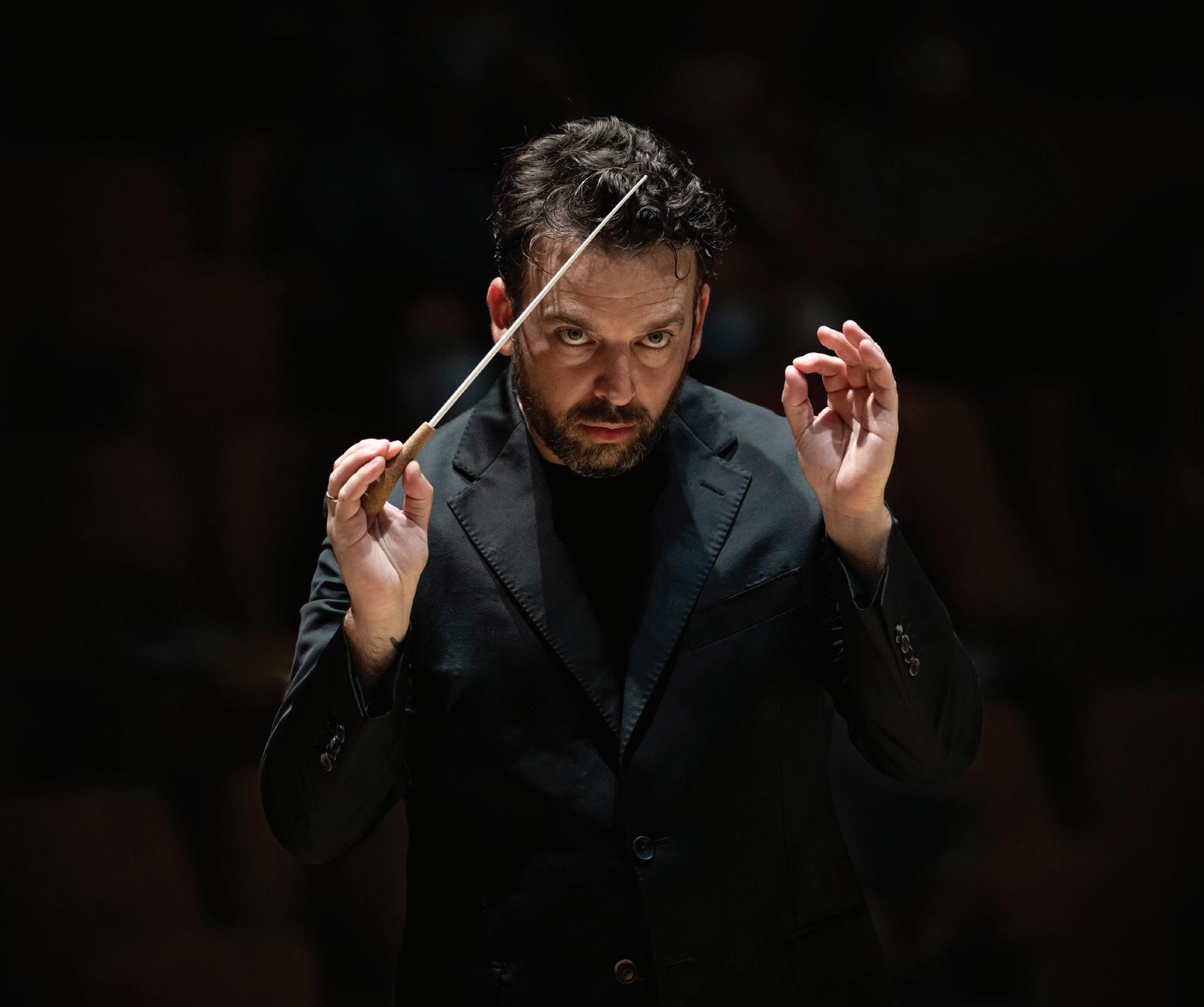
Appalachian Spring & Mahler’s First


The Keys give you a show above and below the surface. From art galleries to museums and live music, no place inspires more freedom of expression. In The Keys, you’re part of the performance.
VisitFloridaKeys.com/arts-culture 1.800.Fla.Keys
THE DONALD J. TRUMP AND JOHN F. KENNEDY CENTER FOR THE PERFORMING ARTS
MAY 29 & 30 AT 8 P.M.
James Gaffigan, conductor
CHARLES IVES (1874–1954)
Three Places in New England, Orchestral Set No. 1 (1913–1929)
i. The “St. Gaudens” in Boston Common (Col. Shaw and his Colored Regiment)
ii. Putnam’s Camp, Redding, Connecticut
iii. The Housatonic at Stockbridge
AARON COPLAND (1900–1990)
GUSTAV MAHLER (1860–1911)
Appalachian Spring – Suite (1943–1944)
INTERMISSION
Symphony No. 1 in D major (1884–1888)
i. Langsam
ii. Kräftig bewegt
iii. Feierlich und gemessen
iv. Stürmisch bewegt
THANK YOU TO OUR SEASON SPONSORS
The NSO Music Director Chair is generously endowed by Roger Sant and Congresswoman Doris Matsui Noseda Era Fund Supporters The Amici di Gianandrea
Patrons are requested to turn off cell phones and other electronic devices during the performance. Any video and/or audio recording of this production is strictly prohibited.
From the Music Director
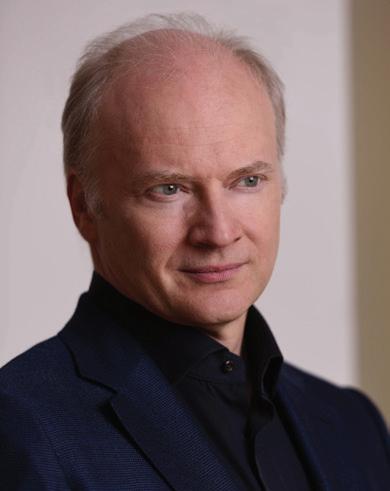
Cari amici,
Cari amici,
It is with immense joy and anticipation that I welcome you to the National Symphony Orchestra’s 95th anniversary season. This moment is more than a milestone—it is a celebration of our deep musical legacy and a renewed commitment to bringing powerful, moving performances to our community and beyond. This is only the beginning. The 95th season is filled with musical discovery, celebrated artists, and unforgettable experiences.
This season features iconic works that have stood the test of time, from classic masterpieces to thrilling contemporary music. The NSO also has the opportunity to share the stage with an exceptional lineup of guest artists and conductors—beloved icons and rising stars alike. Performing new music is something the NSO truly believes in. Make history with us as we present innovative new works, including five world premieres.
It is with immense joy and anticipation that I welcome you to the National Symphony Orchestra’s 95th anniversary season. This moment is more than a milestone—it is a celebration of our deep musical legacy and a renewed commitment to bringing powerful, moving performances to our community and beyond. This is only the beginning. The 95th season is filled with musical discovery, celebrated artists, and unforgettable experiences.
I am deeply grateful to share this journey with you. Your presence in the Concert Hall is what brings our music fully to life. Thank you for being a part of the NSO family—for your passion, your applause, and your unwavering support.
I am deeply grateful to share this journey with you. Your presence in the Concert Hall is what brings our music fully to life. Thank you for being a part of the NSO family—for your passion, your applause, and your unwavering support.
Con tutto il cuore,
Con tutto il cuore,
Gianandrea Noseda Music
Gianandrea Noseda
Director, National Symphony Orchestra
Music Director, National Symphony Orchestra
Che la musica vi porti gioia e ispirazione—may music bring you joy and inspiration.
Che la musica vi porti gioia e ispirazione—may music bring you joy and inspiration.
Notes on the Program
Three Places in New England, Orchestral Set No. 1 CHARLES IVES
Born October 20, 1874, in Danbury, Connecticut.
Died May 19, 1954, in New York, New York.
The 54th Massachusetts Infantry Regiment, one of the first divisions in the Union Army composed of Black men, marched to South Carolina in the summer of 1863 and launched an ill-fated attack on the coastal Confederate stronghold of Fort Wagner. Nearly half of the contingent died, along with their young leading officer, Robert Gould Shaw. The unit was recognized in 1897 with a hitherto unprecedented memorial in the Boston Common designed by the American sculptor Augustus Saint-Gaudens, in which Shaw sits on horseback among rows of marching soldiers.
Charles Ives was fascinated by the history and legacy of the Civil War, largely because of his father, George, who had headed what Ulysses S. Grant described as “the best band in the [Union] army.” Ives incorporated Civil War anthems and marches into many of his compositions—works that the historian Allen Carl Guelzo has described as “lavish demonstrations of a determination to use the American past to understand its present.” Around 1913, Ives started work on an elegiac tone poem inspired by Saint-Gaudens’s statue, in which a steady march leads to a brassy, tragic climax while funereally slow strains of American folk songs and spirituals float eerily in the background.
Ives wrote this music at a pivotal moment in the history of how the Civil War was remembered. A backlash against post-war reconstruction had resulted in Jim Crow laws that segregated and disenfranchised Black Americans. Between 1890 and 1920, towns across the former Confederacy erected a slew of memorials to Confederate soldiers outside courthouses and in town squares, embracing a nostalgic myth of the old South whitewashed of the violence of slavery and valorizing the Confederate army’s fight for a “lost cause.” It was timely for an American composer to write music that instead recognized the unequivocally righteous cause of emancipation and valorized Black men fighting for that cause—soldiers who, as Ives put it in an original poem he included in the score, were “marked with generations of pain, / Part-freers of a Destiny, / Slowly, restlessly swaying us on with you / Towards other Freedom!” Guelzo proposes that, through his music, Ives aims to galvanize present-day listeners, transporting them to a setting “in the full bloom of abolitionist energy, a world that, through his music, he could ensure would never be lost.”
Ives’ representation of “The ‘St. Gaudens’ in Boston Common (Col. Shaw and his Colored Regiment)” is the first entry in Three Places in New England, a collection of orchestral works that he assembled over the course of the 1910s and then revised for publication and performance in 1929. The final piece in the set, like the first, is slow and somber. A mess of complex, mixed rhythms in the strings aims to create an impression of the misty Housatonic River, which Ives and his wife, Harmony, saw on their honeymoon, while winds and brass present a far-off hymn.
Notes on the Program
The rowdy middle movement of Three Places in New England provides a sharp contrast with the other two. Ives depicts a Fourth of July church picnic at the site of General Israel Putnam’s Revolutionary War camp in Redding, Connecticut. In an accompanying narrative, Ives describes a child who hears conflicting layers of sounds, including a marching band and kids singing in a completely different key. The boy also has a vision of the “Goddess of Liberty” reminding a group of veterans “not to forget their ‘cause’ and the great sacrifices they have made for it.” Spirituals and civil war anthems like those found in the opening movement are layered and juxtaposed with patriotic band songs like “Yankee Doodle” and “The Star-Spangled Banner.”
These kinds of quotations and borrowings were at the core of Ives’ compositional style, and, though they can sometimes seem strange or even silly, he took their use very seriously. In a 1920 essay, he criticized composers who would write a symphony based on the plantation songs of Black Americans without caring about the ongoing cause of emancipation, proposing that commitment to principles associated with the context of a type of music was a precondition for using that music beautifully. Ives believed that if a composer was not “deeply interested in the [abolitionist] cause… his music is liable to be less American than he wishes.”
Appalachian Spring – Suite AARON COPLAND
Born November 14, 1900, in Brooklyn, New York. Died December 2, 1990, in North Tarrytown, New York.
Aaron Copland’s Appalachian Spring begins and ends with a serene clarinet solo. The tune itself opens, then brightens as it moves up a major triad, then closes as it moves back down a third, and opens out once again. In the score, the composer tells the clarinetist to play with “white tone,” an indication that the performer should strive to create a naked, almost hollow timbre. It is an unadorned, vulnerable voice finding its way through one of the most basic of musical patterns.
Copland composed the piece between 1943 and 1944 on a commission from the choreographer Martha Graham and arts patron Elizabeth Sprague Coolidge. The narrative follows a pair of young pioneers on the day of their wedding, who are both excited and anxious. A preacher warns of the trials to come, while an older woman suggests that they will have the strength to navigate those difficulties. After the wedding, they sit alone together in their small home and give one another quiet confidence.
The composer produced about 35 minutes of music for a chamber ensemble of 13 instruments. In 1945, he cut 10 minutes to create a suite version of the piece for full orchestra. In the piece, vigorous, celebratory dance themes come in and out of the frame—often rhythmically misaligned in some way, which keeps the music from arriving at natural resting points. Sections come to a stop with sudden, rhetorical pauses, or they are interrupted by more yearning, ominous
tunes. The climax of the Suite is a set of variations on “‘Tis the gift to be simple, ‘tis the gift to be free” with a glorious trumpet solo and celebratory swirls in the strings. This mid-19th-century Shaker hymn advocates a hopeful, humble spirit that might strengthen a young couple looking to an uncertain future: “When we find ourselves in the place just right / ‘Twill be in the valley of love and delight.”
“Simple Gifts” is one recognizable American theme in the piece, and it seems primed to evoke some patriotic feeling, but the prayerful passages at the beginning and end of Appalachian Spring are perhaps even more stirring. The clarinet solo cautiously invites other musicians to join in. As the others enter, they too wander their way up major and minor triads. Everybody gets off the gesture at slightly different points, and when the players hold their pitches, they produce a remarkable, humming, unobtrusively dissonant tonality. The final harmony of the piece is one such sonority, which lightly throbs with the sensation of being both open and closed. Even when the music has found a “place just right,” there are little threads of tendency and tension that remain to be resolved with care at some moment down the road.
Symphony No. 1 in D major GUSTAV MAHLER
Born July 7, 1860, in Kaliště, Bohemia, Austrian Empire Died May 18, 1911, in Vienna, Austria.
Gustav Mahler completed his first symphony in May of 1888. He immediately sent proud letters to his parents to announce that “it has turned out well” and to his friend Friedrich Lohr, explaining, “the emotions became so powerful in me that they gushed forth like an impetuous torrent… at a single blow, all the floodgates were opened within me!”
It was a great disappointment when the work’s premiere, which took place in Budapest in November 1889, was met with fervent criticism. This negative response was partly a marketing problem; Mahler called the piece a “Symphonic Poem” in five movements, but no explanatory program was provided to the audience. Some listeners were also uncomfortable with his extravagant, richlyorchestrated symphonic style—“monstrous tastelessness” as Viktor von Herzfeld wrote in an intermittently scathing review.
Mahler initially addressed the critics by furnishing an excess of various potential narrative associations for the work. At a few subsequent performances, he added the title “Titan,” alluding to a novel by early-19th-century German author Jean Paul, though Mahler was careful to clarify that its convoluted plot had little to do with the structure of the symphony itself. He also gave the individual movements more descriptive headings and subheadings, proposing that the first movement of the piece—in which a cheerful, folk-like theme cautiously peeps through the glassy surface of expansive, icy, harmonic-filled sections—represents the “awakening of nature from a long winter's sleep.”
Mahler suggested that the slow movement, in which a nursery rhyme is played as a haunting round in the minor key, was inspired by an etching of a fearsome
Notes on the Program
parade of forest animals carrying a dead hunter to his funeral. The Dante-esque subtitle for the demonic finale, “Dall' Inferno al Paradiso” (from The Inferno to Paradise), rounded out this set of intriguing but disjointed explanations. There is a certain truthful beauty to this chaotic overabundance of possible stories. Perhaps, one should leave it to third-party program annotators to try and create a semi-coherent narrative about a work. The composer himself should be allowed to have been inspired by a swirling, irrational mixture of sounds, images, characters, techniques, and feelings.
Yet, Mahler eventually shed all these titles. Following some of the more useful criticism he received, he also cut the anodyne second movement from his original version and trimmed the finale (but not too much—it remains a glorious, bombastic, baggy bundle of themes). The final, four-movement version, which he published in 1898, strikes a happy balance between fulfilling the formal expectations of a 19th-century symphony and exploring wild, grandiose ideas that only Mahler could dream up.
The theme of the opening movement is based on a selection from Mahler’s mid-1880s song cycle Lieder eines fahrenden Gesellen (“Songs of the Wayfarer”), in which the speaker wanders through a lovely spring meadow, enjoying the calls of the birds and the smell of the flowers. Mahler takes large chunks of the song, splashes them down on an orchestral canvas, and extends them using gradual accelerandos that come to various points of euphoric breathlessness. The second movement follows organically from the jolly, earthy character that emerges in the first. A heavy-footed, rustic scherzo is the main event, while the rolling waltz in the middle of the movement has the flexibility and the juicy slides of a sultry Viennese dance hall number.
The third movement, which opens with an infamous solo double-bass rendition of a minor-key version of the nursery rhyme “Frère Jacques,” includes a distinctively scored section for clarinets, oboe, trumpet, and percussion that sounds like keening, Jewish folk music. In the middle of the movement, another “Song of the Wayfarer” appears, here taking the form of a rolling, celestial lullaby—a childlike vision of heaven. At the start of the finale, the promised “Inferno” opens before us. Iterations of the infectious, violent, marching primary theme are leavened by other, contrasting ideas: a tender love song played by the violins and cellos; extensive quotations from previous movements; and eventually, a glorious chorus blasted out by a band of happy horns that appears once, peters out, and then returns in revelatory, triumphant fashion.
Meet the Artists
James Gaffigan, conductor
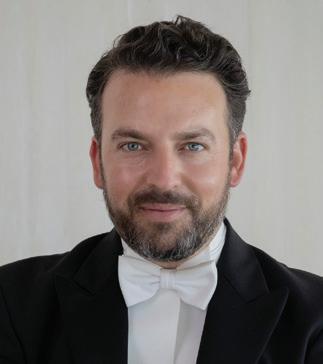
Recognized worldwide for his natural ease and extraordinary collaborative spirit, American conductor
James Gaffigan has attracted international attention for his prowess as a conductor of both symphony orchestras and opera.
Recently named the next Music Director of Houston Grand Opera, Gaffigan will assume his new role in the 2027–2028 season. Commencing as Music Director Designate in the 2026–2027 season, his initial term will last for five seasons, through 2031–2032. A rarity among American conductors for his rise to prominence in the esteemed houses and concert halls of Europe, Gaffigan is in demand at opera companies and symphony orchestras across the world. Gaffigan serves as the General Music Director of Komische Oper Berlin, where he leads his third season in 2025–2026. He also serves as Music Director of the Verbier Festival Junior Orchestra.
In August 2025, Gaffigan marked his fourth and final season as Music Director of the Palau de les Arts Reina Sofía in Valencia. He is the former Chief Conductor of the Luzerner Sinfonieorchester and former Principal Guest Conductor of both the Netherlands Radio Philharmonic Orchestra and Trondheim Symphony Orchestra & Opera.
Gaffigan has conducted for the Metropolitan Opera, Bayerische Staatsoper, Opéra national de Paris, Zürich Opera, Vienna Staatsoper, Deutsche Oper Berlin, Dutch National Opera, Glyndebourne Festival, Lyric Opera of Chicago, and Santa Fe Opera, among many others.
He also prioritizes maintaining an equal balance as a symphonic conductor. He regularly leads the world’s greatest orchestras, including the New York Philharmonic, Chicago Symphony Orchestra, San Francisco Symphony, Los Angeles Philharmonic, National Symphony Orchestra, Boston Symphony Orchestra, Cleveland Orchestra, Philadelphia Orchestra, and Pittsburgh Symphony Orchestra.
In Europe, he has appeared with the London Symphony Orchestra, London Philharmonic Orchestra, Symphonieorchester des Bayerischen Rundfunks, Royal Concertgebouw Orchestra, Staatskapelle Berlin, Deutsches Symphonie-Orchester Berlin, Staatskapelle Dresden, NDR Elbphilharmonie Orchester, Tonhalle-Orchester Zürich, Rotterdam Philharmonic Orchestra, and Czech Philharmonic, and he maintains ongoing relationships with the Luzerner Sinfonieorchester and Netherlands Radio Philharmonic Orchestra.
A champion of new music, Gaffigan has led more than 30 premieres by composers including Thomas Adès, Kaija Saariaho, Anders Hillborg, Andrew Norman, Sarah Kirkland Snider, and Wynton Marsalis. His robust discography features recordings with the Luzerner Sinfonieorchester, Netherlands Radio Philharmonic Orchestra, Netherlands Radio Choir, and Frankfurt Radio Symphony.
Gaffigan’s early training in New York City’s public schools inspired his belief in music education and access to the arts. He regularly works with young musicians at the Juilliard School, Aspen Music Festival and School, Music Academy of the West, and Verbier Festival.
His first titled positions included Associate Conductor of the San Francisco Symphony, a position created for him by Michael Tilson Thomas, and Assistant Conductor of the Cleveland
Orchestra, where he worked with Music Director Franz Welser-Möst. Gaffigan was first prize winner of the 2004 Sir Georg Solti International Conducting Competition.
Gaffigan earned his undergraduate degree at the New England Conservatory of Music, followed by conducting studies at the Shepherd School of Music at Houston’s Rice University, Aspen Music Festival’s Aspen Conducting Academy, and the Tanglewood Music Center.
National Symphony Orchestra
The 2025–2026 season is the National Symphony Orchestra’s 95th and Music Director Gianandrea Noseda’s ninth season. Gianandrea Noseda serves as the orchestra’s seventh music director, joining the NSO’s legacy of distinguished leaders: Christoph Eschenbach, Leonard Slatkin, Mstislav Rostropovich, Antal Doráti, Howard Mitchell, and Hans Kindler. Its artistic leadership also includes Principal Conductor and Artistic Advisor Steven Reineke.
Since its founding in 1931, the NSO has been committed to performances that enrich the lives of its audience and community members. In 1986, the National Symphony became an artistic affiliate of the John F. Kennedy Center for the Performing Arts, where it has performed since the Center opened in 1971. The 96-member NSO participates in events of national and international importance, including the annual nationally televised concerts on the lawn of the U.S. Capitol, livestreamed performances on medici.tv, and local radio broadcasts on WETA Classical 90.9 FM.
Since launching its eponymous recording label in 2020, the NSO has embarked on ambitious recording projects, including its first complete Beethoven Symphony cycle and the
release of the first-ever cycle of George Walker’s Sinfonias, both led by Noseda. Recent projects include Four Symphonic Works by Kennedy Center Composerin-Residence Carlos Simon conducted by Noseda, and William Shatner’s So Fragile, So Blue, recorded live in the Concert Hall with the NSO under Steven Reineke. Forthcoming releases with Gianandrea Noseda include music by Gustav Mahler and William Grant Still, as well as Samuel Barber’s opera Vanessa.
The NSO’s community engagement and education projects are nationally recognized, and career development opportunities for young musicians include the NSO Youth Fellowship Program and its acclaimed, tuition-free Summer Music Institute.
Symphony

Loud and Clear
Terms to know in the Concert Hall, loosely defined.
An extended work with multiple sections—typically four movements.
A “symphonic” piece is a long piece with multiple interpretations of a musical idea. A repeated, transformed musical idea is called a theme.
Orchestra
A group of musicians who play together.
In the Western European tradition, an orchestra often includes the four major instrument families—brass, woodwinds, strings, and percussion. An especially large orchestra is called a symphony orchestra. A smaller orchestra is called a chamber orchestra
Movement
A section of a musical work. Movements are often separated by silences, and they typically differ in tempo—speed.
Opera
A musical play with singers who perform a staged version of the dramatic text—the libretto.
Sonata
Originally, a musical composition played on instruments. In modern usage, “sonata” can mean a piece for a soloist or an ensemble, often with two to four movements.
If a work or a movement is written in sonata form, it is structured in three sections: exposition, development, and recapitulation.
Concerto
A piece pairing a technically advanced soloist with the support of an orchestra, usually in three movements. Though there may be multiple soloists, the contrast between a larger ensemble and a soloing group defines a concerto.
Tone poem
An orchestral piece meant to convey a non-musical subject such as an art piece, landscape, story, or mood.
Rhapsody
A one-movement composition without a strict formal structure. Rhapsodies often include improvisation and evocative contrasts.
Counterpoint
The interaction of multiple melodies to create a larger musical product.
Tempo Markings
Adagio - slow, at ease
Andante - moderately slow, walking pace
Moderato - moderate
Allegretto - slightly slower than allegro
Allegro - fast, bright
Vivace - fast, lively
Additional Markings
Non tanto - not as much
Ma non troppo - but not too much
Molto - very
Con delicatezza - with delicacy
Cantabile - in a singing style
Scherzo - a fast, playful section
National Symphony Orchestra
GIANANDREA NOSEDA , MUSIC DIRECTOR
The Roger Sant and Congresswoman Doris Matsui Chair
STEVEN REINEKE , PRINCIPAL CONDUCTOR AND ARTISTIC ADVISOR
VIOLINS
Nurit Bar-Josef, Concertmaster
Ying Fu, Associate Concertmaster, The Jeanne Weaver Ruesch Chair
Ricardo Cyncynates, Assistant Concertmaster
Xiaoxuan Shi, Second Assistant Concertmaster
Jane Bowyer Stewart
Heather LeDoux Green
Lisa-Beth Lambert
Jing Qiao
Marina Aikawa
Peiming Lin
Derek Powell
Regino Madrid**
Meredith Riley**
Susan Midkiff**
Marissa Regni, Principal
Dayna Hepler, Assistant Principal
Cynthia R. Finks
Deanna Lee Bien
Glenn Donnellan
Natasha Bogachek
Carole Tafoya Evans
Jae-Yeon Kim
Wanzhen Li
Hanna Lee
Benjamin Scott
Malorie Blake Shin
Angelia Cho
Kei Sugiyama**
VIOLAS
Daniel Foster, Principal, The Mrs. John Dimick Chair
Dana Kelley, Assistant Principal
Nancy Thomas
Jennifer Mondie
Tsuna Sakamoto
Ruth Wicker
Mahoko Eguchi
Abigail Evans Kreuzer
Rebecca Epperson
Jacob Shack
Johanna Nowik
Chiara Dieguez**
CELLOS
David Hardy, Principal, The Hans Kindler Chair, The Strong Family and the Hattie M. Strong Foundation
Raymond Tsai, Assistant Principal
David Teie
Rachel Young
Mark Evans
Eugena Chang Riley
Loewi Lin
Britton Riley
Noah Krauss
BASSES
Robert Oppelt, Principal
Richard Barber, Assistant Principal
Jeffrey Weisner
Ira Gold
Paul DeNola
Charles Nilles
Alexander Jacobsen
Michael Marks
HARP
Adriana Horne, Principal
FLUTES
Aaron Goldman, Principal
Leah Arsenault Barrick, Assistant Principal
Matthew Ross
Carole Bean, Piccolo
OBOES
Nicholas Stovall, Principal, The Volunteer Council Chair
Jamie Roberts, Assistant Principal
Harrison Linsey***
Kathryn Meany Wilson***, English Horn
CLARINETS
Lin Ma, Principal
Eugene Mondie, Assistant Principal
Paul Cigan
Peter Cain, Bass Clarinet
BASSOONS
Sue Heineman, Principal
David Young, Assistant Principal
Steven Wilson
Sean Gordon, Contrabassoon
HORNS
Abel Pereira, Principal, The National Trustees’ Chair
James Nickel, Acting Associate Principal
Markus Osterlund***
Scott Fearing
Robert Rearden
Geoffrey Pilkington**
TRUMPETS
William Gerlach, Principal, The Howard Mitchell Chair, The Strong Family and the Hattie M. Strong Foundation
Michael Harper, Assistant Principal
Michail Thompson
Tom Cupples
TROMBONES
Craig Mulcahy, Principal
Evan Williams, Assistant Principal
David Murray
Matthew Guilford, Bass Trombone
TUBA
Seth Cook**, Acting Principal
TIMPANI
Jauvon Gilliam, Principal, The Marion E. Glover Chair
Scott Christian, Assistant Principal
PERCUSSION
Eric Shin, Principal, The Hechinger Foundation Chair
Erin Dowrey, Assistant Principal
Scott Christian
Jason Niehoff*
KEYBOARD
Lisa Emenheiser*
ORGAN
William Neil*
LIBRARIANS
Elizabeth Cusato Schnobrick, Principal
Zen Stokdyk, Associate
Karen Lee, Assistant
PERSONNEL
Karyn Garvin, Director
Brooke Bartolome, Manager
Sufyan Naaman**, Coordinator
STAGE MANAGERS
David Langrell, Manager
N. Christian Bottorff, Assistant Manager
The National Symphony Orchestra uses a system of revolving strings. In each string section, untitled members are listed in order of length of service.
*Regularly Engaged Extra Musician
** Temporary Position
***Leave of Absence
National Symphony Orchestra Staff
EXECUTIVE TEAM
Nigel Boon, Vice President, Artistic Planning & Interim Co-Executive Director
John Roloff, Vice President, Operations & Interim Co-Executive Director
Kasama Apfelbaum, Vice President, Financial Planning & Analysis
Sabryn McDonald, Executive Assistant
ARTISTIC PLANNING
Justin Ellis, Senior Producing Director
Ana Vashakmadze, Artistic Administrator
DEVELOPMENT
Laney Pleasanton, Manager of Individual Giving
Pamela Wardell, Senior Director of Development
EDUCATION
Vanessa Thomas, Director of Education Activation & Engagements
FINANCE AND ADMINISTRATION
Eric Rubio, Director of Finance & Administration
HUMAN RESOURCES
Tony Amato, Director, Total Rewards
Chanel Kemp, Talent Acquisition Manager
Patrice McNeill, Director, HR Operations
Lisa Motti, HRIS Coordinator
Ericka Parham, Benefits Analyst
John Sanford, Senior Business Partner
MARKETING & ADVERTISING
Michael Granados, Marketing Manager, NSO, Fortas & New Music
Lily Maroni, Senior Manager, Advertising Communications
Ada Morrison, Director, Marketing & Sales Analytics
Derek Younger, Director, Sales & Ticketing Service
ORCHESTRA OPERATIONS & CONCERT PRODUCTION
Brooke Bartolome, Orchestra Personnel and Operations Manager
Joseph Benitez, Media & OPAS Support Coordinator
N. Christian Bottorff, Assistant Stage Manager
Cayley Carroll, Director, Production & Orchestra Operations
Karyn Garvin, Director of Orchestra Personnel
David Langrell, Stage Manager
Sufyan Naaman, Operations and Auditions Coordinator
Ava Yap, Operations Assistant
PUBLIC RELATIONS
PJ Elliott, Director of Public Relations

Kennedy Center Staff
Kennedy Center Staff
Kennedy Center Staff
Kennedy Center Staff
Kennedy Center Staff
Trump Kennedy Center Staff
KENNEDY CENTER EXECUTIVE LEADERSHIP
KENNEDY CENTER EXECUTIVE LEADERSHIP
KENNEDY CENTER EXECUTIVE LEADERSHIP
TRUMP KENNEDY CENTER EXECUTIVE LEADERSHIP
KENNEDY CENTER EXECUTIVE LEADERSHIP
KENNEDY CENTER EXECUTIVE LEADERSHIP
President, John F. Kennedy Center for the Performing
Ambassador Richard Grenell
Ambassador Richard Grenell
President, John F. Kennedy Center for the Performing Arts Ambassador Richard Grenell
President, John F. Kennedy Center for the Performing Arts
President, John F. Kennedy Center for the Performing Arts
President, John F. Kennedy Center for the Performing Arts
Chief Operating Officer and Executive Director
Ambassador Richard Grenell
Chief Financial Officer
Chief Financial Officer
Donna Arduin
Chief Financial Officer
Chief Financial Officer Donna Arduin
Donna Arduin
Chief Financial Officer Donna Arduin
Ambassador Richard Grenell Financial Officer Donna Arduin
General Counsel
General Counsel
General Counsel
Elliot Berke
General Counsel Elliot Berke
General Counsel Elliot Berke
General Counsel Elliot Berke
Elliot Berke
Elliot Berke
Senior Vice President, Development
Lisa Dale
Senior Vice President, Development Lisa Dale
Senior Vice President, Development Lisa Dale
Senior Vice President, Development Lisa Dale
Senior Vice President, Development Lisa Dale
Vice
Senior Vice President, Marketing Robin Osborne
Senior Vice President, Marketing Robin Osborne
Senior Vice President, Marketing
Senior Vice President, Marketing Robin Osborne
Senior Vice President, Marketing Robin Osborne
Senior Vice President, Marketing������������������������������������������������������������������������������������������������������������������������������� Robin Osborne
Robin Osborne
Senior Vice President, Special Events
Senior Vice President, Special Events Bronagh Donlon
Bronagh Donlon
Senior Vice President, Special Events Bronagh Donlon
Senior Vice President, Special Events Bronagh Donlon
Vice President, Public Relations Roma Daravi
Senior Vice President, Special Events Bronagh Donlon Vice President, Human Resources������������������������������������������������������������������������������������������������������������������������������
Vice President, Human Resources������������������������������������������������������������������������������������������������������������������������������
Vice President, Human Resources Ta’Sha Bowens
Vice President, Human Resources������������������������������������������������������������������������������������������������������������������������������ Ta’Sha Bowens
Vice President, Human Resources Ta’Sha Bowens
Senior Vice President, Special Events Bronagh Donlon
Vice President, Operations
Matt Floca
Vice President, Operations Matt Floca
Vice President, Operations Matt Floca
Vice President, Operations Matt Floca
Vice President, Operations Matt Floca
Vice President, Education Jordan LaSalle
Vice President, Education Jordan LaSalle
Vice President, Education Jordan LaSalle
Vice President, Education
Vice President, Education Jordan LaSalle
Chief Information Officer
Jordan LaSalle
Vice President, Education Jordan LaSalle
Vice President, Public Relations
Vice President, Public Relations Roma Daravi
Vice President, Public Relations Roma Daravi
Roma Daravi
Vice President, Public Relations
Roma Daravi
Vice President, Public Relations Roma Daravi
Chief Information Officer
Chief Information Officer
Chief Information Officer
Chief Information Officer
Bob Sellappan
Bob Sellappan
Bob Sellappan
Bob Sellappan
Chief Information Officer Bob Sellappan
Executive
Executive Director, National Symphony Orchestra
Executive Director, National Symphony Orchestra Jean Davidson
Executive Director, National Symphony Orchestra
Jean Davidson
Executive Director, National Symphony Orchestra Jean Davidson
General
General Director, Washington National Opera Timothy O’Leary
General Director, Washington National Opera
General Director, Washington National Opera Timothy O’Leary
General Director, Washington National Opera Timothy O’Leary
Timothy O’Leary
Concert Hall Staff
Concert Hall Staff
Concert Hall Staff
Concert Hall Staff
Concert Hall Staff
Concert Hall Staff
Theater Manager
Allen V. McCallum Jr.
Theater Manager Allen V. McCallum Jr.
Theater Manager
Theater Manager
Theater Manager
Allen V. McCallum Jr.
Theater Manager Allen V. McCallum Jr.
Box Office Treasurer
Box Office Treasurer Deborah Glover
Allen V. McCallum Jr. Box Office Treasurer
Deborah Glover
Deborah Glover
Box Office Treasurer
Deborah Glover
Box Office Treasurer Deborah Glover
Box Office Treasurer Deborah Glover
Head Usher
Head Usher
Head Usher Cathy Crocker
Head Usher
Stage Crew
Cathy Crocker
Head Usher Cathy Crocker
Cathy Crocker
Head Usher Cathy Crocker
Stage Crew Zach Boutilier, Michael Buchman, Paul Johannes, April King, John Ottaviano, and Arielle Qorb
Zach Boutilier, Michael Buchman, Paul Johannes, April King, John Ottaviano, and Arielle Qorb
Stage Crew Zach Boutilier, Michael Buchman, Paul Johannes, April King, John Ottaviano, and Arielle Qorb
Stage Crew Zach Boutilier, Michael Buchman, Paul Johannes, April King, John Ottaviano, and Arielle Qorb
Stage Crew Zach Boutilier, Michael Buchman, Paul Johannes, April King, John Ottaviano, and Arielle Qorb
Stage Crew Zach Boutilier, Chandler Bryant, Michael Buchman, Paul Johannes, April King, John Ottaviano

*Represented by ATPAM, the Association of Theatrical Press Agents and Managers.
*Represented by ATPAM, the Association of Theatrical Press Agents and Managers.
*Represented by ATPAM, the Association of Theatrical Press Agents and Managers.
*Represented by ATPAM, the Association of Theatrical Press Agents and Managers.
*Represented by ATPAM, the Association of Theatrical Press Agents and Managers.
*Represented by ATPAM, the Association of Theatrical Press Agents and Managers.


Steinway Piano Gallery is the exclusive area representative of Steinway & Sons and Boston pianos, the official pianos of the Kennedy Center.
Steinway Piano Gallery is the exclusive area representative of Steinway & Sons and Boston pianos, the official pianos of the Kennedy Center.
Steinway Piano Gallery is the exclusive area representative of Steinway & Sons and Boston pianos, the official pianos of the Kennedy Center.
Steinway Piano Gallery is the exclusive area representative of Steinway & Sons and Boston pianos, the official pianos of the Trump Kennedy Center.
Steinway Gallery is the exclusive area representative of Steinway & Sons and Boston pianos, the official pianos of the Kennedy Center.


The technicians at the Kennedy Center are represented by Local #22, Local #772, and Local #798 I.A.T.S.E.
The technicians at the Trump Kennedy Center are represented by Local #22, Local #772, and Local #798 I.A.T.S.E.
The technicians at the Kennedy Center are represented by Local #22, Local #772, and Local #798 I.A.T.S.E.
The technicians at the Kennedy Center are represented by Local #22, Local #772, and Local #798 I.A.T.S.E. AFL-CIO-CLC, the professional union of theatrical technicians.
Steinway Piano Gallery is the exclusive area representative of Steinway & Sons and Boston pianos, the official pianos of the Kennedy Center. The box office at the Kennedy Center is represented by I.A.T.S.E, Local #868.
The box office at the Kennedy Center is represented by I.A.T.S.E, Local #868.
The box office at the Trump Kennedy Center is represented by I.A.T.S.E, Local #868.
The box office at the Kennedy Center is represented by I.A.T.S.E, Local #868.
The box office at the Kennedy Center is represented by I.A.T.S.E, Local #868.
The box office at the Kennedy Center is represented by I.A.T.S.E, Local #868.
AFL-CIO-CLC, the professional union of theatrical technicians.
AFL-CIO-CLC, the professional union of theatrical technicians.
AFL-CIO-CLC, the professional union of theatrical technicians.
The technicians at the Kennedy Center are represented by Local #22, Local #772, and Local #798 I.A.T.S.E. AFL-CIO-CLC, the professional union of theatrical technicians.
The technicians at the Kennedy Center are represented by Local #22, Local #772, and Local #798 I.A.T.S.E. AFL-CIO-CLC, the professional union of theatrical technicians.
The American Guild of Musical Artists, the union of professional singers, dancers and production personnel in opera, ballet and concert, affiliated with the AFL-CIO, represents the Artists and Staging Staff for the purposes of collective bargaining.
The American Guild of Musical Artists, the union of professional singers, dancers and production personnel in opera, ballet and concert, affiliated with the AFL-CIO, represents the Artists and Staging Staff for the purposes of collective bargaining.
The American Guild of Musical Artists, the union of professional singers, dancers and production personnel in opera, ballet and concert, affiliated with the AFL-CIO, represents the Artists and Staging Staff for the purposes of collective bargaining.
The American Guild of Musical Artists, the union of professional singers, dancers and production personnel in opera, ballet and concert, affiliated with the AFL-CIO, represents the Artists and Staging Staff for the purposes of collective bargaining.
The American Guild of Musical Artists, the union of professional singers, dancers and production personnel in opera, ballet and concert, affiliated with the AFL-CIO, represents the Artists and Staging Staff for the purposes of collective bargaining.
The American Guild Musical Artists, the union of professional singers, dancers and production personnel in opera, ballet and concert, affiliated with the AFL-CIO, represents the Artists and Staging Staff for the purposes of collective bargaining.
National Symphony Orchestra musicians are represented by the Metropolitan Washington, D.C. Federation of Musicians, AFM Local 161-710.
National Symphony Orchestra musicians are represented by the Metropolitan Washington, D.C. Federation of Musicians, AFM Local 161-710.
National Symphony Orchestra musicians are represented by the Metropolitan Washington, D.C. Federation of Musicians, Local 161-710.
National Symphony Orchestra musicians are represented by the Metropolitan Washington, D.C. Federation of Musicians, AFM Local 161-710.
National Symphony Orchestra musicians are represented by the Metropolitan Washington,
National Symphony Orchestra musicians are represented by the Metropolitan Washington, D.C. Federation of Musicians, AFM Local 161-710.
Thank You to Our Supporters
National Symphony Orchestra Board of Directors
Officers
Joan Bialek, Chair
Ashley Davis, Vice Chair
Stanley Pierre-Louis, Treasurer
Brian Boyle, Secretary
Executive Committee
Carl Bergeron, Chair, Pension Committee
Brian Boyle, Co-Chair, Development Committee
Ashley Davis, Chair, Nominating and Governance Committee
Shannon McCormick Davis, Co-Chair, Development Committee
Ronald D. Abramson
Anne K. Altman
Michael F. Brewer
Jean Davidson, ex officio
Barbara H. Franklin
Directors
Ernest Abbott
Andrita J. Andreas
Katherine Armstrong
Jane Lipton Cafritz
Ronya Corey
Pierre de Lucy
Debbie Driesman
Larry Driver
William Finnerty
Brian L. Gevry
David Ginsberg
Cindy Green
Thomas C. Green
Kathryn Jones
Christina Co Mather
Michael Mayton
Richard Moxley
Stephanie Guyett
Dana Hearn
Daniel Heider
Helen Jackson
Ann D. Jordan, Lifetime Dir.
Vlad Khomenko
Gerald L. Kohlenberger, ex officio
Michael Lipsitz
Jan M. Lodal
Timothy R. Lowery
Katherine Marshall
Heidi Narang
Michael Salzberg
Roger W. Sant
Susan Silverstein Scott
Tina B. Small
David B. Novy
Cathy McCulloch
Sarah Mills
Jeanne Weaver Ruesch
Sheryl Schwartz
Jeffrey M. Senger
Jeff Shockey
Raghu Srinivasan
Courtney Straus
Meaghan VerGow
Stuart Winston
National Symphony Orchestra National Trustees
Officers
Gerald L. Kohlenberger, VA, Chairman
Ross Ain, DC, Vice Chairman
Ken Leibowitz, DC, Vice President of Membership
Purvi Patel Albers, TX, Vice President of Development
Jeannette J. Segel, AZ, Vice President of Special Events & Meetings
Members
Susan Ain, FL
Ralph Baxter, WV
Jeri Crawford, NV
Nancy Jean Davis, FL
Gail Charnley Elliott, CT
Glenn Finch, VA
Mary Galvin, IL
Larry Kellogg, FL
Ex-Officio Positions
Michael Mayton, AR, Past Chairman
Jessine Monaghan, DC, Past Chairman
Mary K. Abercrombie, ID, Past Chairman
Laura Kerr-Engstrom, OK
Tom Mims, FL
The Rostropovich Legacy Guild
Theresa Thompson, VA
James Ward, NM
John Wohlstetter, SC
Stephen T. Young, GA
Members of the Rostropovich Legacy Guild have designated future gifts to support the National Symphony Orchestra’s artistic, educational, and community programs. The Guild honors cellist and former Music Director Mstislav Rostropovich, whose legacy continues to inspire the NSO.
Anonymous (4)
Patty Perkins Andringa
Rebecca J. Ault Trust
Mavis A. Walters and Thomas A. Baxter†
Michael D. Bolden
Dr. and Mrs. William P. Brose
John Cahill
Julia A. Carr
James M. Compton, Col USA (Ret)†
Mrs. Jane L. Donaghy
Christine M. Feinthel
Eleanor and Thomas W. Fina
Mrs. Nancy M. Folger
George† and Duffy† Ftikas
Olga M. Gazda
Mr. and Mrs. Jeffrey A. Gorman
Mrs. Susan D. Hamburger
Rodney† and Anne Haugh
Dana A. Hearn and Kevin J. McCloskey
Maria C. Higgins
Carla H. Jones-Batka
Maria and Stephen Lans
Virginia Cretella Mars
Catherine H. and Michael R. Mayton
Dr. and Dr. Omar Mazzoni
Patricia Morton†
Mrs. William E. Naylor, Jr.†
Phylliscity and John Oliff
Mr. Theodore C. Panglao
William and Cathy Pastor
Mr. W. Larz Pearson
Steven C. Price
Francis H. Rasmus
Ms. Jennifer Renner
Helen I. Rickels†
Mrs. George W. Riesz
Dr. Ann H. Rose
Carol Ruppel
Rita Shapiro and Edward F. Maclary
Peggy M. Siegel
Margaret Stehman
Elena Thompson
Mr. Rick Trevino
Stella Boyle Smith Trust
Mr. Dennis L. Stout and Mr. Daniel Studnicky
Rafael E. Urrutia and Joanne H. Urrutia Trust
Jenny Craig Wallace
Mr. Glenn D. White, Jr.
Drs. Robert and Gail† Wilensky
Mr. and Mrs.† Rance R. Willis
Thank You to Our Donors
Individual, Foundation, and Corporate Donors
$500,000+
AARP
Sandy and Bud Drutz
$100,000–499,999
Anonymous
Mrs. Byrle M. Abbin
Mr. Martin K. Alloy and Mrs. Daris M. Clifton-Alloy
Agnieszka and Witold Balaban
Boeing
DC Commission on the Arts and Humanities
$50,000–99,999
Ernest and Catherine Abbott
The Andreas Family Foundation
Maria Bartiromo
Joan Bialek and Louis Levitt, MD
Brian and Sheila Boyle
Cestone Family Foundation
Ms. Ashley Davis
Shannon and Jim Davis
$25,000–49,999
Anonymous
Mary K. Abercrombie
Ms. Anne K. Altman
Eve E. Bachrach
Bender Foundation, Inc.
Michael Brewer and Janet Brown
BVLGARI
CityCenterDC
Clark Construction Group, LLC
Pierre de Lucy and Jodie McLean
Ms. Kirby Heller and Mr. Stephen Dennett
Will and Anna Finnerty
Ann and Tom Friedman
Mary B. Galvin
Brian and Kendra Gevry
David and Ellen Ginsberg
Cindy and Andy Green
$15,000–24,999
Anonymous (2)
Ross and Judy Ain
Ralph H. Baxter, Jr.
Mr. and Mrs. Richard T. Crawford
Patricia Duggan
Gail Charnley Elliott and E. Donald Elliott
Mr. and Mrs. Glenn Finch
$10,000–14,999
Anonymous (4)
Jeffrey S. Abramson
In Honor of Joan Bialek
Boyd Watterson Asset Management LLC
Ms. Nadine Cohodas
Paul Dans and Mary Helen Bowers
Betsy and Robert Feinberg Foundation for Advanced Education in the Sciences
Dr. Gary Mather† and Ms. Christina Co Mather
Dana A. Hearn and Kevin J. McCloskey
Doug Kimmelman
Jacqueline Badger Mars
Meta
Turhan Mildon
Paulson Family Foundation
The Catherine B. Reynolds Foundation
RTX
Larry Driver
The Honorable Barbara H. Franklin
The Galena-Yorktown Foundation
Janet and Jerry Kohlenberger
Thelma Z. Lenkin
The Honorable Jan M. Lodal
Stella Boyle Smith Trust, Catherine and Michael Mayton, Trustees
Tom and Pamela Green
Greg and Stephanie Guyett
Mr. Frank F. Islam and Ms. Debbie Driesman
Helen Jackson and Joseph Sassoon
Johnson & Johnson
Admiral Jay L. Johnson and Sydney McNiff Johnson
Kathryn and J. Stephen Jones MD
Joel D. Kaplan
Michele and Howard Kessler
Maximus
Cathy and Scot McCulloch
Mr. Devon McFadden and Ms. Ronya Corey
Sarah and Christopher Mills
The National Italian American Foundation
Josh Harris
Laura Kerr-Engstrom
Erna and Michael Kerst
Sarosh Khan
Richard S. and Karen LeFrak Charitable Foundation
Ken Leibowitz
Sharon and Alan Levy
Drs. Jorge R. Gallardo-García and Viviana Vélez-Grajales
Dr. Leonard Goldman and Dr. Lisa DeMarco
Monica Lind Greenberg
Anne B. Keiser and Douglas M. Lapp
Mr. Georges Markow-Totevy
Nancy Peery Marriott Foundation
Drs. Omar and Maria Mazzoni
Roger Sant and Doris Matsui
U.S. Department of Education
Jeanne Weaver Ruesch
Patricia Bennett Sagon†
Eric Shin
The Leonard and Elaine Silverstein Family Foundation Fund for the National Symphony Orchestra
Lars Windhorst
MillerKnoll, Inc.
The Moxley Family Foundation
RJ and Heidi Narang
Nina Totenberg and David Reines
Truist
Wells Fargo
David Novy
Melanie and Larry† Nussdorf
Stanley Pierre-Louis and Natalie Williams
Mrs. Harriet Rogers
Michael and Deborah Salzberg
Brad and Sheryl Schwartz
Jeffrey and Leigh Senger
Tina and Albert Small, Jr.
David and Courtney Straus
John and Eunice Thomas
Dr. Heather Turnbow and Mr. Raghu Srinivasan
Mr. and Mrs. Mallory Walker
The Walt Disney Company
Drs. Robert and Gail† Wilensky
Mr. John C. Wohlstetter
Michael and Terri Lipsitz
Kathe and Bill McDaniels
Jessine A. Monaghan
Jeannette J. Segel
The Linda and Isaac Stern Charitable Foundation
Theresa Thompson
Steve and Jena Young
Ronald Mueller and Larry Anthony
Dr. and Mrs. Ronald A. Paul
James D. Schultz
Fredda S. Sparks
Murry Stegelmann
Dr. Mary Carolyn Thies
James C. Tong
John Zoll
Thank You to Our Donors
$6,000–9,999
Mr. and Mrs. Michael Baly, III
Aaron Copland Fund for Music
Phil and Joan Currie
Mr. and Mrs. Dennis de Tray
Drs. Gilbert and Rona Eisner
Mr. Edward A. Farquhar
Henrietta “Etta” Fielek
Dr. and Mrs. Michael Gold
Mr. Woolf P. Gross
$4,000–5,999
Anonymous (2)
David M. Bachman, M.D.
Dr. Mark Cinnamon and Ms. Doreen Kelly
George and Phyllis† Cohen
Helen Darling and Brad Gray
Dimick Foundation
Ms. Thelma Duggin
Jack Firestone
Mr. and Mrs. Jurgen O. Gobien
Mr. and Mrs. Rolf Graage
Daniel Heider
Joe† and Lynne Horning
Dr. Elaine S. Jaffe and Mr. Michael Evan Jaffe
$1,800–3,999
Anonymous (4)
Anja Allen
Mr. John Ausink and Ms. Elaine S. Simmons
Ken and Liz Babby
Ann and Russel Bantham
Mr. and Mrs. Mitchell J. Bassman
Herschel V. Beazley
Robin Berrington
Robert Bleimann and May Chin
Jane B. Boynton
Mary Breiner
Ms. Linda Bunce
Mr. Vincent Careatti
Frank and Victoria Chang
Helen Chason
Susan Christie
Donna Christy
Janice and Larry Clark
Robin Rowan Clarke
Sandra Cummins-Haid and Allen Haid
Col. and Mrs. James Dandridge II, Ret
Mr. Michael J. Dean
The Charles Delmar Foundation
Tracy Dietz
Peter and Sally DiGiovanni
Cherrie W. Doggett
Dr. Earl W. Donaldson
Tom and Eileen Ehrgood
Charles and Mita Forsyth
Catherine French
Richard L. Gaiani
Carol Galaty and Kenneth Shuck
Ms. Pamela J. Garvie
Professor Joseph L. Gastwirth
Laura Genero, in memory of Elizabeth H. Genero
Jesse Goodman and Nicole Lurie
Ms. Susan Z. Haller
Frederic Harwood and Nedda di Montezemolo
Dr. and Mrs. H. Keith Hellems
Virginia Hendrickson
Richard and Pamela Hinds
David and Elizabeth Hunt
Glen M. Johnson
Jane Mary Kwass
Edward Lenkin and Roselin Atzwanger
RADM Dan and Jackie March, USN Ret
Joan and John McAvoy
Mr. James E. Miller and Ms. Fynnette Eaton
Jewish Federation of Greater Washington
Isabelle Katzer
Henry B. & Jessie W. Keiser Foundation, Inc.
Helen and David Kenney
SooJung Kim
Vlad and Tanya Khomenko
Cynthia Krus and George S. Corey
Howard and Allison Lutnick
Sis and Jim McKay
In Honor of Jenny Mondie
Ralph and Gwen† Nash
Elise and Dennis Reeder
Daniel Hicks and John McCall
Mr. and Mrs. J. Paul Horne
Christiane B. Huff
Stephen and Neda Humenik
Brian Hunter
Dr. Brian M. Ilfeld
Ms. Nancy E. Johnson
Ann L. Jones
Mr. and Mrs. Kevin Kampschroer
Irene and Louis Katz
Diane and Brian Keller
Stephanie Smith Kinney
Mr. and Mrs. William H. Kirchhoff
Mr. Michael and Young Hee Kreps
Jurate and Carl Landwehr
Janet Platt Lambert
Dr. and Mrs. Keith M. Lindgren
Judge and Mrs. Alan D. Lourie
Dr. Joyce S. Lowenstein
Mr. and Mrs. Frank Maddox
Mary Kay and Dorn McGrath
Susan McGrath
Alan and Ruth Melvin
Patrick Michaels
Mr. Jim Miller
Mr. Joseph J. Minarik
Arthur Mitchell
Dr. Nazee Moinian
Clara Montanez
Susan and Fred Morhart
James Morris
Ms. Sakura Namioka
Kara Nath
Bruce and Son Young Nelson
Ms. Madeline C. Nelson
David O'Connor
David and Marina Ottaway
Andi Owen and Glenn Karpf
Tracy Pless
Mr. and Mrs. James J. Pohlman
Mahy Polymeropoulos
Brenda A. Pommerenke and Dr. Larry George
Mr. Robert K. Oaks
Mr. Joseph A. Page and Ms. Martha Gil-Montero
Ashley Rose and Jerry Horak
Claire and Jack Tozier
Michael and Alice Weinreb
Dr. and Mrs. Peter L. Willson
Admiral William Roberts and Patricia Roberts
Ellen and Roy Rosenthal
MG (Ret) and Mrs. Alan B. Salisbury
Steven and Donna Shriver
Dr. Barbara S. and Dr. Howard D. Stowe
Marilyn Walz Taylor
Charles Trozzo and Gail Rothrock
Gloria M. Weissberg, PhD
Dr. Linda E. Wetzel
Mr. Christopher Wolf and Mr. James L. Beller, Jr.
David Worby
The Honorable Chris Wright and Mrs. Liz Wright
George and Virginia Potts
Jane Evans Ramsay
William Reed
In Memory of Jane Reese
Henry & Anne Reich Family Foundation, Lee G. Rubenstein, Co-President
Gerd and Duncan Ritchie
Mr. and Mrs. James P. Roach
Mr. and Mrs. William Ronsaville
Dr. Shirley Ross and Mr. Joseph Pinciaro
Robert and Fran Rubin
Mr. Charles A. Rubio, Jr.
Mr. Ronald J. and Mrs. Rise F. Schlesinger
Cheryl L. Sharp
Byron and Elva Siliezar
Ronald and Margaret Stehman
Elizabeth Pendleton Streicher
Evelyn A. Sweet
Kathy Szot
Eileen and Michael Tanner
Kathleen M. Thies
Pauline Labbé Thompson
Kenneth Timmer
Steven and Prudence Traut
Raya Bakalov Treiser and Max Johnson
Capt. and Mrs. Eric Vanderpoel II, USN, Ret.
Mr. and Mrs. James G. Vaughter
Dr. Jean Vike
Laura and Kirk Wade
Pearl Y. Wang
Judy Ann and Richard Webster
Judith Weintraub
Ms. Rebecca Welch
Lawrence Wilkerson
Al Wilson
Dr. Ursula R. Wolfman
Robert Woodward and Elsa Walsh
Clinton B. Wright
Daniel Zak
Orchestrated Lives
Each month, the National Symphony Orchestra (NSO) spotlights a different musician. For this program, bass player Alex Jacobsen discusses orchestral compromises, the future of the NSO, and his love for out-of-the-box arrangements.
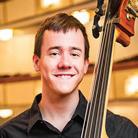
Name: Alex Jacobsen
Hometown: Albuquerque, New Mexico
Instrument: Bass
Years with the NSO: 13
How did you find your way into the world of the professional bass? I come from a musical family. My dad’s side is a lot of lawyers, geologists, and historians, but my mom’s side is basically all musicians. I started playing piano when I was in first grade, and then I started cello in fifth grade. In middle school, I wanted to play jazz and funk, so I switched to electric bass, and, by the time I got to high school, I had sort of combined those into upright bass. I just took to it like a fish to water. Orchestra really got exciting when I started being able to play in really good orchestras, which sometimes takes a long time.
What do you think makes the NSO special as an orchestra? I joined 13 years ago, and I really didn’t know anything except how to play bass. Right away, I found that there are so many people in this group that are selfless by instinct—very, very generous. There’s a strong tradition of friendliness at the NSO that I really value. Being a good orchestra is not just about attracting the best talent; it’s also about having a will to play together. There’s an emotional cost to the compromises; you want to feel seen and appreciated, and so does the person to your right, and so does the person to your left. One thing I really love about this orchestra—and the bass section especially—is that we have a lot of different ways we like to play, but we also really like playing together. We’re committed to it.
Was composition something that you became interested in as you were picking up instruments, or did that come later in life? I definitely became interested in composition while playing jazz as a kid. You learn more about music theory and harmony from playing jazz than by taking every music harmony class in college, because you have to compose if you play jazz. You must improvise.
I do a lot more arranging now, taking a melody that already exists. I have a lot of friends in the woodwind section, but there are not a lot of pieces for, for example, woodwind and bass quartets. I like to arrange well-known pieces for strange ensembles with my friends. Balance and blend are almost always the biggest issues, but it’s worth it because I like doing stuff that other people haven’t done before. I find that, if you do popular pieces, even if it’s a bad arrangement, people will usually enjoy it because it’s sort of like karaoke. Worst-case scenario, it’s just fun.
Do you have a favorite or most surprising, on-stage or off-stage NSO memory? One of the things that I’ve learned about being a professional musician is that it takes so much of my concentration in any given week to play the music that, by the time I get to the next week, I have forgotten all about the previous week. It’s nice when things are not surprising, though, which is why the next two years are going to be a special challenge—everything’s going to be surprising. I’d rather not move out of the Center, but moving out doesn’t mean that we can’t continue to fulfill our mission. Our job is to bring beauty into the world, and we can still do that if we’re not here.
If you could say anything else to NSO audiences, what would it be? It’s impossible to overstate how much we appreciate every single person who makes the decision to come listen to us. We struggle to fill halls ordinarily, and a lot of folks have been staying away over the last year, which has been especially challenging. There was a moment a few months ago when the audience was not very big, but we stood up at the end of the show, and someone in the balcony took out a sign that said: “WE LOVE NSO.” I just started crying—I was so grateful. And that’s such a small thing, but every single person coming to see us means that much to us.
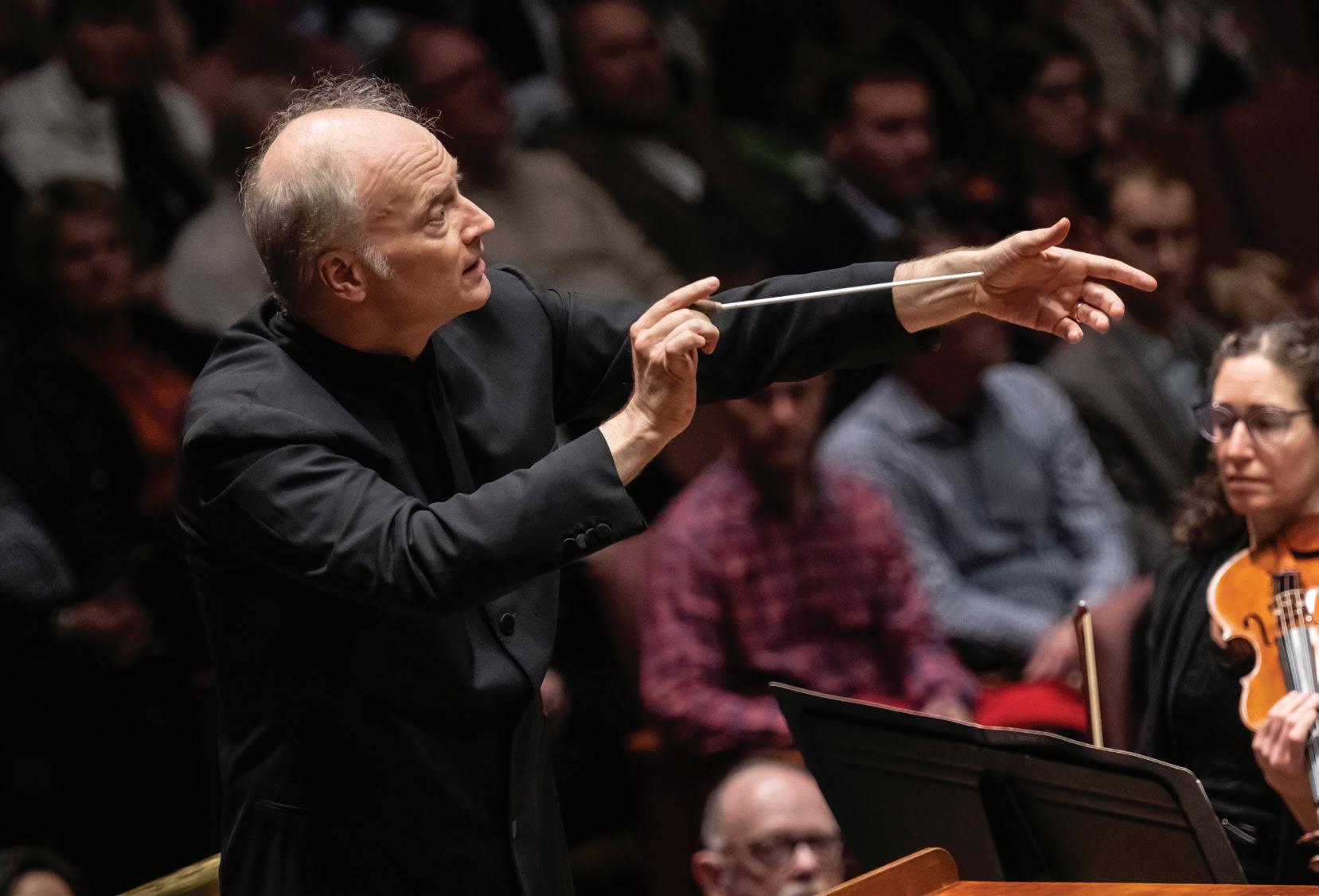
Support your ORCHESTRA
The mission of the National Symphony Orchestra is to engage audiences locally, across the country, and around the world through excellence in performance and education. Each year, the NSO offers approximately 150 concerts as well as some of the country’s most extensive community and educational programming. It regularly participates in events of national and international importance, including performances for state occasions, highlevel government events, and regularly televised holiday appearances for Capitol Concerts and local radio broadcasts on WETA, making the NSO one of the most-heard orchestras in the country.
Give your support in this 95th season by becoming a Member, joining the NSO Circles, or pledging a Legacy Gift. Visit tkc.co/SupportNSO or scan the QR code.

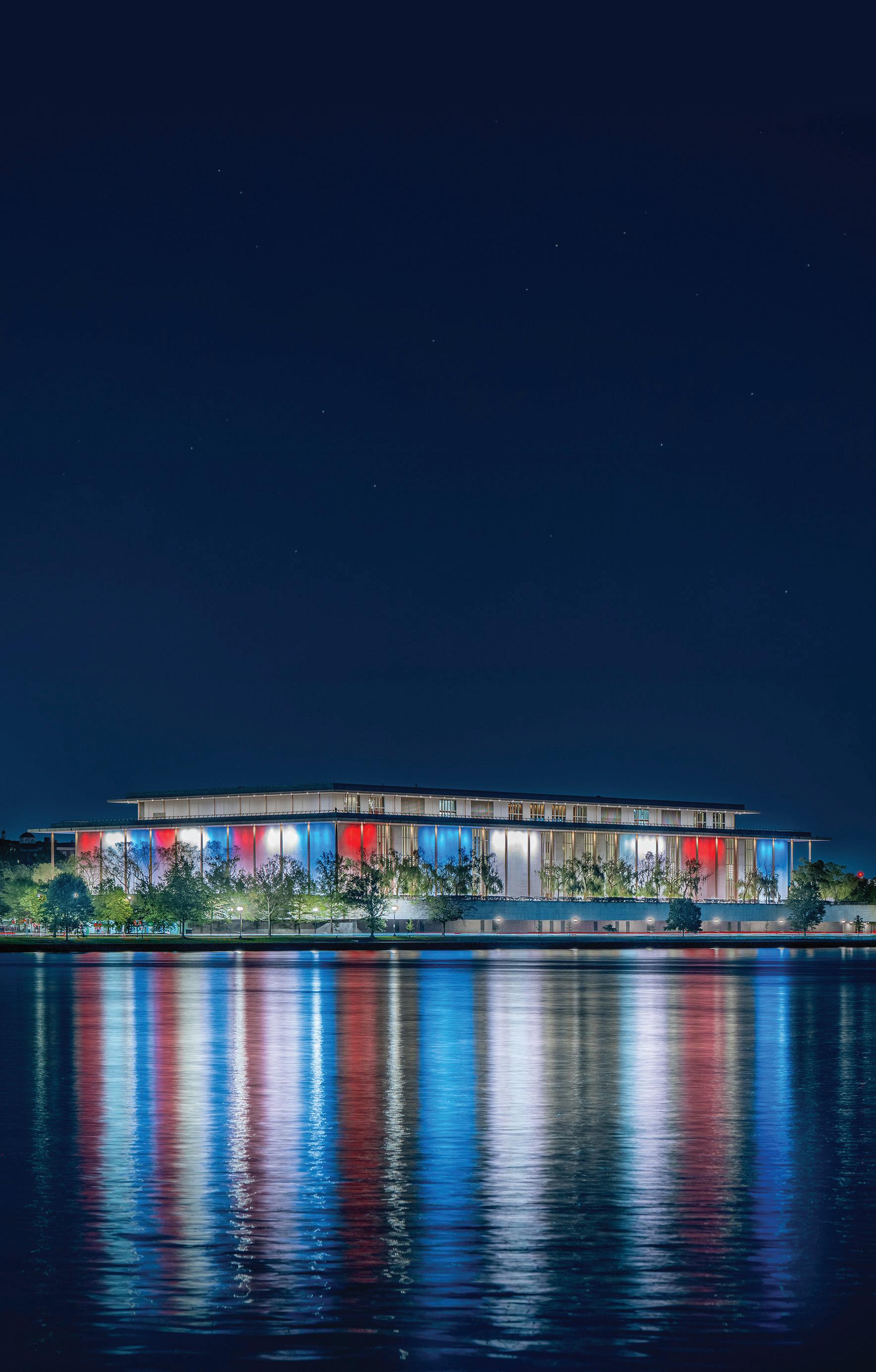
Thank You to Our Supporters
The Trump Kennedy Center Board of Trustees
National Symphony Orchestra Board of Directors
The Trump Kennedy Center President’s Council
The Trump Kennedy Center International Committee on the Arts
President’s Advisory Committee on the Arts
National Committee for the Performing Arts
National Symphony Orchestra National Trustees
The Trump Kennedy Center Circles Board
The Trump Kennedy Center Community Advisory Board
The Trump Kennedy Center Corporate Fund Board
The Trump Kennedy Center 50th Anniversary Committee
Corporate Donors
Individual and Foundation Donors
Endowment Gifts, Bequests, and Legacy Donors
Building the Future Campaign Donors
Visit tkc.co/Support for a full listing of donors and to learn how you can join us by becoming a Member.
Andrew Geraci
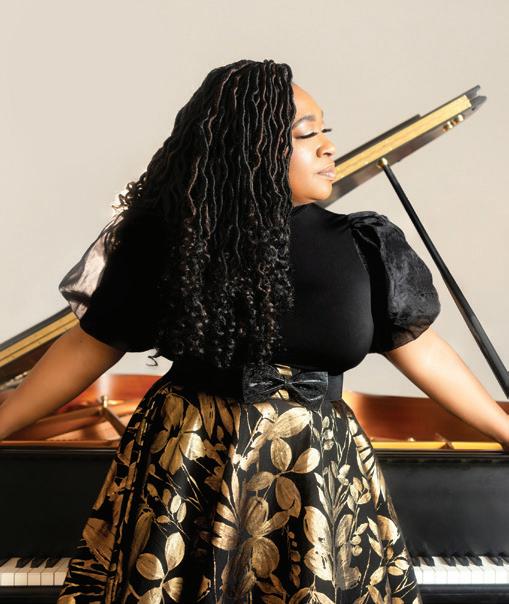
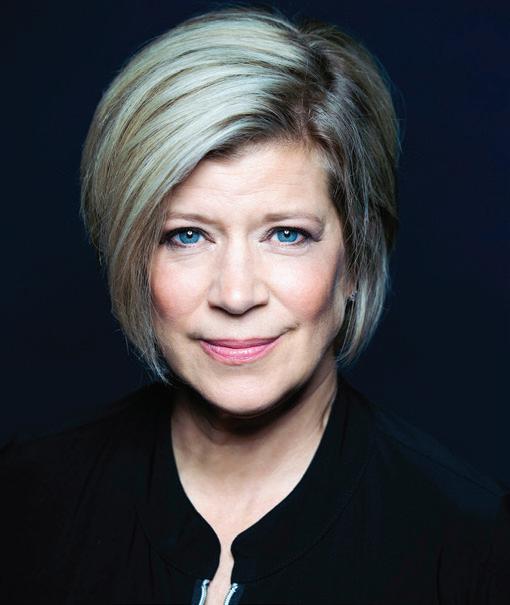
Porgy and Bess & Ravel Piano Concerto
Conductor Kellen Gray frames the evening with works reflecting the breadth of our nation’s story: Dvořák’s American Suite, inspired by his time in the U.S., and the Catfish Row suite from Gershwin’s Porgy and Bess.
June 5 & 6, 2026 at 8 p.m.
An American in Paris & Barber Violin Concerto
Karen Kamensek conducts Schoenberg’s American Symphony, Copland’s Lincoln Portrait, and Barber’s lyrical Violin Concerto featuring Johan Dalene in his NSO debut. The program culminates with Gershwin’s enormously popular An American in Paris—a vibrant, jazz-tinged celebration of city life through the eyes of an American abroad.
June 12 & 13, 2026 at 8 p.m.
2025–2026 CLASSICAL SEASON PERFORMANCE CALENDAR
Kennedy Center Chamber
Players: Spring Concert
Mon., May 31, 2026 at 2 p.m.
*Full orchestra does not perform.
Porgy and Bess & Ravel Piano Concerto
Fri., June 5, 2026 at 8 p.m.
Sat., June 6, 2026 at 8 p.m.
An American in Paris & Barber Violin Concerto
Fri., June 12, 2026 at 8 p.m.
Sat., June 13, 2026 at 8 p.m.
*Please note: The National Symphony Orchestra does not perform in these concerts.
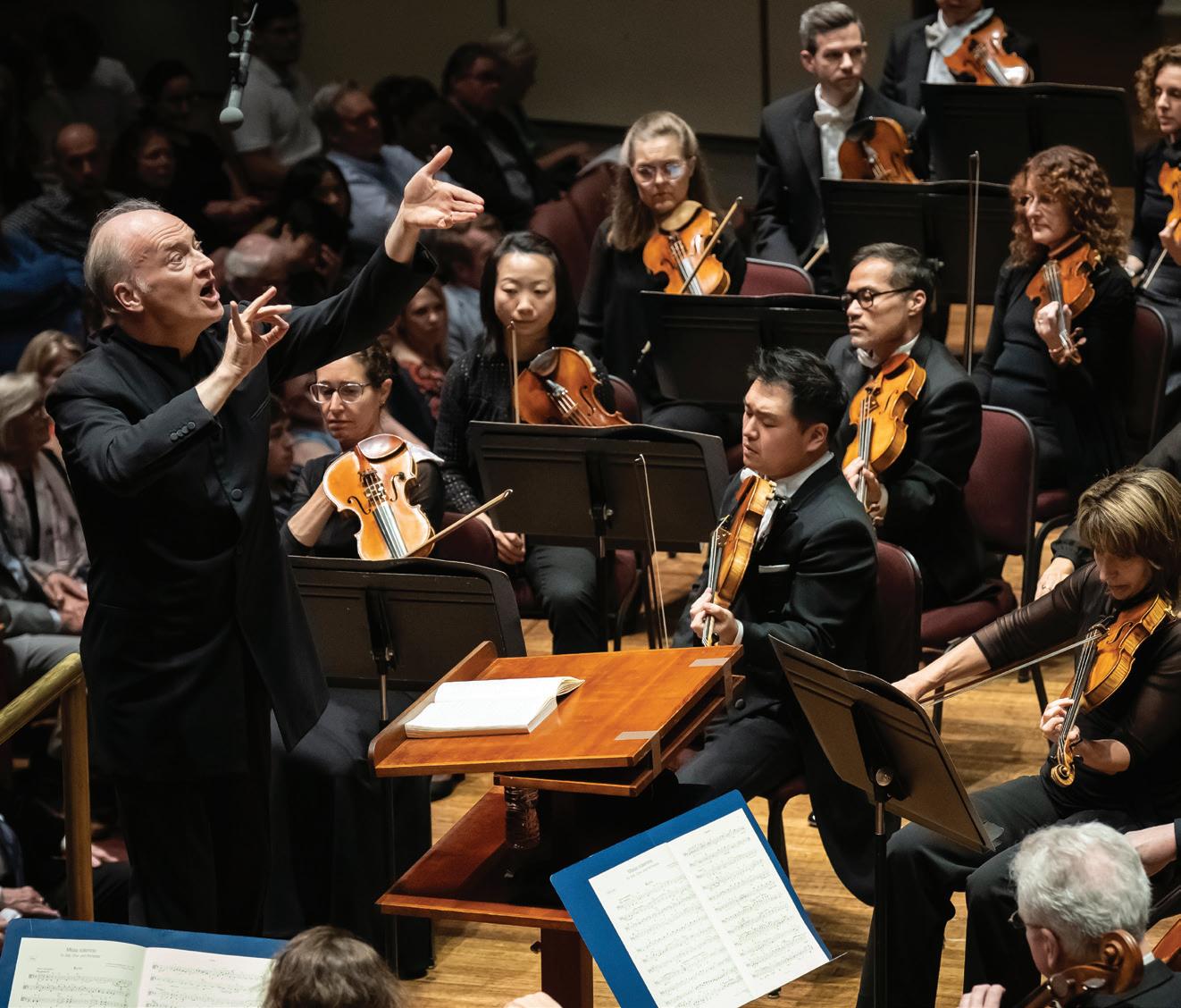

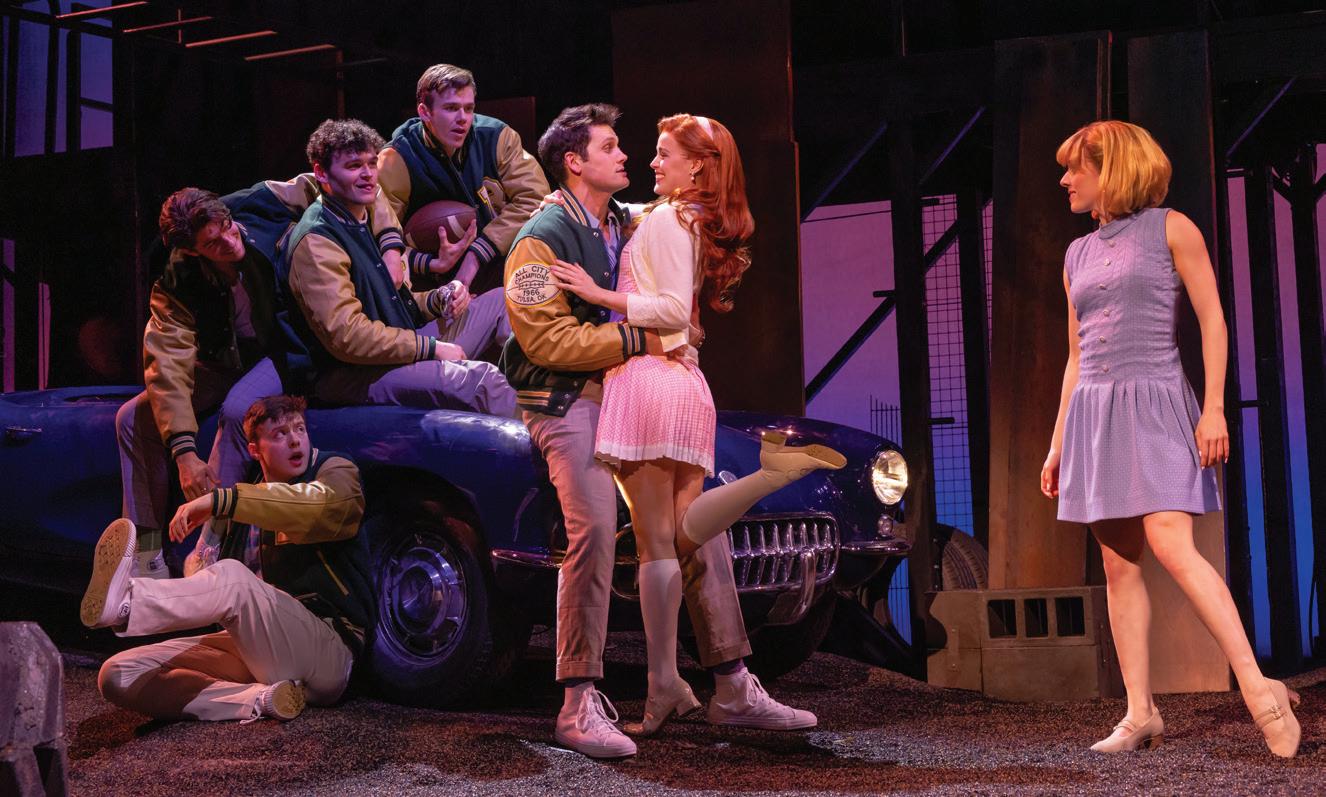
For 250 years, America’s story has been told through the voices of its artists, the rhythm of its music, the words of its writers, and the movement of its dancers. It is a story of resilience and reinvention, of dreams daring enough to redefine what was possible, and of creativity that has not only shaped a nation, but the world.
As the nation marks 250 years since the signing of the Declaration of Independence, the Center invites Americans everywhere to take part in 250 Years of US, a yearlong exploration of who we are, where we’ve been, and where we’re going. Through music, theater, dance, and visual art, 250 Years of US celebrates the boundless imagination of a people united by creativity.



Matthew Murphy

SHARE THE JOY of the ARTS
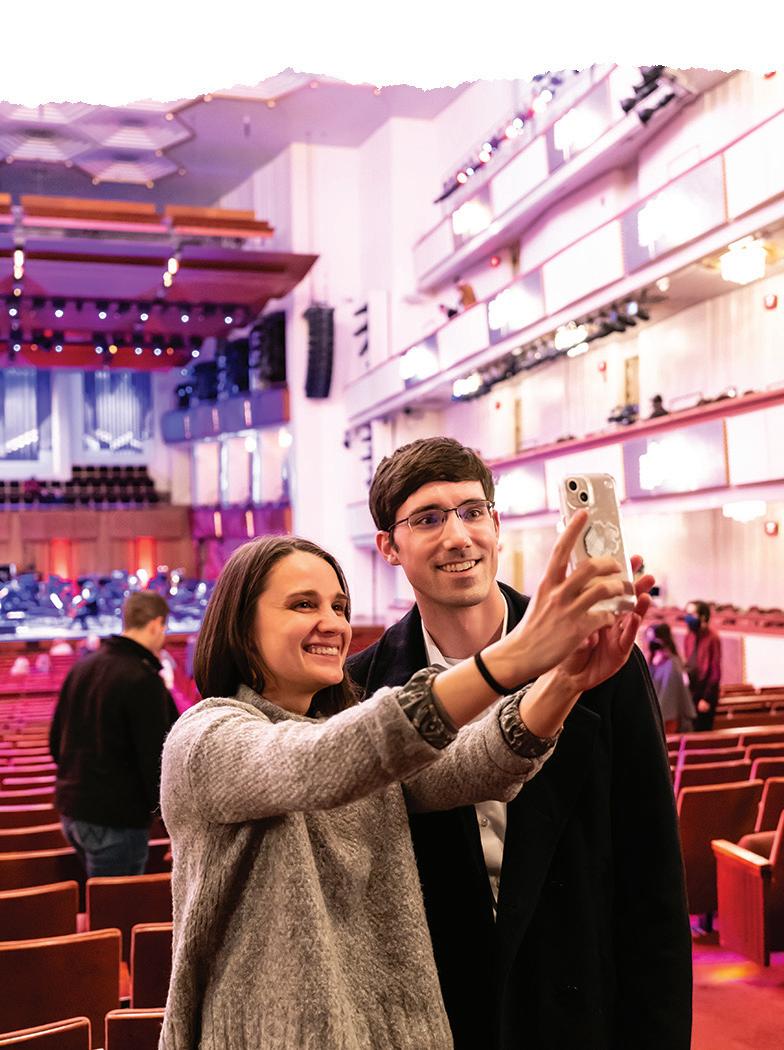
A toast before the show. A meal with a view. A selfie in the foyer. At the Trump Kennedy Center, it’s not just about the performance, it’s the moments you share before and after the curtain rises.
Here, you’ll find joy and awe, surprise and wonder. When you come for a performance, you’ll leave with something more. Because what you feel—and who you feel it with— becomes the memory you both carry.
Take home... a musical memory.
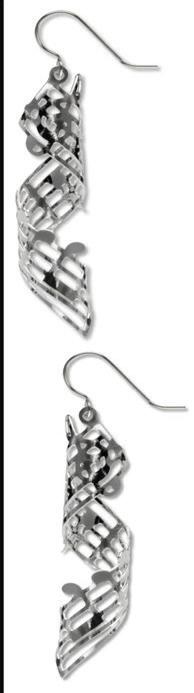
Mozart Magic Flute Earrings
These exquisite earrings bring Mozart’s masterpiece to life with fluteinspired details that create a visual symphony. $42
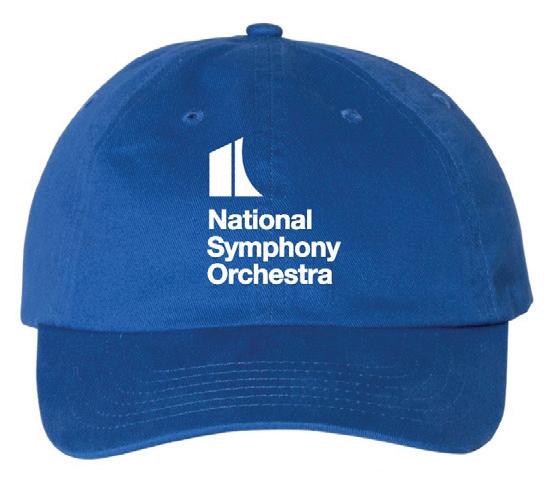
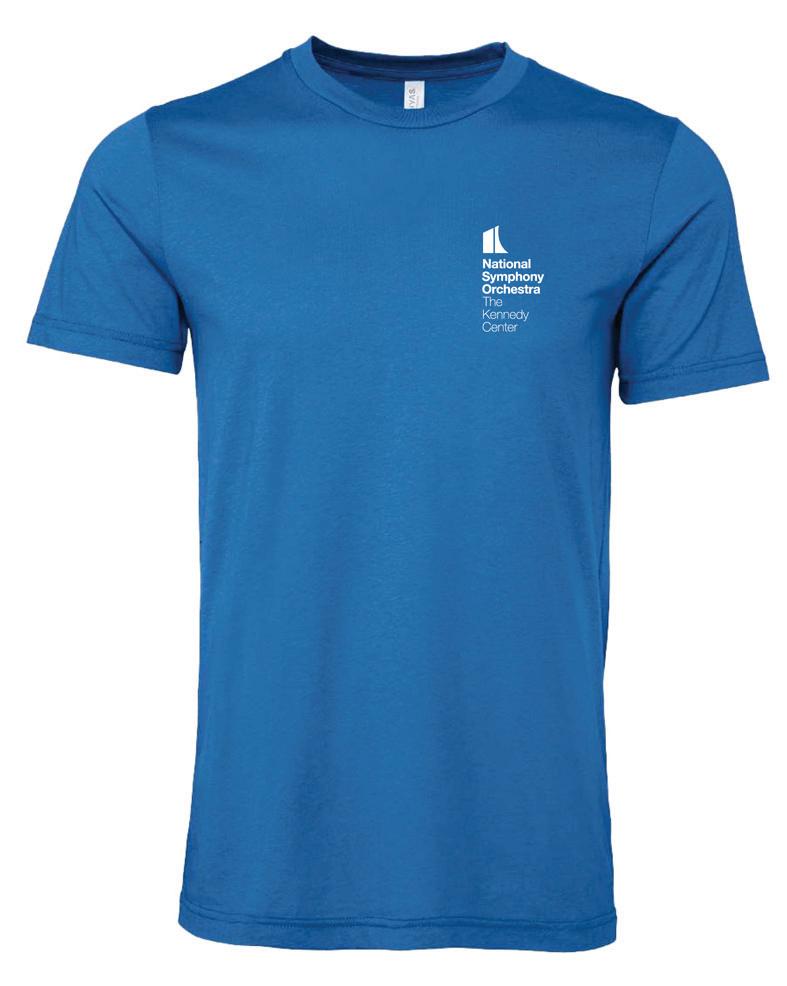
NSO Cap and T-shirt
Our new National Symphony Orchestra cap and tee let you show your pride in our world-class symphony. $30 each
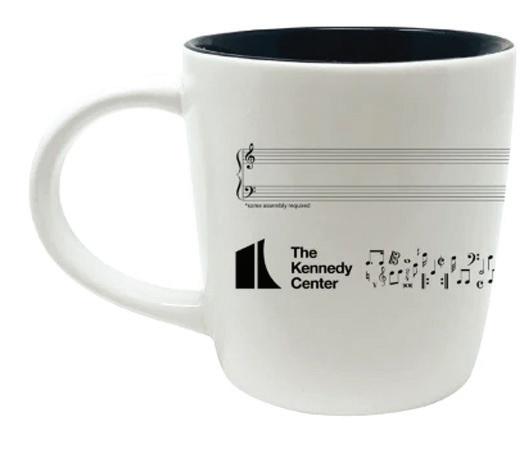
Make Your Own Music Mug
No better way to start your day than with a coffee mug imprinted with blank sheet music and sticker notes so you can compose your own melody. $20
Visit our two gift shops on Level A and in the Hall of States. Shop online 24/7 at tkc.co/shop
CURTAIN UP
Patrons share their first experiences at the Center.
Louisa and Savanah
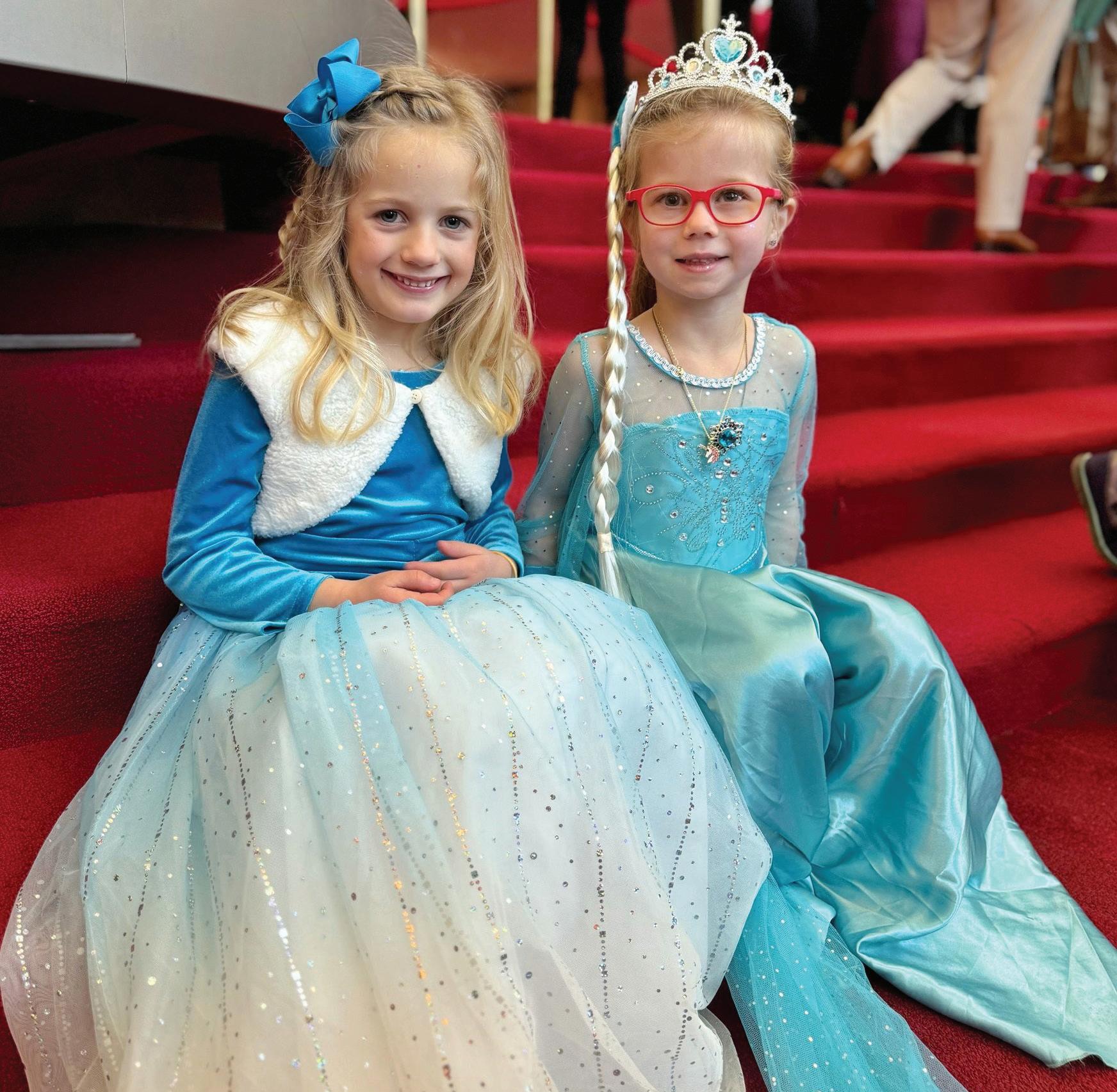
My daughter Louisa went to her first Center performance in January 2024 at age five. It was a mother-daughter date with her friend Eliza and Eliza’s mom Joy. The girls both dressed as Elsa, and it happened to be a snowy day in D.C. The magic of Frozen, along with the wonder created by the atmosphere made for an unforgettable first experience!
Maka
I remember the first time I saw the Center. It was a tapestry of rainbow lights, holding its own in the vast D.C. skyline. I gaped as my mom drove us right up next to it. It was big, but somehow more welcoming than intimidating.
The grand hall led into yet another equally grand one, where I felt as if I were walking the red carpet, with imported
Louisa and friend Eliza, both dressed as Elsa, wait outside the Opera House to see Frozen.
crystal chandeliers far overhead. I thought that this in and of itself was magical, but the real magic was inside the theater. I whipped out my phone to take a picture of the illuminated ceiling, but as soon as the lights dimmed and the show started, I forgot phones existed. My mom and I were there to see & Juliet, and we were blown away by the acting, music, and lights that went into the production. At the end, my face hurt from smiling and my hands hurt from clapping, and it was worth it.
Diann
My family and I came to see The Princess Bride in Concert with the National Symphony Orchestra. Both of our boys play viola, and The Princess Bride is a very loved movie in our family so it was meant to be…
The best thing is, I have a service dog, Eugene, and we were welcomed without issue. The kindness started when I first emailed to see what seating was like to make sure that Eugene would fit under the chair. In the response to my email, I received kindness, dimensions, photos, and was asked to reach out to book my seats if I needed any assistance.
Overall, I was highly impressed with the hospitality of this venue. 10/10 will be attending another event!
Benjamin
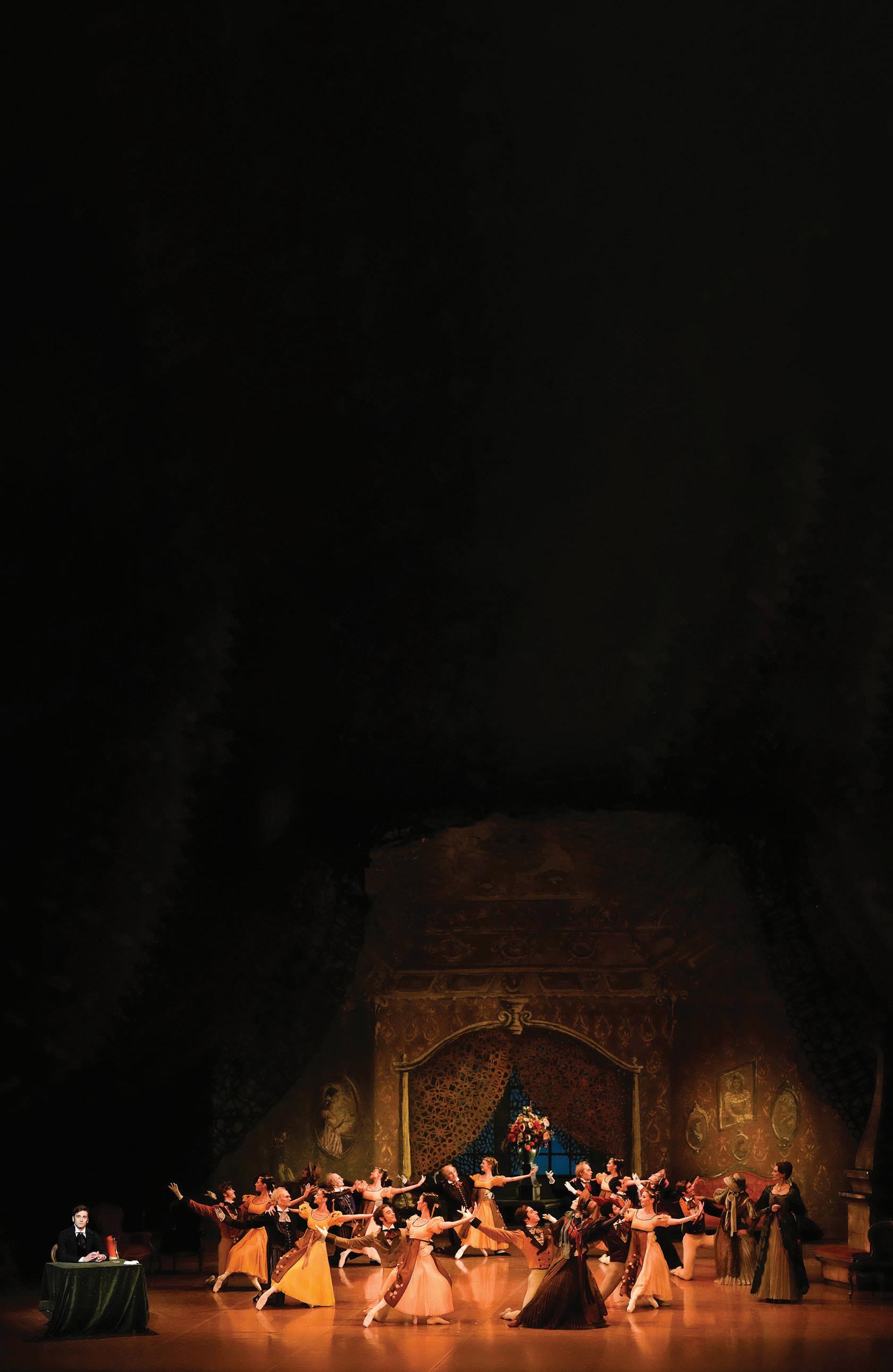
As I watched the curtain rise on the opening night of the Stuttgart Ballet’s performance of Onegin, I felt a great sense of excitement swell within me. The sheer beauty of the dancers, sets, and costumes was almost overwhelming and reminded me that beauty truly is something objective, because that is the best way to describe this ballet: beautiful.
Following the bows, I could not get Onegin out of my head; something about it was so magnetic and hypnotic that I ended up returning twice more to witness the spectacle. Each night I sat in a different location around the Opera House, giving me a unique experience each performance, and each night, I picked up on new details and nuances that I had not been keen enough to see before.
While it would be impossible to name one scene as my favorite, the finale was so gut-wrenching and emotional that I will never forget what true passion looks like.
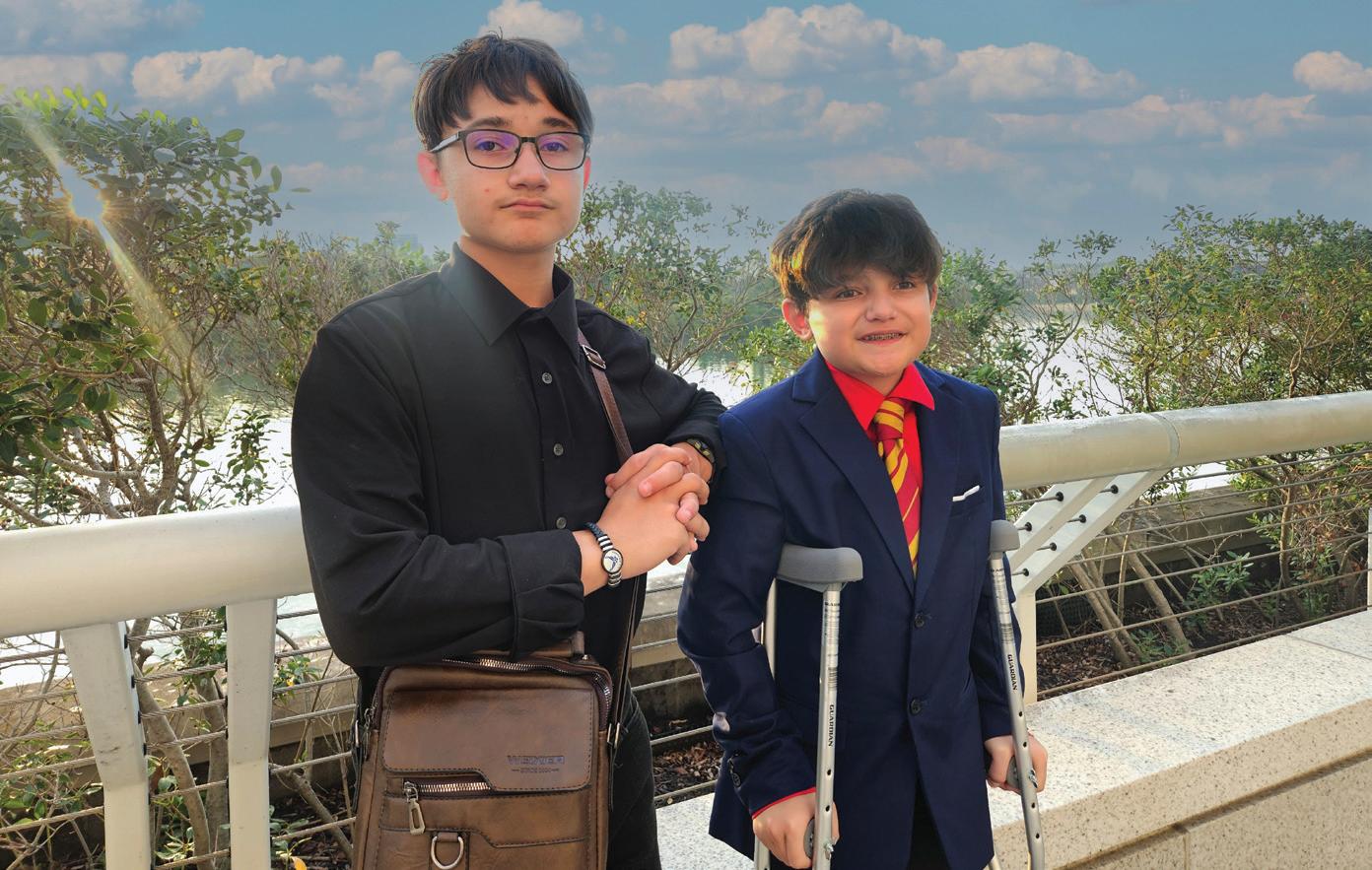
Diann’s children pose by the riverfront before The Princess Bride in Concert.