TKC, NSO An American in Paris & Barber Violin Concerto
The Keys give you a show above and below the surface. From art galleries to museums and live music, no place inspires more freedom of expression. In The Keys, you’re part of the performance.
VisitFloridaKeys.com/arts-culture 1.800.Fla.Keys
THE JOHN F. KENNEDY CENTER FOR THE PERFORMING ARTS
JUNE 12 & 13, 2026 AT 8 P.M. | CONCERT HALL
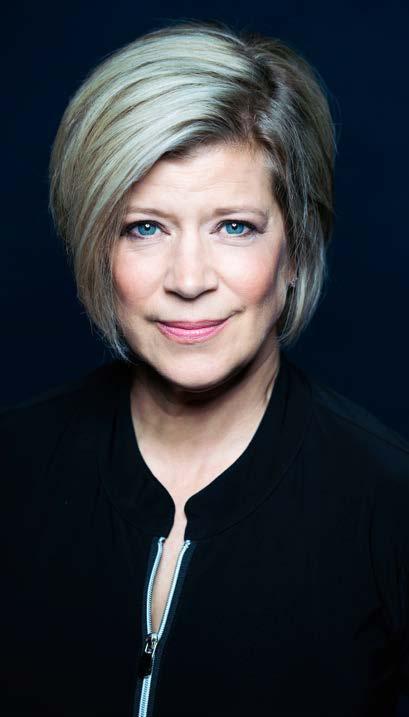
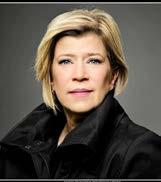
Karen Kamensek, conductor
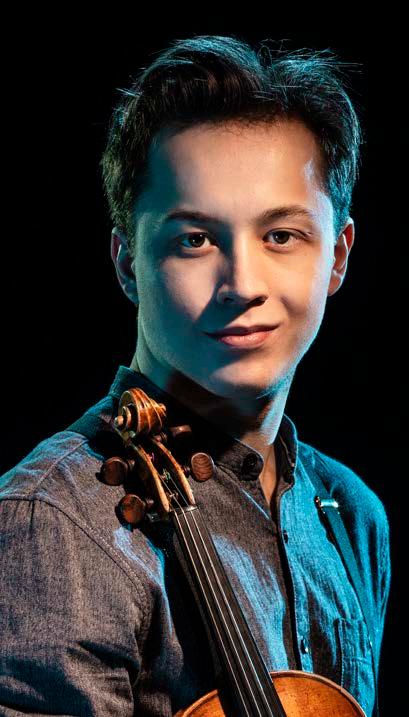
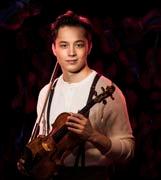
Johan Dalene, violin
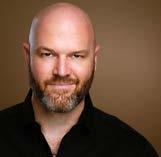
Zachary James, narrator
ADAM SCHOENBERG (1980–)
AARON COPLAND (1900–1990)
American Symphony (2010–2011)
i. Fanfare
ii. White on Blue
iii. Rondo
iv. Prayer
v. Stars, Stripes, and Celebration
Lincoln Portrait (1942) i. Allegramente
ii. Adagio assai
iii. Presto
INTERMISSION
SAMUEL BARBER (1910–1981)
GEORGE GERSHWIN (1898–1937)
Violin Concerto, Op. 14 (1939) i. Allegro molto moderato ii. Andante sostenuto
iii. Presto in moto perpetuo
Johan Dalene, violin
An American in Paris (1928)
THANK YOU TO OUR SEASON SPONSORS
The NSO Music Director Chair is generously endowed by Roger Sant and Congresswoman Doris Matsui Noseda Era Fund Supporters The Amici di Gianandrea
Patrons are requested to turn off cell phones and other electronic devices during the performance. Any video and/or audio recording of this production is strictly prohibited.
From the Music Director
Cari amici,
Cari amici,
It is with immense joy and anticipation that I welcome you to the National Symphony Orchestra’s 95th anniversary season. This moment is more than a milestone—it is a celebration of our deep musical legacy and a renewed commitment to bringing powerful, moving performances to our community and beyond. This is only the beginning. The 95th season is filled with musical discovery, celebrated artists, and unforgettable experiences.
This season features iconic works that have stood the test of time, from classic masterpieces to thrilling contemporary music. The NSO also has the opportunity to share the stage with an exceptional lineup of guest artists and conductors—beloved icons and rising stars alike. Performing new music is something the NSO truly believes in. Make history with us as we present innovative new works, including five world premieres.
It is with immense joy and anticipation that I welcome you to the National Symphony Orchestra’s 95th anniversary season. This moment is more than a milestone—it is a celebration of our deep musical legacy and a renewed commitment to bringing powerful, moving performances to our community and beyond. This is only the beginning. The 95th season is filled with musical discovery, celebrated artists, and unforgettable experiences.
I am deeply grateful to share this journey with you. Your presence in the Concert Hall is what brings our music fully to life. Thank you for being a part of the NSO family—for your passion, your applause, and your unwavering support.
I am deeply grateful to share this journey with you. Your presence in the Concert Hall is what brings our music fully to life. Thank you for being a part of the NSO family—for your passion, your applause, and your unwavering support.
Con tutto il cuore,
Con tutto il cuore,
Gianandrea Noseda Music
Gianandrea Noseda
Director, National Symphony Orchestra
Music Director, National Symphony Orchestra
Che la musica vi porti gioia e ispirazione—may music bring you joy and inspiration.
Che la musica vi porti gioia e ispirazione—may music bring you joy and inspiration.
Notes on the Program
American
Symphony
ADAM SCHOENBERG
Born November 15, 1980, in Northampton, Massachusetts.
Adam Schoenberg, born in 1980 in the western Massachusetts town of Northampton, grew up in a musical environment, improvising and playing piano from age three. Schoenberg received his bachelor’s in music composition from Oberlin Conservatory of Music (2002) and his master’s degree (2005) and doctorate (2010) from the Juilliard School, where he was a C.V. Starr Doctoral Fellow; his teachers included John Corigliano, Robert Beaser, Jeffrey Mumford, Lewis Nielson, and George Tsontakis. Schoenberg has taught at the UCLA Herb Alpert School of Music and lectured at the Juilliard School and Oberlin Conservatory. In 2015, Schoenberg was appointed to the faculty of Occidental College in Los Angeles, where he teaches composition and film scoring.
Schoenberg has received awards and grants from ASCAP, Meet the Composer, the International Brass Chamber Music Festival, the Southern Arts Federation, and the Society for New Music, as well as a Charles Ives Scholarship from the American Academy of Arts and Letters, two Emmy nominations, and two Grammy® nominations—including one for Best Contemporary Classical Composition for Picture Studies.
Schoenberg wrote that his American Symphony, composed in 2010 on a commission from the Kansas City Symphony, “was inspired by the 2008 presidential election, in which both political parties asked the people to embrace change and make a difference. I was both excited and honored about ushering in this new era in our nation’s history. For the first time, I truly understood what it means to be an American.
“While not a patriotic work, the American Symphony reflects a respect and responsibility for the great potential of our nation and a hunger to affect positive change. It is about our collective ability to restore hope within ourselves and our neighbors, both here and around the world.
“Movement I is a fanfare that introduces material which will be explored in the last movement. I wanted to create a succinct, swift, and uplifting prelude that projects the emotions that will be captured at the end of the journey. The final climax of Movement I ends with the strings playing a harmonic cluster that fades into the beginning of Movement II.
“Movement II begins attaca [without pause] and marks the start of the Symphony’s emotional journey by capturing the struggle, pain, and need for change. Approximately halfway through, a chorale is introduced and repeated three times before the movement ends. The chorale is later developed in Movement IV.
“Movement III also begins attaca and is written in rondo form (A–B–A–C–A–D–A). I call this ,‘happy music.’ Influenced by electronica, my goal is to create a strong pulse that resembles club-like beats.
Notes on the Program
“Movement IV, which pays homage to such great American composers as Barber and Gershwin, is an Adagio that acts as a prayer. The chorale heard in Movement II becomes the main compositional material for this entire movement. The movement is dedicated to those lost in 9/11 and Hurricane Katrina, as well as to all victims of violence and war.
“Movement V, the longest one, is in three large sections: “Stars,” “Stripes,” and “Celebration.” The first section, “Stars,” continues to evolve and becomes more rhythmic with added brass chords before winding down. “Stripes” is announced with a strong, driving pulse and a rhythmic motive played by the winds and strings. The form of this section is perceived as A–B–A–B–C. This music bridges to “Celebration,” in which a soaring melody is announced and continues to grow until it fades away into the final episode. The horns and brass lead to the culmination of the musical journey, whose aim is to express further optimism. The Symphony ends suspended in mid-air to remind us that even though we are making positive strides toward being a better America, we are still searching.”
Lincoln Portrait
AARON COPLAND
Born November 14, 1900, in Brooklyn, New York. Died December 2, 1990, in North Tarrytown, New York.
Soon after the United States entered World War II, conductor Andre Kostelanetz asked three American composers to write works that would convey “the magnificent spirit of our country.” He felt that “the greatness of a nation is expressed through its people, and those people who have achieved greatness are the logical subjects for a series of musical portraits. The qualities of courage, dignity, strength, simplicity, and humor which are so characteristic of the American people are well represented in [our leaders].” Following Kostelanetz’s request, Virgil Thomson composed the Mayor LaGuardia Waltzes and Jerome Kern Mark Twain (Portrait for Orchestra). Aaron Copland was the third composer approached by Kostelanetz, and he provided the following information about the composition and nature of his Lincoln Portrait:
“It was in January 1942 that André Kostelanetz commissioned me to write a musical portrait of a great American. My first thought was to do a portrait of Walt Whitman, the patron poet of all American composers, but I was persuaded to change to a statesman. The choice of Lincoln as my subject seemed inevitable. On discussing my choice with Virgil Thomson, he pointed out that no composer could hope to match in musical terms the stature of so eminent a figure as Lincoln—but the sitter himself might speak. With the voice of Lincoln to help me, I was ready to risk the impossible. The letters and speeches of Lincoln supplied the text. It was a comparatively simple matter to choose a few excerpts that seemed particularly apposite to our [wartime] situation. I avoided the temptation to use only well-known passages, permitting myself the luxury of quoting only once from a world-famous speech. The order and arrangement
of the selections are my own. The first sketches were made in February, and the Portrait finished on April 16, 1942. The orchestration was completed a few weeks later.
“I worked with musical materials of my own, with the exception of two songs of the period: the famous Camptown Races and a ballad that was first published in 1840 under the title of The Pesky Sarpent, but is better known today as Springfield Mountain. The tunes are used freely in the manner of the cowboy songs in my ballet Billy the Kid. The composition is roughly divided into three main sections. In the opening section, I wanted to suggest something of the mysterious sense of fatality that surrounds Lincoln’s personality. Also, near the end of that section, something of his greatness and simplicity of spirit. [Springfield Mountain is the thematic basis of this portion.] The quick middle section briefly sketches in the background of the times during which he lived. [Fragments of Stephen Foster’s Camptown Races figure prominently in this passage.] This merges into the concluding section, where my sole purpose was to draw a simple but impressive frame around the words of Lincoln:”
“Fellow citizens, we cannot escape history.”
That is what he said,
That is what Abraham Lincoln said:
“Fellow citizens, we cannot escape history.
We of this Congress and this administration will be remembered in spite of ourselves.
No personal significance or insignificance can spare one or another of us. The fiery trial through which we pass will light us down in honor or dishonor to the latest generation.
We—even we here—hold the power and bear the responsibility.”
He was born in Kentucky, raised in Indiana, and lived in Illinois. And this is what he said:
This is what Abe Lincoln said:
“The dogmas of the quiet past are inadequate to the stormy present. The occasion is piled high with difficulty, and we must rise with the occasion. As our case is new, so we must think anew and act anew. We must disenthrall ourselves and then we shall save our country.”
When standing erect he was six feet four inches tall.
And this is what he said:
He said: “It is the eternal struggle between two principles— right and wrong throughout the world.
It is the same spirit that says: ‘You toil and work and earn bread— and I’ll eat it’ ...
No matter in what shape it comes,
Whether from the mouth of a king who seeks to bestride the people of his own nation and live by the fruit of their labor, or from one race of men as an apology for enslaving another race, it is the same tyrannical principle.”
Notes on the Program
Lincoln was a quiet man.
Abe Lincoln was a quiet and melancholy man. But when he spoke of Democracy
This is what he said:
He said: “As I would not be a slave, so l would not be a master. This expresses my idea of democracy. Whatever differs from this, to the extent of the difference, is no democracy.”
Abraham Lincoln, 16th President of these United States, is everlasting in the memory of his countrymen,
For on the battleground of Gettysburg, this is what he said:
He said: “That from these honored dead we take increased devotion to that cause for which they gave the last full measure of devotion; that we here highly resolve that these dead shall not have died in vain; and that this nation, under God, shall have a new birth of freedom; and that government of the people, by the people, and for the people shall not perish from the earth.”
Violin Concerto, Op. 14 SAMUEL BARBER
Born March 9, 1910, in West Chester, Pennsylvania. Died January 23, 1981, in New York, New York.
In his 1954 study of Samuel Barber, Nathan Broder wrote of the genesis of the Violin Concerto: “In the summer of 1939, after a visit to England and Scotland, Barber settled down in the village of Sils-Maria in Switzerland to work on a violin concerto, which had been commissioned by a wealthy Philadelphia merchant. This progressed slowly, and he set off for Paris, planning to complete the work there during the fall. But he had hardly arrived in Paris when all Americans were warned to leave. He sailed for home, and word reached the ship before they arrived in New York that German troops had invaded Poland.” The work was completed after Barber returned home and premiered on February 7, 1941, by Albert Spalding with the Philadelphia Orchestra conducted by Eugene Ormandy. It has become one of the most frequently performed of all 20th-century concertos.
The Concerto’s opening movement, almost Brahmsian in its nostalgic tunefulness, is built on two lyrical themes. The first one, presented immediately by the soloist, is an extended, arching melody; the other, initiated by the clarinet, is rhythmically animated by the use of the “Scottish snap,” a short-long figure also familiar from jazz idioms. The two themes alternate throughout the remainder of the movement, which follows a broadly drawn, traditional concerto form. The expressive lyricism of the first movement carries into the Adagio. The oboe intones a plangent melody as the main theme, from which the soloist spins a rhapsodic elaboration to serve as the movement’s central section. Moto
perpetuo—“perpetual motion”—Barber marked the finale of this Concerto, and the music more than lives up to its title. After an opening timpani flourish, the soloist introduces a fiery motive above a jabbing rhythmic accompaniment that returns, rondo-like, throughout the movement.
An American in Paris GEORGE GERSHWIN
Born September 26, 1898, in Brooklyn, New York.
Died July 12, 1937, in Hollywood, California.
In 1928, George Gershwin was not only the toast of Broadway, but of all America, Britain, and many spots in Europe, as well: he had produced a string of successful shows (Rosalie and Funny Face were both running on Broadway that spring), composed two of the most popular concert pieces in recent memory (Rhapsody in Blue and the Piano Concerto in F major), and was leading a life that would have made the most glamorous socialite jealous.
The pace-setting Rhapsody in Blue of 1924 had shown a way to bridge the worlds of jazz and serious music, a direction Gershwin followed further in the exuberant yet haunting Piano Concerto in F major the following year. He was eager to move further into the concert world, and during a side trip in March 1926 to Paris from London, where he was preparing the English premiere of Lady Be Good, he hit upon an idea: a “walking theme” he called it, that seemed to capture the impression of an American visitor to the city “as he strolls about, listens to the various street noises, and absorbs the French atmosphere.” He worried that “this melody is so complete in itself, I don’t know where to go next,” but the purchase of four Parisian taxi horns on the Avenue de la Grande Armée inspired a second theme for the piece.
Late in 1927, a commission for a new orchestral composition from Walter Damrosch, music director of the New York Symphony and conductor of the sensational premiere of the Concerto in F major, caused Gershwin to gather up his Parisian sketches, and, by January 1928, he was at work on the score: An American in Paris. When he returned to New York in late June, he discovered that the New York Symphony had announced the premiere for the upcoming season, so he worked on the piece throughout the autumn and finished the orchestration only a month prior, on December 13, 1928. An American in Paris, though met with a mixed critical reception, proved a great success with the public, and it quickly became clear that Gershwin had scored yet another hit.
For the premiere, Deems Taylor collaborated with the composer to produce the following insouciant description of An American in Paris: “You are to imagine an American visiting Paris, swinging down the Champs-Elysées. He starts off to the tune of The First Walking Theme. French taxicabs seem to amuse him particularly, a fact that the orchestra points out in brief episodes introducing four real Paris taxi horns. Our American strolls on through the medium of The Second
Notes on the Program
Walking Theme, which is announced by the clarinet in French with a strong American accent.
“It may be that he continues down the Champs-Elysées, and that when The Third Walking Theme makes its eventual appearance, our American has crossed the Seine and is somewhere on the Left Bank. The end of this section is couched in terms so unmistakably, albeit pleasantly blurred, as to suggest that the American is on a terrasse of a café exploring the mysteries of Anise de Lozo.
“And now the orchestra introduces an unhallowed episode. Suffice it to say that a solo violin approaches our hero (in the soprano register) and addresses him in the most charming broken English. Of course, one hastens to add, it is possible that the whole episode is simply a musical transition. This may well be true, for otherwise it is difficult to believe what ensues: our hero becomes homesick. He has the blues, and if the behavior of the solo trumpet be any criterion, he has them very thoroughly.
“However, nostalgia is not a fatal disease. Just in the nick of time, the compassionate orchestra rushes another theme to the rescue, a noisy, cheerful, self-confident Charleston without a drop of Gallic blood in its veins. Walking Theme Number Two enters soon thereafter, enthusiastically abetted by Number Three. The blues return but mitigated by the Second Walking Theme—a happy reminiscence rather than a homesick yearning—and the orchestra, in a riotous finale, decides to make a night of it. It will be great to get home; but meanwhile, this is Paris!”
Meet the Artists
Karen Kamensek, conductor
Grammy Award®–winning conductor
Karen Kamensek’s expansive artistry and deep commitment to championing composers of the 20th and 21st centuries continue to define her work in both the opera house and on the concert stage. The 2025–2026 season underscores her remarkable versatility as she leads a diverse array of productions and concerts across the globe.
In the operatic realm, Karen Kamensek makes a number of important debuts, including at the Gran Teatre del Liceu in Barcelona, conducting Philip Glass’s Akhnaten in a revival of Phelim McDermott’s acclaimed production; at the Opéra national de Paris to lead the Paris Opera Orchestra with Anthony Roth Costanzo at the Palais Garnier, presenting a program that juxtaposes works by Handel and Glass; and the Opéra Royal de Wallonie-Liège to conduct a double bill that includes the world premiere of Benoît Mernier’s Bartleby, based on Herman Melville’s short story, and Francis Poulenc’s La Voix humaine, directed by Vincent Boussard. She will also return to the Royal Swedish Opera, where she conducts the Swedish premiere of Elena Langer’s Figaro Gets a Divorce.
This season on the concert stage, Kamensek makes her debut with the Netherlands Radio Philharmonic Orchestra and Netherlands Radio Choir, conducting a concert performance of Glass’s Akhnaten at Amsterdam’s Concertgebouw and reaffirming her reputation as one of the foremost interpreters of Glass’s work. She also opens the Calgary Philharmonic Orchestra’s subscription
season and returns later in the year to lead performances of Verdi’s Requiem. Additional engagements this season include concerts with the Cyprus Symphony Orchestra, the Orquesta Sinfónica de Tenerife, the National Symphony Orchestra, and the São Paulo State Symphony Orchestra.
Karen Kamensek is frequently in demand as a guest conductor with many of today’s most prominent opera companies. Her recent opera highlights include performances at the Royal Opera House Covent Garden in Tosca; the Houston Grand Opera in La bohème; the Semperoper Dresden in Bernstein´s Candide; the San Francisco Opera in Poul Rouder´s The Handmaid’s Tale; the Metropolitan Opera in Jake Heggie’s Moby Dick, Akhnaten, and Rigoletto; the English National Opera in Glass’s Akhnaten and Satyagraha; the Welsh National Opera in Heggie’s Dead Man Walking and Bernstein’s Candide; the Lyric Opera of Chicago in Mozart’s Die Zauberflöte; the Royal Swedish Opera in Victoria Borisova-Ollas’ Dracula; the Opéra national du Rhin in the world premiere of Glass’s ballet Alice; and Bernstein’s Wonderful Town with the Norwegian Opera. She has also appeared at the Deutsche Oper Berlin, Oper Frankfurt, Opera Australia (Melbourne), and San Diego Opera, among others.
Kamensek’s recent work as a symphonic conductor has brought her to the podia of such orchestras as the London Philharmonic Orchestra, Los Angeles Philharmonic, Baltimore Symphony Orchestra, Seattle Symphony, Sydney Symphony Orchestra, Royal Liverpool Philharmonic, Deutsches SymphonieOrchester Berlin, Oslo Philharmonic, Royal Stockholm Philharmonic Orchestra, Vancouver Symphony Orchestra, Brussels Philharmonic, Orquesta Filarmónica de Gran Canaria, Orquesta Sinfónica RTVE
Meet the Artists
in Madrid, Colorado Symphony, Norrköping Symphony Orchestra, Opéra Orchestre National Montpellier, Calgary Philharmonic Orchestra, Tiroler Symphonieorchester, and the Orchestra Sinfonica di Milano, among others.
Karen Kamensek served as the Music Director of the Staatsoper Hannover from 2011 to 2016. She has also held positions as First Kapellmeister at the Volksoper Wien (2000–2002), Music Director of Theater Freiburg (2003–2006), Interim Music Director at the Slovenian National Theatre in Maribor (2007–2008), and Associate Music Director at the Staatsoper Hamburg (2008–2011).
Johan Dalene, violin
Winner of the 2019 prestigious Carl Nielsen International Competition, SwedishNorwegian violinist Johan Dalene “is not just a virtuoso like many others, he is a voice. He has a tone, a presence” (Diapason). At the age of 25, he has performed with leading orchestras and in celebrated recital halls both at home and abroad. His ability to “make his Stradivarius sing like a master” (Le Monde), coupled with his refreshingly honest musicality and engagement with musicians and audiences alike has won him countless admirers. In 2022, he was named Gramophone’s Young Artist of the Year.
An advocate for new music, Johan will be showcasing the Thomas Adès Concentric Paths concerto, notably with the NDR Elbphilharmonie Orchestra and Jukka-Pekka Saraste or Netherlands Radio Philharmonic and Andrew Manze. He also plays
Rautavaara’s Serenades, notably with the London Symphony Orchestra and Thomas Adès, as well as the Niels Viggo Bentzon Concerto, with the Copenhagen Philharmonic and Thomas Dausgaard. He previously premiered the concerto written for him by Tebogo Monnakgotla, notably with the Berlin Radio Symphony Orchestra and Giedrė Šlekytė, having given the world premiere with the Royal Stockholm Philharmonic Orchestra and John Storgårds in April 2023.
After residencies with the Royal Philharmonic Orchestra, Royal Liverpool Philharmonic, and Gävle Symphony Orchestra, Johan will be working with various orchestras throughout the season, for debuts with the National Symphony Orchestra, Detroit Symphony Orchestra, and Tampere Philharmonic Orchestra, and returns to the Royal Stockholm Philharmonic Orchestra, BBC National Orchestra of Wales, and Royal Liverpool Philharmonic. Other recent highlights include debut performances with the Minnesota Orchestra and Thomas Søndergård, Leipzig Gewandhaus Orchestra and Sakari Oramo, and San Francisco Symphony and Esa-Pekka Salonen.
Johan is equally passionate about chamber music and will be performing a string of recitals throughout the UK with Jeneba Kanneh-Mason, notably at London’s Wigmore Hall, where he is now a regular guest. He has played at celebrated festivals such as Verbier and Rosendal and in halls like Carnegie Hall.
Recording exclusively for BIS, Johan released his fifth album on the label in October 2024. Entitled Souvenirs, it is a recital disc comprising Tchaikovsky’s Souvenir d’un lieu cher, Ravel’s Tzigane, and a collection of short pieces by Amanda Röntgen-Maier. His previous recording featured the Nielsen and Sibelius concerti, with the Royal Stockholm Philharmonic with John
Storgårds, and garnered Johan his third coveted “Editor’s Choice” from Gramophone Magazine, as well as a prestigious Swedish Grammis Award. Johan began playing the violin at the age of four and made his professional concerto debut three years later. In Summer 2016, he was student-in-residence at Switzerland’s Verbier Festival (where he made his performance debut in 2021) and, in 2018, was accepted to the Norwegian Crescendo program, where he worked closely with mentors Janine Jansen, Leif Ove Andsnes, and Gidon Kremer. Andsnes subsequently invited Johan to play at the Rosendal Chamber Music Festival, and they performed together again in May 2019 at the Bergen International Festival. In 2019, he joined Janine Jansen and other members of the Crescendo program for a performance at the Wigmore Hall in London and at the International Chamber Music Festival in Utrecht.
Johan has been awarded various scholarships and prizes, notably from the Royal Swedish Academy of Music, the Anders Wall Giresta Scholarship, Queen Ingrid’s Honorary Scholarship, the Håkan Mogren Foundation Prize, the Equinor Classical Music Award, the Norwegian Soloist Prize, Sixten Gemzéus Stora Musikstipendium, the Expressen Cultural Prize Spelmannen, and the Rolf Wirténs Kulturpris. Johan plays the 1725 ‘Duke of Cambridge’ Stradivarius, generously on loan from the Anders Sveaas’ Charitable Foundation.
James, narrator
Opera Recording. He was named the BroadwayWorld Vocalist of the Decade 2010-2020, Classical Post’s Most Innovative Artist, Verismo Magazine’s Breakout Artist of the Year, and one of Opera Wire’s 30 Most Influential LGBTQ+ Artists.
He starred as Hades in the original West End cast of Hadestown in London and as Frollo in The Hunchback of Notre Dame in the West End. He created the role of Lurch in The Addams Family on Broadway, was in the original Broadway cast of the Tony Award–winning South Pacific at Lincoln Center, made his Broadway debut in the play Coram Boy, and played Caiaphas in Jesus Christ Superstar at the Hollywood Bowl.
Zachary James— Broadway, West End, film and TV actor, and opera singer—is a 2022 Grammy Award® winner for Best
Off-Broadway credits include creating the role of Karl in the world premiere of Jen Silverman’s play Spain at Second Stage, Pasquale in The Most Happy Fella, and Jo-Jo in Irma la Douce, both with Encores at New York City Center. On screen, James has appeared in Succession, Law & Order: Organized Crime, The Blacklist, Saturday Night Live, 30 Rock, Murphy Brown, Holmes: The Myth of Whitechapel, The Tony Awards live from Radio City Music Hall, PBS Great Performances, Live from Lincoln Center, The Late Show with David Letterman, and The Macy’s Thanksgiving Day Parade, as well as in the films Repercussions, Dangerous Wine Club, Girly Pop, Midway Therapy, and more. He has been deemed “a true stage animal” (Opera News) known for his “tremendous power and presence” (The Arts Desk, London) and “intrinsically beautiful, cavernous bass” with “oomph and range” (Opera News). He created the roles of Abraham Lincoln in the world premiere of Philip Glass’s opera The Perfect American at the Teatro Real in Madrid, London’s English National Opera, and Australia’s Opera Queensland; Oberon in the world premiere of Il Sogno at the Teatro
Zachary
Meet the Artists
Citta della Pieve in Umbria; Lucius in the world premiere of Edward Tulane at Minnesota Opera, the role of Terry in the world premiere of Breaking The Waves at Opera Philadelphia and Amenhotep in the Olivier and Grammy Award®–winning production of Philip Glass’s Akhnaten shown in cinemas worldwide.
James’ visual album, Call Out, received accolades at dozens of film festivals worldwide, was commended by London’s Classical Music Digital Awards and praised as “the direction that opera needs to go” (Opera Box Score), and “jaw-dropping” (Parterre Box), and “a brilliantly executed mashup that’s exciting and intelligent...all worth watching.” (Opera Wire). His solo show, On Broadway, has played venues around the United States, was filmed for Des Moines Metro Opera, and was released as an album available on all streaming platforms. Concert engagements include performances with the Boston Symphony Orchestra, Orchestra of Saint Lukes, Los Angeles Philharmonic, Philadelphia Orchestra, NHK Symphony Orchestra Tokyo, New York Philharmonic, Netherlands Radio Filharmonisch Orkest, NYC Ballet, American Symphony Orchestra, Symphony of the Mountains, MasterVoices NYC, and Knoxville Symphony Orchestra.
He has performed in cabaret clubs around the world, including Birdland, Don’t Tell Mama, Medicine Show, Joe’s Pub, Gorilla Tango, Noce Jazz Club, Crazy Coqs, and many more. He is a winner of the Kurt Weill Foundation’s Lotte Lenya Competition and a graduate of the Ithaca College musical theatre program.
National Symphony Orchestra
The 2025–2026 season is the National Symphony Orchestra’s 95th and Music Director Gianandrea Noseda’s ninth
season. Gianandrea Noseda serves as the orchestra’s seventh music director, joining the NSO’s legacy of distinguished leaders: Christoph Eschenbach, Leonard Slatkin, Mstislav Rostropovich, Antal Doráti, Howard Mitchell, and Hans Kindler. Its artistic leadership also includes Principal Conductor and Artistic Advisor Steven Reineke.
Since its founding in 1931, the NSO has been committed to performances that enrich the lives of its audience and community members. In 1986, the National Symphony became an artistic affiliate of the John F. Kennedy Center for the Performing Arts, where it has performed since the Center opened in 1971. The 96-member NSO participates in events of national and international importance, including the annual nationally televised concerts on the lawn of the U.S. Capitol, livestreamed performances on medici.tv, and local radio broadcasts on WETA Classical 90.9 FM.
Since launching its eponymous recording label in 2020, the NSO has embarked on ambitious recording projects, including its first complete Beethoven Symphony cycle and the release of the first-ever cycle of George Walker’s Sinfonias, both led by Noseda. Recent projects include Four Symphonic Works by Kennedy Center Composerin-Residence Carlos Simon conducted by Noseda, and William Shatner’s So Fragile, So Blue, recorded live in the Concert Hall with the NSO under Steven Reineke. Forthcoming releases with Gianandrea Noseda include music by Gustav Mahler and William Grant Still, as well as Samuel Barber’s opera Vanessa.
The NSO’s community engagement and education projects are nationally recognized, and career development opportunities for young musicians include the NSO Youth Fellowship Program and its acclaimed, tuition-free Summer Music Institute.
Symphony
Loud and Clear
Terms to know in the Concert Hall, loosely defined.
An extended work with multiple sections—typically four movements.
A “symphonic” piece is a long piece with multiple interpretations of a musical idea. A repeated, transformed musical idea is called a theme.
Orchestra
A group of musicians who play together.
In the Western European tradition, an orchestra often includes the four major instrument families—brass, woodwinds, strings, and percussion. An especially large orchestra is called a symphony orchestra. A smaller orchestra is called a chamber orchestra
Movement
A section of a musical work. Movements are often separated by silences, and they typically differ in tempo—speed.
Opera
A musical play with singers who perform a staged version of the dramatic text—the libretto.
Sonata
Originally, a musical composition played on instruments. In modern usage, “sonata” can mean a piece for a soloist or an ensemble, often with two to four movements.
If a work or a movement is written in sonata form, it is structured in three sections: exposition, development, and recapitulation.
Concerto
A piece pairing a technically advanced soloist with the support of an orchestra, usually in three movements. Though there may be multiple soloists, the contrast between a larger ensemble and a soloing group defines a concerto.
Tone poem
An orchestral piece meant to convey a non-musical subject such as an art piece, landscape, story, or mood.
Suite:
Multiple pieces intended to be performed together. Suites may take from larger works such as an opera or a ballet.
Counterpoint
The interaction of multiple melodies to create a larger musical product.
Tempo Markings
Adagio - slow, at ease
Andante - moderately slow, walking pace
Moderato - moderate
Allegretto - slightly slower than allegro
Allegro - fast, bright
Vivace - fast, lively
Presto - very fast
Additional Markings
Non tanto - not as much
Ma non troppo - but not too much
Molto - very
Assai - very
Con delicatezza - with delicacy
Cantabile - in a singing style
Sostenuto - sustained
Scherzo - a fast, playful section
National Symphony Orchestra
GIANANDREA NOSEDA , MUSIC DIRECTOR
The Roger Sant and Congresswoman Doris Matsui Chair
STEVEN REINEKE , PRINCIPAL CONDUCTOR AND ARTISTIC ADVISOR
VIOLINS
Nurit Bar-Josef, Concertmaster
Ying Fu, Associate Concertmaster, The Jeanne Weaver Ruesch Chair
Ricardo Cyncynates, Assistant Concertmaster
Xiaoxuan Shi, Second Assistant Concertmaster
Jane Bowyer Stewart
Heather LeDoux Green
Lisa-Beth Lambert
Jing Qiao
Marina Aikawa
Peiming Lin
Derek Powell
Regino Madrid**
Meredith Riley**
Susan Midkiff**
Marissa Regni, Principal
Dayna Hepler, Assistant Principal
Cynthia R. Finks
Deanna Lee Bien
Glenn Donnellan
Natasha Bogachek
Carole Tafoya Evans
Jae-Yeon Kim
Wanzhen Li
Hanna Lee
Benjamin Scott
Malorie Blake Shin
Angelia Cho
Kei Sugiyama**
VIOLAS
Daniel Foster, Principal, The Mrs. John Dimick Chair
Dana Kelley, Assistant Principal
Nancy Thomas
Jennifer Mondie
Tsuna Sakamoto
Ruth Wicker
Mahoko Eguchi
Abigail Evans Kreuzer
Rebecca Epperson
Jacob Shack
Johanna Nowik
Chiara Dieguez**
CELLOS
David Hardy, Principal, The Hans Kindler Chair, The Strong Family and the Hattie M. Strong Foundation
Raymond Tsai, Assistant Principal
David Teie
Rachel Young
Mark Evans
Eugena Chang Riley
Loewi Lin
Britton Riley
Noah Krauss
BASSES
Robert Oppelt, Principal
Richard Barber, Assistant Principal
Jeffrey Weisner
Ira Gold
Paul DeNola
Charles Nilles
Alexander Jacobsen
Michael Marks
HARP
Adriana Horne, Principal
FLUTES
Aaron Goldman, Principal
Leah Arsenault Barrick, Assistant Principal
Matthew Ross
Carole Bean, Piccolo
OBOES
Nicholas Stovall, Principal, The Volunteer Council Chair
Jamie Roberts, Assistant Principal
Harrison Linsey***
Kathryn Meany Wilson***, English Horn
CLARINETS
Lin Ma, Principal
Eugene Mondie, Assistant Principal
Paul Cigan
Peter Cain, Bass Clarinet
BASSOONS
Sue Heineman, Principal
David Young, Assistant Principal
Steven Wilson
Sean Gordon, Contrabassoon
HORNS
Abel Pereira, Principal, The National Trustees’ Chair
James Nickel, Acting Associate Principal
Markus Osterlund***
Scott Fearing
Robert Rearden
Geoffrey Pilkington**
TRUMPETS
William Gerlach, Principal, The Howard Mitchell Chair, The Strong Family and the Hattie M. Strong Foundation
Michael Harper, Assistant Principal
Michail Thompson
Tom Cupples
TROMBONES
Craig Mulcahy, Principal
Evan Williams, Assistant Principal
David Murray
Matthew Guilford, Bass Trombone
TUBA
Seth Cook**, Acting Principal
TIMPANI
Jauvon Gilliam, Principal, The Marion E. Glover Chair
Scott Christian, Assistant Principal
PERCUSSION
Eric Shin, Principal, The Hechinger Foundation Chair
Erin Dowrey, Assistant Principal
Scott Christian
Jason Niehoff*
KEYBOARD
Lisa Emenheiser*
ORGAN
William Neil*
LIBRARIANS
Elizabeth Cusato Schnobrick, Principal
Zen Stokdyk, Associate
Karen Lee, Assistant
PERSONNEL
Karyn Garvin, Director
Brooke Bartolome, Manager
Sufyan Naaman**, Coordinator
STAGE MANAGERS
David Langrell, Manager
N. Christian Bottorff, Assistant Manager
The National Symphony Orchestra uses a system of revolving strings. In each string section, untitled members are listed in order of length of service.
*Regularly Engaged Extra Musician
** Temporary Position
***Leave of Absence
National Symphony Orchestra Staff
EXECUTIVE TEAM
Nigel Boon, Vice President, Artistic Planning & Interim Co-Executive Director
John Roloff, Vice President, Operations & Interim Co-Executive Director
Kasama Apfelbaum, Vice President, Financial Planning & Analysis
Sabryn McDonald, Executive Assistant
ARTISTIC PLANNING
Justin Ellis, Senior Producing Director & Vice President, Programming
Ana Vashakmadze, Artistic Administrator
DEVELOPMENT
Laney Pleasanton, Manager of Individual Giving
Pamela Wardell, Vice President of Development
EDUCATION
Vanessa Thomas, Director of Education Activation & Engagements
FINANCE AND ADMINISTRATION
Eric Rubio, Director of Finance & Administration
HUMAN RESOURCES
Tony Amato, Director, Total Rewards
Chanel Kemp, Talent Acquisition Manager
Patrice McNeill, Director, HR Operations
Lisa Motti, HRIS Coordinator
Ericka Parham, Benefits Analyst
John Sanford, Senior Business Partner
MARKETING & ADVERTISING
Michael Granados, Marketing Manager, NSO, Fortas & New Music
Ada Morrison, Director, Marketing & Sales Analytics
Derek Younger, Director, Sales & Ticketing Service
ORCHESTRA OPERATIONS & CONCERT PRODUCTION
Brooke Bartolome, Orchestra Personnel and Operations Manager
Joseph Benitez, Media & OPAS Support Coordinator
N. Christian Bottorff, Assistant Stage Manager
Cayley Carroll, Director, Production & Orchestra Operations
Karyn Garvin, Director of Orchestra Personnel
David Langrell, Stage Manager
Sufyan Naaman, Operations and Auditions Coordinator
Ava Yap, Operations Assistant
PUBLIC RELATIONS
PJ Elliott, Director of Public Relations
Kennedy Center Staff
Kennedy Center Staff
Kennedy Center Staff
Kennedy Center Staff
Kennedy Center Staff
Kennedy Center Staff
KENNEDY CENTER EXECUTIVE LEADERSHIP
KENNEDY CENTER EXECUTIVE LEADERSHIP
KENNEDY CENTER EXECUTIVE LEADERSHIP
KENNEDY CENTER EXECUTIVE LEADERSHIP
KENNEDY CENTER EXECUTIVE LEADERSHIP
KENNEDY CENTER EXECUTIVE LEADERSHIP
President, John F. Kennedy Center for the Performing Arts
President, John F. Kennedy Center for the Performing Arts
President, John F. Kennedy Center for the Performing Arts
President, John F. Kennedy Center for the Performing Arts
President, John F. Kennedy Center for the Performing
Chief
Ambassador Richard Grenell
Ambassador Richard Grenell
Chief Financial Officer
Ambassador Richard Grenell Chief Financial Officer
Chief
Ambassador Richard Grenell Chief Financial Officer
Donna Arduin
Donna Arduin
General Counsel
Ambassador Richard Grenell Chief Financial Officer
General Counsel
General
General Counsel
General Counsel
Donna Arduin
Donna Arduin
Berke
Donna Arduin General Counsel
Berke
Berke
Berke
Berke
Senior Vice President, Development
Senior Vice President, Development
Senior Vice President, Development
Senior Vice President, Development
Senior Vice President, Development
Vice
Dale
Dale
Senior Vice President, Marketing
Senior Vice President, Marketing
Osborne
Osborne
Senior Vice President,
Senior Vice President, Marketing
Senior
Senior Vice President, Marketing
Osborne
Osborne
Senior Vice President, Special
Senior Vice President, Special
Senior Vice President, Special
Senior Vice President, Special Events
Vice
Senior Vice President, Special Events
Donlon
Donlon
Vice President,
Vice President,
Vice President, Human
Vice President, Human
Vice President, Human Ta’Sha Bowens
Senior
Vice President, Operations
Vice President, Operations
Vice President,
Vice President, Operations
Vice President, Operations
Vice
Vice President,
Vice President,
Vice President, Education
Vice President, Education
Vice President,
Chief
Vice
Vice President, Public
Vice President, Public Relations
Vice President, Public Relations
Vice President, Public Relations
Chief
Chief Information Officer
Chief
Chief Information Officer
Executive Director,
Executive Director, National Symphony
Executive Director,
Executive Director, National
Executive Director, National Symphony
General Director, Washington National
General
General Director, Washington
General Director, Washington
Concert Hall Staff
Concert Hall Staff
Concert Hall Staff
Concert Hall Staff
Concert Hall Staff
Concert Hall Staff
Theater Manager
Theater Manager Allen V. McCallum Jr.
Theater Manager
Theater Manager Allen V. McCallum Jr.
Allen V. McCallum Jr.
Theater Manager Allen V. McCallum Jr.
Box Office Treasurer
Box Office Treasurer
Deborah Glover
Box Office Treasurer Deborah Glover
Deborah Glover
Box Office Treasurer Deborah Glover
Box Office Treasurer
Box Office Treasurer Deborah Glover
Head Usher
Head Usher
Head Usher Cathy Crocker
Head Usher
Stage Crew
Cathy Crocker
Head Usher Cathy Crocker
Cathy Crocker
Head Usher Cathy Crocker
Stage Crew
Stage Crew
Stage Crew Zach Boutilier, Michael Buchman, Paul Johannes, April King, John Ottaviano, and Arielle Qorb
Zach Boutilier, Michael Buchman, Paul Johannes, April King, John Ottaviano, and Arielle Qorb
Zach Boutilier, Michael Buchman, Paul Johannes, April King, John Ottaviano, and Arielle Qorb
Zach Boutilier, Michael Buchman, Paul Johannes, April King, John Ottaviano, and Arielle Qorb
Stage Crew Zach Boutilier, Michael Buchman, Paul Johannes, April King, John Ottaviano, and Arielle Qorb
Zach Boutilier, Chandler Bryant, Michael Buchman, Paul Johannes, April King, John Ottaviano
*Represented by ATPAM, the Association of Theatrical Press Agents and Managers.
*Represented by ATPAM, the Association of Theatrical Press Agents and Managers.
*Represented by ATPAM, the Association of Theatrical Press Agents and Managers.
*Represented by ATPAM, the Association of Theatrical Press Agents and Managers.
*Represented by ATPAM, the Association of Theatrical Press Agents and Managers.
*Represented by ATPAM, the Association of Theatrical Press Agents and Managers.
Steinway Piano Gallery is the exclusive area representative of Steinway & Sons and Boston pianos, the official pianos of the Kennedy Center.
Steinway Piano Gallery is the exclusive area representative of Steinway & Sons and Boston pianos, the official pianos of the Kennedy Center.
Steinway Piano Gallery is the exclusive area representative of Steinway & Sons and Boston pianos, the official pianos of the Kennedy Center.
Steinway Piano Gallery is the exclusive area representative of Steinway & Sons and Boston pianos, the official pianos of the Kennedy Center.
Steinway Piano Gallery is the exclusive area representative of Steinway & Sons and Boston pianos, the official pianos the Kennedy Center.
Steinway Gallery is the exclusive area representative of Steinway & Sons and Boston pianos, the official pianos of the Kennedy Center.
The box office at the Kennedy Center is represented by I.A.T.S.E, Local #868.
The box office at the Kennedy Center is represented by I.A.T.S.E, Local #868.
The box office at the Kennedy Center is represented by I.A.T.S.E, Local #868.
The box office at the Kennedy Center is represented by I.A.T.S.E, Local #868.
The box office at the Kennedy Center is represented by I.A.T.S.E, Local #868.
The box office at the Kennedy Center is represented by I.A.T.S.E, Local #868.
The technicians at the Kennedy Center are represented by Local #22, Local #772, and Local #798 I.A.T.S.E.
The technicians at the Kennedy Center are represented by Local #22, Local #772, and Local #798 I.A.T.S.E.
The technicians at the Kennedy Center are represented by Local #22, Local #772, and Local #798 I.A.T.S.E.
The technicians at the Kennedy Center are represented by Local #22, Local #772, and Local #798 I.A.T.S.E.
The technicians at the Kennedy Center are represented by Local #22, Local #772, and Local #798 I.A.T.S.E.
The technicians at the Kennedy Center are represented by Local #22, Local #772, and Local #798 I.A.T.S.E.
AFL-CIO-CLC, the professional union of theatrical technicians.
AFL-CIO-CLC, the professional union of theatrical technicians.
AFL-CIO-CLC, the professional union of theatrical technicians.
AFL-CIO-CLC, the professional union of theatrical technicians.
AFL-CIO-CLC, the professional union of theatrical technicians.
AFL-CIO-CLC, the professional union of theatrical technicians.
The American Guild of Musical Artists, the union of professional singers, dancers and production personnel in opera, ballet and concert, affiliated with the AFL-CIO, represents the Artists and Staging Staff for the purposes of collective bargaining.
The American Guild of Musical Artists, the union of professional singers, dancers and production personnel in opera, ballet and concert, affiliated with the AFL-CIO, represents the Artists and Staging Staff for the purposes of collective bargaining.
The American Guild of Musical Artists, the union of professional singers, dancers and production personnel in opera, ballet and concert, affiliated with the AFL-CIO, represents the Artists and Staging Staff for the purposes of collective bargaining.
The American Guild Musical Artists, the union of professional singers, dancers and production personnel in opera, ballet and concert, affiliated with the AFL-CIO, represents the Artists and Staging Staff for the purposes of collective bargaining.
The American Guild of Musical Artists, the union of professional singers, dancers and production personnel in opera, ballet and concert, affiliated with the AFL-CIO, represents the Artists and Staging Staff for the purposes of collective bargaining.
The American Guild of Musical Artists, the union of professional singers, dancers and production personnel in opera, ballet and concert, affiliated with the AFL-CIO, represents the Artists and Staging Staff for the purposes of collective bargaining.
National Symphony Orchestra musicians are represented by the Metropolitan Washington, D.C. Federation of Musicians, AFM Local 161-710.
National Symphony Orchestra musicians are represented by the Metropolitan Washington, D.C. Federation of Musicians, AFM Local 161-710.
National Symphony Orchestra musicians are represented by the Metropolitan Washington, D.C. Federation of Musicians, AFM Local 161-710.
National Symphony Orchestra musicians are represented by the Metropolitan Washington, D.C. Federation of Musicians, AFM Local 161-710.
National Symphony Orchestra musicians are represented by the Metropolitan Washington, D.C. Federation of Musicians, Local 161-710.
National Symphony Orchestra musicians are represented by the Metropolitan Washington,
Thank You to Our Supporters
National Symphony Orchestra Board of Directors
Officers
Joan Bialek, Chair
Ashley Davis, Vice Chair
Stanley Pierre-Louis, Treasurer
Brian Boyle, Secretary
Executive Committee
Carl Bergeron, Chair, Pension Committee
Brian Boyle, Co-Chair, Development Committee
Ashley Davis, Chair, Nominating and Governance Committee
Shannon McCormick Davis, Co-Chair, Development Committee
Ronald D. Abramson
Anne K. Altman
Michael F. Brewer
Jean Davidson, ex officio
Barbara H. Franklin
Directors
Ernest Abbott
Andrita J. Andreas
Katherine Armstrong
Jane Lipton Cafritz
Ronya Corey
Pierre de Lucy
Debbie Driesman
Larry Driver
William Finnerty
Brian L. Gevry
David Ginsberg
Cindy Green
Thomas C. Green
Kathryn Jones
Christina Co Mather
Michael Mayton
Richard Moxley
Stephanie Guyett
Dana Hearn
Daniel Heider
Helen Jackson
Ann D. Jordan, Lifetime Dir.
Vlad Khomenko
Gerald L. Kohlenberger, ex officio
Michael Lipsitz
Jan M. Lodal
Timothy R. Lowery
Katherine Marshall
Heidi Narang
Michael Salzberg
Roger W. Sant
Susan Silverstein Scott
Tina B. Small
David B. Novy
Cathy McCulloch
Sarah Mills
Jeanne Weaver Ruesch
Sheryl Schwartz
Jeffrey M. Senger
Jeff Shockey
Raghu Srinivasan
Courtney Straus
Meaghan VerGow
Stuart Winston
National Symphony Orchestra National Trustees
Officers
Gerald L. Kohlenberger, VA, Chairman
Ross Ain, DC, Vice Chairman
Ken Leibowitz, DC, Vice President of Membership
Purvi Patel Albers, TX, Vice President of Development
Jeannette J. Segel, AZ, Vice President of Special Events & Meetings
Members
Susan Ain, FL
Ralph Baxter, WV
Jeri Crawford, NV
Nancy Jean Davis, FL
Gail Charnley Elliott, CT
Glenn Finch, VA
Mary Galvin, IL
Larry Kellogg, FL
Ex-Officio Positions
Michael Mayton, AR, Past Chairman
Jessine Monaghan, DC, Past Chairman
Mary K. Abercrombie, ID, Past Chairman
Laura Kerr-Engstrom, OK
Tom Mims, FL
The Rostropovich Legacy Guild
Theresa Thompson, VA
James Ward, NM
John Wohlstetter, SC
Stephen T. Young, GA
Members of the Rostropovich Legacy Guild have designated future gifts to support the National Symphony Orchestra’s artistic, educational, and community programs. The Guild honors cellist and former Music Director Mstislav Rostropovich, whose legacy continues to inspire the NSO.
Anonymous (4)
Patty Perkins Andringa
Rebecca J. Ault Trust
Mavis A. Walters and Thomas A. Baxter†
Michael D. Bolden
Dr. and Mrs. William P. Brose
John Cahill
Julia A. Carr
James M. Compton, Col USA (Ret)†
Mrs. Jane L. Donaghy
Christine M. Feinthel
Eleanor and Thomas W. Fina
Mrs. Nancy M. Folger
George† and Duffy† Ftikas
Olga M. Gazda
Mr. and Mrs. Jeffrey A. Gorman
Mrs. Susan D. Hamburger
Rodney† and Anne Haugh
Dana A. Hearn and Kevin J. McCloskey
Maria C. Higgins
Carla H. Jones-Batka
Maria and Stephen Lans
Virginia Cretella Mars
Catherine H. and Michael R. Mayton
Dr. and Dr. Omar Mazzoni
Patricia Morton†
Mrs. William E. Naylor, Jr.†
Phylliscity and John Oliff
Mr. Theodore C. Panglao
William and Cathy Pastor
Mr. W. Larz Pearson
Steven C. Price
Francis H. Rasmus
Ms. Jennifer Renner
Helen I. Rickels†
Mrs. George W. Riesz
Dr. Ann H. Rose
Carol Ruppel
Rita Shapiro and Edward F. Maclary
Peggy M. Siegel
Margaret Stehman
Elena Thompson
Mr. Rick Trevino
Stella Boyle Smith Trust
Mr. Dennis L. Stout and Mr. Daniel Studnicky
Rafael E. Urrutia and Joanne H. Urrutia Trust
Jenny Craig Wallace
Mr. Glenn D. White, Jr.
Drs. Robert and Gail† Wilensky
Mr. and Mrs.† Rance R. Willis
Thank You to Our Donors
Individual, Foundation, and Corporate Donors
$500,000+
AARP
Sandy and Bud Drutz
$100,000–499,999
Anonymous
Mrs. Byrle M. Abbin
Mr. Martin K. Alloy and Mrs. Daris M. Clifton-Alloy
Agnieszka and Witold Balaban
Boeing
DC Commission on the Arts and Humanities
$50,000–99,999
Ernest and Catherine Abbott
The Andreas Family Foundation
Maria Bartiromo
Joan Bialek and Louis Levitt, MD
Brian and Sheila Boyle
Cestone Family Foundation
Ms. Ashley Davis
Shannon and Jim Davis
$25,000–49,999
Anonymous
Mary K. Abercrombie
Ms. Anne K. Altman
Eve E. Bachrach
Bender Foundation, Inc.
Michael Brewer and Janet Brown
BVLGARI
CityCenterDC
Clark Construction Group, LLC
Pierre de Lucy and Jodie McLean
Ms. Kirby Heller and Mr. Stephen Dennett
Will and Anna Finnerty
Ann and Tom Friedman
Mary B. Galvin
Brian and Kendra Gevry
David and Ellen Ginsberg
Cindy and Andy Green
$15,000–24,999
Anonymous (2)
Ross and Judy Ain
Ralph H. Baxter, Jr.
Mr. and Mrs. Richard T. Crawford
Patricia Duggan
Gail Charnley Elliott and E. Donald Elliott
Mr. and Mrs. Glenn Finch
$10,000–14,999
Anonymous (4)
Jeffrey S. Abramson
In Honor of Joan Bialek
Boyd Watterson Asset Management LLC
Ms. Nadine Cohodas
Paul Dans and Mary Helen Bowers
Betsy and Robert Feinberg Foundation for Advanced Education in the Sciences
Dr. Gary Mather† and Ms. Christina Co Mather
Dana A. Hearn and Kevin J. McCloskey
Doug Kimmelman
Jacqueline Badger Mars
Meta
Turhan Mildon
Paulson Family Foundation
The Catherine B. Reynolds Foundation
RTX
Larry Driver
The Honorable Barbara H. Franklin
The Galena-Yorktown Foundation
Janet and Jerry Kohlenberger
Thelma Z. Lenkin
The Honorable Jan M. Lodal
Stella Boyle Smith Trust, Catherine and Michael Mayton, Trustees
Tom and Pamela Green
Greg and Stephanie Guyett
Mr. Frank F. Islam and Ms. Debbie Driesman
Helen Jackson and Joseph Sassoon
Johnson & Johnson
Admiral Jay L. Johnson and Sydney McNiff Johnson
Kathryn and J. Stephen Jones MD
Joel D. Kaplan
Michele and Howard Kessler
Maximus
Cathy and Scot McCulloch
Mr. Devon McFadden and Ms. Ronya Corey
Sarah and Christopher Mills
The National Italian American Foundation
Josh Harris
Laura Kerr-Engstrom
Erna and Michael Kerst
Sarosh Khan
Richard S. and Karen LeFrak Charitable Foundation
Ken Leibowitz
Sharon and Alan Levy
Drs. Jorge R. Gallardo-García and Viviana Vélez-Grajales
Dr. Leonard Goldman and Dr. Lisa DeMarco
Monica Lind Greenberg
Anne B. Keiser and Douglas M. Lapp
Mr. Georges Markow-Totevy
Nancy Peery Marriott Foundation
Drs. Omar and Maria Mazzoni
Roger Sant and Doris Matsui
U.S. Department of Education
Jeanne Weaver Ruesch
Patricia Bennett Sagon†
Eric Shin
The Leonard and Elaine Silverstein Family Foundation Fund for the National Symphony Orchestra
Lars Windhorst
MillerKnoll, Inc.
The Moxley Family Foundation
RJ and Heidi Narang
Nina Totenberg and David Reines
Truist
Wells Fargo
David Novy
Melanie and Larry† Nussdorf
Stanley Pierre-Louis and Natalie Williams
Mrs. Harriet Rogers
Michael and Deborah Salzberg
Brad and Sheryl Schwartz
Jeffrey and Leigh Senger
Tina and Albert Small, Jr.
David and Courtney Straus
John and Eunice Thomas
Dr. Heather Turnbow and Mr. Raghu Srinivasan
Mr. and Mrs. Mallory Walker
The Walt Disney Company
Drs. Robert and Gail† Wilensky
Mr. John C. Wohlstetter
Michael and Terri Lipsitz
Kathe and Bill McDaniels
Jessine A. Monaghan
Jeannette J. Segel
The Linda and Isaac Stern Charitable Foundation
Theresa Thompson
Steve and Jena Young
Ronald Mueller and Larry Anthony
Dr. and Mrs. Ronald A. Paul
James D. Schultz
Fredda S. Sparks
Murry Stegelmann
Dr. Mary Carolyn Thies
James C. Tong
John Zoll
Thank You to Our Donors
$6,000–9,999
Mr. and Mrs. Michael Baly, III
Aaron Copland Fund for Music
Phil and Joan Currie
Mr. and Mrs. Dennis de Tray
Drs. Gilbert and Rona Eisner
Mr. Edward A. Farquhar
Henrietta “Etta” Fielek
Dr. and Mrs. Michael Gold
Mr. Woolf P. Gross
$4,000–5,999
Anonymous (2)
David M. Bachman, M.D.
Dr. Mark Cinnamon and Ms. Doreen Kelly
George and Phyllis† Cohen
Helen Darling and Brad Gray
Dimick Foundation
Ms. Thelma Duggin
Jack Firestone
Mr. and Mrs. Jurgen O. Gobien
Mr. and Mrs. Rolf Graage
Daniel Heider
Joe† and Lynne Horning
Dr. Elaine S. Jaffe and Mr. Michael Evan Jaffe
$1,800–3,999
Anonymous (4)
Anja Allen
Mr. John Ausink and Ms. Elaine S. Simmons
Ken and Liz Babby
Ann and Russel Bantham
Mr. and Mrs. Mitchell J. Bassman
Herschel V. Beazley
Robin Berrington
Robert Bleimann and May Chin
Jane B. Boynton
Mary Breiner
Ms. Linda Bunce
Mr. Vincent Careatti
Frank and Victoria Chang
Helen Chason
Susan Christie
Donna Christy
Janice and Larry Clark
Robin Rowan Clarke
Sandra Cummins-Haid and Allen Haid
Col. and Mrs. James Dandridge II, Ret
Mr. Michael J. Dean
The Charles Delmar Foundation
Tracy Dietz
Peter and Sally DiGiovanni
Cherrie W. Doggett
Dr. Earl W. Donaldson
Tom and Eileen Ehrgood
Charles and Mita Forsyth
Catherine French
Richard L. Gaiani
Carol Galaty and Kenneth Shuck
Ms. Pamela J. Garvie
Professor Joseph L. Gastwirth
Laura Genero, in memory of Elizabeth H. Genero
Jesse Goodman and Nicole Lurie
Ms. Susan Z. Haller
Frederic Harwood and Nedda di Montezemolo
Dr. and Mrs. H. Keith Hellems
Virginia Hendrickson
Richard and Pamela Hinds
David and Elizabeth Hunt
Glen M. Johnson
Jane Mary Kwass
Edward Lenkin and Roselin Atzwanger
RADM Dan and Jackie March, USN Ret
Joan and John McAvoy
Mr. James E. Miller and Ms. Fynnette Eaton
Jewish Federation of Greater Washington
Isabelle Katzer
Henry B. & Jessie W. Keiser Foundation, Inc.
Helen and David Kenney
SooJung Kim
Vlad and Tanya Khomenko
Cynthia Krus and George S. Corey
Howard and Allison Lutnick
Sis and Jim McKay
In Honor of Jenny Mondie
Ralph and Gwen† Nash
Elise and Dennis Reeder
Daniel Hicks and John McCall
Mr. and Mrs. J. Paul Horne
Christiane B. Huff
Stephen and Neda Humenik
Brian Hunter
Dr. Brian M. Ilfeld
Ms. Nancy E. Johnson
Ann L. Jones
Mr. and Mrs. Kevin Kampschroer
Irene and Louis Katz
Diane and Brian Keller
Stephanie Smith Kinney
Mr. and Mrs. William H. Kirchhoff
Mr. Michael and Young Hee Kreps
Jurate and Carl Landwehr
Janet Platt Lambert
Dr. and Mrs. Keith M. Lindgren
Judge and Mrs. Alan D. Lourie
Dr. Joyce S. Lowenstein
Mr. and Mrs. Frank Maddox
Mary Kay and Dorn McGrath
Susan McGrath
Alan and Ruth Melvin
Patrick Michaels
Mr. Jim Miller
Mr. Joseph J. Minarik
Arthur Mitchell
Dr. Nazee Moinian
Clara Montanez
Susan and Fred Morhart
James Morris
Ms. Sakura Namioka
Kara Nath
Bruce and Son Young Nelson
Ms. Madeline C. Nelson
David O'Connor
David and Marina Ottaway
Andi Owen and Glenn Karpf
Tracy Pless
Mr. and Mrs. James J. Pohlman
Mahy Polymeropoulos
Brenda A. Pommerenke and Dr. Larry George
Mr. Robert K. Oaks
Mr. Joseph A. Page and Ms. Martha Gil-Montero
Ashley Rose and Jerry Horak
Claire and Jack Tozier
Michael and Alice Weinreb
Dr. and Mrs. Peter L. Willson
Admiral William Roberts and Patricia Roberts
Ellen and Roy Rosenthal
MG (Ret) and Mrs. Alan B. Salisbury
Steven and Donna Shriver
Dr. Barbara S. and Dr. Howard D. Stowe
Marilyn Walz Taylor
Charles Trozzo and Gail Rothrock
Gloria M. Weissberg, PhD
Dr. Linda E. Wetzel
Mr. Christopher Wolf and Mr. James L. Beller, Jr.
David Worby
The Honorable Chris Wright and Mrs. Liz Wright
George and Virginia Potts
Jane Evans Ramsay
William Reed
In Memory of Jane Reese
Henry & Anne Reich Family Foundation, Lee G. Rubenstein, Co-President
Gerd and Duncan Ritchie
Mr. and Mrs. James P. Roach
Mr. and Mrs. William Ronsaville
Dr. Shirley Ross and Mr. Joseph Pinciaro
Robert and Fran Rubin
Mr. Charles A. Rubio, Jr.
Mr. Ronald J. and Mrs. Rise F. Schlesinger
Cheryl L. Sharp
Byron and Elva Siliezar
Ronald and Margaret Stehman
Elizabeth Pendleton Streicher
Evelyn A. Sweet
Kathy Szot
Eileen and Michael Tanner
Kathleen M. Thies
Pauline Labbé Thompson
Kenneth Timmer
Steven and Prudence Traut
Raya Bakalov Treiser and Max Johnson
Capt. and Mrs. Eric Vanderpoel II, USN, Ret.
Mr. and Mrs. James G. Vaughter
Dr. Jean Vike
Laura and Kirk Wade
Pearl Y. Wang
Judy Ann and Richard Webster
Judith Weintraub
Ms. Rebecca Welch
Lawrence Wilkerson
Al Wilson
Dr. Ursula R. Wolfman
Robert Woodward and Elsa Walsh
Clinton B. Wright
Daniel Zak
Orchestrated Lives
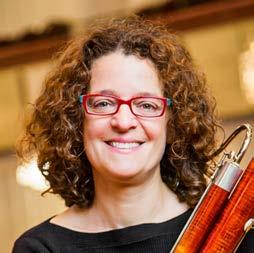
Each month, the National Symphony Orchestra (NSO) spotlights a different musician. For this program, Principal Bassoon Sue Heineman discusses backstage memories, 35-hour marathons, and the NSO’s next chapter.
Name: Sue Heineman
Hometown: Philadelphia, Pennsylvania
Instrument: Bassoon
Years with the NSO: 26
How did you find your way into the world of the professional bassoon? I grew up going to the Philadelphia Orchestra, so I had early exposure to the very highest level of the field. I’m the youngest of three, and we all took piano lessons, then we each started at a middle school that had a very strong orchestra program. My brother played tuba, and my sister played violin, and I knew I wasn’t going to play what she played, but I didn’t want to play something that seemed really obvious. Usually, when people ask why I play the bassoon, it’s like they’re asking how I even know there was such a thing. You’re a kid, and you just think, “That thing looks interesting.” Once I started playing it in the school orchestra, I was hooked. It didn’t really matter what you played—you’re part of the orchestra.
What hooked you about being a member of an orchestra? The sounds of the different sections and how they all came together. I liked the social aspect of it, especially compared to playing piano alone or with my teacher, who always yelled at me because I didn’t practice. It became clear that I had an aptitude for this, which was kind of mind-blowing for everybody. I was the little brat, and my sister was the perfect one, so I just wanted to keep getting better. I ended up going to Eastman, then doing a Fulbright in Austria and a master’s at Juilliard, but even for the first several years of my performing career, there was still this idea that I might not succeed. I was always thinking that I may just have to go back to school for something else. It was really only when I got a well-paying job—at around 32—that I thought, “Oh, this is cool. I like this. I would do this for free.”
What’s your favorite part of your life outside of the NSO? It might be a tie between animals and being outside. I’m an ultramarathoner. I was never an outdoorsy person, but years ago, I went on a bike ride with some friends, and I couldn’t really keep up with them, so I decided to start taking spinning classes at the gym. Then I was dating a guy who went on an organized bike tour in Utah, and I thought, “I want to do that.” I signed up for the same trip that he had done, and that’s when I discovered that I could bike all day long. I had no idea before that. I started hiking when I was playing at the Grand Teton Music Festival. One day on the trail, I met a trailrunner, and I thought, “Whoa, I can move a little faster.” Suddenly, you can cover in one day what it would take three days to backpack. You don’t have to carry all that stuff, and then you get to go home, have a beer, and take a shower—I could still see the view while in motion. Then I decided to do the Marine Corps Marathon because it landed on my 50th birthday. I hated that, but I also knew I was going to do another one; at that point, I was just curious about what it would take for me to enjoy this. My longest ultramarathon was 35 hours.
Do you have a favorite backstage memory at the NSO? I share a dressing room with Marissa, principal second violin, then Aaron, principal flute, often comes around and hangs. That is one of the things I’m really going to miss when we’re on the road—that little landing spot in the dressing room. I don’t have a car, so I like to be able to leave things in my locker: my clothes, an extra set of weights, and my tea. Sometimes I’ll just leave my bassoon there, because I know I can pop over or stay late if I need to practice. We’re not going to be able to do any of that next year.
How are you feeling about this next chapter for the NSO? I like the idea that we’re all in this together. It’s hard not to feel a little scared, but everybody wants this to work. I’ve also really appreciated and enjoyed the increased connection with our board. They’ve really shown their love and appreciation through all this. I know that they and our staff are working 10 times as hard as they ever have before to make this happen, so we’re coming into this situation with a feeling of relative strength and solidarity, as well as pride in what we do.
Support your ORCHESTRA
The mission of the National Symphony Orchestra is to engage audiences locally, across the country, and around the world through excellence in performance and education. Each year, the NSO offers approximately 150 concerts as well as some of the country’s most extensive community and educational programming. It regularly participates in events of national and international importance, including performances for state occasions, highlevel government events, and regularly televised holiday appearances for Capitol Concerts and local radio broadcasts on WETA, making the NSO one of the most-heard orchestras in the country.
Give your support in this 95th season by becoming a Member, joining the NSO Circles, or pledging a Legacy Gift. Visit tkc.co/SupportNSO or scan the QR code.
Thank
You to Our Supporters
The Kennedy Center Board of Trustees
National Symphony Orchestra Board of Directors
The Kennedy Center President’s Council
The Kennedy Center International Committee on the Arts
President’s Advisory Committee on the Arts
National Committee for the Performing Arts
National Symphony Orchestra National Trustees
The Kennedy Center Circles Board
The Kennedy Center Community Advisory Board
The Kennedy Center Corporate Fund Board
The Kennedy Center 50th Anniversary Committee
Corporate Donors
Individual and Foundation Donors
Endowment Gifts, Bequests, and Legacy Donors
Building the Future Campaign Donors
Visit tkc.co/Support for a full listing of donors and to learn how you can join us by becoming a Member.
Andrew Geraci
For 250 years, America’s story has been told through the voices of its artists, the rhythm of its music, the words of its writers, and the movement of its dancers. It is a story of resilience and reinvention, of dreams daring enough to redefine what was possible, and of creativity that has not only shaped a nation, but the world.
As the nation marks 250 years since the signing of the Declaration of Independence, the Center invites Americans everywhere to take part in 250 Years of US, a yearlong exploration of who we are, where we’ve been, and where we’re going. Through music, theater, dance, and visual art, 250 Years of US celebrates the boundless imagination of a people united by creativity.
Matthew Murphy
SHARE THE JOY of the ARTS
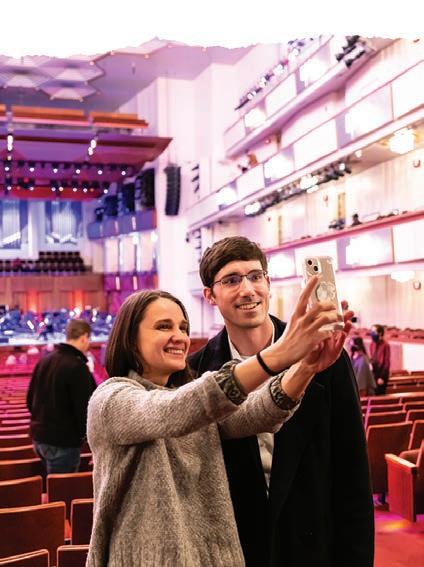
A toast before the show. A meal with a view. A selfie in the foyer. At the Kennedy Center, it’s not just about the performance, it’s the moments you share before and after the curtain rises.
Here, you’ll find joy and awe, surprise and wonder. When you come for a performance, you’ll leave with something more. Because what you feel—and who you feel it with— becomes the memory you both carry.
Take home... a musical memory.
Mozart Magic Flute Earrings
These exquisite earrings bring Mozart’s masterpiece to life with fluteinspired details that create a visual symphony. $42
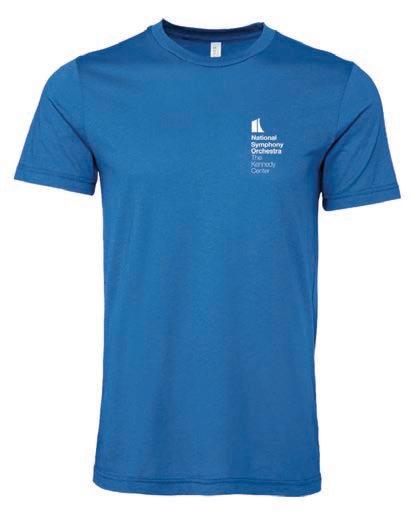
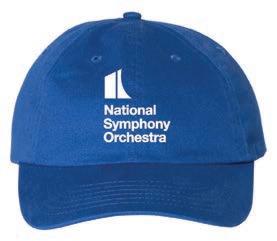
NSO Cap and T-shirt
Our new National Symphony Orchestra cap and tee let you show your pride in our world-class symphony. $30 each
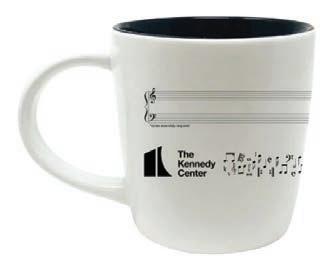
Make Your Own Music Mug
No better way to start your day than with a coffee mug imprinted with blank sheet music and sticker notes so you can compose your own melody. $20
Visit our two gift shops on Level A and in the Hall of States. Shop online 24/7 at tkc.co/shop
CURTAIN UP
Patrons share their first experiences at the Center.
Louisa and Savanah
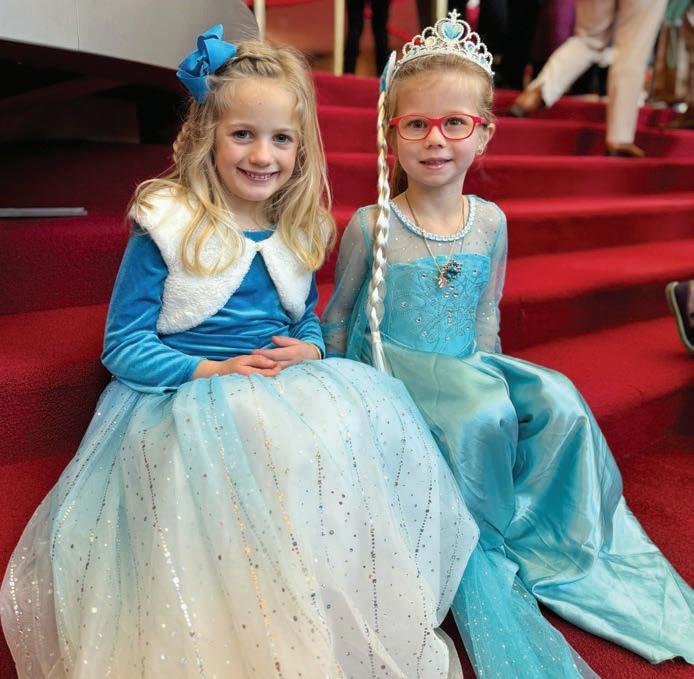
My daughter Louisa went to her first Center performance in January 2024 at age five. It was a mother-daughter date with her friend Eliza and Eliza’s mom Joy. The girls both dressed as Elsa, and it happened to be a snowy day in D.C. The magic of Frozen, along with the wonder created by the atmosphere made for an unforgettable first experience!
Maka
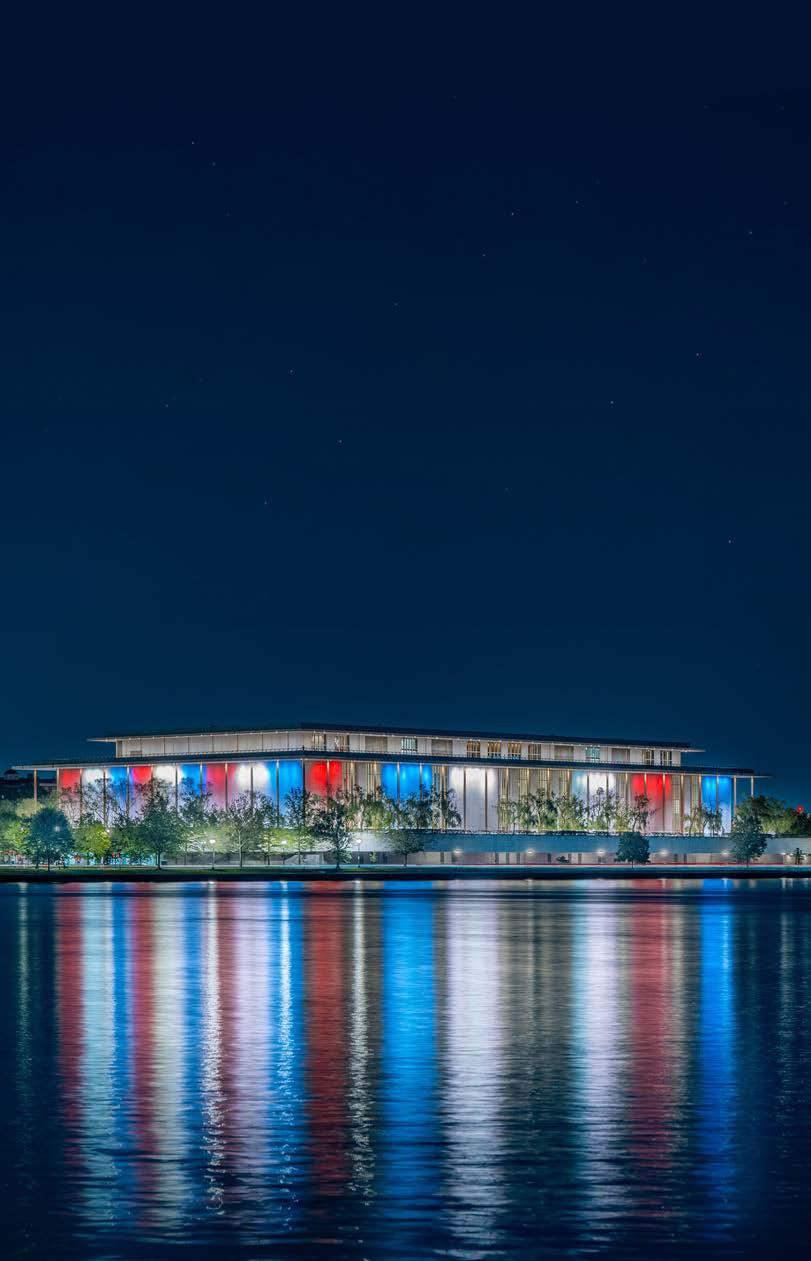
I remember the first time I saw the Center. It was a tapestry of rainbow lights, holding its own in the vast D.C. skyline. I gaped as my mom drove us right up next to it. It was big, but somehow more welcoming than intimidating.
The grand hall led into yet another equally grand one, where I felt as if I were walking the red carpet, with imported
Louisa and friend Eliza, both dressed as Elsa, wait outside the Opera House to see Frozen.
crystal chandeliers far overhead. I thought that this in and of itself was magical, but the real magic was inside the theater. I whipped out my phone to take a picture of the illuminated ceiling, but as soon as the lights dimmed and the show started, I forgot phones existed. My mom and I were there to see & Juliet, and we were blown away by the acting, music, and lights that went into the production. At the end, my face hurt from smiling and my hands hurt from clapping, and it was worth it.
Diann
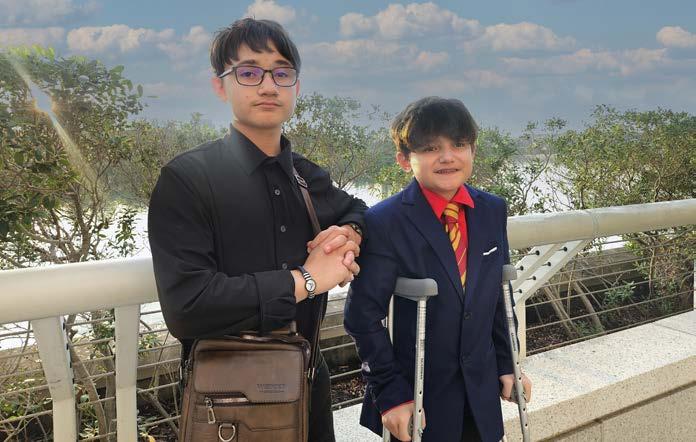
My family and I came to see The Princess Bride in Concert with the National Symphony Orchestra. Both of our boys play viola, and The Princess Bride is a very loved movie in our family so it was meant to be…
The best thing is, I have a service dog, Eugene, and we were welcomed without issue. The kindness started when I first emailed to see what seating was like to make sure that Eugene would fit under the chair. In the response to my email, I received kindness, dimensions, photos, and was asked to reach out to book my seats if I needed any assistance.
Overall, I was highly impressed with the hospitality of this venue. 10/10 will be attending another event!
Benjamin
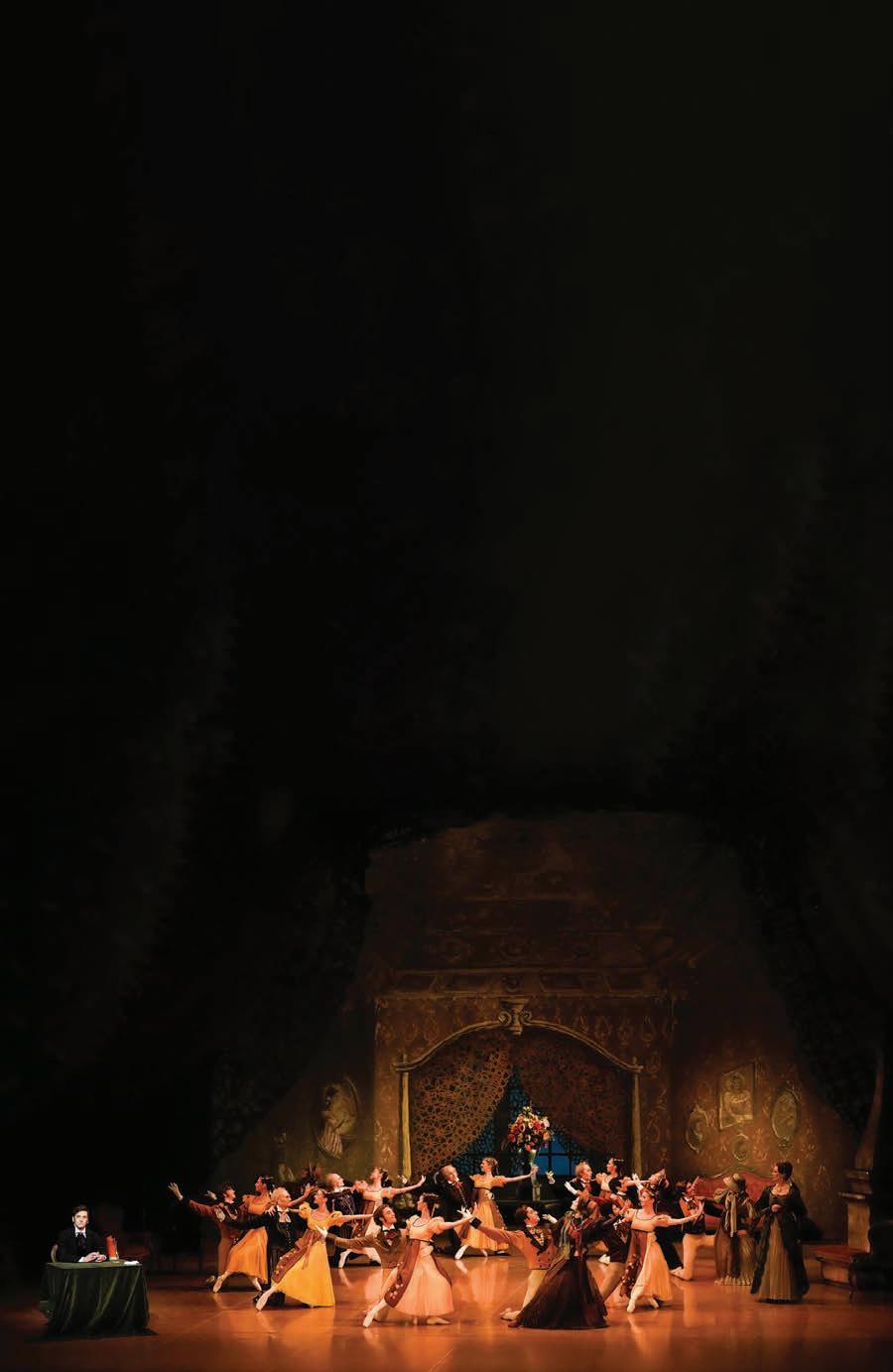
As I watched the curtain rise on the opening night of the Stuttgart Ballet’s performance of Onegin, I felt a great sense of excitement swell within me. The sheer beauty of the dancers, sets, and costumes was almost overwhelming and reminded me that beauty truly is something objective, because that is the best way to describe this ballet: beautiful.
Following the bows, I could not get Onegin out of my head; something about it was so magnetic and hypnotic that I ended up returning twice more to witness the spectacle. Each night I sat in a different location around the Opera House, giving me a unique experience each performance, and each night, I picked up on new details and nuances that I had not been keen enough to see before.
While it would be impossible to name one scene as my favorite, the finale was so gut-wrenching and emotional that I will never forget what true passion looks like.
Diann’s children pose by the riverfront before The Princess Bride in Concert.
Don't wait until tomorrow to take control of your health. We're here to support you in the new year.
At MedStar Health, we're here for you when you need us. That's why we offer more urgent care locations than any healthcare system in the region. We provide on-demand telehealth, available 24/7, including holidays. Plus, we’ve added more than 700 new providers—all to better treat you.