Bee City USA 2025 Annual Report


Bee City USA 2025 Annual Report
Pollinator Activities
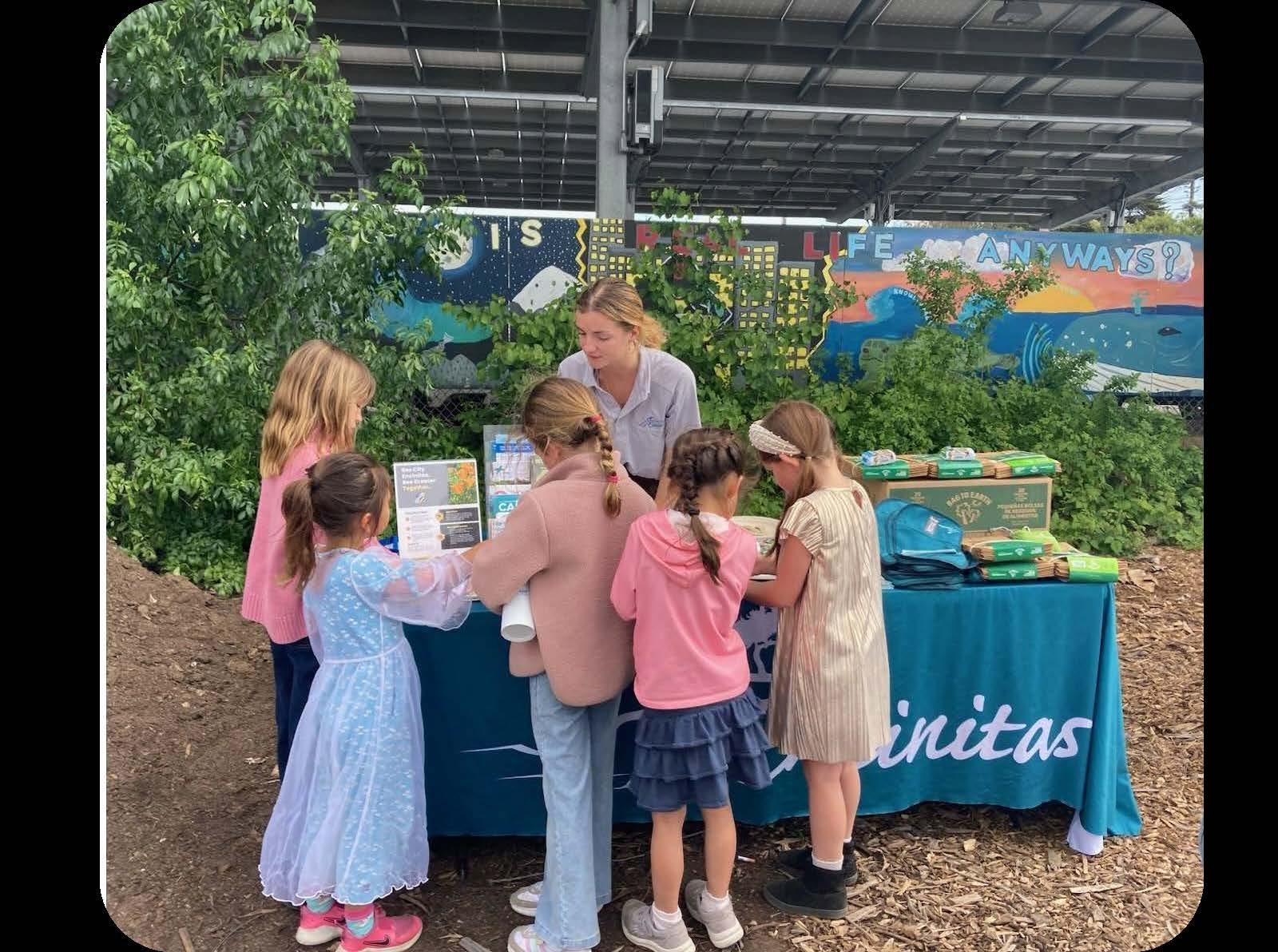
The City of Encinitas hosted and participated in 28 pollinator-related events and outreach activities in 2025. These events include Arbor Day, Ocean Knoll Elementary Zero Waste Festival, Spring Egg Hunt, Capri Science Fair, Oktober Fest and 23 volunteer events hosted by the City as part of the Encinitas Habitat Stewardship Program (EHSP).
In total, 411 people attended these pollinator-related events, excluding the Encinitas Habitat Stewardship Program volunteer events. The Parks and Recreation Department recorded over 700 staff and volunteer hours at the EHSP volunteer events.
Between the Engineering and Parks and Recreation Departments, the City implemented seven projects that created or enhanced pollinator habitats. These projects include tree plantings at the City’s Arbor Day event, regular park operations plantings, Encinitas Habitat Stewardship Program projects, Santa Fe Drive Corridor Improvements Project –Western Phase, Beacon’s Coastal Bluff Restoration, Scott Valley Park Equipment Replacement Project and the South Coast Highway 101 Sidewalk Improvement Project.
An estimate of 52 people helped with these projects. Arbor Day 2025 hosted 25 volunteers, a classroom of about 20 students collaborated on the Santa Fe Drive Corridor Improvements Project — Western Phase, and we are counting one consultant per engineering project in addition to three City engineers. We do not have exact headcounts for the regular park operations plantings and the volunteer hours for the EHSP events are recorded above.
Five of the previously mentioned projects benefit monarchs and/or nectar plantings including Arbor Day, Encinitas Habitat Stewardship Program events, regular park operations plantings, Santa Fe Drive Corridor Improvements Project — Western Phase and Scott Valley Park Equipment Replacement Project. 2
Total Habitat Creation and Enhancement Bee City USA 2025 Annual Report
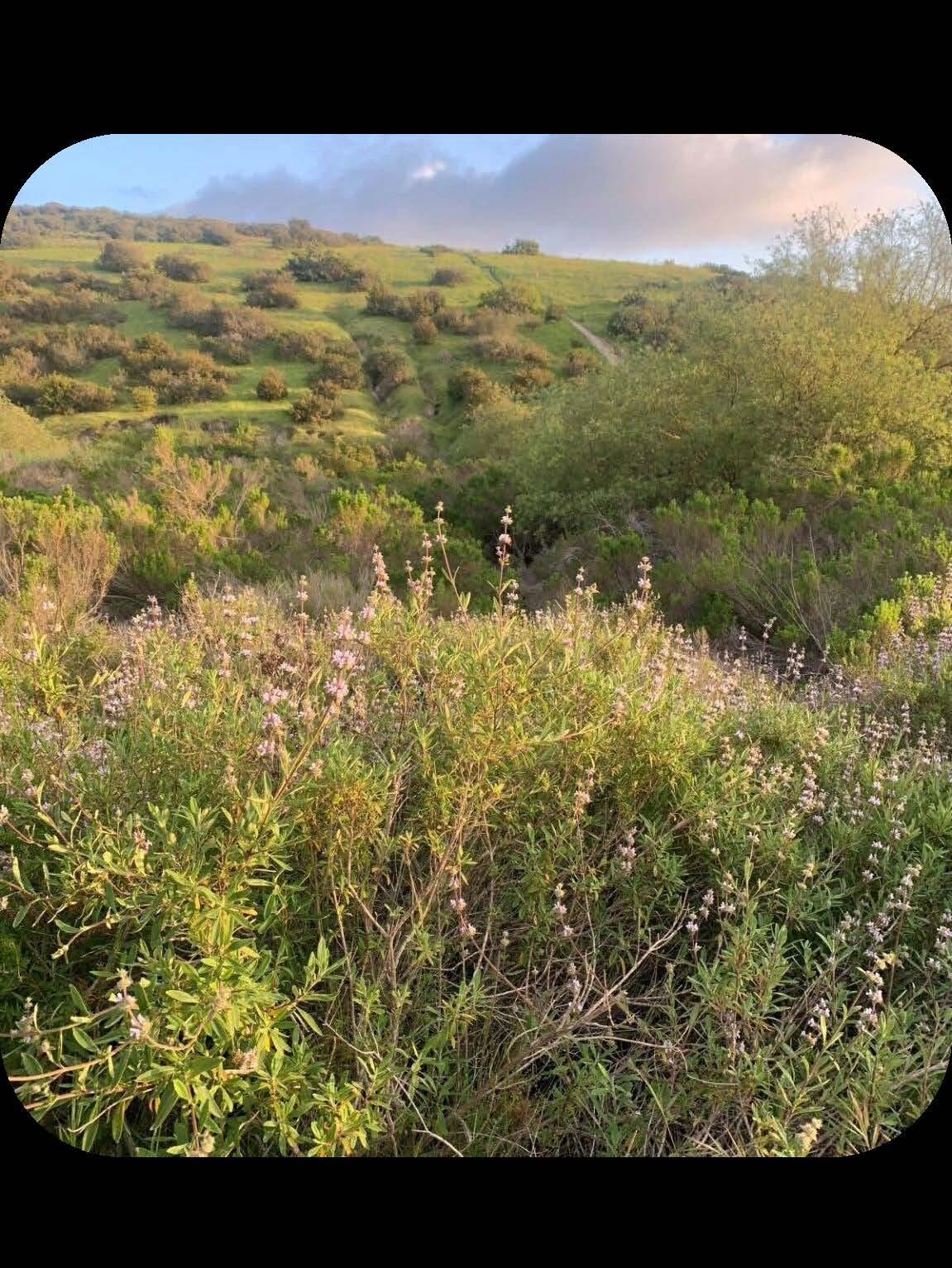
In total, 85,550 square feet (sq ft) of habitat was created or enhanced. The site of Arbor Day, Cardiff Sports Park, is approximately 1,100 sq ft. Through the Encinitas Habitat Stewardship Program, approximately 1,000 sq ft of native habitat was created and approximately 57,000 sq ft of native habitat was enhanced. Through regular park operations, approximately 1,000 sq ft of native habitat was created. The Santa Fe Drive Corridor Improvements — Western Phase included approximately 18,000 sq ft of habitat enhanced and created. The Scott Valley Park Equipment Replacement Project planted three new native trees and approximately 550 sq ft of new native shrub and flower planting areas. The Beacon’s Beach Bluff Restoration included 3,000 sq ft of southern coastal bluff scrub hydroseed. The South Coast Highway 101 Sidewalk Improvement Project included 3,900 sq ft of native hydroseed and container plants.
Pollinator Habitat Created or Enhanced
Encinitas Habitat Stewardship Program
Habitat Creation and Enhancement Bee City USA 2025 Annual Report
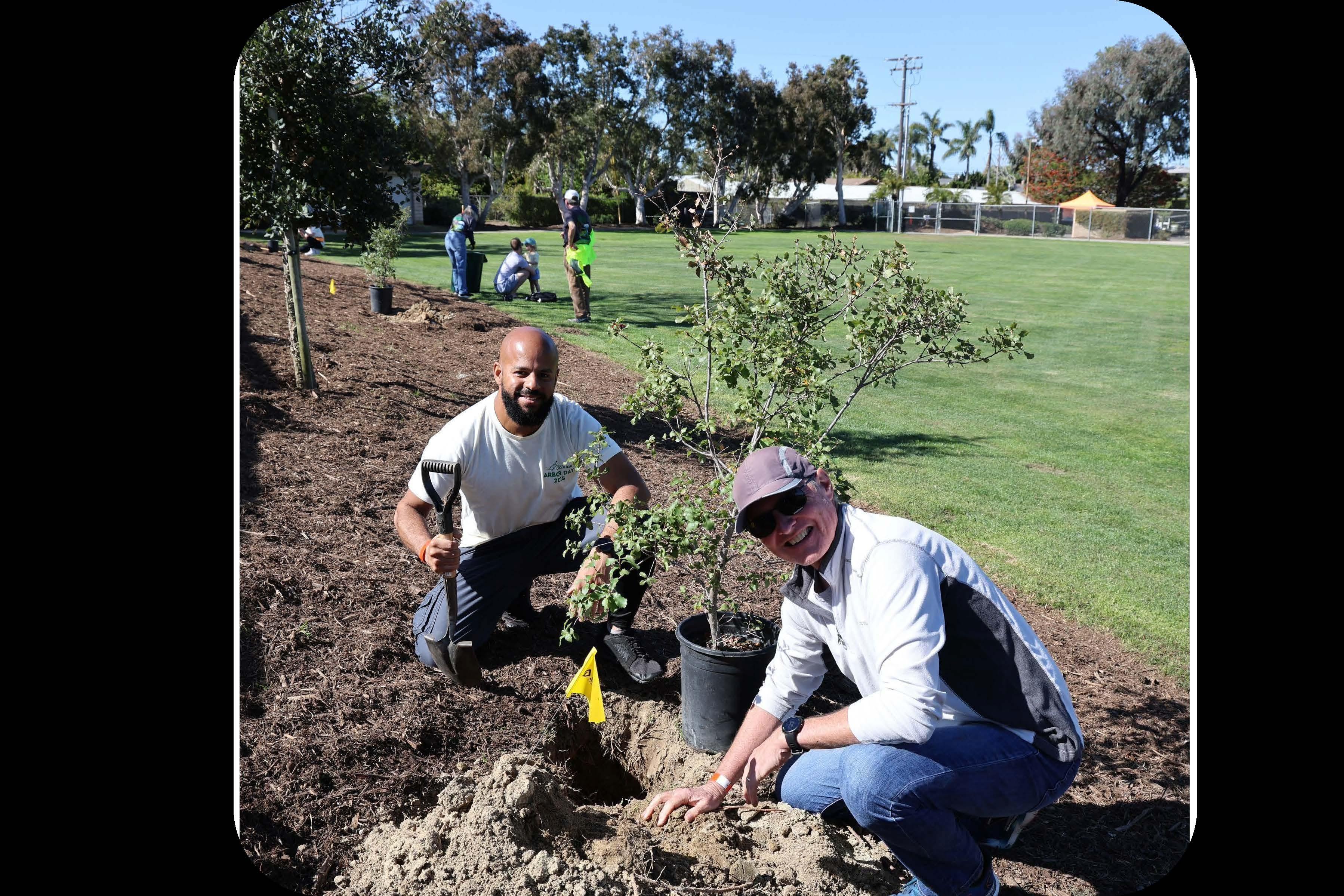
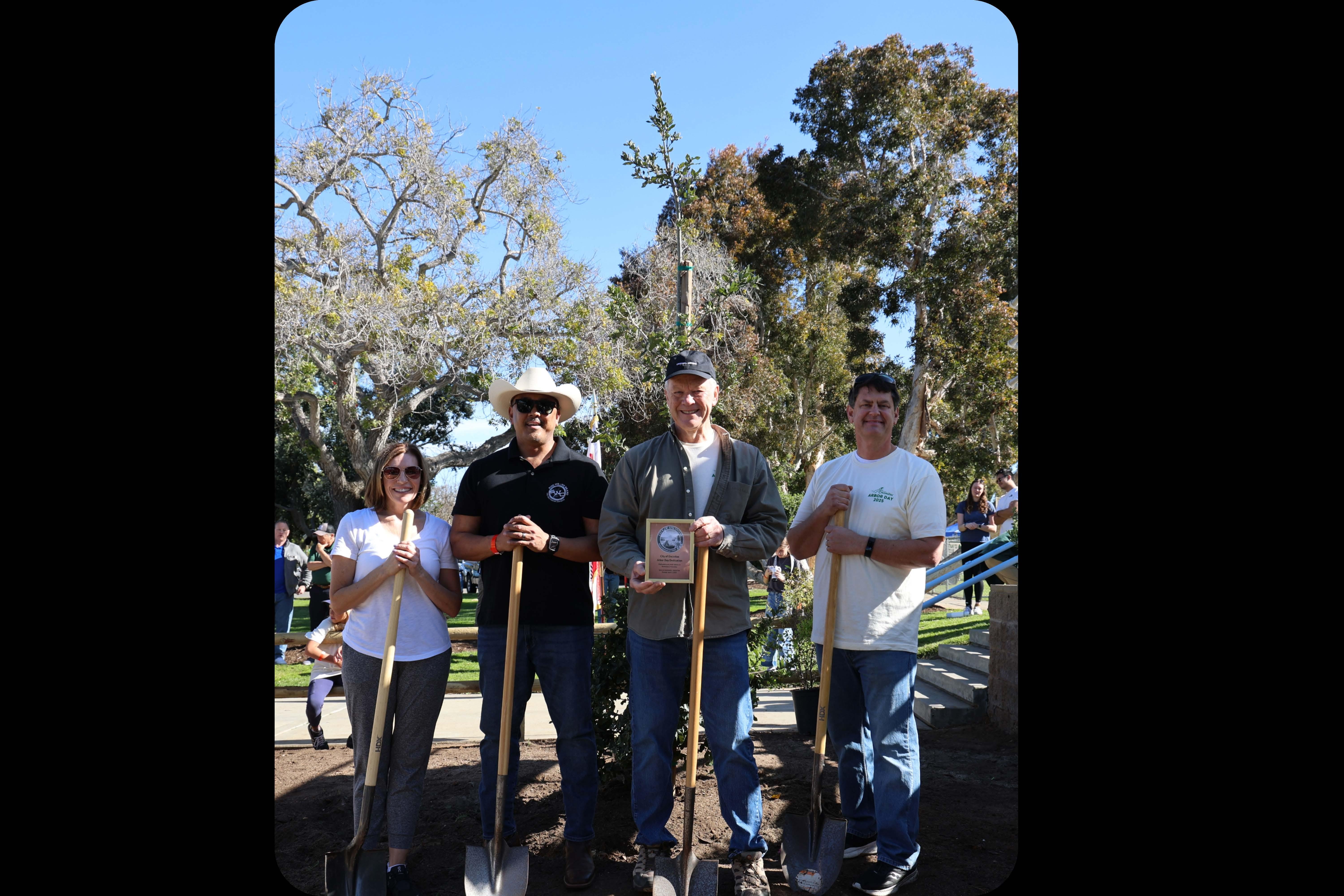
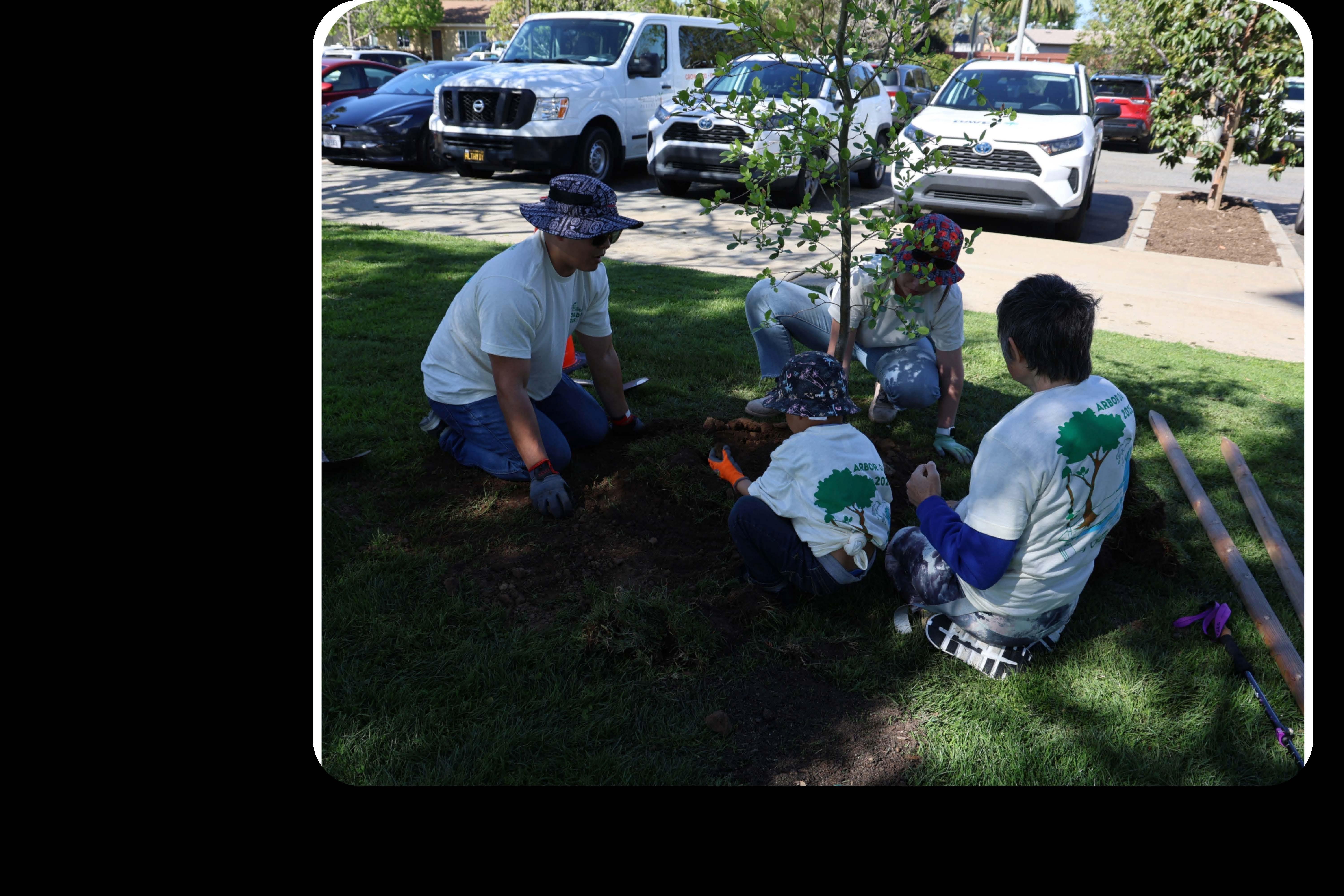
On April 5, 2025, the City of Encinitas hosted its 14th annual Arbor Day celebration at Cardiff Sports Park. This initiative resulted in 50 trees planted and provided community members with the opportunity to actively participate in conservation efforts. This event fostered community engagement and aligned with the City’s broader sustainability goals. The strong turnout, particularly among families, highlighted the shared commitment to environmental stewardship and neighborhood enhancement.
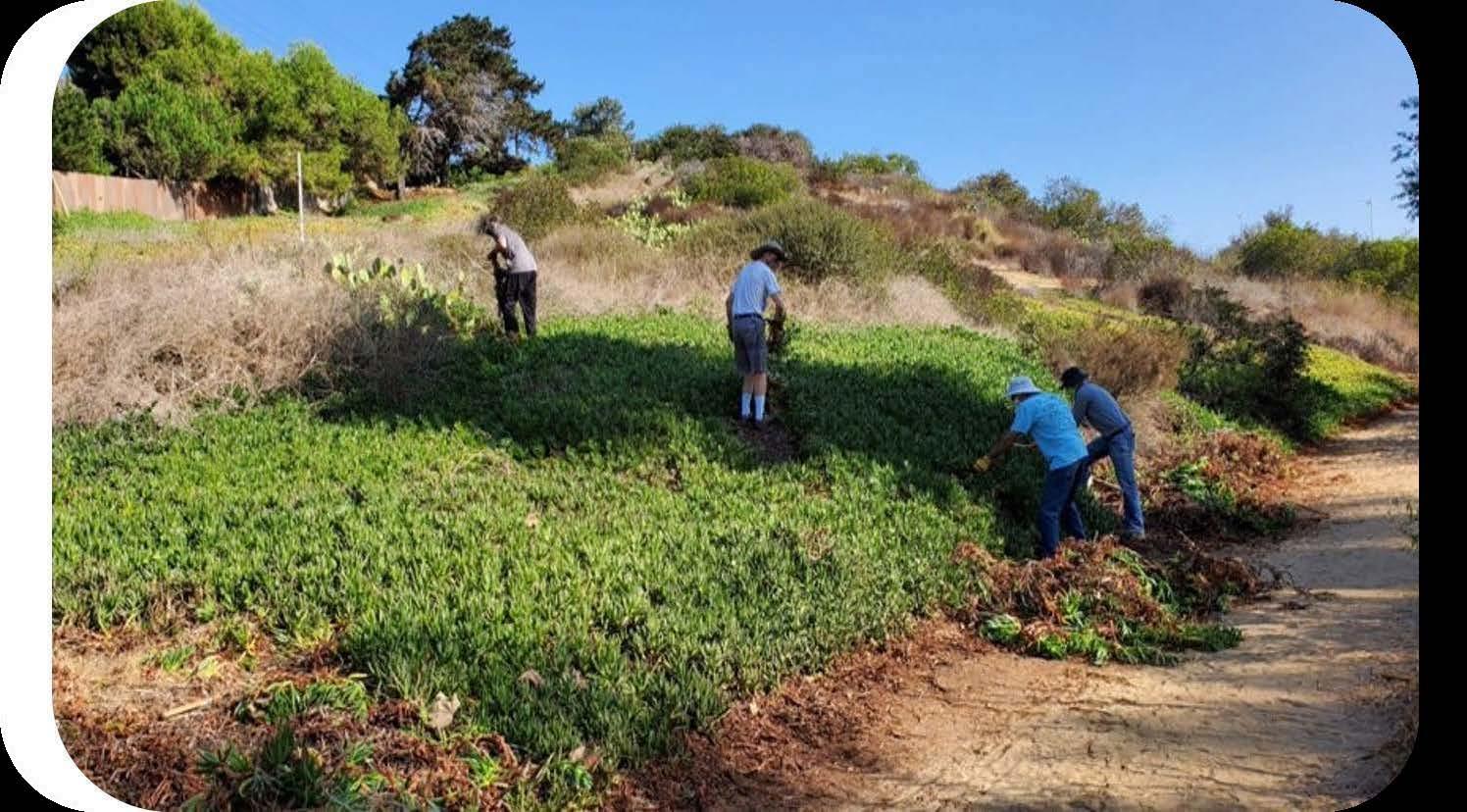
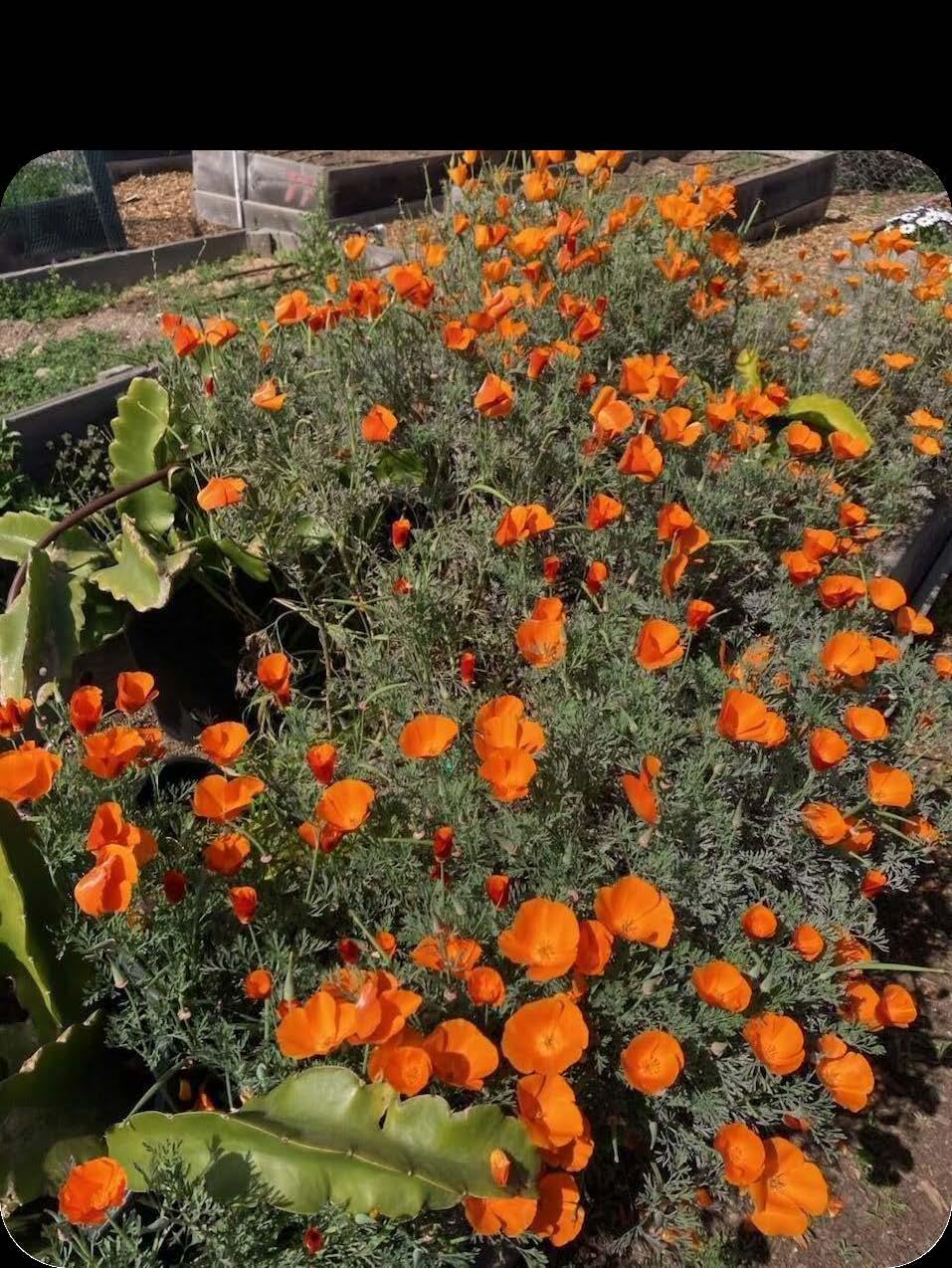
In 2025, the City’s Parks and Recreation Department began developing plans for a demonstration garden showcasing native plants. This effort supports the City’s Native Plant Ordinance (Ordinance 2026-07) that was under development in 2025 and adopted in early 2026. This project gives residents a way to directly experience native plants and support the consideration of native plants for their own yards. In 2025, the Parks and Recreation Department planted 151 trees including 117 California natives and 725 plants including 692 California natives as part of regular park operations. As part of the City’s Encinitas Habitat Stewardship Program (EHSP), 950 native container plants, including nectar species, were installed and 81 cubic yards of invasive biomass were removed within the City’s managed openspace sites. The removal of invasive species creates more space for native species and reduces non-native competition. Throughout -
2025, the Parks Department continued to follow the City’s Integrated Pest Management (IPM) Policy as part of its regular parks maintenance practices.
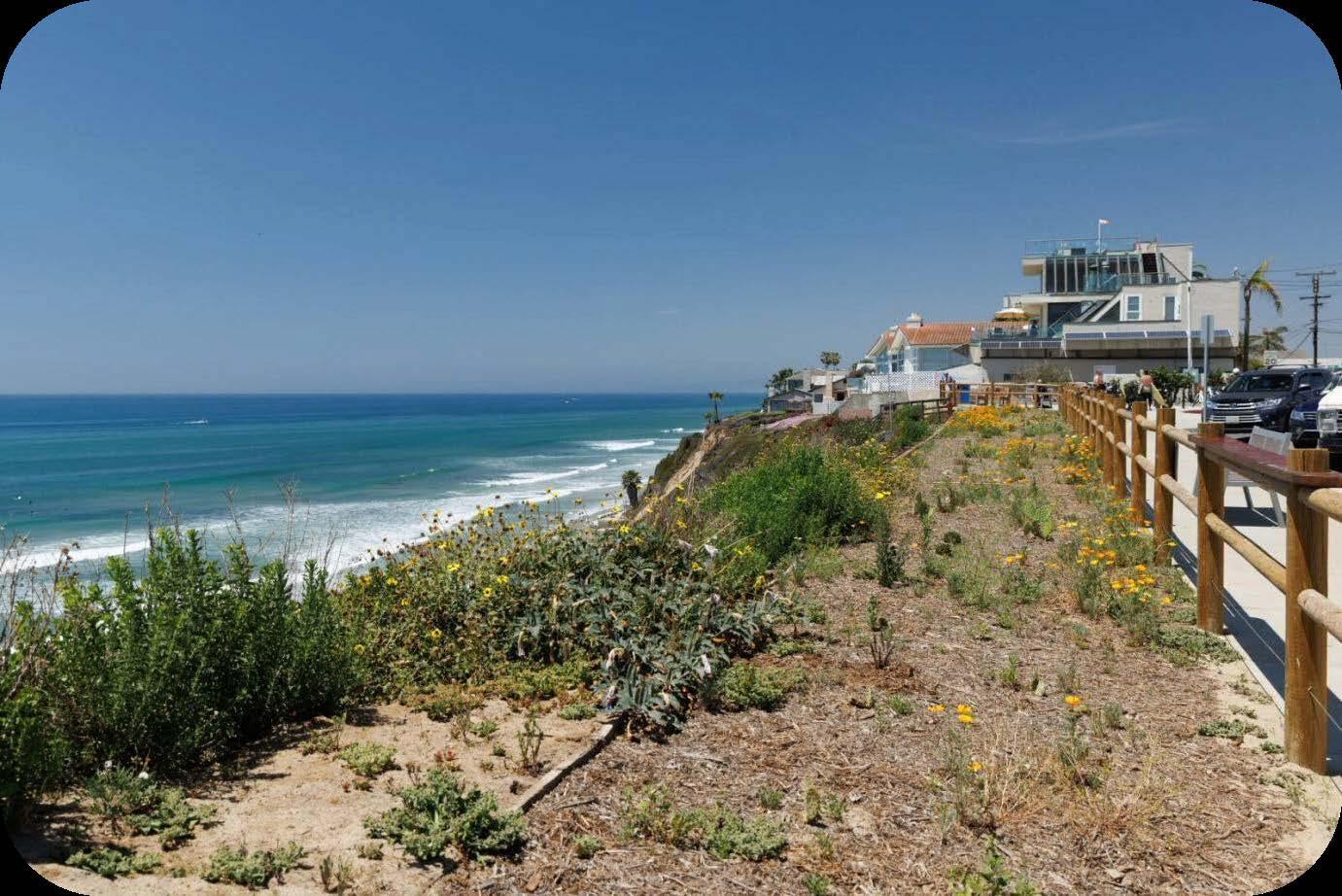
The City’s Engineering Department Capital Improvement Program (CIP) also manages projects that often include landscaping aspects. When applicable, these projects prioritize native tree and plant species and biodiversity. For example, the Santa Fe Drive Corridor Improvements Project — Western Phase, completed in April 2025, collaborated with a local high school to incorporate various pollinator-supporting and native plant species. Additionally, four CIP projects at parks, beaches and along streets including the Santa Fe Drive Corridor Improvements — Western Phase, Scott Valley Park Equipment Replacement Project, Beacon’s Bluff Restoration and South Coast Highway Sidewalk Improvements implemented native tree, shrub and flower plantings to support local pollinators.
Bee City USA 2025 Annual Report
Community-Led Projects
Throughout 2025, several community-led projects supported pollinator species. In December, Flora Vista Elementary School collaborated with the San Diego Botanical Garden to create a pollinator garden. Similarly, Park Dale Lane Elementary School partnered with the San Diego Botanical Garden to create and enhance pollinator gardens within the San Diego Botanical Garden, Park Dale Lane Elementary School Campus and Moonlight Beach in late 2024. These projects removed non-native species and replaced them with native alternatives intentionally chosen to provide flowering plants, nectar and larvae hosting species yearround. Throughout 2025, these native plants continued to establish in their new environment and support local pollinators. Additionally, interpretive signage was installed to educate the public of the garden’s goals and purpose. In 2025, tours were also offered for school gardens such as San Dieguito Academy’s native plant garden and the Encinitas Unified School District’s Farm Lab. Many schools throughout Encinitas have campus gardens that prioritize pollinator habitats. Local schools use their gardens as educational tools and opportunities for students, parents and teachers to learn about and get involved in protecting pollinators. The City does not directly manage school enhancement projects but supports and encourages these programs and practices.
Bee City USA 2025 Annual Report
Conservation Efforts and Outreach
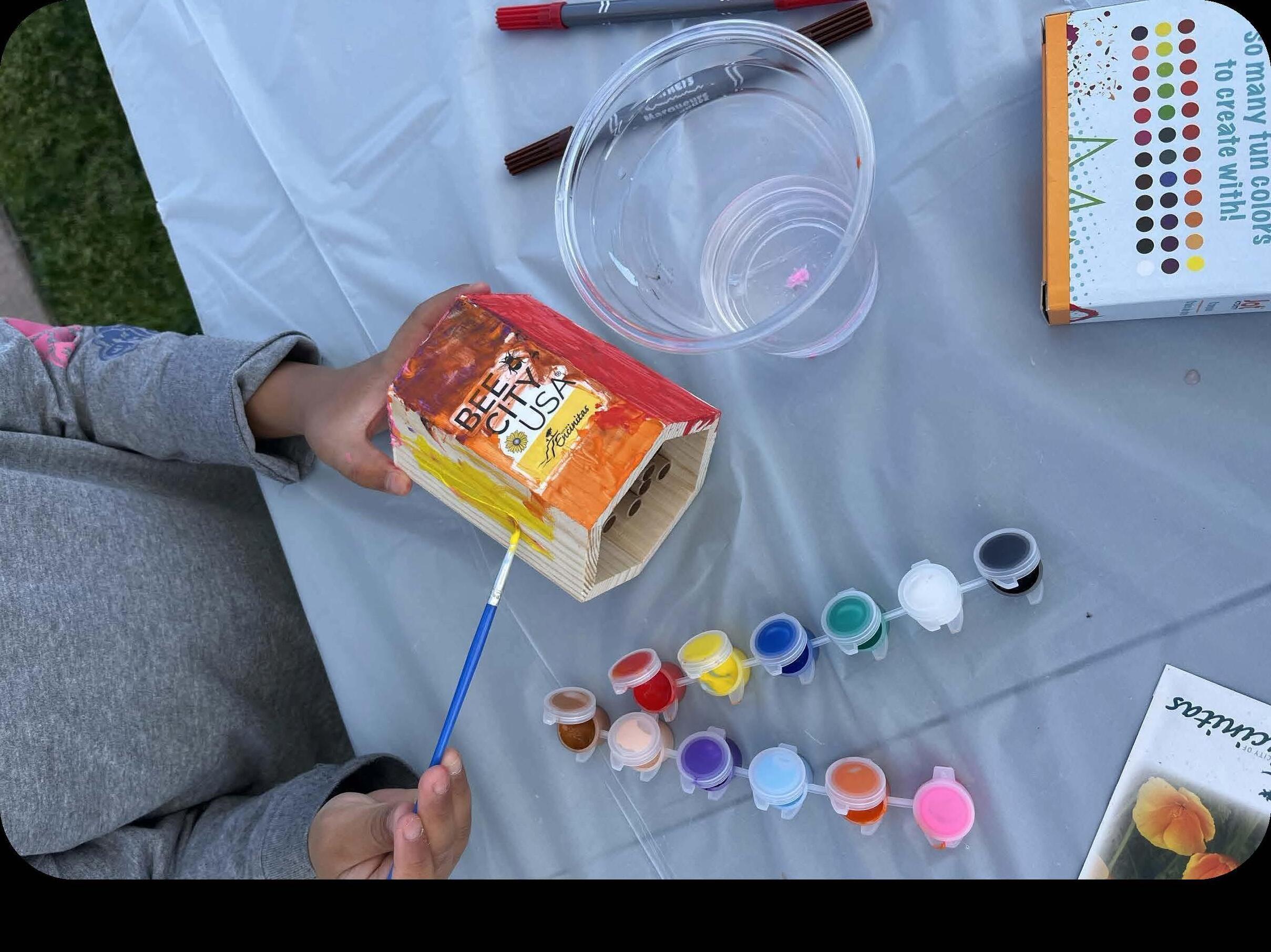
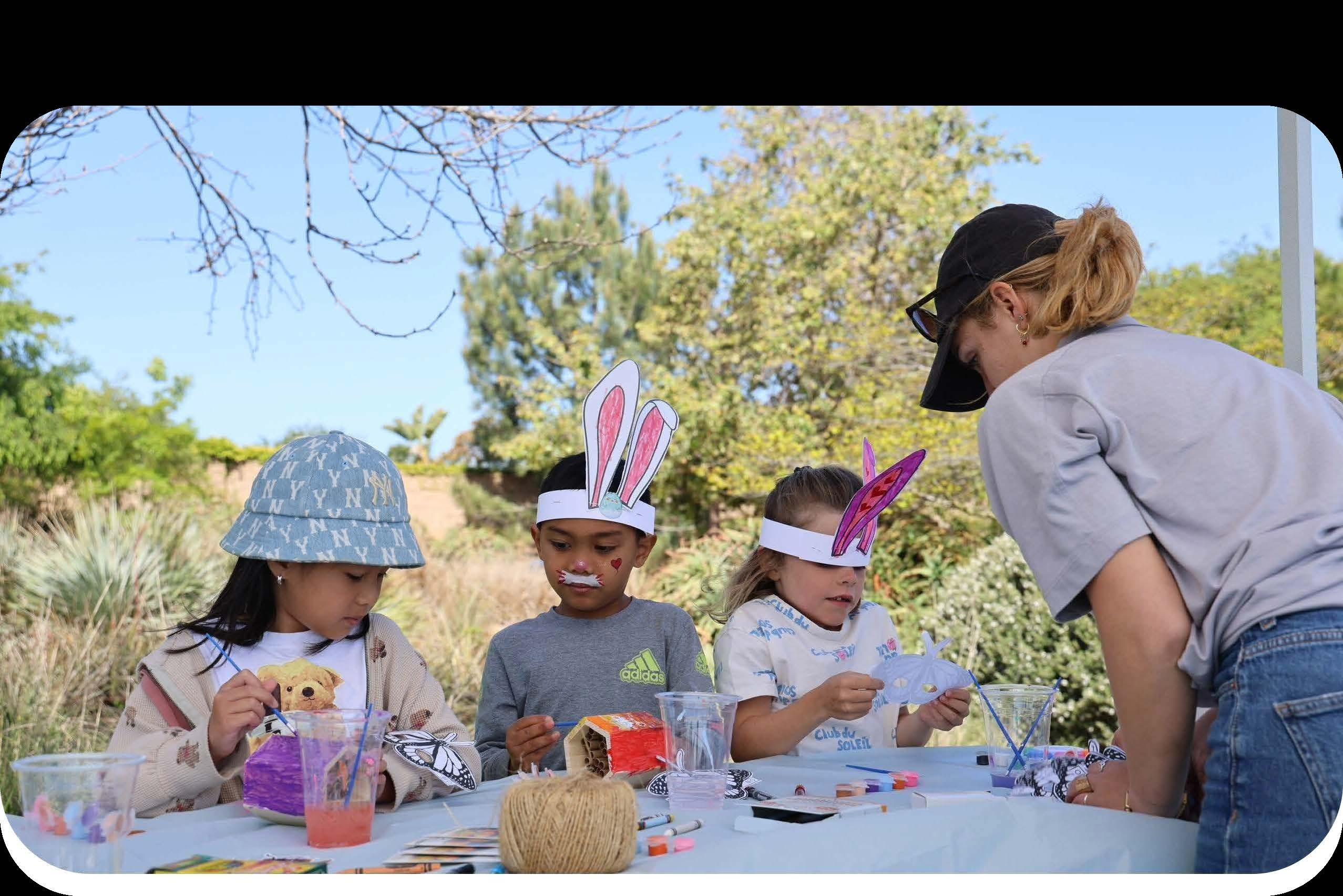
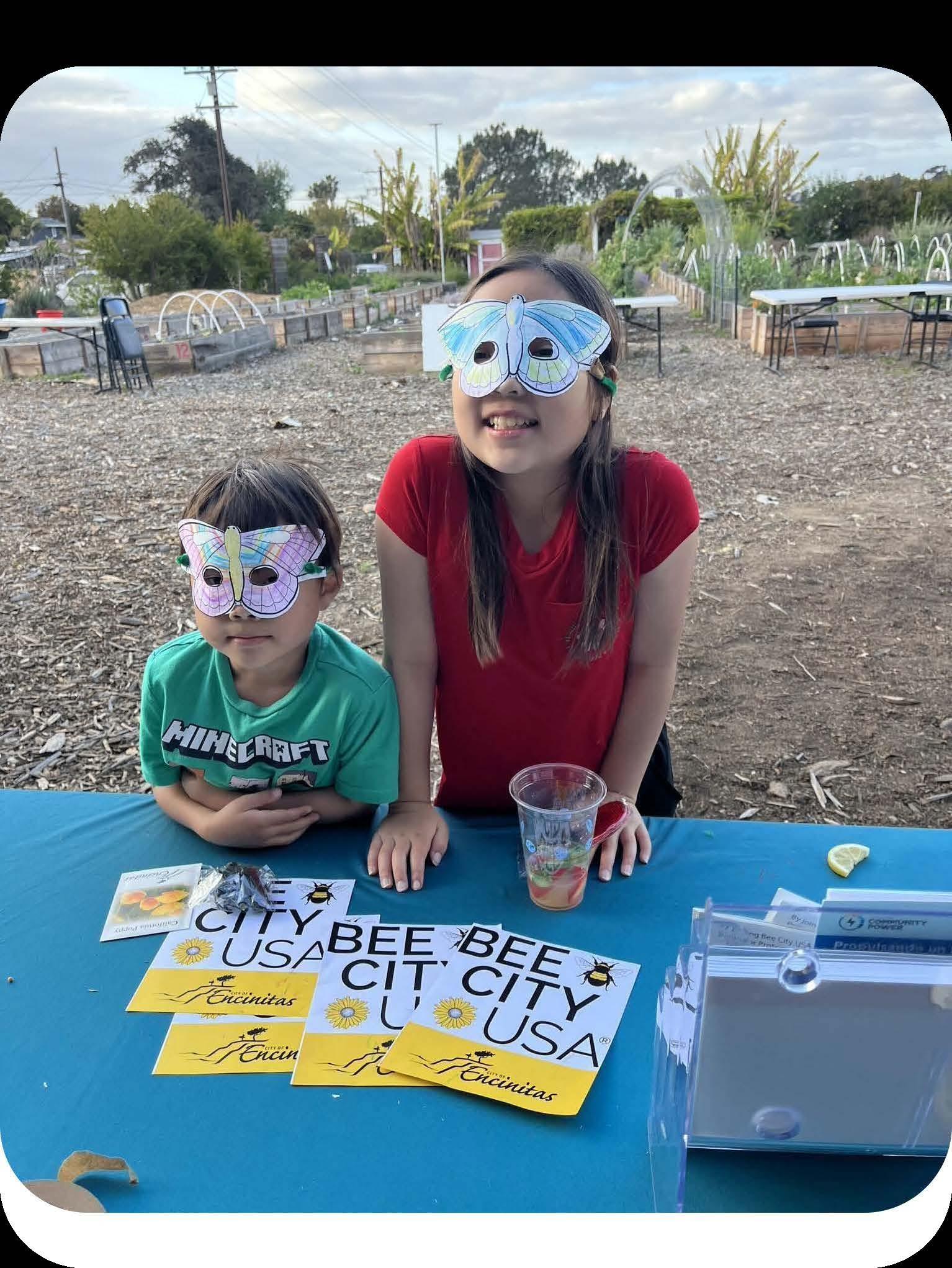
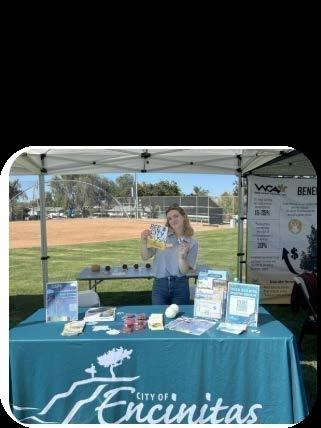
In 2025, the City hosted and attended five events to provide education about Encinitas’ pollinators, communicate the importance of planting of native plants, and share alternatives to pesticide use. The City hosted Arbor Day and the Spring Egg Hunt, and attended the Ocean Knoll Elementary Zero Waste Festival, Capri Science Fair, and Oktoberfest, all of which presented great opportunities to engage with people of all ages about our pollinators. The City also hosted volunteer events as part of the Parks and Recreation Department’s Encinitas Habitat Stewardship Program. The City’s Habitat Stewardship Program began in 2020 in an effort to preserve and restore native habitats for rare or endangered plant and wildlife species. Since 2020, the City, City contractors and volunteers have spent over 2,000 hours and hosted over 100 events removing invasive plants, planting native species and correcting erosion issues.
2025 Pollinator Habitat Activities:
Native pollinator-friendly tree planting
Roadside/rights of way planting
Invasive/exotic plant species removal for habitat improvement
Native pollinator-friendly shrub border/hedgerow planting
Bee City USA 2025 Annual Report
Pollinator-Friendly Pest Management
In 2019, the City of Encinitas adopted an Integrated Pest Management (IPM) Policy. The IPM Policy restricts and regulates the use of pesticides on Citymanaged properties. All applicable City departments utilize and implement the City’s IPM Policy and prioritize native plant species in projects, when possible. In an effort to reduce pesticide use throughout Encinitas, the City also encourages landscapers and community members to participate in environmentally responsible pest management practices.
The City conducts regular outreach at community events to educate residents on the importance of reducing pesticide use and the benefits to local pollinator health.
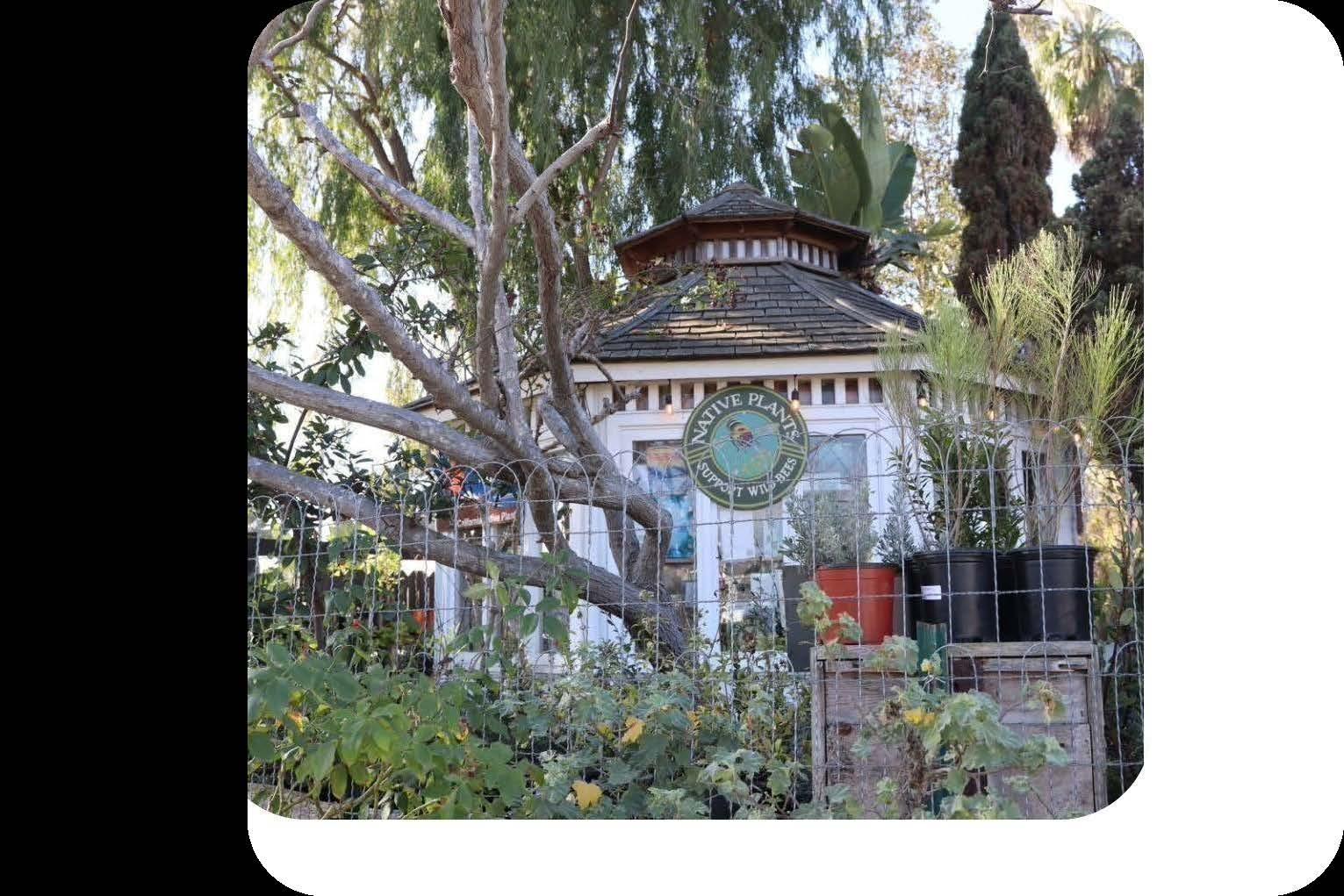
2025 Pest Management Activities:
Implemented or maintained a written IPM plan
Implemented non-chemical pest prevention and management methods on city or campus grounds
Only use pesticides as a last resort within the IPM plan
Distributed educational materials to residents or students to encourage the reduction or elimination of pesticide use
City Policies
Bee City USA 2025 Annual Report
In 2025, City made progress on the development of a Native Plant Ordinance Outreach including a focused stakeholder meeting with the Native Plant for Encinitas group, two community wide workshops and one public hearing with the Environmental Commission and Urban Forrest Advisory Committee were held to collect community input on the ordinance and incentive programs. The ordinance encourages sustainable landscaping practices by requiring and promoting the use of southern California native plants to support local ecosystems. The ordinance applies to projects that require a discretionary permit (Design Review Permit or Major Use Permit for ER/OS/PK Zone) and includes a landscape plan. Projects subject to the ordinance would be required to plant a minimum of 50 percent of the total landscaped area of the project site be planted with southern California native plants. Additionally, the ordinance would be applicable to any City projects that requires a discretionary permit and includes a landscape plan and requiring these new landscapes to be planted with 100 percent southern California native plants. Establishing these landscaping standards and developing an incentive program to convert existing landscapes will enhance natural habitats, improve environmental resilience and increase local pollinators.
Additionally, the City has an ongoing Permanent Best Management Practices (BMP) Program in place to reduce the presence pollutants in Encinitas waterways.
This program requires new and redevelopment projects seeking development permits to retain and treat stormwater that flows off impervious surfaces like buildings and parking lots. According to the City’s Best Management Practices Design Manual, all Development Project sites (Standard Projects and Priority Development Projects) must implement landscaping with native or drought-tolerant species, where applicable and feasible.
Other notable actions by the City that contribute to pollinator protection are the prohibition of gas-powered leaf blowers (Ordinance No. 2019-06 adopted in 2019) and the smoking prohibition (Encinitas Municipal Code 11.08 adopted in 2023). These ordinances support enhanced air quality, reduced noise pollution and contribute to a healthier ecosystem for the community and pollinators.
8
Lessons Learned Bee City USA 2025 Annual Report
Developing the Native Plant Ordinance was a collaborative and community-driven effort. The motivation and passion within the Encinitas community to protect native habitats and local pollinators reinforced the importance of the City’s Bee City affiliation and living up to the commitment it represents. Additionally, since its formation in 2020, the Encinitas Habitat Stewardship Program has hosted over 100 events, empowering the community to dedicate over 2,000 hours to removing invasive plants, restoring native habitats and correcting erosion issues. This created a “butterfly effect,” demonstrating how empowering the community to get involved can positively influence the City’s pollinator‐protection efforts.
Thank You to the City of Encinitas Bee City Committee!
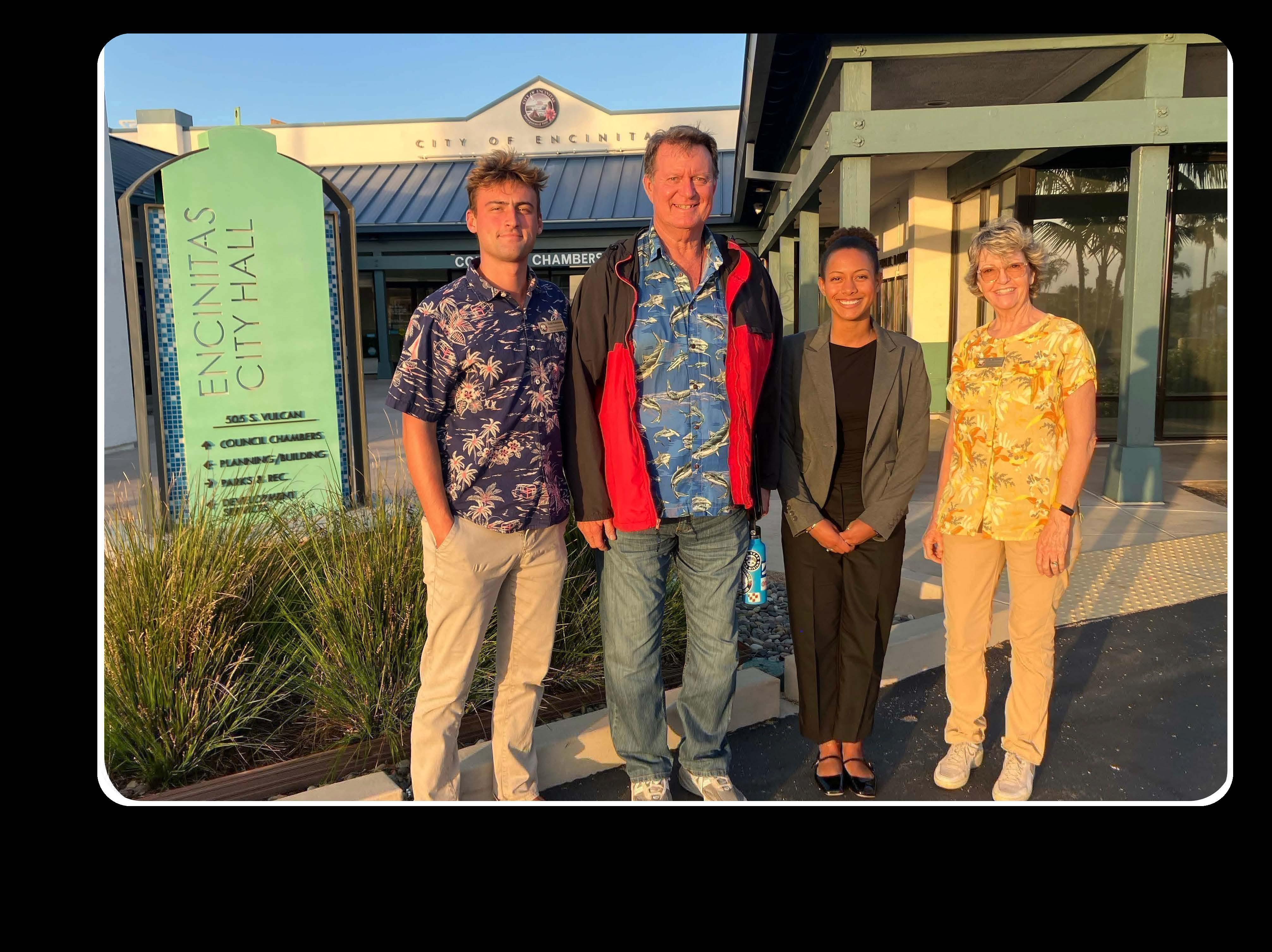
Pictured left to right: Environmental Commissioner Kalamaras, Environmental Commissioner O’Connor, CivicSpark Fellow Patterson, Environmental Commissioner Parker.