CONNECTION Missouri EMS
Fall 2026 Vol. 12 | Issue 3
The official publication of the Missouri Emergency Medical Ser vices Association
YOU’RE ALWAYS READY FOR THE CALL. SO ARE WE.
1-888-268-4195 24/7 POISON RESOURCE
THE MISSOURI POISON CENTER. YOUR LIFELINE TO LIFESAVING INFORMATION. missouripoisoncenter.org
TALK DIRECTLY TO A SPECIALLY TRAINED NURSE OR PHARMACIST ANSWERS IN SECONDS PRIORITY ACCESS LINE FOR HEALTHCARE PROVIDERS
CONNECTION Missouri EMS
BOARD OF DIRECTORS OFFICERS Justin Duncan, President Southeast Region John Romeo, Vice President St. Louis Region
Ruby Mehrer, Past President BOARD MEMBERS Amy Guynn Kansas City Region Matthew Hart Southeast Region David Hoover Southwest Region Dot Lake Northeast Region David Lomax Northeast Region Bonnie Pemberton Central Region Eric Reeter Northwest Region Sharon Smith Northwest Region Kevin Stuhlman St. Louis Region Kyle Tapps Kansas City Region Chris White Southwest Region Jesse Fournier & Jason White Pres. Appointee To contact the board, use the contact information below. Missouri Emergency Medical Services Association P.O. Box 243 | Linn, MO 65051 (573) 370-1702 memsa@memsa.org www.memsa.org Shelby Cox, Executive Director
EDITORIAL BOARD MEMSA Representatives: Matt Cushman Dot Lake Dean Meenach Ruby Mehrer John Romeo Sharon Smith Mike Wallace Jason White Janet Taylor ADAM Rep: Kyle Gaines MOAAMS Rep: Heather Scruton Editor: Mary Napier
To contact the editorial board, send an email to the editor: mary@napiercommunications.com.
FALL 2026
The official publication of the Missouri Emergency Medical Ser vices Association
IN THIS ISSUE
2026 Missouri EMS Conference & Expo.............................................................................10 MEMSA Celebrates Missouri’s EMS Excellence at the 2026 Awards........................16 Service Spotlight: Monarch Fire Protection District......................................................20 From “Nothing for EMS” to $12.3 Million: The Road to Rural Health Transformation...........................................................................................................................27 AI Is Already Riding With You................................................................................................31 Mid America CIT Counsel Brings Innovative Crisis Training to EMS Providers....38 Industry News.............................................................................................................................41
SPECIAL FEATURES
Josh Krull, Treasurer Central Region
Fall 2026 Vol. 12 | Issue 3
10 20
IN EVERY ISSUE President’s Message......................................... 4 Executive Director’s Report........................... 6 Legislative Update..........................................25 Legal Corner......................................................34 Connection Contributions...........................36
Lessons Learned in EMS................................37 Our Fallen Heroes............................................37 Poison Alerts.....................................................43 Advertiser’s Index............................................46
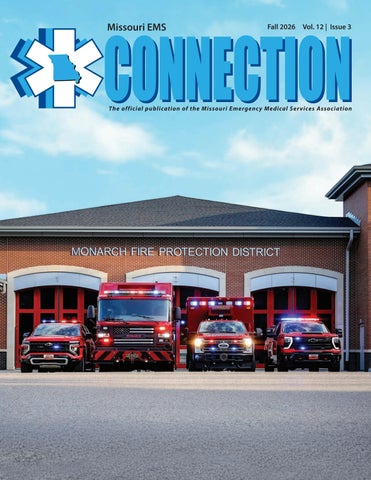
On the Cover:
This year’s MEMSA Service of the Year award winner is Monarch Fire Protection District for redefining what a modern fire-based EMS agency looks like, clinical excellence, innovation, and collaboration through programs they have been building for several years. Learn more in our service spotlight on page 20.
© MEMSA All rights reserved. Photocopying, reproduction, or quotation strictly prohibited without the written consent from the editor or editorial board. Unsolicited material and/or correspondence cannot be acknowledged or returned, and becomes the property of the MEMSA. The purpose of this publication is to provide a quality publication that educates, informs, leads, and connects the EMS Community. To provide comments about the Missouri EMS Connection magazine, contact the editor Mary Napier at mary@napiercommunications.com.
M i s s o u r i E M S C o n n ec t i o n | 3
PRESIDENT’S
message
Greetings Missouri EMS Humans! As we move into fall, I find myself thinking less about where we have been and more about where Missouri EMS is headed. There is a lot to be excited about. Our profession continues to evolve at an incredible pace. Across Missouri, agencies are finding new ways to care for their communities, developing new partnerships, embracing technology, expanding the role of EMS in healthcare, and creating opportunities that would have been difficult to imagine just a few years ago. That kind of change can be challenging, but it is also exciting. EMS has always been about answering the call. Today, we are increasingly being asked to help shape what happens before the call, after the call, and sometimes instead of the traditional 911 response altogether. We are becoming an even more important part of the larger healthcare system, and Missouri has an opportunity to help lead that evolution as there are some incredibly cool things happening across our state. We are seeing innovation in rural and urban communities. We are seeing new approaches to education, recruitment, retention, clinical care, community paramedicine, and mobile integrated healthcare. We are building stronger relationships with hospitals, healthcare systems, policymakers, educators, and community partners. Most importantly, we are seeing EMS professionals willing to ask, “What’s next?” That may be one of the most important questions we can ask. The future of Missouri EMS will not simply happen to us. We have an opportunity to help create it. That means continuing to advocate for our profession and the people who make it work. It means being willing to try new ideas and learn from one another. It means developing the next generation of EMS professionals and giving them reasons to build their careers here. It means making sure EMS has a seat at the table as decisions are made about the future of
4 | M i s s o u r i E M S C o n n ec t i o n
By Justin Duncan MEMSA President
healthcare in Missouri. There is tremendous momentum right now, and our association intends to keep building on it. As we head toward the end of another year, I encourage you to look around your own organization and community. Celebrate what is working. Share your successes. Ask what could be better. Reach out to your neighbors and partners. Most of all, don’t be afraid to think bigger about what EMS can become. There is plenty of work ahead of us, but there is also tremendous opportunity. I am excited about where we are going, and I am even more excited about the people who are going to get us there. Thank you for everything you do for your patients, your communities, and Missouri EMS. Stay safe, stay strong, take care of each other, and keep moving us forward.
FALL 2026
QUALITY. SAFETY. SERVICE. THAT’S THE FOSTER STANDARD.
EXTEND THE LIFE OF YOUR INVESTMENT.
MORENGO FIRE RESCUE
MORE COST EFFECTIVE WAY TO UPGRADE AND OVERCOME BUDGET CONSTRAINTS.
HARLEM-ROSCOE FD
REDUCED LEAD TIMES COMPARED TO A NEW MANUFACTURED ORDER.
SUBLETTE AMBULANCE
METAMORA-WASHBURN
SEE MORE ON OUR FACEBOOK FOR MORE INFORMTION CALL
WE PROUDLY OFFER BOTH HORTON & MEDIX UNITS.
815-625-3276 O R VI S I T U S AT
www.fostercoach.com Foster Coach Sales, Inc. 903 Prosperity Drive Sterling, IL 61081
EXECUTIVE DIRECTOR’S
report
By Shelby Cox , BS, NR-Paramedic MEMSA Executive Director
The Missouri EMS Association continues to advance several major initiatives designed to strengthen emergency preparedness, expand access to communitybased healthcare, build the EMS workforce, and improve the long-term sustainability of Missouri EMS agencies. From cardiac emergency preparedness in schools to statewide investments in workforce, Mobile Integrated Healthcare (MIH), and EMS consolidation, multiple projects are moving from planning into implementation.
data collection and program evaluation. HealthCall is serving as an important platform for this effort, helping participating programs establish consistent documentation and data collection. This work complements a broader statewide strategy already taking shape. Approximately 10 MIH-CP programs operate on the HealthCall platform with consistent data elements, and they provide data to MU for evaluation. The goal is to create standardized information that can demonstrate clinical Expanding Cardiac Emergency Preparedness in and non-clinical outcomes, healthcare utilization, cost savings, and overall program value. Missouri Schools The next phase of Thriving Through MIH will focus Missouri’s Cardiac Emergency Response Plan on answering an important question: What measurable (CERP) initiative continues to gain momentum, with an difference are they making for patients, communities, additional $2 million appropriated to support the project. and the healthcare system? The bi-state partnership The initiative is about more than placing AEDs last met in May, with the next meeting planned for in schools. A comprehensive CERP establishes September. The May meeting focused heavily on a coordinated response when a sudden cardiac building a stronger evaluation and reimbursement arrest occurs, including clearly defined roles, rapid framework for MIH-CP. Partners are working toward a activation of 911, CPR and AED response, training, common minimum data set across participating systems, communication, and routine practice of the plan. including HEDIS measures that can support value-based The additional appropriation creates an opportunity care, reimbursement, State Plan Amendments, and to expand this work to more schools while ensuring future CMS and CMMI opportunities. Sites may participating schools have both the equipment and collect additional information, but the shared “floor” training necessary to respond effectively during a cardiac is intended to create consistent statewide and regional emergency. reporting. KU and MU are working through data-use We know many EMS/Fire districts have relationships and legal agreements with HealthCall, including consent with schools and assist them with training and equipment requirements, while evaluation efforts are measuring needs. As school resumes for the new year, please ask program feasibility, acceptability, effectiveness, patient whether they are participating in this project; if not, help satisfaction, quality of life, and health status. Early us get them engaged. You can visit memsa.org and, patient feedback has been encouraging, including reports under the resources tab, see the current list of schools. of greater confidence in care and reduced travel-related anxiety. Thriving Through MIH Enters Its Third Year The group also discussed the growing importance The Thriving Through MIH Grants initiative is of sustainable reimbursement and broader system entering its third year, with increasing emphasis on transformation. Kansas and Missouri are both expanding evaluation, outcomes, and demonstrating the impact of Medicaid pathways for behavioral health treatment MIH programs. and transport, though the two states are taking different A major priority is the continued partnership with the approaches. Paralign, the clinically integrated network University of Missouri and University of Kansas around supporting EMS reimbursement and value-based care,
6 | M i s s o u r i E M S C o n n ec t i o n
FALL 2026
continues to expand, with 11 Missouri agencies under contract. Maternal health was another major focus, particularly the challenges created by rural maternity care deserts, hospital closures, provider shortages, and long transport distances. Participants emphasized opportunities to strengthen prenatal and postpartum care through community paramedics, public health, midwives, and doulas while also investing in simulationbased training for rare, high-risk obstetric emergencies. Overall, the discussion reflected a continued shift toward using data, reimbursement reform, workforce development, and regional partnerships to make MIH-CP and rural EMS more sustainable over the long term.
High-Risk OB Training Moves Toward Statewide Implementation
Work continues with the High-Risk Obstetric (HROB) EMS Training Initiative, designed to strengthen EMS and MIH clinicians’ ability to care for high-risk mothers and critically ill newborns. A $150,000 Aetna donation supports the initiative. It will train approximately 250 EMS and MIH clinicians, conduct six regional training events and two statewide conference training courses, and develop standardized curriculum and simulation-based education. Recent work has included: • Train-the-trainer activities with attendees • Identification of equipment needed to support the training program • Confirmation of locations for future training events • Development of opportunities for existing EMS clinicians to skill up and strengthen capabilities in high-risk, low-frequency obstetric and neonatal emergencies The program addresses both sides of the EMS and MIH mission: preparing clinicians for emergency high-risk OB, delivery, post-delivery, and neonatal events while also building proactive MIH capacity to identify and support high-risk patients before an emergency occurs. The SHO-ME MIH Network is administering the project in partnership with the Missouri EMS Association and Missouri Rural Health Association.
Major Rural Health Transformation Investment Moves Into Implementation Perhaps the most significant recent development is that the Missouri EMS Association (MEMSA) has been awarded more than $13 million for year one to FALL 2026
implement three major pillars under the Rural Health Transformation Program (RHTP): 1. Workforce Development 2. Mobile Integrated Healthcare 3. EMS Consolidation Together, these investments represent an opportunity to address several of the most persistent challenges facing Missouri EMS—workforce shortages, access to healthcare in rural communities, and the financial and operational sustainability of EMS agencies.
Workforce
The workforce pillar is already well underway, with several programs enrolling students in EMS and related workforce training programs. The strategy extends beyond initial education. Planned efforts include partnerships with regional Workforce Development Boards, support for student enrollment and navigation, job placement, tuition and fee assistance, and incentives to help employers bring newly trained professionals into their organizations or upskill existing employees. The funding structure also supports multiple workforce pathways, including Community Health Worker, EMT, AEMT, Paramedic, and Community Paramedic education. Ultimately, the objective is not simply to enroll more students. It is to create a stronger pipeline that moves rural Missourians from education to certification or licensure and ultimately into the healthcare workforce.
Mobile Integrated Healthcare
The MIH application process is underway, with applications being accepted on a rolling basis. This investment provides an opportunity to expand MIH into additional communities while strengthening existing programs. Planned activities include needs assessments, technical assistance, standardized agreements and data collection, equipment and supplies, training, development of best-practice resources, and statewide outcome measurement. HealthCall will be an important component of that strategy. Standardized statewide data can help Missouri move beyond individual program success stories and develop stronger evidence around outcomes, healthcare utilization, cost savings, and return on investment.
EMS Consolidation
The EMS Consolidation application process is also open, offering resources for agencies interested in M i s s o u r i E M S C o n n ec t i o n | 7
exploring consolidation, mergers, regionalization, and other strategies to improve long-term sustainability. The initiative is designed to provide participating agencies with technical assistance and help develop actionable consolidation plans. It also contemplates support for advanced lifesaving equipment, including mechanical ventilators, medication infusion pumps, automated CPR devices, ultrasound, point-of-care testing, and strategic deployment of whole blood products. For rural EMS agencies facing increasing costs, workforce shortages, longer transport distances, and growing operational demands, consolidation does not necessarily mean losing local identity. Done strategically, regional collaboration can create stronger governance, greater operational efficiency, improved financial stability, and better access to advanced resources.
From Individual Projects to Statewide Transformation
While each initiative has a distinct purpose, together they represent something larger. Cardiac Emergency Response Plans strengthen school preparedness. HROB training gives clinicians the skills to manage some of the most challenging emergencies they encounter. Workforce investments
8 | M i s s o u r i E M S C o n n ec t i o n
build the next generation of EMS professionals. MIH brings healthcare into patients’ homes and communities. Consolidation and regionalization help agencies develop sustainable models for delivering emergency care. At the same time, statewide infrastructure such as HealthCall is enabling measurement of what these investments accomplish, rather than relying solely on activity counts. The existing strategy calls for standardized data collection, outcome tracking, clinical measures, utilization monitoring, and evaluation of cost savings and return on investment. The common thread is a shift from supporting individual EMS programs toward building a connected, sustainable rural healthcare system in which EMS plays a much broader role. With significant new investments moving into implementation, the coming year will be important— not only to put funding to work, but also to measure results, share lessons learned, and demonstrate how these initiatives improve access to care and strengthen EMS across Missouri. If you’re not currently a MEMSA member, now is the perfect time to join. Stay informed about these developments, connect with EMS leaders across Missouri, and help drive meaningful change for the future of EMS. Join online at memsa.org.
FALL 2026
Save Time
Save Money
Give Back
Savvik does the public
Savvik has 17,000+ members,
bidding for you! Savvik
and we're growing! We use
has dozens of publicly bid
that buying power to
contracts on the supplies,
negotiate cheaper prices for
equipment, and services
your organization.
your organization trusts.
Never pay retail again!
Savvik gives back 1/3 of purchases to our Association partners. Every purchase you make through Savvik directly supports your association!
New New Contract Contract RFB: Electronics, IT Solutions and Services #2026-03
Joi n T o d a y at Savvik.co m
2026 Missouri EMS Conference & Expo The 15th Annual Missouri EMS Conference & Expo and the 6th Annual MIH Summit took place from August 10 to 13 at the beautiful Branson Convention Center in Branson, Missouri. The event welcomed nearly 500 attendees, presenters, and exhibitors and focused on educating and preparing Missouri first responders for Mass Casualty Incidents (MCIs). The conference featured five tracks: frontline EMS, Critical Care, Leadership, MIH, and MCI. The MCI theme will continue into 2027, with a planned MCI full practice event. A highlight of the conference was the opening ceremony, which included the posting of the flags, the national anthem, and a special welcome from Taney County Ambulance District Chief Darryl Coontz.
Keynote Address
Corey Rickertson, Senior Vice President of Pulsara, delivered the keynote presentation titled “Texas Flood Response – Large Scale Incident Management Lessons Learned.” The presentation offered a retrospective look at how emergency responders tracked and reunited more than 1,300 people in coordination with more than 100 participating entities during the Texas Flood Response in 2025.
training to equip attendees with skills for effective leadership within Ambulance Districts. With so many pre-conference sessions available, many attendees found it challenging to choose, and feedback for all sessions was overwhelmingly positive!
General Sessions
The conference featured general sessions that shared the latest information from the Bureau of EMS, along with an introduction to a structured, trauma-informed wellness framework designed specifically for first responders. On Thursday, all state EMS associations collaborated to demonstrate their commitment to working together under the Rural Health Transformation Program.
Special Event
In conjunction with the MCI theme, we held a blood drive during the conference with the Community Blood Center of the Ozarks sponsored by Bound Tree. The blood drive was a hit; everyone loved the prizes, and we hope to hold this again in 2027. Thank you to
Educational Sessions
Pre-conference sessions offered diverse continuing education opportunities on various topics, including K9 Medic training, Violent Encounter Survival Training (VEST), Acute Sports Emergencies, and Stop the Bleed, among others. The K9 Medic Course was particularly popular, attracting participants from across the state who engaged in hands-on activities, such as CPR, bleeding control, wound packing, intubation, and chest decompression. The goal was to ensure that our working K9s have access to the same medical skills as our human counterparts. Additionally, the Missouri Ambulance Association sponsored board
10 | M i s s o u r i E M S C o n n ec t i o n
FALL 2026
2026 Missouri EMS Conference & Expo
our donors for making this possible! Wednesday • 37 registered • 27 successful donations • 27 First-time donors w/ CBCO!! Thursday • 16 registered • 14 successful donations • 14 First-time donors w/ CBCO!! Totals • 53 registered • 41 successful donations • 41 First-time donors w/ CBCO
Sponsors and Exhibitors
Vendor exhibits were a major highlight, featuring booths from many industries. PLATINUM sponsors (contributions over $10,000) included Stryker and CoxHealth. GOLD sponsors (contributions of $10,000) included the Missouri Department of Health and Senior Services, SHO-ME MIH Network, Community Asset Builders, and ZOLL. Additional sponsors included HealthCall, Julota, St. Francois County Ambulance District Training Center, Bound Tree,
FALL 2026
Osage Ambulances, Community Blood Center of the Ozarks, Marelly AEDs & Safety, Viking Emergency Preparedness Consultants, and Valkyrie UAS Solutions.
Acknowledgments and Future Dates
Four EMS associations in Missouri organize the Missouri EMS Conference & Expo and MIH Summit: the Missouri Emergency Medical Services Association (MEMSA), the Missouri Ambulance Association (MAA), the Missouri Association of Air Medical Services (MOAAMS), and the Ambulance District Association of Missouri (ADAM). We were honored to welcome the Ambulance District Association of Missouri (ADAM) into our group this year, and we look forward to many more years of excellence with this conference! The conference board, committee, and event planners sincerely appreciate all the volunteers, partners, vendors, and sponsors for their contributions this year. Mark your calendars for the 2027 Missouri EMS Conference & Expo, scheduled for August 9-13, 2027!
M i s s o u r i E M S C o n n ec t i o n | 11
2026 Missouri EMS Conference & Expo
12 | M i s s o u r i E M S C o n n ec t i o n
FALL 2026
2026 Missouri EMS Conference & Expo Exhibitors - Thanks for your support! 3B Scientific 7710 Insurance/benchmark Air Methods AMB Medical Billing Ambulance District Association of Missouri (ADAM) American Response Vehicles BedEVAC, LLC BJC Healthcare Bound Tree Braeburn Busch and Associates Community Blood Center of the Ozarks Compass Health Network CoxHealth EMS I MC FeatherShark Feld Fire Ferno First Due First Responder Outfitters Frazer Ltd Global Medical Response Hamilton Medical HCA Health Care HealthCall Henry Schein USDG EMS Higginbotham ImageTrend International Board of Specialty Certification JBL Public Safety Group Johnson County Ambulance District Julota Lewis & Clark Information Exchange (LACIE-HIE) Life-Assist LifeFlight Eagle LifeNet EMS MacQueen Emergency Marelly AEDs & Safety Med Ops Staffing Medical College of Wisconsin- BRAVE Program Mediflect Mercy Life Line Air Medical Service FALL 2026
Mike Keith Insurance, Inc. Missouri Ambulance Association (MAA) Missouri Association of Air Medical Services (MOAAMS) Missouri EMS Association (MEMSA) Missouri EMS Funeral Response Team Missouri Juvenile Justice Association Missouri Lagers Missouri Office of Rural Health and Primary Care Missouri Poison Center Mochtech, LLC Osage Ambulances Patriot Core Solutions Penn Care, Inc. Practical POCUS PSTrax Public Safety Solutions Pulsara Safety & Health Council Saint Luke’s Savvik Buying Group SHO-ME MIH/Community Asset Builders, Inc. Southwest Ambulance Sales, LLC SSM Saint Louis University Hospital Stryker Teleflex Global Services LLC The Center for Patient Safety Tyler Technologies University of Missouri VAIRKKO Valkyrie UAS Solutions VBM Medical Inc. ZOLL
M i s s o u r i E M S C o n n ec t i o n | 13
2026 Missouri EMS Conference & Expo MCI Track Summary Thank you to all the dedicated participants and expert instructors who joined us for the Mass Casualty Incident (MCI) Track. Over the course of 10 breakout sessions and two keynote sessions, attendees built actionable blueprints to stabilize chaos, coordinate mutual aid, and navigate long-term disaster recovery across Missouri with an all-hazards and all-encompassing responder framework and mindset.
Takeaways & Lessons Learned •
Statewide Mutual Aid & Command Structure: Participants reviewed our state’s EMS mutual aid plan outline via the MOSCOPE document. They used it as a tactical roadmap to bridge communication between dispatch and a functional unified command.
•
Rural Operations & Modern Tracking: Attendees studied the four Ts (Triage, Treatment, Transport, Tracking) and explored real-time patient communication via the Pulsara platform.
•
Public Narrative & High-Impact Recovery: Using real Missouri events and incidents as backdrops, classes tackled the challenges of asset allocation, PIO coordination, and mobilizing MO-MORT alongside wrap-around social services for profound loss.
•
Demobilization, Wellness, & Logistics: Sessions focused on winding down peak operations safely and prioritizing responder mental well-being to best use resources like the Behavioral Health Strike Teams, First Responder Network, and Chaplains group. Financial resilience strategies were also mapped out using logistical lessons from COVID-19 clinics and FEMA deployments.
14 | M i s s o u r i E M S C o n n ec t i o n
•
•
Immersive Capstone Tabletop: The track culminated in an intense, two-part Missouribased flood scenario. Participants successfully navigated shifting incident pulses, resource management, and state frameworks and partnerships across consecutive operational periods. Global Preparation Keynote: To wrap up the track, the closing keynote delivered an exclusive, real-time look at the initial summary, successes, and operational hurdles of preparing for the FIFA World Cup on an international scale.
A Sincere Thank You....
To our class participants: Thank you for your active engagement, analytical thinking, and unwavering commitment to public safety. Your dedication ensures that Missouri’s communities remain resilient and prepared for the unthinkable. To our elite instructors: Thank you for sharing your frontline expertise, tactical roadmaps, and profound insights. Your instruction has directly enhanced the future of emergency care and large-scale triage across our state.
What’s to come....
Join us next year, where we hope to build on the foundations set from this collaborative MCI overview at this year’s conference. The vision and mission is that within the conference setting we train for an all-hazard incident response that is built upon classroom portions of planning and resource management within the ICS framework to cumulate in a full-scale hands-on simulation with our many disaster partners. The value, to give depth of knowledge and clinical application readiness to our Missouri responders, is to have them each know and understand that nobody responds alone! Please be safe and remain ever mission-ready! -The Missouri EMS Mutual Aid Team
FALL 2026
MEMSA Celebrates Missouri’s EMS Excellence at the 2026 Awards This year’s MEMSA Awards, held during the 2026 Missouri EMS Conference & Expo in Branson, brought together emergency medical professionals from across Missouri to honor those who go above and beyond in service to their communities. The annual ceremony recognized EMS professionals and agencies whose dedication, innovation, and compassion have made a lasting impact in their communities.
Kenneth E. Cole Memorial Award, EMT of the Year: Michael Wojick
Michael received the EMT of the Year award in recognition of nearly two decades of exceptional service to the St. Louis Fire Department and his unwavering commitment to excellence in EMS. Throughout his career, he has earned the respect of his peers through his strong work ethic, professionalism, and dedication to providing the highest level of patient care. Known for his meticulous attention to detail, Michael approaches every call with focus, precision, and a calm, methodical presence that helps ensure the best possible outcomes, particularly during complex and high-acuity incidents. Beyond his clinical expertise, Michael is a trusted leader and dependable teammate whose influence strengthens the entire department. Colleagues routinely look to him for guidance, knowing they can rely on his experience, integrity, and commitment to service. By leading through example and consistently demonstrating professionalism, accountability, and compassion, Michael has made a lasting impact on both his organization and the community it serves.
16 | M i s s o u r i E M S C o n n ec t i o n
Advanced EMT of the Year: Allie Barnhart
Allie exemplifies excellence and serves in leadership roles with multiple EMS organizations, including the Osage Ambulance District, Miller County Ambulance District’s QA/QI Committee, and the St. Elizabeth Fire Protection District, where she established the Medical Officer position and helped bring the district under established EMS protocols. Beyond her operational contributions, Allie is a passionate advocate for education, mentorship, and rural healthcare. She has mentored countless EMS students and new providers, participated in public awareness initiatives, and supports Mobile Integrated Healthcare programs that connect vulnerable residents with critical resources. Her dedication to improving healthcare access, supporting her colleagues, and strengthening her community exemplifies the very best of the EMS profession.
Paramedic of the Year: Shawn Karl Shawn of the Monarch Fire Protection District received this award for his exceptional clinical leadership, innovation, and dedication to advancing prehospital medicine. As a field supervisor, educator, and instructor in multiple American Heart Association disciplines, Shawn has played a pivotal role in developing EMS providers and improving patient care
FALL 2026
across Missouri. His commitment to excellence is reflected in his leadership of statewide point-of-care ultrasound training and the development of specialized educational programs driven by quality improvement initiatives. Throughout his career, Shawn has championed groundbreaking advancements in emergency medical care. He led the implementation of innovative clinical practices, helped establish a comprehensive cardiac arrest review process that significantly improved patient outcomes, and was instrumental in launching Missouri’s first prehospital ECPR program. His vision, expertise, and relentless pursuit of better outcomes have transformed the care delivered to critically ill and injured patients.
Community Paramedic/ MIH of the Year: Laurine Dennis
Over Laurine’s 21-year career, she has served as an EMT, paramedic, EMS Supervisor, and now community paramedic, bringing compassion, leadership, and unwavering dedication to every role. For Laurine, community paramedicine is more than a profession; it is a calling. Whether helping patients struggling with substance use disorders access treatment, connecting individuals to community resources, or providing ongoing support long after a 911 call ends, her patients know her not only as a healthcare provider, but as a trusted advocate and friend. Laurine has been instrumental in transforming her department’s Mobile Integrated Healthcare program into an essential component of daily EMS operations. Her impact is especially evident through initiatives such as “Hanging with the STARS,” an annual event she created to bring pediatric patients, families, and EMS providers together in a welcoming environment that strengthens relationships and eases fears. She has also helped advance innovative programs focused on behavioral health, substance use follow-up, veteran crisis intervention, and community resource coordination.
FALL 2026
Jack Lyon Memorial Award, Instructor/ Coordinator: Mary Beth Burkhart
As the primary instructor for MU Health Care’s Paramedic Program and course coordinator for the Critical Care Program, Beth brings more than 20 years of experience, service, and real-world expertise to the classroom. Her reputation as an educator is reflected in the exceptional success of her students, demonstrated through consistently high first-time certification pass rates and strong clinical performance. Beth’s influence extends beyond student outcomes. Enrollment at the Columbia campus has grown significantly, with many students citing her reputation as a key factor in choosing the program. Those same students often credit her guidance, leadership, and ability to simplify complex concepts as essential to their success. They consistently describe her as a reassuring presence, a dedicated mentor, and an educator who genuinely invests in the growth and development of each individual. What truly distinguishes Beth is her commitment to her students long after graduation. She remains a trusted mentor, offering support following difficult calls, providing professional guidance throughout their careers, and serving as a role model in the field. As a Certified Flight Paramedic, she often works alongside former students, receiving patient handoffs from the very providers she helped train and inspire.
Telecommunicator of the Year: Kasey Conn As a dispatcher and supervisor for Crawford County Dispatch, Kasey is known for her extensive knowledge, calm professionalism, and unwavering commitment to public safety. She serves as a mentor to her coworkers, ensuring they feel supported while helping them grow and succeed in their roles. Kasey consistently goes
M i s s o u r i E M S C o n n ec t i o n | 17
above and beyond for both the public and emergency responders. This was evident one night when dispatch got a call from a crisis center about a possible child in danger. She used what little information they had and spent hours working to find out where the child was located. Once she figured it out, she sent the information to the correct agency to ensure responders arrived and made sure the child was safe. Her ability to remain calm during high-stress situations, her dedication to ongoing training and understanding the reason behind protocols, and her commitment to achieving the best possible outcomes make her an invaluable asset to her agency and community.
Frank Mitchell Memorial Award, Physician of the Year: Dr. Melissa Kroll As a physician leader, educator, and advocate, Dr. Kroll has made a lasting impact on both the providers she serves and the patients who rely on them. Known for her approachable leadership style and commitment to professional development, Dr. Kroll fosters a culture of continuous learning, accountability, and support that empowers EMS personnel to deliver the highest level of care. Dr. Kroll’s leadership has helped advance programs such as prehospital blood administration, Mobile Integrated Health, substance use treatment and harm reduction efforts, sepsis research, and community safety initiatives. Equally important, she remains actively engaged with EMS crews through training, simulation, and field response, ensuring strong collaboration between prehospital and hospital-based care. Through her vision, compassion, and unwavering commitment to excellence, Dr. Kroll has elevated the practice of EMS.
of employees throughout the district. By leading from the front and maintaining strong connections with frontline providers, Jason has created a workplace where employees feel valued, supported, and empowered to succeed. Under Jason’s leadership, St. Francois County Ambulance District has achieved significant advancements in education, quality improvement, operational efficiency, and community engagement. He modernized administrative and QA processes, expanded educational opportunities for providers, strengthened clinical review programs, and played a key role in the successful passage of a district tax initiative to support future growth and improved patient care. His vision for EMS extends beyond daily operations, focusing on long-term sustainability, innovation, and better outcomes for the community. Through his dedication, humility, and servant leadership, Jason has made a lasting impact on his organization.
Emergency Medical Service of the Year: Monarch Fire Protection District
The Monarch Fire Protection District has spent the past several years redefining what a modern fire-based EMS agency can deliver to its community. Through a commitment to clinical excellence, innovation, and collaboration, Monarch has built a fully integrated firefighter and critical care paramedic model that is transforming prehospital medicine in the region. More than 25 critical care paramedics are operating under advanced protocols supported by cutting-edge tools, including rapid sequence intubation (RSI), point-ofcare ultrasound (POCUS), ventilators, IV infusion pumps, and blood products. Read more about important partnerships and other innovations at Monarch in our service spotlight article in this issue on page 20.
Administrator of the Year: Jason Noel
Since joining St. Francois County Ambulance District in January 2024, Jason has transformed the organization’s culture by fostering an environment centered on kindness, accountability, growth, and open communication. His approachable leadership style, commitment to transparency, and willingness to work alongside crews in the field have earned the respect
18 | M i s s o u r i E M S C o n n ec t i o n
FALL 2026
Making a Difference for Missouri MOSIP’s legacy of service, education, and support for Missouri’s political subdivisions spans more than three decades. We are more than just an investment program — we are a partner in your financial strategy.
Learn about the MOSIP difference at MOSIP.org
Sponsored by MSBA, MASA, MoASBO, MAC, and MML
This information is for institutional investor use only, not for further distribution to retail investors, and does not represent an offer to sell or a solicitation of an offer to buy or sell any fund or other security. Investors should consider the investment objectives, risks, charges and expenses before investing in any of the Missouri Securities Investment Program’s portfolios. This and other information about the Program’s portfolios is available in the Program’s current Information Statement, which should be read carefully before investing. A copy of the Information Statement may be obtained by calling 1-877-MY-MOSIP or is available on the Program’s website at www.mosip.org. While the MOSIP Liquid and MAX Classes of the Liquid Series seek to maintain a stable net asset value of $1.00 per share and the MOSIP Term portfolio seeks to achieve a net asset value of $1.00 per share at the stated maturity, it is possible to lose money investing in the Program. An investment in the Program is not insured or guaranteed by the Federal Deposit Insurance Corporation or any other government agency. Shares of the Fund are distributed by U.S. Bancorp Investments, Inc., member FINRA (www.finra.org) and SIPC (www.sipc.org). PFM Asset Management is a division of U.S. Bancorp Asset Management, Inc., which serves as administrator and investment adviser to the Fund. U.S. Bancorp Asset Management, Inc. is a direct subsidiary of U.S. Bank N.A. and an indirect subsidiary of U.S. Bancorp. U.S. Bancorp Investments, Inc. is a subsidiary of U.S. Bancorp and affiliate of U.S. Bank N.A.
SERVICE SPOTLIGHT
MONARCH FIRE PROTECTION DISTRICT By Mary Napier Missouri EMS Connection Editor This year’s MEMSA Service of the Year award winner is Monarch Fire Protection District for redefining what a modern fire-based EMS agency looks like, clinical excellence, innovation, and collaboration through programs they have been building for several years. Founded in 1957, Monarch Fire Protection District serves approximately 100,000 residents across 62.7 square miles in and around Chesterfield, along with portions of Wildwood, Clarkson Valley, Maryland Heights, Creve Coeur and unincorporated St. Louis County. Located about 25 miles west of downtown St. Louis along the Missouri River, the district has direct access to Interstate 64/Highway 40 and borders several surrounding communities. Today, Monarch operates five stations and responds to more than 11,000 calls each year under Medical Director Dr. Michael DeFilippo of Washington University. Its fleet includes six ambulances, three pumpers, two ladder trucks, a rescue squad, tanker,
20 | M i s s o u r i E M S C o n n ec t i o n
Photos provided by Monarch Fire Protection District brush truck, two boats, an EMS Quick Response Vehicle, and a Battalion Chief vehicle. But it is the district’s approach to EMS that has set Monarch apart.
A Dual-Role Model
Monarch is a fire-based EMS system built around a dual-role model. Every firefighter is cross-trained as a paramedic, allowing the district to combine firefighting and rescue expertise with advanced clinical care. The district has 125 paramedics, including 25 critical care-trained paramedics holding FP-C, CCP-C or C-NPT credentials, as well as two community paramedics. Critical care paramedics operate under advanced protocols covering RSI, POCUS, ventilator management, prehospital blood products, EPOC, and other advanced skills. Beyond the minimum requirements of Missouri State Firefighter I/II and a Missouri State Paramedic License, Monarch requires extensive fire, rescue, and EMS training. Its EMS onboarding process is designed to FALL 2026
establish clinical competency from day one. Training begins with the fundamentals and progresses into advanced credentialing in Pit Crew Airway, rapid sequence intubation (RSI), point-of-care ultrasound (POCUS), finger thoracostomy, ventilator management, IV pump operation, ECMO activation, and blood product administration. The result is a system where advanced clinical care is not an isolated specialty, but part of the culture of the entire organization.
Taking Critical Care to the Field
Monarch’s critical care program is one of the district’s defining characteristics. The district operates Point-of-Care Ultrasound (POCUS) on all six ambulances and its EMS Captain vehicle, giving crews the ability to use ultrasound as part of real-time clinical decisionmaking. This program is supported by a rigorous onboarding, competency, and QA process to ensure imaging accuracy in the field. Applications include assessing fine ventricular fibrillation, cardiac standstill, pulmonary edema, pneumothorax, right-ventricular strain suggestive of pulmonary embolus, intra-abdominal hemorrhage, endotracheal tube confirmation, and intrauterine pregnancy verification, among others. That commitment to POCUS has already produced significant results. Monarch performed the first prehospital pulmonary embolism response team activation in its region driven by POCUS findings.
FALL 2026
The activation led to expedited surgical pulmonary thrombectomy, and the patient returned home to his family without residual deficit or injury. The district has also developed an advanced prehospital blood program, carrying packed red blood cells and plasma into the field. This places Monarch among a very small number of pre-hospital agencies in Missouri providing this level of hemorrhage control in the field.
A New Approach to Airway Management
Monarch’s Pit Crew Airway program is another example of its commitment to disciplined clinical practice. Developed in collaboration with Dr. Phil Moy from Mercy Hospital, this method has proven highly successful and is now being taught at both local and national conferences this year. The model is paired with paramedic-initiated RSI and incorporates cognitive-aid-driven choreography, deliberate skills practice, pre-event briefing on every activation, and a qualityimprovement loop that closes the gap between protocol and bedside. Every intubation is reviewed through video laryngoscopy as part of the district’s quality assurance and continuous quality improvement process. According to Medical Director DeFilippo, Monarch’s first-pass RSI success rate has held at 100% since M i s s o u r i E M S C o n n ec t i o n | 21
the program launched in October. He attributes that result not simply to equipment or protocols, but to the system surrounding the procedure and the emphasis on preparation, teamwork, and review.
Bringing ECMO to the Prehospital Environment
In March 2025, Monarch and St. Luke’s Hospital formally launched a regional ECPR (extracorporeal cardiopulmonary resuscitation) program following months of coordination, training, and protocol development. The results have already spoken for themselves, with several successful activations that have directly impacted the lives of patients in the community who may not have otherwise survived. Monarch crews are trained to identify ECPR-eligible cardiac arrests in the field, communicate the activation to the receiving team in real time, and execute the time-sensitive transport decisions that make a downstream cannulation feasible. The program represents more than an advanced procedure. It demonstrates Monarch’s willingness to build partnerships and systems around the goal of improving outcomes for some of the most critically ill patients.
Measuring What Matters
Monarch also places a strong emphasis on data and continuous improvement. The district participates in the MyCARES cardiac arrest registry and works with receiving hospitals to monitor metrics including bystander CPR rates, time to defibrillation, return of spontaneous circulation, survival to admission, and meaningful neurologic outcomes at discharge. The district’s 2025 CARES year-end data included
33 worked cardiac arrests. Every patient who survived to admission achieved a Cerebral Performance Category 1 or 2 neurologic outcome. This has been independently described in regional press as effectively doubling the national survival average for prehospital cardiac arrest.
Creating a Clinical Leadership Path
Monarch has also changed the way EMS leadership fits within its fire service structure. The district created the EMS Captain position as a field supervisory and clinical leadership role that operates alongside the traditional fire-side command structure. The position provides a genuine, promotable career track for Fire-EMS clinicians, recognizing clinical excellence as a path for advancement. The EMS Captain serves as a real-time field supervisor and clinical mentor on complex calls, supports onboarding and skill development for newer clinicians, and provides an operational voice in quality improvement and policy discussions. For clinicians who want to pursue clinical mastery, the position provides a way to build a career within the fire service they joined.
Sharing Knowledge Beyond the District
Monarch’s commitment to clinical education extends beyond its own crews. Several of the district’s critical care paramedics travel throughout Missouri to teach POCUS to other EMS providers, physician assistants, and physicians. Monarch also contributes to the educational efforts of the St. Louis Regional Critical Care Consortium, an informal collaboration among local ambulance and fire districts with critical care paramedic programs. Through these efforts, Monarch is not only developing its own capabilities but helping advance critical care education among other providers.
22 | M i s s o u r i E M S C o n n ec t i o n
FALL 2026
Backstoppers, Honor Flight, Wings of Hope, and the Wounded Warrior Project.
Raising the Standard
The district describes its accomplishments as more than a decade of investment in the idea that a fire-based system can deliver critical care medicine, and behind those programs are the people who make them possible. “We are most proud of the men and women who proudly serve the Monarch FPD 24/7/365 on the Serving the Community Beyond 911 frontline apparatus,” said Nick Smith, Deputy Chief of While advanced clinical care is a major focus, EMS at Monarch. “We have asked every person in this Monarch’s connection to its community extends well district to raise the bar and create a new standard for beyond emergency calls. the future in EMS. We told them it would not be easy, The district offers Hands-Only CPR, Stop the but they have responded with trust, buy-in, and effort Bleed, First Aid, Fire Extinguisher, and Pet CPR that have led to clinical outcomes that would have classes for residents. It also provides wilderness first otherwise never been possible. They are the true face aid training for area Boy Scouts. of the organization and go above and beyond to make Through the File of Life program, residents can Monarch FPD everything it is today.” make important emergency medical information For Monarch, the goal is not simply to provide available to responders. The Pet Stickers first-responder EMS from a fire district. It is to demonstrate what identification program helps responders identify pets, fire-based EMS can become when leadership, training, while free home smoke detector checks are available clinical practice, hospital partnerships, and continuous through the district’s Community Connect platform. review are brought together. Each June, Monarch hosts its Junior Firefighters As the district puts it, the ceiling on what fire-based Camp, an immersive program introducing middleEMS can deliver clinically is much higher than the school-aged residents to fire and EMS as a career. profession sometimes gives it credit for. Building that The Monarch Firefighters Community Outreach kind of system takes planning, committed hospital Fund also gives district members an opportunity partners, a medical director willing to advance to support families facing serious injury, illness, or protocols, and crews willing to hold themselves to a disability. Members volunteer their time and raise funds rigorous review process. for organizations including the Muscular Dystrophy “Given the right leadership, the sky is the limit in Association, the Multiple Sclerosis Society, The prehospital medicine,” said Smith.
FALL 2026
M i s s o u r i E M S C o n n ec t i o n | 23
Proud to work in conjunction with MEMSA and the Missouri Title 1 School Project
Marelly AEDs & Safety stands as a true AED program provider— delivering not just devices, but complete, reliable, end-to-end lifesaving solutions that organizations can trust without hesitation. •
•
AED Site Assessment & Program
•
AED Program & CERP Program Review
• •
Guidance
•
AED Parts & Service
• •
AED Trade-In Services
State AED Compliance Services
CPR/AED/BBP/Bleeding Control Training Statewide
Bleed & Burn Control Kits & Supplies First Aid Kits & Cabinets
Your Local AED Expert
Missouri Based, Missouri Headquartered
Business for over 24 years
The only allowed distributor on
the Missouri AED Contract
OUTDOOR ALL-WEATHER, 24X7 MONITORED AED STATIONS • • • • • • • • •
Climate Controlled (Heated & Air Fan Cooled) Durable Weather Resistant Lighted For Visibility in dark environment / night Alarmed Smart Monitored & Smart Notifications provided (text/email notifications for Door Opening, AED Removal / Movement, AED Self-Test Status, Pad & Battery Status) Anti-Theft Photo Monitoring (pictures of person opening the cabinet) 24/7 Accessibility
Custom Decal Provided at no charge. PROMOTE YOUR AGENCY!
WANT TO LEARN MORE? REACH OUT TODAY!
Great for Parks, Amphitheatres, Playgrounds, Sports Field, Main Streets / Shopping Areas
Chip Georges | 314-348-4299 | chipgeorges@marelly.com | marelly.com/outdoor
LEGISLATIVE update
By Jason White jason.white3254@gmail.com
Funding Opportunities for MIH/CP Community Paramedic (MIH/CP) programs are growing all around the state as agencies realize that paramedics can offer more to their communities by providing primary care services while linked with local primary care institutions. BUT, getting an MIH/CP program started requires start-up funding as well as funds to sustain the operation into the future. Getting started is generally about securing a grant, and there are several options to consider.
Funding Opportunities
Currently, if you are in the rural footprint of Missouri counties, the Rural Healthcare Transformation program has funds that can support MIH/CP programs. In Year One of the five-year RHT program, Missouri is committing millions to standing up new MIH/CP programs and extending some of the current programs. You can find additional information about the RHT program and how you can apply for funds on the MEMSA website at memsa.org. The federal government offers several grant programs that can be used to help start-up an MIH/CP program as well. Almost $40 million of HRSA or SAMHSA grants have been awarded to Missouri EMS agencies partnered with local hospitals, local public health agencies, or clinics to develop or expand MIH/CP programs. While these federal grant programs now have a few more requirements and take a little longer, there are some wonderful grant writers in Missouri who have been very successful in bringing these federal funds into Missouri. If you have some questions about how to consider seeking a federal grant, drop me an email. There are some private foundations that have taken an interest or might be interested in MIH/CP. FALL 2026
The positive impact on the health outcomes of the patients and the cost savings to the health care system have excited several foundations in the Midwest and, if presented properly, will excite these private foundations. The Patterson Family Foundation (with a footprint that covers rural Kansas and rural western Missouri) and the United Methodist Health Ministry Fund (Kansas) have both committed funds to support MIH/ CP programs. Health Forward (covering the Kansas City area) seems poised to provide some support. The Missouri Foundation for Health (covering much of Missouri but not the western area) has provided funding to support much of the grant writing that successfully brought in the federal funds mentioned above. The Patterson Family Foundation and the United Methodist Health Ministry Fund have been instrumental in Kansas, not only funding support for MIH/CP, but also strategic engagement with policymakers and funders. The strategic engagement has been instrumental in creating a foundation for the growth of MIH/CP. As you ponder seeking a grant to fund a new MIH/CP program, spend some time preparing a plan and doing some homework. Look at the various documents regarding health care in your community, available health assessments for the area, assessing the gaps in healthcare, what facilities currently exist and their strengths and weaknesses, how strong they are or are any of these institutions in financial trouble, what service might the MIH/CP program provide, and more. As you start your planning for your grant application, consider staffing options, attendance at conferences, travel to some current sites for mentoring, a vehicle (will the vehicle double as a first response vehicle on occasions), equipment, training, M i s s o u r i E M S C o n n ec t i o n | 25
data collection (HealthCall), medical direction, and maybe a CHW to support your local partner.
Sustainability
IMPORTANT TPOPP UPDATE The Missouri State Medical Association (MSMA) is now the home to TPOPP. You can find TPOPP information, a guidebook, forms, and trainings, at https://www.msma.org/TPOPP.
SOU IS
L
A
S
RI
M
Once your MIH/CP program is up and running, where will the funds come from to sustain the effort? The idea that is progressing very well is a Clinically Integrated Network (CIN). A CIN is a formal structure that has been around for many years where similar health care providers join together for collective negotiating power with insurance companies. The CIN that has stepped up to represent MIH/ CP programs is run by a new start-up company called Paralign out of New York. They have already negotiated one insurance contract in Missouri with a payment rate of around $145/hour. The CIN has (as of the date of this article), 11 MIH/CP programs in Missouri under contract, and is working in Kansas, Montana, Wisconsin, Florida, and a couple of other states. Insurance company contract negotiations for the provision of primary care-related services are
complicated and few, but the largest ambulance services will be successful. You must realize that there may be 12-15 insurance companies that we will want contracts with. The CIN is an essential component to access payments from the insurance companies. While the CIN is new to the EMS family, take a moment to do some homework on how they work and how they fit into the healthcare financial landscape. If you still have a question, feel free to drop me an email at: Jason.White3254@gmail.com.
GER
YOUR SECURE FINANCIAL FUTURE STARTS WITH MISSOURI LAGERS
Retirement Benefits Survivor Benefits Disability Benefits
MOLAGERS.org
26 | M i s s o u r i E M S C o n n ec t i o n
FALL 2026
From “Nothing for EMS” to $12.3 Million: The Road to Rural Health Transformation By Justin Duncan MEMSA President On July 25, 2025, we received a message that could have ended the conversation before it ever really began. EMS, Mobile Integrated Healthcare, and Community Paramedicine were not being considered in the draft Rural Health Transformation documents. That communication came from staff connected to the House Ways & Means Committee. For those of us who understand the role EMS plays every day in rural communities, the disconnect was impossible to ignore. How could we talk about transforming rural healthcare without including the healthcare professionals who are available 24 hours a day, seven days a week, in nearly every community in America? So, we went to work. Today, less than a year later, Missouri’s EMS and Mobile Integrated Healthcare–Community Paramedicine (MIH-CP) Ecosystem has a signed Contract Period #1 agreement with a total award of $12,343,385. The contract was signed July 21, 2026. The four days separating that contract date from the one-year anniversary of that first July 25 communication tell only a small part of the story. What happened during the other 361 days tells the rest. After that July 25 message, we did not simply send another email and hope someone reconsidered. We went to Washington. Industry leaders from across the country banded together. Mission-focused and driven, we presented a united front with a clear message: any serious effort to transform rural healthcare had to include EMS, Mobile Integrated Healthcare, and Community Paramedicine. We walked the halls of Congress, met with committee staff, shared the realities facing rural EMS systems, and explained the role EMS could play in a more connected, patient-centered healthcare model. Particular emphasis was placed on relationships with the House Ways & Means Committee, House Energy & Commerce Committee, and Senate Finance Committee. This was not a one-time visit or a single conversation. It was sustained advocacy built on trust, credibility, and relationships developed over years. FALL 2026
Those relationships opened doors. Our collective voice gave the message weight. Our willingness to show up, again and again, made sure EMS could no longer be overlooked. By September 2025, the result was visible: the final published Notice of Funding Opportunity (NOFO) mentioned EMS, Mobile Integrated Healthcare, and Community Paramedicine 38 times. That did not happen by accident. It happened because an industry came together around one mission and spoke with one voice.
From Zero to 38. Consider that progression for a moment.
July 25, 2025: EMS/MIH/CP was not considered in the draft documents. • Summer–Early Fall 2025: Industry leaders went to Washington, D.C., worked the halls of Congress, and engaged directly with committee staff. • September 2025: The final NOFO was published—and EMS, Mobile Integrated Healthcare, and Community Paramedicine were mentioned 38 times. • July 21, 2026: Missouri’s EMS/MIH-CP Ecosystem contract was signed with a $12,343,385 Contract Period #1 award. One year less four days. That timeline is worth remembering because it illustrates something important about advocacy: what the public sees as an announcement or a contract is usually only the final step in a much longer process. Contracting did not create this opportunity. Relationships created the opportunity to advocate. Advocacy created the opportunity to be included. Inclusion created the opportunity to compete. An enormous amount of work after that was required to turn the opportunity into a signed contract. Seeing EMS, Mobile Integrated Healthcare, and Community Paramedicine reflected 38 times in the final NOFO was a significant milestone, but it was not the finish line. In many ways, it was the starting line. •
M i s s o u r i E M S C o n n ec t i o n | 27
Missouri had to determine how EMS could fit into a much larger statewide Rural Health Transformation strategy and how this opportunity could be used not simply to fund individual EMS projects, but to begin changing the way healthcare is delivered in rural communities. The result is the Missouri EMS & MIH-CP Ecosystem: Building a Statewide Mobile Healthcare System. The vision is to transition from fragmented EMS systems and reactive transportation toward proactive healthcare delivery, integrating EMS into the broader healthcare continuum, and strengthening rural healthcare infrastructure. At the center is a simple goal: Right Care | Right Place | Right Time. That means recognizing something rural EMS professionals have understood for a long time: an ambulance is more than a vehicle, and EMS clinicians can contribute far more to their communities than transportation alone. Between publication of the NOFO and signing the contract came months of planning, meetings, writing, rewriting, budgeting, developing milestones, building partnerships, responding to questions, and working through the details necessary to turn a vision into an implementable statewide program. The strategy that emerged is built around four major pillars: workforce development and sustainability, MIH-CP program expansion and care-delivery transformation, EMS regionalization and agency consolidation, and rural workforce incentives and recruitment. The work is very tangible. The workforce strategy includes expanding EMT, AEMT, paramedic, Community Paramedic, and Community Health Worker pipelines, with a rural-first education strategy, scholarships and tuition support, and long-term rural workforce retention efforts. The current plan targets approximately 400 trained professionals in year one alone. MIH-CP expansion is designed to help transform EMS into communitybased healthcare delivery, reduce unnecessary emergency department utilization and readmissions, support chronic disease, behavioral health and maternal care, improve care coordination and patient navigation, and expand telehealth and interoperability capabilities. Regionalization efforts are intended
28 | M i s s o u r i E M S C o n n ec t i o n
to develop coordinated multi-county EMS & MIH-CP networks and integrated systems of care, reduce fragmentation and duplication, improve workforce deployment and operational sustainability, and better align EMS with Missouri’s ToRCH Care Hubs and Regional Coordinating Networks. This is not funding for the sake of funding. It is an opportunity to build infrastructure that can fundamentally strengthen rural healthcare. Early versions of our planning materials reflected a first-year dedicated EMS/MIH-CP funding amount of approximately $10.84 million across workforce education and training, agency consolidation, rural workforce incentives, and MIH program expansion. That was not the final number. As the contracting process continued, supplemental requests increased the Contract Period #1 award to $12,343,385. The final funding approval reflects that updated amount and the July 21, 2026 contract signature. That increase is another reminder of why persistence matters. • You keep working the process. • You keep identifying needs. • You keep making the case. • You keep showing up. There is another part of this story that deserves just as much emphasis as the dollars. No single organization got us here. The Rural Health Transformation effort has required EMS associations, healthcare organizations, state partners, policymakers, subject matter experts, and people from communities across Missouri to work together around a common vision. MEMSA’s role includes serving as fiscal sponsor and governance lead for the EMS & MIH-CP
FALL 2026
Ecosystem, supported by an Executive Leadership Team, Regional Coordinators, and a multidisciplinary Advisory Council designed to provide statewide alignment, accountability, and data-driven oversight. But governance charts do not tell the entire story. People do. The relationships built among Missouri’s EMS organizations matter. Relationships with hospitals and other healthcare partners matter. Relationships with state leaders matter. Relationships with our congressional delegation and congressional committee staff matter. The relationships we build today will matter when the next opportunity or the next challenge arrives. There is a tendency to measure advocacy only by the final result: Did a bill pass? Did the regulation change? Did the grant get funded? The Rural Health Transformation experience provides another way to measure it. On July 25, 2025, we were told EMS was not considered. We could have stopped there. Instead, people picked up phones, sent emails, opened doors, shared contacts, traveled to Washington, walked the halls, sat across tables from congressional staff and explained what rural EMS does, and what it could do if given the opportunity. They listened. Now we have to deliver. A $12.3 million award is something worth celebrating. But it also comes with responsibility. The milestones ahead include developing recruitment and retention processes, supporting rural education, creating scholarship programs, assessing EMS agencies for MIH-CP expansion, selecting participating agencies, establishing agreements with EMS and healthcare partners, developing regional consolidation opportunities, implementing technology, connecting programs to Health Information Exchange capabilities, and measuring performance. In other words, signing the contract did not finish the work. It gave us permission to begin the next phase of it. The ultimate measure of success will not be the size of the award. It will be what happens in Missouri’s rural communities because of it. • Can we put more EMTs and paramedics into communities struggling to recruit them? • Can we keep experienced clinicians in rural Missouri? • Can we help fragile EMS agencies become sustainable? • Can MIH-CP connect patients with primary care, behavioral healthcare, and other services FALL 2026
before their needs become emergencies? Can we reduce avoidable emergency department utilization and readmissions? • Can we use technology and better coordination to connect EMS with the rest of the healthcare system? Ultimately, can we create a system where a patient’s needs, not the traditional boundaries between healthcare organizations, determine how and where care is delivered? That is the transformation we are pursuing. Partners. Persistence. Progress. There is an image I hope everyone involved in this effort remembers. It is not the picture of the signed contract. It is not the $12,343,385 number. It is the timeline. • July 25, 2025: EMS wasn’t considered. • Then came Washington. • Then came the meetings. • Then came Ways & Means, Energy & Commerce and Senate Finance. • Then came the emails, calls, relationships, partners, planning sessions, workgroups, applications, budgets, revisions and supplemental requests. • Then came a final NOFO that mentioned EMS, Mobile Integrated Healthcare and Community Paramedicine 38 times. • Finally, on July 21, 2026: Contract signed. One year less four days when we were told no, but we pushed back, as a united front. Our advocacy made a difference. But more importantly, our relationships made that advocacy possible. That may be one of the most important lessons we carry forward from this experience. We cannot wait until EMS needs something to build relationships. We have to be at the table before the opportunity arrives. We have to educate before there is a crisis. We have to show up when there is not an immediate ask. Because when July 25, 2025 happens again, and someday it will, we need someone on the other end of that email who knows who we are. •
Partners. Persistence. Progress. Stronger together for rural health. For more information, scan the QR code or visit memsa.org/rht. M i s s o u r i E M S C o n n ec t i o n | 29
BUILT HERE. READY FOR ANYWHERE.
An ambulance isn’t just a vehicle. It’s where every call begins. At Osage Ambulances, we build custom ambulances for the people who depend on them every day. Built in Missouri. Built around your crew. Built for the road ahead.
Proudly serving Missouri EMS for over 40 years!
CUSTOM COMES STANDARD Type I • Type II • Type III • Remounts osageambulances.com
AI Is Already Riding With You
Artificial intelligence has already reached Missouri EMS, and the agencies that benefit most will be the ones that guide it rather than ignore it. By Nick Jennings, EMTP IT Support Specialist / Marketing Coordinator, Saint Francois County Ambulance District Somewhere in Missouri today, a medic finished a call, pulled out a phone, and asked an AI chatbot to help clean up a narrative (without giving it any personally identifiable information, we hope). Nobody trained them to do that. No policy covers it. They found the tool on their own because it made a hard job easier. There is a name for this. It’s called shadow AI, and it is already inside your agency whether you permitted it or not. I am not telling you that to scare you. It is the most hopeful thing in this article. Your people are not waiting to be dragged into the future. They went looking for it on their own. The question facing EMS leaders is not whether to adopt AI. That decision was made for you, one phone at a time. The real question is whether your people use these tools well or use them badly, and whether you guide that or pretend it is not happening. I want to be straight about where I stand. I spent 20 years as a medic and now handle IT and marketing for my district, and I use AI all day, every day. I also keep a list of concerns as long as my arm. Both are true at the same time, and holding both is the only honest position I have found. Call it cautious optimism. Start with what is already real. Machine learning has been helping emergency dispatchers recognize cardiac arrest since at least 2019, when a Danish study FALL 2026
found it identified out-ofhospital cardiac arrest in emergency calls with higher sensitivity than trained dispatchers, and about ten seconds faster.1 A 2024 review counted 164 published studies of machine learning across EMS, covering triage, outcome prediction, ambulance deployment, and quality assurance.2 Here is what changed in the last two years... You no longer need to be a programmer to build with this. You describe what you want in plain English, and the tool builds it with you. At our district, tools that guide narrative writing, analyze QA data, and troubleshoot equipment all started with somebody typing out a problem. The biggest barrier left is awareness. You don’t know what you don’t know. Also, what is possible changes fast. Models turn over every few months, and each generation is substantially more capable than the last. That pace has an uncomfortable consequence because research cannot keep up with it. A study published this year in Prehospital Emergency Care makes the point without meaning to. Researchers loaded a large EMS system’s protocols into NotebookLM, a general-purpose consumer AI tool, and ran six clinical scenarios past it. It recommended 75 percent of the expected care actions, and five of its M i s s o u r i E M S C o n n ec t i o n | 31
nine major misses came in the pediatric cardiac arrest scenario.3 Take that caution seriously. Then look at the tool itself. NotebookLM ran on Gemini 2.5 Flash, a speed-optimized model from spring 2025. The researchers did not choose that model. The product chose it for them. That is how consumer AI works. The vendor decides which model runs under the hood, and it is usually the fast one, not the smart one. By the time this issue reaches your station, the free tools on your phone will be running models several generations beyond what was used in that study. Has anyone retested those protocols against a current model? Not that I can find. That is the real lesson. Published snapshots of AI expire before the ink dries. Choosing the right tool for the right task and testing it yourself on your own material is now part of the job. The ledger has another side. Think of AI as a competent, overly confident paramedic student. Knowledgeable. Eager. The kind who convinces most people they are ready and knows exactly what to do in an
32 | M i s s o u r i E M S C o n n ec t i o n
emergency. Still, you wouldn’t let them treat your grandmother or your child unsupervised. You doublecheck the medications they draw up. You question them before they administer anything, making sure they understand why they are giving it and that they know the indications and contraindications. You keep a tight leash, not because they are incompetent, but because they have not finished earning your complete trust. AI is that student, with one dangerous difference: it never sounds unsure. It will also tell you your ideas are brilliant, because these tools are built to make you happy. That flattery will get you in trouble. Two rules cover most of the risk. First, keep a human between AI output and anything that becomes official. A narrative tool can quietly turn a patient quote into something the patient never said, and you must take ownership of every word AI gives you as if you wrote it yourself. Once your name is on it, you did. Second, patient information does not belong in consumer chatbots. What you type can become training data, and chatbot conversations have previously surfaced in public search results. We must be careful never to include names, FALL 2026
dates of birth, or other identifying information in standard AI tools. HIPAA-compliant AI is possible, but that currently requires a much different approach and technical setup. At SFCAD, our approach is that AI belongs before and after the call, not in the back of the ambulance. Before the call, it helps us build custom software, manage scheduling, draft policies for attorney review, optimize response zone mapping, and run our social media. After the call, it checks whether treatment followed our guidelines, evaluates PCR narratives, and gives each clinician constructive feedback with examples showing how to improve care and documentation. Using AI in our QA process has improved our patient care and improved our documentation, which improves our billing outcomes. That is just a small sample of how we use it. During the call, we hold that line for now. AI hasn’t earned trust in live patient care, and no patient wants to watch their medic consult a chatbot before the next intervention. But I expect this line to move. The day is coming when the monitor, the ventilator, and the IV pump feed one bigger picture helping the clinician form a differential diagnosis and guide treatment. That will mean more attention on the patient, not less. That day will have to prove itself first. Until it does, the back of the ambulance stays human. Start this week. Pick one problem that happens before or after the call, something low-stakes that costs your service time. Try an AI tool on it with no patient information involved. Also, write your AI policy now, because your people are already ahead of you. The legal risks here deserve their own article, so check out Frank Flaspohler’s article on the next page. We paramedics, like to think we know it all. Legal compliance is a good place to admit we do not. EMS clinicians aren’t going to be replaced. They’re going to be empowered. The agencies that benefit first will be the ones that started guiding this early, while everyone else was still pretending it was not happening. Your medics and EMTs have already picked up AI. Pick it up with them. FALL 2026
References 1.
2.
3.
Blomberg, S. N., Folke, F., Ersboll, A. K., Christensen, H. C., Torp-Pedersen, C., Sayre, M. R., Counts, C. R., and Lippert, F. K. 2019. Machine learning as a supportive tool to recognize cardiac arrest in emergency calls. Resuscitation, 138, 322-329. doi:10.1016/j.resuscitation.2019.01.015 Alrawashdeh, A., Alqahtani, S., Alkhatib, Z. I., Kheirallah, K., Melhem, N. Y., Alwidyan, M., Al-Dekah, A. M., Alshammari, T., and Nehme, Z. 2024. Applications and performance of machine learning algorithms in emergency medical services: A scoping review. Prehospital and Disaster Medicine, 39(5), 368-378. doi:10.1017/S1049023X24000414 Wang, C. G., Bosson, N., Rahimian, R., Schlesinger, S., Whitfield, D., and Toy, J. 2026. Can a large language model grounded in text-based agency-specific prehospital protocols provide accurate care recommendations? Prehospital Emergency Care, 1-7. doi:10.1080/10903127.2026.2668008
About the Author
Nick Jennings, EMTP, spent 20 years on an ambulance with Saint Francois County Ambulance District in Farmington, Missouri, before becoming the IT Support Specialist and Marketing Coordinator. Two decades of running calls left him with a specific kind of problemsolving instinct, and that instinct led him to build technology that solves real problems at his district. He builds AI tools, data systems, and custom software that make the job easier for crews in the field and the admin staff behind them. He also built the Rapid Vent Calculator, an app that helps clinicians calculate lung-protective ventilation settings.
Editor’s Note
Watch for additional articles in upcoming issues on artificial intelligence in all areas of EMS from clinical to operations, education, billing, and more. If you would like to contribute to this series, reach out to Editor Mary Napier - mary@napiercommunications.com.
M i s s o u r i E M S C o n n ec t i o n | 33
LEGAL corner
The Algorithm is Not Your Medical Director
By Frank Robert Flaspohler, JD
A Plain-Language Guide to Artificial Intelligence for Missouri EMS Providers It’s 0300, you’re clearing your third call of the shift, and your new ePCR software offers to write the narrative for you. Down the hall, your telecommunications center is piloting software that suggests call priorities before a human ever speaks. At the Missouri EMS Expo, a vendor promised an app that reads a 12-lead “better than a cardiologist.” Artificial intelligence has arrived in Missouri EMS, and it is not going away. As an EMT and attorney who works with ambulance services across our state, I hear a version of the same question every week: “Can we use this?” The honest answer is usually “yes, if…” Yes, if the tool stays within its own scope of practice, and if everyone understands who is legally responsible when it gets something wrong. And, if our clinician remembers that the second part of that shifts everything onto them.
The One Rule That Controls Everything
Missouri built its entire EMS system around physician medical direction. Under Section 190.103 of our statutes, your medical director, together with your service’s administrator, is responsible for the triage, treatment, and transport protocols we rely on to do our job. As an EMT or paramedic, we can only perform the procedures our approved protocols allow, or what a physician authorizes through online medical control.1 Nothing in that statute mentions software, which creates our modern-day dilemma. An algorithm cannot authorize a medication, an alternate destination, a treat-in-place plan, or a decision not to transport, and it likely never will. AI does not expand our scope of practice, and it does not replace the clinician’s judgement in the field. If you are using any AI tool that is steering clinical decisions, it effectively
34 | M i s s o u r i E M S C o n n ec t i o n
becomes part of your protocol set. That means your medical director should approve it before anyone relies on it, and then revisit it during the annual protocol review state regulation already requires.2 Here’s the best way that I like to think about AI: treat it like a bright, tireless ride-along student who has read every textbook, but holds no license. AI can hand you information, but it can never practice medicine. With your experience and clinical judgment, you may accept its suggestion or reject it. But the decision, and the responsibility, stays with licensed humans working under approved protocols.
Where AI Helps, and Where It Gets Risky
Not every AI use raises the same legal stakes. Lower-risk uses are mostly administrative, like drafting that ePCR narrative which you review, correct, and sign. Other uses can be helpful in forecasting call volume and staffing, tracking inventory, or helping translate patient education materials. These still need privacy and security review, but they generally don’t decide who gets care or what care they get. The stakes climb sharply when AI touches patient-level decisions like dispatch priority, triage, medication or airway suggestions, sepsis and stroke alerts, or ECG interpretation. In those settings, the best legal posture is simple to state but sometimes hard to live by: AI output is a recommendation that must always be evaluated by a clinician. It is never a standing order, and never a substitute for your own assessment of the patient in front of you. Picture the scenario that ends up in a courtroom. The screen says “low acuity” but your eyes say the patient looks sick. If you follow the screen and the patient crashes, “the computer told me to” will not save you any more than “my partner told me FALL 2026
to” would. The standard of care is still measured against what a reasonable clinician would do, and a reasonable clinician does not outsource judgment to a computer algorithm.
A Word to Community Paramedics
Community paramedicine deserves special caution in this realm. These programs handle longitudinal, primary-care-adjacent information: home visits, medication lists, behavioral health, social needs. Missouri regulation requires community paramedic programs to operate under a medical director within a defined program structure.3 AI can genuinely help here by flagging high-risk patients, missed follow-ups, or medication problems. But a risk score should prioritize outreach, not silently decide who gets services. If an algorithm quietly denies a patient access, or creates a workflow your medical director never approved, you have a legal problem stacked on top of an ethical one.
How This Becomes a Lawsuit — or a License Problem
No Missouri appellate court has yet decided an “AI malpractice” case in EMS, and we can hope that those decisions eventually come from other states. But the existing law might give us some warning indicators. Overreliance and following AI output that conflicted with protocol or with what the assessment indicated, defective implementation such as deploying a tool with no validation or insufficient training, or basic privacy failures such as staff feeding patient information into unauthorized apps all present opportunities for AI to be a problem rather than an asset. Some of these risks involve the agency, more than the provider. But providers are not off the hook: Missouri’s discipline rules reach incompetence, misconduct, gross negligence, unsafe practice, and privacy violations, any of which careless AI use could trigger.4 One bad AI-related event can produce a civil lawsuit and a licensure investigation at the same time, and be equally devastating for both the clinician and the agency. Our traditional immunities in civil court may not protect us like we hope. Public ambulance districts may have sovereign-immunity defenses, and individual responders may claim official immunity for discretionary acts in emergencies. But our courts decide those questions on the specific facts. FALL 2026
In Richardson v. City of St. Louis, the court treated municipal EMS as a governmental function while refusing to rule on an EMT’s immunity without a factual record.5 When AI use falls outside of an emergency, it’s even less likely to be covered by official immunity.
Patient Privacy: The Fastest Way to Get in Trouble Today
Perhaps the most tempting use for AI is to help lessen the work of report writing. But, if there should be one sentence on an ePCR computer, it would be this: NEVER put patient information into a AI chatbot. Don’t use it to “clean up” a narrative or summarize a call. Your ChatGPT, Grok, or Claude app is not a HIPAA business associate, and once protected health information leaves your control, you cannot get it back. HIPAA has no wiggle room in disclosing protected health information, and it carries significant liability when individuals are caught. Remember that Missouri has its own breachnotification statute. A name combined with medical or health-insurance information counts as “personal information,” and a breach can require notice to patients, and in larger incidents, to the Attorney General.6
Two Questions to Ask Every Vendor
For our administrators, we should begin our discussion with every vendor by asking “Is this a medical device?” Federal law excludes some clinical-decision-support software from FDA device regulation, but generally only when the clinician can independently review the basis for the recommendation instead of relying on it blindly.7 Make sure to get the vendor’s FDA analysis in writing, because “it’s just decision support” is a sales line, not a legal opinion. We also need to ensure that the model doesn’t unfairly impact part of our community by asking, “How does it perform across our whole community?” Federal civil-rights law prohibits discrimination in federally funded health programs.8 A model that misunderstands rural dialects or speech impairments, or that was trained on data underrepresenting older, disabled, or non-English-speaking patients, can systematically shortchange the very patients that we serve. Make sure to test any model carefully before you go live, and again after every major update. M i s s o u r i E M S C o n n ec t i o n | 35
The Bottom Line
AI tools can certainly help us through cleaner documentation, smarter deployment, or earlier identification of patients who need help. But the law’s expectations have not changed just because the technology has. Protocols, approved by our medical
directors, control and govern our practice. Licensed humans must be the final ones to decide, document, and remain responsible for every clinical decision. Those who pass off their clinical decision-making to a computer are likely to find themselves in an unpleasant seat in the courtroom.
References 1.
2.
3. 4. 5.
§ 190.103, RSMo. The statute requires medical direction for every ambulance service and emergency medical response agency providing advanced life support, or basic life support involving medications or invasive procedures. It recognizes both “online” medical direction (real-time physician contact) and “offline” standardized protocols for EMTs, AEMT’s, paramedics, and community paramedics. 19 CSR 30-40.303. The regulation requires medical directors and administrators to develop, implement, and review treatment, triage, transport, DNR, medication, and equipment protocols at least annually, and to oversee personnel competency. For dispatch agencies giving pre-arrival instructions, it separately requires a medical director and annually reviewed pre-arrival protocols — which is why AI-assisted call triage should be treated as a protocol-governed clinical system, not an IT purchase. 19 CSR 30-40.800 (community paramedic programs must operate under a medical director within a defined program and quality-management structure). 19 CSR 30-40.365 (disciplinary grounds for Missouri EMS personnel, including incompetence, misconduct, gross negligence, unsafe practice, and certain privacy violations). Richardson v. City of St. Louis, 293 S.W.3d 133 (Mo. App. E.D.
CONNECTION contributions
The Missouri EMS Connection is calling on you to make a contribution. We are accepting submissions from passionate EMS professionals who would like to share their expertise or have a subject of interest. Before you submit, please download and review the Missouri EMS Connection Submission Policy at http://memsa.org.
6.
7.
8.
2009). The court treated municipal EMS as a governmental function but held that whether official immunity protected the EMT’s specific conduct depended on the facts and could not be resolved from the pleadings alone. § 407.1500, RSMo. “Personal information” includes a name combined with medical or health-insurance information. Notice generally must go out without unreasonable delay; if more than 1,000 consumers are notified, the Attorney General and nationwide consumer-reporting agencies must be notified as well. HIPAA’s separate federal breach-notification rules may also apply. 21 U.S.C. § 360j(o). Congress excluded certain administrative, records, and clinical-decision-support software from the “device” definition — but for clinician-support tools, generally only where the professional can independently review the basis for the recommendation rather than relying primarily on the software. Obtain the vendor’s written FDA analysis, intended-use statement, and any clearance documentation. 42 U.S.C. § 18116 (Section 1557 of the Affordable Care Act), prohibiting discrimination on the basis of race, color, national origin, sex, age, and disability in federally funded health programs and activities. Section 504 of the Rehabilitation Act provides parallel protections for individuals with disabilities.
Service News - Do you have news to share?
The Missouri EMS Connection is pleased to accept submissions for the Service Briefs section in the magazine. The purpose of the service briefs section is to share current news about your service. Submit your news to the Editor - mary@napiercommunications.com.
Service Spotlight Articles Do you think your service should be featured? If you would like your service to be considered for future issues of the magazine, send an email, with some reasons why you should be featured, to Editor Mary Napier - mary@napiercommunications.com. The Editorial Board will make the final decision.
UPCOMING DEADLINE Winter 2026 - November 15, 2026
36 | M i s s o u r i E M S C o n n ec t i o n
FALL 2026
LESSONS LEARNED in ems
It is that time of year again when many counties in the state are having their fairs. I was recently asked if I was working our county fair and staffing an ambulance. I politely said that I had paid my dues for over 40+ years covering various events and was not inclined to do that much anymore. However, thinking about past fairs I covered brought back memories that bring a smile to my face. On the last evening of the fair, they do a bull bucking bash. Even though it was not one of my favorite things to do, it paid well, so I usually worked it. It was well into the evening, and most of the cowboys had a few drinks in them. I thought about that and decided I would need a drink if I was going to ride one of the bulls too. We usually posted ourselves out back near the bucking shoots because if someone was going to get hurt, it was usually close to that area. That is when one of the riders did his eight seconds. When he jumped off the bull, it turned and stepped on his shoulder. Of course, it wasn’t long before we heard the overhead speaker yell “medic,” and we knew that was our cue. The poor guy was able to walk, but looked like he was in a lot of pain. His shirt was ripped, and when we checked him out, his clavicle was poking out through the skin. We sat him down on a bucket and tried to explain to him that he should probably go to the emergency room and have that looked at. He quickly jumped up and said “Just tape it. I have to ride one more time tonight to qualify for the finals.”
By Dorothea Lake, BS, EMT-P
I sat him back down and tried to explain to him that his clavicle was sticking out through the skin and his riding was done for the evening. Again, he said “Just put a wrap on it. I have to ride.” So, we put on some gauze and tape and sent him on his way. It wasn’t long until he returned with a beer in his hand and said “Look. The bone is no longer sticking out. The guys pulled on my arm, and it went back in, so now I can ride, right?” I again said that may not be such a good idea because it will probably pop back out and may even be worse, but who am I to argue with a cowboy. So, we wrapped his shoulder and with an ABD pad or two, did a figure eight around him to try to keep the clavicle from receiving any more damage than possible and watched as he got ready to ride again. At this point I wasn’t sure if I really wanted to watch or close my eyes until he was done. He climbed on the bull, got settled, and told them to open the gate. I decided I couldn’t watch, but soon I heard the announcer say eight seconds. The crowd went wild. He did it! He was so excited and had to come over and thank me for making it possible for him to qualify. He also said it felt so good he didn’t think he needed to go to the hospital and he would just drink another beer for the pain. I told him again how he should let me take him to the hospital in the ambulance to have it looked at. He gave me a hug with his good arm, and said, thanks but no thanks, and went on his way. The lesson I learned is that cowboys are tougher than I thought, but maybe the beer helped out a little.
OUR FALLEN HEROES Non-LODD
Tom Jenkins Jr.
7/13/2026
Paramedic/Administration, Ozark County EMS
Paramedic, Clark County EMS
Lee Roy Wideman 6/25/2026
Karen Mason
7/20/2026
Jana Albredge
Justin Donovan
8/15/2026
Stacy Raney
5/12/2026
Paramedic
7/7/2026
Paramedic, Carroll County & Lexington Fire and EMS FALL 2026
Paramedic, Northeast Ambulance
Deputy Director/Paramedic, Nodaway County AD M i s s o u r i E M S C o n n ec t i o n | 37
Mid America CIT Counsel Brings Innovative Crisis Training to EMS Providers By Matt Cushman Missouri EMS Connection Editorial Advisor Kansas City region’s emergency medical service (EMS) providers marked a significant milestone this past May following the completion of a highly impactful Crisis Intervention Team (CIT) Basic class. The specialized training equipped local paramedics with essential de-escalation skills and mental health resources to effectively manage behavioral health crises in the field. Historically, CIT programs have heavily focused on law enforcement personnel. However, regional leaders recognized that EMS providers are often the very first to arrive at the scene of a psychiatric emergency. This dedicated May cohort addressed that gap, delivering tailored strategies specifically designed for medical first responders. Mike Isberg, CIT Coordinator and police officer with the City of Lee’s Summit said, “This offering is a natural progression of advancing CIT training to partners who manage people in crisis. The positive implications of training EMS providers mean better outcomes for those suffering a mental health crisis, but also keeps everyone involved safe.”
crises. Rather than defaulting to rapid medical sedation or relying solely on police intervention, graduates are now trained to utilize advanced verbal de-escalation techniques. Key highlights and outcomes of the successful May training session included: • Enhanced Safety: Responders learned specialized techniques to calm volatile situations, reducing risk for both the patient and the crew. • Resource Mapping: Participants gained an in-depth understanding of the Kansas City region’s behavioral health network.
Elevating Regional Crisis Response The comprehensive curriculum provided intensive instruction on recognizing the signs of acute psychological distress, substance use disorders, and neurodivergent
38 | M i s s o u r i E M S C o n n ec t i o n
FALL 2026
•
•
Diversion Strategies: The training emphasized navigating patients toward long-term stabilization facilities instead of overburdening local emergency departments. The concept of right place at the right time was an important theme. Cross-Agency Unity: The class fostered stronger collaboration between regional EMS departments, local psychiatric facilities, and law enforcement teams.
Long-Term Impact on the KC Metro Area
The successful completion of this course marks a progressive shift toward empathetic, trauma-informed emergency care across the Kansas City metro area. With a new cohort of CIT-certified EMS providers on the streets, the region is better positioned to provide compassionate, definitive care to individuals experiencing their worst moments. Organizers hope to expand this curriculum, ensuring that specialized crisis intervention becomes a standard pillar of local pre-hospital medical training.
What Did the Participants Take Away?
Matthew Cushman, Community Paramedic and Co-Coordinator of the EMS CIT training was very pleased with not only the class and the offerings put together but also noted, “What made this training special was the significant amount of interaction that participants had with presenters. The questions were fantastic. The conversations on lived experiences help everyone. It was really organic from the very first class to the end.” The class had participants from the administrative ranks on down to field personnel. Division Chief at Kansas City Fire Paul Paikowski, said, “This class went above anything I have ever received. It was good information that I will use every day.” He found it very helpful to also hear from police to “better understand their role with CIT and those in crisis.” Division Chief Ariel Seelig at Kansas City Fire was excited when the class was first offered and after taking the class is making a push to re-think how his organization views these calls. Calling the training “essential to have moving forward, for everyone.” MJ Loar, another participant and Division Chief at KC Fire stated “I am so glad we were able to accomplish this.” Elijah Bradshaw, paramedic with Raytown Fire, said he was very appreciative of the opportunity to take FALL 2026
FROM THE PARTICIPANTS Paramedic will use the training to work more effectively with people in crisis by: “To continue to grow myself and treat myself better, so I can continue to treat my patients better. To pass along to my colleagues what I have learned so they may learn better as well.” “The menu of resources was the most helpful to know. This is really important to my job.” “Control the scene, slow everything down, be empathetic.” “I plan to utilize the recommended communication strategies and utilize the resources we learned about during this course.” “Become a student of the resources available and become more connected to the individuals who facilitate those resources.” “Work with our community medics to get resources to more people.” “Slow down, listen, and find solutions.” this class as it was eye-opening and changed how he goes into behavioral health calls. The Research Development Institute in Kansas City conducted random evaluations of classes and surveyed the attitudes before and after the class. The independent agency reported 100% satisfaction with the training. 100% of the participants said they were now motivated to use the information learned in the field. Overall, 95% of participants reported their confidence increased with working with people in crisis, with 80% of those saying they felt their confidence “extremely increased post-training.”
What is Next?
EMS leaders in the region along with the Mid America CIT Council are already working hard to plan the second CIT for EMS providers coming up this fall or early winter. Some areas they are looking to expand on is incorporating the EMT into this training and working on the best delivery schedule for the EMS and fire industry. If you are interested in EMS CIT Training, or need help setting up a program in your region, contact Matthew Cushman CP/CIT by emailing him at matthewc@raytownfire.com. M i s s o u r i E M S C o n n ec t i o n | 39
Industry News
Dr. David K. Tan to Highlight Exceptional EMS Care In New ‘Patient Playback’ Podcast/Vodcast From multi-system trauma to large vessel occlusions, paramedics at St. Charles County Ambulance District (SCCAD) are called upon daily to provide expert care in high-pressure moments. In the new podcast/vodcast “Patient Playback,” SCCAD Chief Medical Officer Dr. David K. Tan talks directly with the clinicians responding to these high-acuity calls, breaking down the split-second, lifesaving decisions and interventions that translated to favorable patient outcomes. The first episode of “Patient Playback” dropped in July and featured Captain Training Officer Andy Law and Lieutenant Jeff Kremer joining Tan to break down traumatic circulatory arrest and the role pre-hospital packed red blood cells and plasma have played in resuscitative efforts in St. Charles County. “With the podcast, our intent is to highlight the noteworthy, the atypical, the unique…the stories of extraordinary actions taken by the skilled clinicians with whom I’m fortunate to work alongside each day,” said Dr. Tan. “Beyond the clinical wins, we’ll have conversations about potential process or policy improvements that we should be considering not just
FALL 2026
as a singular agency, but as a profession.” Listeners can expect new “Patient Playback” episodes bi-weekly. Podcasts will be one hour in length and will be available for free on YouTube, Spotify, Amazon Music, and iHeart. “Things that were once thought to be ‘hospital only’ or even ‘ICU only’ are now routinely being practiced in advanced life support units. Paramedics throughout our nation have demonstrated that they’re ready to expand their role as critical care practitioners,” said Tan. “‘Patient Playback’ will showcase outcomes that are possible when clinicians, leadership, and training share a common, forwardthinking vision.” SCCAD is a third service EMS provider located northwest of St. Louis, MO that responds to nearly 60,000 requests for service annually. Tan became Missouri’s first full-time EMS Medical Director in 2024. Previously, he spent many years at Washington University School of Medicine as a Professor and EMS Division Chief and is an attending Emergency Physician at Barnes-Jewish Hospital in St. Louis, a certified Level 1 Trauma Center.
M i s s o u r i E M S C o n n ec t i o n | 41
Industry News
Cancer Presumption Claims for Public Safety Officers’ Benefits (PSOB) By Brian Zinanni, Supporting Heroes On December 18, 2025, the President signed into law provisions of the Honoring Our Fallen Heroes Act, enacted as part of the National Defense Authorization Act. This legislation expands eligibility for federal benefits under the Public Safety Officers’ Benefits (PSOB) Program by establishing a presumption for certain exposure-related cancers affecting firefighters and other first responders. Under the law, deaths and disabilities resulting from specified types of cancer may qualify for PSOB benefits when defined criteria are met. These provisions apply retroactively to eligible deaths occurring on or after January 1, 2020. While we do not know all the rules and regulations yet, what is known at this time is that, to be eligible under the presumption, a public safety officer must have completed five or more years of service prior to diagnosis and must not have been separated from active service for more than 15 years prior to diagnosis. Importantly, the statute makes no distinction between paid and volunteer service. The law applies to law enforcement, fire, and EMS who meet the qualifications. For purposes of this law, the Types of Cancer term “public safety Bladder Colorectal officer” means a first responder who serves Brain Esophageal For more a governmental entity information, or a qualifying not-forKidney visit: mocares.org Breast profit organization that functions as Cervical Leukemia an extension of government. Most first Lung responder agencies that Colon do not have owners,
42 | M i s s o u r i E M S C o n n ec t i o n
stockholders, or others who profit financially from their operations meet this definition. If you have any uncertainty, please contact us. The primary cancers (not metastatic) covered under the new law are listed in the table below. In addition, any form of cancer considered a WTC-related health condition under section 3312(a) of the Public Health Service Act (42 U.S.C. § 300mm–22(a)) is also covered. Supporting Heroes has extensive experience assisting agencies and families with PSOB claims, and we provide this assistance at no cost. If you are a public safety leader or a family member who believes a death or disability may qualify under these new provisions and would like our assistance, please scan the QR code below and submit the requested information. We anticipate filing a significant number of claims and would like to begin gathering information as soon as possible. Questions? Please contact BrianZinanni@ SupportingHeroes.org or George Wright with the Missouri EMS Funeral Response team by email at gwright000@gmail.com.
Malignant Melanoma
Prostate
Mesothelioma
Skin
Multiple Myeloma
Stomach
Non-Hodgkin’s Lymphoma
Testicular
Ovarian
Thyroid
FALL 2026
Poison ALERTS
2026
Also available online at missouripoisoncenter.org
IN CLINICAL PRACTICE ALERT! Venlafaxine A&CHANGE Desvenlafaxine Overdose
Are We Helping Amlodipine Overdose Patients with High-dose Insulin Therapy? NO!
Venlafaxine (Effexor®) is a popular medication used to treat numerous conditions such as depression, generalized anxiety disorder, panic QUICK FACTS disorder, diabetic peripheral neuropathy, and post-traumatic stress Venlafaxine and desvenlafaxine can disorder. Desvenlafaxine (Pristiq® and Khedezla®) is the major metabolite cause delayed onset seizures. of venlafaxine and is considered equipotent. The Missouri Poison Center There is also a risk of serotonin toxicity has been monitoring venlafaxine overdoses and has “HOUSTON, WE HAVEandAdesvenlafaxine PROBLEM.” in overdose. recognized the possibility of delayed onset seizures after overdose. In an There are active metabolites, so rescue High-dose insulin euglycemic was first recognized as apparently miraculous addition, these overdoses can causetherapy significant(HIET) toxicity, including some symptoms can be prolonged. cardiac symptoms that you may not expect. therapy for Calcium Channel Blocker (CCB) overdose about two decades ago. Since then, it has become
Benzodiazepines are the first line standard therapy for CCB overdose, but without the necessary regard for differences between the two treatment to manage seizures. M E C H A N I S M O F A C T I O N major classes of these drugs, Dihydropyridines (DHP) and non-DHPs. HIET works well for some patients, Venlafaxine and desvenlafaxine are serotonin norepinephrine reuptake but not for others. Why? The recently published literature was coalesced to answer this key question. inhibitors (SNRIs) along with milnacipran (Savella®), levomilnacipran
(Fetzima®), and duloxetine (Cymbalta®). Overall, SNRIs inhibit the reuptake
Amlodipine is the most common CCB agent seen in overdose, and HIET may be preventing amlodipineof neuronal serotonin, norepinephrine, and to a lesser extent, dopamine. overdose from recovering. In theseactivity patients, insulin may exacerbate shock and In overdose,patients this causes excessive neurotransmitter in thehigh-dose CNS. Venlafaxine and responsive desvenlafaxine considered strongly andto overdoses with diltiazem and verapamil, render it less toare vasopressors. This serotonergic is in contrast more likely to induce serotonin toxicity, especially in the presence of other which usually respond well to HIET.
serotonergic agents. In contrast to other SNRIs, in very high dose they also block sodium and potassium channels, which can set the stage for a Based on the recent literature the Missouri Poison Center has made a major change in its cardiac arrhythmia. As a result, these two SNRIs are considered to be recommendations for the use of HIET in overdose of amlodipine and related dihydropyridines more toxic than the others.
(felodipine, isradipine, levamlodipine, nicardipine, nifedipine, nimodipine, and nisoldipine):
KINETICS
HIET comes is no inlonger considered first-line therapy ANDstrengths. is no longer routinely recommended Venlafaxine immediate and extended release capsules of varying Immediate-release capsules peak blood concentration in 2 hours, while extended-release capsules reach theChannel peak in 5.5Blocker agents. for reach poisoning with amlodipine and other Dihydropyridine Calcium hours. Venlafaxine half-life ranges from 3-7 hours, but its major metabolite is equally active and has a longer half-life of 9-13 hours, so adverse effects can be prolonged. Desvenlafaxine, the active metabolite marketed as a different product, is available only extended release capsules that reach peak concentration in 7.5SYSTEM CRITICAL DIFFERENCES INinCCB ACTION ON THE CARDIOVASCULAR hours. Not all CCB overdoses are the same. Understanding the mechanism of toxicity for amlodipine and other SYMPcompared TOMS OtoF verapamil TOXICITYand diltiazem is essential to understanding why HIET can make amlodipine DHPs In small dosing mistakes overdoses worse. or minor overdoses, symptoms may include nausea, vomiting, anorexia, drowsiness, slight tremor, anxiety, tachycardia, and modest changes in blood pressure. Large overdoses, usually
intentional, produce status toxicity changes, delirium, seizures,failure and coma. The overallmay picture ofmental verapamil is pacemaker and shock of cardiogenic origin. Verapamil preferentially blocks voltage-dependent slow calcium channels in the heart, producing bradycardia, slowed cardiac conduction, and decreased myocardial contractility resulting in hypotension. Diltiazem-induced shock has both cardiogenic and peripheral vasodilatory components because it blocks calcium channels in both heart and peripheral vasculature. The commonality of verapamil and diltiazem poisoning is cardiogenic shock.
FALL 2026
M i s s o u r i E M S C o n n ec t i o n | 43
In contrast, the overall picture of amlodipine toxicity is profound vasoplegic shock due to peripheral vascular failure caused by the preferential block of voltage-dependent slow calcium channels in the vascular muscle. In addition, there is another mechanism of vasodilation that is of utmost importance and consequence - amlodipine and most other DHPs also increase production of endogenous nitric oxide in the vasculature. This means that there are two mechanisms driving peripheral vascular relaxation to the point of vasoplegia which does not respond well to norepinephrine. In amlodipine poisoning the myocardium itself is little affected and may even be hyperdynamic with reflex tachycardia. It is hypothesized that only in massive overdose are the calcium channels also blocked in the heart, producing a cardiogenic component to shock.
INSULIN’S ACTION ON THE CARDIOVASCULAR SYSTEM High-dose Insulin Euglycemic Therapy as a treatment for CCB overdose helps cardiogenic shock but not vasodilatory shock. Insulin is characterized as an “inodilator” which has two distinct actions. It is a potent inotrope that increases cardiac output through increased stroke volume. This has beneficial effects only in patients with drug-induced myocardial dysfunction such as caused by verapamil and diltiazem overdose. It does not improve hypotension caused by peripheral vascular failure that is typical of amlodipine toxicity. In fact, it may make vascular shock worse by its other mechanism. Insulin’s second action is vasodilation by enhancing the synthesis of endothelial nitric oxide. Adding increased nitric oxide generation and vasodilation (insulin) to the cardiogenic shock of verapamil and diltiazem-poisoned patients may improve the shock state by reducing afterload and enhancing organ perfusion. However, adding increased nitric oxide generation and vasodilation (insulin) to amlodipine-induced peripheral vascular failure worsens hypotension/shock. This triple mechanism (calcium channel blockade and two sources that increase nitric oxide) drives the refractory nature of shock that is seen clinically, unresponsive to maximum doses of four or five vasopressors. The patient may remain in shock for days despite intensive treatment long after the amlodipine overdose effect has receded, because shock is being perpetuated by the treatment.
WHEN TO WITHHOLD HIET AND WHEN TO CONSIDER IT FOR AMLODIPINEPOISONED PATIENTS HIET is no longer considered first-line therapy and is no longer routinely recommended for poisoning with amlodipine and other Dihydropyridine Calcium Channel Blocker agents. There must be a specific indication for its use, so that there is potential benefit to balance out the risk. When would its use be considered? The key clinical parameter is the presence of significant cardiogenic shock, because this may respond positively to the inodilator action of high-dose insulin therapy. If the shock is largely vasoplegic in origin as expected in most amlodipine overdoses, HIET has a substantial risk of making the patient worse and the hypotension more difficult to treat.
44 | M i s s o u r i E M S C o n n ec t i o n
FALL 2026
pg. 2
How can cardiogenic vs. vasodilatory shock be known? The best way is by employing formal or bedside echocardiogram to diagnose cardiac involvement before considering HIET. Furthermore, since the clinical course evolves, serial echocardiograms throughout the course of significant toxicity are useful. They can assess the changing relative roles of myocardial dysfunction and vasoplegia in causing shock, guide therapy, and monitor recovery of cardiac function. Repeated echocardiogram is particularly important if the patient is not improving or is getting worse. Therapy may need adjustment. Also consider that co-ingestants are common in intentional overdoses. Beta blockers, ACE inhibitors, Angiotensin Receptor blockers, or other agents with action in the cardiovascular system can exacerbate symptoms or add additional ones.
PATIENT MANAGEMENT IN CCB OVERDOSE Diltiazem and verapamil differ from amlodipine and other DHPs in overdose primarily because of the etiology of shock, and we suggest the use or omission of HIET be based on the presence or absence of significant cardiogenic shock. However, many of the other management strategies are similar across all CCB agents. Many interventions concurrently may be needed in severely ill patients including IV fluids, multiple inotropes or vasopressors, IV calcium, sodium bicarbonate, atropine and pacing for bradycardia, intubation and ventilation, etc. Rescue therapies include intravenous methylene blue for vasoplegic shock or lipid emulsion. VA-ECMO should be considered, if available, for patients who are failing to respond to standard treatment. Patients who ingested ≥ 400 mg amlodipine should be considered for transfer to an ECMO-capable facility early after ingestion while the patient is still relatively stable. It is important to recognize that amlodipine has been responsible for more poisonings and poisoning deaths in the US than diltiazem and verapamil combined. With better-targeted use of HIET only for patients who have significant cardiogenic shock, treatment for amlodipine poisoning may be more successful in the future. The Missouri Poison Center is available around the clock to assist in the expert management of exposures to amlodipine and other Calcium Channel Blockers. Our specially trained nurses, pharmacists, and physician toxicologist can provide consultation regarding exposures and treatment. For patientspecific guidance, please contact the poison center’s dedicated line for healthcare professionals at 1-888-268-4195. References ▪ Cole JB, et al. Vasodilation in patients with calcium channel blocker poisoning treated with high-dose insulin: A comparison of amlodipine versus non-dihydropyridines. Clin Tox, 2022,60(11): 1205-1213. ▪ Isoardi KZ, Chan B, Chiew AL. High dose insulin is an inodilator, not an antidote in the poisoned patient! Emerg Med Australasia, 2025;37: e70035. ▪ Isbister GK, et al. Calcium channel blocker overdose: Not all the same toxicity. Br J Clin Pharmacol, 2025;91: 740-747.
FALL 2026
M i s s o u r i E M S C o n n ec t i o n | 45 pg. 3
ADVERTISER’S index
American Response Vehicles...........................................48 Center for Patient Safety.....................................................4 Foster Coach Sales................................................................5 Lifeflight Eagle....................................................................47 Marelly AEDs & Safety.......................................................24 Missouri LAGERS.................................................................26 Missouri Poison Center........................................................2 Osage Ambulances............................................................30 PFM Asset Management (MOSIP)...................................19 Savvik Buying Group...........................................................9 Sho-Me MIH Network........................................................40 ZOLL.......................................................................................15
About the Missouri EMS Connection The Missouri EMS Connection magazine is sponsored by the Missouri Emergency Medical Services Association (MEMSA) in collaboration with other EMS related associations in Missouri. The MO EMS Connection is published quarterly. All materials published in the magazine are the property of MEMSA. No articles in this publication may be reprinted without the consent of the editor. To obtain consent, email Editor Mary Napier at mary@napiercommunications.com. Submitted articles are reviewed anonymously and are subjected to an editorial review process before publication. The views and opinions expressed in the articles in the MO EMS Connection are those of the author(s) and do not necessarily reflect the views or opinions of the editor, the editorial board, or the publisher and topics talked about in the publication are not endorsed by us. The goal of the publication is to educate, inform, lead, and connect the EMS community. What may work for some, might not work for others. You have to determine what works best for your service and your community. To submit materials for publication in this magazine, e-mail submissions to the editor - mary@napiercommunications.com. MEMSA reserves the right to refuse a submission for publication. Complete article and photo guidelines are available at memsa.org.
Does your business want to advertise in the Missouri EMS Connection?
Download a media kit at www.memsa.org or contact Publication Editor Mary Napier at mary@napiercommunications.com or 785-783-5494. 46 | M i s s o u r i E M S C o n n ec t i o n
FALL 2026
Celebrating 30 Years Serving the Community Together
Thank you for trusting us with the care of your critically ill and injured patients for the past three decades. We’re honored to be your non-profit partner in patient care and proud to serve the community alongside you now and for years to come.
CHILLICOTHE • CLINTON • ODESSA • HARRISONVILLE
A non-profit organization providing life-saving service for those in need.
800-422-4030 • www.LifeFlightEagle.org
Looking for Education? See upcoming classes on our new outreach education portal: LifeFlightEagle.org/education or email us to schedule a class: education@lifeflighteagle.org
memsa
Missouri Emergency Medical Services Association PO Box 243 Linn, MO 65051
NON PROFIT ORG U.S. POSTAGE PAID HALL COMMERCIAL PRINTING
ARVAMBULANCE.COM 888-448-8881 ARVAMBULANCE.COM 888-448-8881
At American Response Vehicles — a proud member of the Clifton Emergency Vehicle Group — we specialize in new and remounted ambulances built to perform when it matters most. For over 20 years, At Vehicles — a ARV proud the Clifton FireAmerican and EMSResponse agencies have trusted formember expertlyofcrafted emergency Emergency Vehicle — we specialize in that new doesn’t and remounted vehicles backed by aGroup commitment to service stop at delivery. ambulances built to perform when it matters most. For over 20 years,