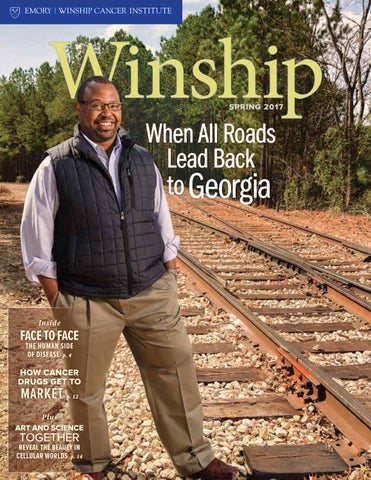

When All Roads Lead Back Georgia to
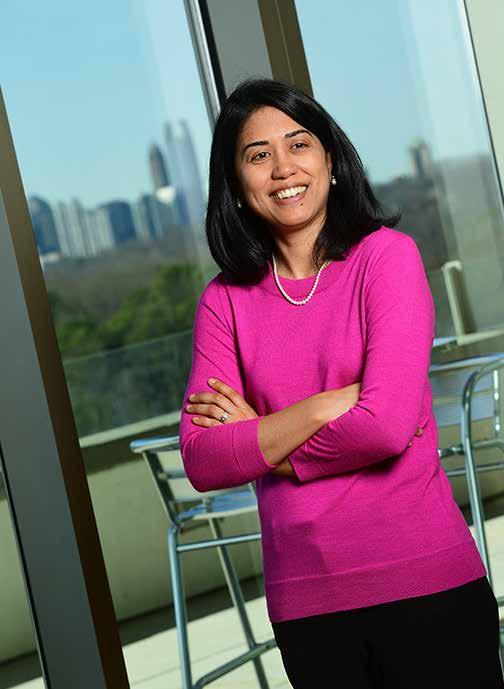
“I know their voices will speak to women who face some of the same decisions and provide them with useful information.”
Kate Yeager , Winship researcher



Magazine | Spring 2017
Features
Home Grown 6
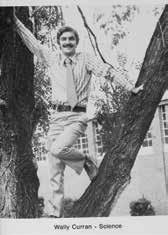
Wally Curran’s Georgia roots go back to his days as a science teacher in
Videos help patients confront fears; Winship joins the world’s largest cancer
Winship people who are Georgia natives and feel they can do the most good here in their home state.
How a Cancer Drug Gets to Market 12
Can the FDA safely speed up drug approval? Our top pharmacist takes a critical look at the process.
What Is That? 14
Giving Back
Behind the Scenes 20
Winship’s fifth annual Fashion a Cure Fashion Show.
Community Cheerleaders 23
Events that come from the heart and benefit Winship.
Point of View
Living with Prostate Cancer 24
A class of budding cancer scientists confronts the human side of the disease.
A Winship urologist says some cancers don’t need immediate treatment. 2
High resolution microscopy reveals the hidden beauty in cellular worlds.
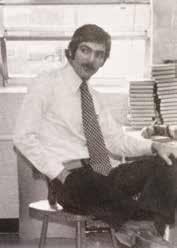
I first arrived in Georgia at age 23, when I began a three-year stint as a junior high science teacher and high school track coach in the public school system in LaGrange. I intentionally taught earth science and biology but unintentionally taught an introduction to the New England accent.


Back to Georgia
What I Learned as a Junior High School Teacher
I GREW UP IN COASTAL MASSACHUSETTS and attended college in New Hampshire, but I’ve called Georgia home for the last nine years. My connection to Georgia reaches much further back in time.
During my first week in college, my advisor asked about my career goals and I described both my interest in becoming a physician and my desire to teach and coach in a public school system prior to medical school. I was truly unaware of that plan until I voiced those words at that moment, but it was obviously deep-rooted because I did actually execute that plan. My advisor challenged me on this crazy idea but ultimately and reluctantly advised me on relevant curriculum options.
I first arrived in Georgia at age 23, when I began a three-year stint as a junior high science teacher and high school track coach in the public school system in LaGrange. I intentionally taught earth science and biology but unintentionally taught an introduction to the New England accent. I was much more successful in the latter lesson; every 3- to 18-year-old
in LaGrange worked at copying my accent, usually sounding like a bad imitation of a robotic voice.
That work experience was extraordinary, and I know that I learned far more from my students, colleagues, and friends than they learned from me. Any skills I have in communicating at the lay level and in a community setting were honed through that work experience. LaGrange was a wonderful place to work and live in and is an exemplary example of the close-knit communities that can be found throughout our great state.
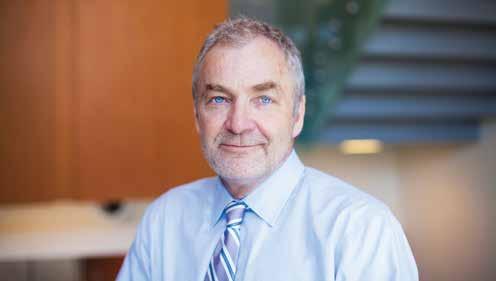
My enthusiasm for returning to Georgia in 2008, following many years in Philadelphia, was grounded in great memories of my early career in LaGrange. I celebrate my Georgia connection with Winship colleagues who are from this state, as well as with those who came here to do research, educate, care for patients, and lessen the burden of cancer throughout Georgia. We have all joined our personal and professional histories with the people of Georgia.—Wally Curran
Will they be experimenting on me?
Will I get a real drug or just a placebo? Will I be treated like a guinea pig?
DISPELLING FEARS

CANCER PATIENTS who consider going on a cancer clinical trial often start out with fears: will I be treated like a guinea pig? Will I get a real drug or just a placebo? Will they be experimenting on me?
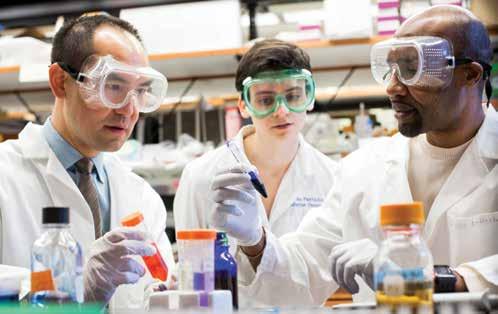
Sometimes these fears keep people from enrolling on clinical trials. Kate Yeager, Winship researcher and assistant professor in Emory’s Nell Hodgson Woodruff School of Nursing, wondered if addressing those fears in a video could help breast cancer patients understand and be more receptive to clinical trials. A grant from the V Foundation enabled Yeager to produce two educational videos that explain key benefits and barriers in clinical trials, and
feature breast cancer survivors who share their experiences and feelings about having participated in clinical trials.
Because studies show low levels of participation in clinical trials by minorities, Yeager designed one video to feature concerns expressed by African-American patients. The second video is more general. Over the past year, 50 breast cancer patients watched the videos and completed surveys asking if the information and patient stories were helpful.
“My favorite part of the project was working with the women who had participated in clinical trials as part of their breast cancer treatment. They let us video
them as they told their authentic, heartfelt experiences. I know their voices will speak to women who face some of the same decisions and provide them with useful information,” says Yeager.
The trial tested the feasibility of using educational videos in a busy breast cancer clinic and whether they can affect a patient’s intention to enroll on a cancer clinical trial. Yeager says results will be released soon Catherine Williams

The videos can be viewed at winshipcancer.emory.edu/ magazine.
Winship Joins ORIEN Research Collaboration
Winship Cancer Institute has joined the Oncology Research Information Exchange Network (ORIEN), the world’s largest cancer research collaboration for big data. The extensive database allows scientists to analyze and share findings in the development of precision medicine.
Along with 14 other top cancer centers around the country, Winship will contribute donated tissue and clinical data for research from consented patients. The research will help investigators better understand cancer at the molecular level, with the goal of developing more targeted cancer treatments.
Winship surgical oncologist Cletus Arciero serves as principal investigator for Winship in the ORIEN network.
Investigators David Yu, Pam Head, and Waaqo Daddacha.
ANN BORDEN
Face to Face with Cancer
Students gain inspiration from the personal stories of cancer patients
“I said ok Lord, this one’s yours. Just give me peace. I do not want to live every day in fear of dying.”
And for the past six years, Sharon Cunningham has been able to live her life fully despite a stage IV lung cancer diagnosis. Early in her treatment, Winship Deputy Director and lung cancer expert Suresh Ramalingam identified a mutation in her cancer that could be targeted by the drug erlotinib (trade name Tarceva). She has been on it ever since, and doing well.
Recently, Cunningham and Ramalingam shared her story with a class of students pursuing PhDs in the Cancer Biology Graduate Program in Emory’s Laney Graduate School. The class, Cancer Clinical Colloquium, was started four years ago as a way of introducing budding cancer researchers to the “human side” of the disease. Class enrollment burgeoned, and what started as an elective is now a program requirement.
The class was designed by Winship hematologist and researcher Edmund K. Waller and is now co-directed by Waller and Taofeek Owonikoko, medical oncolo-
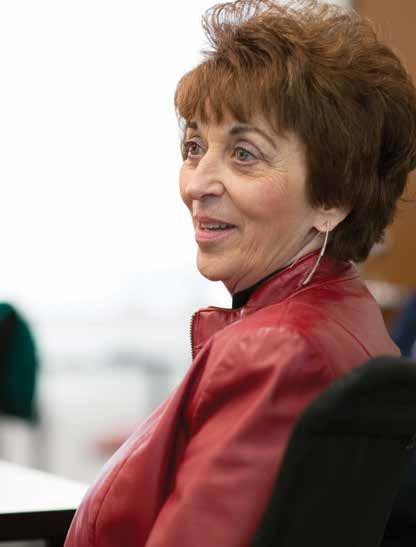
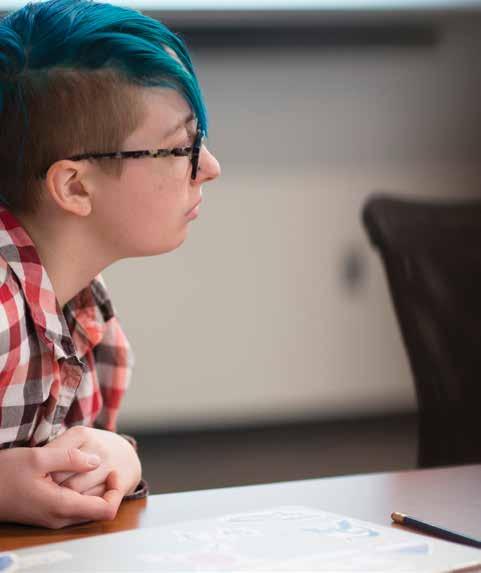
Cancer biology student Meaghan Griffin listens as Sharon Cunningham describes grappling with stage IV lung cancer.
Photos by Ann Borden
gist and researcher specializing in lung and aerodigestive cancers. Each week, a different Winship physician comes to class with a patient. Students prepare by studying the patient’s particular cancer and are ready with questions.
“Do you have a family history of lung cancer?” (yes, her grandfather died of lung cancer)
“Were you nervous about telling us your story?” (no, she’s told her story before)
“How important is your relationship with your doctor?” (very)
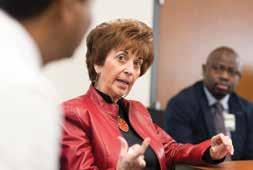
Cunningham told the class that picking the right doctor and trusting him has been of primary importance in her treatment, and that her faith has enabled her to go forward without fear. She comes in every three to four months for CT scans and Ramalingam reviews the results, which have been good. She told the class there was a moment when she asked him point blank, “What does that mean? What does the scan actually show? He said, the scan shows no cancer. But there could be invisible cancer cells. So that’s why you keep taking the drug.”
Students write weekly blogs in response to the doctor-patient presentations. This week’s presentation piqued interest in the impact of cigarette marketing on lung cancer rates, the rise of lung cancer
in people who have never smoked (like Cunningham), and dismay that lung cancer research is not as well funded as other cancer types. Emily Summerbell shared the story of her grandmother’s battle with lung cancer. Amber Caldara wrote about her firsthand experience of the military’s tobacco culture: “I don’t think we were really educated on these statistics while I was in. We frequently take courses for gun safety and mental health… but nothing on

lung cancer and tobacco use.”
Many students commented that meeting Sharon Cunningham put a face on a disease they have learned about through “numbers and molecular pathways.” Fadi Pulous found “moments of optimism” and inspiration in her story. Meaghan Griffin wrote, “When most people think about lung cancer patients, what comes to mind is the image of someone who is very fragile and terminally ill. Mrs. Cunningham blew those stereotypes out of the water.”
These graduate students spend a lot of time in labs, working directly with Winship investigators to study how cancer cells behave at the molecular level and how to exploit the mechanisms of their behavior for cancer therapy. Former students say the Colloquium class connected them to patients who motivate their research. Hope Robinson, now a third-year student in the
program and working in a pediatric cancer lab, took the course in 2015 and says it changed her perspective.
“As students of cancer biology, we spend most of our time thinking at the molecular level. We are concerned with what is happening inside the cell—what proteins are interacting? Are there changes at the genetic level? Is the DNA available for transcription or tightly wound? It could be easy to forget that on the other side of

our research are human beings with histories, families, and plans for the future that cancer is jeopardizing. The Colloquium class is motivating in a way that nothing else can be. It helps us see our research in a different way.”
Former student Christine Tallo says the experience translates directly into her current work as a Winship genetic counselor. “A fundamental tenet of genetic counseling is translating scientific concepts and research for patients to help them understand how genetics impact their treatment and their families. This class helped me realize how important this is.”
For Sharon Cunningham, the class was also a great experience, and she feels she’s played a role in guiding these young scientists: “It’s the people they are helping who will give them incentive to do this work.”—Catherine Williams
HOME GROWN
When All Roads Lead Back to Georgia
By Kimber Williams
Wherever their training and travels took them, these Georgia natives heeded the call to come back and give back. Their mission, like Winship’s: lessen the burden of cancer in Georgia.
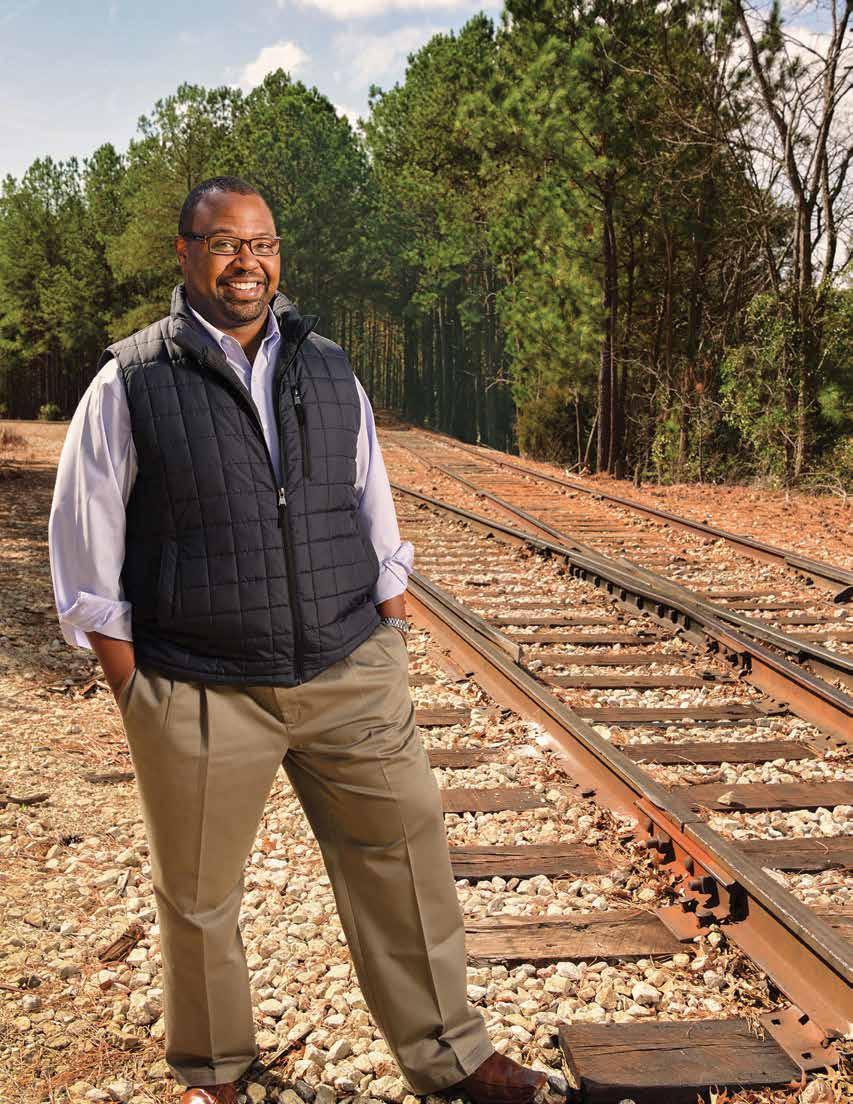
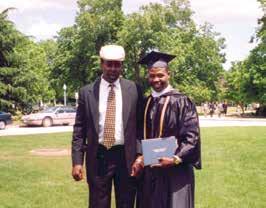
Bradley Carthon
Medical Oncologist Specializing in Genitourinary Cancers
Where are you from?
Those are words that Bradley Carthon inevitably asks each patient he treats. To Carthon, it’s a question that invites connection. In his work, connection matters.
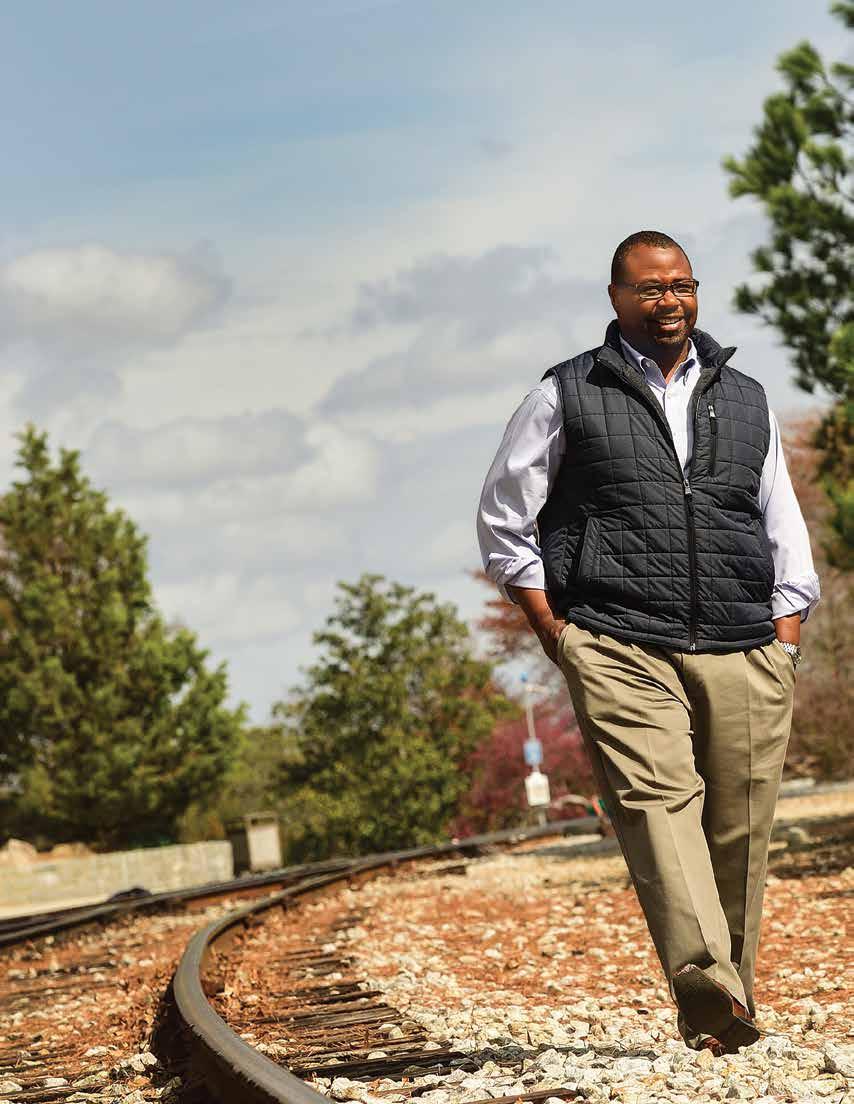
A sense of connection is one reason he came to Winship. A Georgia native, Carthon grew up in Fort Valley, a community of about 10,000 south of Macon. His mother taught at a small college; his father worked for the railroad.
Carthon would be the first in his family to pursue medicine —something he felt drawn to by the age of 12. Growing up, he’d already begun to notice disparities in health care, especially for minorities.
Although he was accepted to Harvard as a pre-med undergraduate, Carthon chose the smaller, supportive environment at Hampton University, one of the nation’s oldest Historically Black Colleges and Universities. A scholarship from Norfolk Southern Railway, where his dad worked, helped pave the way for him. > Continued on page 10

Ragini Kudchadkar
Medical Oncologist
Specializing in Melanoma
For many years, Ragini Kudchadkar was convinced that she wanted to be a neurologist. She loved the basic science of it, the thrill of studying neural pathways, the intrigue of the human brain.
As an Emory undergraduate majoring in neuroscience, she even had the chance to work in Yerkes National Primate Research Center studying Parkinson’s disease. She debated pursuing an MD or a PhD or both. But ultimately, she felt pulled toward patient care.
At the Emory School of Medicine,
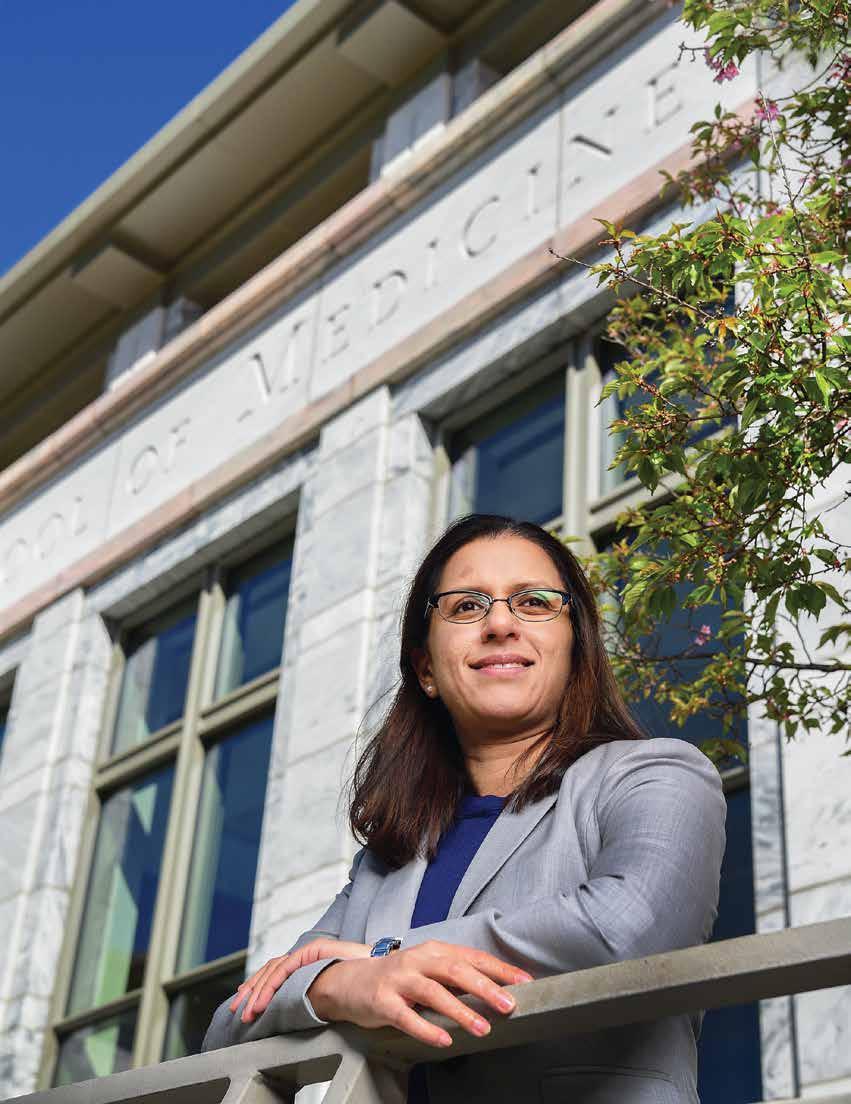
Kudchadkar went on to complete a rotation in neurology, but surprisingly found herself drawn to oncology. “When we go through our rotations, many of us decide where we want to fit in,” she recalls. “I thought I’d rather be with the people who need me the most.”
As her interest turned to advanced melanoma, she recalls friends trying to talk her out of it. Even 10 years ago, there were few medical options once melanoma had spread. But Kudchadkar knew where she belonged. > Continued on page 10

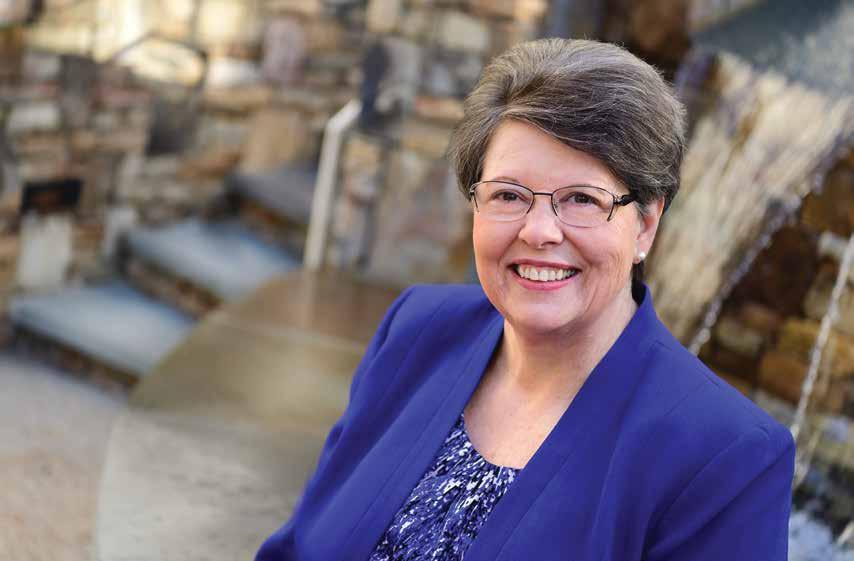
Catherine Parker
Unit Director, Ambulatory Infusion Center
As unit director of Winship’s largest infusion center (on the Clifton Road campus), Catherine Parker touches the lives of more than 100 oncology patients a day who report for treatments and participate in clinical trials, overseeing a dedicated staff of some 55 nursing professionals.
Chemotherapy. Biotherapies. Immunotherapies. Hydration and supportive therapies. The infusion center is among Winship’s busiest programs — a place of support and healing and also one of hope.
After nearly 38 years of oncology nursing, though her jobs and responsibilities have changed, Parker says her priorities have never wavered. “My focus is still about the patient, hoping to make things better for the nursing staff so they can deliver the best, most efficient care to the most important patients in the world — the strongest, bravest people I know,” she says.
Parker will tell you that she was born to do this work.
And indeed, cancer emerged early in her life. Growing up in Litho-
nia, Georgia, Parker was eight years old when her mother tested positive for melanoma in her lymph nodes. After a resection, the melanoma recurred. “They basically told her there is no treatment and you probably won’t live five years,” Parker recalls. “This was roughly 1966—the word ‘cancer’ was a death sentence.” It was a diagnosis her mother couldn’t accept. “She was determined to fight it, because I was heading into my teenage years and she knew I was going to need a mother.” > Continued on page 11
all the resources that are available,” he says. “In my own community, I saw people pass away from cancer or have to make choices between paying for the basics of living and cancer treatment.”
When he was 19, his mother was diagnosed with gastric cancer. A surgeon flatly announced that they’d found a large tumor with lymph node involvement and that his mother likely had six months to live. “I realized the process and conversation could have been done better. I felt I could help others in times like that,” Carthon says.
Her death left him with “an abundance of questions, in some cases, unanswerable.”
Increasingly, his academic and research focus pivoted toward cancer. “I had an interest in helping people who may not have
“In caring for people, it’s nice to feel that you are really making a difference in their lives,” she explains. “Even when the outcome isn’t always good, you have the opportunity to make a positive impact and be part of someone’s life at a critical time, contribut-
When Jocelyn Spragg, a Harvard professor who ran a program in medical research for under-represented students, invited him to a summer honors program, he was sold. Carthon was later accepted into the school’s MD/PhD program. Between research, residency, and fellowships, he would spend the next 12 years in Boston.
All the while, Georgia beckoned—a call to serve the needs of the people and communities he knew so well. After a fellowship at the University of Texas MD Anderson Cancer Center in Houston, he joined the genitourinary oncology team at Winship, working with patients with prostate, bladder, testicular, and renal cancers.
Within his busy practice, Carthon sees patients ranging in age from 17 to those well into their 90s. He enjoys the challenge
ing to make a hard situation better.”
After completing her internal medicine residency at Emory in 2006, Kudchadkar went on to hematology and medical oncology training at the University of Colorado.
Today, she specializes in the treatment of metastatic melanoma, basal cell carcinoma, and other cutaneous (skin) malignancies and she co-leads Winship’s melanoma team.
As a member of Winship’s Discovery and Developmental Therapeutics Research Program, she’s also been involved in testing some of the most cutting-edge immunotherapy drugs currently approved for melanoma.
“There are now so many more options,” she says. “People are living longer and longer.”
of translating complex cancer terminology into something meaningful.
“I put some thought into how I relay the message,” he explains. “In Boston, people just wouldn’t get certain analogies. In the South, I can say, ‘This thing is aggressive. It’s growing rapidly like kudzu, we need to do something,’ and that message is understood. We find many creative ways to get the point across, no matter the patient.”
Knowing that prostate cancer has a higher-than-average rate of occurrence within the African-American community, Carthon goes where he is needed, speaking about prevention, treatment, and lifestyle issues in local churches and church conventions. He’s helped mentor local high school students and attended career days at elementary schools.
To Carthon, those are exactly the kind of connections that matter.
“For me, cancer poses a challenge that simply isn’t static—there is always something higher to shoot for.” w
Growing up in Columbus, Georgia, Kudchadkar once dreamed of traveling far from home to study and practice medicine. At the same time, she learned firsthand about the commitment of being anchored to your work—her father, a radiologist, worked at Martin Army Community Hospital at Fort Benning for more than 30 years.
Ultimately, she chose to be close to home and family. Today, she counts Winship as part of that family. Those lines fully blended last year, when her father was treated for colon cancer at Winship.
“You don’t always realize that the people you work with are also a close-knit family,” she says. “He’s now doing well. It felt good to have family caring for my family.” w
BRADLEY CARTHON continued
RAGINI KUDCHADKAR continued
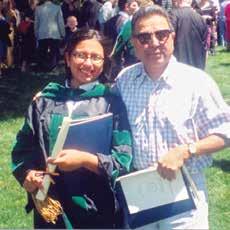
Ragini Kudchadkar and father at graduation
“Being a physician was an opportunity to make the lives of others better,” she reflects.
She grew up in Savannah, Georgia, and her parents were leaders in a closeknit Filipino-American community that numbered about 100 families. Her father, Samuel Torres, is a urologist who recently retired after 43 years in practice. Her mother Erlinda, is a nurse, her aunt is a pediatrician. Giving back to the community was an unwritten credo.
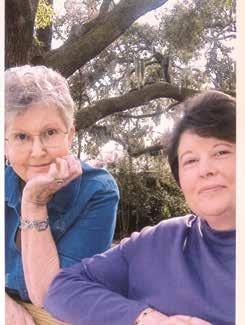
Helping her became second nature, the seedbed for Parker’s nursing career. If she came home from school to find her mother lying on the couch, she knew to spring into action, doing whatever was needed. In the end, her mother lived to be 71
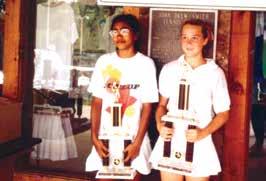
Torres, a talented athlete, found her own home on the tennis court and as a teenager rose to the highest level of the amateur tennis world, where she ranked number two nationally. Traveling to tennis competitions all around the country introduced her to worlds beyond her Savannah roots. “I had friends all over the country,” she says.
When it came to college, Torres aimed high—a bachelor’s degree in biology from Harvard University, an MD from Stanford University, a radiation oncology residency at the University of Texas MD Anderson.
As a student, Torres was drawn to the complexities of cancer. The exciting possibility of discovery fed both her curiosity
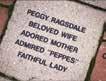
and died in 2009 after a heart attack. She is commemorated with a paver in Winship’s Vaughn-Jordan Healing Garden, thanks to donations from Parker’s staff.
Initially, Parker thought about becoming a medical assistant. But 20 years after earning an associate’s degree from DeKalb College, she went back to school for a bachelor of science, and then a master’s degree from Brenau University.
Parker was 21 years old when she first came to work in the surgical oncology unit of Emory University Hospital. She loved her patients and would sometimes share her mother’s success story to encourage them.
Parker’s exposure to outpatient treatment came about when her husband Alvin was diagnosed with rectal cancer. “He needed chemotherapy, radiation, surgery, and more chemo,” she recalls. “I learned a lot by being with him through it all.”
This spring, 21 years later, he remains cancer-free.
In 2006, Parker was asked to manage the
and her desire to make a difference.
“Cancer is often a confounding and life-changing diagnosis—and there is a humility that it brings to both the patient and the health care provider,” she says.
With a stellar academic resume, it’s not hard to imagine that Torres could work just about anywhere she wanted. In fact, she is doing just that.
“When you see so many suffering from cancer, you think, ‘Where do I want to be, to make the most impact?’ I wanted to take what I’ve learned from some of the best schools in the country and adapt it to our patient population,” she says.
“In the end, I knew I wanted to be close to family, and close to patients I could help.” w
busy infusion center on a temporary basis. A few years later, it became permanent. Though she jokingly compares her job to air-traffic controller, Parker strives to make a meaningful difference in the lives of both her patients and her staff of oncology nurses.
“Cancer care is not a one-man show. The stakes are high. Here, you’ll find nurses, physicians, pharmacists, nurse technicians, and researchers all in the same building. A drug we’re administering today may have been developed right upstairs.”
In this work, Parker knows that lives can change in a second. Seeing cancer touch people she loves, she understands the weight of the word.
“The caring we give is about so much more than the drugs we administer,” she says. “If these patients are not touching our hearts, we are in the wrong place.” w
CATHERINE PARKER continued
MYLIN TORRES continued
Torres and childhood friend with tennis trophies
Parker’s mother is commemorated in the Winship Healing Garden
HOW A CANCER DRUG GETS TO MARKET
YEARS 1 — 2
Preclinical testing
Preclinical Testing YEARS 3-4 YEARS 1-2 IND
Preclinical Testing YEARS 3-4 YEARS 1-2
3-4 YEARS 1-2
Potential compounds tested in the lab.
By
IND
“Long before a new drug gets to the multi-phase clinical trial process, it is exhaustively tested in the lab using cell lines and animals. At this point, the “drug” is a collection of five to ten potential molecules that researchers have identified for their ability to impair or kill cancer. Testing involves administering escalating doses to animals in order to determine toxicity over the short term and long term. Researchers look at how the drug is metabolized, how it affects vital organs like bone marrow, liver, kidneys, and heart, and whether it causes mutations or interferes with fetal development.
The biggest thing to learn from preclinical testing is what compounds to not pursue. If a drug is too toxic or doesn’t work in an animal, then it’s clearly something we shouldn’t take into human testing.”
Preclinical testing gathers the data that’s crucial for the next step: a Phase I trial, the first-in-human testing.
Phase Clinical Preclinical Testing
Phase I Clinical Trial
First testing in humans.
15-30
YEARS 3 — 4
IND
“Potential compounds tested in the lab. 15-30
CONDUCTING TRIALS OF NEW DRUGS AND TREATMENTS goes to the heart and soul of Winship’s mission to turn scientific discoveries into therapies that help cancer patients. The trials are painstaking. It can take nine or more years from the first time a new anticancer compound is tested in a lab, to the point when the U.S. Food and Drug Administration (FDA) grants permission to market it as a drug.
Phase I clinical trial
To launch the clinical trial process, the drug’s sponsor makes an investigational new drug (IND) application to the FDA. The IND contains all of the chemistry and preclinical testing data plus a protocol for how the Phase I clinical trial will be conducted. Usually, the IND is submitted by a pharmaceutical company that hopes to bring the drug to market. Once the IND is approved, clinical testing begins.
Phase I trials that introduce a promising first-in-class molecule can be very exciting for Winship patients. These are the kind of trials we want to be involved in.”
The primary goals of Phase I trials are to determine a safe dosage range and to see what the drug does in patients. How is it handled? Does it get to where it needs to be in the body? Does it cause side effects? Does it affect the cancer? Phase I trials typically enroll 15 to 30 patients who are divided into cohorts that receive the drug in different doses. The idea is to find the most effective dose that doesn’t cause severe side effects.
First testing humans.
First testing humans.
Potential compounds tested in the lab. 15
Catherine Williams n Illustration By Damien Scogin
Patients are divided into cohorts that receive the drug in di erent doses.
reviews all data = approved/not approved.
Preclinical Testing
When a promising drug fills an unmet medical need, it could get accelerated approval before clearing the full testing regimen.
First testing in humans.
Potential compounds tested in the lab. Testing focuses on particular cancer. New drug compared to standard treatment.
The 21st Century Cures Act signed at the end of 2016 proposes to speed up the FDA’s drug approval process. But can that happen without sacrificing safety? How do we, the lay public, evaluate the proposed changes?
R. Donald Harvey, Winship’s top pharmacy expert
YEARS 5 — 6
Phase II clinical trial
Phase II trials hone in on how well the drug works on a particular cancer. They enroll 30 to 120 patients with the same type of cancer and set out to measure the success of the drug with that population. If there is currently no effective treatment for that cancer, then the drug might be eligible for accelerated approval (see graphic above).
“One of the challenges with accelerating the process is you still have to compare the new treatment to what is already being done.”
YEARS
7 — 8
Phase III clinical trial
This is where the rubber hits the road, when the new drug is compared to standard treatment already used in clinics.
“
Sometimes the promising results from a Phase II trial don’t hold up in a Phase III trial.”
Phase III trials enroll several hundred patients who are randomized to receive either the new drug or a standard treatment. The results of a Phase III trial should show how effective the new drug is and whether it’s a viable alternative to what’s already available.
and director of Winship’s Phase I Clinical Trials section, has a mixed response to the proposal: “There are no shortcuts to testing safety and efficacy, but the process could be better tailored to produce more types of information in less time.”
If there is currently no e ective treatment for that cancer,
YEAR 9 AND BEYOND
then the drug might be eligible for accelerated approval.
New drug application
“Once all testing data have been gathered and analyzed, the drug sponsor submits a new drug application (NDA) to the FDA. A team of scientists within the FDA reviews the testing data, the proposed drug labeling, and how the drug is to be manufactured, processed, and packaged. After a drug is approved, the FDA relies on a voluntary system of physicians and patients reporting adverse effects. Harvey would like to see more of this information gathered earlier, during the approval process. True personalization of treatment is understanding the right dose, given for the right duration, in the right patient.”
Harvey says many factors go into how well a treatment works, such as how the drug interacts with foods and over-the-counter drugs and whether a patient’s age or sex affects how it’s metabolized. The goal is to find the best treatment for each individual patient, Harvey says, “We still have work to do to achieve this goal.” w
What Is That?
Science and art come together in cellular images
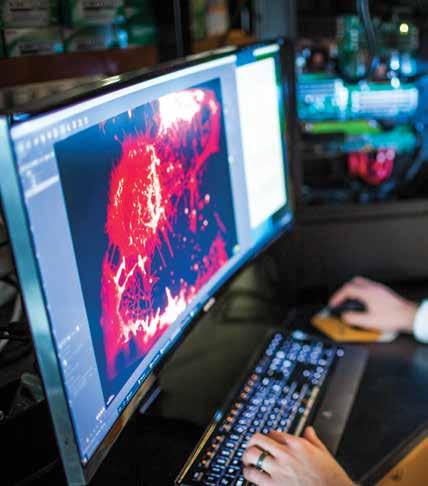
A key to figuring out how to defeat cancer is understanding how it behaves at the cellular level. Winship researchers use high resolution microscopy to peer into cellular worlds and illuminate the beautiful, yet deadly, structures within.
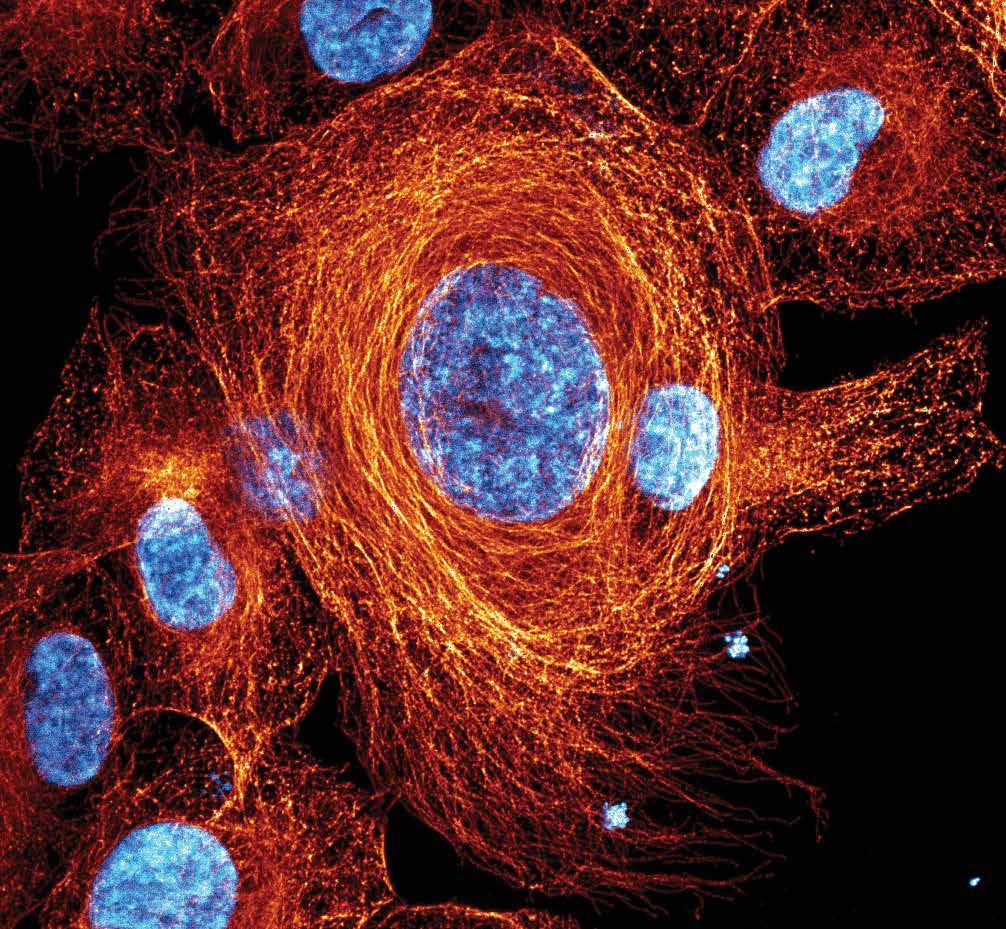
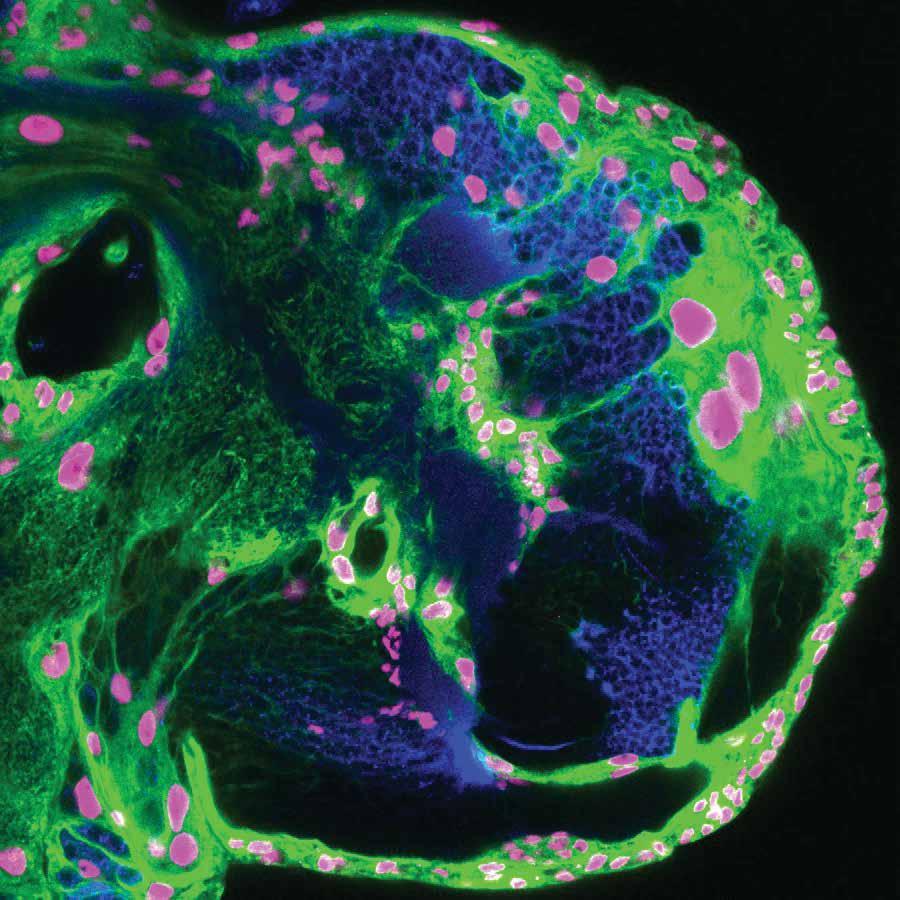
Emily Summerbell from Winship investigator Adam Marcus’s lab created images of the inner skeleton of lung cancer cells to study how these structures change within groups of invasive cancer cells. The cell skeleton (made of a protein called tubulin) is orange. The nucleus of the cell is blue. s
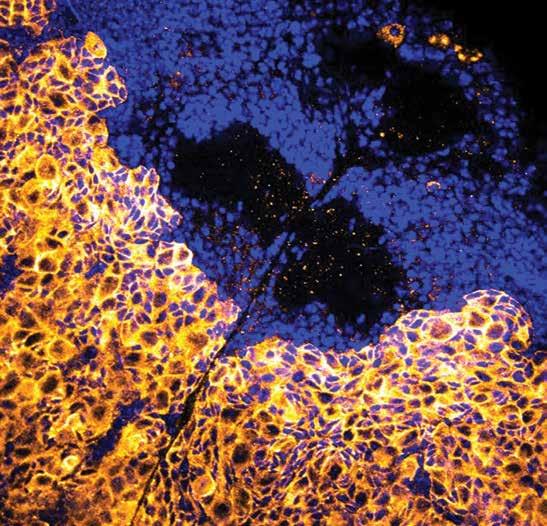
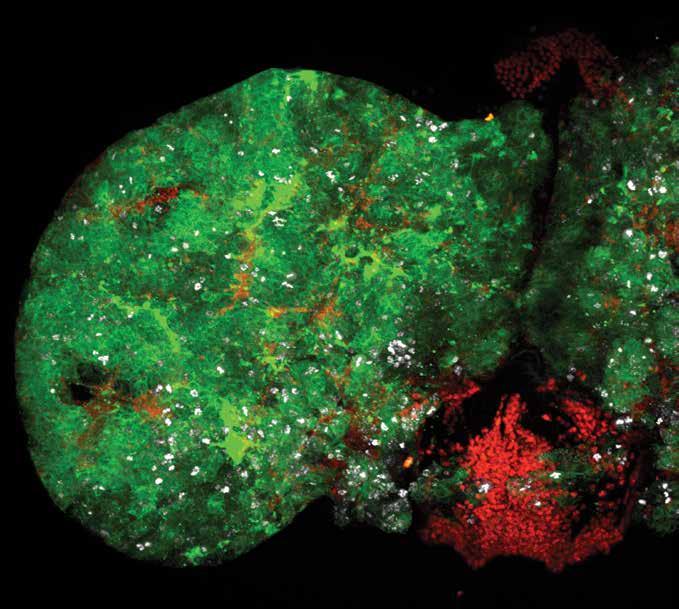
Subhas Mukherjee in Winship pathologist Dan Brat’s lab uses a fly brain to show a tumor (orange) growing into the normal brain tissue (blue). Mukherjee studies the behavior of brain tumor stem cells to learn how targeted therapies could help.
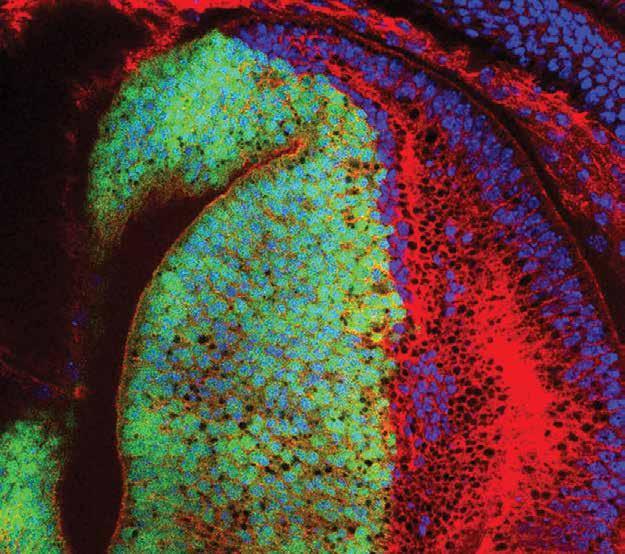
Briana Brown magnified the wing of a fly 63 times in order to mimic a form of lung cancer mutation. She’s trying to understand how the mutation works to promote metastasis or the spread of these tumors.
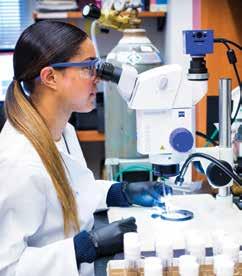
Working in the lab of Melissa Gilbert-Ross, director of the Winship Cancer Animal Models Shared Resource, graduate student Briana Brown dissects a fruit fly to isolate its wing. She then stains and magnifies the wing to create the image below. s
ANN BORDEN
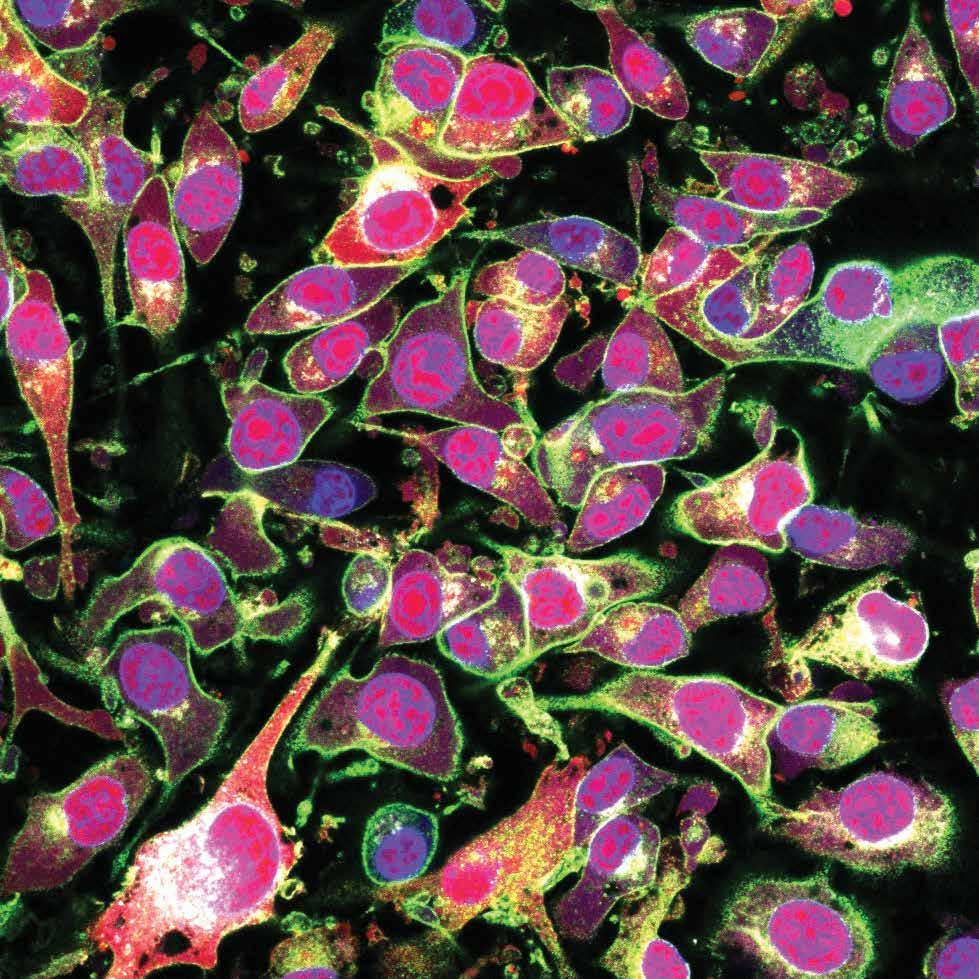
Satoru Osuka working in the lab of Erwin Van Meir, Winship neuro-oncology investigator, uses brain tumor cells from a mouse to study the recurrence of glioblastoma multiforme. This image represents an over-expressed protein (in green) that could be key in the progression of the disease. The cell body is red and the nucleus is purplish blue.
s s
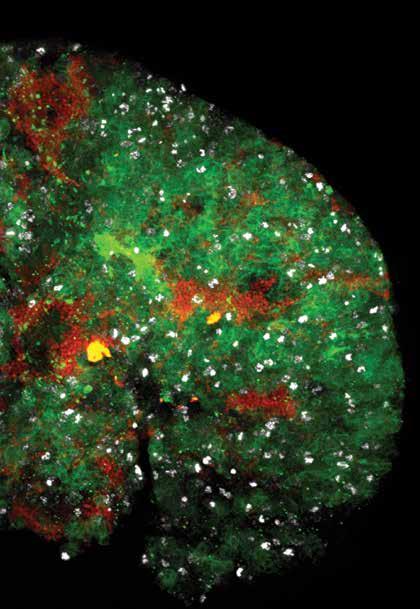
Alex Chen from Winship brain tumor researcher Renee Read’s lab uses fruit flies to understand glioblastoma multiforme, a malignant and incurable brain tumor. This image depicts the effects of knocking down or reducing the amount of protein that may be involved in tumor progression.
Subhas Mukherjee enlarged the tumor in a fly brain 20 times to depict the tumor stem cells (in green) and abundant dividing cells (in white). The cell neurons are in red.

Emily Summerbell created what she calls a tubulin sunburst from the internal skeleton of a lung cancer cell. It is made of structures called microtubules. The pushing and pulling of the cell skeleton plays a critical role in how cancer cells move and multiply.
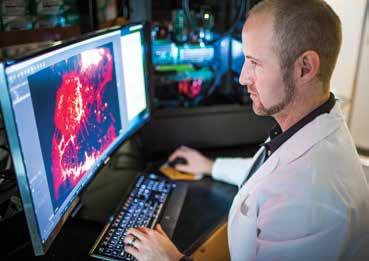
Neil Anthony, assistant scientist in the Integrated Cellular Imaging Shared Resource, views a cancer cell in the new lattice sheet microscope. The new technology enables researchers to view live cells at the highest combined 4D resolution attainable (three spatial dimensions plus time). Winship is one of only 15 sites worldwide to acquire and install a lattice sheet microscope.
Winship researchers who made these images are
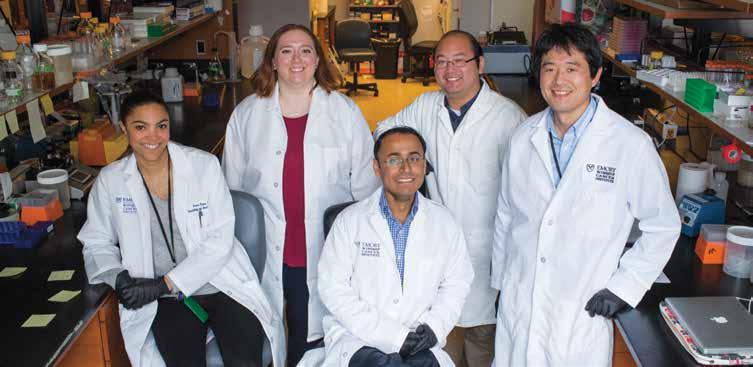
The
(left to right): Briana Brown, graduate student; Emily Summerbell, graduate student; Subhas Mukherjee, postdoctoral fellow; Alex Chen, graduate student; Satoru Osuka, postdoctoral fellow.
ANN BORDEN
ANN BORDEN
&Behind the scenes
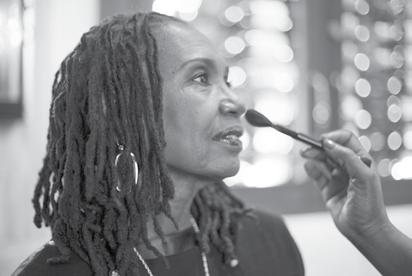
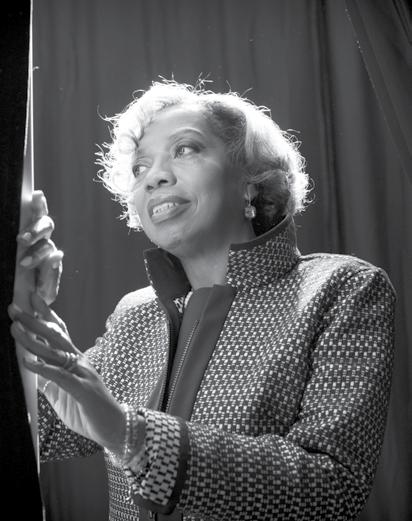
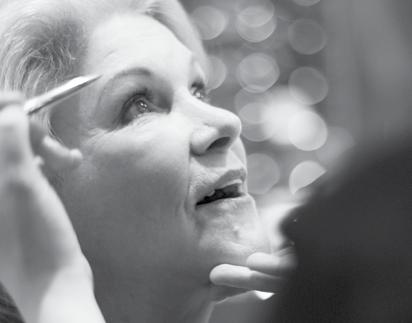
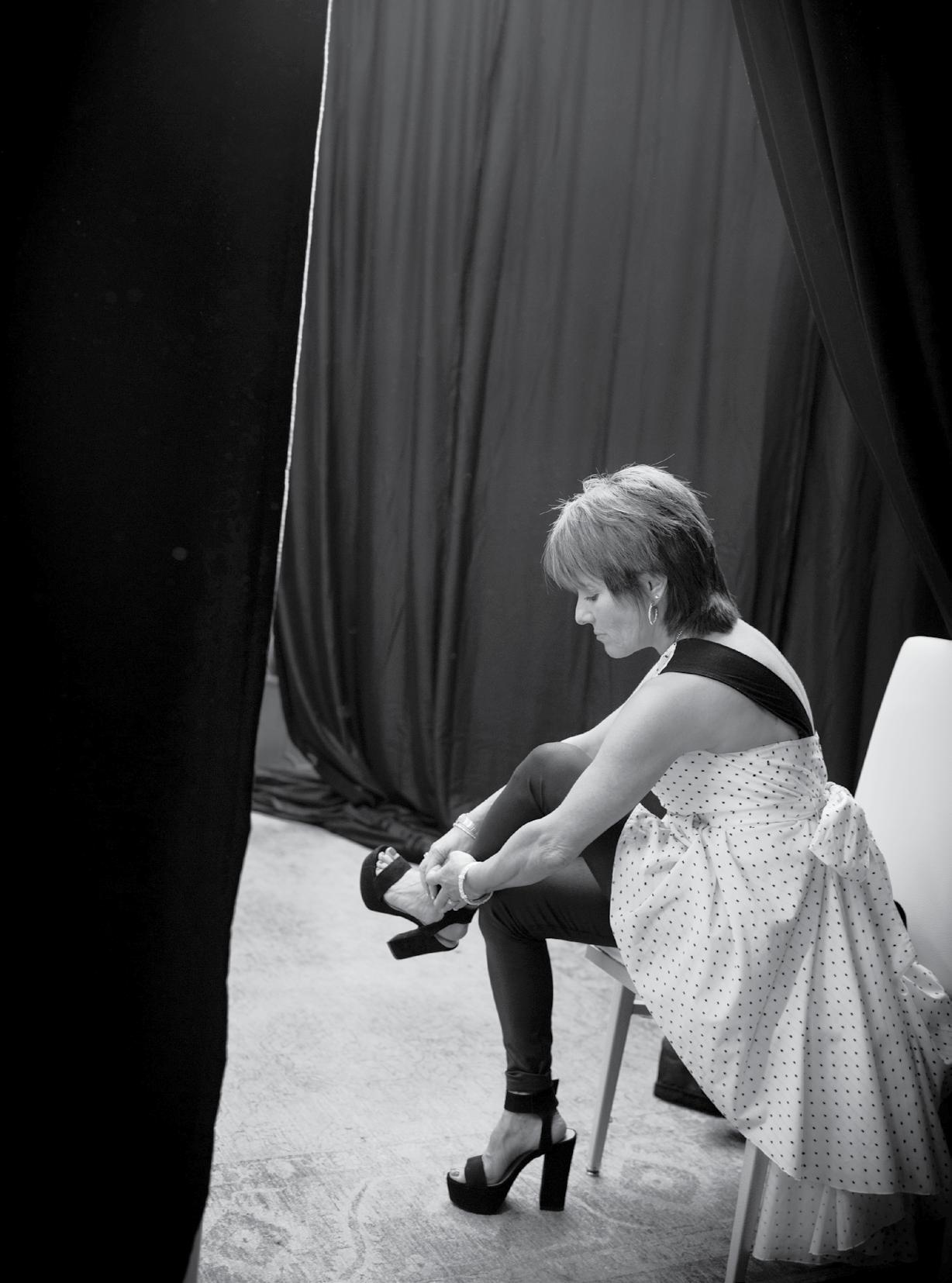

Black and white photos by Ann Borden

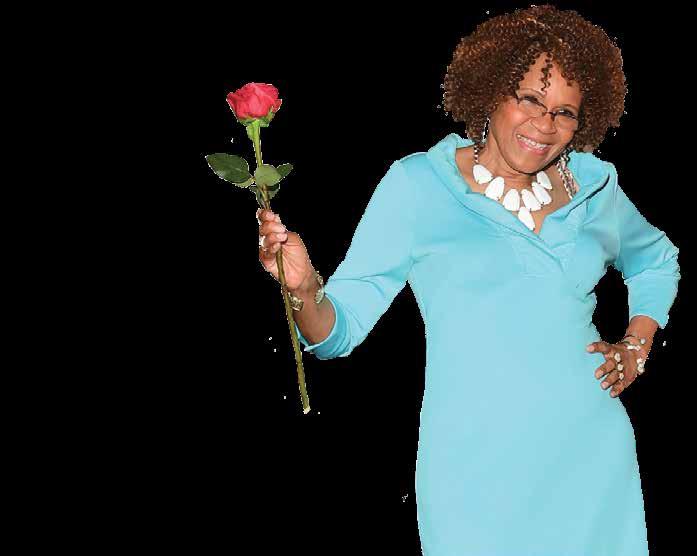
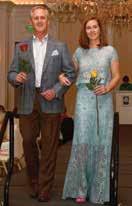
Behind the scenes, models primped with the help of clothes, hair styling, and makeup donated by two dozen Atlanta boutiques and salons. On the runway, they strutted their stuff for Winship Cancer Institute’s fifth annual Fashion a Cure Fashion Show held at the St. Regis Atlanta on Valentine’s Day. More than 550 guests attended the event, which raised $300,000 for cancer research.
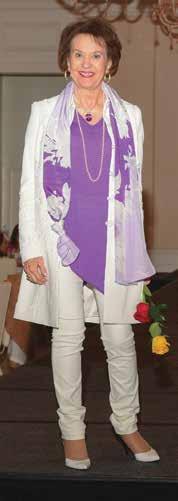



No ordinary models, these runway volunteers were cancer survivors (red rose), family members touched by cancer (yellow rose), and Winship faculty and staff (white rose).



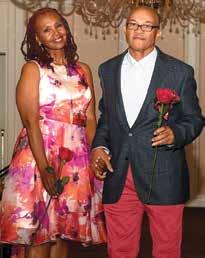

Pictured: 1. Bari Ross 2. Bettie Knox-Brown 3. Dawn Mullins 4. Erica Aronin 5. Claire Russell 6. Ada Lee Correll 7. Margaret Anne Masters and son Hampton 8. Alia Chernnet 9. Winship radiation oncologist Mylin Torres 10. Annie Griffin 11. Bari and Charles Ross 12. Daye Sullivan.
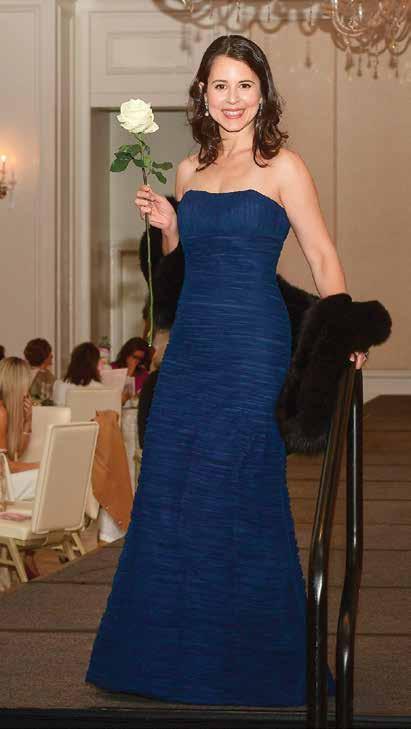


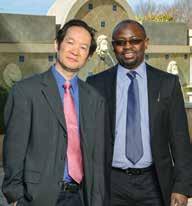

13. WInship medical oncologist Jane Meisel 14. Georgia Proton Treatment Center President Ashley Preisinger 15. Bennett Brown and Lindsay Kimbrel 16. Fashion Show Scholars Xingming Deng and Taofeek Owonikoko 17. (left to right) Fashion Show co-chairs Lynne Rankin and Janet Turman; emcee Barbara Dooley, the “first lady” of Georgia football; Winship Executive Director Wally Curran; Fashion Show co-chairs Diane Barber and Greer Pope.
Community Cheerleaders
By Dana Goldman



Charles “Butch” Price knew little about cancer or fundraising when he received a call eight years ago from a neighbor asking for a little help. The neighbor, a fellow member at the Dunwoody Country Club in Atlanta, was asking for Price’s assistance planning a golf tournament at the club to raise money for prostate cancer research. “Sure,” Price said. Little did he know he’d end up chairing the event three or four times in subsequent years. And little did he know the event would eventually go from raising $28,000 a year for Winship to $225,000 in 2016.
The golf tournament eventually became known as the John H. Kauffman Prostate Cancer Fundraiser at Dunwoody Country Club. Thanks to a committee of dedicated individuals, the event has expanded to include a live and silent auction, a reception, and a dinner for tournament participants and Winship scientists.
At Winship, Dunwoody Country Club
became known as a model of a community fundraiser, providing important financial support to jumpstart innovative research projects that explore new ways to outsmart cancer and lead to better treatments.
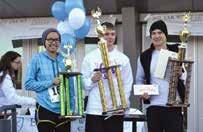
Other communities passionate about Winship’s cancer research have taken notice, starting their own annual fundraisers. Those include a golf tournament at the Country Club of Roswell as well as the Tina Borg 5K Race in Athens, Georgia, honoring former Winship patient Tina Borg. The newest community fundraiser, a car group called the Peach State Challengers, put on its first Cars vs Cancer Car Show in 2016. Although members of the group are Dodge Challenger owners, the car show was open to any make and model, “since cancer doesn’t discriminate.”
To find out about hosting your own fundraising event, contact Pam McAdams, senior associate director of development at Winship Cancer Institute: 404-727-6175 or pam.mcadams@emory.edu.
“We really appreciate these events because they come from the heart and engage members of the community in unique and creative ways,” says David Edwards, senior director of development at Winship. “Winship is doing the kind of work that gives cancer patients new options. These funds help support that work.”
Butch Price continues to be involved in organizing Dunwoody Country Club’s annual event. While he was first drawn in because of his neighbor, he and other members of the Dunwoody Country Club have become passionate supporters of Winship. “Ultimately all of us are touched by cancer at some point in some way,” he says. “To be able to see how Winship doctors are attacking cancer and helping people is really rewarding.” w
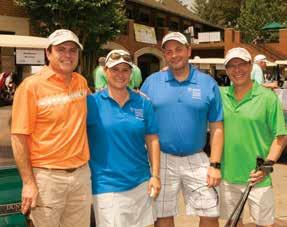
Clockwise from top: the John H. Kauffman Prostate Cancer Fundraiser at Dunwoody Country Club; check presentation from the Cars vs Cancer Car Show; winners of the Tina Borg 5K Race; Kauffman Tournament leadership (left to right) John Mills (co-chair 2017), Charles “Butch” Price, Rick Mensen, Wayne Thatcher, Richard McCraney, Ed Kennedy (co-chair, 2017).

Living with Prostate Cancer
Observation of slow-growing tumors can help avoid harm from treatment
By Christopher Filson n Illustration by Michael Morgenstern /YNHH collection
When I tell a man newly diagnosed with prostate cancer that he doesn’t need treatment, I am sometimes confronted with surprise, anxiety, and confusion. These reactions are common because of general fear of the “big C” and perhaps the knowledge that prostate cancer is responsible for more than 25,000 deaths per year in the United States.
Despite a risk of death for some men with prostate cancer, many prostate tumors are slow-growing and do not pose a threat to a patient’s life. Today we have
better tests to help differentiate between the indolent and more lethal prostate tumors. Over the past few years, clinical trials have suggested that surgery and radiation do not prolong life for certain men with less aggressive prostate tumors. Furthermore, treatment with surgery and radiation can be associated with significant side effects—like loss of control of urine and decreased sexual function—that are often temporary, but can persist for life.
Based on this recognition of the less-aggressive nature of many prostate tumors, there has been a
growing acceptance of close observation of men with low-risk prostate cancer called active surveillance. This is a surveillance strategy that still maintains the opportunity to cure the cancer with treatment, should the need or desire arise. It is important to acknowledge that this type of observational strategy does not mean urologists turn their back on patients and their disease. On the contrary, it is a dynamic approach that involves frequent monitoring of the cancer to ensure the tumor is under control; this often entails getting blood tests twice a year, and undergoing repeat biopsies every one to two years. This approach has allowed thousands of prostate cancer patients to maintain their quality of life and avoid a major impact on their sexual and urinary function, which often will occur with definitive treatment. I have taken care of men who have avoided side effects for years and have felt that the monitoring had a minimal impact on their quality of life.
Though promising for many, active surveillance is not for everybody. Notably, the choice to pursue active surveillance is a shared decision between the patient and physician, and must align with a patient’s beliefs and ability to cope with an untreated cancer. It is also important to recognize that the decision-making process should include input from the patient’s partner. Furthermore, any potential candidate must pass a rigorous evaluation before entry into active surveillance to ensure that a more aggressive tumor isn’t missed. At the very least, this involves a repeat biopsy within a year of diagnosis. Patients can also undergo genomic biomarker testing or magnetic resonance imaging (MRI) to help confirm that their tumor has a low likelihood of being aggressive and potentially lethal. In my experience, these
tests help reassure patients who are on the fence about considering surveillance.
After entry into active surveillance, we know that patients generally do well but aren’t always out of the woods, so to speak. About one-third to one-half of patients will go on to some form of treatment within 10 years of starting a surveillance program. The good news is that studies have shown that, in general, men who get delayed treatment are just as likely to be cured of their disease, compared with men who get immediate treatment. Though this means that a portion of active surveillance patients will still be at risk of side effects from treatment, it also highlights the potential to delay any detrimental impact from surgery or radiation to a later time. Furthermore, it also means that many patients will avoid treatment altogether.
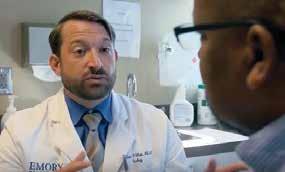
Winship urologist Christopher Filson treats patients with prostate and other urologic cancers and specializes in robotic and laparoscopic surgery. He has a particular interest in individualized treatments and the use of active surveillance.
Again, sometimes the idea of not getting treatment for cancer can be hard to come to grips with. Many of my patients have found that resources offered at Winship, such as patient support groups, have helped them make the decision to pursue active surveillance. We now have nearly two decades of research and studies supporting active surveillance for men with less aggressive prostate cancer.
I would recommend that newly diagnosed prostate cancer patients discuss with their urologist whether active surveillance would be right for them. If so, they should ask how they would be monitored, and what findings would result in treatment being recommended. In my practice, I try to clearly lay out the game plan for my patients entering surveillance, which helps minimize surprises down the road. In the end, this can be the better approach for many men with prostate cancer. w
“Active surveillance has allowed thousands of prostate cancer patients to maintain their quality of life and avoid a major impact on their sexual and urinary function.”
1365-C Clifton Road N.E.
Atlanta, GA 30322
winshipcancer.emory.edu 1-888-Winship
Printed by an FSC-certified printer using sustainable methods that reduce waste and volatile organic compound (VOC) emissions. Paper is a 50% PCW recycled sheet, sourced from a certified managed forest
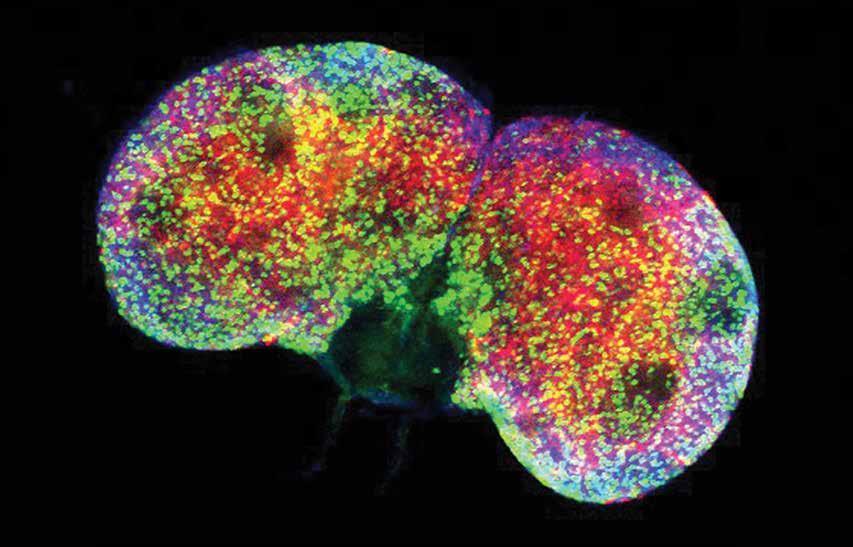
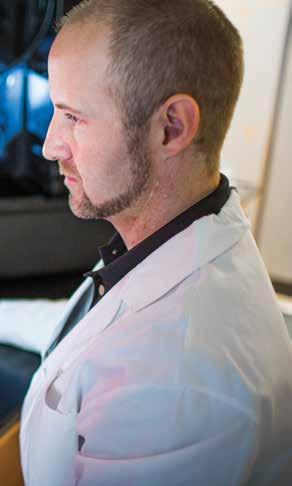
Winship postdoctoral fellow Subhas Mukherjee uses magnified images of an adult fly brain to understand how therapies can target brain tumor stem cells.