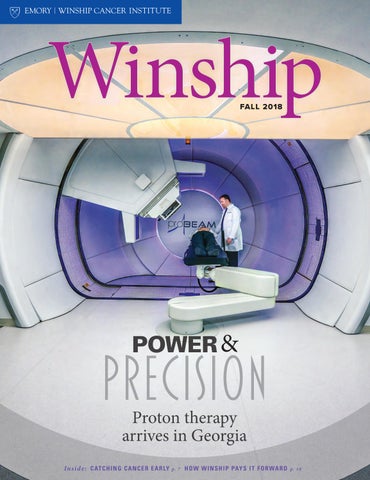
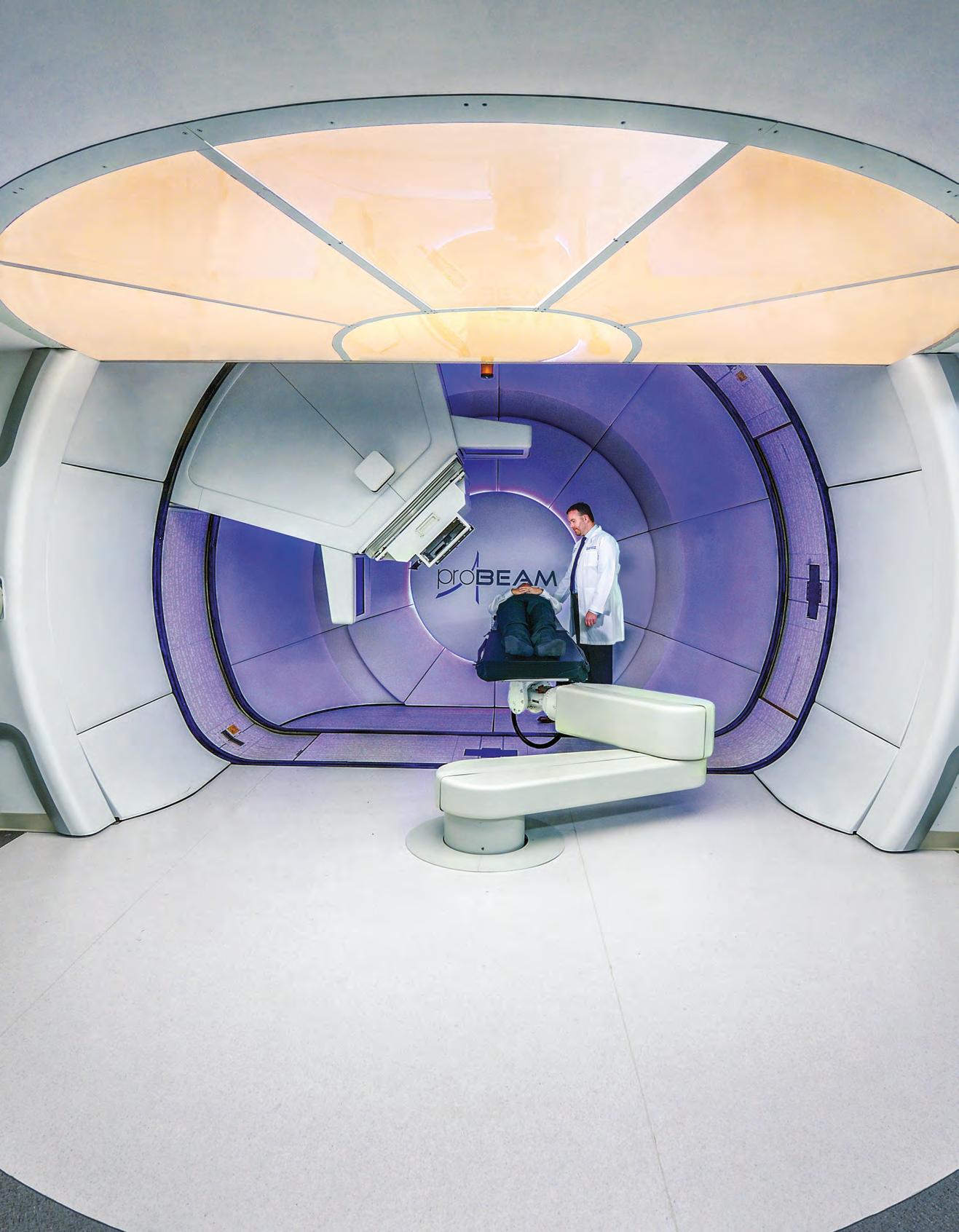
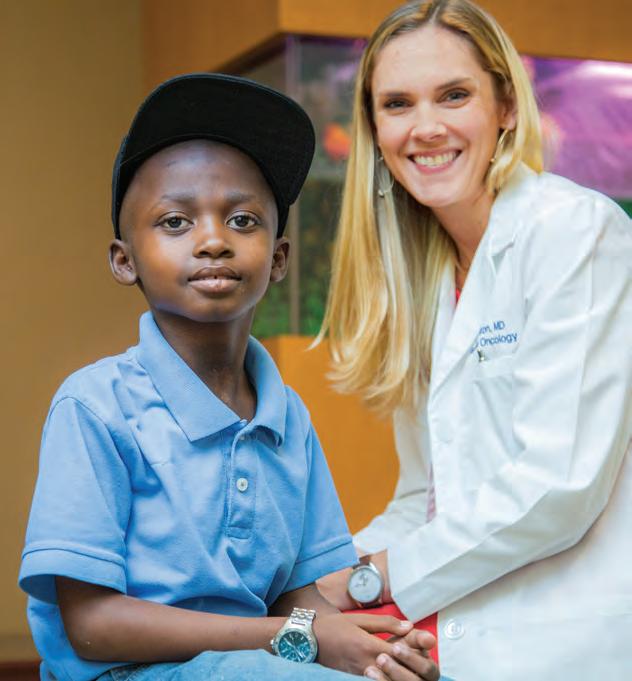
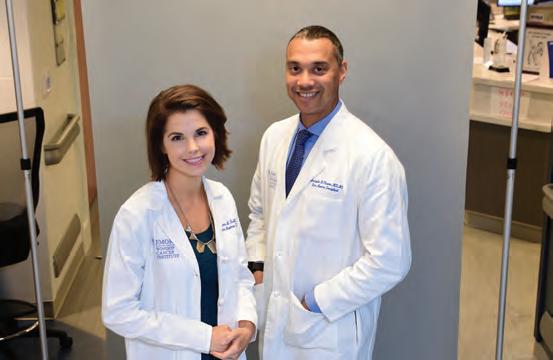
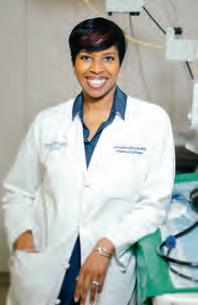
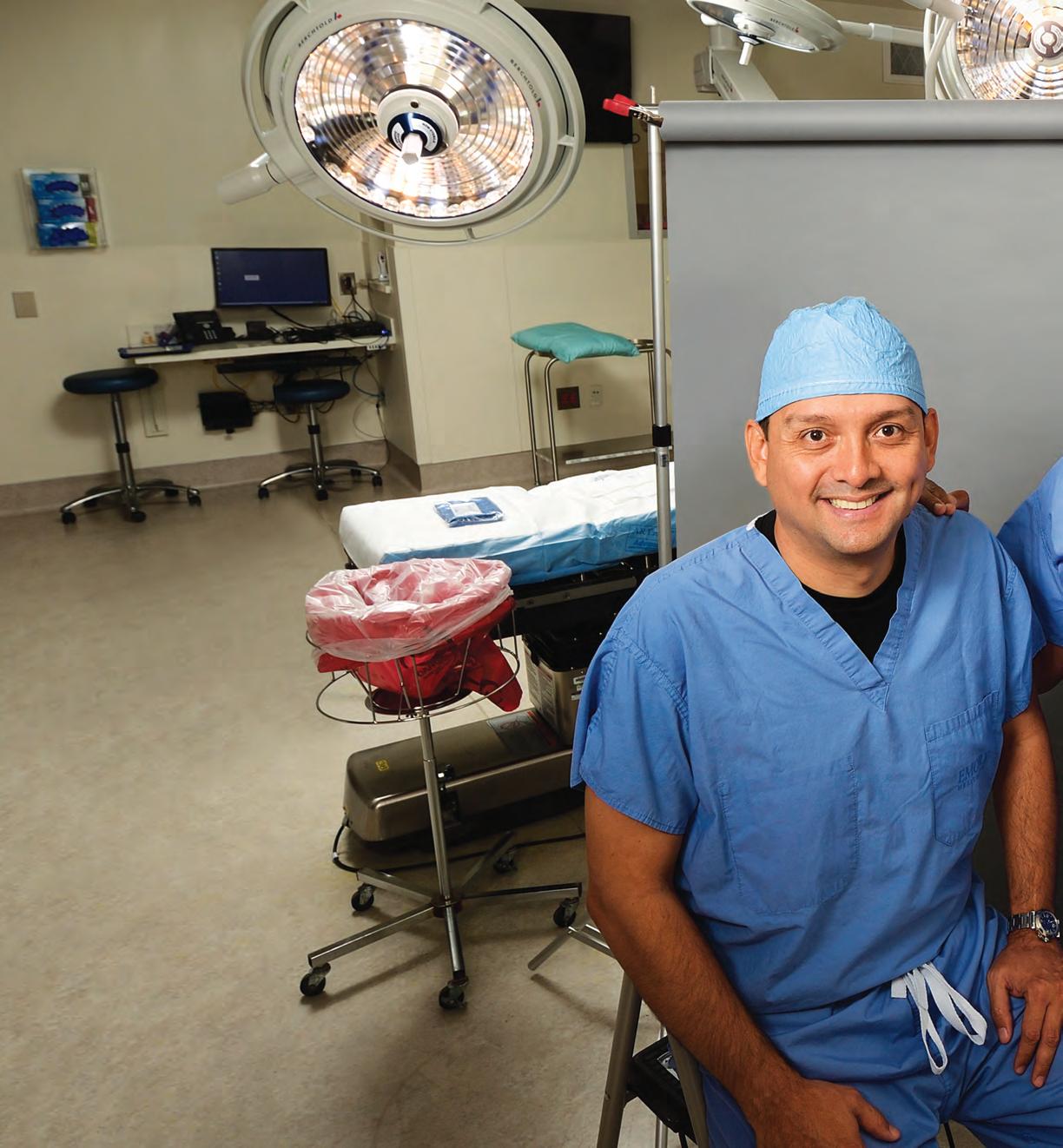
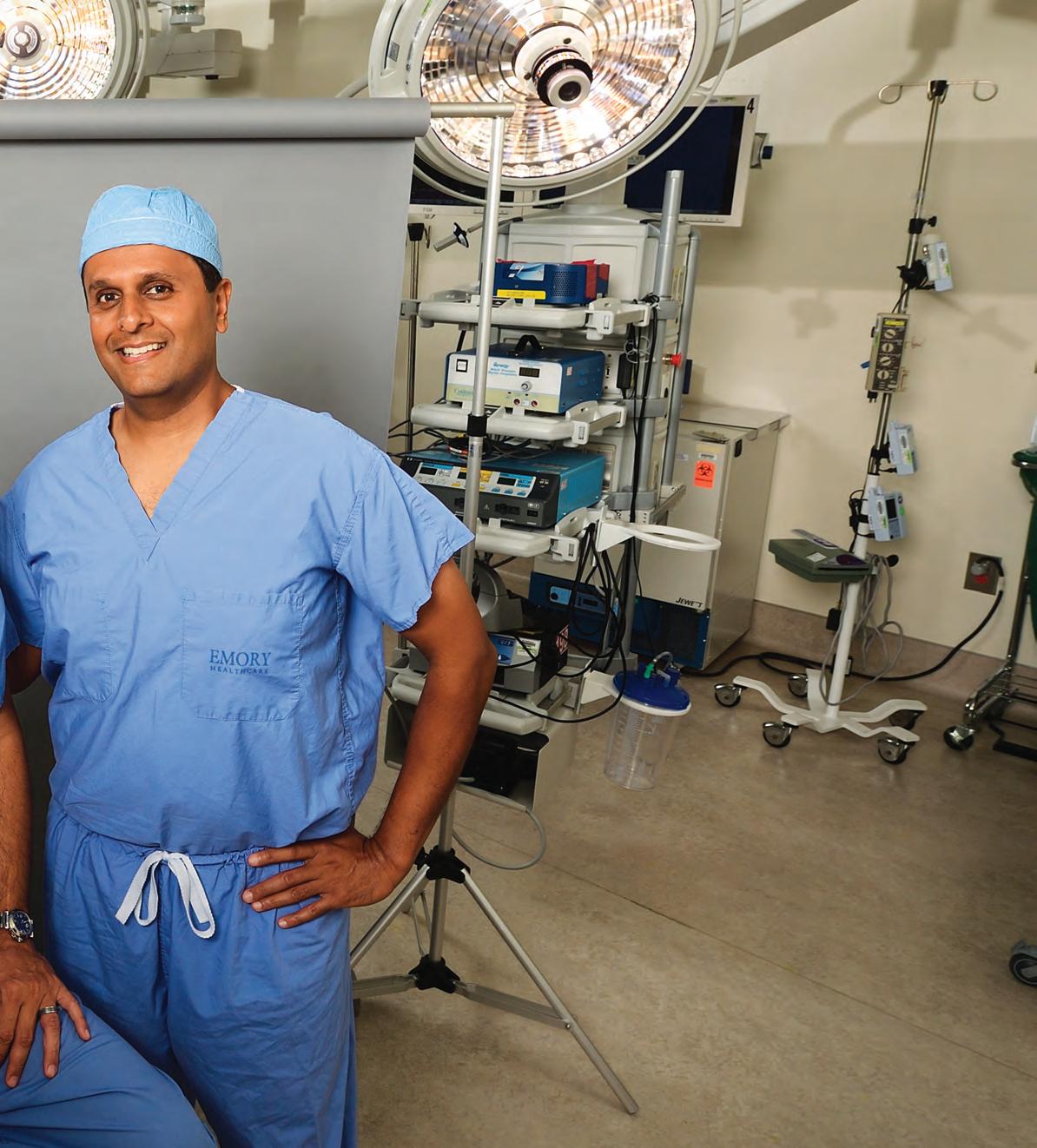
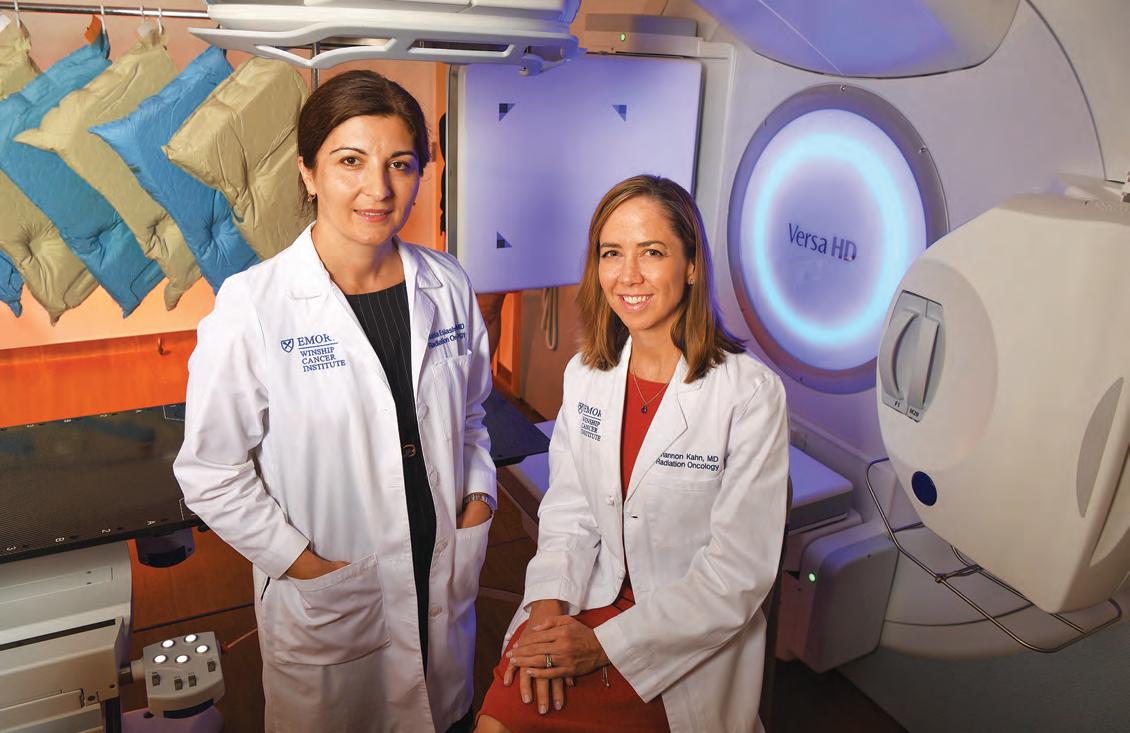
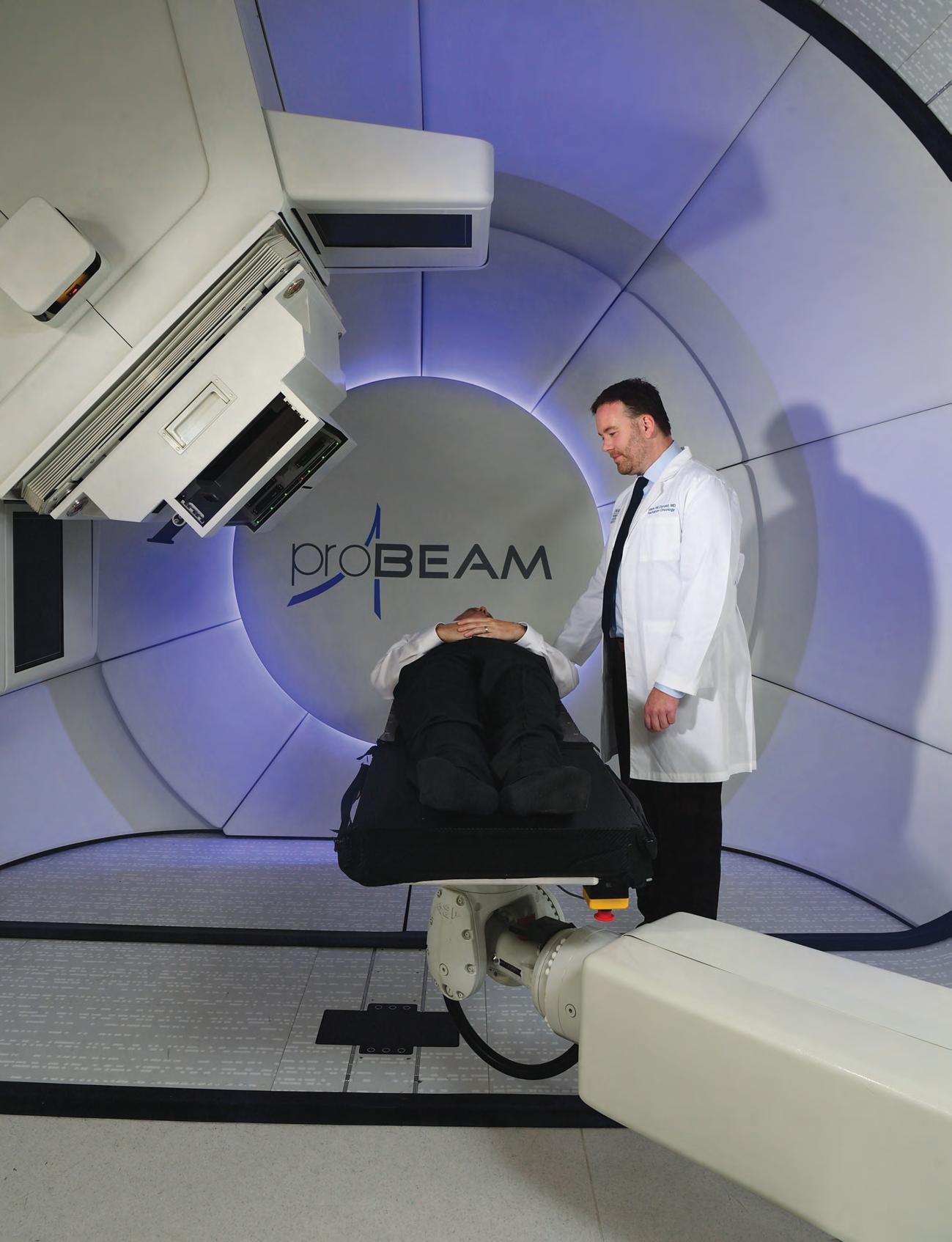
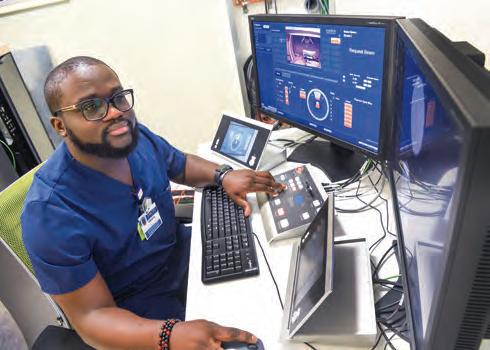
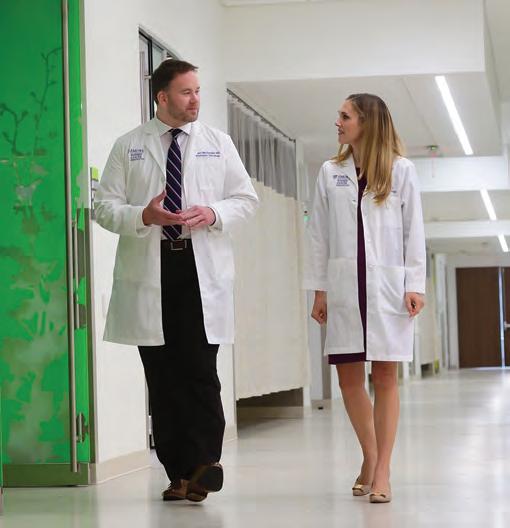
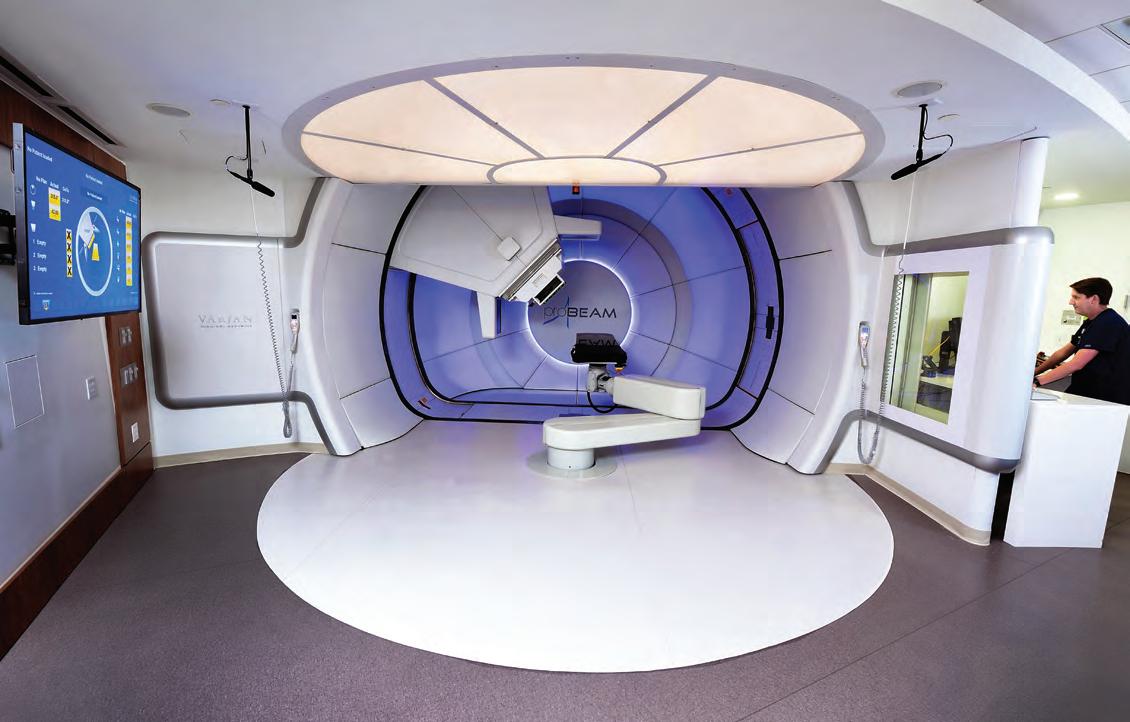
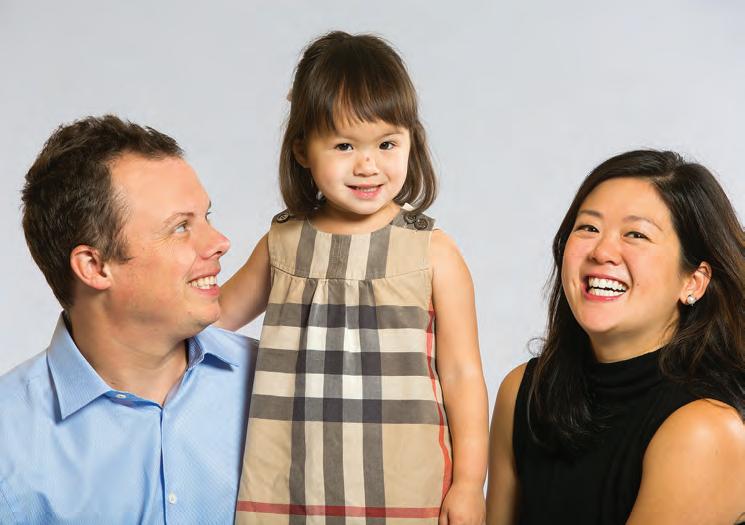
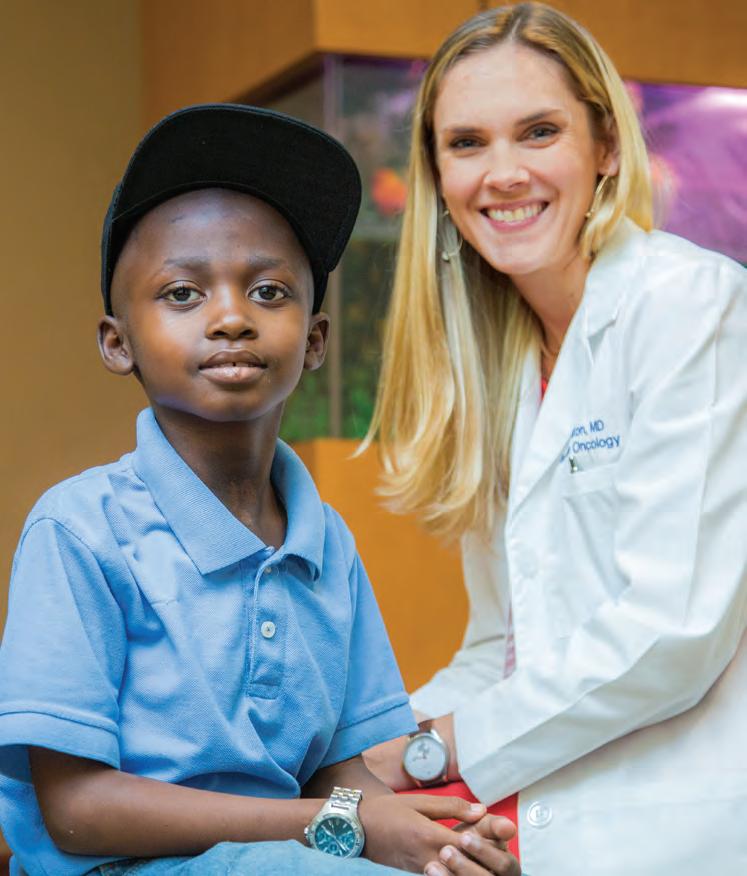
On the cover—One of the five treatment rooms prepped to start treating patients at the Emory Proton Therapy Center. Mark McDonald (left) and Bree Eaton (above) are two of the Winship radiation oncologists who will care for patients there. Page 16.
Winship Magazine | Fall 2018
From the Executive Director 2
Novel technologies and new therapeutic opportunities for our patients.
In the New s 3
Winship raises the bar on clinical trials; a new Phase I unit, from the ground up; protecting the heart while treating cancer.
The opening of the Emory Proton Therapy Center brings a powerful new cancerfighting tool to Georgia.
Giving Back
Cars under the stars 25 Winship’s newest fundraiser.
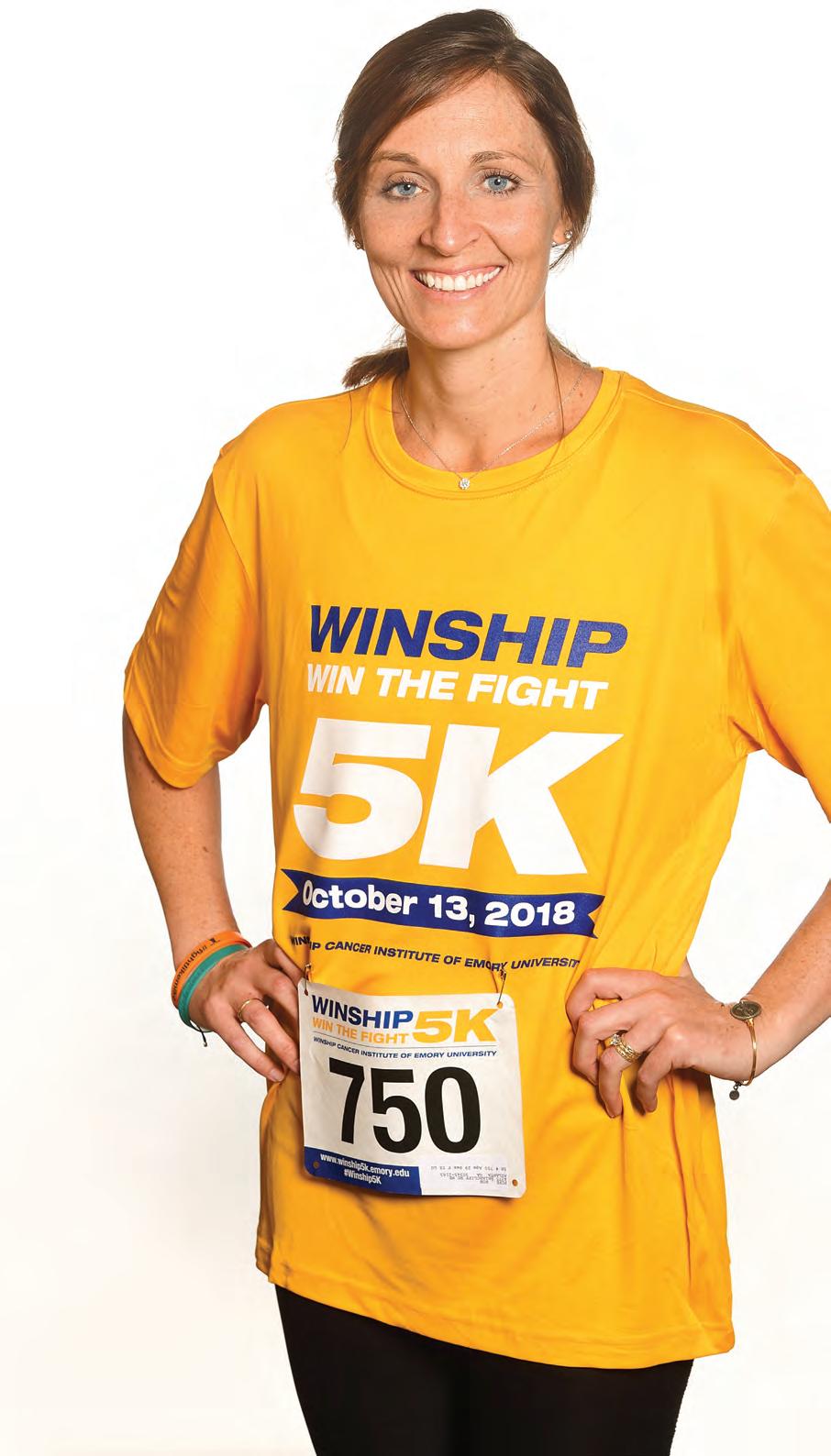
The Winship Win the Fight 5K 26
Still going strong in its eighth year.
Point of View
A room with a view 28
Kate Bowler writes with passion and humor.
25 10 7 3 4
Emory University is an equal opportunity/equal access/affirmative action employer fully committed to achieving a diverse workforce and complies with all federal and Georgia state laws, regulations, and executive orders regarding nondiscrimination and affirmative action. Emory University does not discriminate on the basis of race, age, color, religion, national origin or ancestry, sex, gender, disability, veteran status, genetic information, sexual orientation, or gender identity or expression.
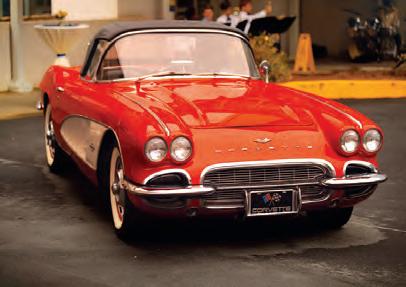
A vintage Corvette was just one of the Cars Under the Stars.
Website: winshipcancer.emory.edu. To view past magazine issues, go to winshipcancer.emory.edu/magazine.
Editor: Judy Fortin
Catherine S. Williams
Director: Peta Westmaas
Photographer: Jack Kearse Production: Carol Pinto
I see the opportunity for unique partnerships with researchers at the best cancer centers around the world.
A Place for Discovery
A FEW MONTHS AGO, THE WINSHIP CANCER INSTITUTE
LEADERSHIP TEAM ANNOUNCED A NEW INITIATIVE to refocus our efforts on high quality clinical research engagement and to educate patients and caregivers about the benefits of participating in clinical trials. Gaining access to state-of-the-art cancer therapies and helping future generations of patients are two of the main reasons to talk to your doctor about whether you’re eligible to enroll in a clinical trial.
As we officially open the doors of the Emory Proton Therapy Center, we have been thinking a lot about the role of clinical trials in our work. We are only beginning to discover the potential of how proton treatment will benefit patients. Applying
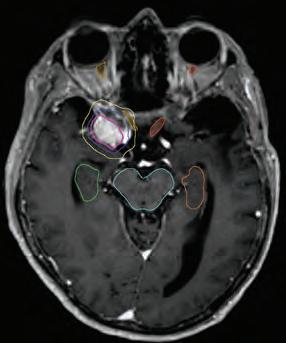
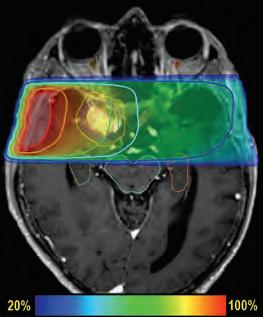
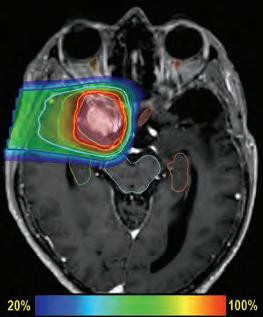
How does proton compare to X-ray radiation? On page 21, this magnetic resonance image (MRI) is used to illustrate the different delivery paths of the two treatments.
novel technologies to cancer care is a top priority at Winship. Now, we want to learn how we can incorporate one of the most advanced forms of radiation treatment. Will proton therapy allow us to reduce the number of cancer-related surgeries or eliminate the need for long courses of systemic therapies? Over the next few years, we plan to identify, and hopefully, answer such questions through carefully designed clinical research studies.
Offering clinical trials at the Emory Proton Therapy Center also allows Winship to align with investigators in new domains. I see the opportunity for unique partnerships with researchers at the leading cancer centers around the world. These new alignments will be excellent for our physicians and future faculty recruits and even more beneficial for our patients as we create additional options for cancer treatment right here at home.
For 81 years, Winship has delivered on its mission of reducing the cancer burden in the state of Georgia. I am excited that the Emory Proton Therapy Center is providing an array of new therapeutic opportunities for our patients with the added benefit of creating a new environment for discovery.
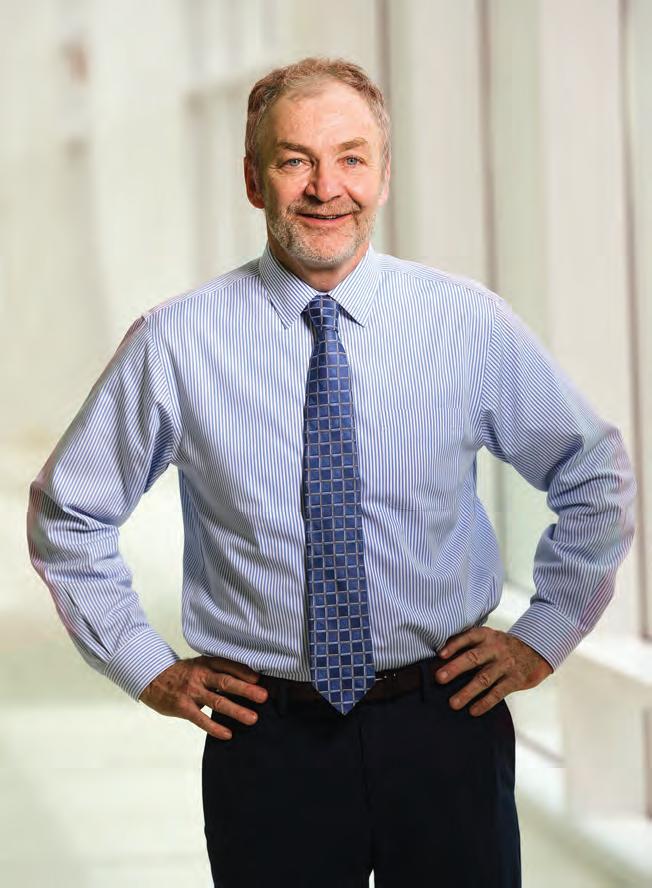
Wally Curran
Photo by Ann Borden
Upping our game
By Megan McCall
Citing problems with participation, costs, exclusion criteria, and trial visibility, the National Cancer Institute (NCI) has made clinical trials a key focus area this year and is challenging its network of NCI-designated cancer centers to increase the numbers and diversity of patients who participate in clinical trials.
Winship Cancer Institute is rising to the challenge by launching an aggressive initiative to raise awareness of clinical trials with faculty, staff, referring physicians, and patients. Associate Director of Clinical Research Bassel El-Rayes says the initiative starts with improving the clinical trials infrastructure to support growth.
“This means more space for research and a diverse portfolio of trials that specifically addresses our patient populations,” says ElRayes. “Winship is working to increase the visibility of our clinical research and expand rigid entrance criteria while still making sure that the trials are safe and answer meaningful questions.”
For instance, it is common for patients to be denied access to a clinical trial for “organ dysfunction.” El-Rayes says that creating trials for patients with organ dysfunction could offer insight into better treatment options. He also emphasizes the need to increase
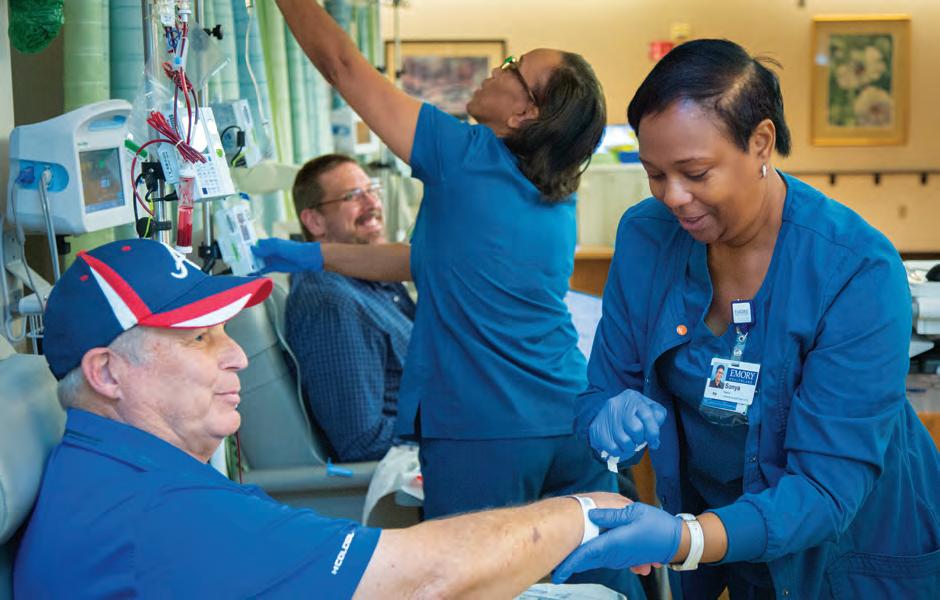
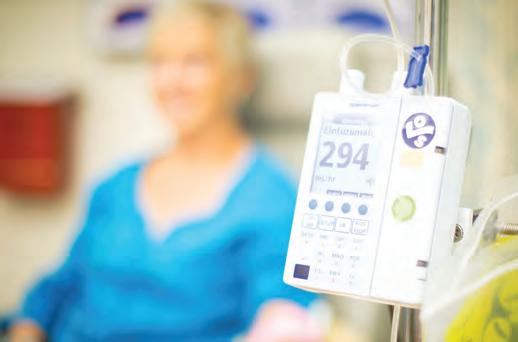
Patients participating in clinical trials are cared for by nurses specially trained in the protocols required for clinical research. In the foreground: multiple myeloma patient James Cook with nurse Sonya Harris. In the background: Joseph Scott, colon cancer patient, with nurse Marva Ollivierre.
participation of minority patients in order to address their specific concerns. African Americans are disproportionately affected by certain cancers, and constitute a large percentage of the Atlanta population, good reasons to ensure they are well represented in Winship’s clinical trials. “We want our research to be safe and more impactful,” says El-Rayes.
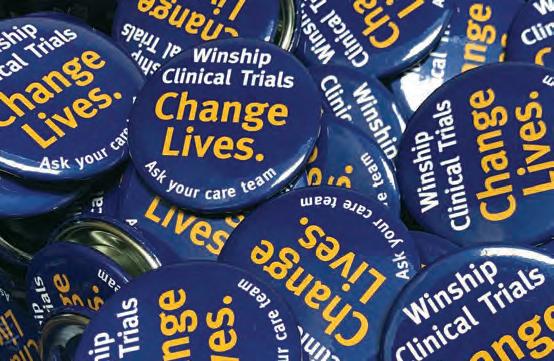
The Winship campaign is using multiple strategies to engage faculty and staff, including outreach to nurses, advanced practitioners, and other staff throughout Emory Healthcare, giving out buttons, sunglasses, posters, and brochures to help the staff educate patients about clinical trials.
The translational nature of Winship’s clinical research goes to the heart of how scientific discoveries in the labs become treatments that can benefit patients, and, according to El-Rayes, the discoveries go both ways. “Learning in the lab creates treatment options that are brought to the clinic, observed in the clinic, and then data is brought back to the lab to inform other treatments,” says El-Rayes. “Everyone at Winship plays a role in the ‘highway’ that connects research and patient care.” w
Building a new Phase I unit
By Catherine Williams
ALL THREE PHASES OF CLINICAL TRIALS TESTING ARE CRUCIAL TO ESTABLISH THE SAFETY AND EFFICACY OF NEW CANCER THERAPIES . But Phase I clinical trials, the first time a drug is tested in human beings, are the standing-on-the-high-divingboard moments of cancer research. It’s the moment that scientific discovery tests its potential to help cancer patients, a moment that physician and clinician investigators, research staff, Phase I nurses, and support staff have trained for and anticipated.
“Working in Phase I trials keeps you on the cutting edge of oncology with the opportunity to impact current and future generations of patients,” says Colleen Lewis, lead nurse practitioner of Winship's Phase I unit.
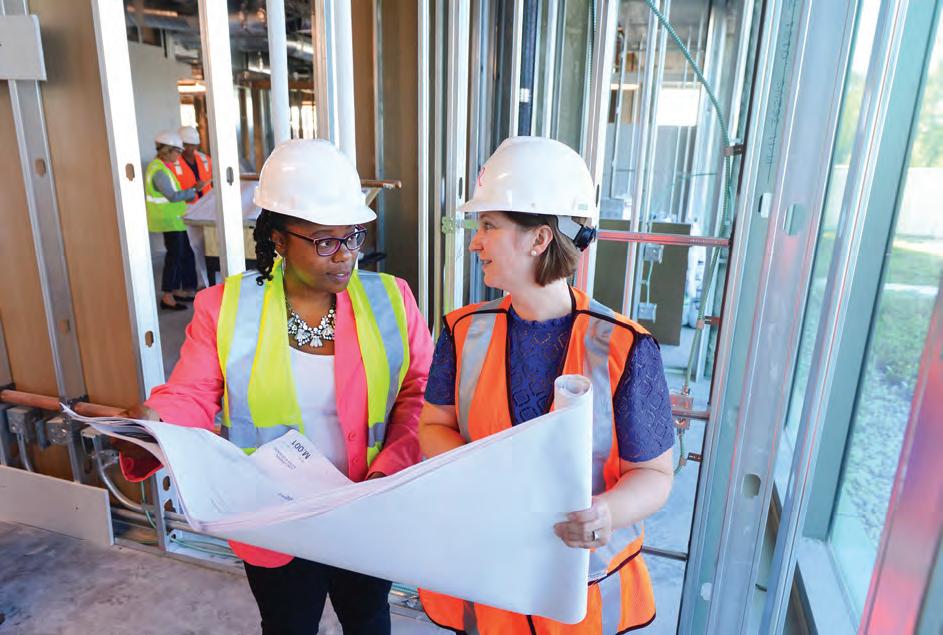
In keeping with Winship’s initiative to expand and improve innovative clinical trials, a new Phase I unit is opening on the fourth floor of the Emory University Hospital Tower. Lewis says the new space is ideal for the collaborative work they do and was designed that way by the people who will use it most—patients, nurses, research staff, and physicians.
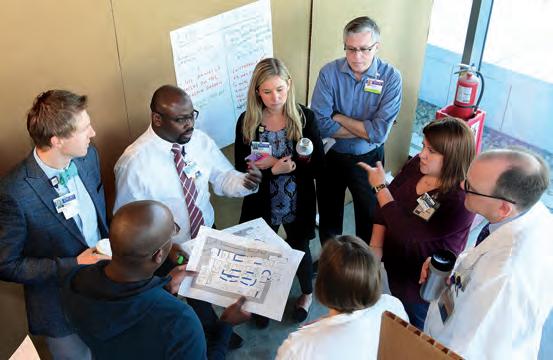
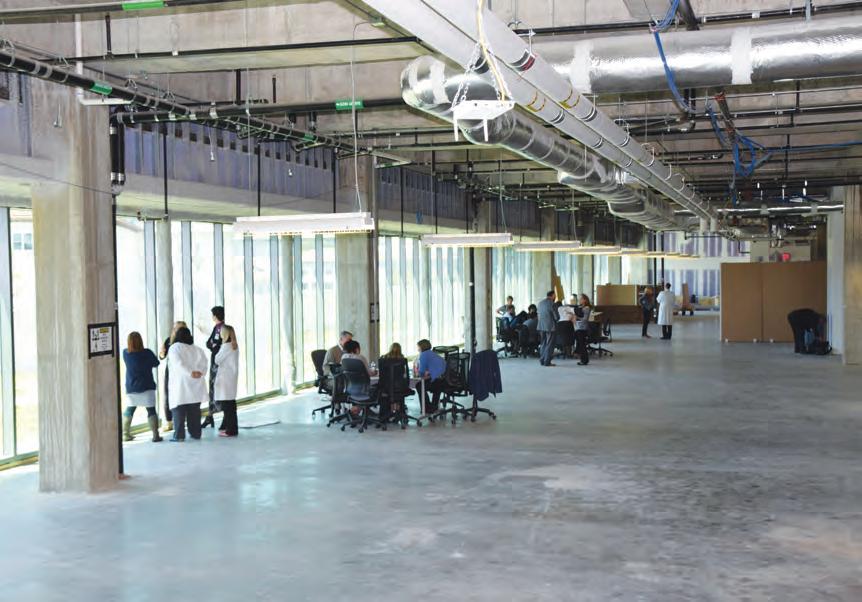
This spring, a team spent weeks together sketching out floor plans, drawing up lists of “hopes” and concerns, and then saw their ideas transformed into a life-size 3-dimensional model built of cardboard. They ran clinical scenarios in the cardboard model and tweaked the design so it provided good work flow and incorporated details like where to put electrical and USB outlets so they would be convenient for patients and family members.
“We sat in the chairs and made sure the outlets could be reached without standing up or leaning down, which could be a danger for a patient who might be lightheaded,” said Katherine Wright, clinic operations administrator.
Winship inaugurated its first dedicated Phase I clinical trials unit in October of 2009. Nestled in a self-contained corner of the
William Paine started a Phase I trial for bladder cancer in 2015.
has been
ambulatory infusion center in the Winship building, the Phase I unit didn’t look much different from the rest of the infusion center: same chairs and furniture, same curtains, same IV poles. But the experience and culture were very different.
Because many of the side effects of a new treatment are unknown, a Phase I patient’s vital signs are checked constantly. Medical staff document every nuance of the patient’s experience and must be ready to respond to unexpected reactions. That means the space must provide clear sight lines and easy access to every patient. And because patients spend long periods of time in the unit, their comfort and the comfort of their caregivers is vital. The new space, triple the size of the old unit, was designed to be both patient-focused and able to support the painstaking
“My wife wouldn’t give up and Winship wouldn’t give up. After four months on the drug, I was cancer free and I’ve been on it ever since.” William Paine
demands of rigorous clinical research. The process of involving care teams and patients in the design proved so successful, it’s been replicated in other construction projects in the Emory Healthcare system.
“This was very much from a ground up perspective—who’s doing the work, what works, what doesn’t, what can be improved, and how they would like to do it in the future with a new space and a clean slate,” says R. Donald Harvey, director of the Winship Phase I Clinical Trials Section.
Lewis says the new unit is the culmination of the entire team’s efforts. “This is a cutting-edge research unit for patients in Georgia and across the country. Our patients are going to love the changes we’ve made.” w
Angela Bradley
on a Phase I agent for multiple myeloma for almost 10 years.
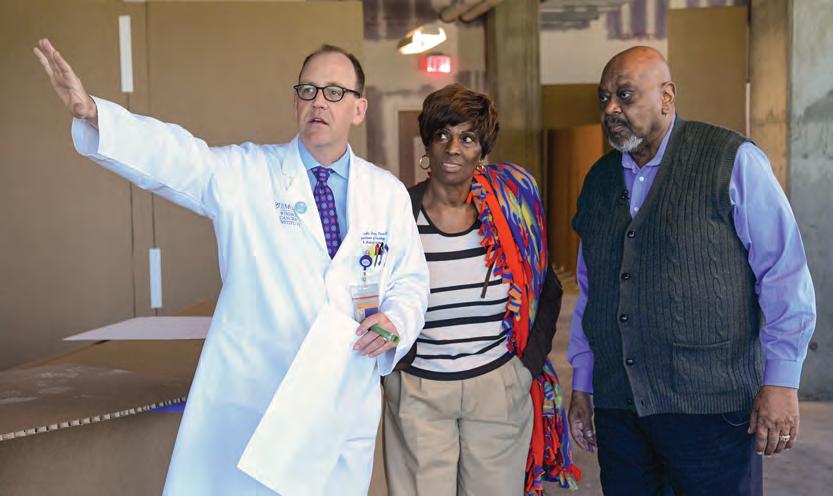
R. Donald Harvey (left) gives a tour of the "Cardboard City" model of the Phase I unit to Sharrón and Edward Cain, multiple myeloma patient.
THERE IS NO PLACE LIKE HOME.
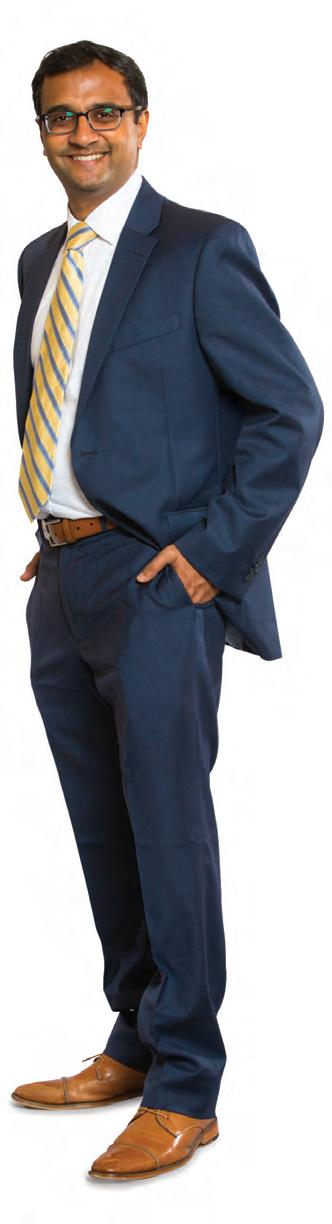
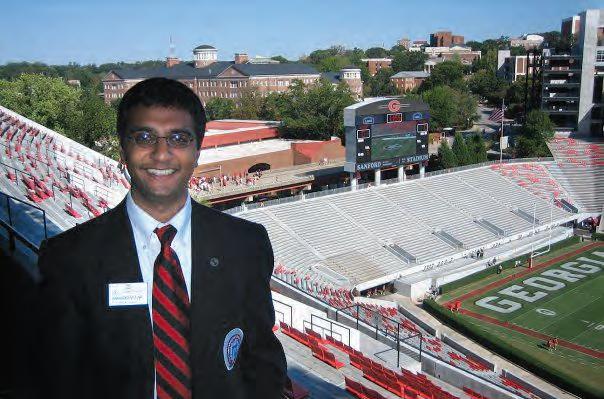
By Anant Mandawat Director, Winship Cardio-Oncology Program n Photography By Kay Hinton
AS THE LEAVES CHANGE COLOR AND SATURDAYS
BECOME DEDICATED TO FOOTBALL, I KNOW I AM BACK IN GEORGIA. AND I COULD NOT BE MORE EXCITED.
I grew up in Augusta and went to college at the University of Georgia with the help of the HOPE scholarship and UGA’s Foundation Fellowship. I graduated UGA with degrees in biochemistry and molecular biology, and economics, and the best friendships a 20-something could ask for. I wanted to make a difference in people’s lives and medicine was my calling.
When it came time for medical school, it was a difficult decision, but I left Georgia to attend Yale. I loved my time at Yale and would walk through the picturesque campus, humbled by pictures of notable alumni. My mentors urged me to continue my training at Harvard, and I was fortunate to be selected as a resident at Massachusetts General Hospital in Boston. After Harvard, I continued my training in heart disease at Duke and specialized in a new multidisciplinary field: Cardio-Oncology.
Heart disease and cancer are the number one and two killers respectively in the United States. Patients who receive cancer treatment have a higher risk of cardiovascular disease. Heart disease can cause interruptions in cancer treatment, affect long-term quality of life, and impact survival. Cardio-oncology is an important new sub-specialty that takes care of patients with cancer who develop cardiovascular disease. Cardio-oncologists see patients to prevent, monitor, and manage heart disease before, during, and after cancer treatment. Emory University, home to Winship Cancer Institute and Emory Heart & Vascular Center, is an international leader in cancer and cardiac care. It was a natural and meaningful fit for me to come home to Georgia.
The Cardio-Oncology Program at Emory is one of the
few multidisciplinary programs in the country dedicated to collaborative cardiac care for patients with cancer. We bring together under one roof an expert team of cardiologists, hematologists, medical oncologists, radiation oncologists, and surgeons to deliver comprehensive care to the people of Georgia and beyond. The program’s key goals are to address risk factors and manage pre-existing heart disease before starting cancer treatment; monitor the heart and treat acute heart problems during cancer therapy; and follow high-risk cancer patients beyond treatment for heart disease and prevention.
Understanding that the time from cancer diagnosis to treatment is critical, we at Winship provide expedited access to patients with cancer. We employ cutting-edge diagnostics to protect the heart during cancer treatment. We coordinate with cancer specialists to manage heart complications quickly and minimize interruptions in cancer treatment. We utilize a new tool called myocardial strain imaging, an early warning system that can detect heart problems earlier than traditional ultrasounds. We are also actively engaged in research to define heart complications from cancer treatment and interventions to improve care.
I grew up in Georgia and it is a privilege to come back home with a skill that can help my community. I love chatting with my patients about Georgia football, new Atlanta restaurants, or how to make the best peach cobbler. Dorothy was right. There is no place like home. w
Catching cancer early
By Dana Goldman n Photography By Stephen Nowland
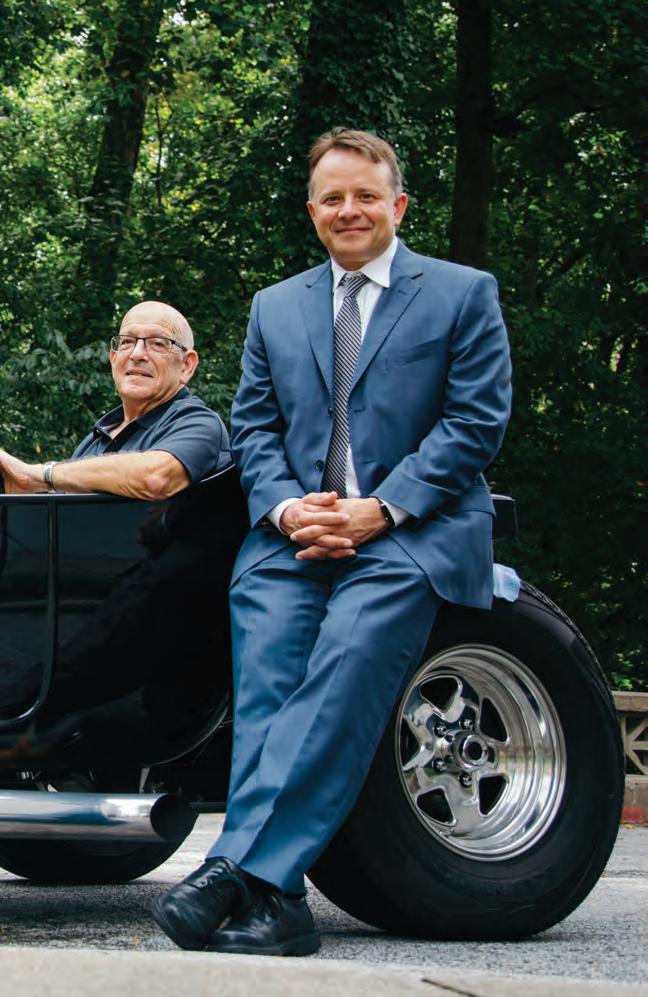
When Field Willingham gave patient Robert May the good news this year that the retiree would need only once-yearly appointments going forward, May was, in his own words, “a little disappointed.” They had first met in 2014, when Willingham, a Winship expert in gastrointestinal malignancies and director of Endoscopy in Emory’s Division of Digestive Diseases, treated May for an
early-stage esophageal cancer and for Barrett’s esophagus, a disease that damages cells lining the esophagus and can sometimes progress to esophageal cancer. For May, whose first wife died of cancer, his initial treatment at Winship and biannual check-ups with Willingham were reassuring. “I liked seeing him twice a year,” says May. “It was nice to know I was under his care.”
May was lucky he was diagnosed early and treated at Winship. Previously, physicians were trained to treat Barrett’s esophagus and other cancer precursors with major surgery. But thanks to developments in technology, his cancer was successfully cured with a minimally invasive endoscopic procedure. Endoscopy uses a long, narrow tube inserted down the throat to peer into the gastrointestinal tract and treat conditions before they turn cancerous. Recent studies by Willingham and others show that more than 90 percent of patients with early esophageal cancers can be cured with the new endoscopic approaches.
Willingham was able to perform several advanced endoscopic procedures to remove and then destroy the early-stage cancer and pre-cancerous growths in May’s esophagus without surgery: endoscopic mucosal resection (EMR) removed the small cancer there, and radiofrequency ablation used heat energy to destroy pre-cancerous tissue. Subsequent endoscopic procedures ensured
that the condition was gone for good. Now, four years after his initial diagnosis, 71-year-old May is cancer free and Willingham says the risk of future esophageal cancer has dropped dramatically for his patient. There is no need for biannual appointments to confirm May’s good health.
Advances in endoscopy couldn’t have come at a better time. The incidence of esophageal cancer has been on the rise, an increase that Willingham and others believe relates to lifestyle changes over the last decades. “As we’re getting more and more obese as a nation, it may be driving up our rates of reflux and consequentially our rates of esophageal cancer,” says Willingham.
His colleague Jennifer Christie says that colorectal cancers have also been increasing in frequency in younger adults, likely also related to lifestyle factors or unknown biological factors. “Some of the incidents are related to things that we can modify, factors such as diet, the use of alcohol, and smoking,” says Christie, who is
the clinical director of Gastroenterology at the Emory Clinic and has performed thousands of colonoscopies, a type of endoscopy. Younger people and African Americans are among the populations with the largest increases in colorectal cancers; in response, a few years ago the U.S. Multi-Society Task Force on Colon Cancer began recommending that African Americans be screened for colorectal cancer at age 45 instead of age 50. This year, the American Cancer Society issued a new recommendation that all people, regardless of race, begin screenings at age 45.
While esophageal and colorectal cancers in younger individuals have been on the rise, Christie says that proactive screening measures are helping. “The death rate has been falling because we’ve expanded screening,” says Christie. “We’re removing polyps early so they don’t have the opportunity to develop into cancers. We are also catching cancers earlier.” At the same time, she knows physician-researchers need to continue to pinpoint who is most at risk—and
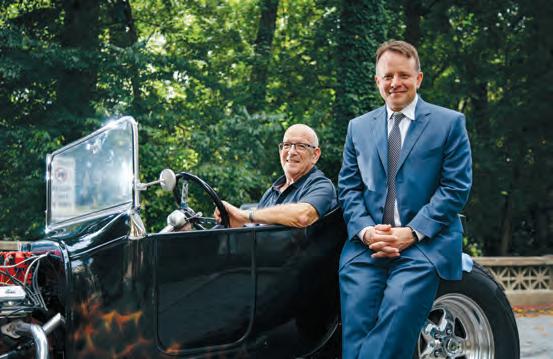
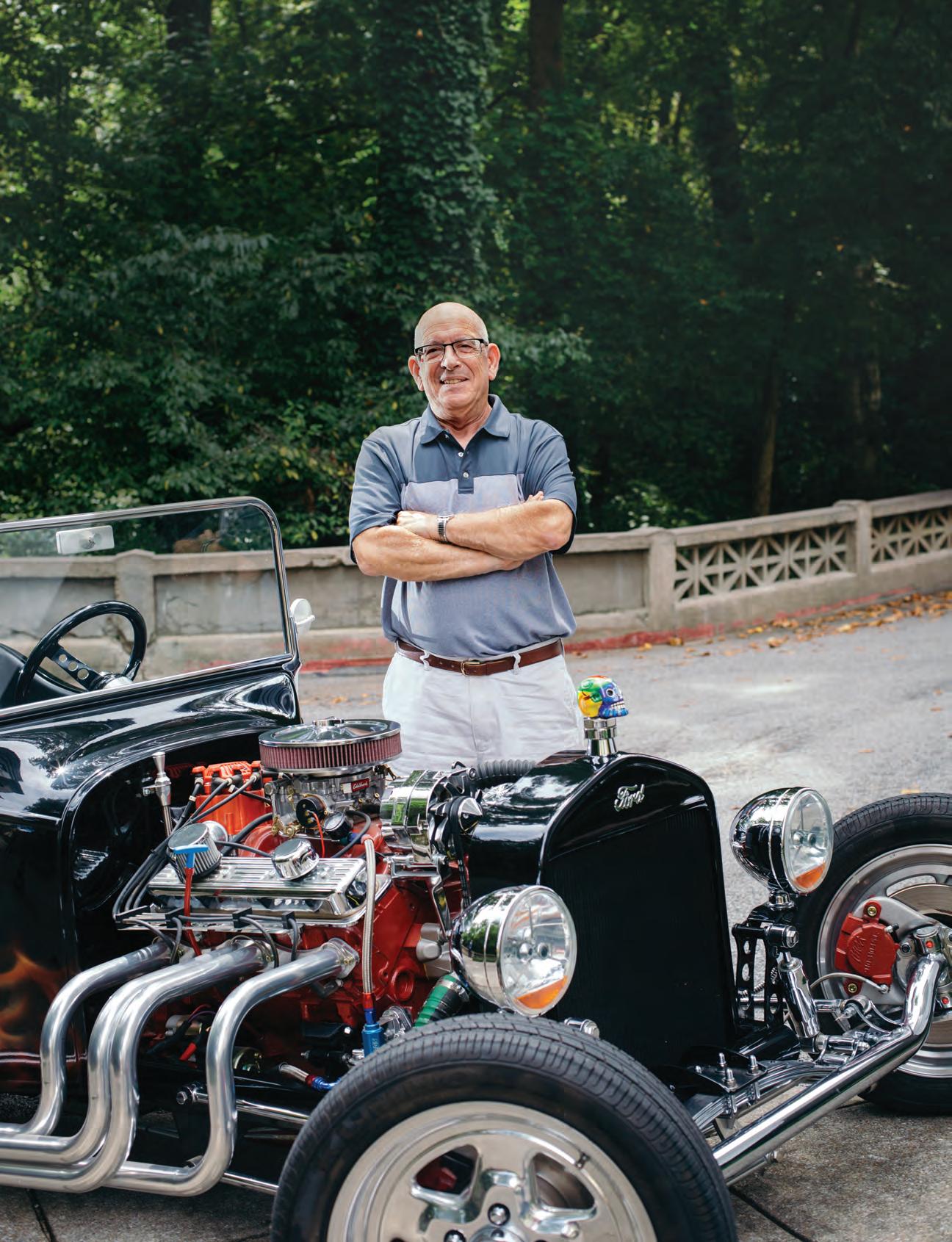
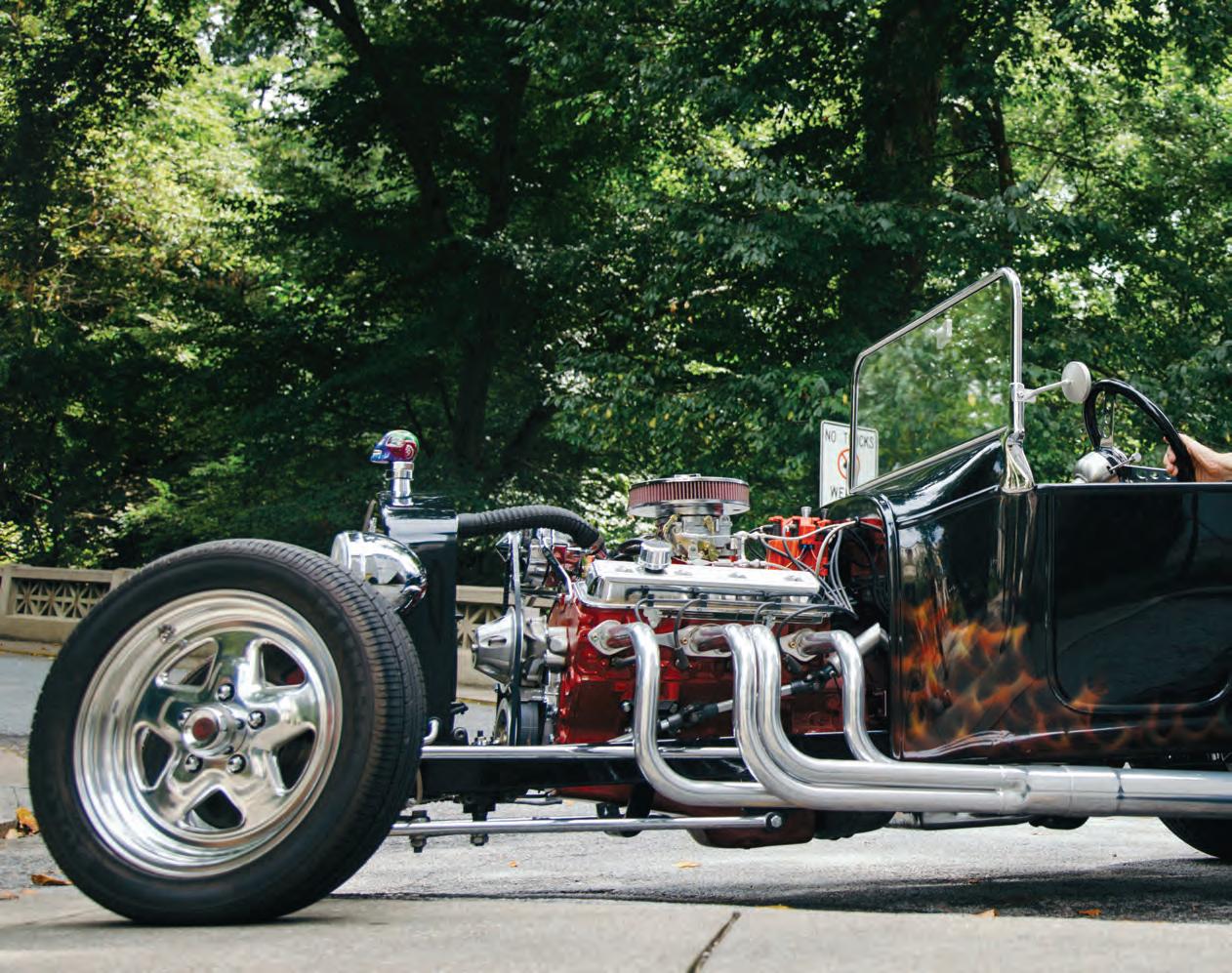
(Far left) Robert May built this 1923 model T roadster during treatment. This summer, he drove it to Emory where his doctor, Field Willingham, got to see the car he had heard so much about.
why. After all, the new screening guidelines could increase demand for colonoscopy before there are enough resources in place to meet the demand. “We need more information about whether there is a sub-population we need to further target,” she says. “We really need to understand who are those younger folks who are at higher risk and how can we educate them about the lifestyles or even genetic factors that put them at higher risk.”
In the meantime, Winship and Emory gastroenterology teams work together to give patients the most advanced treatment options. Emory gastroenterologist Qiang Cai is one of the first doctors in the Southeast to do endoscopic submusocal dissection (ESD), which uses endoscopy tubes to remove early-stage gastrointestinal tumors. Unlike older treatments for these cancers, ESD is minimally-invasive and allows Cai to eliminate tumors without major surgery and without negatively impacting major bodily organs.
May is relieved that Willingham was able to cure his cancer and spare him a more invasive procedure. If not for endoscopy, he likely would have needed an esophagectomy, a major surgery to remove a section of his esophagus. “I was told it was a risky operation with a risky recovery,” says May. “The idea of having a section of my esophagus taken out and stitched back together was kind of scary.”
Instead, May says that the endoscopy procedures have been as straightforward as promised. “It’s been a very simple process,” says May. “I’ve had absolutely no complications whatsoever, not even a sore throat.”
Willingham isn’t surprised. “Most patients do extremely well with the procedure, which is, by nature, minimally invasive.”
Since he’s cancer free, May spends his days building cabinets, tending his garden, meeting friends for lunch, and going for leisurely drives with his wife. After his successful procedure in 2014, he began building the car he’d been dreaming of for decades: a 1923 model T roadster. Over 16 months, he handled everything from the electrical to the mechanical aspects to the assembly of the car.
Now he enjoys not just his good health but also his labor of love. “The car runs beautifully,” says May. “I’m really enjoying my retirement. I’m a very lucky guy.” w
(Left) Jennifer Christie, clinical director of Gastroenterology at the Emory Clinic.
Many young Winship physicians and scientists did their medical education, residency, or training at Emory and were deeply influenced by their mentors. They are grateful to the people who taught them and helped guide their careers, but mentors say they got as much out of the experience as the mentees. Here are few of those who share that unique relationship.
PAYING
IT FORWARD!
Photography By Jack Kearse
Kenneth Cardona, Shishir Maithel
Kenneth Cardona (left), surgical oncologist specializing in sarcomas and complex gastrointestinal malignancies, did his surgical residency at Emory under the mentorship of Shishir Maithel (right), professor of surgical oncology and a specialist in liver cancer and cancers of the pancreas, stomach, colon, and small intestine. They hit it off immediately and have been close colleagues and friends ever since. “Shishir provided guidance in all aspects of my career—my research, my clinical interests, and personally as well. I say mentor but I’d honestly say friend,” says Cardona. Maithel says he recognized similar professional passions in Cardona, even completing the same fellowship leading up to their current positions: “We’re so much alike that when he went to fellowship, my attendings told me ‘it feels like you’re back.’” Both agree that in a profession that’s busy and stressful, a strong relationship like theirs “can make it all bearable.”
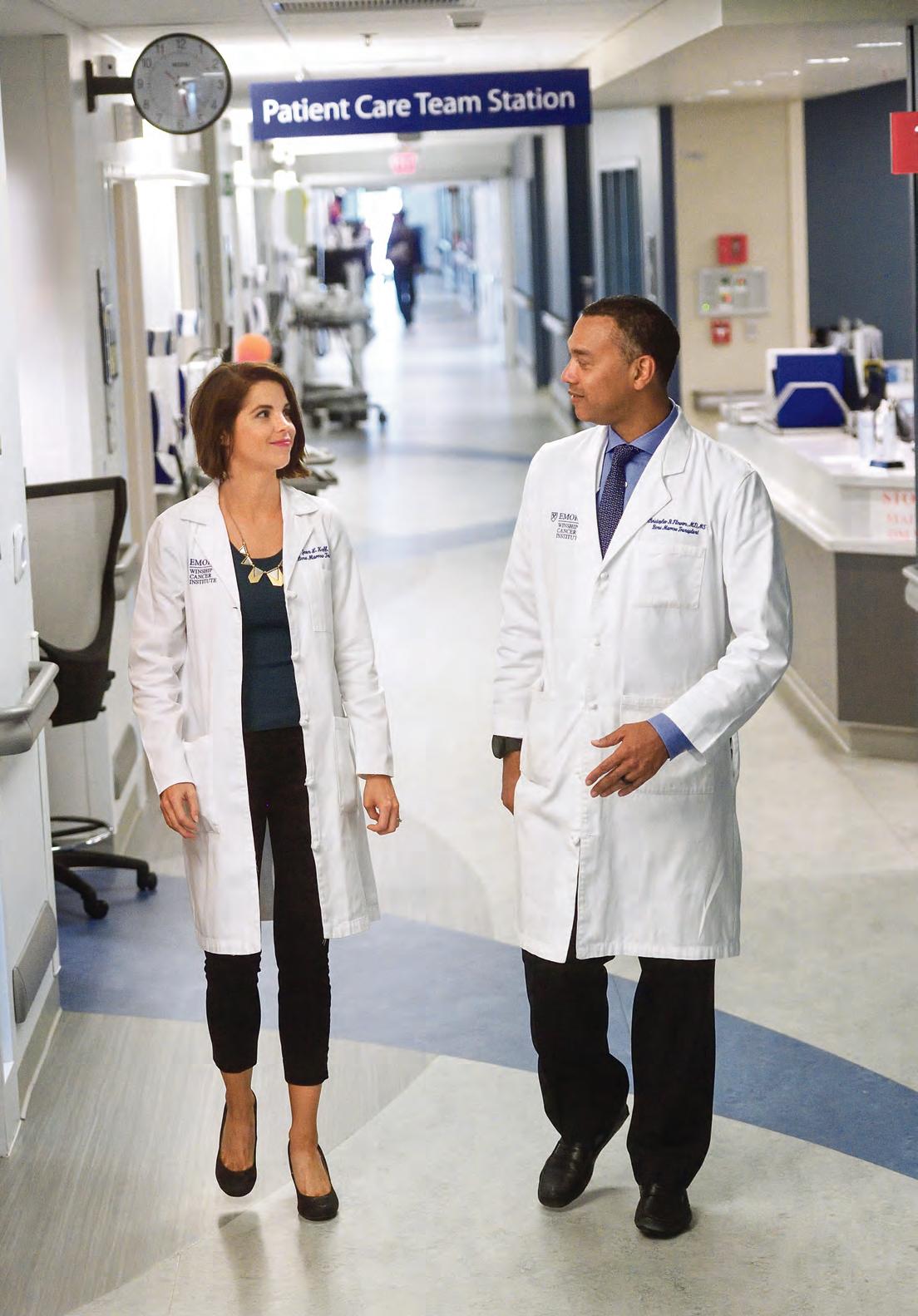
Jean Koff, Christopher R. Flowers
Jean Koff (left), instructor in hematology and medical oncology and clinical investigator in the Bone Marrow and Stem Cell Transplant Center, came to Emory for medical school and “never left.” During a research fellowship, Christopher R. Flowers (right), professor and director of the Emory Lymphoma Program, inspired her to do epidemiological and outcomes research. “He’s given me guidance on big picture issues, career development, work/life balance, down to the smallest nitty gritty paragraphs for a grant,” says Koff. Flowers says being a mentor has given him great satisfaction: “One of the most rewarding things is to see your mentees succeed early on in their career. It’s even more rewarding than some of the successes I’ve had in my own career.”
Natia Esiashvili, Shannon Kahn
Shannon Kahn (right) made a radical career change from accountancy to medicine. As a medical student and resident at Emory, she trained under Natia Esiashvili (left), who leads the pediatric radiation oncology service at Winship. Kahn says Esiashvili’s mentorship was a turning point:“Dr. Natia was inspirational, she was a strong woman with ambitions, extraordinary patient care, very well accomplished, and also a mother. It was wonderful to see all of that in one person, in a field I loved.” Kahn is now medical director of the radiation oncology department at Emory Saint Joseph’s Hospital. Esiashvili values how their relationship has evolved into a partnership. “You learn from each other. At this point in our careers, we’re peers and both in leadership positions. Learning and growth never ends at any phase of a career.”
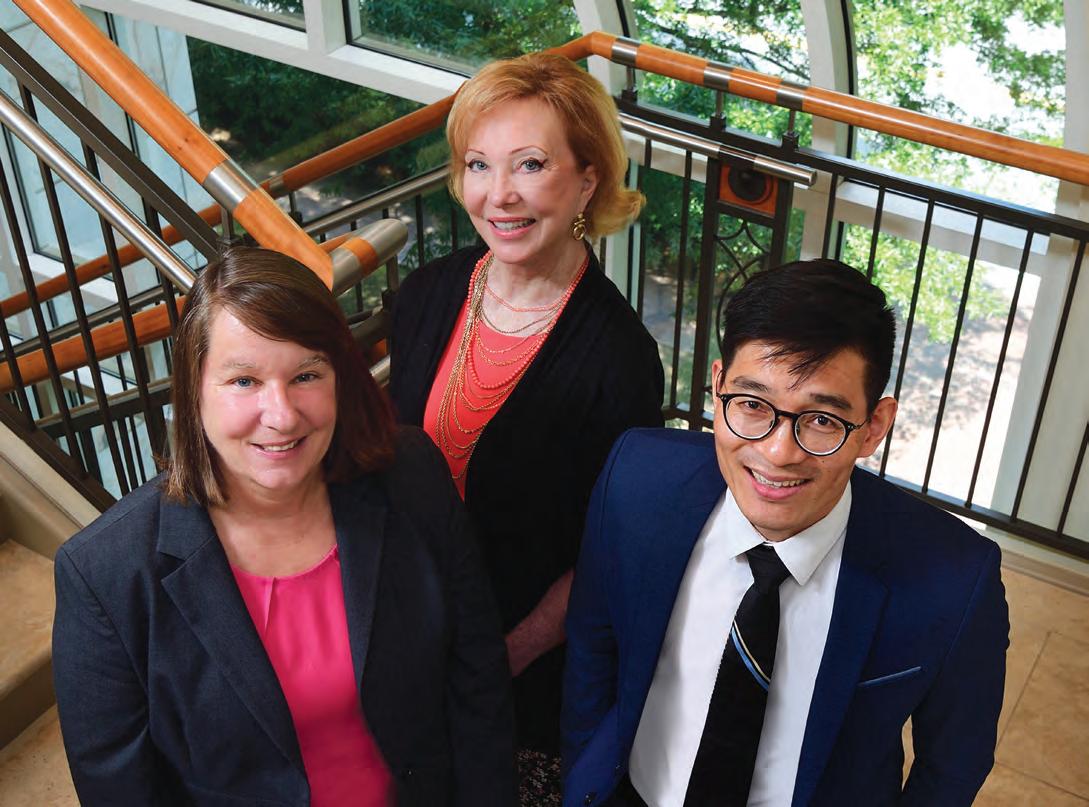
Kate Yeager, Deb Bruner, Jinbing Bai
Deborah W. Bruner (center), longtime Winship member, was recently appointed as Emory University senior vice president for research. As a professor, Bruner has mentored many students and trainees in Emory’s Nell Hodgson Woodruff School of Nursing.
Kate Yeager (left), assistant professor in the School of Nursing, had just graduated with her doctoral degree from Emory when she met Bruner. Bruner guided her as she launched her research program in symptom management in cancer. “A mentor connects you to opportunities. Sometimes it feels you are being pushed off a cliff, but your mentor has a sense of what you can do and what you need to do to advance your career. And she’s there to help support you when you don’t quite land on your feet.”
Jinbing Bai (right), nurse scientist mentored by Bruner during postdoctoral training and now an assistant professor in the School of Nursing, says Bruner helped him take small steps toward his long-term career goals: “A good mentor always helps his mentee to expand his strengths and overcome his weaknesses. A good mentor listens, understands, supports, and solves problems with the mentee.”
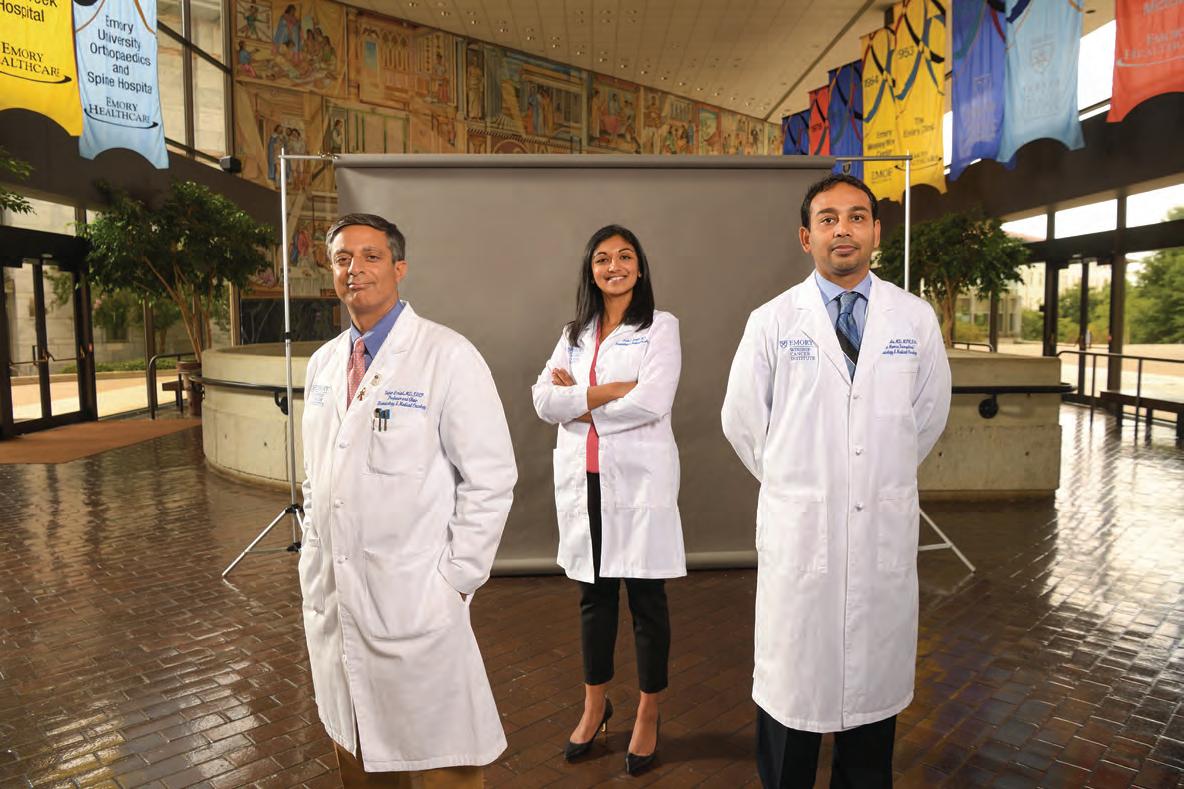
Sagar Lonial, Nisha Joseph, Ajay Nooka
Sagar Lonial (left), chair of the Department of Hematology and Medical Oncology and Winship chief medical officer, started the multiple myeloma program at Winship in 1997 and has built a team recognized for its pioneering research and treatment of myeloma. Ajay Nooka (right) completed a fellowship under Lonial and is now an associate professor, clinician, and researcher: “I was thoroughly impressed by his leadership qualities and the amount of work he put into drug development and clinical trials. He was someone I looked up to.”
Wanting to pass on what he learned, Nooka became a mentor to chief fellow Nisha S. Joseph (center), who was awarded the inaugural Hanna Jean Khoury Special Fellowship in Leukemia and Transplantation and is now an instructor. “I started working with Dr. Lonial and Dr. Nooka when I was a resident and it was because of their guidance and the opportunities they gave me that I even went into hematology. That I have continued in myeloma many years later speaks to the importance of mentorship.”
It takes years of specialized training, intense study, and hands-on experience to become an oncology doctor or researcher. Those who go through it know they are standing on the shoulders of those who went before.
WPOWER PRECISION
& Proton therapy arrives in Georgia
By Sylvia Wrobel n Photography By Jack Kearse n Illustration By Damien Scogin
ith the opening of the Emory Proton Therapy Center in December, a first in Georgia and one of fewer than 30 in the nation, Winship Cancer Institute adds a powerful radiation therapy option to its broad array of cancer-fighting tools.
Combining the latest advances in radiation technology, engineering, and medical physics, Winship physicians will employ proton therapy to deliver a treatment precisely where needed—with less spillover to adjacent healthy tissue. That means less radiation exposure to normal tissues and the potential for fewer side effects and complications, especially for cancers near sensitive organs, and for children whose tissues are still developing.
The new three-story, 108,000 square foot Emory Proton Therapy Center, located on Peachtree Street down the street from Emory University Hospital Midtown, had to be big. The cyclotron that gets the subatomic protons whirling, gaining the energy they need to destroy cancerous cells, weighs 90 tons, equivalent to a loaded 757 jet. The vacuum tube that transports the accelerated protons from the cyclotron through the facility at nearly two-thirds the speed
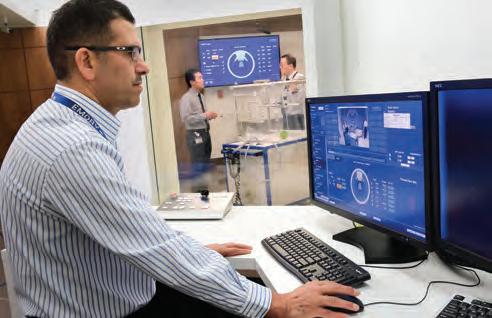
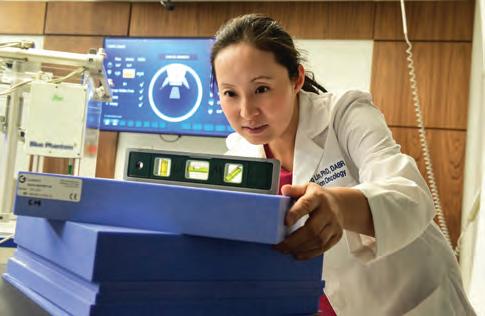
Radiation therapist Ndipnu Lima (top) makes sure patients are correctly positioned. Medical physicists (bottom) calibrate the system to deliver targeted proton therapy.
of light, guided by magnets, is about 100 yards long, and runs the length of Juniper Street. That’s long enough to reach all five treatment rooms and strong enough that the powerful protons can penetrate almost a foot into the body, reaching the deepest tumors. The three-story building is tall enough to accommodate hidden 240-ton gantries in four of the treatment rooms. These can rotate 360 degrees to aim beams to the precise spot needed while the patient lies on the table without having to move. The fifth room has a fixed beam for treatments not requiring rotation.
One of the advantages of being one of the newest proton centers in the country, says medical director Mark McDonald, is that “we are opening with enviable technology.” He’s particularly pleased that
every treatment room has “pencil beam scanning” that delivers small “spots” of radiation that match the shape of the target and adjust to the different depths and contours of a tumor in a plan personalized for each patient. The system also uses cone beam CT technology. While most facilities position patients before treatments using X-rays that see only bones and dense matter, cone beam CT scans show soft tissue and internal anatomy. This allows precise positioning of the patient based on the location of the tumor, and it enables monitoring for any changes in the patient or in the tumor itself which would necessitate changes in the treatment plan.
Like X-ray radiation therapy, McDonald says proton therapy is invisible and painless. “While any treatment can have
Behind the Wall:
the system generating proton therapy is entirely encased behind 14-foot thick concrete walls.
The cyclotron accelerates proton particles to almost two-thirds the speed of light. Then they go through a degrader, which adjusts the energy level and sends the beam into the long vacuum tube.
risks and side effects, our goal with proton therapy is to reduce or eliminate some of the side effects associated with other radiation treatment options.” Treatment decisions will be made on a case-by-case basis by a multidisciplinary Winship team, says McDonald. For some patients, other radiation approaches—external beam radiation, stereotactic radiotherapy, gamma knife radiosurgery, and brachytherapy (treatment in which radiation sources like seeds are placed in the body)—will remain the best option. A mock-up comparison of different radiation approaches may be done to compare the benefits and risks. McDonald says that proton therapy is not usually used to manage patients whose disease has spread or metastasized or to treat conditions for which other types of
Vacuum tube
Gantry
Cyclotron
radiation either work equally well or better.
As with other types of radiation, patients receiving proton therapy may also undergo surgery, chemotherapy, and/or immunotherapy, each modality potentially enhancing the effectiveness of the other. McDonald anticipates the patients most frequently treated at the Emory Proton Therapy Center will be those with tumors of the brain and spine, head and neck, or lung, or children with many types of cancers for which proton therapy is particularly likely to offer substantial benefit. Proton therapy may be used as part of a clinical
trial, in which it is compared against other types of radiation or as a means to collect information on the long-term benefits and side effects and determine the advantages and risks of different options.
Winship physicians have been consulting with appropriate patients at all Winship sites for months, and the first treatments are scheduled for December 2018.
The center will begin with a single treatment room in operation, another opening approximately three months later, then another and another until all five treatment rooms are up and running. In the first full year of operation, the cen-
As the proton beam travels through a 100-yard-long vacuum tube, a series of magnets focus it and direct it to five treatment rooms.
Four rooms have gantries that can rotate 360-degrees around the patient to deliver the beam at any desired angle. The fifth room delivers a fixed-beam treatment.
Medical director Mark McDonald (left) and fellow radiation oncologist Bree Eaton.
Magnets
ter anticipates treating close to 400 patients, with the number increasing over time.
“One of the best summers of my life.”
As the Emory Proton Therapy Center begins treating patients, Carie LaFond knows just how treatment will go.
In 2006, the Michigan external affairs professional was diagnosed with a rare tumor called a clival chordoma near the base of her brain, pushing on her brainstem. Clival chordomas are known for high recurrence rates; twice, a skilled Detroit neurosurgeon removed her tumor.
When the tumor regrew in 2011, her neurosurgeon recommended proton therapy as having a higher probability of tumor control and better protection of nearby vision and hearing centers and the brainstem. He referred her to McDonald, then
at the proton center at Indiana University. LaFond says McDonald was “kind and honest about potential benefits and risks, while also being sensitive to our nineyear-old son’s fears.” The family’s decision was quick and unanimous. Placing their lives on hold, the couple and their two children moved 300 miles to Bloomington where LaFond began almost nine weeks of daily radiation, a longer duration than usual needed to cover every spot of the kiwi-sized tumor and lower the chances of it coming back.
LaFond says that summer remains one of the best of her life. True, every day she went to the center to don a personalized mesh mask and lay down on the table for treatment. As the gantry revolved around her, aiming the beams to her brain as programed, she felt nothing and heard only the Michael Jackson music her technicians
jokingly selected. The radiation itself lasted just a few minutes. The whole session, including set-up, was over in under an hour. LaFond spent the rest of the day biking, swimming, spending time with family and friends who came to visit.
After nine weeks, she went home and back to work, playing basketball with her kids and training for a half marathon.
Today, almost eight years later, LaFond considers herself “the most grateful person on earth.” She serves as a certified American Brain Tumor Association mentor, her way of paying back. She’s pleased that McDonald remains active in proton therapy, the treatment she credits with saving her life.
Falling in love with proton's possibilities
Like all Winship radiation oncology
The proton beam, delivered through the nozzle, is precisely aligned by the 360-degree rotating gantry that sits on the other side of the treatment room behind concrete walls.
The multi-axis robotic treatment table moves in every direction to exactly position the patient, aided by cone beam CT scan technology that is built into the nozzle apparatus.
Patients enter the cylindrical treatment room and are positioned by radiation therapists like Colton Gartin, at right.
residents, Mark McDonald’s training was rich in how to calculate and deliver radiation to tumors as precisely and accurately as possible, sparing healthy tissue. When his professors described proton therapy, he knew he wanted to learn more.
In 2009, he joined Indiana University, where a well-established physics laboratory cyclotron had been repurposed to create the first proton therapy center in the Midwest. After intensive training, he “fell in love all over again with the technology’s capabilities.” He treated patients like LaFond, served as principal investigator for a new proton therapy patient registry, and conducted research on outcomes and side effects.
In 2015, the former Winship chief resident was recruited as medical director of Emory’s new center. Begun in
2013, the Emory Proton Therapy Center had been put on hold after a terminated relationship with the original developer. In 2015 it was back on track as a not-forprofit center, a good fit, says McDonald, with Winship’s mission. The Georgia ProtonCare Center owns the facility and manages financial operations. Winship and Emory Healthcare are responsible for all medical care.
While treating patients with cancers of the head and neck, brain and spine, gastrointestinal system or lung, McDonald also began organizing operating procedures and helping recruit and train faculty and staff for the new center. He will spend most of his time at the center but continue to see patients at Emory University Hospital Midtown. Other Winship radiation oncologists will spend part of their time at the new center, but
On this MRI of a patient with a meningioma, a slow-growing non-cancerous tumor of the lining of the brain, the tumor appears white and is outlined in magenta while the radiation target is outlined in yellow. The top image shows an X-ray beam delivering radiation to the targeted tumor, but also exposing a section of normal brain to low and moderate does of radiation. A proton beam (bottom) delivers less radiation on the way to the target and concentrates the dose inside the tumor. After reaching the target, the protons stop, delivering little radiation beyond.
How Protons Work
All radiation treatments work by damaging the DNA of cancerous cells. Traditional therapy does it with X-rays or gamma rays, part of the spectrum of electromagnetic waves that includes radio, microwave, and visible light at one end and the more damaging ultraviolet, X-rays and gamma rays at the other. As these rays – sometimes referred to as photons, with an h– head toward the targeted tumor, tissues before and after the target also receive some radiation. While many advances have lessened the unnecessary radiation delivered to healthy tissues, there is still some radiation delivered outside of the target.
Protons (with an r) are different—and work differently. The positively-charged proton is extracted from the nucleus (center) of a hydrogen atom and accelerated to two-thirds the speed of light inside the cyclotron.
Medical physicist Yuting Lin (pictured above) says the subatomic protons move so quickly and with so much energy that they have few interactions with anything in their path until they reach the tumor, where they slow down and deposit most of their energy abruptly in a phenomenon called the “Bragg peak.” A proton beam concentrates the radiation dose in the target, then stops at the target, avoiding a radiation exit dose and associated damage.
Lin is one of a team of medical physicists recruited from top proton centers around the country. Their work begins before the patient starts treatment, making sure the proton beam is controlled with precision.
X-ray (traditional) radiation beam
Proton radiation beam
continue to treat patients at other Winship sites. This back and forth is important, McDonald says, because other radiation treatments will be the best option for some patients and because physicians working in the new freestanding facility need to stay connected with their peers.
Staying close to home
Now Georgians like Barry Elson no longer have to be referred out of state.
In 2004, a team of Winship doctors eradicated the cancer that had begun at the right base of Elson’s tongue and metastasized to lymph nodes on the right side of his neck. Between lymph node surgery, chemotherapy, and intensity modulated radiation therapy (IMRT), Elson telecommuted to England, where the long-time Atlantan was
CEO of a global telecommunications company. Treatment was successful. For seven years, follow-up scans were negative. Then, in 2011, the cancer came back, crossed the mid-line to the left tonsil and went north to the left internal carotid artery, which delivers blood to the brain.
Referred by Winship oncologists to M.D. Anderson, then one of very few proton therapy centers, Elson moved to a Houston high-rise apartment for three months. His wife and grown children took turns flying there to spend time with him. For eight weeks, Monday through Friday, Elson donned the personalized mask while proton radiation was directed at the tumors in his head and neck.
That referral saved my life, says Elson. Seven years later, he has mentored 50
newly diagnosed patients, urging them to get a second opinion at a National Cancer Institute-designated comprehensive cancer center like Winship. While traveling out of state for care was difficult, Elson notes “This is not a disease of convenience.” He says the Emory Proton Therapy Center will make life considerably easier for patients like him and for doctors who refer them.
As a 14-year patient and survivor, he is pleased to see Winship taking advantage of the knowledge and experience generated at existing proton centers and integrating proton treatment into its existing strong and multidisciplinary programs.
The youngest patients
Thanks to extensive clinical experience and research (including by Winship radiation
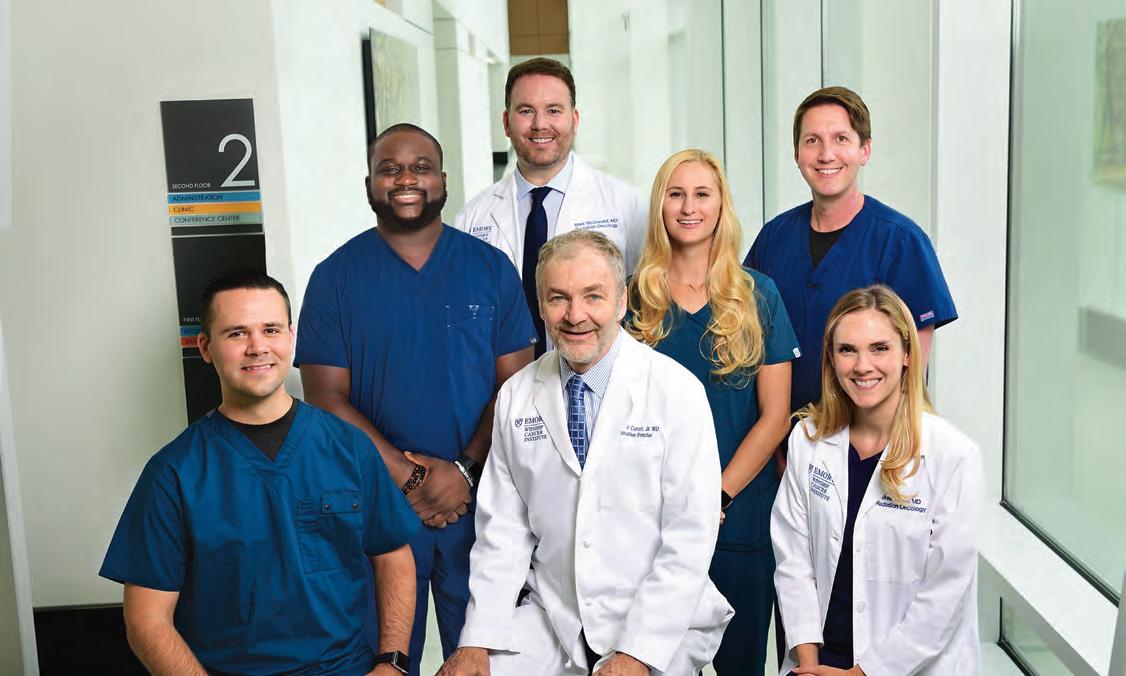
Some of the specially-trained staff at the Emory Proton Therapy Center: (front row left to right) nurse Dustin Rolan, Winship Executive Director Walter J. Curran, Jr., radiation oncologist Bree Eaton; (middle) radiation therapist Ndipnu Lima, nurse Emery Edwards; (top row) Medical Director Mark McDonald, radiation therapist Colton Gartin
oncologist Bree Eaton), proton therapy has emerged as a standard of care for young patients with brain, spinal, and certain other tumors. Most insurance companies cover the costs of treatment for children (as does Medicare for older patients)—but the costs of accessing it are born by families, as the Seaborns well know.
Days after her first birthday, Kennedy Seaborn began vomiting sporadically. After nine days with no response to anti-nausea medication, worried parents Scott and Erica carried the lethargic youngster to the emergency room at Scottish Rite, part of Children’s Healthcare of Atlanta (CHOA). Almost immediately, their sweet Kennedy was pumped full of steroids to reduce swelling in her brain. Emergency surgery removed a brain tumor characterized as glioblastoma, and Emory pediatric oncologist Tobey MacDonald started Kennedy on chemotherapy. Reducing the high risk of recurrence required radiation, however, and that was a challenge. While unnecessary radiation to an adult's fully-formed brain can cause some toxicities, in children, it can halt development and cause life-long medical and social problems.
Their pediatric oncologist referred the family to Eaton, who had trained at Massachusetts General Hospital (MGH), the country’s largest center for pediatric proton therapy. Eaton believed the little girl would benefit from proton therapy, and MacDonald agreed. Her parents were fully on board, whatever it took.
And it would take a lot. With the Emory center not yet open, Kennedy was referred to MGH. Erica quit her job and Scott took time off from his family business to stay with Kennedy. On the plane, they shuddered at every cough and sneeze, knowing Kennedy had a weakened immune system. “Treatment here would have been much easier and less stressful,” says
Erica. And less personally expensive. The Seaborns were fortunate they could handle travel, housing, and lost-work costs, but Eaton is relieved she now can offer young patients treatment nearer home. “Having proton therapy available in Atlanta makes it a practical option for many more Georgians who would benefit from the treatment,” says Eaton.
Eaton and Natia Esiashvili, another Winship radiation oncologist trained in pediatric proton therapy, will treat children at the proton center while continuing to care for children at Winship. Eaton estimates the two doctors will treat 75 to 100 pediatric patients with proton therapy in the first year, with that number growing as the center ramps up.
Very young children, typically below age seven, may need to be sedated to hold still for treatment. Parents stay with them during setup, hold their hands until they fall asleep, leave for the few minutes of treatment, return as they wake up. If se-
dation is needed, medical care can take an hour or more. Daily treatment lasts four to seven weeks depending on diagnosis.
It’s a partnership. Pediatric oncologists and radiation oncologists work together to follow young patients and monitor for tumor response and side effects. With parents’ permission, children (like adults) are entered into a database combining outcomes information from 13 centers across the nation. As children with cancer become young adults, they transfer their overall care to Winship and a long-term survivorship program headed by Esiashvili.
Three years later, physical and speech therapy are erasing the slight delay caused by Kennedy’s cancer. She returns to CHOA for regular MRIs, images shared with MGH, but her grateful parents often swing by Winship with chocolates.
Looking ahead
Winship Executive Director Walter J. Curran, Jr., himself a radiation oncolo-
Scott and Erica Seaborn were grateful their daughter Kennedy, now four, was able to be treated with proton therapy when she needed it, at age one.
How it came to be
Construction started with pouring 36,000 cubic yards of concrete for the 14-foot thick walls that encase the equipment. After the building’s structure was in place, then came delivery of the equipment. Patients will never see this amazing equipment, but they will know from the moment they walk into the Emory Proton Therapy Center that this is not an ordinary treatment facility.
All patient care is handled by Winship physicians and Emory Healthcare staff, but the Emory Proton Therapy Center is owned, operated, and maintained by the Georgia ProtonCare Center, a wholly-owned subsidiary of Provident Resources Group, a national nonprofit organization operated for charitable purposes, including the advancement of healthcare and medical research.
gist, watched with excitement as proton therapy developed and proved its benefit at centers around the world. What particularly excites him about the Emory Proton Therapy Center is that it opens day one at a whole different level, with new technology simply not available at existing facilities.
That new technology, along with Emory’s clinical and research reputation, has catalyzed recruitment of extraordinary physicians and medical physicists from some of the most experienced proton centers in the country, joining “an outstanding pool of radiation and medical oncology physicians already here.”
Research at the center is already underway on how to improve proton therapy, broaden its applications, and expand the understanding of which patients will benefit most from this therapy. Many Winship patients will have access to clinical trials of approaches not available outside National Cancer Institute-designated cancer centers. Moving forward, research will seek to develop treatments that are not just general to a tumor type or location but also personalized specific to individual patients’ biological features.
Proton therapy is here now, in Georgia, and its role in treating patients with cancer is only just beginning.
From the moment of its groundbreaking in 2013, the Emory Proton Therapy Center has been heralded as a boon to Georgia’s medical community and to the development of Atlanta’s Midtown neighborhood. Provident and Georgia ProtonCare Center took over the project in 2017 and have overseen the completion of the building and its financial operations.
“Provident is committed to supporting the proton center and making these advanced treatment options available to cancer patients throughout the greater Atlanta region and the state of Georgia,” says Steve Hicks, chairman and CEO of Provident.
Radiation oncologist Bree Eaton specializes in treating children like 8-year-old Michael.
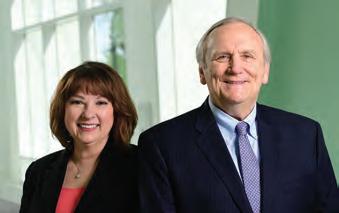
Debra W. Lockwood (left), president and CFO of Provident Resources Group and Steve Hicks (right), CEO of Provident.
Four-wheeled
for
an array of antiques, classics, American muscle, and luxury
for only
a million
Calling all car lovers
By Megan McCall n Photography By Pete Winkel
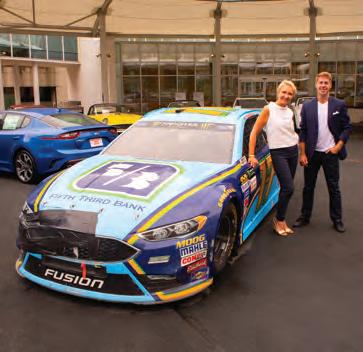
On a warm Sunday evening in September, over 200 people gathered at Winship to gawk at a collection of four-wheeled wonders: vintage Corvettes, Bentleys, a 1961 Jaguar, a Lamborghini with a price tag suggesting it should have its own body guard, and a NASCAR car with the well-earned dents and scrapes it got winning a 2017 NASCAR Cup Series at Talladega. Whew! Winship’s first annual Cars Under the Stars fundraiser was an event tailor-made for a car-loving Atlanta crowd.
And the crowd didn’t disappoint, raising more than $100,000 to be used for research in cancers affecting men. Two and a half years of thoughtful planning produced this Friends of Winship event, held in the valet parking circle and lobby of Emory Clinic A. An occasional drizzle dotted the car exhibition but didn’t dampen the enthusiasm of Winship supporters.
Vintage Corvettes, Bentleys, a 1961 Jaguar, a Lamborghini with a price tag suggesting it should have its own body guard, and a NASCAR car with the well-earned dents and scrapes it got winning a 2017 NASCAR Cup Series at Talladega. Whew!
Georgia is the birthplace of some of the largest names in NASCAR history and hosts two NASCAR Sprint Cup Series weekends each year, attracting thousands of fans. Cars Under the Stars event co-chairs Sam Snider and Patti Dickey were keen to embrace that market. Honorary co-chairs Dan Reeves, former coach of the Atlanta Falcons, and community volunteer Chuck Warren also leant support to the Friends of Winship event.
For Snider, who had seen both grandfathers and a father diagnosed with cancer, it was important to reach unique groups that may not have been previously aware of Winship. Dickey, who has been involved in Winship philanthropy previously, was also eager to expand and diversify Winship’s fundraising efforts.
“Winship has a state-wide impact, and fundraising for cancer patients, while also engaging a larger Georgia community, is the perfect way to honor the connection between the pair,” says Snider.
wonders:
cars were on display
a Winship fundraiser. Top right, a Lamborghini – yours
half
dollars. Lower right, event co-chairs Patti Dickey and Sam Snider pose with a winning NASCAR.
WE RUN TO
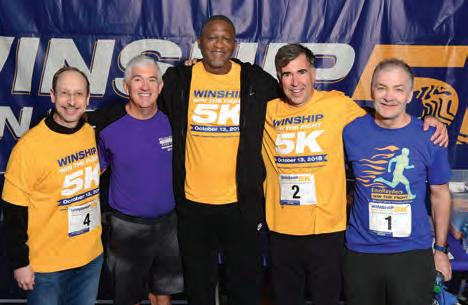
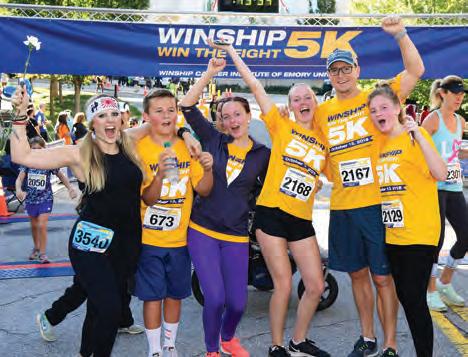
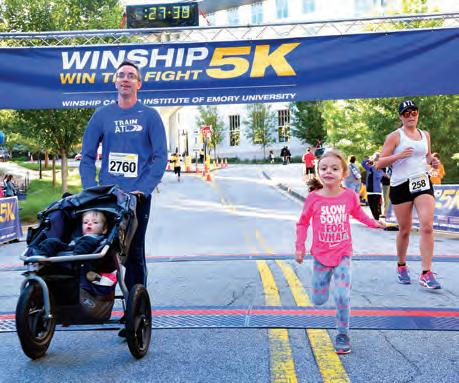
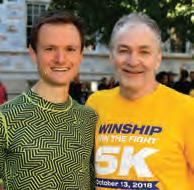
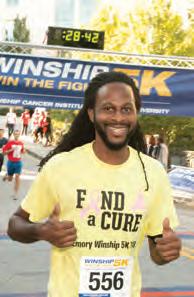
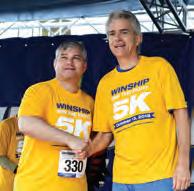
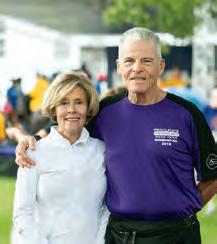
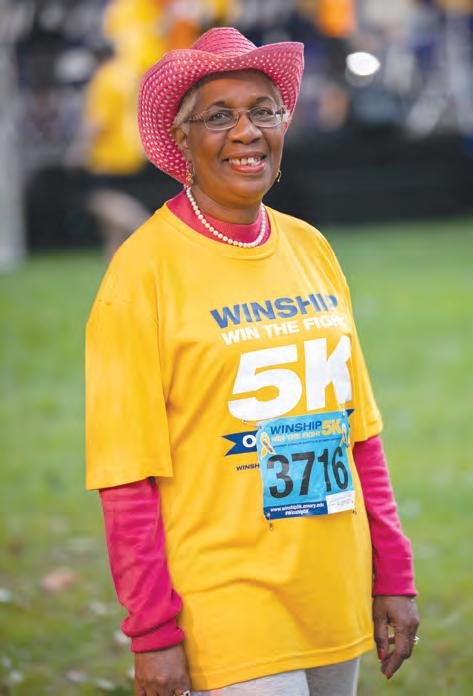
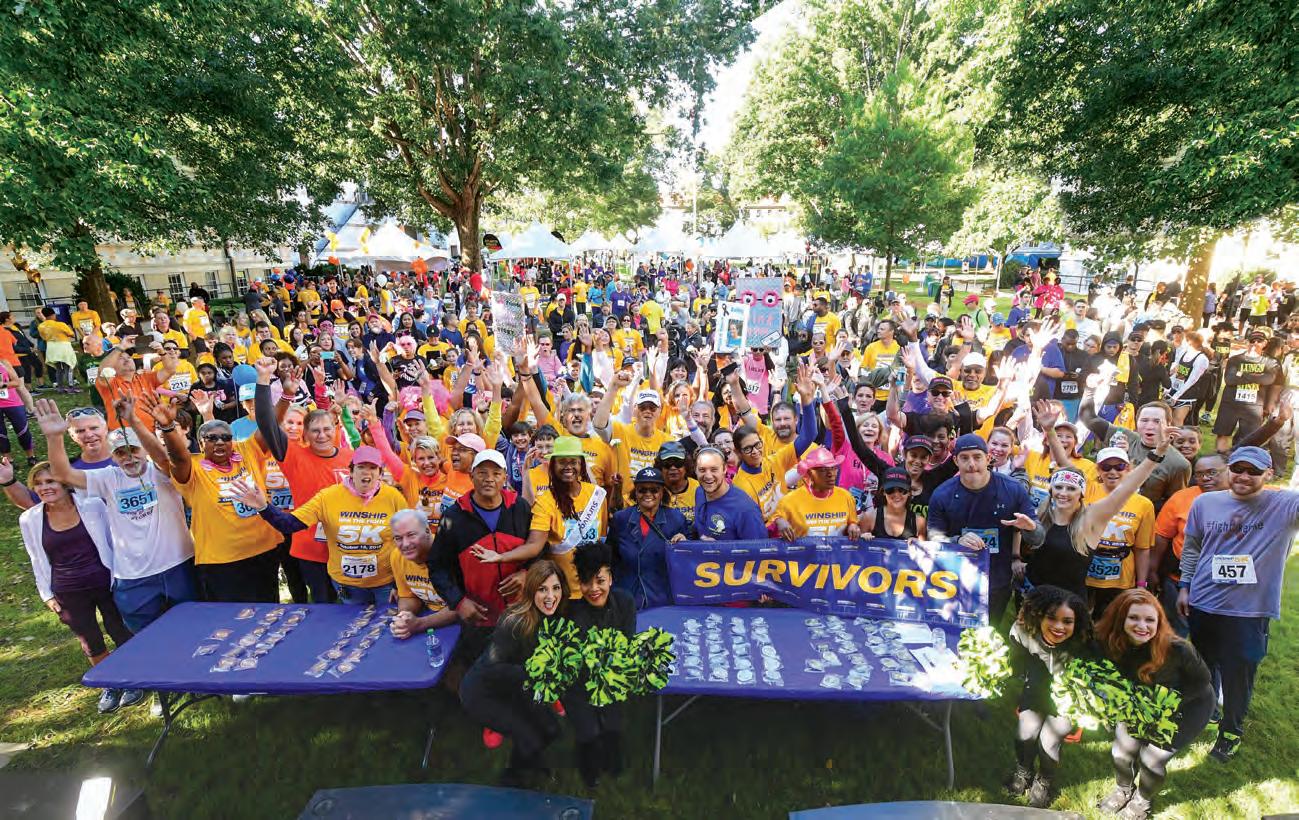
A beautiful autumn day brought out more than 3,500 runners, walkers, and cheerleaders for the eight annual Winship Win the Fight 5K Run/Walk on October 13th.
1. (Left to right) Emory Healthcare CEO Jon Lewin; Peach State Freightliner President Rick Reynolds; Winship 5K Grand Marshal and NBA All-Star Dominique Wilkins; Winship 5K Emcee and WSB-TV reporter Mark Winne; Winship Executive Director Wally Curran.
2. Top men’s finisher Jason Parks with Wally Curran.
3. Runner Tristan Hood.
4. Lawrence Boise and Erwin Van Meir, inaugural recipients of the Winship 5K Endowed Professorships.
5. Jim and Jane Thompson, long-time runners and Winship supporters:
6. Top women’s finisher Kidan Kidane.
7. Linda Clarke, 3-year breast cancer survivor, inspired dozens to support her as she walked the 5K in style!
TO WIN
"It's not about the race. It's about the cause."
Thompson
Jim
A Room with a View
By Kate Bowler
In about five minutes, Mr. Hospital Scrubs is going to pump something that looks like blue Kool-Aid into my veins and slowly push me into a whirling, deafening CT machine. I’ll hold my breath on and off so they can get a better picture. “This is your scan day?” asks a kindly nurse. She is buzzing around the room, handing me a mask, setting up for the blood draw. I nod.
“Ah, family portraits,” she says with a sorry smile. Yes, I am not alone in this body. I’ve got company. The machines will have a better look at the two plump
tumors in my liver, the smaller, almost invisible other two, baby tumors nearby, and the microscopic cancer cells swimming around in my abdomen.
But everyone is trying their best. The reception volunteers her favorite port nurse to help me today for my big day. The technician jokes with me about Canada’s predictably paltry performance in the next summer Olympics. (Give us hockey or give us death.) The nurse offers me a hug and asks if I want to pray over the vial of blood that will tell the oncologists whether I am deteriorating. I do.
Dear God, save me. save me. save me. save me. Again.
In the months since my diagnosis, it sounds weird to say that I am grateful. But I am grateful. I have lived past the regular appointment time that someone like me with an unexpected stage IV cancer diagnosis should live.
I am doing things I never thought I would do again. Like hike a mountain.
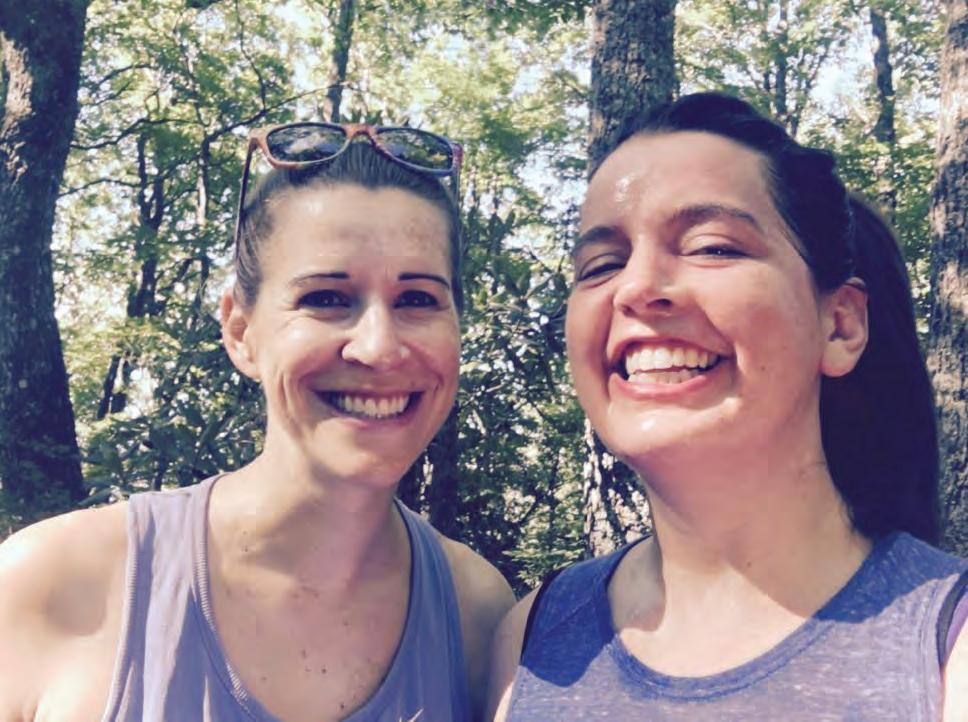
Last month I was in the mountains of North Carolina with Katherine, one of Great Besties of all Time, and we were just stupid enough and just enthusiastic enough to sign up for a hike up the Blue Mountain trail. It promised to be short and hard with a spectacular view. It was hard, so I guess one out of three isn’t bad...
We laced up our shoes and headed up the trail, only to realize that I had forgotten my water and sunglasses in the car. This was a great disappointment to Katherine, whose two great loves are hydration and retinal safety. But on we went until the trail got steep and narrow, little switchbacks that went back and forth, back and forth, and up, up, up.
We maintained the panting, cheery banter of two girls trying to pretend that we were almost there. We weren’t. What seemed, on the map, to be a mile-long hike to the summit was more like a slog through the jungle, hacking away tree limbs as we went.
Katherine noticed it first. The sun breaking through the trees above us. The shining promise of a panoramic view of the Great Smoky Mountains and our great reward: moral superiority over the millions of people who we imagined were sleeping or eating stacks of
pancakes at that very moment.
When we hit the clearing and felt the first heat of direct sun, we looked around. A lot. Mostly we were looking at the ground and its big pile of rocks which suggested that it was a campfire site. But no view. There were only trees and trees and more trees and a tiny sign that read: Blue Mountain Summit. It was very official and absolutely pointing to nothing in particular.
Of course, we took plenty of pictures of our sweaty faces with the trees to prove to our dubious spouses that yes, sometimes we do things on our girls weekends, thankyouverymuch.
But sometimes there isn’t a view. Sometimes we climb the mountain expecting God to give us a sense of perspective. Sometimes we expect to feel the grandeur of our place in the world. Or maybe the distance we have come. And when we get there, there is only a pile of rocks and a sign pointing the way back down. It leaves us wondering if the exhaustion of the climb was actually worth it.
I am sitting beside the CT machine when I notice it: a glass panel set into the ceiling with a large picture that glows. It depicts a mountain view, the tops of trees and the sky like an endless sea. The sun is breaking through.
I climb into the whirling machine, lie back, and stare at the top of the world. Sometimes in life I get the view, and sometimes I don’t. Even when I climb the mountain. And sometimes I am way, way down through a maze of white hallways littered with wheelchairs and the hum of televisions in a sterile room in a hospital gown as blue as the sky.
Kate Bowler is author of Everything Happens for a Reason: And Other Lies I’ve Loved, a New York Times best-selling memoir of coming to grips with stage IV colon cancer.
Bowler, a native of Canada, is an associate professor at Duke Divinity School. She was only 35 and mother of a young child when she became ill. With wry humor and achingly honest insights, she describes the struggle to get properly diagnosed, and a long period of undergoing treatments that weren't working. Her ray of hope in that dark time was finding out she had the “magic” type of colon cancer, for which there was an experimental treatment available in a clinical trial at Winship. She made the long trek from North Carolina to Atlanta to be treated on the trial.
Bowler is currently on sabbatical working on her third book. For more information about Bowler or to order Everything Happens for a Reason (published by Penguin Random House in 2018), go to katebowler.com.
This essay was written for Winship Magazine by Kate Bowler, a formerWinship patient.
1365-C Clifton Road N.E.
Atlanta, GA 30322
winshipcancer.emory.edu 1-888-Winship
Emory is dedicated to sustaining the environment. After you've read this publication, please recycle or share with a friend. Thank you
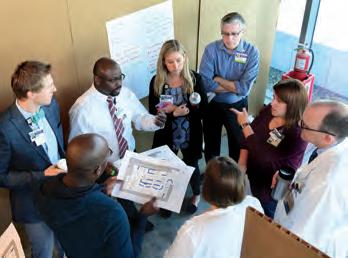
Monique Guyinn Williams (left), lead research specialist, and Colleen Lewis, lead nurse practitioner, check out the floor plan for the new Phase I unit.