
Unleashing Potential Strategic Plan 2022-2024

A message from the Principal
As Emanuel School celebrates its 39th anniversary, the 2022 school year presents a fresh and exciting opportunity to build upon our strong foundation, culture, and history of achievements. Our strategic plan for the next three years will provide a roadmap for our school community towards achieving our vision. As we continue to educate mind, spirit and being, we aspire to unleash the potential of each student. Our teaching and expectations will reflect our commitment to academic excellence for all students. The roadmap also reaffirms our unwavering commitment to our core values of community, learning, inclusion, and innovation.
Our key commitments for the next three years will include promoting:
• future-focused learning
• wellbeing culture
• learning beyond the curriculum
• sustainable practices, and
• inspired Jewish living and learning.
Our strong focus on deep and authentic learning will promote a culture of academic excellence, undergirded by our wellbeing and extra-curricular programs. We are proud of our students who graduate as curious, resilient learners, open-minded thinkers, adaptable innovators, tenacious problem solvers and compassionate advocates. Above all, our hope is that we become a school of mensches – of ethical, responsible global citizens and leaders of the future.
Our 2022-2024 Strategic Plan has been shaped through an extensive process of consultation, led by our Strategic Advisory Team, and involving our Board, Executive and staff. We have engaged in many conversations, asking the same three questions: “Where are we now?”, “Where do we want to be?” and “How do we get there?”. Additionally, we have gathered data from a range of sources, including our annual parent and student surveys, staff focus groups and our Board Sub-committees.
Staff committees were established last year to develop a range of strategies and action plans, to address each of our five key commitments. These committees are led by members of our Strategic Advisory Team. Progress within each key commitment will be reported to both the Board and the broader school community.
I am deeply grateful to all those who contributed to the development of our 2022-2024 Strategic Plan, and I am confident that it will provide us with a clear and compelling direction and set of priorities to work towards each year.
Andrew Watt Principal

What we value
Discernment

You graciously endow mortals with intelligence, teaching humans understanding. Grace us with knowledge, wisdom, and discernment.
From the Amida, the first petitionary blessing
Making decisions, weighing up different options and forming a position on various issues are important life skills, requiring keen insight and good judgement.
Our students are encouraged to listen carefully, to research diligently and to think critically. This will form the basis of making evidencebased, informed, and ethical decisions and to provide sensitive and considered feedback.
Respectful Relationships

The world rests on three principles: on justice, on truth and on peace. And all three are intertwined - when justice is done, truth is served, and peace ensues.
Teachings of Rabban Shimon ben Gamliel: Talmud Yerushalmi Ta’anit 4:2
Respect matters. Our students are encouraged to value their relationships by including others appropriately. We place a high value on acknowledging the views and needs of others and acting with empathy and compassion. This includes advocating for and acting with integrity and with consent in relationships.
Growth

You shall love Adonai your God with all your heart, with all your soul, with all your vigour.
Second verse of Shema
The learning journey involves intellectual, social, emotional, and spiritual growth. Our students are encouraged to pursue and create opportunities to grow themselves and others. They are challenged to explore their abilities and passions and achieve to their potential. We value lifelong learning and a mindset that challenges assumptions and the status quo.
Sustainability

When the Blessed Holy One created the first human, God took them and led them around all the trees of the Garden of Eden and said to them: “Look at My works, how beautiful and praiseworthy they are! And all that I have created, it was for you that I created it. Pay attention that you do not corrupt and destroy My world: if you corrupt it, there is no one to repair it after you”.
Midrash (Ecclesiastes Rabbah 7:13)
Our students face the challenge of meeting their own needs without compromising the ability of others to meet their own needs in the future. Our students are encouraged to make decisions aligned to the long-term strategy, in terms of protecting our natural resources as well as our social and economic resources. Sustainability is also about investing in self-care and reflective practice.

Our Mission
Emanuel School is and will continue to be a pluralist Jewish Day School, with a mission to:
• develop mensches
• inspire each student to excel
• practise Tikkun Olam
• know and address the needs of all learners
• produce innovative thinkers, and
• enable each student to achieve their academic personal best
Mind Spirit Being

Our motto, Mind Spirit Being, encapsulates our School, where we seek to encourage an open mind, an awakened spirit, and an engagement of the whole being, all within a culture of excellence. This involves a learning journey that equips our students with the values, skills, and resources to become responsible and ethical Jewish and global citizens.
Our mission is also to challenge our students to be critical and curious thinkers, who love learning, have a strong sense of community, a love for Israel and are proud of their Jewish heritage. We strive to connect with our community and create a welcoming and inclusive environment that is known for its genuine acceptance and understanding of diversity.

Graduate attributes

Curious, resilient learners
Emanuel graduates are curious, resilient learners
They embrace each opportunity to dive into their learning and, as a result, are deep thinkers, question seekers and problem solvers. They are ready to challenge assumptions and communicate with confidence and authority. Many will pursue academic pathways beyond school and make a valued contribution to their field of expertise.
“You can tell an Emanuel graduate when they walk into the room.”
~ the late Jeremy Spinak z”l (Class of 2000)

Open-minded thinkers
Emanuel graduates are open-minded thinkers

Adaptable innovators
They can clearly communicate their views, yet are considerate of the viewpoints of others, approaching their world with empathy.
They are emotionally intelligent and recognise the value of engaging with diverse perspectives and do so without judgement, gaining wisdom from all. They gain wisdom and values from many schools of thought, and engage with all forms of Judaism to inform and enhance their own Jewish identity. They embrace challenge and are equipped to find out of the box solutions.
Emanuel graduates are adaptable innovators They are flexible and creative and recognise that progress is not linear. They possess an entrepreneurial and inquiry mindset and are inspired to question and challenge the world around them. They look for new ways of thinking and doing and possess the skills to thrive in a fast-paced, rapidly changing world.
Graduate attributes

Tenacious
problem solvers
Emanuel graduates are tenacious problem solvers
They approach the world with an inquisitive mind and remain steadfast in the face of challenges. They do not give up. They pursue solutions with determination and draw on their ability to think critically and creatively to understand their circumstances.

Compassionate advocates
Emanuel graduates are compassionate advocates They are active citizens of good character, committed to social justice. They walk their talk, living out the value of Tikkun Olam, driven to improve the world around them. They are guided by their Jewish values and are committed to fostering inclusivity and diversity. They are upstanders and seek to be a voice for those without a voice. They are willing to confront tough issues, even when it might be unpopular to do so.


Daring doers
Emanuel graduates are daring doers
They are optimistic changemakers who have the courage to act. They are collaborators and build community with like-minded people. They face risks with confidence, learn from their experiences, and are prepared to stand firm for their beliefs. Inquisitive and selfassured, they follow their own paths and are not limited by others’ definitions of success. They walk forth with purpose, inspired by the many changemakers before them, including those Jewish trailblazers who lived out their Judaism as a religion of action enhanced by thought and belief.
Commitments Future-focused Learning
At Emanuel, a commitment to Future-focused Learning means that we seek to prepare students for a life of learning. We aim to create authentic, relevant learning experiences in which students build knowledge and skills, and develop their capacity for collaboration, critical thinking, creativity, and communication. By providing students with agency in their learning and opportunities to connect with their passions, we encourage them to be independent, engaged learners. We invest in high quality professional learning for our staff, in recognition of the important role teachers play in preparing students for the future. We are committed to building strong learning foundations as well as extending students to reach their full potential.
An innovative approach to teaching and learning provides students with opportunities to develop an inquiry mindset, and to engage with real-world contexts, through which problem-solving and adaptability are fostered. We encourage our students to be reflective in their learning, seeking and acting on feedback, with a commitment to personal growth as lifelong learners.


Priorities for 2022
1. Enhancing our approaches to academic learning for all students:
~ Refine, document, and implement a rigorous learning pathway for gifted and talented students throughout P-12
~ Embed high quality differentiated teaching practice that caters for the needs of all learners within a suite of rigorous learning programs
~ Explore opportunities for additional out-of-class learning for senior students as they prepare for their HSC examinations
~ Consolidate our instructional model for teaching writing and continue to focus upon strong foundational learning in English and Mathematics in Years K-6
~ Develop and implement a learning skills continuum in Years 7-12, with a focus on study and revision skills, and a K-12 focus on retrieval practices
Future-focused Learning
2. Enhancing our approaches to teaching (pedagogy) across the School:
~ Develop and implement learning innovation through the creation of transdisciplinary and project-based learning experiences across P-12
~ Increase students’ access to hands-on maker-centred learning, through the expansion of curricular links with the Imaginarium and MakerSpace, across P-12
~ Develop a program to guide our whole-school commitment to learning retention practices, by focusing on retrieval and feedback strategies
~ Integrate Atlas curriculum mapping software in Years 7-12, enhancing links across subjects/years, to enable cross-curricular and transdisciplinary planning
3. Improving our processes for assessment, feedback, and reporting:
~ Continue to refine our reporting processes, with:
~ the exploration of continuous/in-time reporting planned for Years 7-12, through an integration of an SMS with reporting; and
~ the finalisation of our implementation and refining of the new model of outcomes-based reporting in Years K-6
~ Continue to develop the capacity to visualise and utilise data, through the Octopus BI software, expanding to include cohort analytics for Years 7-12, and the development of student and cohort analytics views for Years K-6
~ Implement learning portfolios and continue the introduction of microcredentialling for Years 7-10 students, aligned with project-based learning and the development of the 6Cs
4. Building and enhancing partnerships that support real-world learning opportunities for students:
~ Finalise our first Reconciliation Action Plan, and embed intentional First Nations relationships between our School and external stakeholders, including securing our Elder in Residence to support teachers in embedding First Nations content in our classrooms, across P-12
~ Connect students with industry experts through our careers programs in High School and our K-6 Innovation Festival
~ Seek opportunities to build a connection to UNSW and UTS for our students, as a pathway to tertiary and further study
~ Create connections with community members/experts, to support student learning in the Primary School

Future-focused Learning
5. Investing in high quality staff professional learning opportunities:
~ Support staff in their practice through shared learning about pedagogical ‘power tools’ amongst teachers, with a focus on retrieval practices, spacing, interleaving and feedback-driven metacognition
~ Implement a structure and timeline that supports a two-year cycle of feedback for teachers, leaders, and support staff, through Educator Impact
~ Invest in leadership development of middle leaders and Executive team, with all having completed AIS Middle Leaders’ or Senior Leaders’ programs by the end of 2022, and the inauguration of an annual Leadership Development Day for middle leaders at the School
~ Invest in the preparation of teachers to implement best practice in catering for all learners, through the training of staff in quality differentiated teaching practice for both students with learning support and gifted learners
6. Actively promoting teaching and learning initiatives:
~ Develop a schedule, in collaboration with the Marketing team, to promote Emanuel professional practice, through online/social and print media sharing of video vignettes and pictures of practice of teaching & learning activities
~ Reviewing and responding to parental and student survey results from 2021 on aspects of teaching and learning

Commitments
Wellbeing Culture
At Emanuel, a commitment to Wellbeing Culture means we focus on personal growth within a connected, kind, caring, and inclusive Jewish community.
Guided by the School’s Jewish values and wellbeing best practice, we aspire to achieve and maintain wellness and balance –individually, communally, and organisationally. We acknowledge individual wellbeing needs and work collaboratively to develop plans to support growth and healing. We aim to ensure all members of the School community feel valued, supported, and safe.
The wide-ranging programs in place encourage the development of protective factors, the confident use of one’s voice and the power of choice. We are guided by evidence-based School policies around student management and ensuring a safe and supportive environment. We ask difficult questions because we care.
Priorities for 2022
1. Create opportunities to collect, track and analyse wellbeing data in order to make data-informed decisions:
~ Investigate platforms that allow for student wellbeing data to be tracked and analysed
~ Introduce privacy and confidentiality considerations when compiling, using and sharing student data
~ Devise systems for best practice, ongoing wellbeing data use and entry
Wellbeing Culture
2. Further develop a cohesive wellbeing program that reflects current student needs, syllabus requirements and best practice:
~ Align Student Management policy and process with current whole-school programs
~ Review, implement and create scope and sequence of Social/Emotional Learning programs
~ Ensure connections (K-12) between wellbeing initiatives, tutor programs and NESA curriculum, such as PDHPE
~ Ensure programs are seen through a Jewish lens and conversely, Jewish Life activities are seen through a wellbeing lens
~ Provide a range of Professional Learning experiences for teachers (eg. discussion groups and webinars) on wellbeing topics and initiatives
~ Create themed Parent Information seminars, packages and handbooks
~ Encourage student voice and agency
~ Deepen implementation of The Leader In Me through Lighthouse Team and curriculum connections, within the Primary School
3. Develop individual and group plans that cater for the diverse range of student wellbeing needs:
~ Formalise and embed systems of management, support and partnerships, to support our highest needs students
~ Provide staff with professional learning in specific areas related to student wellbeing needs
~ Develop policy around the range of school-supported interventions and reasonable adjustments
~ Refine student management policy and system based on latest research and best practice

Inspired Jewish Living and Learning Commitments
At Emanuel, a commitment to Inspired Jewish Living and Learning involves embedding Jewish values, understandings, and practices within our pluralistic context, focusing upon respect and inclusion.
Our aim is for students to become active participants in the Jewish and wider communities, both within and beyond Emanuel School. We seek to provide opportunities for students to engage deeply with Jewish traditions and customs, history, religion, and prayer.
Fostering a strong and informed connection to Israel is central to our Jewish ethos. Jewish perspectives and culture permeate both the curricular and co-curricular opportunities provided at the School. Our Jewish Life staff are passionate advocates, who possess a deep understanding of Judaism. We seek to inspire in our students and staff a connection to, and passion for, Jewish living and learning.

Priorities for 2022
1. Strengthen the Hebrew and Jewish Studies programs:
~ New Head of Jewish Life, in collaboration with Head of Jewish Studies and Hebrew, will review academic programs and pedagogy, to identify and drive future improvements
2. Provide professional learning opportunities for staff to develop Hebrew language proficiency and depth of Jewish knowledge:
~ Provide external, specialised professional development for Hebrew and Jewish Life staff, including the ZFA Conference, iTalAm, the USYD program and Limmud Oz
~ Provide internal professional development for staff at ‘Lunch and Learn’, to target festival planning and building the understanding of Hebrew and Jewish concepts
~ Onboard new staff, by allocating time in Term 3 and Term 4 to meet with new Head of Jewish Life and Head of Jewish Studies
~ Invite external Rabbis to lead learning sessions with a focus on skills (using and locating texts and sources) and conceptual understandings (Torah, God)
~ Explore avenues for the provision of Hebrew lessons for Jewish Life staff
~ Register High School Hebrew staff with MLTA
- Modern Language Teachers’ Association of NSW
~ Embed one full-day Staff Development Day per year that is dedicated to the Hebrew/ Jewish Studies department’s own professional learning program

Inspired Jewish Living and Learning

3. Further embed Jewish values, content, and practices into key areas of the School and the enacting of the current strategic plan:
~ Consult with key staff in each area of the School to ensure Jewish values, content and messaging are incorporated as befits a Jewish school
~ Seek opportunities for further collaboration between student leadership, wellbeing programs, Outreach Coordinator, and other departments
~ Develop Primary School Behaviour Management Review and Plan that includes Jewish concepts and values
4. Create a more ‘Jewishly-informed’ School community:
~ Increase parental and community involvement in Chaggim and Jewish Milestone events
~ Collaborate with other departments and areas of the School to bring Hebrew and Jewish content and concepts into their programs and offerings
~ Inaugurate Freedom Week events and workshops for parents and students with Freedom Hub - linking to Pesach
~ Develop a more streamlined Year 7 Project Based Learning: Tikkun Olam Project, to be implemented in Term 4
~ Enhance Hebrew and Jewish signage around the campus and classrooms
~ Create a Jewish Life professional learning program for all staff, including a Monday staff meeting program and a visit to the Sydney Jewish Museum
Inspired Jewish Living and Learning
5. Further develop and provide meaningful and engaging formal and informal Jewish educational experiences:
~ Increase student involvement in Hebrew and Jewish life initiatives P-12, including Year 7 and Year 11 Shabbatonim, Ve’adim, inclusive of students in Years 9-12, Year level Kabbalat Shabbat celebrations (7-12), with students planning and running events and new beginner’s course for High School Hebrew
~ Increase collaboration between teachers, Informal Jewish Life (IJL) staff, local Rabbis with students and madrichim, in planning and facilitating tefillot (7-12)
~ Introduce a Parashat HaShavu’ah learning club for Primary students as well as additional lunchtime clubs for Jewish stories; Hebrew for Hebrew speakers; and Jewish art and craft (K-6)
~ Expand and develop involvement of IJL team in Primary School
~ Review and respond to parent and student survey results from 2021, on Jewish Life, Jewish Studies, and Hebrew
6. Improving opportunities for Hebrew and Jewish Studies Education in Kornmehl:
~ Embed and deepen Kornmehl Israel/Australia connections through the Arava Twinning program and improve communication between Emanuel and participating schools in Australia and Israel
~ Improve the transition between Kornmehl and Year K, by making time to celebrate Chaggim, Shabbat and Havdalah together
~ Embed Hebrew into the Kornmehl curriculum daily, through both spoken and visual strategies
Commitments Learning Beyond the Curriculum
At Emanuel, a commitment to Learning Beyond the Curriculum means that we provide our students with a range of opportunities to pursue their passions and engage in experiences that occur outside the formal academic program. We seek to prepare our students for life beyond school, by engaging them in a rich and diverse range of real-life, relevant experiences.
By extending learning opportunities beyond the classroom, we encourage our students to broaden their experiences and explore their strengths, interests, and values, as they engage in activities of their choice.
Involvement in our community service and Jewish Life experiential programs, outdoor experiences, music, sport, and the plethora of extra-curricular activities we provide, contribute to the development of values, skills, and a strong sense of connectedness that will equip students for the next stage of their learning journey.
Priorities for 2022
1. Enhancing the quality of programs, professional development and leadership structures across sport and performing arts:
~ Provide professional development and leadership opportunities for staff
~ Increase opportunities for student participation in programs for K-12
~ Promote visibility of programs across student and parent communications
~ Introduce new leadership positions (head coaches/coordinators)
~ Introduce vacation skill development programs
2. Developing a consistent, K-12 approach to Co-curricular programs:
~ Increase opportunities for participation in public speaking and debating
~ Appoint a Coordinator of Co-curricular Programs in High School
~ Promote visibility of Co-curricular programs across parent and student communications
~ Design a K-12 Co-curricular pathway for each program

Learning Beyond the Curriculum
3. Introduce a high-quality K-12 Outreach Program:
~ Develop a K-12 service-learning journey, extending from school to the broader community
~ Adopt a transdisciplinary approach to the Jilkminggan experience
~ Introduce immersive service-learning experiences, locally and overseas
~ Develop partnerships with Jewish and other community service organisations

4. Strengthen our Duke of Edinburgh Program:
~ Increase opportunities for participation at each level of the program
~ Review leadership and staffing of the program
~ Provide greater support for students as they progress toward completion of the award
~ Provide opportunities for Gold Award alumni to share their experience
~ Promote visibility of the program across parent and student communications
5. Enhance the Work Experience program:
~ Create more opportunities for Year 10 students to participate in the program in non-term break
~ Develop a showcase of career videos, to promote work experience initiatives
~ Pursue a range of work experience placements through parent and alumni communities
~ Review and manage risks associated with the Work Experience program
Commitments Sustainability
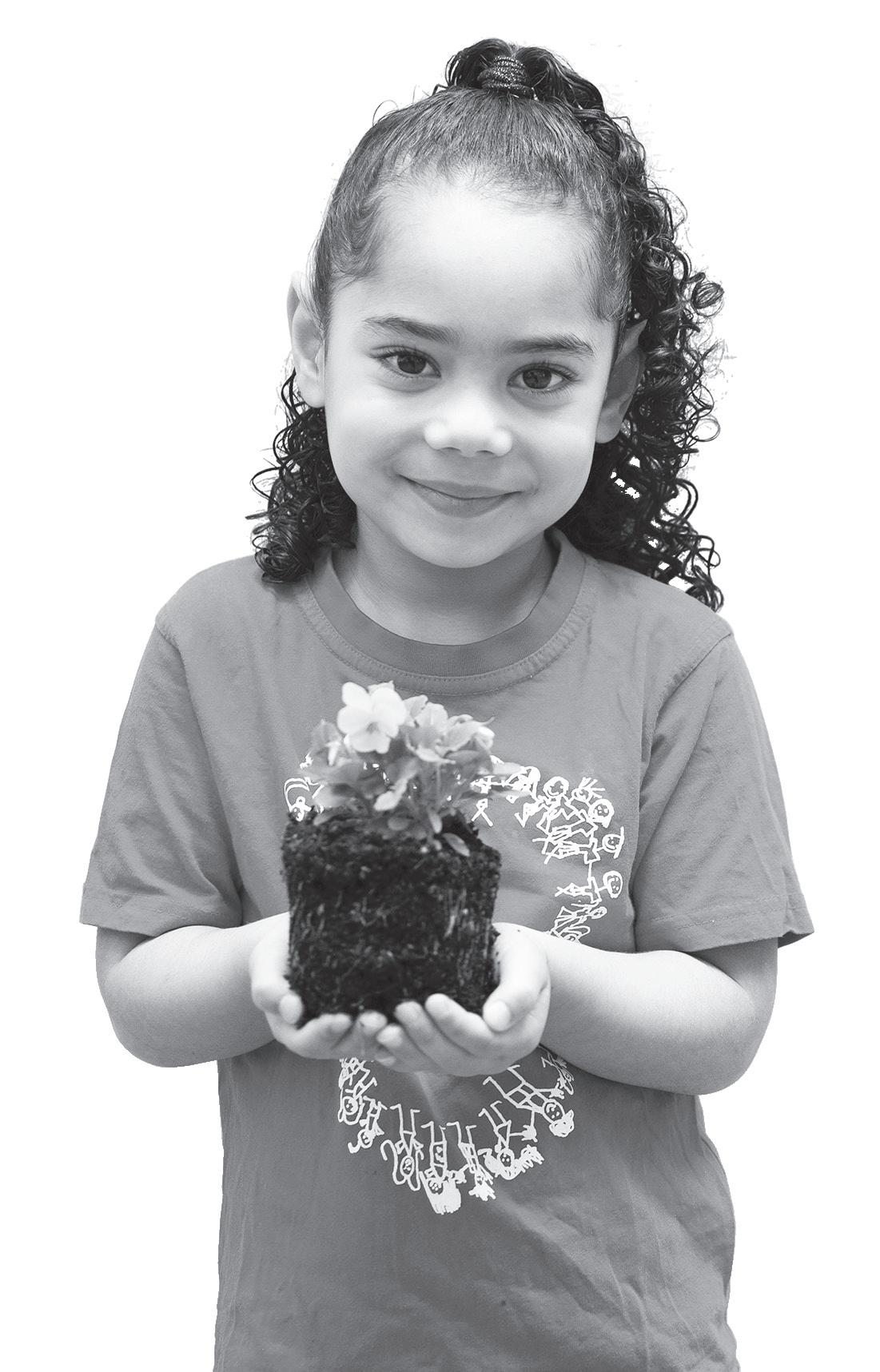
At Emanuel, a commitment to Sustainable Practices means we advocate for a sustainable future, in terms of our use of both our financial and natural resources. Our teaching and learning programs and organisational practices seek to value, promote, and protect the environment, in alignment with our Jewish ethos.
Our aim is to make sustainable thinking and practice a key focus of the Emanuel School community. We encourage student ownership of our ongoing responsibilities towards Tikkun Olam and Shmirat Ha’Adamah (being Guardians of the Earth), and to reduce our impact on the environment. We are also committed to prudent management of our financial and physical resources, to ensure the School will continue to thrive long into the future.
Priorities for 2022
1. Strengthen the commitment to and implementation of environmental sustainability at the School (P-12):
~ Embed in the procurement process (including building design), the consideration of supplier employment ethics and the sustainability of materials purchased
~ Increase the sourcing of renewable energy by optimising the current solar panel implementation and considering alternative renewable energy sources for the School
~ Strengthen the culture of moderating resource usage through implementation of efficient energy practices, including optimising natural light and ventilation through light sensors, sustainable building design and efficient water practices
~ Reduce waste to landfill by strengthening repurposing and recycling programs for paper, plastic, composting/FOGO/sourced from recycled material
~ Extend and enhance greenspaces at school with native plants, and student and school-maintained herb and vegetable gardens
~ Extend the responsibilities of the Primary and High School Coordinators of Sustainability, in recognition of the importance of staff leadership in sustainability
~ Measure and communicate the impact of the School’s environmental sustainability practices, to identify the resource usage at the School over time and to share the impact of environmentally sustainable practices
~ Introduce P-12 cross-disciplinary education programs and activities that promote awareness of sustainability issues
~ Ensure that high profile community leaders in sustainability are invited to speak to students and staff
~ Introduce a range of opportunities that enable students to engage in sustainable practices that reduce the impact on the environment and encourage a love of nature and a respect for all flora and fauna
Sustainability
2. Develop and support student leadership in sustainability:
~ Recognise the importance of sustainability through the introduction of student leadership positions in Primary and High School
~ Encourage students to promote the philosophy of sustainability in public forums and publications, P-12
~ Support and equip the Primary and High School Ve’adim (student leadership committees), to champion the need for sustainable practices to be embedded in daily life habits
~ Introduce a range of student environmental awards that recognise progress, ideas, and initiatives linked to sustainability
~ Partner with Jewish Day Schools in initiatives that promote and educate about sustainability
3. Creating a financially sustainable and supportive school community by:
~ Operating the School within prudent financial control and management
~ Regularly review the financial sustainability and financial resource requirements, considering the changing learning needs and community expectations
~ Undertake a masterplan review every five years, in relation to capital and operational requirements for the School
~ Support the development of the Emanuel School Foundation to enable Emanuel School to remain financially self-sustaining and to enhance and support scholarships, teaching programs and capital infrastructure
~ Drive efficient workplace practices that minimise paper documents, allowing for digital transactions and digital learning
~ Review systems and processes to implement best practice processes and efficient digital applications
With deep gratitude to the School’s Strategic Advisory Team, Executive, Board and other staff members for their time and input into creating this living and actionable Strategic Plan

Published on 15 March 2022