
Photo

From streaming a new show to uploading photos or asking a quick question online, we rely on technology for nearly everything in today's world. Behind this seamless access lies an invisible infrastructure: massive data centers that power the internet and process our digital requests. While most users never see them, these facilities require significant resources to keep our devices and services running. Compared to traditional tools like search engines, AI models require far more electricity, land, water, and raw materials often sourced through environmentally damaging or exploitative labor practices. Though AI may seem intangible, its environmental and social costs are both real and rising.
This zine uncovers the full material footprint of AI, starting with the infrastructure that makes it possible. From there, it dives into the environmental toll, covering how much land, electricity, and water are consumed to keep these systems running. It also explores the labor behind the minerals that power our devices and the people who train AI models through repetitive, and often invisible, digital work. By highlighting these costs, this zine aims to bring concerns forefront
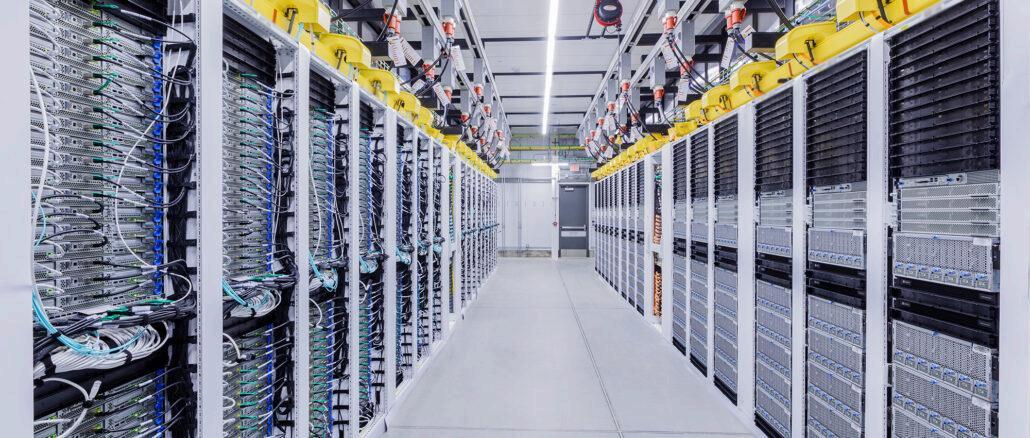
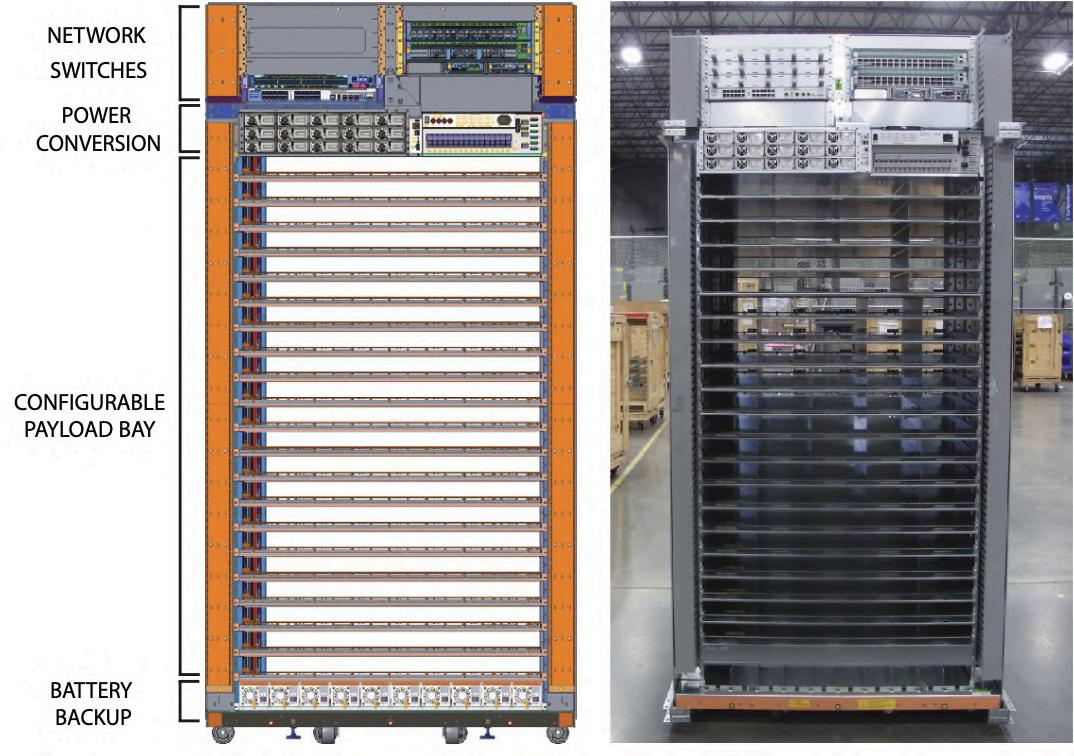
Each time a user runs a query through Google or ChatGPT, they are activating a network of high-powered data centers that run 24/7. These facilities house servers for computation, storage devices for data, networking equipment, and cooling systems to prevent overheating. Most wireless technology relies on data centers, but artificial intelligence requires far more space and electricity from these data centers than its technological counterparts. While a single Google search requires the same amount of energy as running a 100-watt light bulb for 11 seconds, a ChatGPT session can use 50-100 times more, or up to 16 minutes, of energy for a light bulb.
Traditional search engines perform impressive text mining to retrieve an answer from pre-existing web content. Large language models like ChatGPT differ because instead of using a pre-existing answer, it uses data to produce an original answer ChatGPT creates answers by analyzing training data processed through deep neural networks. This process is resource-intensive at every level; the training alone can emit hundreds of metric tons of carbon. GPT-3’s training emitted approximately 500 metric tons of CO2, while Meta’s OPT model emitted 75 metric tons. These figures will only increase as LLMs continue to grow in popularity and complexity.
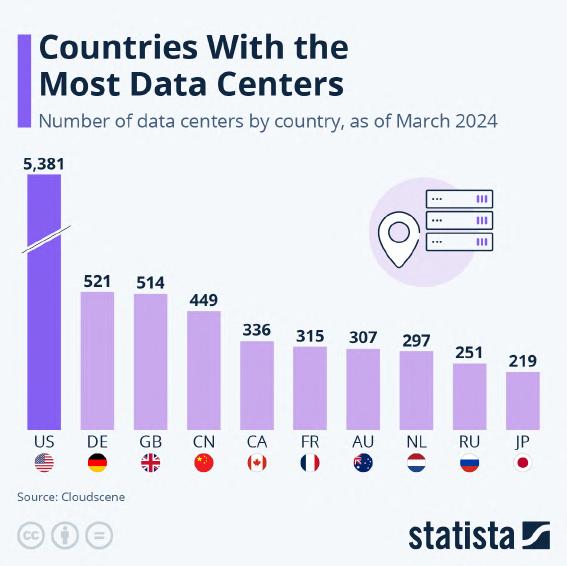
The data centers. number for the US is so high that it is not depicted to scale. (Image)
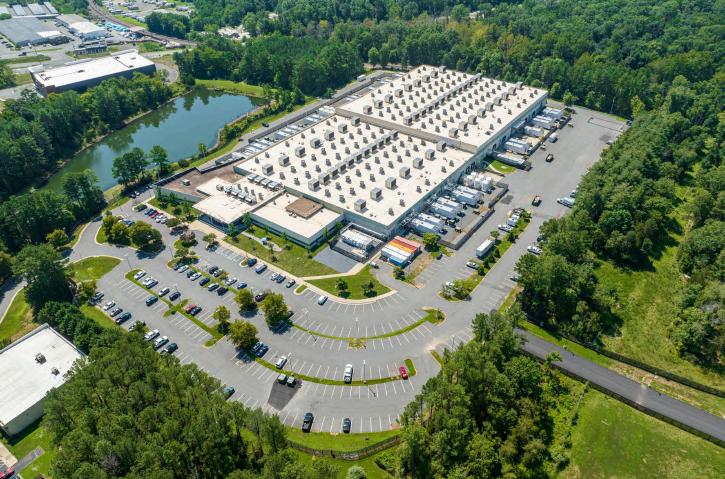
Data centers typically consist of multiple buildings spanning across a large amount of land. This is just one building.
Artificial intelligence might seem like a purely digital phenomenon, but behind every response or image lies a massive physical footprint. From land cleared for server farms to electricity and water drained to keep machines running, AI relies on real-world resources to function. As demand grows, so too does its impact on ecosystems, energy grids, and communities already facing environmental stress.
The phrase “cloud computing” can be misleading, as it suggests a weightless, space-free process. In reality, the cloud is grounded in physical infrastructure, often occupying immense tracts of land. Northern Virginia, home to more than 70% of the world’s internet traffic, has become a prime example of this trend. In Prince William County, one proposed data center complex would cover 27 million square feet, equivalent to 150 Walmart Supercenters.
These massive developments frequently encroach on residential areas, parks, and protected ecosystems. Local communities have expressed growing concern with noise pollution, habitat destruction, and growing electricity demand. With data centers built near natural resources like rivers or forests, they threaten quality
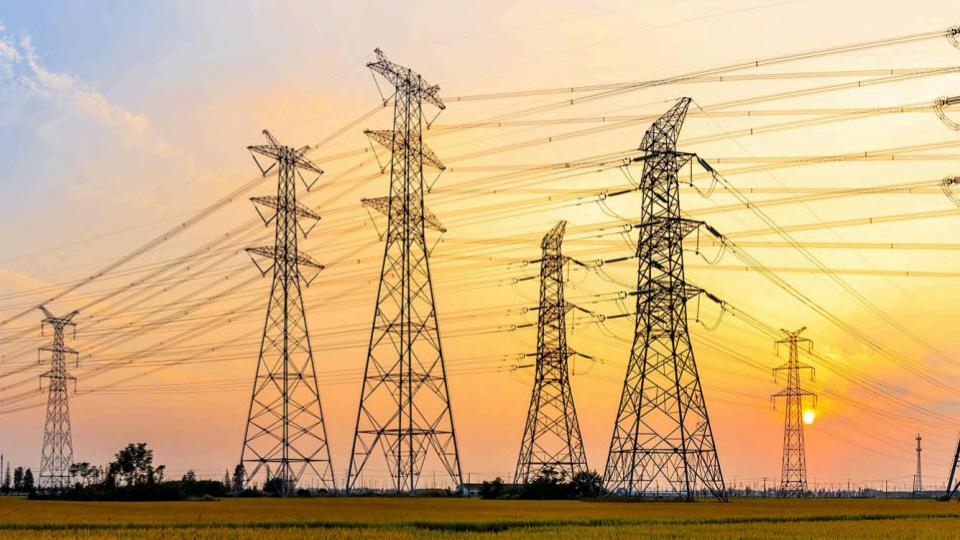
Data centers operate non-stop, consuming vast amounts of electricity to process data and maintain temperatures. AI models, particularly LLMs, place immense strain on the power grid. According to the International Energy Agency, electricity demand from AI and related digital infrastructure could double by 2026. Most of this power comes from fossil fuels, meaning increased emissions and pressure on climate goals.
The carbon cost of computation is not an abstract figure. Training a single large-scale AI model can consume as much energy as a small town does in a year In regions with already strained energy grids, it could lead to more frequent outages or extend the time to transition to green energy
AI requires millions of gallons of water to cool the servers in data centers. In arid regions like Phoenix, Arizona (the U.S.'s second-largest data hub), this has serious consequences. Microsoft estimated that one of its Phoenix data centers would consume 56 million gallons of potable water annually in a desert city already facing droughts. This annual water usage is equivalent to that of roughly 670 households. The water used for cooling is not always disclosed, making it difficult to hold companies accountable in a time where water scarcity is worsening.
As we’ve uncovered so far, AI is not just digital, it’s physical. The technology that uses AI, whether that be your personal computer or data centers, requires hardware built from the Earth’s raw materials and refined by human hands. This section looks at the extractive supply chains and labor practices that make AI possible, from cobalt mines in Congo to clickworkers labeling content across the globe. While some workers benefit from new tech-related opportunities, others bear the brunt of exploitation. Beyond its environmental footprint, AI depends on human labor that is often exploitative, invisible, and undervalued.
The technology of AI also depends on physical hardware (i.e. smartphones, batteries, servers) that require rare minerals such as cobalt and lithium. More than 70% of the world’s cobalt is mined in the Democratic Republic of Congo, notorious for unsafe conditions, child labor, and environmental damage. A Washington Post investigation traced the mineral’s journey from deadly Congolese mines to smartphones and laptops in the U.S. and Europe. The U.S. Department of Labor also reports that cobalt extraction frequently involves children as young as seven, working without protective gear and exposed to toxic materials.
Corruption in the Congolese government helps enable this abuse. Foreign companies often offer large sums of money for access to mineral-rich land, and local officials accept deals that don’t benefit the wider population. This dynamic has deep historical roots: the Congo’s first democratically elected leader was assassinated after pledging to use the country’s resources for its people. Since then, a long line of corrupt
regimes have allowed minerals to flow out of the country while basic needs like roads, schools, and health care remain unmet. Much like the colonial scramble for ‘God, Gold, and Glory,’ today’s rush for AI depends on its own trio: cobalt, corruption, and child labor.
As for lithium in Africa, while the continent accounts for less than 10% of the global lithium supply, mining in Zimbabwe, Namibia, and the DRC is already plagued with political favoritism, bribery, and backdoor deals. While elites and foreign companies profit, communities are sidelined, regulations are bypassed, and citizens are denied the public benefits that mineral wealth could provide.



While minerals represent the start of AI, the digital layer relies on human labor too, particularly data labeling. These workers tag, label, and filter content to train AI systems. Often outsourced to the Global South, data labeling is essential but deeply underappreciated.
One prominent example involves OpenAI, which outsourced toxic content filtering for ChatGPT to Kenyan workers paid less than $2/hour Their job involved reviewing disturbing material such as hate speech, violence, and sexual abuse. Many reported long-term psychological trauma from the work.
In contrast, data labeling has created new opportunities in other regions. In rural India, first-generation women workers are using these jobs to gain financial independence, digital literacy, and long-term career prospects.
The availability of remote annotation work has empowered many women and reshaped gender norms in their villages. These contrasting examples show that the ethics of digital labor depend on context, regulation, and fair compensation.

Companies such as Microsoft and Iron Mountain have publicly committed to sustainability goals, from carbon offsets to water-efficient cooling systems. Yet these same companies remain vague about the full costs of model training and mineral extraction. If GPT-3’s training emitted approximately 500 metric tons of CO2, what does “sustainability” mean without transparent accounting? The tech industry must adopt more robust frameworks for sustainability and accountability where claims of ethical innovation must include accountability and transparency
Governments at local and national levels are starting to respond. In Virginia, where data centers now dominate the grid, local politicians are running campaigns that take into account the concerns expressed by local residents. Internationally, the UN’s 2024 Digital Economy Report calls for labor protections and reporting standards across AI supply chains.
You, the user, also have a role. There's a meaningful distinction between using AI as a tool (for example, students turning to it as a tutor to better understand complex concepts) and using it to offload responsibilities you’re capable of completing, such as writing emails or answering homework questions. Responsible use means thinking critically about the labor and environmental cost of each query Depending on the task, consider using Google, Quizlet, Reddit, online forums, textbooks, and your public library before turning to AI for help. If you are a non-user, whether by choice or by coincidence, you should continue resisting overreliance on AI. Abstention is a valid and increasingly powerful form of climate and labor solidarity
From energy-hungry data centers to toxic mines in Congo and annotation centers in Kenya, the story of AI is grounded in real-world resources and labor This paper has traced AI’s invisible costs across land, electricity, water, minerals, and digital labor, revealing the extensive human and environmental infrastructure that supports the cloud.
As AI becomes further embedded in daily life, users and developers alike must reckon with its broader consequences. Mindful usage, ethical design, and policy innovation are all necessary to ensure that AI serves society equitably and sustainably