MENU
—
TRACKLIST ENGLISH ITALIANO FRANÇAIS DEUTSCH SUNG TEXTS
P. 4 P. 6 P. 11 P. 16 P. 21 P. 26
This recording has been made with the support of the Fédération Wallonie-Bruxelles (Direction générale de la Culture, Service de la Musique)
2
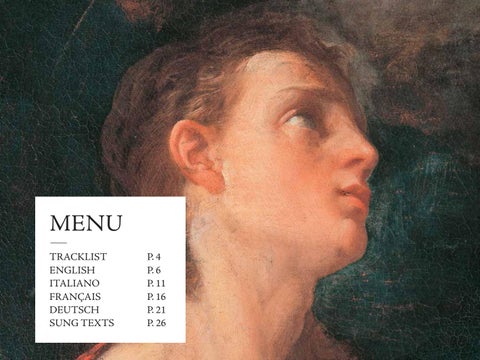
The Chœur de Chambre de Namur & the Millenium Orchestra are sponsored by the Fédération Wallonie-Bruxelles (Direction générale de la Culture, Secteur de la Musique). and supported by the Loterie nationale, the Port autonome de Namur and the City and Province of Namur. www.cavema.be This recording has been produced by CAVEMA and OZANGO. The live recording presented here is also available as a video recording on https://vimeo.com/ondemand/ passiosecundumioannem Recording place: Provinciaal Museum Begijnhofkerk Sint-Truiden, 27 March 2016 Recording: Olivier Rosset / Artistic direction: Jérôme Lejeune Cover illustration: Guido Reni (1575-1642) : The Coronation of the Virgin with four saints: St. Catherine of Alexandria, St. John the Evangelist, St. John the Baptist, St. Bernard of Clairvaux. Detail. Face of a young man, John the Evangelist. Bologna, Pinacoteca Nazionale. © akg-images / Mondadori Portfolio / Giuseppe Schiavinotto
ALESSANDRO SCARLATTI 1660-1725
PASSIO SECUNDUM JOANNEM
Giuseppina Bridelli: mezzo-soprano (Testo) Salvo Vitale: bass (Christus) Caroline Weynants: soprano (Ancilla) Guillaume Houcke: countertenor (Pilatus) Pierre Derhet: tenor (Petrus) Maxime Melnik: tenor ( Judaeus)
MILLENIUM ORCHESTRA CHŒUR DE CHAMBRE DE NAMUR Leonardo García Alarcón: direction
3
—
MENU EN IT FR DE 4
Passio domini nostri Jesu Christi secundum Joannem 1. Plange quasi virgo* 2. Passio domini nostri Jesu Christi (Testo) 3. Plange quasi virgo* 4. In illo tempore egressus est (Testo, Christus, Turba) 5. Ecce vidimus eum* 6. Sequebatur autem Jesum Simon Petrus (Testo, Ancilla, Petrus, Judaeus, Christus, Turba) 7. Omnes amici mei* 8. Adducunt ergo Jesum a Caipha (Testo, Pilatus, Turba, Christus) 9. Vinea mea electa* 10. Hunc ergo titulum multi Judaeorum (Testo, Turba, Pilatus, Christus) 11. O vos omnes* 12. Judaei ergo, quoniam parasceve erat (Testo) 13. Aestimatus sum*
* Responsori per la Settimana Santa CHŒUR DE CHAMBRE DE NAMUR Amélie Renglet, Mathilde Sevrin, Lieve Van Lancker & Caroline Weynants: soprano
2'49 2'16 1'39 6'03 4'19 5'37 1'57 15'28 2'10 7'55 2'22 4'16 2'14
MILLENIUM ORCHESTRA Manfredo Kraemer (concertmeister), Guadalupe Del Moral, Sue Ying Koang & Ann Cnop: violin I Madoka Nakamaru, Maurizio Bozone, Marrie Mooij & Amandine Bernhardt-Beaulieu: violin II Lola Fernandez, Joseph Mc Rae Ballantyne, Esther Van Der Eyck & Camille Feye: viola Jérôme Huille & Henrikke Gjermundsen Rynning: cello Éric Mathot: double bass Quito Gato: theorbo Christopher Sommer: archlute Flora Papadopoulos: triple harp Ronald Martin Alonso: bass viol Ariel Rychter: organ Leonardo García Alarcón: harpsichord
5
Jean-Christophe Clair, Guillaume Houcke, Gabriel Jublin & Jérôme Vavasseur: countertenor Pierre Derhet, Maxime Melnik, Frederico Projecto & Jean-Yves Ravoux: tenor Philippe Favette, Kamil Ben Hsain Lachiri & Jean-Marie Marchal: bass
MENU IT FR DE 6
ALESSANDRO SCARLATTI PASSIO SECUNDUM JOANNEM It is only recently that it has become possible to set a plausible date and place for the composition of the Passio secundum Joannem by Alessandro Scarlatti (Palermo 1660-Naples 1725). Until a short time ago, musicological literature had traced this youthful masterpiece to the church of the Santissimo Crocefisso in Rome, with a side-note that this score was a highly individual work in comparison with Italian music of the end of the 17th century in general. From this perspective, the young Scarlatti could have taken the two Passion settings composed by his paternal uncle Vincenzo Amato of Palermo, as his model; Amato had been maestro di cappella of Palermo’s cathedral from 1665. Amato’s two settings were extremely popular in Sicily, as can be seen from the fact that they were still being performed more than two centuries after Amato’s death. The music of Scarlatti’s Passion has come down to us in two manuscripts from Naples, the first from the Archivio dei Girolamini and the second from the library of the Conservatorio San Pietro a Majella. The impressive doctoral thesis (2004) by Benedikt Poensgen together with the rediscovery of certain works by Gaetano Veneziano (1656-1716) have given us sufficient cause to challenge what has been assumed of the Passion until now. Poensgen submits a hypothesis that the Neapolitan manuscript preserved in the library of the Conservatory is an autograph manuscript that was made around 1685. More recently, Dinko Fabris has drawn attention to several Lamentazioni and to a Passione secundum Joannem by Veneziano, who had studied with Francesco Provenzale and who replaced Scarlatti at the head of the Real Cappella in 1704. Fabris puts forward the idea that Veneziano’s score would have been composed around 1685, the same year that, according to Poensgen, Scarlatti composed his own St. John Passion. There are several elements that these two settings of the Passion, so different stylistically, have in common: the greatest of these is their
7
articulation of the Gospel text. Many other elements of the two settings, however, are greatly contrasted: Veneziano’s work is oriented towards the future with its exuberant treatment of the vocal lines, these being supported by a detailed continuo part that employs unusually rich harmonies for the period. Scarlatti’s setting, however, breathes the air of the 17th century: his vocal lines are not as striking as Veneziano’s, if they are rich in pathos and expression thanks to the close connection that Scarlatti creates between the Gospel text and its musical setting. The hypothesis that Scarlatti’s score was composed for Naples is also corroborated by the stylistic analogies between Scarlatti’s Lamentazioni per la Settimana Santa — neither the composition date or circumstances of this work were known until a few years ago — and Veneziano’s Lezioni that were composed during the same period. After his spectacular operatic debut with Gli equivoci nel sembiante (1679), Alessandro Scarlatti arrived in Naples together with a troupe of singers engaged for the 1683 season at the Teatro San Bartolomeo in the summer of that year. Pier Andrea Ziani, maestro di cappella of the Real Cappella and the successor of Filippo Coppola, had died after only four years in the position on 12 February 1684. Francesco Provenzale had also aspired to be Coppola’s successor, but had to content himself with the position of maestro onorario. Provenzale naturally hoped to be appointed as Ziani’s successor and was backed in this by the influential Capellano maggione, one Don Geronimo della Marra. Della Marra had already written to the viceroy on 9 February to warn him about the manoeuvring for the post by the ‘Scarlattian party’, led by the duke and duchess di Maddaloni. Such efforts were in vain: Scarlatti was appointed maestro of the Real Capella on 17 February, five days after Ziani’s death; he was also to receive the 35 ducats and prerogatives that Ziani had received, clearly thanks to the viceroy’s personal intervention. Provenzale, a solid and much respected figure in the Neapolitan musical scene, was very much upset by this turn of events, as were certain members of the Real Cappella who were very much against Scarlatti’s ‘mercenary musicians’, as they described them. Scarlatti’s appointment thus ended an old tradition that had preserved a clear distinction between theatre musicians and church musicians. Provenzale, who had been supported by several of the most
8
well-known singers of the Real Cappella, then submitted his resignation as maestro onorario, which the viceroy accepted without batting an eyelid. Tommaso Pagano, the Cappella’s chief organist, was appointed in his place. The Latin text of Scarlatti’s and Veneziano’s Passio secundum Joannem are taken word for word from St. John’s Gospel, chapter 18, verses 19-37. The principal characters are the Testo (the Evangelist, contralto), Christ (bass), and Pilate (tenor), followed by the Crowd. Scarlatti’s Passion differs from Veneziano’s in that it is not divided into clear sections; it is based on a continuous succession of short musical tableaus, each of which corresponds to one of the Gospel verses or to a line of dialogue. The role of the Testo is written in a type of declamation that is accompanied by the continuo alone; the two exceptions to this are, significantly enough, at the beginning and the end of the oratorio and act as a musical frame for the whole. The opening phrase for strings, which is then taken up by the Testo, is astonishing in its expressive force: it is as if a switch has been flipped and has released a burst of light filled with emotion, a perfect match to the Gospel text. The key of C minor surrounds the listener with a mood of emotional stress; the extended descending melodic line of the first violins is followed by an ascending minor sixth — the classic musical expression of pathos — which, after a delay, gives way to a ninth chord that is then followed by several seventh chords before making way for the Testo and his ‘Passio Domini Nostri Jesu Christe’ sung to the violins’ opening phrase. The dramatic effectiveness of the above is as striking as the straightforward techniques employed by the young Scarlatti. The Gospel narration begins with a syllabic declamation of the text accompanied by the continuo alone; this is soon given extra substance by the use of the stile concitato that includes many usual rhetorical flourishes such as the circulatio (a circular melodic figure, here in semiquavers, that depicts a torrent: ‘Egressus est Jesum cum discipulis suis trans torrentem’), and then by repeated semiquavers in the violins at the Testo’s description of the arrival of Judas with the soldiers ‘cum lanternis, et facibus, et armis’. Christ himself is depicted musically in passages of great intensity of expression, with short phrases whose melodic profile alters to suit the emotion required. It is interesting to note that Scarlatti marks all of Christ’s music largo and often dolce; this
9
is in clear contrast with the agitation of the Crowd, whose interruptions are characterised by lively homophonic ensembles. Scarlatti makes use of the idea of gravitas to characterise Christ; this term, as used by Ursula Kirkendale in her memorable article The King of Heaven and the King of France (Music and Meaning, Firenze, Olschki, 2007), indicates the attitude adopted by ruling monarchs when they do not wish to lose countenance when events turn against them. Christ’s question Quem quaeritis (whom do you seek?) is answered by the Crowd in a short homophonic interjection: Jesum Nazarenum ( Jesus of Nazareth). The statements of the Crowd are always accompanied by strings, which discreetly increase the music’s expressive power. In this first section of the Passion, the listener is almost overwhelmed by a sombre mood that knows no relief. All of Christ’s phrases proceed downwards, almost always by seconds or semitones. Scarlatti builds further on these by creating moments of great pathos with delays and hesitations, such as the ninth on Sinite hos abire. The Crowd’s short choral entries express the aggressive character of the text with music that is practically homophonic in style with one note to each syllable. The relationship between the vocal and instrumental parts is characteristic of Scarlatti’s style: the instruments are not restricted to a mere doubling of the vocal lines but are independent of them and provide a considerable enrichment of the sound of the ensemble as a whole. The role of the Testo contains melismas that are particularly dramatic in character, as in Et ligaverunt eum, in which we hear a long descending melisma. A similar example can be heard at Christ’s flagellation (Et flagellavit); this is then developed further on the words ut crucifigerunt and ubi crucifixerunt, culminating in the last words of Christ on the cross, with an intense melisma that falls more than an octave on the words Consummatum est. Here too the elaborate string writing has a particularly expressive effect. The Testo states that Christ bowed his head and then gave up the ghost; at this point Scarlatti states in the score that there must be a short silence before continuing. The Passion ends with the Testo’s words Videbunt in quem transfixerunt (They gazed on he whom they had crucified); the music to which these words are set uses not only the strings and the melodic shape of the opening of the Passion but also the
MENU IT FR DE 10
minor sixth (here ascending) of the opening, thus creating a musical frame around the entire work. For the purposes of this recording Leonardo García Alarcón has introduced several Responsori per la Settimana Santa at various places in the Passion: Plange quasi virgo (Responsorio III per il Sabato Santo), Ecce vidimus eum (Responsorio III, Feria V, in Coena Domini), Omnes amici mei (Responsorio I in Feria VI, in Parasceve), Vinea mea electa (Responsorio III in Feria VI in Parasceve), O vos omnes (Responsorio V in Sabbato Sancto) and Aestimatus sum (Responsorio VIII in Sabbato Sancto). These works have been preserved complete in a manuscript kept in the Accademia Filarmonica di Bologna. The spine of the volume bears a handwritten marking: SCARLATTI/ MUSICA/PER/LA SETTIMANA/SANTA/1705/VOLUME UNICO. As Romano Vettori has proved in his doctoral thesis I Responsori della Settimana Santa del Ms. 443 dell’Accademia Filarmonica di Bologna for the University of Bologna, this is a collection of several separate manuscripts that have been bound together to make a collection of works for Holy Week; it is the work of three different copyists, of whom only one, the copyist of the Lamentazioni per la Settimana Santa, has been proved to have been one of Scarlatti’s own copyists. LUCA DELLA LIBERA TRANSLATION: PETER LOCKWOOD
Soltanto negli ultimi anni è stato possibile collocare la Passio secundum Joannem di Alessandro Scarlatti (Palermo 1660 – Napoli 1725) in un plausibile luogo e periodo di composizione. Fino a non molto tempo fa la letteratura musicologica aveva indicato nell’ambiente oratoriale romano, in particolare in quello del Santissimo Crocefisso, la sede del suo capolavoro giovanile sacro, indicando anche come questa partitura rappresentasse un caso isolato nel panorama musicale italiano del tardo Seicento. In questa prospettiva il giovane musicista avrebbe anche avuto come modello le due Passioni composte dallo zio paterno, il palermitano Vincenzo Amato, che fu nominato maestro di cappella nella cattedrale cittadina nel 1665; le sue due partiture ebbero una grande fortuna in Sicilia, rimanendo nel repertorio per ben due secoli dopo la sua morte. La musica della Passio di Scarlatti è tramandata in due manoscritti napoletani, uno conservato nell’Archivio dei Girolamini e l’altro nella Biblioteca del Conservatorio San Pietro a Majella. La poderosa Tesi dottorale discussa da Benedikt Poensgen nel 2004 da una parte, e la riscoperta di alcuni brani di Gaetano Veneziano (1656 – 1716) dall’altra hanno fornito sufficienti indizi per modificare tale prospettiva. Lo studioso tedesco ha ipotizzato che il manoscritto napoletano conservato al Conservatorio sia un autografo, redatto intorno al 1685. Più recentemente, Dinko Fabris ha fatto luce su alcune Lamentazioni e una Passione secundum Joannem di Veneziano, che aveva studiato con Francesco Provenzale e che nel 1704 prese il posto di Scarlatti alla guida della Real Cappella. L’ipotesi di Fabris è che la partitura di Veneziano sia stata composta intorno al 1685, lo stesso anno in cui, secondo Poensgen, Scarlatti aveva scritto la sua. Sebbene stilisticamente diverse, le Passioni dei due compositori hanno elementi in comune, in particolare l’articolazione del testo evangelico. Per altri aspetti le due partiture sono molto diverse: quella di Veneziano è già
MENU EN FR DE
PASSIO SECUNDUM JOANNEM
11
ALESSANDRO SCARLATTI
12
proiettata verso il futuro, attraverso una condotta vocale talvolta esuberante e sostenuta da un basso continuo molto articolato su percorsi armonici particolarmente ricchi. In Scarlatti si respira invece un’atmosfera ancora pienamente seicentesca, e la vocalità non lo smalto di Veneziano, ma d’altra parte è ricca di pathos e tensione espressiva, realizzata attraverso una strettissima adesione tra testo evangelico e la sua sonorizzazione. L’ipotesi della genesi napoletana della partitura scarlattiana è anche suffragata dall’analogia stilistica tra le Lamentazioni per la Settimana Santa di Scarlatti, per le quali fino a pochi anni fa non era stato possibile ipotizzare né una datazione né il contesto, e le Lezioni di Veneziano, che pure appartengono al quel periodo. Dopo il folgorante esordio operistico nel 1679 con Gli equivoci nel sembiante, Alessandro Scarlatti era arrivato a Napoli nell’estate del 1683 alla guida di una compagnia di cantanti, ingaggiati per la stagione operistica al Teatro San Bartolomeo. Il 12 febbraio 1684 moriva Pier Andrea Ziani, l’anziano maestro della Real Cappella (era nato nel 1620), che aveva ottenuto questo incarico solo quattro anni prima, alla morte del suo predecessore Filippo Coppola. Francesco Provenzale, che aspirava anch’egli a tale incarico, in quell’occasione si dovette accontentare della nomina a ‘maestro di cappella onorario’. Alla morte di Ziani, Provenzale sperava di poter finalmente ricevere l’incarico, sostenuto e difeso anche dall’influente Cappellano Maggiore, don Geronimo della Marra. Quest’ultimo il 9 febbraio scrisse una lettera al viceré contro le manovre di quello che è stato definito ‘partito scarlattiano’ capeggiato dal Duca e dalla Duchessa di Maddaloni. Non andò così: solo cinque giorni dopo la morte di Ziani, il 17 febbraio Scarlatti fu nominato maestro della Real Cappella, con gli stessi trentacinque ducati e le stesse preminenze di cui godeva lo Ziani, evidentemente grazie all’influenza esercitata dallo stesso viceré. Questo provocò la durissima reazione di Provenzale, il compositore di maggior spicco nella scena musicale napoletana di fine Seicento, e di alcuni membri della Real Cappella, evidentemente ostili ai cosiddetti ‘musici mercenari’ guidati da Scarlatti. Con la sua nomina, infatti, s’infrangeva una solida tradizione che aveva visto sempre separati i ‘musici di chiesa’ rispetto ai ‘musici di teatro’. Provenzale arrivò a presentare le sue dimissioni da maestro
13
onorario: il viceré le accettò senza batter ciglio e nominò al suo posto il primo organista Tommaso Pagano. Insieme con Provenzale protestarono alcuni tra i più validi cantanti della Real Cappella. Il testo latino della Passio secundum Joannem di Scarlatti, così come di quella di Veneziano, coincide quasi alla lettera con quello evangelico (Giovanni, 18-19:37). I due personaggi principali sono il Testo (ossia l’Evangelista, contralto) e Cristo (Basso), Pilato (Tenore), seguiti dalla Turba. L’oratorio, a differenza di quello di Veneziano, non è diviso in sezioni ‘chiuse’, ma si basa su un’incessante successione di brevi pannelli musicali che corrispondono o ai singoli versetti evangelici o alle frasi dei personaggi. Il Testo ha sempre una sorta di declamazione sostenuta dal solo basso continuo, con le significative eccezioni dell’inizio e della fine dell’oratorio, che svolgono la funzione di ‘cornice’ musicale. L’incipit strumentale degli archi, ripreso alla lettera dal Testo, sbalordisce per la sua immediata forza espressiva: è come un interruttore che accendendosi getta immediatamente una luce carica di commozione, perfettamente in sintonia con il racconto evangelico. La tonalità è do minore. L’ascoltatore da subito è immerso in un clima di fortissima tensione espressiva, realizzata attraverso una distesa linea melodica discendente dei violini primi, che poi s’innalza su una sesta minore ascendente, intervallo notoriamente associato al ‘pathos’, provocando attraverso un ritardo un accordo di nona e accordi di settima, prima di lasciare al Testo il canto: ‘Passio Domini Nostri Jesu Christe’, che riprende alla lettera la melodia iniziale dei violini. Colpisce l’efficacia drammatica, realizzata con pochi gesti compositivi, da parte del giovane compositore. Il racconto evangelico inizia con un declamato sillabico sostenuto principalmente dal solo basso continuo, per poi arricchirsi nello stile ‘concitato’, non senza i consueti riferimenti retorici, come la ‘circulatio’ (una figura melodica circolare, in questo caso di semicrome, ad evocare un elemento naturale: ‘Egressus est Jesum cum discipulis suis trans torrentem’); e poi con semicrome ribattute negli archi, significativamente poste sui vocaboli ‘Cum lanternis, et facibus, et armis’ quando il Testo racconta l’arrivo di Giuda con i soldati. Anche il personaggio di Cristo è tratteggiato musicalmente con sezioni di grande intensità espressiva: brevi frasi con plastici profili melodici. Interessante notare che Scarlatti redige esplicitamente in tutti gli interventi di Cristo l’indicazione ‘Largo’ e talvolta ‘Dolce’, a contrastare dialetticamente l’agitazione
14
della Turba, che interviene sempre con vividi pannelli omofonici. Scarlatti qui utilizza per Cristo la ‘gravitas’, la capacità dei sovrani di non scomporsi di fronte agli eventi, studiata in un memorabile articolo di Ursula Kirkendale (The King of Heaven and the King of France, in Music and Meaning, Firenze, Olschki, 2007). La prima apparizione della Turba è un breve inciso omofonico che risponde alla domanda di Cristo ‘Quem quaeritis?’, con ‘Jesum Nazarenum’. I suoi interventi prevedono sempre gli archi, che con i loro discreti ed efficaci interventi ne arricchiscono l’espressività. In questa prima parte l’ascoltatore è quasi sopraffatto da un’atmosfera cupa, priva di qualsiasi momento di distensione. I gesti melodici di Cristo sono tutti discendenti, quasi sempre per gradi congiunti: su di essi Scarlatti costruisce momenti di forte pathos con ritardi nelle parti, come la nona nella frase ‘Sinite hos abire’. I brevi interventi corali della Turba, restituiscono il tono aggressivo del testo attraverso una scrittura prevalentemente omoritmica e andamenti sillabici. Qui troviamo un tratto che sarà peculiare nello stile scarlattiano riguardo il rapporto voci-strumenti: questi ultimi non si limitano mai all’esclusivo raddoppio delle linee vocali, ma procedono per parti autonome, arricchendo così in modo sostanziale il timbro. Il declamato del Testo lascia spazio a momenti melismatici in momenti particolarmente drammatici, come per ‘Et ligaverunt eum’, nel quale troviamo una lunga discesa melismatica. Più avanti, al momento della flagellazione, su ‘Et flagellavit’ troviamo una situazione analoga, e a seguire su ‘ut crucifigerunt’, ‘ubi crucifixerunt’, fino all’ultima frase pronunciante da Cristo morente, un’intensa discesa melismatica di oltre un’ottava, sulle parole ‘Consumatum est’. Anche in questo caso l’attentissima scrittura per gli archi realizza effetti di grande efficacia espressiva. Segue il Testo, per annunciare che Cristo, dopo aver chinato il capo, ha reso l’anima a Dio. A questo punto la partitura reca l’indicazione ‘Qui si ferma un poco e poi siegue’. La Passione si conclude con il versetto intonato dal Testo ‘Videbunt in quem transfixerunt’ (Volgeranno lo sguardo a colui che hanno trafitto), che rappresenta una sorta di ‘cornice’ musicale che ha un chiaro riferimento all’inizio della Passione attraverso vari elementi: la presenza degli archi, un disegno melodico che ricorda il motto iniziale, anche se ascendente, la sesta minore ascendente.
LUCA DELLA LIBERA
MENU EN FR DE 15
Per questa registrazione, Leonardo García Alarcón ha inserito nel corso della Passione alcuni Responsori per la Settimana Santa: Plange quasi virgo (Responsorio III per il Sabato Santo), Ecce vidimus eum (Responsorio III, Feria V, in Coena Domini), Omnes amici mei (Responsorio I in Feria VI, in Parasceve), Vinea mea electa (Responsorio III in Feria VI in Parasceve), O vos omnes (Responsorio V in Sabbato Sancto), Aestimatus sum (Responsorio VIII in Sabbato Sancto). Si tratta di fonti conservate in un prezioso e complesso manoscritto conservato all’Accademia Filarmonica di Bologna. Nel dorso del volume si trova l’indicazione manoscritta «SCARLATTI/MUSICA/PER/ LA SETTIMANA/SANTA/1705/VOLUME UNICO». Come ha dimostrato Romano Vettori nella sua Tesi Dottorale dell’Università di Bologna I Responsori della Settimana Santa del Ms. 443 dell’Accademia Filarmonica di Bologna, si tratta di una miscellanea di più manoscritti precedentemente indipendenti e poi rilegati tra loro in una raccolta per la Settimana Santa, redatto da tre copisti diversi, dei quali solo uno, quello che redige le Lamentazioni per la Settimana Santa, è attestato tra i copisti scarlattiani.
MENU EN IT DE 16
ALESSANDRO SCARLATTI PASSIO SECUNDUM JOANNEM Ce n’est que récemment qu’il a été possible de situer la composition de la Passio secundum Joannem d’Alessandro Scarlatti (Palerme, 1660-Naples, 1725) en un lieu et une époque plausibles. Jusqu’il y a peu, la littérature musicologique avait déterminé le cadre de ce chef-d'œuvre de jeunesse dans le milieu de l’oratoire romain et, en particulier, celui du Santissimo Crocefisso, indiquant également comment cette partition constituait un cas isolé dans le panorama musical italien de la fin du XVIIe siècle. Dans une telle perspective, le jeune musicien aurait aussi eu comme modèle les deux Passions composées par son oncle paternel, le Palermitain Vincenzo Amato, maître de chapelle de la cathédrale de la ville à partir de 1665. Les deux partitions eurent un grand succès en Sicile, puisqu’elles faisaient partie du répertoire plus de deux siècles après la mort de leur auteur. La musique de la Passio de Scarlatti nous est parvenue à travers deux manuscrits napolitains, l’un conservé à l’Archivio dei Girolamini et l’autre à la bibliothèque du Conservatoire San Pietro a Majella. L’impressionnante thèse de doctorat de Benedikt Poensgen (2004), d’une part, et la redécouverte de certaines compositions de Gaetano Veneziano (1656-1716) de l’autre, ont fourni suffisamment d’indices pour remettre en cause ce que l’on croyait savoir jusqu’ici. Le musicologue allemand a émis l’hypothèse que le manuscrit napolitain conservé au Conservatoire serait un autographe rédigé autour de 1685. Plus récemment, Dinko Fabris a attiré l’attention sur quelques Lamentazioni et une Passione secundum Joannem de Veneziano, qui avait étudié avec Francesco Provenzale et qui, en 1704, prit la place de Scarlatti à la tête de la Real Cappella. L’hypothèse de Fabris est que la partition de Veneziano aurait été composée aux alentours de 1685, l’année même où, selon Poensgen, Scarlatti écrivit la sienne. Parmi les éléments qui rapprochent ces deux partitions stylistiquement fort différentes, mentionnons en particulier l’articulation du texte évangélique. Pour
17
le reste, nombreux sont les éléments qui les opposent : l’œuvre de Veneziano est tournée vers l’avenir, par sa conduite vocale parfois exubérante, soutenue par une basse continue très articulée sur des parcours harmoniques particulièrement riches. Chez Sarlatti par contre prévaut une atmosphère propre au XVIIe siècle : les voix n’ont pas l’éclat de Veneziano, même si elles sont riches en pathos et en tension expressive grâce à une adhésion étroite entre texte évangélique et sonorisation. L’hypothèse d’une genèse napolitaine de la partition de Scarlatti est corroborée par l’analogie stylistique entre les Lamentazioni per la Settimana Santa de ce dernier (pièce dont, jusqu’il y a quelques années, on ne connaissait ni la date ni le contexte) et les Lezioni de Veneziano qui appartiennent à la même période. Après ses débuts fulgurants à l’opéra en 1679 avec Gli equivoci nel sembiante, Alessandro Scarlatti arriva à Naples lors de l’été 1683 à la tête d’une troupe de chanteurs engagée pour la saison au Théâtre San Bartolomeo. Le 12 février 1684 mourait Pier Andrea Ziani, l’ancien maître de la Real Cappella (il était né en 1620), qui avait obtenu sa charge quatre ans auparavant seulement, au décès de son prédécesseur Filippo Coppola. Francesco Provenzale, qui aspirait lui aussi à cette charge, dut se contenter du titre de maître de chapelle honoraire. À la mort de Ziani, Provenzale espérait pouvoir enfin accéder à ladite charge, soutenu qu’il était par l’influent Capellano maggiore, don Geronimo della Marra. Le 9 février, ce dernier écrivit une lettre mettant en garde le vice-roi contre les manœuvres de ce qu’on a appelé le « partito scarlattiano » dirigé par le duc et la duchesse di Maddaloni. En vain: cinq jours à peine après la mort de Ziani, le 17 février, Scarlatti fut nommé maître de la Real Cappella avec les 35 ducats et les mêmes prérogatives dont jouissait Ziani, évidemment grâce à l’influence exercée par le vice-roi en personne, ce qui provoqua une réaction très violente tant de la part de Provenzale, compositeur de renom sur la scène musicale napolitaine, que de celle de certains membres de la Real Cappella, hostiles à ceux que l’on appelait les « musiciens mercenaires » de Scarlatti. Avec cette désignation en effet, s’interrompait une solide tradition qui distinguait clairement les « musiciens d’églises » et les « musiciens de théâtre ». Provenzale, qui était soutenu par quelques-uns des chanteurs les plus reconnus de la Real Cappella, en arriva a présenter sa démission de maître honoraire, ce que le vice-roi accepta sans sourciller. C’est le premier organiste Tommaso Pagano qui fut nommé à sa place.
18
Le texte latin de la Passio secundum Joannem de Scarlatti et de celle deVeneziano respecte à la lettre à l’évangile de Jean (18, 19-37). Les personnages principaux sont le Testo (à savoir l’Évangéliste, contralto), le Christ (basse) et Pilate (ténor) suivis de la Foule. À la différence de celui de Veneziano, l’oratorio de Scarlatti n’est pas divisé en parties fermées, mais se base sur une incessante succession de brefs panneaux musicaux qui correspondent soit à chacun des versets de l’évangile, soit aux répliques des personnages. La partie du Testo est une sorte de déclamation soutenue par la seule basse continue, à l’exception, tout à fait significative, du début et de la fin de l’oratorio qui tiennent lieu de cadre musical. L’incipit instrumental des cordes, repris par le Testo, étonne par sa force expressive immédiate: c’est comme un interrupteur qui déclenche une lumière soudaine chargée d’émotion, en parfaite syntonie avec le récit évangélique. La tonalité de do mineur immerge l’auditeur dans une tension émotive très forte : à la ligne mélodique étendue descendante des premiers violons, succède une sixte mineure ascendante, intervalle notoirement associé au pathos, donnant lieu, par un retard, à un accord de neuvième suivi d’accords de septième, avant de laisser la place au Testo qui chante « Passio Domini Nostri Jesu Christe » en reprenant à la lettre la mélodie initiale des violons. L’efficacité dramatique est d’autant plus frappante que les moyens de composition du jeune compositeur sont sobres. Le récit évangélique commence par une déclamation syllabique soutenue par la seule basse continue qui s’enrichit ensuite par un «stile concitato » non sans les habituelles références rhétoriques, comme la circulatio (une figure mélodique circulaire, ici faite de doubles croches, qui évoque l’élément naturel du « torrent » : ‘Egressus est Jesum cum discipulis suis trans torrentem’) ; et puis sur des doubles croches rebattues par les violons, placées significativement sur les termes « Cum lanternis, et facibus, et armis » , quand le Testo raconte l’arrivée de Judas avec les soldats. Le personnage du Christ est lui aussi traité musicalement par des passages de grande intensité : phrases courtes au profil mélodique espressif. Il est intéressant de remarquer que Scarlatti qualifie toutes les interventions du Christ par l’indication Largo et parfois Dolce qui contraste avec l’agitation de la Foule dont les interventions sont marquées par de vifs ensembles homophones. Pour le Christ, Scarlatti a recours à la « gravitas» c’est-à-dire , comme l’a analysé Ursula Kirkendale dans un article mémorable (The King of Heaven
19
and the King of France, dans Music and Meaning, Firenze, Olschki, 2007), cette posture propre aux souverains par laquelle ils ne se décomposent pas face aux événements. La première apparition de la Foule est une brève incise homophonique qui répond à la demande du Christ ‘Quem quaeritis?’, avec ‘Jesum Nazarenum’. Les interventions de cette Foule prévoient toujours des cordes, qui enrichissent discrètement et efficacement son expressivité. Dans cette première partie, l’auditeur est submergé par une atmosphère sombre qui ne connaît aucun répit. Les gestes mélodiques du Christ sont tous descendants, presque toujours par degrés conjoints. Sur ces derniers, Scarlatti construit des moments de fort pathos avec des retards, comme la neuvième sur ‘Sinite hos abire’. Les brèves interventions chorales de la Foule rendent le ton agressif du texte par une écriture essentiellement homorythmique et un déploiement syllabique. Nous trouvons ici un trait propre au style de Scarlatti dans le rapport des voix et des instruments : ces derniers ne se limitent pas à redoubler les lignes vocales, mais agissent comme des parties autonomes, enrichissant ainsi considérablement le timbre de l’ensemble. La partie du Testo comprend des développements mélismatiques particulièrement dramatiques, comme sur ‘Et ligaverunt eum’, où nous pouvons entendre une longue descente mélismatique. Plus loin, lors de la flagellation (‘Et flagellavit’), on trouve une situation analogue qui se poursuit sur ‘ut crucifigerunt’ et ‘ubi crucifixerunt’ jusqu’à la dernière phrase prononcée par le Christ mourant, laquelle se termine sur une intense descente mélismatique de plus d’une octave sur les mots ‘Consumatum est’. Dans ce cas aussi, l’écriture très travaillée des cordes est d’une très grande efficacité expressive. Le Testo annonce qu’après avoir incliné la tête, le Christ a rendu l’âme à Dieu. À ce moment, la partition précise : ‘Ici on s’arrête un peu, avant de poursuivre’. La Passione se termine sur le verset entonné par le Testo ‘Videbunt in quem transfixerunt’ (‘Ils tourneront le regard vers celui qu’ils ont crucifié’) qui représente une sorte de cadre musical renvoyant au début de la Passione à travers différents éléments : présence des cordes et courbe mélodique qui rappelle la sixième mineure (ici ascendante) du mouvement initial. Pour cet enregistrement, Leonardo García Alarcón a inséré tout au long de la Passione quelques Responsori per la Settimana Santa : Plange quasi virgo (Responsorio
MENU EN IT DE 20
III pour le samedi saint), Ecce vidimus eum (Responsorio III, Feria V, in Coena Domini), Omnes amici mei (Responsorio I in Feria VI, in Parasceve), Vinea mea electa (Responsorio III in Feria VI in Parasceve), O vos omnes (Responsorio V in Sabbato Sancto), Aestimatus sum (Responsorio VIII in Sabbato Sancto). Il s’agit de sources conservées à l’Accademia Filarmonica de Bologne. Au dos du volume, on trouve l’indication manuscrite « SCARLATTI/MUSICA/PER/LA SETTIMANA/ SANTA/1705/VOLUME UNICO ». (Scarlatti, musique pour la semaine sainte 1705, volume unique). Comme l’a montré Romano Vettori dans sa thèse de doctorat de l’Université de Bologne (I Responsori della Settimana Santa del Ms. 443 dell’Accademia Filarmonica di Bologna), il s’agit d’un mélange de plusieurs manuscrits, au départ indépendants, reliés ensuite dans un recueil pour la Semaine sainte rédigé par trois copistes différents, dont un seul – celui qui rédige le Lamentazioni per la Settimana Santa – s’avère être parmi les copistes de Scarlatti. LUCA DELLA LIBERA TRADUCTION: CHRISTOPHE GEORIS
Erst in den letzten Jahren wurde es möglich, die Passio secundum Joannem von Alessandro Scarlatti (Palermo 1660 – Neapel 1725) einem Ort und einer plausiblen Zeit zuzuordnen. Bis vor kurzem hatte die musikwissenschaftliche Literatur dieses meisterhafte Jugendwerk im Rahmen des Oratoriale romano angesetzt und zwar besonders in dem des Santissimo Crocefisso, wobei auch darauf hingewiesen wurde, dass dieses Werk einen Einzelfall im musikalischen Panorama Italiens am Ende des 17. Jh. darstellte. Aus dieser Sicht hätte der junge Musiker auch die beiden Passioni zum Vorbild gehabt, die sein väterlicher Onkel aus Palermo komponiert hatte, nämlich Vincenzo Amato, Kapellmeister der Kathedrale der Stadt seit 1665. Die beiden Werke hatten in Sizilien großen Erfolg, da sie mehr als zwei Jahrhunderte nach dem Tod ihres Komponisten noch immer zum Repertoire gehörten. Die Musik der Passio Scarlattis ist uns dank zweier neapolitanischer Handschriften überliefert, von denen die eine im Archivio die Girolamini und die andere in der Bibliothek des Konservatoriums San Pietro a Majella erhalten ist. Die eindrucksvolle Doktorarbeit von Bendikt Poensgen (2004) einerseits und die Entdeckung einiger Stücke von Gaetano Veneziano (16561716) andererseits lieferten genügend Indizien, um in Frage zu stellen, was man bis dahin geglaubt hatte. Der deutsche Musikwissenschaftler stellte die Hypothese auf, dass das im Konservatorium aufbewahrte neapolitanischen Manuskript ein Autograf sei, das um 1685 entstanden war. In letzter Zeit lenkte Dinko Fabris die Aufmerksamkeit auf einige Lamentazioni und eine Passione secundum Joannem von Veneziano, der bei Francesco Provenzale studiert hatte und 1704 Scarlattis Stelle als Leiter der Real Cappella übernahm. Fabris’ Hypothese besagt, dass das Werk Venezianos um 1685 komponiert wurde, eben in dem Jahr, in dem Scarlatti laut Poensgen seine Passione schrieb. Obwohl
MENU EN IT FR
PASSIO SECUNDUM JOANNEM
21
ALESSANDRO SCARLATTI
22
die Passioni der beiden Komponisten stilistisch sehr verschieden sind, haben sie auch Elemente gemein, besonders die Gliederung des Evangelientextes. Abgesehen davon sind sie in vielerlei Hinsicht gegensätzlich: Venezianos Werk ist durch die manchmal überschwängliche Stimmführung und die Unterstützung eines sehr aufgegliederten Basso continuo bei einem besonders reichen harmonischen Verlauf zukunftsgerichtet. Bei Scarlatti hingegen ist eine Atmosphäre vorherrschend, die dem 17. Jh. eigen ist: Die Stimmen haben nicht den Glanz von Veneziano, auch wenn sie dank eines engen Zusammenspiels zwischen dem Evangelientext und der Vertonung an Pathos und expressiver Spannung reich sind. Die Hypothese, das Werk Scarlattis sei in Neapel entstanden, wird durch die stilistische Analogie zwischen seinen Lamentazioni per la Settimana Santa (einem Stück von dem man noch vor wenigen Jahren weder das Datum noch den Kontext kannte) und den Lezioni Venezianos untermauert, die aus derselben Zeit stammen. Nach dem durchschlagenden Erfolg seines Operndebüts mit Gli equivoci nel sembiante im Jahre 1679 kam Alessandro Scarlatti im Sommer 1683 an der Spitze einer Truppe von Sängern in Neapel an, die für diese Spielzeit ans Theater San Bartolomeo engagiert war. Am 12. Februar 1684 starb Pier Andrea Ziani, der alte Kapellmeister der Real Cappella (er wurde 1620 geboren), der seinen Posten erst vier Jahre zuvor beim Tod seines Vorgängers Filippo Coppola erhalten hatte. Francesco Provenzale, der diese Stellung auch anstrebte, musste sich mit dem Titel eines „Ehrenkapellmeisters“ zufriedengeben. Als Ziani starb, hoffte Provenzale, endlich das besagte Amt zu erhalten, da er vom einflussreichen Capellano maggiore, Don Geronimo della Marra, unterstützt wurde. Am 9. Februar schrieb letzterer einen Brief, in dem er den Vizekönig vor den Machenschaften dessen warnte, was man den vom Herzog und der Herzogin di Maddaloni geleiteten „partito scarlattiano“ nannte. Umsonst: Kaum fünf Tage nach Zianis Tod, wurde Scarlatti am 17. Februar zum Kapellmeister der Real Cappella ernannt, mit 35 Dukaten und den gleichen Vorrechten, die schon Ziani zugute gekommen waren. Das war natürlich dem Einfluss des Vizekönigs persönlich zu verdanken und löste sehr heftige Reaktionen seitens Provenzale aus, eines renommierten Komponisten der
23
neapolitanischen Musikszene, aber auch einiger Mitglieder der Real Cappella, die den sogenannten „Söldnern-Musikern“ Scarlattis ablehnend gegenüberstanden. Durch diese Ernennung wurde eine solide Tradition unterbrochen, die klar zwischen „Kirchenmusikern“ und „Theatermusikern“ unterschied. Provenzale, den einige der anerkanntesten Sänger der Real Cappella unterstützt hatten, demissionierte schließlich als Ehrenkapellmeister, was der Vizekönig akzeptierte, ohne mit der Wimper zu zucken. Tommaso Pagano, der erste Organist, wurde an seiner Stelle ernannt. Der lateinische Text der Passio secundum Joannem von Scarlatti und von Veneziano hält sich ganz genau an das Johannesevangelium (18,19-37). Die Hauptfiguren sind der Testo (d.h. der Evangelist, Alt), Christus (Bass) und Pilatus (Tenor), gefolgt von der Menschenmenge. Im Unterschied zur Passion Venezianos ist das Oratorium nicht in abgeschlossene Abschnitte unterteilt, sondern baut auf einer ununterbrochenen Folge kurzer musikalischer Teile auf, die entweder einem einzelnen Vers des Evangeliums oder der Äußerung einer Figur entsprechen. Die Stimme des Testo ist durchgehend eine Art Deklamation, die nur vom Basso continuo unterstützt wird, abgesehen von der bedeutsamen Ausnahme des Beginns und Schlusses des Oratoriums, die einen musikalischen Rahmen bilden. Das instrumentale Incipit der Streicher, das vom Testo übernommen wird, überrascht durch seine unmittelbare Ausdruckskraft: Es funktioniert wie ein Schalter, durch den plötzlich ein Licht voll von Emotion in vollkommener Syntonie mit dem Bericht des Evangeliums aufleuchtet. Die Tonart c-Moll versetzt den Hörer in eine sehr starke emotive Spannung: Auf die ausgedehnte absteigende Melodielinie der ersten Violinen folgt eine aufsteigende kleine Sext, ein Intervall, das allgemein mit Pathos in Verbindung gebracht wird und durch einen Vorhalt zu einem Nonenakkord führt, auf den Septakkorde folgen, bevor der Testo das Wort ergreift: „Passio Domini Nostri Jesu Christe“, indem er die Anfangsmelodie der Violinen genau übernimmt. Die dramatische Wirksamkeit ist umso eklatanter, als die Kompositionsmittel des jungen Komponisten sparsam sind. Der Bericht des Evangeliums beginnt mit einer silbischen Deklamation, die nur der Basso continuo begleitet, wird allerdings danach durch einen „Stile concitato“ bereichert, wobei die gewohnten rhetorischen Effekte nicht fehlen, wie etwas die „Circulatio“ (eine kreisförmige melodische Figur, die hier aus
24
Sechszehntel besteht und das Naturelement des Baches schildert: „Egressus est Jesum com discipulis suis trans torrentem“); und darauf folgen wieder von den Violinen gespielte Sechzehntelnoten, die bedeutungsvoll unter die Worte „Cum lanternis, et facibus, et armis“ gesetzt sind, als der Testo die Ankunft des Judas mit den Soldaten erzählt. Auch die Figur Christi ist musikalisch mit Passagen von großer Ausdruckskraft behandelt: kurze Phrasen mit plastischem melodischem Profil. Interessant ist zu bemerken, dass Scarlatti alle Worte Christi mit der Angabe „Largo“ und manchmal „Dolce“ bezeichnet, was im Kontrast zu der aufgebrachten Menschenmenge steht, deren Auftritte durch lebhafte homophone Ensembles gekennzeichnet sind. Für Christus greift Scarlatti somit auf die „Gravitas“ zurück, d.h. – wie von Ursula Kirkendale in ihrem denkwürdigen Artikel (The King of Heaven and the King of France, in Music and Meaning, Florenz, Olschki, 2007) analysiert – jene Haltung, die Herrschern eigen ist und durch die sie den Ereignissen gegenüber nie das Gesicht verlieren. Der erste Auftritt der Menschenmenge ist ein kurzer homophoner Einschnitt, der auf die Frage Christi „Quem quaeritis?“ mit „Jesum Nazarenum“ antwortet. Die Auftritte der Menschenmenge sind immer von Streichern begleitet, die diskret und wirkungsvoll deren Ausdruckskraft bereichern. Im ersten Teil wird der Zuhörer von einer dunklen Stimmung überwältigt, die ununterbrochen anhält. Die melodischen Gesten Christi sind immer absteigend und fast immer schrittweise. Darauf baut Scarlatti Momente von starkem Pathos mit Vorhalten in den Stimmen auf, wie etwa der None auf die Worte „Sinite hos abire“. Die kurzen Interventionen des Chors machen den Ton des Textes durch eine hauptsächlich homorhythmische Kompositionsweise und eine silbische Behandlung aggressiv. Hier findet sich eine Merkmal, das in Hinblick auf die Beziehung zwischen den Stimmen und den Instrumenten für Scarlattis Stil typisch ist: Die Instrumente beschränken sich nämlich nicht darauf, den Gesang zu verdoppeln, sondern handeln als unabhängige Stimmen, so dass sie das Timbre insgesamt beträchtlich bereichern. Die Stimme des Testo enthält besonders dramatische melismatische Fortspinnungen, wie etwa auf „Et ligaverung eum“, wo wir einen langen melismatischen Abstieg hören können. Später, u.zw. bei der Geißelung („Et Flagellavit“) findet sich
LUCA DELLA LIBERA ÜBERSTEZUNG: SILVIA BERUTTIRONELT
MENU EN IT FR 25
eine analoge Situation, die sich auf die Worte „ut crucifigerunt“ und „ubi crucifixerunt“ bis zum letzten, vom sterbenden Christus ausgesprochenen Satz fortspinnt. Dieser endet mit einem intensiven melismatischen Abstieg von mehr als einer Oktave über „Consumatum est“. Auch in diesem Fall ist die sehr ausgearbeitete Komposition der Streicher von großer, ausdrucksstarker Wirkung. Der Testo berichtet, dass Christus, nachdem er den Kopf gesenkt hatte, seine Seele Gott anvertraute. In diesem Augenblick gibt die Partitur an: „Hier unterbricht man ein wenig, bevor man weiterspielt“. Die Passione endet mit einem vom Testo angestimmten Vers „Videbunt in quem transfixerunt“ („Sie richteten ihren Blick auf den, den sie gekreuzigt hatten“), der eine Art musikalischen Rahmen bildet und durch verschiedene Elemente auf den Beginn der Passione verweist, nämlich durch das Spiel der Streicher sowie durch eine melodische Linie, die an die kleine (hier absteigende) Sext des Anfangssatzes erinnern. Für dieses Aufnahme fügte Leonardo García Alarcón in die Passione einige Responsori per la Settimana Santa: Plange quasi virgo (Responsorio III für die Karwoche), Ecce vidimus eum (Responsorio III, Feria V, in Coena Domini), Omnes amici mei (Responsorio I in Feria VI, in Parasceve), Vinea mea electa (Responsorio III in Feria VI in Parasceve), O vos omnes (Responsorio V in Sabbato Sancto), Aestimatus sum (Responsorio VIII in Sabbato Sancto). Es handelt sich um Quellen, die in einem kostbaren Manuskript in der Accademia Filarmonica von Bologna erhalten sind. Auf dem Rücken des Bandes befindet sich der handschriftliche Hinweis „SCARLATTI/ MUSICA/PER/LA SETTIMANA/SANTA/1705/VOLUME UNICO“. Wie Romano Vettori in seiner Doktorarbeit I Responsori delle Settimana Santa del Ms. 443 dell’Accademia Filarmonica di Bolgne an der Universität Bologna bewies, liegt hier ein Sammelband mehrerer früher unabhängiger Manuskripte vor, die später zu einem Band für die Karwoche zusammengestellt und von drei verschiedenen Kopisten geschrieben wurden, von denen nur einer, u.zw. der, der die Lamentazione per la Settimana Santa kopierte, als einer der Kopisten Scarlattis bescheinigt ist.
DE MENU EN FR 26
1 Plange quasi virgo
Plange quasi virgo Mourn as a virgin, O my people: ye shepherds, howl in ashes and sackcloth : For the day of the Lord is come, great and exceedingly bitter.
Plange quasi virgo Pleurez mon peuple, comme une jeune femme ; pasteurs, gémissez dans la cendre et le cilice, car vient le jour du Seigneur, grand et très amer.
The Passion of our Lord Jesus Christ, according to St John.
La passion de notre seigneur Jésus Christ selon saint Jean.
3 Plange quasi virgo
Plange quasi virgo
Plange quasi virgo
4 In illo tempore egressus est, Jesus cum discipulis suis trans torrentem Cedron, ubi erat hortus, in quem introivit ipse, et discipuli eius. Sciebat autem Judas, qui tradebat eum, locum; quia frequenter Jesus convenerat illuc cum discipulis suis. Judas ergo, cum accepisset cohortem et a pontificibus et pharisaeis ministros, venit illuc cum lantemis et facibus et armis.
At that time Jesus went forth with his disciples across the Kidron valley, where there was a garden, which he and his disciples entered. Now Judas, who betrayed him, also the place, for Jesus often met there with his disciples. So Judas, procuring a band of soldiers and some officers from the chief priests and the Pharisees, went there with lanterns and torches and weapons.
En ce temps-là, Jésus s'en alla avec ses disciples de l'autre côté du torrent du Cédron. Il y avait là un jardin, dans lequel il entra, ainsi que ses disciples. Judas, le traître, connaissait bien l'endroit, car Jésus et ses disciples s'y étaient maintes fois réunis. Judas donc, menant la cohorte et des gardes détachés par les grands prêtres et les Pharisiens, arrive là avec des lanternes, des torches et des armes.
Jesus itaque sciens omnia, quae ventura erant super eum, processit et dixit eis: Quem quaeritis? Responderunt ei; Jesum Nazarenum. Dicit eis Jesus; Ego sum. Stabat autem et Judas, qui tradebat eum, cum ipsis. Ut autem dixit eis: Ego sum', abierunt retrorsum et ceciderunt in terram. Iterum ergo interrogavit eos: Quem quaeritis? Illi autem dixerunt: Jesum Nazarenum. Respondit Iesus: Dixi vobis quia ego sum; si ergo me quaeritis, sinite hos abire. Ut impleretur sermo, quem dixit:
Then Jesus, knowing all that was to befall him, came forward and said to them. "Whom do you seek?" They answered him. "Jesus of Nazareth". Jesus said to them. "I am he." Judas, y betrayed him, was standing with them. When he said to them, "I am he," they drew back and fell to the the ground. Again he asked them, "Whom do you seek?" And they said, "Jesus of Nazareth." Jesus answered, "I told you that I am he; so, if you seek me, let these men go. This was to fulfil the word which he
Alors Jésus, sachant tout ce qui allait lui arriver, s'avança et leur dit : « Qui cherchez vous ? » Ils lui répondirent : « Jésus le Nazaréen ».- « C'est moi », leur dit-il. Judas, qui le livrait, se tenait là avec eux. Quand Jésus leur eut dit : « C'est moi », ils reculèrent et tombèrent à terre. Il leur demanda a nouveau : « Qui cherchezvous ? » Ils dirent « Jésus le Nazaréen ». « Je vous dis que c'est moi, reprit Jésus. Si donc c'est moi que vous cherchez, laissez ceux-là partir. » Ainsi devait s'accomplir
Plange quasi virgo plebs mea: Ululate pastores, in cinere et cilicio; Quia veniet die Domini magna, et amara valde.
2 Passio domini nostri Jesu Christi secundum Joannem.
had spoken. "Of those whom thou gavest me I lost not one." Then Simon Peter, having a word, drew it and struck the high priest's slave and cut off his right ear. The slave's name was Malchus. Jesus said to Peter. "Put your sword into its sheath; shall I not drink the cup which the Father has given me?"
Cohors ergo et tribunus et ministri Judaeorum comprehenderunt Jesum et ligaverunt eum et adduxerunt eum ad Annam primum; erat enim socer Caiphae, qui erat pontifex anni iilius. Erat autem Caiphas qui consilium dederat iudaeis, quia expedit unum hominem mori pro populo.
So the band of soldiers and their captain and the officers of the Jews seized Jesus and bound him. First they led him to Annas; for he was the father-in-law of Caiaphas, who was high priest that year. It was Caiaphas who had given counsel to the Jews that it was expedient that one man should die for the people. .
la parole qu'il avait dite : « Ceux que tu m'as donnés, je n'en ai pas perdu un seul. » Alors Simon-Pierre, qui portait un glaive, le tira ; il en frappa le serviteur du grand prêtre et lui trancha l'oreille droite. Ce serviteur s'appelait Malchus. Jésus dit à Pierre : « Remets ton glaive dans le fourreau. Repousserai-je la coupe que m'a donnée le Père, ne la boirais-je pas ? » Alors la cohorte, le tribun et les gardes des Juifs se saisirent de Jésus et le lièrent. Ils le menèrent d'abord chez Anne, car c'était le beau-père de Caïphe, qui était grand prêtre cette année-là. Caïphe était celui qui avait donné aux Juifs cet avis : « Il vaut mieux qu'un seul homme meure pour le peuple. »
27
Quia, quos dedisti mihi, non perdidi ex eis quemquam. Simon ergo Petrus habens gladium eduxit eum et percussit pontificis servum et abscidit auriculam eis dexteram. Erat autem nomen servo Malchus. Dixit ergo Jesus Petro: Mitte gladium tuum in vaginam. Calicem, quem dedit mihi Pater, non bibam ilium?
5 Ecce vidimus eum Ecce vidimus eum non habentem speciem, neque decorem: Aspectus ejus in eo non est; peccata nostra portavit, et pro nobis dolet; ipse autem vulneratus est propter iniquitates nostras; cujus livore sanati sumus.
6 Sequebatur autem Jesum Simon Petrus et alius discipulus. Discipulus autem ille erat notus pontifici et introivit cum Jesu in atrium pontificis. Petrus autem stabat ad ostium foris. Exivit ergo discipulus alius, qui erat notus pontifici, et dixit ostiariae et introduxit Petrum. Dicit ergo
Ecce vidimus eum Lo, we have seen Him without comeliness or beauty ; his look is gone from Him ; He hath borne our sins and suffered for us : He was wounded for our iniquities : By His stripes are we healed.
Ecce vidimus eum Nous l'avons vu sans éclat, sans beauté, sans grâce pour attirer nos regards. Il a pris sur lui nos péchés, pour nous il a souffert. C'est pour nos péchés qu'il a été transpercé. Et ce sont ses plaies qui nous ont guéris.
Simon Peter followed Jesus, and so did another disciple. As this disciple was known to the high priest, he entered the court of the high priest along with Jesus while Peter stood outside at the door. So the other disciple, who was known to the high priest, went out and spoke to the
Cependant Simon-Pierre, avec un autre disciple, suivait Jésus. Ce disciple était connu du grand prêtre. Il entra avec Jésus dans la cour du grand prêtre. Tandis que Pierre restait à la porte, dehors, l'autre disciple, celui qui était connu du grand prêtre, sortit donc ; il dit un mot
28
Petro ancilla ostiaria: Numquid et tu ex discipulis es hominis istius? Dicit ille: Non sum. Stabant autem servi et ministri eius ad prunas, quia frigus erat, et calefaciebant se, erat autem cum eis et Petrus stans et calefaciens se.
Pontifex ergo interrogavit lesum de discipulis suis et de doctrina eius. Respondit ei Jesus: Ego palam locutus sum mundo; ego semper docui in synagoga et in templo, quo omnes Judaei conveniunt, et in occulto locutus sum nihil. Quid me interrogas? interroga eos, qui audierunt quid locutus sim ipsis; ecce hi sciunt quae dixerim. Haec autem cum dixisset, unus assistens ministrorum dedit alapam Jesu dicens: Sic respondes pontifici? Respondit ei Jesus: Si male locutus sum, testimonium perhibe de malo; si autem bene, quid me caedis? Et misit eum Annas ligatum ad Caipham pontificem. Erat autem Simon Petrus stans et calefaciens se. Dixerunt ergo ei: Numquid et tu ex discipulis eius es? Negavit ille et dixit: Non sum. Dicit ei unus ex servis pontificis, cognatus eius cuius abscidit Petrus auriculam: Nonne ego te vidi in horto cum illo? Iterum ergo negavit Petrus, et statim gallus cantavit.
maid who kept the door, and brought Peter in. The maid who kept the door said to Peter, "Are not you also one of this man's disciples?" He said, "I am not." Now the servants and officers had made a charcoal fire, because it was cold, and they were standing and warming themselves; Peter also was with them, standing and warming himself. The high priest then questioned Jesus about his disciples and his teaching. Jesus answered him, "I have spoken openly to the world: I have always taught in synagogues and in the temple, where all Jews come together; I have said nothing secretly. Why do you ask me? Ask those who have heard me, what I said to them; they know what I said. When he had said this, one of the officers standig by struck Jesus with his hand, saying, "Is that how you answer the high priest?" Jesus answered him, "If I have spoken wrongly, bear witness to the wrong; but if I have spoken rightly, why do you strike me?" Annas then sent him bound to Caiaphas the high priest. Now Simon Peter was standing and warming himself. They said to him, "Are not you also one of his disciples?" He denied it and said, "I am not." One of the servants of the high priest, a kinsman of the man whose ear Peter had cut off, asked, "Did I not see you in the garden with him?" Peter again denied it; and at once the cock crowed.
à la portière et fit entrer Pierre. La jeune servante de la porte dit alors à Pierre : « N'es-tu pas, toi aussi, des disciples de cet homme ? » Il lui repondit : « Je n'en suis pas. » Les serviteurs et les gardes avaient fait un feu de braise à cause du froid et ils étaient la à se chauffer. Pierre aussi se tenait là avec eux et se chauffait. Le grand prêtre interrogea Jésus sur ses disciples et sur sa doctrine. Jésus lui répondit: « C'est au grand jour que j'ai parlé au monde, j'ai toujours enseigné à la synagogue et dans le Temple, où tous les Juifs s'assemblent ; je n'ai rien dit en cachette. Pourquoi m'interroges-tu? Demande à ceux qui m'ont entendu ce que je leur ai enseigné ; eux savent bien ce que j'ai dit. » À ces mots, l'un des gardes, qui se tenait là, gifla Jésus en disant : « C'est ainsi que tu réponds au grand prêtre ? » Jésus lui répondit : « Si j'ai mal parlé, montre où est le mal ; mais si j'ai bien parlé, pourquoi me frappes-tu ? » Anne l'envoya alors, toujours lié, au grand prêtre, Caiphe. Simon-Pierre était là à se chauffer. Ils lui dirent : « N'es-tu pas toi aussi de ses disciples? » Il nia et dit : « Je n'en suis pas. » Un des serviteurs du grand prêtre, parent de celui à qui Pierre avait tranché l'oreille, reprit : « Ne t'ai-je pas vu dans le jardin avec lui ? » Pierre nia encore. Aussitôt un coq chanta.
Omnes amici mei Tous mes amis m’ont abandonné, et ceux qui me dressaient des embuscades ont prévalu. Celui que j’amais m’a trahi, et avec des regards effrayants, me couvrant cruellement de coups, ils m’ont fait boire du vinaigre.
Omnes amici mei Tous mes amis m'ont abandonné, et ceux qui me dressaient des embuscades ont prévalu. Celui que j'aimais m'a trahi, et avec des regards effrayants, me couvrant cruellement de coups, ils m'ont fait boire du vinaigre.
praetorium. Erat autem mane. Et ipsi non introierunt in praetorium, ut non contaminarentur, sed ut manducarent pascha. Exivit ergo Pilatus ad eos foras et dixit: Quam accusationem affertis adversus hominem hunc? Responderunt et dixerunt ei: Si non esset hic malefactor, non tibi tradidissemus eum. Dixit ergo Pilatus: Accipite eum vos et secundum legem vestram iudicate eum. Dixerunt ergo Judaei: Nobis non licet interficere quemquam. Ut sermo Jesu impleretur, quem dixit significans qua morte esset moriturus.
Then they led Jesus from the house of Caiaphas to the praetorium. It was early. They themselves did not enter the praetorium, so that they might not be defiled, but might eat the passover. So Pilate went out to them and said, "What accusation do you bring against this man?" They answered him, "If this man were not an evildoer, we would not have handed him over."Pilate said to them "Take him yourselves and judge him by your own law." The Jews said to him, "It ist not lawful for us to put any man to death." This was to fulfil the word which Jesus had spoken to show by what death he was to die.
Alors ils mènent Jésus de chez Caiphe au prétoire. C'était le matin. Eux-mêmes n'entrèrent pas dans le prétoire, pour ne pas se souiller et pouvoir ainsi manger l'agneau pascal. Pilate sortit donc ; il alla vers eux et leur dit : « Quelle accusation portez-vous contre cet homme? » Ils lui répondirent: « Si ce n'était pas un malfaiteur, nous ne te l'aurions pas livré. »Pilate leur dit : « Prenez-le vous-mêmes, et jugez-le suivant votre Loi. Les Juifs lui répondirent : « Nous n'avons pas le droit de mettre quelqu'un à mort. » Il fallait que s'accomplît la parole dite par Jésus signifiant de quelle mort il devait mourir.
Introivit ergo iterum in praetorium Pilatus et vocavit Jesum et dixit ei: Tu es rex Judaeorum? Respondit Jesus: A temetipso hoc dicis, an alii dixerunt tibi de me? Respondit Pilatus: Numquid ego Judaeus sum? Gens tua et pontifices tradiderunt te mihi: quid fecisti? Respondit Jesus: Regnum meum non est de hoc mundo. Si ex hoc mundo esset regnum meum,
Pilate entered the praetorium again and called Jesus, and said to him, "Are you the King of the Jews?" Jesus answered, "Do you say this of your own accord, or did others say it to you about me?" Pilate answered, "Am I a Jew? Your own nation and the chief priests have handed you over to me; what have you done?" Jesus answered, "My kingship is not of this world; if my
Alors Pilate rentra dans le prétoire. Il appela Jésus et lui dit : « Tu es le roi des Juifs ? » Jésus répondit : « Dis-tu cela de toi-même ou d'autres te l'ont-ils dit de moi ? » Pilate répondit : « Est-ce que je suis Juif, moi ? Ceux de ta nation et les grands prêtres t'ont remis entre mes mains. Qu'as-tu fait ? » Jésus répondit: « Mon royaume n'est pas de ce monde. Si
Omnes amici mei dereliquerunt me, et praevaluerunt insidiantes mihi ; tradidit me quem diligebam: et terribilibus oculis plaga crudeli, percutientes aceto potabant me.
8 Adducunt ergo Jesum a Caipha in
29
7 Omnes amici mei
30
ministri mei utique decertarent ut non traderer Judaeis; nunc autem regnum meum non est hinc. Dixit itaque ei Pilatus: Ergo rex es tu? Respondit Jesus: Tu dicis quia rex sum ego. Ego in hoc natus sum et ad hoc veni in mundum, ut testimonium perhibeam veritati: omnis qui est ex veritate audit vocem meam. Dicit ei Pilatus: Quid est Veritas? Et, cum hoc dixisset, iterum exivit ad Judaeos et dicit eis: Ego nullam invenio in eo causam. Est autem consuetudo vobis ut unum dimittam vobis in Pascha; vultis ergo dimittam vobis regem Judaeorum? Clamaverunt ergo rursum omnes dicentes: Non hunc sed Barabbam. Erat autem Barabbas latro.
kingship were of this world, my servants would fight, that I might not be handed over to the Jews; but my kingship is not from the world." Pilate said to him, "So you are a king?" Jesus answered, "You say that I am a king. For this I was born, and for this I have come into the world, to bear witness to the truth. Every one who is of the truth hears my voice." Pilate said to him, "What is truth?" After he had said this, he went out to the Jews again, and told them, "I find no crime in him. But you have a custom that I should release one man for you at the Passover; will you have me release for you the King of the Jews?" They cried out again, "Not this man, but Barab'bas!" Now Barab'bas was a robber.
mon royaume était de ce monde, mes gens auraient combattu pour que je ne fusse pas livré aux Juifs. Mais mon royaume n'est pas d'ici. ». Donc tu es roi ?» lui dit Pilate. « Tu le dis ! je suis roi, répondit Jésus, et je ne suis né, je ne suis venu dans le monde que pour rendre témoignage à la vérité. Quiconque est de la vérité écoute ma voix. » Pilate lui dit : «Qu'est-ce que la vérité ? » Sur ce mot, il sortit de nouveau et alla vers les Juifs. Il leur dit : « Je ne trouve en lui aucun motif de condamnation. Mais c'est pour vous une coutume que je relâche quelqu'un à la Pâque. Voulez-vous donc que je relâche de roi des Juifs ?» Ils se remirent a crier, disant ;« Pas lui, mais Barabbas ! » Or Barabbas était un brigand.
Tunc ergo apprehendit Pilatus Jesum et flagellavit. Et milites plectentes coronam de spinis imposuerunt capiti eius et veste purpurea circumdederunt eum. Et veniebant ad eum et dicebant: Ave, rex Judaeorum; et dabant ei alapas. Exivit ergo iterum Pilatus foras et dicit eis: Ecce adduco vobis eum foras, ut cognoscatis quia nunquam invenio in eo causam. Exivit ergo Jesus portans coronam spineam et purpureum vestimentum. Et dicit eis: Ecce homo. Cum ergo vidissent eum pontifices et ministri, clamabant dicentes: Crucifige, crucifige eum. Dicit eis Pilatus: Accipite eum vos et crucifigite: ego enim non
Then Pilate took Jesus and scourged him. And the soldiers plaited a crown of thorns, and put it on his head, and arrayed him in a purple robe; they came up to him, saying, "Hail, King of the Jews!" and struck him with their hands. Pilate went out again said to them, "Behold, I am bringing him out to you, that you may know that I find no crime in him." So Jesus came out, wearing the crown of thorns and the purple robe. Pilate said to them, "Here ist the man!" When the chief priests and the officers saw him, they cried out, "Crucify him, crucify him!" Pilate said to them, "Take him yourselves and crucify him, for I find
Alors Pilate ordonna de prendre Jésus et de le flageller. Puis les soldats, tressant une couronne avec des épines, la lui mirent sur la tête et ils le revêtirent d'un manteau de couleur pourpre ; s'avançant vers lui. Ils disaient : « Salut, roi des Juifs ! » et ils le giflaient. Pilate ressortit et leur dit :« Voyez, je vous l'amène dehors, pour que vous sachiez que je ne trouve aucun motif de condamnation. » Jésus sortit alors, portant la couronne d'épines et le manteau de couleur pourpre. Pilate leur dit: « Voici l'homme!» Dès qu'ils le virent, les grands prêtres et les gardes crièrent: « Crucifie-le! Crucifie-le ! » Pilate leur
no crime in him." The Jews answered him, "We have a law, and by that law he ought to die, because he has made himself the Son of God." When Pilate heard these words, he was the more afraid; he entered the praetorium again and said to Jesus, "Where are you from?" But Jesus gave no answer. Pilate therefore said to him, "You will not speak to me? Do you not know that I have power to release you, and power to crucify you?" Jesus answered him, "You would have no power over me unless it had been given you from above, therefore he who delivered me to you has the greater sin."
Et exinde quaerebat Pilatus dimittere eum. Judaei autem clamabant dicentes: Si hunc dimittis, non es amicus Caesaris, omnis enim qui se regem facit contradicit Caesari. Pilatus autem, cum audisset hos sermones, adduxit foras Jesum et sedit pro tribunali in loco, qui dicitur Lithostrotos, hebraice autem Gabbatha. Erat autem parasceve Paschae hora quasi sexta. Et dicit ludaeis: Ecce rex vester. Illi autem clamabant: Tolle, Tolle crucifige eum. Dicit eis Pilatus: Regem vestrum crucifigam? Responderunt pontifices: Non habemus regem nisi Caesarem. Tunc ergo tradidit eis ilium ut crucifigeretur. Susceperunt autem Jesum et eduxerunt eum. Et baiulans sibi crucem, exivit in eum, qui dicitur Calvariae, locum, hebraice autem Golgotha ubi crucifixerunt
Upon this Pilate sought to release him, but the Jews cried out, "If you release this man, you are not Caesar's friend; every one who makes himself a king sets himself against Caesar." When Pilate heard these words, he brought Jesus out and sat down on the judgement seat at a place called The Pavement, and in Hebrew, Gab'batha. Now it was the day of Preparation for the Passover; it was about the sixth hour. He said to the Jews, "Here is your King!" They cried out. "Away with him. away with him, crucify him!" Pilate said to them, "Shall I crucify your King?" The chief priests answered, "We have no king but Caesar." Then he handed him over to them to be crucified. So they took Jesus, and he went out, bearing his own cross, to the place
dit: « Prenez-le, vous-mêmes, et crucifiez-le : moi, je ne trouve en lui aucun motif de condamnation. » Les Juifs répliquèrent: « Nous avons une Loi et d'après cette Loi il doit mourir : il s'est fait Fils de Dieu. » À ces mots, Pilate s'alarma encore davantage. Il rentra dans le prétoire et dit à Jésus : « D'où es-tu? » Mais Jésus ne lui fit aucune réponse. Alors Pilate lui dit : « Tu ne veux pas me parler, à moi ? Ne sais-tu pas que j'ai pouvoir de te relâcher et le pouvoir de te crucifier ? » «Tu n'aurais sur moi aucun pouvoir, répondit Jésus, si il ne t'avait été donné d'en-haut ; aussi celui qui m'a livré à toi porte un plus grand péché. » Dès lors Pilate chercha à le relâcher. Mais les Juifs crièrent : «Si tu le relâches, tu n'es pas ami de César : qui se fait roi, s'oppose à César. » Pilate, à ces mots, fit amener Jésus dehors et s'assit a son tribunal, au lieu appelé le Dallage, en hébreu Gabbatha. C'était le jour de la Préparation de la Pâque, environ la sixième heure. Pilate dit aux Juifs : « Voici votre roi. » Eux disrent: « À mort ! À mort ! Crucifie-le ! » « Crucifierai-je votre roi ? » leur dit Pilate. Les grands prêtres répondirent: « Nous n'avons d'autre roi que César !» Alors il le leur livra pour être crucifié. Ils prirent donc Jésus, qui, portant lui- même sa croix, sortit de la ville pour aller au lieu dit du Crâne, en hébreu Golgotha, où ils le crucifièrent
31
invenio in eo causam. Responderunt ei Judaei: Nos legem habemus, et secundum legem debet mori, quia Filium Dei se feciti. Cum ergo audisset Pilatus hunc sermonem, magis timuit. Et ingressus est praetorium iterum et dixit ad Jesum: Unde es tu? Jesus autem responsum non dedit ei. Dicit ergo Pilatus: Mihi non loqueris? Nescis quia potestatem habeo crucifigere te et potestatem habeo dimittere te? Respondit Jesus: Non haberes potestatem adversum me ullam, nisi tibi datum esset desuper. Propterea qui me tradidit tibi maius peccatum habet.
9
eum; et cum eo alios duos hinc et hinc, medium autem Jesum. Scripsit autem et titulum Pilatus et posuit super crucem. Erat autem scriptum: Jesus Nazarenus Rex Judaeorum.
called the place of a skull, which is called in Hebrew Gol'gotha. There they crucified him, and with him two others, one on either side, and Jesus between them. Pilate also wrote a title and put it on the cross; it read, "Jesus of Nazareth, the King of the Jews."
et avec lui deux autres : un de chaque côté, au milieu, Jésus. Pilate rédigea aussi un écriteau, et le fit mettre sur la croix. Il portait ces mots : « Jésus le Nazaréen, le roi des Juifs ».
Vinea mea electa Vinea mea electa, ego te plantavi: quomodo conversa es in amaritudinem, ut me crucifigeres,et Barabbam dimitteres ?
Vinea me electa O my chosen vineyard, I planted thee : How art thou turned to bitterness, that thou shouldest crucify me, and release Barabbas ?
Vinea mea electa Ô vigne que je me suis chosie, je t'ai plantée moi-même : comment t'es-tu changée en amertume, jusqu'à me crucifier et délivrer Barabbas ?
Many of the Jews read this title, for the place where Jesus was crucified was near the city; and it was written in Hebrew, in Latin, and in Greek. The chief priests of the Jews then said to Pilate, "Do not write, 'The King of the Jews,' but, 'This man said, I am King of the Jews.'" Pilate answered, "What I have written I have written."
Cet écriteau, beaucoup de Juifs le lurent, car le lieu où Jésus fut mis en croix est proche de la ville et l'écriteau était rédigé en hébreu, en latin et en grec. Les grands prêtres des Juifs eurent beau dire à Pilate : « Il ne faut pas écrire : 'Le roi des Juifs', mais ; 'Cet homme a dit: Je suis le roi des Juifs' », Pilate répondit : « Ce que j'ai écrit est écrit. »
When the soldiers had crucified Jesus they took his garments and made four parts, one for each soldier. But his tunic was without seam, woven from top to bottom; so they said to one another, "Let us not tear it, but cast lots for it to see whose it shall be." This was to fulfil the scripture, "They parted my garments among them, and for my clothing they cast lots." So the soldiers did this.
Quand les soldats eurent crucifié Jésus, ils prirent ses vêtements, dont ils firent quatre parts, une pour chaque soldat, et la tunique. Cette tunique était sans couture, tissée tout d'une pièce de haut en bas ; ils se dirent entre eux : « Ne la déchirons pas, mais tirons au sort qui l'aura. » Ainsi s'accomplissait l'Écriture : « Ils se sont partagé mes habits, ils ont tiré au sort mon vêtement. » Voila ce que firent les soldats.
32
10 Hunc ergo titulum multi Judaeorum legerunt, quia prope civitatem erat locus ubi crucifixus est Jesus, et erat autem scriptum hebraice, graece et latine. Dicebant ergo Pilato pontifices Judaeorum: Noli scribere rex Judaeorum, sed quia ipse dixit. Rex sum Judaeorum. Respondit Pilatus: Quod scripsi scripsi.
Milites ergo, cum crucifixissent eum, acceperunt vestimenta eius et fecerunt quattuor partes, unicuique militi partem, et tunicam. Erat autem tunica inconsutilis desuper contexta per totum. Dixerunt ergo ad invicem: Non scindamus eam, sed sortiamur illa cujus sit. Ut Scriptura impleretur dicens: partiti sunt vestimenta mea sibi et in vestem meam miserunt sortem. Et milites quidem naec fecerunt.
12 O vos omnes O vos omnes qui transitis per viam, attendite et videte si est dolor similis dolor meus.
12 Judaei ergo, quoniam parasceve erat, ut non remanerent in cruce corpora sabbato (erat enim magnus dies ille sabbati), rogaverunt Pilatum ut frangerentur eorum crura et tollerentur. Venerunt ergo milites, et primi quidem fregerunt crura et alterius qui crucifixus est cum eo. Ad Jesum autem cum venissent, ut viderunt eum iam mortuum, non fregerunt eius crura. Sed unus militum lancea latus eius aperuit et continuo exivit sanguis et aqua. Et qui vidit testimonium
But standing by the cross of Jesus were his mother, and his mother's sister, Mary the wife of Clopas, and Mary Mag'dalene. When Jesus saw his mother, and the disciple whom he loved standing near, he said to his mother, "Woman, behold your son!" Then he said to the disciple, "Behold your mother!" And from that hour the disciple took her to his own home. After this Jesus, knowing that all was now finished, said (to fulfil the scripture), "I thirst." A bowl full of vinegar stood there; so they put a sponge full of the vinegar on hyssop and held it to his mouth. When Jesus had received the vinegar, he said, "It is finished", and he bowed his head and gave up his spirit.
Près de la croix de Jésus se tenaient sa mère, la sœur de sa mère, Marie, femme de Clopas, et Marie de Magdala. Voyant sa mère et près d'elle le disciple qu'il aimait, Jésus dit a sa mère : « Femme, voici ton fils. » Puis il dit au disciple : « Voici ta mère. À partir de cette heure, le disciple la prit chez lui. Puis, sachant que tout était achevé désormais, Jésus dit, pour que toute l'Écriture s'accomplît : « J'ai soif. » « Un vase était la, plein de vinaigre. Une éponge imbibée de vinaigre fut fixée à une branche d'hysope et on l'approcha de sa bouche. Quand Jésus eut pris le vinaigre, il dit : « Tout est achevé », il baissa la tête et remit son esprit.
O vos omnes O all ye that pass by, behold and see if there be a sorrow like unto my sorrow.
O vos omnes Vous qui passez par ici, observez et voyez s'il est douleur pareille à la mienne.
Since it was the day of Preparation, in order to prevent the bodies from remaining on the cross on the sabbath (for that sabbath was a high day), the Jews asked Pilate that their legs might be broken, and that they might be taken away. So the soldiers came and broke the legs of the first, and of the other who had been crucified with him; but when they came to Jesus and saw that he was already dead, they did not break his legs. But one of the
C'était le jour de la Préparation ; pour éviter que les corps ne restent sur la croix durant le sabbat, car ce sabbat était un jour de grande solennité, les Juifs demandèrent à Pilate qu'on leur brisât les jambes et qu'on enlevât les corps. Les soldats vinrent donc et brisèrent les jambes au premier, puis au second de ceux qui avaient été crucifiés avec lui. Arrivés à Jésus, ils le trouvèrent mort ; ils ne lui brisèrent pas les jambes, mais l'un des soldats, de sa
33
Stabant autem iuxta crucem Jesu mater eius et soror matris eius Maria Cleophae et Maria Magdalena. Cum vidisset ergo Jesus matrem et discipulum quem diligebat, dicit matri suae: Mulier, ecce filius tuus. Deinde dicit discipulo: Ecce mater tua. Et ex ilia hora accepit eam discipulus in sua. Postea sciens Jesus quia iam omnia consummata sunt, ut consummaretur Scriptura, dixit: Sitio. Vas ergo erat positum aceto plenum; illi autem spongiam plenam aceto hysopo circumponentes obtulerunt ori eius. Cum ergo accepisset Jesus acetum, dixit: Consummatum est. Et inclinato capite, tradidit spiritum.
DE MENU EN FR
perhibuit, et verum est testimonium eius. Et ille scit quia vera dicit, ut et vos credatis. Facta sunt enim haec ut Scriptura impleretur: 'Os non comminuetis ex eo'. Et iterum alia Scriptura dicit: Videbunt in quem transfixerunt.
13 Aestimatus sum
34
Aestimatus sum cum descendentibus in lacum, factus sum sicut homo sine adiutorio, inter mortuos liber.
soldiers pierced his side with a spear, and at once there came out blood and water. He who saw it has borne witness his testimony is true. And he knows that he tells the truth - that you also may believe. For these things took place that the scripture might be fulfilled, "Not a bone of him shall be broken." And again another scripture says, "They shall look on him whom they have pierced. "
lance, lui perça le côté et aussitôt il sortit du sang et de l'eau. Celui qui a vu en rend témoignage, un authentique témoignage. Et celui-là sait qu'il dit vrai, pour que vous aussi vous croyiez. Car cela est arrivé pour que s'accomplît. Ailleurs l'Écriture dit encore : « Ils regarderont celui qu'ils ont transpercé. »
Aestimatus sum I am counted among them taht go down to the pit : I am become like a man without help, free among the dead.
Aestimatus sum J'ai été regardé comme étant de ceux qui descendent dans la fosse : je suis devenu un homme abandonné de tout secours, libre entre les morts.
35
36
MENU EN FR DE
RIC 378