1
MENU
—
TRACKLIST ENGLISH FRANÇAIS DEUTSCH
p.4 p.6 p.13 p.20
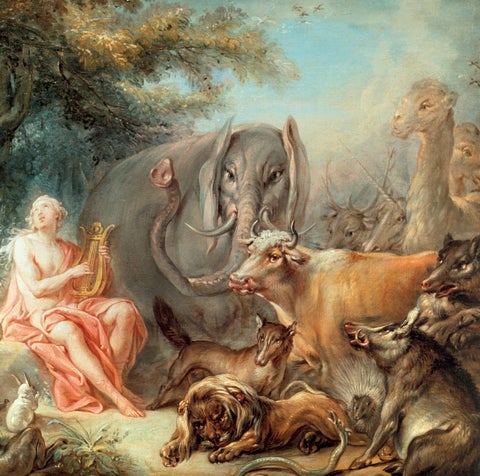
Recording: April 2014, church Notre-Dame de Centeilles Artistic direction, recording & editing: Jérôme Lejeune Cover illustration: François Boucher (1703-1770), Orpheus enchants the Animals Clermont-Ferrand, Musée des Beaux-Arts © akg-images English translations: Peter Lockwood Deutsche Übersetzungen: Silvia Berutti-Ronelt 2
Jean-Philippe RAMEAU (1683-1764)
Concerts en sextuor —
LES DOMINOS Florence Malgoire, Stéphanie de Failly & Sue Ying Koang: violins Simon Heyerick: viola Claire Giardelli: bass violin with 5 strings Cyril Poulet: cello Evolène Kiener: bassoon Serge Saitta & Amélie Michel: flutes & piccolos Laurent Stewart: harpsichord Florence Malgoire: direction
Menu
3
Concerts de Monsieur Rameau 6e Concert 1. La Poule 4'34 2. 1er Menuet ‒ 2e Menuet 3'11 3. L’Enharmonique (Gracieusement) 5'32 4. L’Égyptienne (Modérément) 2'45 5. Les Sauvages 2'21 1er Concert 6. La Coulicam (Allegro moderato) 7. La Livri (Rondeau gracieusement) 8. Le Vézinet (Gayement sans vitesse)
3'40 3'01 3'27
2e Concert 9. La Laborde (Rondement) 3'57 10. La Boucon (Air gracieusement) 4'47 11. L’Agaçante (Rondement) 2'38 12. 1er Menuet ‒ 2e Menuet en rondeau 4'23 3e Concert 13. La La Poplinière (Rondement) 14. La Timide (1er Rondeau gracieusement ‒ 2e Rondeau) 15. 1er Tambourin ‒ 2e Tambourin en rondeau
4
3'07 5'35 2'44
4e Concert 16. La Pantomine (Loure vivement) 3'13 17. L’Indiscrète (Allegro vivace Rondeau) 1'42 18. La Rameau (Rondement) 4'13 5e Concert 19. La Forqueray (Fugue) 4'46 20. La Cupis (Modérément) 5'46 21. La Marais (Rondement) 2'31
5
THE CONCERTS OF MONSIEUR RAMEAU — The music department of the Bibliothèque nationale de France possesses a collection of five fascicules (catalogue number Vm7.3614) containing the instrumental parts of a work entitled — with slight variations — VI (Six) Concerts de (Monsieur) Rameau. The words "Decroix 1768" appear in a different hand on the title page of the Violin I part. When we look at these scores we see almost immediately that they are arrangements of the Pièces de Clavecin en Concert that Jean-Philippe Rameau published in Paris in 1741. Who made these arrangements and from when do they date? We shall try to answer these two important questions in the course of this article. It is somewhat easier to trace the history of these documents. The Decroix mentioned is Jacques Joseph Marie Decroix, a lawyer who lived in Lille and who had a passion for the works of Voltaire and Rameau; one could certainly do worse! He was born in 1746, five years after the publication of the Pièces de Clavecin en Concert, and died in 1826. Could he have really begun his collection of Rameau’s works at the age of 22? This would seem to be the case, if we take the date of 1768 at face value. But was it Jacques Joseph Marie Decroix himself who wrote his name and the date? If we look through the several fascicules, we realise that they all carry various handwritten markings by different hands; one of these is by Decroix’s son, who inscribed "Decroix fils à Lille" at the end of the viola part. The Decroix family donated their entire music collection to the Bibliothèque nationale de France in 1843, where these five fascicules have remained since then. Several pages bear not only the library’s official stamp but also another stating "don de la famille Decroix", a gift from the Decroix family. The publisher Durand began an edition of the complete works of Rameau with 6
Menu
Camille Saint-Saëns as editor in 1894; the second volume of this edition was devoted to chamber music and included a transcribed score of the above fascicles entitled Six Concerts Transcrits en Sextuor as an appendix. Under this new title these pieces became firmly established in the French repertoire that was performed by French chamber orchestras during the 20th century. They were first recorded by Maurice Hewitt for Les Discophiles Français in 1952. These Concerts en Sextuor were regarded as works for string orchestra by musicians of the time; whether they should be considered as orchestral works or chamber music will be discussed below. As was the case for all who have had the opportunity to consult these five fascicules, it is easy to see the basis of the unknown arranger’s work: his basis was the Cinq Concerts that make up the Pièces de Clavecin en Concert. Each fascicule, at the end of the Cinquième Concert, displays a very clear FIN marking; the transcription ends there. Immediately afterwards, however, we find a Sixième Concert in a completely different hand, one transcribed from several pieces from the Suite in G major of the Nouvelles Suites de Pièces de Clavecin that Rameau had published in 1728. Could the handwriting be simply that of a different copyist? Is this transcription the work of the same person who had transcribed the first five Concerts? Could this transcription — possibly made at the request of M. Decroix — be the result of a simple wish to present these pieces in a collection of six, as was customary at that time? Once again we are left with questions that cannot be answered. Examination of the various fascicules also provides us with valuable information about how the arrangements were used. We should first of all note that the Violin III part is the only one to have been copied in landscape orientation, whereas all the other parts are copied n portrait orientation. Are we to conclude from this that this material existed in both orientations and that M. Decroix’s miraculously complete set is actually a composite version of the two orientations? It is interesting to note that the Violin I 7
and Violin II parts, except for the Sixième Concert, never have titles for the individual movements, only indications of tempo or character such as Modérément and Rondement. The Violin III part also contains an Avis pour le 3e violon: “In the places where two or more notes cannot be played together easily they should be played as broken chords. The player should either continue to sound the note that is part of the melody or choose the upper or the lower note according to the following: On page 3 of the piece entitled La Laborde, the player should bring out the upper notes in the first six bars of each section and the lower notes for the rest. On page 4 of the piece entitled La Boucon, the player should bring out the upper notes of the first and third systems and the lower notes for the rest […]”. All of this is certainly extremely interesting, but it is a direct quotation of the Avis pour la viole that exists in the edition of the Pièces de Clavecin en Concert! What is more, the date 1768 has been inserted at the end of the 5th concert in the Violin III part, clearly entered by the same hand that had copied out all 5 fascicules. Could this be clear evidence that this arrangement can be dated to that same period, 14 years after the death of Rameau? We should also note that the viola part (alto in modern French) is not marked as such; the word used is taille, the traditional term for the instrument in France at that time. The word alto was added later by another hand. The fifth fascicule is intended for “basses and bassoons”. Such a description immediately causes confusion as for what type of ensemble such an arrangement was intended. Could it have been intended for orchestra? It is clear that this part, together with the violin and viola parts, contains many passages in which more than one note at a time is required to be played. They can of course be played using double-stopping, except that there are certain passages written out on two staves, these being marked from time to time with indications for the bassoon, the violoncello and the ‘bass’. It is nonetheless clear — despite the disturbing mention of ‘basses and bassoons’ on the frontispiece — 8
that one bassoon as well as one violoncello or bass is actually intended. The many divisi in the part clearly caused Camille Saint-Saëns to separate the two bass lines and to retitle the volume Concerts Transcrits en Sextuor. How, exactly, are these transcriptions constructed? To answer this, we must first of all examine the original works: the Pièces de clavecin en Concert. Jean-Philippe Rameau was already demonstrating both originality and innovation in 1741, following in the footsteps of musicians such as Jean-Joseph Cassanéa de Mondonville, who had begun to publish sonatas for harpsichord ‘with violin accompaniment’ in 1734. Rameau used a similar technique when he came to compose the Pièces de clavecin en Concert, for they are nothing less than arrangements of various harpsichord suites. Rameau first fashioned a melodic line that he gave to a violin or flute and then added a second instrumental part for a bass viol; the instrument’s extended range allowed it to take any part from the uppermost or dessus to the bass. Here it is used either as a second dessus, under the violin or flute, or it takes the bass line. The publisher provided a part for a 2nd violin instead of the violin the 1741 edition, possibly so as to maximise the number of buyers; the reprint of 1752 also includes these alternatives for the instruments that accompany the harpsichord. For the Concerts de Monsieur Rameau, the arranger — whom we must still consider as being unknown — has divided the parts between five fascicules: violin I, violin II, violin III, taille and basses. An arrangement that uses three separate violin parts is indeed highly unusual, although it becomes understandable if we assume that the arranger took the version with a 2nd violin and not the viol. In general he has attempted to distribute the various parts as follows: the first violin plays the uppermost line of the harpsichord, although this sometimes obliges the player to perform cascades of broken chords that are much better suited to a keyboard than to a stringed instrument; the second violin takes the original violin or flute part and the third violin takes the original second violin 9
part. The viola and the basses divide the left hand of the harpsichord and the middle parts amongst themselves. It is therefore clear that this arrangement causes certain inner passages originally intended for the viol to be lost and, as we see also in Rameau’s own version for 2nd violin, such a transposition of the entire part one octave higher often creates tricky unison passages between the instruments. Taking this technique as his base, the arranger has also allowed himself to provide extra notes from time to time so that each part is filled out fully. As for the Sixième Concert, added by another hand, its adaptation for string ensemble is of much simpler cut, given that it is transcribed directly from pieces for harpsichord. The transcription is for four parts in which the unison passages are divided between 2 or 3 violins or between the 3rd violin and the viola in order to create tutti and solo effects. It is a much less complicated style of writing, although we soon hear that it easily creates an almost orchestral sound. This orchestral sound brings us back to the question of the size of ensemble that the arranger intended: chamber ensemble or orchestra? Both possibilities have had their champions from Durand’s edition onwards; partisans for both sides have been found amongst musicians from the beginning of the 20th century as well as amongst the more recent advocates of historical performance practice. As well as the intriguing markings for the basses mentioned earlier, there is, at the end of the Avis in the Violin III part — the only one in oblong format — an extra commentary on how two notes in the same part are intended to be played: “If there are two players to a part, then one will play the upper notes and the other will play the lower notes”. This has, at least, the advantage of being clear: the intention is that this music should be played with at least two players per part. It is also clear that the Avis says two players and not several players. We know, however, that two instruments per part is not ideal for good intonation; ‘to a part’ can also mean two players sharing the same score; this means that there would be no reason 10
not to have several copies of the same part — and therefore an orchestra by extension. We can also see that the Violin III part makes use of chords of three notes, a result of the arranger’s attempts to fill out the part as much as possible to give at least an impression of the chords in the original version for harpsichord. We should also note that all of the Violin I, Violin II and even viola parts use chords of two or three notes at various times, sometimes even superimposing one melodic line over another; this last effect is often unplayable by one instrument and must therefore have been divided between two players — another reason for considering these arrangements to have been conceived for orchestra. But what type of orchestra could this have been? It is impossible to imagine that there was an orchestra around 1768 that was made up only of strings and a bassoon: it simply did not exist. What is more, the influence of the Mannheim orchestra — for Stamitz had entered the service of Le Riche de La Poulinière, the Fermier général, also Rameau’s employer, in 1754 — ensured that woodwinds and horns were now included in every orchestra created to play the new symphonies in Paris. It is simply not possible to imagine Rameau’s orchestra without at least a flute and a bassoon. All of these arguments are interrelated and it is precisely these statements and uncertainties that lie at the heart of Les Dominos’ own version of these enigmatic fascicules from the library of a lawyer from Lille. They have chosen a version for chamber ensemble: one of the first questions that they tackled was the problematic Violin III part which, because of its transposition one octave above the viol part, causes a lack of musical substance in the middle range at times. Their solution was to assign a large section of this part to a violoncello piccolo; this instrument had been termed the basse de violon à cinq cordes in France since Charpentier’s use of it in his Sonate à huit (1685). This solution creates a sonic balance that the original arranger would no doubt have also thought of if he had taken the version of the part for viol as his model and not the Violin 11
II version. Having said this, the Violin III part has not been dispnsed with completely: it is sometimes extremely useful in helping out with passages with two or more notes per chord in the parts of its two colleagues or even in the original part. What is more, in certain other places — and in the Sixième Concert in particular, written in a completely different manner — it simply plays the arranger’s original version. This adaptation makes the music seem fuller and better balanced between the upper lines and the basses. Given that we wished to emulate the beautiful timbres of the Pièces de clavecin en concert and since a bassoon had already been specified by our unknown arranger, we decided to include two flutes who also play piccolo when the music demands. We have now come closer to the sound of Rameau’s orchestra for théâtre lyrique: Although the bass lines are not figured, we could not resist adding a harpsichord: it is of course completely in its element in this music that was originally composed for it, discovering the pleasure of performing these Concerts in joyous company with strings, flutes and bassoon. As much as there was for them to do with all these arrangements and adaptations, the musicians of Les Dominos were unable to resist the pleasure of including one of their own arrangements in the Sixième Concert. This was their version of Les Sauvages, one of Rameau’s most famous pieces: it is an air de ballet from Les Indes Galantes that Rameau had already transcribed for the harpsichord in his Suite in G major, which in its turn became the basis for the transcription of the sixth of these Concerts de Monsieur Rameau. JÉRÔME LEJEUNE
12
Menu
LES CONCERTS DE MONSIEUR RAMEAU — Le fonds musical de la Bibliothèque nationale de France possède, sous la cote Vm7.3614, un ensemble de cinq fascicules réunissant les parties instrumentales d’un recueil intitulé, sous des formules variables, VI (Six) Concerts de (Monsieur) Rameau. Sur la page de garde de la partie de violon I est inscrite, d’une autre main, la mention « Decroix 1768 ». À la lecture de ces partitions, on aura vite compris que ces pièces sont des arrangements des Pièces de Clavecin en Concert que Jean-Philippe Rameau avait publiées à Paris en 1741. Qui est l’auteur de cette version ? De quand date-t-elle ? Voici deux questions importantes auxquelles nous tenterons de répondre plus loin. Ce qui est plus simple, c’est de retracer l’historique de ces documents. Decroix a été identifié. Il s’agit de Jacques Joseph Marie Decroix, avocat résidant à Lille et passionné à la fois par Voltaire et par Rameau ; on peut faire plus mauvais choix ! Né en 1746, soit cinq ans après la publication des Pièces de Clavecin en Concert, il décède en 1826. Aurait-il commencé sa collection de partitions de Jean-Philippe Rameau à l’âge de 22 ans ? Si l’on fait confiance à la date de 1768, cela semble être le cas. Mais est-ce lui qui a inscrit son nom et cette date ? À consulter les divers fascicules, on se rend compte qu’ils sont porteurs de diverses mentions manuscrites, de mains différentes, y compris de celle de son fils qui, en fin de partie d’alto, indique « Decroix fils à Lille ». En 1843, la famille Decroix lègue à la Bibliothèque nationale de France son importante bibliothèque. C’est ainsi que les cinq fascicules en question sont depuis lors archivés dans cette vénérable institution, portant sur plusieurs pages, en plus du cachet de la bibliothèque, un autre cachet indiquant « DON DE LA FAMILLE DECROIX ». Lorsque, sous la direction de Camille Saint-Saëns, l’éditeur Durand entame dès 1894 une édition monumentale des œuvres de Jean-Philippe Rameau, le deuxième volume de Menu
cette collection, consacré à la musique de chambre, propose en « Appendice » une mise en partition de ces manuscrits sous le titre de Six Concerts Transcrits en Sextuor. C’est sous cette nouvelle dénomination que ces pièces sont devenues, dans le courant du XXe siècle, une partie importante du répertoire « national » des orchestres de chambre français, et ce depuis celui de Maurice Hewitt qui, en 1952, en réalisa le premier enregistrement pour Les Discophiles Français. Pour ces interprètes, les Concerts en Sextuor sont destinés à un orchestre de cordes. Orchestre ou musique de chambre ? Voici une autre question qui sera débattue plus loin. Comme tous ceux qui ont pu consulter les cinq fascicules, il est facile de deviner l’essentiel du travail de l’arrangeur. Ce dernier a réalisé tout son travail au départ des Cinq Concerts que constituent les Pièces de Clavecin en Concert. Dans la grande majorité des cas, à la fin du Cinquième Concert, dans chaque fascicule survient l’indication très claire de « FIN ». C’est bien là que cette transcription s’arrête. Mais, par la suite, une autre main dont l’écriture est tout à fait identifiable a ajouté un Sixième Concert réalisé au départ d’une sélection de quelques pièces de la Suite en sol majeur des Nouvelles Suites de Pièces de Clavecin que Rameau avait publiées en 1728. L’écriture est-elle seulement celle d’un autre copiste ? Cet arrangement est-il le fruit du travail de celui qui avait conçu la version des cinq premiers concerts ? La réalisation de ce Sixième Concert (peut-être à l’instigation de M. Decroix ?) n’est-elle pas la trace d’une intention de faire réaliser une édition de ces pièces dans le format habituel des éditions des partitions par paquets de six ou de douze ? Voici, à nouveau, quelques questions sans réponse. L’examen des divers fascicules apporte aussi quelques informations précieuses sur la destination de cet arrangement. Il convient tout d’abord de signaler que la partie de violon III est la seule à être copiée dans un autre format, oblong, alors que toutes les autres parties sont dans un format vertical. Faut-il en déduire que cet ensemble est hétéroclite et qu’il aurait existé deux copies de ce matériel, l’une en format vertical et l’autre en 14
format oblong et que la collection de M. Decroix aurait conservé miraculeusement une collection complète mais composite des deux copies ? Il est intéressant par exemple de remarquer que les parties de violon I et de violon II, mis à part pour le Sixième Concert, ne mentionnent jamais les titres des pièces, mais donnent simplement, par mouvement, des indications de tempo ou de caractère : « Modérément », « Rondement »… La partie de violon III contient également un « Avis pour le 3e violon » : « Aux endroits où l’on ne peut aisément exécuter deux ou plusieurs notes ensemble ou bien on les arpège, en s’arrêtant à celle du coté de laquelle le chant continue, ou bien on préfère tantôt les notes d’en haut, tantôt celles d’en bas suivant l’explication suivante. Dans la pièce intitulée La Laborde, page 3, il faut préférer les notes d’en haut dans les six premières mesures de chaque partie et celles d’an bas dans tout le reste. Dans la pièce intitulée La Boucon, page 4, il faut préférer les notes d’en haut de la Ière et 3e portées et celles d’en bas dans tout le reste… ». Intéressant, certes, mais ceci n’est que la copie fidèle de l’« Avis pour la viole » qui se trouve dans l’édition des Pièces de Clavecin en Concert ! De plus, la date de 1768 apparaît à la fin du Cinquième Concert dans la partie de violon III en format oblong, et visiblement de la même main que celle qui avait copié tous les manuscrits. Serait-ce là un indice plus fiable pour confirmer que cet arrangement daterait bien de cette époque, donc 14 ans après le décès de Rameau ? À noter, en ce qui concerne la partie d’alto, qu’elle mentionne non pas « alto », mais bien « taille », ce qui est l’appellation traditionnelle en France pour cet instrument. Une autre main a, par la suite, ajouté « alto ». Enfin, le cinquième fascicule est destiné aux « Basses et Bassons ». Voilà qui vient jeter un terrible trouble sur la destination de cet arrangement. S’agirait-il de musique d’orchestre ? Il est évident que cette partie, plus que celles des violons et alto, comporte plus de passages avec des superpositions de notes. Certes, on peut les jouer en doubles cordes, mais à certains endroits, il s’agit bien de parties séparées, écrites sur deux portées 15
où, parfois, les instrumentations sont précisées pour le basson, le violoncelle, la « basse » et même une fois le « violoncello ». Mais on se rend compte qu’après la mention perturbante de « Basses et Bassons » de la page de garde, c’est bien de basson, de violoncelle ou de basse au singulier qu’il est question. Ce sont ces nombreux « divisi » qui ont sans doute conduit Camille Saint-Saëns à séparer les deux basses et à donner alors à ce recueil le titre de Concerts Transcrits en Sextuor. En quoi consiste donc cette transcription ? Pour répondre à cette question, il faut tout d’abord examiner l’original, à savoir les Pièces de Clavecin en Concert. À vrai dire, en 1741, Jean-Philippe Rameau fait preuve d’un esprit très original et novateur, suivant les pas de certains musiciens comme Jean-Joseph Cassanéa de Mondonville qui, dès 1734, publie des sonates de clavecin « avec accompagnement de violon ». C’est un peu le même principe que Rameau utilise pour réaliser son recueil qui n’est autre qu’un arrangement de quelques suites de clavecin. Il en extrait une partie mélodique confiée à un violon ou une flûte et ajoute une deuxième partie instrumentale destinée à une basse de viole, instrument dont la tessiture très large lui permet de couvrir une étendue qui va du dessus à la basse ; tantôt elle est un deuxième dessus, en dessous du violon ou de la flûte, tantôt elle rejoint la basse. Est-ce par peur de perdre certains acheteurs que l’éditeur prévoit, dès l’édition de 1741, une partie pour « Un 2d Violon au lieu de la Viole » ? La réédition de 1752 comprend toujours ces différentes alternatives pour le choix des instruments qui accompagnent le clavecin. En ce qui concerne ces « Concerts de Rameau », l’arrangeur (que, de nos jours, nous devons toujours considérer comme inconnu) a réparti les voix en cinq fascicules : violon I, violon II, violon III, taille, basses. Une écriture à trois parties de violon, voilà qui est évidemment tout à fait surprenant ! Mais si l’on considère que notre arrangeur est parti de la version avec un second violon et non pas de celle avec viole, cela devient compréhensible. Grosso modo, il a tenté de répartir les voix de la façon suivante : le 16
premier violon joue la partie la plus aiguë de la main droite du clavecin (ce qui l’entraîne parfois à proposer au violon des bariolages d’arpèges qui sont nettement plus aptes au jeu du clavier qu’à celui du violon), le second violon se voit confier la partie de violon ou de flûte et le troisième violon, la partie de second violon. L’alto et les basses se répartissent les notes de la main gauche du clavecin et des voix internes. Il est donc évident que cet arrangement fait perdre à l’ensemble certaines notes de voix internes qui étaient destinées à la viole et, comme le fait la version de second violon, cela transpose toute cette partie à l’octave supérieure, provoquant ainsi, à de nombreux endroits, de délicats unissons des violons. Et au départ de ce principe, l’arrangeur se permet parfois quelques petits remplissages de façon à compléter les parties de tous les instruments. En ce qui concerne le Sixième Concert, rajouté par une autre main, son adaptation pour l’ensemble de cordes étant réalisé au départ de pièces de clavecin est d’une facture beaucoup plus simple. Il s’agit en fait d’une écriture à quatre parties dans laquelle, pour obtenir certains effets de tutti ou de solo, les unissons se répartissent soit entre deux ou trois violons, soit entre le violon III et l’alto. C’est donc une écriture beaucoup moins fouillée, mais l’efficacité quasi orchestrale est donc plus évidente à percevoir. Orchestrale ! Revoici cette question de la destination de ces pièces : s’agit-il de musique de chambre ou de musique d’orchestre ? Depuis l’édition de Durand, les deux optiques ont été défendues, tant par les interprètes du début du XXe siècle que par ceux – et tout récemment encore – qui font partie du mouvement des « baroqueux ». Outre les indications intrigantes de la partie de « basses », à la fin de l’« Avis » dans la partie de violon III (rappelons-le, la seule dans ce format oblong), se trouve, en complément de l’explication sur la répartition des notes doubles, la mention suivante : « S’il y a deux concertans sur la même partie l’un fera les notes supérieures et l’autre les inférieures ». Cela a le mérite d’être clair : il est bien prévu que l’on puisse jouer ceci au minimum avec deux instruments par partie. La raison pour laquelle cet « Avis » dit bien « deux concertans » 17
et non « plusieurs concertans » est évidente ; tout le monde sait que deux instruments par voix n’est pas idéal pour la justesse et, d’autre part, « sur la même partie » peut tout aussi bien se comprendre par « sur la même partition » ; rien n’empêche donc de disposer de plusieurs partitions par voix instrumentale et donc de disposer d’un véritable orchestre. De plus, on peut constater que la partie de violon III possède parfois des accords de trois notes, dès lors que l’arrangeur tente de remplir au maximum l’écriture pour se rapprocher des accords présents dans la version de clavecin. Il faut d’ailleurs constater que toutes les autres parties de violon I, de violon II et même d’alto possèdent à certains endroits des accords de deux ou trois sons et même parfois des passages superposant deux lignes mélodiques, ce qui est parfois injouable sur le violon et demande de répartir cela entre deux instrumentistes. Voilà qui peut aussi plaider pour une version orchestrale. Mais quel orchestre, alors ? Peut-on imaginer en France, vers 1768, un orchestre qui ne comporte que des cordes et un basson ? Impossible, cela n’existe pas. De plus, l’influence de l’orchestre de Mannheim (dès l’arrivée de Stamitz en 1754 chez le Fermier général, Le Riche de La Poulinière, là où Rameau fut également actif ) fait que les bois et les cors font partie de tous les orchestres de la symphonie naissante à Paris. Comment imaginer l’orchestre de Rameau sans au minimum la flûte et le basson ? Bref, tous ces chemins se croisent et c’est suite à tous ces constats et hésitations que Les Dominos proposent ici leur propre vision de ces énigmatiques fascicules qui faisaient partie de la bibliothèque de l’avocat lillois. C’est bien d’une version de chambre qu’il s’agit. L’une des premières suggestions des Dominos est de tenter de résoudre la question de la partie de violon III qui, du fait de la transposition à l’octave supérieure de la partie de viole, provoque parfois ce manque de matière dans le médium. La solution a été de confier une bonne partie de cette voix à un violoncelle piccolo (ce que, depuis la Sonate à huit de Charpentier, vers 1685, on nomme en France « basse de violon à cinq cordes »). De ce fait, on se trouve en présence d’un équilibre sonore que l’arrangeur aurait sans 18
doute réalisé s’il était parti non pas de la version de « 2d violon » mais bien de celle de « viole ». Ceci dit, le violon III ne disparaît pas toujours. Il est parfois bien utile pour pallier aux quelques passages en doubles cordes de ses deux collègues ou même de la partie originale. De plus, à certains endroits, et tout particulièrement dans le Sixième Concert, écrit (comme cela a été dit plus haut) d’une tout autre manière, il joue bel et bien la version originale de l’arrangeur. Par ce truchement, voici l’écriture plus complète, mieux équilibrée entre les dessus et les basses. D’autre part, et dans le but de se rapprocher de la très belle couleur des Pièces de Clavecin en Concert, comme l’arrangeur avait déjà prévu un basson, il a semblé normal d’inclure également la flûte, non pas une, mais deux, qui, à l’occasion, troquent les grandes flûtes pour les piccolos. Voilà qui nous rapproche encore plus de la sonorité de l’orchestre du théâtre lyrique de Rameau. Bien que le fascicule des basses ne comporte pas de chiffrage, comment ne pas résister au besoin d’ajouter un clavecin qui, dans cette musique qui lui appartient, est dans son élément, découvrant ainsi le plaisir de jouer ces Concerts dans la joyeuse compagnie des cordes, des flûtes et du basson ? Et tant qu’à faire, dans tout ce travail d’arrangement et d’adaptation, les musiciens des Dominos n’ont pas pu résister au plaisir d’inclure dans le Sixième Concert leur propre arrangement de l’une des pièces les plus célèbres de Rameau, Les Sauvages, un air de ballet des Indes Galantes dont il avait réalisé une version de clavecin dans la Suite en sol qui a servi de base à la confection du dernier des Concerts de Monsieur Rameau. JÉRÔME LEJEUNE
Menu
19
DIE KONZERTE DES HERRN RAMEAU — Der Musikbestand der französischen Nationalbibliothek besitzt unter der Signatur Vm7.3614 eine Reihe von fünf Heften, die die Instrumentalstimmen einer Sammlung mit folgendem, unterschiedlich formulierten Titel enthalten: VI (Six) Concerts de (Monsieur) Rameau („Sechs Konzerte von Herrn Rameau“). Die Stimme der ersten Geige trägt auf ihrem Vorsatzblatt die von einer anderen Hand geschriebene Anmerkung „Decroix 1768“. Sieht man sich diese Notenhefte näher an, so versteht man rasch, dass diese Stücke Bearbeitungen der Pièces de Clavecin en Concert sind, die Jean-Philippe Rameau 1741 in Paris veröffentlicht hatte. Auf wen sind diese Bearbeitungen zurückzuführen? Und wann wurden sie geschrieben? Wir werden versuchen, auf diese zwei wichtigen Fragen später einzugehen. Leichter ist es, die Geschichte dieser Notenhefte nachzuvollziehen. Decroix konnte identifiziert werden. Es handelt sich um Jacques Joseph Marie Decroix, einen in Lille wohnenden Rechtsanwalt, der sich sowohl für Voltaire als auch für Rameau begeisterte. Es gibt schlechtere Vorlieben! 1746 geboren, also fünf Jahre nach dem Erscheinen der Pièces de Clavecin en Concert, stirbt er 1826. Begann er seine Sammlung von Partituren Jean-Philippe Rameaus mit 22 Jahren? Das scheint der Fall zu sein, wenn man dem Datum 1768 traut. Aber schrieb er selbst seinen Namen und dieses Datum auf die Noten? Wenn man die verschiedenen Hefte näher betrachtet, stellt man fest, dass sie mehrere handschriftliche Angaben enthalten, die aus verschiedenen Federn stammen, darunter aus der seines Sohns, der am Ende der Bratschenstimme „Decroix Sohn in Lille“ notierte. 1843 vermachte die Familie Decroix den gesamten Bestand ihrer bedeutenden Bibliothek der Bibliothèque nationale de France. So kommt es, dass sich die betreffenden fünf Hefte seither in den Archiven dieser ehrenwerten Institution befinden 20
und auf mehreren Seiten abgesehen vom Stempel der Bibliothek einen anderen Stempel mit der Angabe „SCHENKUNG DER FAMILIE DECROIX“ aufweisen. Als der Verleger Durand unter der Leitung von Camille Saint-Saëns 1894 mit einer monumentalen Ausgabe der Werke Jean-Philippe Rameaus beginnt, enthält der zweite Band dieser Sammlung, der der Kammermusik gewidmet ist, als „Anhang“ eine anhand dieser Manuskripte angefertigte Partitur mit dem Titel Six Concerts Transcrits en Sextuor („Sechs zu Sextetten umgeschriebene Konzerte“). Unter dem neuen Namen sind diese Stücke im Laufe des 20. Jh. ein bedeutender Teil des „nationalen“ Repertoires der französischen Kammerorchester geworden, u.zw. seitdem das Orchester Maurice Hewitt das Werk 1952 für „Les Discophiles Français“ zum ersten Mal aufnahm. Diese Interpreten betrachteten die Concerts en Sextuor als Werke, die für ein Streichorchester bestimmt waren. Ob es sich um Orchester- oder Kammermusik handelt, ist eine andere Frage, die später besprochen werden soll. Für alle, die diese fünf Hefte zu Rate gezogen haben, war es leicht zu erraten, worin die wesentliche Arbeit des Bearbeiters bestanden hatte. Er war dabei von den Cinq Concerts der Pièces de Clavecin en Concert ausgegangen. In der überwiegenden Mehrzahl steht in jedem Heft am Ende des fünften Konzerts der eindeutige Hinweis FIN („ENDE“). Hier endet diese Transkription. Doch danach hat eine ganz offensichtlich andere Hand, ein sechste Konzert geschrieben, wobei sie von einer Auswahl einiger Stücke der Suite en sol majeur der Nouvelles Suites de Pièces de Clavecin ausging, die Rameau 1728 veröffentlicht hatte. War hier nur ein anderer Kopist an der Arbeit? Ist diese Bearbeitung ebenfalls auf denjenigen zurückzuführen, der die Fassung der ersten fünf Konzerte schrieben? Zeigt dieses sechste Konzert (das vielleicht auf die Veranlassung von Decroix entstanden ist?) nicht die Spur einer Absicht, eine Ausgabe dieser Stücke im gängigen Format der Musikeditionen zusammenzustellen, nämlich in Gruppierungen von sechs oder zwölf Werken? Hier stehen wir also wieder vor ein paar Fragen ohne Antworten. 21
Die Untersuchung der verschiedenen Hefte erbringt auch einige wertvolle Informationen über die Bestimmung dieser Bearbeitung. Zunächst soll darauf hingewiesen werden, dass die Stimme der III. Geige die einzige ist, die in einem anderen Format kopiert wurde, nämlich in einem Querformat, während alle anderen Stimmen im Längsformat sind. Soll man daraus schließen, dass diese Heftsammlung nicht einheitlich ist, dass es also zwei Kopien dieses Materials gab, die eine im Längs- und die andere um Querformat, und dass mit Decroix’ Notenheften wie durch ein Wunder eine vollständige Sammlung erhalten blieb, die jedoch aus zwei Kopien zusammengestellt worden war? Es ist zum Beispiel interessant festzustellen, dass die Stimmen der I. und der II. Geige außer im sechsten Konzert die Titel der Stücke nie nennen, sondern nur satzweise Tempooder Charakterhinweise angeben: Modérément (maßvoll), Rondement (zügig) ... Die Stimme der III. Geige enthält auch eine „Mitteilung für die 3. Geige“: „An den Stellen, an denen man nicht leicht zwei oder mehrere Noten gleichzeitig spielen kann, werden diese entweder arpeggiert, wobei man bei der aufhört, die neben jener liegt, mit der der Gesang weitergeht, oder man bevorzugt einmal die obere, dann wieder die untere Note, indem man die folgende Erklärung beachtet. Im Stück mit dem Titel La Laborde, Seite 3, sind den oberen Noten in den sechs ersten Takten jeden Teils der Vorzug zu geben und im Rest den unteren. Im Stück mit dem Titel La Boucon, Seite 4, sind die oberen Noten im 1. und 3. Liniensystem zu bevorzugen und die unteren im Rest ...“. Das ist zwar sicher interessant, aber nichts als die getreue Kopie der „Mitteilung für die Gambe“, die in der Ausgabe der Pièces de Clavecin en Concert zu finden ist! Außerdem scheint das Datum 1768 am Ende des 5. Konzerts in der Stimme der 3. Geige im Querformat auf und stammt sichtlich von derselben Hand, die alle Manuskripte kopiert hat. Sollte es sich hier um ein glaubwürdigeres Indiz handeln, durch das bestätigt werden kann, dass diese Bearbeitung tatsächlich aus dieser Zeit stammt und demnach 14 Jahre nach Rameaus Tod entstanden ist? 22
Bemerkenswert ist, dass die Bratschenstimme nicht „alto“ angibt sondern „taille“, also die in Frankreich traditionelle Bezeichnung für dieses Instrument. Eine andere Hand fügte später „alto“ hinzu. Das fünfte Heft ist schließlich den Basses et Bassons („Bässen und Fagotten“) gewidmet. Dieser Umstand stiftet eine entsetzliche Verwirrung hinsichtlich der Bestimmung dieser Bearbeitung. Handelt es sich etwa um Orchestermusik? Diese Stimme enthält eindeutig mehr Passagen mit mehreren übereinander gelagerten Noten als der Geigen- und Bratschenpart. Natürlich kann man sie als Doppelgriffe spielen, aber an einigen Stellen handelt es sich doch um geteilte Stimmen, die auf zwei Liniensystemen geschrieben sind, wobei manchmal die Instrumentierung für das Fagott, das Cello, „den Bass“ und einmal sogar das „violoncello“ (sic) angegeben ist. Doch nach der verwirrenden Angabe „Basses et Bassons“ des Vorsatzblattes, merkt man, dass vom Fagott, dem Cello oder dem Bass im Singular die Rede ist. Sicher haben die zahlreichen divisi Camille Saint-Saens dazu gebracht, die beiden Bässe zu trennen und dem Band den Titel Concerts Transcrits en Sextuor zu geben. Woraus besteht also diese Transkription? Um diese Frage zu beantworten, muss man sich zunächst mit dem Original auseinandersetzen, d.h. mit den Pièces de Clavecin en Concert. Ehrlich gesagt bewies Jean-Philippe Rameau 1741 einen sehr originellen und innovativen Geist, als er den Vorgangsweisen einiger Musiker wie Jean-Joseph Cassanéa de Mondonville folgte, der ab 1734 Cembalosonaten „mit Violinbegleitung“ veröffentlichte. Rameau benutzt in etwa das gleiche Prinzip, um seine Pièces de Clavecin zu schreiben, die nichts anderes als eine Bearbeitung einiger Cembalosuiten sind. Er entnimmt ihnen eine Melodiestimme, die er einer Violine oder einer Flöte anvertraut, und fügt eine zweite Instrumentalstimme hinzu, die für die Bassgambe bestimmt ist, also für ein Instrument, dessen sehr großer Stimmumfang vom Diskant bis zum Bass reicht. Manchmal ist diese Stimme daher ein zweiter Diskant unter der Violin- oder 23
Flötenstimme und manchmal übernimmt sie den Bass. Sollte der Verleger aus Angst, bestimmte Kunden zu verlieren, ab der Auflage von 1741 eine Stimme für „Eine II. Geige anstatt der Gambe“ vorgesehen haben? Die Neuauflage von 1752 enthält immer noch diese verschiedenen Alternativen für die Wahl der Begleitinstrumente des Cembalos. Was diese Concerts de Rameau betrifft, so hat der Bearbeiter (den wir heute noch als unbekannt betrachten müssen) die Stimmen auf fünf Hefte aufgeteilt: Geige I, Geige II, Geige III, Taille (= Tenorstimme), Bässe. Ein Satz mit drei Geigenstimmen ist selbstverständlich sehr überraschend. Doch wenn man annimmt, dass unser Bearbeiter von der Fassung mit einer 2. Geige ausgegangen ist anstatt von der Fassung mit Gambe, so wird das verständlich. Im Großen und Ganzen versuchte er, die Stimmen folgendermaßen aufzugeilen: Die erste Geige spielt die höchste Stimme der rechten Hand des Cembalos (was ihn dazu bringt, der Geige manchmal „buntscheckige“ Arpeggios vorzuschlagen, die weit mehr für ein Tasteninstrument geeignet sind als für eine Geige), der zweiten Geige wird die Geigen- oder Flötenstimme anvertraut, und die dritte Geige erhält die Stimme der zweiten. Die Bratsche und die Bässe teilen sich die Noten der linken Hand des Cembalos und die Mittelstimmen auf. Es ist daher offensichtlich, dass der gesamten Komposition in dieser Bearbeitung einige Noten der Mittelstimmen verloren gehen, die für die Gambe bestimmt waren. Außerdem wird diese Stimme wie in der Fassung mit der zweiten Geige als Ganze eine Oktav höher transponiert, was an vielen Stellen zu heiklen Unisonos der Geigen führt. Und von diesem Prinzip ausgehend, erlaubt sich der Bearbeiter manchmal einige Füllsel, um die Stimmen aller Instrumente zu vervollständigen. Was das Sixième Concert betrifft, das von einer anderen Hand hinzugefügt wurde, so ist seine von den Cembalostücken ausgehende Bearbeitung für Streicherensemble weit einfacher. Es handelt sich eigentlich um einen vierstimmigen Satz, bei dem sich die Unisonos entweder zwischen 2 oder 3 Geigen oder zwischen der III. Geige und der 24
Bratsche aufteilen, um einige Tutti- oder Soloeffekte zu erzielen. Es ist also eine weit weniger genaue Bearbeitung, deren fast orchestrale Effizienz aber leichter zu erkennen ist. Orchestral! Hier stellt sich also erneut die Frage nach der Bestimmung dieser Stücke: Handelt es sich um Kammer- oder um Orchestermusik? Seit der Ausgabe von Durand wurden beide Möglichkeiten vertreten, und zwar sowohl von Interpreten des beginnenden 20. Jh. als auch von solchen – und das noch vor kurzem – die der "Baroqueux" Bewegung angehören! Abgesehen von den merkwürdigen Angaben der „Bass“-Stimmen am Ende der „Mitteilung“ in der III. Geigenstimme (zur Erinnerung: die einzige im Querformat) befindet sich zusätzlich zur Erklärung über die Aufteilung der doppelten Noten folgender Hinweis: „Gibt es zwei Ausführende für dieselbe Stimme, so spielt einer die oberen und der andere die unteren Noten“. Das hat den Vorteil, eindeutig zu sein: Es ist durchaus vorgesehen, dass hier mindestens zwei Instrumente pro Stimme spielen können. Offensichtlich ist es aber auch, dass diese „Mitteilung“ von zwei Ausführenden und nicht von mehreren spricht. Dabei weiß jeder, dass zwei Instrumente pro Stimme für die klangliche Reinheit nicht ideal sind und dass man andererseits unter „sur la même partie“ („für dieselbe Stimme“) auch „für dasselbe Notenheft“ verstehen kann. Es spricht also nichts dagegen, für jede Instrumentalstimme über mehrere Notenhefte zu verfügen und somit ein richtiges Orchester zu bilden. Außerdem kann man feststellen, dass die Stimme der III. Geige manchmal Akkorde von drei Tönen aufweist, da der Bearbeiter versucht, seinen Satz so dicht wie möglich zu gestalten, um ihn den in der Cembalofassung vorhandenen Akkorden anzunähern. Übrigens finden sich auch in allen anderen Stimmen der I. Geige, der II. Geige und selbst in der der Bratsche an einigen Stellen Akkorde aus zwei oder drei Tönen und verschiedentlich sogar Passagen, an denen zwei Melodielinien übereinanderliegen, die auf einer Geige manchmal absolut nicht spielbar sind und die Aufteilung auf zwei Spieler erfordert. Das sind also weitere Gründe für eine Orchesterfassung. 25
Aber welche Art von Orchester? Kann man sich in Frankreich um 1768 ein Orchester vorstellen, das nur auch Streichern und einem Fagott besteht? Unmöglich. Das gab es damals nicht. Außerdem bewirkt der Einfluss des Mannheimer Orchesters (ab der Ankunft von Stamitz beim Fermier général Le Riche de La Poulinière, bei dem Rameau ebenfalls beschäftigt war), dass es in Paris in allen Orchestern der im Entstehen begriffenen Symphonie Holzbläser und Hörner gibt. Kann man sich also Rameaus Orchester ohne mindestens eine Flöte und ein Fagott vorstellen? Kurz, alle diese Wege kreuzen sich, und Les Dominos schlagen infolge dieser Feststellungen und Unschlüssigkeiten hier ihre eigene Fassung dieser rätselhaften Hefte aus der Bibliothek des Rechtsanwalts von Lille vor. Es handelt sich dabei um eine Kammermusik-Fassung. Eine der ersten Vorschläge der Dominos liegt im Versuch, die Frage der III. Geigenstimme zu lösen, die dadurch, dass die sie Gambenstimme um eine Oktave hinauftransponiert, manchmal ein Manko in den Mittelstimmen verursacht. Die Lösung lag darin, einen bedeutenden Teil dieser Stimme einem Violoncello piccolo anzuvertrauen (das man in Frankreich seit Charpentiers Sonate à huit um 1685 als „basse de violon à cinq cordes“ – fünfsaitigen Violinbass – bezeichnet). Das führte zu einer Ausgewogenheit im Klang, die der Bearbeiter sicher erreicht hätte, wäre er nicht von der „2. Geigen“-Fassung ausgegangen, sondern von der „Gamben“-Fassung. Allerdings verschwindet die III. Geige nicht immer. Sie ist manchmal nützlich, um einige Doppelgriff-Passagen ihrer zwei Kollegen oder sogar der Originalstimme auszugleichen. Außerdem spielt sie an einigen Stellen, u.zw. besonders im Sixème Concert, das (wie oben bemerkt) ganz anders geschrieben ist, tatsächlich die Originalfassung des Bearbeiters. Dadurch wird der Satz vollständiger und ist zwischen den Oberstimmen und den Bässen besser ausgewogen. In Hinblick auf das Ziel, sich der sehr schönen Klangfarbe der Pièces de Clavecin en Concert anzunähern, aber auch weil der Bearbeiter bereits ein Fagott vorgesehen 26
hatte, schien es andererseits normal, auch die Flöte mit einzubeziehen, u.zw. nicht eine Flöte sondern zwei, die gelegentlich die großen Flöten gegen Pikkoloflöten eintauschen. Dadurch kommen wir der Klangfarbe des Orchesters von Rameaus Théâtre lyrique noch näher. Obwohl das Heft der Bässe keine Bezifferung enthält, konnten Les Dominos nicht der Notwendigkeit widerstehen, ein Cembalo hinzuzufügen, das in dieser Musik, die ihm gehört, in seinem Element ist und somit das Vergnügen entdeckt, diese Concerts in der fröhlichen Gesellschaft von Streichern, Flöten und dem Fagott zu spielen. Und die Musiker der Dominos konnten bei all dieser Bearbeitungs- und Transkriptionsarbeit dem Vergnügen nicht widerstehen, ins Sixième Concert – wennschon, dennschon – ihre eigene Bearbeitung eines der berühmtesten Stücke Rameaus einzugliedern, nämlich Les Sauvages (Die Wilden), ein Air de ballet aus den Indes Galantes, von dem Rameau in die Suite en sol eine Cembalofassung eingefügt hatte, die der Komposition des letzten Concerts de Monsieur Rameau als Grundlage diente. JÉRÔME LEJEUNE
Menu
27
RIC 350
Listen to samples from the new Outhere releases on: Ecoutez les extraits des nouveautés d’Outhere sur : Hören Sie Auszüge aus den Neuerscheinungen von Outhere auf:
www.outhere-music.com
28
This is an
Production
The independent music group OUTHERE MUSIC produces around one hundred recordings every year, ranging from early music to contemporary, by way of jazz and world music. These are released all over the world in both physical and digital form. OUTHERE MUSIC’s success is founded on the consolidation and articulation of labels with a strong individual identity, which today number nine: Aeon, Alpha, Arcana, Fuga Libera, Outnote, Phi, Ramée, Ricercar, and Zig-Zag Territoires. The group’s values are based on the quality of relationships with the artists, meticulous attention to the realisation of each project, and openness to new forms of distribution and relation to the public.
The labels of the Outhere music Group:
Full catalogue available here
Full catalogue available here
Full catalogue available here
Full catalogue available here
Full catalogue available here
Full catalogue available here
Full catalogue available here
Full catalogue available here
Full catalogue available here