1
MENU
—
TRACKLIST ENGLISH FRANÇAIS DEUTSCH
2
p.4 p.10 p.21 p.32
RUBENS AND THE MUSIC OF HIS TIME — The excerpts used for our conception of Rubens’ travels in the musical capitals of Europe have been taken from recordings made by Ricercar between 1982 and 2012; tracks 11 and 19 have been taken from CDs made by Arcana and Alpha respectively. Les musiques réunies pour illustrer ce voyage imaginaire de Rubens dans les grandes villes européennes sont issues d'enregistrements réalisés par le label Ricercar entre 1982 et 2012. Les plages 11 et 19 proviennent d'enregistrement respectivement édités par Arcana et Alpha. De muziek hier samengebracht, die de denkbeeldige reis van Rubens doorheen de grote Europese steden illustreert, maakt deel uit van opnames gerealiseerd door het label Ricercar tussen 1982 en 2012. Tracks 11 en 19 betreffen opnames die uitgegeven werden respectievelijk door Arcana en Alpha.
Menu
3
Antwerp 1. Suzanne un jour Roland de Lassus VOX LUMINIS (1532-1594) Armelle Froeliger: soprano
3’17
Barnabás Hegyi: counter-tenor Olivier Berten & Philippe Froeliger: tenors Lionel Meunier: bass
2. Suzanne un jour Guy Penson: virginal
Anonymous
3’56
3. Salve Antwerpia CAPILLA FLAMENCA Marnix De Cat: counter-tenor
Tielman Susato (c. 1500-1564)
4’52
4. Fantasia prima Karl Ernst Schröder: lute
Emanuel Adriaenssen (c. 1554-1604)
3'14
Jan Caals & Stéphane Van Dyck: tenors Lieven Termont: baritone Dirk Snellings: bass
Mantua
5. Missa in illo tempore (Agnus Dei) Claudio Monteverdi 5’17 ODHECATON (1567-1643) Paolo Da Col : direction 4
6. Sonata in dialogo detta la Viena Salomone Rossi LA FENICE (1570-1630) Jean Tubéry: cornet
3’33
Enrico Parizzi: violine Jean-Marc Aymes: organ Christina Pluhar: theorbo
7. L’Euridice (Pianto d'Orfeo) Giulio Caccini 3’37 SCHERZI MUSICALI (1551-1618) Nicolas Achten: baritone & direction Venice 8. Sonata prima a 8 Giovanni Gabrieli LA FENICE (c. 1555-1612) Jean Tubéry: direction
3’04
9. O Domine Lodovico da Viadana 1’50 Henri Ledroit: counter-tenor (?-1630) RICERCAR CONSORT
Bernard Foccroulle: organ Philippe Pierlot: bass viol
10. Toccata Claudio Merulo 2’28 Siebe Henstra: harpsichord (1533-1604) 5
Rome 11. Exultate a 5 Giovanni P. da Palestrina 2’17 ODHECATON (ca. 1525-1594) Paolo Da Col: direction Madrid 12. Laudate Dominum Matheo Romero 2’48 LA FENICE (ca. 1575-1647) CHŒUR DE CHAMBRE DE NAMUR
Jean Tubéry: direction
13. ¡Ay, qué me muero de zelos! CAPPELLA MEDITERRANEA
Matheo Romero
3’44
CLEMATIS Mariana Flores & Capucine Keller: sopranos Leonardo García Alarcón: direction
Rome 14. Toccata Girolamo Frescobaldi Bernard Foccroulle: organ (1583-1643) 6
5’00
Brussels & Antwerp 15. Agnus Dei Géry de Ghersem LA CACCIA (1573-1630) Marleen Leicher: cornet
2’52
16. Se l’aura spira CLEMATIS Mariana Flores: soprano
3'41
Daniel Pelagatti, Mirella Ruigrok, Patrick Denecker: shawms Simen Van Mechelen: trombone Bernhard Stilz: bassoon
Girolamo Frescobaldi
Stéphanie de Failly: violine Andrea De Carlo: bass viol Quito Gato: theorbo / Marie Bounisien: harp Leonardo García AlarcÓn: harpsichord & direction
17. Sonata sopra la monica Biagio Marini LA FENICE (1594-1663) Enrico Parizzi & Roberto Falcone: violins
3'26
Arno Johchem: bass viol /Jean-Marc Aymes: harpsichord
Paris
18. Passemeze à 5 Michael Praetorius 2’03 RICERCAR CONSORT (1571-1621) François Fernandez: direction 7
19. Je meurs sans mourir LE POEME HARMONIQUE Claire Lefilliâtre: soprano
Anthoine Boesset (1587-1643)
2’40
20. Première Fantaisie MARE NOSTRUM Andrea De Carlo: direction London
Étienne Moulinié (c. 1600-c. 1669)
3’30
21. Pavan for these distracted Times Thomas Tomkins Guy Penson: virginal (1572-1656)
2’55
Vincent Dumestre: luth
22. Fantasia on the Hexachord Alfonso Ferrabosco II 4’25 RICERCAR CONSORT (c. 1578-1628)
Philippe Pierlot: direction
The death of Marie de' Medicis 23. Libera me Gilles Henry Hayne 4’13 LA FENICE (1590-1650) CHŒUR DE CHAMBRE DE NAMUR Jean Tubéry: direction
8
Menu
9
THE MUSICALL HUMORS OF RUBENS — A network of cellars, a maze of streets (today covered over) beneath the tramlines: here we have the impressive remains of what was, for the seven hundred years of its existence, one of the most notable palaces in Europe. This isn't France, England, or Spain: we are in Brussels on the site of the Coudenberg, six feet beneath the present Place Royale. Do you remember that Peter Paul Rubens (1577-1640) was one of its high-profile guests? For years the painter from Antwerp worked in the service of the Archdukedom of Albert and the Infanta Isabella, and celebrated with his paintbrush the grandeur of the Hapsburgs. Being an immensely cultured man with an outstanding business sense, Rubens was also his sovereigns' confidant; they entrusted him with numerous diplomatic missions to all parts of Europe. Taking its cue from the exhibition entitled Rubens and His Legacy at the Centre for Fine Arts (BOZAR), Brussels, and the Royal Academy of Arts, London (Autumn 2014-Spring 2015), the CD entitled Rubens and the Music of his Time looks at the music of this glorious period and draws a portrait in sound of this great traveller whom Delacroix referred to as "the father of warmth and enthusiasm". This man, who very early on became known as "the Prince of Belgian painters " a reference to his close links to the Archdukes - was an indefatigable traveller whose style of painting was constantly enriched through the multitude of cultural and political environments which he came to frequent. Like many "Fiamminghi" before him, he went to Italy (1600-1608) abandoning the mists of the North in order to immerse himself in the best of what the cradle of European humanism had to offer. His style, which today we call Baroque, lies at the base of a way of painting but above all of a view of the world which set a trend throughout the whole of Europe. The point of departure was of 10
Menu
course Antwerp, with disciples like Van Dyck, Jordaens and Jan Breughel, but it spread far beyond in both time and in space, witness the spats between the Poussinists and the Rubenists which enlivened sessions of the AcadÊmie Royale in Paris in the 1670's. He is regarded rightly as the painter of the Counter-Reformation and the eulogist of an absolutist view of power, and in this he was perfectly in tune with his time ; but he also displays less formal tendencies: as a painter of family portraits, landscapes, pastoral scenes, peasant dances, and "jardins d'amour". A poetical Rubens who lies at the origins of Rococo, Romanticism and Impressionism; a creator of sensations and sensuality. The art theorist Roger de Piles mentions him in the same breath as Veronese, Titian and Giorgione, and describes Rubens as the first of the"Colourists"; Rubens created his own rhetoric, a language whose precision and relevance approach the universal, inasmuch as they inspire feelings and empathy. The fact that Rubens' life-path took him into the world of politics further strengthened the mark he made on his era, and that at the highest level. Paris, London, Madrid: Rubens negotiated, interceded, debated... But most of all, he painted. From the famous gallery in the Palais du Luxembourg where the grandeur of Maria de' Medicis was celebrated in 24 paintings, to the portraits of English and Spanish Kings and Ministers to whose presence he was appointed, Rubens charmed them, gained their confidence and showered the highest circles of power with his dazzling powers of persuasion. Having been closely involved in negotiating a peace treaty between the Spanish Netherlands and the United Provinces after 1627, he was ennobled by Philip IV of Spain and then knighted by Charles I of England. How could anyone resist the temptation of bringing to life the musical environment of this painter-diplomat? The exercise becomes a genuine treasure hunt, chasing this fleetfooted man who criss-crossed the mountains and vales of the whole of Europe? But the chase is made all the more intriguing because the "soundtrack" of Rubens' work is 11
marked by original styles and novel forms which came into existence in his day. Claudio Monteverdi, Giovanni Gabrieli, Matheo Romero, Girolamo Frescobaldi, Thomas Tomkins, Anthoine Boesset: all names linked to the constant crossovers between old style and modern style which were shaking up the music scene in Europe during the first decades of the 17th century. All composers who could well have crossed the path of so cultivated and enquiring-minded a man as Peter Paul Rubens, and all whose works shed a particular light upon his art. JÉRÔME GIERSÉ TRANSLATION: ANDY UNWIN
12
RUBENS AND THE MUSIC OF HIS TIME
—
Peter Paul Rubens lived in one of the most exciting periods of the history of music, one that stretched from the peak of Renaissance polyphonic style to the beginnings of the Baroque period and of opera. It was from this moment onwards that emotions in vocal works ceased to be expressed by several voices simultaneously singing the same text; a single voice could now impart an unheard-of intensity to the same words. The delights of captivating and impressing an audience were also added to the above expressive moments: this marked the birth of virtuoso performance, a style that was to be adopted by singers and instrumentalists alike. Giulio Cesare Monteverdi summed up this transition perfectly in his description of the music of his brother Claudio – the greatest musician of the time – terming the earlier and later styles as prima prattica and seconda prattica respectively. Matters were not, however, as simple as that. Even if this development was well established in Italy at the time of Rubens’ arrival there in 1600 – for it had begun there a good 25 years earlier – this was not at all the case in other European lands. What is more, at the beginning of the 17th century Europe was only beginning to recover from the great disruptions that had given rise to various religious reformations which had divided not merely the Continent but even individual countries into two communities: the reformed churches and the churches that had remained faithful to the Roman doctrine and its counter-reformatory precepts. The works recorded here allow us to demonstrate he principal types of music that Rubens could have heard in the various cities that he visited throughout Europe. At the time of his birth near of Cologne – to a Protestant family with its origins in Antwerp – the music that could be heard in that part of Germany was still firmly polyphonic in 13
character, although it had nonetheless assimilated some Italian influences, the madrigal style in particular. This was also the case for music in the Southern Netherlands: Ernst, Archbishop and Elector of Bavaria was also the Prince-Bishop of Liège! Cologne also became a well-known centre of musical publication towards the end of the 16th century. We have chosen one of the most famous songs of the time, Suzanne un jour to represent this period; its composer Roland de Lassus was born in Mons, had made several trips to Italy and spent his entire career in the service of the Archdukes of Bavaria in Munich. His works were known throughout Europe and his talent were the envy of every court and musical establishment. A large proportion of his compositions were published in Antwerp, the capital of music publishing at that time; this song was one such work. Its popularity at the time is clear from the impressive quantity of arrangements made of it for every type of instrument. We now travel to Antwerp, where Rubens arrived in 1589 having renounced his Protestant faith. Although Antwerp was famous for its music publishers, the city was just as renowned for its instrument makers. Amongst the leaders of these were the Ruckers, makers of not only harpsichords but also virginals, these being a smaller instrument often played by young women and frequently to be seen in Flemish and English paintings of the time. One of these women was the enigmatic Susanne van Soldt, the daughter of a rich Antwerp merchant. A manuscript dated 1599 that has survived in London contains all the works that this young woman played on the virginal: there are dance movements, Dutch Protestant chorales and ornamented version of songs popular at the time – one of which was of course Susanne un jour! The publisher Tielman Susato was the composer of Salve Antverpia, a motet in praise of the grandeur and beauty of the city of Antwerp. This particularly wellstructured composition for 5 voices is a perfect example of the polyphony in which the Franco-Flemish composers had attained a perfection that made them the grand masters 14
of the genre. It was not for nothing that these composers, alongside their positions in the Netherlands, filled the most important positions in the great musical establishments of Italy, Spain and France. As well as the virginal, the lute and its associates the cittern and guitar also played a large part in musical life at that time. It was played by amateurs as well as by professional musician and was to be found in every interior, from the court to the barbershop. Initially used to accompany songs or to provide music for dancing, the lute extended its repertoire to include more complex works in the new style such as the Fantasia that Emanuel Adriaenssen published in Antwerp in 1584. These first examples give a good idea of the type of music that Rubens could have heard in Antwerp. We can well imagine how astonished he must have been on his arrival in Italy, in the Mantuan court and in the great ecclesiastical centres of Venice and Rome. The musical establishment at the Mantuan court had been led by a Fleming, one Giaches de Wert, but it was now directed by Claudio Monteverdi from Cremona; his task was to direct the sacred music used at court as well as the music for the court’s festivities. It is tempting to imagine Rubens’ astonishment on hearing the choir in the church of St. Barbara, with the singers divided between two galleries, the gallery on the right also being next to the Antegnati organ.Even though Monteverdi’s Missa in illo tempore is still polyphonic in style, the placing of the voices in the two galleries would have created an astonishing spatial effect. Monteverdi, who himself played the viola da gamba, was surrounded by excellent musicians in Mantua. One of these was the violinist Salomone Rossi, a member of the first generation of virtuoso players whose skills would lead to the creation of the sonata. Here the violin exchanges phrases with the cornet, a wind instrument much in favour at the time. To hear instruments taking a solo line above an instrumental accompaniment for the first time must have been a source of great astonishment to Rubens. 15
Our Flemish painter could certainly have experienced the new genre of music theatre – opera - in Mantua. It is true that Monteverdi’s Orfeo was first performed only in 1607, but it is highly possible that Rubens could have heard or at least heard of this new genre that had originated in Florence, notably in a work created for the marriage of Henri IV of France to Maria de’ Medici in 1600. This work also sang the tale of Orpheus, for indeed it was carried by song. Caccini’s L’Euridice, Composta in Musica in Stile Rappresentativo is a work for the theatre that is sung from beginning to end; the singers take the parts of the various personages of the drama and polyphony is used only for choral passages involving several performers. All of the singers were accompanied by an improvised instrumental ensemble that would soon bear the name of basso continuo: harpsichord, spinet, organ, lute, theorbo, harp, viol, lirone and others. In Venice, the music of St. Mark’s Basilica was resplendent with even more elaborate effects created by the use of three or even four groups of singers and instrumentalists situated on the various galleries; The Fleming Adriaan Willaert invented the genre and was followed by the Venetians Andrea and Giovanni Gabrieli who filled the basilica with resonant spatial effects before Monteverdi followed them in 1613. Alongside this splendid ceremonial music, Fra Lodovico da Viadana was composing the first sacred works for solo voice and basso continuo. For those who delighted in virtuoso playing, the organ and the harpsichord were the instruments of choice in Venice. The Toccata by Claudio Merulo possesses all the qualities of the new genre, whose only aim was to showcase the performer’s skill. In the city of the Popes, where the severe and strict counterpoint of Palestrina, the archetypal musician of the Counter-Reformation, could still be heard in the Sistine Chapel, the other churches and the palaces of the princes of the church became the places where the new musical styles were first essayed. The first sacred work in stile rappresentativo, Emilio de Cavalieri’s La Rappresentatione di Anima e Corpo, was first 16
performed in Rome in 1600; opera entered the church – and in Rome itself! During his second visit to Rome in 1608, Rubens could have heard a young organist at St. Peter’s who was attracting huge crowds to hear him play: this was the young Girolamo Frescobaldi, who was already making a name for himself thanks to his technique and to the originality of his toccatas. A journey to Madrid to the court of Philip III of Spain separated Rubens’ two periods in Italy. He would have met many of his countrymen there, for the court’s musical establishment was dominated by Flemish musicians. This was the famous Capilla Flamenca that had driven out all the local singers and musicians from the court’s employment from the reign of Charles V onwards. At that time, the master of music was the Liège-born Mathieu Romarin, who in Spain preferred to go under the name of Matheo Romero; his sacred music was very much influenced by the polychoral Venetian style, whilst his secular works set to Spanish texts breathe the colours and rhythms of his adopted country. Although we may assume that Rubens was impressed by all the new musical styles coming from Italy, he would have realised very quickly on his return home that this Italian music was already crossing borders with the greatest of ease. During the thirty years that he still had to live, the city of Brussels saw the arrival of many Italian musicians, including the Roman organist Girolamo Frescobaldi and the Venetian violinist Biagio Marini; their style influenced the local composers greatly, who were inspired by the Italians’ works to compose sonatas, toccatas and works a voce sola for the Catedral of Saint Gudula, the other churches of the city and the court of the Archduke Albert and the Archduchess Isabella. Brussels, however, nonetheless remained true to its polyphonic traditions; Rubens would certainly have heard the group of six wind players employed by the city performing at official celebrations and religious processions – their existence is attested by their presence in several paintings of the period. 17
Rubens spent a period of time in the train of Maria de’ Medici at the French court in 1621. In the French capital he found a musical tradition that was much more conservative and still close to the old Renaissance style; dance played a particularly important role, with the XXIV Violons du Roy that played the ballets de cour. A section of this repertoire has survived thanks to its publication by the German Michael Praetorius. Whilst the solo voice with lute accompaniment had made its appearance in the airs de cour, this new genre remained sober in expression and did not take advantage of the intense expression characteristic of the Italian airs. In the field of instrumental music, polyphonic fantasias gave clear proof of the continued success of an archaic form that had survived since the end of the Renaissance. Rubens’ time in Paris was followed by various journeys that now took him far afield on diplomatic missions, once again to Spain and then to the court of Charles I in England. As in France, the music that he would hear was still very much true to Renaissance styles and had ceded no territory to the new Italian fashions. Rubens must indeed have been familiar with this music, for several English composers had gone into exile in the Netherlands for religious reasons at the start of the 17th century; the music that he now heard in England was not that much different from what he had heard of the music of Peter Philips or John Bull a few decades earlier in Brussels or in Antwerp. The consort of viols was still one of the trademarks of English music and the virginal was still the instrument of choice for both professional and amateur musicians. Although composed after Rubens’ death, the Pavan for these distracted times by Tomkins as a lament on the death of Charles I was also in a way the swan song of this typically English genre. We know that Rubens remained very close to Maria de’ Medici after her exile to Cologne, where she died two years after Rubens himself. The funeral procession bearing her remains passed through Liège, where services in her memory were sung in St. Lambert’s Cathedral. The music that was played on that occasion was in a highly 18
archaic polyphonic style and was composed by Gilles Henry Hayne, a local musician who was also the house composer to the Duke of Neuburg an der Donau; the master of music of the Duke’s establishment was none other than the violinist Biagio Marini! Here we have yet another fine example of confrontation between the old polyphonic tradition and the new Italian styles. Now that we have mentioned the Neuburg court, we must also mention the manuscript that contains the greater part of the secular works of Matheo Romero that the King of Spain had offered to the Duke of Neuburg. Rubens, a European painter par excellence, was a highly privileged observer of musical Europe as it changed from the Renaissance to the Baroque; the same transition is, after all, to be observed in his own paintings. JÉRÔME LEJEUNE TRANSLATION: PETER LOCKWOOD
Menu
19
20
THE MUSICALL HUMORS OF RUBENS — Un réseau de caves, des rues aujourd’hui voûtées qui serpentent sous les rails du tram : voici les impressionnants vestiges de l’un des palais les plus en vue d’Europe, à travers ses sept siècles d’existence. Nous ne sommes pas en France, en Angleterre, ni même en Espagne : nous sommes à Bruxelles, sur le site du Coudenberg, six pieds sous l’actuelle place Royale. Se souvient-on que Peter Paul Rubens (1577-1640) en fut l’un des hôtes de marque ? Des années durant, le peintre anversois œuvra au service des archiducs Albert et Isabelle, célébrant pinceau à la main la grandeur des Habsbourg. Doté d’une immense culture et d’un sens des affaires hors du commun, l’artiste fut aussi l’homme de confiance des souverains qui lui confièrent nombre de missions diplomatiques aux quatre coins de l’Europe. En résonance avec l’exposition Rubens et son héritage présentée au Palais des Beaux-Arts (BOZAR) à Bruxelles et la Royal Academy of Arts à Londres (automne 2014-printemps 2015), le disque Rubens and the Music of his Time s’intéresse à la vie musicale de cette glorieuse époque et dresse le portrait sonore de ce grand voyageur que Delacroix surnommait « le père de la chaleur et de l’enthousiasme ». Celui que l’on désigna très tôt comme le « Prince de la peinture belge », en écho aux liens privilégiés qu’il entretint avec les archiducs, fut un voyageur invétéré, dont l’idiome pictural ne cessa de s’enrichir au contact des nombreuses réalités culturelles et politiques qu’il fut amené à côtoyer. Comme de nombreux « Fiamminghi » avant lui, il prit le chemin de l’Italie (1600-1608), délaissant un temps les brumes du Nord pour s’ouvrir à ce que le berceau de l’humanisme européen avait de meilleur à lui offrir. Son style, que nous qualifions aujourd’hui de « baroque », fait figure de fondement d’une pensée picturale mais surtout d’une vision du monde qui fera école à travers l’Europe entière. En partant d’Anvers, bien sûr, avec des disciples tels Van Dyck, Jordaens ou Jan Breughel, mais aussi Menu
21
bien au-delà, dans le temps et dans l’espace, comme en témoigne par exemple la querelle entre les Poussinistes et les Rubénistes qui anima les séances de l’Académie royale à Paris dans les années 1670. Considéré à juste titre comme le peintre de la Contre-Réforme et comme le chantre d’une vision absolutiste du pouvoir parfaitement en phase avec son temps, Rubens se révèle aussi moins solennel : peintre des portraits de famille, des paysages et des pastorales, des rondes paysannes et des jardins d’amour. Un Rubens poétique qui se trouve à la source du rococo, du romantisme et de l’impressionnisme : un créateur de sensations et de sensualité. Mentionné au même titre que Véronèse, Titien ou Giorgione par le théoricien de l’art Roger de Piles comme le premier des « coloristes », Rubens a créé une rhétorique propre, un langage dont l’acuité et la pertinence tendent à l’universel en cela qu’ils sollicitent les sentiments et l’empathie. L’évolution de la carrière de Rubens vers la sphère politique renforce encore l’empreinte du peintre sur son époque, et ce, au plus haut niveau. Paris, Londres, Madrid : Rubens négocie, intercède, argumente… Mais surtout, il peint. De la fameuse galerie du Luxembourg célébrant en vingt-quatre tableaux la grandeur de Marie de Médicis jusqu’aux aux portraits des rois et ministres anglais et espagnols auprès desquels il est mandaté, Rubens séduit, gagne la confiance et irrigue les plus hautes sphères du pouvoir de son art d’une fulgurante persuasion. Impliqué de près dans la négociation d’un traité de paix entre les Pays-Bas espagnols et les Provinces-Unies dès 1627, il est anobli par Philippe IV d’Espagne avant d’être fait chevalier par Charles Ier d’Angleterre. Comment ne pas être tenté de recréer ce que fut l’environnement musical des pérégrinations du peintre diplomate ? L’exercice s’apparente à un véritable jeu de piste, à la poursuite d’un homme aux semelles de vent, sillonnant l’Europe par monts et par vaux. Mais la quête est d’autant plus passionnante que la « bande son » de la peinture de Rubens porte les accents de styles inédits et de formes nouvelles qui voient le jour à son 22
époque. Claudio Monteverdi, Giovanni Gabrieli, Mateo Romero, Girolamo Frescobaldi, Thomas Thomkins ou Anthoine Boesset : autant de noms associés au chassé-croisé entre style antique et style moderne qui agita l’Europe musicale des premières décennies du XVIIe siècle. Autant de créateurs qui ont pu croiser la route d’un homme aussi cultivé et curieux que Pierre Paul Rubens, et dont les œuvres éclairent la production du peintre anversois d’un jour particulier. JÉRÔME GIERSÉ
23
LES MUSICIENS DE RUBENS — La vie de Peter Paul Rubens se situe exactement dans l’une des périodes les plus passionnantes de l’histoire de la musique, celle qui conduit de l’apogée du style polyphonique de la Renaissance aux premiers pas du baroque et de l’opéra. Dès ce moment, dans les compositions vocales, les sentiments ne sont plus exprimés par plusieurs voix chantant en même temps le même texte, mais bien par une seule voix qui peut donner aux paroles une intensité inouïe. Aux affects expressifs vient s’ajouter le plaisir de séduire et d’impressionner l’auditeur : c’est la naissance de la notion de virtuosité, dont les instrumentistes s’emparent également. Giulio Cesare Monteverdi a bien résumé cette transition en évoquant à propos de la musique de son frère Claudio – le plus grand compositeur de cette époque – une « prima prattica » et une « seconda prattica ». Mais les choses ne sont pas aussi simples que cela. Si, en 1600, lors de l’arrivée de Rubens en Italie, cette évolution y est très nette – il faut dire que ces nouveautés y sont apparues depuis plus d’un quart de siècle –, cela n’est pas du tout le cas dans les autres pays d’Europe. De plus, en ce début de XVIIe siècle, l’Europe se relève à peine des troubles importants qu’ont provoqués les diverses réformes religieuses, arrivant finalement à la diviser, parfois au sein même des États, en deux communautés, celle des églises réformées et celle des églises restées fidèles à la doctrine romaine qui appliquaient les préceptes de la Contre-Réforme. Le programme de ce disque nous permet d’illustrer les principaux types de musique que Rubens a pu découvrir dans les diverses villes européennes qu’il a visitées. Lorsqu’il naît dans les environs de Cologne – sa famille est d’origine anversoise et protestante –, la musique que l’on peut entendre dans cette région d’Allemagne est encore de tradition polyphonique. Néanmoins, elle associe quelques influences des modèles italiens et 24
principalement celles du madrigal. Cela correspond d’ailleurs à la pratique des PaysBas du Sud ; il faut dire que l’archevêque-électeur Ernest de Bavière est aussi le princeévêque de Liège ! À la fin du XVIe siècle, Cologne devient aussi un centre réputé d’édition musicale. Pour illustrer cette période de la naissance de Rubens, nous avons choisi l’une des chansons les plus célèbres de cette époque, Suzanne un jour de Roland de Lassus, compositeur d’origine montoise qui, outre de nombreux voyages en Italie, fait toute sa carrière au service des archiducs de Bavière à Munich. Son œuvre est connue dans toute l’Europe et son talent est convoité par toutes les chapelles et cours. Une grande partie de ses compositions est publiée dans la capitale de l’impression musicale : Anvers. C’est le cas de la chanson retenue ici, dont on peut dénombrer une impressionnante quantité d’arrangements pour toutes sortes d’instruments. Nous voici donc à Anvers, où Rubens s’installe en 1589, abjurant la foi protestante. Si Anvers est connue pour ses éditeurs de musique, la métropole est aussi célèbre pour les facteurs d’instruments, principalement les Ruckers, qui construisent des clavecins et des virginals, instruments de plus petites dimensions fréquemment représentés dans les tableaux flamands et anglais, souvent joués par de jeunes femmes. C’est le cas de cette énigmatique Susanne van Soldt, fille d’un riche commerçant anversois. Un manuscrit daté de 1599 et conservé actuellement à Londres réunit tout le répertoire que cette jeune fille joue au virginal : il contient des airs de danses, des chorals protestants néerlandais et des ornementations de chansons célèbres dont, évidemment, Susanne un jour ! C’est l’éditeur Tielman Susato qui est l’auteur d’un motet de louanges célébrant la grandeur et la beauté d’Anvers : Salve Antverpia. Cette composition particulièrement développée à cinq voix illustre parfaitement l’accomplissement de l’art polyphonique dans lequel les compositeurs dits franco-flamands ont atteint cette perfection qui fit d’eux les maîtres absolus du genre : ce n’est pas sans raison que ce sont eux qui, à côté de leurs 25
fonctions dans les Pays-Bas, occupent les places les plus importantes dans les chapelles musicales d’Italie, d’Espagne et de France. À côté du virginal, un autre instrument occupe une place considérable dans la vie musicale de l’époque : le luth (et ses dérivés, cistre ou guitare). Il est joué tant par des professionnels que par des amateurs et on peut le trouver dans tous les intérieurs, de la cour au salon du barbier. S’il sert à accompagner les chansons ou à faire danser, le luth étend son répertoire à des compositions plus complexes de style nouveau, comme cette Fantaisie qu’Emanuel Adriaenssen publie à Anvers en 1584. Ces premiers exemples illustrent bien la musique que Rubens aurait pu entendre à Anvers. On peut alors imaginer quel est son étonnement lorsqu’il arrive en Italie. Nous avons retenu ici trois villes : une cour (Mantoue) et deux grands centres ecclésiastiques aux caractères bien typés (Venise, Rome). À la cour de Mantoue, dont la chapelle avait été dirigée par un Flamand, Giaches de Wert, c’est maintenant le Crémonais Claudio Monteverdi qui assume cette fonction. Son rôle est de diriger tant la musique sacrée que les divertissements de la cour. Il est tentant d’imaginer la surprise de Rubens entendant à la chapelle de Santa Barbara les voix des chanteurs réparties sur les deux tribunes, celle de droite étant flanquée de l’orgue Antegnati : même si la Missa in illo tempore de Monteverdi est encore de style polyphonique, la disposition sur les deux tribunes procure un effet de spatialisation étonnant. À Mantoue, Monteverdi, lui-même instrumentiste – il joue de la viole de gambe –, est entouré d’excellents musiciens parmi lesquels le violoniste Salomone Rossi ; ce dernier fait partie de la première génération des virtuoses dont l’œuvre va forger les bases de la sonate. Ici, le violon dialogue avec le cornet à bouquin, instrument à vent particulièrement prisé à l’époque. Des instruments qui jouent en solo, soutenus par un accompagnement instrumental, constituent certainement une découverte inouïe pour le peintre flamand. Rubens peut certainement découvrir à Mantoue le genre naissant du théâtre en 26
musique. Certes, ce n’est qu’en 1607 que Monteverdi y fait représenter son Orfeo, mais il est bien possible que Rubens ait pu entendre ou du moins entendre parler du nouveau genre qui vient de naître à Florence, entre autres pour le mariage d’Henri IV de France et de Marie de Médicis en 1600 : l’opéra. C’est déjà le drame d’Orfée qui y est chanté, car c’est bien de chant qu’il est question ici. L’Euridice de Caccini, « Composta in Musica in Stile Rappresentativo » (composé en musique en style représentatif ), est bel et bien une pièce de théâtre entièrement chantée ; ici, les chanteurs incarnent les personnages de l’action et la polyphonie n’est plus destinée qu’à faire chanter les chœurs réunissant plusieurs acteurs. Tous ces chanteurs sont accompagnés par un ensemble d’instruments qui réalise sous forme improvisée ce que l’on va nommer la « basse continue » : clavecin, épinette, orgue, luth, théorbe, harpe, viole, lirone… À Venise, la musique de San Marco brille d’effets encore plus imposants, avec l’usage de trois et même de quatre groupes de chanteurs et d’instrumentistes répartis sur les diverses tribunes ; après le Flamand Adriaan Willaert, inventeur du genre, ce sont les Vénitiens Andrea et Giovanni Gabrieli qui font résonner la basilique, avant que Monteverdi ne leur succède en 1613. Et à côté de cette musique fastueuse, Fra Lodovico da Viadana compose les premières pièces religieuses à voix seule, soutenue par la basse continue. Pour ce qui est de la virtuosité, ce sont les claviers, orgue et clavecin, qui sont les favoris à Venise. La Toccata de Claudio Merulo possède toutes les qualités du nouveau genre qui ne vise qu’à faire briller le talent de l’interprète. Dans la cité pontificale, où à la chapelle Sixtine on peut encore entendre la musique stricte et à vrai dire sévère de Palestrina, le musicien emblématique de la ContreRéforme, les autres églises et les palais des prélats ecclésiastiques deviennent le lieu de la découverte de tous les nouveaux principes. En 1600, on vient également de faire jouer à Rome le premier ouvrage religieux de style représentatif : La Rappresentatione di Anima e di Corpo d’Emilio de’ Cavalieri ; l’opéra est entré à l’église et cela se passe à Rome ! 27
Et lors de son deuxième séjour à Rome en 1608, Rubens a pu entendre à la basilique Saint-Pierre un tout jeune organiste qui, dit-on, y attire des foules considérables : c’est Girolamo Frescobaldi, qui impressionne par sa technique et l’inventivité de ses toccatas. Entre ses deux voyages italiens, Rubens effectue un séjour à la cour de Philippe III d’Espagne à Madrid. Là, certainement, il retrouve pas mal de ses compatriotes ; la chapelle musicale de la cour est dominée par les Flamands. C’est la fameuse Capilla Flamenca, qui depuis Charles Quint a écarté du service de la cour les chantres et musiciens locaux. À cette époque, le maître de chapelle est le Liégeois Mathieu Romarin, qui a préféré se faire connaître sur place sous le nom de Matheo Romero. Sa musique religieuse est très influencée par les modèles de la polychoralité vénitienne ; par contre, ses pièces profanes écrites sur des textes espagnols ont pris la couleur et les rythmes des musiques de son pays d’adoption. Si on peut supposer que Rubens est impressionné par toutes ces musiques nouvelles d’Italie, lors de son retour au pays, il peut très rapidement se rendre compte que cette musique italienne franchit les frontières avec une grande facilité. Durant la trentaine d’années qu’il lui reste à vivre, Bruxelles accueille les musiciens italiens, tels l’organiste romain Girolamo Frescobaldi ou le violoniste vénitien Biagio Marini ; leur style influence les compositeurs locaux qui, à la cathédrale Sainte-Gudule, dans les autres églises et à la cour des archiducs Albert et Isabelle, ne cessent de s’inspirer de ces modèles pour écrire des sonates, des toccatas et des compositions « a voce sola ». Mais Bruxelles reste aussi fidèle à ses traditions polyphoniques et, lors des célébrations officielles et des processions religieuses, Rubens a certainement entendu l’ensemble des six musiciens de la ville jouant des instruments à vent, dont plusieurs tableaux de l’époque nous rappellent la présence. En 1621, Rubens séjourne à la cour de France et plus particulièrement dans l’entourage de Marie de Médicis. Dans la capitale française, il retrouve une tradition musicale plus conservatrice et encore proche de la Renaissance. La danse y joue un rôle 28
particulièrement important, entre autres avec l’activité des XXIV Violons du Roy qui jouent les ballets de cour, un répertoire conservé en partie par l’édition de l’Allemand Michael Praetorius. Si la voix seule accompagnée par le luth y a fait aussi son apparition avec les airs de cour, ce nouveau genre reste plus sobre et ne bénéficie pas des effets de l’intense expressivité des airs italiens. Et, dans le domaine de la musique instrumentale, les fantaisies polyphoniques attestent encore du succès d’une forme archaïque de la fin de la Renaissance. Le séjour du peintre à Paris sera suivi de divers déplacements, cette fois dans le cadre de missions diplomatiques ; ce sera à nouveau l’Espagne, et enfin l’Angleterre dans l’entourage de Charles Ier. Comme en France, la musique qu’il y entend est restée très fidèle aux principes de la Renaissance et ne fait aucune place aux nouveautés italiennes. À vrai dire, il doit bien connaître les principes de cette musique car, au début du XVIIe siècle, pour des raisons religieuses, plusieurs compositeurs anglais ont trouvé refuge aux Pays-Bas ; ce qu’il découvre maintenant en Angleterre n’est pas très différent de ce qu’il a pu entendre quelques dizaines d’années plus tôt à Bruxelles ou à Anvers, avec les compositions de Peter Philips ou de John Bull ! Le « consort » de violes reste l’une des sonorités emblématiques de la musique anglaise et le virginal le confident des virtuoses et des amateurs. Bien que postérieure au décès de Rubens, la Pavan for these distracted times de Tomkins, écrite par le compositeur en déploration sur la mort de Charles Ier, est en quelque sorte le chant du cygne de ce genre instrumental anglais. On sait que Rubens restera très attaché à la personnalité de Marie de Médicis, en particulier après son exil à Cologne. La souveraine y décède deux ans après le peintre. Le cortège funèbre qui ramène la dépouille mortelle de la reine passe par Liège, où des offices sont chantés à la cathédrale Saint-Lambert. La musique qui y est jouée, dans un style polyphonique archaïque, est celle de Gilles Henry Hayne, musicien local qui est aussi compositeur officiel du duc de Neuburg an der Donau, dont le maître de chapelle n’est 29
autre que le violoniste Biagio Marini ! Voici un bel exemple de plus de la confrontation des styles musicaux, entre les traditions polyphoniques et la modernité italienne. Et comment, en évoquant cette cour de Neuburg, ne pas rappeler que le manuscrit qui contient la grande majorité des œuvres profanes de Romero a été offert au duc de Neuburg par le roi d’Espagne ? Rubens, le peintre européen, est bel et bien le témoin privilégié d’une Europe musicale en pleine mutation entre la Renaissance et le baroque ; sa peinture ne fait-elle pas le même chemin ? JÉRÔME LEJEUNE
30
Menu
31
THE MUSICALL HUMORS OF RUBENS — Een netwerk van kelders, overwelfde straten die kronkelen onder de tramsporen… Het zijn de indrukwekkende overblijfselen van een van de schitterendste paleizen van Europa, dat zeven eeuwen lang de tijd heeft doorstaan. We bevinden ons niet in Frankrijk, Engeland of Spanje, maar wel in Brussel, op de Koudenbergsite, zes voet onder het huidige Koningsplein. Wie weet nog dat Peter Paul Rubens (1577-1640) er regelmatig te gast was? Jarenlang stond de Antwerpse schilder in dienst van de aartshertogen Albrecht en Isabella en eerde zijn meesterlijke schildershand de grootsheid der Habsburgers. Dankzij een brede algemene kennis en een buitengewone neus voor zaken won de kunstenaar het vertrouwen van de machthebbers, die hem zowat overal in Europa diplomatieke missies toevertrouwden. In de rand van de tentoonstelling Rubens en zijn erfenis in het Paleis voor Schone Kunsten (BOZAR) te Brussel (najaar 2014) en in de Royal Academy of Arts van London (voorjaar 2015), biedt de cd “The Musicians of Rubens” een overzicht van het muziekleven in die glorierijke periode. Zo komt als het ware een klankportret tot stand van de grote schilder-reiziger, die door Delacroix “de vader van warmte en enthousiasme” werd genoemd. Hij die al zeer vroeg de bijnaam “prins van de Vlaamse schilderkunst” krijgt vanwege zijn bevoorrechte relatie met de aartshertogen, is een doorgewinterde reiziger die zijn picturale woordenschat verrijkt telkens hij met een nieuwe culturele of politieke situatie in contact komt. Zoals vele ‘Fiamminghi’ voor hem, trekt Rubens een tijdje naar Italië (1600-1608), het mistige Noorden achter zich latend om zich open te stellen voor wat de wieg van het humanisme hem te bieden heeft. Rubens’ stijl, die we vandaag als ‘barok’ bestempelen, groeit uit tot het fundament van een picturale visie ‒ meer nog, een wereldbeschouwing ‒ die in heel Europa navolging zal kennen. Rubens’ invloed is 32
Menu
het grootst in zijn thuisstad Antwerpen, met een reeks talentvolle leerlingen als Van Dyck, Jordaens en Jan Breughel, maar straalt uit tot ver daarbuiten. Een mooi voorbeeld daarvan is de tegenstelling tussen ‘Poussinistes’ en ‘Rubénistes’, die in het Parijs van de jaren 1670 de Académie Royale in twee kampen verdeelt. Terecht ziet men Rubens als een schilder van de Contrareformatie, die het absolute gezag verheerlijkt. Maar hij heeft zeker ook minder plechtige kantjes: hij schildert familieportretten, bucolische landschappen, boerentaferelen en liefdestuinen. De dichterlijke Rubens, schepper van gevoel en sensualiteit, ligt aan de oorsprong van de rococo, de romantiek en het impressionisme. Kunsttheoreticus Roger de Piles plaatst Rubens naast kunstenaars als Veronese, Titiaan of Giorgione en noemt hem de eerste der ‘koloristen’. Hij heeft zich een retoriek en stijl eigen gemaakt die van een universele intensiteit en pertinentie getuigen, in die zin dat ze de gevoelens en de empathie van de toeschouwer bespelen. Doordat zijn carrière zich steeds meer in de politieke sfeer ontwikkelt, wordt Rubens’ invloed op zijn tijdgenoten alsmaar groter. Parijs, Londen, Madrid… Overal treedt Rubens als onderhandelaar en bemiddelaar op. Maar in de eerste plaats blijft hij schilder. Van de beroemde 24 stukken tellende ‘cyclus van Maria de Medici’, opgevat voor het Palais du Luxembourg in Parijs, tot de vele portretten van Engelse en Spaanse koningen en ministers, blijft Rubens’ werk getuigen van zijn grote charisma en het vertrouwen dat hij krijgt in de hoogste machtskringen, waar hij zijn krachtige, overweldigende schilderijen introduceert. Als bedanking voor zijn betrokkenheid bij de vredesonderhandelingen tussen de Zuidelijke Nederlanden en de Zeven Provinciën omstreeks 1627, wordt hij door Filips IV van Spanje in de adelstand verheven en vervolgens door Koning Karel I van Engeland tot ridder geslagen. De verleiding om de muzikale omgeving van de schilder-diplomaat op te roepen, is groot. Zo start een ware speurtocht naar een man met wind aan zijn zolen, die 33
Europa doorkruist, over bergen en dalen. Wat onze queeste zo interessant maakt, is dat de ‘klankband’ waarvan Rubens’ schilderkunst vergezeld gaat een aantal gloednieuwe stilistische en vormelijke elementen bevat die in die tijd voor het eerst opduiken. Claudio Monteverdi, Giovanni Gabrieli, Matheo Romero, Girolamo Frescobaldi, Thomas Tomkins en Anthoine Boesset: het zijn maar enkele van de vele musici die weifelen tussen stile antico en stile moderno, de stroming die in het begin van de 17e eeuw het Europese muziekleven op zijn grondvesten deed beven. Het is niet onwaarschijnlijk dat deze componisten de gecultiveerde en nieuwsgierige man die Peter Paul Rubens was, op hun weg hebben ontmoet. Bovendien hult hun muziek het oeuvre van de Antwerpse schilder in een bijzonder, nieuw licht. JÉRÔME GIERSÉ VERTALING: VEERLE LINDEMANS
34
DE MUZIKANTEN VAN RUBENS — Het leven van Peter Paul Rubens viel perfect samen met een van de opwindendste perioden in de muziekgeschiedenis, namelijk de overgang van de bloeitijd van de renaissancepolyfonie naar het ontstaan van de barok en het operagenre. Vanaf dat moment werden in vocale composities gevoelens niet langer vertolkt door meer stemmen die tegelijk dezelfde tekst zongen, maar door één stem die haar woorden een ongekende intensiteit kon verlenen. De expressie van die emoties werd verrijkt met het streven om toehoorders te verleiden en te imponeren: zo ontstond de notie van virtuositeit die ook door instrumentalisten werd overgenomen. Giulio Cesare Monteverdi vatte deze overgang goed samen door het in verband met de muziek van zijn broer Claudio – de grootste componist van die tijd – te hebben over een ‘prima prattica’ en een ‘seconda prattica’. De werkelijkheid was echter minder eenduidig. Terwijl de trend in 1600, toen Rubens er aankwam, in Italië duidelijk aanwezig was – want de vernieuwing was daar toen al meer dan een kwart eeuw aan de gang – gold dat niet voor de andere landen van Europa. Bovendien was Europa in het begin van de zeventiende eeuw nog maar nauwelijks bekomen van de conflicten die het gevolg waren van verschillende religieuze hervormingen. Het continent was daardoor uiteindelijk in twee gemeenschappen gesplitst, soms zelfs binnen eenzelfde staat: die van de gereformeerde kerken en die van de kerken die trouw bleven aan het leergezag van Rome en de voorschriften van de Contrareformatie toepasten. Het programma van deze cd biedt ons de gelegenheid om de belangrijkste soorten muziek te horen waarmee Rubens kon kennismaken in de Europese steden die hij bezocht. Toen hij in de buurt van Keulen geboren werd in een protestantse familie die 35
afkomstig was uit Antwerpen, was in dit deel van Duitsland nog vooral muziek uit de polyfone traditie te horen. Ze vertoonde echter ook invloeden van Italiaanse modellen en met name die van de madrigaalmuziek. Hetzelfde gold toen in de zuidelijke Nederlanden – niet toevallig was aartsbisschop-keurvorst Ernst van Beieren ook prins-bisschop van Luik! Aan het eind van de zestiende eeuw stond Keulen ook vermaard om zijn muziekedities. Als illustratie van de periode rond het geboortejaar van Rubens kozen we voor een van de bekendste liederen uit die tijd: Suzanne un jour van Roland de Lassus, een componist die afkomstig was uit Mons maar talrijke reizen naar Italië maakte en zijn hele carrière in dienst was bij de aartshertogen van Beieren in München. Zijn werk was in heel Europa bekend en met zijn talent was hij welkom bij alle kapellen en hoven. Vele van zijn composities werden gepubliceerd in de hoofdstad van de muziekdrukkunst: Antwerpen. Dat geldt ook voor dit lied, waarvan een indrukwekkende hoeveelheid bewerkingen voor aller mogelijk instrumenten bestaan. In datzelfde Antwerpen vestigde Rubens zich in 1589, na zijn protestantse geloof te hebben afgezworen. Antwerpen stond bekend om zijn muziekuitgevers, maar ook om zijn instrumentenbouwers, vooral de familie Ruckers, die klavecimbels en virginalen bouwde, relatief kleine instrumenten die regelmatig te zien zijn op Vlaamse en Engelse schilderijen uit die tijd en die vaak werden bespeeld door jonge vrouwen. Onder meer door de raadselachtige Susanne van Soldt, de dochter van een rijke Antwerpse koopman. Een manuscript uit 1599 dat momenteel in Londen wordt bewaard, bevat het volledige repertoire dat zij speelde op haar virginaal: het bevat dansliederen, Nederlandse protestantse koralen en ornamenten bij bekende liederen, waaronder uiteraard ook Susanne un jour. De uitgever Tielman Susato schreef een lofmotet ter ere van de grootsheid en schoonheid van Antwerpen: Salve Antverpia. Deze buitengewoon uitgewerkte compositie is geschreven voor vijf stemmen en illustreert perfect het niveau van de polyfone kunst 36
waarin de zogenaamde ‘Frans-Vlaamse’ componisten een perfectie hadden bereikt die van hen de absolute meesters in dit genre maakte. Het was geen toeval dat zij niet alleen in de Nederlanden maar ook in Italië, Spanje en Frankrijk de belangrijkste posities innamen in muziekkapellen. Naast het virginaal bekleedde nog een ander instrument een belangrijke plaats in het muziekleven van die tijd: de luit (en de daarvan afgeleide cister en gitaar). Die werd bespeeld door zowel professionals als amateurs, en ze was te vinden in ieder huis, aan het hof zowel als bij de barbier. De luit begeleidde liederen of dansen, maar werd ook gebruikt in een complexer repertoire en in modernere composities zoals de Fantaisie die Emanuel Adriaenssen in 1584 publiceerde in Antwerpen. Deze eerste voorbeelden illustreren welke muziek Rubens in Antwerpen kon horen. We kunnen ons dus goed voorstellen hoe groot zijn verbazing moet zijn geweest bij aankomst in Italië. We hebben drie steden geselecteerd: een hof (Mantua) en twee belangrijke kerkelijke centra, elk met een eigen karakter (Venetië en Rome). Aan het hof van Mantua, waar de kapel onder leiding had gestaan van de Vlaming Giaches de Wert, die inmiddels was opgevolgd door Claudio Monteverdi uit Cremona. Zijn taak omvatte het dirigeren van zowel gewijde muziek als hofdivertimenti. Het is verleidelijk om ons Rubens’ verbazing voor te stellen bij het horen van de kapel van Santa Barbara, met de stemmen van zangers die verdeeld waren over twee galerijen, met die aan de rechterkant geflankeerd door het Antegnati-orgel: hoewel de Missa in illo tempore van Monteverdi nog in de polyfone stijl geschreven is, moet de verdeling over twee tribunes een verrassend ruimtelijk effect hebben gegenereerd. In Mantua werd Monteverdi, die zelf viola da gamba speelde, omringd door uitstekende muzikanten, onder wie de violist Salomone Rossi. Die behoorde tot de eerste generatie van virtuozen, die aan de basis lag van de sonatevorm. Daarin treedt de viool in dialoog met een zink, een blaasinstrument dat toen erg populair was. Instrumenten 37
die solo spelen, ondersteund door een instrumentale begeleiding, was zeker een volstrekt nieuwe ontdekking voor de Vlaamse schilder Rubens. Rubens kon in Mantua zeker kennismaken met het opkomende genre van het muziektheater. Monteverdi liet er weliswaar pas in 1607 zijn Orfeo opvoeren, maar het is heel goed mogelijk dat Rubens (over) het nieuwe genre kon horen dat in 1600 het daglicht had gezien in Firenze, ter gelegenheid van het huwelijk van Hendrik IV van Frankrijk met Maria de’ Medici: de opera. Ook daar werd toen al het tragische verhaal van Orpheus bezongen – want het ging wel degelijk om zang. De Euridice van Caccini, ‘composta in musica in stile rappresentativo’ (‘op muziek gezet in representatieve stijl’) is namelijk een toneelstuk dat helemaal werd gezongen. De zangers vertolken de personages van de handeling en de polyfonie diende niet langer louter om koren met verschillende acteurs samen te laten zingen. Al deze zangers werden begeleid door een ensemble van instrumenten die op een geïmproviseerde manier speelden wat men de ‘basso continuo’ zou gaan noemen: klavecimbel, spinet, orgel, luit, teorbe, harp, viola, lirone… In Venetië weerklonk de muziek van San Marco met nog indrukwekkender effecten, met het gebruik van drie en zelfs vier groepen zangers en instrumentalisten, verdeeld over de diverse tribunes. Na de Vlaming Adriaan Willaert, de uitvinder van dit genre, lieten de Venetianen Andrea en Giovanni Gabrieli de basiliek weergalmen, waarn Monteverdi in 1613 hun opvolger werd. En naast die prachtige muziek was er Fra Lodovico da Viadana, die de eerste eenstemmige gewijde muziekstukken componeerde, ondersteund door een basso continuo. Inzake virtuositeit waren in Venetië vooral klavieren geliefd, met orgel en klavecimbel. De Toccata van Claudio Merulo bezit alle kwaliteiten van het nieuwe genre, dat slechts tot doel had het talent van de vertolker te laten schitteren. In de pausenstad, waar in de Sixtijnse Kapel nog steeds de strakke, zelfs strenge muziek te horen was van Palestrina, de muzikant bij uitstek van de Contrareformatie, werden andere kerken en paleizen van hoge prelaten centra waar alle nieuwe principes 38
ontdekt konden worden. In 1600 werd in Rome het eerste religieuze werk in de nieuwe representatieve stijl uitgevoerd: La Rappresentatione di Anima et di Corpo van Emilio de’ Cavalieri; het operagenre nam de kerk in, en dat in Rome! Tijdens zijn tweede verblijf in Rome, in 1608, kon Rubens in de Sint-Pietersbasiliek een jonge organist horen die naar verluidt grote massa’s lokte: Girolamo Frescobaldi, die indruk maakte met zijn techniek en met de inventiviteit van zijn toccata’s. Tussen zijn twee reizen naar Italië door verbleef Rubens aan het hof van Filips III van Spanje in Madrid. Daar vond hij ongetwijfeld vele landgenoten terug. De muziekkapel van het hof werd gedomineerd door Vlamingen. Het was de beroemde Capilla Flamenca, die sinds Karel V de plaatselijke zangers en muzikanten van het hof had verdreven. Op dat moment was de kapelmeester de Luikenaar Mathieu Romarin, die zich ter plaatse liever Matheo Romero liet nomen. Zijn gewijde muziek werd sterk beïnvloed door van de Venetiaanse polychorale muziek; zijn profane composities daarentegen, geschreven op Spaanse teksten, namen de klankkleur en het ritme van de muziek van zijn tweede vaderland over. Rubens was vermoedelijk onder de indruk van al die nieuwe muziek uit Italië, maar bij zijn terugkeer kon hij algauw merken dat die Italiaanse muziek vlot de grenzen overschreed. Gedurende de resterende dertig jaar van zijn leven waren in Brussel Italiaanse musici te gast zoals de organist Girolamo Frescobaldi uit Rome en de violist Biagio Marini uit Venetië. Hun stijl beïnvloedde de plaatselijke componisten, die zich in de kathedraal van Sint-Goedele, in andere kerken en aan het hof van Albrecht en Isabella door die voorbeelden lieten inspireren in hun eigen sonates, toccata’s en composities ‘a voce sola’. Brussel bleef echter ook trouw aan zijn polyfone traditie, en tijdens officiële vieringen en processies hoorde Rubens zeker het stadsensemble van zes muzikanten blaasinstrumenten bespelen: verscheidene schilderijen uit die periode getuigen van hun aanwezigheid. In 1621 verbleef Rubens aan het Franse hof, met name in de entourage van Maria 39
de’ Medici. In Parijs trof hij een conservatievere muzikale traditie aan, die nog dicht bij die van de Renaissance stond. Dans speelde er een erg belangrijke rol, met onder meer de XXIV Violons du Roy, die hofballetten speelden. Dit repertoire is gedeeltelijk bewaard gebleven dankzij de editie van de Duitser Michael Praetorius. Ook de solostem, begeleid door luit, maakte er haar opwachting, met de ‘airs de cour’, maar dit nieuwe genre bleef sober, wars van de intense expressieve effecten van de Italiaanse aria’s. Op het gebied van de instrumentale muziek getuigen de polyfone Fantasies eveneens van het succes van een archaïsche vorm van late renaissancemuziek. Rubens’ verblijf in Parijs werd gevolgd door diverse diplomatieke missies, die hem opnieuw in Spanje brachten, alsook in Engeland, bij Karel I. Net als in Frankrijk was de muziek die hij daar hoorde trouw gebleven aan de principes van de renaissancemuziek, zonder toe te geven aan de Italiaanse vernieuwing. De beginselen van die muziek moeten er in het begin van de zeventiende eeuw weliswaar bekend geweest zijn, want vele Engelse componisten hadden om religieuze redenen hun toevlucht gezocht in de Nederlanden. Wat Rubens nu in Engeland vond, leek op wat hij een paar decennia eerder in Brussel of Antwerpen al kon horen, dankzij de composities van Peter Philips en John Bull. De ‘violenconsorts’ blijven typisch voor de klank van de Engelse muziek uit die tijd, toen zowel virtuozen als amateurs vooral virginaal speelden. Hoewel de Sad pavan for these distracted times van Tomkins van na het overlijden van Rubens dateert, is dit werk, dat door de componist werd geschreven als een klaagzang over de dood van Karel I, in zekere zin de zwanenzang van dit Engelse instrumentale genre. Het is bekend dat Rubens nauwe contacten bleef onderhouden met Maria de’ Medici, vooral na haar verbanning naar Keulen. De koningin overleed daar ook, twee jaar na Rubens. De rouwstoet met haar stoffelijk overschot passeerde door Luik, waar een dienst werd gezongen in de Saint-Lambertkathedraal. Er werd muziek in de archaïsche polyfone stijl gespeeld van Gilles Henry Hayne, een plaatselijke musicus die 40
ook de hofcomponist was van de hertog van Neuburg an der Donau, wiens kapelmeester niemand minder was dan de violist Biagio Marini. Het is een ander goed voorbeeld van dan de confrontatie van muzikale stijlen, van de polyfone traditie en de Italiaanse vernieuwing. In verband met het hof van Neuburg herinneren we ons meteen ook dat het handschrift dat de meeste profane composities van Romero bevat door de Spaanse koning aan de hertog van Neuburg werd geschonken. Rubens was in ieder geval een bevoorrecht getuige van een Europa dat zich in volle transitie bevond tussen renaissanceen barokmuziek – en geldt niet precies hetzelfde voor zijn schilderkunst? JÉRÔME LEJEUNE VERTALING: JEROEN DE KEYSER
Menu
41
42
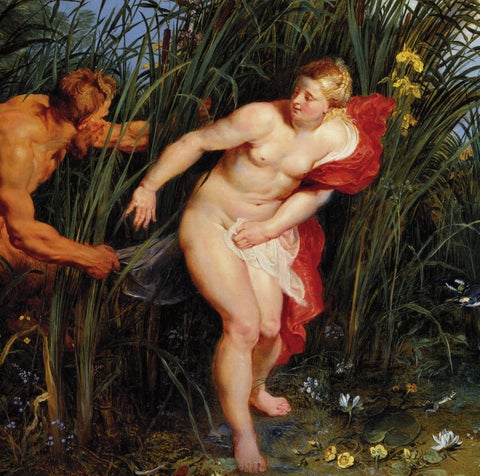
Illustrations Cover Peter Paul Rubens, The Carters, c. 1620 Oil on canvas, transferred from panel, 87 x 129 cm © State Hermitage Museum, St Petersburg Page 1 Peter Paul Rubens and Jan Breughel the Elder, Pan and Syrinx, c. 1617 Oil on panel, 40 x 61 cm © Museumslandschaft Hessen Kassel Page 2 Peter Paul Rubens, Sketches for The Labours of Hercules: Hercules wrestles with Antaeus and three sketches of Hercules, c. 1630-1635 Red chalk, with some pen & brown ink, 31.1 x 47 cm On loan from The British Museum, London. Presented by Henry Vaughan, 1897. © The Trustees of the British Museum Page 9 Peter Paul Rubens, Portrait of Marie de Médicis, c. 1622-25 Oil on canvas, 108 x 130 cm Menu
Madrid, Museo del Prado © akg-Paris Page 20 Peter Paul Rubens, St. Teresa of Avila Interceding for Bernardino de Mendoza in Purgatory, 16301635 Oil on canvas, 194 x 139 cm © Royal Museum of Fine Arts Antwerp Page 31 Peter Paul Rubens, The Apotheosis of James I and Other Studies: Multiple Sketch for the Banqueting House Ceiling, Whitehall, c. 1628-1630 Oil paint on oak, 94,7 x 63 cm © Tate, London Page 42 Peter Paul Rubens, Studies for a Kermis; Seventeen Studies for a Pair of Dancers in a Village Festival, c. 1636 Pen and brown ink over black chalk, 59,5 x 51,2 cm © British Museum, London
43
RIC 352
Listen to samples from the new Outhere releases on: Ecoutez les extraits des nouveautés d’Outhere sur : Hören Sie Auszüge aus den Neuerscheinungen von Outhere auf:
www.outhere-music.com
44
This is an
Production
The independent music group OUTHERE MUSIC produces around one hundred recordings every year, ranging from early music to contemporary, by way of jazz and world music. These are released all over the world in both physical and digital form. OUTHERE MUSIC’s success is founded on the consolidation and articulation of labels with a strong individual identity, which today number nine: Aeon, Alpha, Arcana, Fuga Libera, Outnote, Phi, Ramée, Ricercar, and Zig-Zag Territoires. The group’s values are based on the quality of relationships with the artists, meticulous attention to the realisation of each project, and openness to new forms of distribution and relation to the public.
The labels of the Outhere music Group:
Full catalogue available here
Full catalogue available here
Full catalogue available here
Full catalogue available here
Full catalogue available here
Full catalogue available here
Full catalogue available here
Full catalogue available here
Full catalogue available here