JohN
PASSION Johann Sebastian Bach Reconstruction of Bach’s Passion Liturgy
Dunedin Consort John Butt
JohN
PASSION
Johann Sebastian Bach Johannes-Passion sung within a Reconstruction of Bach’s Passion Liturgy
Dunedin Consort John Butt Director, Harpsichord & Organ Preludes Nicholas Mulroy Evangelista & Tenor Matthew Brook Jesus & Bass Joanne Lunn Soprano Clare Wilkinson Alto Robert Davies Petrus & Pilatus Motets and chorale harmonizations for the liturgy sung by the University of Glasgow Chapel Choir directed by James Grossmith
Disc One 1. Organ Chorale Prelude: Johann Sebastian Bach (1685-1750), Da Jesus an dem Kreuze Stund, BWV 621 2. Congregational Chorale: Johann Hermann Schein (1586-1630), Da Jesus an dem Kreuze Stund* 3. Organ Prelude to the Passion: Dietrich Buxtehude (1639-1707), Praeludium in F-sharp minor, BuxWV 146 (extract)
01:17 06:09 01:22
Johann Sebastian Bach Johannes-Passion, BWV 245 Part One 4. Chorus: Herr, unser Herrscher, dessen Ruhm in allen Landen herrlich ist! 5. Recitative: Jesus ging mit seinen Jüngern über den Bach Kidron 6. Chorus: Jesum von Nazareth 7. Recitative: Jesus spricht zu ihnen 8. Chorus: Jesum von Nazareth 9. Recitative: Jesus antwortete: Ich hab’s euch gesagt, daß ich’s sei 10. Chorale: O große Lieb, o Lieb ohn’ alle Maße 11. Recitative: Auf daß das Wort erfüllet würde 12. Chorale: Dein Will gescheh, Herr Gott, zugleich 13. Recitative: Die Schar aber und der Oberhauptmann 14. Aria: Von den Stricken meiner Sünden 15. Recitative: Simon Petrus aber folgete Jesu nach 16. Aria: Ich folge dir gleichfalls mit freudigen Schritten 17. Recitative: Derselbige Jünger war dem Hohenpriester bekannt 18. Chorale: Wer hat dich so geschlagen 19. Recitative: Und Hannas sandte ihn gebunden zu dem Hohenpriester Kaiphas 20. Chorus: Bist du nicht seiner Jünger einer? 21. Recitative: Er leugnete aber 22. Aria: Ach, mein Sinn 4
08:43 01:07 00:10 00:33 00:10 00:22 00:50 01:06 00:49 00:45 04:31 00:14 03:23 03:11 01:36 00:19 00:20 01:29 02:33
23. Chorale: Petrus, der nicht denkt zurück 24. Organ Chorale Prelude: Johann Sebastian Bach, O Lamm Gottes unschuldig, BWV 618 25. Congregational Chorale: O Lamm Gottes unschuldig+* 26. Organ Choral Prelude: Johann Sebastian Bach, Christus, der uns selig macht, BWV 620
01:05 02:49 02:59 01:48
Johannes-Passion, BWV 245 Part Two 27. Chorale: Christus, der uns selig macht 28. Recitative: Da führeten sie Jesum von Kaipha vor das Richthaus 29. Chorus: Wäre dieser nicht ein Übeltäter 30. Recitative: Da sprach Pilatus zu ihnen 31. Chorus: Wir dürfen niemand töten 32. Recitative: Auf daß erfüllet würde das Wort Jesu 33. Chorale: Ach großer König, groß zu allen Zeiten 34. Recitative: Da sprach Pilatus zu ihm 35. Chorus: Nicht diesen, sondern Barrabam! 36. Recitative: Barrabas aber war ein Mörder 37. Arioso: Betrachte, meine Seel, mit ängstlichem Vergnügen 38. Aria: Erwäge, wie sein blutgefärbter Rücken +
01:00 00:40 01:03 00:12 00:38 01:41 01:35 01:25 00:10 00:27 02:11 08:45
S ermon & Intercession between tracks 25 and 26 are available to download from http://www.linnrecords.com/linn-john-passion.aspx for free.
5
Disc Two (Part Two continued) 1. 2. 3. 4. 5. 6. 7. 8. 9. 10. 11. 12. 13. 14. 15. 16. 17. 18. 19. 20. 21. 22. 23. 24. 25. 26. 27. 28. 29. 30. 6
Recitative: Und die Kriegsknechte flochten eine Krone von Dornen Chorus: Sei gegrüßet, lieber Jüdenkönig! Recitative: Und gaben ihm Backenstreiche Chorus: Kreuzige, kreuzige! Recitative: Pilatus sprach zu ihnen Chorus: Wir haben ein Gesetz, und nach dem Gesetz soll er sterben Recitative: Da Pilatus das Wort hörete, fürchtet’ er sich noch mehr Chorale: Durch dein Gefängnis, Gottes Sohn Recitative: Die Jüden aber schrieen Chorus: Lässest du diesen los, so bist du des Kaisers Freund nicht Recitative: Da Pilatus das Wort hörete, führete er Jesum heraus Chorus: Weg, weg mit dem, kreuzige ihn! Recitative: Spricht Pilatus zu ihnen Chorus: Wir haben keinen König denn den Kaiser Recitative: Da überantwortete er ihn daß er gekreuziget würde Aria with Chorus: Eilt, ihr angefochtnen Seelen Recitative: Allda kreuzigten sie ihn Chorus: Schreibe nicht: der Jüden König Recitative: Pilatus antwortet Chorale: In meines Herzens Grunde Recitative: Die Kriegsknechte aber, da sie Jesum gekreuziget hatten Chorus: Lasset uns den nicht zerteilen, sondern darum losen Recitative: Auf daß erfüllet würde die Schrift Chorale: Er nahm alles wohl in acht Recitative: Und von Stund an nahm sie der Jünger zu sich Aria: Es ist vollbracht! Recitative: Und neiget das Haupt und verschied Aria with Chorale: Mein teurer Heiland, laß dich fragen Recitative: Und siehe da, der Vorhang im Tempel zeriß in zwei Stück Arioso: Mein Herz, indem die ganze Welt bei Jesu Leiden gleichfalls leidet
00:23 00:34 00:55 00:52 00:15 01:17 01:27 00:55 00:04 01:15 00:40 00:55 00:11 00:10 00:51 03:43 01:20 00:35 00:17 00:48 00:39 01:21 01:52 00:57 01:31 05:16 00:25 04:17 00:27 00:56
31. 32. 33. 34. 35. 36.
Aria: Zerfließe, mein Herze, in Fluten der Zähren Recitative: Die Jüden aber, dieweil es der Rüsttag war Chorale: O hilf, Christe, Gottes Sohn Recitative: Darnach bat Pilatum Joseph von Arimathia Chorus: Ruht wohl, ihr heiligen Gebeine Chorale: Ach Herr, laß dein lieb Engelein
06:21 02:21 00:58 02:09 07:10 01:57
37. Motet: Jacob Händl Gallus (1550-1591), Ecce quomodo moritur*
02:58
38. 39. 40. 41.
00:17 01:12 00:30
Responsory Collect Blessing Response to Blessing: Johann Hermann Schein, Gott sei uns gnädig und barmherzig*
42. Organ Prelude Chorale: Johann Sebastian Bach, Nun danket alle Gott, BWV 657 43. Congregational Chorale: Johann Crüger (1598-1662), Nun danket alle Gott*
01:09 04:09 02:33
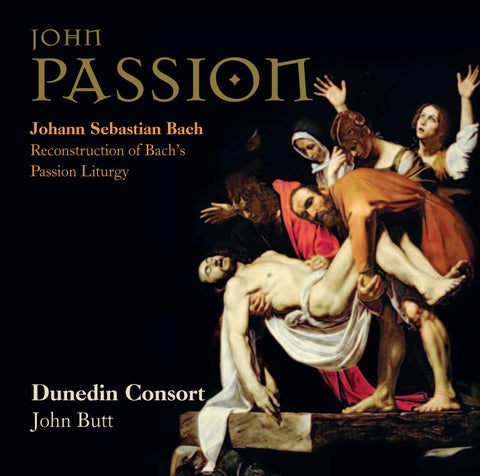
* Congregational chorales, motet and response to blessing are from Gottfried Vopelius’s Neu Leipziger Gesanbuch, 1682. Recorded at Greyfriar’s Kirk, Edinburgh, UK from 10th – 12th September and 2nd November 2012 Produced and recorded by Philip Hobbs Assistant Engineer: Robert Cammidge Post-production by Julia Thomas Design by gmtoucari.com Session photos by John McBride Photography Cover image: Deposition, 1602-4 (oil on canvas), Michelangelo Merisi da Caravaggio (1571-1610) Vatican Museums and Galleries, Vatican City / The Bridgeman Art Library 7
The Leipzig Service of Vespers for Good Friday 1 OPENING LITURGY [Tracks 1-2]
Organ Chorale Prelude: Da Jesus an dem Kreuze Stund, BWV 621+ Congregational Chorale: Da Jesus an dem Kreuze Stund* † 2 Johannes-Passion, PART ONE [Tracks 3-23]
Organ Prelude to the Passion: Praeludium in F-sharp minor, BuxWV 146 (extract)+ Johannes-Passion, BWV 245, Part One◊ 3 CONGREGATIONAL RESPONSE TO PART ONE OF THE PASSION [Tracks 24-25]
Organ Chorale Prelude: O Lamm Gottes unschuldig, BWV 618+ Congregational Chorale: O Lamm Gottes unschuldig* †
4 SERMON SECTION (ADDITIONAL CONTENT FOR DOWNLOAD)** Sermon Introduction, from Erdmann Neumeister, Epistolische Nachlese 1720✣ Organ Chorale Prelude: Herr Jesu Christ dich zu uns wend, BWV 632+ Congregational Chorale: Herr Jesu Christ dich zu uns wend* † Sermon, from Erdmann Neumeister, Epistolische Nachlese 1720, on 2 Timothy, 1, 10✣ Intercession✣
** Additional content is available to download from http://www.linnrecords.com/linn-john-passion.aspx for free. 8
5 Johannes-Passion, PART TWO [Tracks 26-Disc Two, Track 36]
Organ Chorale Prelude: Christus, der uns selig macht, BWV 620+ Johannes-Passion, BWV 245, Part Two◊ 6 CLOSING LITURGY [Tracks 37-43]
Motet: Ecce quomodo moritur* ‡ Responsory, Collect, Blessing, Response to Blessing: Gott sei uns gnädig und barmherzig* ‡ Organ Chorale Prelude: Nun danket alle Gott, BWV 657+ Congregational Chorale: Nun danket alle Gott* † John Butt, Director, Harpsichord & Organ Preludes Dunedin Consort, Congregation & University of Glasgow Chapel Choir ◊ Dunedin Consort directed by John Butt ✣ Rev. Marc Prowe ‡ University of Glasgow Chapel Choir directed by James Grossmith
+ †
* From Gottfried Vopelius’s Neu Leipziger Gesangbuch, 1682 (unison verses directed by John Butt, harmony verses directed by James Grossmith). 9
Johannes-Passion Bach first performed his John Passion (Johannes-Passion) on Good Friday 1724, during his first year as Cantor of the Thomasschule in Leipzig. Not only would this have been a new musical experience for the congregation, but the very genre of the Oratorio Passion (in which the standard Passion narrative was embellished with reflective arias, choruses and chorales) had only been introduced in the two principal churches two years previously. The forward-looking Neue Kirche had made a similar innovation some five years before this, so it is clear that the tradition must have been embraced with some enthusiasm, perhaps inspired by the collapse of the Leipzig opera shortly before Bach’s arrival. But if the Oratorio Passion had many characteristics in common with opera, its differences are very striking: first of all, it was designed to fit into the Good Friday Vesper liturgy, for which the focal point was the sermon delivered between the two halves of the musical setting. The narrative was taken directly from the chosen Gospel, and is therefore largely in the third person. Only the utterances of specific personages feature direct speech. Jesus’s part was naturally delineated by a specific singer, but he, like the narrating Evangelist, also seems to have sung all the other solo and choral material within the same range. Moreover, the arias do not relate directly to characters in the story (as they would invariably do in opera) but are subjective meditations effectively in the present of the performance, and addressed directly to the congregation. Likewise, the chorales inserted within the musical setting of the Passion seem to function as a concerted response to particular aspects of the story, as if sung by the congregation as a whole (the layout of the original parts and the elaborate nature of the harmonizations makes it unlikely that the congregation participated directly in these). Thus, Bach’s Oratorio Passions doubled all the essential elements of the service itself: the reading from Scripture; the communal response in the chorales; the more subjective and meditative element of prayer in the arias. The chorales, arias and meditative choruses also drew theological or spiritual points out of the story and thus doubled the role of the sermon. In all then, the dynamic of the Passion was more complex and nuanced than that of opera. If it forsook the visual element, it seems to have been designed to involve the listener much more intensely, both as part of a congregation and individually. 10
It is as if Bach reversed the mechanism of opera, turning the attention away from the representation ‘on stage’ and back towards the pew. Bach and his (anonymous) librettist could draw on a rich heritage of devotional writing, some of which was specifically designed to be sung. Among the most celebrated Passion librettos – originally for concert, rather than liturgical, performance – was B.H. Brockes’s Der für die Sünde der Welt Gemarterte und Sterbende Jesus (1712), from which Bach’s librettist for the John Passion borrowed liberally. Indeed, some would characterize the entire Passion as a Brockes setting (in the tradition of composers such as Handel and Telemann) although the Brockes text was not originally designed to be combined with a specific Gospel. Moreover, the choice and placing of the non-Biblical text imply that both Bach and his librettist were intensely concerned with the theology of the Gospel. John’s Gospel sits somewhat apart from the others, the three so-called ‘Synoptic Gospels’, which are closely interrelated; it provides rather more of a cosmic explanation for the phenomenon of Jesus, one which is clearly influenced by classical philosophic traditions. Accordingly, Jesus, like his father, must exist eternally, standing quite outside human conceptions of time. Jesus’s earthly office is a sign of God’s presence as ‘the Word made flesh’; all his activities are designed to prove his ambassadorial position as the Son of God, all-knowing and coterminous with truth. Within this deterministic scheme, the murder of Jesus is essentially the device by which the Son returns to the Father, his triumph thereby assured. John’s account omits much of the suffering which Jesus must have experienced as a human being; rather, every adverse event is turned into a celebration of the fulfilment of the plan: in death Jesus – who knows everything in advance – triumphantly exclaims ‘Es ist vollbracht!’ (‘It is fulfilled!’). The darker side of John’s account is his view of the Jews as primarily responsible for the death of Jesus: they are placed on a lower level, outside Pilate’s judgement hall, and it is they who coax this seemingly benevolent governor to kill their impostor ‘King’. Many commentators note that John is clearly talking as a Jew himself and therefore only referring to the intransigence of certain factions within orthodoxy; it may also be that he is trying to shift the blame away from the Romans in view of his broader readership at the end of the first century. 11
The text of the opening chorus establishes the Johannine theme of the work: Jesus is portrayed as the eternal and omnipresent ruler. The poet implores him, as the true son of God, to show how he becomes glorified even in the lowliness of his Passion. The same pairing of opposites (interestingly, also linked with a da capo ABA structure, albeit modified) is evident in the lament ‘Es ist vollbracht!’, where the central section portrays Christ as victor. For many, the pivotal point of Bach’s Passion and the most significant distillation of its message is the aria text (set as if it were a chorale) ‘Durch dein Gefängnis’, which again exploits a contradiction: we receive freedom through Christ’s captivity. This develops a theme from John that is not so evident in the Passion narrative itself, namely, the atonement that Jesus’ death performs for believers (Jesus as the Lamb of God sacrificed for human sin). Many writers have sought elaborate symbolic structures within Bach’s John Passion. Certainly such orders are not atypical of the intellectual and religious climate of the time. What does come across in performance is the relentlessness of the events, everything taking place almost with a clockwork precision, in direct and necessary fulfilment of a pre-ordained – indeed prophecised – order. The trial scene is the central point of the Johannine narrative since it is here that Jesus’s kingship is judged by the Jews and Pilate (they miss the point about Jesus’s kingship being of ‘another world’). Whether or not the musical connections between the crowd choruses (especially those derived from the first ‘Jesum von Nazareth’) point to another symbolic dimension, the first listeners must have experienced an increasing sense of inevitability – perhaps of the uncanny – as the piece progressed, since so many choruses would already sound familiar. Some critics maintain that the John Passion lacks the refinement of its more illustrious sister, the Matthew Passion. Certainly it is not so evenly paced, lacking the almost doctrinaire successions of narrative-arioso-aria, which accord to the latter the flavour of a spiritual exercise. But the central trial scene would lose its impact if it were punctuated with arias. Both the intense musical colouring of the recitatives (Peter’s lament and the scourging of Christ are far more vivid than their counterparts in the Matthew Passion) and the incisive figuration of the choruses (almost a latter-day adaptation of Monteverdi’s ‘warlike’ style) recall the idioms of the late seventeenth century, when Lutheran music tended to wring every nuance it could from the grain of the text. 12
Only the arias, together with the opening and closing choruses, display the more luscious, affective style of Bach’s mature writing. These show an astonishing range of style and mood: the opening chorus ‘Herr, unser Herrscher’ (which Bach used in all but his second, 1725, version of this Passion) is arguably the most turbulent piece he wrote, in which the triumphal text is entirely transformed by the grinding dissonance of the music; if Jesus is indeed to be shown as the true Son of God, the means by which this is achieved are truly agonizing. The first two arias both demonstrate the voice as almost entirely bound into the world of the music, the first (‘Von den Strikken meiner Sünden’) vividly alluding to the bondage of sin and the second (‘Ich folge dir gleichfalls’) to the notion of following Jesus directly, in musical imitation of Simon Peter and the beloved disciple. Most extraordinarily of all in Part One, is the final aria, ‘Ach, mein Sinn’ (replaced in the 1725 version), by which one of the tautest and most ordered of musical structures is virtually ignored by the solo tenor, who cannot escape the confusion brought by the human’s sinful state (just so graphically demonstrated by Peter’s denial). As the drama becomes more intense at the outset of Part Two, we hear by contrast the most extensive aria, ‘Erwäge’, which with its accompanying arioso lays out the atoning purpose of the Passion, likening Jesus’s bloodstained back to the rainbow signifying peace with God after the flood. This rather lurid language was replaced in Bach’s last version of this Passion, but the rainbow imagery, together with the soothing swirls of the musical idiom, work particularly well in delineating the apex of the Passion setting as a whole, a moment of repose that so beautifully complements the savageness of the narrative music. Two arias feature dialogue between the soloist and other members of the vocal complement, almost as if Bach were trying out a texture that he was to exploit more extensively in his next Passion. ‘Eilt, ihr angefochtnen Seelen’ addresses the believers who are repeatedly asking whence they should hurry: their salvation lies at Golgatha, to which they should fly with the wings of faith. In other words, key theological notions of faith and atonement, to be sought in the present of the performance, are dramatized in one of the liveliest settings in the work. ‘Mein teurer Heiland’ is gentler, but no less compelling, with the solo bass (apparently sung by the same singer who sang Jesus’s words in Bach’s performances) asking if he is now freed from death. In a verse from the chorale ‘Jesu, deine Passion’, the other singers exclaim that Jesus, who has just died, now lives for evermore (and, in performance, this is just the illusion we gain, since the singer who represented Jesus continues to sing, now as a believer seeking salvation). 13
If the two dialogue arias point towards hope for the believer, the remaining two arias that occur in the latter part of the Passion return to the double emotion of sorrow and triumph as articulated in the opening chorus. ‘Es ist vollbracht’ (heard just before ‘Mein teurer Heiland’) takes up Jesus’s last words, showing both their sorrowful import and their articulation of triumph (in the central section); ‘Zerfließe, mein Herze’ emphasizes the deep sorrow at Jesus’s death, as if to compensate for the overall cosmic confidence of John’s account. Yet, even in this most intensely sad piece of music there remains the remarkable confidence of the musical construction, the four interlocking lines and the recurrence of the segments seeming to sustain the sympathetic listener. The arias thus provide a range of individual responses, some modelling the likely emotions of the listener, others exhorting the listener towards a particular resolution or action. The chorales perform a similar role for the listeners as a group, the body constituting the church. The use of several verses from some of the chorales binds the overall experience together in much the same way as the repetitions of the music within the choruses. Like the arias, the chorale verses are chosen to fit the specific point in the narrative. The first is taken from ‘Herzliebster Jesu’ (interestingly also the first chorale that Bach employed in the Matthew Passion, bar the opening chorus), a text emphasizing Jesus’s love at the point when he tells the arresting party to leave the disciples alone. The same chorale is used later at the point when Jesus’s kingship is being questioned by Pilate; here the opening of the chorale verse fortuitously concerns Jesus’s kingship, great throughout all ages. Perhaps most striking of all are the multiple uses of ‘Jesu, deine Passion’: first the verse that closes Part One, which concerns Peter’s denial (‘Petrus, der nicht denkt zurück’); thinking ‘backwards’, which Peter so signally failed to do, is what so much of this music encourages us to do, with its nested repetitions. The second occurrence comes at the point where Jesus commends his mother to his friend, again with an apposite verse (‘Er nahm alles wohl in acht’), and finally, there is the remarkable setting in ‘Mein teurer Heiland’ where the chorale points towards the resurrection. The interlocking nature of the musical components and the juxtaposition of several textural layers mean that Bach’s John Passion is potentially one of the most intense religious works he wrote, interpreting itself almost before it has presented the prescribed text. The range of interpretation is potentially infinite, which may well account for the way the work 14
still brings rich meanings and resonances even to those unsympathetic to its religious implications. Indeed, it may be that the Leipzig town council found Bach’s compositional attitude overbearing: the very first performance in 1724 was coloured by a dispute about the venue. Bach seems to have prepared the libretto for the Thomaskirche rather than the Nikolaikirche, as expected, and only agreed to the latter venue when its harpsichord was mended and more room was provided for the performers. The following year Bach, unexpectedly, presented the John Passion again (quite possibly he had planned another work, one that for some reason could not be presented). Presumably to avoid direct repetition he modified the piece considerably, adding several chorale-based movements that perhaps rendered the Passion closer to the chorale cycle of cantatas performed that year. A third version, in the early 1730s, returned largely to the first, excising two insertions from Matthew’s (or Mark’s) Gospel but also containing movements that have since been lost. Towards the end of the 1730s Bach began to prepare a neat score of the work, presumably as a definitive version. Yet he broke off after some twenty pages and the score was finished a decade later by a copyist (mostly copying literally from earlier sources). There may have been some dispute behind this change of plan, since there is a report in the council minutes on 17 March 1739 where it was reported that a clerk had been dispatched to prohibit the Good Friday performance until permission had been granted. Bach’s reported response was frosty: ‘he did not care, for he got nothing out of it anyway, and it was only a burden; he would notify the Superintendent that it had been forbidden; if an objection were made on account of the text, it had already been performed several times’. Certainly, several aspects of the text were modified ten years later when Bach returned to the work for the fourth time; perhaps the early enlightenment mood of the mid-century was no longer in sympathy with the imagery of arias such as ‘Erwäge’. It may also be that the view of Jesus as victor in a battle with death was becoming old-fashioned, in an age where the human qualities of Jesus seemed more relevant. Nevertheless, Bach clearly put some effort in preparing his final performance (despite ignoring the refinements he had made in his incomplete score of 1739), and it is even possible that he performed the work again in 1750, just months before his death. Despite the various hiatuses and his almost constant tinkering with the details, it seems that Bach never lost his interest in this Passion, a work of restless beauty that never quite divulges all its secrets. 15
Reconstructing the Original Vesper Liturgy Of all the early reformers, Luther adhered most closely to the notion of liturgy as an effective way of organising worship. Yet, as is clear from his Deutsche Messe of 1526, flexibility was key: different approaches to the language, shape and musical setting of the liturgy were appropriate according to the needs of each locality and congregation. His liturgical prescriptions, and those that came from most of his successors, were all designed as a ground plan that could be modified in its details at any time. In Bach’s time there is a reasonable amount of evidence for the general shape of the Leipzig services, and while these adhere quite closely to the overall form of the traditional Lutheran liturgies it is clear that each continued to be a living organism, drawing from a range of historical possibilities. First, there are the church orders for Leipzig, which give the outlines for the standard services, the most important from a musical standpoint being the morning Eucharistic service on Sundays and other feast days, and the Vespers in the afternoon. Then there are some very useful notes by Bach himself from the beginning of his first two years in Leipzig – among many details, the use of the organ to ‘prelude’ the chorales and the main musical pieces is very clear, as is also the role of traditional motets in the liturgy. Finally, there is the sequence of detailed notes by Johann Christoph Rost, sexton of the Thomaskirche, from 1716-39, which were continued by his successors. This provides much useful information, showing the ways the liturgies developed over the years. Rost’s notes on the Good Friday Vesper service, at which the large oratorio-style Passions were performed, probably date from around the first time these were introduced in the two main churches (1721) and this form seems to have persisted for the whole of Bach’s Leipzig career. It is impossible to recreate the precise Passion liturgy for a specific year, but there is certainly enough material to create an ‘ideal’ liturgy out of the range of possibilities, so this seems a good opportunity to present this with an ‘ideal’ version of Bach’s John Passion, one cobbled from the revision that the composer began, but soon abandoned in 1739, and some of the modifications he made in the last performances of 1749-50. Just such an ‘ideal’ version is, in fact, what most of us have heard as the John Passion over the last few decades, since this is what Arthur Mendel constructed for his authoritative edition in the Neue BachAusgabe. This is an amalgamation that has drawn considerable scholarly disapproval, but 16
it seems eminently appropriate for a liturgical reconstruction that is likewise cobbled from various sources. We can therefore confidently state that this recording is a reconstruction of the 1739 performance, one that never actually took place. We do not adopt the textual changes made in the very latest version, but use the muted violins and organ for ‘Betrachte, meine Seele’ and ‘Erwäge’, since Bach did not use the violas d’amore and lute for these numbers beyond the first, 1724, version. Given that bassoons are mentioned at the opening of the 1739 manuscript, it seems reasonable to adopt the indications for a ‘bassono grosso’ from the 1749 version. ‘Zerfließe, mein Herze’ seems to have involved a violin in the last version and it is only here that the staccato marks are found; all woodwind parts are marked with slurs at these points. Here we therefore adopt the woodwind version without the staccato markings. What is the point in putting together the John Passion with its original Vesper liturgy? First, it is clear that the components of the liturgy provide a very interesting window into the context in which Bach was working when he composed his Passions. These had to be designed in two parts to surround the sermon – arguably the most important part of any Lutheran liturgy – since it was here that the pastor sought to bring Scripture to life and persuade the congregation of the priceless value of Jesus’s sacrifice. Not only was it important to cultivate faith, as the only human action that was completely non-negotiable, but it was also important to maintain this as a continual, regenerating state of mind lest the believer be struck down at precisely the moment faith wavered. Therefore, traditional liturgical shapes were adapted to provide this focus, and the hymns were placed as pillars around the liturgy, drawing out enduring theological points. Following the Roman tradition, psalms were sung in the early part of the service (replaced by a cantata on special occasions), and the principal Vesper canticle, the Magnificat, was sung after the sermon. On Good Friday both the psalms and Magnificat were simply replaced by the two halves of the Passion. Also removed at Passiontide were the sequence of prayers and long intercessions. This makes the role of the meditative, poetic aspects of Bach’s Passions (mainly arias, but also the opening and closing choruses) especially important as substitutes for the prayers – subjective, personal, utterances that belong more to the worshipper than to characters within the Passion story. The service begins with the congregational chorale set in the archaic Phrygian mode, ‘Da Jesus an dem Kreuze stund’. This is almost a meditation in its own right, since it is a 17
Lutheran paraphrase of the ‘Seven Last Words’ of Jesus, long a vehicle for musical expression and often heard in its own devotional setting in both Lutheran and Roman Catholic traditions. This is essentially the collection of all Jesus’s last sayings, drawn from all four Gospels and thus recalling for the informed listener the different characters and emphases of each account. This leads into the specific Gospel chosen for the year concerned, which covers the first half of the story (in this case, quite short, since John’s account begins with Jesus’s arrest, and runs up to Peter’s denial). Then comes the next congregational ‘pillar’, ‘O Lamm Gottes’, which is an early Lutheran paraphrase of the Agnus dei, which emphasizes the central message of Jesus’s sacrifice redeeming the sins of the world. Now comes the sermon, preached on a specific text, relevant to the service. The announcement of the chosen text is preceded by the single verse of the sermon hymn, ‘Herr Jesu Christ dich zu uns wend’. While we possess no Passion sermons directly connected with Bach’s services in Leipzig, there are several appropriate ones from his environment. For this reconstruction we have chosen Erdmann Neumeister’s sermon (published in a collection from 1720) on 2 Timothy 1, 10, about Jesus overcoming death and bringing life and immortality through the Gospel*. Neumeister is a particularly appropriate choice since it was he who so trenchantly supported the notion of the operatic aria-recitative structure as the musical vehicle for meditative texts (Bach set some of his libretti in cantatas). He was also associated with the Weissenfels court, for which he wrote this collection of sermons (and where Bach occasionally worked, met his second wife, and also acquired an honorary title of Kapellmeister), and he commented ruefully on Bach’s failure to obtain a job in Hamburg on account of his not being able to pay the customary sum required for the privilege. Not only was he therefore exceptionally supportive of music in the liturgy but, in this particular sermon, chose as his secondary text verses from the chorale ‘Jesu, deine Passion’, one of the most important chorales employed in Bach’s John Passion setting (the verse, ‘Jesu, der du warest tot’, is therefore heard in both the sermon and in Bach’s aria, ‘Mein teurer Heiland’).
* The sermon and intercession are part of the additional content which is available for download from http://www.linnrecords.com/linn-john-passion.aspx for free. 18
The sermon is followed by a short intercession, bringing to a conclusion the only spoken section of the service, and this is followed by Part Two of the Passion (introduced with another traditional chorale for Passiontide ‘Christus, der uns selig macht’, set in the Phrygian mode and thus complementing the very opening of the service). This – much longer – half contains the long and dramatic trial scene in John’s account: Jesus’s crucifixion, death and burial. While concert performances of this Passion end on a wonderful note of hope and joy, with the chorale ‘Ach Herr, laß dein lieb Engelein’, in the Passion service this would have been followed immediately by the traditional funeral motet by Jacob Händl Gallus, ‘Ecce quomodo moritur’. Thus Bach’s chorus of lament, ‘Ruht wohl, ihr heiligen Gebeine’, is balanced by this motet, with the uplifting chorale as the centre point of what is essentially a triptych. The service closes with a short sung responsory, collect and blessing, which lead to the final congregational chorale, ‘Nun danket alle Gott’, a famous hymn that provides a remarkable sense of joy in the atonement achieved through the Passion. One might almost come away with the idea that Easter is an afterthought; certainly, in the Lutheran tradition, Passion music always seems to be far more intense and significant than anything produced for Easter itself. In all, we get a sense of a largely symmetrical, formal event, into which Bach’s music is woven rather than imposed. It unfolds with something of the same sense of inevitability as does John’s story, which of all the Gospels renders the Passion virtually as a timeless event, established at the beginning of time and recurring on an annual basis. The congregation participates only in the four main chorales that in themselves almost constitute a complete Good Friday sequence. The communal aspect of the devotion is recalled by Bach’s own settings of chorales within the Passion narrative, and models for prayer, played out over the course of the complete musical setting, occur in the arias. Each component in the entire event provides a means of interpreting the others, so there is the potential for the experience of renewal and deepening understanding within a formalized frame of time. As with the 1739 performance of the John Passion, we can be confident that the service presented here never took place. After all, we do not have a guide to the precise version of the melodies used for the chorales. The principal source of hymns is the Neu Leipziger Gesangbuch, compiled by Gottfried Vopelius in 1682. This is essentially a ‘cantional’, a 19
collection of the complete service music with nearly 500 pieces (largely chorales, but also including motets and chanted components of the service). Although it was reprinted several times and supplemented by other books, the first edition is the only one to contain music (much of it in several voices), so it is an indispensable source of service music for Bach’s time in Leipzig. However, we have no idea of how the melodies might have changed over time, and the repertory of Bach’s own harmonised chorales and chorale preludes shows that he encountered, perhaps even instigated, a number of variants. Traditionally, chorales were sung in unison without accompaniment, the organ’s main role being to provide the so-called ‘chorale prelude’ that set the mood, mode and melody of each hymn. However, towards the end of the seventeenth century, many institutions began to introduce organ accompaniment, and it is interesting to see the appearance of figured bass in the bass lines of Vopelius’s settings. Some of Bach’s early Arnstadt chorale preludes are written in the style of elaborate accompaniments, so these might be representative of the sort of practice in a small church. Whatever practice was adopted in Leipzig, Rost’s notes tell us that the organ was not used in Lent (does this include Passiontide?), so stark, unaccompanied singing seems appropriate. But does this mean that the organ also did not provide the customary preludes? Given that Bach left such a rich collection of chorale preludes it seems clear that he must have expected these for Passiontide, at least at certain stages of his career. In Leipzig these would almost certainly have been improvised by the church’s own organist (and not by the cantor, or director of music, Bach himself), so his own settings (drawn here from the Weimar collections, particularly the ‘Orgelbüchlein’) would not have been used. Vopelius provides us with simple harmonizations, for use in places ‘wo die Music im Schwange’. Settings such as these would have been very common in school singing practice and traditionally these could be sung in alternation with the congregation’s unison. While it is likely that the alternatim practice had died out by Bach’s time, it is worth hearing it applied here, not least to show how extraordinary and elaborate are Bach’s settings within the Passion itself, compared with the ‘norm’. Finally, this recording sets out to demonstrate the different levels of singing cultivated in the church and school environments of Bach’s time: at the most basic level, all pupils were taught to sing chorales so that they could perform these not only in school but also lead the singing in the associated churches; 20
more advanced pupils learned to sing chorales in parts and also began to cultivate motets in the traditional Renaissance style (which were generally sung with several singers to each part). Only the very advanced pupils proceeded to the soloistic performance of the elaborate music composed by Bach himself. In all, then, there is a sense that all singers are accommodated in the liturgy of Bach’s time; what we hear in concert performance is only the tip of a much larger iceberg, a culture of singing and participation that can only be fleetingly evoked in a modern reconstruction. Š John Butt, 2013 This reconstructed liturgy, together with its sermon, would have been entirely impossible without the help of Prof. Robin Leaver who has done so much to promote the understanding of Bach’s liturgical practice and the associated theological concerns. He has been extraordinarily generous in providing information on the liturgical sources, congregational chorales and their performing practice, and the Neumeister sermon, which was also his suggestion. To read a translation of these notes, please visit www.linnrecords.com/recording-john-passion.aspx. A bibliography on the sources used is also provided on the Linn website.
21
Texts & Translations Disc One
OPENING LITURGY 1. Organ Chorale Prelude: Da Jesus an dem Kreuze Stund, BWV 621 2. Congregational Chorale: Da Jesus an dem Kreuze Stund
22
Da Jesus an dem Kreuze Stund und ihm sein Leichnam war verwundt so gar mit bittern Schmerzen, die sieben Wort, die Jesus sprach, betracht in eurem Herzen.
When Jesus hung upon the cross, His body sorely wounded, With the most bitter pain, The Seven Last Words that Jesus uttered, Consider in your heart.
Zum erstn sprach er gar süßiglich, zu seinem Vatr im Himmelreich mit Kräfften und mit Sinnen: „Vergieb ihnn, Vater, sie wissen nicht, was sie an mir verbringen.“
The first he spoke most sweetly To his father in the kingdom of heaven, With power and deep reflection: “Forgive them, Father, they know not What they do to me.”
Zum andern gdenck seiner Barmhertzigkeit Die Gott am Schächer hat geleit sprach Gott gar gnädigliche: „Fürwar du wirst heut bey mir seyn In meines Vaters Reiche.“
For the second, consider the mercy, that God bestowed upon the Thief; God spoke most graciously: “Truly, you will today be with me In my Father’s kingdom.”
Zum dritten gdenck seinr großen Not, laß dir die Wort nicht seyn ein Spott: „Weib, schau deinn Sohn gar eben. Johannes, nimm deinr Mutter wahr, du solt ihr eben pflegen.“
Thirdly, think of his great distress, Do not make a mockery of this saying: “Woman, behold your Son: John, behold your Mother; You should take care of her.”
Nun mercket, was das vierd Wort was: „Mich dürst so hart ohn Unterlaß,“ schrey Gott mit lauter Stimme. Das menschlich Heil that er begehrn, seinr Nägl ward er empfinden.
Now mark what the fourth saying was: “I thirst so badly, without respite,” Cried God with a loud voice. He craved man’s salvation, As he felt those nails.
Zum fünfften gdenck der Barmhertzigkeit, die Gott am heilgen Kreuz ausschreyt: „Mein Gott, wie hastu mich verlassen? Das Elend, das ich leyden muß, das ist gantz über die Massen.“
For the fifth, think of the compassion, That God cried out upon the holy cross, “My God, why have your forsaken me? The misery that I must suffer Is entirely beyond measure.”
Das sechst war gar ein kräfftigs Wort, das mancher Sünder auch erhört aus seinm göttlichen Munde: „Es ist vollbracht mein Leyden groß wol hie zu dieser Stunde.“
The sixth was a very powerful Word, That many a sinner also heard, From out of his godly mouth: “It is finished, my great suffering, Here at this very time.”
Zum siebntn: „Befehl ich mich Vatr in deine Händ, dein Heilgen Geist du zu mir send an meinen letzten Zeiten, wenn sich die Seel vom Leib abscheid und mag nicht länger beiten.“
And the seventh: “Father, I commend into your hands, your holy spirit that you sent me, at my last moment, when the soul departs from the body and stays no longer.”
Wer Gottes Marter in Ehren hat und oft gedenck der sieben Wort, des wil Gott eben pflegen, Wohl hie auff Erd mit seiner Gnad und dort im ewgen Leben.
Whoever honours God’s martyrdom And thinks often on the Seven Words, He will become attuned to God, Both here on earth, with his mercy, And there, in eternal life.
23
Johannes-Passion, PART ONE 3. Organ Prelude to the Passion: Praeludium in F-sharp minor, BuxWV 146 (extract)
Johannes-Passion, BWV 245 Reprinted from Michael Marissen’s Bach’s Oratorios – The Parallel German-English texts, with Annotations (New York: Oxford University Press, 2008).
Part One
24
4. CHORUS
4. CHORUS
Herr, unser Herrscher, dessen Ruhm In allen Landen herrlich ist! Zeig uns durch deine Passion, Daß du, der wahre Gottessohn, Zu aller Zeit, Auch in der größten Niedrigkeit, Verherrlicht worden bist!
Lord, our ruler, whose praise is glorious in all the lands! Show us through your Passion that you, the true Son of God, at all times, even in the greatest humiliation, have been glorified!
5. RECITATIVO EVANGELISTA
5. RECITATIVE EVANGELIST
Jesus ging mit seinen Jüngern über den Bach Kidron, da war ein Garte, darein ging Jesus und seine Jünger. Judas aber, der ihn verriet, wußte den Ort auch, denn Jesus versammlete sich oft daselbst mit seinen Jüngern. Da nun Judas zu sich hatte genommen die Schar und der Hohenpriester und Pharisäer Diener, kommt er dahin mit Fackeln, Lampen und mit Waffen. Als nun Jesus wußte alles, was ihm begegnen sollte, ging er hinaus und sprach zu ihnen:
Jesus went with his disciples across the brook Kidron, where there was a garden, which Jesus and his disciples entered. Judas, however, who betrayed him, also knew the spot, for Jesus often gathered in that very place with his disciples. Now when Judas had engaged the band [of Roman soldiers] and attendants of the chief priests and of the Pharisees, he comes to that place with torches, lanterns, and with weapons. Now since Jesus knew everything that should [according to scripture] happen to him, he went out and said to them:
JESUS
JESUS
Wen suchet ihr?
Whom do you seek?
EVANGELISTA
EVANGELIST
Sie antworteten ihm:
They answered him:
6. CHORUS
6. CHORUS
Jesum von Nazareth.
Jesus of Nazareth.
7. RECITATIVO EVANGELISTA
7. RECITATIVE EVANGELIST
Jesus spricht zu ihnen:
Jesus says to them:
JESUS
JESUS
Ich bin’s.
That, I AM.
EVANGELISTA
EVANGELIST
Judas aber, der ihn verriet, stund auch bei ihnen. Als nun Jesus zu ihnen sprach: Ich bin’s, wichen sie zurücke und fielen zu Boden. Da fragete er sie abermal:
Judas, however, who betrayed him, also stood with them. Now since Jesus said to them, “That, I AM,” they drew back and fell to the ground. He then asked them once more:
JESUS
JESUS
Wen suchet ihr?
Whom do you seek?
EVANGELISTA
EVANGELIST
Sie aber sprachen:
They again said:
8. CHORUS
8. CHORUS
Jesum von Nazareth.
Jesus of Nazareth. 25
26
9. RECITATIVO EVANGELISTA
9. RECITATIVE EVANGELIST
Jesus antwortete:
Jesus answered:
JESUS
JESUS
Ich hab’s euch gesagt, daß ich’s sei, suchet ihr denn mich, so lasset diese gehen!
I have told you I’m that one; if you are looking for me, then let these others go!
10. CHORAL
10. CHORALE
O große Lieb, o Lieb ohn’ alle Maße, Die dich gebracht auf diese Marterstraße! Ich lebte mit der Welt in Lust und Freuden, Und du mußt leiden.
O great love, o love beyond all measure, that has brought you on this path of torment! I lived with the world in delight and joy, and you have to suffer.
11. RECITATIVO EVANGELISTA
11. RECITATIVE EVANGELIST
Auf daß das Wort erfüllet würde, welches er sagte: Ich habe der keine verloren, die du mir gegeben hast. Da hatte Simon Petrus ein Schwert und zog es aus und schlug nach des Hohenpriesters Knecht und hieb ihm sein recht Ohr ab; und der Knecht hieß Malchus. Da sprach Jesus zu Petro:
In order that what he [had] said, the Word, would be fulfilled: “I have not lost one of those whom you have given me.” Then Simon Peter, having a sword, drew it out and struck at the high priest’s servant and cut his right ear off; and the servant’s name was Malchus. Then Jesus said to Peter:
JESUS
JESUS
Stecke dein Schwert in die Scheide! Soll ich den Kelch nicht trinken, den mir mein Vater gegeben hat?
Put your sword in its casing! Shall I not drink the cup that my Father has given me?
12. CHORAL
12. CHORALE
Dein Will gescheh, Herr Gott, zugleich Auf Erden wie im Himmelreich. Gib uns Geduld in Leidenszeit, Gehorsam sein in Lieb und Leid; Wehr und steur allem Fleisch und Blut, Das wider deinen Willen tut!
Your will be done, Lord God, alike on earth as [it is] in the kingdom of heaven. Give us patience in time of suffering, to be obedient in love and woe; restrain and hold in check all flesh and blood that acts against your will!
13. RECITATIVO EVANGELISTA
13. RECITATIVE EVANGELIST
Die Schar aber und der Oberhauptmann und die Diener der Jüden nahmen Jesum und bunden ihn und führeten ihn aufs erste zu Hannas, der war Kaiphas Schwäher, welcher des Jahres Hoherpriester war. Es war aber Kaiphas, der den Jüden riet, es wäre gut, daß ein Mensch würde umbracht für das Volk.
The band, however, and the captain and the attendants of the Jews took Jesus and bound him and led him at first to Annas (the father-in-law of Caiaphas, the one who was high priest in that year). But it was Caiaphas who advised the Jews it would be good that one man be put to death for the people.
14. ARIA
14. ARIA
Von den Stricken meiner Sünden Mich zu entbinden, Wird mein Heil gebunden. Mich von allen Lasterbeulen Völlig zu heilen, Läßt er sich verwunden.
To unbind me from the ropes of my sins, my Salvation is bound. To heal me fully from all my vice-boils, he lets himself be wounded.
15. RECITATIVO EVANGELISTA
15. RECITATIVE EVANGELIST
Simon Petrus aber folgete Jesu nach und ein ander Jünger.
Simon Peter, however, followed Jesus and [so did] another disciple. 27
28
16. ARIA
16. ARIA
Ich folge dir gleichfalls mit freudigen Schritten Und lasse dich nicht, Mein Leben, mein Licht. Befördre den Lauf Und höre nicht auf, Selbst an mir zu ziehen, zu schieben, zu bitten.
I will follow you likewise with joyful steps and will not let you [go], my Life, my light. Pave the way, and do not stop drawing, shoving, imploring me yourself.
17. RECITATIVO EVANGELISTA
17. RECITATIVE EVANGELIST
Derselbige Jünger war dem Hohenpriester bekannt und ging mit Jesu hinein in des Hohenpriesters Palast. Petrus aber stund draußen für der Tür. Da ging der andere Jünger, der dem Hohenpriester bekannt war, hinaus und redete mit der Türhüterin und führete Petrum hinein. Da sprach die Magd, die Türhüterin, zu Petro:
This same disciple was known to the high priest and went with Jesus into the high priest’s palace. Peter, however, stood outside, in front of the door. Then the other disciple, who was known to the high priest, went out and spoke with the woman keeping the door and led Peter in. Then the maid, the doorkeeper, said to Peter:
ANCILLA
MAID
Bist du nicht dieses Menschen Jünger einer?
Aren’t you one of this man’s disciples?
EVANGELISTA
EVANGELIST
Er sprach:
He said:
PETRUS
PETER
Ich bin’s nicht.
That, I am not.
EVANGELISTA
EVANGELIST
Es stunden aber die Knechte und Diener und hatten ein Kohlfeu’r gemacht (denn es war kalt) und wärmeten sich. Petrus aber stund bei ihnen und wärmete sich. Aber der Hohepriester fragte Jesum um seine Jünger und um seine Lehre. Jesus antwortete ihm:
But the servants and attendants stood around, having made a charcoal fire (for it was cold), and warmed themselves. But Peter stood among them and warmed himself. But the high priest asked Jesus about his disciples and about his teaching. Jesus answered him:
JESUS
JESUS
Ich habe frei, öffentlich geredet für der Welt. Ich habe allezeit gelehret in der Schule und in dem Tempel, da alle Jüden zusammenkommen, und habe nichts im Verborgnen geredt. Was fragest du mich darum? Frage die darum, die gehöret haben, was ich zu ihnen geredet habe! Siehe, dieselbigen wissen, was ich gesaget habe.
I have spoken freely and openly before the world. I have always taught in the synagogue and in the Temple, where all Jews come together, and have spoken nothing in secret. Why do you ask me about this? About this, ask those who have heard what I have spoken to them! Look, these same ones know what I have said.
EVANGELISTA
EVANGELIST
Als er aber solches redete, gab der Diener einer, die dabeistunden, Jesu einen Backenstreich und sprach:
But when he said such things, one of the attendants standing nearby gave Jesus a blow to the face and said:
SERVUS
ATTENDANT
Solltest du dem Hohenpriester also antworten?
Should you answer the high priest like that?
EVANGELISTA
EVANGELISTA
Jesus aber antwortete:
But Jesus answered: 29
30
JESUS
JESUS
Hab ich übel geredt, so beweise es, daß es böse sei, hab ich aber recht geredt, was schlägest du mich?
If I have spoken badly, then prove it is evil; but if I have spoken rightly, why do you strike me?
18. CHORAL
18. CHORALE
Wer hat dich so geschlagen, Mein Heil, und dich mit Plagen So übel zugericht’? Du bist ja nicht ein Sünder Wie wir und unsre Kinder, Von Missetaten weißt du nicht.
Who has struck you so, my Salvation, and beat you up so badly, causing plague-spots? You are by no means a sinner, like we and our children [are]; you do not know of any misdeeds.
Ich, ich und meine Sünden, Die sich wie Körnlein finden Des Sandes an dem Meer, Die haben dir erreget Das Elend, das dich schläget, Und das betrübte Marterheer.
I, I and my sins, which are as [countless as] the grains of sand on the seashore, they have caused you the sorrow that strikes you and the grievous host of pain.
19. RECITATIVO EVANGELISTA
19. RECITATIVE EVANGELIST
Und Hannas sandte ihn gebunden zu dem Hohenpriester Kaiphas. Simon Petrus stund und wärmete sich, da sprachen sie zu ihm:
And Annas sent him, bound, to the high priest Caiaphas. Simon Peter stood and warmed himself, when they said to him:
20. CHORUS
20. CHORUS
Bist du nicht seiner Jünger einer?
Aren’t you one of his disciples?
21. RECITATIVO EVANGELISTA
21. RECITATIVE EVANGELIST
Er leugnete aber und sprach:
He denied it again and said:
PETRUS
PETER
Ich bin’s nicht.
That, I am not.
EVANGELISTA
EVANGELIST
Spricht des Hohenpriesters Knecht’ einer, ein Gefreundter des, dem Petrus das Ohr abgehauen hatte:
One of the high priest’s servants, a kinsman of him whose ear Peter had cut off, says:
SERVUS
ATTENDANT
Sahe ich dich nicht im Garten bei ihm?
Didn’t I see you in the garden with him?
EVANGELISTA
EVANGELIST
Da verleugnete Petrus abermal, und alsobald krähete der Hahn. Da gedachte Petrus an die Worte Jesu und ging hinaus und weinete bitterlich.
Then Peter disavowed [Jesus] once more, and immediately the cock crowed. Then Peter remembered the words of Jesus and went out and wept bitterly.
31
32
22. ARIA
22. ARIA
Ach, mein Sinn, Wo willt du endlich hin, Wo soll ich mich erquicken? Bleib ich hier, Oder wünsch ich mir Berg und Hügel auf den Rücken? Bei der Welt ist gar kein Rat, Und im Herzen Stehn die Schmerzen Meiner Missetat, Weil der Knecht den Herrn verleugnet hat.
Oh, my sense [of good and evil], where, in the end, do you want to go; where shall I restore myself? Shall I stay here, or do I wish mountains and hills [to fall] upon my back? In the world there is no counsel whatsoever, and in my heart persist the agonies of my misdeed: for the servant has disavowed the Lord.
23. CHORAL
23. CHORALE
Petrus, der nicht denkt zurück, Seinen Gott verneinet, Der doch auf ein’ ernsten Blick Bitterlichen weinet. Jesu, blicke mich auch an, Wenn ich nicht will büßen; Wenn ich Böses hab getan, Rühre mein Gewissen!
Peter, who does not think back [to Jesus’ Word], denies his God; at a penetrating glance, however, he weeps bitterly. Jesus, glance on me as well, whenever I am unrepentant; whenever I have done something evil, stir my conscience!
CONGREGATIONAL RESPONSE TO PART ONE OF THE PASSION 24. Organ Chorale Prelude: O Lamm Gottes unschuldig, BWV 618 25. Congregational Chorale: O Lamm Gottes unschuldig
O Lamm Gottes, unschuldig am Stamm des Kreuzes geschlachtet, allzeit erfundn geduldig, wiewol du warest verachtet; all’ Sünd hast du getragen, sonst müßten wir verzagen. Erbarm dich unsr, o Jesu.
O Lamb of God, most stainless! Who on the Cross didst languish, Patient through all Thy sorrows, Though mocked amid Thine anguish; Our sins Thou bearest for us, Else had despair reigned o’er us: Have mercy upon us, O Jesu!
O Lamm Gottes, unschuldig am Stamm des Kreuzes geschlachtet, allzeit erfundn geduldig, wiewol du warest verachtet; all’ Sünd hast du getragen, sonst müßten wir verzagen. Erbarm dich unsr, o Jesu.
O Lamb of God, most stainless! Who on the Cross didst languish, Patient through all Thy sorrows, Though mocked amid Thine anguish; Our sins Thou bearest for us, Else had despair reigned o’er us: Have mercy upon us, O Jesu!
O Lamm Gottes, unschuldig am Stamm des Kreuzes geschlachtet, allzeit erfundn geduldig, wiewol du warest verachtet; all’ Sünd hast du getragen, sonst müßten wir verzagen. Gib uns deinen Fried, o Jesu.
O Lamb of God, most stainless! Who on the Cross didst languish, Patient through all Thy sorrows, Though mocked amid Thine anguish; Our sins Thou bearest for us, Else had despair reigned o’er us: Grant us Thy peace to-day, O Jesu! Translation by Catherine Winkworth (1827-1878).
33
SERMON SECTION (This section is available for download free of charge from http://www.linnrecords.com/linn-john-passion.aspx) Sermon Introduction Organ Prelude Chorale: Herr Jesu Christ dich zu uns wend, BWV 632 Congregational Chorale: Herr Jesu Christ dich zu uns wend
34
Herr Jesu Christ, dich zu uns wend, dein’ Heilgen Geist du zu uns send, mit Lieb und Gnaden er uns regier und uns den Weg zur Wahrheit fßhr.
Lord Christ, reveal Thy holy face, And send the Spirit of Thy grace, To fill our hearts with fervent zeal, To learn Thy truth, and do Thy will.
Die Predigt
Sermon
Gebet
Intercession
Johannes-Passion, PART TWO 26. Organ Chorale Prelude: Christus, der uns selig macht, BWV 620
Johannes-Passion, BWV 245 Part Two 27. CHORAL
27. CHORALE
Christus, der uns selig macht, Kein Bös’ hat begangen, Der ward für uns in der Nacht Als ein Dieb gefangen, Geführt für gottlose Leut Und fälschlich verklaget, Verlacht, verhöhnt und verspeit, Wie denn die Schrift saget.
Christ, who makes us blessed, has committed no evil; for us, in the night, he was seized like a thief, led before godless people, and falsely accused, mocked, scorned, and spat upon, as scripture goes on to say.
28. RECITATIVO EVANGELISTA
28. RECITATIVE EVANGELIST
Da führeten sie Jesum von Kaipha vor das Richthaus, und es war frühe. Und sie gingen nicht in das Richthaus, auf daß sie nicht unrein würden, sondern Ostern essen möchten. Da ging Pilatus zu ihnen heraus und sprach:
Then they led Jesus from Caiaphas before the hall of judgment, and it was early. And they did not go in the hall of judgment, in order that they would not be defiled, but might eat Passover. Then Pilate went out to them and said:
PILATUS
PILATE
Was bringet ihr für Klage wider diesen Menschen?
What charge do you bring against this man?
EVANGELISTA
EVANGELIST
Sie antworteten und sprachen zu ihm:
They answered, saying to him: 35
36
29. CHORUS
29. CHORUS
Wäre dieser nicht ein Übeltäter, wir hätten dir ihn nicht überantwortet.
Were this one not an evildoer, we would not have handed him over to you.
30. RECITATIVO EVANGELISTA
30. RECITATIVE EVANGELIST
Da sprach Pilatus zu ihnen:
Then Pilate said to them:
PILATUS
PILATE
So nehmet ihr ihn hin und richtet ihn nach eurem Gesetze!
So take him away and judge him according to your [own] law!
EVANGELISTA
EVANGELIST
Da sprachen die Jüden zu ihm:
Then the Jews said to him:
31. CHORUS
31. CHORUS
Wir dürfen niemand töten.
We are not permitted to put anyone to death.
32. RECITATIVO EVANGELISTA
32. RECITATIVE EVANGELIST
Auf daß erfüllet würde das Wort Jesu, welches er sagte, da er deutete, welches Todes er sterben würde. Da ging Pilatus wieder hinein in das Richthaus und rief Jesu und sprach zu ihm:
So that the Word of Jesus would be fulfilled—what he said when he indicated what manner of death he would die. Pilate then went back into the hall of judgment and summoned Jesus and said to him:
PILATUS
PILATE
Bist du der Jüden König?
Are you the King of the Jews?
EVANGELISTA
EVANGELIST
Jesus antwortete:
Jesus answered:
JESUS
JESUS
Redest du das von dir selbst, oder haben’s dir andere von mir gesagt?
Do you say that on your own, or have others said it to you about me?
EVANGELISTA
EVANGELIST
Pilatus antwortete:
Pilate answered:
PILATUS
PILATE
Bin ich ein Jüde? Dein Volk und die Hohenpriester haben dich mir überantwortet; was hast du getan?
Am I a Jew? Your people and the chief priests have handed you over to me; what have you done?
EVANGELISTA
EVANGELIST
Jesus antwortete:
Jesus answered:
JESUS
JESUS
Mein Reich ist nicht von dieser Welt; wäre mein Reich von dieser Welt, meine Diener würden darob kämpfen, daß ich den Jüden nicht überantwortet würde; aber nun ist mein Reich nicht von dannen.
My kingdom is not of this world; were my kingdom of this world, my attendants would fight, so that I would not be handed over to the Jews; again, as it is, my kingdom is not from here.
37
38
33. CHORAL
33. CHORALE
Ach großer König, groß zu allen Zeiten, Wie kann ich gnugsam diese Treu ausbreiten? Keins Menschen Herze mag indes ausdenken, Was dir zu schenken.
Oh great king, great through all the ages, how can I adequately enlarge upon this faithfulness? Meanwhile, no human heart could think of something [fit] to give you.
Ich kann’s mit meinen Sinnen nicht erreichen, Womit doch dein Erbarmen zu vergleichen. Wie kann ich dir denn deine Liebestaten Im Werk erstatten?
With my capacities I cannot arrive at what indeed to compare your mercy with. How can I, then, your acts of love with my deeds repay?
34. RECITATIVO EVANGELISTA
34. RECITATIVE EVANGELIST
Da sprach Pilatus zu ihm:
Then Pilate said to him:
PILATUS
PILATE
So bist du dennoch ein König?
So you are a king, then?
EVANGELISTA
EVANGELIST
Jesus antwortete:
Jesus answered:
JESUS
JESUS
Du sagst’s, ich bin ein König. Ich bin dazu geboren und in die Welt kommen, daß ich die Wahrheit zeugen soll. Wer aus der Wahrheit ist, der höret meine Stimme.
You are saying so, [that] I am a king. For this I am begotten and come into the world: that I shall bear witness to the truth. Whoever is of the truth, he hears my voice.
EVANGELISTA
EVANGELIST
Spricht Pilatus zu ihm:
Pilate says to him:
PILATUS
PILATE
Was ist Wahrheit?
What is truth?
EVANGELISTA
EVANGELIST
Und da er das gesaget, ging er wieder hinaus zu den Jüden und spricht zu ihnen:
And when he had said this, he went back out to the Jews and says to them:
PILATUS
PILATE
Ich finde keine Schuld an ihm. Ihr habt aber eine Gewohnheit, daß ich euch einen losgebe; wollt ihr nun, daß ich euch der Jüden König losgebe?
I find no fault in him. But you have a custom that I release someone to you. Now do you want me to release the King of the Jews to you?
EVANGELISTA
EVANGELIST
Da schrieen sie wieder allesamt und sprachen:
Then they shouted out in return, all together, saying:
35. CHORUS
35. CHORUS
Nicht diesen, sondern Barrabam!
Not this one, but Barabbas!
36. RECITATIVO EVANGELISTA
36. RECITATIVE EVANGELIST
Barrabas aber war ein Mörder. Da nahm Pilatus Jesum und geißelte ihn.
But Barabbas was a murderer. Pilate then took Jesus and scourged him.
39
40
37. ARIOSO
37. ARIOSO
Betrachte, meine Seel, mit ängstlichem Vergnügen, Mit bittrer Lust und halb beklemmtem Herzen Dein höchstes Gut in Jesu Schmerzen, Wie dir aus Dornen, so ihn stechen, Die Himmelsschlüsselblumen blühn! Du kannst viel süße Frucht von seiner Wermut brechen, Drum sieh ohn Unterlaß auf ihn!
Ponder, my soul, with anxious pleasure, with bitter delight and half-uneasy heart, in Jesus’ agonies your highest good; how, for you, out of the thorns that pierce him, the Key of Heaven flowers blossom! You can break off much sweet fruit from his wormwood, so look on him without ceasing!
38. ARIA
38. ARIA
Erwäge, wie sein blutgefärbter Rücken In allen Stücken Den Himmel gleiche geht, Daran, nachdem die Wasserwogen Von unsrer Sündflut sich verzogen, Der allerschönste Regenbogen Als Gottes Gnadenzeichen steht!
Consider, how his blood-tinged back, in all aspects is just like the sky. Where, after the floodwaves of our sins’ deluge have passed by, the most exceedingly beautiful rainbow stands as a sign of God’s grace!
Disc Two (Part Two continued) 1. RECITATIVO EVANGELISTA
1. RECITATIVE EVANGELIST
Und die Kriegsknechte flochten eine Krone von Dornen und satzten sie auf sein Haupt und legten ihm ein Purpurkleid an und sprachen:
And the soldiers braided a crown of thorns and placed it upon his head and put a purple robe on him, saying:
2. CHORUS
2. CHORUS
Sei gegrüßet, lieber Jüdenkönig!
Greetings, dear King of the Jews!
3. RECITATIVO EVANGELISTA
3. RECITATIVE EVANGELIST
Und gaben ihm Backenstreiche. Da ging Pilatus wieder heraus und sprach zu ihnen:
And gave him blows to the face. Then Pilate went back out and said to them:
PILATUS
PILATE
Sehet, ich führe ihn heraus zu euch, daß ihr erkennet, daß ich keine Schuld an ihm finde.
Look, I am leading him out to you, so that you will recognize that I find no fault in him.
EVANGELISTA
EVANGELIST
Also ging Jesus heraus und trug eine Dornenkrone und Purpurkleid. Und er sprach zu ihnen:
So Jesus went out, wearing a crown of thorns and purple robe. And he [Pilate] said to them:
PILATE
PILATE
Sehet, welch ein Mensch!
Look, what a man [this is]!
41
42
EVANGELISTA
EVANGELIST
Da ihn die Hohenpriester und die Diener sahen, schrieen sie und sprachen:
When the chief priests and the attendants looked at him, they shouted out, saying:
4. CHORUS
4. CHORUS
Kreuzige, kreuzige!
Crucify, crucify!
5. RECITATIVO EVANGELISTA
5. RECITATIVE EVANGELIST
Pilatus sprach zu ihnen:
Pilate said to them:
PILATUS
PILATE
Nehmet ihr ihn hin und kreuziget ihn; denn ich finde keine Schuld an ihm!
Take him away and crucify him; for I find no fault in him!
EVANGELISTA
EVANGELIST
Die Jüden antworteten ihm:
The Jews answered him:
6. CHORUS
6. CHORUS
Wir haben ein Gesetz, und nach dem Gesetz soll er sterben; denn er hat sich selbst zu Gottes Sohn gemacht.
We have a law, and according to that law he ought to die: for he has made himself God’s Son.
7. RECITATIVO EVANGELISTA
7. RECITATIVE EVANGELIST
Da Pilatus das Wort hörete, fürchtet’ er sich noch mehr und ging wieder hinein in das Richthaus, und spricht zu Jesu:
When Pilate heard those words, he was more afraid yet, and went back into the hall of judgment, and says to Jesus:
PILATUS
PILATE
Von wannen bist du?
Where do you come from?
EVANGELISTA
EVANGELIST
Aber Jesus gab ihm keine Antwort. Da sprach Pilatus zu ihm:
But Jesus gave him no answer. Then Pilate said to him:
PILATUS
PILATE
Redest du nicht mit mir? Weißest du nicht, daß ich Macht habe, dich zu kreuzigen, und Macht habe, dich loszugeben?
Will you not speak with me? Don’t you know that I have power to crucify you, and have power to release you?
EVANGELISTA
EVANGELIST
Jesus antwortete:
Jesus answered:
JESUS
JESUS
Du hättest keine Macht über mich, wenn sie dir nicht wäre von oben herab gegeben; darum, der mich dir überantwortet hat, der hat’s größ’re Sünde.
You would have no power over me, if it were not handed down to you from on high; therefore, the one who has handed me over to you, he has the greater sin.
EVANGELISTA
EVANGELIST
Von dem an trachtete Pilatus, wie er ihn losließe.
Upon this, Pilate sought how he might release him.
8. CHORAL
8. CHORALE
Durch dein Gefängnis, Gottes Sohn, Muß uns die Freiheit kommen; Dein Kerker ist der Gnadenthron, Die Freistatt aller Frommen; Denn gingst du nicht die Knechtschaft ein, Müßt unsre Knechtschaft ewig sein.
Through your imprisonment, Son of God, freedom has to come to us; your dungeon is the Throne of Grace, the refuge of all the devout; for had you not entered into servitude, our servitude would have had to be eternal.
43
44
9. RECITATIVO EVANGELISTA
9. RECITATIVE EVANGELIST
Die Jüden aber schrieen und sprachen:
But the Jews shouted out, saying:
10. CHORUS
10. CHORUS
Lässest du diesen los, so bist du des Kaisers Freund nicht; denn wer sich zum Könige machet, der ist wider den Kaiser.
If you release this one, then you are no friend of the emperor’s; for whoever makes himself king is against the emperor.
11. RECITATIVO EVANGELISTA
11. RECITATIVE EVANGELIST
Da Pilatus das Wort hörete, führete er Jesum heraus, und satzte sich auf den Richtstuhl, an der Stätte, die da heißet: Hochpflaster, auf Ebräisch aber: Gabbatha. Es war aber der Rüsttag in Ostern um die sechste Stunde, und er spricht zu den Jüden:
When Pilate heard those words, he led Jesus out and installed himself on the judgment seat, at the place that is called “High Pavement,” but “Gabbatha” in Hebrew. It was, however, the preparation day in Passover, at the sixth hour, and he [Pilate] says to the Jews:
PILATUS
PILATE
Sehet, das ist euer König!
Look, this is your king!
EVANGELISTA
EVANGELIST
Sie schrieen aber:
But they shouted out:
12. CHORUS
12. CHORUS
Weg, weg mit dem, kreuzige ihn!
Away, away with him; crucify him!
13. RECITATIVO EVANGELISTA
13. RECITATIVE EVANGELIST
Spricht Pilatus zu ihnen:
Pilate says to them:
PILATUS
PILATE
Soll ich euren König kreuzigen?
Shall I crucify your king?
EVANGELISTA
EVANGELIST
Die Hohenpriester antworteten:
The chief priests answered:
14. CHORUS
14. CHORUS
Wir haben keinen König denn den Kaiser.
We have no king but the emperor.
15. RECITATIVO EVANGELISTA
15. RECITATIVE EVANGELIST
Da überantwortete er ihn, daß er gekreuziget würde. Sie nahmen aber Jesum und führeten ihn hin. Und er trug sein Kreuz und ging hinaus zur Stätte, die da heißet Schädelstätt; welche heißet auf Ebräisch: Golgatha.
Then he handed him over, so that he would be crucified. They took Jesus again and led him away. And he carried his cross and went out to the place that is called “Place of Skulls”; which in Hebrew is called: “Golgotha.”
16. ARIA (MIT CHOR)
16. ARIA (WITH CHORUS)
Eilt, ihr angefochtnen Seelen, Geht aus euren Marterhöhlen, Eilt – Wohin? – nach Golgatha! Nehmet an des Glaubens Flügel, Flieht – Wohin? – zum Kreuzeshügel, Eure Wohlfahrt blüht allda!
Hurry, you besieged souls, leave your dens of torment, hurry – where – to Golgotha! Embrace faith’s wings; flee – where? – to the cross’s hilltop; your welfare blossoms there!
45
46
17. RECITATIVO EVANGELISTA
17. RECITATIVE EVANGELIST
Allda kreuzigten sie ihn, und mit ihm zween andere zu beiden Seiten, Jesum aber mitten inne. Pilatus aber schrieb eine Überschrift und satzte sie auf das Kreuz, und war geschrieben: “Jesus von Nazareth, der Jüden König.” Diese Überschrift lasen viel Jüden, denn die Stätte war nahe bei der Stadt, da Jesus gekreuziget ist. Und es war geschrieben auf ebräische, griechische und lateinische Sprache. Da sprachen die Hohenpriester der Jüden zu Pilato:
There they crucified him, and with him two others, one on either side, but Jesus in the middle. But Pilate wrote a title and put it on the cross, and [it] was written, “Jesus of Nazareth, the King of the Jews.” Many Jews read this title, for the place where Jesus was crucified was near the city. And it was written in the Hebrew, Greek, and Latin languages. Then the chief priests of the Jews said to Pilate:
18. CHORUS
18. CHORUS
Schreibe nicht: der Jüden König, sondern daß er gesaget habe: Ich bin der Jüden König.
Write not: “The King of the Jews”; rather, that “He said: ‘I am the King of the Jews.’”
19. RECITATIVO EVANGELISTA
19. RECITATIVE EVANGELIST
Pilatus antwortet:
Pilate answers:
PILATUS
PILATE
Was ich geschrieben habe, das habe ich geschrieben.
What I have written, that have I written.
20. CHORAL
20. CHORALE
In meines Herzens Grunde, Dein Nam und Kreuz allein Funkelt all Zeit und Stunde, Drauf kann ich fröhlich sein. Erschein mir in dem Bilde Zu Trost in meiner Not, Wie du, Herr Christ, so milde Dich hast geblut’ zu Tod!
In the bottom of my heart, your name and cross alone shines forth every age and hour, for which I can be joyful. Appear to me in the image – for consolation in my distress – of how you, Lord Christ, so abundantly have bled yourself to death!
21. RECITATIVO EVANGELISTA
21. RECITATIVE EVANGELIST
Die Kriegsknechte aber, da sie Jesum gekreuziget hatten, nahmen seine Kleider und machten vier Teile, einem jeglichen Kriegesknechte sein Teil, dazu auch den Rock. Der Rock aber war ungenähet, von oben an gewürket durch und durch. Da sprachen sie untereinander:
The soldiers, however, when they had crucified Jesus, took his clothes and made four parts, to each soldier his part, with these also the robe. But the robe was seamless, woven in one piece from top to bottom. Then they said to one another:
22. CHORUS
22. CHORUS
Lasset uns den nicht zerteilen, sondern darum losen, wes er sein soll.
Let’s not cut it up, but toss for it, [to see] whose it shall be.
47
48
23. RECITATIVO EVANGELISTA
23. RECITATIVE EVANGELIST
Auf daß erfüllet würde die Schrift, die da saget: “Sie haben meine Kleider unter sich geteilet und haben über meinen Rock das Los geworfen.” Solches taten die Kriegesknechte. Es stund aber bei dem Kreuze Jesu seine Mutter und seiner Mutter Schwester, Maria, Kleophas Weib, und Maria Magdalena. Da nun Jesus seine Mutter sahe und den Jünger dabei stehen, den er lieb hatte, spricht er zu seiner Mutter:
So that the scripture would be fulfilled, which says: “They have parted my clothing among themselves and have cast lots about my robe.” Such a thing the soldiers did. But there stood by the cross of Jesus his mother and his mother’s sister, Mary, Cleophas’s wife, and Mary Magdalene. Now when Jesus saw his mother, and the disciple whom he loved standing by, he says to his mother:
JESUS
JESUS
Weib, siehe, das ist dein Sohn!
Woman, look, this is your son!
EVANGELISTA
EVANGELIST
Darnach spricht er zu dem Jünger:
After that he says to the disciple:
JESUS
JESUS
Siehe, das ist deine Mutter!
Look, this is your mother!
24. CHORAL
24. CHORALE
Er nahm alles wohl in acht In der letzten Stunde, Seine Mutter noch bedacht, Setzt ihr ein’ Vormunde. O Mensch, mache Richtigkeit, Gott und Menschen liebe, Stirb darauf ohn alles Leid, Und dich nicht betrübe!
He thought of everything in the final hour: still considerate of his mother, [he] assigns her a guardian. O humankind, set everything in order, love God and humanity, die afterwards without any woe, and do not let yourself be troubled!
25. RECITATIVO EVANGELISTA
25. RECITATIVE EVANGELIST
Und von Stund an nahm sie der Jünger zu sich. Darnach, als Jesus wußte, daß schon alles vollbracht war, daß die Schrift erfüllet würde, spricht er:
And from that hour on, the disciple took her to his own. After this, since Jesus knew that everything had already been accomplished, [and, in order] that scripture would be fulfilled, he says:
JESUS
JESUS
Mich dürstet!
I thirst!
EVANGELISTA
EVANGELIST
Da stund ein Gefäße voll Essigs. Sie fülleten aber einen Schwamm mit Essig und legten ihn um einen Isopen, und hielten es ihm dar zum Munde. Da nun Jesus den Essig genommen hatte, sprach er:
A vessel filled with vinegar was standing there. But they filled a sponge with [the] vinegar, set it upon a hyssop branch, and held it up to his mouth. Now when Jesus had taken the vinegar, he said:
JESUS
JESUS
Es ist vollbracht!
It is accomplished!
26. ARIA
26. ARIA
Es ist vollbracht! O Trost vor die gekränkten Seelen! Die Trauernacht Läßt nun die letzte Stunde zählen. Der Held aus Juda siegt mit Macht Und schließt den Kampf. Es ist vollbracht!
It is accomplished! O comfort for the afflicted souls! The night of mourning now counts the final hour. The hero from Judah triumphs with power and brings the battle to a close. It is accomplished!
49
50
27. RECITATIVO EVANGELISTA
27. RECITATIVE EVANGELIST
Und neiget das Haupt und verschied.
And bowed his head and departed this life.
28. ARIA (MIT CHORALE)
28. ARIA (WITH CHORALE)
Mein teurer Heiland, laß dich fragen, Jesu, der du warest tot, Da du nunmehr ans Kreuz geschlagen Und selbst gesaget: Es ist vollbracht, Lebest nun ohn Ende, Bin ich vom Sterben frei gemacht? In der letzten Todesnot, Nirgend mich hinwende Kann ich durch deine Pein und Sterben Das Himmelreich ererben? Ist aller Welt Erlösung da? Als zu dir, der mich versühnt, O du lieber Herre! Du kannst vor Schmerzen zwar nichts sagen; Gib mir nur, was du verdient, Doch neigest du das Haupt Und sprichst stillschweigend: ja. Mehr ich nicht begehre!
My precious Savior, let me ask you: Jesus, you who were dead, since you were nailed to the cross and have yourself said, “It is accomplished,” [but] now lives without end; have I been made free from death? in the final throes of death, [I] turn myself nowhere Can I through your pain and death inherit the kingdom of heaven? Is redemption of all the world here? but to you, who reconciled me [with God the Father], O you dear Lord! You can, in agony, it is true, say nothing; Give me only what you have merited; but you bow your head and say in silence, “Yes.” more I do not desire!
29. RECITATIVO EVANGELISTA
29. RECITATIVE EVANGELIST
Und siehe da, der Vorhang im Tempel zerriß in zwei Stück von oben an bis unten aus. Und die Erde erbebete, und die Felsen zerrissen, und die Gräber täten sich auf, und stunden auf viele Leiber der Heiligen.
And look: the veil in the Temple rent in two pieces, from top to bottom. And the earth quaked, and the rocks rent, and the graves opened, and the bodies of many saints arose.
30. ARIOSO
30. ARIOSO
Mein Herz, indem die ganze Welt Bei Jesu Leiden gleichfalls leidet, Die Sonne sich in Trauer kleidet, Der Vorhang reißt, der Fels zerfällt, Die Erde bebt, die Gräber spalten, Weil sie den Schöpfer sehn erkalten, Was willst du deines Ortes tun?
My heart, – while the entire world with Jesus’ suffering likewise suffers, the sun clothes itself in mourning, the veil tears, the rock crumbles, the earth quakes, the graves split open, because they see the creator growing cold – what will you do for your part?
31. ARIA
31. ARIA
Zerfließe, mein Herze, in Fluten der Zähren Dem Höchsten zu Ehren! Erzähle der Welt und dem Himmel die Not: Dein Jesus ist tot!
Dissolve, my heart, in floods of tears to honor the Most High! Declare to the world and to heaven the distress: your Jesus is dead!
51
52
32. RECITATIVO EVANGELISTA
32. RECITATIVE EVANGELIST
Die Jüden aber, dieweil es der Rüsttag war, daß nicht die Leichname am Kreuze blieben den Sabbat über (denn desselbigen Sabbats Tag war sehr groß), baten sie Pilatum, daß ihre Beine gebrochen und sie abgenommen würden. Da kamen die Kriegsknechte und brachen dem ersten die Beine und dem andern, der mit ihm gekreuziget war. Als sie aber zu Jesu kamen, da sie sahen, daß er schon gestorben war, brachen sie ihm die Beine nicht; sondern der Kriegsknechte einer eröffnete seine Seite mit einem Speer, und alsobald ging Blut und Wasser heraus. Und der das gesehen hat, der hat es bezeuget, und sein Zeugnis ist wahr, und derselbige weiß, daß er die Wahrheit saget, auf daß ihr gläubet. Denn solches ist geschehen, auf daß die Schrift erfüllet würde: “Ihr sollet ihm kein Bein zerbrechen.” Und abermal spricht eine andere Schrift: “Sie werden sehen, in welchen sie gestochen haben.”
But the Jews, because it was the preparation day, in order that the corpses might not remain on the cross during the sabbath (for that particular sabbath was a very great day), asked Pilate that their legs be broken, and that they be taken down. Then the soldiers came and broke the legs of the first and of the other who had been crucified with him. But when they came to Jesus, because they saw that he was already dead, they did not break his legs; rather, one of the soldiers opened his side with a spear, and immediately blood and water went out. And he who has seen this has given witness to it, and his witness is true, and this same one knows that he says the truth, so that you all may believe. For such a thing has taken place so that the scripture would be fulfilled: “You all shall break apart none of its bones.” And again another scripture says: “They will look on whom they have pierced.”
33. CHORAL
33. CHORALE
O hilf, Christe, Gottes Sohn, Durch dein bitter Leiden, Daß wir dir stets untertan All Untugend meiden, Deinen Tod und sein Ursach Fruchtbarlich bedenken, Dafür, wiewohl arm und schwach, Dir Dankopfer schenken!
O help, Christ, Son of God, through your bitter suffering, that we, ever submissive to you, may shun all [spiritual and moral] failing, [and may] consider your death and the reason for it fruitfully; in return, though poor and weak, [may we] give you thanks offerings!
34. RECITATIVO EVANGELISTA
34. RECITATIVE EVANGELIST
Darnach bat Pilatum Joseph von Arimathia, der ein Jünger Jesu war (doch heimlich, aus Furcht vor den Jüden), daß er möchte abnehmen den Leichnam Jesu. Und Pilatus erlaubete es. Derowegen kam er und nahm den Leichnam Jesu herab. Es kam aber auch Nikodemus, der vormals bei der Nacht zu Jesu kommen war, und brachte Myrrhen und Aloen untereinander, bei hundert Pfunden. Da nahmen sie den Leichnam Jesu und bunden ihn in leinen Tücher mit Spezereien, wie die Jüden pflegen zu begraben. Es war aber an der Stätte, da er gekreuziget ward, ein Garte, und im Garten ein neu Grab, in welches niemand je geleget war. Daselbst hin legten sie Jesum, um des Rüsttags willen der Jüden, dieweil das Grab nahe war.
After that, Joseph of Arimathea, who was a disciple of Jesus (but secretly, out of fear toward the Jews), asked of Pilate that he might take down Jesus’ corpse. And Pilate allowed it. Therefore he came and took down Jesus’ corpse. But there came also Nicodemus, who formerly had come to Jesus by night, and brought a mixture of myrrh and aloes, about a hundred pounds. Then they took Jesus’ corpse and bound it in linen cloths with spices, the way the Jews are accustomed to burying. But there was by the place where he was crucified a garden, and in the garden a new grave, in which nobody had ever been laid. Right there they laid Jesus, for the sake of the preparation day of the Jews, because the grave was near.
53
54
35. CHORUS
35. CHORUS
Ruht wohl, ihr heiligen Gebeine, Die ich nun weiter nicht beweine, Ruht wohl und bringt auch mich zur Ruh! Das Grab, so euch bestimmet ist Und ferner keine Not umschließt, Macht mir den Himmel auf und schließt die Hölle zu.
Be fully at peace, you holy bones, which I will no longer bewail; be fully at peace and bring also me to this peace! The grave – which is appointed to you and from now on no distress will enclose – opens to me the [gates of] heaven and closes the [gates of] hell.
36. CHORAL
36. CHORALE
Ach Herr, laß dein lieb Engelein Am letzten End die Seele mein In Abrahams Schoß tragen, Den Leib in seim Schlafkämmerlein Gar sanft, ohn einge Qual und Pein Ruhn bis am jüngsten Tage! Alsdenn vom Tod erwecke mich, Daß meine Augen sehen dich In aller Freud, o Gottes Sohn, Mein Heiland und Genadenthron! Herr Jesu Christ, erhöre mich, Ich will dich preisen ewiglich!
Oh Lord, let your dear little angels at the very end carry my soul to Abraham’s bosom, [and let] my body rest in its little sleeping chamber, completely in peace, without any sorrow and pain, until the Last Day! Then raise me from the dead, so that my eyes will look on you in all joy, o Son of God, my Savior and Throne of Grace! Lord Jesus Christ, grant me this; I want to praise you eternally!
CLOSING LITURGY 37. Motet: Ecce quomodo moritur
Ecce quomodo moritur justus et nemo percipit corde. Viri justi tolluntur et nemo considerat. A facie iniquitatis sublatus est justus et erit in pace memoria eius: in pace factus est locus ejus et in Sion habitatio ejus et erit in pace memoria ejus.
Behold how the righteous man dies And no one understands. Righteous men are taken away And no one considers: The righteous man has been taken away from present iniquity And his memory shall be in peace. In peace is his place And in Sion is his homestead. And his memory shall be in peace.
38. Responsory Pastor
Pastor
Gemeinde
Congregation
Die Straffe liegt auf ihm auf dass wir Friede hätte. Und durch seine Wunden sind wir geheilet.
The punishment falls on him, so that we may have peace. And through his wounds we are healed.
55
39. Collect Pastor
Pastor
Gemeinde
Congregation
40. Blessing Pastor
Pastor
Gemeinde
Congregation
Barmhertziger Gott, getreuer Vater, wir dancken dir von Grund unsers Hertzens, daß du die schwere unerträgliche Last unsrer Sünden von uns genommen, und auf deinen lieben Sohn unsern Herrn Jesum Christum geleget hast, und bitten dich demüthiglich, regiere uns durch deinen Heiligen Geist, daß wir uns seines Leiden und Sterbens wider alle Anfechtung des Teuffels und der Höllen trösten, auch für Sünden und bösen Gewissen fleißig hüten, und endlich selig werden, durch denselben deinen lieben Sohn Jesum Christum unsern Herrn. Amen.
Der Herr segne dich, und behüte dich. Der Herr erleuchte sein Angesicht über dich, und sei dir gnädig. Der Herr erhebe sein Angesicht auf dich, und gebe dir Friede. Amen.
56
Most merciful God, true father, we thank you from the bottom of our hearts, that you have taken from us the heavy, unbearable burden of our sins, and has laid them on your dear son, our Lord Jesus Christ, and we humbly pray you, govern us through your Holy Spirit, so that we console ourselves with his suffering and death, against all temptation of the devil and hell, also to guard us continually from sins and unclean thoughts, so that we finally become blessed, through the same, your dear son Jesus Christ our Lord.
Amen.
The Lord bless you and keep you. The Lord make his face shine upon you and be gracious unto you. The Lord lift up his countenance upon you and give you peace. Amen.
41. Response to Blessing: Gott sei uns gnädig und barmherzig
Gott sei uns gnädig und barmherzig Und geb uns seinen göttlichen Segen.
God be gracious and merciful unto us And give us his holy blessing.
Er lasse uns sein Antlitz leuchten, Daß wir auf Erden erkennen seine Wege.
May he let his face shine upon us, So that we may know his ways upon earth.
Es segne uns Gott, unser Gott, Es segne uns Gott und geb uns seinen Frieden.
Bless us o God, our God, Bless us o God, and give us his peace.
42. Organ Prelude Chorale: Nun danket alle Gott, BWV 657 43. Congregational Chorale: Nun danket alle Gott
Nun danket alle Gott Mit Herzen, Mund und Händen, Der große Dinge tut An uns und allen Enden, Der uns von Mutterleib Und Kindesbeinen an Unzählig viel zu gut Und noch itzund gethan.
Now thank we all our God, With heart and hands and voices, Who wondrous things hath done, In Whom His world rejoices; Who from our mother’s arms Hath blessed us on our way With countless gifts of love, And still is ours to-day.
57
Der ewigreiche Gott Woll uns bei unsrem Leben Ein immer fröhlich Herz Und edlen Frieden geben, Und uns in seiner Gnad, Erhalten fort und fort Und uns aus aller Not Erlösen hie und dort.
O may this bounteous God Through all our life be near us, With ever joyful hearts And blessed peace to cheer us; And keep us in His grace, And guide us when perplexed, And free us from all ills In this world and the next.
Lob, Ehr und Preis sei Gott, Dem Vater und dem Sohne Und dem, der beiden gleich Im hohen Himmels-Throne, Dem Drey-Einigen Gott als der ursprünglich war Und ist und bleiben wird itzund und immerdar.
All praise and thanks to God The Father now be given, The Son, and Him Who reigns With Them in highest Heaven, The One Eternal God, Whom earth and Heaven adore; For thus it was, is now, And shall be evermore. Translation by Catherine Winkworth (1827-1878).
58
59
Dunedin Consort
60
Director, Harpsichord & Organ Preludes
John Butt
Evangelista Jesus Petrus & Pilatus Servus Ancilla
Nicholas Mulroy Matthew Brook Robert Davies Stephen Chambers Joanne Lunn
Concertists Soprano Alto Tenor Bass
Joanne Lunn Clare Wilkinson Nicholas Mulroy Matthew Brook
Ripienists Soprano Alto Tenor Bass
Katie Trethewey Alexandra Gibson Malcolm Bennett Christopher Borrett
Orchestra Violin 1
Cecilia Bernardini Sarah Bevan-Baker
Violin 2
Huw Daniel Sijie Chen
Viola
Jane Rogers
Cello & Viola da gamba
Jonathan Manson Alison McGillivray (cello in ‘Es ist vollbracht’)
Violone
William Hunt
Oboe
Alexandra Bellamy Frances Norbury
Oboe da Caccia
Alexandra Bellamy
Bassoon
Peter Whelan
Flute
Katy Bircher Graham O’Sullivan
Organ
James Johnstone
Keyboard Technician
Keith McGowan
Language coach
Margarethe Macpherson 61
Dunedin Consort The Dunedin Consort, takes its name from Edinburgh’s castle (Din Eidyn) and, like the famous landmark, has great cultural significance in Scotland’s capital city and beyond. Founded by Susan Hamilton and Ben Parry, the Dunedin Consort, under the musical direction of John Butt, has consolidated its existing strength in the Baroque repertoire, winning the 2008 Midem Baroque Award and the 2007 Gramophone Award for Best Baroque Vocal Album (for its recording of the original Dublin version of Handel’s Messiah). Its commitment to excellence in both live performances and recordings, coupled with the latest research in historical performance, is complemented by its strong belief in supporting new music. As part of its contemporary strand, it has commissioned and performed works by living composers – including William Sweeney, Errollyn Wallen, Peter Nelson and Sally Beamish – to complement and enhance the meaning of the old masterpieces. The Dunedin Consort has performed at music festivals in Scotland (including the Edinburgh International Festival), Canada, Italy, Spain, Ireland, Germany, Belgium, Israel and France, broadcasts frequently on BBC Radio 3 and BBC Scotland, and enjoys a close relationship with Linn. Dunedin Consort’s 2008 releases of Bach’s Matthew Passion (Last Performing Version, c. 1742) and Handel’s Acis & Galatea (Original Cannons Performing Version, 1718) both received many plaudits, including a Gramophone Award nomination for Acis & Galatea. In 2010 Dunedin released Bach’s Mass in B Minor (Breitkopf & Härtel Edition, edited by Joshua Rifkin, 2006) to critical acclaim. Dunedin released Handel’s first English Oratorio, Esther, in 2012, which provides a fitting sequel to Acis & Galatea. 2013 sees not only the release of this new recording of Bach’s John Passion, but also the release of Bach’s Brandenburg Concertos on Linn.
62
63
John Butt Music Director
Photo: David Barbour
John Butt is Gardiner Professor of Music at the University of Glasgow and musical director of Edinburgh’s Dunedin Consort. As an undergraduate at Cambridge University, he held the office of organ scholar at King’s College. Continuing as a graduate student working on the music of Bach he received his PhD in 1987. He was subsequently a lecturer at the University of Aberdeen and a Fellow of Magdalene College Cambridge, joining the faculty at UC Berkeley in 1989 as University Organist and Professor of Music. In autumn 1997 he returned to Cambridge as a University Lecturer and Fellow of King’s College, and in October 2001 he took up his current post at Glasgow.
64
His books have been published by Cambridge University Press: these include Bach Interpretation (1990), a handbook on Bach’s Mass in B Minor (1991), Music Education and the Art of Performance in the German Baroque (1994). Playing with History (2002) marked a new tack, examining the broad culture of historically informed performance and attempting to explain and justify it as a contemporary phenomenon. He is also editor or joint editor of both the Cambridge and Oxford Companions to Bach and of the Cambridge History of Seventeenth Century Music (2005). His book on Bach’s Passions, Bach’s Dialogue with Modernity, was published in 2010, and explores the ways in which Bach’s Passion settings relate to some of the broader concepts of modernity, such as subjectivity and time consciousness. John Butt’s conducting engagements with the Dunedin Consort (2003 -) have included major Baroque repertory and several new commissions. He has been guest conductor with the Orchestra of the Age of Enlightenment, The Irish Baroque Orchestra, Philharmonia Baroque Orchestra, The Royal Academy of Music Bach Cantata series, and the Royal Conservatoire of Scotland Chamber Orchestra and Chorus. John Butt also continues to be active as a solo organist and harpsichordist. Eleven recordings on organ, harpsichord and clavichord have been released by Harmonia Mundi. As conductor or organist he has performed throughout the world, including recent trips to Germany, France, Poland, Israel Korea, Canada, Belgium, Holland and Irish Republic. In 2003 John Butt was elected to Fellowship of the Royal Society of Edinburgh and received the Dent Medal of the Royal Musical Association. That year his book, Playing with History, was shortlisted for the British Academy’s annual Book Prize. In 2006 he was elected Fellow of the British Academy and began a two-year Leverhulme Major Research Fellowship for his research on Bach’s Passions. He has recently been appointed to the Council of the Arts and Humanities Research Council. In January 2011 he became the fifth recipient of the Royal Academy of Music/Kohn Foundation’s Bach Prize, for his work in the performance and scholarship of Bach. In 2013 John Butt was awarded the OBE for his services to music in Scotland. 65
Nicholas Mulroy Tenor
Born in Liverpool, Nicholas Mulroy read Modern Languages at Clare College Cambridge and then studied at the Royal Academy of Music. Appearances include Bach St John Passion (Marc Minkowski and Le Musiciens du Louvre), Bach Christmas Oratorio (Monteverdi Choir and Sir John Eliot Gardiner), St John Passion (Gabrieli Consort and Paul McCreesh), L’incoronazione di Poppea (Glyndebourne on Tour), Septimius, Handel Theodora (Trevor Pinnock), Messiah (Royal Scottish National Orchestra and Nicholas McGegan), Premiere Parque, Rameau Hippolyte et Aricie (Emmanuelle Haïm at the Theatre du Capitole Toulouse), le Récitant, Berlioz L’Enfance du Christ (Sir Colin Davis), Dardanus (Emmanuelle Haïm in Lille), Caen and Dijon, Monteverdi Vespers 1610 (Magdalena Consort and Peter Harvey), as well as several appearances at the London Handel Festival with Laurence Cummings. He has also appeared regularly with the Orchestra of the Age of Enlightenment, Wrocklaw Philharmonic, Koelner Akademie, Staatskapelle Dresden and at the BBC Proms. He made his Glyndebourne debut under Jurowski in Prokofiev’s Betrothal in a Monastery. A committed recitalist, highlights include Janáček’s Diary of one who Vanished with The Prince Consort in Oxford, Vaughan Williams On Wenlock Edge in Edinburgh with the Badke Quartet, Gavin Bryars Eight Irish Madrigals with Mr McFall’s Chamber, Britten Seven Sonnets of Michelangelo and Fauré La Bonne Chanson at the Lichfield Festival, and, with regular collaborator John Reid, Die Schöne Müllerin, Schumann Op. 24 and Op. 39, and Tippett The Heart’s Assurance. Recordings include a Gramophone Award-winning Messiah and Acis & Galatea, Acis with Dunedin Consort, Monteverdi Vespers 1610 with The King’s Consort, a disc of Michael Finissy with Exaudi, Monteverdi Vespers 1610 with Edward Higginbottom and Charivari Agréable, a series of Monteverdi with I Fagiolini, as well as a critically acclaimed Evangelist in Matthew Passion also with Dunedin Consort. 66
67
Photo: Will Unwin
Matthew Brook Bass-baritone
Matthew Brook has appeared as a soloist throughout Europe, Australia, North and South America and the Far East, working extensively with conductors such as Sir John Eliot Gardiner, Richard Hickox, Sir Charles Mackerras, Harry Christophers, Christophe Rousset, Paul McCreesh and Sir Mark Elder, and many orchestras and groups including the Philharmonia, LSO, the Royal Philharmonic Orchestra, Freiburg Baroque Orchestra, Orchestra of the Age of Enlightenment, the English Baroque Soloists, the Gabrieli Consort & Players, the Sixteen, Orchestre National de Lille, Ensemble Orchestral de Paris, Orchestre des Champs-Élysées, the Hallé Orchestra, the Melbourne Symphony Orchestra, the Tonhalle-Orchester, Zurich, Collegium Vocale Gent, and the City of London Sinfonia. Matthew’s recordings include Counsel Trial By Jury and Friar Tuck in Sullivan’s Ivanhoe with the BBC National Orchestra of Wales (Chandos Records); a Gramophone Awardwinning recording of Handel’s original Dublin score of Messiah, Bach’s Matthew Passion and B Minor Mass, and Handel’s Acis & Galatea, all with the Dunedin Consort (Linn); and Il Re di Scozia in Handel’s Ariodante with Il Complesso Barocco and Joyce DiDonato in the title role (EMI/Virgin). Recent and future engagements include Araspe Handel Tolomeo and Il Re di Scozia Ariodante with Il Complesso Barocco and Alan Curtis; Seneca L’incoronazione di Poppea at the Maggio Musicale Fiorentino; Kouno Der Freischütz at the Opéra Comique and at the BBC Proms; Joseph Berlioz L’enfance du Christ for the Ensemble Orchestral de Paris; Zuniga Carmen at Le Grand Théâtre de Luxembourg; Walton Belshazzar’s Feast with the Orchestre Philharmonique de Strasbourg, Beethoven Symphony No. 9 with the Australian Chamber Orchestra and Bach Magnificat with L’Ensemble orchestral de Paris.
68
69
Photo: Richard Shymansky
Joanne Lunn Soprano
Joanne Lunn studied at the Royal College of Music in London, where she was awarded the prestigious Tagore Gold Medal. Joanne features as a soloist on many recordings. Her discography includes Vivaldi’s Laudate Pueri with The King’s Consort (Hyperion), Haydn Masses with Sir John Eliot Gardiner and the Monteverdi Choir (Philips), John Rutter’s Mass of the Children with the City of London Sinfonia conducted by the composer (Collegium), Sir John Eliot Gardiner’s Bach Cantatas cycle recorded during the Bach Pilgrimage in 2000 (Deutsche Grammophon/Soli Deo Gloria), Bach’s Easter Oratorio with Frieder Bernius and the Stuttgart Kammerchor (Carus), Bach Motets with The Hilliard Ensemble (ECM) and Messiah with the RPO and John Rutter. Joanne’s future engagements include Bach Cantatas with Bach Collegium Japan in Tokyo and Utrecht, Mass in B Minor with Ensemble Akamus, Messiah with Northern Sinfonia at the Sage and for Tafelmusik in Canada, Christmas Oratorio for the Akademie für alte Musik, St Matthew Passion for the Academy of Ancient Music and for Musik Podium Stuttgart, St John Passion with Bach Collegium Japan in Tokyo and a C.P.E. Bach programme at the Ludwigsburger Schlossfestspiele. Subsequent engagements include Christmas Oratorio with Musik Podium Stuttgart and further concerts with Bach Collegium Japan.
70
71
Photo: Andrew Redpath
72
Clare Wilkinson Alto
Clare Wilkinson, described as ‘flawless... heartfelt... heavenly’ (Early Music America), ‘heart-stopping’ (The Guardian) and ‘one of the best young singers in the Renaissance game’ (The Independent), spends her time making music with groups of different shapes and sizes – Baroque orchestra, consort of viols, vocal consort – and loves them all. She has been alto soloist in all the major works of Bach with Sir John Eliot Gardiner, and recorded Bach and Monteverdi with Andrew Parrott; other collaborations have been with Jos van Veldhoven (Netherlands Bach Society), Richard Egarr (AAM), Adam Fischer (SCO) and Bart Van Reyn (Le Concert d’Anvers). Stage work includes Venere Monteverdi Ballo dell’Ingrate (Proms) and Galatea Handel Aci, Galatea e Polifemo (London Handel Festival). Equally at home with viols, Clare sings with The Rose Consort of Viols and Fretwork, enjoying a comprehensive survey of the repertoire, from Byrd to Tan Dun. Numerous composers have written for Clare. She premièred works by John Joubert, Duncan Druce and Stephen Wilkinson at Wigmore Hall, and a new piece for lute and mezzo/lyre by Thomas Smetryns at the Vleeshuys Antwerp.
Photo: Marco Borggreve
Clare is proud to have been working with the Dunedin Consort for more than ten years. She has recorded widely with them and others. Please visit www.clare-wilkinson.com.
73
Robert Davies Bass-baritone
Born in Colchester, Robert studied at the University of Sheffield and the Guildhall School of Music and Drama before embarking on a solo career, both on the opera stage and concert platform. In 2003 he was awarded the Erich Vietheer Memorial Award at Glyndebourne and subsequently performed Marcello Puccini La Bohème, Count Mozart Le Nozze di Figaro, Mr Gedge Britten Albert Herring and Falke Strauss Fledermaus on the Festival Tour. Roles elsewhere include the title role in Rigoletto; Verrina, in the critically acclaimed British première of Lalo’s opera Fiesque; the title role in Le Nozze di Figaro, Demetrius Britten A Midsummer Night’s Dream, Papageno Mozart The Magic Flute and Kuligin Janáček Katya Kabanova for English Touring Opera and Greek Captain Berlioz Les Troyens in the Gramophone Award-winning production at the Châtelet Theatre, Paris. Robert has sung under the baton of such distinguished conductors as Simon Rattle, Vladimir Jurowski, Sir John Eliot Gardiner, Mark Elder, Richard Hickox, Emanuelle Haim and Edward Gardner. With a wide concert repertoire, performances include the Bach B Minor Mass; Monteverdi Vespers in St Mark’s, Venice; Handel Messiah, Orff Carmina Burana; Mendelssohn Elijah; Elgar The Kingdom; Brahms Requiem; Bach St Matthew and St John Passions; Mozart Mass in C Minor and Requiem; Rossini Petite Messe Solennelle and Haydn Seasons and Creation (recorded live for ORF Alte Musik).
74
75
Photo: William Unwin
University of Glasgow Chapel Choir Founded in 1952 by Professor Frederick Rimmer, the University of Glasgow Chapel Choir comprises 32 auditioned singers of mixed voices. The choir is directed by James Grossmith, who is also Chorus Master of Scottish Opera. The Chapel Choir is engaged in concert work both in and around Glasgow, and further afield. Under the direction of Professor John Butt, the Choir has participated in performances of Bach’s John Passion and B Minor Mass, and most recently, Bach’s Magnificat and Handel’s Dixit Dominus. Along with the BBC Scottish Symphony Orchestra, conducted by their own Musical Director James Grossmith, the Choir premiered Ronald Stevenson’s Praise of Ben Dorain at the Celtic Connections festival in January 2008. As well as singing at services and recitals of sacred music held in the University Chapel, the Chapel Choir gives regular radio broadcasts and concerts and has recorded several CDs. Among their newest recordings, Peter Maxwell Davies’ Solstice of Light, was released at the beginning of 2012, and a recording of the choral works of Jehan Alain will be released in 2013. Soprano Katy Cooper Fiona Campbell Imogen Webb Freya Holliman Brianna Robertson Hannah Morgan Kirsty Robertson
76
Alto Sheena Templeton Lizzy Holsgrove Sacha Fullerton Hannah Schiele Caroline Cockburn Anna Yule Jessica Ouston
Tenor Barry McAleer Philip Scott Harry Campbell Kieran White Jacob Cole
Bass Sam Carl Bartholomew Lawrence Douglas Nairne Joe Gatherer Andrew Forbes Ben Fowler Dale McIntyre Leon Reimer
Congregational Choir Personnel The unison verses of the congregational chorales are sung by Dunedin and GUCC singers, together with a large number of Scottish based amateur singers who have participated in Dunedin’s various workshops, or who have otherwise been supporters of the Consort: Sapphire Armitage Jennifer Bennison Angus Bethune Valerie Boa Morven Bremner Marsha Burke Mel Cadman John Clifford Hazel Cochrane Christopher Dale Jonathan Ensor Hazel Eustace Margaret Ferguson Burns Alison Gifford Susanne Goetzold Alastair Harper Alison Hazell Caroline Higgitt Lorna Holl
Catriona Hutchinson Leila Inglis Morag Kerr Ann Leighton Lin Li Sue Lieberman Sam Lipworth Caitlin Loynd Sean MacBride-Stewart Mandy MacDonald Janet Macdonald Ruth Mackie Maureen McKay Paul McKay Marian Mead Les Morss Moira Murray Rob Norman Mike Radcliffe
Bruce Royan Martin Scott Kerala J. Snyder Ann Spiers Elaine Stevenson Margaret Torrance Lorraine Trayner Richard Weddle
77
Supporters The Dunedin Consort would like to acknowledge with grateful thanks the assistance of the following: Creative Scotland / Binks Trust / The Reed Foundation / Bacher Trust / Plum Trust Individual Supporters Mr William Ronald Armstrong Ms Freda Blackwood Mr Angus Bethune Miss Judith Brearley Mr Paul Broda Mrs Alison Mary Bromage Mrs Margaret Cantlay Mr & Mrs Brian Charlesworth Sir Gerald & Lady Elliot Mr Jo & Dr Alison Elliot Dr Leonard Esakowitz Ms Anne Farquhar Mr Chris Fletcher Professor Simon Frith Mr James Hamill Mr Robin Harding Dr Alastair Harper Ms Maggie Hewitson Ms Cristina Johnston 78
Mrs Dorothy Leeming Ms Elspeth Macarthur Mr David Mclellan Mr & Mrs Colin Mcphail Mr Robert Martin Ms Amanda Pond Mrs Jennifer Rees Mr Mike Reid Mr Matthew Richards Miss Catherine Rowley-Williams Sir Muir & Lady Russell Mr Richard Simon Lady Anne Smith Mr Barry Sealey Mr Peter Stevenson Mr & Mrs Kenneth Thomson Mr Ben Thomson Mr Victor Wood
79
Company information
The Dunedin Concerts Trust Company Registered in Scotland SC361385 Charity No SC025336 77 Montgomery Street Edinburgh EH7 5HZ United Kingdom t: +44 (0) 131 5163718 e: info@dunedin-consort.org.uk twitter: @DunedinConsort Facebook: www.facebook.com/Dunedin w: www.dunedin-consort.org.uk
Music Director John Butt OBE FBA FRSE Patrons Professor Neil Mackie CBE FRSE Sir John Shaw CBE FRSE Board of Directors Sir Muir Russell KCB FRSE (Chairman) Jo Elliot Shonaig MacPherson CBE FRSE Kirsteen McCue David McLellan David Strachan Chief Executive Alfonso Leal del Ojo Administrator Vicky Fraser Finance Officer Charlotte Tucker
80
81
82
CKD 419
Also available on Linn
George Frideric Handel
Johann Sebastian Bach
George Frideric Handel
Johann Sebastian Bach
George Frideric Handel
Aaron Copland and Samuel Barber
Esther First Reconstructable Version (Cannons), 1720
Matthew Passion Final Performing Version, c. 1742
Mass in B Minor Breitkopf & Härtel Edition, edited by J. Rifkin, 2006
Messiah Dublin Version, 1742
For even more great music visit linnrecords.com
Glasgow Road, Waterfoot, Eaglesham, Glasgow, G76 0EQ T: +44 (0)141 303 5027 | E: info@linnrecords.co.uk
Acis & Galatea Original Cannons Performing Version, 1718
In the Beginning