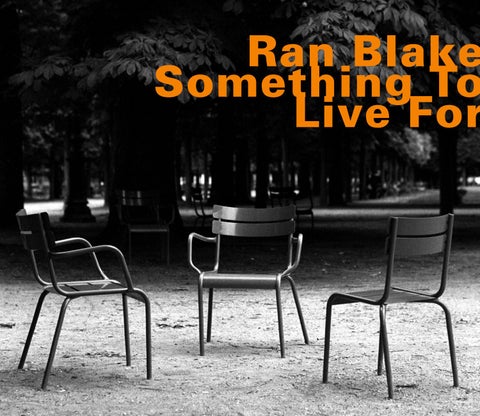
Ran Blake Something To Live For
Something To Live For
Bob Blumenthal, August 1998
The world of Ran Blake beckons once again in these performances and, once again, we cannot resist being drawn into that world. We dodge through its shadows and its bright, glaring expanses, alert to the caverns and crevices from which the pianist’s images emerge – now gentle, now brutal, always unretouched. The cinematic content of Blake’s music, its use of montage and dramatic dissolves, has long been acknowledged. When he works in the short forms he favors here, there is also the clarity and unsparing honesty of a short story collection by an author like the late Raymond Carver. Extra-musical allusions are unavoidable when music evokes all five senses, as Blake’s music inevitably does. All this from simply pursuing the singularity of the individual sensibility, an endeavor that has consumed Blake over a professional career that will soon enter its fifth decade. In the process, that sensibility has broadened, deepened, embraced the whole world while calling up an ever more tangible world of its own. Blake had the vision to begin as a multiculturalist a full generation before the notion came into being, and the good sense to keep his ears open as the specificity of each accumulating stylistic component implied the capacity to incorporate further treasures. As rich and unprecedented as Blake’s early efforts were (and remain when we revisit his initial record-
ings), his recent music finds him growing more authoritative and universal. His music has always contained multitudes, and with every day it contains more. Consider the scope implied by the first two compositions in the present program. “Elijah Rock” is a 19th century African-American spiritual, and was part of the repertoire of the great gospel singer Mahalia Jackson. Gospel is the unlikely foundation stone of Blake’s piano style, a source of early musical memories that predates his beloved Thelonious Monk, and Mahalia Jackson remains one of the artists he turns to at the end of the day. Her 1961 recording of “Elijah Rock”, taken from a concert performance in Stockholm, is among Blake’s favorites, in part because it captures Jackson working with the lone support of the great piano accompanist Mildred Falls, one of the iconoclastic keyboard giants that gave Blake lessons. (Mary Lou Williams, Oscar Peterson and Mal Waldron are among the others.) The two takes of the piece even harken back to Jackson’s recording, where the audience response led her to perform an encore. Then there is “Something To Live For”. The piece suggests Billy Strayhorn and Duke Ellington to be sure, and Blake’s fascination with their work has been documented extensively in previous recordings like his 1981 solo album Duke Dreams. In this instance, however, Blake offers the piece as an homage to singer Chris Connor and arranger Ralph Burns, who joined forces on a 1956 performance of the song that is specifically echoed in the coda Blake creates with guitarist David Fabris. Could anything be further removed from the galvanic sanctified effusiveness of Mahalia Jackson than the dry introversion of Chris Connor? Yet to Blake these singers possess an equal power, a charge of honesty and vulnerability that transforms and transcends. Connor is another longtime Blake favorite, and her smoky charcoal readings have coexisted in his aesthetic with Jackson’s brimstone from the
beginning. Other voices in his personal pantheon include Al Green, a more recent addition whose “Judy” was first heard on the seminal Let’s Stay Together album, and Abbey Lincoln, a more venerable influence and friend whose recent philosophic turn resonates with Blake as strongly as the protests of her youth. As Blake matured and his performing and teaching took him around the world, his ears and eyes opened to an even wider-ranging universe of inspiration. Film in general, and the films of Fritz Lang in particular, mirrored his sense of the modern individual confronted by impersonal, often inexorable social forces. One of Blake’s favorite Lang films is Doktor Mabuse. It inspired an original composition on his 1980 collection Film Noir, and is revisited here via a score composed for the film in the 1940s that Blake reports is not heard on the currently available video version of Lang’s classic. “Vilna” comes at related emotions from another angle, as Blake and Fabris interpret the song in the character of elderly survivors who remember what the Nazis destroyed. Images like Blake’s Vilna conceit are central to his art. He has acknowledged frequently in the past that certain compositions and interpretations emerge from his dreams. “Impresario Of Death”, for instance, is a dream product first heard in a quartet version on the 1986 album Short Life Of Barbara Monk and revisited here with the stunning assistance of Guillermo Gregorio. Dizzy Gillespie’s “A Night In Tunisia” has dream roots as well, centered on Blake’s vision of his friend, flutist Abby Rabinovitz, riding a camel; but it also looks back to Blake’s days as a student at the legendary School of Jazz in Lenox, Massachusetts, where Gillespie advised the young pianist to play faster, then slow the music down. “I told Dizzy I wanted to make my own story,” Blake reports, and his luminous solo “Tunisia” is one more instance of how he made good on his plan.
The material performed is only part of the Ran Blake experience. There is also the brittle sufficiency of his solo piano and the generous receptiveness he reveals when creating with other musicians. Blake’s list of partners is almost as catholic as his repertoire. Jeanne Lee, Ricky Ford, Anthony Braxton, Jaki Byard, Houston Person, Clifford Jordan, Franz Koglmann and Steve Lacy do not exactly form a recognizable school or stylistic perspective; yet each has meshed with Blake in ways that reveal the expansiveness and integrity of his vision. Two more partners appear here, adding texture and their own variety of passion to the program. Electric guitarist David Fabris will be a new name to most listeners, although he and Blake have made music together since 1990. Initially a student in the Contemporary Improvisation Department that Blake chairs at New England Conservatory in Boston, Fabris is now a musical equal who interacts with supreme fluency. He and Blake finish each other’s thoughts on Something To Live For, and envelop each other at various other points in their five duets. The Fabris composition “Nightcrawler” finds them throbbing in unison, while “Doktor Mabuse” finds the pair traversing a path that begins with seductive funk and ends in ominous quick-step. Blake points out that piano/guitar duets allow the participants to trade roles, a shared skill that makes his encounters with Fabris surprisingly seamless.
Guillermo Gregorio is a new musical acquaintance, and his tracks with Blake convey greater caution. Piano and clarinet prod and test each other in the course of the four-part “Enigma Suite”, revealing a shared appreciation for brevity, then merge more completely on “Impresario Of Death”, where Gregorio begins with quiet vibrations that somehow turn into lethal blasts of sound. “Impresario Of Death” is one of only three Blake compositions in the present collection, which also includes “Ghosts Of Cimetière du Père Lachaise” and “Memphis”. While the former is the merest whisp of music, a quick image culled from Blake’s visits to the grave of another favorite vocalist, Edith Piaf, “Memphis” is one of his typically strong, literate songs. Blake reports that it was originally titled “Goodbye Motown,” until his friend and fellow New England Conservatory faculty member Hankus Netsky pointed out its strong Southern flavor. Like many of the pianist’s melodies, it could easily accommodate lyrics. While Blake remains among the most consistent and consistently overlooked composers in jazz, don’t expect a Songbook collection of his originals anytime soon. He is too interested in other people’s music, and indulges his passion annually with a summer-school course at the Conservatory devoted to one of his favorite musicians. Several of the composers represented here have been his subjects already, along with Ray Charles, Stevie Wonder, Stan Kenton and Horace Silver. Charles Mingus is on tap for 1999, and Blake already has plans that will take him well into the new century. The picture continues to get bigger and the focus remains absolutely clear as he gives voice to his inimitable, meticulously formed visions.
Andrew Rathbun, September l998: Listening to Ran Blake over the past few years has always been a fascinating experience. Ran’s palette of harmonic color, the way he re-casts the familiar into the extraordinary, always draws me in. Equally important in his artistry is his tone; I can’t think of too many piano players who have the depth of touch, the command of so many textures, as Ran does. Recently, after hearing Ran on record and in concert, it has occurred to me that Ran’s sense of rhythm and time has been changing. When we first played together, I pressed him for an explanation as to what he was doing rhythmically. Where we in 4, or playing rubato? Ran told me that he had his own rhythm, his own way of playing time. That is certainly true. But to my ear, that has been changing over the years. I have been hearing a more consistent pulse in his playing, something that I did not think was there when I first heard him. You might hear this in a tune like “Memphis”. Ran has always amazed me with the intent that he studies, listens, absorbs, and subsequently grows as an artist. He is one of this country’s artistic treasures, and I look forward to hearing his playing develop in new directions in the future.
Ran Blake
ut o t H re t f Ha e a y o m w nit u fro ud ng pro mm . i o g ic d w r c o ! in ec ho ide rd mus ear t r w w co h irs kno rld- s re the ou f y i r o u ou to w th yo hat s y you ing njoy ing w i s s nt ow e br r i hi r r t wa r g you to ea he we ou at aim u h er t he th, r of e th nt t yo ling ! W ur X be hop nsta ha Ueh u o o o .W . em e k y r y m W r c er r X an s, o s a rs. s ou cov rne h s e T rd u a ne nt di W co yo iste ese to l Re ve pr ture re ha It e fu th of
The world of Ran Blake beckons once again in these performances and, once again, we cannot resist being drawn into that world. We dodge through its shadows and its bright, glaring expanses, alert to the caverns and crevices from which the pianist’s images emerge – now gentle, now brutal, always unretouched. The cinematic content of Blake’s music, its use of montage and dramatic dissolves, has long been acknowledged. When he works in the short forms he favors here, there is also the clarity and unsparing honesty of a short story collection by an author like the late Raymond Carver. Extramusical allusions are unavoidable when music evokes all five senses, as Blake’s music inevitably does. Bob Blumenthal
Ran Blake – Something To Live For Ran Blake piano David “Knife” Fabris guitar (on 2, 6, 12, 15, 18) Guillermo Gregorio clarinet (on 4, 7, 11, 14, 17) 1
Elijah Rock 1
1:49
Traditional, arr. by J. Hairston
Something To Live For
3:36
by Duke Ellington and Billy Strayhorn
Get Out Of Town
4:39
by Cole Porter
Enigma Suite: Part 1
1:12
by Guillermo Gregorio and Ran Blake
Memphis
6:00
by Ran Blake; Dedicated to Mr. Jean Plumez
Vilna
3:24
by A. Olshanetsky and L. Wolfson ISRC CH 131.9800029
7
Enigma Suite: Part 2
1:16
by Guillermo Gregorio and Ran Blake ISRC CH 131.9800030
8
Mood Indigo
2:25
by Duke Ellington, Barney Bigard, and Irving Mills ISRC CH 131.9800031
9
Eclipse
3:04
by Charles Mingus ISRC CH 131.9800032
10 Elijah Rock 2
1:20
Traditional, arr. by J. Hairston ISRC CH 131.9800033
11 Enigma Suite: Part 3 by Guillermo Gregorio and Ran Blake ISRC CH 131.9800034
ISRC CH 131.9800036
14 Enigma Suite: Part 4
0:46
ISRC CH 131.9800037
15 Nightcrawler
2:23
Jackson Harrison Trio Sintering hatOLOGY 723 Matthew Shipp Invisible Touch At Taktlos Zürich hatOLOGY 743
3:45
Jimmy Giuffre 3 Graz 1961 hatOLOGY 744
ISRC CH 131.9800039
17 Impresario Of Death
Albert Ayler Quartet European Radio Studio Recordings 1964 hatOLOGY 678
3:06
ISRC CH 131.9800038
16 Throw It Away
Anthony Braxton Quintet (Basel) 1977 hatOLOGY 676
ISRC CH 131.9800040
18 Doktor Mabuse
2:32
by Konrad Elfers
ISRC CH 131.9800028
6
2:29
by Dizzy Gillespie and Frank Paparelli
by Ran Blake
ISRC CH 131.9800027
5
13 A Night In Tunisia
by Abbey Lincoln
ISRC CH 131.9800026
4
ISRC CH 131.9800035
by David “Knife” Fabris
ISRC CH 131.9800025
3
5:18
by Al Green
by Guillermo Gregorio and Ran Blake
ISRC CH 131.9800024
2
12 Judy
OLOGY Albert Ayler Quartet Copenhagen Live 1964 hatOLOGY 665
1:50
ISRC CH 131.9800041
19 Ghosts Of Cimetière du Père Lachaise
0:41
by Ran Blake ISRC CH 131.9800042
Total Time DDD
51:35
Recorded by Antonio Oliart at WGBH Studio, Boston on March 20, 1998; Mix and CD-master by Peter Pfister; Liner notes by Bob Blumenthal and Andrew Rathbun; Cover photo by Hans Hagen Stockhausen; Graphic concept by fuhrer vienna; Produced by Art Lange, Christian C. Dalucas, Bernhard "Benne" Vischer,Werner X. Uehlinger. 2nd Edition, 2017 Printed by Gantenbein AG, CH 4127 Birsfelden www.hathut.com File under: Jazz/Free Improvisation
+ 훿 2017 HAT HUT Records Ltd. Box 81, 4020 Basel, Switzerland. All rights reserved. Unauthorized duplication is a violation of applicable laws. Made in Switzerland.
hatOLOGY 711
Ran Blake · Something To Live For