Joseph Haydn Symphony No. 101 in D major, ‘The Clock’ Robin Ticciati Scottish Chamber Orchestra Side A Adagio – Presto ....................................................... 7:59 Andante ................................................................... 6:24 Side B Menuet – Trio ............................................................ 7:37 Finale: Vivace .......................................................... 4:50
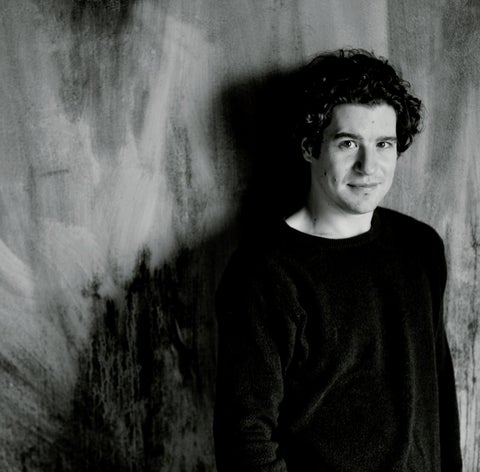
Recorded at Usher Hall, Edinburgh, UK 7–8 February 2015 Produced and recorded by Philip Hobbs Assistant engineering by Robert Cammidge Post-production by Julia Thomas Photography by Giorgia Bertazzi Design by gmtoucari.com Symphony No. 101 in D major, ‘The Clock’, dates from 1794. It falls in the glory years of the so-called Flötenuhr (‘flute clock’), a large-scale equivalent of a music box. During this period, every major aristocratic establishment possessed at least one. Eszterháza, the court where Joseph Haydn (1732–1809) was employed for much of his life, owned about half-a-dozen of these instruments; two of them were acquired in 1792 or 1793, just as Haydn was completing the first three movements of the present symphony. Several of these clocks were constructed by Joseph Niemecz, an ordained priest who was court librarian at Eszterháza and who played the cello in Haydn’s orchestra. The nickname ‘The Clock’ was not coined by the composer himself – it first appears four years after the work’s premiere – but Haydn’s interest in Flötenuhren is well documented. He left around 30 pieces for these ambitious instruments, which, though limited in range, were capable of playing relatively complex music. In fact, the Menuet of Symphony No. 101 may originally have been written for a mechanical instrument: a version for clock survives whose extra flourishes give intriguing clues about the style of decoration Haydn may have encouraged in live orchestral performances. It is, of course, the Andante second movement that gives the symphony its nickname. This curious amalgam of variation and rondo forms has more than a hint of ‘vamp till ready’ in its opening: Haydn
sets up a ticking accompanimental figure before introducing the main theme (a procedure Beethoven would pick up in the third movement of the ‘Pastoral’ Symphony). Haydn originally planned to end the Andante with a chord for full orchestra, but in the final version it is as though the clock’s mechanism has slowly wound down. Perhaps he felt no need to add an emphatic full stop; after all, as one journal reported in the year of the premiere, ‘in every symphony of Haydn the adagio or andante is sure to be repeated each time, after the most vehement encores’. The beginning of the trio also exists in different forms. Haydn’s original version pits a single chord against a melody that implies changing harmonies. Later, the ‘anomaly’ is reconciled, and it seems the intention was to set up a deliberate error that would be corrected when the music returned. Later sources offer a sanitized version, and it is not entirely clear whether or not Haydn sanctioned the change. Perhaps the clash of tonic and dominant chords, as in a notorious passage in Beethoven’s ‘Eroica’ Symphony, was a joke the public simply failed to get. ‘The Clock’ was premiered on 3 March 1794 at Hanover Square, London, in one of the most ambitious of Haydn’s concerts for the impresario Johann Peter Salomon. Ludwig Fischer, who had created the role of Osmin in Mozart’s Entführung aus dem Serail, took part, as did the violin virtuoso Giovanni Battista Viotti, a refugee from the terror gripping France at the time. Jan Ladislav Dussek, one of the finest pianists of his generation, played a concerto. No. 101 is the third of four of Haydn’s ‘London’ symphonies written in D major, by far the most popular key for eighteenth-century symphonies. However, Haydn confounds expectations here by prefacing the first movement proper with a questing introduction in D minor. This deploys a spectral adumbration of the scampering Presto theme that follows, both made up of rising scales. The Presto marking and the metre – 6/8, a time signature never used by Mozart to open a symphony – suggest a light-hearted finale rather than a weighty first movement. It is as though Haydn had taken the idea of a Kehraus – a finale that literally ‘sweeps’ the audience out of the concert hall – and transposed it to the start of a symphony. Having delivered such a frothy first movement, Haydn incorporates some more serious ideas in the finale. In addition to a stormy outburst in the minor – one of several in the symphony – the movement includes a strangely subdued fugal passage. The great Haydn scholar H.C. Robbins Landon claimed this passage inspired some of Mendelssohn’s music for A Midsummer Night’s Dream. However, this was not the first time that Haydn had associated contrapuntal writing with an almost ghostly performance style. The Op. 20 string quartets contain three fugal finales,
all marked sempre sotto voce. What was new here was the use of learned textures, performed pianissimo, in such a public genre. It was surely subversive gestures like these that inspired the Morning Chronicle’s comment, published two days after the symphony’s premiere: ‘we fear, till it is heard, [Haydn] can only repeat himself; and we are every time mistaken’. © Martin Ennis, 2015
Scottish Chamber Orchestra 1st Violin Henja Semmler Ruth Crouch Michael Trainor Emily Dellit Aisling O’Dea Lorna McLaren Fiona Alexander Amira Bedrush-McDonald 2nd Violin Sophie Rowell Kate Suthers Laura Comini Robert McFall Niamh Lyons Rachel Smith Viola Jane Atkins Duncan Ferguson Brian Schiele Steve King Cello Luise Buchberger Su-a Lee Donald Gillan Eric de Wit
Flute Alison Mitchell Joanna Shaw Oboe Robin Williams Rosie Staniforth Clarinet Maximiliano Martín William Stafford Bassoon Peter Whelan Alison Green Natural Horn Alec Frank-Gemmill Harry Johnstone Natural Trumpet Peter Franks Shaun Harrold Timpani Matthew Hardy
Bass Nikita Naumov Adrian Bornet This recording was made possible with support from the SCO Sir Charles Mackerras Fund and the Usher Hall, Edinburgh.