MENU
Heinrich Schütz Cantiones sacrae
MAGNIFICAT 1
Credits Tracklist Programme note Sung texts Biographies
MAGNIFICAT PHILIP CAVE
Heinrich Schütz Cantiones sacrae
MENU
Recorded in the Chapel of University College Oxford, on 18–20 and 25–27 June 2018 Recording Producer & Engineer Philip Hobbs
Post-production Julia Thomas
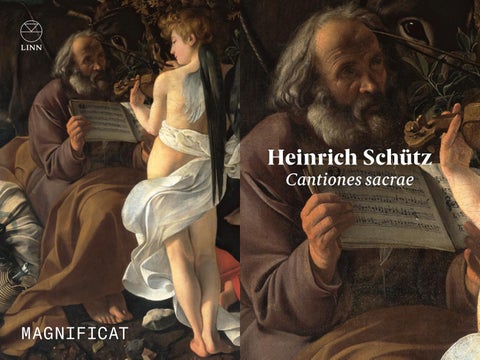
Cover Image Rest on the Flight into Egypt, (c. 1603), by Michelangelo Merisi da Caravaggio (1571–1610) Bridgeman Images
Design stoempstudio.com 3
MENU
Heinrich Schütz (1585–1672) Cantiones sacrae, Op. 4 (1625)
MAGNIFICAT PHILIP CAVE director AMY HAWORTH soprano CAROLINE TREVOR alto GUY CUTTING, BENEDICT HYMAS tenor WILL DAWES, GILES UNDERWOOD bass PAULA CHATEAUNEUF, LYNDA SAYCE lute TIMOTHY AMHERST, JUDITH EVANS violone MATTHEW MARTIN organ
4
57:58
CD 1
1
—
O bone, o dulcis, o benigne Jesu (prima pars), SWV 53 3:01
2
—
Et ne despicias humiliter te petentem (secunda pars), SWV 54 2:08
3
—
Deus misereatur nostri, SWV 55 2:18
4
—
Quid commisisti, o dulcissime puer (prima pars), SWV 56 3:45
5
—
Ego sum tui plaga doloris (secunda pars), SWV 57 2:36
6
—
Ego enim inique egi (tertia pars), SWV 58 4:19
7
—
Quo, nate Dei, quo tua descendit humilitas (quarta pars), SWV 59 2:43
8
—
Calicem salutaris accipiam (quinta et ultima pars), SWV 60 2:29
9
—
Verba mea auribus percipe, Domine (prima pars), SWV 61 2:21
10 —
Quoniam ad te clamabo, Domine (secunda pars), SWV 62 2:24
11 —
Ego dormio, et cor meum vigilat (prima pars), SWV 63 3:34
12 —
Vulnerasti cor meum, filia carissima (secunda pars), SWV 64 3:20
13 —
Heu mihi, Domine, quia peccavi nimis, SWV 65 4:12
14 —
In te, Domine, speravi, SWV 66 2:38
15 —
Dulcissime et benignissime Christe, SWV 67 3:09
16 —
Sicut Moses serpentem in deserto exaltavit, SWV 68 2:50
17 —
Spes mea, Christe, Deus, SWV 69 3:09
18 —
Turbabor, sed non perturbabor, SWV 70 1:56
19 —
Ad Dominum cum tribularer clamavi (prima pars), SWV 71 2:41
20 —
Quid detur tibi (secunda pars), SWV 72 2:26
5
MENU
55:09
CD 2
1
—
Aspice, Pater, piissimum Filium (prima pars), SWV 73 2:56
2
—
Nonne hic est, mi Domine (secunda pars), SWV 74 1:36
3
—
Reduc, Domine Deus meus (tertia et ultima pars), SWV 75 3:19
4
—
Supereminet omnem scientiam (prima pars), SWV 76 4:13
5
—
Pro hoc magno mysterio pietatis (secunda pars), SWV 77 2:12
6
—
Domine, non est exaltatum cor meum (prima pars), SWV 78 3:07
7
—
Si non humiliter sentiebam (secunda pars), SWV 79 2:49
8
—
Speret Israel in Domino (tertia et ultima pars), SWV 80 1:17
9
—
Cantate Domino canticum novum, SWV 81 3:10
10 —
Inter brachia salvatoris mei, SWV 82 3:50
11 —
Veni, rogo, in cor meum, SWV 83 3:27
12 —
Ecce advocatus meus apud te, Deum Patrem, SWV 84 3:41
13 —
Domine, ne in furore tuo arguas me (prima pars), SWV 85 2:54
14 —
Quoniam non est in morte (secunda pars), SWV 86 3:01
15 —
Discedite a me omnes qui operamini (tertia et ultima pars), SWV 87 3:12
16 —
Oculi omnium in te sperant, Domine (prima pars), SWV 88 1:00
17 —
Pater noster, qui es in caelis (secunda pars), SWV 89 2:27
18 —
Domine Deus, Pater caelestis (tertia et ultima pars), SWV 90 1:16
19 —
Confitemini Domino, quoniam ipse bonus (prima pars), SWV 91 1:36
20 —
Pater noster, qui es in caelis (repetatur ut supra), SWV 92 2:33
21 —
Gratias agimus tibi, Domine Deus Pater (tertia pars), SWV 93 1:30
6
MENU
MENU
Heinrich Schütz Cantiones sacrae
In the summer of 1617, Christoph von Loß, Lord Chamberlain to the Electoral Saxon Court in Dresden, issued a memorandum to the court musical establishment. This was but one of numerous ordinances issued to officers of the court, each detailing the preparations and individual responsibilities for a forthcoming event of great historical consequence. The occasion was an official visit to the electoral court by the Habsburg royals: Maximilian III, Archduke of Austria; Archduke Ferdinand II, newly crowned King of Bohemia; and Matthias, the Holy Roman Emperor himself. Religious and confessional tensions were running high in Europe, complicated by purely political and dynastic ambitions. The purpose of the Habsburg visit was to negotiate and secure the support of Protestant Saxony in the forthcoming imperial election. The acting director of court music at the time was the thirty-one-year-old Heinrich Schütz (1585–1672), who had been newly acquired from the Kassel court through some politi cal strong-arming by the Saxon Elector, Johann Georg I. For the duration
7
MENU
of the visit, from 25 July to 13 August, Schütz was charged with providing, organizing and overseeing all the music activity for the arrival of the guests and their entourages, for private meals if and when desired, for more communal meals as requested, for lavish banquets, for chamber music and dances, music in varying configurations and styles for worship and church services, ‘not to perform a great deal of grand material but rather pleasant music in different styles’,1 music whenever and wherever it was required. It was made clear to Schütz that he should ‘in every respect arrange it so that His Electoral Grace might derive glory and honour from it’. Schütz, as yet largely unknown outside of Germany, carried the day brilliantly and soon thereafter was promoted to the ultimate position of Electoral Saxon Kapellmeister. However productive the political negotiations may have been between the Habsburg and Albertine courts, they could neither foresee nor forestall the outbreak of war nine months later. Matthias died in March 1619, and Ferdinand II became Holy Roman Emperor. Of the high-profile dignitaries in attendance, hearing Schütz’s music for the first time and deeply affected by it, Prince Johann Ulrich von Eggenberg (1568–1634) stands out. Eggenberg was born into a Protestant family in Graz and converted to Catholicism in 1600; he subsequently rose within the ranks of the Imperial Court in Vienna to become one of the most politically influential men of his day. Gifted in statecraft, he served to the end of his life as the principal advisor to Emperor Ferdinand, who in turn conferred upon him the highest honours and titles, rewarded him with gifts of incalculable value, and invested him with ever greater political power and opportunity.
8
MENU
When Schütz published his Cantiones sacrae in 1625, he dedi cated it to Prince Johann Ulrich. In his dedication of these forty Latin motets, dated New Year’s Day 1625, the composer extoled Eggenberg for his noble qualities and reflected humbly upon how favourably disposed the prince had been towards Schütz when they had met in 1617. Still, it may seem odd, given the religious strife and political turmoil throughout Europe, that the steadfastly Lutheran Schütz would see fit to dedicate a major published work of sacred music to a Catholic Prince. Some (e.g. Joshua Rifkin) have suggested that Eggenberg may have been chosen because of his political stature and perceived religious tolerance. This is no doubt true. Whether or not the dedication was Schütz’s idea alone, nearly eight years after the imperial visitation to Dresden, it could not have happened without an imprimatur from the Saxon Elector. Schütz had been elevated to the post of Electoral Hofkapellmeister, in which role he would serve for nearly fifty more years, and had established himself with the publication of the opulent, polychoral Psalmen Davids of 1619. Prince Johann Ulrich, on the other hand, was now a powerful advisor to the Holy Roman Emperor. Whatever affinities they may have shared with regard to music – and Schütz’s music in particular – they were and would always be worlds apart socially. In some ways the composer and the prince as agents seem to function as surrogates for their respective realms; they project and publicly reinforce the impression of a resolute union between Protestant Saxony and the Habsburg Empire. Indeed, Saxony succeeded in maintaining its neutrality temporarily, and only in the late 1620s was it compelled to side with the Swedes against the Habsburg Empire in the Thirty Years’ War that would almost destroy it.
9
MENU
The Cantiones sacrae, Op. 4, is a collection of forty Latin motets for four voices printed in four individual partbooks (cantus, altus, tenor, bassus). To these Schütz added a fifth partbook containing a figured bass for continuo accompaniment. The parts are printed on high-quality, durable paper suitable for someone of Eggenberg’s stature. A surviving exemplar of the work donated by Schütz to the ducal library in Wolfenbüttel shows negligible signs of aging even today, nearly 400 years later. The Cantiones sacrae is an unusual work that stands quite apart from Schütz’s other published sacred music. In contrast to some of the demonstrative Old Testament texts used in his only other Latintexted collection, the Symphoniae sacrae I from 1629, the texts of the Cantiones sacrae are drawn from a prayer book compilation entitled Precandi formulae piae et selectae ex veterum ecclesiae sanctorum doctorum scriptis, published in 1533 by Andreas Musculus, a German theologian and Protestant reformer in Frankfurt an der Oder. The texts are taken from the Psalms and the Song of Solomon, as well as a responsory from the Roman Office for the Dead. Other texts came from what Musculus believed were works of St Augustine, but which in fact stemmed from a number of authors, among them St Anselm of Canterbury, Hugo of SaintVictor, and Bernard of Clairvaux. As prayers or meditations, the texts are more abstractly Christian, sometimes mystical in nature and at times intensely personal and introspective. It is the personal, transconfessional quality of the texts that would have made them equally suited to Lutheran or Catholic devotional service – as opposed, say, to a liturgical service – but it is the intensely intimate nature of these texts that allows Schütz to
10
MENU
engage a musical language that looks to inward expression rather than to external effect. The works, perfectly crafted, are composed in a learned, contrapuntal style rich in dissonance and range of expression. Schütz suggests that he had been working on the collection for some time: ‘I completed certain sacred songs that I had begun long ago, a slight work containing pieces of various kinds, varying constantly with my age and my years, for indeed they partake partly of the old and partly of the new manner of singing.’ It is quite plausible that Eggenberg had heard some of these pieces already in 1617, whereas others were composed in a more modern style specifically for the collection. Whether in the severe stile antico composed without continuo, or the newly composed concerted items with their bursts of baroque virtuosity, the musical and technical demands of the work lie well outside the abilities of the average church musician. Following the dedication to Prince Johann Ulrich, Schütz wrote a memorandum ‘To the Benevolent Reader’, in which he remarks that the publisher, believing the public would prefer it, required that he provide a figured bass or continuo part for each of the motets. Because some of these pieces had been composed for voices alone years earlier, the added continuo is typically a basso seguente, whereby the lowest voice at any one time serves as the de facto foundation for the instrumentalists realizing the harmony. It was not uncommon for market-minded publishers of the time to ‘modernize’ polyphonic music of the high Renaissance by adding a continuo part. In obliging the publisher, Schütz took the opportunity to
11
MENU
add, as he said, ‘one or two’ motets that were conceived with an obbligato continuo part in mind: No. 18 ‘Turbabor, sed non perturbabor’ (SWV 70); No. 32 ‘Ecce advocatus meus apud te, Deum Patrem’ (SWV 84); No. 33 ‘Domine, ne in furore tuo arguas me’ (SWV 85); No. 34 ‘Quoniam non est in morte’ (SWV 86); No. 35 ‘Discedite a me omnes’ (SWV 87). Performing these motets with continuo is as historically informed as hearing them without. Moreover, alternative performances and realizations of this repertoire serve as healthy reminders of the non-prescriptive nature of this repertoire. Musicians are afforded the freedom in performing it, and liste ners are rewarded in hearing something new in the context of the familiar. © Gregory S. Johnston, 2019
1. All translations from Gregory S. Johnston, A Heinrich Schütz Reader: Letters and Documents in Translation (New York: Oxford University Press, 2013). 12
MENU
Performing Note Except for singing Schütz’s popular ‘Cantate Domino’ as a choirboy, my earliest acquaintance with the Cantiones sacrae was as a student, when I would say I found the music mystical and intriguing, but also somewhat baffling. The recordings I first heard were solidly choral and somewhat opaque. On the surface, everything seemed large-scale – the size and scope of the collection, the emotional content of both text and music, the range and technical demands of each voice part – everything, except that they are written for just four voices and some continuo. As I explored the pieces further, first as a singer then as a conductor, it became clear that the music needed a different narrative to reveal its exceptional qualities. Performing the Opus 4 motets is a thrilling undertaking. The voice parts are often virtuosic, each requiring control over almost two octaves, and ranging from a conservative imitative style to the most avantgarde, chromatic style of the Italian madrigal. Schütz loses no opportunity to exploit vocal timbre and technique in the service of word-painting. We are used to seeing the classic portraits of Schütz as a rather austere figure, yet the music of the Cantiones sacrae – whether fast or slow, high or low, long flowing phrases or fascinating trillos, driven by Gesualdo-esque harmonic twists, or simple, beautiful lines – is a veritable kaleidoscope of invention.
13
MENU
The Cantiones sacrae come from different periods of Schütz’s life, drawn together and published in his fortieth year. Realizing these motets for live performance is exhilarating, but presenting the motets to be heard as a complete recorded work is particularly challenging. How does one use just four voices and continuo in a way that reveals the extraordinary variety of Schütz’s imagination, still respects his comments about continuo, and also satisfies the demands of m odern listeners? Our solution is to utilise a small ensemble of singers and players, using simple colla parte continuo playing in places, and more flamboyant realizations in others. Some of the motets have been transposed following clef con1 ventions as proposed by Roger Bray , and this provides a strong harmonic link between all forty motets. I want to express my appreciation to the musicians who, like me, have been utterly engrossed in this music, in the challenges, demands and thrill of performing it. ‘There is no other music like this, not even by Schütz himself. In these fervent, inspired motets, he created one of the loftiest musical monuments of all time.’ (Joshua Rifkin) © Philip Cave, 2019
1. Roger Bray, ‘The “Cantiones Sacrae” of Heinrich Schütz Re-Examined’, Music and Letters (1 July 1971), Volume LII, p.299–305 14
MENU
Cantiones sacrae CD 1 1. O bone, o dulcis, o benigne Jesu, te deprecor per illum tuum sanguinem pretiosum, quem pro nobis miseris effundere dignatus es in ara crucis: ut abiicias omnes iniquitates meas.
O good, O sweet, O kind Jesus, I beseech you, by your precious blood, which for us wretches you deigned to shed upon the altar of the cross; that you drive away all of my iniquity.
2. Et ne despicias humiliter te petentem, et hoc nomen tuum sanctissimum: Jesus invocantem.
And do not despise the humble one who prays to you, and calls you by your most blessed name: Jesus.
3. Deus misereatur nostri, et benedicat nobis; illuminet vultum suum super nos, et misereatur nostri.
God have mercy on us, and bless us; may his face shine upon us, and have mercy on us.
15
MENU
4. Quid commisisti, o dulcissime puer, ut sic iudicareris, o amantissime iuvenis, ut adeo tractareris? Quod scelus tuum, quae noxa tua, quae causa mortis, quae occasio tuae damnationis?
What have you done, O sweetest boy, that you are judged so; O most lovely youth, that you are brought to this? What is your offence, what is your crime, what is the cause of your death, what is the reason for your condemnation?
5. Ego sum tui plaga doloris, tuae culpa occisionis, ego tuae mortis meritum, tuae vindictae flagitium. Ego, ego tuae passionis livor, cruciatus tui labor.
I am the blow that brings you pain, I am at fault for your murder, I am to blame for your death, and for the shame of your punishment. I, I am the bruise of your agony, the hardship of your torment.
16
MENU
6. Ego enim inique egi, tu poena mulctaris; ego facinus admisi, tu ultione plecteris; ego superbivi, tu humiliaris; ego tumui, tu attenuaris; ego praesumpsi vetitum, tu mortis subiisti aculeum; ego pomi dulcedinem, tu fellis gustasti amaritudinem.
I indeed acted wickedly, you were punished in retribution; I committed the deed, you were beaten in punishment; I exalted myself, you were humiliated; I was full of pride, you were abased; I took what was forbidden, you were subjected to the sharpness of death; I tasted the sweetness of the fruit, you the bitterness of the gall.
17
MENU
7. Quo, nate Dei, quo tua descendit humilitas, quo tua flagravit caritas, quo tuus attigit amor, quo pervenit compassio? Quid tibi retribuam pro omnibus quae retribuisti mihi? Rex meus et Deus meus.
To what, Son of God, has your humility brought you, where has your charity led you, where has your love directed you, where has your compassion taken you? How can I repay you for everything that you have done for me? My King and my God.
8. Calicem salutaris accipiam, et nomen Domini invocabo. Vota mea reddam tibi, Domine, coram omni populo tuo, et misericordias tuas in aeternum cantabo.
I will accept the chalice of salvation, and call upon the name of the Lord. I will offer my vows to you, O Lord, before all of your people, and I will sing of your mercies for ever.
18
MENU
9. Verba mea auribus percipe, Domine; intellige clamorem meum. Intende voci orationis meae, rex meus et Deus meus.
Give ear to my words, O Lord; give heed to my cries. Listen to the sound of my prayers, my king and my God.
10. Quoniam ad te clamabo, Domine: mane exaudies vocem meam. Mane astabo tibi et videbo.
For I will call to you, O Lord, in the morning you will hear my voice. In the morning I will appeal to you and see you.
11. Ego dormio, et cor meum vigilat. Aperi mihi, soror mea, columba mea, immaculata mea, quia caput meum plenum est rore et cincinni mei guttis noctium.
I slept, but my heart was awake. Open to me, my sister, my dove, my pure one, for my head is covered with dew and my locks with the drops of the night.
19
MENU
12. Vulnerasti cor meum, filia carissima, in uno oculorum tuorum, in uno crine colli tui.
You have wounded my heart, dearest daughter, with one of your eyes, with one curl on your neck.
13. Heu mihi, Domine, quia peccavi nimis in vita mea: quid faciam miser, ubi fugiam, nisi ad te, Deus meus? Dum veneris in novissimo die, miserere mei.
Woe is me, Lord, for I have sinned so greatly in my life: what am I, poor one, to do, where am I to flee, if not to you, my God? When you come on the last day of all, have mercy on me.
14. In te, Domine, speravi; non confundar in aeternum: in iustitia tua libera me. Inclina aurem tuam; accelera ut eruas me.
In you, Lord, I have trusted; let me not be confounded in eternity: liberate me in your justice. Incline your ear to me; haste to save me.
20
MENU
15. Dulcissime et benignissime Christe, infunde, obsecro, multitudinem dulcedinis tuae et caritatis tuae pectori meo, ut nihil terrenum, nihil carnale desiderem vel cogitem sed te solum amem, te solum habeam in ore et in corde meo.
Sweetest and kindest Christ, pour, I pray, the richness of your sweetness and your charity into my breast, so that nothing earthly, nothing of the flesh shall I desire or think upon, but love you alone, have you alone on my lips and in my heart.
16. Sicut Moses serpentem in deserto exaltavit, ita filium hominis oportet exaltari, ut omnis, qui credit in eum, non pereat sed habeat vitam aeternam.
Just as Moses lifted up the serpent in the desert, so must the son of man be lifted up, so that everyone who believes in him may not die but have eternal life.
21
MENU
17. Spes mea, Christe, Deus, hominum tu dulcis amator, lux, via, vita et salus, te deprecor, supplico et rogo, ut per te ambulem, at te perveniam, in te requiescam.
Christ God, my hope, you, the sweet lover of humanity, light, pathway, life and salvation, to you I pray, beseech, and ask that I may walk with you, come to you, rest in you.
18. Turbabor, sed non perturbabor, quia vulnerum salvatoris mei recordabor.
I will tremble, but not be afraid, for I will remember the wounds of my saviour.
19. Ad Dominum cum tribularer clamavi et exaudivit me. Domine, libera animam meam a labiis iniquis et a lingua dolosa.
To the Lord, in tribulation, I cried out and he heard me. Lord, free my soul from evil lips and from a deceitful tongue.
22
MENU
20. Quid detur tibi, aut quid apponatur tibi ad linguam dolosam? Sagittae potentis acutae cum carbonibus desolatoriis.
What will be given to you, and what shall be placed upon you on the deceitful tongue? Powerful arrows sharp with burning coals.
CD 2 1. Aspice, Pater, piissimum Filium, pro me tam impia passum. Respice, clementissime rex, quis patitur, et reminiscere benignus.
Consider, Father, your most pious Son, who suffered such evil for my sake. Regard, most merciful king, he who suffered, and be gracious in remembrance.
23
MENU
2. Nonne hic est, mi Domine, innocens ille, quem ut servum redimeres, Filium tradidisti?
Is not this, my Lord, the same innocent one, who died as a slave, yet was the Son you gave?
3. Reduc, Domine Deus meus, oculos maiestatis tuae super opus ineffabilis pietatis; intuere dulcem natum, toto, toto corpore extensum, cerne manus inoxias pio manantes sanguine, et remitte placatus scelera, quae patrarunt manus meae.
Turn again, O Lord my God, your majestic eyes upon this ineffable pious work; contemplate that sweet newborn, whose whole body was stretched out, perceive that innocent hand piously flowing with blood, and render appeasement for the crime, which my hands have committed.
24
MENU
4. Supereminet omnem scientiam, o bone Jesu, tua magna caritas quam ostendisti nobis indignis pro sola bonitate et pietate tua, humanam et enim non angelicam suscipiens naturam et eam stola immortalitatis glorificans. Vexisti super omnes caelos, super omnes choros angelorum, super Cherubim, super Seraphim ad dexteram Patris. Te laudant angeli, adorant dominationes et omnes virtutes caelorum tremunt super se et super hominem Deum.
Far above all the knowledge of all humanity, O gentle Jesus, is your great love which you have shown us, unworthy, through your goodness and piety alone, you took on human nature, not angelic nature, glorifying it with the mantle of immortality. you are exalted above all the heavens, over all the holy angel chorus, over Cherubim, over Seraphim at the right hand of the Father. The angels praise you, the dominions worship you and all the virtues of heaven tremble before you, God over them and all humanity.
25
MENU
5. Pro hoc magno mysterio pietatis benedico et glorifico nomen sanctum tuum, rex Christe, Fili Mariae, Fili Dei viventis. Tibi sit honor et gloria cum Patre et Sancto Spiritu in sempiterna saecula.
For this great mystery of devotion I bless and glorify your holy name, king Christ, Son of Mary, Son of the living God. Honour and glory be to you with the Father and the Holy Spirit for ever and ever.
6. Domine, non est exaltatum cor meum, neque elati sunt oculi mei, neque ambulavi in magnis, neque in mirabilibus super me.
O Lord, my heart is not exalted, nor are my eyes raised too high, I do not occupy myself with great matters, or with things that are too marvelous for me.
26
MENU
7. Si non humiliter sentiebam, sed exaltavi animam meam: sicut ablactatus est super matrem suam, ita retributio in anima mea.
If I was not humbly minded, but exalted my soul: like a child upon its mother’s breast, so reward in my soul.
8. Speret Israel in Domino, ex hoc nunc et usque in saeculum.
Let Israel hope in the Lord, from henceforth now and for ever.
9. Cantate Domino canticum novum; laus eius in ecclesia sanctorum. Laetetur Israel in eo qui fecit eum, et filii Sion exsultent in rege suo. Laudent nomen eius in tympano et choro; in psalterio psallant ei.
Sing to the Lord a new song; praise him in the sanctuary of holiness. Let Israel rejoice in that which he has made, and the children of Zion exult in their ruler. Let his name be praised with dancing and singing; let songs be made to him with a psaltery.
27
MENU
10. Inter brachia salvatoris mei et vivere volo, et mori cupio. Ibi securus decantabo, exaltabo te, Domine, quoniam suscepisti me, nec delectasti inimicos meos super me.
In the arms of my saviour I desire both to live and to die. In that safe place I will sing, I will exalt you, O Lord, for you have sustained me, and have not allowed my foes to rejoice over me.
11. Veni, rogo, in cor meum, et ab ubertate voluptatis tuae inebria illud, ut obliviscar ista temporalia. Adiuva me, Domine, Deus meus, et da laetitiam in corde meo, veni ad me, ut videam te.
Come, I ask, into my heart, and with the richness of your pleasure drench it, so that I forget worldly things. Help me, O Lord, my God, and give joy in my heart, come to me, that I may see you.
28
MENU
12. Ecce advocatus meus apud te, Deum Patrem. Ecce pontifex summus, qui non alieno eget expiari sanguine, qui proprio refulget cruore. Ecce hostia sancta et perfecta, in odorem suavitatis oblata et accepta. Ecce agnus sine macula, qui coram se tondentibus obmutuit, qui alapis caesus, sputis illitus, opprobriis affectus os suum non aperuit. En qui peccatum non fecit, peccata nostra pertulit, et languores nostros suo livore sanavit. Per hunc summum mediatorem, pontificem et salvatorem exaudi nos, clementissime Pater.
Behold, my advocate is with you, God the Father. Behold, the great high priest, who is not a stranger to blood sacrifice, who is glorious through giving his own blood. Behold, a holy and perfect sacrifice, offered and accepted in the odour of sanctity. Behold, a lamb without blemish, who was silent in the presence of the shearers, who suffered blows, was spat upon, who suffered reproaches, yet opened not his mouth. For one who did no sin, bore our sins, and heals us through his sufferings. Through this supreme mediator, high priest and saviour hear us, O most merciful Father.
29
MENU
13. Domine, ne in furore tuo arguas me, neque in ira tua corripias me. Miserere mei, quoniam infirmus sum; sana me, Domine, quoniam conturbata sunt ossa mea. Et anima mea turbata est valde; et tu, Domine, usquequo? Convertere, Domine, et eripe animam meam; salvum me fac propter misericordiam tuam.
O Lord, do not rebuke me in your indignation, neither chasten me in your displeasure. Have mercy upon me, for I am weak; heal me, O Lord, for my bones are troubled. My soul also is troubled; but you, O Lord, how long? Turn, O Lord, and deliver my soul; save me for your mercy’s sake.
14. Quoniam non est in morte qui memor sit tui; in inferno tibi quis confitebitur? Laboravi in gemitu meo; lavabo per singulas noctes lectum meum: et rigabo stratum meum lacrimis meis. Turbatus est a furore oculus meus; inveteravi inter omnes inimicos meos.
For in death there is no remembrance of you; in the grave who will confess to you? I am weary with my groaning; all the night I wash my bed; and I water my couch with tears. My eye is consumed with grief; I have grown old among all my enemies.
30
MENU
15. Discedite a me omnes qui operamini iniquitatem, quoniam exaudivit Dominus vocem fletus mei. Exaudivit Dominus deprecationem meam; suscepit Dominus orationem meam. Erubescant, et conturbentur vehementer, omnes inimici mei; convertantur velociter, et erubescant valde.
Depart from me, all workers of iniquity; for the Lord has heard the voice of my weeping. The Lord has heard my supplication; the Lord will receive my prayer. Let all my enemies be ashamed and sore vexed; let them return, and be ashamed suddenly.
16. Oculi omnium in te sperant, Domine: et tu das illis escam in tempore opportuno. Aperis tu manum tuam: et imples omne animal benedictione.
The eyes of all wait upon you, O Lord; and you give them meat in due season. You open your hand, and fill every living thing with blessing.
31
MENU
17. Pater noster, qui es in caelis, sanctificetur nomen tuum. Adveniat regnum tuum. Fiat voluntas tua sicut in caelo et in terra. Panem nostrum quotidianum da nobis hodie, et remitte nobis debita nostra, sicut et nos remittimus debitoribus nostris. Et ne nos inducas in tentationem; sed libera nos a malo. Quia tuum est regnum et potentia et gloria in saecula saeculorum. Amen.
Our Father, which art in heaven, hallowed be thy name. Thy kingdom come. Thy will be done, in earth as it is in heaven. Give us this day our daily bread, and forgive us our trespasses, as we forgive them that trespass against us. And lead us not into temptation; but deliver us from evil. For thine is the kingdom, the power, and the glory, for ever and ever. Amen.
32
MENU
18. Domine Deus, Pater caelestis, benedic nobis et his donis tuis, quae de tua largitate sumimus, per Jesum Christum, Dominum nostrum, amen.
O Lord God, heavenly Father, bless us and these your gifts, which we receive from your bounty, through Jesus Christ, our Lord, amen.
19. Confitemini Domino, quoniam ipse bonus, quoniam in saeculum misericordia eius. Qui dat escam omni carni: qui dat iumentis escam ipsorum, et pullis corvorum invocantibus eum. Non in fortitudine equi voluntatem habebit, neque in tibiis viri beneplacitum erit ei. Beneplacitum est Domino super timentes eum, et in eis qui sperant super misericordia eius.
O give thanks unto the Lord, for he is gracious, and his mercy endures for ever. Who gives food to all flesh: who gives fodder unto the cattle, and feeds the young ravens that call upon him. He has no pleasure in the strength of a horse, neither he delights in any man’s legs. But the Lord’s delight is in them that fear him, and put their trust in his mercy.
33
MENU
20. as per CD 2, 17. 21. Gratias agimus tibi, Domine Deus Pater, per Jesum Christum, Dominum nostrum, pro universis beneficiis tuis, qui vivis et regnas in saecula saeculorum, amen.
We give thanks to you, O Lord God the Father, through Jesus Christ, our Lord, for all your benefits, who lives and reigns, for ever and ever, amen.
34
MENU
Magnificat
Magnificat is one of the world’s premier vocal ensembles, internationally acclaimed for its sophisticated, historically-informed performance of Renaissance and Baroque choral masterpieces. Equally at home in concert hall and recording studio, the ensemble has established a reputation for innovative programming, presenting previously undiscovered works alongside familiar repertoire in a fresh context. Recording exclusively for Linn Records, Magnificat has released a series of award-winning recordings focusing on works from late-Renaissance Spain and post-Reformation England. Their recording of music associated with Savonarola, Scattered Ashes, was a finalist in the 2016 Gramophone Awards.
35
© Mike Tomlinson
MENU
36
MENU
Philip Cave director
With an international reputation as a singer and conductor, Philip Cave’s career began as a chorister at the age of seven, followed by musical studies at Oxford University with Simon Preston and David Wulstan. In 1991, he founded Magnificat, which has since attracted much critical acclaim for its vibrant performances and recordings. Cave was a founding member of The Tallis Scholars, and he has performed, toured and recorded with The Hilliard Ensemble, The Sixteen, The King’s Consort, The Cardinall’s Musick and the Choirs of Christ Church and New College, Oxford. Cave was a joint recipient (with Sally Dunkley) of the American Musicological Society’s Greenberg Award for work on Philippe Rogier’s music; he received the Byrne Award from the London Handel Society; and he is an Honorary Fellow of London’s Academy of Saint Cecilia. Now based in the USA, Cave directs several choral ensembles at Duke University Chapel and Divinity School. He is Executive Director of Chorworks, a non-profit organization that provides singers and conductors with opportunities to study and perform choral music with emphasis on works from the sixteenth and seventeenth centuries.
37
© Mike Tomlinson
MENU
38
MENU
Also available on Linn
CKD 517 Magnificat Scattered Ashes
CKD 387 Magnificat Rogier: Music from the Missae Sex
CKD 447 Magnificat The Tudors At Prayer
CKD 348 Magnificat Rogier: Polychoral Works
CKD 417 Magnificat Parsons, White & Byrd: Where late the sweet birds sang
CKD 109 Magnificat Rogier: Missa Ego sum qui sum
39
MENU
CKD 517
CKD 447
CKD 417
CKD 387
CKD 348
CKD 109
40
MENU
FOR EVEN MORE GREAT MUSIC VISIT LINNRECORDS.COM