LYRICS MENU EN FR DE
MENU
—
TRACKLIST ENGLISH FRANÇAIS DEUTSCH LYRICS
P. 4 P. 6 P. 14 P. 22 P. 31
This recording has been made with the support of the Fédération Wallonie-Bruxelles (Direction générale de la Culture, Service de la Musique)
2
in memoriam Eriko Semba
Recording: Provinciaal Museum Begijnhofkerk Sint-Truiden, 21-24 January 2018 Production: Jérôme Lejeune Artistic direction, recording: Martin Rust Editing: Nicolas Achten English translations: Peter Lockwood Deutsche Übersetzungen: Silvia Berutti-Ronelt Traductions françaises: Nicolas Achten Photos: Noah Shaye Cover illustration: Andrea Locatelli (Roma, 1695-1741), A Faun and a Nymph reclining in a Landscape Courtesy of a private owner; photograph courtesy of Sotheby’s.
O PENOSA LONTANANZA CANTATE DA CAMERA
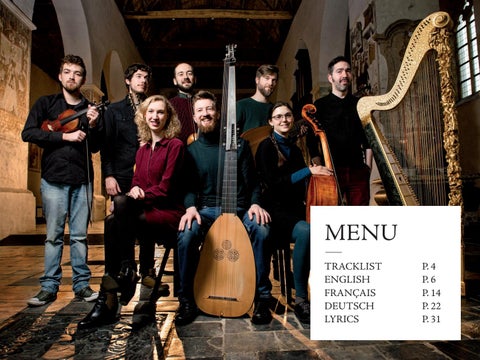
— SCHERZI MUSICALI Nicolas Achten: direction Deborah Cachet: soprano Nicolas Achten: baritone, theorbo, triple harp, organ Ortwin Lowyck: violin (solo in 21) Patrizio Germone: violin (solo in 19) Mathilde Wolfs: bass violin, cello (6, 8) Solmund Nystabakk: archlute, theorbo (18, 19), guitar Paul Kieffer: archlute, theorbo (22), guitar (1) Philippe Grisvard: harpsichord, organ Ganaël Schneider: organ (1, 3)
LYRICS MENU EN FR DE
1660-1725)
3
ALESSANDRO SCARLATTI
LYRICS MENU EN FR DE 4
Imagini d’orrore Baritone, 2 violins & continuo
1. Aria: Imagini d'orrore 2. Recitativo: Se dubbioso il mio core 3. Aria: Amo, si, ma sempre temo
3’40 1’09 3’29
O penosa lontananza Soprano, baritone & continuo
4. Duo: O penosa lontananza 5. Recitativo (S): Se trà voi più soggiorno 6. Aria (S): Vago augel che si lamenta 7. Recitativo (B): Io, trà queste de’ boschi 8. Aria (B): Rio che fugge 9. Duo: Così, lungi da Clori 10. Duo: O penosa lontananza
4’37 1’07 1’54 0’39 1’38 2’02 1’45
Sovra carro stellato Soprano, 2 violins & continuo
11. Sinfonia 12. Recitativo: Sovra carro stellato 13. Aria: Crudi sassi 14. Recitativo: Filli mio ben, oh Dio, che fai? 15. Aria: Se il tuo ben che m’innamora 16. Recitativo: Ma già spunta l’aurora 17. Aria: Sì, sì, mi parto sì
2’54 1’21 3’48 1’20 2’45 1’10 4’02
18. Recitativo: Sotto l’ombra d’un faggio 19. Aria: Filli mia, chi ha il cor piagato 20. Recitativo: Che non fè, che non disse 21. Aria: Vieni, oh Tirsi, in questo seno
1’25 3’03 0’25 3’59
Fiero, acerbo destin Soprano & continuo
22. Recitativo: Fierbo, acerbo destin 23. Aria: Fa men crudo il suo tormento 24. Recitativo: Se palesar non posso all’idol mio 25. Aria: Vorrei scoprire il mio martire
1’13 4’23 0’45 4’08
5
Tu resti, o mio bel nume Baritone, 2 violins & continuo
26. Recitativo: Tu resti, o mio bel nume 27. Aria: Se tu sol sei mio conforto 28. Recitativo: Or dimmi qual ti sembra 29. Aria: L’istesso è il partire
LYRICS
Baritone, 2 violins & continuo
MENU EN FR DE
Sotto l’ombra d’un faggio
1’15 5’16 1’17 4’30
LYRICS MENU FR DE 6
ALESSANDRO SCARLATTI: CANTATE DA CAMERA “The cantatas of Scarlatti are much sought and admired by curious collectors. It must not, however, be dissembled that this author is not always free from affectation and pedantry. His modulation, in struggling at novelty, is sometimes crude and unnatural, and he more frequently tried to express the meaning of single words than the general sense and spirit of the whole poem he had to set to music. Yet, I never saw one of them that was not marked by some peculiar beauty of melody or modulation.” Charles Burney, A General History of Music Alessandro Scarlatti is one of those composers whom I would class as a ‘famous unknown’: a composer whom one thinks one knows, but whose immense output has in reality only been skimmed through. He is often confused with his son Domenico, whose celebrity had its origins in pianists who delight in sheer virtuosity and in its admirers. Amongst Alessandro Scarlatti’s copious output, many of his almost endless stream of cantatas often display an unusual sense of invention, some even to the point of being visionary. Scherzi Musicali here explores the universe of these Arcadian cantatas, with an exact application of the exuberant techniques of suonar pieno that were in vogue during Alessandro Scarlatti’s lifetime. Alessandro Scarlatti: from opera to cantata Alessandro Scarlatti’s life was never particularly easy. He was born into a family of musicians on 2 May 1660 in Sicily, possibly in Palermo or Trapani. Poverty and hunger caused the family to move to Rome when Scarlatti was twelve; the city’s rich musical life was inevitably to play an important role in his artistic development. His entire career was to be balanced between Rome and Naples, with time also being spent in Florence, Venice and Urbino. Regular employment by the church notwithstanding, it was opera that was to interest him the most; he made his name in Rome while still very young by composing no less that six operas between 1679 and 1682, leading Christina of Sweden to appoint him as her maestro di cappella. Opera, however, had no real place outside private circles in Catholic Rome at that time; Naples provided
7
a much better terrain for his operatic aspirations and the Teatro San Bartolomeo there opened its doors to him in 1684. He also became maestro di cappella to the viceroy there. The War of Spanish Succession in 1700 created a highly unstable political situation in Naples; unhappy with a reduction in his salary and numerous delays in its payment, he began to seek employment elsewhere. After a return to Rome in 1702 and then a vain attempt to gain employment with the Medici in Florence, he tried his luck in Venice, one of the great operatic centres of the time. He was little appreciated there and also strongly criticised, as can be seen from Bartolomeo Dotti’s satire Contro lo Scarlatti. He returned to Rome in 1707, although to a position and a salary that did not please him. He was able to regain his former position in Naples in 1708, where a Habsburg was once again ruler. Scarlatti continued to compose operas, first for Naples and then for Rome, where the form had gained greater importance in musical life; Pope Clement XI appointed him Cavaliere in 1716. Scarlatti died in Naples on 24 October 1725. Alessandro Scarlatti is generally considered as the father of the Neapolitan school of opera; his influence on his contemporaries was undeniable, although many of them regarded him as an isolated eccentric: Johann David Heinichen went so far as to describe his music as violent and lacking naturalness. Johann-Adolph Hasse, however, regarded him as a master, and Niccolò Jommelli held him in high esteem. Francesco Gasparini (Antonio Vivaldi’s superior in rank at the Pietà) and Alessandro Scarlatti respected each other’s work greatly: both composed a cantata using a highly chromatic musical language, after which each man then dedicated his cantata to the other. Alessandro Scarlatti’s works were catalogued by the musicologist Edwin Hanley in 1963. Given that very few of Scarlatti’s works were published during his lifetime, changes continue to be made to the catalogue today: certain works had been wrongly attributed to him, whilst others may well continue to emerge from the depths of dusty library shelves. Scarlatti was clearly a tireless worker: in permanent lack of funds, he accepted every commission possible. His instrumental works (flute sonatas, 12 Sinfonie di concerto grosso, a volume of Toccate per cembalo for teaching use and a few separate pieces for harpsichord) are limited in quantity in comparison with his vocal works: not only a great number of sacred works (111 motets, 13 masses, 38 oratorios and more) but also no less than 114 operas and 783 cantatas, although a good hundred of these cantatas seem to have been misattributed. Scarlatti may well have been the most
8
prolific composer of cantatas that the world has ever known; it may also be that, freed from the restraints imposed by the operatic style, Scarlatti was able to give expression to the texts with as much inventiveness as he could muster. The Arcadian cantata Academies began to emerge in Italy from the Renaissance onwards: a chosen group of artists, scientists or philosophers would assemble together with a member of the nobility to discuss, exchange and put forward ideas concerning their profession in a Humanist spirit. Poets in the circle of Christina of Sweden created the Accademia dell’Arcadia in Rome in 1690; the name was a reference to the masterly poem Arcadia by Jacopo Sannazaro that had been published in 1501 and whose title recalled the peaceful bucolic area in the Peloponnese where nymphs and shepherds supposedly dwelt. This Academy wished to restore elegance and simplicity to the Italian language, in opposition to the mannerist style of poetry as embodied by Marino. A second branch of the Academy was soon launched, which took Torquato Tasso’s Aminta (1580) and Giovanni Battista Guarini’s Il pastor fido (1583) as its models. It is therefore understandable why the majority of vocal works that take love as their subject call upon the shepherds and shepherdesses Tirsi, Clori, Fileno and Lidia, all of whom dwell in Arcady. Scarlatti, who became a member of the Academy in 1710, joining Arcangelo Corelli and Bernardo Pasquini there, did likewise. For the Academy, the cantata was the ideal form in which to savour briefly the various emotions caused by love in a musical setting. For the composer, the Academy was an ideal laboratory in which he could give free expression to his musical ideas, using the cantata form as a sample of his wares with the intention of creating interest in a larger work such as an opera. Given that the cantata would be performed for an audience of cognoscenti, the composer would at times take advantage of this to display more daring and originality, particularly in terms of harmony, that he would normally have been able to do in an opera. These cantatas were composed rapidly and were generally performed only once or twice; those that have survived are manuscript copies. We should not be surprised that several copies of the same cantata have come to light in different parts of the world, given the interest that many collectors of Scarlatti’s time — the composer Sébastien de Brossard and the musicologist Charles Burney amongst others — took in
O penosa lontananza If love and its vagaries lie naturally at the heart of these cantatas, some of them also deal with the pain felt by those who love when the object of their love is far away or otherwise removed from them. This theme is common to every cantata in this programme, whether it be for soprano or bass, or with or without violins. Our programme is built around the cantata for two voices and continuo O penosa lontananza / O felice lontananza. It portraits the ambivalence of its theme as clearly as once might wish: in a typically Baroque play of contrasts, the soprano suffers from his estrangement from his beloved, whilst the bass feels that he has finally been freed from her chains. Such a humorous treatment of the text is, we feel, somewhat rare. The cantata Tu resti, o mio bel nume seeks to provide an answer to a more interesting question: does the lover who departs suffer more than the lover who remains? The answer we are given is clear: to leave is to die. In Fiero acerbo destin, the lover’s tortures are at their height; being unable to reveal the source of his agony, his pain increases rather than lessens. In contrast, Imagini d’orrore is a frank portrayal of a lover’s anguish at being deceived by his beloved. In the poetic phrases of Sovra carro stellato, nightfall allows Thyrsis, who suffers at Phyllis’s indifference to him, to be by her side in dreams; alas, in the cold light of day he offers his heart to her as a pledge of his love and then wishes her endless pain and suffering. Phyllis and Thyrsis do, however, manage to express their required love in the cantata Sotto l’ombra d’un faggio: in effervescent tones that accompany nature burgeoning all around them, the shepherdess comes to the
9
them. Scarlatti’s own handwriting, from the few autograph manuscripts that have survived — less than ten percent of the total number — was clear and straightforward. Scarlatti composed the majority of his cantatas for solo voice and continuo; the majority of these are for soprano voice, although cantatas for alto, tenor and bass also exist. Various cantatas are also intended for two voices. Melody instruments were also added from time to time; these were frequently two violins playing in unison, and sometimes a recorder or an oboe. These cantatas were of short duration and rarely last longer than fifteen minutes. Few of them are dated, although we can see that from 1700 they employed a structure that soon became the norm: recitative, da capo aria, recitative, da capo aria.
10
shepherd “to appease his suffering”. This type of erotic metaphor was common coin at that time; a fine example of this is to be found in the cantata Tu resti, o mio bel nume, in which the lover’s soul is the vessel that only finds shelter in the safe harbour that is his lover; the interpretation could hardly be more clear. It is clear that Alessandro Scarlatti contributed to the development of the musical language of the time. He possessed an inventive sense of melody, wrote intelligently deployed counterpoint and seemed to have been born with a taste for harmonies and their colours, as well as possessing an ability where necessary to create delicious surprises, extravagances and other quirks and oddities. Always sensitive to the requirements of rhetoric, he put his unerring musical instincts at the service of candid sensitivity and true dramatic effectiveness. Scarlatti’s arias vary greatly in metre, key, tempo and style of writing. He was capable of every type of form and style, from a characteristic siciliana such as Se tu sol sei mio conforto or Vieni, o Tirsi in questo seno to a more operatic style comparable to the young Handel’s, as seen in the three arias from the cantata Sovra carro stellato, as well as a more archaic style of imitative counterpoint, to be found in O penosa lontananza and Così, lungi da Clori; there was no style he could not master. The two violins play frequently in unison, notably in five of the six arias taken from the three cantatas for bass voice; this immediately gives the impression of two players playing orchestrally. When the two violins are entrusted with separate lines, the interlacing of their parts reveals a sensuality of sound that approaches Corelli’s. The perpetual motion created by repeated notes in the cantata Imagini d’orrore is a perfect musical rendering of the anguish described in the text. Instruments and voices engage in discourse on the same level; they are only rarely required to simply fill in the harmonies. Scarlatti was also one of the first Italian composer to have written a recitativo stromentato, a recitative with string accompaniment. He employed this technique in Tu resti, o mio bel nume and in Sovra carro stellato; in the latter work he even specified that the harpsichord should be silent during such a passage. His recitatives are, however, generally accompanied by the continuo alone. Here too, Scarlatti gives proof of his genius: despite a frequent use of melisma and a certain lyricism, the rhetoric of the text is always ideally realised in the vocal line. A recitativo secco, rhythmically free and accompanied by a simple bass line, can be transformed into an arioso; the bass line then acquires a more melodic character as well as a strict tempo: the singer can then conclude his peroration by stressing its affect with melismas, as
Le false che dilettano or “ravishing dissonances” The continuo, as we know, played a leading role in baroque music: it was its propulsion and driving force, and it was expected that it would accompany the melodic lines of the voices or of other instruments as well as possible. As the musical language evolved and composers explored the possibilities of tonality to an ever greater extent, the meantone system of tuning that was generally employed during the 17th century became too limited because it made the use of many keys impracticable; it was compelled to make way for more mollified tuning systems. A new style of playing was in full development at the same time, possibly as compensation for the lack of relief imposed by the tunings then in common use. L’armonico pratico al cimbalo (Venice, 1708) by Francesco Gasparini is a mine of valuable information concerning continuo performance practice in Italy during the settecento. Gasparini enjoyed great renown and the many reprints of the work — which continued until 1839 — and an important contemporary translation of it made by Johann David Heinichen mean that its contents are to be trusted; the ideas expressed in the work are confirmed by other sources dealing with the same subject. We should also note that Alessandro Scarlatti entrusted the musical training of his son Domenico to Gasparini when he himself no longer had time enough available. What does this treatise contain? Gasparini promulgates the concept of suonar pieno, providing examples of well-filled chords and arpeggios, with up to fourteen notes per chord — this thanks to several keys being depressed by the same finger. To increase the harpsichord’s palette of colours, he particularly recommends adding dissonances unrelated to the harmony, somewhat in the manner of blue notes in jazz.
11
can be seen in the two recitatives of the cantata O penosa lontananza and in Ma già spunta l’Aurora. Sotto l’ombra d’un faggio, for example, captivates the listener and seems to make him behold the scene that it describes, whilst Or dimmi qual ti sembra expresses every conflict-laden inflection perfectly. The recitative Fiero, acerbo destin is high art: in order to give musical expression to the tortures suffered by the soprano, Scarlatti manhandles the listener as well as the musician with an insolent array of chromaticism, with novel harmonies for the period and even with enharmonics; neither does he lead the listener where one would expect in the other sections of the cantata, although he creates musical bliss in so doing.
12
There are two types of these dissonances: the mordente is attacked one semitone lower than the principal note and released after having been struck, whilst the acciaccatura is held alongside the rest of the chord and is struck one tone below the principal note. The treatise explains precisely in which situation one or the other should be either used or avoided. These colours are employed most often in perfect cadences, although Gasparini also suggests using highly piquant chords in recitatives. He also urges a search for new dissonances that are pleasing to the ear. These new colours can appear disconcertingly extreme at first hearing, although it is easy to trace a vivid presence of similar dissonances and richly-voiced chords in repertoire for solo harpsichord by Domenico Scarlatti, Johann Sebastian Bach, George Frideric Handel and even François Couperin, to give but a few examples. This full-bodied and attractively dissonant manner of playing inevitably came into contact with the lute and its music. The repertoire of the D-minor baroque lute and of the guitar in particular is filled with examples of the above style. Three treatises from the settecento contain realisations of a continuo line for archlute in tabulature form. These realisations present an innovatory tuning of the instrument: the courses (pairs of strings tuned usually in unison but in octaves for the low strings) are arranged in octaves from the fourth course and not from the fifth or sixth, as had been the case in the 17th century; this created a re-entrant tuning (like on the theorbo) that favoured the use of dissonances. Gasparini’s acciaccature and mordenti were therefore adapted idiomatically for the lute; one can therefore follow the recommendations of one of the anonymous treatises mentioned above: to play “as fully as one can, and with ravishing dissonances, seeking only delight for the ear”. Our artistic choices We perused various treatises that dealt not only with the continuo but also with vocal interpretation and ornamentation relevant to Scarlatti’s time in preparation for this recording. We have, for example, avoided certain current practices that are contradicted by the source materials, such as the systematic use of a bowed instrument for the bass line of the recitative or a metronomic performance of the recitative that would be to the detriment of the natural prosody of the language.
Alessandro Scarlatti was a decisive figure in the development of the musical language of his time, although I find that his influence on his contemporaries as well as the intrinsic quality of his music continue to be undervalued. This recording can only be a modest contribution to the researches that still remain to be made into his rich and astonishing body of work; I hope nonetheless that it will help the music-lover towards a better understanding of the composer and that it will spark a desire to rediscover even more of his works. NICOLAS ACHTEN
LYRICS MENU FR DE 13
The most experimental part of this recording was the development of the technique of suonar pieno: how to put into practice this piquant and sensual art of the continuo described above. We needed the support of the best of all possible instrumental partners in this adventure: first of all and above all else, a long Italian harpsichord built according to the settecento model whose rich timbre was of great help in realising our objectives for the suonar pieno. To stand up to such an instrument, we decided that it was necessary to combine three plucked string instruments: in general, a theorbo and two archlutes of differing sizes and pitches (one tuned in A, the other in G) provide an equivalent of the range and the variety of sound of the harpsichord. We have called upon the guitar at times for the more bucolic or dance-like arias; the harp is also used to underline the lightness and delicacy of certain arias. The organo di legno was ideal for the more contrapuntal passages. For the best possible foundation, the bowed bass line has generally been given to the basse de violon; the cello, smaller and more agile, assumes the same role for the more acrobatic arias. Scherzi Musicali sets great importance by its choice of tuning system, with a decided preference for the acoustic stability of quarter-comma meantone temperament. This recording provided us with an occasion to seek a tuning that would make all the harmonic explorations of certain cantatas possible, whilst at the same time maintaining compatibility with the lutes: given that they possess frets, they can only play in the various meantone temperaments or in equal temperament. The most convincing solution in the end was a seventh-comma meantone temperament with a few small corrections for the keyboards.
LYRICS MENU EN DE 14
ALESSANDRO SCARLATTI: CANTATE DA CAMERA « Cet auteur s’attache rarement, voire jamais, à un ambitum modi régulier, mais il distribue les sons de façon tout à fait irrégulière, et souvent avec plus de dureté qu’on a jamais pu le faire dans un récitatif fugitif. [...] De toute façon, aimer un style aussi artificiel et violent dépend [du goût] du mélomane. [...] Cependant, en faire un style permanent semble être contraire à la destination finale d’une musique agréable et peut difficilement plaire à d’autres qu’à des mélomanes bizarres. » Johann David Heinichen, Der General-Bass in der Composition Alessandro Scarlatti est l’un de ces compositeurs que je qualifierais de « célèbre méconnu », que l’on pense connaître, mais dont l’abondante production n’a en réalité encore été qu’effleurée. Déjà, il est souvent confondu avec son fils Domenico, rendu célèbre par un monde pianistique friand de virtuosité. Mais surtout, parmi l’abondante production d’Alessandro Scarlatti, le répertoire des cantates semble inépuisable et témoigne souvent d’une inventivité rare, parfois franchement visionnaire. Par cette réalisation, Scherzi Musicali entend contribuer à explorer l’univers de ces cantates arcadiennes, tout en appliquant au pied de la lettre les pratiques exubérantes du suonar pieno en vogue à l’époque d’Alessandro Scarlatti. Alessandro Scarlatti, de l’opéra à la cantate Vie bien tourmentée que celle d’Alessandro Scarlatti ! Il naît le 2 mai 1660 en Sicile (à Palerme ou à Trapani ?), dans une famille de musiciens. Alors qu’il a 12 ans, la précarité et la famine mènent les Scarlatti à Rome, dont l’univers musical riche jouera inévitablement un rôle important dans le développement d’Alessandro. Toute sa carrière balancera ensuite entre Rome et Naples, avec une incursion épisodique à Florence, Venise et Urbino. Malgré des emplois réguliers auprès d’institutions religieuses, c’est l’opéra qui attire Alessandro. Il est remarqué très jeune à Rome, avec pas moins de six opéras entre 1679 et 1682, et Christine de Suède fait de lui son maître de chapelle. Mais dans la Rome catholique, le genre opératique n’a pas beaucoup de place en dehors de la sphère privée. Naples apporte alors réponse à ses aspirations : en
15
1684, le théâtre San Bartolomeo lui ouvre ses portes. Il devient par ailleurs maître de chapelle du vice-roi. Mais la guerre de Succession en 1700 rend la situation politique napolitaine assez instable, et mécontent de la réduction de son salaire et des nombreux retards de paiement, il cherche un poste ailleurs : après un retour à Rome en 1702, puis une vaine tentative d’entrer au service des Médicis à Florence, c’est à Venise, ville d’opéra par excellence, qu’il tente sa chance. Mais il y est peu apprécié, fort critiqué, ainsi qu’en témoigne la satire de Bartolomeo Dotti, Contro lo Scarlatti. Il retourne alors à Rome en 1707, où ses revenus ne le contentent guère. En 1708, il parvient alors à récupérer son poste à Naples, où c’est à nouveau un Habsbourg qui se trouve à la tête du royaume. Scarlatti continue à y écrire de nombreux opéras, d’abord pour Naples, puis pour Rome, où le genre reprend une place plus importante dans la vie musicale. Le pape Clément XI le nomme même Cavaliere en 1716. Scarlatti meurt à Naples le 24 octobre 1725. Alessandro Scarlatti est généralement considéré comme le père de l’école napolitaine d’opéra, et son influence sur ses contemporains est indéniable. Cependant, beaucoup ont pu le voir comme un « excentrique isolé » ; Johann David Heinichen est allé jusqu’à qualifier sa musique de « peu naturelle et violente ». Mais Johann Adolf Hasse le considérait comme un maître et Niccolò Jommelli lui vouait une très grande estime. Par ailleurs, Francesco Gasparini (supérieur hiérarchique d’Antonio Vivaldi à la Pietà) et Alessandro Scarlatti se portaient une grande admiration mutuelle, allant jusqu’à se dédier l’un à l’autre une cantate au langage harmonique des plus audacieux. L’œuvre d’Alessandro Scarlatti a été répertoriée par le musicologue Edwin Hanley en 1963. Scarlatti ayant très peu publié de son vivant, son catalogue continue à évoluer, certaines œuvres lui ayant été attribuées à tort, d’autres pouvant encore émerger des étagères de l’une ou l’autre bibliothèque. Alessandro Scarlatti devait certainement être un travailleur infatigable ; en perpétuelle insatisfaction financière, il cumulait régulièrement les commandes. Son œuvre instrumentale (des sonates pour flûtes, 12 Sinfonie di concerto grosso et un recueil didactique de Toccate per cembalo, quelques pièces de clavecin isolées) est relativement anecdotique face à son œuvre vocale : un très vaste répertoire sacré (111 motets, 13 messes, 38 oratorios, etc.), mais également 114 opéras et 783 cantates (dont une centaine lui auraient abusivement été attribuées) ; Scarlatti reste semble-t-il le compositeur de cantates le plus prolifique que l’histoire ait connu. Et c’est peut-être dans ses cantates que, libre de toute contrainte du monde opératique, il transcende la poésie avec le plus d’inventivité.
16
La cantate arcadienne Depuis la Renaissance, l’Italie voyait émerger des « académies » : dans un esprit humaniste, une élite d’artistes, de scientifiques et de penseurs se rassemblait régulièrement autour d’un noble pour débattre, échanger et prôner les valeurs de ses disciplines. À Rome en 1690, des poètes de la sphère de Christine de Suède créèrent l’Accademia dell’Arcadia, faisant référence à Arcadia (poème magistral de Jacopo Sannazaro publié en 1501, dont le titre évoque cette paisible région bucolique du Péloponnèse où vivent nymphes et bergers). Cette académie visait à rendre à la langue italienne sa simplicité et son élégance, en opposition à l’école poétique maniériste du Cavalier Marin. Une seconde branche vit assez vite le jour, prenant cette fois pour modèle Aminta de Torquato Tasso (1580) et Il Pastor fido de Giovanni Battista Guarini (1583). On comprend ainsi pourquoi la plupart des pièces vocales qui traitent de l’amour mettent en scène des bergers et des bergères tels que Tirsi, Clori, Fileno et Lidia, lesquels vivent en Arcadie. Scarlatti, qui intégra l’académie en 1707 aux côtés d’Arcangelo Corelli et de Bernardo Pasquini, ne fait pas exception. La cantate était pour cette académie la forme idéale pour déguster, sous forme concise, les affects amoureux mis en musique. Pour le compositeur, c’était là le laboratoire idéal pour librement expérimenter ses idées musicales en vue d’une œuvre de plus grande envergure telle qu’un opéra. Son exécution ayant lieu devant une assemblée d’initiés, le compositeur bénéficiait d’une écoute de qualité. C’est ainsi que certaines cantates font preuve de plus d’audace et d’inventivité (harmonique, par exemple) que ce que l’opéra aurait permis au compositeur. La vie de ces cantates, écrites d’un jet, était assez éphémère : c’est sous forme de copies manuscrites qu’elles nous sont parvenues. Il existe parfois plusieurs copies de la même cantate, disséminées à travers le monde. Rien d’étonnant à cela, quand on voit l’intérêt que leur portaient de nombreux collectionneurs de l’époque, tels que le compositeur Sébastien de Brossard ou le musicologue Charles Burney. D’après les quelques cantates autographes (moins de 10 %), Scarlatti possédait une écriture soignée et un geste sûr. Scarlatti a écrit la majorité de ses cantates de chambre pour voix seule et basse continue : soprano le plus souvent, mais parfois alto, ténor ou basse ; certaines cantates sont à deux voix. Les instruments mélodiques rejoignent parfois l’équipe : deux violons dans de nombreux cas (et très souvent à l’unisson), et plus rarement une flûte à bec ou un hautbois. Ces cantates, concises, dépassent rarement les quinze
O penosa lontananza Si l’amour et ses méandres sont certes toujours au cœur de ces cantates, certaines traitent de la douleur qui envahit l’amant éloigné de l’objet de son amour. Cette thématique a été notre fil rouge pour ce programme de cantates, tantôt pour soprano, tantôt pour basse, avec ou sans violons. Le programme s’articule autour d’une cantate à deux voix et continuo, O penosa lontananza / O felice lontananza, laquelle traduit on ne peut mieux l’ambivalence de la thématique : dans une opposition totale parfaitement baroque, le personnage chanté par la soprano souffre de l’éloignement de sa bien-aimée, tandis que celui chanté par la basse se sent enfin libéré de ses chaînes. Cet éclairage plutôt humoristique est, on s’en doute, assez en marge. La cantate Tu resti, o mio bel nume tente de répondre à une question plutôt intéressante : celui qui part souffre-t-il plus que celui qui reste ? La réponse proposée est simple : partir, c’est mourir. Dans Fiero, acerbo destin, l’amant est au paroxysme de la torture, et ne parvenant à révéler sa peine, celle-ci s’accroît encore. À l’opposé, Imagini d’orrore exprime avec franchise l’angoisse d’être trompé par sa bien-aimée. Dans le climat poétique de Sovra carro stellato, la nuit permet à Tyrsis, qui souffre de l’indifférence de Phyllis, de la rejoindre en songe ; mais hélas, à son douloureux réveil, il lui abandonne son cœur en gage d’amour tout en souhaitant à la bergère une impitoyable souffrance. Cependant, Tyrsis et Phyllis vivent à d’autres moments un amour épanoui dans la cantate Sotto l’ombra d’un faggio : dans l’effervescence qu’accompagne la nature foisonnante aux alentours, la bergère rejoint le berger pour « soulager sa souffrance »... Ce genre de métaphore érotique est monnaie courante à l’époque ; on en trouve un bel exemple aussi dans Tu resti, o mio bel nume, où l’âme de l’amant est la nef qui ne trouve repos que dans le port qui symbolise l’amante. Voilà qui est plutôt explicite… Alessandro Scarlatti a de toute évidence contribué à l’évolution du langage musical. On reconnaît chez lui un sens inventif de la mélodie, l’intelligence du contrepoint et un goût inné pour les couleurs harmoniques, capable au besoin de délicieuses surprises, extravagances ou autres bizarreries. Toujours au service de la rhétorique, il met son métier infaillible au service d’une franche sensibilité et d’une réelle
17
minutes. Peu d’entre elles sont datées, mais on observe que dès le début des années 1700, elles adoptent la structure qui devient alors la norme : récitatif – aria da capo– récitatif – aria da capo.
18
efficacité dramatique. Les airs de Scarlatti se montrent variés en métrique, tonalité, tempo et type d’écriture. De la sicilienne typique (Se tu sol sei mio conforto ou Vieni, oh Tirsi, in questo seno) au style plus opératique qui fait aisément penser au jeune Haendel (les trois airs de la cantate Sovra carro stellato) en passant par un contrepoint imitatif plus archaïque (O penosa lontananza ou Così, lungi da Clori), rien ne semble lui résister. Les deux violons sont très souvent à l’unisson (cinq des six airs issus des trois cantates pour basse), ce qui donne immédiatement l’illusion d’un pupitre d’orchestre. Quand leurs parties se détachent, les violons s’entremêlent avec une sensualité qui n’est pas sans évoquer Corelli. Dans la cantate Imagini d’orrore, le mouvement perpétuel en notes répétées traduit parfaitement l’angoisse du texte. Instruments et voix dialoguent toujours sur le même plan, et ils sont rarement cantonnés à un simple rôle de remplissage. Scarlatti serait par ailleurs l’un des premiers compositeurs italiens à avoir écrit un recitativo stromentato (récitatif accompagné par les cordes) : on en trouve un exemple dans les cantates Tu resti, o mio bel nume et Sovra carro stellato (passage où le compositeur stipule même l’abandon du clavecin). Cependant, les récitatifs sont le plus généralement accompagnés par la basse continue seule. Là aussi, Scarlatti a l’étoffe d’un génie : malgré de fréquentes lignes mélodiques et un certain lyrisme, la rhétorique du texte est toujours idéalement traduite dans la partie vocale. Un recitativo secco, rythmiquement libre et accompagné d’une basse plutôt fonctionnelle, peut se transformer en arioso : la basse devient alors mélodique et installe un tempo mesuré ; le chanteur peut conclure son propos en approfondissant l’affect par des mélismes (les deux récitatifs de la cantate O penosa lontananza, ou Ma già spunta l’aurora issu de la cantate Sovra carro stellato). Sotto l’ombra d’un faggio, par exemple, captive l’auditeur et semble faire voir la scène qu’il décrit, tandis qu’Or dimmi qual ti sembra fait parfaitement sentir chaque inflexion conflictuelle. Quant au récitatif Fiero, acerbo destin, c’est du grand art : pour exprimer la torture qui envahit le personnage chanté par la soprano, Scarlatti malmène l’auditeur (et le musicien !) avec un jeu insolent de chromatismes, d’accords plutôt nouveaux pour l’époque et même d’enharmonies ; dans le reste de la cantate, Scarlatti nous mène rarement là où l’on s’y attend. Mais quel bonheur ! Le false che dilettano ou « les ravissantes dissonances » La basse continue, on le sait, joue un rôle capital dans la musique dite baroque : elle en est le moteur,
19
et on attend d’elle qu’elle soutienne au mieux les lignes mélodiques du chant ou des instruments. À mesure que le langage évolue, que les compositeurs explorent plus avant les possibilités du système tonal et en repoussent les limites, le tempérament mésotonique en vogue au XVIIe siècle devient trop limité (trop de tonalités impraticables) et doit laisser place à des tempéraments plus doux. Au même moment, un style de jeu nouveau se développe, possiblement pour compenser le manque de relief des tempéraments désormais en vigueur. L’armonico pratico al cimbalo (Venise, 1708) de Francesco Gasparini est une précieuse mine d’informations sur la pratique de la basse continue en Italie au settecento. Son auteur est une éminente personnalité, et les nombreuses réimpressions (jusqu’en 1839 !) et une importante traduction contemporaine ( Johann David Heinichen) font de ce traité une source fiable ; ses idées corroborent d’autres sources sur le sujet. Notons au passage que c’est à Gasparini lui-même qu’Alessandro Scarlatti confiait l’éducation musicale de Domenico lorsqu’il n’avait plus le temps de s’en charger. Que dit ce traité ? Gasparini promulgue le concept du suonar pieno, fournissant des exemples d’accords et d’arpèges plutôt bien chargés (jusqu’à quatorze notes par accord, en jouant plusieurs touches avec le même doigt !). Pour enrichir le spectre dynamique du clavecin, il est vivement souhaité d’agrémenter les accords de dissonances étrangères à l’harmonie (comparables aux blue notes en jazz), lesquelles peuvent être de deux sortes : le mordente est frappé au demi-ton inférieur et relâché aussitôt après avoir été joué, tandis que l’acciaccatura, tenue avec le reste de l’accord, frotte au ton inférieur. Le traité détaille avec précision dans quelles situations les utiliser ou plutôt les éviter. Ces couleurs interviennent principalement dans les cadences parfaites, mais Gasparini propose également des accords très « épicés » pour les récitatifs. Il exhorte en outre à rechercher de nouvelles dissonances qui pourraient plaire à l’oreille. Au premier contact, ces couleurs nouvelles peuvent sembler extrêmes et déroutantes, mais on constate aisément la forte présence de dissonances semblables et d’accords assez riches dans le répertoire soliste pour le clavecin (Domenico Scarlatti, mais aussi Johann Sebastian Bach, Georg Friedrich Händel et même François Couperin, pour ne citer que quelques noms célèbres). Ce mode de jeu plein et dissonant a inévitablement touché le monde du luth. Le répertoire du luth baroque en ré mineur, mais surtout de la guitare fourmille d’exemples du genre. Côté accompagnement,
20
trois traités du settecento contiennent des réalisations de basse continue pour l’archiluth mises en tablature. Ces réalisations mettent en évidence un accord innovant pour cet instrument : les chœurs (doubles cordes habituellement à l’unisson, et en octaves pour les graves) sont disposés en octaves dès le quatrième chœur (et non dès le cinquième ou le sixième chœur, comme cela devait être le cas au XVIIe siècle), ce qui crée un « ravalement » (comme pour le théorbe) et favorise le jeu des dissonances. Ainsi, les acciaccature et mordenti de Gasparini sont adaptables au luth de façon idiomatique et l’on peut dès lors suivre les recommandations de l’un des traités anonymes précités : jouer « aussi pleinement que se peut, et avec de ravissantes dissonances, en ne recherchant que le goût de l’oreille ». Nos choix artistiques Pour préparer cet enregistrement, nous avons croisé les différentes sources en matière de basse continue, mais aussi d’interprétation vocale et d’ornementation pertinentes pour l’époque de Scarlatti. Nous avons par exemple évité certaines pratiques actuelles que les sources démentent, telles que l’utilisation systématique de la basse d’archet dans les récitatifs ou l’exécution métronomique de ceux-ci au détriment de la prosodie naturelle de la langue. Mais le domaine le plus expérimental fut ce suonar pieno et la mise en pratique, tant que faire se pouvait, de cet art du continuo « épicé » et sensuel décrit précédemment. Pour nous seconder dans l’aventure, il nous fallait dès lors des partenaires de choix : avant tout, un long clavecin italien tel qu’on les construisait au settecento, dont le timbre riche contribue à rencontrer les objectifs du suonar pieno. Pour lui tenir tête, nous avons pris le parti de combiner trois instruments à cordes pincées : le plus généralement, un théorbe et deux archiluths de taille et de hauteur différentes (accordés en la et en sol), recréant ainsi les possibilités de l’ambitus et du spectre sonore du clavecin. La guitare a fait quelques apparitions dans les airs plus bucoliques ou dansants, et par moments, la harpe est venue souligner la lumière et la délicatesse de certains airs. L’organo di legno était quant à lui idéal pour les passages plus contrapuntiques. Pour une assise optimale, la basse d’archet a été confiée à la basse de violon ; le violoncelle, plus petit et donc plus agile, a pris le relais dans l’un ou l’autre air plus acrobatique. Scherzi Musicali attache beaucoup d’importance au choix du tempérament, avec un goût prononcé
Alessandro Scarlatti a été une figure déterminante dans l’évolution du langage musical, mais tant son influence sur ses contemporains que la qualité intrinsèque de sa musique sont, selon moi, encore sousestimées. Cet enregistrement n’est certes qu’une modeste contribution à l’exploration qu’il reste à faire de son œuvre riche et pleine de surprises ; puisse-t-il cependant aider le mélomane à mieux comprendre le compositeur et donner l’envie de redécouvrir son œuvre plus profondément encore.
LYRICS MENU EN DE
pour la stabilité acoustique du mésotonique au quart de comma. Cet enregistrement a été l’occasion de chercher le tempérament qui allait permettre toutes les explorations harmoniques de certaines cantates tout en assurant une compatibilité avec les luths (qui, en raison de la présence de frettes, ne peuvent jouer que dans les différents tempéraments mésotoniques ou le tempérament égal). La solution la plus convaincante a été un mésotonique au septième de comma (légèrement corrigé pour les claviers).
21
NICOLAS ACHTEN
MENU EN FR LYRICS 22
ALESSANDRO SCARLATTI: CANTATE DA CAMERA „Es bindet sich dieser Autor selten oder niemahls an einen regulierten ambitum modi, sondern er verwirfft die Töne ganz ungleich auf eben die Arth, und öffters mit mehrer Härtigkeit, als man jemahls im flüchtigen Rezitativ Thun kan. [...] Überhaupt aber kömmt es bey einem solchen unnatürlichen und gewaltsamen Stylo wohl auff den Liebhaber an. [...] Allein einen beständigen stylum daraus zu machen, scheinet den Entzweck der angenehmen Music zu wieder zu sehn, und kan schwerlich jemanden anders gefallen, als nur bizarren Liebhabern.“ Johann David Heinichen, Der General-Bass in der Composition Alessandro Scarlatti gehört zu den Komponisten, die ich als „verkannte Berühmtheiten“ bezeichnen würde. Man glaubt, ihn zu kennen, doch sein reichhaltiges Werk wurde in Wirklichkeit nur flüchtig gestreift. Auch wird er oft mit seinem Sohn Domenico verwechselt, der durch die auf Virtuosität versessene Klavierszene berühmt wurde. Doch vor allem scheint das Repertoire der Kantaten unter seinen vielen Werken unerschöpflich und erstellt oft den Beweis für seinen außergewöhnlichen Erfindungsreichtum, der manchmal richtig visionär ist. Durch diese Aufnahme möchte Scherzi Musicali zur Erforschung dieser Welt der arkadischen Kantaten beitragen und dabei gleichzeitig die überschäumenden Praktiken des Suonar pieno buchstäblich anwenden, die in der Zeit Alessandro Scarlattis en vogue waren. Alessandro Scarlatti – von der Oper zur Kantate Alessandro Scarlatti hatte ein bewegtes Leben. Er wurde am 2. Mai 1660 in einer Musikerfamilie in Sizilien (Palermo oder Trapani?) geboren. Als er zwölf Jahre alt war, führten die unsicheren Lebensumstände die Scarlattis nach Rom, dessen reiches Musikleben in Alessandros Entwicklung zwangsläufig eine bedeutende Rolle spielte. Seine gesamte Karriere verlief danach zwischen Rom und Neapel mit einem sporadischen Abstecher nach Florenz, Venedig und Urbino. Trotz regelmäßiger Anstellungen in religiösen Institutionen fühlte sich Alessandro zur Oper hingezogen. Schon sehr jung fiel
23
er in Rom zwischen 1679 und 1682 mit nicht weniger als sechs Opern auf, und Christine von Schweden machte ihn zu ihrem Kapellmeister. Doch im katholischen Rom hatte die Gattung Oper abgesehen von Aufführungen in Privatkreisen nicht viel Entfaltungsmöglichkeiten. Neapel hingegen bot eine Antwort auf seine Bestrebungen: 1684 öffnete ihm das Theater San Bartolomeo in Neapel seine Pforten. Außerdem wurde er Kapellmeister des Vizekönigs. Doch im Jahr 1700 machte der Erbfolgekrieg die politische Situation in Neapel ziemlich instabil, so dass Scarlatti, der über die Kürzung seines Gehalts und die vielen Zahlungsrückstände unzufrieden war, anderswo eine Stellung suchte: Nach seiner Rückkehr nach Rom im Jahr 1702 und einem vergeblichen Versuch, in den Dienst der Medici in Florenz zu treten, versuchte er sein Glück in Venedig, der „Opernstadt“ schlechthin: Doch dort wurde er nicht sehr geschätzt, sondern sehr kritisiert, wovon eine Satire Bartolomeo Dottis Contro lo Scarlatti zeugt. Also kehrte er 1707 nach Rom zurück, wo ihn seine Einkünfte nicht zufriedenstellten. 1708 gelang es ihm, seine Stellung in Neapel zurückzuerlangen, wo wieder ein Habsburg an der Spitze des Königreichs stand. Scarlatti schrieb hier weiterhin viele Opern, u.zw. zunächst für Neapel, doch danach auch für Rom, wo die Gattung wieder eine bedeutendere Stellung im Musikleben erlangte. Papst Clemens XI. ernannte ihn 1716 zum Cavaliere. Scarlatti starb am 24. Oktober 1725 in Neapel. Alessandro Scarlatti wird im Allgemeinen als Vater der neapolitanischen Opernschule betrachtet und sein Einfluss auf seine Zeitgenossen steht außer Zweifel. Dennoch hielten ihn viele für einen „exzentrischen Einzelgänger“; Heinichen ging soweit, seine Musik als „unnatürlichen und gewaltsamen“ zu bezeichnen. Dagegen war er für Johann-Adolph Hasse ein Meister, und Niccolò Jomelli schätzte ihn sehr. Außerdem bewunderten einander Francesco Gasparini (Antonio Vivaldis Dienstvorgesetzter an der Pietà) und Alessandro Scarlatti: Jeder widmete dem anderen eine Kantate in einer harmonisch äußerst gewagten Sprache. Alessandro Scarlattis Werk wurde vom Musikwissenschaftler Edwin Hanly 1963 katalogisiert. Da Scarlatti zu Lebzeiten sehr wenig veröffentlichte, ist sein Werkverzeichnis nicht abgeschlossen, denn einige Werke wurden ihm zu Unrecht zugeschrieben, andere können noch in den Regalen der einen oder anderen Bibliothek auftauchen. Alessandro Scarlatti war sicher ein unermüdlicher Arbeiter; finanziell stets unbefriedigt, akzeptierte er regelmäßig mehrere Aufträge gleichzeitig. Seine Instrumentalwerke
24
(Flötensonaten, 12 Sinfonie de concerto grosso und 1 Lehrwerk über Toccate per cembalo, einige vereinzelte Stücke für Cembalo) ist relativ wenig bedeutend gegenüber seiner Vokalmusik: ein sehr umfangreiches geistliches Repertoire (111 Motetten, 13 Messen, 38 Oratorien usw.), aber auch nicht weniger als 114 Opern und 783 Kantaten (von denen ihm an die hundert fälschlich zugeschrieben wurden); anscheinend bleibt Scarlatti der produktivste Kantatenkomponist, den die Geschichte je kannte. Und vielleicht ließ er gerade in diesen Kantaten, in denen er von den Verpflichtungen der Oper frei war, die Poesie mit dem größten Einfallsreichtum über sich hinauswachsen. Die arkadische Kantate Seit der Renaissance entstanden in Italien „Akademien“: Im humanistischen Geist versammelte sich regelmäßig eine Elite aus Künstlern, Wissenschaftlern oder Denkern rund um einen Adeligen, um zu diskutieren, Ideen auszutauschen und die Werte ihres Faches zu rühmen. In Rom gründeten die Dichter des Kreises rund um Christine von Schweden die Accademia dell’Arcadia, mit der sie sich auf Arcadia bezogen (ein 1501 veröffentlichtes, meisterhaftes Gedicht von Jacopo Sannazaro, dessen Titel auf die friedliche, bukolische Gegend des Peloponnes hinweist, in der Nymphen und Schäfer leben). Diese Akademie setzte es sich zum Ziel, der italienischen Sprache ihre Einfachheit und Eleganz wiederzugeben als Widerspruch zur manieristischen poetischen Schule von Cavalier Marino. Eine zweite Linie entstand recht bald, deren Modelle Aminta von Torquato Tasso (1580) und Il Pastor Fido von Giovanni Battista Guarini (1583) waren. Damit ist es verständlich, dass die meisten Vokalwerke, die von Liebe handeln, in Arkadien lebende Schäfer und Schäferinnen wie Tirsi, Clori, Fileno und Lidia in Szene setzten. Die Werke Scarlattis, der der Akademie neben Arcangelo Corelli und Bernardo Pasquini 1707 beitrat, stellten dabei keine Ausnahme dar. Die Kantate war für diese Akademie die ideale Form, um in knapper Form die in Musik gesetzten Liebesgefühle auszukosten. Für den Komponisten war sie ein ideales Laboratorium, um seine musikalischen Ideen in Hinblick auf ein größeres Werk wie etwa eine Oper frei auszuprobieren. Die Lebensdauer dieser Kantaten, die in einem Zug geschrieben worden waren, war ziemlich vergänglich: Sie sind uns in Form handschriftlicher Kopien erhalten. Manchmal gibt es von einer Kantate
O penosa lontananza Zwar stehen die Liebe und ihre verschlungenen Pfade immer im Zentrum dieser Kantaten, doch behandeln einige den Schmerz, der die Liebenden überwältigt, wenn der Gegenstand ihrer Liebe fern ist. Diese Thematik war unser roter Faden für dieses Programm von Kantaten für Sopran oder Bass mit oder ohne Violinen. Das Programm ist rund um eine zweistimmige Kantate mit Continuo aufgebaut, O penosa lontananza / O felice lontananza, die die Ambivalenz des Themas bestens wiedergibt: In einem sehr barocken, vollkommene Gegensatz leidet der Sopran unter der Entfernung zu seiner Geliebten, während sich der Bass endlich von seinen Ketten befreit fühlt. Dieser eher humoristische Blickwinkel ist zweifellos ziemlich selten. Die Kantate Tu resti, o mio bel nume versucht, auf eine interessante Frage zu antworten: Leidet derjenige, der fortgeht, mehr als der, der bleibt? Die vorgeschlagene Antwort ist einfach: Fortgehen bedeutet sterben. In Fiero, acerbo destin ist der Geliebte am Höhepunkt der Qual, und da es ihm nicht gelingt, seinen Schmerz kundzutun, wird dieser noch stärker, anstatt abzuklingen. Im Gegensatz dazu drückt Imagini d’orrore offen die Angst aus, von der Geliebten betrogen zu werden. Im poetischen Klima on Sovra carro stellato erlaubt die Nacht Tyrsis, der an der Gleichgültigkeit von Phyllis leidet, diese im
25
mehrere Kopien, die in der Welt verstreut sind. Das ist nicht erstaunlich, wenn man sieht, welch großes Interesse viele Sammler seiner Zeit ihnen entgegenbrachten, wie etwa der Komponist Sébastien de Brossard oder der Musikwissenschaftler Charles Burney. Den wenigen autografischen Kantaten (weniger als zehn Prozent) zufolge, schrieb Scarlatti sorgfältig und mit sicherer Hand. Scarlatti komponierte den Großteil seiner Kammerkantaten für Solostimme und Basso continuo: am häufigsten für Sopran, doch manchmal auch für Alt, Tenor oder Bass; manche Kantaten sind auch zweistimmig. Außerdem können Melodieinstrumente hinzukommen: in vielen Fällen zwei Violinen (sehr oft unisono) und seltener eine Blockflöte oder eine Oboe. Diese kurzen Kantaten dauern selten länger als fünfzehn Minuten. Wenige davon sind datiert, doch kann man ab dem Beginn der Jahre 1700 beobachten, dass sie den Aufbau annehmen, der damals zur Norm wurde: Rezitativ – Da-Capo-Arie – Rezitativ – Da-Capo-Arie.
26
Traum zu treffen; doch ach, das Erwachen ist hart, er überlässt ihr sein Herz als Liebespfand und wünscht der Schäferin schonungsloses Leid. Die Liebe von Tyrsis und Phyllis ist aber manchmal auch glücklich: Überschäumend wie die üppige Natur ringsumher trifft sich die Schäferin mit dem Schäfer, um „sein Leiden zu mindern“ ... Diese Art von erotischer Metapher ist in dieser Zeit gang und gäbe; ein gutes Beispiel dafür ist auch die Kantate Tu resti, o mio bel nume, in der die Seele des Geliebten das Schiff ist, das erst im die Geliebte symbolisierenden Hafen Ruhe finden kann. Das ist ziemlich deutlich ... Alessandro Scarlatti trug ganz offensichtlich zur Entwicklung der Musiksprache bei. Man erkennt bei ihm einen einfallsreichen Sinn für die Melodie, einen intelligenten Einsatz des Kontrapunkts und einen angeborenen Hang zu harmonischen Farben, wenn nötig die Fähigkeit zu reizenden Überraschungen, Extravaganzen oder anderer Seltsamkeiten. Immer im Sinne der Rhetorik stellt er sein unfehlbares Handwerk in den Dienst einer ehrlichen Sensibilität und einer echten dramatischen Effizienz. Scarlattis Arien sind verschiedenartig in Hinsicht auf die Metrik, die Tonart, das Tempo und die Art der Kompositionsweise. Von der typischen Siciliana (Se tu sol sei mio conforto oder Vieni, o Tirsi in questo seno) über einen archaischeren imitativen Kontrapunkt (O penosa lontananza oder Così, lungi da Clori) bis zu einem opernhafteren Stil, der einen leicht an den jungen Händel denken lässt (die drei Arien der Kantate Sovra carro stellato): Nichts scheint ihm zu widerstehen. Die beiden Violinen spielen sehr oft unisono (fünf der sechs Arien aus den drei Kantaten für Bass), was sofort die Illusion der Streichergruppe eines Orchesters erzeugt. Wenn sich ihre Stimmen voneinander trennen, vermischen sich die Violinen mit einer Sinnlichkeit, die an Corelli erinnert. In der Kantate Imagini d’orrore drückt die fortwährende Bewegung aus wiederholten Noten die Angst des Textes perfekt aus. Instrumente und Stimme führen ihr Zwiegespräch immer im gleichen Sinn, und nur selten ist ihre Rolle ein einfaches Füllsel. Scarlatti soll übrigens einer der ersten italienischen Komponisten gewesen sein, der ein Recitativo stromentato (von den Streichern begleitetes Rezitativ) schrieb: Das ist der Fall in Tu resti, o mio bel nume oder in Sovra carro stellato (in einer Passage, in der der Komponist sogar angibt, dass auf das Cembalo zu verzichten ist). Dennoch werden die Rezitative für gewöhnlich nur vom Basso continuo begleitet. Auch hier hat Scarlatti das Format eines Genies: trotz häufiger Melodielinien und einer gewissen Überschwänglichkeit
Le false che dilettano oder „die reizenden Dissonanzen“ Der Basso continuo spielt, wie man weiß, in der sogenannten Barockmusik eine wesentlich Rolle: Er ist ihre Antriebskraft, und man erwartet von ihm, dass er die Melodielinien des Gesangs oder der Instrumente bestens unterstützt. Je mehr sich die Musiksprache entwickelt und die Komponisten die Möglichkeiten des tonalen Systems erforschen und dessen Grenzen erweitern, wird die beliebte mitteltönige Stimmung zu beschränkt (zu viele Tonarten sind nicht anwendbar) und muss weniger strengen Stimmungen weichen. Im gleichen Moment entwickelt sich ein neuer Spielstil, möglicherweise um das mangelnde Relief der nun geltenden Stimmungen auszugleichen. L’armonico pratico al cimbalo (Venedig, 1708) von Francesco Gasparini ist eine Fundgrube für wertvolle Informationen über den Einsatz des Basso continuo im Italien des Settecento. Der Autor ist eine wichtige Persönlichkeit, und viele Neuauflagen (bis 1839!) sowie eine bedeutende zeitgenössische Übersetzung (von Johann David Heinichen) machen aus dieser Abhandlung eine zuverlässige Quelle, deren Ideen mit anderen Quellen zum gleichen Thema übereinstimmen. Beiläufig sei erwähnt, dass Alessandro Scarlatti Domenicos Musikerziehung Gasparini anvertraute, als er selbst keine Zeit mehr dafür hatte. Was steht in dieser Abhandlung? Gasparini verkündet das Konzept des Suonar pieno und gibt
27
wird die Rhetorik des Textes in der Singstimme immer ideal wiedergegeben. Ein rhythmisch freies, von einem eher funktionellen Bass begleitetes Recitativo secco kann sich in ein Arioso verwandeln: Der Bass wird dann melodisch und führt ein metrisches Tempo ein: Der Sänger kann seine Äußerungen beschließen, indem er den Affekt durch Melismen verstärkt (siehe die beiden Rezitative der Kantate O penosa lontananza oder Ma già spunta l’Aurora). Sotto l’ombra d’un faggio zum Beispiel fesselt den Zuhörer und scheint ihm die beschrieben Szene sichtbar vor Augen zu führen, während Or dimmi, qual ti sembra jede konfliktgeladene Veränderung vollkommen zum Ausdruck bringt. Was das Rezitativ Fiero, acerbo destin betrifft, so handelt es sich um große Kunst: Um die Qual zu schildern, die den Sopran überwältigt, setzt Scarlatti dem Zuhörer (und dem Musiker!) durch ein dreistes Spiel mit der Chromatik und für seine Zeit ziemlich neuartigen Akkorden, ja sogar mit Enharmonik hart zu; in der übrigen Kantate führt uns Scarlatti selten dorthin, wo wir es erwarten. Doch was für ein Genuss!
28
Beispiele für Akkorde und Arpeggios, die ziemlich überladen sind (bis zu vierzehn Noten pro Akkord, indem man mehrere Tasten mit demselben Finger anschlägt!). Um das dynamische Spektrum des Cembalos zu bereichern, wird sehr dazu geraten, die Akkorde mit (in etwa mit den Blue notes des Jazz vergleichbaren) harmoniefremden Dissonanzen zu verzieren, die von zweierlei Art sein können: der Mordente wird einen Halbton tiefer angeschlagen und sofort ausgelassen, nachdem er gespielt wurde, während die Acciaccatura mit dem Rest des Akkords gehalten wird und sich mit dem unteren Ton reibt. Die Abhandlung beschreibt genau und im Detail, in welchen Situationen sie benutzt oder eher vermieden werden sollen. Diese Farbschattierungen kommen hauptsächlich in vollständigen Kadenzen zum Einsatz, doch Gasparini schlägt auch sehr „gepfefferte“ Akkorde für die Rezitative vor. Er fordert außerdem auf, neue Dissonanzen zu suchen, die dem Ohr gefallen könnten. Beim ersten Kontakt mögen diese neuen Farben extrem und verwirrend scheinen, doch stellt man leicht fest, dass im solistischen Cembalorepertoire (bei Domenico Scarlatti, aber auch Johann Sebastian Bach, Georg Friedrich Händel und selbst François Couperin, um nur die berühmtesten Namen zu nennen) sehr viele ähnliche Dissonanzen und recht reiche Akkorde zugegen sind. Diese volle, dissonante Spielart übertrug sich zwangsläufig auch auf die Laute. Im barocken Lautenrepertoire, doch vor allem in dem der Gitarre wimmelt es nur so von Beispielen dieser Art. Was die Begleitung betrifft, so enthalten drei Abhandlungen des Settecento in Tabulatur abgesetzte Basso-continuoStimmen für Erzlaute. Diese Werke zeigen für dieses Instrument deutlich eine innovative Stimmung: Die Chöre (doppelte Saiten, die im Allgemeinen unisono und für die tiefen Saiten in Oktaven gestimmt sind) werden ab dem vierten Chor oktavweise angeordnet (und nicht ab dem fünften oder sechsten, wie das im 17. Jh. der Fall sein musste); das führt zu einer „re-entrant“ Stimmung (wie bei der Theorbe) und begünstigt das Spiel von Dissonanzen. So können die Acciaccature und Mordenti von Gasparini in idiomatischer Art auf die Laute angewandt werden, und so kann man die Empfehlungen einer der oben zitierten, anonymen Abhandlung befolgen: „so voll wie möglich und mit reizenden Dissonanzen“ zu spielen und dabei „nur den Geschmack des Ohres zu suchen“.
Alessandro Scarlatti war eine maßgebende Persönlichkeit in der Entwicklung der Musiksprache, doch sowohl sein Einfluss auf seine Zeitgenossen als auch die eigentliche Qualität seiner Musik werden
29
Unsere künstlerischen Entscheidungen Zur Vorbereitung dieser Aufnahme verglichen wir die verschiedenen Quellen in Hinblick auf den Basso continuo, aber auch die Interpretation der Singstimme und der Verzierungen, die für die Zeit Scarlattis zutreffen. So vermieden wir zum Beispiel bestimmte gegenwärtige Praktiken, die von den Quellen widerlegt werden, wie den systematischen Gebrauch eines Streichbassinstruments in den Rezitativen oder deren metronomisches Singen/Aufführen auf Kosten der natürlichen Prosodie der Sprache. Doch der experimentellste Bereich war das Suonar pieno und soweit wie möglich die Umsetzung in die Praxis dieser vorhin beschriebenen „gepfefferten“ und sinnlichen Continuo-Kunst. Um uns bei diesem Abenteuer zu unterstützen, brauchten wir erstklassige Partner: vor allem ein langes italienisches Cembalo, wie man sie im Settecento baute, dessen reiches Timbre dazu beiträgt, das Ziel des Suonar pieno zu erreichen. Zu diesem Zweck beschlossen wir, drei Zupfinstrumente zu kombinieren: im Allgemeinen eine Theorbe und zwei Erzlauten von verschiedener Größe und Höhe (in A und G gestimmt), wodurch die Möglichkeit des Tonumfangs und des Tonspektrums des Cembalos entsteht. Die Gitarre tauchte manchmal in Arien mit bukolischerem oder tänzerischerem Charakter auf, und manchmal kam die Harfe hinzu, um das Licht und die Zartheit einiger Arien hervorzuheben. Der Organo di legno war seinerseits ideal für kontrapunktischere Passagen. Um über eine perfekte Grundlage zu verfügen, wurde der Streichbass der Bassgeige anvertraut; das kleinere und demnach gewandtere Violoncello löste diese in dem einen oder anderen akrobatischeren Stück ab. Für Scherzi Musicali ist die Wahl der Stimmung bei einem ausgesprochenen Hang für die akustische Stabilität der 1/4-Komma-mitteltönigen Stimmung wesentlich. Diese Aufnahme bot die Gelegenheit, die Stimmung zu suchen, die alle harmonischen Erkundungen gewisser Kantaten möglich macht und gleichzeitig die Vereinbarkeit mit den Lauten (die wegen ihrer Bünde nur in den verschiedenen mitteltönigen Stimmungen oder der gleichschwebenden Stimmung spielen können) gewährleistet. Die überzeugendste Lösung war die einer 1/7-Komma-mitteltönigen Stimmung (die für die Tasteninstrumente leicht korrigiert wurde).
MENU EN FR LYRICS 30
meiner Meinung nach noch unterschätzt. Diese Aufnahme ist sicher nur ein bescheidener Beitrag zur noch anstehenden Erforschung seines reichhaltigen Werkes, das viele Überraschungen in sich birgt; möge sie aber dem Musikliebhaber helfen, diesen Komponisten besser zu verstehen, und in ihm den Wunsch erwecken, noch mehr Werke von ihm wiederzuentdecken. NICOLAS ACHTEN
Imagini d'orrore Ce sont des images d’horreur Que me représente toujours Ma pensée.
E pur con fide sempre, Oppresso dal dolore, Io soffro, e spero.
However, still faithful, Sorrow laden, I suffer and I hope.
Et pourtant, toujours fidèle, Opprimé par la douleur, Je souffre et j’espère.
2.
Se dubbioso il mio core Pensa tal volta in petto, Che del mio fido affetto Piaccion le rimembranze all' Idol mio; Ahi! con tormento rio Agitata la mente, Mi figura che d'altri È il mio tesoro. Se un pensier di ristoro Dice: "Clori per te sempre s'affanna", ahi! Con idea tiranna, Un altro mio pensier mi dice allora: "Filen puoi darti pace; Clori un' altro pastor costante adora."
If my doubting heart Should sometimes think in my breast That memories of my true affection Might still please my idol, Ah, with what cruel torment My upset spirit Tells me that my treasure Belongs to another. If a comforting thought should say “Chloris still longs for you”, alas! Another thought arrives On tyrannous wings: “Phyllis can bring you peace; Chloris loves another shepherd truly”.
Si mon cœur hésitant Pense parfois en mon sein Que de mon fidèle sentiment Les souvenirs plaisent à mon idole, Ah ! avec un cruel tourment, Mon esprit agité Me dit que mon trésor Est à autrui. Si une pensée de réconfort Dit : « Chloris se languit toujours pour toi », Ah ! Avec une idée tyrannique, Une autre pensée me dit alors : « Filène peut t’apporter la paix ; Chloris adore un autre berger avec constance. »
3.
Amo, si, ma sempre temo, Ch'il mio ben mi sia crudel.
I love, yes, but I always fear That my beloved will be cruel to me.
J’aime, oui, mais je crains toujours Que mon bien-aimé me soit cruel.
E di sdegno allor che fremo Ardo più, più son fedel.
So, while I tremble with indignation, The more I burn, the more I am faithful.
Et, tandis que je frémis de dédain, Plus je brûle, plus je suis fidèle.
1.
MENU EN FR DE
Imagini d'orrore My thoughts Unceasingly present me with Horrifying images.
31
Imagini d'orrore Imagini d'orrore Mi rappresenta sempre Il mio pensiero.
O penosa lontananza O penosa lontananza, O felice lontananza, Tu più stringi le catene Tu mi fai scordar le pene Di colei che pietosa a’ desir miei, Di colei che ritrosa à desir miei, E in bellezza ogn’altro avanza. E in fierezza ogn’altro avanza.
O penosa lontananza O painful separation, O blessed separation You tighten her chains; You make me forget the pain; She who takes pity on my desire, She who spurns my desire And whose beauty surpasses all others. And whose cruelty surpasses all others.
O penosa lontananza Ô douloureux éloignement, Ô bienheureux éloignement, Tu resserres plus les chaînes Tu me fais oublier les peines De celle qui, charitable face à mes désirs, De celle qui, rétive à mes désirs, En beauté surpasse tous les autres. En cruauté dépasse tous les autres.
5.
Se trà voi più soggiorno, Aure selvaggi, senza veder colei Che dà vita e dà morte ai desir miei, Poco tempo godrò del sole i raggi; Tutto mi sembra doglia, O sian prati, o sian boschi ò Valli amene, Che lontan dal mio bene, Ogn’altra cosa à lagrimar m’invoglia.
What if I spend more time amongst you, Savage breezes, without seeing her, She who grants life or death to my desires? I will enjoy the sun’s rays for little longer; Everything seems in mourning, The fields, the woods, the kindly valleys, For when I am far from my beloved, All else is an enticement to weeping.
Si parmi vous je séjourne davantage, Brises sauvages, sans voir celle Qui donne vie et mort à mes désirs, Peu de temps encore je jouirai des rayons du soleil ; Tout a l’aspect du deuil, Les champs, les bois ou les vallées amènes, Car loin de ma bien-aimée, Toute autre chose m’invite à pleurer.
6.
Vago augel che si lamenta, Mi tormenta, E mi stringe in servitù,
The fair bird that laments, Torments me And holds me in servitude,
Charmant oiseau qui se lamente, Me tourmente Et me retient en esclavage,
Mesto vola, e sospirando, Va cercando Chi lo fugge, E si strugge Per amore sempre più.
Flies sadly away; sighing, It leaves in search Of whoever flees from it And who is more and more Consumed by passion.
Triste, s’envole, et soupirant, S’en va chercher Qui le fuit Et se consume Toujours plus par amour.
Io, trà queste de’ boschi ombre romite, Da’ tuoi lacci mi sciolgo, amor tiranno, Qui delle tue ferite Io più non sento, no, il danno.
Amidst the shadows of the lonely woods I remove your bonds, tyrannous love, Here I no longer feel The hurts caused by your blows.
Moi, parmi les ombres des bois solitaires, Je me défais de tes liens, amour tyrannique, / Là, de tes blessures, Je ne sens plus les méfaits.
32
4.
7.
8.
9.
Rio che fugge, aura che vola Mi consola, E mi chiama in libertà.
A rushing stream, a passing breeze Console me And call me back to freedom.
Un ruisseau qui fuit, une brise qui vole Me console Et m’appelle à la liberté.
L’aura libera che godo, Da ogni nodo, Scioglie il petto Che ricetto Fù di perfida beltà.
The open air that I enjoy Sets my heart free From every bond That was used as a weapon By a perfidious beauty.
La brise libre dont je jouis, De tout nœud Libère le cœur Qui fut l’écrin D’une beauté perfide.
Ainsi, loin de Lydie je vis en pleurs, Thus, far from Lydia, I live in weeping, Così, lungi da Lidia io vivo in pianti, Ainsi, loin de Chloris je vis en paix ; Thus, far from Chloris, I live in peace; Cosi, lungi da Clori io vivo in pace; Et seul le doux espoir me flatte, Sweet hope alone flatters me, E mi lusinga sol dolce speranza L’espoir trompeur ne me tourmente plus, Deceitful hope torments me no more, Ne mi tormenta più speme fallace O painful separation.
10. O penosa lontananza.
O happy separation
33
O felice lontananza
Ô douloureux éloignement. Ô bienheureux éloignement.
Sovra carro stellato 12. Sovra carro stellato, Mentre fra l’ombre sue Corre la notte in dolce oblio profondo, Stanco dal lungo oprar riposa il mondo.
Sovra carro stellato Night proceeds on its starry chariot In sweet and profound sleep; Amongst its shadows the world rests, Weary from its long labours.
Sovra carro stellato Sur son char étoilé, / Tandis que parmi ses ombres / La nuit court dans un doux et profond oubli, / Las de son long labeur, le monde se repose.
Io sol veglio ai tormenti, E se tal’hora il sonno Spiega l’humide piume, Piango sognando, e con acerbe pene, Su l’ali de’ sospir volo al mio bene.
I alone am awake with my torments, And if at times sleep Should stretch its moist wings, I weep as I dream in bitter pain That I fly to my beloved on the wings of sighs.
Moi seul suis éveillé à mes tourments, Et si parfois le sommeil Déploie ses ailes humides, Je pleure en rêvant, et avec des peines acerbes, / Sur les ailes des soupirs, je vole vers ma bien-aimée.
Crudi sassi che celate Il mio nume idolatrato,
You cruel stones, who conceal The goddess I worship from me,
Cruelles pierres, qui cachez en vous Ma déesse que j’idolâtre,
13. I sospiri a lui portate D’un amante disperato.
Carry to her the sighs Of a despairing lover.
Niega pace a miei martir,
If your beauty that has enchanted me Should refuse to have pity on my torments,
Phyllis, ma bien-aimée, mon Dieu, que fais-tu, à quoi penses-tu ? Je pleure, et toi, tu ne m’entends pas. Envers mes âpres tourments, Il semble que ni le ciel ni Amour ne soient charitables. /Et toi, cruelle et sans pitié, / Cause de ma douleur, ah, tu ne m’entends guère ! / Mais avec qui parlé-je ? Ah, hélas, / Si je répands mes chauds soupirs pour une pierre ; Sommeil, ah, sommeil cruel, encombre avec ténacité / Les pensées de mon beau soleil trop puissant ! / Phyllis, ma bienaimée, mon Dieu, que fais-tu, à quoi penses-tu ? Si ta beauté qui me rend amoureux Refuse la paix à mes tourments,
Vieni omai, dimmi ch’io mora Che contento io vuo’ morir.
Come then and tell me that I should die, For I wish to die in happiness.
Viens donc, dis-moi que je meurs, Car je veux mourir heureux.
But dawn has already broken, The day dawns in splendour; I, however, in despair, With furtive tread, a desperate lover, Can guide my agitated and errant steps no longer. / I leave, and to my even greater dolour, / Love has ordained that I leave my heart behind me As a sign of my faith.
Mais déjà l’aurore point, Le jour surgit avec faste, Et moi, souffrant cependant, D’un pied furtif, amant désespéré, Je ne pose plus mon pas errant et agité. Je pars, et pour une douleur Plus grande, Amour veut pourtant que, Pour récompense de ma foi, Je laisse mon cœur que quittent mes pas.
Phyllis, my beloved, what are you doing and thinking? pensi? I weep, and you hear me not. Io piango e tu non m’odi, Neither heaven nor Love seem De’ miei fieri tormenti, Par che n’abbia pietade il cielo e Amore. To have pity on my bitter torment. And you, cruel and pitiless E cruda e spietata Cause of my pain, now hear me! Cagion del mio dolor deh pur mi senti! But to whom do I speak? Alas, Ma con chi parlo? ahi lasso That I should shed my hot tears for Se i caldi miei sospiri io spargo a un a stone; /Sleep, cruel sleep, block sasso; Sonno, ahi sonno crudel, del mio bel sole completely These too stubborn thoughts of my fair Troppo forte tenace ingombra i sensi. sun. /Phyllis, my beloved, what are you Filli, Filli mio ben, oh Dio, che fai? Che doing and thinking? pensi?
14. Filli, Filli mio ben, oh Dio che fai? Che
34
Portez vers elle les soupirs D’un amant désespéré.
15. Se il tuo bel che m’innamora
16. Ma già spunta l’aurora, Sorge fastoso il giorno, Ed io misero in tanto, Col piè fortivo, disperato amante Più non poso, agitato il passo errante. Parto, parto per duolo Maggior, pur vuole Amore, Per trofeo di mia fede, Ch’io lasci il cor d’onde si parte il piede.
Oui, je pars, Et pour gage de mon amour, J’abandonne mon cœur fidèle à l’ingrate Phyllis.
Per lei che mi ferì All’alma mia fedel, Si mostra ogn’or crudel sorte spietata.
Towards her who wounded My faithful soul, May pitiless Fate ever be cruel.
Pour elle qui a blessé Mon âme fidèle, / Puisse toujours le sort impitoyable se montrer cruel.
Corre in braccio alla beltà.
Sotto l'ombra d'un faggio Thyrsis the shepherd, who loved Phyllis, Wept and sighed In the shade of a beech tree. When suddenly at that very moment The fair one appeared before him: The twin torches of their passion Set fire to the air around them, The flowers on the stream caught fire; the waters / Themselves, lest they also burn, / Released silvery floods and fled. The god of Love, who was nearby Playing amidst the grasses, Increased the passion of the two lovers; He quickly made Thyrsis’ mouth open And, to heighten their passion, sang thusly: My Phyllis, whoever has a wounded heart Flees into the arms of beauty.
Sotto l'ombra d'un faggio À l’ombre d’un hêtre, / En pleurs et soupirs, / Se trouvait le berger Tircis qui aimait Phyllis. Quand voici qu’à cet instant, Il vit apparaître la belle : / À cette lueur jumelle à la sienne, / Son aura autour de lui s’enflamma, / Sur la rive, la fleur s’enflamma, et l’onde elle-même, Pour ne pas brûler elle aussi à tant de feu, Libéra ses flots argentés et prit la fuite. Alors, le dieu d’Amour qui errait aux alentours S’amusait dans le tapis verdoyant, Pour accroître la flamme des deux amants Tircis entrouvrit subitement la bouche Et pour flatter leur ardeur, chanta ainsi : Ma Phyllis, quiconque a le cœur blessé Court dans les bras de la beauté.
Né sanar può la ferita, Chi lontan da la sua vita Sempre in duol penando sta.
Whoever is distanced from his life Suffers from perpetual sorrow And cannot heal his wound.
Il ne peut soigner la blessure, Celui qui, éloigné de sa vie, Souffre d’une douleur perpétuelle.
Sotto l'ombra d'un faggio 18. Sotto l'ombra d'un faggio, Piangente e sospirante Stava Tirsi il pastor di Filli amante. Quand' ecco in quell'istante Vidde apparir la bella: Alla face gemella Ardea l'aura d'intorno, Ardea il fior su la riva e l'onda stessa Per non ardere anch'ella a tanta face, Sciolse gl'argenti e diventò fugace, Allora il Dio d'Amor, ch'ivi d'intorno Scherzava fra l'erbette, Per accrescer le fiamme ai cori amanti; Le labbra a un tempo aprì, E a lusingar l'ardor, cantò così:
19. Filli mia, chi ha il cor piagato
35
E lascio del mio amor In pegno il fido cor a Filli ingrata.
Yes, I depart, And I leave my true heart behind As a pledge of my love for the ungrateful Phyllis.
17. Sì, sì, mi parto sì,
What could the loving shepherdess Not do or say at such words! In happiness and rejoicing She swiftly left her flocks, Ran into her beloved’s arms And freely uttered the following words:
Que n’a-t-elle fait, Que n’a-t-elle dit à de tels accents, La pastourelle amante ! Tout en liesse et en fête, Elle courut dans les bras de son bien-aimé, Et donna libre cours à ces accents :
Come, o Thyrsis, and Relieve your pain on this breast.
Viens, ô Tircis, en ce sein Consoler ta douleur.
To a heart that loves, to be able To admire its idol is beyond price.
Trop cher est à un cœur qui adore De pouvoir admirer son idole.
Fiero, acerbo destin 22. Fiero, acerbo destin dell’alma mia Peno, languisco e moro, Che lungi dal mio seno è il bel ch’adoro. E per maggior mio duol, per più tormento, L’idol mio non sa ancor che per lei moro, Ch’un inutil rossore, Poi che il dir mi vietò, non vuol ch’almeno Segni un soglio a svelar l’ardor ch’ha in seno.
Fiero, acerbo destin Cruel and bitter destiny of my soul, I suffer, languish, and die, For the fair one I adore is far from my bosom. To my greater pain and torment, My idol does not yet know that I die for her, For a useless embarrassment Has stopped me from speaking, has even forbidden Me to reveal the passion within my heart.
23. Fa men crudo il suo tormento, Palesando le sue pene, Un afflitto amante cor.
A loving heart that suffers Will lessen its torments By revealing its pains.
Fiero, acerbo destin Cruel et amer destin de mon âme, Je souffre, je languis et je meurs, Car loin de mon cœur est le bel objet que j’adore. Et pour ma plus grande peine, pour plus de tourments, Mon idole ne sait encore que je meurs pour elle, Car une inutile rougeur, Qui déjà m’a empêché de parler, m’interdit même De révéler l’ardeur que renferme mon cœur. Un cœur aimant affligé Rend son tourment moins cruel S’il révèle ses peines.
Solo a me, per un momento, Manca ancora in sin la speme Di scoprir a lei l’ardor.
Only for me, for one moment, It lost even the hope Of revealing my passion to her.
Seul pour moi, pour un instant, Il manque jusqu’à l’espoir même De lui dévoiler mon ardeur.
19. Che non fè, che non disse a tali accenti La pastorella amante! Tutta lieta e festante Tosto lasciò gl'armenti, Corse in braccio al suo bene E diè libero il varco a questi accenti:
20. Vieni, oh Tirsi, in questo seno Il tuo duol a consolar.
21. Troppo caro è a un cor che adora
36
L'idol suo poter mirar.
Si je ne peux révéler à mon idole Le feu qu’a allumé en moi le dieu aveugle, Dites-le, vous, amants, si vous avez jamais entendu / D’une âme enamourée Sort plus cruel et sans pitié ? Ah, car aimer et taire Est un si implacable martyre, une si cruelle douleur, / Que dans le royaume d’Amour, il n’y en a pas de plus grand.
Il mio martire, Ma dir nol posso, Né so perché.
I would like to reveal My martyrdom But I cannot say it aloud, And I know not why.
Je voudrais découvrir Mon martyre Mais je ne peux le dire, Et je ne sais pourquoi.
Nel gran tormento, Morir mi sento, E pur non chiedo Pietà mercé.
In this great torment I feel myself dying, And yet I ask for Neither pity nor mercy.
Dans ce grand tourment Je me sens mourir, Et pourtant je ne demande Ni pitié ni merci.
Tu resti, o mio bel nume 26. Tu resti, o mio bel nume, Io parto, e più funesta Si rende a me la pena, Allor che tu pretendi Che la pena maggior sia di chi resta.
Tu resti, o mio bel nume You remain, my fair goddess, I depart, and my pain Becomes only more grievous, Whilst you proclaim that / The greatest pain is for the one who remains.
Tu resti, o mio bel nume Tu restes, oh ma belle déesse, Je pars, et ma peine N’en devient que plus funeste, Alors que tu prétends / Que la peine est la plus forte pour celui qui reste.
27. Se tu sol sei mio conforto,
If you alone are my comfort, If my heart desires only you, What relief can my heart feel When far from you?
Si toi seul es mon réconfort, Si c’est toi seul que mon cœur désire, Quel soulagement mon cœur Pourrait-il avoir loin de toi ?
L’incendio che m’accende il cieco Dio, Ditelo amanti voi se udiste mai D’un alma innamorata Una sorte più cruda e dispietata? Ah ch’amare e tacere È si fiero martir, si rio dolore Che nel regno d’amor non v’è maggiore.
25. Vorrei scoprire
Se te solo il cor desia, Qual sollievo haver potrà Il cor mio lontan da te?
37
Since I cannot reveal to my idol the fire that The blind god has kindled within me, Tell me, lovers, if you have ever heard A more cruel and hopeless story Of a lovestruck soul? Ah, to love and to be silent Is such dreadful torture, such cruel pain, That there is no greater in Love’s realm.
24. Se palesar non posso all’idol mio
MENU EN FR DE 38
By God, have pity on me; Remember that my soul Is the vessel, and you the harbour In which my faith resides.
Mon Dieu, prends pitié de moi ; Pense donc que mon âme Est la nef et toi le port Où ma foi trouve le repos.
Tell me, then, which you see as The cradle of tears: The harbour that pays no heed To the sea’s grave insults, Or the tiny skiff, Far from safe harbour And driven by the winds, Not Aeolus, but ardent desires, Which leaves its shores exposed to the storm? / Since the one who remains Cannot conceal her pain with other matters, / Could it be that constancy Obeys the weather’s, and not the soul’s laws? / Tell me, when death’s Cruel and sharp scythe Falls on the thread That Fate has woven, Does one not die?
Alors, dis-moi lequel te semble être Le berceau des larmes : Le port qui n’a cure Des grandes injures de la mer, Ou plutôt l’esquif, Qui loin de son port Et agité par le vent, Non pas par Éole, mais par des soupirs ardents, / Et qui abandonne son rivage exposé aux tempêtes ? Parce que celui qui reste Ne peut tromper sa peine par divers objets, / Peut-être que la constance Obéit aux lois du climat et non de l’âme ? Dis-moi, quand de la mort La faux cruelle et vaillante Tombe sur le fil / Que la Parque a tissé, Ne perd-on pas la vie ?
L'istesso è il morire, Mia speme gradita, Lasciar la sua vita, Partire da te.
Departure and death Are therefore the same, My fair hope: To lose one’s life, And to leave you.
Partir Ou mourir, Mon cher espoir, Perdre la vie, Te quitter.
Tu resti, e ti lagni, Ma se m'accompagni Col fido tuo core, Per forza d'amore, Già mai non sarai lontano da me.
You remain and languish, But if you should send Your faithful heart with me, Through love’s strength You will never be far from me.
Tu restes et tu te lamentes, Mais si tu m’accompagnes Avec ton cœur fidèle, Par la force de l’amour, Jamais tu ne seras loin de moi.
Habbi, oh Dio, di me pietà; Pensa pur che l'alma mia Sia la nave, e tu quel porto Ove posa ha la mia fè.
28. Or dimmi qual ti sembra Di lagrime il bersaglio: Il porto che non cura L'alte ingiurie dell' onde, O pur la navicella, Che lungi dal suo porto E dall' aure agitata, D'Eolo non già, ma di sospiri ardenti, Lascia il suo lido alle procelle esposto? Perchè non può chi resta Divertir la sua pena in varii oggetti, Forse che la costanza Ha le leggi dal clima e non dall alma? Dimmi, quando di morte La cruda falce ardita Piomba sopra lo stame Che la Parca tessea, Non si lascia la vita?
29. L'istesso è il partire,
39
RIC 396
RIC 397