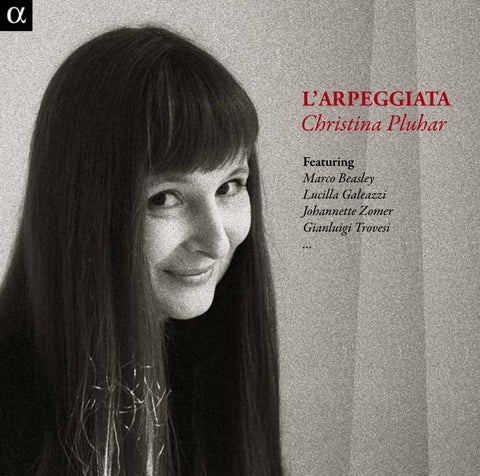
L’ARPEGGIATA
Christina Pluhar Featuring Marco Beasley Lucilla Galeazzi Johannette Zomer Gianluigi Trovesi …
Giovanni Girolamo Kapsberger La Villanella
Johanette Zomer - Pino de Vittorio - Hans-JĂśrg Mammel
L’Arpeggiata - Christina Pluhar 2
Un grand merci à tous ceux qui ont contribué à la réalisation de ce projet : à Jean-Paul Combet pour sa confiance et l’extraordinaire esprit artistique de son label, à tous les interprètes – chanteurs ou musiciens – pour leur grand talent, leur sincérité et leur soutien, à la direction et à l’administration de l’Hôpital Notre-Dame de Bon Secours, qui nous ont si aimablement accueillis, à Hugues Deschaux pour le travail qu’il a mené avec tant de patience et de précision, à Liesel B. Sayre pour son aide précieuse et sa profonde compréhension de la poésie italienne, à Benoît Jacques de Dedixmude pour son important travail musicologique, Doron Sherwin pour ses conseils sur les diminutions, et surtout à Pino de Vittorio, qui a découvert dans un petit village des Pouilles la «Tarantella di Sannicandro» au cours de ses recherches, et l’a chantée pour nous. Christina Pluhar, Paris, le 15.11.2000
Die deutsche Fassung dieses Textbuches mit den Übersetzungen der Vokalstücke von Liesel B. Sayre finden Sie auf : www.arpeggiata.com
illustration Domenico Zampieri, dit Il Domenichino Madone à l’Enfant avec les saints Jean l’Évangéliste et Petronio ©Photo Archivio Vasari Le commentaire de ce tableau par Denis Grenier est en page 10 de ce livret
3
GIOVANNI GIROLAMO KAPSBERGER LA VILLANELLA Prima parte: pensieri amorosi 1 Avrilla mia 2 O fronte serena 3 Occhi soli d’amore 4 Sinfonia 9 5 Ite sospiri miei 6 Sonino, scherzino
2’58 2’35 3’28 5’29 1’56 1’27
Seconda parte: dolente partita 7 Io parto 8 O cor sempre dolente 9 L’Arpeggiata 10 Galliarda prima 11 Passacaglia (improvisation) 12 Alma mia, dove t’en vai 13 Sinfonia 8 14 Lacrime estreme 15 Sinfonia 15 16 Tu che pallido
2’37 2’10 2’42 2’02 1’26 1’59 1’46 1’14 2’29 3’52
Terza parte: alle nozze 17 Senso fallace 18 Che fai tu 19 Sinfonia 18 20 Ai conviti, alle nozze 21 Tarantella di Sannicandro (chant traditionnel des noces) 22 Figlio dormi
1’40 2’47 6’27 1’42 3’13 7’13
4
L’ARPEGGIATA Johanette Zomer soprano Pino De Vittorio ténor Hans-Jörg Mammel ténor
Christina Pluhar direction harpe baroque - Rainer Thurau, Wiesbaden 1993 théorbe - Klaus T. Jacobsen, London 1983/99 guitare baroque - Larrence K. Brown, Asheville N.C. 1988 gitarra battente - Pascale Scala, Praiano 1998
Eero Palviainen archiluth - Eero Palviainen, Helsinki 1999/2000 théorbe - Lourdes Uncilla, El Escorial 1991 guitare baroque - Timo Kontio, Porvoo 1999
Edin Karamazow archiluth - Cezar Mateus, New Jersey 1995 tiorbino - Renzo Salvador, Bruxelles 1998 colascione - Pascale Scala, Praiano 2000
Giovanna Pessi harpe baroque - Rainer Thurau, Wiesbaden 2000
5
Paulina Van Laarhoven viole de gambe - François Bodart, Namur 1989 lirone - Roger Rose, Vestdean 1991
Veronika Scuplik violon - frères Cahnsac, Londres 1794
William Dongois cornet à bouquin - Serge Delmas, Paris 1994 cornet muet - Henri Gohen, Paris 1988 cornet ténor - Henri Gohen, Paris 1992
Eva Godard cornet à bouquin - Serge Delmas, Paris 1997
Elisabeth Geiger orgue positif - Etienne Fouss, Strasbourg 1994
Adrian Rodriguez Van Der Spoel tambourin, tabor - Adrian Rodriguez van der Spoel, Amsterdam 1998
6
LES SOURCES • Libro Primo, Secondo, Terzo, Quarto et Settimo di Villanelle à 1, 2 et 3 voci accomodate per qual
si voglio strumento con l’intavolatura di Chitarrone et alphabeto per la Chitarra spagnola, Roma 1610, 1619, 1623, 1640 • Libro Primo di Arie Passegiate à una voce con l’intavolatura del Chitarrone, Roma 1612 • Libro Secondo d’Arie à una e più voci, Roma 1623 • Coro musicale nelle nozze de gli ecc. mi sig. ri don Taddeo Barberini, e donna Anna Colonna, nepoti di N.S. Papa Urbano VIII., Roma 1627 • Libro Primo di Sinfonie à quattro, con il Basso continuo, Roma 1615 • Libro Primo de Balli, Gagliarde, et Correnti à quattro voci, Roma 1615 • Libro Primo d’intavolatura di Chitarrone, Venezia 1604 • Libro Quarto d’intavolatura di Chitarrone, Roma 1640 Enregistré à Paris en juin 2000 Enregistrement & montage numérique : Hugues Deschaux (Musica Numéris)
7
Le Dominiquin, Domenico Zampieri dit (Bologne 1581- Naples 1641) Madone à l’Enfant avec les saints Jean l’Évangéliste et Petronio, c. 1626-1629 Huile sur toile, 420 x 267 cm Rome, Palazzo Barberini, Galleria Nazionale d’Arte Antiqua [dépôt Pinacoteca di Brera de Milan]
Touché par l’Antiquité et par Raphaël, le Dominiquin fréquente l’académie des Carrache à Bologne, avant de rejoindre Annibal, son maître, à Rome, où il l’assiste à la Galerie Farnèse. Excellent dessinateur, l’artiste se consacre à la peinture d’histoire et à ses sujets élevés, mais n’en est pas moins sensible à la beauté de la nature abordée dans la peinture de paysage. Le Dominiquin peint aussi fresques et tableaux d’autel, y compris des sacre conversazione, genre en vogue à la Renaissance, se perpétuant à la période baroque, et auquel appartient cette œuvre destinée à l’église de la communauté bolonaise de Rome. Du haut d’un trône surmontant les armoiries de la ville, nimbés par la « mandorle » née du dégagement entre les architectures latérales, une Vierge raphaélesque, perdue dans ses nobles pensées, et son Fils lui aussi « absent », ou ravi, dominent à gauche un saint Jean inspiré tenant sa plume, et à droite un saint Pétronio conquis au point d’en délaisser sa crosse épiscopale. Baignant dans une lumière radieuse, la scène comprend d’innombrables putti qui se sont joints au colloque miterrestre, mi-céleste, notamment pour monter l’aigle de l’Évangéliste, ceindre la mitre de l’évêque de Bologne, soulever le rideau du théâtre de la représentation, voire en parfaire le décor. Car de part et d’autre, quatre anges musiciens jouent sur violon et cornet à bouquin solistes, et harpe et basse de viole continuistes, une pièce ayant des airs de sonate en trio dont les effets sur l’assemblée illustrent les pouvoirs de la musique. Un art envers lequel le Dominiquin éprouve le plus vif intérêt. Féru de théorie musicale, alter ego des inventeurs émiliens et vénitiens de la musique instrumentale du premier Seicento, adepte de la monodie et du stile moderno, le peintre devise de modes et d’échelles diatonique, chromatique, et enharmonique. Et possède une harpe et un clavecin accordés à l’avenant. Prosélyte engagé de l’ut pictura musica, sa démarche artistique associe idées musicales des Anciens et doctrine classique de la peinture qu’il contribue à élaborer. En consonance avec Nicolas Poussin. Prenant le pas sur l’harmonie, la « mélodie picturale » recherche l’absolue clarté
9
du sens et privilégie les affetti des visages et des gestes. Entrecroisement unique entre peinture et musique, arts visant la même fin : l’expression claire et intelligible des passions de l’âme. Denis Grenier
Ut Pictura Musica La musique est peinture, la peinture est musique.
10
Giovanni Girolamo Kapsberger Un esprit libre « ...mais quelques-uns des plus excellents des modernes qui ont la subtilité du contrepoint ont su ajouter à leur son mille grâces de trilli, de strascini, de tremoli, d’artifices, de piano et forte et autres galanteries qui au temps précédent étaient peu pratiqués, comme a fait dans le présent Kapsperger sur le théorbe... » (Pietro della Valle, 1640) Issu d’une famille de la noblesse allemande, Giovanni Girolamo Kapsberger naît en 1580 à Venise. C’est en cette ville si propice à l’inspiration qu’il passe sa jeunesse. Son père, Wilhelm, est colonel au service de la maison d’Autriche. Giovanni Girolamo épouse en 1605 la Napolitaine Hieronyma de Rossi, et s’installe à Rome. De tous les musiciens de sa génération, il fera l’une des carrières les plus spectaculaires. Peu après s’être fixé à Rome, il a pour mécène la famille Barberini, la plus influente de la noblesse romaine. Maffeo Barberini, devenu le pape Urbain VIII, permet à Kapsberger d’accéder à un poste officiel à la cour papale. Francesco et Antonio Barberini, ses neveux, sont les principaux mécènes de Rome. Dans leur célèbre Palazzo Barberini, ils entretiennent une kyrielle de musiciens parmi les plus importants, dont Kapsberger, mais encore Frescobaldi, Rossi, Mazzocchi, Landi, Marrazoli, ainsi que quelques autres instrumentistes ou chanteurs. Membre de l’Accademia degli umoristi, Kapsberger tient sa propre « accademia » chez lui, au Palazzo Governo Vecchio, 22 casa dei Panteri, dont il habite le premier étage entre 1606 et 1620. L’élite artistique de Rome y vient dans un but d’échange, d’inspiration mutuelle. Poètes, musiciens, chanteurs et théoriciens s’y rencontrent, et l’on rapporte qu’à cette époque, les plus célèbres voix d’Italie, accompagnées par le théorbe de Kapsberger, improvisent sur les derniers vers du gotha de la poésie italienne... L’œuvre de Kapsberger témoigne d’une incomparable originalité que l’on admire avant tout dans les pièces pour luth et chitarrone, le Libro Primo di Sinfonie à quattro, le Libro Primo di Arie Passegiate et les sept Libri di Villanelle.
11
Les villanelles : musique traditionnelle et grand art « Le fait est que la musique d’aujourd’hui a atteint une perfection extraordinaire, presque inédite ; bon nombre de merveilleux musiciens en sont maîtres, et ravissent leur auditoire par la grâce des chants qu’ils lui offrent à entendre. Les chanteurs prononcent clairement chaque mot à raison d’une syllabe par note – avec force ou douceur, vivacité ou lenteur – tout en soulignant l’expression à l’aide de gestes et de jeux de physionomie, mais avec goût, sans outrance. Ils chantent soit seuls, soit à deux ou à trois, accompagnés par tel ou tel instrument – théorbe, chitarra spagnola, clavecin ou orgue –, selon ce qui semble le plus approprié. À Rome, à Naples et à Gênes, ce nouveau type de composition est appelé « villanella alla spagnola » ou « alla italiana ». On en doit essentiellement les mélodies à Giovanni Geronimo Kapsberger, surnommé « il Tedesco della Tiorba », qui les a composées à Rome avec le plus grand art. » (Vincenzo Giustiniani, 1628) Imitation artistique de la musique traditionnelle, la villanelle tourne le dos au stile nuovo de la monodie florentine, à ses affetti et passagi virtuoses. La vogue qui s’en répand à travers toute l’Italie entre 1610 et 1640 laisse derrière elle d’innombrables publications de compositeurs tels que Landi, d’India, Falconieri, Grandi, Rontani, Sabbatini, Tarditi, Crivellati et bien d’autres encore. Kapsberger ne publie pas moins de sept Libri di Villanelle, dont les pièces forment un vaste éventail stylistique et comptent au nombre des plus belles du genre. La berceuse « Figlio dormi » mérite une mention particulière : son texte, qui date du xive siècle, est un chef-d’œuvre de poésie parmi les plus beaux et les plus délicats. À en juger par l’exemple de cette pièce, il est clair que la forme de la villanelle obéit à une écriture musicale d’un raffinement extrême – jamais la simplicité de l’image de la mère chantant pour son nouveau-né ne nous fait oublier le niveau artistique de la partition. Outre la tonalité de fa majeur, emblématique de la musique de Noël, la noblesse du texte nous porte à croire que cette « Ninna nanna » serait l’une des berceuses « per il Bambino Jesu ». Grâce à son rythme dansant, « Avrilla mia » illustre au mieux le style de la villanelle, d’autant que certains mots ont été légèrement colorés selon un dialecte fictif d’Italie méridionale, ce qui renforce le parfum « populaire » de la pièce. On retrouve presque note pour note « Ite sospiri miei » dans
12
une version allemande, « Jetztund kömpt die Nacht herbey », lied de Johann Nauwach (Teutsche Villanellen, 1627) sur un texte du poète baroque allemand Martin Oppitz. La popularité des villanelles (et des pages de Kapsberger en particulier) avait donc gagné toute l’Europe – on y voit ici confirmation. Quant à la pièce « Sonono, scherzino », elle appartient au genre de l’aubade, présent au sein de nombreux recueils : c’est un salut au soleil du matin, personnifié par l’Aurore, après une nuit de fête.
Les symphonies : improvisation et liberté artistique « Quant à la Musique Instrumentale, elle estoit composée d’un Orgue, d’un grand clavessin, d’une Lyre, de deux ou trois violons, & de deux ou trois Archiluths. Tantost un Violon sonnoit seul avec l’Orgue, & puis un autre respondoit: une autrefois ils touchoient tous trois ensemble differentes parties, & puis tous les Instruments reprenoient ensemble. Tantost un Archiluth faisoit mille varietez sur dix ou douze notes, chaque note de cinq ou six mesures; puis l’autre touchoit la mesme chose, quoy che differement. » (André Maugars, Rome 1639) Sans doute le Français André Maugars, en visite à Rome, eut-il la chance d’entendre les symphonies de Kapsberger, car aucune autre musique instrumentale de l’époque ne répond mieux à sa description que les pièces publiées dans le Libro Primo di Sinfonie à quattro. Celles-ci présentent une double singularité : l’instrumentation proposée par le compositeur et, pour l’interprète, la nécessité absolue d’improviser. Dans les Symphonies n° 18 et 9, certains passages solistes s’étendent sur de longues tenues (notes de basse, voire notes mélodiques) qui leur servent de support harmonique et mélodique. L’interprète peut y faire montre de sa virtuosité et de ses talents d’improvisateur – mais en se renouvelant totalement à chaque exécution, selon son gré. On notera que les parties obligées de basse restent toujours confiées aux instruments harmoniques que sont le luth, le théorbe, le clavecin ou la harpe: sur les notes de pédale, il fallait donc improviser comme dans une toccata – tel apparaît le souhait du compositeur – et non pas exécuter de diminutions propres aux instruments mélodiques (basson, viole de gambe ou violoncelle).
13
Les « arie passegiate » : virtuosité et chromatisme « Galli cantant, Hispani ululant, ...Itali plorant » (Vincenzo Giustiniani, 1628) Publié à Rome en 1612 par Jakob Christoph von Andlau, le Libro Primo di Arie Passegiate à una voce con l’intavolatura del Chitarrone de Kapsberger apparaît, à plus d’un titre, unique en son genre. Il s’agit du seul recueil imprimé de monodies avec accompagnement noté en tablature de chitarrone. C’est également l’un des rares exemples de volumes constitués autour d’une même thématique. Les textes des vingt-deux pièces traitent en effet d’un thème commun : le soupirant abandonné, délaissé ou rejeté, chante ses peines d’amour en usant d’un chromatisme expressif ou de passagi virtuoses. Tandis que certains airs tels que « Io parto » ou « O cor sempre dolente » rappellent le dramatisme d’un Sigismondo d’India, « Occhi soli d’amore » et « Tu che pallido » sont dotés de diminutions qui exigent une extrême virtuosité de la part du chanteur. Or chez Kapsberger, les diminutions se distinguent clairement du stile nuovo et de l’ornementation en usage à l’époque en Italie du nord. À l’écriture mélodique expressive du canto romano, le compositeur associe un style de diminution très personnel, que l’on retrouve dans ses toccatas pour « liuto » et « chitarrone ».
« Ai conviti, alle nozze…» : ... une histoire d’amour inventée L’opposition stylistique décrite plus haut entre villanelle et arie passegiate m’a inspiré l’idée suivante : les deux ténors, chacun passé maître dans l’art qui lui est propre, incarneraient ici deux prétendants usant du charme de leur chant pour briguer les faveurs de la même belle. D’emblée, celle-ci ressent un faible pour celui qui lui dédie ses villanelles avec tant de fougue ; elle lui avoue son inclination (« O fronte serena ») et va jusqu’à céder à la tentation de toute une nuit de fête avec lui (« Sonino, scherzino »). Mais le profond chagrin d’amour que lui confie la voix enchanteresse de l’autre prétendant (« Occhi soli d’amore ») la laisse indécise.
14
La belle renonce tout d’abord à porter un choix définitif (« Io parto »), au grand désespoir des deux prétendants. « Tu che pallido » prend fin, avec le plus long mélisme, sur cette phrase si poétique: « E perche spero un giorno far al mio caro ben dolce ritorno ». On pourrait croire que ces tirades immortelles sauraient attendrir le cœur de la belle, mais celle-ci fait volte-face (« Senso fallace ») pour se déclarer à celui qu’elle préfère en secret, lui avouant ne plus pouvoir vivre sans lui (« Che fai tu »). « Ai conviti, alle nozze » n’est autre qu’une invitation à la noce, où tout finira en danses et en chansons. Le meilleur moment de la fête sera la «Tarantella di Sannicandro », chantée par l’heureux marié qui va jusqu’à inviter tous les pourceaux à danser avec les convives, sans oublier de conclure en promettant à la mariée de lui montrer son plus bel oiseau... Et l’histoire s’achève – comment pourrait-il en être autrement ? – sur la berceuse « Figlio dormi » que chante avec tendresse le couple comblé, penché sur le berceau du nouveau-né. Christina Pluhar Traduction : Virginie Bauzou
15
1. Avrilla Mia Avrilla mia, quando m’accese quel vivo raggio di tua beltà, quando un tuo sguardo al cor mi scese, io restai privo de libertà.
1. Mon Avrilla Mon Avrilla, lorsque me réchauffa le vif rayon de ta beauté, lorsque ton regard me descendit au cœur, je perdis ma liberté.
1. Avrilla mine Avrilla mine, when the bright radiance of your beauty set me afire, when a look from you went straight to my heart, I was deprived of my freedom.
Ohimè, ch’i lampi de tuoi bei lumi a questi miei già piacquero sì, che ben che versin funtane e fiumi aman lo strale che li ferì.
Hélas, les éclairs de tes beaux yeux ont si bien plu aux miens, que tout en versant des fleuves de larmes, ils aiment la flèche qui les a blessés.
Alas, the flashes of your lovely eyes were so pleasing to mine that whilst shedding rivers of tears, they love the arrow that wounded them.
Mà quando viddi di bella mano la pura neve che m’infiammò, ahì, ch’usar forza pensier fù vano, che de me l’alma se ne volò.
Mais lorsque j’ai vu de la belle main la neige pure qui m’a enflammé, ah, la force de la pensée a été bien vaine, car mon âme s’est enfuie de moi.
But when I saw the pure snow-whiteness of the fair hand that set me ablaze, ah, ‘twas in vain to resist, for my heart had flown.
E quando scorsi mover il passo e starsi immoto quel vago piè per farsi un aura, per farsi un sasso lo spirto e’l core partir’ da me.
Et lorsque j’ai vu bouger et s’arrêter ce joli pied, léger comme l’air, ferme comme la pierre l’âme et le cœur m’ont quitté.
And when I saw that dainty foot move, then come to rest, as light as air, as firm as a rock, my heart and soul deserted me.
Bocca de rose, porta del riso, chiome, catene di servitù, così m’havete da me diviso che tornar mio non spero più.
Bouche de rose, porte du rire, boucles, chaînes de mon servage, vous m’avez coupé de moi-même, et je n’espère plus jamais revenir à moi.
Rosy lips, laughter’s egress, curls, chains of bondage, you have divided me against myself and I despair of becoming whole once more.
2. O fronte serena O fronte serena, O treccie dorate, che’l cor mi legate con forte catena, sì dolce è mia pena che nasce amarezza per somma dolcezza che gioia rimena. O treccie dorate, O fronte serena.
2. O front serein O front serein, O tresses dorées, qui liez mon cœur avec une chaîne si forte, ma peine est si suave que l’amertume naît de la grande douceur dont frémit la joie. O tresses dorées, O front serein.
2. O serene brow O serene brow, O golden braids which bind my heart with so strong a chain, so sweet is my pain that woe is born of joy’s great sweetness. O serene brow, O golden braids.
O ricco tesoro, O Ciel di beltade, mercede, pietade!
O riche trésor, O Ciel de beauté, grâce, pitié!
O rich treasure, O Heaven of beauty, have mercy, have pity!
16
Io moro, v’honoro. porgete ristoro, begli occhi amorosi, volgete pietosi. V’honoro e mi moro, O Ciel di beltade, O ricco tesoro!
Je meurs, je vous honore. Consolez-moi , beaux yeux amoureux, retournez-vous compatissants. Je vous honore et je me meurs, O Ciel de beauté, O riche trésor!
I pine for you, I honour you. Comfort me, fair loving eyes, show mercy. I honour you and pine for you, O Heaven of beauty, O rich treasure!
3. Occhi, soli d’Amore Occhi, soli d’Amore pietos’a’ miei martiri, voi mi pascesti un tempo di quel soave ardore che vien da vostri giri, hor che volgete altrove i vostri sguardi e non mi date aita, di qual cibo sarà l’alma nudrita?
3. Beaux yeux, soleils d’Amour Beaux yeux, soleils d’Amour compatissants à mon martyre, vous m’avez autrefois nourri de l’ardeur suave naissant de vos regards. Maintenant que vous vous tournez ailleurs et que vous ne m’aidez plus, de quoi se nourrira mon âme ?
3. Eyes, daystars of Love Eyes, daystars of Love sympathetic of my suffering, once you nourished me with the sweet ardour of your glances, but now you turn elsewhere your gaze and offer me no help, what food shall nurture my soul?
Già mi comincio à languire, già mi sento morire ch’amoroso digiun non soffre il core. Luci care at amate, se’l mio morir bramate, mirate, ecco, ch’io moro, e morendo v’honoro.
Déjà je me languis, déjà je me sens mourir, et mon cœur ne supporte pas l’absence de l’amour. Lumières si chères et tellement aimées, si vous voulez ma mort, regardez, je me meurs, et en mourant, je vous honore.
Already I languish, already I pine, and my heart endures not the absence of love. Eyes so dear and beloved, if you wish me to die, look, here I am dying, and in dying I honour you.
5. Ite, sospiri miei Ite, sospiri miei à ritrovar colei che nel suo petto accoglie adamantino giel, onde mi dà crudel cagion di doglie.
5. Allez, mes soupirs Allez, mes soupirs Retrouver celle qui porte en son cœur un givre de diamant et me donne donc raison de souffrir.
5. Go, my sighs Go, my sighs, go seek out she who holds in her heart unrelenting frost and cruelly gives me cause for suffering.
Destate in lei pietà, in lei che sorda stà al suon de’miei lamenti come aspe al canto suol’, e giammai non le duol’ de’ miei tormenti.
Réveillez sa pitié. Elle qui est sourde à mes lamentations comme un serpent est sourd au chant, et jamais elle ne souffre de mon tourment.
Arouse her pity, she who is deaf to my lamentations, as a snake is deaf to song, and is never grieved at my unhappiness.
17
Da se dal capo al piè sì bella Amor ti fè. Se’l ciel di doni sui a te sì largo fù, perchè di lor’ sei tu sì scarsa altrui?
De la tête aux pieds l’Amour t’a faite si belle. Si le ciel de ses dons a été si large avec toi, pourquoi es-tu si avare d’eux envers les autres ?
From head to foot Love made you so fair. If heaven has been so generous to you with its gifts, why are you so miserly in your gifts to others?
Non ben insieme và bellezza e crudeltà, però che di natura mille vaghezza al fin’ oscura un cor ferin’ di Donna dura...
Beauté et cruauté ne vont pas bien ensemble tandis que la nature avec mille beautés cache le cœur féroce d’une Femme cruelle...
Beauty and cruelty go not well together, yet nature with a thousand charms conceals the savage heart of a hard woman...
6. Sonino, scherzino Sonino, scherzino, e l’aure sferzino a suon di cetera, Pastori! Dican sonando, scherzando, cantando, l’Aurora sorge dal monte.
6. Qu’ils sonnent, qu’ils jouent Qu’ils sonnent, qu’ils jouent, en frappant l’air au son de leurs cithares, les Pastoureaux! Qu’ils disent en jouant, en riant, en chantant, que l’Aurore se lève sur la montagne.
6. Let them play, let them sport Let them play, let them sport, beating the air to the sound of their citterns, the Shepherds! Let them say as they play, laughing and singing, that day is dawning o’er the mount.
7. Io parto Io parto, ahì, dura voce! Io parto, ahì, rio dolore! Come non manca in dir’ ch’io parto il core se l’amato conforto qui lascio et ogni duol meco ne porto Chi più darammi aita? Chi manterammi in vita? Speme del mio ritorno, tu pur fuggi veloce. Chiudetevi, occhi, à sì funesto giorno ! Già sen’va l’alma, io già ridiss’a loro : io parto, ahì, voce! Io parto, ahì duolo, io moro.
7. Je pars Je pars, hélas, voix cruelle ! Je pars, hélas, affreuse douleur ! Comment mon cœur ne défaille-t-il pas en disant je pars ! Le réconfort aimé, je le laisse ici et j’amène avec moi toute la douleur. Qui m’aidera ? Qui me gardera en vie ? Espoir de mon retour, toi aussi tu t’échappes. Fermez-vous, mes yeux, à un jour si funeste ! Déjà l’âme s’en va, déjà je le répète : je pars, hélas, voix cruelle ! Je pars, hélas, affreuse douleur, je meurs !
7. I am leaving I am leaving, alas, cruel voice I am leaving, alas, terrible pain! How does my heart not falter as I say that I am leaving? If I leave behind the comfort I love and take all sorrow with me, who will help me? Who will keep me alive? Yet hopes of return, swiftly vanish. Close, O my eyes, on such an unhappy day! Already my soul is departing, already I repeat: I am leaving, alas, cruel voice I am leaving, alas, grief, I am dying!
18
8. O cor, sempre dolente O Cor, sempre dolente, che fai, che pensi, o core? Vorrai tu sempre sospiràr d’amore? Cangia, cangia desiri, o lacrime, o sospiri! Ahì lasso! il cor di sospirar desia, e gl’occhi lacrimar la doglia mia, se per nuove bellezze e nuove pene sospirar sempre lagrimar conviene.
8. O mon cœur, toujours dolent O mon cœur, toujours dolent, que fais-tu, que penses-tu, mon cœur ? Voudras-tu constamment soupirer d’amour ? Change, change tes désirs. Ah, larmes et soupirs ! Hélas, mon cœur veut gémir et mes yeux veulent pleurer ma souffrance si, pour des beautés et des peines nouvelles, il faut toujours soupirer et pleurer.
8. O my heart, ever doleful O my heart, ever doleful, what are you doing, what thinking, my heart? Will you for ever pine with love? Change, change your desires, O tears, O sighs! Alas, if for new beauties and new sorrows ‘tis proper ever to sigh and weep, then my heart will sigh and my eyes will lament my suffering.
12. Alma mia, dove t’en vai? «Alma mia, dove t’en vai? Alma mia, chi fuggi tu?» «Un ch’onora i tuoi bei rai ond’il cor ferito fu.»
12. Mon âme, où vas-tu ? «Mon âme, où vas-tu ? Mon âme, qui fuis-tu ?» «Quelqu’un qui honore tes beaux yeux qui ont blessé mon cœur.»
12. My love, where are you going? ‘My love, where are you going? My love, whom are you fleeing?’ ‘One who honours your beautiful eyes, which wounded my heart.’
«Ferma’l passo, o core o vita! Vuò morir davanti à te!» Ahì, ch’intenti alla partita fugge’l cor non men ch’l pié.
«Arrête-toi, mon cœur, ma vie ! Je veux mourir devant toi !» Hélas, entre-temps le cœur et le pied s’échappent.
‘Stay, my heart, my life! I will die in your presence!’ Alas, meanwhile, both heart and feet are gone.
Lagrimate, occhi dolenti, lagrimate, ella se’n và. Infelici, eccomi spenti senza i rai di tua beltà.
Pleurez, o yeux tristes, larmoyez, car elle s’en va. Malheureux, vous voici éteints sans la lumière de ta beauté.
Weep, sorrowful eyes, weep, for she is going. Now, unhappy, you are dull, gone is the radiance of your beauty.
L’oro, ohimè, del biondo crine che sì dolce il cor legò, nè le perle peregrine tra’i bei risi mirerò. Nè vedrò la man di rose
L’or, hélas, des cheveux blonds qui ont si doucement enchaîné mon cœur, et les perles étincelantes de son rire, je ne les verrai plus, ni sa main de rose.
Alas, no more shall I see the gold of her fair hair which so softly captured my heart, nor the precious pearls of her laughter, nor her rosy hand.
14. Lagrime estreme Lagrime estreme, che da gl’occhi uscite, sù questo di mia vita ultimo fine incavate il mio sasso, intenerite il mio cor che trà spine crebbe di voglia tropp’acerba, cria. Sù l’ultim’hora fia che piangend’e morend’arda trà’l gelo quel che mai non sentì fiamma del cielo.
14. Dernières larmes Dernières larmes jaillissant de mes yeux à la fin extrème de ma vie, creusez ma pierre, attendrissez mon cœur grandi entre les épines qui crie d’une envie trop cruelle. Ah, que la dernière heure fasse que, pleurant et mourant, brûle dans le froid celui qui n’a jamais senti une flamme du ciel.
14. Last tears Last tears, welling from my eyes, at this the very end of my life, hollow my stone, soften my heart which grew amidst thorns and now cries out with most cruel yearning. O in the final hour may he who has never experienced heaven-sent love, weeping and dying, burn with cold.
19
16. Tu che pallido essangue 16. Toi, qui pâle et exsangue « Tu, che pallido essangue, « Toi, qui pâle et exsangue sospiroso e dolente, soupirant et dolent, muto, gelido, ardente, muet, glacé, ardent, immobile qual sasso, immobile comme une pierre, sempre misero piangi, miséreux, qui toujours pleures, chi sei, squallido tanto e così lasso? qui es-tu, si pitoyable et las ? Qual può sì fera sorte Quel sort cruel render un huom mortal tal senza morte? » Peut rendre ainsi un homme, si ce n’est pas la mort? »
16. You, who pale and wan ‘You, who pale and wan, sighing and sorrowful, silent, freezing, burning, as motionless as a stone, ever unhappy, weep, who are you, so desolate and weary? What cruel fate other than death can make a man so?’
« Un amante son io, « Je suis un amant, lungi dal’Amor mio. loin de mon Amour. Tu, s’amante non sei, Toi, si tu n’aimes pas, e non lungi non sei dal tuo desio, et si tu n’es pas loin de ton désir, non miri i dolor’miei. ne regarde pas ma souffrance. E s’io non moro è perchè spero un giornoEt si je ne meurs, c’est que j’espère un jour far al mio caro ben dolce ritorno. » chez ma bien aimée être de retour. »
‘I am a lover far from my Love. If you are not a lover and far from your desire, heed not my suffering. And if I die not, ‘tis that I hope one day to return to my beloved.’
17. Senso fallace Senso fallace, da me, che vuoi? Quel che cerchi à me non piace. Già son vani i sforzi tuoi. Tu non senti? O’ sì, ò nò; basta, basta, io così vò.
17. Sentiments fallacieux Sentiments fallacieux, que voulez-vous de moi ? Je n’aime pas ce que vous cherchez. Vos efforts sont vains, N’entendez-vous pas ? C’est oui ou non; ça suffit, ça suffit, je le veux ainsi.
17. Deceptive feelings Deceptive feelings, what do you want with me? What you seek pleases me not, Your efforts are in vain. Hear you not? ‘Tis either yes or no. Enough, enough! So shall it be.
Senso, che fole narri al cor mio? Ciò che brami il cor non vuole. Vano è meco il tuo desio. Non intendi? O’ sì, ò nò; basta, basta, io così vò.
Sentiments, quelles fables racontez-vous à mon cœur ? Ce que vous cherchez, mon cœur ne le veut pas. Vos désirs sont vains avec moi. N’entendez-vous pas ? C’est oui ou non ; ça suffit, ça suffit, je le veux ainsi.
Feelings, what nonsense are you telling my heart? What you long for my heart wants not; Your desires will get nowhere with me. Hear you not? ‘Tis either yes or no. Enough, enough! So shall it be.
Voglia possente, che vuoi dal core? Ciò che dici il cor non sente. Frale è seco il tuo valore. O, non cedi? O’ sì, ò nò, basta, basta, io così vò.
Envie puissante, que veux-tu de mon cœur ? Ce que tu dis, le cœur ne l’entend pas. Ta valeur pour lui est éphémère. Ne céderas-tu pas ? C’est oui ou non ; ça suffit, ça suffit, je le veux ainsi.
Strong desire, what do you want with my heart? What you say my heart hears not, For your worth is but fleeting. Oh, you will not yield? ‘Tis either yes or no; Enough, enough! So shall it be.
20
18. Che fai tu Che fai tu, vita mia, che fai tu lontan da me? Che fai tu, chi ti desvia? Torna, ahì, volgi il pié, torna mia com’eri pria! Che fai tu, vita mia?
18. Que fais-tu Que fais-tu ma vie, que fais-tu loin de moi ? Que fais-tu, qui te dévoie ? Reviens, hélas, tourne tes pas, reviens à moi comme autrefois ! Que fais-tu ma vie ?
18. What are you doing What are you doing, love of my life, what are you doing far from me? What are you doing, who leads you astray? Come back, oh, return; let us be together as we used to be. What are you doing, love of my life?
Che fai tu, vita mia? Senza te star’ più non sò, nè più sò quel ch’io mi morrò di dolor’ di gelosia. Che fai tu, vita mia?
Que fais-tu ma vie ? Sans toi je ne sais plus vivre, et je ne sais de quoi mourir, de douleur ou de jalousie. Que fais-tu ma vie ?
What are you doing, love of my life? Without you I cannot live, and I know not whether to die of grief or of jealousy. What are you doing, love of my life?
20. Ai conviti, alle nozze ! Ai conviti, alle nozze, à i Balli, ai Canti, del Tebro, el Sebeto, o Ninfe festeggianti! Non ama altri pensieri un dì sì lieto.
20. Aux repas, aux noces ! Aux repas, aux noces, aux Bals et aux Chants, du Tibre, du Sebeto les Nymphes sont en fête ! Pour un jour si heureux Il ne faut pas d’autres pensées.
20. At banquets, at weddings At banquets, at weddings, at singing and dancing, from the Tiber, from the Sebeto, the Nymphs are celebrating! On such a happy day there should be no other cares.
21. Tarantella from Sannicandro (traditional, Puglia) Get those two boys to dance: Facitili abballà ‘sti duje vagliune they’ve got the Tarantella under their feet. tene la Tarantella sott’a li pite. When I marry, what a fine celebration there Lorsque je me marierai, quelle belle fête je ferai, Quanna m’inzore je che bella festa c’aje fà, will be! un gros tas de son et tous les porcs j’inviterai. nu tomolo de canigghia There’ll be a great heap of bran and I’ll e tutte li porce aj à ‘nvetà. Vois, vois ce mouchoir à quatre coins, invite all the pigs! Un mouchoir bien brodé, Lizze, lizze `muccatore a quatt’pizze, You see this kerchief with its four corners, pour ma fiancée, qui est amoureuse. muccatore arrecamato, a kerchief finely embroidered: it’s for my p’a zita mia che ‘nnamurata. bride in love. Hé, Marie, tu n’as ni bedaine ni poitrine, Hey, Mary, you’ve got no belly and you’re Si tu te maries, Nè mariè no tene trippa e manco menne, flat-chested! il te faut belle bedaine et belle poitrine. si t’aje da marità, trippa e menne aje da fà. If you marry, you’ll need a nice belly and a Nun ce vaje a monte pe nò fà quella ‘nchianata, Sur la montagne, je n’y vais pas shapely bosom. pour ne pas faire cette montée. vaje de tacche e vaje de ponta I don’t go up the mountain because I don’t On danse du talon et de la pointe e tutte le jovine stanno a monte. want to climb, et tous les jeunes gens sont là-haut. dance with the heel and dance with the toe, Santu Michele mio, statto bbuono, and all the young folk are up there on the mountain. Saint Michel, tiens toi tranquille, che quanno venghe zite, St Michael, be good, Car lorsque je viens en épouse, l’anno ca venghe co lu marite, for when I come as a bride, I come with the groom, je viens avec le mari, e quanno venghe sola, Et lorsque je viens seule, je viens avec mon ami and when I come alone, then I come with my lover. l’anno ca venghe co lu vaglione. Hey, Mary, how you put on airs and graces! 21. La Tarantella di Sannicandro
21. La Tarentelle de Sannicandro (traditionnelle des Pouilles) Faites danser ces deux garçons : ils ont la tarentelle sous les pieds.
21
Nè marie e viti ci aria ca tene, viti ci aria c’ha pigghiata da che s’ammaretata.
Have you seen yourself since you were Hé, Marie, vois les mines que tu fais et vois l’air que tu as depuis que t’es mariée. married?
Uj-dje-li tu lu saje che tenghe je? Je tenghe ‘n’aucielle si lu viti quant’è belle.
Hé, le sais-tu ce que j’ai ? j’ai un oiseau, viens voir s’il est beau.
Hey, do you know what I’ve got? I’ve got a little bird; come and see how fine he is.
22. Figlio, dormi Figlio, dormi; dormi, figlio, china’l ciglio, caro figlio, ricciutello della mamma, del mio petto dolce fiamma. Mio bambino piccinino, fà la nanna, fà la ninna, figlio, ninna la nanna, ninna, nanna, amoroso mio tesoro,
22. Dors mon fils Dors mon fils, dors mon fils, ferme les yeux mon cher enfant tout bouclé de sa maman, douce flamme de mon cœur, mon enfant tout petit dors, dors mon chéri, ninna la nanna, ninna, nanna, mon trésor d’amour,
22. Sleep, my son Sleep, my son, sleep, my son, close your eyes, my darling son, Mummy’s little curly-haired boy, my heart’s sweet love. My little tiny child, go to sleep, sleep, my son, bye bye lullaby, lullaby bye bye. My treasure of love.
ninna la nanna, ninna, nanna, dolce e vago ricciutello, vezzosetto vago e bello.
ninna la nanna, ninna, nanna, doux et tendre tout bouclé, mignon, joli dans ta beauté.
bye bye lullaby, lullaby bye bye, sweet and tender, curly-haired, precious and lovely, fair.
Luci vaghe, luci belle, vive stelle del mio figlio, non più crude al sonno omai serenate i vostri rai.
Charmants regards, jolis yeux, étoiles vives de mon enfant, ne soyez plus durs pour le repos, apaisez vos rayons.
Charming eyes, pretty eyes, my son’s bright twinklers, now it’s time to close and yield to slumber.
Mio bambino piccinino, fà la nanna, fà la ninna, figlio, ninna la nanna, ninna, nanna. Pupilluccie lusinghiere, ninna la nanna, ninna nanna, pupillucie ritrosette, ritrosuccie pupliette.
Mon enfant tout petit, dors, dors mon chérubin, ninna la nanna, ninna, nanna. Charmantes petites prunelles, ninna la nanna, ninna nanna, petites prunelles timides, timides petites prunelles.
My little tiny child, go to sleep, sleep, my son, bye bye lullaby, lullaby bye bye. Nice little eyes bye bye lullaby, lullaby bye bye, bashful little bright eyes bright eyes so bashful.
Ecco il sonno che l’assale. Spiega l’ale su’l mio figlio. Dolce sonno, à te si spetta, tù lo stringi, tù l’alletta. Mio bambino piccinino, fà la nanna, fà la ninna, figlio, ninna la nanna, ninna, nanna. Lusingatelo, ò miei canti, ninna la nanna, ninna, nanna. Mio dolcissimo ristoro, mio ricchissimo tesoro.
Voici le sommeil donnant l’assaut. ouvrant ses ailes sur mon enfant. Doux sommeil, il t’attend, tu le serres, tu le captives. Mon enfant tout petit, dors, dors mon chérubin, ninna la nanna, ninna, nanna. Flattez-le, mes chansons, ninna la nanna, ninna, nanna. Mon très doux réconfort, mon si précieux trésor.
Sleep at last is approaching, spreading his wings o’er my son. Sweet sleep, he awaits you, hug him tight and make him drowse. My little tiny child, go to sleep, sleep, my son, bye bye lullaby, lullaby bye bye. Soothe him, O my songs, bye bye lullaby, lullaby bye bye, My sweetest repose, my most precious treasure.
Traduction : Maria-Laura Broso-Bardinet
Translation : Mary Pardoe
22
Domeniquino, original name Domenico Zampieri Bologna 1581- Naples 1641 Virgin and Child with St John the Evangelist and St Petronio, c. 1626-1629 Oil on canvas, 420 x 267 cm Rome, Palazzo Barberini, Galleria Nazionale d’Arte Antiqua [deposit Pinacoteca di Brera, Milan]
Influenced by Antiquity and the art of Raphael, Domeniquino trained in the Caraccis’ academy in Bologna, before going to Rome, where he helped Annibale Carracci decorate the Gallery ceiling of the Farnese Palace. Excellent at drawing, he devoted himself mainly to historical painting and elevated subjects, but he was also sensitive to the beauties of nature, which he represented in his landscapes. Domeniquino also painted frescoes and altarpieces, including examples of the sacra conversazione, a genre developed during the Renaissance and perpetuated during the Baroque period. This painting, intended for the church of the Bolognese community in Rome, is an illustration of that genre. A mandorla, created by the space between the architectural elements on either side, encloses a Raphaelesque Virgin Mary, lost in noble thought, and her Son, whose expression is also pensive or vacant. They are shown seated upon a throne set above the city coat of arms. Below them on the left, an inspired St John is represented quill in hand, while St Petronio on the right is enrapt to the point of forgetting his crosier. Bathed in a radiant light, the scene also includes numerous putti, bearing the eagle of the Evangelist and the mitre of the Bishop of Bologna, raising the curtain, and generally perfecting the decor. On either side four angel musicians are shown playing what is apparently a trio sonata (two solo instruments, violin and cornett; two continuo instruments, harp and bass viol). Its effects on the gathering illustrates the powers of music – an art in which Domeniquino was most keenly interested. Fascinated by musical theory, alter ego of the Emilian and Venetian originators of the instrumental music of the early Seicento, well versed in monody and the stile moderno, the artist was conversant with modes and diatonic, chromatic and enharmonic scales. And he possessed a harp and a harpsichord, both, we are told, agreeably tuned. Domeniquino was committed to the idea of ut pictura musica. In his works he combined musical ideas borrowed from the Ancients with the classical doctrine of painting which he helped to elaborate. In consonance with Nicolas Poussin. Overriding harmony, this ‘pictorial melody’ aims above all for absolute clarity of meaning and the affetti of the faces and gestures are of great importance. A unique combination of painting and music, arts sharing the same ambition: to be a clear and intelligible expression of the passions of the human soul. Denis Grenier
23
Giovanni Girolamo Kapsberger A free spirit The son of a German nobleman, Giovanni Girolamo Kapsberger was born in Venice in 1580, and it was in that most inspiring city that he spent his youth. His father, Colonel Wilhelm Kapsberger, was in the service of the House of Habsburg. In 1605 Giovanni Girolamo married the Neapolitan Hieronyma de Rossi and moved to Rome. His was one of the most spectacular musical careers of his generation. Soon after his move to Rome, he was patronised by the very influential Barberini family. Through Maffeo Barberini, who became Pope Urban VIII, Kapsberger acceded to an official post at the papal court. Maffeo’s nephews Francesco and Antonio Barberini were Rome’s most important patrons of the arts. In their famous Palazzo Barberini, they maintained a whole host of musicians, including Kapsberger, Frescobaldi, Rossi, Mazzocchi, Landi and Marrazoli. Kapsberger was a member of the Accademia degli Umoristi, and he also had his own academy at his home on the first floor of the Palazzo Governo Vecchio (22 casa dei Panteri), where he lived from 1606 to 1620. Rome’s artistic elite would gather there to exchange ideas and inspiration. Poets, musicians, singers and theorists met there, and it is reported that Italy’s most famous voices, accompanied on the theorbo by Kapsberger, would improvise on the latest verses by the great Italian poets of the day. Kapsberger’s work is incomparable in its originality, which is particularly admirable in his pieces for lute and for chitarrone, his Libro Primo di Sinfonie à quattro, his Libro Primo di Arie Passegiate and his seven Libri di Villanelle.
24
The villanella Tradition and great art ‘The fact is that music of today has attained an extraordinary, almost unprecedented perfection; many marvellous musicians are masters of the art, and delight their audiences by the grace of the songs they present for listening. The singers pronounce each word clearly, one syllable to a note – gently or forcefully, in a lively manner or slowly – whilst underlining the expression by means of gestures or facial expressions, but tastefully and without extravagance. They sing either alone or in twos or threes, accompanied by an instrument – theorbo, chitarra spagnola, harpsichord or organ – whichever is the most appropriate. In Rome, Naples and Genoa, this new type of composition is called “villanella alla spagnola” or “alla italiana”. Most of the melodies are by Giovanni Girolamo Kapsberger, known as “il Tedesco della Tiorba”, who composed them in Rome with the greatest of art.’ (Vincenzo Giustiniani, 1628) An artistic imitation of traditional music, the villanella turned its back on the ‘stile nuovo’ of Florentine monody, with its ‘affetti’ and virtuosic ‘passagi’. The vogue, which spread throughout Italy between 1610 and 1640, left behind innumerable publications by composers such as Landi, d’India, Falconieri, Grandi, Rontani, Sabbatini, Tarditi, Crivellati, and many others. Kapsberger published no fewer than seven books devoted to the villanella. These pieces, covering a wide range of styles, are among the finest ever written. The lullaby ‘Figlio dormi’ deserves special mention. Its text, dating from the fourteenth century, is a masterpiece of most beautiful and delicate poetry. As this example shows, the music of the villanella is also extremely refined – never does the simplicity of the image of the mother singing to her newborn child make the listener forget the high artistic value of the score. Apart from the key of F major, typical of music for the Nativity, the nobility of the text leads us to believe that this ‘Ninna nanna’ is a lullaby for the infant Jesus. With its lively rhythm ‘Avrilla mia’ is a fine illustration of the villanella style. Moreover, some of
25
the words have been coloured slightly with a fictitious southern Italian dialect, thus underlining the ‘popular’ flavour of the piece. ‘Ite sospiri miei’ is to be found almost note for note in a German version, ‘Jetztund kömpt die Nacht herbey’, a lied by Johann Nauwach (Teutsche Villanellen, 1627) to verses by the German Baroque poet Martin Opitz – which shows that the villanella, and that of Kapsberger in particular, had by then become popular throughout Europe. As for ‘Sonono, scherzino’, it is an ‘aubade’, a celebration of the dawn. Such pieces were included in many collections.
The symphonies Improvisation and artistic freedom ‘As for the instrumental music, it consisted of an organ, a large harpsichord, a lyre, two or three archlutes. Sometimes one violin played alone with the organ, and then another replied. Another time all three played together but different parts, ad then all the instruments struck up together. Sometimes an archlute made a thousand divisions on ten or twelve notes, each note five or six beats long; then another lute played the same thing but differently.’ (André Maugars, Rome 1639) The French bass viol player and writer André Maugars must have heard Kapsberger’s symphonies during his stay in Rome, for no other instrumental music of the time corresponds more perfectly to his description than the pieces published in the Libro Primo di Sinfonie à quattro. These pieces are unusual on two accounts: the instrumentation proposed by the composer and the fact that the interpreter finds himself having to improvise. In Symphonies nos. 18 and 9, some of the solo passages stretch over long sustained notes (bass notes, or even melodic notes), serving as harmonic and melodic support. Not only is the interpreter thus enabled to demonstrate his virtuosic qualities and his extempore skills, but following his inspiration he can give a completely different performance each time. We note that the obbligato bass parts are always given to the harmonic instruments (lute, theorbo, harpsichord or harp), thus obliging the musician to improvise as in a toccata – such appears to be the composer’s wish – rather than using diminution, as he would with melodic instruments (bassoon, bass viol or cello).
26
The ‘arie passegiate’ Virtuosity and chromaticism ‘Galli cantant, Hispani ululant,... Itali plorant’ (Vincenzo Giustiniani, 1628) Published in Rome in 1612 by Jakob Christoph von Andlau, Kapsberger’s Libro Primo di Arie Passegiate à una voce con l’intavolatura del Chitarrone is unique on several accounts. It is the only printed collection of monodic pieces with accompaniment written in chitarrone tablature. It is also one of the few examples of a volume of pieces all on the same theme: all twenty-two show the abandoned, neglected or rejected suitor using expressive chromaticism or virtuosic ‘passagi’ to sing of his unrequited love. While some of the ‘arie’, such as ‘Io parto’ or ‘O cor sempre dolente’, remind us of the dramatic qualities of a composer such as Sigismondo d’India, ‘Occhi soli d’amore’ and ‘Tu che pallido’ make use of diminution, calling for great virtuoso skills on the part of the singer. And Kapsberger’s use of diminution is clearly different from the ‘stile nuovo’ and the ornamentation that was then in use in northern Italy. The composer combines the expressive melodic style of the ‘canto romano’ with a very personal style of diminution, which we meet again in his toccatas for lute and for chitarrone.
27
‘Ai conviti, alle nozze...’ ... an imaginary love story The stylistic contrast described above between the ‘villanelle’ and the ‘arie passegiate’ gave me an idea: the two tenors, each a past master in his art, would here play two suitors using the charm of their singing to woo the same young lady. The young lady takes an instant liking to the one who sings her his villanellas with such spirit. She tells him of her inclination (‘O fronte serena’) and even spends the night celebrating with him (‘Sonino, scherzino’). But the deep sorrow expressed by the bewitching voice of the other suitor (‘Occhi, soli d’amore’) then sows doubt in her mind. At first, to the great despair of the two suitors, the young lady gives up the idea of choosing between them (‘Io parto’). ‘Tu che pallido’ ends, with the longest melisma, on the following very poetic lines: ‘E perche spero un giorno / far al mio caro ben dolce ritorno.’ One would think such immortal words would soften the young lady’s heart, but no, she does an about-turn (‘Senso fallace’) and declares her love to the one she secretly prefers, admitting that she cannot live without him (‘Che fai tu’). ‘Ai conviti, alle nozze’ is an invitation to the wedding, where everything will end in dancing and song. The celebration reaches its height with the ‘Tarantella di Sannicandro’, sung by the happy groom, who invites all the pigs to come and dance and ends with a promise to show his bride his ‘little bird’... And the story ends – how could it be otherwise? – with a lullaby, ‘Figlio dormi’, tenderly sung by the happy parents as they watch over the cradle of their newborn child. Christina Pluhar Translation: Mary Pardoe
28
Stefano Landi Homo fugit velut umbra
L’Arpeggiata Christina 30 Pluhar
Illustration : Le Dominiquin La Dernière Communion de Saint Jérôme,Rome, Musées du Vatican Le commentaire de cette image par Denis Grenier est en page 75 de ce livret
31
STEFANO LANDI Homo fugit velut umbra L’Homme s’enfuit comme une ombre - Man flees like a shadow 1 2 3 4 5 6 7 8 9 10 11 12 13 14 15
Homo fugit velut umbra (anonyme) Passacaglia della Vita - Passacaille de la vie - Passacaglia of Life Augellin Sinfonia A tre violini, Arpe, Lauti, Gravicembalo,Tiorbe,Violoni & Lira Invan lusinghi Altri amor fugga Canzona detta La Pozza per Leuto, Tiorba, Arpa T’amai gran tempo A che più l’arco tendere Alla guerra d’amor Balletto delle Virtù Canta la cicaleta Poesia del Sig. B. Saracelli Dirindin Quando Rinaldo Poesia di Monsignor R. Quest’Acqua Amarillide, deh vieni
32
4’13 5’03 3’27 2’12 3’45 3’24 5’54 3’43 3’12 1’47 5’22 1’18 4’48 3’41 2’46
L’ARPEGGIATA Johannette Zomer, soprano Stephan Van Dyck, ténor Alain Buet, basse
con la partecipazione di Marco Beasley, ténor Christina Pluhar direction harpe baroque, théorbe, guitare baroque, gitarra battente
Eero Palviainen archiluth, guitare baroque
Charles Edouard Fantin théorbe, tiorbino, luth Renaissance, guitare baroque, gitarra battente
Elisabeth Seitz psaltérion
Paulina Van Laarhoven lirone, violone
Atsushi Sakai viole de gambe
Lorenzo Colitto, Mira Glodeanu violons baroques
William Dongois, cornet à bouquin, cornet muet
Michèle Claude percussions
33
Les instruments:
harpe baroque - Rainer Thurau, Wiesbaden 2000 théorbe - Klaus T. Jacobsen, London 1983/99 guitare baroque - Laurence K. Brown, Asheville N.C. 1988 gitarra battente - Pascale Scale, Praiano 1998 archiluth - Eero Palviainen, Helsinki 1999/2000 guitare baroque - Timo Kontio, Porvo 1999 tiorbino - Renzo Salvator, Bruxelles 1998 luth renaissance - Ivo Margerini, Bremen 2000 lirone - Roger Rose, Vestdean 1991 violone - G. Passauro, Liège 1994 viole de gambe - Pierre Thouvenot, Dieppe, 1998 violon - Claudio Arezio, Firenze, 1997 violon allemand xviiie siècle cornet à bouquin - Serge Delmas, Paris 1994 cornet muet - Henri Gohen, Paris 1988 Enregistré à Paris en juin 2001 Enregistrement & montage numérique : Hugues Deschaux Photographies : Robin Davies
34
Remerciements chaleureux à tous ceux qui ont participé à cet enregistrement : Avant tout à Jean-Paul Combet et à sa formidable équipe, pour sa foi qui donne à ses artistes la possibilité de réaliser leurs rêves ; à Hugues Deschaux et à Robin Davies pour avoir su par leur compréhension artistique transformer des disques en œuvres d’art ; à la direction et à l’administration de l’Hôpital Notre-Dame de Bon Secours, qui nous accueillent encore et toujours, et, en mettant à notre disposition l’acoustique merveilleuse de leur chapelle, donnent à nos enregistrements la possibilité de devenir le vecteur émotionnel de notre musique ; à Florian Gramp pour son travail de musicologue et pour sa transcription des manuscrits romains, à Friederike Heumann pour nous avoir communiqué un fac simile contenant des strophes supplémentaires ; et surtout à Marco Beasley, « cantore e incantatore », qui a pu participer à cet enregistrement grâce à l’aimable autorisation d’Accordone, pour sa très grande aide à l’approfondissement des textes et pour l’incroyable inspiration de sa présence tout au long de ce projet. Christina Pluhar, Paris, le 11.10.2001
35
Stefano Landi Une vie au palais Barberini La ville de Rome réunit, au début du xviie siècle, un nombre impressionnant de harpistes et de théorbistes, tels Girolamo Kapsberger, Luigi Rossi, Marco Marazzoli, Oratio Micchi dell’Arpa et Stefano Landi. Le point de mire de leur activité est une famille qui offre à la créativité de ces instrumentistes et compositeurs l’espace qui lui permettra de s’épanouir pleinement : les Barberini. Les figures marquantes de cette dynastie sont Maffeo Barberini (le pape Urbain VIII) et ses neveux Francesco et Antonio, qui font du palais Barberini et de son théâtre la plaque tournante de l’opéra romain. On commande des oratorios, des pièces de carnaval, des opéras et des messes qui sont exécutés à l’occasion du carnaval, des mariages, des enterrements, des couronnements ou des visites officielles importantes. Cette époque faste pour la créativité et la collaboration artistique, qui dure près de vingt ans, prend brusquement fin au moment du décès du pape, ce qui oblige les Barberini à choisir un exil parisien. Le financement de toutes ces productions éclatantes au palais Barberini provenait non seulement des richesses familiales, mais également en partie des fonds officiels du Vatican... Stefano Landi, plus tard harpiste, guitariste, organiste et chanteur, rentre le 8 mai 1595 au Collegio Germanico à Rome comme maîtrisien. À partir de 1599 il étudie la rhétorique et la philosophie au Seminario Romano, dont le maître de chapelle est Agostino Agazzari. C’est en 1616 qu’il publie son premier ouvrage, des motets ; en 1618 il accède lui-même au rang de maître de chapelle à la cour épiscopale de Padoue, où il écrit son premier opéra, La morte d’Orfeo. Il passe une période au service du cardinal Scipione Borghese, et revient à Rome en 1620. Il y fait paraître son Libro Primo di Arie (1620), des Psalmi integri (1624), Il Libro secondo di Arie (1627), et une Missa in benedictione nuptiarum (1628) écrite pour le mariage de Taddeo Barberini. Le cardinal Francesco Barberini lui confie le poste de « maestro di dozzena del putto musico » : les garçons qui reçoivent son enseignement logent chez lui, et parmi ses élèves se trouve Francesco Manelli. En 1629, grâce à la recommandation des Barberini, il obtient une position à mi-temps comme contralto dans le chœur papal ; le collègue qui partage cette charge avec lui n’est nul autre que Gregorio Allegri.
36
Son opéra sacré Il Sant’ Alessio, sur un livret de Giulio Rospigliosi, est exécuté au palais Barberini en 1632 et 1634. Ces productions magnifiques, dans des décors dus au peintre toscan Pietro da Cortona, sont chantées par les castrats Angelo Ferroti et Marc’Antonio Pasqualini dans les rôles principaux, avec le garçon « Paoluccio » Cipriani dans celui de Rome, et d’autres garçons de la maîtrise des Barberini dans les rôles de composition. Après le succès phénoménal de ces exécutions Landi se consacre à la publication de ses derniers Libri di Arie. Le Libro Quinto di Arie (1637) et le Libro Sesto (1638) se trouvent de nos jours à la Bibliothèque de Wroclaw, alors que les septième et huitième livres, ses ultimes œuvres, sont malheureusement perdus.
37
Homo fugit velut umbra L’univers caché dans l’ombre La vie n’était pas simple du tout pour un membre du chœur papal et pour un musicien chez les Barberini. Les musiciens étaient des gens de maison, d’un statut à peine plus élevé que celui d’un valet. On logeait les choristes avec leurs « collègues » dans les appartements des domestiques, privés de chauffage. Cette concentration, dans un petit espace, des plus grands talents de l’Italie, tous à l’affût de la faveur du pape, de la commande d’une grande œuvre lyrique, d’un rôle principal, d’un poste de maître de chapelle, conduisit à des intrigues et à des jalousies dans ce monde peuplé de castrats qui n’avaient qu’une seule chance dans la vie : devenir soliste célèbre. À cette même époque apparurent les premières cantatrices renommées, dont Adriana Basile et ses filles, qui commencèrent à disputer leurs rôles aux castrats. Et tous les musiciens célèbres et doués de l’époque travaillaient pour les Barberini ; la concurrence était stimulante, mais aussi angoissante... On peut constater chez bon nombre de ces compositeurs l’existence d’une double vie, à l’opposé de la vie de cour et de la lutte pour la reconnaissance qui s’y déroulait. Comme chez Kapsberger, qui mit en musique les poésies du pape et écrivit à son intention des messes dans le style de la prima prattica, mais laissa également des œuvres pour luth et des airs relevant de l’avant-garde, nous découvrons dans les Libri di Arie de Stefano Landi des pièces qui, si on les regarde de près, nous mènent dans un univers qui lui est particulier. Ces arias et villanellas, composées par un chanteur et continuiste, un rhétoricien et philosophe, qui accompagnait ses propres chants à la harpe ou à la guitare espagnole, constituent un genre miniature, épure de perfection. On retrouve dans le texte et la musique de ces airs d’innombrables éléments empruntés à la musique traditionnelle, qui nous guident hors du palais Barberini vers un autre monde. Ainsi par exemple, le symbolisme très imagé du texte de l’air «T’amai gran tempo », publié dans le Secondo Libro d’Arie Musicali (1627), exige quelques explications. Ce morceau, composé tout entier sur une chaconne (après le récitatif introductif ), raconte l’histoire d’un amant trompé qui, furieux, envoie promener son ancienne idole. Le compositeur y introduit des images et des expressions locales, comme « di la dal Po », ce qui signifie la région de Lombardie, par opposition à « di qua
38
dal Po » (l’Émilie). Pour passer d’une région à l’autre il fallait traverser le Pô au moyen d’un bac, qu’on appelait en sifflant (« e più non sento il fischio »). En dialecte local le cocu qui accepte néanmoins de se marier se fait qualifier de « merlo » (littéralement, un « merle »). Ce même volume contient plusieurs villanellas composées sur une «walking bass» ; parmi cellesci nous avons choisi « Amarillide, deh vieni », dont la structure rythmique et mélodique, que nos oreilles trouvent plutôt moderne, rappelle les pièces pour théorbe du Libro Quarto de Kapsberger. La dédicace à la princesse de Piémont dans la préface de Landi fait remarquer que les airs contenus dans ce volume seront le mieux mis en valeur par son élève, le « castratino » Angelo Ferrotti (qui devait chanter le rôle-titre dans Il Sant’Alessio quatre ans plus tard). De la même publication provient l’air « A che più l’arco tendere », qui captive grâce à sa ligne mélodique merveilleuse ; nous avons cherché à souligner, par l’utilisation du rubato au-dessus d’une ligne de basse rythmiquement stable, ses liens avec la chanson traditionnelle de l’époque. La villanella « Augellin » frappe par sa mélodie en imitation du chant d’oiseau, qui séduit la bien-aimée comme par hypnose. Encore un morceau inspiré par les cris d’animaux est « Canta la Cicaleta », qui essaie de reproduire le chant de la cigale. Cet insecte commence son chant par un bourdonnement dans le grave qui monte vers un piaillement aigu, et, comme le cygne, il meurt en chantant. Landi traduit ces images en musique par une ligne mélodique qui débute sur do2 pour monter ensuite jusqu’au la4. La merveilleuse poésie de Saracelli, qui fait dire au chanteur qu’il espère qu’il chantera jusqu’à sa mort, et qu’il mourra en chantant, devient un air envoûtant grâce à cette tessiture étonnamment élargie et au jeu mélodique autour du la aigu. Nous avons décidé d’inclure également une pièce anonyme dont les riches contradictions internes nous rappellent l’univers de Stefano Landi. Cette œuvre, qui s’intitule « Homo fugit velut umbra », porte le sous-titre « Passacaglia della Vita ». Cette appellation est déjà trompeuse en elle-même, car la ligne de basse ici n’est pas la basse de passacaille typique du xviie siècle (une quarte descendante) mais une tarentelle, comme nous l’a transmise (dans la même tonalité) le traité Ars magnetica d’Athanasius Kircher. On retrouve dans le sud de l’Italie de très nombreux morceaux de
39
tradition orale qui sont construits sur cette base harmonique et mélodique. La notation syncopée de la basse dans la présente pièce consigne par écrit une pratique courante dans l’interprétation de la musique traditionnelle, qui reconnaît une multitude de subdivisions des valeurs de notes dans ses accompagnements rythmiques. La liberté mélodique et rythmique des voix supérieures que permet le rubato, fait partie du riche patrimoine culturel de l’Italie, qui résiste à la notation écrite, mais que nous avons adoptée pour notre interprétation. La seconde voix, le « controcanto », accompagne la ligne mélodique à la tierce, mais elle est chantée ici, comme c’est souvent le cas dans la musique traditionnelle, par une voix féminine à la sixte au-dessus de la mélodie. Un autre aspect qui peut dérouter à première vue est le décalage entre le texte spirituel, moralisateur, et la mélodie. À y regarder de plus près, pourtant, on s’aperçoit que le titre « Passacaglia della Vita » suggère une danse des morts, une « danse macabre », évoquant la représentation médiévale d’un squelette qui danse à travers les rues de la ville (passa=calle, « passer dans une rue », la signification originale de la danse en Espagne). Les Libri d’Arie de 1637 et de 1638 nous livrent encore des airs qui construisent en quelques strophes une œuvre d’art indépendante. Ainsi la villanella « Quando Rinaldo », est un opéra en miniature en l’espace de quatre strophes, qui nous conte l’histoire de Renaud et d’Armide dans toute son émotion dramatique. On devine que les commandes lyriques étaient rares. Le compositeur concentrait donc son savoir et sa créativité sur cette forme de composition, en y mettant toute son individualité artistique. Mais ces airs ne peuvent revivre que si l’on prend soin d’explorer l’univers caché dans l’ombre derrière les notes imprimées. La notation musicale, et surtout la notation de ce qui semble au premier regard être une écriture mélodique élémentaire, renferme toujours le risque d’une exécution réductrice, qui gommera une complexité et une beauté qui se perdent quand l’œuvre est couchée sur papier. L’interprétation implique une connaissance approfondie de tous les aspects de l’art : la compréhension du symbolisme du texte et du style mélodique ; une grande liberté rythmique dans l’exécution, de façon à insuffler vie aux mélodies ; un accompagnement qui doit soutenir le tout en improvisant dans toutes les couleurs, toutes les nuances possibles ; et surtout une compréhension
40
de la complexe toile de fond émotionnelle des textes, qui conservent toute leur actualité et exigent du chanteur une identification totale, comme celle d’un comédien. Quand on regarde la peinture de cette époque, le contenu émotionnel de ce qu’elle met en scène est d’abord transmis par le choix et la composition des couleurs. Ce n’est qu’après un premier contact que le spectateur va se plonger dans la scène et dans le contenu symbolique de l’œuvre. La réaction de l’auditeur est comparable : le contact intuitif passe par la palette des couleurs instrumentales et la qualité de la voix – le son, comme les couleurs d’un tableau, est le vecteur de l’émotion ; l’étude intellectuelle du contenu qui s’ensuit ne se fait pas au détriment du cœur, qui détermine toujours en fin de compte si l’on se sent interpellé... Christina Pluhar, Paris, 11.10.2001 Traduction: Charles Johnston
41
Quelques pensées Dans la sacristie de l’église qui abritait l’enregistrement de ce disque, il y avait une petite cuisine, très bien équipée, avec une grande baie vitrée donnant sur les arbres alentours. Lumière, calme, silence. Nous nous retrouvions là à intervalles réguliers, entre un enregistrement et l’autre : un verre de vin, du pain, des bons fruits, du café… C’était un moment de grande tranquillité, quelques mots, beaucoup de regards. Les fenêtres ouvertes, la fumée d’une cigarette qui se perd dans l’air frais de ces après-midi d’été. Après la musique, ces quelques minutes nous permettaient de récupérer les énergies entre un morceau et l’autre, on échangeait nos sensations, des commentaires, des sourires aussi. Nous parlions des langues différentes, nous ne nous connaissions pas tous entre nous mais, comme il arrive mystérieusement parfois, une estime réciproque et subtile nous permettait de jouer et de chanter ensemble comme si nous l’avions toujours fait. Il est vrai que la musique unit, franchissant les limites de nos sentiments. De la Finlande à Naples, du Japon à l’Autriche en passant par la Hollande, la France et la Belgique d’un côté et de l’autre du Pô à la recherche de je ne sais quel Merle, un oiselet qui vole là haut, un Cupidon jamais rassasié de tendre son arc pour atteindre Amaryllis et nos cœurs... Ou peut être, comme dans une fable, nous cherchions une petite cigale accrochée à un arbre du jardin, derrière la cuisine : Tu te trompes en pensant que les années ne vont jamais finir ! C’est ce qu’elle nous chantait, en nous poussant à vivre à fond chaque instant de cette existence... Marco Beasley, Genova, 25.09.2001 Traduction: Maria Laura Broso Bardinet
42
1. Homo fugit velut umbra (Passacaglia della Vita) O come t’inganni se pensi che gl’anni non hann’da finire bisogna morire.
Tu te trompes en pensant que les années ne vont jamais finir. Il faut bien mourir.
Oh how wrong you are to think that the years will never end. We must die.
E’un sogno la vita che par si gradita, è breve il gioire, bisogna morire. Non val medicina, non giova la China, non si può guarire, bisogna morire.
La vie est un songe. Elle semble si douce, mais la joie est courte, il faut bien mourir. À rien ne sert la médecine, inutile est la quinine, l’on ne peut pas guérir. Il faut bien mourir.
Life is a dream, that seems so sweet, but joy is all too brief. We must die. Of no avail is medicine, of no use is quinine, we cannot be cured. We must die.
Non vaglion sberate, minarie, bravate che caglia l’ardire, bisogna morire. Dottrina che giova, parola non trova che plachi l’ardire, bisogna morire.
Rien ne valent les jérémiades, les menaces, les bravades, que le courage sait bien bâtir. Il faut bien mourir. Aucune bonne science, ne trouve les paroles pour calmer le désir. Il faut bien mourir.
Worthless are lamentations, threats, bravado produced by our courage. We must die. No learned doctrine can find the words to calm this boldness. We must die.
Non si trova modo di scoglier ‘sto nodo, non val il fuggire, bisogna morire. Commun’è il statuto, non vale l’astuto ’sto colpo schermire, bisogna morire.
Il n’y a pas d’astuce pour défaire ce nœud, à rien ne sert de fuir, il faut bien mourir. C’est ainsi pour tout le monde. Le malin ne sait pas éviter ce coup bas. Il faut bien mourir.
There is no means to untie this knot, it is useless to flee. We must die. It is the same for everyone, a wily man cannot shield himself from the blow. We must die.
Si more cantando, si more sonando la Cetra, o Sampogna, morire bisogna. Si more danzando, bevendo, mangiando; con quella carogna morire bisogna.
L’on meurt en chantant, l’on meurt en jouant la Cithare, ou la Musette. Mourir, il le faut. On meurt en dansant, en buvant, en mangeant. Avec cette charogne, mourir, il le faut.
We die singing, we die playing the cittern, the bagpipe, yet die we must. We die dancing, drinking, eating; with this carrion, die we must.
43
La Morte crudele a tutti è infedele, ogn’uno svergogna, morire bisogna. E’ pur ò pazzia o gran frenesia, par dirsi menzogna, morire bisogna.
La Mort cruelle n’est fidèle à personne, et fait honte à tous. Mourir, il le faut. Pourtant, o délire, o grande folie, on croirait mentir. Mourir, il le faut.
Cruel Death is unfaithful to all, and shames everyone. Die we must. And yet, o madness o ravings, it seems like lying to oneself. Die we must.
I Giovani, i Putti e gl’Huomini tutti s’hann’a incenerire, bisogna morire. I sani, gl’infermi, i bravi, gl’inermi, tutt’hann’a finire bisogna morire. E quando che meno ti pensi, nel seno ti vien a finire, bisogna morire. Se tu non vi pensi hai persi li sensi, sei morto e puoi dire: bisogna morire.
Jeunes, enfants, et tous les hommes en cendres doivent finir. Il faut bien mourir. Les sains, les malades, les courageux, les doux, ils doivent tous finir. Il faut bien mourir. Et lorsque tu n’y penses pas, dans ton sein, tout se termine. Il faut bien mourir. Si tu n’y songes pas, tu as perdu ta raison, tu es mort et tu peux dire: il faut bien mourir.
Youths, children, and all men must end in dust. We must die. The healthy, the sick, the brave, the defenceless, must all make an end. We must die. And when you are least thinking of it, in your breast, all comes to an end. We must die. If you do not think of this, you have lost your senses, you are dead and you can say: We must die.
2. Augellin Che ‘l tuo amor Segui ogn’hor Dal faggio al pin; E spiegando i bei concenti Vai temprando Col tuo canto i miei Lamenti.
Bel oiselet qui pourchasses toujours ton amour entre l’hêtre et le pin. Avec ton doux concert, tu rends plus forts par ton chant, mes pleurs.
Little songbird who are always chasing your love ’twixt beech and pine: by performing your lovely concerts, you temper with your song, my laments.
Il mio Sol troppo fier, Troppo altier Del mio gran duol Clori amata, Clori bella, M’odia ingrata A’ miei prieghi empia e rubella.
Mon Soleil trop fier, est bien trop altier, de ma grande douleur. Chloris la bien-aimée, Chloris la belle, me déteste, l’ingrate, cruelle et rétive à mes prières.
My Sun, too proud, too arrogant to consider my great pain. Cloris my beloved, Cloris my fair one hates me, the ingrate, remaining cruel and deaf to my prayers.
44
Non sia più Cruda no, Morirò S’ella è qual fù; Taci, taci, che già pia Porge i baci, Al mio labro l’alba mia.
Puisse-t-elle ne plus être si dure. Je mourrai si elle reste ainsi. Tais-toi, tais-toi, que toute douce, elle apporte ses baisers, mon aurore, à mes lèvres.
May she no longer be so harsh; I shall die if she remains so. Hush, hush, for now compassionately she brings her kisses to my lips, she my dawn.
Segui augel Nè sdegnar Di formar Canto novel; Fuor del seno amorosetto Mostra à pieno La tua gioia, il mio diletto.
Viens, oiseau, ne dédaigne pas composer un chant nouveau. De ton sein plein d’amour, montre toute entière, ta joie et mon bonheur.
Come, bird, do not disdain to make up a new song. In your loving little breast, display to the full your joy and my happiness.
Tu me flattes en vain, en vain tu promets et tu fais serment. Mon cœur trahi ne te croit plus: à qui n’a pas de foi, on ne fait pas confiance.
In vain you flatter me, in vain you promise and pronounce oaths, for my betrayed heart no longer believes you: one does not trust the unfaithful.
Il y a eu un temps où j’espérais, maintenant je n’espère plus. Je crains la pitié qu’on voit en toi: à qui n’a pas de foi, on ne fait pas confiance.
There was a time when I hoped, now I hope no longer. I fear that pity that can be seen in you: one does not trust the unfaithful.
Qu’un autre évite l’amour et de son doux pouvoir éloigne ses pas. Qu’il durcisse son cœur à ses flammes et qu’il le chasse de son esprit et de sa pensée.
Let others shun love and from its sweet power direct their steps far away. Let them harden their hearts against its ardent flames and chase it from their souls and their thoughts.
Moi, je me targue d’être son suivant et son prisonnier, et je lui ouvre le chemin dans mon âme. Et j’espère que l’ardeur qui fut douce au départ, demeure.
I boast of being its follower and its prisoner, and I willingly open my mind to it. And may it last for ever, that ardour that I first felt so sweet in my breast.
4. Invan lusinghi, invan prometti e giuri Ch’il tradito mio cor più non ti crede: A chi fede non ha, non si dà fede.
Fù tempo ch’io sperai, nulla più spero; Temo quella pietà, ch’in te si vede: A chi fede non hà, non si dà fede.
5. Altri amor fugga: e dal soave impero Di lui mover lontano il piè procuri. A le calde sue fiamme il petto induri E dal cor lo bandisca e dal pensiero.
Io d’esser suo seguace e prigionier mi vanto, E i passi liberi e sicuri gl’apro a la mente. E sia ch’eterno duri L’ardor che dolce in sen trassi primiero.
45
7. T’amai gran tempo e sospirai mercede. Tu m’hai tradito ogn’hor, priva di fede. Hor và con novi amanti a far tue prove, Ch’io son già stufo e m’ho provvisto altrove. Hor vanne mò Ch’io non ti vuò, Ch’io son gia stufo E m’ho provvisto altrove: Che già di là, Di là dal Po, passato è ‘l Merlo… Corri, corri a vederlo!
Longtemps je t’ai aimée et j’ai demandé pitié. Tu m’as toujours trahi, femme infidèle. Va avec des nouveaux amants faire tes preuves, car je suis fatigué et j’ai trouvé ailleurs. Va maintenant ! Je ne te veux plus, car je suis fatigué et j’ai trouvé ailleurs. Déjà par là, au delà du Pô, le Merle est passé… Cours, cours le voir !
Long did I love you and ask for your pity. You always betrayed me, faithless woman. Go prove your worth with new lovers, for I am weary and have found what I need elsewhere. Go away now! I don’t want you any more, for I am weary and have found what I need elsewhere. Already over there, on the other side of the Po, the Blackbird has flown… Run away, run after him!
Mille volte io piangeva, e tu ridevi. Mille volte io rideva, e tu piangevi. Così cortese, i più felici amanti Schernisti cruda in giochi, in risi, in pianti. Hor grida mò, Ch’io sordo stò, Ch’io son già stufo E m’ho provvisto altrove: Che già di là, Di là dal Po, passato è ‘I Merlo... Corri, corri a vederlo!
Mille fois je pleurais et tu riais. Mille fois je riais et tu pleurais Ainsi, gracieuse, les amants les plus heureux tu moquais par tes jeux, tes rires et tes pleurs. Crie maintenant, je reste sourd, car je suis fatigué et j’ai trouvé ailleurs. Déjà par là, au delà du Pô, le Merle est passé… Cours, cours le voir !
A thousand times I wept and you laughed. A thousand times I laughed and you wept. Thus, gracious lady, the happiest lovers did you mock by your games, your laughter and your tears. Cry out now, for I remain deaf I don’t want you any more, for I am weary and have found what I need elsewhere. Already over there, on the other side of the Po, the Blackbird has flown… Run away, run after him!
Ti fui fedele allor che fui gradito. E qui lasciar ti vuò, se m’hai tradito. Hor vanne a porre a nuovi amanti il vischio, Ch’io son già sciolto, e più non sento il fischio, Hor crepa mò, Ch’io non ti vuò, Ch’io son già stufo E m’ho provvisto altrove: Che già di là, Di là dal Po, passato è ‘l Merlo... Corri, corri a vederlo!
Je t’ai été fidèle lorsque j’étais aimé. Je veux te quitter ici, si tu m’as trompé. Va poser tes pièges pour des nouveaux amants, je suis déjà libre et je n’entends pas le sifflet. Crève, maintenant, je ne te veux pas, car je suis fatigué et j’ai trouvé ailleurs. Déjà par là, au delà du Pô, le Merle est passé… Cours, cours le voir !
I was faithful to you whilst I was loved. I want to leave you here, if you have deceived me. Go and lay your traps for new lovers, for I am free now, and I can’t hear the whistle. Drop dead now! I don’t want you any more, for I’m weary and have found what I need elsewhere. Already over there, on the other side of the Po, the Blackbird has flown… Run away, run after him!
Se talento ti vien di dar martello, Guardati il volto, che non è più quello: Hor le tue labra d’oro e ‘l crin d’argento Ricco mi fanno sol di pentimento. Hor non più no, T’adorerò,
Si tu as envie de te poser des questions, regarde ton visage qui n’est plus le même. Maintenant tes lèvres dorées et tes cheveux d’argent me replissent uniquement de repentir. Maintenant, non, je ne t’adorerai plus,
If you want to ask questions, look at your face, for it’s not the same any longer. Now your golden lips and your silvery hair fill me only with repentance. Now, no, I won’t adore you,
46
Ch’io son già stufo E m’ho provvisto altrove: Che già di là, Di là dal Po, passato è ‘l Merlo... Corri, corri a vederlo!
car je suis fatigué et j’ai trouvé ailleurs. Déjà par là, au delà du Pô, le Merle est passé… Cours, cours le voir !
for I’m weary and have found what I need elsewhere. Already over there, on the other side of the Po, the Blackbird has flown… Run away, run after him!
8. A che più l’arco tendere O non mai saggio Amor? Di me che più vuoi prendere, Non sei tu satio ancor. Mira che folte fioccano Le nev’ in su ‘l mio crin, E che miei giorni toccano Homai l’ultimo fin.
Pourquoi tendre ton arc, Amour, jamais assagi? Que me cherches tu encore, n’es-tu pas rassasié ? Regarde tomber drue la neige sur mes cheveux, et mes jours arriver désormais à leur terme.
Why do you still draw your bow, Cupid, still so badly behaved? What more do you want of me, are you not satisfied yet? See how thick the snow falls on my hair, and how soon my days will come to an end.
Dunque ò gentil degnatemi, Che tutto altier n’andrò; Vostro a nome chiamatemi, Ma vostr’ amante, no. Gli amanti arsi sospiranvi Chiedendo alta mercè: Gli occhi miei solo miranvi, E basta alla lor fè.
Donc, mon cher, soyez pour moi aimable, et j’en serai tout fier ; appelez-moi vôtre, mais je ne serai pas votre amante Les amoureux soupirent ardents pour vous en demandant pitié : mes yeux ne font que vous regarder, et cela leur suffit.
So, my dear, grant me this, and I shall be filled with pride; call me yours in name, but not your lover. Ardent lovers sigh for you, begging for pity: my eyes merely look at you, and that suffices them.
Deh! Perché non rinovasi Mia giovenil età, Hoggi che al mondo trovasi I fior della beltà? Quale può maga porgere Aita ai miei desir? Ond’io vegga risorgere Mio giorno in su ‘l finir.
Ah ! Pourquoi ne reviennent pas mes jeunes années, maintenant que sont au monde les fleurs de la beauté? Quelle magicienne peut offrir son aide à mes vœux ? Pour que je voie renaître ma vie qui se termine ?
Ah! Why can it not return, the time of my youth, now that there exists in the world the flower of beauty? What sorceress can offer her aid for my desire, so that I may see resurrected my days as they end?
Che parlo? Chi rispondemi? Ah! Che non scerno il ver! Sommergemi, confondemi Tempesta di pensier; Condannomi, perdonomi Fra speme e fra timor; Ma pur tutto abandonomi Nelle tue mani Amor.
Que dis-je ? Qui me répond ? Ah ! Je ne vois pas la vérité ! Me noie et me confond la tempête dans mon esprit ; me condamner, me pardonner… entre l’espoir et la crainte. Mais je m’adandonne tout entier entre tes mains, Amour.
What am I saying? Who answers me? Ah! But I do not realise the truth! I am overwhelmed and confounded by the tempest of my thoughts; I condemn, I pardon myself, between hope and fear. But now I place myself completely in your hands, Cupid.
47
9. Alla guerra d’amor Correte Amanti: Non più sospiri, Non più martiri. Alla guerra d’mor, All’armi, all’armi. Aita, aita, il mio core se’n và, La mia vita dov’è? Ah! cruda partita: Pietà!
Au combat d’amour courez, les Amants : plus de soupirs, plus de martyrs. Au combat d’amour, aux armes, aux armes. À l’aide, à l’aide, mon cœur s’en va ! Où est ma vie ? Ah ! cruel départ : pitié !
To the wars of love hasten, o Lovers: no more sighing, no more torments. To the wars of love, to arms, to arms. Help, help, my heart is leaving me! Where is my life? Ah! cruel parting: mercy!
11. Canta la cicaletta Quand’è ‘l Sol più cocente, E si more cantando e non lo sente. Io canto, e vivo, E pur sento nel core Di lei caldo maggiore. Così vuole il mio fato, S’io morissi cantando, O me beato. Muove Orfeo l’empia Dite; Piange, prega e sospira Et impetra pietate al suon di lira: Io piango e prego una crudele e bella, D’amor troppo rubella. Così vuole il mio fato, S’io morissi cantando, O me beato. (Poesia del Sig. B. Saracelli)
La petite cigale chante lorsque le soleil est le plus chaud, et meurt en chantant sans le savoir. Je chante et je vis, pourtant je sens mon cœur bien plus ardent qu’elle. Ainsi veut ma destinée. Si je pouvais mourir en chantant, je serais bienheureux. Orphée sait émouvoir le cruel Enfer. Il pleure, il prie et il soupire, et demande pitié au son de sa lyre : je pleure et je prie cette toute belle si cruelle, à l’amour trop rebelle. Ainsi veut ma destinée. Si je pouvais mourir en chantant, je serais bienheureux. (Poésie du Sieur. B. Saracelli)
The little cicada sings when the sun is at its most searing, and dies singing without feeling the heat. I sing, I live, and yet I feel in my heart greater heat than he. Thus does my destiny will it. If I could die singing, how happy I would be. Orpheus can move pitiless Hell; he weeps, he begs, he sighs, and beseeches pity with the sound of his lyre: I weep and I beg a cruel fair, too resistant to love. Thus does my destiny will it. If I could die singing, how happy I would be. (Poem by Sig. B. Saracelli)
12. Poca voglia di far bene; Viver lieto, andar a spasso Fresco e grasso mi mantiene, La fatica m’è nemica; E mentre io vivo così E’ per me festa ogni dì… Diridiridiridi, diridiridiridi…
Peu d’envie de bien faire; vivre heureux, se promener. Je reste frais et fleuri, mon ennemie est la fatigue ; et tandis que je vis ainsi, pour moi c’est la fête tous les jours… Diridiridiridi, diridiridiridi…
Little desire to do good; living contentedly, going walking, I keep myself fresh and plump, fatigue is my only enemy; and whilst I live like this, every day is a holiday for me… Diridiridiridi, diridiridiridi…
48
Vada il mondo come vuole, Lascio andar, nè mi molesto; Tutto il resto son parole. Pazzo è bene da catene, Chi fastidio mai si dà Per saper quel che sarà… Diri Diri Diri...
Que le monde fasse ce qu’il veut, je laisse courir sans me déranger ; le reste, ce ne sont que des mots. Libre de toute chaîne, est celui qui ne se tourmente pas pour savoir ce qu’adviendra… Diri Diri Diri...
Let the world do as it please, I let it be without troubling myself; all the rest is mere words. He is a raving madman who ever takes the trouble to know what the future holds… Diri Diri Diri...
13. Quando Rinaldo invitto Armida abbandonò, Sentendo il cor trafitto Per duolo ella mancò. Tal piaga sentì, Tal doglia soffrì Che in tanta pena suo desir fù Non viver più.
Lorsque Rinaldo vainqueur abandonna Armida, sentant son cœur blessé, celle-ci s’évanouit de douleur. Elle ressentit une plaie si âpre, une douleur si grande, que dans son angoisse elle souhaita son propre trépas.
When victorious Rinaldo abandoned Armida, feeling her heart stricken she fainted with grief. She felt such a wound, she suffered such great pain, that in her anguish her desire was no more to live.
Con mille ohimè! dolenti I lidi ella ferì, E in questi amari accenti L’acerba doglia aprì: “Hor dunque da me Puoi volgere il piè? Hor dunque il cielo Mirar potrà Tua crudeltà? Perfido, mancatore: Sia maledetto il dì Che coi suoi sguardi Amore Il petto mi ferì. Diversa mercè Sperò la mia fè, E provo - ahi lassa tua ferità senza pietà.”
De mille « hélas ! » douloureux, elle marque les plages, et avec ces tristes paroles, elle manifesta sa douleur cruelle: «Tu peux donc détourner tes pas de moi ? Le ciel pourra donc regarder ta cruauté ? Perfide, traître : maudit soit le jour Où Amour par ses regards a blessé mon cœur. Une autre récompense avait espéré ma foi, et j’éprouve – hélas – ta blessure, sans pitié.»
With a thousand plaintive cries she struck her native shores, and in these bitter tones she expressed her sharp torments: ‘So now away from me you can direct your steps? So now Heaven may behold your cruelty? Traitor, perjurer! Accursed be the day when with his glances Cupid injured my breast. A different reward did my fidelity expect, and I feel – alas – how you have wounded me mercilessly.’
Ciò detto, ella oprò poi Sua magica virtù: E agl’incanti suoi Pluto ubbidiente fù.
Cela dit, elle accomplit sa magie : et à ses sortilèges Pluton obéit.
With this, she accomplished her magic spells: and her incantations were obeyed by Pluto.
49
Il sol s’oscurò, La terra tremò E d’atre nubi, Velando il dì, Ella sparì.
Le soleil s’obscurcit la terre trembla et de nuages sombres, le jour se voila. Ainsi, elle s’envola.
The sun was obscured the earth trembled and, veiling the daylight with dark clouds, she vanished.
14. Quest’acqua che dagli occhi uscir donna mi vedi, Pianto non è come tu forse credi; Quest’è ’l mio core Ch’ in pochissim’ humore, Mentre ch’arde e sfavilla Davanti al sol di tua beltà si stilla.
Femme, cette eau qui coule de mes yeux, ce ne sont pas des larmes comme peut-être tu penses ; c’est mon cœur, qui en très peu de liqueur, tandis qu’il brûle et qu’il vole en éclats, se dissout face au Soleil de tes appâts.
Lady, this water that you see coming from my eyes is not tears, as perhaps you think; it is my heart, which is distilled into a fine secretion as it burns and flickers before the sun of your beauty.
15. Amarilli, deh! vieni, Non ti prego e non t’invito Perché gl’occhi tuoi sereni Sian conforto al cor ferito: Questo priego è troppo altero, A ragion me ne dispero.
Amaryllis, ah ! viens, je ne te prie ni ne t’invite pour que tes yeux sereins soient de réconfort au cœur blessé : ma prière est bien trop fière. A raison, j’en désespère.
Amaryllis, oh come! I neither beg you nor invite you so that your serene eyes will be a comfort to my wounded heart: this prayer is too proud. I am right to despair of its success.
Vieni almen per trarre un hora, Tutta lieta e dilettosa; Qui vermiglia esce l’Aurora, Qui la terra e ruggiadosa, Qui trascorre onda d’argento, Qui d’Amor mormora il vento.
Viens au moins passer une heure, toute contente et toute béate ; ici se lève l’Aurore écarlate, ici la terre est humide de rosée, ici passe une vague argentée, ici le vent parle d’Amour.
Come at least to spend an hour, quite joyous and delightful; here Aurora rises all scarlet, here the earth is wet with dew, here there passes a silvery wave, here the wind speaks of Love.
Mirerai rive selvagge, Chiusi boschi, aperti prati, Spechi ombrosi, apriche piaggie, Valli incolte, e colli arati; Che dirò di tanti fiori, Fior che dan cotanti odori.
Tu verras des berges sauvages, des bois fermés, des prairies ouvertes, des grottes ombragées, des plages tranquilles, des vallées en friche et des collines labourées. Que dirai-je de toutes ces fleurs, riches d’autant de parfums ?
You will see wild banks, enclosed woods, open meadows, shady grottoes, sunlit seashores, uncultivated valleys and furrowed hills. What shall I say of all these flowers, each exhaling its own perfume?
Nessun speri esser felice, Per lo stral d’Amore ardente; La medesma genitrice, In amor visse dolente. E mirossi il suo conforto Da cinghial trafitto e morto.
Que personne n’espère le bonheur, par la flèche brûlante d’Amour : sa mère elle-même a vécu et souffert par amour, et a vu naître son réconfort, d’un sanglier transpercé et mort.
Let no-one hope to gain happiness from the burning arrow of Cupid: even his mother lived suffering through love, and looked on her solace gored by a boar and expiring.
50
Our warmest thanks to all who took part in the realisation of this project: first and foremost to Jean-Paul Combet and his wonderful team, for his faith that gives his artists the possibility to make their dreams come true; to Hugues Deschaux and Robin Davies for transforming recordings into works of art by their artistic understanding; to the direction and administration of the HĂ´pital Notre-Dame de Bon Secours, who welcome us again and again, and by putting the magical acoustic of their chapel at our disposal, allow recordings to transmit the emotion of our music; to Florian Gramp for his musicological work and for the transcription of the Roman manuscripts, to Friederike Heumann for her generous contribution of a facsimile, which allowed us to add some extra verses; and above all to Marco Beasley, ‘cantore e incantatore’, who could participate to our project with the permission of Accordone, for his great help in deepening understanding of the texts and his incredibly inspiring presence throughout this project. Christina Pluhar, Paris, 11.10.2001
51
Stefano Landi A life at the Palazzo Barberini Early seventeenth-century Rome boasted an impressive number of harpists and theorbo players, such as Girolamo Kapsberger, Luigi Rossi, Marco Marazzoli, Oratio Micchi dell’Arpa and Stefano Landi. The focal point of their activity was a family that gave the creativity of these instrumentalists and composers room to blossom to the full: the Barberini family. Foremost among them were Maffeo Barberini (Pope Urban VIII) and his nephews Francesco and Antonio, who made the Palazzo Barberini with its theatre into the nerve centre of Roman opera. Oratorios, carnival entertainments, operas and masses were commissioned for performance on the occasion of carnival celebrations, weddings, funerals, coronations or important state visits. This rich period of creativity and artistic collaboration, which lasted almost twenty years, came to an abrupt end after the Pope’s demise, which forced the Barberini to go into exile in Paris. The money for all those splendid productions in the Palazzo Barberini came not only from the family fortune, but also in part from official Vatican funds... Stefano Landi, harpist, guitarist, organist and singer, arrived in Rome on 8 May 1595 as a choirboy in the Collegio Germanico. From 1599 he studied rhetoric and philosophy at the Seminario Romano, whose maestro di capella was Agostino Agazzari. In 1616 he published his first volume of motets, and in 1618 was himself appointed maestro di capella to the court of the Bishop of Padua, where he wrote his first opera, La morte d’Orfeo. He was also in the service of Cardinal Scipione Borghese, and returned to Rome in 1620. There he published his Libro Primo di Arie (1620), Psalmi integri (1624), Il Libro Secondo di Arie (1627), and his Missa in benedictione nuptiarum (1628) for the wedding of Taddeo Barberini. He was employed by Cardinal Francesco Barberini as ‘maestro di dozzena del putto musico’. The boys whom he taught in this capacity lived with him, and among his pupils was Francesco Manelli. In 1629, on the recommendation of the Barberini, he also obtained a part-time position as an alto in the papal choir, the other half of the salary going to no less a personage than Gregorio Allegri. His sacred opera Il Sant’ Alessio to a libretto by Giulio Rospigliosi was performed at the Palazzo in 1632 and 1634. The magnificent, fully staged
52
productions, with scenery by the Tuscan painter Pietro da Cortona, featured the castrati Angelo Ferroti and Marc’Antonio Pasqualini in the leading parts, the boy soprano ‘Paoluccio’ Cipriani in the role of Rome, and other choirboys from the Barberini school in supporting parts. After the phenomenal success of these performances Landi devoted himself to the publication of his later Libri di Arie. The Libro Quinto di Arie (1637) and Libro Sesto (1638) are today to be found in a library in Wroclaw; the seventh and eighth books, his final works, are now unfortunately lost.
53
Homo fugit velut umbra The hidden universe in the shadows Life was by no means simple for a member of the papal choir and musician with the Barberini. Musicians were domestics, their status slightly higher than that of a valet. The choristers were accommodated in unheated servants’ quarters along with their ‘colleagues’. The concentration within a narrow space of the finest talents in Italy, all waiting for papal favour, for a major operatic commission, a leading role, an appointment as maestro di capella, led to intrigues and jealousy in this world of castratos who had a single chance in life: to become a celebrated soloist. At the same time the first famous female singers, in the shape of Adriana Basile and her daughters, were beginning to compete with the castratos for their roles. And all the famous and gifted musicians of the time worked for the Barberini; the rivalry was stimulating, but also alarming... It is possible to observe in the case of many of these composers a double life, the reverse side of life at court and its struggle for recognition. As with Kapsberger, who set the Pope’s poetry to music and wrote Masses in the prima prattica for him, yet at the same time left us avant-garde lute works and arias, so we can discover in Stefano Landi’s Libri di Arie pieces that on closer inspection lead the way into a universe all his own. These arias and villanellas, composed by a singer and continuo player, a rhetorician and philosopher, who accompanied his own songs on the harp or the Spanish guitar, constitute a miniature art form of concentrated perfection. We can find countless elements of traditional music in the text and the music which usher us out of the Palazzo Barberini into another world. Thus, for example, the vivid textual symbolism of the song ‘T’amai gran tempo’, published in the Secondo libro d’Arie Musicali (1627), requires some elucidation. This piece, composed over a chaconne bass (after an introductory recitative), tells the story of a betrayed lover who furiously sends his former idol packing. Local images and expressions are introduced, such as ‘di la dal Po’, which means the Lombardy region, as opposed to ‘di qua dal Po’ (Emilia). To get from one region to the other it was necessary to cross the River Po by ferry, which was hailed by whistling (‘e più non sento il fischio’). In local dialect the cuckold who is
54
nonetheless willing to marry is called a ‘merlo’ (literally a ‘blackbird’). The same volume contains a number of villanellas composed on a ‘walking bass’, from which we have selected ‘Amarilli deh vieni’, whose (to our ears) modern-sounding rhythmic and melodic patterns recall Kapsberger’s theorbo pieces in his Libro Quarto. Landi’s dedication to the Princess of Piedmont in the preface advises that the arias in question will be heard to best advantage when sung by his pupil, the ‘castratino’ Angelo Ferrotti (who was to perform the title role in Il Sant’Alessio four years later). We have also chosen the song ‘A che più l’arco tendere’, with its marvellously captivating melodic line, whose dependence on traditional song of the time we have tried to underline by the use of rubato over a rhythmically stable bass line. The villanella ‘Augellin’ is striking for its melody in imitation of birdsong, which beguiles the beloved as if by hypnotism. Another piece inspired by animal sounds is ‘Canta la Cicaleta’, which mimics the song of the cicada. This insect begins its song with a deep buzzing that rises to highpitched chirping, and, like the swan, it dies singing. Landi transposes this into musical terms by beginning his song on low C and making the melodic line go up to A’. The wonderful poetry of Saracelli, which has the singer say that he hopes he will sing till he dies, and that he will die singing, becomes a bewitching aria thanks to this astonishingly expanded tessitura and the melodic play around the A’. We also decided to perform an anonymous piece whose abundance of internal contradictions reminds us of the universe of Stefano Landi. This work, entitled ‘Homo fugit velut umbra’, bears the subtitle ‘Passacaglia della vita’. This designation is already misleading, for the bass line here is not the usual seventeenth-century passacaglia bass (a descending fourth) but a tarantella, as it has come down to us, in the same key, through Athanasius Kircher’s Ars magnetica. A large number of traditional pieces based on this harmonic and melodic pattern can be found in southern Italy. The syncopated notation of the bass line in this piece is a written record of a performing practice of traditional music, which features a great variety of subdivisions of note values in its rhythmic accompaniment. The melodic and rhythmic freedom of the upper voices, achieved through
55
rubato, is part of the cultural heritage of southern Italy, which cannot be notated, but which we have adopted for our interpretation. The second voice, the ‘controcanto’, accompanies the melodic line in thirds, but is here sung, as is frequent in traditional music, by a female voice a sixth above the melody. Likewise, an aspect that may seem bewildering at first is the discrepancy between the spiritual, moralistic text and the melody. However, it appears after closer inspection that the title ‘Passacaglia della Vita’ suggests a dance of death, a danse macabre, which conjures up before our eyes the medieval vision of a skeleton dancing through the streets of the town (passa=calle, the original meaning of the dance in Spain). The Libri d’Arie of 1637 and 1638 provide us with more songs that constitute a selfcontained work of art in a few strophes. Hence we have the villanella ‘Quando Rinaldo’, a miniature opera in four strophes, which recounts the story of Rinaldo and Armida in all its emotional drama. One suspects that operatic commissions were rare. So the composer concentrated all his skill, his creativity and his individuality into this compositional genre. But these songs can only come to life if one endeavours to bring out the hidden universe in the shadows behind the printed notes, for the notation of music, and above all of what seems at first glance to be straightforward melodic writing, always conceals the pitfall of oversimplification of complexities and beauties that are lost on paper. Interpretation implies thoroughgoing knowledge of all aspects of the art: understanding of the symbolism of the text and the musical idiom; great rhythmic freedom in performance, in order to breathe life into the melodies; an accompaniment that must underlie the whole in improvisatory fashion, through every possible colour and nuance; and above all understanding of the complex emotional background to the texts, which remain eternally relevant and demand total identification of the singer, as if he were an actor. When one looks at the painting of this period, the emotional content of the scene it depicts is conveyed first of all by the choice and composition of the colours. It is only after a first, intuitive contact that the observer will become engrossed in the scene and the symbolic content of the work. The same is true for a listener: the intuitive contact is made through the palette of instrumental
56
colours and the quality of the voice – the sound, like the colours of a painting, is the vehicle for emotion; the intellectual preoccupation with the content that ensues does not overrule the heart, which in the final analysis still determines whether the music has something to say to us... Christina Pluhar, Paris, 11.10.2001 Translation: Charles Johnston
57
Random thoughts In the sacristy of the church where we recorded this CD, there was a small, very well-equipped kitchen, with a large bay window looking out on the surrounding trees. Light, calm, silence. We met there from time to time between takes: a glass of wine, bread, fresh fruit, coffee‌ It was a moment of great tranquillity, a few words, many glances exchanged. Open windows, cigarette smoke vanishing into the cool air of those summer afternoons. After the music, these few minutes allowed us to get our energy back between one piece and the next; we exchanged our impressions, comments, smiles. We spoke different languages, we didn’t all know one another, but as can mysteriously happen sometimes, there was a subtle mutual esteem that enabled us to play and sing together as if we had always done so. And it is true that music brings people together, cuts across the frontiers of our feelings. From Finland to Naples, from Japan to Austria via Holland, France and Belgium from one side of the Po to another in search of who knows what blackbird, a little songbird flying high up there, a Cupid untiringly drawing his bow to strike Amaryllis and our hearts... Or perhaps, as in a fable, we were looking for a little cicada clinging to a tree in the garden behind the kitchen: How wrong you are to think that the years will never end!, it sang, urging us to live to the full every moment of our existence... Marco Beasley, Genoa, 25.09.2001
58
Le Dominiquin, Domenico Zampieri dit Bologne 1581 - Naples 1641 La Dernière Communion de saint Jérome, 1614 Huile sur toile, 419 x 256 cm Cité du Vatican, Musées du Vatican
En 1610, Rome instruit le procès en béatification de Philippe Neri. Pour l’occasion, le Dominiquin peint le tableau du maître-autel de l’église de la Congrégation de San Girolamo della Carità, résidence pendant trente ans du fondateur de l’Oratoire. Une œuvre célébrée par Poussin, lequel y voit l’égal de La Transfiguration de Raphaël. Un thème privilégié par l’Église : riposte aux théories réitérées de Zwingli et de Calvin condamnant la Sainte Messe, réduite à magie sacrificielle, et réfutant la Transsubstantiation. Saint Jérôme, témoin de la présence réelle du Corps et du Sang du Christ dans l’Eucharistie. Un épisode légendaire. Dans une loggia ouvrant sur un vaste paysage, soutenu par ses disciples atterrés, flanqué du lion lui aussi attristé, le saint, décharné, émacié, pathétique, s’apprête à recevoir le Viatique, la Sainte Communion, sous les deux espèces. Comme Annibal Carrache, son maître, Domenichino est éclectique. Il puise dans l’Antiquité le vocabulaire architectonique ; chez Raphaël, la clarté de la syntaxe spatiale, la noble simplicité, la calme grandeur, la bellezza du personnage agenouillé à droite chez Michel-Ange, la solidité plastique et l’expression ; chez Corrège, les diagonales actives, le mouvement, le raccourci dramatique, et l’exquise douceur de Parme ; chez Titien, la vista vénitienne, les putti-angelots, le personnage enturbanné, et le colorisme, la colorita de la Lagune. Répertoire de base du renouveau bolonais de la peinture au Seicento. Même le réalisme du Caravage honni est présent : visages fouillés, portraitiques, pathos, chiaroscuro théâtral, exalté par la présence de cierges, dispositif luministe interne non pratiqué par le lombard, lequel occulte la provenance de l’éclairage. Domenichino, un artiste du Quattrocento perdu dans le Seicento ? Poète projeté au milieu de l’assourdissante clameur baroque ? Le peintre perpétue en effet l’esprit de la Renaissance, ses valeurs, et son esthétique, mais ne peut échapper aux préoccupations de son époque. Après les certitudes de l’Âge de l’Humanisme, la belle Harmonie du monde est remise en cause par les
59
découvertes de Copernic, relayé par Galilée. Certes, la menace de la Réforme est contenue : après le choc, l’Église reprend confiance, et, par les décrets du Concile de Trente, réquisitionne l’art... et le codifie. Or, si le Zampieri contribue à l’entreprise de consolidation du dogme, l’hostie sacrée est ici le point focal, il le fait avec la sensibilité et l’émotion qui lui sont propres. En musicien, par sa science théorique, par son expression, par les affetti, le Dominiquin parle à l’esprit et au cœur : ses démonstrations, fondées sur la beauté idéale et la grâce, pierres angulaires du classicisme, mâtinées de données baroques naissantes, touchent les sens. Un dessin romano-toscan clair et ferme, des lignes donnant naissance à des formes nettes, mais aussi les couleurs de Venise, chaudes, diaprées, mordorées, chatoyantes, les reflets caressants de la lumière qui les baigne, et avive les textures, « vocales et instrumentales », une picturalité musicale irradiant l’âme du spectateur ravi par une stance au style simple, « monodique », mais relevant de la meraviglia. Denis Grenier Département d’histoire Université Laval, Québec
Ut Pictura Musica La musique est peinture, la peinture est musique.
60
Domenico Zampieri, known as Domenichino Bologna 1581 - Naples 1641 The Last Communion of Saint Jerome, 1614 Oil on canvas, 419 x 256 cm Vatican City, Vatican Museums
In 1610, Rome began the beatification process of Filippo Neri. It is for this occasion that Domenichino executed his painting for the high altar of the church of the Congregation of San Girolamo della Carità , where Neri, founder of the Oratory, resided for thirty years. This work was much extolled by Poussin, for whom it was the equal of Raphael’s Transfiguration. Its theme was one given crucial importance by the Church at this period: a riposte to the repeated theoretical attacks on Holy Mass by Zwingli and Calvin, who reduced it to the level of sacrificial magic and refuted the doctrine of transubstantiation. In the mythical episode depicted here, Saint Jerome is presented witnessing the Real Presence of the Body and Blood of Christ in the Eucharist. In a loggia opening out onto a vast landscape, held up by his dejected disciples, and flanked by an equally saddened lion, the saint, gaunt, emaciated, pathetic, prepares to receive the viaticum, Holy Communion in both kinds. Like Annibale Carracci, his master, Domenichino is an eclectic. He draws his architectonic vocabulary from Antiquity; from Raphael, he takes clarity of spatial syntax, noble simplicity, calm grandeur, the bellezza of the kneeling figure to the right; from Michelangelo, plastic solidity and expression; from Correggio, active diagonals, movement, dramatic shorthand, and the exquisite gentleness of Parma; from Titian, the Venetian vista, the cherubic putti, the turbaned figure, and the colouristic element, that colorita so typical of Venetian artists. The basic repertoire of the Bolognese renewal of painting in the Seicento. Even the realism of the much-despised Caravaggio is present: detailed faces in portrait style, pathos, theatrical chiaroscuro, all magnified by the use of candles, a luminist internal arrangement not practised by the Lombard school, which conceals the sources of light. Was Domenichino, then, a Quattrocento artist marooned in the Seicento? A poet thrust into the midst of the deafening clamour of the Baroque? It is true that he perpetuates the spirit of the Renaissance, its values and its aesthetic, yet he cannot escape the preoccupations of his period.
61
After the certainties of the age of Humanism, the beauteous Harmony of the world was challenged by the discoveries of Copernicus, followed by Galileo. True, the threat of the Reformation had been contained: after the initial shock, the Church regained its confidence, and in its decrees at the Council of Trent set out to requisition art... and to codify it. But if Zampieri is here making his contribution to the enterprise of consolidating Catholic dogma – the sacred Host is the focal point of the painting – he does so with a sensibility and emotion that are personal to him. Like a musician, in his theoretical learning, his expressiveness, his use of affetti, Domenichino speaks to heart and mind: his demonstrations, founded on ideal beauty and grace, those cornerstones of classicism, mingled with nascent Baroque elements, touch the senses. Precise and firm Romano-Tuscan draughtsmanship, lines resulting in well-defined forms, but also the colours of Venice, warm, mottled, lustrous, shimmering, the caressing play of the light that bathes them and brightens the ‘vocal and instrumental’ textures: a musical pictorialism to cast a glow on the soul of the spectator who can delight in this religious poem in simple, ‘monodic’ style, that is nonetheless a true meraviglia. Denis Grenier Department of History Laval University, Quebec Translation: Charles Johnston
Ut Pictura Musica Music is painting, painting is music.
62
Pensieri Sparsi Nella sacrestia della chiesa che ospitava la registrazione di questo disco, vi era una piccola cucina, molto ben attrezzata, e una grande vetrata che dava sugli alberi circostanti. Luci, quiete, silenzio. Ci trovavamo lì ad intervalli irregolari fra un’incisione e l’altra : un bicchiere di vino, pane, della buona frutta, caffè... Era un momento di grande tranquillità, poche parole, molti sguardi. Finestre aperte, il fumo di una sigaretta che si perdeva nell’aria fresca di quei pomeriggi d’estate. Dopo la musica, quei pochi istanti ci permettevano di recuperare le energie tra un brano e l’altro, ci si scambiavano sensazioni, commenti, sorrisi. Si parlavano lingue diverse, non tutti ci si conosceva ma come alle volte misteriosamente succede, c’era tra noi una stima reciproca e leggera che ci permetteva di suonare e cantare come se l’avessimo sempre fatto insieme. Ed è vero che la musica unisce, varca i confini del nostro sentire; dalla Finlandia a Napoli, dal Giappone all’Austria passando per l’Olanda, la Francia ed il Belgio, di qua e di là dal Po alla ricerca di chissà quale Merlo, un augellin che vola alto, un Cupido mai sazio di tender l’arco per colpire Amarillide e i nostri cuori... O forse, come in una favola, era una cicaletta quella che cercavamo, aggrappata ad un albero del giardino dietro la cucina: Come t’inganni se pensi che gli anni non debban finire ! ci cantava, istigandoci a vivere ogni momento di questa esistenza... Marco Beasley, Genova, 25. 9. 2001
63
Emilio de’ Cavalieri Rappresentatione di Anima, et di Corpo
L’Arpeggiata Christina 80 Pluhar
Remerciements chaleureux à tous ceux qui ont participé à cet enregistrement. Un grand merci à Ivor Bolton qui m’a inspirée dans l’interprétation de cette œuvre, à Jan Van de Bossche & Nieve Schaubroeck pour leur soutien et confiance, à Francesco Turrisi, notre « coach » linguistique, à Dietrich Hein pour les clavecins & Johann Debliek pour son orgue.
Enregistré au studio Flagey, à Bruxelles, en août 2004 Prise de son et montage numérique : Hugues Déchaux / Direction artistique : Aline Blondiau Montage musical : Christina Pluhar / Photographies : Robin Davies
Vignettes illustrées : Cesare Ripa, Iconologia, Padua, P.P. Tozzi, 1611 Illustration : Michel-Ange Buonarroti Le Jugement dernier, 1534-1541 Chapelle Sixtine, Vatican Droits réservés Le commentaire de cette œuvre par Denis Grenier est en page 84 de ce livret
66
Michel-Ange Buonarroti Caprese, 1475 - Rome, 1564 Le Jugement dernier, 1534-1541 Fresque, 13,70 x 12,20 m Vatican, Chapelle Sixtine
Lorsqu’Emilio de’ Cavalieri découvre la Sixtine, le choc est immédiat : le jeune aristocrate s’aperçoit stupéfait que l’artiste a représenté la figure colossale du Christ sous les traits parfaits de son père, Tommaso, lequel a aussi inspiré l’héroïque saint Thomas que le Dieu juvénile fixe avec intensité. D’une grande beauté, l’éphèbe patricien de 23 ans est adulé par le peintre de 57 ans, qui adresse poème sur poème à son cavalier, souvent dessiné en Ganymède, proie docile d’un Jupiter lascif. Cette rencontre inattendue laissera des traces dans la conscience de l’adolescent et La Rappresentatione di Anima, et di Corpo, dont le sujet n’est pas sans rapport avec la fresque du Florentin, en portera en quelque sorte les stigmates. Tant sur les plans iconographique et formel qu’expressif, l’atmosphère de ce décor mettant en scène la réincarnation des âmes des élus et des damnés à la fin des temps, aura un impact profond sur la sensibilité du fils du gentilhomme romain, et sur son travail de compositeur [Kirkendale]. Certes, en 1600, le contexte a changé, mais le salut des âmes demeure à l’ordre du jour, alors que la fonction didactique de l’art, affirmée par le concile de Trente, a été précisée. Or, bien avant que les pères conciliaires élaborent la théorie esthétique post-tridentine – l’assemblée des évêques se tiendra en deux sessions, de 1545 à 1563 –, MichelAnge enregistre le changement survenu dans les esprits. À sa manière peu canonique, le poète, dont l’imagination le mène bien au-delà du dogme de la théologie officielle, raconte la fin tragique de l’histoire de l’humanité avec, en arrière-plan, la leçon des Anciens, et, en filigrane, son expérience, douloureuse, de la vie. La Renaissance italienne a vécu : son optimisme, mis à mal par la Réforme, s’est transformé en inquiétude eschatologique. Les pensées moroses consécutives au sac de Rome, et les préoccupations en matière de salut coïncident avec les malaises du père de la terribilità, lequel transfigure les tensions qui l’habitent en chef-d’œuvre. Personnel, le drame de l’individu MichelAnge devient celui, cosmique, du genre humain, alors que la Révélation de l’Apocalypse semble devoir se réaliser sous nos yeux.
67
Ahi miserabil sorte ! / Dunque la vita è morte ? / Dunque l’humana vita / È morte rivestita? Des anges trompettistes gorgés d’air soufflent avec énergie dans des instruments qu’ils font sonner avec force. À peine sortis des sépulcres où leurs corps décomposés étaient enfouis, les morts ressuscitent dans une nouvelle chair, ultime habit des âmes. Uscite de la fossa / Ceneri sparse, et ossa / Sorgete anime ancora / Prendete i corpi. Dès lors celles-ci entreprennent leur montée vers le ciel, objet de leur incessant désir. Or, avant d’accéder à la récompense réservée aux seuls élus, elles doivent affronter le Jugement du Christ apparu à la fin des temps en sa Seconde Parousie. S’il a conservé son apparence apollinienne et solaire, il n’est plus le Dieu humain de bonté et de miséricorde, mais le justicier médiéval, que même la Vierge ne peut contenir. La Déésis implorant la clémence du Fils de l’Homme, que, jadis, elle formait avec saint Jean-Baptiste, placé en retrait, a vécu. La sentence est irrévocable, et son application éternelle. À la droite du Christ, les élus sont admis dans la maison du Père, Esser in Ciel con Dio sempre felice, alors qu’à sa gauche les damnés prennent le chemin de l’enfer, Perder il Ciel, la Vita eterna, e Dio. Des anges athlétiques aux anatomies venues de l’Antiquité accueillent les premiers, des démons hideux, griffus, et repoussants leur disputent les âmes et s’arrachent les seconds avec violence et brutalité. Manichéen, le message est d’une clarté sans nuances. Autour du Juge, divers saints et saintes se sont agglutinés. À droite, un saint Pierre monumental brandit ses immenses clés, et veut s’assurer qu’il peut ouvrir la porte du ciel à qui le mérite ; il fait face à un énorme Adam, aux allures d’Hercule, derrière lequel son fils Abel se prémunit de la colère divine. En équilibre avec saint Laurent, exhibant le grill de son martyre, saint Barthélémy, au corps massif et musculeux, tient à la main la peau de son supplice – il a été écorché vif –, autoportrait de l’artiste. Enfin libéré de sa vile enveloppe corporelle, l’âme jadis prisonnière de la matière a rejoint l’Un, selon l’enseignement de Marsile Ficin, « pape » du néoplatonisme renaissant. O come il mondo tutto / È poverello e brutto! Le visage hirsute de l’homme n’est pas celui de Michel-Ange, mais de l’Arétin, thuriféraire transformé en pourfendeur acerbe des « obscénités » du peintre, après qu’il lui eut refusé les dessins de nus masculins que le « pamphlétaire » lui réclamait : hypocrisie du littérateur vénal qui monnayait les éloges, et qui était pourtant, en matière érotique, de la même sensibilité que le peintre. Le personnage tient un couteau : symbole, ou instrument du crime ? Plus bas, un condamné au corps immense, et aux muscles turgescents
68
illustre le drame et le caractère inéluctable du verdict alors que Charon l’attend pour le passage du Styx ; derrière, une âme inquiète au faciès indéfini est ballottée dans l’espace incertain [détail de couverture], Alma, muover mi sento, Come la foglia al vento. La lutte des réprouvés est vaine, ils ne peuvent échapper au gouffre infernal, Al foco, al foco eterno. On jugera sévèrement le mur dont les esprits pieux réclameront à cor et à cri le « caleçonnage » des figures nues, entorse inadmissible à la bienséance pour les uns, insupportable tentation de la chair pour les autres. Certes, les émois de l’artiste expliquent en partie l’aspect osé de l’iconographie et du style mis en œuvre, mais à travers ces âmes engagées dans un corps à corps fatidique, c’est toute l’humanité souffrante qui exprime son désarroi et sa honte du péché, devant l’irrémédiable destin de l’homme. Au cycle du Salut du plafond, a succédé le temps du Châtiment. Pour représenter le drame vécu par les âmes, Michel-Ange a supprimé tout repère spatial : lancées dans le vide elles tournoient sans appui auquel s’accrocher et semblent condamnées à errer dans un no man’s land giratoire : au centre, le Christ préside à un grand mouvement concentrique, souligné par la course instable des nuages qui donne le vertige, et exalte le sentiment d’inconnu et d’incertitude. Peu à peu intégrés aux cohortes célestes, les élus sont rassurés, mais l’ambiance n’est pas pour autant à la fête. Les damnés sont refoulés dans un tumulte tragique dont l’artiste décrit d’une ligne acérée, relayée par des couleurs dissonantes, l’insupportable et paroxystique désordre. Il fuoco eterno... l’Inferno è spavento... dolore... tenebre e l’orrore. L’harmonie unitaire ptoléméenne est rompue, alors que les idées de Copernic reçoivent un certain écho à Rome, et que le génie de l’artiste semble, de loin, devancer son époque. © Denis Grenier Département d’histoire Université Laval, Québec Denis.Grenier@hst.ulaval.ca Ut Pictura Musica La musique est peinture, la peinture est musique.
70
Emilio de’ Cavalieri, gentiluomo romano Le père d’Emilio, l’architecte noble Tommaso de’ Cavalieri, restera toute sa vie lié d’amitié avec Michel-Ange. Tommaso n’a que treize ans lorsqu’il attire l’attention de l’artiste. Toute une série de dessins, de sonnets et de lettres que Michel-Ange lui a dédiés témoignent des liens intimes entre les deux hommes. Tommaso devient le modèle pour nombre de portraits et d’esquisses, et figure également dans l’œuvre capitale de Michel-Ange, Le Jugement dernier. L’on reconnaît dans l’apôtre Thomas, placé aux côtés du Christ, les traits du visage de Tommaso Cavalieri ; directement au-dessous de lui figure Bartholomé, qui porte les traits de l’Arétin, le plus grand rival de MichelAnge, et tient dans ses mains un couteau ainsi que la peau pelée du peintre. Le parcours professionnel d’Emilio de’ Cavalieri est unique en son genre : la multiplicité de ses talents, de ses activités et de ses responsabilités fait de lui l’un des personnages les plus fascinants de l’histoire de la musique. Il incarne les conceptions idéales du cortegiano de Castiglione ; Ferdinand de Médicis le qualifie d’universale intelligenza. Il est tour à tour homme politique, diplomate, conseiller municipal, sénateur, compositeur, impresario, chorégraphe, collectionneur d’art et facteur d’orgue, menant avec succès et rigueur toutes ces diverses activités, ce qui de nos jours ne peut que sembler étonnant, voire presque inconcevable. En 1588, Ferdinand de Médicis appelle Cavalieri à sa cour à Florence, le chargeant des plus hautes responsabilités. Il crée à son intention le poste de « surintendant artistique ». Se trouvent désormais sous son autorité tous les artistes qui œuvrent à la cour : décorateurs de théâtre, hommes de lettres, acteurs, musiciens, compositeurs, peintres, danseurs, céramistes, architectes, ferronniers d’art. Cavalieri est installé dans un appartement du Palais Pitti, et devient la figure clé du programme de Ferdinand de Médicis visant à affranchir les arts florentins de leur dépendance des autres villes.
72
En 1589, donc peu après son arrivée, Emilio est chargé de l’organisation des festivités autour du mariage de Ferdinand de Médicis avec Christine de Lorraine. Celles-ci ont pour point culminant la représentation des intermèdes de La Pellegrina, l’un des spectacles musicaux les plus fastes de tous les temps, dont la réussite et la splendeur demeureront inégalées. Par la suite seront représentées ses trois pastorales : Il satiro et La disperazione di Fileno en 1590, Il giuoco della cieca en 1595. Ces œuvres introduisent à la cour florentine les favole musicale englobant un drame mis en musique de façon continue, des danses, des costumes, et une représentation scénique, qui peuvent être considérées comme les premiers opéras. Mais il y a un prix à payer pour le succès et le talent : Emilio est victime des jalousies et des intrigues sournoises de ses collègues et ennemis jurés Caccini et Peri et de leurs disciples, et on le chasse de Florence. En 1599 il retourne à Rome.
Rome, 1600 : L’année sainte Au moment où Cavalieri y revient, la Ville éternelle est plongée dans les préparatifs fiévreux pour l’année à venir. En effet, le 31 décembre 1599, le pape Clément VIII ouvre les porte sante, habituellement fermées. En ce faisant il inaugure l’année sainte qu’il a décrétée1, censée dépasser toutes les années saintes antérieures, que ce soit dans les foules de pèlerins attendues ou dans le nombre et la splendeur des événements religieux et artistiques prévus, et frapper ainsi un magnifique coup en faveur de la Contre-Réforme. La Rappresentatione de Cavalieri est exécutée début février, au cours des festivités du giubileo qui remplacent le carnaval, interdit par le pape cette année. Le spectacle a lieu dans un Oratorio della Vallicella bondé, en présence des personnalités religieuses les plus importantes et d’un public laïc. L’œuvre remporte un succès éclatant2. Le lieu de représentation est le siège de l’ordre récemment fondé par Filippo Neri (St Philippe Neri), la Congregazione dell’Oratorio, étroitement liée aux plus éminents cardinaux et nobles de Rome, et l’un des principaux soutiens de la Contre-Réforme. Cette exécution de l’œuvre de Cavalieri pendant l’année sainte coïncide avec le vingt-cinquième anniversaire de la fondation de l’ordre de Filippo Neri, et constitue également le couronnement des activités musicales des
73
oratoriens, qui proposaient chaque année des spectacles de musique spirituelle comme alternative aux fêtes profanes du carnaval. Presque en même temps que cette représentation, le 17 février, un événement d’un tout autre genre a lieu au Campo dei fiori, non loin de l’Oratoire : l’« hérétique » Giordano Bruno est brûlé vif...
Le livret et les principes rhétoriques du recitar cantando Agostino Manni, auteur du livret de cet opéra sacré, fut l’un des poètes les plus célèbres de son époque et un proche des « Filippini », l’ordre de Filippo Neri, pour lequel il avait rédigé un livre de laude. C’est Neri lui-même, prédicateur exceptionnel et rhétoricien de formation, qui apprit à Manni les principes de la rhétorique classique – docere, movere, delectare –, et lui inspira un style volontairement facile à comprendre, conçu pour mettre l’accent sur la notion de movere : il s’agit donc d’un dramatisme exacerbé dont le but est de susciter l’émotion des auditeurs. L’action de l’Anima e Corpo est fondée sur le principe médiéval du contrastare, l’opposition de deux éléments antithétiques, comme le corps et l’âme, les morts et les vivants, les anges et les démons – une notion qui est également omniprésente dans la peinture, du Moyen-Âge jusqu’à l’ère baroque. Les figures allégoriques, en revanche, se trouvent couramment dans les mystères français du Moyen-Âge, ainsi que dans les drames latins ultérieurs des Jésuites. Les éléments scéniques, comme le prologo a due (joué par des garçons), les trois niveaux distincts de l’espace scénique (cielo, terra, inferno), la division en actes, la danse et la pantomime, ainsi qu’une festa et un ballo conclusifs, sont présents dans les sacre rappresentazioni, pièces de théâtre religieuses largement répandues à Florence et en Ombrie au xve siècle. La tradition du dialogue entre le corps et l’âme remonte à l’époque médiévale. Les sources les plus anciennes qui nous soient parvenues pour de tels dialogues entre Soul and Body proviennent de l’Angleterre du xiie siècle3, alors que la première mise en musique est l’Altercatio anime et corporis 4, d’origine française. Le poème Noctis sub silentio, dans lequel dialoguent l’âme et le corps sans vie, se trouve traduit dans toutes les langues européennes entre le xiie et le xive siècle. Mais les modèles
74
le plus proches de Manni furent sans doute le Contrasto dell’anima & del corpo5 et le Dialogo tra l’Anima, & il Corpo6, ainsi qu’un laude franciscain qui s’intitule Audite una ’ntenzione, chè ’nfra l’anema e’l corpo7, et la Commedia spirituale dell’anima8. La grandeur de Manni est d’avoir réussi, dans son livret, une fusion magistrale de ces vieilles traditions séculaires avec les nouveaux principes rhétoriques de Neri. Bien qu’il ait souhaité une langue facilement compréhensible par tous, celle-ci n’en recèle pas moins une poésie d’une beauté étonnante, qui nous touche profondément avec quelques mots parfaitement choisis. Cavalieri applique dans sa musique les principes de base de la rhétorique classique. Ainsi indique-til dans sa préface que les chanteurs doivent exécuter le recitar cantando sans ornements (senza diminutioni). Cela correspond à l’enseignement de Filippo Neri, qui façonnait ses prêches « senz’alcun ornamento ». On atteint à l’affect movere par la virtus varietatis, en évitant le vitium monotoniae. Cavalieri utilise ce principe de varietas également dans sa technique de composition, dont il donne une description détaillée dans sa préface9. Il ne laisse au chanteur aucune latitude pour des ornements improvisés, mais écrit ceux-ci expressément dans la partition. Cependant, il donne comme consigne aux chanteurs de remplacer les ornements en chantant de façon aussi expressive que possible, en variant le tempo et les nuances avec sprezzatura selon l’effet souhaité, et de susciter de cette façon les émotions de l’auditeur10.
L’œuvre, et quelques réflexions sur les pratiques d’exécution Anima e Corpo est un opéra sacré dont le contenu trouve ses racines au Moyen-Âge et à la Renaissance, alors que son style, le stile nuovo, ouvre grand les portes d’une nouvelle ère. Il s’agit à d’innombrables égards d’une œuvre « des premières » : la première mention du recitar cantando, le premier opéra imprimé, le premier opéra spirituel, le premier opéra donné à Rome, les premières didascalies concernant la représentation d’un opéra, la première explication de la façon de jouer la basse continue, la première notation de cette basse continue, les premières pièces instrumentales
75
imprimées en partition. Cavalieri donne des indications très explicites quant à la représentation de son œuvre. Mais la partition imprimée suscite néanmoins beaucoup d’interrogations à propos des options interprétatives à prendre de nos jours, puisqu’il s’agit de la première notation du nouveau style. L’instrumentation n’est pas précisée dans la partition. Cavalieri laisse une liberté d’interprétation à cet effet, mais offre quelques remarques intéressantes : la première concerne l’instrumentation de la basse continue. Il conseille de varier souvent les couleurs des instruments du continuo et de les adapter à l’affect du texte et à l’expression du chanteur, ainsi qu’aux dimensions de la salle11. Cavalieri préconise pour les pièces instrumentales un effectif important de musiciens12, qui ont une bonne maîtrise de leurs instruments13. Il laisse à l’interprète le choix exact des instruments à employer. Mais, grâce à l’orchestration précise pour la représentation de La Pellegrina qui nous est parvenue, nous connaissons la richesse de couleurs de l’instrumentarium utilisé à l’époque : gravicembalo, leuto piccolo, leuto, leuto grosso, chitarrone, cetera, chitarra spagnola, chitarra napoletana, salterio, arpa, violino, lira da braccio, sotto basso viola, archiviolata lira, flauto diritto, traverso, cornetto, trombone, fagotto, cembalino, tamburio. Le chœur a un rôle marquant à jouer dans cet ouvrage. Bien davantage que dans tous les opéras à venir, il commente les propos des protagonistes, remplissant ainsi la fonction d’un chœur dans le sens du drame antique, alors que dans la plupart des opéras on ne trouve des chœurs qu’au début et à la fin des actes. Ses interventions sont écrites dans un style entièrement homophonique afin de privilégier le texte. De fréquents changements de mesure entre trois et quatre temps, ainsi que la nette démarcation des strophes par des ritornelli, correspondent au principe de varietas. La distribution des voix est également précisée dans la préface, dans laquelle Cavalieri conseille l’emploi d’une ou deux voix par pupitre (dans la mesure où les dimensions de la scène le permettent14), ce qui permet au texte de sonner de la façon la plus transparente possible.
76
La distribution des rôles de solistes présente un intérêt tout particulier. Vittorio Rossi, un contemporain de Cavalieri, nous informe que Tempo et Corpo furent joués par le même chanteur15. Ce fait est particulièrement riche de signification, car il suggère que dans cette Rappresentatione, malgré ses allégories apparentes ainsi que la dualité d’Anima et de Corpo, il s’agit des réflexions d’un seul personnage. Corpo et Anima ne font qu’un, Intelletto est l’intellect de Corpo, Consiglio son cœur, Piacere sa joie de vivre, Mondo sa tentation de privilégier l’acquisition des biens matériels et le pouvoir. Tempo est le temps dont dispose l’homme pour tout comprendre. Le fait que Tempo et Corpo soient chantés par la même personne, symbolise que, dans la mesure où l’homme est relié aux forces de l’univers, il porte déjà en lui la réponse à toute question. C’est notre séjour ici-bas qui, par les problèmes qu’il nous donne à résoudre, nous ramène à la connaissance universelle existante depuis toujours. En 1600, le rôle d’Anima fut chanté par un enfant16, symbole de l’innocence de l’âme. De nombreuses sources nous renseignent sur l’excellence de la formation des petits chanteurs à Rome, qui dès leur plus jeune âge bénéficiaient d’une éducation musicale d’un niveau professionnel sans commune mesure avec celle d’aujourd’hui – une circonstance qui malheureusement nous met dans l’impossibilité d’imaginer ce que devait donner cette option de distribution. Le rôle d’Intelletto est noté en clé d’Ut troisième ligne. Il est donc bien sûr nécessaire de se reposer ici la question tant discutée de la technique particulière des altos du xviie siècle, qui utilisaient probablement non pas la voix de fausset, mais un registre de ténor aigu. La tessiture de ce rôle est très grave pour un registre de contre-ténor, et obligerait une voix de ce type à chanter la plupart du temps en voix de poitrine. Mais pour le rôle de l’Intelletto il semble plus logique d’utiliser une voix de ténor aigu qui chante la majorité de la partition en voix de tête, afin justement de symboliser ce personnage « dominé par la tête ». En fin de compte, ce n’est pas seulement dans sa distribution instrumentale et vocale, mais également dans sa structure que cet ouvrage laisse une grande latitude à la réalisation créative, qui est confiée au goût de l’interprète. La partition imprimée comporte un prologue parlé et trois actes. Cavalieri écrit dans sa préface que cette structure offre la possibilité d’ajouter quatre intermèdes17. D’après sa description, ces intermèdes n’ont aucun véritable lien avec le déroulement de l’action
77
proprement dite, mais servent simplement à renforcer la théâtralité de la représentation dans sa totalité. Même la conclusion de l’opéra est laissée à la discrétion des interprètes : Cavalieri donne la possibilité de terminer avec un morceau en tutti, ou d’ajouter un ballo à la place.
Génie artistique et recherche spirituelle Bien que son mécanisme dramatique, mettant en scène le spectacle du ciel et de l’enfer, appartienne clairement au contexte de la Contre-Réforme, la Rappresentatione – par sa géniale singularité, sa profondeur spirituelle, et sa signification historique pour le développement de la musique – dépasse largement tout argument politique ou religieux. Mais cet ouvrage constitue également une formulation philosophique de la quête spirituelle de Cavalieri lui-même, cet homme immensément talentueux qui avait connu de grands succès, et qui aurait pu rentrer chez lui aigri par les intrigues de Florence. Mais il a eu la grandeur d’esprit de laisser ses problèmes derrière lui, de se concentrer sur ses talents et de tirer une « carte gagnante » au moment propice. Ses liens avec Manni et Neri lui donnent la possibilité de faire exécuter son œuvre maîtresse à l’instant crucial, devant les personnalités les plus influentes, et d’en tirer un triomphe ; ces mêmes liens lui permettent par ailleurs de la créer bien avant les entreprises similaires de ses concurrents Peri et Caccini, qui, à Florence, se livrent à une course pour assurer la première édition et la représentation du soi-disant « premier » opéra Euridice. La dédicace de la publication au cardinal Aldobrandini, un adversaire de Ferdinand de Médicis, protège Cavalieri contre les animosités florentines et renforce sa position à Rome. Mais la vraie réussite est celle qui dépasse de loin les contingences du moment, dont le contenu touche les cœurs des hommes et pose un jalon dans le développement de l’art, sans lequel les œuvres ultérieures n’auraient pas été possibles. Dans l’histoire de la musique, on arrive toujours à faire une distinction nette entre la propagande politique ou religieuse d’un côté, et l’art véritable de l’autre. C’est un sentiment que l’on ressent fortement devant la grandeur, la profondeur de Cavalieri, mais également de Manni : ce sont les circonstances extérieures qui fournissent à l’artiste
78
l’occasion d’une création importante, mais ces circonstances sont utilisées avec sagesse par l’artiste pour exprimer avec les meilleurs moyens toute la créativité qui est en lui. La complexité, le génie de cet ouvrage vont tellement plus loin qu’une banale illustration des conceptions morales chrétiennes à l’usage de la Contre-Réforme. Tout se passe comme si Cavalieri suivait son propre angelo custode, qui lui montre de nouveau, après des démêlés et des déceptions, le chemin du succès ; car le succès artistique, lorsqu’il est guidé par la loyauté et le talent, est toujours en même temps l’expression d’une spiritualité vécue. Cavalieri « bat » ses rivaux parce qu’il renonce à une situation insupportable, reconnaît sa propre voie, saisit ses chances, et obtient ainsi la possibilité de donner naissance à l’œuvre de sa vie. En fin de compte, on se demande, en lisant la lettre du 25 mai 1601 (quelques mois seulement avant sa mort) dans laquelle il exprime sa déception à propos de la brouille avec Caccini, si Cavalieri ne brosse pas son propre portrait en abordant, à travers Corpo, l’éternelle interrogation de tout homme quant au cours de sa vie, à la libre disposition de son destin, et à la question des vraies valeurs : « J’ai toujours tenu à mon honneur. Et j’ai toujours voulu marcher dans le droit chemin, ce qui sera, je l’espère, la justification de mon âme, question qui importe un peu plus que les choses de ce monde. » Christina Pluhar Traduction : Charles Johnston
79
1
D’autres années saintes eurent lieu en 1300 (décrétée par l’adversaire de Dante, Boniface VIII), 1350, 1390, 1400, 1423, 1450, 1475, 1500, 1525, 1550, et 1575. 2 “ Il dialogho dell’Anima e Corpo, il quale l’anno del Giubileo 1600 si rappresentò in musica nell’oratorio piccolo con applauso e concorso grande di populo, e con l’intervento di quindici e più cardinali per volta ; essendo rimasti talmente quelli Eminentissimi edificati e compunti che molti per tenerezza lacrimarono, et altri dissero che non si potea dire né rappresentar meglio di quel che si facesse in quell’attione. ” 3 MS Junius, Bodleian Library ; Codex Exoniensis, Exeter Cathedral ; De querimonia est conflictu carnis et spiritus seu anime, Hildebert 1134. 4 Magnus Liber Organi, École de Notre-Dame. 5 Florence, Bartholomeo de’ Libri, vers 1490. 6 te S Catherine de Gênes (1447-1510), amie de Christophe Colomb. 7 Jacopone da Todi (1236-1306). Filippo Neri possédait deux exemplaires de cet ouvrage. 8 Une sacra rappresentazione éditée quelque douze fois à Florence et à Sienne entre 1575 et 1614. 9 “Il passar da uno affetto all’altro contrario, come dal mesto all’allegro, dal feroce al mite e simili, commove grandamente. Quando si è canato un poco a solo, è bene far cantar i cori, & variare spesso i tuoni ; e che canti hora soprano, hora basso, hora contralto, hora tenore ; & che l’arie e le musiche non siino simili, ma variate con molto proportioni, cioè triple, sestuple, e di binario, & e adornate di echi e d’interventioni più che si può.” 10 “ Il cantante canti con affetto, piano e forte, senza passaggi, & in particolare che esprima bene le parole, ché sia intense, & le accompagni con gesti & motivi non solamente i mani, ma di passi ancora, che sono aiuti molto efficaci a muovere l’affetto.” 11 “Et il Signor Emilio lauderebbe mutare stromenti conforme all’affetto del recitante.” 12 “Le sinfonie & ritornelli si puotranno suonare con gran quantità di stromenti.” 13 “ Gli strumenti siano bene sonati, e più e meno in numero secondo il luogo.” 14 “Et essendo la musica per il coro a quattro voci, si puotrebbe, chi volesse, radopparle, cantando hora quattro & alcuna volta insieme, essendo il palco però capace di otto.” 15 “E mi disse in particolare che sentendo il Tempo, si sentì entrare adosso un timore e spavento grande, et all parte de Corpo, rappresentato dal medisimo che faceva Tempo, quando stato alquanto
80
in dubbio che cosa doveva fare, o seguire Iddio o’l Mondo, che gli usciro da gl’occhi in grandissimo abondanza le lacrime.” 16 “Lodava ancora in estremo la parte dell’anima, che oltre esser stata rappresentata divinamente da quel puttodiceva nella musica esser un artificio inestimabile, e che esprima gl’affeti di dolore e di dolcezza con certe seste false che tiravano alla settima, che rapivano l’anima.” 17 “Quando la compositione si distribuirà in tre atti, si potrebbe aggiungere quattro intermedii apparenti, che dentro la scena si faccia una piena musica & armoniosa sinfonia di stromenti, al suono de’ quali siano concertati i moti dell’intermedio, havendo riguardo che non habbia bisogna di recitatione, come non havrebbe, per esempio, rappresetandosi li giganti quando vollero far guerra a Giove, o cose simile.” 18 “ E li quattro maestri, che ballano, puotranno variare una volta gagliarda, un’altra canario & un altra corrente. Et detto ballo procursi che sia composto dal migliore maestro che si ritrova… I quali balli overo moresche, se si faranno apparir fuori dell’uso commune havrà più del vago e del nuovo : come per esempio la moresca per combattimento & il ballo in occasione di giuoco e scherzo... Si avvertisce bene che il ballo vuole dagl’istessi che ballano esser cantato e, con buona occasione d’havere stromenti in mano, dagl’istessi anco suonato, e così sarebbe più perfetto e fuori dell’ordinario.” 19 “Io ho stimato senpre l’honor mio. Et ho voluto caminare per la via dritta, la quale spero che sarà cagione dell’ anima mia, che inporta un poco più che le cose mondane.”
81
Sortilège Noyé dans le silence, le théâtre était sombre. J’étais là par erreur, trop tôt pour les répétitions. Mes pas résonnaient dans la salle, tout en se voulant silencieux, feutrés. Je montai sur la scène, quelques poutres craquaient, je devinais les plis du rideau, très lourd et regardai avec attention les loges, le parterre, en pensant au chemin parcouru jusque-là, à la vie qui m’avait conduit dans ce lieu silencieux et ouaté. Un fauteuil, à droite d’une loge, m’invitait à m’asseoir. Et le temps vint. À la lumière d’une bougie, il parcourut la salle d’un regard, puis il posa ses yeux sur moi, sans me voir. Un regard indéfinissable. Calme, serein. Je le regardais à mon tour, sans crainte, le temps, pensais-je, ne fait pas peur. Il était là, et il était là depuis toujours, prince austère de ces lieux et de la vie. Je ne disais rien, le silence ne voulait pas de paroles. Une main discrète, posée sur mon épaule, me réveilla. Je la regardai et tournai les yeux vers les autres déjà entraînés par l’agitation confuse des répétitions. La lumière intense des projecteurs éclairait les micros, les personnes, les câbles, les instruments. Un voix souriante me dit : tempus fugit ! Non – pensai-je – homo fugit. Marco Beasley, Gênes, 21.9.2004 Traduction Maria Laura Bardinet Broso
82
A Spell Plunged in silence, the theatre was dark. I was there by mistake, too early for the rehearsal. The auditorium resounded with my steps, which became silent, stealthy. I went up onto the stage, some rafter or other creaked, I glimpsed the folds of the heavy drop-curtain. I looked carefully at the boxes, the stage, I thought of the path I had followed here, of the life that had brought me to this silent, subdued place. An armchair, to the right of the box, invited me to sit down. And time came. By the light of a candle, he took in the whole auditorium with a broad glance, then he laid his eyes on me, without seeing me. An indefinable gaze. Calm, tranquil. I watched him without fear, time – I said to myself – isn’t frightening. He was there, he had always been there, the austere prince of this place and of life. I said nothing, the silence did not require words. I was wakened by the discreet touch of a soft hand on my shoulder. I looked at it, then turned my eyes towards the excited confusion of the rehearsal. The intense light of the projectors lit up microphones, people, cables, instruments. A smiling voice said to me: tempus fugit! No, I thought: homo fugit. Marco Beasley, Genova, 21.9.2004 Translation: Charles Johnston
83
Michelangelo Buonarroti Caprese, 1475 – Rome, 1564, The Last Judgment, 1534-41 Fresco, 13.7 x 12.2 m, Vatican, Sistine Chapel
When Emilio de’ Cavalieri discovered the Sistine Chapel, the shock was immediate: the young aristocrat was dumbfounded to realise that the artist had represented the colossal figure of Christ as a perfect likeness of his father Tommaso, who also inspired the heroic St Thomas on whom the youthful God gazes intently. The exceptionally beautiful patrician ephebe of twenty-three was an object of adulation for the fifty-seven-year-old painter, who addressed poem after poem to his cavalier, and often drew him as Ganymede, the docile prey of a lascivious Jupiter. This unexpected encounter left its mark on the consciousness of the adolescent, and his Rappresentatione di Anima, et di Corpo, whose subject is not unrelated to the Florentine artist’s fresco was in a sense to bear its stigmata. In iconographic, formal and expressive terms, the atmosphere of this mural decoration depicting the reincarnation of the souls of the saved and the damned at the end of time was to have a profound impact on the sensibility of Tommaso’s son and on his work as a composer [Warren Kirkendale]. By 1600, to be sure, the context had changed, but the salvation of the immortal soul was still a topical subject now that the didactic function of art, asserted by the Council of Trent, had been precisely defined. Yet long before the conciliar fathers had elaborated post-Tridentine aesthetic theory (the assembly of bishops was held in two sessions, from 1545 to 1563), Michelangelo recorded the change in mentality that had occurred. In his personal, scarcely canonical manner, with an imagination that takes him far beyond the dogma of official theology, he relates here the tragic end of human history, with the lesson of the Ancients as a backcloth, and hints of his own painful experience of life. The Italian Renaissance had had its day: its optimism, severely damaged by the Reformation, had been transformed into eschatological anxiety. The gloomy climate that followed the sack of Rome and the general preoccupation with questions of salvation coincided with the spiritual unrest of the father of terribilità, who transfigured the tensions that haunted him into a masterpiece. The personal drama of Michelangelo as an individual becomes the cosmic drama of the human race, with the apocalypse of the Book of Revelation apparently coming to pass before our eyes. Ahi miserabil sorte ! / Dunque la vita è morte ? / Dunque l’humana vita / È morte rivestita ?
84
Trumpet-playing angels, puffed up with air, blow energetically into their instruments, which they sound with vigour. Barely out of the sepulchres where their decomposed bodies were buried, the dead are resurrected in new bodies, the last fleshly envelope of the soul. Uscite de la fossa / Ceneri sparse, et ossa / Sorgete anime ancora / Prendete i corpi. Immediately they begin their ascent to heaven, the object of their incessant desire. But before attaining the reward reserved for the elect alone, they must face the Judgment of Christ, who returns at the end of time in his Second Coming. Though he has retained his apollonian, solar appearance, he is no longer the human God full of goodness and mercy, but the medieval dispenser of justice whom even the Virgin cannot contain. The Deiesis imploring the clemency of the Son of Man which she once formed with St John the Baptist, here relegated to the background, is now a thing of the past. The sentence is irrevocable, and its application eternal. To the right of Christ, the elect are admitted into the house of the Father, Esser in Ciel con Dio sempre felice, whereas to his left, the damned set off on the road to hell, Perder il Ciel, la Vita eterna, e Dio. Athletic angels whose anatomies derive from Antiquity welcome the saved, whilst hideously repulsive clawed demons fight with them over the souls and seize the damned with violence and brutality. The message is Manichean in its clarity, admitting no subtle shades of meaning. Around the Judge is a group of male and female saints. On the right, a monumental St Peter brandishes his immense keys, making sure he can open heaven’s gates to those who deserve it; facing him is an enormous Adam, Hercules-like, behind whom his son Abel protects himself from divine wrath. Balancing St Laurence, displaying the gridiron on which he was martyred, St Bartholomew, a massive, muscular figure, holds in his hand the skin that testifies to his torment (he was flayed alive), a self-portrait of the artist. Freed at last from its base corporeal envelope, the soul, once the prisoner of matter, has rejoined the One, according to the teaching of Marsilio Ficino, the ‘pope’ of Renaissance neo-Platonism. O come il mondo tutto / È poverello e brutto ! The hirsute man’s face is not that of Michelangelo but of Aretino, a flatterer who became an acerbic denouncer of the ‘obscenities’ of the painter after the latter refused to give him the drawings of male nudes for which the ‘lampoonist’ had insistently asked him: an act of hypocrisy on the part of a venal hack who sold his praises, yet whose tastes in matters erotic were the same as the painter’s. The figure holds a knife: a symbol, or the instrument of the crime? Lower down, a condemned soul
85
with a huge body and turgescent muscles illustrates the drama and the ineluctable character of the verdict as Charon waits to ferry him across the Styx; behind this scene, an anxious soul with illdefined features is tossed about in the uncertain space [detail reproduced on cover], Alma, muover mi sento, Come la foglia al vento. The struggle of the outcasts is in vain, they cannot escape the infernal abyss: Al foco, al foco eterno. The wall was severely criticised: the pious clamoured for the ‘loinclothing’ of the nude figures, an inadmissible affront to propriety for some, an unbearable temptation of the flesh for others. Admittedly, the artist’s own agitated sexuality partly explains the daring aspect of the iconography and the style employed, but in these souls engaged in a fatal hand-to-hand struggle it is the whole of suffering humanity that expresses its helplessness and its shame for its sins, faced with man’s irremediable destiny. The cycle of Salvation on the chapel ceiling has been supplanted by the season of Chastisement. In order to represent the drama experienced by the souls, Michelangelo eliminated all spatial bearings: hurled into the void, they swirl around with nothing to cling to and seem condemned to wander in a spinning no man’s land; in the centre, Christ presides over a great concentric movement, emphasised by the unstable flight of the clouds, which induce giddiness and further exacerbate the feeling of the unknown, of uncertainty. Gradually absorbed into the celestial cohorts, the elect are reassured, yet the atmosphere is far from festive. The damned are driven back in a tragic tumult whose unbearable, paroxysmal disorder is described by the artist with a keen line, reinforced by dissonant colours. Il fuoco eterno… l’Inferno è spavento… dolore… tenebre e l’orrore. Unitary Ptolemaic harmony is broken, as the ideas of Copernicus begin to find an echo in Rome, and the genius of the artist seems to be far ahead of his time. © Denis Grenier Department of History /Laval University, Quebec Denis.Grenier@hst.ulaval.ca Translation: Charles Johnston Ut Pictura Musica Music is painting, painting is music.
86
Emilio de’ Cavalieri, gentiluomo romano Emilio’s father, the noble architect Tommaso de’ Cavalieri, was a close and lifelong friend of Michelangelo. Tommaso was only thirteen when he came to the artist’s attention. A whole series of letters and of drawings and sonnets dedicated to him by Michelangelo testify to the strong bonds between the two men. Tommaso modelled for various portraits and sketches, and also for the magnum opus of Michelangelo, The Last Judgment. The apostle Thomas, standing next to Christ, has the features of Tommaso Cavalieri; immediately beneath him is Bartholomew, who has the face of Aretino, Michelangelo’s greatest rival, and holds a knife in one hand and Michelangelo’s flayed skin in the other. Emilio de’ Cavalieri’s professional career is unique: the diversity of his talents, activities and responsibilities makes him one of the most fascinating personalities in the history of music. He embodies Castiglione’s ideal conception of the cortegiano, and was described by Ferdinando de’ Medici as universale intelligenza. His functions went from politician, diplomat, city councillor, and senator to composer, impresario, choreographer, art collector and organ builder, all of them assumed with the greatest success and the utmost rigour: a feat that appears astonishing, indeed well-nigh inconceivable today. In 1588, Ferdinando de’ Medici summoned Cavalieri to his court at Florence and conferred the highest responsibilities on him, creating especially for him the post of artistic ‘general administrator’. This meant that Emilio’s authority extended over all the artists active at court: set designers, men of letters, actors, musicians, composers, painters, dancers, ceramists, architects, metal-workers. He was given an apartment in the Palazzo Pitti, and became the key figure in Ferdinando de’ Medici’s programme to make the arts at Florence independent of other cities. Shortly after his arrival, in 1589, Emilio was entrusted with the organisation of the wedding festivities for Ferdinando de’ Medici and Christine of Lorraine. These culminated in the performance of the intermedi to La pellegrina, one of the most spectacular plays with music of all time, whose suc-
87
cess and magnificence remain unequalled. There followed performances of his three pastorals, Il satiro and La disperazione di Fileno in 1590, Il giuoco della cieca in 1595. These works introduced to the Florentine court the genre of the favola musicale, drama in a continuous musical setting with dances, costumes and staging, which may be considered the earliest operas. But there was a price to pay for such success and talent: Emilio fell victim to the underhand intrigues of his jealous colleagues and arch-enemies, Caccini, Peri and their followers, and was driven out of Florence. In 1599 he returned to Rome.
Rome, 1600: Holy Year At the very moment when Cavalieri returned to his native city, it was engaged in feverish preparations for the year to come. On 31 December 1599, Pope Clement VIII opened the normally closed porte sante, thus inaugurating the Holy Year he had decreed1, which was intended to surpass all previous Holy Years in the crowds of pilgrims expected and the number and splendore of the planned religious and artistic events, and thus to strike a stunning blow on behalf of the CounterReformation. Cavalieri’s Rappresentatione was performed in early February, as part of the festivities for the giubileo which replaced the carnival, forbidden by the Pope for that year. It was staged to resounding acclaim in a packed Oratorio della Vallicella, in the presence of the most important religious personalities and an audience of lay people2. The performance venue was the headquarters of the order recently founded by Filippo Neri (St Philip Neri), the Congregazione dell’Oratorio, which had close links with the most eminent cardinals and aristocrats in Rome and was a leading supporter of the Counter-Reformation. This performance of Cavalieri’s work during Holy Year coincided with the twenty-fifth anniversary of the order’s foundation, and also constituted the high point of the musical activities of the Oratorians, who each year offered spiritual music dramas as an alternative to the profane carnival celebrations. Almost at the same time as this notable premiere, on 17 February, another event of a quite different nature took place at the nearby Campo dei fiori: the ‘heretic’ Giordano Bruno was burnt at the stake...
88
The libretto and the rhetorical principles of recitar cantando Agostino Manni, the author of the libretto of this sacred opera, was one of the most celebrated poets of his day, and was closely linked with the ‘Filippini’, Filippo Neri’s order, for which he had compiled a collection of laude. Neri himself, an outstanding preacher and trained rhetorician, taught Manni the principles of classical rhetoric – docere, movere, delectare – and inspired him to a style that was intentionally easy to understand, and designed to give pride of place to the notion of movere, using high drama whose aim was to stir its listeners’ emotions. The action of Anima e Corpo is based on the medieval principle of contrastare, the antithesis between two opposing elements, such as body and soul, the living and the dead, angels and demons – an idea that is also omnipresent in painting from the Middle Ages to the Baroque era. The allegorical figures, on the other hand, are frequently found in the French mysteries of the Middle Ages and in the later Latin dramas of the Jesuits. The theatrical elements, such as the prologo a due (acted by boys), the three distinct levels of the stage area (cielo, terra, inferno), the division into acts, dance and pantomime, and the concluding festa and ballo, appear in sacre rappresentazioni, religious plays that were widely performed in fifteenth-century Florence and Umbria. The tradition of a dialogue between soul and body dates back to the medieval period. The earliest extant sources for such dialogues come from twelfth-century England3, while the first musical setting is the Altercatio anime et corporis4 in France. The poem Noctis sub silentio, in which the soul and the lifeless body engage in dialogue, was translated into all the European languages between the twelfth and the sixteenth centuries. But the models closest to hand for Manni were probably the Contrasto dell’anima & del corpo5 and Dialogo tra l’Anima, & il Corpo6, as well as a Franciscan laude entitled Audite una ’ntenzione, chè ’nfra l’anema e’l corpo7 and the Commedia spirituale dell’anima8 . Manni’s great achievement is to have produced in his libretto a masterly synthesis of these centuriesold traditions with Neri’s new rhetorical principles. The language he wished to make easily understandable to all nonetheless possesses an astonishingly beautiful poetry, capable of moving
89
us deeply with a few well-chosen words. Cavalieri applies the basic concepts of classical rhetoric in his music. Hence he writes in his preface that the singers must perform the recitar cantando without ornaments (senza diminutioni). This is commensurate with the teaching of Filippo Neri, who fashioned his sermons ‘senz’alcun ornamento’. The affect movere is achieved by the virtus varietatis, while avoiding the vitium monotoniae. Cavalieri also uses this principle of varietas in his technique of composition, described in detail in the preface9. He leaves the singer no leeway for improvising ornaments, which are expressly notated in the score. However, he instructs the singers to replace ornamentation by singing as expressively as possible and by varying the tempo and dynamics with sprezzatura according to the effect desired, thus arousing the listener’s emotions10.
The work, and some thoughts on performance practice Anima e Corpo is a sacred opera whose subject matter is rooted in the Middle Ages and Renaissance, whereas its style, the stile nuovo, pushes open the gates to a new era. It is, in countless respects, an anthology of ‘firsts’: the first mention of recitar cantando, the first printed opera, the first spiritual opera, the first opera given at Rome, the first stage directions for operatic performance, the first explanation of continuo playing, the first notation of basso continuo, the first instrumental pieces printed in score. Cavalieri is extremely explicit in his instructions for performance of his work. Nevertheless, the printed score raises many questions affecting performance options for us today, precisely because it is the first notation of this new style. The instrumentation is not specified in the score. Cavalieri leaves room for interpretation in this respect, but provides us with some interesting indications. The first of these concerns the continuo realisation. He advises frequent variations in the instrumental coloration of the continuo, which should be matched to the affect of the text and the singer’s expression, as well as to the size of the hall11. For the instrumental pieces Cavalieri recommends a large group of musicians12, all of them skilled
90
on their instruments13. He leaves it up to the performer to choose exactly which instruments to use. However, thanks to the surviving detailed orchestration for the performance of La pellegrina we are aware of the rich colours of the instrumentarium customary at the time: gravicembalo, leuto piccolo, leuto, leuto grosso, chitarrone, cetera, chitarra spagnola, chitarra napoletana, salterio, arpa, violino, lira da braccio, sotto basso viola, archiviolata lira, flauto diritto, traverso, cornetto, trombone, fagotto, cembalino, tamburio. The chorus has a prominent role to play in this work. Much more than in any later opera, it comments on the thoughts of the protagonists, thus taking on the function of a chorus in the spirit of classical theatre, whereas in most operas choruses appear only at the beginning and end of acts. Its interventions are laid out in an entirely homophonic style, so as to place the emphasis on the text. The frequent shifts between triple and quadruple time, and the clear delimitation of the strophes by ritornelli, correspond to the principle of varietas. The vocal forces are also specified in the preface, where Cavalieri recommends the use of a single voice per part, or double this if stage size permits14, which ensures the greatest possible textual transparency. The casting of the solo parts is of particular interest. Vittorio Rossi, a contemporary of Cavalieri’s, informs us that Tempo and Corpo were played by the same singer15. This fact is of especial significance, for it suggests that in this Rappresentatione, for all its apparent allegories and the duality of Anima and Corpo, we are really dealing with the thoughts of a single character. Corpo and Anima are one entity, Intelletto is Corpo’s reason, Consiglio his heart, Piacere his zest for life, Mondo his tendency to amass power and possessions. Tempo represents the time available to man to understand all of this. The fact that Tempo and Corpo are sung by the same person signifies that man, provided he remains in contact with the forces of the universe, already carries within himself the answer to every question. It is our sojourn here on earth which, through the problems it gives us to solve, leads us back to the universal knowledge that has existed since time immemorial. In 1600, the role of Anima was sung by a child16, symbolising the innocence of the soul. Many sources attest to the extremely thorough vocal training given to children in Rome; from a very early age they enjoyed a professional education in music with which today’s equivalent can in no way compare
91
– a state of affairs that unfortunately makes it impossible for us to imagine what the effect of this casting decision must have been. The part of Intelletto is written in the alto clef. This means we have once more to go into the muchdiscussed question of the special technique of seventeenth-century altos, who probably sang not in falsetto but in the high tenor register. The tessitura of this role lies very low for a countertenor, who would be obliged to sing in chest voice most of the time. But it seems more logical to cast Intelletto as a high tenor who sings most of the score in head voice, precisely in order to catch the symbolism of this ‘top-heavy’ character. In the final analysis, it is not only in the vocal and instrumental forces, but also in its structure that this piece offers considerable scope for creative interpretation on the performer’s part. The printed score consists of a spoken prologue and three acts. Cavalieri writes in his preface that this structure makes it possible to add four intermedi17. According to his description, these intermedi have no real connection with the unfolding of the action proper, but merely serve to reinforce the theatricality of the performance as a whole. Even the opera’s conclusion is left to the performers’ discretion: Cavalieri offer the alternatives of ending with a tutti number, or adding a ballo instead.
92
Artistic genius and the quest for the spiritual Although its dramatic mechanism depicting heaven and hell was clearly designed for the context of the Counter-Reformation, the Rappresentatione – in its inspired uniqueness, its spiritual profundity, and its historical significance for the development of music – towers over all political and religious arguments. But the work is also a philosophical statement about the spiritual quest of Cavalieri himself, this immensely talented and successful man who might well have gone back home embittered by the intrigues of Florence. But he was big enough to put these problems behind him, to concentrate on his talents and to ‘play his cards right’ at the crucial moment. His relationship with Manni and Neri gave him the opportunity to have his key work performed to triumphal acclaim at just the right time, in the presence of the most influential personalities; moreover, it meant this premiere could take place well before the similar undertakings of his Florentine competitors Peri and Caccini, who were currently racing one another to print and perform the so-called ‘first’ opera Euridice. The dedication of Cavalieri’s publication to Cardinal Aldobrandini, an opponent of Ferdinando de’ Medici, protected him from Florentine hostility and strengthened his position in Rome. Yet genuine success is something that goes far beyond the contingencies of the moment: its subject matter touches the hearts of men, it marks a milestone in artistic development without which later works would not have been possible. In the history of music, political or religious propaganda can always be clearly distinguished from true art. When contemplating the grandeur and profundity of Cavalieri, and of Manni too, one has a powerful sense that, while it is external circumstances that make a major creation possible for an artist, he will use those circumstances wisely in order to give full expression to the creative spirit within his soul. The complexity and genius of this piece represent so much more than a banal artistic illustration of the Christian moral conceptions promoted by the Counter-Reformation. It is as if Cavalieri followed his own angelo custode, who, after turmoil and disappointment, showed him the road back to success; for artistic success, when it is guided by honesty and talent, is invariably also an expression of spiritual experience. Cavalieri
93
‘beat’ his rivals because he abandoned an intolerable situation, saw where his own path lay, grasped the opportunities that came his way, and thus got the chance to create his magnum opus. Ultimately one wonders, reading the letter dated 25 May 1601 (a few months before his death) in which he expresses his disappointment over the quarrel with Caccini, if Cavalieri was not painting a portrait of himself, in the guise of Corpo, when he asked man’s eternal questions concerning the course of his life, the extent to which he can determine his own destiny, the identification of the true values: ‘I have always valued my honour. And my desire has been to tread the straight path, which I hope will be the vindication of my soul, something that is of slightly greater moment than the things of this world.’18 Translation: Charles Johnston
94
1
There were other Holy Years in 1300 (declared by Dante’s opponent Boniface VIII), 1350, 1390, 1400, 1423, 1450, 1475, 1500, 1525, 1550, and 1575. 2 ‘Il dialogho dell’ Anima e Corpo, il quale l’anno del Giubileo 1600 si rappresentò in musica nell’oratorio piccolo con applauso e concorso grande di populo, e con l’intervento di quindici e più cardinali per volta; essendo rimasti talmente quelli Eminentissimi edificati e compunti che molti per tenerezza lacrimarono, et altri dissero che non si potea dire né rappresentar meglio di quel che si facesse in quell’attione.’ 3 MS Junius, Bodleian Library; Codex Exoniensis, Exeter Cathedral; De querimonia est conflictu carnis et spiritus seu anime, Hildebert, 1134 4 Magnus Liber Organi, Notre Dame School 5 Florence, Bartholomeo de’ Libri, c.1490 6 St Catherine of Genoa (1447-1510), friend of Christopher Columbus. 7 Jacopone da Todi (1236-1306). Filippo Neri owned two copies of this work. 8 A sacra rappresentazione that went through around a dozen editions in Florence and Siena between 1575 and 1614. 9 ‘Il passar da uno affetto all’altro contrario, come dal mesto all’allegro, dal feroce al mite e simili, commove grandamente. Quando si è canato un poco a solo, è bene far cantar i cori, & variare spesso i tuoni ; e che canti hora soprano, hora basso, hora contralto, hora tenore ; & che l’arie e le musiche non siino simili, ma variate con molto proportioni, cioè triple, sestuple, e di binario, & e adornate di echi e d’interventioni più che si può.’ 10 ‘Il cantante canti con affetto, piano e forte, senza passaggi, & in particolare che esprima bene le parole, ché sia intense, & le accompagni con gesti & motivi non solamente i mani, ma di passi ancora, che sono aiuti molto efficaci a muovere l’affetto.’ 11 ‘Et il Signor Emilio lauderebbe mutare stromenti conforme all’affetto del recitante.’ 12 ‘Le sinfonie & ritornelli si puotranno suonare con gran quantità di stromenti.’ 13 ‘Gli strumenti siano bene sonati, e più e meno in numero secondo il luogo.’ 14 ‘Et essendo la musica per il coro a quattro voci, si puotrebbe, chi volesse, radopparle, cantando hora quattro & alcuna volta insieme, essendo il palco però capace di otto.’ 15 ‘E mi disse in particolare che sentendo il Tempo, si sentì entrare adosso un timore e spavento grande, et all parte de Corpo, rappresentato dal medisimo che faceva Tempo, quando stato alquanto in dubbio che cosa doveva fare, o seguire Iddio o’l Mondo, che gli usciro da gl’occhi in grandissimo abondanza le lacrime.’ 16 ‘Lodava ancora in estremo la parte dell’Anima, che oltre esser stata rappresentata divinamente da quel putto, diceva nella musica esser un artificio inestimabile, e che esprima gl’affetti di dolore e di dolcezza con certe seste false che tiravano alla settima, che rapivano l’anima.’ 17 ‘Quando la compositione si distribuirà in tre atti, si potrebbe aggiungere quattro intermedii apparenti, che dentro la scena si faccia una piena musica & armoniosa sinfonia di stromenti, al suono de’ quali siano concertati i moti dell’intermedio, havendo riguardo che non habbia bisogna di recitatione, come non havrebbe, per esempio, rappresetandosi li giganti quando vollero far guerra a Giove, o cose simile.’ 18 ‘Io ho stimato senpre l’honor mio. et ho voluto caminare per la via dritta, la quale spero che sara cagione dell’anima, che inporta un poco piu che le cose mondane.’
95
« Depuis 10 ans, nous soutenons l’art vocal. Il y a tant de voix à vous faire entendre » Musique sacrée, opéra, jazz vocal... Notre fondation encourage la formation et les débuts de jeunes talents. Notre mécénat s’exprime aussi à travers le soutien d’ensembles vocaux, de productions lyriques, de groupes de jazz, de concerts, d’enregistrements, de saisons vocales, de festivals. Aux côtés de ceux qui font vivre l’art vocal, notre fondation s’engage. Pour que toujours plus de voix puissent partager leurs talents, leurs émotions. ‘For 10 years now, we have been patrons of the vocal arts. There are so many voices for you to hear’ Sacred music, opera, vocal jazz... For ten years now, our fondation has encouraged the training and debuts of young talent. Our patronage is equally expressed through the support we give to vocal ensembles, festivals, vocal seasons, and operatic productions. Side by side with those who bring alive vocal art and make it a living art form, our fondation is commited to having an ever-increasing number of voices share their talent and their emotion...
96
97
EMILIO DE’CAVALIERI (ca. 1550-1602) Rappresentatione di Anima, et di Corpo Nuovamente posta in Musica dal Sg. Emilio del Cavaliere, per recitar Cantando CD1 1. 2.
Sinfonia Intermedio. Pass e medio (Tielman Susato)
2’32 1’49
ATTO PRIMO 3. Scena Prima. Tempo Solo 4. Scena Seconda. Choro 5. Scena Terza. Intelletto solo 6. Scena Quarta. Corpo & Anima 7. Scena Quinta. Choro 8. Sinfonia
2’24 2’22 2’24 5’07 3’15 2’30
ATTO SECONDO 9. Scena Seconda. Consiglio 10. Scena Terza. Choro 11. Scena Quarta. Piacer, con due compagni. Corpo & Anima 12. Scena Quinta. Corpo & Anima. e Risposta dal Cielo 13. Scena Sesta. Angelo Custode. Anima, Corpo & Choro 14. Scena Settima. Mondo, e Vita mondana. Corpo & Anima. Angelo Custode. Choro 15. Scena Ottava. Angelo Custode. Anima e Corpo & Angeli nel Cielo, che s’apre. 16. Scena Nona. Choro 17. Intermedio. Capriccio ( Johann Vierdanck)
1’42 1’34 5’31 2’34 1’38 8’08 1’54 1’03 2’54
98
CD2 1. 2.
Intermedio. Pass e Medio Sinfonia
1’52 2’11
ATTO TERZO 3. Scena Prima. Intelletto. Consiglio. Anima e Corpo & Choro 4. Scena Seconda. Consiglio. Anime dannate & apresi une Bocca d’Inferno Intelletto. Anima & Corpo 5. Scena Terza. Intelletto. Anime beate in Cielo, che s’apre & chiude l’Inferno Consiglio. Anima & Corpo 6. Scena Quarta. Consiglio. Anime dannate, et si riapre l’Inferno. Intelletto Anima. Corpo e Cielo aperto 7. Scena Quinta. Intelletto. Anime beate, nel Cielo aperto : Choro. Consiglio Anima e Corpo : si rinchiude l’Inferno 8. Scena Sesta. Consiglio. Anime dannate, e s’apre l’Inferno. Intelletto : Anima. Corpo, e’l Cielo aperto 9. Scena Settima. Intelletto. Anime beate. Si rinchiude l’Inferno. Consiglio Anime & Corpo. 10. Scena Ottava. Angeli, et Anime beate in Cielo : Anima, Corpo, Intelletto, & Consiglio tutti insieme 11. Scena Nona. Anime beate, Angeli, Anima, Corpo, Intelletto, Consiglio, Choro & tutta la moltitudine insieme dentro, e di fuora. 12. Intermedio. Festa & Ballo. Ciagogna (Philipp van Wichel). EPILOGO 13. Intermedio. Corpo Solo. (Claudio Merula) 14. Intermedio. Pass e Medio
3’11 0’54 2’12 1’07 2’09 0’54 3’02 0’44 5’11 3’25
3’18 1’52
99
L’ARPEGGIATA Christina Pluhar Les solistes Tempo: Marco Beasley Anima: Johannette Zomer Corpo: Marco Beasley Intelletto: Jan Van Elsacker Consiglio: Stephan MacLeod Piacere con due compagni: Dominique Visse, Stephan Van Dyck & Nicolas Achten Angelo Custode: Nuria Rial Mondo: Stephan MacLeod Vita Mondana: Béatrice Mayo Felip Angeli In Cielo: Céline Vieslet, Béatrice Mayo Felip, Lauren Armishaw, Vincent Lesage & Nicolas Achten Anima Dannata: Matthew Baker Anime Dannate Nell’inferno: Jürgen Banholzer, Harm Huson, Stephan Van Dyck, Nicolas Achten & Matthew Baker Anime Beate Nel Cielo: Elizabeth Dobbin, Céline Vieslet, Lauren Arminshaw & Béatrice Mayo Felip
100
Le Chœur Sopranos Béatrice Mayo Felip, Céline Vieslet, Elizabeth Dobbin & Lauren Armishaw Altos Jürgen Banholzer & Harm Huson Ténors Stephan Van Dyck & Vincent Lesage Basses Matthew Baker & Nicolas Achten Le basso continuo Christina Pluhar, théorbe & harpe baroque Eero Palviainen, archiluth & guitare baroque Charles Edouard Fantin, théorbe, luth & guitare baroque Reinhild Waldek, harpe baroque, flautino & viole Elisabeth Seitz, psaltérion Atsushi Sakai, viole, violetta Paulina Van Laarhoven, lirone & violetta Richard Myron, violone Romano Giefer & Francesco Turrisi, clavecin Haru Kitamika, orgue positif & clavecin L’orchestre Doron David Sherwin, cornet à bouquin & cornet muet Gebhard David, cornet à bouquin, cornet muet & viole Veronika Skuplik, violon baroque Simen Van Mechelen, sacquebute Wouter Verschuren, dulciane Israel Castillo & Daniele Zorzano, viole Michèle Claude, percussions
101
102
ATTO PRIMO Scena Prima Tempo solo
ACTE I Scène I Temps seul
ACT ONE Scene One Time alone
Il tempo, il tempo fugge, La vita si distrugge; E già mi par sentire L’ultima tromba, e dire: “Uscite da la fossa Ceneri sparse, et ossa. Sorgete anime ancora, Prendete i corpi or ora; Venite a dir il vero, Se fu miglior pensiero Servire al Mondo vano, O al Re del ciel soprano? Sì che ciascun intenda, Apra gli occhi, e comprenda, Che questa vita è un vento, Che vola in un momento; Oggi vien fuore, Doman si muore: Oggi n’appare, Doman dispare.” Faccia dunque ognun prova, Mentre il tempo li giova, Lasciar quant’è nel Mondo, Quantunque in sé giocondo: Et opri con la man, opri col core: Perché del ben oprar frutto è l’onore.
Le temps, le temps s’enfuit, La vie se détruit ; Déjà, je crois ouïr La dernière trompette retentir: « Sortez de votre fosse Cendres éparses et ossements. Et vous aussi, les âmes, levez-vous, Saisissez maintenant vos corps Venez dire la vérité, S’il était de meilleur conseil Servir du Monde la vanité, Ou le Roi suprême du ciel ? Pour que chacun entende, Ouvre ses yeux et comprenne Que cette vie n’est qu’une rafale de vent, Qui s’envole en un instant ; Aujourd’hui on naît, Et demain on meurt : Aujourd’hui on paraît, Demain on disparaît. » Que chacun fasse donc ce qu’il peut, Tant qu’il a encore le temps, Pour quitter ce qui est dans le Monde, Même si c’est plaisant, En agissant de ses mains et de son cœur, Car le fruit des bonnes œuvres est l’honneur.
Time, Time flies, Life ends in dissolution; and I seem to hear already the last trump, and a voice that says: ‘Come forth from the grave, scattered ashes and bones. Arise, souls, once again, assume your bodies now. Come, and speak the truth: Which was the better idea, to serve the frivolous world, or the King of Heaven? So that everyone may know, let them open their eyes and understand that this life is but wind that passes in a moment; today it emerges, tomorrow it dies, today it appears, tomorrow vanishes’ Therefore do all you can while there is yet time, to leave all worldly things, however pleasant in themselves, and work with your hands and your heart: because work well done brings honour.
Scena Seconda Choro
Scène II Chœur
Scene Two Chorus
Questa Vita mortale, Per fuggir presto, ha l’ale: E con tal fretta passa, Ch’a dietro i venti, e le saette lassa. Veloce il giorno e ratto Corre a la notte: a un tratto Dispar l’Estate, e ‘l Verno Tal che da un punto sol vassi a l’eterno. Il tempo, che non dura,
Cette Vie mortelle, Met des ailes pour s’enfuir Elle passe si rapide, Laissant derrière elle foudre et tempête. Le jour rapide et alerte Court vers la nuit ; soudain L’Eté disparaît et l’Hiver, Et de là on parvient a l’éternel. Le temps, bien qu’il ne dure,
This mortal life flies fast for it has wings, and passes with such speed that it outpaces winds and arrows. Fleeting is the day and quickly speeds towards the night: suddenly summer disappears, and winter too and both as one vanish into eternity. Time, which does not last,
103
Ci logora, e ci misura. Ahi come in un momento Dà il Ciel la vita E se la porta il vento! Ma la vita, chè breve, Il saggio odiar non deve, Per ciò che il tempo corto Fa giunger tosto al desiato porto.
Nous use et nous mesure Ah, qu’en un instant Le Ciel nous donne vie et autant en emporte le Vent ! Mais le sage ne doit pas exécrer la vie, qui est éphémère Car un temps abrégé Nous amène vite au port tant convoité.
consumes and limits us. Alas, in one short moment Heaven gives us life and the wind bears it away! But even though life is short, the wise man must not despise it, for the brevity of time soon brings him to the longed-for haven.
Scena Terza Intelletto solo
Scène III Intellect seul
Scene Three Intellect alone
Ogni cor ama il bene, Nessun vuol star in pene: Quindi mille desiri, Quindi mille sospiri, E riso insieme, e lutto Si sentono per tutto: Et io che ‘l ben tant’amo, Dal cor profondo i’ chiamo, Ahi chi potrà saziare Queste mie voglie avare? La ricchezza? No, no, Che me saziar non può: L’honor? Ma che mi dà, Se più bramar mi fa? Piacer? A che mi giova. Se mi dà sete nova? Una cosa io vorrei, Che sola può saziar gli affetti miei: Vorrei nel cor impresso Quel ben, ch’ogn’altro ben chiude in se stesso: Vorrei, se tanto desiar mi lice, Esser in Ciel con Dio sempre felice.
Tout cœur aime le bien, Personne ne veut vivre dans la peine : Alors mille désirs, Et mille soupirs, Avec deuils et rires L’on entend partout : Et moi, qui aime tellement le bien, Je l’appelle du fond de mon cœur, Ah, qui pourra combler Mes espoirs si avides ? La richesse ? Non, non, Elle ne pourra m’apaiser : L’honneur ? Mais que me donne-t-il, S’il me fait encore plus languir ? Le plaisir ? A quoi me sert-il Puisqu’il renouvelle ma soif ? Je ne voudrais qu’une chose, Qui, seule, peut rassasier mes désirs : Je voudrais, estampillé dans mon cœur Ce bien qui porte en lui tout autre bien : le voudrais, s’il m’est permis un désir si haut, Etre au Ciel, avec Dieu, toujours heureux.
All desire heart’s ease, no one wants to suffer: thence come countless desires, thence come countless sighs, and laughter and lamenting are heard everywhere And I who love contentment, cry from the depths of my heart, Ah, what can satisfy my humble wants? Riches? No, no, they cannot satisfy me. Honour? But what can confer it If it leaves me wanting more? Pleasure? What good is that if it makes me thirst for more? One thing I should like which alone can satisfy me: I would like locked in my heart that blessing that includes all other blessings: I want, if such desiring is permitted, to be in Heaven with God forever happy.
Scena Quarta Corpo, & Anima
Scène IV Corps, & Âme
Scene Four Body & Soul
Il Corpo Anima mia che pensi, Perchè dogliosa stai, Sempre traendo guai?
Le Corps Ô mon âme, à quoi penses-tu ? Pourquoi restes-tu éplorée Toujours en remémorant tes calamités ?
Body My soul, tell me your thoughts, why you are sorrowful, always beset with troubles?
104
L’Anima Vorrei riposo e pace: Vorrei diletto e gioia, E trovo affanno e noia.
L’Âme Je voudrais le repos et la paix : Je voudrais le plaisir et la joie, Et ne trouve que souffrance et tracas.
Soul I want to rest and be at peace, I want delight and joy, but find grief and annoyance.
Il Corpo Ecco i miei sensi prendi, Qui ti riposa, e godi In mille varii modi.
Le Corps Voici, prends mes sens, Repose-toi ici et réjouis-toi Comme il te plaira.
Body Listen to my advice: Rest here and find enjoyment in countless different ways.
L’Anima Non vo’ più ber quest’acque, Ché la mia sete ardente s’infiamma maggiormente.
L’Âme Je ne veux plus boire de cette eau, Car ma soif ardente N’en devient que plus brûlante.
Soul I will drink no more of these waters, for my burning thirst is only further inflamed.
Il Corpo Prendi gli onor del Mondo, Qui gioir quanto vuoi Qui saziar ti puoi.
Le Corps Prends les honneurs du Monde, Te réjouir autant que tu le veux Et te rassasier, ici tu le peux.
Body Accept the honours of the world, here you can enjoy yourself to the full and sate yourself.
L’Anima No, no, ch’io so per prova, Con quanto assenzio e fele Copre il suo falso miele.
L’Âme Non, non, car je connais pour l’avoir essayé, Tout l’absinthe et le fiel Dont est couvert son faux miel.
Soul No, no, for from experience I know with how much wormwood and gall it spikes its false honey.
Il Corpo Alma, d’ogn’altra cosa Tu sei più bella e vaga: In te dunque ti appaga.
Le Corps Âme, de toute chose Tu es la plus belle et gracieuse : En toi-même sois donc joyeuse.
Body Soul, you are more beautiful than any other thing: so be content with yourself.
L’Anima Già non mi feci io stessa: E come in me potrei Quetar gli affetti miei?
L’Âme Je ne me suis pas faite toute seule : Et comment pourrai-je en moi Calmer mes émois ?
Soul I did not create myself, so how could I find fulfilment in myself ?
Il Corpo Lasso, che di noi fia! Se ritrosa sei tanto, Starenci sempre in pianto?
Le Corps Hélas, quel sera notre destin ! Si tu es si timorée, Resterons-nous toujours à sangloter ?
Body Alas, what will become of us! If you are so obstinate, must we always weep?
L’Anima Questo no, se m’ascolti E se meco rimiri
L’Âme Si tu m’entends, cela ne sera pas, Si vers de plus hauts désirs
Soul No, not if you listen to me and fix your eyes, like mine,
105
A più alti desiri. Terra, perchè mi tiri Pur alla terra? Hor segui il voler mio, Et amendue riposaremci in Dio.
Tu te tournes avec moi. Terre, pourquoi me tires-tu Toujours vers la terre ? Maintenant suis ma volonté, Et ensemble nous nous reposerons en Dieu.
upon higher goals. World, why do you still drag me down to earth? Now do as I command, and both of us will find repose in God.
Il Corpo Ahi! chi mi dà consiglio? A qual di due m’appiglio? L’Anima mi conforta, Il senso mi trasporta, La carne mia mi tenta L’eterno mi spaventa: Misero che far deggio... Attaccarommi al peggio? No, no, che non è giusto Per un fallace gusto, Per breve piacer mio, Perder il Ciel, la Vita eterna, e Dio. Si ch’ormai Alma mia, Con teco in compagnia Cercherò con amore Il Ciel, la vita eterna, e ‘l mio Signore.
Le Corps Ah! Qui pourrait me conseiller ? À qui puis-je m’accrocher ? L’Âme me réconforte, Les sens me transportent, Ma chair me tente L’éternité m’épouvante : Que dois-je faire, misérable que je suis... M’accrocherais-je au pire ? Non, non, car ce n’est pas sage Pour un goût fallacieux Pour mon court plaisir, Perdre le Ciel, la Vie éternelle et Dieu. Au point que désormais, ô mon Âme, En ta compagnie Je chercherai avec ferveur Le Ciel, la Vie éternelle et mon Seigneur.
Body Alas! Who will advise me? Which of these two should I follow? The Soul consoles me, the senses enrapture me, the flesh tempts me, eternity frightens me. Poor me, what shall I do... decide at random? No, no, it would not be right to lose, through bad judgement, for a brief moment of pleasure, Heaven, eternal life and God. So now, my Soul, in your company I shall seek lovingly Heaven, eternal life and my Lord.
Scena Quinta Choro
Scène V Chœur
Scene Five Chorus
Il Ciel clemente ogn’or grazia e favore Quaggiù versa e comparte; Apre la man divina il gran Signore, E le sue grazie in parte. Alme, ch’in terra ricevete il dono, Benedite il Signor, perch’egli è buono. Benigno ha il volto, il fronte ogn’hor sereno, Risguarda, ode, e risponde: Ha pietosa la man, paterno il seno, E i falli altrui nasconde, Castiga lento, e presto dà perdono: Benedice il Signor, perch’egli è buono. Fate festa al Signore organi, e corde, Timpano, cetre, e trombe, Il Salmo, e l’Inno in armonia concorde,
Le Ciel clément toujours la grâce et la faveur Déverse et répartit ici bas Sa main divine ouvre le très haut Seigneur Et distribue ses grâces. Âmes, qui sur terre recevez le don, Bénissez le Seigneur car il est bon. Son visage est bienveillant, son front toujours serein, Il regarde, il entend et il répond : Sa main est magnanime et son cœur celui d’un père Il cache les fautes des autres, Il est lent à châtier, mais accorde vite son pardon : Bénissez le Seigneur car il est bon. Fêtez le Seigneur, orgues et cordes, Timbales, cithares et trompettes, Les Psaumes, les Hymnes en harmonie concorde,
Grace and favour does merciful Heaven ever send down and distribute; The great Lord opens his hand and imparts his grace. Souls on earth that receive his gift bless the Lord, for he is good. His face is benign and always serene, he looks, listens and responds; his hand is generous, his heart paternal, and the failings of others he hides, he is slow to punish and quick to forgive; bless the Lord, for he is good. Praise the Lord with organs and stringed instruments, with kettledrums, lyres and trumpets, let psalms and hymns combine in harmony
106
Insiem col suon rimbombe: Canti ogni lingua e dica insiem col suono: Benedite il Signor, perch’egli è buono.
Résonnent ensemble d’un seul son : Que toute langue chante Disant d’une seule voix : Bénissez le Seigneur car il est bon.
and resound together. Let every tongue sing and with the music say: Bless the Lord, for he is good.
ATTO SECONDO Scena Prima Choro
ACTE II Scène I Chœur
ACT TWO Scene One Chorus
Benedite il Signor, perch’egli è buono
Bénissez le Seigneur car il est bon
Bless the Lord, for he is good
Scena Seconda Consiglio
Scène II Discernement
Scene Two Counsel
La nostra vita in terra Altro non è che guerra: Ch’aspri nemici intorno Ci stan la none e ‘l giorno: E con arte e inganno Spesso cader ci fanno: Il Mondo si fa bello Col vetro, e con l’orpello: La carne con mal’opre I vermi suoi ricopre: E questa Vita ancora Il suo cener indora, Si che il soldato eletto Armisi fronte, e ‘l petto, Di fè prenda la maglia, E venga a la battaglia: Che ogn’uom, ch’a Dio s’è dato, Bisogna esser tentato. Ma felice chi strinse Il suo nemico e vinse, Che in premio se li dona Nel Ciel scettro, e corona.
Notre vie sur terre N’est qu’une longue guerre Des ennemis féroces sont autour De nous nuit et jour : Et par l’artifice et la tromperie Ils nous font souvent tomber : Le Monde se fait beau Avec ses verroteries et ses oripeaux : La chair avec ses mauvaises œuvres Cache ses asticots Et cette Vie encore Ses cendres redore, Au point que tout soldat élu Arme son front et son poitrail, Revêt l’armure de la foi, Et entre dans la bataille Car tout homme qu’à Dieu s’est donné, Doit être tenté. Mais heureux celui qui a tenu Son ennemi et l’a abattu Car au Ciel on lui donne le sceptre et la couronne.
Our earthly life is nothing but war, Fierce enemies encircle us by night and day, and with skill and tricks often cause us to fall. The world embellishes itself with glass and tinsel, the flesh covers its worms with evil works, and Life itself gilds its ashes. Therefore the soldier elect should arm his head and breast, don the chain-mail of faith and enter the battle. All who give themselves to God must perforce face temptation. But happy are they who challenge the enemy and win, For their reward in Heaven shall be a sceptre and a crown.
Scena Terza Choro
Scène III Chœur
Scene Three Chorus
O quanti errori e tenebre L’umane menti ingombrano! O in quanti abissi giacciono I cor, ch’ogn’or vaneggiano!
Combien d’erreurs et de fautes Encombrent les esprits humains ! Au fond de quels abîmes gisent Les cœurs qui toujours déraisonnent !
Oh, what sin and darkness encumber the human mind! Oh, in what abysses lie hearts that live on fantasies!
107
Perché tra fango e polvere Il cor de l’uom tant’avido Va ricercando il giubilo, Solo in Ciel rinchiudesi Mirate o menti cupide, Del Ciel le fonti limpide, E del Mondo impurissimo Lasciate l’acque torbide. Qual incanto, qual fascino Il cor vi preme, et occupa Prender per cibo il tossico, E dar la morte a l’anima?
Pourquoi dans la boue et la poussière Le cœur de l’homme si avide Recherche la joie. Qu’on ne trouve qu’au Ciel ? Regardez, ô esprits cupides, Du Ciel les sources limpides, Et du Monde corrompu Quittez les eaux troubles. Quel sortilège, quel charme Serre votre cœur et le rempli : Prendre le poison pour nourriture, Et donner la mort à l’âme ?
Why in mud and dust does the greedy heart of man go seeking the delight that is only round in Heaven? Behold, O covetous mind, the limpid springs of Heaven, and leave the murky waters of the tainted world. What enchantment, what fascination compels your heart, and forces it to accept poison as your food, and so to kill the soul?
Scena Quarta Piacer, con due compagni, Corpo & Anima
Scène IV Plaisir, avec deux compagnons. Corps & Âme
Scene Four Pleasure, with two companions. Body & Soul
Il Piacere con due compagni Chi gioia vuol, chi brama Gustar spassi e piacere Mentre il tempo lo chiama, Venga, venga a godere, Getti gli affanni suoi, Corra a gioir con noi. Gli augelli pargoletti Cantan su gli arbuscelli : I pesci semplicetti Guizzano pei ruscelli, E invitano al piacere Con numerose schiere. Ridono i prati erbosi, C’han coloriti i manti; Le selve, e i boschi ombrosi Son lieti, e festeggianti: Ogni piaggia fiorita A l’allegrezza invita.
Le Plaisir avec deux compagnons. Celui qui veut la joie, celui qui veut Goûter les amusements et le plaisir Alors que le temps l’appelle, Qu’il vienne, qu’il vienne jouir, Qu’il rejette ses frayeurs, Qu’il vienne se réjouir avec nous. Les jeunes oiseaux Chantent dans les arbrisseaux : Les gentils poissons Frétillent dans les ruisseaux Et invitent au plaisir En bandes infinies. Les prés herbeux sourient, Avec leurs manteaux colorés ; Les forêts, les bois ombrageux En fête, il sont joyeux : Toute plaine fleurie Au bonheur nous convie.
Pleasure with two Companions Whoever looks for joy, whoever longs for amusement and pleasure whenever opportunity arises, come, come to enjoy, throw cares away, run to find delight with us! The young birds sing in the bushes, the simple fish dart in the streams, and invite you to enjoyment in all their many shoals. The grassy meadows smile bedecked with colour; the forests and shady woods are happy and rejoicing; every flowery slope invites to merriment.
Il Corpo A questi suoni e canti, Alma, muover mi sento, Come la foglia al vento.
Le Corps À ces sons et ces chants, Ô mon Âme, je me sens remuer, Comme une feuille au vent.
Body These sweet sounds and songs, Soul, have swayed me like a leaf in the wind.
108
L’Anima Come ti cangi presto? Sta’ forte e non temere, Quest’è falso piacere.
L’Âme Tu changes si vite ? Sois fort et ne crains rien, Ceci est un faux plaisir.
Soul How can you be changed so easily? Stand firm, and fear not, this pleasure is unreal.
Il Piacere con due compagni O canti, o risi, o graziosi amori, Fresch’acque, prati molli, aure serene, Grate armonie, che rallegrate i cori, Conviti, pasti, e saporite cene, Vesti leggiadre, e dilettosi odori, Trionfi, e feste d’allegrezza piene, Diletto, gusto, giubilo e piacere, Beata l’alma, che vi può godere.
Le Plaisir avec deux compagnons Ô chants, ô rires, ô amours gracieux, Eaux fraîches, doux champs, airs sereins, Harmonies paisibles, qui réjouissez les cœurs, Réunions, repas, et dîners savoureux, Vêtements légers, parfums délicieux, Triomphes et fêtes pleins de joie, Amusement, goût, jubilation et plaisir, Bienheureuse l’âme qui de vous peut se réjouir.
Pleasure with two Companions O songs, O smiles, O sweet dalliance, cool streams, lush meadows, soft breezes, delightful music gladdening the heart, banquets, dinners and tasty dishes, pretty clothes and sweet perfumes, victory celebrations and gay festivities, delight, indulgence, mirth and pleasure, blessed be the soul that can enjoy you.
L’Anima Non vi cred’io no, no, Li vostri inganni io so: Tutte le vostre cose Che paion dilettose, Al fin son tutte amare: Beata l’alma, che ne sa mancare.
L’Âme Je ne vous crois pas, non, Je connais vos illusions Toutes vos pratiques Qui semblent plaisantes, Enfin, elles sont désespérantes : Bienheureuse est l’âme, qui sait s’en passer.
Soul I do not believe you, I know your tricks: all the things you describe as delightful, prove bitter in the end. Blessed be the soul who can do without them.
Il Piacere con due compagni Cacciate via i pensieri Torbidi, tristi e neri, Aprite, aprite il petto Al piacer, e al diletto, Aprite, aprite il core A la gioia, e a l’amore, Dolce diletto, Ch’allegra il petto, Soave ardore, Gioia del core.
Le Plaisir avec deux compagnons Chassez les pensées Troubles, tristes et noires, Ouvrez, ouvrez le cœur Au plaisir et à la douceur, Ouvrez, ouvrez le cœur À la joie et à l’amour Doux plaisir, Qui réjouit le cœur, Douce ardeur, Joie du cœur.
Pleasure with two Companions Do away with all thoughts that are troubling, sad and gloomy. Open your heart to pleasure and delight, open your heart to happiness and love, to sweet delight that gladdens the heart, to voluptuous passion, the joy of the heart.
L’Anima Via, via false Sirene, Di frodi e inganni piene. Il fin del vostro canto, Occupa sempre il pianto: Ogni diletto è breve, Ma quel ch’affliggerà, Finir non deve.
L’Âme Partez, partez, fausses Sirènes, Remplies de fraudes et de mensonges. À la fin de votre chant, On trouve toujours les larmes : Toute joie est brève. Mais ce qui nous fait souffrir, jamais ne s’achève.
Soul Begone, begone, false sirens with your tricks and deceptions! Your song always ends with tears. Even, pleasure is short, but that which distresses has no end.
109
Il Piacere con due compagni Or poi che non vi aggrada La lieta compagnia, Ce n’andarem per strada, Dov’altri ci desià: Che per aver contento, Verranno a cento a cento.
Plaisir avec deux compagnons Maintenant que vous n’aimez pas La plaisante compagnie, Nous irons par la route, Où d’autres nous désirent : Car, pour être contents, Ils viendront par centaines.
Pleasure and two Companions Since you do not appreciate jolly company, we’ll be on our way to a place where we are wanted: for to acquire happiness they will flock in their hundreds.
Scena Quinta Corpo, & Anima, e Risposta dal Ciel
Scène V Corps, & Ante, et Réponse du Ciel
Scene V Body Soul and a Roporaefrom Heaven,
Il Corpo Non so s’è stato bene Lasciar tanto piacer, Che ‘l Mondo tiene.
Le Corps Je ne sais pas si c’était bien De quitter autant de plaisirs, que le Monde tient.
Body I do not know if it was right to abandon all the pleasures in the world.
L’Anima Vò dimandarne al Cielo, Ch’il ver mai non asconde, Vediam quel che risponde. Ama il mondan piacer l’huom saggio, o fugge? ...Fugge Che cosa è l’huom ch’i cerca E cerca invano? ...Vano Chi dà la morte al cor, con dispiacere? ...Piacere Come la vita ottien chi vita brama? ...Ama Ama del Mondo le bellezze, o Dio? ...Dio Dunque morrà chi ‘l piacer brama: è vero? ...Vero Or, quel ch’il Ciel t’ha detto, Ecco io raccolgo intiero: Fuggi vano piacer, ama Dio vero.
L’Âme Je veux demander au Ciel, Qui ne cache jamais le vrai, Voyons ce qu’il répond. L’homme sage, aime-t-il le plaisir ou le fuit-il ? ...Fuis Qu’est l’homme que je cherche et que je cherche en vain ? ...Vain Qui donne mort au cœur, avec déplaisir ? ...Plaisir Comment obtient la vie celui qui l’aime ? ..Aime Aime les beautés du Monde, ô Dieu ? ...Dieu Ainsi mourra qui aime le plaisir est-ce bien vrai ? ...Vrai Ce que le Ciel t’a dit, Le voici tout entier : Fuis le vain plaisir, aime le Dieu vrai.
Soul I shall enquire of Heaven, which never hides the truth, and we’ll see how it responds. Does the wise man love worldly pleasure or fly from it? ... Fly from it. What is the man who seeks and seeks in vain? ...Vain What deadens the heart, grief ? ... Pleasure. How does one who desires life obtain it? ...By love By loving the beauty of the world, or God? ...God. So one who seeks for pleasure will die, is that true? ...True How, what heaven has revealed, I shall summarise: Fly vain pleasure, love the true God.
110
Scena Sesta Angelo Custode, Anima. Corpo, e Choro
Scène VI Ange gardien, Ille, Corps, et Chœur
Scene Six Guardian Angle, Soul, Body and Chorus
L’Angelo Custode Fortissimi guerrieri, Che gl’inimici altieri Avete discacciato, M’ha qui ‘l Signor mandato, Ch’in ogn’impresa forte Il cor vi riconforte. Altra pugna vi resta Faticosa e molesta, Ma non temete punto, Che son per voi qui giunto E in ogni caso strano Vi porgerò la mano.
L’Ange Gardien Très vaillants guerriers Qui avez chassé Les ennemis altiers, Je suis envoyé par le Seigneur, Pour, dans chaque entreprise Réconforter votre cœur. Un autre combat vous attend Pénible et gênant, Mais ne craignez rien, Je suis là pour vous Et dans tout étrange accident Je vous donnerai la main.
Guardian Angel Valiant warriors who have routed your proud enemies, the Lord has sent me to you that in every difficult undertaking I should bring comfort to your hearts. Another battle faces you, hard and wearisome, but do not fear, I have come to help you, and whenever you are in difficulty I shall lend you a hand.
Choro Altri doman le fiere, Altri trionfan de le genti allere, Ma sopra ogni guerriero Fort’è, chi vince il senso lusinghiero.
Chœur Certains domptent des bêtes féroces, D’autres triomphent des gens arrogants, Mais supérieur à tout guerrier Est celui qui triomphe de ses sens trompeurs.
Chorus Some men tame wild beasts, others triumph over their opponents, but the strongest warrior of all is he who conquers the flattery of sense.
111
112
Scena Settima Monda, e Vita mondana. Corpo & Anima. Angelo Custode. Choro.
Scène VII Monde, et Vie mondaine. Corps, & Âme. Ange Gardien. Chœur.
Scene Seven The World and worldly Society. Body & Soul, Guardian Angel.
Il Mondo Io son il Mondo Che di grandezze abbondo E ‘l braccio mio stupendo In ogni parte stendo. Miei son tutti i tesori, Tutti gli argenti e gli ori, Le superbe ricchezze... Le famose bellezze... I principati degni, I poderosi Regni: Chi mi vorrà servire, E dov’io vo’, venire, Con molto suo diletto, Gran cose li prometto.
Le Monde Je suis le Monde De grandeurs j’abonde Et mon bras étonnant Partout je l’étends, Sont miens tous les trésors Tous les argents et les ors, Les richesses superbes... Les beautés célèbres... Les dignes principautés, Les puissantes royautés : A qui veut me servir, Et là où je vais, veut venir, Tout à son aise, Je promets des choses merveilleuses.
The World I am the World that abounds with grandeur, and my stupendous arm reaches everywhere. Mine are all the treasures, all the gold and silver, the magnificent riches... The famous beauties... The dignified principalities, the mighty kingdoms. To those who decide to serve me and follow where I lead, I promise great things for his delight,
Il Corpo Alma, gran cose intendo, Se ‘l Mondo dice il vero, Vorrei mutar pensiero.
Le Corps Âme, j’entends de grandes choses, Si le Monde dit vrai, Changer d’avis je voudrais.
Body Soul, I hear great things; if the World is telling the truth, I think I will change my mind.
L’Anima Et anch’io sto pensando S’insieme potess’io Servire al Mondo e a Dio.
L’Âme Moi aussi je me demande Si je pouvais ensemble Servir Dieu et le Monde.
Soul And I too am considering whether I could serve both the World and God.
L’Angelo Custode Non si può aver due cori, E servire due Signori. Ch’uno in un modo regge, L’altro ha contraria legge. Servite solamente A Dio, Signor possente.
L’Ange gardien L’on ne peut pas avoir deux cœurs, Et servir deux Seigneurs. L’un gouverne d’une manière, L’autre suit une loi contraire. Vous servirez uniquement Dieu, le Seigneur tout puissant.
Guardian Angel One cannot have two hearts, nor serve two masters, for if one commands one thing, the other will disagree. Serve only God, the mighty Lord.
113
Il Mondo Quanto intorno ha la Terra, Quanto il mar cinge e serra E dove il Ciel si stende, Tutto da me dipende. Tutto nel seno accoglio, E io dono a chi voglio.
Le Monde Tout ce qui entoure la Terre, Ce que la mer enferme et resserre Et où le Ciel s’étend, C’est de moi que tout dépend. Tout je garde en moi, Et je le donne à qui je voudrai.
The World All that there is upon the Earth. all that the sea embraces, and everywhere the sky extends, all depends upon me. I gather it all into myself and give to whom I please.
La Vita mondana Io son la cara vita Tanto da voi gradita. Bella, vaga e vezzosa, Allegra e baldanzosa, Che con prontezza dono Quant’ho di bello, e buono: Se vol servir volete Al Mondo, che vedete, Vi darò con amore De la mia vita il fiore : Vi darò lunghi i giorni, E d’allegrezza adorni. State aspettando forsi, Quando sian gli anni scorsi? Quando la chioma imbianca, Quando la vita manca?
La Vie mondaine Je suis la vie si chère Que vous aimez tant. Belle, charmante et gracieuse, Hardie et joyeuse, Je donne sans attendre Ce que j’ai de beau et de tendre : Si servir vous voulez Le Monde que vous voyez, Je vous donnerai avec amour La fleur de ma vie : Je vous donnerai de longs jours, Que la joie a enrichis. Peut-être vous attendez, Que passent les années ? Lorsque la chevelure blanchit, Lorsque la vie se tarit ?
Worldly Life I am the beloved life you find so pleasant. Beautiful, desirable and charming, merry and self-confident, that readily gives all that is fair and good. If you decide to serve the World you see, I shall give you, with love, the very best I have: I shall give you a long life and a merry one. Would you rather wait until the years have fled? Until your hair is white, and life is spent?
L’Angelo Custode Non è, chi bene attende, Tutt’or quel che risplende: Servite pur adesso A Dio, che v’è concesso: Che doman poi chi sa Quel che di voi sarà? Alma, al nemico ardente Rispondi arditamente
L’Ange Gardien Pour qui cherche le bien, N’est pas de l’or tout ce qui brille : Maintenant servez Dieu, tant que vous le pouvez : Personne ne sait demain Quel sera votre destin. Âme, à l’ennemi ardent Réponds hardiment.
Guardian Angel Those who are attentive know that all is not gold that glisters. Serve God, therefore, for that has been granted you. For who can know what will happen to you tomorrow? Soul, to this fervid enemy, respond with courage.
L’Anima. Io che porto con me L’immagine del Re; Io fatta con onore
L’Âme Je porte en moi L’image du Roi; Je suis faite avec l’honneur
Soul I who carry with me the image of my King; I who was nobly created
114
Simile al mio Fattore, C’ho da far io col Mondo, Che passa e cade al fondo?
Semblable a mon Créateur, Qu’ai-je à faire avec le Monde, Qui passe et tout en bas retombe ?
in the likeness of my Creator, what have I to do with the World that passes and falls down to the abyss?
Il Mondo Miratemi a l’aspetto, Io do quel che prometto: Prendete il ben presente, Vivete allegramente.
Le Monde Regardez comme je suis, Je donne ce que j’ai promis Prenez le bien du présent, Vivez joyeusement.
The World Look at me, at my appearance: I give what I promise: Settle for the present good, live a merry life.
L’Anima Io che son spirto e mente Che dura eternamente, C’ho da far con la Vita Che tosto fa partita?
L’Âme Moi, qui suis esprit et discernement Moi, qui dure éternellement, Qu’ai-je à faire avec la vie Qui s’en va précipitamment ?
Soul I who am spirit and mind that last for all eternity, what have I to do with the life that is but fleeting?
Il Mondo Te n’avedrai ben tu, Se ne contrasti più.
Le Monde, Tu le verras, Si tu cesses ton combat,
The World You’ll see soon enough, if you continue to argue.
L’Angelo Custode Questo malvagio ingrato È fango inorpellato: Questa falsa e lasciva, È Morte, che par viva, Or venga, e vegga il Mondo Quel ch’è la Vita e ‘l Mondo: Spoglia quest’empio e vede Quel che il tua cor non crede.
L’Ange Gardien Ce méchant ingrat N’est que boue enjolivée Celle-ci, fausse et lascive, Est la Mort, qui semble vive. Vienne le Monde et qu’on voie Ce que ce sont la vie et le Monde : Déshabille cet impie et viens voir Ce que ton cœur ne veut pas croire.
Guardian Angel This noxious villain is dressed-up dust: This deceitful trollop is Death, who only appears to be alive. Now come and let all see what Life and the World really are: undress the villain and behold that which your heart does not believe.
Il Corpo Metti giù questa spoglia, C’ho di vederti voglia.
Le Corps Enlève ce vêtement Car j’ai envie de te voir.
Body Remove that garment, for I would see you as you are.
Il Mondo Ahi! L’angelica forza Per qual cagion mi sforza?
Le Monde Ah ! La puissance angélique Pourquoi me force-t-elle ?
The World Alas! Why is the angelic power constraining me?
Il Corpo O come il mondo tutto È poverello e brutto! Ben ti conosco a i panni, Non più, non più m’inganni.
Le Corps Ô comme le monde entier Est pauvre et laid ! Je te reconnais, avec tes chiffons Tu ne me trompes plus.
Body Oh, how wretched and ugly is the world! I well know your disguise, but you will never again deceive me!
115
Choro O miseri amatori, Ch’al Mondo date i cori, Mirate quanto è vile Quel ch’a voi par gentile: E quanto è trista sorte Abbracciar quel che vi conduce a morte.
Chœur Ô malheureux gourmands, Qui donnez votre cœur au Monde, Admirez comment est vil Ce qui vous paraît gentil : Et quel triste sort Est celui d’embrasser ce qui vous mène à mort.
Chorus O miserable admirers who give your hearts to the World, see just how base is that which you thought good, and how sad your fate would be if you were to embrace that which leads to death.
L’Angelo Custode Dispoglia ancor costei.
L’Ange Gardien Déshabille celle-ci aussi.
Guardian Angel Disrobe the other, too.
La Vita Mondana Ohimé, che non vorrei!
La Vie Mondaine Hélas, je ne le voudrais pas !
Worldly Life Alas, I do object!
Il Corpo Ahi miserabil sorte! Dunque la vita è morte? Dunque l’humana vita È morte rivestita?
Le Corps Ah, misérable sort ! La vie est donc la mort ? Donc la vie humaine N’est que mort sous un manteau ?
Body Alas, what a dreadful fate! So life is really death? So human life is really death disguised?
L’Angelo Custode Poi c’havere scoperto L’inganno ricoperto, Con disdegnosa mano Cacciateli lontano.
L’Ange Gardien Comme vous avez découvert La ruse cachée, D’une dédaigneuse main Chassez-les au loin.
Guardian Angel Now that you have discovered the deception of disguise, with scornful hand drive them far away.
Il Corpo e l’Anima Via via, Mondo fallace, Via via, Vita fugace: Ite a trovar gli sciocchi, C’hanno abbagliati gli occhi. O quanta nebbia e ombra Gil occhi mortali ingombra!
Le Corps et l’Âme Va t’en, va t’en, Monde fallacieux, Va t’en, va t’en, Vie fugitive : Allez retrouver les sots, Aux yeux éblouis. Que de brouillard et d’ombre Les yeux des humains encombre !
Body and Soul Begone, begone, false World, begone, begone, brief Life! Go to seek out the fools whose eyes are blinded. Oh how thick the mists and shadows that encumber mortal eyes!
Scena Ottava Angelo Custode. Anima, e Corpo & Angeli nel Cielo, che s’apre.
Scène VIII Ange Gardien. Âme, et Corps & Anges au Ciel, qui s’ouvre.
Scene Eight Guardian Angel, Soul & Body; Angels in Heaven, which opens.
L’Angelo Custode Al forte vincitore È debito l’onore. L’onor ch’è apparecchiato
L’Ange Gardien Au fort vainqueur L’honneur est dû. L’honneur qui est préparé
Guardian Angel To the mighty victor is honour due. The honour that has been prepared
116
Nel Ciel che fa beato: Sì ch’ormai da la terra, C’havete vinta in guerra, Volgete il cor e ‘l viso, E i passi al Paradiso.
Au Ciel qui rend heureux : Désormais de la terre, Que vous avez vaincue en guerre, Tournez vos cœurs et vos visages, Et vos pas vers le Paradis.
in Heaven to confer blessing. For now that on the earth you have won the battle, turn your heart and face and steps to Paradise.
Gli Angeli, nel Cielo che si apre Venite al Ciel, diletti, Venite benedetti, Che queste sedi belle Furon fatte per voi sopra le stelle: Lasciate pur la terra, Dov’è perpetua guerra; Salite al Ciel con volo glorioso, Dov’è pace, e riposo, Dove senz’alcun velo Si vede il Re del Cielo.
Les Anges, dans le Ciel qui s’ouvre Venez au Ciel, bien aimés, Venez, les bénis Car ces belles demeures Sont faites pour vous sur les étoiles : Laissez donc la terre, Et sa guerre perpétuelle : Montez au Ciel dans un glorieux envol, Là où sont paix et repos, Là où sans aucun voile On voit le Roi du Ciel.
Angels, seen in Heaven as it opens Come to Heaven, beloved ones, come, blessed souls, for these beautiful seats were prepared for you above the stars. Leave the earth behind, where war is never-ending; rise in glorious flight to Heaven, where there is peace and rest, where with no obscuring veil you will see the King of Heaven.
Scena Nona 54. Choro
Scène IX 54. Chœur
Scene Nine 54. Chorus
Dagli abissi terreni, Dove regna la Morte, Pater salir per sorte Ai sommi eterni regni Che non hanno altri eguali, E’ sorte aventurosa de’ mortali. Amar il bene eterno, Salir al Ciel superno, Fuggir del Mondo i mali, E’ sorte aventurosa de’ mortali.
Des abîmes terrestres Où règne la Mort, Pouvoir monter Vers les royaumes très hauts et éternels Qui n’ont pas d’égal, Tel est le sort audacieux des mortels. Aimer le bien éternel, Monter au Ciel suprême, Fuir les maux du Monde, Tel est le sort audacieux des mortels.
From the abysses of the earth where Death reigns supreme, to rise up as was promised to the sublime, eternal realms that have no equal. that is the happy destiny of mortals. To love the eternal good, to rise to the Heavens supernal, to escape the evils of the world, that is the happy destiny of mortals.
ATTO TERZO Scena Prima Intelletto. Consiglio. Anima, e Corpo & Choro
ACTE III Scène I Intellect. Discernement. Âme, et Corps & Chœur.
ACT THREE Scene One Intellect, Counsel, Soul and Body & Chorus.
L’Intelletto Salite pur al Cielo, Che nel Ciel Dio si vede, Del cor ricca mercede.
L’Intellect Montez donc au Ciel, Car au Ciel on voit Dieu Riche récompense du cœur.
Intellect Rise up to the Heavens, for in Heaven you will see God, rich recompense for the heart.
il Consiglio Fuggite pur l’Inferno,
Le Discernement Fuyez donc l’Enfer,
Counsel Flee from Hell,
117
Dov’alberga ogni male, Dov’è il verme immortale.
Où sont tous les maux, Où se trouve le ver immortel.
where all evil has its dwelling, where dwells the immortal serpent.
L’Intelletto Salite pur al Cielo Dove s’odono i canti Degli Angeli e dei Santi.
L’Intellect Montez donc au Ciel Où l’on entend les chants Des Anges et des Saints
Intellect Rise up to the Heavens where the songs are heard of the Angels and the Saints.
Il Consiglio Fuggite pur l’Inferno, Dove s’odon le voci Degli Angeli feroci.
Le Discernement Fuyez donc l’Enfer Où l’on entend les voix Des Anges scélérats.
Counsel Flee from Hell, where the voices are heard of the fallen Angels.
Choro Fugge il nocchier l’infesta Del mar fiera tempesta. Ma più s’han da fuggire Del Ciel gli sdegni e l’ire.
Chœur Le pilote fuit la funeste Et féroce tempête marine. Mais il faut fuir encore plus Du Ciel la colère et le courroux.
Chorus The sailor flees the ruinous tempest of the stormy sea. But there is greater cause to flee the wrath of Heaven.
L’Intelletto Nel Ciel sempre è allegrezza, Nel Ciel sempre è la Luce, Ch’eternamente luce.
L’Intellect Au Ciel il y a toujours la joie, Au Ciel il y a toujours la lumière, A l’éternel éclat.
Intellect In Heaven there is perpetual cheerfulness, in Heaven there is perpetual Light that shines eternally.
Il Consiglio Ne l’Inferno è spavento, Ne l’Inferno è dolore, Le tenebre e l’orrore.
Le Discernement En Enfer il y a l’épouvante, En Enfer il y a la douleur, Les ténèbres et l’horreur.
Counsel In Hell there is fear, in Hell there is pain, darkness and horror
L’Intelletto Nel Ciel son le ricchezze, Nel Ciel sono i tesori, E i sempiterni honori.
L’Intellect Au Ciel il y a les richesses, Au Ciel il y a les trésors, Et les honneurs éternels.
Intellect In Heaven are riches, in Heaven are treasures and everlasting glory.
Il Consiglio Ne l’Inferno ogni tempo Miseria e infamia sta, Vergogna e povertà.
Le Discernement En Enfer, toujours Il y a misère et infamie Honte et pauvreté.
Counsel In Hell there is perpetual distress and infamy, shame and poverty.
L’Intelletto Nel Ciel sono i palazzi Fatti di pietre d’oro, Di mirabil lavoro.
L’Intellect Au Ciel il y a les Palais Faits en pierres dorées, Travail admirable.
Intellect In Heaven there are palaces made of gold and jewels, Marvellously wrought.
118
Choro Cerca altri a tutte l’hore Le gemme di valore: Ma più s’han da cercare Del Ciel le gemme rare.
Chœur L’un cherche tous les temps Les bijoux de grande valeur : Mais il faut chercher plus ardemment Les pierre précieuses rares du Ciel.
Chorus Others never cease to seek for valuable jewels: but rather should they seek Heaven’s own rare jewels.
Il Consiglio Ne l’Inferno vi stanno Le spelonche e le grotte, Dove alberga la notte.
Le Discernement En Enfer se trouvent Les cavernes et les puits, Où habite la nuit.
Counsel In Hell there are caverns and grottoes where night dwells.
L’Intelletto Nel Ciel è Primavera Che ‘l Paradiso infiora E in sempiterno odora.
L’Intellect Dans le Ciel est le Printemps Qui fleurit le Paradis Et parfume éternellement.
Intellect In Heaven it is springtime that strews Paradise with flowers and everlastingly perfumes it.
Il Consiglio. Nel profondo è l’Inferno L’immondizia e ‘l fetore D’abominoso odore.
Le Discernement L’Enfer est dans les profondeurs, L’immondice et la puanteur D’abominables odeurs.
Counsel In the depths is Hell, filthiness and fetidness that abominably stinks.
Scena Seconda Consiglio. Anime dannate, & apresi una Bocca d’Inferno.
Scène II Discernement. Âmes damnées, & s’ouvre une Bouche de l’Enfer.
Scene Two Counsel, Souls of the Damned, and one of the Mouths of Hell opens
Il Consiglio Voi che siete la giù Che vi tormenta più? Che cosa è nell’Inferno?
Le Discernement Vous qui êtes là-bas Qu’est-ce qui vous tourmente le plus ? En Enfer qu’est-ce qu’il y a ?
Counsel You who are down below, what is your greatest torment? What is there in Hell?
Le Anime dannate, da una Bocca d’Inferno Il fuoco, il fuoco eterno. Crudel, crudel peccato Per cui ci ha condennato Il giudice superno Al foco, al foco eterno.
Les Âmes damnées, d’une bouche de l’Enfer. Le feu, le feu éternel. Le péché cruel, si cruel Pour lequel nous a condamnées Le juge suprême Au feu, au feu éternel.
The Souls of the Damned, from the mouth of Hell. Fire, the everlasting fire. Cruel, cruel sin for which we have been condemned by the almighty judge to the eternal flames.
119
Scena Terza Intelletto Anime beate in Cielo, che s’apre, & chiude l’Inferno. Consiglio. Anima, & Corpo.
Scène III Intellect. Âmes bienheureuses au Ciel, qui s’ouvre, & ferme l’Enfer. Discernement. Âme, & Corps.
Scene Three Intellect, Blessed Souls in Heaven, which opens, and Hell closes Counsel, Soul & Body.
L’Intelletto Alme ch’in Ciel godete, Qual premio in Ciel avete Più nobile e più degno?
L’Intellect Âmes qui vous réjouissez au Ciel, Quelle récompense avez-vous au Ciel Plus noble et plus digne ?
Intellect. Souls that rejoice in Heaven, what reward that you have in Heaven is most noble and most worthy?
Le Anime Beate, nel Cielo che si apre. Eterno, eterno Regno: O Regno, o Regno eterno: O ben sommo e superno Che mai non giunge al segno: Eterno, eterno Regno,
Les Âmes bienheureuses au Ciel, qui s’ouvre Eternel, éternel Royaume : Ô Royaume, ô Royaume éternel : Ô bien très haut et suprême Qu’on ne peut dessiner Eternel, éternel Royaume.
Blessed Souls in Heaven, which now opens. Eternal, eternal Kingdom: O kingdom, eternal kingdom, O highest and supernal good that never ends. Eternal, eternal kingdom.
L’Anima, L’Intelletto, Il Corpo, Il Consiglio. O gran stupore ! O grave errore, Ch’uomo mortale D’un tanto male, Ch’eterno dura, Sì poco cura ! O gran stupore ! O grave errore, C’uomo mortale Regno immortale, Ch’eterno dura, Stolto non cura !
L’Âme, L’Intellect le Corps Le Discernement Ô grand étonnement ! Ô grave erreur, Que l’homme mortel D’un mal si grand, Qui dure éternellement, Ne s’inquiète pas ! Ô grand étonnement ! Ô grave erreur, Que l’homme mortel D’un Royaume immortel Qui dure éternellement, Fou qu’il est, ne s’inquiète pas !
Soul, Intellect, Body, Counsel Oh how astounding! How grave the error of moral man to take so little thought for such torment that will last for ever! Oh! how astounding! How grave the error of mortal man foolishly to take so little thought for the eternal kingdom that will last for ever!
Scena Quarta Consiglio, Anime dannate, et si riapre l’Inferno. Intelletto. Anima. Corpo, e Cielo aperto.
Scène IV Discernement. Âmes damnées, l’Enfer s’ouvre encore une fois. Intellect. Âme. Corps, et Ciel ouvert.
Scene Four Counsel, Souls of the Damned, and Hell opens again intellect, Soul, Body and open Heaven.
Il Consiglio. Anime sfortunate L’altiere voci alzate Che vi è toccato in sorte?
Le Discernement Âmes malheureuses Levez vos voix altières Quel est votre sort ?
Counsel Ill-fated souls, raise your contrary voices: What fate has befallen you?
120
Le Anime Dannate, da una bocca d’Inferno Eterna, eterna Morte, Ahi! ci è toccata in sorte: Morte, che mai non more Sepolta nel dolore, Aspra penosa, e forte. Eterna, eterna Morte.
Les Âmes Damnées, d’une bouche de l’Enfer. La Mort, la mort éternelle, Ah ! C’est là notre sort : La Mort, qui jamais ne meurt Ensevelie dans la douleur, Âpre pénible, et forte. La Mort, la mort éternelle.
Souls of the Damned, from a mouth of Hell. Eternal, everlasting Death, alas, is the fate that has befallen us: Death, that never dies entombed in grief, bitter, painful and strong. Eternal, everlasting Death.
Scena Quinta Intelletto. Anime beate, nel Cielo aperto: Choro. Consiglio. Anima, e Corpo: si rinchiude l’Inferno.
Scène V Intellect. Âmes bienheureuses, dans le Ciel ouvert : Chœur. Discernement. Âme, et Corps : L’Enfer se referme
Scene Five Intellect, Souls of the Blessed. in an open Haeven. Chorus. Counsel, Soul and Body. Hell closes
L’Intelletto Alme beate e belle, Lassù sopra le stelle Qual cosa è più gradita ?
L’Intellect Âmes bienheureuses et belles, Là-haut sur les étoiles Qu’est-ce qu’il y a de plus joyeux ?
Intellect Fair and blessed souls, up there above the stars what pleases you most?
Le Anime beate, nel Cielo che si apre Eterna, eterna vita: Vita che vive e regna, Dolce, celeste e degna, Sempre, sempre gradita. Eterna, eterna vita.
Les Âmes bienheureuses, au Ciel qui s’ouvre, La vie, la vie éternelle La vie qui vit et règne, Douce, céleste et digne, Toujours, toujours joyeuse. La vie, la vie éternelle.
Blessed Souls in Heaven, which now opens, Eternal, everlasting life: Life that is alive and prevailing, sweet, divine and dignified, always and ever pleasing. Eternal, everlasting life.
L’Anima, L’Intelletto, Il Corpo, Il Consiglio O gran stupore ! O grave errore, Ch’uomo mortale D’un tanto male, Ch’eterno dura, Si poco cura ! O gran stupore ! O grave errore, Ch’uomo mortale Regno immortale, Ch’eterno dura, Stolto non cura !
L’Âme, L’Intellect, Le Corps, Le Discernement. Ô grand étonnement ! Ô grave erreur, Que l’homme mortel D’un mal si grand, Qui dure éternellement, Ne s’inquiète pas ! Ô grand étonnement ! Ô grave erreur, Que l’homme mortel D’un Royaume immortel Qui dure éternellement, Fou qu’il est, ne s’inquiète pas !
Soul, Intellect, Body, Counsel. Oh how astounding! How grave the error of mortal man to take so little thought for such torment that will last for ever! Oh! how astounding! How grave the error of mortal man foolishly to take so little thought for the eternal kingdom that will last for ever!
121
Scena Sesta Consiglio. Anime dannate, e s’apre l’Inferno. Intelletto: Anima: Corpo, e’l Cielo aperto
Scène VI Discernement. Âmes damnées, et s’ouvre l’Enfer. Intellect : Âme : Corps, et le Ciel ouvert.
Scene Six Counsel, Souls of the Damned and Hell opens. Intellect, Soul, Body, and Heaven open.
Il Consiglio Alme, la pena e ‘l danno Che vi dà tanto affanno, Finir si deve mai?
Le Discernement Âmes, la peine et la souffrance Qui tant vous angoissent, Finiront-elles jamais ?
Counsel Souls, the punishment and the pain that are afflicting you, will they ever cease?
Le Anime Dannate, da una bocca d’Inferna Non mai, non mai, non mai. O sempiterni guai Che non finiscon mai! Non mai, non mai, non mai.
Les Âmes damnées, d’une bouche de l’Enfer. Jamais, jamais, jamais Ô éternels désespoirs Qui ne se terminent jamais ! Jamais, jamais, jamais.
Souls of the Damned, from a mouth of Hell. Never, never, never. O everlasting woes that never end! Never, never, never.
Scène VII Scena Settima Intelletto. Anime beate, Si rinchiude l’Inferno Intellect. Âmes bienheueruses. L’Enfer se referme. Discernement. Âmes, & Corps. Consiglio. Anime & Corpo
Scene Seven Intellect, Souls of the Blessed. Hell closes. Counsel, Body & Soul.
L’Intelletto Alme la vostra Gloria Ne l’eterna memoria È per durar mai sempre?
L’Intellect Âmes, votre Gloire Dans l’éternelle mémoire Persistera toujours ?
Intellect Souls, will your glory last in eternal memory for evermore?
Le Anime beate, nel Cielo che si apre. Sì, sempre, sempre, sempre. Sempre, sempre sarà, E mai non finirà: E con perpetue tempre, Durerà sempre, sempre. Sempre, sempre.
Les Âmes bienheureuses au Ciel, qui s’ouvre. Oui, toujours, toujours, toujours. Ainsi sera toujours Sans jamais finir : Et dans la foi constante Cela sera toujours, toujours. Toujours toujours.
Souls of the Blessed, in Heaven which opens. Yes, forever, forever, forever, forever, forever will it last, and never, ever end. And with perpetual vigour will it last forever, forever, forever, forever.
L’Anima, L’Intelletto, Il Corpo, Il Consiglio Ognun faccia sempre bene, Che la morte in fretta viene. Ami Dio, ch’è suo Signore, Fugga il Mondo ingannatore; E perchè ha errato, Del suo peccato Con pure fede Chiegga mercede: Faccia opre bone e la sua vita emende, Che da un momento sol, l’Eterno pende.
L’Âme, L’Intellect, Le Corps, Le Discernement Que chacun fasse toujours le bien, Car la mort arrive vite, Que chacun aime Dieu, son Seigneur, En fuyant le Monde trompeur ; Et, ayant chuté, Pour son péché Avec une foi pure Demande miséricorde : Qu’il fasse les bonnes œuvres et purifie sa vie, Car soudain l’Eternel sera là.
Soul, Intellect, Body, Counsel. Let everyone do good always, for death comes hurrying. Love God, for he is your Lord, flee the deceitful world; and because you have erred, pray for mercy upon your sin with simple faith. Do good works and amend your life, for Eternity hangs upon a moment.
122
Il Corpo e L’Anima. Come cervo assetato Corre al fonte bramato, Così da noi si brama e si desia Salir al Ciel con voi per erta via. Ma prima insiem cantiamo, E il gran Signor lodiamo.
Le Corps et l’Âme Comme languit une biche Après les eaux vives De même nous voulons Monter au Ciel avec vous par un chemin ardu. Mais tout d’abord chantons ensemble, En louant notre Seigneur qui est si grand.
Body and Soul As the thirsty deer longs for the cooling stream, so do we long and desire to climb the steep path to Heaven with you. But first let us sing together and praise the mighty Lord.
Scena Ottava Angeli, et Anime beate in Cielo : Anima, Corpo, Intelletto, & Consiglio tutti insieme
Scène VIII Anges, et Âmes bienheureuses au Ciel : Âme, Corps, Intellect, & Discernement tous ensemble.
Scene Eight Angels and Blessed Souls in Heaven, Soul, Body, Intellect and Counsel all together.
Tutti Gloria sia a Dio superno Che vive in sempiterno : A l’alto e gran Signore Sia sempiterno honore.
Tous Gloire à Dieu tout puissant Qui vit éternellement : Au très haut et très grand Seigneur Rendez immortel honneur.
All Glory be to the supernal God who lives forever. To the great and mighty Lord be everlasting honour.
Le Anime beate, & gli Angeli. Chiamiamo tutto il Mondo, E con canto giocondo Cantiam, cantiam gioiosi Di Dio le audi e i fatti gloriosi.
Les Âmes bienheureuses, & les Anges. Appelons le Monde entier, Et par un chant joyeux Chantons, chantons dans l’allégresse Les louanges et les hauts faits de Dieu.
Blessed Souls and Angels. Let us summon all the World, and with cheerful song let us sing joyfully the praises and the glorious works of God.
Scena Nona Anime beate, Angeli, Anima, Corpo, Intelletto, Consiglio, Choro, & tutta la moltitudine insieme dentro, e di fuora.
Scène IX Âmes bienheureuses. Anges, Âme, Corps, Intellect. Discernement, Chœur, & toute la multitude de l’intérieur et de l’extérieur.
Scene Nine Blessed Souls, Angels, Soul, Body, Intellect, Counsel, Chorus and the whole multitude together, on and off the stage.
Tutti O Signor santo e vero Che del mondo hai l’impero. O Signor santo e forte, Domator de la morte, Donator de la vita, Somma bontà infinita: A te Signor, a te Gloria e laude si de’; A te sommo Signor supremo e degno Sia gloria eterna e sempiterno Regno.
Tous Ô Seigneur saint et vrai Toi qui gouvernes le monde Ô Seigneur saint et fort, Dompteur de la mort, Toi qui donnes la vie, Bonté suprême et infinie : À toi, Seigneur, à toi Sont dues gloire et louanges ; À toi Seigneur suprême et digne La gloire et le règne éternel.
All O true and holy Lord, ruler of the world, O mighty and holy Lord, conqueror of Death, giver of life, the highest, infinite goodness: To thee, O Lord, to thee glory and praise are due; to thee, O Lord of all, supreme and noble, be eternal glory and everlasting power.
123
L’Intelletto Voi ch’ascoltando state, Perché non giubilate? Non più, non più pensosi : Tutti lieti e gioiosi Con festa giubiliamo, Con giubilo cantiamo, Fugga lontano il lutto: Festa, festa per tutto!
L’Intellect Vous qui écoutez, Pourquoi ne pas jubiler ? Jamais plus, jamais plus soucieux Mais tous contents et joyeux Réjouissons-nous en fête, Chantons notre joie, Que le deuil parte loin : Que partout la fête soit !
Intellect You who are listening, why do you not rejoice? Be anxious no more: Be happy and joyful, let all rejoice, and with exultation sing; dispel all mournfulness: let there be festivity for all!
L’Anima Ogni lingua, ogni core Dia laude al mio Signore, Che l’alme poverelle Da terra alza a le stelle, Vi prego, alme dilette, Al ben oprar elette, Come da serpe irato Fuggite dal peccato: E liete a i vostri alberghi ritornate E con voi riportate Questo ricordo mio : Ch’eterno regno avrà chi serve a Dio.
L’Âme Toute langue, tout cœur Chante les louanges de mon Seigneur Qui élève les âmes pauvres De la terre aux astres. Je vous prie, âmes bien aimées, Destinées à bien agir, Comme un serpent enragé Fuyez le péché : Et revenez à vos demeures En ramenant avec vous Ce souvenir de moi : Qui sert Dieu un éternel royaume aura.
Soul Let every tongue and every heart give praises to my Lord, who raises wretched souls from the earth to the stars. I pray you, beloved souls, choose to do good works and flee sin as you would an angry serpent: And happily to your homes return and carry in your memory these words of mine: He who serves God shall have eternal life.
Choro Tenga ognun, tenga nel core, Ch’al fuggir son preste l’ore : Et è forza, ch’ognun lassi Tutto il ben, ch’ in terra stassi. Ne c’inganni il mondo rio, Ch’ogni ben nasce da Dio : Et a l’opre sante e buone Rispondono nel Ciel scettri, e corone.
Chœur Que chacun garde dans son cœur Que les heures s’en vont rapides : Et il faut que chacun laisse Tout le bien qui est sur terre. Le monde cruel ne nous trompe pas, Car tout bien vient de Dieu : Et aux œuvres saintes et bonnes Au Ciel répondent sceptres et couronnes.
Chorus Let everyone remember in his heart that the hours pass swiftly away: and everyone perforce must leave behind all the bounty of the earth. Let not the evil world deceive us, for all goodness comes from God: and good and holy works will be rewarded in Heaven with sceptres and crowns.
124
EPILOGO Tempo solo
EPILOGUE Temps, seul
EPILOGUE Time alone
Il tempo di una vita E’ fragile si sa Quando sarà finita, Che cosa resterà? Forse una luce ardente O forse il buio errante; La morte, ohimè! m’uccide, Il tempo tutto frange. Hoggi si ride E poi diman si piange.
Le temps d’une vie Est fragile, on le sait. Quand elle sera finie, Que va t’il rester ? Peut-être une lumière brûlante Peut-être les ténèbres flottantes ; La mort, hélas, me tue, Le temps a tout rompu. Aujourd’hui on rit Et demain on gémit.
A life is fragile, as we know. When it is over, what will remain? Maybe brilliant light, or maybe darkness. Death slays me, alas! Time breaks down completely. Today we laugh, tomorrow we weep.
La strada è giunta al fine E comprendo la mia età; Vedo nel bianco crine La sua caducità; Giammai penso al passato O ad un futur non nato; La morte, ohimè! produce Terror ch’el Cor m’ingombra. Hoggi siam luce E poi diman siam ombra.
On est au terme du chemin Et je comprends mon âge ; Le blanc de mes cheveux Me dit que je suis vieux ; Je ne pense jamais au passé Ou à un avenir qui n’est jamais né La mort, hélas, engendre La terreur qui mon Cœur encombre, Aujourd’hui nous sommes lumière Et demain nous ne sommes qu’ombre.
I have come to the end of the road and understand that I have aged; I see from these white hairs my frailty. Never do I think of the past or of the future not yet born. Death, alas, inspires a terror that overwhelms my heart. Today we are in light, tomorrow in darkness.
Dovrò tener tesori Se nudo io morirò? O ricercar gli onori che presto io lascerò? Perché cercar mia speme Or che son l’hore estreme? La morte, ohimè ! si pasce Di vanità del core. Hoggi si nasce E poi diman si more.
À quoi bon garder des trésors Alors que je mourrai tout nu ? Ou rechercher les honneurs que bientôt j’aurai perdus ? Pourquoi chercher mes espoirs Si j’en suis aux derniers moments ? La mort, hélas ! se nourrit De la vanité des cœurs. Aujourd’hui on naît Et demain on meurt.
Shall I keep my treasures, seeing I die naked? Or seek for honours that I must soon leave behind? Why look to hope now that I am at my end? Death, alas, feeds on the vanity of the heart. One day we are born, the next we die.
Traduction Maria Laura Bardinet Broso © modification du texte de Marco Beasley
125
Translation Avril Bardoni © Text edited by Marco Beasley
Š Borgreve
La Rappresentatione au Holland Festival Oude Muziek Utrecht 2004
126
127
La Tarantella Antidotum Tarantulae
Lucilla Galeazzi - Marco Beasley
L’Arpeggiata - christina Pluhar
TARENTOLE
TARANTULA
Petit insecte venimeux ou araignée qui se trouve au Royaume du Naples, dont la piqueure rend les hommes fort assoupis, & souvent insensez, & les fait aussi mourir. La tarenlole est ainsi nommé, à cause de Tarante ville de la Pouille où il s’en trouve beaucoup. Plusieurs croyent que le venin de la tarentole change de qualité de jour en jour, ou d’heure en heure, parce qu’elle cause une grande diversité de passions à ceux qui sont picqués : les uns chantent, les autres rient, les autres pleurent, les autres crient incessament; les uns dorment, les autres ne peuvent dormir; les uns vomissent, ou souent, ou tremblent ; d’autres tombent en de continuelles frayeurs ou frénésies, rages & furies. Il donne des passions pour diverses couleurs, & fait qu’aux uns le rouge plaît, aux autres le verd, aux autres le jaune. Il y en a qui en sont incommodez 40 ou 50 ans. On a dit de tout temps, que la musique guerrissoit du venin de la tarentole, parce qu’elle reveille les esprits des malades, qui ont besoin d’agitation.
Small venomous insect or spider found in the Kingdom of Naples, whose sting makes men very drowsy, & often unconscious, & can also be fatal to them. The taranlula is so called after Taranto, a town in Apulia where they are to be found in great numbers. Many people believe that the tarantula’s venom changes in quality from day to day, or from hour to hour, for it induces great diversity of passions in those who are stung: some sing, others laugh, others weep, others again cry out unceasingly; some sleep whilst others are unable to sleep; some vomit, or sweat, or tremble; others fall into continual terrors, or into frenzies, rages & furies. This poison provokes passions for different colours, so that some take pleasure in red, others in green, yet others in yellow. In some cases this illness can last for 40 or 50 years. It has been said since time immemorial that music can cure the tarantula’s poison, since it awakens the spirits of the afflicted persons, which require agitation.
Antoine Furetière, Dictionnaire universel, 1690
129
10. Silenzio d’amuri Alfio Antico
3’11
2. Lu Gattu la sonava la zampogna (Ninna Nanna) tradizione umbra/L. Galeazzi/V. Paparello 1’36
11. Tarantella calabrese tradizione calabrese
3’09
3. Tarantella Napoletana, Tono Hypodorico Athanasius Kircher: Magnes sive de arte magnetica, Rome 1641 2’43
12. Sogna flore mio (Ninna nanna sopra la Tarantella) Ambrogio Sparagna
4’10
4. Lu Passariellu (Tarantella dell’Avena) tradizione pugliese
2’35
5. Lamento dei mendicanti Matteo Salvatore
13. Tarantella italiana Don Francisco Xavier Cid Tarantismo observado en Espana, con que se pruba el de la Pulla, Madrid 1787 1’48
3’07
1. La Carpinese (Tarantella) tradizione pugliese/Athanasius Kircher
6. Luna Lunedda (Pizzica) Alfio Antico 7. Ah, vita bella ! (Lucilla Galeazzi) 8. Tarantella del Gargano tradizione pugliese 9. Pizzicarella mia (Pizzica Tarantata) tradizione pugliese
3’41
14. Tu bella ca lu tient lu pettu tundu (Tarantella) Giuseppe De Vittorio 3’43 3’32 15. Pizzica Ucci tradizione pugliese
2’12
16. Lu povero ‘Ntonuccio (Lamento funebre) tradizione pugliese
2’53
3’06
4’38
3’05
130
17. Antidotum Tarantulae Athanasius Kircher Magnes sive de arte magnetica, Rome 1641 2’022’02
Les instruments : Christina Pluhar, harpe baroque - Rainer Thurau, Wiesbaden 2000 / théorbe - Klaus T. Jacobsen, London 1983/99 guitare baroque - Laurence K. Brown, Asheville NX. 1988 / chitarra battente - Pasquale Scala, Praiano 1998 Eero Palviainen, archiluth - Eero Palviainen, Helsinki 1999/2000 guitare baroque - Timo Kontio, Porvo 1999 Edin Karamazov, archiluth - Cezar Mateus, New Jersey 1995 / colascione - Pasquale Scala, Praiano, 1999 Marcello Vitale, chitarra battente - Vincenzo de Bonis, 1992 Eduardo Eguez, guitare baroque - Peter Biffin, 1994 Paulina van Laarhoven, lirone - Roger Rose, Vestdean 1991 / viole de gambe - François Bodart, Namur 1989 Johanna Seitz, harpe baroque espagnole - Claus Hüttel, Düren 1999 Alfio Antico, tamburi a cornice - Alfio Antico, Cremona 1975 - 2002 Pierre Boragno, cornemuse - Rémy du Bois, Paris 2001 Lucilla Galeazzi a pu participer à ce projet grâce à l’aimable autorisation de la Compagnia Nuove Indye (CNI) Marco Beasley a pu participer à ce projet grâce à l’aimable autorisation de Accordone www.arpeggiata.com Enregistré à Paris en décembre 2001 Enregistrement & montage numérique : Hugues Deschaux Photographies de Robin Davies
131
Lucilla Galeazzi, chant Marco Beasley, chant Alfio Antico, chant, tamburi a cornice
L’ARPEGGIATA Christina Pluhar direction harpe baroque, théorbe, guitare baroque, chitarra battente Eero Palviainen archiluth, guitare baroque Edin Karamazov colascione, archiluth Marcello Vitale chitarra battente, guitare baroque Eduardo Eguez guitare baroque, chitarra battente Elisabeth Seitz psaltérion Johanna Seitz harpe baroque Paulina Van Laarhoven lirone, viole Pierre Boragno cornemuse Michèle Claude percussions
132
Sources, recherches et arrangements : La Carpinese : tarentelle traditionnelle des bergers de Carpino, enregistrée en 1954 par Alan Lomax et Diego Carpitella, retravaillée par Giuseppe De Vittorio, arrangement de Christina Pluhar. Nous avons utilisé la « Tarantella » de Athanasius Kircher en ritournelle, qui est sur la même basse que le chant traditionnel. Improvisations de E. Seitz, E. Eguez, E. Karamazov, E. Palviainen.
Lu Gattu la sonava la zampogna : révision d’un chant traditionnel umbrine par Lucilla Galeazzi et Valentino Paparello, accompagnement de Christina Pluhar. Tarantella Napoletana, Tono Hypodorico : arrangement de Christina Pluhar. On trouve la « Tarantella Napoletana » comme « Tarantella » dans les livres pour guitare baroque F. Pico ( Naple, 1608) et de G. Sanz (Madrid, 1674), ainsi que dans les livres pour harpe espagnole de L. R. Ribayaz (Madrid, 1677) et D.F. de Huete (Madrid, 1702).
Lu Passariellu : chant traditionnel, texte et mélodie revus par Marco Beasley, arrangement de Christina Pluhar. La « Tarantella dell’Avena » est souvent accompagnée par la même basse que la « Tarantella del Gargano », mais subdivisée en 12/8. Elle est également chantée sur la basse de la « Tarantella di Sannicandro », une autre formule mélodique de la basse sur les mêmes harmonies, qui a été choisie pour cette version.
Lamenta dei mendicanti (avec l’aimable autorisation des Editions A la Bianca) : composition de Matteo Salvatore, ici accompagnée par le colascione, l’un des instruments traditionnels de « cantastorie », joué par Edin Karamazov (improvisation). Matteo Salvatore, né en 1925 à Apricena dans les Pouilles, a appris le chant à la manière de « cantastorie » (tradition qui remonte au xiiie siècle) d’un vieux musicien aveugle, qui lui a laissé un répertoire d’environ 150 chansons.
Luna lunedda : musique et texte de Alfio Antico, arrangement de Christina Pluhar. Composition de la mélodie sur le schéma d’une « Pizzica » traditionnelle, accompagnement basé sur le schéma rythmique de la « Tarantella Montemarenese ».
Ah, vita bella ! (avec l’aimable autorisation de Compagnia Nuove Indye) : musique et texte de Lucilla Galeazzi, arrangement de Christina Pluhar.
133
Tarantella del Gargano : tarentelle traditionnelle, enregistrée en 1966 par R. Leydi et Diego Carpitella, retravaillée par Giuseppe De Vittorio, arrangement de Christina Pluhar. Pizzicarella mia : Pizzica traditionnelle retrouvée à Salento, enregistrée à Aradeo (Lecce) en 1977 par Brizio Montinaro, traditionnellement accompagnée par la chitarra battente, ici jouée par Marcello Vitale. Silenziu d’amuri : poème et musique de Alfio Antico. Ce très beau poème d’amour a été écrit pendant l’enregistrement par Alfio Antico, inspiré par les sons des harpes et luth, sur la table de cuisine dans la sacristie : nous l’avons enregistré pour témoigner de la poésie et de la richesse intérieure de ce musicien et poète sicilien, issu d’une tradition archaïque.
Tarantella calabrese : texte revu par Marco Beasley, chant traditionnellement accompagné par la « zampogna ». Sogna fiore mio : musique et texte d’Ambrogio Sparagna, arrangement de Christina Pluhar. Tarantella Italiana : arrangement de Christina Pluhar. Cette mélodie se trouve dans le traité médical de Don Francisco Xavier Cid (Madrid 1787), qui observait la maladie en Espagne, ainsi que chez Storace (Napoli, 1753) et Talani (Napoli, 1793).
Tu bella ca lu tieni : composition de Giuseppe De Vittorio, arrangement de Christina Pluhar. Pizzica degli Ucci : Pizzica traditionnelle, enregistrée en 1978, archives Chiriatti-Aramirè, traditionnellement accompagnée par le tambour, ici joué par Alfio Antico. Lu poveru ‘Ntonuccio : lamento funèbre, enregistré par Giovanna Marini à Sternatia en 1968, chanté par la famille Chiriacò. Le « Lamento Funèbre » fait souvent partie de la cure du « tarantismo ». Il symbolise la mort, la renaissance et permet la libération des émotions, qui peuvent sortir grâce au cri libératoire.
Antidotum Tarantulae : remède contre la piqûre de l’araignée. Publié par Kircher en 1641 et 1673, ainsi qu’en 1660 dans le « Nosodochium » de Samuel Hafenreiter. Improvisations sur cette composition de E. Karamazov, E. Palviainen et C. Pluhar.
134
Première Question. Quaestio I Pourquoi ne peut-on guérir les personnes empoisonnées par la Tarentule autrement que par la Musique ? Nous avons déjà amplement expliqué dans ce qui précède le grand pouvoir et la grande efficacité que possède la Musique pour provoquer des altérations dans le moral et les affections ; il nous reste à démontrer enfin comment, par l’action de la Musique, la pénible maladie et affection qu’induit le poison de ces Tarentules peut être expulsée de leurs victimes, et celles-ci rétablies dans leur pleine santé. Les cordes ayant grand pouvoir et efficacité grâce à leur mouvement qui fait bouger l’air d’une certaine façon, il arrive que l’air même, agité par les tons mélodieux de telles cordes et durablement marqué par ce balancement musical, pénètre le corps par le pouvoir de la raison et du sentiment, occupés d’un mouvement si charmant, et remue les esprits de même façon. Mais de tels esprits vitaux, qui s’étaient trouvés jusque-là raréfiés et dispersés, affectent et touchent également de la façon la plus agréable les articulations de la chair et les veines qui diffusent l’air, ainsi que les fibres, les tissus et les membranes les plus profonds, dans lesquels se trouvent en général lesdits esprits vitaux. Puisque lesdites fibres, membranes et articulations ou musculi conduisent et recèlent le poison caché, et également, à l’intérieur, cette moiteur piquante, cette humor âcre et bilieuse, il s’ensuit que de telles humeurs sont également raréfiées et dispersées avec le poison ainsi remué et agité. Alors, s’échauffant peu à peu, toutes les articulations deviennent chatouilleuses et commencent à pincer et à s’étirer, ce qui force le Patient, comme par un picotement et une stimulation agréable, à danser et à sauter. Or ces danses, ces bondissements, remuent tout le corps avec toutes les humeurs qu’il contient. Une si forte agitation a comme conséquence un réchauffement et une chaleur accrue. Et ce réchauffement de tout le corps fait se dilater et s’ouvrir les trous d’air, par lesquels trous d’air il s’ensuit nécessairement que les vents et humeurs empoisonnés s’exhalent et s’en vont.
135
Première Conséquence On doit expliquer le fait qu’un tel Instrument musical soit agréable et convenable dans tel cas, et un autre dans tel autre cas, par les propriétés, la nature et la complexion, ou de ces araignées, ou des hommes. Il est donc nécessaire, quand une personne a été piquée ou mordue par telle ou telle Tarentule, d’utiliser auprès d’elle tel ou tel ton et chant. Ainsi, quand quelqu’un est blessé par la Tarentule mélancolique, il devient indolent, paresseux, somnolent. S’il est atteint par une araignée de l’espèce colérique, cela le rend lui-même colérique, versatile, agité, frénétique, disposé au meurtre et à l’étranglement. Ainsi doit-on conclure également pour d’autres humeurs, qu’un ton ou une musique convient particulièrement au blessé. De cette façon, les Mélancoliques, ou ceux qui ont été piqués par des Tarentules de cette sorte, qui véhiculent un venin particulièrement puissant, sont remués davantage par les fortes sonorités des trompettes et des timbales, et d’autres instruments retentissants, que par la subtilité des cordes. À ce propos, on nous écrit de Tarente que, dans cette ville même, on n’a pu faire danser une jeune fille qui avait absorbé un tel poison par le moyen d’autres instruments que les timbales, tambours, tirs de fusil, trompettes et semblables choses. Les Colériques, Bilieux et Sanguins, en revanche, guérissent rapidement et facilement au son des Castres, Violons, Luths, Clavecins et autres suaves Instruments de la sorte, grâce à leurs esprits vitaux raréfiés et aisés à remuer. Athanasius Kircher Magnes, sive De Arte Magnetica Rome, 1641
136
Antidotum Tarantulae Magie, mythe et guérison Orfeo vestuto a lluongo co la stola De sacerdote, accorda la vocella Co sette corde, e ffa co la viola Mo na ceccona e mo na tarantella. (Eneide, tradotta in lingua napoletana, Nicola Stigliola, 1699) La fascination qu’engendre la guérison de cette maladie réputée causée par la morsure d’une araignée, et qu’on appelle depuis le Moyen-Âge le « tarantismo », reste encore de nos jours un phénomène d’une complexité inexplicable. Tout aussi variées que les symptômes et les causes de la maladie sont les formes musicales censées les guérir. Certains théoriciens attribuent les origines de cette danse rituelle au culte de Dionysos qui se répandit en Italie du sud au cours des siècles. La mythologie nous a laissé deux légendes sur l’origine de la tarentelle qui se racontent encore à Sorrente et à Capri – des poèmes homériques conservés par la tradition orale. L’une des deux raconte que les Sirènes essayèrent de charmer Ulysse avec leur chant, mais échouèrent dans leur dessein parce qu’il avait été prévenu auparavant et s’était bouché les oreilles avec de la cire. Sur ce, elles appelèrent les Grâces à l’aide, en demandant à celles-ci de leur apprendre une danse erotique. Mais les Grâces se moquèrent des Sirènes en inventant la tarentelle, sachant très bien que les Sirènes, dépourvues de jambes, ne pourraient exécuter la danse... Depuis cette époque la tarentelle est dansée par les jeunes filles de Sorrente, qui l’ont apprise auprès des Grâces.
137
L’autre histoire raconte que les Sirènes, connues pour leur chant envoûtant, avaient de très belles jambes, qu’elles utilisèrent pour ensorceler Ulysse avec leur danse érotique. Mais les dieux mirent fin à leur entreprise de charme en transformant ces merveilleuses jambes en queues de poisson... Orphée, qui par la magie de son chant parvient aux enfers, apprivoise les fauves et émeut les pierres, est associé à la tarentelle dans l’Eneide, tradotta in lingua napoletana de 1699 du poète Nicola Stigliola : « Orphée, habillé d’une longue étole de prêtre, élève sa voix, et des sept cordes de sa lyre joue tantôt une chaconne, tantôt une tarentelle. » (Eneide, VI. 155.) Une nouvelle image du personnage mythologique se constitue devant nos yeux : dans un geste lié au culte sacral, Orphée, vêtu de l’étole sacerdotale, se sert de la tarentelle hypnotique, qui symbolise la magie, la guérison, la transe et l’éternité, puisque, musique sans début ni fin, elle implique le changement continuel au-dessus d’une stabilité immuable. L’homme est depuis toujours fasciné par le pouvoir de la musique, qui est capable de guérir, d’ensorceler, de séduire, de provoquer des changements émotionnels et physiques, d’ouvrir la voie vers un autre monde ou un autre état de conscience. Alchimistes, poètes et philosophes, mythes et légendes nous livrent chacun son approche de ce phénomène, et la population de l’Italie du sud vit encore sa propre version à l’époque actuelle. La tarentelle aide à rétablir l’ordre cosmique dans l’homme. Afin de vaincre le poison, il doit vaincre des équilibres rompus en lui. Lors de son voyage, le malade s’identifie à la nature, dont il perçoit l’harmonie à travers les sons et les couleurs, et dont il absorbe les vibrations dans son corps. Le malade devient le soleil noir (ou l’araignée noire) au centre, entouré des planètes symbolisées par les personnes et les musiciens qui l’accompagnent dans sa guérison. On a toujours écrit que chaque malade réagit à différents mélodies, rythmes, couleurs et instruments selon son propre caractère et la nature de sa maladie. La recherche de la musique qui lui convient se déroule selon une méthode empirique : les musiciens jouent diverses mélodies jusqu’à ce que le malade réagisse et que son corps se mette en mouvement. La guérison peut s’étaler sur plusieurs jours de danse quasi-ininterrompue.
138
Un autre aspect de la tarentelle réside dans sa connotation de libération sexuelle pour la femme. Il existe depuis le xve siècle des témoignages du « carnevalletto delle donne », au cours duquel les femmes, sous prétexte d’avoir été « mordues par la tarentule », peuvent s’exprimer dans des danses « impudiques ». On trouve dès le xive siècle dans les sources ecclésiastiques des références écrites au « tarantismo », d’où l’on peut conclure que le rite pratiqué sous le nom de « tarantella terapeutica » par une personne seule, ou de « danza di transe » par des groupes, avait déjà à cette époque fait son entrée dans les fêtes religieuses. Même de nos jours, une guérison collective a lieu à Galatina à la fête de la Saint-Paul (28 juin). Ce jour-là, les malades arrivent des environs, implorent l’aide et dansent sur la place de l’église et dans son enceinte. Chaque région a ses propres fêtes pour les saints ou pour la Madone, avec les chants et les rites qui lui sont associés. Le saint ou la Madone (qui apparaît sous différents noms, comme Madonna del Carmine, Madonna dell’Arco, Madonna dei Bagni, Madonna di Castello, Madonna dei Galline, Madonna Avvocata, etc...) devient l’intermédiaire entre la vie quotidienne, avec ses fardeaux et ses peines, et le monde spirituel. C’est au xviie siècle que nous rencontrons les premières tentatives d’analyse scientifique de la musicothérapie. En 1610 Matteo Zaccolini rédige un manuscrit d’une cinquantaine de pages pour les Médicis à Florence ; ceux-ci n’en autorisent pas la publication à cause de son caractère explosif. Ce texte secret, qui s’intitule Del ballo di quelli che’ sono pizzicati dalla Tarantola per la presenza degli Obbietti colorati oltra il Suono (À propos de la danse de ceux qui sont piqués par la tarentule, par rapport à la présence des objets colorés ainsi que du son), comporte un traité sur les relations entre la musique, la couleur et la danse. Malgré cette interdiction, l’ouvrage circulera dans les académies de l’Italie et aura une influence sur des peintres comme Le Dominiquin, Carrache, Guido Reni et Poussin. En 1641 Athanasius Kircher publie une étude scientifique sur la maladie et ses remèdes dans son Magnes, sive de arte magnetica, ouvrage ésotérique traitant du « magnétisme » de l’amour, de la terre, du cosmos et de la musique, dont le chapitre sur le tarantismo va refaire des apparitions
139
régulières dans ses œuvres ultérieures jusqu’en 1694. Comme l’ouvrage de Matteo Zaccolini, ce chapitre discute non seulement de la musicothérapie mais également de la thérapie des couleurs pour traiter la maladie. Kircher, jésuite allemand qui passa la plus grande partie de sa vie à Rome où il enseigna au Collegium Romanum, fut un familier des compositeurs qui travaillaient au Palazzo Barberini à l’époque, tels Kapsberger, Domenico Mazzocchi, Gregorio Allegri et d’autres ; il publia des extraits de leurs œuvres dans son Musurgia Musicalis de 1650. Les exemples musicaux concernant le traitement du tarantismo sont les premières tarentelles écrites de l’histoire de la musique, et comportent toute une panoplie de basses obstinées et de mélodies que l’on retrouve encore aujourd’hui, avec de légères variantes, dans le répertoire de musique traditionnelle de l’Italie du sud. Le langage musical n’a rien d’archaïque : c’est celui des compositeurs contemporains de Kircher, fondé sur des basses obstinées – élément fondamental de la musique vocale et instrumentale du xviie siècle italien. Kircher observe une distinction entre la tarantella et ses sous-formes, qu’il nomme primo, secundo et terzo modus et ottava siciliana, et la tarantella napoletana. Toutes les sources accordent une grande importance à l’instrumentation. On retrouve dans les sources du xviie siècle un kaléidoscope d’instruments que la tradition moderne n’a retenus que dans une modeste mesure : y figurent tamburi, tamburelli, zampogne, fistule, trombe, chitarre, lire, cetre, clavicembali, bombarde (Kircher), chitarra, violino, cembalo con campanelle di latta bianca e gialla, musetta dei francesi, ciaramella di siciliani (Boccone), arpe, liuti (Valetta) et arpa, colascione (Basile). Dans presque toute l’iconographie, sans guère d’exception, on aperçoit le colascione qui, comme la harpe folklorique italienne, est tombé en désuétude il y a une cinquantaine d’années seulement, accompagné par une tammora et par des nacchere. Dans les illustrations qui nous sont parvenues, ces instruments à percussion sont invariablement joués par des femmes (la femme en tant que pouls battant de la terre... ?). Parmi les instruments cités ci-dessus, on pratique toujours aujourd’hui la chitarra battente (qui fut au xviie siècle un instrument à la fois de cour et de tradition folklorique ; ayant survécu jusqu’à nos jours, elle est encore jouée de façon inchangée), la zampogna, la lira calabrese (instrument à trois cordes qui ressemble au lirone du xviie siècle) et la tammora. Chacune de ces pièces présente un univers musical à elle seule ; il s’agit d’une musique fonction-
140
nelle, thérapeutique, qui pouvait s’étaler sur plusieurs heures ou jours selon les besoins. La décision d’inscrire ces danses dans une durée restreinte résulte de la limitation pratique du temps réel qui peut être gravé sur un CD. C’est donc à l’auditeur que revient l’initiative d’écouter les pièces en séquence, ou de sélectionner un chant isolé qui produit en lui une réaction particulièrement forte... Christina Pluhar, 28.06.2002 Traduction : Charles johnston
Tarantella
141
Attente. Ici, dans le noir, je ne fais qu’attendre. La lumière m’aveugle, mais je dois l’affronter, parfois. Comme Pénélope, en attendant, je tisse une toile nouvelle. L’ancienne est trop déchirée. Celle-ci, je la ferai plus solide, il faut qu’elle me porte bien, qu’elle soit invisible et mortelle. Je ne sais pas ce qu’est la patience, mais on dit que je suis silencieuse et patiente. La patience fait partie de mon caractère, j’observe avec détachement ce qui m’entoure mais je fais attention à chaque geste : la plus petite vibration de l’air peut m’apporter quelque chose de nouveau. Aujourd’hui, j’ai frappé. Ils étaient nombreux à danser et chanter, mais elle, elle reposait tranquille, dans l’herbe fraîche, sous un olivier, à l’ombre, dans le chaud commencement d’un après-midi d’été. Lentement j’ai caressé sa joue, j’ai humé le parfum de ses cheveux, effleurant ses oreilles, touchant son épaule. Là, je me suis arrêtée, en reniflant l’air chaud et, plus par jeu que par désir, j’ai embrassé sa peau. Elle a bougé tout de suite et les autres, en courant, l’ont encerclée chantant et jouant, d’abord tout bas, puis de plus en plus fort. Elle dansait, dansait et dansait encore. Je sais bien que pour chercher un antidote à mon baiser ils doivent « jouer », ils doivent « danser », ils doivent « chanter ». Ce sont toutes des invocations à mon pouvoir. Je sais que je leur fais peur et qu’ils vont continuer, si nécessaire, des jours et des nuits entières. Mais ces sons me dérangeaient, je me suis éloignée, je ne voulais pas qu’ils me voient. Je me suis éclipsée, silencieuse et agacée, vers d’autres proies. © 2002, Marco Beasley Traduction Maria Laura Broso-Bardinet
142
LA DANSE DE L’ARAIGNEE Addò ti pizzicò la tarentella ? Sotto la putia de la ‘unnella1 Athanasius Kircher Magnes sive de arte magnetica Rome 1641
Le premier contact avec une « vraie » tarentelle est toujours un choc. Car il y a un monde entre la sonorité touristique de la tarentelle napolitaine de carte postale, rengaine ternaire et mandolines, et la danse très impressionnante autrefois répandue dans toute la Pouille et dont les racines plongent dans l’Antiquité méditerranéenne. La littérature consacrée à la tarentelle et au tarentisme est abondante depuis le xive siècle, la plupart du temps sous l’angle médical. Il s’agissait en effet de décrire et comprendre les désordres nés de la morsure de l’araignée et de la diffusion de son venin dans les humeurs, ces « substances liquides qui abreuvent tous les corps des animaux » (dictionnaire de Furetière). Confrontés à l’angoisse de l’intrusion d’un poison dans le corps humain les anciens apportèrent une réponse surprenante pour nos esprits « modernes » : danser. Le caractère sacré de cette danse ne fait guère de doute. Accompagnée d’un rituel séculaire, elle vise clairement à purger le corps et l’esprit, dans un enchaînement auquel l’individu doit se soumettre sous peine de périr ou de ne mener qu’une existence misérable et diminuée ne valant guère mieux que la mort. Les différents témoignages anciens sur la tarentelle balancent entre deux points de vue simultanés. D’un côté, une approche purement médicale : la morsure de la tarentule inocule une maladie, dont
143
le seul remède est la tarentelle. D’un autre côté, une vision plus relativiste : la morsure de l’araignée s’accompagne d’un état mélancolique que l’allégresse de la danse et de la musique permet de surmonter. Il est facile de sourire de la crédulité supposée de ces gens, victimes du tarentisme ou auteurs ayant écrit sur la question, qui attribuaient de bien étranges pouvoirs à un animal qui, on le verra bientôt, était largement imaginaire. Ce serait sans compter avec des phénomènes récents et urbains qui s’inscrivent pourtant dans la même perspective. Les grands rassemblements techno et les rites sociaux qui les accompagnent ne sont pas très loin des manifestations collectives de tarentisme, comme celle qui se produisit à Venosa durant l’été 1596. Et les vieux fantasmes liés à la peur de l’araignée ont connu un renouveau dans les dernières années du vingtième siècle avec la rumeur infondée, mais incroyablement tenace, de présence de mygales dans les yuccas d’appartement... Un des traits les plus marquants du tarentisme réside dans la durée de la « maladie », qui ne connaît pas de guérison totalement définitive, ce qui confirme l’hypothèse d’un phénomène symbolique2. Tout commence par une première morsure, qui ne connaît d’autre remède que la cure de musique et de danse, Dans les évaluations effectuées au cours du xxe siècle comme dans les périodes plus anciennes, cette morsure se produirait principalement durant la puberté et toucherait plus les jeunes filles que les garçons. Mais comme le tarentulé ressent ensuite chaque année à la même période, parfois pendant toute sa vie, une sensation de « remorsure », il doit répéter le même traitement. C’est que le venin aurait la propriété de rester actif tant que l’araignée ou sa descendance sont vivantes. La tarentule communiquerait ainsi parfois avec sa victime, par la parole ou sous forme d’apparitions, donnant des instructions pour modifier le cours de sa vie quotidienne.
144
Quel animal dispose donc de tels pouvoirs ? Certes la tarentule (Lycosa tarentula) est impressionnante. C’est une grosse araignée, sombre et velue, qui recherche les terres arides et ensoleillées dans lesquelles elle creuse son puits souterrain, véritable observatoire de chasse. Ses mandibules sont armées de crochets puissants, contenant le venin destiné aux proies : la lycose « est un tueur, qui sur le champ fait repas de sa venaison »3. La mort de la victime est instantanée, non par la force du poison, mais du fait de la précision avec laquelle la lycose positionne sa morsure, au cœur des centres nerveux cervicaux, sans doute grâce à un système de vision particulièrement sophistiqué qui intéresse beaucoup les chercheurs1. Mais les proies de la lycose sont des insectes, pas des humains... Certes, il n’est nullement impossible d’être mordu par une lycose. La douleur locale, à l’endroit de la morsure, peut être très violente, mais le venin n’affecte pas l’ensemble de l’organisme au point de causer la sensation de fatigue et d’assoupissement crainte dans le tarentisme comme prélude au sommeil définitif de la mort. Ne s’agit-il alors que d’autosuggestion ? Pas obligatoirement, car un autre animal se cache peut-être derrière l’ombre de la tarentule. Les mêmes régions ensoleillées connaissent en effet la présence d’une araignée plus discrète mais plus dangereuse, le Latrodectus tredecim guttatus, connue aussi sous le nom de malmignatte. Cette petite araignée noire, ornée de treize taches rouges, vit dans la végétation, au pied des broussailles. À la différence de la tarentule, elle fabrique une toile dans laquelle elle attend ses proies. Sa présence dans les champs au moment de la moisson favorise sa rencontre avec l’homme ainsi que la multiplication des morsures, surtout à une époque où les travaux agricoles nécessitaient principalement des gestes manuels. La morsure peut passer totalement inaperçue sur le moment, ce qui peut en partie expliquer l’attribution des symptômes à la lycose, dont la visibilité est plus évidente. Son venin, l’alpha-latrotoxine, peut causer de graves perturbations de l’état général : « au début, le patient présente pendant un temps assez bref une dépression très marquée avec angoisse et impression de mort ; puis, avec l’explosion de la symptomatologie, il devient troublé, agité, très anxieux, parfois halluciné »5... De très violentes douleurs touchent le tronc et les membres inférieurs, rendant difficile
145
Lycosa tarentula
Latrodectus tredecim guttatus
la station debout et la respiration ; les suées sont abondantes et les membres sujets à une rigidité musculaire accompagnée de spasmes. On compte, semble-t-il, peu de cas mortels. Il n’est donc pas absurde de penser que la morsure du discret latrodecte, sans doute plus fréquente en des temps où la vie aux champs était intense, ait été une des sources réelles de développement du tarentisme et donc de la thérapie par la tarentelle. Mais le mot italien qui désigne l’araignée, taranta, ne correspond pas à un animal précis ; bien plus, les récits anciens et les témoignages récents concordent pour montrer que sous le vocable de taranta on désigne aussi bien la lycose que le latrodecte, voire des araignées inoffensives comme l’épeire, le faucheux, ou encore le scorpion. « Le mordu de la tarentule, presque moribond sous l’action du venin, plaintif, angoissé, agonisant, presque privé de ses sens extérieurs et intérieurs... dès qu’il a entendu le son des instruments revient aussitôt à lui, ouvre les yeux, tend l’oreille, se met debout, commence d’abord par remuer légèrement les doigts des pieds et des mains, puis gardant le rythme de la mélodie qui lui est agréable et favorable, se met ensuite à danser avec entrain, gesticulant avec les mains, les pieds, la tête et toutes les parties de son corps, travaillé dans tous ses membres par une agitation diverse ». Epifanio Fernandino, Centum historiae seu observationes, Venise, 1621.
146
Le traitement du tarentisme a peu changé depuis cette description quelque peu théâtrale. La musique, la danse et les couleurs sont toujours au centre de la thérapie. Le tarentulé ne réagit pas à n’importe quelle musique ; il faut trouver la mélodie et le rythme concordant avec le chant de la tarentule qui a mordu, car celle-ci est partie prenante à la cure. Certaines tarentules sont chanteuses, ou danseuses, d’autres sont tristes et muettes et ne réagissent qu’au son d’un lamento funèbre. Kircher observa que la tarentule danse en mesure lorsqu’elle entend « sa » musique. Il rapporta aussi l’expérience d’un Espagnol qui se fit mordre par deux tarentules et qui en trépassa, car il devenait impossible de trouver une tarentelle susceptible de satisfaire l’une et l’autre... La musique et la danse ne suffisent pas, car il faut aussi connaître la couleur supposée de la tarentule et créer autour du patient un environnement de cette couleur. Au diable la zoologie, les araignées sont imaginées rouges, vertes, jaunes ou noires et il faut leur montrer un décor et des tissus aux couleurs qui leur plaisent, à la fois pour les satisfaire et pour faciliter l’élimination de leur venin. Pour être efficace, ce rituel doit se dérouler pendant des heures, sans interruption, plusieurs jours durant. Initialement, le traitement touchait à sa fin lorsque la musique, la danse et les couleurs avaient mécaniquement, quoique temporairement, exsudé le venin. Mais l’Eglise catholique, qui acceptait mal l’idée de la persistance de telles pratiques païennes, a peu à peu introduit l’idée d’une guérison miraculeuse, accordée par la grâce de saint Paul, qui n’a pas été sans affadir l’énergie originelle de la tarentelle. Athanasius Kircher est un des personnages clés de cette évolution. Bien qu’il ne soit pas le seul, ni le principal auteur à s’être intéressé au tarentisme, il a pris une place de premier plan. Jésuite, au service du « clan » Barberini et de son chef, le pape Urbain VIII, Kircher (1602-1680) fut un des principaux propagandistes de la Contre-Réforme au xviie siècle. L’influence de ses travaux était énorme, à l’échelle mondiale, car le réseau jésuite se chargeait de la diffusion de ses nombreux ouvrages, touchant les sujets les plus variés : le magnétisme, les volcans et les tremblements de terre, le déchiffrement des hiéroglyphes égyptiens, la tour de Babel, la Chine. Inscrit dans un mouvement de pensée qui voulait encore considérer qu’il existait un Savoir universel et une explication globale au fonctionnement de l’Univers, il aborda la musique dans le même esprit. Comme son contemporain français le père Marin Mersenne, avec qui il correspondait d’ailleurs, et qui rassembla dans son
147
Harmonie Universelle l’essentiel du savoir musical connu à l’époque, Kircher publia en 1650 une somme semblable, la Musurgia Universalis, dans laquelle il posait les bases de la théorie des affects, selon laquelle la musique serait l’expression des passions qui remuent l’âme humaine. Dans cet ouvrage, mais aussi à différentes autres reprises, Kircher donne une large place à la tarentelle et au tarentisme. Bien qu’il ait voyagé à Naples et en Sicile en 1638 il ne semble pas que ses analyses soient tirées d’observations directes. Ses informations viennent d’autres membres de la Compagnie de Jésus, le père Nicolello de Lecce et le père Galliberto de Tarente. À un moment où le catholicisme doit résister simultanément au développement de la Réforme, qui rejette les superstitions, à l’émergence de nouvelles formes de rationalisme matérialiste et aussi, sur un autre front, à la fascination exercée par les alchimistes, Kircher cherche des explications théologiquement satisfaisantes aux phénomènes inexpliqués comme le tarentisme. Il connaît sans doute le plus ancien document concernant le phénomène, un manuscrit composé vers 1362 et conservé dans la bibliothèque des Barberini 6. Bien que ce texte pose comme principe que l’efficacité de la musique et de la danse vient du maintien d’activité qu’elles opposent à la torpeur de l’après-morsure, Kircher semble plutôt prendre au premier degré les anecdotes fabuleuses rapportées par ses observateurs et corroborer ainsi les croyances populaires alors répandues. Son travail est néanmoins précieux. D’abord parce qu’il a noté et publié des fragments musicaux de tarentelles, antidotum tarentulae, qui placent cette danse parmi les autres formes chorégraphiques du temps. Ensuite parce qu’il apporte d’intéressantes précisions sur des détails pratiques concernant la perception sociale du tarentisme, comme le financement par la ville de Tarente de musiciens chargés du traitement des tarentulés, afin de ne pas pénaliser les plus pauvres. Sur ce point De Martino notera, après sa campagne de 1959, que la rémunération des musiciens pour le rituel est cause d’endettement dans les familles pauvres d’ouvriers agricoles qui sont désormais quasiment les seules victimes du tarentisme, charge à laquelle il faut parfois ajouter celle du manque à gagner des jours de travail perdus. À l’heure où nous éditons cet enregistrement, l’ancrage du mythe de la tarentule fait partie du passé. Certes, il existe sans doute encore quelques villages où perdure la tradition, dans le sud de l’Italie, mais elle fait davantage figure de survivance soigneusement entretenue que de pratique vivante. Rien de surprenant à cela ; la tarentelle, si ardente du Moyen-Âge à la fin du xviie siècle, est
148
indéfectiblement liée à une civilisation dans laquelle l’agriculture tient une place majeure, ce qui n’est plus le cas depuis déjà longtemps. A court terme, le tarentisme est condamné à disparaître. Placée sous le signe du rite sacré et de la crainte de la mort la tarentelle n’est pas un simple divertissement. Ses rythmes répétés et envoûtants savent toujours capturer interprètes et auditeurs dans leur toile inextricable. Cette nuit, méfiez-vous de l’araignée qui danse...
Jean-Paul Combet 1
Dis, où t’a piqué la petite araignée ? Sous le bord de ma jupe. 2 Sur cette question, voir le magnifique livre d’Ernesto de Martino, La terre du remords, Paris, 1966 Cet ouvrage érudit, qui s’appuie sur une vaste connaissance des sources anciennes, apporte aussi un formidable témoignage sur les manifestations plus récentes de tarentisme. De Martino a en effet conduit une véritable campagne ethnologique pendant l’été 1959 dans la région de Salente. 3 Jean-Henri Fabre, Souvenirs entomologiques, 1910. 4 Merci à Jaqueline Kovoor et Arturo Muhos-Cuevas, du laboratoire de zoologie arthropode du Muséum d’histoire naturelle de Paris, pour nous avoir fait partager leurs connaissances sur le comportement de la lycose et prêté quelques photographies de cet animal. 5 Giovanni Jervis, in La terre du remords, déjà cité 6 Sertum papale de venenis, Manuscrit Barberini 306.
149
Attesa. Qui, nel buio, aspetto qualcosa. La luce mi acceca, anche se a volte devo affrontarla. Come Penelope, nell’attesa filo una nuova tela. Quella vecchia ha troppi strappi. Questa voglio farla più robusta, bisogna che mi sostenga bene, che sia invisibile e letale. Non so cosa sia la pazienza, ma mi definiscono così, silenzioso e paziente. La pazienza è parte del mio carattere, osservo con distacco quello che mi circonda ma sono attento ad ogni gesto, ogni vibrazione dell’aria potrebbe portarmi qualcosa di nuovo. Oggi ho colpito. C’era molta gente che ballava e suonava. Lei riposava quieta nell’erba fresca, sotto un olivo, all’ombra delle calura del primo pomeriggio. Lentamente le ho carezzato la guancia, ho sentito il profumo dei suoi capelli, le ho sfiorato le orecchie, le ho toccato la spalla; lì mi sono fermato, ho annusato l’aria di questo caldo giorno e più per gioco che per desiderio le ho baciato la pelle. Si è mossa subito e gli altri correndo le hanno fatto cerchio e cominciato a suonare e a cantare prima piano, poi sempre più forte. E lei ballava, ballava, ballava... Lo so che per cercare un antidoto al mio bacio devono « suonare », devono « ballare », devono « cantare »... Sono inni al mio potere, so di far loro paura e andranno avanti se necessario per giorni e notti. Quei suoni mi infastidivano, sono corso via, non volevo che mi vedessero. Sono corso via, annoiato e silenzioso, verso altre prede. © 2002, Marco Beasley
150
1. La Carpinese Pigliate la paletta e vae pi’ ffoco E va’ alla casa di lu ‘nnammurato E passa duje ore ‘e juoco, Si mamma se n’addona ‘e chiste juoco Dille ca so’ state falelle de foco, E vule di’ e llà, chello che vo’ la femmena fa! Luce lu sole quanno è buono tiempo, Luce lu pettu tujo, donna galante Mpietto li tieni duje pugnali argiento. A chi li tocchi bella, nci fa santo, E ti li tocchi je ca so’ l’amante E ‘mParaviso jamme certamente... E vule di’ e llà, chello che vo’ la femmena fa!
1. Prendi la paletta e ravviva il fuoco vai a casa del tuo amore passa due ore felici se tua madre se ne accorge di questo gioco dille che il tuo viso è rosso per il calore Dille quel che vuoi la donna fa quello che vuole Brilla il sole quando è bel tempo riluce il tuo petto, donna galante in petto conservi due pugnali d’argento e chi li tocca, bella, diviene santo E li tocco io che son l’amante in Paradiso andremo certamente Dille quel che vuoi la donna fa quello che vuole
2. Lu gattu la sonava la zampogna ( Ninna Nanna) Lu gattu la sonava la zampogna lu sorce la davanti je ballava la gallinella rifacea lu lettu e lu gallettu je lu mesticava Quante canzoni e quante canzonette la famijola me le fa scordane chi vo’ le scarpe e chi vo’ le carzette chi su la mezzanotte vo’ lo pane, E mo’ che me credea d’ave’ finitu e chi vo’ pijà moje e chi maritu.
2. Il gatto suonava la zampogna, il topo gli ballava di fronte; la gallina rifaceva il letto e il galletto glielo mescolava Quante canzoni e quante canzonette la famigliola mi fa dimenticare chi vuol le scarpe e chi vuole i calzini chi vuole pane a mezzanotte e adesso che mi sembrava d’aver finito chi vuole prender moglie e chi marito
4. Lu passariellu O re, re, lu passariello ‘nta ll’avena, E si nun lu va’ a parà Tutta ll’avena se magnarrà ‘O riavulo, stanotte E mugliereme è caduta da lu liette; ‘O riavulo stanotte La jatta s’è magnata li cunfiette. E si prima eremo a tre a ballà la tarantella, Mo’ simmo rimaste a dduje E mugliereme quant’ è bella.
Attenti, il passero è nell’avena ! Se non lo cacciamo via Si mangerà tutto ! Il demonio, stanotte Mia moglie è caduta dal letto Il demonio, stanotte La gatta ha mangiato tutti i dolci E se prima eravamo in tre a ballare la tarantella Ora siamo rimasti in due, E mia moglie è la più bella.
151
1. Prends la pelle et ravive le feu, va chez ton amoureux passe deux heures dans les jeux. Si ta mère se fâche pour ton jeu, dis-lui que ton visage est rouge à cause du feu. Dis-lui ce que tu veux, toute femme fait ce qu’elle veut Le soleil brille lorsqu’il fait beau, tes seins resplendissent, femme galante, ta poitrine abrite deux poignards en argent. Celui qui les touche, ma belle, devient un saint. Et je les touche, moi, qui suis l’amant. Nous irons sans doute au Paradis. Dis-lui ce que tu veux, toute femme fait ce qu’elle veut
1. Take the shovel and rekindle the fire, Go to your loved one And spend two hours in sport If your mother shows anger at your sporting, Tell her your face is red from the fire, Say what you like to her, a woman does as she pleases! The sun shines when the weather is fine, Your breasts are radiant, gentle lady, Your bosom conceals two silver daggers. He who touches them, my beauty, becomes a saint. And I touch them, I who am the lover. No doubt we shall go to Paradise. Say what you like to her, a woman does as she please!
2. Le chat jouait de la musette, la souris dansait face à lui ; la poule refaisait le lit et le coq le brassait. Que de chansons et que de chansonnettes J’en oublierais ma petite famille, et qui a besoin de chaussures et qui de chaussettes, qui veut du pain à minuit et maintenant que je croyais avoir fini qui veut prendre femme et qui cherche un mari
2. The cat was playing the bagpipe, The mouse was dancing before him; The hen was making the bed And the cock was plumping the mattress. What a lot of songs and ditties! Enough to make me forget my small family. And who wants shoes and socks? And who wants bread at midnight? And now, just when I thought l’d finished Who wants to take a wife and who seeks a husband?
4. Attention, le moineau est dans l’avoine ! Si nous ne le chassons pas, il mangera tout ! Le diable, cette nuit Ma femme est tombée du lit Le diable, cette nuit La chatte a mangé tous les gâteaux Et si auparavant nous étions trois à danser la tarentelle maintenant nous ne sommes plus que deux, et ma femme est la plus belle.
4. Beware, the sparrow’s in the oats! If we don’t drive it away, It’ll eat the lot! The devil, last night My wife fell out of bed The devil, last night The cat scoffed all the cakes And if we were three to dance the tarantella before, Now we are only two, And my wife is the fairest.
152
Santo Michele sarva ogne Christiane moniche, monicelle e artigiane. O re, re, lu passariello ‘nta ll’avena, E si nun lu va’ a parà Tutta ll’avena se magnarrà.
San Michele, salva tutti i Cristiani monache, frati e artigiani, Attenti, il passero è nell’avena! Se non lo cacciamo via Si mangerà tutto!
5. Lamento dei mendicanti Facite l’alamosena a ‘sti pezzente e quedde ca ce dete nui pigghieme quedde ca dete a nui vanne ch’li morte arrefreschete l’anema d’lu priatorie Li puverette tutti ce l’anne dete li ricchi ‘nc’anne avute dà nu stozze o Gesù Criste tu l’a fa’ murì li ricchi lu pene a nnui nun ‘nce l’anne dete Lu sacche già è chiene nu ci li eme li figghi a nui ci aspettene c’anna a magnà li chene tirene verse la chesa nostra li figghi vonnu lu pene ann’a magnà E sime arrivete a li mura nostra li figghi a nui ce venne a cumprentà ch’li mene dint’ lu sacche pigghianu lu pene magnete figghi mia fino a quanno ve saziete,
5. Fate l’elemosina a questi pezzenti Quello che ci date noi prendiamo quello che ci date è benedizione per i morti Siano benedette le anime del Purgatorio I poveri come noi ci hanno dato quello che potevano I ricchi, neanche un tozzo di pane Ah, Gesù! Devi dar loro la morte I ricchi a noi non hanno dato niente Il sacco è già pieno e noi ce ne andiamo I figli ci aspettano per mangiare I cani ci accompagnano verso casa I figli vogliono il pane: hanno fame E siamo arrivati alle mura di casa I figli affamati ci vengono incontro Le mani nel sacco, prendono il pane: Mangiate, figli miei, fino a quando sarete finalmente sazi
6. Luna Lunedda Luna lunedda, Lu pani a fedda a fedda, Lu vinu a cannatedda, Luna lunedda. Oli’, oli’, oli’, setti fimmini nu tari’, Nu tari’ è troppo pocu, setti fimmini nu varcocu! Setti fimmini nu tari’, oli’, oli’, oli’, Setti fimmini nu varcocu, nu tari’ è troppo pocu! Lu varcocu è duci duci, setti fimmini pe’ na nuci! E la nuci è diffidenti, setti fimmini nu sirpenti. Setti fimmini pe’ na nuci, lu varcocu è duci duci... Setti fimmini nu sirpenti, e la nuci è diffidenti. Lu sirpenti scinni acqua, duna a biviri alla vacca,
6. Luna, piccola luna Il pane a fette Il vino a garganella Luna, piccola luna Ehi, sette donne per un soldo Un soldo è troppo poco, Sette donne per una pesca ! La pesca è molto dolce, sette donne per una noce E la noce è diffidente, sette donne per un serpente Il serpente va all’acqua, e dà a bere alla vacca
153
Saint Michel, sauve tous les Chrétiens, bonnes sœurs, moines, artisans. Attention, le moineau est dans l’avoine ! Si nous ne le chassons pas, il mangera tout!
St Michael, save all Christians Nuns, monks, craftsmen, Beware, the sparrow’s in the oats! If we don’t drive it away, It’ll eat the lot!
5. Faites l’aumône à ces miséreux, nous prenons ce que vous nous donnez, ce que vous nous donnez est une bénédiction pour les morts pour soulager les âmes du Purgatoire. Les pauvres comme nous nous ont donné ce qu’ils pouvaient, les riches même pas un bout de pain. Ah, Jésus! Tu dois les faire mourir ! Les riches n’ont pas donné de pain, le sac est plein et nous allons partir, nos enfants nous attendent pour manger les chiens nous raccompagnent à la maison. Les enfants demandent du pain : ils ont faim. Et nous voila arrivés chez nous. Les enfants affamés viennent vers nous les mains dans le sac, ils prennent le pain: mangez, les enfants, jusqu’à plus faim ...
5. Clive alms to these paupers. We accept everything you give; What you give is a blessing for the dead To relieve the souls in Purgatory. Poor men like us have given what they could, The rich, not even a bit of bread! Ah, Jesus! You must make them die! The rich have given us nothing! The bags is full, now we shall leave, Our children await us for food, The dogs see us home. The children want bread: they’re hungry, And here we are back home. The starving children come to meet us Their hands in the bag, they take the bread: Eat, children, till your hunger is satisfied
6. Lune, petite lune, le pain tranché, le vin à la régalade Lune, petite lune,.. Ohé, ohé, ohé, sept femmes pour un sou ! Un sou, c’est trop peu, sept femmes pour une pêche ! Sept femmes pour un sou, ohé, ohé, ohé ! Sept femmes pour une pêche, un sou c’est trop peu! La pêche est très sucrée, sept femmes pour une noix ! Et la noix est méfiante, sept femmes pour un serpent ! Sept femmes pour une noix, la pêche est très sucrée ! Sept femmes pour un serpent, et la noix est méfiante ! Le serpent va à l’eau et donne à boire à la vache,
6. Moon, little moon, Bread in slices, Wine drunk without the bottle touching your lips, Moon, little moon... Hey, hey, hey, seven women for a penny! A penny, that’s too little, seven women for a peach! Seven women for a penny, hey, hey, hey! Seven women for a peach, a penny’s too little! The peach is very sweet, seven women for a walnut! And the walnut is wary, seven women for a snake! Seven women for a walnut, the peach is very sweet! Seven women for a snake, and the walnut is wary! The snake goes to water and gives the cow a drink,
154
E la vacca havi li corna e duna a biviri alla donna. Duna a biviri alla vacca lu sirpenti scinni acqua, Duna a biviri alla donna ca la vacca havi li corna... E la donna scinni jusu duna a biviri a lu tignusu Lu tignusu sciddico’ e lu mustazzo s’inchiappo’, Duna a biviri a lu tignusu che la donna scinni jusu, Lu mustazzo s’inchiappo’ e lu tignusu sciddico’... Luna lunedda, Lu pane a fedda a fedda, Lu vinu a cannatedda, Luna lunedda. Oli’, oli’, oli’ chi ti venga ‘u bon amuri Bon amuri e tricchi-tra: unu, dui, tri e qua... Sutta u lettu e Mast’Antonio ci era jaddu chi cantava E facia cuccurrucù (Sita e capizzula!) trasi dintra e nesci fora... Paletta, signora cummari aju ‘na figghia chi ssapi jucari, Sapi jucari a trentatri’: unu, dui... e tri! Cumpari Ninu, dintra ci aju ‘nu pellegrinu Ca mi fa ballari supra la luna, tippiti e tappiti e cuzzuluna... Luna lunedda...
La vacca ha le corna e dà a bere alla donna E la donna se ne scende e dà a bere all’avaro E l’avaro scivolò ed i baffi s’impigliò... Luna, piccola luna Il pane a fette Il vino a garganella Luna, piccola luna.., Ehi, che ti venga tanto amore Tanto amore come un fuoco d’artificio: uno, due, tre e quattro Sotto il letto di Mastr’Antonio un gallo cantava... Faceva cuccurucù (fra sete e pizzi) dentro e fuori Cara comare, avete una figlia che sa giocare a paletta Sa giocare a trentatre: uno, due e tre! Compare Nino, dentro di me c’è un pellegrino Che mi fa ballare sopra la luna, tippiti, tappiti e ruzzoloni... Luna, piccola luna Il pane a fette Il vino a garganella Luna, piccola luna...
7. Ah, vita bella! S’e fatta mezzanotte, una notte scura scura, Se fatta mezzanotte, dorme la luna. S’e fatta mezzanotte, ma era in pieno giorno, Di colpo mi si è spenta la luce intorno. S’e fatta mezzanotte ed io non so perché! Ti piacevano le salsicce, mo’ non le mangi più... Ti piacevano le ciliege, mo’ non le mangi più.,. Ti piaceva fare all’amore a tutte quante l’ore Ah, vita bella! Perché non torni più? Ti piaceva il pane caldo, ti piaceva pasta e fagioli; Ti piaceva la tua famiglia, ti piacevano i tuoi figlioli,.. Ti piaceva la festa a ballo, ti piaceva andare a cavallo, Ah, vita bella! Perché non torni più?
155
elle donne à boire à la femme, la vache qui a des cornes... The cow has horns and gives the woman a drink. Et la femme descend donner à boire à l’avare, it gives the cow a drink, the snake that goes to water, et l’avare glisse et s’empêtre la moustache... It gives the woman a drink, the cow with horns... Elle donne à boire à l’avare, la femme qui descend ! And the women comes down and gives the miser a drink, La moustache s’empêtre et l’avare glisse... And the miser slips and gets his moustache in a tangle… Lune, petite lune, She gives the miser a drink, the woman who comes down! le pain tranché, His moustache gets in a tangle and the miser slips... le vin à la régalade. Moon, Little moon, Lune, petite lune... Bread in slices, Ohé, ohé, ohé, que l’amour vienne chez toi ! Wine drunk without the bottle touching your lips, Un grand amour, comme un feu d’artifice : un, deux, trois et quatre.Moon, Little moon... Sous le lit de Maître Antoine un coq chantait... Hey, hey, hey, may love come to you! Il faisait cocorico (entre la soie et la dentelle), il entrait et sortait,True love, like a firework display: one, two, three and four. Ma chère commère, vous avez une fille qui sait jouer à la palette, Beneath master Anthony’s bed, a cock was crowing... Cock-a-doodle-doo, he went (’midst silk and lace), to and fro. qui sait jouer à trente-trois: un, deux et... trois ! My dear madam, you have a daughter who can play at battledore, Compère Nino, en moi il y a un pèlerin Who can play thirty-three: one, two and… three! qui me fait danser sur la lune, tippiti, tappiti et culbutes... Mr Nino, within me is a pilgrim Lune, petite lune, Who makes me dance on the moon, tippity, le pain tranché, tappity and somersaults.. le vin à la régalade. Moon, little moon... Lune, petite lune... 7. Il est minuit, d’une nuit très très sombre, il est minuit, la lune dort. Il est minuit, mais c’était en pleine journée, tout à coup la lumière s’en est allée, Il est minuit et je ne sais pourquoi! Tu aimais les saucisses, maintenant tu ne les manges plus... Tu aimais les cerises, maintenant tu ne les manges plus… Tu aimais faire l’amour à toute heure. Ah, la belle vie ! Pourquoi ne reviens-tu pas ?
7. It is midnight, on a very, very dark night, It is midnight, the moon is asleep. It is midnight, but it was broad daylight, Suddenly the light went away. It is midnight and I know not why! You used to like sausages, but now you don’t eat them. You used to like cherries, but now you don’t eat them. You used to like making love at any time of the day. Ah, the good life! Why don’t you retum?
Tu aimais le pain chaud, tu aimais les pâtes avec les haricots. Tu aimais ta famille, tu aimais tes enfants... Tu aimais danser au bal, tu aimais monter à cheval Ah, la belle vie! Pourquoi ne reviens-tu pas ?
You used to like warm bread, You used to like pasta and beans. You used to love your family, You used to love your children, You used to like fun and dance, You used to like riding on horseback. Ah, the good life! Why don’t you retum?
156
Ti piaceva la campagna, mo’ non la guardi più... Ti piaceva il profumo dei fiori, mo’ non lo senti più... Ti piaceva stare a guardare il sole quando si tuffa il mare... Ah, vita bella! Perché non torni più? 8. Tarantella del Gargano Madonnì, comme dei fari pi amà sta donnì Di rose ‘ndea fari nu bellu ciardini ‘Ntorni ni d’intomi lei annammurari Di prete preziosi e d’ori fini A mezzo nce la cava ‘na brava funtani E je fa corri l’acqua surgentivi ‘Ncoppa ce lu mette n’auciello a cantari Cantava e repusava: “Bella – diceva – Pi vui so’ addivintato n’auciello Pe farimi ‘nu sonnu accanto a vuj, bella madonna ” Me l’ha fatto annammurà la cammenaturu e lu parlà: Si bella nun nce jive annammurà nun me facive. E vuje vi’ e llà, vuje lli’, vuje llà... Ah! Pinciué, staje ‘ncagnata: chevuo’ da me? E mammeta lu ssape e te vuo’ dicere puro a tte.
8. Signora, come devo fare per amare questa donna? Farò di rose un bel giardino intorno all’amore mio costruirò una bella fontana di pietre preziose e di oro fino E acqua di sorgente scorrerà e sopra ci metterò un uccello a cantare e cinta e riposa, canta e riposa: “ Bella – diceva – per voi son diventato un uccello Per poter dormire accanto a voi, bella signora ” Mi ha fatto innamorare la vostra camminata e la vostra voce se non ti vedevo, non mi innamoravo... Ah, Pinciué, sei nervosa ma che vuoi da me? Anche tua madre lo sa e te lo dice
9. Pizzicarella mia Pizzicarella mia, pizzicarella lu camminatu to’ la li li la lu camminatu to’ pare ca balla A du te pizzicau ca no te scerne? sutta lu giru o la li li la sutta lu giru giru di la suttana. Quantu t’amau t’amau lu core miu mo nun tte ama chiù la li li la mo nun tte ama chiù se ne scerrau. Te l’ura ca te vitti te ‘mmirai ‘nu segnu fici a la li li la ‘nu segnu fici a mmienzu a ll’occhi toi. Ca quiddu foì nu segnu particolare eu no’ te scerri a la li li la
9. Pizzicarella mia la tua camminata sembra un ballo... Dove ti ha pizzicato che non stai mai ferma? Sotto la cinta della gonnella? Quanto ti ha amato il mio cuore: ora non t’ama più, si è chiuso. Da quando ti ho visto ti ho ammirato e uno sguardo lanciai nei tuoi occhi E quello fu un segno particolare, per non far chiudere il tuo cuore Amore, che mi fai fare? Da quindici anni mi fai impazzire...
157
Tu aimais la campagne, maintenant tu ne la regardes même plus... Tu aimais le parfum des fleurs, maintenant tu ne le sens même plus... Tu aimais regarder le soleil, lorsqu’il se couche sur la mer. Ah, la belle vie ! Pourquoi ne reviens-tu pas ?
You used to like the scent of flowers, now you don’t even sniff them... You used to like the countryside, now you don’t even notice it... You used to like watching the sun, as it set over the sea. All, the good life! Why don’t you return?
8. Madame, que dois-je faire pour aimer cette femme? Je ferai une belle roseraie et autour de mon amour je construirai une jolie fontaine en pierres précieuses et en or fin. Et l’eau de la source coulera, et au-dessus je poserai un oiseau qui chante, qui chante et se repose, chante et se repose: « Ma Belle – dira-t-il, pour vous je suis devenu un oiseau pour pouvoir dormir à vos côtés, ma belle dame ». Je suis amoureux de votre démarche et de votre voix. Si vous n’étiez pas si belle, je ne serais pas tombé amoureux... E vuje vi’ e llà, vuje lli’, vuje llà... Ah, Mon Petit, te voilà fâchée, mais que veux-tu de moi ? Ta mère aussi le sait, et te le dit...
8. Madam, what must I do to love this woman? I shall make a fine rose garden, Around my love I’ll build a handsome fountain Of precious stones and pure gold, And water from the spring will flow, And above it shall place a singing bird, Which sings and rests: ‘My Beauty’, it will say, ‘For you I have become a bird That I may sleep beside you, my fair lady.’ I am enamoured of your grace and your voice, And were you not so fair, it would not be so... E vuje vi’ e llà, vuje lli’, vuje llà... Ah, my Little One, now you are hungry, but what do you want of me? Your mother knows, and she tells you...
9. Ma Coquinette, ta démarche, la li li la, ta démarche rappelle une danse... Où t’a t-on pincée, que tu n’arrêtes jamais ? Sous la ceinture de ton jupon, la li li la. Sous la ceimure de ton jupon... Ô combien mon cœur t’a aimée : maintenant il ne t’aime plus, la li li la, maintenant il ne t’aime plus, il s’est refermé. Depuis que je t’ai vue, je t’admire, et j’ai fait une marque, la li li la, J’ai fait une marque entre tes yeux. Et celle-là a été un signe spécial pour que tu ne te renfermes pas, la li li la, ne te referme pas à l’amour.
9. My little scallywag, The way you walk, la li li la, The way you walk is like dancing... Where were you pinched, that you never stop? Beneath the band, o la li li la, Beneath the band of your petticoat... Oh how my heart loved you: But now it loves you no more, it is shut. Ever since it loves you, I admired you And I made a mark, a la li li la, I made a mark between your eyes. And it was a special sign So you would not shut, a la li li la, So you would not shut your heart to love.
158
cu nu te scerri de l’amore toi. Amore amore ce m’hai fattu fare de quindici anni a la li li la.. de quindici anni m’hai fatto impazzire. Pizzicarella mia, pizzicarella lu camminatu to’ la li li la lu camminatu to’ pare ca balla. 10. Silenzio d’amuri T’amaju di quannu stavi dintr’a la naca, T’addivaj ducizza a muddichi a muddichi Silenziu d’amuri ca camini intr’a li vini Nun è pussibili staccarimi di tia. Nun chiangiti no albiri d’alivi Amuri e beni vengunu di luntanu, Dilizia amata mia, sciatu di l’alma mia, Dammi lu cori ca ti dugnu la vita. Vacanti senza culura tengu lu senzu Quanno na mamma si scorda a so’ figliu, Tannu mi scordu d’amari a tia Ti vogliu bbene picciliddra mia. Vulati acidduzzi iti ni ll’amata Cantantici mentri nc’è morte e vita Comu tuttu lu munnu esti la campagna, Tu si a Riggina e ju ‘u Re di Spagna.
10. T’amai da quando stavi nella culla Ti donai dolcezza mollica a mollica, Silenzio d’amore che camini nelle vene Non è possibile staccarmi da te. Non piangete alberi di olive L’amore e l’affetto vengono da lontano. Delizia amata mia, fiato della mia anima Dammi il tuo cuore che ti dò la vita. Vacuo e senza colore sarebbe il sentimento Come una madre che dimentichi il proprio figlio Solo allora potrebbe finire il mio amore per te Ti voglio bene, piccola mia. Volate rondini, e andate dalla mia amata E cantatele mentre c’è morte e vita Come tutto il mondo è la campagna Tu sei la regina ed io il re di Spagna
11. E beato sia il Santo Sacramento ! E beatu sia lu San tu Sacramentu! Evviva la Madonna del Carmine ! Evviva di lu Carminu Maria. Tu bel San Pasquale Baylon, che sei il protettore delle donne Santu tu Pascalu bellu Baylonne tu si’ lu prutetturi de li donne E mannammillu bonu nu marito die sia jiancu, russu o culuritu, Mandami un marito bello bianco o rosso o colorito Nanuccia, Nanuccia, quattro soldi di caciocavallo Na-na-na-neddra, quattu sordi di caciucaveddra ed un calcio alla gonnella, ed il grembiule vola via... E nu caveciu a la gunnedra li vantesinu pi ll’aria va’ E la figlia di Bellavia, chi natichi tunni chi minni ci avia, La figlia di Bellavia che belle natiche e che bel seno che tiene! Puru la mamma ci lu dicia: “ Chi natichi tunni mia figlia Lucia! ” Anche sua madre se ne vanta: “ Che bel seno ha mia figlia Lucia! ” O nicchiu nicchiu nicchiu chi vai ndurniannu, Tu furbo, non ci son galline da queste parti: gaddrini nun ce stanno ntra sti cuntorni; Ce n’è una sola, ma suo padre ha detto che è ancora piccola... E ce ne sta una sula e va cantannu lu patre ha dittu ca l’è picculina. 11. Tarantella calabrese
159
ne te referme pas à l’amour. Que me fais-tu faire, Amour ? Depuis quinze ans, la li li la, Depuis quinze ans tu me rends fou. Ma Coquinette, ta démarche, la li li la, ta démarche rappelle une danse,
So you would not shut your heart to love. O Love, Love, what you make me do! For fifteen years, a la li li la, For fifteen years, you’ve been driving me mad. My little scallywag, The way you walk, la li li la, The way you walk is like dancing...
10. Je t’ai aimée dès le berceau, je t’ai donné de la douceur miette après miette. Silence d’amour qui coule dans les veines, il n’est possible de te quitter. Ne pleurez, pas vous, les oliviers : l’amour et la tendresse viennent de loin. Ma joie bien aimée, souffle de mon âme, donne-moi ton cœur, je te donne ma vie. Ma pensée est vide et sans couleur et ce n’est que quand une mère oubliera son enfant que j’oublierai mon amour pour toi. Je t’aime, ma petite… Hirondelles, envolez-vous vers ma bien-aimée et chantez pour elle dans la vie et la mort. Semblable au monde entier est la campagne, tu es la reine et moi le roi d’Espagne,
10. I have loved you since you were in the cradle. I have given you tenderness morsel by morsel. Silence of love flowing in the veins, I cannot tear myself away from you. Weep not, ye olive trees: Love and tenderness have come a long way. My beloved joy, my soul’s inspiration, Give me your heart, I give you my life, My mind is empty and devoid of colour; Only when a mother forgets her own child Will I forget my love for you. I love you, my little one... Swallows, fly to my beloved And sing for her in life and death. These rustic parts are like the whole world, You are the queen and I am the king of Spain.
11. Bienheureux le Saint Sacrement! Vive la Vierge du Carmel! Saint Pascal Baylon, protecteur des femmes, envoie-moi un mari blanc et rouge, aux belles couleurs. Il doit te ressembler, Saint Pascal! Si tu veux des pois chiches, va-t-en! Si tu veux des caroubes, il n’y en a pas car les femmes aux petits seins ne trouvent pas de mari. Nannella, Nannella quat’sous de mozzarella, un coup de pied à la jupe et le tablier s’envole.., la fille de Bellavia a de belles fesses et de beaux .seins! Sa mère aussi s’en vante : «Ma fille Lucia, elle a de belles fesses!»
11. Blessed be the Holy Sacrament! Long live our Lady of Carmel! Pascal Baylon, patron saint of women, Send me a husband, pale or ruddy or with a rosy complexion. He must be like you, St Pascal! If you want chick peas, away with you! lf you want carobs, there are none: Women with small breasts cannot find a husband. Nannella. Nannella four penn’s orth of mozzarella, A kick to the skirt, and off flies the apron... Bellavia’s daughter: what a nice bottom, what lovely breasts! Her mother boasts about it too: ‘My daughter Lucia, what a nice bottom!’
160
Abballati, abballati fimmini schetti e maritati, E si nun abballati bonu nun vi cantu e nun vi sonu Si nun abballati pulitu e ci lu dico a lu vostru zitu. O Sciroccu, o Punenti, o Tramuntana dammi la forza ca trovo la via Cu soni e canti ‘mParaviso acchiana la grazia di lu Carminu Maria.
Ballate donne sole e maritate e se non ballate bene io non canto e non suono e se non ballate pulito glielo dico al vostro innamorato Oh vento Scirocco, Ponente, Tramontana, datemi la forza affinchè io trovi la via Con suoni e canti in Paradiso sale la grazia di Maria, Madonna del Carmine
12. Sogna fiore mio Sogna fiore mio, sogna e riposa Chiude sta vocca che pare na rosa Sogna e chiude gli occhi tunne tunne Ca quanne sogni tu sogna gliu munne Chiude gli occhi e nun parlare Sogna gliu funne di gliu mare Chiude gli occhi e nun avè paura Sogna nu munne fatta a sunature. Sogna lu ventu e sogna la tempesta Sogna gliu mare e sogna la foresta Ca la musica de st’organetto Te riempe ‘ncore e te scaveta ‘mpette E raziulella mia nun parlare Nun’è cchiù tempe ‘de rifiatare Oggi hai finite de disperare Dopedimani jamma a faticare. Ch gl’amma da fare nu gran castelle Piene de tante cose belle Gl’ammma da fare d’ore e d’argente c’hanna abitare tutta la gente E ogni jorne sarà allegria E ci sara pure mamma mia E la fatia nun sarà cchi’ ù amara Pecchè saremo allora tutti quanti uguale. Sogna fiore mio sogna e riposa St’occhi toi sò’ comme li rose Sogna tutti sti cose belle Gliu cielo... gliu mare e tutte li stelle E sogna sogna e nun tardare E falla subito reposare E scegne sogne e se non vò’ venire Co chesta musica falla addormire.
12. Sogna fiore mio, sogna e riposa chiudi questa bocca che sembra una rosa sogna e chiudi i tuoi occhi tondi che quando tu sogni, anche il mondo sogna Chiudi gli occhi e non parlare Sogna il fondo del mare Chiudi gli occhi e non aver paura Sogna un mondo fatto di suonatori, Sogna il vento e la tempesta sogna il mare e la foresta che la musica di questo organetto ti riempie il cuore e ti scava in petto e, bellezza mia cara, non parlare non è più tempo di fiatare oggi hai finito di disperarti dopo domani andiamo a faticare! Che dobbiamo fare un gran castello pieno di tante cose belle lo dobbiamo fare d’oro e d’argento dovranno abitarci tutte le genti ed ogni giorno sarà allegria e ci sarà pure la mia mamma e la fatica non sarà più amara perché saremo allora tutti uguali. Sogna fiore mio, sogna e riposa i tuoi occhi sono come le rose sogna tutte queste cose belle il cielo, il mare e tutte le stelle E sogna sogna e non tardare E falla subito riposare E scendi sonno: ma se non scendi ancora Con questa musica falla dormire.
161
Petit malin, qui t’en vas furetant, il n’y a pas de poules par ici : il n’y en a qu’une qui s’en va chantant, mais son père dit qu’elle est encore trop petite Dansez, femmes seules et mariées et si vous ne dansez pas bien, je ne chante et je ne joue pas et si vous ne dansez pas propre, je le dirai à votre amoureux... Dansez, commère Nannella et vous, compère, avec le tambourin...
Crafty one, off snooping, there are no chicks around here: There’s only one who goes off singing, but her father say she’s too young yet. Dance, women, single and married, and you’d better dance well, or I’ll neither sing nor play And you’d better dance nearly, or I’ll tell your sweetheart... Dance, Mrs Nannella, and you, comrade, with the tambourine...
12. Rêve, ma fleur, rêve et repose-toi, ferme ta bouche de rose. Rêve et ferme tes yeux tout ronds car lorsque tu rêves, le monde rêve, Ferme les yeux et ne parle pas, rêve des fonds de la mer, Ferme les yeux et n’aies pas peur, rêve d’un monde fait de musiciens. Rêve du vent et rêve de la tempête, rêve de la mer et rêve de la forêt, La musique de cet orgue de Barbarie remplit ton cœur et creuse ta poitrine. Et, ma jolie, ne parle pas, ce n’est plus le moment de soupirer. Aujourd’hui tu as fini de te désespérer, après-demain nous allons travailler. Nous allons faire un grand château rempli de belles choses. Nous le ferons en or et en argent. Tout le monde doit y habiter et chaque jour sera plein de gaieté. Et là il y aura aussi ma mère et la fatigue ne sera plus arrière car nous serons tous égaux. Rêve ma fleur, rêve et repose-toi tes yeux sont comme les roses rêve de toutes ces belles choses, le ciel... la mer et toutes les étoiles. Rêve, et rêve encore, sans tarder et fais-la reposer tout de suite. Le sommeil descend et s’il ne veut pas venir tu la feras s’endormir avec cette musique...
12. Dream, my flower, dream and rest, Close you rosy lips. Dream and close your wide, wide eyes For when you dream, the world dreams. Close your eyes and say no more, Dream of the deep, deep sea. Close your eyes and have no fear, Dream of a world full of musicians. Dream of the wind and dream of the storm, Dream of the sea and dream of the forest. The music of this barrel organ Fills your heart and moves your breast, And, my pretty one, speak not, This is not the time for sighing. Today your despair is over, After tomorrow we’re going to work. We’ll build a great castle Full of fine things. We’ll make it of gold and silver, With room for everyone, And every day will be full of gaiety, And my mother will be there too, And our fatigue will no longer be bitter For we shall all be equal. Dream, my flower, dream and rest, Your eyes are like roses, Dream of all those pleasant things: The sky... the sea and all the stars. Dream and go on dreaming now. And now let her take her rest, Sleep descends, and if will not come, Let this music lull her to sleep...
162
14. Tu bella ca lu tieni lu pettu tundu Tu bella ca lu tieni lu pettu tundu Nun sacciu ci su menne o su cutugna. Maria ti chiammi tu, ci bellu nommi Stu nommi ti l’ha mmisu la Madonna. Stateve citte, stateve ‘nzulenzia, Vogghiu ca vuje sintiti lu mia cantare. Bellu è lu mare e bella la marina, Bella è la figlia di lu marinaru. La ni la ninina la ni ninena, Ha dettu l’amuri miu staseri vena. Marange e marangelle vogghiu chiantari Nu limoncellu pi lu beni mia Bella dintr’a li belle tu bella sei, Ca de li belle tu puorti la palma. Tu rondine ca rundini lu mare, Ferma quandu ti dicu doje parole.
14. Tu bella cha hai il petto tondo Non so se siano seni o mele cotogne Maria ti chiami, che bel nome E’ il nome stesso della Madonna State zitti, restate in silenzio Vorrei che ascoltaste il mio canto Bello è il mare, bella è la spiaggia E bella è la figlia del marinaio La-ni-ni-ne-na Ha detto il mio amore che stasera viene Bella fra le belle tu sei che porti il trofeo della bellezza Tu rondine che voli li sul mare fermati, chi ti dico due parole...
15. Pizzica Ucci Si vi’ ca ci cotula lu pede chistu e lu segnu ca vole ballare Lu tamburieddu meu vinne de Roma mannaggia ci lu canta e ci lo sona e Santu Paulu miu de Galatina e fanne la grazia moi a sta signurina e Santu Paulu miu de li tarante pizzichi le caruse a mmienzu l’anche e Santu Paulu mi de li scuzzuni pizzichi li carusi a li cujuni.
15. Se vedi che il piede comincia a muoversi è segno che vuole ballare Il mio tamburello viene da Roma: accidenti a chi ci canta insieme e a chi lo suona! Santo Paolo di Galatina concedi la grazia alla signorina Santo Paolo mio delle tarante pizzica le ragazze su per le natiche Santo Paolo mio dei serpenti pizzica i ragazzi ai coglioni
16. Lu povero ‘Ntonuccio E lu povero ‘Ntonuccio j’è malatu, e j’era de core la soi malatia e j’era de core la soi malatia. E quando lo seppu la so: nnemorata: e sciamme de mamma mia, sciamm’ a bederlo. e sciamme de mamma mia, sciamm’ a bederlo. E quando aribau dentro già cumata. e quando aribau a lo primo scaluno, e quando aribau a lo primo scaluno. E maldito lo ‘Ntonuccio ch’è malatu, e areto areto la mammà soi cara, e areto areto la mammà soi cara E lo jorno ca mesciut’a sepoltura, e areto areto la mammà soi cara e areto areto la mammà soi cara. E l’ultima pompa mia, la sepoltura, e areto areto la mammà soi cara, e areto areto la mammà soi cara.
16. Il povero Antoniuccio è malato, e la sua è malattia di cuore. Quando lo seppe la sua innamorata: “Andiamo, mamma mia, andiamo a vederlo”. E quando arrivò in casa era già vedova, già sul primo scalino. “Maledetto Antonuccio che è malato” e appresso a lui la sua mamma cara... E questo è il giorno délia mia sepoltura... L’ultima mia grande cerimonia, la sepoltura. Traduction : Lucilla Galeazzi, Marco Beasley
163
14. Ma toute belle à la ronde poitrine, seins ou pommes, je ne sais, ton nom est Marie, quel joli nom ! C’est le nom de la Madone. Taisez-vous, faites silence, je voudrais que vous écoutiez mon chant. La mer est belle et belle est la plage, belle est la fille du marin. La ni la ninina la ni ninena, mon amour m’a dit qu’elle viendra ce soir. Je veux planter des oranges grandes et petites, un citron pour mon amour, Tu es belle entre les belles car entre les belles tu remportes la palme Tu es une hirondelle survolant la mer. Arrête-toi, que je te dise quelques mots...
14. My beauty of the rounded breast, Breasts or apples, I know not which, Your name is Mary, what a pretty name! ‘Tis the name of the Madonna, Hush, be silent, I would like you to hear my song. The sea is fair and fair is the shore, And fair is the sailor’s daughter. La ni la ninina la ni ninani. My love told me she would come tonight. I shall plant oranges large and small, And a lemon for my love. You are the fairest of the fair, You win the prize for beauty. You are a swallov skimming o’er the sea. Stop, that I may say a few words to you...
15. Si tu vois que le pied a envie de bouger, c’est le signe qu’il veut danser! Mon tambourin vient de Rome, et merde à qui chante et qui en joue ! Saint Paul de Galatina, fais la grâce à cette demoiselle ! Saint Paul des tarentules, pince les filles entre les fesses. Saint Paul des serpents, pince les couilles des garçons,
15. If you see your foot beginning to twitch, it’s a sign that it wants to dance! My tambourine comes from Rome, and shit to whoever plays and sings to it! St Paul of Galatina, pardon this young lady! St Paul of tarantula, pinch the girl’s bottoms. St Paul of serpents, pinch the boys’ balls.
16. Petit Antoine, le malheureux, est malade, et sa maladie est la maladie du cœur. Lorsque sa belle l’a su; «Allons, maman, allons le voir». Et en arrivant chez lui elle était veuve, déjà sur la première marche. «Maudit Petit Antoine, qui est malade» et près de lui sa chère maman. C’est le jour de ma sépulture... et près de lui sa chère maman. Ma dernière grande cérémonie, la sépulture, et près de lui sa chère maman.
16. Little Anthony, poor thing, is ailing, And his sickness is love sickness. When his sweetheart found out: Come, mother, let’s go and see him.’ And when she got there, she was a widow, As soon as she put her fout on the first step, ‘Cursed be little Anthony, who is ailing!’ And near him his dear mother. Today will be my burial... And near him his dear mother. The last great ceremony, my burial... And near him his dear mother.
Traduction : Maria-Laura Broso-Bardinet
Translations: Mary Pardoe
164
Sources, research and arrangements: La Carpinese : traditional shepherds’ tarantella from Carpino, recorded in 1954 by Alan Lomax and Diego Carpitella, revised by Giuseppe De Vittorio, arrangement Christina Pluhar. We have used as a ritornello the Tarantella of Athanasius Kircher, which is built on the same bass as the traditional song. Improvisations by E. Seitz, E. Eguez, E. Karamazov, E, Palviainen.
Lu gattu la sonava la zampogna: arrangement of an Umbrian folksong by Lucilla Galeazzi and Valentino Paparello, accompaniment Christina Pluhar. Tarantella napoletana, tono hypodorico: arrangement Christina Pluhar The Tarantella napoletana is found under the title Tarantella in the books for guitar of Foriano Pico (Naples, 1608) and Gaspar Sanz (Madrid, 1674), and in the books for Spanish harp of Lucas Ruiz de Ribayaz (Madrid, 1677) and Diego FernĂĄndez de Huete (Madrid, 1702).
Lu Passariellu : folksong, text and melody revised by Marco Beasley, arrangement Christina Pluhar The Tarantella dell’Avena is often accompanied by the same bass as the Tarantella del Gargano, but subdivided into 12/8. It is also sung over the bass of the Tarantella di Sannicandro, a different melodie formulation of this bass using the same harmonies, which was selected for this version.
Lamento dei mendicanti (by kind permission of A la Bianca publications): composed by Matteo Salvatore, here accompanied by the colascione, one of the traditional instruments of the cantastorie, played by Edin Karamazov (improvisation). Matteo Salvatore, born at Apricena (Puglia) in 1925, learnt to sing in the style of the cantastorie (a tradition going back to the thirteenth century) from an old blind musician, who left him a repertory of some 150 songs.
Luna Lunedda : music and text by Alfio Antico, arrangement Christina Pluhar. Melody composed on the plan of the traditional pizzica, accompaniment based on the rhythmic scheme of the Tarantella montemarenese.
Ah, vita bella ! (by kind permission of Compagnia Nuove Indye) : music and text by Lucilla Galeazzi, arrangement Christina Pluhar.
165
Tarantella del Gargano : traditional tarantella, recorded by R Leydi and Diego Carpitella in 1966, revised by Giuseppe De Vittorio, arrangement Christina Pluhar. Pizzicarella mia : folk pizzica collected in Salento, recorded at Aradeo (Lecce) by Brizio Montinaro in 1977, traditionally accompanied on the chitarra battente, here played by Marcello Vitale Silenzio d’amuri : poem and music by Alfio Antico This very beautiful love poem was written during the recording sessions, on the kitchen table of the sacristy, by Alfio Antico, who was inspired by the sounds of the harps and lute. We have recorded it as a testimony to the rich inward qualities of this Sicilian poet and musician who comes from an age-old tradition.
Tarantella calabrese : text revised by Marco Beasley, song traditionally accompanied on the zampogna Sogna fiore mio : music and text by Ambrogio Sparagna, arrangement Christina Pluhar Tarantella italiana : arrangement Christina Pluhar This melody is found in a medical treatise by Don Francisco Xavier Cid (Madrid, 1787), who observed the illness in Spain, and in works by Stephano Storace (Naples, 1753) and Talani (Naples, 1793).
Tu bella ca lu tieni : composed by G. De Vittorio, arrangement Christina Pluhar Pizzica degli Ucci : folk pizzica, recorded in 1978 (archives Chiriatti-Aramirè) traditionally accompanied by the drum here played by Alfio Antico. Lu poveru ‘Ntonuccio : funeral lamento recorded by Giovanna Marini at Sternatia in 1968, sung by the Chiriacò family. The lamento funebre is often part of the cure for tarantism. It symbolises death and rebirth and allows the patient to set free his pent-up emotions, released by means of a liberating shout.
Antidotum Tarantulae : cure for spider stings Published by Kircher in 1641 and 1673, and also in Samuel Hafenreiter’s Nosodochium of 1600. Improvisations on this piece by E.Karamazov, E. Palviainen and C. Pluhar.
166
First Question Why cannot those poisoned by Tarantulas be cured otherwise than by Music? The great power and efficacy that Music possesses for the arousal of changes in mood and affections has been related at length in the foregoing; now it remains for us, finally, to show how, by the agency of Music, the burdensome illness and affection that stems from the poison of these Tarantulas may be driven from the afflicted, and the same restored to complete health. Because strings have great power and efficacy in their movement to stir the air in such a fashion, so it happens that through such fine-sounding string tone the air, similarly stirred but in durable fashion by musical movement, penetrates the body, through the faculties of reason and feeling, occupied with such charming movement, and stirs the vital spirits in the same way. But such vital spirits, previously rarefied and dispersed, also affect and touch most pleasantly the articulations of the flesh and the air-diffusing veins, and affect too the innermost little fibres, tissues and membranes in which the said vital spirits mostly dwell. Since such fibres, membranes and articulations or musculi carry and harbour the hidden venom, and also hold within them them the harsh moisture, the pungent and bilious humor, then it follows that such humours are also diluted and dispersed, along with the poison that has been so stirred up and aroused. Then, growing warmer little by little, they become ticklish, and all the articulations begin to pinch and stretch, as a result of which the Patient is driven to dance and spring as if by a pleasant tingling feeling and stimulation. Now, the whole body is stirred by such dancing and leaping, together with all the humours that it contains. Such agitated movement results in heat antl increased warmth. And this heating up of the whole body leads to the stretching and opening out of the air holes, through which air holes it follows necessarily that the poisonous winds and humours are exhaled and depart.
168
First Consequence The fact that such-and-such a musical Instrument is pleasant and suitable in one case, and such-andsuch in another, must be ascribed to the properties, nature and complexion, either of these spiders or of men. Hence it is necessary, when a person has been bitten or stung by one sort of Tarantula or another, to use the right sort of music or song for him. Thus when someone is wounded by the Melancholy Tarantula, he becomes lethargic, indolent, sleepy. If he be stung by one of the Choleric Variety, it makes him choleric, inconstant, restless, furious, and inclined to murder and trangling. So one must conclude for other humours, too, that a particular Tone or Music is suited to the wounded person. Thus it is that the Melancholy, or those who have been stung by such Tarantulas, which carry an especially potent poison, are stirred more by the loud clamour of trumpets and drums, and other powerfully resounding Instrumenta, than by subtle strings. Hence a dispatch from Taranto relates that in that very place a maiden who had absorbed such poison could not be induced to dance by any other instrument than by kettledrums, side drums, gunshots, trumpets and similar loud and powerfully resounding reports. Choleric, Bilious and Sanguine cases, however, are speedily and easily cured by the sound of Citterns, Violins, Lutes, Harpsichords and suchlike beguiling Instruments, on account of their rarefied and easily stirred vital spirits. Athanasius Kircher Magnes, sive De Arte Magnetica Rome, 1641
169
Antidotum Tarantulae Magic, Myth and Healing « Orfeo vestuto a lluongo co la stola De sacerdote. accorda la vocella Co sette corde, e ffa co la viola Mo na ceccona e mo na tarantella. » (Eneide, tradotta in lingua napoletana, Nicola Stigliola, 1699) The fascination with the remedy for that disease which was supposedly caused by a spider’s bite and has been known since the Middle Ages as ‘tarantismo’ remains even today inexplicably complex. And just as varied as the symptoms and causes of the illness are the musical forms that are meant to cure them. The origins of this ritual dance are attributed by some theorists to the cuit of Dionysus that was disseminated in southern Italy over the centuries. Mythology has left us two tales of the origin of the tarantella which are still told in Sorrento and Capri - Homeric poetry preserved in oral traditions. One of these relates that the Sirens tried to enchant Ulysses with their song, but failed to do so because he had been warned beforehand and stopped his ears with wax. Thereupon the Sirens called the Graces to their aid, asking to be taught an erotic dance. But the Graces made fun of the Sirens and invented the tarantella, knowing full well that the Sirens had no legs and would not be able to dance it... Since that time the tarantella has been performed by the young maidens of Sorrento, who were learnt it from the Graces. The other story recounts that the Sirens, well known for their beguiling song, had the most beautiful legs, and used them to bewitch Ulysses with their erotic dance. But their charming endeavours were brought to an end by the gods, who transformed those wonderful legs into fishes’ tails... Orpheus, who by the magic of his song reaches the underworld, calms the savage beasts and moves
170
the rocks, is mentioned in connection with the tarantella in the poet Nicola Stigliola’s Eneide, tradotta in lingua napoletana of 1699: ‘Orpheus, dressed in a long priestly stole, raises his voice, and on the seven strings of his lyre plays now a ciaccona, now a tarantella.’ (Eneide, VI.155.) A new image of the mythological figure comes into being before our eyes: Orpheus, in a sacred act of worship, clad in the priestly stole, makes use of the hypnotic tarantella, which symbolises magic, healing, trance and eternity, since, music without beginning or end, it involves constant change over immutable underlying stability. The power of music, which can heal, enchant, seduce, give rise to emotional and physical changes, and open up the path to another world or another state of consciousness, has always fascinated men. Alchemists, poets and philosophers, myths and legends all offer us their approaches to this phenomenon, and the population of southern Italy is still living out its own version in our time. The tarantella serves to restore the cosmic order in man. In order to overcome the poison, he must overcome the broken equilibrium in himself. On his journey the sick person identifies himself with Nature, whose harmony he perceives through sounds and colours and whose vibrations he absorbs into his body. The sick person becomes the black sun (or black spider) in the centre, surrounded by the planets, which are symbolised by the people and the musicians who accompany him in his quest for healing. It has always been written that each sick person reacts to different melodies, rhythms, colours and instruments according to his own character and the nature of his illness. The appropriate music is found by empirical means: the musicians play different melodies until the sick person reacts and his body begins to move, The healing process can spread over several days of almost uninterrupted dancing. A further aspect of the tarantella is its connotation of sexual liberation for women. Since the fifteenth century there have been accounts of the ‘carnevalletto delle donne’, in which women, under the pretext that they have been ‘bitten by the tarantula’, can express themselves in ‘indecent’ dancing. From the fourteenth century onwards one finds written references to ‘tarantismo’ in ecclesiastical sources, from which it may be concluded that the rite practised as ‘tarantella terapeutica’ by a single person, or as ‘danza di transe’ by groups, had by that date already found its way into religious
171
festivals. Even today a collective healing ceremony takes place in Galatina on the feast of St Paul (28 June). On this day the sick come from the surrounding area, plead for assistance and dance on the church square and inside the edifice. Every region has its own feasts for the saints or for the Madonna, with the associated songs and rites. The saint or the Madonna (who appears under several names, as Madonna del Carmine, Madonna dell’Arco, Madonna dei Bagni, Madonna di Castello, Madonna dei Galline, Madonna Avvocata, etc.) becomes the intermediary between everyday life, with its burdens and troubles, and the spiritual world. It is in the seventeenth century that we encounter the first attempts at scientific analysis of music therapy. In 1610 Matteo Zaccolini wrote a 50-page manuscript for the Medici in Florence, which the latter did not release for publication because of its explosive nature. This secret text, entitled Del ballo di quelli che’ sono pizzicati dalla Tarantola per la presenza degli Obbietti colorali, oltra il Suono (Concerning the dance of those stung by the tarantula, in relation to the presence of both coloured objects and sound), contains a treatise on the relation between sound, colour and dance. The work circulated – despite the ban – in the academies of Italy, and influenced painters such as Domenichino, Carracci, Guido Reni and Poussin. In 1641 Athanasius Kircher published a learned treatise on illness and its cures in his Magnes, sive de arte magnetica, an esoteric work on the ‘magnetism’ of love, of the earth, the cosmos and of music, whose chapter on tarantismo turns up again and again in his subsequent works until the year 1694. Like Matteo Zaccolini’s work, this chapter discusses not only music therapy but also colour therapy for illness. The German Jesuit Kircher, who spent most of his life in Rome and taught at the Collegium Romanum, was on intimate terms with the composers active at the Palazzo Barberini at the time, such as Kapsberger, Domenico Mazzocchi, Gregorio Allegri and others, excerpts from whose works he published in his Musurgia Musicalis of 1650. The music examples on the treatment of tarantism are the first written-out tarantellas in musical history, and contain a whole string of ostinato basses and melodies which with slight variants are still to be found today in the folk music of southern Italy.
172
The musical language is not at all archaic, but is that of Kircher’s contemporaries, founded on ostinato basses – a basic component of seventeenth-century vocal and instrumental music in Italy. Kircher distinguishes between the tarantella and its sub-genres, which he calls primo, secundo and terzo modus and ottava siciliana, and the tarantella napoletana. Great significance is attached to the instrumentation in all the sources. We find in seventeenthcentury sources a rich and colourful array of instruments that modern tradition has retained only to a modest extent, such as tamburi, tamburelli, zampogne, fistule, trombe, chitarre, lire, cetre, clavicembali, bombarde (Kircher), chitarra, violino, cembalo con campanelle di latta bianca e gialla, musetta dei francesi, ciaramella di siciliani (Boccone), arpe, liuti (Valetta) and arpa, colascione (Basile). In virtually all the iconographie depictions, with scarcely an exception, one can see the colascione, which like the southern Italian folk harp only fell out of use around fifty years ago, accompanied by a tammora and by nacchere. These percussion instruments are invariably played by women in the extant iconography (woman as the pulsating rhythm of the earth...?). Of the instruments listed above, those still used today are the chitarra battente (both a courtly and a folk instrument in the seventeenth century, it has survived to the present and is still played in unaltered form), zampogna, lira calabrese (a three-stringed instrument that resembles the seventeenth-century lirone) and tammora. Each of these pieces presents a musical universe in itself, and is functional, therapeutic music, which could stretch over several hours or days, as required. The decision to enclose these dances in a restricted period of time has a practical basis: the real amount of time that can be pressed on a CD. It is left up to the listener to play the pieces in sequence, or to pick out a song that elicits a particularly strong reaction from him... Christina Pluhar, 28.6.2002 Translation: Charles Johnston
173
Waiting. Here, in the darkness, all I do is wait. The light dazzles me, but I have to brave it sometimes. As Penelope wove, so while I wait I spin a new web. The old one is too ragged. I shall make this one stronger; it must bear my weight, and be invisible, deadly. I do not know what patience is, but they say I am silent and patient. Patience is in my character. I observe my surroundings with detachment, but I am attentive to every movement; every quivering of the air could bring something new. Today I struck. There were many people dancing and playing. She was resting peacefully in the coolgrass beneath an olive tree, lying in the shade, out of the heat of the early afternoon sun. Slowly I caressed her cheek, I breathed in the perfume of her hair, I touched her ears, I brushed her shoulder. And there I stopped, I sniffed the warm air and, playfully rather than out of desire, kissed her skin. She moved at once and the others came running; they formed a circle around her, singing and playing, softly at first, then louder and louder. She danced and danced, and went on dancing. I know that, as an antidote to my kiss, they have to play, they have to dance, they have to sing. Paeans to my power. I know I frighten them; that they will go on, if necessary, for days and nights. Those sounds irritated me; I scuttled away, I did not want them to see me. Annoyed and silent, I scuttled away to other prey. Š 2002, Marco Beasley
Translation: Mary Pardoe
174
SPIDER-DANCE Addò ti pizzicò la tarentella? Sotto la putia de la ‘unnella1 Athanasius Kircher Magnes sive de arte magnetica Rome, 1641 One’s first experience of a real tarantella always comes as a shock. For there is a world of difference between the sound of the Neapolitan picture-postcard tourist version – a hackneyed song in triple time with mandolins – and the very impressive dance, formerly found throughout Apulia, whose history goes back to ancient times. Much has been written about the tarantella and tarantism since the fourteenth century, mostly from a medical point of view: attempts to understand and describe the disorders caused by the tarantula’s bite as the venom spreads through the body fluids, or humours. Surprising though it may seem to our ‘modem’ minds, the problem was remedied in early times by dancing. The dance intended to cure tarantism was undoubtedly of a sacred nature. Accompanied by an age-old ritual, its aim was clearly to purify both body and mind. The tarantula’s victim was obliged to follow a set sequence of movements, failing which he would die or be condemned to a miserable existence of infirmity little better than death itself. The various early accounts of the tarantella present two different viewpoints. On the one hand, a purely medical approach: the tarantula’s poison causes a disease, for which the tarantella is the only remedy. On the other hand, the more subjective idea that the spider’s bite causes melancholy in the victim that can be overcome by the exhilaration of dancing and music. We may smile at the supposed credulity of people – the victims of tarantism and the authors who wrote about it – who attributed such strange powers to a creature that, as we shall see, was largely a
175
figment of the imagination. But what about modern techno parties and their accompanying social rites, which are not so very different in context from the collective events relating to tarantism, such as those that took place at Venosa during the summer of 1596? Or the scare, a few years ago, reviving old arachnophobic fantasies, that mygales were to be found in yucca plants? One of the most significant features of tarantism is that the ‘disease’ is not completely and definitively curable, which confirms the hypothesis that the phenomenon is symbolic2. Once the victim has been bitten, the only treatment is dancing and music. Like their predecessors, twentiethcentury researchers reached the conclusion that the victims are usually young – pubescent – and more often girls than boys. But the symptoms are recurrent, reappearing at the same time each year, sometimes for life; so the treatment has to be repeated. The venom is said to remain active as long as the spider or its descendants are still alive. Hence the reputation that the tarantula sometimes communicates with its victim, verbally or through apparitions, and gives instructions as to how the latter’s life is to be led. But what animal has such powers? The tarantula - Lycosa tarentula, a type of wolf spider - is indeed an impressive creature. This large, hairy spider, dark in colour, favours sunny, arid regions, where it makes its burrow in the soil and lies in wait for its victim. Its fangs inject venom: Lycosa tarentula ‘is a killer that immediately makes a meal of its prey’3. The victim dies instantly, not because of the potency of the spider’s poison, but because the creature aims straight for the nerve centres at the back of the neck. The very sophisticated System of vision that enables the spider to do this is the subject of great interest among scientists4. But Lycosa tarentula preys on insects, not human beings... Of course, humans can be bitten by a tarantula, and locally the bite can be extremely painful. But the poison does not affect the whole of the body, to the point of causing the fatigue and drowsiness that are feared in tarantism as a prelude to death. So is it a case of auto-suggestion?
176
Lycosa tarentula
Latrodectus tredecim guttatus
Not necessarily, for there may be another creature lurking nearby, less conspicuous than the large tarantula, and more dangerous. Latrodectus tredecim guttatus, a type of widow spider, small and black, exhibiting thirteen red spots, likes the same dry, sunny regions, where it lives in scrub vegetation. Unlike the burrowing tarantula, it spins a web to catch its prey. Its encounters with human beings are favoured by its presence in fields at harvest time, which also explains why bites were more frequent at that time of year, particularly in the days of non-mechanised farming. Its bite may at first go completely unnoticed, whence the attribution of the symptoms to the more visible tarantula. Its poison, alpha-latrotoxin, may seriously disturb a person’s general state of health: ‘At first, and for a relatively short period, the patient shows symptoms of very severe depression, accompanied by anguish and fear of death. Then as the symptoms progress, he becomes confused, agitated and very anxious, sometimes suffering hallucinations’5... Violent pains in the torso and mild paralysis of the diaphragm make breathing difficult; the lower limbs, too, are extremely painful, preventing the patient from standing; he sweats profusely and a stiffness in the muscles of the arms and legs is accompanied by spasms. Most bite victims, however, recover without serious complications. It is not unreasonable, therefore, to believe that the bite of this discreet widow spider – no doubt more common at times when there was intense activity in the fields – was one of the real sources of
177
development of tarantism and thence of the tarantella therapy. But it is important to note that the Italian word taranta does not correspond to a particular spider. Early accounts as well as modem evidence show that it may refer not only to the wolf spider, but also to the widow spider, and even to harmless creatures such as the garden spider or the daddy-long-legs, and even the scorpion. ‘On hearing the sounds of the instruments, the victim of the tarantula bite, hitherto almost dying from the effects of the poison, fretful, distraught, suffering great forment and almost deprived of all his senses, immediately recovers consciousness. He opens his eyes, pricks up his ears, gets to his feet, and begins to make slight movements of the toes and fingers. Then, following the rhythm of the music, which is both pleasing and beneficial to him, he begins to dance most vigorously, gesticulating with his hands, feet, head and every part of his body, with diverse agitation in all his limbs.’ Epifanio Fernandino, Centum historiae seu observationes, Venice, 1621. The treatment of tarantism has changed little since this impressive description. Music, dance and colour are still central to the therapy. The victim of the tarantula bite does not react to just any music: the musicians have to find the melody and the rhythm that correspond to the song of the tarantula that has bitten him, for the latter is directly involved in the cure. Some tarantulas are singers or dancers, while others are sad and silent and only react to the sound of a funereal lamento. Athanasius Kircher observed that, when the music is right, the tarantula dances in time to it. And he relates an experiment in which a Spaniard, having allowed himself to be bitten by two tarantulas, died because it was impossible to find a tarantella that suited both spiders! But music and dance alone are not sufficient: the supposed colour of the tarantula has to be known, in order to create the correct environment around the patient. And never mind the realities of arachnology, the spiders are seen as red, green, yellow or black! The chosen colour is used for the setting and in the fabrics worn by the participants, as a means not only of placating the spider but also of facilitating the elimination of its venom. To be effective, this ritual must go on hour after hour and for days on end. Originally the treatment would be over when the combined influences of dancing, music and colour had enabled the patient to sweat out the poison. But the Catholic Church, which took a negative view of the persistence of such pagan practices, gradually introduced the idea of a miracu-
178
lous recovery by the grace of St Paul. This dampened somewhat the original spirit of the tarantella. Athanasius Kircher (1602-1680) was one of the key figures in that evolution. Although he was not the only, nor indeed the most important author to have taken an interest in tarantism, what he has to say on the subject is nevertheless significant. A Jesuit priest and scholar, who worked in the service of the Barberini family, headed by Pope Urban VIII, Kircher was one of the principal propagandists of the Counter Reformation in the seventeenth century. The influence of his work was immense worldwide, thanks to the far-flung network of Jesuit missionaries. His numerous writings cover subjects such as magnetism, volcanoes, earthquakes, the meaning of Egyptian hieroglyphics, the Tower of Babel, and China. He adhered to belief in the existence of universal Knowledge and supported the view that the cosmos was revealed in musical ratios and that musical harmony mirrored universal harmony. In 1636-37, Kircher’s contemporary and fellow Jesuit Marin Mersenne (with whom he corresponded) had published his Harmonie universelle, a work of great importance presenting virtually everything that was known about music at the time. 1650 saw the publication of a similarly essential reference work by Kircher, Musurgia universalis, in which he laid the foundations for the doctrine of the ‘affections’ (i.e. emotions), according to which music is the expression of the emotional states or passions of the human soul. In this work, but alos elsewhere, Kircher devoted much space to tarantism and the tarentella. Although he travelled to Naples and Sicily in 1638, his analyses do not appear to be the result of direct observation. Rather his information was provided by fellow Jesuits, Father Nocolello of Lecce and Father Galliberto of Taranto. At time when Catholicism found it self having to contend not only with the expansion of the Reformation, wich rejected superstitions, but also with the emergence of new forms of materialistic rationalism, and, on another front, the faniscation exercised by the alchemsits, Kircher sought theologically satisfactory explanations for unexplained phenomena such as tarantism. He must have known the earliest document on the subject: a manuscript in the Barbeini library dating from around 13626. Although the author of this text wotks on the assumption that the treatment by music and dance is effective because it keeps the victim active, instead of allowing him
179
to submit to to the state of lethargy that follows the bite, Kricher seems to prefer to give credence to the fabulous anecdotes reported by his observers and thus corroborate the popular beliefs that were widespread at that time. Nevertheless, his work is precious. Firstly because he jotted down and published fragments of music from tarentellas, antidotum tarentulae, thus setting the dance among other choreographic forms of the time. Secondly, because he provides interesting information on practical details relating to social attitudes to tarantism. We learn, for example, that in the city of Taranto the musicians who were responsible for the treatment of victims of tarantism were paid by the municipality so that the poor would not be disadvantaged. In La terre du remords, Ernesto de Martino tells us that, at the time of his study in the late 1950s, the poor families of farm workers – by then almost the only victims of tarantism – were often in debt after paying the musicians, and to make matters worse, they also suffered loss of earnings for the days off work. At the time of this recording, the tarantula myth has lost its hold. Of course, there must be a few villages in southern Italy where the tradition still exists – but as a relie of times past, rather than as a practice that lives on. This is hardly surprising: the tarantella, which was performed with such passion from the Middle Ages until the end of the eighteenth century, was invariably related to a civilisation in which farming was of major importance. Such times are now long past, and tarantism is doomed to disappear in the not too distant future. With its atmosphere of sacred ritual and fear of death, the tarantella is not a simple amusement. With its captivating rhythms, it is still capable of luring performers and listeners alike into its inextricable web. If you venture out tonight, beware of The Spider... Jean-Paul Combet Translation: Mary Pardoe
180
1
‘Tell me, where did the little spider bite you? Beneath the hem of my dress.’ 2 See Ernesto de Martirio’s magnificent work, La terre du remords (Paris. 1966). This scholarly work shows stupendous knowledge of early sources, as well as giving a fine account of more recent manifestations of tarantism. In summer 1959, the author conducted an important ethnological campaign in the Salentine Peninsula. 3 Jean-Henri Fabre, Souvenirs entomolopiques, 1910. 4 Our thanks to Jaqueline Kovoor and Arturo Muños-Cuevas of the Laboratory of Arthropodal Zoology at the Museum of Natural History in Paris for kindly sharing with us their knowledge of the behaviour of Lycosa tarentula. 5 Giovanni Jervis, in La terre du remords, op. cit. 6 Sertum papale de venenis, Barberini Manuscript 306.
181
All’ Improvviso Ciaccone, Bergamasche, & un po’ di Follie…
L’Arpeggiata Christina Pluhar
Le joueur de luth [...] doit jouer le luth avec noblesse, grande inventivité et variété et non pas comme ceux qui, ayant une bonne technique de la main, ne font rien d’autre qu’accélérer ou faire des diminutions discordantes du début jusqu’à la fin, en particulier quand ils sont en compagnie d’autres instruments, qui font de même, avec ce résultat qu’on n’entend plus qu’un grand vacarme et une grande confusion, ce qui est déplaisant et désagréable pour l’auditoire. Il faut en revanche combiner les voix entre elles, parfois en touchant fort, parfois en touchant plus doucement, parfois dans un passage lent, et parfois rapide, sur des doubles cordes avec accompagnement à la basse, dans des nobles joutes faites d’artifices subtils, en réitérant et en jouant les mêmes figures sur différentes cordes, à différents endroits, avec de longs gruppettos et des trilles, avec les bons accents aux bons moments. Ceci donnera de la beauté au concert et du goût et du plaisir à l’auditoire, car on fera attention à ne pas se contrarier les uns les autres, en intervenant chacun en son temps, surtout lorsqu’il s’agit d’instruments semblables. Le violon exige des beaux passages, bien identifiables et longs, des jolies figures et des échos, et des imitations avec réplique en plusieurs endroits, des accents pleins de passion, des coups d’archet muets, des gruppettos et des trilles. Le théorbe ensuite, avec ses consonances douces et pleines, renforce bien la mélodie, en jouant gracieusement de ses bourdons (cordes graves ndt), qui sont particulièrement excellents sur cet instrument, avec des trilles et des accents muets, exécutés de la main gauche. La harpe double, instrument qui est bon pour tout, autant dans la tessiture de soprano que pour la basse, doit être jouée partout avec un pincement doux, des échos sur les deux mains et des trilles. Mais de tout il faut user avec mesure, car si un instrument est tout seul en concert, il doit tout faire tout en rendant le concert délectable. S’il s’agit d’un ensemble d’instruments, ils doivent avoir des égards les uns pour les autres, en se laissant de l’espace, sans se battre entre eux. S’ils sont nombreux, chacun doit attendre son moment. Ils ne doivent pas se conduire comme une volée de moineaux, jouant en même temps à celui qui crie le plus fort. Agostino Agazzari, Siena 1607
183
He who plays the lute must play it nobly, with much invention and variety, not as it is done by those who because they have a quick hand, do nothing but play runs and make divisions from the beginning to the end, especially when playing with other instruments which do the same, in all of which nothing is heard but babel and confusion, displeasing a disagreeable to the listener. Sometimes slow passages, sometimes rapided ones, sometimes played on the base strings, sometimes beautiful vyings and conceits, repeating and bringing out these figures at different pitches and in different places. He must weave the notes together with long groups, trills and accents, each in its turn, that he gives grace to the ensemble and enjoyment and delight to the listeners, judiciously preventing these emballishments from conflicting with one another, especially when there are similar instruments in the ensemble. The violin requires beautiful passages, distinct and long, with playful figures, little echos and imitations repeated in several places, passionate accents, mute strokes of the bow, groups and trills etc. The theorbo with its full and gentle consonances reinforces the melody greatly, restriking and lightly passing over the bass strings, its special excellence, adding trills and mute acccents with the left hand. The arpa doppia, which is very useful as well in the soprano as in the bass, explores its entire range with gently plucked notes, echoes of two hands, trills etc. But all this must be done prudently. If the instruments are alone in an ensemble, they must lead it and do everything. If they play in company, each must regard the other, giving it room and not conflicting with each other. If they are many, they must each await their turn and not chirping all at once like sparrows, try to shout another down. Agostino Agazzari, Siena 1607
184
All’Improvviso Ciaccone, Bergamasche... & un po’di Follie 1. Voglio una casa Lucilla Galeazzi/improvisation
3’03
9. Chiacona Antonio Bertali/Pluhar
4’52
2. Folia Improvisation
1’47
10. Se l’aura spira (Folia) Girolamo Frescobaldi/improvisation
3’26
3. Ciaccona Maurizio Cazzati/Storace/Pluhar
3’52
11. Toccata Francesco Lambardi
2’23
4. Romanesca Santiago de Murcia/Pluhar
2’27
12. Kapsberger Girolamo Kapsberger/improvisation
1’43
5. Turlurù (Bergamasca) 4’13 Pluhar/Trovesi/Beasley/improvisation
13. Folias Andrea Falconiero
3’46
6. Folia passeggiata sopra D Marcello Vitale/improvisation
2’40
14. Españoletas Lucas Ruiz de Ribayaz/improvisation
4’28
7. Ciaccona Improvisation
1’24
15. Cantata Sopra il Passacaglio. Diatonica Luigi Pozzi/improvisation
9’15
8. Ninna Nanna sopra la Romanesca Pluhar/Galeazzi
2’44
185
L’ARPEGGIATA Christina Pluhar
Christina Pluhar, harpe baroque, théorbe, direction Marcello Vitale, chitarra battente, guitare baroque Charles Edouard Fantin, luth, guitare baroque, théorbe Edin Karamazov, colascione, archiluth Eduardo Eguez, guitare baroque Elisabeth Seitz & Magrit Übellacker, psaltérion Bruno Cocset, violoncelle Atsushi Sakai, viole Paulina van Laarhoven, lirone Veronika Skuplik, violon Doron Sherwin, cornet à bouquin Gebhard David, cornet à bouquin Richard Myron, contrebasse Michèle Claude, percussions featuring : Gianluigi Trovesi, clarinette Marco Beasley, chant Lucilla Galeazzl, chant
186
Les instruments : Christina Pluhar : harpe baroque - Rainer Thurau, Wiesbaden 1993 (1, 4, 8, solo 11, 14) théorbe - Klaus T. Jacobsen, London 2003 (3, 5, 7, 9, 10, 13, 15) Marcello Vitale : chitarra battente - Vincenzo de Bonis 1992 (3, 5, 8,15) - guitare baroque - Pasquale Scale, Praiano 2002 (1, 2, 5, solo 6, 7, 9, solo 10, 13, 14) Charles Edouard Fantin : luth renaissance - Paul Thomson, 2002 (4, solo 5) - guitare baroque - Charles Besnainou, 1993 (1, 2, 3, 5, 7, 9, 10, 13, 14, 15) - théorbe - Klaus T. Jacobsen, London 2003 (8) Edin Karamazov : archiluth - Cezar Mateus, New Jersey 1995 (9, 15) colascione - Pasquale Scala, Praiano 1999 (3, 5, 7) Eduardo Eguez : guitare baroque - Peter Biffin, 1994 (2, 10, solo 15) Elisabeth Seitz : psaltérion - Alfred Pichlmaier 1997 (1, 2, solo 4,13,14) Margit Übellacker : psaltérion - Alfred Pichlmaier 1997 (solo 3, 5, solo 9,15) Bruno Cocset : violoncelle piccolo - Charles Riché 2003 d’après Amati (solo 5, 9) basse de violon “ a la bastarda ” - Charles Riché, 2002 d’après Amati (solo 3) Atsushi Sakai : viole - Pierre Thouvenot, Dieppe 1998 (3, 5, 9, 15) Paulina van Laarhoven : lirone - Roger Rose, Vestdean 1991 (1, 8, 13) Veronika Skuplik : violon baroque - frères Cahusac, London 1787 (3, 5, 9, 13) Doron Sherwin : cornet à bouquin - Serge Delmas, Paris 1998 (3, 5) Gebhard David : cornet à bouquin - Serge Delmas, Paris 1999 (13) Richard Myron : contrebasse - D. Busan, Venise 1743 (1, 2, 3, 4, 5, 7, 8, 9, 10, 12, 13, 14, 15) Gianluigi Trovesi : clarinette piccolo - Noblet 1978 (1, 2, 5, 10,15) - clarinette alto - Selmer 1992 (7, 8, 12, 14) www.arpeggiata.com Enregistré en novembre 2003 et janvier 2004 à Paris Chapelle de l’hôpital Notre-Dame de Bon Secours Enregistrement & montage numérique : Hugues Deschaux Montage musical : Christina Pluhar Photographies : Robin Davies
187
Sources, arrangements et improvisations1 Voglio una casa : Texte et mélodie de Lucilla Galeazzi, arrangements de Christina Pluhar, improvisation de Gianluigi Trovesi Folia : Improvisation de Gianluigi Trovesi Ciaccona : Variations pour cornet à bouquin et violon de Maurizio Cazzati (1620-1677), arrangements pour psaltérion, violoncelle et viole de gambe de Christina Pluhar inspiré des variations pour clavecin de Bemardo Storace (Selva di varie Compositioni, Venezia 1664) Romanesca : Variations pour psaltérion de Christina Pluhar inspirées de Santagio de Murcia (Saldívar Codex no 4, Mexico 1732) et Martin y Coll (Flores de Musica, Madrid 1709) Turlurù : Développement mélodique de Gianluigi Trovesi, adaptation du texte à partir d’une idée de Marco Beasley, improvisations de Doron Sherwin et Bruno Cocset, arrangements et variations pour cornet à bouquin, violoncelle et viole de gambe de Christina Pluhar Folia passeggiata sopra D : Improvisation de Marcello Vitale Ciaccona : Improvisation de Gianluigi Trovesi Ninna Nanna sopra la Romanesca : Mélodie improvisée et adaptation de Lucilla Galeazzi, arrangements de Christina Pluhar Chiacona : Antonio Bertali (1605-1669), arrangements de Christina Pluhar à partir de différentes versions de manuscrits, improvisation d’Atsushi Sakai
188
Se l’aura spira : Girolamo Frescobaldi (1583-1643), Arie Musicali per cantarsi nel Gravicimbalo e Tiorba (Firenze 1630), arrangement de Christina Pluhar, élaboration du texte par Marco Beasley et improvisation de Gianluigi Trovesi Toccata : Francesco Lambardi (1587-1642), Manuscrit (GB-Lbm Add. 30491), recueilli par Luigi Rossi Kapsberger: Girolamo Kapsberger (1580-1651), Libro Quarto d’Intavolatura di Chitarrone (Roma, 1640), improvisation de Gianluigi Trovesi Folias : Andréa Falconiero (1585-1656), Il Primo Libro di Canzone, Sinfonie, Fantasie (Napoli 1650) Españoletas : Lucas Ruiz de Ribayaz, Luz y Norte Musical (Madrid 1677), improvisation de Gianluigi Trovesi Cantata Sopra il Passacaglio. Diatonica : Luigi Pozzi, L’innocenza dei Cicopli, overo Concenti diatonici, cromatici ed henarmonici (Venezia 1656), arrangement de Christina Pluhar, élaboration du texte par Marco Beasley, improvisation de Gianluigi Trovesi, Eduardo Eguez, Atsushi Sakai 1
Cette liste ne mentionne que les improvisations mélodiques aux voix supérieures. Il serait trop complexe de mentionner séparément les improvisations à la basse continue, présentes dans chaque pièce, de Charles Edouard Fantin, Marcello Vitale, Eduardo Eguez, Edin Karamazov, Elisabeth Seitz, Margit Übellacker, Bruno Cocset, Atsushi Sakai, Paulina van Laarhoven, Richard Myron et Michèle Claude, de même que les improvisations ornementales de Doron Sherwin, Veronika Skuplik et Gebhard David, je souhaiterais néanmoins remercier ces merveilleux musiciens pour leur profonde sensibilité et leur grande richesse d’idées, sans lesquelles ce travail n’aurait pu aboutir. Marco Beasley a pu participer à cet enregistrement grâce à l’aimable autorisation de Accordone
189
Chaconnes, Bergamasques... Depuis toujours, les basses obstinées fascinent. C’est sur elles que reposent, aujourd’hui comme hier, les musiques traditionnelles espagnole, italienne, portugaise et sud-américaine. Après avoir gagné la musique de toutes les cours d’Europe, où elles étaient particulièrement en vogue du xvie au xviiie siècle, elles sont redécouvertes par les romantiques et les compositeurs contemporains, ou encore utilisées dans le jazz. Possédant cette qualité universelle d’offrir un espace de liberté à l’improvisation instrumentale et vocale au sein des cultures et des langages musicaux les plus divers, elles permettent au compositeur comme à l’interprète, quel que soit son idiome musical, d’exprimer toute sa créativité, son imagination et sa virtuosité. Leur naissance est en réalité antérieure aux premières évocations écrites qui témoignent de leur origine. La plupart des basses obstinées en usage au xviiesiècle en Italie sont des chants traditionnels dansés, importés d’Amérique du Sud et du bassin méditerranéen, sur le modèle harmonique desquels on chantait au départ différents textes en improvisant.
Ciaccona (chaconne) Danse chantée issue de la tradition sud-américaine, dont il est fait pour la première fois mention au Pérou, au xvie siècle. Introduite en Espagne au début du xviie siècle, elle gagne l’Italie en passant par Naples. En Espagne, où elle est accompagnée à la guitare, aux castagnettes et au tambourin, on l’emploie pour des scènes comiques, voire obscènes. C’est en Italie que l’on développe la basse mélodique syncopée, très appréciée des compositeurs du xviie siècle, lesquels superposent à ce schéma des ornements instrumentaux et vocaux virtuoses. Plus tard, la chaconne baroque se transforme sur le plan harmonique et se confond avec la passacaille.
191
Bergamasca (bergamasque) Danse et chant traditionnels de Bergame. Deux chansons de Filippo Azzaiolo (1569), en dialecte bergamasque, en constituent l’une des premières traces écrites. Rien ne permet de savoir s’il s’agit là de poèmes en dialecte ou de chants traditionnels. Comme pour la chaconne, il existe au xviie siècle bon nombre de compositions virtuoses sur ce thème, resté vivant aujourd’hui dans la musique traditionnelle italienne.
Folia (folie) Ce mot signifie « folle » ou bien « écervelée ». Selon l’explication donnée en 1611 par l’Espagnol Covarrubias Horozco, cette danse doit son nom au fait qu’elle est si vive et si folle que les danseurs semblent avoir perdu la raison. Les sources que l’on possède ne permettent pas d’établir si la folia est d’origine européenne ou sud-américaine. Citée pour la première fois au xve siècle au Portugal, où elle est présentée comme une danse chantée, elle se répand bientôt en Espagne. Mais il se peut également que la folia soit l’une des premières pièces importées du Nouveau Monde au Portugal. On en trouve les premiers textes portugais chez Gil Vincente (1503-1529), et des textes espagnols chez Diego Sanchez de Badajoz (1554). Au xviie siècle, en Espagne, guitares et sonajas (petits disques métalliques fixés à un anneau de bois) accompagnent la folia chantée et dansée. En Italie, au début de ce même siècle, nombreuses sont les folias dont la partie de guitare est notée en alfabeto, le guitariste devant se livrer à une improvisation rythmique. Au xviiie siècle, la folia instrumentale se transforme en un thème noble, courtois, dont la merveilleuse harmonie intemporelle sert de base à de virtuoses compositions sous la plume des compositeurs italiens et français.
Passacaglia (passacaille) Formé de pasar (« passer ») et de calle (« rue »), ce nom désignerait à l’origine un chant que
192
l’on chantait dans la rue comme pour une procession. Selon les premières sources retrouvées en Espagne, il est d’abord question de ritornello-passacaglia, à savoir d’improvisation instrumentale entre des strophes chantées. Le modèle harmonique (I-IV-V-I), souple, peut être en mineur comme en majeur, suivant une mesure à trois comme à quatre temps. En Italie se développe au xviie siècle le fameux tétracorde mineur descendant qui constitue la basse de lamento caractérisant sous le nom de passacaille des compositions vocales et instrumentales. Mais sous ce même nom, on rencontre également d’autres modèles harmoniques : variantes chromatiques du tétracorde descendant, tétracorde majeur descendant (qui se confond plus tard avec la chaconne), schéma I-IV-V-I de la ritornellopassacaglia (comme dans la pièce anonyme intitulée Passacaglia della Vita, dont le modèle harmonique répond à la définition de la basse de tarentelle donnée en 1641 par Athanasius Kircher). De nos jours, la ritornello-passacaglia est encore en usage dans la musique traditionnelle d’Amérique du Sud, sous le nom de passacalle ou de paseo.
Romanesca On rencontre au xvie siècle, sous différents noms, la romanesca antica présente sur cet enregistrement. C’est en 1530 que sa merveilleuse harmonie est notée pour la première fois. Si Mudarra, en 1546, nomme cette composition Romanesca : o Guàrdame las vacas, elle apparaît également sous le titre Favorita ou Fantinella. En Italie naît au début du xviie siècle une toute nouvelle basse qui, sans avoir rien de commun avec la romanesca antica, porte néanmoins le nom de romanesca. Chez Santiago de Murcia (Mexique, début du xviiie siècle), on découvre deux exemples de romanesca antica qui diffèrent l’un de l’autre sur le plan rythmique : Bacas (3/2) et Los Impossibles (6/4). La romanesca antica existe toujours dans la musique traditionnelle du Mexique.
Españoletas (ou spagnoletta) A en juger par son nom, cette composition serait d’origine espagnole, mais on en trouve la première version imprimée en Italie (Caroso, Il Ballerino, 1581). Suivent jusqu’à la fin du xviie siècle
193
de nombreuses versions de Negri, Bentivoglio, Frescobaldi, Storace, Zanetti, Giamberti, Caresena, Giramo, Coferati, Briceno, Sanz ou encore Gerau. Dans un manuscrit florentin figurent plusieurs textes chantés (Parole sopra la spagnoletta), et Coferati adapte sur la mélodie un texte sacré (Corona di sacre canzoni, 1689). Dans cette basse tripartite, on remarquera que l’harmonie et le rythme de la première section sont semblables à la tarantella napoletana décrite par Kircher.
Kapsberger Cette basse au charme étonnamment moderne est une « invention » du compositeur Girolamo Kapsberger, datée de 1641, à qui elle doit son nom. Cette basse est par son originalité et sa modernité unique en son genre au xviie siècle. L’ambiguïté métrique entre un 6/8 suggéré, un 3/4 ou un 4/4 (syncopé) confère à cette basse son actualité surprenante. Composer de nouvelles basses obstinées n’est pas exceptionnel. Les basses empruntées à la musique traditionnelle suscitent un tel engouement que l’on voit naître un grand nombre de nouvelles mélodies de basse chez les compositeurs italiens tels que Monteverdi (Laetatus sum), Cazzati (Capriccio sopra sette note), Merula (Ninna, Nanna), Sances et Cavalli, parmi tant d’autres, de même que les nombreux « grounds » anglais de Byrd, Purcell et Simpson, ou plus tard, en Allemagne et en Autriche, les basses de Schmelzer, Biber, Buxtehude, Bach et Haendel.
Alfabeto per la chitarra spagnola La notation alfabeto pour guitare baroque, qui permet de sténographier l’harmonie et de donner le rythme de base, décrit ainsi la structure harmonique et rythmique de l’œuvre. Inventée au début du xviie siècle, cette forme de notation laisse le guitariste libre d’improviser sur le plan rythmique et mélodique, de construire la pièce à sa guise et d’en fixer lui-même la durée. Comme dans l’improvisation flamenco dont nous sommes aujourd’hui familiers, il peut faire valoir son art à travers le rasgueado (technique percussive virtuose) ou le punteado (ornementation mélodique).
194
Le catalyseur qui permet l’immense propagation de ces modèles harmoniques dans la musique instrumentale italienne au xviie siècle est la « chitarra spagnola », la guitare baroque à 5 chœurs, importée d’Espagne en passant par Naples, qui atteint vite à une très grand popularité dans la péninsule. L’un des premiers documents imprimés en Italie où figurent quantité de basses obstinées est un recueil pour guitare baroque, noté en alfabeto (Nuova inventione d’intavolatura per sonare li balletti sopra la chitarra spagnuola, senza numeri e note, Naples, 1606). De très nombreuses publications lui succéderont dans le pays entier jusqu’aux environs de 1640. C’est la notation alfabeto qui conserve au mieux le caractère improvisé des basses obstinées. Peu après les premières publications pour guitare baroque, presque tous les compositeurs italiens du xviie siècle utilisent des basses obstinées dans leurs pièces aussi bien profanes que sacrées. Le caractère improvisé de ce répertoire persiste jusqu’à la fin du siècle, dans la musique instrumentale surtout. On peut classifier de la manière suivante les variations sur des basses obstinées pour instruments harmoniques tels que clavecin, théorbe, luth, guitare ou harpe, ou pour ensemble d’instruments mélodiques : 1) Publications imprimées où les variations successives, bâties chacune selon une structure bien claire, sont d’une écriture créative et virtuose. 2) Manuscrits et imprimés où sont notées certaines idées d’improvisation n’esquissant que quelques variations. Si bon nombre de ces exemples sont trop brefs pour constituer des pièces complètes, ils restent de précieux témoignages d’époque sur le langage musical et le mode d’improvisation. 3) Forme mixte regroupant les deux précédentes, donnant lieu à un certain nombre de variations composées (ou « diferenzias ») que l’on peut modifier, prolonger ou abréger en improvisant. Dans la musique vocale du xviie siècle sur des basses obstinées, on distingue deux approches tout à fait différentes : il existe de nombreuses allusions à une mise en place très libre des paroles, à une liberté improvisatrice du chanteur. Bien des manuscrits et des éditions imprimées ne donnent que les textes chantés, qui peuvent être en italien, en espagnol, ou dans divers dialectes italiens. Ces sources ne comportent ni mélodie écrite, ni indication claire quant au rythme ; l’harmonie est notée en
195
alfabeto au-dessus du texte. La mélodie doit donc être improvisée. Faute d’indications dans le texte, il est tout à fait impossible de reconstituer ces pièces de nos jours. Nous avons cependant intégré dans notre enregistrement deux pièces qui préservent l’esprit de ce style. Nous avons cherché, à travers les improvisations vocales sur les harmonies de la Bergamasca et de la Romanesca ainsi que par le choix des textes en dialecte (qui correspondent aux régions dont proviennent les lignes de basse), à souligner l’aspect improvisateur d’un style qui à notre sens devait impérativement figurer dans notre programme. Mais une grande partie des pages vocales italiennes sont des pièces entièrement écrites, où le compositeur donne du texte une peinture musicale très expressive. Ce type de pièce laisse donc une liberté improvisatrice uniquement à l’accompagnement et aux intermèdes instrumentaux de la basse continue. Reflétée par le raffinement des diminutions vocales, la charge émotive et expressive du texte se voit ainsi soutenue par les improvisations des instruments accompagnateurs. En Italie, ce sont les premières compositions vocales sur une basse de passacaille qui font de celle-ci une « basse de lamento », caractère que l’on retrouvera par la suite dans la musique instrumentale. Cette définition n’est cependant pas exclusive. On rencontrera aussi bien des textes de « lamento » sur des chaconnes (Voglio di vita uscir de Ferrari) que des textes passionnés sur des passacailles (Usurpator Tiranno de Sances), ce qui permet de conclure encore une fois que le tempo des basses obstinées s’adapte effectivement au caractère des paroles. L’histoire des basses obstinées commence en Italie vers 1600, au moment où l’histoire de la musique connaît son plus profond bouleversement avec la naissance d’une nouvelle vision du monde, de nouveaux instruments et d’un nouveau langage musical. Elle est contradictoire, complexe et surtout en perpétuelle évolution, exprimant des musiciens l’incommensurable soif de liberté artistique et la constante recherche de nouveauté, en même temps que la fidélité à une tradition profondément ancrée dans leur âme comme dans leur culture.
196
… et un peu de folie « L’antica musica ridotta alla moderna prattica » (Nicola Vicentino, Roma 1555) Ce sont les mêmes questions qui reviennent éternellement se poser au musicien : faut-il développer ou conserver, interpréter ou créer ? Quelle est la part de nouveauté que l’on peut ou doit apporter ? Où se situent les limites ? Quand et surtout comment doit-on ou peut-on les franchir ? La naissance d’un nouveau style résulte toujours du perfectionnement d’un style précédent. De nouvelles idées plongent toujours de profondes racines dans d’anciennes pensées. De tout temps, on a cherché à toucher aux frontières pour aller au-delà, que ce soit à travers la complexité rythmique de l’ars subtilior du xive siècle, la polyphonie à cinquante-quatre voix de la fin de la Renaissance, la monodie et la seconda prattica du début du baroque, l’ornementation sophistiquée du haut baroque, sans oublier le romantisme tardif, qui exploite jusqu’au bout notre système tonal que la musique dodécaphonique finit par faire éclater. Mais l’histoire musicale du xxe siècle a ceci de particulier qu’elle juxtapose tous ces styles, établissant en outre une division entre musiques « légère » et « sérieuse », ou encore classique, ancienne et contemporaine. Autre particularité : la musique « légère » connaît une évolution créative rapide, du jazz classique au free jazz, de la beat et de la pop au rock, au jazz rock et au hard rock, au heavy métal, à la techno, au rap et au crossover. Tandis que cette musique contemporaine « légère » parle à la majeure partie du public d’aujourd’hui, la musique contemporaine « sérieuse » s’éloigne de plus en plus du cœur des auditeurs. D’autre part, c’est la musique « classique » qu’il faudrait désormais qualifier d’« ancienne » : on y joue un répertoire constitué depuis longtemps, selon des possibilités d’interprétation trop bien définies pour que chaque génération de musiciens puisse réellement découvrir du nouveau. Et c’est la musique dite « ancienne » qui est porteuse de nouveauté dans le domaine « classique » : elle nous mène à redécouvrir l’harmonie, la vaste palette des
197
instruments anciens, la beauté indescriptible des divers styles, mais surtout la liberté d’interprétation et d’improvisation des musiciens – à condition que ceux-ci maîtrisent les règles à observer. Redécouvrir et intégrer les règles d’une culture disparue depuis longtemps, maîtriser avec toute la virtuosité nécessaire les instruments d’un passé révolu et la musique d’une tradition interrompue, telle est la tâche inépuisable et passionnée de plusieurs générations qui ont ouvert devant elles un nouveau champ d’action. Au xxie siècle, il semble que l’on soit parvenu à un stade où l’espace et le temps se confondent, ce qui jette un pont entre les divers modes d’expression. Après avoir exploré pendant des siècles toutes les possibilités harmoniques et rythmiques de notre système tonal, nous aspirons à un langage harmonique universel susceptible de traduire l’essence même de la musique, d’accorder une certaine liberté au musicien et de toucher l’auditeur. Les frontières disparaissent, tandis qu’au gré des rencontres, les différents langages musicaux forment entre eux de nouvelles images kaléidoscopiques. Improviser en faisant le grand écart entre deux styles soulève naturellement un certain nombre de questions : a-t-on le droit de faire cela ? Qu’a-t-on exactement le droit de faire ? Comment s’appelle le style qui en résulte ? Mais les questions intéressantes demeurent celles-ci : où se situent nos points de contact ? Quelle est l’essence même de l’improvisation ? Que pouvons-nous apprendre les uns des autres ? Pour un musicien, de quelque horizon qu’il vienne, l’improvisation est la forme la plus directe de communication avec l’auditeur. Dans l’histoire de l’humanité, elle a toujours été pour chaque civilisation la toute première forme de musique. Elle fait entendre notre voix intérieure influencée par notre éducation musicale. Nous avons aujourd’hui la liberté de choisir, et la voie que nous avons choisie est l’expression de notre être le plus profond. La musique à travers laquelle nous souhaitons communiquer nos émotions est le reflet de notre âme. Christina Pluhar, Paris, 14. 04.04 Traduction : Virginie Bauzou
198
Vox Humana
Si la musique existe, c’est aussi et surtout parce que la parole existe. Le besoin de communiquer est l’expression naturelle de l’homme dans toutes les cultures du monde et la voix est son instrument principal. Connaître une langue signifie connaître ses nuances, ses intonations, ses accents, ses couleurs. Ces caractéristiques fondamentales du langage donnent à la musique de la fin de la Renaissance et de l’aube du Baroque en Italie son charme si particulier. L’expression vocale ne se cantonne pas uniquement au son. L’exigence de raconter, de transmettre une émotion, que ce soit un sourire ou une plainte, un cri d’amour ou le désespoir d’un murmure, l’idée d’exprimer un sentiment ne peuvent convaincre que si l’on abandonne la « forme » du mot pour se consacrer au contenu, à sa signification profonde, à « l’essence » de la parole prononcée ou chantée. C’est ce qui se passe dans la littérature musicale de cette époque.
Sur ces bases, parfois évidentes mais parfois non respectées, naît l’expérience de cette collaboration nouvelle : la voix en tant qu’instrument, le désir de dialoguer avec d’autres instruments – ceux-ci visibles et concrets – dans un langage qui est vraiment universel et qui devient immédiatement compréhensible grâce aux qualités humaines de ceux par qui ces mêmes instruments parviennent à chanter.
Marco Beasley
199
Vox Humana
If music exists, it is also and above all because speech exists. The natural need to communicate, with the voice as the principal instrument of expression, is common to all cultures of the world. To know a language means to understand its subtleties, its intonations, its accents, its colours. These basic features of language are what gives music of the late Renaissance and early Baroque in Italy its very specific charm. Vocal expression is not only sound, the need to relate, to convey an emotion, be it a smile, a lament, a cry of love or a sigh of despair, the expression of feeling can only be convincing if we concentrate not on the form’ of speech but on its content, its deeper meaning, the ‘substance’ of the word, spoken or sung. And this is what happens in musical literature of that period.
On these premises, which may seem evident, but which are not always respected, is based the experience of this new collaboration: the voice as an instrument, the desire to interact with other instruments – which are both visible and tangible – using a language that is truly universal and which is made immediately intelligibility by the human qualities of those who make these instruments sing.
Marco Beasley
200
1. Voglio una casa1
1. Je veux une maison1
Voglio una casa, la voglio bella Piena di luce come una stella Piena di sole e di fortuna E sopra il tetto spunti la luna Piena di riso, piena di pianto Casa ti sogno, ti sogno tanto Dididindi, Dididindi...
Je veux une maison, je la veux jolie, remplie de lumière comme une étoile, remplie de soleil et de chance et que sur son toit se lève la lune, remplie de rires, remplie de pleurs. Ô ma maison, je rêve de toi, je rêve tellement de toi. Dididindi, Dididindi...
Voglio una casa, per tanta gente La voglio solida ed accogliente, Robusta e calda, semplice e vera Per farci musica matina e sera E la poesia abbia il suo letto Voglio abitare sotto a quel tetto. Dididindi, Dididindi...
Je veux une maison pour beaucoup de monde. Je la veux solide et accueillante, forte et chaude, simple et vraie, pour y faire de la musique du matin au soir et où la poésie aurait son lit. Je veux habiter sous ce toit. Dididindi, Dididindi...
Voglio ogni casa, che sia abitata E più nessuno dorma per strada Come un cane a mendicare Perchè non ha più dove andare Come una bestia trattato a sputi E mai nessuno, nessuno lo aiuti. Dididindi, Dididindi... Voglio una casa per i ragazzi, che non sanno mai dove incontrarsi e per i vecchi, case capienti che possano vivere con i parenti case non care, per le famiglie e che ci nascano figli e figlie. Dididindi, Dididindi...
Je veux une maison qui soit habitée et que plus personne ne dorme dans la rue comme un chien, en mendiant n’ayant plus nulle part où aller, se faisant cracher dessus, comme une bête sans que pas un, pas une, ne l’aide. Dididindi, Dididindi... Je veux une maison pour les jeunes, qui ne savent jamais où se rencontrer et aussi pour les vieux, des grandes maisons pour qu’ils puissent vivre avec leurs proches : des maisons pas chères, pour les familles où naîtront des fils et des filles. Dididindi, Dididindi...
201
1. I want a house1 I want a house, I want it to be beautiful, Filled with brightness like a star, Filled with sunshine and good fortune, And for the moon to rise above the roof, Filled with laughter, filled with tears. House, I dream of you, how I dream of you! Dididindi, dididindi... I want a house, for lots of people, I want it to be strong and welcoming, Firm and warm, simple and real, For making music morn and eve, And where poetry would have its bed; I want to live under that roof. Dididindi, dididindi... I want a house that is lived in And for no one to sleep in the street Any more, begging like a dog Because there is nowhere to go, Treated like an animal and spat upon, And with no one, no one who helps. Dididindi, dididindi... I want a house that is lived in And for no one to sleep in the street Any more, begging like a dog Because there is nowhere to go, Treated like an animal and spat upon, And with no one, no one who helps. Dididindi, dididindi...
202
1
© Lucilla Galeazzi
La mélodie de cette composition s’inspire d’une vieille chanson populaire de Sardaigne que l’on chante sur une basse obstinée typiquement sarde, avec d’intéressantes variations rythmiques. Semblable aux tarentelles d’Italie du Sud, cette basse obstinée traditionnelle, encore en usage de nos jours, rappelle celles du xviie siècle. The tune to this piece was inspired by an old Sardinian folk song using a typically Sardinian ostinato bass, with interesting changes of rhythm. As in the tarantellas of southern Italy, this traditional ostinato bass (still in use to this day) calls to mind the ostinato basses of the seventeenth century.
5. Turlurù (attr, Paolo Scoto, 15e siècle)
5. Turlurù
Turlurù la capra è moza, Tu me pass no de bebé, Pò fa’ quest Domedè, Che de mi not curi goza. T’ho amada za tant agn, E servida fidelmet, Ma comprendi chiaramet, Ch’o spis el tep e rot i pagn. Snot fasti cont di fat me, Che nol disivi al prim trat, Crit perzò che sia u’ mat, E so’ pur, ché so el ma fè.
Turlurù, non capisco più nulla; non mi farai passare per scemo, questo può farlo solo Dio, che di me non ha più bisogno. Ti ho amata per tanti anni e fedelmente ti ho servita, ma comprendo con chiarezza che ho perso tempo e stracciato i miei panni. Hai fatto sempre i conti con i fatti miei anche se non lo ammettevi mai; perciò credi che sia io il matto... Credilo pure: io seguo il mio destino.
203
5. Turlurù (attr. à Paolo Scoto, 15e siècle)
5. Turlurù (attr. Paolo Scoto, 15th century)
Turlurù, la tête est vide. Tu ne me feras pas passer pour un idiot, ça, Dieu seul peut le faire, qui ne se soucie plus de moi. J’aurais pensé que même un âne se tournerait à mes prières, comme aussi les serpents ou les bêtes féroces... Mais tu as autant d’oreille qu’une bassine. Je t’ai aimée de si longues années durant et t’ai servie fidèlement, mais je comprends clairement que j’ai perdu mon temps et usé mes vêtements. Tu as toujours cherché ton compte avec mes affaires même si tu ne voulais pas l’admettre ; pour cela tu crois que le fou c’est moi... Crois-le, si tu veux : je vais suivre ma destinée.
Turlurù, my head’s empty; You won’t get people to take me for an idiot, The only one who can do that is God, Who doesn’t care about me. I would have thought that even an ass Would have heeded my prayers, And also snakes and ferocious beasts, But you have the ears of a bucket! I have loved you for so many years And faithfully I have served you, But I see clearly that I have wasted My time and worn out my clothes. You have always done well out of me, Even though you wouldn’t admit it; That’s why you think I’m the fool... Believe it if you like: I’ll follow my destiny.
204
Adaptation du texte à la Bergamasque instrumentale à partir d’une idée de Marco Beasley. Remarque : Le texte du Turlurù se trouve dans une frottola homonyme sur une musique attribuée elle aussi à Paolo Scoto. Elle contient le texte d’une chanson populaire dont nous avons perdu toute trace, mais qui est citée par Teofilo Folengo (1491-1544) dans la Maccheronea XXIII, publication posthume en 1552 : Tur lu cantemus, tur lu capra mozza sonemus.* (Tur lu chantons, tur lu jouons la tête vide ndt) La version mise en musique par Paolo Scoto est sans doute proche de celle citée par Folengo et s’articule sur un lexique dialectal de la plaine du Pô, si ce n’est sur un patois plus précisément typique de la région de Bergame. Ceci nous a donné l’idée de rapprocher ce texte de la « basse de bergamasque », presque dans un dialogue idéal avec l’instrument solo. Marco Beasley originated the idea of combining this text with the instrumental bergamasca. Note: The text of Turlurù is found in a frottola of the same name, to music that is also attributed to Paolo Scoto. It includes the text of a popular song, all trace of which has now been lost, but Teofilo Folengo (1491-1544) quotes in his Maccheronea XXIII, published posthumously in 1552: Tur lu cantemus, tur lu capra mozza sonemus.* (Let’s sing tur lu, let’splay tur lu capra mozza) The version set by Paolo Scoto is clearly close to the one quoted by Folengo and is based on a dialectal vocabulary from the area of the Po valley, if not directly from around Bergamo. This gave us the idea of combining this text with the ‘bergamasca bass’, thus creating an almost ideal dialogue with the solo instrument. « l’essence » *CF. Francesco Luisi, La Musica vocale nel Rinascimento, Torino, 1977
205
8. Ninna nanna sopra la Romanesca (Tradizione del Lazio)
8. Berceuse sur la Romanesca (Tradition du Latium)
8. Lullaby on the Romanesca (Traditional, Lazio)
Nanna-o nanna-o Questo fijo a chi lo dò? Lo daró alla befana Che se lo tene ‘na settimana. Dormi dormi fijo bello Se nno vene Farfarello Dormi dormi fijo mio Se nno te ridò a Dio. Fai la ninna, fai la nanna Dormi bello della mamma Dormi bello de papà Che mo smetto de canta’.
Nanna-o nanna-o A qui donnerai-je cet enfant? Je le donnerai à la Fée Carabosse: elle le gardera toute la semaine. Nanna-o nanna-o A qui donnerai-je cet enfant? Je le donnerai au Croquemitaine : il le gardera toute une année. Dors dors, mon petit chéri sinon viendra le Lutin Dors, dors mon petit sinon je te rendrai à Dieu. Dors, dors, dors, chéri de ta maman, dors, chéri de ton papa, car maintenant j’arrête de chanter.
Lulla lullaby, Who shall I give this child to? I’ll give him to old Witch: She’ll keep him for a week! Lullaby, lullaby, Who shall I give this child to? I’ll give him to the Bogeyman: He’ll keep him for a whole year! Sleep, sleep, my lovely little darling Or else the Goblin will come! Sleep, sleep, my little darling Or else I’ll give you back to God! Slumber, slumber, Sleep, mummy’s little darling, Sleep, daddy’s little darling, For now my song is over.
206
Remarque : Les berceuses sont fortement enracinées dans la culture et la psychologie : témoignages du passage de la parole au chant (très importantes pour l’étude de la communication populaire), elles ne devaient pas uniquement calmer l’enfant et l’aider à s’endormir, mais étaient aussi pour la femme l’occasion d’une révolte verbale, révolte impossible autrement au cœur de la société paysanne. C’est ce qui explique l’utilisation dans les berceuses de textes qui ne sont pas toujours joyeux et sereins, mais où apparaissent des éléments dramatiques ou effrayants. Très souvent la musique qui accompagne ces textes est une lamentation à proprement parler. Le texte chanté ici est répandu partout en Italie : dans ce cas nous avons choisi la rédaction en patois de la région de Rome. Note : Lullabies involve a strong cultural and psychological element: testimony to the transition from speech to song (of fundamental importance in the study of popular communication), not only did they soothe the child to sleep, but they also gave women an opportunity to verbally vent their rebellion - a rebellion that was otherwise impossible in peasant society. This explains why the texts used for lullabies are not always joyful and serene, but sometimes contain dramatic elements or frightening images. Very often the music accompanying the texts is close to a lament. The words of this lullaby are found throughout Italy. We have chosen to perform a version in the dialect that is spoken in Lazio, the capital of which is Rome. Cf. Roberto Leydi, Canti popolari italiani, Milan, 1973.
207
10. Se l’aura spira* (Autore ignoto?)
10. Si la brise soupire* (Auteur inconnu ?)
10. If the breeze sighs* (Author unknown?)
Se l’aura spira tutta vezzosa la fresca rosa ridente sta la siepe ombrosa di bei smeraldi d’estivi caldi timor non ha. A’ balli, a’ balli liete venite ninfe gradite, fior di beltà; or che si chiaro il vago fonte dall’alto monte al mar s’en va. Suoi dolci versi spiega l’augello e l’arboscello fiorito sta, un volto bello all’ombra accanto sol si dia vanto d’aver beltà. Quest’aura spira e dona freschezza e una carezza a un bel viso da: negli occhi belli una lagrima accorta d’amore scorta, sul bel seno và. Di chiare nubi è l’aria serena Di gioia piena il giorno sarà; di luce ardente si tinge la sera e la natura nel sonno cadrà. Al canto, al canto, ninfe ridenti scacciate i venti di crudeltà al canto al canto ninfe ridenti scacciate i venti di crudeltà.
Si la brise soupire, gracieuse, la rose fraîche sourit, la haie ombragée et verdoyante ne craint pas la chaleur de l’été. Venez joyeuses danser, danser encore, jolies nymphes, fleurs de beauté ; maintenant que l’eau claire de la belle source descend de la haute montagne à la mer. L’oiseau chante doucement et l’arbrisseau est fleuri ; un beau visage dans l’ombre ne doit être fier que de sa beauté. Cette brise soupire et apporte fraîcheur en caressant le beau visage : de si beaux yeux une larme attentive compagne de l’amour, descend sur la gorge charmante. L’air est serein et sans nuages : la journée sera pleine de joie ; le soir se pare de lumière ardente et la nature va tomber dans le sommeil. Par vos chants, par vos chants, ô nymphes joyeuses, repoussez les vents de la cruauté. Par vos chants, par vos chants, ô nymphes joyeuses, repoussez les vents de la cruauté.
If the breeze sighs so charmingly The fresh rose smiles The shady hedge of fine emerald green Fears not the summer’s heat. To dance, to dance, come gladly, Charming nymphs, flowers of beauty; Now that the delightful spring so clear Descends front the high mountain to the sea. The bird presents its sweet poetry And the sapling is abloom; A fair face in the shadow nearby Must boast only of its beauty. This breeze sighs and brings coolness And caresses a beautiful face: In those lovely eyes, a furtive tear, Love’s escort, falls to a fair breast. The sky is cloudless and clear, The day will be full of joy; The evening takes on a glowing tinge And nature is about to fall asleep. Sing, sing, joyful nymphs, Drive away the cruel winds! Sing, sing, joyful nymphs, Drive away the cruel winds!
* I versi della IV e V strofa sono stati redatti da Marco Beasley les vers de la IVe et Ve strophe sont de Marco Beasley Strophes IV and V by Marco Beasley
208
15. Cantata sopra il Passacaglio. Diatonico (Autore ignoto) Così dal lungo sangue sparso per gli occhi fuor, in lagrimoso umor son fatto esangue. E’ ‘l mio tormento si grave: hor sento che teme l’alma mia ch’il mio primo suspir, l’ultimo sia. Pietà dunque, confesso quell’amoroso ardor che commise il mio cor, ah! troppo spesso! Prima peccai perché adorai un’idolo d’orgoglio una donna non già, ma un crudo scoglio. Confesso che ostinato nutrii nel sen l’ardore e ‘l suo infernal dolore chiamai beato. E à un dolce volto, solo rivolto dietro sue false scorte, di mio proprio voler corsi alla morte. Confesso che la vita io presi à sdegno ancor e invidiai tal hor chi la compita. Con gli occhi ardenti e troppo intenti ladro accorto furai l’oro d’un crin e d’un bel volto i rai. Credei che fusse in viso qual serpente trà fior il Paradiso. Bramai sovente e ingordamente d’un sen le forme intatte d’un petto i pomi e di una mano il latte. Hor ti prego à pietate, che preghi con fervor le luci amate: che s’una volta ella t’ascolta, già purgato ne’ pianti, mi leva al ciel de’ più beati amanti.
Rielaborazione non letteraria del testo Così, attraverso i miei occhi grondanti sangue le forze mi abbandonano. Il mio è un tormento infinito: mi sento l’anima in preda al timore che il mio prossimo sospiro sia anche l’ultimo. Chiedo, dunque, pietà: confesso quell’ardore amoroso che il mio cuore troppe volte ha provato. Il mio primo peccato fu di adorare una falsa dea d’orgoglio, una donna più dura e crudele di uno scoglio di pietra. Confesso che ostinatamente nutrii nel cuore l’ardore per lei e chiamai beatitudine il dolore infernale del suo rifiuto. E rivolsi a un viso a me dolce, ma nascosto sotto i suoi falsi sguardi i miei pensieri; e di mia propria volontà mi volsi alla morte. Confesso che presi a sdegno la vita e fui geloso ed invidioso di chi la sa vivere giorno dopo giorno. I miei occhi troppo ardenti ed accecati rubavano l’oro dei suoi capelli ed i raggi di quel bel volto. Credetti che il suo viso di serpente fosse come i fiori del Paradiso. Desiderai spesso ed ingordamente il suo corpo, i seni pieni ed intatti e le mani bianche come latte. Hor ti prego pietosamente (Amore), che possa tu parlare ai suoi occhi: perché se per una volta lei ti ascoltasse, potrei uscire dal purgatorio del mio pianto ed innalzarmi al cielo dei più beati amanti.
Nota: Mi sono preso la libertà di accostare questa « rilettura » del testo alla composizione poetica vera e propria, per avvicinare il lettore non italiano ad un testo forse più vicino all’uso comune della nostra lingua. Tale rilettura è solo una personale interpretazione del testo cantato e non ha nessuna pretesa di sostituirsi alla perfezione stilistica dell’originale.
209
15. Cantate sur le Passacaglio1 (Auteur inconnu ?) C’est ainsi que par le sang ruisselant de mes yeux, je me languis. Mon tourment est si lourd : je sens maintenant que mon âme redoute que mon premier soupir ne soit le dernier. J’implore pitié, j’avoue cet amour brûlant que mon cœur a, hélas, trop souvent ressenti ! J’ai d’abord péché en adorant une idole orgueilleuse : ce n’était pas une femme, mais un rocher cruel. J’avoue avoir nourri obstinément cette flamme et avoir appelé béatitude la douleur infernale de son refus. Et, tourné vers un visage certes doux, mais suivant des regards mensongers, c’est de ma propre volonté que j’ai couru à la mort. J’avoue que j’ai pris en grippe la vie et que j’ai envié celui qui la vit au jour le jour. Avec mes yeux ardents et fascinés j’ai volé des cheveux d’or et les regards lumineux de ce beau visage. J’ai cru que son visage de serpent était comme les fleurs du Paradis. J’ai souvent et avidement cherché les formes de son corps, ses seins intacts et ses mains blanches comme du lait. Maintenant, je te prie (Amour), pour que tu implores ses yeux bien-aimés : car si elle t’écoutait une fois, sortant du purgatoire de mes pleurs, je monterais au ciel des amants bienheureux. 1
J’ai pris la liberté d’associer cette «relecture « du texte à la composition poétique à proprement parler, pour rapprocher le lecteur non-italien d’un texte peut-être moins éloigné des tournures habituelles de notre langage d’aujourd’hui. Cette relecture est une interprétation personnelle du texte chanté et ne prétend pas remplacer la perfection stylistique du texte original.
210
Song on the Passacaglia* (Author unknown?) Thus, with blood streaming from my eyes, my strength abandons me. Mine is infinite suffering: I feel in the terror of my soul that my first sigh will also be the last. So I beg for mercy, I confess to the amorous ardour that my heart, alas, has felt too often. My first sin was to worship a proud idol, not a woman, but a hard, cruel stone. I confess that persistently I fed that flame and called the terrible suffering of its unrequitedness bliss. And I turned to a face that was indeed sweet, but I hid my thoughts beneath false glances, and of my own free will I turned to death. I confess that I took to despising life and envied him who lived from day to day. My eyes, ardent and too intent, stole the gold of her hair and the brightness of that fair countenance. I thought her serpent’s face was like the flowers of Paradise. Often fervently I desired her body, her unsullied breasts, her hands as white as milk. Now, (Love,) I beg you piteously, that you may plead with her beloved eyes: for if she listened to you once, I could leave the purgatory of my tears, and rise to the heaven of the most blissful lovers. * I took the liberty of associating this «re-reading» of the text to, strictly speaking, a poetic composition, to bring a non-Italian reader closer to a text can be less distant to the normal turn of our language today. This re-reading is a personal interpretation of the sung text and does not look to replace the stylistic perfection of the original text. Traduction française : Maria Laura Bardinet Broso Translation: Mary Pardoe
211
Ciaccone, Bergamasche‌ Ostinato basses have always exerted a great fascination. They formed, and still form, the basis of Spanish, Italian, Portuguese and South American traditional music; they found their way into the music of every court in Europe, reaching their highest popularity between the sixteenth and eighteenth centuries; they were rediscovered by the Romantics then by composers of the present day, and they were also adopted by jazz musicians. In every case, whatever the musical idiom or culture, they allow scope and freedom for instrumental and vocal improvisation and enable composers and interpreters alike to demonstrate their creativity, imagination and virtuosity. The existence of ostinato basses in fact predates the earliest written sources. Most of the ones that were in use in seventeenth-century Italy were traditional dance-songs imported from South America and the Mediterranean, and on the harmonic schemes of these various song texts were improvised.
Ciaccona The ciaccona, or chaconne, a dance-song of traditional South American origin, was first mentioned in Peru in the sixteenth century. The dance found its way to Spain in the early seventeenth century, before reaching Italy via Naples. In Spain, where it was accompanied by guitars, castanets and a tambourine, it was used for comic (and often bawdy) sequences. In Italy the melodic, syncopated bass was developed. This was very popular with seventeenthcentury composers, who added virtuoso instrumental and vocal embellishments to the harmonic schemes. The later Baroque ciaccona was transformed harmonically until it became very similar to the passacaglia.
Bergamasca The bergamasca is a traditional song and dance from the district of Bergamo. Among the earliest
212
pieces that bear the name are two texted examples, songs in Bergamascan dialect by Filippo Azzaiolo (1569). It is impossible to say whether the texts were originally dialectal poems or traditional songs. In the seventeenth century many virtuoso compositions were based on this theme, which is still found to this day in traditional Italian music.
Folia In 1611 Covarrubias Horozco explained that the name folia, meaning ‘mad’ or ‘empty-headed’, was appropriate because the dance was so fast and noisy that the dancers seemed out of their minds. The sources that have come down to us do not enable us to determine whether the folia is of European or South American origin. The name first appeared in Portugal in the fifteenth century in connection with singing and dancing, and it soon spread to Spain. But the folia may have been one of the first dances imported into Portugal from the New World. Portuguese folia texts appear in the works of Gil Vincente (written between c. 1503 and c. 1529), and Spanish texts in the Recopilación en metro by Diego Sanchez de Badajoz (published posthumously in 1554). In the seventeenth century the folia was popular in Spain as a sung dance, accompanied by the fivecourse guitar and sonajas (metal discs attached to a wooden ring). In early seventeenth-century Italy many folias were written in alfabeto notation for the guitar; these pieces call for rhythmic improvisation from the guitarist. In the eighteenth century the instrument folia became a noble, courtly theme. Its extraordinary, timeless harmony served as a basis for virtuoso compositions in Italy and France.
Passacaglia The name comes from pasar, to walk, and calle, street: the passacaglia was probably originally a song that was sung walking along the street, i.e. in procession. The term became attached in Spain to the instrumental ritornellos that were performed between the verses of the song (ritornellopassacaglia). The music of such pieces follows the harmonic sequence I-IV-V-I and may be in major or minor mode, triple or quadruple metre.
213
Seventeenth-century Italy gave rise to the famous descending tetrachord in the minor, which as the bass scheme of the lamento characterises vocal and instrumental compositions bearing the name passacaglia. But under this same name one also comes across other harmonic schemes: chromatic variants of the descending tetrachord, descending tetrachord in the major (which later merged with the ciaccona), the I-IV-V-I sequence of the ritornello-passacaglia (as in the anonymous piece entitled Passacaglia della Vita, in which the harmonic scheme corresponds to Athanasius Kircher’s 1641 definition of the tarantella bass). Nowadays the ritornello-passacaglia is still found in the traditional music of South America under the name of passacalle or paseo.
Romanesca The romanesca antica presented on this recording appeared under different names in the sixteenth century. Its fine harmony was first written down in 1530, and in 1546 Alonso Mudarra presented a piece entitled Romanesca: o Guàrdame las vacas. Such pieces also appeared under the title Favorita or Fantinella. In Italy in the early seventeenth century a new bass came into being which had nothing in common with the romanesca antica but was nevertheless known as romanesca. In the works of Santiago de Murcia (Mexico, early eighteenth century) we find two examples of the romanesca antica, each with a different rhythm: Bacas (3/2) and Los Impossibles (6/4). The romanesca antica is still found in traditional Mexican music.
Españoleta (or spagnoletta) From its name one would expect the españoleta to be of Spanish origin. However, the music first occurs in Italy, in Caroso’s Il Ballerino of 1581. Many versions were composed after that and until the end of the seventeenth century: Negri, Bentivoglio, Frescobaldi, Storace, Zanetti, Giamberti, Caresena, Giramo, Coferati, Briceno, Sanz, Guerau. The instruction ‘Parole sopra la spagnoletta’ accompanies a text in a Florentine manuscript, and Matteo Coferati gave the discant melody with
214
a sacred text in his Corona di sacre canzoni of 1689. In this tripartite bass, it is interesting to note that the first section is similar in harmony and rhythm to the tarantella napoletana described by Athanasius Kircher.
Kapsberger This charming and amazingly modern bass was ‘invented’ by the composer Girolamo (or Hieronymus) Kapsberger in 1641, whence its name. It is the metrical ambiguity (between a suggested 6/8, a 3/4 or a syncopated 4/4) that gives this bass its surprisingly up-to-date sound. The composition of new ostinato basses was not exceptional. The ostinatos borrowed from traditional music were so popular that many new bass melodies came into being through Italian composers such as Monteverdi (Laetatus sum), Cazzati (Capriccio supra sette note), Merula (Ninna, Nanna), Sances, Cavalli and many others. Likewise, countless grounds were composed by Byrd, Purcell and Simpson in England, then by Schmelzer, Biber, Buxtehude, Bach and Handel in Germany and Austria.
Alfabeto per la chitarra spagnola Alfabeto was a chord notation system for the Baroque guitar, in which five-note chords for the left hand are represented in shorthand by a simple symbol (letters of the alphabet). This type of notation, which appeared in the seventeenth century, leaves the guitarist completely free to improvise rhythm and melody, to construct the piece as he thinks fit and decide on its duration. As in flamenco, he may use the rasgueado (strumming) or punteado (plucking) techniques. Responsible for the immense propagation of the ostinato basses in seventeenth-century Italian instrumental music was the chitarra spagnola, the newly invented five-course Baroque guitar imported from Spain via Naples, which soon became extremely popular in Italy. Girolamo Montesardo’s Nuova inventione d’intavolatura per sonare li balletti sopra la chitarra spagnuola, senza numeri e
215
note (Naples, 1606), a collection of pieces for Baroque guitar using the alfabeto system, was one of the first published works containing a large number of ostinato basses. And many more such publications followed throughout Italy until about 1640. The alfabeto system testifies strongly to the improvisational character of these pieces. Soon after the first publications for Baroque guitar appeared in the seventeenth century, almost all Italian composers were using ostinatos in their pieces, whether secular or sacred. Until the end of the century the improvisational character of such pieces was retained above all in instrumental music. Variations over ostinato basses for harmonic instruments, such as the harpsichord, theorbo, lute, guitar and harp, or for an ensemble of melodic instruments, may be classified as follows: 1) Published works, in which the successive variations, clear in structure, are characterised by compositional creativity and virtuosity. 2) Manuscripts and published works in which some of the improvisational ideas have been set down, but in which only a few of the variations have been briefly outlined. Many of these examples are too sketchy to be used as complete pieces, but they nevertheless provide valuable information about musical idiom and improvisational practice. 3) A combination of the above two categories, providing a number of composed variations (or diferenzias) that may be altered, lengthened or shortened through extemporisation. In seventeenth-century vocal music over ostinato basses, two quite different approaches can be distinguished: There are numerous references to very free settings of the words, to the singers’ freedom to extemporise. A large number of manuscripts and prints provide only the vocal texts in either Italian, Spanish or various Italian dialects; they contain no written melody and give no clear indication of rhythm; the harmony is represented in alfabeto above the text; the melody can be improvised. The lack of indications in the notation means that these pieces are quite impossible to reconstruct nowadays, but we have nevertheless included two pieces in our recording: TurlurÚ and Ninna, nanna, which convey the spirit of that style. The vocal improvisations over the harmonies of the
216
Bergamasca and the Romanesca, as well as the choice of dialectal texts (corresponding to the regions where the bass lines originated), aim to underline the improvisational aspect of a style that we felt must be represented in our programme. However, most Italian vocal compositions are through-composed pieces in which the composer renders the meaning of the words most expressively. In this case improvisational scope is limited to the accompaniment and to the instrumental intermezzos performed by the continuo. The emotional qualities and expressiveness of the text are again reflected in the refinement of the vocal diminutions and are supported by the improvisations of the accompanying instruments. The passacaglia bass was defined only as a ‘lamento bass’ by the first vocal compositions in Italy, and thus it also took on that character in instrumental music. Interestingly, however, that established definition did not remain consistent. One finds lamento texts over ciacconas (Ferrari’s Voglio di vita uscir) and passionate texts over passacaglias (Usurpator Tiranno by Sances) – which leads us to conclude once again that the tempo of the ostinato basses was flexibly adapted to suit the character of the text. The history of ostinato basses in Italy began around 1600, at the time of the greatest upheaval in musical history, when a new perception of the world, new musical instruments and a new musical language emerged. It is contradictory, complex and above all subject to constant change, expressing on the one hand the musicians’ immeasurable thirst for artistic freedom and perpetual quest for new ideas, and on the other their adherence to a tradition that is deeply rooted in their souls and in their culture.
217
...e un po’ di Follie ‘L’antica musica ridotta alla moderna prattica’ (Nicola Vicentino, Rome, 1555) All musicians find themselves faced with the same questions. Should we elaborate or preserve, interpret or create? How far can or must we go in terms of innovation? Where are the limits? And when - and above all how - can or must we overstep those limits? The emergence of a new style is always the result of the consummation of a previous style; new ideas always have roots that delve deeply into earlier conceptions. Whether in the rhythmic complexity of the ars subtilior of the late Middle Ages, the fifty-four-part polyphony of the end of the Renaissance, the monody and the seconda prattica of early Baroque, the complex ornamentation of high Baroque, the exploration of our tonal system during the late Romantic period and the explosion thereof in dodecaphony, man has always sought out the limits with the aim of overstepping them. But unique in musical history is the twentieth-century juxtaposition of all those styles, the breakdown into ‘light’ and ‘serious’ music and the division into ancient, classical and contemporary music. Unique too is the rapid creative development of so-called ‘light’ music, from trad jazz to free jazz, from beat and pop to rock, jazz-rock and hard rock, heavy metal, techno, rap and crossover. This contemporary light’ music appeals to much of today’s music-loving public, while ‘serious’ contemporary music gradually becomes more and more remote from the listener’s tastes. Moreover, it is ‘classical’ music, with its unchanging repertoire and its strictly defined interpretative rules, leaving no room for innovation, that should really be described as ‘ancient’. And it is so-called ‘ancient’ music that is in fact the provider of new ideas, leading us to rediscover harmony, the vast range of colours provided by its instruments, the ineffable beauty of its various styles and, above all, the interpretative and improvisational freedom that is available to its musicians, once they have grasped the necessary rules. For several generations now, musicians have set themselves the task of
219
rediscovering and assimilating the rules of a culture that disappeared long ago, of mastering, with all the necessary virtuosity, the instruments and the music of a long-ceased tradition. Their passion and devotion have opened up a whole new province of musical possibilities. In the twenty-first century, we appear to have reached a point at which space and time merge, creating a bridge between various modes of expression. After exploring all the harmonic and rhythmic possibilities of our tonal system for hundreds of years, we now aspire to a universal harmonic language that is capable of conveying the essence of music, allowing the musician a certain freedom, and touching the listener. The limits disappear, while the combination of different musical idioms forms kaleidoscopic images as musicians from different backgrounds get together. Improvising, while trying to bridge the gap between two styles of music, naturally raises a number of questions. Have we the right to do this? What exactly are we allowed to do? What is the name of the resulting style? But the most interesting questions are these: What do we have in common? What is the basic pith of improvisation? What can we learn from one another? For a musician, whatever his background, improvisation is the most direct form of communication with the listener. In every age and culture, improvisation came before all other forms of music. It exposes our true, inner voice, which has been affected by our musical training. Today we are free to choose, and our chosen path is an expression of our innermost being. The music we use to express our emotions is the mirror of our soul. Christina Pluhar, Paris, April 2004 Translation: Mary Pardoe
220
Alpha 818