MENU › TRACKLIST › TEXTE FRANÇAIS › ENGLISH TEXT › DEUTSCHER TEXT
MIE 2
4
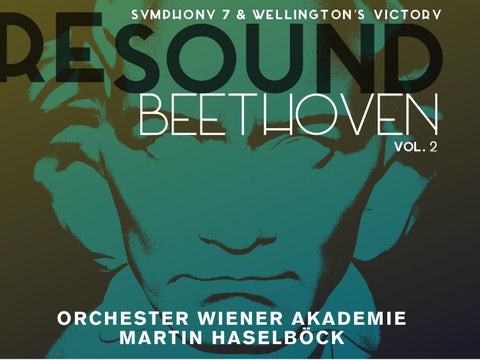
RESOUND BEETHOVEN Mit RESOUND bringen wir Beethovens Symphonien in die Säle und Theater ihrer Wiener Erstaufführungen und in die Konzerträume, in denen sie zu seiner Zeit aufgeführt wurden. Vier der sechs Uraufführungsorte der neun Symphonien sind ebenso noch vorhanden wie die insgesamt acht Wiener Säle und Theater, in denen Beethovens Orchesterwerke zu seinen Lebzeiten gespielt wurden. Unsere Besetzungen entsprechen in Größe und Instrumentarium jenen des Komponisten. Selbst die ungewöhnlichen Aufstellungen, so die des Chores VOR dem Orchester in der 9. Symphonie, berücksichtigen wir bei unseren Aufführungen. Unser Produzent Stephan Reh ist bemüht, die klangliche Besonderheit jedes einzelnen Raumes wiederzugeben: die weiche Fülle des barocken Landhaussaales, die kraftvolle Intimität des Eroica-Saales im Palais Lobkowitz, die Transparenz des Alten Universitätssaals, die trockene Klarheit des Theaters in der Josefstadt und die klangliche Größe des Redoutensaales, des damals größten verfügbaren Konzertraums in Wien. Musik im Klang ihrer Zeit wollen wir Ihnen mit unseren Interpretationen bieten. Den Möglichkeiten des historischen Instrumentariums wollen wir Klang und Aura jener Konzerträume hinzufügen, in denen der Komponist selbst seine Werke dirigiert und erlebt hat. Auf Schritt und Tritt begegnen wir in Wien Plätzen und Zeugnissen einer großen musikalischen Vergangenheit. Historische Architektur mit großer Musik zum Klingen zu bringen und diese gefühlte Authentizität uns heutigen Menschen zu vermitteln, ist das entscheidende Ziel von RESOUND Beethoven.
RESOUND BEETHOVEN RESOUND ramène les symphonies de Beethoven dans les salles et les théâtres de leur première exécution publique à Vienne et dans les salles de concert dans lesquelles on les joua de son temps. Des six endroits où ses neuf symphonies ont été jouées pour la première fois, quatre existent encore aujourd’hui, ainsi que huit salles et théâtres viennois dans lesquels ses œuvres pour orchestre ont été exécutées de son vivant. Nos formations orchestrales correspondent par leur taille et leur instrumentation aux orchestres dont disposait le compositeur, et nous tenons même compte dans nos interprétations de certaines particularités inhabituelles dans leur disposition, comme le fait de placer le chœur devant l’orchestre dans la 9ème symphonie. Stephan Reh, notre producteur, s’efforce de restituer les particularités acoustiques de chacun des lieux : la douce plénitude de la grande salle baroque du palais Niederösterreich (Landhaussaal), l’intimité puissante de la salle des fêtes du Palais Lobkowitz (Eroica-Saal), la transparence de la vieille salle de l’université, la clarté sèche du théâtre de la Josefstadt et la grandeur sonore de la salle des redoutes (Redoutensaal), qui était à l’époque la plus grande salle de concert de Vienne. Nos interprétations cherchent à restituer la sonorité d’origine des œuvres musicales : aux possibilités des instruments de musique historiques viennent s’ajouter l’acoustique et l’atmosphère de ces lieux de concert dans lesquels le compositeur lui-même a dirigé et entendu ses propres œuvres. À chaque pas que l’on fait à Vienne, on rencontre des lieux et des témoignages d’un passé musical grandiose : faire résonner ces édifices à l’architecture historique avec une musique splendide, et communiquer ce sentiment d’authenticité aux auditeurs d’aujourd’hui, tel est l’objectif majeur de « RESOUND Beethoven ». 6
RESOUND BEETHOVEN With RESOUND we bring the symphonies of Beethoven back to the halls and theatres of their Viennese premieres or other venues where they received their earliest performances. Four of the six venues where first performances of one or more of the nine symphonies were held still exist today, as do the eight Viennese halls and theatres where the composer’s orchestral works were performed in his lifetime. Our orchestral forces correspond in size and instrumentarium to those used by the composer, and our performances even respect unusual platform layouts, such as placing the chorus in front of the orchestra in Symphony no. 9. Our producer Stephan Reh strives to reproduce the specific acoustical qualities of each room: the mellow fullness of the Baroque Landhaussaal, the powerful intimacy of the Eroica-Saal in the Palais Lobkowitz, the transparency of the Old University Hall, the dry clarity of the Theater in der Josefstadt, and the voluminous acoustic of the Redoutensaal, in Beethoven’s day the largest concert venue available in Vienna. With our interpretations we wish to offer you music in the sound of its own time: we want to add to the possibilities of historical instruments the sound and the aura of the concert halls in which the composer himself conducted and experienced his works. At every step in Vienna one encounters places and signs of a great musical past: to make historic architecture echo with great music and to communicate that perceived authenticity to modern ears – that is the ultimate goal of RESOUND Beethoven.
8
› MENU
LUDWIG VAN BEETHOVEN (1770-1827) SYMPHONY NO.7 IN A MAJOR OP.92 1 2 3 4
I. POCO SOSTENUTO – VIVACE II. ALLEGRETTO III. SCHERZO. PRESTO IV. ALLEGRO CON BRIO
13’48 8’21 9’38 8’41
IGNAZ JOSEF PLEYEL (1757-1831) 5
JUBEL MARCH*
1’36
JAN LADISLAV DUSSEK (1760 -1812) 6
THE BRUNSWICK MARCH*
4’22
LUDWIG VAN BEETHOVEN WELLINGTON’S VICTORY OR THE BATTLE OF VITORIA OP.91 7 8
PART 1: BATTLE PART 2: VICTORY SYMPHONY
8’25 8’02
TOTAL TIME: 62’55
9
* Zwei Märsche, vorgetragen von Mälzels „mechanischem Feldtrompeter“ (in moderner Rekonstruktion mit Orchesterbegleitung) Orchesterbegleitung: Thomas Trsek Mälzels Trompeter: Die moderne Nachschöpfung von Mälzels Trompeter und dessen Repertoire entsteht als Kooperation von Wissenschaftlern und Künstlern mehrerer Institutionen: Doz. Dr. Hubert Kowar (Österreichische Akademie der Wissenschaften), Univ.Prof. Dr. Birgit Lodes (Universität Wien), Univ.Prof. Dr. Christoph Reuter (Universität Wien), Mag. Jakob Scheid (Universität für Angewandte Kunst Wien), Dr. Rebecca Wolf (Deutsches Museum München). * Deux marches jouées par le « trompette automate » de Mälzel (dans une reconstruction moderne avec accompagnement d’orchestre) Orchestration : Thomas Trsek La reconstruction moderne du « trompette automate » de Mälzel et de son répertoire est le résultat de la coopération d’universitaires et d’artistes de plusieurs institutions : Hubert Kowar (Académie autrichienne des sciences), Birgit Lodes (Université de Vienne), Christoph Reuter (Université de Vienne), Jakob Scheid (Université d’arts appliqués de Vienne), Rebecca Wolf (Musée allemand de Munich). * Two Marches performed by Mälzel’s ‘Mechanical Military Trumpeter’ (in a modern reconstruction with orchestral accompaniment) Orchestration: Thomas Trsek The modern recreation of Mälzel’s Trumpeter and its repertory is the result of co-operation between scholars and artists from several institutions: Doz. Dr. Hubert Kowar (Austrian Academy of Sciences), Univ.Prof. Dr. Birgit Lodes (University of Vienna), Univ.Prof. Dr. Christoph Reuter (University of Applied Arts, Vienna), Mag. Jakob Scheid (University of Vienna), Dr. Rebecca Wolf (Deutsches Museum, Munich). Reconstruction (2015) by Jakob Scheid of Nepomuk Mälzel's Mechanical Trumpeter (1813) 10
ORCHESTER WIENER AKADEMIE ON PERIOD INSTRUMENTS CONDUCTOR MARTIN HASELBÖCK FLUTE CHARLES BRINK *, MARIE-CELINE LABBÉ / ROBERT PINKL, SIEGLINDE GRÖSSINGER (W), GERTRAUD WIMMER OBOE EMMA BLACK *, FABIO D’ONOFRIO, GEORG FRITZ (W), SEBASTIAN FRESE (W) CLARINET PETER RABL *, REINHOLD BRUNNER, ROBERT SEBESTA (W), GILI RINOT (W) BASSOON KATALIN SEBELLA *, MAKIKO KURABAYASHI, TAKAKO KUNUGI (W), LÁSZLÓ FERIENCSIK (W) HORN HERMANN EBNER *, PETER HARSÁNYI, DEBORAH STURMAN, OLIVÉR BALÁZS MOLNÁR TRUMPET MARTIN PATSCHEIDER *, CHRISTIAN GRUBER, MARTIN MÜHRINGER (W), MARTIN WEICHSELBAUMER (W), THOMAS STEINBRUCKER (W), GERD BACHMANN (W) TROMBONE (W) GERHARD SCHNEIDER *, THOMAS MÄRZENDORFER / JÜRGEN SKLENAR, BERNHARD RAINER TIMPANI PAUL BRAMBÖCK PERCUSSION (W) DAVID CHRISTOPHER PANZL, IVAN BULBITSKI, JUMIN HONG, LOU LI ZHEN, JULIA PRÖTSCH, MADELINE TSAI VIOLIN 1 MARKUS HOFFMANN **, CYNTHIA ROBERTS, VERONIKA SCHULZ-ECKART, YUTA TAKASE, KATARZYNA BRZOZA, MARI-LIIS UIBO,GERLINDE SONNLEITNER, JOHANNA SUMMEREDER-LACROIX, GEZA STULLER, TIMEA HAM KATARZYNA BRZOZA / THOMAS TRSEK VIOLIN 2 PIROSKA BATORI *, MARIA KALUZHSKIKH, IRIS KRALL-RADULIAN, KATALIN HOFFMANN, AGNES PETERSEN, JULIA MALY, THOMAS TRSEK, JULIA HYENA KIM, ESTHER BACHKÖNIG, PIA SZEDENIK, CARMEN MEISSNER (W) VIOLA ILSE WINCOR *, AXEL KIRCHER, MARTINA REITER, DANIEL MOSER, ANNA DEKAN-EIXELSBERGER, JULIA KRIECHBAUM, TAMARA STAJNER CELLO PHILIPP COMPLOI *, DIETER NEL, GÜNTER SCHAGERL, THOMAS SPRING, MICHAL STAHEL, ALFONSO MARTIN BASS WALTER BACHKÖNIG *, ALEXANDRA DIENZ, BENEDICT ZIERVOGEL, HERWIG NEUGEBAUER, KRISTOF SZIMAN, JONAS CARLSSON CO-CONDUCTOR (WELLINGTON'S VICTORY) PETER PEINSTINGL MUSICAL ASSISTANT (STRINGS) DAVID DRABEK * Principal
** Concertmaster
W : Wellington's Victory
BEETHOVEN TRIFFT INSPECTOR GADGET
› MENU
VON ELISABETH MERKLEIN
Es war kurz vor seinem 43. Geburtstag, als Beethoven der ganz große Wurf gelang. Am Dirigentenpult des Wiener Universitätssaals leitete er ein spektakuläres Charity-Event mit einem Staraufgebot der Extraklasse. Der Erfolg an diesem 8. Dezember 1813 war so groß, dass das Konzert vier Tage später wiederholt werden musste. Das gesamte Who’s who der Musikszene Wiens hatte sich in dem riesigen Orchester eingefunden, um gleich zwei Uraufführungen des Komponisten zum Besten zu geben – von Salieri, Spohr und Schuppanzigh über Hummel bis Meyerbeer waren alle dabei. Für dieses Ereignis hatte sich Beethoven einen Unterhaltungsspezialisten mit an Bord geholt: Johann Nepomuk Mälzel, seines Zeichens „k. k. Hofmechanicus“, ein ebenso talentierter wie ausgefuchster Tüftler. Beethoven gehörte nicht nur zu den ersten und glühendsten Fans seines Metronoms, für das er bis heute bekannt ist – Mälzel war es auch, der für den unaufhaltsam ertaubenden Komponisten verschiedene Hörrohre düsentriebschen Ausmaßes konstruierte. Und vor allem: Er hatte sensationelle Musikautomaten auf Lager. WELLINGTON SIEGT IN DOLBY SURROUND Alles begann damit, dass Mälzel ein effektvolles Musikstück suchte, mit dem sein Panharmonikon glänzen konnte. Der riesige, schrankförmige Apparat, für den bereits Haydn und Salieri komponiert hatten, simulierte mit Stiftwalze und Blasebalg den Sound von Militärmusik. Und so war eine Schlacht die perfekte Inspirationsquelle: Die Wahl fiel auf die Schlacht bei Vitoria im Norden Spaniens, welche am 21. Juni 1813 stattgefunden hatte. Angeführt vom Duke of Wellington Arthur Wellesley – späterer britischer Premierminister und Namensgeber für Gummistiefel, die neuseeländische Hauptstadt und Rinderfilet im Blätterteig – besiegten englische Truppen die Franzosen, welche Spanien besetzt hatten. Napoleon selbst hatte den Kampf nicht persönlich miterlebt, allerdings sollte er Wellington zwei Jahre danach in Waterloo noch genauer kennenlernen. 12
Vom Spätsommer bis zum Herbst 1813 war Beethoven, assistiert von Mälzel, mit der Komposition von Wellingtons Sieg beschäftigt. Der ursprüngliche Plan, das Werk mit dem Panharmonikon aufzuführen, wurde allerdings wieder fallen gelassen – Mälzels Wundermaschine bekam doch keinen Auftritt. Stattdessen erhielt Beethovens erweiterte zweiteilige Fassung für Orchester den Zuschlag. Und mit der kam das Schlachtfeld mitten in den Universitätssaal. In der Ferne hört man zwei Militärkapellen mit Trommelwirbeln und Trompetenfanfaren die kampfbereiten englischen und französischen Truppen ankündigen, die aus entgegengesetzten Richtungen aufmarschieren. Von der englischen Seite tönt das stolze Rule, Britannia! herüber. Die französische Kapelle hält mit Marlbrough s’en va-t-en guerre dagegen, das heute als For He’s a Jolly Good Fellow ironischerweise wesentlich besser bekannt ist. Dann sind der Formalitäten genug ausgetauscht: Krachend prallen die Fronten mit donnernden Kanonen und knatternden Gewehren aufeinander, und die Special Effects fliegen einem nur so um die Ohren. Doch das Schicksal der Franzosen ist besiegelt, vom Marlbrough-Marsch bleibt nur noch eine kümmerliche Moll-Version übrig und die Verlierer schleichen geknickt von dannen. Die Briten dagegen feiern eine rauschende Siegessymphonie – natürlich mit ihrer Herrscherhymne God Save the King. Das patriotisch gestimmte Wiener Publikum, dem die jahrelange französische Besatzung in den Knochen steckte, konnte auf diese Showeinlage nur ekstatisch reagieren. VOM TUTEN UND BLASEN Wenn das Panharmonikon schon nicht zum Einsatz kam, so wollte Mälzel doch zumindest die zweite große Attraktion aus seiner Werkstatt präsentieren: den spektakulären mechanischen Trompeter. Fünf Jahre vorher hatte er den musikalischen Androiden konstruiert, und seitdem war der trötende Automat zum internationalen Publikumsliebling geworden. Etwa eineinhalb Meter groß war der imposante hölzerne Herr, auf einem Sockel stehend und herausgeputzt mit einer schmucken Uniform, die während der Konzertauftritte sogar gewechselt werden konnte. Seine 13
Trompete hielt er spielbereit gezückt. Das mechanische Innenleben, eine Stiftwalze, war im Brustteil versteckt. Einmal aufgezogen, war der Automat nicht mehr zu stoppen: Begleitet vom Orchester gab er an diesem Abend zwei Märsche von damaligen Starkomponisten zum Besten, dem böhmischen Klaviervirtuosen Jan Ladislav Dussek und Ignaz Josef Pleyel, Haydns Lieblingsschüler. Und laut Ohrenzeugen muss seine Performance absolut sensationell gewesen sein. DIE SYMPHONIE TANZT Beethovens 7. Symphonie hatte schon fast eine Patina angesetzt, so lange musste sie auf ihre außergewöhnliche Premiere warten: Obwohl eine Opusnummer nach Wellingtons Sieg angesiedelt, entstand sie fast zwei Jahre vorher, vom Herbst 1811 bis zum Frühjahr 1812. Dafür brach sie sich nun umso gewaltiger Bahn. Seit Richard Wagner trägt sie das Label „Apotheose des Tanzes“, und die Ecksätze sind so wild, dass sie auch entsetzte Reaktionen ernteten. Carl Maria von Weber erklärte Beethoven jedenfalls „reif fürs Irrenhaus“. Zum absoluten Kassenschlager wurde aber ausgerechnet der düstere, oft als Trauermarsch bezeichnete zweite Satz mit seinem unaufhaltsam dahinschreitenden Ostinato-Rhythmus. Das schwermütige Hauptthema hatte Beethoven eigentlich schon 1806 für das 3. Rasumowsky-Quartett komponiert, es aber damals dann doch in der Schublade gelassen. Die Reaktivierung war eindeutig ein Glücksgriff. Im Gegensatz zu Wellingtons Sieg hat Beethoven der 7. Symphonie kein Programm mitgegeben – umso mehr ließen eifrige Hörer ihrer Fantasie freien Lauf: Die Assoziationen reichten von einem antiken Rebenfest bis zu einer Gerichtsverhandlung. Vor allem eine Verbindung zum unvermeidlichen Napoleon wird der Symphonie nachgesagt. Wahrscheinlich, weil sie in den ersten Jahren meist zusammen mit Wellingtons Sieg aufgeführt wurde: Dieser sollte für den Kampf, die Symphonie für den ausgelassenen Triumph über Napoleon stehen. In jedem Fall ist Beethoven eine Symphonie gelungen, die nicht nur die meisten Kritiker, sondern sogar ihn selbst zufriedenstellte. Immerhin lobte er sie als „eins der glücklichsten Produkte meiner schwachen Kräfte“ – und das will was heißen. 14
15
MARTIN HASELBÖCK Dirigent, Organist, Komponist, Produzent Geboren 1954 in eine Wiener Musikerfamilie, Studien in Wien und Paris. Als Organist Solist unter Claudio Abbado, Lorin Maazel, Wolfgang Sawallisch u.v.a., weltweite Konzerttourneen, Zusammenarbeit mit den Komponisten Ernst Krenek, György Ligeti, Alfred Schnittke u.v.a., zahlreiche Einspielungen, so die Gesamtwerke für Orgel von Mozart und Liszt. Professor an der Musikuniversität Wien. Als Dirigent Gründer und Leiter des Orchesters Wiener Akademie, Music Director des Musica Angelica Baroque Orchestra Los Angeles. Gefragter Gastdirigent bedeutender Orchester in Berlin, Madrid, Philadelphia, Sankt Petersburg, Sydney, San Francisco u.v.a. Dirigent von Opernneuproduktionen bei bedeutenden Festivals. Aufführungen und Einspielungen der Orchesterwerke von Beethoven und Liszt in authentischer Besetzung und Instrumentarium in den historischen Konzerträumen. Schöpfer und Produzent neuartiger Musiktheaterproduktionen mit Partnern wie John Malkovich, Michael Sturminger und Virgil Widrich (Infernal Comedy, Casanova Variations, Black Cat ). Als Dirigent dieser Produktionen in den vergangenen Jahren mehr als 150 Aufführungen an 75 Spielorten. www.haselboeck.org
16
ORCHESTER WIENER AKADEMIE − 1985 von Martin Haselböck gegründet − Originalklangorchester mit Repertoire von Barock bis zur Moderne („Musik im Klang ihrer Zeit“) − Konzertzyklus im Wiener Musikverein seit 1991 − Internationale Konzerttourneen, Orchestrerresidenzen bei bedeutenden Festivals − Zusammenarbeit mit Cecilia Bartoli, Thomas Hampson, Isabelle Faust, Ronald Brautigam, Anna Prohaska, Jonas Kaufmann u.v.a − Mehr als 150 vielfach preisgekrönte CDs und DVDs. Gesamteinspielungen mit Werken von Schubert, Bach, Beethoven und Liszt (RESOUND) sowie mit Schwerpunkt Barock in Wien (Musica Imperialis) − Opernorchester bei Festivals in Wien, Salzburg, Göttingen, Schwetzingen, Reinsberg in Neuproduktionen mit Werken von Händel, Mozart, Beethoven, Weber u.v.a. − Seit 2009 Zusammenarbeit mit John Malkovich in Musiktheaterproduktionen (The Infernal Comedy, The Giacomo Variations) − Als Orchester Protagonist des Spielfilms „Casanova Variations“ von Michael Sturminger
www.wienerakademie.at resound.wienerakademie.at facebook.com/orchesterwienerakademie
17
› MENU
ORIGINALSCHAUPLATZ FESTSAAL DER ÖSTERREICHISCHEN AKADEMIE DER WISSENSCHAFTEN
− 1625 Errichtung einer Kirche und eines Kollegiums am Ende der Bäckerstrasse durch − − − − − − − − − − −
die Jesuiten, denen kurz davor durch Ferdinand II. die Leitung der theologischen und philosophischen Fakultät der Universität übertragen worden war 1752 Kaiserin Maria Theresia beauftragt den Bau einer „Aula“ am damaligen Universitätsplatz Der betraute Erzbischof von Wien, Graf Trautson, lässt den Rokokobau in den Jahren 1753 – 1756 errichten Der im ersten Stock gelegene Festsaal wird nach einem Programm von Pietro Metastasio von Gregorio Guglielmi mit einem Deckengemälde ausgestattet Vorerst ein Schauplatz zeremoniellen Geschehens, auch physikalischer und mechanischer Hörsaal Ab 1800 musikalische Veranstaltungen, jeweils mit spezieller Erlaubnis des Rektorats als Benefizveranstaltungen durchgeführt 1807/08 Durchführung der winterlichen Liebhaber Concerte 27. 3. 1808 Aufführung von Haydns Schöpfung in Anwesenheit des Komponisten (und Beethovens). Gemälde von Baltasar Wiegand 8. und 12. 12. 1813 Benefizakademie Beethovens zugunsten der in der Schlacht von Hanau verwundeten Soldaten Nach der Revolution 1848 Übergabe des Gebäudes an die „Kaiserliche Akademie der Wissenschaften“ 1961 Zerstörung des Deckengemäldes und der Inneneinrichtung durch Feuer 1962/63 Rekonstruktion des Festsaales 18
QUAND BEETHOVEN RENCONTRE L'INSPECTEUR GADGET PAR ELISABETH MERKLEIN
› MENU
C’est à la veille de son quarante-troisième anniversaire que Beethoven connut son grand moment de gloire. Au pupitre de la Redoutensaal de l’Université de Vienne, il dirigeait ce soir-là un spectaculaire Charity-Event, avec une pléiade de stars triées sur le volet. Le succès, en ce 8 décembre 1813, fut si monumental qu’il fallut redonner le concert quatre jours plus tard. Tout le who’s who du monde musical viennois se trouvait rassemblé au sein du gigantesque orchestre pour faire entendre deux créations du compositeur – de Salieri, Spohr et Schuppanzigh en passant par Hummel et jusqu’à Meyerbeer, pas un ne manquait à l’appel. Pour l’occasion, Beethoven avait pris à son bord un spécialiste ès divertissements : Johann Nepomuk Maelzel, « Mécanicien de cour » de son état et touche-à-tout de génie. Beethoven ne fut pas seulement un des premiers et des plus ardents inconditionnels de son métronome – qui lui valut de passer à la postérité ; c’est encore Maelzel qui fabriqua pour le compositeur, dont la surdité allait galopant, toute une gamme de cornets acoustiques sortis tout droit de l’atelier de Géo Trouvetou. Et surtout, il avait en stock de fantastiques automates musicaux. WELLINGTON TRIOMPHE EN DOLBY SURROUND Tout commença avec Maelzel, qui cherchait un morceau « à effet » pour mettre en valeur son « Panharmonicon ». L’énorme instrument en forme d’armoire, pour lequel Haydn et Salieri avaient déjà écrit, imitait, au moyen d’un cylindre à picots et d’un soufflet, le son d’une fanfare militaire. On ne pouvait donc trouver mieux qu’une bataille comme source d’inspiration : le choix se porta sur celle de Vitoria, dans le Nord de l’Espagne, qui avait eu lieu le 21 juin de cette même année 1813. Commandées par Arthur Wellesley, duc de Wellington – futur Premier ministre britannique qui devait laisser son nom à des bottes en caoutchouc, à la capitale de la Nouvelle-Zélande et à une recette de filet de bœuf en croûte, les troupes anglaises battirent les Français qui occupaient l’Espagne. Napoléon lui-même n’avait pas 19
assisté à la bataille ; il allait néanmoins, deux ans plus tard, à Waterloo, avoir l’occasion de faire plus ample connaissance avec Wellington. De la fin de l’été jusqu’à l’automne 1813, Beethoven, assisté de Maelzel, fut occupé à la composition de La Victoire de Wellington. Le projet initial d’exécution de l’œuvre avec le Panharmonicon fut toutefois abandonné – la machine miraculeuse de Maelzel demeura au placard. À la place, ce fut la version pour grand orchestre en deux parties qui décrocha la timbale. Et avec elle, le champ de bataille était transplanté au beau milieu de la salle de l’Université. On entend dans le lointain deux orchestres militaires annonçant, à grand renfort de roulements de tambours et de fanfares de trompettes, l’arrivée de part et d’autre des troupes anglaises et françaises, prêtes à en découdre. Du côté anglais retentit le fier Rule, Britannia! Les Français ripostent en jouant Marlbrough s’en va-t-en guerre, plus connu aujourd’hui hors de France dans sa version parodique For He’s a Jolly Good Fellow. Assez pour l’échange de formalités : dans un vacarme furieux, les deux armées s’affrontent, accompagnées par le tonnerre des canons et le crépitement des fusils, et les effets spéciaux fusent aux oreilles de l’auditeur. Mais le sort des Français est désormais scellé : de la marche de Marlbrough ne subsiste plus qu’une larmoyante version en mineur, et les vaincus battent lamentablement en retraite. Les Anglais, en revanche, célèbrent leur triomphe par une tonitruante symphonie de victoire – dans laquelle, bien sûr, retentit l’hymne royal God Save the King. Le public viennois, dont la fibre patriotique se trouvait exacerbée par des années d’occupation française encore mal digérée, ne pouvait qu’applaudir frénétiquement à une telle démonstration. CORNES ET TROMPETTES S’il n’était plus question du Panharmonicon, Maelzel voulait au moins présenter la deuxième grande attraction de son atelier : le spectaculaire trompette mécanique. Il avait construit cet androïde musical cinq ans auparavant et, depuis lors, l’automate corneur était devenu la coqueluche du public international. Mesurant à peu près un mètre cinquante, l’imposant bonhomme de bois se dressait sur un socle, paré d’un 20
pimpant uniforme qui pouvait même être changé au cours du concert. Il tenait sa trompette levée, prêt à souffler dans l’instrument. Le mécanisme qui lui donnait vie, un cylindre à picots, était dissimulé dans la poitrine. Une fois remonté, on n’arrêtait plus l’automate : accompagné par l’orchestre, il exécuta ce soir-là deux marches de compositeurs-vedettes de l’époque, le Tchèque Jan Ladislav Dussek, pianiste virtuose, et Ignaz Josef Pleyel, l’élève favori de Haydn. Et s’il faut en croire les témoins auriculaires, le spectacle fut absolument sensationnel. LA SYMPHONIE DANSE La Septième Symphonie de Beethoven avait presque eu le temps de prendre de la patine, tant elle avait attendu avant sa création triomphale : bien que portant un numéro d’opus postérieur à La Victoire de Wellington, elle fut composée presque deux ans auparavant, de l’automne 1811 au printemps 1812. Sa carrière n’en fut que plus éclatante. Depuis Richard Wagner, elle est étiquetée comme « Apothéose de la danse », et les mouvements extrêmes sont tellement échevelés qu’ils ne manquèrent pas de susciter aussi quelques réactions effrayées. Carl Maria von Weber déclara pour sa part que Beethoven était « mûr pour l’asile de fous ». Mais c’est sans aucun doute le sombre deuxième mouvement, souvent désigné comme « marche funèbre », avec l’avancée inexorable de son rythme obstiné, qui fit un véritable tabac. Le thème principal, d’une poignante mélancolie, avait en fait été composé par Beethoven dès 1806 pour le troisième de ses quatuors Razumovsky, mais il était demeuré dans un fond de tiroir. Le recyclage fut un coup de maître. À l’inverse de La Victoire de Wellington, Beethoven n’a attribué aucun programme à sa Septième Symphonie – ce qui ne pouvait manquer de titiller d’autant plus l’imagination d’auditeurs zélés : les associations allèrent d’une antique fête bacchique jusqu’à un débat judiciaire. Avant tout, on voulut assigner à la symphonie un lien avec l’inévitable Napoléon ; probablement parce que, dans les premiers temps, elle était le plus souvent jouée avec La Victoire de Wellington : celle-ci devait représenter la bataille, celle-là le triomphe joyeux sur l’Empereur. Quoi qu’il en soit, Beethoven écrivit là une symphonie qui réussit non seulement à contenter la plupart des critiques, mais à le satisfaire lui-même. Il en parlait d’ailleurs comme d’« un des plus heureux produits de [ses] faibles forces ». Et ce n’est pas peu dire. 21
MARTIN HASELBÖCK Chef d’orchestre, organiste, compositeur et producteur. Né en 1954 dans une famille musicienne viennoise, il a fait ses études à Vienne et à Paris. Comme organiste, il a joué en soliste lors de tournées de concerts dans le monde entier sous la direction de Claudio Abbado, Lorin Maazel et Wolfgang Sawallisch, entre autres. Il a travaillé notamment avec les compositeurs Ernst Krenek, György Ligeti, Alfred Schnittke, et réalisé de nombreux enregistrements, comme l’intégrale de l’œuvre d’orgue de Mozart et de Liszt. Il est professeur à l’Université de musique de Vienne. En tant que chef d’orchestre, il a fondé l’Orchester Wiener Akademie qu’il dirige. Il est directeur musical de l’orchestre Musica Angelica Baroque de Los Angeles et chef invité de plusieurs orchestres importants à Berlin, Madrid, Philadelphie, Saint-Petersburg, Sydney, San Francisco, etc. Il a dirigé de nouvelles productions d’opéras dans des festivals de renom. Il a interprété et enregistré dans des lieux de concerts historiques des œuvres pour orchestre de Beethoven et de Liszt avec une formation orchestrale dont la composition et les instruments correspondent aux données historiques. Il est le créateur et le producteur de spectacles de théâtre et de musique d’un genre nouveau, avec des partenaires comme John Malkovich, Michael Sturminger et Virgil Widrich (Infernal Comedy, Casanova Variations, Black Cat ). Ces spectacles, dont il est le chef d’orchestre, ont eu au cours de ces dernières années plus de 150 représentations dans 75 lieux différents. www.haselboeck.org 22
ORCHESTER WIENER AKADEMIE − Fondé en 1985 par Martin Haselböck − L’orchestre joue sur instruments d’époques, son répertoire comprend la musique des époques − − − − − − −
baroque et moderne (« musique dans la sonorité de son temps ») Il donne des cycles de concerts au Musikverein de Vienne depuis 1991 Il a fait des tournées de concerts internationales et est orchestre en résidence dans d’importants festivals Il a joué avec des partenaires comme Cecilia Bartoli, Thomas Hampson, Isabelle Faust, Ronald Brautigam, Anna Prohaska, Jonas Kaufmann, et bien d’autres encore L’Orchester Wiener Akademie a reçu plus de 150 récompenses pour ses enregistrements (CD et DVD), qui comprennent des œuvres de Schubert, Bach, Beethoven et Liszt (« RESOUND ») ainsi que des disques centrés sur la musique baroque à Vienne (Musica Imperialis). Il a interprété des productions nouvelles d’opéras de Haendel, Mozart, Beethoven et Weber, entre autres, lors de festivals à Vienne, Salzbourg, Göttingen, Schwetzingen ou Reinsberg. Depuis 2009, il travaille avec John Malkovich dans des spectacles de théâtre et de musique (The Infernal Comedy, The Giacomo Variations) Il a été l’orchestre-protagoniste du film Casanova Variations de Michael Sturminger
www.wienerakademie.at resound.wienerakademie.at facebook.com/orchesterwienerakademie
23
› MENU
UN LIEU DE CONCERT HISTORIQUE
LA SALLE DES FÊTES DE L’ACADÉMIE AUTRICHIENNE DES SCIENCES
− 1625 : les jésuites construisent une église et un collège au bout de la Bäckerstrasse.
L’empereur Ferdinand II de Habsbourg leur avait confié peu auparavant la direction de la faculté de théologie et de philosophie de l’Université. − 1752 : l’impératrice Marie-Thérèse décide de faire construire une « grande salle » sur la place de l’Université de l’époque. − Le bâtiment rococo est édifié de 1753 à 1756 sous la direction de l’archevêque de Vienne, le comte Johann Joseph von Trautson. − Le plafond de la salle des fêtes, située au premier étage, est décoré d'une fresque par le peintre Gregorio Guglielmi d’après un programme iconographique imaginé par Pietro Metastasio. − Dans la grande salle se déroulent d’abord des cérémonies, mais aussi des cours de physique et de mécanique. − À partir de 1800, on y donne des concerts de bienfaisance, toujours avec l’autorisation expresse du rectorat. − Pendant l’hiver 1807–1808 y ont lieu les « Concerts d’amateurs ». − 27 mars 1808 : exécution de l’oratorio La Création de Haydn, en présence du compositeur et de Beethoven. L’événement fait l’objet d’une peinture de Balthasar Wigand. − 8 et 12 décembre 1813 : académie musicale de Beethoven au profit des soldats blessés lors de la bataille de Hanau. − Après la révolution de 1848, le bâtiment est attribué à l’Académie impériale des sciences. − 1961 : un incendie détruit la fresque du plafond et la décoration d’intérieur. − 1962–1963 : reconstruction de la salle des fêtes. 24
BEETHOVEN MEETS INSPECTOR GADGET
› MENU
BY ELISABETH MERKLEIN
It was shortly before his forty-third birthday that Beethoven hit the jackpot. On the podium of the Great Hall of Vienna University, he conducted a spectacular charity event with a star-studded cast from the very top drawer. On that date, 8 December 1813, the success was so great that the concert had to be repeated four days later. The entire who’s who of the Viennese musical scene had reported for duty in the huge orchestra in order to regale the audience with not just one but two premieres of works by the composer – from Salieri, Spohr and Schuppanzigh to Hummel to Meyerbeer, they were all there. For this event, Beethoven had taken an entertainment specialist on board: Johann Nepomuk Mälzel, ‘k. k. Hofmechanicus’ (Mechanic to the Imperial and Royal Court) by trade, an inventor as talented as he was crafty. Beethoven was not just one of the first and most ardent fans of his metronome, for which he is still known to this day; it was also Mälzel who constructed various positively Heath Robinson ear trumpets to compensate for the composer’s inexorably advancing deafness. And, above all, he had a sensational stock of musical automats. WELLINGTON WINS IN DOLBY SURROUND It all started because Mälzel was looking for an effective piece of music to show off his Panharmonicon. This huge cabinet-like apparatus, for which Haydn and Salieri had already composed, simulated the sound of military music by means of pinned cylinders and bellows. And so a battle was the perfect source of inspiration: his choice fell on the Battle of Vitoria, which had taken place in northern Spain on 21 June 1813. Led by Arthur Wellesley, Marquess and future Duke of Wellington – later to be British Prime Minister and to give his name to the gumboot, the capital of New Zealand, and beef fillet in puff pastry – the British troops had defeated the French occupiers of Spain. Napoleon had not witnessed the fight personally, but he would get to know Wellington at closer quarters two years later, at Waterloo. 25
From late summer to autumn 1813, assisted by Mälzel, Beethoven was engaged in the composition of Wellingtons Sieg (Wellington’s Victory). The original plan to perform the work with the Panharmonicon was, however, dropped – Mälzel’s wondrous machine was deprived of its performance. Instead, Beethoven’s expanded two-part version for orchestra got the contract. And, with it, the battlefield invaded the University’s hall. In the distance we hear two military bands with drum rolls and trumpet fanfares announcing the British and French troops, ready for the fray, who muster from opposite directions. From the English side the proud Rule, Britannia! wafts over the scene. The French band ripostes with Marlbrough s’en va-t-en guerre, which, ironically, is nowadays much better known as For He’s a Jolly Good Fellow. Then the exchange of formalities is over: the battle lines clash explosively with thundering cannons and rattling muskets, and the special effects fairly whistle around our ears. But the fate of the French is sealed; all that is left of the Marlborough march is a puny version in the minor, and the crestfallen losers slink away. The British, on the other hand, celebrate a resounding victory symphony – as a matter of course, with their national anthem God Save the King. The patriotically minded Viennese public, for whom the years of French occupation were still a painful memory, could not but respond ecstatically to this showpiece. OF TOOTING AND BLASTING Even though the Panharmonicon was not deployed, Mälzel wanted to present at least the second major attraction from his workshop: the spectacular Mechanical Trumpeter. He had built this musical android five years earlier, and since then the tooting automaton had become an international crowd-pleaser. The imposing wooden gentleman was approximately one and a half metres tall, standing on a pedestal and bedizened with a dapper uniform that could even be changed during concert performances. He brandished his trumpet ready to play. The mechanical inner workings, a pinned cylinder, were hidden in the chest section. Once wound up, the machine was unstoppable: that evening, accompanied by 26
the orchestra, it presented a march apiece by two star composers of the time, the Bohemian keyboard virtuoso Jan Ladislav Dussek and Haydn’s favourite pupil Ignaz Pleyel. And, if eyewitness accounts are to be believed, its performance must have been absolutely sensational. THE SYMPHONY DANCES Beethoven’s Symphony no.7 had already virtually acquired a patina, so long did it have to wait for its extraordinary premiere: although it comes one opus number after Wellingtons Sieg, it was written nearly two years before it, between the autumn of 1811 and the spring of 1812. But the new path it blazed was all the more prodigious as a result. Ever since Richard Wagner it has borne the label ‘apotheosis of the dance’, and the first and last movements are so ferocious that they have reaped horrified reactions. Carl Maria von Weber, at any rate, declared that Beethoven was ‘ripe for the madhouse’. But the absolute smash hit was – of all things – the gloomy second movement, often referred to as a funeral march, with its relentlessly striding ostinato rhythm. Beethoven had actually composed its melancholy main theme in 1806 for the Third ‘Razumovsky’ Quartet, but then shelved it. The decision to recycle it here was clearly a felicitous one. Unlike Wellingtons Sieg, Beethoven gave his Seventh Symphony no programme – which only allowed the more avid listeners to let their imaginations run even wilder: the associations ranged from an ancient celebration of the vine to a court hearing. Above all, the symphony was said to be linked with the inescapable figure of Napoleon. This is probably because, in its first few years, it was usually performed along with Wellingtons Sieg: the latter was supposed to represent the struggle with Napoleon, and the symphony the exuberant triumph over him. However that may be, Beethoven here succeeded in producing a symphony that satisfied not only most of the critics, but even himself. After all, he praised it as ‘one of the happiest products of my weak forces’ – and that was saying something.
27
MARTIN HASELBĂ–CK Conductor, organist, composer, producer. Born in 1954 into a musical family in Vienna, studied in Vienna and Paris. As an organist, soloist under Claudio Abbado, Lorin Maazel, Wolfgang Sawallisch, and many others; worldwide concert tours. Collaboration with the composers Ernst Krenek, GyĂśrgy Ligeti, Alfred Schnittke, and many others; numerous recordings, including the complete organ works of Mozart, Liszt. Professor at the University of Music and Performing Arts, Vienna. As a conductor, founder and director of the Wiener Akademie Orchestra, Music Director of Musica Angelica Baroque Orchestra of Los Angeles. Sought-after guest conductor with leading orchestras in Berlin, Madrid, Philadelphia, St Petersburg, Sydney, San Francisco. Conductor of new operatic productions at major festivals. Performances and recordings of orchestral works by Beethoven and Liszt with authentic forces and instrumentarium in the historical concert halls. Creator and producer of innovative music theatre productions with partners such as John Malkovich, Michael Sturminger, and Virgil Widrich (Infernal Comedy, Casanova Variations, Black Cat ). More than 150 performances in 75 venues as conductor of these productions in recent years. www.haselboeck.org 28
ORCHESTER WIENER AKADEMIE − − − − − − − − −
Founded in 1985 by Martin Haselböck Orchestra aiming to produce the original sound of repertory from the Baroque to modern times (‘Music in the sound of its own time’) Concert series at the Vienna Musikverein since 1991 International concert tours, orchestral residencies at leading festivals Collaborations with Cecilia Bartoli, Thomas Hampson, Isabelle Faust, Ronald Brautigam, Anna Prohaska, Jonas Kaufmann, and many others More than 150 multi-award-winning CDs and DVDs. Complete recorded cycles of works by Schubert, Bach, Beethoven and Liszt (RESOUND), and with baroque music from Vienna (Musica Imperialis) Appearances as opera orchestra at festivals in Vienna, Salzburg, Göttingen, Schwetzingen, Reinsberg, in new productions of works by Handel, Mozart, Beethoven, Weber, etc. Since 2009, collaboration with John Malkovich in music theatre productions (The Infernal Comedy, The Giacomo Variations) Orchestral protagonist of Michael Sturminger’s feature film Casanova Variations www.wienerakademie.at resound.wienerakademie.at facebook.com/orchesterwienerakademie
29
ORIGINAL PERFORMANCE VENUE
› MENU
CEREMONIAL HALL OF THE AUSTRIAN ACADEMY OF SCIENCES
−
1625: Construction of a church and college at the end of Bäckerstrasse by the Jesuits, to whom Ferdinand II had just granted the direction of the Faculty of Theology and
− − − − − − − − − − −
Philosophy at the University 1752: Empress Maria Theresa commissions the construction of an ‘aula’ (lecture hall) on the old Universitätsplatz The Archbishop of Vienna, Count Trautson, has the Rococo building erected between 1756 and 1753 The Ceremonial Hall situated on the first floor is decorated with a ceiling fresco by Gregorio Guglielmi based on a programme by Pietro Metastasio Initially a venue for ceremonial events and lecture theatre for physics and mechanics From 1800 also used for fundraising concerts, always by special permission of the Rector 1807/08: Introduction of winter ‘Liebhaber Concerte’ (Concerts for music lovers)
27 March 1808: Performance of Haydn’s Creation in the presence of the composer (and of Beethoven), painted by Baltasar Wiegand 08 and 12 December 1813: Beethoven’s charity concerts in aid of soldiers wounded at the Battle of Hanau After the 1848 Revolution, the building is handed over to the Imperial Academy of Sciences 1961: Ceiling fresco and interior destroyed by fire 1962-63: Reconstruction of the Ceremonial Hall 30
SPECIAL THANKS TO THE AUSTRIAN ACADEMY OF SCIENCES AND TO PRESIDENT ANTON ZEILINGER FOR THEIR GRACIOUS INVOLVEMENT IN THIS PROJECT RECORDED FROM 10 TO 14 MARCH 2015 AT THE CEREMONIAL HALL OF THE AUSTRIAN ACADEMY OF SCIENCES (VIENNA, AUSTRIA) STEPHAN REH DEAN KUSTRA
recording producer, editing & mastering editing
ORCHESTER WIENER AKADEMIE MARTIN HASELBÖCK artistic director LINDA WIESINGER orchestra manager MUZIKKONZEPT ELISABETH THAUSING director CHRISTOPH HASELBÖCK production RESOUND BEETHOVEN SCIENTIFIC BOARD BIRGIT LODES/MARKUS GRASSL/KLAUS ARINGER STEFAN WEINZIERL CHARLES JOHNSTON english translation MICHEL CHASTEAU french translation (p.18-20) LAURENT CANTAGREL french translation (p.21-23) GAËLLE LÖCHNER graphic design & cover concept ROBERT LEEB (LERO COMMUNICATION) cover photo ÖSTERREICHISCHE AKADEMIE DER WISSENSCHAFTEN MEINRAD HOFER photos (p.7 & 14) JAKOB SCHEID photo (p.9) ALPHA CLASSICS DIDIER MARTIN director PAULINE PUJOL production AMÉLIE BOCCON-GIBOD editorial coordinator ALPHA 473 ORCHESTER WIENER AKADEMIE / OUTHERE MUSIC FRANCE 2015 © ALPHA CLASSICS / OUTHERE MUSIC FRANCE 2015
photo (p.3)
32
ALPHA 473