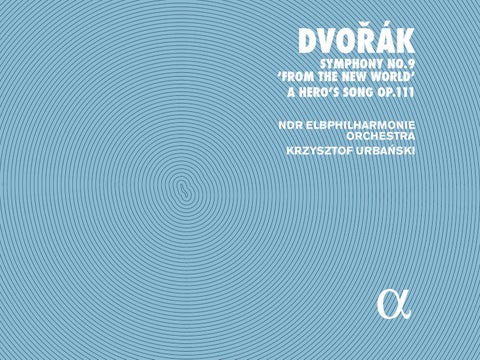
DVOŘÁK
SYMPHONY NO.9 ‘FROM THE NEW WORLD’ A HERO’S SONG OP.111 NDR ELBPHILHARMONIE ORCHESTRA ´ KRZYSZTOF URBANSKI
MENU › TRACKLIST › TEXTE FRANÇAIS › ENGLISH TEXT › DEUTSCHER TEXT
ˇ ANTONÍN DVORÁK (1841-1904)
SYMPHONY NO.9 IN E MINOR, OP.95 ‘FROM THE NEW WORLD’
1 2 3 4
I. ADAGIO – ALLEGRO MOLTO II. LARGO III. SCHERZO. MOLTO VICACE IV. ALLEGRO CON FUOCO
11'17 11'34 7'33 11'14
5
A HERO’S SONG, OP.111
19'52
TOTAL TIME: 61'30
NDR ELBPHILHARMONIE ORCHESTRA ´ KRZYSZTOF URBANSKI
› MENU
SIMPLIZITÄT UND RESPEKT ´ KRZYSZTOF URBANSKI ÜBER DIE VORLIEGENDE ˇ DVORÁK-EINSPIELUNG ´ HERR URBANSKI, VERRATEN SIE UNS ZUERST ETWAS ÜBER IHREN PERSÖNLICHEN ZUGANG ZU DVO�ÁKS NEUNTER SINFONIE. WIE WÜRDEN SIE DAS WERK IM VERGLEICH ZU DEN ANDEREN DVO�ÁK-SINFONIEN CHARAKTERISIEREN? Krzysztof Urba�ski: Dvo� áks Neunte war das Stück, das ich bei meinem allerersten Konzert mit einem professionellen Orchester dirigiert habe. Es war die erste seiner Sinfonien, die ich studiert habe, aber erst nach dem Studium aller anderen Sinfonien habe ich sie richtig zu verstehen begonnen. Ich entdeckte, wie sehr Dvo� ák in der Neunten seine musikalische Sprache vereinfachte. In den anderen acht Sinfonien kann man spüren, wie sehr der Komponist um unkonventionelle Kombinationen und überraschende Wendungen bemüht war. In seiner neunten Sinfonie sind die Phrasen, die Orchestration und der Bauplan des Werks dagegen einfacher. Ich fand heraus, dass der Schlüssel zum vollen Verstehen dieser Musik ihre SIMPLIZITÄT ist. … DIE NATÜRLICH AUCH DER GRUND FÜR DIE GROSSE POPULARITÄT DER SINFONIE SEIN KÖNNTE. WARUM BRAUCHEN WIR JETZT NOCH EINE WEITERE AUFNAHME DIESES JA BEREITS OFT EINGESPIELTEN WERKS? K. U. Ich glaube, dass es tatsächlich ihre organische Natürlichkeit ist, die diese Sinfonie so erfolgreich und zu einem der meistaufgeführten Stücke macht. Ihre Popularität ist aber gleichzeitig auch ihr Fluch. Denn dieses Meisterwerk ist von so vielen Schichten unterschiedlicher Traditionen und Aufführungsgewohnheiten überwuchert worden, dass es sehr schwierig ist, den eigentlichen Kern freizulegen. Ich habe es mir daher zur Aufgabe gemacht, die Essenz des Werks zu erkennen und tiefer zu den Wurzeln vorzudringen. Also schaute ich mir das Manuskript und die Originalstimmen an, die bei der Uraufführung in New York verwendet wurden. Mein größter Wunsch wurde es, die Sinfonie einmal nicht so zu hören wie sie heute klingt, auch gar 6
› MENU
nicht unbedingt so, wie sie bei der Uraufführung geklungen haben mag, sondern so, wie Dvo� ák sie sich während des Komponierens vorgestellt haben muss. Durch meine Recherche hatte ich die wunderbare Gelegenheit, die Musik so zu sehen, wie sie ursprünglich gedacht war – und das war eine absolute Offenbarung. KÖNNEN SIE DEN HÖRERN DER CD EINIGE STELLEN IN DER PARTITUR UND IHRE INTERPRETATORISCHEN ENTSCHEIDUNGEN ETWAS GENAUER ERKLÄREN? K. U. Beispielsweise habe ich herausgefunden, dass die ersten vier Takte des dritten Satzes bei der ersten Wiederholung weggelassen werden sollen. Das gibt ihnen eine ganz andere Bedeutung, wenn sie dann im Da Capo wiederkommen und zeigt einmal mehr die geniale Struktur des Stücks. Als ich das Ende der Sinfonie analysierte, wie es den letzen Satz und das ganze Stück abrundet, erschien mir Dvo� áks letzte Tempoanweisung „Allegro con fuoco“ (die von den Herausgebern zu „un peco meno mosso“ verändert wurde) viel logischer; sie vereinfacht die Konstruktion des vierten Satzes. Genauso im ersten Satz: Die Einleitung wird traditionell in drei unterschiedlichen Tempi gespielt, aber das war nicht Dvo� áks Intention. Er schrieb genau ein Tempo vor, um der Musik eine Richtung zu geben und uns so auf das folgende Allegro molto vorzubereiten. Nur das originale Tempo zeigt, wie klar und klassisch sein Ansatz in Bezug auf die Sonatenform des Allegro war. Im Übrigen ist auch die Wiederholung der Exposition, die Dvo� ák in der siebten Sinfonie bewusst wegließ und die für viele Interpreten auch in der Neunten unnötig ist, absichtsvoll gesetzt und gibt dem Satz meiner Meinung nach eine perfekte Balance. Ich glaube, dass die Anerkennung von Dvo� áks Gedanken der einzige Weg ist, die geniale Konstruktion seiner meisterlichen Komposition - einer der stimmigsten Sinfonien der Musikgeschichte - zu bewundern und zu genießen. Mein Zugang zur neunten Sinfonie könnte in einem einzigen Wort zusammengefasst werden: RESPEKT. WELCHE BEDEUTUNG HABEN GENERELL STUDIOAUFNAHMEN FÜR SIE? MACHEN SIE IN IHRER INTERPRETATION UNTERSCHIEDE GEGENÜBER EINER LIVE-AUFFÜHRUNG DESSELBEN WERKS? K. U. Bei einer Aufnahme kann man natürlich keine Atmosphäre der Spontaneität wie in LiveKonzerten erreichen. Die Interaktion zwischen den Künstlern und dem Publikum bewirkt 7
eine extra Dosis Adrenalin. Ich liebe dieses Gefühl, wenn die Musik hier und jetzt geschieht. Und selbstverständlich kann es niemals bei einer Aufnahme simuliert werden. Auf der anderen Seite ist das Arbeiten im Studio ebenfalls faszinierend, weil es ganz andere Möglichkeiten bietet und die Palette der Orchesterfarben erweitert. Bei einem Werk wie Dvo� áks Neunter, das so viele Schattierungen und Farbnuancen erfordert, öffnen sich hier ganz neue Türen. Nehmen Sie zum Beispiel den am meisten bezaubernden Moment der Sinfonie, wenn Dvo� ák am Ende des zweiten Satzes die Zahl der Streicher vom Tutti erst auf vier Musiker jeder Stimmgruppe, dann auf zwei und schließlich aufs Solo reduziert. Ich glaube, dass Dvo� ák dem Hörer damit das Gefühl geben wollte, die Musik entferne sich von ihm – so wie ein Schiff, das hinterm Horizont verschwindet. Dieser Eindruck ist allerdings in einem Konzert sehr schwierig zu vermitteln, da die Soli von den Stimmführern gespielt werden, die in der Mitte der Bühne sitzen. Man versucht zwar, ihn durch dynamische Abstufungen hervorzurufen, doch der Klang bleibt immer noch konzentrisch ausgerichtet. Bei unserer Studioaufnahme habe ich nun entschieden, dass jedes dieser von magischen Momenten der Stille zerteilten musikalischen Fragmente immer weiter entfernt von den Mikrophonen gespielt werden soll. Der Solo-Geiger und der Solo-Cellist saßen zuletzt an den beiden gegenüberliegenden Enden der Bühne. Damit schufen wir einen Effekt, den Dvo� ák meines Erachtens im Kopf hatte: eine Musik, die weit, weit weg entschwindet. MIT DVO�ÁKS „HELDENLIED“ HABEN SIE ALS ZWEITES STÜCK AUF DER CD EIN IM VERGLEICH MIT DER NEUNTEN SINFONIE ZIEMLICH SELTEN AUFGEFÜHRTES STÜCK AUSGEWÄHLT. WAS FASZINIERT SIE AN DIESER PARTITUR? K. U. Im „Heldenlied“ zeigt sich Dvo� ák von einer völlig anderen Seite. Beim Hören mag man den Eindruck haben, es handele sich um eine freie Fantasie, tatsächlich aber ist das Stück auf einem sehr einfachen Viernoten-Motiv aufgebaut. Die gleich zu Beginn erklingenden Noten sind gewissermaßen das Skelett der gesamten Sinfonischen Dichtung. Wie der Komponist dann dieses Motiv in so viele verschiedene Themen verwandelt und dabei mal fröhliche, mal derbe oder auch traurige bis tragische Empfindungen hervorruft – das ist einfach meisterhaft geschrieben. Das Gespräch führte Julius Heile 8
EINE NEUE WELT-MUSIK VON JAN RITTERSTAEDT Was bringt einen bodenständigen böhmischen Komponisten wie Antonín Dvo� ák dazu, seiner geliebten Heimat den Rücken zuzukehren und sein Glück in den USA zu versuchen? Ganz simpel: der Wink mit Dollarnoten von der Ostküste. In New York hatte nämlich im Jahr 1885 ein privates Konservatorium eröffnet. Finanziert wurde es von der musikbegeisterten Millionärsgattin Jeannette Thurber. Für das stattliche Jahresgehalt von 15.000 Dollar – das entsprach etwa dem 25-fachen, was er in Prag als Professor verdiente! – sollte Dvo� ák dort die Leitung übernehmen, Komposition unterrichten und nebenbei auch noch dem US-amerikanischen Musikleben zu einer neuen, nationalen Musiksprache verhelfen. Der Komponist zögerte nicht lange und sagte zu. Am 26. September 1892 traf Dvo� ák zusammen mit seiner Frau Anna, seiner Tochter Otilie und seinem Sohn Antonín mit dem Dampfschiff in New York ein. Und natürlich war der Böhme begeistert von dieser Stadt, wo alles ein bisschen größer und weiter war als im beschaulichen Prag. Und die Öffentlichkeit erwartete natürlich bald das erste „amerikanische” Stück Musik aus der Feder des Komponisten: es wurde eine große Sinfonie in e-Moll mit der Opuszahl 95 und dem später hinzu gefügten Beinamen „Aus der Neuen Welt”. Schon das Schlussthema des ersten Satzes erinnert entfernt an das bekannte Spiritual „Swing low, Sweet Chariot”. Über seinen Schüler Harry T. Burleigh war Dvo� ák bei seiner Suche nach geeigneten amerikanischen Zutaten für seine Musik auf die Lieder der afroamerikanischen Bevölkerung aufmerksam geworden. Wie gut er diese tatsächlich kennen gelernt hatte, wie systematisch und in welcher Form er sie genau studiert hat, bleibt allerdings im Dunkeln. Fest steht aber: sie haben seine Fantasie beflügelt. Das kann man aus den Skizzen zu seiner 9. Sinfonie herauslesen. Dort notierte Dvo� ák nämlich das Hauptthema des Kopfsatzes seiner Sinfonie zunächst in rhythmisch „entschärfter” Form. Erst in einem zweiten Arbeitsschritt fügte er dann die charakteristischen „amerikanischen” Punktierungen hinzu. Eine seiner wahrscheinlich schönsten Melodien hat Antonín Dvo� ák im zweiten Satz seiner 9. Sinfonie erfunden. Das elegische Thema erhält seine dunkle, traurige Färbung durch den 9
wamen, leicht näselnden Klang des Englischhorns. Sicher nicht zufällig bewegt sich die Melodie im Rahmen einer pentatonischen, d.h. fünftönigen Leiter. Manch einer hat darin eine indianische Melodie hören wollen. Doch gibt es keine Hinweise darauf, dass sich Dvo� ák vor der Komposition seiner 9. Sinfonie mit der Musik der amerikanischen Ureinwohner befasst hat. Wohl aber war ihm der Mythos vom Häuptling Hiawatha bekannt, und zwar über die tschechische Übersetzung eines Gedichts des US-amerikanischen Schriftstellers Henry Wadsworth Longfellow. «Legende» hat der Komponist über den Satz geschrieben und sich von der Sterbeszene von Hiawathas Gefährtin Minnehaha inspirieren lassen. Eine andere, fröhliche und tänzerische Szene aus dem selben Epos liegt dem rhythmisch vertrackten Scherzo zugrunde. Das Stück bezieht seine Energie aus dem auftaktig wirkenden Hauptthema im Dreiertakt, das mit einem hymnisch-hemiolischen zweiten Gedanken verschränkt wird. Natürlich musste Dvo� áks amerikanische Sinfonie mit einer kräftigen Portion Pathos enden. Nach einer kurzen, energiegeladenen Einleitung bricht das marschartige, eingängige Hauptthema in seiner ganzen Pracht hervor: eine Hommage an die Größe Amerikas und ihre Einwohner. Erst im zärtlichen, von der Klarinette angestimmten Seitenthema fühlt man sich plötzlich wieder vom Hudson River in den Böhmerwald versetzt. Da verwundert es auch kaum, dass Dvo� áks amerikanischer Traum nach drei Jahren zu Ende ging. Neben der Sehnsucht nach seinen in Böhmen verbliebenen Kindern sorgte eine handfeste Wirtschaftskrise dafür, dass Mrs. Thurber ihren prominenten Konservatoriums-Direktor nicht mehr regelmäßig bezahlen konnte. So verließ Antonín Dvo� ák schließlich im April 1895 Amerika und nahm seine Tätigkeit am Prager Konservatorium wieder auf. Eine Sache ist ihm aber seit seinem Amerika-Aufenthalt nicht mehr aus dem Kopf gegangen: die Idee einer sinfonischen Musik, der ein poetisches Programm zugrunde liegt, so wie er sie in den Binnensätzen seiner 9. Sinfonie erprobt hatte. Schon ein Jahr nach seiner Rückkehr in die Heimat begann Dvo� ák seine ersten drei sinfonischen Dichtungen: Der Wassermann op. 107, Die Mittagshexe op. 108 und Das goldene Spinnrad op. 109. Grundlagen für diese Orchesterwerke waren die schaurigen Balladen des böhmischen Dichters Karel Jaromír Erben (1811-1870). Auch seine letzten beiden Werke dieser Gattung, Die Waldtaube op. 110 und Heldenlied op. 111 basieren auf Texten Erbens. Hatte Dvo� ák bisher 10
zum besseren Verständnis der Musik stets eine Erläuterung seines Programms mitgeliefert, so verzichtete er bei seinem Heldenlied ganz darauf. Lediglich durch einen Brief an den Wiener Musikkritiker Robert Hirschfeld erfahren wir etwas über die Ideen hinter seiner Musik. Demnach ging es dem Komponisten um keinen konkreten Helden und die Schilderungen von dessen Taten, sondern um einen Geisteshelden, um einen Künstler. Mit Energie, Entschlossenheit und Kraft stellt sich dieser mit dem ersten Thema vor. Schon bald aber beleuchtet der Komponist auch die verzweifelte Seite seines Helden und schlägt einen düsteren b-moll-Trauertonfall an. Schon bald aber fasst der Held wieder seinen ganzen Mut zusammen und kämpft nachdrücklich und in hellen E-dur-Farben für seine Vorstellungen und Ideen, um am Schluss des Heldenliedes endlich zu triumphieren. Man kommt nicht umhin, den Protagonisten dieses instrumentalen Dramas mit Dvo� ák selbst in Verbindung bringen zu wollen. Allein darüber verrät er in seinem Brief natürlich nichts. Vielleicht wollte er ja auch aus gutem Grund das genaue Programm seines Heldenliedes zumindest vor der Öffentlichkeit für sich behalten.
11
´ KRZYSZTOF URBANSKI ´ SEIT SEINEM DEBÜT IM JAHR 2009 PFLEGT KRZYSZTOF URBANSKI ENGE BEZIEHUNGEN ZUM NDR ELBPHILHARMONIE ORCHESTER. 2015/16 HAT ER DIE NACHFOLGE VON ALAN GILBERT ALS ERSTER GASTDIRIGENT ANGETRETEN. IM MÄRZ 2016 ERSCHIEN EINE VON DER PRESSE HOCHGELOBTE ERSTE GEMEINSAME CD MIT WERKEN VON WITOLD LUSTOSŁAWSKI. ´ 2016/17 GEHT URBANSKI BEREITS IN DIE SECHSTE SAISON SEINER GEFEIERTEN AMTSZEIT ALS MUSIKDIREKTOR DES INDIANAPOLIS SYMPHONY ORCHESTRA. ES IST ZUGLEICH SEINE LETZTE SPIELZEIT ALS CHEFDIRIGENT UND KÜNSTLERISCHER LEITER DES TRONDHEIM SYMFONIORKESTER, MIT DEM ER U. A. ZWEI EUROPATOURNEEN SOWIE SEINEN ERSTEN ABSTECHER INS OPERNREPERTOIRE MIT EINER BÜHNENPRODUKTION VON BIZETS „CARMEN“ UNTERNOMMEN HAT. VON 2012 BIS 2016 WAR ER ERSTER GASTDIRIGENT DES TOKYO SYMPHONY ORCHESTRA. ´ KRZYSZTOF URBANSKI ARBEITET REGELMÄSSIG MIT DEN MÜNCHNER PHILHARMONIKERN, DEM PHILHARMONIA ORCHESTRA, DEN WIENER SYMPHONIKERN, DEM LOS ANGELES PHIHARMONIC, WASHINGTON NATIONAL SYMPHONY UND TORONTO SYMPHONY ORCHESTRA ZUSAMMEN. VOR KURZEM DEBÜTIERTE ER BEI DEN BERLINER PHILHARMONIKERN, DEM LONDON SYMPHONY ORCHESTRA, NEW YORK PHILHARMONIC ORCHESTRA, CHICAGO UND SAN FRANCISCO SYMPHONY ORCHESTRA. ´ IM JUNI 2015 ERHIELT URBANSKI DEN RENOMMIERTEN LEONARD BERNSTEIN AWARD DES SCHLESWIG-HOLSTEIN MUSIK FESTIVALS. ER IST DER ERSTE DIRIGENT, DEM DIESER PREIS ZUERKANNT WURDE.
12
NDR ELBPHILHARMONIE ORCHESTER MIT DER ERÖFFNUNG DER HAMBURGER ELBPHILHARMONIE IM JANUAR 2017 BEGINNT FÜR DAS NDR ELBPHILHARMONIE ORCHESTER, DAS FRÜHERE NDR SINFONIEORCHESTER, EINE NEUE ÄRA:ALS RESIDENZORCHESTER ZIEHT DAS ENSEMBLE IN DIE ELBPHILHARMONIE EIN UND FINDET DORT NACH 70 JAHREN ORCHESTERGESCHICHTE EINE MUSIKALISCHE HEIMSTATT. ES WIRD MIT SEINEN PROGRAMMEN DAS KÜNSTLERISCHE PROFIL DIESES SPEKTAKULÄREN NEUEN KONZERTHAUSES MASSGEBLICH MIT PRÄGEN. GEGRÜNDET WURDE DAS NDR ELBPHILHARMONIE ORCHESTER 1945 ALS ORCHESTER DES NWDR. SEINE GRÜNDUNG STAND IM ZEICHEN DES GEISTIGEN UND KULTURELLEN WIEDERAUFBAUS NACH DEM ZWEITEN WELTKRIEG. ALS ERSTER CHEFDIRIGENT PRÄGTE HANS SCHMIDT-ISSERSTEDT ÜBER EIN VIERTELJAHRHUNDERT LANG DAS KÜNSTLERISCHE PROFIL DES ORCHESTERS; SPÄTER ERREICHTE DIE 20-JÄHRIGE INTENSIVE ZUSAMMENARBEIT MIT GÜNTER WAND EINE ÄHNLICHE BEDEUTUNG WIE DIESE ÄRA. WAND, SEIT 1982 CHEFDIRIGENT UND SEIT 1987 EHRENDIRIGENT AUF LEBENSZEIT, FESTIGTE DAS INTERNATIONALE RENOMMEE DES ORCHESTERS. INSBESONDERE SEINE MASSSTAB SETZENDEN INTERPRETATIONEN DER SINFONIEN VON BRAHMS UND BRUCKNER WURDEN DABEI ZUR KÜNSTLERISCHEN VISITENKARTE DES ENSEMBLES. 1998 WURDE CHRISTOPH ESCHENBACH IN DIE POSITION DES CHEFDIRIGENTEN BERUFEN, 2004 SETZTE CHRISTOPH VON DOHNANYI DIE REIHE NAMHAFTER CHEFDIRIGENTEN FORT. SEIT 2011 VERANTWORTET IN DIESER POSITION THOMAS HENGELBROCK DIE FORTSCHREIBUNG DER GESCHICHTE DES ORCHESTERS. DAS NDR ELBPHILHARMONIE ORCHESTER UNTERHÄLT EIGENE KONZERTREIHEN IN HAMBURG, LÜBECK UND KIEL UND SPIELT EINE TRAGENDE ROLLE BEI DEN GROSSEN FESTIVALS IN NORDDEUTSCHLAND. SEINEN INTERNATIONALEN RANG UNTERSTREICHT ES AUF TOURNEEN DURCH EUROPA, NACH NORD- UND SÜDAMERIKA SOWIE NACH ASIEN. DARÜBER HINAUS ENGAGIERT SICH DAS ORCHESTER IM EDUCATION-BEREICH UND MIT SEINER EIGENEN AKADEMIE IN DER NACHWUCHSFÖRDERUNG. AUCH DABEI GEHT DER BLICK ÜBER NATIONALE GRENZEN HINAUS. SO WURDE 2015 EINE MEHRJÄHRIGE KOOPERATION MIT DEM SHANGHAI SYMPHONY ORCHESTRA VEREINBART, IN DEREN MITTELPUNKT EIN GROSS ANGELEGTES AUSBILDUNGSPROJEKT IN CHINA STEHT.
› MENU 13
SIMPLICITÉ ET RESPECT : ´ ENTRETIEN AVEC KRZYSZTOF URBANSKI ˇ À PROPOS DE CET ENREGISTREMENT DE DVORÁK ´ M. URBANSKI, PARLEZ-NOUS D’ABORD DE VOTRE APPROCHE PERSONNELLE DE LA NEUVIÈME SYMPHONIE DE DVO�ÁK. COMMENT CARACTÉRISERIEZ-VOUS CETTE ŒUVRE PAR RAPPORT AUX AUTRES SYMPHONIES DE DVO�ÁK ? Krzysztof Urbanski : J’ai dirigé la Neuvième Symphonie de Dvo� ák lors de mon tout premier ´ concert avec un orchestre professionnel. C’est la première de ses symphonies que j’ai analysée, mais ce n’est qu’après avoir étudié toutes ses autres symphonies que j’ai vraiment commencé à la comprendre. J’ai découvert à quel point, dans cette œuvre, Dvo� ák avait simplifié son langage musical. Dans ses huit autres symphonies, on sent combien le compositeur s’efforce de trouver des arrangements non conventionnels et des tournures surprenantes. Dans sa Neuvième Symphonie, les phrases, l’orchestration et la structure de l’œuvre sont plus simples. J’ai découvert que la clef permettant de comprendre pleinement cette musique était sa simplicité. …QUI POURRAIT ÉVIDEMMENT EXPLIQUER AUSSI L’IMMENSE POPULARITÉ DE CETTE SYMPHONIE. POURQUOI RÉALISER AUJOURD’HUI UN NOUVEL ENREGISTREMENT D’UNE ŒUVRE SI SOUVENT ENREGISTRÉE ? K. U. Je crois que c’est en effet son caractère organique si naturel qui explique le succès de cette symphonie et fait d’elle l'une des œuvres les plus jouées. Mais sa popularité est en même temps une malédiction. Car ce chef-d’œuvre a été enseveli sous tant de traditions et d’habitudes d’interprétation différentes qu’il est très difficile d’en dégager le cœur véritable. Je me suis donc donné pour tâche d’identifier l’essence de l’œuvre et de pénétrer plus profondément vers ses racines. J’ai consulté le manuscrit et le matériel d’orchestre original utilisé lors de la création à New York. Mon souhait principal était de ne pas entendre, pour une fois, cette symphonie comme on la joue d’ordinaire aujourd’hui, ni vraiment comme elle a pu être jouée lors de sa 14
› MENU
création, mais telle que Dvo� ák l’imaginait lorsqu’il l'a composée. Au cours de mes recherches, j’ai eu l’occasion merveilleuse de voir la musique comme elle avait été pensée à l’origine – et ce fut une véritable révélation. POUVEZ-VOUS EXPLIQUER UN PEU PLUS PRÉCISÉMENT QUELQUES PASSAGES DE LA PARTITION ET LES CHOIX INTERPRÉTATIFS QUE VOUS AVEZ FAITS À LEUR PROPOS ? K. U. J’ai découvert par exemple que les quatre premières mesures du troisième mouvement ne devaient pas être jouées lors de la première reprise. Cela leur donne une tout autre signification quand elles reviennent dans le da capo et révèle une fois encore la structure géniale de l’œuvre. En analysant la conclusion de la symphonie, la façon dont elle parachève le dernier mouvement et l’ensemble de l’œuvre, la dernière indication de tempo de Dvo� ák, « Allegro con fuoco » (que les éditeurs ont modifié en « un poco meno mosso »), m’a paru beaucoup plus logique ; elle simplifie la construction du quatrième mouvement. Même chose dans le premier mouvement : l’introduction est traditionnellement jouée dans trois tempos différents, mais ce n’était pas l’intention de Dvo� ák. Il avait prescrit un tempo précis pour orienter la musique dans une direction et nous préparer ainsi à l’Allegro molto qui suit. Seul le tempo original montre à quel point son approche de la forme sonate de l’Allegro était claire et classique. Du reste, la reprise de l’exposition aussi, que Dvo� ák avait volontairement omise dans sa Septième Symphonie et qui, pour bien des interprètes, est également inutile dans la Neuvième, est ici intentionnellement disposée et donne selon moi au mouvement son parfait équilibre. Je crois que le fait d’identifier les idées musicales de Dvo� ák est le seul moyen pour apprécier et admirer la construction de cette admirable composition, une des plus cohérentes de l'histoire de la musique. Je pourrais résumer d’un seul mot mon approche de sa Neuvième Symphonie : respect. QUELLES SIGNIFICATIONS ONT POUR VOUS LES ENREGISTREMENTS EN STUDIO ? VOS INTERPRÉTATIONS Y DIFFÈRENT-ELLES PAR RAPPORT À UNE EXÉCUTION PUBLIQUE DE LA MÊME ŒUVRE ? K. U. Lors d’un enregistrement en studio, on ne peut évidemment pas atteindre l’atmosphère de spontanéité des concerts publics. L’interaction entre les artistes et le public leur confère une 15
dose supplémentaire d’adrénaline. J’aime ce sentiment que l’on a quand la musique se produit ici et maintenant. Et bien sûr, nul ne saurait simuler cela lors d’un enregistrement. D’autre part, le travail en studio est également fascinant parce qu’il offre de tout autres possibilités et élargit la palette des couleurs orchestrales. Cela ouvre de nouvelles perspectives pour une œuvre comme la Neuvième Symphonie de Dvo� ák, qui exige tant de nuances et de couleurs. Prenez par exemple le moment le plus enchanteur de la symphonie, à la fin du deuxième mouvement, quand Dvo� ák réduit le nombre des cordes du tutti à quatre musiciens de chaque groupe d’abord, puis à deux et finalement à un instrument soliste. Je crois qu’il voulait donner ainsi à l’auditeur le sentiment que la musique s’éloigne de lui – comme un navire qui disparaît derrière l’horizon. Il est néanmoins très difficile de produire cette impression lors d’un concert, car les parties solistes sont jouées par les premiers pupitres de chaque groupe, qui sont assis au centre de l’estrade. On essaie certes de la susciter par les nuances dynamiques, mais la sonorité reste toujours orientée de façon concentrique. Dans notre enregistrement en studio, j’ai décidé que chacun de ces fragments musicaux, séparés par des moments de silence magiques, serait joué de plus en plus loin des micros. Le violon solo et le violoncelle solo étaient assis à la fin aux deux extrémités opposées de l’estrade. Nous avons ainsi produit un effet qu’à mon avis, Dvo� ák avait à l’esprit : une musique qui disparaît au loin, très loin. PAR COMPARAISON AVEC LA NEUVIÈME SYMPHONIE, LE DEUXIÈME MORCEAU QUE VOUS AVEZ CHOISI POUR CE CD, LE CHANT DU HÉROS DE DVO�ÁK, EST UNE ŒUVRE ASSEZ RAREMENT JOUÉE. QU’EST-CE QUI VOUS FASCINE DANS CETTE PARTITION ? K. U. Dans le Chant du Héros, Dvo� ák se montre sous un jour complètement différent. En l’écoutant, on peut avoir l’impression qu’il s’agit d’une libre fantaisie, mais en fait, l’œuvre est composée sur un motif très simple de quatre notes. Celles-ci, que l’on entend dès le début, sont en quelque sorte le squelette de tout le poème symphonique. La façon dont le compositeur transforme ce motif en une multitude de thèmes différents, suscitant des impressions tantôt joyeuses, tantôt grossières ou tristes, voire tragiques – cela est tout simplement écrit de main de maître. 16
Propos recueillis par Julius Heile
UNE MUSIQUE DU NOUVEAU MONDE PAR JAN RITTERSTAEDT Qu’est-ce qui peut bien conduire un compositeur de Bohême aussi attaché à son pays qu’Antonín Dvo� ák à tourner le dos à sa chère patrie pour aller chercher fortune aux États-Unis d’Amérique ? C’est tout simple : il a vu les dollars qui lui faisaient signe depuis la côte Est. En 1885, un conservatoire de musique avait en effet ouvert ses portes à New York. Il était financé par Jeannette Thurber, épouse d’un millionnaire et passionnée de musique. Pour un revenu annuel conséquent de 15 000 dollars – correspondant à peu près à vingt-cinq fois ce qu’il gagnait comme professeur à Prague ! –, Dvo� ák devait en prendre la direction, y donner des cours de composition et contribuer par ailleurs à doter la vie musicale américaine d’un nouveau langage musical national. Le compositeur n’hésita pas longtemps avant d’accepter. Le 26 septembre 1892, il arrivait à New York sur un bateau à vapeur accompagné de sa femme Anna, de sa fille Otilie et de son fils Antonín. Le Bohémien ne manqua pas d’être enthousiasmé par cette ville où tout était un peu plus grand et plus vaste que dans la paisible Prague. Et le public attendait bien sûr avec impatience la première œuvre musicale « américaine » de la plume du compositeur – ce serait sa grande Symphonie n° 9 en mi mineur, op. 95, qui porterait le sous-titre, ajouté plus tard : « Du nouveau monde ». Le thème conclusif du premier mouvement rappelle déjà de loin le spiritual bien connu, « Swing low, Sweet Chariot ». Alors qu’il était en quête d’ingrédients américains appropriés pour sa musique, Harry T. Burleigh, un élève de Dvo� ák, avait attiré son attention sur les mélodies de la population afro-américaine. On ne sait pas dans quelle mesure il en a vraiment pris connaissance ni s’il les a étudiées de façon systématique et sous quelle forme. Mais une chose est sûre : elles ont enflammé son imagination. On le voit dans les esquisses de la Neuvième symphonie : Dvo� ák y a en effet d’abord noté le thème principal du premier mouvement sous une forme rythmiquement « adoucie », avant d’ajouter, dans un deuxième temps seulement, les rythmes pointés typiquement « américains ». 17
Pour le deuxième mouvement de sa Neuvième Symphonie, Dvo� ák a imaginé l’un de ses plus belles mélodies. Le timbre chaud et légèrement nasillard du cor anglais confère au thème élégiaque une couleur sombre et triste. Ce n’est sûrement pas un hasard si la mélodie se déploie dans le cadre d’une gamme pentatonique, c’est-à-dire à cinq tons. Certains ont voulu y reconnaître une mélodie indienne. Mais aucun témoignage ne permet de penser que Dvo� ák se serait intéressé à la musique des populations autochtones américaines avant de composer sa Neuvième Symphonie. Il connaissait cependant le mythe du chef indien Hiawatha par la traduction tchèque d’un poème de l’écrivain américain Henry Wadsworth Longfellow. Le compositeur inscrivit en tête du deuxième mouvement : « Légende », s’inspirant de la scène de la mort de Minnehaha, la compagne de Hiawatha. Une autre scène, joyeuse et dansante, de la même légende sous-tend le scherzo aux rythmes complexes. Ce mouvement tire son énergie du thème principal, qui produit un effet d’anacrouse sur un rythme ternaire, imbriqué avec une deuxième idée aux hémioles hymniques. Dvo�rák se devait de conclure sa symphonie américaine avec une solide dose de grandiloquence. Après une brève introduction pleine d’énergie éclate dans toute sa splendeur le thème principal mémorable, aux allures de marche : un hommage à la grandeur de l’Amérique et de ses habitants. Ce n’est qu’avec le tendre thème secondaire, entonné à la clarinette, que l’on se sent soudain reporté depuis l’Hudson River dans la Forêt de Bohême. Et l’on n’est guère surpris que le rêve américain de Dvo� ák ait pris fin au bout de trois ans. En plus du désir de revoir ses enfants restés en Bohême, une sérieuse crise économique empêcha que Mme Thurber de payer avec régularité son célèbre directeur. Antonín Dvo� ák quitta ainsi l’Amérique en avril 1895 et reprit ses activités au Conservatoire de Prague. Mais une chose allait lui rester en tête à la suite de son séjour américain : l’idée d’une musique symphonique reposant sur un programme poétique, telle qu’il l’avait expérimentée dans les mouvements intermédiaires de sa Neuvième Symphonie. Un an après son retour au pays, Dvo� ák entreprit la composition de ses trois premiers poèmes symphoniques : L'Ondin op. 107, La Sorcière de midi op. 108 et Le Rouet d'or op. 109. Ce sont trois effrayantes ballades du poète tchèque Karel Jaromír Erben (1811-1870) qui servirent de 18
point de départ à ces œuvres orchestrales. Les deux derniers ouvrages que Dvo� ák consacra au genre du poème symphonique, La Colombe des bois op. 110 et le Chant du Héros op. 111, ont également pour origine des textes d'Erben. Si jusque-là le compositeur avait toujours fourni quelques pistes programmatiques pour une meilleure compréhension de sa musique, il renonça, pour son Chant du Héros, à tout éclaircissement. Ce n'est que par une lettre adressée au critique musical viennois Robert Hirschfeld que nous pouvons avoir plus ou moins connaissance des idées qui se dissimulent derrière sa musique. Ainsi ne s'agissait-il pas, pour le compositeur, d'un héros au sens propre du terme ni de l'évocation de ses exploits, mais d'un héros de l'esprit, d'un artiste. Le premier thème nous le présente résolu, énergique et plein de vigueur. Mais le compositeur ne tarde pas à dévoiler la face sombre, désespérée de son héros, en recourant aux couleurs désenchantées de la tonalité de si bémol mineur. Le héros, toutefois, reprend vite courage et, dans un éclatant mi majeur, se lance dans un âpre combat pour ses idées et pour ses rêves, avant le triomphe final de ce Chant du Héros. On ne peut s'empêcher, bien sûr, d'établir un lien entre le protagoniste de ce drame instrumental et Dvo� ák lui-même. Mais sur ce point, le compositeur ne trahit rien dans sa lettre. Peut-être voulait-il à bon droit garder pour lui seul le programme explicite de cet ouvrage, plutôt que de le livrer à la curiosité du public.
19
´ KRZYSZTOF URBANSKI ´ DEPUIS QU’IL A FAIT SES DÉBUTS EN 2009, KRZYSZTOF URBANSKI A GARDÉ DES LIENS ÉTROITS AVEC LE NDR ELBPHILHARMONIE ORCHESTER. AU COURS DE LA SAISON 2015-2016, IL PREND LA SUCCESSION D’ALAN GILBERT COMME PRINCIPAL CHEF INVITÉ. EN MARS 2016, ILS FONT PARAÎTRE LEUR PREMIER CD EN COLLABORATION, ENCENSÉ PAR LA CRITIQUE, AVEC DES ŒUVRES DE WITOLD LUSTOSŁAWSKI. ´ 2016-2017 URBANSKI EN EST DÉJÀ À SA SIXIÈME SAISON DANS SES FONCTIONS TRÈS APPLAUDIES DE DIRECTEUR MUSICAL DE L’INDIANAPOLIS SYMPHONY ORCHESTRA, AINSI QU’À SA DERNIÈRE SAISON COMME CHEF PRINCIPAL ET DIRECTEUR ARTISTIQUE DE L’ORCHESTRE SYMPHONIQUE DE TRONDHEIM. LES TEMPS FORTS DE SON MANDAT COMPRENNENT DEUX TOURNÉES EUROPÉENNES ET SA PREMIÈRE INCURSION DANS LE MONDE DE L’OPÉRA, AVEC UNE PRODUCTION SCÉNIQUE DE LA CARMEN DE BIZET. DE 2012 À 2016, IL EST PRINCIPAL CHEF INVITÉ DE L’ORCHESTRE SYMPHONIQUE DE TOKYO. ´ KRZYSZTOF URBANSKI COLLABORE RÉGULIÈREMENT AVEC LE PHILHARMONIQUE DE MUNICH, LE PHILHARMONIA ORCHESTRA, L’ORCHESTRE SYMPHONIQUE DE VIENNE, LE LOS ANGELES PHILHARMONIC, LE WASHINGTON NATIONAL SYMPHONY ET L’ORCHESTRE SYMPHONIQUE DE TORONTO. IL A RÉCEMMENT FAIT SES DÉBUTS AVEC LE PHILHARMONIQUE DE BERLIN, LE LONDON SYMPHONY ORCHESTRA, LE NEW YORK PHILHARMONIC, LE CHICAGO SYMPHONY ORCHESTRA ET LE SAN FRANCISCO SYMPHONY. ´ EN JUIN 2015, URBANSKI A REÇU LE PRESTIGIEUX PRIX LEONARD BERNSTEIN AU FESTIVAL DE MUSIQUE DU SCHLESWIG-HOLSTEIN. IL EST LE PREMIER CHEF D’ORCHESTRE À SE VOIR DÉCERNER CETTE DISTINCTION.
20
NDR ELBPHILHARMONIE ORCHESTER AVEC L’INAUGURATION DE LA SALLE DE L'ELBPHILHARMONIE HAMBURG EN JANVIER 2017 COMMENCE UNE ÉPOQUE NOUVELLE POUR LE NDR ELBPHILHARMONIE ORCHESTER, L’ANCIEN NDR SINFONIEORCHESTER : ORCHESTRE EN RÉSIDENCE, IL S’INSTALLE À L'ELBPHILHARMONIE HAMBURG POUR Y TROUVER, APRÈS SOIXANTE-DIX ANS D’HISTOIRE, SON FOYER MUSICAL. PAR SES PROGRAMMES, IL VA CONTRIBUER À DÉFINIR DE FAÇON DÉCISIVE LE PROFIL ARTISTIQUE DE CETTE NOUVELLE SALLE DE CONCERT SPECTACULAIRE. LE NDR ELBPHILHARMONIE ORCHESTER FUT FONDÉ EN 1945 COMME ORCHESTRE DE LA RADIO ALLEMANDE DU NORD-OUEST (NWDR) DANS LE CONTEXTE DE LA RECONSTRUCTION SPIRITUELLE ET CULTURELLE APRÈS LA DEUXIÈME GUERRE MONDIALE. SON PREMIER CHEF PRINCIPAL, HANS SCHMIDT-ISSERSTEDT, MARQUA PENDANT UN QUART DE SIÈCLE LE PROFIL ARTISTIQUE DE L’ORCHESTRE ; PENDANT LES VINGT ANNÉES QUI SUIVIRENT, LE TRAVAIL INTENSE AVEC GÜNTER WAND EUT UNE IMPORTANCE ÉQUIVALENTE. PRINCIPAL CHEF DEPUIS 1982 ET CHEF HONORIFIQUE À VIE DEPUIS 1987, WAND CONSOLIDA LA RENOMMÉE INTERNATIONALE DE L’ORCHESTRE. SES INTERPRÉTATIONS DES SYMPHONIES DE BRAHMS ET DE BRUCKNER NOTAMMENT, DEVINRENT LA CARTE DE VISITE ARTISTIQUE DE L’ORCHESTRE. EN 1998, CHRISTOPH ESCHENBACH FUT NOMMÉ CHEF PRINCIPAL PUIS, EN 2004, CHRISTOPH VON DOHNANYI. DEPUIS 2011, THOMAS HENGELBROCK A PRIS LA TÊTE DES DESTINÉES DE L’ORCHESTRE. LE NDR ELBPHILHARMONIE ORCHESTER DONNE SES PROPRES SÉRIES DE CONCERTS À HAMBOURG, LÜBECK ET KIEL ET JOUE UN RÔLE IMPORTANT DANS LES GRANDS FESTIVALS DU NORD DE L’ALLEMAGNE. SES TOURNÉES EN EUROPE, EN AMÉRIQUE DU NORD ET DU SUD ET EN ASIE TÉMOIGNENT DE SON RAYONNEMENT INTERNATIONAL. AVEC SA PROPRE ACADÉMIE, L’ORCHESTRE S’ENGAGE EN OUTRE DANS LE DOMAINE PÉDAGOGIQUE ET DANS LE SOUTIEN AUX GÉNÉRATIONS MONTANTES. ICI AUSSI, IL LE FAIT EN PORTANT SES REGARDS AU-DELÀ DES FRONTIÈRES NATIONALES. EN 2015, UNE COOPÉRATION SUR PLUSIEURS ANNÉES A ÉTÉ CONCLUE AVEC LE SHANGHAI SYMPHONY ORCHESTRA, AU CENTRE DE LAQUELLE SE TROUVE UN VASTE PROJET ÉDUCATIF EN CHINE.
› MENU 21
SIMPLICITY AND RESPECT ´ ˇ RECORDING KRZYSZTOF URBANSKI ON THIS DVORÁK LET’S START WITH YOUR PERSONAL APPROACH TO DVO�ÁK’S SYMPHONY NO.9. HOW WOULD YOU CHARACTERIZE THE PIECE, COMPARED WITH THE OTHER DVO�ÁK SYMPHONIES? Krzysztof Urba�ski: Dvo� ák's Ninth was the piece I conducted at my very first concert with a professional orchestra. It was the first of his symphonies that I learned, but it was only after I had studied all the others that I began to understand it. I discovered how much Dvo� ák simplified his musical language in the Ninth. In the other eight symphonies one can sense the composer striving for unconventional combinations and surprising twists and turns. In his Ninth Symphony, by contrast, the phrasing, orchestration and architecture of the work are more straightforward. I realized that the key to fully understanding this music is: SIMPLICITY. …WHICH OF COURSE MAY BE THE REASON FOR THIS SYMPHONY’S GREAT POPULARITY. SO WHY DO WE NEED YET ANOTHER VERSION OF THIS ALREADY FREQUENTLY RECORDED WORK? K. U. I believe that its organic naturalness is what made this symphony become so successful: one of the most often heard of pieces. At the same time, its popularity is its curse. This masterpiece has been overgrown with so many layers of different traditions and performance practices that it is very difficult to reveal its essential core. It therefore became my goal to discover its essence, to dig deeper towards the root of the work. So I studied the manuscript and the original parts that were used for the first performance in New York. It was my greatest wish to hear the symphony, not the way it sounds today, nor even how it may have sounded at its premiere, but how Dvo� ák must have imagined the piece while composing it. My research gave me a wonderful opportunity to see the music as it was originally conceived – and that was a complete revelation.
22
› MENU
CAN YOU EXPLAIN TO THE LISTENERS OF THIS CD IN GREATER DETAIL SOME OF THE PASSAGES IN THE SCORE, AND THEIR INTERPRETATIVE IMPLICATIONS? K. U. Well, for example: I discovered that the first four bars of the third movement are to be omitted in the first repeat. That gives them a quite different significance when they return in the Da Capo section, and it reinforces the brilliant structure of the piece. When I analyzed the symphony’s conclusion, how it rounds off the last movement and indeed the whole piece, I found Dvo� ák’s last tempo marking ‘Allegro con fuoco’ (changed by his editors to ‘un poco meno mosso’) much more logical: it simplifies the construction of the fourth movement. Similarly, in the first movement, the introduction is traditionally played in three different tempos, but this was not Dvo� ák's intention. He specified one single tempo, to give the music a direction and so to prepare us for the following ‘Allegro molto’. That original tempo marking alone shows how clear and classical his approach was to Allegro sonata form. Also, the repeat of the exposition (something that Dvo� ák deliberately omitted in the Seventh Symphony) – though many interpreters consider this repeat unnecessary for the Ninth Symphony as well, it was certainly intentional, and in my view it gives the movement a perfect balance. I believe that acknowledging Dvo� ák's musical thought processes is the only way we can admire and enjoy the brilliant construction of his superb composition, one of the most coherent symphonies in the history of music. My approach to his Ninth Symphony could be summarized in the single word: RESPECT. WHAT GENERAL IMPORTANCE DO STUDIO RECORDINGS HAVE FOR YOU? DO YOU DIFFERENTIATE YOUR INTERPRETATION FROM LIVE PERFORMANCES OF THE SAME WORK? K. U. Naturally, in a recording you can’t recreate the spontaneous atmosphere of live concerts. The interaction between artists and audience produces an extra dose of adrenalin. I love this feeling of music happening here and now. And obviously that can never be reproduced in a recording. On the other hand, working in the studio is also fascinating, because it gives a host of different possibilities, and enlarges the palette of orchestral colours. With a piece such as Dvo� ák’s Ninth, one that requires so many shades and nuances of colour, many new doors open. Take for example the most bewitching moment of the symphony, at the end of the second movement, when Dvo� ák reduces the number of strings in each section, firstly to four musicians 23
per section, then to two, and finally to solo strings. I believe Dvo� ák wanted here to create the feeling of music receding from the listener – like a ship disappearing beyond the horizon. This impression is really difficult to achieve during a concert, because the solos are played by the section leaders sitting in the centre of the stage. One can try to create this effect through gradual reductions in the dynamics, but the sound is still concentrically oriented. So for our recording I decided that each fragment of music, interrupted by magical moments of silence, was to be played progressively further away from the microphones. The solo violinist and solo cellist ended up sitting at the two opposite ends of the stage. That is how we created the effect that I believe Dvo� ák had in mind: music disappearing far, far away. WITH DVO�ÁK’S ‘A HERO’S SONG’, THE SECOND PIECE ON THIS CD, YOU CHOSE A PIECE THAT IS QUITE RARELY PERFORMED, COMPARED WITH THE POPULAR NINTH SYMPHONY. WHAT FASCINATES YOU ABOUT THIS WORK? K. U. ‘A Hero's Song’ shows a completely different side of Dvo� ák. Listening to it one can get the impression that it is a free fantasy, but in fact it is based on a very simple four-note motive. The notes we hear at the start become in a sense the framework of the whole symphonic poem. The way the composer transforms this motive into so many different themes, evoking feelings that are by turns happy, bucolic, sad or even tragic – this is quite simply masterly composition. Interview conducted by Julius Heile
24
A NEW WORLD MUSIC BY JAN RITTERSTAEDT What makes a down-to-earth composer from Bohemia such as Antonín Dvo� ák turn his back on his beloved homeland and try his luck in the USA? Easy: the waving of dollar bills from the East Coast! In 1885 a private music conservatory had opened its doors in New York City, financed by Jeannette Thurber, the music-loving wife of a millionaire. For the princely annual salary of $15,000 – twenty-five times more than he earned in Prague – Dvo� ák was to become its Director, teach composition, and at the same time assist the musical life of the US to create a new, national musical language. The composer did not hesitate for long, and agreed to go. On 26 September 1892 Dvo� ák arrived by steamship in New York, together with his wife Anna, their daughter Ottilie, and their son Antonín. Naturally the Czech composer was thrilled by this city where everything was a little larger and more spacious than in tranquil Prague. The public of course soon expected the first ‘American’ piece of music to flow from his pen: it turned out to be a great symphony in E minor with the opus number 95, and a subtitle added later: ‘From the New World’. Already in the first movement, the last main theme of the exposition is a distant reminder of the well-known spiritual ‘Swing Low, Sweet Chariot’. While searching for suitable American ingredients for his music, Dvo� ák’s attention had been drawn by his pupil Harry T. Burleigh to the songs of the Afro-American people. While it is uncertain how far he had become acquainted with them, how systematically he had studied them, or in what form, they clearly gave wings to his imagination, as can be seen in the sketches for his Ninth Symphony. Here Dvo� ák noted down the main theme of the opening movement: first of all in a more rhythmically evened-out form, then, in the second draft, with the characteristic ‘American‘ dotted rhythms. For the second movement of his Ninth Symphony, Dvo� ák created probably one of his most beautiful melodies. The elegiac theme takes on its dark, mournful colouring through the warm, lightly nasal sound of the cor anglais. It can certainly be no coincidence that the melody moves 25
within the ambit of a pentatonic (five-note) scale. Some have suggested this may be an American Indian tune, though there is no evidence that Dvo� ák had looked into Native American music before composing his Ninth Symphony. However he did know the legend of the Indian leader Hiawatha, via the Czech translation of the poem by the American writer Henry Wadsworth Longfellow. The composer wrote the title ‘Legend’ above the movement, inspired by the death scene of Hiawatha’s beloved companion Minnehaha. Another scene from the same epic, a joyful dance, is the basis of the rhythmically complex scherzo. This movement gathers its energy from the main theme in three-four time sounding like an upbeat, interwoven with the hymn-like hemiola rhythm of a second idea. Naturally Dvo� ák’s American Symphony had to end with a powerfully sentimental touch. Following a brief, energetic introduction, the Finale’s catchy, march-like main theme bursts forth in all its glory, as a homage to the greatness of America and its inhabitants. Only in the tender second subject played by the clarinet does one feel suddenly transported from the Hudson River to the Bohemian forest. It is scarcely surprising that Dvo� ák’s American dream came to an end after three years. As well as his longing to see his other children who had stayed behind in Bohemia, a major economic crisis meant that Mrs Thurber could no longer make regular payments to her celebrated Conservatoire Director. And so Antonín Dvo� ák finally left America in April 1895, and resumed his post at the Prague Conservatory. Yet from the time of his American visit he remained preoccupied with the idea of a symphonic work founded on a poetic programme, such as he had tried out in the internal movements of his Ninth Symphony. A year after his return to his native land, Dvo� ák began work on his first three symphonic poems: The Water Goblin Op.107, The Noonday Witch Op.108, and The Golden Spinning Wheel Op.109. These orchestral works were based on the eery ballads of the Bohemian poet Karel Jaromir Erben (1811-1870). The composer’s last two works in this genre, The Wild Dove Op.110, and A Hero’s Song Op.111, are also based on texts by Erben. Though Dvo� ák had always previously offered an explanation of his musical programmes, for A Hero’s Song he did not provide one at all. Only in a letter he wrote to the Viennese music critic Robert Hirschfeld do we gain some insight into the ideas behind the music. 26
It seems that the composer had no real hero and his exploits in mind, but rather an idealised, creative hero, an artist. He is introduced in the first main theme: energetic, powerful and determined. Yet the composer then also shows us the hero’s desperate side, in the gloomy key of B flat minor. Soon however, in a brightly coloured E major section, the hero screws up all his courage and fights boldly for his beliefs and his ideas, finally winning through at the end of this Heroic Song. We must surely identify the protagonist of this instrumental drama with Dvo� ák himself, although, naturally enough, he does not touch on this in his letter. Perhaps, for his own good reasons, he wanted to conceal the precise programme of A Hero’s Song at least from the public, and to keep it to himself.
27
´ KRZYSZTOF URBANSKI ´ SINCE HE MADE HIS DEBUT IN 2009, KRZYSZTOF URBANSKI HAS MAINTAINED CLOSE TIES WITH THE NDR ELBPHILARMONIE ORCHESTRA. IN THE 2015/16 SEASON HE TOOK OVER FROM ALAN GILBERT AS ITS PRINCIPAL GUEST CONDUCTOR. IN MARCH 2016 THEY RELEASED THEIR FIRST COLLABORATIVE CD WITH WORKS BY WITOLD LUSTOSŁAWSKI, TO GREAT CRITICAL APPLAUSE. ´ IN 2016/17 URBANSKI IS ALREADY IN THE SIXTH SEASON OF HIS HIGHLY-ACCLAIMED TENURE AS MUSIC DIRECTOR OF THE INDIANAPOLIS SYMPHONY ORCHESTRA, AS WELL AS HIS FINAL SEASON AS CHIEF CONDUCTOR AND ARTISTIC LEADER OF THE TRONDHEIM SYMPHONY ORCHESTRA. HIGHLIGHTS OF HIS TENURE INCLUDE TWO EUROPEAN TOURS AND HIS FIRST EXCURSION IN THE WORLD OF OPERA WITH A STAGE PRODUCTION OF BIZET’S CARMEN. FROM 2012 TILL 2016 HE SERVED AS PRINCIPAL GUEST CONDUCTOR OF THE TOKYO SYMPHONY ORCHESTRA. ´ KRZYSZTOF URBANSKI REGULARLY COLLABORATES WITH THE MUNCHNER PHILHARMONIKER, THE PHILHARMONIA ORCHESTRA, WIENER SYMPHONIKER, LOS ANGELES PHILHARMONIC, WASHINGTON NATIONAL SYMPHONY AND TORONTO SYMPHONY ORCHESTRAS. HIS RECENT DEBUTES INCLUDE THE BERLINER PHILHARMONIKER, LONDON SYMPHONY ORCHESTRA, NEW YORK PHILHARMONIC, CHICAGO AND SAN FRANCISCO SYMPHONY ORCHESTRAS. ´ IN JUNE 2015 URBANSKI RECEIVED PRESTIGIOUS LEONARD BERNSTEIN AWARD AT THE SCHLESWIG-HOLSTEIN MUSIC FESTIVAL. NOTABLY, HE IS THE FIRST CONDUCTOR TO HAVE EVER RECEIVED THIS AWARD.
28
NDR ELBPHILHARMONIE ORCHESTRA THE OPENING OF THE ELBPHILHARMONIE HALL IN HAMBURG IN JANUARY 2017, WILL SEE THE BEGINNING OF A NEW ERA FOR THE NDR ELPHILHARMONIE ORCHESTRA: IT WILL BECOME THE RESIDENT ORCHESTRA OF THE ELBPHILHARMONIE HAMBURG, MAKING ITS MUSICAL HOME THERE AFTER SEVENTY YEARS AS AN ORCHESTRA. ITS PROGRAMMING WILL BE INFLUENTIAL IN SHAPING THE ARTISTIC PROFILE OF THIS SPECTACULAR NEW CONCERT HALL. THE NDR ELBPHILHARMONIE WAS FOUNDED IN 1945 AS THE ORCHESTRA OF NORTHWEST GERMAN RADIO, AS PART OF THE PROCESS OF INTELLECTUAL AND CULTURAL RENEWAL AFTER THE SECOND WORLD WAR. AS ITS FIRST CHIEF CONDUCTOR, HANS SCHMIDT-ISSERSTEDT SHAPED THE ORCHESTRA’S ARTISTIC PROFILE FOR MORE THAN A QUARTER-CENTURY. SOME YEARS LATER, GÜNTER WAND ACHIEVED A SIMILARLY ILLUSTRIOUS TENURE WITH HIS TWENTY-YEAR-LONG INTENSIVE COLLABORATION. IT WAS WAND, ITS CHIEF CONDUCTOR FROM 1982 AND HONORARY CONDUCTOR FOR LIFE FROM 1987, WHO CONSOLIDATED THE ORCHESTRA’S INTERNATIONAL REPUTATION. IN PARTICULAR, HIS INTERPRETATIONS OF THE SYMPHONIES OF BRAHMS AND BRUCKNER SET NEW STANDARDS, AND BECAME WELL-KNOWN AS THE NDR ORCHESTRA’S VISITING CARD. IN 1998 CHRISTOPH ESCHENBACH WAS APPOINTED CHIEF CONDUCTOR, AND IN 2004 CHRISTOPH VON DOHNANYI CONTINUED ITS LINE OF CELEBRATED MUSICAL DIRECTORS. SINCE 2011 THOMAS HENGELBROCK HAS BEEN RESPONSIBLE FOR WRITING THE NEXT PAGES OF THE ORCHESTRA’S MUSICAL HISTORY. THE NDR ELBPHILHARMONIE ORCHESTRA HOLDS ITS OWN CONCERT SERIES IN HAMBURG, LÜBECK AND KIEL, AND PLAYS A LEADING PART IN NORTH GERMANY’S MUSIC FESTIVALS. ITS INTERNATIONAL STATUS IS UNDERLINED BY TOURS OF EUROPE, NORTH AND SOUTH AMERICA, AND ASIA. IN ADDITION, THE ORCHESTRA IS COMMITTED TO EDUCATIONAL WORK, AND HAS ITS OWN ACADEMY TO SUPPORT AND ENCOURAGE YOUNG MUSICAL TALENT. HERE TOO IT LOOKS BEYOND NATIONAL BORDERS: IN 2015 IT AGREED A MULTI-YEAR COLLABORATION WITH THE SHANGHAI SYMPHONY ORCHESTRA, CENTRED ON A LARGE-SCALE EDUCATIONAL PROJECT IN CHINA.
› MENU
29
RECORDED ON 10 AND 13 DECEMBER 2015 (A HERO’S SONG) & FROM 21 TO 24 JUNE 2016 (SYMPHONY NO.9) AT LAEISZHALLE, HAMBURG ACHIM DOBSCHALL executive producer DIRK LÜDEMANN recording producer DOMINIK BLECH recording engineer JOHN THORNLEY english translation LAURENT CANTAGREL & DENNIS COLLINS french translation VALÉRIE LAGARDE & ÉLISE BELKAÏD design & artwork MARCO BORGGREVE cover and inside photos (p.3) MICHAEL ZAPF inside photo (p.5) Symphony No.9 © Edwin F. Kalmus & Co., Inc. ALPHA CLASSICS DIDIER MARTIN director LOUISE BUREL production AMÉLIE BOCCON-GIBOD editorial coordinator
ALPHA 269 p Norddeutscher Rundfunk 2016 c Alpha Classics / Outhere Music France 2017
30
INTRODUCING ALPHA PLAY! BY OUTHERE MUSIC
The simple way to discover high quality classical music
alphaplayapp.com
ALSO AVAILABLE ALPHA 232
ALPHA 269