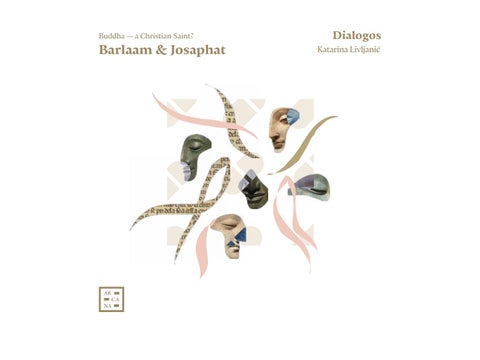
Buddha — a Christian Saint?
Barlaam & Josaphat MENU
Dialogos Katarina Livljanić
MENU
1
era in quel tempo d’india signore (excerpt from the Italian version in ottava rima: Neri Pagliaresi (14 th c.), Leggenda di Santo Giosafà) Oxford, Bodleian Library, Ms. Canonici it. 53, 14 th c.
11,54
2
quinsainne apries (excerpt from the French version: Gui de Cambrai (13 th c.), Balaham et Josaphas) TEXT: Paris, BNF, ms. fr. 1553, 13 th c. / Montecassino, Archivio, ms. 329, 13 th c. MUSICAL RECONSTRUCTION: Katarina Livljanić (KL) based on Paris, BNF, ms. lat. 238, 13 th c.
8,29
hélinand de froidmont (12th c.): vers de la mort (excerpt) TEXT: Montecassino, Archivio, ms. 329, 13 th c. MUSICAL RECONSTRUCTION: KL based on Paris, BNF, ms. lat. 238, 13 th c. molt est dolans li fils le roi (excerpt from the French version: Gui de Cambrai, Balaham et Josaphas) TEXT: Paris, BNF, ms. fr. 1553, 13th c. / Montecassino, Archivio, ms. 329, 13th c. MUSICAL RECONSTRUCTION: KL based on Paris, BNF, ms. lat. 238, 13 th c.
3
nempe senex quidam, vir sanctus nomine barlaam (excerpt form the Latin version: Versus de Sanctis Barlaam en Josaphat) TEXT: Besançon, BM , ms. 94, 12 th c.
0,50
4
i poyde barlaam na urata od palaca (excerpt from the Croatian version: Xivot svetoga Giosafata) TEXT: Zagreb, NSK, R 3109, 18 th c. MUSICAL RECONSTRUCTION: KL based on Zakantajmo i mi dva, traditional from Baška, Croatia
5,46
5
e si tu aguessas huelhs esperitals (the parable of the nightingale) (excerpt from the Occitan version: Barlam et Jozaphas) TEXT: Paris, BNF , ms. fr. 1049, 14 th c. MUSICAL RECONSTRUCTION: KL based on La dousa votz ai auzida del rosinholet sauvatge (B. Ventadorn), Paris, BNF , ms. fr. 22543, 14th c.
4,30
6
iviron incantations (i) — instrumental Mt Athos, Iviron Monastery, ms. 1203, 17 th c.
3,18
7
bap л am ж e гл a г o л a (the parable of the unicorn) (excerpt from the Old Slavonic-Russian version: Повесть о Варлааме и Иоасафе) TEXT: Moscow, Russian State Library, Bolshakov ms. 410, 16 th c.
7,12
MUSICAL RECONSTRUCTION: KL
8
li fils le roi li respondi (excerpt from the French version: Gui de Cambrai, Balaham et Josaphas) TEXT: Paris, BNF , ms. fr. 1553, 13 th c. MUSICAL RECONSTRUCTION: KL based on Paris, BNF , ms. lat. 238, 13 th c.
8,51
9
i chada chragl bise razumi (excerpt from the Croatian version: Xivot svetoga Giosafata) TEXT: Zagreb, NSK , R 3109, 18 th c.
1,59
10
ta ῦ ta o ὖ n πánta (excerpt from the Greek version: TEXT: Paris, BNF, ms. gr. 1128, 14 th c.
5,37
MUSICAL RECONSTRUCTION: KL
11
iviron incantations (ii) — instrumental Mt Athos, Iviron Monastery, ms. 1203, 17 th c.
2,54
12
ke fol sont li egyptiien (excerpt from the French version: Gui de Cambrai, Balaham et Josaphas) TEXT: Paris, BNF, ms. fr. 1553, 13th c. MUSICAL RECONSTRUCTION: KL based on Paris, BNF , ms. lat. 238, 13 th c.
4,13
MENU
musical reconstruction and scenario:
dialogos
Katarina Livljanić
VOICE, DIRECTION: Katarina Livljanić
instrumental reconstructions:
FIDDLE, REBEC: Albrecht Maurer FLUTES, HARP: Norbert Rodenkirchen
Norbert Rodenkirchen & Albrecht Maurer
instruments: TRANSVERSE FLUTES Neidhart Bousset,
Giovanni Tardino / TRADITIONAL WARPIPE FROM LOMBARDY Anonymous / HARP Lynne Lewandowski / FIDDLE AND REBEC Thilo Viehrig.
philological, literary and musicological advice: Milja Vuković OCCITAN:
Geneviève Brunel Lobrichon OLD CROATIAN:
Maria Ana Duerrigl Jasna Vince OLD FRENCH:
Claudio Galderisi Richard Traxler
recording, production, editing and mastering:
Fanny Maillet Isabelle Ragnard
Jean-Marc Laisné
OLD SLAVONIC-RUSSIAN:
Véronique Lossky Recorded in Köln, Kunst-Station Sankt Peter, 3 — 6 December 2016
GREEK:
Theodora Psychoyou
MENU
barlaam & josaphat
barlaam & josaphat
Buddha — a Christian saint?
Bouddha — un saint chrétien ?
If we had to choose the hundred most beautiful tales from the history of civilisations, the legend of Barlaam and Josaphat would surely have its place amongst those treasures. This tale, one of the most popular in times past yet almost unknown today, has survived long centuries in numerous versions, languages and translations, and only their mosaic allows for understanding this incredible transcultural phenomenon in which Buddha appears… as a Christian saint.
Si nous devions retenir de l’histoire des civilisations une centaine des plus beaux contes, la légende de Barlaam et Josaphat aurait certainement sa place parmi ces trésors. Ce conte, jadis des plus populaires, presque inconnu aujourd’hui, a survécu de longs siècles dans de nombreuses versions, langues et traductions, et seule leur complémentarité permet de comprendre cet incroyable phénomène transculturel qui fit du Bouddha… un saint chrétien.
F R O M B U D D H A TO J O S A P H AT
D E B O U D D H A À J O S A P H AT
This inseparable couple of saints, Barlaam and Josaphat appear in the 9th-century Georgian epic Balavariani, the story of a young prince who renounces the religion of his father and converts to Christianity. However, this story has its origin in the life of Buddha in the 3rd-century Lalitavistara, which had inspired Arab versions before becoming a Christian text, subsequently translated into Greek and Latin. Starting from these translations, the
Ce couple de saints inséparables, Barlaam et Josaphat, apparaît dans l’épopée géorgienne du 9e siècle, Balavariani, histoire d’un jeune prince qui renie la religion de son père et se convertit au christianisme. Or, cette histoire a son origine dans la vie de Bouddha du 3e siècle, Lalitavistara, qui avait inspiré des versions arabes, avant de devenir un texte chrétien, traduit par la suite en grec et en latin. À partir de ces traductions, la légende se propage
legend spread as of the 11th century throughout Europe in innumerable languages, in verse or prose. Bodhisattva became Budasaf, then Judasaph/Josaph, to finally come full circle and return to the Far East in a Japanese version — entirely Christianised — which the Portuguese Jesuits wanted to use... to convert Buddhists! The Catholic Church introduced Barlaam and Josaphat in the calendar of saints where, without ever having existed, they enjoyed incredible popularity and where they would remain until the 20th century.
dès le 11e siècle à travers toute l’Europe dans d’innombrables langues, en vers ou en prose. Bodhisattva devient d’abord Budasaf avant de se changer en Judasaph / Joasaph, pour retourner en Orient dans une version japonaise, entièrement christianisée, dont voulaient se servir des jésuites portugais — pour convertir des bouddhistes ! L’église catholique introduisit Barlaam et Josaphat dans le calendrier des saints où, sans avoir jamais existé, ils ont bénéficié d’une incroyable popularité jusqu’au 20e siècle.
T H E S TO R Y
L ' H I S TO I R E
The hero of the legend, the young Prince Josaphat, spends his youth in a magnificent palace, cleansed, without his knowledge, of any poor, sick or old people. His father locks him up there out of fear that a prophecy might come true. According to the prophecy, the young man would experience human suffering, renounce the religion of his father and leave the kingdom. On his long initiatory path, Josaphat will finally leave the palace, guided by the hermit Barlaam, who instructs him through numerous allegorical figures including nightingales, unicorns... He will finally free himself from the opulence and futility of the outside world and go into the desert.
Le héros de la légende, le jeune prince Josaphat, passe sa jeunesse dans un palais magnifique, purgé à son insu des pauvres, des malades et des vieillards. Son père l’y a enfermé, cherchant à échapper à la prophétie selon laquelle le jeune homme connaîtrait la souffrance humaine, renierait la religion de son père et quitterait le royaume. Dans son long chemin initiatique, Josaphat finira par sortir du palais, sera guidé et instruit par l’ermite Barlaam, au moyen de nombreuses paraboles regorgeant de pierres précieuses, rossignols, licornes... Il se libèrera enfin de l'opulence et de la futilité du monde extérieur en partant dans le désert.
T H E P R O J E CT B Y D I A LO G O S
L E P R O J E T D E D I A LO G O S
Approaching this story with the idea to transform it into a concert programme, I decided to become another of its vectors, in the style of a storyteller, a performer who conveys a story through the voice. Barlaam and Josaphat struck me as perfect emissaries between the past and the world of today: they bear witness to the multilingual Babel and the plethora of traditions that created them. What could be closer to the man of today than this multiculturality and polyglossia? It is for this reason that the most natural way of passing on this story today seemed to me to be the creation of a performance in several languages. I decided to read the legend in seven ancient translations (Greek, Latin, Old Slavonic-Russian, Old Croatian, Old French, medieval Occitan and Italian), and chose excerpts in each one, in order to create a unifying thread through this “plurilingual” narration. Thus was born our story of Barlaam and Josaphat told in music, where these saints change from one episode to the next and from one language to another, as they have done for centuries.
Abordant cette histoire pour la transformer en programme de concert, j’ai décidé de devenir un de ses transmetteurs à la manière d’un storyteller, interprète qui véhicule une histoire par sa voix. Barlaam et Josaphat m’ont paru des messagers parfaits entre le passé et le monde d’aujourd’hui : ils témoignent de la Babel multilingue et de la multitude de traditions qui les ont créés. Quoi de plus proche de l’homme d’aujourd’hui, que cette multiculturalité et cette polyglossie ? C’est pourquoi la création d'une version en plusieurs langues m'a parue être la manière la plus naturelle de transmettre cette histoire aujourd'hui. J’ai décidé de lire la légende dans plusieurs versions anciennes (en grec, latin, ancien croate, vieux slavon-russe, vieux français, italien et occitan médiéval), en choisissant les extraits pour créer la trame d'une narration « plurilingue ». Ainsi est née notre histoire de Barlaam et Josaphat racontée en musique, où ces saints se métamorphosent d’un épisode à l’autre et d’une langue à l’autre, comme ils l’ont fait durant des siècles.
THE MUSIC
LA MUSIQUE
The music sprung from the texts I was assembling, and the choice of instruments and melodies became clear during the study of musical sources from the periods and places corresponding to each of the chosen traditions
La musique a jailli des textes que j’assemblais ; le choix des instruments et des mélodies s’est imposé pendant l’étude des sources musicales correspondant aux temps et aux lieux dans lesquels chacune des versions était née. Parfois
of the legend in our project. Sometimes barely perceptible, the music is born from the very text itself. The melodies of these works are not set musical forms, but rather formulas or ‘modes’ of interpretation where the voice of the singer is flexible and used in a wide spectrum of nuances ranging from the spoken word to singing. The choice of the musical material was preceded by the assembly, notation, memorisation and sedimentation of the formulas of each of the sources: notebooks filled with musical formulas for each song in each of the chosen languages. From these excerpts, comparable to the extracts obtained by the distillation of essential oils, were born the seven musical languages of our production.
à peine perceptible, la musique naît du texte même. Les mélodies ne sont pas des formes musicales fixes, mais plutôt des formules, des "modes" d'interprétation permettant à la voix du chanteur d'utiliser un spectre de nuances allant de la parole au chant. Le choix du matériau musical a été précédé par l'assemblage, la notation et la mémorisation des formules de chacune des sources : des cahiers remplis de formules musicales pour chaque chant et pour chaque langue. De ces extraits, comparables à des extraits obtenus par distillation d’huiles essentielles, sont nés sept langages musicaux de notre spectacle.
T H E M U LT I M E D I A E - B O O K
L E L I V R E M U LT I M É D I A
At the time of recording this project, it became clear to me that a simple CD would not be the most appropriate media to represent the richness of this legend. This recording is therefore accompanied by a multimedia e-book. The e-book (downloadable through the link/code in this booklet) contains a longer summary of the legend; a chapter on the history of the legend and its translations; numerous illustrations of manuscripts and diagrams helping to follow incredible historical paths of this legend; the descriptions of each of the sources and of our construction of this project; the work on each of the ancient texts, languages and music; finally, it contains our version of Barlaam and Josaphat
Au moment d'enregistrer ce projet, il m’est apparu qu’un simple CD ne suffirait pas à contenir la richesse de cette légende. Cet enregistrement est donc accompagné d'un livre numérique multimédia. Le livre (téléchargeable dans ce livret) contient un résumé du contenu de la légende ; un chapitre sur l’histoire de la légende et ses traductions ; de nombreuses illustrations des manuscrits et diagrammes aidant à mieux comprendre l'incroyable histoire de cette légende ; la description de chacune des sources et de notre construction de ce projet ; le travail sur les textes anciens, les langues et la musique ; enfin notre version de Barlaam et Josaphat en musique, avec tous les fichiers
in music, with all audio files, original texts and translations; several documentary videos, as well as some of the songs, set in surroundings which visually evoke important places of our legend. The book is enriched with collages by Karla Paliska, as commentaries of its content. The text, the images, the songs and the videos thus weave an experience conceived as an artistic object in the form of a book, a sort of an artist’s book.
audio, les textes originaux et les traductions ; plusieurs vidéos documentaires ainsi que quelques extraits de chansons filmées, évoquant les lieux importants de notre légende. Le livre est enrichi de collages de Karla Paliska qui commentent son contenu. Le texte, les images et les vidéos tissent ainsi une expérience que nous concevons comme une petite oeuvre artistique en forme de livre, une sorte de artist's book.
T H E S TA G I N G
LA MISE EN SCÈNE
At the very moment of the publication of this CD/ eBook in spring 2019, our project on Barlaam and Josaphat is undergoing a transformation. In a new version, this project is enriched through a contemporary and minimalist theatrical staging by Yoshi Oida, one of Peter Brook’s principal collaborators, and a video projection by Tom Schenk. The staging focuses on the core of our legend, seeks to eliminate the superfluous and to find the power of this legend that continues to live and fascinate — like the very precious stone “visible to the eyes of the spirit” that Barlaam brings to Josaphat, this thing that you can no longer leave once it has been encountered, silently calling you to continuously come back to it.
Au moment-même de la publication de cette édition du CD — eBook au printemps 2019, notre projet sur Barlaam et Josaphat connaît lui-même une transformation. Dans une version nouvelle, il s’enrichit d’une mise en scène épurée et contemporaine de Yoshi Oida, un des principaux collaborateurs de Peter Brook, et d’une projection vidéo de Tom Schenk. Ce travail cherche à enlever le superflu et à retrouver la puissance de cette légende qui continue à vivre et à fasciner — à l'instar de cette pierre précieuse "visible uniquement aux yeux de l'esprit" que Barlaam apporte à Josaphat, cette chose que l’on ne peut plus quitter une fois qu’on l’a rencontrée, et qui silencieusement vous appelle à revenir sans cesse vers elle.
katarina livljanić
katarina livljanić
T E XTS / T E XT E S
MENU
MENU ORIGINAL
1
era in quel tempo d’india signore
Era in quel tempo d’India signore Re Avenire, che era gran pagano e in odio aveva el Nostro Salvatore Cristo Iesù e ciaschedun cristiano. Ma come piacque al verace Dio, doppo alcun tempo la sua cara sposa ingravidò, che n’avie gran desio, d’un fanciul maschio... El Re, ch’era di lui tanto gioioso, mandò doppo tre dì del nascimento pe’ cinque savi, e disse: — Io vo' sapere che Giosafà ventura debba avere. — Ribel sarà a tutti i nostri preti de gl’Idoli, e a voi, nostro signore, e contra vi sarà senza secreti unde n’avrete molto gran dolore. E far farete ben queste cose: che 'l rinchiudiate, senza pensier nullo, in un palazzo bello, e lì 'l darete in guardia a un di cui vi fidarete. E quel palazzo cosi fatto sia, senza finestra che miri la via.
E poi farete senza restamento a tutti loro un tal comandamento: che nëun mai, a pena de la testa ricordi Cristo, né nëun cristiano. Poi comandate, senza far più resta, al mastro che gli starà pressimano ched e'gl'insegni, senza far molesta, come sempre si vive allegro e sano e nëun mai per morte venne meno, ma sempre vive ognun chiaro e sereno. E quando Giosafà vidde venire a sé 'l suo padre, verso lui n’andava, e, 'nginocchiato, cominciò a dire, mentre con gli occhi forte lagrimava, dicendo: — Padre mio e franco sire, d’esto palagio, che tanto mi grava, vi prego che vi piaccia per mie 'more ch’io vada un poco mai con gli altri fuore. Però ch'i'ho tal voglia, padre mio, di veder questo mondo, ché sapete che mai nïente non ho veduto io, né posso ancor veder, se non volete: tutto mi strugo, omè, per gran desio! Deh, sia levata da me questa sete! Rispose el Re, vedendo 'l suo disagio: —Oggi a tre dì ti trarrò del palagio. Partissi el Re da lui, che l’ha contento. Poi al palagio suo fece ritorno e 'ncontanente, senza tardamento,
fece mettere un bando intorno intorno per tutta la città, con gran pavento, che quando Giosafà, giovano adorno, cavalcarà per la città, non sia uomo né donna che vada per via, né a finestra stia, poco né troppo, né dove Giosafà 'l possa vedere, che sia vecchio, né cieco, o monco, o zoppo, attratto, né maladdo, o da cadere, né chi d’infermità avesse stroppo, o alcun mal che si possa sapere, sotto pena di perder persona, chi ben non obedisse a la corona.
ENGLISH
FRANÇAIS
There was a lord in India, the king Avenarius, a great pagan. This man hated our Lord Jesus Christ and every Christian.
Le roi Avenir, un véritable païen était autrefois seigneur de l’Inde et il haïssait notre sauveur Jésus-Christ ainsi que tous les chrétiens.
But as it pleased the true God, after some time, his beloved wife became pregnant, as she wished, and gave birth to a boy...
Cependant, quand il plut au Dieu véritable, sa chère épouse tomba enceinte, comme elle le désirait beaucoup, et mit au monde un petit mâle...
Three days after the boy’s birth, the king called for five wise men and told them: — I want to know what will be the fortune of my son Josaphat.
Trois jours après la naissance, le roi, très content de ce petit, envoya chercher les cinq sages et leur dit : — Je veux savoir quel sera le destin de Josaphat.
— He will be rebellious to all our idols’ priests, and to you, our lord, he will be against you, I tell you with no secrets, and you will be very saddened.
— Il sera rebelle à tous nos prêtres d’idoles, et à vous, notre seigneur, il s’opposera ouvertement et vous fera beaucoup souffrir.
You would do well to follow this advice: lock him up, without hesitation, in a beautiful palace, and give him a master you trust to guard him.
Et vous ferez faire ainsi : vous l’enfermerez, sans trop vous inquiéter, dans un beau palais et vous le ferez garder par quelqu’un de confiance. Ce palais doit être bâti sans aucune fenêtre qui donne sur la rue.
This palace should have no windows to the streets.
And order everyone, with no exception, that nobody, under penalty of death, should ever mention Jesus Christ or any Christian.
Puis vous donnerez ce commandement à tous : Que jamais personne, sous peine de mort, ne mentionne ni le Christ ni aucun chrétien.
And order the master, with no hesitation, to teach your son that people always live healthy and happy and that they never die, but live eternally in serenity.
Puis vous ordonnerez, sans trop tarder, au maître qui lui sera confié qu’il lui apprenne, sans l’importuner, comment on peut vivre toujours joyeux et sain et que personne jamais ne défaillit par la mort, mais que tous vivent toujours heureux et sereins.
When Josaphat grew up, he saw his father coming to him, he fell on his knees and asked, weeping bitterly: — My father, my lord, I beg you, with all my love, let me go out with the others, out from this palace, which saddens me.
Et quand Josaphat vit venir son père, il alla à son encontre, et s’agenouillant, il lui dit, en pleurant très abondamment : — Mon père et roi juste de ce palais qui m’opprime tellement, je vous en prie, s’il vous plait, par amour de moi, faites-moi sortir avec ceux qui sont dehors.
I have a burning desire, my father, to see this world which I have never seen, as you know. If you do not allow, I will never see it. I am dying with desire! May this thirst be lifted from me! The king answered, seeing his sorrow: — In three days I will let you out of the palace. The king left and returned to his palace in a hurry, and gave a strict order
Parce que j’ai une telle envie, oh mon père, de voir ce monde, car vous savez, que je n’ai jamais rien vu, ni je pourrai voir, si vous ne le voulez pas. Je suis consumé, hélas, par ce grand désir. Que cette soif soit apaisée ! Voyant sa douleur, le roi répondit : —Dans trois jours, je vais te faire sortir du palais. Le roi s’éloigna de lui l’ayant contenté, puis il revint à son palais et à l’instant, il fit afficher un avis partout,
to the whole city: when his young and beautiful son Josaphat would be riding through the city no old man or woman should go out or stand at the window. So that his son wouldn’t see anyone old, blind, one-armed, limping, ill or weak, crippled, or anyone with any visible infirmity. The order was given under penalty of death to whomever does not obey the crown.
tout au long de la ville avec une sévère recommandation que, quand Josaphat, jeune avec sa parure, chevauchera dans la ville, ni homme, ni femme, ne se trouvent dans la rue. Ni que personne ne se tienne à la fenêtre, ni peu, ni trop, ni où Josaphat puisse le voir. Qu’il soit vieux, ou aveugle, ou manchot, ou boiteux ou malade, ou qui aurait été estropié par l’infirmité ou par quelque mal qu’on puisse apercevoir, sous peine de perdre sa vie, s’il n’obéit pas au roi.
MENU ORIGINAL
2
quinsainne apries
Quinsainne apries, si com moi samble, chevauce il et sa gent ensamble, deduisant va par la cité. Un molt viel homme a encontré. Jambes falies, foibles bras, Li pis ert haus, li ventres bas. Li fils le roi s’en est pris garde, a grant merveille le regarde, Demande et quiert: — Ki est chis chi? Cil respondent: — Vostre merchi ja le sarés apertement: cis a vescu molt longhement. Cil lor respont, a la parsomme: — Quels ert la fins de cel viel homme? Cil li respondent: — Biaus dous sire, se on vous velt verité dire, et jone et viel morront trestuit, il n’a el mont autre deduit, ensi le fisent nostre ancestre, ne il ne puet autrement estre. Mors est une juste mesure et s’est li dete de nature et nus mort eskiver ne puet car, voelle u non, morir l’estuet.
Morz, en cui mireor se mire l’ame, quant del cors se deschire et bien voit en ton livre escrit qu’il nos covient por Dieu eslire cele vie qui est la pire selonc le corporel delit, di mes amis que tuit eslit on fait en paradis lor lit por sofrir doleur et martire. Or facent dont ce qu’il m’ont dit! Car ame qui Dieu ment s’ocit, et mout a entre faire et dire. Morz, douce as bons, as maus amere, a l’un est large, a l’autre avere, les uns chace, les autres fuit. Sovent al juevne avant fait here et prent le fil devant le pere et queut la flor devant le fruit... Morz va comme lerres par nuit et l’endormi en son deduit semont tost, avant de lui rere. Que vaut biautez, que vaut richece, que vaut honeurs, que vaut hautece, puis que morz tot a sa devise fait sor nos pluie et secherece, puis qu’ele a tot en sa destrece, quanqu’en despist et quanqu’en prise? Qui paor de mort a jus mise, c’est cil qui la mort plus atise et vers cui ele ançois s’adrece.
Cors bien norriz, chars bien alise fait de vers et de feu chemise: qui plus s’aaise plus se blece. Morz fait a chascun sa droiture, morz fait a toz droite mesure, morz poise tot a juste pois, morz venge chascun de s’injure, morz met orgueil a porreture, morz fait faillir la guerre as rois, morz fait garder decrez et lois, morz fait laissier usure et crois, morz fait de soëf vie dure, morz as porees et as pois donne saveur de bon craspois es cloistres o l’en crient luxure. Morz apaise les ennoisiez, morz acoise les envoisiez, morz totes les meslees fine, morz met en croiz toz faus croisiez, morz fait droit a toz les boisiez, morz toz les plaiz a droit termine, morz desoivre rose d’espine, paille de grain, bren de farine, les purs vins des faus armoisiez. Morz voit par mi voile et cortine, morz seule set et adevine com chascuns est a droit proisie. Molt est dolans li fils le roi. Molt l’a li mors mis en effroi, et molt le doute et molt le crient et molt souvent l’en resouvient.
ENGLISH
FRANÇAIS
Fifteen days later, Josaphat went riding with his men, towards the city.
Quinze jours plus tard, à ce qu’il me semble, il va à cheval, avec ses hommes. Il se dirige vers la cité.
He met an old man: feeble legs, trembling arms, weak chest, falling belly. The king’s son stared at him, and asked: —Who is this man? His men answered: —You will learn it with no hesitation: this man has been living a very long time.
Il rencontre alors un vieil homme. Les jambes affaiblies, les bras frêles, la poitrine haute, le ventre tombant. Le fils du roi y prête attention, et le regarde avec étonnement. Il s’interroge et demande : — Qui est cet homme ? Ses hommes répondent : — Vous allez l’apprendre sans faux-fuyant : cet homme a vécu très longtemps.
He told them: —Which is the destiny of this old man? They answered: —Dear Lord, to tell you the truth, young and old ones will all die, there is no other exit from the world, our ancestors did the same, it cannot be otherwise.
Il leur dit enfin : — Quel est le destin de ce vieil homme ? Les autres lui répondent : — Cher et doux seigneur, pour vous dire la vérité, jeunes et vieux mourront les uns et les autres, il n’y a au monde d’autre issue, nos ancêtres firent de même, et il ne peut en aller autrement.
Death is a right measure, it is our debt to nature, nobody can escape from death, for we all have to die, whether we want to or not.
La mort est une juste mesure, c’est aussi notre dette envers la nature et nul ne peut échapper à la mort car, qu’il le veuille ou non, il lui incombe de mourir.
Death, in whose mirror the soul is reflected when it tears away from the body, and clearly sees written in your book that, for love of God, we must choose the life which is worse in bodily pleasure. Tell my friends that all my chosen ones have made their beds in paradise by suffering torment and martyrdom. Let them do what they told me! For a soul which lies to God kills itself, and there is a great difference between saying and doing.
Mort, dans ton miroir se mire l’âme, quand elle se sépare du corps et elle voit bien écrit en ton livre que nous devons pour Dieu choisir la vie qui est la pire selon les plaisirs du corps. Dis à mes amis que tous les élus ont fait en paradis leur lit pour avoir souffert douleur et martyre. Qu’ils fassent donc ce qu’ils m’ont dit ! Car l’âme qui ment à Dieu se tue. Et il y a loin entre faire et dire.
Death, sweet to the good, bitter to the bad, generous to one and miserly to the other; it hunts some people and flees from others. Often it makes sign to the young man first, and takes the son before the father, and picks the flower before the fruit... Death goes like a thief in the night and calls the dreaming sleeper in his pleasure, just before it cuts him down.
La mort, douce aux bons, rude aux méchants est large pour l’un, avare pour l’autre. Elle poursuit les uns, évite les autres. Souvent elle fait signe d’abord au jeune et prend le fils avant le père et cueille la fleur avant le fruit... La mort va dans la nuit comme un voleur et celui qui est endormi dans ses plaisirs elle le somme vivement, avant de le tondre.
What good is beauty? What good are riches? What good is honor? What good is a high station in life, since Death brings us rain or drought just as it wishes, since it has everything in its power whatever we despise and whatever we esteem. He who has put aside the fear of death is the one who most attracts death, and whom it first approaches.
A quoi bon la beauté, la richesse, la gloire ? A quoi bon la grandeur puisque la mort tout à sa guise fait sur nous la pluie et la sécheresse, puisqu’elle tient tout en son pouvoir, ce qu’on dédaigne et ce qu’on estime ? Celui qui est secoué par la crainte de la mort ne fait qu’exciter davantage la mort même et c’est vers lui qu’elle se dirige d’abord.
A well-nourished body and delicate flesh become a shirt of worms and fire. He who most takes his ease most wounds himself.
Un corps bien nourri, une chair délicate fait une chemise de vers et de feu. Plus on s’amuse, plus on se blesse.
Death gives each one his right, Death makes right measure for all, Death weighs everything at its just weight, Death avenges everyone for his injury. Death makes pride rot, Death defeats the wars of kings, Death makes men obey decrees and laws, Death makes them denounce usury and profits. Death changes a soft life into a hard one. Death gives to the peas and soup of a monk the taste of good fat, in cloisters where lechery is feared.
Mort fait à chacun son droit, mort fait à tous droite mesure, mort pèse tout à juste poids, mort venge chacun de son injure, mort livre l’orgueil à pourriture, mort fait manquer la guerre aux rois, mort fait garder décrets et lois, mort fait renoncer à l’usure et au gain, mort change le vie molle en vie dure, mort, aux purées et au pois donne un goût de bon crapois, dans les cloîtres où l’on craint la luxure.
Death quiets down the quarrelsome, Death calms down the playful. Death brings an end to all disputes. Death puts all false crusaders on the cross. Death does justice to all cheats. Death ends every trial rightfully, Death sets apart the rose from the thorn-bush, chaff from wheat, bran from flour, pure wines from false. Death sees through a veil or curtain. Death alone knows and divines everyone’s fate.
Mort apaise les bagarreurs, mort calme les fêtards, mort finit toutes les batailles, mort crucifie les faux croisés, mort fait justice à tous les dupés, mort met fin à tous les procès, mort sépare la rose de l’épine, la paille du grain, le son de la farine, les vins purs de faux vins à l’armoise. Mort voit à travers voile et rideau, mort seule sait et devine la juste valeur de chacun.
The king’s son is very tormented, death has troubled him immensely, he fears it and the thought of it comes often to his mind.
Le fils du roi est tourmenté. La mort l’a profondément troublé, il la redoute et la craint beaucoup et elle lui revient à l’esprit souvent.
MENU ORIGINAL
3
nempe senex quidam, vir sanctus nomine barlaam
Nempe senex quidam, vir sanctus nomine Barlaam, preclarus Domini sensu, virtute sacerdos, inspirante Deo, cui sunt presentia cuncta, cognovit, Josaphat qui querit, cogitat, optat. Hic mutans habitum mare transiit, ad loca venit, in quibus Advennir habitabat rex Josaphatque.
ENGLISH
FRANÇAIS
An old and holy man, Barlaam, illustrious priest in his knowledge of God, following the inspiration of God who knows everything, understood Josaphat‘s search, thoughts and desires. He changed his attire, crossed the sea and arrived in the land where lived king Advennir and Josaphat.
Un vieil et saint homme, Barlaam, illustre serviteur de Dieu et prêtre, comprit, selon l’inspiration du Seigneur qui connaît tout, ce que Josaphat cherchait, ce qu’il pensait et ce qu’il désirait. Il changea d’habit, traversa la mer et arriva dans la contrée où vivaient le roi Advennir et Josaphat.
MENU ORIGINAL
4
i poyde barlaam na urata od palaca
I poyde Barlaam na urata od Palaca Gosofatoua i rece: — Yasam targouac i grem isdalechih stran i ya nosim yedan dragi chami. Chogiga nosi suarhu sebe nechie umriti nigdar. I niyedan clovich odouoga suita nemorega uiditi ocima telesnima dochlega neuidi naypri ocima duhounima. A Giosofat rece: — Chacho mogu uiditi occi od pameti? A Barlaam rece: — Pamet clovicya posnaye sue stuari odouoga suita. I Giosofat vidi da place Barlaam. I gledase u obraz Barlaamou chogise svitgliase chacho sunce.
ENGLISH
FRANÇAIS
Barlaam went to the door of Josaphat’s palace and said: — I am a merchant from a distant land and I am carrying a precious stone. The one who wears it will never die. No man of this world can see it with the eyes of his body before he sees it first with the eyes of the spirit.
Barlaam se rendit à la porte du palais de Josaphat et dit : — Je suis marchand et je viens d’une terre étrangère. Je porte une pierre précieuse. Celui qui la porte sur soi, ne mourra jamais. Et aucun homme de ce monde ne peut la voir avec les yeux de la chair avant de la voir d’abord avec les yeux de l’esprit. Josaphat dit : — Comment les yeux de l’esprit peuvent-ils voir ? Barlaam dit : — La raison de l’homme connait toutes les choses de ce monde. Et Josaphat vit que Barlaam pleurait. Il regarda la joue de Barlaam qui rayonnait comme le soleil.
And Josaphat said: — How can the eyes of the spirit see? And Barlaam said: — Man’s mind knows all things of this world. Josaphat saw that Barlaam was weeping. And he looked at Barlaam’s cheek which shone like the sun.
MENU ORIGINAL
5
e si tu aguessas huelhs esperitals (the parable of the nightingale)
E si tu aguessas huelhs esperitals, mas tu non as huelhs mas en la cara. Totz aquels que azoran las ydolas son semblant as un home que era arquiers. E cant venc une ves, el pres i rocinhol e trays son coutel e volc lo aucire con per manjar. Et rocinhol li dis: — Home, que cujas fayre? Petit auzel suy e non poyras de mi ton ventre humplir. Mas si tu mi laysas annar, tres cauzas ti diray que, si tu las gardas, tostemps de ta vida ti sera profieg. Garda ti, non prenas cauza que non pot esser perpreza, e non ti gaymentes de cauza perduda, a paraula que non semble vera, non la crezas. Aquestz tres mandamens garda e sera ti grans profieg. El rocinhol volc esproar si l’ome avia retengut aqo que li avia dig. — Hay, hom malastruc, can mal consel as crezut, e tant gran aver as perdut! Car en mon ventre a una peyra precioza magers que un huou d’estruci. Cant lo sagitayre auzi ayso, dis li: — Ven t’en a ma mayson, e yeu noyriray ti onradament.
— Sertas, so dis lo rocinhol, aras conosc yeu ben que tu yest fols. Car yeu ti dis que paraula que non semble vera, que non la crezessas. E tu crezes que yeu agues una peyra precioza tan gran en mon ventre! En cal maniera y poiria caber una peyra precioza mager que un huou d’estruci que magers es que yeu totz non suy?
ENGLISH
FRANÇAIS
If you had the eyes of the spirit, but you only have the eyes on the face. Those who adore idols are like a man who was an archer.
Si seulement tu avais les yeux de l’esprit... mais tu n’as que les yeux du visage. Tous ceux qui adorent les idoles sont semblables à un homme qui était archer.
Once he caught a nightingale, took his knife and wanted to kill and eat it. The nightingale said: — What will you do? I am a little bird and you will not fill your stomach with me. But if you let me go, I will tell you three things which will be useful all your life.
Une fois il attrapa un rossignol, tira son couteau et voulut le tuer pour le manger. Le rossignol lui dit : — Homme, que penses-tu faire ? Je suis un petit oiseau et tu ne pourras remplir ton ventre avec moi. Mais si tu me laisses aller, je te dirai trois choses qui, si tu en tiens compte, te profiteront toute ta vie. Garde-toi de prendre ce que tu ne peux saisir, ne te lamente pas des choses perdues et ne crois pas la parole qui ne te paraît pas vraisemblable. Tiens compte de ces trois commandements et tu en tireras un grand profit. Le rossignol voulut vérifier si l’homme avait retenu ce qu’il lui avait dit : — Ah, malheureux, quel mauvais conseil as-tu cru, et quel grand bien as-tu perdu ! Car dans mon ventre il y a une pierre précieuse plus grande qu’un oeuf d’autruche. Quand le sagittaire entendit cela, il lui dit : — Viens chez moi, je te nourrirai abondamment.
Do not take what you cannot have, do not lament over lost things and do not believe words which do not seem plausible. Keep these three commandments and you will benefit greatly from them. But the nightingale wanted to know if the man remembered his words: — Oh, poor man, what a bad counsel you have believed, and what a big treasure you have lost! Because in my womb there is a precious stone bigger than an ostrich’s egg. When the archer heard this, he said: — Come to me, I will feed you copiously.
— Truly, said the nightingale, I see now that you are mad. For, I told you not to believe words which do not seem plausible. And you believe that I can have such a big, precious stone in my womb? How could I hold a precious stone bigger than an ostrich’s egg, which is itself bigger than all of me?
— Certes, dit le rossignol, je vois bien maintenant que tu es fou. Car je t’ai dit que la parole qui ne te paraît pas vraisemblable, il ne faut pas la croire. Et crois-tu que je puisse avoir une pierre précieuse aussi grande dans mon ventre ? De quelle façon pourrait-il contenir une pierre précieuse, plus grande qu’un œuf d’autruche, qui est plus grand que je ne le suis tout entier ?
MENU ORIGINAL
7
bap л am ж e гл a г o л a (the parable of the unicorn)
Варлам же глагола: — Связанѣ житейскыми вещьми и своих прилежа печалий и мятежа и въ пищи живя, подобнѣ суть мужю, бѣгающю от лица бѣсующюмуся инорогу, яко не терпящу гласа въпля его и рютиа его страшнаго, нъ крѣпко отбѣгь, да не будеть ему ядь. Текущю же ему борзо, в великъ ровъ впаде. Впадающю же ему, руцѣ простеръ, за древо твердо ятъся, держащю же ся ему крѣпко, яко на степенѣ нозѣ утвердивъ, мняше миръ уже есть и твердынѣ. Възрѣвъ же убо, видѣ двѣ мышѣ, едину белу, а другую черну, ядуща беспрестанѣ корень древа, идѣ же бѣ держася, и елима же приближающися да погрызета древо. Възрѣвъ въ глубину рва и змѣя види страшна образомь и огнемъ дишюща и горко взирающа, усты же страшно зѣвающа и пожрети его хотѣща. Възрѣвъ же абие на степень онъ, иде же нозѣ его утверженѣ бѣста, четыре главы види аспидовы, из стены исходяща, иде же бѣ утвердился. Възрѣвъ очима, видѣиз
вѣтвий древа того мало медъ. Оставивъ убо расмотряти одержащиихъ его напастей, яко внѣуду бо инорогъ злѣ бѣсуяся искаше его на ядь, долѣже зльы змий зѣяя да пожреть его, древо же, о немь же ятся, уже пастися хотяше, нозѣже на колзание и нетвердо степенѣ утверженѣ, толикы убо и таковыихъ злыхъ забывъ, потща себе на сладость горкаго оного меду.
ENGLISH
FRANÇAIS
Barlaam said: — Those who are locked up in bitter, terrestrial things, those who live in disorder and lust, are similar to a man who wants to escape from a wild unicorn and cannot stand its screaming and howling, but wants to escape in order not to be caught.
Barlaam dit : — Ceux qui sont enfermés dans les choses terrestres, ceux qui vivent dans le désordre et la luxure, ressemblent à un homme qui veut s’échapper de la licorne sauvage et qui ne supporte pas ses cris et hurlements, mais fuit afin de ne pas lui succomber.
While running, this man falls into a deep pit. While falling, he stretches his arms and catches a branch of a tree. While holding the tree desperately, he leans against the ground, believing that he is on solid and firm soil.
Courant ainsi, cet homme tombe dans une grande fosse. En tombant, il tend les bras et attrape la branche d’un arbre. En se tenant fort, il s’appuie sur la terre, convaincu qu’il est sur un sol sûr et ferme.
He looks back and sees two mice: one white and one black, biting into the root of the tree.
Il se retourne et aperçoit deux souris : une blanche et une noire, qui mordent la racine de l’arbre.
He looks into the depth of the abyss and sees a horrible dragon spitting fire and wanting to devour him.
Il regarde vers les profondeurs de l’abysse et voit un dragon terrible qui crache le feu et qui le regarde furieusement en voulant le dévorer.
As he looks at the ground on which he was leaning, he sees four snake’s heads coming from the stone.
À l’appui de ses pieds, il voit quatre têtes de serpent qui sortent de la roche.
As he lifts up his eyes, he finds a drop of honey
En levant les yeux, il trouve un peu de miel
on the branches of the tree. He forgets the dangers which surround him.
sur les branches de l’arbre. Et il oublie les dangers qui le guettent.
Above him, the wild unicorn wants to devour him. Below, the nasty dragon opens his mouth to swallow him. The tree he holds will fall. His feet slip on the soil. But, he forgets all these dangers, and he rushes to the sweetness of the bitter honey.
En haut, la licorne sauvage veut le dévorer. En bas, le dragon méchant ouvre sa gueule pour l’avaler. L’arbre qu’il tient va tomber. Ses pieds glissent, ne tenant plus leur appui. En oubliant tous ces dangers, il se précipite vers la douceur de ce miel amer.
MENU ORIGINAL
8
li fils le roi li respondi
Li fils le roi li respondi: — Puisque Diu plaist, si soit ensi. Or me baptise en bonne foi, car j’ainc molt Diu et si le croi, et molt le voel de cuer amer, servir, proiier et honorer. Baleham dist: — Or i entent, car jel ferai molt bonnement: hui est li jors de ta naissanche, hui dois avoir ferme creanche, hui connois tu ton Creatour, hui deviens sers Nostre Signour, hui leves tu tous tes pechiés, hui mes tu jus tout l’omme viés... Hui rechois tu riche couronne, hui vient li jors ki chou te donne, hui te revide Diex tes Peres, hui es tu sers et empereres, hui mes tu jus dolour et ire, hui deviens tu et rois et sire, hui entres tu en Paradys, hui deviens tu a Diu amis… Hui rechois tu grant signorie, hui reviens tu de mort a vie, hui te velt Dex resçusiter, hui vient sa mere a toi parler… Hui leves tu toute t’ordure,
hui es tu fils de l’Escripture, hui es tu fils de ton bon Pere, hui es ses hom, hui es ses frere, hui dois tu bien ton Diu connoistre, hui doit ta dignités recroistre, hui dois purgier bien sa pensée, hui t’est grans honors presenté, hui es tu fors de poureté, hui est li jors de ta plenté, hui est li jors tout voirement ke sains espirs en toi descent. Baleham tout ensi parole, ensi castie, ensi escole, ensi esprent le fil le roi, ensi l’atorne a bonne foi, ensi le met a bonne voie, et Yosaphas tout li otroie.
ENGLISH
FRANÇAIS
The king’s son answered: — If it is God’s will, may it be so, may I be baptised in good faith, since I love God and I believe in Him, I want to love Him, serve Him, pray and honor Him with all my heart. Barlaam said: — Follow me and I will gladly lead you. Today is the day of your birth and your faith must be strong, today you receive your Creator, you become the servant of our Lord,
Le fils du roi lui répondit : — Puisqu’il plaît à Dieu, qu’il en soit ainsi, qu’il me baptise en toute confiance, car je voue à Dieu un grand amour et crois en lui, et je veux l’aimer, le servir, le prier et l’honorer de tout cœur. Barlaam dit : — Applique-toi à cela, car je le ferai de bonne grâce. Aujourd’hui voici venu le jour de ta naissance, aujourd’hui tu dois avoir une foi inébranlable, aujourd’hui tu reconnais ton Créateur, aujourd’hui tu deviens le serviteur de Notre Seigneur, aujourd’hui tu expies tous tes péchés, aujourd’hui tu chasses l’homme que tu étais, aujourd’hui tu reçois une couronne, aujourd’hui voici venu le jour qui t’en pourvoit, aujourd’hui Dieu ton Père te reconnaît, aujourd’hui tu es serviteur et empereur, aujourd’hui tu délaisses peine et chagrin, aujourd’hui tu deviens roi et seigneur, aujourd’hui tu entres au Paradis, aujourd’hui tu deviens ami de Dieu, aujourd’hui tu reçois une grande souveraineté, aujourd’hui tu reviens de la mort à la vie, aujourd’hui Dieu veut te ressusciter, aujourd’hui sa mère vient te parler... aujourd’hui tu laves toute ta souillure,
today you expiate all of your sins, today you send away the old man, today you receive a sumptuous crown, today it is given to you, today God, your Father, recognizes you, today you become servant and emperor, today you abandon pains and worries, today you become king and lord, today you enter Paradise, today you become God’s friend, today you receive a big sovereignty, today you return from death to life, today God wants to resurrect you, and his mother wants to speak to you... Today you wash away all your filth,
today you are the son of Scriptures, today you are the son of your good Father, today you are His man and His brother. Today you have to recognize your God, today your dignity must grow, today you must purify your spirit, today a great honor is presented to you, today you leave poverty, today you enter richness, today is the day when, truly, the Holy Spirit descends upon you.
aujourd’hui tu es fils de l’Écriture. Aujourd’hui tu es le fils de ton bon Père, te voici son sujet, te voici son frère. Aujourd’hui tu dois reconnaître ton Dieu, aujourd’hui ta dignité doit s’accroître, aujourd’hui tu dois purifier ton esprit, aujourd’hui un grand honneur t’est présenté, aujourd’hui tu sors de pauvreté, et voici venu le jour de ton accomplissement, voici venu le jour, en toute vérité, où le Saint Esprit descend en toi.
So speaks Barlaam, so he teaches, advises the king’s son, shows him the faith shows him the right path, and Josaphat accepts everything.
Ainsi parle Barlaam, ainsi donne-t-il ses conseils, ainsi instruit-il le fils du roi, ainsi l’oriente-t-il vers la foi, ainsi le met-il sur la bonne voie, et Josaphat consent à tout.
MENU ORIGINAL
9
i chada chragl bise razumi
I chada chragl bise razumi da Giosofat bisese ucini charschianin uhitiga zaulase i pocega uuchi potlehu i probiyatiga nogami daga bise suega narusi... I udiglie chragl posla posue suoye Barune i gnim rece : — Suituyteme suitugte me ca ya iman uciniti od moga sina Giosofata choyega nemogu ganuti. Suitugteme suitugteme hochiuli ya ciniti umriti moga sina Giosofata! I usta se nanoge yedan Astrololo chogi zachligniase diaule: — Gospodine niye dobra stuar da otac cini umriti sina suoga. — Suitugteme suitugte me ono ca ya iman uciniti od moga sina Giosofata. Yachiuga ciniti ubiti alli darsati u tamnicu.
ENGLISH
FRANÇAIS
When the king understood that Josaphat had become a Christian, he took the boy by his hair and started pulling him across the floor, hitting him with his feet until he wounded him greatly.
Quand le roi comprit que Josaphat se faisait chrétien, il le prit par les cheveux, le traina par terre, le battit à coups de pieds et le blessa grièvement.
Then the king sent again for his barons and told them: — Advise me, advise me, what should I do with my son Josaphat whom I cannot move.
Il convoqua tous ses barons et leur dit :
Advise me, advise me, shall I make my son Josaphat die? One astrologer, who conjured devils, stood up: — Lord, it is not a good thing for a father to kill his son. — Advise me, advise me, what should I do of my son Josaphat! I will kill him or send him to prison!
— Conseillez-moi, conseillez-moi, que dois-je faire de mon fils Josaphat que je ne peux pas émouvoir. Conseillez-moi, conseillez-moi, devrais-je tuer mon fils Josaphat ? Un des astrologues, qui invoquait des diables, se leva et dit : — Seigneur, il n’est pas bien qu’un père tue son fils. — Conseillez-moi, conseillez-moi, que dois-je faire de mon fils Josaphat ! J’ordonnerai qu’il soit tué, ou je le mettrai dans la prison.
MENU ORIGINAL
10
ta ῦ ta o ὖ n πánta
Ταῦτα οὖν πάντα ὡς ἤκουσεν ὁ βασιλεύς, ὀξύτατα κινηθεὶς καὶ θυµῷ ἀσχέτῳ καταληφθείς, ὀργίλως αὐτῷ ἐλάλει, καὶ πικρῶς τοὺς ὀδόντας ἔβρυχε, µαινοµένῳ ἐοικώς· — Καὶ τίς, φησίν, ὁ τοιούτων µοι αἴτιος τῶν κακῶν, ἢ αὐτός ἐγὼ. Δικαίως οὖν ἐν τῇ σῇ γεννήσει οἱ ἀστρολόγοι δεινὸν εἶπον ἀποβήσεσθαί σε καὶ παµπόνηρον ἄνδρα, ἀλαζόνα τε καὶ γονεῦσιν ἀπειθῆ. Αὖθις δὲ ἐκεῖνος, — Τί, φησίν, ὦ βασιλεῦ, εἰς ὀργὴν ἀνήφθης; Ὅτι τοιούτων ἐγὼ ἠξίωµαι ἀγαθῶν, λελύπησαι; καὶ τίς ποτε πατὴρ ἐπὶ τῇ τοῦ υἱοῦ εὐτυχίᾳ ἀχθόµενος ὡράθη; Ἢ πῶς πατὴρ ὁ τοιοῦτος, καὶ οὐκ ἐχθρός, λογισθείη; Οὐκοῦν οὐδὲ ἐγὼ τοῦ λοιποῦ πατέρα µού σε καλέσω· ἀλλ’ἀποστήσοµαί σου, ὥσπερ τις φεύγει ἀπὸ ὄφεος. Οὐ συνήσεις ταῦτα, ὦ πάτερ; Οὐ παραδραµεῖς τὰ παρατρέχοντα, καὶ προσθήσῃ τοῖς ἐπιµένουσιν; Οὐ προτιµήσεις τὴν κατοικίαν τῆς παροικίας, τὸ φῶς τοῦ σκότους, τὸ πνεῦµα τῆς σαρκός, τὴν αἰώνιον ζωὴν τῆς σκιᾶς τοῦ θανάτου, τὰ µὴ λυόµενα τῶν ῥεόντων;
Ἀλλὰ καὶ πιπράσκονται οἱ θεοί σου. Οὐχ ἡ θεότης γὰρ αὐτοῖς, ἀλλ’ἡ ὔλη τὴν πολυτέλειαν δίδωσι. Θεὸν δὲ τίς ἀγοράζει; Θεὸν τίς πωλεῖ; Θεὸς δὲ ἀκίνητος πῶς ὀνοµάζεται θεός; Ἢ οὐχ ὁρᾷς ὅτι ὁ µὲν ἑστὼς οὐδέποτε καθέζεται, ὁ δὲ καθεζόµενος οὐδέποτε ἀνίσταται; Ἀνάνηψον, ἄθλιε, καὶ σύνες ὅτι πρεσβύτερος εἶ τοῦ ὑπὸ σοῦ γενοµένου θεοῦ. Ταῦτα πολλῆς ἐστι µανίας. Ὥστε οὐ Θεὸν ποιεῖς, ἀλλὰ µόρφωµα ἀνθρώπου ἢ ζῴου τινός, µὴ γλῶσσαν ἔχον, µὴ λάρυγγα, µὴ ἐγκέφαλον, µήτε τῶν ἐντός τι.
ENGLISH
FRANÇAIS
Now when the king heard all these words, he was furiously enraged and, seized with anger, he cried out wrathfully against Josaphat, he gnashed his teeth fiercely, like a madman.
Quand le roi entendit ces mots, il se fâcha. Pris par une rage incontrôlable, il cria, en colère contre Josaphat, et grinça des dents comme un fou.
— And who, said he, is to be blamed for all my misfortunes but myself? Rightly the astrologers prophesied at your birth, that you would become a knave and villain, an impostor and a rebellious son.
— Qui d’autre que moi est coupable de toutes mes misères ? Les astrologues prophétisaient bien à ta naissance que tu deviendrais scélérat, imposteur, fils rebelle.
(Josaphat) said: — Why, o King, have you been kindled to wrath? Are you grieved that I have gained such bliss? What father was ever seen to be sorrowful in the prosperity of his son? Would he not be called an enemy rather than a father? Therefore will I no longer call you my father, but will withdraw from you, as a man flees from a snake...
(Josaphat) dit alors : — Pourquoi, ô roi, es-tu enflammé dans ta colère ? Es-tu attristé car j’ai atteint la lumière ? Quel père est attristé par la prospérité de son fils ? Ne serait-il considéré comme son ennemi plutôt que comme son père ? Désormais je ne t’appellerai plus père. Je te fuirai, comme un homme fuit le serpent.
Will you not understand this, my father? Will you not hasten past the things which hasten to pass you, and attach yourself to that which endures? Will you not prefer a homeland to a foreign land, light to darkness, spirit to flesh, eternal life to the shadow of death, the indestructible to the fleeting?
Ne comprends-tu pas cela, père ? Ne te hâtes-tu pas de dépasser ce qui te dépasse et de t’attacher à ce qui perdure ? Ne préfères-tu pas ta patrie aux terres étrangères, la lumière aux ténèbres, l’esprit à la chair, la vie éternelle à l’ombre de la mort, l’indestructible à ce qui t’échappe ?
Alas, your gods are sold. Not their divinity, but their material gives them value.
Hélas, tes dieux sont vendus. Ce n’est pas leur divinité mais leur matière qui leur donne de la valeur.
But who buys God? Who offers God for sale? And can a god that cannot move be called God?
This is downright madness.
Mais qui achète Dieu ? Et qui offre Dieu en vente ? Et comment un dieu qui ne peut pas se mouvoir peut-il être appelé Dieu ? Ne voies-tu pas que le dieu qui est debout ne peut pas s’asseoir, et le dieu qui est assis ne peut pas se lever ? Oh, homme misérable, retourne à tes sens, et réalise que tu es plus vieux que les dieux que tu as créés. Ceci est pure folie.
You do not make God, but the likeness of a man, or of some beast, with no tongue, no throat, no brains, no organs!
Tu ne crées pas Dieu, mais un spectre d’homme, ou d’animal, sans langue, sans gorge, sans cerveau, sans entrailles !
Don’t you see that the god that stands cannot sit, and the god that sits cannot stand? O wretched man, return to your senses, and learn that you are older than the god made by you.
MENU ORIGINAL
12
ke fol sont li egyptiien
Ke fol sont li Egyptiien et si sevent molt poi de bien, molt par sont del tout bien frarin quant il lor diu ont fait d’Isin. Icele Ysis dont je vous di de son frere fist son mari; li frere avoit non Osyris, la lecheresse ot non Ysis. Un fil i ot, Orus ot non; molt par i ot biel valeton et molt resambloit bien son pere. Typhon, ki fu Oseris frere, l’ocist, chou sachiés sans doutanche; Orus em print puis la venjanche, en son oncle venja son pere. Chi a, fait il, bonne matiere! II font lor diu d’une brebis, si font d’un buef u d’un veel, d’un kokerdile u d’un porcel; Diu font d’un aigle u d’un huitoir d’un esprevier u d’un ostoir; Diu font d’un cat contre raison, d’un leu, d’un chien u d’un dragon. Dex est molt bonne chose a croire, car, si com dist la vraie estoire,
cil ki de cuer loial le croit et ki le siert, sil en rechoit haut guerredon, haute couronne ke Damedex tous jors li donne. Or vous ai dit de mon labour et de la dame et del signour, et del siecle felon waignart u Dex ne claimme mie part. Trop va li siecles a grant honte. Signor car entendÊs cest conte et a l’ystoire ki ja faut d’Avenir et de Yozaphat. Dex le maintigne en bonne vie. Amen, Amen, chascuns en die!
ENGLISH
FRANÇAIS
The Egyptians are truly mad and do not know much about good things. Really, they are pitiful since they made a goddess from Isis.
Les Égyptiens sont déraisonnables et n’y connaissent pas grand-chose au bien, vraiment, ils sont à plaindre d’avoir fait d’Isis leur déesse.
This Isis made her brother into her husband. The brother was Osiris and this loose woman was Isis. There was a son, named Orus. Really a pretty boy, he looked a lot like his father. Typhon, Osiris’s brother, killed the father, be sure of this. Later Orus avenged the father through his uncle. Isn’t this a beautiful story?
Cette Isis dont je vous parle fit de son frère son mari. Le frère avait pour nom Osiris, la femme de plaisir, Isis. Il y eut un fils, du nom d’Orus ; ce fut vraiment un beau garçonet il ressemblait beaucoup à son père. Typhon, qui était le frère d’Osiris, tua ce dernier, soyez-en sûrs ; plus tard Orus en tira vengeance, il vengea son père à travers son oncle. Voilà, un beau sujet !
They made a god from a sheep, also from a steer or a calf, a crocodile or a pig. One of their gods is an eagle and a vulture a hawk and a falcon. They even proclaimed a cat one of their gods, a wolf, a dog and a dragon.
Ils font leur dieu d’une brebis, ils font de même d’un bœuf ou d’un veau, d’un crocodile ou d’un pourceau, ils tiennent pour dieu un aigle ou un vautour, un épervier ou un autour. Ils tiennent déraisonnablement pour dieu un chat, un loup, un chien ou un dragon.
God is a good thing to believe in, since the true story tells,
C’est une bonne chose de croire en Dieu car, comme le dit la vraie histoire,
that the one who believes and serves Him with a pure heart, receives a priceless crown which our Lord awards every day.
celui qui croit en lui d’un cœur loyal et qui le sert, reçoit de lui une couronne précieuse dont Notre Seigneur Dieu le dote chaque jour.
I have now told you everything about these lords and ladies, about this earthly world, cruel and perfidious, where God does not even search for His part. The earthly world is running to its ruin. Lords, listen and be attentive, since the story about Avenir and Josaphat is almost finished. May the Lord grant a good life. Amen, amen, may everyone sing!
Je vous ai donc parlé de ma tâche et de la dame et du seigneur, et du monde terrestre perfide et cruel où Dieu ne réclame pas sa part. Le monde terrestre court à sa perte. Seigneurs, écoutez donc ce récit et soyez attentifs à l’histoire d’Avenir et de Josaphat qui touche bientôt à sa fin. Que Dieu vous garde en bonne santé. Amen, amen, que chacun le dise !
MENU
this project received financial support from
design Karla Paliska
translations PROGRAMME NOTES
ENGLISH John Tyler Tuttle FRENCH Sanja Le Bihan SUNG TEXTS
ENGLISH based on G.R. Woodward & H. Mattingly, W.D. Paden, K. Livljanić, B. Bagby FRENCH A. Pozzo, F. Mailet, J. Coppin, M. Bonnier Pitts, J. Vince, K. Livljanić
Dialogos reçoit le soutien de la DRAC Île-de-France — Ministère de la Culture. Mécénat Musical Société Générale est le mécène principal de l’ensemble Dialogos. LABEX Religions et sociétés en Méditerranée (RESMED) IReMus Institut de recherche en musicologie
iconography
HRZZ Croatian Science Foundation, project IP 6619
DIGIPACK FRONT COVER Karla Paliska INSIDE BOOKLET PHOTO Johannes Ritter
acknowledgements Constanza Cordoni Utrecht University / Carlo Campana Biblioteca Nazionale Marciana, Venezia / Don Mariano Dell'Omo Abbazia
ARCANA is a label of OUTHERE MUSIC FRANCE
di Montecassino / Tatijana Petrić, Irena Galić Bešker
31, rue du Faubourg Poissonnière — 75009 Paris
Nacionalna i sveučilišna knjižnica, Zagreb / Dominik Susteck Kunst-Station Sankt Peter, Köln
www.outhere-music.com / www.facebook.com/OuthereMusic ARTISTIC DIRECTOR: Giovanni Sgaria
/ Amélie Adam / Mathilde Goy / Benjamin Bagby / Theodora Psychoyou Ensemble Dialogos www.ensemble-dialogos.org ℗2019 Compagnie Dialogos, under exclusive licence to Outhere Music France ©2019 Outhere Music France