menu
introduction tracklist
texte en français text in english
Alpha 196
Le Concours International Musica Antiqua de Bruges est une des plus importantes compétitions européennes pour jeunes talents qui se concentre sur des musiciens hautement qualifiés et spécialisés dans l’interprétation historique. Le jury est composé d’enseignants et de musiciens de réputation internationale. Être lauréats du concours à Bruges marque souvent le lancement d’une carrière internationale soliste. MAfestival / Festival de Flandre Bruges www.mafestival.be
The International Competition Musica Antiqua Bruges is one of Europe’s most important competitions for young musical talent and focuses on highly qualified musicians specializing in historically informed performance. The jury consists of pedagogues and musicians with an international career. Being a laureate of this competition often means the start of an international soloist career. MAfestival / Flanders Festival Bruges www.mafestival.be 2
Le Concertgebouw de Bruges est un centre dédié à la musique et aux arts de la scène, visant au développement et à la présentation d’œuvres à un niveau international. Dans sa programmation, le Concertgebouw met l’accent sur la création et la créativité plutôt que sur la présentation. Nourri par de nombreuses activités d’éducation artistique pour enfants, adolescents et adultes, le Concertgebouw propose à un public large et diversifié, de Flandre ou d’ailleurs, des expériences artistiques intenses dans des conditions optimales.
This international music and performing arts centre, is devoted to the development and presentation of art at an international level. It focuses on music and contemporary dance. A pronounced emphasis on creativity and imagination takes its programming beyond the mere presentation of art. Underpinned by its extensive art educational activities for children, adolescents and adults, the Concertgebouw offers intense artistic experiences, in optimal circumstances, to a wide and diverse audience, both in Flanders and beyond. 3
Pianoforte Anonymous (Steinschool)
(South Germany or Vienna, last quarter of the Eighteenth century, Collection Chris Maene)
Compass
5 Octaves FF-g’’’
Keyboard
Bone naturals, ebony sharps
Action
Viennese – Stein type with escapement with no check Hammers and dampers are in leather Overdampers throughout the whole instrument
Kneelevers The right kneelever raises the dampers. The left kneelever is used for the moderator which mutes the sound by a series of leather tongues under the strings Case
Inner construction pine case, walnut veneer
Restoration Workshop Chris Maene, 2013
Both the mechanic as well as the construction are similar to the pianofortes constructed later on by Stein. The hammers are attached to the key lever and are imbedded in a wooden kapsel. The kneelevers under the keyboard operate the damper and the moderator, who were praised by W.A. Mozart : “The device you work with your knee is better than on other instruments. I have only to touch it and it works; and when you shift your knee the slightest bit, you do not hear the least reverberation”.
4
JOSEPH HAYDN (1732 - 1809)
Sonata F major Hob. XVI:23 1. I. Allegro moderato 2. II. Adagio 3. III. Finale: Presto 4. Improvised transition from F-Major to Eb-Major
7’57 7’50 4’31 0’40
menu
8. Improvised transition from Eb-Major to C-Major
0’50
Sonata C Major Hob. XVI:48 9. I. Andante con espressione 10. II. Rondo: Presto
6’41 4’13
11. Improvised transition from C-Major to F-Major 0’52 12. Adagio F-Major Hob. XVII:9 4’19 13. Andante con variazioni F-minor (1793) Hob. XVII:6 20’07
Sonata Eb Major Hob. XVI:28 5. I. Allegro moderato 10’29 6. II. Menuetto & trio 3’46 7. III. Finale: Presto 3’13
Bobby Mitchell, pianoforte anonyme, Vienne 1799 (restauration Chris Maene) 5
Outhere music & Alpha productions remercient chaleureusement MA Festival / Festival de Flandre Bruges Outhere music & Alpha productions would like to kindly thank MA Festival / Festival de Flandre Bruges
***
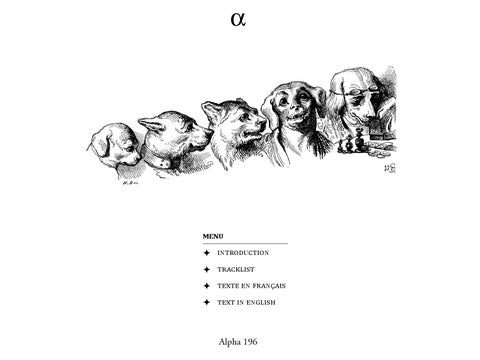
Enregistrement réalisé du 13 au 15 janvier 2014 dans la grande salle du Concertgebouw de Bruges (Belgique) Direction artistique, prise de son, montage & mastering : Rainer Arndt Préparation et accord du piano : Minh Kapek Direction de production : Frederik Styns Direction artistique Alpha & photos du livret : Julien Dubois Chargée d’édition : Pauline Pujol Graphisme : Gaëlle Löchner Illustration Digipack : Portrait of an Extraordinary Musical Dog, av. 1805, Philip Reinagle, R.A (British, 1749-1833), Oil on canvas, 72cm x 92.5 cm © Virginia Museum of Fine Arts, Richmond, Paul Mellon Collection. Photo : Katherine Wetzel © Virginia Museum of Fine Arts Illustration de couverture du livret : L’animal s’élève vers l’homme, 1843, H. Bv. - JJ Gr., Le Magasin Pittoresque 1843, publié sous la direction de M. Edouard Charton, Gravure sur bois de bout © Histo-libris.fr Photo page 4 : © Chris Maene 6
Enregistrer Haydn au XXIe siècle Haydn nous a prodigué son art musical en nous laissant de prolifiques compositions dans tous les genres ou presque. Ses œuvres orchestrales sont aussi solennelles que ses quatuors à cordes sont intimes, mais c’est sa musique pour piano qui est la plus proche de mon cœur. Et quel pianiste il a dû être ! Haydn n’a jamais été le virtuose itinérant que fut Mozart, ni l’improvisateur exceptionnel et réputé que fut le jeune Beethoven. Cependant, si l’on peut en juger par sa musique pour piano, Haydn était un pianiste du plus haut niveau. Il transcende le piano en tant qu’instrument et le transforme en théâtre. La musique pour piano de Haydn me divertit et m’éclaire quand je la joue seul chez moi, mais elle m’offre simultanément la faculté de me transformer en homme de théâtre – comédien, marionnettiste, satiriste, narrateur, héros tragique – quand je la joue en public. Le théâtre pianistique de Haydn s’adresse à chaque recoin du cosmos émotionnel, et divertit en même temps qu’il énonce des vérités profondes et divines. Le don de Haydn pour superposer les caractères révèle un art équilibré, juste, et en fin de compte plaisant. Mais comment Haydn a-t-il appris à le faire avec autant de finesse et de grâce ? Est-ce le contraste entre son enfance pauvre dans les rues de Vienne et ses années d’emploi régulier par la maison des Esterházy qui équilibra si subtilement son tempérament ? Est-ce sa prédilection pour les sciences et les statistiques ou son sens aigu de la finance qui contrebalança son tempérament capricieux, mélancolique, « créatif » ? Est-ce la chance qu’eut le vieil homme de se rendre à Londres dans les années 1780 et 1790, la ville la plus industrialisée d’Europe, qui l’amena à écrire un tel chef-d’œuvre romantique de la forme variations, l’Andante con variazioni en fa mineur – préfigurant ainsi l’avenir de la musique avec trente ou quarante ans d’avance ? 8
menu
Pendant l’essentiel de ma carrière musicale, je m’en suis tenu à l’idée d’une interprétation « historiquement informée ». Pour moi, cela signifie d’abord et avant tout apprendre à jouer de différents types de pianos-forte historiques. Le piano-forte viennois anonyme de 1799 sur lequel a été réalisé cet enregistrement aurait certainement semblé familier à Haydn, qui joua sur des instruments similaires tout au long de sa vie, et il est incontestablement à la hauteur de son appellation – avec une palette piano extrêmement intimiste et une gamme majestueuse et féroce de sons forte. Paradoxalement, l’improvisation est peut-être aussi un moyen pour moi d’accéder au concept d’interprétation « historiquement informée ». Comment pourrait-on être capable d’« interpréter » des chefs-d’œuvre musicaux sans pouvoir converser soi-même avec aisance dans ce langage ? Cet enregistrement comprend des improvisations aux endroits où elle était traditionnellement pratiquée – entre les sonates, pour moduler d’une tonalité à une autre –, et à certains moments où Haydn note un point d’orgue qui invite à une cadence improvisée. La cadence de l’Andante con variazioni est ici significative, suffisamment longue pour refléter la portée émotionnelle de cette œuvre. L’acte d’improvisation n’est jamais censé « rivaliser » avec le texte musical, ni atteindre son niveau de maîtrise et de métier – mais comment reconnaître la perfection sans imperfection à proximité ? Comment apprécier la structure s’il n’y a pas de chaos auquel la comparer ? La musique brillante de Haydn rayonne bien plus que la cadence occasionnelle et parle aux auditeurs modernes comme elle le faisait il y a des siècles – avec un humour et une grâce intemporels. Bobby Mitchell Traduction : Dennis Collins 9
Sonates, Adagio & Variation Haydn avait une trentaine de sonates à son actif, toutes inédites, lorsqu’en 1773, pour la première fois, il composa d’un coup un groupe de six. Ces six sonates (Hob.XVI.2126) portent les nos 36-41 dans la classification chronologique de Christa Landon, établie en 1963-1966. Elles succédèrent à une série de sonates isolées, dont certaines de vastes dimensions, qui ne furent pas immédiatement publiées. Les six sonates de 1773 parurent en février 1774 à Vienne chez Joseph von Kurzböck, dans l’ordre de composition, avec une dédicace au prince Nicolas Esterházy, patron de Haydn depuis 1762 et dont auparavant les goûts s’étaient surtout reflétés dans les nombreux trios pour barytons composés à partir de 1765. Dans l’Entwurf Katalog (catalogue que Haydn commença à dresser de ses œuvres en 1765), elles figurent sans incipits avec l’indication globale « 6 sonates imprimées Anno 1774 ». Ces œuvres sont les premières dont Haydn supervisa lui-même l’édition, l’instrument mentionné étant le clavecin. La dédicace au prince allait de soi, car théoriquement, en vertu de son contrat de 1761, Haydn ne pouvait disposer de sa musique à sa guise. Par rapport aux précédentes, ces sonates adoptent souvent un style direct, au ton parfois populaire, avec de nets contrastes de tempo d’un mouvement à l’autre. La sonate en fa majeur no38 (Hob.XVI.23), la troisième du groupe, est une des plus jouées de Haydn, ce qui peut s’expliquer par son bel équilibre d’ensemble et son écriture très pianistique. Son autographe partiel, conservé à Paris, porte l’indication « Sonata 3za ». Le Moderato initial s’ouvre par un thème concis et bien rythmé, repris sous un autre aspect dès la mesure 12, ce qui lance une brève transition 11
modulante. La dominante ut majeur s’impose – malgré une brusque cadence rompue (mesure 39) – dans le reste de l’exposition, en valeurs plus brèves (triples croches). Le développement central s’ouvre par le thème du début en ut majeur, puis se fixe en ré mineur, avant un épisode agité (triples croches en arpèges). Le côté résolution de la réexposition est renforcé (mesures 105-110) par un long trille de main gauche sur la note ut. L’Adagio en fa mineur transcende le rythme de sicilienne et se déroule sans heurts, mélancolique et rêveur. Le finale Presto est une forme sonate vive et spirituelle, au thème bien découpé avec ses vastes sauts d’intervalle. Un second groupe (plus hétérogène) de six sonates – nos 42-47 (Hob.XVI.27-32) – suivit en 1776, distribué sous forme de copies séparées. Ces sonates ne furent pas composées d’un seul coup : on ne sait dans quel ordre, ni exactement quand. Seule celle en fa majeur no44 (Hob.XVI.29) peut être datée (1774). Dans l’Entwurf Katalog, elles figurent sans incipits avec la mention « 6 Sonaten von Anno 1776 ». Elles parurent en 1778 chez Hummel à Berlin, dans l’ordre passé à la postérité et avec comme titre « pour le Clavecin ou le Piano Forte ». La sonate en mi bémol majeur no43 (Hob.XVI.28), assez virtuose en ses mouvements extrêmes, débute par un Allegro moderato au premier thème assez massif et parcouru par des sextolets de doubles croches. Le mouvement central est un Menuetto largement en triolets, doté d’un trio en mi bémol mineur que d’aucuns n’ont pas hésité à rapprocher de certains intermezzos de Brahms. Le finale Presto est en forme de variations, et les deux mains y dialoguent avec esprit. Le thème fait (10+12=) 22 mesures, chacune des deux sections étant répétée. Les variations I, II et IV sont construites de la même manière, alors que dans la variation V, les deux reprises sont écrites et elles-mêmes variées. La variation centrale III, sans reprises, fait 40 mesures et agit à la fois comme un refrain de rondo (retour du thème comme au début) et comme un développement (arrivée de mi bémol mineur, puis retour abrégé du thème). 12
Beaucoup plus tardive, la sonate en ut majeur no58 (Hob.XVI.48) est de 1789. Elle résulte d’une commande passée par l’éditeur Breitkopf (de Leipzig) le 30 janvier. Terminée le 5 avril suivant, elle parut chez Breitkopf en septembre. Elle inaugure en ce qui concerne le piano seul le style tardif de Haydn, qui au demeurant s’était déjà annoncé dans plusieurs trios « avec accompagnement de violon et de violoncelle ». Elle se limite à deux mouvements. Le premier est un Andante con espressione en forme de variations alternées A-B-A’-B’-A’’ (sections A en majeur et sections B en mineur). Il est toutefois agencé de façon telle que mieux vaut parler de fantaisie, d’improvisation libre. Les cinq sections n’ont pas la même dimension, la dernière étant de loin la plus courte. La section A fait (10+16 =) 26 mesures, chaque sous-section étant répétée. Il n’y aura par la suite aucune barre de reprise. Le style « fantaisie » ou « improvisé » se manifeste immédiatement : thème lui-même orné, à la pulsation irrégulière, apparaissant comme la variation d’une mélodie non énoncée plutôt que comme une mélodie à varier. La section B en ut mineur fait 29 mesures, avec en son centre une cadence en sol mineur dans le registre grave. La section A’ (42 mesures) varie la section A de façon très subtile. En son centre le thème apparaît pour la première fois sous une forme pure, non ornée dans le registre grave. La section B’ (23 mesures) s’ouvre sur la transposition en mineur de la version non ornée du thème : pour la première fois, cette version non ornée coïncide avec un début de section. Interviennent ensuite d’agiles sextolets de main droite (fa mineur), une brève et mystérieuse évocation du thème sous son aspect orné d’origine (la bémol majeur) et un sommet dramatique incisif (si bémol mineur). Retombée. La brève section A’’ (15 mesures), qui suit sans interruption, s’ouvre elle aussi sur une version non ornée du thème, mais dans le registre aigu, ce qui frappe d’autant plus qu’ont surtout été explorés jusqu’ici les registres médian et grave. On a 15
très vite une impression de coda (cadence rompue et point d’orgue six mesures avant la fin). Contrairement à d’autres, Haydn sut traiter le genre fantaisie avec un seul thème et en un seul tempo. Le Presto final est un rondo-sonate des plus puissants et des plus élaborés, avec dans les graves des progressions parallèles de tierce et d’octaves tournant le dos à Mozart et regardant plutôt vers Clementi et Beethoven. Obstinément monothématique, il adopte la forme A-B-A-C-(A-B’). Le refrain A fait 30 mesures (deux sections répétées), le premier couplet B s’ouvre par le début du refrain à la tonique mais à l’octave inférieure, puis le réintroduit à la dominante en guise de « second thème », avant un épisode conclusif très brillant. Retour du refrain sans reprises, puis second couplet C en ut mineur, développement d’éléments de A aussi bien que de B. Ce qui mêle de façon très serrée – source d’ambiguité essentielle pour la dynamique du discours – un ultime retour du refrain A à une réexposition B’ de B. L’Adagio en fa majeur Hob.XVII.9 est une œuvre originale publiée par Artaria à Vienne à la fin de 1786 avec la transcription abrégée pour clavier de diverses pages de Haydn, tirées notamment des symphonies nos 53 L’Impériale, 79, 81 et 85 La Reine de France. C’est un morceau solennel assez court, en deux sections répétées de 8 et 22 mesures respectivement et d’une grande beauté mélodique. En 1793, entre ses deux séjours à Londres, Haydn composa à Vienne une œuvre connue actuellement sous le titre de Variations en fa mineur (Hob.XVII.6). On possède pour elle un autographe en deux parties intitulé Sonata, trois copies signées par Haydn dont l’une, datée de 1793 et de la main de deux copistes différents, porte 16
comme titre Un piccolo Divertimento et une dédicace à Babette (ou Barbara) Ployer, à qui Mozart avait destiné ses concertos no14 (KV 449) et no17 (KV 453), et l’édition Artaria de janvier 1799, intitulée (en français) Variations pour le Clavecin ou Piano-Forte et dédiée à la baronne von Braun, à qui la même année Beethoven dédia ses deux sonates opus 14. Les deux autres copies furent réalisées à Londres en 1794-1795. Il s’agit d’un Andante en forme – du moins pour commencer – de variations alternées : épisode en fa mineur puis épisode en fa majeur, variés ensuite alternativement deux fois. Les trois débuts en mineur diffèrent, ceux en majeur se ressemblent (impression de refrain). La seconde variation en majeur est suivie sur l’autographe de cinq vigoureuses mesures de coda en fa majeur. Haydn comptait à l’origine arrêter là son Andante, et sans doute ajouter au moins un mouvement à sa Sonata. Il changea d’avis. Avant les cinq mesures de coda, l’autographe contient d’une main étrangère l’inscription, probablement portée au moment de l’édition de 1799 : « A partir de là da capo sans répétition ». Dans l’œuvre finalement menée à bien, on réentend alors le début en fa mineur, mais Haydn s’épargna la réécriture sur l’autographe de ses vingt premières mesures. La seconde partie de l’autographe commence donc avec la répétition des mesures 21-22, suivies soudain d’une bifurcation vers une vaste et complexe entité de soixante-deux mesures, d’un poids bien supérieur à celui d’une nouvelle variation ou d’une reprise prolongée : plus question de Sonata, l’Andante acquiert son autonomie. Entièrement en fa mineur, d’un dramatisme et d’un tragique sans précédents dans la musique pour piano seul de Haydn, cette entité faisait dans une première version cinquante-sept mesures : Haydn en supprima neuf et en recomposa quatorze (le passage le plus violent). Fin pianissimo dans une atmosphère désolée, mais rien ne prouve que ce morceau ait 17
été conçu comme un « tombeau » pour Marianne von Genzinger, l’amie viennoise de Haydn disparue en janvier 1793. L’ouvrage ne porte pas de titre authentique lui convenant tout à fait. Haydn conserva sur l’autographe celui de Sonata, mas ne biffa pas – oublia ou ne prit pas la peine de biffer – les cinq mesures de coda en fa majeur. On les trouve dans les trois copies, mais elles manquent dans l’édition Artaria. Faut-il ou non les jouer ? Sans doute pas, en raison de leur absence dans l’édition de 1799, mais les opinions à ce sujet diffèrent. Bobby Mitchell opte pour l’affirmative, ce qui fait ensuite davantage ressortir le retour du début, qu’entre-temps, on a plus entendu tel quel. Marc Vignal
19
ďƒś
menu
Recording Haydn in the 21st century Haydn bestowed his musical craft upon us with prolific compositions in almost every genre. His orchestral works are as stately as his string quartets are intimate, but it is his piano music that lies closest to my heart. And what a pianist he must have been! Haydn was never the touring virtuoso that Mozart was, nor was he the reputable improvising tour de force that the young Beethoven was. However, if his piano music has any say in the matter, Haydn was a pianist of the highest caliber. He transcends the piano as instrument and turns it into a theater. Haydn’s piano music entertains and enlightens me when I play it at home alone, but it simultaneously offers me the power to transform into a man of the theater – comedian, marionettist, satirist, story-teller, tragic hero – when I play it in public. Haydn’s pianistic theater speaks to every corner of the emotional cosmos, simultaneously entertaining while speaking deep and divine truths. Haydn’s gift for super-imposing characters exposes his balanced, fair, and ultimately good-natured artistry. But how did Haydn achieve the wisdom to do so with such finesse and grace? Was it his youthful poverty in the streets of Vienna contrasted by years of steady employment at the House of Esterházy that balanced his temperaments so finely? Was it his predilection for science and statistics, or his fine eye towards finances, that balanced his more wanton, melancholic, ‘creative’ temperaments? Was it his good fortune as an old man to visit London in the 1780’s and 1790’s, the most industrialized corner of Europe, that led him to write such a Romantic masterpiece of variation form, the F-minor Andante con variazioni – thus easily looking 30 or 40 years into the musical future? 22
menu
I have maintained the idea of a historically-informed performance practice for the majority of my musical life. For me, this means learning to play different types of pianoforti first and foremost. The anonymous Viennese 1799 pianoforte on which this recording was made would certainly seem familiar to Haydn, who played on similar instruments throughout his life, and it definitely lives up to its name – exhibiting a tremendously intimate piano palette and a ferocious and majestic array of forte sounds. Improvisation is perhaps also ironically a way for me to access the concept of a historically-informed performance practice. How should one be able to ‘interpret’ musical masterpieces without being able to converse in the language fluently on one’s own? This recording includes improvisations in the traditionally practiced moments – between sonatas in order to modulate from one key to another – and at certain moments where Haydn writes a fermata and invites an extemporized cadenza. Significant here is the cadenza in the Andante con variazioni, lasting quite a few minutes in order to reflect the emotional scope of this piece of music. The act of improvisation is never meant to ‘compete’ with the musical text, nor to achieve its level of mastery and craftsmanship – but how should one recognize perfection without imperfection nearby? How does one enjoy structure if there is no chaos with which to compare it? Haydn’s brilliant music shines far brighter than the occasional cadenza and speaks to modern listeners just as it did to listeners centuries ago – with timeless humor and grace. Bobby Mitchell
23
Sonatas, Adagio & Variation Haydn already had thirty or so unpublished sonatas to his credit when, in 1773, for the first time, he composed a set of six sonatas expressly for publication. These ‘Sei Sonate per Cembalo’ (Hob.XVI/21-26) are nos 36-41 in Christa Landon’s chronological classification (1963-66). They were issued by Kurzböck in Vienna in February 1774, appearing in the order of their composition and with a dedication to Prince Nikolaus Esterházy, Haydn’s employer since 1762. In the Entwurf-Katalog (in which Haydn kept an account of his compositions from 1765 onwards) these sonatas feature without incipits as ‘6 gedruckte. Sonaten v.[1]774’. They are the first works of which Haydn personally supervised the publication, and the instrument cited is the harpsichord. The dedication to the Prince went without saying, for under the terms of his contract (1761) Haydn was not allowed to ‘compose for any other person without the knowledge and permission of his Highness’. Compared to his previous sonatas, these are often direct in style, they sometimes include folk or popular elements, and they show sharp contrasts in tempo between successive movements. The Piano Sonata no38 in F major (Hob.XVI/23), the third in the set – a fragmentary autograph, preserved in Paris, bears the indication ‘Sonata 3za’ – is one of the most frequently played on account of its fine balance and highly pianistic style. The first movement, Moderato, begins with a concise rhythmic idea, which is repeated in a different guise from bar 12, thus launching a brief modulatory transition. Despite a sudden interrupted cadence (bar39), the dominant C major prevails throughout the rest of the exposition in shorter note values (demisemiquavers). The central development begins with the first theme in C major and then establishes 24
itself in D minor, before an agitated episode (demisemiquavers in chromatic arpeggios). The aspect of resolution in the recapitulation is reinforced (bars 105-110) by a long left-hand trill on the note C. The Finale, Adagio, in F minor transcends the siciliano rhythm and unfolds smoothly in a melancholy and dreamlike atmosphere. The final Presto is a lively and witty sonata form, with a theme well defined by wide intervallic leaps. A second (and more heterogeneous) set of six sonatas, nos 42-47 (Hob.XVI/2732), followed in 1776, issued privately in manuscript copies. We do not know in what order, nor exactly when they were composed.Only the one in F major, no44 (Hob.XVI/29) can be dated (1774). In the Entwurf-Katalog they appear without incipits and with the indication ‘6 Sonaten von Anno [1]776’. They were published by Hummel in Berlin in 1778, in the order we know today and with the title ‘Sonate per il Clavicembalo o Forte Piano’. The Piano Sonata no43 in E flat major (Hob.XVI/28), with its virtuosic outer movements, begins with an Allegro moderato, its somewhat massive first theme traversed by semiquaver sextuplets. The middle movement is a Menuetto, largely in triplets, with a trio in E flat minor that some compare to Brahms intermezzos. The finale, Presto, takes the form of variations, with the two hands engaged in a witty dialogue. The theme covers (10+12=) 22 bars, with each of the two sections repeated. Variations I, II and IV are alike in structure; in variation V the two repeats are written out and are themselves the subject of variation. Variation III (no repeats) lasts 40 bars and acts both as a rondo refrain (return of the theme as at the beginning) and as a development (arrival of E flat minor, then shortened return of the theme). 25
The Sonata no58 in C major (Hob.XVI/48) was written much later. It was published in Leipzig in September 1789 by Breitkopf, who had commissioned the piece on 30 January and Haydn had completed it on 5 April. This sonata inaugurates Haydn’s late style of piano composition, already heralded in some of his trios for piano ‘with violin and cello accompaniment’. It consists of two movements only. The fantasy-like first movement, Andante con espressione, presents alternating variations, ABA’B’A’’ (with sections A in major and sections B in minor), and the music unfolds in a natural, almost improvisatory manner. The five sections are not of equal length, the fifth one being by far the shortest. Section A is (10 +16=) 26 bars long, with each sub-section repeated. No repeat sign appears after this. The fantasy or improvisatory character is immediately apparent: the theme, itself ornamented and with an irregular beat, is more like a variation on an unstated melody than a melody intended for variation. Section B, in C minor, is 29 bars long, with at its centre a G minor cadence in the low register. Section A’(42 bars) provides a very subtle variation on section A. In its centre the theme appears for the first time in a pure form, unornamented, in the low register. Section B’ (23 bars) opens with a transposition to minor of the unornamented version of the theme: for the first time, this unornamented version coincides with the beginning of a section. We then hear sprightly sextuplets on the right hand (F minor), a brief and mysterious evocation of the theme in its original ornamented version (A flat major) and an incisive dramatic culmination (B flat minor). A brief section A’’ (15 bars) follows immediately, also beginning with an unornamented version of the theme, but in the high register – all the more striking since hitherto only the middle and low registers have been explored. Impression of a coda: interrupted cadence and pedal point six bars from the end. Unlike other composers, Haydn was capable of producing a fantasy with one theme only and just one tempo. 26
The second movement, Presto, is a very powerful and elaborate sonata-rondo, with parallel figures in octaves and thirds in the low register turning their back on Mozart and looking rather towards Clementi and Beethoven. Firmly monothematic, it follows the pattern ABAC(AB’). The ‘refrain’, A, covers 30 bars (two repeated sections). The first ‘couplet’ or episode, B, opens with the beginning of the refrain in the tonic, an octave lower, then reintroduces it in the dominant as a ‘second theme’, before a very bright concluding episode. The refrain then returns without repeats. The second couplet (C) in C minor then develops elements from both A and B, combining very closely – a source of ambiguity essential for the dynamics of the discourse – a final return of the refrain (A) with a recapitulation of B (B’). The Adagio in F major (Hob.XVII/9) is the only original keyboard piece among the ten ‘Différentes petites pièces faciles et agréables’ for Clavecin ou Piano Forte published by Artaria in Vienna towards the end of 1786, the other nine pieces being arrangements of various other works by Haydn, including pieces from his Symphonies nos53 (‘L’Impériale’), 79, 81 and 85 (‘La Reine’). This fairly short, solemn piece, with its very beautiful melodies, consists of two repeated sections (8 and 22 bars, respectively). Between his two visits to London, in Vienna in 1793, Haydn composed the work generally known today as the F minor Variations (Hob. XVII/6). An autograph in two separate parts has come down to us for this work, which is designated as ‘Sonata’. There are also three copies, signed by Haydn, one of which, dated 1793, in the hand of two different copyists, bears the title ‘Un piccolo Divertimento’ and a dedication to the pianist Barbara Ployer, for whom Mozart composed his Concertos KV 449 and 453. The other two copies were made in London in 1794-95. The work was not published until January 1799 by Artaria, under the (French) title 28
Variations pour le Clavecin ou Piano-Forte and with a dedication to the Baroness von Braun, the dedicatee that same year of Beethoven’s two Sonatas, op.14. The work consists of an Andante in the form (at least to begin with) of alternating variations: an episode in F minor, then an episode in F major, which are then varied twice, each in turn. The openings of the minor key variations differ from each other just as those of the major key variations resemble each other (refrain effect). The second major-key variation is followed in the autograph source by five powerful coda bars in F major. Haydn originally intended to end the Andante at this point, corresponding to the end of the first of the two separate sections, and then doubtless add at least one other movement. But he changed his mind. Before the five bars of the coda, the autograph includes the indication, in a different hand, probably supplied at the time of the 1799 edition: ‘From this point, da capo, without repeats.’ In the work that Haydn finally brought to fruition, we therefore hear the return of the opening in F minor, but he saved himself the trouble in the autograph of rewriting the first twenty bars. The second section of the autograph consequently begins with bars 21 and 22, suddenly followed by a bifurcation towards a vast and complex entity of sixty-two bars, far weightier than a mere variation or an extended repeat: the Sonata is now out of the question, the Andante has acquired an autonomous nature. In F minor throughout, and vested with a drama and tragedy unprecedented in Haydn’s works for solo piano, this section was 57 bars long in its first version, but Haydn cut 9 bars and composed 14 new ones (the most violent passage). The work ends pianissimo, in a desolate mood, but there is no evidence that Haydn intended it as a memorial, as some have claimed, to his Viennese friend, Marianne von Genzinger, who had died in January 1793. 29
The work bears no authoritative title that is entirely appropriate. In his autograph Haydn preserved the title of Sonata and failed to delete the five coda bars in F major – either he forgot to do so or he simply felt disinclined to take the trouble. The five bars survive in the three copies but are missing from the Artaria edition. Should they or should they not be played? Although they are absent from the 1799 edition, Bobby Mitchell thinks they should: the return of the opening (which in the meantime has not been heard in full) thus has greater impact. Marc Vignal Translation: Mary Pardoe
30
ďƒś
menu