FUG740
MENU Tracklist English Franรงais Deutsch Nederlands Biography
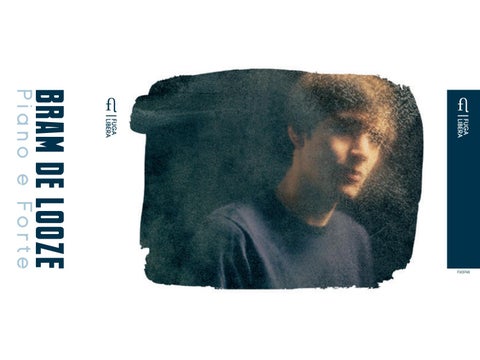
Piano e Forte
BRAM
DE LOOZE (°1991)
1 – 2 – 3 – 4 – 5 – 6 – 7 – 8 – 9 – 10 –
Aigo I Circumvent Meantone Overdye Magnetic Boundaries Hidden Mask Current Space Left In The Unborn Can you bend time? Aigo II Levitation
– – – – – – – – – –
6’59 3’14 6’35 5’19 10’20 3’59 3’38 5’54 6’23 1’48
Total Time
–
54’10
Pleyel 1843 Concert Grand Replica (Rameau) – Tracks 2, 3, 5 Érard 1836 Restored Original (Thomas Young) – Tracks 7-9, 10 Anton Walter 1795 Replica (1/4 Syntonic Meantone) – Tracks 1, 4, 6
Menu
EN
Piano e Forte
Bram De Looze
Feeling like an archaeologist who has just made a vital discovery, I sat down to play some of the pianofortes during a 2015 visit to Chris Maene’s historical instrument collection. Like the archaeologist, I was transfixed by the entirely new perspectives unearthed by my find. Some of these instruments were one-off characters, and some of their traits were instantly captivating. I remember being particularly struck by the different temperaments to which the instruments were tuned. This left me scratching my head for a while, but then research mode kicked in and spurred me on to compile a quick overview of historical instruments and temperaments. There are a lot of interesting things to be found in this somewhat hidden but beautiful corner of music, the preserve of technicalities and mathematics, once its secrets move from theory to your ears. Rather than deal with dozens of pianos at the same time, I decided to keep exploring the 3 instruments which wouldn’t let me go: Erard, Pleyel and Anton Walter. I did the same to avoid getting lost in a maze of temperaments, choosing three and focusing what I could find in there. After several experiments I picked the Rameau, Thomas Young and ¼ Syntonic Meantone temperaments.
Menu
The different interval sizes inside these temperaments create different harmonic constructions, which in turn require a different approach to the use of pitch, harmony and melody. While my ears are adjusting to these temperaments, it’s interesting to hear how the colour of the music is expressed in sharper detail. Improvising freely inside these temperaments is like being dropped in uncharted territory and having to find your way by building your own compass. Exploring these temperaments feels like wearing special glasses that allow me to see all the colours that I couldn’t experience before in equal temperament. Most of the tracks are improvised, some from scratch and some around a few pre-composed ideas. In both cases I have left the performance of the music to the moment. Some pieces have sketches of melodies and harmonies which I restructure in the moment, while others have sev-
eral ingredients that took me a while to blend musically. Combining both, this album contains music that challenges the mind while at the same time touching the heart and spirit. My sincere appreciation for the support and inspiration from Chris Maene and his fantastic staff, I was able to let all these processes take their time, spread over several months at the headquarters of Pianos Maene in Ruiselede, Belgium.
FR
Piano e Forte
Bram De Looze
Me sentant comme un archéologue sur le point de faire une découverte capitale, je me suis assis devant certains des pianofortes de la collection d’instruments historiques de Chris Maene lors d’une visite à son atelier en 2015. Comme l’archéologue, j’ai été subjugué par les perspectives entièrement nouvelles que j’ai découvertes en les jouant alors. Certains de ces instruments étaient des exemplaires uniques et certaines de leurs caractéristiques se montrèrent immédiatement fascinantes. Je me rappelle avoir été particulièrement frappé par les différents tempéraments auxquels les instruments étaient accordés. Je me suis gratté la tête pendant un moment, puis le mode « recherche » s’est enclenché et m’a poussé à dresser un rapide tour d’horizon des instruments et des tempéraments historiques. De nombreuses choses intéressantes peuvent être découvertes dans ce recoin quelque peu dissimulé, bien que magnifique, de la musique, le domaine des techniques et des mathématiques, une fois ses secrets traduits en musique. Plutôt que de traiter avec des dizaines de pianos en même temps, j’ai décidé de continuer à explorer les trois instruments qui ne voulaient pas me laisser partir : Erard, Pleyel et Anton Walter. Afin d’éviter de me perdre dans un labyrinthe de tempéraments, j’en ai également choisi trois, me concentrant sur ce que je pouvais y trouver. Après plusieurs expériences, j’ai choisi le Rameau, le Thomas Young et le mésotonique à quart de comma.
Menu
Les différentes tailles des intervalles à l’intérieur de ces tempéraments créent différentes constructions harmoniques, qui à leur tour nécessitent une approche différente du diapason, de l’harmonie et de la mélodie. Mes oreilles s’adaptant à ces tempéraments, il devient intéressant d’entendre à quel point la couleur de la musique est exprimée avec plus de précision. Improviser librement à l’intérieur de ces tempéraments est comme partir à la découverte de terres inexplorées et devoir trouver son chemin en construisant sa propre boussole. Explorer ces tempéra-
ments revient à porter des lunettes spéciales qui permettent de voir toutes les couleurs, couleurs que je ne pouvais percevoir auparavant dans le tempérament égal. La plupart des plages sont improvisées, certaines à partir de rien, d’autres autour de quelques idées précomposées. Dans les deux cas, j’ai laissé le moment dicter l’interprétation de la musique. Certaines pièces sont des esquisses de mélodies et d’harmonies que j’ai restructurées au moment même, tandis que d’autres possèdent plusieurs ingrédients qu’il m’a fallu mélanger. Combinant les deux, la musique de cet album met l’esprit au défi tout en touchant le cœur et l’âme. Je tiens à exprimer toute ma reconnaissance à Chris Maene et à sa fantastique équipe, grâce auxquels j’ai pu laisser tous ces processus prendre leur temps, sur plusieurs mois passés au siège des Pianos Maene à Ruiselede en Belgique.
DE
Piano e Forte
Bram De Looze
Als ich 2015 während eines Besuchs in der Chris Maenes’s historical instrument collection die Gelegenheit hatte, einige der Pianofortes zu spielen, fühlte ich mich wie ein Archäologe, der gerade eine grundlegende Entdeckung gemacht hat. Wie der Archäologe war ich überwältigt von den völlig neuen Perspektiven, die sich hier boten. Manche dieser Instrumente waren Einzelstücke, und einige ihrer Eigenschaften haben mich vom ersten Moment an gefesselt. Ich erinnere mich daran, dass ich vor allem von den verschiedenen Stimmungen der Instrumente beeindruckt war. Dies gab mir erst einmal Rätsel auf, weckte in mir aber auch die Lust zu recherchieren, um mir einen schnellen Überblick über historische Instrumente und Stimmungen zu verschaffen.
Brille, die es ermöglicht, all jene Farben zu hören, die in gleichschwebender Stimmung bisher unentdeckt blieben.
Es gibt auf diesem etwas verborgenen Gebiet der Musik, dem Gebiet des Technischen und Mathematischen, viel Interessantes zu entdecken, und zwar dann, wenn dessen Geheimnisse von der Theorie auf unsere Ohren übergehen.
Dank der großen Unterstützung und Inspiration von Chris Maene und seinem phantastischen Team konnte ich über mehrere Monate in der Zentrale von Pianos Maene in Ruiselde, Belgien, arbeiten und diese Prozesse in aller Ruhe entwickeln.
Anstatt mich mit Duzenden Klavieren gleichzeitig zu beschäftigen, habe ich die Klaviere untersucht, die mich nicht mehr losgelassen haben: Erard, Pleyel und Anton Walter. Und um innerhalb der Menge von verschiedenen Stimmungen nicht den Überblick zu verlieren, habe ich es hier genauso gemacht: Ich habe drei ausgewählt und diese genauer untersucht. Nach verschiedenen Experimenten entschied ich mich für Rameau, Thomas Young und ¼ Syntonic Meantone.
Menu
Die unterschiedlichen Intervallgrößen innerhalb dieser Stimmungen schaffen neue harmonische Konstrukte, was wiederum eine andere Herangehensweise an die Tonhöhe, die Harmonie und die Melodie erfordert. Während sich meine Ohren auf diese Stimmungen einstellen, ist es besonders interessant, die Klangfarben genauer wahrzunehmen. Wenn man mit diesen Stimmungen frei improvisiert, ist es so, als wäre man in ein unerforschtes Gebiet geworfen worden und müsste seinen eigenen Kompass bauen, um sich zurecht zu finden. Und wenn man diese Stimmungen erforscht, fühlt sich an, als trage man eine spezielle
Die meisten Titel sind improvisiert, einige ausschließlich, andere auf der Basis von vorkomponierten Ideen. In beiden Fällen habe ich mich während des Spiels inspirieren lassen. Manche Stücke basieren auf melodischen oder harmonischen Skizzen, die ich im Moment des Spiels neu strukturiert habe, andere beinhalten Ideen, die ich erst mit der Zeit musikalisch einbinden konnte. In dieser Kombination besteht das Album aus Musik, die den Verstand herausfordert, aber auch Herz und Seele berührt.
NL
Piano e Forte
Bram De Looze
Net als een archeoloog die een opzienbarende ontdekking maakt, begaf ik mij in de collectie historische instrumenten van Chris Maene tijdens een bezoek in 2015. Zoals de archeoloog was ik verwonderd door de nieuwe perspectieven, opgegraven door m’n vondst. Enkele instrumenten getuigen van een uniek karakter waarbij hun kwaliteiten meteen de aandacht trekken. Ik herinner mij in het bijzonder geintrigeerd te zijn door de verschillende temperamenten waarin de piano’s gestemd stonden. Deze gewaarwordingen lieten me even uit m’n lood geslagen, maar steevast wou ik hierover meer weten. Het zette mij aan tot een korte studie van deze historische instrumenten en de temperamenten doorheen de vorige eeuwen. Er zijn vele dingen te ontdekken in deze licht verborgen maar erg mooie plek in de muziekwereld, waarvan toch wel een grote brok techniek en mathematica. Vooral wanneer deze geheimen zich bewegen van de theorie naar het gehoor. In plaats van het op te nemen tegen een leger van piano’s ben ik gebleven bij het bespelen van 3 instrumenten die mij steeds opnieuw in het gedrang hielden: Erard, Pleyel en Anton Walter. Hetzelfde deed ik voor het arsenaal aan temperamenten die er bestaan, ik bleef bij de 3 temperamenten die mij na enkele experimenten het meest geschikt leken: Rameau, Thomas Young en ¼ Syntonic Meantone.
Menu
De verschillende groottes van de intervallen binnenin deze temperamenten vormen interessante samenklanken van boventonen. Mijn verbeelding had een nieuwe benadering nodig op vlak van het gebruik van notenkeuze, harmonie, melodievorming. Terwijl mijn oren gewoon raakten aan deze temperamenten was het opmerkzaam hoe de kleuren in de muziek duidelijker bovenkomen. Het vrij improviseren binnenin deze temperamenten is net als gedropt worden op onbekend terrein en je moet zelf je weg vinden door je eigen navigatiesysteem te verzinnen. Het beter leren kennen van deze temperamenten voelt als het dragen van speciale brillen die mij veel meer kleuren laten ervaren dan de kleuren die ik gewoon ben in ons standaard equal temperament.
Het merendeel is geimproviseerd, enkele tracks vanuit het niets en sommige komen vanuit voorafbedachte ideëen. In beide gevallen liet ik het uitvoeren van deze muziek over aan de energie van het moment zelf. Sommige stukken bevatten sketches van melodieën en harmonieën die ik herstructureer in het moment zelf, terwijl andere stukken bepaalde ingredienten bevatten waaraan ik veel tijd heb besteed om ze muzikaal te doen samenkomen. Dit combinerend, maakt het album zowel een uitdaging voor het intellect, als een aanraking met het hart en de ziel. Mijn diepste dank voor de ondersteuning en inspiratie van Chris Maene en zijn fantastisch team, zij maakten het mogelijk om al deze processen tijd te kunnen geven gespreid over enkele maanden in het hoofdkwartier van Piano’s Maene in Ruiselede, België.
Belgian pianist and composer Bram De Looze (°1991, Knokke-Heist) founds his way to music throughout his teens. In 2007 he starts off with LABtrio together with drummer Lander Gyselinck and bassist Anneleen Boehme. In its early existence, several prizes and awards give LABtrio new opportunities as in 2013 when the prestigious Tremplin Jazz d’Avignon festival pulls off a first album recording, Fluxus. The 2015 album The Howls Are Not What They Seem and 2017 album Nature City represent their ongoing high level of musical experience. After studying at the Lemmens Institute and the Artesis Conservatory in Antwerp he moved to New York in 2012, granted a BAEF scholarship to work his way through the New School For Jazz and Contemporary Music in New York with internationally renowned musicians as Uri Caine, Marc Copland, Reggie Workman. Following up this intense period Bram De Looze launches a new international septet in 2014, carrying the name ‘Septych’ and hosting the sound of two cello’s, three horns, drums and piano. This new exploration of Bram De Looze’s composing is performed and recorded by very diverse and astounding improvisers: Daniel Levin, Lester St-Louis, Robin Verheyen, Gebhard Ullmann, Bo Van Der Werf and Flin Van Hemmen. Based in Brussels, Bram De Looze is a jack of many trades who travels and performs frequently with Piano e Forte, LABtrio, Robin Verheyen duo, and multiple ensembles alongside Dre Hocevar, Stephanos Chytiris, Stephane Galland, Samuel Ber, Mark Schilders, Antoine Pierre. Recently he was granted a SABAM Jazz Award for ‘Young Talent’ at the Gent Jazz Festival. www.bramdelooze.com
Menu