ELTHAM College acknowledges the Wurundjeri Woi Wurrung people of the Kulin Nation as the Traditional Owners and Custodians of the land on which the College stands. We pay our respects to Elders past and present, and extend that respect to all Aboriginal and Torres Strait Islander peoples.
COMMITMENT TO INCLUSION
At ELTHAM College, we are committed to fostering a welcoming, inclusive and respectful community where every individual feels a sense of belonging. We celebrate diversity and recognise the unique perspectives, experiences and contributions that each person brings to our community.
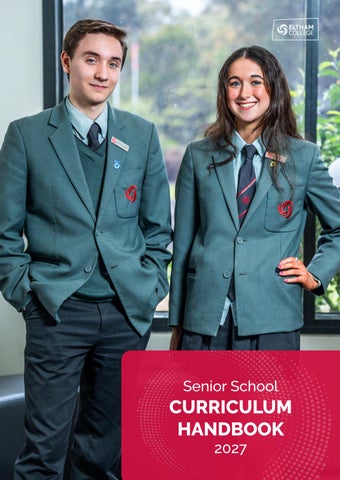
ELTHAM College 2025 Senior School Curriculum Handbook
INTRODUCTION
06Learning
WELCOME
“Life is either a daring adventure or nothing at all.”
– Helen Keller
At ELTHAM College, we believe education should do more than prepare students for exams. It should prepare them for life.
The world our young people are growing into is complex, fast-changing and filled with possibility. Our role is not simply to equip students with knowledge, but to help them develop the confidence, curiosity and strength of character to navigate that world with purpose.
This Handbook outlines the curriculum, pathways and opportunities available throughout the Senior School. More importantly, it reflects our belief that learning should be meaningful, challenging and deeply personal. Every student arrives with different interests, strengths and aspirations, and our role is to support them in discovering who they are, what matters to them, and where they may wish to go next.
At ELTHAM, learning is not one-size-fits-all. Students are encouraged to think critically, engage creatively and explore widely. Whether through academic study, the Arts, Outdoor Education, Sport, STEM, VCE or vocational pathways, students are supported to pursue their interests while developing the skills and perspective needed for an ever-changing world.
Some of the most important learning also happens beyond the classroom. Through camps, performances, leadership opportunities, service and everyday experiences within our community, students learn what it means to contribute, to collaborate and to care for others. They are guided by teachers who are passionate about learning and committed to supporting each student as an individual.
This Handbook is intended to support thoughtful conversations and informed decisions. I encourage students and families to explore the opportunities available, reflect on the possibilities ahead and approach the journey through Senior School with confidence and curiosity.
To our students: be courageous in your choices, open to new experiences and kind to those around you. You are capable of more than you know, and this is only the beginning of what is possible.
CHRIS PAYNE DIRECTOR OF TEACHING, LEARNING AND STUDENT PROGRESS
ELTHAM College CRICOS Provider Code 00138D COURSES OFFERED
Senior School is a significant stage in a young person’s journey. It is a time of growing independence, deeper learning and important decisions about the future. During these years, students are encouraged to develop a strong sense of self while building the confidence, skills and perspective needed to engage meaningfully with the world around them.
Guided by our Student Wellbeing Framework, the Three Leaves of Belonging, Growth and Engagement, and grounded in our College values, students are supported to take an increasingly active role in shaping their learning and pathways. We encourage students to Be Courageous in their choices, Be Curious in their pursuit of understanding, Be Respectful in their relationships, and to Own It as they take responsibility for their learning, wellbeing and personal growth. Through these experiences, students also come to understand the importance of working as One Team and contributing to the connected, inclusive community around them.
Learning in the Senior School is both challenging and deeply personal. Students are supported to explore their interests, discover their strengths and pursue pathways that reflect their individual goals and aspirations. Most students undertake a three-year VCE journey, with opportunities to explore a breadth of subjects and experiences before specialising in their senior years.
Senior School offers students a broad range of opportunities to become involved in the life of the College. Whether through music, sport, leadership, Outdoor Education, debating or community initiatives, students are encouraged to challenge themselves, develop new skills and build meaningful connections with others. Participation beyond academic study plays an important role in helping students develop confidence, independence and a strong sense of engagement with the wider College community.
As educators, our role is not simply to prepare students for their next assessment or pathway, but to support them in becoming thoughtful, capable and compassionate young people, ready to navigate a complex and changing world with confidence and integrity.
We look forward to partnering with you throughout this important stage of the journey and supporting each student to achieve their own version of success, both at school and beyond.
LESLEY MOULIN DIRECTOR, SENIOR SCHOOL
HOW TO USE THIS HANDBOOK
This Handbook is designed to support students and families in understanding the learning programs, subject offerings and academic pathways available throughout the Senior School at ELTHAM College.
Within these pages, you will find information about curriculum structure, core and elective subjects, specialised learning opportunities, and pathway options across each year level. Subject descriptions outline the focus of each course, the skills students may develop, and key information to assist with planning and decision-making.
We encourage students and families to use this Handbook as a starting point for conversations about interests, strengths, goals and future pathways. When making subject selections, students should consider a balanced program that reflects both their interests and their aspirations for further study, training or employment.
Families are encouraged to read the Handbook alongside advice provided by teachers, mentors, Year Level Coordinators and the LifeWork Centre to ensure students feel informed and supported throughout the subject selection process.
While every effort has been made to ensure information is accurate at the time of publication, some details may be subject to change depending on student demand, staffing and timetable considerations
KEY CONTACTS
MAIN RECEPTION
9437 1421 reception@elthamcollege.vic.edu.au
SENIOR SCHOOL OFFICE
9433 9954 snroffice@elthamcollege.vic.edu.au
SENIOR SCHOOL LEADERS
Lesley Moulin Director, Senior School lmoulin@elthamcollege.vic.edu.au
Shane Chellingworth
Deputy Director, Senior School schellingworth@elthamcollege.vic.edu.au
Chris Payne
Head of Teaching, Learning and Student Progress cpayne@elthamcollege.vic.edu.au
Evan Watts
Head of Year 9 City Campus ewatts@elthamcollege.vic.edu.au
VCE COORDINATOR
Cheryl-Anne White VCE Coordinator cwhite@elthamcollege.vic.edu.au
LIFEWORK CENTRE COORDINATOR
Margie Jordan LifeWork Centre Coordinator mjordan@elthamcollege.vic.edu.au
INTERNATIONAL STUDENTS
The Senior School Office is the first point of contact for all international student enquiries. snroffice@elthamcollege.vic.edu.au
YEAR LEVEL COORDINATORS/WELLBEING
Penny van Gelderen
Year 7 & 8 Coordinator pvangelderen@elthamcollege.vic.edu.au
Samantha Cooke
Year 9 Coordinator scooke@elthamcollege.vic.edu.au
Shane Chellingworth
Overseeing Year 10 in 2026 schellingworth@elthamcollege.vic.edu.au
Nick Milne
Year 11 Coordinator nmilne@elthamcollege.vic.edu.au
Simone Kenny
Year 12 Coordinator skenny@elthamcollege.vic.edu.au
SUBJECT TEACHERS
All Senior School staff can be contacted by phone on 9437 1421 (Main Reception) or via email. All of our email addresses utilise the same format (first name initial followed by surname), as shown in this example: lmoulin@elthamcollege.vic.edu.au
Alternatively, you can use the contact list available on mE
LEARNING PATHWAYS AT ELTHAM
At ELTHAM College, we recognise that every student’s learning journey is different. Students bring unique strengths, interests, ambitions and ways of learning, and there is no single pathway that defines success.
Throughout the Senior School years, students are encouraged to explore a broad range of learning experiences while gradually shaping a pathway that reflects their individual goals and aspirations. For some students, this may lead toward university study and an ATAR pathway through the Victorian Certificate of Education (VCE). For others, it may involve vocational learning, applied learning opportunities, creative industries, entrepreneurship, or pathways connected to specific industries and careers.
Our curriculum is designed to provide both breadth and flexibility. In the early years of Senior School, students are exposed to a wide range of subject areas and experiences, allowing them to discover new interests, build confidence and develop a deeper understanding of their strengths. As students progress through Senior School, they are supported to make increasingly informed and independent decisions about their learning.
Students are encouraged to select subjects that challenge and engage them, while also maintaining balance and wellbeing. Pathway planning is supported through ongoing conversations with teachers, mentors, Year Level Coordinators, the LifeWork Centre and families, ensuring students feel informed and supported as they make decisions about their future.
Importantly, pathways are not fixed. Interests evolve, goals change, and new opportunities emerge throughout a student’s learning journey. At ELTHAM, we encourage students to remain open, curious and reflective as they explore the possibilities available to them.
Our aim is not simply to prepare students for their next stage of education, but to help them develop the confidence, adaptability and sense of purpose needed to navigate a rapidly changing world.
CHOOSING YOUR SUBJECTS
Choosing subjects is an important part of shaping your Senior School experience. While subject selection can sometimes feel overwhelming, it is also an opportunity to reflect on your interests, strengths, goals and the kinds of learning experiences you find most engaging.
There is rarely one “perfect” pathway or subject combination. Students develop and change over time, and many future careers and opportunities can be reached through a variety of different pathways. The most successful subject selections are often those that balance curiosity, challenge, enjoyment and wellbeing.
When making decisions about subjects, students are encouraged to consider:
• subjects they genuinely enjoy and are interested in
• areas in which they experience confidence or success
• future study, training or career interests
• prerequisite requirements for tertiary courses or pathways
• maintaining a balanced and manageable program
• opportunities to challenge themselves and explore new areas
It is important that subject choices reflect the interests and aspirations of the individual student. While advice from family, teachers and peers can be valuable, students are encouraged to make thoughtful decisions based on their own goals, strengths and motivations.
Students and families are also encouraged to view subject selection as part of an ongoing journey rather than a single defining decision. Pathways can evolve over time, and flexibility remains an important part of learning and future planning.
Throughout this process, support is available from teachers, mentors, Year Level Coordinators and the LifeWork Centre. Conversations with staff can help students better understand subject content, pathway options, workload expectations and future opportunities.
Most importantly, students should approach subject selection with openness and curiosity. Senior School is a time to explore interests, develop confidence and discover new possibilities for the future.
BUILDING A PROGRAM
As students move through the Senior School, they are encouraged to build a program that reflects their interests, strengths and future aspirations, while also providing balance and breadth across their learning.
Programs are structured differently at each year level, with increasing flexibility and choice as students progress through the Senior School. In Years 7–9, students undertake a combination of core subjects and elective or semester-based subjects designed to provide broad learning experiences across a range of disciplines. These years encourage exploration, skill development and the discovery of new interests.
In Year 10, students begin to shape more specialised pathways. As subject choices became more foscused, students are encouraged to consider prerequisite subjects, future study or career interests and the overall balance of their program.
When building a program, students should aim to:
• maintain a balanced workload across subject areas
• select subjects that provide both challenge and enjoyment
• consider future pathway and prerequisite requirements
• allow opportunities for growth, creativity and exploration
• balance academic commitments with wellbeing and co-curricular involvement
• Students should also be aware that some subjects:
• may run across a full year, while others operate by semester
• have prerequisite knowledge or recommended pathways
• may be subject to timetable and enrolment considerations
Subject selection is an important process, but it is also flexible. Pathways and interests may evolve over time, and students are supported throughout the Senior School journey to review and refine their choices as their goals develop.
Students and families are encouraged to seek advice from teachers, mentors, Year Level Coordinators and the LifeWork Centre when planning and reviewing programs.
VCE OVERVIEW
The Victorian Certificate of Education (VCE) is the senior secondary qualification undertaken by students at ELTHAM College during Years 11–12. The VCE provides students with a broad and flexible pathway that supports a wide range of future study, training and career opportunities.
Some students may begin their VCE journey in Year 10 by exploring subjects and developing the skills and habits required for senior study. As students progress into Years 11 and 12, they gradually build a more specialised program aligned to their interests, strengths and future goals.
VCE subjects are typically structured into Units 1–4:
• Units 1 and 2 are usually completed in Year 11
• Units 3 and 4 are usually completed in Year 12
Some students may also have opportunities to undertake accelerated studies, including completing a Unit 1–4 subject sequence earlier where appropriate and recommended.
Assessment in the VCE includes a combination of:
• school-based coursework and assessment tasks
• practical and performance-based assessments in some subjects
• external examinations for Unit 3–4 studies
For students seeking an ATAR (Australian Tertiary Admission Rank), Unit 3–4 results contribute toward this ranking, which may be used for tertiary entrance. However, the VCE also supports a wide range of post-school pathways beyond university, including vocational education, apprenticeships, traineeships, creative industries and direct employment pathways.
At ELTHAM College, students are encouraged to approach the VCE as more than a score or final outcome. The senior years provide important opportunities for students to develop independence, resilience, critical thinking, time management and self-awareness – skills that will support them well beyond school.
Throughout the VCE journey, students are supported by teachers, mentors, Year Level Coordinators, the VCE Coordinator and the LifeWork Centre to help them make informed decisions, manage workload and plan confidently for the future.
VET AND APPLIED LEARNING
ELTHAM College recognises that students have diverse strengths, interests and aspirations, and that successful pathways beyond school can take many different forms. Vocational Education and Training (VET) and applied learning opportunities provide students with practical, industry-connected experiences that complement and extend their senior secondary studies.
VET programs enable students to develop skills and knowledge within specific industry areas while completing their senior secondary education. These programs combine theoretical learning with practical application and may contribute toward the Victorian Certificate of Education (VCE). Depending on the program, students may also gain nationally recognised qualifications and valuable workplace experience.
VET and applied learning pathways can support students interested in areas such as:
• trades and technical industries
• health and community services
• creative industries
• hospitality and tourism
• sport and recreation
• business and technology
These pathways can provide strong foundations for further training, apprenticeships, traineeships, tertiary study and employment.
At ELTHAM, applied learning is valued as an important and meaningful pathway that supports handson learning, real-world experience and the development of transferable skills such as communication, collaboration, problem-solving and initiative.
Students considering VET or applied learning pathways are encouraged to discuss their interests and future goals with the LifeWork Centre, mentors, teachers and Year Level Coordinators to ensure they select a program that best supports their individual aspirations.
ELTHAM College 2027 Senior School
STUDENT WELLBEING
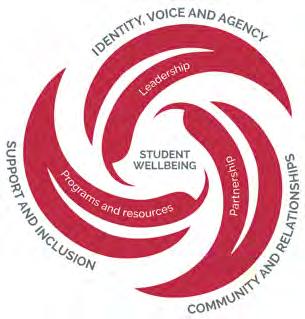
Wellbeing at ELTHAM College is integrated into all we do and who we are. Our framework, with the student at the heart of our three-leaf motif, supports students’ academic experiences and personal goals. It is designed to create a safe, inspiring, stimulating and nurturing environment in which students are encouraged to grow, connect and flourish throughout their time at the College and beyond.
A strong sense of belonging sits at the centre of the ELTHAM experience. Students belong to a Mentor group aligned with their House, supported by a dedicated Mentor who acts as a key point of connection between students, families and teachers. Mentors support student wellbeing, organisation and engagement in school life, while Year Level Coordinators oversee pastoral care across each year level.
Each school day begins with 15 minutes of Mentor Time. During this time, students check in with their Mentor, receive important daily notices, develop organisational skills and build positive relationships within their Mentor group.
In addition, students participate in a weekly Mentor lesson focused on wellbeing, personal development and community connection. These sessions may include guest speakers, assemblies, Mentor activities and the development of study, time management and interpersonal skills.
As students progress through their Senior School journey, the wellbeing program is designed to support the developmental needs and experiences relevant to each stage of adolescence. Themes explored across Years 7–9 encourage students to build self-awareness, resilience, responsibility and respectful relationships, while developing the confidence and skills needed to engage positively with both their school and wider community.
Themes explored across Years 10–12 encourage students to develop healthy habits, leadership skills, resilience and confidence as they prepare for life beyond school.
• cultural safety
• friendship and social circles
• organisation, time management and study skills
• personal and community safety
YEAR 7 — CONNECTION AND COMMUNITY
Year 7 wellbeing focuses on supporting students as they transition into secondary school and begin establishing connections within the ELTHAM community. The program explores the theme of Connection and Community and may include:
• transitioning to secondary school
• developing healthy and respectful relationships
• understanding self and values
• diversity, inclusion and empathy
YEAR 8 — EMBRACING WHO YOU ARE
Year 8 wellbeing focuses on identity, personal growth and increasing independence. Through the theme of Embracing Who You Are, students are encouraged to reflect on their values, relationships and developing sense of self. Topics may include:
• identity and self-awareness
• organisation and study skills
STUDENT WELLBEING
• diversity, inclusion and cultural safety
• digital identity and online presence
• goal setting
• growth mindset
• respectful relationships
• addiction education
YEAR 9 — RESPONSIBILITY
Year 9 wellbeing reflects students’ increasing independence and engagement with the broader community, particularly through the City Campus experience. Through the theme of Responsibility, students explore:
• being safe in the city
• respectful relationships and emotional regulation
• preparedness for work and future pathways
• responsibility for self and others
• conflict resolution
• diversity and inclusion
• First Nations awareness in urban environments
• personal brand and identity development
YEAR 10 — DEVELOPING HEALTHY HABITS
Year 10 wellbeing focuses on supporting students as they transition into the Senior School years and begin navigating increased independence, responsibility and academic expectations.
Through the theme of Developing Healthy Habits, students are encouraged to build positive routines, strengthen decision-making skills and develop greater self-awareness.
Topics may include:
• developing and maintaining positive relationships
• self-care and wellbeing, including mental, emotional and spiritual health
• character and values
• drug and alcohol education
• leadership and decision-making
• positive mindset development
• online rights and responsibilities
STUDENT WELLBEING
YEAR 11 — LEADERS OF TOMORROW
Year 11 wellbeing focuses on leadership, reflection and preparation for the challenges of senior studies. Through the theme of Leaders of Tomorrow, students are encouraged to develop resilience, self-awareness and the capacity to positively influence those around them while balancing increasing academic commitments.
Topics may include:
• gratitude, mindfulness and resilience
• self-reflection and decision-making
• leadership and influence
• leading with character
• study skills and exam preparation
• GAT preparation
YEAR 12 — BEING REAL-WORLD READY
Year 12 wellbeing focuses on preparing students for life beyond school, supporting them through the final stages of their secondary education while encouraging independence, balance and future planning.
Through the theme of Being Real World Ready, students are encouraged to develop confidence in themselves, their goals and their ability to navigate future pathways.
Topics may include:
• study skills and exam preparation
• motivation and positive psychology
• character and personal responsibility
• looking after self and others
• future pathways, career planning and transition
ACADEMIC INTEGRITY
ELTHAM College is committed to fostering a culture of honesty, responsibility and respect within all aspects of learning.
Academic integrity involves producing and submitting work ethically and authentically, acknowledging the ideas and contributions of others, and demonstrating responsibility throughout the learning process. Students are expected to approach all assessment tasks with integrity and to uphold the values of fairness and honesty in their academic work.
Demonstrating academic integrity includes:
• completing work independently unless collaboration is permitted
• appropriately acknowledging sources and references
• using technology and AI tools responsibly and ethically
• submitting original work
• following assessment and examination guidelines
Students are supported to develop the skills required to research, reference and communicate information appropriately across all year levels.
At the VCE level, academic integrity expectations align with Victorian Curriculum and Assessment Authority (VCAA) requirements. Students and families are encouraged to familiarise themselves with the College’s Student Academic Integrity Policy and all assessment procedures relating to authentication and academic conduct.
SENIOR SCHOOL SPORT AND HOUSE PARTICIPATION
Participation in sport is a valued part of student life at ELTHAM College and contributes to wellbeing, personal development, teamwork, leadership and a strong sense of College spirit.
All students are expected to participate fully in the College House carnivals:
• Swimming Carnival
• Athletics Carnival
• Cross Country Carnival
As a member of the Eastern Independent Schools of Melbourne (EISM), ELTHAM College provides students with opportunities to represent the College in a broad range of interschool sporting competitions across two seasonal competitions each year, competing alongside other independent schools.
Summer Season (Terms 1 and 2)
Students may participate in:
• Basketball
• Soccer
• Softball
• Hockey
• Table Tennis
• Badminton (Stream 2)
• Volleyball (Stream 2)
Winter Season (Terms 2 and 3)
• Badminton
• Indoor Cricket
• Netball
• Volleyball
• Football (AFL 15s)
• Hockey
• Basketball (Stream 2)
• Table Tennis (Stream 2)
Interschool Sport is conducted on Monday afternoons for Year 7, Thursday afternoons for Years 8-9 and Wednesday afternoons for Years 10-12.
PARTICIPATION REQUIREMENTS
Interschool Sport is a compulsory component of the Senior School program for students in Years 7–11.
Year 12 students are strongly encouraged to participate in at least one season of interschool sport during their final year. This provides an opportunity to maintain connection with peers, contribute to College spirit and enjoy the benefits of physical activity alongside the demands of their senior studies.
Through participation in House and interschool sport, students develop commitment, resilience, teamwork, leadership, sportsmanship, communication and a lifelong appreciation for physical activity and personal wellbeing.
YEAR 7
CORE SUBJECTS
18English
19Humanities – Geography
20Humanities – History
21Languages – Chinese
22Languages – French 24Mathematics
25Music
26Outdoor Education
27Health and Physical Education
28Science
YEAR 7 CORE SUBJECTS
English
SUBJECT OVERVIEW
The study of English at ELTHAM aims to develop students’ creativity, imagination and confidence as readers, writers, speakers and thinkers. Through the study of a diverse range of texts and learning experiences, students strengthen their skills in reading, viewing, listening, speaking and writing while developing an appreciation of the power of language to inform, entertain and inspire.
Students participate in four English lessons each week, including a dedicated library session that supports reading, research and independent learning. Throughout the year, students engage with a variety of fiction, non-fiction and multimodal texts, exploring how authors and creators communicate ideas for different audiences and purposes.
Students develop analytical, creative and persuasive communication skills through discussion, debate, collaborative activities and performance opportunities. A highlight of the program is the Story Slam, where students transform personal experiences into engaging oral presentations that build confidence and storytelling skills.
SKILLS
Through the course, students will have the opportunity to develop skills in:
• analysing how text structures and language features are shaped by audience, purpose and context
• interpreting and responding to a range of literary and multimodal texts
• creating analytical, imaginative and persuasive pieces of writing
• experimenting with language and style through creative writing
• analysing how language is used in media and contemporary texts
• communicating ideas confidently through speaking and presentation
• participating in discussion, debate and collaborative learning activities
• developing effective annotation, close reading and textual analysis skills
CONTENT
Students explore:
• a range of extended texts, including a novel, graphic novel and film
• strategies for effective annotation and close textual analysis
• literary themes, characters and authorial choices
• the conventions of dystopian and gothic fiction
• creative writing inspired by studied genres and texts
• media texts and the ways language shapes meaning
• personal storytelling and oral communication through the Story Slam
• contemporary issues explored through discussion and written responses
DURATION
Full Year
ASSESSMENT
Assessment may include:
• analytical responses to texts
• creative writing pieces
• oral presentations and performances
• media analysis tasks
• discussion and speaking activities
• written responses and extended tasks
• reading and comprehension activities
Humanities – Geography
SUBJECT OVERVIEW
Geography encourages students to explore the connections between people, places and environments, and to consider how the decisions we make today shape the world of tomorrow. Through the study of liveability, water resources and global supply chains, students develop an understanding of the challenges and opportunities involved in creating sustainable futures.
Students investigate what makes places liveable and how factors such as climate, infrastructure and access to services influence quality of life. They explore the importance of water as a resource, examining the impacts of water scarcity on individuals, communities and nations. The course also investigates the global chocolate industry, encouraging students to consider ethical production, sustainability and the interconnected nature of our world.
Through inquiry, research and fieldwork, students develop geographical knowledge and skills while learning to think critically about environmental, social and economic issues.
SKILLS
Through the course, students will have the opportunity to develop skills in:
• critical and creative thinking
• explaining processes that influence the characteristics of places and environments
• identifying, analysing and interpreting spatial distributions and patterns
• investigating interconnections within and between places
• collecting, recording and evaluating geographical data from primary and secondary sources
• conducting fieldwork and applying ethical research practices
• analysing and interpreting maps, graphs and geographical information
• identifying relationships, trends and patterns in geographical data
• evaluating the costs, benefits and consequences of decisions relating to resource use and sustainability
• communicating geographical findings and informed conclusions
CONTENT
Students explore:
• liveability and the factors that influence quality of life
• climate change and its impacts on people and environments
• resource allocation and sustainability
• the many uses and importance of water
• the physical and economic challenges associated with water scarcity
• sustainable water management practices
• the origins and production of chocolate
• global supply chains and manufacturing processes
• ethical issues within the chocolate industry, including child labour
• the role and responsibilities of multinational companies
DURATION
Semester
ASSESSMENT
Assessment may include:
• inquiry and research tasks
• fieldwork activities
• map and data analysis
• reports and case studies
• presentations
• examinations
• reflective and analytical responses
• written responses and extended tasks
• reading and comprehension activities
YEAR 7 CORE SUBJECTS
Humanities – History
SUBJECT OVERVIEW
History develops students’ understanding of the past and the skills historians use to investigate, interpret and explain historical events. Through the study of ancient societies and cultures, students explore how people lived, organised communities, developed beliefs and responded to challenges, while considering how these experiences continue to influence the world today.
Students begin by exploring the rich histories, cultures and achievements of Aboriginal and Torres Strait Islander Peoples from Deep Time to the present, including the significance of some of the world’s oldest continuing cultures. They then investigate Ancient Greece and examine the social, political and cultural developments that have shaped many aspects of modern society. Students also undertake an inquiry into an ancient civilisation of their choice, developing independence as researchers and historical thinkers.
Through source analysis, research and inquirybased learning, students build critical thinking, communication and analytical skills while developing an appreciation of multiple perspectives and the importance of understanding the past.
SKILLS
Through the course, students will have the opportunity to develop skills in:
• critical and analytical thinking
• sequencing significant events and developments in chronological order
• identifying continuity and change over time
• analysing, corroborating and evaluating historical sources
• interpreting different historical perspectives
• developing and investigating historical inquiry questions
• conducting research using a range of primary and secondary sources
• communicating historical understanding in a variety of written, visual and oral forms
• understanding the role of informed and active citizenship
CONTENT
Students explore:
• Ancient Australia, including the historical significance of Lake Mungo
• the histories, cultures and achievements of Aboriginal and Torres Strait Islander Peoples
• Ancient Greece, including daily life, beliefs and systems of government
• different forms of government, including democracy and oligarchy
• the influence of Ancient Greece on contemporary society
• an ancient civilisation of personal interest through an independent research inquiry
• historical inquiry, source analysis and research methodologies
DURATION
Semester
ASSESSMENT
Assessment may include:
• research reports
• source analysis tasks
• creation of a museum exhibit
• extended written responses
• oral presentations
• tests and examinations
• inquiry-based projects
Languages Other Than English (LOTE) – Chinese
SUBJECT OVERVIEW
Year 7 Chinese introduces students to the Chinese language and culture through engaging and practical communication experiences. Students develop the skills and confidence to communicate using simple language related to everyday life while building an understanding of how Chinese works as a language system.
Through speaking, listening, reading and writing activities, students learn to recognise Chinese characters, use pinyin and tones accurately, and communicate ideas using familiar vocabulary and sentence structures. Students also explore aspects of Chinese culture and develop intercultural understanding by examining the connections between language, traditions and daily life.
The course encourages curiosity, communication and cultural awareness while providing a foundation for future language learning.
Throughout Year 7, students can study both Chinese and French before selecting a language to continue in Year 8.
SKILLS
Through the course, students will have the opportunity to develop skills in:
• understanding aspects of Chinese language and culture
• using pinyin and tones to support accurate pronunciation
• recognising and writing simple Chinese characters
• communicating simple ideas and information in Chinese
• listening and responding appropriately in familiar contexts
• reading and interpreting basic written Chinese
• participating confidently in pair, group and whole-class activities
• developing intercultural awareness and understanding
CONTENT
Students explore:
• greetings and farewells
• numbers and counting
• family and pets
• sports and school activities
• countries and nationalities
• everyday communication in familiar contexts
• aspects of Chinese culture and traditions
DURATION
Semester 1 or Semester 2
ASSESSMENT
Students are assessed across the four language modes of listening, speaking, reading and writing.
Assessment may include:
• research projects
• presentations
• posters and creative tasks
• class-based language activities
• mid-semester assessment tasks
• end-of-term tests
PATHWAYS
Successful completion of Year 7 Chinese provides a pathway into Year 8 Chinese and supports the continued development of language, communication and intercultural understanding skills.
PREREQUISITES
Not applicable.
YEAR 7 CORE SUBJECTS
Languages Other Than English (LOTE) – French
SUBJECT OVERVIEW
Year 7 French introduces students to the French language and culture through engaging, interactive and practical learning experiences. Students develop listening, speaking, reading and writing skills while building confidence in communicating simple ideas about themselves, their families, interests and everyday life.
Through role-plays, songs, stories, videos and structured language activities, students learn foundational vocabulary and grammar while developing an understanding of how language is used in different cultural contexts. Students also explore aspects of French culture and traditions, gaining insight into the diverse French-speaking world and developing an appreciation for intercultural understanding.
The course encourages curiosity, communication and cultural awareness while providing a strong foundation for future language learning.
SKILLS
Through the course, students will have the opportunity to develop skills in:
• listening for meaning in familiar contexts
• speaking and interacting using simple French language
• reading and interpreting short written texts
• writing simple sentences and responses in French
• using vocabulary and grammar accurately in everyday situations
• developing confidence in pronunciation and oral communication
• understanding cultural similarities and differences
• participating in collaborative language-learning activities
CONTENT
Students explore:
• greetings and introductions
• where we live
• likes, dislikes and personal preferences
• pets and interests
• family and age
• food and celebrations, including birthdays
• aspects of French culture and daily life
• cultural similarities and differences between France and Australia
Throughout Year 7, students can study both French and Chinese before selecting a language to continue in Year 8.
DURATION
Semester 1 or Semester 2
ASSESSMENT
Students are assessed across the four language modes of listening, speaking, reading and writing.
Assessment may include:
• vocabulary tests
• role-plays and conversations
• oral presentations
• written responses
• reading comprehension tasks
• listening activities
• class-based language tasks
Assessment weighting:
• Listening and Reading – 50%
• Writing and Speaking – 50%
PATHWAYS
Successful completion of Year 7 French provides a pathway into Year 8 French and supports the continued development of language, communication and intercultural understanding skills.
Students who continue their language studies can follow the French learning pathway through to Year 10 and beyond.
PREREQUISITES
Not applicable.
YEAR 7 CORE SUBJECTS
Mathematics
SUBJECT OVERVIEW
Year 7 Mathematics is based on the Victorian Curriculum and provides students with opportunities to develop strong numeracy, reasoning and problemsolving skills. Students explore key concepts across number, algebra, measurement, geometry, statistics and probability through practical, collaborative and investigative learning experiences.
Classes are structured to provide targeted support for students requiring additional assistance, while also extending students demonstrating strong readiness for advanced mathematical thinking. Highability classes focus on increased breadth and depth of learning to ensure students are appropriately challenged and engaged.
The program encourages students to think critically, communicate mathematical reasoning clearly and apply mathematical understanding to real-world situations.
SKILLS
Through the course, students will have the opportunity to develop skills in:
• using number properties to solve problems and perform calculations with integers
• applying the four operations to fractions, decimals and percentages
• developing algebraic thinking through patterns, expressions and simple equations
• calculating perimeter, area and volume of a range of shapes
• converting between units of length, area and volume
• collecting, displaying and interpreting data using a variety of graphs and plots
• calculating probabilities and analysing outcomes of simple experiments
• applying mathematical reasoning and problem-solving strategies
CONTENT
Semester 1
Students explore:
• Number and Integers
• Fractions, Decimals and Percentages
• Data and Statistics
• Measurement
Semester 2
Students explore:
• Space
• Algebra
• Equations
• Probability
• Algorithmic Thinking
DURATION
Full Year
ASSESSMENT
Semester 1
• Tests – 50%
• Investigations – 25%
• Multiple-choice, short-answer and extended-response tasks
• Assignments – 25%
Semester 2
• Investigations and Examinations – 50%
• Tests – 25%
• Multiple-choice, short-answer and extended-response tasks
• Assignments – 25%
Music
SUBJECT OVERVIEW
Music plays an important role in developing creativity, confidence, discipline and collaboration. Through learning, rehearsing and performing music, students develop technical skills while also building critical thinking, problem-solving and communication skills.
A unique feature of the Year 7 Music program is that every student is provided with a musical instrument for the year. Students learn their chosen instrument through group lessons and ensemble rehearsals, working together as part of a class band. Through regular practice and performance opportunities, students develop confidence as musicians while experiencing the enjoyment of making music with others.
The program encourages creativity, perseverance and teamwork, while fostering an appreciation of music as both an art form and a means of personal expression.
SKILLS
Through the course, students will have the opportunity to develop skills in:
• instrumental technique
• reading and interpreting music notation
• understanding rhythm, melody and phrasing
• applying dynamics and articulation in performance
• ensemble rehearsal and performance skills
• active listening and musical analysis
• collaboration and teamwork
• performance confidence and stagecraft
• self-discipline, organisation and practice routines
CONTENT
Students explore:
• instrumental performance through weekly group lessons
• music notation and reading skills
• rhythm, melody and musical expression
• ensemble rehearsal techniques
• performance preparation and presentation
• collaborative music-making as part of a class band
• listening and responding to music
All Year 7 students are provided with a musical instrument and participate in ensemble rehearsals throughout the year. Students may choose from:
• Flute
• Clarinet
• Trumpet
• Trombone
• Percussion
Students perform in two major concerts during the year, typically held at the end of Term 2 and Term 4. These concerts showcase performances by large and small ensembles, as well as solo, duet and trio performances, providing students with the opportunity to demonstrate their musical growth and achievements.
DURATION
Full Year
ASSESSMENT
Assessment may include:
• instrumental performance tasks
• ensemble participation
• rehearsal preparation
• music literacy activities
• practical demonstrations
• concert performances
PATHWAYS
Year 7 Music provides a foundation for further study in classroom and instrumental music programs. Students develop musical, creative and collaborative skills that support continued participation in music ensembles, performance opportunities and future music studies throughout their time at ELTHAM.
YEAR 7 CORE SUBJECTS
Outdoor Education
SUBJECT OVERVIEW
Outdoor Education is an integral part of the Year 7 experience at ELTHAM College and plays an important role in supporting students as they transition into secondary school. Through shared challenges, outdoor experiences and time spent in nature, students develop confidence, resilience, independence and a strong sense of belonging within their mentor group and the wider College community.
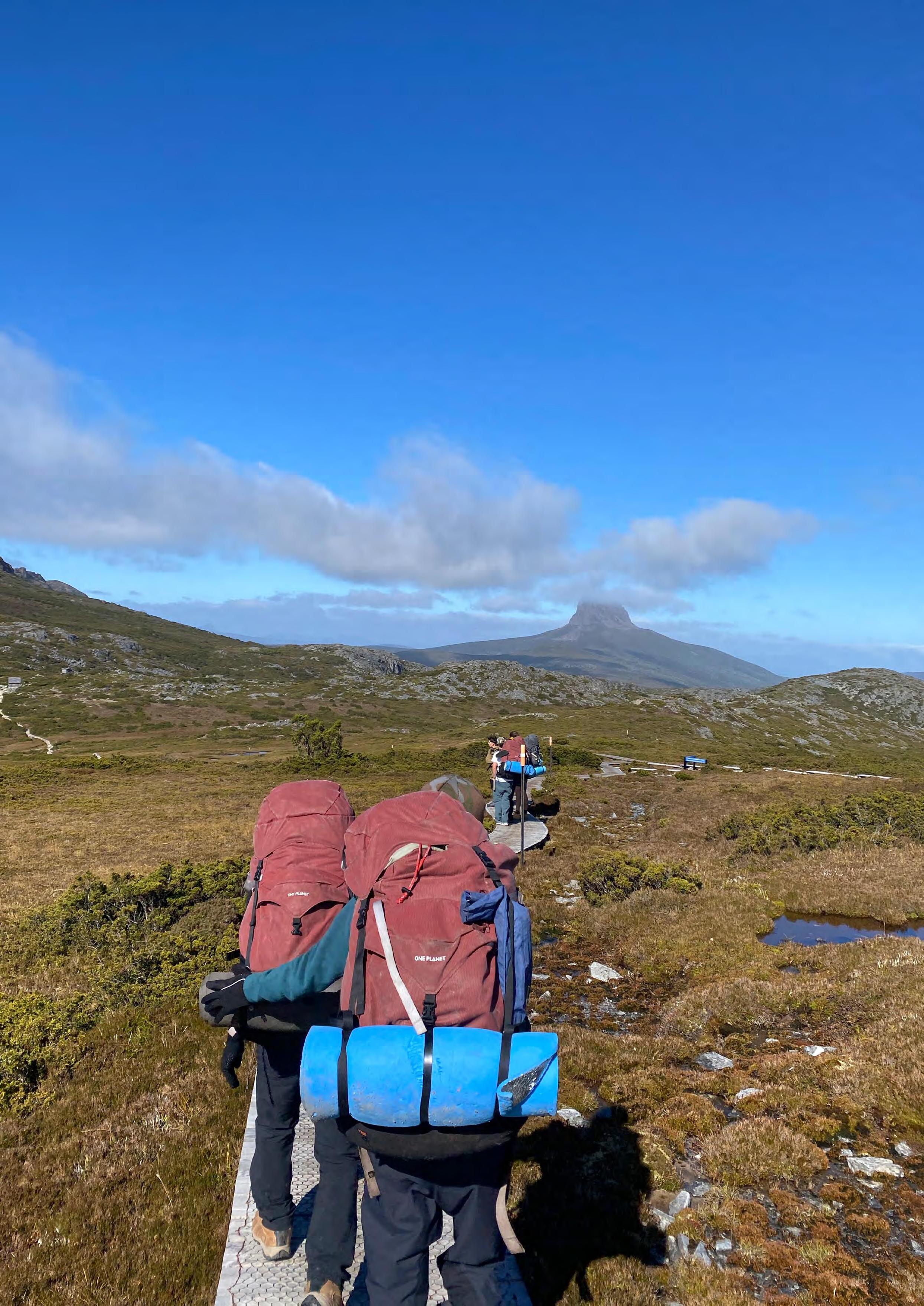
The Year 7 program is based at Eumeralla Bush Camp in Anglesea, where students immerse themselves in a coastal and marine environment while learning to balance challenge and achievement, independence and teamwork, effort and enjoyment. Throughout the program, students are encouraged to take increasing responsibility for themselves and their contribution to the group, developing the practical and interpersonal skills needed for future Outdoor Education experiences.
Outdoor Education provides opportunities for personal growth, reflection and connection while fostering an appreciation of the natural environment and the value of shared experiences.
SKILLS
Through the course, students will have the opportunity to develop skills in:
• planning and preparing meals using a Trangia stove
• developing self-sufficiency and personal organisation
• applying safe food preparation and storage practices
• preparing and packing equipment for outdoor experiences
• recognising and responding safely to surf conditions, including rips and currents
• building confidence when participating in unfamiliar activities and environments
• working collaboratively and contributing positively to a group
• developing resilience, independence and problem-solving skills
• understanding the purpose and value of journey-based learning programs
CONTENT
Students participate in a range of outdoor, environmental and adventure-based activities throughout this compulsory five-day program.
Under the guidance of experienced staff, students:
• live as an independent community in shared tent accommodation
• prepare and cook their own meals in an outdoor environment
• participate in surfing and canoeing activities
• undertake mountain bike riding and challenge course activities
• explore environmental and sustainability concepts
• engage in bushwalking experiences through the coastal hinterland
• develop teamwork, leadership and personal responsibility skills
The program encourages students to embrace new experiences, build meaningful connections with their peers and develop confidence in their ability to navigate challenges both individually and as part of a team.
DURATION
Five-Day residential program
ASSESSMENT
Assessment is based on participation, personal development, teamwork, responsibility and engagement throughout the program.
Health and Physical Education
SUBJECT OVERVIEW
Health and Physical Education supports students to develop the knowledge, skills and confidence needed to lead active, healthy and balanced lives. Through a combination of practical physical activity and health education, students build physical competence, resilience, self-awareness and positive relationships while developing an understanding of personal wellbeing.
In Physical Education, students refine and apply movement skills across a wide range of individual and team activities. They develop confidence, teamwork, sportsmanship and strategic thinking while learning how movement, fitness and participation contribute to overall health and wellbeing.
In Health, students explore topics relevant to their stage of development, including personal identity, relationships, safety, mental health and wellbeing. The program encourages students to think critically, communicate effectively and make informed decisions that support healthy lifestyles and positive connections with others.
SKILLS
Through the course, students will have the opportunity to develop skills in:
• fundamental movement and motor skills
• game play, tactics and strategic thinking
• safe and responsible use of equipment
• teamwork, cooperation and sportsmanship
• effective communication and collaboration
• problem-solving and decision-making
• resilience and emotional regulation
• self-awareness and confidence
• understanding factors that influence health and wellbeing
• developing positive relationships and respectful interactions
CONTENT
Physical Education
Students participate in a range of physical activities, which may include:
• Volleyball
• SEPEP Soccer
• Floor Gymnastics
• Fitness
• Softball
• Indoor Hockey
• Basketball
• Swimming
• Water Polo Health
Students explore:
• personal identity and self-awareness
• safety and risk mitigation
• bullying and respectful relationships
• cybersafety
• vaping education
• water and sport safety
• puberty and adolescent development
• positive mental health and wellbeing
• preparation for the transition into Year 8
DURATION
Full Year
ASSESSMENT
Assessment may include:
• practical participation and performance
• skill development tasks
• teamwork and collaboration
• projects and investigations
• reflective activities
• health-related learning tasks
Students are assessed on factors including participation, effort, sportsmanship, teamwork, skill development and their understanding of rules, tactics and health concepts.
YEAR 7 CORE SUBJECTS
Science
SUBJECT OVERVIEW
Science encourages students to question, investigate and better understand the world around them. Through a combination of practical investigations, experiments and inquiry-based learning, students develop scientific knowledge while building the skills needed to think critically, analyse evidence and communicate conclusions.
Students learn that scientific claims must be supported by evidence and explore how scientists use observation, experimentation and fair testing to investigate questions and solve problems.
Throughout the year, students design and conduct investigations, collect and analyse data, and develop an understanding of how scientific knowledge is created and refined.
The course explores concepts from biology, chemistry, physics, Earth and space sciences, helping students develop curiosity about the natural world and an appreciation of the role science plays in everyday life.
SKILLS
Through the course, students will have the opportunity to develop skills in:
• investigating ecosystems and the classification of living things
• understanding the unique physical and chemical properties of water
• exploring separation techniques used to produce safe drinking water
• investigating forces, including gravity and friction, and their effects on motion
• understanding how the relative positions of the Sun, Earth and Moon explain natural phenomena
• developing scientific questions and testable hypotheses
• designing and conducting fair tests and investigations
• collecting accurate data through observation, measurement and repeated trials
• analysing and interpreting scientific data
• identifying patterns and drawing evidencebased conclusions
• communicating scientific findings using appropriate scientific language and conventions
CONTENT
Semester 1
Students explore:
• Introduction to Science
• States of Matter
• Water Chemistry
• Ecosystems
Semester 2
Students explore:
• Forces
• Earth Resources
• Earth and Space
DURATION
Full Year
ASSESSMENT
Assessment may include:
• practical investigations
• laboratory reports
• scientific inquiry tasks
• projects
• tests
• data analysis tasks
• presentations and research activities
YEAR 7 MODULES
Food Technology – The Home Cook’s Toolkit
SUBJECT OVERVIEW
The Home Cook’s Toolkit introduces students to the essential skills needed to prepare simple, nutritious and enjoyable meals for everyday life. Through hands-on cooking experiences, students develop confidence in the kitchen while learning how to work safely, follow recipes and make informed food choices.
Students explore the journey of food from production to consumption, considering the environmental and social impacts of the choices we make every day. Alongside practical cooking skills, they investigate nutrition, food sustainability and responsible food practices, developing an understanding of how food choices can support both personal wellbeing and environmental sustainability.
This module encourages independence, creativity and confidence while providing students with practical life skills that can be applied beyond the classroom.
SKILLS
Through the course, students will have the opportunity to develop skills in:
• using kitchen tools and equipment safely and effectively
• operating gas and electric ovens with confidence
• applying safe food handling, hygiene and storage practices
• following recipes accurately and independently
• planning and preparing simple home-style meals
• making informed food choices based on nutrition and sustainability
• evaluating finished products and identifying opportunities for improvement
• presenting food effectively and creatively
CONTENT
Students explore:
• food preparation, hygiene and kitchen safety
• food storage and safe food-handling practices
• nutrition and healthy food choices
• sustainable food production and consumption
• the impact of food waste, packaging and food miles
• recipe interpretation and practical cooking techniques
• planning, preparing and presenting home-style meals
DURATION
Semester
ASSESSMENT
Assessment may include:
• practical cooking tasks
• food production projects
• design and planning activities
• recipe evaluations
• reflective tasks
PATHWAYS
The Home Cook’s Toolkit provides a foundation for further study in Food Technology and related design subjects. Students develop practical life skills, independence and an understanding of food systems that support future learning in hospitality, nutrition, health and food-related industries.
PREREQUISITES
Not applicable.
Food Technology – The Chef’s Hat Toolkit
SUBJECT OVERVIEW
The Chef’s Hat Toolkit is designed for students who are ready to take their culinary creativity to the next level. Building on foundational food preparation skills, students explore how chefs combine flavour, presentation and innovation to create memorable dining experiences.
Students investigate the art and science of cooking, learning how ingredients work together to create balance, texture and visual appeal. Through practical design challenges, recipe development and food presentation tasks, they experiment with new ideas while developing confidence, creativity and attention to detail.
With a strong emphasis on innovation and problemsolving, this module encourages students to think like chefs, designers and creators as they develop dishes that are both visually appealing and enjoyable to eat.
SKILLS
Through the course, students will have the opportunity to develop skills in:
• applying advanced food preparation techniques
• using kitchen equipment with precision and efficiency
• demonstrating advanced food safety and hygiene practices
• modifying and adapting recipes for different purposes and audiences
• developing creativity in food presentation and plating
• analysing flavour combinations and ingredient pairings
• responding to culinary design challenges and briefs
• evaluating and refining food products
CONTENT
Students explore:
• advanced food preparation and presentation techniques
• food safety and professional kitchen practices
• flavour pairing and ingredient combinations
• restaurant-style plating and presentation
• food aesthetics and visual communication
• recipe adaptation and development
• the design process in food production
• evaluating and refining culinary creations
DURATION
Semester
ASSESSMENT
Assessment may include:
• practical cooking tasks
• culinary design challenges
• recipe development projects
• food presentation tasks
• reflective and evaluation activities
PATHWAYS
The Chef’s Hat Toolkit provides an introduction to advanced food design and culinary practices.
Students develop creative, practical and problemsolving skills that support future pathways in food technology, hospitality, catering, nutrition, tourism and related industries.
PREREQUISITES
Not applicable.
YEAR 7 MODULES
Design & Technology – Media Remix
SUBJECT OVERVIEW
Media Remix introduces students to the exciting world of filmmaking and digital storytelling. Students explore what makes a great film by analysing a range of media texts before learning how to create their own original productions.
From storyboarding and planning through to filming and editing, students develop an understanding of the complete film production process. They investigate camera composition, shot types, camera movement, genre and narrative structure while learning how filmmakers use visual and audio techniques to engage audiences and communicate ideas.
Using industry-standard software such as Adobe Premiere Pro, students transform their ideas into polished short films while developing creative, technical and collaborative skills.
SKILLS
Through the course, students will have the opportunity to develop skills in:
• planning and producing media projects in response to a design brief
• understanding the stages of film production
• analysing film language and visual storytelling techniques
• using camera shots, angles and movement effectively
• storyboarding and narrative development
• filming and editing digital media
• applying sound effects and music to enhance productions
• collaborating and communicating within a production team
CONTENT
Students explore:
• film analysis and visual storytelling
• storyboarding and pre-production planning
• camera composition, shots, angles and movement
• narrative structure and genre conventions
• visual effects and filmmaking techniques
• filming and editing using Adobe Premiere Pro
• sound design and music integration
• pre-production, production and post-production processes
• drone photography and videography
DURATION
Semester
ASSESSMENT
Assessment may include:
• storyboard development
• film production projects
• editing tasks
• media analysis activities
• design process documentation
• practical and collaborative tasks
PATHWAYS
Media Remix provides a foundation for further study in Media, Multimedia and Digital Technologies. Students develop creative, technical and communication skills that support future pathways in film, television, digital media, content creation, communications and design.
PREREQUISITES
Not applicable.
Design & Technology – Image Remix
SUBJECT OVERVIEW
Image Remix is designed for students who enjoy photography, creativity and digital design. Through practical photography experiences and digital image manipulation, students learn how visual media can be used to communicate ideas, tell stories and influence audiences.
Students develop photographic skills while learning how professional photographers, designers and advertisers use composition, colour, typography and image editing techniques to create powerful visual messages. Using Adobe Photoshop, students transform and enhance their images while creating projects such as magazine covers, movie posters and digital artworks.
The module encourages creativity, experimentation and critical thinking while helping students understand the role visual media plays in contemporary society.
SKILLS
Through the course, students will have the opportunity to develop skills in:
• applying photographic techniques and composition principles
• expressing ideas through photography and digital media
• editing and manipulating images using Adobe Photoshop
• combining imagery and typography effectively
• analysing visual communication and media influence
• applying design principles to creative projects
• responding to design briefs and creative challenges
• evaluating and refining visual outcomes
CONTENT
Students explore:
• photography techniques and composition
• digital image editing and enhancement
• typography and graphic design principles
• magazine cover and movie poster design
• media representation and audience influence
• advertising and visual communication
• drone photography and image capture
• development of a digital photography and design portfolio
DURATION
Semester
ASSESSMENT
Assessment may include:
• photography folios
• digital design projects
• image manipulation tasks
• visual analysis activities
• creative responses to design briefs
• portfolio presentation
PATHWAYS
Image Remix provides a foundation for future study in Media, Visual Communication Design, Photography and Digital Technologies. Students develop creative, technical and visual communication skills that support pathways in graphic design, photography, advertising, marketing, media production and digital content creation.
PREREQUISITES
Not applicable.
YEAR 7 MODULES
Design & Technology – Design & Robotics
SUBJECT OVERVIEW
Design and Robotics introduces students to the fundamentals of robotics, programming, and digital fabrication through hands on, project-based learning. Using LEGO SPIKE Prime kits, students explore block-based coding to design, build, and control moving systems, developing problem solving and computational thinking skills. Alongside robotics, students are introduced to 3D modelling software to prototype and refine product ideas. They also learn to create precise vector designs in Adobe Illustrator, preparing files for production using a laser cutter. This subject encourages creativity, iteration, and technical confidence while fostering an understanding of how digital tools can be applied to real-world design and engineering challenges.
SKILLS
Through the course, students will have the opportunity to develop skills in:
• Use of the design process to explore and develop design concepts
• Collaboration for building and programming Lego Spike robots
• Creative thinking and problem solving
• Communication (written, verbal, visual, digital)
• Creativity and innovation through 3D prototypes
• Digital design through Illustrator
CONTENT
Students explore:
• Introduction to robotics including history, innovation and purpose
• Lego Spike Prime introduction to building and block programming
• 3D design and prototyping with a 3D printer
• Development of vector files for use with a laser cutter
DURATION
Semester
ASSESSMENT
Practical work: Design process and products - 3 Outcomes
• Outcome 1 – Robotics
• Outcome 2 – 3D Design and Prototyping
• Outcome 3 – Digital design for Laser Cutter
PATHWAYS
This subject builds foundational skills in coding, prototyping, and digital fabrication that prepare students for Year 8 Innovative Design and Robotics. Students extend their problem-solving and design thinking through more complex systems and processes. It also supports future pathways from Year 9 to VCE Visual Communication Design and Product Design and Technology, where students refine their ability to design, develop, and produce innovative solutions.
PREREQUISITES
Not Applicable.
Performing Arts – Intro to Actors Essentials
SUBJECT OVERVIEW
Intro to Actors Essentials introduces students to the exciting world of performance and storytelling. Through practical workshops, games and collaborative activities, students develop the skills actors use to create believable characters and engaging performances.
Students explore both devised and scripted drama, learning how stories are brought to life through voice, movement and imagination. They experiment with dramatic elements, theatrical conventions and performance techniques while building confidence, creativity and communication skills.
The module encourages students to think creatively, work collaboratively and express themselves through performance in a supportive and engaging environment.
SKILLS
Through the course, students will have the opportunity to develop skills in:
• character development and role creation
• expressive and performance skills
• devising drama from stimulus material
• interpreting and presenting scripted scenes
• communication and presentation skills
• teamwork and collaboration
• creative thinking and problem-solving
• reflection and evaluation of performance
CONTENT
Students explore:
• the history and conventions of a variety of theatrical styles
• developing and sustaining a role for performance
• dramatic elements including conflict, contrast, mood and tension
• rehearsal and performance processes
• theatrical design elements including costume, props and sound
• responding to and evaluating performances
• collaborative storytelling and creative expression
DURATION
Semester
ASSESSMENT
Assessment may include:
• devised performances
• scripted performances
• rehearsal activities
• reflective tasks
• performance analysis
PATHWAYS
This module provides a foundation for future Drama and Performing Arts studies. Students develop confidence, creativity, communication and collaboration skills that support future learning both on and off the stage.
PREREQUISITES
Not Applicable.
YEAR 7 MODULES
Performing Arts – Twisted Fairy Tales
SUBJECT OVERVIEW
Twisted Fairy Tales invites students to reimagine familiar stories through performance and creative storytelling. Beginning with traditional fairy tales and children’s theatre conventions, students investigate how classic stories are created, performed and interpreted for audiences.
Students perform for younger audiences before exploring how familiar characters, plots and themes can be adapted, subverted and modernised. Through devising and performance activities, they create their own original interpretations while developing confidence, creativity and theatrical skills.
This module encourages imagination, collaboration and playful experimentation while introducing students to a variety of theatrical styles and storytelling techniques.
SKILLS
Through the course, students will have the opportunity to develop skills in:
• character development and performance
• expressive and performance skills
• devising original drama from stimulus material
• interpreting and adapting existing stories
• communication and audience engagement
• teamwork and collaboration
• creative problem-solving
• reflection and evaluation of performance
CONTENT
Students explore:
• children’s theatre and fairy tale conventions
• melodrama and theatrical storytelling
• character creation and role development
• adapting and modernising familiar stories
• dramatic elements including conflict, contrast, mood and tension
• rehearsal and performance processes
• theatrical design elements including costume, props and sound
• evaluating and reflecting on performances
DURATION
Semester
ASSESSMENT
Assessment may include:
• devised performance work
• scripted and adapted performances
• creative development tasks
• rehearsal activities
• performance analysis
PATHWAYS
This module provides a foundation for future Drama and Performing Arts studies. Students develop creativity, confidence, communication and collaborative skills while learning how stories can be adapted for different audiences and purposes.
PREREQUISITES
Not Applicable.
Performing Arts – Introduction to Performing Shakespeare and Other Classics
SUBJECT OVERVIEW
Introduction to Performing Shakespeare and Other Classics provides students with an opportunity to explore some of the world’s most enduring plays and characters. Through performance, research and interpretation, students discover how classic texts continue to resonate with contemporary audiences.
Students investigate the historical, cultural and theatrical contexts of selected plays while developing the skills needed to bring heightened language and complex characters to life. Through monologues, duologues and scene work, they build confidence as performers and deepen their understanding of dramatic storytelling.
The module encourages students to explore language, character and performance while developing an appreciation of theatre’s rich literary and cultural traditions.
SKILLS
Through the course, students will have the opportunity to develop skills in:
• character development and interpretation
• expressive and performance skills
• understanding and applying theatrical terminology
• performing heightened language and classical texts
• script analysis and interpretation
• communication and presentation skills
• research and contextual understanding
• reflection and evaluation of performance
CONTENT
Students explore:
• the historical, cultural and theatrical contexts of classic plays
• script analysis and interpretation
• character development and role creation
• performance techniques for classical theatre
• monologue and duologue performance
• rehearsal and performance processes
• workshops focusing on text, language and character development
• presenting scenes and performance work for an audience
DURATION
Semester
ASSESSMENT
Assessment may include:
• monologue and duologue performances
• script analysis tasks
• research activities
• rehearsal participation
• reflective responses
PATHWAYS
This module provides a foundation for future Drama, Theatre Studies and Performing Arts learning. Students develop confidence in performance, communication and interpretation while gaining an appreciation of significant theatrical works and traditions.
PREREQUISITES
Not Applicable.
YEAR 7 MODULES
Visual Arts & Media – Living Art
SUBJECT OVERVIEW
Students will look at and explore contemporary and traditional artists, portraiture, life and our own space whilst thinking about who we are in the world. Exploration is a journey, Art is a journey… explore drawing, painting and making through a range of materials and techniques.
SKILLS
Art has a strong focus on skill development in the following areas:
• critical and analytical thinking
• exploring and expressing ideas
• visual arts practices – materials and techniques
• creating and displaying artworks
• responding and interpreting artwork
CONTENT
The course will cover:
• documentation of the stages and processes involved in producing artworks
• practical drawing, painting and printmaking exercises leading to finished art works
• an introduction to the analysis and discussion of contemporary and traditional artwork by artists
DURATION
Semester
ASSESSMENT
Assessment for Living Art is based upon the completion of a folio of final pieces and an artist study.
PATHWAYS
This module provides a foundation for future Drama and Performing Arts studies. Students develop creativity, confidence, communication and collaborative skills while learning how stories can be adapted for different audiences and purposes.
PREREQUISITES
Not Applicable.
Visual Arts & Media – Design This
SUBJECT OVERVIEW
Design This introduces the students to looking at how design and communication strategies that we see every day are used in a graphic design context. Tasks will begin with very specific requirements evolving into a conclusion where students get to make all the design decisions themselves. From logo design to symbology, posters and packaging, drawing, and how to present ideas to a client is what Design This is all about.
SKILLS
Design This has a strong focus on skill development in the following areas:
• exploring and expressing ideas
• visual arts practices – materials and techniques
• creating and displaying final presentations
• responding and interpreting contemporary design
• drawing and production skills
CONTENT
The main areas of the course are:
• introduction to the design process
• creative, critical and reflective thinking
• practical drawing, design, collage and design exercises leading to finished works
• documentation of the stages and processes involved in producing final presentations
• introduction to the analysis and discussion of contemporary and traditional design
• production and presentation skills
DURATION
Semester
ASSESSMENT
Assessment for Design This is based upon the completion of a folio of final pieces and an artist study.
PATHWAYS
This module provides a foundation for future Drama, Theatre Studies and Performing Arts learning. Students develop confidence in performance, communication and interpretation while gaining an appreciation of significant theatrical works and traditions.
PREREQUISITES
Not Applicable.
YEAR 8
CORE SUBJECTS
42English
44Humanities – Geography
46Humanities – History
48Languages – Chinese
49Languages – French
50Mathematics
51Music
53Outdoor Education
54Health and Physical Education
55Science
MODULES
YEAR 8 CORE SUBJECTS
English
SUBJECT OVERVIEW
Year 8 English extends students’ literacy skills while fostering a deeper appreciation of language, literature and communication. Through the study of increasingly sophisticated texts, students develop confidence as readers, writers, speakers and critical thinkers, learning how language can be used to inform, entertain, persuade and inspire.
Students engage with a diverse range of literary, media and multimodal texts, exploring how authors and creators communicate ideas, perspectives and experiences for different audiences and purposes. They refine their ability to analyse texts, construct evidence-based arguments and communicate effectively across a variety of written, oral and creative forms.
The course encourages curiosity, creativity and independent thinking while strengthening students’ ability to engage thoughtfully with the world around them.
SKILLS
Through the course, students will have the opportunity to develop skills in:
• research and critical thinking
• analysing and interpreting literary and multimodal texts
• constructing literary interpretations supported by textual evidence
• identifying and evaluating persuasive techniques in media texts
• writing analytical responses to studied texts
• crafting creative pieces for different audiences and purposes
• developing persuasive and argumentative writing skills
• communicating confidently through discussion, debate and public speaking
• refining grammar, punctuation and spelling to enhance communication
CONTENT
Students explore:
• novels, plays, poetry and multimodal texts
• strategies for close reading and textual analysis
• literary themes, character development and authorial choices
• persuasive language and media analysis
• creative writing, including poetry, short stories and historical fiction
• argumentative and analytical writing
• public speaking and debating
• responding critically to contemporary issues and texts
DURATION
Full Year
ASSESSMENT
Assessment may include:
• analytical text responses
• creative writing pieces, including poetry and short stories
• argumentative and persuasive writing tasks
• historical fiction writing
• oral presentations
• debating and public speaking activities
• media analysis tasks
• mandatory coursework and class-based assessments
PATHWAYS
Year 8 English builds the literacy, analytical and communication skills required for future English studies and supports success across all learning areas. Students develop the ability to think critically, communicate effectively and engage with increasingly complex texts, providing a strong foundation for Year 9 English and beyond.
PREREQUISITES
Not Applicable.
YEAR 8 CORE SUBJECTS
Humanities – Geography
SUBJECT OVERVIEW
Year 8 Geography explores the dynamic relationships between people, places and environments through the study of both human and physical geography. Students investigate how populations change and move over time, and how natural processes shape the landscapes around us. Through these studies, they develop an understanding of the ways people interact with, adapt to and influence their environments at local, national and global scales.
In Changing Nations, students examine population growth, migration and urbanisation, exploring how these trends influence communities, economies and living standards around the world. In Landforms and Landscapes, students investigate the natural forces that shape physical environments and consider the environmental, cultural and spiritual significance of landscapes for different groups, including Aboriginal and Torres Strait Islander Peoples.
Through inquiry, fieldwork and geographical analysis, students develop the skills to investigate contemporary issues and make informed decisions about the management of places and environments.
SKILLS
Through the course, students will have the opportunity to develop skills in:
• critical and analytical thinking
• explaining processes that influence the characteristics of places and environments
• identifying, analysing and interpreting spatial distributions and patterns
• investigating interconnections within and between places
• collecting, recording and evaluating geographical data from primary and secondary sources
• conducting fieldwork and applying ethical research practices
• analysing and interpreting maps, graphs and geographical information
• using geospatial technologies to investigate geographical questions
• evaluating the potential costs, benefits and consequences of decisions and actions
• communicating geographical findings and evidence-based conclusions
CONTENT
Changing Nations
Students explore:
• global migration patterns and population change
• the growth of cities and the emergence of megacities
• push and pull factors influencing migration
• changes in Australia’s population and settlement patterns
• the economic and social impacts of population movement
• comparisons between urban growth and living standards in developed and developing nations
Landforms and Landscapes
Students explore:
• the geomorphic processes that shape landscapes
• volcanic and mountain environments
• the environmental, cultural and spiritual significance of landscapes
• human impacts on natural environments
• land management and environmental sustainability
• comparisons between Victoria’s volcanic environments and those in other parts of the world
• fieldwork investigations, including a visit to Organ Pipes National Park
DURATION
Semester
ASSESSMENT
Assessment may include:
• fieldwork reports
• data interpretation and analysis tasks
• geospatial technology investigations
• extended written responses
• research and inquiry projects
• tests and examinations
PATHWAYS
Year 8 Geography provides a foundation for future studies in Geography, Environmental Science and Humanities. Students develop research, analytical and problem-solving skills while gaining an understanding of contemporary environmental, social and economic issues that shape our world.
PREREQUISITES
Not Applicable.
YEAR 8 CORE SUBJECTS
Humanities – History
SUBJECT OVERVIEW
Year 8 History explores the people, societies and events that shaped the medieval world and laid the foundations for the modern era. Students investigate the social, political, cultural and economic features of Medieval Europe and Medieval Japan, examining how these societies were organised, how they changed over time and how they responded to challenges and opportunities.
Students explore the lives of people from different social groups, investigate significant historical developments and consider how medieval beliefs, traditions and institutions continue to influence contemporary society. The course concludes with a study of the Renaissance, a period of significant cultural, artistic and intellectual change that transformed Europe and helped shape the modern world.
Through inquiry-based learning, source analysis and historical investigation, students develop the skills historians use to interpret the past and construct evidence-based arguments.
SKILLS
Through the course, students will have the opportunity to develop skills in:
• critical and analytical thinking
• sequencing significant events and developments in chronological order
• identifying continuity and change over time
• analysing, corroborating and evaluating historical sources
• interpreting different historical perspectives
• developing and investigating historical inquiry questions
• conducting research using primary and secondary sources
• constructing reasoned historical arguments supported by evidence
• communicating historical understanding in written, visual and oral forms
• understanding the role of informed and active citizenship
CONTENT
Students explore:
• the social, political, cultural and economic features of Medieval Europe
• the social structure, beliefs and traditions of Medieval Japan
• significant events, developments and achievements of medieval societies
• the causes and consequences of change during the medieval period
• how medieval societies have influenced contemporary life
• the experiences of different groups within medieval societies
• the role of religion, culture and identity in shaping societies
• the Renaissance and its impact on art, science, learning and society
• influential Renaissance figures and their contributions
• historical inquiry and source analysis methodologies
DURATION
Semester
ASSESSMENT
Assessment may include:
• source analysis tasks
• extended written responses
• research and inquiry projects
• essays
• oral presentations
• tests and examinations
PATHWAYS
Year 8 History provides a foundation for future Humanities studies by developing research, analytical and communication skills. Students gain a deeper understanding of how societies evolve over time and how historical events, ideas and cultures continue to shape the modern world.
PREREQUISITES
Not Applicable.
YEAR 8 CORE SUBJECTS
Languages Other Than English (LOTE) – Chinese
SUBJECT OVERVIEW
Year 8 Chinese builds on the foundations established in Year 7, expanding students’ ability to communicate about both personal experiences and the wider world around them. Students continue to develop their understanding of Chinese language structures, vocabulary and cultural perspectives while increasing their confidence in speaking, listening, reading and writing.
Through a variety of practical language activities, students learn to locate and interpret information, express opinions and communicate using increasingly connected sentences and ideas. Students participate in collaborative learning experiences such as role-plays, presentations and performances that encourage authentic language use and cultural understanding.
As students become more familiar with Chinese characters, tones and sentence structures, they develop greater fluency and confidence in communicating in Chinese while gaining a deeper appreciation of Chinese culture and contemporary life.
SKILLS
Through the course, students will have the opportunity to develop skills in:
• expanding vocabulary, pronunciation and sentence structures in Chinese
• recognising, reading and writing an increasing range of Chinese characters
• applying new language patterns in spoken and written communication
• participating in conversations on familiar and everyday topics
• interpreting key information from short spoken and written texts
• expressing opinions and ideas using modelled language
• developing intercultural understanding and cultural awareness
• communicating confidently in collaborative activities and presentations
CONTENT
Students explore:
• daily routines and everyday activities
• clothing and colours
• school buildings and locations
• making phone calls and communicating socially
• developing conversational language skills
• aspects of Chinese culture and daily life
DURATION
Full Year
ASSESSMENT
Students are assessed across the four language modes of listening, speaking, reading and writing.
Assessment may include:
• research projects
• presentations
• posters and creative tasks
• role-plays and conversations
• mid-semester assessment tasks
• end-of-term tests
PATHWAYS
Successful completion of Year 8 Chinese provides a pathway into Year 9 Chinese and supports the continued development of language, communication and intercultural understanding skills.
PREREQUISITES
Completion of Year 7 Chinese is recommended.
Languages Other Than English (LOTE) – French
SUBJECT OVERVIEW
Year 8 French builds on the language skills developed in Year 7, extending students’ ability to communicate in a range of familiar contexts while deepening their understanding of French language and culture. Students continue to develop their listening, speaking, reading and writing skills through engaging and interactive learning experiences.
The program focuses on strengthening vocabulary, sentence structures and grammatical understanding while encouraging students to communicate with increasing confidence and independence. Students explore everyday topics relevant to their lives and investigate cultural perspectives from France and other French-speaking countries.
Through practical language activities, role-plays, discussions and written tasks, students develop both linguistic competence and intercultural understanding, gaining a broader appreciation of the French-speaking world.
SKILLS
Through the course, students will have the opportunity to develop skills in:
• listening for meaning in increasingly complex familiar contexts
• speaking and interacting confidently in French
• reading and interpreting short written texts
• writing extended responses using appropriate vocabulary and grammar
• applying grammatical structures accurately, including different tenses
• developing pronunciation and oral communication skills
• understanding cultural similarities and differences
• participating in collaborative language-learning activities
CONTENT
Students explore:
• home and family life
• school experiences and routines
• leisure activities and interests
• directions and locations
• French-speaking countries and cultures
• cultural similarities and differences between Australia and the French-speaking world
DURATION
Full Year
ASSESSMENT
Students are assessed across the four language modes of listening, speaking, reading and writing.
Assessment may include:
• vocabulary tests
• role-plays and conversations
• oral presentations
• written responses
• reading comprehension tasks
• listening activities
• class-based language tasks
Assessment weighting:
• Listening and Reading – 50%
• Writing and Speaking – 50%
PATHWAYS
Successful completion of Year 8 French provides a pathway into Year 9 French and supports the continued development of language, communication and intercultural understanding skills.
Students may continue studying French through the Year 7–10 sequence and beyond.
PREREQUISITES
Completion of Year 7 French is recommended.
YEAR 8 CORE SUBJECTS
Mathematics
SUBJECT OVERVIEW
Year 8 Mathematics focuses on developing students’ understanding of number and algebra, and applying these skills across measurement, statistics and probability. Aligned with the Victorian Curriculum 2.0, the course supports students to build confidence in mathematical reasoning, problemsolving and communicating mathematical thinking using appropriate mathematical language and representations.
Classes are structured to provide targeted support for students requiring additional assistance, while also extending students demonstrating strong readiness for advanced mathematical thinking. Highability classes focus on increased breadth and depth of learning to ensure students are appropriately challenged and engaged.
The program encourages students to apply mathematical understanding to practical and real-world situations while continuing to develop resilience, critical thinking and independent problemsolving skills.
SKILLS
Through the course, students will have the opportunity to develop skills in:
• using efficient mental and written strategies to perform calculations with integers and apply index laws to whole numbers
• solving everyday problems involving profit and loss, rates, ratios and percentages, with and without the use of technology
• simplifying algebraic expressions and connecting expansion and factorisation of linear expressions
• writing and solving linear equations
• converting between units of measurement and calculating length, area and volume
• collecting, representing and interpreting data to investigate real-world situations
• applying statistical concepts including mean, median, mode and range
• developing introductory understanding of Pythagoras’ Theorem and trigonometry in rightangled triangles
• communicating mathematical reasoning clearly and effectively
CONTENT
Semester 1
Students explore:
• Fractions, Decimals and Percentages
• Statistics and Probability
• Algebra
• Rates and Ratios
Semester 2
Students explore:
• Equations
• Measurement and Space
• Linear Graphs
DURATION
Full Year
ASSESSMENT
Semester 1
• Investigations and Examinations – 50%
• Tests – 35%
• Assignments – 15%
• Multiple-choice, short-answer and extended-response tasks
Semester 2
• Investigations and Examinations – 50%
• Assignments – 25%
• Tests – 25%
• Multiple-choice, short-answer and extended-response tasks
Music
SUBJECT OVERVIEW
Year 8 Music builds on students’ developing musicianship through a combination of composition, performance, listening and analysis. Students explore music as a language, learning how musical ideas can be heard, created, performed, notated and interpreted.
Through practical music-making experiences, students develop confidence as performers and composers while deepening their understanding of how music communicates ideas, emotions and stories.
Students investigate a range of musical styles and genres, including contemporary music, rap and film music. They analyse how composers use the elements of music to create mood and meaning, before applying these techniques to their own original compositions. Using live instruments and digital music technologies, students create, perform and refine their own musical works while developing creativity, collaboration and critical thinking skills.
SKILLS
Through the course, students will have the opportunity to develop skills in:
• composing music using digital platforms including BeepBox, GarageBand, BandLab and Audacity
• reading and notating rhythmic and melodic patterns
• recognising intervals, scales and chord types through aural training
• developing musicianship and inner hearing skills
• analysing how composers use the elements of music
• performing original and existing musical works
• applying compositional techniques across a variety of musical styles
• communicating ideas through music and performance
CONTENT
Students explore:
• rhythmic and melodic composition
• film music and soundtrack analysis
• contemporary song analysis
• rap composition and lyric writing
• music technology and digital composition
• major, minor, blues and pentatonic scales
• major, minor, augmented, diminished and suspended chords
• performance and ensemble skills
Students will:
• create an original two-part rhythmic composition
• analyse and evaluate film music
• compose an original soundtrack for a film scene
• compose and perform an original rap song
• analyse a contemporary song and its social, political or historical message
• create and perform an original song or instrumental composition
• develop aural recognition of intervals, chords and scales
DURATION
Full Year
YEAR 8 CORE SUBJECTS
Music Continued...
ASSESSMENT
Assessment may include:
• composition projects
• performance tasks
• music analysis activities
• aural and theory assessments
• digital music production tasks
• reflective and collaborative projects
PATHWAYS
Year 8 Music provides a foundation for further studies in Music and Performing Arts. Students develop creativity, collaboration, analytical thinking and performance skills that support future learning in music, media, theatre and creative industries.
PREREQUISITES
Not Applicable.
ELTHAM
Outdoor Education
SUBJECT OVERVIEW
Outdoor Education continues to develop students’ confidence, resilience and independence through immersive experiences in natural environments. Building on the foundations established in Year 7, students are challenged to take greater responsibility for themselves and their contribution to the group while participating in a journey-based outdoor experience.
The Year 8 program takes place in the Grampians, where students explore a mountain environment through a range of adventure-based activities. Living and travelling as an independent community, students develop practical outdoor skills while strengthening teamwork, problemsolving and decision-making abilities.
Outdoor Education encourages students to embrace challenge, build self-confidence and develop a deeper appreciation of the natural environment while fostering meaningful connections with their peers and mentors.
SKILLS
Through the course, students will have the opportunity to develop skills in:
• planning and preparing meals using a Trangia stove
• applying safe food handling and storage practices
• preparing and packing equipment for journey-based hiking
• developing self-sufficiency and personal organisation
• recognising and responding to changing environmental and weather conditions
• making informed decisions in outdoor settings
• developing resilience and adaptability
• working collaboratively and contributing positively to a group
• recognising and managing confidence and anxiety in unfamiliar situations
CONTENT
Students participate in a five-day mountain-based outdoor experience in the Grampians. Activities may include:
• bushwalking and journey-based hiking
• camping in a range of outdoor environments
• rock climbing and abseiling
• survival and outdoor living skills
• mountain bike touring
• environmental and sustainability education
• teamwork and personal development activities
Students camp at a different location each night and work together to prepare meals, manage equipment and contribute to the success of the group experience.
DURATION
Five-Day residential program
ASSESSMENT
Assessment is based on participation, personal development, teamwork, responsibility and engagement throughout the program.
PATHWAYS
Outdoor Education supports future participation in the College’s Outdoor Education program while developing leadership, resilience and problemsolving skills that can be applied across all areas of learning and life.
PREREQUISITES
Not Applicable.
YEAR 8 CORE SUBJECTS
Health and Physical Education
SUBJECT OVERVIEW
Year 8 Health and Physical Education builds on the foundations established in Year 7, encouraging students to further develop their physical, social and emotional wellbeing. Through participation in a wide range of physical activities and health-focused learning experiences, students develop confidence, resilience, teamwork and leadership skills while exploring factors that influence health and wellbeing.
In Physical Education, students refine movement skills, apply tactical thinking and work collaboratively in team and individual activities. In Health, students investigate topics relevant to adolescent development, personal wellbeing and healthy decision-making.
Students are encouraged to think critically about the factors that influence their health and to develop the knowledge and skills needed to maintain positive relationships and healthy lifestyles.
SKILLS
Through the course, students will have the opportunity to develop skills in:
• fundamental movement and sport-specific skills
• game play, tactics and strategic thinking
• teamwork, fair play and positive sporting behaviours
• effective communication and collaboration
• leadership and participation skills
• critical and creative thinking
• recognising and expressing emotions appropriately
• building resilience and self-awareness
• making informed decisions about health and wellbeing
• developing positive relationships and healthy habits
CONTENT
Physical Education
Students may participate in:
• Softball
• Lacrosse
• AFL
• Fitness
• Water Polo
• Indoor Cricket
• European Handball
• Netball
• Badminton
Health
Students explore:
• personal and community health
• drug and alcohol education
• sexual health and safety
• nutrition and healthy relationships with food
• positive mental health and wellbeing
• accessing community services and support networks
• the Year 8 Retreat, including The Man Cave and SEED workshops
DURATION
Full Year
ASSESSMENT
Assessment may include:
• practical participation and performance
• skill development tasks
• teamwork and leadership activities
• projects and investigations
• reflective tasks
• health-related learning activities
PATHWAYS
Year 8 Health and Physical Education supports continued learning in Health and Physical Education, Outdoor Education and Sport while developing the knowledge, skills and attitudes needed for lifelong health, wellbeing and physical activity.
PREREQUISITES
Not Applicable.
YEAR 8 CORE SUBJECTS
Science
SUBJECT OVERVIEW
Science encourages students to investigate, question and explain the natural world through observation, experimentation and evidence-based reasoning. Through practical investigations and inquiry-based learning, students develop scientific knowledge while building the skills needed to think critically, solve problems and communicate conclusions effectively.
Students explore concepts from biology, chemistry, physics and Earth sciences, developing an understanding of how scientific knowledge is generated and refined. They learn that scientific claims must be supported by evidence and use fair testing, data collection and analysis to investigate questions and evaluate ideas.
The course encourages curiosity, collaboration and scientific thinking while helping students understand the role science plays in shaping our understanding of the world and addressing contemporary challenges.
SKILLS
Through the course, students will have the opportunity to develop skills in:
• investigating cells as the fundamental units of living organisms
• understanding the structure and function of living systems
• exploring the particle model to explain the properties of matter
• distinguishing between physical and chemical changes
• investigating different forms of energy and energy transfer
• examining the formation and classification of rocks and geological processes
• conducting scientific investigations and evaluating evidence
• developing scientific questions and testable hypotheses
• collecting and analysing data through accurate measurement and repeated trials
• identifying patterns and drawing evidence-based conclusions
• communicating scientific findings using appropriate scientific language and conventions
CONTENT
Semester 1
Students explore:
• characteristics of living things
• cell biology
• states of matter
• physical and chemical changes
Semester 2
Students explore:
• energy and energy transfer
• geology and the rock cycle
• CSI ELTHAM: forensic science
• human body systems
Throughout the year, students engage in practical investigations and inquiry-based learning experiences that develop scientific understanding and problem-solving skills.
DURATION
Full Year
ASSESSMENT
Assessment may include:
• practical investigations
• laboratory reports
• scientific inquiry tasks
• projects
• tests and examinations
• data analysis activities
• presentations and research tasks
PATHWAYS
Year 8 Science provides a strong foundation for future studies in Biology, Chemistry, Physics, Psychology and Environmental Science. Students develop scientific inquiry, analytical and problemsolving skills that support pathways into health, engineering, technology, environmental science, research and a wide range of STEM-related fields.
PREREQUISITES
Not Applicable.
YEAR 8 MODULES
Design and Robotics – Innovative Design and Robotics
SUBJECT OVERVIEW
Innovative Design and Robotics is a dynamic handson subject where creativity, design, and technology work together to bring ideas to life. Students use Micro:bit devices to build and program robots that complete interactive tasks, strengthening their coding and problem-solving abilities. They apply the design process with Adobe Illustrator to develop files for laser cutting projects and use Tinkercad to create 3D models ready for printing. What makes this subject distinctive is its focus on turning ideas into real, functional products using industry-standard technologies and equipment. Through practical projects and collaboration, students develop confidence, creativity, and valuable skills in digital design and innovation.
SKILLS
Through the course, students will have the opportunity to develop skills in:
• Computational thinking and coding skills
• Design thinking skills
• Digital design skills
• Problem-solving and critical thinking
• Practical making
• Collaboration and communication
• Creativity and innovation
CONTENT
Students explore:
• Use coding and logical thinking skills to solve interactive robotics challenges.
• Create detailed digital designs in Adobe Illustrator and produce projects using specialised workshop equipment.
• Improve and adapt designs through experimentation, testing, and reflective project work.
• Collaborate with others and work independently to develop innovative solutions for design-based tasks.
• Explore the complete design journey, from initial ideas through to the production of finished projects using modern technologies and creative spaces.
DURATION
Semester
ASSESSMENT
• Outcome 1: Robotics
• Outcome 2: 3D Design and Prototyping
• Outcome 3: Digital Design for Laser Cutting
PATHWAYS
This subject provides a pathway into Year 9 Design
+ Make + Communicate: Foundations of Applied Design. Students build foundational skills in coding, prototyping, and digital fabrication, preparing them for more advanced design challenges. They further develop problem-solving and design thinking through increasingly complex systems and processes. This progression supports students in confidently moving into Applied Design, where they will continue to design, make, and communicate solutions, refining their ability to create innovative and purposeful outcomes.
PREREQUISITES
Not Applicable.
Food Technology – The Home Cook’s Toolkit
SUBJECT OVERVIEW
The Home Cook’s Toolkit takes students on a culinary journey around the world, exploring how food reflects culture, tradition and everyday life. Through practical cooking experiences, students learn to prepare a range of home-style dishes inspired by international cuisines while developing confidence and independence in the kitchen.
Students investigate ingredients, nutrition and food origins, gaining a deeper understanding of the choices people make about food and how these choices impact health and wellbeing. Through hands-on learning, students refine practical cooking skills and develop an appreciation for the cultural significance of food.
SKILLS
Through the course, students will have the opportunity to develop skills in:
• applying safe food handling, hygiene and kitchen practices
• using kitchen equipment safely and effectively
• following and adapting recipes
• planning and preparing home-style meals
• working collaboratively in a kitchen environment
• making informed food choices using the Australian Guide to Healthy Eating
• evaluating and improving food products and cooking processes
CONTENT
Students explore:
• traditional recipes from a range of cultures
• the cultural significance of food and cooking
• nutrition and healthy food choices
• ingredient origins and food production
• practical cooking techniques and meal preparation
• food safety, hygiene and time management
• evaluating and refining recipes using feedback
DURATION
Semester
ASSESSMENT
Assessment may include:
• practical cooking tasks
• food production projects
• recipe evaluations
• design and planning activities
• reflective tasks
PATHWAYS
The Home Cook’s Toolkit provides a foundation for further study in Food Technology and Hospitality while developing practical life skills that can be applied beyond the classroom.
YEAR 8 MODULES
Food Technology – The Chef’s Hat Toolkit
SUBJECT OVERVIEW
The Chef’s Hat Toolkit is designed for students who are ready to further develop their culinary creativity and technical skills. Through the exploration of international cuisines, students learn how chefs use flavour, texture and presentation to create memorable dining experiences.
Students investigate food styling, plating techniques and recipe modification while developing a deeper understanding of the artistry and innovation involved in modern cooking. Through practical cooking experiences, they learn to refine dishes, experiment with ingredients and present food with creativity and precision.
The module encourages students to think like chefs, combining technical skill with imagination to create visually appealing and enjoyable dishes.
SKILLS
Through the course, students will have the opportunity to develop skills in:
• applying advanced food preparation techniques
• demonstrating precision and confidence when using kitchen equipment
• refining knife skills and food preparation methods
• modifying recipes to improve presentation and flavour
• pairing ingredients based on flavour, texture and appearance
• applying food styling and plating techniques
• demonstrating creativity and innovation in food production
• evaluating and improving culinary outcomes
CONTENT
Students explore:
• international cuisines and culinary traditions
• professional food presentation and plating
• flavour balancing and ingredient pairing
• recipe modification and refinement
• contemporary cooking techniques
• food production processes
• evaluating the appearance, taste and success of finished dishes
DURATION
Semester
ASSESSMENT
Assessment may include:
• practical cooking tasks
• food production projects
• plating and presentation challenges
• recipe development activities
• reflective and evaluation tasks
PATHWAYS
The Chef’s Hat Toolkit provides a pathway into advanced Food Technology and Hospitality studies. Students develop creativity, technical skills and an understanding of professional food practices that support future study and career opportunities in hospitality, catering, tourism and food-related industries.
Multimedia – Freelance
SUBJECT OVERVIEW
Freelance is designed for students who are passionate about photography, visual storytelling and digital design. Students develop advanced photography skills while learning how professional photographers use technical and creative techniques to capture compelling images in a variety of environments.
Through practical photography experiences, students explore manual camera settings including aperture, shutter speed and exposure, gaining confidence in selecting the most effective settings for different conditions. They further develop their digital editing skills using industry-standard software such as Adobe Photoshop and Adobe Illustrator, creating a portfolio that showcases both technical proficiency and creative expression.
The module encourages students to think like professional photographers and designers while developing the skills needed to communicate ideas through powerful visual imagery.
SKILLS
Through the course, students will have the opportunity to develop skills in:
• applying advanced photographic techniques and composition principles
• using manual camera settings effectively
• analysing and responding to creative briefs
• expressing ideas and perspectives through photography
• manipulating and enhancing images using Adobe Photoshop and Illustrator
• developing a professional digital portfolio
• analysing how media artworks communicate meaning to different audiences
• evaluating and refining creative work
CONTENT
Students explore:
• manual photography techniques and camera controls
• composition and visual storytelling
• image enhancement and manipulation
• Adobe Photoshop and Adobe Illustrator
• responding to photographic design briefs
• professional photography practices
• media representations and audience engagement
Students develop:
• a photography portfolio demonstrating professional photographic techniques
• a digital portfolio showcasing edited and manipulated imagery
DURATION
Semester
ASSESSMENT
Assessment may include:
• photography folios
• image manipulation projects
• design briefs
• visual analysis tasks
• digital portfolio presentations
PATHWAYS
Freelance provides a pathway into Media, Photography, Visual Communication Design and Digital Technologies. Students develop creative, technical and visual communication skills that support future studies and careers in photography, design, media and content creation.
YEAR 8 MODULES
Multimedia – The Moving Image
SUBJECT OVERVIEW
The Moving Image introduces students to the creative and technical processes involved in filmmaking and digital storytelling. Students explore how films communicate ideas, engage audiences and construct meaning through the use of visual language, narrative and production techniques.
Working through the complete media production process, students develop skills in planning, filming, editing and evaluating media products. They investigate media codes and conventions, narrative structures, genre and audience while creating their own short film or trailer.
Using industry-standard technologies and editing software, students bring their creative ideas to life while developing collaboration, communication and project management skills.
SKILLS
Through the course, students will have the opportunity to develop skills in:
• researching and developing ideas for media productions
• applying media codes and conventions
• analysing narratives and audience engagement
• storyboarding and production planning
• filming using a range of camera techniques
• editing and post-production processes
• evaluating media products and creative decisions
• collaborating effectively within a production team
ELTHAM College 2027 Senior School
CONTENT
Students explore:
• media narratives and storytelling techniques
• media codes and conventions
• genre and audience
• camera operation and filming techniques
• pre-production planning and storyboarding
• production and post-production processes
• video editing and visual effects
• creating and presenting a short film or trailer
SKILLS
Through this module, students will have the opportunity to develop skills in:
• researching and developing ideas though the media production design process
• applying an understanding of media codes, conventions, narratives, genres and styles
• planning, filming and editing media products using a range of technologies
• applying technical and creative skills across pre-production, production and post-production processes
• evaluating media products and production choices
DURATION
Semester
ASSESSMENT
Assessment may include:
• storyboard development
• production planning tasks
• film production projects
• editing tasks
• media analysis activities
• reflective evaluations
PATHWAYS
The Moving Image provides a foundation for further study in Media, Film, Television, Digital Technologies and Communications. Students develop storytelling, technical and creative skills relevant to a wide range of future pathways.
YEAR 8 MODULES
Performing Arts – Actor’s Toolkit
SUBJECT OVERVIEW
Actor’s Toolkit invites students to take the next step in their acting journey by refining and extending the skills introduced in Year 7 Drama. With a strong focus on characterisation, interpretation and performance, students explore how actors create believable and engaging roles for the stage.
Through a range of devised and scripted performance tasks, students investigate how actors communicate meaning and bring stories to life through performance. Practical workshops, rehearsal processes and performance opportunities provide a platform to develop greater control of expressive and performance skills while experimenting with dramatic techniques and theatrical conventions.
Working both independently and collaboratively, students rehearse, refine and present engaging dramatic performances while building confidence, creativity and stagecraft.
SKILLS
Through performance, rehearsal and character exploration, students will develop skills in:
• character development and creating believable performance choices
• advanced acting techniques through voice, movement and facial expression
• script analysis, interpretation and dramatic literacy
• confidence, stagecraft and expressive performance skills
• rehearsal discipline, refinement and responding to feedback
• collaboration and communication within ensemble performances
• using dramatic terminology to analyse and evaluate performance
CONTENT
Students explore:
• developing and sustaining character for performance
• interpreting and performing scripted and devised drama
• adapting performance for different theatrical styles
• rehearsing and presenting dramatic performances
• dramatic elements including conflict, tension, mood and focus
• acting techniques through movement, voice, gesture and facial expression
• analysing and reflecting on performances and acting choices
• exploring how theatre reflects different cultures, contexts and perspectives
DURATION
Semester
ASSESSMENT
• Devised Performance
• Scripted Performance
• Performance Analysis
PATHWAYS
Actor’s Toolkit complements subjects such as Media, English, Music and Visual Communication while providing strong foundations for VCE Drama and Theatre Studies. Students develop creativity, communication, collaboration and problem-solving skills that are highly valued across a wide range of pathways, including performing arts, education, film and television, community arts, event management, marketing and law. The confidence and teamwork developed through Drama support success in virtually any workplace or further study pathway.
PREREQUISITES
Not Applicable.
Performing Arts – Melodrama and Silent Film
SUBJECT OVERVIEW
Melodrama and Silent Film explores the art of visual storytelling through physical theatre, melodramatic performance and filmmaking. Drawing inspiration from historic silent film and melodrama traditions, students investigate how actors communicate emotion, character and narrative without spoken dialogue.
Through practical workshops and collaborative creative processes, students develop expressive performance skills while experimenting with movement, gesture and physical storytelling. Working in small groups, they plan, rehearse and film an original silent movie, culminating in an endof-semester screening of their work.
This module is ideal for students who enjoy creativity, physical performance and collaborative storytelling.
SKILLS
Through physical performance and visual storytelling, students will develop skills in:
• physical expression, movement and non-verbal storytelling
• character creation through gesture, facial expression and exaggerated performance techniques
• understanding the conventions and styles of melodrama and silent film
• visual storytelling through staging, composition and cinematic techniques
• collaboration and creative problem-solving in group performance and filmmaking
• planning, creating and refining original silent film projects
• reflecting on performance choices and creative development
CONTENT
Students explore:
• the conventions of melodrama and silent film
• physical theatre and visual storytelling techniques
• character development through movement, gesture and facial expression
• planning and creating storyboards for an original silent film
• rehearsing, filming and presenting collaborative performance work
• analysing and reflecting on silent film performances and creative processes
• exploring how theatre reflects different cultures, contexts and perspectives
DURATION
Semester
ASSESSMENT
• Storyboard Development
• Silent Film Performance
• Performance Analysis
PATHWAYS
Melodrama and Silent Film complements subjects such as Media, English, Music and Visual Communication while providing strong foundations for VCE Drama and Theatre Studies. Students develop creativity, communication, collaboration and problem-solving skills that are highly valued across a wide range of pathways, including performing arts, education, film and television, community arts, event management, marketing and law. The confidence and teamwork developed through Drama support success in virtually any workplace or further study pathway.
PREREQUISITES
YEAR 8 MODULES
Performing Arts – Page to Stage
SUBJECT OVERVIEW
Page to Stage explores how stories move from script to performance through acting, direction and theatrical design. Building on foundational drama skills, students are introduced to the creative and collaborative processes that bring theatre productions to life.
Through practical workshops, rehearsal and performance tasks, students investigate how meaning is created both on stage and behind the scenes. With a focus on interpretation, direction, design and performance, students develop confidence, creativity and communication skills while experimenting with dramatic conventions and theatrical storytelling.
Working independently and collaboratively, students create, rehearse and present dramatic work while gaining insight into the many roles involved in theatre production.
SKILLS
Through practical theatre-making, students will develop skills in:
• script interpretation and bringing written stories to life through performance
• acting, directing and collaborative theatremaking skills
• performance confidence, expression and stage presence
• understanding dramatic elements such as mood, tension, contrast and atmosphere
• creative problem-solving and decision-making throughout rehearsal processes
• design thinking through costume, props, sound and staging choices
• analysing and responding to theatrical performances and creative processes
CONTENT
Students explore:
• interpreting scripts and developing ideas for performance
• acting, directing and production roles in theatre
• rehearsing and presenting scripted and devised drama
• dramatic elements including mood, tension, contrast and atmosphere
• storytelling through design, including props, costume, sound and staging
• analysing and reflecting on theatre performances and creative processes
• exploring how theatre reflects different cultures, contexts and perspectives
DURATION
Semester
ASSESSMENT
Performance
Design Concept and Presentation
Performance Analysis
PATHWAYS
Page to Stage complements subjects such as Media, English, Music and Visual Communication while providing strong foundations for VCE Drama and Theatre Studies. Students develop creativity, communication, collaboration and problem-solving skills that are highly valued across a wide range of pathways, including performing arts, education, film and television, community arts, event management, marketing and law. The confidence and teamwork developed through Drama support success in virtually any workplace or further study pathway.
PREREQUISITES
Not Applicable.
YEAR 8 MODULES
Visual & Digital Arts – Explorations in Art
SUBJECT OVERVIEW
Explorations in Art introduces students to a range of artistic styles through the exploration of periods and movements, examining how artists have approached subjects such as portraiture, still life, and abstraction. They experiment with 2D artforms, including drawing, painting, and mixed media, to develop technical skills and creative expression. By analysing and applying different styles, students build an understanding of how ideas, techniques, and cultural contexts influence artworks. The subject encourages experimentation, reflection, and the development of a personal visual language across a variety of artistic approaches.
SKILLS
Through performance, rehearsal and character exploration, students will develop skills in:
• Drawing from direct observation
• Recognition of stylistic qualities in artworks
• Creating artworks from various sources of inspiration
• Exploring 2-Dimensional mediums, including mixed media
• Art Analysis
CONTENT
Students explore:
• Practical making, designing and constructing leading to finished artworks
• The development of a folio that explores and outlines the creative process
• Investigating different styles of art from different periods of art history
• Exploration of traditional and contemporary artworks
• Introduction to art analysis and discussion of a variety of artworks
DURATION
Semester
ASSESSMENT
Practical work, visual Diary - 2 Outcomes
• Outcome 1 – Visual Diary
• Outcome 2 – Folio of Artworks
PATHWAYS
This subject builds foundational skills, preparing students for Year 9 and 10 Art, where they further develop conceptual thinking, refine techniques, and explore personal style. It supports progression to VCE Art Creative Practice, where students investigate ideas, document processes, and produce resolved artworks with greater independence and critical understanding across diverse contexts and audiences.
PREREQUISITES
Not Applicable.
Visual & Digital Arts – Landscapes
SUBJECT OVERVIEW
Landscapes invites students to explore the natural environment through observation, imagination, and creative practice. Students create a range of artworks using diverse mediums, developing skills in drawing, painting, and mixed media. They investigate how artists from different cultures, places, and historical periods have represented landscapes, considering style, technique, and meaning. Through this exploration, students build an understanding of how environment, perspective, and cultural context influence artistic expression. The subject encourages experimentation, reflection, and personal interpretation, supporting students to develop their visual language and confidence in responding to the world around them through art.
SKILLS
Through the course, students will have the opportunity to develop skills in:
• Drawing from direct observation
• Generating original artworks from source images
• Drawing to represent light, texture and tone
• Painting to represent light, texture and tone
• Art Analysis
CONTENT
Students explore:
• Practical drawing exercises to build skill and create artworks
• Practical painting exercises to build skill and create artworks
• Exploration of mixed media as an artform
• The development of a folio that explores and outlines the creative process
• Exploration of traditional and contemporary artworks
• Introduction to art analysis and discussion of a variety of landscape artworks
DURATION
Semester
ASSESSMENT
Practical work, visual Diary and Art Analysis
- 2 Outcomes
• Outcome 1 – Visual Diary
• Outcome 2 – Folio of Artworks
PATHWAYS
This subject builds foundational skills in observation, experimentation, and visual analysis, preparing students for Year 9 and 10 Art, where they further develop conceptual thinking, refine techniques, and explore personal style. It supports progression to VCE Art Creative Practice, where students investigate ideas, document processes, and produce resolved artworks with greater independence and critical understanding across diverse contexts and audiences.
PREREQUISITES
Not Applicable.
YEAR 8 MODULES
Visual & Digital Arts – Sculpture and Ceramics
SUBJECT OVERVIEW
Year 8 Ceramics introduces students to traditional hand building techniques and the expressive possibilities of clay. Students create a three-piece set inspired by wabi-sabi principles, exploring beauty in imperfection through slab, coil, and pinch methods. They develop skills in safe studio practice, as well as glazing and firing processes. Students also investigate historical and contemporary sculpture, focusing on the bust as a form across cultures and time periods. Applying to their knowledge, they refine hand building techniques to construct a ceramic bust, incorporating facial features and surface details. The subject encourages creativity, craftsmanship, and an appreciation of both tradition and innovation.
SKILLS
Through the course, students will have the opportunity to develop skills in:
• Slab, coil and pinch hand building techniques
• Exploring and developing ideas to produced refined artworks
• Understanding of different stages of clay, firing and glazing.
• Techniques for adding decorative elements
• Duration – 1 Semester, 2 lessons per week (double)
CONTENT
Students explore:
• Practical making, designing and constructing leading to finished artworks
• Introduction to hand building techniques
• Introduction to sculptural processes
• The development of a folio that explores and outlines the creative process
• Exploration of traditional and contemporary 3-Dimensional Artworks and ceramic vessels
DURATION
Semester
ASSESSMENT
Practical work, visual Diary - 2 Outcomes
• Outcome 1 – Wabi Sabi Set
• Outcome 2 – Sculptural Bust
PATHWAYS
This subject builds foundational skills in ceramic hand building techniques, preparing students for Year 10 Art, where they further develop conceptual thinking, refine techniques, and explore personal style. It supports progression to VCE Art Creative Practice, where students investigate ideas, document processes, and produce resolved artworks with greater independence and critical understanding across diverse contexts and audiences.
PREREQUISITES
Not Applicable.
YEAR 9
CORE SUBJECTS
74English
76Humanities
78Languages
79Mathematics
82Science
84Health and Physical Education
86Outdoor Education
ELECTIVES & LEARNING AREAS
88Food Technology
89Design & Technology
90Music
91Visual Arts & Media
YEAR 9 CITY CAMPUS EXPERIENCE
92City Campus Program Overview
94Integrated Learning
YEAR 9 CORE SUBJECTS
English
SUBJECT OVERVIEW
Year 9 English challenges students to become increasingly confident, independent and purposeful communicators. Through the study of literary, contemporary and multimodal texts, students explore how language can be used to inform, entertain, persuade and provoke thought. They refine their reading, writing, speaking and listening skills while developing the ability to analyse complex ideas, evaluate perspectives and communicate effectively for different audiences and purposes.
A distinctive feature of the Year 9 English program is its connection to Melbourne’s rich cultural and historical landscape. Through excursions and sitebased learning experiences, students investigate real historical events and locations, using these experiences as inspiration for creative and analytical responses. Students engage with a wide range of texts and contemporary issues while developing the literacy and critical thinking skills that prepare them for future English studies.
SKILLS
Through the course, students will have the opportunity to develop skills in:
• editing and proofreading written work for accuracy and clarity
• analysing authorial choices and literary techniques in a range of texts
• constructing analytical responses supported by textual evidence
• developing persuasive writing and speaking skills
• researching and evaluating information from a variety of sources
• conducting interviews and communicating effectively with others
• planning, recording and editing audio content
• creating multimodal texts for different audiences and purposes
• applying critical and creative thinking to written and oral communication
CONTENT
Students explore:
• literary and contemporary texts
• multimodal and digital texts
• language and persuasion
• storytelling and creative writing
• historical narratives and real-world events as writing stimuli
• the role of place, history and culture in shaping stories and perspectives
• podcasting, media communication and audience engagement
• public speaking and contemporary issues
• the writing process, including drafting, editing and refining written expression
Students participate in a range of learning experiences, including excursions to culturally and historically significant Melbourne locations, to support creative and analytical exploration of texts and ideas.
DURATION
Full Year
ASSESSMENT
Assessment may include:
• creative writing portfolios
• persuasive writing tasks
• analytical responses to texts
• project-based learning tasks
• oral presentations and public speaking
• multimodal text creation
• podcast planning, production and editing
• extended written responses
• writing and speaking for persuasive purposes
PATHWAYS
Year 9 English prepares students for the increasing analytical, creative and communication demands of the senior years. Students develop sophisticated literacy, critical thinking and communication skills that support success across all learning areas and provides a strong foundation for Year 10 English and future VCE studies.
PREREQUISITES
Not Applicable.
YEAR 9 CORE SUBJECTS
Humanities
SUBJECT OVERVIEW
Year 9 Humanities explores the connections between people, places, events and ideas through the integrated study of History, Geography, Civics and Citizenship. Using Melbourne and the City Experience as a living classroom, students investigate how communities develop, respond to challenges and create change over time.
Students examine significant historical events, contemporary social issues and the ways governments, communities and individuals influence society. Through inquiry, fieldwork, research and analysis, students develop an understanding of Australia’s past, present and future while building the skills needed to become informed and active citizens.
A distinctive feature of the course is the opportunity to investigate local and global issues through real-world contexts, allowing students to connect classroom learning with the communities and environments around them.
SKILLS
Through the course, students will have the opportunity to develop skills in:
• critical and analytical thinking
• conducting historical and geographical inquiries
• collecting and evaluating information from primary and secondary sources
• analysing maps, spatial data and geographical patterns
• interpreting historical evidence and perspectives
• identifying continuity and change over time
• evaluating social, economic and environmental issues
• understanding democratic processes and civic participation
• conducting fieldwork and community investigations
• communicating findings through written, visual and oral forms
CONTENT
Making a Nation
Students explore:
• colonisation and its impacts on Aboriginal and Torres Strait Islander Peoples
• historical significance and contested histories
• public memorials and representations of the past
• historical inquiry using primary and secondary sources
Geographies of Interconnection
Students investigate:
• the development of urban environments
• changing uses of public spaces
• connections between people and places
• sustainable futures for cities and communities
Progressive Ideas and Movements
Students explore:
• individuals and groups who have shaped society
• differing perspectives on historical figures and events
• how communities remember and interpret the past
• concepts of justice, leadership and social change
Government and Democracy
Students investigate:
• Australia’s democratic system
• the role of political parties and elections
• contemporary community issues
• active citizenship and political participation
Conflict and Change: World War I
Students examine:
• the causes and consequences of World War I
• Australia’s involvement in the conflict
• the Gallipoli Campaign
• historical perspectives and interpretations of war
DURATION
Full Year
Semester 1:
• History
• Geography Semester 2:
• Civics and Citizenship
• History
ASSESSMENT
Assessment may include:
• research and inquiry projects
• fieldwork investigations
• source analysis tasks
• presentations
• extended written responses
• practical activities
• tests and examinations
PATHWAYS
Year 9 Humanities develops the research, analytical and communication skills required for future studies in History, Geography, Politics, Legal Studies, Business, Economics and the Humanities. Students also gain valuable skills in critical thinking, citizenship and problem-solving that support success across all learning areas.
PREREQUISITES
Not Applicable.
YEAR 9 CORE SUBJECTS
English as an Additional Language (EAL)
SUBJECT OVERVIEW
English as an Additional Language (EAL) supports students from diverse linguistic and cultural backgrounds as they continue to develop confidence and proficiency in English. The program is responsive to the individual needs, experiences and goals of students, providing opportunities to strengthen communication skills across a variety of real-world and academic contexts.
A distinctive feature of the Year 9 EAL program is its connection to the City Experience. Students engage with Melbourne’s rich cultural, historical and community environments as a stimulus for language development, helping them build confidence communicating in a range of social, educational and community settings.
Through reading, writing, speaking and listening activities, students develop the language skills required to participate successfully in school and the wider community while building intercultural understanding and confidence as communicators.
SKILLS
Through the course, students will have the opportunity to develop skills in:
• reading and interpreting a variety of texts
• developing written communication skills
• speaking confidently in a range of contexts
• listening for understanding and key information
• building vocabulary and language structures
• communicating ideas, opinions and experiences
• developing analytical and creative responses to texts
• collaborating and communicating effectively with others
CONTENT
Students explore:
• literary and contemporary texts
• creative and persuasive writing
• oral communication and presentation skills
• podcasting and multimodal communication
• language for real-world situations
• intercultural perspectives and experiences
• communication within school and community contexts
DURATION
Full Year
ASSESSMENT
Assessment may include:
• analytical responses to texts
• creative writing tasks
• persuasive writing and speaking
• oral presentations
• podcast creation
• multimodal communication projects
PATHWAYS
EAL supports students across all learning areas by strengthening literacy, communication and language acquisition skills while preparing students for future English and EAL studies.
PREREQUISITES
Placement is determined through consultation with the College and based on individual student needs.
Mathematics
SUBJECT OVERVIEW
Year 9 Mathematics develops students’ algebraic reasoning, geometry, statistical understanding and problem-solving skills through a combination of real-world and theoretical applications. Students build confidence working with linear and quadratic equations, trigonometry, measurement, probability, statistics and financial mathematics while developing the ability to apply mathematical thinking across a range of contexts.
Emphasis is placed on reasoning, modelling and interpreting data, with students using graphs, tables and digital technologies to communicate mathematical solutions clearly and effectively. The course supports the development of accuracy, logical thinking and independent learning, preparing students for future mathematical study and informed decision-making in everyday life.
Classes are structured to provide targeted support for students requiring additional assistance, while also extending students demonstrating strong readiness for advanced mathematical thinking. Highability classes focus on increased breadth and depth of learning to ensure students are appropriately challenged and engaged.
SKILLS
Through the course, students will have the opportunity to develop skills in:
• solving linear, simultaneous and quadratic equations
• applying algebraic techniques including factorising and expanding expressions
• using Pythagoras’ Theorem and trigonometry to solve practical problems
• interpreting and analysing data using statistical measures and graphical displays
• applying mathematical modelling to financial and real-world contexts
• communicating mathematical reasoning clearly using appropriate terminology
• using digital technologies and mathematical tools to represent and solve problems
• developing logical reasoning and problemsolving strategies
YEAR 9 CORE SUBJECTS
Mathematics Continued..
CONTENT
Semester 1
Students explore:
• Solving Linear and Simultaneous Equations
• Pythagoras’ Theorem and Trigonometry
• Equations of Straight Lines
• Measurement, including Area, Surface Area and Volume
Semester 2
Students explore:
• Index Laws and Scientific Notation
• Probability and Statistics
• Financial Mathematics
• Algebraic Techniques, including Binomials, Quadratics and Algebraic Fractions
DURATION
Full Year
ASSESSMENT
Semester 1
• Examination – 50% (End-of-semester examination)
• Tests – 25% (multiple-choice, short-answer and extended-response tasks)
• Assignments – 25% (Investigations and application tasks)
Year 9 Mathematics provides a strong foundation for continued study in senior Mathematics pathways, including General Mathematics, Mathematical Methods and Specialist Mathematics. Students develop analytical thinking, problem-solving and quantitative reasoning skills that support future studies in science, technology, engineering, business, economics and many other fields.
The ability to interpret data, apply mathematical models and communicate logical solutions is highly valued across a broad range of careers, including engineering, data science, finance, architecture, health sciences and technology.
PREREQUISITES
Successful completion of Year 8 Mathematics.
YEAR 9 CORE SUBJECTS
Science
SUBJECT OVERVIEW
Year 9 Science builds on students’ scientific knowledge and inquiry skills through the exploration of biological, chemical and physical systems. Through practical investigations, experimentation and evidence-based reasoning, students develop an understanding of how scientific knowledge is generated and applied to explain the world around them.
Students investigate how living systems maintain balance and respond to challenges, explore the structure of matter and chemical change, and examine how energy is transferred through waves and electrical systems. Throughout the course, students engage in hands-on investigations, develop scientific inquiry skills and learn to communicate evidence-based conclusions using scientific language and conventions.
The program encourages curiosity, critical thinking and problem-solving while providing a strong foundation for future studies in Biology, Chemistry, Physics and Psychology.
SKILLS
Through the course, students will have the opportunity to develop skills in:
• designing, conducting and evaluating scientific investigations
• collecting, analysing and interpreting scientific data
• representing scientific concepts using models, diagrams and evidence
• identifying relationships between variables
• evaluating the reliability, accuracy and validity of scientific investigations
• applying scientific knowledge to real-world contexts
• communicating scientific findings using appropriate terminology
• working safely and effectively in laboratory environments
• developing critical and analytical thinking skills
CONTENT
Semester 1
Students explore:
• control and coordination within living systems
• the nervous and endocrine systems
• infectious diseases, immunity and vaccines
• ecosystems and biodiversity
• atomic structure and isotopes
Semester 2
Students explore:
• chemical reactions and conservation of mass
• energy transfer through sound and light waves
• electrical circuits, current, voltage and resistance
• scientific inquiry and experimental design
Throughout the year, students undertake practical investigations and laboratory activities that support the development of scientific understanding and inquiry skills.
DURATION
Full Year
ASSESSMENT
Assessment may include:
• practical investigations
• laboratory reports
• scientific inquiry tasks
• projects and research activities
• data analysis tasks
• tests and examinations
• presentations and scientific communication tasks
PATHWAYS
Year 9 Science provides a strong foundation for future studies in Biology, Chemistry, Physics, Psychology and Environmental Science. Students develop analytical, investigative and problemsolving skills that support pathways into health, engineering, technology, research and a wide range of STEM-related careers.
PREREQUISITES
Not Applicable.
YEAR 9 CORE SUBJECTS
Health and Physical Education
SUBJECT OVERVIEW
Year 9 Health and Physical Education provides students with opportunities to further develop their physical, social and emotional wellbeing through a combination of practical and theory-based learning experiences. Students participate in a wide range of physical activities while exploring health issues relevant to adolescence and young adulthood.
A key feature of the program is the Sport Education Physical Education Program (SEPEP), where students take on leadership, organisational and officiating roles while managing and participating in sporting competitions. Students also use technology to analyse and improve their own movement performance, developing a deeper understanding of skill acquisition and physical development.
In Health, students explore personal safety, risk management and decision-making, including practical first aid skills and strategies to support healthy choices in social settings.
SKILLS
Through the course, students will have the opportunity to develop skills in:
• performing and refining specialised movement skills
• analysing and improving movement performance
• applying tactical and strategic thinking in physical activity
• demonstrating leadership and collaboration
• evaluating health information from a variety of sources
• applying first aid and CPR knowledge
• planning for personal safety and wellbeing
• communicating effectively in team and leadership situations
• solving movement and health-related challenges
• making informed decisions that support health and wellbeing
CONTENT
Physical Education
Students may participate in:
• racket sports, including tennis, pickleball and table tennis
• SEPEP sport competitions
• sports technology and skill analysis
• triathlon preparation and participation
• movement analysis and performance improvement
Health
Students explore:
• first aid and CPR
• responding to anaphylaxis, asthma and choking
• recovery position and sport strapping
• personal safety and risk management
• safe partying and decision-making
• transition, change and wellbeing
• health promotion and protective behaviours
DURATION
Full Year
ASSESSMENT
Assessment may include:
• practical participation and performance
• skill analysis tasks
• health investigations and projects
• leadership and teamwork activities
• first aid demonstrations
• reflective and theory-based tasks
PATHWAYS
Year 9 Health and Physical Education prepares students for further study in Health and Human Development, Physical Education, Outdoor Education and Sport while supporting lifelong participation in healthy and active lifestyles.
PREREQUISITES
Not Applicable.
YEAR 9 CORE SUBJECTS
Outdoor Education
SUBJECT OVERVIEW
Outdoor Education is a significant component of the Year 9 experience, designed to develop leadership, resilience, independence and teamwork through authentic outdoor challenges. Building on the skills and confidence developed in Years 7 and 8, students undertake an extended journey-based experience that encourages personal growth, responsibility and self-reliance.
A highlight of the program is a five-day bushwalk through the southern region of Wilsons Promontory National Park. Students travel and live as a selfsufficient community, taking responsibility for their equipment, food preparation and contribution to the group. Through shared challenges and outdoor experiences, students strengthen their decisionmaking skills, develop confidence in unfamiliar environments and build a deeper connection to the natural world.
SKILLS
Through the course, students will have the opportunity to develop skills in:
• minimal-impact camping and environmental stewardship
• preparing and packing equipment for journey-based hiking
• planning and preparing dehydrated meals and snacks
• cooking safely and effectively using a Trangia stove
• developing self-sufficiency and personal organisation
• applying safe food storage and hygiene practices in outdoor environments
• recognising and responding to changing weather and environmental conditions
• making informed decisions in outdoor settings
• building resilience, confidence and adaptability
• contributing positively to a group and demonstrating leadership
CONTENT
• preparation and packing workshops prior to departure
• journey-based hiking through Wilsons Promontory National Park
• overnight camping in remote environments
• outdoor cooking and meal preparation
• environmental and sustainability education
• teamwork and leadership activities
• a stay at Victoria’s most remote mainland lighthouse
DURATION
Five-Day residential program
ASSESSMENT
Assessment is based on participation, personal development, teamwork, leadership, responsibility and engagement throughout the program.
PATHWAYS
Outdoor Education supports future participation in outdoor learning opportunities while developing leadership, resilience, problem-solving and decisionmaking skills that transfer across all areas of learning and life.
PREREQUISITES
Not Applicable.
ELECTIVES & LEARNING AREAS
Food Technology
SUBJECT OVERVIEW
Year 9 Food Technology extends students’ practical food preparation skills while deepening their understanding of food science, nutrition and food design. Through a combination of practical and theoretical learning experiences, students investigate how ingredients function, how food is preserved and how food choices influence health and wellbeing.
A unique aspect of the course is its connection to the Year 9 Outdoor Education program. Students design, prepare and evaluate food solutions suitable for outdoor environments, exploring food preservation, dehydration and storage techniques. Through design challenges and practical investigations, students develop independence, creativity and confidence in the kitchen while applying food knowledge to realworld situations.
SKILLS
Through the course, students will have the opportunity to develop skills in:
• using kitchen tools and equipment safely and effectively
• working independently to prepare and evaluate food products
• investigating food properties and sensory characteristics
• applying food preservation and dehydration techniques
• understanding food safety and hygiene requirements
• analysing ingredient functions and food science principles
• developing creative food solutions in response to design briefs
• evaluating and refining food products and processes
CONTENT
Students explore:
• food science and the role of ingredients
• food preservation and dehydration techniques
• nutrition and healthy food choices
• food safety and hygiene practices
• sensory analysis and food evaluation
• designing food products to meet specific needs
• food solutions for outdoor and adventure settings
• recipe development and modification
DURATION
Semester
ASSESSMENT
Assessment may include:
• practical food production tasks
• food design challenges
• investigations and research activities
• recipe development projects
• product evaluation tasks
• design brief responses
PATHWAYS
Food Technology provides a pathway into Hospitality, Food Studies and related VCE pathways while developing practical life skills and an understanding of food production, nutrition and sustainability.
PREREQUISITES
Not Applicable.
Design & Technology
SUBJECT OVERVIEW
Design + Make + Communicate is a term-based Year 9 subject that introduces students to the creative and practical processes involved in designing, making and presenting purposeful solutions. Students explore how materials, technologies, and visual communication can be used to respond to identified needs and opportunities, while developing skills in design thinking, experimentation, production, and evaluation. Using digital platforms such as Adobe Creative Cloud together with tools including laser cutters, 3D printers and sewing machines, students create outcomes that balance function, aesthetics and sustainability. The subject provides an engaging bridge between junior Design and Technologies learning and future pathways into senior designbased studies.
SKILLS
Through the course, students will have the opportunity to develop skills in:
• generating and communicating design ideas through drawing, planning and digital design tools
• selecting and using materials, tools and technologies safely and effectively
• applying design thinking to investigate needs, solve problems and refine solutions
• evaluating design outcomes in relation to function, aesthetics, sustainability and audience
• documenting and presenting design processes and outcomes with clarity and reflection
CONTENT
This subject focuses on the processes of investigating, designing, making, and evaluating purposeful design solutions. Students explore design thinking, materials and processes, visual communication, sustainability and production technologies through a range of practical and digital tasks. Using tools such as Adobe Creative Cloud, laser cutters, 3D printers, and sewing machines, students develop ideas, test prototypes, and produce outcomes that respond to identified needs, audiences, and contexts. The subject also builds skills in folio documentation, safe production practices, reflection, and presentation.
DURATION
Term
ASSESSMENT
Design + Make + Communicate focuses on both process and outcome. Students are assessed on their ability to investigate and develop ideas, apply practical skills and production processes, communicate their design thinking, and evaluate the effectiveness of their final solution through folio documentation and reflection.
PATHWAYS
This subject provides a strong pathway into senior design-based learning, particularly VCE Product Design and Technologies, and VCE Visual Communication Design. Through the development of design thinking, making skills, visual communication, folio documentation and evaluation, students build knowledge and capabilities that are directly relevant to these VCE studies. The subject also supports broader creative pathways by strengthening skills in idea development, problem-solving, and presentation.
PREREQUISITES
Not Applicable.
ELECTIVES & LEARNING AREAS
Music
SUBJECT OVERVIEW
Year 9 Music enables students to explore sound creation, music theory, and performance through practical and creative learning experiences. Students develop their understanding of how music is composed, performed, recorded, and analysed across a range of styles and contexts. Through individual and collaborative tasks, students experiment with digital music technology, live instruments, and songwriting techniques to create original works. The subject is distinctive for its balance of creativity, technical skill development, and hands-on music-making, encouraging students to express ideas through both traditional and contemporary musical forms.
SKILLS
Through the course, students will have the opportunity to develop skills in:
• Creative and critical thinking in music-making
• Aural listening and musical interpretation
• Communication through performance and composition
• Collaboration in rehearsals and group projects
• Technical skills using music software and recording equipment
• Organisation and time management through project development
• Confidence and presentation skills in live performance settings
CONTENT
• Creative and critical thinking in music-making
• Aural listening and musical interpretation
• Communication through performance and composition
• Collaboration in rehearsals and group projects
• Technical skills using music software and recording equipment
• Organisation and time management through project development
• Confidence and presentation skills in live performance settings
DURATION
Term
ASSESSMENT
Performance tasks, composition projects, music analysis activities, theory and aural exercises, and practical recording or production tasks
PATHWAYS
Year 9 Music prepares students for further study in senior Music subjects, including Music Performance, Music Investigation, and Music Industry pathways. The subject supports interests in performance, songwriting, audio production, media, education, and other creative arts industries while developing transferable creative and collaborative skills.
PREREQUISITES
Not Applicable.
Visual Arts & Media
SUBJECT OVERVIEW
In this unit, students explore personal identity and self-representation through studio portrait photography and album cover design. Using Adobe Lightroom and Photoshop, students develop creative and technical skills to capture and manipulate images and produce two resolved visual artworks. The unit integrates traditional visual art, digital tools, cultural expression, music influence, and conceptual development.
SKILLS
Through the course, students will have the opportunity to develop skills in:
• Planning and developing ideas through brainstorming, thumbnails, testing and refinement.
• Studio photography skills: lighting direction, exposure, focus, framing, and posing/directing.
• Post-production workflows: Adobe Lightroom editing (tone, colour grading, cohesion across a series).
• Digital design skills in Adobe Photoshop (layers, masks, typography, layout, exporting).
• Drawing skills for design: symbols, lettering, tonal studies, and mark-making to integrate into digital outcomes.
• Visual literacy: analysing and applying composition, hierarchy, contrast, and genre cues.
• Communication and reflection: using visual arts language, peer feedback, and evaluative writing.
CONTENT
• Portraiture photography focused on identity, mood and visual storytelling.
• Studio-based image-making using lighting, reflectors, backdrops and controlled setups.
• Album cover design as a visual communication task (image + drawing + typography).
• Research and analysis of portrait photographers and iconic album cover artworks.
• Presentation and reflection through artist statements, critique, and curation of final outcomes.
DURATION
Term
ASSESSMENT
2 Outcomes
• Outcome 1 – Photography Portfolio
• Outcome 2 – Album Cover Design
PATHWAYS
This Year 9 unit builds foundations for Year 10 Art and Year 10 Visual Communication Design electives by strengthening creative process, visual literacy, and technical making skills across photography, drawing, and digital design. It supports pathways into VCE Art Creative Practice (concept development and refinement), Visual Communication Design (typography, layout, branding), and Media (visual storytelling, production, editing, and audience impact).
PREREQUISITES
Not Applicable.
YEAR 9 CITY CAMPUS EXPERIENCE
City Campus Program Overview
PROGRAM OVERVIEW
The ELTHAM College Year 9 City Experience has been purposefully designed to support students through the important transition of early adolescence. Combining academic learning with real-world experiences, the program encourages students to develop independence, confidence and a deeper understanding of themselves, their community and the wider world.
Based across both the City and Research campuses, students engage in an integrated curriculum that uses Melbourne as an extended classroom. Through inquiry-based learning, fieldwork, excursions and collaborative projects, students connect classroom learning with authentic experiences and contemporary issues.
The program is underpinned by the College ValuesBe Curious, Be Courageous, Be Respectful, Own It and One Team - which guide the way students learn, collaborate and engage with the community.
LEARNING THROUGH THE CITY
Students spend the equivalent of two days each week at the City Campus, where Melbourne becomes an extension of the classroom. Learning is enriched through excursions, fieldwork, guest presenters, performances and community experiences that support the English, Humanities and Integrated Learning programs.
Students may explore locations such as:
• Melbourne Museum
• Immigration Museum
• Shrine of Remembrance
• Chinatown
• Sydney Road
• Queen Victoria Market
• ACMI
• Federation Square
• State Library Victoria
• Parliament House
• Royal Botanic Gardens
Excursions may be planned in advance or organised in response to current events and learning opportunities within Melbourne’s CBD.
Students usually participate in excursions with a teacher. Some learning experiences require students to work independently in small groups, with clear procedures for signing in and out of the campus. Mobile phones are used as an important communication tool throughout these activities.
PERSONAL AND SOCIAL DEVELOPMENT
The City Experience places equal emphasis on academic, social and personal growth. Throughout the year, students participate in community-based learning experiences including:
• $20 Boss
• FareShare
• Class Clowns
These experiences encourage students to develop:
• confidence and resilience
• responsibility and independence
• leadership and collaboration
• a strong sense of community
• an understanding of their role in the wider world
MENTORING AND WELLBEING
Strong relationships are central to the success of the Year 9 program.
City Campus teachers work closely with students to provide a safe, supportive and engaging learning environment, while maintaining regular communication with Research Campus mentors to ensure a consistent approach to student wellbeing, learning and pastoral care.
CURRICULUM STRUCTURE
Students undertake learning across both campuses throughout the week.
CITY CAMPUS (TWO DAYS PER WEEK)
• English
• Humanities
• Media
• Drama
RESEARCH CAMPUS (THREE DAYS PER WEEK)
• Mathematics
• Science
• Visual Arts
• Multimedia
• Languages
• Food Technology
• Music
• Health and Physical Education
• Sport
• Personal Development Skills
OUTDOOR EDUCATION
The Year 9 Outdoor Education program culminates in a six-day expedition to Wilsons Promontory National Park, including five days of bushwalking and one night at the lighthouse.
The program focuses on developing:
• teamwork and leadership
• independence and responsibility
• resilience and self-reliance
• appreciation of the natural environment
For many students, this experience is a highlight of the Year 9 journey
YEAR 9 CITY CAMPUS EXPERIENCE
Integrated Studies
SUBJECT OVERVIEW
Integrated Studies is a signature component of the Year 9 City Experience program, bringing together learning from English and Humanities through authentic investigations connected to Melbourne’s history, culture and community.
Using the city as a classroom, students undertake extended investigations that encourage them to explore questions of identity, place, citizenship and social change. Through site visits, workshops, research and project-based learning, students develop a deeper understanding of the stories, people and events that have shaped Melbourne while building their skills as researchers, communicators and critical thinkers.
The course encourages students to make meaningful connections between disciplines, apply learning in real-world contexts and engage with contemporary issues through creative and analytical inquiry.
SKILLS
Through the course, students will have the opportunity to develop skills in:
• conducting extended investigations and independent research
• analysing historical and contemporary issues
• interpreting primary and secondary sources
• critical and creative thinking
• written, oral and visual communication
• collaboration and project management
• community engagement and fieldwork
• problem-solving and design thinking
• entrepreneurial thinking and innovation
• presenting ideas to authentic audiences
CONTENT
You Are Here
Students explore:
• Melbourne’s early history
• First Nations perspectives and experiences
• themes of identity, place and change
• historical mapping and storytelling
• poetry and personal responses to place
Heroes and Villains
Students investigate:
• Melbourne’s criminal and social history
• historical reputation and public memory
• changing perspectives on significant individuals
• how stories are constructed and communicated
$20 Boss
Students:
• develop a micro-business using seed funding
• apply design thinking processes
• create products or services for a target audience
• pitch ideas to industry professionals
• operate within authentic business environments
• evaluate entrepreneurial success and impact
DURATION
Full Year
ASSESSMENT
Assessment may include:
• extended investigations
• research projects
• source analysis tasks
• creative and analytical responses
• presentations and pitches
• business planning activities
• product development projects
• market stall participation
• reflective evaluations
PATHWAYS
Integrated Studies develops the inquiry, communication, collaboration and entrepreneurial skills required for success across the senior years and beyond. Students gain experience in project-based learning, community engagement and innovation while building capabilities that support future studies in Humanities, English, Business, Enterprise and Social Innovation.
PREREQUISITES
Not Applicable.
YEARS 10 - 12
SENIOR PATHWAYS
98 Victorian Certificate of Education (VCE)
104Year 10 Subject List
105Year 10 Accelerated VCE Unit 1/2 Subject Options
106Year 11–12 Subject List
YEAR 10
English
Humanities
Mathematics
Science
Health & Physical Education
Arts
112English
113English as an Additional Language (EAL)
114Literature: Page to Screen
116Digital Journalism
118Geography
119History
120Humanities Pathways (EAL)
122Year 10 Mathematics Pathways
124Mathematics
126Specialist Mathematics
128Mathematical Methods
130General Mathematics
132Science
134Engineering
135The Power of the Brain
136Sport and Fitness
138Art
140Design
142Film & Photography
144Music
145The Dramatic Arts
ELTHAM
Business
Languages
146 Financial Affairs
147Law and You
148Chinese
149French
150VET Chinese
YEAR 11-12 (VCE & VET)
Arts
Business
152Art Creative Practice
154 Certificate III in Music (Performance)
155 Certificate III in Music (Sound Production)
156Drama
158Media
159Music Performance
160Theatre Studies
162Visual Communication Design
164Accounting
166Business Management
168 Certificate II Hospitality
169 Certificate II Cookery (Back of House)
170 Certificate II Hospitality (Front of House)
172Economics
174Legal Studies
180English as an Additional Language (EAL)
182English Literature
YEARS 10 - 12 Continued...
YEAR 11-12 (VCE & VET)
Health & Physical Education
Humanities
184 Certificate III Sport, Aquatics & Recreation
186Health and Human Development
188Physical Education
190Geography
192Modern History
194History: Revolutions
196Politics
Languages
198Chinese (First Language)
200 Certificate III Applied Languages (Chinese)
202Chinese (Second Language Advanced)
204French
Mathematics
206Foundation
208General
210Mathematical
212Specialist
SENIOR PATHWAYS
Victorian Certificate of Education (VCE)
UNDERSTANDING THE VCE
The Victorian Certificate of Education (VCE) is the senior secondary qualification completed by the majority of students in Victoria. Successful completion of the VCE provides pathways to university, TAFE, apprenticeships, traineeships, employment and further training.
Students may also undertake Vocational Education and Training (VET) studies as part of their VCE program. VET studies are competency-based and provide opportunities to develop practical workplace skills while working towards a nationally recognised qualification.
VCE and VCE VET studies are structured into four units, commonly referred to as Units 1, 2, 3 and 4.
REQUIREMENTS FOR SUCCESSFUL COMPLETION
To satisfactorily complete the VCE, students must achieve a satisfactory result (S) in a minimum of 16 units. This must include:
• at least three units from the English Group (English, English as an Additional Language (EAL), English Language or Literature), including a Unit 3–4 sequence
• at least three additional Unit 3–4 sequences other than English
UNIT STRUCTURE
Units 1 and 2:
• may be undertaken separately or as a sequence
• generally provide the background knowledge and skills required for Units 3 and 4 studies
Units 3 and 4:
• must be undertaken as a sequence
• contribute towards an ATAR where applicable
VET studies:
• are competency-based programs
• provide opportunities to develop workplace skills and industry knowledge
• contribute credit towards the VCE
• lead to a nationally recognised VET qualification
ACADEMIC INTEGRITY
ELTHAM College is committed to ensuring the integrity of all student learning and assessment.
Academic integrity involves producing and submitting work honestly, acting ethically and demonstrating respect for the work and ideas of others. Students are expected to comply with College policies and VCAA requirements relating to academic integrity and assessment.
Plagiarism
Plagiarism is a form of intellectual theft and occurs when a person presents another individual’s words, ideas or work as their own.
Whenever words, ideas, images or other intellectual property are used, the original source must be acknowledged.
Strategies for avoiding plagiarism include:
• Using quotation marks when directly using another person’s words.
• Developing effective note-taking skills using keywords and summaries.
• Referencing and acknowledging sources appropriately.
• Avoiding simply rearranging or replacing words from another source.
Plagiarism may result in significant penalties, including a score of zero for an assessment task in accordance with VCAA requirements. Student work may be checked using plagiarism detection software.
AUTHENTICATION OF STUDENT WORK
Students must comply with all VCAA authentication requirements.
Students must ensure that all work submitted for assessment is genuinely their own and must not knowingly assist another student in breaching authentication rules.
Further information is available in the VCE and VET Administrative Handbook (Section 5.11) and through the VCE Coordinator.
ENTRY AND WITHDRAWAL FROM SUBJECTS
All subject additions, changes and withdrawals must be processed through the LifeWork Centre.
Students are responsible for checking their subject selections and timetable for accuracy.
Subject change requests should generally be submitted before the end of Week 2.
VCAA WITHDRAWAL DEADLINES
The VCAA requires withdrawals from VCE studies to occur by specified dates each year.
For 2027 these are anticipated to be:
• Units 1 and 2: Start of November 2026*
• Units 3 and 4: Late April/Early May 2027
*Exact VCAA dates were not available at the time of publication.
INTERNATIONAL STUDENTS
Any changes to a student’s program are reviewed in accordance with the College’s obligations under the Education Services for Overseas Students (ESOS) Act and associated visa requirements.
SUBMISSION OF WORK
Late
Work
Late work is defined as any assessment submitted after the due date set for the class, or after an alternative date negotiated between the student and teacher.
The College aims to support students in developing effective organisational skills, responsibility and positive work habits.
Where work is submitted late:
• the assessment may be recorded as NG (Not Graded)
• a comment may be included in the student’s report explaining the circumstances
• students may be required to complete work outside normal class time
• ongoing concerns may be referred to the relevant Coordinator for follow-up
APPEALS PROCESS
Students have the right to appeal decisions relating to breaches of VCAA assessment rules.
Appeals must be submitted in writing to the Chief Executive Officer of the VCAA within 14 days of receiving written notification of the College’s decision.
Further information is available through the VCE Coordinator and in the VCE and VET Administrative Handbook (Section 5.14).
ASSESSMENT AND REPORTING
Daily Program
The Senior School timetable operates across a 10-day cycle, with Day 1 beginning on Monday of Week 1 and Day 6 beginning on Monday of Week 2.
Students can access their timetable through mE (myELTHAM College intranet).
SENIOR PATHWAYS
Victorian Certificate of Education (VCE) Continued...
ASSESSMENT AND REPORTING
Year 10
Year 10 achievement is reported using percentage grades for individual assessments and cumulative letter grades at the end of each semester.
Teachers also make a holistic judgement of student achievement based on evidence collected throughout the semester and aligned with the Victorian Curriculum Achievement Standards.
VCE Units 1 and 2
Students are required to demonstrate achievement of the outcomes outlined in the relevant Study Design.
School-Assessed Coursework (SACs) is awarded percentage grades and cumulative semester grades are reported.
VCE Units 3 and 4
Students are required to demonstrate achievement of the outcomes outlined in the relevant Study Design.
SACs are assessed according to VCAA requirements. Internal percentage scores are recorded; however, cumulative subject percentages are not reported.
Students receive:
• an S or N result for each unit
• a study score out of 50 from VCAA (where applicable)
Study scores are based on SACs and external examination performance. SAC scores are statistically moderated against external examination results.
International Students
Department of Home Affairs requirements state that international students must maintain satisfactory academic progress.
Where concerns arise, the College will implement appropriate support strategies. If satisfactory progress is not achieved, the College may be required to report this to the Department of Home Affairs.
Students will be notified in writing prior to any report being made and have access to the College’s Complaints and Appeals Process.
CHOOSING A YEAR 10 PROGRAM
Year 10 provides students with the opportunity to explore areas of interest, challenge themselves academically and begin planning for future pathways.
A Year 10 program consists of seven subjects each semester, including five core subjects and two elective subjects. For most students, elective choices will be selected from the Year 10 elective offerings. Students who have consistently demonstrated strong academic achievement, high attendance, effective study habits and a mature approach to learning may also have the opportunity to undertake one accelerated VCE Unit 1/2 subject as part of their Year 10 program.
Accelerating into a VCE Unit 1/2 subject is not appropriate for all students. These opportunities are designed to provide additional challenge and extension for students who are ready for the expectations and workload of VCE-level study.
Students wishing to undertake an accelerated VCE Unit 1/2 subject must apply and demonstrate that they meet the eligibility criteria. Application forms are available through the LifeWork page on mE and must be submitted by the date advised by the LifeWork Centre, and no later than the submission of final Year 10 subject preferences.
SEMESTER
Semester 1
CORE SUBJECTS
English or EAL, Humanities, Mathematics, Science, Sport and Fitness
Semester 2
English or EAL, Humanities, Mathematics, Science, Sport and Fitness
YEAR 10 COURSE STRUCTURE – EXAMPLE
ELECTIVES
Two electives
Two electives
Each semester consists of seven subjects: five core subjects and two elective subjects.
Students are required to submit preferences for the Year 10 elective subjects on offer. Students applying to undertake an accelerated VCE Unit 1/2 subject may select from the approved list of accelerated study options.
SUBJECT SELECTION PROCESS
1. Explore the Options
During Term 2, students receive information about the Year 10 program and available elective subjects.
2. Consider Acceleration
Students and families consider whether applying for an accelerated VCE Unit 1/2 subject is appropriate. Appointments with the LifeWork Centre are available to assist students in making informed decisions about their program.
3. Submit an Acceleration Application (if applicable)
Students wishing to undertake an accelerated VCE Unit 1/2 subject must submit the required application form by the advertised closing date.
4. Review the Curriculum Handbook
Students and parents/carers are encouraged to review the Curriculum Handbook and explore subject options prior to the Subject Selection Evening.
5. Attend the Subject Selection Evening
Students and families are invited to attend the Subject Selection Evening in Week 2 of Term 3. This provides an opportunity to learn more about individual subjects and discuss options directly with teachers.
6. Submit Subject Preferences
Students submit their final subject preferences online. Information regarding access to the online subject selection system will be provided to students and families during Term 3.
7. Parent/Guardian Approval
All subject selections must be approved by both the student and a parent or guardian.
Important Information
The availability of Year 10 elective subjects and accelerated VCE Unit 1/2 studies is dependent on student interest, staffing and timetabling considerations. While every effort is made to accommodate student preferences, timetable clashes may occasionally occur. Students are therefore encouraged to consider their preference order carefully and nominate alternative options they would be happy to study if required.
Subject selection is an important opportunity for students to explore their interests, build on their strengths and begin considering future study and career pathways. Students are encouraged to seek advice from teachers, mentors, parents/carers and the LifeWork Centre when making their selections.
SENIOR PATHWAYS
Victorian Certificate of Education (VCE) Continued...
CHOOSING A YEAR 11 PROGRAM
A Year 11 program is made up of six subjects: one core English subject and five elective subjects. Students will typically undertake a combination of VCE Units 1 and 2 subjects, with the option of including one VCE Units 3 and 4 subject where appropriate.
Variations to the standard Year 11 program are approved only in exceptional circumstances. Students with extenuating circumstances may apply for a modified program by submitting a Year 11 Program Variation Application (PVA) form. The form is available through the LifeWork page on mE.
YEAR 11 COURSE STRUCTURE – EXAMPLE
SEMESTER
Semester 1
Semester 2
CORE SUBJECTS
English, Literature or EAL Unit 1
English, Literature or EAL Unit 2
ADDITIONAL SUBJECTS
Five additional subjects
Five additional subjects
In each semester, students undertake six subjects, comprising one English, EAL or Literature subject and five additional subjects.
Please note that students are also required to nominate three reserve subjects in the event that their preferred subject combination cannot be accommodated within the timetable.
SUBJECT SELECTION PROCESS
1. Explore Subject Options
During Term 2, students receive information about subject selection and available pathways.
2. Meet with a LifeWork Advisor
During Term 3, all students participate in a compulsory subject selection interview with a LifeWork Advisor to discuss subject choices and future pathways. Information regarding appointment bookings will be provided to students and families.
3. Review Career Recommendations
Students should access the LifeWork resources available through mE and the Morrisby website to explore career pathways and subject recommendations.
4. Review the Curriculum Handbook
Students and parents/carers are encouraged to review the Curriculum Handbook before attending the Subject Selection Evening.
5. Attend the Subject Selection Evening
Students and families are invited to attend the Subject Selection Evening in Week 2 of Term 3 to learn more about subjects and speak with teaching staff.
6. Submit Subject Preferences
Students submit their subject preferences online, ranking elective choices in order of preference. Information regarding access to the online subject selection platform will be provided during Term 3.
7. Nominate Reserve Subjects
Students must nominate up to three reserve subjects before submitting their selections.
8. Apply for Program Variations (if required)
Students seeking approval for a variation to the standard Year 11 program must submit a Year 11 Program Variation Application (PVA).
9. Submit Final Subject Selections
Final subject selections are due early in Term 3 (date to be advised).
Important Information
The availability of VCE Unit 1 and 2 subjects is dependent on student interest, staffing and timetabling considerations.
While every effort is made to accommodate student preferences, timetable clashes may occasionally occur. Students are therefore encouraged to consider their reserve subjects carefully, as these may be required when final programs are constructed.
CHOOSING A YEAR 12 PROGRAM
A Year 12 program is made up of five subjects: one core English subject and four elective subjects. In most cases, students will continue the subjects they commenced in Year 11 into Units 3 and 4. Students will therefore typically undertake a program comprised of VCE Units 3 and 4 studies and may, where appropriate, include a Higher Education extension subject.
Students are required to maintain a program of five scheduled subjects throughout Year 12.
Variations to the standard Year 12 program are approved only in exceptional circumstances.
Students with extenuating circumstances may apply for a modified program by submitting a Year 12 Program Variation Application (PVA) form. The form
SEMESTER
Semester 1
Semester 2
CORE SUBJECTS
English, Literature or EAL Unit 3
English, Literature or EAL Unit 4
ADDITIONAL SUBJECTS
Four additional subjects
Four additional subjects
is available through the LifeWork page on mE.
YEAR 12 COURSE STRUCTURE – EXAMPLE
In each semester, students undertake five subjects, comprising one English, EAL or Literature subject and four additional subjects.
SUBJECT SELECTION PROCESS
1. Explore Subject Options
During Term 2, students receive information about subject confirmation and future pathways.
2. Review Career Recommendations
Students should access the LifeWork resources available through mE to explore career pathways and subject recommendations.
3. Seek Advice if Required
Students should access the LifeWork resources available through mE and the Morrisby website to explore career pathways and subject recommendations.
4. Review the Curriculum Handbook
Students and parents/carers are encouraged to review the Curriculum Handbook before attending the Subject Selection Evening.
5. Attend the Subject Selection Evening
Students and families are invited to attend the Subject Selection Evening in Week 2 of Term 3 to learn more about available subjects and pathways.
6. Submit Subject Preferences
Students submit their subject confirmation online. Information regarding access to the online subject selection platform will be provided during Term 3.
7. Obtain Parent/Guardian Approval
All subject confirmation/s must be approved and signed by both the student and a parent or guardian.
8. Submit Final Subject Confirmation
Subject confirmation/s forms are due early in Term 3 (date to be advised).
Important Information
Students are required to maintain a program of five scheduled subjects in Year 12.
The availability of subjects is dependent on student interest, staffing and timetabling considerations. While every effort is made to accommodate student preferences, some timetable restrictions may apply.
SENIOR PATHWAYS
Year 10 Subject List
SUBJECT LIST
CORE
SUBJECTS
English
• English
• English as an Additional Language (EAL)
Humanities
• Geography
• History
• Humanities Pathways (for EAL students)
Mathematics
• Mathematics
Science
• Science Health and Physical Education
• Sport and Fitness
ELECTIVE SUBJECTS
Arts
• Art
• Design
• Film and Photography
• Music
• The Dramatic Arts Business
• Financial Affairs
• Law and You English
• Digital Journalism
• Literature Languages
• Chinese
• VET Chinese
• French Mathematics
• Specialist Mathematics Science
• Engineering
• The Power of the Brain
Please note: Year 10 elective offerings are determined based on student demand and timetable viability. Students will be supported to select a program that best aligns with their interests, strengths and future pathways.
YEAR 10 ACCELERATED VCE UNITS 1/2 SUBJECT OPTIONS
Students who meet the eligibility requirements may apply to undertake one accelerated VCE Unit 1/2 subject as part of their Year 10 program.
The accelerated VCE Unit 1/2 options available in 2027 are:
• Accounting
• Applied Computing – Data Analytics
• Art Creative Practice
• Biology
• Business Management
• Drama
• Economics
• General Mathematics
• Geography
• Health and Human Development
• Hospitality – VCE VET
• Legal Studies
• Modern History
• Music Performance
• Music (Performance) – VCE VET
• Music (Sound Production) – VCE VET
• Physical Education
• Politics
• Psychology
• Sport and Recreation – VCE VET
Please note: The availability of accelerated VCE Unit 1/2 studies is subject to student interest, staffing and timetabling considerations. Not all subjects may run each year.
SENIOR PATHWAYS
Year 11 - 12 Subject List SUBJECT
The following VCE and VET subjects are offered to students in Years 11 and 12, subject to student interest, staffing and timetabling considerations.
III in Music (Performance Specialisation) Certificate III in Music (Sound Production Specialisation)
BUSINESS
SUBJECT
Accounting Business
Certificate II in Hospitality
Certificate II in Cookery (Back of House)
Certificate II Hospitality (Front of House)
SENIOR PATHWAYS
Year 11 - 12 Subject List
The following VCE and VET subjects are offered to students in Years 11 and 12, subject to student interest, staffing and timetabling considerations.
SCIENCE
YEAR 10
English
SUBJECT OVERVIEW
English develops the literacy, communication and critical thinking skills that underpin success across all areas of learning. Students engage with a range of literary, media and multimodal texts while developing their ability to analyse, interpret and create meaning.
Through reading, writing, speaking and listening, students build confidence in expressing ideas, constructing arguments and responding thoughtfully to complex issues. The course encourages creativity, curiosity and an appreciation of diverse perspectives while providing a strong foundation for future VCE English studies.
SKILLS
Through the course students will have the opportunity to develop skills in:
• analysing a range of text types, genres and media forms
• analysing how writers construct meaning and develop characters, ideas and themes
• interpreting texts from different perspectives and considering how readers create meaning
• creating written, oral and multimodal texts for specific audiences, purposes and contexts
• planning, drafting, editing and refining written work
• collaborating through discussion, research and group activities
CONTENT
• Text Response: Klara and the Sun by Kazuo Ishiguro
• Argument Analysis
• Protest Poetry
• Carson Trophy Persuasive Speech
• Fictional Worlds
• Text Response: Romeo and Juliet by William Shakespeare
DURATION
Full Year
ASSESSMENT
• Coursework – 75%
• Examination – 25%
PATHWAYS
Year 10 English provides a strong foundation for senior English studies, preparing students for VCE English and other pathways that require advanced literacy, communication and critical thinking skills. Students develop the ability to analyse complex texts, construct informed arguments and communicate effectively across written, oral and multimodal forms.
The skills developed in English support future studies and careers in fields including the arts, humanities, law, education, media, communications, business and the social sciences.
PREREQUISITES
Successful completion of Year 9 English.
English as an Additional Language (EAL)
SUBJECT OVERVIEW
For international students only.
English as an Additional Language (EAL) supports students in developing the language skills required for successful participation in Australian secondary education and future VCE EAL studies. Students strengthen their reading, writing, speaking and listening skills while exploring a range of literary, media and multimodal texts. The course also develops intercultural understanding and supports students in navigating Australian educational contexts and expectations. Through a variety of analytical and creative tasks, students build confidence in communicating effectively across different audiences, purposes and settings.
SKILLS
Through the course students will have the opportunity to develop skills in:
• developing grammatical accuracy and fluency in written and spoken English
• analysing a range of text types and genres
• identifying and discussing ideas, themes and issues in texts
• constructing personal and analytical responses to texts
• presenting ideas effectively in spoken formats
• analysing how language is used to influence and persuade audiences
• creating texts for a range of audiences, purposes and contexts
CONTENT
• Analytical and creative responses to novels, poetry, short stories, film, music and multimodal texts from a range of cultures, including Australia
• Development of speaking and listening strategies for academic and everyday contexts
• Exploration of cultural perspectives and intercultural communication
• Development of text structures, grammar, vocabulary and language conventions
• Explicit instruction in reading, writing and oral communication skills
DURATION
Full Year
ASSESSMENT
• Projects and practical tasks
• Written responses
• Oral presentations
• Summative assessments
PATHWAYS
English as an Additional Language (EAL) provides a pathway to VCE English as an Additional Language (EAL), supporting students to continue developing the advanced reading, writing, speaking and listening skills required for success in senior studies.
The language, analytical and intercultural communication skills developed through EAL support students across all areas of learning and prepare them for further study and future pathways in a wide range of fields where effective communication, critical thinking and global understanding are valued.
PREREQUISITES
This subject is available to eligible international students.
YEAR 10
Literature: Page to Screen
SUBJECT OVERVIEW
Literature: Books into Film provides students with an introduction to literary studies through the exploration of classic and contemporary texts and their adaptation to film. Students investigate how meaning is shaped through both written and visual storytelling, while considering the social, historical and cultural contexts that influence authors, filmmakers and audiences.
The subject encourages students to read widely, think critically and engage in thoughtful discussion while developing the analytical and writing skills that support future study in VCE Literature and English.
SKILLS
Through the course students will have the opportunity to develop skills in:
• identifying and analysing literary and cinematic techniques
• building a sophisticated literary and critical vocabulary
• comparing texts and their film adaptations
• close reading, annotation and note-taking
• discussion, debate and Socratic inquiry
• visual note-taking and critical thinking strategies
• developing and justifying personal interpretations
• engaging with literary criticism and alternative perspectives
CONTENT
Students will:
• study a range of classic and contemporary literary texts and film adaptations
• investigate how stories are adapted across different forms and audiences
• explore the influence of social, historical and cultural contexts on texts
• analyse authorial and directorial choices
• engage with literary theory and critical responses to texts
• participate in discussion-based learning and collaborative analysis
DURATION
Semester
ASSESSMENT
Assessment may include:
• analytical essays
• creative responses to texts
• oral presentations
• seminar and discussion participation
• comparative text and film analysis
PATHWAYS
Literature: Page to Screen provides a foundation for further study in senior English pathways, including VCE Literature and VCE English. Students develop valuable skills in close reading, critical analysis, interpretation, discussion and the construction of sophisticated written and oral responses.
The knowledge and skills developed through this subject support future studies and careers in fields including writing, publishing, education, journalism, media, law, communications and the broader humanities.
PREREQUISITES
There are no prerequisites for Literature: Page to Screen. Students with an interest in reading, literary analysis, storytelling and exploring how ideas are represented across written and visual forms are encouraged to undertake this subject.
YEAR 10
Digital Journalism
SUBJECT OVERVIEW
Digital Journalism introduces students to the rapidly evolving world of digital media, communication and content creation. Through practical and theoretical learning, students explore how news, information and stories are produced, shared and consumed across digital platforms.
Students develop skills in ethical reporting, multimedia storytelling and audience engagement while gaining experience with contemporary digital tools and technologies.
The course provides an excellent foundation for students interested in journalism, media, communications, marketing and digital content creation.
SKILLS
Through the course students will have the opportunity to develop skills in:
Accuracy and Verification
• fact-checking and source verification
• evaluating the reliability of information
• maintaining accuracy and credibility
Ethical Journalism
• applying ethical principles in reporting
• understanding privacy, fairness and responsible communication
• making informed decisions in complex situations
Digital Storytelling
• crafting engaging stories for digital audiences
• incorporating multimedia and interactive elements
• adapting content for different purposes and audiences
Multi-Platform Communication
• tailoring content for a range of digital platforms
• understanding audience expectations across different media channels
• adapting writing and presentation styles accordingly
Digital Tools and Technologies
• using content management systems and analytics tools
• developing multimedia production skills
• using digital technologies to enhance communication and storytelling
CONTENT
Students will:
• explore contemporary digital journalism and communication practices
• investigate content creation and marketing processes
• analyse audience engagement and digital analytics
• create and publish digital content across a range of formats
• evaluate the effectiveness of communication and marketing strategies
• develop a professional digital portfolio
DURATION
Semester One
ASSESSMENT
Assessment may include:
• micro-journalism task
• ethical reporting task
• news segment production (radio or television)
• portfolio submission
• topic tests
PATHWAYS
Digital Journalism provides a foundation for further study in senior English and Media pathways, including VCE English, VCE Literature and VCE Media. Students develop valuable skills in research, critical analysis, ethical communication, multimedia storytelling and creating content for diverse audiences and digital platforms.
The knowledge and skills developed through Digital Journalism support future studies and careers in fields including journalism, media production, communications, marketing, public relations, digital content creation and other creative and professional industries.
PREREQUISITES
There are no prerequisites for Digital Journalism. Students with an interest in writing, storytelling, current affairs, media and developing practical digital communication skills are encouraged to undertake this subject.
YEAR 10
Humanities – Geography
SUBJECT OVERVIEW
Geography explores the relationships between people, places and environments, and examines how these connections influence the world around us. Students investigate patterns of human wellbeing, environmental change and sustainability, while developing the skills to analyse contemporary global issues. Fieldwork and inquiry-based learning provide opportunities to apply geographical knowledge in real-world contexts.
All Year 10 students undertake this semester of Geography unless they are studying VCE Geography Units 1 and 2.
SKILLS
Students will develop skills in:
• interpreting and evaluating geographical information from maps, graphs, tables and digital sources
• analysing issues from multiple perspectives and evaluating possible responses
• linking current events to geographical concepts and case studies
• conducting geographical inquiry and fieldwork investigations
• communicating evidence-based conclusions
CONTENT
Students investigate:
• global wellbeing and the factors that influence quality of life
• indicators used within the Human Development Index (HDI)
• contemporary case studies related to global wellbeing and development
• coastal environments and the natural processes that shape them
• environmental challenges including climate change and coastal change
• the impacts of environmental and human change on communities and landscapes
DURATION
Semester
ASSESSMENT
• Fieldwork report
• GIS StoryMap investigation
• Topic tests
• Semester examination
PATHWAYS
Year 10 Geography provides a foundation for further study in Geography, including VCE Geography Units 1 and 2. Students develop valuable skills in geographical inquiry, fieldwork, data interpretation and the analysis of contemporary environmental and global issues.
The knowledge and skills developed in Geography support future studies and careers in fields including environmental science, sustainability, urban planning, international development, tourism, conservation and the social sciences.
PREREQUISITES
There are no prerequisites for Year 10 Geography. Students undertaking VCE Geography Units 1 and 2 are selected through the College’s accelerated studies process.
Humanities – History
SUBJECT OVERVIEW
History develops students’ understanding of how past events, movements and ideas continue to shape contemporary society. Students investigate significant developments of the twentieth century, with a particular focus on Australia and its place within a changing world. Through source analysis, inquiry and historical interpretation, students develop critical thinking, research and communication skills while exploring perspectives, continuity and change over time.
All Year 10 students undertake this semester of History unless they are studying VCE History Units 1 and 2.
SKILLS
Students will develop skills in:
• conducting historical inquiry using a range of sources
• sequencing and analysing events in chronological order
• evaluating causes, consequences, continuity and change
• analysing and corroborating historical evidence
• evaluating differing historical interpretations and perspectives
• communicating evidence-based arguments
CONTENT
Students investigate:
• World War II and Australia’s involvement in the conflict
• the impact of World War II on Australia and the Asia-Pacific region
• significant events of World War II, including a depth study of the Holocaust
• rights and freedoms movements, with a focus on Aboriginal and Torres Strait Islander peoples
• the ways historical events continue to influence contemporary Australia
DURATION
Semester
ASSESSMENT
• Research task
• Essay
• Source analysis
• Oral presentation
PATHWAYS
Year 10 History provides a foundation for further study in History, including VCE History Units 1 and 2. Students develop valuable skills in historical inquiry, source analysis, critical thinking and the evaluation of diverse perspectives.
The knowledge and skills developed in History support future studies and careers in fields including law, politics, international relations, education, journalism, archaeology, museums and cultural institutions, and the broader humanities and social sciences.
PREREQUISITES
There are no prerequisites for Year 10 History. Students undertaking VCE History Units 1 and 2 are selected through the College’s accelerated studies process.
YEAR 10
Humanities Pathways (EAL)
SUBJECT OVERVIEW
Subject to English language proficiency and timetable constraints.
Humanities Pathways is designed for international students requiring additional language and literacy support while developing foundational humanities knowledge and skills. The course introduces key concepts from geography, history, economics and civics, while supporting students to build confidence in research, analysis, interpretation and communication. Students explore Australian society and its place within a global context while strengthening the language skills required for future humanities studies.
SKILLS
Students will develop skills in:
• reading, writing, speaking and listening in academic contexts
• using and interpreting primary and secondary sources
• analysing and evaluating data and information
• developing intercultural understanding
• conducting research and inquiry
• undertaking fieldwork and investigations
CONTENT
Students investigate:
• Australia’s physical and human geography
• environmental and geographical challenges
• key moments in Australian history
• Australia’s political and economic systems
• Australia’s role within a global context
DURATION
Semester
ASSESSMENT
• multimedia presentations
• research tasks
• data interpretation
• source analysis
• written responses
• tests
PATHWAYS
Humanities Pathways provides a foundation for further humanities studies, including Year 10 Geography and Year 10 History. Students continue to develop the academic language, research, inquiry and analytical skills required to engage successfully with humanities subjects within the Australian secondary education context.
The knowledge and skills developed through Humanities Pathways support future studies in the humanities and social sciences, while strengthening students’ understanding of Australian society and its connections within a global context.
PREREQUISITES
This subject is available to eligible international students and is determined based on English language proficiency, individual learning needs and timetable availability.
YEAR 10
Year 10 Mathematics Pathways
Year 10 Mathematics provides students with opportunities to follow learning pathways that align with their interests, strengths and future study goals.
Students may be placed in either the Methods Stream or General Stream. These pathways are designed to prepare students for the most appropriate VCE Mathematics studies and future tertiary pathways.
METHODS STREAM
The Methods Stream provides preparation for:
• VCE Mathematical Methods Units 1 and 2
• VCE Mathematical Methods Units 3 and 4
• VCE Specialist Mathematics Units 1 and 2
• VCE Specialist Mathematics Units 3 and 4
Students undertaking the Methods Stream may also choose to study VCE General Mathematics.
GENERAL STREAM
• The General Stream provides preparation for:
• VCE General Mathematics Units 1 and 2
• VCE General Mathematics Units 3 and 4
• VCE Foundation Mathematics Units 1 and 2
• VCE Foundation Mathematics Units 3 and 4
Placement within Mathematics pathways is determined by student achievement, demonstrated readiness and teacher recommendation.
YEAR 10
Mathematics
SUBJECT OVERVIEW
Mathematics is a compulsory subject for all Year 10 students across both semesters. During Semester 1, all students complete a common mathematics program designed to strengthen core mathematical understanding and prepare students for a range of future pathways.
Classes are structured to provide targeted support for students requiring additional assistance, while also extending students demonstrating strong readiness for advanced mathematical thinking. Highability classes focus on increased breadth and depth of learning to ensure students are appropriately challenged and engaged.
Students continue to develop mathematical reasoning, problem-solving and analytical skills through practical and theoretical applications, while building confidence using mathematical language, models and digital technologies.
All students undertaking Year 10 Mathematics are required to purchase a TI-Nspire CAS calculator.
SKILLS
Through the course, students will have the opportunity to develop skills in:
• solving equations, linear inequalities and simultaneous linear equations manually and using technology
• applying mathematical reasoning to practical and theoretical problems
• solving problems involving surface area and volume
• applying Pythagoras’ Theorem and trigonometry in two- and three-dimensional contexts
• investigating congruence and similarity in geometric figures
• analysing probability involving combinations of events using methods such as Venn diagrams and tree diagrams
• using estimation strategies to validate solutions and check the reasonableness of answers
• communicating mathematical thinking clearly using appropriate mathematical terminology and representations
CONTENT
Semester 1
Students explore:
• Linear Relations
• Measurement
• Pythagoras and Trigonometry
• Probability
DURATION
Semester
ASSESSMENT
Semester 1
• Tests – 40%
• Multiple-choice, short-answer and extended-response tasks
• Assignments – 10%
• Investigations
• Examination – 50%
PATHWAYS
The course prepares students for a range of senior mathematics pathways, including General Mathematics, Mathematical Methods and Specialist Mathematics, and supports the development of problem-solving, reasoning and analytical skills relevant across many academic, vocational and professional fields.
YEAR 10
Specialist Mathematics
SUBJECT OVERVIEW
Specialist Mathematics extends highly capable mathematics students through advanced topics designed to prepare them for VCE Specialist Mathematics and higher-level mathematical study. The course challenges students to think abstractly, apply advanced mathematical techniques and develop sophisticated problem-solving strategies across both theoretical and applied contexts.
Students explore complex numbers, vectors, combinatorics, sequences and series, probability, and formal logic and proof while developing confidence in mathematical reasoning, modelling and communication.
The program encourages curiosity, persistence and analytical thinking, supporting students to build the foundational skills required for success in advanced senior mathematics pathways and STEM-related fields.
SKILLS
Through the course, students will have the opportunity to develop skills in:
• applying operations involving complex numbers
• using vector algebra to model geometric and physical situations
• solving counting and combinatorics problems systematically
• analysing arithmetic and geometric sequences and series
• applying probability concepts using simulations and distributions
• constructing logical arguments and mathematical proofs
• communicating mathematical reasoning using precise notation and terminology
• applying advanced algebraic and analytical techniques to solve complex problems
CONTENT
Semester 1
Students explore:
• Complex Numbers
• Vectors
• Combinatorics
Semester 2
Students explore:
• Sequences and Series
• Probability
• Logic and Proof DURATION
Semester or Full Year (subject to cohort interest) ASSESSMENT
Semester 1
• Tests – 50%
• Multiple-choice, short-answer and extended-response tasks
• Assignments – 50%
• Investigations
Semester 2
• Tests – 50%
• Multiple-choice, short-answer and extended-response tasks
• Assignments – 50%
• Investigations
PATHWAYS
Specialist Mathematics provides excellent preparation for advanced VCE mathematics studies and tertiary pathways including:
• Engineering
• Physics
• Computer Science
• Actuarial Studies
• Data Science
• Mathematics
The subject develops advanced problemsolving, abstract reasoning and analytical thinking skills that are highly valued across STEM-related university courses and future careers.
PREREQUISITES
There are no formal prerequisites for this subject; however, students should demonstrate strong mathematical ability, independence and readiness for advanced mathematical thinking.
YEAR 10
Mathematical Methods – Methods Stream
SUBJECT OVERVIEW
Semester 2 Mathematics for the Methods stream develops the algebraic and graphical skills required for success in VCE Mathematics subjects, particularly Mathematical Methods. Students apply algebraic techniques to analyse both linear and non-linear relationships, with a strong focus on quadratic expressions and their graphical representations.
Students investigate key graphical features including intercepts, turning points and transformations, while also extending their understanding of index laws to include negative and fractional powers and their relationship to surds. Simplifying and manipulating surds is a major focus throughout the semester, supporting the development of strong algebraic reasoning and problem-solving skills across a variety of mathematical contexts.
The course encourages students to think analytically, communicate mathematical reasoning clearly and apply mathematical concepts with increasing independence and confidence.
SKILLS
Through the course, students will have the opportunity to develop skills in:
• sketching and interpreting linear, quadratic and cubic functions
• expanding and factorising algebraic expressions
• simplifying expressions using index laws
• solving problems involving surds using a range of algebraic techniques
• analysing graphical features including intercepts and turning points
• applying mathematical reasoning to algebraic and graphical problems
• communicating mathematical solutions using appropriate notation and terminology
CONTENT
Semester 2
Students explore:
• Indices and Surds
• Quadratics
• Parabolas
• Exponentials and Logarithms
DURATION
Semester 2
ASSESSMENT
Semester 2
• Tests – 60%
• Multiple-choice, short-answer and extendedresponse tasks
• Technology-free and technology-active assessment tasks
• Technology-free Examination – 20%
• Technology-active Examination – 20%
PATHWAYS
The Methods stream prepares students for VCE Mathematical Methods by developing advanced mathematical reasoning, algebraic fluency and problem-solving skills.
Students strengthen their ability to:
• apply mathematical concepts confidently
• solve increasingly complex problems
• recognise relationships between mathematical ideas
• communicate mathematical thinking clearly
The course also encourages an appreciation of mathematics through its practical applications, historical development and importance in further study and everyday life.
PREREQUISITES
Successful completion of the Year 10 Semester 1 Mathematics course, demonstrated equivalent knowledge, or entry by exception.
YEAR 10
General Mathematics – General Stream
SUBJECT OVERVIEW
Semester 2 Mathematics for the General stream develops the foundational skills required for success in VCE General Mathematics. Students consolidate algebraic techniques, linear relationships and graphing skills, with an emphasis on interpretation, application and problem-solving in practical contexts.
Students explore financial mathematics, measurement, statistics and probability while applying mathematical concepts to real-world situations. Data analysis, reasoning and the use of digital technologies are key focuses throughout the semester, supporting students to communicate mathematical thinking clearly and confidently.
The course encourages students to develop independence, accuracy and confidence in applying mathematical skills across a range of everyday and future learning contexts.
SKILLS
Through the course, students will have the opportunity to develop skills in:
• expanding, factorising and simplifying algebraic expressions
• substituting values into linear, quadratic and exponential expressions
• analysing and interpreting data using quartiles, interquartile ranges and box plots
• investigating relationships between variables using scatterplots
• applying financial mathematics concepts including compound interest
• using digital technologies to model and solve mathematical problems
• interpreting graphs, networks and statistical information
• communicating mathematical reasoning using appropriate terminology and representations
CONTENT
Semester 2
Students explore:
• Statistics
• Graphs and Networks
• Financial Mathematics
• Index Laws
• Quadratics
DURATION
Semester 2
ASSESSMENT
Semester 2
• Tests – 40%
• Multiple-choice, short-answer and extended-response tasks
• Assignments – 10%
• Investigations
• Examinations – 50%
PATHWAYS
The General stream prepares students for VCE General Mathematics by developing practical mathematical reasoning, problem-solving and analytical skills.
Students strengthen their ability to:
• apply mathematical concepts in practical and real-world situations
• solve problems using a range of mathematical strategies
• interpret and analyse data
• recognise connections between mathematical ideas
• communicate mathematical thinking clearly and effectively
The course also encourages an appreciation of mathematics through its practical applications, historical development and role in further study, employment and everyday life.
PREREQUISITES
Placement in the General Mathematics – General Stream is determined in consultation with Mathematics teachers and is based on students’ achievement, demonstrated mathematical understanding and their intended senior Mathematics pathway.
YEAR 10
Science
SUBJECT OVERVIEW
Science explores the living and non-living world and develops students’ understanding of the principles that explain how the universe operates. Through the study of biology, chemistry, physics, and Earth and space science, students investigate real-world issues and develop the skills required to think critically, analyse evidence and solve problems.
Practical investigations and scientific inquiry are central to the course, enabling students to apply scientific knowledge in meaningful contexts and develop an understanding of science as an evolving discipline that shapes society, technology and the environment.
All Year 10 students undertake Science across both semesters.
SKILLS
Through the course students will have the opportunity to develop skills in:
• applying laboratory skills and safe scientific practices across biology, chemistry and physics
• analysing how scientific models and theories have developed and changed over time
• developing questions and hypotheses and designing scientific investigations
• evaluating reliability, accuracy, fairness, safety and ethical considerations in scientific inquiry
• collecting, analysing and interpreting scientific data
• using digital technologies to enhance investigations and communicate findings
CONTENT
Space Science
• the formation, life cycle and death of stars
• the origins of matter and the development of the universe
Biology
• the molecular basis of inheritance
• evolution and natural selection
• genetic technologies and the manipulation of genetic material
Chemistry
• atomic structure and periodic relationships
• chemical reactions and balanced chemical equations
• factors affecting reaction rates
• climate change and its chemical foundations
Physics
• forces and motion
• energy transfer and transformation
• the laws that govern physical systems
DURATION
Full Year
ASSESSMENT
Assessment may include:
• practical investigations and reports
• research tasks
• topic tests
• end-of-semester examinations
PATHWAYS
Year 10 Science provides a foundation for further study in senior science pathways, including Biology, Chemistry, Physics, Psychology and Environmental Science. Students develop valuable skills in scientific inquiry, critical thinking, data analysis and evidencebased problem-solving.
The knowledge and skills developed through Science support future studies and careers in fields including medicine and health sciences, engineering, environmental science, technology, research and many other STEM-related disciplines.
PREREQUISITES
There are no prerequisites for Year 10 Science. The course provides a foundation for students to pursue a range of senior science pathways based on their interests, strengths and future goals.
YEAR 10
Engineering
SUBJECT OVERVIEW
Engineering introduces students to the creative application of science, mathematics and technology to solve real-world problems. Students investigate how engineers design, build and improve the systems, structures and technologies that shape modern life.
Through practical projects and problem-solving challenges, students explore the engineering design process while developing skills in innovation, collaboration and critical thinking.
This subject is well suited to students with an interest in science, mathematics, design, technology and applied problem-solving.
SKILLS
Through the course, students will have the opportunity to develop skills in:
• applying scientific and mathematical concepts to practical engineering challenges
• designing, constructing and testing solutions to real-world problems
• building and analysing electrical circuits
• using computer-aided design (CAD) software and 3D printing technologies
• investigating and interpreting scientific and engineering data
• working collaboratively to develop and refine solutions
• applying design thinking and problem-solving strategies
CONTENT
Students investigate:
• the engineering design process
• forces, motion and energy
• electrical circuits and electronic systems
• astronomy and space technologies
• computer-aided design (CAD) and manufacturing processes
• emerging technologies and engineering innovation
Students apply their learning through practical design challenges and project-based investigations.
DURATION
Semester
ASSESSMENT
Assessment may include:
• engineering design projects
• practical investigations
• design folios and documentation
• prototype development and testing
• presentations and reflective evaluations
PATHWAYS
Engineering provides a strong foundation for further study in senior STEM pathways, including VCE Physics, Mathematical Methods, Specialist Mathematics and Applied Computing. Students develop valuable skills in design thinking, innovation, problem-solving, collaboration and the application of scientific and mathematical concepts to real-world challenges.
The knowledge and skills developed through Engineering support future studies and careers in fields including engineering, architecture, technology, industrial design, manufacturing, robotics and other STEM-related industries.
PREREQUISITES
There are no prerequisites for Engineering. Students with an interest in science, mathematics, technology, design and solving practical real-world problems are encouraged to undertake this subject.
The Power of the Brain
SUBJECT OVERVIEW
Why do we remember some things and forget others? What influences the way we think, feel and behave? How much of who we are is shaped by our genes, and how much is shaped by our experiences?
The Power of the Brain introduces students to the fascinating world of psychology through the study of the human brain and behaviour. Students explore how the brain processes information, how memories are formed and why they can sometimes be inaccurate. They investigate the ongoing nature versus nurture debate and examine the biological, psychological and environmental factors that influence mental health and wellbeing.
Drawing on real-world psychological research and contemporary case studies, students develop a deeper understanding of human behaviour, mental processes and the powerful role the brain plays in everyday life.
SKILLS
Through the course, students will have the opportunity to develop skills in:
• analysing and evaluating psychological research and evidence
• applying psychological concepts to real-world behaviour and mental health issues
• developing critical thinking and problem-solving skills through investigations and case studies
• interpreting and communicating findings using appropriate psychological terminology
• examining different perspectives on human behaviour and development
• evaluating the influence of biological and environmental factors on behaviour
CONTENT
Students explore:
• the structure and function of the brain
• brain regions, neural communication and neurotransmitters
• the influence of the brain on thoughts, emotions and behaviour
• memory formation, storage and retrieval
• the fallibility and distortion of memory
• the nature versus nurture debate
• the influence of genetics, environment and life experiences on behaviour
• factors that contribute to mental health and wellbeing
• contemporary psychological research and discoveries
DURATION
Semester
ASSESSMENT
Assessment may include:
• Test – 25%
• Practical Research Report – 25%
• Essay – 25%
• Informative Poster – 25%
PATHWAYS
The Power of the Brain provides a strong foundation for further study in senior Science pathways, including VCE Psychology. Students develop valuable skills in scientific inquiry, research, critical thinking, evidence-based analysis and the application of psychological concepts to human behaviour and mental processes.
The knowledge and skills developed through The Power of the Brain support future studies and careers in fields including psychology, neuroscience, counselling, education, nursing, medicine, social work, mental health and other health and sciencerelated disciplines.
PREREQUISITES
There are no prerequisites for The Power of the Brain. Students with an interest in human behaviour, the brain, mental health, science and developing research and analytical skills are encouraged to undertake this subject.
YEAR 10
Health & Physical Education – Sport and Fitness
SUBJECT OVERVIEW
Sport and Fitness supports students to develop the knowledge, skills and confidence required to maintain healthy, active lifestyles. Students explore the relationship between physical activity, health and wellbeing while developing specialised movement skills, leadership capabilities and an understanding of how sport and physical activity contribute to individual and community wellbeing. The course encourages active participation, critical reflection and the development of positive lifelong health habits.
SKILLS
Through the course students will have the opportunity to develop skills in:
• analysing strategies that support health, safety and wellbeing
• evaluating health information, services and media messages
• establishing and maintaining healthy and respectful relationships
• participating confidently in a range of sport and recreation activities
• refining movement skills and applying advanced strategies to improve performance
• demonstrating leadership, teamwork and communication skills
CONTENT
Anatomy and Weight Training
• identification of major bones and muscles of the human body
• fitness components and training principles
• use of heart rate monitors to analyse exercise performance
• continuous, resistance, fartlek and interval training methods
Coaching
• leadership and teamwork
• coaching styles and effective coaching practices
• planning, coordinating and conducting coaching sessions
Active Lifestyles
• dimensions and domains of physical activity
• psychological and physiological benefits of physical activity
• lifestyle-related health issues and disease prevention
Holistic Health and Wellbeing
• relationships, consent and sexuality
• mental health and wellbeing
• the social benefits of sport and physical activity
DURATION
Full Year
ASSESSMENT
Assessment may include:
• practical activities
• written assessments
• projects and investigations
PATHWAYS
Sport and Fitness provides a foundation for further study in senior Health and Physical Education pathways, including VCE Physical Education and VCE Health and Human Development. Students develop valuable knowledge and skills in movement, fitness, training principles, health and wellbeing, as well as leadership and collaboration.
The knowledge and skills developed through Sport and Fitness support future studies and careers in fields including health sciences, sports science, exercise and rehabilitation, coaching, education, fitness and recreation.
PREREQUISITES
There are no prerequisites for Sport and Fitness. Students with an interest in physical activity, health, wellbeing, leadership and the science of human movement are encouraged to undertake this subject.
YEAR 10
Arts – Art
SUBJECT OVERVIEW
Art is designed for students who enjoy making, creating and visually exploring ideas. Through practical studio experiences, students investigate personal and contemporary themes while developing technical skills and confidence in a range of media. The course encourages experimentation, creativity and individual expression, while building an understanding of how artists communicate ideas, experiences and perspectives through visual language.
This subject accounts for one elective choice in a Year 10 program and runs for one semester.
SKILLS
Through the course students will have the opportunity to develop skills in:
• exploring and developing ideas in response to thematic and personal starting points
• applying technical and expressive skills across a range of media and processes
• producing personal and purposeful visual responses
• documenting, reflecting on and refining creative practice
• analysing and evaluating artworks using appropriate art terminology
• communicating personal viewpoints about artworks and artistic intentions
CONTENT
Students will:
• explore thematic concepts through experimentation with materials, techniques and processes
• maintain a visual diary documenting idea development, artist research and reflection
• create resolved artworks that demonstrate both technical skill and conceptual development
• investigate the work of contemporary and historical artists
• participate in individual and group critiques using visual arts language
Media explored may include:
• painting
• drawing
• ceramics
• collage
• photography
• digital media
DURATION
Semester
ASSESSMENT
Assessment may include:
• studio-based artworks
• visual diary and folio work
• artist research tasks
• written and verbal reflections
PATHWAYS
Art provides a foundation for further study in senior Visual Arts pathways, including VCE Art Making and Exhibiting and VCE Visual Communication Design. Students develop valuable skills in creative thinking, visual communication, technical application and reflective practice.
The knowledge and skills developed through Art support future studies and careers in fields including fine arts, design, illustration, photography, architecture, fashion, media and other creative industries.
PREREQUISITES
There are no prerequisites for Art. Students with an interest in creativity, visual expression and developing practical artistic skills are encouraged to undertake this subject.
YEAR 10
Arts – Design
SUBJECT OVERVIEW
Design introduces students to the creative and practical application of visual communication and graphic design. Students explore how illustration, typography, symbols and imagery are used to communicate ideas in everyday contexts such as advertising, packaging, branding and digital media. Through a range of design challenges, students develop creative thinking, drawing and visual communication skills while learning how designers respond to client needs and target audiences.
This subject is ideal for students with an interest in design, creativity and visual problem-solving. No prior design experience is required.
SKILLS
Through the course students will have the opportunity to develop skills in:
• applying the design process to solve visual communication challenges
• developing and refining ideas through drawing and visual exploration
• using a range of illustration and graphic design techniques
• applying and controlling a variety of media and materials
• creating design solutions for specific audiences and purposes
• communicating ideas visually through both traditional and digital methods
CONTENT
Students will:
• explore the stages of the design process and its practical application
• investigate how different visual styles influence audience engagement
• examine the role of graphic design in contemporary society
• develop an understanding of client-designer relationships and design industries
• experiment with a range of media including markers, coloured pencils, drawing materials, collage and digital technologies
Units of work may include:
• The Design Process
• Symbology for Communication
• Making New from the Old
• Designing for Reality
DURATION
Semester
ASSESSMENT
Assessment may include:
• design folio tasks
• practical design projects
• visual development work
• presentations and reflections
PATHWAYS
Design provides a foundation for further study in senior Visual Arts and Design pathways, including VCE Visual Communication Design and VCE Art Making and Exhibiting. Students develop valuable skills in creative problem-solving, visual communication, design thinking and the effective use of visual language.
The knowledge and skills developed through Design support future studies and careers in fields including graphic design, advertising, branding, illustration, architecture, industrial design, digital media and other creative industries.
PREREQUISITES
There are no prerequisites for Design. Students with an interest in creativity, visual communication, design and developing practical problem-solving skills are encouraged to undertake this subject.
YEAR 10
Arts – Film and Photography
SUBJECT
OVERVIEW
Film and Photography offers students an introduction to visual storytelling through moving and still images. Students investigate how media creators use narrative, visual language, media codes and conventions to communicate ideas and engage audiences. Through both analysis and production, students develop an understanding of the social, cultural and technological influences that shape media texts.
Students apply their knowledge and skills through the creation of either a short film or photographic project designed for a specific audience. The subject also provides valuable preparation for students considering VCE Media.
SKILLS
Through the course students will have the opportunity to develop skills in:
• analysing film and photographic narratives using media language
• interpreting how media texts are influenced by social, cultural and institutional contexts
• applying media codes and conventions in production work
• planning and documenting media production processes
• using production technologies and editing software effectively
• communicating ideas and narratives through visual media
• managing production timelines and workflows
• developing creative and critical thinking skills
CONTENT
Students will:
• analyse how meaning is created in film and photographic narratives
• investigate the role of media codes and conventions in storytelling
• examine how audiences interpret media texts across different contexts and time periods
• develop and document a media production design
• create either a short film or photographic essay for a specified audience
• use appropriate media language throughout the design and production process
DURATION
Semester ASSESSMENT
Assessment may include:
• media analysis tasks
• production planning documentation
• film or photography projects
• reflective evaluations
• presentations and discussions
PATHWAYS
Film and Photography provides a foundation for further study in senior Media and Visual Arts pathways, including VCE Media and VCE Art Making and Exhibiting. Students develop valuable skills in visual storytelling, media analysis, creative planning, production processes and the effective use of digital technologies.
The knowledge and skills developed through Film and Photography support future studies and careers in fields including film and television production, photography, journalism, digital content creation, advertising, communications and other creative industries.
PREREQUISITES
There are no prerequisites for Film and Photography. Students with an interest in visual storytelling, media production, photography and developing practical creative skills are encouraged to undertake this subject.
YEAR 10
Arts – Music
SUBJECT OVERVIEW
Music provides students with opportunities to further develop their performance, musicianship and creative skills through solo and ensemble music-making. Students refine their instrumental or vocal technique, strengthen their understanding of music theory and aural concepts, and explore music through listening, analysis and composition. The course encourages students to become confident and versatile musicians while developing an appreciation of music across a range of styles, genres and historical contexts.
Students undertaking this subject must be receiving regular private instrumental or vocal tuition, either through ELTHAM College or an external provider, and are expected to have a minimum of two years’ prior learning experience. The course includes occasional evening performances and ensemble rehearsals outside normal class time.
SKILLS
Through the course students will have the opportunity to develop skills in:
• performing confidently as both a soloist and ensemble musician
• developing technical proficiency on their chosen instrument or voice
• applying music theory and aural skills in practical contexts
• analysing and discussing music using appropriate terminology
• composing and arranging original musical works
• developing effective rehearsal and performance practices
CONTENT
Students will:
• select, rehearse and perform repertoire for a variety of audiences
• develop practice routines and performance skills
• explore a range of musical styles, genres and historical contexts
• strengthen music theory and aural understanding
• develop improvisation, composition and arranging skills
• analyse musical works and performances
DURATION
Semester
ASSESSMENT
Assessment may include:
• solo performance recital
• original composition or arrangement
• written concert review
• music theory and aural skills assessment
• music history and context quiz
• end-of-semester examination
PATHWAYS
Music provides a foundation for further study in senior Music pathways, including VCE Music. Students develop valuable skills in solo and ensemble performance, musicianship, composition, music analysis and creative expression.
The knowledge and skills developed through Music support future studies and careers in fields including performance, composition, music production, sound engineering, education, arts management and other creative industries.
PREREQUISITES
Students must be receiving regular private instrumental or vocal tuition, either through ELTHAM College or an external provider, and have a minimum of two years’ prior learning experience.
Arts – The Dramatic Arts
SUBJECT OVERVIEW
The Dramatic Arts provides students with a practical introduction to performance, theatre-making and theatrical production. The course serves as a pathway into both VCE Drama and VCE Theatre Studies, introducing students to the key knowledge and skills that underpin both subjects. Through performance, collaboration and creative exploration, students develop confidence as performers, theatremakers and critical audience members.
Students engage with both devised and scripted performance, exploring dramatic and theatrical conventions while developing an understanding of production processes and design elements. The course culminates in the presentation of performance work and critical analysis of professional theatre.
SKILLS
Through the course students will have the opportunity to develop skills in:
• character development and performance techniques
• expressive and performance skills
• creating devised drama from stimulus material
• interpreting and presenting scripted scenes
• applying play-making techniques and theatre production processes
• using dramatic elements and theatre composition effectively
• analysing and evaluating performances
• applying theatre terminology accurately
• collaborating effectively within an ensemble
CONTENT
Students will:
• explore a range of theatrical styles and conventions
• develop and sustain characters for performance
• create an ensemble performance inspired by stimulus material
• apply dramatic elements including conflict, climax, contrast, mood, rhythm, sound, space and tension
• analyse and interpret scripted scenes
• investigate theatrical design including set, costume, make-up, props, lighting and sound
• apply production processes from planning through to presentation
• analyse and evaluate both student and professional performances
DURATION
Semester
ASSESSMENT
Assessment may include:
• ensemble performance
• scripted performance project
• design and production tasks
• performance analysis and evaluation
• reflective and written responses
PATHWAYS
The Dramatic Arts provides a foundation for further study in senior Performing Arts pathways, including VCE Drama and VCE Theatre Studies. Students develop valuable skills in performance, creative collaboration, theatre-making, critical analysis and the understanding of theatrical production processes.
The knowledge and skills developed through The Dramatic Arts support future studies and careers in fields including acting, directing, theatre production, film and television, creative industries, education and communications.
PREREQUISITES
There are no prerequisites for The Dramatic Arts. Students with an interest in performance, storytelling, collaboration and developing practical theatre-making skills are encouraged to undertake this subject.
YEAR 10
Business – Financial Affairs
SUBJECT OVERVIEW
Financial Affairs introduces students to key concepts in business, economics, accounting and financial literacy. Through practical and contemporary case studies, students develop an understanding of how individuals, businesses and economies make financial decisions. The course equips students with valuable life skills while introducing a range of senior business-related subjects.
SKILLS
Through the course students will have the opportunity to develop skills in:
• economic reasoning and decision-making
• financial planning and management
• analytical and critical thinking
• cost-benefit analysis
• preparing and interpreting financial records
• evaluating business and economic issues of local and global significance
CONTENT
Students investigate:
• basic accounting principles
• personal finance and budgeting
• factors influencing financial success for individuals and businesses
• how goods and services are produced and exchanged
• how markets operate and respond to change
• how different economies generate wealth and influence living standards
DURATION
Semester
ASSESSMENT
Assessment may include:
• case study analysis
• research and written reports
• multimedia presentations
• tests and examinations
• group projects
PATHWAYS
This subject may lead to:
• VCE Accounting
• VCE Business Management
• VCE Economics
PATHWAYS
Financial Affairs provides a foundation for further study in senior Business pathways, including VCE Accounting, VCE Business Management and VCE Economics. Students develop valuable skills in financial literacy, economic reasoning, problemsolving, data analysis and informed decision-making.
The knowledge and skills developed through Financial Affairs support future studies and careers in fields including accounting, finance, economics, business management, entrepreneurship, commerce and a wide range of professional industries.
PREREQUISITES
There are no prerequisites for Financial Affairs. Students with an interest in business, economics, finance and developing practical money management skills are encouraged to undertake this subject.
Business – Law and You
SUBJECT OVERVIEW
Law and You introduces students to Australia’s legal and political systems and explores how laws are created, interpreted and applied within society. Students investigate the principles of democracy, examine contemporary legal and political issues, and develop an understanding of the role of parliament, courts and citizens in shaping Australian society.
The course encourages students to think critically about justice, rights and responsibilities in both local and global contexts.
SKILLS
Through the course students will have the opportunity to develop skills in:
• critically evaluating legal and political information
• analysing contemporary legal and social issues
• considering multiple perspectives on public policy debates
• constructing evidence-based arguments
• applying legal terminology accurately and effectively
• communicating informed viewpoints on legal and political matters
CONTENT
Students investigate:
• the origins and key values underpinning Australia’s legal and political systems
• the role and powers of Australian courts
• the differences between criminal and civil law
• the law-making role of parliament
• the role of juries within the legal system
• contemporary legal and political issues
• the protection of human rights in Australia and internationally
DURATION
Semester
ASSESSMENT
Assessment may include:
• case study analysis
• written reports
• multimedia presentations
• oral presentations
• tests and examinations
PATHWAYS
• This subject may lead to:
• VCE Legal Studies
• VCE Politics
PATHWAYS
Law and You provides a foundation for further study in senior Humanities and Business pathways, including VCE Legal Studies and VCE Politics. Students develop valuable skills in critical thinking, research, argument construction, the evaluation of evidence and the analysis of contemporary social, legal and political issues.
The knowledge and skills developed through Law and You support future studies and careers in fields including law, government, politics, public policy, international relations, journalism, criminology and the broader social sciences.
PREREQUISITES
There are no prerequisites for Law and You. Students with an interest in justice, human rights, politics, current affairs and developing analytical and communication skills are encouraged to undertake this subject.
YEAR 10
Languages – Chinese
SUBJECT OVERVIEW
Year 10 Chinese is designed to prepare students for future VCE Chinese studies through the continued development of listening, speaking, reading, writing and viewing skills. Students extend their linguistic knowledge while developing a deeper understanding of Chinese language, culture and contemporary society. Through a range of communicative and intercultural learning experiences, students strengthen their ability to use Chinese in both familiar and increasingly complex contexts.
SKILLS
Through the course students will have the opportunity to develop skills in:
• communicating effectively in spoken and written Chinese
• interpreting and responding to a range of texts
• understanding the relationship between language and culture
• developing intercultural awareness and understanding
• applying language skills in authentic and realworld contexts
• preparing for future Chinese language study
CONTENT
Students will:
• social interaction, information exchange and text creation
• the themes of self and others, tradition and change, and the world around us
• a range of text types including articles, interviews, emails and reports
• writing styles including personal, imaginative, persuasive, informative and evaluative writing
• vocabulary development and language conventions
• grammatical structures and language accuracys
DURATION
Full Year
ASSESSMENT
Assessment may include:
• oral presentations and conversations
• listening and responding tasks
• reading and responding tasks
• informative and imaginative writing
• examinations and topic tests
PATHWAYS
Year 10 Chinese provides a strong foundation for further study in senior Chinese pathways, including VCE Chinese Second Language Advanced and VCE Chinese First Language. Students continue to develop their skills in listening, speaking, reading and writing Chinese, while strengthening their intercultural understanding and ability to communicate effectively in a range of contexts.
The knowledge and skills developed through Chinese support future studies and careers in fields including international relations, business, education, tourism, translation, diplomacy and global communications.
PREREQUISITES
Successful completion of Year 9 Chinese or an equivalent language learning experience is required. Students should demonstrate an appropriate level of proficiency in listening, speaking, reading and writing Chinese to support continued language development.
Languages – French
SUBJECT OVERVIEW
Year 10 French builds on previously developed language skills and introduces more sophisticated grammar, vocabulary and communication strategies. Students use French to communicate ideas, experiences and opinions through a range of spoken, written and multimodal tasks. The course develops confidence in using different text types while fostering an appreciation of French-speaking cultures and the role of language in understanding diverse perspectives and ways of life.
This subject is recommended for students with a strong interest in French language and culture who are considering continued language study.
SKILLS
Through the course students will have the opportunity to develop skills in:
• reading and interpreting a range of texts
• communicating effectively through speaking and listening
• writing for different purposes and audiences
• viewing and responding to authentic language materials
• sharing memories and discussing past experiences
• environmental issues, sustainability and volunteering
• school life, future pathways and career planning
• education and workplace communication
Students explore a variety of text types and communication contexts while continuing to develop language accuracy and fluency.
DURATION
Full Year
ASSESSMENT
Assessment may include:
• listening and reading assessments
• oral presentations, role-plays and conversations
• written responses across a range of text types
• vocabulary and grammar assessments
PATHWAYS
Year 10 French provides a strong foundation for further study in senior French pathways, including VCE French. Students continue to develop their listening, speaking, reading and writing skills, while strengthening their intercultural understanding and ability to communicate effectively across a range of authentic contexts.
The knowledge and skills developed through French support future studies and careers in fields including international relations, business, education, tourism, translation, diplomacy and global communications.
PREREQUISITES
Successful completion of Year 9 French or an equivalent language learning experience is required. Students should demonstrate an appropriate level of proficiency in listening, speaking, reading and writing French to support continued language development.
YEAR 10
Languages –Certificate II Applied Languages (Chinese) 10949NAT
IN PARTNERSHIP WITH RIPPONLEA INSTITUTE (RTO NO.21230)
UNITS 1–2
SUBJECT OVERVIEW
Certificate II Applied Languages (Chinese) develops practical Chinese language skills for everyday, social and workplace contexts. Students build confidence in communicating through listening, speaking, reading and writing activities based on authentic situations such as travel, shopping, workplace interactions and community engagement. The course also develops intercultural understanding and prepares students to use Chinese effectively in a variety of real-world settings.
Students commence the three-year VET Chinese pathway in Year 10 and complete Certificate II Applied Languages (Chinese) during Semester 1 of Year 11.
SKILLS
Through the course students will have the opportunity to develop skills in:
• giving directions and discussing locations
• communicating in everyday social situations
• discussing hobbies, interests and past experiences
• interacting appropriately in workplace settings
• reading and writing practical workplace documents
• developing intercultural communication skills
CONTENT
Students will:
• personal details and school life
• shopping and consumer interactions
• illness, health and medicine
• entertainment and leisure activities
• community participation
• workplace communication
This qualification contributes three VCE Unit 1 and 2 sequences.
DURATION
Full Year
ASSESSMENT
Assessment may include:
• role-plays and practical communication tasks
• workplace and community simulations
• reading and writing workplace texts
• listening and speaking assessments
PATHWAYS
Students may continue into:
• Certificate III Applied Languages (Chinese)
The course also supports pathways into international business, tourism, hospitality, education, translation, customer service and community services.
PREREQUISITES
Successful completion of Year 9 Chinese or equivalent study. Students should have an interest in Chinese language, culture and communication.
YEARS 11 - 12
Arts – Art Creative Practice
UNITS 1–4
SUBJECT OVERVIEW
Art Creative Practice encourages students to explore, develop and communicate ideas through the creation and interpretation of artworks. Students investigate how artists use materials, techniques and processes to express personal, cultural and social ideas while developing their own creative practice.
Through the study of historical and contemporary artists, students examine how artworks communicate meaning and how audiences interpret and respond to visual art. Students experiment with a range of materials, techniques and approaches to develop technical skills, creative thinking and personal expression.
Across Units 1–4, students progressively develop a body of work informed by research, experimentation, reflection and critical analysis. They apply the VCE Creative Practice framework to investigate ideas, refine artistic intentions and present resolved artworks to an audience.
SKILLS
Through the course, students will have the opportunity to develop skills in:
• researching and analysing historical and contemporary artists
• interpreting and evaluating artworks using the VCE Interpretive Lenses
• generating and developing ideas through the Creative Practice
• experimenting with materials, techniques and processes
• documenting, reflecting on and refining creative decision-making
• communicating personal ideas and viewpoints through visual language
• presenting and discussing artworks with confidence and insight
CONTENT
Unit 1: Interpreting Artworks and Exploring the Creative Practice
• investigating artists, artworks and creative practices
• exploring personal identity as inspiration for artmaking
• analysing artworks using the Structural and Personal Lenses
• experimenting with materials, techniques and processes
Unit 2: Interpreting Artworks and Developing the Creative Practice
• investigating the social and cultural contexts of artworks
• analysing artworks using the Cultural Lens
• exploring collaborative and community-based art practices
• developing and refining personal artistic responses
Unit 3: Investigation, Ideas, Artworks and the Creative Practice
• researching artists and art practices
• developing a Body of Work
• documenting experimentation and refinement
• applying the Interpretive Lenses throughout the Creative Practice
Unit 4: Interpreting, Resolving and Presenting Artworks and the Creative Practice
• refining and resolving a Body of Work
• presenting artworks to an audience
• evaluating creative processes and outcomes
• analysing and interpreting artworks
DURATION
Full Year
ASSESSMENT
Assessment may include:
• practical artworks
• visual diary and process documentation
• written analysis and interpretation
• presentations
• critique and evaluation tasks
• external examination (Units 3/4)
PATHWAYS
Art Creative Practice provides pathways into fine arts, visual arts, illustration, photography, design, creative industries, arts education and related fields.
PREREQUISITES
There are no prerequisites for Units 1 and 2.
Completion of Units 1 and 2 is strongly recommended before undertaking Units 3 and 4.
YEARS 11 - 12
Arts – CUA30920 Certificate III in Music
(SOUND PRODUCTION SPECIALISATION) UNITS 1–4
IN PARTNERSHIP WITH COSAMP – RTO NO. 41549
SUBJECT OVERVIEW
Certificate III in Music (Sound Production Specialisation) is designed for students interested in the technical and production aspects of the music industry. The course provides practical experience in live sound production, studio recording and music technology, preparing students for further study or employment in roles such as sound engineer, recording engineer, audiovisual operator, or musician developing the skills to record and produce their own music.
Suitable for both musicians and non-musicians, students develop practical skills using industrystandard equipment and software while gaining an understanding of how the Australian music industry operates.
Students who successfully complete the sequence of Units 1–4 will receive a CUA30920 Certificate III in Music (Sound Production Specialisation) and may also be eligible for a VCE study score.
SKILLS
Through the course, students will have the opportunity to develop skills in:
• understanding how the Australian music industry operates
• setting up and operating equipment used for live sound production
• recording and producing music in a range of studio and live performance contexts
• using industry-standard music technology, audio equipment and digital production software
• applying technical, creative and collaborative skills within professional music production environments
CONTENT
The course covers:
• live sound production and sound reinforcement
• studio recording, editing and music mixing
• digital music production using contemporary audio software and technologies
• audio equipment installation, operation and recording techniques
• copyright, professional practice and career development within the music industry
• authentic industry-based learning experiences that develop technical skills and prepare students for further study and employment
• analysing artworks using the Cultural Lens
• exploring collaborative and community-based art practices
• developing and refining personal artistic responses
DURATION
Two Years
ASSESSMENT
Assessment is competency-based and conducted in accordance with COSAMP and VCAA requirements through a combination of practical demonstrations, project work and coursework.
PATHWAYS
This qualification provides pathways into further study and employment in music production, sound engineering, audio production, live events, recording, audiovisual production and the broader music industry.
PREREQUISITES
There are no formal prerequisites; however, an interest in music technology, audio production and the music industry is recommended.
Arts – CUA30920 Certificate III in Music
(PERFORMANCE SPECIALISATION) UNITS 1–4
IN PARTNERSHIP WITH COSAMP – RTO NO. 41549
SUBJECT OVERVIEW
Certificate III in Music (Performance Specialisation) provides students with the opportunity to develop practical performance skills while gaining an understanding of the contemporary music industry. The course is designed for students interested in further study or employment in music performance and related creative industries.
Students develop technical and creative performance skills through solo and ensemble work while exploring songwriting, improvisation, stagecraft and professional practice. Throughout the course, students build confidence as performers and gain valuable experience preparing for live performance in authentic musical settings.
Students who successfully complete the sequence of Units 1–4 will receive a CUA30920 Certificate III in Music (Performance Specialisation). Students undertaking scored assessment may also be eligible for a VCE study score.
SKILLS
Through the course, students will have the opportunity to develop skills in:
• understanding how the Australian music industry operates
• promoting their musical works while developing business and management skills
• performing confidently as a soloist and as part of an ensemble
• developing technical performance and improvisation skills
• writing original song lyrics and musical works
• applying professional stagecraft and performance techniques
CONTENT
The course includes the following nationally recognised competency units:
• CUAMCP312 – Write song lyrics
• CUAMPF312 – Prepare for musical performances
• CUAIND314 – Plan a career in the creative arts industry
• CUAIND313 – Work effectively in the music industry
• CUAMPF315 – Develop and perform musical improvisation
• ICTWEB306 – Develop web presence using social media
• CUACMP311 – Implement copyright arrangements
• CUAMPF412 – Develop and apply stagecraft skills
• CUAMPF213 – Perform simple repertoire in ensembles
• CUAMPF311 – Develop technical skills for musical performances
• CUAMPF414 – Perform music as part of a group or soloist
DURATION
Two Years
ASSESSMENT
Assessment is competency-based and conducted in accordance with COSAMP and VCAA requirements through a combination of practical performances, coursework and project-based tasks.
Students wishing to receive an ATAR contribution for VCE VET Music must undertake scored assessment. Scored assessment consists of School Assessed Coursework and an end-of-year performance examination in accordance with VCAA requirements.
PATHWAYS
This qualification provides pathways into further study and employment in music performance, contemporary music, the performing arts and the broader music industry.
PREREQUISITES
Students are expected to have established performance skills on their principal instrument or voice and should be receiving regular tuition through the College or an external music teacher.
YEARS 11 - 12
Arts – Drama
UNITS 1–4
SUBJECT OVERVIEW
Drama focuses on the creation, development and performance of stories and characters that move beyond everyday reality. Students use dramatic conventions, performance styles and play-making techniques to devise, develop and present original performances.
Through practical and theoretical study, students explore character, role, transformation and storytelling while developing expressive performance skills. They analyse their own work and the work of professional practitioners, building an understanding of how drama communicates ideas, experiences and perspectives to audiences.
Drama involves both individual and collaborative work and may require rehearsal and performance commitments outside normal class hours.
SKILLS
Through the course, students will have the opportunity to develop skills in:
• character development and role creation
• expressive and performance skills
• creating devised performances from stimulus material
• applying dramatic conventions and play-making techniques
• analysing and evaluating performance
• collaboration and ensemble work
• theatre communication and presentation
• critical reflection and evaluation
ELTHAM College 2027 Senior
CONTENT
Unit 1: Introducing Performance Styles
• creating, presenting and analysing devised performances
• exploring theatre styles that move beyond everyday reality
• analysing professional performances
Unit 2: Australian Identity
• creating and presenting performances inspired by Australian contexts
• exploring historical and contemporary Australian stories and issues
• analysing drama from a range of performance styles
Unit 3: Devised Ensemble Performance
• creating and presenting an ensemble performance
• developing performances from prescribed stimulus material
• analysing professional drama performances
Unit 4: Devised Solo Performance
• creating and presenting a solo performance
• interpreting stimulus material
• analysing and evaluating performance
DURATION
Full Year
ASSESSMENT
Assessment may include:
• performance tasks
• written analysis
• performance examinations
• reflective evaluation
• external examination (Units 3/4)
PATHWAYS
Drama provides pathways into further studies and careers in the performing arts, theatre, film and television, media, education, community arts and the broader creative industries. Students develop valuable skills in performance, creative collaboration, communication, critical thinking and the ability to interpret and communicate ideas to diverse audiences.
The knowledge and skills developed through Drama are highly transferable and support future pathways in fields including acting, directing, scriptwriting, production, public speaking, teaching, event management and other professions requiring creativity, confidence and effective communication.
PREREQUISITES
There are no prerequisites for Units 1 and 2. Completion of Units 1 and 2 is recommended before undertaking Units 3 and 4.
Please note: Offerings for Drama and Theatre Studies alternate each year. In 2027, Unit 1/2 Drama and Unit 3/4 Theatre Studies will be offered.
YEARS 11 - 12
Arts – Media
UNITS 1–4
SUBJECT OVERVIEW
Media explores the ways stories, ideas and representations are created, distributed and consumed across a range of traditional and contemporary media forms. Students investigate how media products communicate meaning, influence audiences and contribute to social and cultural conversations.
Through both theoretical and practical study, students analyse media narratives, examine media industries and develop their own media productions. Students build creative, technical and analytical skills while working with contemporary production technologies and processes.
SKILLS
Through the course, students will have the opportunity to develop skills in:
• analysing media narratives and representations
• interpreting media codes and conventions
• planning and managing media productions
• using digital production technologies
• evaluating media audiences and institutions
• creating media products for specific audiences
• researching and communicating ideas effectively
CONTENT
Unit 1: Media Forms, Representations and Australian Stories
Unit 2: Narrative Across Media Forms
Unit 3: Media Narratives, Contexts and Pre-production
Unit 4: Media Production and Agency
Students investigate:
• media narratives and storytelling
• representations and audience interpretation
• media industries and institutions
• production planning and development
• creation of media products
• contemporary media issues
DURATION
Full Year
ASSESSMENT
Assessment may include:
• media production projects
• written analysis
• presentations
• production design documentation
• external examination (Units 3/4)
PATHWAYS
Media provides pathways into further studies and careers in film, television, journalism, communications, marketing, advertising, photography, digital media and the broader creative industries. Students develop valuable skills in visual storytelling, media analysis, creative problem-solving, project management and the effective use of contemporary production technologies.
The knowledge and skills developed through Media are highly transferable and support future pathways in fields including content creation, filmmaking, screen production, journalism, public relations, social media, graphic and digital design, and other professions requiring creativity, communication and critical thinking.
PREREQUISITES
There are no prerequisites for Units 1 and 2. Completion of Units 1 and 2 Media is recommended before undertaking Units 3 and 4.
Arts – Music Performance
UNITS 1–4
SUBJECT OVERVIEW
Music Performance enables students to develop their musicianship, technical proficiency and performance skills through both solo and ensemble music-making.
Students perform, analyse, interpret and create music while developing a deeper understanding of musical styles, conventions and performance practices. Practical music-making forms the foundation of the course, supported by the development of aural, theoretical and analytical skills.
Students are expected to undertake weekly private instrumental or vocal lessons either through the College or externally.
SKILLS
Through the course, students will have the opportunity to develop skills in:
• solo and ensemble performance
• music interpretation and stylistic understanding
• technical control of an instrument or voice
• aural perception and listening skills
• music analysis and theory
• rehearsal and performance preparation
CONTENT
Students:
• prepare and perform solo and ensemble repertoire
• develop technical and expressive performance skills
• analyse musical works and performances
• strengthen aural and theoretical knowledge
• explore a range of musical styles and contexts
DURATION
Full Year
ASSESSMENT
Assessment may include:
• solo performance
• ensemble performance
• aural and theory tasks
• music analysis
• external performance examination
• written examination
PATHWAYS
Music Performance provides pathways into further studies and careers in performance, composition, music education, sound and recording technology, arts management and the broader creative industries. Students develop valuable skills in musicianship, creative expression, collaboration, critical listening, discipline and the ability to communicate ideas and emotions through performance.
The knowledge and skills developed through Music Performance are highly transferable and support future pathways in fields including performance, composition, audio production, music technology, teaching, event management, entertainment and other professions requiring creativity, confidence and effective communication.
PREREQUISITES
Students should be undertaking regular private instrumental or vocal tuition, either through ELTHAM College or externally. A minimum of two years of prior study on their chosen instrument or voice is recommended.
Students should demonstrate a commitment to ongoing practice, rehearsal and performance.
YEARS 11 - 12
Arts – Theatre Studies
UNITS 1–4
SUBJECT OVERVIEW
Theatre Studies provides students with the opportunity to explore, create, analyse and present theatre through both practical and theoretical learning experiences. Students investigate theatre styles, production processes and performance practices across historical and contemporary contexts while developing an understanding of how meaning is created for audiences.
The subject emphasises the collaborative nature of theatre-making and introduces students to a range of production roles, including acting, directing and design areas such as lighting, sound, set, costume, props, hair and make-up. Through practical and analytical work, students develop confidence as creative practitioners and critical audience members.
Students work independently and collaboratively to research, interpret, develop and present theatre works while strengthening skills in communication, creativity, critical thinking, problem-solving and dramaturgy.
SKILLS
Through the course, students will have the opportunity to develop skills in:
• interpreting, analysing and evaluating theatre works and performances
• applying theatre composition and production processes
• conducting dramaturgical research and script analysis
• applying acting, rehearsal and performance techniques
• exploring production roles, including acting, directing and design
• collaborating effectively within theatre-making processes
• planning, managing and evaluating creative projects
• applying theatre technologies and production conventions
• responding critically to live theatre performance
CONTENT
Unit 1: History of Theatre Styles and Conventions (Pre-1945)
Students explore:
• the contexts, conventions and characteristics of pre-modern theatre styles
• interpreting and presenting scenes inspired by selected theatre styles
• the relationship between performance, audience and context
• analysing and evaluating live theatre performances
Unit 2: Contemporary Theatre Styles and Movements
Students explore:
• the contexts, conventions and characteristics of contemporary theatre styles and movements
• interpreting and presenting scenes influenced by contemporary theatre practices
• experimentation with theatrical forms and performance-making processes
• analysing and evaluating live theatre performances
Unit 3: Producing Theatre
Students investigate:
• researching, developing and presenting an interpretation of a script for performance
• applying dramaturgical approaches and production processes
• specialising in production roles such as acting, directing or design
• collaborative theatre-making and creative decision-making
• analysing and evaluating professional theatre productions
Unit 4: Presenting an Interpretation
Students investigate:
• interpreting and presenting a monologue through acting, directing or design
• refining and communicating artistic intention for an audience
• analysing and evaluating professional theatre productions
• reflecting on theatre-making processes and performance outcomes
DURATION
Full Year
ASSESSMENT
Assessment may include:
• performance tasks
• production and design folios
• dramaturgical research
• written analysis and evaluation
• oral presentations
• School Assessed Coursework (SACs)
• examinations
PATHWAYS
Theatre Studies provides pathways into further studies and careers in theatre, performance, production, design, arts management, education, media and the broader creative industries. Students develop valuable skills in creative thinking, collaboration, performance analysis, communication and the interpretation of theatrical ideas, styles and practices.
The knowledge and skills developed through Theatre Studies are highly transferable and support future pathways in fields including acting, directing, stage management, set, costume, lighting and sound design, event management, teaching and other professions requiring creativity, critical thinking and effective communication.
PREREQUISITES
To undertake Units 3 and 4 Theatre Studies, completion of Units 1 and 2 is recommended but not essential.
Theatre Studies involves a significant component of work outside the traditional classroom timetable, particularly during rehearsal, production and performance periods.
Please note: Offerings for Drama and Theatre Studies alternate each year. In 2027, Unit 1/2 Drama and Unit 3/4 Theatre Studies will be offered.
YEARS 11 - 12
Arts – Visual Communication Design
UNITS 1–4
SUBJECT OVERVIEW
Visual Communication Design explores how designers communicate ideas, information and experiences through visual language.
Students investigate design across a range of contexts, including communication design, environmental design and industrial design. Through drawing, design thinking, problem-solving and digital technologies, students develop creative and technical skills while learning how designers respond to human needs and communicate with audiences.
SKILLS
Through the course, students will have the opportunity to develop skills in:
• visualisation and observational drawing
• design thinking and problem-solving
• design development and refinement
• application of design elements and principles
• communication of ideas through visual language
• digital and manual design techniques
• analysis and evaluation of design solutions
CONTENT
Unit 1: Finding, Reframing and Resolving Design Problems
Unit 2: Design Contexts and Connections
Unit 3: Visual Communication Design Practices
Unit 4: Design Development and Presentation
Students explore:
• design processes and methodologies
• communication, environmental and industrial design
• visual language and design principles
• audience needs and design outcomes
• professional design practice
DURATION
Full Year
ASSESSMENT
Assessment may include:
• folios
• design projects
• drawing exercises
• presentations
• written analysis
• external examination (Units 3/4)
PATHWAYS
Visual Communication Design provides pathways into further studies and careers in graphic design, architecture, industrial design, interior design, UX/ UI design, illustration, advertising and the broader creative industries. Students develop valuable skills in design thinking, visual communication, creative problem-solving, technical drawing, digital design and the communication of ideas for specific audiences and purposes.
The knowledge and skills developed through Visual Communication Design are highly transferable and support future pathways in fields including branding, product design, animation, digital media, marketing and other professions requiring creativity, innovation and effective visual communication.
PREREQUISITES
There are no prerequisites for Units 1 and 2. Completion of Units 1 and 2 Visual Communication Design is recommended before undertaking Units 3 and 4.
YEARS
11 - 12
Business – Accounting
UNITS 1–4
SUBJECT OVERVIEW
Accounting is the process of recording, reporting and analysing financial information to support effective business decision-making. Students develop an understanding of how financial data is collected, organised and interpreted, and how this information can be used to evaluate business performance and inform future planning.
Through the study of accounting principles and real-world business scenarios, students develop analytical, problem-solving and decision-making skills while gaining insight into the financial operations of small businesses. The subject combines technical knowledge with practical application, helping students understand the role of accounting in supporting business success.
Completion of Units 1 and 2 is strongly recommended prior to undertaking Units 3 and 4.
SKILLS
Through the course, students will have the opportunity to develop skills in:
• recording financial data and preparing accounting reports for a range of users
• applying accounting principles and processes accurately
• using information and communication technologies (ICT) in accounting systems
• identifying, analysing and interpreting financial information
• evaluating business performance using financial and non-financial data
• applying accounting information to support business decision-making
CONTENT
Unit 1: The Role of Accounting in Business
Students explore:
• the role and importance of accounting in business operations
• recording financial data for a service business
• reporting accounting information for decisionmaking purposes
Unit 2: Accounting and Decision-Making for a Trading Business
Students explore accounting for and managing:
• inventory
• accounts receivable and accounts payable
• non-current assets
Unit 3: Financial Accounting for a Trading Business
Students learn to:
• record financial data using a double-entry accounting system
• apply the General Journal, General Ledger and inventory cards in the recording process
• prepare and interpret accounting reports for a trading business
• analyse accounting information and ethical considerations in business decision-making
Unit 4: Recording, Reporting, Budgeting and Decision-Making
Students learn to:
• record financial data and balance-day adjustments using a double-entry system
• report accounting information using an accrualbased system
• evaluate the impact of balance-day adjustments and depreciation methods
• prepare budgeted accounting reports and variance reports
• analyse alternative strategies and their impact on business performance
DURATION
Full Year ASSESSMENT
Assessment may include:
• structured tests using both ICT and written formats
• case study analysis
• extended response questions
• examinations PATHWAYS
Accounting provides pathways into further studies and careers in accounting, commerce, business, economics, finance, banking, auditing and management. Students develop valuable skills in financial literacy, analytical thinking, problem-solving, data interpretation and informed decision-making.
The knowledge and skills developed through Accounting are highly transferable and support future pathways in fields including entrepreneurship, consulting, public administration and other professional industries requiring strong numerical, organisational and analytical capabilities.
PREREQUISITES
There are no prerequisites for Units 1 and 2 Accounting. Completion of Units 1 and 2 Accounting is strongly recommended before undertaking Units 3 and 4.
YEARS 11 - 12
Business – Business Management
UNITS 1–4
SUBJECT OVERVIEW
Business Management explores how businesses plan, organise and manage resources to achieve objectives and respond to change. Students examine the development of businesses from initial concepts through to daily operations while investigating areas such as marketing, finance, human resources and operations management.
Through contemporary case studies and realworld examples, students analyse management strategies, decision-making processes and business performance. The subject develops critical thinking, problem-solving and analytical skills while providing valuable insight into the challenges and opportunities faced by modern organisations.
SKILLS
Through the course, students will have the opportunity to develop skills in:
• applying business knowledge and concepts to practical situations
• analysing and interpreting business information
• conducting research using digital and print sources
• evaluating strategies for improving business performance
• using appropriate business terminology and concepts
• analysing case studies and business scenarios
• investigating organisational change and management practices
• evaluating business decisions and outcomes
• understanding the management of human resources
CONTENT
Unit 1: Planning a Business Students explore:
• the role of business in contributing to economic and social wellbeing
• entrepreneurship and innovation
• factors influencing business ideas and opportunities
• the internal and external environments in which businesses operate
Unit 2: Establishing a Business Students explore:
• establishing a business within a legal framework
• financial record keeping and planning
• staffing and human resource requirements
• developing and maintaining a customer base
• marketing strategies and business operations
Unit 3: Managing a Business Students investigate:
• business objectives and strategies
• management roles, styles and skills
• corporate culture and organisational performance
• strategies used to achieve business objectives
• the management of resources and operations
Unit 4: Transforming a Business
Students investigate:
• key performance indicators and business performance
• positioning businesses for future success
• theories and models of change management
• strategies used to implement and manage change
• leadership and its role in organisational transformation
DURATION
Full Year
ASSESSMENT
Assessment may include:
• case studies
• structured questions
• reports
• extended responses
• examinations
PATHWAYS
Business Management provides pathways into further studies and careers in business, commerce, management, entrepreneurship, marketing, human resources, project management and related fields. Students develop valuable skills in strategic thinking, leadership, decision-making, communication and the analysis of contemporary business practices.
The knowledge and skills developed through Business Management are highly transferable and support future pathways in fields including business ownership, consulting, management, administration and a broad range of professional industries requiring collaboration, innovation and effective problem-solving.
PREREQUISITES
There are no prerequisites for Units 1 and 2 Business Management. Completion of Units 1 and 2 Business Management is recommended before undertaking Units 3 and 4.
YEARS 11 - 12
Business – Introduction to Hospitality
SUBJECT OVERVIEW
Hospitality qualifications are drawn from nationally recognised training packages and provide students with practical skills and industry-recognised qualifications. Students develop knowledge and experience relevant to hospitality, food service, commercial cookery and customer service while working in authentic hospitality environments.
Training is conducted onsite at the Swipers Gully Hospitality Training Centre at ELTHAM College, where students work in a commercial kitchen and training restaurant serving paying customers.
Students attend one evening per week from 4.00pm to 9.30pm. A meal is provided on arrival, followed by theory instruction and practical service. Students are required to wear a full hospitality uniform for each session.
CERTIFICATE II IN HOSPITALITY (SIT20322)
UNITS 1–2
ELTHAM College RTO No. 20412
Students attend either Monday or Tuesday evening.
To achieve the SIT20322 Certificate II in Hospitality, students must demonstrate competency in:
• six core units of competency
• six elective units of competency
SKILLS
Through the course, students will have the opportunity to develop skills in:
• customer service and communication
• hospitality workplace practices
• food preparation and presentation
• food safety and hygiene procedures
• teamwork and workplace organisation
• cultural awareness and customer interaction
CONTENT
• using hospitality skills effectively
• showing social and cultural sensitivity
• preparing simple dishes
• interacting with customers
• participating in safe work practices
• using hygienic practices for food safety
• producing dishes using a range of cookery methods
DURATION
Full Year
PATHWAYS
Certificate II in Hospitality provides pathways into further vocational studies and careers in hospitality, commercial cookery, food and beverage service, tourism, event management and customer service industries. Students develop valuable skills in communication, teamwork, professionalism, time management and workplace practices that are highly valued across a broad range of industries.
Students may continue their hospitality pathway through Certificate II in Cookery or Certificate II in Hospitality (Front of House) as part of their Units 3 and 4 studies, further developing industry-specific skills and experience.
PREREQUISITES
There are no prerequisites for entry into Certificate II in Hospitality. Students should demonstrate a willingness to participate in practical hospitality environments, work collaboratively with others and meet the professional expectations of the hospitality industry.
CERTIFICATE II IN COOKERY (BACK OF HOUSE) (SIT20421)
UNITS 3–4
ELTHAM College RTO No. 20412
Students may specialise in commercial cookery and attend either Wednesday or Thursday evening classes.
To achieve the SIT20421 Certificate II in Cookery, students must demonstrate competency in:
• seven core units of competency
• six elective units of competency
SKILLS
Through the course, students will have the opportunity to develop skills in:
• preparing appetisers, salads, stocks, sauces and soups
• preparing vegetable, fruit, egg and farinaceous dishes
• working effectively within a commercial kitchen environment
• food preparation, presentation and service
• teamwork and kitchen communication
CONTENT
Students:
• prepare, plate and present a variety of dishes during service periods
• develop practical commercial cookery skills
• work collaboratively in a commercial kitchen environment
• apply food safety and hygiene practices
• communicate effectively with customers and team members
DURATION
Full Year
PATHWAYS
Certificate II in Cookery provides pathways into further vocational training and careers in commercial cookery, hospitality, catering, food production and related industries. Students develop valuable skills in food preparation, kitchen operations, teamwork, time management and maintaining professional standards within a commercial hospitality environment.
The knowledge and skills developed through this qualification support future pathways including apprenticeships, further cookery qualifications and employment within restaurants, cafés, hotels, catering businesses and other food service environments.
PREREQUISITES
Students must have successfully completed:
• Use Hygienic Practices for Food Safety
• Prepare Dishes Using Basic Methods of Cookery
YEARS 11 - 12
CERTIFICATE II IN HOSPITALITY (FRONT OF HOUSE) (SIT20322)
UNITS 3–4
ELTHAM College RTO No. 20412
Certificate II in Hospitality develops the practical skills required to work in customer service and food and beverage operations within the hospitality industry.
SKILLS
Through the course, students will have the opportunity to develop skills in:
• preparing and serving non-alcoholic beverages*
• cleaning and maintaining service areas
• serving food and beverages*
• providing advice about food and menu items
• processing financial transactions
• delivering professional customer service
*Prerequisite: Use Hygienic Practices for Food Safety
CONTENT
Students develop the operational skills required for hospitality environments while working with increasing independence under workplace procedures and industry standards.
PATHWAYS
Certificate II in Hospitality (Front of House) provides pathways into further vocational training and careers in hospitality, tourism, events, food and beverage service and customer-focused industries. Students develop valuable skills in professional communication, customer service, teamwork, workplace organisation and hospitality operations.
The knowledge and skills developed through this qualification support future pathways in areas including restaurant and café service, event operations, tourism, accommodation services and other roles requiring strong interpersonal and customer engagement skills.
PREREQUISITES
Students must have successfully completed:
• Use Hygienic Practices for Food Safety
ELTHAM
YEARS
11 - 12
Business – Economics
UNITS 1–4
SUBJECT OVERVIEW
Economics examines how societies allocate resources to meet the needs and wants of individuals, businesses and governments. Students investigate how economic decisions are made, the consequences of those decisions and the ways economic activity influences living standards and wellbeing.
Through the study of contemporary economic issues, students develop an understanding of markets, economic growth, government policy and global economic relationships. Economics equips students with valuable analytical skills and provides insight into issues that affect individuals, businesses and society.
While there are no prerequisites for Units 3 and 4, completion of Units 1 and 2 is strongly recommended.
SKILLS
Through the course, students will have the opportunity to develop skills in:
• defining and applying economic concepts and terminology
• gathering and interpreting economic information from a range of sources
• constructing and analysing economic graphs
• applying economic theories and models to realworld issues
• evaluating economic outcomes and policy decisions
• understanding the role of markets in resource allocation
CONTENT
Unit 1: Economic Decision-Making
Students explore:
• how individuals, businesses and governments make economic decisions
• the allocation of resources to satisfy needs and wants
• economic models and market interactions
• consumer and business behaviour
• behavioural economics and its influence on policy and business practice
Unit 2: Economic Issues and Living Standards
Students investigate:
• the relationship between economic activity and economic growth
• factors influencing living standards
• the costs and benefits of economic growth
• contemporary local, national and global economic issues
Unit 3: Australia’s Living Standards
• Students investigate:
• the role of markets in allocating resources
• factors affecting price and quantity
• the role of economic agents and government
• the business cycle
• international trade and exchange rates
Unit 4: Managing the Economy
• Students investigate:
• government budgetary policy
• monetary policy and the role of the Reserve Bank of Australia
• aggregate supply and economic growth
• strategies used to achieve economic goals and improve living standards
DURATION
Full Year
ASSESSMENT
Assessment may include:
• multimedia presentations
• written reports
• case study analyses
• oral presentations
• tests
• examinations
PATHWAYS
Economics provides pathways into further studies and careers in commerce, business, finance, law, public policy, international relations, government and related fields. Students develop valuable skills in economic reasoning, data analysis, problem-solving, critical thinking and the interpretation of complex local and global issues.
The knowledge and skills developed through Economics are highly transferable and support future pathways in areas including economics, banking, consulting, policy development, entrepreneurship, business strategy and other professions requiring strong analytical and decision-making capabilities.
PREREQUISITES
There are no prerequisites for Units 1 and 2 Economics. Completion of Units 1 and 2 Economics is strongly recommended before undertaking Units 3 and 4.
YEARS 11 - 12
Business – Legal Studies
UNITS 1–4
SUBJECT OVERVIEW
Legal Studies examines the role of law and the legal system in protecting rights, resolving disputes and maintaining social order. Students investigate how laws are made, interpreted and applied, while exploring the institutions and processes that support justice within Australian society.
Through the study of contemporary legal issues, criminal and civil law, and law-making processes, students develop an understanding of their rights and responsibilities as citizens. The subject encourages critical thinking and informed discussion about legal and political issues that affect individuals and communities.
Completion of Units 1 and 2 is recommended, though not essential, before undertaking Units 3 and 4.
SKILLS
Through the course, students will have the opportunity to develop skills in:
• defining and applying legal terminology
• analysing and interpreting legal information
• applying legal principles to case studies and contemporary issues
• evaluating legal institutions and processes
• constructing evidence-based legal arguments
• synthesising legal information from a range of sources
CONTENT
Unit 1: Guilt and Liability
Students explore:
• criminal and civil law
• sources of law
• the presumption of innocence
• key concepts of criminal law and types of crime
• legal reasoning and culpability
• the impact of crime on individuals and society
• key concepts of civil law, including areas such as defamation and family law
Unit 2: Sanctions, Remedies and Rights
Students investigate:
• the protection of rights in Australia
• criminal sanctions and civil remedies
• significant criminal and civil cases
• the application of the principles of justice
• rights protection in Australia and other countries
Unit 3: Rights and Justice
Students investigate:
• the Victorian criminal and civil justice systems
• methods and institutions used to resolve disputes
• courts and other legal institutions
• the roles of judges, juries, legal practitioners and parties to proceedings
• the extent to which the principles of justice are achieved
Unit 4: The People and the Law
Students investigate:
• law-making institutions and law reform
• the Australian Constitution and the distribution of law-making powers
• checks and balances within Australia’s system of government
• the role of the High Court
• the relationship between Parliament and the courts
• the influence of individuals, the media and law reform bodies
DURATION
Full Year
ASSESSMENT
Assessment may include:
• folios of exercises
• oral or digital presentations
• websites, blogs or wikis
• structured questions
• mock trials and role-plays
• debates
• research reports and media analyses
• essays
• question-and-answer sessions
• examinations
PATHWAYS
Legal Studies provides pathways into further studies and careers in law, criminology, politics, public policy, international relations, policing, community services and government. Students develop valuable skills in legal reasoning, research, critical thinking, analysis of evidence and the construction of informed arguments. The knowledge and skills developed through Legal Studies are highly transferable and support future pathways in fields including advocacy, public administration, journalism, social justice, diplomacy and other professions requiring strong analytical, communication and problem-solving capabilities.
PREREQUISITES
There are no prerequisites for Units 1 and 2 Legal Studies. Completion of Units 1 and 2 Legal Studies is recommended, though not essential, before undertaking Units 3 and 4.
YEARS
11 - 12
Computing – Applied Computing
UNITS 1–4
SUBJECT OVERVIEW
Applied Computing explores the rapidly evolving world of digital technologies and focuses on four interconnected disciplines that are increasingly important across modern industries and society: data analytics, programming, cyber security and emerging technologies.
Students learn to apply computational, design and systems thinking to analyse problems, create digital solutions and evaluate the effectiveness of those solutions in a variety of contexts. The course also explores the legal, ethical and social responsibilities associated with digital technologies, including the protection of intellectual property and privacy.
Through practical and theoretical learning experiences, students develop technical knowledge alongside critical and creative thinking, collaboration and problem-solving skills that are highly valued in further study and future careers.
SKILLS
Through the course, students will have the opportunity to develop skills in:
• understanding how digital systems and digital solutions are used by individuals and organisations
• analysing the role of data analytics, programming, cyber security and emerging technologies within society
• applying problem-solving methodologies to analyse needs and opportunities, design solutions and evaluate outcomes
• developing and managing digital projects using project management techniques
• investigating current and emerging digital technologies and trends
• evaluating innovative opportunities within digital technologies
• developing critical and creative thinking skills
• strengthening communication, collaboration and digital literacy skills
CONTENT
Unit 1: Applied Computing
Students explore:
• interpreting solution requirements and designs
• analysing data and developing data visualisations
• presenting findings using digital tools
• designing and developing software solutions using an object-oriented programming language
Unit 2: Applied Computing
Students explore:
• identifying problems, needs and opportunities
• analysing, designing, developing and evaluating innovative digital solutions
• cyber security incidents and network vulnerabilities
• evaluating threats to networks and digital systems
• strategies used to protect data and information security
Unit 3: Data Analytics
Students explore:
• extracting, manipulating and cleansing data from large repositories
• conducting statistical analysis
• developing data visualisations to communicate findings
• proposing research questions and project plans
• designing infographics and dynamic data visualisations
Unit 4: Data Analytics
Students explore:
• developing and evaluating infographics and dynamic data visualisations
• assessing the effectiveness of project plans
• analysing the impact of data breaches on organisations
• evaluating security threats and existing security strategies
• making recommendations to improve digital security practices
DURATION
Full Year
ASSESSMENT
Assessment may include:
• extended practical tasks
• software development projects
• written reports
• data analysis tasks
• case studies
• tests and examinations
• time-limited assessment tasks
Assessment tasks combine both theoretical understanding and practical application of digital technologies and systems.
PATHWAYS
Applied Computing provides pathways into further studies and careers in computer science, software
development, cyber security, data analytics, information technology, digital systems and related technology fields. Students develop valuable skills in computational thinking, problem-solving, project management, collaboration and digital literacy.
The knowledge and skills developed through Applied Computing are highly transferable and support future pathways in fields including artificial intelligence, software engineering, game development, digital media, engineering, business analytics and other professions requiring strong technical, analytical and creative capabilities.
PREREQUISITES
There are no prerequisites for Units 1 and 2 Applied Computing. Students may undertake Units 3 and 4 without completing Units 1 and 2; however, prior experience with digital technologies and problem-solving approaches may be beneficial.
YEARS 11 - 12
English
UNITS 1–4
SUBJECT OVERVIEW
The ability to communicate effectively is a vital skill in contemporary society. English develops students’ capacity to read, write, speak, listen and think critically across a wide range of literary, media and everyday contexts. Students explore how language shapes meaning, influences audiences and reflects individual and collective experiences.
Through the study of texts, ideas and issues, students develop analytical, creative and persuasive communication skills while building confidence in expressing informed viewpoints. English provides a strong foundation for further study and supports learning across all disciplines.
SKILLS
Through the course, students will have the opportunity to develop skills in:
• identifying and discussing ideas, themes and issues in a range of texts
• analysing how authors construct meaning through language, structure and form
• exploring and discussing ideas through collaborative and independent learning
• analysing arguments and persuasive language in contemporary media
• constructing persuasive oral and written responses
• experimenting with a variety of writing styles for different purposes and audiences
• creating written texts for specified audiences, purposes and contexts
• reflecting on and refining writing processes
CONTENT
Unit 1
Students:
• engage in reading and viewing texts with a focus on personal connections and human experiences
• develop an understanding of effective and cohesive writing
• experiment with imaginative, persuasive and informative forms of writing
• read and respond to mentor texts
• create original written responses based on a prescribed Framework of Ideas
Unit 2
Students:
• deepen their capacity for inferential reading and viewing
• explore how vocabulary, text structures, language features and conventions create meaning
• analyse the ways authors use language to persuade audiences
• develop and present an oral argument in response to a contemporary issue
Unit 3
Students:
• explore the Framework of Ideas through reading, writing and discussion
• analyse how authors use language, structure, genre and form to create meaning
• develop their own writing using mentor texts as inspiration
• analyse arguments and persuasive language in contemporary media
• construct and present a sustained oral point of view
Unit 4
Students:
• critically evaluate ideas, issues and themes presented in texts
• develop close analytical responses to texts
• analyse and evaluate argument and persuasive language
• create written responses that demonstrate understanding of audience, purpose and context
DURATION
Full Year
ASSESSMENT
Assessment may include:
• analytical writing
• creative writing
• text response essays
• oral presentations
• argument analysis
• School Assessed Coursework (SACs)
• examinations
PATHWAYS
English provides pathways into further studies and careers in writing, literature, journalism, media, communications, education, law, public relations and the broader humanities. Students develop valuable skills in critical thinking, textual analysis, creative expression, research and the effective communication of complex ideas. The knowledge and skills developed through English are highly transferable and support future pathways across a wide range of academic, professional and creative fields requiring strong literacy, analytical thinking and effective written and oral communication.
PREREQUISITES
Successful completion of Year 10 English is recommended. Students undertaking Units 3 and 4 English are expected to have successfully completed Units 1 and 2 English or demonstrate an equivalent level of readiness.
LEARNING AREAS
English as an Additional Language (EAL)
UNITS 1–4
SUBJECT OVERVIEW
English as an Additional Language (EAL) focuses on extending students’ ability to participate effectively in academic, social and community contexts using English. Students develop their skills in reading, writing, speaking, listening and viewing while engaging with a wide range of literary, media and everyday texts.
The course supports students to build confidence and fluency in English while developing the analytical, creative and communication skills required for success in VCE and beyond. Students explore how language creates meaning and influences audiences, while strengthening their understanding of cultural perspectives and communication in different contexts.
English and EAL are equivalent studies and only one study at each unit level may be counted towards the award of the VCE.
SKILLS
Through the course, students will have the opportunity to develop skills in:
• discussing ideas, themes and issues in a range of texts
• communicating effectively and persuasively in written English
• exploring and discussing ideas through oral communication
• analysing how language is used to influence audiences
• creating original written responses based on mentor texts and prescribed ideas
• developing oral presentation skills
• experimenting with a variety of writing styles for different purposes and audiences
• strengthening reading, listening and viewing comprehension skills
CONTENT
Unit 1
Students:
• engage in reading and viewing texts with a focus on personal connections and human experiences
• explore how texts reflect and represent lived experiences
• develop effective and cohesive writing skills
• create original written responses
• reflect on and evaluate their writing processes
Unit 2
Students:
• deepen their capacity for inferential reading and viewing
• explore how vocabulary, language features and text structures create meaning
• analyse how authors use language to persuade audiences
• develop and present an oral argument on a contemporary issue
Unit 3
Students:
• apply reading and viewing strategies to critically engage with texts
• analyse how authors construct meaning through language and structure
• develop analytical and creative responses to texts
• undertake EAL-specific listening and speaking tasks
Unit 4
Students:
• discuss and evaluate ideas, concerns and values presented in texts
• analyse argument and persuasive language across print, visual and audio texts
• develop and present a sustained oral presentation on a contemporary issue
• refine analytical and written communication skills
DURATION
Full Year
ASSESSMENT
Units 1 and 2
• projects
• School Assessed Coursework (SACs)
• examinations Units 3 and 4
• analytical SACs
• creative SACs
• oral presentations
• examinations
PATHWAYS
English as an Additional Language (EAL) provides pathways into further studies and careers requiring advanced communication, critical thinking and intercultural understanding. Students develop valuable skills in reading, writing, speaking and listening in English, while strengthening their ability to analyse texts, communicate ideas effectively and engage with diverse perspectives.
The knowledge and skills developed through EAL are highly transferable and support future pathways in fields including international relations, business, education, communications, journalism, law, health, social sciences and a broad range of professional environments where effective communication and global awareness are valued. PREREQUISITES
Eligibility requirements for EAL, as determined by VCAA, must be met.
YEARS 11 - 12
English – Literature
UNITS 1–4
SUBJECT OVERVIEW
Literature explores how texts represent and interpret human experiences, ideas and perspectives. Through close reading, discussion and critical analysis, students engage deeply with a range of literary works and develop an appreciation of the ways authors use language, form and structure to create meaning.
Students examine multiple interpretations of texts, explore literary movements and contexts, and develop their own informed responses. The course encourages intellectual curiosity, critical thinking and a willingness to engage with diverse perspectives.
Literature is recommended for students who enjoy reading, discussing ideas and exploring texts in depth.
SKILLS
Through the course, students will have the opportunity to develop skills in:
• close reading and textual analysis
• identifying and discussing literary techniques and authorial choices
• analysing the relationship between form and meaning
• exploring multiple interpretations of texts
• engaging in discussion, debate and critical inquiry
• developing analytical and creative written responses
• applying literary perspectives and theories
• maintaining reflective reading practices
CONTENT
Unit 1
Students:
• undertake close analysis of literary texts
• explore how form, language and structure create meaning
• develop an understanding of themselves as readers
• investigate literary genres and movements
Unit 2
Students:
• study Aboriginal and Torres Strait Islander voices and perspectives
• explore storytelling traditions and cultural contexts
• analyse literary works through their social, historical and cultural contexts
Unit 3
Students:
• investigate the relationship between form and meaning
• develop detailed interpretations of literary texts
• explore supplementary readings and literary theories
• engage critically with different perspectives on texts
Unit 4
Students:
• explore creative responses to literary texts
• investigate the processes of adaptation and transformation
• create original written pieces inspired by studied texts
• undertake detailed textual analysis
DURATION
Full Year
ASSESSMENT
Assessment may include:
• analytical essays
• creative responses
• close passage analysis
• oral presentations
• literature journal entries
• School Assessed Coursework (SACs)
• examinations
PATHWAYS
Literature provides pathways into further studies and careers in writing, publishing, journalism, communications, education, law, media and the broader humanities. Students develop valuable skills in close analysis, critical thinking, interpretation, research and the ability to communicate complex ideas with clarity and sophistication.
The knowledge and skills developed through Literature are highly transferable and support future pathways in fields including academia, editing, cultural studies, public policy, creative industries and other professions requiring advanced analytical, creative and communication skills.
PREREQUISITES
A minimum average of B+ in Year 10 or Year 11 English is recommended. Approval from the English Learning Area may be required.
Health & Physical Education –YEARS 11 - 12
Certificate III in Sport, Aquatics and Recreation
UNITS 1–4
ELTHAM College RTO No. 20412
SUBJECT OVERVIEW
Certificate III in Sport, Aquatics and Recreation provides students with practical skills and knowledge for participation and employment within the sport, recreation and fitness industries. Students develop leadership, communication, organisational and event management skills while participating in a range of sporting and recreational activities.
Throughout the course, students plan, organise and facilitate sport and recreation programs, develop an understanding of risk management and workplace safety, and gain experience in coaching and group facilitation. Students will also complete First Aid training and develop the practical skills required to work effectively within the sport and recreation sector.
The qualification is suited to students with an interest in sport, fitness, coaching, recreation, teaching, aquatic centres, gyms and community-based sport and recreation programs.
To be awarded the SIS30122 Certificate III in Sport, Aquatics and Recreation, students must demonstrate competency in:
• six (6) core units of competency
• nine (9) elective units of competency
SKILLS
Through the course, students will have the opportunity to develop skills in:
• communication with clients and industry professionals
• teamwork and collaboration
• leadership and group facilitation
• problem-solving and decision-making
• event planning and organisation
• self-management and workplace readiness
• risk assessment and management
• the use of technology in sport and recreation settings
• First Aid and emergency response
CONTENT
Students will explore:
• recreation event planning and coordination
• providing quality client service
• conditioning for sport
• communication and leadership
• emergency response and First Aid
• workplace health and safety
• coaching principles
• group facilitation and activity leadership
DURATION
Full Year
ASSESSMENT
• School Assessed Coursework (SACs) – 70%
• Examination – 30%
Assessment may include:
• practical assessments
• assignments
• tests
• projects
PATHWAYS
This qualification provides pathways into sport, fitness and recreation industries, including:
• coaching
• community sport and recreation
• fitness and gym-based roles
• aquatic and leisure centres
• outdoor recreation
• activity leadership
It may also lead to further vocational or tertiary study in sport, fitness, recreation, education and sport management.
PREREQUISITES
There are no prerequisites for entry into Units 1/2 or Units 3/4.
Students must undertake Units 3 and 4 as a sequence.
Health & Physical Education –YEARS 11 - 12
Health and Human Development
UNITS 1–4
SUBJECT OVERVIEW
Health and Human Development examines the factors that influence health, wellbeing and human development at both individual and population levels. Students investigate physical, social, emotional and intellectual development across the lifespan and examine how health outcomes are shaped by social, cultural, economic and environmental influences.
The course develops an understanding of contemporary health issues within Australia and globally, including public health initiatives, health promotion strategies and global development challenges. Students also investigate the role of families, communities and governments in supporting health and wellbeing.
SKILLS
Through the course, students will have the opportunity to develop skills in:
• researching and evaluating health information
• interpreting and analysing health data and statistics
• comparing and evaluating perspectives
• investigating contemporary health issues
• applying health concepts to real-world contexts
• conducting independent research
• collaboration and teamwork
• communicating evidence-based responses
CONTENT
Unit 1: Understanding Health and Wellbeing
Students explore:
• dimensions of health and wellbeing
• indicators used to measure health status
• factors influencing youth health and wellbeing
• analysis of health data
• nutrition, food selection models and health promotion initiatives
Unit 2: Managing Health and Development
Students explore:
• developmental changes from youth to adulthood
• factors influencing prenatal and early childhood development
• health and wellbeing across generations
• Australia’s health system
• health literacy and its role in supporting wellbeing
Unit 3: Australia’s Health in a Globalised World
Students investigate:
• the dynamic and global nature of health and wellbeing
• Australia’s health status and health data
• variations in health outcomes
• historical and contemporary public health approaches
• health promotion initiatives and strategies
Unit 4: Health and Human Development in a Global Context
Students investigate:
• similarities and differences in health status and human development globally
• factors contributing to global inequalities
• the United Nations Sustainable Development Goals (SDGs)
• global aid and development programs
• strategies to improve health and human development outcomes
DURATION
Full Year
ASSESSMENT
Assessment may include:
• School Assessed Coursework (SACs)
• data analysis tasks
• case studies
• research reports
• structured questions
• examinations
PATHWAYS
Health and Human Development provides pathways into further studies and careers in health sciences, nursing, allied health, medicine, psychology, public health, social work, education, community services and related fields. Students develop valuable skills in research, data analysis, critical thinking, problem-solving and the evaluation of contemporary health issues at local and global levels.
The knowledge and skills developed through Health and Human Development are highly transferable and support future pathways in fields involving health promotion, policy development, community wellbeing, human services and professions requiring strong analytical, interpersonal and evidence-based decision-making skills.
PREREQUISITES
There are no prerequisites for Units 1 and 2 Health and Human Development. Completion of Units 1 and 2 Health and Human Development is recommended before undertaking Units 3 and 4.
Health & Physical Education –YEARS 11 - 12
Physical Education
UNITS 1–4
SUBJECT OVERVIEW
VCE Physical Education explores the complex relationships between movement, performance and participation in physical activity. Students investigate how anatomical, biomechanical, physiological and skill acquisition principles contribute to movement and sporting performance, while also examining the behavioural, psychological, environmental and sociocultural factors that influence participation in physical activity.
The course combines theoretical learning with practical experiences, enabling students to apply concepts through physical activity, laboratory investigations and performance analysis. Students develop the skills to collect, interpret and evaluate data and apply evidence-based strategies to improve performance, fitness and participation.
SKILLS
Through the course, students will have the opportunity to develop skills in:
• applying anatomical, biomechanical, physiological and skill acquisition principles
• analysing and improving movement and sporting performance
• collecting, interpreting and evaluating performance and fitness data
• investigating how body systems contribute to movement
• analysing psychological, sociocultural and environmental influences on participation and performance
• evaluating training methods and performance strategies
• communicating evidence-based findings using appropriate terminology
• applying critical thinking and problem-solving skills
• conducting practical investigations and laboratory activities
CONTENT
Unit 1: The Human Body in Motion
Students investigate:
• the musculoskeletal system
• the cardiovascular and respiratory systems
• how muscles and bones work together to produce movement
• social, cultural and environmental influences on movement
• body systems at rest and during physical activity
Unit 2: Physical Activity, Sport and Society
Students explore:
• the role of physical activity and sport across the lifespan
• strategies to increase participation and reduce sedentary behaviour
• contemporary issues in physical activity and sport
• active transport
• gender equity in sport
• cultural diversity and inclusion
Unit 3: Movement Skills and Energy for Physical Activity
Students investigate:
• classification of movement skills
• biomechanical principles of movement
• coaching and instruction approaches
• energy production and ATP resynthesis
• fuels used during physical activity
• characteristics of the three energy systems
Unit 4: Training to Improve Performance
Students investigate:
• fitness components and factors affecting performance
• fitness testing and ethical protocols
• training program design and evaluation
• performance analysis
• psychological strategies for performance enhancement
• nutrition and recovery strategies
• hydration and rehydration practices
DURATION
Full Year
ASSESSMENT
Assessment may include:
• School Assessed Coursework (SACs)
• written reports
• practical investigations
• laboratory reports
• data analysis tasks
• case studies
• reflective portfolios
• structured questions
• examinations
PATHWAYS
Physical Education provides pathways into further studies and careers in sport science, exercise science, physiotherapy, coaching, teaching, sports management, health promotion, recreation and allied health professions. Students develop valuable skills in scientific inquiry, data analysis, problem-solving, performance evaluation and the application of anatomical, physiological and biomechanical principles.
The knowledge and skills developed through Physical Education are highly transferable and support future pathways in fields involving human movement, fitness, athlete development, health and wellbeing, rehabilitation and professions requiring analytical, communication and evidence-based decision-making skills.
PREREQUISITES
There are no prerequisites for Units 1 and 2 Physical Education. Completion of Units 1 and 2 Physical Education is recommended before undertaking Units 3 and 4.
YEARS 11 -
12
Humanities – Geography
UNITS 1–4
SUBJECT OVERVIEW
Geography is the study of natural and human environments and the interactions between people, places and landscapes. Students investigate how human activities and natural processes shape the world around us, the impacts of these changes, and the ways they are managed. Through the study of contemporary local, national and global issues, students develop an understanding of environmental change, population dynamics, sustainability and the challenges facing communities around the world.
Fieldwork is an important component of the course and provides opportunities for students to apply geographical concepts and skills in real-world contexts.
SKILLS
Through the course, students will have the opportunity to develop skills in:
• representing, interpreting and critically analysing geographical information
• using maps, graphs, tables and geospatial technologies
• investigating geographical issues through fieldwork and research
• analysing patterns, trends and relationships in geographical data
• evaluating environmental and social impacts of change
• considering multiple perspectives on geographical issues
• linking current events to geographical concepts and case studies
• constructing evidence-based arguments and conclusions
CONTENT
Unit 1: Hazards and Disasters
Students investigate:
• the variety of hazards and disasters occurring around the world
• two detailed hazard or disaster case studies
• the impacts of hazards and disasters on people and environments at a range of scales
• approaches to hazard and disaster management
• the role of geospatial technologies in monitoring and managing hazards
• fieldwork investigations
Unit 2: Tourism – Issues and Challenges
Students investigate:
• the characteristics and development of tourism
• changing patterns and forms of tourism
• social, economic and environmental impacts of tourism
• challenges facing the tourism industry
• strategies used to manage tourism sustainably
• fieldwork investigations
Unit 3: Changing the Land
Students investigate:
• land use and land cover change
• urban growth and development
• the causes, impacts and management of melting glaciers and ice sheets
• a case study of Greenland
• the causes, impacts and management of deforestation
• a case study of the Amazon Rainforest
• the use of geospatial technologies in monitoring environmental change
• fieldwork in Melbourne’s northern growth corridor
Unit 4: Human Population – Trends and Issues
Students investigate:
• patterns of population change, movement and distribution
• theories explaining population change
• migration and population trends
• the impacts of population growth and ageing
• responses to population challenges in different regions
• a case study of Nigeria
• a case study of Germany
DURATION
Full Year
ASSESSMENT
Assessment may include:
• fieldwork reports
• case study analyses
• written reports
• oral presentations
• tests
• examinations
PATHWAYS
Geography provides pathways into further studies and careers in environmental science, sustainability, urban and regional planning, international development, geography, education, government, public policy and related fields. Students develop valuable skills in geographical inquiry, fieldwork, research, data analysis and the evaluation of contemporary environmental and social issues.
The knowledge and skills developed through Geography are highly transferable and support future pathways in fields involving environmental management, conservation, disaster management, geospatial technologies, community planning and professions requiring critical thinking, evidence-based decisionmaking and an understanding of global challenges.
PREREQUISITES
There are no prerequisites for Units 1 and 2 Geography. Students may undertake Units 3 and 4 without completing Units 1 and 2; however, completion of Units 1 and 2 Geography is recommended.
YEARS
11 - 12
Humanities – Modern History
UNITS 1–2
SUBJECT OVERVIEW
Modern History explores the significant events, ideologies and movements that shaped the modern world. Students investigate the emergence of new political systems and nation states, the impact of global conflict and the social and cultural transformations that occurred throughout the twentieth century.
Through the study of historical sources, competing interpretations and key historical debates, students develop critical thinking, research and analytical skills while examining the connections between past events and contemporary society.
SKILLS
Through the course, students will have the opportunity to develop skills in:
• comprehending, analysing and evaluating historical sources
• comparing historical perspectives and interpretations
• investigating the causes and consequences of historical events
• analysing political, social and cultural change
• constructing historical inquiries
• developing evidence-based arguments
• communicating historical understanding in written and oral forms
• undertaking independent research
CONTENT
Unit 1: Change and Conflict
Students investigate:
• political, social and cultural change between the World Wars
• the rise of Nazism
• the causes of World War II
• the impact of economic instability and political change
• cultural developments including art movements, jazz culture and social change
Unit 2: The Changing World Order
Students investigate:
• the spread of communism, capitalism and democracy after World War II
• Cold War conflicts and tensions
• the Berlin Wall
• the Korean War
• the Vietnam War
• movements for challenge and change, including the American Civil Rights Movement
• the impact of terrorism and political conflict
DURATION
Full Year
ASSESSMENT
Assessment may include:
• source analysis and evaluation
• research essays
• extended responses
• oral presentations
• document analysis
• film analysis
• tests
PATHWAYS
Modern History provides pathways into further studies and careers in History, Politics, Legal Studies, International Relations, Journalism, Education and the broader humanities and social sciences. Students develop valuable skills in historical inquiry, research, critical analysis, evaluating evidence and interpreting diverse perspectives.
The knowledge and skills developed through Modern History are highly transferable and support future pathways in fields including public policy, government, diplomacy, law, media, museums, cultural institutions and other professions requiring strong analytical, research and communication skills.
PREREQUISITES
There are no prerequisites for Units 1 and 2 Modern History.
YEARS
11 - 12
Humanities – History: Revolutions
UNITS 3–4
SUBJECT OVERVIEW
In Revolutions, students investigate the causes and consequences of political revolution. Revolutions represent significant turning points in history, resulting in the collapse of existing political systems and the creation of new social, political and economic structures.
Students examine the complex interplay of ideas, events, individuals and movements that contribute to revolutionary change and evaluate the impacts of revolution on society. The course focuses on the French Revolution and the Russian Revolution.
SKILLS
Through the course, students will have the opportunity to develop skills in:
• Through the course students will have the opportunity to develop skills in:
• critical thinking and historical analysis
• evaluating historical evidence and interpretations
• constructing historical inquiries
• analysing primary and secondary sources
• developing evidence-based arguments
• communicating historical understanding through extended writing
• evaluating causes and consequences of historical change
CONTENT
Unit 3: The French Revolution
Students investigate:
• the conditions and events that contributed to revolution
• the ideas that challenged the existing political order
• the role of significant individuals and groups
• revolutionary change and its impact on society
• the challenges faced by the new regime
Unit 4: The Russian Revolution
Students investigate:
• the causes and outbreak of revolution
• revolutionary ideas and movements
• leadership and political change
• the consolidation of revolutionary power
• changes and continuities in political, social, cultural and economic life
• the experiences of different social groups during and after revolution
DURATION
Full Year
ASSESSMENT
Assessment may include:
• source analysis and evaluation
• essays
• historical inquiries
• examinations
PATHWAYS
History: Revolutions provides pathways into further studies and careers in History, Politics, Legal Studies, International Relations, Journalism, Education and the broader humanities and social sciences. Students develop valuable skills in historical inquiry, critical analysis, evaluating evidence and interpretations, and constructing sophisticated evidence-based arguments.
The knowledge and skills developed through History: Revolutions are highly transferable and support future pathways in fields including public policy, government, diplomacy, law, media, museums, cultural institutions and other professions requiring strong research, analytical and communication skills.
PREREQUISITES
To undertake Units 3 and 4 History: Revolutions, completion of Units 1 and/or 2 History is recommended but not essential.
YEARS
11 - 12
Humanities – Politics
UNITS 1–4
SUBJECT OVERVIEW
Politics is the study of power, conflict, cooperation and decision-making in a rapidly changing world. Students investigate contemporary political issues and examine how governments, organisations and global actors respond to challenges such as climate change, human rights, economic instability, development and international conflict.
Students explore Australia’s place within the IndoPacific region and the wider global community while developing an understanding of political systems, democratic principles and international relations.
SKILLS
Through the course, students will have the opportunity to develop skills in:
• undertaking political inquiries
• applying political concepts and theories
• analysing causes and consequences of political events
• identifying and evaluating competing political interests
• analysing differing political interpretations and perspectives
• examining political stability and change
• evaluating political significance
• constructing evidence-informed arguments
• communicating political analysis effectively
CONTENT
Unit 1: Politics, Power and Political Actors
Students investigate:
• sources of political power and legitimacy
• Australian political actors and institutions
• contested domestic political issues
• global political actors and their influence
• the role of power in responding to global issues
Unit 2: Democracy – Stability and Change
Students investigate:
• Australian democracy and democratic principles
• contemporary political issues in Australia
• challenges to democracy globally
• democratic legitimacy and political change
• the significance of democratic values and institutions
Unit 3: Global Cooperation and Conflict
Students investigate:
• causes and consequences of global issues
• the role of international actors
• contemporary political crises
• responses to global challenges
• factors influencing political stability and change
Unit 4: Power in the Indo-Pacific
Students investigate:
• sources and forms of power within the Indo-Pacific region
• national interests and foreign policy
• Australia’s role in the region
• cooperation and conflict between regional states
• contemporary geopolitical challenges
DURATION
Full Year
ASSESSMENT
Assessment may include:
• political debates
• essays
• political inquiries
• case study analysis
• written reports
• case study analysis
• oral presentations
• tests
• examinations
PATHWAYS
Politics provides pathways into further studies and careers in Politics, International Relations, Law, History, Journalism, Public Policy, Diplomacy and Government. Students develop valuable skills in political inquiry, critical thinking, research, analysis of contemporary issues and the evaluation of diverse perspectives and competing viewpoints.
The knowledge and skills developed through Politics are highly transferable and support future pathways in fields including public administration, international organisations, advocacy, media, policy development and other professions requiring strong analytical, research and communication skills.
PREREQUISITES
There are no prerequisites for Units 1 and 2 Politics. Completion of Units 1 and 2 Politics is recommended before undertaking Units 3 and 4.
YEARS 11 - 12
Languages – Chinese (First Language)
UNITS 1–4
SUBJECT OVERVIEW
VCE Chinese First Language is designed for students who use Chinese as their first language or who have an equivalent level of language proficiency. The course develops advanced skills in listening, speaking, reading, writing and viewing through the study of authentic texts, contemporary issues and Chinese culture.
Students explore language, identity and culture while developing their ability to communicate effectively across a range of personal, social and academic contexts. Through the analysis and creation of texts, students strengthen their intercultural understanding and develop sophisticated communication and analytical skills.
SKILLS
Through the course, students will have the opportunity to develop skills in:
• expressing ideas through original written and spoken texts
• analysing and interpreting information from spoken, written and visual texts
• exchanging information, opinions and experiences in Chinese
• developing advanced communication skills
• evaluating cultural perspectives and viewpoints
• responding critically to a range of text types
• communicating effectively in formal and informal contexts
CONTENT
Unit 1
Students explore:
• personal qualities and identity
• relationships with family and friends
• caring for the environment
• food, cuisine and culture
• similarities and differences between Australian and Chinese education systems
• research into traditional and contemporary lifestyles
• a detailed study of a topic of personal interest
• analysis of selected texts related to language, culture and context
DURATION
Full Year ASSESSMENT
Assessment may include:
• writing tasks
• reading comprehension tasks
• listening and viewing comprehension tasks
• oral presentations
• School Assessed Coursework (SACs)
• examinations
PATHWAYS
Chinese (First Language) provides pathways into further studies and careers requiring advanced bilingual communication and intercultural understanding. Students develop valuable skills in sophisticated written and spoken communication, textual analysis, critical thinking and the ability to interpret and respond to diverse cultural perspectives.
The knowledge and skills developed through Chinese First Language support future pathways in fields including international business, law, diplomacy, education, translation and interpreting, media, tourism and global communications.
PREREQUISITES
Students must have completed an appropriate level of study in Chinese or have equivalent language experience through education in a Chinese-speaking country.
As the course includes a significant focus on spoken communication, Chinese literature and cultural analysis, students should demonstrate a strong interest in speaking, reading and engaging critically with a range of Chinese texts.
YEARS 11 - 12
Languages –Certificate III Applied Languages (Chinese)
UNITS 3–4
11074NAT Certificate III Applied Languages (Chinese)
In partnership with Ripponlea Institute (RTO No. 21230)
SUBJECT OVERVIEW
Certificate III Applied Languages (Chinese) develops students’ ability to communicate confidently and effectively in Chinese across a range of social, community and workplace contexts. The course focuses on practical language skills in listening, speaking, reading and writing through authentic, real-world situations.
Students build intercultural understanding while developing the communication skills required for further study, employment and community engagement. The program emphasises practical language application and professional communication.
VET II Chinese and VET III Chinese are delivered across a three-year sequence. VET III Chinese begins in Semester 2 of Year 11 and is completed by the end of Year 12.
SKILLS
Through the course, students will have the opportunity to develop skills in:
• communicating effectively in workplace and community settings
• providing information and responding to enquiries
• discussing travel and tourism
• giving directions and recommendations
• comparing cultural traditions and celebrations
• preparing employment-related documents
• applying Chinese language skills in practical contexts
• developing intercultural communication skills
CONTENT
Students explore:
• travel in China and Australia
• Chinese and Australian cultural celebrations
• the history and culture of Beijing
• modern technology and communication
• workplace communication
• employment pathways and job applications
• personality and career choices
This subject accounts for three units at the Units 3 and 4 level.
DURATION
1.5 Years
ASSESSMENT
Assessment may include:
• role plays
• workplace simulations
• verbal communication tasks
• reading and writing activities
• practical language assessments
• social and workplace communication tasks
PATHWAYS
Certificate III Applied Languages (Chinese) provides pathways into further language studies, vocational and tertiary education, and careers requiring practical bilingual communication and intercultural capability. Students develop valuable skills in workplace communication, professional interaction, problem-solving, cultural awareness and the ability to communicate effectively across diverse social and professional contexts.
The knowledge and skills developed through Certificate III Applied Languages (Chinese) support future pathways in fields including international business, tourism, hospitality, education, translation and interpreting, community services, government, international relations and global trade.
PREREQUISITES
Students are expected to have successfully completed Certificate II Applied Languages (Chinese) or demonstrate an equivalent level of Chinese language proficiency.
Students should have an interest in developing practical communication skills and applying Chinese in workplace, community and everyday contexts.
YEARS 11 - 12
Languages –Chinese (Second Language Advanced)
UNITS 1–4
SUBJECT OVERVIEW
VCE Chinese Second Language Advanced is designed for students with substantial prior experience in learning Chinese who wish to further develop their language proficiency and intercultural understanding. The course focuses on communication through listening, speaking, reading, writing and viewing, while exploring contemporary issues, cultural perspectives and authentic texts.
Students develop confidence and accuracy in their language use and strengthen their understanding of the relationship between language, culture and identity.
SKILLS
VCE language study is underpinned by the concepts of communicating and understanding languages and cultures.
Students develop skills in:
• listening
• speaking
• reading
• writing
• viewing
• interpreting and analysing information
• intercultural communication
• responding to and creating texts in Chinese
CONTENT
The study is organised around three prescribed themes:
• The Individual
• The Chinese-speaking Communities
• The World Around Us
Unit 1
Students:
• exchange meaning through spoken interactions
• interpret information from multiple texts
• respond in Chinese and English
• present information, concepts and ideas in written Chinese
Unit 2
Students:
• respond to spoken, written and visual texts
• analyse and use information from a variety of sources
• produce extended written responses
• explain cultural concepts orally to a specific audience
Unit 3
Students:
• participate in spoken exchanges to resolve issues
• interpret information from written and spoken texts
• create personal, informative and imaginative texts
Unit 4
Students:
• exchange information, ideas and opinions
• analyse written, spoken and viewed texts
• create evaluative and persuasive written responses in Chinese
DURATION
Full Year
ASSESSMENT
Assessment may include:
• writing tasks
• reading comprehension tasks
• listening and viewing comprehension tasks
• oral presentations
• School Assessed Coursework (SACs)
• examinations
PATHWAYS
Chinese (Second Language Advanced) provides pathways into further studies and careers requiring advanced Chinese language proficiency, intercultural understanding and global communication skills. Students develop valuable skills in listening, speaking, reading and writing Chinese, while strengthening their ability to interpret information, communicate across cultures and engage with diverse perspectives.
The knowledge and skills developed through Chinese (Second Language Advanced) support future pathways in fields including international business, education, tourism, translation and interpreting, diplomacy, media, community services and global communications.
PREREQUISITES
This course is suitable for students who have had more than twelve months, but not more than seven years, of education in a country where Mandarin is the medium of instruction, or who have lived in a Chinese-speaking country for more than three years.
Students should demonstrate well-developed skills in listening, speaking, reading and writing Chinese, along with an interest in Chinese language, culture and intercultural communication.
YEARS 11 - 12
Languages – French
UNITS 1–4
SUBJECT OVERVIEW
The study of French at VCE level enables students to deepen both their language skills and their understanding of French and francophone cultures. Through meaningful intercultural comparison, students develop a greater appreciation of their own identity, beliefs and values while broadening their perspectives on the world around them.
Students also explore the dynamic relationship between language and culture, and the important role both play in shaping communication and everyday life.
SKILLS
VCE language study is underpinned by the concepts of communicating and understanding languages and cultures. The five macro skills that inform all language use are:
• listening
• speaking
• reading
• writing
• viewing
CONTENT
The areas of study for French include a range of prescribed themes, topics, text types, writing styles, vocabulary and grammar.
The prescribed themes are:
The Individual
Including:
• personal world
• relationships with family and friends
• daily life
• hobbies and extracurricular activities
• education and aspirations
• tertiary pathways and work experience
• personal opinions and values
The French-Speaking Communities
Including:
• lifestyles in France and francophone countries
• French-speaking communities in Australia
• tourism and travel
• migration
• historical perspectives
• traditions and customs
• arts, literature, music, theatre, cinema and media
The World Around Us
Including:
• social issues
• environmental issues
• gender and youth issues
• the world of work
• vocational pathways
• scientific and technological innovation
By the end of Unit 4, students are expected to demonstrate increasing written and spoken fluency using a broad range of vocabulary and idiomatic language relevant to the study design. Students are encouraged to use a dictionary throughout Years 11 and 12.
DURATION
Two Years
ASSESSMENT
Assessment includes speaking, listening, reading, writing and viewing across School-assessed Coursework (SACs), as well as semester examinations in Unit 1/2.
Students are expected to produce a range of writing styles — including imaginative, personal, persuasive, informative and evaluative responses — across a variety of text types. Speaking assessments are modelled on the VCE examination format and the VCE French Study Design.
PATHWAYS
VCE French complements a wide range of subjects, including English, History, Global Politics, Visual Arts and Food Studies, while helping students develop advanced communication, analytical and intercultural skills.
The subject can contribute significantly to ATAR outcomes and supports pathways into fields including:
international relations
• law
• business
• tourism
• aviation
• education
• diplomacy
On a personal level, learning French also opens opportunities for international travel, study and employment, while equipping students with the confidence and cultural understanding to thrive in an increasingly globalised world.
PREREQUISITES
A prerequisite for VCE Unit 1 French is successful completion of Year 10 French or equivalent. Unit 1/2 is a prerequisite for Unit 3/4.
YEARS 11 - 12
Foundation Mathematics
UNITS 1–2
SUBJECT OVERVIEW
VCE Foundation Mathematics is designed for students who wish to develop practical mathematical knowledge, skills and confidence for everyday life, work, further education and community participation. Students apply mathematics to real-world contexts including personal finance, measurement, data analysis, workplace situations and problem-solving. Learning experiences include mathematical investigations, practical applications, collaborative activities, modelling tasks and the use of digital technologies. What makes this subject distinctive is its focus on using mathematics in authentic personal, workplace, community and business contexts, enabling students to become informed and capable users of mathematics in contemporary society.
SKILLS
Through the course, students will have the opportunity to develop skills in:
• Problem-solving and mathematical reasoning
• Critical and analytical thinking
• Interpreting and communicating mathematical information
• Financial literacy and decision-making
• Using digital technologies effectively
• Applying mathematics in practical and workplace contexts
• Collecting, analysing and interpreting data
• Independent learning and collaboration
CONTENT
Unit 1
Students explore:
• Integers and Rates
• Introduction to Data
• Financial and Consumer Mathematics
• Space and Measurement
Unit 2
Students explore:
• Abstract Maths
• Data Analysis, Probability and Statistics
• Financial and Consumer Mathematics
• Mathematics in Maps and Travel
DURATION
Full Year
ASSESSMENT
Units 1 and 2
• SACS – 60%
• Investigations
• Exams – 40%
PATHWAYS
Foundation Mathematics develops practical mathematical, financial and problem-solving skills for everyday life, further study and employment. It supports pathways into apprenticeships, traineeships and careers in areas such as business, community services, hospitality, retail, health services, construction, trades, transport and administration.
PREREQUISITES
Units 1 and 2
Any Year 10 Mathematics stream, or demonstrated equivalent knowledge, or by exception.
YEARS
11 - 12
General Mathematics
UNITS 1–4
SUBJECT OVERVIEW
VCE General Mathematics is designed for students who enjoy extending their mathematical understanding through practical and applied learning. The subject focuses on developing confidence in solving real-world problems through topics including data analysis, financial mathematics, algebra, matrices, recursion and networks.
Students engage in investigations, collaborative problem-solving, modelling tasks and the use of digital technologies, including the TI-Nspire CX CAS calculator, to analyse and interpret mathematical information. A key strength of General Mathematics is its strong connection to everyday, workplace, business and community contexts, helping students develop practical analytical and decision-making skills relevant to further study, employment and everyday life.
SKILLS
Through the course, students will have the opportunity to develop skills in:
• critical and analytical thinking
• mathematical reasoning and problem-solving
• interpreting and communicating mathematical information clearly
• using digital technologies effectively to investigate and solve problems
• collaboration and independent learning
• analysing data and making informed decisions
• applying mathematical concepts to practical and real-world contexts
CONTENT
Unit 1
Students explore:
• Matrices
• Statistics – Univariate Data
• Recursive Relations
Unit 2
Students explore:
• Measurement and Algebra
• Statistics – Bivariate Data
• Finance
• Networks and Decision Mathematics
Unit 3
Students explore:
• Recursion and Financial Mathematics
• Statistics
Unit 4
Students explore:
• Matrices
• Networks and Decision Making
DURATION
Full Year
ASSESSMENT
Units 1 and 2
• School-assessed Coursework (SACs) – 60%
• Multiple-choice, short-answer and extendedresponse tasks
• Investigations
• Examinations – 40%
Units 3 and 4
• School-assessed Coursework (SACs) – 40%
• Short-answer and extended-response tasks
• Investigations
• Examinations – 60%
PATHWAYS
General Mathematics supports pathways into further mathematics study as well as tertiary courses and careers in areas including:
• Business and Commerce
• Health Sciences
• Psychology
• Education
• Information Technology
• Hospitality
• Trades and Apprenticeships
The subject develops practical mathematical, analytical and decision-making skills that are valuable across workplace, tertiary study and real-world contexts.
PREREQUISITES
Units 1 and 2
Successful completion of any Year 10 Mathematics stream, demonstrated equivalent knowledge, or entry by exception.
Units 3 and 4
Successful completion of VCE General Mathematics Units 1 and 2, demonstrated equivalent knowledge, or entry by exception.
YEARS 11 - 12
Mathematical Methods
UNITS 1–4
SUBJECT OVERVIEW
VCE Mathematical Methods develops students’ understanding of functions, algebra, calculus, probability and statistics through both practical and theoretical applications. The course supports students to think analytically, solve complex problems and apply mathematical techniques confidently in a variety of contexts.
Units 1 and 2 introduce simple elementary functions, graphical and algebraic techniques, differentiation, anti-differentiation and statistical reasoning, building the foundational knowledge required for the more rigorous study of Units 3 and 4. The senior sequence extends these ideas through increasingly complex combinations of functions and deeper applications of calculus, algebra and probability.
Students develop strong analytical reasoning, mathematical communication and problem-solving skills while learning to apply mathematical methods both with and without the use of technology.
SKILLS
Through the course, students will have the opportunity to develop skills in:
• applying algebraic techniques to manipulate expressions and solve equations
• analysing and interpreting functions and graphs
• using differentiation to determine gradients, rates of change and optimisation solutions
• applying anti-differentiation and integration techniques in context
• using probability models and statistical methods to analyse data
• communicating mathematical reasoning clearly using appropriate notation and terminology
• using technology effectively to investigate and solve mathematical problems
• applying analytical and problem-solving strategies across practical and theoretical contexts
CONTENT
Unit 1
Students explore:
• Linear and Quadratic Functions
• Polynomials
• Functions, Relations and Graphs
• Transformations
Unit 2
Students explore:
• Probability
• Rates of Change and Calculus
• Exponentials and Logarithms
• Trigonometry
Unit 3
Students explore:
• Polynomials and Graphs
• Circular Functions
• Further Exponentials and Logarithms
• Differentiation
Unit 4
Students explore:
• Applications of Calculus
• Further Probability
DURATION
Full Year
ASSESSMENT
Units 1 and 2
• School-assessed Coursework (SACs) – 60%
• Multiple-choice, short-answer and extendedresponse tasks
• Investigations
• Examinations – 40%
Units 3 and 4
• School-assessed Coursework (SACs) – 40%
• Short-answer and extended-response tasks
• Investigations
• Examinations – 60%
PATHWAYS
VCE Mathematical Methods provides strong preparation for further study in:
• Mathematics
• Science
• Engineering
• Technology
• Economics
• Health-related fields
The subject develops logical reasoning, analytical thinking and advanced problem-solving skills that are highly valued across many university courses and professional pathways, including:
• Data Science
• Physics
• Finance
• Computer Science
• Teaching
• Architecture
• Engineering
PREREQUISITES
Units 1 and 2
Successful completion of the Year 10 Mathematical Methods stream, demonstrated equivalent knowledge, or entry by exception.
Units 3 and 4
Successful completion of VCE Mathematical Methods Units 1 and 2, demonstrated equivalent knowledge, or entry by exception.
YEARS 11 - 12
Specialist Mathematics
UNITS 1–4
SUBJECT
OVERVIEW
VCE Specialist Mathematics provides an intensive and highly analytical study of mathematical structures, reasoning and real-world modelling. The course is designed for students with strong mathematical ability who are seeking deeper theoretical understanding and advanced problem-solving opportunities.
Units 1 and 2 introduce foundational topics including logic, proof, discrete mathematics, trigonometry and advanced geometry, while building the skills and mathematical fluency required for the rigorous demands of Units 3 and 4. The senior sequence extends students’ understanding of complex functions, algebra, vectors, calculus and statistics through both theoretical investigation and practical application.
Specialist Mathematics is typically studied alongside Mathematical Methods and provides strong preparation for tertiary study in mathematics, engineering, physics and other STEM-related fields.
SKILLS
Through the course, students will have the opportunity to develop skills in:
• constructing rigorous mathematical proofs and logical arguments
• using CAS technology and mathematical software for modelling and complex calculations
• applying theoretical concepts including complex numbers and vector mathematics
• developing speed, accuracy and fluency in algebraic manipulation and calculus techniques
• analysing abstract mathematical relationships and applying them to real-world contexts
• solving complex problems using advanced mathematical reasoning
• communicating mathematical thinking using precise notation and terminology
• working independently and collaboratively to investigate mathematical concepts
CONTENT
Unit 1
Students explore:
• Algebra
• Logic
• Proof
• Trigonometry
• Graphing Techniques
• Sequences and Series Unit 2
Students explore:
• Vectors
• Complex Numbers
• Kinematics
• Calculus
• Matrices and Graph Theory Unit 3
Students explore:
• Logic and Proof
• Trigonometry
• Vectors, Lines and Planes
• Complex Numbers
• Differentiation and Applications
Unit 4
Students explore:
• Integration Techniques
• Applications of Integrals
• Differential Equations
• Kinematics
• Vector Calculus
• Statistics
DURATION
Full Year
ASSESSMENT
Units 1 and 2
• School-assessed Coursework (SACs) – 60%
• Multiple-choice, short-answer and extendedresponse tasks
• Investigations
• Examinations – 40%
Units 3 and 4
• School-assessed Coursework (SACs) – 40%
• Short-answer and extended-response tasks
• Investigations
• Examinations – 60%
PATHWAYS
Specialist Mathematics provides strong preparation for advanced tertiary study and high-level STEM pathways, including:
• Engineering
• Mathematics
• Data Science
• Astrophysics
• Computer Science
• Quantitative Finance
• Artificial Intelligence
• Scientific Research The subject develops advanced analytical, modelling and problem-solving skills that s upport university-level study and innovation across a wide range of scientific, technological and mathematical fields.
Real-world applications of Specialist Mathematics include:
• aerospace and engineering systems
• medical technologies
• economic modelling
• artificial intelligence and machine learning
• scientific and technological research
PREREQUISITES
Units 1 and 2
Successful completion of the Year 10 Mathematical Methods stream, demonstrated equivalent knowledge, or entry by exception.
Units 3 and 4
Successful completion of VCE Specialist Mathematics Units 1 and 2, demonstrated equivalent knowledge, or entry by exception.
YEARS 11 - 12
Science – Biology
UNITS 1–4
SUBJECT OVERVIEW
Biology explores the diversity of life and the processes that enable organisms to function, interact and evolve over time. Students investigate life from the molecular level of cells through to whole organisms and ecosystems, examining how living things maintain continuity, adapt and respond to environmental change.
Across Units 1–4, students study cellular processes, genetics, DNA structure and manipulation, proteins, adaptations and evolution, immunity and disease, ecosystems, and the biochemical pathways essential for life. Through practical investigations and contemporary scientific research, students develop scientific inquiry skills, evidence-based thinking and an understanding of the ethical considerations associated with modern biological advances and challenges.
SKILLS
Through the course, students will have the opportunity to develop skills in:
• conducting scientific investigations and designing controlled experiments
• analysing and evaluating primary and secondary scientific data, case studies, models and simulations
• applying critical thinking and problem-solving skills to biological and bioethical issues
• communicating scientific ideas and findings through practical reports, data analysis and scientific posters
• designing, completing and presenting extended practical investigations
• interpreting and evaluating scientific evidence and research
CONTENT
Unit 1: How Do Organisms Regulate Their Functions?
Students explore:
• cell structure and function
• specialised systems in plants and animals
• biochemical processes essential for life
• the organisation and regulation of body systems
Unit 2: How Does Inheritance Impact on Diversity?
Students explore:
• genetics and inheritance
• DNA and chromosomes
• patterns of inheritance
• biodiversity and adaptations
• evolutionary processes and population change over time
Unit 3: How Do Cells Maintain Life?
Students explore:
• cellular processes and biochemical pathways
• photosynthesis and cellular respiration
• DNA manipulation and genetic technologies
• the role of proteins and enzymes in maintaining life
Unit 4: How Does Life Change and Respond to Challenges?
Students explore:
• immunity and disease
• pathogens and the immune response
• population dynamics and environmental challenges
• adaptations and responses to changing conditions
• contemporary biological issues and ethical considerations
DURATION
Full Year
ASSESSMENT
Units 1 and 2
• Examination – 60%
• School-assessed Coursework (SACs) – 40%
Units 3 and 4
• Examination – 50%
• School-assessed Coursework (SACs) – 50%
Assessment may include:
• practical investigations
• laboratory reports
• data analysis tasks
• scientific posters
• tests and examinations
• extended practical investigations
PATHWAYS
VCE Biology provides a strong foundation for further study and careers across a broad range of health and science-related fields, including:
• Medicine
• Nursing
• Biomedical Science
• Pharmacy
• Veterinary Science
• Biotechnology
• Environmental Science
• Forensic Science
• Scientific Research
Students develop skills in scientific inquiry, critical thinking, problem-solving and data analysis that support a wide range of tertiary study and career pathways.
PREREQUISITES
Year 10 students demonstrating a strong background in Science may apply to undertake Biology Units 1 and 2.
To undertake Biology Units 3 and 4, it is strongly recommended that students have successfully completed Units 1 and 2.
YEARS 11 - 12
Science – Chemistry
UNITS 1–4
SUBJECT OVERVIEW
VCE Chemistry explores the composition, properties and behaviour of matter, and the role chemistry plays in understanding and addressing real-world challenges. Students investigate chemical processes related to energy production, environmental sustainability, food, medicines and the development of new materials, while building practical laboratory and analytical skills.
Through experimentation, modelling and scientific inquiry, students learn to analyse evidence, apply scientific thinking and communicate evidence-based conclusions effectively. The course emphasises safe and ethical scientific practice, collaboration and problem-solving, while also exploring how advances in chemistry continue to shape society, industry and environmental management.
Chemistry provides students with opportunities to investigate the connections between scientific theory and practical application, preparing them for further study and a wide range of future pathways.
SKILLS
Through the course, students will have the opportunity to develop skills in:
• conducting and evaluating scientific investigations safely and ethically
• analysing and interpreting chemical data and experimental results
• applying scientific models and theories to realworld problems
• communicating scientific ideas and evidencebased conclusions clearly
• developing problem-solving, critical thinking and collaborative skills
• designing and evaluating experimental procedures
• interpreting graphs, calculations and chemical representations
CONTENT
Unit 1: How Can the Diversity of Materials Be Explained?
Students explore:
• the structure and properties of different materials
• atomic theory and bonding concepts
• laboratory experimentation and safe scientific practice
• analysis and interpretation of experimental data
• communicating scientific explanations using appropriate terminology
Unit 2: How Do Chemical Reactions Shape the Natural World?
Students explore:
• chemical reactions in natural systems
• quantitative chemical calculations and analysis
• factors affecting reaction rates and equilibrium
• environmental and industrial chemical processes
• evaluation of evidence gathered through practical investigations
Unit 3: How Can Design and Innovation Help to Optimise Chemical Processes?
Students explore:
• energy changes and efficiency in chemical systems
• equilibrium principles and reaction optimisation
• experimental design and evaluation
• interpretation of complex chemical data and graphical information
• real-world applications of chemistry and problem-solving
Unit 4: How Are Carbon-Based Compounds Designed for Purpose?
Students explore:
• classification and reactions of organic compounds
• the structure and function of biomolecules
• synthesis and analysis techniques used in chemistry
• the role of chemistry in industry and society
• communication of scientific findings and conclusions
DURATION
Full Year
ASSESSMENT
Units 1 and 2
Assessment may include:
• school-based tests
• practical investigations
• laboratory reports
• data analysis tasks
• end-of-semester examinations
Units 3 and 4
School-assessed Coursework (SACs) – 50%
VCAA End-of-year Examination – 50%
PATHWAYS
VCE Chemistry provides strong preparation for further study and careers across a wide range of science and health-related fields, including:
• Medicine
• Engineering
• Pharmacy
• Environmental Science
• Biotechnology
• Health Sciences
• Scientific Research
The subject develops analytical, practical and problem-solving skills that are highly valued across university courses, trades and industries involving science, technology and innovation.
PREREQUISITES
Students intending to study VCE Chemistry should demonstrate a strong understanding of Year 10 Science concepts and skills.
A sound foundation in:
• chemical reactions
• atomic structure
• data analysis
• scientific inquiry
• mathematical application is recommended.
Students should also be confident working independently in practical investigations and interpreting scientific evidence and data.
YEARS
11 - 12
Science – Physics
UNITS 1–4
SUBJECT OVERVIEW
VCE Physics explores the fundamental principles that explain how the physical world operates, from subatomic particles to cosmic scales. Students develop conceptual and quantitative understanding through modelling, experimentation and mathematical analysis while investigating how physics helps us understand and predict natural phenomena.
The study emphasises scientific inquiry, problemsolving and critical thinking, applying physics concepts to real-world contexts including energy use, medical imaging, transport, communications and emerging technologies. Through practical investigations and contemporary applications, students examine how scientific understanding evolves over time, the limitations of scientific models, and the role physics plays in addressing societal challenges and driving innovation.
SKILLS
Through the course, students will have the opportunity to develop skills in:
• applying mathematical and graphical methods to analyse and model physical systems
• designing and conducting experimental investigations
• collecting, analysing and evaluating scientific data
• solving complex problems using logical, quantitative and conceptual reasoning
• applying scientific models to explain and predict physical phenomena
• communicating scientific ideas using appropriate terminology, diagrams and conventions
• critically evaluating evidence, assumptions and limitations in scientific explanations
• interpreting and presenting experimental findings clearly and accurately
CONTENT
Unit 1: Unit 1: How Is Energy Useful to Society?
Students explore:
• light and thermal energy using wave and particle models
• phenomena including refraction, dispersion, mirages and rainbows
• energy transfers involving light and heat
• applications including optical fibre communication and climate science
• radiation and nuclear processes including radioactive decay, fission and fusion
• medical and energy applications of nuclear physics
• electrical energy and DC circuits
• transducers and electrical safety in everyday contexts
Unit 2: How Does Physics Help Us to Understand the World?
Students explore:
• motion, forces and energy using graphical, algebraic and experimental methods
• momentum, work and power
• real-world applications of physics through case studies and investigations
• contemporary physics issues and innovations
• scientific investigation design, data collection and analysis
• communicating evidence-based conclusions
Unit 3: How Do Fields Explain Motion and Electricity?
Students explore:
• motion in one and two dimensions using Newton’s Laws
• projectile and circular motion
• gravitational, electric and magnetic fields
• forces, energy transformations and field interactions
• motors, satellites and particle accelerators
• electrical generation, transmission and distribution
• electromagnetic induction and transformer models
• data analysis, modelling and problem-solving in real-world physics systems
Unit 4: How Have Creative Ideas and Investigation Revolutionised Thinking in Physics?
Students explore:
• the development of scientific understanding of light and matter
• wave–particle duality and quantum concepts
• Einstein’s Special Theory of Relativity
• motion at speeds approaching the speed of light
• the relationship between mass and energy
• nuclear processes and modern technological applications
• student-designed scientific investigations related to fields, motion or light
Students also complete and communicate an extended scientific investigation using a scientific poster and supporting logbook documentation.
DURATION
Full Year
ASSESSMENT
Assessment may include:
• problem-solving tasks applying physics concepts to real-world contexts
• analysis and evaluation of primary and secondary data
• interpretation of graphs, models and experimental findings
• practical investigations and laboratory reports
• evaluation and comparison of scientific explanations, methods and solutions
• communication of scientific investigations through reports, scientific posters and presentations
• examinations
PATHWAYS
VCE Physics supports pathways into a broad range of science, engineering and technology-related fields and complements studies including:
• Mathematical Methods
• Specialist Mathematics
• Chemistry
• Engineering Studies
The subject provides strong preparation for future pathways in:
• Engineering
• Aviation
• Medical and Health Technologies
• Renewable Energy
• Information Technology
• Scientific Research
• Communications and Space Science
Students also develop analytical, mathematical and problem-solving skills that are highly valued across many industries and tertiary pathways.
PREREQUISITES
Students undertaking VCE Physics should demonstrate strong mathematical and scientific reasoning skills.
It is recommended that students studying Physics also undertake Mathematical Methods.
If applicable, students should complete Units 3 and 4 as a sequence.
YEARS 11 - 12
Science – Psychology
UNITS 1 - 4
SUBJECT OVERVIEW
Psychology explores the complex factors that influence human behaviour and mental processes. Using a biopsychosocial approach, students investigate how biological, psychological and social influences shape the way people think, feel and act.
The subject examines contemporary psychological research, theories and models to better understand topics such as brain function, memory, learning, mental health and behaviour. Through the study of psychological science, students develop an understanding of how evidence is gathered, analysed and applied to explain human experience and behaviour.
Students build scientific inquiry, research and critical thinking skills while exploring how psychological knowledge continues to evolve in response to new evidence and discoveries aimed at improving human wellbeing and addressing real-world challenges.
SKILLS
Through the course, students will have the opportunity to develop skills in:
• conducting and evaluating psychological investigations
• analysing and interpreting scientific evidence and research findings
• applying biopsychosocial explanations to behaviour and mental processes
• using critical and creative thinking to investigate psychological issues
• communicating psychological ideas and evidence-based conclusions effectively
• evaluating theories, models and contemporary psychological research
• collecting, analysing and interpreting data
CONTENT
Unit 1: How Are Behaviour and Mental Processes Shaped?
Students explore:
• the biological, psychological and social factors that influence behaviour
• the structure and function of the brain and nervous system
• psychological development and individual differences
• the role of scientific investigation in psychology
Unit 2: How Do Internal and External Factors Influence Behaviour and Mental Processes?
Students explore:
• learning and memory
• the influence of internal and external factors on behaviour
• psychological explanations of behaviour
• the application of psychological knowledge to everyday life
Unit 3: How Does Experience Affect Behaviour and Mental Processes?
Students explore:
• the nervous system and stress
• learning and memory processes
• models and theories explaining how experience shapes behaviour
• analysis and evaluation of psychological evidence
Unit 4: How Is Mental Wellbeing Supported and Maintained?
Students explore:
• concepts of mental health and mental wellbeing
• factors that contribute to mental wellbeing across the lifespan
• psychological approaches to maintaining and improving mental health
• contemporary issues and research relating to mental wellbeing
DURATION
Full Year ASSESSMENT
Units 1 and 2
Examination – 40%
School-assessed Coursework (SACs) – 60%
Units 3 and 4
Examination – 50%
School-assessed Coursework (SACs) – 50%
Assessment may include:
• practical investigations
• data analysis tasks
• research activities
• written reports
• tests and examinations
PATHWAYS
VCE Psychology provides pathways into a wide range of university courses and careers related to health, science and human behaviour, including:
• Psychology
• Counselling
• Neuroscience
• Education
• Nursing
• Social Work
• Occupational Therapy
• Criminology
• Human Resources
The subject also develops valuable research, communication, analytical and critical thinking skills that are highly regarded across many professions and industries.
PREREQUISITES
Year 10 students demonstrating a strong background in Science may apply to undertake Psychology Units 1 and 2.
To undertake Psychology Units 3 and 4, it is strongly recommended that students have successfully completed Units 1 and 2.
THE LIFEWORK CENTRE
SUPPORTING YOUR JOURNEY BEYOND SCHOOL
The LifeWork Centre supports students to make informed decisions about their learning, future pathways and career aspirations. Through a process of self-discovery, career exploration and future planning, students develop the knowledge, skills and confidence to make meaningful choices throughout their schooling and beyond.
Career development is an ongoing journey involving self-development, career exploration and career management. The LifeWork framework guides students through a series of stages that support successful subject selection, pathway planning and preparation for life beyond ELTHAM College.
THE LIFEWORK JOURNEY
I Explore
What have you enjoyed doing at school in the past? What have you never tried before but have always been curious about?
Exploring new subjects and experiences allows students to discover new interests, challenge themselves and broaden their understanding of what is possible. For example, a student who has traditionally focused on Mathematics and Science may discover a passion for the Arts, Humanities or Business.
The more students explore, the more they learn about their strengths, interests and the areas that inspire them to engage, achieve and thrive.
I Discover
Through exploration, students begin to develop a stronger understanding of themselves, including their interests, values, abilities and preferred ways of learning.
Recognising individual strengths and areas of passion provides an important foundation for making informed decisions about future learning pathways, career possibilities and personal goals.
I Focus
As students progress through Senior School, they are encouraged to increasingly focus on subjects and pathways that align with their strengths, interests and aspirations.
Selecting subjects that are both enjoyable and personally meaningful supports motivation, engagement and success throughout the learning journey.
I Plan
Effective pathway planning involves understanding the opportunities available beyond school and considering any subject prerequisites required for future study.
LifeWork Advisers work closely with students throughout their Senior School journey, providing guidance, reviewing goals and helping students adapt their plans as new interests, strengths and opportunities emerge.
I Decide
Making thoughtful decisions is a vital life skill. The LifeWork Centre supports students to evaluate their options, consider different possibilities and make informed choices about their subjects, pathways and future directions.
I Apply
Putting plans into action may involve applying for volunteer roles, part-time employment, scholarships, leadership opportunities, work experience and tertiary courses.
These experiences allow students to demonstrate commitment, develop transferable skills and gain valuable insight into their interests and future career possibilities.
THE LIFEWORK CENTRE
SUBJECT SELECTION AND PERSONALISED PATHWAY PLANNING
Choosing subjects is an important step in shaping a student’s Senior School journey. At ELTHAM College, subject selection is a collaborative process involving students, parents/carers and LifeWork Advisers, with the student’s interests, strengths and aspirations remaining at the centre of every decision.
Students have access to a broad range of learning opportunities, including traditional academic pathways as well as practical and vocational education options. Universities, TAFEs and employers increasingly value the combination of academic knowledge, practical skills and real-world experience. As part of their program, students may choose to include VCE Vocational Education and Training (VET) subjects that provide industry-relevant skills and nationally recognised qualifications.
The LifeWork Centre supports students through individual pathway discussions, either on a drop-in basis or through scheduled appointments, which parents/carers are welcome to attend. Through these conversations, students are supported to develop
a personalised study program that reflects their interests, learning preferences, strengths and future goals. Programs are reviewed regularly to ensure students remain engaged, challenged and well supported throughout their Senior School journey.
In addition to individual guidance, students and families are provided with regular information sessions, including small group workshops and larger presentations, to support informed subject selection and pathway planning.
UNDERSTANDING VCE AND FUTURE PATHWAYS
Senior School introduces students and families to a range of terminology and processes associated with the Victorian Certificate of Education (VCE), Vocational Education and Training (VET), tertiary pathways and future study options.
The following information provides an overview of common questions and key terms that support students in making informed decisions about their learning journey.
APPENDICES & REFERENCES
FREQUENTLY ASKED QUESTIONS 208FAQs
GLOSSARY
USEFUL RESOURCES 212Useful Resources
FREQUENTLY ASKED QUESTIONS
The following section provides further information about important Senior School concepts, including:
• Study Scores
• ATAR and how it is calculated
• Scaling
• Block Credit Recognition
• Higher Education Extension Studies
• School-Based Apprenticeships and Traineeships (SBATs)
• Subject availability and timetable constraints
WHAT IS A STUDY SCORE?
A Study Score indicates how well a student has performed in a VCE study at Units 3 and 4 level compared with all other students in Victoria who completed the same study.
Study Scores are calculated by the Victorian Curriculum and Assessment Authority (VCAA) and are used by the Victorian Tertiary Admissions Centre (VTAC) in the calculation of a student’s Australian Tertiary Admissions Rank (ATAR).
The maximum Study Score is 50, with the average score for each study set at 30.
Generally:
• A Study Score between 23 and 37 indicates performance within the middle range of students.
• A Study Score above 38 places a student in approximately the top 15% of students studying that subject.
For studies with large enrolments (1,000 or more students), approximately:
• 2% of students achieve a Study Score of 45 or above.
• 9% achieve 40 or above.
• 26% achieve 35 or above.
• 53% achieve 30 or above.
• 78% achieve 25 or above.
• 93% achieve 20 or above.
WHAT IS AN ATAR AND HOW IS IT CALCULATED?
The Australian Tertiary Admissions Rank (ATAR) is a percentile ranking of a student’s overall academic achievement compared with other students in Victoria. It is one of the tools used by universities and tertiary institutions when selecting students for courses.
An ATAR is calculated using a student’s scaled Study Scores. A maximum of six subjects can contribute to the calculation:
• The Primary Four subjects are counted in full and must include English, Literature or English as an Additional Language (EAL).
• The fifth and sixth subjects contribute 10% of their scaled Study Scores to the final aggregate.
The aggregate score is then ranked against all Victorian students and converted into an ATAR, which ranges from below 30 up to a maximum of 99.95.
Please note that there are rules regarding which subjects can be included together in the Primary Four (for example, limits on the number of Mathematics, Languages or Media-based subjects). These requirements may change from year to year, so students should refer to the current VTAC Guide and discuss their individual circumstances with a LifeWork Adviser.
WHAT IS BLOCK CREDIT RECOGNITION?
Students who undertake approved Vocational Education and Training (VET) or Further Education (FE) qualifications while enrolled in the VCE may be eligible to receive credit towards their VCE. This credit is known as Block Credit Recognition.
Credit may be available for the full or partial completion of a nationally recognised qualification or state-accredited curriculum.
WHAT IS SCALING?
Scaling is the process used by VTAC to adjust VCE Study Scores to account for differences in
the strength of competition between students undertaking different studies.
Scaling is based on three key principles:
• The English requirement.
• All studies should contribute equally.
• Students should be encouraged to select subjects they enjoy and in which they are capable of achieving success.
A study may be scaled up when the strength of competition is high or scaled down when the strength of competition is lower.
Research consistently shows that students generally achieve stronger outcomes when they choose subjects they enjoy and in which they have demonstrated ability, rather than selecting subjects based solely on perceived scaling advantages.
WHAT ARE HIGHER EDUCATION EXTENSION STUDIES?
Higher Education Extension Studies (sometimes referred to as VCE Extension Studies) allow highachieving students to undertake a first-year university subject while completing their VCE.
These subjects:
• Are generally equivalent to a first-year university subject.
• May provide university credit if a student later enrols in that institution.
• Allow students to experience university-level study while still at school.
• May contribute towards a student’s ATAR.
Students interested in undertaking a Higher Education Extension Study should discuss this with a LifeWork Adviser. Approval from the VCE Coordinator through a Program Variation Form is required before applying directly to the relevant university.
WHAT ARE SCHOOL-BASED APPRENTICESHIPS AND TRAINEESHIPS (SBATS)?
A School-Based Apprenticeship or Traineeship (SBAT) combines:
• Part-time paid workplace experience.
• Accredited training with a Registered Training Organisation (RTO).
• Regular school studies.
SBATs allow students to gain industry experience, develop practical skills and work towards recognised qualifications while completing their VCE. These programs can contribute credit towards the VCE.
Students interested in an SBAT should discuss available options and requirements with a LifeWork Adviser.
WHAT DOES “THE RUNNING OF THIS SUBJECT IS SUBJECT TO STUDENT INTEREST AND TIMETABLE CONSTRAINTS” MEAN?
The Curriculum Handbook outlines the subjects the College intends to offer each year. However, whether a subject runs depends on factors including student interest, enrolment numbers and the ability to construct a workable timetable.
Some subjects may not proceed if there is insufficient student demand, while timetable clashes may also affect a student’s ability to study combinations of subjects.
GLOSSARY OF TERMS
The glossary provides definitions of commonly used terms associated with VCE, VET, tertiary admissions and pathway planning to assist students and families in understanding the language of Senior School.
Aggregate
The total of a student’s Primary Four scaled Study Scores plus any additional contributions from fifth and sixth subjects.
ATAR (Australian Tertiary Admissions Rank)
A percentile ranking calculated by VTAC and used by universities, TAFEs and other tertiary institutions as part of their course selection process.
The ATAR is calculated using the Primary Four scaled Study Scores (including an English subject) plus 10% contributions from any fifth and sixth subjects. The final aggregate is converted into an ATAR ranking between below 30 and 99.95.
EAL (English as an Additional Language)
A VCE English study designed for students who meet VCAA eligibility requirements and are developing advanced academic English language skills.
Extension Studies
First-year university subjects undertaken by highachieving Year 12 students while completing their VCE. These studies may contribute to the ATAR and may provide university credit.
GAT (General Achievement Test)
A compulsory assessment for students studying at least one Unit 3 and 4 VCE subject. The GAT provides VCAA with information used for quality assurance and the statistical moderation of School Assessed Coursework (SACs).
LOTE (Languages Other Than English)
A term used to describe the study of languages other than English. At ELTHAM College, current language offerings include Chinese and French.
Pathways
The educational, training and career options available to students and the connections between these different opportunities.
Prerequisites
Subjects or minimum requirements that must be completed to meet entry requirements for particular tertiary courses. Prerequisite information is published annually through VTAC.
Primary Four
The four VCE studies whose scaled Study Scores are counted in full when calculating a student’s ATAR. This must include an English subject.
‘S’ or ‘N’ Result
VCE students receive either an S (Satisfactory) or N (Not Satisfactory) result for each unit based on their achievement of the required learning outcomes.
An S or N result is separate from SAC grades. While SAC results contribute to Study Scores for Units 3 and 4, the S or N result determines whether a VCE unit has been successfully completed.
SAC (School-Assessed Coursework)
School-based assessment tasks used to assess student achievement of specific learning outcomes.
For Units 1 and 2, SAC results are recorded by the College and provide an indication of progress. For Units 3 and 4, SAC results are reported to VCAA and contribute to a student’s Study Score.
SAT (School-Assessed Task)
A long-term assessment used in some practical VCE studies, such as Visual Communication Design and Art subjects. SATs are set by VCAA, assessed by teachers against published criteria and contribute to a student’s Study Score.
SBAT (School-Based Apprenticeship or Traineeship)
A nationally recognised apprenticeship or traineeship completed alongside VCE studies, combining workplace experience, formal training and school learning.
Scaling
The process used by VTAC to adjust Study Scores to account for differences in the strength of competition across VCE subjects. Scaled scores are used in the calculation of the ATAR.
Sequence
The combined study of Units 3 and 4 in a VCE subject. Units 3 and 4 must be undertaken as a sequence to obtain a Study Score.
Study Design
A VCAA publication outlining the content, outcomes and assessment requirements for each VCE study. Schools must follow the relevant Study Design when delivering VCE subjects.
Study Score
A score between 0 and 50 that reflects a student’s performance in a VCE study after completing Units 3 and 4. It is based on school assessments and external examinations.
Please note that minimum Study Scores listed as tertiary prerequisites by VTAC refer to raw Study Scores, not scaled Study Scores.
TAFE (Technical and Further Education)
A tertiary education provider offering practical, vocational and industry-focused courses ranging from certificates through to diplomas and some degree-level qualifications.
Tertiary Education
Education undertaken after the completion of secondary school, including university, TAFE and other accredited training providers.
University
A tertiary institution offering undergraduate and postgraduate qualifications, including bachelor degrees and advanced research programs.
Non-ATAR VCE
Students who do not require an ATAR for future pathways may choose to complete the VCE without undertaking external examinations for Units 3 and 4 subjects.
Students who satisfactorily complete all required coursework and internal assessment requirements may still be awarded the VCE. Many TAFE courses and alternative tertiary pathways do not require an ATAR.
VCAA (Victorian Curriculum and Assessment Authority)
The organisation responsible for developing and overseeing the Victorian Certificate of Education (VCE), including curriculum, assessment and certification.
VCE Units
The components of a VCE study, usually organised as Units 1, 2, 3 and 4. Each unit is generally completed over one semester.
Units 1 and 2 are typically undertaken in Year 11, while Units 3 and 4 are typically undertaken in Year 12. Units 3 and 4 must be completed as a sequence.
VCE VET (Vocational Education and Training)
Nationally recognised vocational qualifications that contribute towards the VCE. VCE VET programs combine practical industry skills with academic study and may contribute to a student’s ATAR depending on the program.
Vocational Education
Education and training focused on developing practical skills, knowledge and competencies for specific industries, occupations or career pathways.
VTAC (Victorian Tertiary Admissions Centre)
The organisation that manages applications and offers for tertiary courses in Victoria on behalf of universities, TAFEs and other higher education providers.
USEFUL RESOURCES
USEFUL RESOURCES
A range of resources are available to support students and families as they explore future pathways, investigate career options and make informed decisions about subject selection and postschool opportunities.
CAREERS AND PATHWAY RESOURCES
myfuture (myfuture.edu.au)
A national career information service that supports students to explore career possibilities, understand their strengths and interests, and investigate education, training and employment pathways through career profiling tools, career profiles and industry information.
Jobs and Skills Australia (jobsandskills.gov.au)
Provides current information about Australian industries, occupations, skills needs, workforce trends and future employment opportunities, supporting students to explore emerging and evolving career areas.
Victorian Tertiary Admissions Centre (VTAC) (vtac.edu.au)
Provides information about tertiary course applications, university and TAFE entry requirements, course prerequisites, ATAR calculations, scaling and the tertiary admissions process.
Victorian Curriculum and Assessment Authority (VCAA) (vcaa.vic.edu.au)
Provides official information about the VCE, including study designs, assessment requirements, examinations and certification.
SUPPORT AT ELTHAM COLLEGE
Students are encouraged to engage with a range of staff throughout their pathway planning journey, including:
• Mentors
• Subject Teachers
• Year Level Coordinators
• The VCE Coordinator
• The LifeWork Centre
• Senior School Leadership
These conversations support students and families to develop a deeper understanding of subject choices, pathway options, workload expectations, prerequisite requirements and future study or career opportunities.