AISTCOAT
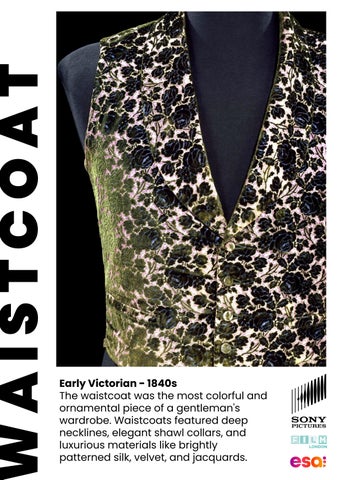
Early Victorian - 1840s The waistcoat was the most colorful and ornamental piece of a gentleman's wardrobe. Waistcoats featured deep necklines, elegant shawl collars, and luxurious materials like brightly patterned silk, velvet, and jacquards.
Early Victorian - 1840s Waistcoat From the waistcoat first emerging in the late 1600s/early 1700s, cut long, with a high neckline and worn under a jacket, by the 1840s the waistcoat has become very short ending at the natural waistline, and with a low scooped centre-front and shawl lapels. While trousers and jackets largely remained simple and in plain colours, men with any means would opt for the fanciest fabrics they could afford for their waistcoats, and almost all waistcoats would have a plain back to save on costs, meaning men always wore their jackets in public. Curved, welt pockets were common in this period, and angled breast pockets also became popular too. Single and double breast styles were both popular in this period.
Benedict Cumberbatch in 12 Years A Slave, set in 1840s-50s Buttons were another opportunity to show off style and wealth, with either matching fabric-covered options, fancy gilt, or just plain horn or wooden buttons for the working class man. Waistcoats were cinched and fitted using tabs with lacing or later a metal ‘jigger’ at the back.
Fashion plate from 1840s
Film/TV set in this era: Victoria A Christmas Carol 12 Years a Slave Young Victoria American Primeval Stardust Ammonite
Waistcoat Construction Specifics
Project Requirements ● Male ● Set size, given on pattern paper ● Make only - no fitting ● Different fabrics for each person; free choice of buttons Skills covered in this project ● Right-sides of fabrics ● Interlining for structure ● Welt pockets ● Lining ● Bagging out ● Button holes ● Hand-sewn eyelets (tabs) ● Facings