



Columbus, OH - www.elsolmagazine.com - Enero 26/ Febrero 9, 2024 FREE Bilingual Día
Day of Ashes
de la Ceniza



2 El Sol Magazine Enero 26/ Febrero 9, 2024 Las opiniones publicadas en esta revista por sus colaboradores y anunciantes son de la exclusiva responsabilidad de sus autores. PHONE: 614 607 1464 www.OHelsolmagazine.com info@ohelsolmagazine.com WILSON HERNANDEZ Fundador-Editor The opinions published in this magazine by its collaborators and advertisers are the sole responsibility of their authors.
US
ABOUT

3 El Sol Magazine Enero 26/ Febrero 9, 2024 ADVERTISING

ETodo lo que debes saber sobre el Miércoles de Ceniza
Everything to know about Ash Wednesday
l Miércoles de Ceniza también se llama Día de las Cenizas y es un día de arrepentimiento.
Según William Johnston, profesor asociado de estudios religiosos de la Universidad de Dayton, católicos y cristianos se reunirán para confesar sus pecados y profesar su devoción a Dios.
“Es bastante reconocido que (el Miércoles de Ceniza) es uno de los días en los que, incluso las personas que no participan con regularidad en la iglesia, algunos de ellos también vienen a la iglesia el miércoles”, dijo Johnston a USA Today. “Simplemente tiene fuertes conexiones culturales en las que la gente participa”.
El Miércoles de Ceniza marca el inicio del período de Cuaresma, que conduce a la Pascua, donde los observadores pasarán por un período de seis semanas de ayuno o autosacrificio, oración y limosna. La Cuaresma se celebra durante 46 días. Incluye 40 días de ayuno y seis domingos, en los que no se practica el ayuno.
El período de 40 días tiene un significado especial en el Antiguo y Nuevo Testamento. Por ejemplo, Moisés pasó 40 días y noches con Dios en el monte Sinaí preparándose para recibir los Diez Mandamientos. También se representa a Jesús siendo llevado al desierto para ser tentado por el diablo durante 40 días. ¿Por qué la gente se marca con ceniza el miércoles de ceniza?
Los sacerdotes marcarán la cabeza del adorador con cenizas en forma de cruz durante la Misa del Miércoles de Ceniza. Mientras hacen la marca, los sacerdotes dirán: “Recuerda que eres polvo, y al polvo volverás” o “Arrepiéntete y cree en el Evangelio.” Estas cenizas simbolizan el reconocimiento y el arrepentimiento de un individuo por sus transgresiones, y la tradición se remonta a 1091, según Johnston. “Las cenizas son simplemente una especie de forma ritual simbólica de decir: ‘Estoy comenzando este viaje de arrepentimiento y renovación, en aras de mi mayor fidelidad’”, dijo.
Ash Wednesday is also called the Day of Ashes, and it’s a day of repentance.
According to William Johnston, associate professor of religious studies at the University of Dayton, Catholics and Christians will come together to confess their sins and profess their devotion to God.
“It’s pretty well recognized that (Ash Wednesday) is one of the days which – even people who aren’t all that regular in church participation – some of them come to church on Wednesday as well,” Johnston told USA Today. “It just has kind of strong cultural connections folks participate in.”
Ash Wednesday marks the start of the Lenten period, leading up to Easter, where observers will go through a sixweek period of fasting or selfsacrifice, prayer and almsgiving.
Lent is celebrated over 46 days. It includes 40 days of fasting and six Sundays, on which fasting is not practiced.
The 40-day period has a special significance in the Old and New
Testaments. For instance, Moses spent 40 days and nights with God on Mount Sinai in preparation to receive the Ten Commandments. Jesus is also depicted as being led into the wilderness to be tempted by the devil for 40 days.
Why do people mark themselves with ash on Ash Wednesday?
Priests will mark a worshiper’s head with ashes in the shape of a cross during Ash Wednesday Mass. While making the mark, the priests will say, “Remember that you are dust, and to dust you shall return” or “Repent and believe in the Gospel.”
These ashes symbolize an individual’s acknowledgment and repentance for their transgressions, with the tradition dating back to 1091, according to Johnston.
“The ashes is just sort of a ritual symbolic way to say ‘I’m beginning this journey of repentance and renewal, for the sake of my greater fidelity,’” he said.
4 El Sol Magazine Enero 26/ Febrero 9, 2024 OHIO
Policía de Columbus se declara inocente en plan de cocaína con otro oficial
Columbus policeman pleads not guilty in cocaine scheme with fellow officer
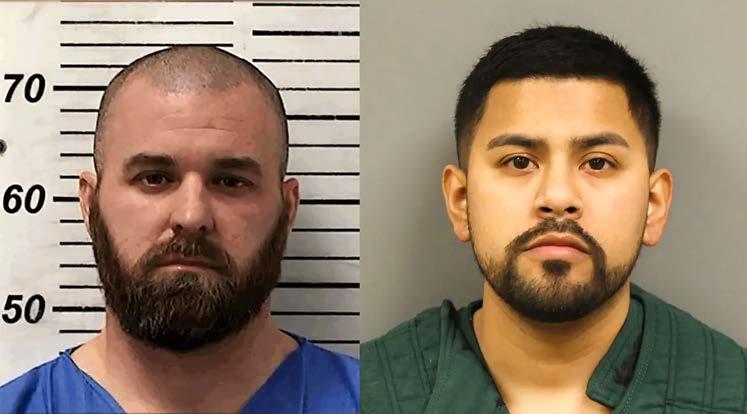
El
Uno de los dos agentes de policía de Columbus acusados de robar y vender cocaína compareció ante un tribunal federal el miércoles por la mañana.
John Castillo, de 31 años, de Grove City, se declaró inocente de los cargos federales de drogas después de que él y Joel Mefford, de 34 años, de Londres, fueran arrestados el 1 de febrero. Las acusaciones contra los dos incluyen acusaciones de robo en salas de pruebas y escenas de investigación, así como como pasar los narcóticos a otra persona para que los venda. La acusación contra Castillo establece que en junio de 2021, supuestamente tomó aproximadamente 10 kilogramos de cocaína de una casa durante una investigación, pero no entregó las drogas para que se
registraran como prueba. Luego supuestamente plantó dos de los kilos en el lugar y se llevó el resto para venderlo a otra persona. Su cargo incluye posesión con la intención de distribuir cinco kilogramos o más de cocaína. Castillo se unió al departamento en junio de 2019 y también obtuvo altas calificaciones en las evaluaciones de desempeño. Era miembro de la unidad del cartel de la droga del departamento en junio de 2021. Está previsto que Castillo tenga un juicio con jurado que comenzará el 8 de abril. Mefford se declaró inocente a principios de febrero. Tiene un cargo adicional de lavado de dinero y dos cargos de posesión con intención de distribuir 500 gramos o más de cocaína.
One of two Columbus police officers accused of stealing and selling cocaine appeared in federal court Wednesday morning.
John Castillo, 31, of Grove City, pleaded not guilty to federal drug charges after he and Joel Mefford, 34, of London, were arrested Feb. 1. Indictments against the two include accusations of stealing from evidence rooms and investigation scenes, as well as passing off the narcotics to another person to be sold. The indictment against Castillo states that in June 2021, he allegedly took approximately 10 kilograms of cocaine from a home during an investigation but didn’t turn the drugs in to be logged as evidence. He then allegedly planted two of the kilos at the scene and took the rest to be sold by another person.
Ohio Amber Alert: Empty car found in Cleveland after 5-year-old reported missing from Columbus His charge includes possessing with
His charge includes possessing with the intent to distribute five kilograms or more of cocaine.
the intent to distribute five kilograms or more of cocaine. Castillo joined the department in June 2019 and also gained high marks in performance reviews. He was a member of the department’s drug cartel unit as of June 2021.
Castillo is scheduled to have a jury trial that will begin on April 8. Mefford pleaded not guilty earlier in February. He has an additional charge of money laundering and two counts of possessing with intent to distribute 500 grams or more of cocaine.
5 El Sol Magazine Enero 26/ Febrero 9, 2024 OHIO
Sol Magazine
Redacción Central
“Conozco el poder de este distrito”, dice Christina Vera Columbus school board President

‘I know the power of this district,’ Vera says
El Sol Magazine
La nueva presidenta de la junta escolar de Columbus, Christina Vera, creció en las escuelas de la ciudad de Columbus, al igual que su esposo y ahora sus tres hijos.
Su elección como presidenta por sus colegas de la junta directiva en enero podría haber sorprendido a algunos. Ella había estado en la junta sólo dos años.
Pero Vera continúa aprendiendo sobre el distrito y sus escuelas. Ella es muy consciente de los desafíos que enfrentan el distrito y la junta: disminución de la inscripción, alto ausentismo estudiantil, bajos puntajes en los exámenes.
Sin mencionar los inminentes cierres y consolidaciones de escuelas. Pero ella se mantiene firme. “Mi función es escuchar”, dijo Vera durante una entrevista reciente en el Roosevelt Coffeehouse Downtown, cerca de donde trabaja. “Conozco el poder de este distrito”. Y dijo que su atención se centra en el aquí y el ahora.
“No quiero hablar de hace décadas”, dijo. “Quiero soluciones. No quiero ser parte de la negatividad”. Vera tiene una conexión de toda la vida con el distrito. Una gran razón: los profesores del distrito la ayudaron a encaminarse por el buen camino cuando era más joven. “Estoy agradecido por mi educación. Me arraigó”, dijo.
Vera es de ascendencia puertorriqueña y la primera persona de origen latino en ocupar el cargo de presidenta de la junta. Sus padres nacieron en la ciudad de Nueva York, en Brooklyn, y se mudaron a Columbus antes de que Vera comenzara el jardín de infantes. Su padre trabajó en varios trabajos diferentes aquí, incluido un tiempo como conductor de autobús de la Autoridad de Tránsito Central de Ohio.
“Mis padres vieron muchas de las mismas luchas por las que ellos pasaron. No tenían mucho. Haces lo que puedes hacer por tu familia y tu comunidad”, dijo Vera. “Hay que servir a otras personas”, dijo.
Las raíces de su familia son profundas en la ciudad de Nueva York.
New Columbus school board
President Christina Vera grew up in Columbus City Schools as did her husband and now, their three children.
Her selection as president by her board colleagues in January might have surprised some. She had been on the board just two years.
But Vera continues to learn about the district and its schools. She is well aware of the challenges facing the district and the board: declining enrollment, high student absenteeism, low test scores. Not to mention looming school closures and consolidations.
But she remains steadfast. “My role is to listen,” Vera said during a recent interview at the Roosevelt Coffeehouse Downtown near where she works. “I know the power of this district.”
And she said her focus is on the here and now.
“I don’t want to talk about decades ago,” she said. “I want solutions. I don’t want to be part of the negativity.”
Vera has a lifelong connection with the district. A big reason: The teachers in the district helped steer her down a good path when she was younger.
“I’m grateful for my upbringing. It rooted me,” she said.
Vera is of Puerto Rican descent, and the first person with a Latino background to serve as board president. Her parents were born in New York City, in Brooklyn, and moved to Columbus before Vera started kindergarten. Her father worked several different jobs here, including time as a Central Ohio Transit Authority bus driver.
“My parents saw a lot of the same struggles they went through. They didn’t have a lot. You do what you can do for your family and community,” Vera said.
“You have to serve other people,” she said.
Her family’s roots run deep in New York City.
Columbus school board president, referring to the community
She said she remembers being in a cab heading to school on 9/11 (she missed the bus) as the cab driver listened on the radio.
“Something happened in New York,” Vera recalled the cab driver saying.
6 El Sol Magazine Enero 26/ Febrero 9, 2024 OHIO
Redacción Central


7 El Sol Magazine Enero 26/ Febrero 9, 2024 ADVERTISING
En
la
economía estadounidense, la mayoría de las industrias registran una fuerte contratación
In US economy, most industries see strong hiring
El crecimiento espectacular del empleo en los últimos meses ha coincidido con anuncios de despidos de alto perfil por parte de varias grandes empresas.
Entonces, ¿cómo es que ambas cosas ocurren al mismo tiempo? No es tan contradictorio como podría parecer. Los recientes recortes de empleo se han concentrado principalmente en unos pocos sectores: tecnología, finanzas y medios de comunicación. En comparación con la fuerza laboral estadounidense de 160 millones de personas, los despidos hasta ahora han quedado eclipsados por una contratación constantemente vigorosa: un promedio mensual de 248.000 puestos de trabajo agregados durante los últimos seis meses. La tasa de desempleo sigue siendo sólo del 3,7%, apenas por encima del mínimo de los últimos 50 años. Resulta que muchas de las empresas
que ahora están eliminando empleos habían contratado en exceso durante la pandemia, cuando pensaban que las tendencias que surgieron entonces (especialmente un aumento en las compras en línea) continuarían a buen ritmo. A medida que la economía se ha normalizado, muchas de estas empresas han descubierto que ya no necesitan tantos empleados y han respondido con despidos. En enero, las empresas y otros empleadores estadounidenses agregaron la asombrosa cifra de 353.000 puestos de trabajo, el mayor botín mensual en un año. El gobierno también revisó al alza su estimación de creación de empleos en noviembre y diciembre en un total combinado de 126.000. Los datos proporcionaron evidencia convincente de que la mayoría de las empresas, grandes y pequeñas, tienen suficiente confianza en la economía como para seguir

contratando.
Varias de las empresas que han anunciado despidos se encuentran entre los nombres más conocidos: Google, Amazon, eBay, UPS, Spotify y Meta, la matriz de Facebook. No es que hayan sido los únicos. Challenger, Gray & Christmas, una empresa líder en recolocación, informó la semana pasada que las empresas anunciaron 82.000 despidos en enero, la segunda mayor cantidad para cualquier enero desde 2009.
He aquí algunas razones por las que estas tendencias aparentemente dispares coinciden: Aumento de empleo, recortes en diferentes industrias
En la mayoría de las industrias, las empresas han seguido añadiendo trabajadores durante los últimos tres meses. Los fabricantes, por ejemplo,
sumaron 56.000 en noviembre, diciembre y enero combinados. Los restaurantes, hoteles y empresas de entretenimiento ganaron casi 60.000 durante ese tiempo. Los proveedores de atención médica (hospitales, consultorios médicos y dentistas) agregaron la friolera de 300.000. Tampoco todos son empleos mal remunerados: un sector que el gobierno llama servicios profesionales y empresariales, una categoría en expansión que incluye contadores, ingenieros, abogados y su personal de apoyo, tiene 120.000 empleos más que en octubre. Los gobiernos federal, estatal y local, que recuperaron sus niveles de empleo previos a la pandemia en septiembre, también agregaron casi 120.000 puestos de trabajo durante ese período.
8 El Sol Magazine Enero 26/ Febrero 9, 2024 ECONOMÍA

En enero, las empresas y otros empleadores estadounidenses agregaron la asombrosa cifra de 353.000 puestos de trabajo
Blockbuster job growth in the past several months has coincided with high-profile layoff announcements by a number of large companies. So, how are both occurring at the same time? It’s not as contradictory as it might seem. Recent job cuts have been concentrated mainly in just a few sectors: technology, finance and media.
Relative to the U.S. labor force of 160 million people, layoffs so far have been dwarfed by consistently vigorous hiring – a monthly average of 248,000 jobs added over the past six months. The unemployment rate is still just 3.7%, barely above a 50year low.
It turns out that many of the companies that are now shedding jobs had overhired during the pandemic, when they thought the trends that emerged
In January, American businesses and other employers added a blistering
353,000 jobs – the biggest monthly haul in a year.
then – especially a surge in online shopping – would continue apace. As the economy has normalized, many of these companies have discovered that they no longer need so many employees and have responded with layoffs.
In January, American businesses and other employers added a blistering 353,000 jobs – the biggest monthly haul in a year. The government also revised up its estimate of job gains in November and December by a combined 126,000. The data provided compelling evidence that most companies, large and small, are confident enough in the economy to keep hiring.
Several of the companies that have announced layoffs are among the most well-known household names: Google, Amazon, eBay, UPS, Spotify
and Facebook’s parent Meta. Not that they’ve been the only ones. Challenger, Gray & Christmas, a leading outplacement firm, reported last week that businesses announced 82,000 layoffs in January, the secondmost for any January since 2009. Here are some reasons why these seemingly disparate trends are coinciding:
Job gains, cuts happening in different industries
In most industries, businesses have kept adding workers over the past three months. Manufacturers, for example, added 56,000 in November, December and January combined. Restaurants, hotels and entertainment companies gained nearly 60,000 over that time. Health care providers – hospitals, doctors’ offices, and dentists – added a whopping 300,000. They’re not all low-paying jobs, either: A sector that the government calls professional and business services, a sprawling category that includes accountants, engineers, lawyers and their support staff – has 120,000 more jobs than it did in October. Federal, state and local governments, which regained their pre-pandemic levels of employment in September, also added nearly 120,000 jobs over that period.
9 El Sol Magazine Enero 26/ Febrero 9, 2024 BUSINESSES

Urías no enfrentará cargos por delito grave tras su arresto
Urías won’t face felony charge after arrest
El ex lanzador de los Dodgers de Los Ángeles, Julio Urías, no será acusado de ningún delito grave tras su arresto en septiembre bajo sospecha de violencia doméstica.
Según una hoja de trabajo de evaluación de cargos de la oficina del fiscal de distrito del condado de Los Ángeles, Urías estaba discutiendo con su esposa cuando él “la empujó contra una cerca y la jaló del cabello o de los hombros”. Sin embargo, el documento decía: “Ni las lesiones de la víctima ni los antecedentes penales del acusado justifican la presentación de un delito grave”.
La oficina del fiscal del distrito dijo el martes que entregará el caso al fiscal de la ciudad para que considere presentar un delito menor.
Urías se convirtió en agente libre después de la Serie Mundial. Pasó los primeros ocho años de su carrera con los Dodgers.
Urías fue puesto en licencia
administrativa indefinida por la Major League Baseball después de su arresto afuera del BMO Stadium en Exposition Park en el sur de Los Ángeles, donde asistió a un partido de la Major League Soccer. La policía fue alertada primero por un ciudadano que informó que un hombre y una mujer estaban en un altercado físico. Urías fue arrestado por agentes del Departamento de Seguridad Pública bajo sospecha de delito grave de violencia doméstica.
La licencia fue impuesta bajo la política conjunta del béisbol sobre violencia doméstica, agresión sexual y abuso infantil con la asociación de jugadores y puede ser el primer paso hacia una suspensión. A los jugadores se les paga pero no pueden jugar mientras están de licencia. Incluso sin una condena penal, la MLB podría suspender al zurdo de 27 años si concluye que violó la política.
Former Los Angeles Dodgers pitcher Julio Urías won’t be charged with a felony after his arrest in September on suspicion of domestic violence. According to a charge evaluation worksheet from the Los Angeles County district attorney’s office, Urías was arguing with his wife when he “pushed (her) against a fence and pulled her by the hair or shoulders.” However, the document said, “Neither the Victim’s injuries nor the Defendant’s criminal history justify a felony filing.”
The DA’s office said Tuesday it is turning the case over to the city attorney to consider filing a misdemeanor. Urías became a free agent after the World Series. He spent the first eight years of his career with the Dodgers. Urías was placed on administrative leave indefinitely by Major League Baseball after his arrest outside BMO Stadium in Exposition Park in south
Los Angeles where he attended a Major League Soccer game. Police were first alerted by a citizen who reported a man and woman were in a physical altercation. Urías was arrested by Department of Public Safety officers on felony suspicion of domestic violence.
The leave was imposed under baseball’s joint domestic violence, sexual assault and child abuse policy with the players’ association and can be the first step toward a suspension. Players are paid but cannot play while on leave.
Even without a criminal conviction, MLB could suspend the 27-year-old lefthander if it concludes he violated the policy.
10 El Sol Magazine Enero 26/ Febrero 9, 2024 SPORTS
BALONCESTO MASCULINO UNIVERSITARIO ¿El mejor de todos?

College men’s basketball, Best ever?
No mires ahora, pero el equipo de baloncesto masculino de la Universidad de Akron se está colando en el panorama nacional. Los Zips comenzaron la semana 15-5 en general y 7-1 en la Conferencia Mid-American, y eso con el calendario fuera de conferencia más difícil que el entrenador John Groce haya elaborado en la historia de Akron.
Con nueve juegos restantes de la temporada regular, más el Torneo MAC, Akron podría superar el total de victorias más alto que Groce ha tenido con los Zips: 24 en 2020 y 2022.
“Simplemente estamos tratando de vivir el momento, pero lo que me gusta de nuestro equipo es que somos profundos”, dijo Groce. “Es de esperar que eso nos prepare mejor para ese momento en el que todos queremos jugar lo mejor posible”. Con la experiencia que han tenido estos
muchachos, eso será beneficioso para nosotros”.
Los Zips abrieron la temporada 5-3 y perdieron tres juegos consecutivos ante Utah State, Drake y UNLV. Se recuperaron y vencieron a Bradley, que ahora tiene marca de 15-5.
Las otras derrotas llegaron por un punto ante St. Bonaventure y por dos ante Miami.
Para reforzar aún más su posición, Utah State venció a Akron por tres y UNLV venció a los Zips por dos.
“Jugamos el calendario fuera de la conferencia más sólido en los 26 años de historia del [sistema de clasificación de baloncesto de Pomeroy College] en Akron, y eso ayuda”, dijo Groce. ‘Todavía tenemos a James Madison de gira, que tiene marca de 17-2 y un gran rating. Lo único de nuestro equipo es que, en los primeros ocho partidos, tres de esas derrotas las tuvimos sin Ali Ali. Esos juegos nos ayudarán”.
Don’t look now, but the University of Akron men’s basketball team is very much sneaking into the national picture.
The Zips entered the week 15-5 overall and 7-1 in the Mid-American Conference, and that’s with the toughest nonconference schedule coach John Groce has put together in Akron history.
With nine regular-season games left, plus the MAC Tournament, Akron could blow past the highest win total Groce has had with the Zips — 24 in 2020 and 2022.
‘We’re just trying to live in the moment, but the thing I do like about our team is we’re deep,’ Groce said. ‘You would hope that would get us better prepared for that moment where we all want to play our best.
With the experience these guys have had that’s going to be to our benefit.’
The Zips opened the season 5-3 and lost three consecutive games to Utah State, Drake and UNLV. They
bounced back and beat Bradley, which is now 15-5.
The other losses came by a point to St. Bonaventure and by two at Miami. To further bolster their standing, Utah State beat Akron by three and UNLV beat the Zips by two.
‘We played the strongest non[conference] schedule in the 26year history of [the Pomeroy College Basketball Ratings system] at Akron, and that helps,’ Groce said. ‘We still have James Madison on the road, who is 17-2 and has a great rating. The unique thing about our team is, in the first eight games, three of those losses we were without Ali Ali. Those games will help us.’
Now that we’ve laid out just how strong the Zips’ schedule has been, let’s talk about all the good stuff.
After the loss to St. Bonaventure, the Zips won seven in a row and have won 11 of their last 13.
11 El Sol Magazine Enero 26/ Febrero 9, 2024 DEPORTES
353 millones fueron víctimas de robo de identidad en 2023
353M were victims of identity theft in 2023

En su último informe anual, el Centro de Recursos contra el Robo de Identidad, con sede en San Diego, dijo que hubo 3.205 violaciones de datos en 2023, un aumento del 78 % con respecto a 2022 y un nuevo récord, superando el máximo histórico anterior de 1.860 establecido en 2021.
En 2023, también hubo más de 353 millones de víctimas de robo de identidad, según el centro, una organización sin fines de lucro que ayuda a los consumidores cuando se convierten en víctimas y aboga por mejores protecciones para consumidores y empresas. Eso es una disminución del 16% con respecto a 2022, lo que es consistente con una tendencia general de que el número de víctimas disminuya ligeramente cada año “debido a que los delincuentes de identidad organizados se centran en información específica y fraudes y estafas relacionados con la identidad en lugar de ataques masivos”, dijo la organización. dicho.
La cantidad de avisos de violación de datos sin información específica como qué sucedió, qué ha hecho la compañía para corregirlo o qué medidas se han tomado para garantizar que la violación no vuelva a ocurrir casi se ha duplicado año tras año, dijo James. E. Lee, director de operaciones del Centro de recursos contra el robo de identidad. En 2023, más de 1.400 avisos públicos de incumplimiento no contenían dicha información.
“Ese es un problema y crea un riesgo para otras empresas que podrían ser atacadas de manera similar y para los consumidores que necesitan saber cómo protegerse”, dijo Lee. No existe ninguna ley federal que obligue a las empresas que han sufrido una violación de datos a notificar a sus clientes o consumidores de manera más amplia, dijo Lee. En cambio, hay un mosaico de leyes estatales y regulaciones federales, con requisitos diferentes, dijo. Por ejemplo, existe una regulación federal que establece que cualquier empresa que cotice en bolsa que tenga una filtración de datos debe notificar a los consumidores,
pero sólo el 11% de las vulneraciones de datos del año pasado habrían calificado, dijo Lee. “Cada estado tiene una definición diferente de lo que es una infracción. Cada estado tiene un desencadenante diferente cuando debe enviar un aviso. Cada estado tiene requisitos diferentes sobre qué información incluir y a quién se le debe notificar”, dijo. Fue necesario hasta 2018 para que los 50 estados aprobaran una ley de violación de datos y están en todos lados, dijo Lee.
Muchas leyes no tienen sanciones para la empresa cuya información se perdió o fue violada y permiten que esa organización determine su riesgo y si necesita notificar a los consumidores, dijo Lee. En términos generales, la ley estatal controla la notificación donde está ubicada la empresa, independientemente de dónde vivan los consumidores afectados, dijo. “Pero esa es una de esas cosas que necesitamos actualizar porque las violaciones de datos, al igual que los delincuentes de datos, no reconocen esas pequeñas líneas (estatales)
imaginarias”, dijo.
Un objetivo cada vez mayor de ataques de violación de datos por parte de delincuentes se encuentra dentro de la cadena de suministro de una empresa y, a veces, de sus proveedores más pequeños, dijo Lee. “Los delincuentes atacarán a una organización más pequeña que trabaje para grandes empresas”, afirmó Lee. Por lo general, esas empresas no tienen medidas de seguridad tan estrictas, pero aún así les dan a los delincuentes la mayor cantidad de datos que desean, dijo. “Para un criminal de identidad, eso es Nirvana. Puedo elegir una empresa y obtener la empresa que tiene cientos, si no miles, de empresas (acceso a la información)”, dijo Lee.
Los delincuentes también están intensificando lo que se llama “ataques de día cero”, que es una falla desconocida en el software de una empresa para ingresar, dijo Lee. Incluso los que escribieron el software no saben que la falla está ahí “y los malos la encuentran”, dijo Lee.
12 El Sol Magazine Enero 26/ Febrero 9, 2024 IMMIGRATION
In its latest yearly report, the San Diego-based Identity Theft Resource Center said there were 3,205 data compromises in 2023, a 78% increase from 2022 and a new record, topping the previous all-time high of 1,860 set in 2021.
In 2023, there were also more than 353 million victims of identity theft, according to the center, a nonprofit organization that assists consumers when they have become victims and advocates for better protections for consumers and businesses. That’s a decrease of 16% from 2022, which is consistent with a general trend of the number of victims dropping slightly each year “due to organized identity criminals focusing on specific information and identityrelated fraud and scams rather than mass attacks,” the organization said. The number of data breach notices without specific information such as what happened, what the company has done to correct it, or what steps have been taken to make sure the breach doesn’t happen again has nearly doubled year over year, said James. E. Lee, Identity Theft Resource Center’s Chief Operating Officer.
In 2023, more than 1,400 public breach notices did not contain such information.
“That’s a problem and that creates risk for other businesses who could be attacked in a similar fashion and consumers who need to know how to protect themselves,” Lee said. There is no federal law that requires companies that have had a data breach to notify their customers or consumers more broadly, Lee said. There is instead a patchwork of state laws and federal regulations, with different requirements, he said. For instance, there is a federal regulation that any publicly traded company that has a data breach must notify consumers, but only 11% of data breaches last year would have qualified, Lee said.
“Every state has a different definition of what is a breach. Every state has a different trigger for when you have to send a notice. Every state has a different requirement for what information you include and who has to be notified,” he said. It took until 2018 to have all 50 states pass a databreach law and they’re all over the board, Lee said.

Many laws don’t have penalties for the company that had its information lost or breached and allow that organization to determine its risk and if it needs to notify consumers, Lee said.
Generally speaking, where the company is located is where the state law controls the notification, regardless of where affected consumers live, he said.
“But that’s one of those things that we need to update because data breaches, just like data criminals, don’t recognize those little imaginary (state) lines,” he said.
A growing target of data breach attacks by criminals is within a supply chain of a company and its sometimes smaller suppliers, Lee said.
“The criminals will attack a smaller organization that works for big companies,” said Lee. Usually, those companies don’t have as tight of security measures, but it still gets the criminals the bigger data they want, he said.
“For an identity criminal, that’s Nirvana. I can pick one company and get the company that has hundreds if not thousands of companies (access
A growing target of data breach attacks by criminals is within a supply chain of a company and its sometimes smaller suppliers, Lee said.
to information),” Lee said.
Criminals are also ramping up what’s called “zero-day attacks,” which is an unknown flaw in a company’s software to get in, Lee said. Even the guys who wrote the software don’t know the flaw is there “and the bad guys find it,” said Lee.

13 El Sol Magazine Enero 26/ Febrero 9, 2024 IMMIGRATION
Padre e hijo mostrando pinturas en OSU
Visual arts: Father and son showing paintings at OSU
Ambos son artistas autodidactas. Dave Terry es muy conocido en Columbus como restaurador de arte y ex galerista. Dane Terry se graduó de la Universidad Estatal de Ohio y se abrió camino con proyectos musicales y de narración de historias.
Dave Terry, el padre, es pintor, restaurador de arte, subastador y músico. Dane Terry, el hijo, también es pintor, además de músico, compositor, dramaturgo, presentador de podcasts o, como él dice, “todo menos bailarín”.
El dúo (el padre ha residido toda su vida en Columbus y el hijo es nativo de Columbus y vive en Brooklyn, Nueva York) muestran sus pinturas juntos en una exposición por primera vez. ‘Noche y día: un conjunto de obras de Dane Terry y Dave Terry’ continúa hasta el 15 de marzo en el Club de profesores de la Universidad Estatal de Ohio.
Las 42 obras son en su mayoría paisajes. Dave Terry trabaja al óleo mientras que Dane Terry trabaja al pastel al óleo.
A Dave, de 64 años, le encanta trabajar como pintor al aire libre y se inspira en los paisajes de Ohio, Indiana, Colorado y Maine. Su ‘Bottomland DePauw, IN’ es una hermosa escena impresionista de
una arboleda de árboles frondosos. (“Soy un fanático de los árboles”, dice). Paisajes adicionales que incluyen “Lucky Day”, “Low-Lying Fog” y “After a Rain” capturan la serenidad y los colores apagados de las escenas pastorales. Dane, de 40 años, es particularmente hábil en escenas nocturnas como ‘Dark Park’, ‘Driving into Columbus’ y ‘Parked Car’, a menudo con calles salpicadas de lluvia y focos de luces de automóviles. Su ‘Ellis Island Janitor’ muestra a un conserje trabajando en el famoso sitio de Nueva York, con patrones en el suelo que sirven como textura cautivadora. Todas las obras son recientes, en su mayoría pintadas por padre e hijo en 2023.
Ambos son artistas autodidactas.
Dave Terry es muy conocido en Columbus como restaurador de arte y ex galerista. Dane Terry se graduó de la Universidad Estatal de Ohio y se abrió camino con proyectos musicales y de narración

de historias. Dane solía tocar el piano en las inauguraciones de exposiciones de arte en lugares como la Galería Sharon Weiss y Art Access.
No tocar el piano para una inauguración de arte y exhibir sus propias obras es algo nuevo para Dane.
“Esta es la primera exposición de mis pinturas que no sea en la parte trasera de un bar en Brooklyn”, dijo. Dave Terry también ha trabajado en escultura y monotipos, pero dice que los paisajes al óleo son su primer amor.
Las pinturas de padre e hijo conviven bien en el Faculty Club que ofrece exhibiciones regulares de obras de artistas con conexiones con el estado de Ohio.
Los Terry dijeron que se divirtieron pero sintieron un poco de presión al reunir suficientes pinturas para una exposición de padre e hijo.
“Estaba bromeando con mi papá”, dijo Dane Terry, “que deberíamos llamarlo ‘Nepotismo: El Show’”.

14 El Sol Magazine Enero 26/ Febrero 9, 2024 SALUD
ARTES VISUALES
LIFESTYLE


Dave Terry, the father, is a painter, art restorer, auctioneer and musician. Dane Terry, the son, is also a painter as well as a musician, composer, playwright, podcaster or as he puts it, ‘everything but a dancer.’
The duo — dad is a lifelong resident of Columbus and son is a Columbus native who lives in Brooklyn, New York — are showing their paintings together in an exhibit for the first time. ‘Night and Day: A Suite of Works by Dane Terry ad Dave Terry’ continues through March 15 at the Ohio State University Faculty Club. The 42 works are mostly landscapes. Dave Terry works in oil while Dane Terry works in oil pastel.
Dave, 64, loves working as a pleinair painter, finding inspiration in the landscapes of Ohio, Indiana, Colorado and Maine. His ‘Bottomland DePauw, IN’ is a lovely impressionist scene of a grove of lush trees. (‘I’m a tree freak,’ he says.)
Additional landscapes including ‘Lucky Day,’ ‘Low-Lying Fog’ and ‘After a Rain’ capture the serenity and muted colors of pastoral scenes. Dane, 40, is particularly adept at night scenes such as ‘Dark Park,’ ‘Driving into Columbus’ and ‘Parked Car,’ often with rain-splashed streets and focal points of car lights. His ‘Ellis Island Janitor’ shows a janitor at work at the famous New York site, with patterns on the floor serving as captivating texture.
All of the works are recent, mostly painted by father and son in 2023. Both are self-taught artists. Dave Terry is well-known in Columbus as an art restorer and former gallery owner. Dane Terry graduated from Ohio State University and went on to make his way with music and storytelling projects. Dane often played piano for art exhibit openings in venues including the Sharon Weiss Gallery and Art Access.
Not playing the piano for an art opening and exhibiting his own works is new to Dane.
‘This is the first show of my paintings other than in the back of a bar in Brooklyn,’ he said.
Dave Terry has also worked in sculpture and monotypes but says oil landscapes are his first love.
The paintings of father and son cohabit well together in the Faculty Club that offers regular exhibits of works by artists with connections to Ohio State.
15 El Sol Magazine Enero 26/ Febrero 9, 2024

16 El Sol Magazine Enero 26/ Febrero 9, 2024 ADVERTISING
