Un Periódico Diferente / A Different Kind of Newspaper



The impact of COVID-19 has been especially devastating for communities of color. Now, more than ever, independent, local journalism needs your support.
El Sol Latino is your local Latinx-owned, independent news source that brings to the front lines diverse Latino voices, perspectives, news and stories. SUPPORT
2 Foto del Mes /Photo of the Month
Remembering our May 2012 Edition
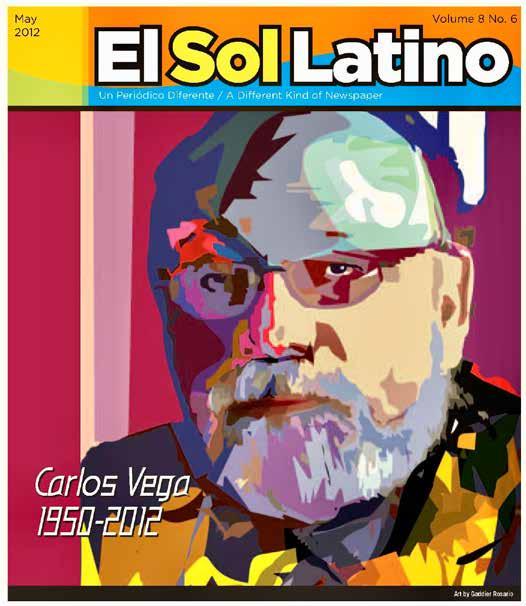
3 Portada / Front Page
The Carlos Vega Fund for Social Justice Celebrated 15th Year Awards Ceremony
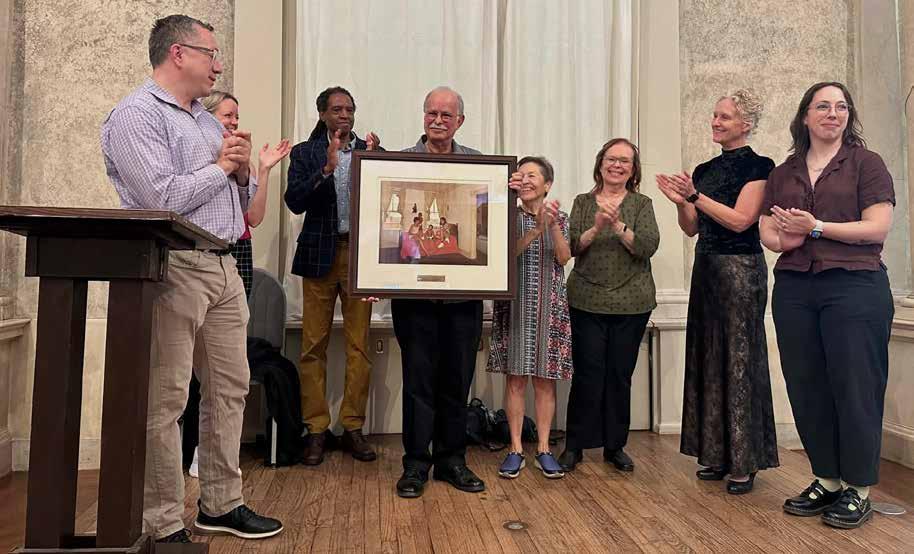
4 Dr. Manuel Frau-Ramos Receives a Tribute by Carlos Vega Fund for Social Justice and Community Service
6 Honored to Accept the Carlos Vega Fund for Social Justice 2026 Award
7 Opinión / Opinion
Art as a Catalyst for Social Change
9 Literatura / Literature
Zoraida y yo
13 Libros / Books
Por mujeres: antología de cuentistas boricuas contemporáneas
14 Ismael Rodríguez Báez: PADRE DEL CÓMIC PUERTORRIQUEÑO
15 CHILENOS ESPALDAS MOJADAS
16 Educación / Education
Latino Scholarship Fund of Western Massachusetts 2026 Awards Ceremony
17 HCC names Julissa Colón of South Hadley as first dean of student experience
Cultura / Culture
Holyoke Celebra el Legado Afro-Caribeño y Juneteenth a Través de las Artes
18 Medios /Media
West & East of Local Public Media, NEPM & GBH, to Formally Join Hands…
20 Arte / Art
2006 ART SOLFEST - Celebrating Student Creativity
21 Salud / Health
PMOS: Nuevo nombre para una enfermedad que afecta a 1 de cada 8 mujeres
¿Qué es y por qué es importante?
22 Deportes / Sports
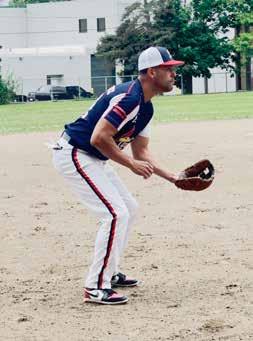
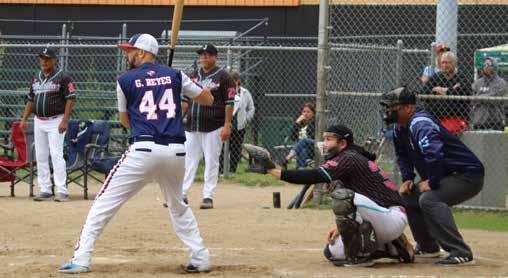
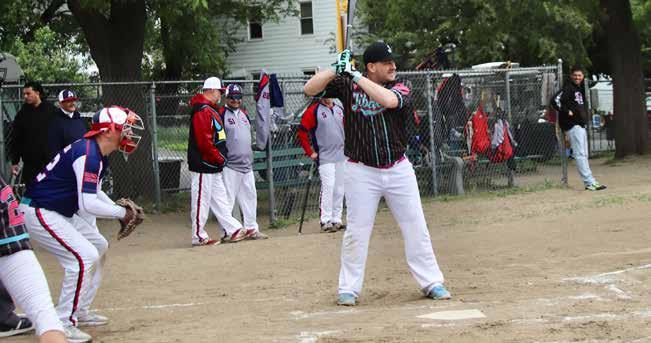
Holyoke Old Timers Softball League 2026
Editor Manuel Frau Ramos manuelfrau@gmail.com 413-320-3826
Assistant Editor Ingrid Estrany-Frau
Art Director Tennessee Media Design
Business Address El Sol Latino P.O Box 572 Amherst, MA 01004-0572
Editorial Policy
El Sol Latino acepta colaboraciones tanto en español como en inglés. Nos comprometemos a examinarlas, pero no necesariamente a publicarlas. Nos reservamos el derecho de editar los textos y hacer correcciones por razones de espacio y/o estilo. Las colaboraciones pueden ser enviadas a nuestra dirección postal o a través de correo electrónico a: info@elsollatino.net.
El Sol Latino welcomes submissions in either English or Spanish. We consider and review all submissions but reserve the right to not publish them. We reserve the right to edit texts and make corrections for reasons of space and/or style. Submissions may be sent to our postal address or via electronic mail to: info@elsollatino.net.
El Sol Latino is published monthly by Coquí Media Group. El Sol Latino es publicado mensualmente por Coquí Media Group, P.O Box 572, Amherst, MA 01004-0572.
by EL SOL LATINO staff
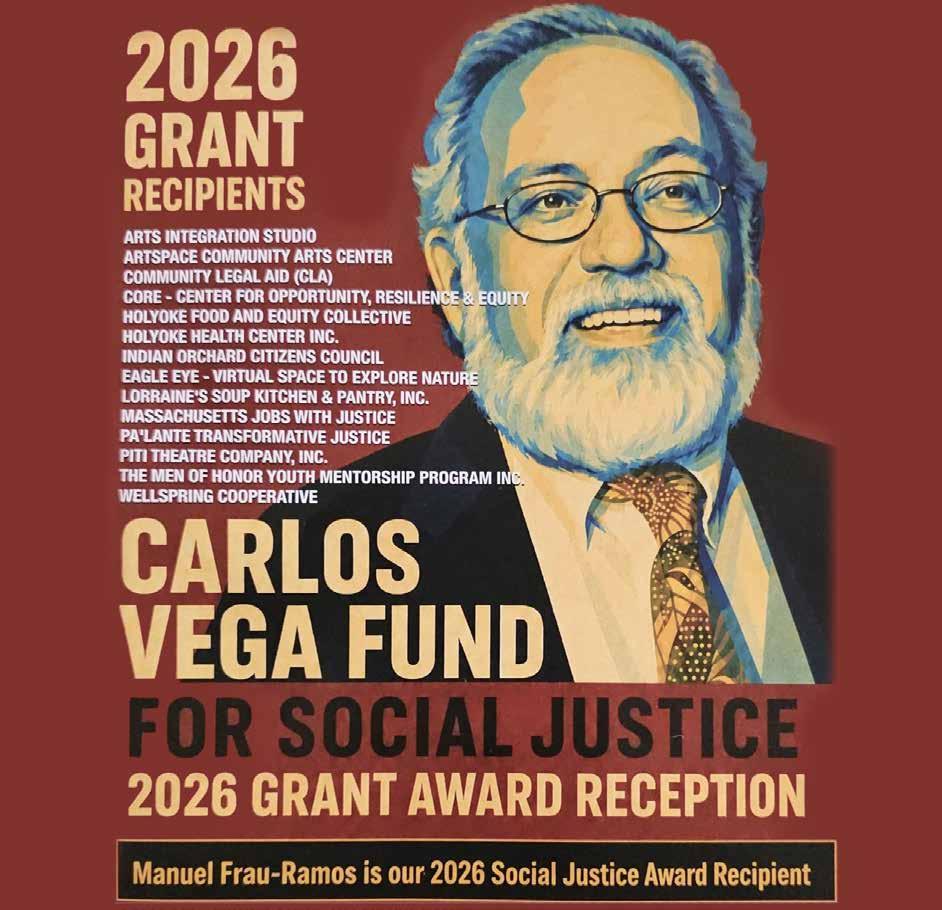
Marking its 15th year, the Carlos Vega Fund for Social Justice awarded 14 grants in 2026 to Greater Holyoke organizations actively resisting and addressing unfairness and inequality. The awards ceremony was held Thursday, May 28th, from 4:00 to 5:30 pm, at the Wistariahurst Museum, 238 Cabot Street, Holyoke.
Since 2012, the Carlos Vega Fund for Social Justice has given more than $65,000 to over 55 groups in the Greater Holyoke area that are working for justice and building community. “Sometimes this looks like access to art, and sometimes this is supporting food programs, but it’s always about equity and supporting our community.”
Carlos Vega was an ardent and passionate activist for civil rights, community-building, education, healthcare, and social justice in Holyoke. The donor-advised fund, which is managed by the Community Foundation of Western Massachusetts, was started in 2010 to honor Carlos on his 60th birthday and to continue his 40-year legacy by awarding small grants to nonprofit organizations through an annual competitive process.
These grants—which aim to address injustice, oppression, and poverty in the greater Holyoke area, particularly for those who are marginalized by our society—fund initiatives that foster change and promote empowerment, self-help, and economic, political, and social justice.
“The establishment and upkeep of a society and its institutions founded on equity, fairness, respect, and inclusion of all people” is the definition provided by the Carlos Vega Fund for Social Justice. The CVFSJ specifically works with minority communities that share these values.
At its core, social justice entails providing people with the necessities of life, such as a decent home, food, and clothes. They also have access to quality, affordable health care, arts and cultural activities, the best education possible, and unrestricted opportunities. It entails having a job that allows them to be financially stable and plan for the future.
The CVFSJ works to preserve Carlos’ legacy while also supporting current initiatives in social justice, youth empowerment, and the arts in the Greater Holyoke area.
The organizer continued the tradition of naming grant awards after founding board members and those who have passed away: Mary Birks, Jane Frey, Miguel Arce, Orlando Isaza, Tom Hidalgo, and María Idali Torres. These people’s contributions to the community extend far beyond their work with the Carlos Vega Fund, and they deserve to be recognized.
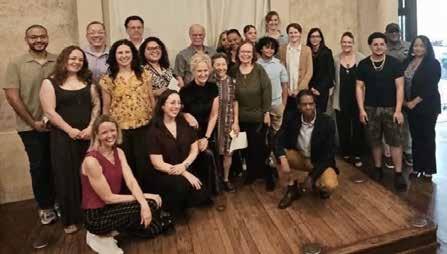
The 2026 awardees include:
• Arts Integration Studio - two grants, two programs each for $2000
• Artspace Community Arts Center - $2000
• Community Legal Aid (CLA) - $2000 (Mary Birks recognition/in honor)
• CORE - Center for Opportunity, Resilience & Equity - $2000
• Holyoke Food and Equity Collective - $2000 (Jane Frey recognition/in honor)
• Holyoke Health Center Inc.- $350 (Tom Hidalgo recognition)
• Indian Orchard Citizens Council - Multiple Initiatives - $2000 (María Idali Torres recognition)
• Eagle Eye - Virtual Space to Explore Nature - $1500
• Lorraine’s Soup Kitchen & Pantry, Inc. - $1500
• Massachusetts Jobs with Justice - $2000 (Miguel Arce recognition)
• Pa’lante Transformative Justice—$2000 (Orlando Isaza recognition)
• Piti Theatre Company, Inc. - $2000
• The Men of Honor Youth Mentorship Program Inc. - $1500
• Wellspring Cooperative—$2000
This year’s Social Justice Award winner was Manuel Frau Ramos Manuel, Diosdado López, and Ingrid Estrany-Frau co-founded El Sol Latino, a monthly bilingual publication owned and operated by Latinx, in November 2004. It is the only Latinx-owned media company in Western Massachusetts.
Manuel is a founding member of the Puerto Rican Studies Association (PRSA) (1992). From 2006 to 2020, Manuel served as Educational Advisor for the Bilingual Parent Advisory Council (Bilingual PAC-Holyoke Public Schools). He is involved with several cultural and community organizations: the Board of the Holyoke Public Library (HPL), the Latino/a Subcommittee of the Springfield Museums, and the Hispanic-American Library in Springfield. In 2012, he founded the Puerto Rican Cultural Project (PRCP), an HPL adjunct committee. In 2015, the PRCP/ HPL became the first public library in New England to formalize a partnership with the Center for Puerto Rican Studies (CENTRO) at Hunter College in NYC.
The Carlos Vega Fund for Social Justice and Community Service has selected Dr. Manuel Frau-Ramos for its annual recognition given to individuals working on the front lines of social justice and social change. Like Carlos Vega, a recognized community activist working in Holyoke, Massachusetts for over 40 years, Frau-Ramos represents the same visionary leadership and untiring work. He is the co-founder of El Sol Latino (co-owned with his wife, Ingrid) an alternative, independent local publication that provides news, commentary, and cultural coverage not found in the mainstream media. The publication is audience-centered, prioritizing the needs, interests, achievements, and aspirations of Latinos/as. Furthermore, El Sol Latino provides practical, timely information, local news, commentary and cultural coverage outside mainstream media perspectives. Originally provided in print, it has moved to digital and multimedia formats which have a broader reach and engagement. Publishing for over 20 years demonstrates a clear commitment to progressive ideas relevant to the well-being of the Latino community.
El Sol Latino often covers topics underrepresented in mainstream media including local grassroots social justice issues. It is a
monthly bilingual Spanish/English newspaper published by El Coquí Media Group of Amherst, Massachusetts. While it is published in Amherst, it primarily covers news in the Pioneer Valley of Western Massachusetts, including Holyoke and Springfield, and its reach goes beyond the Pioneer Valley into Hartford Connecticut and Worcester Massachusetts. Furthermore, the paper profiles leading figures in Puerto Rico. El Sol Latino was a leader in the successful fight to have Oscar Lopez Rivera, a national leader for Puerto Rican independence, released from the federal penitentiary where he was unjustly imprisoned. The newspaper also covered Mayor of San Juan Carmen Yulin Cruz in the aftermath of Hurricane Maria and Hurricane Irma, amongst the strongest hurricanes to fall on Puerto Rico in a century.
According to the Community Foundation of Western Massachusetts, where the Carlos Vega Fund resides, the mission of the Fund is to honor Carlos’ commitment to a more vibrant and equitable community in the Greater Holyoke area by supporting individuals and organizations in the creation of social-justice related projects and programs. Carlos dedicated
continued on next page
his life to social justice and worked tirelessly throughout his life to benefit the City of Holyoke. From housing rights to Latino cultural celebrations, from education to community organizing, to economic development, he championed the needs and voices of the Latino community. Carlos created, worked at, or served on the boards of most of the progressive organizations in the area including Fair Share, New Unity, Holyoke Children’ Museum, Urban Ministry, Latino Scholarship Fund, Community Accountability Board, One Book Holyoke, Housing Allowance Project, Western Mass Jobs for Justice, Western Mass Legal Services, Enlace de Familias, Nuestras Raíces, Council for Children, National Priorities Project, Project Vote, Holyoke Teen Pregnancy Prevention Coalition, Department of Social Services, Greenworks, and Valley Opportunity Council. He worked on the frontlines of social change and community service in Holyoke and Western Massachusetts.
Honoring Dr. Manuel Frau-Ramos
The Carlos Vega Fund celebrates the significant contributions of Manuel with the 2026 award for social justice and community service. A professor and scholar with degrees from the University of Puerto Rico and University of Massachusetts, Manuel is a longtime educator, cofounder of El Sol Latino and founder of the Puerto Rican Cultural Project, which helped formalize a landmark partnership between the Holyoke Public Library and CENTRO at Hunter College. His decades of service in education, cultural
continued from page 4
institutions, and community advocacy have strengthened and amplified Puerto Rican/Latino voices and accomplishments.
The website of the Carlos Vega Fund states “At its core, social justice means people have simple basics: a decent home, food, and clothing….Social justice means being able to live without fear, to feel safe and secure in your home and community. It means being seen and heard and having a say in how your community and society are run. It means having the right to be happy and healthy and enjoy life”.
Manuel Frau-Ramos is deeply committed to social change. He displays a blend of personal and professional skills which allow him to inspire, mobilize and sustain his righteous actions. He displays clear, forward-looking vision grounded in an understanding of systemic issues which impact the Puerto Rican/Latino community. He listens intensely to others’ lived experiences. This solidarity with those facing injustices allows him to remain steadfast in the face of countless obstacles presented in publishing an alternative newspaper for decades. Like Carlos Vega, Manuel displays courage in challenging the status quo and standing up for what is right. He consistently acts with integrity and creative purpose.
*Orlando Isaza and Miguel Arce were on the inaugural advisory board of the Carlos Vega Fund for Social Justice and remained active members for over 10 years.
First, I would like to thank my family for their endless love and support: Ingrid, Carolyn Marie, Ingrid Elizabeth, Sevilla, Brandon, Matt, and Scott.
Second, I want to thank those who for many years have worked with me and have been an integral part of my social justice initiatives: Diosdado López, Gayla Adadevoh, Gaddier Rosario, María Págan, José Bou, Jacky Yos, and my mentor, Dr. Luis Fuentes.
I’m deeply honored to receive the Carlos Vega Fund for Social Justice 2026 Social Justice Award for two reasons. First, this recognition is especially meaningful because it bears the name of Carlos Vega, one of the most respected, influential, and powerful community activists, whose work on social justice leaves a lasting legacy for future generations.
The second reason is that this recognition validates more than 3 decades of my “academic” work in Holyoke. I am aware that there is a general perception of some Holyoke residents about the neighbors of the town of Amherst. Some Holyoke residents refer to them as “those people of Amherst,” “Amherst intellectuals,” or “Amherst academics” who come to conduct research, carry it out, and then leave, never to be seen again; or one of those people who come from the other side of the range to tell us—the Puerto Ricans of Holyoke—how to solve our problems.
I am one of the exceptions!!!
My long relationship with Holyoke began in the 1980s, as a graduate student at UMASS, when I frequently came to buy Goya beans and tomato sauce in Medina Market.
In 1991, the first research ever done about Puerto Rican students in Holyoke was done by Dr. Sonia Nieto and I, titled “I Was an Outsider”: Dropping Out Among Puerto Rican Youths in Holyoke, Massachusetts. It was published in 1993 by the Gastón Institute. This same year (1993), the first-ever conference organized by Puerto Ricans about Puerto Ricans in Western Massachusetts was held at UMass. The Symposium on Puerto Rican Migration and Education (1993) brought together mostly Puerto Rican community leaders from Holyoke and Springfield. The main speakers were Professor Luis Fuentes and Springfield’s superintendent, Dr. Peter Negroni. Seven years later, co-organized by Dr. Carmen Rolón and I, the 4th Puerto Rican Studies Association Conference (2000) was held at UMass-Amherst, where one of the most important topics discussed by panelists was the socio-economic and educational state of Puerto Ricans in Holyoke and Springfield.

Moving forward, last summer (2025), Melissa Colón, UMass Boston, and I co-authored the chapter Reflections on the State of Puerto Rican Students in Massachusetts Public Schools in the book Critical Perspectives on Latino Education in Massachusetts (UMass Press).
by MANUEL FRAU-RAMOS
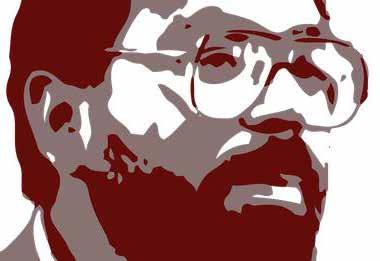
In 2004, together with Diosdado López and Ingrid Estrany-Frau, we founded El Sol Latino, a monthly bilingual publication owned and operated by Latinx, in November 2004. It is the only Latinxowned media company in Western Massachusetts.
Since 2000 until today, I have been involved with several cultural and community organizations, such as:
1. Planning Committee for the Holyoke Working Coalition for Latino Student Education in Holyoke, MA, from 2000 to 2010.
2. From 2006 to 2020, I served as Educational Advisor for the Bilingual Parent Advisory Council (Bilingual PAC-Holyoke Public Schools). Jacky Yos
3. Board of the Holyoke Public Library since 2008. In 2012, we founded the Puerto Rican Cultural Project (PRCP), a committee of Puerto Ricans supporting the Holyoke Public Library’s (HPL) ongoing community outreach efforts to promote the services and resources available to the Puerto Rican/Latino community. In 2015, the PRCP/Holyoke Public Library became the first public library in New England to formalize a partnership with the Center for Puerto Rican Studies (CENTRO) at Hunter College in NYC. María Pagán
4. In 2022, HPL and PRCP were the organizations responsible for bringing the 14th Biennial Puerto Rican Studies Association Conference to Western Massachusetts. Holyoke Community College and Springfield Technical Community College hosted the event.
Therefore, I think I can conclude that even though I am not a Holyoker, my soul, my heart, and especially my actions, make me an adopted son of the city of Holyoke. Gracias.
Manuel

JOSÉ P. ARCE and MIGUEL L. ARCE
Art can communicate complex social problems in ways that are easily understood by most of us. Within its stirring inspiration, art can ignite a spark of hope, serving as a beacon for the marginalized and scorned. It can illuminate the path forward toward a just society, reflecting a deep sensitivity that challenges a privileged few and their appalling indifference. Art can serve as a powerful catalyst for social activism by augmenting the voice of people who have been ignored and by providing a creative forum for challenging societal beliefs and practices. Creative work is more than a flickering flame in a cold world. Art at its best resides within and among us, lighting a path for humanity toward a meaningful and inclusive life for all. When embraced by the community, its power to foster connection and mutual understanding is magnified a hundredfold. The true spirit of art, particularly that which champions positive social change, is best understood in relation to the community that embraces it. A community genuinely committed to justice and concern for all inherently grasps and amplifies its creative and nurturing spirit through concrete works.
Art, throughout history, has served as a profound catalyst for social change, embodying our collective impulse to address issues of equity and opportunity. It often reflects the very soul of our desire to uplift those in need. When we talk about large scale social protests like the Civil Rights Movement or its more recent iteration, Black Lives Matter, we are often considering what is more precisely termed social activism. As defined by Human Rights Careers, “social activism refers to activism focused on social issues, like gender equality, racial justice, human rights and much more” (https://coaching.humanrightscareers.com/).
Regrettably, a common and often disheartening reaction from some outside observers to the Black Lives Matter movement is the assertion that “all lives matter.” This perspective, while seemingly benign, tragically misses the crucial nuance and historical context that makes Black Lives Matter so vital. It naively overlooks the profound legacy of slavery, Jim Crow laws, and the systemic, ongoing discrimination that Black communities continue to face daily. Such a distorted understanding underscores precisely why the specific affirmation, Black Lives Matter, is not just a slogan, but a necessary and powerful statement of truth.
Over the centuries, art has played a leading role in social activism. By making injustice visible, artists were able to reach broad audiences, including people who might not have accessed written arguments. As print technologies expanded, visual art became an especially effective way to stir public emotion, build awareness, and inspire collective action. Throughout the 18th and 19th centuries, this connection between art and activism became a powerful force for social change across United States and the Americas (Art as Activism, https://cultivando.org). Art raised awareness by exposing oppression, inequality, and violence in ways that were immediate and memorable. It also reached wider audiences, as images and public works communicated across
barriers of literacy and language. At the same time, illustrations, prints, and statues aided in the mobilization of resistance by encouraging protest, rebellion, and demands for reform. In doing so, art also shaped public opinion, helping communities interpret events and respond to institutional injustice. Art can convey the human cost of injustice more effectively than data alone, fostering empathy and motivating action and to that end, challenge power structures.
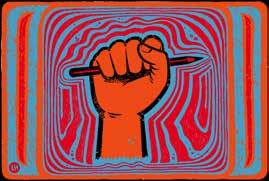
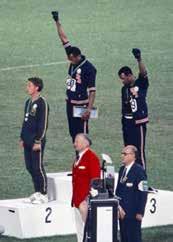
is a Mexican artist. Numerous key galleries and museums such as the National Museum of Mexican Art have featured Skandal’s work in the past. Having grown up in Mexico City, Skandal’s aesthetic was influenced by its distinct culture. He explains, “I was influenced by everything I saw around me – handpainted street signs, eye-catching graphic designs, everyday visual communication… Popular culture, in general, – and particularly music – is a constant inspiration” (our emphasis). His work often features cartoonish, high-energy, irreverent characters. Since he has moved to Chicago, his work has continued to be influenced by the communities he lives in and visits (streetartnyc.org). Above, Skandal created a striking image of a fist clenching a pencil, that evokes a sense of bursting power. The upraised grip reveals the profound capability of the pencil itself—its potential to create impactful drawings or author influential documents. The imagery of Skandal resonates with the iconic Black Power salute delivered by Tommie Smith and John Carlos at the 1968 Olympics held in Mexico City. Their upraised fists were a seminal protest against the racial injustice in the United States. Just as their gesture conveyed a potent message, the juxtaposition of Skandal’s illustration with the photo reminds the public of an inherent strength and communicative force contained with the simple act of clenching a fist while holding a pencil.
Poetry preserves marginalized histories by capturing the lived experiences of oppressed communities often omitted from official records. Poetry distills complex ideas and emotions into memorable lines. It creates a personal and intimate connection between poet and audience, and uses metaphor, rhythm, and imagery as powerful tools to challenge tired and facile perspectives. Poetry is able to express injustice, as seen in protest poems during wartime, slam poetry on social inequality, and spoken-word performances addressing racial injustice. continued on next page
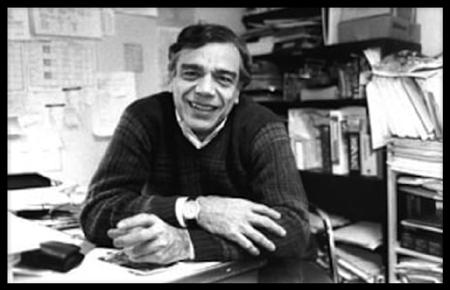
“Poet and painter Tino Villanueva (B. 1941) was born in San Marcos, Texas to a family of migrant workers. Writing in both Spanish and English, at times sliding back and forth between the two languages, Villanueva writes poems exploring themes of memory, longing, and history” (poetryfoundation.org). In the following poem, Villanueva transforms personal experience into an intimate understanding of what marginalized and scorned communities endure. He suggests that the slights, losses, and missed opportunities in our own lives give us not only license, but also the responsibility, to speak out against the ways ignored populations are pushed aside and denied justice and fairness. By confronting our experiences and our distrust of institutions that exclude and misrepresent us, we begin to unbar the doors of history for all those kept outside.
(1st and 4th stanzas of poem)
Tino
Villanueva
Listen, you who transformed your anguish into healthy awareness, put your voice where your memory is. You who swallowed the afternoon dust, defend everything you understand with words. You, if no one else, will condemn with your tongue the erosion each disappointment brings.
Tell how you were able to come to this point, to unbar History’s doors to see your early years, your people, the others. Name the way rebellion’s calm spirit has served you, and how you came to unlearn the lessons of that teacher, your land’s omnipotent defiler.
Villanueva’s poem underscores the importance of memory in helping us arrive at a more realistic awareness of who we are as a people and as a community, as well as how we have been misrepresented and manipulated. The poem also affirms that we, the ignored, possess an authentic voice—one that can resonate deeply with others who have likewise been marginalized. It calls on us to repudiate injustice and condemn those who seek to
oppress us. Significantly, our rebellion takes the form of a “calm spirit” that refuses to be silenced. By unlearning what we have been taught, we can also help others unlearn the distortions surrounding our history, our community, and our character as a people.
Music becomes the soundtrack of a movement, a people, or a community, fostering identity through shared experiences, concerns, and causes. It nurtures a unifying spirit that transcends explanation and words, yet, feels as real as a beating heart. In its rhythm, people come to understand what must be done to become a vital living force within an ever-changing world. Woven into the spirit of a community, music shapes its gatherings, celebrations, choices, and actions, helping to forge a sacred history and an ardent prayer for its shared future. Music serves as a powerful unifying force in social movements because it is inherently communal: anthems and protest songs are easy to share, easy to remember, and powerful when sung together, creating solidarity and a sense of collective strength. At the same time, melodies and lyrics can stir deep emotions such as anger, hope, sorrow, and determination, helping move people from feeling to action. Music is also highly accessible, crossing some language barriers and reaching broad audiences through radio, rallies, and digital platforms. This influence can be seen in folk music during the Civil Rights Movement, punk rock’s challenge to political norms, and hip-hop’s ongoing critiques of systemic injustice.
Mavis Staples is a distinguished American rhythm-and-blues and gospel singer, as well as a steadfast advocate for civil rights. She is best known as the lead vocalist of The Staple Singers and as an acclaimed solo artist. She has long united music and activism, lending her voice to the struggle for freedom. (“Mavis Staples,” Wikipedia). She and her family often sang at rallies held by Reverend Dr. Martin Luther King Jr., and championed social justice for more than six decades. She has maintained a lifelong commitment to activism, famously performing songs like “Freedom Highway,” which her father, Roebuck Staples, wrote after attending a religious service held by Martin Luther King, Jr. in Montgomery, Alabama.
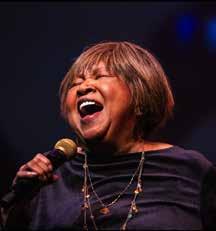
Freedom Highway
There is just one thing I can’t understand my friend
Why some folk think freedom
Was not designed for all men
There are so many people
Living their lives perplexed Wonderin’ in their minds
What’s gonna happen next?
That’s why we’re gonna …March for freedom’s highway
March each and every day
Made up my mind and I won’t turn around…
continued on next page
Mavis’s voice is warm and filled with the promise of hope. In the mid-1960s and throughout the 1970s, we swayed to that song and believed such freedom might truly be possible for everyone. We needed help getting there, and in turn we needed to help others on the highway to freedom. It would require faith and vision: faith that we could come together as a family, as a community of like-minded people. Clearly, the music transcends language and speaks through moments of helplessness. All of us could unite if we let the spirit move us to dream and to take the necessary steps. Mavis sang of a faith and a force that was—and is—more powerful than all the hate and small-mindedness in the world.
Art functions not only as a critique of existing structures but also provides a new way of thinking. Skandal, Villanueva, Staples and others reflect and illuminate social issues. Their work bypasses statistics by tugging at our hearts. They challenge norms making their form of art indispensable components of social activism. They provide us with a new way of thinking. Tommie Smith and John Carlos at the 1968 Olympics visually captured the attention of the world with the Black Power salute. Their brave,
Mi amiga Zoraida escribe cuentos. Digo “amiga” en un sentido laxo pues cuando hablamos hacía más de veinte años que no sabía de ella. Si en realidad una vez fue mi amiga fue hace mucho tiempo. Hay muchas cosas sobre ella que no recuerdo. Lo que no se me olvida es haberla visto en una conferencia hace dos décadas. Yo estaba parado detrás de una mesa llena de libros. Ella se acercó y sin que lo esperara o lo pidiera, le pasé la mano por la mejilla derecha. Ella no reaccionó y por mucho tiempo no supe qué le pasó por la mente ante mi inexplicable gesto. Aun en ese momento, mucho antes del me too, mi caricia se podía catalogar como un atrevimiento y hoy día sería suficiente para que me metieran preso. Ahora, si le digo a una colega que me gusta su vestido o la nueva manera de arreglarse el pelo, en vez de agradecimiento recibo una mala mirada o peor una acusación de ser un puerco. En otra conferencia reciente, cuando me referí a una cantante que había escrito una canción de protesta muy popular como “la muchacha esa, ayúdenme a recordar su nombre”, el menosprecio del que fui objeto fue bien fuerte. No me quejo de que los mores de otro tiempo hayan cambiado radicalmente. Puede ser que para corregir un entuerto hayamos creado otro quizás más severo. A veces el precio que pagamos por una solución no excede el costo del mal. Pero decidir si el remedio es peor que la enfermedad no es fácil. Yo pienso que nos hemos pasado de la raya, pero mi opinión no tiene tanto peso como el de gente como Zoraida que fue la que sufrió lo que yo pensé era una ternura y que ella posiblemente registró,
unprecedented, and visual action called attention to injustices while implicitly advocating for reform. With hard work, careful planning, and open minds toward different people and ideas, we can overcome selfishness, greed, narrow-minded thinking, and the fear of radical change. We need faith: faith in one another, and faith that those who do not yet trust us may come to believe that the world should be a better place. The profound impact and power we find in visual art, poetry, and music—and other art forms—have indeed transformed our lives. However, this transformative experience doesn’t make us feel celebrated because we are morally superior; rather, it highlights the universal nature of art’s powerful sway. If we hold out our hands to help others rise, it is because countless people have helped and reminded us that we are special too. Now, it is our turn to let others know that they are irreplaceable and encourage them to become who they are meant to be. We are confident that with digital platforms, global connections, and strong community involvement, contemporary art activists will reach wider audiences and further sustain social movements.
aunque nunca lo dijo, como una impertinencia. Es más, si me pongo en sus zapatos o en los de cualquier otra mujer que haya sido objeto de ese tipo de comportamiento, o peor, de un abuso más claro o violento, mi opinión pasa a ser una excusa despreciable, una queja pendeja e imperdonable.
En todo caso, no es por eso que escribo en este momento. Mi queja es otra y es posible que sea rechazada de la misma manera que mi reclamo de inocencia y mi sugerencia de que vivimos en un tiempo de excesos, que como ya he dicho es una sugerencia que no tiene defensa. ¿Me curo en salud al decir esto? Pienso que sí y por ello me avergüenzo. No merezco que me pongan frente a un paredón pero no me extrañaría que sabiendo lo que hice y lo que he dicho, al verme pasar una mujer sintiese rabia y luego repulsión. ¿Perdería mi trabajo? ¿Me pondrían en una lista negra? Es posible, no lo sé. De lo que estoy seguro es de que nadie me cogería pena. Zoraida era blanca, rubia, de ojos verdes. Su primer marido la había dejado por otra y del segundo, a quien le gustaba cantar rancheras, se había divorciado porque no aguantaba sus celos. Se ganaba la vida como bibliotecaria y de vez en cuando daba una que otra clase. Iba de la maquinilla al trabajo y del trabajo a la maquinilla (estamos hablando de otro tiempo). Si uno no lo pensaba mucho podía decir que era bonita. Pero a veces, mirándola con detenimiento, era difícil decidir si se parecía más a Betty Boop o a la imagen en el cuadro “El grito” de Munch. Sus ojos—grandes, cristalinos—y su cara en forma de bombilla, daban razón para la confusión. Una vez yo cogí una reproducción del cuadro de Munch y le puse pelo con un magic marker anaranjado. ¡Me cago en la hostia, es Zoraida!, exclamé.
Cuando ella vio lo que había hecho, no le dio ninguna gracia. Veinte años después, recordaba ese detalle y todavía se sentía molesta. Mucho más que por yo tocarle la cara. Zori era diminuta como su diminutivo que reflejaba tanto su tamaño como el afecto de su gente cercana. Si bailabamos un bolero, podía acomodar su cabeza debajo de mi quijada. Su herencia de mono estaba en sus labios finitos y alargados. Sus pies y manos eran como de muñeca, pero era experta en el soccer y cuando te saludaba su apretón era como el de un plomero. Además de cuentos escribía poemas. Nunca lei sus poemas. Ella llegó a leer los míos y no le impresionaron. No sé por qué, pero le gustaba que a mí me gustaran las mujeres—de todo tipo, color, y tamaño—siempre y cuando la dejara quieta a ella. Una vez me dedicó uno de sus libros con la inscripción “espero que te gusten estas hembras”. Era una colección de cuentos con fotos de varias mujeres desnudas, todas de nalgas inmensas y bien torneadas. Nunca supe si lo que ella sentía por mí era amor platónico, afecto, simpatía o si sencillamente yo era para ella un sujeto interesante. La caricia que le hice en la conferencia no provocó la más mínima reacción y tampoco condujo a nada. Después de eso no la volví a ver por mucho tiempo.
En uno de sus cuentos, Zoraida enumeró una lista larga de ofensas. No eran de tipo personal aunque su protagonista las consideraba tan injuriosas como un ataque a sí misma. Según el personaje, San Juan era un antro, una cloaca llena de ratas, un burdel, una gran empresa repleta de bandidos. Decía que Puerto Rico estaba dominado por un grupo de desalmados que miraban a los puertorriqueños con arrogancia y desdén. “La educación universitaria solo sirve para conseguir posiciones subalternas”, añadió. “El libre albedrío se reduce a decidir los colores de la ropa que se venden en tiendas extranjeras. Ahora hay restaurantes exquisitos a los que solo pueden ir los adinerados. Ese grupo se ha apoderado del país dándole de patadas a los nativos que lo más que pueden hacer es coger sus motetes e irse a otra parte. Ese grupo poderoso lo posee todo: las playas, los hoteles, las carreteras, los bancos, la industria, los medios, la tierra. Los puertorriqueños son puras marionetas que se mueven en un escenario que aparenta ser de ellos y para ellos”. Era un discurso ideal para un mítin en Lares. El cuento era parte de una colección que había caído en mis manos por accidente. Mientras lo leía me dije que mi lista habría sido distinta. Más allá de esa diferencia registré una queja. La metáfora no debe ser una excusa para hacer crítica social, pensé. El que quiera hablar mal de San Juan que no use la literatura como fotuto. Recién había analizado el discurso de un activista de los años 60 y gracias a la perspectiva implacable del tiempo me había dado cuenta de que las declaraciones del orador picaban fuera del hoyo o insultaban a sus oyentes. Él hablaba de una situación de miseria que no compaginaba con el auge de la industria y el empleo ni con el aumento vivido en la tasa de alfabetismo y en el nivel de ingresos. ¡Despierta
boricua, defiende lo tuyo!, gritaba como si el pueblo estuviese dormido, en el mejor de los casos inconsciente de su condición. En el peor de los casos, engañado y enajenado de la realidad, víctima de un lavado de cerebro colectivo del cual solo el orador y los que pensaban como él se habían escapado. En esos años eso era típico; la gente de izquierda era propensa a considerarse inmune a las estratagemas de la falsa conciencia. Lo curioso del discurso es que según el discursante hasta algunos de sus correligionarios vivían en un estado de estupor, confundidos, llenos de un miedo total y paralizante.
Cuando leí el cuento de Zori yo veía a San Juan con otros ojos. Entonces me di cuenta de que era como una cápsula de tiempo. Sus calles y sus edificios evocaban un momento histórico que era a la misma vez presente y recuerdo. Entre los hitos que marcaban la Plaza Colón y la Plaza San José había una historia llena de tanta dignidad como de vergüenza. Subir desde el Teatro Tapia hasta el Instituto de Cultura era un reclamo de conocimiento y sensibilidad. Ir a San Juan de paseo para mirar las vitrinas era un aliciente. En el Parque de las Palomas era de rigor asomarse por la baranda para mirar a los presos de La Princesa. La imagen de la calle Comercio traía el recuerdo de un friquitín donde mi desayuno a las seis de la mañana era una tortilla española. Viajar en la lancha de Cataño era como irse de turismo en un crucero. La Mallorquina no era para todos, pero ahí estaban como compensación La Mallorca y La Bombonera. En la Caleta de Las Monjas uno podía sentarse en uno de los bancos del parquecito para emitir declaraciones de amor. Mientras uno decía “me gustas mucho”, el chillido de las gomas de los carros que cogían la curva apretada hacia la calle del Cristo resonaba en el trasfondo. Desde el Bulevar del Valle, cerca de la calle Tanca, se podía mirar a La Perla con la fascinación que ejerce el temor precavido ante un lugar alegadamente peligroso y violento. En El Farolito uno podía tomarse una cerveza tranquilo mientras escuchaba el raspar de un güiro dos o tres puertas más adelante.
Mi lente era muy distinto al de Zoraida. Coincido con mi amiga Ileana en que la isla es un sitio muy cruel. Ileana es lo opuesto de Zoraida: alta, morena, de pelo negro con rizos que parecen tener rabia, escultora y poeta dada a usar el lenguaje como si fuese un código de espías. Su capacidad para conversar sobre teorías literarias mientras cocina, prepara una ensalada, o cuela café es asombrosa. De día sus ojos son una guarida de murciélagos; de noche, un abismo lleno de luz. También es divorciada, pero por razones distintas a las de Zoraida. Su marido quería mantener su vida de soltero y usarla para lavar, planchar y cocinar. Se casaron en Nueva York y al romper ella regresó a Puerto Rico. Al principio estaba encantada. Más tarde le pasó lo mismo que a muchos de los que regresan: se hartó de los tribalismos que dividen a los artistas e intelectuales y del nacionalismo parroquial que, como el ratón de la famosa canción, sale de cualquier malla.
continued on next page
Zoraida y yo continued from page 10
A Ileana le decía con pesar que había hecho mi nombre fuera del país y ahora, cada vez que regresaba de visita, me sentía como un extranjero. Peor, en algunos círculos me habían tratado como un extranjero. Una vez supe de un intento frustrado por parte de una editora para que una revista local no me publicara un cuento porque “ese señor habrá nacido aquí, pero no es puertorriqueño”. Cosa curiosa: tanto para los nuyoricans como para la tipa a la que le dio conmigo, que yo asumí no era un caso aislado, el territorio no determina la identidad, pero ese sayo se lo ponen según les convenga. En Nueva York nunca pude ser nuyorican por ser de la isla; después de cuarenta años de ausencia, en Puerto Rico ya no era puertorriqueño. Otras cosas marcaban mi condición. En Nueva York nunca le rendí pleitesía a Pedro Pietri. Su Puerto Rican Obituary es como el discurso del activista de los años 60: una representación distorsionada y falsa. En la isla siempre guio a la defensiva y observo las reglas del tráfico. Al entrar a un restaurant no digo buen provecho y al salir no le digo buen día a nadie. En ambos lugares más foráneo no puedo ser. ¿Soy yo como esos boricuas que según Zoraida no tuvieron más opción que largarse de la isla para progresar? Es imposible saber lo que habría sido de mí si no hubiese emigrado. Pero mi caso es claro: no me fui porque no me quedara más remedio. Me fui por gusto y con gusto sin que nadie ni nada me obligara. Cuando vivía en la isla, protestaba por las mismas cosas que airaban al personaje de Zoraida y ahora, con el pasar de los años, los que antes habían protestado conmigo me miraban con sospecha y recelo. Ya no era uno de ellos. Yo pienso que la isla es un desastre, pero no le echo la culpa a la gente de afuera. Para mí, los puertorriqueños son los responsables de su progreso y su miseria. Y a los que dicen que la causa de todo lo malo es “el sistema”, les respondo que el que uno herede las circunstancias en que nace no niega que pueda cambiarlas. Como decía un boricua que una vez había compartido conmigo malas y buenas experiencias, uno no puede guardar el bizcocho y comérselo a la vez. O sea, uno no puede coger cupones a la misma vez que grita Yankee Go Home! Bueno, de poder se puede, pero eso no huele bien. Para algunos ese oportunismo es muestra de sagacidad, reflejo de un pragmatismo legítimo e incuestionable. La táctica del jíbaro que no contradice al capataz, que emite su proverbial “unjú” y después se hace el loco o hace lo contrario a lo que accede. El lema de esa actitud se puede resumir en la declaración que dice “vota por Hilary en las primarias y acepta con una sonrisa los rollos de papel que te tira Trump”; o como el mismo Trump dijo cuando Hilary le reprochó ser un multi-millonario que no pagaba impuestos: “Eso es porque soy inteligente”.
Molesto con Zoraida por usar un cuento para predicar, concluí que quien quisiera hacer comentarios sociales, debía escribir un ensayo, una columna periodística, o un panfleto. Esa era mi preferencia. Claro, sabía que a mí nadie me iba a hacer caso. La misma Zoraida se encogió de hombros cuando le dije lo que
pensaba. Ese debate está caduco, me dijo con tono de desprecio. No sé por qué quieres revivirlo. No es cuestión de revivirlo, riposté. Es una polémica vieja, lo sé, pero persiste porque el tiempo no se lleva las cosas, solamente las reorganiza. Ese intercambio fue parte de una llamada aventurera. Todavía tenía el número que Zoraida me había dado hacía veinte años. Me sorprendí cuando en vez de un anuncio diciendo que el número estaba fuera de servicio o un mensaje grabado escuché su voz. Que ese número antiguo siguiera activo me pareció insólito.
Me dijo muchas cosas en respuesta a mi queja. Yo pensé que a lo mejor traería a colación el asunto de la caricia errante, pero me quedé esperando. “Tu causa es una quimera”, me dijo. Igual que la polémica, su convicción era vieja y persistente. “La literatura siempre será terreno para todo tipo de motivos y expresiones”, continuó. “Mientras unos se pierden en un bosque a medianoche, buscando la esencia del mundo, otros se atrincheran en una casa en Hormigueros para entrarle a tiros al FBI y terminar sangrando hasta la muerte. Hay quienes piensan en bombas nucleares y escriben un poema. Otros ven a alguien botando la basura y escriben un cuento. A fin de cuentas, todo es literatura: los abismos que no se pueden franquear, la oscuridad de las cosas, el terror, el asesinato a mansalva, el empalagamiento de imágenes que fluyen una tras otra sin mesura o con ella. Si no es para hablar de esas cosas, ¿para qué sirve un cuento o un poema?”, sentenció.
Con gran enojo pensé que en lo que yo escribía también pululaba una causa, que mis trabajos eran también un medio para efectuar una prédica. Quizás no era social ni política, pero era una causa, mi causa. ¿Era inevitable usar la literatura para hacer política? Zoraida había usado la metáfora y el símil para denigrar a San Juan, para lamentar el dominio norteamericano de Puerto Rico. La suya era una forma no muy velada de predicar; era el disfraz del sectario ante su opuesto. ¿Caía yo en lo mismo al rechazar esa forma de expresión? Tuve mis sospechas. Con los ojos fijos en un punto distante seguí interrogándola. Al otro lado de la línea podía escuchar su aliento. Por un momento me salí del tema. Lo que me distrajo fue pensar en el cuento que había comenzado a escribir. ¿Qué clase de cuento será? Todo lo dicho debe ser cierto. Zoraida emitió su crítica al amparo de imágenes que interpretaban la realidad o que la construían de modo fantástico. Yo no. Mis fantasías permanecen bajo llave en un archivo secreto. Lo mío no será crítica sino evocación nostálgica. No habrá corales brotando de mis manos ni cangrejos alfombrando mi cuarto. Mi San Juan no será causa de aversión. La isla sí, pero mi actitud será recatada. Zoraida convirtió sus alrededores en objeto imaginario. Los objetos que ahora me rodean son solo eso: objetos. El celular enchufado para recargar su batería, un manuscrito con anotaciones al márgen, dos libros sobre el independentismo puertorriqueño, un ensamblaje de fotos listo para ser enmarcado, tres DVDs que mi vecino me
Zoraida y yo continued from page 11
prestó pensando que sus gustos son iguales a los míos, una pluma, mis espejuelos, y la novela que estoy leyendo, enjorquetada en el aguantalibros que compré hace veinte años para no tener que usar las manos para sostenerlos. Enfrente mío hay libros suspendidos en el aire, como nubes a punto de estallar, pero supongo que esa es una imagen forzada, producto de un arrebato. Ella escribió su cuento para enviar un mensaje. Yo escribo por escribir. No lo hago para protestar o para expresar un juicio sobre mi entorno. Mi entorno habla por sí solo. Bueno, no completamente; lo que quiero decir es que su voz se escucha a través de la mía, pero es su voz. Su mensaje es autónomo y perfectamente inteligible. Pero como he dicho, tengo mis sospechas. Si alguien me acusa de positivista tendría fundamento. ¿Se me colará sin querer un mensaje? ¿Pasaré juicio sobre San Juan? ¿Sobre la isla y alguno que otro personaje? Todo esto lo pensé mientras Zori seguía callada. Que quede claro que yo condeno al país, pero de un modo diferente al de Zoraida. ¿Me quejo de ciertos desarrollos que han transformado las relaciones sexuales? ¿Me rebelo sutilmente contra el nuevo ethos que pretende regir el comportamiento de los hombres? ¿Lamento no poder acariciar de nuevo a Zoraida aunque ella no me lo pida? ¿Acepto que NO es NO o quiero interpretarlo como un SÍ? Si ignoro las manchas que oscurecen el cielo de San Juan, ¿me hago cómplice de los responsables? Pero qué manchas ni qué manchas. No quiero caer en eufemismos. Puerto Rico es un camino polvoriento. Un desastre urbano con tanto carro. Una alfombra de tapones. San Juan es un rastro cada vez más tenue. En ese rastro lo que cunde es tanto desasosiego como esperanza. Entre sus líneas se esconde un texto lleno de sorpresas. Detrás de su belleza—colonial y moderna—hay muchas cicatrices, en los sonidos que habitan sus calles hay una cacofonía que amenaza con ensordecerte.
Mi relación con Zoraida fue tan breve que no hubo tiempo para que se descarrilara. Solo una vez fui a su casa y rápido noté la mirada candente de su marido. Cuando me dijo que habían terminado porque sus celos eran insoportables me remonté a ese momento y a esa mirada y entendí su descontento. Unos meses después de su divorcio, salimos a cenar y noté las arrugas en forma de triángulo que se le formaban en el pecho, en la parte donde convergen los senos. Quise tocarla, verla desnuda frente a mí, diminuta y suculenta, acariciar aquellas arrugas tiernas. Ella no dio indicio alguno de estar interesada y yo no estaba en las de repetir mi atrevimiento. Esa fue la última vez que la vi. Lo que quedó entre nosotros fue simplemente el vacío de una ausencia sin motivo concreto. Si no protestó mi caricia inesperada fue porque no significaba nada: fue como un mime que se posa sobre tu piel y no deja marca. Pensé que, aunque desde la orilla opuesta a la de Zoraida, podía caer en lo mismo que condenaba. Me sentí ridículo, atrapado en un círculo vicioso. Estoy usando la literatura para predicar que no se debe usar la literatura para predicar, ¡qué huelepega!
Zoraida por fin habló. Su voz era como un soplo tenue. Me dijo
que no estaba de acuerdo. Cerró su argumento diciendo esta conversación la tuvimos ya, hace bastante tiempo. Trató de disuadirme, pero no le hice caso. Convencido de que estaba nadando en un pantano, asumí una postura drástica; le voy a pegar fuego al cuento que estoy escribiendo, le dije. Solo así puedo evitar hundirme tragando barro. Y dicho sea de paso, perdóname por la caricia que te hice hace veinte años sin tu consentimiento. Zoraida se quedó pasmada. La mención de mi cuento surgió de la nada, retrasando así su reacción. A la misma vez que alegó no recordar mi caricia, aspiró fuerte y en tono plañidero me dijo que eso de pegarle fuego a un cuento estaba de bala. No lo hagas, me suplicó, pónlo a un lado, dale tiempo al tiempo y verás como tu parecer cambia. Recordé una frase que decía que cuando uno le da tiempo al tiempo con lo único que termina es con más tiempo. Tiempo es lo menos que me hace falta, concluí.
Con poca fuerza moral y menos autoridad literaria le dije a Zori que no me gustaba su forma de escribir y ahí lo dejamos. Tosiendo con fuerza por el humo espeso de mi cuento, me restregué los ojos irritados. Después de veinte años de silencio y una llamada impulsiva, nuestro debate sigue abierto. El cuento que me propuse escribir terminó en llamas. Era mejor así pues evitaría ser objeto de la ira de los que adoran a Pedro Pietri. Nadie sabrá lo que pienso sobre San Juan, sobre Puerto Rico y nadie podrá acusarme de echarle la culpa a la víctima. Los que piensan que mi queja sobre el uso panfletario de la literatura es un disco rayao no tendrán ocasión para expresar su burla. Nadie sabrá que una vez se me fue la mano con Zoraida. Todo eso terminó siendo lo de menos. Yo me quedé tranquilo y lo que sucedió me cogió por sorpresa. Mis quejas telefónicas resultaron contraproducentes, mi disculpa revolcó un avispero. No tuve que escribir un cuento para terminar expuesto. Después de nuestra conversación, Zoraida recapacitó y me denunció en la redes y en los medios. Aquella esperanza que tuvo de que me gustaran sus hembras se convirtió en vituperio. ¿Cómo decirlo? Una turba me arrancó la cabeza. Bueno que te pase, algunos me dijeron. Mi cabeza siguió pensando: la literatura será un campo lleno de todo tipo de flores, como alegó Zoraida, pero la vida es selectiva con lo que tolera y con lo que no aguanta. Ya no hay debate que valga ni espacio para reformular mi queja. Ni modo. Con el cuello encharcado de sangre, ahora ando ciego, sordo, mudo y sin poder ponerme un sombrero.
JOSÉ EDGARDO CRUZ FIGUEROA (cruzjose5319@gmail.com) es natural de San Juan y criado en El Fanguito y Barrio Obrero en Santurce, Puerto Rico. Es profesor emérito de ciencias políticas en la Universidad del Estado de Nueva York en Albany.
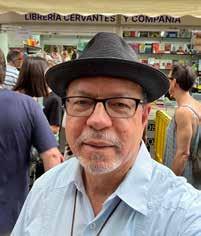
JOSÉ EDGARDO CRUZ FIGUEROA
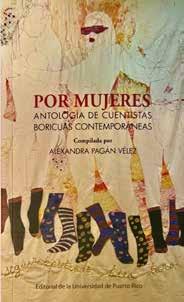
(FUENTE: UPR RÍO PIEDRAS)
Dieciocho autoras boricuas, dieciocho cuentos, dieciocho voces: así se articula “Por mujeres: antología de cuentistas boricuas contemporáneas”, una de las más recientes publicaciones de la Editorial de la Universidad de Puerto Rico (EDUPR), adscrita al Recinto de Río Piedras de la Universidad de Puerto Rico, y publicada recientemente.
Este volumen se presenta como un acontecimiento literario y académico de primer orden, reuniendo una constelación de autoras cuya obra traza, tensiona y amplía los contornos de la narrativa puertorriqueña contemporánea.
Desde la emblemática antología “Reunión de espejos”, no se configuraba en Puerto Rico un proyecto editorial de esta magnitud y alcance en torno al cuento escrito por mujeres. Por mujeres retoma y expande esa gesta, proponiendo una cartografía compleja donde convergen distintas generaciones, estilos, preocupaciones estéticas y posicionamientos críticos.
“No existe en Puerto Rico, en estos tiempos, una reunión de autoras como la que presenta ‘Por mujeres’”, indica el señor Edder González Palacios, director ejecutivo de la EDUPR.
Partiendo de la premisa de que narrar desde el ser mujer, y desde el ser mujer boricua, implica una mirada situada, crítica y profundamente encarnada, la compiladora, la Dra. Alexandra Pagán Vélez, no solo reúne a destacadas autoras contemporáneas, sino que también construye un aparato crítico sólido mediante un estudio preliminar que contextualiza la antología dentro de las tradiciones literarias, los debates contemporáneos y las urgencias del presente.
“Cada autora no solo ofrece una representación de asuntos puntuales y desde una mirada situada en su cuerpo y clase, sino que también aporta en esa larga conversación sobre lo que se entiende que es narrar desde este espacio, este archipiélago también llamado Borikén”, dice Alexandra Pagán Vélez.
Su labor como compiladora y ensayista articula el volumen como una intervención académica imprescindible. Este libro se afirma como una lectura obligatoria tanto en espacios universitarios como para el público lector general interesado en la literatura puertorriqueña. Su valor reside no solo en la calidad literaria de los textos, sino en su capacidad de reunir voces cruciales de nuestra literatura, evidenciar la pluralidad de registros y perspectivas, y poner en diálogo autoras que escriben desde los ochenta hasta el presente, abordando así la cuestión de las
generaciones dentro de un mismo cuerpo editorial.
Marta Aponte Alsina, Yolanda Arroyo Pizarro, Janette Becerra, Rima Brusi-Gil de Lamadrid, Awilda Cáez, Sofía Irene Cardona Colom, Tere Dávila, Anjanette Delgado, Yvonne Denis Rosario, Ana María Fuster Lavín, Sylma García González, Beatriz Llenín Figueroa, Alexandra Pagán Vélez, Tatiana Pérez Rivera, Mayra Santos-Febres, Ángela María, Valentín Rodríguez, Lourdes Vázquez y Vanessa Vilches Norat.

Latinx Journalism Matters Support Publishers of Color SUPPORT EL SOL LATINO
por Manuel Martínez Nazario • SAN JUAN, PR | EDICIÓN DE AUTOR | Enero 2026 | 103 páginas
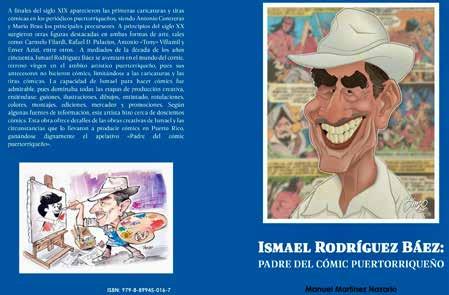
A finales del siglo XIX aparecieron las primeras caricaturas y tiras cómicas en los periódicos puertorriqueños, siendo Antonio Contreras y Mario Brau los principales precursores. A principios del siglo XX surgieron otras figuras destacadas en ambas formas de arte, tales como: Carmelo Filardi, Rafael D. Palacios, Antonio «Tony» Villamil y Enver Azizi, entre otros. A mediados de la década de los años cincuenta, Ismael Rodríguez Báez se aventuró en el mundo del cómic, terreno virgen en el ámbito artístico puertorriqueño, pues sus antecesores no hicieron cómics, limitándose a las caricaturas y las tiras cómicas. La capacidad de Ismael para hacer cómics fue admirable, pues dominaba todas las etapas de producción creativa, entiéndase: guiones, ilustraciones, dibujos, entintado, rotulaciones, colores, montajes, ediciones, mercadeo y promociones. Según algunas fuentes de información, este artista hizo cerca de doscientos cómics.
Esta obra ofrece detalles de las obras creativas de Ismael y las circunstancias que lo llevaron a producir cómics en Puerto Rico, ganándose dignamente el apelativo «Padre del cómic puertorriqueño». Además, la publicación contiene múltiples datos sobre la formación artística y la vida profesional.

El libro, con más de 100 imágenes, es a todo color, con ilustraciones de todos los cómics hechos por el artista. Ismael Rodríguez Báez realizó cómics para el Partido Popular Democrático, el Partido Nuevo Progresista, el Partido Revolucionario Dominicano, Unión Cívica Nacional, el Comité Demócrata de Nueva Jersey, la Asociación de Industriales de Puerto Rico, el Banco de Ponce, el Banco Crédito y Ahorro Ponceño, y múltiples agencias gubernamentales tales como: Departamento de Instrucción Pública, Autoridad Metropolitana de Autobuses, Departamento de Hacienda, Departamento de Vivienda, Autoridad de Fuentes Fluviales, Compañía de Teléfono de Puerto Rico, Departamento de Salud y Departamento de Obras Públicas. La obra está ampliamente documentada, con cerca de 100 referencias bibliográficas. Si se escribiese la historia del cómic puertorriqueño, esta obra sería sin duda el primer capítulo.
SOBRE el AUTOR
MANUEL MARTÍNEZ NAZARIO nació en Brooklyn, Nueva York, y creció en San Juan, Puerto Rico. Obtuvo su maestría en Bibliotecología en la Universidad de Puerto Rico, Recinto de Río Piedras, donde trabajó como bibliotecario desde 1995 hasta su jubilación en 2024.
El autor, quien es bibliotecario y archivero, ha publicado artículos de revistas y periódicos sobre el cómic puertorriqueño; organizado los conocidas ferias de cómics de la Universidad de Puerto Rico; desarrollado la colección más grande e importante del cómic local y colaborado con la Biblioteca Pública de Nueva York en la promoción de las obras creativas de los escritores y artistas puertorriqueños de cómics de Puerto Rico y Estados Unidos. El libro Ismael Rodríguez Báez: Padre del cómic puertorriqueño se encuentra a la venta, por tiempo limitado, en la Librería Laberinto del Viejo San Juan, Librería Casa Norberto, en Plaza Las Américas, en la tienda Metro Comics de San Patricio Plaza, y en la Librería La Casita, en Aguadilla Mall.
por LUIS MAURY • Mayo 8, 2026 | 157 páginas
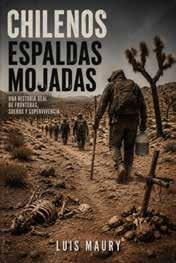
DESCRIPCIÓN
¿Cuántos sueños deben morir en el desierto antes de que el mundo comprenda el verdadero precio de cruzar una frontera?
CHILENOS ESPALDAS MOJADAS no es solo un libro. Es una herida abierta, un testimonio real y estremecedor sobre la inmigración ilegal, el miedo, la supervivencia y el sacrificio humano detrás del llamado “sueño americano”.
En CHILENOS ESPALDAS MOJADAS, conocerás la historia real de un hombre chileno que, impulsado por la desesperación, la falta de oportunidades y el deseo de darle una mejor vida a su familia, decidió atravesar el desierto de Sonora y Arizona enfrentando hambre, sed, coyotes, amenazas, extorsiones y la constante posibilidad de morir en el intento.
A lo largo de CHILENOS ESPALDAS MOJADAS, descubrirás:
• El verdadero rostro de la migración clandestina
• Los peligros ocultos del desierto fronterizo
• El impacto emocional de dejar atrás a la familia
• Historias de supervivencia, resiliencia y fe
• La realidad detrás de los coyotes y el tráfico humano
• El dolor, la esperanza y la lucha de miles de inmigrantes
• Cómo un sueño puede convertirse en una pesadilla… o en una transformación profunda
CHILENOS ESPALDAS MOJADAS es un relato humano, crudo y profundamente conmovedor que hará que valores la vida, la familia y cada oportunidad que tienes frente a ti. Este libro de inmigración, supervivencia y superación personal conecta con quienes han emigrado, con quienes sueñan con un futuro mejor y con quienes desean comprender el costo real de cruzar una frontera. Si alguna vez te has sentido atrapado por la desesperación, el miedo o la necesidad de empezar de nuevo, CHILENOS
ESPALDAS MOJADAS tocará tu corazón de una manera imposible de olvidar.
Porque este no es solo un libro sobre inmigrantes. Es una historia sobre dignidad, sacrificio, valentía y esperanza.
Descubre cómo puedes transformar tu manera de ver la migración con CHILENOS ESPALDAS MOJADAS.
AUTOR
LUIS MAURICIO ARAYA NÚÑEZ, conocido por su seudónimo Luis Maury, es un autor chileno cuya obra se centra en el testimonio profundo y conmovedor de su experiencia personal. Su libro “CHILENO ESPALDAS MOJADAS” es un relato crudo y real de los sufrimientos vividos durante su intento de alcanzar el sueño de llegar a Estados Unidos, atravesando uno de los caminos más peligrosos de la migración: el desierto de Sonora, entre México y Arizona.
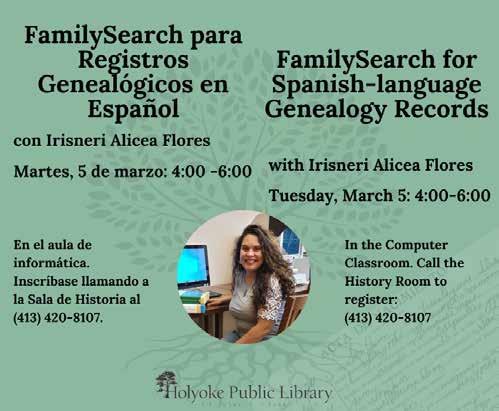
The Latino Scholarship Fund of Western Massachusetts will be hosting an in-person celebration on Friday, June 12th, 2026, from 6:00-10:00 pm. We are excited to honor this year’s 12 scholarship recipients, along with the recipients of the Carlos Vega Community Champion Award and the Antonia Pantoja Award for their Distinguished Achievement. The evening will celebrate the accomplishments of Latinx students and community leaders across Western Massachusetts while bringing together supporters, educators, families, and community partners for a night of recognition and celebration.
The recipients of the 2026 Latino Scholarships are:
- Alani Bermudez Rodríguez
- Amari Mckoy
- Brian Ávila
- Eliana Jones
- Gabriella Cayo
- Jaedis Elmore
- Jacqueline Liriano
- Samantha Rodríguez
- Yamilet Berdecia
- Nayleen Ramos
The recipient of the Carlos Vega Community Champion Award is Carlos Gonzalez.
The Carlos Vega Community Champion Award celebrates a local individual whose actions have benefited the Latino community in the region, while the Antonia Pantoja Award for Distinguished Achievement is given to someone who has achieved high academic success through research, education, art, policy, and publication.
During his tenure, Representative Gonzalez has championed civil and economic equity rights and fought for legislation such as the Criminal Justice Reform Act of 2018. As former Chair of the MA Black and Latino Caucus, he successfully helped shepherd the Student Opportunity Act, Police Reform (POST), and the Homes Dream Program for first-time homeowners in diverse communities. Representative Gonzalez also led the charge on micro businesses being codified into statute, creating funding for underserved entrepreneurs, served on the Conference Committee that passed landmark gun reform legislation in the Commonwealth, and led on recent immigration protection legislation. He has been recognized as one of the Top 100 Latino Leaders by Amplify Latinx, named the 2024 Political Leader of the Year by the Boys & Girls Club, and received the 2025 Community Impact Award from Greater Springfield Senior Services Inc. for his steadfast advocacy on behalf of older adults and equitable access to services.
The recipient of the Antonia Pantoja Award is Dr. Joel A Arce. Prior to pursuing his Ph.D., Dr. Arce taught middle school social studies in the Bronx and worked with nonprofit organizations in New York City focused on project-based learning and college access programming. He continued building on these experiences throughout his doctoral studies, dedicating his
participatory research and scholarship to supporting the transformative vision of Western Massachusetts educators and youth, including work connected to the Holyoke Ethnic Studies program and the fight for educational justice. In 2026, Dr. Arce earned his doctorate from the University of Massachusetts Amherst, having already contributed to the field of critical education through published work in academic journals and edited books, as well as research presentations alongside colleagues and students at regional and national conferences.
The recipients for the 2026 Angel Nieto Scholarship are Diaraliz Rivera and Sophia Estrada
We are also honored to announce that we will be presenting the Angel Nieto Scholarship at our banquet this year. Although the LSF is distinct from the Angel Nieto Scholarship Fund (ANS), Angel was one of the founders of the LSF over 30 years ago and we are enthusiastic to be able to present the award at our banquet.
“As President of the Latino Scholarship Fund, I am filled with orgullo and alegría as we prepare to gather in person on June 12th to honor the brilliance, resilience, and cultural pride of our Latinx community. This year, we celebrate 12 extraordinary scholarship recipients, along with community champions Carlos Gonzalez and Dr. Joel A. Arce, whose contributions uplift and inspire generations. We are especially proud to present the Angel Nieto Scholarship in honor of one of our visionary founders, continuing his legacy of empowering Latino students through education. ¡Adelante siempre! This celebration is not only a reflection of our accomplishments but a powerful reminder of our collective fuerza and future.”
The Latino Scholarship Fund is dedicated to encouraging Latino academic achievement by awarding scholarships for students to pursue higher education. The LSF has been awarding college scholarships to Latino students in Holyoke and surrounding communities in Western Massachusetts for 30 years. Estrella encourages residents of the area and beyond to learn more about the Latino Scholarship Fund of Western Massachusetts and to make a donation by visiting the website at https://www. latinoscholarshipwesternmass.org/
Follow the Latino Scholarship Fund of Western Massachusetts on social media!
Facebook: @latinoscholarshipfundofwesternmassachusetts
Instagram: @latinoscholarshipfund413
Linkedin: linkedin.com/latinoscholarshipfundofwesternma
HOLYOKE, MA | HOLYOKE COMMUNITY COLLEGE | May 4, 2026 – Holyoke Community College is pleased to announce that Julissa Colón of South Hadley has been selected as the college’s first dean of student experience.
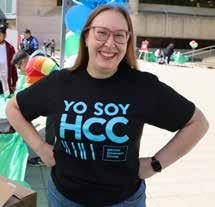
Colón, 44, is a 2013 graduate of HCC. She started working at the college in 2010 as a clerk for the Gateway to College program and earned her associate degree in liberal arts. With the help of HCC’s Pathways Program, she transferred to Smith College, where she received a bachelor’s degree in Latin American Studies and History and was subsequently hired as special programs coordinator for Gateway to College. While continuing to work full time, she earned a master’s degree in public administration and a graduate certificate in gender leadership and public policy at the University of Massachusetts Boston.
In 2020, Colón was hired as the inaugural director of El Centro, HCC’s bilingual support program.
Now, as the first dean of student experience, she oversees new student programs, including orientation; Student Engagement,
which includes student clubs and activities; wellness programs, including the college’s on-campus partnership with the Center for Human Development; and Commencement. She also serves as chair of the HCC Care Team and as the student conduct officer.
“Julissa brings a wealth of knowledge and experience to this position, including program development and implementation, assessment of program outcomes, budgetary oversight, and strengthening HCC’s position as a Hispanic Serving Institution,” said Renee Tastad, assistant vice president of student affairs and enrollment management. “What sets her apart, however, is her 15 years of experience working directly with HCC students.”
Colón started her new job in January.
“I genuinely love HCC,” she said. “I love our students. I love the staff and faculty that I work with. I love what HCC imagines itself to be, and I say ‘imagines itself’ because we are always striving to be better.”
Colón grew up in Springfield and is the mother of two grown children, Christian Aponte, 20, and Luna Aponte, 25, a 2021 HCC graduate.
“HCC has been my home for so long, said Colón. “I’ve been here for 15 years and the amount of growth that I’ve experienced as a student, as the parent of a student here, as the aunt of a student here, is tremendous. My family has been here. My friends are here. My folks come here. My commitment to my community is here.
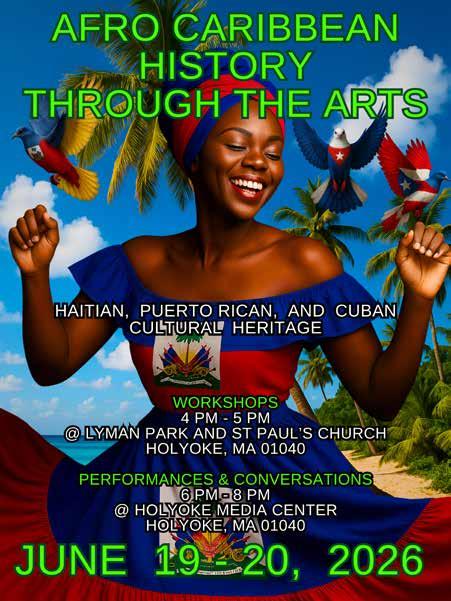
Los Doctores Gloria Caballero e Ivor Miller se enorgullecen en presentar la segunda edición de la celebración de Juneteenth, honrando el legado afro-puertorriqueño y afro-cubano a través de la música, la danza y la comunidad. Este evento gratuito y familiar se llevará a cabo los días 19 y 20 de junio, con artistas de renombre internacional, talleres interactivos y presentaciones llenas de alegría.
Entre los destacados del evento se encuentran:
• Brendaliz Cepeda y Bomba de Aquí desde Holyoke, MA — guardianes de la rica tradición de la Bomba puertorriqueña.
• Maestro Lázaro Galarraga, bailarín, percusionista y cantante principal desde Los Ángeles, conocido mundialmente por su maestría en la música afro-cubana.
• Danys Pérez “La Mora” y su reconocida compañía de danza Oyu Oro Afro-Cuban Dance Ensemble desde la ciudad de Nueva York, transmitiendo el espíritu del legado Yoruba.
• Azaka Group, pioneros de mizik rasin (música de raíz) con Harry Ayizan de Holyoke y sus hermanos musicales.
La celebración inicia el viernes 19 de junio a las 4:00 p.m. en Lyman Park con talleres gratuitos de percusión y danza para todas las edades. Ese mismo día el festival continuará con
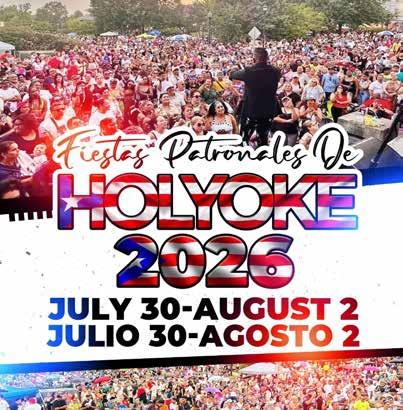
actuaciones en vivo a las 6:00 PM en Holyoke Media Center. El sábado 20 de junio continuarán las celebraciones con talleres gratuitos en St. Paul’s Church (485 Appleton Street, Holyoke) a las 4:00 PM, y a las 6:00 p.m., se realizarán nuevamente presentaciones en vivo en el Holyoke Media Center
Esta celebración es una expresión de alegría, unidad y orgullo cultural. Invitamos a toda la comunidad a unirse, aprender y honrar las contribuciones de las comunidades afrodescendientes a nuestra historia compartida.
Todos los eventos son gratis y abiertos al público.
Viernes 19 de junio
Lyman Park, 498 Dwight St., Holyoke
4:00 p.m.– Talleres de Percusióny Danza Gratuitos
Holyoke Media Center, 1 Court Plaza, Holyoke
6:00 p.m.– Presentaciones en Vivo
Sábado 20 de junio
St. Paul’s Church (485 Appleton Street, Holyoke)
4:00 p.m.– Talleres de Percusióny Danza Gratuitos
Holyoke Media Center, 1 Court Plaza, Holyoke
6:00 p.m.– Presentaciones en Vivo
Contacto: Dr. Gloria Caballero Roca
Email: caballero.gloria3035@gmail.com
Posted by WMASSPI (WESTERN MASSACHUSETTS POLITICS & INSIGHT)
on May 7, 2066
Seven years after New England Public Radio and WGBY merged to become New England Public Media, the nonprofit media landscape is shifting again. Last Friday, the GBH Foundation, which oversees NEPM now, announced that it would formally absorb the 413’s largest public broadcaster. No major changes for listeners or viewers appear imminent, but both NEPM and GBH cast the move as a positive.
The merger will not result in any loss of jobs in the near term and the outward changes will be minimal at first. NEPM will retain its branding for local content, but the two entities expressed ambitions to create a statewide news organization. GBH News’s editor-in-chief, Dan Lothian, will oversee radio, television and digital reporting at GBH, NEPM and WCAI, a station on the Cape.
“This is all about preserving local news,” GBH President and CEO Susan Goldberg told GBH News. In the same interview, she alluded to the need for efficiencies after Congress rescinded $1.1 billion it had appropriated for public media. The move, a longstanding goal of the right in the US, led to the closure of the Corporation for Public Broadcasting and left many public media outlets scrambling.
In a statement announcing the move, Goldberg said that one solution was to find efficiencies.
“By scaling our journalism while maintaining our focus on local coverage, we become a more sustainable business operation even in the face of federal defunding, ensuring that every resident of the Commonwealth has access to fact-based reporting and stories that matter,” she said in last Friday’s release.
GBH and NEPM expect the merger to be complete this summer.
WGBY, long the public television provider for Western Mass, was, in fact, a property of the WGBH Foundation, the nonprofit that owns GBH. The local public broadcaster also produces several local television programs and national PBS content.
WFCR, which later adopted the New England Public Radio brand, was a charter member of National Public Radio. However, until joining forces with WGBY, it was effectively a division of UMassAmherst.
This new merger was, in some ways, a logical next step after WFCR, a radio license UMass-Amherst owns, and WGBY joined forces. Although it had its own board, NEPM largely fell under GBH. UMass-Amherst had a seat on NEPM’s board and continued to own WFCR’s license. (A spokesperson for the university said it would retain ownership of WFCR’s license after GBH takes over.)
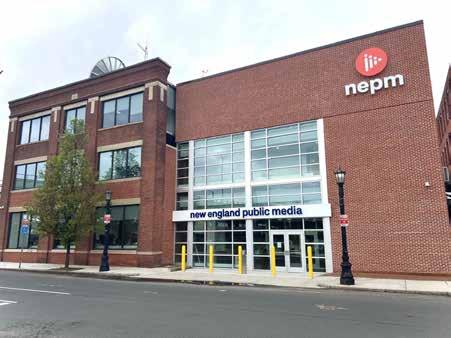
Teaming up (via nepm.org)
Battered by the pandemic-era decline in public radio listening and the 413’s poor economy, NEPM had not faired well. It has seen layoffs and the end of television programming like Connecting Point. However, it has also expanded other local programming, even luring Monte Belmonte down I-91 to NEPM.
WMP&I Editor-in-chief Matt Szafranski has appeared on NEPM’s radio and television programming.
Public media in Boston has had its struggles as well. GBH has seen reductions in staff both in its news division and in its larger programming arm. GBH produces many flagship programs for PBS such as American Experience. It is not the only public media game in town, either. WBUR, nominally a property of Boston University, also produces national NPR content and has a sizable newsroom.
In a March interview with The Boston Globe, Goldberg floated the idea of a merger with WBUR. The latter’s leadership politely declined.
As Goldberg alluded to in her statement and interviews, scaling and efficiency is part of the plan. A spokesperson for GBH explained in an email there would be more collaboration on statewide news.
“We’ll be sharing resources and generating more operational efficiencies between GBH and NEPM so we can invest in our journalism and growing audience,” said Nicole Boudreau, GBH’s Director of Communications. continued on next page
However, there are no layoffs planned. NEPM President Matt Abramovitz, who took over NEPM in 2022, will remain in that position. The release said he will also have the role of VicePresident of Audience Strategy and Operations at GBH.
The impact on staff is a concern. Even though layoffs are not in the immediate future, the labor situation is somewhat unique. Employees of WFCR were represented by the Professional Staff Union (PSU) at UMass-Amherst, not a private sector union subject to federal collective bargaining law. The employees who stayed with NEPM remained with the union and on UMass’s payroll.
The PSU confirmed that some of its members remain at NEPM. Vanessa Cerillo, a spokesperson for NEPM, confirmed that these employees would remain in the UMass union. NEPM and GBH have been collaborating closely since 2019. The
WGBH Foundation had been providing some financial support to NEPM according to Current, which covers public media. The tie-up will not only provide savings in administrative costs, but streamline underwriting and reduce membership fees.
The big question will be how coverage changes with the deeperpocketed GBH hugging NEPM more closely. There were some hints at a statewide news network when the NEPR-WGBY merger happened. Now that is the explicit goal. GBH had already established a presence in Worcester and now it will effectively have a foothold in Springfield and the 413.
One immediate benefit will be more of each newsroom’s current content featuring more often on the other’s air. Longer term, the question will be whether more money comes into NEPM to provide more reporting in the increasingly journalism-starved four Western counties of Massachusetts.






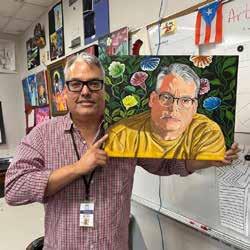
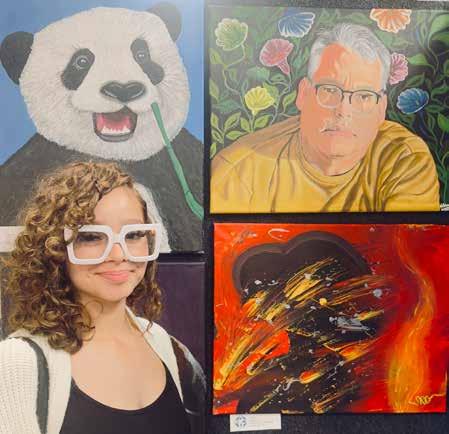
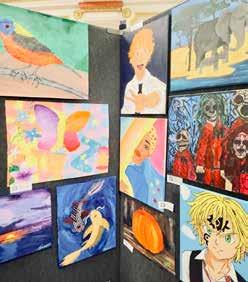
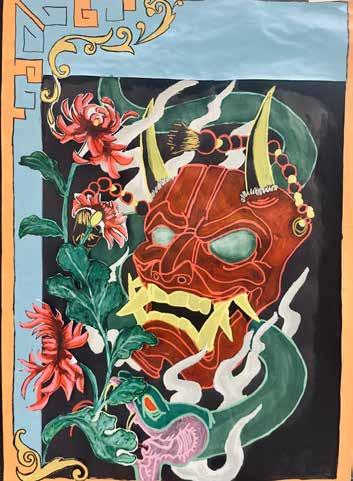
This arts activity takes place just one day a year. The teachers for these elective subjects (ARTS) plan the event, where the work produced throughout the year is showcased, and students have the opportunity to exhibit their creations.
Among the staff and teachers participating in the organization of this event are Christopher Desanges, María Vargas, Dr. Tracy Xela Shultis, Jac Sinclair, and Eduardo Meléndez.
PMOS: Nuevo nombre para una enfermedad que afecta a 1 de cada 8 mujeres
¿Qué es y por qué es importante?
por JESSICA CABALLERO-FELICIANO, Ph.D. | dra.caballero.escribe@gmail.com
Lo que antes se conocía como síndrome de ovario poliquístico ahora tiene un nombre nuevo: síndrome metabólico ovario poliendocrino, o PMOS, por sus siglas en inglés. El cambio, respaldado por más de 14,000 pacientes y profesionales de salud de todo el mundo refleja décadas de ciencia ignorada por un nombre equivocado. Si tienes o conoces a alguien con PCOS, o lo que desde este año se llama oficialmente PMOS, este artículo te interesa. En mayo de 2026, la revista médica “The Lancet” publicó los resultados de un proceso global sin precedentes: el cambio de nombre oficial de esta condición, liderado por 56 organizaciones académicas, clínicas y de pacientes de todo el mundo. El nuevo nombre, síndrome metabólico ovario poliendocrino (PMOS por sus siglas en inglés), reemplaza al anterior “síndrome de ovario poliquístico” (PCOS por sus siglas en inglés) después de décadas de reconocer que ese nombre era, simplemente, incorrecto. Y ese error ha tenido consecuencias reales para millones de mujeres.
¿Por qué el nombre anterior era un problema?
El término “ovario poliquístico” sugería que el problema eran quistes en los ovarios. Sin embargo, la condición en realidad involucra desequilibrios hormonales, alteraciones metabólicas y una disfunción ovárica que va mucho más allá de cualquier quiste. El nombre antiguo ocultaba esa complejidad.
Hasta el 70% de las mujeres con PMOS no saben que lo tienen.
El nombre equivocado contribuía a ese diagnóstico tardío: los médicos buscaban quistes pero no todas las pacientes encajaban en esa descripción, y el tiempo pasaba sin respuestas. Además, el enfoque en los ovarios y la reproducción generaba estigma, especialmente en culturas donde la fertilidad se asocia directamente con el valor de una mujer.
“La confusión que generaba el nombre ha persistido durante décadas, contribuyendo a retrasos en el diagnóstico, brechas de conocimiento e insatisfacción entre las pacientes.” [Traducción al Español]
— Teede et al., The Lancet, mayo 2026
¿Qué es el PMOS, entonces?
El PMOS es una condición hormonal y metabólica que afecta a 1 de cada 8 mujeres en edad reproductiva, más de 170 millones de personas en el mundo. Su nuevo nombre lo dice mejor: es poliendocrino (involucra múltiples hormonas), metabólico (afecta el metabolismo) y ovárico (hay disfunción en los ovarios, aunque no quistes patológicos).
Sus efectos se sienten en todo el cuerpo. Los síntomas más conocidos incluyen ciclos menstruales irregulares, exceso de vello facial o corporal, acné, pérdida de cabello y dificultad para perder peso. Pero hay más: el PMOS aumenta el riesgo de diabetes tipo 2, presión alta, problemas cardiovasculares y complicaciones durante el embarazo. También tiene un impacto emocional significativo: la ansiedad y la depresión son más frecuentes en mujeres con esta condición.
¿Por qué importa después de los 30?
Muchas mujeres llegan a los 30 con el PMOS sin diagnosticar. Es precisamente en esta etapa cuando los síntomas pueden intensificarse o cuando comienzan a plantearse decisiones de fertilidad. La condición está estrechamente ligada a la resistencia a la insulina - el cuerpo produce insulina pero no la usa eficientemente - lo cual, con el tiempo, eleva el riesgo de desarrollar diabetes tipo 2 y enfermedad cardiovascular.
Tener PMOS no significa que sea imposible embarazarse, pero sí puede requerir acompañamiento médico adicional. Conocer el diagnóstico a tiempo es clave para tomar decisiones informadas y reducir riesgos a largo plazo.
¿Cómo se diagnostica y cómo se maneja?
El diagnóstico combina síntomas clínicos, análisis de sangre para medir hormonas y, en algunos casos, un ultrasonido pélvico. No se necesita tener todos los síntomas — basta con que estén presentes al menos dos de los criterios internacionales establecidos.
El PMOS no tiene cura, pero sí tiene manejo efectivo. Cambios en el estilo de vida, especialmente en alimentación y ejercicio, tienen un impacto real y medible. Reducciones de peso de apenas un 5 a 10% pueden restaurar ciclos menstruales y mejorar la sensibilidad a la insulina. Hay también opciones farmacológicas según los síntomas de cada persona, siempre con guía médica.
¿Qué cambia en la práctica con el nuevo nombre?
El proceso para adoptar el nombre PMOS es gradual, se espera una transición de tres años, integrándolo en guías clínicas, sistemas de salud electrónicos y clasificaciones internacionales de enfermedades, etc. La meta es que para 2028, las guías internacionales de manejo clínico usadas en 195 países ya reflejen el nuevo nombre.
Para las mujeres que ya tienen diagnóstico de PCOS: su diagnóstico sigue siendo válido. El cambio de nombre no cambia la condición ni el tratamiento, lo que cambia es la comprensión de lo que realmente es, y eso debería traducirse en mejor atención, diagnósticos más rápidos y menos estigma.
Lo más importante
¿Reconoces estos síntomas? Habla con tu doctor y pide una evaluación hormonal. No hay que tener todos los síntomas para que valga la pena preguntar.

El PMOS no es tu culpa. Es una condición compleja, con bases hormonales y metabólicas, que afecta a millones de mujeres. Muchas mujeres viven vidas plenas y saludables con el diagnóstico y el manejo adecuado. Conocerlo por su nombre correcto es el primer paso.
Fuente: Teede et al. “Polyendocrine metabolic ovarian syndrome, the new name for polycystic ovary syndrome: a multistep global consensus process.” The Lancet, mayo 2026. https://doi.org/10.1016/S0140-6736(26)00717-8
23 de mayo de 2026 - McNally Field (Flats), Holyoke, MA