Un Periódico Diferente / A Different Kind of Newspaper

Un Periódico Diferente / A Different Kind of Newspaper
Un Periódico Diferente / A Different Kind of Newspaper


Un Periódico Diferente / A Different Kind of Newspaper
Un Periódico Diferente / A Different Kind of Newspaper
Un Periódico Diferente / A Different Kind of Newspaper




The impact of COVID-19 has been especially devastating for communities of color. Now, more than ever, independent, local journalism needs your support.
2 Foto del Mes /Photo of the Month
Remembering our April 2023 Edition
3 Portada / Front Page
The Legacy of Trailblazer Librarian María
Pagán: Holyoke Public Library Director
5 Two-Day Puerto Rican Summit Aims for Change
6 The Impact of Immigration Policies and Practices on Children
7 Opinión / Opinion
Steady Through Spring
8 Longing to Matter and Mattering
10 Literatura / Literature Traicionado
15 Libros / Books
Politicking in the Barrio: Essays on Latino Politics in New York
16 Fabulaciones
White, Black, Brown: Becoming Puerto Rican in Chicago
17 Cultura / Culture
Emisión de Estampillas de los Lowriders
18 Educación / Education
Springfield Public Schools Reports Rise in Graduation Rate, Drop in Dropouts
Holyoke Educators Honored for Promoting Civic Learning
19 Former state Rep. Aaron Vega named to HCC Board of Trustees
20 Deportes / Sports
Springfield OTSL Opening Day Schedule
Editor Manuel Frau Ramos manuelfrau@gmail.com 413-320-3826
Assistant Editor Ingrid Estrany-Frau
Art Director Tennessee Media Design
Business Address El Sol Latino P.O Box 572 Amherst, MA 01004-0572
Editorial Policy
El Sol Latino acepta colaboraciones tanto en español como en inglés. Nos comprometemos a examinarlas, pero no necesariamente a publicarlas. Nos reservamos el derecho de editar los textos y hacer correcciones por razones de espacio y/o estilo. Las colaboraciones pueden ser enviadas a nuestra dirección postal o a través de correo electrónico a: info@elsollatino.net.
El Sol Latino welcomes submissions in either English or Spanish. We consider and review all submissions but reserve the right to not publish them. We reserve the right to edit texts and make corrections for reasons of space and/or style. Submissions may be sent to our postal address or via electronic mail to: info@elsollatino.net.
El Sol Latino is published monthly by Coquí Media Group. El Sol Latino es publicado mensualmente por Coquí Media Group, P.O Box 572, Amherst, MA 01004-0572.

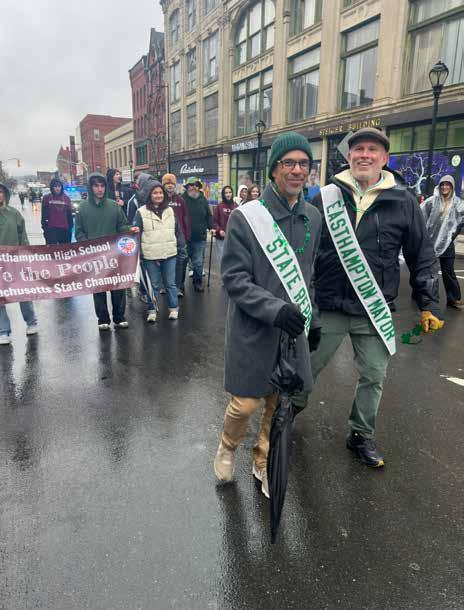

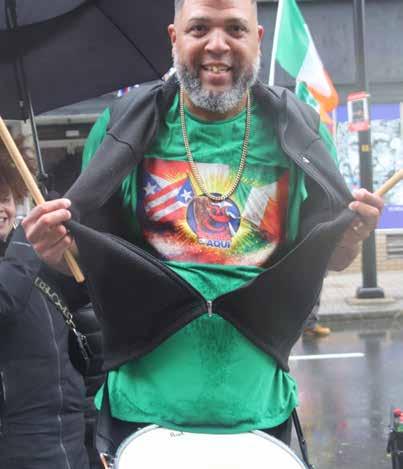



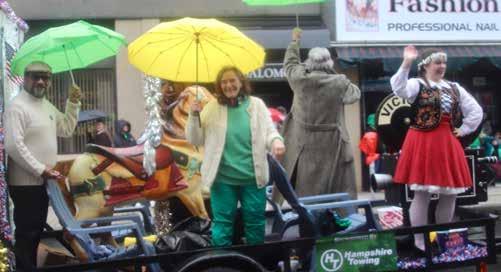

Originally posted on UConnToday (UNIVERSITY OF CONNECTICUT) March 23, 2026
While a two-day summit addressing issues of importance to Puerto Ricans might sound like a niche event, UConn’s Charles “Rob” Venator-Santiago stressed during opening remarks Friday the ideas generated from the 300 attendees are things that can benefit everyone in Connecticut, not just its Puerto Rican community.
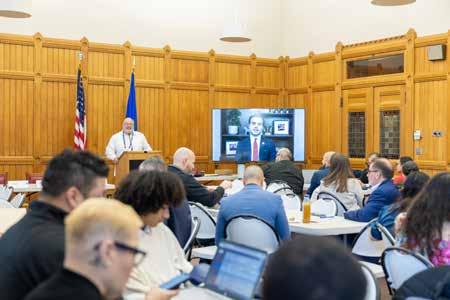
Charles Venator-Santiago, director of the Puerto Rican Studies Initiative at UConn, speaks ahead of a video message from Pablo José Hernández, resident commissioner of Puerto Rico (Sydney Herdle/UConn Photo)
Take, for instance, a proposal he has that would shift the way electricity is purchased in the state, potentially reducing the cost by 45% – for everybody. It would require radical change, VenatorSantiago admitted, and might not go anywhere right now, but it’s something that has the backing of the legislature’s Puerto Rican caucus and gets the conversation started.
After all, that’s among his explicit goals of the second annual summit, Puerto Rico: Puerto Ricans in Connecticut, sponsored by UConn’s Puerto Rican Studies Initiative for Community Engagement and Public Policy (UConnPRSI) and held at the state Capitol and Legislative Office Building complex.
First, he said he wanted to bring together key state leaders to get them thinking creatively about ways they could help bolster the Puerto Rican economy.
“We want to figure out how the small business owner can participate in this conversation and engage in trade and use this as a way to launch other similar meetings,” he said, adding, “We think that we can create a strong economy that integrates people.”
Second, he said he wanted to shine a light on the actual debates happening in Puerto Rican communities around the state, even before policies are conceived so those debates can influence at the outset.
“The idea is to give exposure to some folks and say, ‘Hey, there are all these things happening, and you should pay attention to them,” he said.
KIMBERLY PHILLIPS
To that end, Venator-Santiago — director of UConnPRSI, director of El Instituto, and associate professor in the Department of Political Science, all in the College of Liberal Arts and Sciences — structured the two-day event with distinct flavors.
Friday’s session was dedicated to discussions about trade between Connecticut and Puerto Rico, with panelists from the U.S. Census Bureau and Department of Commerce Bureau of Economic Analysis, along with Connecticut state legislators and the Puerto Rico Study Trade Commission.
Saturday’s session looked inward at key issues for Connecticut Puerto Ricans and included six roundtable discussions on subjects ranging from school closures to rent control. Numerous state legislators served as panelists, along with local nonprofit leaders, media members, and municipal elected officials.
“There are a lot of Puerto Ricans who have a lot of influence in the state,” Venator-Santiago said. “I think that after Hurricane Maria and with Bad Bunny, there’s something going on that’s energized people about Puerto Rico.”
Connecticut State Rep. Minnie Gonzalez - Puerto Ricans in Connecticut Policy Summit in the Connecticut State Capitol in Hartford (Sydney
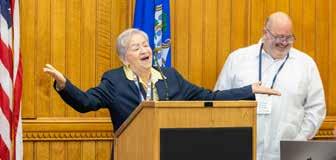
The opening plenary on Day 1 from Edwin Meléndez, emeritus professor at Hunter College, City University of New York, focused on sustainable economic development on the island that was put under fiscal oversight during a financial crisis.
In the decade since, he said, leaders have focused on stabilizing the commonwealth’s ledger mostly by cutting costs rather than focusing on recovery and growing the economy.
Because of a high cost of living, residents are discouraged from working, he said, as paychecks just don’t cover the cost of the three overwhelming household burdens, that is energy, food, and housing.
“The reforms that they instituted … have actually backfired,” Meléndez said. “It’s worse than it was before.”
But activating the labor market can change that just by investing in three key areas.
First, he said, there needs to be increased child care options and affordability; it’s the one of the best means of encouraging people to get back into the job market. Second, the industry pipeline needs reconfiguring; past agricultural practices don’t work today, for example. And third, financing needs to be available for these projects, and there’s existing infrastructure already in place for it. Meléndez said Puerto Rico also needs to reduce its reliance on petroleum, its largest import, and instead make investments
continued on page 7
In 2023, Alianza DV Services (formerly Womanshelter Compañeras) was awarded a multi-year grant from the Massachusetts Department of Public Health to prioritize culturally specific domestic violence programming and to engage Hispanic/ Latinx communities in identifying solutions for preventing domestic violence.
Working with researchers from UMass Amherst, Alianza is using a confidential survey to gather opinions.
El Sol Latino readers are invited to complete the survey by scanning the QR code in the ad below.


En el 2023, Alianza DV Services (anteriormente conocida como Womanshelter Compañeras) recibió fondos multianual del Departamento de Salud Pública de Massachusetts para priorizar programas de violencia doméstica culturalmente específicos y para involucrar a las comunidades hispanas/latinas en la identificación de soluciones para prevenir la violencia doméstica.
Trabajando con investigadores de la Universidad de Massachusetts Amherst, Alianza está utilizando una encuesta confidencial para recopilar opiniones.
Se invita a los lectores de El Sol Latino a completar la encuesta escaneando el código QR en el anuncio a continuación.


by Dr. SONIA E. DINNALL Superintendent of Springfield Public Schools
I’m sure I’m not alone when I say winter felt long. Even as someone who usually loves the season, this one was too cold, unpredictable, and disruptive for my liking. We had cancellations and delays that interfered with instruction and required flexibility from everyone.
The fatigue was real.

But look at where we are now! Spring is on the horizon and April vacation is around the corner. Here’s what I am asking: Keep showing up.
Every school day matters. When students are present, they learn. When they learn, they grow. And when they grow, their confidence builds. Fatigue and lost time are real, but so is resilience. The best way to regain momentum is to simply keep showing up.
To our students, I say: Finish strong. You have more in you than you realize.
I remind our teachers and staff that your steady presence is the heartbeat of this district.
I thank our parents and guardians for getting your students to school, even on cold mornings when it could have been easier not to.
Spring reminds us that growth often happens beneath the surface before we can see it. Stay with it, Springfield. Keep showing up.
Put your best foot forward over the coming weeks and months so that growth continues to happen.
One steady step at a time, all the way to June.
continued from page 5
in alternative energy sources like solar arrays, still an import but one that has sustainability. Further, it needs to have the ability to govern locally and needs advocates to continually campaign for its best interests.
Venator-Santiago said Puerto Rico: Puerto Ricans comes on the heels of a similar summit in January that centered on Connecticut Latinos and drew nearly 500 people for the single-day event. That’s one reason he opted to break this one in two: crowd management.
“UConn has a very good reputation in Connecticut,”
Venator-Santiago said, “and I think we need to highlight how there are pockets of the University that are giving back or that are actively involved in the community. UConn can contribute to the conversation at a community level, on a political level, in a nonpartisan way to bring about new ideas.”
Estoy segura de que no soy la única que piensa que el invierno se ha hecho largo. Aunque normalmente me encanta esta estación, esta vez ha sido demasiado fría, impredecible y perturbadora para mi gusto. Hemos tenido cancelaciones y retrasos que han interferido en la enseñanza y han exigido flexibilidad por parte de todos. El cansancio era real.
Pero ¡mirad dónde estamos ahora! La primavera está a la vuelta de la esquina y las vacaciones de abril están a punto de llegar. Esto es lo que os pido: seguid asistiendo.
Cada día de colegio es importante. Cuando los alumnos están presentes, aprenden. Cuando aprenden, crecen. Y cuando crecen, ganan confianza. El cansancio y el tiempo perdido son reales, pero también lo es la resiliencia. La mejor manera de recuperar el impulso es simplemente seguir asistiendo.
A nuestros estudiantes les digo: terminen con fuerza. Tienen más potencial del que creen.
Les recuerdo a nuestros maestros y personal que su presencia constante es el corazón de este distrito.
Agradezco a nuestros padres y tutores por llevar a sus estudiantes a la escuela, incluso en las mañanas frías, cuando podría haber sido más fácil no hacerlo.
La primavera nos recuerda que el crecimiento a menudo ocurre bajo la superficie antes de que podamos verlo. No se rindan, Springfield. Sigan asistiendo. Den lo mejor de ustedes en las próximas semanas y meses para que el crecimiento continúe. Un paso firme a la vez, hasta junio.
On May 1, 1517, riots broke out in London in response to an influx of immigrant workers. The event is now known as Evil May Day. About 80 years later, the collaboratively written play Sir Thomas More included a monologue condemning the anti-immigrant attitudes of the rioting crowd; that passage is widely attributed to William Shakespeare. Sir Ian McKellen later delivered this Shakespearean speech in support of immigration during an appearance on The Late Show with Stephen Colbert. In discussing recent unrest and protests concerning the actions taken by the Immigration and Customs Enforcement (ICE) in Minneapolis, Minnesota, McKellen drew parallels between the events of 1517 and modern anti-immigration sentiment. In Sir Thomas More, the title character, then Sheriff of London, urges the rioters to imagine themselves in the place of the immigrants they are attacking: “Imagine that you see the wretched strangers, their babies at their backs and their poor luggage … would you be pleased to find a nation of such barbarous temper, that, breaking out in hideous violence, would not afford you an abode on earth?”

The January detention of five-year-old Liam “Conejo” Ramos in Minneapolis, by federal immigration agents exposed how the current government treats children. It reflects an immigration policy rooted in fear and cruelty. Liam’s story — the little boy in the iconic bunnyeared hat and Spider-Man backpack — shocked the public. ICE’s actions have become a stark visual reminder of the lasting harm children suffer when they lose the protection of a trusted adult and the stability of a predictable routine centered on family, school, and a familiar home. Decades of research on early childhood development show that detaining children indefinitely, especially in conditions where their basic needs are not met, can cause long-term emotional, psychological, and physical harm.
Project 2025 is a 925-page policy blueprint created by the Heritage Foundation in partnership with dozens of conservative advocacy groups and former government officials. Developed ahead of the 2024 election, it outlines goals for a future national immigration
JOSÉ P. ARCE and MIGUEL L. ARCE
agenda. Its immigration platform presents a detailed roadmap for reshaping federal immigration policy in line with the priorities of hardline restrictionists. It advocates limiting legal immigration in multiple forms while also laying the groundwork for a possible mass deportation campaign. On January 21, 2025, the plans engineered by this ultra-conservative policy blueprint began to unfold. President Donald Trump wasted no time initiating the Project 2025 agenda. On his first day back in office, he issued 26 executive orders,12 memorandums, and four proclamations, totaling 42 presidential actions (WBT 107.9 FM, January 21, 2025). These executive orders covered a wide range of issues, including immigration.
An executive order is a rule or directive issued by the president to the executive branch of government that carries the force of law. The president cannot create laws, but he does have broad authority to direct how federal agencies enforce them. Executive orders impacting immigrants included the use of active-duty military personnel to help apprehend people attempting to enter the United States unlawfully, the resumption of large-scale worksite raids targeting migrants without work authorization, an increase in immigration detention capacity, and the elimination of immigration watchdog groups that the administration claimed obstructed ICE operations (Immigration Policy Tracking Project, Factcheck post, September 30, 2025). These actions reflected proposals that had been extensively discussed by the Heritage Foundation’s Project 2025 before the election.
The Flores Settlement Agreement
Project 2025 recommended overturning the “Flores Settlement Agreement,” the 1997 court-approved agreement that serves as the “nationwide policy for the detention, release, and treatment of minors” in immigration custody (National Center for Youth Law, August 18, 2025). The Flores Settlement Agreement is a foundational legal safeguard that requires the federal government to treat children in immigration custody humanely, hold them in the least restrictive settings, prioritize release to family, and provide access to basic necessities such as clean water, food, medical care, and safe, sanitary living conditions.
The settlement applies to all children — both unaccompanied minors and those accompanied by parents — held in immigration detention. Under the Flores Settlement Agreement, within three to five days of a minor’s apprehension and detention, the government must generally either (1) release the minor to a parent, legal guardian, adult relative, or other “capable and willing” designated adult or entity, or (2) place the minor in a non-secure facility “licensed by an appropriate State agency to provide residential, group, or foster care services for dependent children” (Congressional Research Service [CRS], December 3, 2024). “Detained minors are to be held in ‘safe and sanitary’ facilities and cannot be housed with unrelated adults for more than 24 hours,” the CRS report states.
An analysis by The Marshall Project of ICE data obtained by the Deportation Data Project found that detention has inbelievably swept thousands of children into ICE custody. At least 3,800 children under age 18, including 20 infants, have been booked (!) since January 2025. Over a third of the children and infants ICE booked
continued on next page
this year were released within a few days, likely because they were unaccompanied or separated from a guardian and, so, under court guidance, should be freed within 72 hours. But more than 1,300 were held for 20 days or longer, exceeding the benchmark for how long children with families can be detained. The Marshall Project believes the government is choosing to hold families as long as possible, rather than releasing them as soon as it is able, as a tactic to force deportations. The majority of the children ICE detained this year eventually wound up being deported (The Marshall Project, December 17, 2025).
This is further supported by Health and Human Services data showing that the average number of days an unaccompanied alien child remained in care had increased fourfold. In fiscal year 2025, 117 children remained for twenty days or longer, whereas in 2024, the number was 30 (Administration for Children and Families [ACF], March 16, 2026). ProPublica (November 24, 2025) further supports the ACF reporting, indicating that this year ICE has sent more immigrant children into the federal shelter system than in the previous four years combined. This data suggests that families are being separated.
According to NBC News (February 6, 2026), there are only two family detention centers. The children are described as being trapped in two Texas immigration facilities, where the youngsters recount nightmares, inedible food, and no school. The Flores Settlement Agreement aims to protect the rights and well-being of children and establishes national standards for their treatment while under government care (LegalClarity, August 30, 2025). It seeks to prevent “systemic problems such as understaffing, lengthy detention of children, the failure to document and assess medical records, unclear and inadequate guidance for treating children and other vulnerable individuals, and [a] failure to conduct meaningful oversight of its medical contractor” (Children’s Rights, January 30, 2025). These and other detention facilities are not available for inspection by Congress (New York Times, December 17, 2025; USA Today, June 11, 2025).
A groundbreaking investigation conducted by the Massachusetts General Hospital (MGH) Asylum Clinic at the MGH Center for Global Health, the FXB Center for Health and Human Rights at Harvard University, and the Harvard Global Health Institute, in collaboration with RAICES, has exposed the alarming impact of prolonged detention on children’s mental and physical well-being. Prolonged institutional confinement is toxic for young children. Anxiety, depression, post-traumatic stress, and behavioral regression are common consequences of the persistent stress of detention for reasons that children find impossible to comprehend. Every day a young immigrant child spends in detention robs them of a day of healthy development, pediatric health advocates say. Children must be placed in the least restrictive setting appropriate for their age and needs. Detention should be avoided when possible; if necessary, children should be held in non-secure, licensed facilities. Facilities must provide safe, sanitary, and humane conditions. These provisions include adequate food, clean water, hygiene products, proper temperature control, medical care (including emergency and mental health services), and appropriate
continued from page 8
supervision. Detained children are entitled to education and recreation. Educational services should suit the child’s developmental level and communication skills, often including English-language training. Recreation and leisure activities are also required to support children’s well-being during detention (LegalClarity, August 30, 2025).
Customs and Border Protection has a long history of violating settlement agreements. The agency routinely separates children from their families while they are in custody. It provides insufficient or no visitation for children who have been separated from their families. Children have limited or no access to phones or counsel. The FXB Center for Health and Human Rights at Harvard University (January 11, 2024) further identifies insufficient access to clean, warm clothing and describes windowless pods without outdoor access or activities. In general, there has been a lack of internal monitoring, oversight, and compliance enforcement.
The South Texas Family Residential Center in Dilley, Texas, can hold up to 2,400 family detainees on a 55-acre site surrounded by fencing and concertina wire (The Texas Tribune, March 6, 2025). First opened in December 2014, it is intended to detain mainly women and children from Central America. In January 2026, ICE released more than 240 detained people, about half of them minors, to a nonprofit shelter in Laredo.
On July 1, 2025, Congress passed a budget bill that provides an unprecedented $45 billion for building new immigration detention centers, including family detention facilities. This massive increase in detention beds across the country comes at a time of growing concern about detention conditions for undocumented children. The provisions of the bill raise questions about the treatment of families facing deportation proceedings. It also does not align with the Flores Settlement Agreement, which addresses the treatment of immigrant children in U.S. custody (Brennan Center for Justice, July 16, 2025).
Once citizens understand that detaining children would disrupt law-abiding families and communities while also devastating important sectors of the economy, such as food cultivation and processing, they will oppose the detention in record numbers. Yet reports of masked officers seizing people in public have only deepened those fears. “It is a dystopian nightmare,” a federal judge said (The Independent, February 28, 2026). Minnesota District Judge John Tunheim has blocked federal authorities from interpreting immigration law in ways that, he said, “terrorize refugees who immigrated to this country under the promise that they would be welcomed and allowed to live in peace, far from the persecution they fled” (The Hill, March 3, 2026). The detention of children has also been described as “government-sanctioned child abuse.” New Jersey Assembly Speaker Craig Coughlin told reporters that “the government’s job isn’t to make people afraid; it’s to let them have a whole life” (Politico, January 12, 2026).
Woefully, as a recent news report documents, the practice of terrorizing children continues. Inside the San Francisco International Airport on March 24, 2026, Angelina Lopez
por JOSÉ EDGARDO CRUZ FIGUEROA
El laundry estaba en la avenida Isla Verde, frente a un condominio pintado azul clarito. Mirándolo desde cierto ángulo, el condominio parecía confundirse con el cielo, especialmente si no había nubes que demarcaran su perfil. El laundry no. El laundry era el laundry, un local de una planta pintado color crema con petril color marrón. Debajo del petril, un toldo rojo con letras blancas desplegaba el nombre del establecimiento: El Nuevo Siglo Dry Cleaners. Para estacionarse, los clientes usaban la acera que se extendía hasta el filo del local. Los peatones pasaban con cuidado, pendientes del posible carro que se metiera a las millas en el estacionamiento improvisado. Los choferes no tenían la menor consideración hacia los peatones. Para ellos, el carro siempre tenía derecho al paso y el que se meta al frente que se joda. En una ocasión, un carro se estrelló contra la puerta de cristal del laundry cuando al chofer descabellado se le resbaló el pie del freno y en vez de parar terminó acelerando. La señora que en ese momento entraba se salvó de milagro.
El local del laundry era insignificante. El condominio era imponente. En Nueva York no sería precisamente un rascacielos pero en Puerto Rico sí. Al otro lado del condominio estaba la playa. A la playa se podía llegar a través de pasadizos que le permitían acceso al público común y corriente, una concesión de parte de los constructores hecha a cambio de poder levantar sus edificios en propiedad pública. Era un acceso del que disfrutaban pocos así que la playa, que uno pensaría que también era propiedad del pueblo, era disfrutada mayormente por los residentes de los condominios como si Dios la hubiera creado para su uso privado. Algunos residentes eran clientes del Nuevo Siglo y lo frecuentaban más por conveniencia que por la calidad del servicio aunque de éste no tenían razón para quejarse.
El laundry tenía una estación de gasolina en su lado este y en el lado oeste estaba Cheo’s BBQ, en un local pintado de anaranjado con una terraza amplia y dos palmas al frente plantadas en un macetero circular. El rótulo de Cheo’s decía ABIERTO 24 HORAS, que era la forma más concreta del infinito, y era el sitio más conveniente para almorzar pues los empleados del laundry solo tenían media hora para hacerlo. La verjita de la terraza tenía una pancarta que decía TO GO con un número de teléfono debajo de las letras. En el laundry nadie ordenaba TO GO pues el BBQ estaba a dos pasos, tan cerca como la felicidad que uno vislumbra en el momento del orgasmo.
El dueño del laundry era un cubano que había salido de Cuba huyéndole a Castro. En Puerto Rico había montado dos laundrys Uno estaba en Barrio Obrero, en la esquina de la calle William Jones y la calle Cayey, al lado del Tastee Freeze localizado en la cuña que unía la calle Cayey y la avenida Borinquen. En ése la clientela era de clase obrera y clase media baja. Barrio Obrero todavía no era dominicano pero se veían muchos negros por las calles, aunque muy pocos usaban ropa que necesitara ser lavada en seco. Los travestís que trabajaban en El Cotorrito eran los
patrocinadores más asiduos del Nuevo Siglo pues ningún otro laundry en el vecindario, especialmente el que quedaba en la calle 8 al lado de la Iglesia del Carmen, aceptaba servirles por ser degenerados. A ellos les daba lo mismo pues solo necesitaban un establecimiento que los atendiera. El Nuevo Siglo estaba pegao del Cotorrito y su servicio tampoco relucía pero para las locas su localización también era conveniente. El cubano era un reaccionario pero no tenía nada en contra de los travestís y Johnny Rodríguez era su pana.
En el laundry de Isla Verde, la clientela era de gente profesional o adinerada. Allí solo entraba gente blanca. Normal: los residentes del condominio que bloqueaba la playa eran todos blancos y aunque por la avenida Isla Verde se veía uno que otro negro, era siempre de pasada. Con bastante frecuencia era usado por turistas escapándose de las tarifas exhorbitantes de los hoteles o simplemente porque en los moteles del área a veces no había máquina de lavar. A los americanos les gustaba ir al Nuevo Siglo porque el cubano hablaba un inglés perfecto y así, como en Cuba antes de la Revolución, se sentían como en su casa. En el laundry de Isla Verde fue que Arturo Martínez trabajó por tres meses. Fueron tres meses que pasaron como amarillo en boca ‘e vieja. Allí, tuvo una aventura aleccionadora digna de ser recordada. (Ahora voy a poner de lado al narrador omnisciente. Soy Arturo Martínez y esta es mi historia. No necesito representante. La verdad es que el narrador omnisciente soy yo así que para qué aparentar. Como dice el refrán, si quieres que una tarea quede bien hecha hazla tú mismo. A fin de cuentas esto no es rocket science.)
El cubano tenía el pelo negro y estaba medio calvo. Su cara era redonda y usaba espejuelos de montura negra bien gruesa. Era de mediana edad pero seguía la moda del momento. Medía cinco pies y si hubiese sido rubio podría haber sido Pablo Mármol, el vecino de Pedro Picapiedra en la serie Los picapiedras, aunque en el manejo de su negocio se portaba como el señor Rajuela, el jefe de Pedro Picapiedra que no come cuento, tiene la voz ronca, es severo de carácter y mantiene a sus empleados a raya. Su cuerpo era como una bola. Por eso podía decirse que era una albóndiga con patas, como le decía Picapiedra a Mármol cuando lo insultaba. Si Danny DeVito usara el tipo de espejuelos que el cubano portaba hubiera sido su hermano gemelo. Pero el cubano no era Danny DeVito, es decir, no era comediante; no tenía sentido del humor. Trabajaba como un burro y sus empleados creían, aunque no todos como se verá más adelante, que era un asno. Su rutina era de Barrio Obrero a Isla Verde, de ocho de la mañana a nueve de la noche, de lunes a sábado. Los domingos iba a la iglesia y luego a la playa pero no se metía en el agua. No le gustaba quitarse la camiseta porque su cuerpo le avergonzaba. Yo no me acuerdo cómo fue que conseguí ese trabajo. Solo sé que estaba desesperado. El mundo se me había venido abajo cuando perdí a la que creía era el amor de mi vida. Como era joven me repuse rápidamente. Aun así, andaba por las calles del Viejo San Juan como si estuviera sumergido en un pantano, como un animal herido de muerte, sangrando y corriendo sin saber continued on next page
Traicionado continued from page 10
hasta dónde podía llegar. En esa carrera me detenía en lugares familares: en el Farolito para darme una cerveza, en el Bigote del Abuelo para tomarme un espresso o un cortado, en la Tahona para escuchar a Roy Brown, en cada parada botando menos sangre a medida que menos me quedaba en el sistema, ansiando recuperar el tiempo que había pasado en el apartamentito de Villa Palmeras con Marina Fuentes, donde una vez pensé que iba a ser padre. De la desesperación pasé al sosiego, primero en los brazos de Mariasol González y luego por mí mismo cuando supe que cada quincena iba a cobrar pues el cubano decidió darme trabajo. El primer día llegué media hora antes de ponchar. Quería demostrarle a Pablo Mármol, que era como lo llamaba en secreto, siguiendo el hilo de Los picapiedras, que yo era un tipo responsable. Él me recibía secamente como si desconfiara de mi puntualidad. Era uno de esos que ven conspiraciones detrás de todo, que caminan siempre alertas, pensando que al menor descuido alguien los va a asaltar. Se la pasaba diciendo que en Cuba había apoyado a Fidel y que el pago que había recibido por luchar contra Batista era que los barbudos lo clavaran, quedándose con sus negocios y propiedades. El desdén rayano en repugnancia con que yo escuchaba su queja lo escondía detrás de una sonrisa. Me alegraba de que lo hubiesen expropiado, burgués comemierda. Él se sentía marcado por esa traición y ahora vivía conforme a la Regla de Oro de los mafiosos: méteselo al otro antes de que te lo meta a ti. Me dijo que ponchara y luego me dijo lo que tenía que hacer: cuenta las piezas, clasifícalas, revisa los bolsillos, dale un recibo al cliente y luego con la grapadora fija una etiqueta en cada pieza. Si alguien viene a recoger ropa, dale el recibo a Felipe y él se encarga de buscarla y cobrar.
Si el cubano hubiese sabido que yo era militante del Partido Socialista jamás me habría dado el trabajo. Tolerar a un maricón sí, por qué no, pero ¿a un comunista?, porque para él entre socialista y comunista no había diferencia; si acaso, el comunista era peor que el socialista, a un comunista jamás lo podría tolerar.
A simple vista yo era un muchachito inofensivo y puntual que aprendía rápido, lo cual era fácil pues el trabajo lo podía hacer un mono amaestrado, pero por más inocente que yo pareciera, Pablo Mármol no me iba a dejar manejar la caja registradora. Yo estaba seguro de que pensaba que con la misma celeridad que aprendí lo que tenía que hacer podía aprender a cómo robar. Supuse que decía, en voz baja, un poco avergonzado de su experiencia pero a la vez desafiante, los comunistas me cogieron de pendejo pero tú no me vas a embaucar. Lo adivinaba por su forma de caminar, lo veía como si lo tuviera tatuado en su frente, y también por la manera en que arqueaba una ceja, por la mirada que me daba cuando yo decía buenos días, una mirada carente de afabilidad, ausente, de cristal, como la de un toro a punto de embestir a un torero antes de la estocada. Entre nuestras miradas había un abismo sin fondo y yo siempre esperaba a que él la desviara primero como para dejarle saber que si la desconfianza se tornaba bravuconería le iba a dar una galleta en la cara.
Mi relación con Felipe era distinta en parte porque lo veía a través de un prisma ideológico. Ese era mi modus operandi respecto a todo. La historia de la humanidad era la historia de la lucha de clases y aparte de eso no había más nada. Para mí Marx era como los Beatles para los jóvenes de mi generación, y ellos mismos decían que eran más populares que Jesucristo, o como Bad Bunny es para tantos de la generación presente (despistados y con el gusto musical de un mime), en este momento en el que recuerdo lo que me pasó en el 1973.
Felipe era alto, blanco, de pelo castaño y portaba un bigote improbable, tan espeso que le cubría la boca entera y le daba un matiz nietzscheano si no fuera porque la amplitud de su frente, la posición de sus ojos, el tamaño de su nariz y los pelos del bigote colgando hacia los lados hacían que más bien pareciera una morsa. Nadie sabía por qué el bigote no era del mismo color que el pelo y él no lo podía explicar. Solo se reía cuando le decían que el color púrpura del bigote de seguro era producto de una mutación. Eso no le molestaba porque admitía que toda la vida se había sentido extraño, como si su madre hubiese sido Sofía Loren y su padre el monstruo de la laguna negra. Quizás por eso era que también tenía un ojo azul y el otro anaranjado.
Pablo Mármol había abierto El Nuevo Siglo en el 1969 y había empleado a Felipe en el 1971. Yo comenzé en el 1973, después de cuatro años militando. Esos años de militancia habían sido intensos y empobrecedores. No tenía dónde caerme muerto y antes de conseguir el trabajo en el laundry había vendido filtros
continued on next page

The impact of COVID-19 has been especially devastating for communities of color. Now, more than ever, independent, local journalism needs your support
El Sol Latino is your local Latinx-owned, independent news source that brings to the front lines diverse Latino voices, perspectives, news and stories. SUPPORT EL
Traicionado continued from page 11
de puerta en puerta, administrado un condominio, escrito cartas a asegurados de la Triple S, cartas que eran todas la misma carta, y había sido mozo en la cafetería de la Autoridad de las Fuentes Fluviales en Trujillo Alto. Ninguno de esos trabajos fue permanente y el que menos duró fue el de mozo: renuncié a la semana pues el trabajo era duro, la paga miserable y los obreros de la Autoridad nunca dejaban propina. Eran obreros bien pagados, protegidos por una unión agresiva y más macetas que Ebenezer Scrooge. Cuando yo los comparaba con el Scrooge contestaban que no sabían de quién estaba hablando. Yo ripostaba que a ellos no los redimía ni el espíritu santo y entonces me mandaban pal carajo. Además de macetas eran mal hablaos. En el 1973 yo era el empleado novato del Nuevo Siglo y Felipe era el hombre de confianza del dueño. De eso yo no estaba al tanto aunque lo debí intuir cuando Mármol me dijo que aparte de él solo Felipe podía manejar la caja. Felipe se daba aires de privilegiado. Actuaba como si fuera parte de la aristocracia obrera, aunque de aristócrata no tenía ni el olor. Lo suyo era un afán sin bases materiales. Yo estaba seguro de que entendía lo que era una aristocracia, pero dudaba que supiera el significado de la etiqueta aplicada a la clase obrera. ¿Pertenecía al estrato burocrático de una unión suscrita al sindicalismo economicista? ¿Se beneficiaba de la explotación de trabajadores pauperizados por el capitalismo en países en vías de desarrollo? A él no le caía ninguno de esos sayos. Tampoco tenía los modales necesarios para cualificar de aristócrata, ni siquiera al nivel más básico, pues, entre otras cosas, se sacaba los mocos enfrente tuyo como si fueras invisible, los hacía bolitas y luego los disparaba al aire con un chasquido del dedo índice y el pulgar. Era natural de Guayanilla y en San Juan le había ido bien, aunque un trabajo en un laundry clasificando ropa apestosa, barriendo el piso, limpiando el baño y cobrándole a los clientes no era gran cosa. La pobreza siempre es relativa porque siempre hay alguien que es más pobre que tú—lo cual te hace sentir bien—mientras que la riqueza es una medida absoluta pues aunque haya alguien que sea más rico que tú, sigues siendo rico. Por fuera Felipe era afable y le gustaba conversar durante los breaks que cogíamos en la parte de atrás del laundry. Mientras él fumaba yo le hacía preguntas. A veces me contaba cosas que le habían pasado en Guayanilla que encontraba curiosas. A mí ninguna me impresionaba pero pretendía que eran interesantes. Una vez me dijo que una avispa lo había picado en la cara y que previno la hinchazón meándose en la tierra y restregándose la tierra mojada en la parte donde la avispa lo había aguijoneado. Yo me reí diciendo no te creo pero él juraba que ese remedio le había funcionado. Intercambiábamos historias sentados frente a una verja de eslabones en cadena que nos permitía ver a la gente que caminaba por allí, las gallinas que deambulaban sin propósito seguidas de sus pollitos, los perros realengos y los gatos asquerosos con cara de matón o de borracho. De vez en cuando pasaba un carro con el muffler roto haciendo un ruido de madre que nos obligaba a suspender momentáneamente la conversación. Maldita sea la madre de ese muffler, decíamos sin pensar.
A mí me faltaban cuatro años para ir a Cuba donde descubriría que la Revolución no había cambiado la naturaleza humana. Era claro que el llamado Hombre Nuevo era no más que una consigna, aparte de que el modelo dejaba de lado a la mitad de la raza humana. Cuando estuve allí, con un grupo de turistas dizque revolucionarios, una señora dejó una propina a sabiendas de que la ética de la Revolución demandaba que el trabajo se hiciera con alegría y sin esperar trato especial. Lo hizo para ver si era verdad que los cubanos no aceptaban propinas porque el Hombre Nuevo tenía que ser generoso, desprendido, sacrificado, valiente y abnegado sin esperar nada a cambio. Eso era como la definición aristotélica de lo bueno, que es bueno en sí mismo, o como el lema de la Metro Goldwyn Mayer, en pleno mundo capitalista, que reclamaba que el único propósito del arte, su justificación moral, era el arte. En boca de un ejecutivo de la compañía era un lema hueco, hipócrita, pues ninguna película en Hollywood se hacía por amor al arte. No obstante, era gracioso que entre la Revolución Cubana y una compañia de cine de Hollywood hubiese una afinidad supraestructural tan inpensable como tan inesperada.
La sonrisa de satisfacción de la señora ante el resultado de su humillante experimento fue amplia al ver a la camarera cubana salir corriendo del hotel para devolverle la propina. ¿Qué derecho tenía la vieja cabrona esa a usar a la infeliz camarera como conejillo de indias? Yo también esbozé una sonrisa pero más bien de vergüenza y eso era lo único que me faltaba pues ya había metido la pata cuando visitamos un club y le advertí a mi grupo, uno por uno, que la consumición estaba racionada a un trago por persona. Pensé que la prueba de lealtad de la señora era deshumanizante y sentí un sabor amargo en la boca que me duró el resto del viaje. Ella se sentía triunfal pues de acuerdo a su lógica la prueba bastarda confirmaba que en Cuba el paraíso terrenal del socialismo se había realizado. La gente trabajaba por gusto y no por necesidad; en vez de egoístas eran altruistas y no aceptaban trato especial por cumplir lo que sencillamente era su deber.
Nunca supe lo que pensó el resto del grupo pero yo estaba a la vez estupefacto y encojonado. Durante la visita todo me pareció irreal, puesto en escena, una utopía edificante desmentida por la desigualdad, una comedia banal, incomprensible y a la vez extrañamente alegre. Luego mi desilución y sorpresa se amplificó cuando a las tantas de la noche, caminando a lo largo del Malecón, puse mi pulgar al aire varias veces para pedir pon hasta el hotel, solo para ver carro tras carro pasar de largo sin hacerme caso. En otro momento un carro por poco me pasa por encima, el chofer acelerando en vez de darme paso al verme en medio de la calle. El punto culminante fue cuando dos agentes de la policía secreta secuestraron a un cubano en plena luz del día, enfrente mío, inmediatamente después de que el desgraciado me preguntara si le podía comprar unos mahones en la tienda del hotel al cual él no podía entrar. Si eso era el socialismo, mi abuela tenía pedales y era bicicleta.
continued on next page
Traicionado continued from page 11
Pero todo eso fue en 1977; en 1973 yo pensaba que la solidaridad de clase era algo sencillo y automático. Creía firmemente en el ideal del Hombre Nuevo y en la posibilidad de transformar la naturaleza humana mediante la transformación de sus condiciones materiales. Para mí Cuba en 1959 y Chile en 1973 demostraban dos verdades absolutas: la revolución no puede triunfar si uno está armado pero no tiene el apoyo de las masas, y si uno tiene el apoyo de las masas pero no está armado la revolución tampoco puede triunfar. Eso lo había dicho Fidel y por supuesto, contrario a lo que Pablo Mármol pensaba, Fidel nunca se equivocaba. Comenzé mi jornada en el laundry viendo las cosas en blanco y negro, ellos y nosotros, patronos y obreros en lucha perenne y acérrima, sin complicaciones, ni matices, ni contradicciones. No supuse que el ser social y la conciencia podían existir de manera enrevesada y esa visión fallida me costó el trabajo.
¿Que qué? Pues nada, al cabo de tres meses en el laundry tuve una idea genial. No imaginé que igual que Pablo Mármol yo iba a sufrir una traición. Traiciones había sufrido antes. Mi mujer se había acostado con otro alegando que nos amaba a ambos, que quería estar con los dos. Yo le dije que se cagara en su madre y rápido me busqué a otra que no duró mucho conmigo pero que cumplió la función importante del clavo que saca a otro clavo. Mi mantra fue goodbye Marina, hello Mariasol. Después, un amigo íntimo cogió a su mujer in flagrante delicto y le dio una pela y la arrastró desnuda por la calle. Me identificaba con su infortunio pero su reacción me pareció deleznable y me sentí traicionado pues nunca imaginé que alguien a quien suponía conocer a fondo actuara tan contrario a nuestros ideales. El colmo fue cuando descubrí que había compartido espacio, comidas, actividades con un agente encubierto a quien consideré mi amigo y que había estado en la sala de mi casa coordinando conmigo pasquinadas y murales para después engañar y llevar a la muerte a dos militantes despistados.
¿Cuál fue la genial idea que culminó en desastre? El desastre fue mínimo cuando se le ve en su contexto amplio. El resultado fue que quedé desempleado. Nada del otro mundo comparado con la pérdida de mi mujer en el 1971 y mucho menos en contraste con el desastre de Chile dos años después, el mismo año de mi residencia fugaz en el mundo de las camisas con el cuello sucio y los pantalones con manchas que a veces tenían billetes de a cinco en los bolsillos y que yo me apropiaba. Mi desastre era ínfimo comparado con la suerte de los muchachitos asesinados, con la debacle socialista en Cuba de la cual estaba por enterarme; esa fue una pared de concreto que se me derrumbó encima cuatro años más tarde.
¿Por qué terminé desempleado? Una tarde, durante el break consuetudinario, le dije a Felipe: aquí deberíamos unionarnos. Felipe no dijo nada. Encendió un cigarrillo con una calma que me pareció extraña. Yo no le di seguimiento a la idea e interpreté su silencio sin saña. Felipe podía ser así: un día extrovertido y el otro tan hermético como una ostra que solo se abre con un cuchillo, a
la mala. Después del break regresé al counter. Felipe se fue a limpiar el baño. Un cliente trajo una guayabera azul y pidió que no le pusieran almidón. Otro se quejó de que la plancha le había triturado los botones a su camisa de lino y demandó que se los reemplazaran. Yo le dije que sí, no hay problema y luego el cubano me jaló las orejas diciendo que en situaciones como esas había que decirle a los clientes que el laundry no era responsable. Yo le dije que eso era ridículo y me eché a reír tan fuertemente que le escupí la cara.
Al otro día, llegué a la hora de costumbre y en la máquina de ponchar me encontré con la mirada severa de Pablo Mármol. Eso no me extrañó pues él era un cascarrabias. Pensé que todavía estaba enfadado por el asunto de los botones y volví a reírme en voz alta. Dio una vuelta como si fuera a hacer algo y entonces se me paró de frente mirándome como si me fuera a matar. Otra vez pensé en el toro durante el tercio de muerte mirando al torero sin saber que sus días están contados. Estás despedido, me dijo y ahí sí que me quedé pasmado. Hice un cálculo mental instántaneo y comprendí lo que había sucedido. ¡Felipe! ¡Chota además de mutante! Evitando mirarme a los ojos, Mármol declaró: pasa por el laundry de Barrio Obrero dentro de una semana para que recogas tu paga final.
Yo me recuperé de la sorpresa de inmediato. Como antesala de lo que se hizo patente en Cuba, supe que mi idea de la solidaridad de clase era una ilusión, una esperanza defraudada. Me sentí traicionado pero me culpaba a mí mismo por mi ideología, por mi ingenuidad. Avasallado por una sensación de delirio quise echarle la culpa al peso muerto de la historia, a la hegemonía de la clase dominante. Dije sin que nadie se enterara que Felipe vivía atado en una cueva donde lo único que veía eran sombras. Por un instante me dejé arrollar por un brote patético de lástima de mí mismo, pero abrí los ojos y me dije olvídate de eso que no es pa’tanto.
continued on next page

Traicionado continued from page 11
Felipe se escondió de mí. Mientras Mármol me decía que me llevara quien me trajo, se mantuvo encerrado en el baño, posiblemente sudando la gota gorda, y por el humo que salía por la rendija de la puerta de seguro que fumando. ¿En qué estaba pensando?, me pregunté. Cuando lo vi meterse al baño supuse que era para hacer lo que se espera que uno haga en el baño, pero después del anuncio escueto con el que el cubano me botó recordé un detalle de su mirada al que no le había dado importancia. Antes de cerrar la puerta me había mirado de reojo como el que tira la piedra y esconde la mano.
Botando humo por la orejas recogí mis cosas pero no antes de decirle a Pablo Mármol que su madre podía esperar una semana pero yo no. Se lo dije con tanta rabia que se asustó. Afuera un carro sonó su bocina de manera prolongada. Felipe seguía escondido en el baño. Noté que Mármol empezó a sudar. Mi
coraje se incrementaba. Los ojos de Mármol se movían de lado a lado. Se quitó los espejuelos y caminó hasta la oficina. Me escribió un cheque por lo que me debía, se lo arranqué de la mano y salí del sitio al instante.
JOSÉ EDGARDO CRUZ FIGUEROA (cruzjose5319@gmail.com) es natural de San Juan y criado en El Fanguito y Barrio Obrero en Santurce, Puerto Rico. Es profesor emérito de ciencias políticas en la Universidad del Estado de Nueva York en Albany

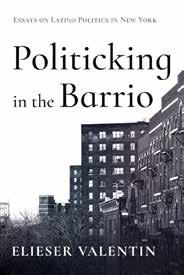
by ELIESER VALENTIN • EUGENE, OREGON | WIPF & STOCK PUBLISHERS
DESCRIPTION
This book offers an episodic view of Latino politics in New York from 2017 to 2025--a period of both dramatic political flux and unprecedented Latino demographic growth. It is episodic in that the book’s story derives from previously published thought pieces, in addition to some new material, on the elections, political figures, and social contexts of Latino politics in the largest city in the nation. While firmly rooted in Gotham’s unique political ecosystem, the analysis nevertheless sheds crucial light on the broader dynamics shaping Latino political life across the United States. For New York City presents a paradox that is echoed nationally: Latinos are now the largest ethnic voting bloc in the city, surpassing both African Americans and whites in raw registration numbers. Yet this demographic prominence has not necessarily translated into proportional political power. Furthermore, the forces of gentrification, redistricting, intra-ethnic divisions, and chronically low voter turnout all threaten Latino representation--not only in East Harlem and Bushwick, but also in cities like Los Angeles, Chicago, Houston, and Miami.
EDITORIAL REVIEWS
“With impressive insight growing out of decades of involvement in Latino political and cultural life, Valentin offers profound insights regarding and sharp analysis of the changing terrain of Latino political commitments and what it means for New York City and, by extension, the larger US. This is an important book, one that puts in graphic relief the changing nature of politics on a regional and national level. I encourage you to read it and reflect on its implications.” --Anthony B. Pinn, Agnes Cullen Arnold Distinguished Professor of Humanities, Rice University
“How timely! Politicking in the Barrio provides a keen description and analysis of Latino politics at a very micro level in the largest city in the country, con nombre y apellido, while tying those
Jimenez was violently arrested in front of her hysterical nine-yearold daughter, Wendy. Wendy’s trauma went viral as she cried inconsolably. (New York Times, March 25, 2026). They were put on a deportation flight immediately after the incident, which was recorded and it showed the child in hysterics. What lasting harm has Wendy experienced? The unlawful actions of ICE are unfolding in plain sight — before concerned citizens and national news reporters alike. Yet once immigrants are taken into custody, they are rendered virtually invisible, effectively “disappeared” from public view, as journalists and members of Congress are denied
| January 28, 2026 | 176 pages
developments to larger patterns at the national level during the first quarter of the twenty-first century. It highlights among other realities the still unrealized potential and complexities of the Latino vote, and the increase of women and generational change in political representation. ¡Muy bueno!”
--Carlos Vargas-Ramos, Director of Public Policy, External Relations, and Development, Center for Puerto Rican Studies, Hunter College, The City University of New York
ABOUT THE AUTHOR
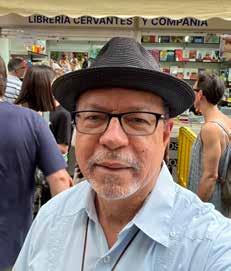
ELI VALENTIN is Assistant Dean of Graduate and Leadership Studies and Executive Director of Latino Initiatives at Virginia Union University. For over sixteen years, Valentin served as a political advisor to numerous elected officials across the nation. He is the editor of Sermons from the Latino/a Pulpit and the author of Politicking in the Barrio: Essays on Latino Politics in New York (Wipf and Stock). Valentin writes regular columns for City Limits, Gotham Gazette, and City and State largely focusing on Latino politics in New York City, and is a frequent guest political analyst at Univision NY and New York 1 News.
access to detention facilities. How can we, as a nation, fail to feel outrage or remain unmoved to protest policies and practices that in fact have resulted in the unlawful detention of people within our borders? Can we not imagine, as fellow human beings, the terror, danger, and cruelty that immigrants are enduring in the United States? If we tolerate the inhumane treatment of others in our midst, do we not risk losing something essential in ourselves — our own humanity? There remains political and civic actions we can take to resist this bigotry, cruelty, and selfish indifference by a government carrying out its will through thugs.

TRELLES
CABO ROJO, PR | EDITORA EDUCACIÓN EMERGENTE
SINOPSIS
Pese al capital big tech fascistoide que desgarra el planeta, siguen apareciendo espíritus transidos por el erotismo estético y el devenir místico de las hojas, el rocío, los cuerpos, el color, la palabra. Con ese cofre, su don, arriba este libro. Descritos por su autor, el pintor puertorriqueño Rafael Trelles, como prosa poética “entre el arrobo y la perplejidad”, los textos que conforman Fabulaciones cabalgan entre el microrrelato y el aforismo, la narración y la poesía, la expresión y el símbolo, la pintura y la escritura, para ofrecernos una oda a la imaginación en medio del desamparo. El libro comienza con “el huracán [que] llegó para quedarse” y cierra con la transición de la madre, cuya escena nos propone la muerte como “la señora de la luz”. Escritas entre 2016 –año de la imposición de la ley PROMESA y de la Junta de Control Fiscal– y 2024 –año de la reelección de la extrema derecha en la colonia y el imperio–, las fulguraciones que sostienes en las manos te sostendrán en la esperanza como un templo secular. Cada palabra y cada ilustración en este libro, engendros del pintor y, a la vez, vientres que lo dan a luz, se asoman al desvarío indómito de la
| Diciembre 2, 2025 | 102 páginas
creación, el mito y la adivinación como antídoto “más acá de mi nariz”, con la confianza de que “debajo de mis párpados eclosionan las estrellas”.
Con este libro, que forma parte de la serie Edades de Siddhartha, Editora Educación Emergente continúa proponiendo otras prosas y otros textos literarios de nuestro archipiélago.
SOBRE el AUTOR
RAFAEL TRELLES, artista multidisciplinario y gestor cultural. Trelles realiza pinturas, esculturas, instalaciones, performances, intervenciones urbanas y fotografía digital. Ha expuesto individual o colectivamente en Puerto Rico, Estados Unidos, América Latina y Europa. Tiene un Bachillerato en Artes Plásticas de la Universidad de Puerto Rico – Recinto de Río Piedras e hizo estudios posgraduados en la Universidad Autónoma de México. Durante las últimas tres décadas ha publicad artículos sobre arte puertorriqueño en catálogos, libros y revistas. En 2009, Terranova publicó Metamorfosis, acerca de su pintura. En el 2015 salió a la luz su primer poemario, El pez en llamas, bajo el sello de Publicaciones Gaviota. En 2022 Editora Educación Emergente publicó su cuento Los ojos de Juan Pantaleón. Es miembro de la Academia Puertorriqueña de la Lengua Española.
by MICHAEL STAUDENMAIER • CHAPEL HIILL,
NC | THE UNIVERSITY OF NORTH CAROLINA PRESS | April 28, 2026 | 236 pages
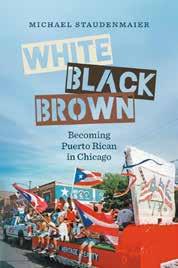
A portrait of the Puerto Rican community’s experience of racialization in Chicago
Facing persistent exploitation, discrimination, and marginalization in the second half of the twentieth century, generations of Puerto Rican organizers and activists drew on multiple competing versions of nationalism to challenge the racial order in Chicago, one of America’s most segregated cities. Initially, both supporters and opponents of Puerto Rican independence promoted the assimilation of fellow migrants as white citizens. The three-night-long Division Street Riots marked a fundamental pivot point in 1966, ending the pursuit of whiteness and opening the door to waves of nationalist militancy during the 1970s. By the 1980s and 1990s, Puerto Rican nationalists in Chicago had entered electoral politics, building a broader notion of Latinidad even as they softened its radical edges. Drawing on an extraordinary array of archival material, much of it previously inaccessible, Michael Staudenmaier highlights cultural and political projects profoundly informed by nationalist
sentiments, from beauty pageants and parades to protests and bombings to elections and legal battles. Revealing how nationalism became a key site of racial formation for Puerto Ricans in Chicago, White, Black, Brown shows how they understood themselves and demanded to be seen by their neighbors and the world.
AUTHOR
MICHAEL STAUDENMAIER is an independent historian and serves on the Board of Directors of Dr. Pedro Albizu Campos Puerto Rican High School in Chicago.
EDITORIAL REVIEWS
“Michael Staudenmaier’s emphasis on the historical peculiarities of how race, space, and place are linked makes a crucial and necessary addition to both Puerto Rican historiography and studies of Latinxs’ experience of racialization in the United States.”
—Marisol LeBrón, author of Policing Life and Death: Race, Violence, and Resistance in Puerto Rico
“An impressive work that defies any simplistic understanding of Puerto Rican racial politics. Staudenmaier’s innovative approach to race, nationalism, and identity highlights the plurality of Puerto Rican identities and contributes to important debates in Chicago and beyond.”—Michael Innis-Jiménez, author of Steel Barrio: The Great Mexican Migration to South Chicago, 1915–1940
SAN DIEGO, CA | PRNewswire - HISPANIC PR WIRE | 13 de marzo de 2026 -- El U.S. Postal Service (Servicio Postal de Estados Unidos)
llevó a cabo hoy una ceremonia por el primer día de emisión de sus nuevas estampillas de los Lowriders en la Logan Heights Library. Con esta emisión, el USPS celebra la cultura de los automóviles lowriders, que tiene sus raíces en las comunidades México-estadounidenses y chicanas de clase trabajadora en todo el suroeste de los Estados Unidos.
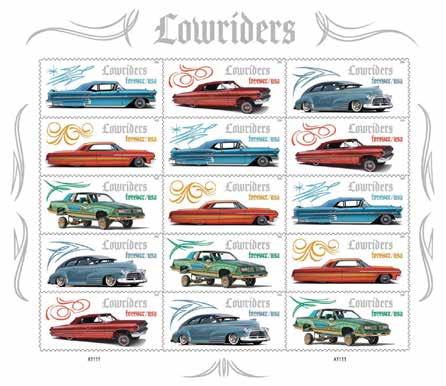
“Un lowrider es una obra maestra de ingeniería y arte, un lienzo de arte rodante. A menudo están decorados con murales que narran relatos sobre la familia, la fe y la historia”, señaló Gary Barksdale, el inspector postal principal del Servicio Postal, quien fue el funcionario encargado de la ceremonia. “La cultura lowrider consiste en crear un espacio para celebrar el orgullo, el sentido de pertenencia y construir una comunidad que siempre se apoye mutuamente”.
¿Qué es, precisamente, un lowrider? Es un automóvil personalizado equipado con ruedas más pequeñas que las de fábrica, o “rines”, preferiblemente con radios de alambre, que reducen su altura. Muchos incluyen deslumbrantes trabajos de pintura, tapicería de terciopelo arrugado y volantes con cadenas soldadas. Además, un sistema hidráulico especial permite que el conductor, con solo presionar un botón, suba y baje el chasis o realice trucos con el vehículo, tales como conducir sobre tres ruedas o dar saltos (“hopping”).
Los lowriders reflejan la imaginación, la destreza y el “ingenio chicano” del propietario, un rasgo asociado con el uso de un pensamiento poco convencional para resolver problemas. Con una cantidad considerable de tiempo, esfuerzo y gastos, un modelo de automóvil estadounidense antiguo puede transformarse en una obra maestra rodante única en su clase. Tradicionalmente, grupos de propietarios exhiben sus vehículos al conducir lentamente, o “cruise”, a lo largo de un corredor comercial en un vecindario o alrededor de un parque.
El movimiento “lowriding” cobró fuerza en la década de 1970, pero nació en el este de Los Ángeles y en las zonas fronterizas del suroeste en la década de 1940. La discriminación de la época provocó que algunos jóvenes chicanos se rebelaran y alardearan de sus diferencias. Al imitar a los “hipsters” afroestadounidenses del mundo del jazz, se vistieron con “zoot suits”, zapatos de dos tonos y sombreros de ala ancha, y se llamaron a sí mismos “pachucos”. Algunos de ellos bajaron el chasis de sus automóviles y se convirtieron en los primeros lowriders.
Durante el Movimiento Chicano de la década de 1960, la cultura lowrider se convirtió en una pequeña pero muy visible muestra de orgullo chicano en la lucha por la dignidad y el respeto propio. El automóvil era una declaración de su dueño: “Aquí estoy, soy alguien”. Los clubes de automóviles prosperaron, cada uno con su propia placa especial que los miembros exhibían en la ventana trasera de su vehículo. La mayoría eran organizaciones exclusivamente masculinas, pero a finales de la década de 1970 las mujeres también comenzaron sus propios clubes, y hoy en día el lowriding es una tradición familiar. Los clubes continúan representando el sentido de pertenencia y el orgullo, y sus miembros ayudan a recaudar fondos para diversas causas mientras exhiben sus lowriders en espectáculos de automóviles y desfiles.
La cultura lowrider ha captado la atención de personas en todo el mundo. Se han formado clubes en Japón y en muchos otros países. En el Smithsonian National Museum of American History, una magnífica maqueta de un lowrider deja boquiabiertos a los visitantes cuando visitan la exposición del tercer piso.
Diseño de la estampilla. Con el deseo de mostrar diferentes estilos, épocas y colores de los lowriders en estas estampillas, Antonio Alcalá, director de arte del USPS, descubrió que la fotografía sería la mejor manera de capturar la esencia de la cultura lowrider. “La fotografía ayuda a honrar el arduo trabajo que conlleva la creación de cada automóvil”, explicó. “El uso de ilustraciones posiblemente se trataría más de la imaginación del artista que de los lowriders reales”. Estas estampillas presentan fotografías de Philip Gordon de “Let the Good Times Roll/Soy Como Soy”, un Chevrolet Fleetline azul de 1946, y de “Pocket Change”, un Oldsmobile Cutlass Supreme verde de 1987; y fotografías de Humberto “Beto” Mendoza de “Eight Figures”, un Chevrolet Impala azul de 1958, “The Golden Rose”, un Chevrolet Impala naranja de 1964, y “El Rey”, un Chevrolet Impala rojo de 1963.
Para mostrar los automóviles con el mayor detalle posible, Alcalá hizo que estas estampillas fueran un tercio más anchas que el tamaño conmemorativo habitual. Otros elementos de diseño rinden un mayor tributo a la cultura lowrider: la tipografía de estilo gótico evoca las letras de cromo brillante que se encuentran en muchos automóviles para mostrar su afiliación a un club en particular. El “pinstriping” (fileteado) personalizado de Danny Alvarado en la esquina de cada estampilla y en el borde, evoca la decoración detallada de los lowriders más famosos.
SPINGFIELD, MA | SPRINGFIELD PUBLIC SCHOOLS | March 13, 2026 – The Massachusetts Department of Elementary and Secondary Education (DESE) recently released 2025 graduation and dropout data, and Springfield Public Schools reports improvement in both areas as the district continues its focused efforts to strengthen student outcomes.
According to data released by DESE, 82 percent of Springfield Public Schools students in the Class of 2025 graduated within four years, an increase of 3.4 percentage points from the previous year. Additionally, the district’s dropout rate declined to 3.3 percent, a decrease of 0.6 percentage points from the previous year.
Superintendent of Schools Dr. Sonia Dinnall said the results show early signs of progress while underscoring that more work remains ahead.
“When I stepped into this role, the district’s graduation rate stood at 78.6,” Dinnall said. “One of the first steps I took was directing principals to submit and present strategic, results-driven plans outlining how they would improve graduation outcomes for all graduating students, beginning with the Class of 2025. This year’s data suggests those efforts are beginning to move us in the right direction, but we know we are not where we need to be yet. Our next step is to drill deeper into the data and strengthen the strategies that will help more students cross the graduation stage.”
Dinnall added that despite the gains, Springfield Public Schools remain below the state average four-year graduation rate of 89.3 “That gap reinforces the need for continued urgency and targeted action,” she said.
Mayor Domenic J. Sarno stated: “We are heading in the right direction when it comes to graduation and drop-out rates following a small dip in the wake of COVID-19. When I took over as mayor, our high school graduation rate was hovering around 50 percent,
and our dropout rate was as high as 14 percent – just plain unacceptable. We turned it around and brought the graduation rates up as high as 86 percent but saw a small drop again with the world-wide COVID-19 pandemic. Now, we continue to climb toward meeting and exceeding the state average. This is great news, though, there is still more to do. I commend the leadership of Superintendent Dinnall and her continued efforts to support all our students. This positive improvement is a testament to all our partners from administration to teachers, staff, students, families, and our business community. Thank you and congratulations to all. To our students, we believe in you and will continue investing in you and your bright futures.”

“The data makes clear that sustained focus is still required as we collectively formulate a District Strategic Growth Plan that will serve as our roadmap forward,” said Dinnall. “We will continue drilling down into the data at the school level to identify what is working, where barriers still exist, and how we can better support students on the path to graduation.”
Dinnall pointed out that Springfield Central High School, The Springfield Conservatory of the Arts, Roger L. Putnam VocationalTechnical Academy, The Springfield Renaissance School, and John. J. Duggan Academy have four-year graduation rates of 90 percent or higher.
“Our goal is clear,” Dinnall said. “Every student who enters Springfield Public Schools deserves the support needed to cross the graduation stage and move confidently into the next chapter of their lives.”
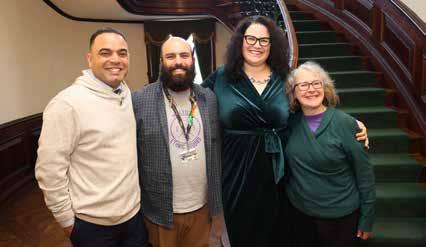
HOLYOKE, MA | HOLYOKE COMMUNITY COLLEGE | March 17, 2026 – Two Holyoke educators were honored March 9 by the city and state for their work engaging students in civic learning.
During a Civics Learning Week ceremony at Wistariahurst Museum, Vanessa Martinez, Holyoke Community College professor of anthropology, and Nicholas Cream, an ethnic studies and history teacher at Dean Technical High School, received proclamations recognizing their work from the mayor, the state House of Representatives, and the state Senate.
“We’re here today to honor two civic leaders who have gone far and beyond to inspire their students to think critically, engage respectfully with different perspectives, and understand their roles as active citizens,” said Wistariahurst Director Morgan Seiler. “Civic education is about empowering students to participate, lead, and contribute to the communities they call home. Teachers like Vanessa and Nick make that possible by
bringing these lessons to life and showing their students their voices truly matter.”
continued on next page
HOLYOKE, MA | HOLYOKE COMMUNITY COLLEGE | March 24, 2026 — Former state Rep. Aaron Vega, an HCC alum and now the president and CEO of the Western Mass Economic Development Council, has been appointed to the Holyoke Community College Board of Trustees by Gov. Maura Healey.
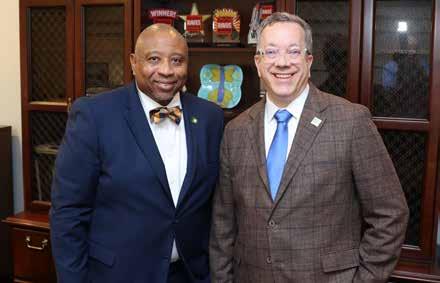
HCC PRESIDENT GEORGE TIMMONS and AARON VEGA
Until the end of 2025, Vega, a Holyoke resident and city native, was the director of the Office of Planning and Economic Development for the City of Holyoke. From 2013 to 2021, he represented the 5th Hampden District in the Massachusetts House of Representatives. He started his career in public service in Holyoke as a two-term city councilor at large. His five-year term runs until March 2031.
No stranger to HCC, Vega is an alum from the class of 1990 and received a distinguished alumni award from the college in 2015. He is the son of the late Carlos Vega, the Holyoke social activist and co-founder of the nonprofit Nueva Esperanza, himself a 1971 graduate of HCC who was honored with a Distinguished Service Award at Commencement in 2004. Vega’s daughter, Courtney Joaquin, graduated from HCC in 2018. Vega’s work for Holyoke as a city councilor and director of economic development has also kept him in close contact with the college through the years.
“HCC is one of my favorite places in Holyoke, absolutely,” said Vega. “My dad was such a proponent of education and public education, and then as a state rep I served on the higher education committee, supporting HCC, so joining the board just makes sense.”
One of his earliest memories of HCC is tagging along with his mother to class when he was a young child.
“My mom came here, my dad came here, and I came here as a little kid,” he said. “That really stuck with me.”
After HCC, Vega transferred to Keene State University, where he earned bachelor’s degrees in psychology and film studies. He spent the first part of his career as a documentary filmmaker, working for Ken Burns’ Florentine Studios.
He and his wife, Debra, are the owners of Vega Yoga & Movement Arts in Holyoke. Aside from the HCC Board of Trustees, Vega serves on the boards of the Community Foundation of Western Massachusetts, Mass Humanities, and New England Public Media, and is chair of the Carlos Vega Fund for Social Justice.
Martinez, Ph.D., a health anthropologist, is co-founder of the Springfield-based Women of Color Health Equity Collective and coordinator of community-based learning at HCC. In 2023, Martinez’s students began collecting stories from Holyoke residents for two oral history projects, one on the COVID-19 pandemic and another that examines living conditions in the city and their impact on public health. Those interviews have become part of the Wistariahurst Museum’s permanent archives, and those projects continue.
“That was the beginning,” said Martinez, who lives in Holyoke. “Even my 100 level classes are now involved. They do interviews, they learn about oral history, they develop research skills. I feel so blessed to be able to continue this project and show students the importance of working in their communities and feeling their work will live beyond them.”
Cream, who lives in Westfield, is president of the Holyoke Teachers Association and an advocate for civic participation and for teachers striving to improve education in Holyoke.
“Our nation’s long-standing audacious experiment in selfgovernance requires a populace with an understanding of the nation’s laws and government, the skills for discussion and working together across differences, and a commitment to civic strength,” said Mayor Joshua Garcia. “Educators play a central role in the essential daily work to support young people in the development of an informed and empowered civic identity.”
State Rep. Patricia Duffy of Holyoke presented Martinez and Cream with proclamations from the House and Senate.
“Being in public office, I know how important it is that we start early to get our kids engaged and really know what’s going on in this way too complicated world,” said Duffy. “That’s why it’s so important that we’re honoring Nick Cream and Vanessa Martinez, because of both how you teach and how you model for your students that civic life is not just what you learn in the classroom but how you engage in the greater community, and Holyoke is all the better for it.”

Pruebe lo que preparan nuestros estudiantes, la faculta y los chefs.
Visite nuestras modernas cocinas.
Participe en el “Food Bash Bingo” y gane un premio.
Descubra las opciones de Artes Culinarias y Hospitalidad de HCC:
• Programas de títulos académicos y certificados
• Oportunidades de capacitación y desarrollo laboral
• Clases de enriquecimiento personal
4 – 6 p.m.
HCC MGM Culinary Arts Institute 164 Race Street, Holyoke, MA