THE EDGE
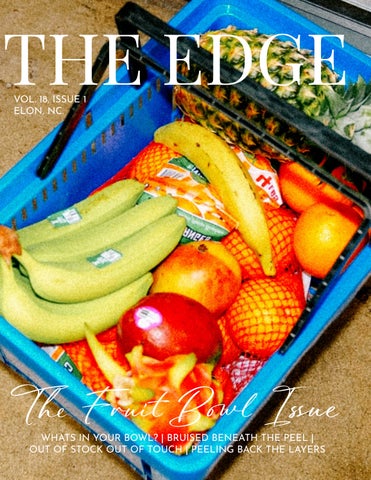
VOL. 18, ISSUE 1 ELON, NC. T Fruit B l Issue
WHATS IN YOUR BOWL? | BRUISED BENEATH THE PEEL | OUT OF STOCK OUT OF TOUCH | PEELING BACK THE LAYERS
LETTER FROM THE Edit s
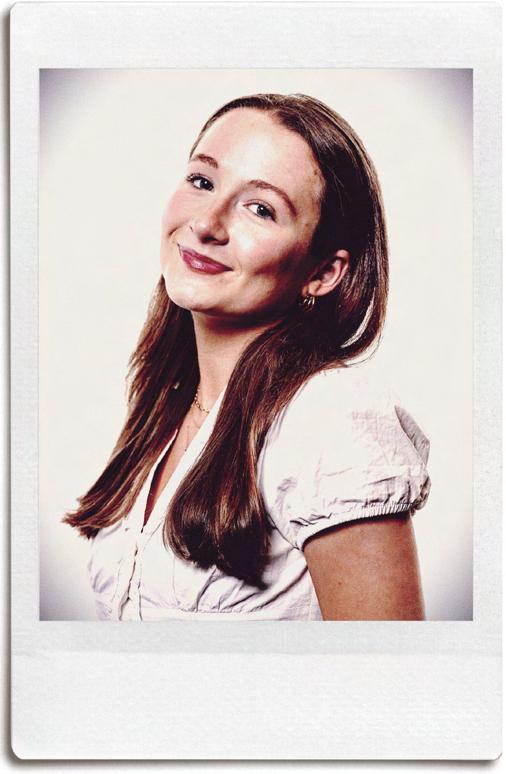
Dear Reader,
How many ways are there to paint a simple bowl of fruit? When a painter sits down to create a still life, they consider an array of combinations, hues and shapes—all within their creative power. In many ways, the creation of a magazine follows that same process: selecting a motif and weaving it through every corner of the issue, allowing it to be interpreted di erently on every page. It’s the best kind of challenge.
There is something deeply inspiring about the magic of fruits: their vibrant patterns, the seeds beneath the surface that grow more complex the closer you look and the shock of their avors. It’s no coincidence that fruit has served as a universal symbol across religion, literature, music and advertisements.
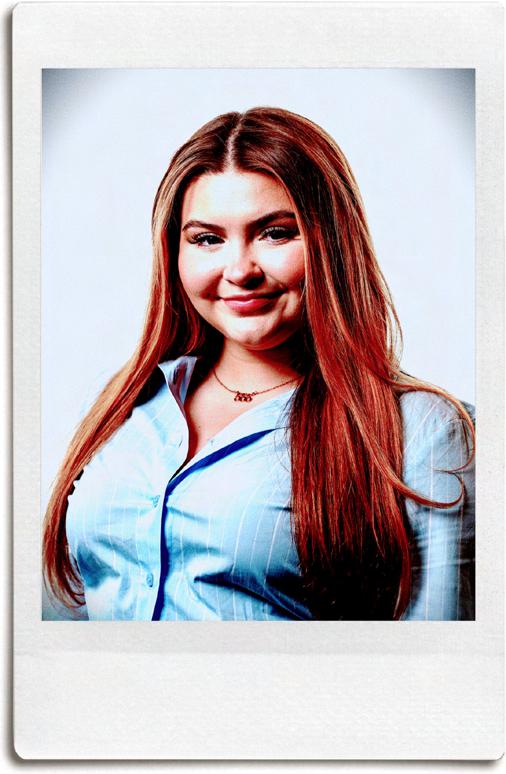
Fruit is humor—you can slip on a banana peel or use peaches and cherries for sneaky innuendos. We use apples to symbolize doctors and teachers. We nd deep meaning in poems about oranges. We blast music with catchy whooks about watermelons and kiwis. Fruits of our labor represent our hard work. Fruit is temptation. Fruit is fertility. Fruit is luxury. Fruit is purity. Fruit is everywhere, far beyond the grocery aisles and with meanings that are much more than literal.
When we introduced this theme to our sta , we weren’t sure how it would be received. On the surface, it seemed simple and maybe a little unserious. But once we began brainstorming where this “bowl of fruit” could lead us, it wasn’t long until we ended up with a colorful, over owing and juicy collection of ideas, from the photos to the page designs and every written word in between.
To work with such a diverse team of creatives on a project like this has been a blessing. Much like the bowl of fruit itself, our sta brings a variety of avors and perspectives to these pages, which is exactly what makes this issue so valuable. Our mission was to peel back the layers of creativity Elon has to o er in ways you may have never considered.
Beneath the bold and colorful aesthetic, we explore the “seeds” of the student experience. From ego deaths to the vibrant world of drag queens and curated playlists, this issue navigates the ups and downs of the modern social landscape. It’s about how these experiences, as di erent as they may be, allow room for us to grow into the most fruitful versions of ourselves.
Throughout these pages, you’ll see the many ways fruit can be interpreted and the vibrancy it brings
to our lives. ere is so much that de nes a “fruitful” life, and we have only scratched the surface.
Consider this just a taste of the passion and creativity we have found in each other. We are so proud of this issue and can’t wait for you to join us on this journey.
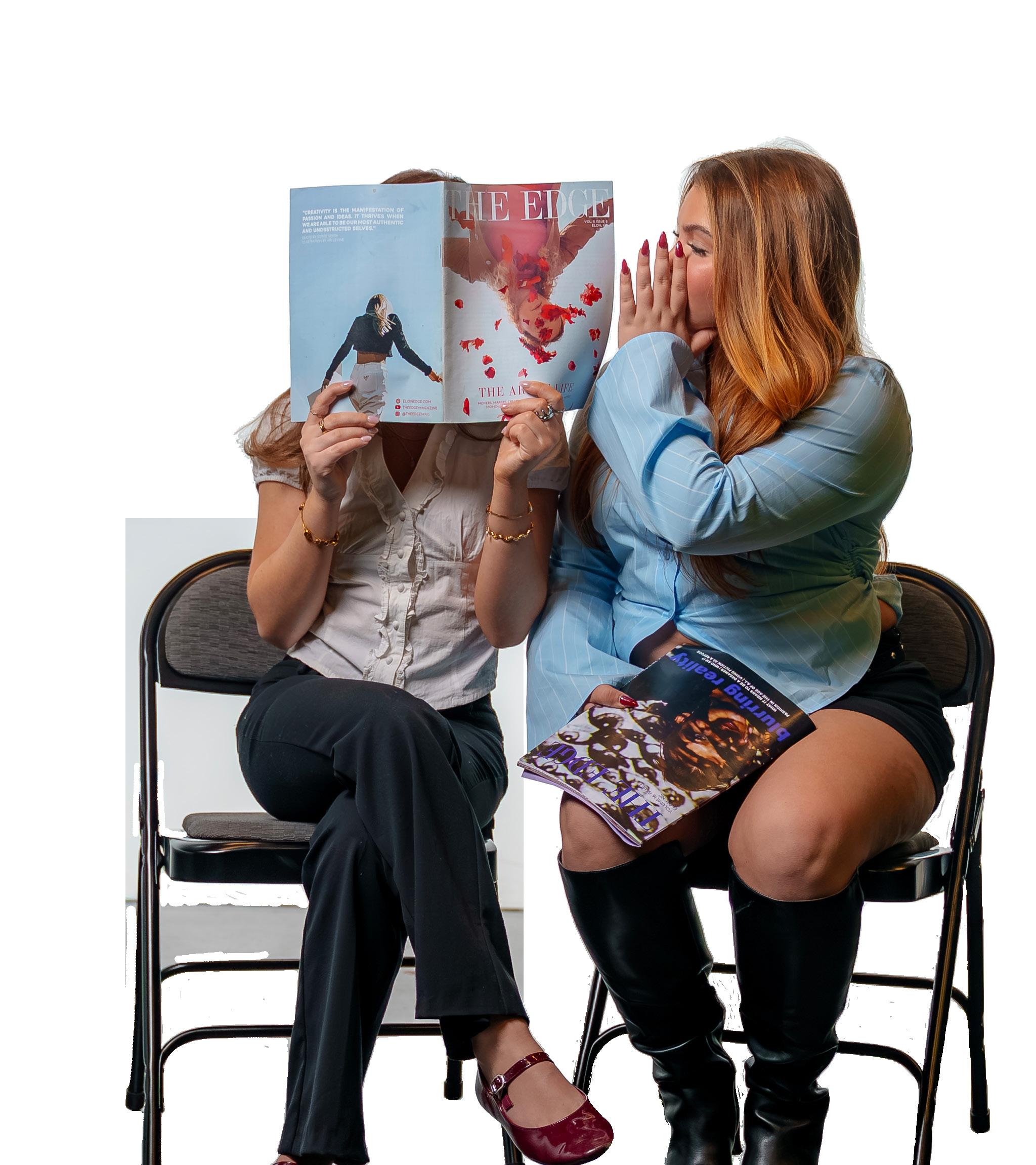
To a fruitful season,
Lyda C gr e d Emma Citro
Co-Editors-in-Chief
THE EDGE
Creative Director of Design
Clara Truebner
Designers
Lili Depaulo
Rose Baroni
Lily Doggett
Elise Whitaker
Paige Millard
Section Editors
Editors-in-Chief
Emma Citro and Lyda Cosgrove
Executive Copy Chief
Olivia Grady
Creative Director of Photography Nika Shumilov
Beauty + Wellness: Caroline Bentley
Lifestyle: Isabel Steckman
Travel: Nora Kelleher
Features: Rachel Levine
Fashion Editor: Emily Stabell
Photography
Evan Cooper
Annablake Shotwell
Ethan Wu
Videography
Barbara Duran
Finance Director
Emma Saoud
Podcast Managers
Taylor Radney
Sydney Grossbard
Sta Writers
Assistant Copy Chiefs
Amanda Francis
Sheehan Bradshaw
Evelyn Iwanicki
Styling
Reily Grace Wilson
Models
Luca Sever
Model Larissa Borg
Model Helene Orben
Analytics
Director: Lyla Khalid
Caroline Carpenter
Kinsey Quitter
Social Media
Director: Skylar Zimmerly
Blair Mitchell
Amy Palmer
Chloe Schuster
Lydia Highbarger
Lauren Siskovic
Taylor Radney, Sydney Grossbard, Blair Mitchell, Chloe Prince, Emma Saoud, Elise Whitaker, Estella Hoye, Avery Ferguson, Sam Pascale, Annablake Shotwell, Jordyn Forni, Kayla Boyette
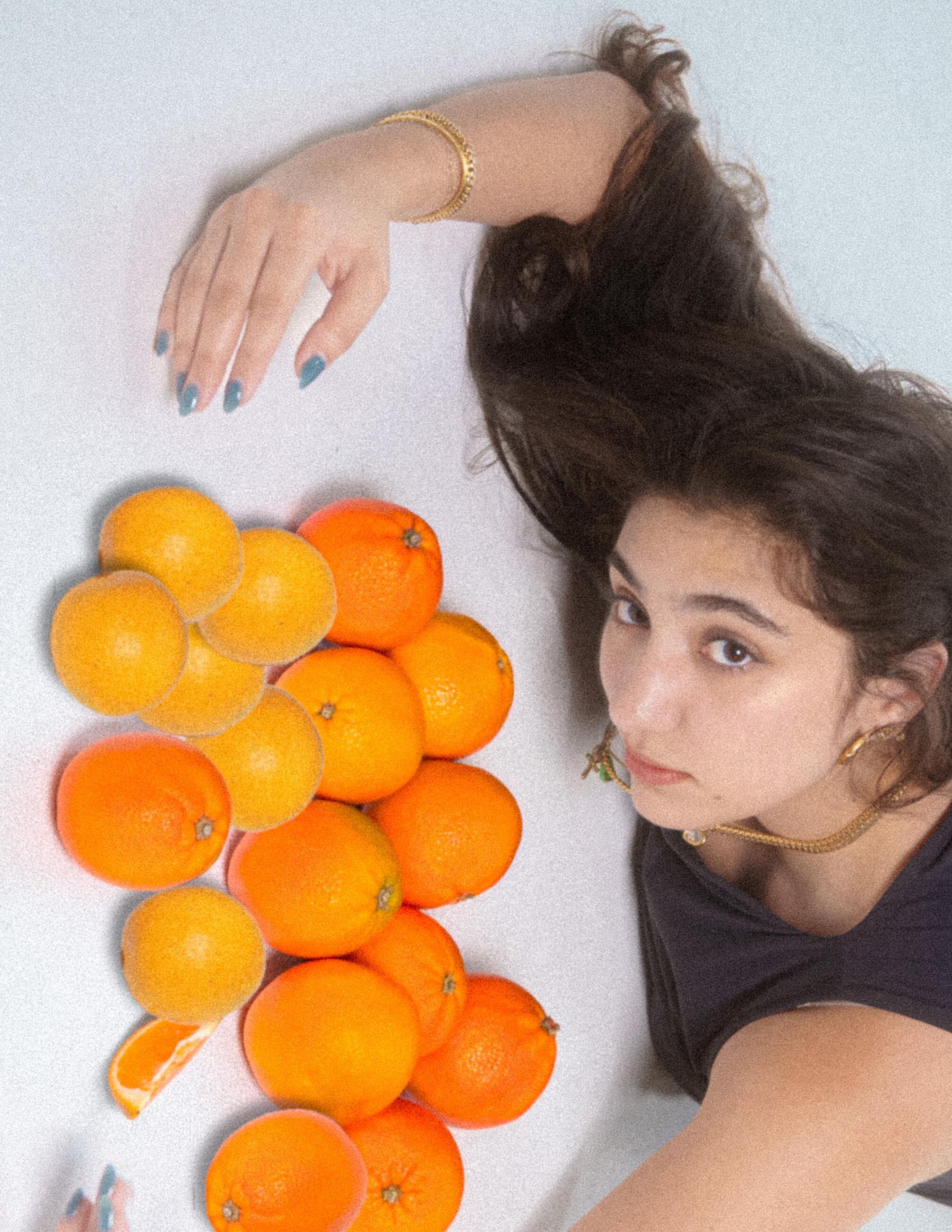
what’sbowl? in your
the personali uit theory
EMMA SAOUD
Afruit bowl is never just one thing, it is a mix of di erent fruits, each with its own avor and personality. Some are sweet, others sour or a little bitter, but together they create something whole. In the same way, we are not de ned by just one version of ourselves. Our personalities are made up of different sides that grow and reveal themselves over time. e personality fruit theory captures this idea, suggesting that we all carry di erent “fruits” within us, each representing a part of who we are. It shows how we all have a mix of traits, and learn to grow within ourselves and each other over time. It exhibits that identity is unique like a fruit bowl, lled with di erent types of fruit rather than a single, unchanging fruit.
e personality fruit theory highlights that who we are is not xed, but constantly evolving throughout our lives. Di erent “fruits” we carry over time
shape our personalities into the future person we want to become. Each fruit represents a di erent version of ourselves. Some parts of us are sweet and easy to share, while others are deeper and more complex. As we grow, our bowl lls with new experiences and challenges, adding new layers to who we are. Some pieces or phases may feel bruised, but they still belong because they re ect moments that shape us. e beauty of this theory is that nothing is ever permanent. We are constantly learning how to balance the di erent parts of ourselves into something whole. So instead of trying to be one thing, personality fruit theory invites us to embrace everything in our bowl.
is theory allows each fruit to represent a di erent side of who we are, creating a mix that is constantly evolving. Some people move through life like strawberries, sweet, social and easy to be around. While others are more like peaches, so , comforting and emotionally open. ere are moments when we feel like lemons, a little more bold, more guarded and o en misunderstood; other times when we feel like cherries, delicate and in the process of growing into something new. We can nd ourselves in a green apple phase, still guring things out and not quite settled, before stepping into a mango energy, con dent, vibrant and unafraid to be seen. Occasionally, we are like grapes or oranges, adaptable, balanced and steady. e beauty of it all is that we are never just one. We are a mix, between sweet, con dent and everything in between as we continue to grow. And maybe the point is not to choose one, but to recognize that every part has a place.
DESIGN | ELISE WHITAKER
PHOTO | ANNABLAKE SHOTWELL
A fruit bowl starts out empty, but little by little it lls. roughout your life, you add to it and take things away, yet the bowl itself always remains. It becomes a re ection of your life, what you choose to hold onto and what you decide to let go of. ere are moments when your bowl feels full of vibrant colorful fruit, and others when it feels empty or lled with things that no longer serve you. At times you may lean into one part of yourself more than others. You may feel like a mango, confident and full of energy, but other times you feel more like a green apple, more reserved and still nding your place. Neither of these moments de ne your worth. ey are simply di erent pieces of you showing up at di erent times.
People o en try to show only the most “perfect” fruit, but real identity is messier than that. On social media it is easy to compare your bowl to someone else’s. You might feel like everyone else is a glowing peach or a perfect cherry, while you feel more like a bruised banana or an overripe plum. But what you are seeing is only one moment, one version. In reality no one is just one fruit all the time. e person who seems so and sweet might also have days where they feel unmotivated and alone. The one who seems confident might feel small in certain rooms, like a blueberry.
Fruit ripens and eventually rots, but even that has purpose. It makes space for something new to grow. In the same way the parts of ourselves that feel uncertain or out of place o en lead to the most growth. You are not meant to stay one version of yourself forever. Growing into who you are comes with change and cult moments. In those moments, it can feel like everything around you is rotting, and that you are too. What you cannot see is the cherry tree just about
A bowl with only one fruit would be boring. No one is just one fruit. We are all a mix of emotions and experiences that change over time, and that variety is what makes identity so interesting. You might nd yourself in a room full of apples feeling like you need to t in, losing sight of the fact that you are a peach. It is okay to feel out of place in spaces where your avor is not appreciated. at does not take away from your worth. Somewhere else your presence will feel natural, and exactly right.
Fruits will come and go, ripen and fade, and new ones will take their place. e beauty is not in having a perfect bowl, but in allowing it to change and trusting that every version of it still belongs to you.
Change is not something to fear, it is something to cherish and hold sacred. No two fruit bowls will ever look the same, and that is exactly the point. Every phase of your life is still a version of you, each one adding vsomething new. Life is about taking those moments, even the darkest ones, and shaping them into the person you are becoming. So maybe it is not about having the “perfect” bowl, it is about learning how to love what is already in it.
PERFECT having the about not it’s bowl

the Heard thru thru grapevine the grapevine Heard
EMILY STABELL
Music connects us all through all walks of life. Having a comfort artist or song is something that we can all relate to, regardless of how devoted you might be to music. For his over 71 million monthly Spotify listeners, that comfort is in Harry Styles. Not because he’s a three-time Grammy Award winner, not because he was part of the biggest boy band of all time, One Direction or because of his strikingly good looks. I, one of his 71 million monthly listeners since 2018, consider him to be my comfort artist because of his lyrics, his calming persona and his philanthropic work.
During his “Love On Tour” shows from 2021-2023, Styles raised over $6.5 million for global charities. His 2026 “Together, Together” tour supports grassroots music, refugees and voting, including a £1 ticket levy for UK small music venues. Best known for his “Treat People With Kindness” mantra, Styles never falters to spread love, no matter what corner of the Earth he’s on. When it comes to fruit motifs in
pop culture, Styles is an expert in all-things citrus and berry, with four songs dedicated to fruit and has widely used it as part of his branding, music videos and photoshoots throughout his career. Fruit works so well for Styles’ brand because it’s straight-up fun and unapologetically sexy. His bright, juicy, colorful and quirky style has made a lasting impression on fans worldwide. Let’s dive into the last nine years of his solo career, fruit innuendos and all.
Harry Styles
On May 12, 2017, Harry Styles released his rst solo album. Seen as his more rock-inspired album out of the four, this 10 track album is lled with themes of women and relationships. Its lead single, Sign of the Times, has 2 billion streams on Spotify. is album got a rating of four out of ve stars from Rolling Stone, a solid ranking for a brave new project from Styles at the time. His song Kiwi is the closest thing to a rock song his fans have gotten so far. It never fails to hype the crowd up at a show, and is considered one of his best performances…the most memorable of his performances being at the Victoria’s Secret Fashion Show in 2017.
Mixed with the pure adrenaline of the idea of Styles singing that song on stage with models and the fresh respect he brought for the girls, it’s no surprise fans are still raving about it years later. Fans took the bit a little too far at his show in London in October of 2017, when they threw actual kiwis at him on stage during a performance. Styles slipped on one of the fruits and a UK supermarket began to ban the sale of kiwis to customers under 25 to protect Harry. Good to see the system still works.
FLine ine
A er his attention-grabbing solo release in 2017, Fine Line kept fans’ expectations high. To no one’s surprise, he delivered another amazing album on December 13, 2019. is 12 track album revolves around themes of breakups, happiness, sex and sadness. Supported by seven singles, Lights Up , Adore You , Falling , Watermelon Sugar , Golden , and Treat People With Kindness , the album won Best Pop Vocal Album at the 2021 Grammy Awards. Also receiving a four out of ve stars rating from Rolling Stone, one thing seems to stay the same. Watermelon Sugar broke the mold, winning him his rst Grammy for Best Pop Solo Performance, where Styles performed in a black leather suit and a green feather boa. e song’s music video, which was “dedicated to touching,” featured Styles enjoying watermelon with many, many friends. Cherry, a cult-classic from the album complete with a voicemail message allegedly from his ex-girlfriend, Camille Rowe where she speaks in French.
Coucou ! Tu dors ? Oh, j’suis désolée...
Bah non... Nan, c’est pas important... Bon allez... On a été à la plage, et maintenant on— Parfait ! Harry
Harry’s House
His longest album to date, this 13 track album released on May 20, 2022 scored two of his three 2023 Grammy wins, winning Best Pop Vocal Album and Album of the Year. Rolling Stone gave this album four out of five stars, following in the footsteps of the previous albums. Not quite fruit, but in a similar edible realm, the album’s opener, Music For A Sushi Restaurant’s music video features Styles as a mermaid… a fever-dream-esque video but a perfect visual for the album, the song gets you up on your feet to dance and sing. Grapejuice serves as the fruit representative on the album, a song lled with a twirly, glass-of-wine in the a ernoon vibe, even though it isn’t the fan favorite o the album with it being the third-lowest streamed on the album, it certainly has a special place in my heart.
A er a four-year drought, Styles came back on March 6, 2026, with 12 tracks and 63 million streams on Spotify, making it the biggest debut of the year. Exploring themes of personal growth, appreciation and devotion, Styles makes his return to music having grown in more ways than one. Earning four out of ve stars from Rolling Stone, fans and music critics seem to be split. e album sounds sonically di erent from his previous three, with lots of disco fusion and upbeat tempos as opposed to his ballads of the past. But the album doesn’t shy away from the themes from his past work, the approach is just di erent this time. It makes his upcoming 2026 tour a highly anticipated event. Although there is discourse, one thing is for certain, Harry can deliver a four out of ve star worthy album every time (although I think they’re all in nity/5). Although there’s no fruit song on this album… (Harry, blink twice if you have a deluxe album full of fruit songs), there are a lot of references to tomatoes in Harry’s promotional photoshoot of the album and one of the exclusive limited edition vinyl options being red and named ‘Tomato.’ e others were a gray smoky vinyl named ‘Smoke Machine’ and a shiny pink vinyl named ‘Kiss.’ Fans (and I) are manifesting a new fruit song on the next record.
A man of many talents; music, lm and philanthropy, Styles has built himself a brand worth investing in for as long as many of the pop icons of our generation have. No fangirl will look at her fruitbowl the same a er hearing his songs. I know I can’t! Fruit has o en served as a motif throughout artistic history; all the way from forbidden fruit in the garden of Eden, poison apples in fairytales and serving many double meanings in sex and pleasure. Styles has rede ned what it means to brand yourself around something as simple as fruit and nd it as a symbol of recognition in modern pop culture. If you’re still reading, nd yourself a musician, an actor or philanthropist that you admire. And if you’re still reading, don’t forget to Treat People With Kindness.
Kiss the Time ODiscoccasionally All
a recipe g u ide for fr u i t in sp i red cockta il s
LYDA COSGROVE l EDITOR-IN-CHIEF
I’m all for a cosmo to kick o the night or a mimosa for a midday pick-me-up, but even the fan favorites can get repetitive a er a while. If you’ve been looking for new go-to recipes to mix things up, look no further.
Whether you’re craving something sweet and zzy for a memorable girls night in or a chic new pairing to try on your charcuterie board (accompanied by a glass of wine, of course), there’s a little bit of everything. For every season, occasion and excuse to celebrate, pick your fruit mood and sip away.
For when you’re feeling fancy...
A *simpli ed* French 75: While a traditional French 75 uses cognac for a richer body and sweetened with a simple syrup. Of course, we all know the aesthetic is really all in the glass you use. So pull out your best champagne utes or coupe glasses for the maximum chic experience.
What you need:
• 1 oz gin
• 1/2 oz lemon juice
• 1/2 oz simple syrup
• 2-3 oz champange or prosecco
How to make:
1. Fill a shaker with ice and add gin, lemon juice & simple syrup.
2. Shake until chilled.
3. Strain into your glass, like a ute or coupe glass.
4. Top with champange for zz.
For when you need a vacation...
Coconut Rum Punch: Instantly transport yourself to the beach without even having to leave your kitchen… and only three ingredients.
What you need:
• 2 oz coconut rum (Malibu for a sweeter edge, Bacardi for a cleaner, stronger rum avor)
• 3 oz pineapple juice
• 2 oz orange juice
• Ice
How to make:
1. Fill a glass with ice.
2. Pour in the coconut rum, pineapple juice & orange juice.
3. Stir gently to combine.
To elevate add a small splash of grenadine for a subtle gradient e ect or garnish with a lime wedge or cherry for an extra tropical touch!
To enjoy while you’re getting ready...
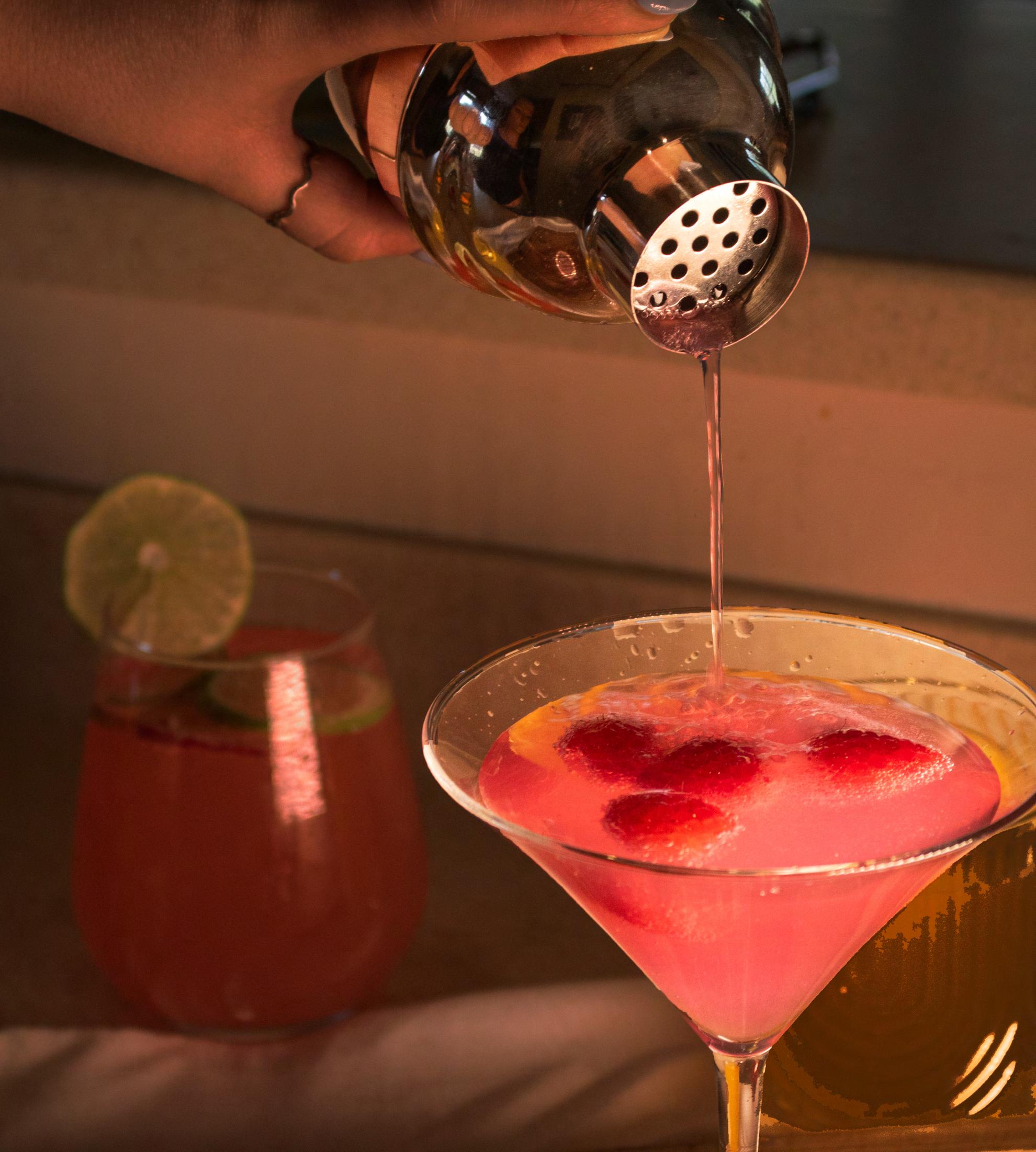
Raspberry Gin Spritz: Bright, subtly tart and just a touch of e ervescence, consider this your new favorite bev to start out your night. e raspberry-central recipe is perfectly polished without the complications.
What you need:
• 1 oz gin
• 1 oz raspberry purée (or muddled fresh raspberries)
• 1/2 oz lemon juice
• 2 oz soda water
• Ice
How to make:
1. Add muddled raspberries (or purée), lemon juice & simple syrup to a shaker.
2. Add gin and ice & shake until chilled.
3. Strain into a glass lled with fresh ice.
4. Top with soda water and let it gently li the color.
For a late-night indulgence...
Cherry Red Wine Float: For a deep, slightly moody drink that feels like a treat without being too complicated, you can easily mix up this cocktail for that “one last thing before bed” vibe.
What you need:
• 1 cup dark charries (fresh or frozen)
• 1-2 oz simple syrup or honey
• Smooth red wine (merlot or cabernet)
• Splash of sparkling water
How to make:
1. Muddle cherries & sweetner in a glass.
2. Add ice.
3. Pour over red wine.
4. Top with a splash of sparkling water for added lightness.
5. Garnish with a cherry for a richly aesthetic touch.
For a unique twist on a classic...
Strawberry Lime Moscow Mule: You can never wrong with a Moscow Mule, but here’s a bright, fruit-forward version to bring out at your next get-together. A little sweet, a little zingy and just spicy enough to keep things interesting, this is your go-to when you want something familiar with a brighter, fruit-forward upgrade.
What you need:
• 3-4 fresh strawberries (or 1/4 cup frozen)
• 1 oz fresh lime juice (about 1/2 lime)
• 1.5 oz vodka
• 4-6 oz ginger beer
• Ice
• Fresh mint leaves (optional, for garnish)
How to make:
1. In a glass or small shaker, lightly muddle the strawberries to release their juice.
2. Pour in the fresh lime juice & vodka. Stir or shake brie y to combine.
3. Add ice
4. Top with ginger beer.
5. For added garnish, use a sprig of fresh mint.
For all things tart...
Blood Orange Paloma: Citrusy with a slightly bitter edge, this twist on a classic paloma leans just tart enough to feel elevated while still going down easy.
What you need:
• 2 oz tequila
• 3 oz blood orange juice
• 1.5 oz grapefruit juice
• 0.5 oz lime juice
• 1 oz agave nectar or simple syrup
• Splash of club soda
How to make:
1. Rim a rocks glas with salt or Tajin. Fill with ice.
2. Shake tequila, blood orange juice, grapefruit juice, lime juice & simple syrup in a shaker with ice.
3. Shake well and strain into a glass.
4. Top with soda water and garnish with a fresh slice of blood orange.
Bruised benea
who is always organized. It made me feel needed and trusted. I took pride in always being that person. Over time, it became part of my identity. I became an organized person, a reliable friend, the person who always gures it out.
It’s like being the bright shiny apple that everyone reaches for rst because it looks perfect.
e more I became dependable, the more others around me expected it, though not necessarily in a demanding way. Others just assume I will always follow through; I’ll never drop the ball. I’ll show up ready and positive every day, so I did. I started saying yes and adding commitments to my schedule that already had no room. I stayed up to date and woke up early to nish projects and requested work. I took on more things because I knew I could handle them. Little did I know that the pressure I feel to be perfect can't magically disappear because I add another thing to my calendar.
Fruit doesn't bruise all at once — it builds up over time and goes unnoticed until there is a bruised, so spot beneath the surface but from the outside, nothing has changed.
P u Builds Benea the Peel
Burnout that Sti Looks Like Succe Bruises don't Mean
Everyone thinks that burnout is always obvious to spot. at burnout looks like falling apart, missing deadlines, and shutting down. When I burn out, it’s silent. Sometimes it looks like I’m answering emails, showing up to meetings and turning in assignments, all with a smile on my face. From the outside, everything looks perfect.
Just like a piece of fruit, until you cut it open and realize that there are bruises and imperfections underneath. Burnout can look like someone who is functioning ne and is still dependable. And burnout can be exhausting in ways people don’t notice. Sometimes it is constantly checking your phone all day and answering emails and texts the second they come in, so no one thinks you are falling behind. Its saying “I’m tired” instead of saying I feel drained and taking a break. Its not always visible, it can be negotiating with yourself just to get through the day. And from the outside, it looks like you have it together.
e Fruit Bowl You Surround You elf W ith
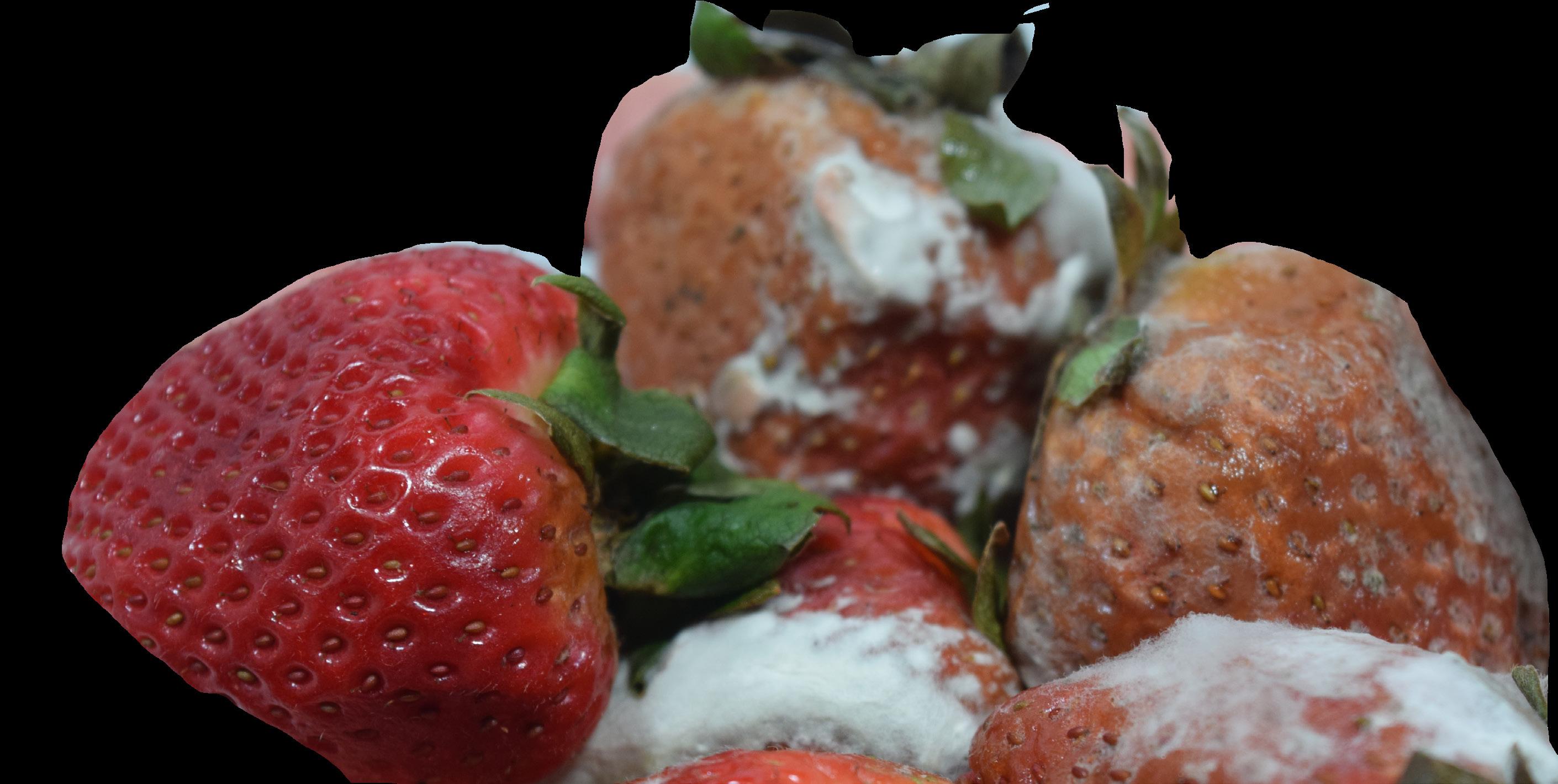
e thing about fruit is that it doesn’t exist in isolation; what it sits next to matters. If you’ve ever opened a container of strawberries, you know how quickly one moldy strawberry can spread. It doesn’t stay contained, just slowly grows, a ecting everything around it.
The same thing happens with people. If you surround yourself with people who are unmotivated, who don’t care, who settle for less, that energy doesn’t just sit next to you. It spreads. You start to mirror what’s around you. But the opposite is also true. When you surround yourself with people who are driven and intentional, that energy spreads too; it pushes you, it grounds you. It reminds you why you care in the rst place,
Just like fruit, you are shaped by what surrounds you. You start to realize it’s not just about how much you care but also who you’re carrying it around. e people in your life shape your mindset, habits, and how you see yourself. When that environment is wrong, it doesn’t just feel o ; it starts to change you.
You a Failing
Here is what I am still learning: Just because I am bruised, that doesn’t mean I am ruined or damaged goods. Being tired doesn’t mean that I am weak. Feeling pressure doesn’t mean I am not capable. My so spots don’t erase strength. ey just exist alongside it.
Just because something looks polished and perfect doesn’t mean there isn’t something so er underneath. People who look the most put together are the ones carrying the most behind the scenes. We are shaped by what surrounds us, a ected by what we carry, and how we are handled by other people. And sometimes the strongest people are not the ones who never bruise.
ey’re the ones who learn how to carry the weight, choose the right environment, and keep showing up with a smile on their face.
You don’t have to accept criticism from people whose lives you wouldn’t want. Not every voice deserves to be taken seriously. If you wouldn’t go to someone for advice, why let their words carry weight? People project. Sometimes, the way people treat you has nothing to do with you. It’s a re ection of them, what they lack, what they’re unwilling to face in themselves. When you are already someone who gives a lot, shows up and takes responsibility, your environment matters even more.
“Rotten fruit falls on its own. When someone does you wrong, you don’t actually have to do anything. What they were trying to do to you, they are doing to themselves. eir intentions, the energy that they are directing at you, is a re ection of them, and it will return to them.”
- Anonymous
Sometimes the strongest thing you can do is nothing. Just keep showing up.
CLARA TRUEBNER l CREATIVE DIRECTOR OF DESIGN
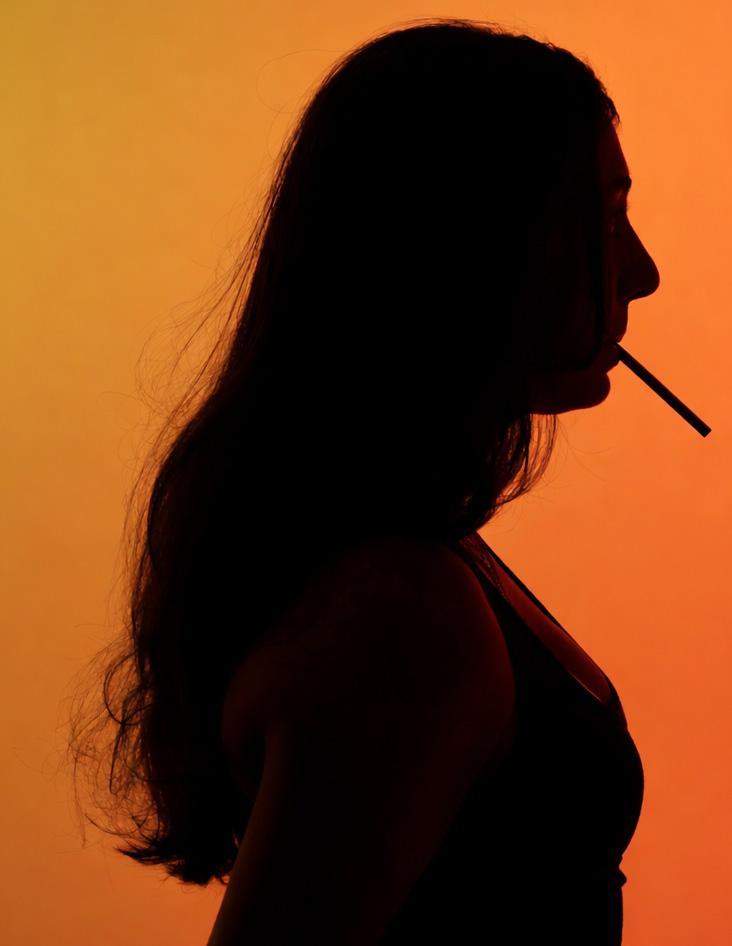
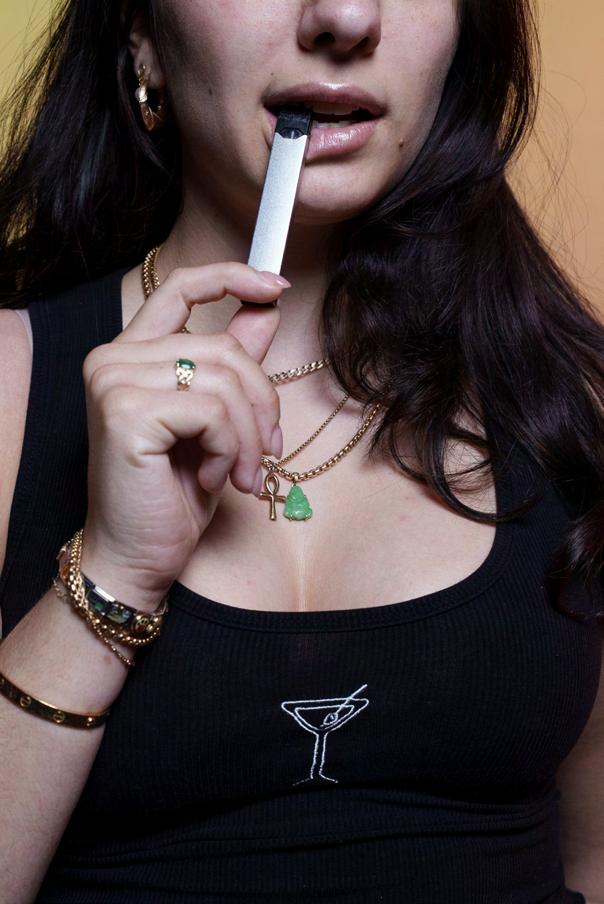
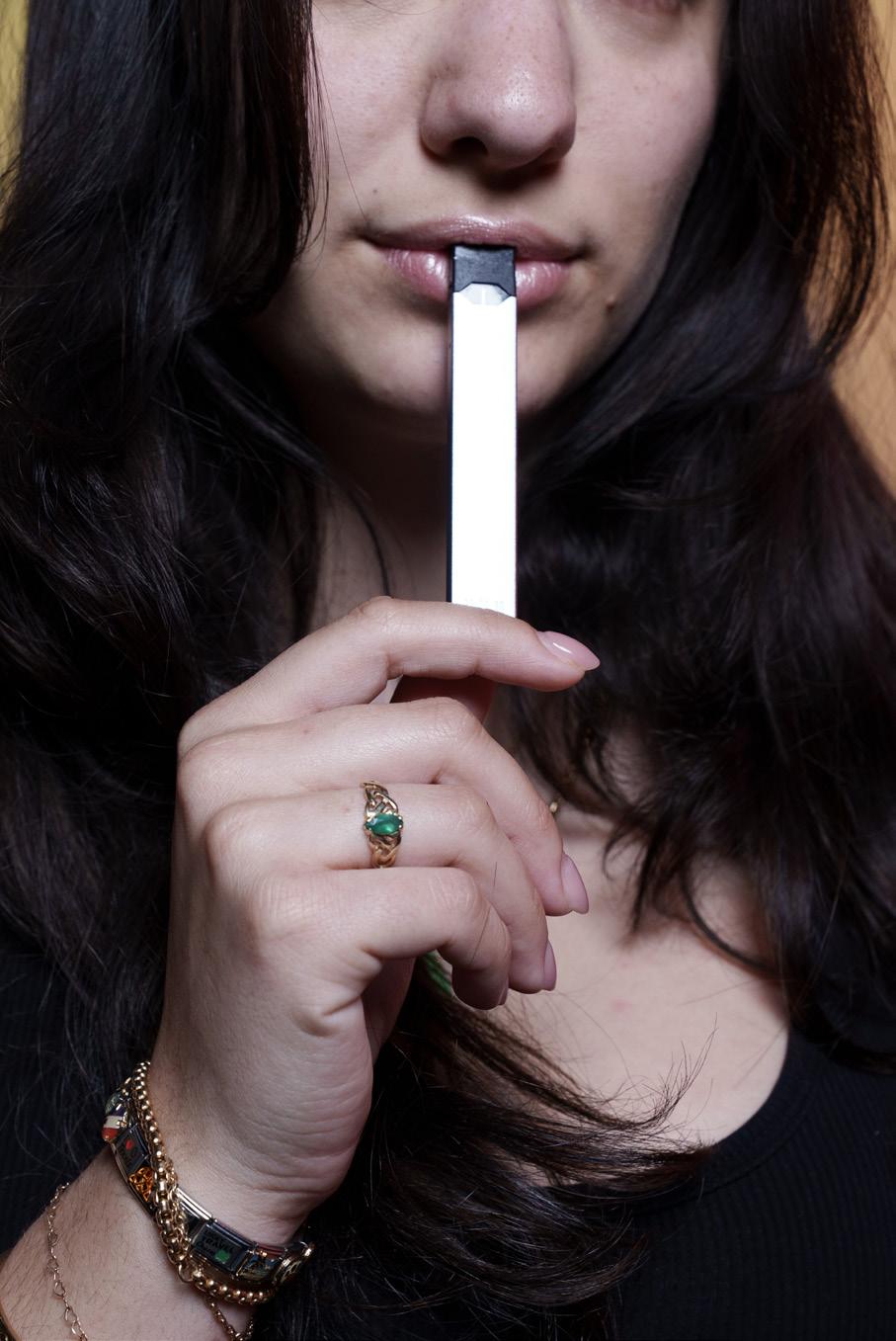
One of the most de ant eras of many of our high school days was our rebellious one. e one where we started sneaking out late, breaking curfew and for some experimenting with our forbidden fruit: the Mango Juul Pod. A avor recognized for its sweet taste and smooth hit that now just lives on in memories, revolutionized the idea of avored vapes.
e pod received an FDA ban at the end of 2018 and was o cially removed from store shelves in 2020, but still stands as a nostalgic cultural artifact. For me, when I think of this “fruit,” I’m reminded of the good old times: VSCO days.
2010s party culture of the youth was romanticized heavily on the photo-based social media site that we all know as VSCO. It was our platform for sharing all the pictures that we considered too “scandalous” for more public media like Instagram and Snapchat. In the golden days of 2019, many users began sharing their “party pictures” to their pages. ese pictures captured ashing lights, crushed cans, Red Solo Cups and that little orange pod, held between someone’s ngers, that many of us still hold near and dear.

I can still feel the sticky oors, warm lights and see the bright phone screens as we tried to capture every moment of our youth. ese days were a little reckless and messy but represent the best of our teenage rebellion.
ere’s a feeling of comfort that comes with nostalgia. Maybe you put on a sweatshirt you haven’t worn in years or you ip through grainy photos from a disposable camera, each image slightly blurred but the memory still vivid in your mind. e smallest things have a weird and powerful ability to take us back in time. A strong smell or taste can unlock memories we didn’t realize we were still holding onto.
For many of us that memory unexpectedly lives on in that smooth taste of mango. Not just any mango, but the one that de ned a brief moment in teenage culture. Long a er the pods disappeared from store shelves, the avor still lingers in our memories. It’s tied to a time when life felt simpler, when rebellion felt harmless and when the future still felt far away.
The flavor was much more than just a simple nicotine buzz. is nostalgia represents a time when things just felt a little less serious. No worries about the real world, just the question of will I get caught, but that never mattered to us anyway.
e mango pod was never really just one person’s. It became a quiet form of currency that united everyone in those dimly lit rooms. It was used as a conversation starter, a simple “can I hit that,” became an introduction. e thin nicotine device reminded us that we really aren’t so di erent a er all.
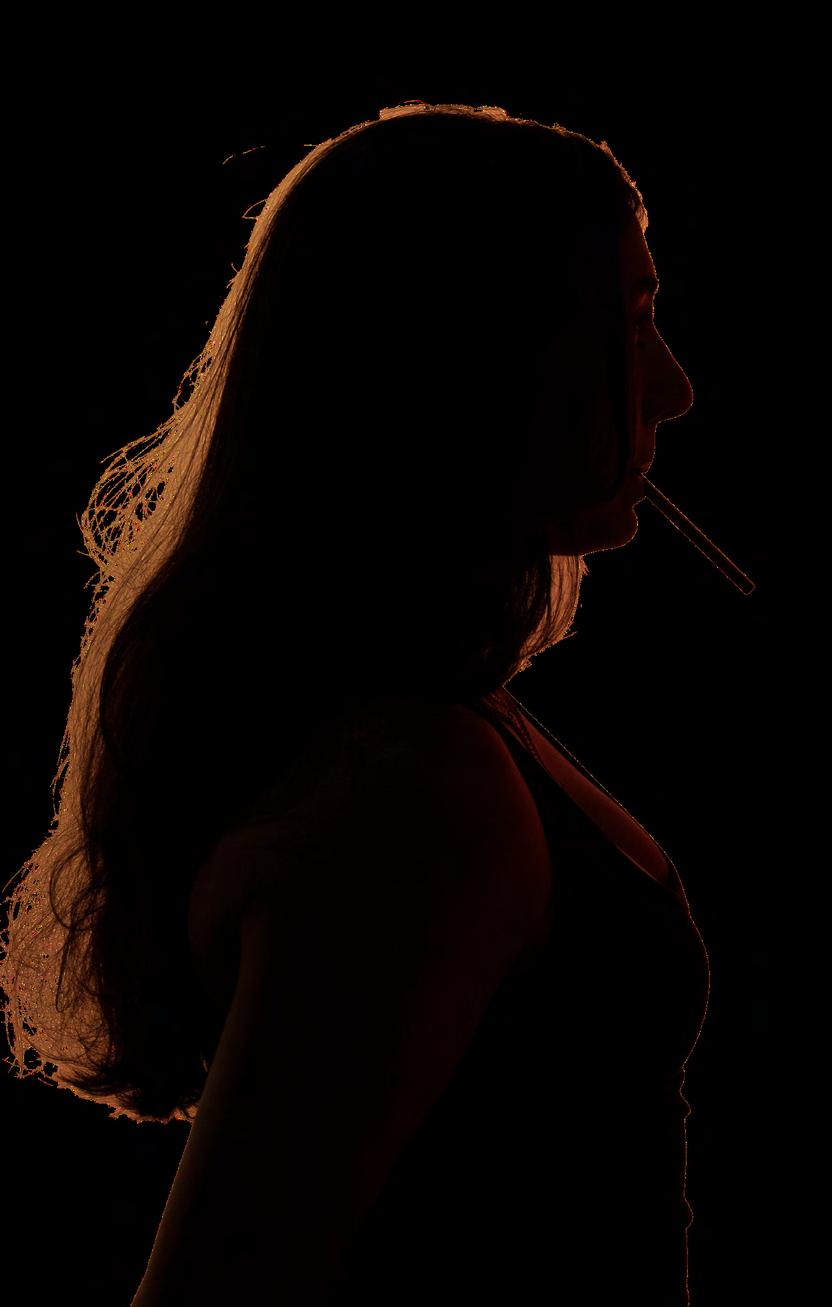
It’s strange how sometimes a small object can bring people together. Maybe it’s a lighter passed around in a crowd of people, or headphones shared between two on a long train ride. In those moments, objects become more than what they really are —they become a bridge between people who might not have spoken otherwise. For a brief moment in time, the mango pod played that role for us, an unlikely symbol of connection amongst a room full of teenagers discovering who they were. ose times were truly simple.
When the pod received its dooms day, the reaction felt dramatic for something so small. e device disappeared due to federal regulations worried that these avors may draw in an underage generation. It’s not hard to see why they thought that. e avors have an essence of innocence and the names sound closer to candy than nicotine. at was part of the appeal. e sweetness so ened the harsh reality of what the product actually was, turning something addictive into something that felt playful, and almost harmless.
In many ways, the mango pod lived up to its name: the forbidden fruit of our teenage years.
But now, as the years have gone by and we’ve grown older, maybe it’s better just kept as an artifact of nostalgia. Something that was once our norm now lives as a reminder that not everything lasts forever.
Looking back, it’s hard to tell what we were chasing, maybe the taste or the short feeling, or maybe the version of ourselves we thought we were becoming. ose nights feel smaller now, but at the time they felt endless. But maybe that’s what growing up does: it shrinks the moments that once felt larger than life, turning them into
DESIGN
fragments of memory that we carry quietly with us. The mango pod was never really about nicotine or avor. It was about youth — about chasing excitement, testing boundaries and feeling like every eeting moment mattered. What lingers now is not the taste itself, but what it represented: freedom, recklessness and the strange beauty of not yet knowing what comes next. Maybe that is why the memory still feels so sweet. Not because those days were perfect, but because they belonged to a version of us that was still becoming. And like all forbidden fruit, it was never meant to last.
eel g Back P ay s L the heart of drag



The smell of hairspray, the “clack” of heels and the piles of colorful fabric. Peeling back the layers of our self-identity can be daunting, but a necessary process when it comes to learning about ourselves and our interests. Just as fruit has its protective skin, we all have our “skin” of social roles. Drag is the act of choosing a new, more colorful skin with intention to reveal our alter ego that’s lying underneath. Alice Efermov, a senior at Elon University studying biology and theatre, practices drag through Gender & LGBTQIA Center (GLC) events on campus as a form of self expression.
“For me personally, if I like to put on makeup and get all done up, it makes me just feel more confident immediately ,” Efermov said.
Judith Butler, queer philosopher and gender studies scholar, defines gender performativity as performance embodied by drag, which reveals how everyday gender norms can be just as “constructed” as elaborate on-stage personas
College students across the country face the pressure of academia and professionalism while denying their true identity as a means to success. Drag has become a strong outlet for young adults who may struggle with who they truly are out of institutional settings.


“At its core, Drag is a stylized performance that harnesses costuming and makeup as tools to present exaggerated gender expression for entertainment,” Tammy Lam, writer for e Science Survey, said. “Drag is an evolving performance that practices the art of subversion, a craft that draws in its audience.”
Practicing drag culture in a college environment allows for an opportunity to set yourself apart from student responsibilities.
“I think that drag very much settles itself in...a differential kind of area of, like, you don’t have to conform. You don’t have to do everything that everyone else is doing when they’re performing,” Efermov said.
According to the 2025 study conducted at West Visayas State University “Queering the Classroom,” this college renaissance marks a shift from the “theatrical necessity” of the 1920s, when men donned wigs simply because women were barred from the stage, to a modern example of “visual activism.”
Scholars like Kareem Khubchandani argue that this shi , fueled by the “RuPaul E ect” and a wave of diversity funding, has turned campuses into a vital training ground for gender deconstruction.
e 1990 documentary “Paris Is Burning” introduced global audiences to New York City’s underground drag ball culture. In this world, Black and Latinx queer communities created their own dynasties, styles, and support networks for those who may be struggling with their identity. (Las Vegas Pride)
“I think that there’s a sense of community in that...there’s a lot of solidarity that happens in those kinds of communities,” Efermov said. “And I think you can really feel it.”
For many people, drag is art, a career, a medium of protest or all of the above. (GLBT Historical Society) In the 1950s and 1960s, queer patrons congregated at the Black Cat bar to see José Sarria’s opera parodies and his exhortions to live proudly and openly, and tourists visited Finocchio’s to see polished, professional female impersonators. Opera parodies at the Black Cat were not just for laughs, but also served as a middle nger to laws that made cross-dressing illegal.







“[It’s] peeling back your shell and revealing its foundation—what’s cracked and unleveled underneath? Shedding your layers is the beginning o f the work. Pulling back every piece of pain, past, heartache, and aw, and getting t o your core.” (Dear Queens)
e “alter ego” isn’t just a fake person, but a foundation that allows your innermost self to let go and breathe.
A campus stage becomes a “greenhouse” for this kind of self-discovery, allowing students to experiment with their “alter egos” before entering the professional world.
“I feel like other performances that I’ve done have generally been more planned and more kind of regimented in a way,” Efermov said. “Never something so personal and fun and I can really do whatever I want.” is sense of autonomy is exactly what separates the art form from the traditional theatre Alice has studied for years. In the world of drag, the script is replaced by spirit.
ere is a speci c kind of magic that lingers in the air a er a drag performance, le over adrenaline and glitter that refuses to settle. It’s in these
moments that drag proves itself to be more than just a solo act; it shared moment. e energy is almost tangible, resembling a high-energy concert but with a much thinner “fourth wall.”
“It’s very connected with the audience,” Efermov said. “It’s like you can lip-sync at the people and you can interact with them and have so much fun.” is interaction acts as a catalyst for change. When an audience sees someone peel back their own layers so fearlessly on stage, it almost grants them permission to do the same.
“I would certainly encourage [those interested in drag culture] to come up with something Vthat they feel inspired by and that really speaks to them,” Efermov said.
In the eclectic fruit bowl of identity, there is no such thing as being “too much” or “out of season” — there is only the beauty of being ripe, ready and remarkably yourself. Whether you’re performing on a stage or simply choosing a bolder version of your daily life, the act of “peeling back” the expectations of the world reveals a foundation that is personal, fun and entirely your own.

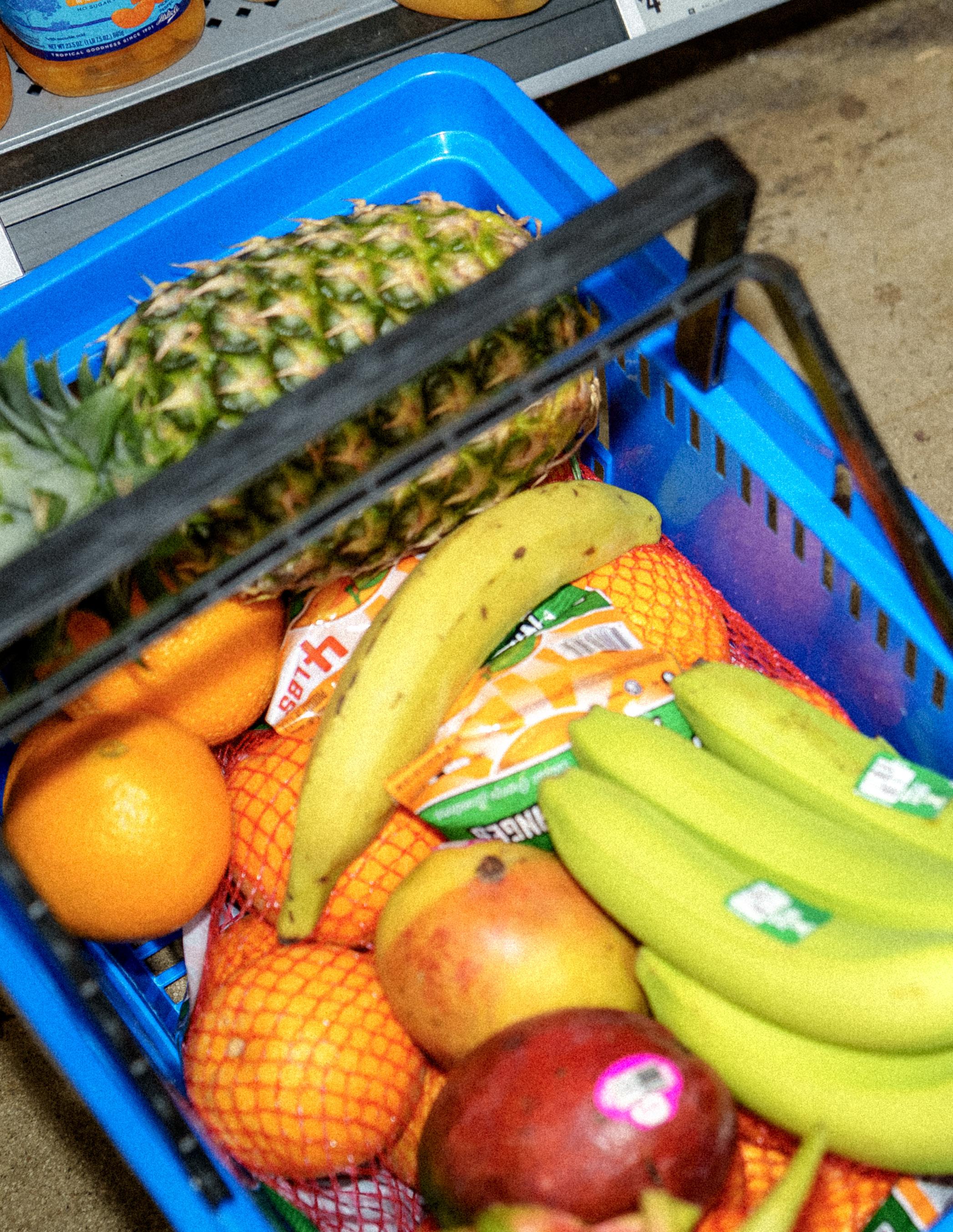
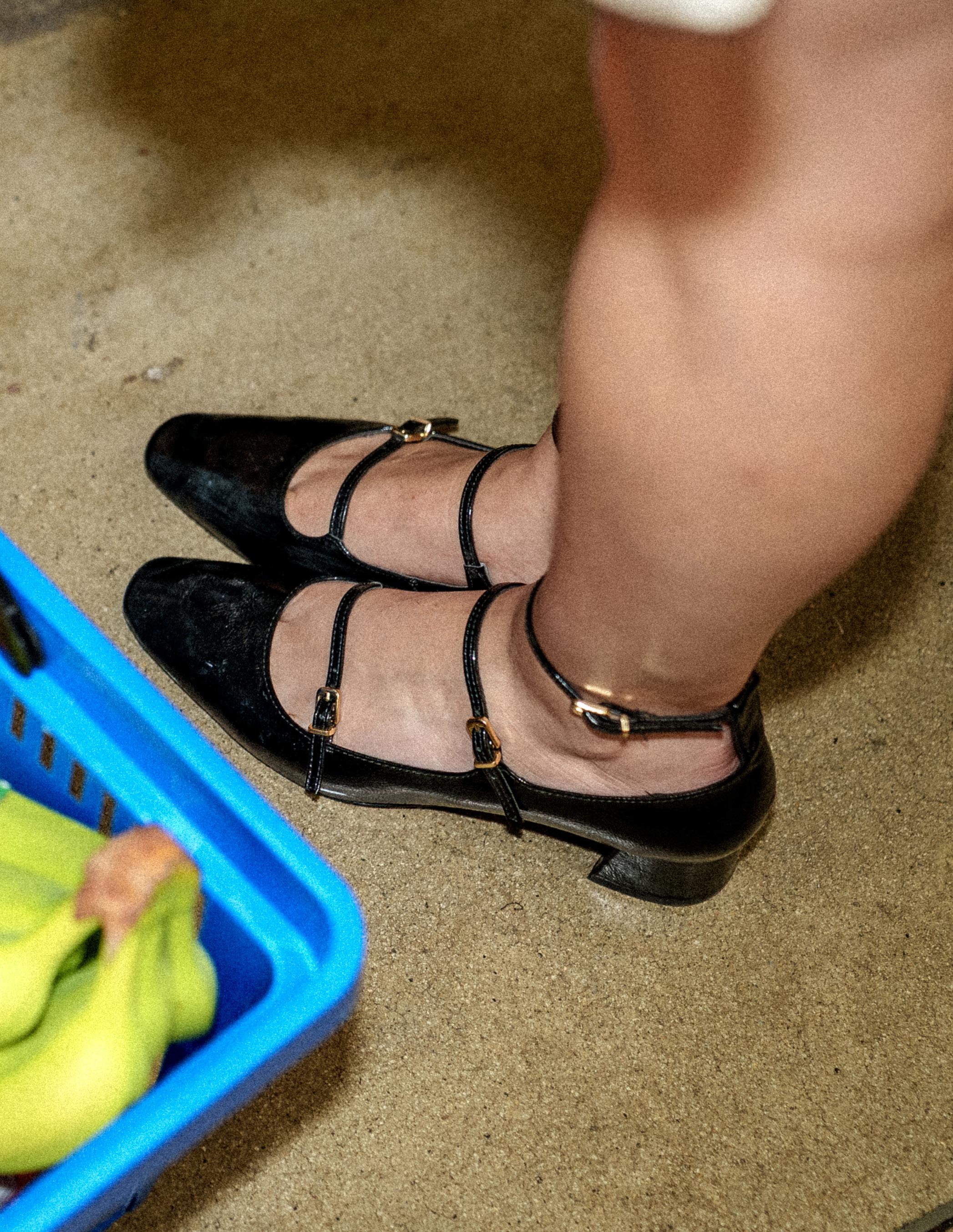
The aestheticization of groceries in a time of rising food insecurity
LYDA COSGROVE CO-EDITOR-IN-CHIEF
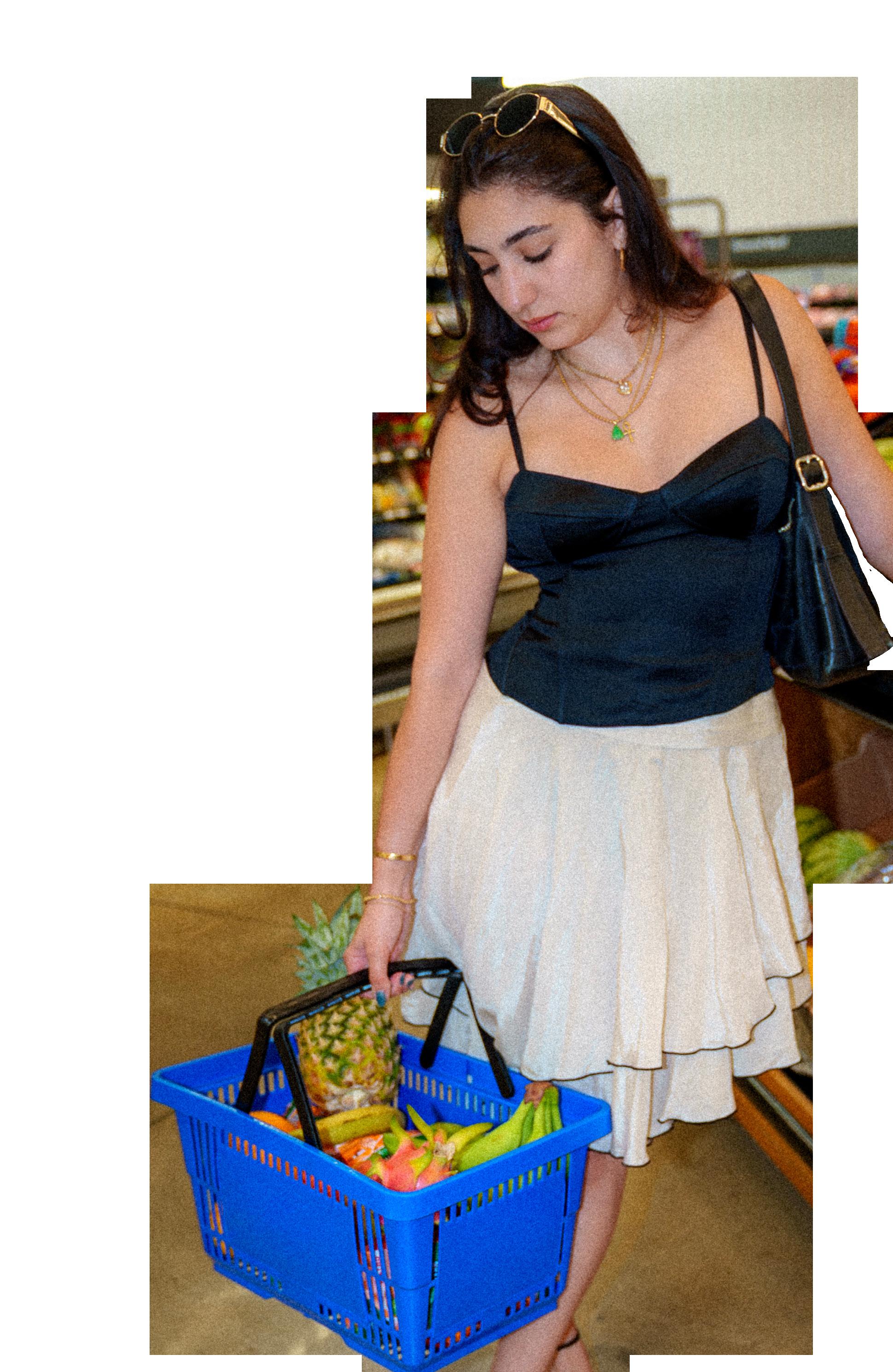
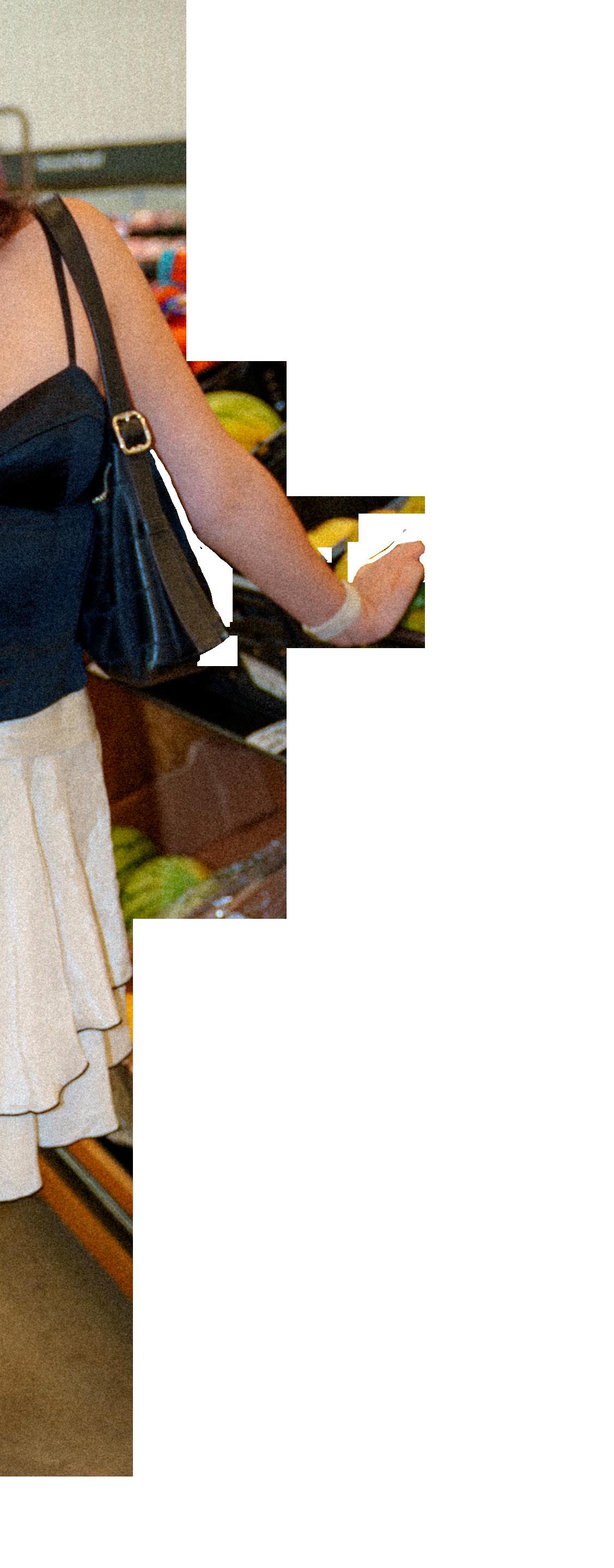
While groceries are becoming a topic for lifestyle content online, they are becoming harder to a ord in reality. By now, we’re well aware that everything’s more expensive these days, and honestly probably tired of hearing and thinking about it. We’re just now settling from the post-pandemic inflation surge and somewhat coming back down to a ordable levels—almost. Food prices are still 27% higher than pre-pandemic levels, and with recent legislative changes to SNAPs (Supplemental Nutrition Assistance Program) bene ts, food insecurity is a real, deepening problem for nearly 48 million Americans.
Around one in eight Americans rely on SNAP, also known as food stamps, to afford their groceries.
e federal assistance program gives monthly bene ts to low-income households, which can be used to purchase food at grocery stores. But under the “One Big Beautiful Bill Act” passed in 2025, the limitations of who quali es for those bene ts and what they can purchase have signi cantly shi ed, and around 2.4 million people could lose bene ts under the new requirements.
Since the rules went into nationwide e ect on Feb. 1, 2026, adults from age 18 up to age 64 are now required to work, volunteer or participate in training at least 80 hours per month to keep their bene ts.
If they don’t, they can receive SNAP for only three months over the course of a three-year period. Previously, these requirements only applied to adults under about 54–55.
Beyond age restrictions, another signi cant update now allows states to restrict what food items SNAP bene ts can purchase, including certain sugary drinks, candy, energy drinks and other non-nutritious products. Idaho, Utah, Indiana, Iowa, Arkansas, Florida, Oklahoma and Texas are among the states that have begun restricting food purchases.
Another change is that now, states must cover more of the program’s administrative costs up to nearly 75% in some cases — a cost that used to be split by 50% federal funding and 50% state funding. In response, states may reduce enrollment or tighten veri cation to manage these costs. Plus, SNAP benefits often don’t cover the actual cost of food — even if food costs go up, SNAP funding stays the same or even decreases.
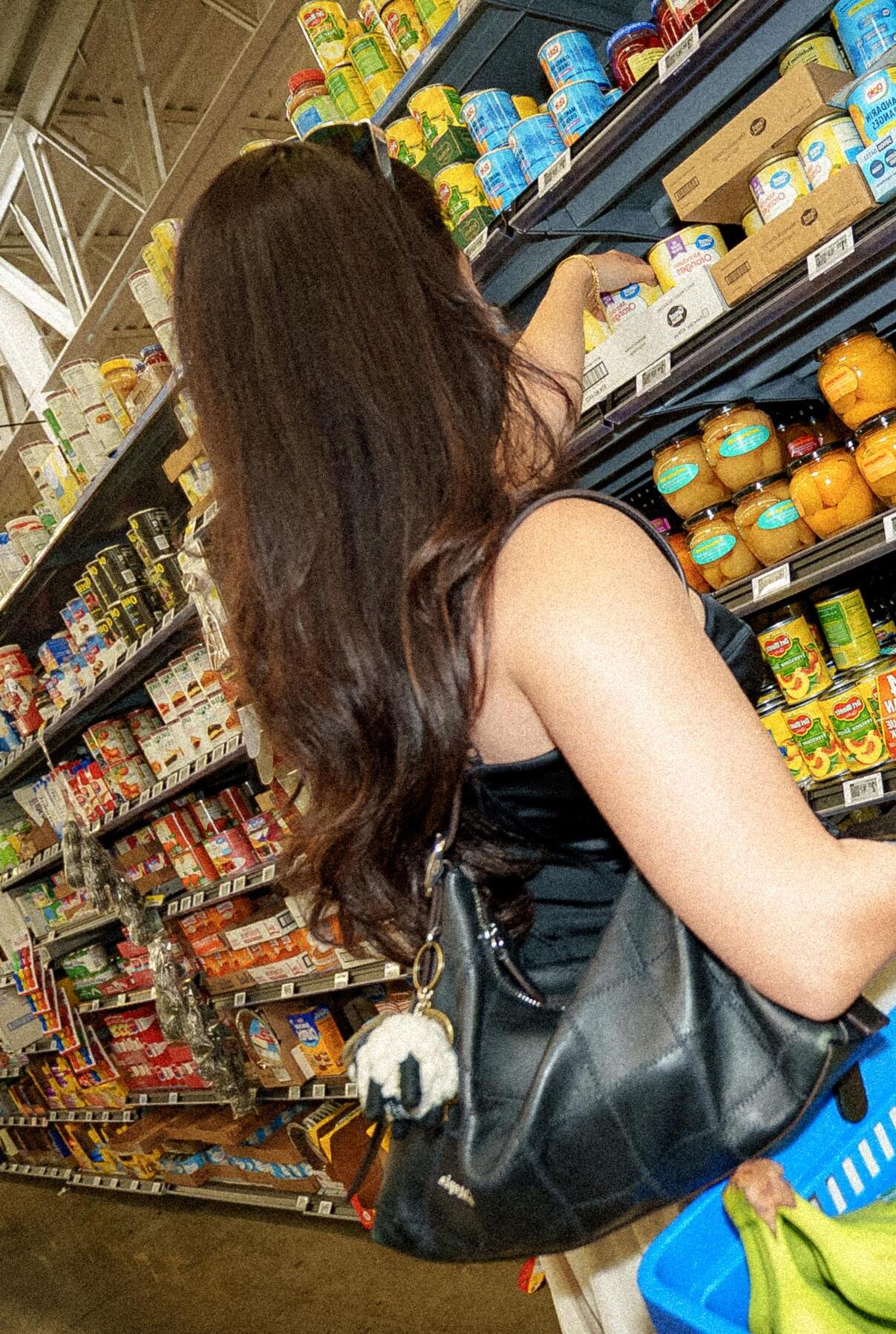
Lawmakers blame this change on the health aspect of it all — why should taxpayers spend money on ultra-processed foods that lead to chronic illnesses that our tax dollars will eventually have to pay for all over again? is argument isn’t necessarily sound when you consider how much this limits choices for low-income households — our very food system practically shoves ultra-processed foods down our throats. And if these are the limitations already put in place, where does it end?
While new questions regarding the future of food security arise everyday, in uencers and the upper class continue to live unaffected and privileged. Some conspiracy theorists might tell you that they’re prompted to post such content like grocery shopping with a Birkin or downing a $19 smoothie as an a ernoon snack to “luxurify” fresh, healthy foods. e reality is, like with many things, they’re simply out of touch.
Grocery store runs were something we used to never think twice about — they were routine and a symbol of standard living, simply serving a role of sustenance. Now, they’ve become one of the many examples of social media’s aestheticization of everyday survival.
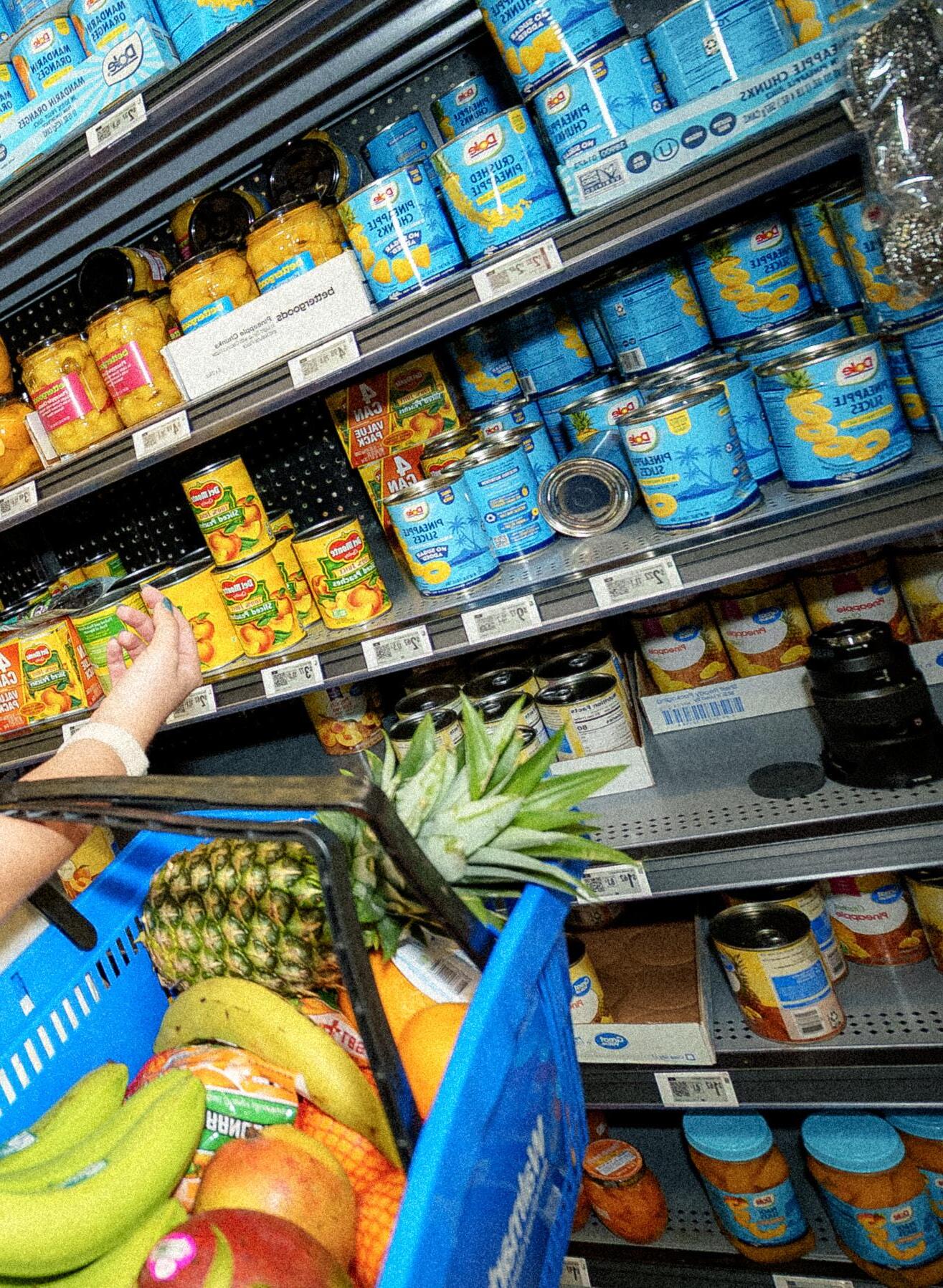
Where’s the line between “romanticizing life” and the gluttonous patterns of out-of-touch overconsumption?
Groceries, especially fresh, whole foods, are a necessity—not a luxury. But as in uencer culture continues to frame them as aesthetic, splurgeworthy purchases, that line becomes easier to blur. e more attention we give to these out-of-reach fads, the more power it has and the more in uencers will get away with it. e more we watch it, engage with it, and treat it as something to aspire to, the easier it is to forget that for millions of Americans, access to those same foods is far from effortless or aesthetic — it’s uncertain and increasingly out of reach.
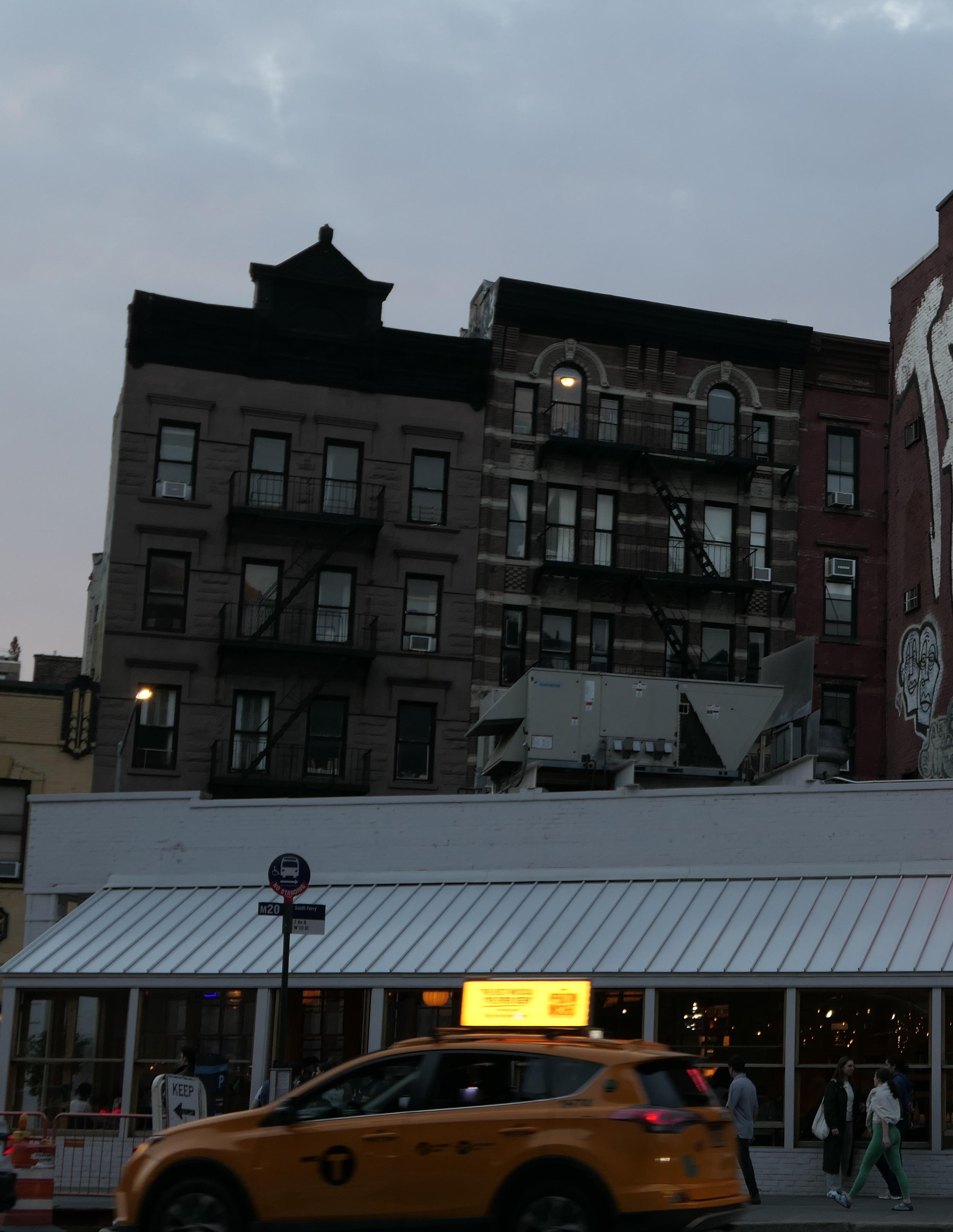
Taking a Bite Out of the Big Apple
AVERY FERGUSON
Spring is in the air and the sun is setting later — what better time than now for a fun- lled weekend getaway? Luckily, there’s no destination sweeter than New York City — better known as the Big Apple.
Whether you’re planning a girls weekend or just looking for fresh spots to try, I have curated a list of the city’s must-visit cafes, restaurants, shops and cocktail spots.
Fresh Picks For Coffee
Every good weekend starts with a co ee, whether you’re looking to try a TikTok-famous latte, or want a quiet neighborhood co ee shop, I’ve got the perfect spots for you!
Starting o in the Upper West Side, the sweet stop is Ca e Paradiso. You’ll want to get the famous salted brown butter & oat milk latte that’s available on tap. e line may be a bit long depending on when you go, but trust me, it’s worth the wait. e creaminess of the oat milk
blends seamlessly with the rich notes of brown butter and a hint of salt, creating an indulgent sip to kick o your trip or weekend.
Another TikTok-approved spot is Fellini Cucina. ere are several locations around the city, but I suggest popping into their West Village location. eir menu is stacked with all of the classics such as the “Dolce Vita,” a sweet and creamy latte with notes of caramel, but they also o er up a variety of specialty lattes like “Pistacchio Paradiso,” a traditional latte stacked with avors of pistachio, from the cream and milk used to the crumbles on top as a nishing touch.
If that’s not your vibe, give the “Fior Di Pollen” a try. is is a salted honey latte topped with whipped foam. Made with a double shot of espresso, it makes for the perfect option to kick o a busy weekend. Not only does Fellini o er up delicious and aesthetic-worthy drinks, they also have plenty of juices, handheld small bites and sweet treat options.

The Juiciest Bites
A er getting a much needed ca eine-infused beverage, I suggest heading to grab a bite to eat.
My rst juicy pick is e Commerce Inn located in the West Village. With lots of traditional savory breakfast and brunch items on the menu, the sweet and oh-so- u y pancakes can’t be skipped. Piled high, smothered in syrup and fresh fruit, these cloud-like pancakes are a musttry.
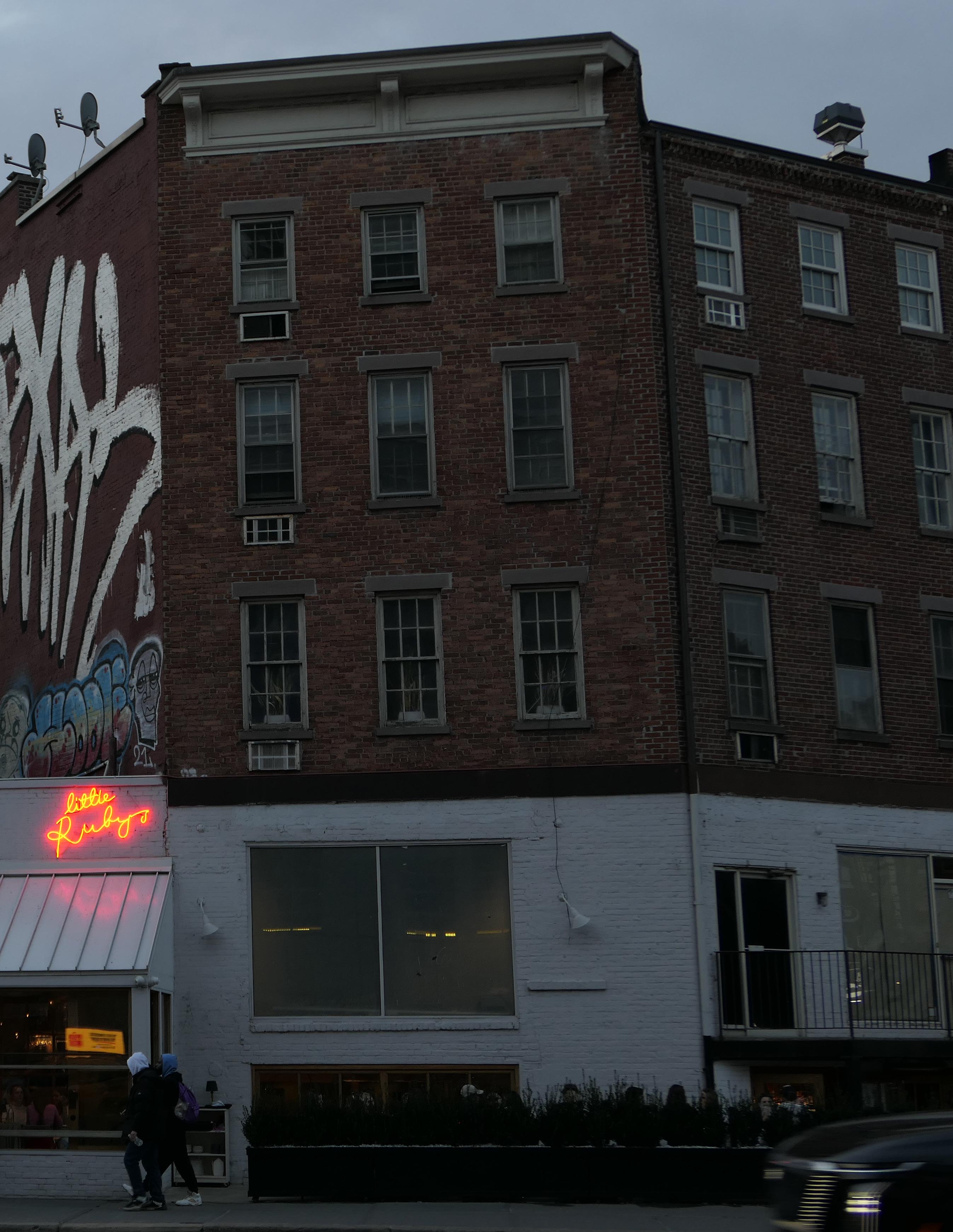
If you’re looking for a more nutrient-packed option, head on over to Little Ruby’s. ere are locations in the West Village, SoHo, Murray Hill, the East Village and Williamsburg, so take your pick. Bringing Australian cafe culture to the city, this restaurant is owned and operated by a team of Australians. ey o er a wide variety of dishes, making it the perfect spot for a group of friends to go, as everyone should be able to nd something delicious on the menu.
Little Ruby’s serves up casual, locally sourced food options for every meal, whether you’re looking for a breakfast/brunch spot, lunch, snack or dinner. From yogurt bowls and breakfast burritos to salads, grain bowls and pastas, you can’t go wrong any time of day. Our top recommendation has to be the spicy vodka pasta.
My last food recommendation is Boucherie, a chic French restaurant that I suggest going to for dinner before or a er grabbing drinks with the girls. ere are four locations in the city: the West Village, Union Square, and then Petite Boucherie also in the West Village and La Grande Boucherie located in Midtown. Petite Boucherie o ers up a charming, cozy and intimate dining experience, mirroring a Parisian cafe. is menu is slightly smaller, while the higher-end version, La Grande Boucherie, o ers an extensive menu and is a large and bustling space. is restaurant is all-things aesthetic, transporting you and your friends to the heart of Paris. is is de nitely a more pricey option, o ering up many meat dishes, but is well worth the splurge.
I recommend getting the popular French dish, Steak Frites, cooked to your desired temperature, dressed in herb butter and a large serving of french fries. If you aren’t a meat-lover, no worries. Try the many soup, salad and pasta dishes o ered as well.
You can’t go wrong with anything on the menu — not to mention the luxurious ambience, featuring a 1900s Art Nouveau–inspired design complete with tall glass ceilings.
HandpickedNYC Finds
What would a trip to the Big Apple be without a little retail therapy? ere are so many iconic stores to visit and check out — even if you’re just window-shopping.
For the skincare, makeup, perfume and hair accessory-obsessed girls, take a stroll over to C.O. Bigelow. is was Carolyn Bessette Kennedy’s favorite spot to grab all-things beauty. Its European pharmacy are gives shoppers an aesthetic experience o ering products that are traditionally found in Europe. You’ll nd shoppers obsessing over the glass beauty counters lled with tortoise shell headbands and colorful hair clips and pins. e high quality of these items ensures they last a long time and can dress up any out t. Another popular item purchased here is the well-known Marvis toothpaste. e many avors o ered, including a whitening option, are denitely a product to give a try.
For a cute and non-cheesy souvenir to remember this weekend girls trip or your time living in NYC, head over to Abbode. is tiny shop nestled in Nolita o ers a range of products that can be custom-embroidered same-day. Grab anything from pillow cases and cocktail napkins to makeup bags and clothing items.
You can personalize products by adding your name, quotes and sayings or little motifs like an apple or taxi cab to symbolize your time in the city. And don’t worry — if you’re as obsessed with this storefront as I am, you can purchase items on their website to be shipped to your home.
For the fashion-loving girls who strive to be sustainable, a fresh pick is Designer Revival in the Upper East Side. is luxury consignment boutique has a plethora of high-end, pre-owned designer bags, clothing and accessories. It has been around for over 30 years, so you know it has amazing nds at reasonable prices for the quality o ered.
Toast to the Big Apple
No bad night ever started in the West Village, so that’s the rst stop. Bar Pisellino has to be my top recommendation for a drink or aperitivo with the girls, and is right across the street from Boucherie’s West Village location. Bar Pisellino’s charm is unmatched, and it feels like you’re being transported straight to Italy for a spritz.
Prepare for a line since this is a no reservation spot, but it tends to move quickly, and the wait is well worth it. If it’s a nice day, take advantage of their outdoor seating! On a gloomy day, don’t underestimate the small and mighty interior available as well. e aperol spritz is a must, but there are also non-alcoholic beverages available.
My next recommendation is Bar Bonobo, located in Chelsea. e dim, moody lighting this place gives o is bound to get the night started o right. It’s pretty spacious with di erent areas for seating, and Monday through Friday, from 3 to 6 p.m., they o er $10 mini martinis — making it the perfect place to go before a Friday dinner reservation to start the weekend o right. ey also o er food options and martini ights, giving you the chance to try several of their specialty cocktails, like the CornStar — a vanilla and passionfruit vodka-based drink with popcorn syrup and a zest of lemon.
Whether you’re visiting for the weekend or lucky enough to call the city home, these handpicked spots are just a few of the many reasons New York City lives up to its nickname. So go ahead, take a bite out of the Big Apple, and make sure it’s a big one.
Ple u or Perfection?
ELISE WHITAKER
S g Bey d t Mirr
Do you have what it truly means to be beautiful? Genuinely.
Do you have every designer piece of clothing, the Miu Miu ballet ats, the vintage Chanel bag and the perfectly tailored blazer that sits just right on your shoulders? Do you wake up for your 8 a.m. esthetician appointment, skin glazed and poreless under uorescent light? Or maybe you have rejected all of that entirely, choosing instead to scroll past those routines and tell yourself that you don’t care.
Social media shows us blueprints of who we want to be. Our mirrors show us who we do not want to be. But our eyes, our actual lived experiences, show us what we truly like.
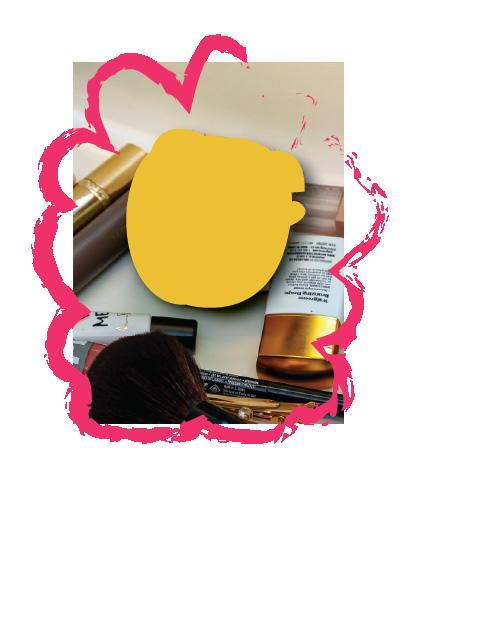
Historically, beauty has never been neutral; it has always been tied to power.
In ancient Egypt, dark kohl-lined eyes were not just aesthetic; they signaled wealth and ritual. During the Renaissance, women plucked their hairlines back to create the illusion of higher foreheads. Victorian women cinched themselves into corsets so tightly that they fainted at dinner tables.And today, the standards are just as extreme, just more normalized.
In 2016, everyone wanted the contoured face of Kim Kardashian: sharp cheekbones, overlined lips and a body shaped by both gym routines and subtle surgical intervention. Now, those same lips are being dissolved. e current ideal leans toward the thin, almost fragile look of Kate Moss in the 1990s, e ortless, undone and “natural,” but still highly curated.
Beauty trends shi , but the underlying message stays the same: looking a certain way signals belonging to a class, a culture or a moment (Sterner, It’s All Relative: How Beauty Standards Have Evolved).
T Paywa Per c-
But who actually decides what we should look like?
Perfection o en feels desirable precisely because it is di cult to reach. It might be a nose shape associated with one ethnicity, a hairstyle rooted in another culture or a body type that requires time, money and access that most people do not have.
You begin to notice it in small ways. e girl in your class casually mentions her “maintenance,” laser, facials and injectables, as if it is routine. An in uencer’s “morning routine” quietly costs more than your monthly rent. ere is an unspoken understanding that looking e ortless is, in reality, extremely expensive.
At that point, beauty stops being just aesthetic; it becomes a system. A paywall.
WLik
e Ple u
n Beauty F ls
But what if beauty is not only about perfection? What if it is also about pleasure?
ink about your best friend’s face, not the way it would photograph but the way it moves. e freckle above her lip shi s when she laughs too hard. e way her eyes crease at the corners when she is trying not to smile.
ink about your mom’s hair, slightly uneven and a little wispy, framing her face in a way that mirrors your own when you do not style it. Or think about a place. For me, it is walking through Brick Lane in London, the smell of fried food mixing with incense, signs layered over grafti and vintage leather jackets spilling onto the pavement. Or sitting in a small café in Paris, where the co ee tastes slightly bitter but the air feels cinematic, as if everything matters more there.
We use the same word to describe all of these experiences: beautiful. But none of them are about perfection. ey are about feeling.
TScience vs. T Ex -
rience
To be fair, we are wired to notice symmetry. Research in evolutionary psychology suggests that balanced features signal health and genetic stability (Gangestad & Simpson, 2000).
But if that were the whole story, attraction would be predictable, and it is not.
Not everyone nds Henry Cavill attractive. Not everyone is captivated by Beyoncé.
Because attraction is not only biological, it is personal.
Sometimes what draws you in is imperfection. A slightly crooked smile. A voice that cracks when someone laughs. A gap between teeth that makes a face more memorable, not less.
Perfection can be impressive, but imperfection is what makes something feel real.
Beauty
cial P er
If beauty signals status, then it must also function as power. We see this everywhere. In job interviews, conventionally attractive individuals are o en perceived as more competent and trustworthy, a phenomenon known as the halo e ect ( e Decision Lab, Halo E ect). In pop culture, attractive characters are frequently positioned as heroes while unconventional faces are cast as villains or side characters. Even in something as subtle as a TikTok comment section, patterns emerge. Pretty people are described as e ortless. Everyone else is trying too hard.
But that power is not stable. It creates admiration and resentment.
e same beauty that draws attention can also make someone a target.
T Li ts Beauty

If beauty were ultimate power, then the most beautiful people would run everything. But they do not.
e people shaping industries, controlling resources and making systemic decisions o en exist outside of those beauty standards entirely. Meanwhile, many of the most beautiful people, models, in uencers and celebrities, are marketed, managed and replaced. eir image becomes a form of currency, not control. Which raises a question: Perhaps beauty was never meant to be power. It was always meant to be a tool.
Rede n g t
Bluepr t
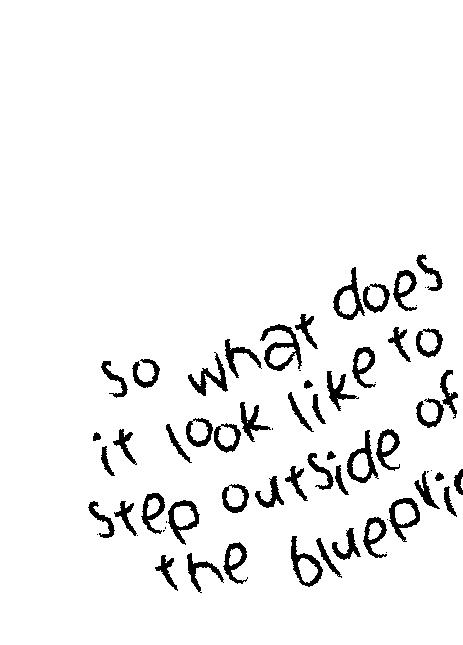
So what does it look like to step outside of the blueprint? It might look like wearing something that does not atter your body type but feels like you. Letting your hair exist in its natural texture instead of forcing it into trending cycles. Posting the photo where you are mid-laugh instead of the one where your face looks the most symmetrical. It might look like choosing to see beauty di erently. Not in what is most approved, but in what feels most alive.
F al Th t
Beauty can be perfection. But it can also be a form of pleasure.
And the di erence between the two is o en just perspective. You do not need ller. You do not need symmetry.
You just need to look at the world, and yourself, a little di erently.
ItalianAncient Desire
The Metaphor of Pomegranates
SAM PASCALE


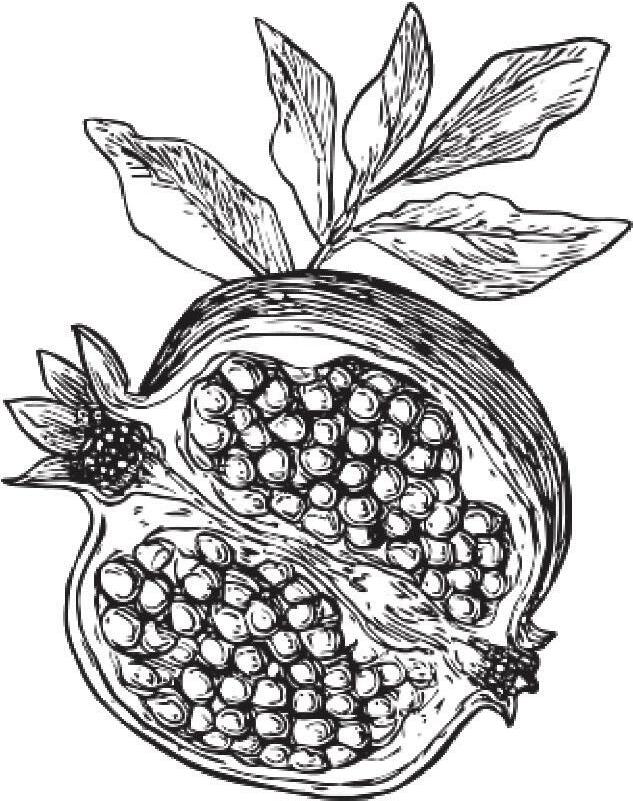



What do you see today when you look at a pomegranate?
Do you see it within a pile at the grocery store. Do you see it on your kitchen counter wondering why your roommate overpaid for one singular fruit? Maybe you see it in a pre-peeled cup to avoid the hardship of breaking one open.
What do you notice rst? Is it a bright red color? e tangy seeds that stick to you teeth? Many fruits have an underlying history and meaning. It may seem random to consider the pomegranate as symbolic, but for centuries, this fruit has held signi cant value for fertility and marriage.
The fruit became this symbol because of its many seeds within a single pomegranate. These seeds represent fertility, multiple o spring, and prosperity. Its eye-catching dark red symbolizes blood, which ties to life.
Ancient Greece & Italy
e pomegranate is one of the earliest cultivated fruits. It originated on the Iranian Plateau and Mesopotamia— modern-day Iran and Iraq—around 3000–5000 B.C. From its original location, the pomegranate quickly spread internationally to places like Egypt, Greece and Spain.
During my fall semester of 2025, I had the opportunity to study Italian and Greek Art History throughout Italy. Out
of everything I learned, the signi cance of the pomegranate stuck with me the most. at may sound silly, comparing my other studies like the Sistine Chapel ceiling by Michelangelo, but a small piece of fruit won me over. It’s a fruit not as popular as apples or bananas, as it’s more niche and something you'd probably nd in a refresher.
The Temple of Hera, built in 550–525 BCE, was dedicated to Hera, the most powerful goddess in Greek mythology. Hera was most known as the goddess of fertility and marriage.
e pomegranate was a common o ering, mostly made by women, to Hera in the hope and desire to have children.
In ancient Italian times, it was crucial and a key female virtue for women to have children. It was considered a civil duty and heavy responsibility for women in order to continue lineages, create family heirs, and produce more citizens. Women were under constant pressure, and t hose who showed signs of infertility were heavily scrutinized by society and even ostracized by husbands.
Today you can nd pomegranate trees surrounding the Temple of Hera, which still stands tall. Hera herself still resides on her throne, holding a pomegranate as she sits proud and perserveres through storms. However, in time, the centuries of her existence are beginning to show and her stature is eroding.
In today's American society, women can now see themselves desiring other aspects of life that do not involve children. ere are di erent focuses, like education, careers, and selfimprovement, that women may seek out before choosing to incorporate a child into their lives or simply choose not to have any at all.
What does it mean to hold female virtues today? e virtue of putting compassion and nurture before all else. To show moral purity and grace through all aspects of life. Is this the accurate desire that women choose to uphold?
Is not choosing to have children a violation of that virtue? To tell others you are not interested in children, only to hear that you will one day change your mind, or that you are being sel sh. Or to decide to have children, and people assume that means you should be the one to put your personal plans on the back burner in order to hold the virtue of care. Or choosing to stay home and being judged for not doing more. It feels impossible to follow any virtue when being faced with judgment and pressure to t in a box that simply does not exist.
In America, there is a political sting tied to fertility and choice. e debate of pro-life versus pro-choice, along with the overturn of Roe v. Wade, has made fertility itself seem out of one's own personal control. It can feel di cult to ponder your personal goals while policies you may not choose or agree with have now made that decision for you. ere is also the line running through fertility and femininity. Are those who struggle with fertility or transgender women seen as less feminine because they cannot have the desire for children that has been placed on generations? Femininity stretches farther than sex, and should change and grow through life.
When I think of pomegranates, I think of all the women before me o ering the pomegranate to Hera, who desired nothing more than children — whether that was something they really wanted or not. I think about the o erings I am willing to make to meet my own desires. I think about the women a er me and how their desires may change along with the female virtues. I encourage everyone to take time and explore what femininity means to you, and maybe try to break a pomegranate open, as it has been done for centuries.




not every pomegranate is perfect
aguide to making the perfectplayl
ESTELLA HOYE I STAFF WRITER
Have you ever scrolled through your Spotify, Apple Music or any alternative music streaming services you might use, searching for the perfect playlist to listen to when you can’t quite pick the speci c vibe or kind of music you want to listen to? Maybe your sad song playlist is feeling a little too slow and your hype playlist is too upbeat. When you think about it, crafting the perfect playlist is like putting together the most delicious fruit salad.

When putting together a fruit salad, you want a wide variety of avors to complement your di erent taste buds and to create a palate bursting with avor. Constructing the perfect playlist is just like that: combining di erent styles, tones and artists to encapsulate the range of emotions and experiences we all have as humans. Every
fruit brings a di erent taste, memory, and vibe to the salad, how some fruits might remind you of your childhood or a speci c person in the same way di erent songs take you back to di erent eras of your life and the ways you may have felt tied to that. Together, side by side, we can build the perfect playlist and fruit salad.
e apple is the star of the show when it comes to the fruit salad. O en, the largest pieces of fruit in the salad are going to be the apple slices, but beyond their size, they’re both sweet and zesty, holding many layers and di erent avors. In just one thin slice of an apple, you experience both that so bite and initial burst of sweetness, as well as that tangy and almost bitter a ertaste.
“I think the apple's rotten right to the core From all the things passed down From all the apples coming before”
Apple - Charli
XCX
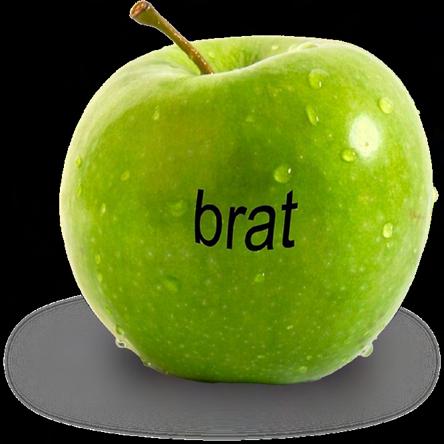

Apple was the star of the show when it took the internet by storm in the summer of 2025, which can be attributed to the way it combines an upbeat, incredibly catchy chorus and beat with its deeply personal, relatable and introspective lyrics. It encapsulates the feeling of fear that comes with growing up and guring out all the little pieces of who you are. Almost everyone can relate on some level, but the way the music behind it just gets you dancing makes this a perfect playlist staple, much like the apple. The feeling behind the song ties us together in a way only something as classic as an apple could.

For a quick burst of avor, the go-to addition is blueberries. ey’re small, tasty and their avor varies greatly from batch to batch, but they have the classic sweet-tart avor. e blueberry always has its place in a fruit salad and no matter how small it may be, it always packs a punch.
“Blue Letter,” from Stevie Nicks and Lindsay Buckingham’s rst Fleetwood Mac album is two and a half minutes long, the perfect song for that quick burst of tang and avor that a blueberry provides in a fruit salad. is song embodies the feelings that come along side being in love with someone who
wants you to wait around for them. e passion and happiness that you feel towards that person mixed with some resentment and the desire to move forward all comes together in this quick, energetic song. e way it mixes acoustic and electric guitar creates a quippy, almost tart sound that upli s your mood.
“For every voice you ever heard There’s a thousand without a word Redbird, don’t say you told me so Give me one more song to go”
Blue Letter - Fleetwood Mac


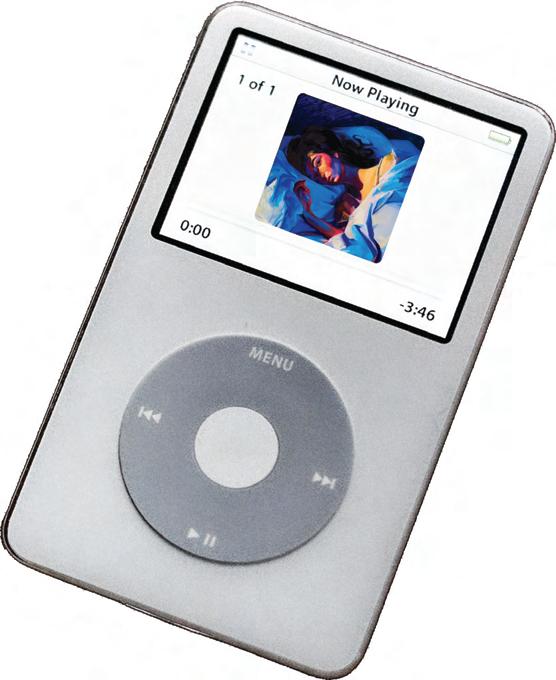
For something extra sweet, you might want to consider adding a cotton candy grape. at first bite into a sweet grape is unlike any other bite in the fruit salad. Whether or not you want a crunch or something so er, you can have both when you pick the grapes out of your fruit salad. A song divided in two,
“Hard Feelings/Loveless,” is the sixth track on Lorde’s Melodrama album. When put together, it’s a full, well-rounded song, but when split into the two individual parts, they’re just as beautiful and heartfelt. e song details the joys that come with being young, dumb and in love. A time in one’s life that some might regret, or look back on and cringe, but with this song you can have some fun and enjoy your past for six minutes.
“Three years, loved you every single day, made me weak It was real for me, yup, real for me Now I’ll fake it every single day
‘Til I don’t need fantasy, ‘til I feel you leave” Hard Feelings/Loveless - Lorde



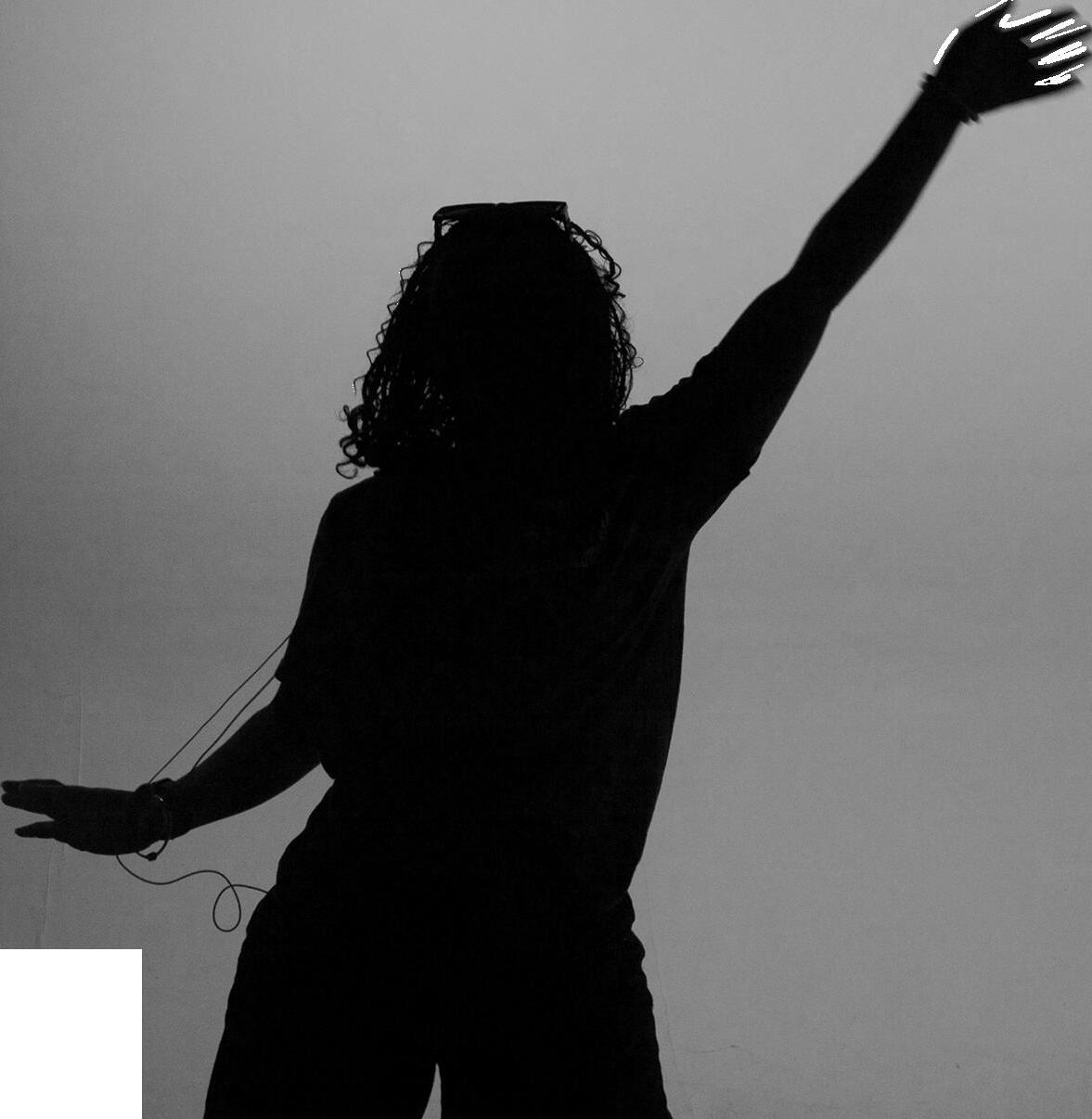
Mango is the fruit that will stick with you, whether it’s on your ngers or your taste buds. A ripe slice of mango can be so sweet it turns almost sour, a tingle lingering in your mouth to remind you of it, and to me, that’s the best part. Similarly to “Apple,” “White Keys” by Dominic Fike details the emotional journey that is being in love with someone and wanting to give them everything, but lacking the emotional intelligence and maturity
“White keys ‘cause she’s way too major for everything. The kids want distance, somewhat that I feel my heart, inside my back, I made a point to be intact and you don’t even keep it wholesome with me. You were singin’ no songs with me” White Keys - Dominic Fike
to do so. is song features electric guitars, bass and drums, which mask how sad the lyrics could be if they were paired with a more acoustic melody. Songs that do this are always good playlist staples because they can work for so many di erent moods. “White Keys” can help you jam out on a bad time, or think deeply about the lyrics when you’re feeling more introspective. While mangoes are best in the summer, they can be eaten any time of the year to bring those memories back.



When it comes to a fruit you can always rely on, oranges come to mind. No matter where you get your orange from, or what time of year, you can rely on the citrus flavor and incredibly memorable smell. A slice of an orange is such a staple, from eating it during our childhoods at snack time to pulling slices out of a bag at the beach or peeling one to share with your best friend, oranges tie together such distinct moments.
“I’m burning bridges shore to shore I break away from something more I’m not turned on to love until it’s cheap Been there, done that messed around I’m having fun, don’t put me down I’ll never let you sweep me of my feet”
Bulletproof - La Roux
Ultimately, the perfect playlist is much like the perfect fruit salad: its success hinges on the invisible, meticulous labor of ensuring no two elements clash. While the initial e ort of balancing textures and tones can be tedious, the result is a seamless harmony where every ‘ingredient’ complements the next. Once you’ve established a structural framework that resonates with your taste, you’ve done more than just curate a list, you’ve created a master recipe. You can now return to that blueprint indefinitely, swapping in new sounds and rhythms to replicate that same e ortless perfection whenever the mood strikes.
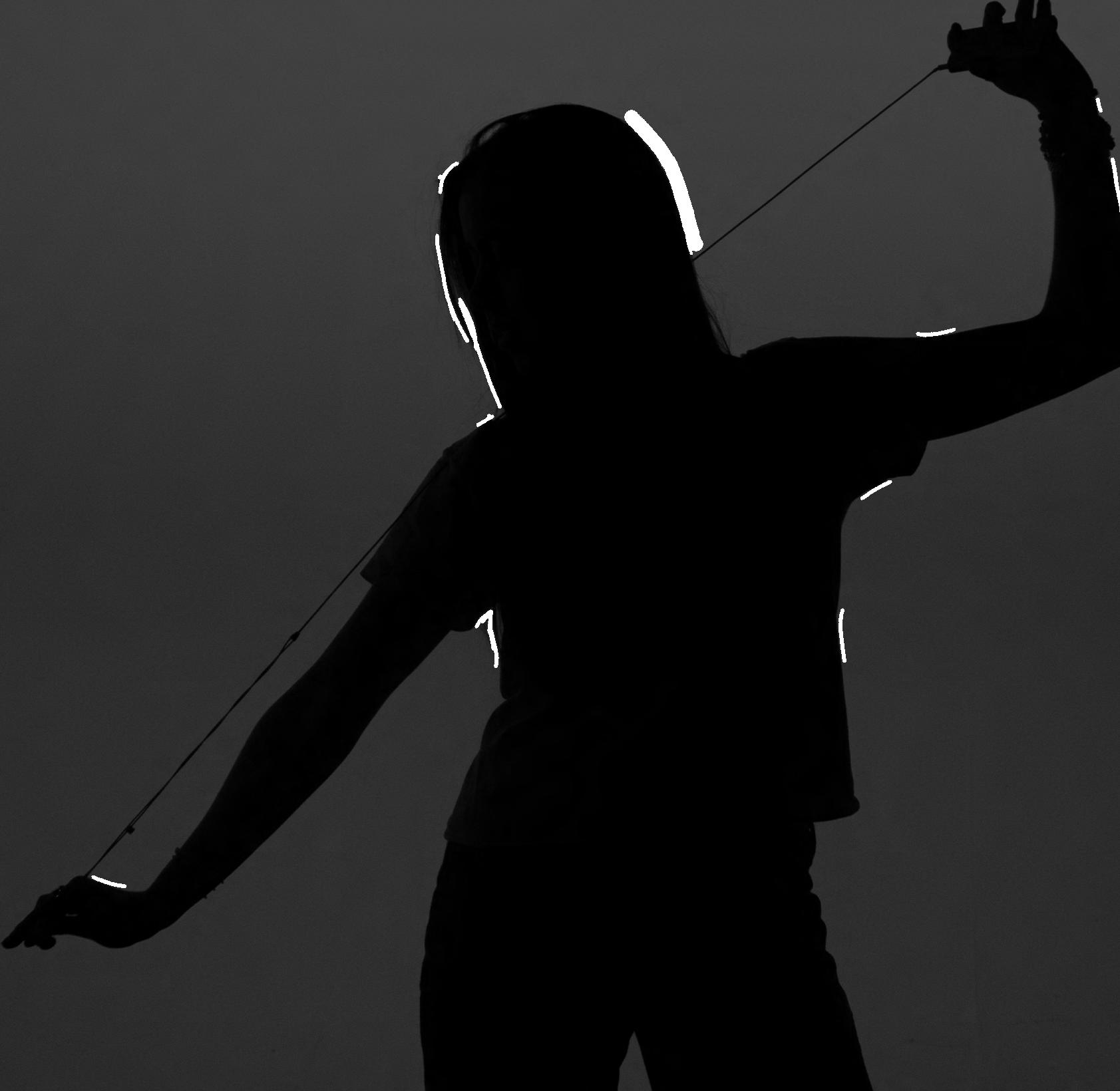
“Bulletproof” came out in 2008 and was on the radio throughout so many of our childhoods. It’s upbeat, and it almost feels a little bit angry and sour, like the citrus a ertaste of an orange. Every playlist needs that one song you can rely on to remind you of a good time. From 2008 to now, anytime “Bulletproof” has come on the radio, I recognize it immediately, and it instantly turns into a jam session. is song is a constant reminder of how some things remain consistent in life if only you look for them, just like a good, old-fashioned orange slice.


Rot, Ripen, Repeat
Rot, Ripen, Repeat
Embracing Change in Your Body and Mind
CAROLINE BENTLEY
Fruit bowls are o en depicted as still-life perfection: glossy apples, perfectly ripe bananas and full bunches of grapes spilling over the edge. Or, more recently, they’ve been depicted as photo-ready perfection with sliced strawberries and mangoes carefully arranged and topped with honey. Either way, fruit bowls have become a quiet symbol of abundance and e ortlessness, with everything fresh, sweet and exactly as it should be.
Personally, my fruit bowl doesn’t look like that. On my kitchen counter, the fruit bowl holds both green and overripe bananas, an untouched bag of clementines and a questionably so avocado that doesn’t really belong in the fruit bowl. It’s inconsistent, slightly neglected and de nitely not Pinterest-worthy. My fruit bowl, along with millions of other bowls around the world, hold fruits at a mix of stages that don’t quite line up.
And the more I look at it, the more familiar it feels.
Fresh Isn’t Forever
Our culture has an obsession with staying “fresh.” TikTok romanticizes the idea of consistency and pushes the narrative that in order to remain at peak performance, we need to have elaborate 5 a.m. morning routines, a strict workout regimen and eat only the cleanest ingredients from a trendy yet overpriced grocery store. ese are presented as the perfect formula to be your “best self” by staying productive and energized.
e pressure to stay fresh doesn’t stop at lifestyle. As we age, we’re encouraged to preserve ourselves with treatments such as llers and wrinkle-reducing creams, as if our bodies naturally changing is
something to correct. e de nition of “freshness” shi s, and it becomes less about feeling good and more about looking untouched.
But the body doesn’t operate on stability. Hormones uctuate, energy rises and falls and mental health shi s in response to stressful situations such as our environment and other factors that we ultimately can’t control. One seemingly perfect day might be followed by three days of laziness, and that’s okay. It’s natural.
Hormones: The Science of Rotting and Ripening
Our bodies weren’t designed for consistency. In women’s bodies, hormones shi constantly. Estrogen and progesterone rise and fall throughout the menstrual cycle, cortisol spikes in response to stress and our energy levels follow circadian rhythms that we can’t control. As many clinicians note, these hormonal uctuations don’t just a ect the body — they directly in uence mood, energy and focus. What feels like inconsistency is o en regulation happening exactly as it should.
Even our moods follow seasonal patterns. Research on conditions like seasonal a ective disorder shows that shi s in light and environment can signi cantly impact energy, motivation and emotional state. What feels like unpredictability is actually our bodies’ natural cycles of regulation happening in real time. e week you feel focused, social and energized isn’t more “correct” than the one where everything feels heavier and you have less energy. ey’re just di erent phases of the same cycle.

ike fruit, we move through stages without choosing them. Some days feel like peak ripeness, while others feel bruised, shriveled or even rotten. None of it is random, and none of it is failure. It’s the body doing exactly what it’s
Check Your Fruit Bowl
If the fruit bowl stands as a re ection of our lives, that means it’s something that requires our attention. Fruit bowls don’t need to be perfect or constantly checked on, but they should be maintained to ensure that nothing is rotting and, in turn, spoiling the other fruits in the bowl.
Fruit doesn’t stay fresh forever. It’s not alone, fruits so en, bruise and evene same can be said for the things that we carry in our minds: relationships, habits, routines and even thought patterns can shi from nourishing to draining. It’s important to pay attention to these fruits in order to preserve your bowl.
Preserving your bowl doesn’t look like obsessively monitoring changes or throwing things out at the rst sign of imperfection. It’s all about being honest with yourself about what serves you and what doesn’t.
A friendship that once felt easy might start to feel heavy. A routine that once brought structure may feel like it’s holding you back. Even certain ways of thinking, such as self-criticism, comparison and the pressure to constantly improve, can sit in the bowl longer than they should, slowly taking up space and spreading mold in your bowl.
For a literal example, consider how a fresh ers a plethora of health bene ts. ey can help support heart health, provide anti-
oxidants, reduce in ammation and promote gut health. A moldy strawberry, on the other hand, will cause stomach pain and make you sick. Letting go of something that’s gone bad doesn’t mean it was never good, it just means it’s no longer right for you in the way it once was.
ere’s also a di erence between fruit that’s ripening and fruit that’s rotting. Not every moment that you perceive as low needs to be xed or removed. Feeling tired, unmotivated or emotionally o doesn’t mean that something is fundamentally wrong — those are natural feelings and part of your body’s cycle. However, if something consistently drains you, limits you or keeps you stuck, that’s when it’s time to clear out some space.
We can’t control what fruits ll up our metaphorical bowl. But it’s important to check your bowl regularly to notice what’s there, how it’s changed and whether it still belongs.
The Bowl Remains
A perfect fruit bowl doesn’t exist. Not in our lives, and certainly not on my kitchen counter. Fruits will always change. at part is inevitable. Some days will feel full and balanced, while others feel uneven or even empty. ere will be moments where fresh, sweet fruits are abundant and others where everything feels rotten.
rough it all, the bowl remains. Your body changes, your energy shi s and your emotions move in and out, but you are always the one holding all of it together.
e goal shouldn’t be to keep everything perfectly fresh. All you need to do is accept that things will so en, ripen and sometimes need to be let go. It’s time to stop treating change like decay, and begin recognizing it as a natural part of being alive.