Work smarter with RdSAP Go’s built-in floor plan tool
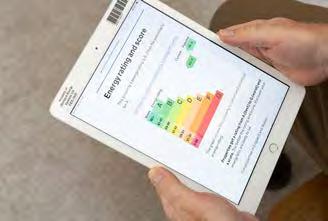
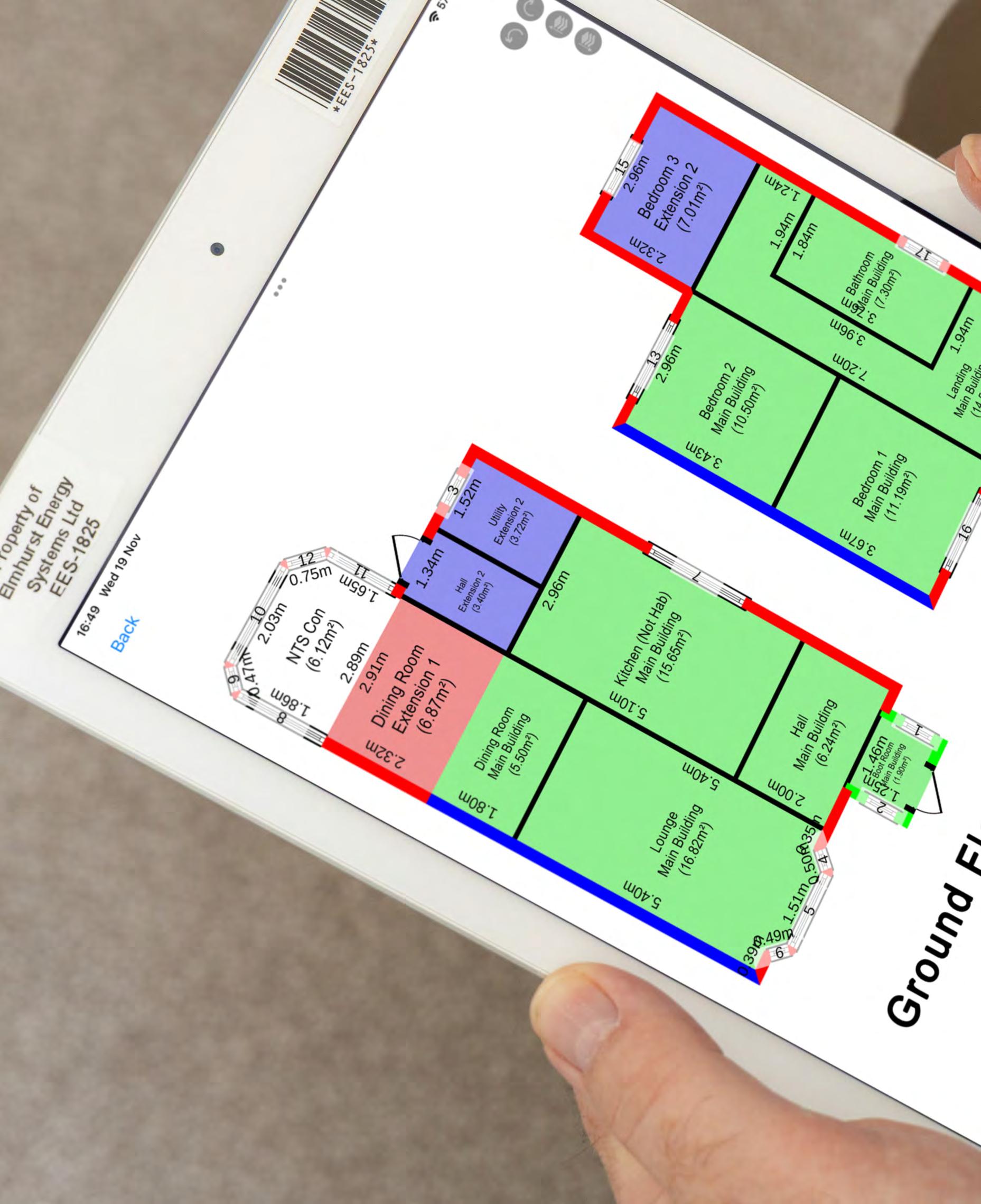
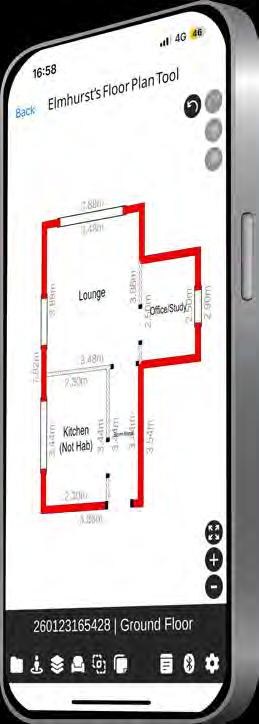
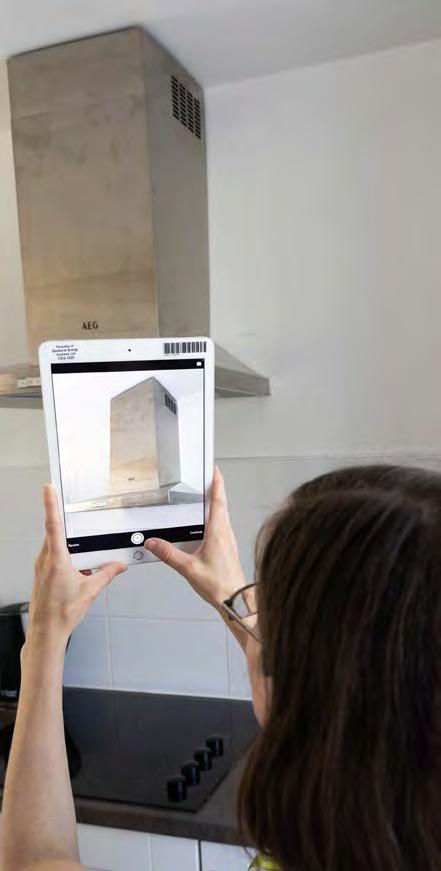
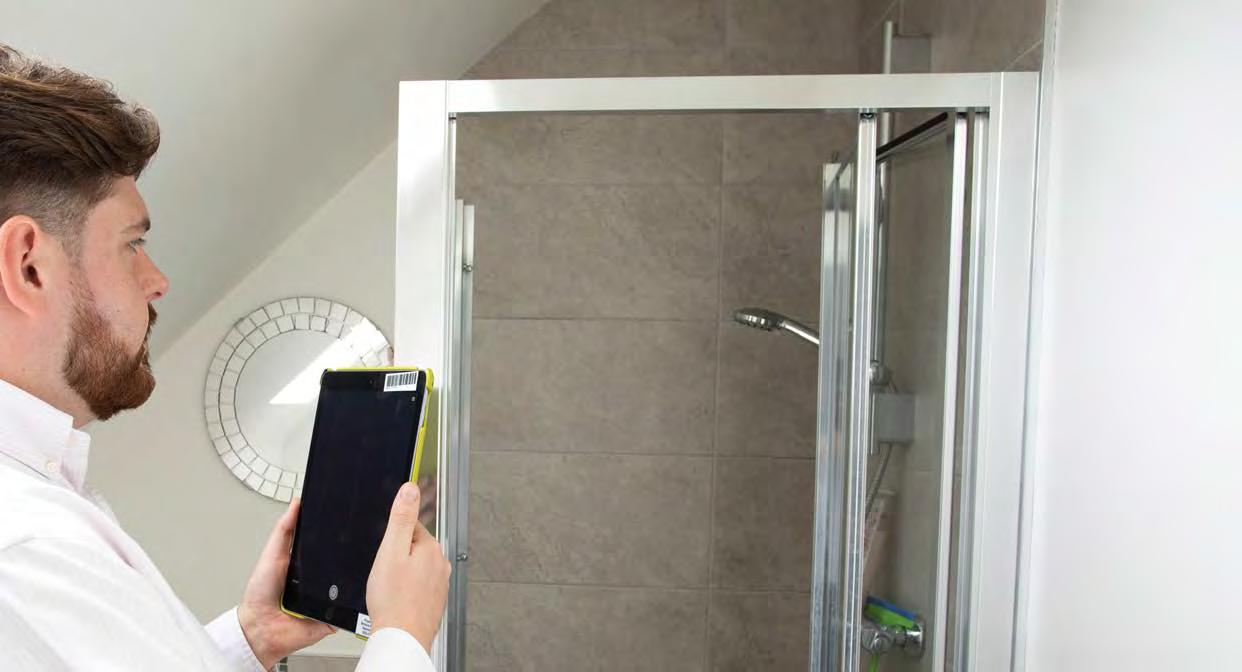
Create digital floor plans right in the RdSAP Go app with a tool designed specifically for energy assessors. Built to support EPCs and Energy Reports, it helps you produce clearer records, improve consistency and reduce the risk of manual errors.
Work with greater confidence
Automatically calculated room and window dimensions help reduce the risk of manual mistakes.
Create clearer audit evidence
Standardised digital floor plans provide clearer, more consistent records than handwritten sketches.
Designed for energy assessors
Purpose-built to support EPCs and Energy Reports, without the unnecessary complexity of estate agency floor plan software.
£ Available on iOS Devices
Practical and affordable
At just 25p per floor plan, it gives assessors a costeffective way to modernise their records directly within RdSAP Go.
Download the app now and start creating clear, consistent floor plans directly in RdSAP Go.
* Regular lodgement fees and VAT apply.
Hello and welcome to the latest edition of Energy Matters.
As always, I would like to begin by thanking all of our contributors, members, partners and colleagues across the industry who continue to share their knowledge and insight. This magazine remains an important opportunity to reflect on the direction of the sector, highlight the issues that matter most, and recognise the professionalism of those working to improve the energy performance, safety and quality of our buildings.
This edition arrives at a significant moment for the built environment. The publication of the Future Homes Standard and Future Buildings Standard represents a major industry milestone, providing long-awaited clarity on the next phase of energy performance requirements for new homes and buildings. Low carbon heating, renewable generation, stronger fabric performance and more rigorous compliance are no longer distant ambitions; they are becoming central to how buildings will be designed, assessed and delivered.
For energy assessors, this reinforces the importance of technical expertise and early engagement. Whether working in new build, non-domestic assessment, retrofit, overheating, airtightness or existing dwellings, the role of the competent professional continues to expand. As methodologies evolve and standards become more demanding, assessors will be essential in helping clients understand what compliance looks like in practice and how to prepare with confidence.
We have also seen growing scrutiny across the rented sector. The Renters’ Rights Act, the extension of the Decent Homes Standard, the introduction of Awaab’s Law, and Scotland’s proposed strengthening of damp and mould protections all point in the same direction: property standards, health, ventilation, energy efficiency and evidencebased assessment can no longer be viewed in isolation. Landlords and housing providers will increasingly need clear, competent advice, and this creates both responsibility and opportunity for our members.
Retrofit remains a central theme, but it is also a sector facing uncertainty. With ECO now ended and still no confirmed replacement in place, this is the first time in many years that we have not had an active fuel poverty strategy. We await further detail from government in the coming months, but this gap understandably places pressure on those who were previously working in ECO and related delivery programmes. At the same time, conversations at Futurebuild, held alongside UK Construction Week, demonstrated that momentum around retrofit remains strong, particularly as attention turns towards social housing delivery and the practical challenge of upgrading homes at scale.
Elmhurst has continued to engage directly with members and industry stakeholders through our events programme. We have hosted two successful conferences, with our most recent taking place in Scotland and featuring valuable discussions on policy change, retrofit, housing quality, regulation and the future role of competent professionals. These events remain vital, not only for sharing information, but for listening to the sector and ensuring our support reflects the real challenges members are facing.
This edition also looks closely at EPC accuracy, overheating regulation, PAS 2038, legionella risk, market data and the continuing importance of independence and quality assurance. Taken together, these articles show
a sector that is changing quickly, but also one that is maturing. The expectation is clear: better evidence, stronger competence, more consistent standards and independent oversight must sit at the heart of building assessment.
Elmhurst will continue to support members through this period of change with training, software, technical guidance, events and robust quality assurance. The challenges ahead are significant, but so too are the opportunities. As ever, our focus remains on helping our members deliver accurate, professional and trusted assessments that support better buildings, better homes and better outcomes for everyone.
Stuart Fairlie Managing Director, Elmhurst Energy
Contact us for the latest news and updates
Elmhurst Energy, 16 St Johns Business Park, Lutterworth, LE17 4HB
Emma Grantham New Build Dwellings Team Leader and Overheating Scheme Owner
Josh Wakeling Head of Training
Caroline Postles Existing Dwellings Technical Team Manager
Jason Hewins New Build Dwellings Manager
Daniel Stapleton Existing Dwellings Team Leader
Simon Flint Retrofit Scheme Manager
Book Legionella Risk Assessment Training today
Growing Awareness of Legionella Risks Highlights Need for Property Checks
DANIEL STAPLETON
Existing Dwellings Team Leader
Awareness around the risk of Legionella is increasing, and landlords, assessors and property professionals are being encouraged to take practical steps to keep water systems safe in homes and buildings.
What is Legionella?
Legionella is a type of bacteria that can grow in water systems. If people breathe in tiny droplets of contaminated water, for example from a shower or tap, it can cause Legionnaires’ disease, a serious form of pneumonia. Symptoms can include high temperature, cough and breathing difficulties, with potentially severe consequences for vulnerable individuals.
While commonly found in natural water sources, Legionella becomes more of a concern when it grows in man-made water systems, such as hot and cold-water systems, storage tanks, pipework, taps and showerheads. The risk can increase when water is left standing for long periods and reaches between 20°C and 45°C, making poorly maintained or infrequently used systems particularly susceptible to the bacteria.
UK health and safety guidance
Under UK health and safety guidance, landlords and those responsible for buildings have a duty to understand where risks may exist and take reasonable steps to manage them. This is achieved through a Legionella risk assessment, which looks at the condition of water systems and identifies any areas of concern, alongside recommended preventative measures.
A Legionella risk assessment does not
involve testing the water for bacteria. Instead, it focuses on preventing the conditions that allow Legionella to grow. Control measures may include flushing taps and shower systems through before a new tenancy starts, maintaining hot and cold-water temperatures, cleaning showerheads, covering cold water tanks properly, and removing unused pipework if necessary.
Scottish Government guidance
In Scotland, landlords are legally required to take all reasonable steps to reduce the risk of Legionella and carry out a Legionella risk assessment before letting a property, to ensure water systems are safe and risks are properly managed.
Supporting Safe and Well-Maintained Homes
Elmhurst Energy’s Legionella Risk Assessment Training helps Domestic Energy Assessors, landlords and property professionals understand how to carry out assessments with confidence.
Delivered on demand, the course provides a flexible way to build the knowledge needed to carry out compliant assessments confidently and efficiently, ideal for those looking to expand their service offering to clients, while supporting compliance and occupant safety. Assessments can typically be completed in around 30 minutes and can often be carried out during existing property visits, such as EPC inspections.
With Legionnaires’ disease largely preventable, regular assessments and maintenance remain the most effective way to manage risk and protect occupants.
Major Industry Milestone as Future Homes and Buildings Standards are Released
JASON HEWINS
New Build Dwellings Manager
JOHN ROBINSON
Non-Domestic Scheme Manager
The publication of the Future Homes Standard and Future Buildings Standard marks a major milestone for the built environment, providing longawaited clarity on the next phase of energy performance requirements for new homes and buildings in England.
For many years, industry has been working towards this moment. The Future Homes Standard was first presented to the sector through consultation in 2019, followed by a further consultation in 2023. Since then, energy assessors, designers, developers, manufacturers and building control professionals have been waiting for confirmation of the technical route that will shape compliance for the next generation of new homes and buildings.
That confirmation has now arrived.
On 24 March 2026, the Ministry of Housing, Communities and Local Government (MHCLG) published the long-awaited Future Homes Standard. Shortly afterwards, Approved Document L, Volume 2: Buildings other than dwellings (2026) was also published, giving industry the clearest indication yet of how the Future Buildings Standard will be delivered in practice for nondomestic buildings.
Together, these releases represent a significant step forward. They translate long-standing policy ambition into technical requirements and set a defined pathway towards buildings that are designed to be highly efficient, low carbon and ready for a decarbonised energy system.
For Elmhurst members, the message is clear: the regulatory direction of travel is now firmly established, and
energy assessors will have an increasingly important role in helping clients understand, evidence and achieve compliance.
The Future Homes Standard for domestic buildings
The Future Homes Standard is the next revision to Part L of the Building Regulations in England. Its purpose is to ensure that new homes are built to much higher energy performance standards and are capable of achieving net zero carbon emissions as the electricity grid continues to decarbonise.
The Notional Dwelling
One of the most significant outcomes from the consultation response is the confirmation of the notional dwelling that will form the basis of the new performance standards. Government had previously consulted on two uplift options over Part L 2021. Both retained a broadly similar fabric specification to the 2021 uplift, but moved away from fossil fuel heating by replacing gas boilers with heat pumps for space and water heating.
The selected option includes photovoltaic panels, decentralised mechanical extract ventilation, an airtightness test score of 4 m³/m²/ hr at 50 Pa, and wastewater heat recovery systems. By using a heat pump and PV within the notional dwelling, the Future Homes Standard
effectively signals the end of fossil fuel heating as the default route for new homes.
This is a major shift. Under previous regulations, there remained more flexibility for designs to meet compliance targets using gas heating in combination with other improvements. Under the Future Homes Standard, the compliance framework is clearly moving towards low carbon heating, improved fabric performance and on-site renewable generation as central components of new home design.
A requirement for renewable energy generation
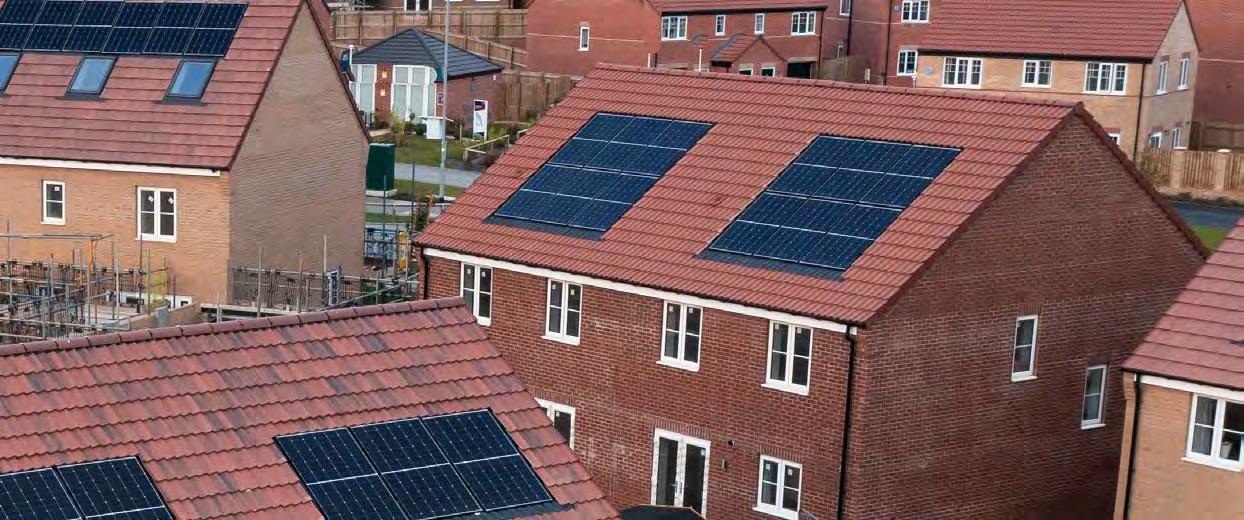
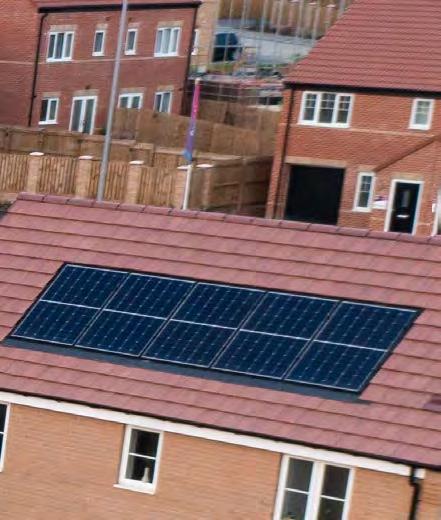
A new functional requirement has also been introduced into Schedule 1 of the Building Regulations, stipulating a minimum amount of renewable energy generation on new homes. In practice, this is expected to mean that the vast majority of new homes will include solar photovoltaic panels, as PV remains one of the most established and cost-effective methods of meeting the requirement.
This should provide benefits not only in terms of reduced carbon emissions, but also in helping to reduce energy bills for future occupants. The Approved Document includes guidance for situations where complex roof designs may limit the ability to install sufficient PV to meet the minimum requirement, but the overall intent is clear: renewable energy generation is becoming a standard
expectation for new homes.
Compliance metrics remain familiar
Although the Future Homes Standard represents a substantial performance uplift, the core compliance metrics will remain familiar to those already working with Part L 2021.
The current system uses three main performance standards:
Primary Energy Rate (DPER)
Carbon Emissions (DER)
Fabric Energy Efficiency (DFEE)
These are currently calculated through SAP 10.2. The consultation response confirms that the same three metrics will be retained under the Future Homes Standard, calculated using the national calculation methodology approved by Government.
This continuity matters. It allows the industry to move into a more ambitious compliance environment without losing the fundamental structure that assessors, designers and developers already understand.
A familiar calculation methodology to meet compliance
There has, however, been significant discussion around the future of the national calculation methodology.
Government had originally proposed the Home Energy Model, with a Future Homes Standard wrapper, as the replacement for SAP. However, in February 2026, MHCLG confirmed that a modified version of SAP 10, known as SAP 10.3, will initially be the only methodology used to demonstrate compliance.
While the Home Energy Model remains the future direction, it is not currently ready to be used as the approved methodology for this purpose. The decision to use SAP 10.3 at launch gives industry immediate clarity and continuity, while avoiding the disruption of introducing a fundamentally new methodology at the same time as a major regulatory uplift.
For assessors, this means there will be a clear, approved and supported route to compliance from day one. Elmhurst’s Design SAP 10 software has already been updated to include SAP 10.3 so assessors can get ahead of these changes and start modelling now.
Timelines and transitional arrangements
The new regulations are due to come into force on 24 March 2027. As with previous changes to Part L, there will be a twelve-month transitional period.
From 24 March 2027, any new homes subject to Building Regulations will need to be constructed to the Future Homes Standard. Homes that are already
under construction will be able to continue under the version of Part L that applied when construction commenced.
However, the Government has also confirmed that older transitional arrangements will be “sunsetted”. This means that dwellings currently benefiting from older transitional arrangements, where work has not commenced on individual plots within the transition period, will need to be constructed to the Future Homes Standard.
This is a notable development. It reflects the Government’s intention to prevent outdated standards from continuing indefinitely across sites where work has not genuinely begun. For developers, design teams and assessors, it reinforces the need to review pipelines carefully and understand which projects will fall under the new regime.
The Future Buildings Standard for non-domestic buildings
Alongside the Future Homes Standard, the publication of Approved Document L, Volume 2: Buildings other than dwellings (2026) provides important clarity for the non-domestic sector.
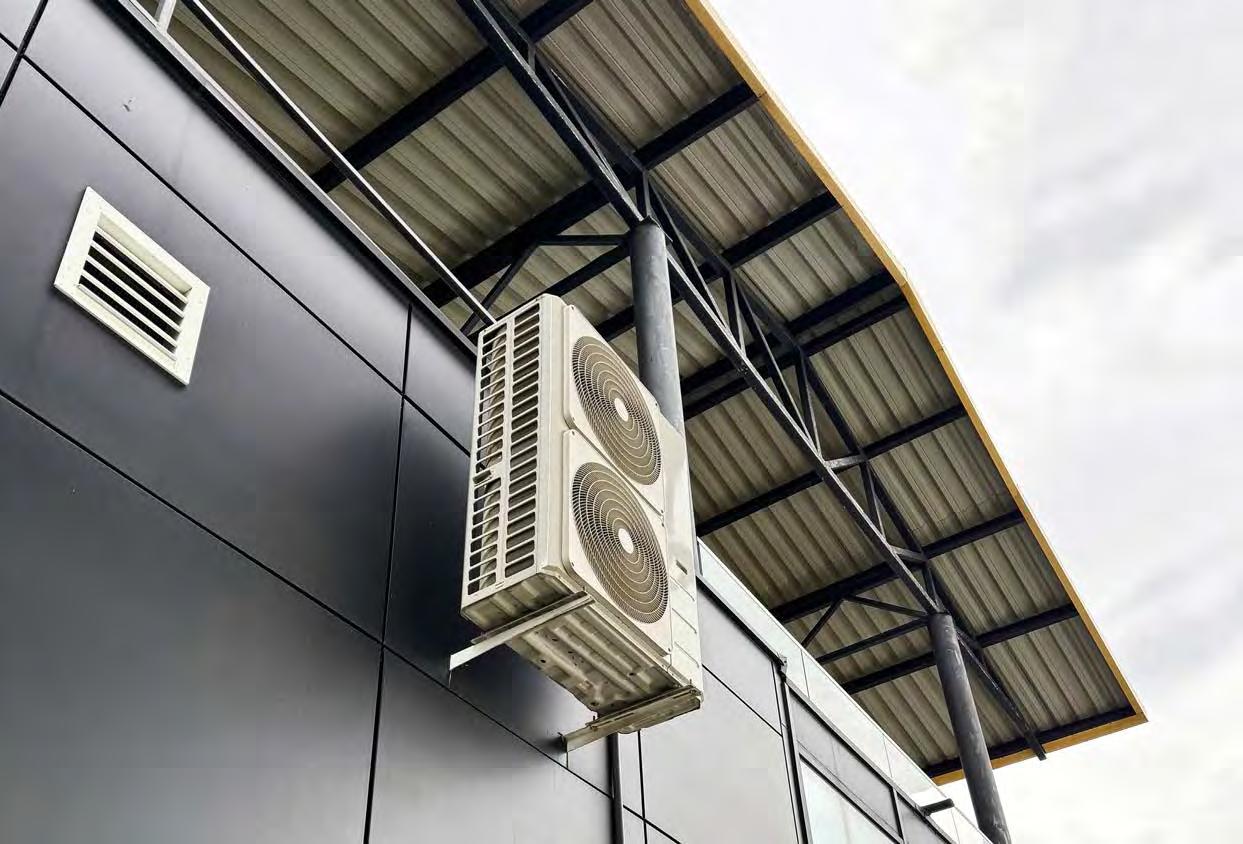
The Future Buildings Standard will apply to new non-domestic buildings and is designed to move typical new commercial buildings away from fossil fuel heating and towards technologies such as heat pumps and low carbon heat networks. This represents a fundamental change in how nondomestic buildings are designed, assessed and delivered.
Low-carbon heating becomes central to
compliance
One of the most significant shifts under the Future Buildings Standard is the move away from fossil-fuel
heating. The updated guidance is designed to make low-carbon heating, such as heat pumps and low-carbon heat networks, central to compliance. This means heating strategy will play a much more decisive role in both the design and assessment of new non-domestic buildings.
A more demanding compliance framework
The compliance framework will also become more challenging. Carbon emissions and primary energy will remain key performance metrics, but tighter targets and updated notional building specifications will set a higher benchmark for new buildings.
Stronger fabric standards, more efficient building services and greater use of on-site renewable generation, including solar PV, are expected to form an increasingly important part of compliant design. As a result, the flexibility available under earlier standards is likely to reduce.
Standard
Part L 2021
Future Buildings Standard 2025
Moving towards zero carbon ready buildings
While Part L 2021 introduced an important uplift in performance, it was always intended as an interim step. Under that framework, some new non-domestic buildings could still achieve compliance using gas heating alongside improvements to fabric and services.
The Future Buildings Standard represents a more fundamental shift. Its focus is on ensuring that new non-domestic buildings are “zero carbon ready”, meaning they are highly efficient, designed around low-carbon heating, and prepared to perform in a future where the electricity grid continues to decarbonise.
This means designs that rely on gas boilers, weaker fabric performance or limited renewable generation are far more likely to struggle.
When is the new standard expected to come into effect?
The Government has confirmed that the Future Buildings Standard will come into force on 24 March 2027 for non-higher-risk buildings, giving the sector a defined implementation date and a clear window to prepare.
What this means for energy assessors
For energy assessors, both the Future Homes Standard and Future Buildings Standard reinforce the growing importance of technical expertise, early engagement and robust compliance advice.
For On Construction Domestic Energy Assessors, SAP 10.3 provides continuity, but the standard itself raises the bar. Assessors will need to
Requirements
~27% CO2 reduction vs 2013; gas heating often still compliant Zero-carbon ready new non-domestic buildings; stronger fabric and services, low-carbon heating, and greater use of on-site renewable generation
understand the implications of heat pumps, PV, airtightness, wastewater heat recovery, ventilation and fabric performance within the compliance framework. They will also play a vital role in helping clients interpret transitional arrangements and prepare for the new requirements.
At present, NDEAs are unable to model the full impact of the changes outlined in Approved Document L2 (2026), as the SBEM calculation methodology has not yet been updated. Elmhurst will keep members informed as further details become available.
However, the direction of travel is clear. Tighter targets, revised calculation tools, updated notional buildings and a stronger emphasis on low-carbon design will increase the technical demands of assessment and bring assessors further into design-stage decisionmaking.
This is likely to mean:
more complex modelling
greater involvement at the design stage
increased demand for lowcarbon expertise
more input into design decisions
As a result, NDEAs will play a key role in helping clients understand the requirements of the Future Buildings Standard and make informed decisions that support compliance from the outset.
Supporting members through change
The publication of these standards marks the beginning of a new implementation phase. While the direction is now clearer, there will still be detail to work through, software updates to manage, methodologies to understand and client questions to answer.
Elmhurst is well placed to support members throughout this transition. Our focus remains on providing the guidance, software, training and technical support that members need to operate with confidence as the industry evolves.
Over the coming weeks and months, Elmhurst will continue to release resources to help members understand the changes and explain their practical implications to clients. This will include support across SAP 10.3, the Future Homes Standard, updated non-domestic requirements, SBEM developments, modelling guidance, CPD and clientfacing information.
The publication of the Future Homes Standard and Future Buildings Standard is more than a regulatory update. It is a defining moment for the industry. It confirms that low carbon heating, renewable energy generation, improved fabric and more rigorous assessment are no longer future ambitions; they are becoming the foundation of new building compliance.
Read the Standards
Renters’ Rights Act: A Turning Point for Property Standards and the Role of Energy Assessors
CAROLINE POSTLES
Existing Dwellings Technical Team Manager
The private rented sector is changing significantly. With key measures from the Renters’ Rights Act 2025 now in force from 1 May 2026, landlords, letting agents and property professionals are operating in a more regulated environment, with greater expectations around tenancy security, property standards and compliance.
Much of the attention has understandably focused on the end of Section 21 ‘no-fault’ evictions. However, for Domestic Energy Assessors, the wider message is just as important: the quality, condition and performance of rented homes are now under closer scrutiny than ever before.
From Security of Tenure to Quality of Homes
At its core, the Act strengthens tenant security, enabling renters to remain in properties longer and raise concerns without fear of eviction. Alongside this, structural changes such as the creation of a Private Rented Sector Ombudsman, the extension of the Decent Homes Standard, and the introduction of Awaab’s Law bring issues like damp, mould, and health hazards firmly into focus.
For landlords, this means it is no longer enough to simply have the right paperwork in place. They need to be able to demonstrate that their properties are safe, well maintained and fit for occupation. Issues such as damp, mould, ventilation, heating and energy efficiency are now firmly part of the compliance conversation.
The Increasing Importance of EPCs
Energy Performance Certificates have long been a legal requirement when a property is sold or rented. However, in a more regulated private rented sector, they are becoming more than a transactional document.
EPCs are increasingly part of the evidence base that helps landlords understand property performance, plan improvements and demonstrate compliance. This means they must be accurate, up to date and supported by good evidence.
Energy performance also cannot be viewed in isolation. Poor insulation, inefficient heating and inadequate ventilation can all contribute to condensation, damp and mould. For DEAs, this reinforces the importance of producing robust assessments
and helping clients understand what the results mean in practice.
The Expanding Role of the DEA
The role of the Domestic Energy Assessor continues to evolve. While EPCs remain a core part of the profession, many assessors are now supporting landlords with a wider range of property performance and compliance issues. This may include:
Supporting landlords with EPC Band C improvement pathways for Minimum Energy Efficiency Standard
Helping landlords futureproof properties against upcoming regulation
Identifying risk factors related to moisture and ventilation
Providing insights that align energy efficiency with health outcomes
As a result, the DEA is increasingly positioned as a trusted technical consultant, not just someone who produces an EPC. With landlords facing greater scrutiny and broader compliance obligations, there is growing demand for assessors who can support a wider range of property assessments, from legionella risk and damp and mould inspections to retrofit and MEES advice.
Legionella Risk Assessments
Legionella risk assessment is a natural area for DEAs to consider, particularly for those already working with landlords and property managers. Water hygiene forms part of a landlord’s wider duty of care, making it a relevant addition to broader property compliance work.
Damp and Mould Assessments
Damp and mould assessment is closely linked to housing quality, ventilation and occupant health. With Awaab’s Law bringing greater focus to how these issues are identified and addressed, this is a valuable area of knowledge for assessors working in domestic property.
Raising standards across the rented sector
The Renters’ Rights Act reinforces a clear direction of travel: property compliance is becoming more connected. Energy efficiency, ventilation, moisture risk and occupant health can no longer be viewed in isolation. Together, they all contribute to the delivery of safer, more efficient and better-quality homes.
MEES Consultancy
MEES remains a key area for landlords, particularly as energy efficiency requirements continue to evolve across the rented sector. For DEAs, strong knowledge of MEES supports clearer advice on EPC performance, improvement options and future compliance.
For Domestic Energy Assessors, this creates both higher expectations and new opportunities. Accurate assessments, clear advice and wider technical knowledge will become increasingly important as landlords look to understand their obligations and improve the performance of their properties.
As standards continue to rise, DEAs who develop their skills and broaden their services will be well placed to support landlords, tenants and the wider housing sector.
Changing Landlord Behaviour
The Renters’ Rights Act also changes how landlords approach property management. With stronger enforcement, greater transparency and more routes for tenants to challenge poor practice, landlords will need to show that their properties are being managed responsibly. This is likely to increase the value of good-quality assessments, clear reports and practical improvement advice. For landlords, the priority will be to:
improve property performance
address condition issues early
keep clear compliance records
Find Out More
Find Out More
Government announces full review of Overheating Regulations following industry feedback
EMMA GRANTHAM
New Build Dwellings Team Leader and Overheating Scheme Owner
The government has confirmed that it will launch a full review of Approved Document O, the overheating regulation first introduced in 2021 to limit excessive heat in new homes. The decision follows extensive industry feedback gathered through the Future Homes Standard consultation, undertaken in 2023, with the consultation response published on 24 March 2026.
Updated versions of Parts L and F were published on the same date; however, Part O will now undergo its own standalone review process, reflecting the significant volume and complexity of issues raised by stakeholders and placing it on a separate trajectory from the rest of the Future Homes Standard updates.
In this article we’ll take a look at some of the feedback provided in the consultation responses and announced plans by Government.
What is Overheating?
Overheating occurs when a building’s internal temperature rises to levels that negatively impact occupant comfort, health, or usability, typically during warmer weather or due to excess solar gains and insufficient ventilation. In regulatory terms (e.g. Part O), overheating risk is assessed based on factors like:
Solar gains (sunlight through glazing)
Internal heat gains (people, appliances)
Ventilation effectiveness
Building fabric and orientation
There are two compliance methodologies, a simplified prescriptive method and a detailed dynamic modelling method, allowing designs to demonstrate overheating risk either through standard criteria or more advanced analysis.
Questioning the Simplified Approach
Across the industry, feedback on Part O’s simplified method highlighted concerns around complexity, clarity and potential limitations in its application. Builders and assessors highlighted numerous omissions, including thermal mass, internal shading, passive design strategies, and triple glazing.
As a result of these gaps, many organisations are bypassing the simplified approach entirely and moving straight to dynamic thermal modelling (DTM). Several respondents reported that developments which fail the simplified method frequently pass DTM without any design changes.
Before Part O was introduced, mitigating overheating risk was contained in Part L and determined within the SAP assessment. A growing number of stakeholders therefore questioned why overheating assessment is no longer integrated into SAP, or whether it could instead be brought into the upcoming Home Energy Model (HEM) to improve consistency and reduce duplication of work.
Part O vs Other Building Regulations
One of the strongest recurring themes was the conflict between Part O and other areas of the Building Regulations – particularly Parts F (Ventilation), L (Conservation of Fuel and Power), Q (Security), B (Fire Safety) and K (Protection from Falling, Collision & Impact).
Security requirements were repeatedly cited as a major challenge, with many ground floor bedrooms unable to satisfy both the ventilation requirements of Part O and the security requirements of Part Q.
Respondents also highlighted that noise constraints often prevent residents from opening windows at night, pushing developments towards mechanical cooling systems. This reliance on active cooling contradicts the original intent of Part O and sits uncomfortably alongside the energy efficiency objectives of Part L.
Concerns were also raised around window sill height requirements, where Part O has resulted in sill heights exceeding those required under Part K. Respondents noted that this can compromise accessibility, restrict views for wheelchair users, and result in uniform, less aesthetically appealing façades.
Expansion of Overheating Requirements
Respondents widely identified extensions, conservatories and highly glazed additions as a significant overheating risk, particularly where large bifold doors or multiple rooflights are
installed. The overwhelming view was that clearer guidance is needed on glazing specification, thermal separation, and shading solutions in these scenarios.
Competency and Consistency is Key
Widespread inconsistencies in assessment quality, reporting standards and modelling outcomes led many respondents to call for stronger requirements around recognised competency, as well as formal approval of software and assessment tools to ensure consistent results. There was also a strong push for standardised reporting formats and greater transparency in the assumptions used within overheating models.
Elmhurst fully supports this feedback and is already taking proactive steps to raise standards across the industry. Our Overheating Scheme provides formal recognition for qualified DTM assessors, supported by a standardised NHBC approved reporting template.
Government Response
In its official response, the government announced plans for a full technical review of Part O, including:
Adoption of the updated CIBSE TM59 for dynamic modelling
Improvements to the simplified method
Review of noise and security guidance
Consideration of expanding Part O to material change of use dwellings
Analysis of conflicts with other parts of the Building Regulations
Some changes are already emerging, for example, where air conditioning and/or reduced g values are required to comply with Part O, the Part L energy efficiency standards will also account for these to prevent conflicts between the two.
Elmhurst’s view on the future of Part O
The outcomes of the call for evidence align closely with the feedback and queries received by Elmhurst’s New Build Dwellings Support team since Part O’s introduction. We therefore welcome and fully support the government’s decision to conduct a comprehensive review.
Elmhurst firmly believes that retaining a dedicated overheating regulation is essential to ensuring that UK homes remain safe, resilient and comfortable, both now and in the future. We strongly support the need for competency, standardisation, and clarity and hope that any future revisions will make assessments more straightforward for assessors and modellers, while improving understanding across the wider industry.
Elmhurst Launches new competency schemes for key PAS 2038 retrofit roles
JOHN ROBINSON Non-Domestic Scheme Manager
As demand for non-domestic retrofit continues to grow, so too does the need for competent professionals who can assess buildings, manage project risks and lead retrofit work with confidence.
PAS 2038 provides the framework for improving the energy performance of non-domestic buildings, but successful delivery depends on the people responsible for applying it. Projects must be based on robust evidence, coordinated effectively and delivered with a clear understanding of the building, its use and its long-term performance.
To support this growing market, Elmhurst Energy has launched two
new competency schemes: the Retrofit Lead Assessor Competency Scheme and the Retrofit Lead Professional Competency Scheme.
The schemes have been developed to recognise the skills and knowledge required to carry out two key roles within the PAS 2038 process. They provide clear routes for professionals to demonstrate competence, access specialist support and gain recognition in two important areas of non-domestic retrofit: assessment and project leadership.
The Role of a Retrofit Lead Assessor
The Retrofit Lead Assessor plays a critical role in establishing the evidence base for a PAS 2038 project.
Before retrofit measures can be recommended or designed, the building must be properly understood. This includes its current energy performance, condition, services, occupancy and use.
The Retrofit Lead Assessor helps ensure that retrofit decisions are informed by robust data and a clear understanding of how the building performs.
This is particularly important in the non-domestic sector, where buildings can vary significantly in size, complexity, construction, operation and energy demand. A thorough assessment helps reduce the risk of inappropriate recommendations and supports better outcomes for building owners, occupants and project teams.
Elmhurst’s Retrofit Lead Assessor Competency Scheme recognises professionals who are competent to
carry out Retrofit Lead Assessments and Condition Reports in accordance with PAS 2038.
For experienced non-domestic energy professionals, the route into the scheme is supported by Elmhurst’s Retrofit Lead Assessor Training. This training is designed for professionals such as NonDomestic Energy Assessors, Display Energy Certificate Assessors, Air Conditioning Inspectors and ESOS Lead Assessors who want to develop their role in non-domestic retrofit. Successful candidates can apply to join the competency scheme, gaining professional recognition alongside access to Elmhurst’s technical support, guidance materials, discounted CPD, purposebuilt reporting tools and inclusion within Elmhurst’s public directory of retrofit professionals.
The Role of a Retrofit Lead Professional
The Retrofit Lead Professional is central to the successful coordination and delivery of PAS 2038 projects.
While the Retrofit Lead Assessor helps establish a clear understanding of the building, the Retrofit Lead Professional takes responsibility for leading the wider retrofit process. This includes overseeing the project from inception through to completion and ensuring that each stage is planned, coordinated and delivered in line with PAS 2038.
The role brings together key project stakeholders, including the Retrofit Lead Assessor, Retrofit Designer and Retrofit Installer. It also provides oversight of compliance, risk management and project outcomes.
This leadership function is essential. Non-domestic retrofit projects can involve complex buildings, multiple parties and a range of technical considerations. Without effective coordination, there is a greater risk that improvements may not deliver the intended outcomes or may create unintended consequences for building performance, operation or occupant wellbeing.
Elmhurst’s Retrofit Lead Professional Competency Scheme has been developed to recognise individuals with the skills, knowledge and experience needed to lead PAS 2038 projects.
Routes into the scheme are available for competent Retrofit Lead Assessors with a Level 5 Domestic Retrofit Coordinator qualification, as well as other experienced building professionals through defined routes to competence.
Supporting a competent non-domestic retrofit workforce
Non-domestic retrofit has an important role to play in improving building performance and supporting the UK’s wider decarbonisation goals. However, the success of this work will depend
on the sector’s ability to build confidence in how retrofit projects are assessed, planned and delivered.
Unlike some domestic settings, non-domestic buildings can vary significantly in scale, construction, use, occupancy patterns and operational complexity. This makes a clear, evidence-led approach essential. Retrofit decisions must be based on a robust understanding of the building, and projects must be managed by professionals who can coordinate different disciplines while maintaining a focus on performance, compliance and risk.
This is where the Retrofit Lead Assessor and Retrofit Lead Professional roles become increasingly important. The Retrofit Lead Assessor helps ensure that projects begin with the right evidence base. The Retrofit Lead Professional provides the leadership needed to manage the process, bring key stakeholders together and support effective delivery through to completion.
Together, these roles help strengthen the PAS 2038 process by creating clearer accountability at two critical points: assessment and project leadership. They also reflect a broader shift within retrofit towards recognised competence, structured delivery and greater assurance for clients, building owners and occupants.
Elmhurst’s new competency schemes have been developed in response to this need. By providing defined routes for professionals to demonstrate competence in these roles, the schemes support the development of a more skilled, trusted and consistent non-domestic retrofit workforce.
Find out more about Retrofit Lead Assessor Training
Growing Demand for Damp and Mould Assessments as Scotland Looks to Strengthen Tenant Protections
SIMON FLINT
Retrofit
Scheme Manager
Everyone deserves to live in a home that is safe, warm and free from damp and mould. That principle is now driving significant change across the rented housing sector, with legislation strengthening expectations on landlords and placing greater focus on competent investigation, timely repairs and healthier homes.
For energy assessors, retrofit professionals, surveyors and housing practitioners, this represents both a responsibility and an opportunity. As damp and mould moves higher up the legislative and public health agenda, landlords will increasingly need professionals who can identify risks accurately, understand the role of ventilation and building performance, and produce clear, evidence-based reports.
What is Awaab’s Law and what applies in England?
Awaab’s Law is named after twoyear-old Awaab Ishak, who tragically died in 2020 following prolonged exposure to mould in his family’s housing association flat in Rochdale. His death brought national attention to the serious health risks associated with damp and mould, and to the need for housing providers to act quickly when issues are reported.
In England, Awaab’s Law introduced new requirements for social landlords to investigate and fix reported hazards, including damp and mould, within strict timescales. Where necessary, landlords must also take steps to ensure tenants are not left living in unsafe conditions.
Scotland’s proposed regulations: what could change?
Scotland is now expected to introduce equivalent requirements
through The Investigation and Commencement of Repair (Scotland) Regulations 2026, which are anticipated to come into force from 6 October 2026.
The proposed regulations would apply to both social and private rented properties, creating a broader obligation for landlords to respond to damp and mould concerns in a timely and structured way.
Under the draft legislation, landlords would be required to ensure that properties are substantially free from damp and mould, and to investigate and commence repairs where damp or mould is reported.
Once a landlord is made aware of a potential issue, they would have up to 10 working days to investigate and determine whether a qualifying repair is required. Importantly, that investigation must be carried out by a competent person.
A written summary of the investigation would need to be
provided to the tenant within three days of the investigation being completed. If a qualifying repair is identified, work would need to begin within five working days, with repairs completed within 20 working days.
Preparing for tighter timescales and clearer responsibilities
For landlords, the proposed changes signal a need to take a more structured and proactive approach to damp and mould, supported by clear evidence, competent assessment and timely action.
The emphasis on competent investigation is particularly important. Damp and mould can be caused or worsened by a range of factors, including building defects, inadequate ventilation, thermal bridging, heating patterns, insulation issues and occupant interaction with the property.
A robust assessment should therefore look beyond visible mould growth. It should consider the wider building performance context, record relevant evidence and provide landlords with clear information to support appropriate remedial action.
For social and private landlords in Scotland, the proposed timescales will create additional pressure to respond quickly and consistently. Having access to trained, competent assessors will be essential for meeting these expectations and supporting better outcomes for tenants.
Connecting building performance with healthier homes
The growing focus on damp and mould reflects a wider change in direction across the housing sector. Policy is increasingly recognising that homes are not just physical assets; they are environments that directly affect health, wellbeing and quality of life.
This aligns closely with the work of energy and retrofit professionals.
The course supports assessors in understanding how moisture, ventilation and building performance interact, and how to produce clear, professional reports for clients. It is suitable for Domestic Energy Assessors, surveyors, stock condition surveyors, retrofit professionals, housing practitioners and anyone responsible for investigating moisture issues in homes.
After completing the training, learners will be eligible to join Elmhurst’s Damp and Mould Assessor Competency Scheme. Membership demonstrates competence and professional standards, while providing access to Elmhurst’s purpose-built reporting software, technical support, the Find an Assessor directory and insurance cover for damp and mould assessment work.
With legislation continuing to raise expectations across the rented sector, now is the time for professionals to build competence and broaden their service offering.
Become a competent Damp and Mould Assessor
Demand for damp and mould assessments is expected to grow as landlords prepare for new duties and tighter timescales. For assessors and property professionals, this is an opportunity to support safer, healthier homes while expanding the services they can offer to clients.
Elmhurst’s Damp and Mould Assessor Training and Competency Scheme provide a clear route to developing the knowledge, confidence and professional recognition needed to meet this growing demand.
Find Out More
The Retrofit Crossroads: Social Housing, Rental Standards and the Next Phase of Delivery
SIMON FLINT
Retrofit Scheme Manager
The UK retrofit sector is at an important crossroads. Following the end of ECO4, and with its replacement scheme not yet active, activity has slowed and many organisations are facing a period of uncertainty. For a sector that has relied heavily on funded delivery programmes, this gap is significant. It has affected workloads, created pressure for those previously working in ECO, and left many waiting for clearer direction from government.
However, this should not be seen as the end of the retrofit opportunity. While parts of the market have stagnated, there are areas where future demand may begin to emerge. The government’s Warm Homes Plan, increasing expectations across the rented sector, and the growing focus on social housing improvement all point towards a different phase of retrofit delivery. Rather than simply replacing ECO4 like-for-like, the next stage of the market may be shaped by broader housing quality objectives, decarbonisation targets and the need to improve homes at scale.
At the centre of this opportunity sits the Warm Homes Plan, the government’s flagship programme to improve energy efficiency across the UK’s ageing housing stock. Backed by around £15 billion in funding, the plan aims to upgrade as many as 5 million homes by 2030, making it the largest programme of its kind in British history. The ambition is clear: reduce energy bills, tackle fuel poverty, and accelerate the transition to low-carbon homes.
This is demonstrated by the focus on installing renewable technologies under the Warm Homes Plan and the increased funding to support this.
However, the delivery of this ambition is heavily dependent on two critical sectors: social housing and the private rented sector and with changes on the horizon to MEES regulations in both areas, the need to ‘get this right’ has never been more important.
Social Housing and meeting new MEES standards
Social housing is expected to play a pivotal role in delivering large-scale retrofit programmes. Recent policy developments have confirmed that new Minimum Energy Efficiency Standards (MEES) will apply to the sector, requiring all properties to reach EPC Band C (or equivalent) by 2030. This represents a significant shift, as social housing has previously not been bound by minimum EPC requirements.
With millions of homes in the social rented sector, many still below EPC C, housing associations and local authorities are now faced with a clear and non-negotiable target. This creates a pipeline of work involving:
Heating system replacement (particularly heat pumps)
Renewable technologies such as solar PV and batteries
Importantly, delivery is increasingly moving towards area-based, retrofit programmes, rather than individual measures, such as Warm Homes
Social Housing Fund. For the retrofit industry, this means work will be larger in scale, longer in duration, and more structured through procurement frameworks.
Rising Standards in the Private Rented Sector
Alongside social housing, the private rented sector is also under growing regulatory pressure. The government has signalled its continued commitment to raising standards, with MEES changes meaning rental properties will be required to meet EPC C by 2030.
For landlords, this represents both a compliance challenge and an investment decision. Many properties will require significant upgrades, and with energy efficiency increasingly linked to property value and tenant expectations.
The introduction of tighter standards across both sectors creates a consistent policy direction: lowperforming homes must be improved, and there is now a defined timeline to do so.
The Warm Homes Plan: A New Delivery Model
What differentiates the Warm Homes Plan from previous schemes such as ECO is not just its scale, but its delivery model. Rather than relying primarily on energy suppliers and an installer led process, the new approach places local authorities at the centre of delivery and any future funding released to fill the void left by ECO4 & GBIS may well see a similar method of delivery in an attempt to improve both quality and compliance. This shift has profound implications for the retrofit industry:
Greater emphasis on public sector procurement frameworks
Increased requirements for compliance (e.g., PAS 2035)
Longer-term programme planning rather than shortterm funding cycles
It also signals a move towards whole-house retrofit approaches in line with PAS 2035, where measures are designed and delivered as part of an integrated plan rather than piecemeal installations.
The Skills Challenge
While policy ambition is clear and the funding picture continues to evolve, one thing is clear and that is the issues around the capacity of the industry to deliver.
For example, the growth in lowcarbon heating is already placing pressure on the supply chain. In 2025, the UK recorded over 51,000 retrofit heat pump installations, representing a 7% increase on the previous year and more than four times the level seen in 2020.
Each installation requires accurate assessment, design, and commissioning, particularly in relation to heat loss calculations. As volumes increase, the need for skilled professionals, including retrofit assessors, coordinators, and heat loss specialists, is rising sharply.
At the same time, the wider system underpinning retrofit, such as EPC reform, is still evolving. The government has confirmed that major changes to Energy Performance Certificates will now be delayed until the second half of 2027, highlighting the complexity of aligning policy, tools, and skills.
Opportunity for the Retrofit Industry
For the retrofit industry, the opportunity lies not just in volume, but in capability and competence.
Now is the right time to ensure you have all the skills that will be required when delivery volumes build, for example Heat Loss Assessment, Older and Traditional Buildings knowledge, and even Damp & Mould Assessment which will help when trying to develop working relationships with landlords as they come to terms with the requirements of Awaab’s Law.
Conclusion
The convergence of social housing improvement, increasing rental standards and the Warm Homes Plan may mark a turning point for the UK retrofit sector. While the end of ECO4 has created uncertainty, and activity has slowed across parts of the market, the long-term need for retrofit remains clear.
The industry now stands at a crossroads. Future demand may come through different routes, including social housing delivery, rented sector compliance, fuel poverty support and low-carbon home upgrades. Those who invest in the right skills, processes and capability will be best placed to respond as these opportunities develop.
Competency will be central to this next phase. Skills in areas such as retrofit assessment and coordination, damp and mould assessment, airtightness testing, heat loss assessment, and older and traditional buildings will all have an important role to play as retrofit becomes more closely linked to housing quality, compliance and wider property standards.
In short, the opportunity remains significant, but it is not automatic. It will be captured by those prepared to adapt, demonstrate competence and develop the skills required to thrive in the next era of retrofit delivery.
Government EPC Accuracy Research Highlights Opportunity to Strengthen Energy Assessment
CAROLINE POSTLES
Existing Dwellings Technical Manager
A new government-commissioned report into Energy Performance Certificate (EPC) accuracy has provided valuable evidence on how domestic energy assessments can continue to evolve and better reflect the performance of homes.
What does the new research cover?
Published by the Department for Energy Security and Net Zero, the research compares modelled energy use with monitored data to understand where differences can arise between EPC predictions and real-world energy use. The findings will help inform future updates to SAP, the development of the Home Energy Model, and wider EPC reform.
For the energy assessment sector, the report should not be seen as a challenge to the value of EPCs. EPCs were never intended to predict the exact energy use or bills of an individual household. Their purpose is to provide a standardised assessment, allowing homes to be compared on a fair and repeatable basis.
The research reinforces this
distinction. It shows that differences can occur where assumptions do not fully reflect the specific condition of a building, or where a property has changed since the EPC was produced. Rather than undermining EPCs, this highlights the importance of using the best available evidence and keeping assessments up to date when improvements are made.
Why measured and evidenced data matters
One of the report’s most important findings is that EPC accuracy can improve when standard assumptions are supported by reliable, propertyspecific evidence. For gas-heated homes, the difference between modelled and monitored energy use reduced from around 16% to 10.9% when models were updated with more current information.
In existing homes, RdSAP defaults are essential for producing consistent assessments where full property details are not available. However, because these defaults are generalised, individual homes may perform differently from what the assumptions suggest.
This makes better evidence valuable. Where current, verifiable information is available, the EPC can more accurately reflect the property and provide more useful recommendations.
Improving EPC Accuracy using measured and evidenced data
One of the most constructive messages from the report is that EPCs can become more accurate when they are supported by current, verifiable information. Measured evidence can help reduce reliance on assumptions and ensure the assessment better reflects the property as it stands at the time.
Airtightness Testing
For example, an air pressure test can provide measured information about how much air leaks through the building fabric. In a standard assessment, air permeability may need to be estimated based on the age and type of property. A measured airtightness result gives a more accurate indication of heat loss through uncontrolled ventilation.
U-Values
The same principle applies to U-values, which measure how much heat is lost through elements such as walls, roofs, floors, windows and doors. In many existing homes, U-values are estimated from construction type and age. Where reliable evidence is available, such as building plans, retrofit documentation, product specifications or calculations, these values can provide a more accurate reflection of the building’s true thermal performance.
Accurate Documentation of Improvements
Documented improvements are also important. If insulation has been installed, a heating system has been upgraded, solar panels have been added, or other energy efficiency measures have been completed since the last EPC, the existing certificate may no longer reflect the current condition of the home.
From a homeowner perspective, keeping paperwork such as installation certificates, guarantees, product specifications or retrofit documentation can help the assessor use the most accurate information available. Updating the EPC after improvement works also helps ensure the rating and recommendations remain relevant.
Understanding the performance gap
The report examines the difference between modelled and monitored energy use, often referred to as the performance gap. It found that modelled energy use was higher than monitored use in many homes, with average differences of around 16% for gas-heated homes and 31% for electrically heated homes.
This does not mean EPCs are not valuable. It reflects the challenge of using a standardised methodology to assess homes that vary in condition, occupancy and heating behaviour.
The research identifies several factors that can influence results, including ventilation, internal temperatures, solar gains, default values and assessor inputs. By using better data, measured evidence and more up-to-date property information, EPCs can continue to
become more representative of realworld performance.
The Future of EPCs: Moving beyond a single headline rating
The report adds further evidence to the EPC reform programme already underway, particularly as the UK moves towards low-carbon heating and a more detailed understanding of building performance.
At present, the headline EPC rating is strongly influenced by energy cost. The report highlights why this matters for electrically heated homes, where the difference between modelled and monitored energy use was larger than in gasheated homes. This reinforces the value of moving towards a broader set of EPC metrics, so users can better understand running costs, energy use, carbon impact and fabric efficiency.
Elmhurst has previously supported the move towards additional EPC metrics, recognising that they can provide a more complete picture of building performance than a single headline rating. The government’s partial response to EPC reform has confirmed a move towards new-style domestic EPCs built around multiple performance metrics, including energy cost, fabric performance, heating system and smart readiness. This is a positive direction of travel, but its success will depend on clear communication, practical guidance and strong consumer education so users can understand the information and apply it confidently.
Elmhurst’s Thoughts: a positive direction for EPCs
From Elmhurst’s perspective, the report reinforces a message the industry has recognised for some time: EPCs are essential, but they must continue to evolve as better information becomes available.
Their strength lies in providing a standardised way to assess and compare homes. The report does not diminish that role; it shows how EPCs can become even more useful when assessments are supported by accurate evidence and kept up to date.
This is why Elmhurst has continued to support reform that improves understanding while remaining practical for consumers. The move towards multiple EPC metrics is welcome because it can give people a fuller picture of building performance. However, any new approach must remain easy to understand and be backed by clear guidance and strong consumer education. The key takeaway is not that EPCs are failing. It is that EPCs are important, widely used and capable of becoming even more valuable as the evidence base improves. With better data, updated assessments and clear reform, EPCs can provide an even stronger foundation for improving homes and supporting the transition to net zero.
Read the Report
Trust, Competence and Independence: The Foundations of Better Building Assessment
STUART
FAIRLIE
Managing Director
Across the built environment, the importance of independence and quality assurance has never been more apparent. The lessons from Grenfell continue to shape the direction of regulation, accountability and professional responsibility. Government proposals for a Single Construction Regulator reflect a wider truth that the industry must take seriously: fragmented oversight, unclear responsibilities and weak assurance do not serve consumers, professionals or the public interest.
For those working in energy assessment, retrofit, airtightness, overheating, new build compliance and wider building performance, this is not someone else’s issue. It is central to the credibility of our sector.
Why Independence Matters
Energy assessments and associated reports are relied upon by homeowners, landlords, housebuilders, Building Control, local authorities, government, lenders and policy makers. They inform decisions about compliance, investment, retrofit measures and the future performance of buildings.
When a certificate or report is issued, it carries real weight. It must therefore be supported by a system that gives confidence not only in the competence of the individual professional, but also in the independence of the scheme that stands behind them.
That independence matters. The professional carrying out the assessment has a responsibility to collect the right evidence, follow the methodology, apply their competence and report honestly. The accreditation or oversight body has a different responsibility: to support, audit, challenge and, where necessary, take action. These roles
must remain clear and distinct. When the lines between delivery and assurance become blurred, confidence is weakened.
Proper independent quality assurance protects those who do the right thing. It supports members who invest in competence, maintain good records and are prepared to give clients the correct answer, even when it is not the answer they hoped for. It also gives Building Control Officers, local authorities, consumers and industry partners confidence that the assessment has been produced within a framework that is fair, consistent and accountable.
Lessons from Retrofit
In October last year, retrofit provided a clear example of what can happen when quality frameworks are not followed as intended. Government audit results found major levels of technical non-compliance, while the National Audit Office highlighted serious weaknesses in the delivery and oversight of energy efficiency installations. The findings around solid wall insulation installed under ECO4 and the Great British Insulation Scheme became a major catalyst for both schemes being brought to an end, with industry and consumers now awaiting a new fuel poverty strategy.
That should give everyone in our sector pause for thought.
Retrofit is vital if we are to reduce fuel poverty, cut carbon emissions and improve the comfort and health of homes. But retrofit will only succeed if consumers can trust the process. That means assessments must be impartial, recommendations must be appropriate to the property, coordination must be robust and quality assurance must be strong enough to withstand scrutiny. When oversight is too close to commercial delivery, or when the pressure to complete work overtakes the need to evidence quality, the consumer is put at risk and public confidence is damaged.
A Changing New Build Landscape
The same principle applies beyond retrofit. In new build, the arrival of the Home Energy Model, the Future Homes Standard and updated compliance methodologies will bring significant change. These developments are positive and necessary, but they also increase the need for clarity, competence and independent assurance. As homes become more complex, and as compliance tools become more sophisticated, the industry must ensure that quality assurance keeps pace.
A trusted assessment is not simply the output of software. It is the product of professional judgement, accurate inputs, appropriate evidence, clear methodology and independent scheme oversight. The Elmhurst Energy logo on a certificate or report is intended to mean something. It means that the work has been delivered by a professional member supported by a government-approved accreditation scheme. It means that member is subject to audit, technical guidance, ongoing competence requirements and a clear complaints process. It means there is a separation between the professional undertaking the work and the independent scheme providing assurance.
This separation is not bureaucracy. It is the foundation of trust.
Competence Must Keep Pace
Independence must also be matched by competence. A strong assurance framework can only work when professionals continue to develop their knowledge, keep pace with regulatory change and understand the limits of their own role. This is why CPD and ongoing professional development are not optional extras. They are central to maintaining public confidence.
The pace of change across building assessment is significant. The Future Homes Standard, the Home Energy Model, evolving retrofit requirements, overheating assessments, airtightness testing
and wider building performance expectations all demand a commitment to continuous learning. Professionals must be able to evidence not only that they were qualified at the point of entry, but that they remain competent as methods, standards and expectations evolve.
For Elmhurst members, CPD is about more than meeting a requirement. It is about professional pride, consumer protection and doing the right thing. A well-trained assessor or retrofit professional is better equipped to ask the right questions, identify risks, challenge poor practice and produce assessments that can stand up to scrutiny.
Raising Standards Together
As an industry, we should welcome scrutiny where it drives better outcomes. The public, government and regulators are rightly asking more questions about building quality, energy performance and consumer protection. Our response should be to raise standards, strengthen evidence trails, invest in competence and demonstrate that skilled professionals, backed by independent oversight, are essential to a functioning building performance sector.
Elmhurst will continue to support members with training, software, technical guidance and robust quality assurance across all areas of building assessment. We will also continue to stand up for the principle that independence matters. It protects consumers. It protects professionals. It protects the reputation of our sector.
The future of energy assessment and retrofit depends on trust. Trust in the professional. Trust in the process. Trust in the evidence. And trust in the independent scheme behind the assessment.
Market Data
AMO SIHRA, Commercial and Operations Director
At Elmhurst, we collect and analyse data from a range of sources to help us make informed business decisions.
Turning this data into clear, meaningful insights takes time and a deep understanding of the wider context.
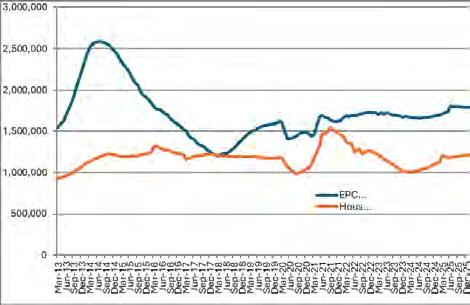
EPC Lodgements vs House Sales – Market Snapshot
EPC lodgements continue to perform strongly, holding at elevated levels and showing a stable to slightly rising trend in recent months. Activity remains well supported and has strengthened compared to the softer periods seen previously.
House sales have started slow in 2026, more recently moving upwards closer to 1.2 million and showing a more sustained upward trajectory than earlier in the cycle. While still below historic highs, the gap between sales and EPCs remains clear.
EPC demand remains resilient and relatively decoupled from transactions, supported by rental activity, regulatory drivers and retrofit programmes, underpinning consistent performance across the market.
In each edition of Energy Matters, we share a snapshot of this data alongside concise commentary that we hope you’ll find useful and thought-provoking as you plan for the future.
Some datasets, particularly those relating to new build homes within the devolved nations, are periodically updated and may include estimates where the latest figures are not yet available.
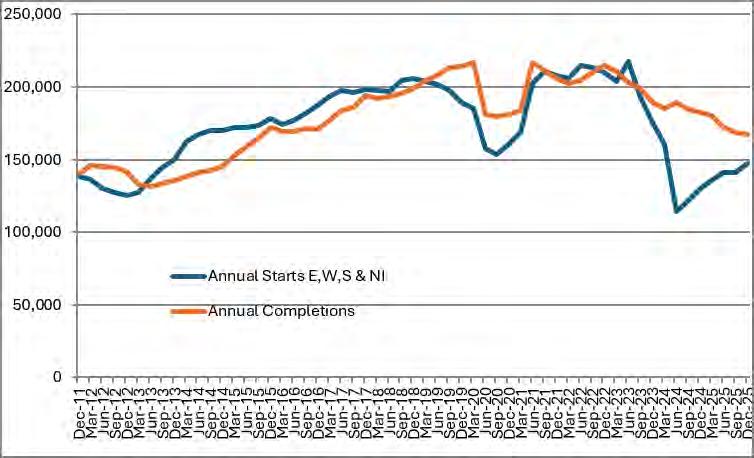
Housing Market Trends –Annual Starts vs Completions
Annual housing starts have continued to recover from previous lows, showing a clearer upward trend in recent periods. While still below historic peaks, the trajectory suggests improving confidence and a gradual rebuild in development pipelines.
Completions, however, have moderated after earlier strength, declining from recent highs and now appearing to level off. The trend in recent months indicates a more stable position.
With starts rising and completions stabilising, the supply side is moving towards a more balanced position. If this alignment continues, it should support a steadier and more sustainable level of housing output.
Elmhurst
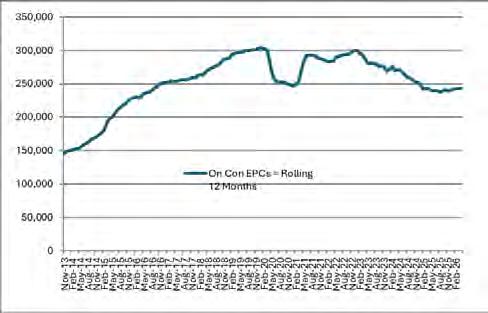
New Build EPC Trends Over Time – On Construction EPCs
On-construction EPC volumes are showing signs of stabilisation following the previous downward trend, with totals now holding broadly consistent in recent months.
Although still below the peak levels seen in earlier years, the pace of decline has eased and the market appears to be settling into a more predictable range.
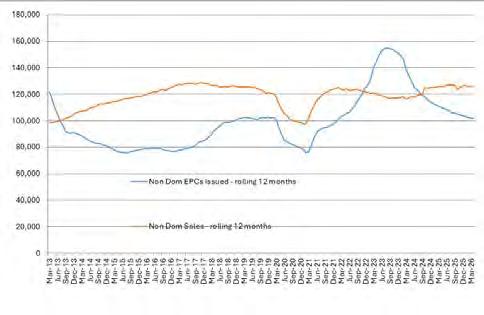
Non-Domestic EPCs vs NonDomestic Sales – Market Overview
Non domestic EPC volumes have levelled off following earlier declines, now stabilising at just over 100,000 on a rolling annual basis with modest movement in recent months.
Sales activity in the nondomestic sector remains relatively stable, holding in the low to mid 120,000 range and showing a consistent pattern over the past year.
The sector is no longer contracting at the same rate and is beginning to show early signs of stability, indicating a more balanced level of construction and EPC assessment activity.
Continued uncertainty around MEES and future regulation appears to be moderating EPC volumes, with activity remaining steady but without a strong upward catalyst.
THE
Go from competent to confident with 20% off selected courses
JOSH WAKELING Head of Training
The energy and retrofit landscape is evolving rapidly. New regulations, new technologies and changing client expectations are creating fresh opportunities for energy, retrofit and building performance professionals.
As an Elmhurst member, it’s important that you feel confident delivering the services your clients need, not just competent.
That’s why The Next Level is here to help you go from competent to confident by building your expertise, strengthening your service offering and preparing for the areas where demand is growing.
Elmhurst members can access an exclusive 20% discount on selected training courses designed to support professional development across domestic, non-domestic, new build and retrofit markets.
Move from competent to confident through focused professional development
Whether you want to respond to changing regulations, add another income stream, or develop specialist technical knowledge, The Next Level can help you take that next step.
Expand and strengthen your service offering in areas of growing industry demand
Build your expertise with training delivered by the industry’s most trusted provider
Access 20% off selected courses
The Next Level is designed to help you stay ahead. Through focused, practical training in the areas gaining the most traction across the industry, you can diversify your services, increase your value to clients and prepare for upcoming shifts across the built environment.
Why staying up to date matters
The skills needed to deliver accurate, compliant and valuable advice are changing. Across existing homes, new build dwellings, non-domestic buildings and retrofit, The Next Level helps you build confidence in the areas where demand is growing.
Existing Dwellings
New Build Dwellings
Non-Domestic
Retrofit
MEES, EPC Reform and the Warm Homes Plan are set to reshape expectations across the domestic sector. Staying up to date helps you support landlords, homeowners and housing providers with clear advice and relevant services.
With the Future Homes Standard and Home Energy Model on the horizon, technical knowledge is becoming even more important. Skills such as Psi-Values, U-Values, airtightness and ventilation will be key to accurate modelling and compliance.
Go from competent to confident with The Next Level.
Non-domestic MEES and PAS 2038 retrofit are creating new opportunities across commercial buildings. Building your expertise now can help you support clients as requirements evolve and demand for specialist advice grows.
The Warm Homes Plan is expected to drive further retrofit activity. Strengthening your knowledge of fabric performance, heat loss and building modelling can help you diversify your services and support better project outcomes.
Simplify non-domestic assessments with
Reduce admin. Save time. Lodge with confidence.
Guided inputs
Step-by-step prompts help you enter the right information
Automated calculations
Built-in checks and calculations save time and reduce errors
2D Plan view modelling
Intuitive 2D modelling makes it easy to build accurate models