

horizons 2026 elmhurst
HORIZONS 2026 elmhurst
The Big Numbers
The Big Changes
The Big Ask

Introduction
For some years, the property industry and those involved in energy performance, retrofit and building assessment have been told to prepare for change, without being given a clear picture of what this looks like. That has now started to change.
After years of consultations, delays and uncertainty, there is finally a clearer direction of travel for the energy performance of our buildings. The Warm Homes Plan, EPC reform in Scotland, England and Wales, the Future Homes and Buildings Standards in England and Part L update in Wales, and clarifications on MEES (minimum energy efficiency standards) in key sectors all show progress.
While the policy detail is not complete everywhere, and each nation is moving at its own pace, the direction is now much clearer.
That means the next 12 months is a good time to plan, prepare, invest and act in readiness.
The role of the truly independent expert, energy assessor and retrofit professional is more important than ever.
These competent professionals provide insight, compliance support, risk management and trusted practical advice. They are increasingly upskilling for more technical and complex
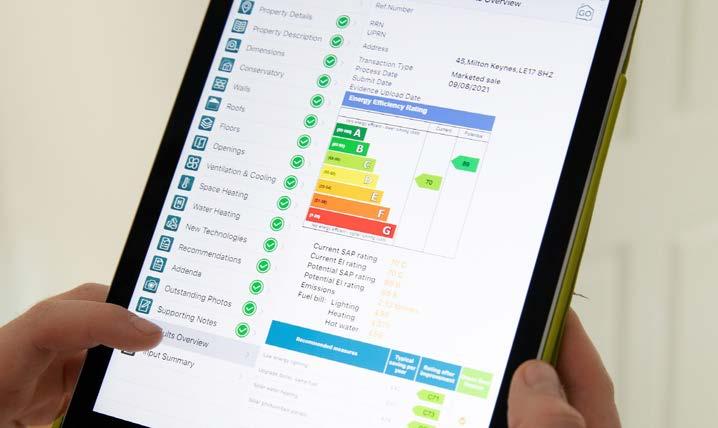
assessments, greater evidence requirements, increased professional accountability and clearer improvement advice. Genuine competence in building fabric performance, low carbon heating and smart technologies will continue to be much in demand.
Healthy homes will also move higher up the agenda. Awaab’s Law in England, stronger social housing standards, the Welsh Housing Quality Standard, and growing awareness of air quality and overheating all suggest a market in which energy efficiency can no longer be treated separately from occupant health.
And while the end of fossil fuels won’t happen overnight, the long-term direction is inevitable. Homes and buildings will need to become cheaper to run, easier to decarbonise and better prepared for low-carbon heating. Professionals who understand building fabric, heat loss, ventilation, solar PV, storage, heat pumps and smart readiness will be well placed to support that transition.
The next 12 months will see us move from debate to delivery. The challenge now is to make it actually work in homes, in buildings and in communities across the UK.
I hope you will find this report useful, both as a summary of the many changes underway and as a tool to signpost you to the opportunities for the coming months and years.
As always, we welcome your feedback, and your engagement at our events and on social media.
#ElmhurstHorizon

Stuart Fairlie, Managing Director, Elmhurst Energy
The Big Numbers
1.4 MILLION
EPCs lodged for existing dwellings in England in 2025, a 7% increase on 2024.1
84,000
EPCs lodged for existing dwellings in Wales in 2025, a 19% increase on 2024 3
6,100
7,000
EPCs lodged for new dwellings in Wales in 2025, an 8% increase on 2024 4
203,000
EPCs lodged for new dwellings (including new builds, conversions and change of use) in England in 2025, a 3% decrease on 2024.2
200,000
domestic EPCs lodged per year in Scotland – around 90,000 on properties for sale, 50,000 for rental and 20,000 for newbuild.5
non-domestic EPCs lodged annually in Scotland –most (around 2,800) for properties for sale, 1,900 for rental, and 800 for voluntary uptake.6
89,000
non-domestic EPCs lodged in England in 2025, 9% down on 2024.8
(source: MHCLG) 1, 2, 3, 4, 7, 8, 9, 18
36,000
Display Energy Certificates (DECs) lodged in England in 2025, unchanged from 2024.9
(source: Scottish Government) 5, 6
(source: Scottish Government) 10, 11
5,000
non-domestic EPCs lodged in Wales in 2025, an 11% decrease on 2024 7
732,000
households in Scotland in fuel poverty (almost 29% of all households), down 5% on 2023.10
(source: Northern Ireland Statistic & Research Agency) 12, 17
16,725 registered Elmhurst memberships in 2025 including competency schemes.
39% of dwellings with a valid EPC in Northern Ireland in 2023 have a rating of C or above.12
3,344
energy and retrofit professionals trained by Elmhurst in 2025, including those upskilling for new competency schemes.
65% of English local authority areas (207 out of 318) have more than half their housing in EPC band C or higher.13
274,000
dwellings in Scotland are rated in the lowest EPC bands (E, F or G), about 10% of all homes.11
7.7 MILLION homes with lofts in Great Britain have less than 125mm insulation.14
51,886
retrofit heat pump installations recorded in the UK in 2025, up 7% on 2024. 99% were air source heat pumps.15
74
is the median energy efficiency score of flats and maisonettes in England and Wales (EPC band C), making these the most energy efficient property type. The same is true in Northern Ireland.16, 17
£15 BILLION
pledged by UK government to upgrade up to 5 million homes and lift a million families out of fuel poverty by 2030.19
(source: Office for National Statistics) 13, 16
(source: House of Commons Library) 14
180,000
2,000
DECs lodged in Wales in 2025, up 15% on 2024.18
additional jobs in energy efficiency and clean heating to be created in the UK by 2030.20
(source: DESNZ) 15
(source: DESNZ –Warm Homes Plan) 19, 20
The Big Changes: New EPCs on their way
The EPC Action Plan was first published in 2020. It established 35 ways to make EPCs clearer, more trusted and more effective as a policy tool. Key themes included improving EPC metrics and recommendations, enhancing assessor standards and compliance, modernising methodologies, increasing the use of digital data, and helping consumers make informed energy efficiency decisions.
In late 2027 we will see much of these changes come to fruition, through announced reforms to Domestic EPCs.
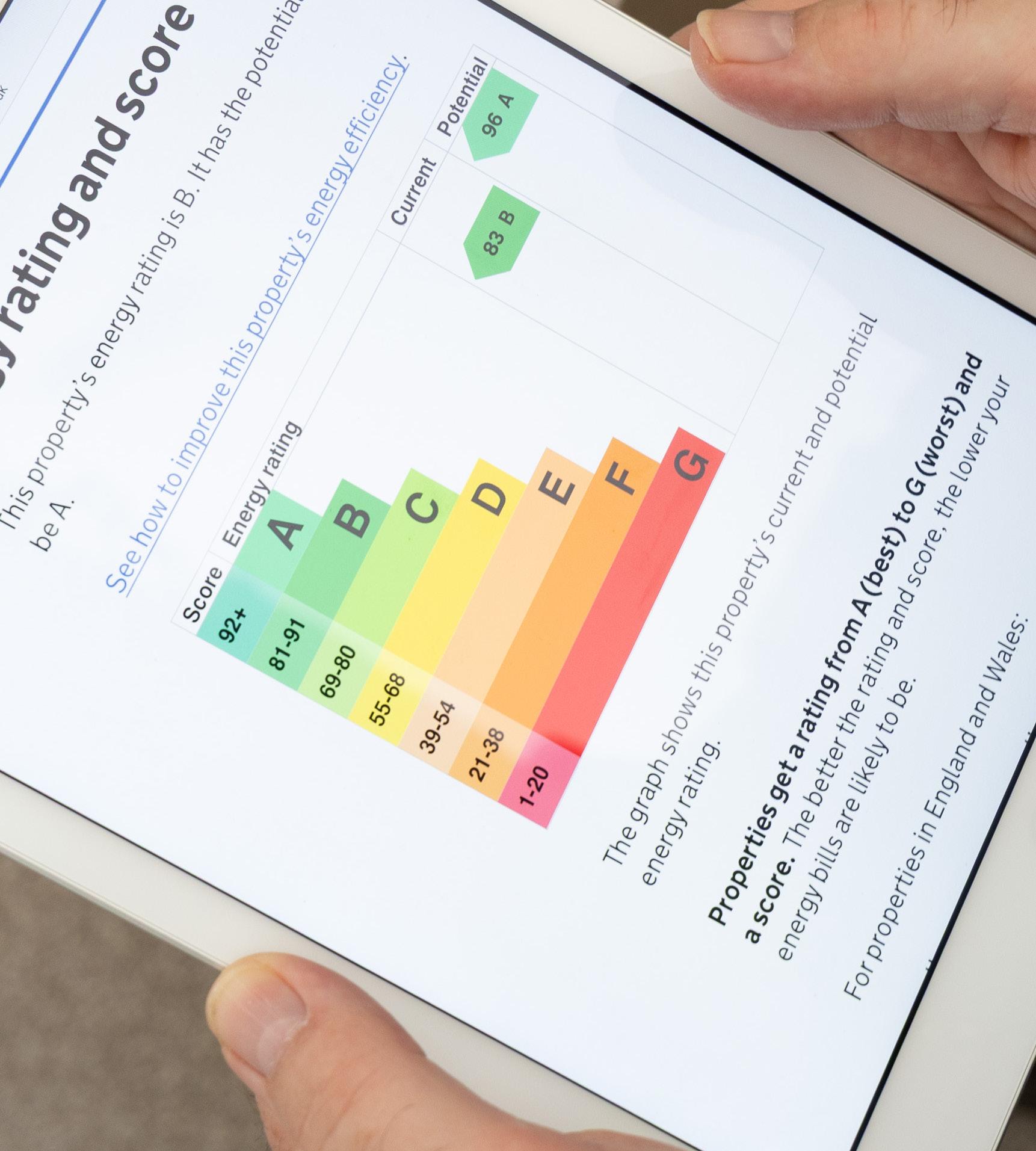
With this, the calculation methodology which sits behind existing domestic EPCs (RdSAP), will be replaced by the government’s Home Energy Model (HEM) and we will see new-style EPCs introduced with new headline metrics displayed on the certificate.
Where and when:
England and Wales
Progress has been slow, but we are promised the launch of the new, multimetric EPC system in the second half of 2027 (previously October 2026). The new headline metrics which will be displayed on the certificate include: fabric performance (A-G), heating system (A-G), smart readiness (A-G) and energy cost (£).
Where and when: Scotland
The Scottish Government was ahead of the game but has now decided to align its timeline with the rest of the UK. It also expects to introduce its new-style EPC certificates, shorter validity periods (5 years, compared to 10 in England and Wales) and new rating systems next year. The headline metrics displayed on Scotland’s EPC will differ from those used in England and Wales. The Scottish EPC will present the following ratings: Heat Retention Rating (A-G), Heating System Rating (A-G), and Energy Cost Rating (A-G).
What to do now:
All the reforms rely on the Home Energy Model and new assessor training being finalised across the UK, meaning a new implementation date cannot be confirmed yet – we are expecting more news on this very soon.
But once this announcement is made, the rush will be on.
Energy assessors should start preparing for HEM now by focusing on skills and practices that will become increasingly important as the methodology evolves. HEM is expected to move away from the rigid RdSAP approach towards a more flexible, modular system that allows assessors to use additional evidence where available, rather than relying solely on defaults. This means stronger evidence collection, better record keeping, and more accurate assessment will be essential.
Assessors should also strengthen their understanding of building physics, including heat loss, ventilation, airtightness, solar gains and overheating. Familiarity with emerging technologies such as LiDAR surveying, smart meter data, SMETERs and Heat Transfer Coefficients (HTCs) will be valuable as measured performance becomes more relevant.
Those who combine technical knowledge, high-quality evidence gathering and digital skills will be best placed to succeed under HEM.

Recommended courses
ABBE Level 3
Domestic Energy Assessor
ABBE Level 3 On Construction
Domestic Energy Assessor
ABBE Level 3/4 NonDomestic Energy Assessor
The Big Changes: Warm Homes Plan
The Warm Homes Plan is the government’s flagship policy for upgrading homes, cutting bills and supporting the transition to lowcarbon heat. It commits £15bn of public investment to upgrade up to 5 million homes by 2030 and is intended to support warmer, more affordable and lower-carbon homes.
Where and when:
England is the main focus of the Warm Homes Plan. Wales has its own Warm Homes Programme and has placed whole-house assessment and a property journey at the heart of its approach.
The Warm Homes Plan was published on 21st January 2026. Further delivery details, consumer finance and local programme design will continue to develop through 2026 and 2027. This includes the launch of a new Warm Homes Agency, with more detail expected towards the end of 2026.
What to do now:
Once the Warm Homes Plan and its new funding schemes are underway, demand is likely to increase for EPCs and stock condition surveys, retrofit assessments and coordination, heat loss assessments, ventilation checks, evidence of eligibility and post-installation performance reviews.
Retrofit assessors and retrofit coordinators will be central where PAS 2035 applies. The strongest opportunities will be with local authorities and social housing providers who need competent advice before work begins.
This is not a single-measure market. The Plan reinforces the need to understand how fabric, heating, ventilation, moisture risk, occupant needs and funding rules all work together. Consumer protection standards will be reinforced.
Key skills for assessors will need to include heat loss assessments and how to identify whether a home is ready for a heat pump, what fabric upgrades are likely to matter most and whether heating systems are being sized appropriately.
Damp and mould, ventilation and background ventilation training are also commercially relevant because poorly sequenced retrofit can create unintended consequences. Clients will increasingly need evidence that improvements are safe, technically appropriate and suitable for the building and its occupants.

Recommended courses

Retrofit Assessor
ABBE Level 5
Retrofit Coordinator
ABBE Level 3
Older & Traditional Buildings
Heat Loss Assessor
Damp and Mould
Domestic Ventilation
The Big Changes: Future Homes Standard
The Future Homes Standard (FHS) is the new energy efficiency standard for new homes in England, introduced this year to deliver homes that are zerocarbon ready.
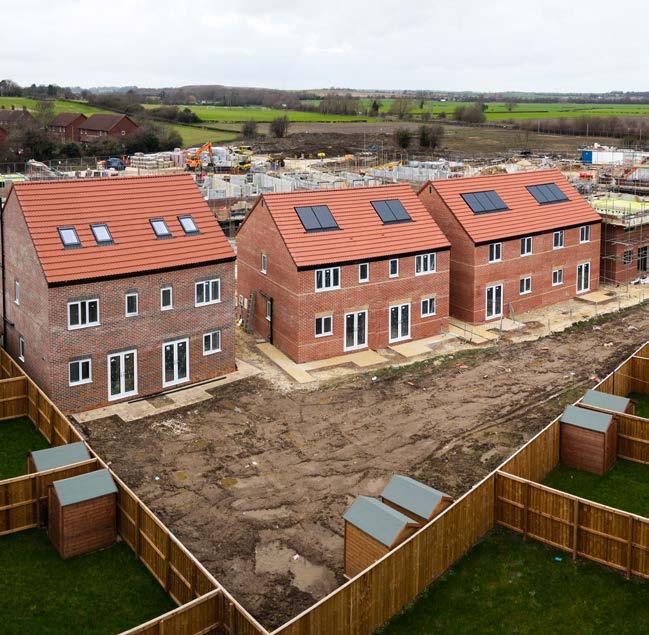
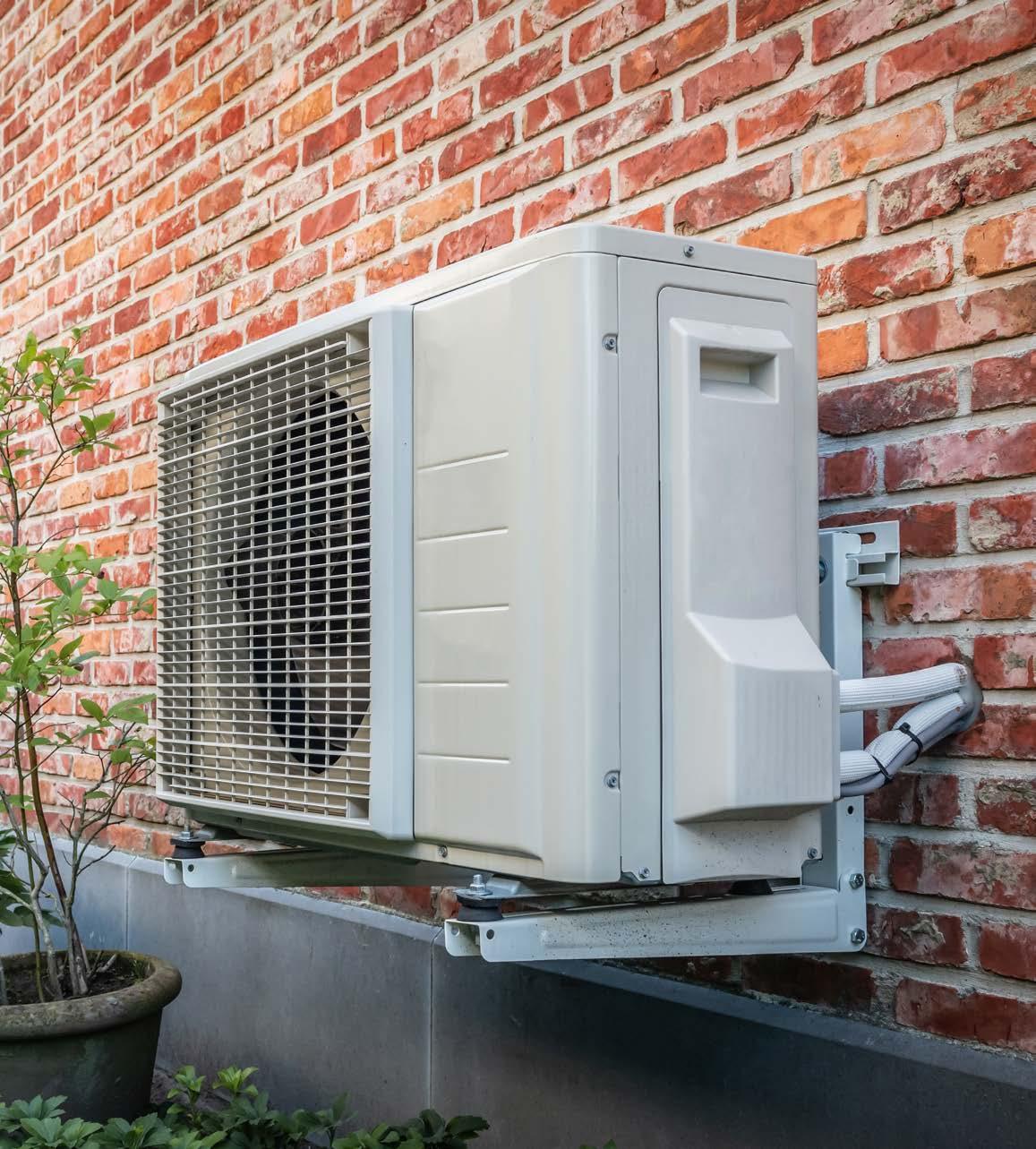
In practice, the FHS requires significantly lower energy demand, low-carbon heating systems such as heat pumps, improved building fabric, greater airtightness, enhanced ventilation design and increased use of renewable technologies in almost all new homes. Homes built to the FHS are intended to achieve at least a 75% reduction in carbon emissions compared with the 2013 Part L baseline and should not require retrofit to achieve net zero operational carbon as the electricity grid decarbonises.
Where and when:
The FHS applies to new homes in England only. We have firm implementation dates: the FHS regulations for non high-risk buildings come into force on 24th March 2027 followed by high-risk buildings in September 2027.
What to do now:
For OCDEAs, the FHS represents the most significant change to compliance modelling in over a decade.
Assessors must become increasingly familiar with heat pumps, mechanical ventilation systems, photovoltaic arrays, wastewater heat recovery and all-electric dwelling designs.
Greater emphasis will be placed on accurate specification data, thermal bridging, airtightness and as-built evidence.
The FHS also marks the transition from SAP towards the Home Energy Model (HEM), meaning assessors will need to develop new modelling skills while supporting a period of dual methodologies: SAP 10.3 will initially remain the compliance methodology for homes, until the government is ready to release HEM. We expect movement on this in 2026.

Recommended courses

ABBE Level 3 On Construction
Domestic Energy Assessor
Psi-Value Training
Course to be updated following release of HEM for FHS.
U-Value Training
Airtightness Testing
Elmhurst will be releasing upskill training for new build assessors as HEM for FHS is released. Keep an eye on the Elmhurst website for:
HEM Theory and Practical Training
The Big Changes: Future Buildings Standard
The Future Buildings Standard (FBS) is the non-domestic cousin of the FHS. It will reshape the design and compliance landscape for new commercial property in England, including offices, retail, industrial, healthcare, education and leisure buildings.
Like the FHS, its objective is to deliver highly efficient, zero-carbon-ready buildings through a combination of improved fabric performance, lowcarbon heating and tighter energy performance standards.
Developments will be expected to use low-carbon heat sources, such as heat pumps and heat networks, while meeting more demanding targets for carbon emissions and primary energy consumption.
Where and when:
The FBS is for England only. It applies mainly to new non-domestic buildings, and to the non-dwelling parts of mixeduse buildings, such as retail, offices, heated common areas and commercial space. Dates for implementation in 2027 are the same as for the Future Homes Standard.
What to do now:
For NDEAs, the implications are significant. Compliance modelling is expected to become more complex, with greater reliance on detailed SBEM and DSM analysis, stronger notional building specifications, and increased emphasis on low-carbon design solutions.
Assessors will need to engage earlier with developers, architects and M&E consultants to influence heating strategies, fabric specifications and renewable energy provision.
As compliance requirements tighten, assessors will play a more strategic role in helping commercial projects achieve Building Regulations compliance, optimise design performance and manage development risk.

Recommended courses

ABBE Level 3/4 NonDomestic Energy Assessor
Psi-Value Training
U-Value Training
Airtightness Testing
The Big Changes: Different approaches in Wales and Scotland
Wales has its own Building Regulations and Part L requirements. The Welsh Government is pursuing a similar decarbonisation direction for new homes, including low-carbon heating such as heat pumps and improved fabric performance, but it is not the English Future Homes Standard.
Scotland also does not use the Future Homes Standard. Instead, new homes must comply with the Scottish Building Standards, which set requirements for energy efficiency, ventilation, overheating, safety and overall building performance. In addition, the New Build Heat Standard bans fossil fuel heating systems, such as gas and oil boilers, in new homes.
Where and when: Wales
The Welsh Standard (Part L 2025/2027) comes into force on 4th March 2027, with a 12-month transition period (homes where foundations have already been laid can temporarily be finished under the older regulations).
Where and when: Scotland
In Scotland, the New Build Heat Standard was introduced in April 2024. However, discussions have started about developing a Scottish equivalent to the Passivhaus standard, and potentially to embed similar principles within Scottish Building Standards. One to watch.
What to do now:
Developers operating in multiple parts of the UK face growing divergence, and any OCDEA advising such clients will need to understand the differences in regulatory approach.
In practice, Scotland is pursuing similar outcomes to the FHS, but through a different regulatory framework and compliance methodology.
Wales will implement a revised Part L framework that places greater emphasis on actual energy performance. New dwellings will need to meet not only carbon and primary energy targets but also a new Energy Use Intensity (EUI) rating, which measures how much energy a home is expected to use.
Wales is also aligning building regulations more closely with measured building performance rather than design-stage modelling alone.

Recommended course
ABBE Level 3 On Construction
Domestic Energy Assessor
The Big Changes: MEES for private rented homes
Minimum Energy Efficiency Standards (MEES) in the private rented sector always attract a lot of attention.
New standards were announced in January 2026 as part of the Warm Homes Plan, confirming the government’s intention to raise the requirements for privately rented homes in England from the current EPC E requirement to EPC C. All rented properties are expected to meet the new standard, or have a valid exemption, within the next few years.
Where and when: England
All privately rented properties in England must reach EPC Band C by 1st October 2030. This replaces the earlier two-stage approach (which required new tenancies to hit the target early).
Where and when: Wales and Scotland
It is worth noting that Wales currently operates under the same underlying UK legislation for residential MEES as England, but could change its policy as such matters are devolved.
The Scottish Government has consulted on introducing minimum energy efficiency requirements for private rented homes, but implementation has been delayed and is subject to policy review.
What to do now:
Many landlords are worried about how to comply with these standards, so DEAs are a vital source of information and support. Good advice is particularly vital, as the maximum penalties for noncompliance will also increase to £30,000 per property per breach.
Landlords are not expected to spend more than £10,000 per property to reach the standard. If a home cannot reach band C under this budget, a 10-year exemption can be registered. Any eligible energy-efficiency improvements made by landlords from 1st October 2025 will also count toward the £10,000 cap. The government has also indicated that financial support, including low-interest loans, will be available.
Assessors should strengthen their knowledge of retrofit measures, identify properties at risk of failing future standards, and help landlords plan costeffective improvement programmes.
They should also keep up to date with the proposed Home Energy Model and changes to EPC methodology. Building strong relationships with landlords now will position assessors as trusted advisers as demand for MEES compliance support grows.

Recommended courses

ABBE Level 3 Domestic Energy Assessor
Domestic MEES Masterclass
Retrofit Assessor
The Big Changes: MEES for social housing
Following consultations last year, in January the government confirmed its plans to introduce new Minimum Energy Efficiency Standards (MEES) for socially rented homes in England to improve energy efficiency, reduce fuel poverty and support net zero objectives.
It also linked with publication of the government’s wider New Decent Homes Standard policy statement, which confirmed that thermal comfort and MEES would form part of the future Decent Homes Standard framework for rented homes in England.
Where and when: England
Social landlords will not be required to upgrade all homes to EPC C under the existing methodology. Instead, a phased approach will apply. By 2030, social landlords must ensure homes meet one of the new EPC metrics, with the flexibility to choose which is most appropriate. A second metric must then be met by 2039. Transitional arrangements will recognise homes that already achieve EPC C under current EPCs until those certificates expire.
Where and when: Wales and Scotland
Welsh social landlords operate under the Welsh Housing Quality Standard (WHQS), which includes energy efficiency and decarbonisation requirements. The Welsh Government developed WHQS 2023 and associated net-zero requirements, rather than following England’s proposed social housing MEES model.
Scottish social landlords are subject to the Energy Efficiency Standard for Social Housing (EESSH) and its successor programmes.
What to do now:
Local authorities, housing associations and other registered providers will be looking for specialist advice and support in meeting these new requirements.
For example, rather than relying solely on the current EPC rating system, compliance will be assessed using the new EPC metrics covering fabric performance, heating systems and smart readiness.
A £10,000 per-property spend exemption will also apply for 10 years from 2030, limiting the financial burden where further improvements are not cost effective.
Assessors should familiarise themselves with the proposed fabric performance, heating system and smart readiness metrics, strengthen their understanding of building fabric assessment, and ensure data collection is accurate and consistent.
They should also engage with landlords’ retrofit programmes, identify hard-totreat properties, and keep up to date with EPC reform guidance and software changes as the new framework is rolled out. See also Awaab’s Law (below).

Recommended courses

ABBE Level 3 Domestic Energy Assessor
Domestic MEES Masterclass
Retrofit Assessor
The Big Changes: Awaab’s Law
Awaab’s Law is a landmark reform introduced through the Social Housing (Regulation) Act 2023 following the death of Awaab Ishak, a two-yearold child who died after prolonged exposure to mould in his family’s social home.
The law places legally enforceable duties on social landlords in England to investigate and remedy serious hazards within strict timescales. Landlords must investigate significant damp and mould hazards within 10 working days, make homes safe within a further five working days, and deal with emergency hazards within 24 hours. If a property cannot be made safe quickly enough, suitable alternative accommodation must be provided.
Where and when:
The first phase of Awaab’s Law took effect in England from 27th October 2025. Phase 2 of Awaab’s law will apply from 30th November 2026 and will extend Awaab’s Law beyond damp and mould to cover significant risks from excess cold and heat, falls, structural collapse, fire and explosions, electrical hazards, and domestic hygiene. A further phase is expected in 2027.
What to do now:
The link to energy efficiency is significant. Poorly insulated homes, inadequate heating systems and cold internal surfaces increase the risk of condensation, damp and mould.
Future phases of Awaab’s Law will also cover excess cold as a housing hazard, directly connecting housing condition compliance with energy performance and thermal comfort.
Improving insulation, ventilation and heating efficiency can therefore help landlords meet both Awaab’s Law obligations and the government’s Minimum Energy Efficiency Standards (MEES) ambitions, while reducing fuel poverty and improving residents’ health and wellbeing.

Recommended courses

Damp and Mould
Airtightness Testing
Background Ventilation
The Big Changes: MEES for commercial property
For non-domestic property in England and Wales, the current Minimum Energy Efficiency Standard (MEES) requires privately rented commercial buildings to achieve a minimum EPC rating of E, unless a valid exemption applies.
The government has signalled its intention to tighten these standards significantly as part of its net zero strategy.
The policy proposal is to require most rented commercial properties to reach EPC B, although earlier consultations proposed an interim milestone of EPC C before moving to EPC B, alongside stronger enforcement, improved compliance monitoring and changes to exemption arrangements. However, these plans were paused in late 2023 and have not yet been reintroduced in legislation.
Where and when:
For England and Wales the Government has confirmed plans for rented nondomestic buildings over 1,000m² to achieve EPC B by 2031, where cost effective. Smaller buildings below 1,000m² remain subject to the current EPC E minimum standard for now, although further detail is expected in the full Government response.
What to do now:
Any future reforms are expected to place greater emphasis on maintaining valid EPCs, improving data quality and supporting the transition towards a more energy-efficient commercial property sector.
But commercial landlords are not waiting. Many are planning energy efficiency upgrades now to protect asset value and maintain investor, tenant and occupant expectations.
Well qualified NDEAs and retrofit professionals are increasingly needed to advise and inform retrofit programmes in line with PAS 2038, upgrading building services, improving insulation and enhancing operational energy performance.

Recommended courses

ABBE Level 3/4 NonDomestic Energy Assessor
Retrofit Lead Assessor
Retrofit Lead Professional
The Big Changes: Competence – a renewed demand
The professional and technical competence of all energy assessors and retrofit specialists is likely to become the biggest issue over the next 12 months and beyond.
The government’s growth plans, energy security concerns, plans for net zero and fuel poverty reduction, building safety reform and large-scale retrofit programmes all depend on a workforce capable of delivering reliable outcomes. Industry and government have repeatedly highlighted the need for a more skilled and competent built environment workforce to support decarbonisation and improve quality.
And following concerns about building safety, quality and consumer protection, the government has also been exploring stronger approaches to the regulation of all built environment professionals and trades, based on systems and policies that demand proof of competence.
Demonstrable competence protects consumers, supports regulatory compliance, reduces risk and helps ensure that retrofit delivers the intended energy, carbon and health benefits.
This is why all of us are expected to build competence through qualifications, training and experience, and then maintain and prove it through CPD, audit performance, accreditation and robust evidence records.



The Big Ask
The next 12 months are pivotal. The Warm Homes Plan, EPC reform, MEES, the Future Homes Standard and other related policies now form the spine of the next phase of compliance.
This is no longer the time to wait and see. We need to prepare properly, set the right rules, and build confidence in the system that will carry us through to at least 2030.
Elmhurst has three big asks of policy makers:
1. Put people at the heart of the new EPC
We all know the current EPC product is not fit for purpose. It’s being used far beyond what it was originally designed to measure and is no longer just a document used at a point of sale or let. It has become a compliance tool, used not just by the homeowner but by policy makers and mortgage lenders. That means the new EPC must work for the people who rely on it: homeowners deciding what to improve first, businesses and landlords trying to understand future obligations, housing providers planning retrofit programmes, and policymakers designing new legislation and technical interventions.
The delay to full EPC reform until the second half of 2027 makes that point even more important. The extra time must be used wisely. Priority should be put on clear communications programmes to businesses and consumers, with explanations of the new metrics and what they mean, structured improvement pathways, and alignment between what the certificate shows and what end-users are expected to do with it.


2. Confirm the full MEES pathway
The Government has confirmed that the domestic private rented and social rented sectors will align towards an EPC C target by 2030, with future compliance based on the new EPC metrics, rather than the previous single-score metric.
We also have greater clarity for commercial buildings, confirming that rented non-domestic properties over 1,000m² will be expected to achieve EPC B by 2031, where cost effective. However, smaller nondomestic buildings will remain at the current EPC E standard.
Although these updates are welcomed, this still leaves a significant gap in the wider MEES pathway. Net zero will not be achieved through homes and larger commercial buildings alone. We call on the Government to set out a clear, long-term trajectory for the whole non-domestic sector, allowing stakeholders to plan and act with confidence.

3. Protect independence and scheme regulation
This is now one of the most important issues facing the sector, because it goes to the heart of trust in EPCs and the policies they underpin.
Government must address the conflict-of-interest risk now. If energy efficiency firms with employees or contractors that conduct assessments are also allowed to develop their own software, operate accreditation and lodgement schemes and oversee the same assessors using those tools, all within the same commercial entity, then the sector moves dangerously close to people marking their own homework.
Elmhurst’s view is straightforward. Assessment, software scheme operation, auditing and compliance checks must remain genuinely independent of one another. Without independence, public trust and the reputation of the industry will be hit.
As government considers wider regulatory reform, including the Single Construction Regulator, impartiality, competence and technical credibility matter most in the sector.
Elmhurst’s focus remains on accurate measurement carried out by capable, regulated professionals, and government should reflect that principle and ensure there are clear separation of functions, robust audit arrangements, and oversight that is demonstrably free from commercial self-interest.
Stay updated at: