How seniors can remain physically and mentally active
Growing older is often equated with slowing down. Aging may be characterized as a period of decline marked by an inability to do the things you once did, but recent data indicates otherwise.
According to a report in the journal Geriatrics, a far more optimistic reality awaits seniors. Nearly 45 percent of people age 65 and older show measurable improvements in brain health, physical function or both over time when they take certain steps to promote physical and mental wellness.
Physical activity
The Centers for Disease Control and Prevention recommends 150 minutes of moderate-intensity aerobic activity per week, supplemented by at least two days of muscle-strengthening exercises. Brisk walking or swimming can improve cardiovascular health and reduce the risk of stroke and hypertension, says the Massachusetts Council
on Aging. Incorporating yoga or Tai Chi is vital for fall prevention, as it targets balance and flexibility. The CDC says improving joint mobility and balance can significantly extend the amount of time seniors can live independently.
In addition, lifting light weights or using resistance bands helps combat agerelated muscle loss, which is essential for maintaining metabolic health.
Cognitive advantages
Mental fitness is just as vital to seniors as physical fitness.
According to the World Health Organization, routine cognitive stimulation enhances “brain capital,” delaying the onset of dementia and Alzheimer’s.
Strategies for effective mental engagement include:
• Learning: Lifelong learning techniques include picking up a new language or learning an instrument. This helps strengthen neural pathways that allows the brain to
reorganize itself even in later decades.
• Play games: Play isn’t just for kids; games like chess or complex puzzles improve problem-solving and memory retention, according to Nixon Adult Daycare in Houston.
• Socialize: Isolation is a leading risk factor for cognitive decline, says the National Institutes of Health. Group activities like book clubs or community volunteering can offer emotional fulfillment and mental stimulation.
Power of positivity
Findings from a recent Yale University study indicated seniors with a positive outlook on aging were significantly more likely to show physical and mental improvements compared to those with negative perspectives. Psychological resilience is an important tool for seniors to stay healthy. Movement, social interaction, stimulating activities, and a positive attitude can help seniors maintain overall health.
U.S. ACE seeks public input on Kinzua Dam, Allegheny Reservoir master plan, assessment
See page 5
Soil sampling progresses, moving West Valley closer to completing cleanup
WEST VALLEY
— West Valley
Demonstration Project workers have finished the second of three phases to drill holes for subsurface soil sampling in and around the former Main Plant Process Building site to assess contamination levels and inform safeguards before completing further cleanup there.
So far, the U.S. Department of Energy’s Office of Environmental Management (EM) and contractor West Valley Cleanup Alliance (WVCA) have drilled 46 holes to gather samples that provide critical data on contamination before remediating the soil and demolishing remaining components of the Main Plant at ground level and below ground.
The first two radiological characterization phases focused on the soil around the Main Plant site. A third phase is now underway to drill 16 holes within the former facility’s footprint.
“West Valley continues to maintain the highest standards of safety and compliance when planning work,” said Stephen Bousquet, EM assistant director
for West Valley’s Office of Project Management. “It is this strong preparation that ensures
the work is carried out with exceptional discipline and care.” The team screened
each sample from the borings for radiation and will safely ship them to an off-site laboratory for
more specific isotopic analysis. Like a scientific fingerprint, isotopic analysis sheds light
on a sample’s origin, composition and history.
The West Valley team will use this information to plan and design soil remediation within the former footprint of the Main Plant, which crews successfully removed last year. That five-story facility was the only commercial nuclear fuel reprocessing facility in the United States.
Crews also used a geotechnical boring machine last year to collect and evaluate soil, rock and groundwater samples for future planning and design work, including a retention wall to be constructed around the former Main Plant site. It will help stabilize the excavation area and prevent water infiltration, allowing crews to safely excavate the soil.
The team implemented lessons learned throughout the soil sampling project.
“Sharing information throughout the work scope helped to enhance safety and increased efficiency and productivity,” said Daniel Way, WVCA Decontamination and Decommissioning manager.
ASP seeking volunteers for I Love My Park Day
—
RED HOUSE
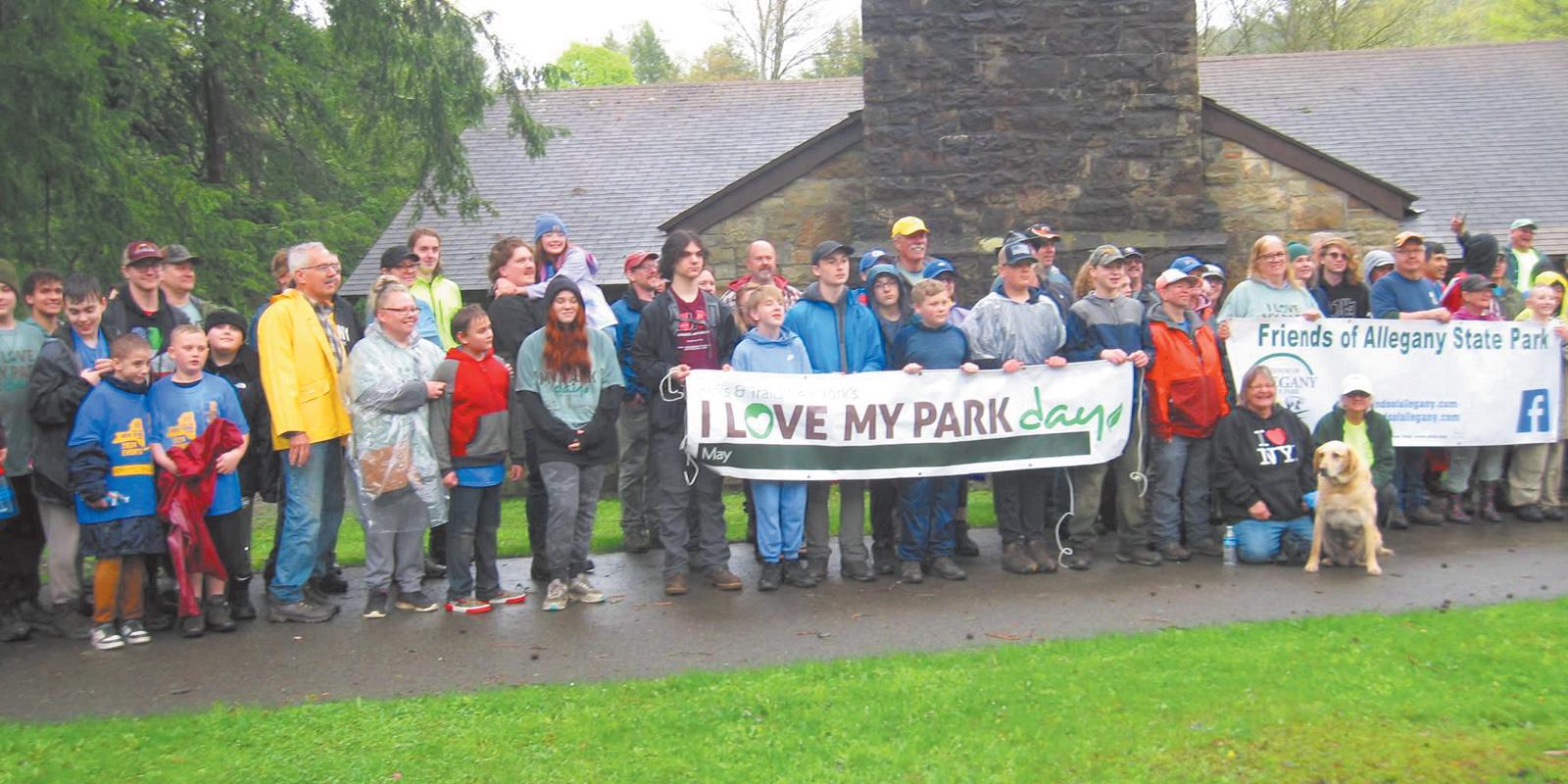
Allegany State Park will welcome volunteers at Beehunter Picnic Shelter in the Red House area of the park as part of more than 100 cleanup, improvement and beautification events happening statewide on Saturday, May 2.
I Love My Park Day is an exciting statewide event to improve and enhance New York’s state parks and historic sites and bring visibility to the entire state park system and its needs. Volunteers from across New York will celebrate the state park system by cleaning up park lands and beaches, planting trees and gardens, restoring trails and wildlife habitat, removing invasive species and working on various site improvement projects.
Register at https:// tinyurl.com/4xk49v7k.
Check-in will be at the Beehunter Picnic Shelter beginning at 9 a.m. Work begins at 9:30. All ages are welcome. Main projects include stick pick up, cleanup of fire pits, beach cleanup, litter cleanup, cleaning grills of picnic
areas, planting trees and gardening. Dress for the weather, and bring gloves, sunscreen and bug spray. A free Sahlen’s hot dog lunch will be served by the Friends of Allegany at 12:30 p.m. All participants will be eligible for door prizes provided by the Friends. A drawing will be held at the end of the
event. Winners must be present.
I Love My Park Day is coordinated at the statewide level by Parks & Trails New York (PTNY) in partnership with the New York State Office of Parks, Recreation and Historic Preservation (OPRHP) and the New York Department of Environmental
Conservation. Friends groups and park staff will oversee cleanup, improvement and beautification projects and work with volunteers.
New Yorkers willing to help maintain the beauty of New York’s treasured state parks and historic sites help the Friends and volunteer groups keep
parks beautiful, clean and welcoming for all to visit and enjoy. New York State is a leader in parks and conservation because of a long history of stewardship and the generosity of private citizens. Volunteer participation in a cleanup day will help enhance these important places
during lean budget times and show elected leaders that there is strong public support for our park system.
Those interested in volunteering in the project at Allegany State Park can register by visiting www.ptny.org/ ilovemypark.
Volunteers from I Love My Park Day 2025 gather with Friends of Allegany State Park members following the annual cleanup event.
Photo provided
West Valley Demonstration Project workers remove soil samples to assess contamination levels in the footprint for the former Main Plant Process Building site prior to completing cleanup there.
100 Years Ago This Month: Historical events from April 1926
The month of April has been home to many historical events over the years. Here’s a look at some that helped to shape the world in April 1926.
• The United States House of Representatives votes to impeach District Court Judge George W. English on April 1. Judge English, who was accused of abuse of powers and violation of bankruptcy laws, ultimately resigns on November 4.
• Residents of Watts, California, vote to become part of the city of Los Angeles on April 2. Residents vote 1,338 to 535 in favor of consolidation.
• Warplanes of Manchurian warlord Zhang Zuolin begin bombing portions of Beijing on April 3. The areas targeted
by the bombings are areas of the city under the control of the Guominjun paramilitary group.
• The national basketball team of Italy plays its first game on April 4. The team earns a 23-17 victory over the French national team.
• The first recorded death of a person caused by a cassowary is noted in Mossman, Queensland, Australia on April 6. Phillip McClean, the 16-yearold victim, was attacked by the large, flightless bird while he and his brother were trying to kill it.
• Italian Premier Benito Mussolini is shot by Violet Gibson in Rome on April 7. Mussolini is unharmed, and Gibson is ultimately released without charges. However, Gibson is sent to a
psychiatric hospital in England, where she remains until her death in 1956.
• The German subsidiary of the Ford Motor Company assembles its first vehicle, a Model T, on April 8.
• Twenty-seven sailors are killed when the United States oil tanker the Gulf of Venezuela explodes as the ship sits in harbor at Port Arthur, Texas, on April 11.
• Walter Johnson of the Washington Senators defeats Eddie Rommel of the Philadelphia Athletics on Opening Day on
April 13. The game lasts 15 innings and ends with a score of 1-0.
• Australian politician Frederick McDonald disappears while on his way to a meeting with Jack Lang, the Premier of New South Wales, on April 15. McDonald, who had recently lost a re-election bid to the Australian House of Representatives, challenged the result of that election and asked that his opponent, Thomas Ley, be removed from office. McDonald’s disappearance is never solved, and Ley is later convicted of the murder of John Mudie in 1947.
• Canadian distance runner Johnny Miles wins the Boston Marathon on April 19. The marathon marked the first time Miles had competed in a race of more than 10 miles.
• Elizabeth II is born to the Duchess of York and the Duke of York on April 21 in London. Elizabeth grows up to serve as Queen of the United Kingdom of Great Britain and Northern Ireland, a reign that begins in 1952 and lasts until her death in 2022.
• Germany and the Soviet Union sign the Treaty of Berlin on April 24. Each country pledges neutrality in the event of attack on the other by a third party within the ensuing half decade.
• The Pahlavi dynasty begins in Iran on April 25 when Reza Khan is formally crowned the
Shah of Iran.
• Illinois prosecutor William H. McSwiggin is killed during a shootout involving Al Capone and Jack McGurn on April 27. Capone and McGurn did not know McSwiggin was in the car of a rival gang at the time of the shootout.
• African American pilot Bessie Coleman plunges 600 feet to her death while preparing for an air show in Jacksonville, Florida, on April 30. Prior to flying, Coleman had been urged not to pilot the aircraft, which friends and family did not deem safe. Coleman insisted on flying, and an examination of the wreckage of the aircraft after the crash found that a wrench used to service the engine had jammed the controls.
Ticks are to blame for Lyme disease transmission
The arrival of warm weather can be a welcome relief for those who experience a winter’s worth of snow, ice and sub-freezing temperatures. While a spring thaw may usher in the return of flowers and more time spent outdoors, warmer seasons also mark the return of pests that can cause illnesses.
Tick territories are expanding Ticks are prevalent in many parts of the country and their territories are expanding due to climate change.
The Centers for Disease Control and Prevention
says tick territories are rapidly expanding into higher altitudes, and even stretching into Canada. Milder winters and increased wildlife hosts are two reasons. This has led to a surge in Lyme disease in recent years.
What are ticks? The Illinois Department of Public Health says ticks are commonly thought of as insects, but they actually are arachnids like spiders. With two sets of four legs and sharp mouth parts that cut into the skin, ticks are parasites that feed on blood. Ticks are
opportunistic feeders, and will attach to pets, wild animals and people. They do not jump or fly, but rather “quest;” waiting on vegetation to latch onto a passing host. Ticks survive winter by living underground. As soon as the weather warms to 46 F (8 C), they become active again and start looking for food hosts. Ticks are usually active from March to November, says the National Institute of Health. When a person or animal brushes up against tall grass or shrubs, the tick will grab on. They don’t
normally bite right away, but seek areas of soft skin. Then the tick uses its mouth parts to cut into the skin and insert a feeding tube, which also serves as an anchor. It then feeds until it is full, often swelling up several sizes in the process. The NIH says sometimes a tick can stay latched on for up to two weeks if it isn’t found and removed.
Disease vectors Ticks are major vectors of disease. Unlike mosquitoes, ticks don’t bite and then move on. When they bury their heads into the skin they can
pass on illnesses; ticks can transmit bacteria, viruses and parasites into the blood. Several illnesses can be traced back to ticks, including Alpha-Gal syndrome, Anaplasmosis, Colorado Tick Fever, and Ehrlichiosis. However, most people are familiar with the connection between ticks and Lyme disease. The CDC says Lyme disease is almost exclusively transmitted through the bite of an infected black-legged (deer) tick. There is no credible scientific evidence that Lyme disease spreads between humans via sexual contact, kissing or
pregnancy.
Avoid ticks
Wearing long pants outdoors and inspecting the body for ticks can reduce the risk of being bitten by a tick. It’s also important to check pets and use repellents, as companion animals can track ticks indoors where they can end up on people, too. Making backyards less hospitable to ticks also can help. Keeping the lawn short, removing brush and leaf litter, and creating a three-foot barrier of wood chips, gravel or mulch between wooded areas and lawns can keep ticks at bay.
How motorcyclists can stay safe on the road
The sounds of spring include birds chirping and lawnmowers trimming away. But on the roadways, the arrival of warmer temperatures frequently brings motorcycle enthusiasts and their sometimes noisy bikes out in full force.
The National Highway Traffic Safety Administration says motorcycle riding is dangerous due to a lack of structural protection, low visibility and reduced stability. Riders are 28 times more likely to die in a crash than car occupants. In 2023, 6,335 motorcyclists were killed, accounting for 15 percent of all traffic
fatalities.
Unlike cars, motorcycle engines are not enclosed by a sound-dampening cage.
Motorcycle engines operate at higher speeds, creating faster and more frequent exhaust pulses. Some riders replace stock mufflers with louder, less restrictive systems to increase exhaust flow. These factors can make motorcycles quite loud on the road, and that noise helps contribute to a safer environment.
“Loud pipes saves lives” is a motto that has perpetuated among riding enthusiasts for generations. Apart from alerting others
of a rider’s presence through noise, those on motorcycles can rev up safety in other ways.
• Wear a helmet. Always wear a U.S. Department of Transportation-certified helmet to prevent fatal head injuries. In Canada, motorcycle riders and passengers
are required to wear Snell-, ECE- or DOTcompliant helmets.
• Use protective gear. Wear leather or reinforced jackets and pants. Over-the-ankle boots and gloves also are advised.
• Make yourself visible. Wear bright, reflective clothing,
especially at night. When riding in a lane, position yourself to where you are most visible to drivers. Avoid blind spots.
• Prioritize maintenance. The Motorcycle Safety Foundation advises routine pre-ride inspections on tires, brakes and lights to ensure safe operation.
• Be especially cautious at intersections. Many accidents occur at intersections. Always exercise extreme caution at intersections, double-checking that all other traffic has stopped before proceeding.
• Watch weaving. Just because your bike can fit between cars stuck in traffic does not mean you should weave in and around vehicles to get ahead. Doing so is dangerous and may
inspire road rage among fellow motorists.
• Anticipate road dangers. Scan the road frequently for dangers, including holes, gravel, oil, or water on the pavement. Keep an eye out for debris that wouldn’t be a concern for cars but can sideline a motorcycle.
• Ride solo. Don’t carry passengers until you have significant solo riding experience.
• Enroll in a safety course. A Motorcycle Safety Foundation course can help you improve skills and it also may qualify you for insurance discounts.
• Stay sober. Alcohol and riding do not mix. Never ride after consuming alcohol.
Motorcycle safety should be on the minds of all riders each time they twist the throttle and speed away.
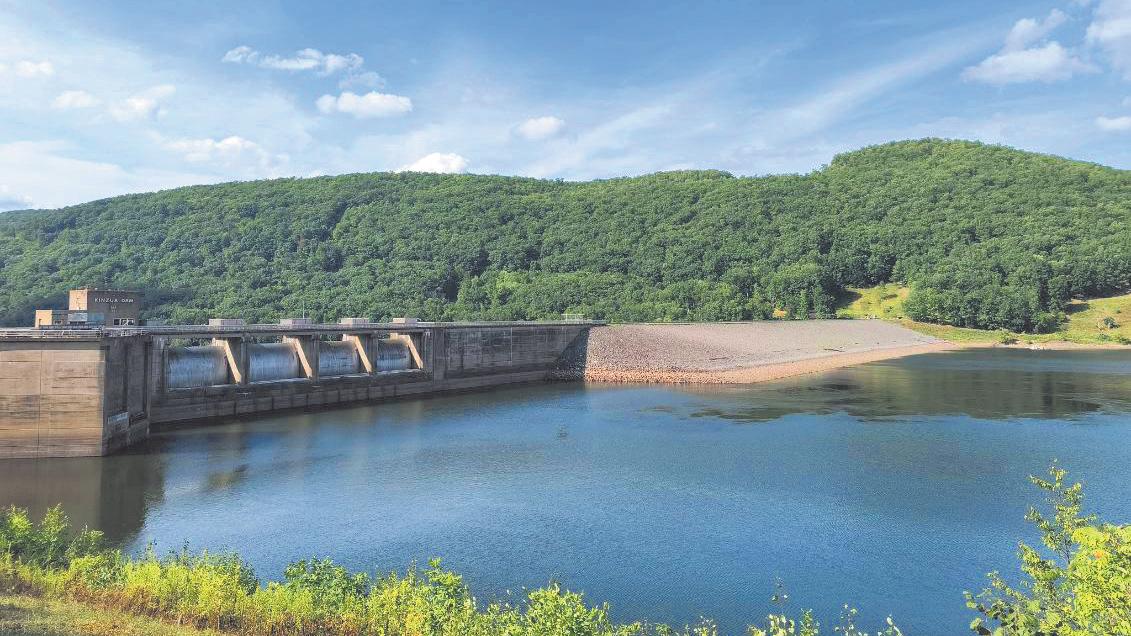
U.S. ACE seeks public input on Kinzua Dam, Allegheny Reservoir master plan, assessment
WARREN, Pa. — The U.S. Army Corps of Engineers Pittsburgh District is seeking community feedback regarding proposed changes to the Kinzua Dam and Allegheny Reservoir master plan and environmental assessment.
The district encourages the community to participate in the 30day public comment period and provide valuable input on proposed changes to the Kinzua Dam master plan and environmental assessment. This feedback will directly influence future recreational activities and natural resource management at the facility for the next 25 years. The comment period opened Monday and closes May 15. The public can view the draft master plan document at https://usace. contentdm.oclc.org/ utils/getfile/collection/ p16021coll7/id/28858 and the draft environmental assessment at https:// usace.contentdm. oclc.org/utils/getfile/ collection/p16021coll7/ id/28903. Physical copies of the master plan and environmental
assessment drafts are available at:
• Warren Public Library, 205 Market St., Warren, PA 16365
• Warren County Visitor’s Bureau, 22045
U.S. Route 6, Warren, PA 16365
• Salamanca Public Library, 155 Wildwood Ave., Salamanca, NY 14779
Comment cards and submission boxes are available at all three locations for the public to submit feedback.
Feedback can also be submitted virtually by emailing dll-celrpops-public-comment@ usace.army.mil.
U.S. Army Corps of Engineers regulations require periodic reviews of master plans to ensure they meet current public and environmental needs. The master plan guides
This Mother’s Day, honor the love that lasts forever. Whether she is with you, guiding you from above, or holds a cherished place in your memory, share a letter honoring her legacy. Write a tribute to the lasting impact of your mother or mother figure, celebrating her love, strength, and memory.
U.S. Army Corps of Engineers photo
The Kinzua Dam located near Warren, Pa., at the south end of the Alleghany Reservoir.
government-owned and leased lands around Kinzua Dam are used.