


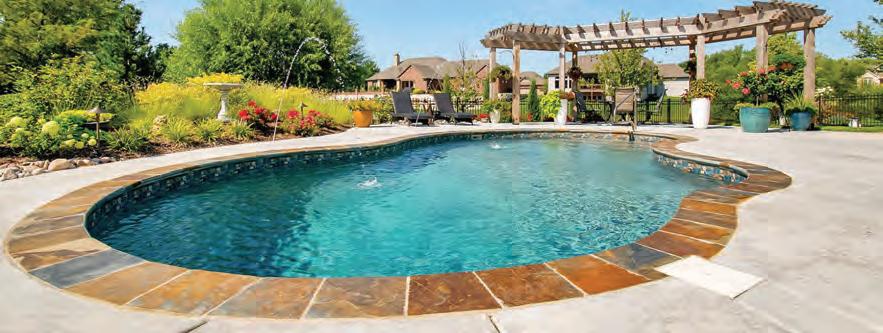


SUPERIOR MOISTURE RESISTANCE


*Recycled content varies by material

TOP-RATED FIRE RESISTANCE
* Select Advanced PVC Collections UP TO 65%-85% RECYCLED MATERIAL

SUPERIOR MOISTURE RESISTANCE
*Recycled content varies by material
TOP-RATED FIRE RESISTANCE
* Select Advanced PVC Collections UP TO 65%-85% RECYCLED MATERIAL
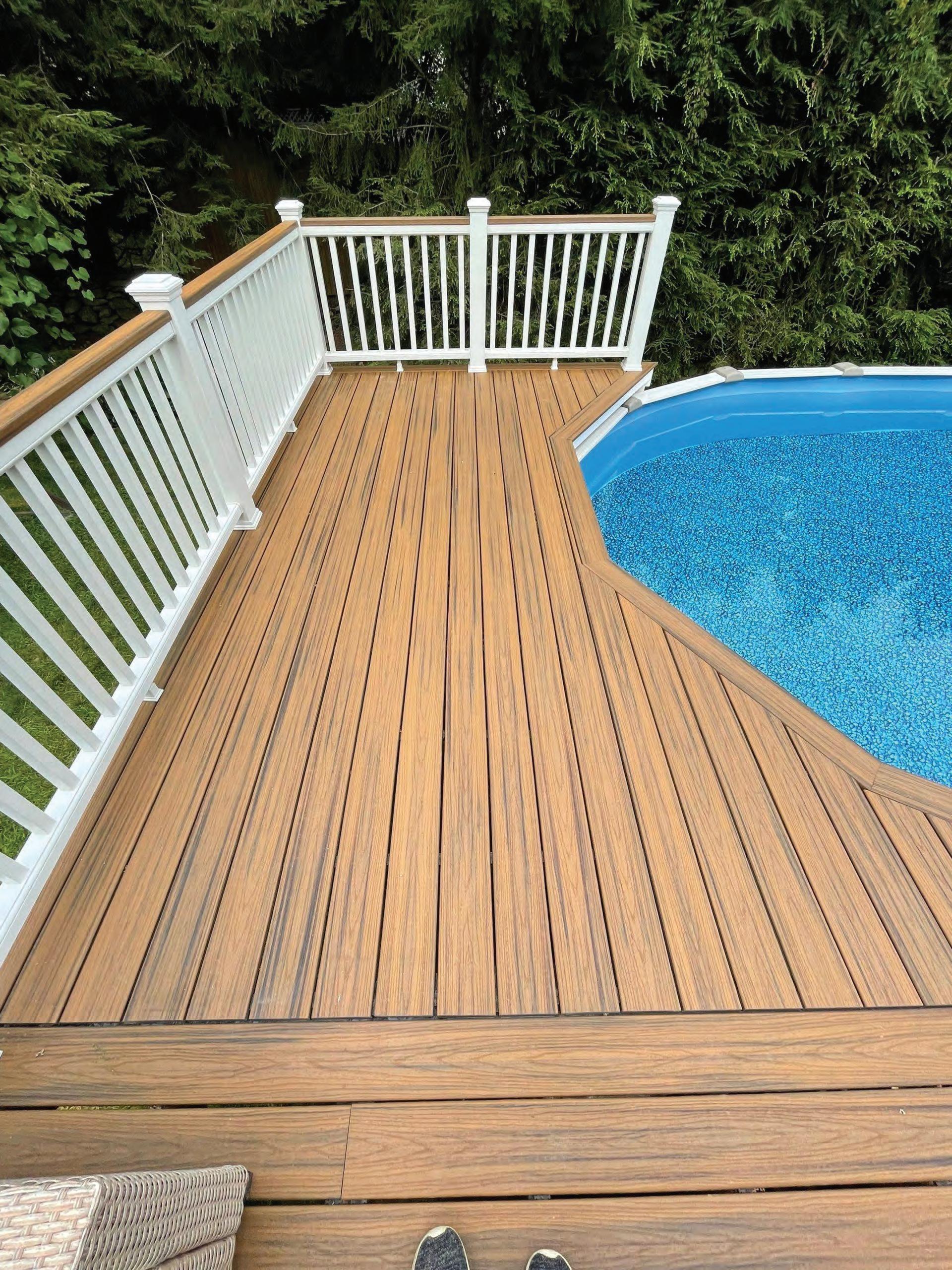
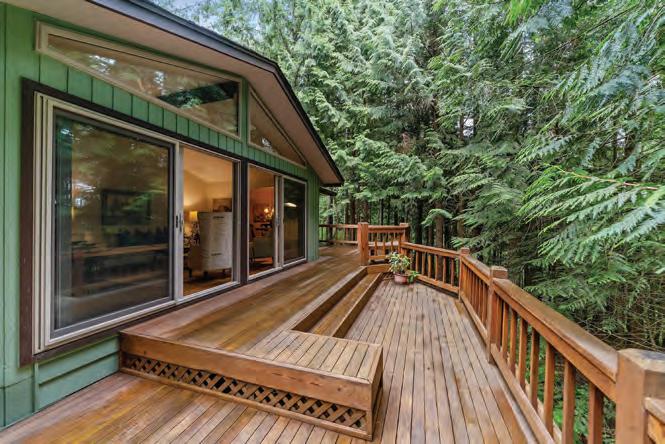
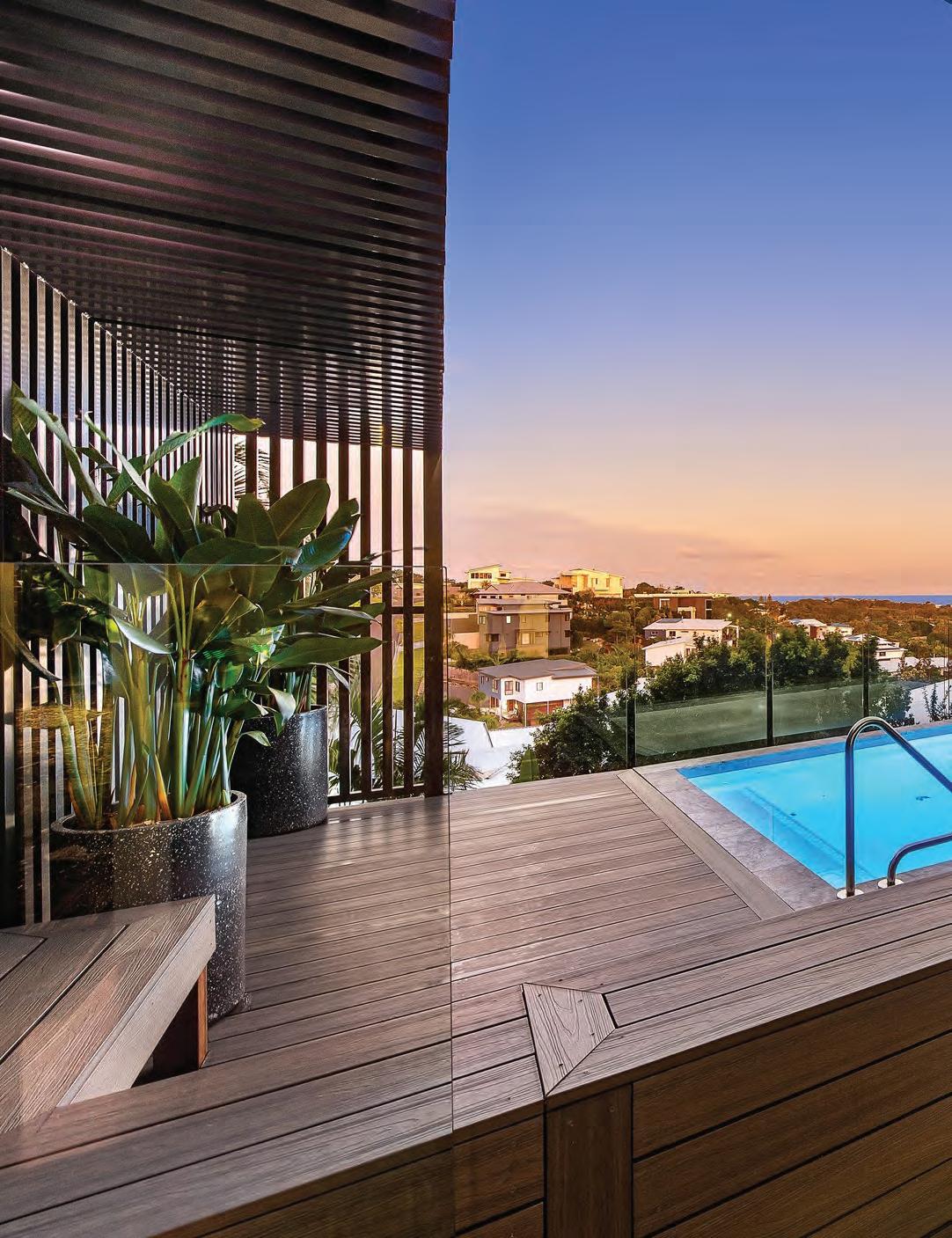
TimberTech sets the standard for innovation in decking. With collections featuring a Class A Flame Spread Rating, Ignition Resistant designation and/or WUI Compliance, our decking is more sustainable than wood, and designed for easy installation. Backed by industry-leading customer service and The Board contractor loyalty program, we’re committed to helping our partners succeed. Featuring TimberTech Advanced PVC Vintage Collection® in English Walnut ®


See what sets us apart at
Operationalizing Yes
Jessica Anderson advises listening first to retain your clients
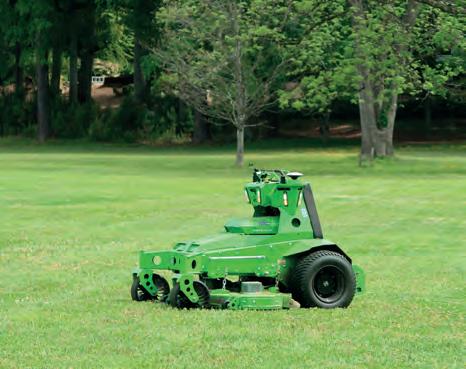
Fire-Resistant Landscaping
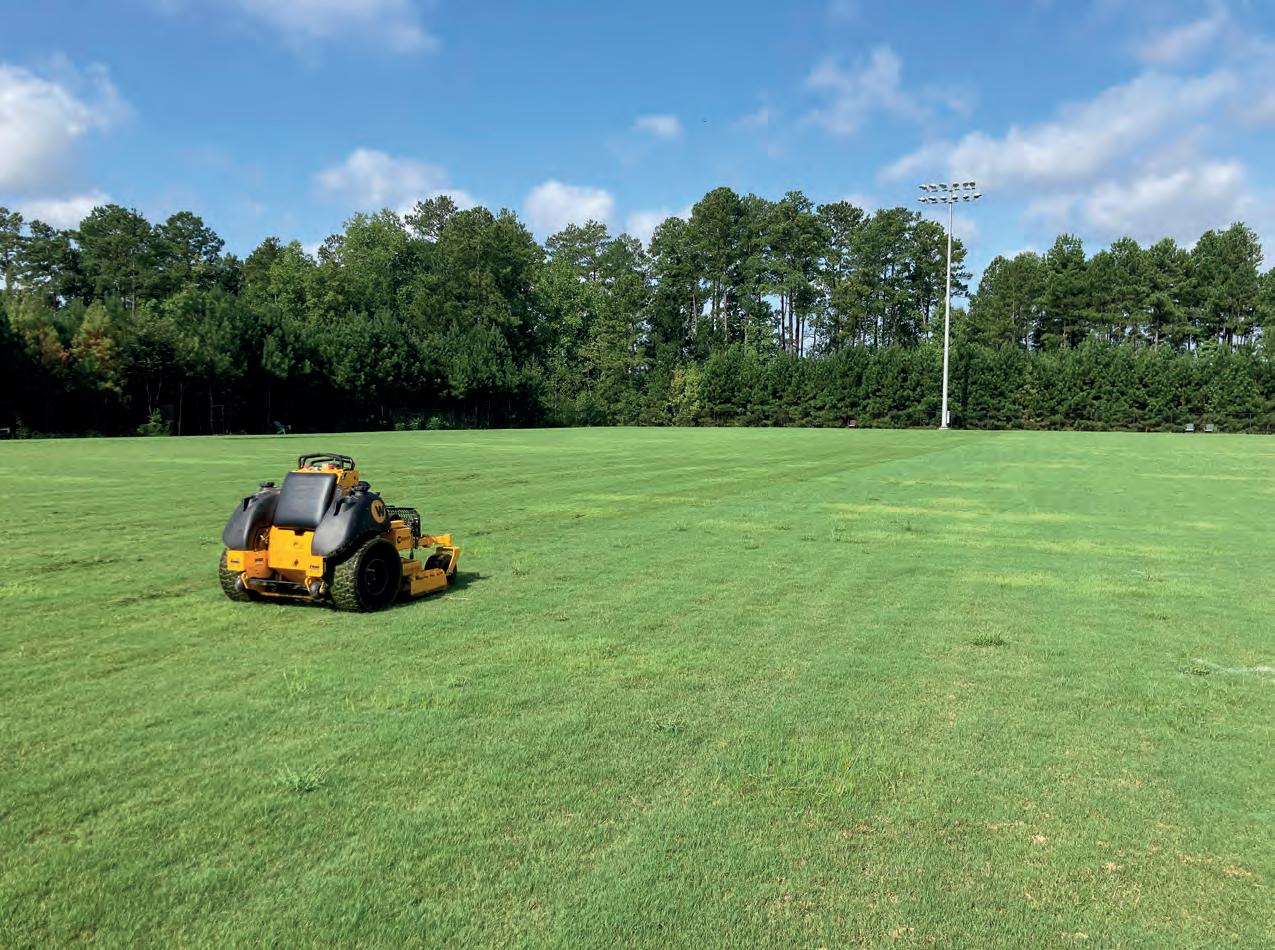
How strategic mowing is the first step in fire-resilience
Appraising Acquisition Value
Richard Sperber outlines how culture and steady growth win acquisitions
Let’s Hear It From: Pamela Conrad
Climate positive design, greenwashing and building a hybrid future
Synthetic Solution
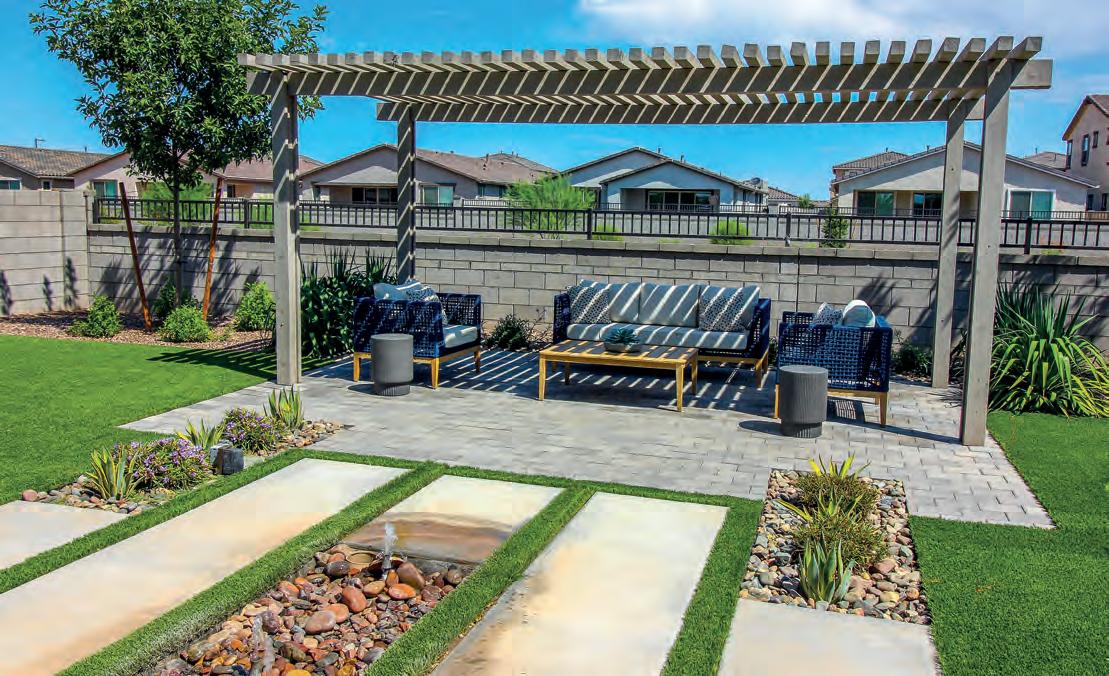
ReEarth portfolio exploring the place of synthetic turf in sustainable design
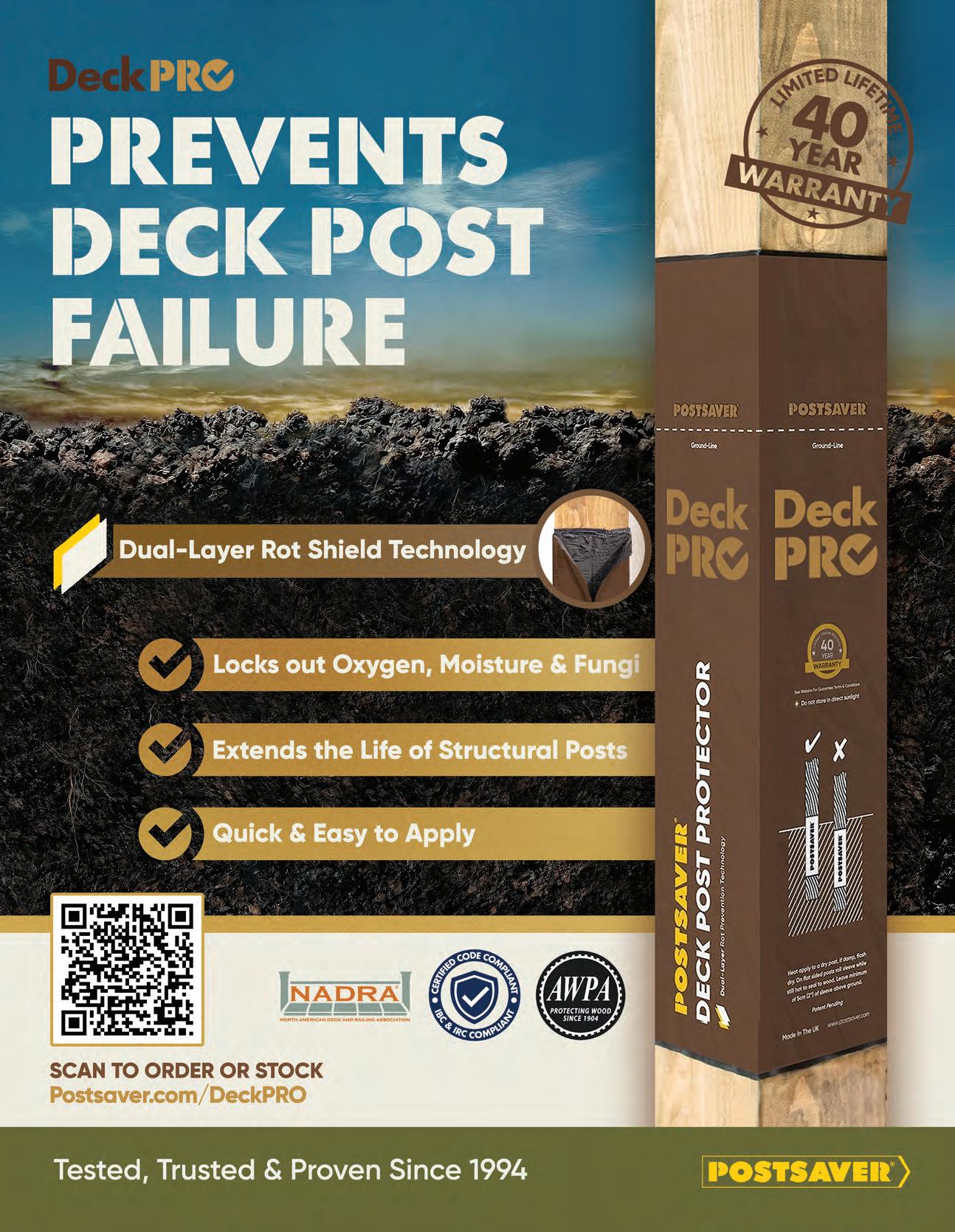
Meet the Supplier: Postsaver
Heat-activated sleeve technology to prolong the lifespan of deck posts
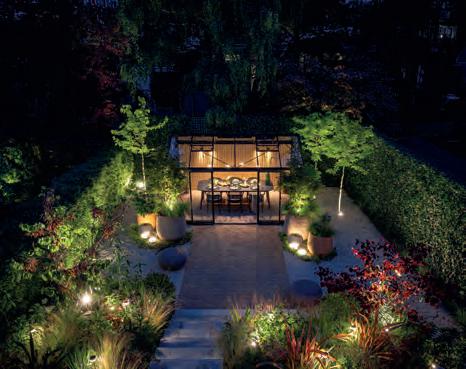
Top Tips: Illuminating Outdoor Living
in-lite reveals how to design inviting nighttime landscapes
Golden State Horizons
A father-son California firm on timeless, award-winning design
Ignition Resistance Decking
Thermally modified wood meets fire code standards without sacrificing aesthetics
Spring Reset
Heather Todd: Inspect irrigation systems first for spring watering success
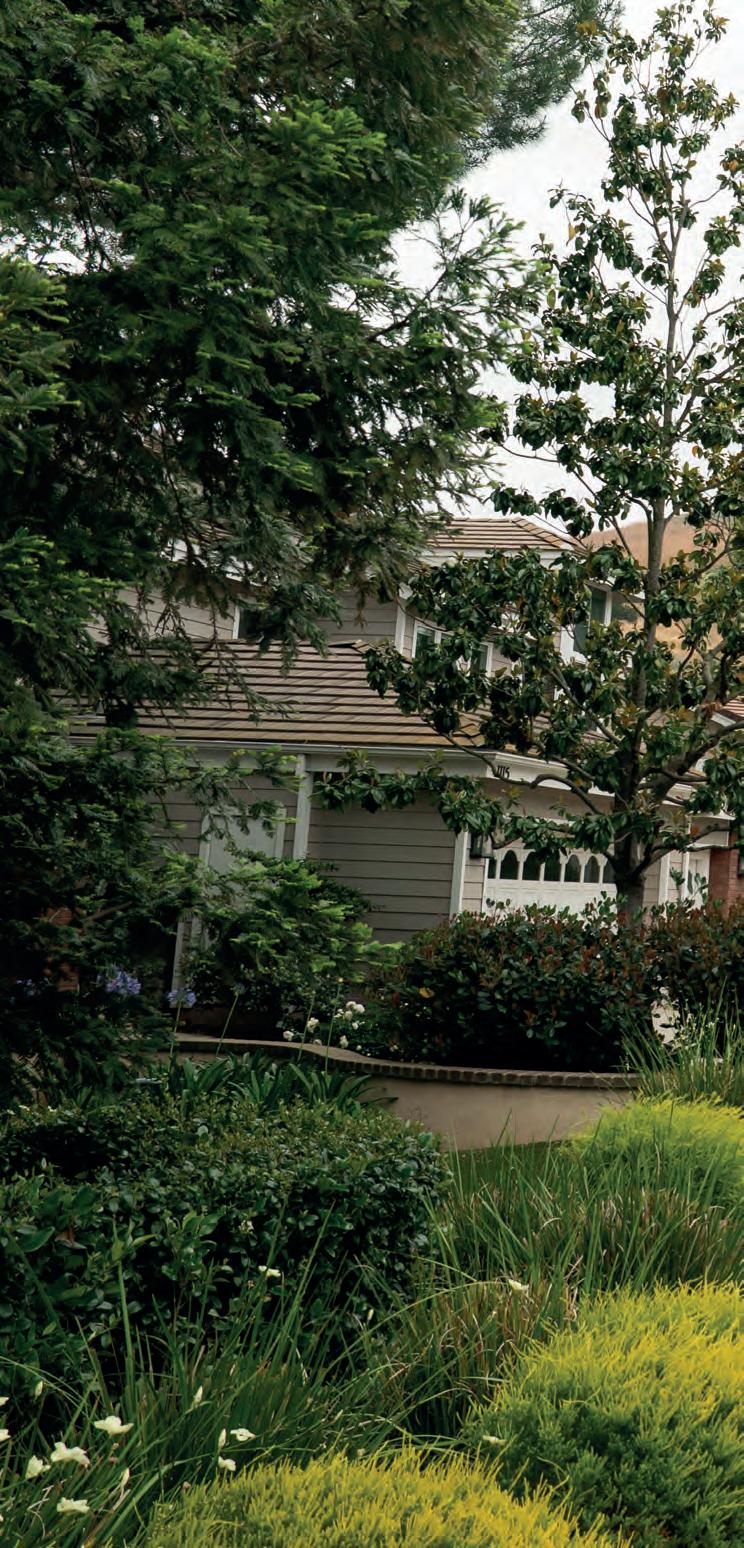
Front Yard Redevelopment
Michelle Hendricks outlines why front yards are outdoor living’s next frontier
Eljays44 Ltd, Village Workspaces, 11845 W Olympic Blvd, Los Angeles, CA, 90064
EDITORIAL
Deputy editor - Edward Brown
edward.brown@eljays44.com
+1 213 2740 645
Senior subeditor - Katrina Roy katrina.roy@eljays44.com
Senior designer - Kirsty Turek kirsty.turek@eljays44.com
ADVERTISING
Sales manager - Dan Green dan.green@eljays44.com
+1 210 8194 761
Event director - Tom Glasby tom.glasby@eljays44.com
+1 210 4481 252
MANAGEMENT
Managing director - Jamie Wilkinson jamie.wilkinson@eljays44.com
+44 (0) 1903 777570
Content director - Nina Mason nina.mason@eljays44.com
+44 (0) 1903 959393
Commercial director - Luke Chaplin luke.chaplin@eljays44.com
+44 (0) 1903 777580
CIRCULATION
Subscription enquiries - Dan Green dan.green@eljays44.com
+1 210 8194 761
Printed by Southwest Offset Printing
Published by Eljays44 Ltd – Connecting Horticulture. Pro Landscaper’s content is available for licensing overseas. Contact jamie.wilkinson@eljays44.com
Pro Landscaper USA is published 12 times per year by Eljays44 Ltd. The 2026 subscription price is $160. Subscription records are maintained at Eljays44 Ltd, Village Workspaces, 11845 W Olympic Blvd, Los Angeles, CA, 90064. Articles and information containe d in this publication are the copyright of Eljays44 Ltd and may not be reproduced in any form without the written permission of the publishers. The publishers cannot accept responsibility for loss of, or damage to, uncommissioned photographs or m anuscripts.
Whilst every effort has been made to maintain the integrity of our advertisers, we accept no responsibility for any problem, complaints, or subsequent litigation arising from readers’ responses to advertisements in the magazine. We also wish to emphasize that views expressed by editorial contributors are not necessarily those of the publishers. Reproduction of any part of this magazine is strictly forbidden.
It has almost become cliché: professionals have long talked about blurring the line between indoors and out. But what has changed is what homeowners actually expect those outdoor spaces to do. No longer content with a “nice place to sit,” today’s clients want cooking zones, weatherproof entertainment, outdoor offices and wellness retreats. In this Outdoor Living special, we dig into the details that turn those expectations into dynamic, extended outdoor rooms.

On page 49, in-lite offers a practical guide to illuminating builds without overlighting, explaining how layering safety, focal points and ambiance creates depth and invites people outside after dark. Continuing the theme of thoughtful outdoor space design, we profile Greenway Landscape Design & Build on page 53, where co-owner Alex Lawn outlines what his philosophy of “multi-generational entertainment” looks like in practice—zoning fire pits, dining areas, and pools so different people can make the most of what they have.
From there, we turn to safety and material resilience. On page 56, Thermory’s Stephen Butler tackles the tightening of fire codes, arguing that thermally modified decking can meet Class A standards without sacrificing natural aesthetics. And on page 59, BW Sauna Co. founder Jayson Stolp makes his pitch to landscape pros: custom saunas as a branded differentiator in the booming wellness market.
Turn the page, dive in and consider every element that goes into designing, building and maintaining top-tier outdoor living spaces—happy reading!
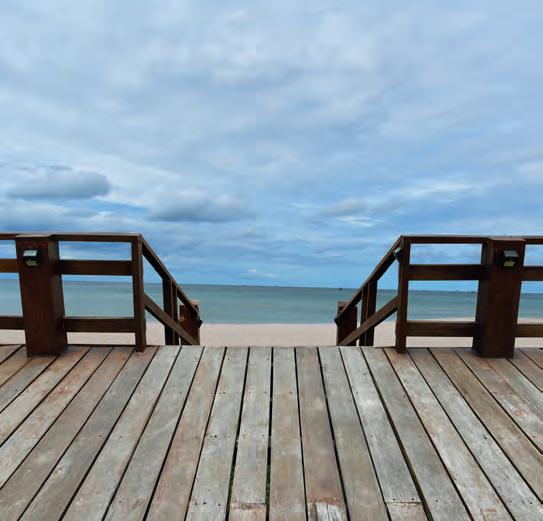
The North American Deck and Railing Association (NADRA) has announced a series of networking events and education courses for summer 2026. The programs are designed to bring together deck builders, lumberyards, manufacturers and industry leaders to share ideas, build relationships and spark new opportunities.
A networking event for the Southern California region has been rescheduled. The NADRA SoCal Networking Event will take place Wednesday, June 24, 2026, at 264 Fresco in Carlsbad, California. Both members and nonmembers are welcome to attend.
Two live webinar courses are scheduled for July and August. A Deck Evaluation and Inspection Certification will be held Thursday, July 16, 2026, from 9:00AM to 2:00PM Eastern Time. A two-day Decks Done Right Education class will take place on Thursdays, August 6 and August 13, 2026, from 9:00AM to 2:00PM Eastern Time on both days. Both courses will be presented as live webinars.
A Northeast networking event has also been announced. The NADRA Northeast Networking Event is scheduled for Thursday, August 27, 2026, at Lehigh Valley Sporting Clays, located at 2750 Limestone Street in Coplay, Pennsylvania. Registration for that event will open soon. For more information or to register, visit: nadra.org
Join the Association of Professional Landscape Designers (APLD) for an in-depth discussion on the lighting design process with Andy Thomas, CLVLT, COLD, on Tuesday, June 30, at 2PM Eastern/11AM Pacific.
In this session, you’ll explore the full client-centric lighting design process—from initial consultation to final documentation. Learn proven techniques, tools and strategies to create compelling concepts, communicate design intent, and ensure successful installation and long-term project value.
Andy is the owner of Viewpoint Lighting, a landscape and architectural lighting design-build firm based in Sacramento. Andy founded his lighting business after seven years of experience with landscape supply distributors, including Ewing and The Urban Farmer Store, and as a technical services representative for FX Luminaire.
He is the immediate past president of the Association of Outdoor Lighting Professionals (AOLP), as well as former chair of both the CLVLT and COLD committees. He has won numerous lighting design awards through AOLP, CLCA and APLD, and has recently been published in the Masters of Landscape Lighting coffee table book, an international collection of lighting designers.
Don’t miss this opportunity to gain expert insight and elevate your approach to lighting design.
Register now: apld.memberclicks.net/lighting-design-webinar Registration closes on June 26.

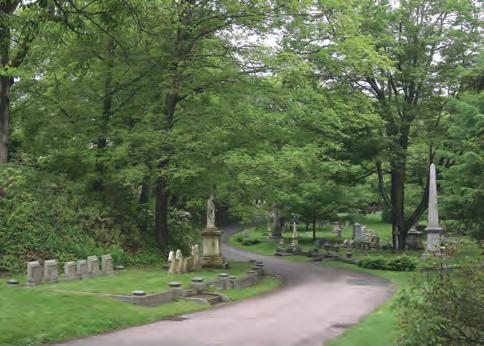
Mount Auburn Cemetery, Cambridge, Massachusetts, has become the first cemetery in the US to earn AGZA Green Zone® Certification, marking a shift in how it manages maintenance with reduced environmental impact.
The cemetery, working with workforce training and certification organization the American Green Zone Alliance (AGZA) and nonprofit Quiet Communities, has transitioned its routine landscaping from gas-powered equipment to battery electric alternatives. The Level 1 certification means routine maintenance is now performed without gas-powered handheld tools, including leaf blowers, string trimmers, hedge trimmers, edgers and chainsaws. Higher certification levels involve phasing out larger equipment like mowers and integrating broader sustainable practices. Mount Auburn plans to continue advancing toward those levels.
AGZA and Quiet Communities estimate the transition will eliminate approximately 16 tons of carbon dioxide emissions annually, equivalent to the carbon absorbed by more than 660 mature trees. Other estimated impacts include eliminating 8,981 pounds (4.5 tons) of toxic and carcinogenic emissions each year, substantial noise reductions with electric equipment that is two to four times quieter than gas alternatives, and a decrease of 361 gallons of fuel spilling into soil and groundwater annually.
Dan Mabe, president of AGZA, says: “By transitioning from gas-powered equipment to cleaner electric tools, Mount Auburn is protecting the health of its staff, visitors and neighbors while significantly reducing emissions and noise pollution. We hope this milestone inspires other cemeteries, parks and institutions across the country to take similar steps.”
The cemetery will mark the achievement with a ceremony on May 28.
AGZA Green Zone Certification was established by landscape maintenance industry professionals. It is now one of the fastestgrowing sustainability certifications in North America, with projects in the initial stages in Canada and Mexico. agza.net
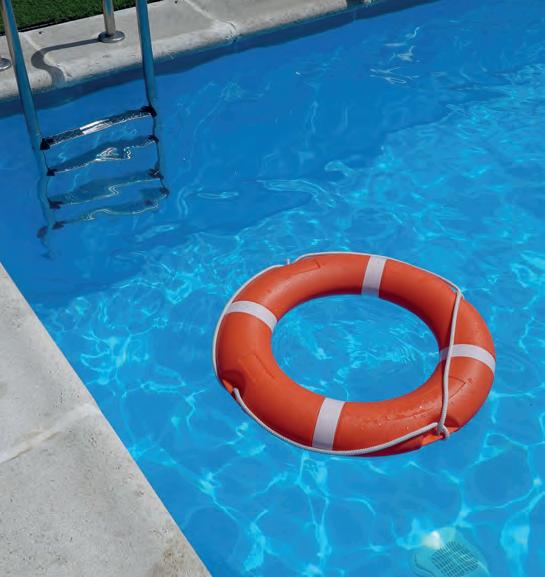
In May, the Pool & Hot Tub Alliance (PHTA) played a central role in National Water Safety Month, a public awareness campaign aimed at preventing waterrelated illnesses, injuries and fatalities.
The National Water Safety Month Coalition includes the American Red Cross, the National Drowning Prevention Alliance (NDPA), the World Waterpark Association (WWA) and PHTA. First recognized as a week-long campaign in 2003, it became a month-long observance in 2007. The coalition works with state and local governments to share safety information with parents, caregivers and aquatics industry professionals.
“PHTA is proud to be part of the National Water Safety Month Coalition and play a role in strengthening the pool, spa and hot tub industry’s messaging around the importance of water safety,” says Sabeena Hickman, CAE, president and CEO of PHTA. “Together, we can drastically reduce drowning incidents by sharing lifesaving resources with families and communities across the country—not just in May, but all throughout the year.”
Through its Step Into Swim initiative, PHTA provides funding to swim lesson providers nationwide to offer free or low-cost lessons to families who cannot otherwise afford them. The coalition also advocates for improved legislation and secures national media coverage.
Detailed information and free resources are available at NationalWaterSafetyMonth.org

As labor shortages bite, autonomous mowers offer a path to growth. Greenzie’s CEO shares how to introduce the technology without spooking crews
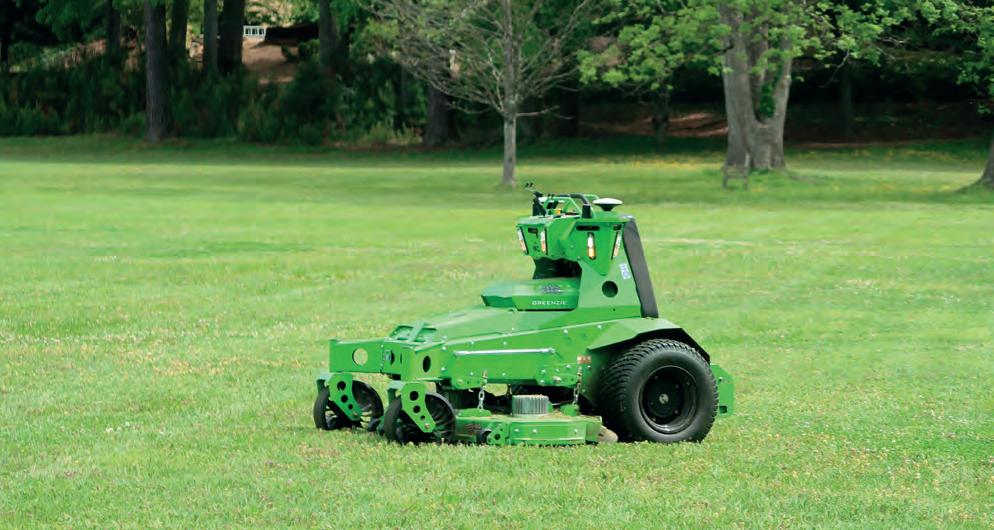
As labor shortages continue to bite across the US landscaping sector, autonomous mowing technology is offering a new path to growth. But many business owners wonder whether the technology works and how to introduce it without spooking their teams or disappointing their clients.
Charles Quinn, co-founder and CEO of Greenzie, has spent seven years answering that question. His company adds autonomy to existing commercial mowers from six different Original Equipment Manufacturers (OEMs), allowing crews to strip repetitive mowing from their daily workload. With hundreds of machines already in the field, Quinn has learned what works and what does not when it comes to bringing robots onto the truck.
The labor myth and safety first
The most common misconception Quinn encounters is that automation means job losses. He is direct about correcting it. “There is no getting rid of employees with this,” he insists. “In fact, most landscapers need more than they have. Greenzie Powered Autonomy
allows these crews to use high-value skills and be more productive.”
His core message to landscaping companies is consistent: autonomy helps companies grow acreage not payroll. “The goal is not fewer workers, it never has been, it is more productive crews,” he argues. “The labor shortage is real. Autonomy gives contractors and municipals and anyone who mows lawns another path to growth.”
Quinn acknowledges that fear of job losses is real. Greenzie supports landscapers by giving them talking points to use with their crews. “We give landscapers tools to say to their teams, ‘This isn’t here to replace anybody.’ In fact, if you go to any landscaping crew and say ‘I’m taking your crew down’ they’ll say ‘I need everybody I’ve got and then some. Give me the robotic workers.’”
“We
landscaping and the lawn industry because it is particularly dangerous.” If there is one area where Quinn will not compromise it is safety. Greenzie’s 2025 annual safety report shows zero OSHA-reportable accidents across the equivalent of more than 300 mowing seasons with over six billion square feet of autonomous turf mowed.
“The reason this industry has high injury statistics is that people who ride on these things are subject to rollovers, cuts, burns. If a zero-turn mower rolls over and somebody’s pinned in it, that’s how the majority of people die in landscaping.
give landscapers tools to be successful with autonomy. This isn’t here to replace anybody”
He started Greenzie with a broader mission. “I want to free humans from repetitive outdoor labor. We started in
We’re taking the person off the mower.”
According to Quinn, anyone can learn the Greenzie system in minutes. Before the season starts, operators drive the perimeter of a site once while the mower records the boundary. “Press the button when you’re done, and the mower takes over from there.” Even the interface rejects unnecessary complexity, there is no app to download.
“Forget the App Store,” Quinn stresses. “Anything that creates friction we don’t want.” Greenzie runs entirely on the web, a deliberate choice from a CEO who once led a premier app development firm. His approach is simple: “Scan the QR code. It works immediately. No passwords. No installs.”
Practical advice for getting started
Not every site suits autonomous mowing. “If you mow postage-stamp-sized lawns that are highly meticulous and the detail matters, skip it,” he advises. “Go get a robot mower or just let your local landscaper do it.”
Larger acreage is where autonomy delivers returns.
even calculates the return on investment so you can see exactly when the machine pays for itself.”
His advice is to start small. “We are in the early adopter stage. Don’t go all in and say you’re replacing everything. Just try it. Take a route you know has some large acreage. Try one machine. Go to a demo.”
On gas versus electric Quinn is pragmatic. Greenzie adds autonomy to both, as a result he claims no bias but offers clear guidance. “If customers are asking for it, or the site requires it, go electric. If not, stick with gas.” The practical constraint, he observes, is charging infrastructure.
“If customers are asking for it, or the site requires it, go electric”
Greenzie offers a free planning tool on its website that allows companies to input properties and see projected return on investment based on their mowing frequency. “It shows you exactly how the mower would handle the site,” Quinn notes. “It
“Some of these use level two high-powered chargers. I couldn’t imagine running a whole fleet—just imagine the amount of charging infrastructure you would have to put in place.”
A lesson Quinn has learned is the critical importance of dealers. Some competitors have
tried to sell direct but he warns against skipping this step. “The dealer does so much more than just sell stuff,” he argues. “Everybody wants to build an indestructible mower, but you can’t. You make consumables—things that wear out so you don’t destroy the machine. That’s why you change the oil. That’s why you have tires.” His advice is straightforward: “If I had to choose, I would pick the one with the best dealer support in your area.”
Quinn’s final message to landscaping business owners is simple: ask your local dealer about autonomy. “There are still so many people that do not know that this is an option. They’re still out there buying the largest mower they can with the largest cup holder.”
He concludes: “The industry doesn’t need more hype. This isn’t about AI or robotics. It’s just autonomy on the equipment you already use— dependable productivity that handles the repetitive work so humans can focus on higher-value tasks.” The technology is ready. Whether the industry is ready to embrace it remains to be seen.

ABOUT
In an industry often defined by seasonal cycles and equipment logistics, it is easy for landscaping firms to view themselves primarily as problem-solvers for planting, drainage and design. However, according to a recent industry report, a considerable segment of firms are shifting focus away from simply adding services and toward something more fundamental: keeping the clients they already have.
Jessica Anderson, customer care and development specialist at Planted Earth Landscaping, embraces this philosophy. In an interview with Pro Landscaper USA, she articulated a service model that prioritizes listening over logistics and solutions over stipulations—a model that aligns strikingly with the data from the 2026 Aspire Commercial Landscape Industry Report.
“At Planted Earth Landscaping, we’re a customer service company, first and foremost, and that’s what sets us apart,” Anderson says. “We make sure our customers get what they ask for. We don’t believe in telling our customers, ‘no.’ Any landscape company can install plants, pull weeds and cut grass. We do more than that.”
Jessica Anderson puts listening over logistics. A new industry report proves that retaining clients pays better than chasing new ones
The data case for retention
Aspire’s 2026 report, which surveyed over 1,000 commercial landscaping business owners and executives, confirms that Anderson’s instincts are not just good ethics—they are good economics. While 79% of contractors aim to grow revenue, the majority are not planning to add new services to achieve this. Instead, they are prioritizing customer acquisition and retention as their primary business goals.
“We
industry, with 59% of contractors earning the majority of their revenue from recurring maintenance services.
The ‘just people’ principle
make sure our customers get what they ask for. We don’t believe in telling our customers, ‘no’”
The report highlights that 35% of contractors attribute their revenue to repeat clients, while 26% credit referrals. Word-of-mouth and repeat business remain the financial backbone of the
The first barrier to superior service, according to Anderson, is intimidation. The innate response to successful, high-value clients is apprehension. It’s natural to subconsciously maintain a fearful distance, worried about saying the wrong thing. Anderson rejects this hierarchy entirely.
“We’re all just people. We all go to sleep at night. We all get up in the morning. We all eat three meals a day. When I meet potential clients, I try to remember that they are just people who want their landscape maintained to high standards. I can help them with that.”
This philosophy manifests in active listening. Rather than immediately jumping to a prescribed maintenance plan, Anderson advises teams to discover what the landscape represents to the owner. It might be an entertainment space requiring interior-decoratorlevel precision. For others, it is a garden where clients go to escape modern living and stress.
One of the top recommendations Anderson has for the landscaping industry is the doctrine of eliminating the word “no” from the customer service vocabulary. She recounted a case study involving a client who requested summer flowers for an event occurring in a couple of days—despite the fact that the regional climate was still experiencing cold nights unsuitable for summer blooms.
In this case, the initial response to the request was a logical refusal: it was too early, the flowers would die. However, the client’s reaction was equally as swift: “I need flowers for my event. Are you going to make it happen?”
The resolution defined the company’s ethos. The initial practical refusal was reconsidered. “If our client wants summer flowers, we will give her summer flowers. If they die, we will replace them, because this is what we do,” Anderson remarks. “We don’t have to be practical. We have to make it happen for our client.”
The strategy of radical honesty
Conversely, Anderson warned that saying “yes” to a request that cannot be delivered is far more destructive than a direct refusal. She advocates for a policy of radical honesty, especially when mistakes occur.
She recalled an incident where a piece of equipment was left on a client’s driveway while the homeowners were out of town, leading to a very upset homeowner. Instead of making excuses, Anderson remedied the situation, apologized and offered the client three immediate choices: terminate the contract with no penalty, transfer to a different account manager or move forward with an assurance the error would never be repeated.
“By acknowledging the mistake and suggesting options for moving forward, the client was put back in control. Often the tendency is to not say anything about our mistakes and hope the client will forget or won’t notice. I think that gives the impression of dishonesty. Clients generally appreciate straightforward, honest communication.”
“We don’t have to be practical. We have to make it happen for our client”
still a lot of money. The client is going to feel like they’re paying a lot, but they won’t be getting the services that they want,” she states. “It becomes a stressful losing scenario for everyone.”
Another point to be addressed in client retention is the financial reality of high-touch service. Anderson warns against “cutting the scope” to win a contract, arguing that service does not scale down linearly. She cites the frequent example of a client who wants to have a lower monthly maintenance payment. “If we decrease the scope of the contract to meet a lower budget, it is generally
For landscaping executives looking to stabilize recurring revenue, the prescription from Planted Earth is service first. Invest as much time in listening as you do in leaf-blowing. Replace “no” with “how,” and prioritize owning your errors over hiding them. As the 2026 Aspire report confirms, in a market where 70% of contractors are raising wages and margins are under pressure, a reliable path to growth is not only finding new customers— but retaining happy customers.

Anderson joined Planted Earth in 2023, working in landscape management sales and marketing. She holds degrees from the University of Wisconsin and previously worked in environmental education and retail nursery settings.
Landscaping expert Rose Morrison explains how strategic mowing is becoming the entry point to fire-resilient property management
Wildfire risk is no longer a distant or seasonal concern. Across droughtaffected regions, it has become a persistent and escalating threat that’s reshaping how properties are designed, maintained and insured.
In this environment, landscaping is shifting. What was once a largely aesthetic service is now a critical layer of protection. At the center of this transformation is defensible space, a structured, science-backed approach to vegetation management that reduces the likelihood of fire reaching built structures.
From routine maintenance to risk infrastructure
The traditional landscaping model emphasized visual order and plant health, but it rarely accounted for fire behavior. That gap is no longer acceptable in high-risk zones. Dry grasses,
accumulated debris and poorly managed plant density create continuous fuel loads that can carry fire directly to homes and commercial buildings.
“defensible space reframes the role of landscaping. Instead of simply maintaining growth, contractors are actively managing fuel”
This is where defensible space reframes the role of landscaping. Instead of simply maintaining growth, contractors are actively managing fuel. The objective is to break the continuity of combustible material so that fire intensity drops as it approaches a structure.1 This means every mowing decision, trimming pass and removal of organic matter is now tied to fire performance outcomes. This system is organized into zones, each with a different level of intensity. The most critical is Zone 0, which extends as far as 5 feet from the structure. This is where the most aggressive removal and reduction must occur, with a focus on eliminating combustible materials entirely.2 Zone 1 typically spans up to 30 feet and emphasizes reduced
plant density, careful spacing and ongoing maintenance to limit fuel continuity. Zone 2 extends beyond that, where the goal is to slow fire spread through thinning and strategic mowing.
Strategic mowing as a technical discipline Clearing vegetation is a crucial part of defending homes against fire.3 Strategic mowing further safeguards buildings, plus it’s accessible and immediately impactful. However, its execution is becoming far more technical than many assume. Cutting height, frequency and timing are no longer arbitrary decisions. They’re calibrated to reduce ignition potential and slow fire spread without compromising soil stability or longterm land health.
Maintaining grass at lower, controlled heights reduces flame length and heat output, which directly influences whether nearby structures ignite.4 Simultaneously, overcutting can expose soil and encourage invasive, more flammable species. Effective contractors understand this balance and adjust mowing patterns to create subtle fuel breaks across a property, particularly

in transition zones between open land and built environments.
Mowing isn’t a stand-alone task. It’s the first layer in a broader system of fire mitigation services, and its value lies in how well it integrates with other interventions.
As landscaping expectations shift, so does the equipment required to deliver these services safely and effectively.
Standard residential mowers are often insufficient for the varied and increasingly rugged conditions associated with fire-prone landscapes. Contractors are investing in more specialized machinery capable of handling dense bush, uneven terrain and large-scale clearance without increasing ignition risk.
“Strategic mowing is now a gateway to a much more complex and valuable service ecosystem centered on defensible space”
Early-season mowing and clearing are now critical, as they remove potential fuel before it fully cures and becomes highly flammable. During peak dry periods, maintenance frequency often increases to ensure that fuel loads remain consistently low. In some cases, contractors are also offering ongoing monitoring agreements, effectively turning defensible space into a managed subscription-based service rather than a one-time intervention.
The evolution of landscaping in fire-prone regions is rapid and consequential. Strategic mowing is now a gateway to a much more complex and valuable service ecosystem centered on defensible space. Contractors who adapt to this shift are keeping pace with the industry. By integrating fire-resistant landscaping, using fire-resistant plants and applying firewise principles, they are transforming properties into more resilient environments.
References
1. The California Department of Forestry and Fire Protection, ‘Defensible Space.’ fire.ca.gov/dspace
2. RC Mowers, ‘How to Create Defensible Space for Wildfire Safety.’ rcmowersusa.com/blog/defensiblespace-wildfire-safety/
Equally important is reducing spark hazards. Equipment that generates friction against rocks or debris can inadvertently start fires. As a result, there’s a growing emphasis on low-spark or sparkarresting technologies. Additionally, operational protocols that prioritize early-day work windows when temperatures and wind speeds are lower can help mitigate fire risk.5
Scheduling around fire behavior
Historically, landscaping schedules followed predictable seasonal patterns tied to rainfall and plant growth. That model is being replaced by a more dynamic approach driven by fire risk indicators. Contractors are increasingly aligning their service timelines with periods of heightened vulnerability, rather than simply responding to visible overgrowth.
Once strategic mowing establishes the baseline, many contractors expand their offerings into full-scale fire-resistant landscaping. This evolution is logical and necessary. While mowing reduces fine fuels like grass, it doesn’t address the broader structural vulnerabilities created by plant placement, species selection and material choices.
In response, landscapers are redesigning outdoor environments to minimize ignition pathways. This includes increasing spacing between vegetation and structures, replacing high-resin or drought-stressed plants with fireresistant plants, and incorporating noncombustible materials such as gravel, stone and hardscape barriers.6 The goal is to create layered zones of protection that collectively reduce fire intensity and slow its progression.
This integrated approach is often described as firewise landscaping, and it represents a convergence of ecological understanding, design strategy and risk management. It also positions the contractor as a long-term adviser rather than a taskbased service provider.
3. Renovated, ‘Wildfire-Proof House: How This California Home Overcame the Flames and What You Can Learn.’ Rose Morrison, 4 November 2025. renovated.com/wildfire-proof-house-how-californiahome-overcame-the-flames/
4. County Fire Authority, ‘Grassfires - Rural.’ cfa.vic. gov.au/plan-prepare/bushfire-basics/grassfires-rural
5. Northern Sonoma County Fire, ‘Tips for Safe Grass Cutting.’ northernsonomacountyfire.org/tips-forsafe-grass-cutting
6. California Native Plant Society, ‘Creating a FireResilient Home
7. while supporting wildlife and native plants.’ cnps. org/wildfire/best-practices

Rose Morrison is a landscaping and home improvements expert with a decade of experience in the industry. As managing editor of Renovate Magazine, she stays on top of the latest trends in outdoor design and sustainable practices. With a passion for creating beautiful and functional outdoor spaces, Morrison offers insights and inspiration for landscape professionals looking to elevate their projects and businesses. roseamorrison.com
Instagram @life_tintedrose
Richard Sperber built billion-dollar landscape giants. Now he shares what truly determines a successful merger or acquisition
What truly distinguishes a business worth acquiring from one that is not? As private equity investors continue to flock to the landscaping market for its recurring revenue models and established firms contemplate expansion opportunities, the answer to that question has never felt more like the secret sauce.
Industry veteran Richard Sperber—former leader of ValleyCrest and of Sperber Landscape Companies—has lived through the deals, having built a landscaping powerhouse from the ground up. In an interview with Pro Landscaper USA, Sperber offered a series of strategic guardrails for owners looking to sell or buy. He emphasized that while private equity has created unprecedented exit opportunities, the process demands careful thought and carries risks that go far beyond the balance sheet.
Recognize that culture is a key differentiator
When asked about how a merger between two companies can get into trouble, Sperber points to a clash of operating models, not a failure of assets. He argues that buyers who ignore “people strategy” are destined to fail. “Everyone can buy the same lawnmowers. We all buy the same plants from the same nurseries. We all hire the same people from the same pool,” Sperber says. “What makes landscape companies different is what you do with the people—and how you manage them. I think that is forgotten a lot when it comes to mergers and acquisitions.”
If you buy a company, don’t break it
Sperber cautions against the common urge to immediately overhaul an acquired business. He argues that the purchase price assumes the seller’s competence. “If you’re buying a company, I’m assuming that you like what they do. So why would you want to change it? To buy a company and completely change it—why would you buy it?”
He further advises buyers to improve incrementally rather than impose radical change. For sellers, this means vetting potential buyers to ensure they have a preservationist philosophy, not demolition.
Manage the psychological transition of the seller
One of the most delicate phases of any acquisition is the moment the founder stops being “the boss.” Sperber notes that this is where many deals unravel, not in legal paperwork but in emotional friction. “It’s hard for somebody who has built a business for 20 or 30 years, and they were the boss,” he says. “Now they don’t have the final say.”
His guidance for acquiring firms is to resist micromanagement. “If you are going to grow a big business, you cannot micromanage the entire organization,” he warns. He encourages leadership to ask a critical question: “Are we doing things to our people, or for our people?”
Sperber observes that over the last decade, private equity firms have poured significant capital into landscape maintenance, viewing it as a stable, recession-resistant asset. Nonetheless, he says that the market is now crowded and exit strategies remain uncertain. For owners looking to sell, he offers a stark warning about financial honesty.
“Make sure your I-9s, your labor, your overtime, all of that is straight. They will do a lot of due diligence. If you are playing any games, they will find every single one of them.”
He specifically warns against “squeezing margins” in the years leading up to a sale—such as halting equipment purchases to boost short-term profits. “If you are cutting corners—like, ‘We’re going to sell in three or four years, so let’s not buy any new equipment’—they will see that, and you will get dinged for that.”
Hire specialists, not friends
Regarding owners planning an exit, Sperber strongly advises against relying on familiar but inexperienced advisors. “Two or three years before you sell, make sure you have a great outside accounting firm that has done a lot of merger and acquisition work,” he comments. “And hire a great lawyer who has also done a lot of merger and acquisition work. Don’t hire your friend that you’ve dealt with for years because you bought some real estate through them. Hire people who have done this a thousand times.”
Steady growth beats a stellar final year
Sperber cautions sellers against the temptation to inflate performance before a sale. He notes that buyers are sophisticated and can spot anomalies. “Just run a great, honest company with a great reputation in the market,” he says. “Even if your margins are a drop lower than they should be, nothing replaces steady growth with good margins—duplicated year after year. When you start seeing peaks and downs, and half these books show their best year ever is the year they sell, every buyer looks at that with a considerable amount of suspicion.”
Earn the right to grow
Finally, for business owners considering expansion before a sale, Sperber advises against “premature growth.” He argues that a company should not enter new markets until it has dominated its current market. “If you’re operating in a city, and you’re not number one, two, three or maybe four in that town, you’re not ready to expand. Be big and great in the city where you operate. You have to earn the right to grow.”
He adds that expansion should only be led by trusted, proven internal candidates—not external hires. “Give the role to a known employee who understands exactly how you run your business. Give them that opportunity.”
Taking the long view to an exit
Ultimately, for owners contemplating an exit, Sperber’s message is consistent: keep the books clean, invest in people and never underestimate the value of patience.
“There is nothing that replaces steady growth,” he concludes.

Richard Sperber led ValleyCrest to global scale, merged it into BrightView, then founded Sperber Landscape Companies, which he parted ways with in 2026. A veteran industry entrepreneur, he prioritises culture, people and steady growth over short-term wins.
linkedin.com/in/richard-sperber-16375b6b
Why the financing partner that builders choose matters more than they think—Lyon Financial shows how ignoring financing costs deals, while leveraging it drives bigger projects
Financing is often treated as an afterthought, but the right financing partner can help builders close more jobs and larger projects by turning project cost into manageable monthly payments.
“Financing is more than getting a loan approved,” says Joe Garcia, national sales director at Lyon Financial. “It determines whether the customer feels comfortable moving forward.”
“Find
want while increasing project size for builders,” Garcia explains.
What to look for in a financing partner
Not all financing delivers the same results. Here are four important questions builders should ask:
1. Are programs designed for backyard projects?
Look for financing built specifically for pool and outdoor living projects with long terms and low fixed rates that help keep payments affordable. Garcia notes that extended 20- or 30-year terms can significantly lower the monthly payment.
someone
who charges
a
flat fee or no fee, so customers can focus on what they want instead of what they can get”
Payments make complete backyards possible Homeowners rarely decide based on project cost alone. Financing helps customers focus on affordable monthly payments, making it easier to move forward and upgrade their projects.
A strong financing partner should also support the customer’s full backyard vision, not just the pool. Upgrades like outdoor kitchens and pergolas become attainable when combined into one loan.
“That one-stop approach simplifies the process, helping customers build the backyard they really
When a financing partner understands the pool and outdoor living industry, the process is smoother for both builders and homeowners.
2. What is their approval rate?
Higher approval rates help turn more leads into funded projects. “You want to hear 60–70%,” Garcia says. “Low approvals mean missed opportunities.”
3. What fees are charged?
Some lenders charge hefty borrower fees— often required to be paid upfront and out of pocket increasing project costs and causing
customers to hesitate or scale back. “Find someone who charges a flat fee or no fee, so customers can focus on what they want instead of what they can get,” Garcia adds.
4. What support is available?
The right partner is an extension of the builder’s sales team, helping overcome objections and confidently present monthly payments.
“Many builders know how to design but don’t know how to translate a project into an affordable payment,” Garcia says. “You want someone who can educate your team.”
Most importantly, the financing partner reflects directly on the builder’s business, making customer experience and communication critical.

Joe Garcia is director of national sales at Lyon Financial, leading nationwide growth in pool and outdoor living financing. He has 20+ years of experience in consumer lending and sales at companies including Wells Fargo, Bank of America and Verizon. He helps builders use financing to grow with confidence. www.lyonfinancial.net

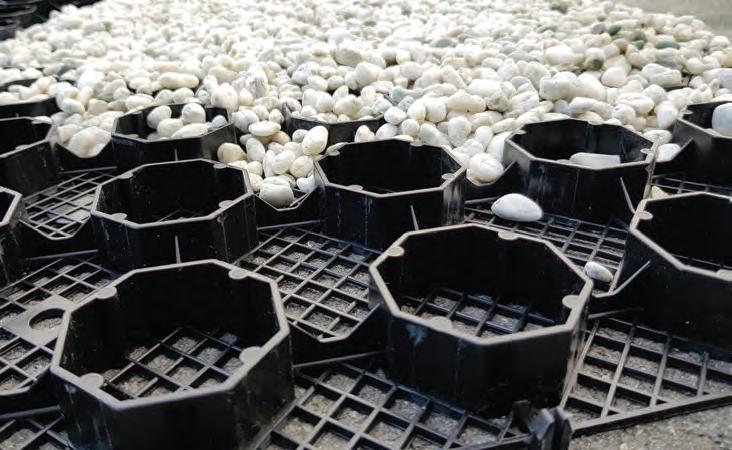
PebbleLock™ reinforces pebble surfaces, locking aggregates firmly in place across paths, patios, and driveways.
•Stops movement.
•Reduces maintenance.
•Maintains natural drainage.
•Long-term performance.
•Quick installation.

“THIS IS A MOMENT TO LEVERAGE OUR STRENGTHS AND NOT JUST SURVIVE, BUT THRIVE”
Landscape architect Pamela Conrad on moving beyond carbon neutrality, avoiding greenwashing and building a hybrid business model for climate action

UN Habitat estimates that the urban built environment is responsible for 75% of global greenhouse gas emissions. That conclusion, echoed across numerous studies, has compelled many in the landscaping industry to argue that the profession must advocate, educate and design for spaces that reach beyond carbon neutrality. Through her nonprofit Climate Positive Design, Pamela Conrad is building the tools and resources to turn that imperative into action. In an interview with Pro Landscaper USA, the Harvard Loeb Fellow discussed the evolution of her career, carbon metrics and the distinction between genuine innovation and greenwashing.
From a Missouri farm to global practice
Conrad grew up on a farm just north of Kansas City, Missouri, where her relationship with the land
proved formative. “I fell in love with nature,” she says. “I was constantly playing in the creeks and loved the animals and gardening.” That childhood passion quickly turned into an entrepreneurial venture. Before she could drive, Conrad ran a small landscaping business, relying on her parents to shuttle her between jobs. “I also worked on a design-build crew and nursery in high school managing a team of all men.”
A pivotal moment came when a neighbor gave her a landscape architecture magazine. “She said to me, ‘This is a real profession where you can build upon your existing skills’” Conrad recalls. That neighbor would then introduce her to a landscape architect at a design-build firm, breaking ground for what would grow into a multi-decade career.
Later, as a first-generation college graduate funded by a Pell Grant and multiple jobs, Conrad worked her way through the University of Missouri
before earning a Master’s degree at Cal Poly. Along the way, she built a diverse portfolio that included city parks and recreational areas, work with the US Army Corps of Engineers and positions at private firms in Los Angeles, Shanghai and San Francisco, including the well-known Office of Cheryl Barton, SWA and CMG. “Landscape architecture has never been one lane for me,” she comments. “I’ve worked across public agencies, global firms, academia and nonprofits, all grounded in the lifelong connection to the land that started growing up on a farm.”
The catalyst for Conrad’s most recent endeavors was a gap she identified in the landscape industry. Despite years of working on high-profile public projects, she observed that practitioners lacked accessible tools and guidance for measuring climate impact. Many wanted to improve their environmental performance but had no data or frameworks to track progress or compare strategies.
Consequently, in 2019, with support from a Landscape Architecture Foundation fellowship, Conrad launched Climate Positive Design. When asked about the organization’s name, Conrad distinguishes “climate positive” from terms such as carbon neutral and net-zero, framing it as a more ambitious paradigm. “Carbon neutral, net-zero— it’s a zero-sum game. You can emit as much as you want as long as you offset it. Climate positive isn’t just about offsetting your own negative impacts— it’s about going a step further to actively contribute a positive solution to the climate crisis.”
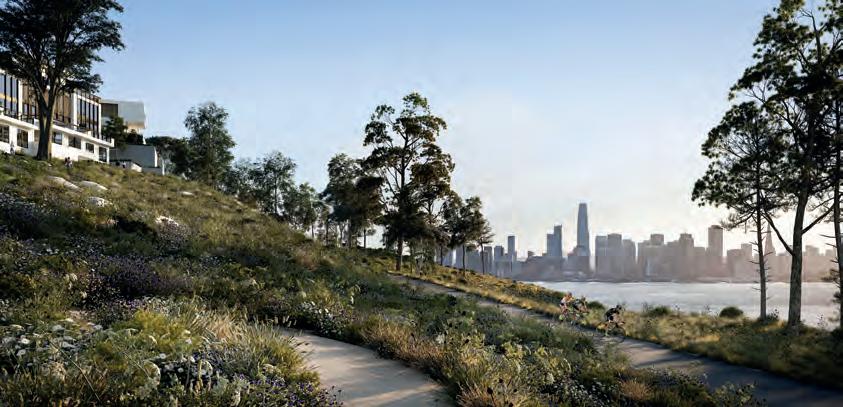
To advance that objective, Conrad began developing tools and initiatives to both reduce emissions and increase carbon sequestration. “Starting the nonprofit was a groundbreaking moment for me,” she says, “leading to the launch of the beta version of the Pathfinder app and the Climate Positive Design Challenge.”
Released in 2019, the Pathfinder app enables designers to estimate a landscaping project’s carbon footprint and its timeline to carbon neutrality. Users input material quantities and plant types into the web-based tool, which calculates embodied and operational carbon, as well as carbon sequestration and storage. The tool then generates a “climate positive” score, offering guidance to improve it and providing users with
a shareable, updatable scorecard aligned with industry standards. Today, the tool also measures biodiversity net impacts, water conservation, cooling and equity efforts.
In a similar vein, the nonprofit’s Climate Positive Design Challenge initiative sets performance targets for projects: five years to carbon positivity for parks and residential developments, 20 years for streetscapes and 25 years for infrastructure. The overarching goal of the targets is for all projects to remove more CO2 from the atmosphere than they emit by 2030, and to remove one gigaton of CO2 by 2050—a target that ranks among the top 80 “Drawdown” solutions, advocated by renowned environmentalist Paul Hawken.

When asked about the single most misunderstood aspect of measuring a landscape’s carbon footprint, Conrad was direct. The ASLA Climate Action Plan prominently cites her academic work, yet in practice, she warns against the paralysis of dogmatic empirical accuracy. “Don’t let perfection be the enemy of progress. Rough order estimates done early will have far more impact than getting lost in the precision.”
She acknowledges that landscape architects are, by training and temperament, perfectionists who rely on exact specifications. Though regarding life-cycle assessments and tools like Pathfinder, Conrad recommends a high-level starting point. “These tools are not perfect, and they might never be.” Nevertheless, she argues: “Start early—that’s when change is easiest and impact is greatest. Don’t update too often. Don’t overcomplicate it. If you get bogged down in details, it becomes too time-consuming and you may never finish.”
Beware of the gimmicks
Considering embodied carbon in designs, Conrad advises caution toward trends that appear sustainable on the surface but may, upon closer inspection, lead to higher emissions or energy
use. For instance, she urges practitioners to look critically at features such as living walls and other niche showpieces. “We have to be careful of greenwashing—creating something that’s going to end up having more emissions at the end of the day, even though we think it looks green or cool,” she says. “Making a statement is not enough.”
Instead, Conrad challenges landscape architects to push boundaries by getting creative about solutions specialized to each project site. “Where we need to push the boundaries is in getting creative with solutions no one has thought of before—ideas unique to a project site, based on what’s already there to reuse. Those materials truly have little to no emissions, and they can also make a big statement.”
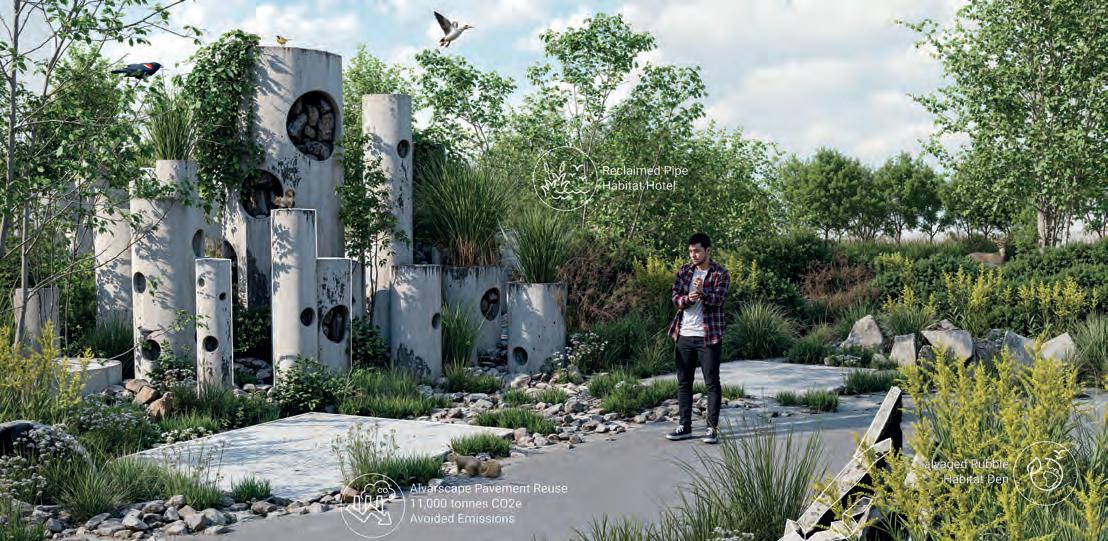
Creativity, she suggests, can be found in constraints—particularly on industrial or brownfield sites. “A pipe in the ground or a material that seems to be a roadblock—if you figure out how to cut it, slice it, dice it, recreate it, it becomes something that holds water for a wetland system or creates habitat for birds,” she reports. “It’s not adding that additional intensity from an energy or material standpoint. I don’t think we’ve quite cracked the code on this yet, but that’s where the opportunity exists.”
Market conditions for landscape architecture in the US are, in Conrad’s words, “volatile.” While private clients and some municipalities continue to advance climate action plans and decarbonization efforts, the grant funding landscape has shifted. Foundations and organizations are still working to increase education and awareness, though resources are not guaranteed.
In response, Conrad has championed a hybrid business model—maintaining her nonprofit and design partnership, IMPACT Studio. “Flexibility, diversity and agility aren’t just ideas,” she says. “They are survival strategies in a very volatile profession. Our hybrid model, IMPACT Studio and Climate Positive Design, lets us adapt, keep our mission alive and continue doing meaningful climate work, even when funding shifts.”
Conrad speaks from personal experience. “I have been personally impacted by the volatility of our profession over the past decades. I was furloughed, along with my entire studio, in the
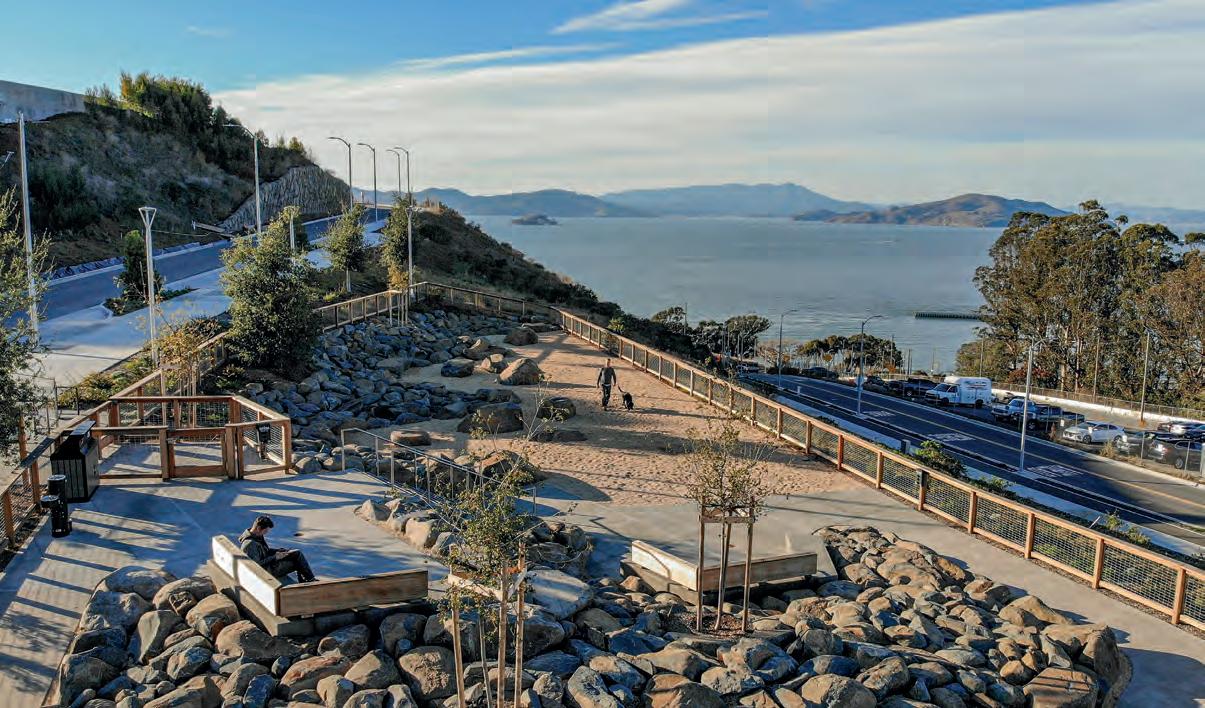
Previous page: Penn State’s future campus inspiration Current page left to right: Yerba Buena Island open space and stormwater design; IMPACT repurposes pipes as habitat hotels for industrial campus Buffalo, NY; “The Rocks” park, YBI, with boulders from site
recession. I have experienced difficult periods of not being able to find work. I’m now facing similar struggles along with many of us in our country.”
Nonetheless, by diversifying funding sources— pursuing grants, consulting and taking on physical projects, the hybrid model remains resilient. “Even though we’ve had grant funding that has been supporting us the past couple of years, our project and consulting work allows us to give a percentage back to the nonprofit to keep it running.”
This agility extends to geography and staffing. Rather than maintaining an expansive office space and a rigid hierarchy, the firm prioritizes a small footprint and low overhead. The core team is distributed across the US, South America, Europe and Australia, partnering with an extensive network of experts across the world.
Think differently about what work looks like. What other ways can you contribute, not only for the general good but also to help you keep going?”
“What was almost nonexistent in our profession is now a global movement with real tools, measurable impact and thousands of people actively engaged”
Given the current political and funding landscape for climate action in the US, when asked whether she is more optimistic or pessimistic than she was in 2019—the year she launched Climate Positive Design, Conrad began by acknowledging that climate action policy has faced reactionary headwinds in recent years, yet she pointed to a growing momentum.
climate action plans and similar initiatives from the Landscape Institute in the UK, the Canadian Society of Landscape Architects and the Australian Institute of Landscape Architects. Through these efforts, she says, “we’ve been recognized by the UN for our efforts and have been invited to the decision-making table with global leaders.”
At least in our sector, her organization’s data supports a case for measured, quiet optimism.
“Through Climate Positive Design alone, we’ve reached almost every country in the world with our resources. We have over 16,000 projects logged in Pathfinder by thousands of professionals and students. We’re seeing significant improvements in the impact of those projects each year. The urgency has grown, but so has our collective action, and that’s what keeps me hopeful.”
For other landscape architects navigating a difficult environment, Conrad offers practical guidance. “Even if your organization isn’t a nonprofit, you can think about partnering with one so you can go after grants. Consider your different client types. Be open to work that’s not just physical projects—guidance documents, a sustainable operations and maintenance manual for a city.
“When you turn on the news, it’s easy to feel discouraged.” However, pointing to indisputable metrics of transformation that have occurred in the past seven years, she continues: “Compared to 2019, the transformation nationally and internationally is undeniable. What was almost nonexistent in our profession is now a global movement with real tools, measurable impact and thousands of people actively engaged.”
This is represented, she indicates, by the International Federation of Landscape Architects (IFLA) Climate Action Commitment, ASLA
Conrad’s message is clear: the path forward lies not in waiting for perfect tools or political alignment, but in recognizing the opportunity embedded in every project. “Look at each project as an opportunity. That’s when we can get people truly excited about how beneficial these landscapes can be and how wonderful they can be at the same time. That level of inspiration can scale up change.”




Turn your passion for ponds and waterfalls into a thriving business! Aquascape Academy 2026, running January–March, gives you hands-on training in construction, maintenance, design, and leadership. With profit margins up to 50%, water features are one of the most rewarding trades you can step into.
Whether you’re brand-new or ready to sharpen your skills, Aquascape Academy will show you how to build water features—and a business—that lasts.













REFERENCES
Landscape contractor Charleston Landscape charlestonlandscape.com
Residential builder Comer Construction comerconstruction.com
Structures builder Marks of Quality marksofquality.com
Pond consultant/builder Island Garden Features islandgardenfeatures.com
Irrigation
Simmons Irrigation Supply simmonsirrigation.com
Landscape lighting Moonlighting moonlightinglls.com
Structure designer Accent Truss accenttruss.com
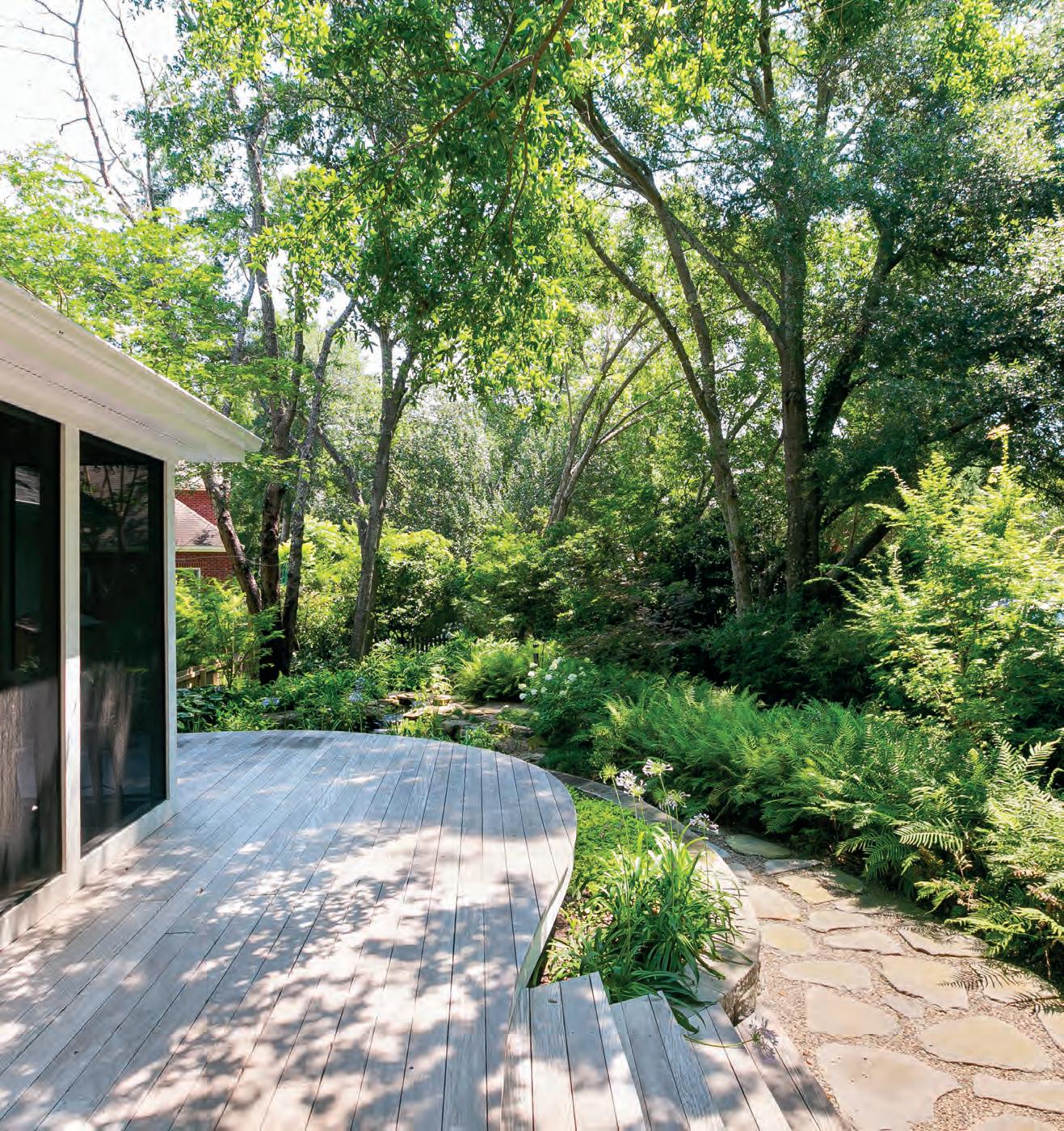

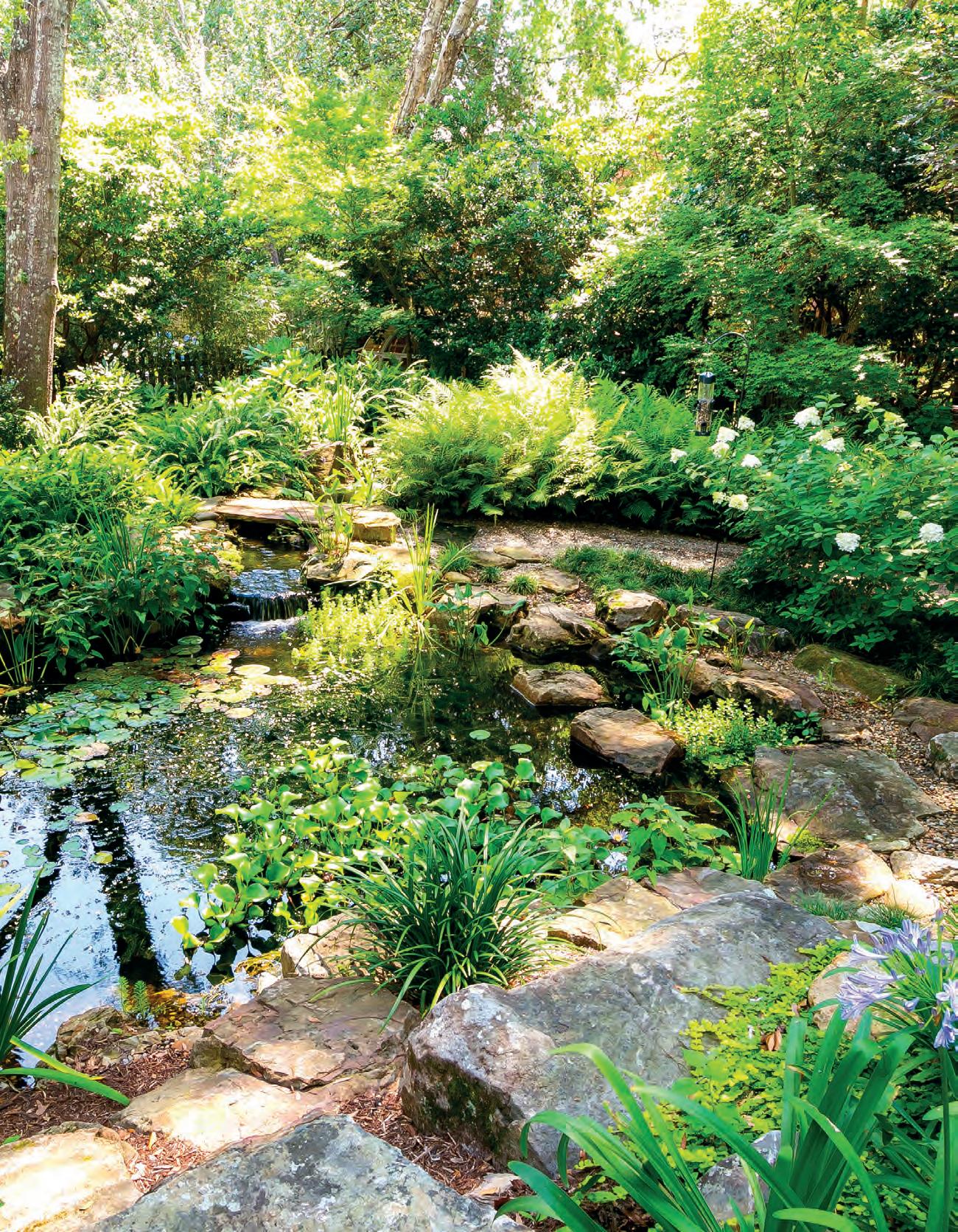
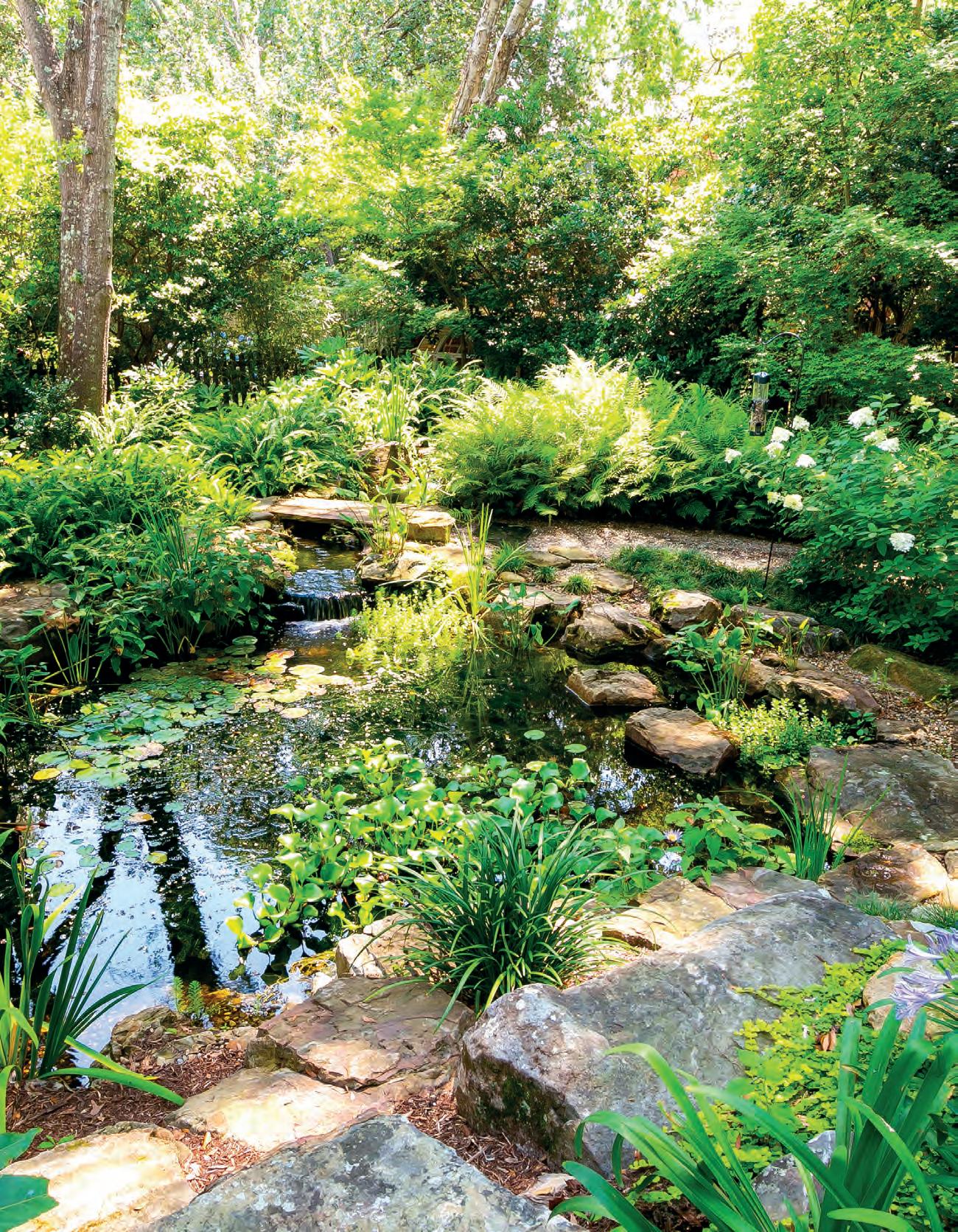
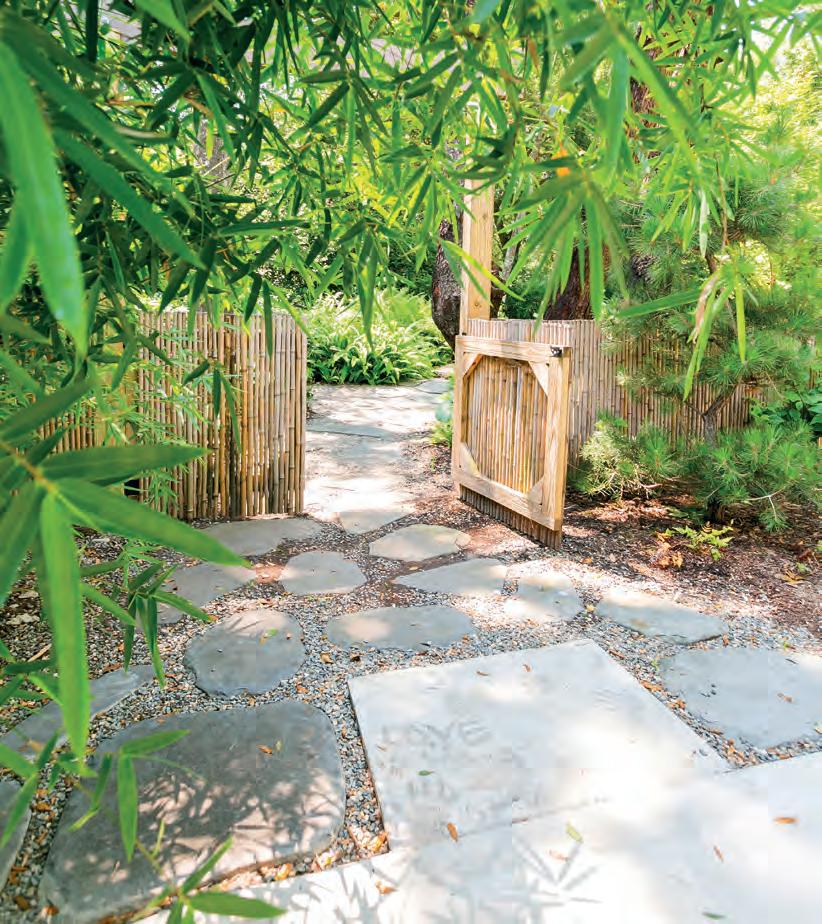
Thoughtful design can be transformative. In the Lowcountry, landscape architecture firm REMARK elevated a simple backyard into an immersive woodland retreat. The company states that it approaches each residential or commercial commission with a focus on stewardship, craftsmanship and long-term functionality, blending timeless design principles with a deep understanding of the region’s climate, ecology, drainage conditions and architectural character.
In this case, the clients envisioned a landscape that felt immersive, organic and deeply connected to the surrounding wooded environment.
As a professional photographer who has travelled extensively throughout the world, the client wanted to create a garden that not only functioned as a personal retreat, but also as a living environment capable of attracting birds, pollinators and wildlife that could be photographed directly from the property. A
second goal was creating an outdoor space that encouraged the family’s children to explore nature through winding pathways, layered planting and water features.
REMARK reports that the resulting design functions as a sequence of outdoor rooms connected by meandering pathways. At the project’s center is a custom stream and pond system that weaves through the property, creating visual continuity while helping anchor the various garden spaces.
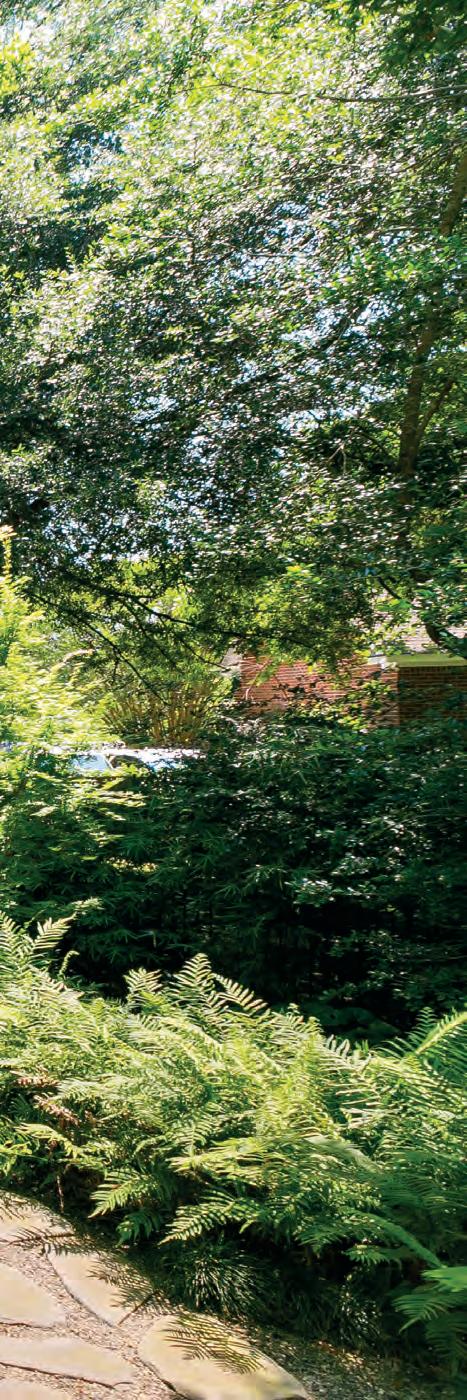
Intentionally blurring boundaries between built and natural environments, native and adaptive plant species were selected to encourage birds, butterflies and other wildlife to inhabit the garden throughout the seasons. Pathways made from natural stone were laid to guide visitors through shaded areas framed by ferns, iris, grasses and moisture-tolerant perennials suited to the site’s filtered light conditions and Lowcountry climate. The existing deck was also redesigned with softer geometry, while fencing and structural elements were screened with planting to minimize visual impact.
Sustainability played a significant role in the overall design approach. Existing mature trees were preserved wherever possible, helping maintain canopy cover, reduce heat gain and protect the established ecological character of the site. The use of native and adaptive planting reduced
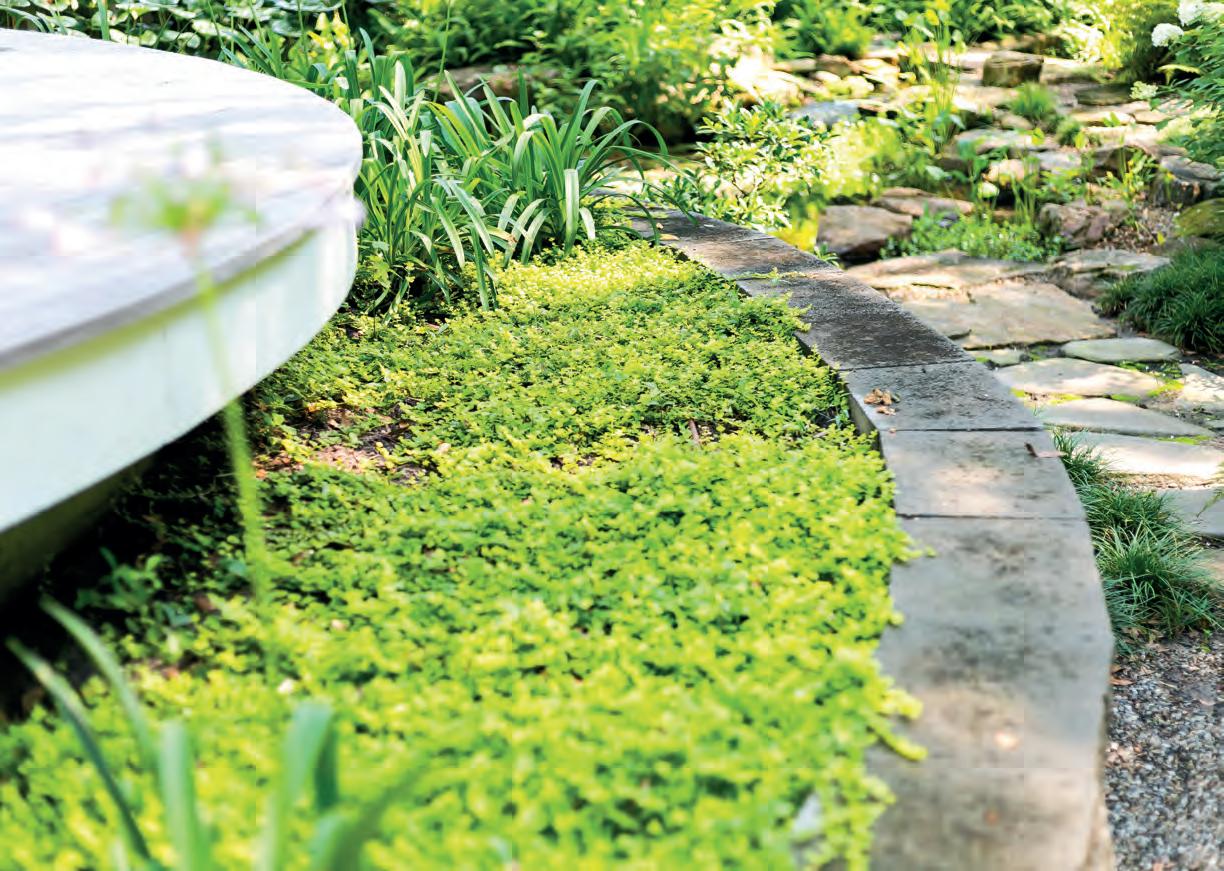
long-term irrigation demands, in addition to supporting local wildlife and pollinators. The pond and stream system was designed to work harmoniously with the site’s natural drainage patterns, contributing to stormwater management and improved environmental performance throughout the property.
One of the primary construction challenges was working within an established wooded site while minimizing disturbance to mature tree roots. Careful coordination between grading, drainage and construction sequencing allowed the pond and stream features to be integrated with limited impact on the surrounding environment. Balancing the clients’ desire for immersive planting with the need for functional circulation and long-term maintainability required layered planting strategies, selective clearing and careful material transitions. These approaches allowed the landscape to feel lush and natural while remaining intentional and manageable. Integrating fencing and structural elements without creating harsh visual boundaries also demanded close collaboration between the design team, contractors and fabricators, with those elements ultimately softened and absorbed into the surrounding garden environment.
The result is a residential landscape that functions as both a personal retreat and a living classroom for the family’s children, while demonstrating a model of ecologically sensitive design belonging to its locality.

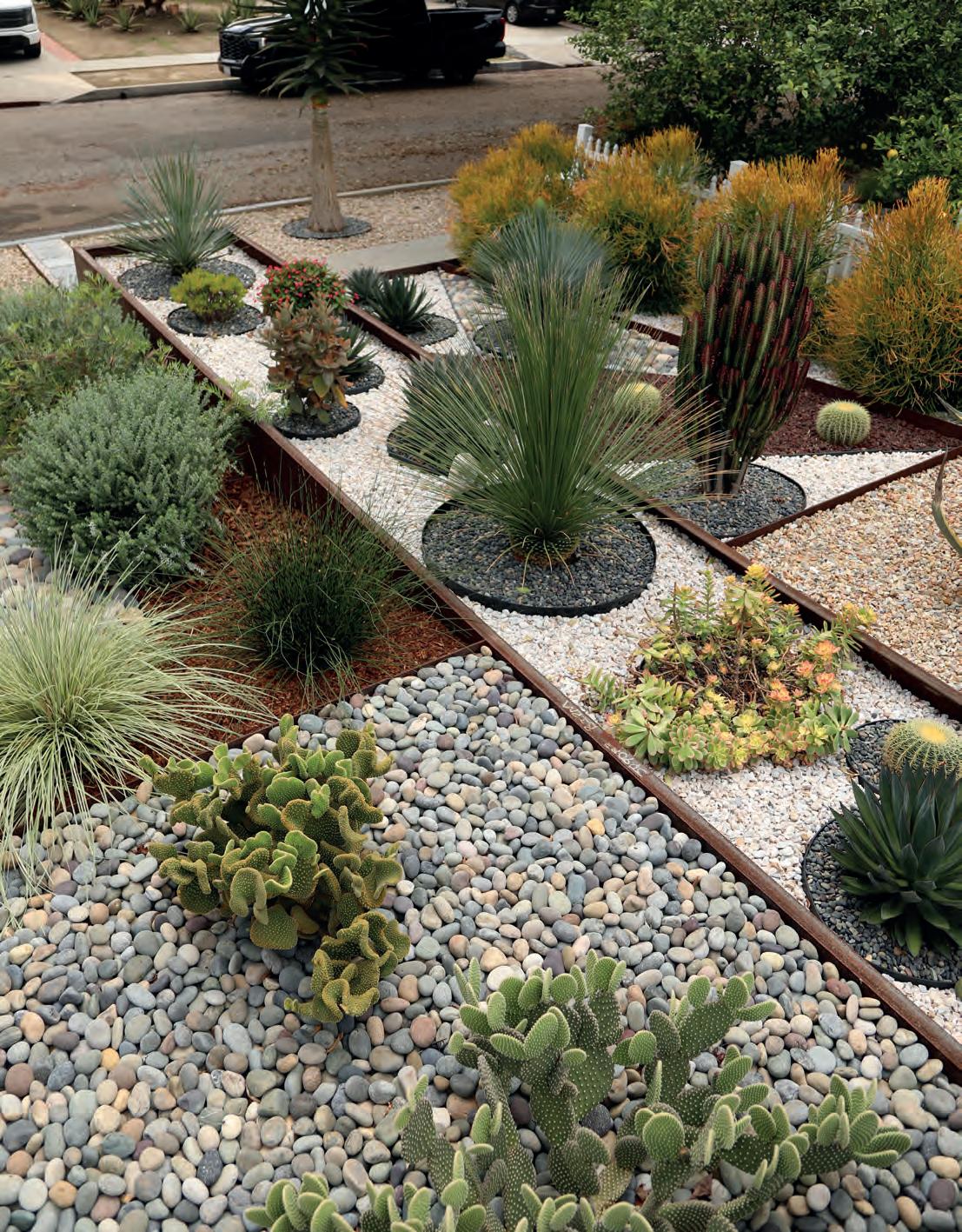

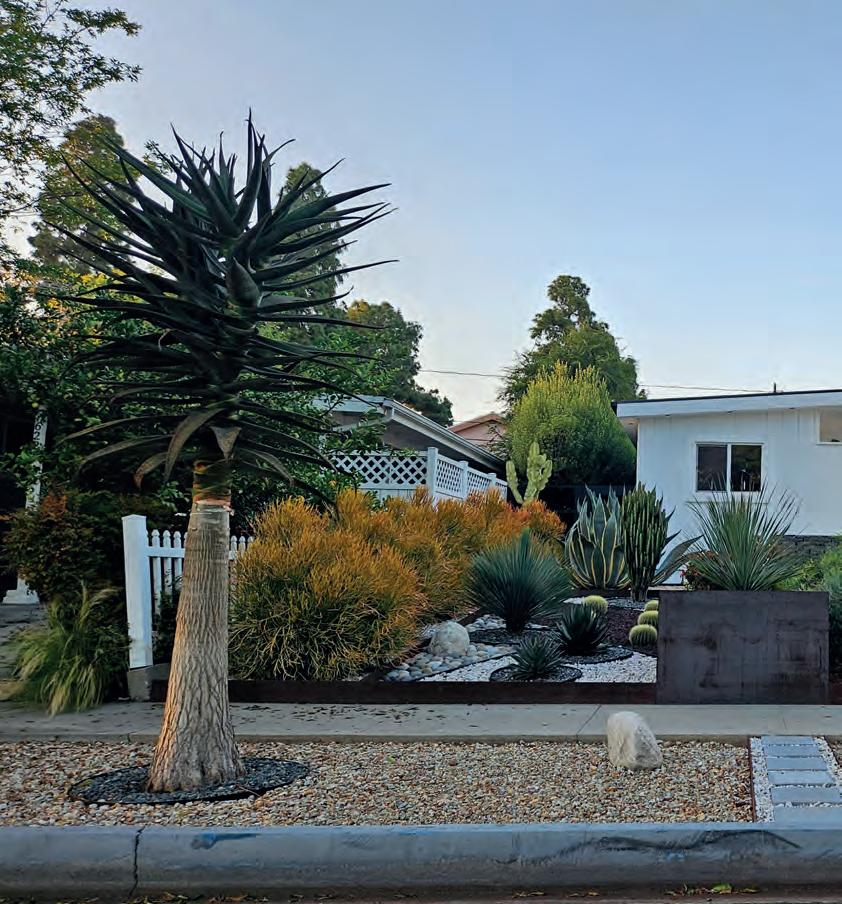
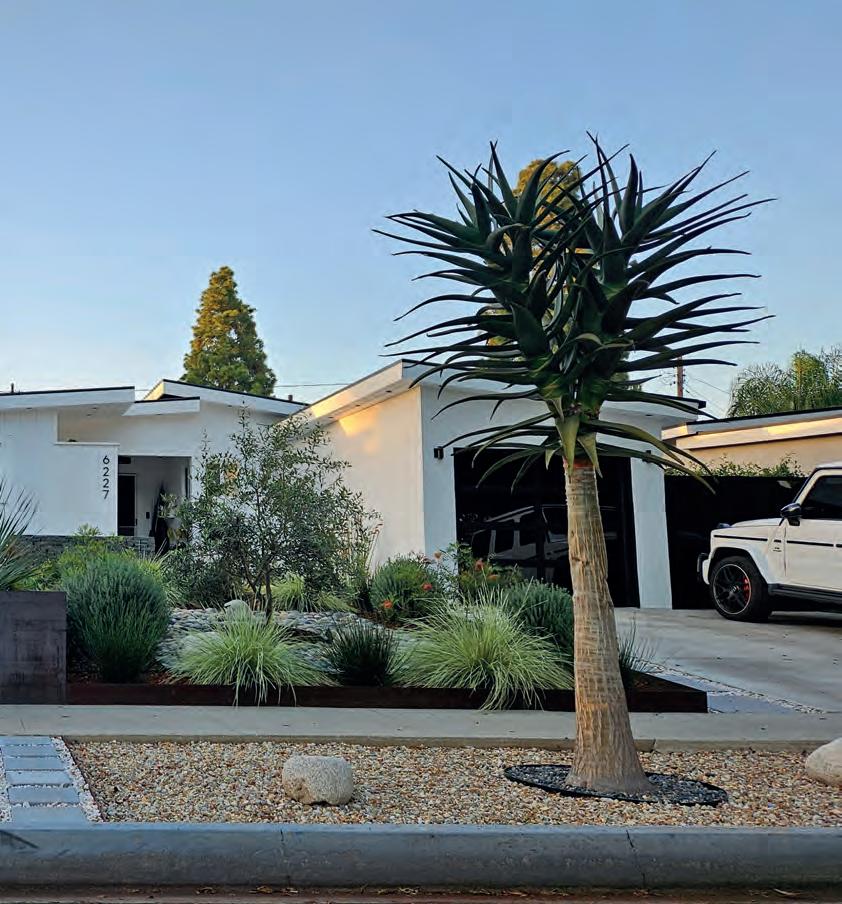
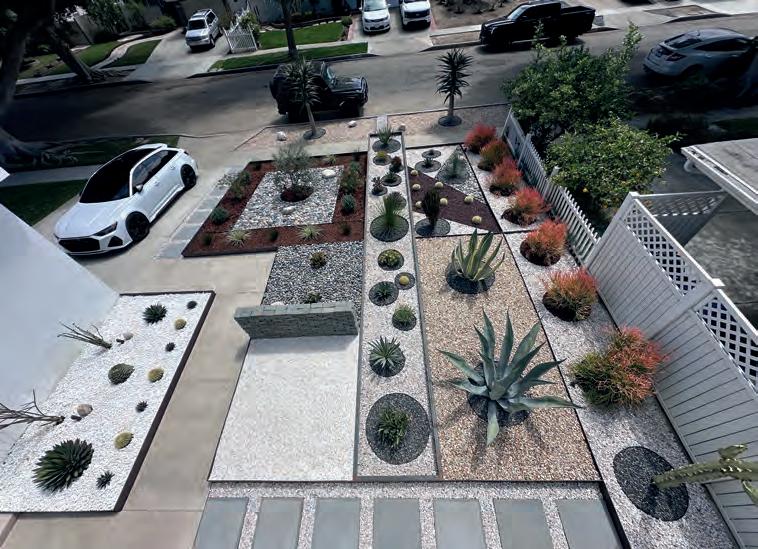
In a state where prolonged droughts have made water conservation a pressing concern for legislators as well as homeowners, one front yard transformation offers a striking response: a xeriscaped, low-maintenance landscape that pairs novel design materials with sculptural planting. The project, delivered by California-based landscaping company Landoos from survey, design, installation and ongoing maintenance, began with an email from a client.
They envisioned a garden that integrates metal elements with rock landscaping and sculptural succulents, along with an olive tree, a small seating area and a sense of semi-privacy. Following an on-site meeting and a detailed survey, the Landoos team established a clear goal: to create a landscape that reflects both function and character while minimizing water use and upkeep.
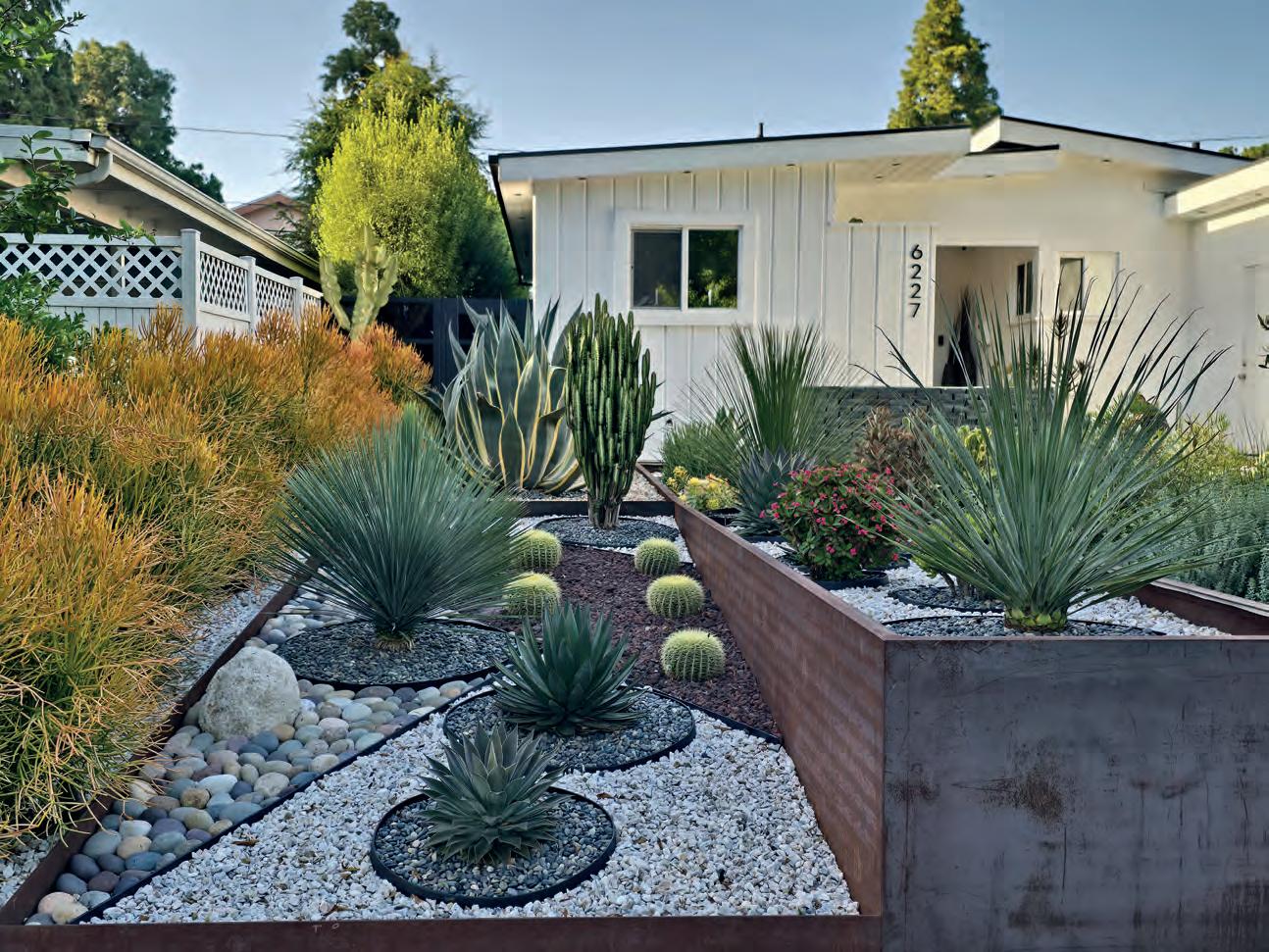
At its surface, Landoos summarises the design as centered on several key elements. Corten steel was selected as a defining material, reflecting the client’s professional background while adding what the team describes as “durability and warmth.” Sculptural cacti and succulents were arranged in coherence with the architecture, while an olive tree with ornamental grasses and shrubs introduced a Mediterranean touch. A mix of gravel, pebbles and micro-bark helps define distinct zones. Low walls create a semi-private seating area, and a living green screen along the neighboring side enhances privacy while maintaining a natural feel. At a conceptual level, the project’s clean geometry and minimalist approach allow materials and plantings to stand out.
Led by founder Dr Ashkan Nochian, the project benefited from a cohesive design-build approach, ensuring a seamless construction process with
Plants and soil
Devil Mountain Nursery devilmountainnursery.com
California Greenhouse calgreenhouses.com
Bespoke metal fabrication
smco
Instagram: @smco
Drip irrigation Rain Bird Corporation rainbird.com
Lighting
WAC Lighting waclighting.com
FX Luminaire fxl.com
Rock and hardscape
Patagonia Building Supplies
patagoniabuildingsupplies.com
Load N’ Go Building Materials loadngobm.com
Landscaping supplies
Ewing
ewingoutdoorsupply.com
The Home Depot homedepot.com
SiteOne siteone.com

parallel implementation of utilities, planting and metalwork. The final result, developed with client input at each stage alongside irrigation and lighting plans, “closely reflects the original vision, demonstrating the value of an integrated designbuild process,” Nochian comments.
Yet the path to that result was not without its challenges. Nochian reports that a key obstacle involved integrating the building’s architecture into the front yard while accommodating the olive tree within a predominantly succulent landscape. “To ensure both function and meaning, a dedicated planting zone with a separate irrigation line was created. Rather than treating it as an isolated feature, the design introduced an extended planter that follows the line of the single façade window, connecting the building to the sidewalk.” This linear element, Nochian notes, reinforces the architecture while allowing the olive tree to become a natural focal point.
Plant selection was guided by a similarly careful strategy. Given the heavy texture of the existing soil, Nochian states that “a tailored soil amendment strategy was developed for different plant categories to ensure proper establishment, strong early growth and long-term plant health.” The focus remained on sculptural qualities and seamless integration.
Sustainability, meanwhile, was embedded throughout the project. Cacti, succulents and drought-tolerant plants were paired with a smart drip irrigation system to reduce water use, while
Previous page: Linear metal planter extends defining transition between succulent and non-succulent zones Current page left to right: Sculptural succulent composition; Aloe hercules frames site; Planting design emphasizes order and hierarchy in succulent groupings
natural rocks serve as ground cover to minimize maintenance and enhance permeability. Even the Corten steel, Nochian says, “was selected for its durability, aesthetic value and longterm reusability, reinforcing the project’s sustainable intent.”
The outcome is a front yard that does not merely adorn a property but actively reconciles competing demands: the client’s needs, the architectural logic of the existing building and the ecological necessity of water conservation. By weaving multiple materials, native-inspired planting and a carefully sited tree into a unified composition, the project offers a compelling illustration of what integrated designbuild practice can achieve.
Top to bottom: Rooftop view capturing the overall composition; Sculptural planting via a curated mix of succulents, stone elements, and Corten steel, reinforcing material contrast and form
Landoos LLC is a design-build landscape company in South Bay, Los Angles, CA, founded by Dr Ashkan Nochian. Its mission is to create landscapes that are visually stunning and functional while contributing positively to the environment. Whether conserving water, supporting pollinators, reducing maintenance, each project is seen as an opportunity to make a meaningful impact.
landoos.com
Instagram @landoos.llc
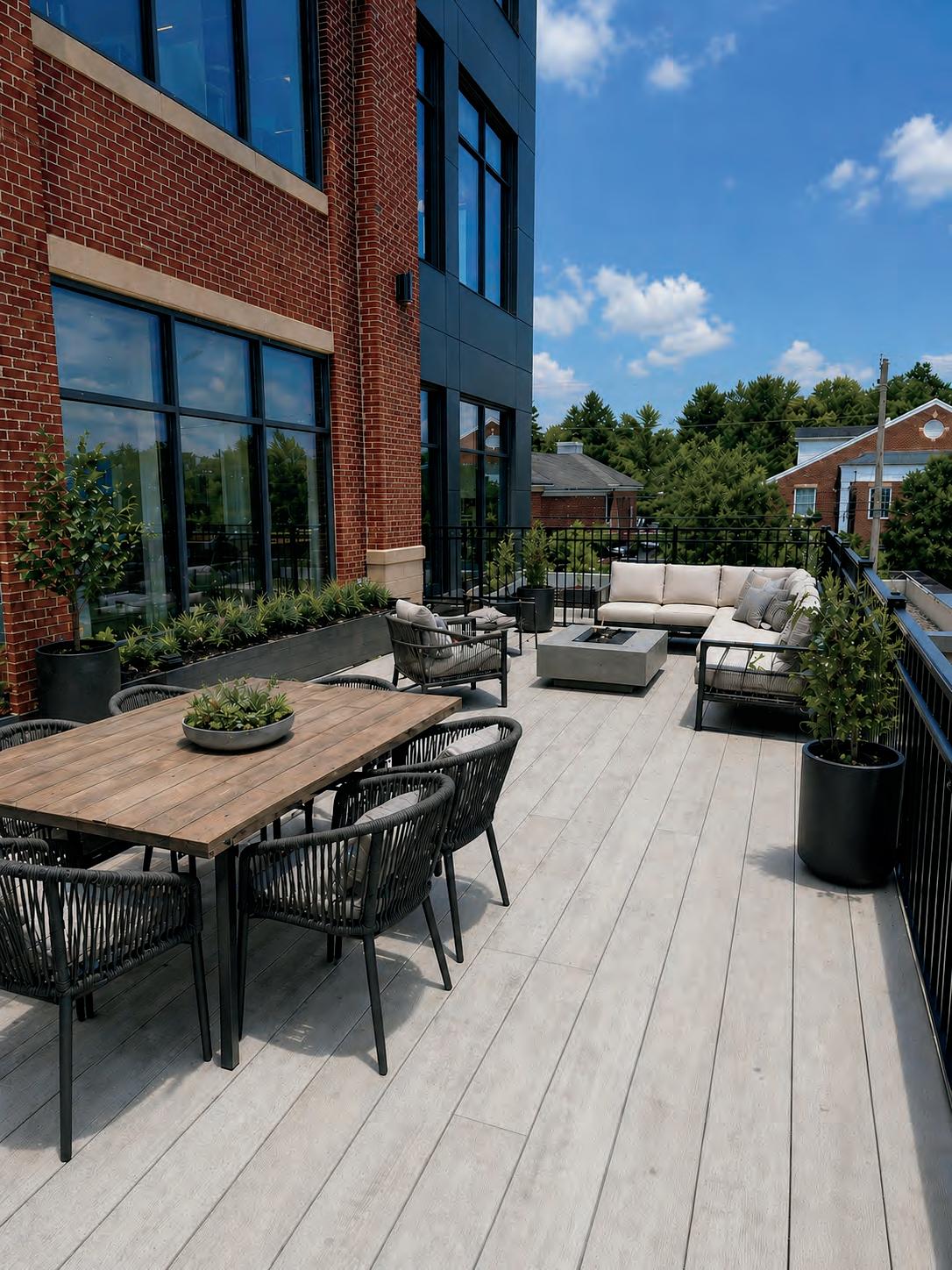
LumberCon is reinforced concrete lumber engineered for outdoor spaces that demand beauty, durability, and long-term performance.
The look and workability of wood with the strength, longevity, and noncombustible performance of concrete.
BUILT FOR THE ELEMENTS

Fireproof in its nature. Will not burn, melt, or contribute to flame spread.



Won’t rot, warp, splinter, or deteriorate like traditional decking materials.

Low-maintenance performance with the look of real wood engineered to last 50+ years DESIGNED TO LAST TRUE NONCOMBUSTIBLE
REINFORCED CONCRETE PLANKS



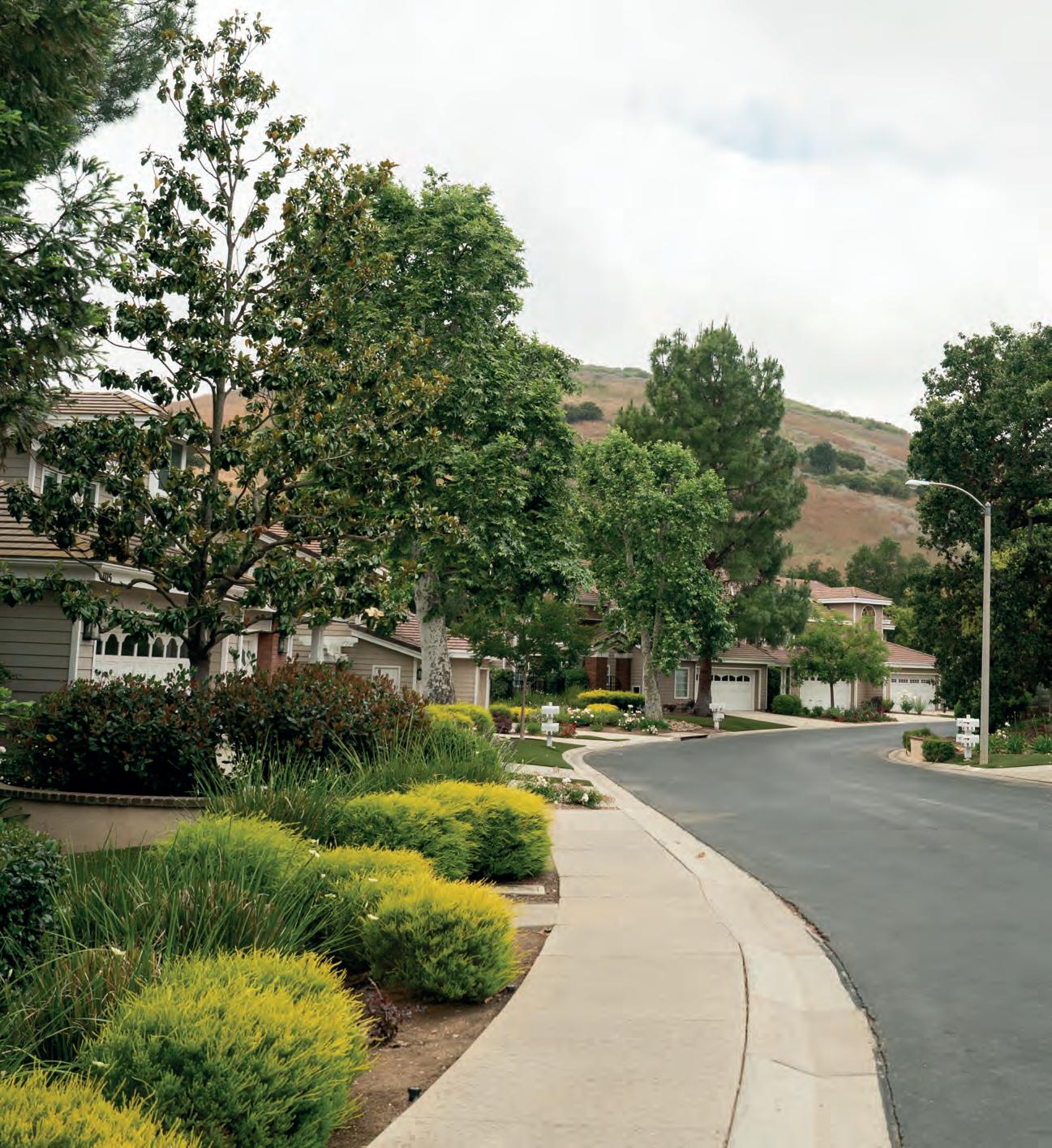
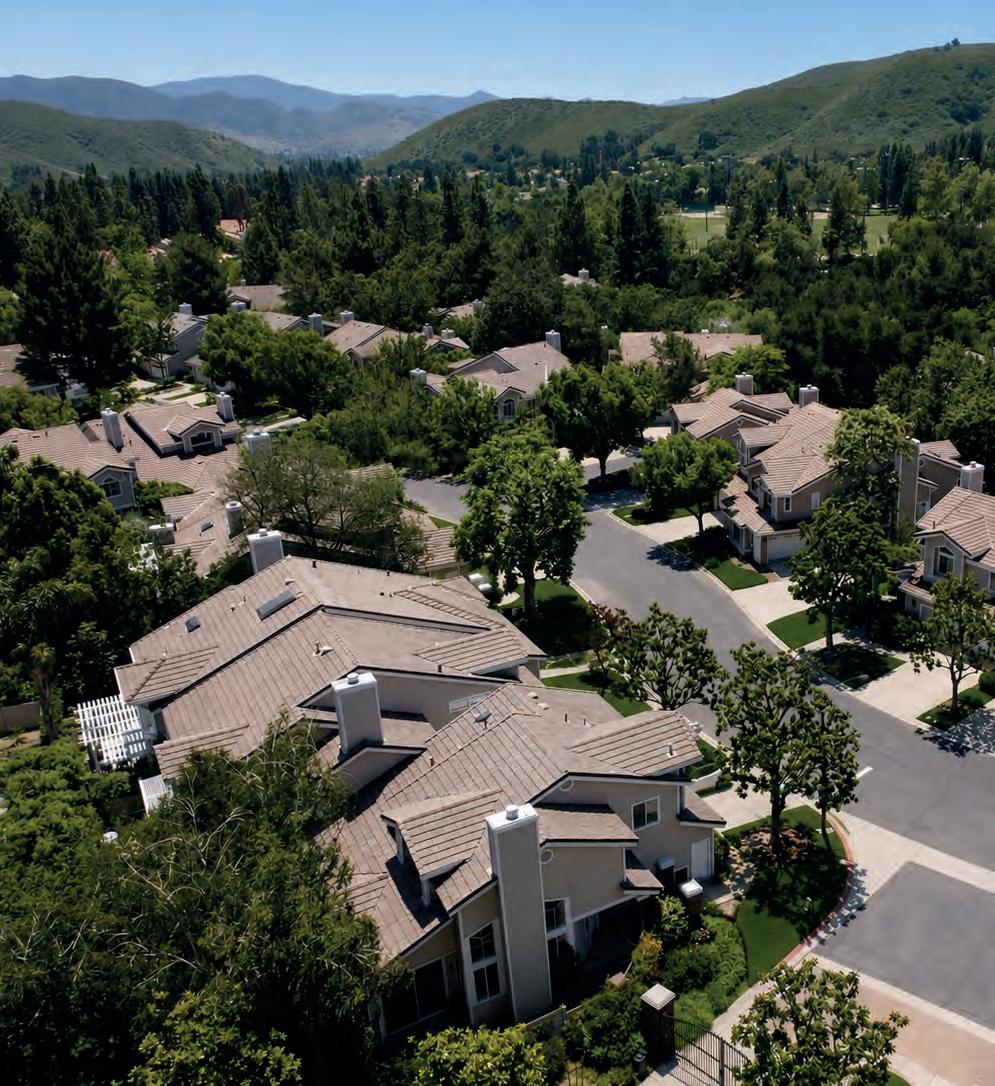
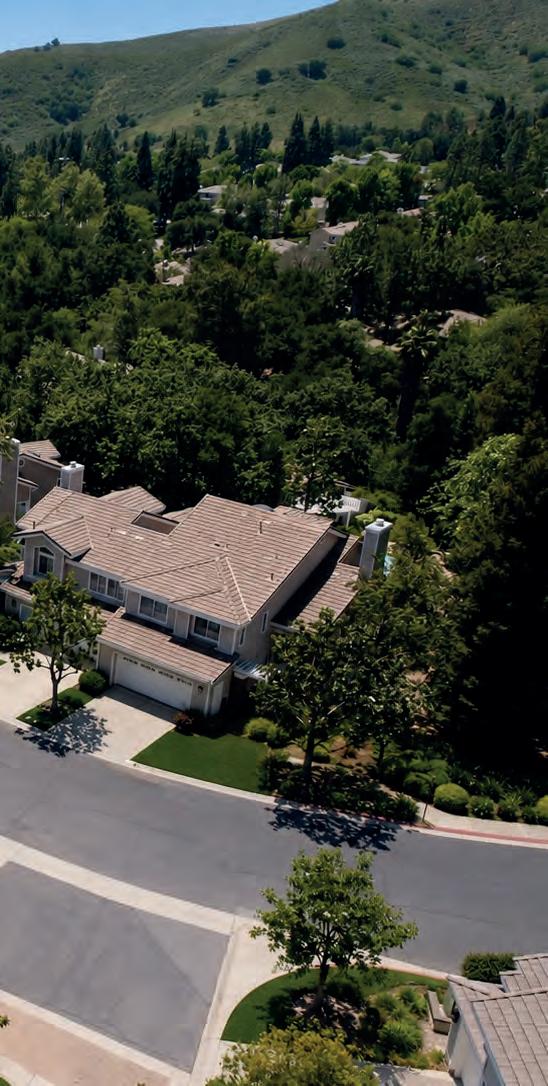
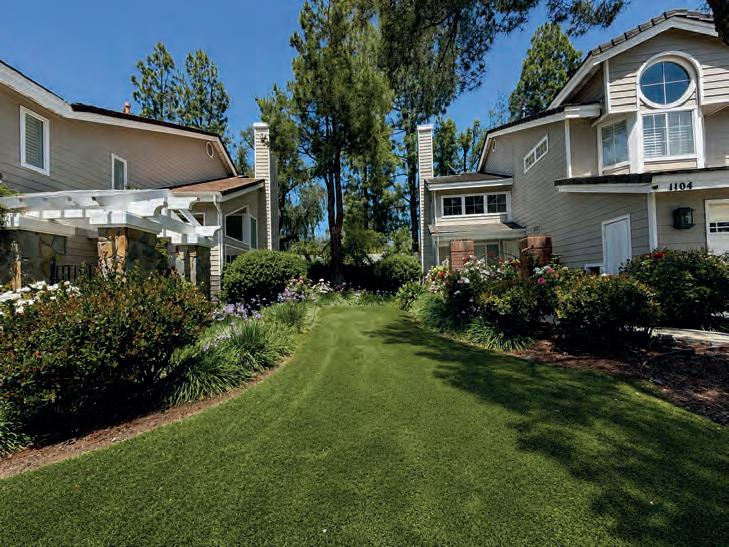
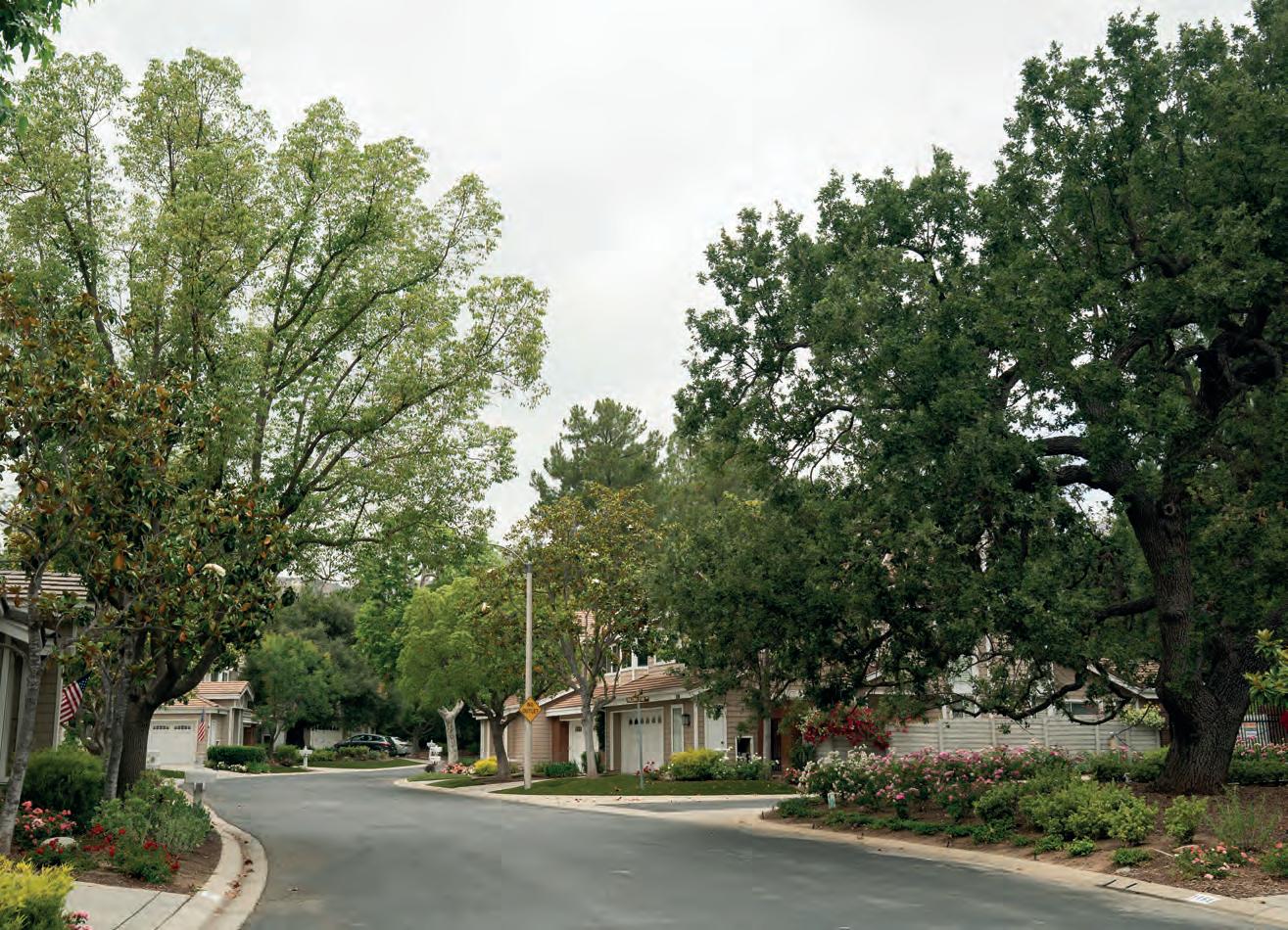
The residents of Kensington Park faced a difficult choice. Their homeowners association (HOA) needed to replace deteriorating natural turf weakened by prolonged regional water restrictions and extreme temperatures. Beyond turf replacement, the community also aimed to reduce water usage, modernize its aging irrigation infrastructure, comply with local fire department rules, accommodate foot traffic and lower maintenance costs. Ultimately, residents wanted an updated landscape where they could enjoy, interact and come together. ReEarth, a San Fernando Valleybased landscape firm, was brought in to design and execute the project. This spanned approximately six months, covering initial planning, water conservation strategy, design development, HOA presentations, community meetings, resident voting, permitting and construction.
Before committing to a design, the HOA explored Southern California’s ‘Be Water Wise’ rebate program, which incentivizes replacing turf with drought-tolerant and native landscaping with monetary compensation. However, Kensington Park residents prized their community’s upscale visual identity, causing an attachment to a turfed suburban lawn aesthetic. As a consequence, for ReEarth, the project’s challenges were complex, a balancing act that included sustainability, operational efficiency and high-end appeal.
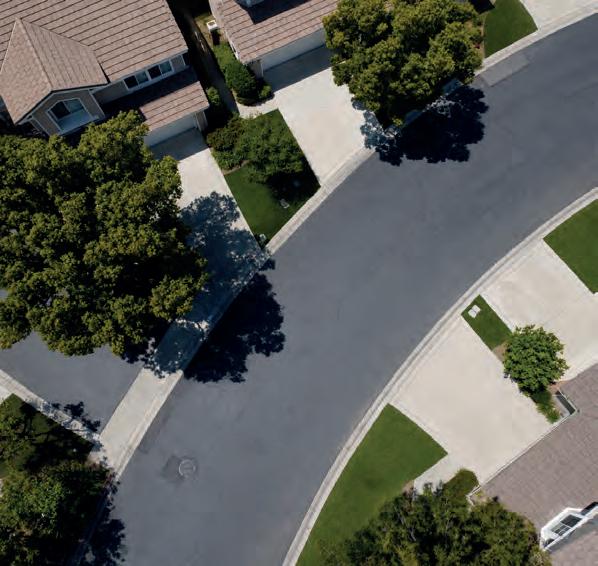
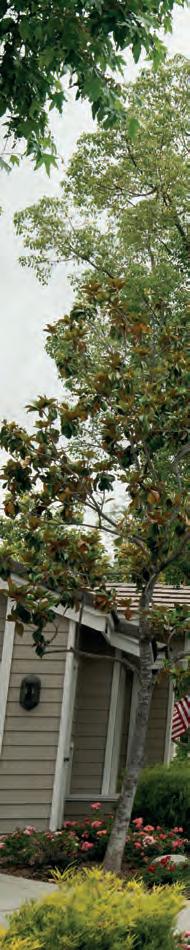
ReEarth’s construction approach to the Kensington Park project involved converting approximately 35,000 sq. ft of turf, installing premium synthetic turf in key visual areas, integrating roughly 1,500 native and droughttolerant plants and replanting as many existing plants as possible—in addition to fully replacing an outdated sprinkler system with smart drip irrigation technology. Despite competing concerns, the firm states that this hybrid approach, which utilizes available assets and redesigns the space, was intended to preserve a lush, clean appearance while markedly reducing water dependency. Nevertheless, the proposed visual transformation divided resident opinion, which proved to be the largest hurdle. Many homeowners still associate synthetic turf with the artificiallooking, heat-retentive products of decades past. To counter this, ReEarth’s design team conducted multiple presentations, planning sessions and educational meetings with the HOA board and residents. These meetings educated residents on modern turf advancements, including improved realism, pet-friendly materials, American-made products and environmentally friendly backing systems. ReEarth also presented a comparison of
Irrigation system
AquaFlo aquaflo.com
Rainbird rainbird.com
Synthetic turf supplier
Synlawn synlawn.com
Rhinoturf rhinoturfusa.com
Consultant partner American Green Zone Alliance agza.net
both options, a fully drought-tolerant conversion against the hybrid solution, covering future maintenance and total cost of ownership, while the HOA weighed the ‘Be Water Wise’ rebate available only for the all-native approach.
The final proposal for the hybrid solution went to a community vote and passed by a single ballot. Though following the installation of the artificial turf, resident feedback reportedly turned overwhelmingly positive. In an interview with
ReEarth, Craig Cohen, president of the Kensington Park HOA, advocates for the final design. “We’re known as a pristine community, and we’ve kept it that way,” Cohen says. Reflecting on the initial resistance, Cohen admits many residents were unsure about synthetic turf. “Now we’ve got 100% of our population here very pleased and very happy that we went with the turf,” he states. Cohen also stresses an unexpected benefit of the turf for the Californian climate: it does not burn. “The fact
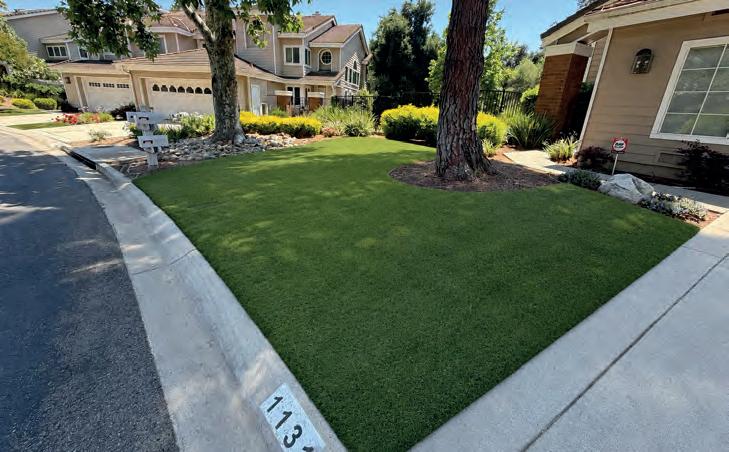
that we have beautiful turf that’s safe and green and gorgeous all the time, regardless of the heat or the cold. It’s the way to go.” ReEarth earned the ongoing maintenance contract, using ultra-quiet zero-emission tools and adhering to AGZA’s Level 3 Green Zone standards.
Overall, the company reports that key sustainability outcomes of the finalized project include significant water reduction, elimination of high-water turf, smart drip irrigation, reduced runoff and lower maintenance requirements. For ReEarth, this project represents a replicable model for California communities in cutting water use without sacrificing aesthetics. It also demonstrates that under the right conditions, synthetic turf can be the superior option when balanced with thoughtful planting and resident engagement.
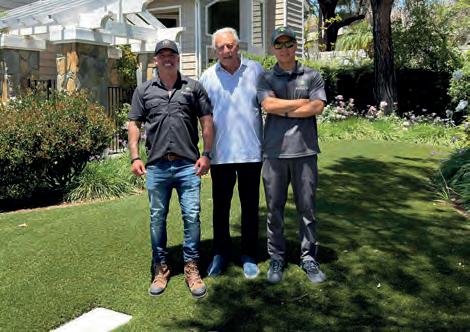
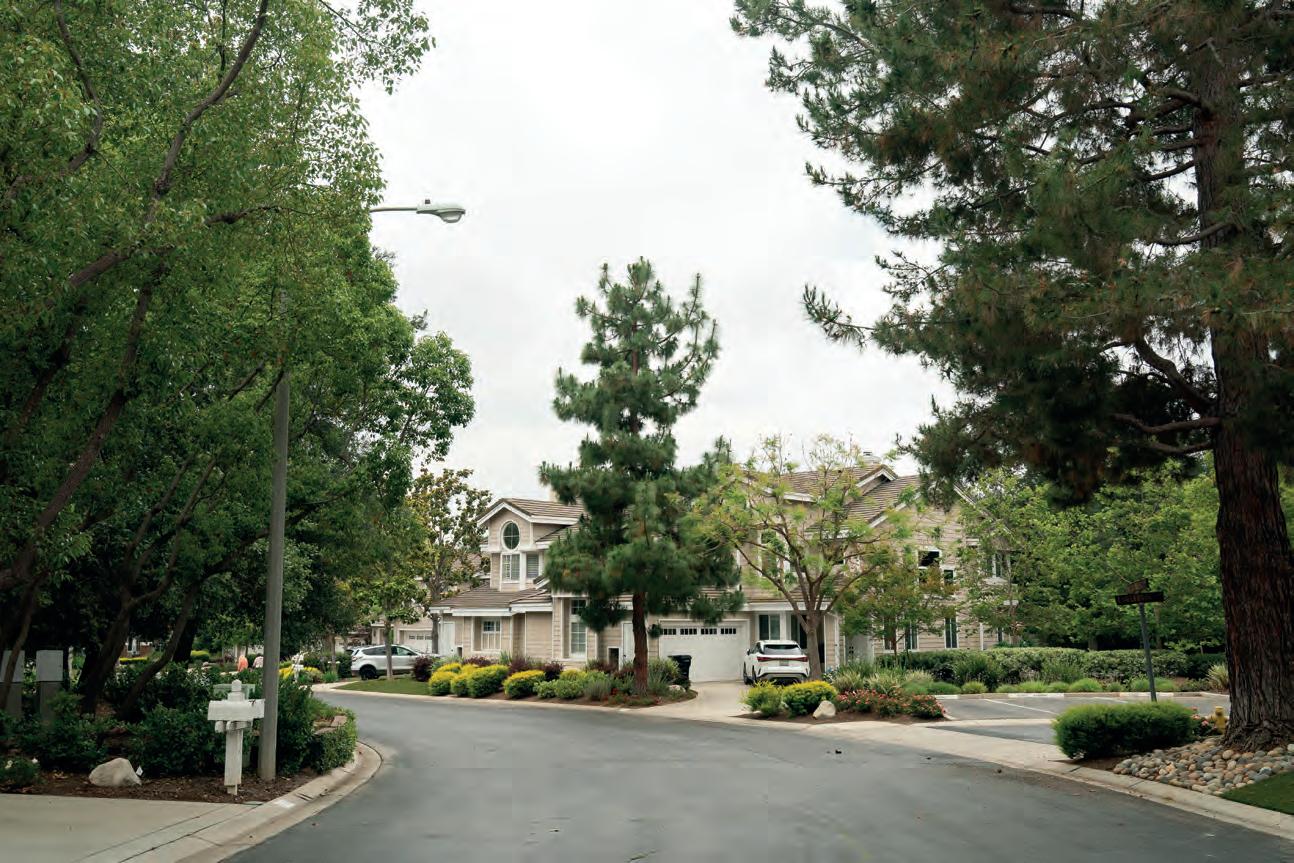
Founded by Fausto Mok and Rodrigo Portapila, ReEarth specializes in low-impact, sustainable solutions for commercial properties and HOAs, exclusively deploying zeroemission and solar-powered tools. ReEarth is based in the San Fernando Valley and serves the Southern California region, creating environments where people live, work and engage at their best. reearth.eco ABOUT
Instagram @reearth.eco
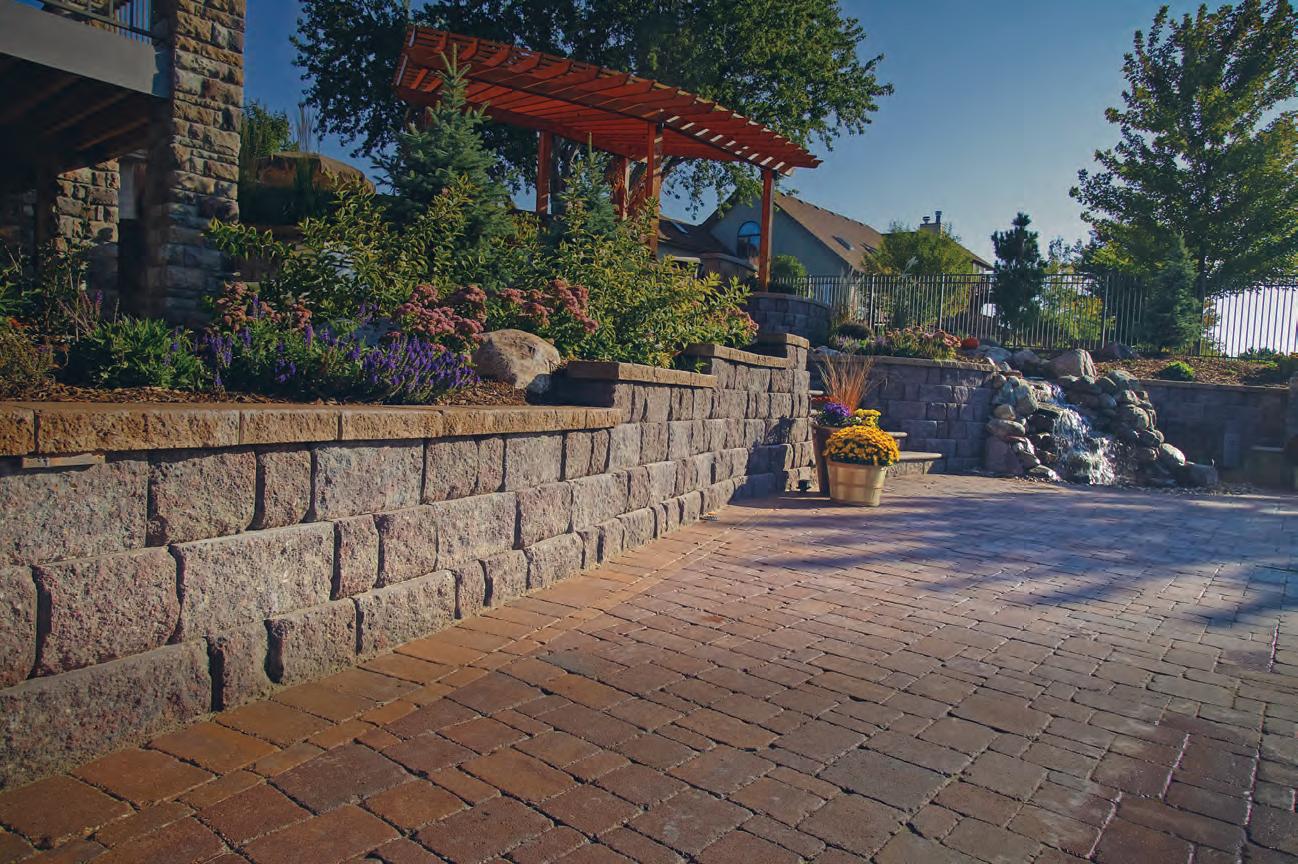
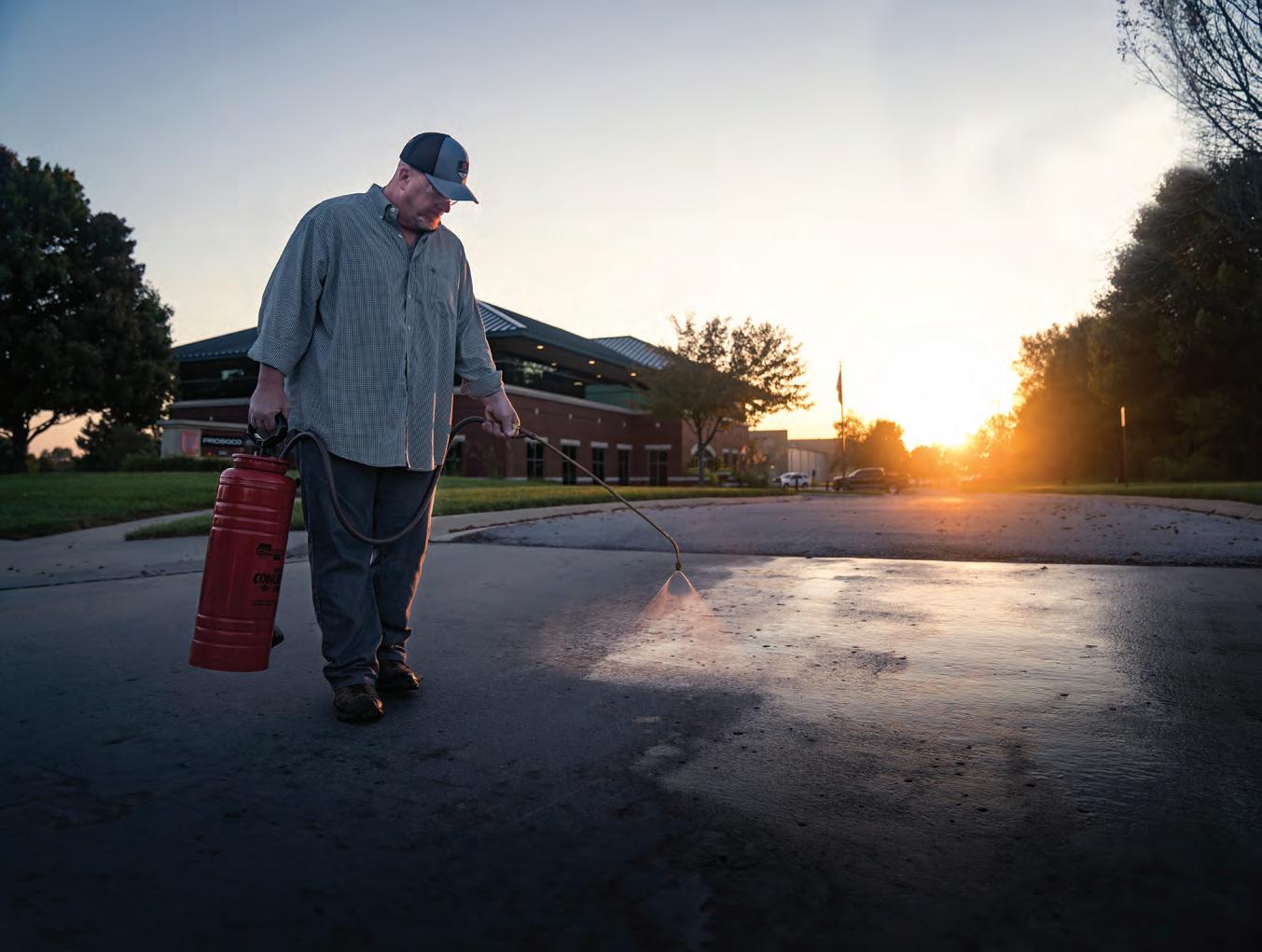

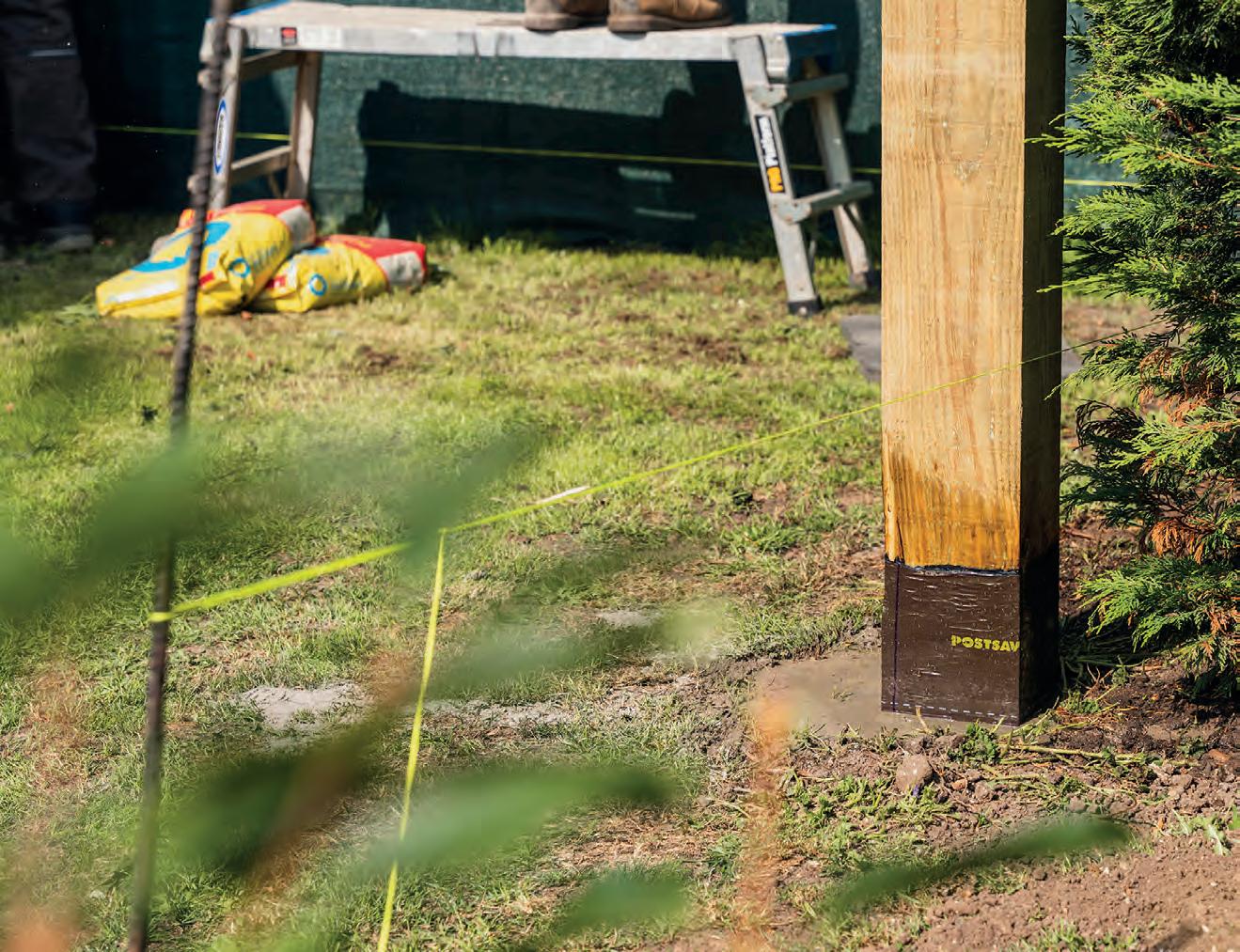
Postsaver launches DeckPRO, a heat-activated wrap that protects timber posts against ground-line rot for the US decking market
Postsaver, best known for its advanced timber post protection systems across the UK and Europe, is strengthening its presence in North America with the launch of DeckPRO—a rot protection solution engineered for decking foundation posts.
The move follows the company’s recent expansion into the US fencing and utility sectors and reflects growing demand for longer-lasting, code-compliant timber protection solutions. As contractors increasingly seek ways to reduce premature failures and costly callbacks, Postsaver believes DeckPRO offers a practical answer to one of the decking industry’s most persistent challenges: ground-line rot.
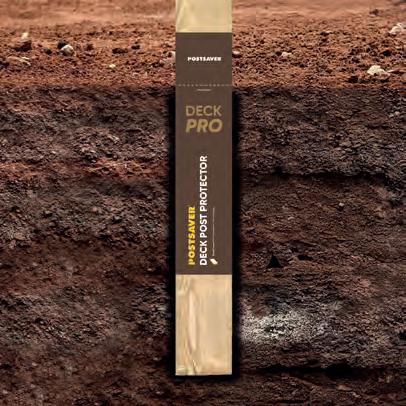
Ground-level decay remains one of the leading causes of structural timber post failure, often attacking the section of the post where moisture, oxygen and fungal activity combine to create ideal conditions for deterioration. DeckPRO has been developed to protect this vulnerable area using the same proven dual-layer barrier technology that has made Postsaver a trusted solution in fencing and landscaping applications for more than 30 years.
“Our mission has always been to extend the life of structural wood in ground contact,” says Tony Young, director of sales at Postsaver. “DeckPRO brings that proven post protection technology directly to the US decking market. Contractors are increasingly looking for ways to extend the lifespan
of timber structures while reducing costly callbacks and premature failures.”
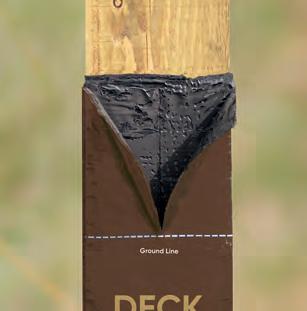
Heat-activated protection at critical ground line DeckPRO uses a proprietary dual-layer wrap designed to create a durable barrier around the most vulnerable section of a timber post. Once heat is applied, the inner thermoplastic sealant bonds tightly to the timber surface, helping to create an air- and watertight seal. At the same time, the durable outer layer shrinks securely around the post, forming a second protective shield against moisture ingress and fungal attack.
Unlike surface-applied tapes or moisturetrapping barrier systems, Postsaver says DeckPRO

growth rings and a higher proportion of immature fibres.
While modern preservative treatment methods remain highly effective, the depth and consistency of treatment penetration can vary depending on timber species, density and moisture content.
“Timber can present different performance challenges,” Young explains. “DeckPRO provides an added layer of protection at this high-risk section, helping contractors achieve reliable longterm performance.”
DeckPRO has been independently tested in long-term field trials and is backed by a limited lifetime warranty of 40 years, giving contractors, specifiers and distributors confidence in its durability. The product has also received approval from the International Code Council (ICC), including compliance with both the International Building Code (IBC) and International Residential Code (IRC), making specification straightforward for residential and commercial decking applications across the US.
commonly used in decking and landscaping applications. Postsaver says the product is aimed firmly at professional users, including deck builders, landscapers and fencing contractors, rather than the DIY retail market.
DeckPRO will be available exclusively through US distribution partners, with nationwide fulfilment supported by The Garham Group.
For professional deck builders and landscapers, Postsaver believes the value proposition goes beyond simple post protection. As outdoor living projects continue to increase in size and cost, contractors are under greater pressure to deliver structures that offer long-term reliability as well as visual appeal.
“It’s easy to maintain and protect everything above ground,” Young says. “You can stain it, clean it and extend the appearance of the deck for years. But what’s happening underground is often where failure begins.”
Young adds that contractors can use DeckPRO as a performance upgrade and a sales advantage when competing for premium projects. “When customers are investing significant money into a deck build, they want confidence that the structure is going to last. Being able to offer protection for the critical foundation posts helps contractors stand apart and reduce the risk of future problems.”
is engineered to form an integrated bond with the timber, providing long-term protection.
The product is intended for use with pressuretreated timber rated for ground contact, working alongside modern preservative treatments to improve durability and reduce premature deterioration.
Addressing the realities of using timber
Postsaver notes that changes in timber supply have made effective long-term protection increasingly important. The widespread use of faster-grown plantation timber means many modern structural posts now contain a greater proportion of juvenile wood, material that is often less dense, with fewer
For contractors, that combination of warranty protection and code compliance can offer a significant competitive advantage. “To be able to tell a customer that the foundations of their deck are protected for decades gives contractors real peace of mind and can help differentiate their offering,” Young says.
Installation and professional use
“It’s easy to maintain and protect everything above ground... But what’s happening underground is often where failure begins.”
The launch of DeckPRO coincides with NADRA’s Deck Safety Month, reinforcing wider industry focus on building safer, more durable outdoor structures. As a member, Postsaver says it is committed to supporting initiatives that improve deck safety and long-term structural performance from the ground up.
DeckPRO has been designed for straightforward installation on-site, with application taking around 80 seconds per post. Once heat is applied, using a propane torch or weed burner, the inner sealant activates and bonds to the timber while the outer sleeve shrinks tightly into place.
After heating, the sealant reforms into a solid protective barrier, allowing posts to be installed within minutes. Postsaver also provides online installation videos and step-by-step guidance.
The product is available in multiple sizes to accommodate a range of dimensional lumber
By protecting the critical ground-line section of structural posts, DeckPRO is positioned as both a performance upgrade and a preventative solution for contractors focused on quality and longevity.
Postsaver was conceived in the early 1990s after its CEO noticed fence posts rotting within years. Drawing on plastics industry experience, he developed a wrap-style protector targeting ground-line rot. Since its inception, the company has sold more than 10m units worldwide.
postsaver.com/DeckPRO
Instagram @postsaver




FLORAFELT
florafelt.com
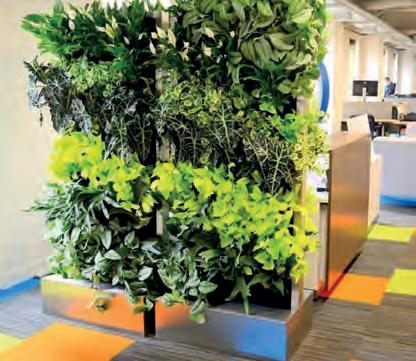
Florafelt Pro is a patented biophilic wall system designed for professionals, using Florafelt Grow Strips that weave into galvanized or stainless steel wire grids to create a drip-free water distribution system. Root wrappers accommodate larger plants for rapid on-site installation, and the company states that a single irrigation line at the top wicks moisture down through the entire wall. The 3-foot by 2-foot grids can be cut to size to accommodate any wall space. The system supports mega-scale living walls for both commercial and residential applications.
From modular living walls to smart plant care and organic soil amendments, these products help professionals deliver biophilic design with lasting results
PLANTA
getplanta.com


Planta is a plant care app built for both beginners and experienced plant owners. It offers intelligent care reminders, a light meter, plant identification and symptom diagnostics. The app recently introduced an upgraded identification tool called Quick Add. With a single scan, the feature automatically detects plant species, light conditions, pot type, drainage, soil and overall plant health, then instantly adds each plant to a personalized collection with tailored care schedules.
Powered by seven years of user data and AI vision technology, the system analyzes 30+ environmental and plant-specific factors to create customized reminders for watering, fertilizing, misting and repotting. According to Planta, the goal is to move beyond generic care advice by adapting recommendations to real-world growing conditions. The company also says that the average Planta user doubles their plant collection within a year, highlighting how the app helps people grow their confidence as plant owners.
Hand-made vertical garden planters, Florafelt Packet Living Walls are made from felt using 100% recycled plastic water bottles. The patented pleated design waters plants from the top as moisture wicks downward. Roots grow into the breathable felt which hosts living microbiology with a rigid plastic backing keeping walls dry. The system is also safe for vegetables and herbs.
These self-contained units are made from high quality aluminum, with each Recirc System including its own tank, pump, irrigation tubing and timer. Custom made to order, the units are also available as double-sided versions for freestanding installations. The recirculating design maintains water flow through the felt while a built-in timer automates irrigation cycles, making the system suitable for both indoor and outdoor applications without the need for external plumbing. Units can be specified in brushed stainless steel for commercial and residential projects, and root wraps are included for planting.

sempergreen.com
As demand for biophilic design and urban greening continues to grow, Sempergreen’s modular living wall systems are helping landscape professionals deliver fully integrated vertical greenery across commercial façades, mixed-use developments, hospitality spaces, healthcare campuses public environments. Designed for both new construction and retrofit applications, the pre-grown living wall systems combine horticultural expertise with scalable infrastructure to create immediate visual impact and long-term landscape performance. These systems bring nature into places where there is typically no available horizontal space for traditional planting, while also helping to screen and soften unsightly conditions. The Sempergreen Vertical System features pre-cultivated panels planted with carefully selected combinations of shrubs, perennials, ornamental grasses and ferns tailored to regional climate conditions and sitespecific sun exposure, from full sun to deep shade, providing an instant green façade aesthetic while reducing establishment time on site.

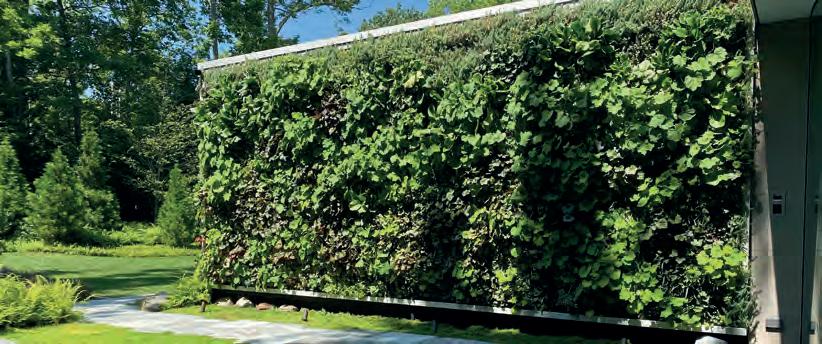
Beyond aesthetics, the system is engineered as a comprehensive exterior greening solution with integrated irrigation, drainage and automated fertilization systems working in conjunction with Sempergreen’s irrigation moisture control system to support plant health and water efficiency throughout seasonal changes. Built-in winterization further enhances cold-weather resiliency by protecting irrigation infrastructure and root zones during freezing conditions, supporting year-round performance in North American climates. The lightweight modular panels, weighing approximately ten pounds per square foot saturated, can be installed on a wide range of wall assemblies, including curved and architecturally
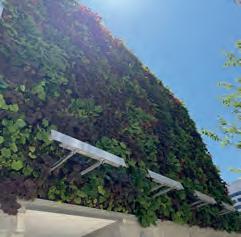
complex surfaces, often without major structural modifications, while also supporting long-term serviceability through streamlined maintenance access and simplified panel replacement. Systems may contribute toward LEED, WELL and BREEAM certification goals while supporting broader environmental initiatives such as urban heat island mitigation, biodiversity enhancement, stormwater management and air quality improvement. The system has also been tested to recognized European fire safety standards and achieved a B-s2,d0 fire classification under EN 13501-1 for façade applications. By combining pre-grown vegetation with integrated infrastructure and long-term horticultural support, Sempergreen continues to position living architecture as a durable and scalable component of the modern built environment.

my2ndnature.com
Derived from black soldier fly larvae frass, 2nd Nature is a natural co-product of insect farming that diverts food waste from landfill and transforms it into organic fertilizer. Rich in organic matter and beneficial nutrients, the product supports soil health and boosts plant vitality. It contains chitin, a compound found in insect shells that has been studied for its role in supporting soil and plant health. When applied to garden beds, the fertilizer helps soil retain moisture naturally and is marketed as petfriendly and pollinator-friendly. According to the manufacturer, the product offers an eco-story backed by third-party data with no greenwashing. The frass delivers nitrogen, phosphorus and potassium along with beneficial microbes for stronger roots and vibrant blooms.
Durable garden furniture, adjustable pergola systems, cassette awnings with integrated lighting and fire-rated decking redefining modern outdoor living
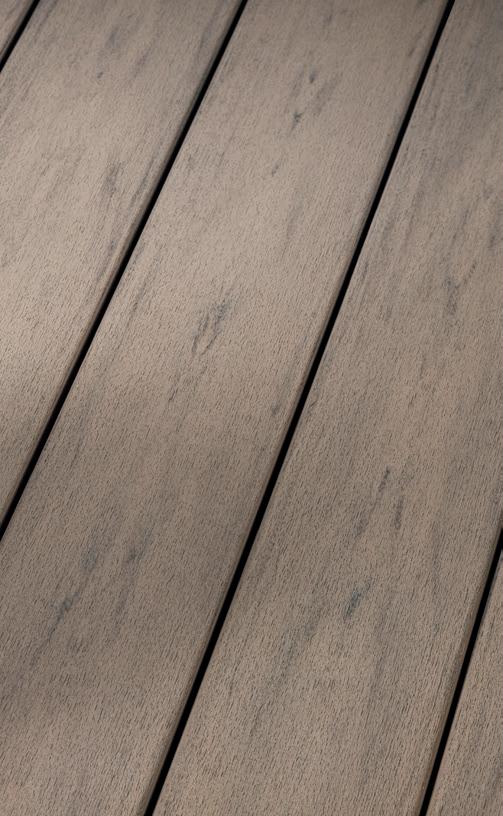
RISING GLOBAL
risinglobal.com
Galaxy B Cube
Galaxy B Cube offers a pergola system designed for large-area coverage and can support up to 32 square meters per single unit. Its rotating panel structure adjusts from zero to 120 degrees to manage fresh air demands. The system also enables three simultaneous light options attached to panel profiles. Maximum width reaches 4500-millimeters with an 8010-millimeter projection. Rising Global states that the product suits hotels, restaurants and premium leisure settings.
trex.com
Trex® Refuge™ PVC Decking
Trex® Refuge™ decking is a performanceengineered cellular PVC product designed for use in fire-risk areas and regions where PVC decking is widely preferred. Tested to rigorous standards, Refuge decking resists ignition and slows flame spread in accordance with ASTM E84 Class A Flame Spread and IWUIC ASTM E2768 ignition criteria, providing peace of mind while delivering Trex’s signature durability, design and low-maintenance benefits. Available in two nature-inspired shades. Refuge boards resist fading, scratching, warping and rot. Boards require no sanding, staining or sealing and are backed by a 50-year Limited Residential Warranty.
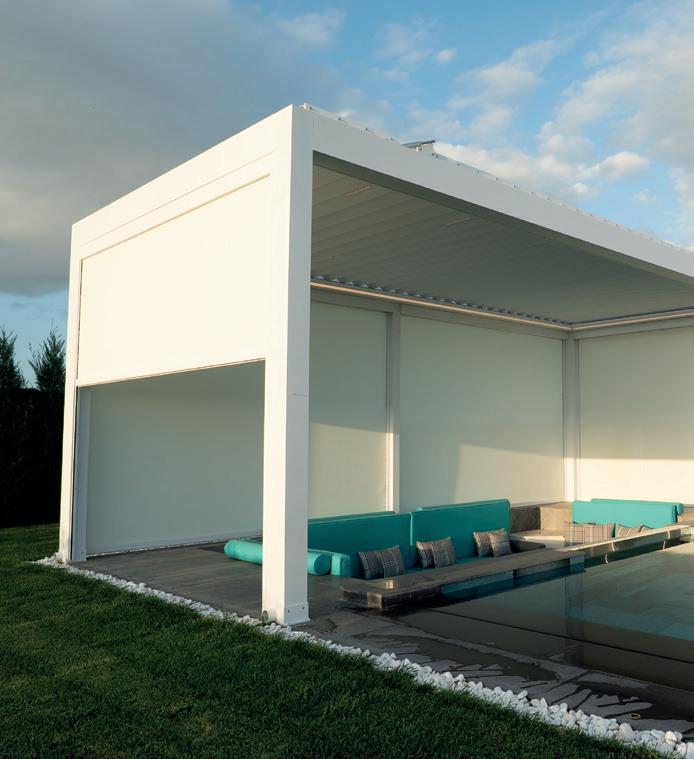
heritagegardencollections.co.uk
French inspired garden seating
The Circular Garden Dining Table with Four Sprung Garden Chairs measures 126cm in diameter with a 74cm height and includes chairs featuring leaf springs for comfort. Drawing inspiration from 19th century French originals, this collection prioritizes outdoor durability. Each handcrafted piece undergoes zinc-galvanization for rust protection before priming and painting in standard white or a custom color. Ladderback carver chairs accompany the Rectangular Garden Coffee Table and the Medium Straight Ladderback Garden Seat, which measures 122cm in length and 70cm in width with chair heights reaching 83cm. Medium Straight Ladderback Garden Seat dimensions are 83cm in height, 148cm in width and 60cm in depth.
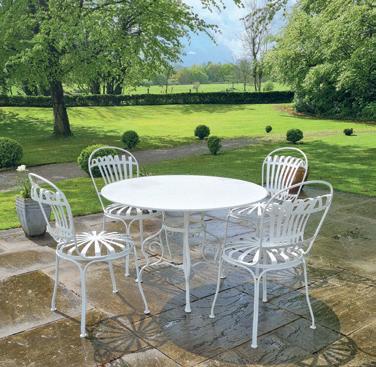
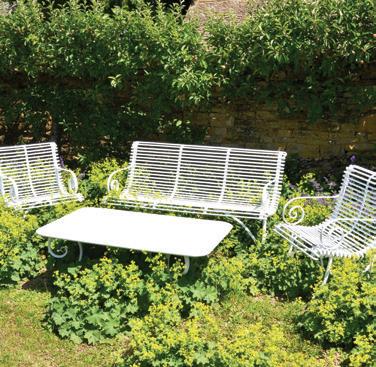
Handcrafted copper planters and water containers
Available in various shapes and sizes, each planter and water container from Heritage Handmade Garden Collections is handmade to order from heavy gauge copper. Edges come flat or rolled. Handcrafted pieces are riveted and verdigris patinated to imitate Victorian antique originals. Bespoke commissions are also undertaken. According to the company, the planters suit both traditional and contemporary planting schemes.
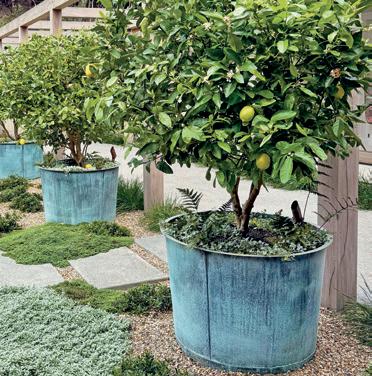
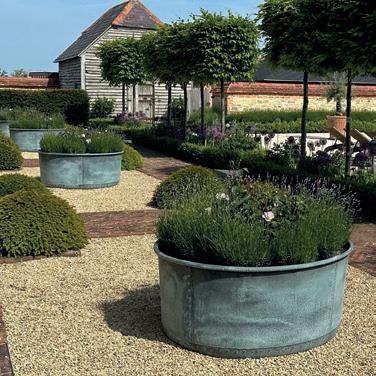
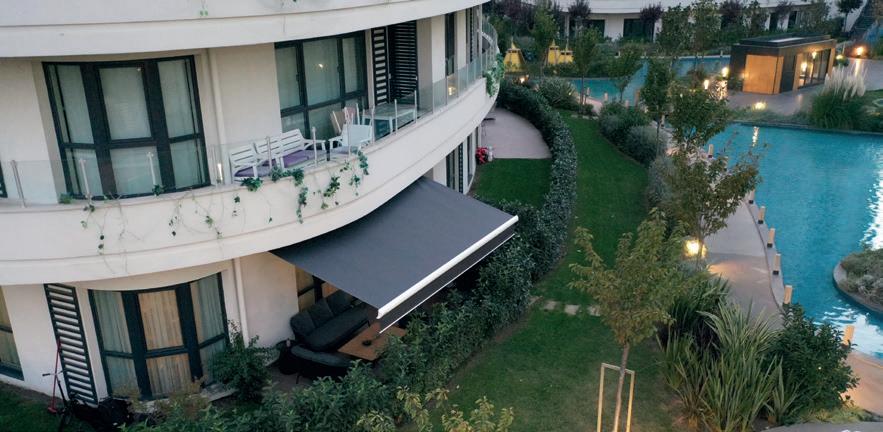
Pars Plus Luxe Cassette Awning
Pars Plus Luxe is a cassette awning that redefines luxury through an integrated lighting advantage. The system illuminates outdoor dining without relying on candles. Maximum width reaches 7000-millimeters with a 3000-millimeter projection. A single system covers up to 21 square meters of usable area.
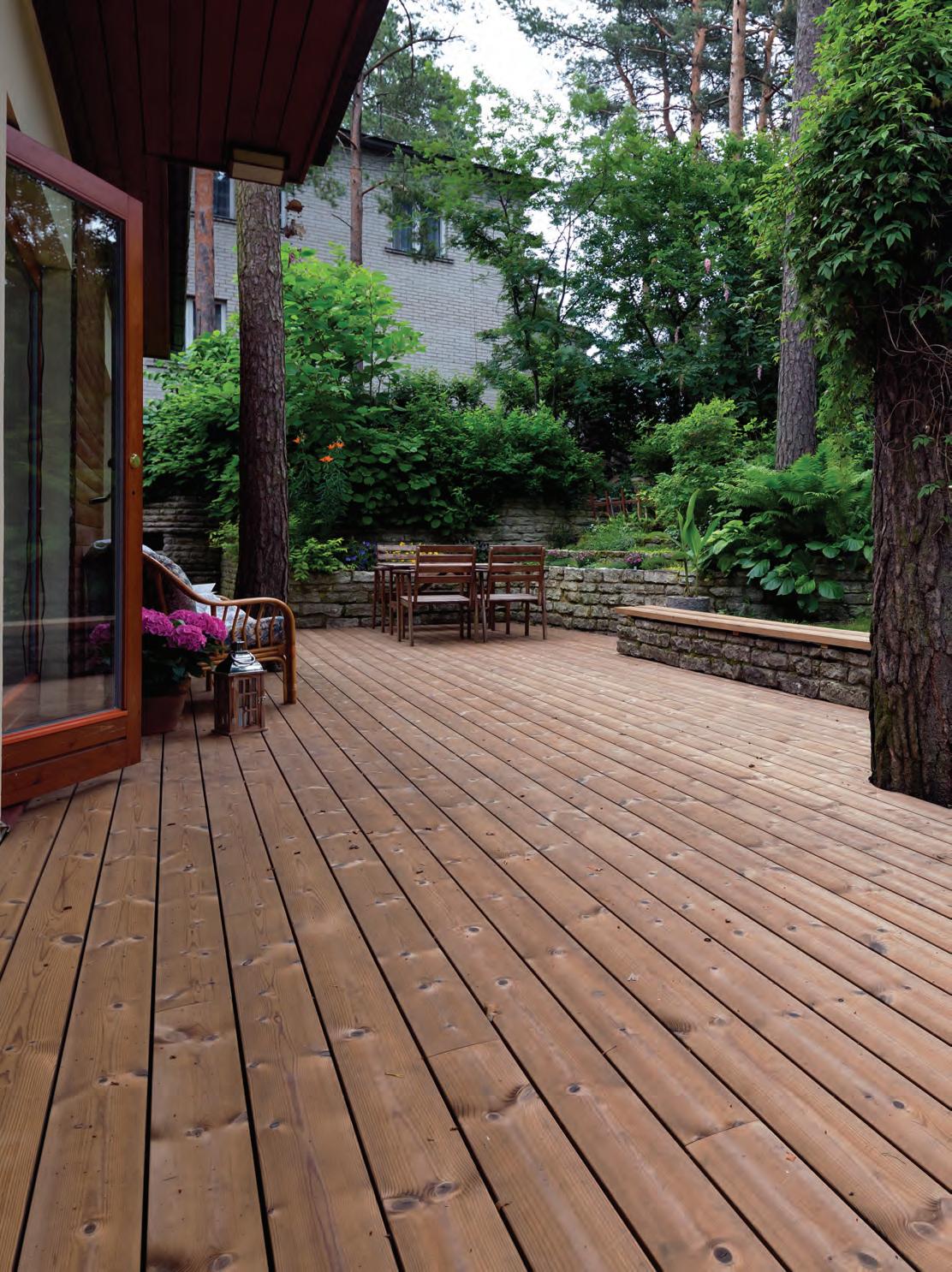
The battle between time and wood has always been an unfair fight. But not anymore. Now, you can recommend natural wood products designed to stand up to decades of wear.
The battle between time and wood has always been an unfair fight. But not anymore. Now, you can recommend natural wood products designed to stand up to decades of wear.
Our thermally modified decking is backed by a rot resistance warranty of up to 20 years for knotty pine and 25 years for ash and spruce. And our chemical-free process enhances each board for dimensional stability in any climate.
Our thermally modified decking is backed by a rot resistance warranty of up to 20 years for knotty pine and 25 years for ash and spruce. And our chemical-free process enhances each board for dimensional stability in any climate.
So, your clients can enjoy a beautiful outdoor space year after year … after year.
So, your clients can enjoy a beautiful outdoor space year after year … after year.
Scan the code now to see how you can create the look you want with real wood from Thermory.
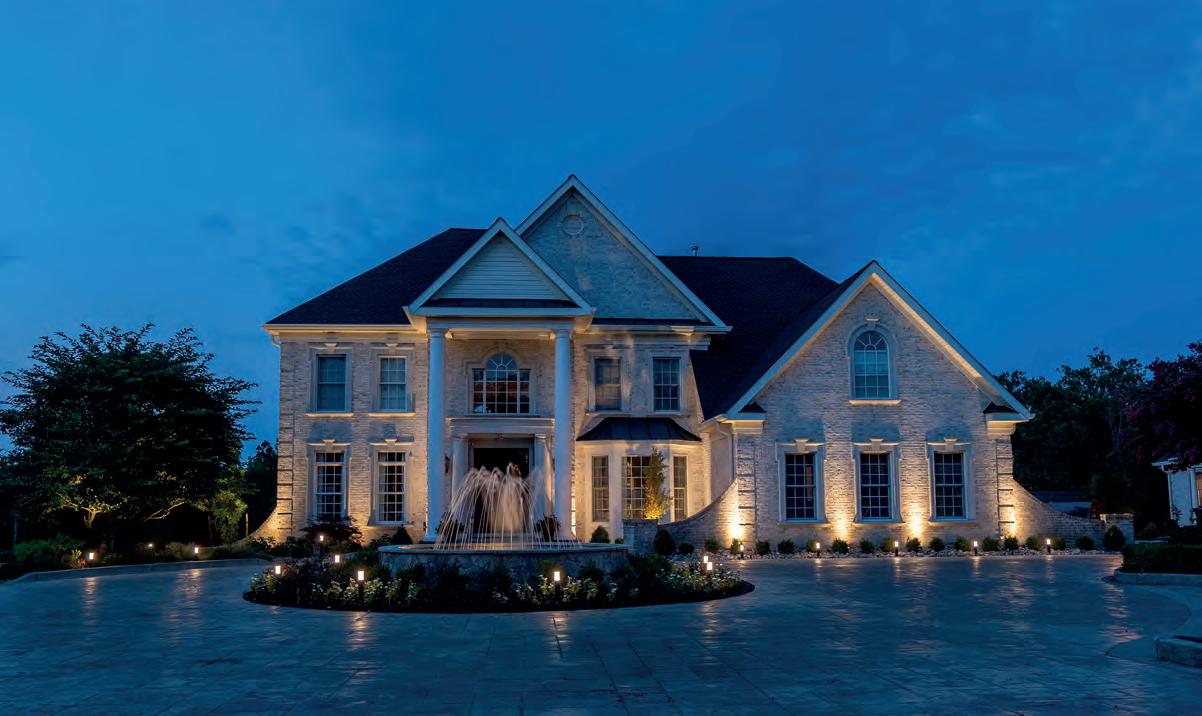
How to avoid over-lit patios and flat nighttime landscapes. An in-lite specialist offers practical advice for lighting outdoor rooms to their highest potential
What separates a flat, over-lit yard from a warm, inviting landscape? The answer, says Barret Anderson, is thoughtful design. The in-lite USA sales manager shares his and his team’s top tips on how professionals can use low-voltage lighting to define outdoor spaces, guide movement and prevent installation mistakes.
How can landscape professionals use lighting to create distinct spaces and guide the flow of movement after dark?
“We typically approach a property as a collection of outdoor rooms—patios, pergolas, outdoor kitchens, firepit areas, walkways, pool spaces and lounge areas—each serving a different purpose at night. Lighting helps define those spaces and naturally guide movement throughout the property.
Path lights, step lights and subtle edge lighting help direct people through the landscape, while directional lighting and focal points draw attention to gathering spaces, trees, architectural features and entertainment areas.
“One of the most important design principles is layering and contrast. Not every area should be equally bright. Allowing some areas to remain softer or darker creates depth and helps the eye move naturally through the space. A well-designed lighting plan should make the property feel warm, inviting and comfortable without feeling over-lit.”
What are the most common mistakes when integrating lighting into hardscaping, and how can designers avoid them during the build?
“A common mistake is waiting too long to plan for lighting. If you are planning to install recessed,
wall, or undercap lights, it’s always best to add them during the initial hardscape design and build phase, before the patios, walls, steps and outdoor features are completed. Planning ahead allows contractors to properly install sleeves, conduit, wire paths, recessed fixtures and transformer locations before construction is finalized. Retrofitting later creates unnecessary labor, exposed wiring, limited fixture placement and missed opportunities for integrated lighting features.
“Another frequent issue is improper installation with recessed fixtures. Using manufacturer-specific drill bits, a drill press when applicable and proper methods is extremely important for recessed lighting in pavers, decking and stonework. Incorrect sizing can damage fixtures, create moisture issues and lead to future callbacks.
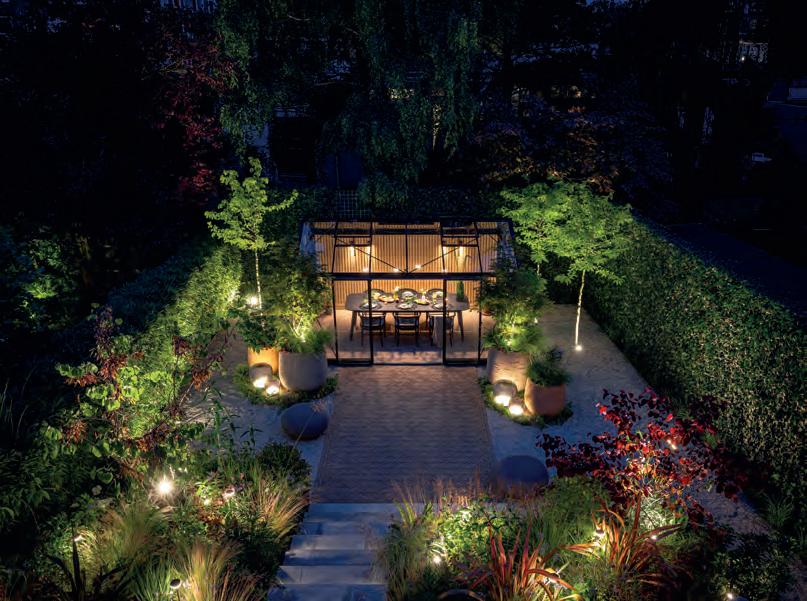
“We also see projects become over-lit too easily. Great outdoor lighting is usually subtle. The goal is to notice the effect, atmosphere and safety the lighting creates—not excessive brightness, glare or the fixtures themselves. Proper fixture placement and beam spread selection avoid a flat design. Lighting should create contrast, depth and visual interest rather than making every area appear evenly illuminated.”
Which lighting layering techniques give the biggest impact for outdoor living areas, and where do you prioritize them?
“For outdoor living spaces, we focus on three primary layers: safety, focal points and ambiance. The first priority is functional lighting for pathways, steps, grade changes and gathering areas to ensure the space is safe and usable at night. From there, we highlight focal points such as trees, pergolas, retaining walls, outdoor kitchens, architectural details and planting areas. The final layer is ambient lighting, which creates warmth, comfort and atmosphere for entertaining and relaxation.
How do you recommend balancing warm vs cool color temperatures and beam angles to enhance safety?
“For most residential outdoor living environments, warmer color temperatures create the most natural and inviting atmosphere. Warm lighting works especially well with natural stone, wood, landscaping and outdoor entertaining spaces while still providing excellent visibility and safety. Cooler temperatures can be useful in certain task-oriented or safety-focused applications but overusing them makes outdoor spaces feel harsh or unnatural.
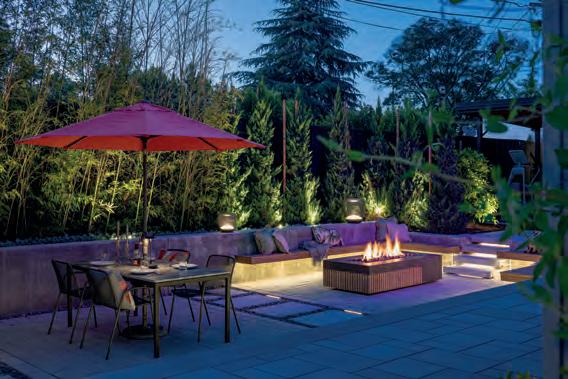
“Beam angle selection is just as important. Narrow beams work well for highlighting trees, columns, architectural features and focal points, while wider beam spreads suit wall washing, planting beds and broader ambient effects. At in-lite, we believe natural elements like plants and trees are best lit with a warm white light that resembles how they appear during the daytime, while statues, walls and architectural accents can sometimes benefit from subtle color contrast.”
With smart home integration growing, what should landscapers know about future-proofing low-voltage systems?
“Homeowners increasingly want flexibility and control. Many clients expect to adjust scenes, dim certain areas, schedule lighting or control the system from their phone. The best way to future-proof a low-voltage system is building the infrastructure correctly from the beginning. That includes planning for additional transformer capacity, accessible wire routing and separating lighting into functional zones such as pathways, entertainment areas, trees and architectural lighting.
“At in-lite, our Smart system offers appbased control, zoning, scene programming, dimming, scheduling and optional remote connectivity through the Smart Bridge. Because the system is Bluetooth-based, homeowners can control their lighting without relying entirely on Wi-Fi. The system also integrates with modern smart home platforms including Control4, Matter and KNX, helping contractors deliver a future-ready solution that adapts as technology and expectations evolve.”
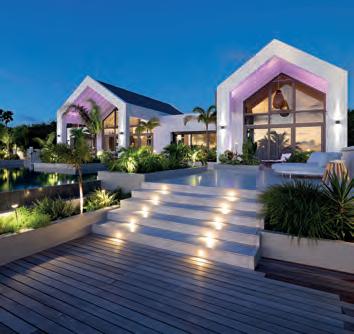
For showpiece outdoor living features, what is one lighting trick that instantly elevates the space?
“One of the best techniques is utilizing semicovered or hidden lighting fixtures to accent the showpiece, allowing the lighting effect it creates to become the focus. Integrated downlighting within pergolas, recessed strip lighting beneath counters or seating walls and concealed under-cap lighting can instantly create a cleaner and more high-end appearance. When installers take the time to recess fixtures and hide mounting components, the overall effect feels much more intentional and architectural.”

in-lite is a specialist in outdoor lighting developing premium, easy-to-install weatherproof systems. They offer free training courses and lighting design services to help professionals elevate their business. Its smart, low-voltage products are designed for easy installation and personalized control via an app. in-lite.com/en-US



Ergonomic Features
Designed with patented pivoting handles, the product has been tested by an independent Ergonomic Specialist. The Pivot-All Wheelbarrow:
• Promotes neutral wrist posture during dumping
• Promotes neutral upper body/back posture during transportation and dumping
• Promotes wrist and hand protection thanks to the steel handle cuffs


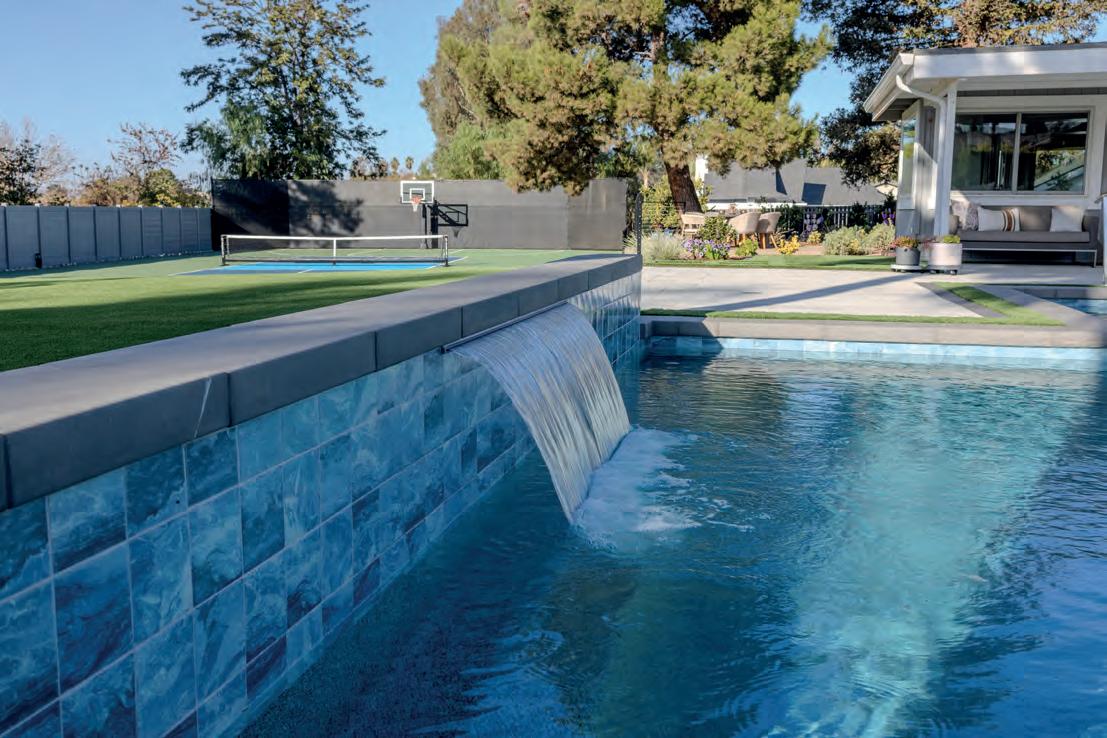
From lawn aeration to award-winning outdoor living, Greenway blends family leadership, craftsmanship and fire-conscious design across San Diego County landscapes
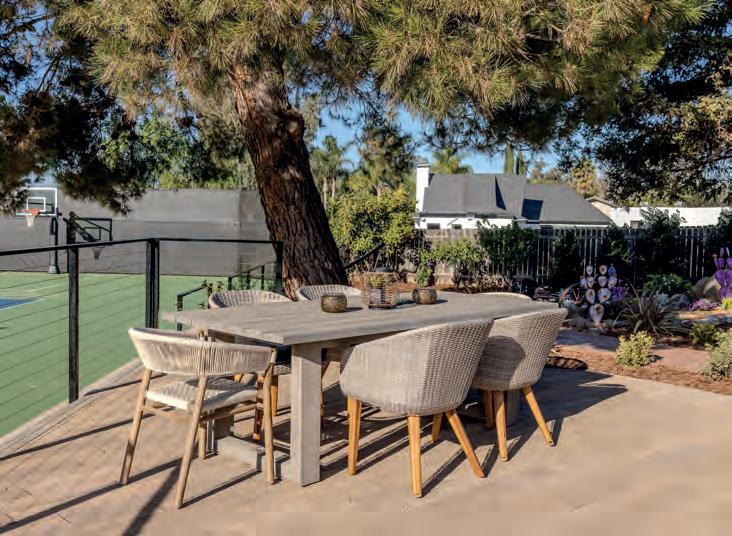
Greenway Landscape Design & Build has shaped outdoor spaces across San Diego County for more than three decades. What began as a one-man lawn aeration operation has evolved into an award-winning design and build firm known for client service, detailed craftsmanship and a practical understanding of how Southern California homeowners live outdoors.
For founder and co-owner Scott Lawn, the company’s growth has always been rooted in a simple philosophy: listen carefully, do the work the right way and let the finished landscape speak for itself. “The reward is creating spaces families can enjoy for years,” says Lawn.
That perspective reflects a personal history. Before landscaping, Scott owned clothing stores, started several businesses and worked as a business broker. Then he acquired a small company called Greenway Lawn Aeration. “I got to take off my suit and tie, put on jeans and do good stuff outside,” he recalls. When Scott’s father said he had not
The Bill Paul Residence
One project that reflects Greenway’s thoughtful and collaborative approach to design is the Bill Paul residence. The clients were existing Greenway customers who purchased a larger home with an overgrown yard, mature pine trees, an oversized sports court, an unattractive fence and outdoor areas that needed to become safer, more functional and more enjoyable for their family.
Safety was especially important because the homeowners wanted the space to work well for their grandchildren, including a child with visual and developmental challenges. Greenway used those needs to guide the design.
Scott says the success of the project came down to listening. “You hear what the client truly needs, and only then do you offer solutions. That is how you create a landscape that is not just attractive, but meaningful.”
One example was the artificial turf around the pool. While it added a clean visual border, it also created a tactile transition that helped signal when someone was approaching the pool area, making the space more intuitive without intrusive visual barriers.
The result was a landscape that balanced beauty, safety and multi-generational use.
The finished space was not simply a backyard renovation; it became a space designed around the people who would use it most.
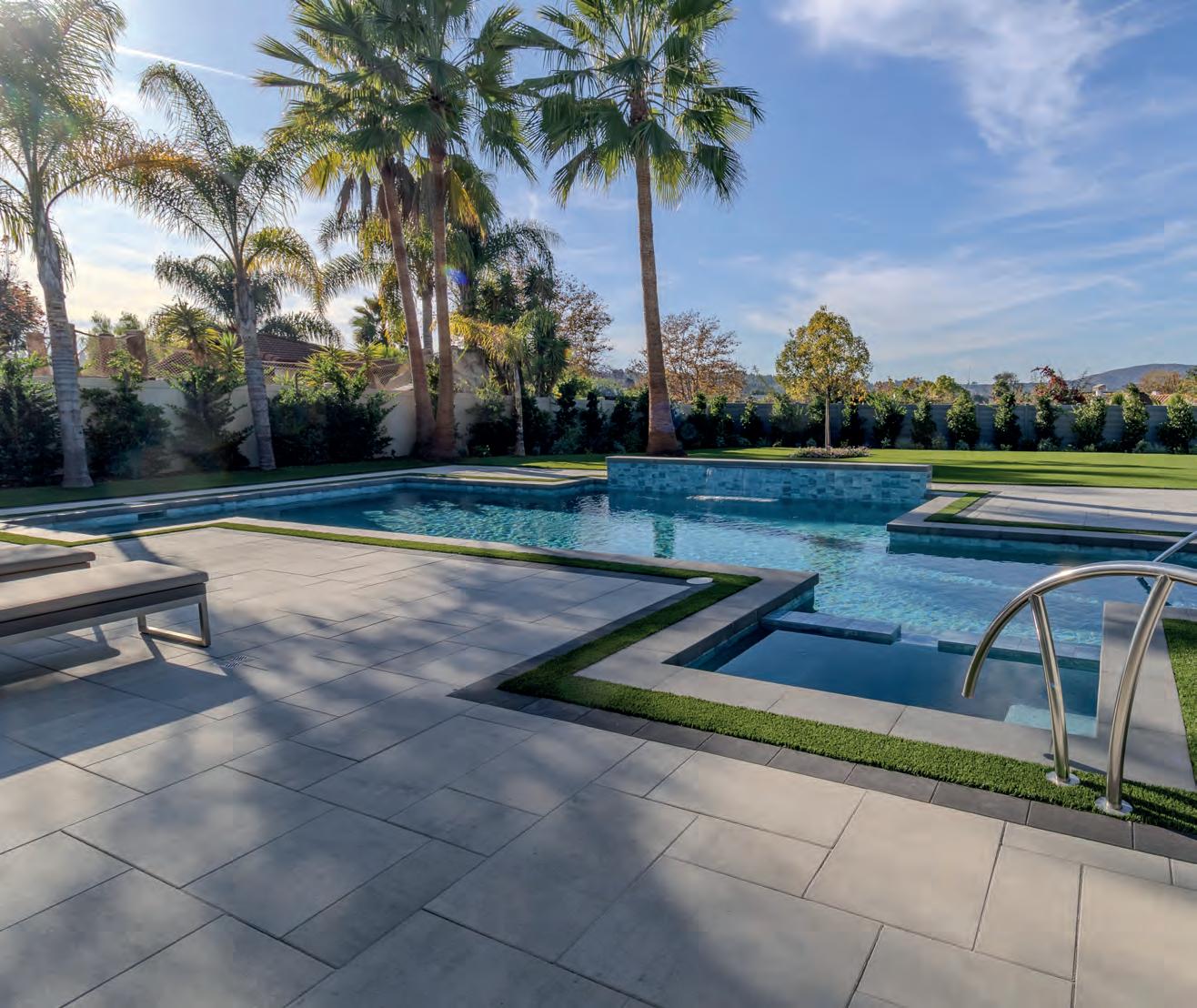
seen him that happy in years, Scott kept building. Greenway eventually became the largest lawn aeration company in San Diego County, serving tens of thousands of residential and commercial clients before expanding into landscape design, outdoor living, irrigation and renovation work.
A family legacy built on outdoor living Alex Lawn, Scott’s son and Greenway co-owner, was born the same week his father bought the business. “I grew up with the company,” Alex says. “I was out on job sites at a really young age, pushing materials around, using weed whackers and having fun with it all. Most of all, I got to be with my dad. It’s been fantastic working alongside him every day.”
While Scott built Greenway’s operational foundation, Alex brought a passion for design and
outdoor living that helped shape the company’s next chapter. “The company has transformed because my real passion is the design and build side,” Alex says. “It has been exciting to grow that part of the company and create better outdoor spaces for our clients.”
Their design philosophy is collaborative rather than prescriptive. Alex says successful design requires listening and leadership. “I will never tell a client what they have to do, but I also do not want to simply take an order without guiding the process,” he says. “Clients often have great ideas. Our job is to help them understand how those ideas work together and where the features belong.”
One phrase Alex uses to describe Greenway’s approach is “multi-generational entertainment.” Rather than clustering every feature into one area,
the team thinks through movement, gathering, privacy, safety, views, shade, dining, cooking, play, pools and quiet moments.
Scott says the first step is always listening. “A lot of people come in and immediately say, ‘You need to do this’ or ‘You need to do that,’ but you do not know what needs to be done until you listen,” Scott says. “You have to understand how the homeowner wants to live in the space.”
That listening also includes honest guidance. If a homeowner asks for a large fireplace, Greenway may explore whether the family truly needs a major outdoor hearth or whether a simpler fire feature would better serve the space, budget and longterm use. “Sometimes the right solution is not the biggest solution,” Scott says. “It is the one that fits the client best.”
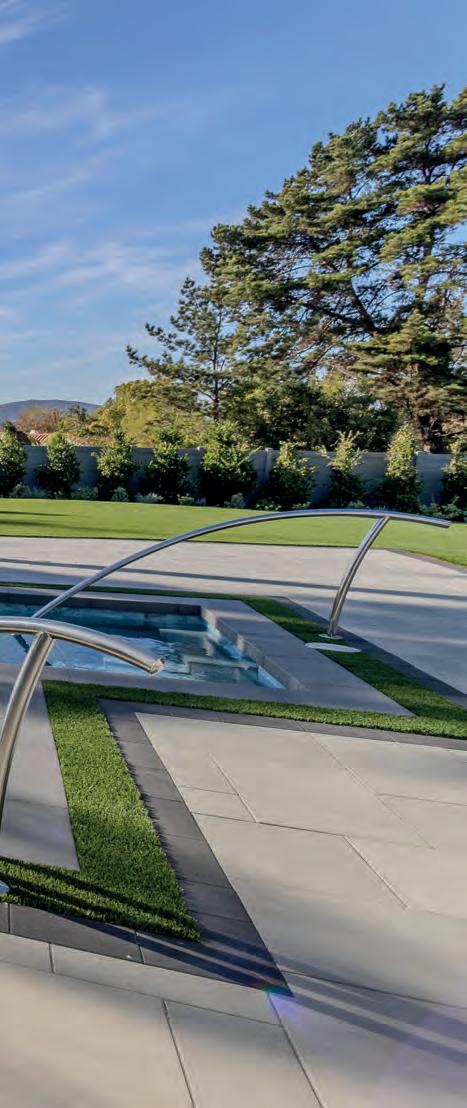
The details behind award-winning work Greenway has earned recognition for projects that combine visual appeal with technical execution. Scott believes award-winning landscapes require more than a beautiful first impression. They must function well, age well and show a high level of construction quality. “What makes an awardwinning design is the balance of aesthetics and function,” he says. “It should be beautiful, but it should also make sense. The quality of construction matters. The way the materials come together matters. The details matter.”
Alex places equal weight on the finishing touches. “I am a detail guy. Double border edges on multi-color pavers; a turf strip around a pool; the way a drain cap is set into the pavers—those are details that some people may never consciously notice, but they are critical to the finished result.”
Those subtle choices, he argues, are what separate good work from great work. Greenway’s goal is to create a finished landscape where the craftsmanship feels intentional.
When asked about trends in Southern California landscaping, Alex points first to water efficiency. “Everyone wants water efficiency. No matter how beautiful the project is, you need the expertise to design varied plant palettes that are appropriate for the climate and responsible with water.”
For Greenway, drought-conscious design is now a baseline expectation for high-end residential work. The challenge is to create landscapes that feel lush and personal while using water responsibly.
At the same time, California’s evolving defensible space requirements are reshaping how
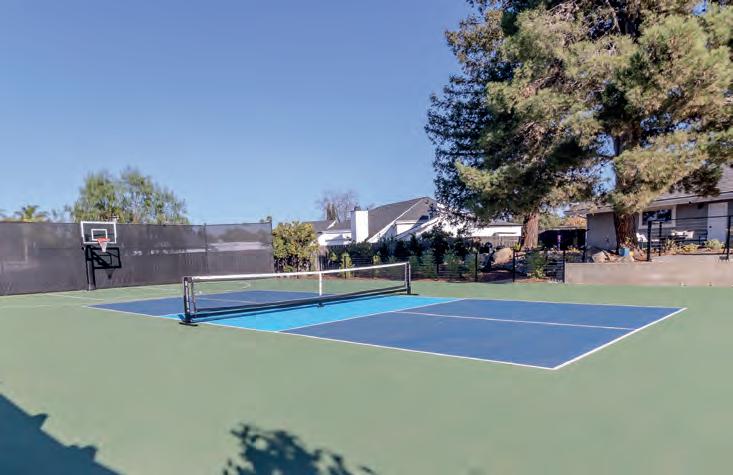
homeowners, designers and contractors think about areas closest to a structure. The focus on Zone Zero—the zero-to-five-foot ignition-resistant zone around homes and structures—is especially relevant where wildfire risk, insurance concerns and remodel planning are part of the conversation.
“The legislation is changing how we think about design and remodels,” Scott says. “Many Southern California landscapes have plants, wood chips or combustible materials right next to the house. We have to reimagine those areas in a way that still looks designed, but responds to the realities homeowners are facing.”
Greenway has explored solutions such as sculptural steel plants, cement pottery, rock formations, lighting and water features to create visual interest close to the home without relying on traditional combustible plantings or mulch.
A recent Rancho Santa Fe project gave Greenway an opportunity to show that fireconscious design does not have to feel empty. By using non-combustible materials, drought-tolerant design principles, lighting and stonework, the team created an outdoor environment that responds to California’s evolving defensible space expectations while still feeling refined and residential.
“On paper, Zone Zero can sound intimidating,” Alex says. “People hear it and think they cannot have anything near the house. But that is why we are excited to show what is possible. It forces a different kind of creativity.”
Scott notes that narrow side yards can be challenging because the entire space may fall within the first five feet from the structure. Even there, he believes good design can help homeowners move from confusion to a clearer plan. “It cannot just be plants anymore, and it certainly cannot be combustible material right against the home. But that does not mean it cannot be beautiful.”
Adapting to challenges is nothing new for a company that started with a man pushing an aerator across suburban lawns. As Scott Lawn puts it, “I can’t paint and I can’t sing, but I can make beautiful landscapes.”


Landscape Design & Build has been serving San Diego County for over 30 years. It specializes in high-end residential outdoor living, landscape renovations, irrigation, pavers, water-conscious planting, fireconscious landscape design and more. grnway.com
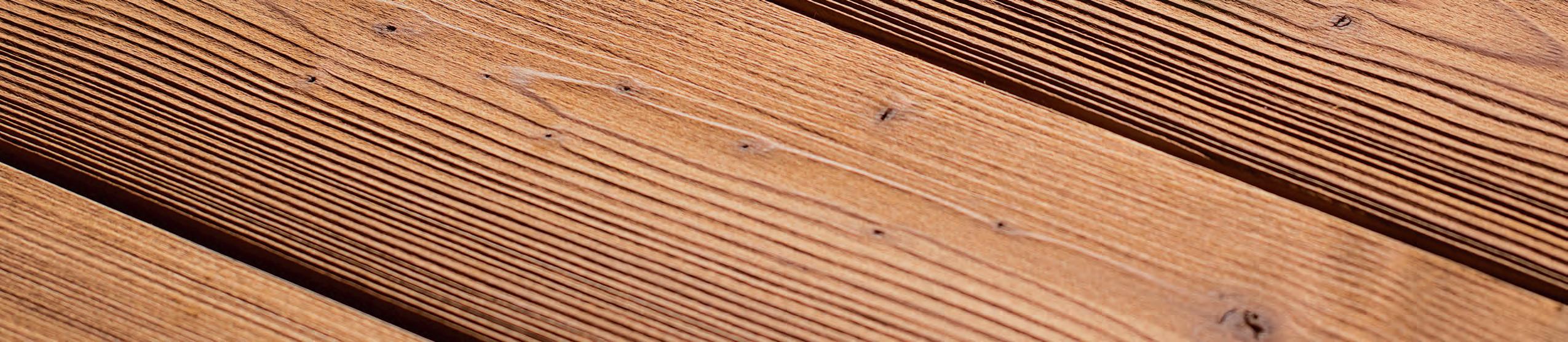
As wildfire seasons intensify and insurance carriers withdraw from high-risk zones, landscapers and landscape architects find themselves on the front lines of a complex regulatory battle. Stephen Butler, territory manager at Thermory USA, situates his company in that conversation. In an interview with Pro Landscaper USA, Butler outlines how shifting municipal fire codes are reshaping material specifications—and how Thermory’s thermally modified wood offers a path forward that does not force a choice between safety and aesthetics.
“Regulatory codes are driving consumer costs”
“Regulatory codes are driving consumer costs,” Butler says from Colorado, a state he describes as “becoming very assertive with fire codes.” Covering 13 states for Thermory, he has witnessed a fragmented regulatory landscape. “Every market is different,” he says. This patchwork of requirements leaves homeowners stuck between competing demands—such as fire codes that specify resistance ratings for deck constructions. The situation, he predicts, will only get more complex.
The ember strike reality
Within the regulatory framework of wildland-urban interface (WUI) fire codes, the primary threat to a structure is often not a wall of flame but an “ember strike”—wind-borne embers that can travel miles ahead of a fire front. These embers can land on roofs, get sucked through ventilation into attics or ignite combustible decks. Product fire resistance ratings, along with WUI compliance lists such as CAL FIRE’s, are designed to address this specific risk by mandating ignition-resistant materials for decking, roofing and cladding.
Looking at the issue from the homeowner’s perspective, Butler identifies three advantages to using ignition-resistant materials like Thermory’s decking for fire mitigation. First, they enable construction in WUI zones where regulations might otherwise prohibit decking altogether. Second, they satisfy aesthetic preferences while still meeting code requirements. “Many homeowners don’t want their homes to look like skyscrapers,” he says. “They don’t want to use other ignition-resistant materials like glass, steel and aluminum. They want the aesthetic of their home to blend into the environment.” Third, he says Thermory’s products offer peace of mind. “Fundamentally, all homeowners want to feel as if they’ve done their very best. They’ve protected their
family, their belongings and their investment with the best available products at the time.”
Natural fire resistance
Thermory’s fire mitigation story begins with its manufacturing process. The company uses carefully selected, certified timber sourced from sustainably managed forests—95% of its softwoods are PEFCcertified. Through a proprietary process using only heat and steam, Thermory thermally modifies the wood at a cellular level. “One of our advertising campaigns is heat, steam and done,” Butler remarks. This eco-friendly alternative to chemically treated woods or synthetic composites changes the structure of the timber, making it suitable for tough outdoor conditions.
Crucially for fire mitigation, this thermal modification cooks out many natural combustibles, including sugars and alcohols. As a result,
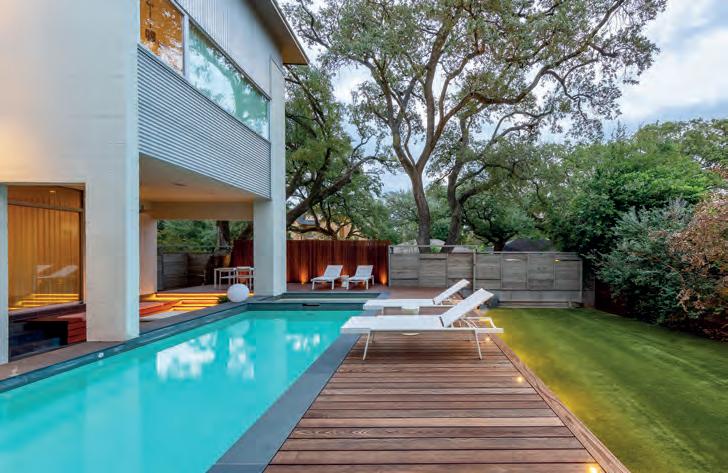
untreated Thermory decking naturally achieves a high-level Class B fire rating (flame spread index 26-75) and meets WUI standards—a significant advantage over untreated natural woods, which would perform far worse.
Nonetheless, codes are evolving toward stricter standards based on the duration of a material’s exposure to fire, specifically adopting ASTM E2768 testing. Unlike the 10-minute ASTM E84 test, the 30-minute ASTM E2768 Steiner tunnel test measures flame spread and smoke development after a product has undergone accelerated aging. As a result, Class B fire resistance no longer satisfies regulations in some areas, where proven long-term performance under sustained fire exposure is now required.
To bridge this gap, Thermory has partnered with Chemco, a pressuretreatment specialist.
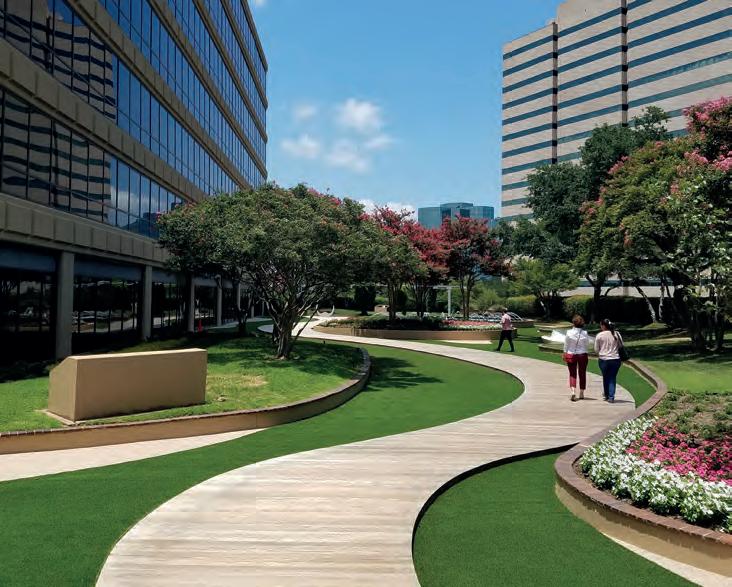
Those are our two biggest volume sellers—knotty pine for that rustic look and ash for that clear hardwood look.”
“Plastic components, aluminum, steel sidings—they reverberate sound”
“Chemco uses an inert, water-based chemical and pressure-treats a board, so it’s driven into the center,” Butler explains. This process also avoids the limitations of topical sprays, which are commonly used on decking but progressively leach away over time—a critical failure point that accelerated aging tests are designed to expose.
Consequently, Thermory’s knotty pine decking and cladding now achieve a Class A rating (flame spread index 0-25), the highest possible classification for fire protection. Clear ash products are expected to receive the same certification shortly. “It’s a significant investment,” Butler admits, noting that testing costs are substantial for the company. “But we will have ash approved.
While fire resistance opens the door to regulatory compliance, Butler emphasizes the real sell for landscapers lies in the everyday experience of the homeowner. He distinguishes Thermory from composites and non-wood Class A alternatives not just on aesthetics, but on livability, sound quality and environmental impact.
Composite decks, Butler notes, are notorious for absorbing and magnifying sunlight. “You can still walk on our decks in western Colorado when it’s 103 degrees,” he says. “They’re not going to magnify that heat and melt the skin off your feet.
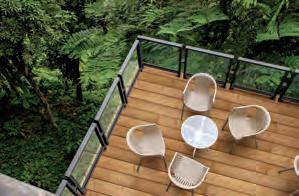
I like to call our products flip-flop friendly.” Sound attenuation offers another clear advantage. “Plastic components, aluminum, steel sidings—they reverberate sound,” Butler adds. “They’re hollow.” Real wood, by contrast, absorbs noise, creating a quieter outdoor space. Finally, he addresses sustainability—a key theme for landscape professionals. While composites often end up in landfills at the end of their service life, Thermory wood can biodegrade or be used as biofuel.
For the landscaper, the value proposition is clear: a natural, tried and tested product that meets the toughest fire codes without sacrificing aesthetics, comfort or environmental responsibility. As Butler summarizes, Thermory offers “the advantages of a composite in durability and rot resistance, and none of the environmental impact disadvantages.” In an era of tightening regulations and rising insurance costs, that is a pitch that clearly distinguishes Thermory’s place in the decking market.

Thermory is a leading manufacturer of thermally modified wood, specializing in sustainable, chemical-free decking, sauna-materials, cladding and flooring for landscape architects and builders. thermoryusa.com ABOUT Instagram @thermoryusa
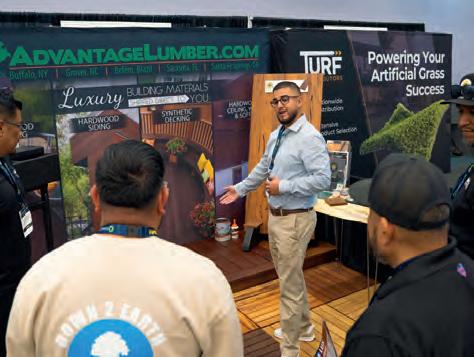


Wellness amenities are reshaping outdoor living. BW Sauna Co. pitches custom saunas to landscapers wanting to tap into the growing demand
Health and wellness are increasingly becoming a primary feature in outdoor living design and builds. According to Yardzen’s 2025 trends report, wellness features have become a deeper priority for homeowners, with requests for outdoor showers up 29%, fitness spaces rising 15%, and saunas and cold plunges growing by 8% and 9%, respectively. For our industry, these figures represent significant opportunities for growth through service provision.
One company looking to capitalize on this trend is BW Sauna Co. The custom sauna designer and builder based in Northern Minnesota is making a direct pitch to the landscape industry. Ahead of its appearance at FutureScape USA, a landscaping expo happening September 1-2 at The Barker Hangar in Santa Monica, BW Sauna is positioning itself as a B2B partner for professionals who want to differentiate their service offerings.
background in home building. Stolp grew up in Northern Minnesota, where he describes the active outdoor lifestyle and sauna culture as deeply embedded in everyday life. Nevertheless, when he entered the sauna market, he perceived an opportunity: most saunas were either prohibitively expensive or cheaply constructed. “We entered the sauna industry with the opportunity to fill a gap in the market,” Stolp recalls, “There were not many companies out there building truly high-end, lifetimequality saunas.”
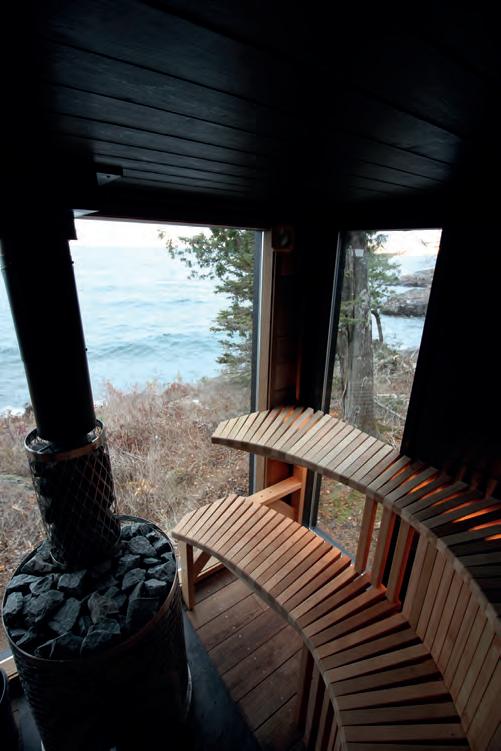
“There were not many companies out there building truly high-end, lifetime-quality saunas”
In an interview with Pro Landscaper USA, founder and CEO Jayson Stolp states that his company is presenting landscaping firms with the ability to create their own branded sauna line. These fully custom specifications can be tailored to each firm’s portfolio, allowing landscapers to tap directly into the growing health and wellness market.
Second-generation craftsmanship approach BW Sauna was founded five years ago by Jayson Stolp, a second-generation craftsman with a
The company started with a single mobile sauna and spent several years developing and refining its product range. Today, BW Sauna builds handmade, fully customizable saunas for residential, commercial and mobile applications. Unlike many competitors who use wood or aluminum framing, BW constructs all stationary units on steel frames. Steel does not expand, contract, buckle or decay, which ensures the foundation lasts. Every sauna also includes full insulation for energy efficiency and pest prevention, plus floor drains for easy cleaning.
BW Sauna’s core offering is full customization. Stolp remarks that his company’s designs avoid limiting customers to a handful of colors or material choices. “We want to give the power to the customer to pick and choose what they want,” he comments. “At the end of the day, we want our customers to have the final say and get exactly what they desire for their outdoor space.”
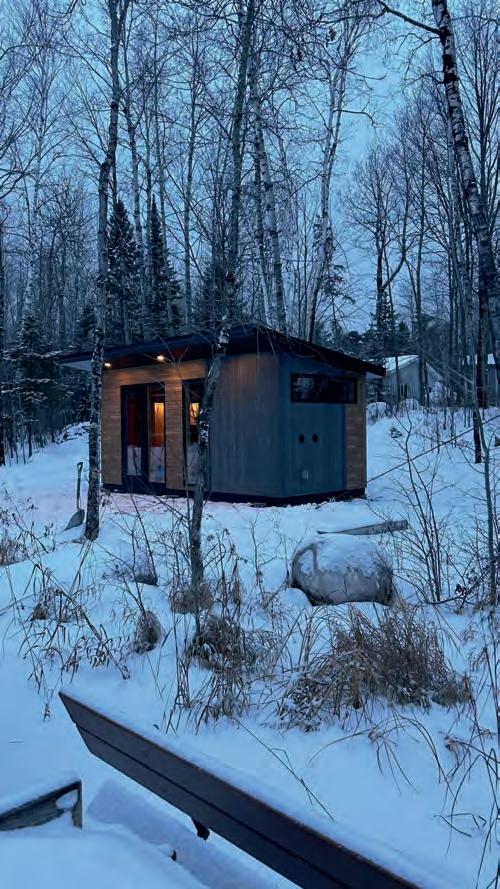
Stolp notes that the customization process typically begins with a design call where customers share their pain points, goals and storyboards. From there, BW Sauna develops solutions tailored to each project. Clients receive 3D renderings of their sauna before construction begins, with unlimited edits to ensure the final product matches their vision. “We are capable of customizing as far as the customer wants to go,” he adds.
The wellness boom across the Union Saunas have historically been most popular in colder northern states, particularly the Upper Midwest and Pacific Northwest where there is a high concentration of Americans with Scandinavian heritage. Nonetheless, Stolp has observed that the wellness boom has changed that pattern. BW Sauna now sells products in every state.
“California alone, where we will be exhibiting at FutureScape USA, has five of our saunas now,” he reports. “We receive requests every week from California residents. The warmer climates are definitely connecting with the wellness trend.”
However, as the company expands, Stolp adds that customer service remains fundamental to his business model. “We invest significant time in our clients. Customer service is a top priority for us.
What we are known for is the craftsmanship of our builds. Our custom capabilities—that is where our reputation lies.”
This service-first approach also guides how BW Sauna handles homeowner concerns. On issues like fire risk or energy use, Stolp says every case is addressed individually during the design process. Options range from different siding materials to switching from wood-fired to electric stoves. “If a client expresses concern about fire risk, we review the available options. If a different siding material is required, we will accommodate that. If an electric stove is preferable, we make that change as well.”
Stolp’s pitch to landscape professionals is straightforward: the outdoor wellness trend is growing, and BW Sauna is ready to help landscapers capitalize on it. He describes his company’s products as higher-end and built to last. “Our primary goal is for customers to purchase a sauna from us once and have it last a lifetime,” he tells Pro Landscaper USA. “We fully stand behind that commitment.”
Ease of maintenance and purposeful design are key selling
BW Sauna Co. builds custom, high-quality saunas for homes and businesses. Founded by second-generation craftsman Jayson Stolp, the company prioritizes quality, customer service and designs that bring people together. bwsaunaco.com ABOUT Instagram @bwsaunaco
points, he notes. Unlike mass-production line operations, BW Sauna intentionally grows slowly to maintain quality. For Stolp, that patience is precisely what makes the company a reliable partner for landscape professionals. It is not about selling the most units, he suggests, but about building relationships and products that endure.
As homeowners continue to invest in outdoor wellness amenities, from cold plunges to outdoor showers, the demand for well-crafted saunas shows no sign of slowing. For landscapers looking to expand their service offerings, BW Sauna is ready to help them grow alongside their customers’ evolving needs.
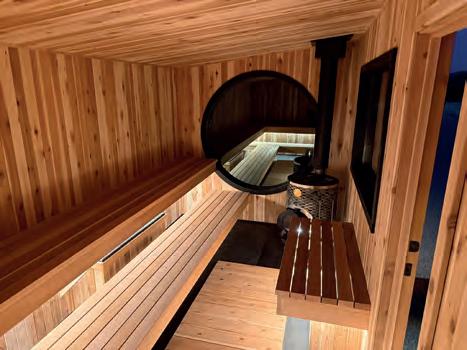
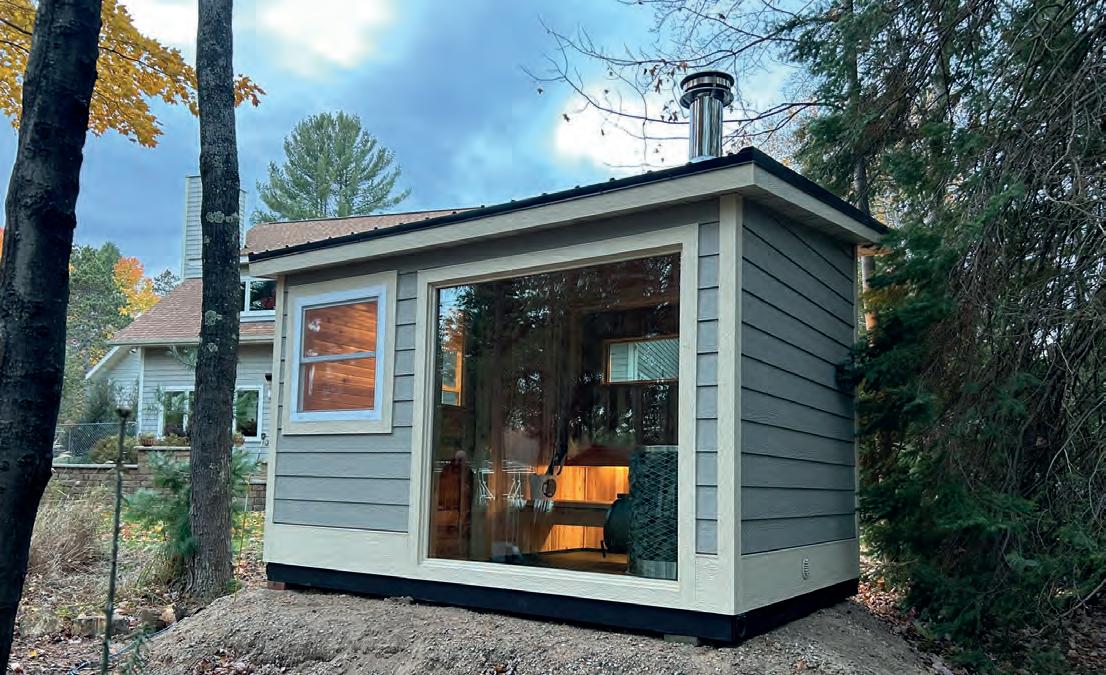

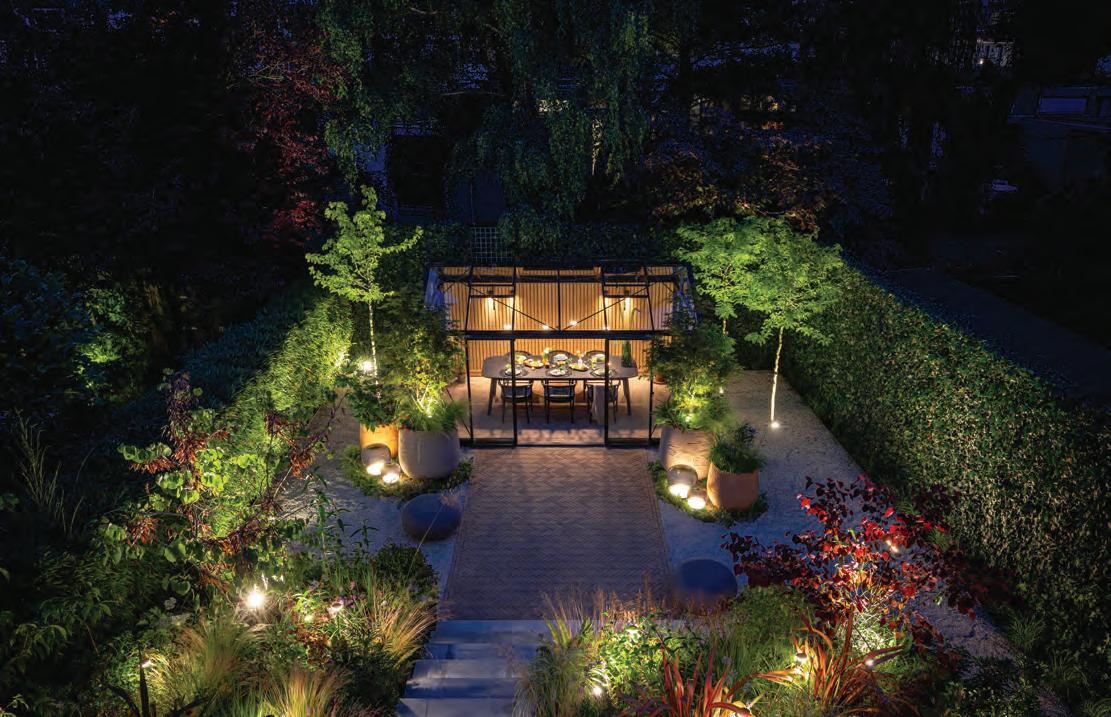




Hard hats and steel-toed boots are job site staples. For landscapers working under the sun all day, Seth and Caleb Farwell argue protection from above matters just as much
ost job sites are built around protection. But one of the most consistent risks crews face is still largely overlooked: sun exposure.
If you work outside, you already know what that looks like. Long hours in direct sun. Heat that builds throughout the day. Exposure that doesn’t come and go, but adds up over time. That’s the part most people miss. Sun damage is cumulative. It doesn’t show up all at once. It builds quietly, year after year, until it becomes something serious.
We started Farwell in honor of our dad, Darren, who lost his life to melanoma at just 32. That loss changed how we look at sun exposure. It’s not just part of the job. It’s a real risk, and one that deserves the same level of attention as anything else on site.
Sun protection should be standard
Because of that, we believe something simple: Sun protection should be standard—not optional, an

afterthought. As jobsite safety continues to evolve, more companies are starting to think beyond immediate injuries and look at long-term health. That shift matters. The people who spend the most time under the sun should also be the most protected from it.
That’s why we built Farwell Gear. Familyowned and backed by 20 years of sun protection experience, every piece we make is third-party tested and certified UPF 50+, blocking over 98% of harmful UV radiation. But just as important, it’s built for real work. Lightweight, breathable and durable enough to hold up through long days on the job.
Whether your crew is on a roof, a trail or a job that keeps them moving all day, we’ve got them covered. Sun hoodies, long-sleeve performance shirts, neck gaiters, hats and more,
all designed to protect without getting in the way. And every piece can be fully customized to match your company’s branding, so sun protection becomes part of the uniform, not something extra.
This isn’t about adding another layer for the sake of it. It’s about building protection into what crews are already wearing. Sun exposure has always been part of the job. Treating it like a real risk should be too.
Farwell Gear is a family-owned sun protective gear brand built for outdoor professionals. Founded by the Farwell brothers in honor of their father, who passed away from melanoma, the brand is backed by 20 years of UPF expertise. Every piece is third-party tested and certified UPF 50+ and built to hold up through long days on the job.
farwellgear.com

Proper spring watering starts with system inspections, not runtime tweaks. Heather Todd of Conserva Irrigation explains why assessment comes first
Each spring, conversations about turf health tend to focus on one thing: water. More specifically, whether lawns are getting enough of it. But what we have found is that underwatering is rarely the primary threat to spring landscapes. A far greater risk is irrigation systems that go unchecked all winter and are reactivated in the spring without ever being properly assessed.
When systems come out of dormancy, many are still operating on assumptions made the year before. That disconnect often leads to water waste, uneven water distribution, delayed grass “green-up” and frustrated homeowners.
Why inspection matters
Adjusting runtimes in the spring without inspecting the system first is a reactive move. It treats visible symptoms without addressing underlying mechanical or design issues.
Furthermore, winter conditions can cause subtle but costly damage: misaligned heads, cracked components, pressure loss and valve issues that aren’t obvious until the system is running. Without a thorough inspection, increasing runtimes often does more harm than good.
Resetting spring scheduling
It’s important to remember that spring is not a scaled-down version of summer. Soil temperatures are cooler, root systems are just reactivating and evapotranspiration rates are significantly lower than peak season.
Copying last year’s summer schedule into spring ignores those facts. Instead, spring scheduling should be reset based on current soil moisture, plant demand and climate conditions. Slower, more deliberate watering supports deeper root development and positions your lawn to handle summer stress more efficiently when it arrives. Oftentimes, less water early on produces healthier turf long-term.
Where smart irrigation fits
If coverage is uneven or components are failing, even the smartest controller is simply managing inefficiency. That’s why inspection and repair must come first. Once the system is functioning properly, smart technology can do what it’s designed to do: optimize performance, reduce waste and protect turf health.
“It’s important to remember that spring is not a scaled-down version of summer”
Smart irrigation technology plays an essential role in modern irrigation. Weather-based controllers and sensors help align irrigation with actual demand and remove guesswork from scheduling. However, these tools can’t compensate for mechanical issues or poor system design.
Understanding what healthy green looks like
One of the biggest misconceptions is that fast green-up equals success. Healthy spring growth is gradual and consistent, not immediate. Remember, spring is about preparation, not acceleration. Trying to force early color through excessive watering weakens root systems, increases disease pressure, and often leads to further issues later in the season. Educating clients on what normal spring progress looks like helps set realistic expectations and reinforces the value of a methodical approach. For landscape and irrigation professionals, the season represents an opportunity, not just to turn systems on, but to set lawns and landscapes up for sustainable success.


president of Conserva
brings 30+ years of franchising expertise in leadership, operations, and franchisee growth as a Certified Franchise Executive. conservairrigation.com ABOUT Instagram @conservairrigation
The backyard set the standard. Deckorators’ Michelle Hendricks says the front yard is now outdoor living’s next frontier—and ready to match
For decades, the outdoor living conversation has centered on the backyard: pergolas, firepits, outdoor kitchens and multi-zone entertaining spaces built around pools. But the front yard has been treated as a transition space with a walkway, a patch of turf, and some foundational landscaping. Functional, but rarely considered part of the outdoor living equation.
The Deckorators 2026 Outdoor Living Report highlights how that is changing. With more homeowners investing in their current homes, outdoor projects are once again a priority. And front yards—especially front porches—are ready for their transformation.
The investment case is already made
Well-designed outdoor spaces can return 60%–80% of their cost at resale, according to a 2025 joint research effort with This Old House, Houzz, Brown Jordan Outdoor Kitchens, Grand View Research and the National Kitchen & Bath Association. Front yards and porches are moving from overlooked entry points to areas of opportunity.
“Treating
whole home is perceived, even before anyone steps inside, making the home’s entry a great place to update for those looking to make an investment and for designers and contractors who know how to deliver.
The front yard has its own design logic
Treating the front yard and porch like a smaller, simpler version of the backyard space is where front yard design often goes wrong. This space serves a very different purpose and needs its own considerations.
The front yard connects the home to the neighborhood and supports the daily rhythm of arrivals, departures, and the kind of casual interaction that backyard living does not. Designing it well means embracing that outwardfacing character, not working against it.
the front yard and porch like a smaller, simpler version of the backyard space is where front yard design often goes wrong”
But the returns on a welcoming front-of-home space go beyond financial. Front yards and porches shape how the
Start the client conversation by asking how they use the front of their home today and how they wish they could. That question alone reframes the project beyond a curb-appeal enhancement to an outdoor-living upgrade. The design decisions
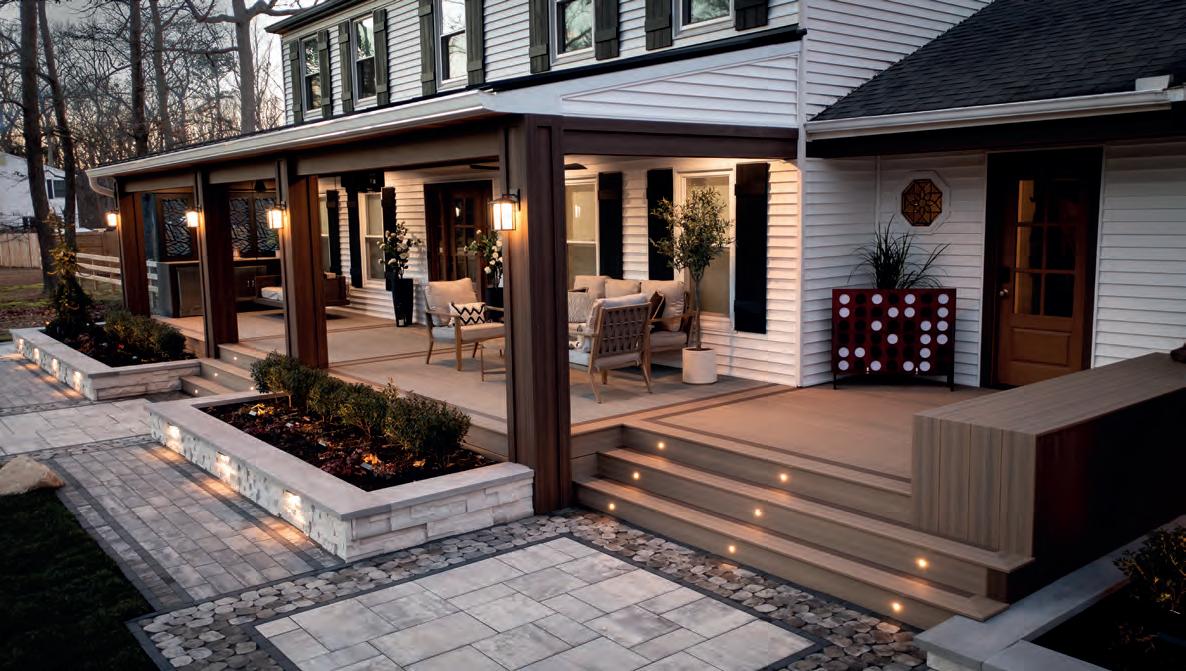

that follow are specific to the environment. For front porches, consider:
● Steps: Wider treads and lower risers invite people to sit and linger, turning a transition into a destination.
● Seating: Orienting seating toward the street takes advantage of the front yard’s inherently social qualities.
● Railing: Open profiles such as cable or glass maintain a visual connection to the street. At the front of the home, railing is architectural, not just functional.
● Lighting: Layered lighting, including step lights, post-cap lighting, and wall-mounted fixtures, creates atmosphere and extends usability into the evening.
● Surrounding landscaping: Defined beds and low-maintenance plantings frame the space and create a welcoming approach in every season.
Sean Collinsgru of Premier Outdoor Living, a Deckorators Certified Pro Elite contractor, applied these design decisions to his New Jersey farmhouse-style home, creating a compelling example of what the modern front yard can be. The project includes a conversation nook with built-in bench seating, an all-season lounge with integrated heating, a paver-lined walkway that guides flow, a built-in bar and entertainment zone and a family entrance with direct mudroom access.
Collinsgru also incorporated raised flowerbeds featuring low-maintenance perennials such as shamrock hollies, ajuga, astilbe, Karl Foerster
grasses, coral bells, weeping Norwegian spruce and coral bark maple.
Every decision was grounded in how the space would be used. “When outdoor spaces are designed for use,” Collinsgru says, “people naturally spend more time there.”
High-performance materials for high-visibility spaces
Material selection is where front-of-home projects succeed or fail, and where we see the most under-specification.
From direct sun on south- and west-facing homes to constant foot traffic across all seasons and weather, the front elevation is one of the most demanding environments a porch or decking product will face. And with its visibility to every neighbor or prospective buyer, the front porch has no margin for visible performance failure.
Frame material conversations around durability and longevity. Natural wood has genuine appeal, but UV exposure accelerates fading, weather changes cause warping and a front porch that needs restaining every two years quickly undermines the up-front investment.
Composite decking is designed for exactly this environment. For example, a mineral-based composite decking engineered with Deckorators Surestone technology limits moisture absorption, doesn’t stain or fade, and maintains consistent
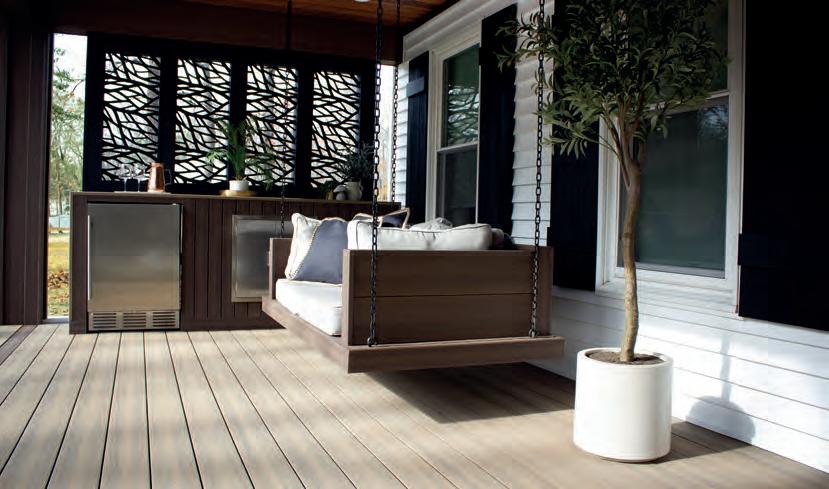
performance across seasonal shifts. Decking made with Surestone is also cooler underfoot and offers better traction than competing products—keeping homeowners and guests comfortable and safe.
Finishes that stand the test of time
“Material selection is where front-of-home projects succeed or fail, and where we see the most underspecification” Michelle Hendricks is director of marketing at Deckorators, part of UFP Industries, where she leads marketing strategy for the fast-growing decking and railing brand. Hendricks oversees production of the brand’s annual Outdoor Living Report. deckorators.com
Color and finish selection carries more impact at the front of the home than anywhere else. Decking, railing, siding, rooflines and hardscapes should pair nicely.
Warm, medium-toned decking with high-contrast railing in matte black or bronze has become a defining feature in elevated front-of-home design, creating visual clarity from the street without competing with the architecture. Lighter tones work well against darker siding. Richer, earthier boards anchor lighter exteriors.
The front yard is ready
The next time a client asks about their front yard, treat it with the same seriousness you bring to a backyard project. Ask how they want to use the space. Specify materials that can handle the exposure. And think about the front of the home as a complete composition. The expertise is already there. It’s just a matter of applying that expertise to a new space.
For design inspiration and project examples, visit deckorators.com/pages/year-ofthe-front-yard
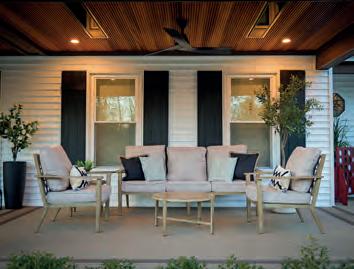

































Get your products in front of the professionals who specify, buy and install
The upcoming Pro Landscaper USA’s July 2026 issue will feature four key product categories:


• Fencing & Screening: Show how your products help define space, boost privacy and improve design.
• Irrigation: Offer your lineup as the dependable choice for efficient performance and conservation.
• Wildfire Prevention: Highlight your solutions for defensible space and ignition resistance.
• Planters: Showcase the materials, drainage and creative designs that bring green spaces to life.
This is your opportunity to put your brand exactly where landscape contractors, designers and architects are looking for the next solution.
Contact us to secure your place in the July issue.

For editorial inquiries:

Edward Brown Deputy editor
edward.brown@eljays44.com








Dan Green Sales manager dan.green@eljays44.com




Purlieu Landscape Design + Build purlieulandscapes.com
Other than the US, which country’s landscape inspires you the most?
Australia
You’re on vacation—lounge on the beach or explore a new city?
Lounge on the beach.
Best piece of advice?
Learning never stops be a life long learner.
Karaoke song?
“Let it be” by The Beatles
Dream project?
Oceanside resort
One thing that you think would make the industry better?
Importance of designing with maintenance practices in mind.
Trend you’re tired of?
Commercial plant palettes.
Who would play you in a movie?
Chris Pratt
Couldn’t get through the week without… My ear pods!

RC Mowers cmowersusa.com
Other than the US, which country’s landscape inspires you the most?
Croatia. The coastline, old cities and rugged landscape.
You’re on vacation, lounge on the beach or explore a new city?
Love the beach, but I rarely sit still. I’m an explorer, so I’ll end up wandering side streets to see what’s around the next corner.
Best piece of advice?
You’re born looking like your parents. You die looking like your decisions.

One thing that you think would make the industry better?
A stronger willingness to rethink how the work gets done.
Trend you’re tired of?
Companies boasting about what they are going to do instead of showing what they have done.
Who would play you in a movie?
Tim Allen, if it’s a comedy. Christian Bale if the producer wants the story to feel uncomfortably intense.

Under the Sun Concepts utsconcepts.com
Other than the US, which country’s landscape inspires you the most?
Japan. The meticulous crafting of natural materials from stone, water and botany. The way of the Samurai is to do everything in life to the best of your ability.
Best piece of advice?
Always work outside of your current abilities and comfort zone, it’s the only way to grow and advance.
Karaoke song?
Under the Bridge by Red Hot Chili Peppers.
Dream project?



I have a concept for a deck design that will forever change the thought process of what’s possible.
One thing that you think would make the industry better?
The entire industry would be better off after eliminating HOA regulations and strongholds.
Trend you’re tired of?
Artificial turf altogether.
Who would play you in a movie? If Fred Durst from Limp Biscuit was an actor.
Eljays44