Let’s Hear It From The McHale brothers on M&A partnerships
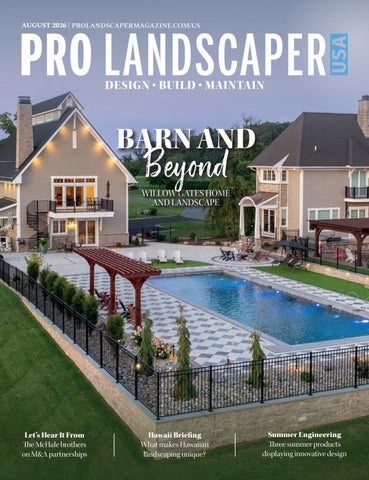
BARN AND Beyond
WILLOW GATES HOME AND LANDSCAPE
Hawaii Briefing What makes Hawaiian landscaping unique?
Summer Engineering
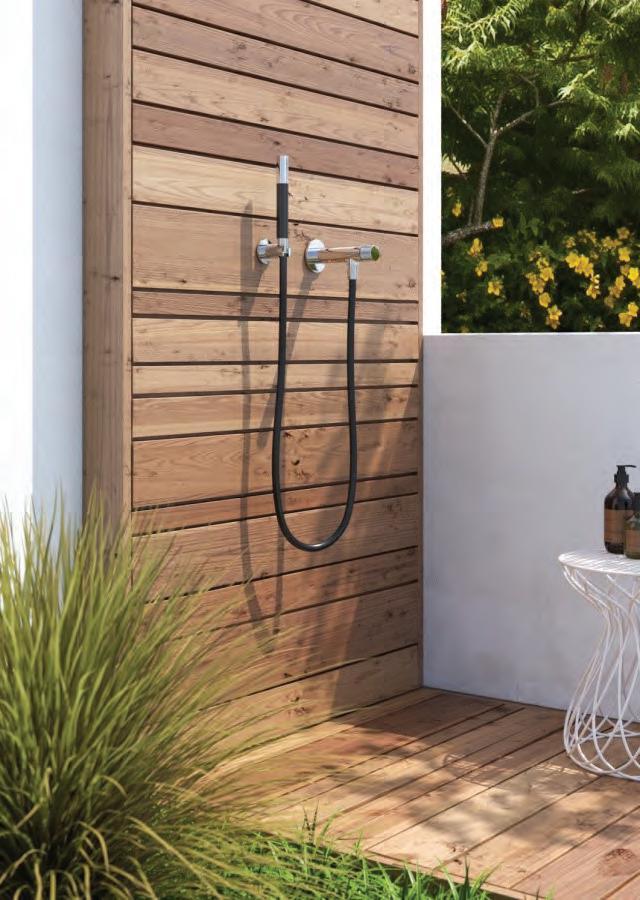
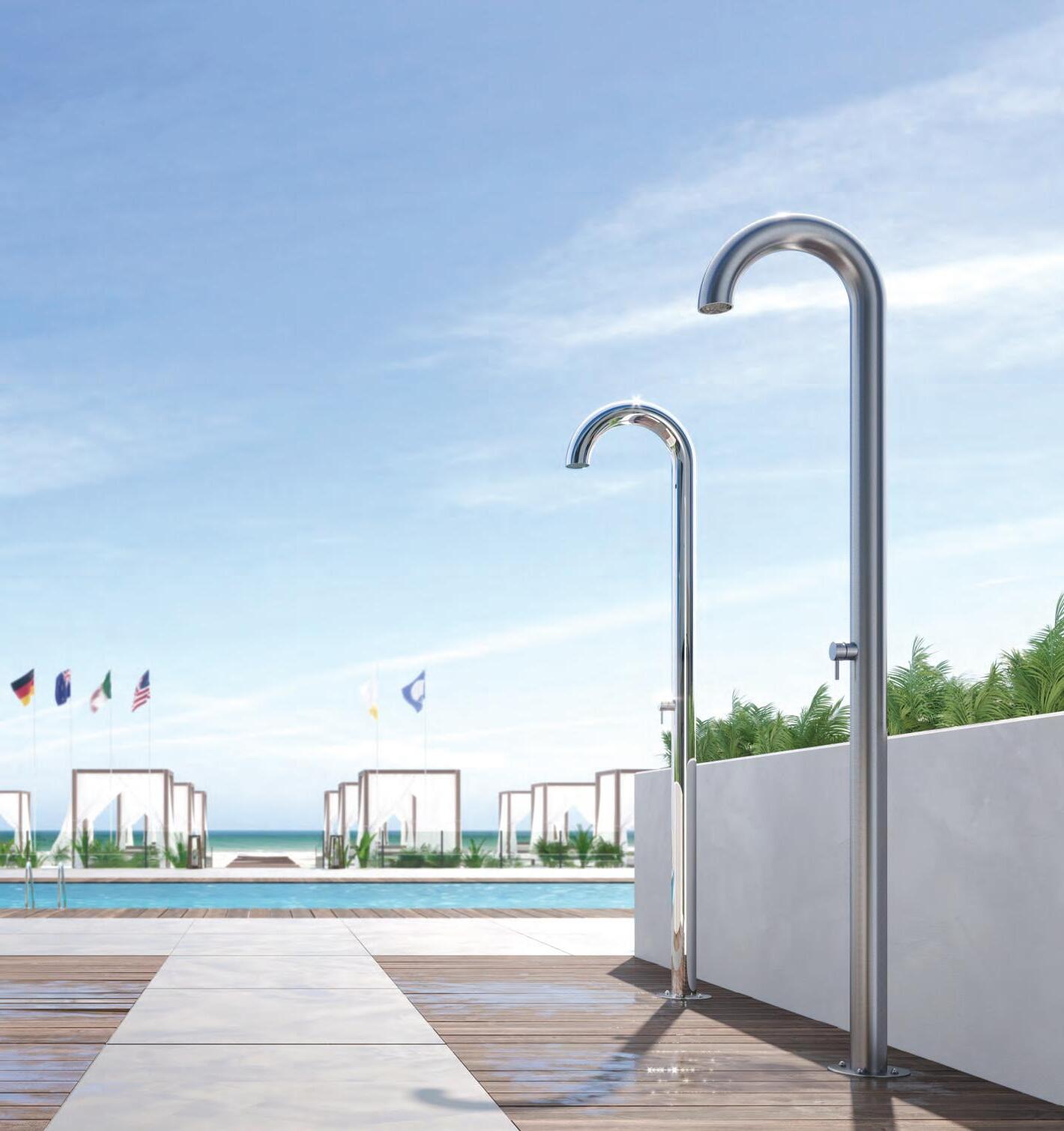
Three summer products displaying innovative design


WELCOME
CONTACT
Eljays44 LLC, Village Workspaces, 11845 W Olympic Blvd, Los Angeles, CA, 90064
EDITORIAL
Deputy editor - Edward Brown
edward.brown@eljays44.com
+1 213 2740 645
Senior subeditor - Katrina Roy katrina.roy@eljays44.com
Senior designer - Kirsty Turek kirsty.turek@eljays44.com
ADVERTISING
Commercial director - Dan Green dan.green@eljays44.com
+1 210 8194 761
Event director - Tom Glasby tom.glasby@eljays44.com
+1 210 4481 252
MANAGEMENT
CEO - Jamie Wilkinson jamie.wilkinson@eljays44.com
+44 (0) 1903 777570
Managing director - Luke Chaplin luke.chaplin@eljays44.com
+1 213 2186 827
Content director - Nina Mason nina.mason@eljays44.com
+44 (0) 1903 959393
CIRCULATION
Subscription enquiries - Dan Green dan.green@eljays44.com
+1 210 8194 761
Printed by Southwest Offset Printing
Published by Eljays44 LLC – Connecting Horticulture. Pro Landscaper’s content is available for licensing overseas. Contact jamie.wilkinson@eljays44.com
Pro Landscaper USA is published 12 times per year by Eljays44 LLC. The 2026 subscription price is $160. Subscription records are maintained at Eljays44 LLC, Village Workspaces, 11845 W Olympic Blvd, Los Angeles, CA, 90064. Articles and information containe d in this publication are the copyright of Eljays44 LLC and may not be reproduced in any form without the written permission of the publishers. The publishers cannot accept responsibility for loss of, or damage to, uncommissioned photographs or m anuscripts.
Whilst every effort has been made to maintain the integrity of our advertisers, we accept no responsibility for any problem, complaints, or subsequent litigation arising from readers’ responses to advertisements in the magazine. We also wish to emphasize that views expressed by editorial contributors are not necessarily those of the publishers. Reproduction of any part of this magazine is strictly forbidden.
Summer is in full swing—and with September just around the corner, so is the West Coast’s must-attend event for the landscaping industry.
On September 1–2, FutureScape USA, Santa Monica, opens its doors at the iconic Barker Hangar. This isn’t just another trade show—it’s the premier gathering for forward-thinking professionals ready to network, exchange ideas and get ahead of the trends and innovations redefining our field. We hope to see you there.

But before we head west, this August issue of Pro Landscaper USA turns its focus to one of the industry’s most critical conversations: mergers and acquisitions. On page 19, the sibling founders of McHale Landscape Design offer rare, firsthand insight into their recent private-equity partnership—laying bare both the opportunities and the challenges of teaming up with institutional capital. If selling is on your radar, turn to page 39, where Cetane Associates guides you through the nuances of a successful exit. And for those looking to buy, Brian Goodhart, director of M&A advisory at Capstone Strategic, lays out the acquirer’s playbook from page 42.
Beyond the boardroom, we also turn our gaze to the great outdoors. On page 55, we showcase three outdoor innovations that are reshaping summer living in the heat of the season. Then, we head to the islands for a deep dive into Hawaii’s landscaping sector, in conversation with Matt Lyum, president of the Landscape Industry Council of Hawaii, on page 49. And on page 16, legal expert Meagan Kirchner tackles the thorny issue of H-2B visa compliance—essential reading for anyone navigating labor challenges.
That and so much more await in this August edition. So, turn the page, dive in, and enjoy the read.


August 2026 CONTENTS
FutureScape USA, Santa Monica
What’s there to look forward to at this year’s event?
Rethinking Retention
Chris Buttenham outlines an alternative retention strategy
H-2B Visa Compliance
An immigration law specialist discusses H-2B obligations
Let’s Hear It From: Kevin and Steve McHale
Two brothers balance mergers, growth and uncompromising craftsmanship at McHale
Whimsical Rebirth
A Texan property revival from Twistleaf Landscape Design & Construction
Meet the Supplier: Cetane Associates
Barrett Conway of Cetane on why selling a business is more than a financial deal
Top Tips: Business Insurance
Insureon’s Cole Gritz reveals the essential coverages landscapers need
Hawaii Landscaping
Landscape Industry Council of Hawaii president considers protecting a fragile paradise
Midsummer Dreams
Three engineering and design innovations redefining outdoor spaces
Designing Resilience
Jim Fucetola, CEO of Earthwise Seed Company, on alternative lawn mixes
Contract Savvy
John Battle reveals how smart RFPs prevent expensive surprises
ASSOCIATION NEWS

NADRA president calls for crossborder industry collaboration
Andrew Pantelides, president of the North American Deck and Railing Association (NADRA), issued a message to members following the Fourth of July and Canada Day celebrations, emphasizing the importance of cross-border relationships within the industry.
Pantelides, a Canadian, notes that NADRA’s influence extends beyond the US and Canada, with active associations now forming and growing in Australia and the United Kingdom. He highlights how builders, contractors, manufacturers and distributors across North America regularly share ideas and solve problems together, transforming competitors into colleagues and business relationships into friendships.
According to Pantelides, the association’s core responsibility is to homeowners, ensuring outdoor living spaces are safe, professionally built and durable through education, training and advocacy. He also stresses the industry’s role in supporting jobs, innovation and local economies across the supply chain.
Consequently, over the coming months, the NADRA president encourages members to participate actively in the association through mentorship, education programs, committee involvement and engagement on NADRA Connect. He further urges members to introduce industry professionals to one another and invite non-members to join.
“Knowledge travels. Innovation travels. Friendship travels,” Pantelides says. While flags may differ, he concludes, the shared commitment to safer homes, stronger businesses and sustainable communities unites the industry. “We are one industry. We are one community,” he says, adding that the industry is building not just decks but stronger economies and lasting relationships across North America. nadra.org
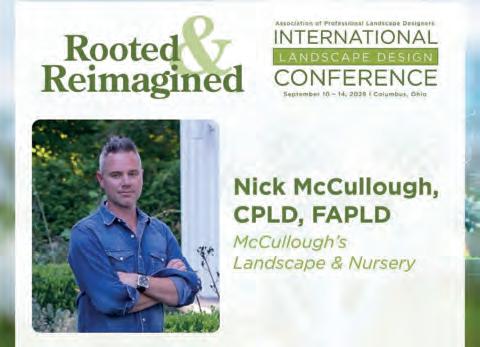
Nick McCullough hosts Landscape Design Conference
Join the Association of Professional Landscape Designers (APLD) September 10–14 in Columbus, Ohio, for the 2026 International Landscape Design Conference, hosted by award-winning landscape designer, industry influencer and author, Nick McCullough. This inspiring event features private garden tours, pre- and post-conference experiences, a full day of educational speakers and outstanding networking opportunities.
Keynote speaker Dan Benarcik of Chanticleer Garden will share lessons from more than 30 years of creating one of America’s most celebrated public gardens, offering practical insights into plant selection, design, maintenance and creating memorable landscapes.
Acclaimed gravel garden expert Jeff Epping will explore drought-resilient, naturalistic landscapes that conserve water, support pollinators and reduce maintenance while delivering exceptional beauty.
AI strategist Lori Robbins will present on using artificial intelligence to strengthen design, communication and business practices.
Richard Hawke of the Chicago Botanic Garden will share researchbacked recommendations for outstanding perennials that support pollinators and biodiversity.
This event is open to landscape designers, architects and enthusiasts alike. Whether you’re seeking design inspiration, practical business strategies or industry connections, this conference delivers an unforgettable experience.
Learn more and register today at apld.org/international-landscape-design-conference.
Ocala receives 2026 PHTA grant for water safety programs
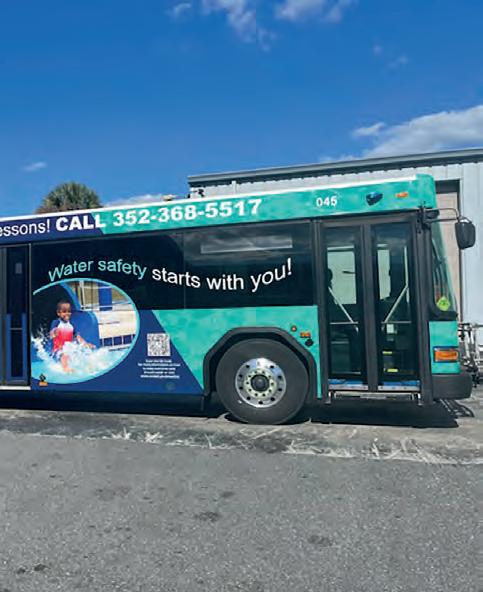
The Pool & Hot Tub Alliance (PHTA), the trade association representing the swimming pool and spa industry, has named the City of Ocala Recreation & Parks as the recipient of the 2026 Dr R Neil Lowry Grant.
This $5k award honors a public health department or official that has demonstrated outstanding contributions to recreational water safety and public health. PHTA established the grant in memory of Dr Robert Neil Lowry, a longtime member and contributor to the association’s Recreational Water & Air Quality Committee.
Ocala’s comprehensive swim education initiative secured the award. Through its Aquatic Fun Centers, the department offers free community swim lessons, provides specialized Aquability instruction for individuals with autism and developmental disabilities, and conducts parent-child “Mommy and Me” classes that build foundational water safety skills for young children.
Grant funding will allow the City to expand its free lesson offerings, increase Aquability programming and purchase additional instructional materials and safety equipment. These enhancements will serve hundreds more families, strengthen water competency and reduce drowning risks across Ocala.
PHTA executive vice president Justin Wiley praised the City’s innovative, inclusive approach, noting that its commitment to serving children, families and individuals with disabilities exemplifies the grant’s core mission. Past recipients include health departments from Nevada, Nebraska, North Carolina and Texas, as well as the City of North Richland Hills. phta.org
NALP to transition leadership Renewal & Remembrance to Project EverGreen
The National Association of Landscape Professionals (NALP) has announced that Project EverGreen will assume leadership of Renewal & Remembrance, the landscape industry’s annual volunteer service initiative at Arlington National Cemetery, beginning in 2027.
Renewal & Remembrance has brought industry volunteers together for three decades to honor US service members and veterans by enhancing the grounds at Arlington National Cemetery.
“Renewal & Remembrance has always represented the very best of the landscape industry,” says Britt Wood, CEO of the NALP. “Project EverGreen’s history of organizing meaningful community service projects and its commitment to military families, veterans and healthy green spaces make it the ideal organization to lead Renewal & Remembrance into the future.”
Founded by lawn and landscape industry professionals, Project EverGreen mobilizes volunteers, donors and local partners to create and maintain healthy green spaces. Its programs include GreenCare for Troops, which provides complimentary lawn and landscape services to military families, and GreenCare for Communities, which supports the restoration of parks and public spaces.
NALP will continue to champion the event and work with Project EverGreen to provide continuity for volunteers, sponsors and other partners during the transition.
This year’s event, which took place on July 20, was supported by title sponsor Stanley Black & Decker, along with Aspire Software, Caterpillar, Stihl and many other industry partners.
landscapeprofessionals.org

What’s On:
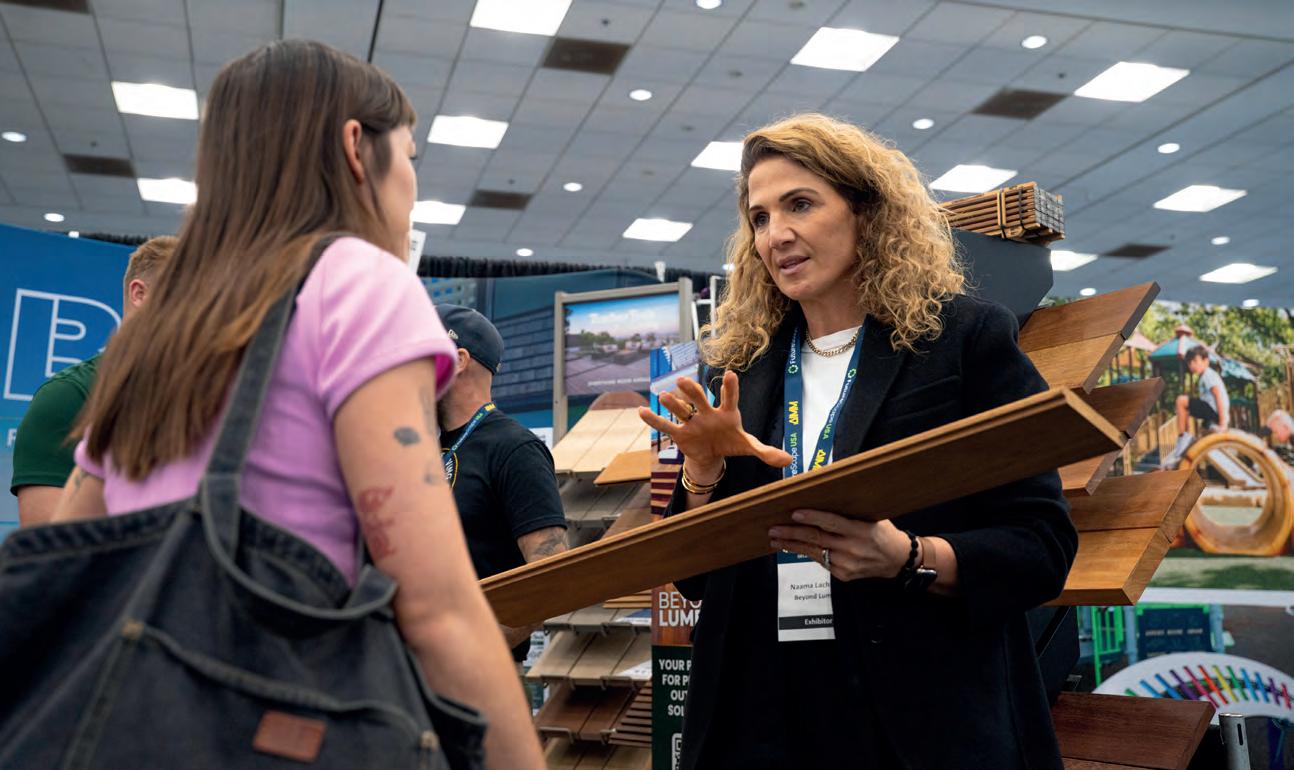
From AI-powered tools to live demos and award-winning projects, FutureScape USA, Santa Monica delivers two days of innovation, insight and inspiration
FutureScape USA returns and will be hosted at the iconic Barker Hangar in Santa Monica on September 1–2, running daily from 10am to 4pm. The event will unite industry leaders from across the West Coast and beyond, offering a prime platform for exchanging insights, forging connections and exploring cutting-edge products and services from top-tier companies.
Rising Stars and Project Awards: Celebrating excellence
Pro Landscaper USA’s Rising Stars Awards returns for its second year, once again dedicated to identifying and celebrating the emerging talent transforming landscaping, design and outdoor constructionn. This shines a welldeserved spotlight on the next generation of innovators who are pushing the boundaries of the industry.
The Pro Landscaper International Awards – North and South American Heat will also take center stage. Landscape designers and contractors were invited to submit outstanding projects for the opportunity to present before a live judging panel. This will offer visitors a front-row seat to the very best the industry has to offer.
Seminar Theater: Knowledge that drives change
The Seminar Theater returns with a compelling lineup of expert-led sessions, panel discussions and real-world case studies. Designed to equip visitors with practical knowledge, fresh perspectives and actionable intelligence, this year’s agenda tackles the industry’s most pressing topics—including creating regenerative living soil, water scarcity design, labor shortages, mergers and acquisitions and much more. It’s an unmissable opportunity for attendees to stay ahead of the curve.
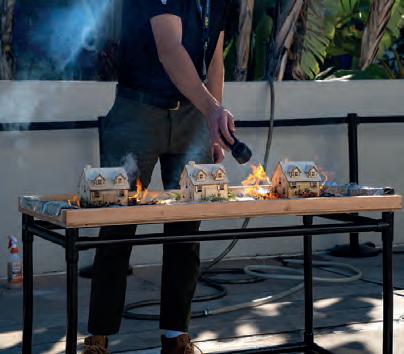
Tech Trail: Learning from experts
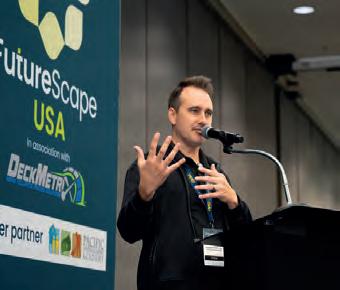
The Barker Hangar venue delivers even more space and flexibility than last year—paving the way for an expanded roster of showcases and experiences. The Tech Trail is a dedicated zone that spotlights the technologies reshaping the industry. From AI-powered design tools and smart irrigation systems to business services, digital platforms and heavy machinery, it offers hands-on access to the systems transforming how outdoor spaces are conceived and constructed. It will also host a series of masterclasses led by industry experts.
SELF-SERVICE SPECS
A new Shopify-powered website combines transparent pricing, streamlined purchasing and expanded technical resources to make commercial landscape products easier to specify and order
Tournesol has launched a new Shopifypowered e-commerce website, offering commercial landscape architects, designers and contractors what the company describes as a faster, more transparent specification and purchasing process. The platform introduces transparent pricing, visible lead times, detailed product specifications, technical resources and project inspiration in a single interface.
The Greenscreen trellis system, acquired by Tournesol in 2023, presents a case study in the company’s evolving approach. Unlike 2D trellises, which require vines to be tied to a single plane, the Greenscreen is a three-dimensional steel structure with front and back panels connected by a truss, engineered to support heavy vine growth on building facades and parking structures. Previously, every order required speaking with a sales representative, making smallscale purchases impractical, but now the company is selling individual panels online.
all about building trust and transparency with our customers, we believe revealing our pricing is an advantage because it says we have nothing to hide. Other companies gate-keep, which prevents the customer from knowing if they are getting list pricing or a paying more or less,” she observes. The new site also allows professionals to order free samples directly.
“The Tournesol brand is all about building trust and transparency with our customers”
Beyond transactional features, Tournesol is building an educational library for landscape architects. Current features include narrated design presentations on YouTube and three AIA-approved CEU courses covering amenity deck spaces, green-façade vertical systems and bioretention design. Dougher says the programme will expand with more video content. “We’re developing more video content that highlights installations, shares what worked well and offers practical guidance for navigating specific project conditions.”
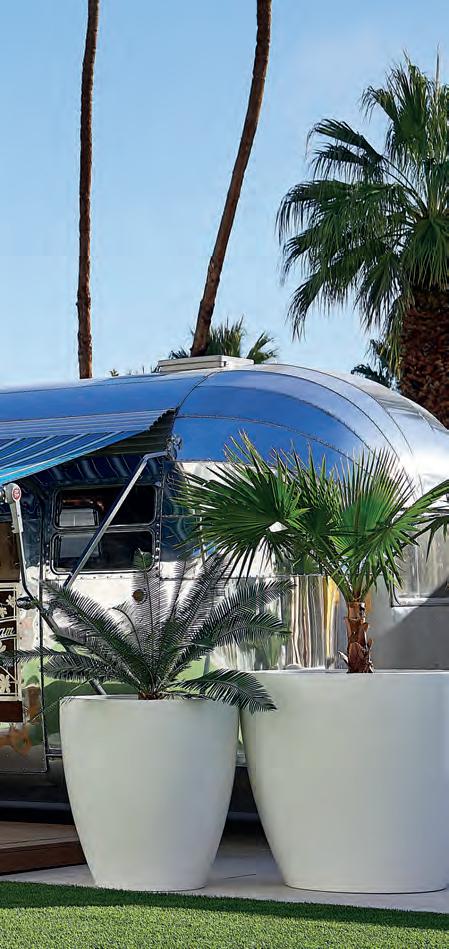
Carla Dougher, head of marketing, explains that the new website offers standardised Greenscreen kits in 4x8 and 4x6 panels with matching clips, enabling self-service ordering. “Eliminating the need to speak with a sales rep,” she says. The kits have become the company’s fourth bestselling product on the e-commerce site within months of launch, she adds.
For larger custom orders, the platform retains a hybrid model: users can assemble a “quote basket” rather than a shopping cart, which forwards specifications to a sales representative for personalised pricing and freight coordination. Dougher says this dual approach allows Tournesol to serve both quick-turnaround needs and complex, larger-scale projects without compromising service.
Another core differentiator of the new site, Dougher notes, is the company’s decision to publish all product prices openly—a departure from an industry where competitors typically require quote requests. “The Tournesol brand is
Built on Shopify, the new website launch reflects the company’s broader commitment to making commercial landscape products easier to explore, specify and purchase—helping professionals move their projects forward with greater clarity and efficiency.
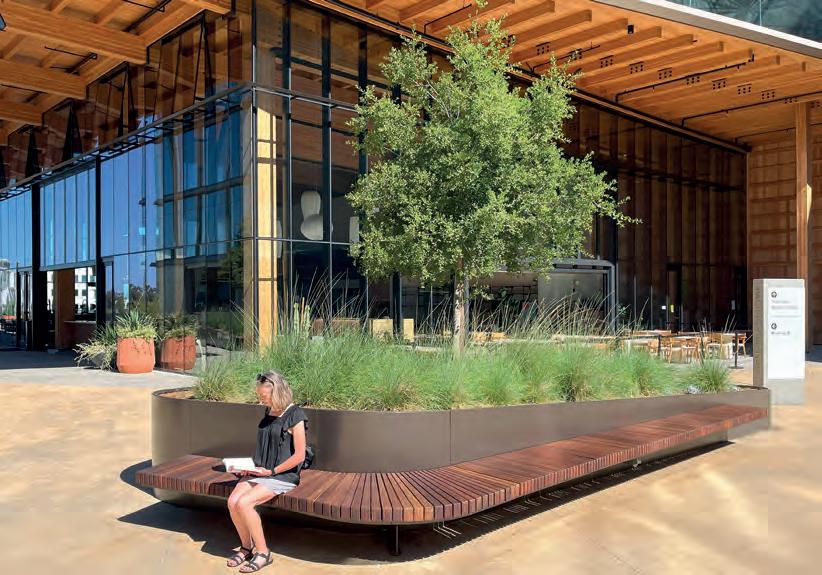

Tournesol is a California-based manufacturer of commercial planters, site furnishings and Greenscreen trellis systems. The company supplies engineered outdoor products to architects, designers, for multifamily, hospitality, commercial and public-space projects. tournesol.com ABOUT Instagram @tournesol_siteworks
Why traditional retention strategies are failing—and what alternatives might work
AND CULTURE RETENTION Rethinking
CREW
Employee turnover continues to plague the landscaping and blue-collar industries, with many business owners finding themselves trapped in a loop: an employee threatens to leave, a counteroffer is made, wages are increased and the cycle repeats. However, according to Chris Buttenham, co-founder of alternative equity solutions provider Reins, this approach is not only ineffective but is based on a fundamental misapprehension. He argues that the alternative solution lies not in reactive wage increases but in fundamentally restructuring how employees are compensated and engaged.
The flaw in reactive retention
The traditional approach to retention— waiting until a valued employee has one foot out the door before making a counter-offer— carries high hidden costs. Research from Gallup suggests that replacing an employee costs anywhere from 50% to 200% of their annual salary. For blue-collar industries like landscaping, where turnover rates frequently hover between 50% and 70%, these costs accumulate rapidly.
Buttenham points out that the damage extends far beyond the balance sheet.
“The cost is just one part of it,” he says. “Think about the retraining required when you lose good people, or the cultural hit that
businesses take when valuable team members leave. Beyond that, there is the opportunity cost—everything you could have achieved with that team in place that you can no longer do because you don’t have the staff to execute.”
He outlines that the fundamental flaw in reactive approaches is that they treat symptoms rather than causes. When an employee signals interest in leaving, the instinctive response is to address the apparent problem monetarily. But as Buttenham notes, “Salary-based compensation does not align an employee’s reward with the ultimate goals of the business. It is disconnected from performance and business outcomes.”
A blueprint for alternative compensation
The model Buttenham advocates draws from practices common in venture capital and technology sectors— industries that have long used equity-based compensation to align employee interests with company growth. His company, Reins, aims to make these tools accessible to independent businesses that traditionally lacked access to such sophisticated incentive structures.
“When we started Reins, we asked ourselves a simple question,” Buttenham explains. “Why can’t we take the tools that have worked so well in venturebacked companies and level the playing field for independent businesses? That was the driving thought behind everything we have built.”
One such tool is “phantom stock”—a form of alternative equity that Buttenham describes as “a contract to pay a bonus to an employee in the future, with that bonus tied directly to the underlying equity value of the business.”
Unlike traditional stock, phantom stock provides upside without downside. It avoids tax complications for employees upon issuance and allows business owners to provide meaningful incentives without creating partners. “Phantom stock is a terrible name for a really great benefit,” Buttenham notes. “It sounds fictitious, but it is not a phantom at all. It is quite real. The formal name is nonqualified deferred compensation, and it is governed by specific tax code provisions. It is a legitimate, powerful tool.”
The ideal compensation mix
and a chance at some liquidity along the way, rather than waiting years for a payout.” These plans typically trigger when the business hits specific performance thresholds—for instance, achieving a 10% net profit margin, with a percentage of anything above that shared with the team.
“Salary-based compensation does not align an employee’s reward with the ultimate
goals of the business.
It
“The key is finding the right mix of incentives for each individual employee,” Buttenham emphasizes. “A one-sizefits-all approach does not work. You need to consider tenure, role, seniority and how critical that person is to the business. The cocktail of incentives should reflect that.”
is disconnected from performance and business outcomes”
Quantifiable results
The approach yields measurable outcomes. He reports: “Of all the employees who have ever been granted an alternative equity incentive, over 93% are still employed at the same businesses that granted them that incentive.”
communicative with their teams. When you pair that kind of organization with these incentives, you create a perfect storm. Employees understand the numbers, they see how they contribute and they are motivated to perform.”
Practical considerations
For business owners interested in exploring alternative equity structures, Buttenham recommends starting with education. His company has created free resources, including a book titled “Alternative Equity,” which provides guidance on setting up phantom stock, profit sharing and other performance-based compensation.
He cautions against relying heavily on traditional service providers for setup. “Traditional advisors get paid by the hour and operate on a consultative model,” he says. “Their incentives are not always aligned with yours. They will inherently overcomplicate the process because that is what benefits their business model. Be cautious about who you turn to for advice.”
For business owners wondering how to structure such incentives, Buttenham recommends a layered approach that combines base salary with longer-term incentives. For key leaders, he suggests phantom stock awards ranging from 1-3% of equity value, vesting over four to five years and typically paying out upon a business sale.
This is complemented by profit-sharing plans that provide “regular feedback on performance
Furthermore, businesses implementing alternative equity programs see average valuation increases of at least 16% within 12 months of rollout. Gallup research cited by Buttenham indicates that companies using profit sharing and other alternative equity incentives are 20% more profitable than their peers.
The most successful businesses combine incentive structures with strong culture and transparent communication. “You also need a great culture,” he says. “The businesses that see the best results are those that are transparent and
Whether the industry will broadly adopt these approaches remains to be seen. But for business owners willing to move beyond traditional compensation models, the potential rewards appear compelling.

SHIFTING productivity
With 54% facing staff shortages, landscapers are turning to smarter equipment to fast-track new hires

The landscaping industry is entering 2026 with ambitious growth goals and a significant workforce challenge. According to Aspire’s 2026 Commercial Landscape Industry Report, which surveyed more than 1,000 landscape professionals, 54% of respondents cite recruiting and retaining employees as a major business risk.
At the same time, 79% are prioritizing revenue growth, 70% are increasing wages and 44% plan pay increases of 4% or more. These landscaping industry statistics reveal that companies must continue to grow while replacing experienced workers who are retiring from the field.
Because commercial maintenance generates 83% of industry revenue, contractors cannot afford productivity losses that result from lengthy training periods. As a result, one important landscape industry trend of 2026 is the growing adoption of commercial lawn equipment that is easier to operate, requires less maintenance and helps new employees become productive faster.
Technology helping to bridge skills gap
The landscaping industry is responding to the 54% staffing crisis through multiple
approaches. Some companies have built comprehensive training systems that include daily on-site coaching, mentorship and regular skill-development sessions to keep staff invested. According to The Neave Group President, Scott Neave, “We firmly believe that you should never become complacent and you can never lose your thirst for knowledge. We pair on-site learning with weekly ‘training meetings’ conducted during the mornings. These trainings pass direct benefits to clients, who receive better service, and our staff feels empowered and recognized, keeping them vested in the company.”
companies increase compensation. Aspire’s report found that 70% of businesses plan to raise wages in 2026, but attracting workers is only part of the challenge. Companies also need ways to shorten learning curves and maintain service quality.
“Autonomous
equipment and intelligent operating systems allow newer employees to contribute more quickly while they continue developing advanced skills”
Technology is emerging as another important solution. Autonomous equipment and intelligent operating systems allow newer employees to contribute more quickly while they continue developing advanced skills.
This shift is especially important because labor shortages remain a concern even as
That is driving demand for commercial lawn equipment that can automate routine decisions, guide operators through tasks and reduce the amount of specialized knowledge required to achieve professional results.
Autonomous lawn mowers are moving into the mainstream One of the most significant landscape industry trends this year is the expansion of autonomous lawn mowers into commercial applications. These systems are designed to maintain large commercial sites while requiring minimal operator involvement.
For landscaping businesses struggling to find experienced equipment operators, autonomous technology can help maintain
productivity with smaller or less experienced crews. Instead of manually performing every task, workers can focus on supervising equipment and managing multiple jobs. This means skilled employees can focus on high-margin tasks instead of operating one mower.
For instance, the Husqvarna Automower 560 EPOS is designed specifically for professional use. Rather than relying on physical boundary wires, it uses satellite-based positioning to establish virtual work zones. This approach simplifies setup and allows managers to adjust mowing areas digitally. New employees can learn the system quickly while still delivering consistent results.
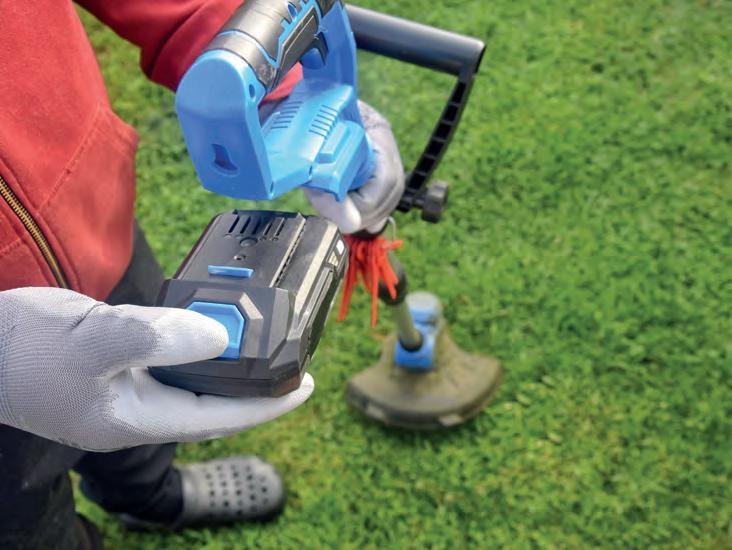
regular servicing. Battery-powered equipment eliminates many of those tasks, reducing downtime and the amount of technical knowledge employees need. It also doesn’t require fossil fuels or produce harmful fumes, making it more environmentally friendly.
“The latest generation of commercial lawn equipment is designed to simplify operation, reduce training requirements and help crews become productive faster”
The Toro ProLine with autonomous intelligence is designed to reduce operational workload while maintaining the precision commercial customers expect. Instead of requiring constant manual control, autonomous guidance technology handles many repetitive tasks. Operators can spend more time overseeing quality and less time focusing on every mowing pass.
AI is becoming a built-in crew assistant
Artificial intelligence is beginning to play a larger role in commercial lawn equipment. Modern systems can analyze conditions, optimize routes, monitor performance and recommend maintenance schedules. AIpowered mowers also enable precise mowing and safe obstacle avoidance.
For experienced operators, these features improve efficiency. For newer workers, they provide guidance that helps reduce mistakes and build confidence on the job. As labor shortages continue, AI may become one of the most effective tools for helping less experienced employees perform at a higher level.
Battery-powered equipment simplifies maintenance
The shift from gas-powered equipment to batterypowered alternatives is also helping contractors manage workforce challenges. While sustainability often gets the spotlight, ease of maintenance may be an even bigger benefit.
Gas-powered machines require oil changes, spark plug replacements, fuel management and
Efficiency is becoming a competitive advantage
Aspire’s report found that 60% of respondents are concerned about economic uncertainty. Combined with labor shortages, the pressure is pushing companies to focus on efficiency rather than increasing headcount.
Many contractors are investing in autonomous lawn mowers, AI-powered systems, teach-and-playback technology and battery-powered equipment to help teams accomplish more.
The future of commercial lawn equipment
The goal is to maximize productivity across the workforce. The staffing challenges facing the industry are unlikely to disappear overnight. As experienced workers retire and competition for talent remains strong, contractors will continue looking for ways to maintain service quality with less experienced crews.
Fortunately, manufacturers are responding. The latest generation of commercial lawn equipment is designed to simplify operation, reduce training requirements and help crews become productive faster.
Working smarter, not just harder
Labor challenges are forcing companies to rethink their workflows. While recruiting, training and retaining employees will remain critical priorities, many contractors have turned to technology to close the experience gap. As these landscape industry trends continue to evolve, the landscaping businesses that embrace equipment may be best positioned to maintain service quality and thrive despite ongoing workforce challenges.

Rose
POLICY AND PROFITABILITY
H-2B VISA Compliance
Ranging from misclassifying workers to undisclosed benefits, H-2B violations carry steep penalties. Attorney Meagan Kirchner offers strategies for staying compliant
Landscape companies relying on the H-2B visa program to fill seasonal labor gaps face a process that extends far beyond simply securing a spot in the annual cap. Meagan Kirchner, founder of Kirchner Law, a business immigration firm, details how the obligation is ongoing and multi-year, requiring meticulous record-keeping, a deep understanding of wage regulations and a willingness to start the paperwork far in advance.
Kirchner begins by noting that enforcement has grown noticeably more stringent in recent years, with federal agencies ramping up worker interviews and I-9 audits while treating previously “administrative” errors as hard violations carrying substantial financial penalties. She identifies common employer pitfalls, including the misclassification of worker duties and the inadvertent creation of compliance issues through undisclosed benefits, and offers advice on navigating a program that is not a fit for every business.
Compliance is a lifecycle, not a checkbox
Many employers approach compliance as a simple checklist, but this perspective can be costly, Kirchner explains. “Compliance really isn’t a single box you can check off when filing,” she notes. “Really it’s an obligation that runs the full life cycle of the visa process and contract period and follows them for three years from certification, as an audit recordkeeping requirement.”
This obligation spans everything from the initial labor certification and prevailing wage determination to the actual working conditions provided once workers arrive. Smaller employers, in particular, may find the administrative components—such as proper payroll management, hour tracking and maintaining accurate records—present a significant learning curve.
“It’s really grading you on documents and administration, not just how you treat the workers,” Kirchner adds. The government treats all violations seriously, as the requirements are fundamentally designed as worker protections. Even well-intentioned actions can backfire: if an employer provides a benefit—say, a weekly barbecue—to H-2B workers without disclosing it in the job order posted to US workers, that omission can constitute a violation.
The high cost of common pitfalls
Deductions and Disclosure: Wage deductions represent a frequent point of failure. Whether related to housing, uniforms or transportation, any charge to the worker must be fully disclosed before the employee signs a contract in their home country. The worker needs to be fully apprised of any potential benefit or cost ahead of getting the visa. “If the government views a deduction as purely for the benefit of the employer, you can’t charge that to the workers,” Kirchner warns.
Misclassification of Duties: Assigning workers to duties that differ from their approved occupation can prove particularly expensive. “If you bring someone as a landscape laborer, paying $19 an hour, but the workers are really running heavy machinery, this can be a costly mistake.” While you’re paying them the contract wage, you misrepresented the occupation. In that scenario, they should have been paid the higher wage for the more skilled position,” Kirchner states. Since the required wage is tied to both the occupation and the geographic location, such mismatches can lead to back wage liabilities and significant penalties.
Enforcement in Action: These risks are not merely theoretical. In a recent federal case, a landscaping company faced over $300k in combined penalties and back wages, plus a five-year ban from the H-2B program, over violations including illegal uniform deductions and intimidation of workers during a federal audit. Penalties for individual violations can range from a few hundred to several thousand dollars per occurrence.
Strategy, timing and the “irreparable harm” test
Start Early, Hire Specialists: Kirchner’s primary advice to employers is to begin the process six to nine months before the worker start date. She begins work on April cases as early as June or July of the previous year. “If you start later, you have less room for error,” especially if government processing timelines shift. Moreover, she strongly recommends hiring a specialist. “Pick someone who does H-2B as their normal course of business. General immigration attorneys or accountants can read the regulations, but they don’t understand when something changes with the submittals or when a regulation is written one way but perhaps adjudicated in another way.”
Leveraging the Supplemental Cap: In fiscal year 2026, the government released an additional 64,716 H-2B visas beyond the regular cap, divided into three allocations. The later allocations (May–September) are open to new and returning workers, providing multiple filing windows. However, to access these, employers must attest that they would suffer “irreparable harm” without the supplemental workers. Kirchner explains that this requires ongoing recordkeeping—financial records, payroll data and contracts—to prove the need. “You’re basically confirming that you will retain the documents necessary to prove what is initially a negative,” she says. The goal is to record documents that show had you not had workers, the work wouldn’t have been done.
When to Find Other Options: Kirchner cautions that the program is not universally applicable. “It’s really a temporary program meant for seasonal needs,” she emphasizes. Businesses with steady, year-round workload variability may struggle to prove the temporary nature of their need. “If you’re just slam busy 12 months out of the year and you don’t have any variability, it’s not going to be a good fit,” she says. “Don’t force the issue. I know that’s not what many owners want to hear, but it really isn’t a onestop shop that fits everyone.”

Meagan Kirchner is founder and sole practitioner of Kirchner Law and cofounder of Contigo Labor Solutions, with over a decade of experience in business immigration. She specializes in non-agricultural H-2B visas, representing clients across the US and internationally through her firm’s legal strategy and Contigo’s workforce coordination support. kirchnerimmigration.com
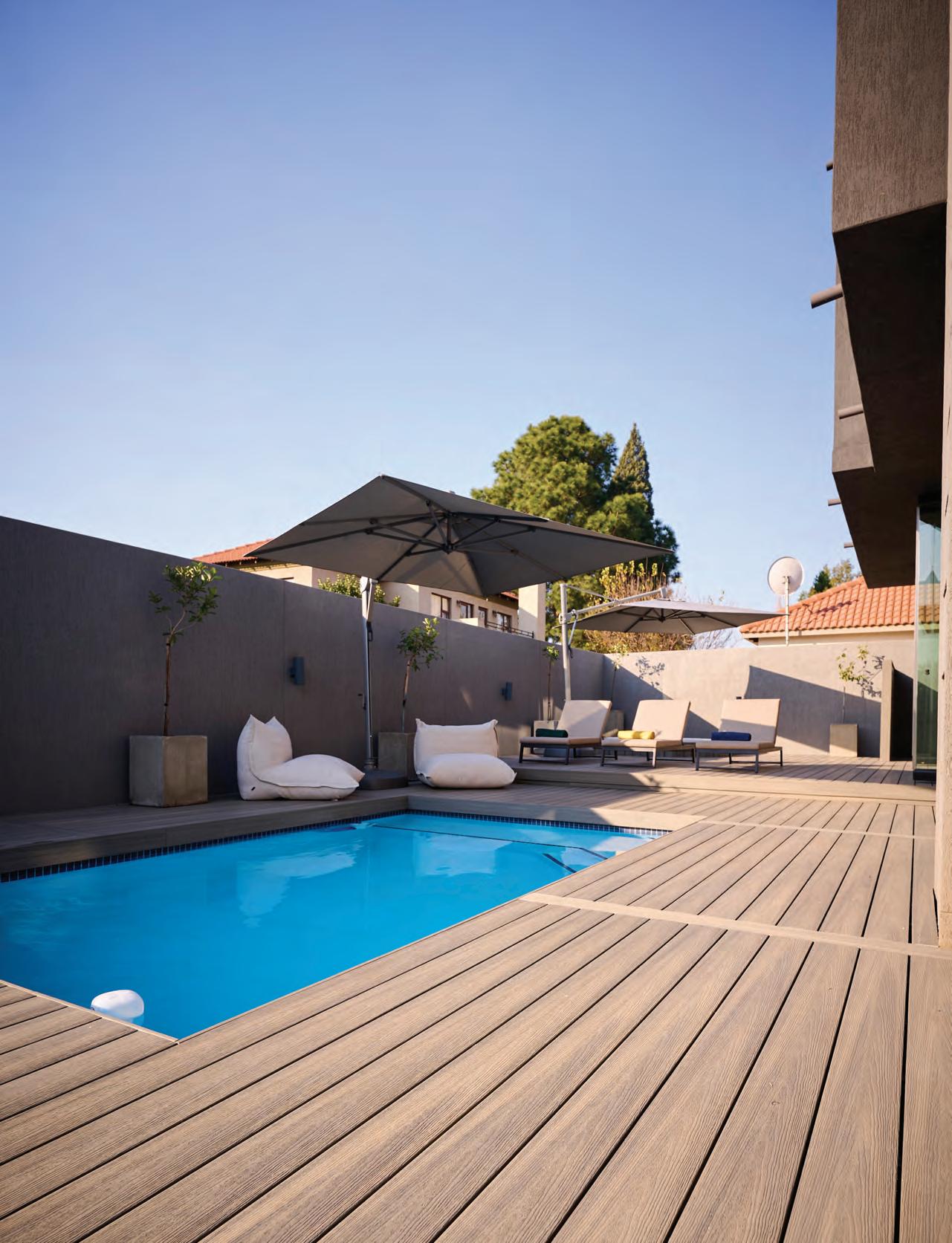
Engineered for Poolside Performance
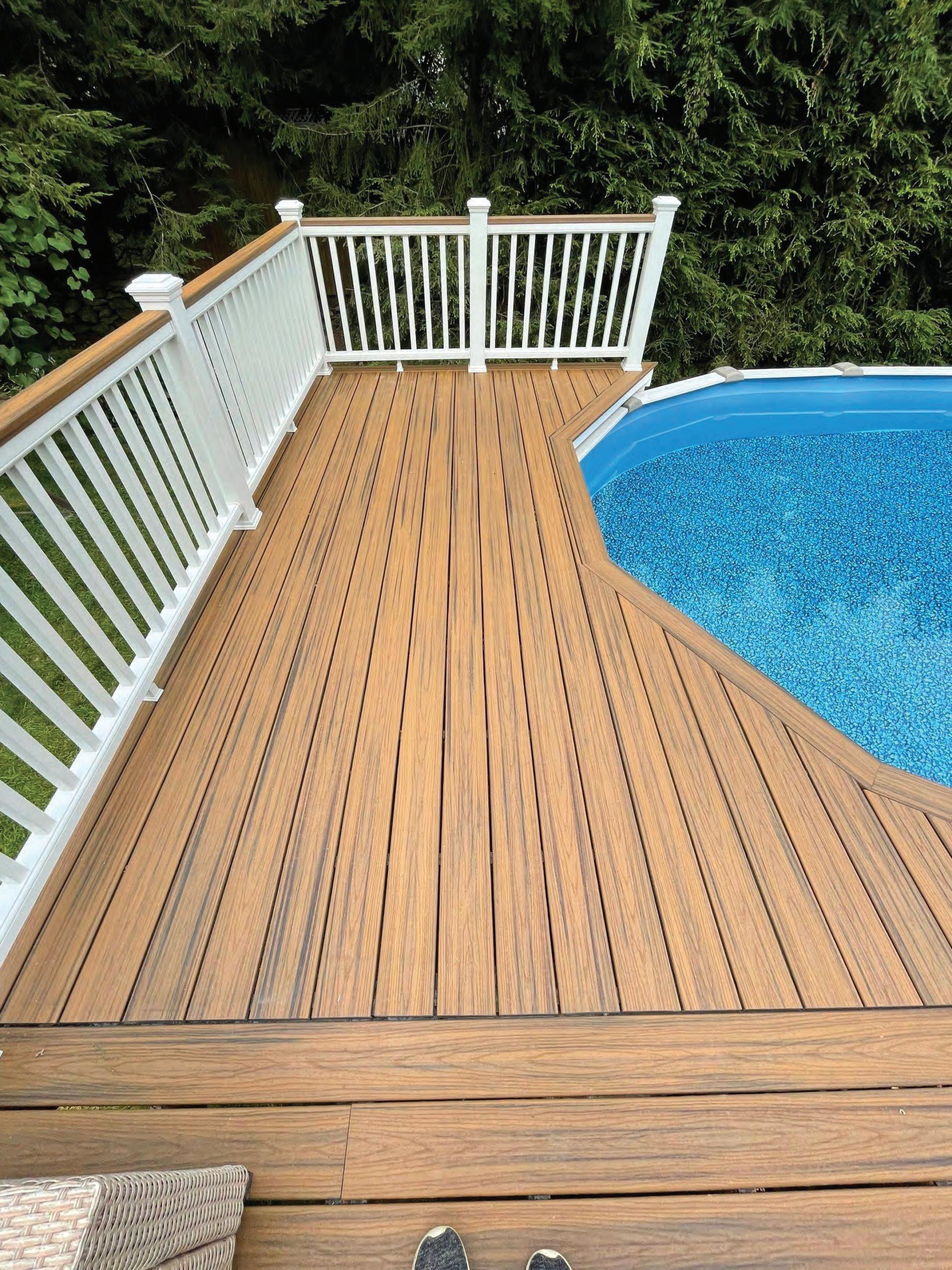
NewTechWood’s UltraShield® fully encapsulates the composite core, protecting from splash exposure, moisture, mold, UV fading, scratching, and staining. It’s the durability poolside decking demands.
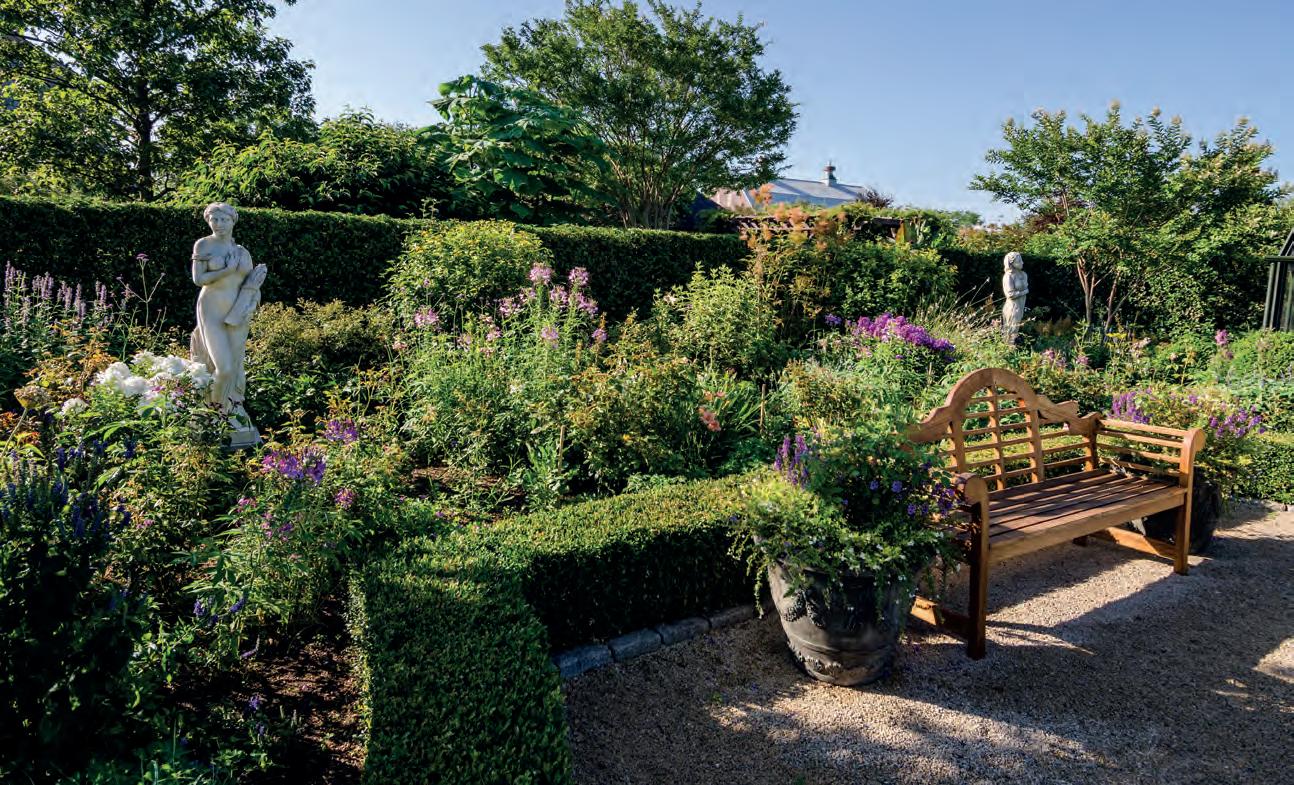
“WE DON’T HAVE ANY INTENTION OF BEING THE BIGGEST. WE JUST WANT TO BE THE BEST.”
Mergers, private equity and craftsmanship converge at McHale, where two brothers have ensured that growth never compromises standards and expertise
Now celebrating its 45th year, McHale Landscape Design has evolved from a neighborhood lawn-mowing operation into a multi-million-dollar residential landscape architecture and design-build firm. The Maryland-based company stands as an exemplar of longevity, quality and a distinctly family-oriented approach to business, all while maintaining the core values instilled by its founders and principals, brothers Kevin and Steve McHale.
Yet the story of McHale Landscape Design is, as Kevin McHale puts it, “not unlike most landscape stories. We started cutting grass when we were kids—12, 13 years old—and worked for family, friends and neighbors. We made enough money to buy a car together.” This modest beginning laid the foundation for a business that would eventually employ 450 people and span nine locations across the Mid-Atlantic region. The brothers’ path was cemented during their time at West Virginia University, where Steve studied landscape architecture and Kevin focused on horticulture and land management. It was there they made the conscious decision to start a residential-only landscape company upon graduation. “We were both focused on doing high-end residential,” Steve recalls. “We knew that’s what we wanted to do.”
From the outset, the enterprise was a true family affair. Kevin, being two years older, graduated first and would take on any job that came his way, while Steve would return home on weekends to work alongside him. Their mother served as their first administrative
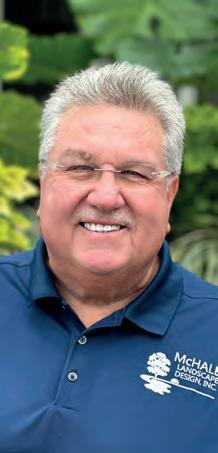

Kevin McHale Steve McHale
“Private equity will not know how to run the dayto-day operations of a landscape company, but they do know how to implement business systems and make companies run more effectively”
assistant, and their father acted as their bookkeeper. Decades later, this familial thread remains a core part of the company’s fabric, with 11 McHales currently working within the organization, including seven of the next generation.
Can private equity truly help preserve a company’s founding values?
Transitioning from a small startup to a largescale enterprise required careful navigation. As the business expanded, the McHales confronted a critical question: how could they protect their legacy for the long term? Turning to outside advisors for guidance, they received a surprising recommendation. Kevin recalls: “We brought in a family business consultant and also an advisor, and they both recommended that we pursue a private equity partnership to maintain the legacy.”
Private equity involvement was not a decision made lightly. For a company so deeply rooted in family, bringing in an outside partner could have seemed counterintuitive. Nonetheless, for the McHales, the move was less about cashing out and more about setting the table for future generations. “Steve and I are toward the twilight of our careers. We wanted to keep the name, the brand and the opportunities available for the people who have helped us build this company,” Kevin acknowledges.
Indeed, McHale Landscape Design reports that the partnership with Hidden Harbor Capital has proven to be a synergistic collaboration. While the firm provides the financial and strategic acumen to help the company scale, they are acutely aware of their own limitations. “Private equity will not know how to run the day-to-day operations of a landscape company, but they do know how to implement business systems and make companies run more effectively,” Kevin notes. He further describes the experience as being akin to going back to college, attending “all business and finance classes.” This learning curve has reportedly been invigorating for the leadership team, who have embraced the opportunity to refine their operational efficiency.
Likewise, relationships forged through this partnership have already catalyzed growth, enabling the firm to integrate new regional acquisitions, bringing their total to six partnerships overall, all of which, Kevin emphasizes, came to McHale organically. “Part of that is simply our longevity,” he says. “We’ve been around for 45 years, and our brand is particularly strong in the District of Columbia, Maryland and Virginia.”
What keeps employees loyal in an industry known for high turnover?
Growth, nonetheless, is not about size for its own sake. The McHales are adamant about their business philosophy: “We don’t have any intention of being the biggest. We just want to be the best.” Commitment to being the best begins with a rigorous focus on cultural fit during the merger and acquisition process. “We need to see integrity from the leadership team,” Kevin states. “It’s the first thing we look for. Do they have the mindset to do the right thing by their employees and customers? Is the quality of their craftsmanship up to standard? If we don’t see that in a partner company, they’re off our list pretty quickly.”
A culture of respect and fairness is the cornerstone of McHale’s impressive employee retention rates—a notable achievement in an industry where worker flight is notoriously high. Through the use of employee and customer surveys, the leadership team stays attuned to the needs and concerns of their workforce. Recently, this feedback has led to concrete changes. “We heard loud and clear from our people that our purchase order system was too time-consuming,” Kevin remarks. “So, we gathered some ideas, met with a small group and streamlined it.” The result was immediate positive feedback, with employees thanking the company for “saving about an hour out of my day.”
Listening to employees also led the company to prioritize creating a clear career path for new hires. “They wanted us to have a clear path laid out
from day one,” Kevin explains. “We needed to show them, ‘You’re starting here today. Here’s your next step. Here’s the step after that, and here’s the step after that.’ I think that’s a fair ask for any new hire. They want to know what the future is going to look like for them.” This focus on internal growth is a powerful motivator, helping employees visualize their long-term future within the organization. Visibility from leadership is another critical component of retention. Steve McHale remains active in the field, a presence he believes is vital for maintaining morale and standards. “One of my goals is to continue visiting job sites,” Steve says. “I have that opportunity, and there’s real value in staying connected to the crews. I want them to know I can still sweat and get my hands dirty,
and I can have a conversation with them about how we can continue to improve whatever project we’re working on.” Kevin echoes this sentiment by sending a weekly message to the entire company. “I keep it short. Sometimes it’s a little story, but there’s always a point to it. It’s really difficult to manage effectively from behind a desk. You have to talk to people.”
What business practices set McHale apart from other residential landscape firms?
Differentiation has been a key strategic pillar for McHale Landscape Design, which has refused to limit its scope. Early on, the company made the atypical decision to develop in-house masonry and carpentry divisions rather than rely on outside contractors. This move was met with skepticism by industry peers who warned that it would be impossible to keep skilled tradespeople busy yearround. Regardless, the brothers report that it has become a significant competitive advantage.
“Our work is highly detailed, and not all masonry companies can deliver the level of quality we require,” Kevin explains. Having these services in-house ensures quality control, schedule reliability and a depth of craftsmanship that is rare in the residential sector. “With divisions of landscape, masonry, carpentry and maintenance, we consider ourselves as a single-source company that handles everything from the threshold of the doors out,” Steve adds. “We learned from the best people around and set extremely high standards. We pay attention to every little detail, from how thick the mortar joint is to whether we’ve cleaned up properly after weed whacking. Instilling that mindset in everyone is what we focus on achieving.”
The same willingness to go against industry convention extends to nursery stock. McHale Landscape Design owns substantial plant inventory
in a local nursery. “That’s unusual for a residential company,” Kevin admits. “It clearly differentiates us.” He continues that this policy allows clients to visit the farm, touch the plants and even tag the specific tree that will be transplanted into their own backyard. Additionally, it also serves as a profit center, allowing the company to effectively resell material to itself, ensuring both quality and availability. “It’s only a few minutes from our office. Clients develop a special attachment to a tree when they can see it in the nursery and tag it. Then they see it planted in their yard, and it gives them a positive feeling,” Kevin notes.
What do today’s clients prioritize?
At the heart of McHale’s success is a cohesive design-build structure that bridges creativity and practicality. The firm employs five registered landscape architects, a sizable team that allows them to be as creative as necessary for the project. “There are no limits to our design creativity,” Steve asserts. This freedom, he notes, is only possible because of the talent of the field crews. “If you can think of a stone from anywhere in the world, we’ll figure out how to use it.”
The typical McHale project procedure emphasizes conceptual design over exhaustive construction documents. “We don’t want to spend a
lot of time or money on the drawings themselves. We want the money to go into the actual project,” Kevin explains. Because the field crews are intimately familiar with how to implement the designs, the company saves time and resources, delivering a better return on investment for clients. “Steve and the rest of our landscape architects can draw just about anything our clients or we can imagine,” he adds. “And we have complete confidence that our guys in the field will know exactly how to build it.”
Legacy and partnership
Looking to the next 45 years, the brothers intend for the company’s core values to remain unchanged. However, the business is no longer just about Kevin and Steve; it is about the hundreds of employees who have helped build it and the clients who trust them to create their dream landscapes. While the partnership with private equity has brought new systems and financial rigor, the company’s
family-oriented foundation remains unchanged. Kevin perhaps sums up the enduring spirit of the company best: “We still have our very first employee, Phil Kelly, who runs our Virginia Design Build Group. He came to work for us when he was 17 years old, right out of high school. Now he manages a business worth millions. For us, it’s really about the people.”
Blending craftsmanship, modern business strategy and unwavering respect for people continues to make McHale Landscape Design a benchmark of success—not just in Maryland, but across the East Coast. By treating every project as a unique work of art and every employee as a valued member of the family, the McHale brothers have created not just a company, but a true legacy poised to endure for generations to come.














































Whimsical REBIRTH
REFERENCES
Turf supplier
King Ranch Turfgrass krturfgrass.com
Outdoor furnishings
Landscapeforms landscapeforms.com
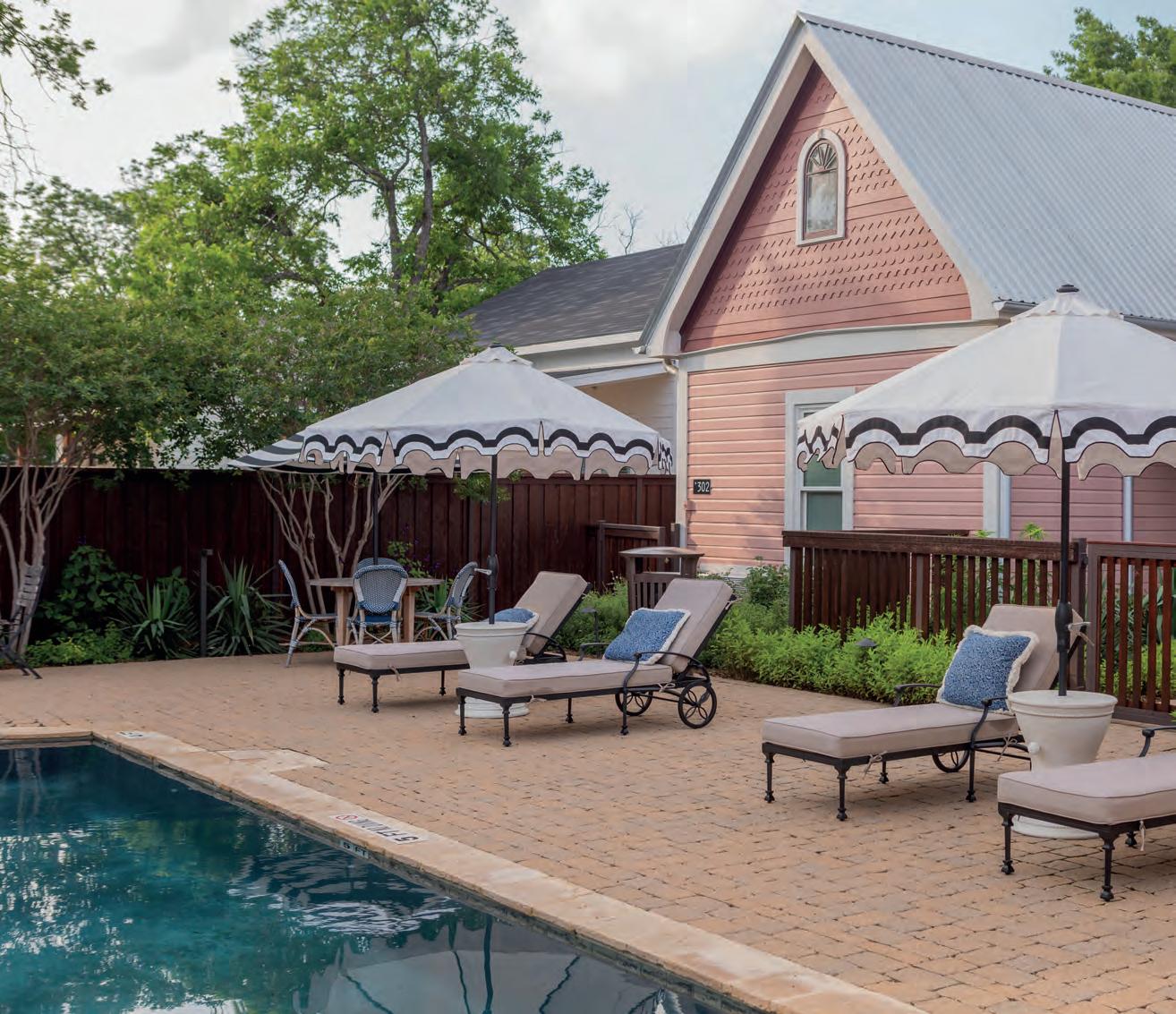
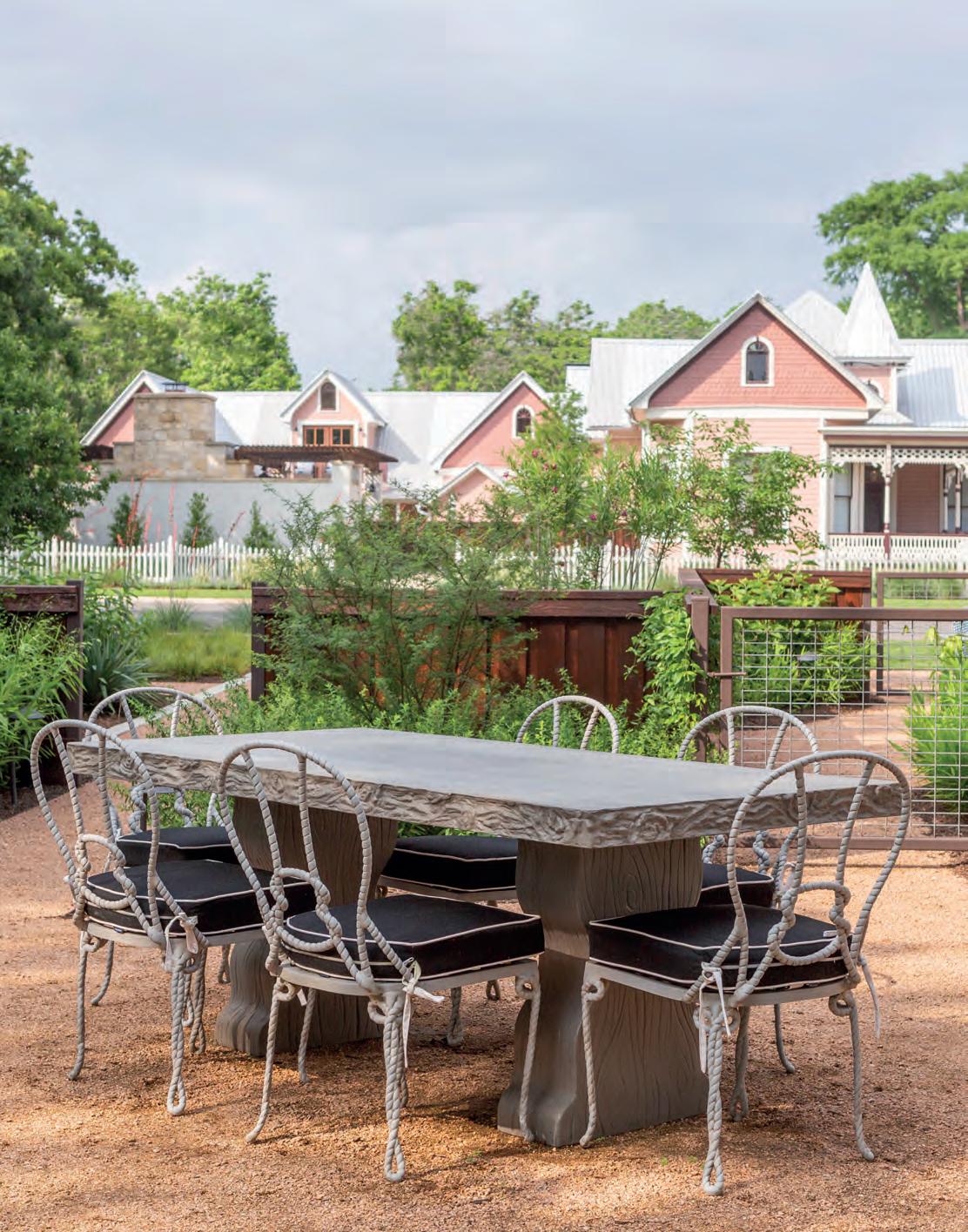
In Fredericksburg’s Historic District, the grounds of storied property have been rejuvenated. The Menagerie, a site rich with over a century of layered history, has been reimagined as a private-estate and boutique hospitality destination that reflects on its past while embracing its new identity. The task of translating this vision into a cohesive outdoor experience fell to Twistleaf, a Texan landscape design and construction firm. It was assigned with evaluating every exterior space and developing a plan that enhances guest experience, improves circulation and complement the renovated architecture. Rather than approaching the site as a blank canvas, Twistleaf began with a forensic assessment of the existing landscape. The team evaluated each
element to determine what should be preserved, adapted or removed. This careful balancing act allowed them to retain meaningful historic features while introducing a fresh landscape suitable for an elevated getaway. The result is a design that does not erase the property’s past but instead weaves it into a new narrative.
Guest circulation became a central organising principle of the scheme. New pathways, outdoor rooms and gathering spaces were situated to create an intuitive flow between the historic mansion, guest bungalows, event lawns and shared amenities. Twistleaf reports that its team designed the layout to encourage wandering, inviting visitors to discover the property’s nooks and crannies while ensuring that movement between key points seamlessly.
Firmly situated in its local context, the planting design draws heavily from the character of the Texas Hill Country. Layered native and adapted species were selected to soften the architecture and provide seasonal interest. The palette includes Yucca recurvifolia, Muhlenbergia capillaris, Salvia leucantha, Ulmus crassifolia and Bignonia capreolata, selected for their year-round texture, seasonal colour and long-term resilience. Lawn areas are planted with ‘Emerald’ zoysia or lawn sedge (Carex leavenworthii), offering a waterconscious alternative to traditional turf. New lighting, irrigation, drainage improvements and carefully integrated hardscape elements further elevate the guest experience, ensuring that the landscape is fully optimised.
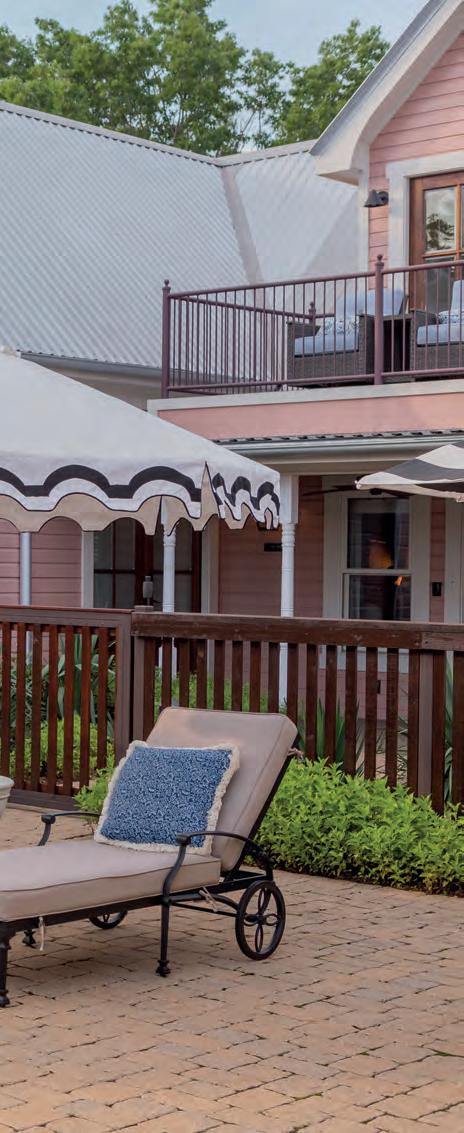
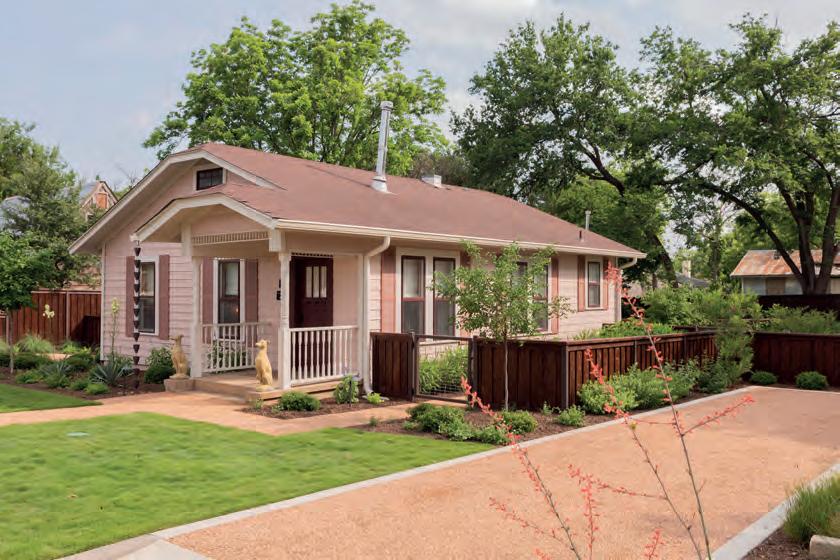
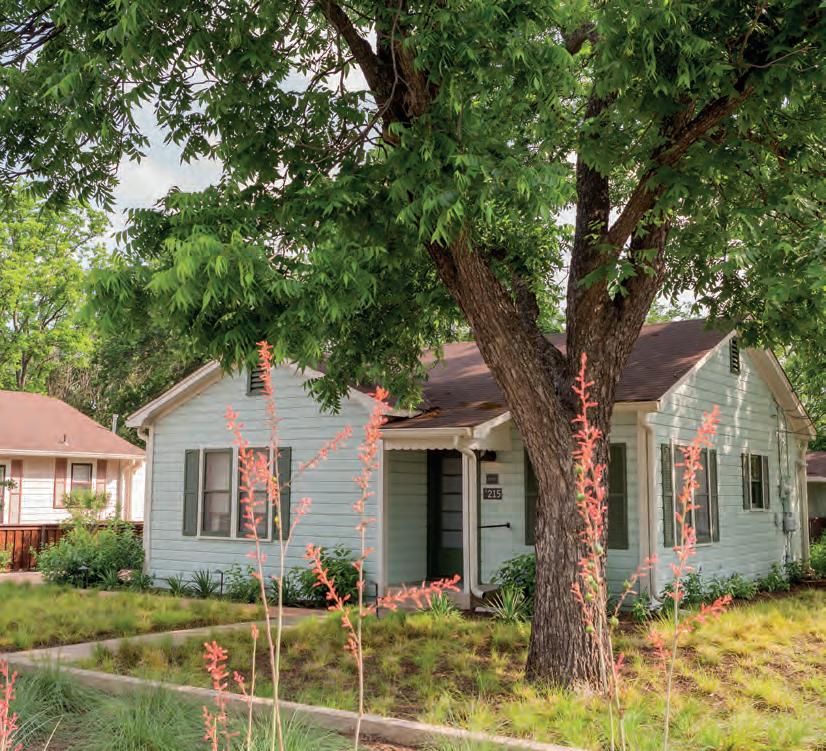
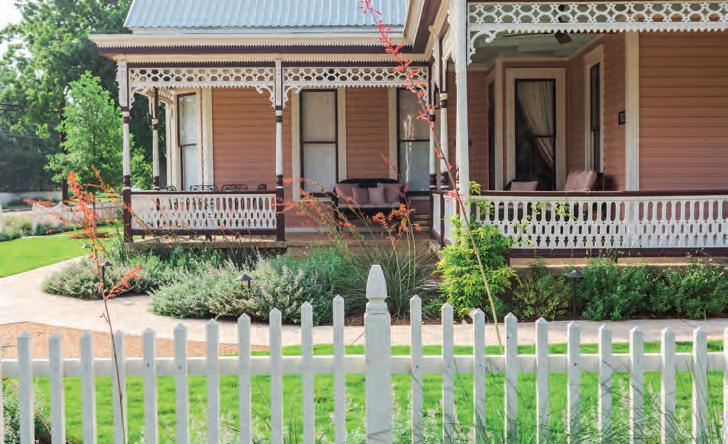
Working within Fredericksburg’s Historic District required close coordination with the city’s Historic Preservation Office. New fencing, dark-sky compliant lighting and all landscape improvements had to respect the property’s historic character, a constraint that guided many of the design decisions. Nonetheless, one of the project’s greatest challenges was dealing with the diverse collection of existing hardscape materials and landscape elements accumulated over decades of renovations. Construction revealed remnants of previous installations dating back to the early twentieth century. Rather than removing everything, Twistleaf completed a comprehensive site assessment to identify which elements could be preserved, while obsolete infrastructure and
Previous page: A new shared courtyard creates gathering space with cohesive planting and lighting
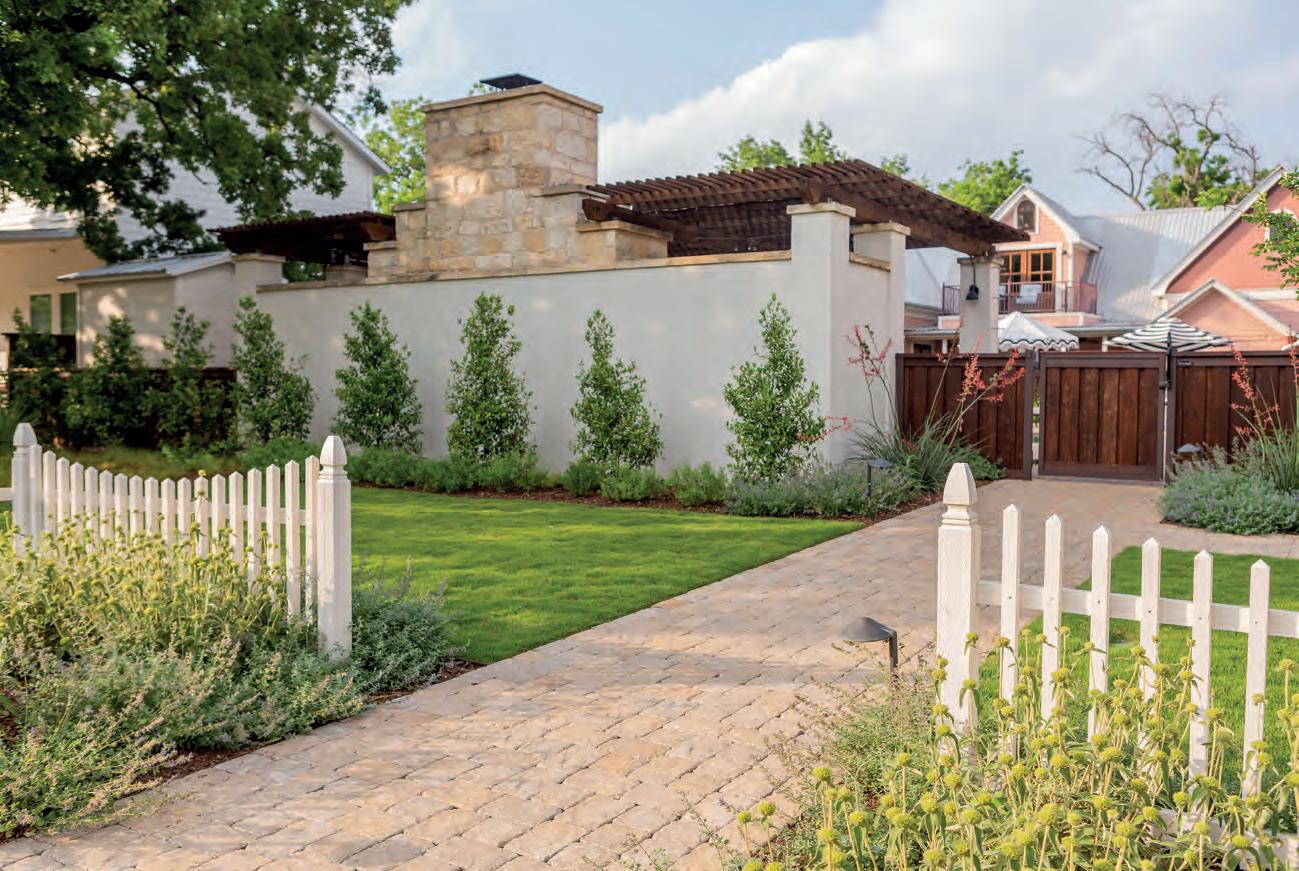
Current page: Custom fencing balances privacy, openness and cohesive planting across the properties; ‘Emerald’ zoysia grass was chosen for the lawn areas; Drought-tolerant planting preserved heritage while adapting to water restrictions
nonfunctional features were removed.
At the historic mansion, much of the existing paving remained functional and was retained with targeted modifications to improve accessibility and circulation. Around the guest bungalows, however, the landscape required significant demolition and reconfiguration. Existing fencing and hardscape were redesigned to create more intuitive circulation, private outdoor patios and a stronger connection between individual guest spaces and shared amenities. Low fencing defined intimate outdoor rooms while taller perimeter fencing maintained privacy without compromising the open character of the site.
Twistleaf prioritized preserving existing landscape features whenever practical to reduce unnecessary demolition and waste. The incorporation of drought-tolerant native and adapted plant material suited to Central Texas’ climate reduces long-term maintenance while
providing habitat value for wildlife. Although an ongoing drought imposed stringent watering restrictions during construction, the team adjusted the planting plan by reducing lawn areas and incorporating native sedge grass as a water-conscious solution. The planting plan also anticipated commercial maintenance constraints, with the goal of reducing both water consumption and long-term upkeep.
From design through to construction, Twistleaf ensured that every detail was executed with precision. The finished landscape reflects the design vision created with the client, transforming The Menagerie into a destination that feels both refreshed and distinctly of its place. In doing so, it honours the property’s rich history while embracing its new identity as a hospitality landmark.
Top to bottom: Historic picket fencing was restored with drought-tolerant, low-maintenance planting; Entrance redesign enhanced circulation while framing the property’s historic architecture
Twistleaf is an award-winning landscape design and construction studio based in Central Texas. The firm works directly with clients or alongside multidisciplinary teams on residential, public and commercial projects. From concept to completion, Twistleaf creates landscapes that balance beauty, functionality and stewardship of the region’s natural heritage. twistleaf.com ABOUT
BARN AND Beyond
REFERENCES
Hardscape suppliers
Sauder’s Hardscape saudershardscape.com
Techo-Bloc
techo-bloc.com
Permeable Hardscape North America phna-usa.com
Lighting supplier
Sterling Lighting sterling-lighting.com
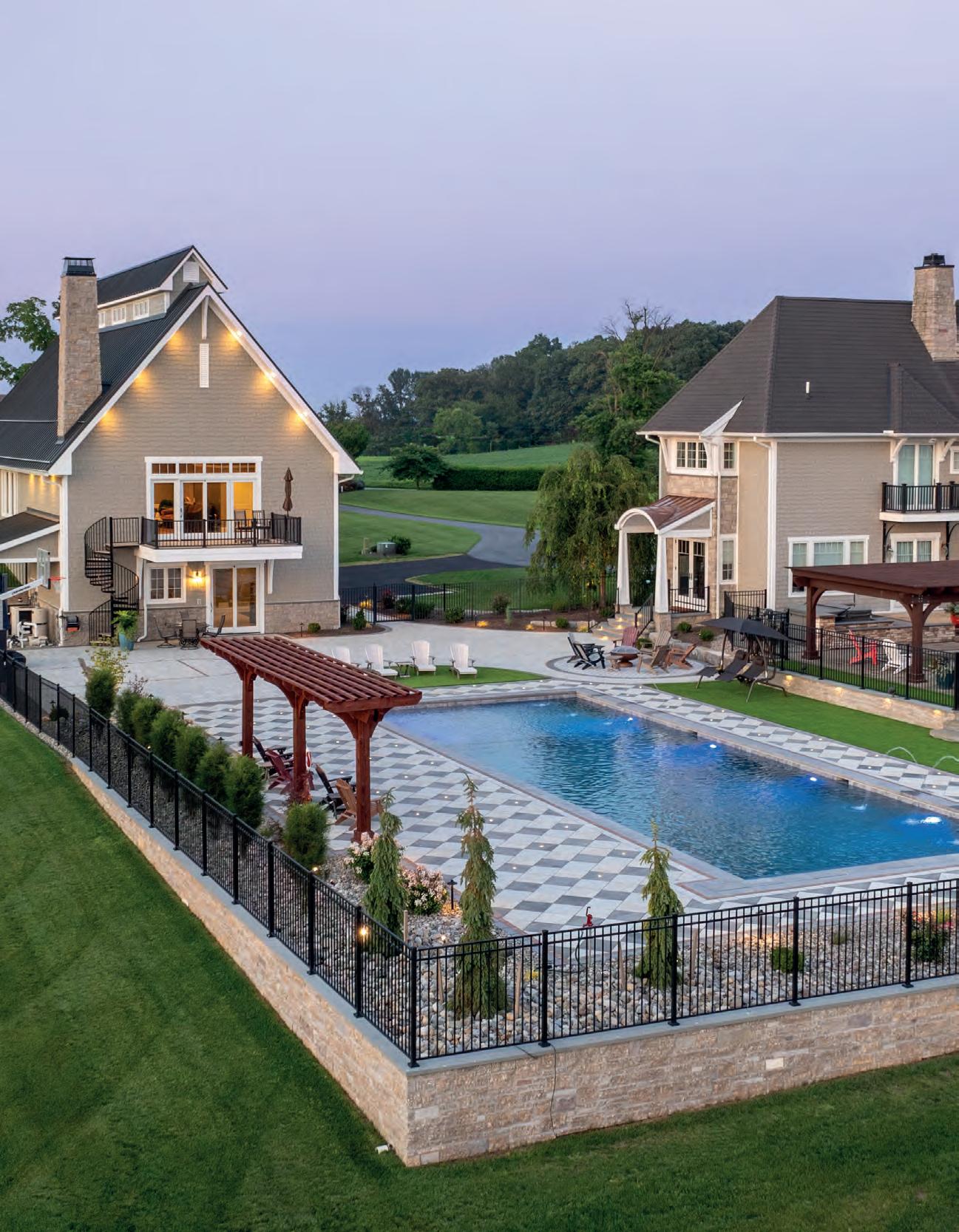
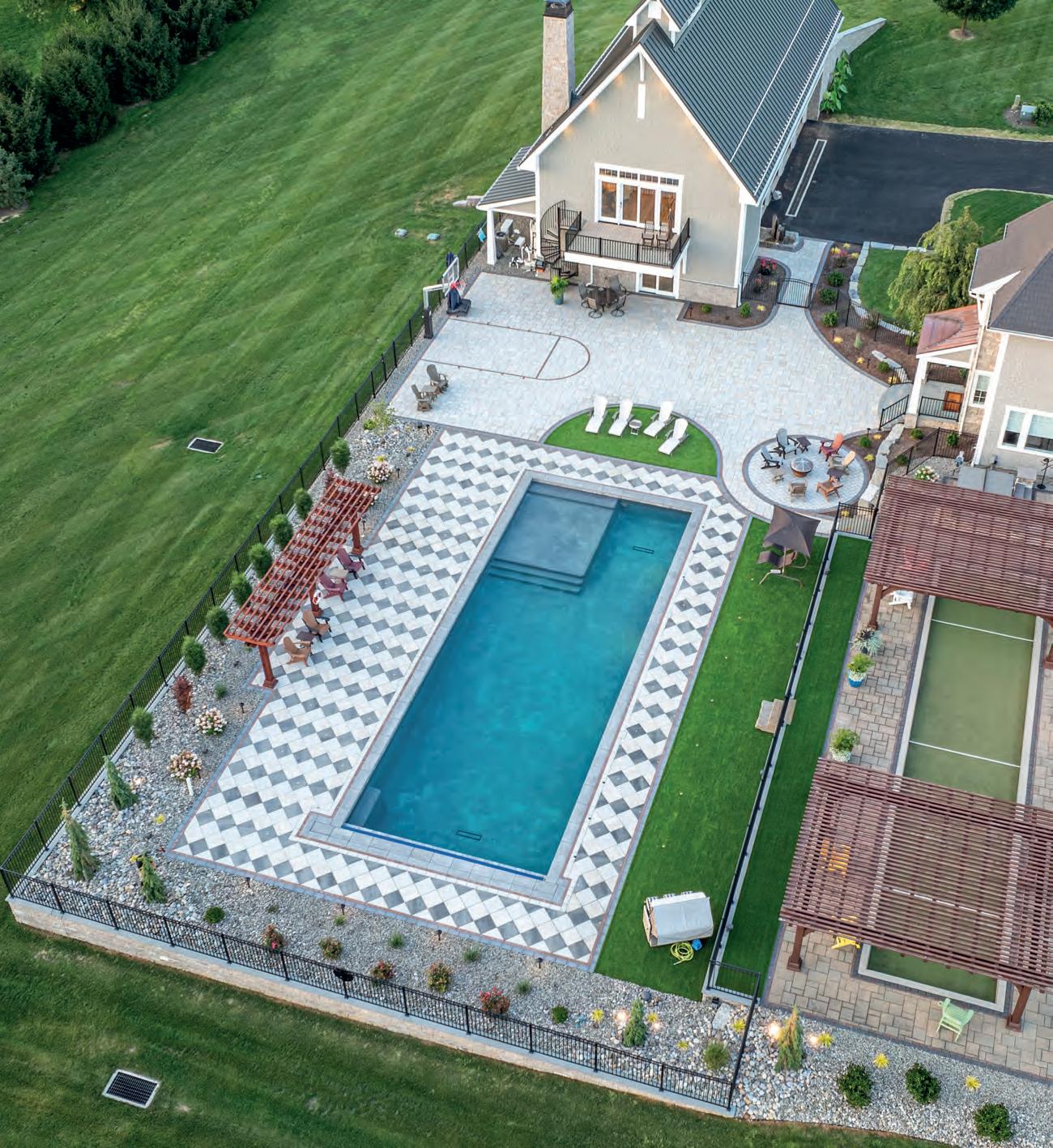
From the ground up, this project was always about what lay beneath the surface. Over 600 tons of aggregate, a 20-inch permeable base and a 30-by90-foot infiltration pit epitomize the intense environmental hydraulic engineering at the heart of this commission. Yet when the Willow Gates Home & Landscape team first met the client, certain above-ground objectives had already been decided. Architectural drawings specified a barn, and the client requested a 60-foot pool and a full halfcourt basketball court—all of which had to coexist without diminishing the existing residence, a home that had stood on the property for nearly a decade. Those clear objectives came with an unusual degree of creative latitude. The client offered the designers significant freedom, though several key criteria remained non-negotiable. Chief among them was the mandate that the new barn should not overwhelm the primary residence. Aesthetically, it also needed to appear as though it had been constructed concurrently with the

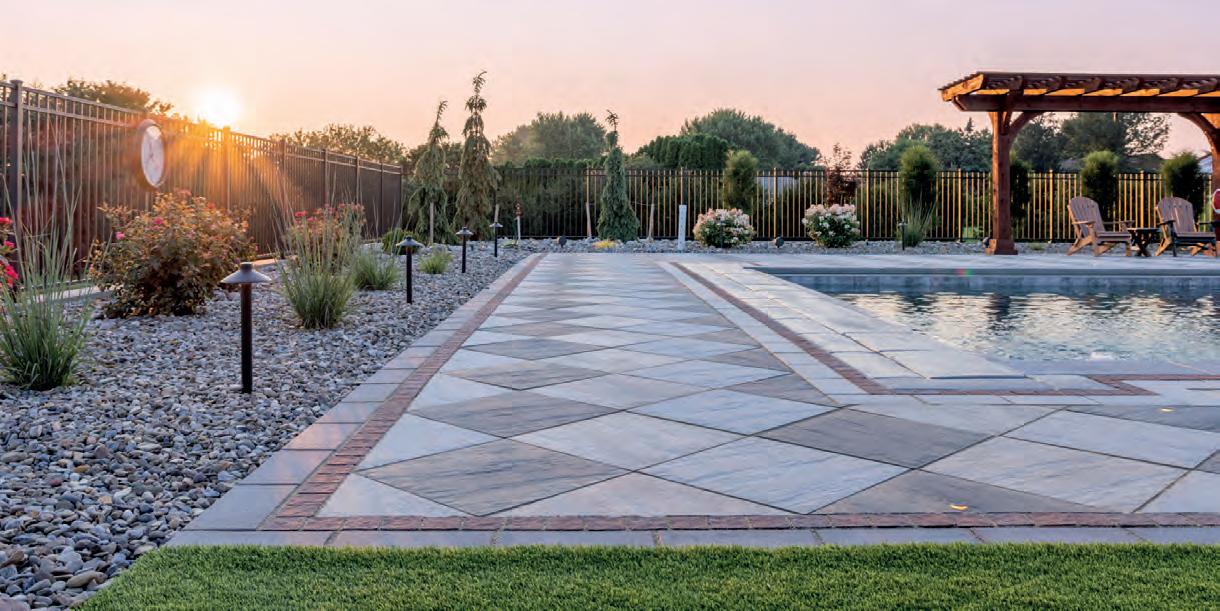
home 10 years prior, rather than as a modern afterthought.
Willow Gates began by integrating the existing site plan with the proposed additions. Three primary architectural components dictated the initial layout: the residence, the barn and the pool. Placement of the barn and parking area established the flow of the property, while the patio and landscaping were meticulously planned to complement these hard architectural lines rather than compete with them.
A critical design decision came during refinement. Shortening the second story by nearly five feet ensured the barn did not dominate the vista, maintaining visual balance between old and new. Similarly, the basketball court—initially envisioned as a full regulation half-court—was scaled back to contain just the free-throw lines, allowing for a more proportioned layout without sacrificing functionality.
Hurdles emerged along the path to construction. Permitting and planning stretched to nearly a year, with delays attributed to stringent stormwater requirements. Local regulations mandated that the system accommodate a 100year storm event within a 24-hour return cycle, managing 7.48 inches of rainfall. To meet this
Previous page: Manheim outdoor living barn project
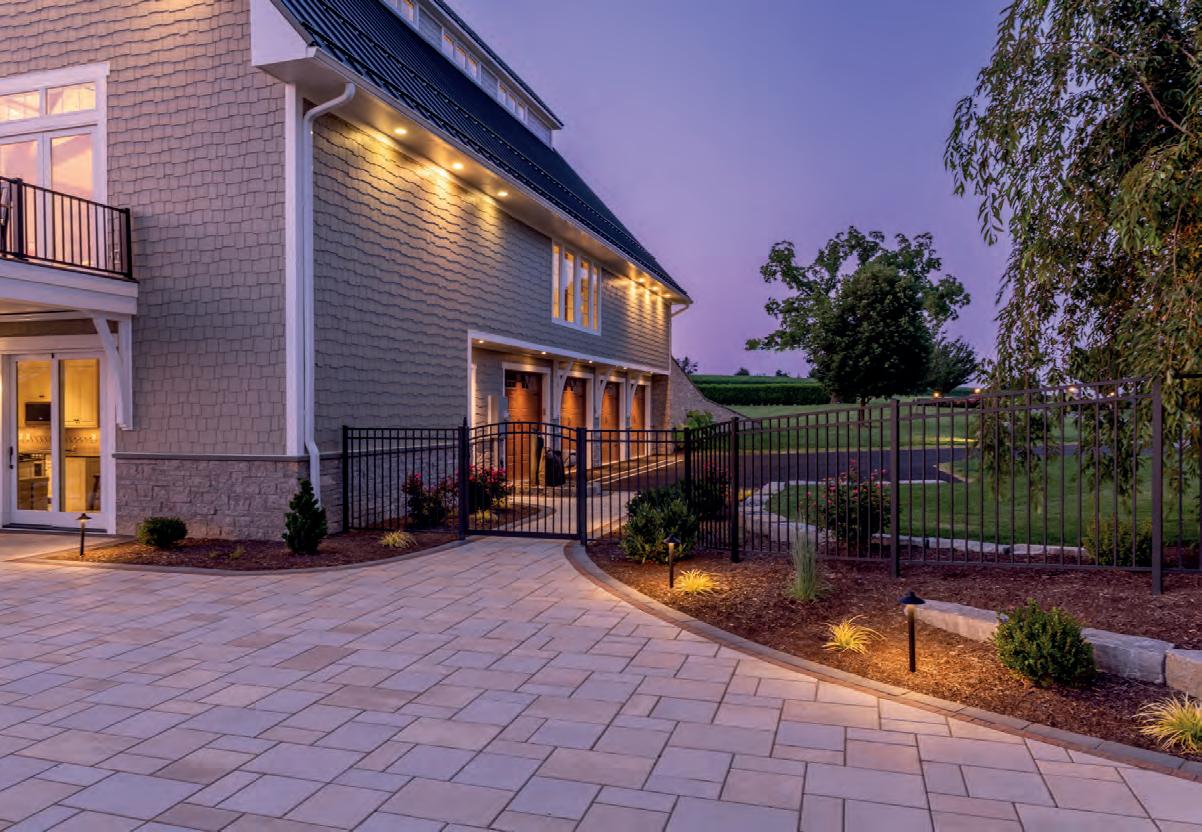
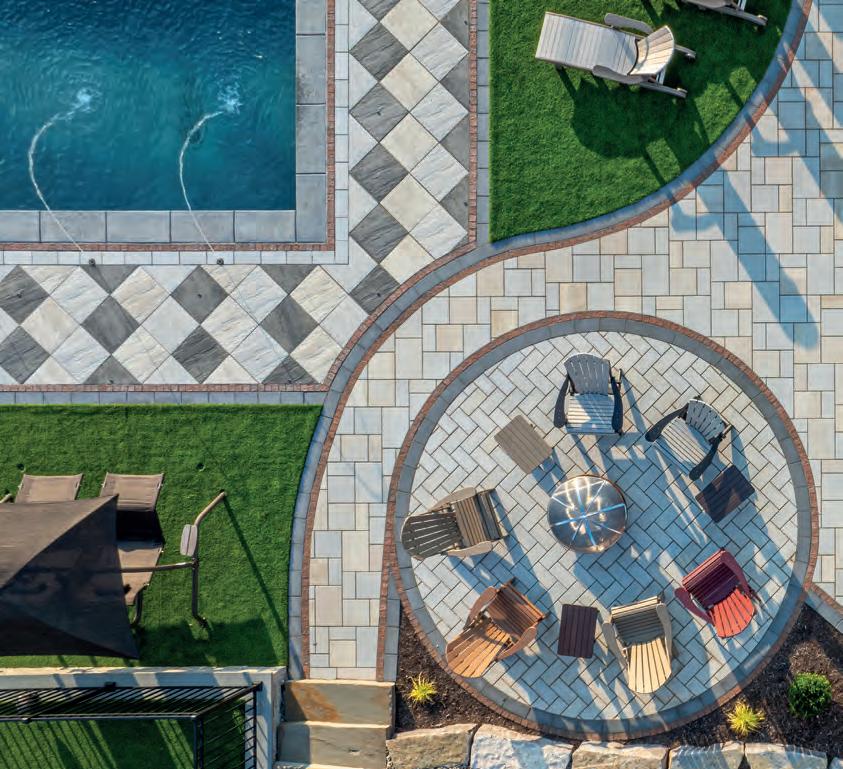
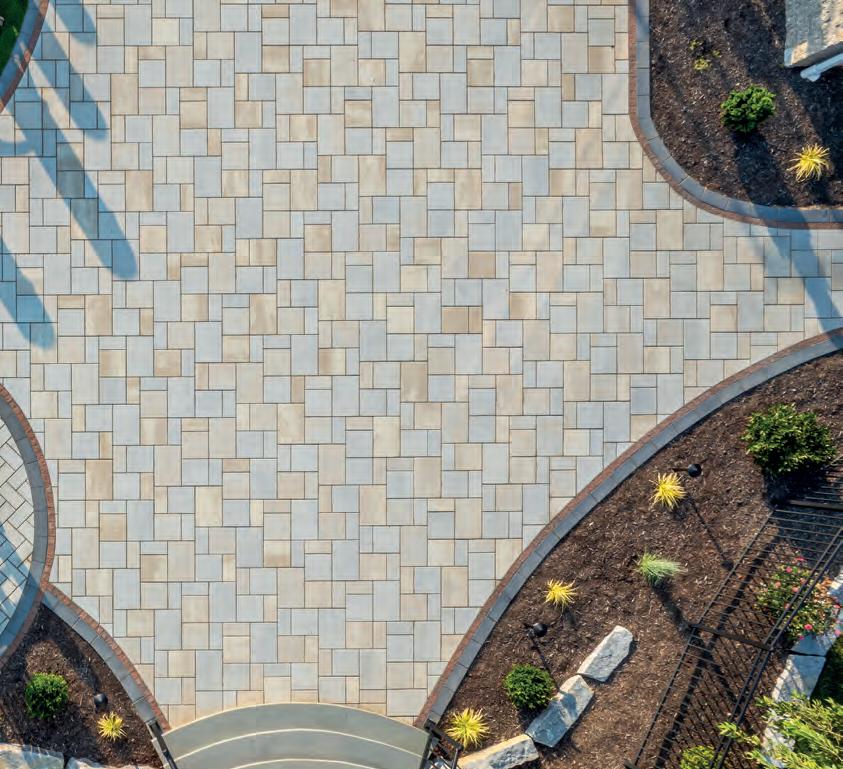
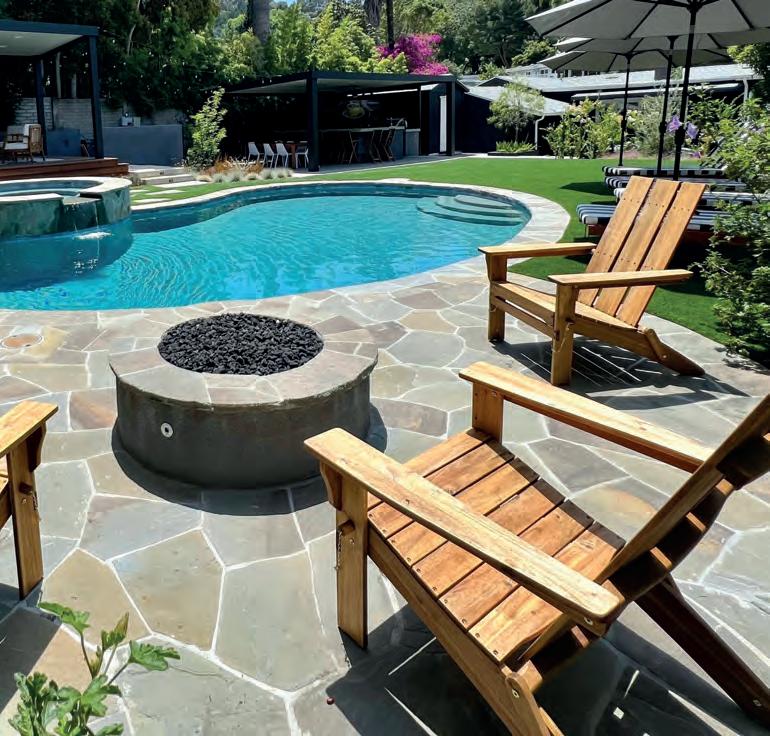
Current page: Paver walkway between garage and basketball court; Permeable paver outdoor seating and fire pit; Permeable paver pool deck
demand, Willow Gates implemented a comprehensive permeable strategy. All turf and paver areas were constructed with the 20-inchdeep base, allowing for on-site infiltration, while the infiltration pit managed runoff from the barn, driveway and previous improvements.
Seamless coordination marked the construction phase. Simultaneous building of the barn, pool and hardscape required extensive communication between multiple trades. Despite the complexity of overlapping structural, hydraulic and landscaping systems, the entire project was completed within nine months.
A philosophy of color and low maintenance guided the soft landscaping. Willow Gates stresses that a landscape should be equally beautiful at night as during the day, offering visual interest across the seasons. For this pool-centric environment, the focus was on vibrant summer color, when the outdoor space receives peak use. The plant palette also considered reflection; specimens were chosen to enhance the pool’s water surface. While drip irrigation was installed to establish the new plantings, the palette was selected for durability. Once established, the landscape requires minimal water input to maintain the envisioned aesthetic.
The existing seven-acre lot offered inherent privacy, freeing the planting design to frame views rather than obscure them. From the primary vantage point—looking outward from the barn toward the deep end of the pool—the composition is deliberately symmetrical. Picea glauca anchor each corner of the pool, while Schizachyrium scoparium and Hydrangea paniculata provide a long season of color without compromising the pastoral outlook across adjacent farmland. Tree species selected for nighttime lighting effects add another layer of interest. Ultimately, with the barn, pool and landscape now fully integrated, Willow Gates has created a property designed to endure.
willowgateshome.com ABOUT
Willow Gates Home & Landscape, a Pennsylvania-based firm founded in 2005 by Jeremy Martin, provides hardscaping, landscaping, stormwater management, and custom remodeling. Specializing in patios, outdoor kitchens, fire features, lighting and water elements, the company prioritizes client safety and satisfaction throughout the Eastern Pennsylvania region.
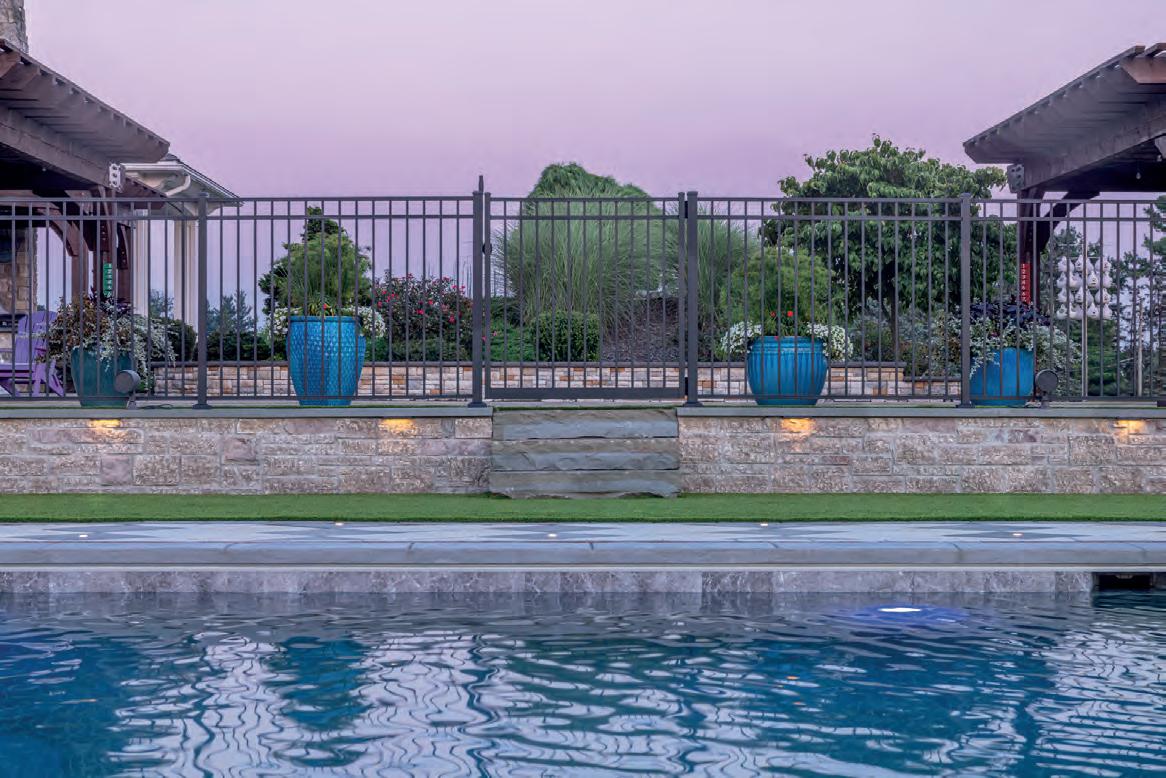
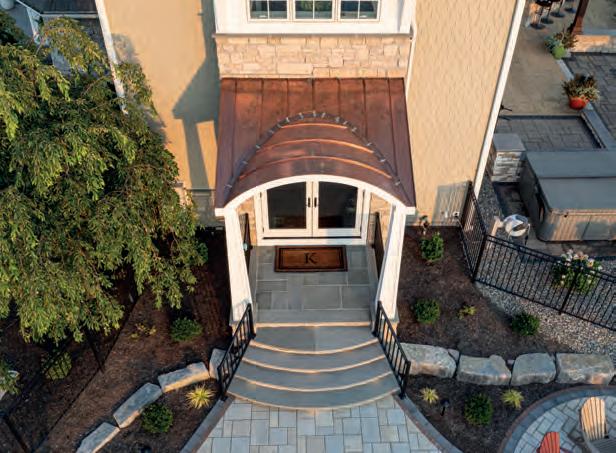
Top to bottom: Evening view of hardscape lighting and raised stone wall behind pool; View of remodeled home entrance opening to outdoor living space
PROJECT DETAILS
American Institute of Architects (AIA) California Urban Design Awards, Honor Award
American Society of Landscape Architects (ASLA) Southern California Chapter, Award of Excellence
American Society of Landscape Architects (ASLA) New York Chapter, Merit Award in General Design
American Society of Civil Engineers (ASCE) Metropolitan Los Angeles Branch, Outstanding Community Improvement Project
Los Angeles Business Council (LABC) Annual Architectural Awards, Chairman’s Award in Landscape Architecture
REFERENCES
Local landscape architect Studio-MLA studio-mla.com
Geotechnical engineer Earth Mechanics, Inc. earthmech.com
Quality control and cost estimating Integrated Engineering Management iemcm.com
Marine and electrical engineer Moffatt & Nichol moffattnichol.com
Site structural engineer PacRim Engineering pacrimengineering.com
Lighting design Sean O’Connor Lighting seanoconnorlighting.com
Methane consultant Methane Specialists methanespecialists.com
General contractor Sully-Miller Contracting Company sully-miller.com
Irrigation Rain Bird Corporation rainbird.com
Hunter Industries hunterirrigation.com
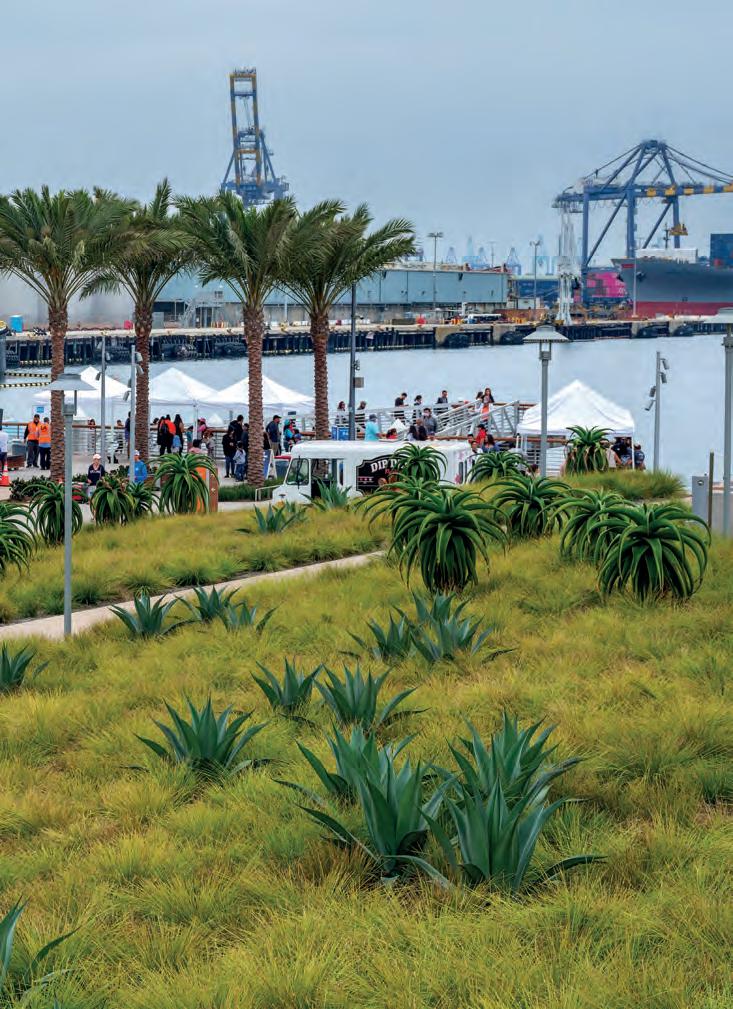
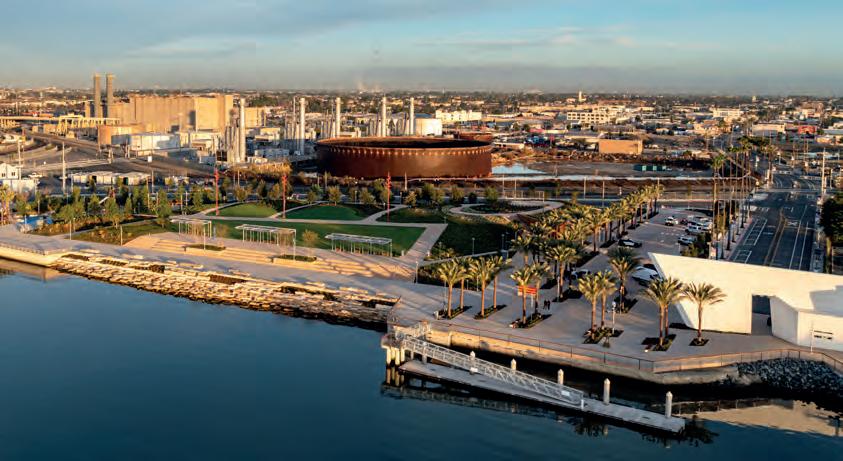
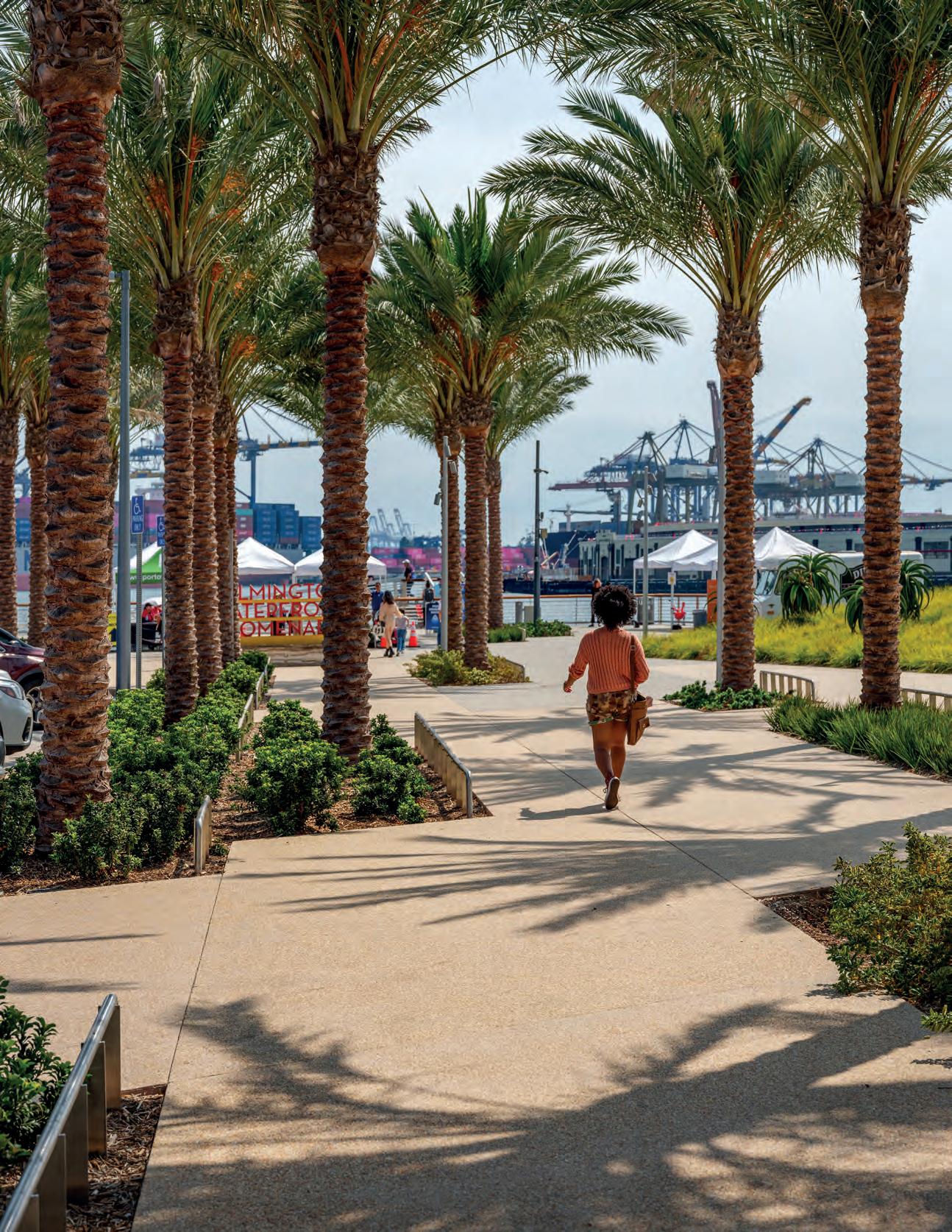
Wilmington’s community had long lost its connection to the Pacific Ocean. Successive port expansions had claimed the shoreline, severing their neighborhood from the water that once defined its identity. However, the Port of Los Angeles resolved to restore that connection, tasking integrated design firm Sasaki with balancing the demands of an active working port against the needs of a historically underserved and park-deprived community. Specifically, the Port was committed to enhancing public access to the waterfront for the local harbor community, in order to expand its role as both a key attraction and economic driver for the area.
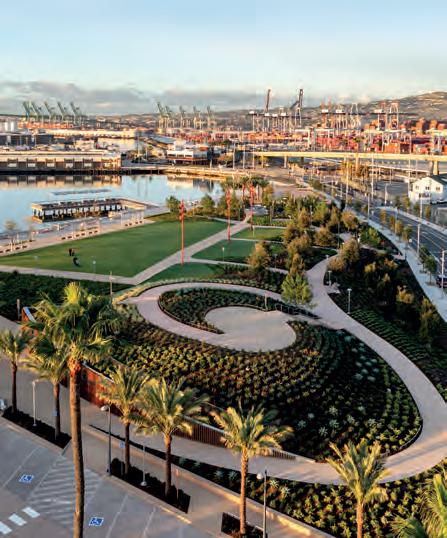
Sasaki began by collaborating with local stakeholders to craft a master plan, which was subsequently implemented in two phases. The first opened in 2011 with Wilmington Waterfront Park, transforming a brownfield into an awardwinning 30-acre urban park. The second phase, the Wilmington Waterfront Promenade, opened in 2024 and features a sculpted 20-foot-tall landform that buffers port activity while housing utilities and restrooms beneath it, along with a 1,300-foot-long promenade offering seating, planting, interactive water features, a community center and sweeping harbor views.
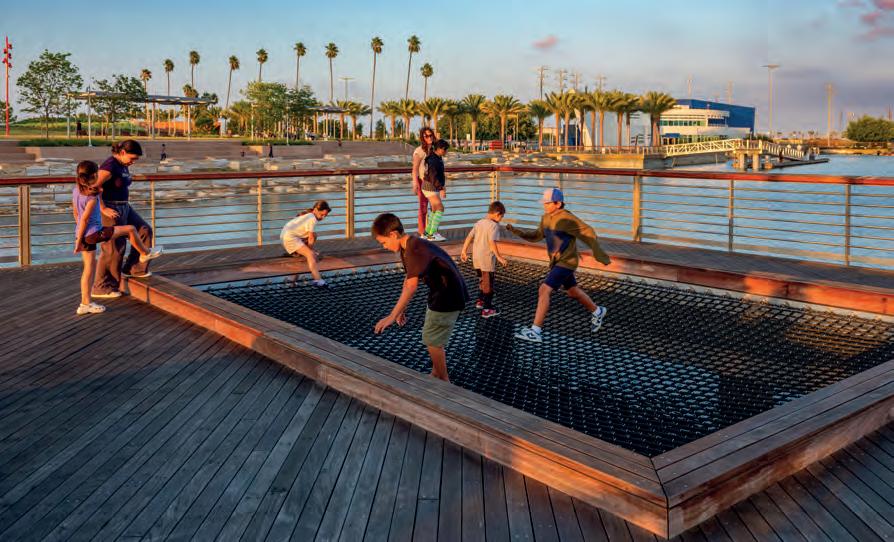
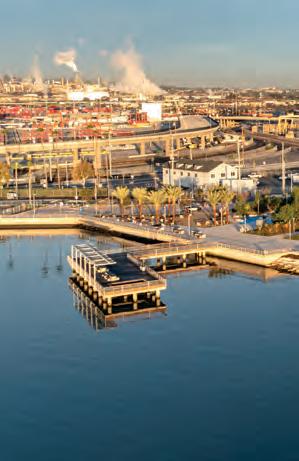
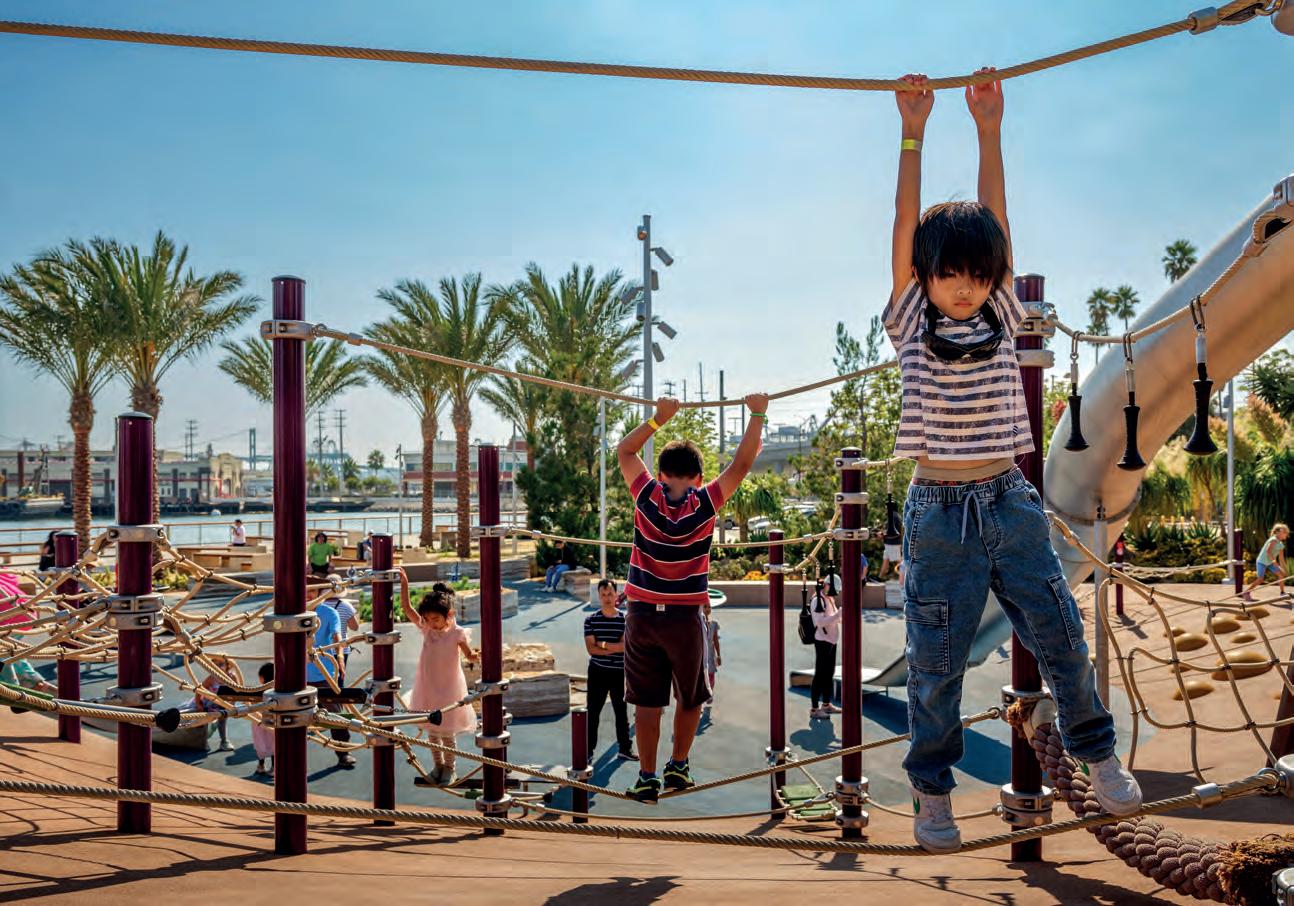
At the Promenade’s shoreline, terraced Arizona onyx steps 270ft-wide descend into the tidal zone, their pools shifting rhythmically with the day and season. Nearby, a constructed pier with an integrated net suspends visitors above the water, creating a dramatic threshold between land and sea that draws the community over the water’s edge. Further along the walkway, custom wooden seating inspired by industrial railcar tracks pays homage to the site’s working past, and native trees shade a children’s playground and woodland paths. The new park amenities are animated by event lawns, plazas, picnic groves and flexible performance venues, with a future bridge poised to complete the final link between community and coast.
The Sasaki team had to address multiple challenges at the former industrial site: contaminated soil, a fenced-off waterfront, noise and continuous port activity. To mitigate these issues, Sasaki worked with the Port to conduct detailed environmental assessments and carefully
Previous page: Waterfront promenade transforms site ©Millicent Harvey
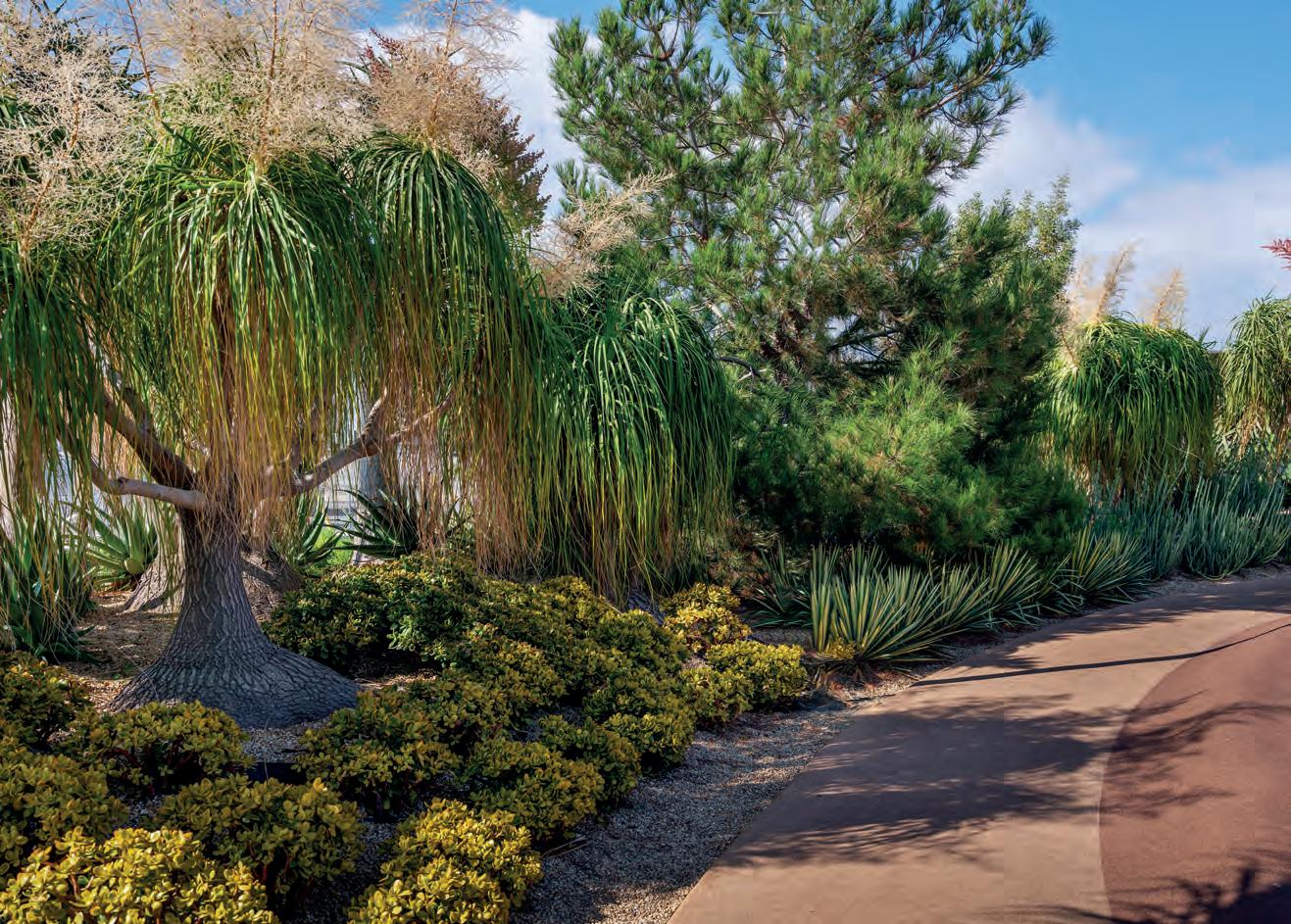
Current page left to right: Over 50 species of native coastal plantings ©Millicent Harvey; Promenade opens up to sweeping views of the LA harbor ©Millicent Harvey ©Barrett Doherty; 270ft-wide tidal steps feature small pockets of planting; Interactive net on the pier ©Millicent Harvey
coordinated around active freight routes and maritime access points that remained operational throughout the design and construction phases. Implementation was also phased to accommodate ongoing port operations and seasonal environmental construction windows.
Sustainability and ecological stewardship were embedded in the design from the outset. Stormwater is managed entirely on-site via bioswales, infiltration basins and permeable paving, with 50,000 gallons of storage capacity that reduces runoff and recharges groundwater. The planting design was equally central to the park’s ambitions, with over 50 native coastal species selected for salt tolerance, drought resistance and habitat value across three zones. Notably, the “Upland Wilds” zone features drought-tolerant grasses, shrubs, and nearly 150 trees; the “Bluff” offers flowering perennials and pollinator species on transitional slopes; and “Funky Forest,” a playful, shaded woodland of fast-growing trees with a layered understory planting, frames the children’s play area. As a whole, these zones collectively support a variety of wildlife, address urban heat and create immersive natural experiences for visitors.
What began as an inaccessible industrial zone, a place for cargo rather than people, was transformed into a vibrant civic space where Wilmington residents can finally meet the water’s edge. Through extensive stakeholder outreach, the Sasaki design team ensured that the new amenities and spaces for gathering, play, and relaxation reflected the needs of the neighborhood. The Wilmington Waterfront Promenade stands as proof of concept for what can be achieved when a busy working site commits to restoring public access and when landscape design facilitates the balance between industry and community.
Top to bottom: Adventure playground takes inspiration from the industrial heritage ©Millicent Harvey; Sculptural landform to elevate the existing planar grade of the neighborhood ©Barrett Doherty
Sasaki, a firm of over 300 professionals, has pioneered interdisciplinary design for more than 70 years. The practice integrates planning, landscape architecture, engineering and data science to shape authentic, equitable places through a collective and values-driven approach. sasaki.com
ABOUT Instagram
@sasakidesign







SELLING UP
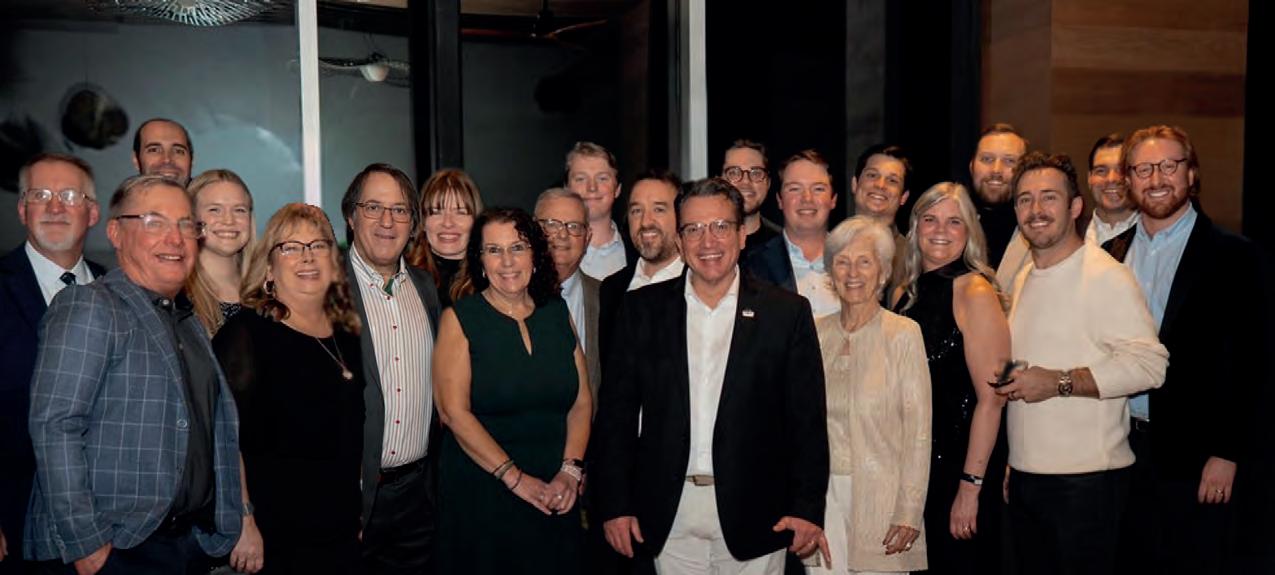
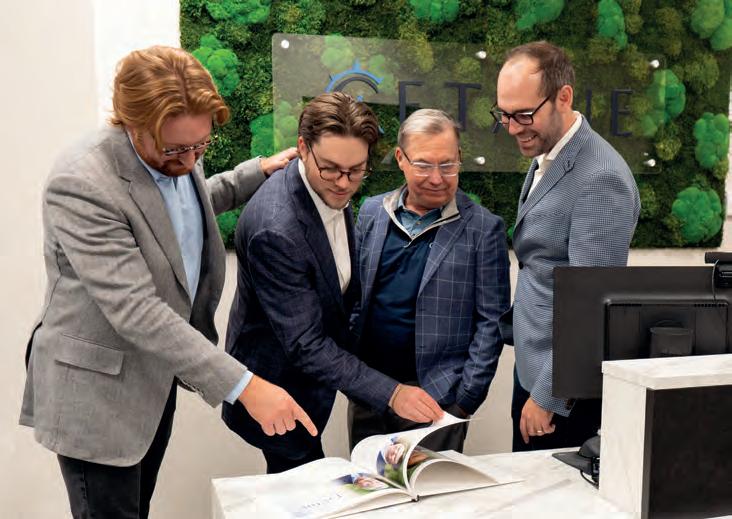
Selling a business is more than a financial transaction—it is a life event on par with marriage or buying a first home. For the small business owners navigating that emotional and logistical journey, Cetane Associates has built its reputation on providing expert guidance. The financial advisory firm has carved out a niche representing “the little guy” in the lower-middle-market merger and acquisition (M&A) space, offering a level of personal attention that larger investment banks rarely provide.
Barrett Conway, managing director of Cetane, discusses the firm’s evolution, its expansion into landscaping and the distinct challenges facing owners in home and commercial services.
An industry-specific approach
a move Conway sees as a natural extension of the firm’s expertise.
Rather than becoming a generalist firm, since heading the firm, Conway has kept Cetane focused on what he calls “home and commercial services.”
Currently, that umbrella includes landscaping, lawn care, pest control, HVAC and delivered fuels.
“I never want to be a generalist,” Conway states. “We make sure we have that right industry-specific expertise to have credibility right from the start.”
The competitive auction process
“We make sure we have that right industryspecific expertise to have credibility right from the start”
Cetane Associates was founded in 2006 with a specific focus on heating oil and diesel along the East Coast. Over time, the firm’s client base diversified into propane and HVAC, which in turn pushed Cetane to operate nationally. The expansion into landscaping began in late 2023,
The firm operates primarily on the sell-side, with approximately 95% of its work representing sellers.
Conway describes that the firm’s competitive auction process is a key value driver.
“If a seller is working directly with one buyer, inherently you don’t know if you really maximized your value,” he observes. “Running the competitive auction process is one of our big value drivers.”
He adds that the process is particularly important for small business owners who may not have a full team of advisors behind them. “They’re
Barrett Conway of Cetane on why selling a business is more than a financial deal— and how the firm helps owners navigate the process
small business owners, they’re entrepreneurial, they’re not large public machines that have a full team behind them that do this every day,” he continues. “I might be a great landscape business owner, but selling your business is a completely different animal. It’s really not knowing what you don’t know.”
Conway details the firm’s unique approach to managing the buyer process, which includes in-person management meetings after initial offers are received. “Valuation matters—you do need to be in the range—but 60% of the time sellers are not primarily going for top dollar. They’re going with a buyer who’s the best fit, who’s going to take care of their employees and customers.”
The firm maintains a dedicated backend team to handle legal and due diligence work, which Conway identifies as a crucial factor in closing deals successfully. “We have two non-practicing attorneys. They are a huge part of our success rate when we get to a signed letter of intent. I really do think it’s our backend team which is a huge piece of our success story.”
Landscape market and private equity interest
When asked about the factors driving business owners to consider selling, Conway notes
that there is no single answer. Some are approaching retirement with no succession plan; others in partnerships may wish to cash out early. Add to that the growing appetite from private equity, which he describes as a positive for sellers.
“There’s a lot of interest right now from the private equity world. Maybe five, six years ago, there were two to four buyers who would really take a hard look at my business. Now there are maybe 10.”
He attributes this interest to several factors. “The darling child in the industry is commercial maintenance. Private equity loves having recurring revenue as a big percentage of a business, which is also relatively recession-resilient,” he
“There’s a lot of interest right now from the private equity world. Maybe five, six years ago, there were two to four buyers who would really take a hard look at my business. Now there are maybe 10”
explains. “On the other hand, the AI revolution is real—these are people-based businesses; they are not easily automated. Additionally, once they’re up and running and you get to a certain revenue and EBITDA threshold, they’re very healthy businesses.”
Despite rising interest from buyers, Conway believes landscaping still lags behind more mature sectors like HVAC and pest control in its M&A lifecycle. “When we go around to a trade show, I don’t think all the businesses really understand that the EBITDA multiple is what people are willing to pay for their cash flow,” he reflects. “There’s still some early education happening in the industry at large.”
Advice for prospective sellers
Conway’s primary advice for owners considering a sale is simple: start early. “We actually love when clients call us two or three years in advance, and we can do our value range analysis, which is a very quick, easy way to get the kind of high-level metrics of the business. We might look under the hood and say, okay, here’s where you’re at today; I would work on XYZ.”
Furthermore, he encourages owners to “get your house in order” by ensuring financial records are clean and a team of trusted advisors

—including a lawyer and accountant—is assembled. He also stresses the importance of estate planning to ensure tax liabilities do not eat into the final proceeds.
“A big piece we hear all the time: it’s not the money on the top end that I get, it’s what do I get to take home after I pay the tax man,” he concludes. “The reality is most sellers want to have sold yesterday. Therefore, if you’re thinking about an acquisition, it’s good to call us in advance to get your house in order and really be prepared for the future.”

BUYING SMARTER
The seller takes the cheque, but the buyer takes the risk, explains Brian Goodhart, director of M&A advisory at Capstone Strategic
The story of mergers and acquisitions often focuses on the seller. But another compelling narrative lies on the other side of the table. Brian Goodhart, director of M&A advisory services at Capstone Strategic, specializes in navigating the labyrinth of strategy, psychology and financials ensuring a deal creates purchaser value.
His work centers on helping companies use acquisitions as a growth tool. Nonetheless, Goodhart warns that buyers frequently approach the process with a fundamental misunderstanding of what they are acquiring. “Purchasing a business is exponentially more difficult than purchasing something static, like a piece of property. Businesses are dynamic—they have customers, employees and complex networks of relationships.”
However, strategy alone is insufficient. The buyer must also prepare for the operational and cultural realities of integration. What seems like a perfect fit on paper can quickly unravel if the buyer fails to account for the human element.
“Purchasing a business is exponentially more difficult than purchasing something static, like a piece of property”
“Some buyers are going to want sellers to stick around for quite some time. Others will want them to stay just for a transitional period,” Goodhart says. A buyer must be clear about their own capacity to manage those new senior employees, retain talent and absorb different corporate cultures.
paying out a complex arrangement that includes deferred payments and performance clauses.
Furthermore, the buyer must be prepared to negotiate beyond the balance sheet. Goodhart refers to the concept of “X factors”—non-financial conditions that sellers often insist upon, such as retaining employees or preserving a brand’s heritage. While these may seem like peripheral concerns, they can be deal-breakers. “A buyer must be flexible enough to accommodate these requests without compromising their own objectives.”
Consequently, for a buyer, he advises that the first and most critical step is self-examination. Before approaching a single target, a company must define not just what it wants to acquire, but why.
The complexity of a deal is also reflected in its structure. Goodhart notes that the headline price is often a poor indicator of the true cost or value of a transaction. “The number tells very little about the actual transaction,” he states. Buyers frequently structure deals with a mix of cash, equity rollovers and earn-outs. This requires the buyer to have a sophisticated understanding of financial risk assessment. As Goodhart points out, a seller might boast of a $12m sale, but the buyer is actually
The process of buying a business is a test of persistence. “Most people find the process so intimidating they won’t do it,” Goodhart observes. A successful acquisition is not about winning the bidding war. It is about finding the right fit, structuring the right deal and staying disciplined.
Capstone Strategic is a middle-market M&A advisory firm. Specializing in buy-side transactions, the firm guides clients through the full deal lifecycle—from planning and valuation to negotiation and closing. capstonestrategic.com ABOUT linkedin.com/company/capstone-strategic

CHANGING THE Sales Conversation
How contractors are using financing to generate more leads, increase project sizes and create a better buying experience for homeowners
Most contractors spend years refining their craft. They invest in better tools, stronger teams, smarter marketing, and exceptional customer service. Yet one of the biggest factors in winning the job has little to do with the quality of the work itself.
Today’s homeowners expect more than a great finished product.
a buying experience that’s simple, transparent, and flexible. Financing has become an important part of meeting those expectations.
For years, financing was viewed as something to discuss only after a homeowner hesitated over the final proposal. Today,
“Today’s projects often represent a significant investment. The challenge isn’t always affordability—it’s timing and cash flow.”
with more than 25,000 contractors nationwide, and we’ve seen firsthand how changing the financing conversation can transform more than close rates. It can strengthen marketing, improve the sales process and help contractors build more predictable, profitable businesses.
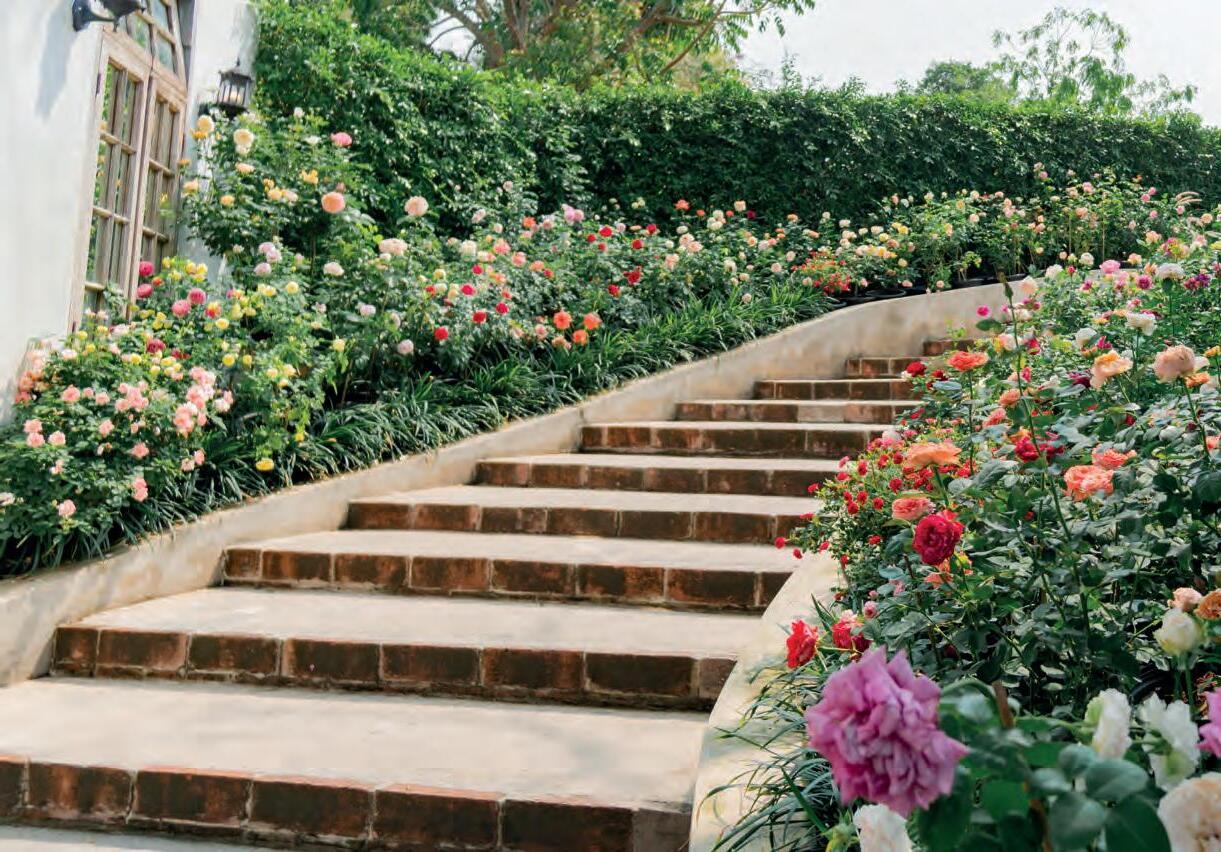
In other words, many homeowners are already thinking about financing before they ever contact a contractor. The question isn’t whether they’re interested in payment options— it’s whether their contractor makes those options part of the conversation.
Financing starts before the estimate
For many contractors, financing doesn’t enter the conversation until the proposal is on the table. By then, homeowners have often already begun editing the project in their minds—postponing upgrades, eliminating features, or asking for a scaled-back proposal before fully understanding their payment options. Introducing financing earlier changes that dynamic.
Instead of focusing on one large upfront cost, homeowners can evaluate the project through the lens of a monthly payment. That shift moves the conversation from sticker shock to long-term value. For contractors, that means spending less time negotiating what to remove and more time

spend less time chasing uncertain opportunities and more time focused on homeowners who are ready to move ahead. The result is a more efficient sales process—and more projects completed as originally envisioned.
More than financing
At HFS Home Improvement Loans, financing is just one part of the partnership. We work with more than 25,000 contractors nationwide, helping them use financing as a business growth tool— not simply a payment option. Beyond flexible financing, we provide sales training and marketing support that help contractors introduce financing naturally, promote it effectively and create a better buying experience for homeowners.
For homeowners, HFS offers a simple online application with a soft credit inquiry, allowing them to explore financing options without affecting their credit score. There are no home equity requirements, no appraisals and financing is available for
with confidence.
As homeowner expectations continue to evolve, financing has become more than a way to pay for a project. It’s become an important part of the customer experience.
Contractors who introduce financing early create more qualified opportunities, reduce friction during the sales process, and help homeowners build the projects they truly want. That’s why our mission is simple: help contractors grow by making financing a natural part of every customer conversation.
Because when the financing conversation changes, the entire sales process changes with it.
Larry Collins is president and founder of HFS Home Improvement Loans, a national consumer financing platform that provides unsecured financing for residential home improvement projects. With more than 30 years of experience, he helps contractors and builders offer flexible financing solutions that make larger home improvement projects more accessible.
hfsfinancial.net
linkedin.com/company/hfs-financial

LANDSCAPING LIABILITY SOLVING
Protect your crew, tools and reputation with insurance options that adapt with seasonal workloads and job-site demands

EMPLOYERS
This company provides workers’ compensation insurance for the landscaping and lawn maintenance industry, covering year-round and seasonal crews, equipment operators and grounds maintenance workers. Built for the unique risks of the green industry, from mowing and trimming to tree work and hardscape installation, this coverage helps protect landscaping businesses when employees are injured on the job. EMPLOYERS’ Pay-As-You-Go option gives seasonal landscaping operations added flexibility, aligning premium payments with actual payroll. Landscaping business owners also get responsive claims handling and safety resources built for the demands of outdoor, physical work. employers.com


Tingler Insurance
An independent agency operating in Virginia and North Carolina since 2010, this firm provides personal and commercial coverage across home, auto, life and business lines, working with multiple carriers to offer clients a range of policy options at varying price points.
For the landscaping sector, Tingler offers tailored business packages that address common operational risks. Offerings include general liability for on-site incidents, commercial auto for work vehicles and inland marine coverage for tools and equipment during transport. The agency’s approach emphasizes policy clarity and risk management support for small to mid-sized contracting businesses. tinglerinsurance.net
Insurance Canopy
Insurance Canopy offers landscaping professionals fast, affordable landscaping liability coverage built for the way they actually work. Policies start at $33.75 per month, with $2m general aggregate limits. A Certificate of Insurance is available immediately after purchase, helping contractors land jobs faster without the paperwork headache.

Policyholders can customize coverage with add-ons including equipment and tools, professional liability, commercial auto, workers’ compensation, snow and ice removal, pressure washing, and pool and pond maintenance, with the flexibility to pay monthly or annually. Insurance Canopy is rated 4.8 out of 5 on Google.
insurancecanopy.com
Insureon
Insureon is the largest independent digital agency specializing in small business insurance. This company operates a licensed e-commerce platform across all 50 states that allows business owners to compare quotes from top-rated providers and manage coverage online.
For the landscaping sector, Insureon offers policies addressing common operational risks, including general liability for third-party injury and property damage, commercial auto for work vehicles and inland marine coverage for tools and equipment in transit. The agency provides access to multiple carriers and licensed agents who specialize in industry-specific risks. insureon.com

TOP TIPS BUSINESS INSURANCE FOR
Insureon’s Cole Gritz reveals the essential coverages landscapers need, and the costly mistakes to avoid
Securing the right insurance coverage can be a minefield for landscaping business owners. Between impenetrable policy language and the pressure to simply tick a box, many businesses potentially leave themselves exposed. To help navigate this, we spoke with Cole Gritz, senior sales producer at Insureon.
Liability and
legal essentials
According to Gritz, general liability is the non-negotiable foundation. “Carrying commercial general liability is the number one way to protect yourself,” he states. He recommends that before stepping onto a property, landscapers should carry a minimum of a $1m occurrence/$2m aggregate policy. This covers third-party bodily injury and property damage— such as a rock breaking a client’s window. Regarding staff, workers’ compensation is a legal requirement in most states once you
“One of the slept-on things that I think is really important is coverage called inland marine coverage”
have three or more employees. This coverage is also non-negotiable in staying compliant and protecting the team. However, Gritz warns against unnecessary extras: “Professional liability is equivalent to malpractice insurance. Unless you’re doing design-build or charging professional advice, you probably don’t need it.” Stick to the essentials and save the budget for the risks associated with on-site physical labour.
Protecting assets in transit
Perhaps the most regretted omission among landscapers is inland marine coverage. “One of the slept-on things that I think is really important is coverage called inland marine coverage,” explains Gritz. This protects tools and equipment while in transit or at a job site—if a trailer gets robbed, general liability insurance will not cover the theft. He further notes that inland marine coverage offers “high ROI,” adding: “For
a hundred bucks, you got $15k in coverage for the things that make your job viable.”
A related danger is insuring a work vehicle on a personal policy. “If you have a commercial vehicle on a personal lines policy, you’re making a huge mistake,” warns Gritz. Personal auto limits often cap out at $50k, whereas commercial auto starts around $500k. In a litigious society, this can be essential to protect assets if there is an accident.
The contract requirement
Gritz’s most critical piece of advice is to always ask your client for their insurance requirements before you purchase a policy. “The most important thing a contractor can do is get a copy of their insurance requirements from the person they’re working for,” he says. Clients often demand wide-ranging coverage because it costs them nothing, but it can catch the contractor off guard. “Often I am sent client requirements, and it turns out that the policy that has been written for them isn’t sufficient for the contract,” he explains. Consequently, it is advisable to review these specs with the broker to avoid falling outside of coverage.

Insureon is an independent online marketplace delivering small business insurance. Headquartered in Chicago, it is America’s largest digital agency for SMEs, offering policies from carriers including Chubb, Hiscox, Liberty Mutual and Travelers. insureon.com
linkedin.com/company/insureon
ZERO SPREAD
As wildfire risk reshapes material choices, concrete decking offers landscape professionals a noncombustible alternative built for long term performance.
Across the country and around the world, longer, more intense wildfire seasons are changing how homes and landscapes are designed. In states such as California, increasingly stringent building requirements are prompting homeowners, landscape architects and contractors to look beyond traditional timber and composite decking. Reinforced concrete planks offer another option, one that brings durability, fire performance and long-term value into the conversation for both residential and commercial projects.
Karli Yeomans of LumberCon, a manufacturer of reinforced concrete planks, says the product can be used for residential decks in high risk wildfire zones, as well as commercial walkways, docks and rooftop projects. LumberCon’s highstrength concrete cures to approximately 8,000 psi, compared to around 2,500 psi for standard sidewalk concrete. Paired with steel reinforcement, this strength allows thin planks to span three to four feet between joists, greatly reducing the amount of substructure needed for a project. “Imagine being able to use a third of the joists needed for a project,” she states.
Fire performance is naturally a central concern for professionals designing in wildfire-prone areas. LumberCon planks meet ASTM E136 for noncombustibility and achieve a Class A rating under ASTM E84, which evaluates flame spread and smoke development. Unlike combustible decking materials, concrete does not ignite or contribute fuel to a fire. Yeomans explains the
distinction: “Class A fire rated is the highest rating you can get. However, there are other ratings when it comes to fire that help explain its actual durability. As far as a flame spread rating goes, concrete decking would exceed that rating. It simply will not catch fire.” She further notes that other Class A materials may “popcorn” and lose load bearing capacity under extreme temperatures, a factor with serious implications for safety during an emergency.
The sustainability conversation around concrete is more nuanced. Cement production carries a well-documented environmental cost, but concrete decking’s projected lifespan of 50 years or more shifts the focus toward whole-life performance. Fewer replacements can mean less material use, maintenance and disruption over the life of a project. Yeomans acknowledges this balance, framing longevity as a practical counterweight: “If you have a traditional wooden deck or a composite deck that is going to need upkeep or replacement every five, ten years or so, LumberCon eliminates that problem. It’s a build-it-once mentality because of its lifespan.”
For landscape professionals, the case for reinforced concrete decking comes down to resilient performance: a noncombustible material with structural strength and a long service life. Its zero flame spread and “build it once” longevity, as Yeomans puts it, make it particularly relevant for wildfire prone regions, waterfront settings and public projects where safety, maintenance and lifecycle value all matter.
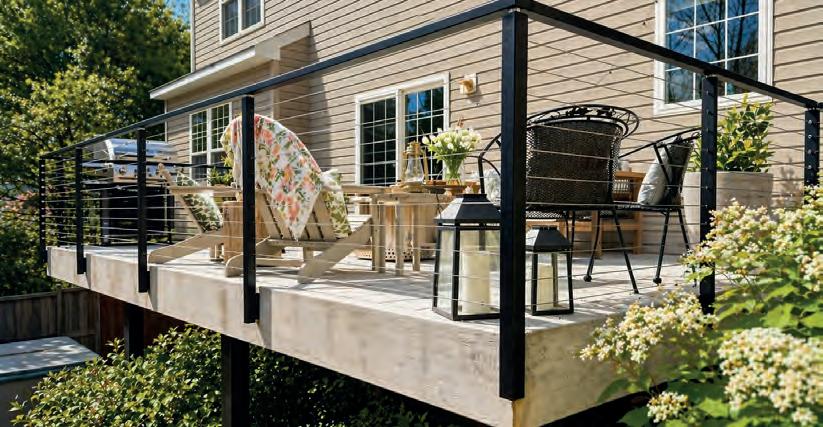
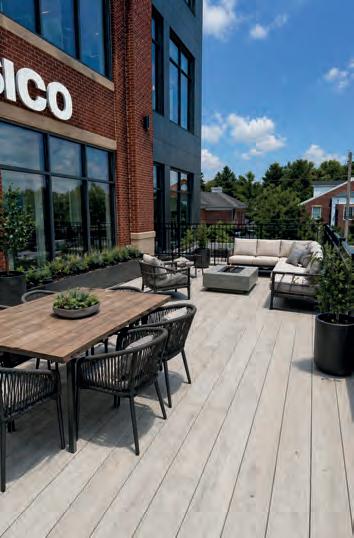
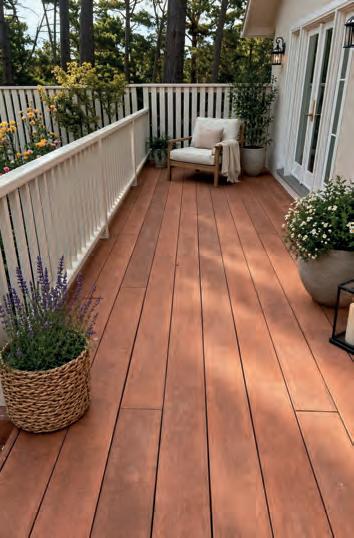

LumberCon manufactures reinforced concrete planks designed to capture the appearance of traditional wood. Its noncombustible products are used for decks, docks, walkways and rooftop terraces, offering resistance to rot, pests and weathering without chemical fire retardant treatments.
lumberconusa.com
@lumbercon
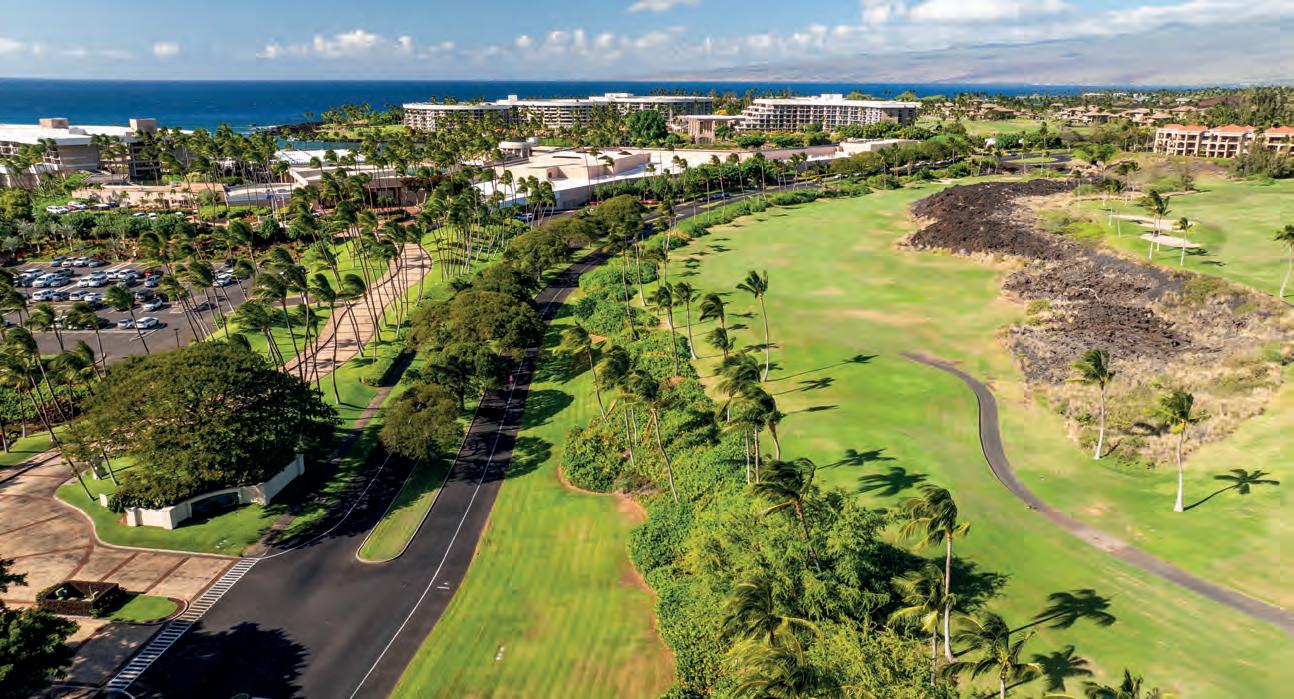
ATTENDING to the ‘Āina
Hawaii’s landscaping industry faces unique challenges. Landscape Industry Council of Hawaii president Matt Lyum discusses protecting a fragile paradise
The Hawaiian Islands are defined by nutrient-rich soil, a tropical Pacific climate and a remarkable diversity of landscapes, from snow-capped mountains and dry deserts to lush rainforests that cascade toward sheer sea cliffs. Each island was formed through volcanic activity that over time shaped the archipelago’s distinct topography and flora.
On the most populous island, Oʻahu, natives such as the ʻōhiʻa lehua (Metrosideros polymorpha) and ʻilima (Sida fallax) flourish—their vibrant blooms evoking the color-saturated imagery often associated with Americana ‘Tiki’ aestheticism. In contrast, the island of Maui—the state’s second-most populous—supports a distinctly different botanical character. Its dry lowlands host introduced, drought-tolerant species like kiawe (Neltuma pallida), while the high-altitude crater of Haleakalā
nurtures the iconic ʻāhinahina (Argyroxiphium sandwicense), found nowhere else on Earth.
“Hawaii presents a truly unique set of challenges. We face persistent supply chain issues due to our geographic isolation”
It is this distinctive botanical identity— combined with the pressure of invasive species and a shifting climate—that keeps Hawaii’s green industries and advocates in a state of perpetual vigilance. One of the preeminent organizations navigating those complications is the Landscape Industry Council of Hawaii (LICH), an organization that has served as the unified voice for the state’s green sector for more than three decades. Founded in 1986 with state backing, LICH transitioned to a membersupported model in the early 1990s and has since grown into a broad coalition representing landscape architects, contractors, arborists, government employees and golf course superintendents across all the islands.
Matt Lyum, president of LICH, recently spoke with Pro Landscaper USA about the diverse
challenges facing Hawaii’s landscaping sector. These range from the ever-present threat of invasive species and persistent labor shortages to the delicate task of maintaining a postcardperfect aesthetic in one of the world’s most fragile ecosystems—complexities as unique as the islands themselves.
Navigating the landscape
Lyum begins by explaining that operating a landscaping business in the middle of the Pacific presents a host of logistical and regulatory challenges that set Hawaii apart from the mainland. “Hawaii presents a truly unique set of challenges,” Lyum notes. “We face persistent supply chain issues due to our geographic isolation—getting supplies here can be both difficult and expensive.”
This relative remoteness also compounds a nationwide perennial problem: labor shortages.
“Since Covid, immigration has ground to a complete halt and has never really bounced back,” he says, noting that there has been a severing in key pipelines for blue-collar workforces.
For the landscaping sector specifically, Hawaii faces an additional complication with the H-2B visa program, which requires companies to demonstrate seasonality —a near-impossible task in a tropical climate. “Because we’re a tropical state, we don’t experience the traditional winter layoffs or operational slowdowns. In fact, winter is often our busiest period—that’s when the tourists arrive and the snowbirds return to their second homes here, requesting all kinds of extra services,” Lyum points out.
Yet the most pressing issue is the threat of invasive species. Hawaii, which represents less than 0.2% of the US landmass, is home to 44% of the nation’s endangered and threatened species, according to state government statistics. “Our native endemic species evolved in isolation over
INDUSTRY SNAPSHOT
millions of years and simply aren’t resilient enough to combat the constant influx of invasives,” Lyum explains. This creates a constant battle against pests and plants that have been introduced, intentionally or by accident, over the years. “We’re fighting an uphill battle on that front,” Lyum says, referencing the ornamental plant and aquarium trades. “Tourists do bring things in, but that’s minor compared to the sheer volume of fruit and vegetable imports. There’s simply no way our agricultural inspectors can keep up with all the cargo coming through.”
Lyum recounts a personal anecdote that illustrates the scale of the problem. “I once received a shipment of PVC pipe and found a black widow spider inside it. And the coconut rhinoceros beetle—now public enemy number one in
• The LICH estimates that the state’s green industries generate over $520m in annual economic impact and provide full-time employment for more than 11k landscape professionals.
• According to 2023 data from the Bureau of Labor Statistics, first-line supervisors of landscaping, lawn service and groundskeeping workers in Hawaii earn an average annual wage of $62,480. This equates to $30.04 per hour. The 10th percentile earns $48,640, while the median sits at $62,480 and the 90th percentile reaches $87,620. Regional variations exist, however. Urban Honolulu reports a median of $58,330, while Kahului-Wailuku reports $62,480.
• Wildfire represents a growing natural disaster with the majority caused by human activity. A 2026 Hawaii Senate Bill states that land area burned annually in Hawaii has increased three-fold over the last 20 years, driven by drought and the spread of highly flammable invasive grasses.
• Beyond wildfire, Hawaii’s landscapers face flooding (which can destroy irrigation and contaminate soil), volcanic vog that burns plant leaves, hurricanes that introduce invasive weeds and tsunamis that inundate properties with saltwater fatal to many plants.
Hawaii—arrived on a military transport from Guam that was supposed to have no organic material on board. It only takes a few incidental beetles to establish a breeding population.” The sheer volume of daily traffic to and from Hawaii, he suggests, represents the single biggest pathway for introduction.
The postcard image and the cost of paradise
One of the most interesting dynamics Lyum describes is the client demand for Hawaii’s signature look: a lush, tropical rainforest aesthetic. “On the Windward side of the islands, where rainfall is abundant, that lush vegetation occurs naturally. But there, the landscaper’s job is actually to prevent it from overgrowing and turning a property into an uncontrolled jungle.” Trouble arises when residents and resorts want to replicate that rainforest look on the dry, sunny side of the islands. “Maintaining that aesthetic near Waikiki’s beaches, where people want to live and gather, requires complex irrigation systems and highly trained professionals,” he says. “Homeowners prefer to live in arid, sunny areas but want to
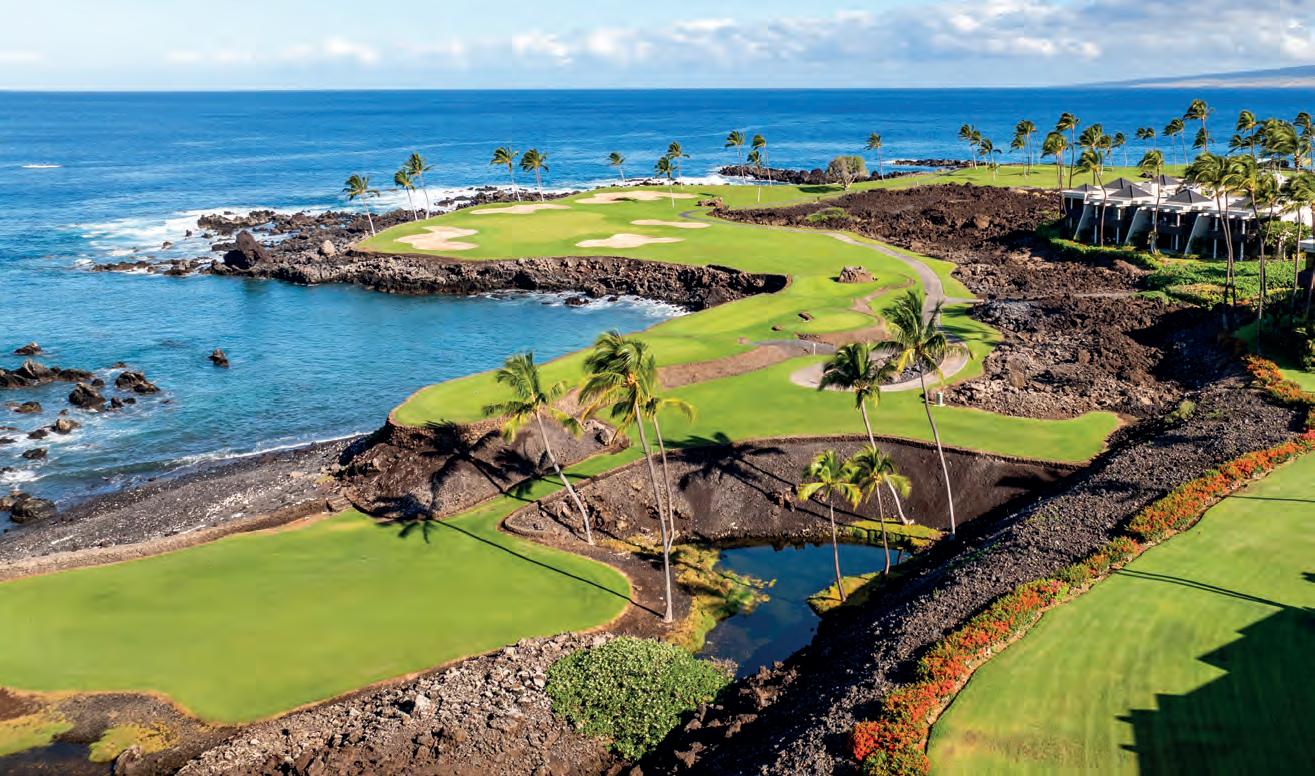
surround themselves with rainforest plants that have no business growing there.” Furthermore, the absence of a winter cold snap means insects and diseases never experience a natural population crash. “The only thing that interrupts those cycles is the landscape company, through careful management practices and targeted pesticide applications,” he adds.
Maui’s 2023 wildfires brought another dimension of risk into sharp focus. Lyum explains that the tragedy was fueled by a confluence of factors, including drought, unique geography and fallow agricultural land that had become overgrown with invasive fuel. “It was reminiscent of what we see with California wildfires,” he comments. “The rainy season promotes explosive invasive growth, then the drought arrives and turns all that vegetation into kindling.” While no new regulations have been passed that dictate specific
plant types, Lyum notes that LICH has been asked to collaborate on creating firebreaks. “We’ve been consulted on creating buffer zones around properties—10-foot, 15-foot fire breaks on fallow land,” he states.
“I’ve seen it time and again—companies arrive from the mainland and simply cannot adapt to the demands of maintaining tropical landscapes at the level required”
The realities of operating in Hawaii
Any contractor considering a move to Hawaii will quickly discover that operating in the islands is noticeably different to running a business on the mainland. “People simply don’t appreciate how expensive everything is—shipping supplies and equipment here, operating within a limited population base,” Lyum remarks. He adds that a constrained market often leads to a lack of variety in equipment and parts. “I attend the big landscape conference in Kentucky and see brands and equipment I’ve never encountered before. Nobody stocks those lines in Hawaii because the market
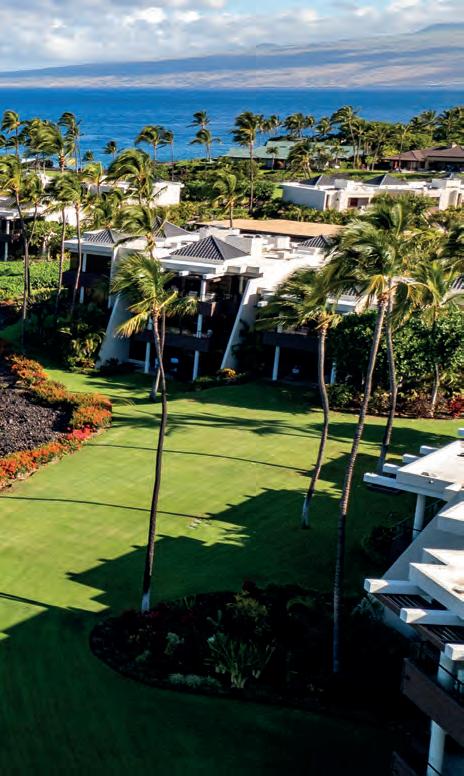
can’t support more than one brand of any given tool. You can’t afford to stock parts and filters that don’t turn over quickly.” This, combined with the year-round battle against pests, makes maintaining landscapes in Hawaii in some ways more difficult than in many mainland states. “We operate in an incubator environment year-round,” Lyum observes. “I’ve seen it time and again—companies arrive from the mainland and simply cannot adapt to the demands of maintaining tropical landscapes at the level required.”
Despite the intricacies of the challenges, Lyum sees the path forward for landscapers working in the state as lying in professional unity. Through LICH, he believes Hawaii’s green industry can rise to meet the challenges of invasive species, labor shortages, occupational standing and a changing climate—not as individual businesses competing for survival, but as a collective working to preserve the islands’ extraordinary botanical heritage. “To be viewed as a professional and paid like one, rather than dismissed as a weekend side-job operator, you need to be involved in your industry association,” he concludes.
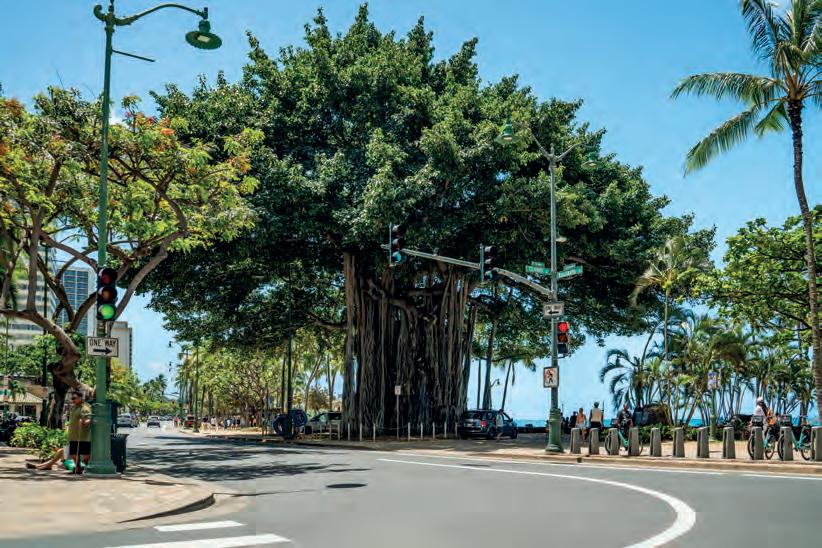

Born and raised in Hawaii, Matt Lyum holds a fisheries aquaculture degree from the University of Washington. After working on aquafarms and then compost operations in Hawaii, he founded Performance Landscapes in 2002, selling it to BrightView in 2022. Now president of the Landscape Industry Council of Hawaii, he runs ECS Environmental and advocates for the state’s landscaping sector. hawaiiscape.com ABOUT facebook.com/hawaiiscape

DESIGN THE HEAT OUT
High-pressure outdoor cooling engineered for landscapes, jobsites, hospitality, sports, and residential living.
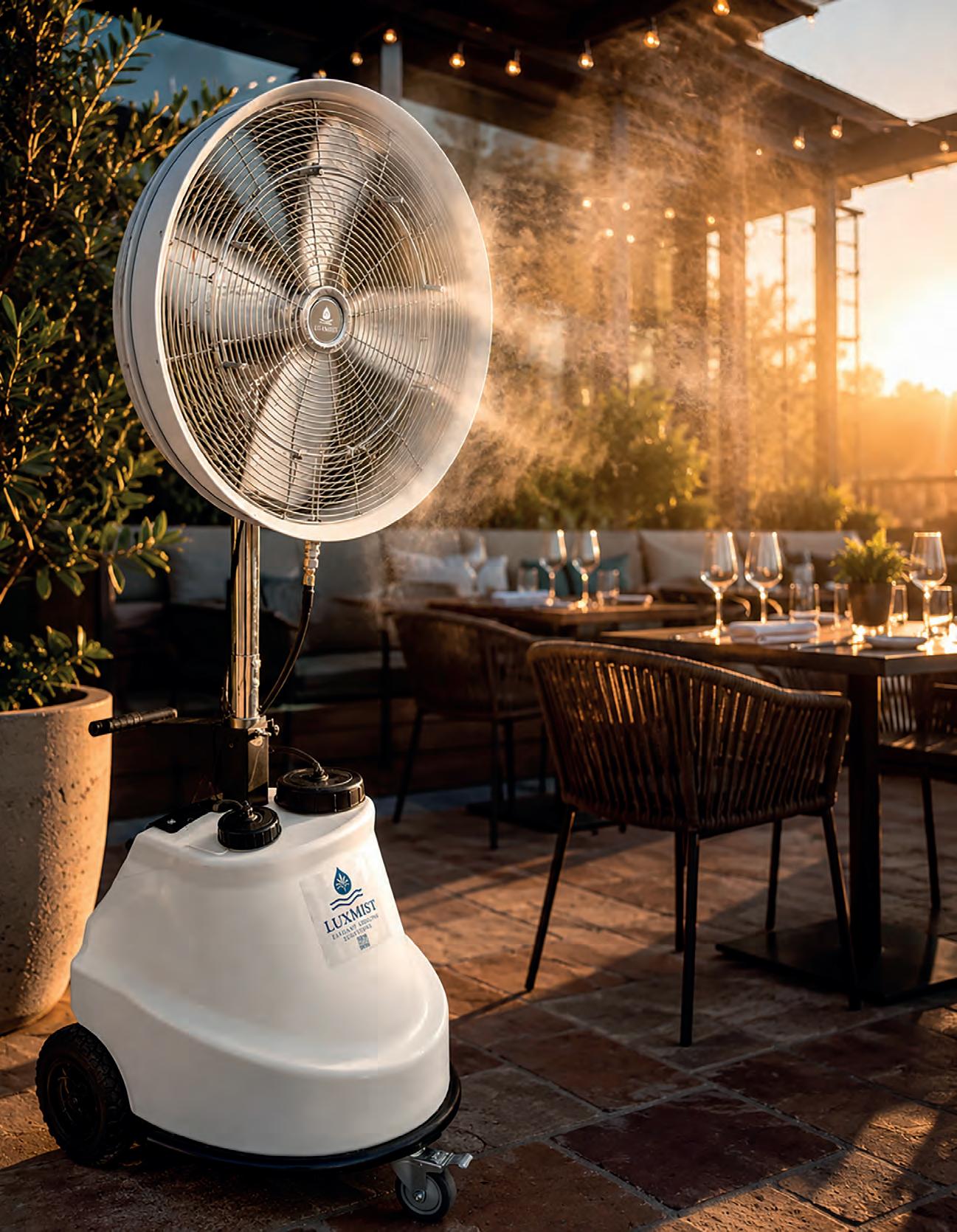
Outdoor space that performs
helps professionals create cooler, more usable environments without sacrificing design. Plan cooling into the project from the start - or deploy it exactly where the heat is hurting performance.

COMFORT by Design
For landscapers, designers, architects and contractors, heat mitigation is becoming part of the performance of an outdoor space
Abeautiful outdoor environment fails when people cannot comfortably use it. In hot markets, the difference between a space that looks impressive and one that performs is often thermal comfort. Patios, pool decks, courtyards, outdoor kitchens, sports areas and jobsite zones may be thoughtfully designed, yet still sit empty or become difficult to work in during peak heat. That is why outdoor cooling should be considered early in the design process, alongside shade, planting, circulation, irrigation, lighting and power. High-pressure misting works through rapid evaporation. Water is pushed through precision nozzles as an ultra-fine mist, absorbing heat from the surrounding air as it evaporates. Properly designed systems can meaningfully improve outdoor comfort and, under favorable conditions, lower ambient temperatures. Placement, airflow and site conditions determine performance. The first step is to define the cooling zones.
A contractor may need relief around staging areas or active work fronts. A homeowner may want the outdoor kitchen and seating area cooled first, then expand the system later. Designing by zone prevents wasted coverage and makes the investment easier to phase.
The second step is infrastructure. Permanent systems benefit from early coordination of water supply, power, drainage, mounting locations and service access. However, for flexible applications, self-contained portable units offer immediate deployment, mobility and the option to connect to a hose for continuous operation.
“Properly

wind all affect results. Strategic placement also protects the visual intent of the landscape. The goal is for comfort to feel built into the space.
Maintenance should be part of the specification, too. Water quality, filtration, nozzle condition, pump care, and routine inspections determine long-term performance. A professionally planned system should include accessible components and a practical service plan.
designed systems can meaningfully improve outdoor comfort and, under favorable conditions, lower ambient temperatures”
The third step is airflow and placement. More equipment does not automatically mean better cooling. Fans and nozzles should work with the natural movement of air, not fight it. Mounting height, fan direction, vegetation and prevailing
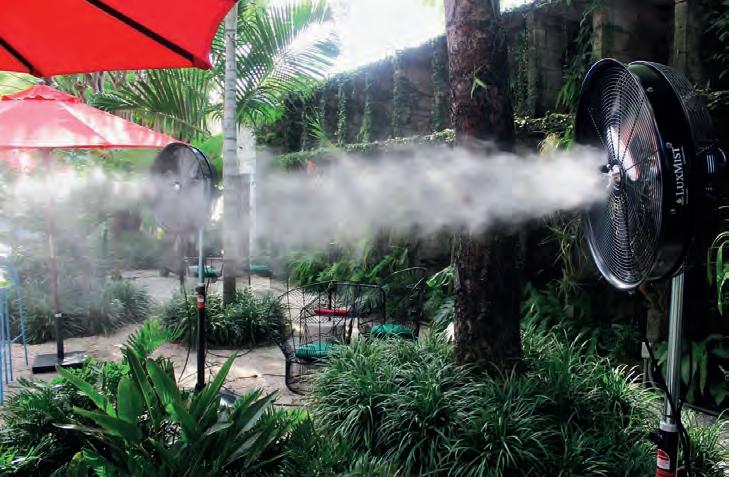
Early collaboration gives landscape professionals more control over appearance and water use. Pumps can be sized for the actual load, mist cycles can be adjusted to conditions and nozzles can be positioned only where they create value. That avoids the common mistake of oversizing a system or treating every square foot the same. It creates a clearer handoff among project teams, contractors and property operators. The result is a system that looks intentional, operates efficiently and can be easily maintained.
For landscape and construction professionals, the opportunity is bigger than adding a fan.
It is about delivering outdoor space that remains usable, productive and valuable when temperatures rise. Shade creates protection. Planting shapes the environment. Airflow and evaporative cooling complete the experience. When those elements are planned together, outdoor design works harder and people stay longer.
LuxMist engineers high-performance outdoor cooling solutions that transform hot spaces into comfortable environments. From luxury resorts to construction sites, our portable and custom 1,000-PSI systems deliver commercial-grade cooling, reducing temperatures by up to 30°F.
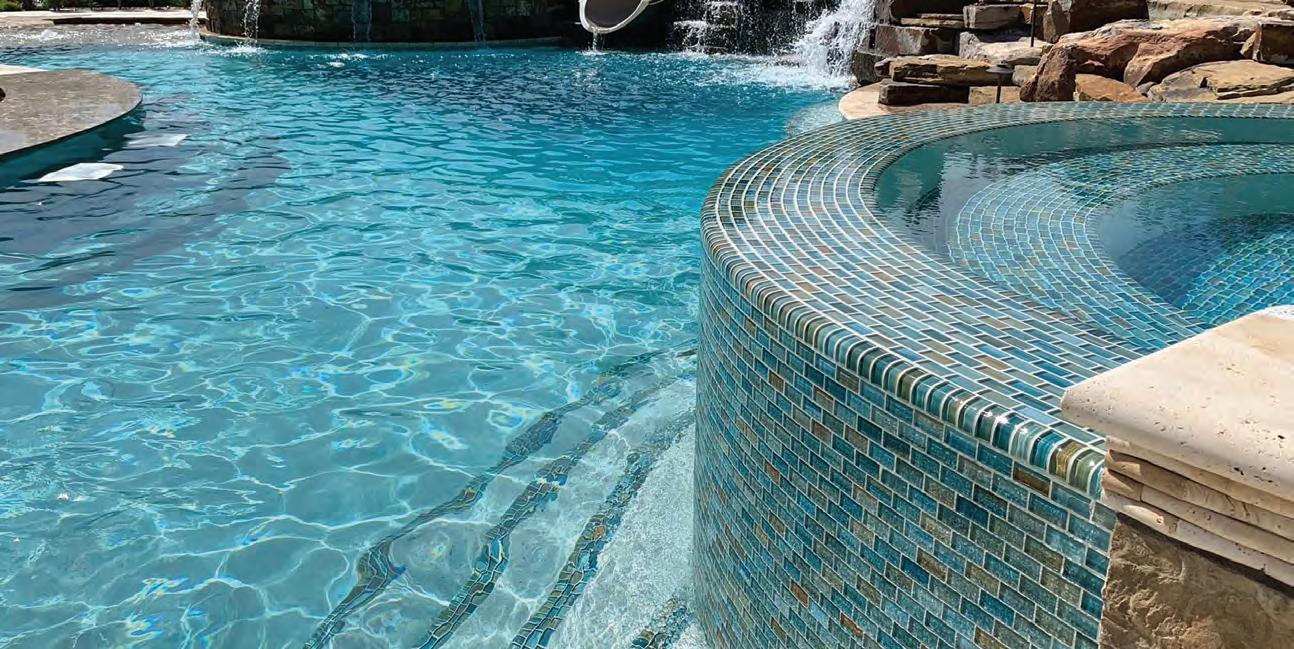
POOL CONSTRUCTIONMatters
Modern pool construction is no longer a simple process, requiring professionals to master water chemistry, material selection and specialised installation products and techniques
The modern luxury swimming pool is a far cry from the traditional “concrete pond.” Today’s backyard retreats incorporate everything from natural stone and glass tile to intricate water features and beach entries. As these designs grow more complex, the demand for specialized products and technical knowledge has become paramount.
One manufacturer with deep roots in this evolving landscape is Southern Grouts & Mortars (SGM). “We have the products, the technology and the technical know-how to incorporate all of these things together,” says Philip Greggs, technical director. His company has been manufacturing grout and thin-set products for nearly 50 years, evolving into a brand with a global presence.
SGM is best known for its exposed aggregate pool finish, Diamond Brite. The brand has become so synonymous with the product category that it is often used as a generic term, a phenomenon Greggs compares to “the
Kleenex of the tissue industry or Coca-Cola of the soda industry.”
According to Greggs, one of the industry’s most persistent challenges has been color fading in pool finishes. “The industry struggles with maintaining a colored plaster finish,” he says. Most colored plaster finishes are created by adding pigments to cement, and over time, UV rays, chlorination and aggressive water conditions cause those colors to diminish. The company’s Diamond Brite Jewels series addresses this by incorporating ceramic coating technology, which Greggs reports provides “color consistency and durability,” making it “far more resistant to color loss.”
“One
of the biggest misconceptions
is that one
mortar works for every installation”
Beyond pool finishes, the manufacturer offers an array of products that Greggs describes as “G2G” —gunite to grout—offering a complete
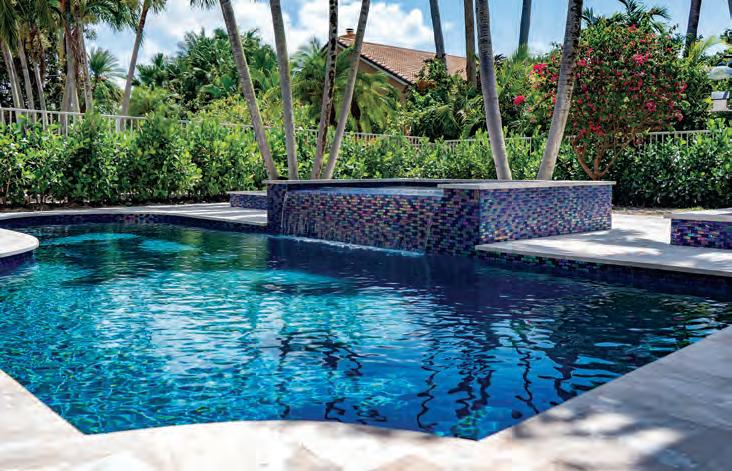
installation system. This includes Bond Kote, highstrength render mortars and thin-sets designed for specific applications such as submerged installations. “One of the biggest misconceptions is that one mortar works for every installation,” Greggs notes. “Different materials—including porcelain, glass tile, natural stone, and large-format tile—each have unique installation requirements.” He emphasizes, using the correct product for each application is critical to the overall project success. The company also provides training and technical support to the industry. This includes a three-day factory course covering product specifications, application techniques, water chemistry and hands-on application. Greggs adds: “We also offer continuing education lectures at many of the industry’s trade shows across the country.”
As the trend toward luxury resort-style residential pools continues, landscape professionals are increasingly facing complex installations and turning to companies like SGM for products and guidance. “They’re not just building the simple backyard pool anymore,” Greggs observes, noting that modern design requires a deeper understanding of how different materials interact, particularly in submerged environments.

Philip Greggs is technical director at SGM, where he has developed pool finishes and installation systems since 1997. He also serves on the National Plasterers Council Board of Directors, chairing its Research Committee. sgm.cc
facebook.com/sgm78
MIDSUMMER DREAMS
Engineering astonishes, theatrics delights and aesthetics elevates: three innovations redefining outdoor spaces
Technical ingenuity meets creative ambition in three outdoor innovations that are reshaping summer living. A sculptural cooler, a reimagined parasol and a radiant-cooling pavilion each demonstrate that the most compelling designs are those where engineering, theatrics and aesthetics converge— creating spaces that draw you in.
The Roland Group: MISTREE
As landscape architects grapple with the challenge of making public spaces more habitable in a warming climate, the MISTREE sculpture offers a solution that is as visually arresting as it is pragmatic. Developed by The Roland Group

and Barron Gould Studio, this five-meter-tall architectural installation marries evaporative cooling misting technology with DMX-programmable lighting, creating social areas that are not only cooler but also engaging.
According to Greg Zbrozek of The Roland Group, the sculpture emerged from a rare collaboration between engineer John Gould, manufacturer The Roland Group and lighting designer Tom Taylor. Following a soft launch earlier this year, the team is now
introducing MISTREE to the US market, with demonstration units already available for viewing.
The tree-like form is no stylistic accident.
“I don’t think public infrastructure should just be about solving problems, it should improve people’s experience of the space”
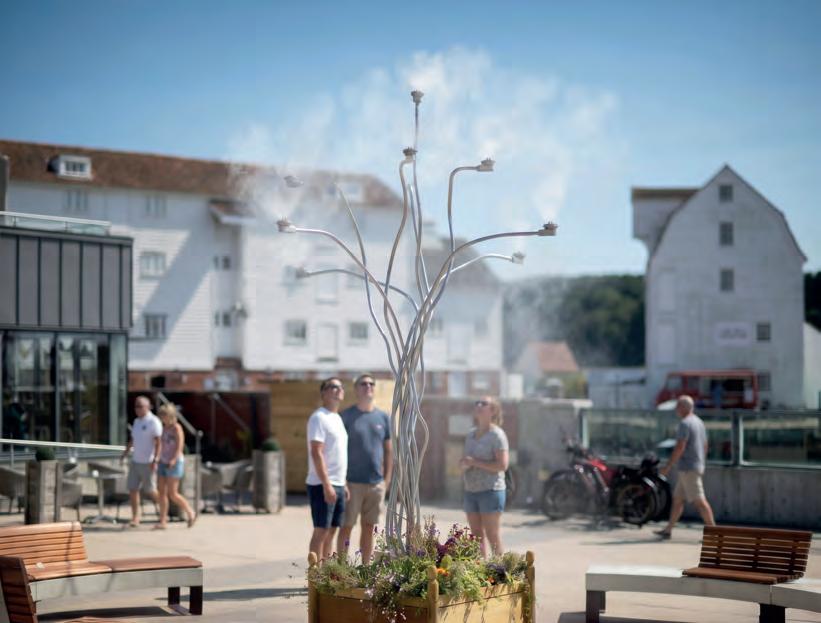
“Having it as a tree allowed us to integrate cooling technology into it and have it disappear into the structure,” says Zbrozek. “We didn’t want it to just look like utilitarian engineering that’s just there to cool down spaces but instead look like a visual landmark.” This philosophy signals a broader evolution in public infrastructure design. “I don’t think public infrastructure should just be about solving problems,” Zbrozek continues. “It should improve people’s experience of the space. With MISTREE, it allows people to gather and meet, take photos of a space, while providing comfort as well as being an evening landmark.”
The cooling system is woven into the structure itself: each branch atomizes water into fine droplets, generating a cool downdraft without wetting surrounding surfaces. Efficiency, too, is part of the appeal. “The hotter it is and the less humid it is, the more efficiently it works,” notes Zbrozek. “But in terms of comparing it to traditional air conditioning units, you’re looking at a 90% reduction in energy usage because traditional air conditioning is so energy-hungry.”
Targeted at landscape architects, developers and designers working in warmer climates, the sculpture is suited to city squares, shopping districts, hospitality venues and parks. The system delivers efficient water use by adapting output to changing weather conditions, and the system can be configured with battery and solar power to run the lighting.
“Every branch is individually controlled,” says Zbrozek. “There is no limit to how creative the
“With social media and all the information and content moving so fast, people want to see new things”

lighting effects can be.” For cooler seasons, Perspex balls can be attached to the branches, ensuring an illuminated display even when the mist is no longer required. There are also options for downlighters to provide ambient illumination.
Anamon
Where MISTREE addresses the macro-climate of the public realm, Royal Botania turns its attention to the more intimate scale of the terrace. The Belgian luxury outdoor brand has built its reputation on reimagining the classics, and a separate brand created by its head designer, the Anamon parasol, is a testament to that enduring ethos of ingenuity.
Conceived over a decade ago, Anamon’s design was born from an unlikely source: a tube-dwelling anemone spotted on a scuba diving trip—a moment captured by brand director Pieter Van
Puyvelde. “We were underwater, and he saw this small tube-dwelling animal, which my father pointed out to me,” Van Puyvelde recalls of his father, head designer at Royal Botania, Kris Van Puyvelde. “Once we surfaced back up, he said, ‘Pieter, I have an idea.’”
Yet the path to production was far from immediate. “We made some prototypes, but we couldn’t finish them. It always fell open, or when it was windy, it started dancing,” Van Puyvelde explains. The design was shelved until a deskclearing exercise brought it back into focus. The breakthrough came with a mechanical refinement: a locking system that secures the struts into place as the canopy ascends, taming the wind issue.
The Anamon’s defining feature, however, is its opening mechanism. Unlike traditional parasols that unfurl outward, its canopy rises vertically from within its own central pole, blooming from the
top down. The result is a genuine showstopper—a “surprise act,” as Van Puyvelde puts it—that allows the parasol to be positioned directly over furniture without a cumbersome base. Reflecting on the design’s instinctive appeal, he adds, “The best designs are maybe not the most difficult ones, but the ones that people think, ‘why didn’t I think of this?’”
Drawing from Royal Botania’s philosophy of “rethinking all the things that already exist,” the Anamon brand is peppered with playful yet practical details. A conical cap that seals the top when closed is designed to resemble a Frisbee— and can, in fact, be removed and used as one. “We think of everything—how we can make it playful or new, or design-driven,” Van Puyvelde adds.
Anamon’s unique presentation has already generated significant traction, with a video from the Salone del Mobile exhibition going viral and
amassing over 500 million views. For Van Puyvelde, this virality points to a broader shift in the highend outdoor market. “With social media and all the information and content moving so fast, people want to see new things,” he explains. A dualpurpose object, the Anamon provides shade by day and, with an integrated lighting system, transforms into ambient illumination by night—exemplifying what Van Puyvelde sees as the future of luxury outdoor living: designs that surprise, delight and elevate the everyday.
Henning Larsen: KlimaKover
Recently, international design firm Henning Larsen has had a significant design focus on innovations in urban infrastructure, alongside architecture, landscape and design. The KlimaKover pavilion—piloted on Governors Island last year and developed in collaboration with the University of Pennsylvania’s Thermal Architecture Lab and Clearly Cool—proposes a paradigm shift: lowenergy radiant cooling infrastructure that targets people directly, not the surrounding air.
Kritika Kharbanda, global head of sustainability at Henning Larsen, explains the project’s genesis: “It began with a conversation with researchers at the University of Pennsylvania. We recognized that their technology was highly innovative and could be deployed outdoors at a fraction of the cost of conventional cooling systems.” Eugene Chang, associate design director, continues: “We were inspired by the ephemeral presence of a floating summer cloud, which provides shade and, through rain, a cooling effect. We wanted to replicate that natural phenomenon in an urban setting.” This poetic sensibility, married to pioneering engineering, positions KlimaKover as both a functional intervention and a spatial experience—much like MISTREE and Anamon in their own right.
to,” Kharbanda notes. “It is not like standing in front of a fan where sweat evaporates instantly; the cooling effect is cumulative and builds over time.” To bridge this knowledge gap, thermal imaging cameras and thermometers were deployed during Climate Week NYC 2025, helping visitors visualize the gradual process, which becomes noticeable within five to seven minutes and pronounced within 20.
accessible to all.” By prioritizing passive strategies and material reuse, KlimaKover offers a viable, low-impact alternative to energy-intensive air conditioning—reimagining public space as an active participant in climate adaptation.
“Our ambition extends beyond one-off installations”
“Our ambition extends beyond one-off installations,” Chang says. “We want to integrate these principles into more commonplace projects, making sustainable cooling
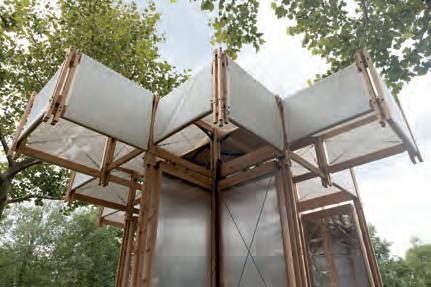
Engineering comfort, designing connection From the public square to the intimate terrace, these three designs redefine what summer outdoor living can be. Bold engineering and inspired design can build spaces that don’t just shelter us from the heat but invite us to stay.
The prototype employs a membrane-assisted system in which chilled water circulates through microtubes within transparent panels, drawing heat from occupants while a specialized membrane prevents condensation even in humid conditions. Fabric shading and natural breezes augment the effect, and repurposed photovoltaic panels ensure off-grid capability.
Unlike conventional air conditioning, which cools ambient air, the KlimaKover system operates through radiant heat exchange. “Our biggest challenge was helping people understand how this technology differs from what they are used
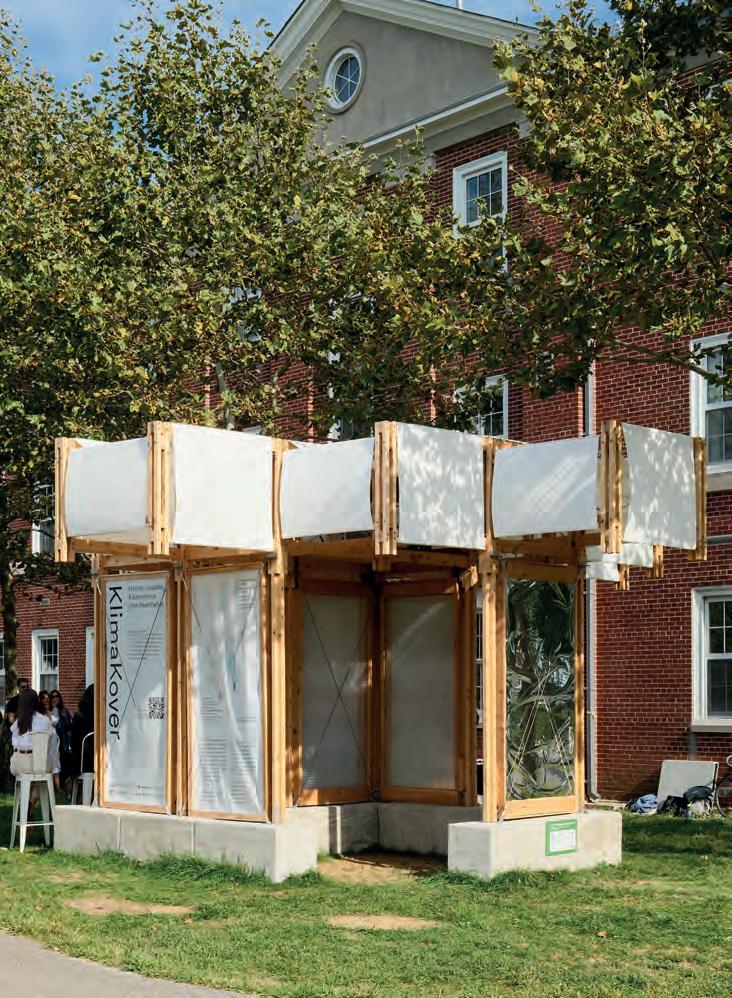
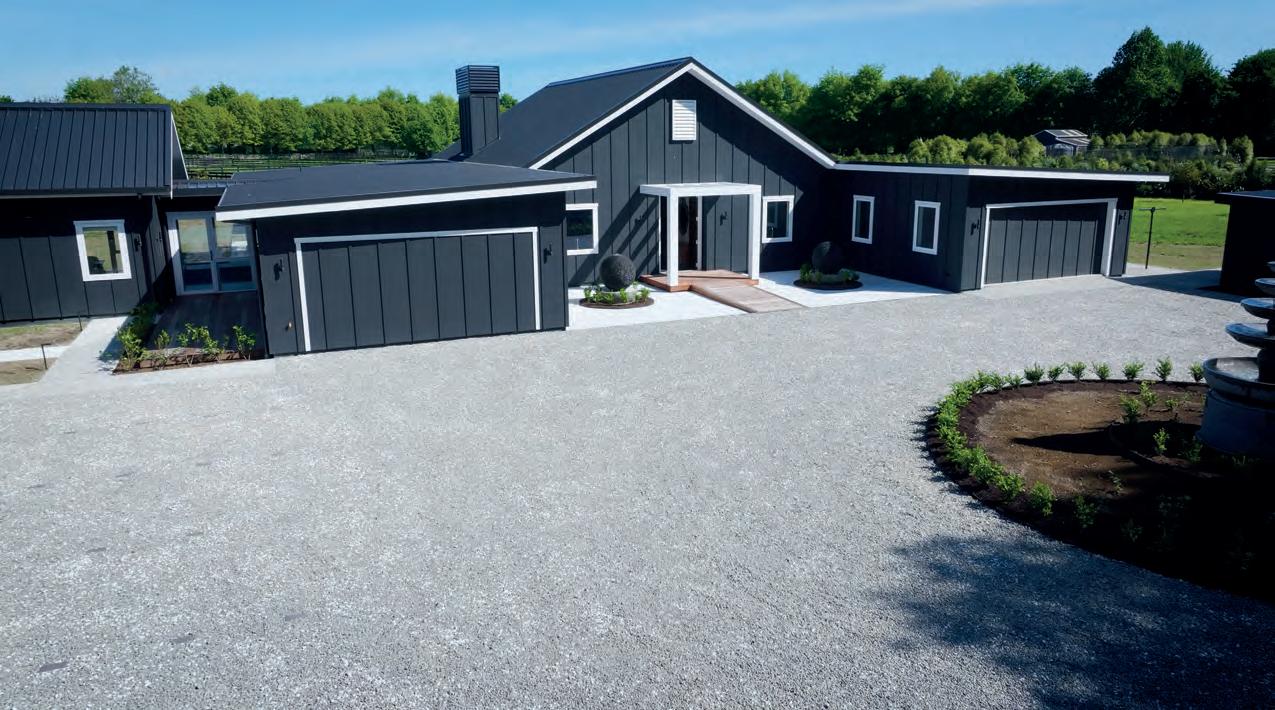
Permeable PERFORMANCE
Strol’s PebbleLock brings civil engineering rigor to decorative gravel, offering US landscapers a low-maintenance, sustainable alternative to concrete
Loose gravel has long offered designers a natural aesthetic, but its drawbacks— rutting, washout and constant maintenance—can cause client apprehension. Strol, born from civil infrastructure expertise, is changing that with a stabilization system that brings decorative stone into the modern era of durable, sustainable landscaping.
The growing demand for decorative stone solutions
The demand for products like Strol’s flagship offering, the PebbleLock permeable paving system, is being driven by a need for answers to a coming together of design trends and environmental pressures. While traditional materials such as concrete and asphalt remain prevalent, there is a growing appreciation for the aesthetic that decorative stone can bring
to a landscape. Yet this desire for a natural look is increasingly paired with a demand for longevity and low maintenance—qualities that loose gravel alone cannot provide.
“PebbleLock offers a solution by stabilizing the surface while allowing water to permeate through, recharging the soil and reducing runoff”
Sustainability and climate resilience are now central to the hardscaping conversation. As infill housing becomes more common, properties are growing less permeable. The Environmental Protection Agency reports that urban areas with 75 to 100% impervious cover see, on average, 45% more stormwater runoff, frequently contributing to local flooding. This places immense pressure on stormwater systems. PebbleLock offers a solution by stabilizing the surface while allowing water to permeate through, recharging the soil and reducing runoff. The environmental benefits extend beyond water management. Jethro Boakes, general manager at Strol, highlights another sustainability advantage inherent to the PebbleLock system: “Concrete production accounts for roughly 7 to 8% of global carbon emissions. PebbleLock, by comparison, is made
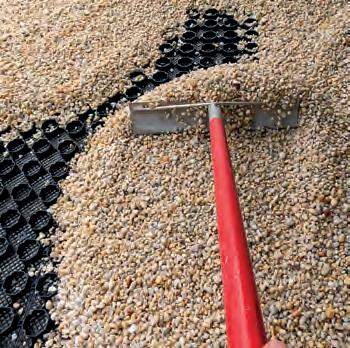
from recycled plastic and is itself fully recyclable.” Green life also suffers under impermeable surfaces; surrounding large trees with concrete or asphalt can cause them to decline, whereas a permeable surface allows water to reach their roots and supports healthy growth.
What sets PebbleLock apart?
PebbleLock is a durable mat manufactured from 100% recycled plastic, engineered to keep gravel and pebbles firmly in place. The system is a low-maintenance solution for stabilizing garden

paths, patios, driveways and parking areas, while preserving a clean, natural look. Install under pebbles, river rock or granite chip to help prevent puddles, potholes and erosion from heavy rain. It keeps surfaces firm and tidy, even under regular foot traffic, bikes or cars. The product is designed for USA conditions, ensuring performance across varying climates.
Now available through Amazon and homedepot.com, Strol’s product is distinguished from other stabilization systems on the market by a key design feature. One of the most significant differentiators is the integrated mesh system on the underside of the panel. Boakes identifies a common frustration with rival products: “In many systems on the market, there’s no mesh on the underside. Over time, stones work their way underneath the grid and literally push the panels up out of the ground. It’s a logistic challenge—you have to dig the whole thing up and relay it.”
perfect finish.” The large panel size—five sq. ft— also offers a significant advantage in installation speed. Beyond its stability, the product is designed for substantial load-bearing capacity, with crush test data supporting up to 122k pounds per square foot, making it suitable for vehicles.
The
value for landscape professionals
“One of the most significant differentiators is the integrated mesh system on the underside of the panel”
The mesh on PebbleLock prevents the stones from migrating beneath the panel, ensuring longterm stability and what Boakes calls a “forever
Regarding the needs of US landscape professionals, the product provides the aesthetic appeal of decorative stone without its maintenance headaches. It empowers landscapers and contractors with the ease of the installation process—requiring basic tools like a spade, hand tamper and rake—and offers contractors a reliable, lowmaintenance solution for clients. The growing appeal of outdoor living spaces, such as fire pit areas, is a natural fit for the product’s “nice even finish” that resists rutting from foot traffic. Through PebbleLock, Strol is responding to the American appetite for hardscaping solutions that balance environmental responsibility, long-term performance and creative design potential.
PEBBLELOCK STEP-BY-STEP INSTALLATION
Installing PebbleLock is a straightforward process that most DIYers can complete with basic tools.
1. Prepare the ground. Remove vegetation and excavate to hard ground or clay.
2. Lay geotextile. Line the excavated area with geotextile fabric to provide stability and help supress weed growth.
3. Prepare the base. For paths, add a two-inch compacted layer of crushed rock road base. For driveways or car parks, increase to fourto six-inches.
4. Add a bedding layer. Spread a thin layer of crusher dust or clean, sharp sand over the road base. This does not need compaction.
5. Install edging restraints. Edging restraints or curbing to contain the surface is recommended.
6. Lay PebbleLock pavers. Lay the pavers from left to right, joining with connecting clips. Stand on the pavers themselves to avoid disturbing the prepared surface. Trim to shape with a hand or circular saw where needed.
7. Fill with stones. Fill the pavers with pebbles and rake until they cover the cells and are level.
8. Ready for immediate use. The surface can be trafficked straight away. Maintenance is limited to occasional sweeping or raking.
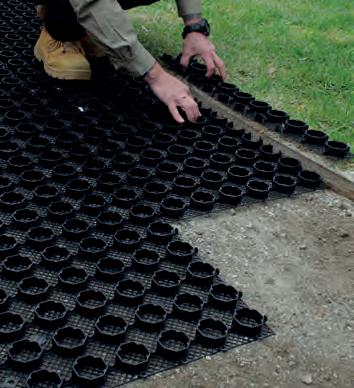
Launched in 2019, Strol brings decades of civil infrastructure expertise from its parent company Cirtex Industries to the DIY and landscaping market. Built on rigorous testing and quality control, Strol develops innovative, durable solutions that blend performance with sustainability for residential and commercial applications. strol.us.com
Instagram @strol_nz
PebbleLock™
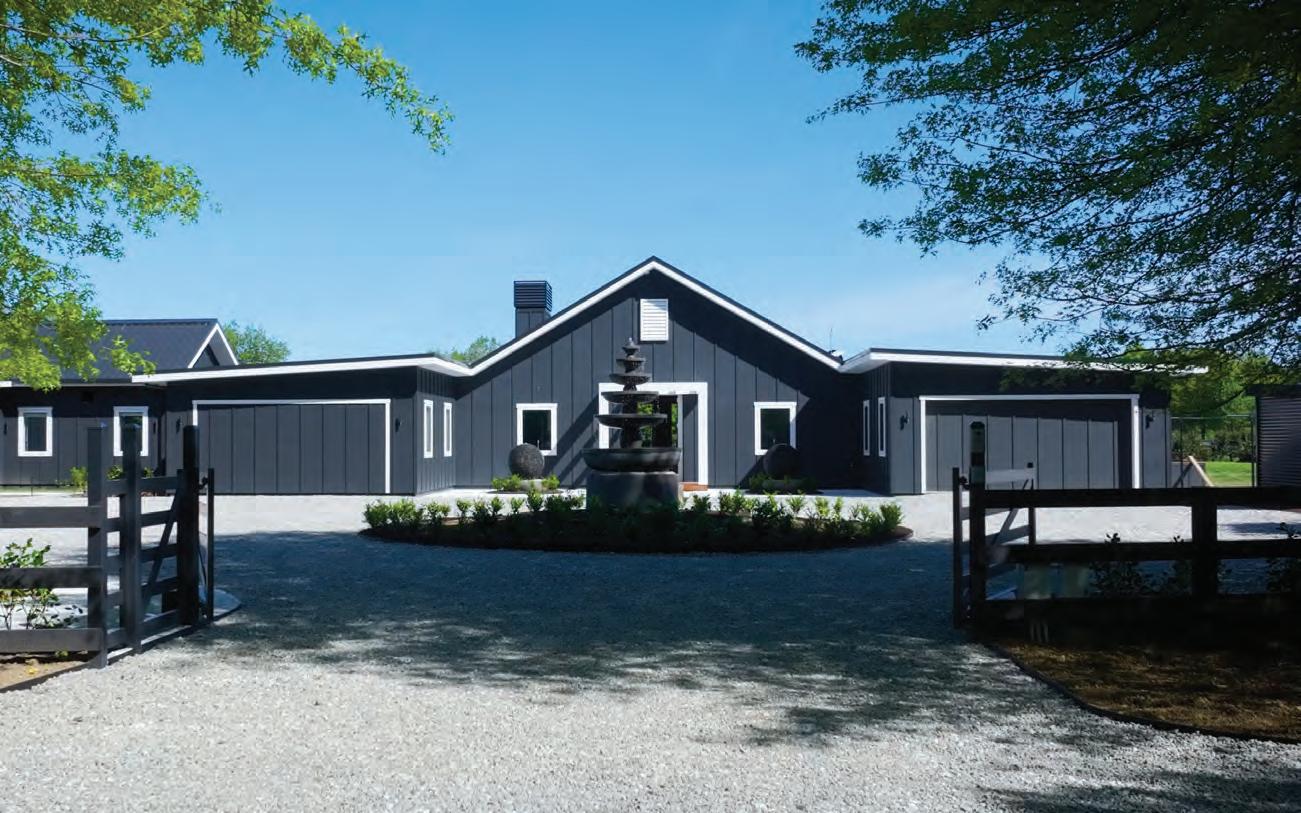
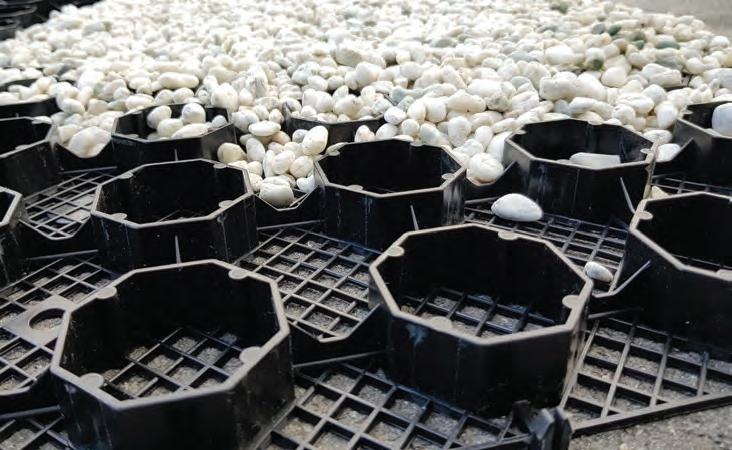
PebbleLock™ reinforces pebble surfaces, locking aggregates firmly in place across paths, patios, and driveways.
•Stops movement.
•Reduces maintenance.
•Maintains natural drainage.
•Long-term performance.
•Quick installation.
DESIGNING RESILIENCE

Ten years ago, most conversations about lawns centered on appearance. Today, landscape professionals are being asked a different question: How can a lawn continue performing when water becomes limited?
Longer periods of heat, recurring drought and seasonal watering restrictions are changing how landscapes are designed and maintained. At the same time, clients still expect outdoor spaces that look intentional, remain functional and complement the overall landscape. The challenge isn’t simply using less water; it’s creating landscapes that continue to perform under changing conditions.
Design for function
For decades, the traditional approach relied on a single species maintained through frequent irrigation, fertilizer and mowing. Increasingly, however, landscape professionals are discovering that resilience doesn’t come from asking one plant to do everything. It comes from selecting plants that complement one another, fit the site and require fewer resources over time. The best lawn isn’t a seed mix. It’s a site-specific solution.
Every successful project begins with understanding how the space will be used.
A front lawn designed for curb appeal has different priorities than a backyard for children and pets. Commercial entrances, roadside medians, shaded courtyards and sunny slopes each present unique challenges.
A lawn is rarely expected to do just one job. It may frame a commercial entrance, provide a durable play surface, reduce erosion on a slope or simply create visual continuity between planting beds. Defining those priorities early helps determine which plant communities will deliver the best long-term performance instead of defaulting to a single solution for every project.
This principle, often summarized as the right plant in the right place, has guided horticulture for generations. As weather patterns become less predictable, it has become even more important.
template. Fine fescues can provide a traditional lawn appearance with fewer mowing requirements, while microclover contributes nitrogen and improves density. In warmer regions, native grasses such as buffalograss and blue grama are well adapted to lower rainfall. These aren’t replacements for every lawn—they’re examples of matching plants to site conditions instead of relying on a onesize-fits-all approach.
Build from the soil up
“The best lawn isn’t a seed mix. It’s a sitespecific solution”
Alternative lawn mixes give professionals more tools to match plants to site conditions rather than forcing every landscape into the same
Equally important is what happens below the surface. Healthy soil is often overlooked in conversations about drought tolerance, yet it plays a significant role in how landscapes respond to heat and water stress. Deeprooted grasses, legumes and groundcovers gradually improve soil structure by adding organic matter and encouraging microbial activity. Better soil stores moisture more effectively, reduces runoff during heavy rains, supports stronger root systems and helps plants remain productive during dry periods.
As heat, drought and water restrictions reshape client expectations, alternative lawn mixes help create landscapes that perform beautifully with fewer resources
Healthy soils also moderate temperature extremes around the root zone. During prolonged heat, soils rich in organic matter retain moisture longer and create conditions that allow plants to recover more quickly after environmental stress. Over time, that resilience often becomes more valuable than any single species included in the mix. The most sustainable lawn isn’t the one that survives with the most water; it’s the one that performs well with the least.
Plant diversity also improves resilience. Landscapes built around multiple compatible species generally recover better from heat, drought and disease than monocultures. If one species struggles, others continue providing coverage and stability, reducing risk while maintaining the landscape’s overall performance.
Managing the transition
For many clients, transitioning to an alternative lawn doesn’t require removing existing turf all at once. Overseeding can provide a gradual path forward by introducing new species into an established lawn while preserving visual continuity. This phased approach minimizes disruption while allowing property owners to evaluate performance before expanding the conversion.
As with any landscape installation, establishment remains the most critical period. New seedlings require consistent moisture until roots develop, but the long-term objective is a landscape that becomes less dependent on supplemental irrigation as it matures. Maintenance practices should support that goal. Allowing grass to grow slightly taller shades the soil, reduces

evaporation, and encourages deeper rooting. Deep, infrequent irrigation promotes stronger roots than frequent shallow watering.
Redefining success
Perhaps the greatest opportunity for landscape professionals isn’t selecting the right seed; it’s helping clients redefine what success looks like. Many homeowners don’t actually want a specific grass species. They want a lawn that stays attractive through summer, requires less weekend maintenance, uses less water and complements the rest of the landscape.
“Perhaps the greatest opportunity for landscape professionals isn’t selecting the right seed; it’s helping clients redefine what success looks like”

Successful projects often begin by asking a different question: How do you want this landscape to perform? The answers usually center on lower maintenance, reduced irrigation, durability and longterm curb appeal. Once those priorities are established, conversations naturally shift away from preserving a traditional lawn at all costs and toward selecting the plants best suited to achieving those goals.
That shift in perspective may become one of the profession’s greatest strengths. As communities adapt to changing climates and increasing pressure on water resources, landscape professionals are uniquely positioned to guide clients toward practical, long-term solutions that balance beauty with performance.
The future of landscaping isn’t about eliminating lawns—it’s about designing lawns that are better suited to the places where they grow. By matching the right plants to the right site, improving soil health and embracing greater diversity, professionals can create landscapes that remain attractive, functional and resilient while requiring fewer resources year after year.

is President and CEO of Earthwise Seed Company and has spent more than 30 years helping professionals create resilient, low-input landscapes.
Jim Fucetola


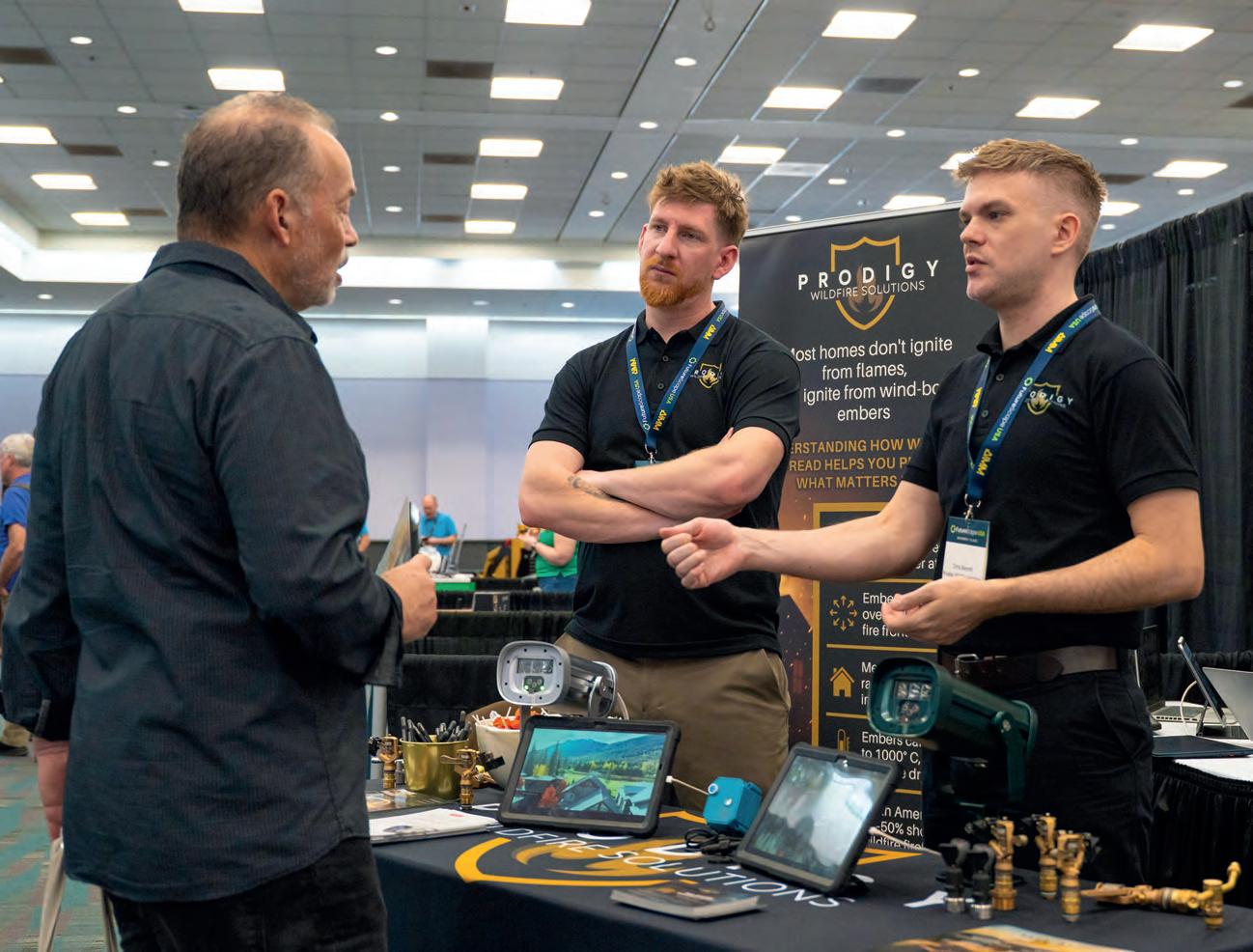

CONTRACT SAVVY
John Battle, a 30-year commercial landscaping veteran, reveals how smart RFPs prevent expensive surprises
Property managers do not lose sleep over landscaping because the grass might be cut on Thursday instead of Wednesday. They worry because a poorly written contract can quietly turn into a year of disputes, surprise invoices, tenant complaints and declining curb appeal. The landscape is usually one of the first things a tenant, guest, resident or executive sees. Yet the buying process for commercial landscape maintenance is often treated like a commodity purchase. That is where many problems begin.
After more than 30 years in commercial landscaping in North Texas, I have learned that the best contracts are built around clarity, not the lowest number. A good RFP tells contractors exactly what the property needs, how success will be measured and where the risks are. A weak RFP leaves bidders guessing, making comparison almost impossible.
A commercial landscaping RFP should cover property type, acreage, maps, photos, irrigation zones, planting beds, turf, hardscape, trees, seasonal color expectations and known problem spots. It should also separate base maintenance—edging, mowing and trimming— from enhancements like seasonal color or upgrades. Bundling these without definition leads buyers to compare unequal bids. Irrigation warrants special focus, especially in states where water management separates a healthy landscape from costly replacement. Managers should confirm whether inspections are included, how repairs are authorized, who monitors controllers and how leaks are reported. A contractor who waits until plants show stress has already failed.
“Pricing structure is another critical decision. Flat-rate contracts provide predictable costs and work best when the scope is clearly defined”
work best when the scope is clearly defined. Timeand-materials pricing, by contrast, is better suited for unpredictable work such as storm cleanup, troubleshooting, or drainage repairs. The key is matching the right model to the right work—a strong contract often uses a flat rate for routine maintenance and separate pricing for repairs and enhancements. Buyers should also have clarity on how change orders are handled, since no landscape remains static for 12 months. A well-drafted contract specifies what requires written approval, what can proceed under a pre-approved threshold and how emergency work is documented.
issues can kill plant material. Inconsistent service can frustrate tenants and residents. Deferred maintenance rarely stays hidden; it compounds. By the time ownership notices, the cost to correct the property is often much higher than the cost of maintaining it properly in the first place.
In commercial landscaping, the goal is to preserve appearance, function and value.
A well-written RFP tells the market that the buyer understands the work and expects accountability. That is how you attract top contractors and avoid the expensive lesson hidden inside a cheap bid.
Pricing structure is another critical decision. Flat-rate contracts provide predictable costs and
The cheapest bid can become the most expensive contract on the property. Poor mowing patterns can damage turf. Missed irrigation

is principal of JBa Land Management in Dallas, Texas, a commercial landscape management company serving North Texas for over 30 years. jbalm.com ABOUT Instagram @jba_land
John Battle





















































What’s up next for
















DESIGN
BUILD


Get your products in front of the professionals who specify, buy and install.
Pro Landscaper USA’s September 2026 issue will feature three key categories:

• Hot tubs: Showcase your luxury hot tubs, featuring craftmanship and innovation.
• Saunas: Pitch your saunas to professionals working across the country.

• Outdoor Kitchens: Highlight everything that goes into modern outdoor kitchens.
Why feature with us?
• Reach a targeted, active audience of industry decision-makers.
• Position your products alongside inspiring projects and expert insights.
Ways to get involved:
• Product spotlights within our category features.
• Brand profile opportunities.
• Tailored advertising packages.
Contact us to secure your place in the September issue.

For editorial inquiries:
Edward Brown Deputy editor



This is your opportunity to put your brand exactly where landscape contractors, designers and architects are looking for solutions and new products.








edward.brown@eljays44.com Managing director luke.chaplin@eljays44.com



Sasaki designwithdisabledpeoplenow.com
Other than the US, which country’s landscape inspires you the most?
Italy and Argentina.
You’re on vacation— lounge on the beach or explore a new city?
Explore a new city.
But why not both?
(I recommend southern Italy).
Best piece of advice?

Cheesy, but, be yourself, and let your passions and expertise shine: it’s what makes your work unique.
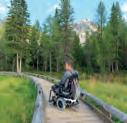
Dream project?
I’m currently working on it! The Gallaudet University Campus Plan Renewal. Would love to work on a project in Europe one day, that creatively considers historical preservation and accessibility.
One thing that you think would make the industry better?
More holistic education on disability, accessibility and inclusion in design.
Who would play you in a movie?
Maybe Dakota Johnson or Emma Watson? Would be flattered.
INTERVIEWS THE LITTLE

American Lawn & Sprinkler americanlawnandsprinkler.com YardCalc yardcalcapp.com
Other than the US, which country’s landscape inspires you the most?
France
You’re on vacation—lounge on the beach or explore a new city?
On a boat looking at the beach.
Best piece of advice? Listen to others.
Karaoke song?
“Don’t Stop Believing”

Dream project?
The White House.
One thing that you think would make the industry better?
Slip and fall lawsuits not allowed within three days of a snowstorm.
Trend you’re tired of? Texting.
Who would play you in a movie?
John Travolta.
Couldn’t get through the week without… A Diet Coke.
Other than the US, which country’s landscape inspires you the most?
New Zealand. The mountains, open spaces, and native landscapes remind me a lot of parts of Wyoming and Montana.
Dream project?
A mixed-use community space with great landscaping. Too many developments treat landscaping as an afterthought.
One thing that you think would make the industry better?


Better planning tools for homeowners. A lot of people start projects without understanding how much material they’ll need, what it will cost, or how much maintenance they’ll be signing up for. Better information upfront would save a lot of frustration.
Trend you’re tired of?
Perfect lawns. They require a tremendous amount of water and maintenance, and in many parts of the country, they don’t fit the local climate.
Couldn’t get through the week without... Time outside. Whether it’s working in the yard, hiking or just getting away from a screen for a while.
Alexa Vaughn
Steve Rogers
Alex Wright