Pro Landscaper is published 12 times per year by Eljays44 Ltd. The 2026 subscription price is £128. Subscription records are maintained at Eljays44 Ltd, BizSpace, Courtwick Lane, Littlehampton, West Sussex, BN17 7TL, UK. Articles and information contained in this publication are the copyright of Eljays44 Ltd and may not be reproduced in any form without the written permission of the publishers. The publishers cannot accept responsibility for loss of, or damage to, uncommissioned photographs or manuscripts.
Whilst every effort has been made to maintain the integrity of our advertisers, we accept no responsibility for any problem, complaints, or subsequent litigation arising from readers’ responses to advertisements in the magazine. We also wish to emphasise that views expressed by editorial contributors are not necessarily those of the publishers. Reproduction of any part of this magazine is strictly forbidden.
Pro Landscaper is proud to be an Accredited Supplier member of BALI
Welcome
What an honour it is to introduce myself as the new editor of Pro Landscaper. I began my love affair with this industry in the pages of this magazine, so this truly feels like a fullcircle moment.
Now to this latest issue. Whether they're coming over on imported plants, blowing over the channel, or finding the changing climate to be a perfect breeding ground, it's fair to say that pests and diseases are a threat to the UK. But the industry is working hard to mitigate these risks, and we dedicate the June issue to exploring how it’s doing this.
Advice from APHA explores biosecurity for landscapers (page 32) while Malcolm Catlin explains the importance of the Plant Healthy Scheme and why landscapers are often the first line of defence (page 67). We also explore the benefits of native and non-native plants (page 69). With the UK Pesticides National Action Plan mandating that other solutions are tried before using pesticides and Health and Safety Executive currently assessing whether the approval of glyphosate can be renewed in Great Britain ahead of its expiry date in December 2026, we explore where the sector is at when it comes to managing weeds (page 73).
The June issue also couldn’t pass by without reviewing the 2026 RHS Chelsea Flower Show (page 13). We celebrate the award-winners, take a look at some of the sustainable landscaping innovations and explore what's next for the show in Project Giving Back’s final year. Pro Landscaper was also lucky enough to follow the build of The Hive – A BALI collaboration (page 8) which gave a true insight into the blood, sweat and passion that the industry pours into the show – something we know continues long after the gates of Chelsea are closed for another year.
We've got lots more plans for future issues, but as always, we want them to include you. So please do reach out if you have ideas, want to see yourself in this magazine, or simply want to say hello.
The shortlist for the 2026 Pro Landscaper Project Awards has been revealed with the winners to be announced at an awards ceremony in July
20
Growing the Next Generation
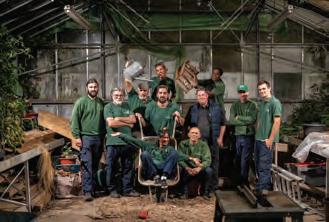
James Coles explains why he’s letting the fifth generation take over Coles Nurseries on their own terms
37
Let’s Hear it From: Jamie Butterworth
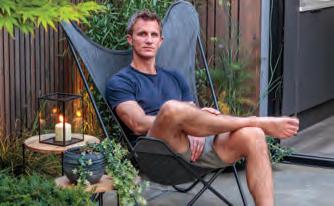
Jamie Butterworth explores his plans for the future of Form Plants as he looks to share his time between the business and media
45
Geometric Planting
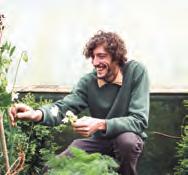
Taking inspiration from the client’s quilt, Adam Vetere transforms this family garden into plantlovers paradise
51 Luxe Living
Designed to encapsulate the size and beauty of the property, HG Landscapes have built a space which truly has it all
57
Adapting History
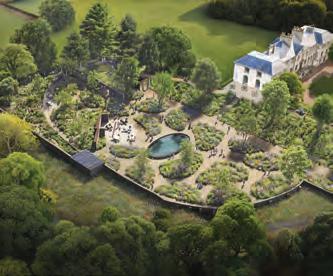
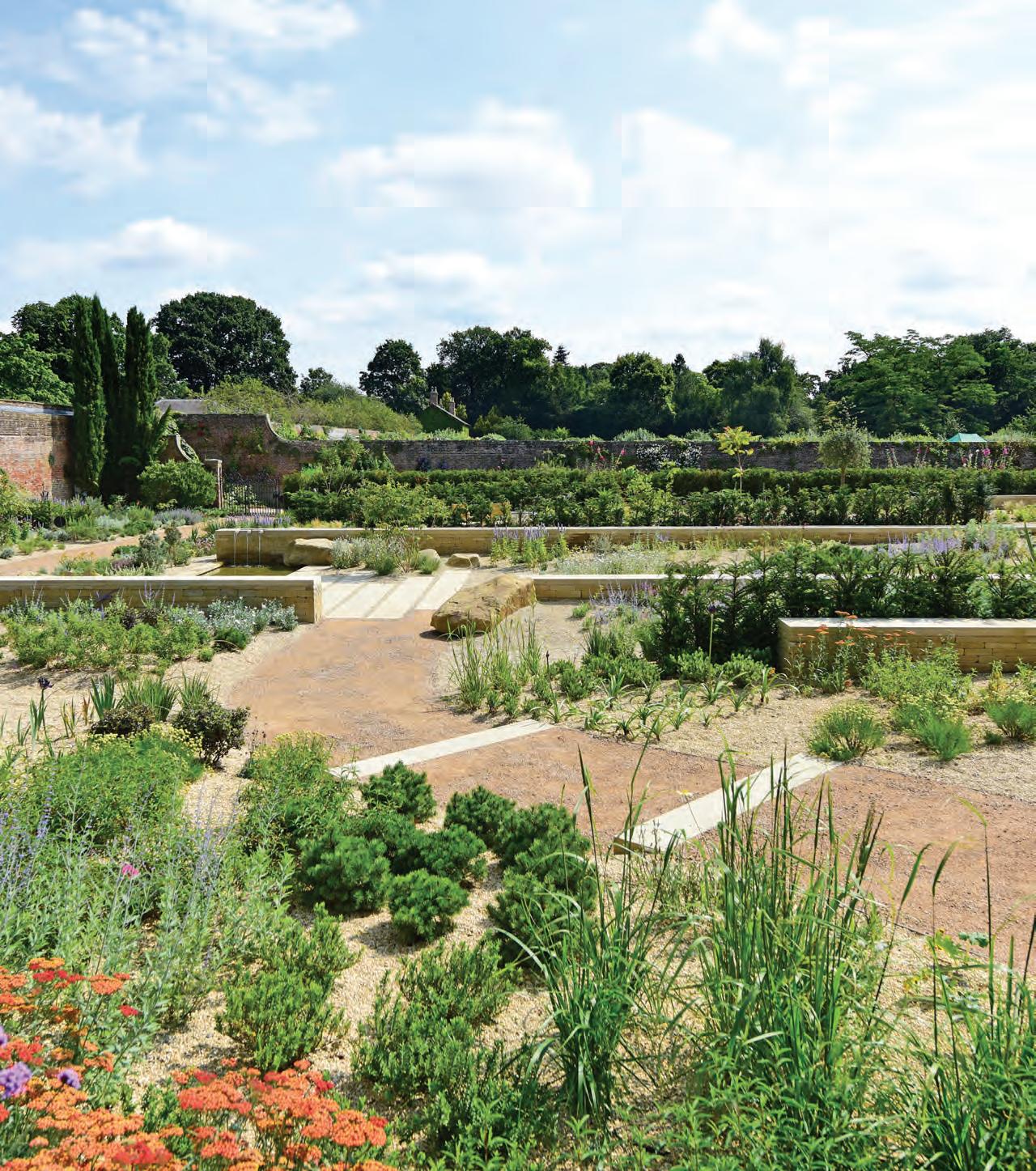
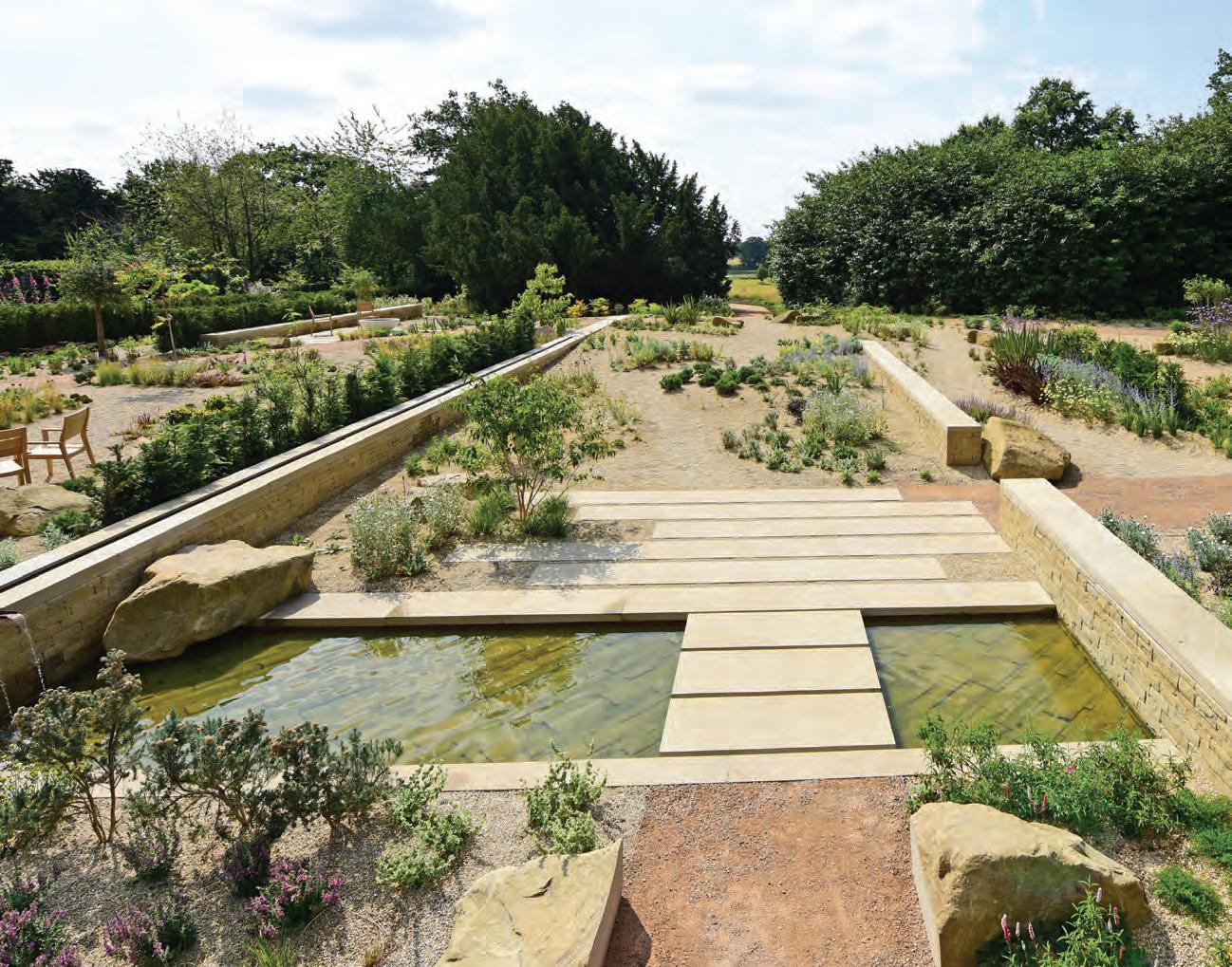
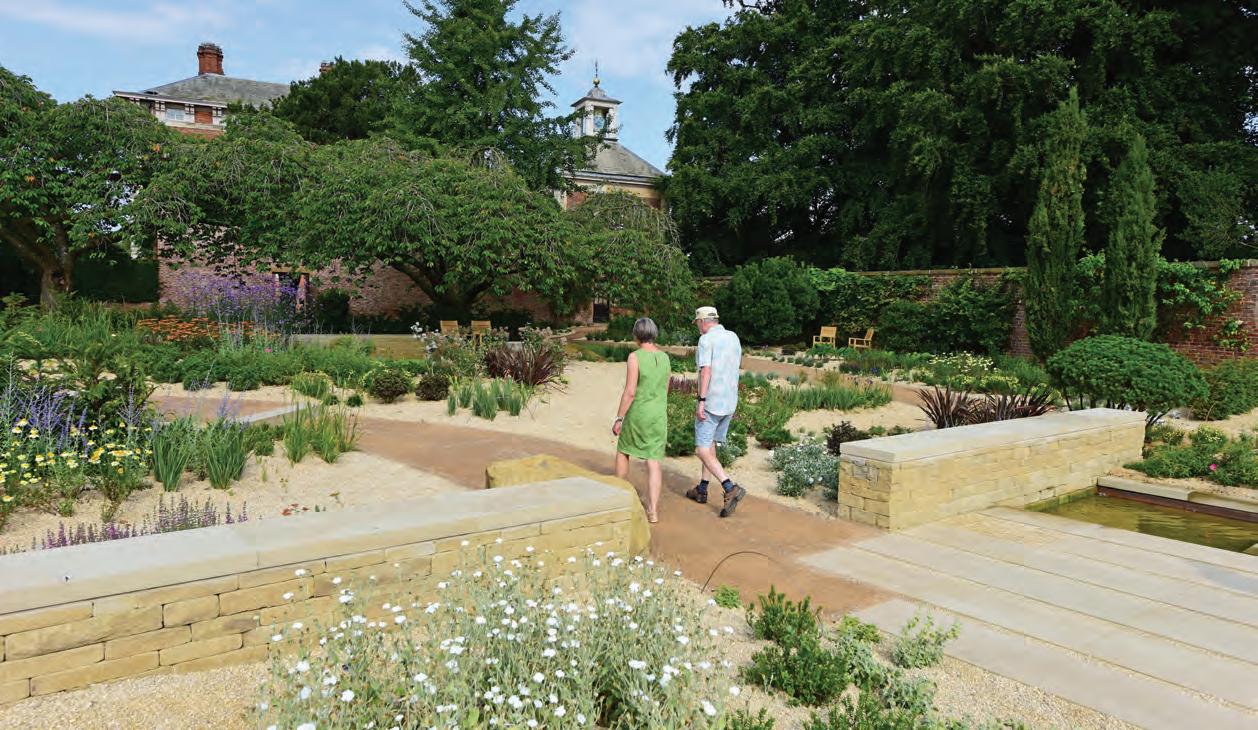
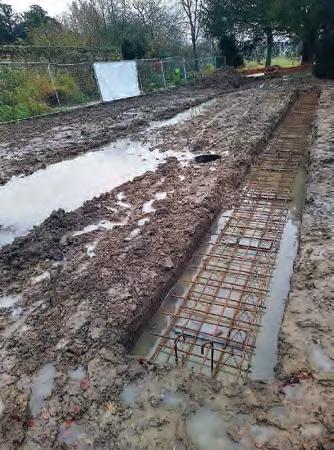
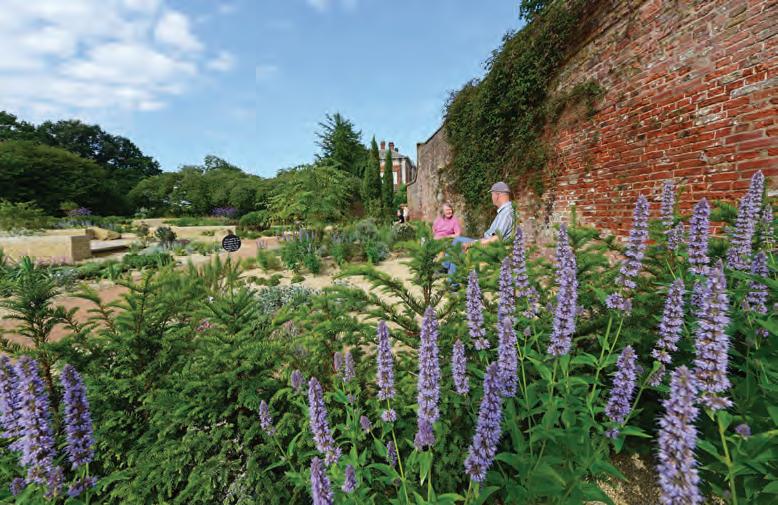
Helping to reinvent the historic setting of Beningbrough Hall, Blakedown Landscapes undertook a complex build ready for the changing climate
67
Prioritising Plant Health
Malcolm Catlin explains the importance of the Plant Healthy scheme and what landscapers should be looking out for
69
Natively Speaking
Experts weigh up the features and benefits of native and non-native planting within UK gardens
73 The Future of Weed Control
As policy and data begin to shift the industry’s approach to managing weeds, what does a non-chemical-first approach look like?
78
Comeback Kings
Begonias might be thought of as a “granny plant” but they can be so much more, says Humaira Ikram
79
Celebrating five years with Pro Landscaper
Gareth Wilson reflects on five years of writing articles to help improve understanding and support contractors, designers and suppliers
83
Five Minutes With Course leader of London of College of Garden Design’s Certificate of Plantsmanship, Richard Wilford discusses the 10-week course
13
RHS Chelsea Flower Show 2026 review Celebrate the winners and explore the sustainable landscaping innovations seen at this year’s RHS Chelsea Flower Show
27
The Power of Saying No
Leaning on six decades worth of experience, Alan Sargent offers advice on how to manage client relationships
80
Transparency is the Linchpin of Successful Relationships
Supplier-contractor relationships will thrive with transparency says Nelson Birch, as he explains why it’s the most important factor
37
BBC GARDENERS’ WORLD SPRING FAIR APPLAUDS THIS YEAR’S AWARD WINNERS
Garden designers, landscapers and college students were awarded at the BBC Gardeners’ World Spring Fair in Beaulieu from 1 – 3 May 2026. Hampshire-based garden designer Vicky Lincoln and Rob Woodhouse from Solent Garden Services picked up a gold award for
their Showcase Garden, Nature’s Spa, which was inspired by the William Wordsworth poem, Lines Written in Spring.
Headline sponsor, Hillier, created this year’s feature, Neighbourhood of Gardens.
College Gardens Competition celebrated teams from Coastland College, Dorset and Merrist Wood College, Guildford. Merrist Wood College picked up Best College Garden and Gold for Heritage Rewoven.
For the first time, Beautiful Borders gave first-time designers, charities and community groups the opportunity to try
ROUNDUP Industry Updates
LANDSCAPERS PLAY “HUGE ROLE” IN PROTECTING THE HEALTH OF PLANTS
With over 100 members, the Plant Healthy Certification Scheme helps professionals minimise the risk of introducing and spreading pests and diseases when growing and handling plant material.
There are currently nine businesses which list landscaping as one the scopes of their businesses with a Plant Healthy Certification.
Project director, Malcolm Catlin, says, “landscapers, along with growers and
designers, have a huge role to play in protecting the health of plants and trees.”
From the likes of Landform Consultants and Nicholsons, companies are contributing to plant health.
He adds that following recent events, for example the BALI National Landscape Conference on 26 March, several landscaping companies have submitted enquiries since. Read more about Plant Healthy on page 67.
their hand at designing show gardens. New Forest Day Opportunities and Minstead Trust was awarded Best Beautiful Border and a platinum award.
TRIBUTES POUR IN FOR NIGEL DUNNETT WHO HAS DIED AGED 63
An outpouring of condolences and tributes have been pouring in from the industry after it was confirmed on Sunday 26 April that Nigel Dunnett passed away.
Dunnett is renowned for his work behind the planting design at Tower of London Superbloom, the Barbican, and the Queen Elizabeth Olympic Park.
He joined the University of Sheffield in 1994 as Professor of Planting Design and Vegetation Technology.
Dunnett has designed six Main Avenue gardens at RHS Chelsea Flower Show and is a gold medal winner. Most recently, he designed The Hospitalfield Arts Garden in 2025 where he stated at the time he wanted to “turn traditional horticulture on its neck”.
Pro Landscaper announced Dunnett as one of the industry’s most influential figures in 2022 for his work in “transforming urban greening”.
JOHN O’CONNER COLLECTS KING’S AWARD FOR INCLUSIVE EMPLOYMENT INITIATIVE
In recognition of its commitment to social mobility, inclusive employment and skills development, John O’Conner Grounds Maintenance Ltd has been awarded a King’s Award for Enterprise.
HARRIS BUGG STUDIO LANDS CENTENARY GARDEN PROJECT IN SCOTLAND
London, Devon and Scotland-based landscape and garden design practice Harris Bugg Studio has announced its commission to design the Centenary Garden at Newhailes House and Gardens in Musselburgh with National Trust for Scotland.
Marking the Trust’s 100th anniversary in 2031, the walled garden overlooks the treetops to Arthur’s Seat.
Across three acres, Harris Bugg Studio will design a series of planted islands to create an immersive, ecologically rich landscape featuring reclaimed materials. Work on the project will begin during spring 2027.
One of 185 organisations to be given the accolade, John O’Conner was given the award within the Promoting Opportunity category.
The company has been pursuing its JOC Ascend – Elevate Your Potential, Embrace Your Future initiative, which provides pathways into employment, apprenticeships, skills training and career progression.
Matthew O’Conner, managing director of John O’Conner, says, “receiving a King’s Award for Promoting Opportunity is an incredibly proud moment for our business.”
MATT
KEIGHTLEY LAUNCHES
AI-ASSISTED GARDEN DESIGN PLATFORM FOR HOMEOWNERS
Spacelift, an AI-assisted platform, launched at RHS Chelsea 2026. It combines artificial intelligence, spatial measurement technology and the professional design methodology of Matt Keightley to help homeowners design, plan and manage their outdoor spaces.
Using spatial mapping and measurement technology, the platform enables users to generate expert-led AI-assisted designs tailored to their layout.
The platform isn’t intended to remove the role of a garden designer. Instead, it is designed to “support and extend the industry, creating new opportunities for designers, retailers and developers, while enabling more people to engage meaningfully with their outdoor space,” says Spacelift.
NURTURING THE NEXT GENERATION WITH PLUMPTON COLLEGE
This year, East Sussex-based Plumpton College celebrates its centenary year.
ELMTREE LANDSCAPES MAKES HISTORY AGAIN AT PRO LANDSCAPER BUSINESS AWARDS
A moment in Pro Landscaper Business Awards history, Elmtree became the first company to pick up the Supreme Winner accolade three times, breaking its own record.
7 KEY HIGHLIGHTS FROM RHS MALVERN SPRING FESTIVAL RHS Malvern Spring Festival at Three Counties Showground in Malvern, Worcestershire marks the launch of the 2026 RHS Show season.
CELEBRATING THE PRO LANDSCAPER BUSINESS AWARDS 2026
Pro Landscaper Business Awards 2026, in association with Paving Superstore, were celebrated during a ceremony at Old Billingsgate in London on Friday 24 April 2026.
COMMUNITY Highlights
THE HIVE – A BALI COLLABORATION BUILD GETS UNDERWAY
First launched in 2018, the awards recognise and celebrate the success of businesses within the landscaping industry across 20 categories as well as the 2026 Supreme Winner.
After the shortlist was announced in February, including two new categories Landscaping Champion and Business Leader, an esteemed panel of judges have since been deliberating on the winners.
Featuring history-makers Elmtree Landscapes who have now won the accolade three times, and the first-ever Business Champion Gareth Dillon, managing director of NT Killingley Ltd, the awards also celebrated not one, but two Landscaping Champions. Mark Gregory of Landform Constants and general manager of the APL, Phil Tremayne both picked up the crown.
The winners were chosen by both the judging panel and the industry through an open vote. It was decided that both Gregory and Tremayne should be awarded joint Landscaping Champions as one narrowly won the judges’ vote and the other narrowly won the public vote.
A sunny day spent in London, the awards celebrated its winners, those shortlisted and numerous supporters.
FORMER BROWNFIELD SITE TRANSFORMS INTO BIODIVERSE QUEEN ELIZABETH II GARDEN
Where disused glasshouses once stood, the Queen Elizabeth II Garden flourishes with biodiverse planting and sustainable design.
Designed by HTA Design for The Royal Parks, the garden is located within The Regent’s Park.
The two-acre garden features winding paths, a water-tower and the former Queen’s favourite plants, including Magnolia ‘Windsor Beauty’.
Matthew Pottage, head of horticulture and landscape strategy, says the opening of the garden “represents a huge moment after a big combination of work”.
Built by Blakedown Landscapes, the garden features over 1,000m of recycled materials.
Water flows as a coherent theme, says HTA Design’s head of landscape. He adds: “It’s not finished, this is just the beginning.”
A biodiversity hotspot, the planting and design offer a haven for insects, birds and hedgehogs.
GAINING INSIGHT INTO MILLBOARD
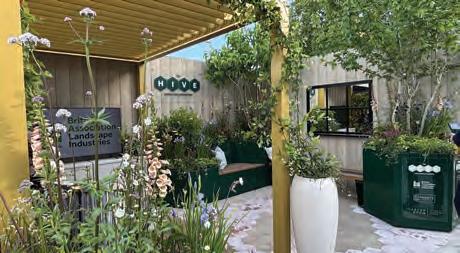
Build for The Hive – A BALI Collaboration, the British Association of Landscape Industries’ trade stand garden for the RHS Chelsea Flower Show, began just over a week before the gates opened to visitors.
Pro Landscaper has been following the build from the very beginning. It will be producing a series of videos to give real insight into the skills that go into creating an exceptional garden under pressure.
It is designed by Matt Evans of The Garden Room Living & Landscape Studio and was built by Frosts Landscapes under the direction of Alistair Bayford. Various businesses have contributed expertise as well as products to create the space.
The climate-resilient garden looks to showcase the craftsmanship, collaboration and technical expertise that drives the UK landscaping industry. It is conceived as a flexible outdoor space suitable for urban gardens, roof terraces or shared environments.
Pro Landscaper magazine visited Millboard on 12 May to gain some insights into the production process as well as its products and support for distributors and installers.
Millboard explained the rigorous testing products go under at various stages, and demonstrated how it is committed to sustainability by maximising the use of recycled minerals and materials, keeping virgin materials at a minimum and recycling all its waste. The company is Ethy verified – an independent accreditation that recognises brands making progress towards a sustainable future – and achieved a Silver EcoVadis Sustainability Rating.
Pro Landscaper also heard about Millboard’s experience centres, which provide an immersive space for designers to showcase products to clients while also hosting workshops for installers.
Keep up to date with the @ProLandscaper team over on Instagram!
HEADING TO THE JUB HOLLAND ROADSHOW
Take a look at JUB Holland’s UK Roadshow for a sunny day at RHS Wisley.
THE FIRST CORNWALL CONNECT
The first Pro Landscaper Cornwall Connect, in association with the APL, sparked insight, conversation and connection.
RHS CHELSEA FLOWER SHOW 2026
Come with us to see another year of wonderful gardens at RHS Chelsea Flower Show!
2026 SHORTLIST
WINNERS TO BE ANNOUNCED AT THE AWARDS CEREMONY
TEMPORARY INSTALLATION
UNDER £50,000
SUNFLOWER POWER AT BBC GARDENERS' WORLD LIVE JACK MOODY LANDSCAPING AND CIVIL ENGINEERING LTD
ROOM TO BREATHE GARDEN FOR THE TSA
JEN DONNELLY GARDEN DESIGN AND CATHERINE GIBBON GARDEN DESIGN
QVC'S REFLECTIVE RETREAT GARDEN AT BBC GARDENDERS' WORLD LIVE 2025 KITTI KOVACS GARDEN DESIGN
ONE ELEMENT - RHS HAMPTON COURT 2025 FEATURE GARDEN MJL GARDEN DESIGN AND HOME SPRING GARDENS
A WOODLAND EDGE NICO GARDENS
PROJECT AWARDS PLUS GARDEN
PORTISHEAD COASTAL GLOW
GREEN GENIE LANDSCAPES LTD
WATER AND WELLBEING GARDEN KITTI KOVACS GARDEN DESIGN AND SHADE WATER GARDENS
FRENSHAM HILLSIDE LANDFORM CONSULTANTS LTD
SUSTAINABLE GARDEN
UNDER £50,000
DRUID STREET CITYSCAPES
GARDEN BEHIND THE GATE
NOREEN BARDSLEY GARDEN DESIGN
BRADWALL BAKEHOUSE
OLIVE TREE LANDSCAPING SERVICES
SPECIAL FEATURE
UNDER £50,000
THE ICE HOUSE RUIN
ALICE MEACHAM GARDENS
THE COASTAL FIREPLACE RETREAT GREEN GENIE LANDSCAPES LTD
ORCHARD TERRACE JDS LANDSCAPES
ORCHARD KINGFISHER DECKING LTD
WELLBEING GARDEN
KITTI KOVACS GARDEN DESIGN
NATURES GOLDEN POND
QUALITY OUTSIDE LIVING LTD
THE CIRCLE GARDEN WATER-WALL AND SERPENTINE WALLING
TOM HILL GARDEN DESIGN AND PD GROUNDSCAPE
DE VERE HORSLY ESTATE
THURSDAY 9 JULY 4:30PM - 9PM
SCAN THE QR CODE TO PURCHASE TICKETS
HARD LANDSCAPING UNDER £50,000
LONDON PLANT-RICH URBAN GARDEN BELLA LANDSCAPE CONSTRUCTION LTD WESTCOURT
COTSWOLD GARDENSCAPES
PROJECT MOUNTAIN GOAT
DLS CONTRACTORS LTD (DESIGN LANDSCAPE SURFACING)
KENLEY NOOK
HOBSON SERVICES LTD
CONCRETE & COLOUR: A LUSH, LIVING COURTYARD
TIMELESS LANDSCAPES
THE OLD RECTORY RECLAIMED COUNTRY GARDEN WILLOW TREE LANDSCAPES
COMMUNITY GREEN SPACE UNDER £100,000
THE ALBERT ROUNDABOUT BETH CHATTO'S PLANTS & GARDENS DRUID STREET CITYSCAPES
ROOM TO BREATHE GARDEN AT AMERSHAM HOSPITAL JEN DONNELLY GARDEN DESIGN AND CATHERINE GIBBON GARDEN DESIGN
9PM - LATE
Time to let your hair down, dress up and have fun at the industry's summer party!
BUILD
£100,000 - £250,000
MALTMANTS END GRIFFIN LANDSCAPES
NORTH LODGE HOBSON SERVICES LTD
THE BRIDGE HOUSE
JOHNSTONE LANDSCAPES LTD
THE CIRCLE GARDEN PDGROUNDSCAPE LTD
OXFORDSHIRE FAMILY GARDEN SHIRESCAPES LTD
DESIGN AND BUILD
UNDER £50,000
THE CURVED WOODLAND GARDEN
AOBA LANDSCAPES
LONDON PLANT-RICH URBAN GARDEN
BELLA LANDSCAPE CONSTRUCTION LTD
THE ANTHRACITE OASIS
BOND LANDSCAPE DESIGN LTD
KYOTO PROJECT
GARDENSCAPE
MEADOW BROWN PROJECT
OLIVE TREE LANDSCAPING SERVICES
SUTTON PLACE
OLIVE TREE LANDSCAPING SERVICES
BURNTWOOD CLOSE
TOM HOWARD GARDEN DESIGN & LANDSCAPING LTD
MALLINSON ROAD
TOM HOWARD GARDEN DESIGN & LANDSCAPING LTD
BUILD
UNDER £50,000
NORTH LONDON EXOTIC GARDEN
AOBA LANDSCAPES
THE FLOW AND RETREAT GARDEN BARCLAYS LANDSCAPING
DEVONSHIRE ROAD
D & S PRECISION LANDSCAPING LTD
DAY ONE
D. C. GROUNDS AND GARDENS
DEEPDENE
INFINITE LANDSCAPING LTD
PRESTON COURT, YEOVIL SHERBORNE GARDEN ANGELS
OXFORD TOWNHOUSE GARDEN SHIRESCAPES LTD
A LUSH HAVEN
SLADE LANDSCAPES
COMMUNITY GREEN SPACE
£100,000 - £250,000
SINCLAIR NURSERY GARDEN
COOL CANVAS
PRIORY PARK
DESIGN
£100,000 - £250,000
DUTTON HOUSE,
SAWBRIDGEWORTH, BEDS
BRIDGEMAN KENT LTD
THE BRIDGE HOUSE
GREENBOOK LANDSCAPE DESIGN LTD
CHALFONT MANOR
JEN DONNELLY GARDEN DESIGN
GAIAFIELDS TERRACED GARDEN
KAREN TATLOW GARDEN DESIGN
PROJECT LARKFIELD
LANDSCAPE ARCHITECTURE BY ABI KEARNEY
BOWDEN
ROBERT HUGHES STUDIO
NORTHUMBERLAND ACCESSIBLE & ARTISTIC GARDEN
SOPHIA'S GARDENS
THE CIRCLE GARDEN
TOM HILL GARDEN DESIGN
HARD
LANDSCAPING
£50,000 - £100,000
POTTERS BAR PROJECT GRIFFIN LANDSCAPES
WILSON LANDSCAPES SHOWROOM
WILSON LANDSCAPES DRIVEWAYS & PAVING LTD
DESIGN
£50,000 - £100,000
ST ALBANS ECO HOUSE & GARDEN
BRIDGEMAN KENT LTD
THE PIGGERIES - COURTYARD GARDEN
HUGH TANTON GARDEN DESIGN LTD
LATCHMOOR WAY
JEN DONNELLY GARDEN DESIGN
WRAP AROUND FAMILY GARDEN
REBECCA MORGAN GARDEN DESIGN
BUILD
£50,000 - £100,000
WOOD HOUSE
D & S PRECISION LANDSCAPING LTD
CLAXTON GROVE
FORMOSA LANDSCAPES LTD
THE PIGGERIES
INFINITE LANDSCAPING LTD
THE ARCHES
JDS LANDSCAPES
WOODSTOCK
KINGFISHER DECKING LTD
GARDEN DESIGN & BUILD
SW LONDON LANDSCAPING
DESIGN AND BUILD
£50,000 - £100,000
THE PERGOLA STAGE
BANCROFT LEE LANDSCAPES LTD
A THRESHOLD OF STILLNESS
BRADLEY JAMES GARDEN DESIGN & BUILD LTD
PRIORY DRIVE
DESIGN YOUR GARDEN LTD
SHRUBLANDS PROJECT GRIFFIN LANDSCAPES
WILSON LANDSCAPES SHOWROOM
WILSON LANDSCAPES DRIVEWAYS & PAVING LTD
DESIGN
UNDER £50,000
A LUSH HAVEN
BIODIVERSITY IMPROVEMENT
EPD LANDSCAPE
EDWARD STREET HOSPITAL
JACK MOODY LANDSCAPING AND CIVIL ENGINEERING LTD
DESIGN AND BUILD
£100,000 - £250,000
THE WOODLAND EDGE RETREAT
AOBA LANDSCAPES
MELODY ROAD
HARRINGTON PORTER LTD
MEREHEATH LANE
ROBERT HUGHES STUDIO
PLANTING DESIGN
UNDER £25,000
DRUID STREET CITYSCAPES
DARTMOOR FARMHOUSE
GREENBOOK LANDSCAPE DESIGN LTD
GAIAFIELDS TERRACED GARDEN
KAREN TATLOW GARDEN DESIGN
THE GRANGE
KITTI KOVACS GARDEN DESIGN
NORTHUMBERLAND ACCESSIBLE & ARTISTIC GARDEN
SOPHIA'S GARDEN
BOND LANDSCAPE DESIGN LTD
RUSTY STEEL ISLAND GARDEN
CATHERINE CLANCY GARDEN DESIGN
EPSOM TOWNHOUSE GARDEN
HELEN SAUNDERS GARDEN DESIGN
CITY LIVING - ANERLEY GARDEN PROJECT
KATERINA KANTALIS GARDEN DESIGN
THE NOTTING HILL LUXE COURTYARD
KATHRYN COX GARDEN DESIGN STUDIO
CONCRETE & COLOUR: A LUSH, LIVING COURTYARD
RACHEL GOOZEE GARDEN DESIGN
PRESTON COURT, YEOVIL
SANDHURST GARDEN DESIGN
WANT TO
Install with confidence.
We know what’s important to you:
Consistent colour
Reliable stock
On-time delivery
From quarry to UK warehouse, we manage every step so you’ve got the confidence to specify and build without giving it a second thought. Stone. Porcelain. Decking. Accessories. Because your reputation depends on it.
Curtain CALL
Take a look back at RHS Chelsea Flower Show 2026
Prestigiously sat in the grounds of the Royal Hospital Chelsea, RHS Chelsea Flower Show 2026 marks the 113th edition as it welcomes keen garden enthusiasts, visitors and experts. Taking place from 19 – 23 May, the show explores landscaping innovations, sustainable techniques while raising awareness for a multitude of charitable causes.
FRANCES
TOPHILL MADE HER MAJESTIC DEBUT
The RHS and The King’s Foundation Curious Garden put sustainability front and centre. It was gardening TV presenter Tophill’s first time designing at Chelsea and she had some high-profile support in King Charles III, Sir David Beckham – who had a new English shrub rose
Some of our key highlights...
named after him launch at the show – and RHS ambassador Alan Titchmarsh CBE. The garden, built by The Landscaping Consultants, featured a broad range of planting including edibles to showcase their aesthetic and practical benefits.
PRO LANDSCAPER’S 30 UNDER 30 SHOWCASED THEIR TALENT
As Pro Landscaper searches for this year’s winners of its 30 Under 30: The Next Generation initiative, existing alumni displayed their skills at Chelsea. That includes Jake Catling, managing director of The Landscaping Consultants which built Tophill’s Curious Garden, and Olly Gregson of Hardwood Landscapes, the contractor for Max Parker-Smith’s Journey Beyond the Tracks: From Adelaide to Perth garden. There’s also Harry Holding, who co-designed The Eden Project: Bring Me Sunshine Garden with Alex Michaelis, as well as Christina Cobb and Ashleigh Aylett, who both designed All About Plants gardens, and Ollie Pike, designer of The Whittard of Chelsea.
BRITISH ASSOCIATION OF LANDSCAPE INDUSTRIES HIGHLIGHTED COLLABORATION WITH THE HIVE
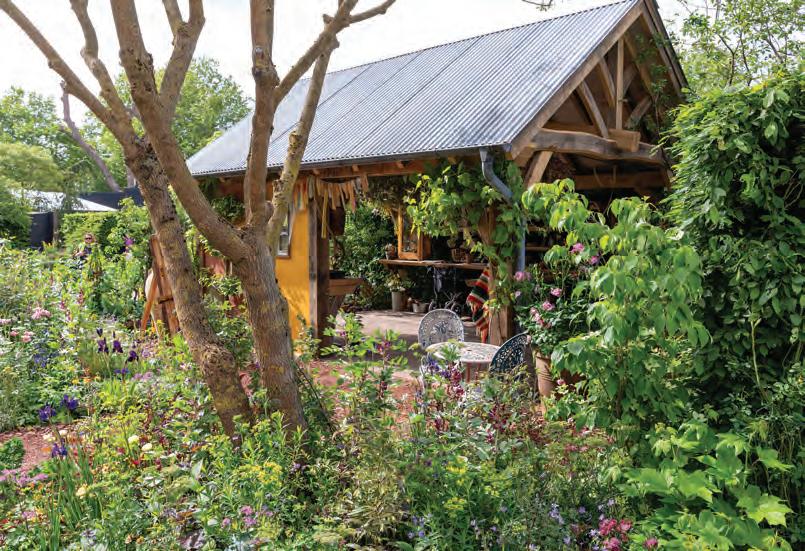
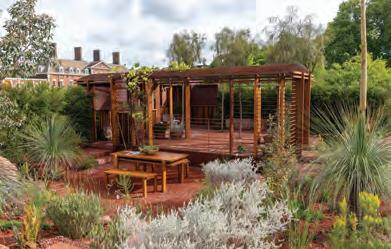
Members of the British Association of Landscape Industries came together to create a trade stand for the organisation that showcases what the landscaping industry can achieve through collaboration. It was designed by Matt Evans of the The Garden Room Living and Landscape Studio – a regular contributor to Pro Landscaper magazine – with the build overseen by Frosts Landscapes and various suppliers contributing to the 5m x 4m space, named ‘The Hive: A BALI Collaboration’.
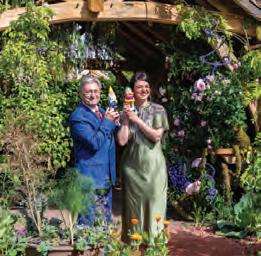
GNOMES POPPED UP ACROSS THE SHOW TO RAISE FUNDS FOR SCHOOL GARDENING
Since 1927, gnomes have been banned as part of tent exhibits – a rule that was later extended to all gardens. That ban was lifted once in 2013 to celebrate the centenary of Chelsea, and now gnomes are gracing the showground once again to help raise funds to go towards the RHS Campaign for School Gardening, through auctioning off gnomes decorated by celebrities including Sir Brian May, Dame Mary Berry and Cate Blanchett. Gnomes were found in The RHS and The King’s Foundation Curious Garden – recognising the King’s tradition of hiding a gnome in the Stumpery at Highgrove Garden, his residence – and other areas of the show.
Project Giving Back – what next?
For the last five years, Project Giving Back has been helping charities to exhibit at Chelsea. Known as a “lifeline for Chelsea,” says Chloë Webster, designer at Harry Holding Studio, the grant-making organisation announced 2026 would be its final year. Its legacy was celebrated with a feature garden built by Mark Whyman Landscapes and designed by James Basson of Scape Design, who was inspired by ochre mines in Provence, France.
It's really important that charities keep coming and continue getting their messages out there
As the charity heads out of the Chelsea gates, “everybody needs to work harder to engage investors,” explains Mark Gregory of Landform Consultants, the contractor for The Killik & Co ‘A Seed in Time’ Garden. He predicts smaller gardens will be more prevalent, just as exhibitors will increasingly rely on trade stands and planting.
Designer of the same garden, Baz Grainger has already secured sponsorship with wealth management firm Killic & Co,
CHILDREN WERE GIVEN A VOICE THROUGH THE CLASSROOM GARDEN
Inside the Great Pavilion, The Children’s Gardening Coach Lee Connelly and ‘The Beardy Gardener’ Leigh Johnstone created an immersive garden experience that puts ‘young people’s voices at its core’ – literally, through an audio installation captured during visits the duo made to the local schools that are part of this year’s RHS Chelsea Flower Show Young Reporters. This new initiative has been introduced to hear children’s perspectives and give them an opportunity to connect with nature. The miniature scribes will be at the show, exploring the gardens and interviewing those behind them. Parents, teachers and other children were also invited to share their thoughts on gardening ahead of the show, with a chance for these to be added a chalkboard that forms the backdrop of The Classroom Garden.
for the fourth year running. However, he recognises “it's getting harder and harder to find sponsors, particularly for the big gardens.” He hopes charities still engage with the show, stating, “it's really important that charities keep coming and continue getting their messages out there.”
Mark Britton, managing director of The Outdoor Room, contractor for Addleshaw Goddard: Flourish in the City garden and The Campaign to Protect Rural England Garden: ‘On the Edge’, both of which picked up RHS Garden of the Year awards, says as the charity leaves, it gives people a chance to “look for the right sponsor with the right message and values that these gardens can thrive on.”
Patrick Clarke, who designed The Children’s Society Garden, noted that Lady Garden Foundation’s garden raised money through crowdsourcing. He says this could be a new direction for others wanting to share a powerful message.
Not only does it reference the historic fishing industry in Morecombe, but it creates this beautiful low-carbon concrete using clam and mussel shells.
Sustainable landscaping innovations
“We should be pushing as many sustainable solutions as possible,” says Grainger, who worked with Dutch-based company Skelovis to develop a concrete made from 92% recycled concrete and furnace ash using less than 2% cement. “It’s a really cool product,” he adds, which will be launched into UK this year.
Clarke says his garden, built by Yoreland Designs, reused concrete paving slabs. “We’ve taken it out of skips, reclaim yards and cut them to expose the inner part of the slab.” As a result, the garden featured an enriched, terrazzo-looking feel.
Webster explains the collaboration with Local Works Studio for the creation of ClamCRETE featured on The Eden Project: Bring Me Sunshine Garden, co-designed by Harry Holding of Harry Holding Studio and Alex Michaelis. “Not only does it reference the historic fishing industry in Morecombe, but it creates this beautiful low-carbon concrete using clam and mussel shells.” A celebration of different materials, the garden provides an alternative to standardised concrete mixes.
Introduced in 2024, the RHS Environmental Innovation Award was brought in to improve the sustainability of RHS shows. This year, The Eden Project: Bring Me Sunshine Garden scooped the accolade, thanks to its use of innovative materials such as ClamCRETE.
The garden was applauded for its “imaginative use of a pioneering material that brought meaningful engagement to visitors while championing sustainability,” says Malcolm Anderson, RHS head of sustainability and judge Paul Cowell.
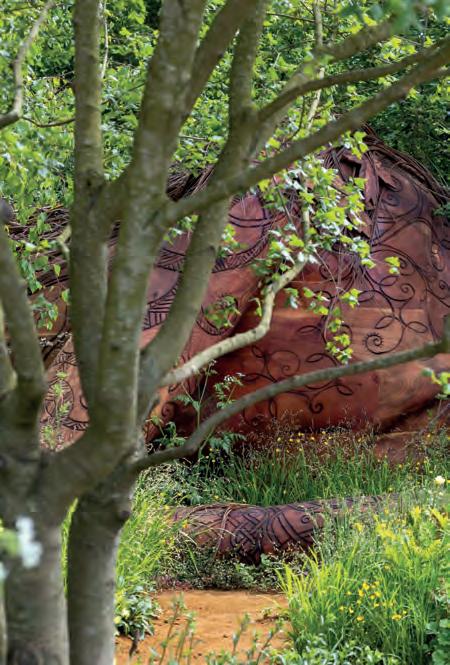
Using no cement, the award-winning Campaign to Protect Rural England Gardens: ‘On the Edge’ designed by Sarah Eberle features minimal construction. The garden’s focal point is an artisan wood-carved women, Gaia, whose head
MEDALS
RHS Chelsea Garden of the Year: The Campaign to Protect Rural England Garden: ‘On the Edge’ Designer: Sarah Eberle Contractor: The Outdoor Room
RHS Chelsea Small Garden of the Year: Addleshaw Goddard: Flourish in the City Designer: Joe and Laura Carey Contractor: The Outdoor Room
Best All About Plants Garden: Woodland Trust: Forgotten Forests Garden Designer: Ashleigh Aylett Contractor: CJ Landscapes
Best Construction (Show Garden): Lady Garden Foundation ‘Silent No More’ Garden
Designer: Darren Hawkes Contractor: Landscape Associates
Best Construction (Small Show Garden): Trussell’s Together Garden Designer: Rob Hardy& Co Contractor: Peter Gregory Landscapes
RHS Environmental Innovation Award: The Eden Project: Bring Me Sunshine Garden Designer: Harry Holding and Alex Michaelis Contractor: Landscape Associates Gold medalsSilver-gilt medals Silver medalsBronze medals 14 8 4 2
THE CAMPAIGN TO PROTECT RUAL ENGLAND GARDEN: 'ON THE EDGE'
has been chainsaw-carved by Chris Wood. Her hair was willow-weaved by Tom Hare, as she lies beside a water feature surrounded by an abundance of permeable planting. The garden also features dry stone walling from Noble Stonework, a multigenerational family-run business from North Yorkshire.
Built by The Outdoor Room, Britton says the garden is “hugely sustainable.” Relying on traditional techniques, the team has used British materials to create a space that can be used as inspiration in other designs and gardens.
Max Parker-Smith, designer of Journey Beyond the Tracks: From Adelaide to Perth, pursued material continuity across his garden, built by Hardwood Landscapes. “We’ve used reclaimed timber, low-carbon concrete pavers with aggregate used across the rest of the garden. I created hand-made pots using the same aggregate, sand and low-carbon cement.”
Landscaper recognition
While Webster believes landscapers may not receive as much recognition as they deserve, “it's definitely changing,” she starts. “I think people are much more open about the fact that creating a Chelsea garden is not an individual effort – it's formed by such an amazing group of people.”
Landscapers are “talented and hard working,” Webster adds, and she’d like to see more people get into the industry, especially those interested in elements surrounding construction, carpentry and planting.
I'd
like to see the landscapers get more recognition for their work. They are doing the behind-the-scenes work, so it would be nice for them to get the coverage
Justin Himpson of JJH Landscapes built the RHS x CITI Season of Abundance feature garden within the Great Pavillion. “I'd like to see the landscapers get more recognition for their work. They are doing the behind-the-scenes work, so it would be nice for them to get the coverage,” he explains.
Gregory still believes “there’s a long way to go” until landscapers and anyone within
the construction element of the show get the recognition they deserve. While design is important, he states, “it isn’t everything. It’s a whole plethora of teams.” He adds: “Our landscapers need to be present and do their utmost to rattle the can, because nobody else is going to rattle it for us. If you took the landscapers out this show, there wouldn't be a show.”
Grainger describes Gregory as a “champion for the guys at Landform and landscaping as a whole,” adding that it’s important we are “giving the industry the credit it deserves.”
And just like that, the gates of Royal Hospital Chelsea close for another year. The gardens and its elements will soon settle into new homes across the country, set to share the legacy of Chelsea with new communities.
THE RHS AND THE KING’S FOUNDATION CURIOUS GARDEN
JOURNEY BEYOND THE TRACKS: ADELAIDE TO PERTH
THE CAMPAIGN TO PROTECT RUAL ENGLAND GARDEN: 'ON THE EDGE'
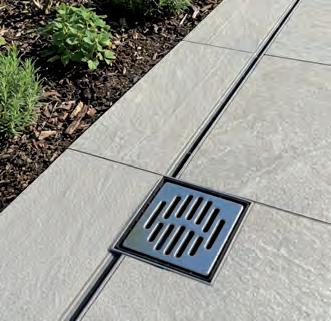
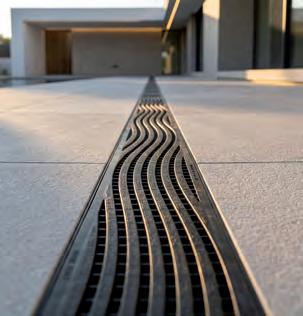
DEKS’ DekDrain Vela drainage range is the ideal solution for domestic landscaping projects, combining effective surface water management with a sleek, modern finish that complements any outdoor space.
Fully compliant with BS EN1433, it delivers dependable strength beneath the surface and a choice of stylish grates above, helping you achieve a professional result every time.
DEKDRAIN A15 LINEAR BAR WAVE
• Contemporary and stylish design.
• Heel Guard compliant (6–7mm gap).
• Slip protection as standard.
• Fully inter-connectable.
• No costly corner quads.
MIGHTY Small But
Duncan Paybody of Studio Egret West dissects Mayfield Park’s new space shaped by the former Avanade Intelligent Garden
In 2020, Manchester was given planning permission for its first public park in over 100 years. The 6.5-acre Mayfield Park is part of one of the UK's largest urban regeneration projects. Once a derelict part of the city's industrial heritage, Mayfield will become an enviable place to live and work, designed alongside a meandering river, creating space for human connection as well as thriving wildlife habitats.
Duncan Paybody, landscape director of Studio Egret West (SEW) is leading the landscape-first placemaking project which made its debut when Mayfield Park officially opened its gates to the public in 2022. It’s a project that’s close to his heart as it transforms part of his home city.
Rich with nature weaving between hard landscaping elements, the award-winning park is defined by its relationship with the city and the site’s post-industrial heritage – and it’s about to get a new addition.
complimentary about Mayfield Park, “Massey saw the alignment of his work and our work in terms of celebrating industrial material and reuse,” he adds.
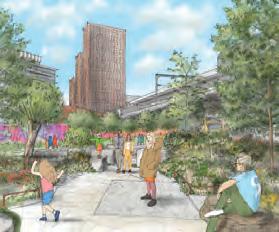
A plot referred to as a ‘tiny park’, the Pigeon Triangle looks to extend Mayfield Park towards both the city centre and Manchester Piccadilly Station, making it much larger than its physical size. “We’ve taken some elements from the garden, but not all of them,” says Paybody. Amongst the elements the team at SEW have chosen to inherit are the reclaimed concrete, some boulders and the trees. Positioned beneath the trees, “we’ve developed our own design for the understory layer of that space,” he adds.
Massey saw the alignment of his work and our work in terms of celebrating industrial material and reuse
For many years, the cross-section connecting Baring Street and Travis Street has existed as a traffic island. Affectionately known as Pigeon Triangle, the newly approved public space is redefining how the city arrives at Mayfield. Not only this, but it has been selected as the new home of garden designer Tom Massey and architect Je Ahn’s award-winning Avanade Intelligent Garden from last year’s RHS Chelsea Flower Show.
“We were introduced to Tom Massey and heard that he wanted to relocate his garden somewhere,” explains Paybody. Very
Woven into the landscape
While it may be a small space – no bigger than the RHS show garden measurements – it hopes to inflict meaning and resilience.
As designers of the park and its surrounding public realm, “we’ve tried to stitch in these borrowed and gifted elements into our wider piece,” explains Paybody. Resistant to the idea that the Chelsea garden had been “dropped” into the space, it has instead been designed to weave into the relevance and fabric of Mayfield.
The Mayfield Partnership – which consists of Manchester City Council, Transport for Greater Manchester, Platform4 (formally LCR) and developer Landsec – is spearheading the entire Mayfield transformation. "We've had to design it in response to counter terrorism and Secure by Design principles,” explains Paybody. One of the necessary elements includes a protective edge to the site due to its location. In response, the design features an urban rock garden made up of concrete blocks that were otherwise sat lonely on site. “They're
WORDS: HOLLY CHAPMAN
not particularly beautiful, but we've designed them into this space and changed the orientation,” he explains.
With neighbouring busy roads, complementary planting focuses on resilience in order to cope within the highly polluted area and overall challenging harsh environment.
Designed as an aesthetically wild space, the garden has potential to evolve, as nature often does. “The main thing is that it should feel quite different to any other public realm. We’ve done such different things with Mayfield Park – partly due to inheriting such an amazing site, but also because we’ve had so many great materials we could reuse.”
Fundamental to the wider design, local materials trickle into Pigeon Triangle. Featuring Woodkirk sandstone – a Yorkshire-quarried material traditionally categorised as Yorkstone – across setts, mosaic paving and crevice-garden slabs, the elements reinforce a strong sense of place through material continuity and detail in keeping with its sustainable roots.
The invisible layer
Built by The Outdoor Room last spring, Massey’s garden picked up Best Construction and a Gold medal for its urban forest design at Chelsea. Harnessing AI technology developed by Avanade, it featured sensors that track tree health by monitoring growth, sap flow, soil conditions, air quality and weather patterns.
The main thing is that it should feel quite different to any other public realm
The technology will be included in Pigeon Triangle and the hope is it will be extended into Mayfield Park. "We're really interested in how AI technology can help our maintenance team to make sure that we're
doing all the right things to look after the trees that we've got in the wider estate," states Paybody. "What we’re hoping to do here is to use it in a way that supports and helps, rather than replaces or dumbs down the design.”
While the New intelligent Garden may be compact, its intricate design challenges the assumption that meaningful sustainability is only achievable at a larger scale.
Relevant to its surroundings, elements from the Chelsea Garden will feel part of the wider Mayfield approach, and reflective of both Manchester’s heritage and its future.
James Coles is preparing Coles Nurseries for the fifth generation to take over the reins
Coles Nurseries is bucking the trend when it comes to family businesses. Less than a third are said to make it through the second generation, and that drops to just a tenth through the next. By the time they reach the fourth generation, there’s just a 3% chance the owner will be able to hand the business over to the next family member. But managing director James Coles is in the process of succession planning, and by the time he hands it over to his two children, the fourth generation owner will be leaving the business in an even better position than when he first took it over from his father.
“Well, I say ‘took over’ – when I was given the job,” he laughs, recalling the moment in 1999 when he was called into the office one day to
sign a piece of paper that turned him into the managing director all of a sudden.“That’s a dramatic way of looking at it, but that’s what happened. And I could have done exactly the same thing, but that’s not the right way to do it.”
Instead, Coles has brought in an advisor to help guide them through 'the change plan’ as he considers retirement in a few years, after his father passed away last April, as does the company’s operations director Mark Cade, who has been with Coles for over 40 years and has overseen, with James, the recent development of the wholesale and retail business.
When we spoke to Coles at the end of April, not even he knows yet what the outcome of that plan will be for his daughter, Isabelle –who joined from the hospitality industry to work in sales and marketing – and his son, Edward, who is Coles’ dispatch assistant manager.“Ed made it quite clear that he
wasn’t an office person; he wanted to be hands on, so to speak. He’d rather be outdoors, whereas Isabelle is better suited for the office environment. So, in that sense, it worked out quite well without planning it.”
Up until a few months ago, Coles thought they would probably become joint managing directors. But with Isabelle getting married in a few weeks and considering family planning, that might not be the best solution for the time being.“So, we need to come up with the best scenario – and if that means that neither of them are MDs, then that’s okay; we’ll have to find someone else to take on that role. I want them to be happy with the position that they’re in – at the end of the day, it’s a family business, and there are always going to be trials and tribulations.”
Both children have joined the company of their own volition, though.“I always wanted
them to come into the business, but I didn’t push them into it. I didn’t make them work weekends on the retail side or anything – it was up to them. Yes, I dropped the odd hint,” he laughs.“But it’s been their decision and on their terms, which is great.”
Isabelle had been working her way up in hospitality until that point. But the “cut-throat” industry was making her ill, so her dad offered her a role in the admin team to see if it’s something she’d enjoy. “It went from there,” she says.“I’ve since also taken on the marketing and the social media. Ed took a year out after he finished school and then started here working outside and loved it.”
My dad got us through the third generation, and we started to grow while he was there,” says Coles. “I’m the fourth, and I’m pleased to say it’s carried on growing, and I’ve got the fifth lined up as well
shrubs for the commercial landscaping market, and more than 120 staff. At any one time, it has over a million trees in the ground and two and a half million containers on the ground. There’s also a purpose-built plant centre and cafe under construction at its head office in Thurnby – which has been five years in the making – and it recently scooped Trade Nursery of the Year at the Pro Landscaper Business Awards. The nursery boasts Plant Healthy certification, which it has done since the initiative was founded, and is now a member of Family Business UK – all of which suggests Coles is achieving his ambitions, and then some.
an eight-acre site in Evington, initially growing fruit and vegetables to support wartime needs, before transitioning to trees, topiary, roses, rhododendrons and the like.
In the 30s, he bought a second field, and another in the 50s. Coles Nurseries' largest site, Gaddesby, was purchased in the 70s, followed by another in the 90s. In the last 20 years, it has added two more. The last four generations have all continued to build on what Coles’ great grandfather created.“My dad got us through the third generation, and we started to grow while he was there,” says Coles.“I’m the fourth, and I’m pleased to say it’s carried on growing, and I’ve got the fifth lined up as well.”
It’s gearing up for its next chapter, which focuses on more than how Isabelle and Edward fit within the senior management team.“I’m proud of the family aspects, and that’s not just the Coles family. That’s the vast majority of people who have bought into it and feel part of it.” The nursery has members of staff who have been working there as long as Coles, and generations of other families who have joined the business over the years. Sales manager Andy Garner, for instance, had worked there since he was 16 before retiring earlier this year.
Coles’ goal now is to hand over the business in as strong a position as possible. Since stepping into his father’s shoes over two decades ago, he’s grown Coles Nurseries from a £1.5m turnover to close to £15m. It now has around 550 acres of land, growing trees and
James Coles
Coles Nurseries was first started in 1913 by Coles’ great grandfather of the same name, who saw Leicester as a budding opportunity. It was becoming an affluent city, thanks to its booming textile and hosiery industry that eventually led to the slogan,‘Leicester clothes the world.’ Using a match funding grant, he purchased
Gill's retirement - after 22 years
Recognising that there are others such as Garner nearing retirement age with a vast amount of knowledge to share, Coles has introduced a three-level training scheme for staff which allows them to work towards becoming a supervisor. On top of this, it is also on its second cohort of an internal management training scheme, which gives those on it all the necessary tools to become a manager.
Local School on Nursery Tour.
Isabelle and Edward are two of five people on this latest round, and to bring them all closer together, they’re embarking on a series of fundraising efforts throughout the year. The ‘Fantastic Five’ – which also includes Laura Dakin, Tom Tyler and Luke Hopper – will be trekking across the Sahara Desert to raise money for the Matt Hampson Foundation, which supports young people with life-changing injuries from sport, and Perennial, which supports those in the horticulture industry. Edward will also be embarking on a 24-hour running challenge around his local village. It’s another step towards building an even stronger future for Coles Nurseries, with a team that feels passionate about the industry, the company and the people within it.
Now Belderbos Landscapes is employee owned it is ever more important we recognise and support our talent to take the next step in their career. An employee-owned business is about empowering our people, so they feel confident to take on more responsibility while still having that all important support framework. The transition from being family-owned and managed to now being employee owned is not easy and relinquishing control takes time for everyone. It is about taking gradual steps and not being afraid of making mistakes along the way. As long as employees learn the lessons and take on board constructive feedback, we are better positioned for next time.
ASK THE EXPERTS Claire Belderbos
Belderbos Landscapes
How can you recognise and support talent to take the next step?
When staff are working towards a promotion, it is important they have clear, SMART objectives as part of the company’s annual review process. These objectives are regularly assessed by the direct manager who also provides on-going support and feedback on progress. By the time the staff are promoted, it will be a seamless transition, having already actioned many elements of the new role already.
The panel
As we have recently become employee owned within the last two years, Ed and I are gradually handing over some of our responsibilities as part of the transition of ownership and management.
The transition from being familyowned and managed to now being employee owned is not easy and relinquishing control takes time for everyone
As employee ownership becomes more embedded, we are actively looking for employees to take on more responsibilities and move the company so it is well positioned to continue being successful in the future. This could be through employees proposing new ways of working and creating efficiencies.
Site staff, like landscapers and horticulturalists, regularly receive informal and ongoing feedback from their project managers. We match projects with appropriately skilled staff and provide support through the project managers who regularly visit site to assess quality of work – this would particularly apply to staff taking the next step up.
We believe it is important to not overwhelm staff, but it is instead achieved in a controlled and measured approach. For example, we have recently appointed an operations manager which is a new role but will be gradually taking over some of my responsibilities. This person has identified new ways of doing things, so it is important to empower and encourage staff to try new ideas, especially with the use of more software and AI. Staff may actually have an idea that is more effective and efficient than how we did things previously, so we need to trust them and even allow them to make mistakes and learn lessons.
There are various ways to work with employees to facilitate the next step towards promotion and handing over responsibilities. Communication, trust and a clear vision of company values and objectives help navigate the transition.
RACHEL BAILEY
Rachel Bailey runs an award-winning SGLD registered design practice creating immersive, plant-filled gardens that enrich lives, support biodiversity, benefit the environment, and draw on her biology and permaculture expertise.
CHRIS WELLBELOVE
As managing director of Blakedown Landscapes, an awardwinning landscape and civil engineering specialist, Chris Wellbelove leads the company's strategic direction, centred on quality, collaboration and long-term value.
CLAIRE BELDERBOS
Claire Belderbos runs Belderbos Landscapes with her husband, Ed. The London-based design and build company became employee owned after celebrating its 20-year anniversary last year.
Ensuring
Biosecurity
inspection before being integrated with existing stock.
In today's interconnected world, the threat of invasive pathogens is a pressing concern for all industries involving plants. At Wyevale Nurseries, biosecurity isn't just a theoretical concept – it's an essential practice integrated into every aspect of our operations to safeguard local ecosystems.
Biosecurity involves proactive measures to prevent the introduction and spread of harmful organisms. For Wyevale Nurseries, this means understanding that threats can come from anywhere – a contaminated boot, a traded plant, or an imported piece of equipment. Therefore, it take its responsibility seriously, ensuring that its practices strengthen this "invisible shield" against these threats.
The approach at Wyevale Nurseries begins with simple yet effective daily habits:
• Isolate and inspect: Newly acquired plants undergo quarantine and thorough
• Control movement: It limits access to high-risk areas and ensure equipment is sanitised between uses and sites.
• Keep records: Detailed logs of movements and purchases are maintained, allowing for rapid tracing in case of an outbreak.
Biosecurity is not just about visible actions but also about what happens behind the scenes. Key practices include:
• Clean and disinfect: Regular cleaning and disinfection of footwear, tools, and vehicles where possible when going between sites.
• Source and monitor: It procures plants and materials from trusted suppliers adhering to national standards, and it conducts regular monitoring for any signs of disease.
• Report: Any unusual symptoms in plants are reported immediately to responsible persons and escalated externally if required.
A robust biosecurity strategy involves comprehensive staff
training and thorough supplier audits. At Wyevale Nurseries, staff from various departments, beyond just the technical crop protection team, receive expert training. This year alone, 20 additional staff members have been trained, with ongoing updates for specialists. Every interaction with plants is an opportunity to identify and address potential risks.
Nursery hygiene and good housekeeping are foundational to secure operations, ensuring that products are always presented at their best. As a Plant Healthy certified business, Wyevale Nurseries adheres to the Plant Health Management Standard, audited annually. This standard mandates best practices for managing biosecurity risks effectively, requiring an up-to-date Site and Operations Pest Risk Analysis and outlining mitigation strategies.
Importing stock poses the greatest risk, yet customer expectations
for diverse species must be managed. Wyevale Nurseries has taken significant steps to eliminate high-risk imports, opting for local sourcing whenever possible. It has eliminated high-risk species such as Olea, Nerium, Vitis, and Citrus from its imports, sourcing other species from approved suppliers.
Wyevale Nurseries is dedicated to maintaining stringent biosecurity measures, knowing that every action it takes contributes to protecting the environment from the devastating impacts of pests and pathogens. Its commitment to biosecurity is unwavering as it continues to balance these responsibilities with customer needs.
Wyevale Nurseries is committed to protecting ecosystems through the practice of biosecurity
RIGHT JOB Right Card,
For over 30 years, the Construction Skills Certification Scheme (CSCS) has worked to improve the quality and safety of construction work by ensuring that all workers have the necessary skills and training.
The Landscape Industry Skills Scheme (LISS/CSCS) is the landscape industry’s dedicated skills, training and safety card scheme. It is a key partner in the wider CSCS Alliance.LISS/CSCS is a standalone scheme that is recognised by Build UK and is administered by the British Association of Landscape Industries (BALI). It is designed to support the development of an industry framework for skills development and progression in the workplace.
Whether you are a landscape contractor, arborist, countryside worker, or ecologist, applying for a LISS/CSCS card will allow you to work on commercial land based or construction sites in the UK. As with other card schemes within the alliance, LISS/CSCS recognises an individual’s qualifications and training experience as well as industry-specific health, safety and environmental awareness knowledge.
All applicants who apply for an LISS/CSCS card, must complete a health and safety awareness course called ROLO – Register of Land-based Operations. This course has been developed and designed exclusively for the land-based industries by landscaping professionals.
Owned by BALI, ROLO works to raise the standard of health and safety, environmental awareness, and reduce the risk of accidents in the workplace. It also encourages employers to keep a record of workers in the land-based sector who have achieved a recognised level of competence. The ROLO Health, Safety and Environmental Awareness Course is officially recognised by Build UK.
Jonathan Pettit explains the importance of LISS/CSCS Cards and ROLO health and safety training
As the CSCS Alliance card schemes have gained acceptance and wider recognition, the construction sector is beginning to tighten how competence is verified on construction sites. Part of this is ensuring that individuals who are going onto construction sites hold the right card for the job that they are undertaking; “right card, right job”.
For most in the landscaping industry, this should not pose a problem. However, where landscapers have gained access to sites using construction related CSCS cards, there is the possibility that they will be refused entry. It will become increasingly important that landscapers are using the card scheme appropriate to their sector; and that card is the LISS/CSCS Card.
In addition, part of government’s response to the Grenfell Tower enquiry has been to put forward proposals for a single construction regulator. The proposal is aimed to meet one of the inquiry’s recommendations to reduce fragmentation and complexity in the way the built environment is regulated.
The aim of the regulator will be to focus on five areas of change: including the regulation of buildings, the regulation of building products, the regulation of building professionals, adopting a digital first approach to efficient regulatory delivery, and protection of residents. By ensuring that the correct cards are being used, residents and homeowners can quickly and easily check that people working on their homes have appropriate skills and training.
In the ongoing drive to ensure the health and safety of those working in the industry, and as demand grows from clients and customers for evidence that those working in the sector have the right skills and experience, the need to demonstrate competence will become increasingly important. While not the only response, LISS/CSCS Cards and ROLO health and safety training will be an increasingly important route to meeting those demands.
is head of skills, careers and certification at BALI. His work centers around ensuring the industry has the right people, skills, and learning opportunities with the GoLandscape initiative. bali.org.uk/lisscscs
JONATHAN PETTIT
Jonathan Pettit
The Power of
SAYING NO
In the early years of running a business, distraction can be one of the biggest threats to progress. The work is physical, the days are long, and the demands come from every direction. Without a deliberate strategy to stay focused, owner operators can easily find themselves busy but not moving forward as quickly as they would like. Avoiding distraction isn’t about working harder; it’s about working with intention.
The first step in avoiding distraction is deciding what business you’re creating. You set out to be a quality driven landscape business and, because you are hungry to establish yourself in the marketplace, you try to be everything to everyone.
When you define your core service – the work you want to be known for – you immediately reduce noise. You stop chasing jobs that don’t fit, and you start building a reputation around a specific standard.
A second essential discipline is creating a simple operating rhythm. Landscaping is unpredictable, but your week doesn’t have to be. Owner operators who stay focused build structure into their schedule.
Phil Jones explains how owner operators can avoid the distractions that kill momentum
Protecting your quoting and planning time is another critical habit. These are the highest value activities in your business, yet they’re often the first to be sacrificed when the day gets busy. Blocking out 60–90 minutes each day – and treating it like a client appointment – ensures that opportunities don’t slip through the cracks. Planning time is equally important. Without it, you end up reacting to the week instead of directing it.
One of the most effective ways to avoid distraction is learning to say no. Every “yes” commits your time, energy and attention. Before accepting a job, ask whether it fits your core service, whether it moves the business forward, and whether it will distract you from better work. Declining the wrong jobs is a sign of a disciplined operator, not a struggling one.
Declining the wrong jobs is a sign of a disciplined operator, not a struggling one
For example, dedicating Monday mornings to pricing and planning, mid‑week to site work and client updates, and Fridays, or even Saturdays, to invoicing and admin creates a rhythm that keeps the business moving. When your week has shape, distractions lose their power.
Systemising repetitive tasks also helps to stay focused. Creating templates for quotes, standard material lists, job packs, communication steps, and end of day routines removes decision making from the basics. When the fundamentals run smoothly, you’re free to focus on higher value work.
Delegation also plays a key role. Many owner op erators try to do everything themselves – bookkeeping, admin, scheduling, sourcing materials, even social media.
But these tasks drain focus and slow growth. Outsourcing low value work frees up time for the activities that build the business: pricing, planning, client and employee relationships and quality control.
Finally, owner operators need space to think. Taking 30 minutes each week as a minimum and a couple of hours a month to step back and review what’s working, what isn’t, and what needs to change creates clarity.
Avoiding distraction isn’t about perfection; it’s about discipline. With a clear direction, a structured week, protected planning time, strong systems, and the courage to say no, owner operators can build landscaping businesses that grow steadily and sustainably – one deliberate step at a time.
PHIL JONES
Phil Jones is the founder of Apple Tree Bay Consultancy Ltd and brings long-standing director-level experience from the landscaping, grounds management and facilities services sectors. He now works with landscape businesses to strengthen strategic planning, refine operational systems, and support effective implementation.
LESSONS ARE CLEARLY STRUCTURED AND FULLY INDEXED ACROSS MODULES, WITH LIFETIME ACCESS ALLOWING YOU TO REVISIT SPECIFIC TOPICS AT ANY TIME AS A PERMANENT REFERENCE RESOURCE
Welcome to this regular column, where I share practical, digital workflows, tools, and drawing techniques to help make your landscaping and design work easier, faster, and more efficient, whether you are out on site or back at the desk.
This month, I would like to take a slightly different approach. Rather than focusing on a specific technique or tool, I want to address a broader and very practical question: how can busy garden designers and landscape professionals build a reliable, professional workflow in SketchUp without the stop-start nature of traditional training?
SketchUp has become a widely used tool across the industry, valued for its flexibility, accuracy, and ability to move seamlessly between concept design and technical output. However, one of the consistent challenges I see when teaching is not a lack of capability within the software, but a lack of structured, industry specific training that takes users from first principles through to a fully professional standard.
John Wood introduces his SketchUp training course designed for the industry
BOARD
designers and landscape professionals. The aim is simple: to bring everything into one place and provide a clear, structured route from beginner level through to professional application.
The course is organised into eight modules, with over 16 hours of tuition. It starts from absolute basics and progresses through all the key areas required in practice. This includes precise technical drawing, working with topographic surveys,
DESKTOP-BASED SKETCHUP IN PRACTICE. THIS COURSE FOCUSES ON THE FULL PC AND MAC VERSION, OFFERING A COMPLETE PROFESSIONAL WORKFLOW BEYOND IPAD-BASED DESIGN
creating complex three dimensional terrain models, and using geolocation to accurately position models in real world context.
One of the consistent challenges I see when teaching is not a lack of capability within the software, but a lack of structured, industry specific training
With that in mind, I have developed a comprehensive, on demand training course for SketchUp on PC and Mac, designed specifically for garden
A significant part of the training also focuses on developing efficient workflows. This includes building and managing your own plant libraries, creating clear and attractive visualisations directly within the model, and producing construction level detail where required. The intention throughout is to reflect real project requirements, rather than isolated software exercises.
The pre-recorded format allows for clear, uninterrupted demonstration. Each lesson is carefully structured and edited, with step-by-step explanations. All content is fully indexed, so specific topics can be revisited at any time.
An on-demand format allows training to fit around existing commitments, whether that is a short session between site visits or more focused time in the studio. The course is also designed as an evolving resource. As new questions arise or specific requirements emerge from users, additional content can be added to address those needs.
Ultimately, the goal is to provide a dependable reference point for SketchUp within the garden design and landscaping sector, a place where both new and experienced users can build confidence, refine their workflow, and develop a more efficient and professional approach to their work.
If you would like to explore the course in more detail, you can visit the courses page on my website.
Scan the QR code to see these tips in action! Also check out Create Visual’s YouTube channel @create_ visual_ipad to learn more about Morpholio Trace.
John Wood runs Create Visual, a CPD training platform for garden and landscape professionals specialising in iPad-based digital workflows and presentation graphics. Scan the QR code to view a free lesson related to this topic. create-visual.co.uk
JOHN WOOD
OAST HOUSE, SMOKE HOUSE
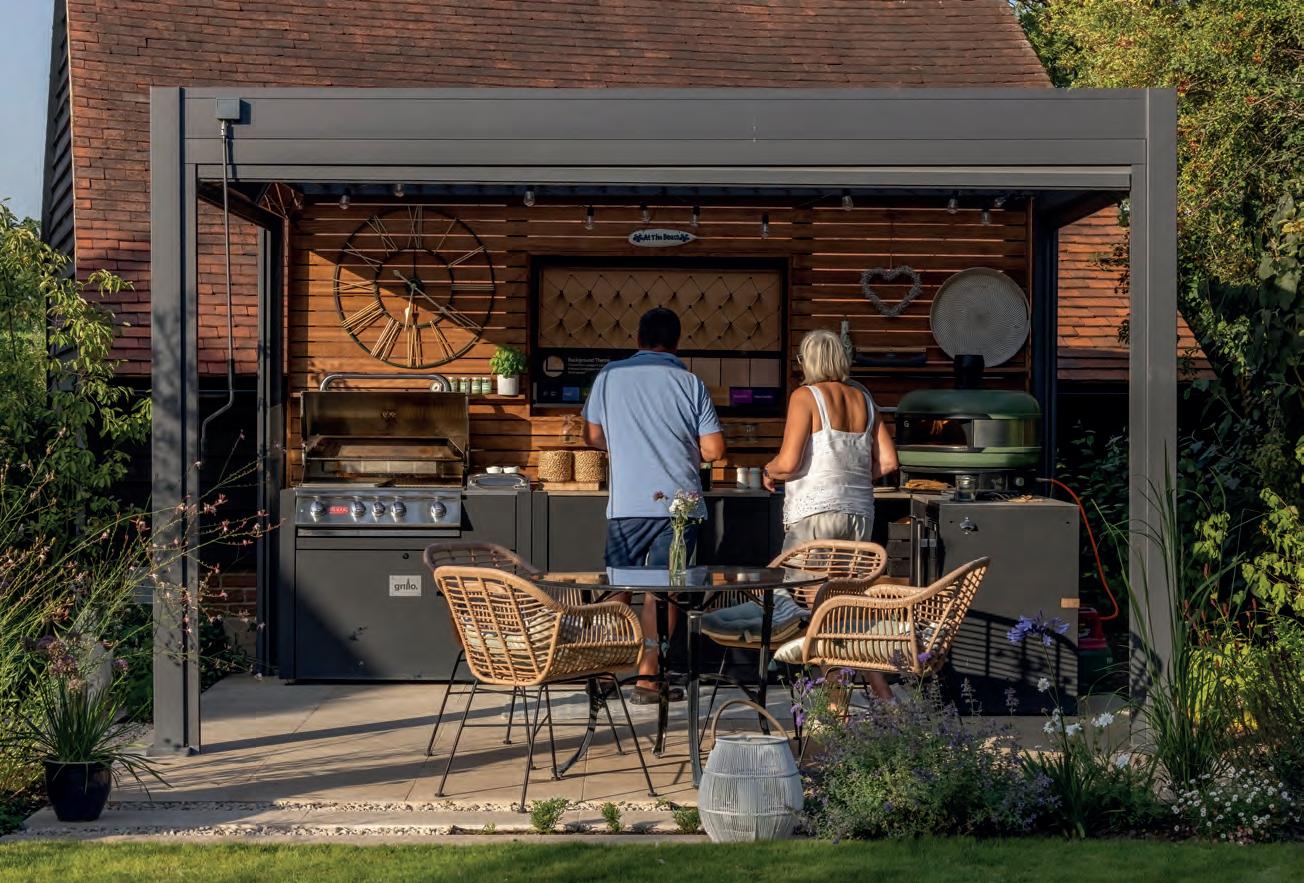
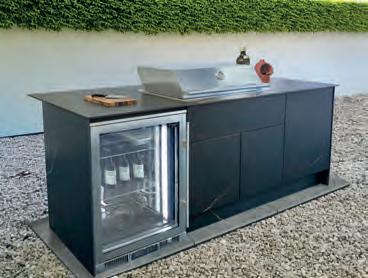
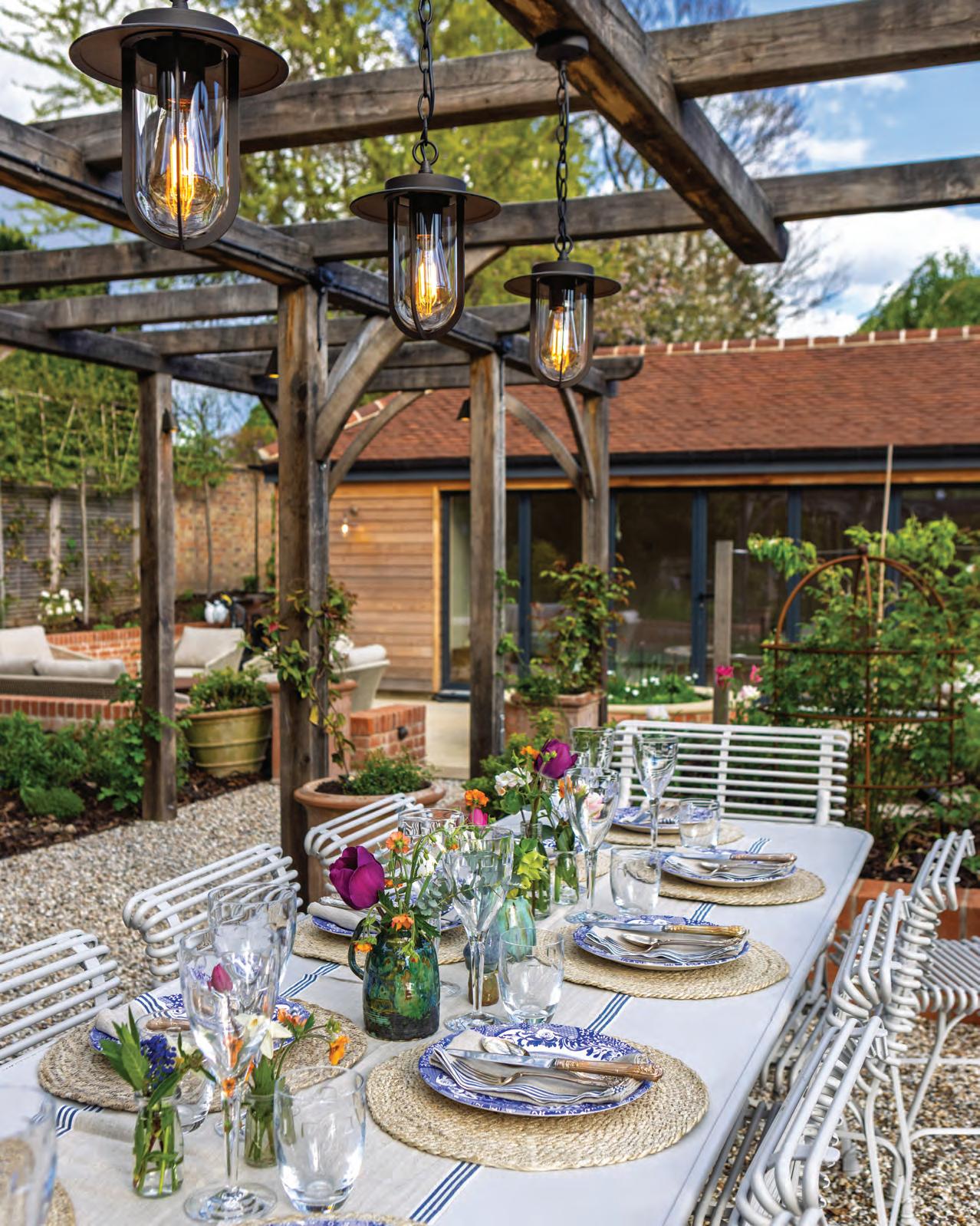
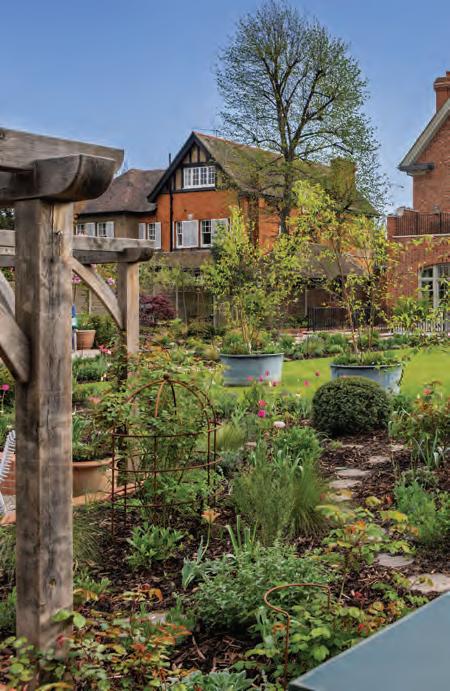
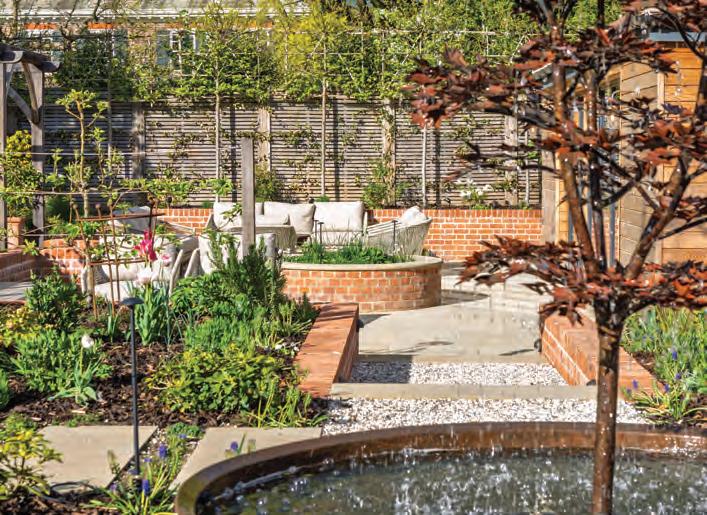
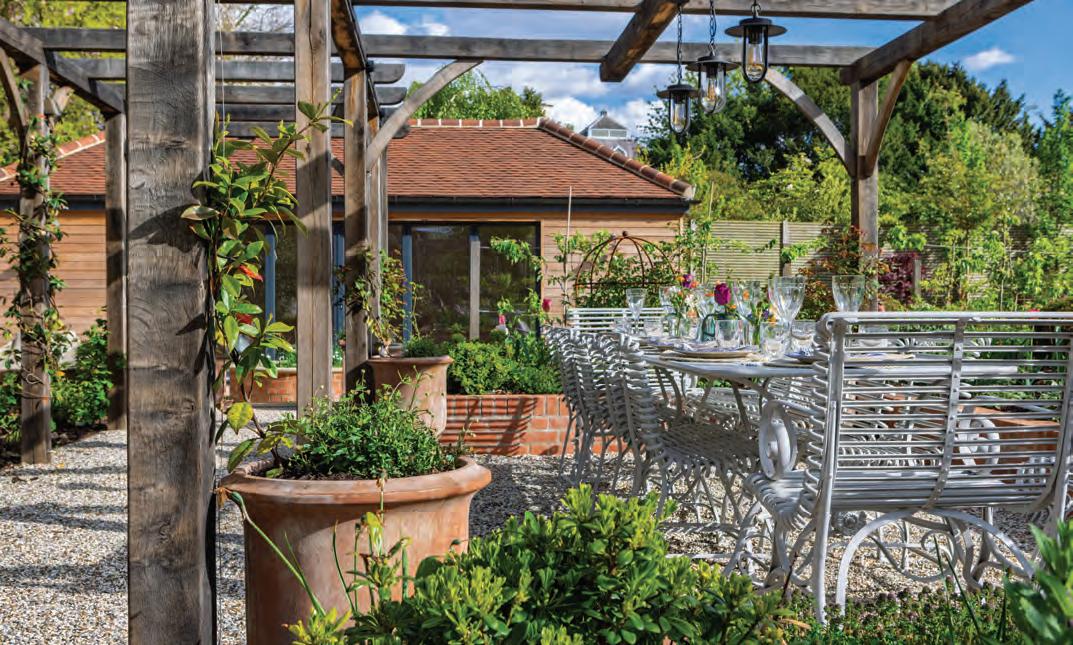
This family garden surrounds a beautiful oast house in Staplehurst, Kent, and has been masterfully reworked by Trend Garden Design. Clean lines and structured terraces are softened by ornamental grasses and perennials, and Mediterranean herbs complement the sociable outdoor setting. This is a garden designed around outdoor living. The kitchen forms the heart of the space, supporting everything from informal family meals to larger summer gatherings.
Garden by Trend Garden Design; photos by Sarah Medway Photography
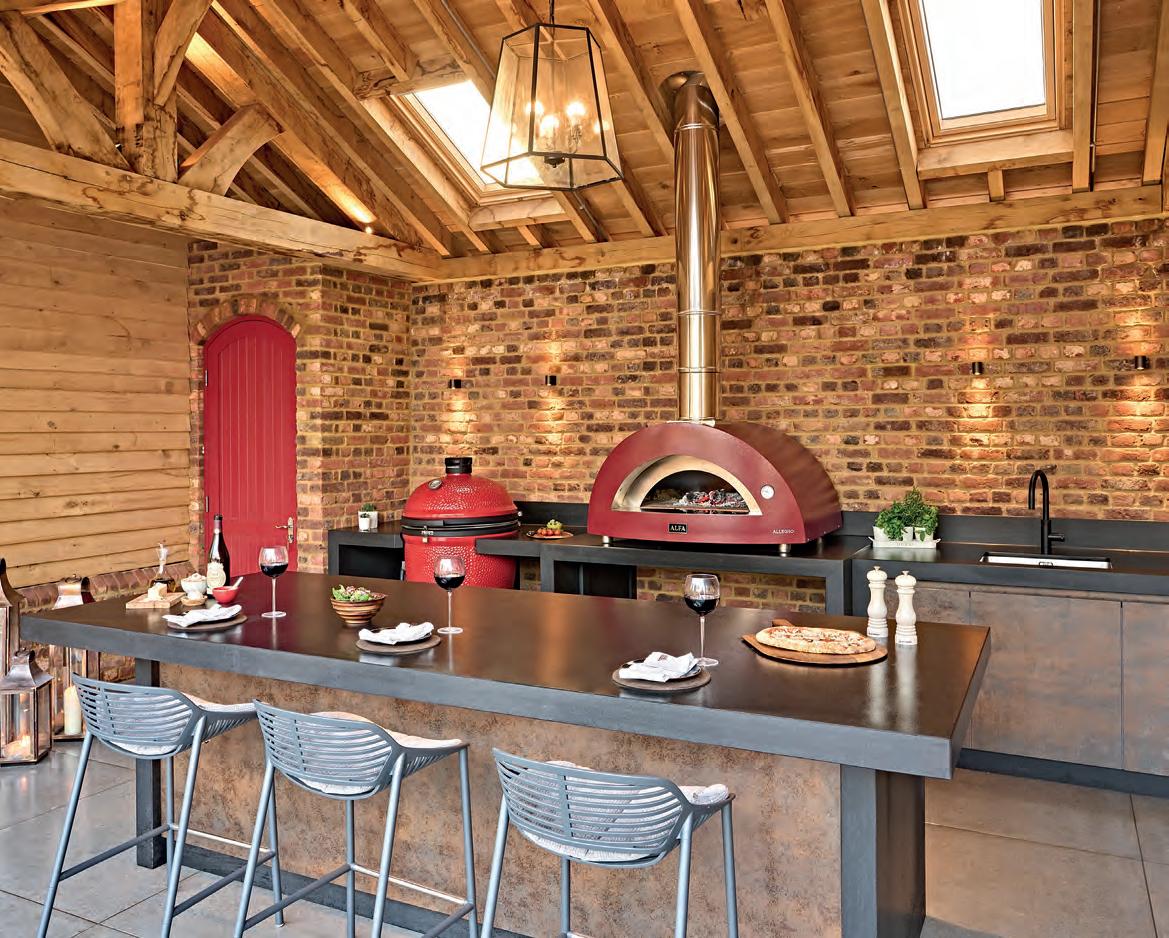
Taking the pain out of outdoor kitchen design and build.
FEEL
POWERFUL
THE XGT 40V MAX CORDLESS BLOWER COMBINES PROFESSIONALGRADE AIRFLOW WITH LIGHTWEIGHT CONSTRUCTION AND ERGONOMIC DESIGN. MAKING QUICK WORK OF BIG JOBS –AND MAKING YOU FEEL UNSTOPPABLE.
POWERFUL
FREE BL4040F BATTERY with selected XGT tool and battery purchases before 30.09.2026.
SORTED See it, Say it,
APHA urges landscapers to play a key role in minimising the spread of pests and diseases in the
UK
As the spread of pests and disease increases, undertaking basic biosecurity procedures can reduce the risk of damage that follows. In an ideal position, landscapers have an opportunity to spot symptoms of both pests and diseases early after working across multiple sites as well as transporting tools, machinery and materials.
In advice published by the Forestry Commission in collaboration with the Animal and Plant Health Agency, Biosecurity for Landscapers explains how those within the profession can help minimise the impact of outbreak. “By undertaking basic biosecurity procedures every day, landscapers
Importing
can reduce the risk of introducing and spreading damaging pests and diseases.”
By undertaking basic biosecurity procedures every day, landscapers can reduce the risk of introducing and spreading damaging pests and diseases
For example, landscapers should clean soil and debris from boots, clothing and tools before leaving any site and moving onto the next job. They should also develop relationships with trusted nurseries to help source plants responsibly while keeping records of purchases and suppliers and monitoring plants for signs of ill health. APHA encourages landscapers to check plant passports and registration requirements prior to moving or importing plants.
Finally, landscaping materials should be sourced from areas known to be free of pest and disease. “Importation of certain materials and their packaging may
plants and trees from EU countries
If you’re importing plants and trees from EU countries, APHA should be notified. This is so the agency can monitor trade and inspect consignments that are at high risk from emerging plant and tree pests and disease in the EU.
Key pests and diseases:
• Acute oak decline
• Agrilus fleischeri
• Asian longhorn beetle
• Beech leaf disease
• Bronze birch borer
• Chalara dieback of ash
• Citrus longhorn beetle
• Dothistroma needle blight
• Elm zigzag sawfly
• Emerald ash borer
• Great spruce bark beetle
• Horse chestnut leaf miner
• Mountain ash ringspot
• Oak processionary moth
• Yellow-legged hornet
be restricted from some areas, whilst others might require a phytosanitary certificate or treatment marks,” says the agency.
It’s also worth noting that while good biosecurity is always important, there are some cases where extra checks must be more rigorous. This should be when there is a disease or pest present or there's an existing Statuary Plant Health Notice in place. In this case, landscapers should follow specialist advice. They should also dispose of any diseased or infected materials by incineration, either on site or at a licensed handling facility. However, permits may be required from the Environment Agency.
Landscapers stand prevalent in maintaining plant health across the UK. With an opportunity to minimise the spread of pests and diseases, landscapers are able to help agencies such as APHA in protecting biosecurity.
Key resources:
Biosecurity for Landscapers –Animal and Plant Health Agency and the Forestry Commission; Plant biosecurity strategy for Great Britain (2023 to 2028); Biosecurity Toolkit for Landscape Consultants – Landscape Institute.
Reporting pests and disease: planthealthportal.defra.gov.uk/ pests-and-diseases/uk-planthealth-risk-register/treealert. forestresearch.gov.uk/reports /general
Planting for the future with Pictorial Meadows® turf
Beautiful, high-impact planting designed to deliver long-term performance and sustainable landscape solutions
Beautiful, high-impact planting designed to deliver long-term performance and sustainable landscape solutions
Biodiversity Benefits
Biodiversity Benefits
Flower-rich mixes designed to support pollinators and increase biodiversity, creating valuable habitats within managed landscapes
Flower-rich mixes designed to support pollinators and increase biodiversity, creating valuable habitats within managed landscapes
Stunning Visual Impact
Stunning Visual Impact
100% flower-rich mixes delivering long-lasting seasonal colour, with over 150 plants per square metre
100% flower-rich mixes delivering long-lasting seasonal colour, with over 150 plants per square metre
Peat & Plastic-Free
Peat & Plastic-Free
Produced using 100% peat-free growing media with no plastic netting; all components are fully biodegradable
Produced using 100% peat-free growing media with no plastic netting; all components are fully biodegradable
SuDS Compatible
SuDS Compatible
Selected mixes suitable for sustainable urban drainage systems, helping to manage rainfall and reduce pollutants from surface water runoff
Selected mixes suitable for sustainable urban drainage systems, helping to manage rainfall and reduce pollutants from surface water runoff
FROM A When to walk away PROJECT
Alan Sargent gives advice on how to manage client relationships
Ihave been designing gardens professionally since the mid-80s in the commercial sector. I’ve designed dozens of show-house gardens plus almost 40 show gardens for RHS Shows and dozens of private gardens.
During the 80s and 90s in particular, I worked with many other designers, including Robin Williams, Peter Rogers, David Stevens, Roddy Llewellyn, Dan Pearson and Sarah Massey, as their preferred contractor, and saw garden design from all angles.
Initial client meeting
It’s difficult to convey enthusiasm and experience during the initial interview, whilst trying to establish a rapport with the customer without appearing to be overly businesslike
Understandably, there is a natural culture of wanting to please the client. Winning the project becomes the most important factor when negotiating for a commission. During training at college, the emphasis is placed, quite rightly, on securing the design package. This leads to a culture of pushing onwards and through at all costs, with any aberration becoming a challenge, which is very difficult to overcome without a lot of experience or coaching.
It’s difficult to convey enthusiasm and experience during the initial interview, whilst trying to establish a rapport with the customer without appearing to be overly businesslike. After all, garden design is all about beauty and positivity, with little room for commercial or management reality in the early concept stages. And yet, the initial stage is the one to underline your professionalism, even at the expense of trying to excite the customer with your ideas. I suggest you go into the initial interview with a document containing all of your company information, including terms of engagement, insurance and banking details plus any other marketing material. This document should also include your rates and working practice rules, including mileage and other charges. It allows you to set your ground rules without creating a major barrier to the ambience of the interview.
We are not obliged to work for someone we are not happy to spend time with
Part of your terms of engagement should include a “sunset clause” which clearly states that you work using a phased system, beginning with the initial interview (which may be free), then subsequent stages, including (but not restricted to) site survey, concept drawings, first stage presentation, subsequent presentations, planting plans, technical drawings (if you offer this service) and client aftercare information.
The number of stages will depend on the size and complexity of the project, and also the amount of time and input required from the designer. I recommend that you do not allow any stage to become conflated by a previous one, ensuring payment before moving on to the next. This essential discipline is the hardest one to learn. An excited customer will not want to wait for the next tranche.
Construction (Design Management) Regulations 2015 (CDM Regs) Not every design project will require the introduction of a CDM Phase
Plan – only those that are likely to proceed to construction involving heavy lifting or machinery (in effect, 90% of all landscaping schemes).
CDM templates are available online, but in simple terms, they are a document recording the working methodology of a landscape project, based on health and safety. It requires a statement showing the name and address of the property owner, customer (if different), designer, contractor and any sub-contractors. It will eventually include risk assessments and method statements produced by the contractor, and serve as a written record of a scheme, including plans, drawings, permissions, warranties and a host of other relevant material.
As far as the designer is concerned, they may have a limited or restricted part to play in the creation of a project, often restricted to concept plans and ideas only. At any stage, a designer may sign in and out of the CDM Phase Plan as required by their duties. This is the basis for a sunset clause, as without a formal method of withdrawing from a project, the designer may remain liable for any problems at a later stage, if they remain on the plan as still being involved.
Customer changing attitudes
relationship. Simply put, you need to work as a team. If one party becomes overbearing and obstructive, working in harmony is not possible.
under the CDM Phase plan, there are other means to truncate a commission (subject to your terms of engagement) including the following letters of intent:
We are selfemployed, offering our services to the general public. This does not mean that we are bound to work with those who would abuse a relationship
People change personalities. It sometimes feels that designers are prone to being at the mercy of customers who may become Jekyll and Hyde characters. These changes may manifest at any time. Sometimes, true colours are shown. It’s this ‘personality’ bridge that is so important for the
Once, I had completed the concept stage for a client, and rang, by appointment, to arrange a meeting. (I always insisted on making presentations in person). The client asked me to hold, as he was on the other line. He then returned to his call, and I could hear him shouting and swearing at the other party in an obscene manner, stating that he would see “he never worked again and would destroy him”. He then slammed down the other phone and returned to me, “right, when can we meet?” I told him that after witnessing that tirade, I had no doubt that I could never work for him, and put my phone down. He spent the next two hours constantly ringing me, and getting ever more vicious and obscene each time. Fortunately, he was the very worst I ever had to deal with. We are not obliged to work for someone we are not happy to spend time with. Even if you do not have the opportunity to withdraw
“The designer reserves the right to terminate this agreement with reasonable notice if continuing the project becomes increasingly difficult or detrimental to their professional capacity or well-being”.
Or “The designer may withdraw from the project if circumstances significantly impact their ability to deliver services to an appropriate standard, including, but not limited to, health or well-being considerations”.
Be careful to ensure that your terms allow you to work piecemeal to avoid any breach of contract. If in any doubt, check with your solicitor. We are selfemployed, offering our services to the general public. This does not mean that we are bound to work with those who would abuse a relationship.
ALAN SARGENT
Alan Sargent is an expert witness and founder of the APL, PGCA and Landscape Library. He has been working in the landscape industry for nearly six decades. alansargent.co.uk
“Leading suppliers to the Construction, Metal Fabrication and Landscaping Industries.”
Three effective tools, making trade simpler.
NEW 2026/2027 CATALOGUE
Featuring over 11,000 products, including 1,000+ new. Request your FREE printed copy.
BRAND NEW MOBILE APP
The fastest & easiest way to order with F.H.Brundle. Featuring over 13,000 popular products.
NEW RESOURCE CENTRE
Access thousands of detailed technical documents, CAD files, testing certificates and even more useful features.
“THE
BUCK STOPS WITH ME ALONE AT
THE MOMENT. I WANT TO BRING IN SOMEBODY, OR POTENTIALLY MULTIPLE PEOPLE, WHOM I CAN SHARE THAT AND THE
SUCCESS WITH”
WORDS:
RACHAEL FORSYTH
Jamie Butterworth has built up a successful nursery, but the business is at a crossroads as Butterworth assesses where his strengths lie
From a young age, Jamie Butterworth was infused with the same palpable passion that fuels the entire industry. The simple act of watching a seed as small as a pinprick germinate, grow and flower, and he was hooked. His entrepreneurial spirit was born at the same time. After all, one pack of seeds could be turned into 1,000 plants worth of profit. At £1 a plant, he thought he’d be a millionaire by 12.
While he quickly discovered the realities, Butterworth has become an expert at growing things – be that a plant or a team, an RHS Chelsea garden or a nursery. But Form Plants is now at a crossroads. “I’m good at building things. I have an energy that I can galvanise, I can see the big picture and I can unify people. But people that can do that inherently do not make good business leaders.”
I want as many people to find the joy of gardening as possible
Butterworth has learnt a lesson that it can sometimes take a whole career to learn – know your strengths and, perhaps more importantly, identify your weaknesses. And now he’s acting on that, as a new member of staff will step into the role of managing director of Form Plants. Butterworth isn’t stepping aside, but he is allowing someone else to steer the ship day-to-day.
Butterworth's vision and drive have been able to grow Form Plants from a half-acre site in Hook to a multi-site, successful nursery. But Butterworth identifies that it’s time for the business to be still. “You have to identify where your skills are and embrace those,” says Butterworth. “I’ve got the business as far as I can get it. I’ve got 15 members of staff’s livelihoods depending on decisions I need to make on a daily basis. I’ve got the most amazing team, and they deserve to have a captain of that ship that can lead them into the next phase of stability.”
This way, Butterworth can focus on his strengths. “I’m better out there than I am sat behind a desk,” he explains. As well as spending more time with designers, adding more value to what he does best, Butterworth will be able to dedicate more time to other projects such as TV presenting. Last year saw Butterworth present at RHS Chelsea Flower Show for the first time, but it certainly wasn’t the first time he’s been on the TV screen. In
fact, Butterworth first appeared on Young Gardener of the Year at the age of 14. Over the years he’s appeared on both ITV’s Love Your Weekend and BBC Gardeners’ World Live.
Despite the experience, Butterworth admits up until recently he’s felt reserved about admitting how much he enjoys presenting. As he did when Butterworth was young, Monty Don once again inspired him, though. “I was chatting to Monty last year at Chelsea, and he asked me if I liked presenting. I always played it down, but he asked, “between you and me, do you enjoy it? Because they’re going to go for whoever they think enjoys it the most because that comes across on camera.”
So now I tell people how I actually feel about it, which is that I adore it. Whether I’m at Form Plants or on the TV, I love talking about plants.
“I want as many people to find the joy of gardening as possible. Because I think it’s the most amazing thing,” says Butterworth. It was the drive behind his latest book 'What Grows Together: Fail-Safe Combinations for Every Garden'. Aiming to break down what can feel like a complicated subject, Butterworth wanted to create a recipe book for plants. With over 60 combinations, the book provides easyto-follow planting recipes for all types of gardens, experience levels and seasons.
“This is where my passion lies,” says Butterworth. “Whether it’s getting kids or adults into gardening. And, ultimately, I created a nursery because I love growing plants. Now it’s become commercial, but this is why I set out to create it in the first place.”
Moving forward Butterworth will dedicate a few days a week to Form Plants and a few to media, where he can share his passion with an even wider audience.
The hardships of running a business
The changes within the business are the best thing for his team, his business, and his own career, but Butterworth candidly admits it’s also best for his mental health. “We’ve had some really tough times at Form Plants – whether that’s weather-related or job-related. I’ve been as low as I think you can possibly be.
Whether I’m at Form Plants or on the TV, I love talking about plants
“I’ve been in this industry since I was 15 and I’ve never taken my foot off the gas. This is a seven-day-a-week job. Even if you go on holiday, you’re worried about the business. If I keep going at this pace, I’m going to burn up completely. I want to enjoy life. I want to enjoy gardening again. Now, I think I’ve afforded the luxury of being able to take my foot off the gas slightly. The buck stops with me alone at the moment. I want to bring in somebody, or potentially multiple people, whom I can share that and the success with.”
It’s certainly not an easy business to be in. As Butterworth explains, no startup is easy. But this industry works with a highly perishable product, at a very low margin, to very demanding customers. “It's not a good business mix,” he says, “but we love it. We love our customers, and we love the product we sell.”
UK nursery trade
But the UK has seen a decline in nurseries up and down the country. It is especially noticeable in Surrey where Form Plants is based. “This used to be the beating heart of UK horticulture,” Butterworth explains. “There used to be 100-plus nurseries in this area. The heyday of the area being the epicentre of UK growers is dwindling. The weather is getting more and more challenging. The economy is getting harder. We’re at a nice size where we can
be reactive, but when you hit the £6m£7m turnover mark, it’s incredibly difficult to pivot.”
Prices have also stayed remarkably static in Butterworth’s 15 years. Form Plants sells 3L perennials for £5 to trade, with some nurseries selling them for more and some for less. But Butterworth says if you actually considered the time and resources it takes to grow the plant, not to mention inflation, realistically they should be sold for £15-£20. But this isn’t a price point that customers will go for.
Another big challenge for UK nurseries are European, and in particular Dutch, growers. “We can’t compete with the Dutch,” says Butterworth. “They have such a head start, and they’ve got government backing and funding. You can’t really work on a nursery unless you’ve studied at university.
“There’s also been a big shift in recent years. They have historically been very respectful and agreed to supply to us who then supplies to customers. Now, they’re growing their presence on the UK market –you'll see them at shows like FutureScape. You can’t knock them for that, but it makes it difficult to compete in the same market.”
There are new UK nurseries coming through, as well, with Butterworth pointing
to Rymer Trees and Hedging. Based in Suffolk, the nursery specialises in peat-free, cell-grown UK native trees primarily grown for woodland and hedgerow schemes. It’s this niche that Butterworth says will stand them in good stead.
Butterworth would also love to reinstate the Nursery Working Group, “It's hard, but we're all unified by how much we love plants. We need to work together and grow more, otherwise UK horticulture will die.” After all, collaboration and nurtured
relationships have been a big driver when it comes to Butterworth’s career.
Connections and collaboration
Butterworth first cut his gardening teeth on his grandparents' garden which he says he “hijacked”. After learning he could get paid to do something he loved, his first official role was at First Impressions in Wakefield. Then, a result of the aforementioned Young Gardener of the Year TV show that the gates of RHS Chelsea Flower Show were
also opened to him – and a 15-year love affair with the show and the industry was cemented. “I utterly, utterly loved it. I knew it was what I wanted to do,” Butterworth says.
But Chelsea didn’t just add fuel to Butterworth’s passion, it got him a job. “I got to help Matt Keightley on his very first Chelsea garden for Help for Heroes. A few months later, I got a call from Keightley. Except, it wasn’t Keightley it was Mark Straver from Hortus Loci. He said, “Matt’s been telling me that he’d really like to offer you a job, but you sound great. Can I give you a job instead?” The role was to grow plants for Chelsea, so suddenly I was growing plants for my idols.”
When the time came for him to stride out on his own, he wasn’t quite as alone as he perhaps expected. Steve Walley from London Stone hired him for six months to demonstrate high customer service and Jim and Jamie Wilkinson from Eljays44 offered him consulting work to help get him off the ground.
By the time he had his half-acre site in Hook, he had a wealth of knowledge to draw from. “I always wanted to build a new breed of nursery whereby it's customerfirst. It’s all about quality and service. I took the best of plant-growing from Hortus Loci, the best service of London Stone, everything I learned at Eljays44 and I started Form Plants.”
This vision was brought to life at a half-acre site in Windsor, but Butterworth soon outgrew the space. But once again, a connection within the industry opened a door. “Phil Goodman approached me and said, “We have six acres but no one really knows who we are. You have half an acre, but everyone knows who you are. Is there a way that we bring them together?” We kept the staff and the stock and ran it under Form Plants and moved sites.” The site was historically a nursery called Van den Broek.
that he was closing down Jacksons Nursery, asking whether he was interested in a potting machine. Butterworth accepted the potting machine, but he took on the rest of the site too.
I’m not a designer, I’m a plantsman. I love working with people to try and understand what they're doing and how we can achieve it through the medium of plants
The past few years, the site has continually seen a digger present as Butterworth has worked to build it up. Until once again the site was no longer big enough. It was around this time that Peter Tilbury reached out to Butterworth to share
The Jacksons Nursery staff remained, and Butterworth was able to separate his production with one site focusing on anything 40L and up and the other focussing on anything 30L and down. It's this history a nd the loss of what he calls the epicentre of UK horticulture that makes Form Plants and the recent acquisition of Jacksons of Chobham so important to Butterworth. “I now own two nurseries that would have closed down, that were both part of the original nursery working group. I really wanted to rebuild that heritage.”
A different kind of nursery
Through all of this, it’s clear that Butterworth has been continually driven by that palpable passion. Whether it’s choosing which direction to take his career and business, or forming how his business. operates “I wanted to create a knowledgeable team and a space where we can understand people’s needs and offer them bespoke solutions,” he says. “The idea of the site was to create a showroom where you’re almost forced to interact with the team. Ultimately, they might decide they’re happy to just look around and that’s fine, but they can also sit and have a cup of tea and work out what it is they really want to do.
“Trees are such an emotional purchase. They're a living, breathing, beautiful thing that will outlive all of us. You want to be able to touch it, feel it, see it, hug it. And a lot of people don't quite understand exactly what they need, so it can be daunting. I’m not a designer, I’m a plantsman. I love working with people to try and understand what they're doing and how we can achieve it through the medium of plants.”
In conversation with...
WATERMATIC IRRIGATION SOLUTIONS LTD ZAC RIBAK
Founder of Watermatic Zac Ribak explains why climate change is making irrigation solutions even more vital.
What is your background?
My roots are in landscaping. I started out in 1990 working for a nursery, which gave me a solid grounding in the industry. After that I took six months to travel the world, and when I came back, I set up my own landscape gardening company.
It was through that work that I started to see a real gap in the market. I'd been exposed to irrigation installation in agriculture and in the residential sector. And when I looked at the UK market, it was almost entirely untapped outside of golf courses and football pitches. That realisation was the turning point that led me to make the transition from landscaping into irrigation, and ultimately to founding Watermatic.
Today, my day-to-day is focused on two things: business development and making sure our managers and team have everything they need to deliver a first-class service.
We genuinely can cater to any type of project, from patios to palaces
Why is it so crucial to be thinking about water solutions?
Over the last 25 years, climate change has put enormous strain on the availability of fresh water, and that's having a very real impact on the landscape industry. Hosepipe bans, which were once a rare inconvenience, are now becoming an increasingly regular occurrence and that trend is only going to continue. But sustainable water management goes beyond just irrigation.
Sustainable Urban Drainage Systems (SuDS) are a hugely important
part of the picture too, and I know that's something many of your readers are already actively working with. The conversation has two sides: it's not just about how efficiently you're delivering water to plants, trees and lawns, it's equally about where that water is coming from in the first place.
One thing I'd highlight for anyone concerned about hosepipe bans is that professionally installing an automated drip irrigation system with a pump and tank a (cat 5) system can remove you from hosepipe ban restrictions altogether. That's a gamechanger for many clients.
The technology today is also remarkable. Modern systems are so advanced that saving water while keeping your garden or landscape thriving is no longer a compromise; we genuinely can cater for any type of project, from patios to palaces.
Perhaps most importantly, the perception of irrigation has fundamentally shifted. It used to be seen as a luxury. Today it is a must-have. It’s an investment that guarantees the longevity of your planting and landscaping, and one that is more affordable and accessible than ever before.
Tell me about the areas Watermatic has been expanding into
A big part of that growth has come from two areas we've been deliberately expanding into. On the residential side, we've been increasingly working on a range of high-end properties and homes where the expectations are high and the irrigation solutions need to match that.
On the commercial side, we've been delivering projects across large residential developments in and around London and the South East, and we've also had the privilege of working on some truly iconic sites – the Tower of London being a recent standout.
What I’m most proud of is our team. Both our office and project management team and our field engineers are performing at high levels, and I think that comes through in every client interaction. We want every person who comes into contact with us to feel that the service they receive is great.
What are some standout projects you’ve worked on?
Two in particular spring to mind. The first is the Children's Garden at Kew Gardens. Constructed by Ground Control, it is an award-winning project. There were numerous challenges throughout, but one that stands out was the need to design and engineer a bespoke automatic valve system for the underground tank – one that could intelligently open and close in response to water levels after the children had been playing. It was the kind of problem that pushes your knowledge and creativity and finding that solution was something the whole team was proud of.
The second is the Water Gardens near Marble Arch in London, constructed by Bartholomew Landscapes. What made this project extraordinary was that the entire paving area had been constructed as a rainwater harvesting tank, and we were brought into design and install a system to capture and utilise that water. The treatment of the water and the logistics of distributing it across all those areas were challenging but when we saw the finished result, it was breathtaking. Another award-winning project and one I'm proud of.
What does the future hold for the business?
Our plan is built around expanding both our commercial and
residential markets across all three of our key service areas – design, installation and aftercare – while never losing sight of the service quality that has got us to where we are today. Geographically, we're also looking to push beyond London and the South East.
Technology is a big part of our future. Irrigation systems are constantly evolving and improving, and we make it our business to stay ahead of that, making sure customers are always aware of the latest upgrades available to them, so they're never falling behind.
Underpinning all of this is our people. We continue to invest seriously in our staff through regular training, clear career development, and keeping them fully up to date with the latest irrigation technologies. A business is only as good as its people, and we want ours to be the best in the industry.
As for the wider sector, I'm genuinely excited about where things are heading. Successive governments have committed to building a record number of new properties, and alongside that, Biodiversity Net Gain and the drive to incorporate greenery into the built environment mean that automated irrigation is no longer a luxury it's a necessity. Quite simply, without smart irrigation systems, a lot of what's being planned just won't be deliverable. The future for our industry looks bright.
What are your interests outside of work?
Outside of work I have two real passions that keep me grounded and inspired. The first is sculpting. I create figurative sculptures and I absolutely love it. It's a world away from irrigation systems but in a way, it scratches the same itch of problem solving, attention to detail, and creating something you're proud of.
The second is travel. I have a deep love for the world and everything it has to offer – its cultures, its landscapes, its people. They say Phileas Fogg went around the world in 80 days. My goal is rather more ambitious: 80 countries in 80 years!
I'm also an ex-competitive Judo player, so keeping fit is very much part of my DNA. You'll find me in the gym three times a week without fail. And of course, there's music and food but then again, who doesn't love that! watermaticirrigationsolutions.co.uk
The conversation has two sides: it's not just about how efficiently you're delivering water to plants, trees and lawns, it's equally about where that water is coming from in the first place
Geometric PLANTING
ADAM VETERE THE QUILTING GARDEN
Inspiration for garden designs can come from many places. For this garden that inspiration came from the client’s quilt. Started by her late mother, the quilt was finished by the client and became the backbone of the design. A quilted panel was selected, deconstructed and then exploded to form the geometry of the design.
It was also important that the design reflected the client’s love of herbaceous, perennial borders, colour and her interest in geometry. The space also needed to be functional, in terms of offering new seating areas for friends and family to enjoy in the garden at different times of the day. The design of the formal rear garden needed to incorporate many existing mature trees and shrubs.
Planting
The changing climate and the need to conserve water means planting design now needs to consider periods of the year where we might experience limited rainfall. Gravel planting in this garden allows more drought tolerant plants to be included in the garden. Perennials are available in varying shapes and colours, allowing a dynamism to be created within the planting, with changing textures and colours flowing through the garden as the seasons change. Adam Vetere’s carefully considered plant choices have encouraged pollinators to the space and provide important food resources for birds and hibernation spots for insects.
Sustainability and biodiversity
The redesign of the garden sought to encourage and support more wildlife within the spaces. The planting design delivered several planting types within the space, thus encouraging a more diverse array of wildlife, and 80% of the space dedicated to soft landscaping. The garden now acts as a wildlife corridor, linking the woodland from the rear of the garden to the woodland to the front of the house.
To help unite the formal part of the garden with the woodland beyond, a stumpery was created in the shady region of the garden close to the house. The tree stumps have beautiful visual forms, textures and colours. They also provide habitat for invertebrates, amphibians and reptiles, which in turn are an important part of food
webs that support birds and mammals.
The site ecology and biodiversity were massively improved with several new planting schemes designed to thrive in the multiple planting environments within the garden. Several trees and shrubs from the original garden were refreshed and re-sited.
All topsoil was recycled on site. Because of the high clay content, a large-grained locally sourced sand was added to ensure a freedraining planting environment. All rocks, boulders and chippings were sourced from a local quarry.
Challenges with soil
The biggest issue on site was ground compaction and the soil conditions. The existing topsoil was filled with perennial weeds and was of a high clay content over
ABOUT
Adam Vetere is a multi-awardwinning garden and landscape designer and a member of the APL, BALI and SGLD, who has been honed from a unique background in horticulture, graphic design training, practical landscaping and business design. He is enthused by his continued passion for plants and sustainable design.
a clay subsoil. Significant drainage design went into the project, ensuring that key areas of the garden were not waterlogged during the winter.
A multi-faceted approach was used, starting with a significant land drain which took excess water into the woodland at the bottom of the garden – it slopes towards the woodland, so it was decided to effectively ‘speed up’ the flow of water into the woodland.
Next, key areas where waterlogging occurred, 120mm cores down to 2000mm were extracted and backfilled with pea shingle allowing water in these areas to penetrate the clay layer and into the underlying gravel below.
Lastly, the topsoil and subsoil were riddled, had the weeds removed and were then mixed with a large-grained sand to improve the drainage. A large-grained sand was specifically supplied by experts in soil quality – Bury Hill Topsoil – as a smaller-grained sand would have only added to the problem.
Planting beds in key areas were ‘banked up’ and raised, effectively raising the planting zones by up to 300mm in places, thus allowing the plants a better chance of dealing with our changing climate. All of the multistemmed trees were planted ‘high’ with the land sculpted up to them. Compaction was removed by ‘ripping’ through the ground, prior to the addition of the large-grained sand.
A garden for a family
Previously, the rear garden was made up largely of lawn, with several mature trees and shrubs along the site’s east and west boundaries. A 1.8m high, close-boarded fence surrounded the property on both east and west boundaries, followed by hedging of varying heights thereafter. Seating areas within the garden were restricted to the patio area by the rear conservatory.
Today, the garden reflects the client’s love for her family, planting and wildlife and the design has a strong emotional link to the client. It was imperative to create a space which had meaning and purpose for the client, after suffering the recent loss of her mother and husband, and now the garden can continue to be enjoyed by the client, her visiting children and grandchildren for many years to come.
REFERENCES
Contractor JJH Landscapes jjhlandscapes.co.uk
Supply of plants
Premium Plants premium-plants.co.uk
Griffin Nurseries griffinnurseries.co.uk
Paving and paths Country Supplies countrysupplies.uk
London Stone londonstone.co.uk
Soil
Bury Hill Topsoil buryhilltopsoilandlogs.co.uk
Water features Weather-It weather-it.co.uk
Boulders Lewis Quarries lewisquarries.co.uk
Lighting and irrigation Landscape Plus landscapeplus.com
KönigOutdoor is a British manufacturer of premium outdoor kitchen cabinetry, crafted to the highest specification. Using sintered stone for its external surfaces, each kitchen offers a sleek, high-end finish with exceptional durability.
Every KönigOutdoor kitchen is made to order, with comprehensive, turnkey support available for you and your client, from initial design consultation through to installation and aftercare.
Kitchen design by Stevens Design & Build
Luxe LIVING
Sat within the affluent and leafy district of Wimbledon in southwest London, the residence overlooks the local Common, neighbouring the iconic Wimbledon Tennis Championship. Amongst rows of 18th century cottages and Victorian villas, this impressive house yearned for a garden to encapsulate its size and beauty.
Delivered by London-based landscaping company HG Landscapes, the garden marked its largest project to date which lasted for over a year on site. From several paving areas, a summer house, a hot tub decking area, a large pergola, a water feature and an underground swimming pool – this deluxe garden truly has it all.
Perfect planting
Designed by Liz Sanderson and Emma Neve of Neve & Sanderson Garden Designs, the 2,000m2 garden blends high-end luxury with a naturalistic feel. Planting stands as a huge part of the overall scheme, intent on creating a biodiverse space for local wildlife.
Around 60% of the garden sits on a solid concrete podium housing the underground carpark and swimming pool. Large paving sections, flower beds and the entire lawn are installed atop the podium. The garden is adorned with several Prunus, including ‘Pandora’ and ‘Kanzan’ amongst various apple and pear trees. On top of this, climbing roses are sprinkled across the garden, including Rosa 'Climbing Iceberg' and ‘Generous Gardener' and ‘Mary Delany'. A free-standing retaining Corten clad planter
accounts for the level change on the righthand boundary, while a 4,500l tank designed and installed by HG Landscapes sits in disguise beneath the hot tub and decking area ready to supply irrigation for over 600m2 of beds.
Stationed beneath the wooden pergola, a social dining area sits atop gravel and border planting. Adjacent to this, an outdoor living area cosies itself around the summer house just meters away from the large lawn. Centred in fluidity, the design interconnects using stepping stones, paving and gravel that allows both visitors and residents to access all areas of the garden.
Tricky obstacles
The property was completely rebuilt featuring extensive basement works, which extended to around 60% of the rear garden. Something HG Landscapes were forced to work around, as well as other challenging build specifications, it turned out to be a
HG Landscapes is a leading garden design company providing a complete range of premium gardening services specialising in all areas of garden design, construction and maintenance for private, residential gardens across central, south and southwest London.
hglandscaping.co.uk
“rewarding project with amazing results,” explains founder and director Jemery Howgrave-Graham. Featuring a huge number of different elements, the garden hosted a large workforce daily. Around 40-plus people would work on site working together to overcome any challenges. In total, changes and
delays resulted in over 30 quote amends and 11 scheduling revisions.
Thrilled with the garden’s result, the clients even attended the British Association of Landscape Industries (BALI) National Landscape Awards 2025 with HG Landscapes.
For over 300 years, Beningbrough Hall has been shaped by the people who lived there – from the teenager who inherited it in 1700 to the RAF during the Second World War. Today, it is undergoing
HISTORY Adapting
BLAKEDOWN LANDSCAPES
THE MEDITERRANEAN GARDEN
a revival. Garden designer Andy Sturgeon’s long-term vision seeks to improve, strengthen and, in some cases, reinvent the larger eightacre estate. Among these reinventions is a new Mediterranean Garden.
Blakedown Landscapes is an award-winning landscaping and civil engineering specialist delivering projects throughout the UK. With over five decades of experience, its knowledge spans all sectors including local authorities, royal parks, commercial developers, educational facilities and historic park restorations. Blakedown’s team of in-house experts works collaboratively with clients offering best practice advice and innovative value engineering solutions. blakedown.co.uk
to a wide range of visitors. Working closely with Sturgeon and the National Trust, Blakedown Landscapes was appointed to deliver a full structural package. This included establishing levels, circulation, drainage and permanent features required to support the landscape that was being created.
Setting the levels
At the heart of the project was a comprehensive programme to reshape the garden’s contours, introduce subtle undulations and form localised mounding to create planting areas and define circulation. Topsoil was carefully stripped, stored
and later reused across the site. Prior to reapplication, it was blended with grit to improve drainage performance and support the Mediterranean planting palette.
Routes through the space were established using a series of winding footpaths constructed in a variety of finishes, notably Breedon self-binding gravel. This layout was designed to reveal fresh perspectives, hidden corners and encourage exploration.
A series of long, low dry stone walls play a central role in defining the structure. Constructed from locally sourced Yorkstone with concrete block cores and reinforced concrete foundations, they emerge from the sloped ground, reading as part of the
landscape rather than as freestanding elements, reinforcing the sense of cohesion.
Alongside the hard landscaping works, bespoke free-standing seating was installed and specimen trees and hedging were planted, reinforcing the Mediterranean design. All planting was delivered as peat-free in line with the project’s sustainability goals.
Integrating water into the landscape
With archive photographs and archaeological research indicating that in 1900 ponds and a fountain had existed, water is a defining feature of the Mediterranean Garden. While the new layout does not replicate these features directly, it subtly reflects
them by returning water to the same areas of the garden. This was delivered as a contractor’s design element, requiring precise co-ordination between structure, levels and finishes.
A stepped water feature was constructed on piled foundations and reinforced ground beams. This included a prefabricated stainless steel tray which collects water from a bespoke copper rill set into the fifth, and most technically demanding, of the dry stone walls. Achieving the required tolerances demanded careful sequencing and precise alignment of stonework together with the continuous checking of levels, particularly given the saturated ground conditions experienced during construction.
Water feature bowls, sourced from local artisans, were installed within the gravel setting, spaced to attract wildlife and create reflections throughout the garden. Sandstone boulders and large feature stones carefully selected from a local quarry evoke the character of a Mediterranean hillside while remaining grounded in the material palette of the wider design intention.
Hidden performance
Beneath the visible structure of the garden lies a complex drainage system, essential to the site’s long-term performance and resilience. Comprising perforated drains and pipework connected via multiple inspection channels, it feeds into a 17 cubic metre attenuation tank positioned adjacent to the Grade II listed boundary wall.
From there, a flow control system regulates the release of water to a chamber at the base of the ha-ha wall before being discharged into the adjacent floodplain field. Delivered with careful consideration of heritage constraints, these hidden works are critical in managing surface water and preventing future waterlogging, particularly given the site’s heavy soil structure and proximity to the River Ouse.
Working within constraints
Access to the garden was only possible through a protected woodland containing mature specimen trees. To safeguard root systems and minimise ground disturbance, track mats and a no-dig temporary trackway were used.
PLANTING
3,500 of the new plants within this project are on the RHS Plants for Pollinators list to enhance biodiversity.
Throughout the programme, National Trust staff and volunteers continued to operate within the site’s working areas demanding ongoing co-ordination of material movements and plant operations. Careful scheduling was optimised before the hall opened to visitors each day to ensure that the materials which were delivered via the public car park and a narrow farm track to the old farmyard were done safely. While larger artic deliveries, such as the South Cerney gravel, were tipped in designated areas and redistributed by dumper to minimise disruption.
Compounding these constraints were the severe weather conditions associated with Storm Babet. The early stages of the programme benefited from dry conditions that allowed a significant amount of drainage installation to progress. However, the following prolonged periods of heavy rainfall caused repeated and significant disruption. Wall trenches filled with water overnight, haul routes became impassable, and work areas were rendered unsafe on multiple occasions, necessitating temporary suspension of operations and continual adjustment to sequencing. The irony of building a Mediterranean Garden in one of the wettest autumns, winters and springs on record was not lost on the project team.
Archaeology
Reflecting the sensitivity of the site and its historic setting, all excavation works were undertaken under a watching brief by local York archaeologists. During drainage installation, the discovery of original building wall foundations required periodic stoppages to allow investigation and recording. Works were adjusted accordingly to maintain programme momentum while ensuring the site’s archaeological integrity was protected throughout.
Planting
Blakedown planted the hedges and trees including the Koelreuteria paniculata (pride of India). The Indian rain tree is a climate change specialist and is unusual for a tree growing in the UK as its yellow flowers appear in summer. The slender open structure of this deciduous tree becomes more beautiful with age. The remainder
of the plants/shrubs were purchased by the National Trust and planted by their volunteers. 3,500 of the new plants are on the RHS Plants for Pollinators list to enhance biodiversity.
A framework built to last The Mediterranean Garden at Beningbrough Hall demonstrates the importance of high-quality hard landscaping in establishing a durable garden structure. Through careful shaping of landform, precise execution of stonework and water features, and the delivery of robust drainage infrastructure, Blakedown Landscapes has created a framework capable of supporting the garden as it matures and for the changing climate.
Delivered within a sensitive heritage setting, under challenging weather conditions and with complex logistical constraints, the project reflects a disciplined approach to construction and a clear understanding of how technical hard landscaping underpins the success of designed landscapes. As planting develops and the garden settles, the strength of its constructed foundations will continue to define how it performs, functions and endures.
REFERENCES
Landscape designer Andy Sturgeon andysturgeon.com
Yorkshire copings, steps, slabs and dry stone walling Rand and Asquith randandasquith.co.uk
Drainage materials including concrete Milton rings
Meet the plants that pair perfectly with porcelain paving
PAIRING
PAVING SUPERSTORE
TONAL RANGE, CEMENTO NERO
Cemento Nero is inspired by the refined look of polished concrete and pairs well with Stipa gigantea. The architectural yet soft and airy plant complements the grey or greige paving. The plant is also drought tolerant and on trend. pavingsuperstore.co.uk
PRICE: £18.45M2 + VAT
LONDON STONE
CHARCOAL PORCELAIN PAVING
These paving slabs are a mix between dark grey and black with a natural surface finish. Pairing perfectly with the green foliage of hardy ferns, these can be found in a diverse array of shapes and textures and once established are happy in containers. londonstone.co.uk
The linear wood-effect finish of SYMPHONY® Plank Corrado is complemented by Geranium ‘Rozanne’ AGM which has previously been voted RHS Plant of the Centenary. The porcelain paving is low maintenance and has enhanced slip resistance. The Geranium ‘Rozanne’ AGM will flower from early summer to early autumn.
PRICE: POA
Discover the garden buildings that help recharge
Wellness WINS
CEDAR LODGE GARDEN ROOMS LTD
ORBIS™ ROUND GARDEN POD
Inspired by the calming effect of curved architecture, ORBiS™ is a handcrafted wellness pod designed for quiet retreat, reading, reflection or focused work. Its circular form and warm natural interior create a sanctuary-like atmosphere. As seen at BBC Gardeners’ World Spring Fair 2026, ORBiS™ invites people to slow down.
PRICE (INCLUDING VAT AND INSTALLATION): FROM £14,995
OECO GARDEN ROOMS
GARDEN SAUNAS
Offering bespoke sauna sizes and custom designs, Oeco creates everything from a compact sauna for a small garden retreat or a larger, multi-person sauna, each tailored to suit exact specifications. More than a luxury, the garden saunas are a powerful tool to enhance physical and mental wellbeing.
The answer to projects that need a little extra beauty, AKRI Snap unites functionality and aesthetic in a flat-pack package that goes from online configurator to onsite in a matter of weeks. A space to sit amongst the flowers, the bench planter is the solution to unite the public with nature right on the high street.
PRICE: POA
STREETLIFE
SOLID HEX GREEN ISLES
A modular system which includes walking grids, seating elements and planters, the Solid Hex Green Isles is the solution to seating in large urban squares or on campuses. Featuring hexagonal steel elements available in four different heights, the planters dynamic design achieves immediate versatility within a space.
PRICE: POA
TORCPOTS
BENCH PLANTER
Available in an abundance of different colours and textures, the Bench Planter is made to measure to adhere to a space’s needs and requirements. Seamlessly incorporating planting, the bench offers a tranquil design that is both accessible and aesthetic while its texture brings life and movement to the planter.
PRICE: POA
PLANTS Protecting
Palmstead Nurseries has developed innovative processes to protect plants, the business and its customers
In line with the majority of the UK horticultural industry, Palmstead Nurseries depends on trade with other growers, both in the UK and Europe. There is a huge diversity of products requested by the nursery’s customers and not everything can be grown onsite, so it relies on a network of trusted growers' nurseries to help supply all its customers' needs.
Since achieving Plant Healthy certification three years ago, Palmstead Nurseries has gained a clearer understanding of the processes needed to protect the business from the risk of importing pests or diseases. The nursery uses check sheets for all suppliers and have longstanding relationships with many of them which helps to build trust and confidence.
Plant Healthy has also helped to develop a clear system for
when things do not go to plan. It now has a robust process for quarantining plants and procedures that guide staff on the next steps to take. This protects both the business and the customers.
Onsite, Palmstead Nurseries has a dedicated goods-in team who will check every load coming into the nursery. Working closely with Animal and Plant Health Agency (APHA), the agency regularly comes to inspect stock that has been imported.
All imported stock will then be double checked by a production supervisor as the plants are moved to the beds or prepped to go out on orders. Only once the plants have been double checked would they then appear on the stock system as live and ready to order.
For the onsite production, Palmstead Nurseries has
automated pest monitoring systems, Pats-C and Trap eye. Trap-eye uses yellow sticky traps and counts the amount of new pests present on the traps weekly. The team uses AI to recognise the pest and then feeds back to the dashboard and allows the nursery to see hot spots within its glasshouse areas. These are then colour coded to allow easy interpretation.
Pats-C monitors moth activity by using LED lights and infrared to record and recognise moths which then creates a live update on moth activity by type seen, numbers and hours present. Both of these systems allow the team to intervene much earlier and reduce their reliance on conventional chemical controls.
Alongside the technology the nursery has onsite, Palmstead Nurseries also relies on the experienced production team. These are the people looking at the plants on a daily basis and are often the first ones to spot a potential issue. This will be reported to the technical supervisor who will
then decide what the next steps should be.
Wherever possible, the team prioritises a biological control approach and they have seen much better results using biological products over conventional chemical ones.
Within the technical team, they are monitoring crops and inputs to ensure the nursery has the right conditions for its plants. This could be testing of the water, pH and copper analysis or sending samples of plants for testing.
Wherever possible, the team prioritises a biological control approach and they have seen much better results using biological products over conventional chemical ones
OLD THORNS HOTEL & RESORT, LIPHOOK
2 - 3 JULY 2026
The Landscape Leadership Forum gives businesses in the sector full view of the macro landscape whilst balancing the need for attention on the imminent opportunities and challenges. This annual summit brings together businesses engaged in the sector and the supply chain, creating space for leaders and their teams to build a helicopter view. The critical insight will help inform and identify where action may be needed within their organisation and help initiate new connection and collaboration with existing and new stakeholders.
This year’s event will be taking place over two days, with day one seeing the launch of “2026’s State of the Nation Report” with industry leaders providing their insights around the sector’s opportunities and challenges highlighted in the research. Additional speakers will include business experts providing insight around action and strategies that can realise growth potential from improving productivity, driving margins and managing volatility. The first day concludes with a networking dinner and guest speaker with delegates also getting the chance to carry on the conversation on day two by taking part in the Pro Landscaper Golf Challenge.
SPEAKERS INCLUDE:
• Aidan Bell, idverde
• David Dodd, The Outdoor Room
• Saira Ali, President Elect Landscape Institute
• Danny Clarke, CITB (Construction Industry Training Board)
• Jennifer Pheasey, Horticultural Trades Association (HTA)
• Ben Butler, Federation of Small Businesses (FSB)
• Larry Stubbings, Talik & Co
• Danny Clarke, CITB (Construction Industry Training Board)
• Paul New, Azets
• Phil Jones, Appletree Bay Consultancy Ltd
Every time I come to one of these events, I walk away with a nugget that I will bring into my business.
Gareth Dillon, NT Killingley
What will be covered?
• Exclusive industry research
• What’s on the boardroom agenda
They get people from all sections of the industry who bring different views and perspectives.
Paul Lynch, Elmtree Landscapes
• Driving productivity in your business – it’s all about people (or is it?)
• Managing disruption and volatility
• Off the record – insight from the top
HEALTHPrioritisting plant
Plant Healthy project director Malcolm Catlin explores the relationship between landscapers and managing plant health
Plant Healthy is a voluntary certification scheme that helps businesses manage plant health risks responsibly. From growers, landscapers, arborists or garden managers, the scheme helps an array of businesses involved in the general landscape to meet recognised biosecurity standards.
Being aware of the growing number of serious pest risks, selecting the right plants from the right sources, and having basic procedures in place are all essential
In becoming certified, a business can show customers, suppliers and regulators that it takes plant health and biosecurity seriously while working to best-practice standards. Landscapes in particular play a huge role in protecting the health of plants and trees. “Healthy plants support wildlife, wellbeing, food security and the natural environment,” explains Plant Healthy.
Project director Malcom Catlin says: “Being aware of the growing number of serious pest risks, selecting the right plants from the right sources, and having basic procedures in place are all essential. Plant Healthy certification provides the framework for doing this.”
Hosting 100-plus certified members, Plant Healthy covers over 3,500 hectares while protecting 200 million plants every year. Landscaping companies currently certified include the likes of Landform Consultants and Nicholsons.
Pursuing more landscaping companies to get certified and protect UK and international landscapes, Plant Healthy guides businesses through certification from the self-assessment to audit. Once certified, the logo can be used as a trusted mark to demonstrate a company’s commitment to protecting plant health.
For any more information, please contact: director@planthealthy.org.uk
Plant health threats are most acute in (although not limited to) woody plants – trees and
The movement of plants is the most common (but not the only) pathway for introducing and spreading serious pests and diseases
The risk is higher for (but not limited to) imported plants
The level of risk depends on the type of plant (and the types of pests it may host) and the source (is the plant from an area where that pest is known to be present, and does the supplier have the right awareness and measures in place?)
Understanding those two things is therefore key – know your plant and know your supplier
Ensure that there is a point at which plants are checked by a competent person prior to planting, so that any pest or disease symptoms can be spotted or concerns raised
Wood materials, whether packaging (pallets, crates, etc.), stakes, or structural timber, growing media and aggregates can all provide additional pathways for pests so knowing your source and checking these materials is also key
Use the Plant Healthy website, planthealthy.org.uk, to find links to useful resources, understand how the principles of the Plant Health Management Standard provide a framework for good practice, and how Plant Healthy certification gives recognition of that good practice and assurance to your customers
TOP TIPS: WHAT LANDSCAPERS SHOULD BE LOOKING OUT FOR Top tips from Malcolm Catlin, project director at Plant Healthy.
shrubs
JOINTING GETS A NEW LOOK!
We’ll help you select your plants.
We’ll source and deliver your order.
We offer planting and installation options. We’ll support you with our warranty and our follow-up care.
“Tendercare has been one of our key suppliers for nearly 15 years, providing an exceptional range of over-sized and unique material for many of our projects. Across the nursery the team are knowledgable, friendly and a pleasure to work with.”
- Will Allerton, Director, Allerton Landscape Design
NativelySPEAKING
WORDS: HOLLY CHAPMAN
Experts profess the vitality of featuring native and non-native planting in UK gardens
We've squeezed wildlife out of every corner, but we can change this situation by including native plants every time we add something to the garden
Green space in the UK will often feature planting from across the entire world, not just those naturally occurring in Britain. In woodland, most commonly seen and often dismissed, the carpet of violet-blue on copse floors during April and May will host a mixture of the native bluebell and non-native Spanish bluebells. The UK is home to around half of the world’s bluebell population, and only one species is native.
While they may look similar upon first glance, a closer inspection reveals easy-to-spot differences between the two species.
The Hyacinthoides non-scripta, otherwise named common bluebells, English bluebells, British bluebells, wood bells, fairy flowers and wild hyacinth, grows naturally in
the UK. These feature narrow leaves and deep violet-blue, narrow, tubular-bell flowers with tips that curl back and bloom on one side of an often-drooping stem.
The Spanish bluebell, Hyacinthoides hispanica, on the other hand, has broader leaves with pale blue conical-bell flowers that grow around the entire stem positioned upright. A more vigorous plant, it threatens the British bluebell’s population as it outcompetes it for resources such as light and space. Also, over time, the non-native species can hybridise with the British bell, eventually changing the genetic makeup of the native species, therefore diluting its characteristics and weakening it before potentially evolving into something else entirely.
In fact, a study from Plantlife found that one in six broadleaved woodlands hosted hybrids or Spanish bluebell.
Hybrids spread underground and are known to push other species out while native bluebells can
take up to seven years to flower from seed. Voted the nation’s favourite wildflower, organisations such as Plantlife and The Wildlife Trusts encourage the public to choose the native variety to help prevent the spread of non-native species, while providing food and shelter for native insects.
However, within gardens across the UK the combination of native and non-native species can also be incredibly productive for gardens across the UK. A diverse range leads to extended seasonal flowering and a mixture of blossoms improves wildlife value, especially as the country's climate changes.
Native vs non-native
breeding, nesting and food sources for larval stages of insects, many of which have evolved to eat the foliage of one specific plant.”
Even if a garden is full of pollinator-friendly plants, “it doesn't matter if there's nowhere for those pollinators to breed,” Grant explains. Wildflowers, for example, are in decline, with the UK having lost 97% of its wildflower meadows since the 1930s. “Using non-natives for so long is a massive cause of habitat loss and biodiversity reduction. We've squeezed wildlife out of every corner, but we can change this situation by including native plants every time we add something to the garden,” she reasons.
Some of the native plants are not suitable for changing climates, and we need to think about resilient planting by including a more diverse range of plants
"Native plants are vital to support our declining wildlife,” begins planting specialist and garden designer Susanna Grant, "not just for pollinators but also for habitat,
The Royal Horticultural Society (RHS) has been researching how to garden for both pollinators and invertebrates. From planting British natives to focusing on wildflower meadows or extending the season with exotic nonnative planting, the RHS encourages a mixture of flowering plants from different parts of the world. The more plants a garden can offer throughout the year, the greater number of bees, hoverflies and other pollinating insects it will attract and support.
Garden designer Dave Green of Dave Green Garden argues that “it's not so much a distinction between native and non-native,” but instead “it's more about plants and blooms being available for nature.”
However, native planting specifically is important for invertebrates, finds the RHS. Often dismissed as pests, invertebrates support populations of natural predators, which in turn helps to maintain a balance of invertebrates in general.
Grant sees native planting work well with non-native planting, “especially when we are putting together planting plans that we hope
will withstand climate change,” she says. Green agrees, adding: “Some of the native plants are not suitable for changing climates, and we need to think about resilient planting by including a more diverse range of plants.”
A changing climate
Not only does a diverse planting plan work for a changing climate, but “the mix of plants and blossoms for an extended season improves wildlife value,” says Green. As weather patterns become increasingly intense and unpredictable, there is a risk that native plants may not evolve quickly enough with the change of environment, notes garden designer Max Parker-Smith of Maximilliam design.
Designer of the Journey Beyond the Tracks: From Adelaide to Perth garden at RHS Chelsea Flower Show 2026, Parker-Smith featured an abundance of non-native planting in honour of the Australian landscape. “I think we should also embrace non-natives, while also recognising the plants that have lived in the UK for thousands of years."
His garden, built by Hardwood Landscapes, will be relocated to Kensington Gardens and Longleat. 98% of the planting originates from South and Western Australia and is grown in southern Spain. “It’s going to be interesting to see how they fare in the UK,” he says. “I think we might surprise ourselves with some of these plants.”
For example, the Xanthorrea (Grass trees), which played a key role for the First Nation inhabitants of Australia, "has a good chance of growing,” Parker-Smith explains. In need of sandy soils and low nutrients, the trees find a new home within the Royal Parks under the watchful eye of head of horticulture and landscape strategy, Matthew Pottage.
Trends amongst clients
Admittedly, Grant says she initiates the conversation on native planting with her clients and the importance of incorporating declining plant species, such as wildflowers, within schemes. In comparison to five or so years ago, she’s seen a change: “I've had more clients interested in including more native plants into their gardens and if they want a lawn, they are happy to have clover turf or wildflower turf, which they weren't so open to five years ago.”
Perhaps down to the increase of ‘wilder’ gardens at Chelsea, “there is a trickle-down effect which definitely does help,” Grant notices. “But equally those gardens show a snapshot of a perfect flowering moment in time which can be very unhelpful in managing clients' expectations.” In response, there is a level of education and communication needed to be relayed to clients.
"I don’t think a lot of people understand how important native plants are. They are usually very receptive to the idea when you explain that lesser knapweed can support up to 70 species, or that
kidney vetch is the sole larval food for the small blue butterfly, as they may want to see the butterfly in their garden."
Green has also seen a trend with more clients looking to connect with nature, and “a lot of people think that connection means having native plants,” adding, “I think there is a trend for ecologically rich planting, for example having more natives.” But, he argues, there is a risk that people believe in order to be more ecologically sound, they must have only native planting. “But that’s not the case. It’s about diversity, and the more we can tell people about that, the better,” he finishes.
Not to be ignored, the conversation on native and non-native planting should be pursued across planting and garden design. As the climate warms and threats to species continue, not only is it important to reintroduce declining native species, but by introducing non-native planting in combination, a garden is more likely to attract a range of pollinators and invertebrates all year round.
The future
of weed
MANAGEMENT
WORDS: RACHAEL FORSYTH
To what extent have policy and data led to a shift in the sector’s approach to weed management?
In 2019, Brighton Council banned the use of glyphosate. It was a decision it said at the time was made after it was linked to cancer and a decline in bee populations. But an overnight ban eventually led to weeds causing damage and a deluge of complaints from residents about mobility issues and aesthetics.
In 2024, it made the decision to return to a controlled-droplet application of glyphosate to manage weeds on hard surfaces, with parks and open spaces remaining pesticide free. It has also allowed Brighton residents the option, where possible, to opt out of this maintenance programme and keep the pavements clear themselves.
This news didn’t come without its
objections, with PAN UK saying at the time that the move was “incredibly disappointing”. But Brighton saw it as a reset, so they could work to reduce glyphosate once unchecked growth was better under control. It seems it is acknowledged that it was a failure to plan that led to this result. Ed Stannard, executive director at Parks for London says,“You can’t ban glyphosate overnight without a plan for how you’re going to manage both the public perception but also some of the damage that can happen to the built environment if you haven’t properly costed the additional resources. It’s important to have an integrated approach which considers a non-chemical-first approach.”
There
management approaches. There is growing recognition that reducing pesticide reliance will be a gradual transition requiring investment, innovation and realistic implementation timescales.” But is there a decision on the horizon that could force the industry’s hands?
Glyphosate renewal
is growing recognition that reducing pesticide reliance will be a gradual transition requiring investment, innovation and realistic implementation timescales
Glyphosate is a broadspectrum herbicide which is approved for use in Great Britain (GB). The Health and Safety Executive is currently assessing whether the approval of glyphosate can be renewed in GB ahead of its expiry in December 2026.
Corrina Urquhart, executive officer of the Amenity Forum, says: “While views across the sector vary, there is broad agreement around professionalism, targeted application, minimising environmental impact and developing integrated
The Amenity Forum expects to engage closely with the forthcoming GB glyphosate consultation and help represent a “collective, evidence-based industry perspective,” says Urquhart. “Policy discussions must reflect the practical realities of rail, highways, local authority and public space management, where safety and accessibility remain critical.
“The sector wants future policy decisions to reflect not only environmental considerations, but also operational realities, public safety, resource pressures and long-term sustainability.” Urquhart stresses that any future reduction in glyphosate reliance must be evidence-led, practical and supported by investment in
alternatives, training and innovation.“The sector believes future guidance and regulatory decisions should continue to be informed by robust evidence and operational data, rather than political pressures.”
Moving to a non-chemicalfirst approach
A number of councils have now made a commitment to reduce their use of herbicides through targeted application, revised maintenance regimes, better mapping and greater tolerance of lowrisk vegetation, says Urquhart. Sean Faulkner, sales and marketing director at Kersten, says this is in part being driven by policy. “The UK Pesticides National Action Plan has made a big difference,” he explains. “It mandates that other solutions are tried before using pesticides and focuses on prevention.”
for Environment, Food & Rural Affairs (DEFRA). IWM uses a holistic approach to managing weeds through cultural, biological, mechanical and chemical controls. All with a focus on prevention. Aimed at those managing amenity spaces and public realm, the reference looks to equip them with the tools to do just this.
The sector believes future guidance and regulatory decisions should continue to be informed by robust evidence and operational data, rather than political pressures
"The biggest problem we have is people trying to replace glyphosate with something else rather than replacing the whole system so that products work within that system,” explains Faulkner. But Stannard says he has seen a change in the narrative when it comes to treating weeds,“More people are taking a framework approach to weed control. Through this, they are taking a more nuanced view of what a weed is and what is acceptable in certain locations. Crucially it also means they are looking at prevention.”
arguments for alternatives all go out the window,” he argues.
Faulkner explains it’s also about assessing the right tool for the task to keep the surface working properly. In a location in Scotland, Kersten has overlaid the complaints data from weed complaints, gully complaints and pothole complaints that the council had repaired. In areas where the council had gully and weed complaints, they were likely to have 2.5 times more potholes.“The correlation between them was massive,” Faulkner says.“The linking factor is the soil. The soil is allowing the weeds to grow up, the soil is blocking up the gullies, and the soil is then holding the moisture against the surface and causing freeze-thaw damage which is leading to potholes.”
Kersten did statistical analysis on this data to ensure it wasn’t just random, but the data didn’t lie. Faulkner believes that implementing IWM could save millions which are currently being spent on pothole filling and gully clearing.“If you look at the problem in the round, including the impact on infrastructure, then IWM becomes vital.”
Stannard says the acknowledgement and attention IWM has received over the last 18 months is increasing.“There are political drivers,” explains Stannard,“but there is also more acknowledgement that considering IWM approaches doesn’t mean higher costs. There has always been pushback that moving to a non-chemical-first approach will cost a lot of money. Slowly, through trials and evidencebased case studies that narrative is changing.”
“Integrated Pest Management is increasingly viewed not simply as reducing pesticide use, but as making evidence-based, site-specific and proportionate decisions,” says Urquhart. Urquhart also identifies the importance of training, operator competence and record keeping in demonstrating stewardship, accountability and public confidence.
Stannard also emphasises the importance of an audit trail that has an evidence base.
“That way, when you’re working with friends
Faulkner also points to the Integrated Weed Management (IWM) reference guide developed by Parks for London alongside Kersten, Amenity Forum and the Department
Instead of simply spraying every weed, Stannard notes more often it’s about looking at the environment to assess what is causing the weeds to occur in the first place.“If you’re preventing your weeds from occurring, these
If you’re preventing your weeds from occurring, these arguments for alternatives all go out the window
groups, organisations or specific counsellors who might want to come in and make their mark, you have an evidence base that you’ve built up with landscape types specific to your organisation, your resources and whether things are done in-house or through a contractor.
“It’s about trying every tool at our disposal to encourage these non-chemical first approaches but then also being able to justify based on evidence where you are going to use it. This isn’t about chemicals or non-chemicals it’s about offering credible alternatives.”
What are the challenges?
Urquhart states that the challenges for local authorities and contractors are balancing environmental ambition with operational and budget realities. “The sector is increasingly focused on justifying treatment decisions, rather than routine or blanket applications.
“There is strong interest in alternatives such as foam, hot water, electricity and robotics, although limitations are reported around scalability, consistency, cost and carbon impact. Invasive and injurious weeds remain an area where practical alternatives are limited in some settings.” In hard surface environments, repeated mechanical treatment can increase surface damage, weed regrowth, and long-term maintenance costs. Urquhart stresses that preventative maintenance is not a complete replacement in all settings.
For Standard, it's the lack of a joined-up approach and therefore mistrust that can form when different departments have different strategies.“From a community perspective, you could have very publicly glyphosate-free parks but then the edging strips managed by the highways team, for
The Cambridge City case study
Cambridge City had a “challenge” on its hands when it came to reducing chemical use, says Kersten UK. With 17% tree canopy cover – meaning leaves and branches cover 17% of the city's ground area – a bigger task follows to deal with fallen leaves and other detritus.
Cambridge developed its plan by combining aims of the national plan for the sustainable use of pesticides and the environment plan. Crucially, it also engaged with the local community to discuss the development of the plan. Following this, several trials were set up to evaluate approaches and build on community engagement.
The second phase consisted of the development of quantitate assessments with standard guidelines to measure effectiveness. They set up a land audit management system to collate and evaluate this data.
Based on this data and community engagement, the council decided it would:
1
Remediate the current situation, removing all soil in the areas with the worst build up using a weed brush.
2
Purchase various models to deal with large stretches of road as well as areas with limited access.
3
Adjust the sweeping schedule and equipment.
4
Engage the community in the ongoing maintenance of their streets in areas that have opted to help.
The council continues to use its land audit management system to collect data and will keep working with the community to engage their feedback to enhance the plan.
Sean Faulkner says: “I am convinced that Cambridge will succeed because they have developed a wellthought-out herbicide reduction plan, based on solid principles with the support of their community.”
The Integrated Weed Management (IWM) Reference Guide includes an IWM policy template as well as a IWM plan template.
Find out more here: www.parksforlondon.org.uk/ resource/integrated-weed-management
Methods of managing weeds
Preventative measures
The Integrated Weed Management Reference Guide states that detritus management as well as thoughtful design and planting choices can reduce the establishment of weeds. It also recommends weed growth barriers such as weed-suppressant membranes, planters and edging and mulching.
Physical management
Manual techniques include hands-on methods such as hand pulling, hoeing or scraping as well as mechanical methods where power tools or machinery remove or disrupt weed growth.
Thermal method
These techniques apply heat through hot water, hot foam, hot air or infrared burners and electricity.
Biological management
According to The Integrated Weed Management Reference Guide biological weed control “aims to leverage species interactions to achieve weed management and shift the balance of competition between the weed and the desired plants.”
Chemical management
This refers to techniques that involve the application of a chemical to weeds or soil to control the germination of growth of weeds.
instance, might still be being sprayed.
“It’s that kind of lack of a joined-up approach within a lot of cases that can damage trust and confidence.” It is an aim of the reference guide therefore, that it can act as a tool to bring in people from all directions to take a more considered and collaborative approach within the same organisation.
Faulkner says issues remain with budget silos between highways and parks.“We need some of the money to come from highways instead, because you’re never going to fund it with the parks budget alone. That way the parks budget could also be used for other things.” With local government reorganisation on the horizon – which seeks to simplify local governance by replacing the two-tier system with a single-tier unitary council structure – this could be more joined up. At the very least, it will mean it’s all under one council rather than being split between county and town.
As with so many topics that garner divided opinions, it seems that when it comes to use of pesticides, it's a nuanced debate. A non-chemicalfirst approach seems to be the way the industry is moving, but there is also agreement that this isn’t always possible. Whichever approach is right, it’s clear that it must be driven by data and backed up with evidence and that any failure to plan will likely mean councils are planning to fail. Whatever December brings, there is certainly an agreed hope that it is also evidencebased and represents an industry perspective.
If you look at the problem in the round, including the impact on infrastructure, then IWM becomes vital
•
Irrigation
We work with you to design fully automated garden irrigation systems for your clients.
Our approach makes installation simple and easy with pre-built modules.
Full drawings and expert advice.
KINGS Comeback
redeeming features.
I never gave them much thought, until I visited Pan Global Plants. This nursery is renowned for its unusual and exciting stock of rare and adventurous plants. As I wandered along the pathways, I noticed beautiful white-flowered weeds along the pathways. Hardy begonias. Exuberantly extending along the pathways, their characteristic heart-shaped foliage caught my eye, and these weren’t just surviving; they were thriving.
Can you see begonias thriving in a woodland garden setting, or are you still picturing them on the patio?
and relevant than a name connected to privilege and power.
So, why did they fall out of favour? Perhaps it’s because they were not seen as sophisticated enough.
But what is not to love? Certain species of hardy begonias can be good for pollinators. Begonias, especially tuberous ones, are not known for their nectar. But they do have long-lasting nutrition in the form of pollen, according to Begonia expert Dr Mark Hughes. Comprised of proteins, lipids and other nutrients rather than the quick fix of sugary nectar, this is a fantastic source of nutrition for many pollinators, but especially for larvae and developing bees.
In their natural habitat, hardy begonias, like Begonia grandis, thrive in the moist, shaded areas of the Himalayas and parts of China. They flourish under a forest canopy that allows filtered light, preferring soil which is moist, but well-drained. Once you know this, it’s much easier to plant them in the right place and context in gardens.
The genus name Begonia honours a man who significantly contributed financially to botanical research in the Caribbean, Michel Bégon, a French governor of Hispaniola. Naming the genus after him was a way to acknowledge his support for scientific exploration and reflects a broader historical trend where wealthy individuals financed scientific endeavours and, in return, had their names attached to plants, mountains and regions.
Interestingly, indigenous names for these plants often reflected their beauty and utility, with some referencing striking foliage or unique flowers. The original Chinese name translates to
When it comes to planting, hardy begonias are versatile companions. As well as Alba, I also love using the pink and long flowering Heron's Pirouette. Ideal partners would be ferns, Gillenia and Tiarella. Consider combining them with Astilbe in slightly moister soils, or Heuchera such as Greenfinch or Brownfinch – I’d say these are slightly more graceful than some options – for a vibrant tapestry of textures. Their resilience to climate change, particularly because of their adaptability to fluctuating temperatures and moisture levels, also shows how robust they really are.
Have I convinced you? Can you see begonias thriving in a woodland garden setting, or are you still picturing them on the patio? Given the right space, context, and companions, hardy begonias can transform into elegant and valuable assets in our gardens.
So, will you join me in giving these resilient beauties a second chance?
HUMAIRA IKRAM
Humaira Ikram is a professional garden designer with over 10 years’ experience at Studio Ikram. She runs the Garden Design Diploma at the KLC School of Design, advises RHS Hyde Hall, and serves as a judge and panel member for the RHS. She is co-curator of thehub. earth and an award-winning broadcaster who has contributed to BBC Radio 4’s Gardeners’ Question Time and various gardening publications. studioikram.com thehub.earth
Humaira Ikram rediscovers Hardy Begonias
Celebrating five years with PRO LANDSCAPER
Gareth Wilson reflects on five years of his column for Pro Landscaper
I’ve been writing my monthly column in Pro Landscaper for five years. This is something I’m incredibly proud of, not because of the writing itself, but because of what it represents. For me, it’s been about raising standards in an industry I’ve spent my life working in.
Much of what I’ve written over the past five years has come directly from what I see on site. The reality is that the same problems come up. Poor installation, lack of understanding, and a growing race to the bottom in pricing and workmanship continue to affect the industry. Too often, contractors are underpricing, cutting corners, and not working to recognised standards. That is not always criticism, in most cases it’s observation. Once you understand the causes, you can start to fix them.
Across all my articles, the core message has remained consistent. Standards matter.
Documents such as BS 7533 provide clear, structured guidance on how pavements should be constructed. It’s a document I’m proud to have had some input into and be a committee member of. In practice, however, many contractors either do not engage with them or do not fully understand how they translate to real site conditions. It’s impossible to consistently deliver professional results without working to recognised standards. That is the benchmark.
them are critical to the performance of the finished surface.
Gareth's very first article
Publications like Pro Landscaper play an important role in highlighting these issues. They provide a platform where knowledge can be shared across the industry, connecting contractors, designers and suppliers. The value of that should not be underestimated, because sometimes a single article, read at the right time, can prevent a failure on site. That has always been the intention behind my writing. Not to criticise, but to improve.
In the end, the difference between paving that lasts five years and paving that lasts 50 years is rarely the material, it’s the understanding behind how it was built
Over the last five years, the industry itself has evolved. The rise of porcelain paving, an increase in design-led projects, higher client expectations and greater visibility through social media have all changed the landscape. However, alongside that progress, there has also been an increase in failures and disputes.
Working as an expert witness has probably shaped my perspective more than anything else. When you are assessing work after it has failed, patterns become clear very quickly. Most issues come down to the same fundamental problems: inadequate ground preparation, poor drainage and falls, lack of effective edge restraint, unsuitable materials, and a failure to follow standards. None of these are complex engineering challenges, but all of
Five years on, the aim remains the same. It is about improving understanding, supporting good and willing-to-learn contractors, reducing failure and promoting best practice. Paving does not need to be complicated, but it requires knowledge and a willingness to progress with better, more up-to-date installation methods. When the fundamentals are done correctly, the result will last. In the end, the difference between paving that lasts five years and paving that lasts 50 years is rarely the material – it’s the understanding behind how it was built.
I would like to thank Jim, Lisa, Jamie and Nina for all their help and support, especially at a time when my career was changing direction and things were a little uncertain.
GARETH WILSON
Gareth Wilson is a leading paving installation expert in the UK. He has won 14 RHS Gold medals and five Best in Show & six Best Construction Awards, and he is a member of multiple professional bodies. He provides technical advice to large companies, and he mentors and trains contractors and garden designers in landscape construction and on show garden logistics. He also provides on-site training, expert witness reports and mediation services. He is a B/507 modular paving committee member, BS7533:102 panellist, and an industry awards judge. gkwilsonlandscaping.co.uk paving.site
Transparency is the linchpin
Supplier–contractor relationships will thrive with transparency, explains Nelson Birch
What is the most important factor in a successful relationship between supplier and contractor? Many would point to product quality or customer service. Both matter – but neither is the true linchpin. In practice, it is transparency.
Open and honest communication – about both positives and negatives – eliminates misinterpretation and prevents issues from escalating. Nothing in construction is infallible: not products, not installation, not logistics. But when all parties can speak candidly and align on the facts, outcomes improve.
OF SUCCESSFUL RELATIONSHIPS
situation pragmatically –acknowledging where installer error may have occurred – but will often still support the contractor, not only resolving the issue but helping prevent recurrence through guidance and education.
Honest, direct conversations –without defensiveness or posturing – have replaced the usual reluctance to disclose underlying issues
Too often, when problems arise, installers withhold details that may reflect poorly on their workmanship, fearing these will be used by suppliers to avoid liability. Yet, those very details are often critical in identifying the root cause of failure.
A strong supplier–contractor relationship recognises this. A good supplier will assess the
The same principle applies in reverse. No supplier's products or systems are static; they are in continuous development. A major driver of that evolution is real-world feedback from the contractors who use them. Laboratory testing is essential, but it cannot replicate every variable encountered on site. Ground conditions, weather, sequencing, workmanship, and unforeseen constraints all influence performance. Even the most rigorously tested product must allow room for refinement once exposed to live environments.
Ideally, this feedback loop should be standard practice. In reality, it often is not. Instead, disputes default to blame: supplier versus installer. This short-sighted approach ultimately damages both parties.
The supplier may avoid the immediate cost of replacement but risks losing long-
term business. The contractor may preserve short-term credibility with a client but sacrifices future supply relationships.
In recent years, I have developed a close working relationship with a supplier built entirely on transparency. Honest, direct conversations – without defensiveness or posturing – have replaced the usual reluctance to disclose underlying issues.
The result has been a shift beyond transactional supply into genuine collaboration. Feedback has informed product refinement, and I have been able to influence the development of systems to better suit real installation conditions.
This represents a true win–win: improved products for the supplier and better outcomes on site for the contractor.
Ultimately, a degree of honesty and humility is not just beneficial to those directly involved –it strengthens the industry as a whole.
NELSON BIRCH
Founder of Devon Driveways, is one of the UK’s top Resin surfacing specialists. He also undertakes consultancy and product development projects to the sectors leading manufacturers.
When I first applied to design a show garden for Fukuoka Flower Show in Japan, I was focused on the opportunity rather than the reality. It had always been something I aspired to do, and when the garden was accepted, the excitement was immediate. What I hadn’t fully appreciated was the scale of preparation required before even stepping on site.
Physical model made by landscape contractor Niwamusubi
ABROAD Preparing to Work
Drawing on recent experience in Japan, Dave Green shares key considerations before taking on international work
essential –we held frequent online meetings and exchanged detailed drawings, photographs and models to ensure clarity. Cultural differences also influenced decisions. For example, sourcing reclaimed materials, something relatively accessible in the UK, proved challenging locally, requiring alternative solutions using sustainably sourced timber.
often means travelling light, so prioritising essential tools and equipment is key. I also relied heavily on local suppliers and services, including online ordering platforms, to fill gaps once work was underway.
One of the first challenges was that the show itself was new, meaning many processes were still being defined. This required flexibility on both sides and a willingness to work through uncertainty, and this can sometimes feel uncomfortable but is essential when working in an unfamiliar setting. As a designer, a key early priority was finding a local contractor to work with. Despite having visited Japan before, I had limited industry contacts, so I relied on introductions facilitated by the show organisers. This led to a collaboration with a Fukuoka-based landscaping company, but understanding their structure, approach and capabilities took time and careful communication.
Financial planning is another area that should not be underestimated.
Working abroad offers incredible opportunities, but success often depends on the preparation that happens long before you arrive
In this case, funding was only available after the project was completed, meaning costs had to be covered upfront. This introduced an element of financial risk that, in future, I would aim to manage more carefully through clearer contractual arrangements and staged payments.
Equally important is setting up support systems. Working in an unfamiliar environment can feel isolating, particularly when language and cultural differences are present. Having a local team to assist with orientation, alongside maintaining regular contact with family and colleagues at home, made a significant difference.
Finally, preparing your business for your absence is crucial. I arranged freelance support to maintain ongoing projects, communicated clearly with clients, and ensured systems were in place to manage international payments and currency exchange.
Budget was another early reality check. The initial construction quote came back over budget, making it clear that compromises and adaptations would be required. Regular communication became
Thorough research before travelling is also always invaluable. Understanding the city, transport systems and local infrastructure helped me feel more prepared on arrival. I found an online 3D model of the pre-event show site which was particularly useful in understanding levels, orientation and context and along with photos and articles helped build a clearer picture of how the show might operate.
Practical preparation also extends to personal organisation. Working abroad
Working abroad offers incredible opportunities, but success often depends on the preparation that happens long before you arrive. Looking back, I took on a considerable amount of risk, and while the experience has been hugely rewarding, it has highlighted the importance of planning, communication and clarity when working internationally.
Dave Green is an RHS Chelsea Gold Medal-winning garden designer and landscape architect, working across the UK and internationally.
DAVE GREEN
Fukuoka Flower Show
Five minutes with RICHARD WILFORD
Horticulturalist Richard Wilford discusses taking on the Certificate of Plantsmanship’s course leader role at the London College of Garden Design
What will you bring to the role of course leader for the Certificate of Plantsmanship?
The course is based and taught at Royal Botanic Gardens, Kew, which I know very well having worked there for 37 years.
On top of lectures, we will go out into the gardens quite a lot and look at the plants we’re talking about with the students. We also have a great lineup of tutors and lecturers. I helped put them together last year, and my first job was to get those same tutors lined up again for this autumn.
Why should students choose this course?
It’s aimed at two groups of people. There are the students that want to become garden designers, where it’s a way to expand their plant knowledge. The 10-week course goes through all the different plant groups, using experts in their field so that students build up a great deal of knowledge to help with their designs. The other group are those passionate about plants. It’s not purely aimed at those wanting to become professionals – it's aimed at anyone who is interested in plants.
What do you hope to achieve while teaching this course?
Now that I've retired from Kew, the course enables me to keep contact with the industry. I get to talk to the different tutors; I could even attend various lectures that I'm interested in to learn a bit more myself. Overall, keeping that contact with the horticultural and design industry is my initial motivation for doing it.
The 10-week course goes through all the different plant groups, using experts in their field so that students build up a great deal of knowledge
The last 12 years I was head of garden design, so I can apply the knowledge that I've built up over the years. I’m continuing that interest and using the knowledge I've got and the knowledge of other people that can be applied to other gardens or garden designs.
What do you love most about Kew?
What expertise have you picked up from Kew that you can relay to students?
After 37 years, I did a whole range of jobs in horticulture. I started off looking after the bulb collections and got quite an extensive bulb collection in pots. That has become my speciality, really. Then, I went on to broaden my role and did more on perennials, shrubs and different types of horticulture and plants.
So much. It’s the variety of plants. In one place, you get to see so many different things. I love the seasons and how they change, and going back to Kew to see how my designs have developed and matured.
CERTIFICATE IN PLANTSMANSHIP
Running from September to December, the course completed its first year in 2025. To find out more about this year’s course, check out: lcgd.org.uk/certficate-plantsmanship