JULY 2026
JULY 2026
MCWILLIAM STUDIO WHITE EAGLE LODGE
Badminton Sandringham RHS AND 2026 FLOWER SHOW PREVIEWS

MOST INFLUENTIAL DECKING SUPPLIERS Winners revealed, as voted by you
GENERATED GROWTH AI tools that could help your business LET'S HEAR IT FROM Pip Probert Garden Designer

Eljays44 Ltd, BizSpace, Courtwick Lane, Littlehampton, West Sussex, BN17 7TL
Tel: 01903 777 570
Editor – Rachael Forsyth rachael.forsyth@eljays44.com
Tel: 01903 337 867
Senior staff writer – Holly Chapman holly.chapman@eljays44.com Tel: 01903 959 407
Senior subeditor – Katrina Roy katrina.roy@eljays44.com Tel: 01903 777 570
Senior designer – Kirsty Turek kirsty.turek@eljays44.com
Commercial director – Dan Green dan.green@eljays44.com Tel: 01903 959 406
Managing director – Jamie Wilkinson jamie.wilkinson@eljays44.com Tel: 01903 777 589
Divisional director – David Griffiths david.griffiths@eljays44.com Tel: 01903 777 570
Content director – Nina Mason nina.mason@eljays44.com Tel: 01903 959 393
Commercial director – Luke Chaplin luke.chaplin@eljays44.com Tel: 01903 777 582
Marketing executive – Kiri Shaw kiri.shaw@eljays44.com Tel: 01903 959 408
Printed by Stephens and George Ltd
Published by ©Eljays44 Ltd – Connecting Horticulture. Pro Landscaper’s content is available for licensing overseas. Contact jamie.wilkinson@eljays44.com
Pro Landscaper is published 12 times per year by Eljays44 Ltd. The 2026 subscription price is £128. Subscription records are maintained at Eljays44 Ltd, BizSpace, Courtwick Lane, Littlehampton, West Sussex, BN17 7TL, UK. Articles and information contained in this publication are the copyright of Eljays44 Ltd and may not be reproduced in any form without the written permission of the publishers. The publishers cannot accept responsibility for loss of, or damage to, uncommissioned photographs or manuscripts.
Whilst every effort has been made to maintain the integrity of our advertisers, we accept no responsibility for any problem, complaints, or subsequent litigation arising from readers’ responses to advertisements in the magazine. We also wish to emphasise that views expressed by editorial contributors are not necessarily those of the publishers. Reproduction of any part of this magazine is strictly forbidden.
Pro Landscaper is proud to be an Accredited Supplier member of BALI
Landscaper is proud to

RHS show season is well and truly underway, and this year will see the first-ever RHS Badminton Flower Show and RHS Sandringham Flower Show open their gates. The gardens have given designers and landscapers the chance to celebrate themes, highlight important causes and showcase the role this industry is playing in mitigating climate change.
With anticipation in the air, we've put together a preview of what to expect, which you can read on page 69. We've spoken to some of the landscapers and contractors behind these gardens, including the upcoming designers taking part in the Young Designers competition (page 76). We’ve also asked show director Jenny Laville all about the new Grow Forward category at Sandringham, which encourages designers to think outside of the sustainability box and encourages new people to bring a garden to the show (page 83).
Over at Pro Landscaper, we’ll also be recognising the industry's skills and innovation at our Summer Spectacular on 9 July at De Vere Horsley Estate. Here, we’ll be recognising excellence through our Pro Landscaper Project Awards and celebrating the decking suppliers who go above and beyond, along with the individual who is pushing the market forward, in Pro Landscaper’s Most Influential Decking Awards. Check out the winners on page 61.

We hope to celebrate with lots of you there!
14
30 years of Garden House Design
As the business celebrates 30 years, directors Debs and Rod Winrow look back on the journey, their highlights and the lessons they’ve learnt along the way.
19
Don’t Leave it Too Long
Phil Jones explains why business owners should plan their exit from their business sooner rather than later so value isn’t left on the table.
23
Let’s Hear it From: Pip Probert
Pip Probert explores how she inspired a new category at RHS Flower Show Tatton Park and talks us through her impressive CV to date.
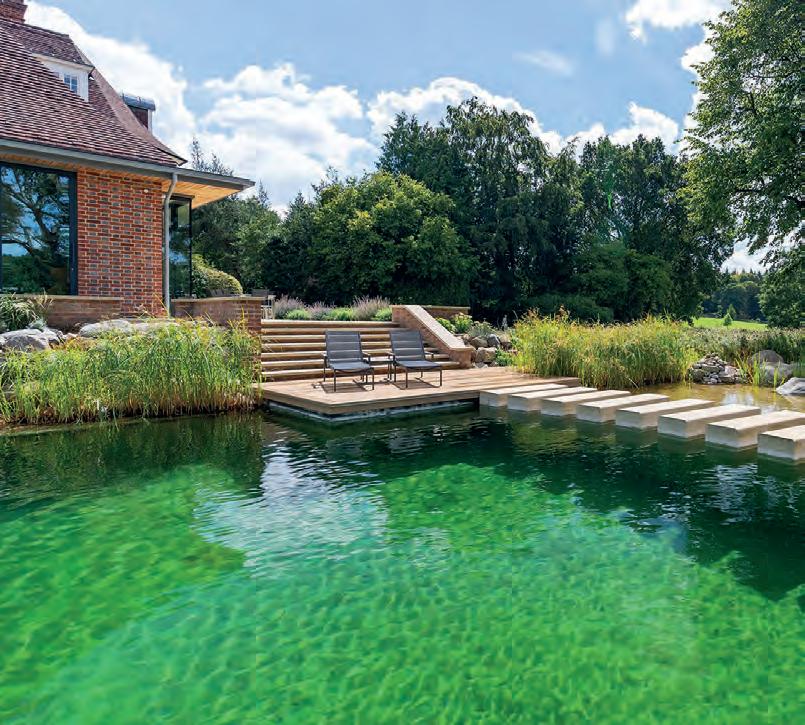
31 Bathe in Nature
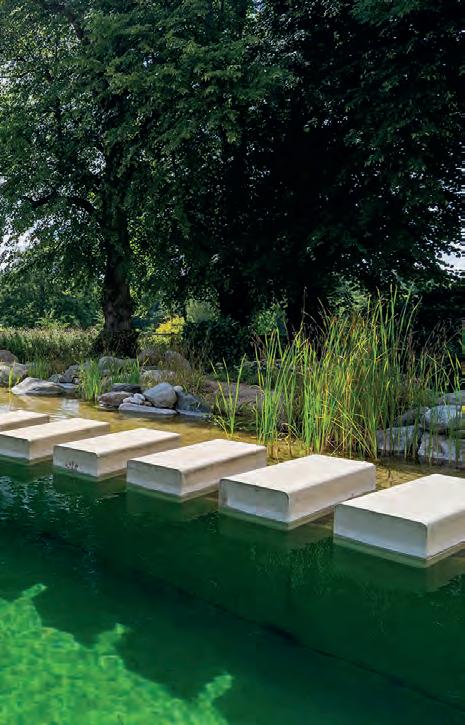
This natural swimming pool balances the contemporary Italian garden and creates the perfect spot to relax and watch nature.
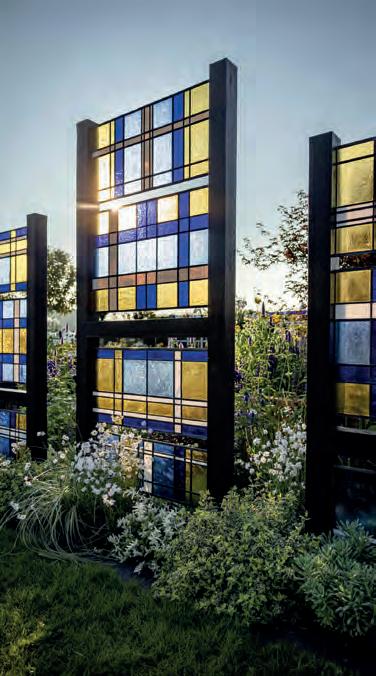
37 Angular Connections
A show-stopping contemporary home needed a pool to match, while also accommodating the client's extensive list of desired features.
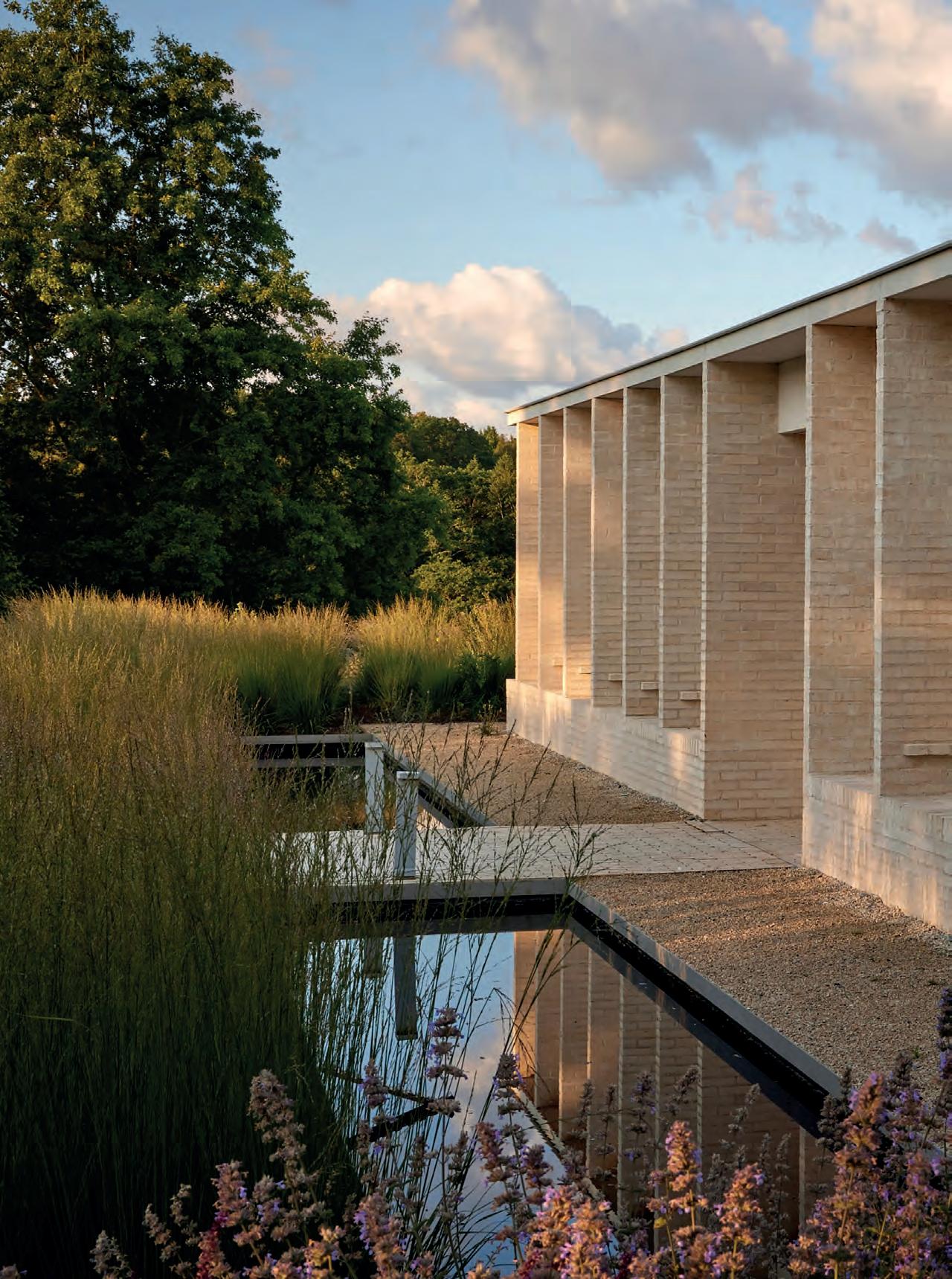
43 Peaceful Approach
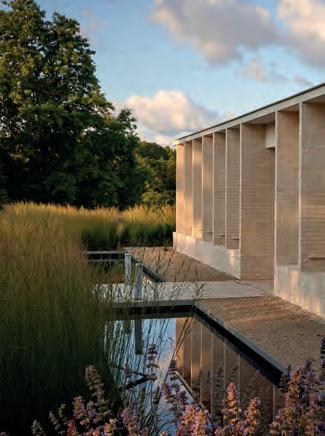
Sat atop the South Downs, the gardens needed to create an atmospheric arrival to White Eagle lodge.
61 Most Influential Decking Suppliers
Find out the decking suppliers who are taking home the awards in Pro Landscaper’s Most Influential Decking Suppliers awards.
69
RHS Badminton and Sandringham previews
See the gardens set to take centre stage at RHS Badminton Flower Show and RHS Sandringham Flower Show, and meet the designers and landscapers behind them.
90 Generated Growth
As more landscaping companies invest in AI tools, the industry explores the balance between technological innovation and human expertise.
31
20
Ask the Experts
Rachel Bailey answers the question, how do you design for low maintenance without sacrificing ecology?
58
The Way of the Water
Talking about his journey to setting up AfriPonds, Ryan Foulds explains why he’s seeing a rise in water features within gardens.
85
Are Traditional Lawns Falling out of Favour?
Speaking with industry experts, we explore why the next generation might be falling out of love with lawns and what this could mean for nature.


94
Working Abroad Onsite
Phil Jones explains how to succeed when implementing an international project, drawing on recent experiences in Japan.
95
Back in the Day
Gareth Wilson takes a trip down memory lane and explores how landscaping has changed since he first started.
96
Are We Forgetting Who Makes Chelsea Bloom?
Reflecting on his recent experience at RHS
Chelsea Flower Show, David Keegan calls for more recognition for landscapers.
Gardener and broadcaster Matthew Biggs has died aged 65 after making his final appearance on BBC Radio 4’s Gardeners’ Question Time a week before. He had been a panellist on the programme since 1994, and a special edition was filmed at The Serge Hill Project for what Biggs knew would be his last time.

It was filmed during Mental Health Awareness Week, which seemed fitting for a man who had become known as an advocate for the wellbeing benefits of gardening. He studied at Pershore College before
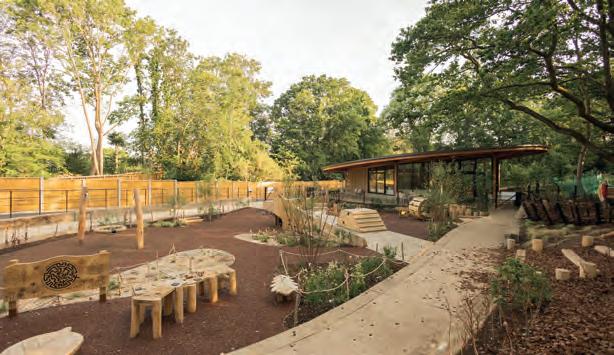
In an effort to inspire a greater appreciation for the world we share, Nature + Love is a project at Horniman Museum and Gardens that is both inclusive and accessible.
Principal contractor Blakedown Landscapes announced the completion of a major development in the project. Working alongside Feilden Fowles Architects, J & L Gibbons and Focus Consultants, the project delivered a series of new visitor spaces, landscape improvements and ecological features.
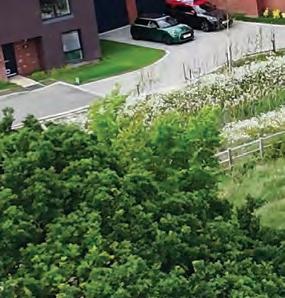
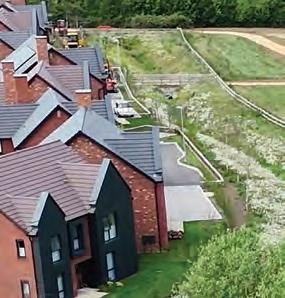
A new café, Kusuma Nature Play area, new glasshouse and community garden are now completed, fit with extensive planting and pathways as well as sustainable drainage systems.
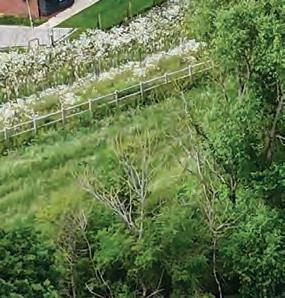
The community garden features new swales, a rain garden and below ground bioretention systems to help manage surface water run-off across the steeply sloping site. Adorned with new planting, the area enhances biodiversity, education and public engagement. horniman.ac.uk
gaining his diploma in Horticulture from the Royal Botanic Gardens, Kew. His first TV appearance was on Channel 4’s Garden Club, after which he went on to direct ITV’s long-running Grass Roots.
Biggs was diagnosed with bowel cancer six years ago but had continued to work within the industry. When he was undergoing treatment at Mount Vernon Cancer Centre in Hertfordshire, he brought together designers, volunteers and charities to create a new outdoor space which will now be known as The Matthew Biggs Sanctuary Garden in recognition of how he led the project at the hospital.

After 16 years as principal landscape designer at Landform Consultants, Catherine MacDonald is leaving to set up her own design studio and spend more time with family.
MacDonald will continue collaborating with Landform on projects, working closely with Mark Gregory and the design team, but feels it is the right time to branch out and explore new creative opportunities and projects of her own.
She will complete her feature garden at RHS Sandringham Flower Show 2026 under the Landform brand before officially leaving the company at the end of July. She is looking forward to taking a short break before starting the next chapter.
Her new company name and website will be MacDonald Design Studio. macdonalddesignstudio.co.uk

Rolling out nature-based solutions more widely in urban and rural settings is one of the measures that a House of Lords committee is urging the government to take to strengthen England’s water security.
The cross-party House of Lords Environment and Climate Change Committee
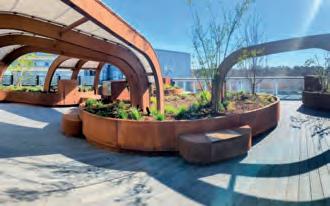
Patients at King’s College Hospital can receive life support in critical care while benefiting from exposure to nature.
Located atop the hospitals 60-bed critical care unit, the rooftop garden has space for up to six beds which allow each patient to be close to a specially designed weatherproof medical cabinet which houses power, data, and medical gas supplies analogous to the care patients would receive on the unit.
As the first UK hospital to open an outdoor Critical Care Garden on its roof, King’s is helping patients spend time in nature without being removed from their much-needed care. Dr Tom Best, clinical director of King’s Critical Care, says,“research shows that time spent in nature can reduce delirium, improve recovery outcomes, and lift the spirits of patients.” kch.nhs.uk
published a report this week warning that the country’s water supply is under threat from a combination of climate change, population growth, public water supply leakage and water intensive industries.
“The government must act now to secure England’s most vital resource for the future and work with the public to ensure the taps don’t run dry,” says the committee’s chair, Baroness Sheehan.
The ‘Surviving drought: reclaim the rain’ report says that the UK needs to store, manage and reuse water better to help prevent both drought and flooding. committees.parliament.uk

©RHS/Neil Hepworth
Award-winning firm Harry Holding Studio is setting up a second office in Hay-on-Wye, Wales.
Originally based in Notting Hill, new team members will work across London, the UK and internationally, helping to run projects end to end, deliver design quality and help shape how the company works and grows while the new office is set up.
Most recently, Pro Landscaper 30 Under 30 award winner Harry Holding co-designed The Eden Project: Bring Me Sunshine Garden with Alex Michaelis at the RHS Chelsea Flower Show 2026, winner of the Environmental Innovation Award, which is now becoming a 1.6acre community garden at the new Eden Project Morecambe. harryholding.co.uk
Head to prolandscapermagazine.com


REVISITING THE LANDSCAPE OF MAN
“There is nothing else like it in the canon of literature devoted to landscape and garden architecture.”


SERVING STARS: IAN DRUMMOND CELEBRATES 40 YEARS WITH HOUSEPLANTS
Ian Drummond details his journey of infatuation with plants and beyond.


BALI CHALK FUND LANDSCAPE OPEN MIC & KARAOKE NIGHT ALIGNS WITH “WHAT WE’RE TRULY ABOUT”
An industry bursting with talent, BALI Chalk Fund supports and develops the landscaping community.
At the company’s annual press conference – held at its Brand World headquarters in Waiblingen, Germany – Stihl unveiled its all ALLPRO ‘tabless’ battery system which it’s touting as the “new benchmark for battery technology in professional use.” It reaches 80% charge in just nine minutes when paired with Stihl’s mobile fast charger, and its service life is around 3,000 charge cycles, which equates to 12-15 years if charged once per day.
THE 2026 PRO LANDSCAPER
Pro Landscaper had the opportunity to test the new battery and some of the manufacturer’s latest product launches, as well as tour its battery production and testing facilities.
CEO Michael Traub said that whilst last year proved challenging for Stihl and despite ongoing trade obstacles, it’s hoping that a game-changing product launch can maintain its sales levels and continue to expand its battery power range as demand grows.


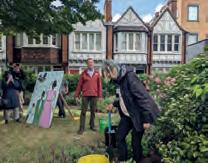
Bankside Open Spaces Trust hosted the 20th anniversary of the restoration of the Octavia Hill’s Red Cross Garden on 4 June. The celebration saw maypole dancing, paper flower crown making and seed ball making. The occasion was also marked with the planting of the Octavia Hill rose from Blue Diamond.
The garden was originally opened by social reformer Octavia Hill in 1888 and was envisioned as a space for the local community. In a speech at the event Pam Smith from the National Trust expressed hope that people would continue to come across the space as “gardens are about people, and this was designing for everyone.”

The winners of the 2026 Pro Landscaper International Awards final were announced in Riyadh this June. The projects that topped their global categories were the Avilala Ecological Park in India, by Ravikumar & Associates; Eden Dock in the UK, by HTA Design; Avalon Springs in South Africa, by CNDV Landscape Architects; Kalrav Villa in India, by VPA Architect; and Original Land in China, by Attractions International. Avilala Ecological Park, Eden Dock and Avalon Springs also picked up awards based on the pillars of Saudi Arabia’s Vision 2030. The final was held at this year’s FutureScape Global, and they weren’t the only awards to be bestowed. There were also the 2026 Exhibitor Awards, as well as trophies handed out to the Saudi 100 and Saudi Sports 100, which both recognise those driving innovation, leadership and long-term development across the Kingdom.
Pro Landscaper has announced members of the team will be running the Royal Parks Half 2026 for horticultural charity Perennial.
Taking place on 11 October, the 13.1-mile event takes route in many of London’s iconic landscapes and four of the Royal Parks – Hyde Park, The Green Park, St James’s Park and Kensington Gardens.
Content director Nina Mason, managing director Jamie Wilkinson, sales manager Dan Green and portfolio director Tom Proudley will be taking part in the half marathon, raising funds for Perennial, a UK horticulture charity.
The team are looking forward to a summer of training ahead of the event.
Donations can be made via 44Group’s JustGiving QR code here:

Keep up to date with the @ProLandscaper team over on Instagram!


BEHIND THE BUILD
Take a look at our videos showcasing the build of BALI: The Hive at RHS Chelsea Flower Show 2026.

LET’S TALK TO MAX PARKER-SMITH
Listen in to our conversation with the RHS Chelsea Flower Show designer.



KINGSTON LANDSCAPE GROUP’S 40TH ANNIVERSARY
Come with us to London to celebrate Kingston Landscape Group!
Countrywide Grounds Maintenance introduces its Site Assessment Tool which it says is transforming client experience and the perception of grounds maintenance
igital innovations have transformed many industries.
“But grounds maintenance has largely been an area where that potential remains untapped,” explains Mark Heath, managing director of Countrywide Grounds Maintenance. “We wanted to lead the charge in changing that.” The business's answer to this ambition is its new Site Assessment Tool.
The tool is designed to improve customer experience. Instead of a typical contact form, users begin by entering their postcode, which helps the company contextualise their location and connect them with the right regional team. They then map out their site, which is designed to be easy to use but also comes with an even simpler option to input a postcode and enter the size manually. From there, they outline their sector, the specific features of their site, and their priorities, whether that's aesthetics, sustainability, safety, or something else – a school, for example might want to address slippery paths.
regional office closest to the organisation who will set up an in-person assessment – free of charge. “The tool is very much the beginning of a conversation rather than a replacement for one,” Heath stresses.
Its goal is simple: simplicity.
“Procurement teams, facilities managers, and estates leads are busy people,” says Heath, “we wanted to give them something immediate and genuinely useful. At the same time, we wanted our clients to have a faster, smarter, and

“Procurement teams, facilities managers, and estates leads are busy people,” says Heath, “we wanted to give them something immediate and genuinely useful
Once they have filled out this information, they will receive a report which gives recommendations based on what they have input. This report is then sent to the

Countrywide Grounds Maintenance team, they have a good understanding of how the business can help. “We've always believed that great grounds maintenance starts with
procurement decisions,” Heath explains. “And they get a direct line to our regional teams, who follow up to arrange a full in-person assessment and answer any questions. It's efficient, it's informative, and it's the start of
a relationship built on solid foundations.”
For those busy procurement teams, there are huge benefits too. The company supports 12,000-plus sites across the UK. With the tool, rather than going in blind, procurement teams have a good understanding of what’s needed, and what else they might need to find out. It’s also made prospects a little warmer because the customer has provided more information and their understanding is better – so both the customer and procurement team are on the same page.
Grounds maintenance might not always get the attention it deserves, but the environments we maintain matter, they affect wellbeing, first impressions, safety, and sustainability
but the environments we maintain matter, they affect wellbeing, first impressions, safety, and sustainability. We want Countrywide to be the partner that organisations trust to get that right, and the Site Assessment Tool is a meaningful step towards making that relationship
tool further, incorporating richer data, expanding the scope of recommendations, and integrating it more deeply with how the business manages client relationships. “It's very much version one, and we're excited about
And for the sector more broadly? “I think this raises the bar in terms of what organisations should expect from a grounds maintenance partner,” argues Heath. “It signals that this industry is capable of being more responsive, more datainformed, and more client-centred, and I hope it encourages others to think about how they can better serve their clients digitally."
The tool is also giving more visibility to grounds maintenance. Not everyone who engages with the procurement team is as clued up on what they need and what services are available to them, but the tool, as well as the website it sits on, make this very clear. “Grounds maintenance might not always get the attention it deserves,

the tool began by looking at the questions regional teams ask when they carry out a site assessment in person. What information do they need? What are the key variables that shape a recommendation? The team worked backwards from there to create something that could replicate that intelligence digitally.
As is to be expected, tests helped to evolve the tool significantly. Early versions were more complex, and the team quickly learned that simplicity was paramount. “Users shouldn't need any prior knowledge of grounds maintenance to get value from it,” Heath explains, “so we refined the journey to make it as intuitive as possible.”

The tool launched a few months ago and has already received good feedback. In the near term, Countrywide will be focused on listening to feedback from users. There’s potential to develop the


For over two decades, Provender Nurseries has helped landscape professionals bring ambitious designs to life ... beautifully, reliably, sustainably.
FREE AND EASY PARKING
GREEN, SUSTAINABLE VENUE
BETTER NETWORKING SPACES
EASIER BUILD AND BREAKDOWN LOGISTICS
OUTDOOR AREAS FOR MACHINERY AND DEMOS MORE ROOM FOR BIGGER STANDS





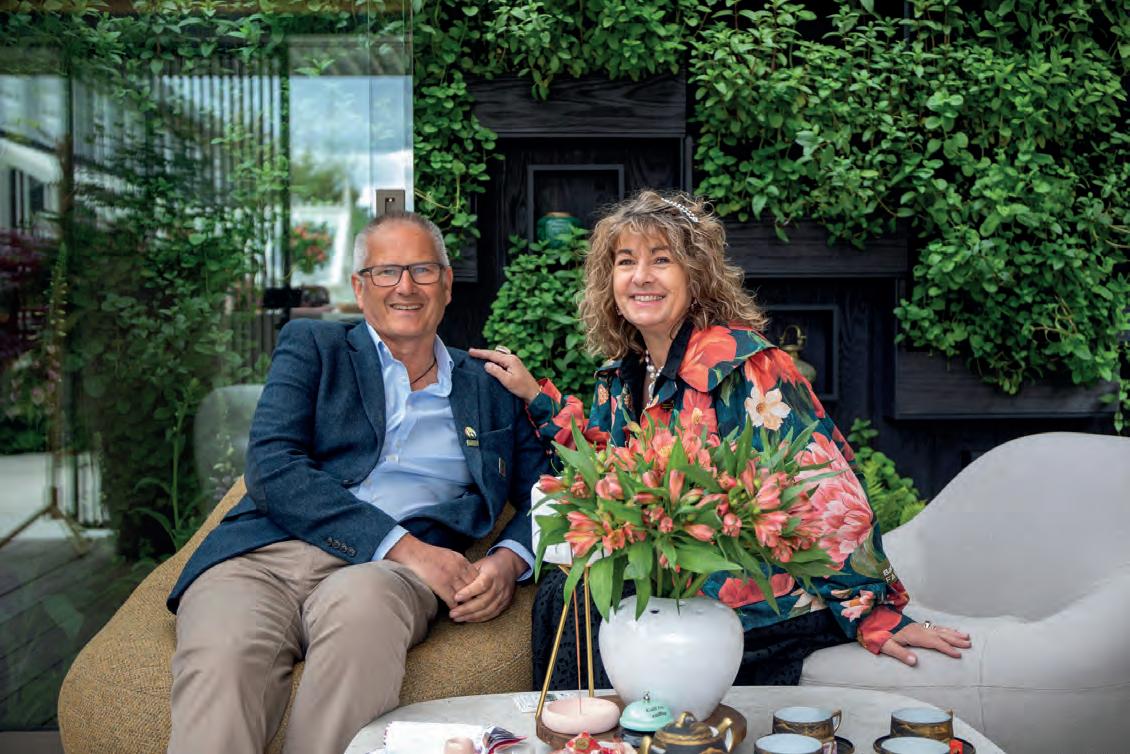

Celebrating its 30th anniversary this year, directors Debs and Rod Winrow explore the growth, lessons and highlights of Garden House Design
After 30 years, Debs and Rod are an integral part of our industry. There aren’t many events that they don’t have a presence at; not many who don’t know their names; and many who would like to replicate their business model. Everyone starts somewhere, though. Like many other businesses in the landscaping industry, for Debs and Rod it all began with a man, or a
2004
First RHS Chelsea Flower Show garden titled Simple Harmony, created with garden designer Lindsey Knight. This won a silver gilt medal in Courtyard Gardens category.
1996
Touch of Magic Ltd was established.
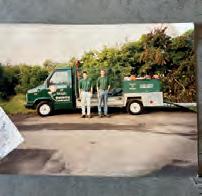
few, a van and a touch of magic.
Founded in 1996, the business began trading as Touch of Magic. Back then it was just Rod and his brother Mark. They set out with a van, two mowers and a chainsaw but before long picked up a contract with Leaders’ properties undertaking small, local maintenance jobs and later contracts with Ground Control at post offices
2004/2005
Channel 4, Great Garden Challenge runner up.
2005
RHS Chelsea Cannabis Garden with South-East England Development Agency and Knight as the designer. This won a gold medal in the Lifestyle for Learning category.
2006
RHS Chelsea Unchained Melody for Arthritis Society with designer Alex Hart – which won a silver medal. The garden then went straight onto Gardeners' World Live.
and Tesco stores. The team also helped create what was, in 2007, the largest living wall in Europe for Westfield shopping centre in partnership with Aldingbourne Nurseries. And as the contracts grew, so did the team and so did their expertise.
What’s in a name?
The name Touch of Magic took the business to RHS Chelsea Flower Show and to Channel 4 for the Great Garden Challenge, but when they nearly missed out on a job and the name was the reason why, it was time for a rebrand. Having won a project designed by AnnMarie Powell, the client shared that they were nearly put off by the company name. “Touch of Magic worked for maintenance work, but it didn’t give us credibility in the marketplace. And brand is so important,” explains Rod Winrow, managing director at Garden House Design.
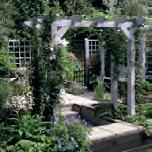
self-funded, the garden was made using off-the-shelf, readily available materials to the general public and won the team a silver gilt medal. While they were proud of this, the garden had missed out on the gold due to the height of pergola. Judges said it was too low, but the team had built it according to the brief which stated it couldn’t be higher. It was tempting to challenge this medal, but Rod says he got some wise advice from a judge. “He sympathised that I was upset but explained to me “be proud of what we’d achieved and move on”. So, I did.”
When somebody like Mark Gregory says you’ve cracked it – that’s a highlight for us. We're building as much for our peers as anyone else
In a café – Garden House Café – in New Zealand, Debs was struck with inspiration. That evening the domain name was registered and by the time the pair were back in the UK, Garden House Design was ready to take the business in a new direction. Around the same time Debs joined the business full-time as creative director and started the journey into developing it into a lifestyle brand. This eventually saw the business move away from property and landscaping and towards “above patio” styling and outdoor living.
A big part of becoming successful at this has been getting credibility from within the industry as much as they did outside of it. This hasn’t always been easy, with some concerns that, with a landscaping side to the business, they might try and take that work away. But with a strong B2B message and an above patio strategy that has become easier. Today, Garden House Design has certainly got credibility. As Debs Winrow, creative director at Garden House Design surmises, “When somebody like Mark Gregory says you’ve cracked it – that’s a highlight for us. We're building as much for our peers as anyone else.”
Most people’s first RHS Chelsea Flower Show experience comes with a learning curve, and Rod’s was no exception. Under Touch of Magic, the team built Simple Harmony, designed by Lindsey Knight. Entirely
2008
Debs joined full time as creative director to develop the business into a lifestyle brand Garden House Design.

2009
Banking crises hit. The business didn’t make redundancies and refocused away from property and landscaping and developed its “above patio” styling strategy.
RHS
The show also shed light on the difference between designers and landscapers. In 2004, “We really learned that designers took front stage, less so now, as teamwork is highlighted as crucial to being success at shows” says Rod. “We were incredibly proud of our achievement and marketed locally. But our work slowed down as we were considered to be too expensive. So, what did we do? We changed our approach and said, “yes we are” and found a different higher end market.”
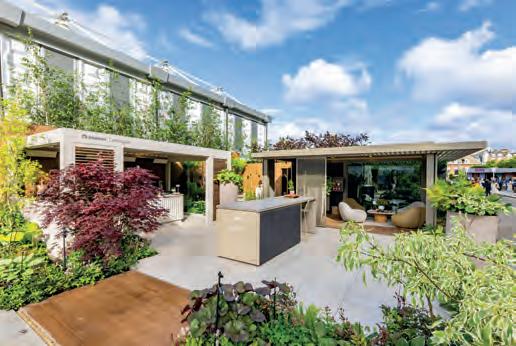
RHS Hampton Court Garden Festival in 2011 marked another pivotal moment for Garden House Design. Debs recognised that the business needed to do something different. She had seen a Cloudy Bay stand which she describes as “like going through Disney” with a gift shop at the end – except in this case it was a marquee with wine. So that year, alongside a show garden Live Outdoors on APL Avenue, designed by Roger Smith, Garden House Design created its
2010
2010
Joined APL and started to expand networking beyond hometown.
2011
RHS Hampton Court Garden Festival - Garden House Design’s first trade stand.

first ever trade stand to mirror the products on the garden. The garden won a silver gilt medal, but what shone the most was the product placement and the launch of “liveoutdoors” to consumers.
“Where we felt we made a difference was that we had product placed on the garden and then had somewhere you could buy that product,” explains Debs. Debs’ instincts paid off, with the launch of #liveoutdoors by Garden House Design traced back to this show.
After the success of this, the business launched the changeover to one clear brand under Garden House Design and started marketing high-end products to both consumers and business-to-business partners.
Walking around the showground of Chelsea this year, it’s hard to imagine that there once wasn’t a presence in the Trade Stand category from Garden House Design. The shows have been pivotal for the business, and they’ve marked significant moments too, with the six consecutive RHS five-star awards.
A Renson relationship
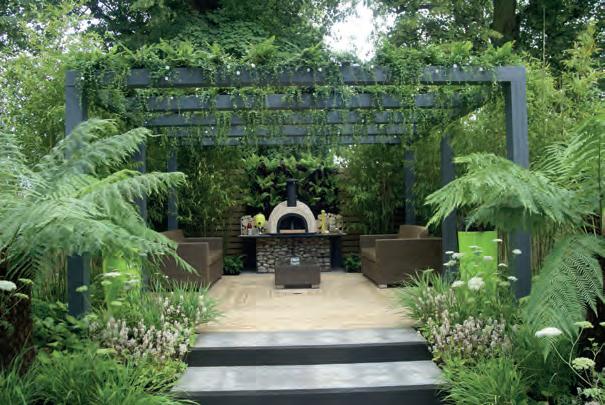
It seems like a match made in heaven now, but Garden House Design’s relationship with Renson began on a bit of a whim some 15 years ago. Having observed the popularity of louvred canopies in New Zealand, the team had had an introductory meeting with Renson in the UK. Then, one rainy day in January, Rod and Mark decided to head over to its head office in Belgium. No meeting. No plan. Just a strong sense that there was something they could both offer one another. Twenty-four hours later they were on a ferry home having undertaken full training and secured an agreement that they could borrow a Renson louvred canopy for Hampton Court. This was the first time a louvred canopy had been taken to an RHS show and probably for Renson a garden show worldwide.
dream lifestyle. Am I going to be able to cook outdoors? Are my grandchildren going to be able to stay up a bit later and read under here because there’s light? Am I going to be able to make it cosy when I’m at my pool? That’s what you’re selling.” In the years that have followed, they’ve worked closely with Renson, even helping to advise the worldwide marketing director.
We don’t work with internal commission structures. We believe the clients should be offered the best solution for them not the best solution for the consultant
It’s something they all look back on with fondness now, and if there were any doubts or hesitations the record-breaking sales made at the show quelled them quickly.
“They just weren’t ever shown in garden environments,” Debs says. “If you try and sell a canopy, you’ll never sell it. You are selling the
2012
Launched the changeover to one clear brand Garden House Design and started marketing high-end products to both consumers and business-tobusiness partners.
Garden House Design remains one of the few businesses successful in this space and Rod says a key this has been, “adapting and changing while understanding where you want to sit in the market. We knew very early on where we wanted to sit. We knew that we wanted to partner with clients and industry colleagues, and so we don’t work with internal commission structures. We believe the clients should be offered the best solution for them not the best solution for the consultant. All of our projects are a team effort from the initial introduction to the final handover.”
The successes are one thing, but what Debs and Rod are most proud of is the way they have been able to
2014
Trade stand at FutureScape event.

2013
RHS Hampton Court trade stand – launched the first ever Renson louvered canopy worldwide at an outdoor garden show.
2016
steer the ship through stormy waters. The 2009 banking crisis hit, but the business didn’t make a single redundancy and instead pivoted the business strategy. Brexit caused the cost of products to soar, so Garden House Design changed its model, re-trained to be experts in international trade and more importantly embraced the difficulties as challenges to excel. “We believed if it was difficult for us, this would give more opportunities as we would have less competition," explains Rod, “this certainly was the case until Covid when the market opened to retailers rather than companies with years of outdoor experience.”
Whatever has been thrown at us, we’ve been able to adapt, pivot and overcome, working through it all as a team. That’s what we’re most proud of
The pair say that the biggest advice they can give for navigating these unforeseeable challenges is to not bury your head in the sand. “Be honest,” says Debs, “set realistic client expectations and if something's not going to plan, share, discuss and agree on a solution. It’s about being really transparent.” Rod adds that as a business leader often the most important thing you can do is make quick informed decisions.
If Rod were starting out today, with everything he’s learnt, he says he would focus his energy on getting investment to buy install
companies and maintenance companies. He admits he would have kept the Ground Control contracts too. Though Debs candidly expresses she sometimes wishes they had taken more risks, ultimately, the fact that the Garden House Design ship has stayed afloat means they have made the right decisions. “Yes, we would have liked to have taken more risks,” says Debs, “but I like the fact we can sleep at night knowing that we haven’t overextended, our cash flow is strong and clients are excited to be working with us. Whatever has been thrown at us, we’ve been able to adapt, pivot and overcome, working through it all as a team. That’s what we’re most proud of.”
“We’re excited about the future, we love our industry and have more challenges to accept and would love to give back in the form of mentoring and trade association support,” expresses Debs, “Watch this space for more exciting products and partnerships. In particular, the first timber louvred canopy was launched at The Glasshouse Collective this year. “
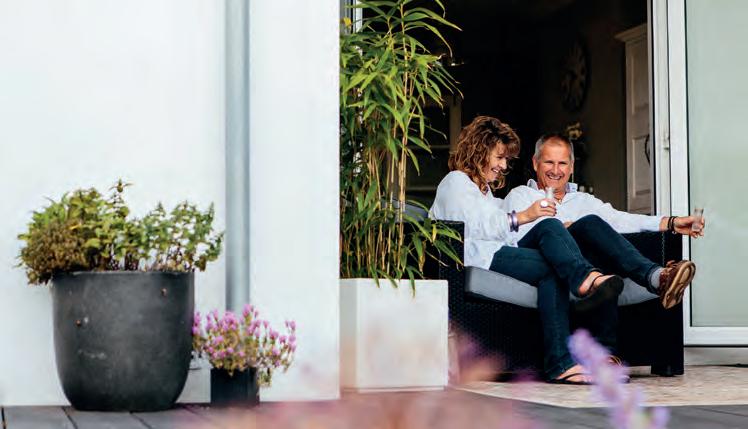
Debs and Rod are examples of when a family business just works. They’ve been married for 25 years, together for 35 years, and have worked with one another for the past 18 years. There are certainly moments when tension rises – Chelsea is a prime example. But ultimately Rod says they are “stronger together” and now rarely go anywhere without each other. It’s this mentality that is the key. After all, collaboration with designers and landscapers, engagement with trade associations, and their partnerships with brands like Renson & Cubic Outdoor Living, have driven the business forward. Add passion, creativity, and hard work and you have the secret to their success.
RHS Hampton Court Squires Garden featuring the first canopy to appear on a show garden which was also in a bespoke RAL colour. This began Garden House Design’s collaboration with Catherine MacDonald and Landform.

Launched trade stands at RHS Chelsea. What followed was continuous 5-star awards.
Rod was honoured to be chair of the APL.
Became one of the founder members for The Glasshouse Collective.
Started building other trade stands for Boodles Jewellery, amongst others.
Launched partnership with Wright Landscapes as a display partner at Pickmere Nurseries.
In the landscape industry, most owners spend years perfecting their craft, building loyal client bases, and developing strong reputations – yet far fewer spend time preparing for the moment they will eventually step away. The result is predictable: many leave significant value on the table, face unnecessary stress, or struggle to find a buyer at all. Exit planning is not something to be rushed in the final year; it is a strategic process that should begin long before you intend to sell.
The landscaping sector has unique characteristics that make early planning even more important. Seasonal demand fluctuations, vehicles and equipment costs, and labour shortages all affect profitability and operational stability – two of the biggest drivers of business value. Buyers look for companies with predictable revenue, clean financials, and systems that can operate without the owner’s constant involvement. If these elements are not in place, the business becomes harder to sell and commands a lower multiple.
One of the strongest arguments for early exit planning is the time required to build recurring revenue. Maintenance contracts and long-term projects could significantly increase valuation because they reduce risk for the buyer. Businesses that stabilise revenue through recurring work often see substantial increases in both profit and market value. But these contracts take time to secure, document, and embed.
Phil Jones explains why business owners must plan their exit early
your business relies on informal agreements, undocumented processes, or personal relationships that only you manage, a buyer will see risk – and risk reduces price. Early preparation allows you to gradually formalise operations, strengthen compliance, and remove obstacles that could derail a sale.
Exit planning is not something to be rushed in the final year; it is a strategic process that should begin long before you intend to sell
Many landscaping businesses are heavily owner dependent: the owner quotes the work, manages the teams, oversees quality, and handles client relationships. This creates a major barrier for buyers, who want a business that can run without the founder.
Systemising operations –scheduling, pricing, workflow management, and team roles – is one of the most effective ways to increase value and reduce reliance on the owner.
Selling a business is an emotional process. Many owners underestimate the psychological transition from being central to the company’s identity to stepping back. Preparing early allows you to gradually reduce your involvement, empower your team, and ensure continuity for clients and staff. It also gives you time to clarify your personal goals: whether you want a clean break, a phased exit, or a role in the business post sale.
Value is built long before a sale – and lost when owners leave planning too late. By strengthening systems, securing recurring revenue, formalising contracts, and reducing owner dependency well ahead of time, you not only increase your valuation but also create a business that is genuinely attractive to buyers. The best exits are not rushed; they are engineered. And the time to start should always be now.
Legal and structural readiness is another area where owners underestimate the timeline. Clean, assignable contracts, documented intellectual property, and a sensible capital structure all widen the buyer pool and shorten due diligence. If
Timing the market is another reason not to delay. Economic cycles, housing activity, and commercial investment patterns all influence demand for landscaping services. Owners who wait until they feel “ready” may find themselves trying to sell during a downturn, when buyers are cautious and valuations soften. Early planning provides the flexibility to choose your moment – not be forced into one.

Phil Jones is the founder of Apple Tree Bay Consultancy Ltd and brings long-standing director-level experience from the landscaping, grounds management and facilities services sectors. He now works with landscape businesses to strengthen strategic planning, refine operational systems, and support effective implementation.
Email: phil@appletreebay.co.uk
Instagram: apple_treebay linkedin.com/in/phil-jones-4197b5b5
First, we need to challenge the idea that gardens should be “low maintenance.” Very little in life is. Our homes need upkeep, our cars need servicing, and the landscapes that support biodiversity, store carbon, manage water and sustain life should be no different.
In a climate and biodiversity crisis, gardens and landscapes can no longer be decorative extras but part of our life-support system. If they are not climate-resilient, wildlife-friendly and able to manage water, we will pay the price.
This requires a shift in mindset. Gardens are living systems, not static pictures frozen in time. Trying to preserve them exactly as planted creates unnecessary work and prevents them from functioning ecologically.
The real question is not how to minimise maintenance, but how to design gardens that need gentle nudging rather than constant intervention. The answer is to work with ecological processes through design, construction and aftercare.
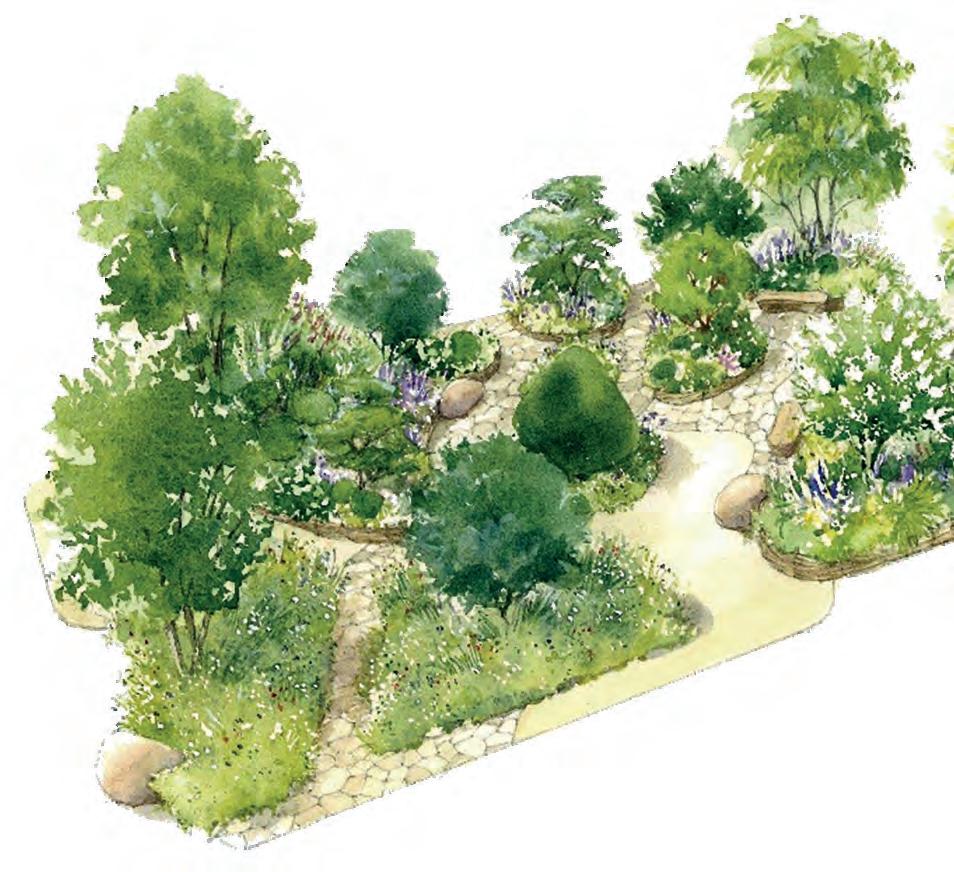
Retain existing trees and shrubs wherever possible. They already provide habitat, store carbon and improve water infiltration while bringing maturity to a garden.
Maximise planted areas to encourage rainwater absorption and ecological stability. Choose robust, long-lived plants suited to the site. Clump-forming perennials, shrubs and trees often need less intervention than aggressive spreaders or prolific self-seeders.
Think in layers, as nature does. Combine trees, shrubs, perennials, ground covers and climbers to create a living mulch that suppresses weeds, protects soil and supports wildlife.
How do you design for low maintenance without sacrificing ecology?
and wildflowers can also provide far greater ecological value than conventional lawns.
2. Build
Healthy ecological gardens begin with healthy soil. Protect or restore soil structure so plants can thrive and water can infiltrate effectively. Protect retained trees and root zones during construction. Remove genuinely problematic weeds before planting. Where water-management systems are included, build them carefully so they can slow, clean and direct water effectively.
3. Establishment
During establishment, mulch with bark or gravel to suppress weeds and conserve moisture. Remove weeds while young and water new trees and shrubs until established.
The real question is not how to minimise maintenance, but how to design gardens that need gentle nudging rather than constant intervention
Select plants that support entire life cycles: flowers for pollinators, berries for birds, foliage for caterpillars, and dead wood for fungi and decomposers.
Gardens must also work for people. Use permeable materials for paths and terraces to allow water infiltration. In larger landscapes, allow some areas to naturalise; in smaller gardens, place wilder planting away from seating and circulation zones.
Where persistent plants such as mare’s tail occur, consider working with them rather than fighting endlessly. Mixed-species lawns with grasses
© Andre es

RACHEL BAILEY
Rachel Bailey runs an award-winning SGLD registered design practice creating immersive, plant-filled gardens that enrich lives, support biodiversity, benefit the environment, and draw on her biology and permaculture expertise.

4. Aftercare
As planting matures, exposed soil disappears and the interventions reduce to observation and selective editing. Focus tidiness on edges, paths and areas near seating to create visual cues of care. Allow natural processes to ‘cut back’ perennials, which will return nutrients to the soil and support soil life. Review annually for truly problematic species such as bramble or dock. Use mown edges to frame species-rich lawns while allowing other areas to grow longer. Most importantly, manage expectations. Gardens are living systems and will change. Work with nature, not against it. If we sacrifice ecology, we ultimately sacrifice ourselves.
As managing director of Blakedown Landscapes, an awardwinning landscape and civil engineering specialist, Chris Wellbelove leads the company's strategic direction, centred on quality, collaboration and long-term value.

Claire Belderbos runs Belderbos Landscapes with her husband, Ed. The London-based design and build company became employee owned after celebrating its 20-year anniversary last year.
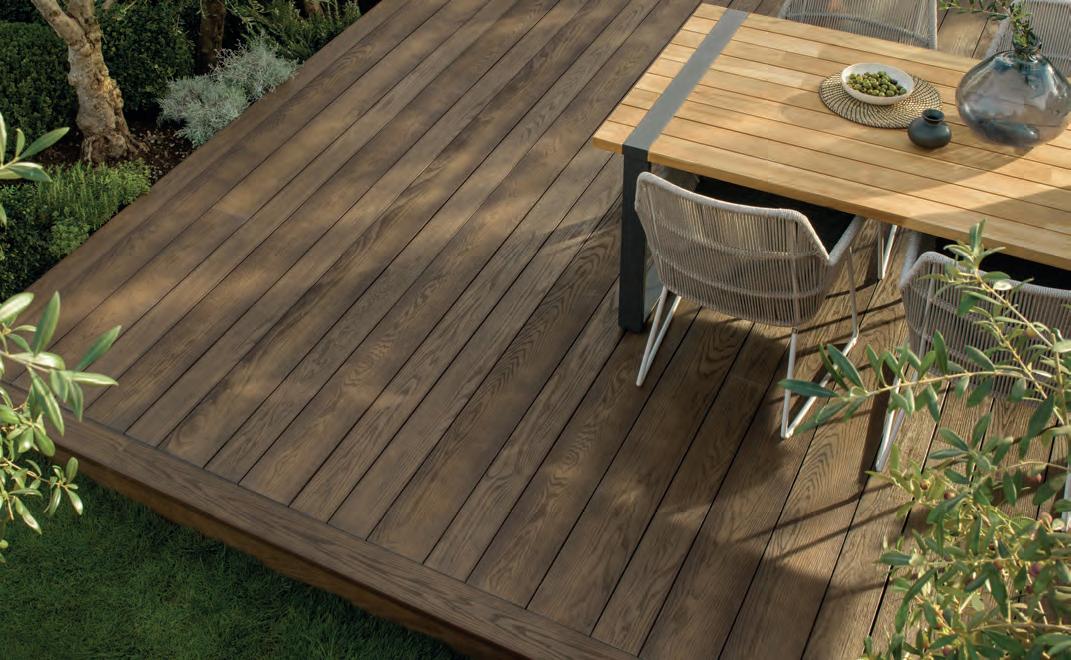
Millboard explains how better-informed clients are more likely to arrive at quote stage ready to buy
Most landscapers and garden designers will recognise the pattern.
A client makes contact full of enthusiasm, receives their decking quote and is then never heard from again. Often the issue is not the quality of your work or the fairness of your price. The client may not yet have a full picture of what makes a premium deck worth the investment over its lifetime.
Headline price is only part of the picture, and clients who fixate on it usually do so because nobody has explained the rest. A high-quality resin mineral composite board such as Millboard decking is highly slip and fade resistant, withstands rot, splintering and insect damage, and avoids the annual sanding, staining or sealing timber can require. A properly specified subframe keeps the surface stable over time, rather than allowing the movement and sag a rotting timber subframe can cause. Over a 10 or 15-year horizon, the maintenance saving alone often
closes the gap with cheaper timber or wood plastic composite decking alternatives, and that is before the longer lifespan and lower replacement costs are counted.
Installation is where value can be realised or lost, which is why an approved installer network, with manufacturer training and support, matters. Millboard trains and supports its installer network, helping to provide a better standard of finish so the result delivers on what first caught the client’s eye. That confidence is underwritten by the warranty: Millboard decking carries a 25year limited structural warranty for residential installations. That cover is part of what you give the client, and it reflects on you as much as on the product.
There are simple ways to point clients towards the information they need, so those who contact you are already qualified and further along the buying journey. Start by helping clients picture the result. Inspiration galleries, social
channels and real-world displays can move a client from a vague idea to a clear design intent. Millboard offers active social feeds and an inspiration gallery, alongside experience centres where clients can see the full range of decking and cladding, with selected colours and profiles shown as real installations.
Walking on a finished surface can change the conversation entirely.
When a client has explored the design, handled a sample, seen a real installation and run their own numbers, the value speaks for itself
seen a real installation and run their own numbers, the value speaks for itself, cost expectations are realistic, and they feel confident about the investment they are making. They are also far more likely to come back because they are buying with their eyes open rather than testing the water.
A client who has held the product has a sense of quality no photo conveys, and free samples are available through millboard. com. Price visibility is often the missing piece: Millboard’s online decking calculator and planner let a client estimate costs and generate a full material inventory from their own measurements, so your quote confirms rather than surprises.
When a client has explored the design, handled a sample,
None of this replaces your expertise. It simply means your time is spent with clients ready to commit, on projects where the value is understood. Pointing customers towards these resources pays back in fewer wasted site visits and quotes, warmer enquiries and a smoother path to a confident ‘yes’.
For more information, visit millboard.com or contact enquiries@millboard.com or 024 7643 9943
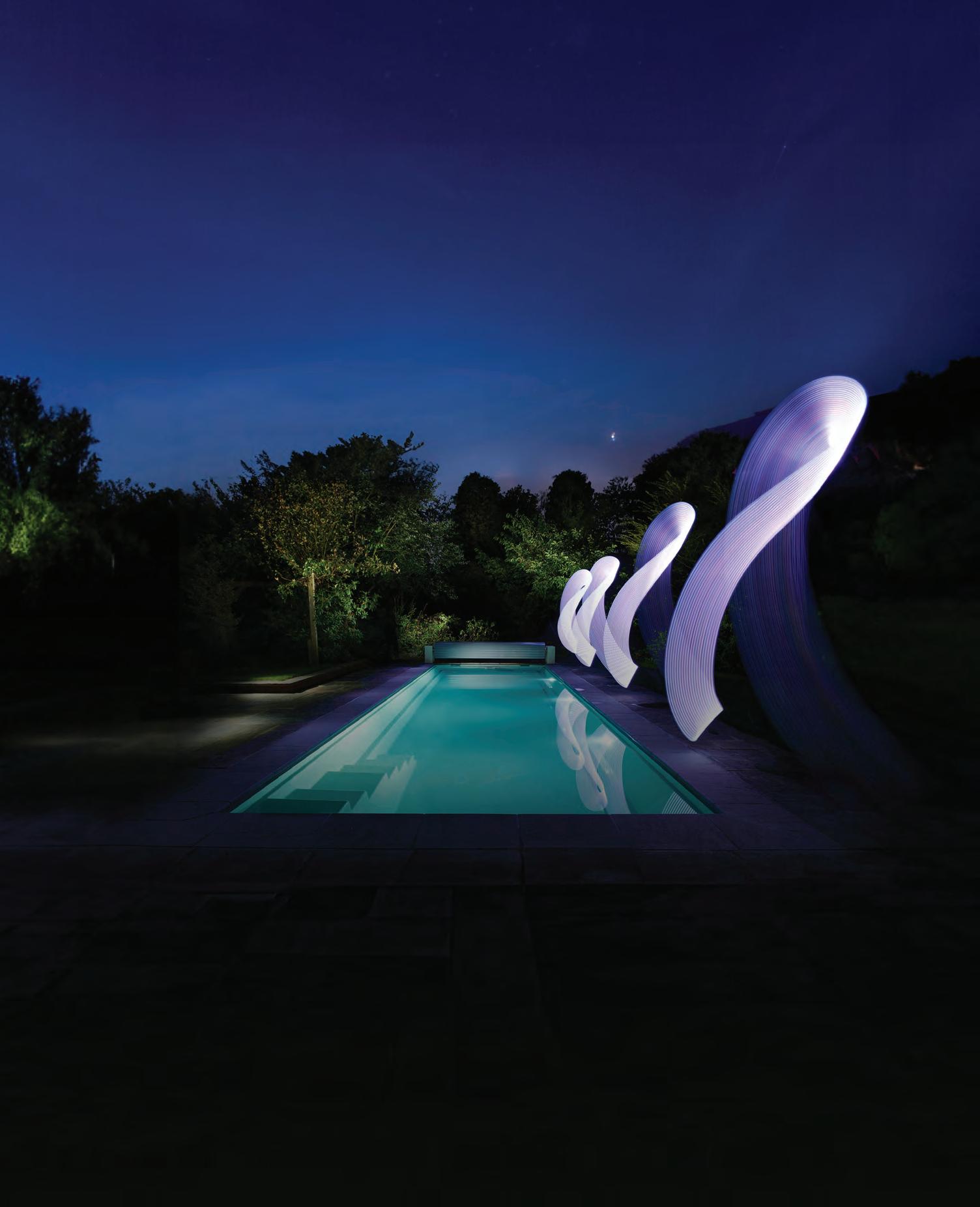
“IN MY BUSINESS, THERE’S ONLY ME...TODAY, I WAS LANDSCAPER BARBIE.
TOMORROW I MIGHT BE DESIGNER BARBIE. THE NEXT DAY I MIGHT BE GIVING TALKS BARBIE.”


With an impressive CV behind her, Pip Probert explores where it all began and how she inspired a new category at RHS Flower Show Tatton Park
Pip Probert makes things happen. At school, she engineered it so she could study art, design technology and music. While studying she was offered to design a show garden at RHS Flower Show Tatton Park but with family and community support pulled it off. And when she was offered a spot on a TV show, she made sure that it would benefit the industry.
“In my business, there’s only me. I have to be 100% organised to make life work in general, otherwise I couldn’t do the things I do and have the variety I do in my work,” garden designer Pip Probert expresses. “Today, I was landscaper Barbie. Tomorrow I might be designer Barbie. The next day I might be giving talks Barbie.”
This attitude serves her particularly well at flower shows where being able to wear multiple hats is essential. She was 19 when she first took on a show garden, a little earlier in her career than anticipated, but it was an opportunity she couldn’t turn down. “I thought of the application as another way to get feedback,” Probert explains, “I assumed they’d say, not on this occasion, because I didn’t have enough qualifications. But they offered me a spot. I was jumping in the deep end but there was no negative. It was amazing.”
Back then, there wasn’t a huge presence from young designers. “Most of the people at the show were 35-45 on average. I don’t think they even opened the women’s toilets the first week because there
just weren’t any women there. Then there’s me, never done it before, fresh-faced, asking 1,000 questions and for lots of favours.”
But because of Probert, the RHS changed that. In 2009 the RHS introduced the Young Designers of the Year competition aimed at aspiring garden designers. "I was asked to go and do a photoshoot at Tatton,” Probert says, “It was for the Young Designers competition, inspired by me. Because I’d come to the show at such a young age and was one of the only ones, the RHS said they wanted to create a competition to support people like me. I wish that opportunity had been there when I first started – I’m a bit jealous. But it’s a fantastic thing that we’re bringing younger people into the fold.”
Making it happen at RHS flower shows
While that opportunity wasn’t on offer for Probert, she wasn’t alone undertaking her first show garden. “My mum and dad are the most supportive people,” shares Probert, “they’ve fully embraced this whole journey.” Their support isn’t just emotional either, they helped with the design and build of the plot. The community also rallied around Probert with the local rugby club donating money as the garden was completely self-funded.
It was a whirlwind, but Probert loved the ride. “I was totally taken over by the whole experience, surrounded by all these people I

looked up to who had been in the industry for a long time. I became addicted from that very second,” she expresses. “They’re especially great for me because I work on my own. I come back from the shows buzzing because I feel part of the industry, part of a community. They’re my friends, I look forward to bumping into them - they’re likeminded and equally mad.”
Shows are totally time-consuming, very long-winded, definitely expensive, but there's so much opportunity
Since that first show garden in 2005, Probert has created 50 show garden exhibits for events like the RHS Chelsea Flower Show, RHS Tatton Park, RHS Malvern, Gardening Scotland, and the Ascot Garden Show. Last year, she was a key figure in the Make a Metre Matter campaign which sought to showcase the power of transforming just a single metre of garden space. “I thoroughly enjoyed being part of that journey,” says Probert, “It was something everyone was getting involved in, which is exactly what we wanted, and it carried on through the whole year. Even now I see places we could make green where I didn’t before.”
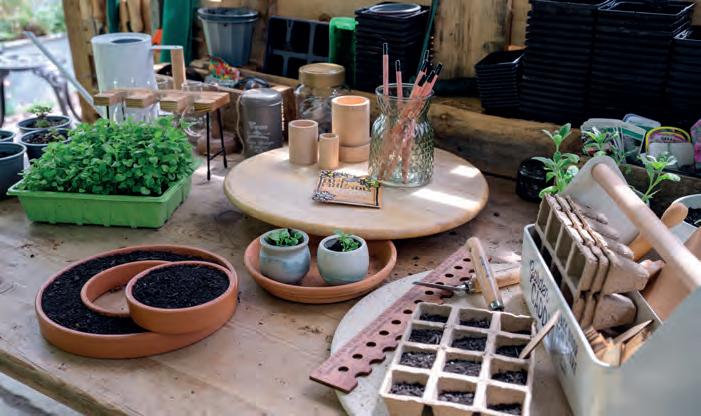
Though shows are a tonic for Probert, she admits that they aren’t for everyone, “it’s not for the faint-hearted – it's kind of a love it or hate it thing.” It’s why she makes sure to prep everyone working on her show gardens. “I tell my team to prepare their family,” explains Probert. “You're going to have your breakfast, lunch, and dinner there, and when you get home, you're probably going to be preparing for the next day. Then you're going to be absolutely shattered. Shows are totally time-consuming, very long-winded, definitely expensive, but there's so much opportunity. Don't get me wrong, there's a lot of potential for things to go wrong as well, but I love it. I absolutely love it. I totally embrace the whole thing.”
For Probert, you get out what you put in. The planning and build are one thing, but when the gates open it’s time to reap the rewards of all that hard work – by continuing to work hard. “That garden is our shop front,” explains Probert, “we’ve done all that hard work, it’s not time to party – we need to reap the benefits.” And that doesn’t come in the form of a medal, for Probert.
“For me, I'm not medal chasing. I obviously want to do the best that I can do,
but I know I've not got the biggest budgets, if any – I've done gardens out at skips! Visitors just want to come and talk to you. They don't care what the medal is, they're looking for a new bit of information they can take away with them.” She stresses, “If I’m proud of what I've created, and I've owned the mistakes, whether my fault or it not, then I'm happy.”
Discovering gardens through art
It was through a canvas that Probert first fell in love with gardens, “I was very arty growing up. I couldn’t draw people, but I could draw flowers,” she explains. “My dad was a keen photographer and used to enjoy visiting National Trust properties to take pictures. So, I’d join him and sit and draw the gardens. That’s what got me hooked.”
Her artsy side and interest in design overlapped and when working on a project to design a piece of furniture Probert found herself focussing more on the garden around it. It was clear then, what direction she wanted to go in. “I knew I wanted to create something people could enjoy on a daily basis,” she explains.
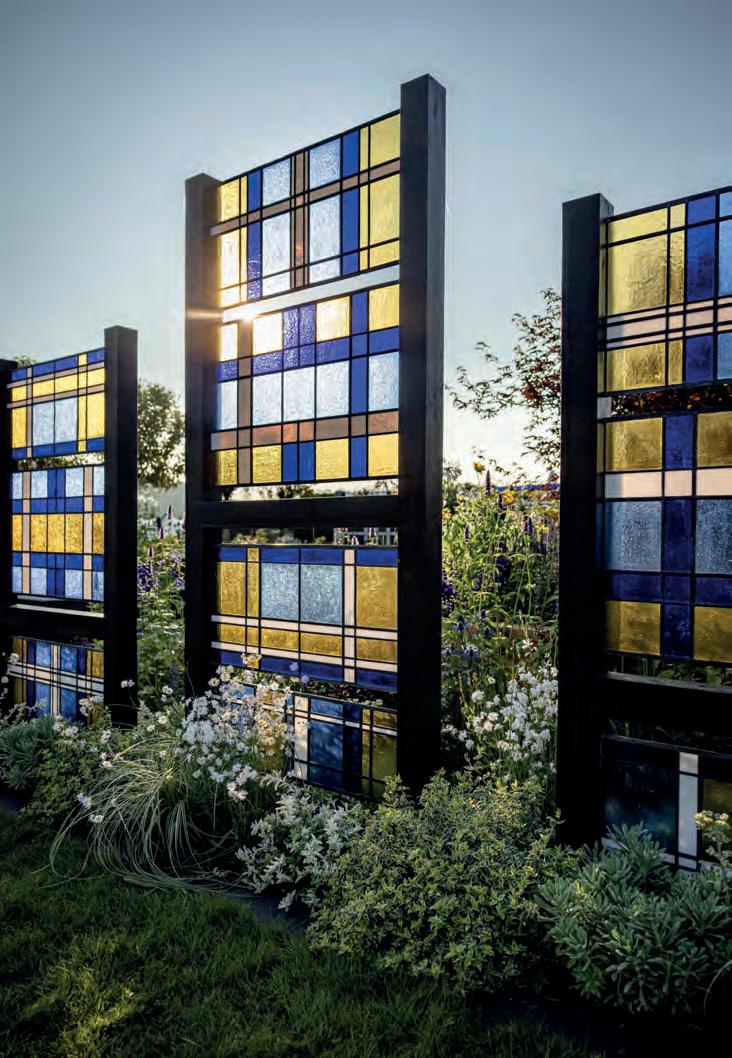
When Probert is sketching, she loves to capture the detail. When she designs a garden, it's no different. “Those details inform the design,” Probert says. “I get to play with them even more when it’s a show garden – these are anything from tiny glass pebbles to dragonfly doorknobs.” She also loves to play with colour in both her art and her gardens. “I remember doing a garden with an orange and purple planting colour scheme,” she recalls, “When I would tell people about it, I could tell they weren’t seeing it how I was. But I love to play with colour and the different tones in that colour range.
“I would struggle if it was a block-planted scheme where I had to do something bold and contemporary with two or three plant types. I love it when other people do it, but I struggle because I’m just so greedy with all the choice that’s out there. When it comes to a planting plan I love doing it on paper, but there's nothing like manipulating it in person, from the heights to the shapes to the colours to the foliage – it all comes together to make this tapestry.”
Changing course
From studying art for A Levels Probert went on to do landscape architecture at
the Edinburgh College of Art. While she loved it, something wasn’t quite right. “I wasn’t having the chance to play with the palette that I wanted to play with,” she explains. “I made the very difficult decision to end that course. I went home and told myself, this isn’t the end; that just wasn’t quite right.”
Probert went to the Welsh College of Horticulture where she was surrounded by people studying subjects she was readily absorbing. This helped her with her studies and her garden design work, which was coming in steadily.
I
the landscaping side in-house. But after 20 years this became what she loved the least.
“I absolutely adore my job, but to get to the point where you're waking up in the morning and dreading opening your emails, was it. I just didn't want to continue,” explains Probert.
absolutely adore my job, but to get to the point where you're waking up in the morning and dreading opening your emails, was it.
I just didn't want to continue
Trusting her gut served her well later on in her career too. Probert originally took
“Clients' attitudes changed as well. They wanted blood from me, and I was giving them so much more than they were paying for. So, I made the decision to stop building and focus on purely design. That was three years ago, and it’s the best thing I have ever done. I love my job again. It almost happened overnight.”
Making over garden makeover shows
That renewed love for her job took centre stage in 2021. Your Garden Made Perfect marked a shift in mainstream media’s approach to garden makeover shows. Historically they gave little insight into the garden design process and were often criticised for setting unrealistic expectations when it came to budgets.
“When the likes of Garden Rescue came along, I would get clients approach with a long list of things they wanted but a budget of £2k,” says Probert. “I’d have to educate them that it’s probably going to cost that much to take away what’s already there. They’d argue that on TV they could do it, so why couldn’t I?"
This show would be different. Alongside the other garden designers who took part in that first series, Manoj Malde, Helen Elks-Smith, Tom Massey and Joel Bird, Probert endeavoured to give real insights. “It was a good time to highlight what the industry does,” explains Probert, “I realise it didn’t particularly highlight landscapers but for us designers it was a really good way to showcase how the process comes together.”
kind of programme. It was lovely that people wanted to come and tell me they thoroughly enjoyed it, and share, “Oh, we voted for you every time”.”
But it didn’t come without some criticism, “They’re very honest with you when you work in TV,” Probert explains, “they made it clear there would be complaints – no matter what the programme involves. But I didn’t think we would get many. Well, was I wrong!” For the public, the prices seemed unrealistically high, for the industry, unrealistically low. It was tough when this was a key goal of the show and when the budgets were completely true to the schemes and fully paid for by the clients.
I still believe the programme did more good than anything for the industry. I will always look back on that time fondly
“I found it hard that we weren’t being believed by the industry that that’s what it cost,” admits Probert, “I still believe the programme did more good than anything for the industry. I will always look back on that time fondly. It was just a brilliant experience. People are constantly, even now, asking me when the programme is coming back. To me, that is a really good sign.”
trying to make our way in this industry. But I’m so proud of what I’ve achieved, and I can’t believe I’ve fitted it all in. Being asked to do interviews like this, or talks, or TV shows – that I’ve been thought of to do those is such an honour.”
Seemingly there was a thirst for this type of show, “The ratings were just amazing,” says Probert. “Not including Gardeners’ World, we were the top of the bill for that
Looking back, thinking forward “I look at my CV and I get imposter syndrome,” Probert admits, “I’m nothing special. We’re all doing the same thing and
Her CV is set to grow as Probert will be judging and hosting talks at various shows. She is also designing a 3x5 garden at Arley Hall’s Garden Festival and designing a show garden, Finding Hope, at RHS Badminton Flower Show with Rick Ford. Probert also has numerous courses booked in garden design, art and floristry. These have proved to be incredibly popular, with Probert launching a garden design kit off the back of them which she hopes to take into garden centres given the right avenue and support. If her history is anything to go by, there’s no doubt she’ll make that happen too.
MEET THIS YEAR’S YOUNG DESIGNERS ON PAGE 76
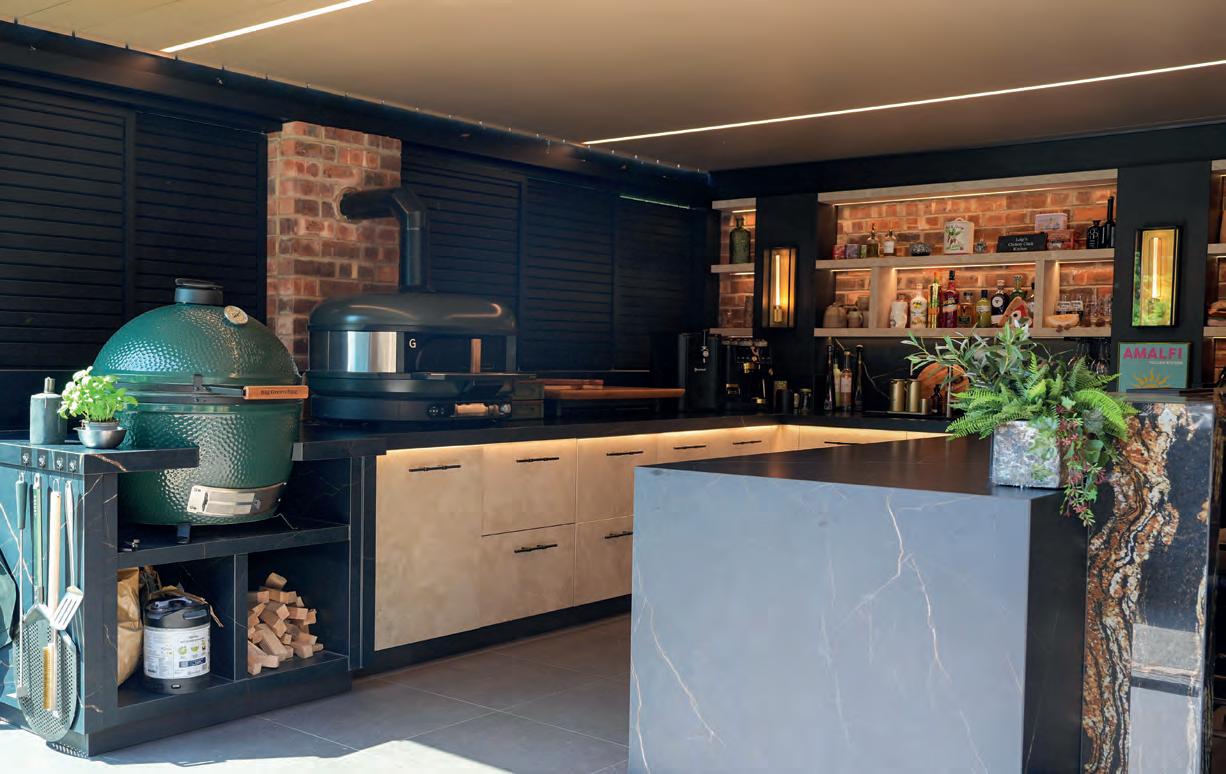




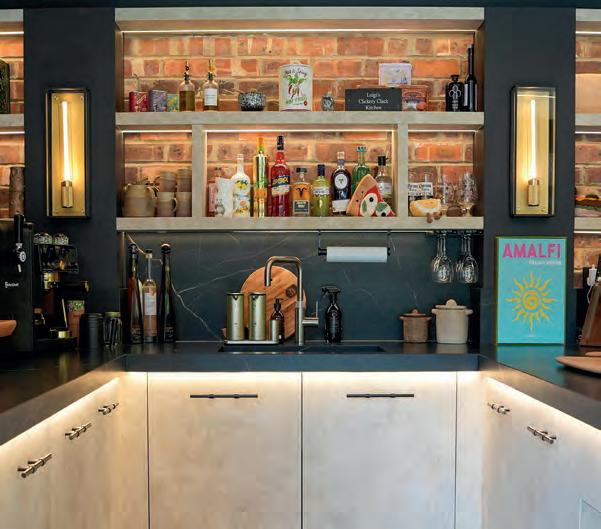
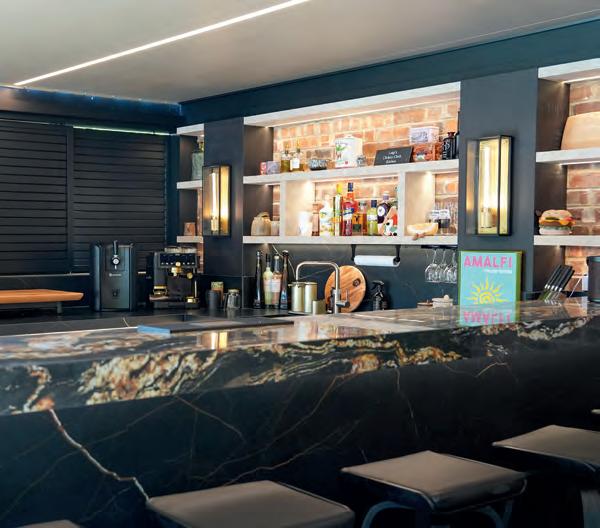
KönigOutdoor is a British manufacturer of outdoor kitchen cabinetry, made to the highest specification, using sintered stone external surfaces to provide a high-end finish and extreme durability.
KönigOutdoor is a British manufacturer of outdoor kitchen cabinetry, made to the highest specification, using sintered stone external surfaces to provide a high-end finish and extreme durability.












Each KönigOutdoor kitchen is made to order with turnkey advice and support available for you and your client, from design through to aftercare.
www.konigoutdoor.co.uk
Each KönigOutdoor kitchen is made to order with turnkey advice and support available for you and your client, from design through to aftercare. www.konigoutdoor.co.uk
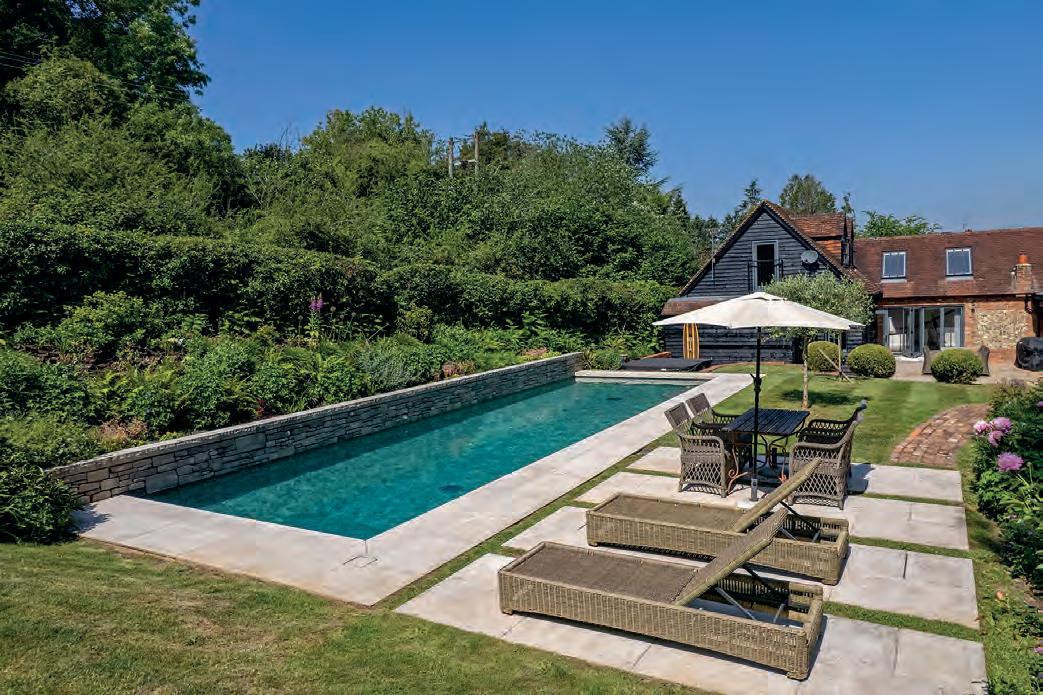
Poolcourt explores the technical details of an outdoor pool it created on a farm in Berkshire
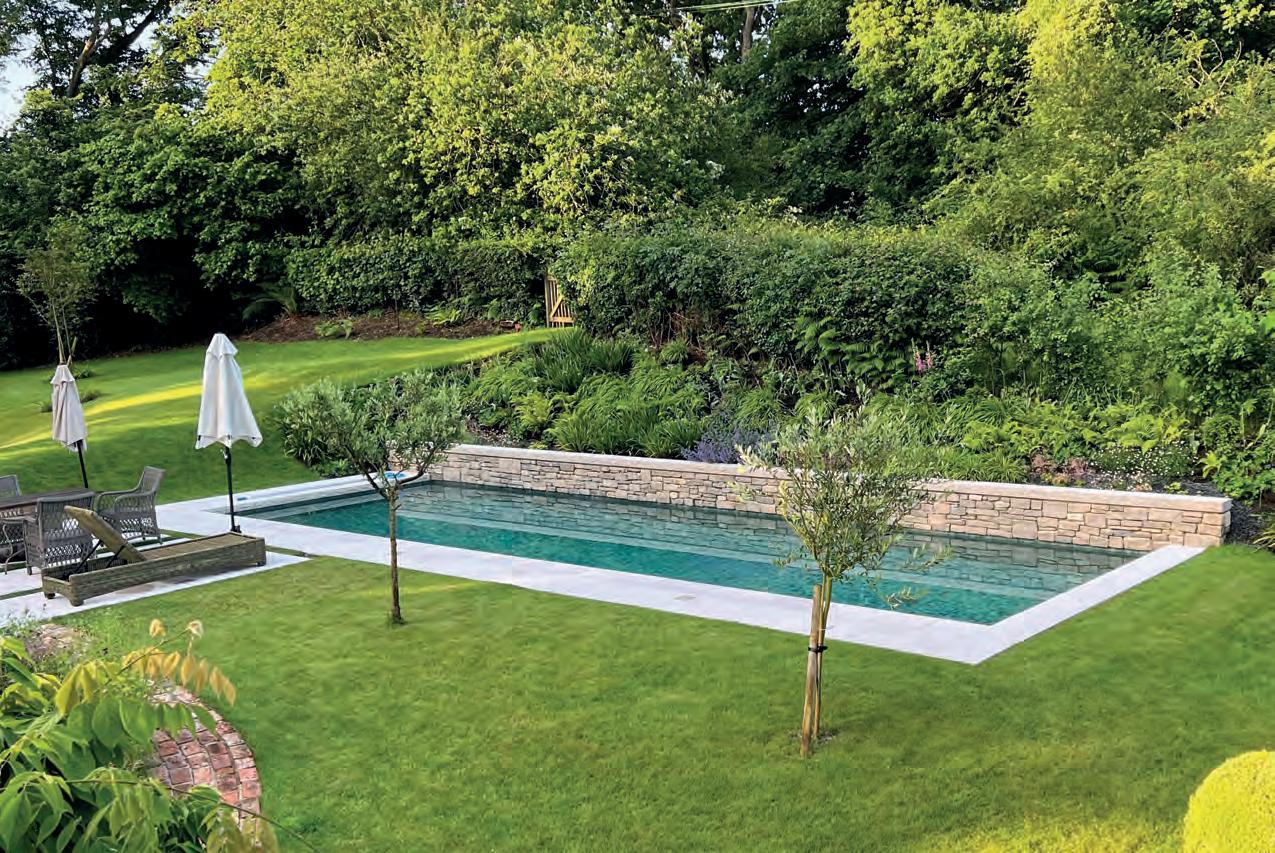
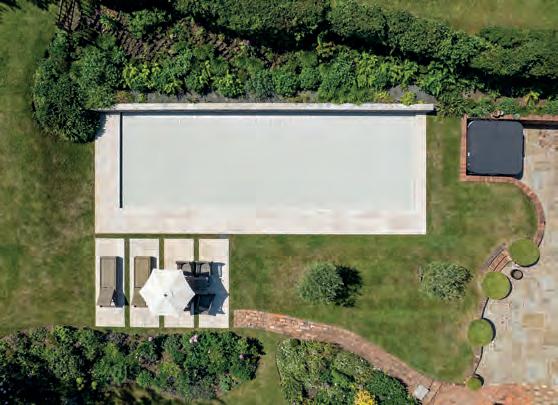
Constructed between winter 2021 and summer 2022, Poolcourt Ltd offered a turn-key service for this outdoor pool project. Collaboration was key, with Poolcourt working with the project architect, garden designer and the client on design and drawing work for the pool and eventually with the garden designer on the remaining areas directly and indirectly affected by the pool construction.
Beneath the surface
Excavation was extensive for this project due to site levels.
This meant new ground levels needed to be established before the pool even came in. Beneath the pool, Poolcourt installed a drainage layer of stone connected into a riser pipe which helped manage groundwater during excavation and if the pool needs to be drained in the future. The deep end was formed using dry screed blinding to create the hopper-bottom profile.
The pool shell is a sprayed reinforced concrete shell. It’s 200mm thick with 2Nº A393 mesh layers lapped at 400 centers and tied at intersections. Concrete is pneumatically applied against a back shutter of high density insulation.
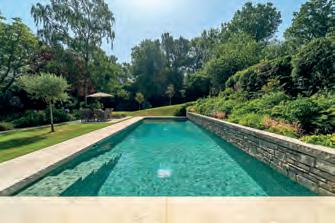
The deep end of the pool is set
up as a hopper bottom to allow diving. It sits at over 2.20m deep and allows for the 'cage of safety' requirements for diving.
Concrete and insulated pipe trenches were laid to protect plumbing from direct loads, cold weather and settlement, thus avoiding the risk of broken pipe later once the pool is in operation.
Collaboration was key, with Poolcourt working with the project architect, garden designer and the client on design and drawing work
Pool render Render is used to get the fine dimensions needed following the pool shell casting. A smooth surface is also needed for membrane application. The pool is squared up for render with ply timber guides and beads running vertically down
the face of the pool walls and floor to get plumb and the required floor levels. Kerakoll pre-batched render (Eco Lr) was used for this application. The render layer is then covered with 2Nº coats of membrane with a netting (nano-flex) between the layers. This membrane will move to accommodate any expansion or movement of the shell and render. After the membrane is completed, a static water test on the pool is undertaken.
The pool was fitted with cast in items. These are fitted after the shell is cast and poured into place with non-shrink grout. Doing it after the main pour
and the rendering makes it more accurate. Built-in fittings included:
• Sump fittings in the pool floor for low-level suction
• Skimmer suction in the pool walls for water level surface draw off
• Vacuum fitting in the wall to allow a hose attachment and vacuum cleaner in the pool
• Inlet in the wall to allow heated and treated water back from the plant room
• Lighting in the pool wall
• Variable speed swim turbine allows swimmer to improve up to a max. water flow of 550m3/h.
Power was supplied via a 100AMP single-phase connection, and PVC pipework was installed and pressure tested.
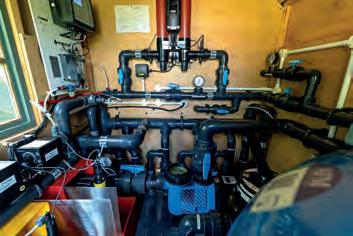
The plant room
The plant room was made by The Cosey Shed Company and was a simple cost-effective way of getting a room for the equipment that looks good from outside. The wooden floor was removed and replaced with a concrete floor which extended behind the building to allow for the positioning of a heat pump. Walls were lined with 18mm ply to allow equipment to be fixed to the surfaces.
A drain was fitted to the floor running to a soakaway. Poolcourt
stresses that when discharging chlorinated water to a soakaway/ fosse, not only must you design the capacity correctly but also make sure you have the correct permissions.
The pool water is filtered through one 840Ø AFM charged filter vessel at medium rate, this is best practice and allows for capture of bacteria down to one micron at 20m³/h/m². Turnover was around six hours, allowing the pool water to cycle through the system three to four times over a 24-hour period. The main circulating pump is variable speed (three settings) and is running at two-thirds of its potential, which will save energy.
The pool has an automatic pH and chlorine control system, dosing sodium hypochlorite (sanitizer) and hydrochloric acid 10% (pH reducer). It also has a UV unit used as an oxidizer to support the chemical dosing system.
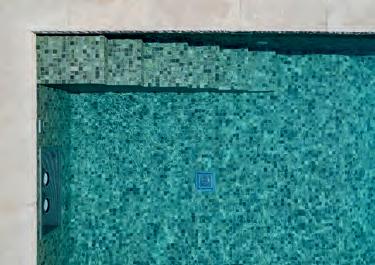
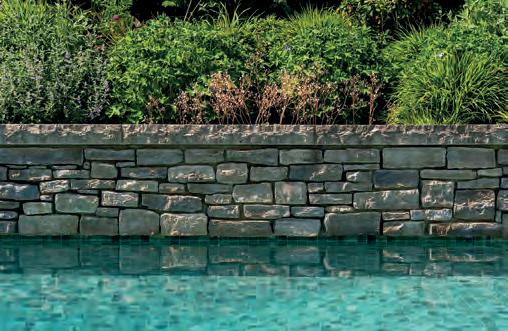
The pool was lined with an Earth stone Bali green porcelain mosaic tile (50x50mm) from The Mosaic Company, using Kerakoll adhesive and grout. Copings around three sides of the pool edge were fabricated to Poolcourts drawings. The pool copings were sandblasted and rebated by Artisans of Devises. The feature stone wall to the back long side of the pool was a Purbeck guillotined stone wall constructed by the Poolcourt team. A recess was made in the pool RC shell for
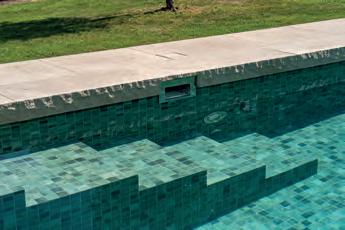
this to sit on. Lights are white LED EVA Optic, which can be switched on from the house.
Poolcourt followed the garden designer's lead with the paving layouts, with the stone matching the coping. Beyond the pool, Poolcourt laid lawn throughout the garden as well as a wildflower meadow with a grass pathway winding through.
The pool was commissioned and handed over with all landscaping works in July 2022. Poolcourt then took on the servicing of the pool every month, with its client looking after it between our visits; and the business still looks after it today in 2026.

A Norsup 32 heat pump heats the water with the pool running comfortably at 30ºC from April to October. The unit could handle a start up in March running through until November or December if required.
Designed by Tythorne Garden Design | Built by Pickwell Paving | © Fiona Walsh
As seen at RHS Malvern Spring Festival & RHS Chelsea Flower Show


PROJECT DETAILS
Build time 14 weeks
Size of project 230m2
Project value
£175k+
Awards
APL Awards 2025
Pools (Natural and In-ground) winner
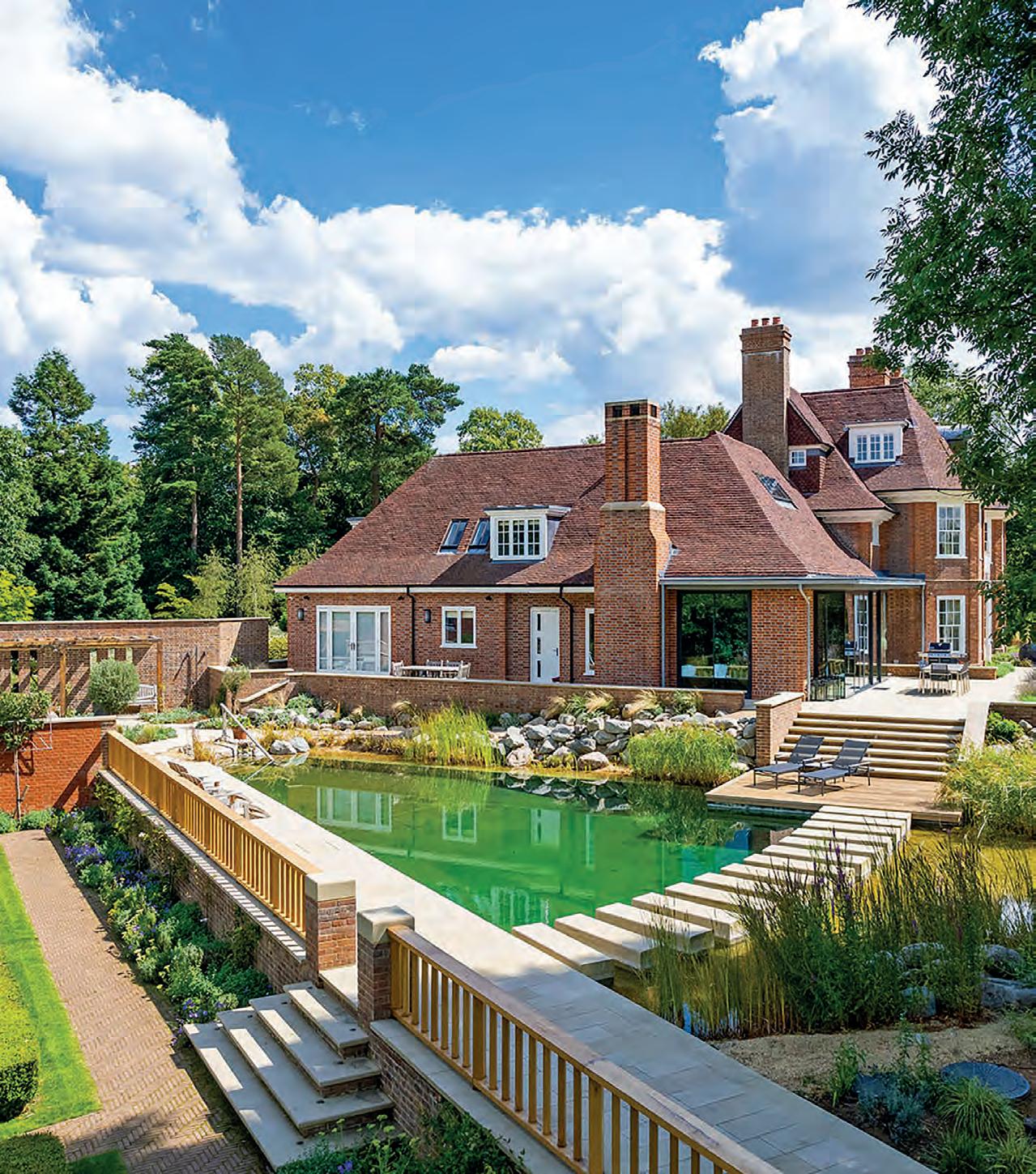
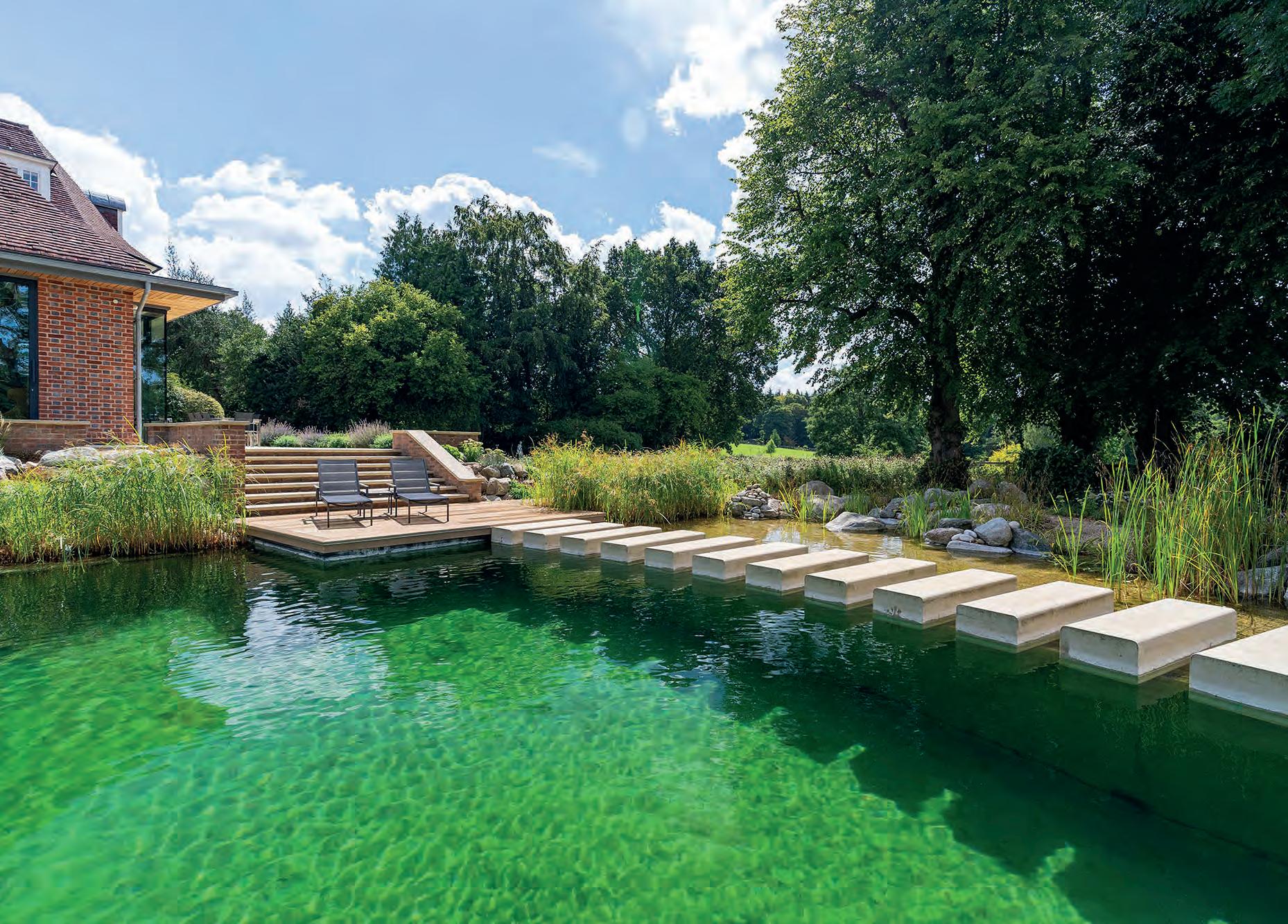
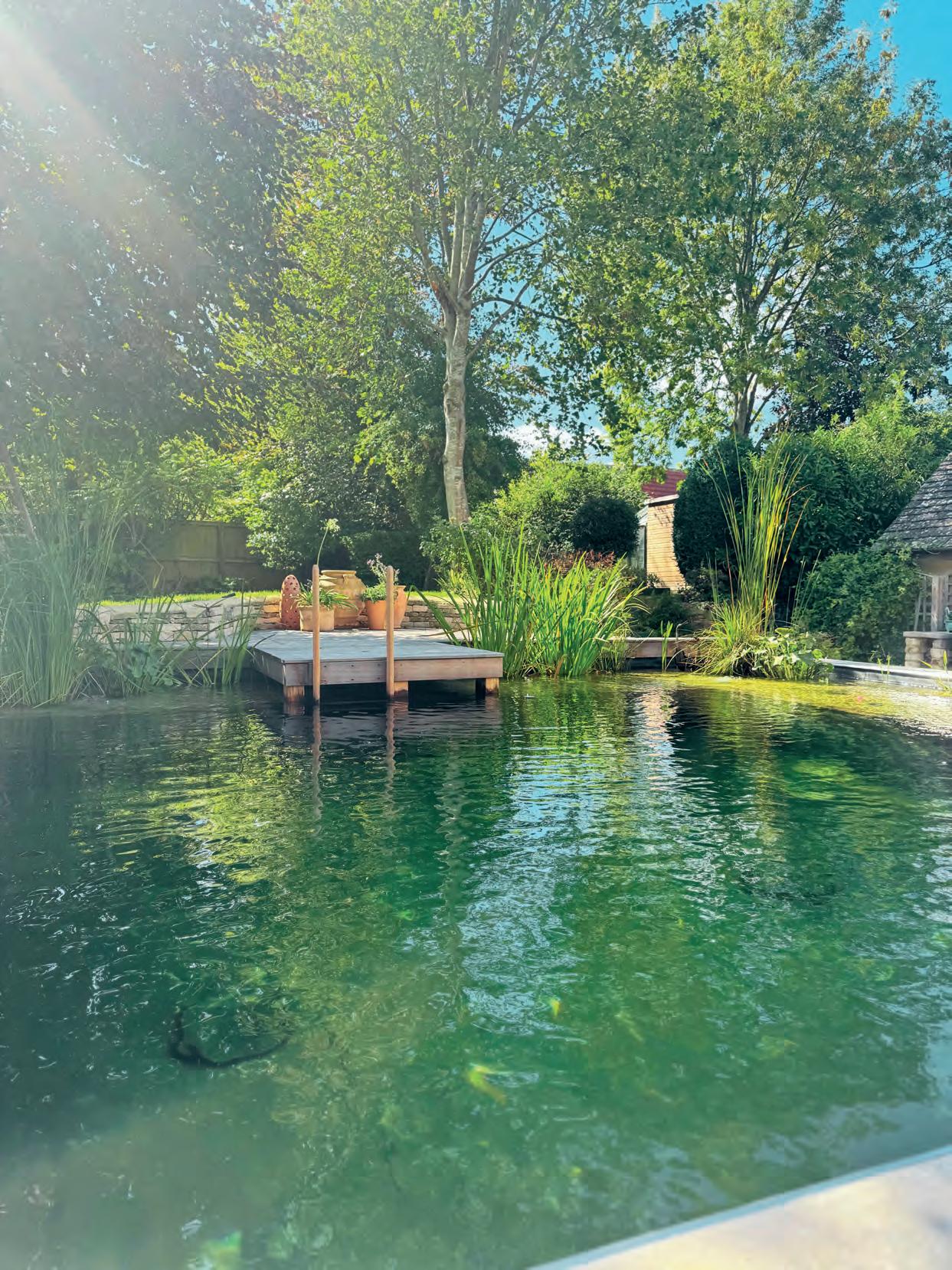
Searching for a space that felt natural while balancing the already-contemporary feel of the Italian garden, Gartenart’s clients envisioned an area that reflected the clean, formal lines of the house which opened toward the surrounded landscape. Located in what’s known as ‘the garden of England,’ the impressive house and formal garden sit in Kent’s charming Westerham countryside.
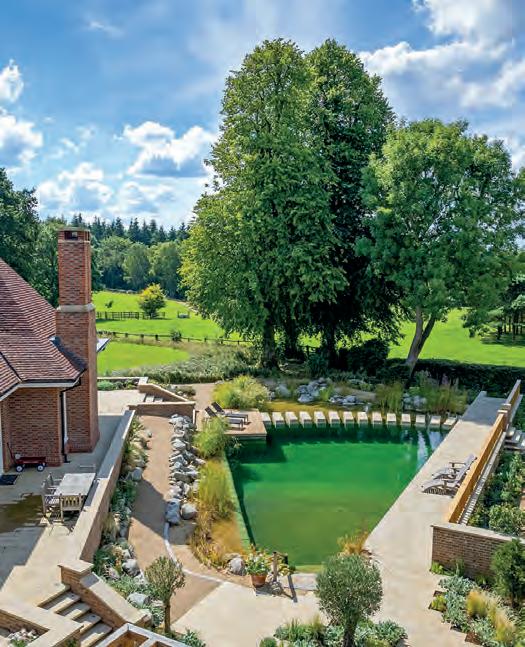
Looking to combine the different areas of the large garden, the clients didn’t want to compromise the integrity of the already existing space. Once upon a time, the garden featured an indoor swimming pool, but it no longer fit in harmony with the rest of the garden. Intent on replacing it with something far more natural in keeping with the landscape, the clients chose a natural swimming pool.
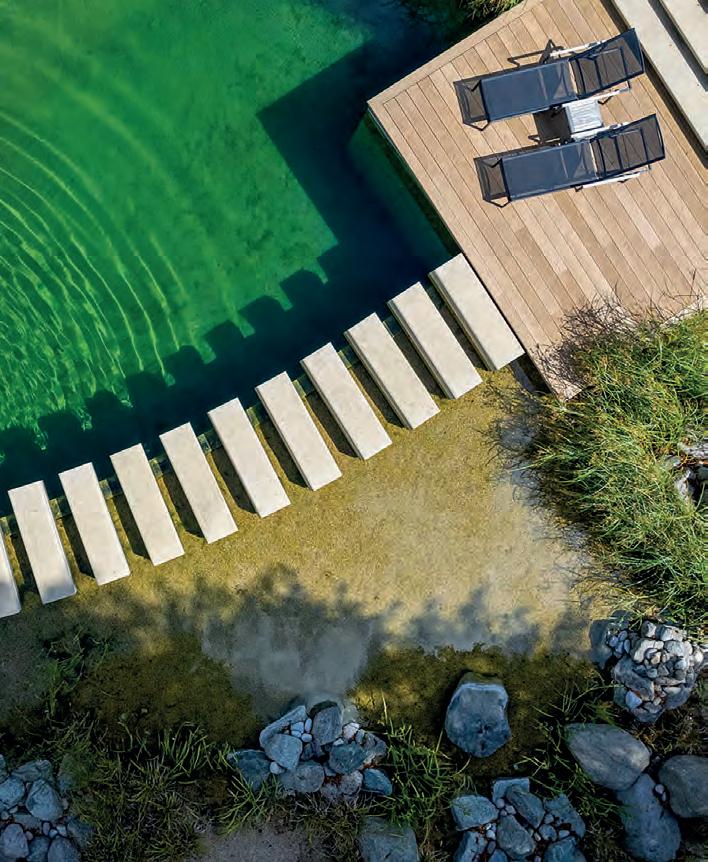
Now etched amidst the green grass and walled areas, Gartenart’s formal
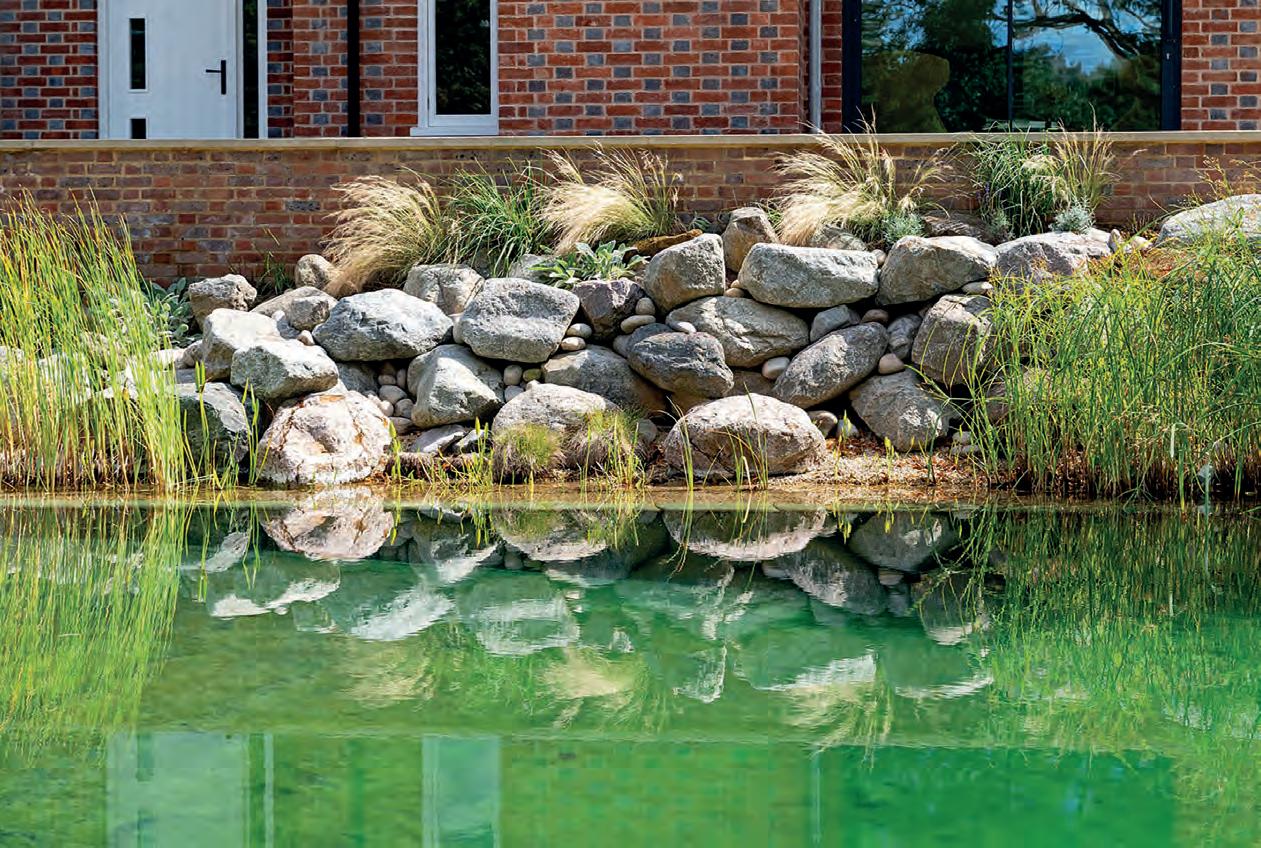
triangular natural swimming area blends seamlessly into the open garden and trees beyond. Boundaries are blurred with aquatic planting, such as Aponogeton distachyos and water iris – Iris louisiana 'Black Gamecock'.
The planting zone runs along one side of the swimming area, helping to soften the formal edge and create a harmonious transition. Not only do these plants create a biodiverse habitat for pollinators, amphibians, birds and other wildlife, they support a balanced filtration system.
The water is also naturally filtered through a gravel bed, which is connected to a pump housed in an underground shaft while two skimmers capture leaves and debris from the surrounding mature trees.
A dividing wall stands between the pool and the garden itself, which doubles as a
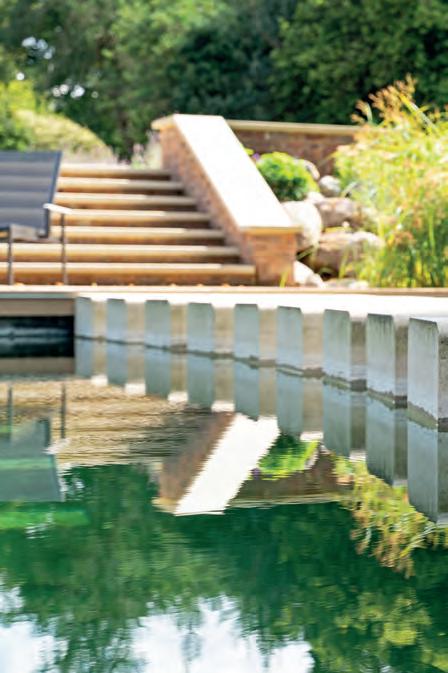
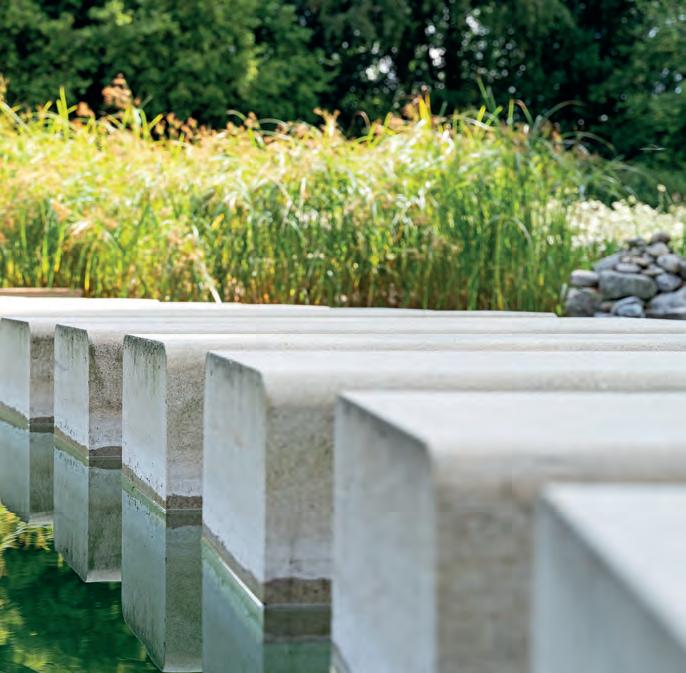
pathway, connecting the different spaces of the garden. Constructed using bespoke 1.5m x 05m x 0.5m stones, the sculptural bridge is both visually appealing and physically connects the formal and informal sides of the pool.
Guided down natural stone steps, the 17.5m length pool can be accessed from the shallow end, resting at 1.2m, which sinks to its deep area reaching 2.4m. Neighbouring the pool, social seating and sun loungers adorn the poolside atop the timber decking, creating a perfect, relaxing space for a sunny day.
Overcoming challenges
Careful not to disturb surrounding tree roots, the regeneration zone had to be excavated entirely by hand as it was located within a designated Root Protection Area.
A primary complexity, according to Gartenart, was managing the differing levels between the house, pond, and surrounding garden. In response, the team pursued careful planning to ensure a harmonious and accessible transition between the spaces.
Amid these issues, however, the project was still finished on time, and the clients were over the moon with the result.

"Living
Designer Melinda La Mantia –Gartenart
Landscape architect Camlins camlins.com
Stone
CED Stone cedstone.co.uk
Lighting Landscapeplus landscapeplus.com
Planting
Anglo Aquatic Plant angloaquatic.co.uk
Pool liner
Gordon Low gordonlowproducts.co.uk
Exactly what they were looking for, the clients describe the pool as “emotive and life enhancing”. Choosing to go against the tide of traditional tiled pool and blue chlorinated water, the clients compare their pool to a small-scale lake. Soaking in the smooth and silky water, it’s being amongst the hovering dragonflies that enhances the entire experience.
The perfect nature-watching spot, the natural swimming pool is inviting, refreshing and the ideal cool-off during a hot summer’s day. Without the use of external chemicals, the self-cleaning pool embraces the essence of wild swimming right in the back garden.
Gartenart is a leading UK specialist in natural swimming ponds, designing and building bespoke natural swimming ponds and pools that offer the purity of crystal-clear, chemical-free water while delivering the unique experience of wild swimming. It offers a range of specialist services in the design, construction and maintenance of swimming ponds and natural pools. gartenart.co.uk
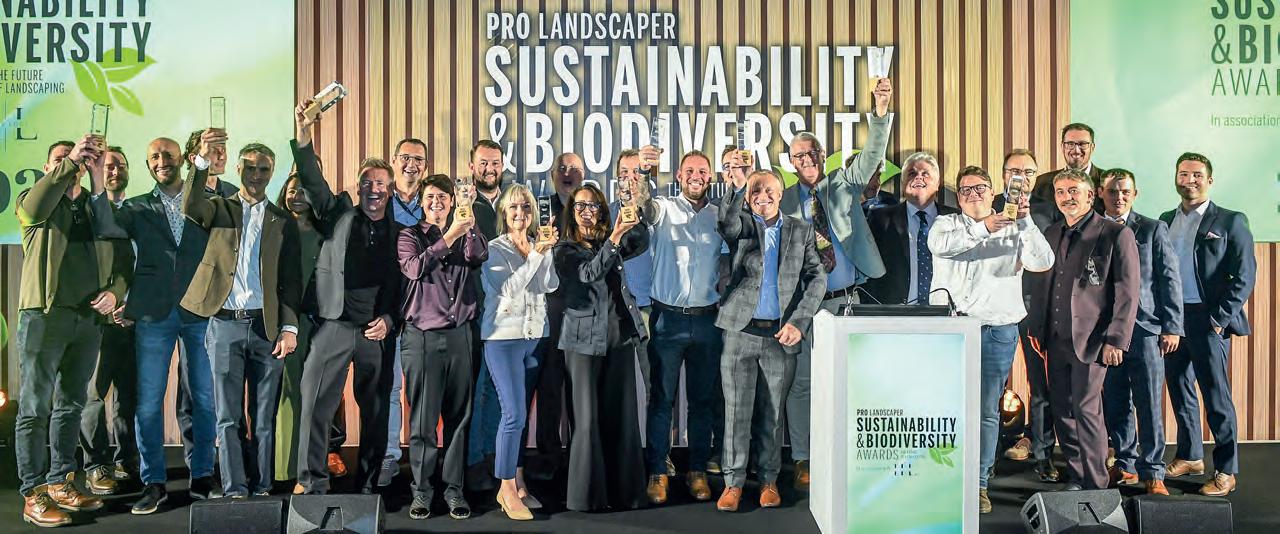
ARBORICULTURE COMPANY
COMMERCIAL BUILD PROJECT
COMMERCIAL DESIGN PROJECT
GARDEN DESIGN COMPANY
GROUNDS MAINTENANCE COMPANY
LANDSCAPE ARCHITECTURE STUDIO
LANDSCAPING COMPANY UNDER £2.5M TURNOVER
LANDSCAPING COMPANY OVER £2.5M TURNOVER
LOCAL AUTHORITY/COUNCIL OF THE YEAR
MAINTENANCE CONTRACT
SUSTAINABLE PRODUCT OF THE YEAR
SUPPLIER OR SERVICE PROVIDER
SUSTAINABILITY AND BIODIVERSITY LEADER











Build time approx 4 months
Size of project 400m2
Project value
Under £250k + VAT Awards
BALI National Landscape Award 2025
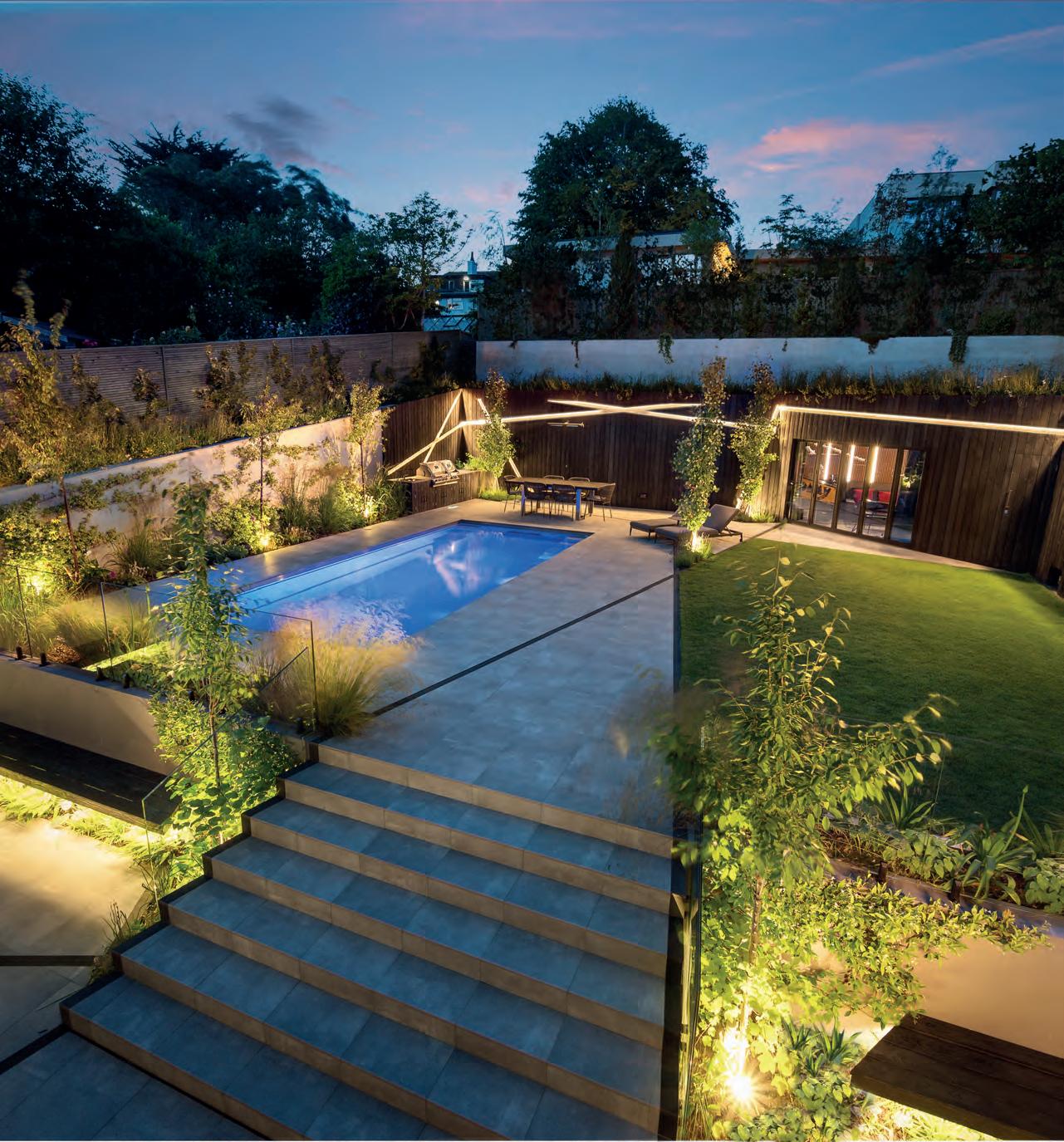
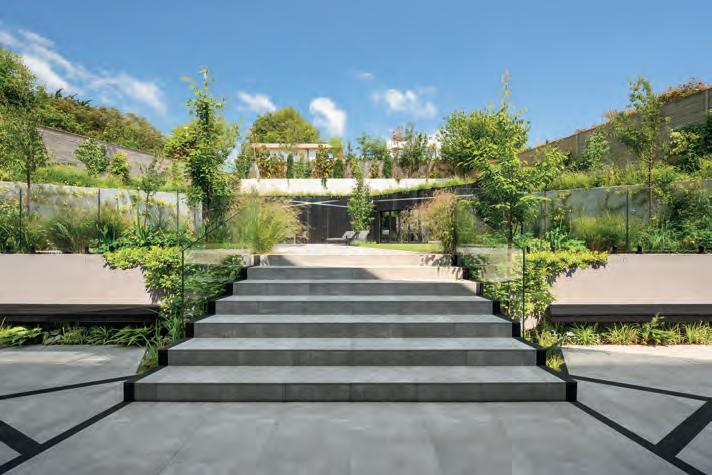
This show-stopping contemporary home needed a garden to match. While the project contained a multitude of challenges, Langlea Garden Design and Construction was able to create a bold, contemporary and functional family space that complements the property.
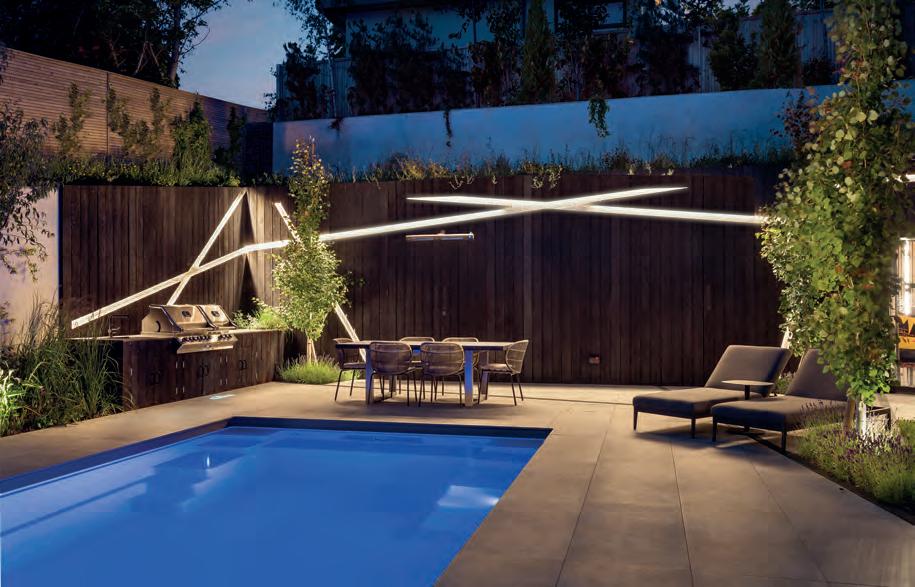
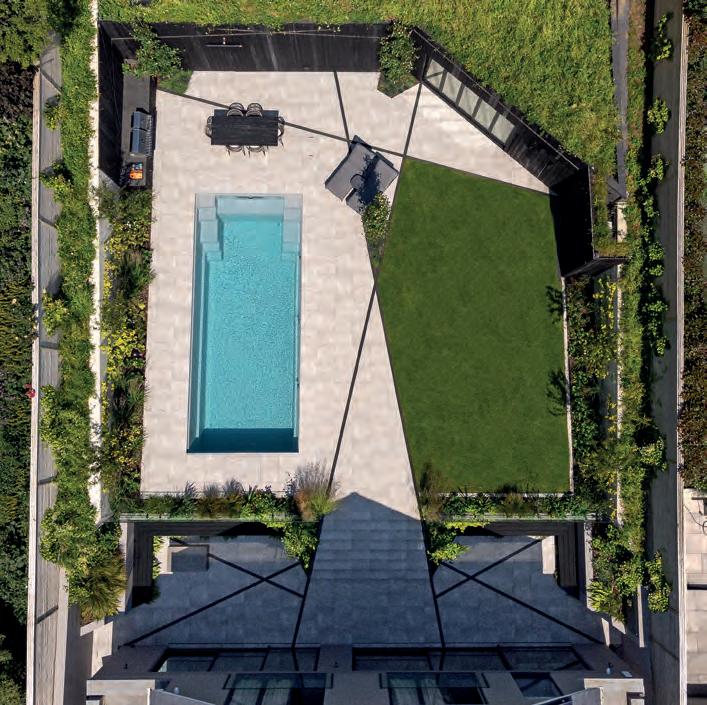
The garden was previously fragmented, impractical, and ill-suited to a young family’s needs. The client brief was extensive, packing lots of features into the garden. But Langlea was able to utilise the space to full effect to include a family-sized pool, generous lawn, outdoor kitchen, garden room and storage.
Turning plans on their head
When Langlea came onto the project, the client was in the process of constructing the garden with their building contractor. Understanding that those plans didn’t consider the space well, Langlea completely turned this project on its head.
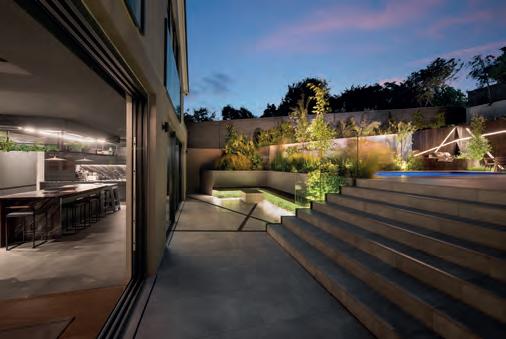
The previously intended patio next to the house was too shallow for comfortable use, and there would have been a large number of steps to get up to the main garden. An unusable second tier terrace didn’t utilise the space, and the main garden was separated and not visible at eye level from the house. Therefore, the client’s children could not have played here unassisted.
Langlea created ‘floating’ built-in benches, underplanted with shade tolerant species to add softness to the hard landscaping, which provide immediate views when looking out from the expansive sliding doors of the kitchen, dining room and lounge.
The intended unusable second-tier terrace was omitted and Langlea proposed to lower the main garden to be at eye level. This resulted in a more manageable number of steps that are less hazardous.
Perfecting the pool
Langlea’s client had their heart set on a reasonably sized pool. The team worked
as backfill, compacted in 150mm layers, followed by a reinforced concrete pad.
Reinforced hollow concrete block retaining walls were built on three sides, with full concrete footings excavated and poured beforehand – except on the left side, where existing RC wall footings were reused. Compass Pools then backfilled the area with a flexible screed mix to support the pool.
The solar-powered pool cover heats the water when not in use, and a heat source pump further reduces energy use and carbon footprint. At the southwestern end,
paving was dry laid into trays. Slabs were diamond core drilled to allow removal with a key for future maintenance. Prefabricated aluminium sheets were specified, installed with adhesive behind each slab for added strength.
While a significant amount of concrete was necessary to stabilise the site and construct the large RC walls, Langlea sought to offset this with rich, diverse planting and a natural lawn. Numerous trees were introduced,
out an angular layout of the garden and intended paving. Ensuring that full-sized slabs of the surrounding paving could be bull-nosed and used as copings resulted in a seamless finish. This, along with the grey hard pool cover, means that even when the pool is not in use, it’s discrete and blends into the paving whilst being safe for the children.
The pool is a one-piece prefabricated unit, craned over the house and placed on a prepared base. While typically installed directly into an excavated pit without a concrete base or retaining walls, Langlea says over-excavation by the building contractor required them to rebuild the base for support. Working with the structural engineer, the team reused onsite virgin chalk
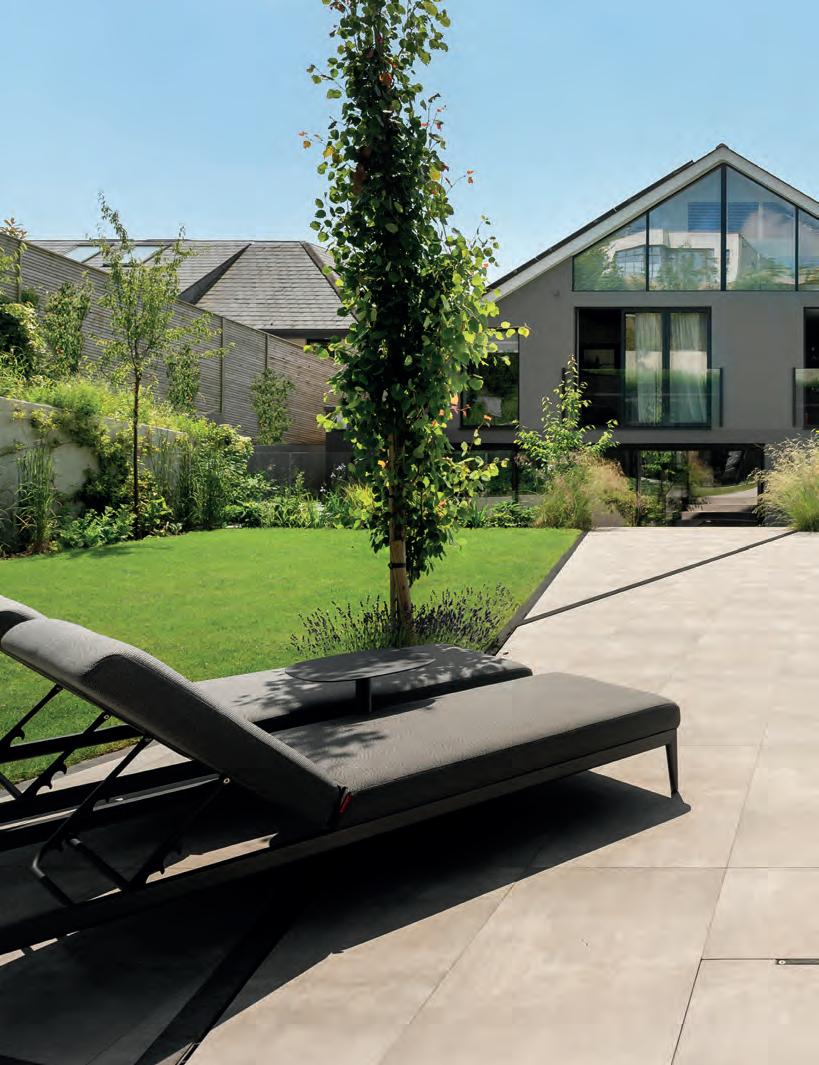
including a native and ornamental woodland mix at the rear boundary, and established wildflower areas to reintroduce biodiversity.
Walls and fences were softened with all-year interest planting and climbing plants. A mix of fastigiate and ornamental trees also accentuate the verticality of the space. Wildflower meadows feature on the tops of the RC walls, garden room and storage unit roofs.
The solar-powered pool cover heats the water when not in use, while the heat pump
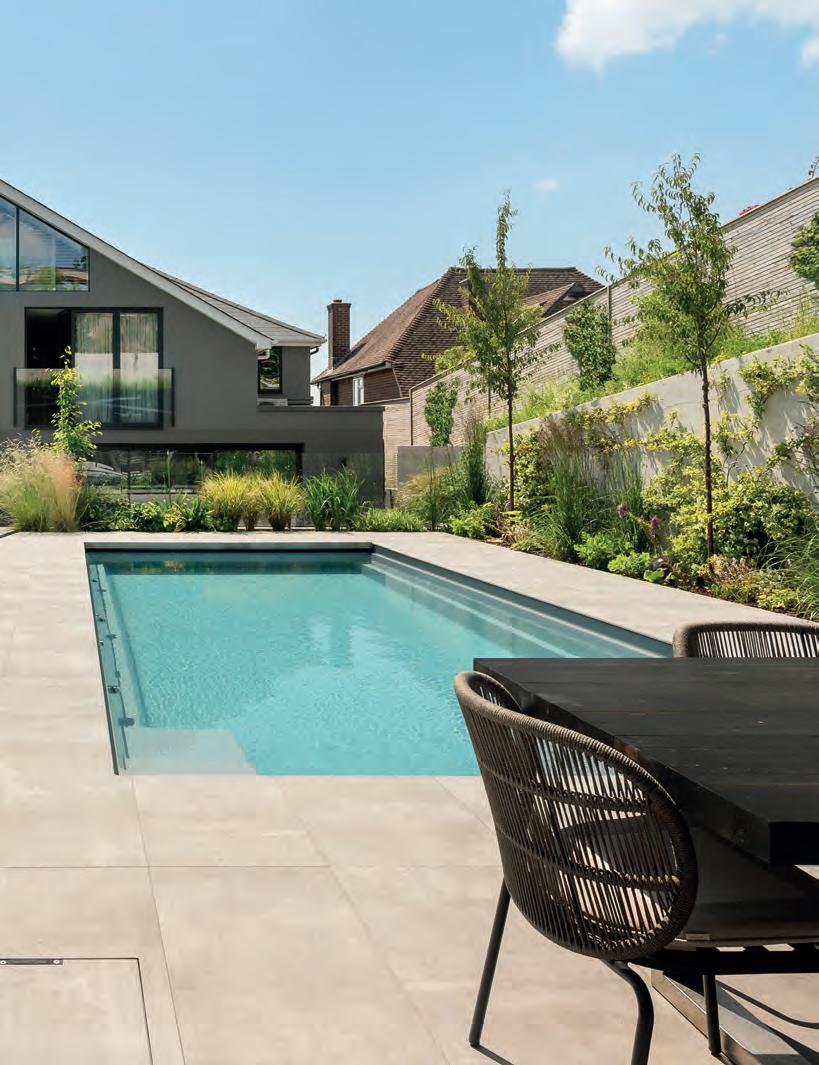
reduces overall energy consumption. The irrigation system includes a rain sensor to prevent unnecessary watering, going beyond basic timers and weather tracking for water efficiency.
Paving falls and drain placements were designed to direct runoff discretely. On the lower terrace water drains are planted beneath the benches, with an additional slot drain at the bottom of the steps to prevent puddling. Another is installed against the house to manage driving rain, given the flush door thresholds, with a damp-proof membrane added for protection.
Around the pool, slot drains run beside black porcelain detail bands, making them nearly invisible. The bands were cut to 80mm wide next to the 20mm slot drains, maintaining the consistent 100mm detail seen throughout the garden.
"Despite factors outside their control making the job much more difficult than it should have been, they persevered with attention to detail and a polite and respectful attitude until everything was finished to a very high standard."
All slot drains connect to soakaway cells beneath the main lawn. In areas enclosed by concrete, additional drainage was installed. These beds feature land drains and shingle over the RC wall footings to prevent future waterlogging. The woodland bed’s clay soil was also removed and replaced with topsoil to improve drainage performance.
Ongoing issues with the building contractors led to a temporary pause in work. Upon returning, Langlea agreed with the client to begin constructing the front garden first – despite this not being the original plan.
Paving supplier
Natural Angle naturalangle.co.uk
Wildflower turf
Sky Garden
sky-garden.co.uk
Charred wood
Carbon by Design
carbonbuild.co.uk
Pool supplier
Compass Pools compass-pools.co.uk
Langlea Garden Design and Construction are an award-winning, fully integrated garden design and construction company run by a husband and wife team. The founders, Leandros and Francesca, are both highly qualified in horticulture, garden design and landscape architecture, and use their shared background to conceptualise and deliver striking and contemporary gardens. langlea.co.uk
Initially, access and material storage were intended via the front garden, using the existing slope to the side passage.
As this was no longer possible, the team collaborated with a scaffold design company to create a platform and ramp system capable of carrying a 10-tonne load, spanning the front garden and providing access to the side passage. All machinery and materials were craned onto this platform, then transported along the passage.
Because the property is in a permit-only parking zone, storing materials on the street or in the front garden – even temporarily – was not allowed. This made precise coordination of deliveries essential to avoid access issues or workflow disruption.
Despite having to manage conflicting contractors, Langlea worked intensively with the client on this project to create a cohesive design solution. Angled black porcelain bands run through the paving, connecting with stainless-steel bands running through the charred wood cladding of the outdoor room and storage area. To ensure cohesion between the house and the garden, Langlea selected an external version (20mm thick) of the same porcelain tiles used in the kitchen.
The angular shape works to make the lawn appear bigger and more connected to the heart of the garden. The angular step design feels more inviting and aligns with the garden's geometric theme.
Langlea’s combination of inspirational and creative ideas resulted in – in the words of the client – their “dream garden" turning out better than they could have imagined.



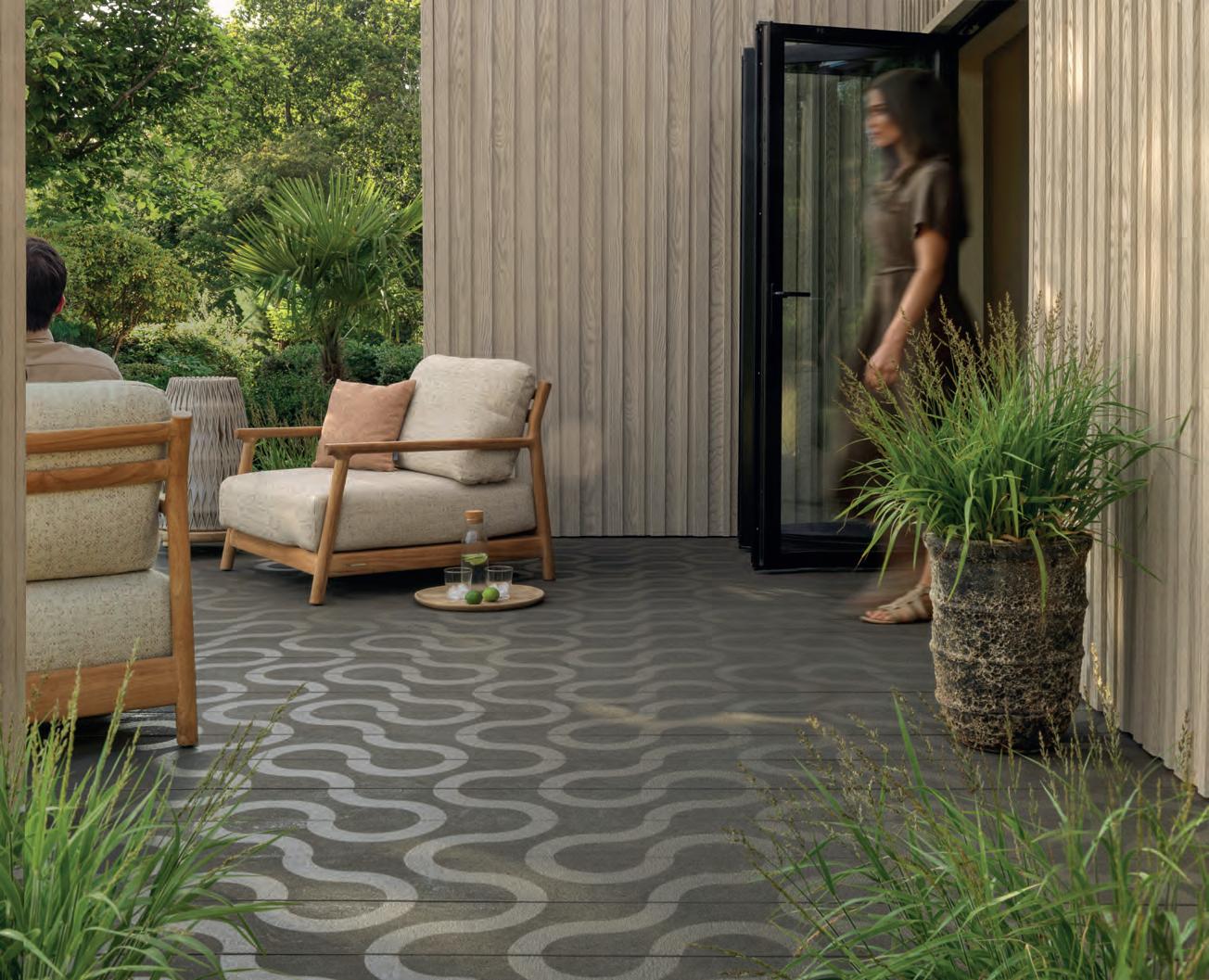
Millboard decking and cladding pairs natural beauty with cutting-edge British engineering. Designed for outdoor spaces that are made to be lived in year after year.
Create standout outdoor spaces - order your free samples at millboard.com
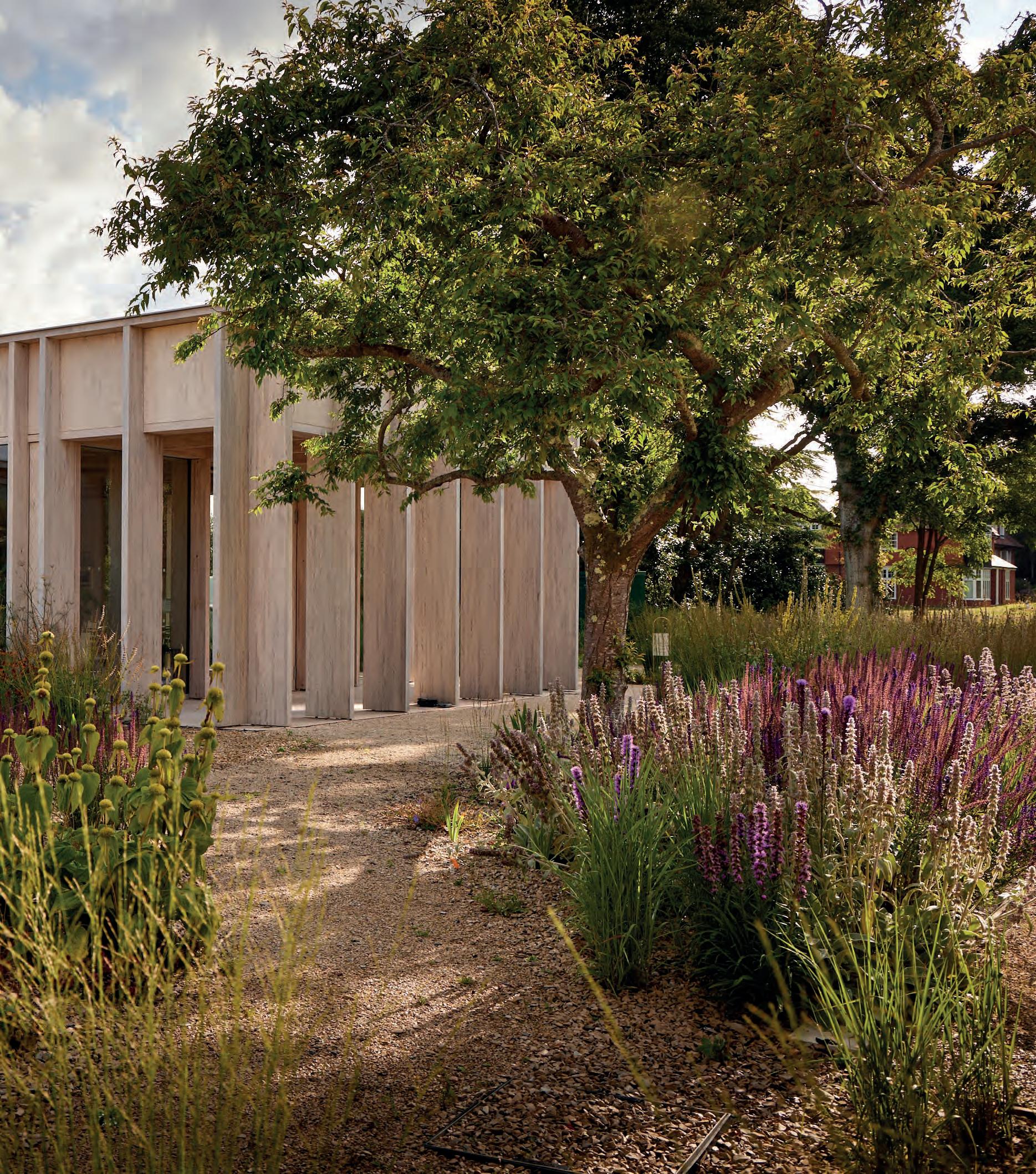
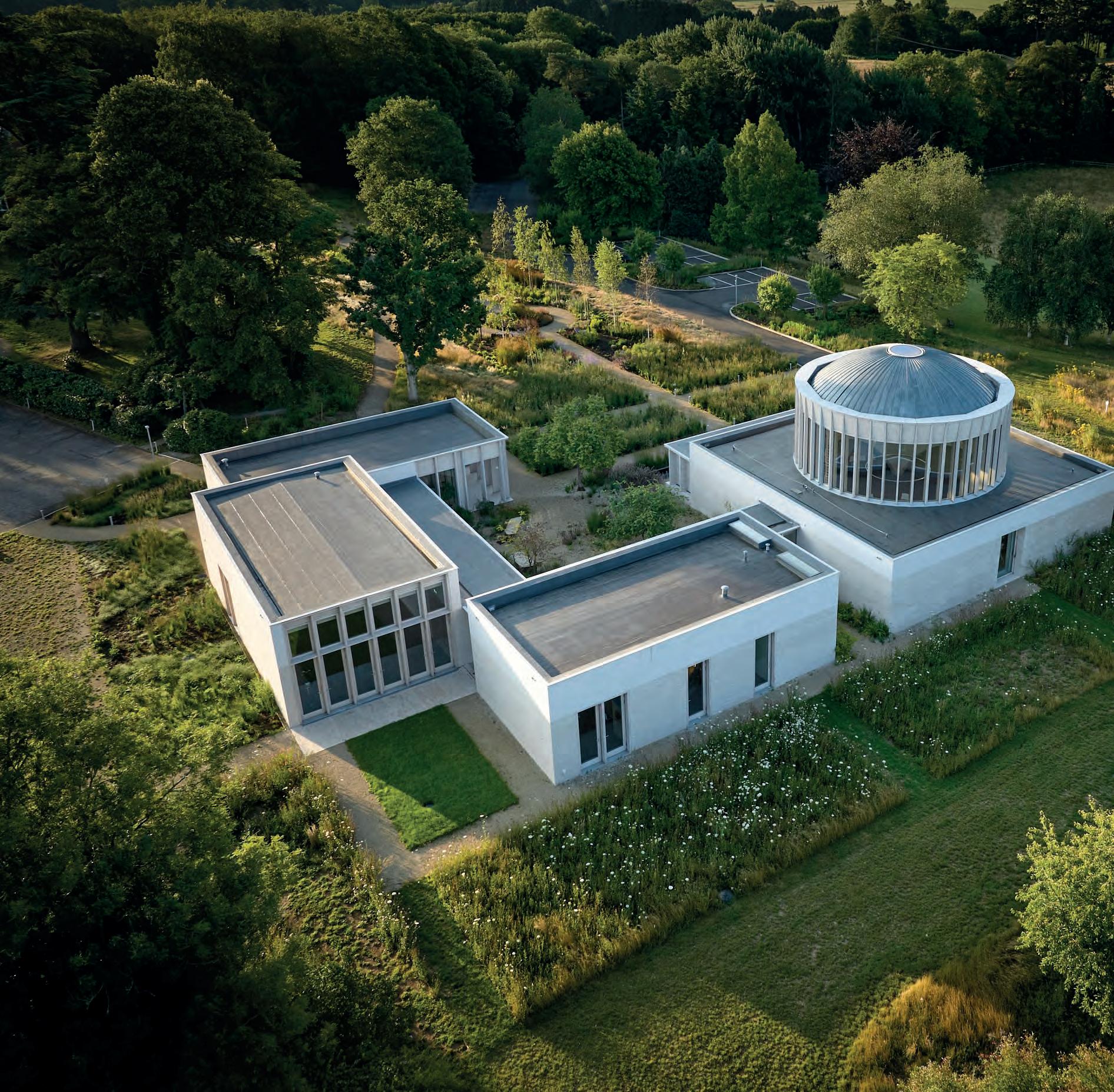
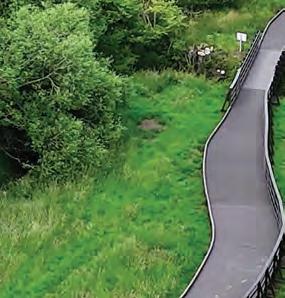
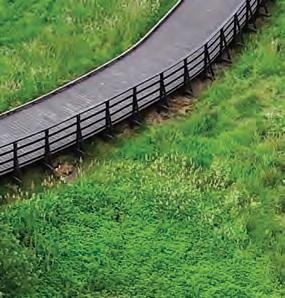
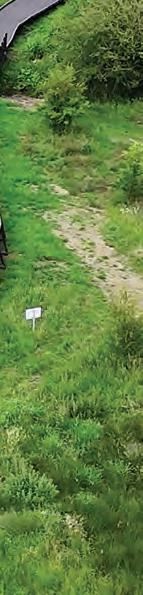
Sat atop a hill in the South Downs National Park in Hampshire, White Eagle Lodge is a nondenominational multi-faith spiritual organisation. Inside its doors is a temple, library and community hall. Outside, an atmospheric arrival has been created, designed to transition from the wilder natural landscape.
The client asked for the site to be reordered to articulate the unique geomantic conditions of the land, creating greater
coherence and integration between landscape and buildings. The brief called for a reinforcement of defined energy lines, with character areas created along a landscape chakra system, with spaces that allowed for moments of private reflection and enjoyment of the panoramic vistas of the South Downs.
Prior to McWilliam Studio’s involvement, the landscape around the temple failed to make the most of the wider landscape views and lacked a sense of place within the surrounding countryside.
The landscape was predominantly tired and comprised amenity shrub planting which formed little relationship to the wider landscape or temple itself. Existing planting seemed to jar with the surroundings and there was no real connectivity between the retreat house and temple.
The visitor experience of the site also focused on vehicles, with a lacked sense of arrival. A road bisected the arrival route to the building and level changes from the parking area to the temple needed to be addressed.
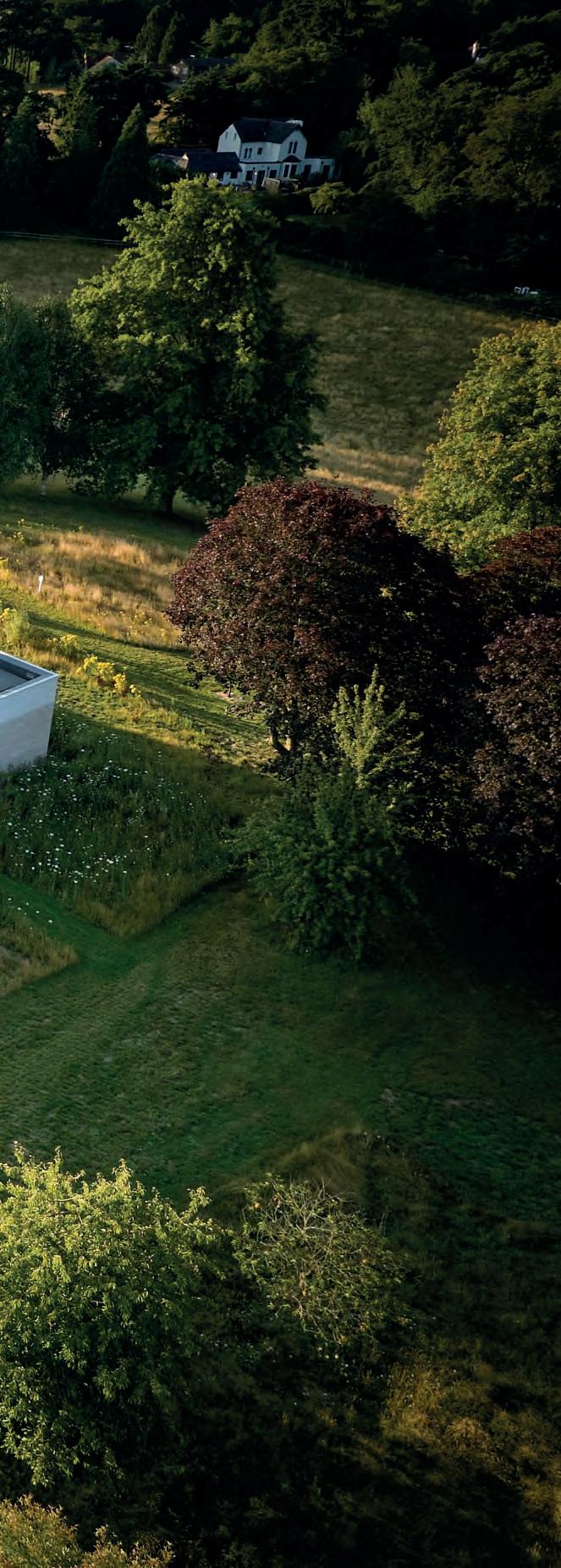
"A beautiful garden with balanced planting that softens the austere architectural features of the building. The designer has skilfully created a series of Chakra gardens along the main axis to foster a sense of calm and wellness. The change of atmosphere and energy along the chakra line was very impressive. Altogether a peaceful and spiritual garden.”
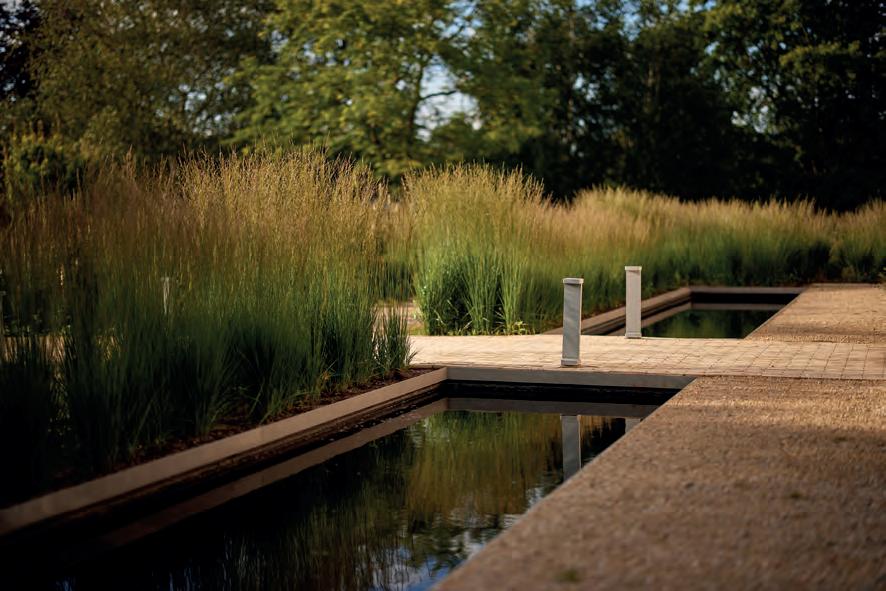
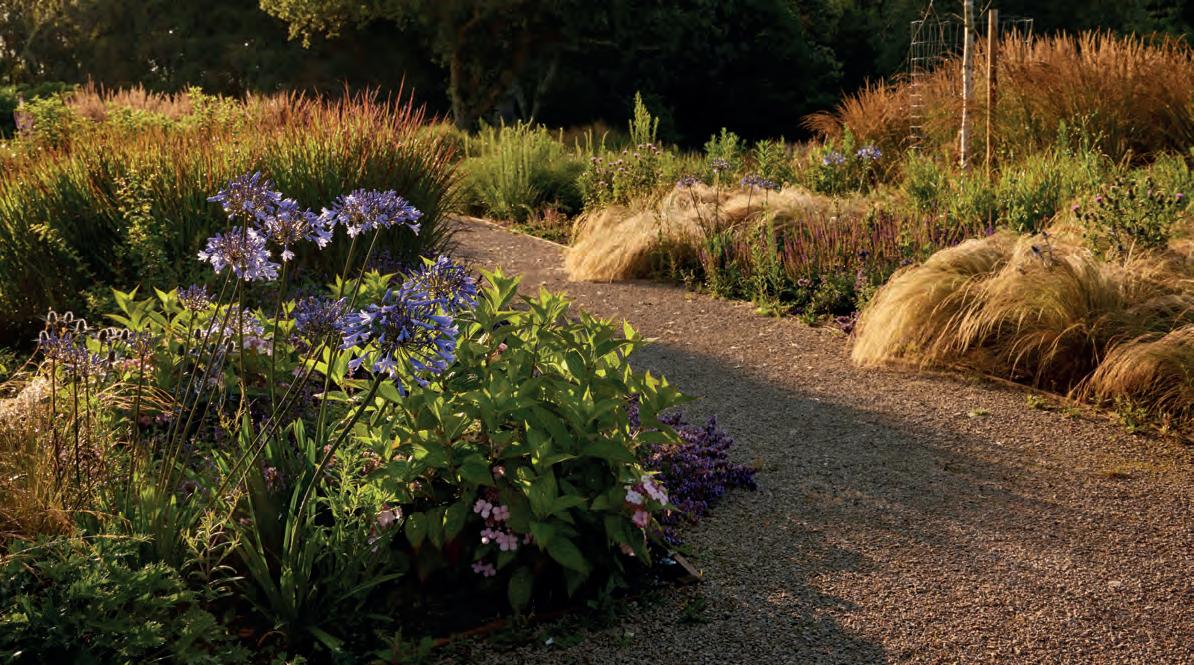
The landscape design responded to the temple’s passive design principles and net zero carbon approach by ensuring maximisation of natural daylight, ventilation and accommodation of a ground source heat pump to increase the energy efficiency of the site.
An enrichment of biodiversity and habitat was achieved through extensive planting of both native and non-native species, ranging from grasses, meadow, heathland and woodland. Hard paving was deliberately kept to a minimum and the majority of paths were constructed using free draining gravel with all water drained to soakaways on site.
The central axis formed a series of transitional spaces and experiences emerging
from the wild and wider landscape of woodland and chalk meadow into the ornamental meadow of grasses and perennials, distilling further to the purity of large swathes of molinia as you approach the temple. Planting is also used to help frame views of the temple as well as key features and vistas across the site.
In the courtyard and retreat gardens, the scale and planting palette were made more intimate, inviting opportunity for meditation and quieter contemplation in contrast to the large, ordered axial geometry. The series of circular chakra gardens, with a planting palette corresponding to the colour of each chakra, were used to deliver atmospheric and calming moments along the main route. As visitors step closer, pools of water have been used to create moments of repose before entering the doors of the temple itself.
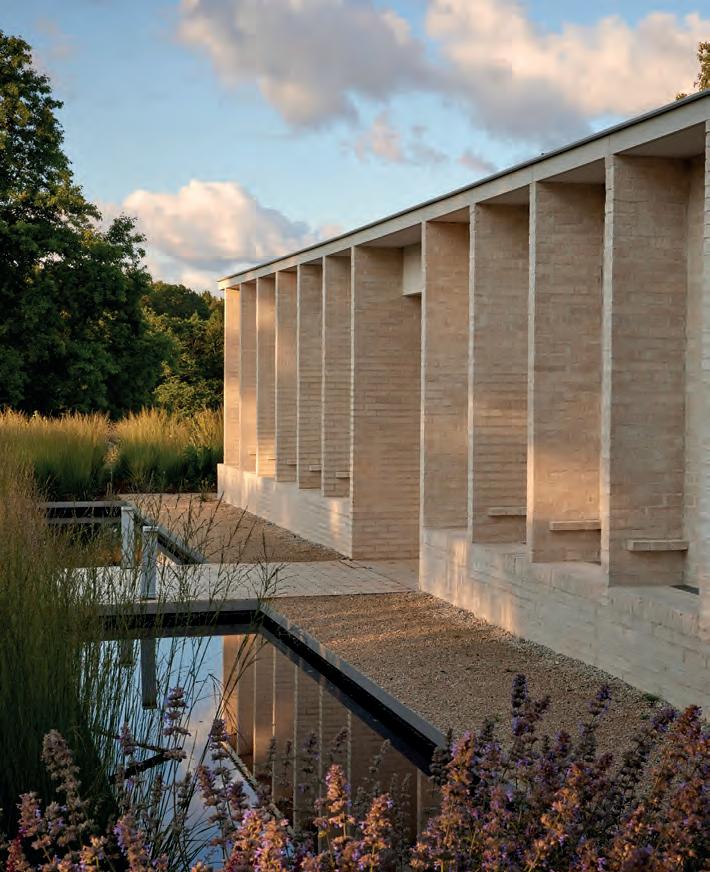
Landscape contractor Gavin Jones nurture-group.co.uk/ our-brands/gavin-jones
Architect James Gorst Architects jamesgorstarchitects.com
Structural engineers Eckersley O'Callaghan eocengineers.com
Environmental engineers Skelly & Couch Skellyandcouch.com
Trees Deepdale deepdale-trees.co.uk
Plants Crowders crowdersnurseries.co.uk
Seeding Emorsgate wildseed.co.uk
Boulders Johnsons Wellfield johnsons-wellfield.co.uk
Aggregates All Green allgreen.uk
Topsoil Bourne Amenity Bourneamenity.co.uk
McWilliam Studio is a garden and landscape design practice with over 50 national and international awards. It is renowned for its creativity, combining imaginative design concepts with a deep understanding of planting and materials. The company favours a creative language, returning to themes that inspire them, but always with a fresh perspective.
mcwilliamstudio.com



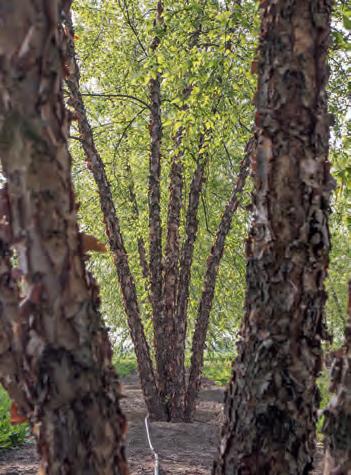
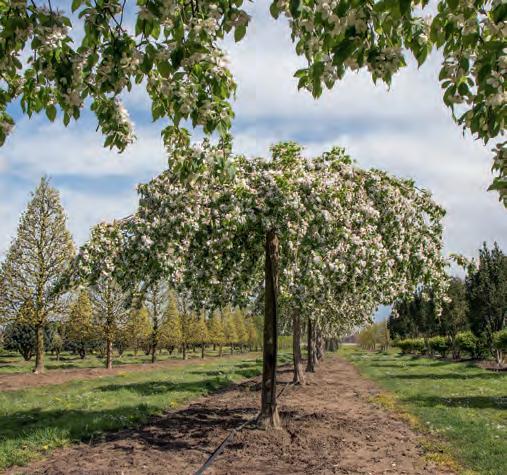


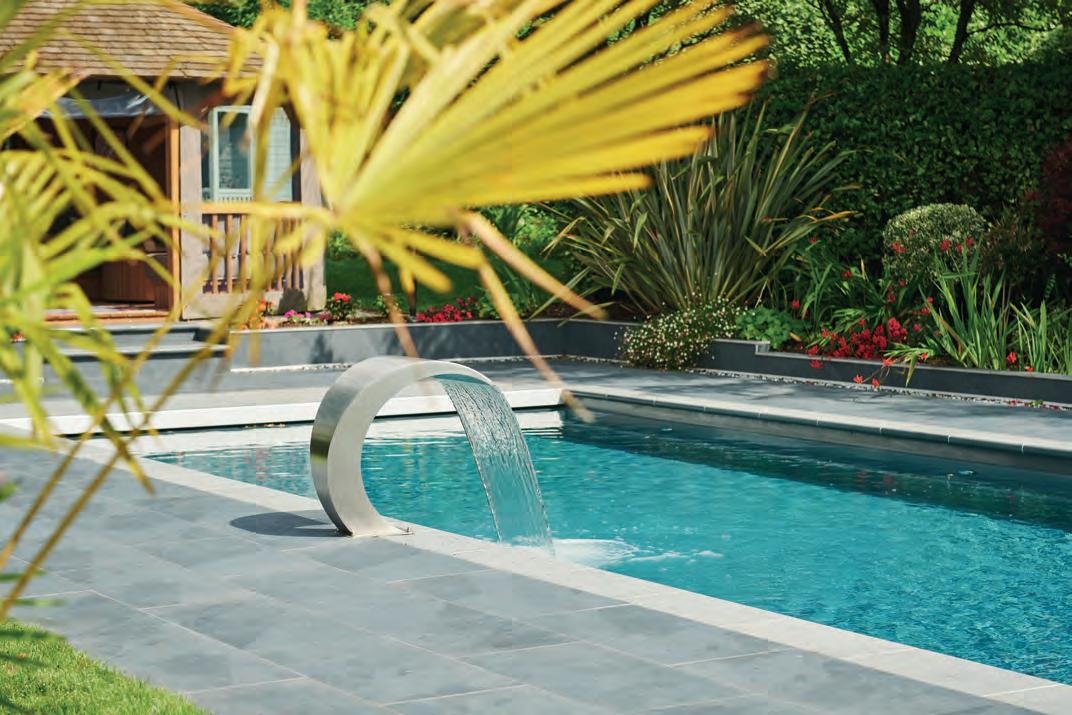
Alex Kemsley, managing director at Compass Pools by Waterstream, talks through its recent Swimming Pool Trends Report
With homeowners spending more time at home, many are looking to make bigger investments in their interiors and exteriors. Careful planning of a garden from start to finish ensures every aspect is cohesive and reflects the lifestyle they want to achieve.
In our recent Swimming Pool Trends Report, which draws on research from 2,000 UK homeowners, we have seen that people want more value from their pool, so instead of an occasional luxury, they can be enjoyed all year. That expectation has had a direct impact on the way pools are designed and finished.
Its adaptability means that the swimming pool can be positioned adjacent to a terrace equipped with seating for entertaining guests. By adding a sliding deck cover, the pool’s function can easily be transformed in compact settings, offering even greater flexibility. This integrative approach allows the pool to be tailored exactly to the homeowner’s needs to enhance their lifestyle.
In many of the projects we are involved in today, the pool tends to feature as a central part of the garden layout from the outset. We recommend that landscape designers fix the pool’s position early, using it to help organise circulation, zoning and material flow across the site.
pool can still be a standout feature, but integrating it to belong within the space is something homeowners really appreciate.
Design solutions for limited footprints
Small gardens are typical across the UK, especially in urban and suburban settings, and our research shows the growing demand for compact pools that still support proper swimming
Small gardens are typical across the UK, especially in urban and suburban settings, and our research shows the growing demand for compact pools that still support proper swimming. Advances in counter-current technology mean pools as small as five metres can now function effectively, opening up new possibilities for tighter sites.
Designers are prioritising continuity throughout the entire outdoor space, with pools serving as a unifying feature, and surrounds and coping stones specified using materials that complement each other, ensuring a balanced appearance. The
This reduction in scale places greater emphasis on material choices around the pool; every finish becomes a tool to elevate a smaller footprint into a premium environment. Hard surfaces must work harder by visually amplifying space, ensuring safety underfoot, and still complementing the surrounding landscape. Compact spaces allow landscape designers
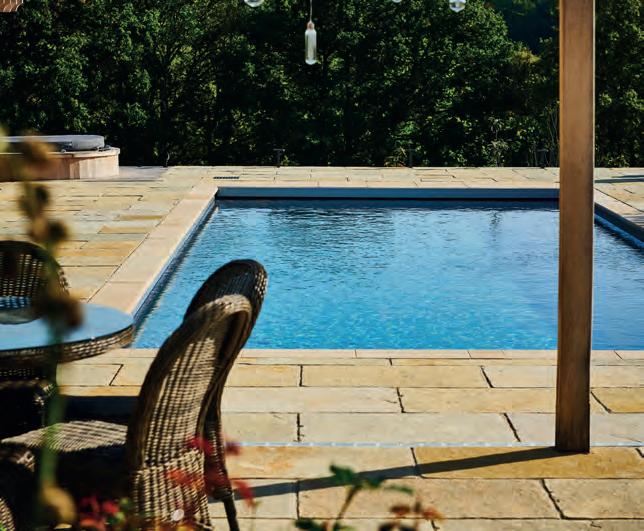
to think more creatively about how they use tone, texture, planting and lighting to build depth and atmosphere.
We are seeing that homeowners are now more conscious of their environmental impact, and so their design choices reflect their taste as well as eco-considerations. Heat pumps, solar-assisted covers and advanced insulation systems are commonly expected within the pool-buying process and represent a meeting of responsible living and comfort. According to our trend report, 88% of homeowners actively seek energyefficient solutions, a statistic that signals a major shift in consumer expectations.
Alongside this, interest in mineral-based and reduced-chemical pool systems continues to grow, with 35% of customers now seeking these options. These systems often sit within planting-led landscapes and lend themselves to muted, natural material palettes.
We are seeing more customers think about how their exterior aesthetics complement their interiors, blurring the boundaries between the two. We are also seeing more projects where pool finishes are selected in direct response to interior flooring to keep the flow between the schemes.
As pools have become more integrated into architectural schemes, surface finish has taken on greater importance. Our Bi-Luminite® finishes were developed in response to this, offering designers a more nuanced way to influence the visual qualities of water.
This layered approach to colour, with delicate reflective particles beneath, lends the water a sense of depth and movement without bold hues. It means pools can achieve deeper, more understated tones that shift gently with the light. These finishes support broader material choices, bridging the gap between architecture and landscaping.
What all these trends point to is a more joined-up approach to pool design within the garden, where colour, finish and placement shape how the garden functions and how it feels to move through.
In the projects we are seeing now, pools that are considered early tend to sit more comfortably within the landscape. They support circulation, reinforce material continuity and allow the garden to develop as a beautifully balanced space.

ALEX KEMSLEY
Alex Kemsley is managing director of Waterstream, a UK specialist in indoor and outdoor pools. He introduced Compass Ceramic Pools to the UK market in 2010, helping establish it as the country’s largest pool installer. With 20 years' experience, Alex is also a director of the Institute of Swimming Pool Engineers. waterstream.co.uk
One of the most noticeable trends we have seen is a gradual shift away from the dominance of traditional blue finishes, although many homeowners still choose and enjoy them as a vibrant option in their pool design. Designers are specifying darker pool shells, such as anthracite and grey, particularly where pools are closely linked to contemporary architecture.
From a practical point of view, these finishes behave very differently in water and can be enhanced even further with the material system used. Darker shells reflect their surroundings, responding to light, planting and architecture and within our own Nova® colour range, the translucent gel-coat system creates depth once the pool is filled, rather than a flat surface finish. This allows the pool to sit comfortably within subtle palettes and reduces visual contrast with the surrounding materials.
Our trends data highlights a growing appreciation for this flexibility, as a darker finish allows the pool to maintain subtlety within the wider landscape and surrounding materials.
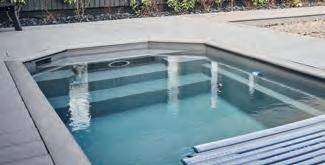

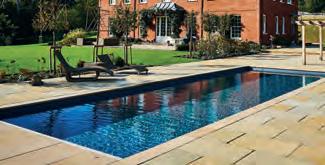

John Haeffele explores the ever-growing trend of clients extending and enriching their time in the garden
What's your role at Renson?
I’m the sales manager for the UK and Ireland looking after our strategic network of partners. I speak on a regular basis with our partners and have the honour of meeting end clients at such prestigious shows as RHS Chelsea. I enjoy this the most as you get to hear exactly what their customers think of our products.
The demand for comfortable, functional outdoor environments has grown significantly as people look to spend more time outdoors
Are we seeing a rise in people wanting to make the most of the garden year-round?
Yes, it has become far more obvious to us that people value their time in the garden. We try to make that experience as enriching as possible by choosing the right partners who can design gardens that mirror the aspirations of their clients. We always appreciate that we are only a small part of that design and it is their knowledge and flair that brings it to life. Our goal is to give the clients as much opportunity to be outside all year and this reflects in our product portfolio.
Will this continue to rise?
Homeowners are increasingly viewing their gardens as an extension of their living space rather than an area used only during the summer months. The demand for comfortable, functional outdoor environments has grown significantly as people look to
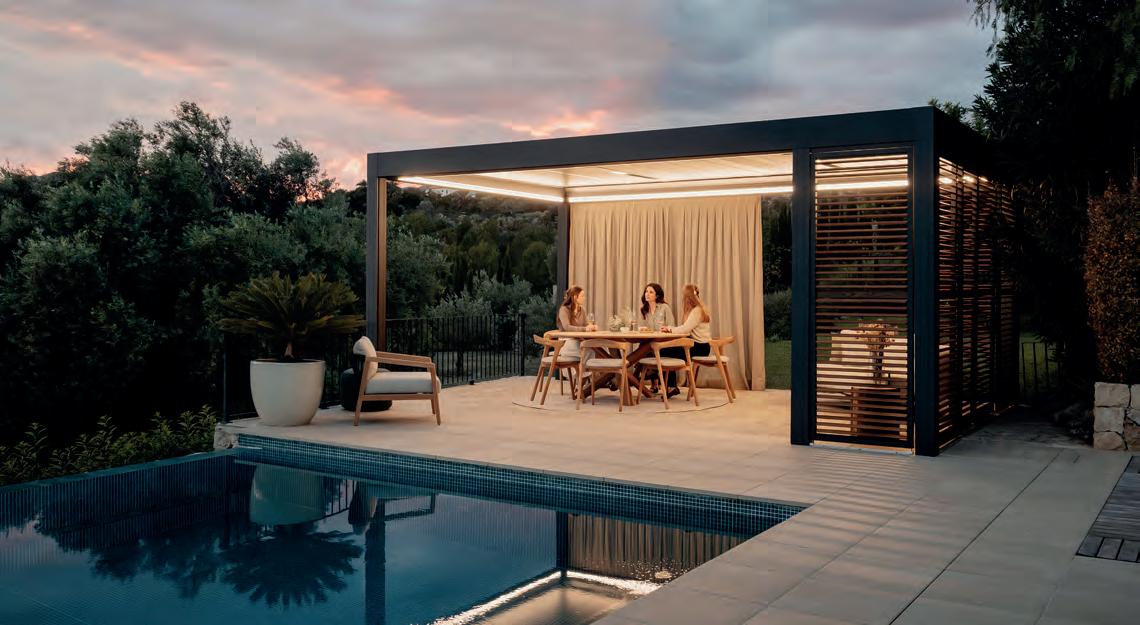
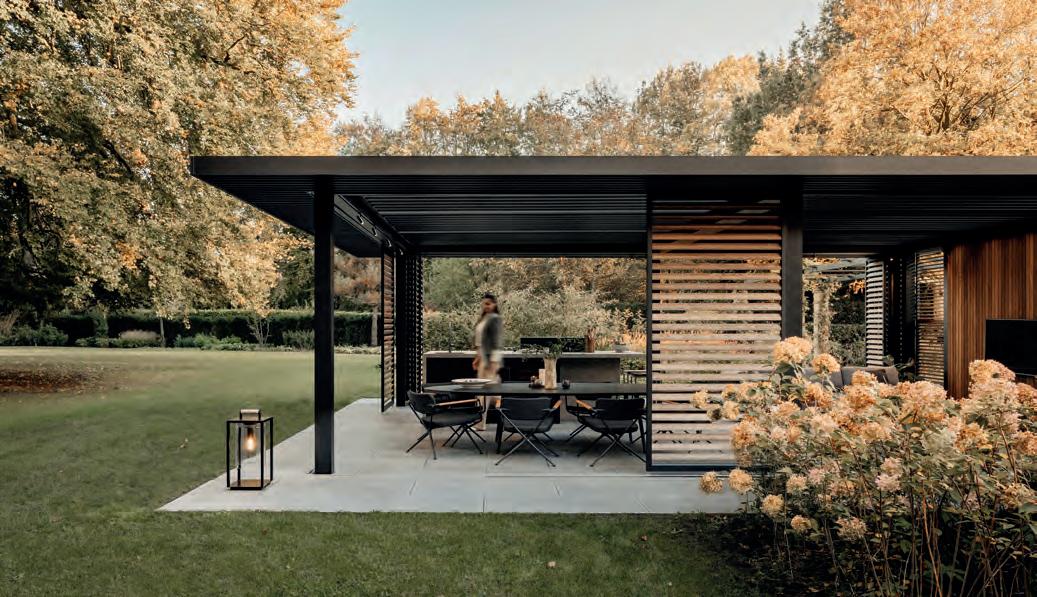
spend more time outdoors, entertain at home and maximise the value of their property. We expect this trend to continue as outdoor living becomes a permanent part of modern home design.
How can this be achieved?
Creating a truly usable outdoor space throughout the year requires a combination of shelter, comfort and flexibility. Solutions such as pergolas with adjustable louvred roofs, integrated lighting, heating, side elements and weather sensors allow homeowners to enjoy their outdoor space in changing conditions. By protecting against sun, rain and wind, outdoor areas can be used comfortably across all seasons.
Solutions such as pergolas with adjustable louvred roofs, integrated lighting, heating, side elements and weather sensors allow homeowners to enjoy their outdoor space in changing conditions
What are some of your favourite things that Renson does?
What sets Renson apart is its focus on innovation, quality and design. Every product is developed with the belief that outdoor spaces should be enjoyed as naturally and comfortably as indoor spaces. We are particularly proud of our integrated approach, where technology, aesthetics and functionality work seamlessly together. From award-winning pergolas to integrated screens, lighting and outdoor living solutions, every detail is carefully considered to enhance the outdoor experience.
How does Renson work to be as sustainable as possible?
Sustainability is embedded throughout our design and manufacturing processes. We prioritise durable, high-quality materials such as aluminium, which is highly recyclable and designed to last for decades. By creating products with a long lifespan, we reduce the need for replacement and minimise waste.
We also focus on responsible manufacturing practices, efficient production methods and designing solutions that help people enjoy natural ventilation, shade and outdoor living in a more sustainable way. At Renson, sustainability is about creating products that deliver long term value for both homeowners and the environment.
What are some of your hobbies outside of work?
Seeing my two lively grandchildren most weekends keeps me fit but I do enjoy going to the gym and playing golf. I love live music and like to eat well, travelling to many destinations to try all flavours of the world.
What's on the horizon for Renson?
We are constantly improving the design and quality of our portfolio and have more, new, exciting, innovative additions that will be introduced later in the year. We also have our awardwinning Amani which goes from strength to strength in residential, commercial and hospitality environments.
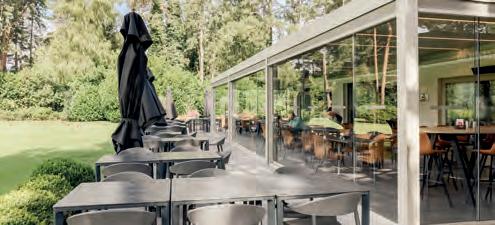

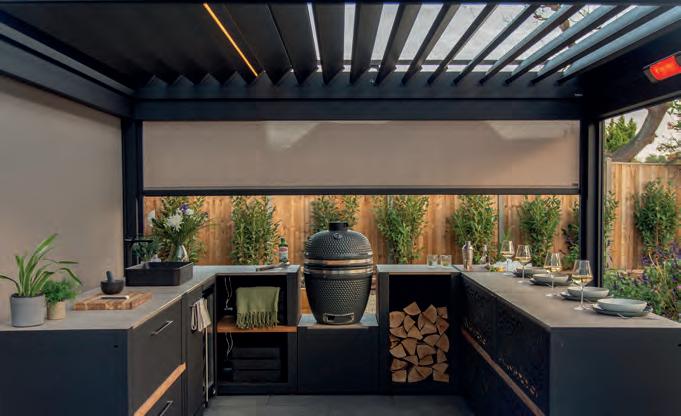









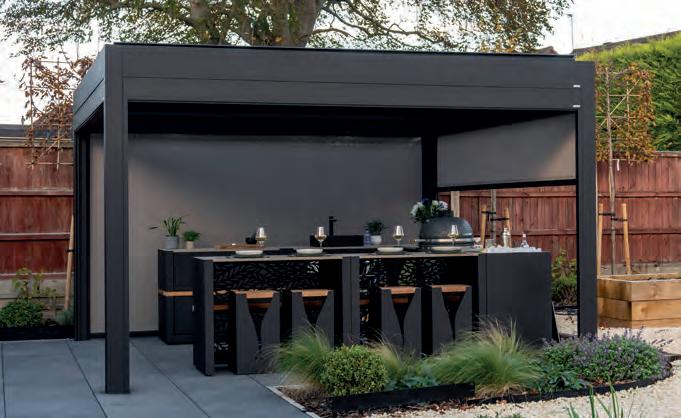
Purpose-designed; colour and size matched to popular Grillo outdoor kitchen configurations.
Storm, rain & snow proof double walled 23cm wide louvers, rotate completely through 150o
Heavy gauge aluminium framework, reinforced with steel, finished in a marine grade coating.
Hidden base plates, fixings and a dedicated drainage system provide a streamline finish.
Concealed motors, powered by Somfy®, ensure reliable remote / app control.
Integrated optional LEDs, heaters and Sattler® fabric side screens provide year round comfort.


EVi
As garden design trends shift toward comprehensive outdoor living, high-spec swimming pools have become a key differentiator for designers looking to elevate their project portfolios and offer a more holistic service. Traditionally, many professionals may have shied away from pool installations due to perceived complications, often subcontracting this lucrative work to specialists.
However, EVi Pools is redefining the installation
process. Its pre-engineered, one-piece pool packages are specifically designed for straightforward trade installation.
Traditional pool installations can often be fraught with complications. Unpredictable weather, intricate plumbing, and the logistical burden of coordinating multiple subcontractors can often lead to significant project delays and eroded profit margins. EVi Pools changes this dynamic by replacing
the uncertainty of on-site construction with a single, streamlined, and engineered solution.
Unlike traditional concrete pools, where subcontracting can leave the final finish and quality uncertain, EVi's one piece solution comes with a factory-controlled guarantee. This ensures that the premium standard and finish you promise your clients is exactly what they receive, without the variability inherent in on-site construction.
The premium shells arrive on-site prewired and pre-plumbed, featuring the fully integrated "Pool Pod" which houses the filtration equipment. The package also includes a high-efficiency heat pump, with the EVi team completing the system's plumbing on the day of delivery, making it ready for backfilling the very next day.
installation becomes a logical three-step process:
• Excavation and base preparation
• Crane the shell into position, EVi complete the plumbing
• Progressive backfilling
EVi Pools also provides a full suite of technical and commercial support, including:
• Detailed technical drawings and SketchUp files to effortlessly incorporate the pool into your digital design presentations.
High-spec swimming pools have become a key differentiator for designers looking to elevate their project portfolios
• The EVi team works alongside you from day one, offering expert advice to ensure flawless execution and solve site-specific challenges.
• Approved installers benefit from direct lead connection through EVi’s retail network and receive exclusive trade discounts of up to 30% off list price.
By combining practical landscaping knowledge with EVi’s technical expertise,
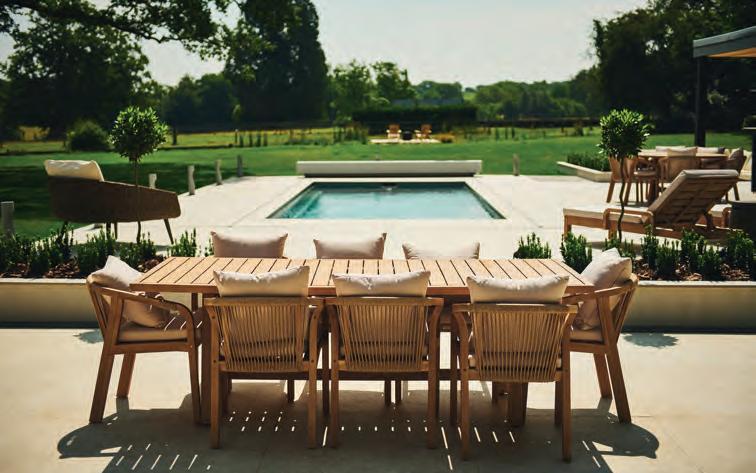
Following a successful event in March, EVi Pools has announced that its next Installer Tour and Training Day will take place later this year. This hands-on, practical event covers the entire installation lifecycle – from site preparation and crane logistics to backfilling and troubleshooting.
However, you don’t have to wait for the next tour date to get started. Contractors and designers are invited to visit the EVi Pools HQ at any time, allowing them to inspect the build quality firsthand and sit down for a one-on-one chat with the technical team.
Register your interest for the training day or book an in-person visit by calling 01403 57767. evi.co.uk

The perfect products to elevate the pool
Powered solely by the pool’s circulation, this robot has zero running costs. It scales vertical walls, scrubbing algae right up to the waterline. After the robot finishes, a quick pump basket empty and a backwash leave the swimming pool sparkling. evi.co.uk
PRICE: POA
Where a waterproof plain outer layer meets a block-printed inner lining, the parasol combines quiet grandeur with the ability to withstand the realities of British weather. Created in collaboration with artisan workshops in Jaipur, the Horkesley intends to lift the mood the moment you step beneath it. parasol-uk.com
PRICE: £759

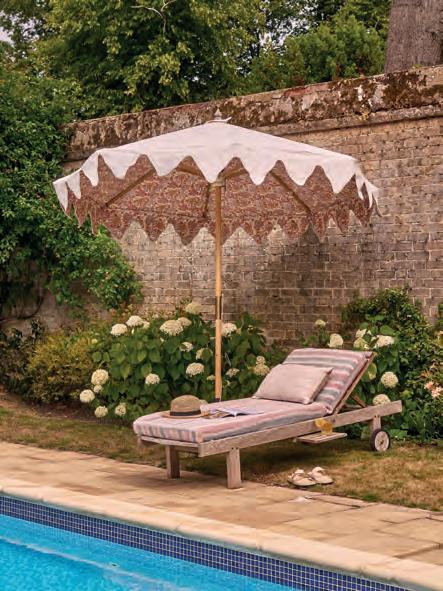
For projects where drainage needs to be part of the overall look, the DekDrain A15 Linear Bar Wave offers an alternative approach. Its distinctive flowing pattern introduces an architectural design feature while maintaining safety through heel-guard compliant gaps and enhanced slip resistance. deks.co.uk DEKS
PRICE: POA

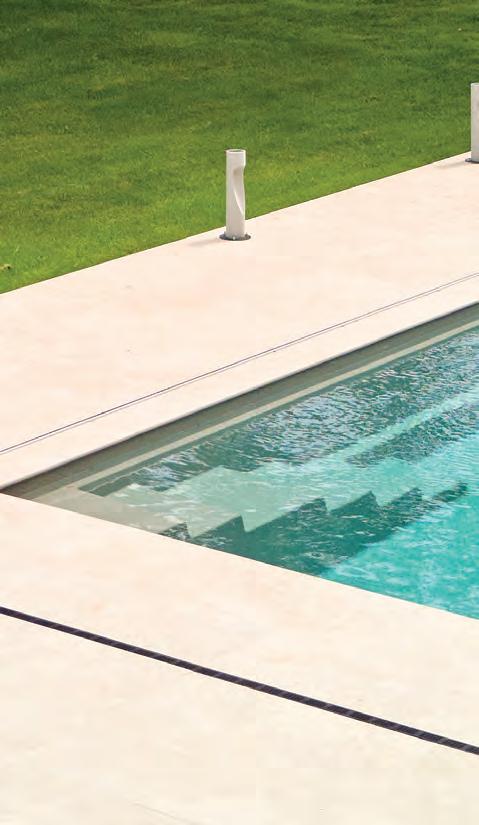
Camargue is an aluminium pergola featuring a rotating louvred roof that gives complete control over sunlight, shade and ventilation. Designed to provide comfort in changing weather conditions, it allows homeowners to enjoy their outdoor space for longer throughout the year. renson.net
PRICE: POA (SUBJECT TO SIZE, CONFIGURATION AND SELECTED OPTIONS)
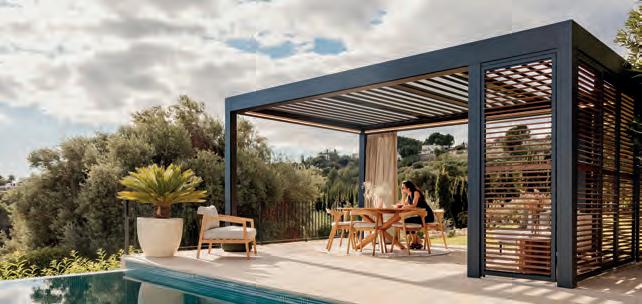
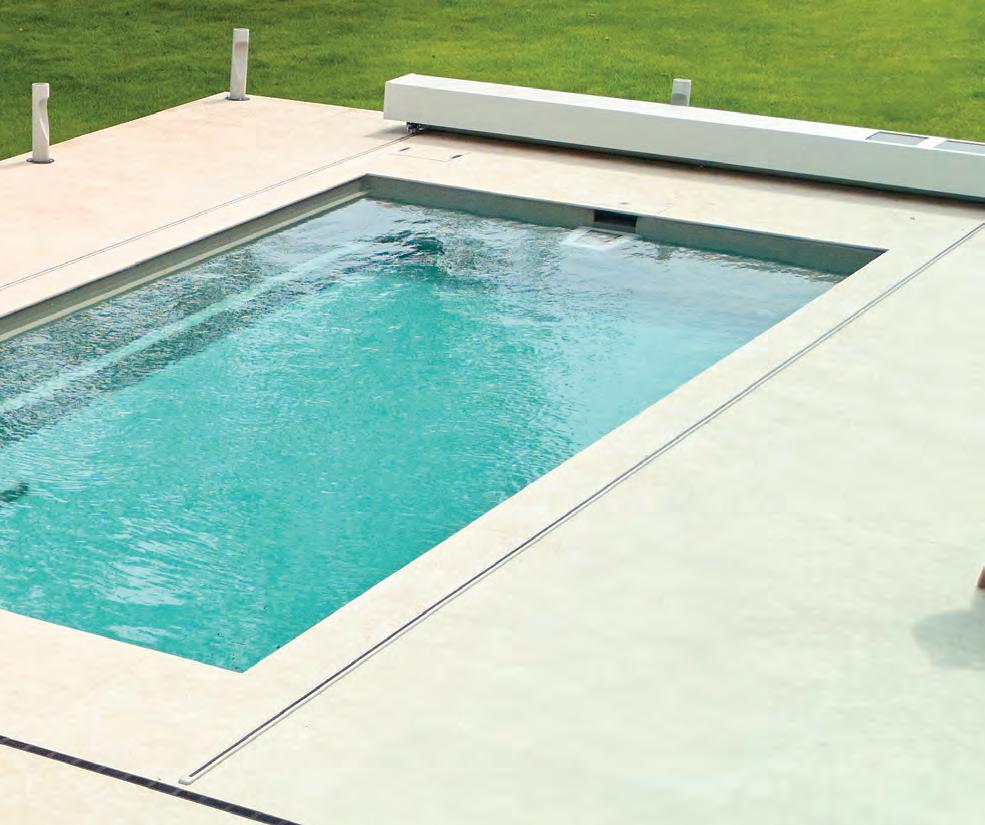
PRO RANGE SAWN & SANDBLASTED SANDSTONE BULLNOSE STEPS & COPING – BUFF NEUTRAL, 1200 X 400 – 50MM
Crafted from premium sandstone, these bullnose step treads provide a durable, elegant finishing detail. Available in versatile configurations, they create safe, attractive level transitions in any landscape design.
POOL MODEL: EVI 8, CONTEMPORARY ANTHRACITE GREY
Installation and design of this pool was undertaken by Hobson Services. The pool includes a training pack and swim training turbine. evi.co.uk
PRO RANGE SAWN & SANDBLASTED SANDSTONE PAVING SLABS – BUFF NEUTRAL, 900 X 600 – 30MM
Featuring a precision-sawn profile and lightly sandblasted surface for added grip, Buff Neutral showcases soft cream, buff and beige tones, creating a bright, sophisticated poolside setting. pavingsuperstore.co.uk PAVING SUPERSTORE
PRICE: £47.20/M (‘SUPER TRADE ITEM’ DISCOUNT AVAILABLE)

PRICE: £41,972.28 (TRADE DISCOUNTS AVAILABLE)
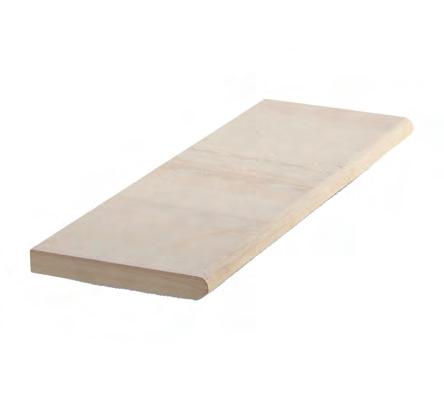

This Hunza PURE LED louvre step light brings sophisticated ambience to any poolside setting. Also available in solid copper, the step light features a louvre bezel for glare control, low voltage for extra safety and is IP66 rated. landscapeplus.com
PRICE: FROM £290 + VAT
Lean into the calming sounds of water just as these projects have with bespoke water features
Garden designer: David Keegan
Landscape contractor: Graden360
Product: Bespoke by David Keegan and Garden360
Situated within a Southeast Asian-inspired garden, this bespoke water feature has been designed by David Keegan of DK Garden Design and built by landscaping contractor Garden360. The garden features three interconnected platforms, each offering a unique calming effect all set to the soothing background sounds of the water feature. Located opposite the home’s garden room, fit with a hot tub, the area has been kept open with minimal planting, careful to not obscure the view of the flowing water.
The landscaping of each platform comes from Keegan’s own inspiration from his travels in Southeast Asia. Through the centre of the garden, stepping stones aim to replicate the feeling of walking through a tropical forest, surrounded by dense planting that have flourished since construction.
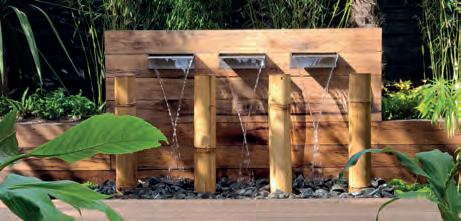
Garden designer: Andy Sturgeon
Landscape contractor: Blakedown Landscapes
Product: Bespoke by Yorkshire Water Features
Nestled within the National Trust’s Beningbrough Hall in Yorkshire, the Mediterranean Garden has been designed by landscape architect Andy Sturgeon. In an effort to highlight how gardens can adapt to a changing climate, the garden features plant selections chosen for their resilient to hotter, drier summers and wetter winters.
The landscape contractor Blakedown Landscapes worked closely with specialist water feature contractor Yorkshire Water Features – who designed and installed the water feature elements – to ensure it was seamlessly integrated into the wider landscape, sitting naturally in the garden's contours, stonework and Mediterranean planting palette.
The bespoke copper rill is set in a dry-stone wall constructed from locally sourced York stone, with water spilling into a steel tray below. The rill is crafted from copper, providing visual interest and durability.
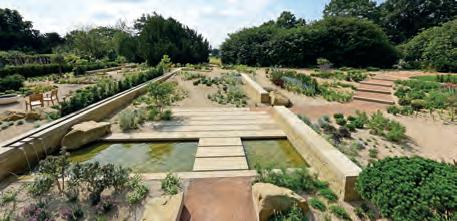

Garden designer: Illman Young / Landform Consultants
Landscape contractor: Landform Consultants
Product: Bespoke by Waterscapes and Carrie-Anne Funnell
Set in the grounds of a new-build private residence on the River Thames near Marlow, a bespoke glass sphere, designed by glass artist Carrie-Anne Funnell, forms the centrepiece of the property's sweeping driveway entrance. It sits in a circular stone-clad basin at the foot of the steps that rise to the house. Inspired by the form of an allium, the piece took more than a year to develop and spans over a metre in diameter.
Water is fed from a central machined core into 127 individual glass stems, each tipped with a hand-shaped petal, and released through 762 fine jets that spread evenly across the surface for a continuous, shimmering film of water.
July and August are when commercial water features earn their keep, and when they're most likely to let a site down. Heat, sunlight, long run hours and peak footfall arrive together, and a feature that looked fine in early June can be green, low, or silent within a fortnight.
Part of the problem is that features run yearround, so they miss the seasonal attention irrigation gets. There's no switch-on moment to prompt a proper check, and summer demand builds gradually until something becomes visible.
and drags water clarity down further. Consistent treatment and good circulation through the warm months cost far less than recovering a feature that has been left to go green.
Consistent treatment and good circulation through the warm months cost far less than recovering a feature that has been left to go green
Algae moves fastest. Warmer water and stronger sunlight feed biological growth in days rather than weeks. Once it takes hold, it clogs filters and intake screens, puts pumps under strain,
Evaporation is the quieter problem. A run of hot days can take enough volume out of a feature to drop the water below its level sensor. If the automatic top-ups aren’t keeping up, or a trigger sensor has stuck or scaled over, a pump can run dry before anyone notices the waterline has moved. Through summer, levels and water top-up mechanisms need checking weekly rather than monthly.
Pumps take more punishment in hot weather. Long run hours and warm water put motors under continuous load,
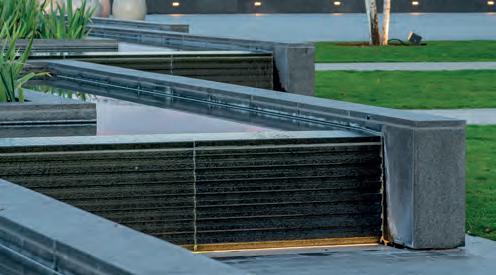
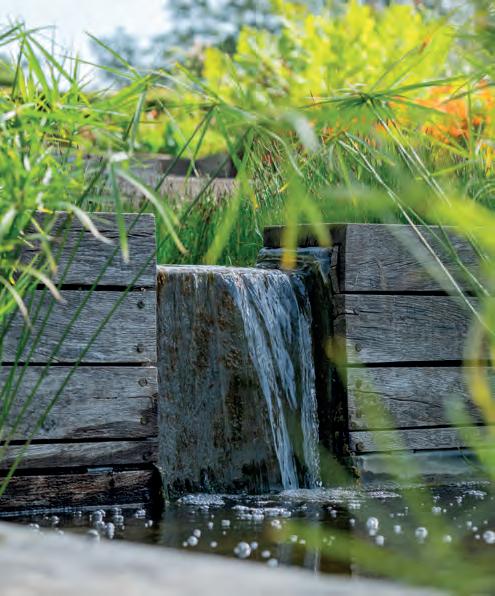
and bearings that were marginal in spring tend to fail in July. A healthy pump is a quiet one, so a change in sound is usually the first warning. Debris around intakes does similar damage more slowly, starving the pump and shortening its life.
Water chemistry drifts faster in heat too. Features that need no full chemical management for most of the year still benefit from regular summer checks, because cloudy water and scale increase when temperatures climb.
“The features that struggle in summer are rarely the ones on a regular maintenance cadence,” says Ed Harwood, maintenance contracts manager at Waterscapes.“They're the ones nobody looked at between June and the first complaint. A weekly check of level, clarity, and sound catches most of what would otherwise become a callout.”
That weekly check doesn't need a specialist. Whoever is on site can look at water clarity, water level, debris around intakes, and any change in how the feature is presenting.
Stonework tells its own story: scum lines, scale on edging, or staining at the waterline usually point to chemistry, circulation, or filtration drifting out of spec before instruments confirm it.
The escalation line is simple. If a skim, top-up, or filter clean resolves it, site teams can usually handle it. Recurring clarity problems, pumps tripping or running loud, level sensors misbehaving, or anything electrical should go to a specialist before it becomes a failure.
Summer maintenance is little and often. The sites that hold their presentation through August are the ones where someone looked every week.
Waterscapes provides specialist water feature and irrigation maintenance, repair, refurbishment, and technical support for commercial and public-facing environments across the UK.
For more information, contact maintenance@ waterscapes.co.uk or visit waterscapes.co.uk.
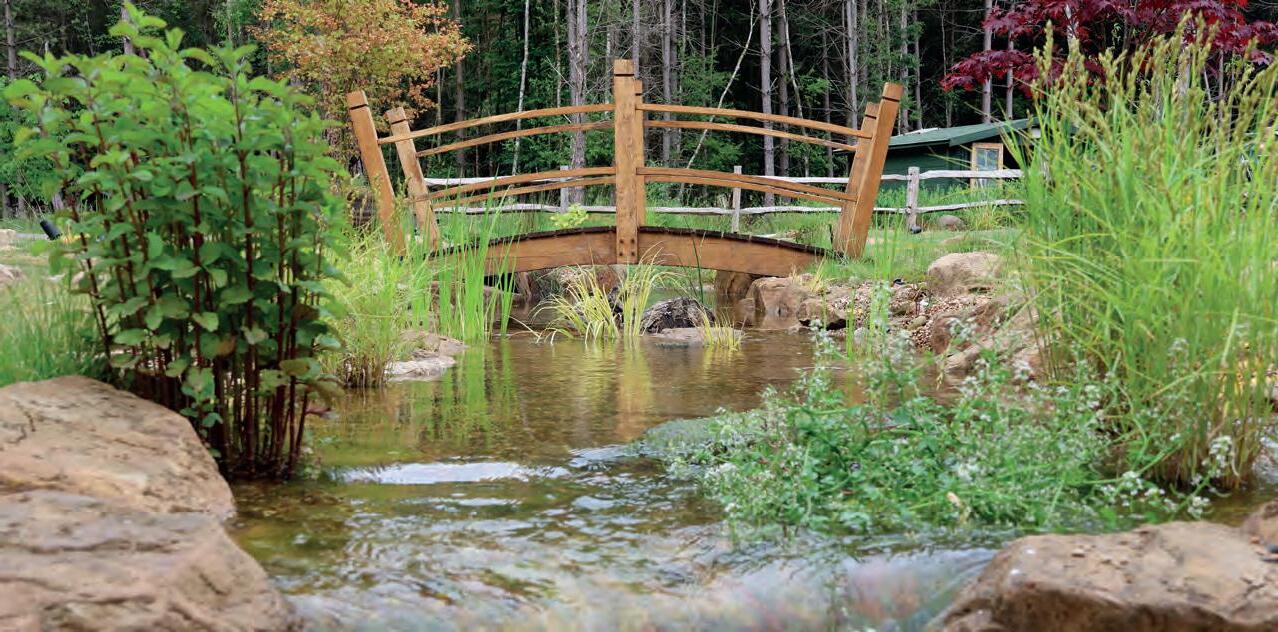
Ryan Foulds talks about his journey to setting up AfriPonds and why he’s seeing a rise in water features within gardens
Ryan Foulds, director of AfriPonds, has always worked hard. When he was eight, he would block the driveways from his parents with their own pot plants until they agreed to buy one. Growing up in Zimbabwe he trained relentlessly as a swimmer and made it to nationals. On the side, he made and sold steel plant holders. When he was 17, he started his own paper rounds working with his own supplier. At 20 he had set up a gardening business.
It’s a work ethic that has been ingrained in him from a young age. "Our family has always been very hard-working. We’re a farming family, so we never did anything half-hearted,” says Foulds. “Swimming taught me a lot of discipline and school was very competitive. So, the foundations were made during my younger years.”
filtration system and fish included. “The clients were over the moon,” explains Foulds. “Then one of their friends saw what we did and wanted one too. The work started off with projects here and there but six months later I decided to give it a crack full-time.”

Eight months later his brother joined the business to help on a large project operating machinery. A year later two more, including his younger brother, joined the team and the business has grown from there.
Water has been one of the biggest talking points and so it should be,” he argues, “without water you can’t sustain life
Through his gardening work Foulds found his specialism by complete chance. While working a gardening project the client asked Foulds to quote up a pond clearance. But during this process he found he loved it so much that the job went beyond just clearance with Foulds spending his own money to completely revamp the pond –
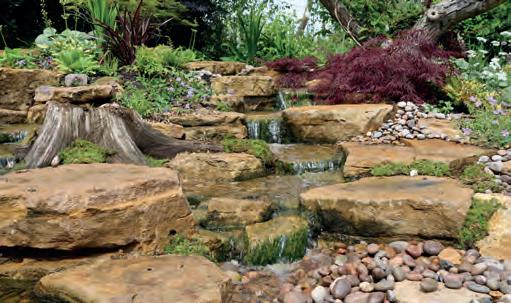
Growth didn’t come without its challenges, “It was a real slog for the first two years,” says Foulds.
“I wasn't making much money on projects, but I was just working hard to get a portfolio together, that’s all I needed. But I’ve always believed in myself and knew when I decided to do it full-time, I was going to give it 100%.”
Today, Foulds has noticed an increase in water within gardens. This is being driven, in some ways, from an environmental angle, with more people conscious about creating space for wildlife in a garden. Natural swimming pools have also risen in popularity, with the business quoting for and building a lot more of them. Water features are also connected to mindfulness, with people continuing to turn to gardens to reduce stress levels. Because of this, Foulds encourages having water close to the house so that it becomes an extension of the home and clients can be greeted by the water as they enter the garden.
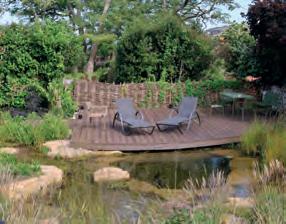
“Water has been one of the biggest talking points and so it should be,” he argues, “without water you can’t sustain life. All things water –whether that’s rills or a still wildlife pond or a full-blown pond with waterfalls – are a great living entity. Water will draw people into a garden and keep them there.”

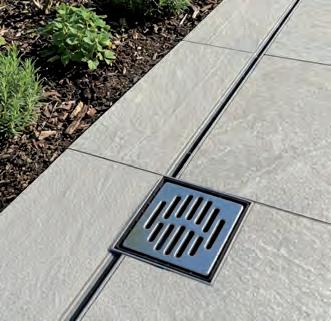
DEKDRAIN A15
EDGE – SLOT DRAIN
• Stainless-steel edge
• Comes in both a 84mm and 50mm depth channel.
• 87mm & NEW 20mm Upstands.
• One of the lowest metal slot drains on the market.
• Smarter installation.
Clean lines. Reliable performance. Easy installation.
DEKS’ DekDrain Vela drainage range is the ideal solution for domestic landscaping projects, combining effective surface water management with a sleek, modern finish that complements any outdoor space.
Fully compliant with BS EN1433, it delivers dependable strength beneath the surface and a choice of stylish grates above, helping you achieve a professional result every time.
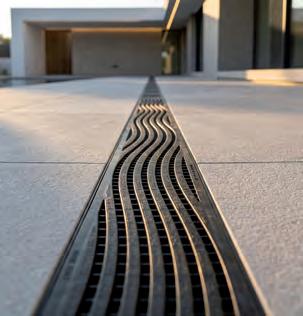
DEKDRAIN A15 LINEAR BAR WAVE
• Contemporary and stylish design.
• Heel Guard compliant (6–7mm gap).
• Slip protection as standard.
• Fully inter-connectable.
• No costly corner quads.











































“Leading suppliers to the Construction, Metal Fabrication and Landscaping Industries.”
Three effective tools, making trade simpler.

Featuring over 11,000 products, including 1,000+ new. Request your FREE printed copy.

The fastest & easiest way to order with F.H.Brundle. Featuring over 13,000 popular products.

Access thousands of detailed technical documents, CAD files, testing certificates and even more useful features.

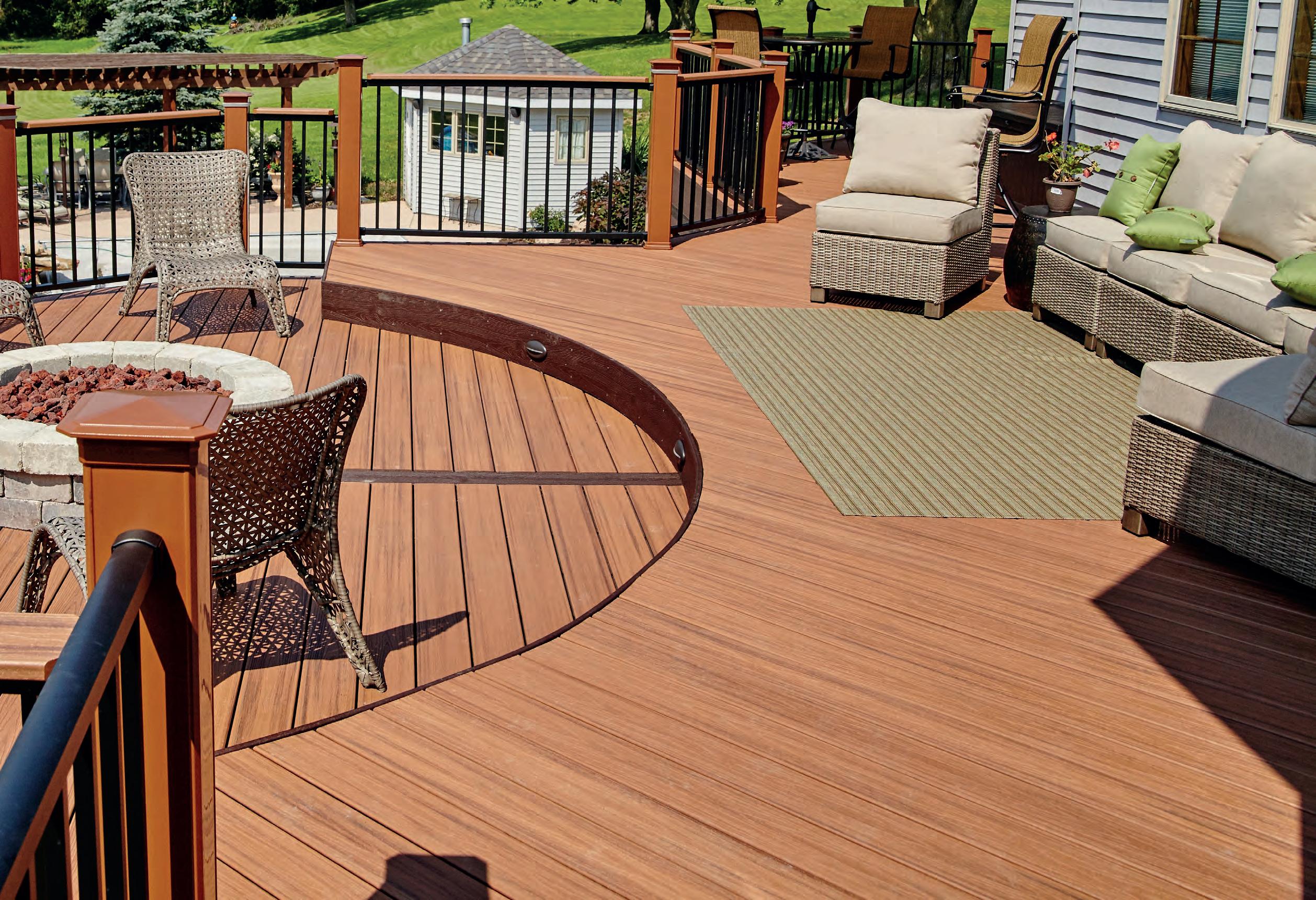

ot all decking is made equal. There are suppliers going above and beyond to provide high-quality products, find ways to lower their carbon footprint, and offer top service to their installers. So, Pro Landscaper’s Most Influential Decking Suppliers was launched to celebrate the suppliers who go above and beyond and to shine a spotlight on an individual who is pushing the market forward and making a difference.
The winners will collect their awards at this year’s Summer Showcase which will take place before the Pro Landscaper Project Awards on 9 July at De Vere Horsley Estate in Surrey.
So, without further ado, here are the winners of Pro Landscaper’s Most Influential Decking Suppliers, as voted for by you.

Recognised for its product value, Champion Timber has been voted Best Value within the Pro Landscaper Most Influential Decking Suppliers initiative. “We are honoured,” says sales director Terry McDermott, adding: “We strive to have long-term collaborations with our manufacturing partners. Our aim is to give customers consistency in supply and price.”
With values that have inevitably paid off, Champion Timber also looks to stay ahead of the game within its sector. McDermott says: “We constantly research the market using a combination of AI and our experienced sales and buying teams to ensure our pricing is not only competitive, but our overall package offers all the extra items a customer could want.”
Evoking a customer-first

Terry McDermott
approach, delivering success is very important to the company. “Without our customers, we wouldn’t have a business,” he adds, and so in turn, customer satisfaction “is a major focus for us.”
Already a major platinum distribution partner for Millboard decking and cladding, earlier this year Champion Timber made the decision to further expand its range to span across a wider selection of composite manufacturers. Now distributing Trex, enhanced polymer decking from Composite Prime and a new range from Kerama, the decking supplier is able to “offer landscapers a much broader selection for their clients,” explains McDermott.
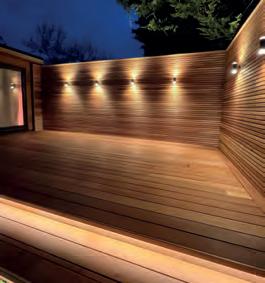
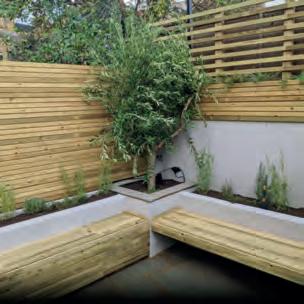
manufacturing partners. “If we do something, we aim to do it well,” clarifies McDermott.
We strive to have long-term collaborations with our manufacturing partners. Our aim is to give customers consistency in supply and price

Intent on leading the industry, the independent timber specialist applies ‘Leadership in Timber’ in everything it does. The strapline assures consistent supply and price for customers, while aiming to have long-term collaboration with its
An accredited member of Timber Development UK, Champion Timber has spent years working hard to ensure its range of softwood and hardwood decking, Millboard and other composite decking products, is “exactly what our professional landscaping customers want to buy,” says McDermott.
On top of this, the company is known for producing quality timber products, sourced from Northern Scandinavia before being produced and sold to customers. “We also lead the way in our range of treated landscaping joinery battens,” McDermott adds. What's more, its supply range also covers fixings, adhesives, power tools, ironmongery, paint and more.
Boasting 10 branches across the southeast, Champion Timber holds over 90 years of experience successfully supplying the trade and is now also the proud owner of a sector-specific award. Looking forward to what’s coming next, the company strives to expand its social media presence while working with new faces.

Millboard’s ethos is “people over process”. While it recognises that systems matter, it understands that the human approach makes a difference – whether that’s through its customer service or installer support. “Millboard has always been a family business at heart,” expresses Guy Douglass, global director of The Millboard Company. “The values we were founded on, craftsmanship, innovation, integrity and genuine care for our customers, are the same ones driving us today.”
Much of Millboard’s customer service is about empowering trade partners. “We work closely with installers, designers and landscapers, giving them the technical guidance, product knowledge and responsive back-up they need to help their clients,” shares Douglass. The team also works hard to be proactive rather than reactive. Every customer conversation is treated as intelligence, with feedback and insights fed directly back to the quality and product teams.
“We adapt to our partners and their clients, not the other way around,” says Douglass. “We are continuously refining how we communicate, respond and support across every market. Working with them, we've enhanced our After Care process to make it even simpler and more convenient. When you innovate around real-world needs rather than guesswork, staying at the forefront follows naturally.”
a Culture 100 Awards winner, which celebrates the most thriving places to work for. Douglass says this demonstrates “a team trusted to take pride in the experience they create.”
As well as Best Customer Service, Millboard received the Best Installer Support award, and Douglass says its Approved Installer Scheme goes well beyond certification. Every installer receives a personalised, hands-on training day at Millboard’s dedicated centre, led by a Millboard specialist. Once approved, the installer works in partnership with Millboard with each installer supported by internal and external account managers, with regular check-ins and an exclusive rewards scheme. “We're committed to recognising and investing in the professionals who represent our brand,” explains Douglass, “because to us, our Approved Installers are a true extension of the Millboard team.”
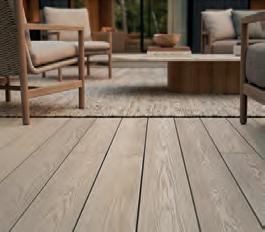
across the business, from customer experience through to product development,” says Douglass.
To be recognised across three categories tells us the things we care about most are being felt by the people who matter most
Spanning four generations, Millboard’s products began in the early 2000s taking moulds from 100-year-old French railway carriage boards and transforming their timeworn grain into its signature weathered decking range. Douglass says they stand “firmly behind our products and warranties”. Every board is made in the UK using Millboard’s own process: handmoulded from natural oak, hand-coloured to enhance tonal variation, and produced from durable polymers blended with recycled limestone minerals.
Earlier this year, Millboard was named
The business continues to innovate. And the key to this is also listening. “The voice of the customer shapes our approach

“We are incredibly proud and genuinely humbled by this recognition,” says Douglass. “What makes these awards so special is that they were voted for by Pro Landscaper’s readers and the wider industry, the professionals who work with our products every day. To be recognised across three categories tells us the things we care about most are being felt by the people who matter most. My thanks go to everyone who voted for us, and to our brilliant team.”
We can expect more of what got Millboard to this point, in the coming years. Innovation and investment will continue – in understanding its customers – with insight driving initiatives that add value for professionals and homeowners. Above all, Millboard will stay true to its mission: helping people live life outside.
Founded in 1996 in North America, Trex® has since made its composite products available in over 40 countries. This history and breadth of products mean the business has a lot to offer to its customers.
Being part of a much larger portfolio of products, when introducing Trex into the UK, the team makes sure to go straight to the source. “We really listen to our customers. We're always looking at what they feel is missing from our product range,” explains Lee Heitzman, market manager for UK and Ireland. “We really value that feedback, plus we’re getting buyin from our customer base before we bring the product in.”
The TrexPro® builders recently helped to introduce the new colourway ‘carmel’, selected by them as a colour that they wanted to see join the range. “It’s important to ask them, what do you want, what does your customer base want,” says Heitzman. “That’s a really big part of making sure that they feel heard and are listened to, and that the team are reacting based on what the market and the team wants.”
Trex aims to offer a breadth of products to consumers, whatever their budget, taste, style or performance needs. This way, Trex can respond to the market demand and ensure there’s a good option at a lower price point and at a higher price point.
too much. “It’s about listening to the distributor too,” Heitzman adds. “There’s a responsibility from our end to make sure that from a distributor’s point of view, we’re offering them products our customers will love."


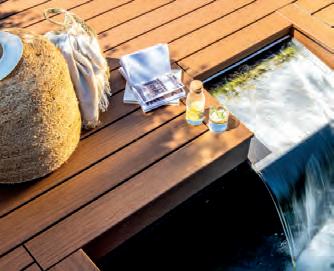
We really listen to our customers. We're always looking at what they feel is missing from our product range
Innovation is also a key driver for Trex. Many of its boards now have SunComfortable™ Technology which redefines what performance looks like in the heat. The heat mitigating technology is engineered to reduce heat absorption, keeping Trex deck surfaces cooler than its original boards.* “This addresses a concern that many have when it comes to composite decking,” explains Heitzman. “By innovating we’ve made sure our Trex Pro installers have got a product they can offer customers who are concerned about heat.”
But there is a balance to be struck between offering a good breadth of products and providing
Trex also offers a marine composite decking for docks. The product is 100% submersible and saltwater safe. Trex’s warranty also carries over – ranging from 25 to 50 years – covering its fade and stain-resistant decking.** “Trex stands by that warranty,” stresses Heitzman. “It won’t fade, it won’t stain,
rot, warp or splinter.”
The business is also exploring its railing product range. Currently the UK has two options of signature railing, the glass railing and the balustrade railing, which have become a good complement to its decking. But the team is exploring which US products might segue into the UK market and support the same depth of product range that Trex offers.
It is this, and more, that led Trex to taking home Best Product Range, an award which Heitzman says is “an honour to win. It’s great to be recognised for best product range. We’ve got some good competition within that category so to be recognised for that is great. It cements everything we do.”
Recognition within the UK market is particularly meaningful for Kebony, a Norwegian wood technology company and pioneer in sustainable wood modification. Since entering the British market in 2011, Kebony has worked to challenge conventional decking materials through innovation, performance, and sustainability. A prominent highlight of its work in the UK marks a site overlooking Covent Garden, where London’s Royal
Ballet and Opera House fifth floor decking area features 600m2 of Kebony, completed in August 2018 by Stanton Williams Architects. Kebony was first established in Oslo, Norway in 1997, before expanding its horizons to full-scale manufacturing plants and international distribution agreements with subsidiaries across Europe, the US and Canada.

“This is a product that originates in Norway and features the Scandinavian look and sustainability ethos - we can see it developing further into the UK market,” begins architectural sales and projects lead in the UK, Barnaby Chadwick.
To be awarded for our sustainability shows architects and landscape architects that we have the credentials to prove that we’re delivering in this sector
characteristics comparable to those of premium tropical hardwoods.“In effect, it goes through that sustainable process of turning a fast-growing softwood into a tropical hardwood. As a response to the long mature times of usual tropical hardwood, Kebony was produced as an alternative while reducing issues like deforestation,” explains Chadwick.
“The technology works, and that’s why it’s proven to be popular,” he adds.
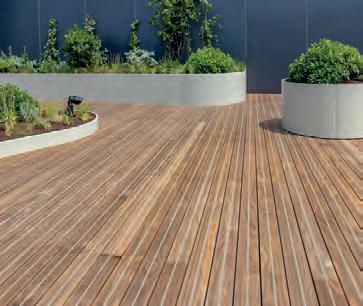

Its main production facility is based in Kallo, Belgium, where Kebony uses a patented technique to enhance the wood’s strength and longevity. A biobased liquid derived from agricultural waste, known as furfuryl alcohol, is infused into sustainably sourced softwood and permanently integrated into the wood's cell structure. This process reduces moisture uptake
while significantly enhancing durability, dimensional stability, and density. The result is a beautiful, rich brown timber with wood cells up to 50% thicker and performance
Pleased with topping the Sustainability category within the Pro Landscaper Most Influential Decking Suppliers initiative, Chadwick says, “to be awarded for our sustainability shows architects and landscape architects that we have the credentials to prove that we’re delivering in this sector. Being recognised goes a long way.
He adds: “Winning in sustainability is great because you're thinking about the future generations, and winning it within the decking sector, where there’s products of great hardness and durability, it shows we’re doing our job right.”
After a successful 2026, Kebony also featured at RHS Chelsea Flower Show this year with the Gold award-winning Hedgerow in the Sky balcony garden. The company has also joined the Society of Garden and Landscape Designers as an affiliate business partner in an effort to maximise its reach.

Karl Harrison’s goal is to help people. “I want to help people get it right the first time. I quite often get called by garden designers and landscape architects to help steer them in the right direction. I’ve been doing that for many years now.”
Harrison started his own design and build practice in 2003. Back then, it was a race to the bottom with everything. There were also no regulations when it came to building decks, “no rhyme or reason”, as Harrison puts it. “I used my engineering experience to put some sense and sensibility into it. I looked at what the Americans were doing too and brought that to the UK.” At the same time, he set up The Decking Network which shares advice, guides and tips for professionals.
Harrison says in general people have become more aware of what is required to build a deck that’s going to last. “The Decking Network makes an enormous amount of noise,” Harrison explains. “We get thousands of views to our site which sets out to help people with everything from what fixings they need to what timber, through to regulations and planning.”
build a deck correctly it will last 25 years. If you don’t, then you’re going to end up with the customer wanting their money back.”
Looking back on his career, Harrison has quite a few highlights to choose from. Undertaking work for Landform Consultants all over the world; being awarded the contract for the build of the Commonwealth Park.
But the one that resonates with him the most is the Tower of London. “That was an absolutely iconic project on the world stage; you can’t get better than that,” expresses Harrison. “Building a deck terrace for Her Majesty has to be one of the most prestigious proposals ever.”
The project involved the creation of a serpentine 60m2 deck. The team had two weeks from the first shovel in the ground to completion, but finished right on time. It was complex and technically challenging, but the projects that stick with you typically are.
Building a deck terrace for Her Majesty has to be one of the most prestigious proposals ever
But Covid-19 saw a rise in decks that didn’t meet today’s standards and Harrison stresses that there are so many failing decks out there, an independent expert witness is often required – of which Harrison is. “There are still too many people out there that think they know best,” expresses Harrison. “We’re trying to educate them that if you


Culminating all this knowledge, Harrison will be hosting a decking day on 3 July where anyone who has anything to do with decking can gather under one roof. He will also be taking to the stage at FutureScape, held at Farnborough International Exhibition & Conference Centre on 13-14 October, for a debate on decking.
But most of all, Harrison wants to “keep banging the drum” and, of course, “keep helping people.”
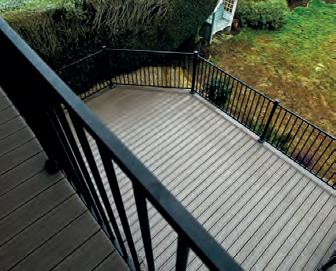
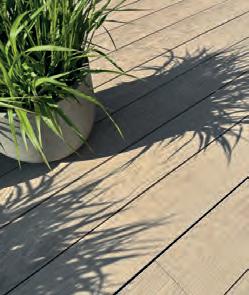
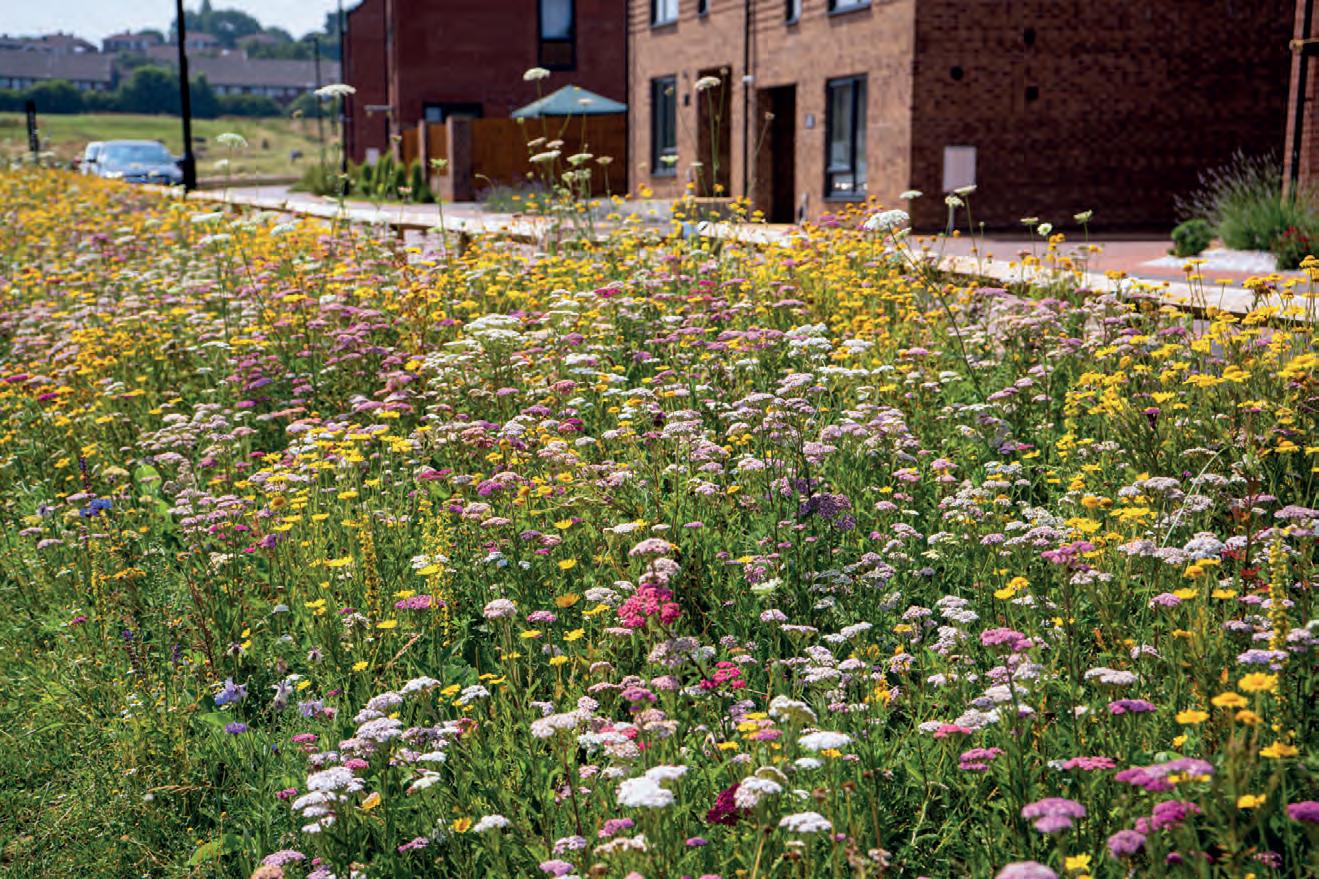
Beautiful, high-impact planting designed to deliver long-term performance
Biodiversity Benefits
Flower-rich mixes designed to support pollinators and increase biodiversity, creating valuable habitats within managed landscapes
Stunning Visual Impact
100% flower-rich mixes delivering long-lasting seasonal colour, with over 150 plants per square metre
Peat & Plastic-Free
Produced using 100% peat-free growing media with no plastic netting; all components are fully biodegradable
SuDS Compatible
Selected mixes suitable for sustainable urban drainage systems, helping to manage rainfall and reduce pollutants from surface water runoff




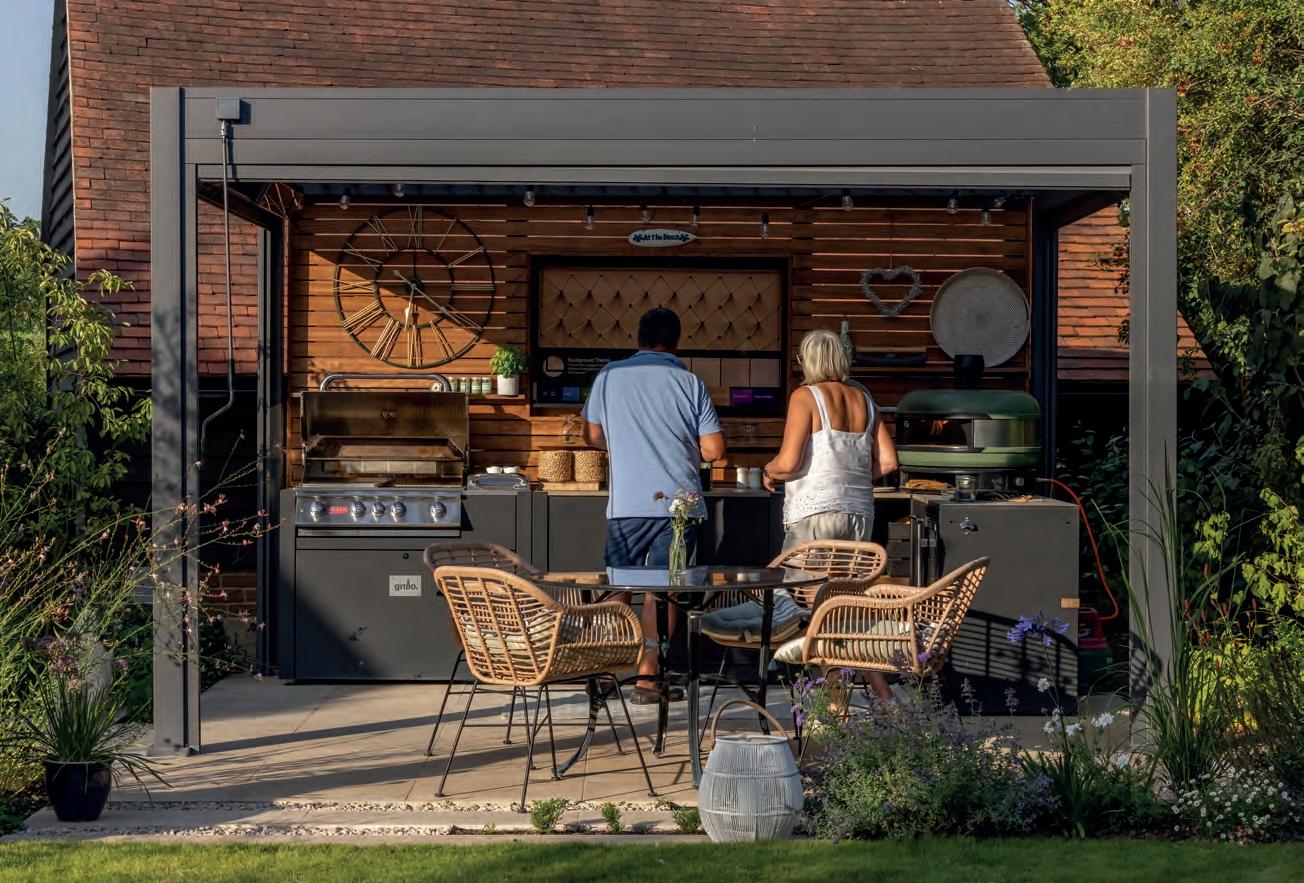
This family garden surrounds a beautiful oast house in Staplehurst, Kent, and has been masterfully reworked by Trend Garden Design. Clean lines and structured terraces are softened by ornamental grasses and perennials, and Mediterranean herbs complement the sociable outdoor setting. This is a garden designed around outdoor living. The kitchen forms the heart of the space, supporting everything from informal family meals to larger summer gatherings.
Garden by Trend Garden Design; photos by Sarah Medway Photography
Taking the pain out of outdoor kitchen design and build.
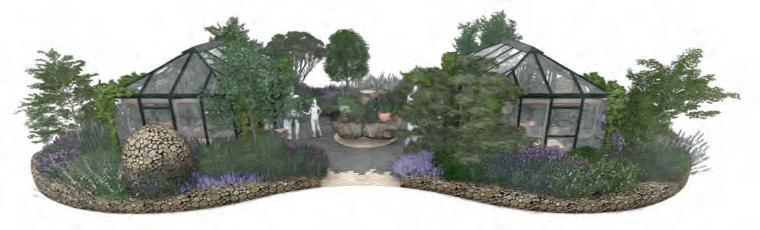
ABOUT:
Designers
Liz Nicholson, Freddie Gibbs and Ruby Simpson Contractor
Nicholsons
In collaboration with C. Atherley, Fibrex Nurseries & Juliana Greenhouses Garden legacy
Materials and planting to be used in other gardens
Scent originates in botany, and that’s exactly what this garden pays tribute to. Envisioned within the Cotswolds, the Perfume Pavilion feature garden intends to act as a reminder of nature’s extraordinary sensory power. Designed by Liz Nicholson, Freddie Gibbs, Ruby Simpson and Dean Parsons from Nicholsons Garden Design, the garden offers a myriad of fragrances. It’s planting and olfactory appeal offer a full sensory experience, featuring edibles such as Origanum vulgare (oregano) or Thymus vulgaris (common thyme). Other scents follow, from Lavandula and Lonicera (honeysuckle) to Daphne and Phlox
ABOUT:

Designer Jo Thompson
Contractor
Ryan Alexander Associates
Jo Thompson
Bridge Farm will be brought to life on the grounds of RHS Badminton Flower Show to celebrate The Archers 75th anniversary. Designed by Jo Thompson, the garden will highlight Bridge Farm’s commitment to organic farming and will celebrate the joy of intergenerational gardening. The garden will also align with the on-air drama as it represents a front garden lovingly rebuilt after the 2025 storyline of the sewage spill which flooded Bridge Farm. Features include fruit trees in a wildflower meadow, a wildlife pond and pollinator-friendly planting. There is also a strong emphasis on the ecological health of the space.
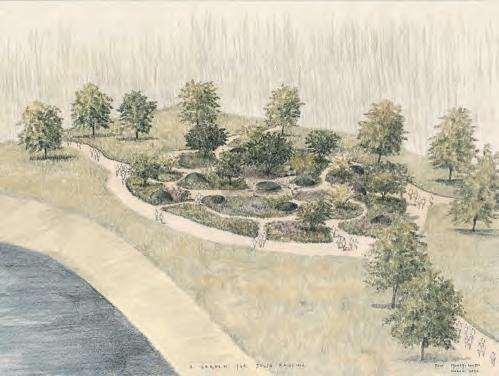
A few of the suppliers Stonebarn Landscapes, Hardys Cottage Garden Plants, Deepdale Trees, David Austin Roses, The Big Hedge Company Garden legacy Plants and hard materials will be reused through donation schemes or returned to suppliers
Celebrating the life of philanthropist Julia Rausing, who in her lifetime helped raise over £400m for a multitude of projects, this garden reflects the generosity of her work. Designed by Tom Stuart-Smith and built by Crocus the garden is conceived as a space for everyone to enjoy the beauty of the landscape. Situated at the head of the lake with views back towards Badminton House there is a lot of beauty to take in. Taking inspiration from this the garden features a wildflower meadow, an intimate flower garden and a woodland edge arranged around a central terrace and low fountain. The trees are underplanted with drought-tolerant herbaceous perennials.
Designer Tom Stuart-Smith
Contractor Crocus A few of the suppliers Hortus Loci Garden legacy
Badminton Estate with plant sale proceeds donated to Horatio’s Garden
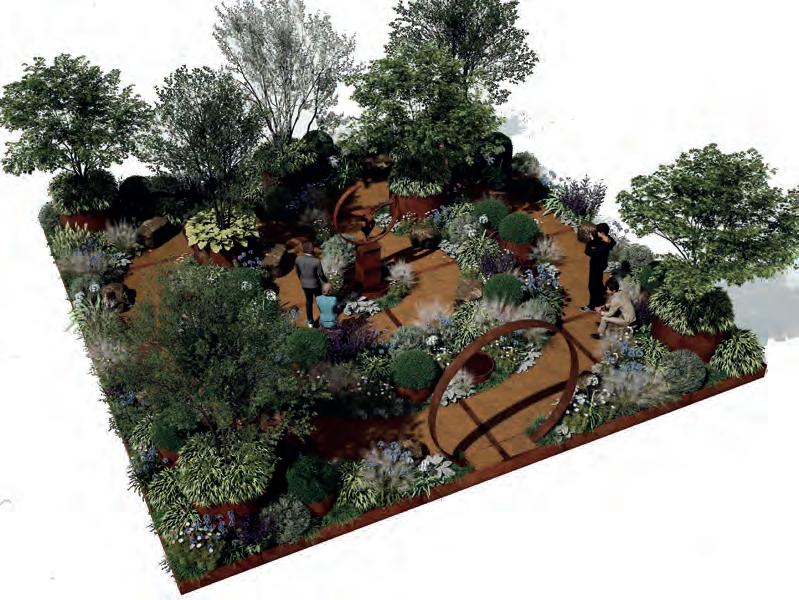
ABOUT:
16 lives are lost to suicide every 24 hours. In support of CALM, a suicide prevention charity, Finding Hope has been structured around 16 squares, each representing one of those lives, creating a continuous pathway which offers choice to turn, pause, reflect and reconnect. Designed by Rick Ford and Pip Probert, the garden features gentle planting, natural materials and a central sculpture, Weight of the World, which captures the emotional burden carried by those who are struggling. Tailored to create a calm, welcoming environment, the garden looks to evoke a gentle sense of wellbeing.
ABOUT:
Inspired by Oregon’s Willamette Valley, Sadie May Stowell’s garden captures the elements that define its productive landscape. Adorned with a plant-led and earth shaped ethos, the garden celebrates seasonal rhythm and productivity with a small group of fruit trees arranged in gentle curves. Beneath the orchard, lavender, herbs and wildflowers support pollinators and biodiversity as well as establishing seasonal colour and movement. Running diagonally through the garden, a narrow, naturalistic water line references the river systems that flow through Willamette Valley. From fertile soils, flowing water and fruit cultivation, the garden reflects the essence of the valley.
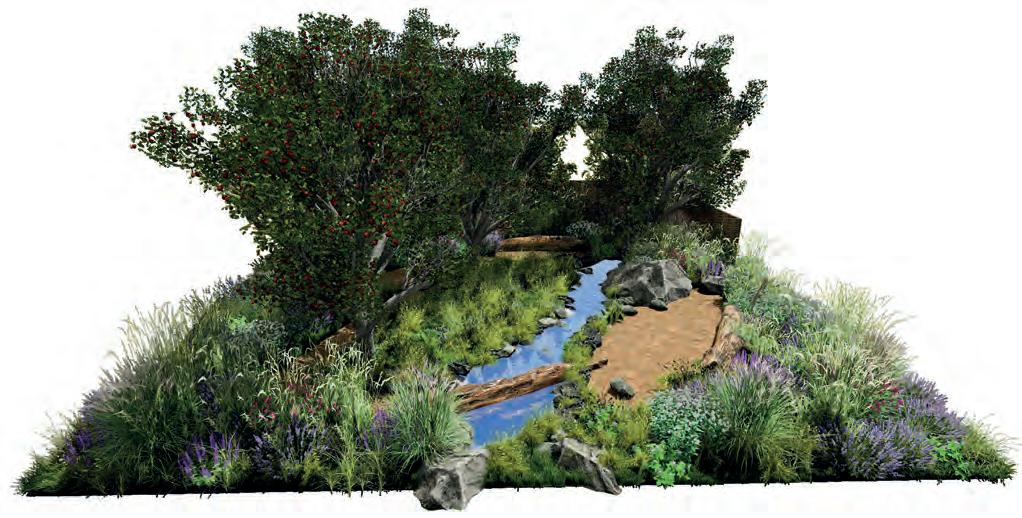
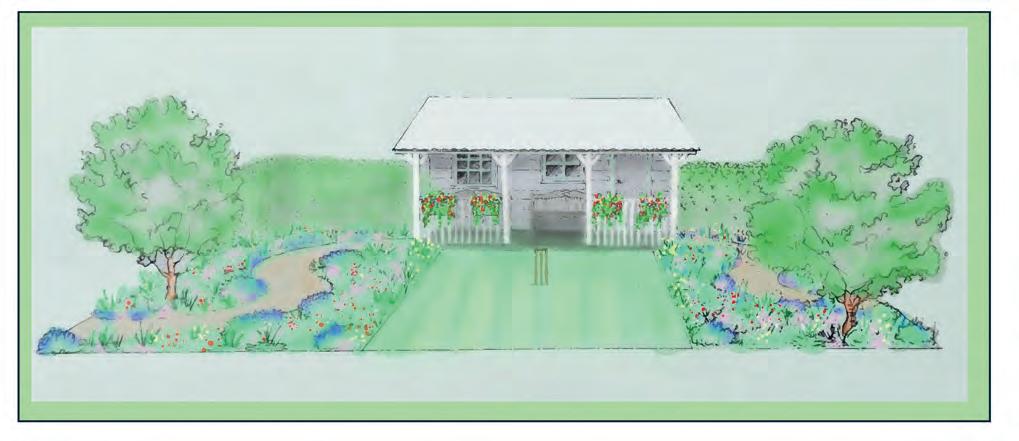
Designer
Stephen Moody
Contractor
Frogheath Landscapes
Sponsor Alitex
Garden Legacy Gardens and community spaces around East Sussex.
ABOUT:
Reminiscent of the cricket ground at Old Heathfield in East Sussex, a tended lawn is surrounded by colourful planting with a cricket pavilion façade as its backdrop. Reflecting the work of Young at Heart, an organisation combatting loneliness and isolation among the elderly, the planting has been sown or propagated from cutting taken during its gardening sessions. Two willow sculptures represent a batsman, as the garden also celebrates 150 years of English cricket bat manufacture in East Sussex, and a woman with a child on a bench – inspired by Young at Heart’s work with schoolchildren.
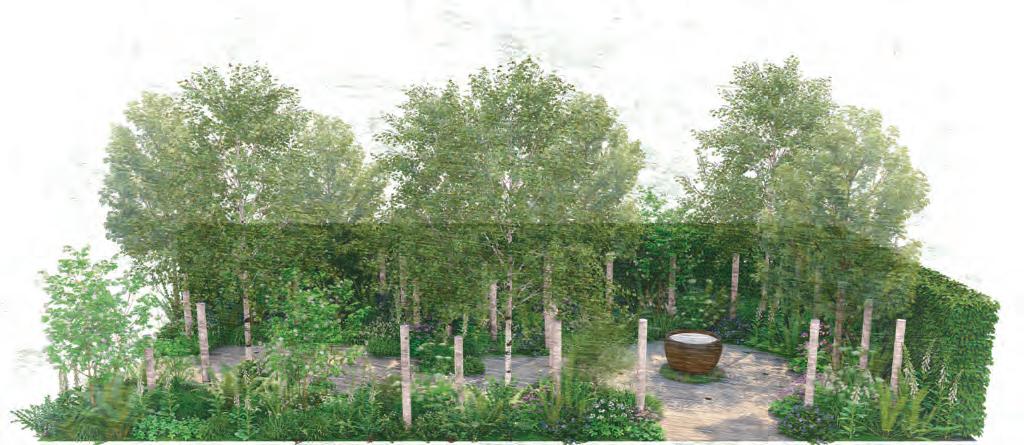
ABOUT:
The proverb “A society grows strong when its people plant trees in whose shade they know they shall never sit” has inspired this ornamental woodland garden. The design, created by Elle Arnett in collaboration with Artisan Landscapes, reflects the multitude of cancer experiences. Elements such as birch trees and stone sculptures begin intentionally spaced unevenly, to highlight the inequalities people face in cancer care. As the garden goes on, these spaces gradually close and the elements become more even symbolising Macmillan’s mission to close the gap between the best and worst cancer care.
READ
Designer Designed by Elle Arnett in collaboration with Artisan Landscapes Contractor
Artisan Landscapes
Sponsor Macmillan Cancer Support
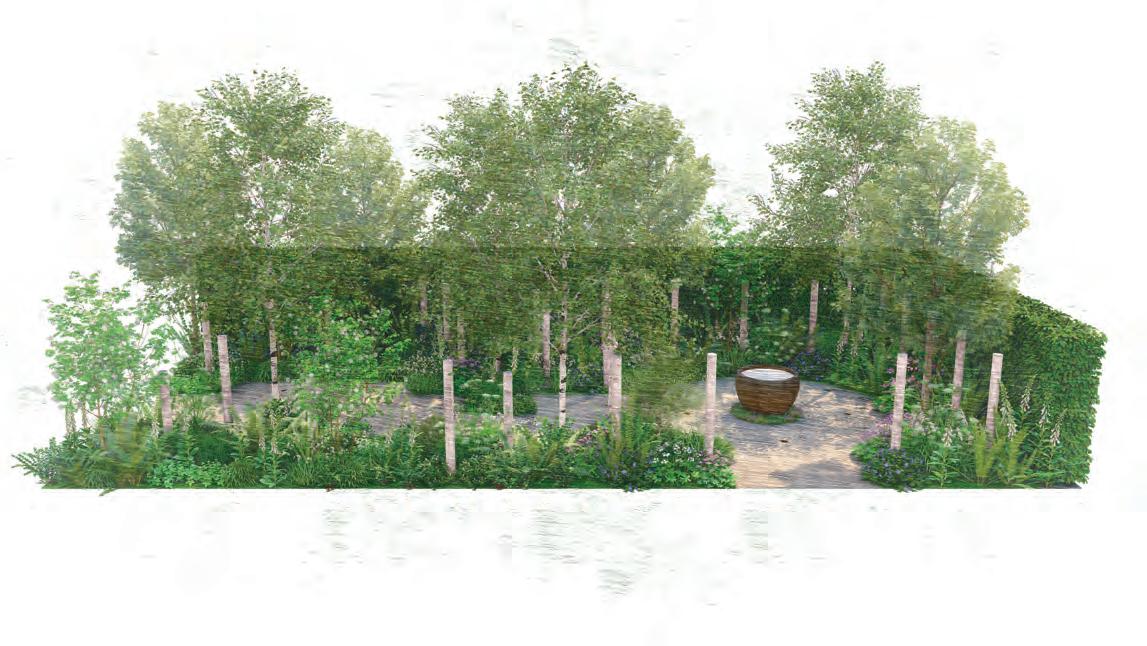
Elle Arnett and Will Cooke explain why collaboration between designers and landscapers from the start is key – especially when it comes to their RHS Badminton Flower Show garden
Garden designer Elle Arnett and Artisan Landscapes have been collaborating for a few years now. So when Will Cooke, managing director at Artisan Landscapes was approached by Macmillan to create the Macmillan Cancer Support: The Nascent Shade Garden at RHS Badminton Flower Show it was a nobrainer that they would collaborate once again. This partnership was especially helpful when faced with just two weeks to pull everything together for an application, “Collaboration was key,” explains Cooke.“Unlike a typical show garden where you have more time to think of the concept, this was concept straight into the reality of being able to build the garden.” Arnett adds,“We were talking about construction details as well as costings early on.” The collaboration allowed Cooke to focus energy on finding suppliers to engage with the garden, while Arnett focused on the creative direction.
“There are so many benefits to this early involvement from both the designer and construction team,” says Arnett.“I love those early conversations. Cooke is great at problem solving and I like all those finer details, but we’re both happy for the other to chip in with ideas. Having that joined-up thinking is crucial.
There are so many benefits to this early involvement from both the designer and construction team
Elle Arnett
“It also really helps with the design process, because I’m thinking about the realities of creating what I’m designing. You’re not trying to retrospectively adapt the design or getting too excited about this incredible conceptual detail, only to find out that it’s not even possible and then you’re unpicking weeks or months of work.”
“Arnett has that ability to think threedimensionally,” explains Cooke.“She can look at what it’s going to look like beneath the ground and understand how we’re going to build it together. That’s why we’ve been really effective. It’s been really exciting to whiz through a very condensed design process, have those ideas worked through early on – on the
whole it’s made the experience smooth.”
The Badminton show garden strives to highlight Macmillan’s core mission – to reduce disparity in cancer care and to raise awareness about legacy gifts and gifts in wills and how these can support its mission. Taking these two ideas, the Macmillan Cancer Support: The Nascent Shade Garden features concrete textured columns adorned with brass leaves inspired by birch trees spaced unevenly. As you move through the garden the gaps between these close and begin to align more uniformly.
Made from lime and concrete, these columns are 10cm in diameter and range in height. Artisan Landscapes is manufacturing these in-house and Cooke expresses that getting the right texture has been the challenge, but once they found the right mix of smooth and textured, the rest have followed well.“It’s such a unique detail,” explains Cooke.“I’ve not seen that in other show gardens.”
It’s not often that the contractor is officially listed as collaborating on the design of a show garden, but in this case, it just makes sense. As an industry, we often push early involvement from everyone and at Badminton the results of just this will be showcased.
Dry-stone walls, reclaimed stone and a central iron gazebo come together in this garden to reinterpret the picturesque Cotswold region through a contemporary lens. Soft, naturalistic planting echoes Gertrude Jekyll’s style. Selfseeded plants such as Nigella damascena emerge between flagstone paths while Rosa 'Gertrude Jekyll' pays homage to the arts and crafts tradition. The use of historic construction methods, climate-conscious planting and reclaimed materials aims to demonstrate how design principles can be adapted for smaller domestic gardens. The skill of drystone walling will also be on show as visitors can watch part of the wall being rebuilt.
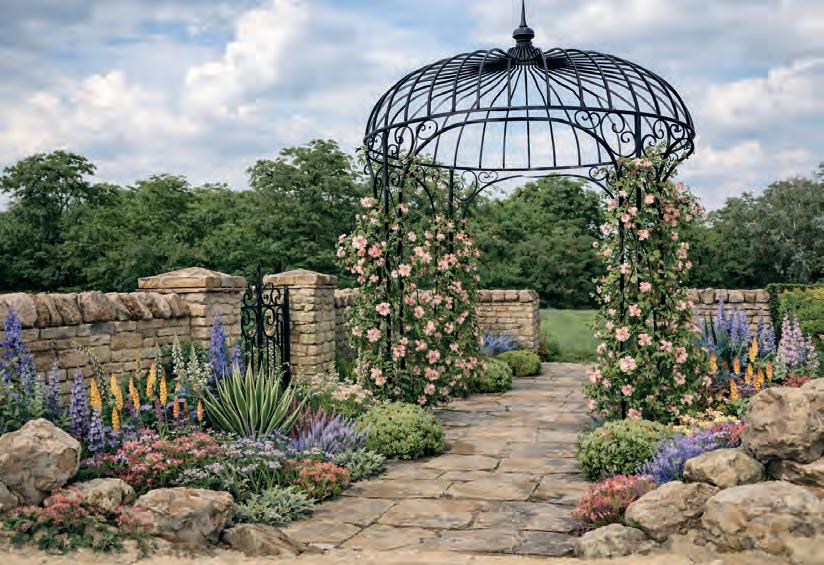
Contractor
Sponsor
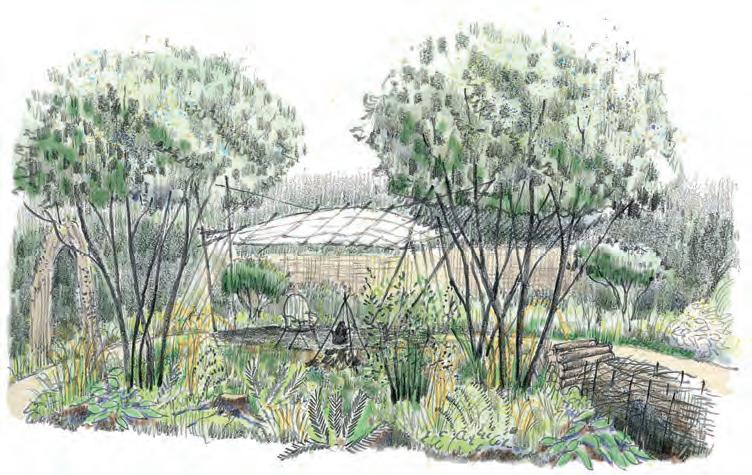
Looking to highlight Ruskin Mill Trust’s holistic methods to specialist education is making a difference both locally and nationally, the garden is a learning environment set in the woodlands of Horsley Valley, where Ruskin Mill College was established. In celebration of transforming raw materials from nature into purposeful objects, the garden highlights how central this process is to the self-development of children and young people with learning disabilities. Planting often dismissed as weeds will scatter amongst charred oak setts, hazel wattle fencing and traditional ash furniture.
Designer Rachael Austin
Contractor
Daniel Hoyle –Greener Landscapes
Sponsor
Ruskin Mill Trust
Garden legacy
Ruskin Mill Trust’s
Grace Garden
School in Westbury on Trym, Bristol
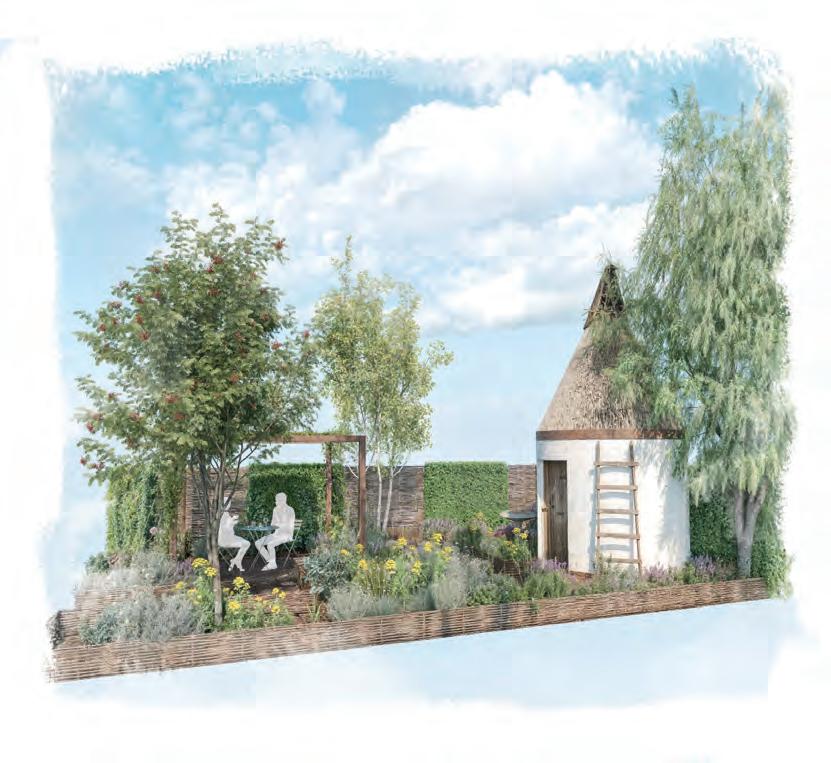
Showcasing the craft of split hazel basketry, today at risk of being lost, this garden is designed for Flo Hamer one of the few basket weavers who practise and teach the craft. Tools and materials which represent the stages of basket-making are on show in the garden alongside swathes of planting and statement hazels. Chosen for its importance to split hazel basketry Corylus maxima ‘Purpurea’ features on the garden alongside Verbascum bombyciferum chosen for its vivid yellow and Hakonechloa macra for its bright green leaves. Materials are eco-conscious including gravel mulch made from crushed brick and roof tiles.
Designer Henry T Pope
Contractor
Arlington Landscapes
Sponsor
The Worshipful Company of Basketmakers, Frater
Urban Quarry and Chew Valley Trees
Garden legacy Flo Hamer’s garden
Designed as a storybooklike garden, Electuary creates a space that benefits both humans and invertebrates.
Designer Joshua Fenton
Contractor
Fenton Gardens Ltd
Sponsor Daylesford, Arbour
Landscape Solutions, Stark & Greensmith
Featuring sustainable crafts such as wicker weaving, thatching and hedge laying, which stand as a long-standing tradition in the Cotswolds, the garden has been influenced by designer Joshua Fenton’s experience as a beekeeper. Layered planting and architectural elements come together for an ideal setting for artisans and bee enthusiasts alike. Adorned with a beehive, pergola, water feature and oast house from breathable materials, the interwoven mesh of activity feeds into a regenerative, sustainable cycle.
A few of the suppliers Glebe Nursery, Provender Nurseries
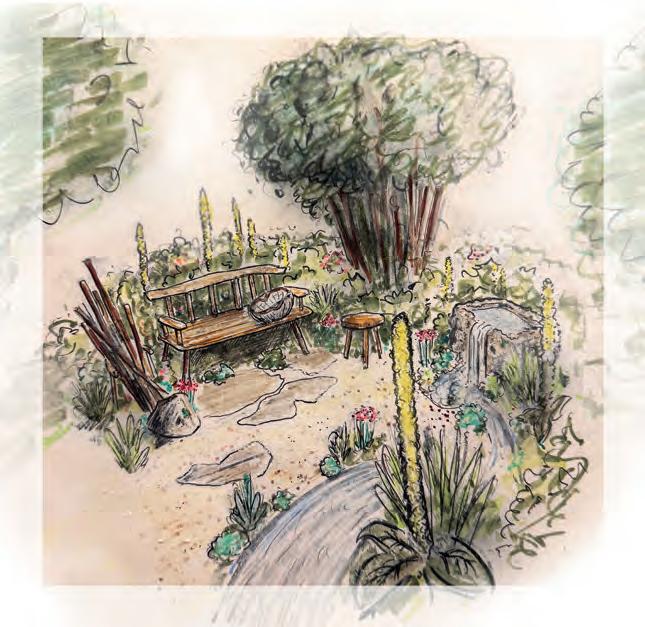
In celebration of new and upcoming talent, the Young Designers competition offers a platform for aspiring designers under the age of 30 years old. Featuring three very different gardens, the category explores themes surrounding grief, sustainability and women’s safety. The three contenders, Sophie Leo, Abigail Stoyle and Sophie Sturgeon, compete for the RHS Young Designer of the Year title.
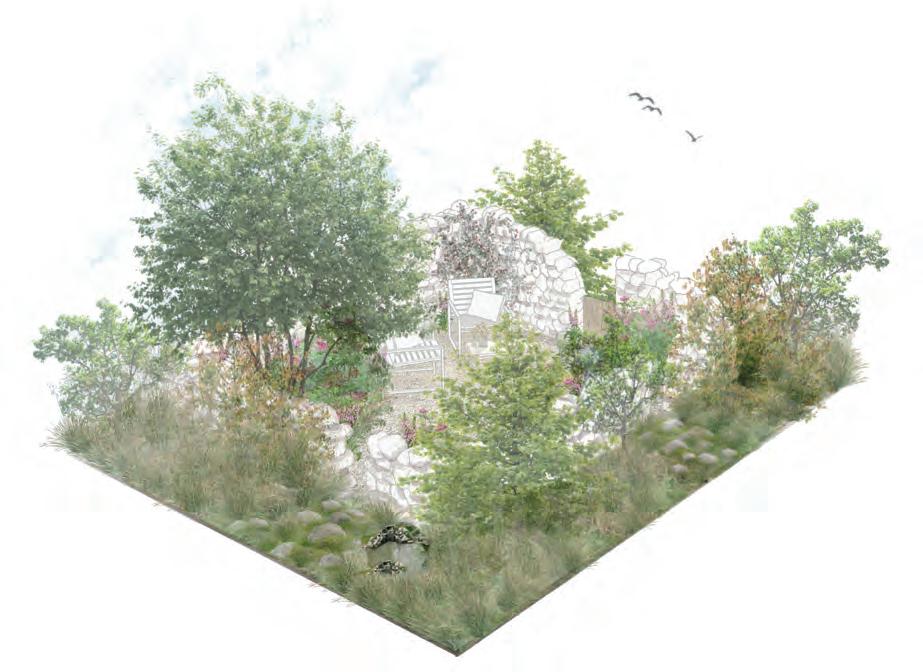
Blue Diamond Garden Centres: Where Grief Grows Quiet Freelance garden designer Sophie Leo brings her first show garden to Badminton in recognition of those experiencing grief. Bearing a personal connection with the garden, Leo explains where the design originates from: “A few months before my mum died, she shared a sketch with me of a show garden she’d drawn while I was studying garden design.” Initially drawn as a garden based on a journey living with cancer, Leo redesigned it in keeping with the original messaging.
“She was one of those people who believed, if you’re going through something, you should use it to help other people. That’s why I wanted
to create a garden to help people experiencing grief.”
In reflection of her own journey with grief, Leo’s garden creates an atmosphere similar to the countryside walks she would take with her mum after hospital appointments. Intended to evoke feelings of comfort and refuge, the garden also draws on the sheepfolds once used by shepherds in search of a place for peace, rest and protection.
Contractor
Ben Gifford
Sponsor
Blue Diamond Garden Centres
A few of the suppliers
Genus Plant Sourcing Garden legacy
Maggie’s Centres

Nature is a reminder that “life will keep going, even if you aren’t ready,” says Leo. From the bloom of a flower or the movement of birds, “the thought that nature carries on is a
comforting thought and helped me with my grief.” To signify this comfort, the garden has two areas of planting separated by walls. Outside, the garden hides small wildflowers amongst Deschampsia cespitosa, signifying the difficulty and struggle in search of beauty or joy when experiencing grief. Inside the walls, shrubs offer protection, followed by larger flowers such as native foxgloves, and umbellifers which hosts a light, airy flower to signify feeling lighter, open and comforted upon entering a safe space in nature.
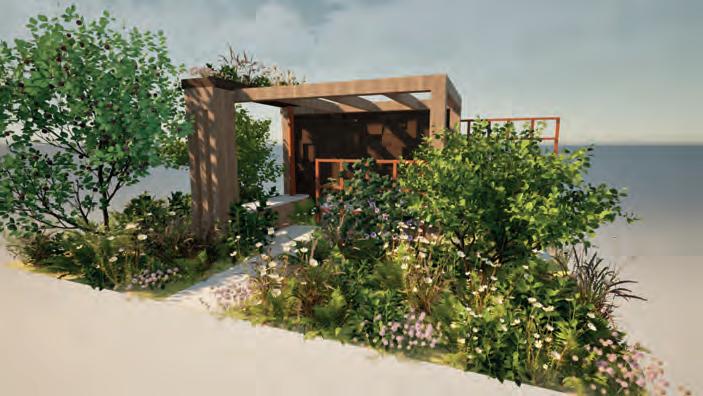
After changing careers in 2022, Abigail Stoyle found a mental escape in garden design, realising the benefits to her own health and wellbeing after spending an increasing amount of time surrounded by green space. A garden design graduate from KLC School of Design, she’s now found herself in the whirlwind of RHS shows after applying for Young Designers on a whim.
The garden stems from Silo’s, once a zerowaste restaurant based in London which is now travelling the world, sustainability ethos. The idea sparked from a conversation with her brother, the executive chef at Silo. Taking on the
A Space For Her
Boasting an undergraduate degree in Landscape and Garden Design, landscape architect at Ground Control Sophie Sturgeon joins the Young Designers lineup with A Space For Her. Inspired by the growing influence of social media on confidence and self-image, particularly among young women and girls, the garden explores how thoughtfully designed landscapes can support wellbeing, reflection and connection.
Contractor Surrounding Counties
Sponsor Silo
A few of the suppliers Matter Forms Garden legacy Private clients and local community spaces Silo: All that comes in remains
restaurant's no bin approach to cooking, the garden evokes the same message through soil, planting and materials.
“We explored the idea of using different materials within the garden that are typically found in a restaurant,” says Stoyle. From using corks for drainage and oysters for oyster-crete, discarded materials find a new home in maintaining a sustainable garden. “Reflective of a restaurant, there of course had
to be a dining space and outdoor work surface,” she adds.
On top of this, the majority of the garden is edible. From common species people may not realise they can eat such as Sanguisorba officinalis, geum and alchemilla, as well as traditional vegetables that suit ornamental beds including chives, potatoes and chickpeas. In action, everything plays a role and nothing goes to waste.

connection, the garden features soft planting, trees and carefully guided sightlines. “It’s so easy to get wrapped up in everything online,” says Sturgeon, but within this garden, there’s space to step away from screens.

“Anyone growing up in the face of social media might relate, but as someone who grew up on the cusp of this boom, I’ve always struggled with self-confidence,” Sturgeon explains. A concept close to her heart, she’s designed a space that helps people disconnect from social media and reconnect with nature. Based on the ripple effect, “confidence grows outward with the right support and spaces,” she adds.
Designed to stimulate contemplation, conversation and
Contractor
Ground Control
Sponsor Ground Control
A few of the suppliers Hillier, All Green, Oka, One Artisan Garden legacy TrustLinks projects, Essex
The garden features reflective surfaces and affirmation posts in collaboration with 25 girls and young women,
encouraging moments of pause and selfreflection. During the opening days of the show, visitors will also be invited to write notes to their younger selves to create a collective message of encouragement and resilience.
Sturgeon adds: “Even though it is improving, there is still a lack of consideration for women and girls in public space development,” and so in response, “this garden aims to fill this gap.” In creating a safe space for everyone, she looks to support women and girls amid social mediagenerated insecurities.
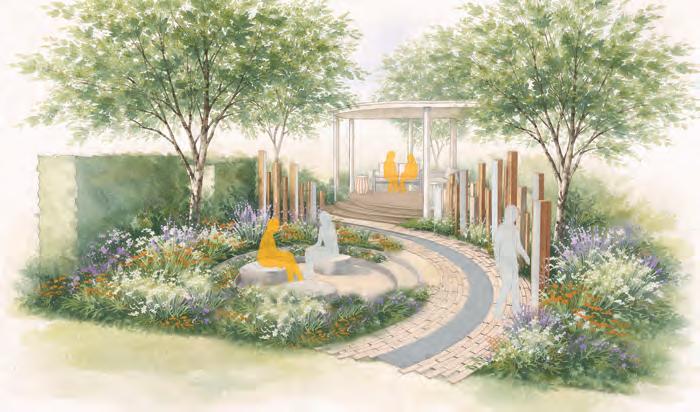
ABOUT:
Echoing some of the green spaces His Majesty King Charles III has created, this garden celebrates his championing of both the environment and gardening. The King’s passion for trees has informed the chosen species which promote tree diversity. Native species like yew and hornbeam sit alongside Koelreuteria paniculata and Arbutus unedo for their suitability to the warming climate. After the show, the garden will be incorporated into the wider gardens at Sandringham Estate as part of the redesign. This will be fully accessible to visitors and is being overseen by Catherine MacDonald alongside head gardener Jack Lindfield.
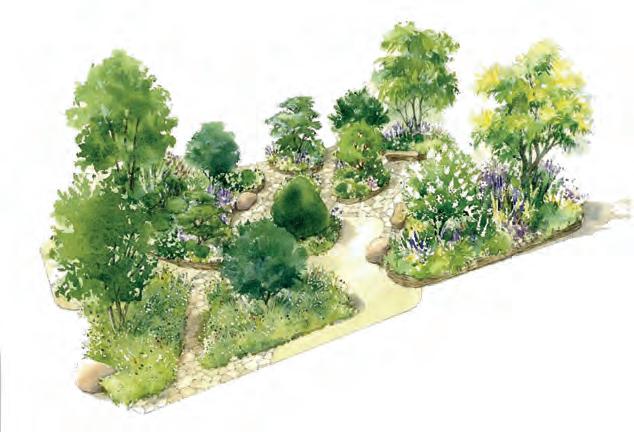
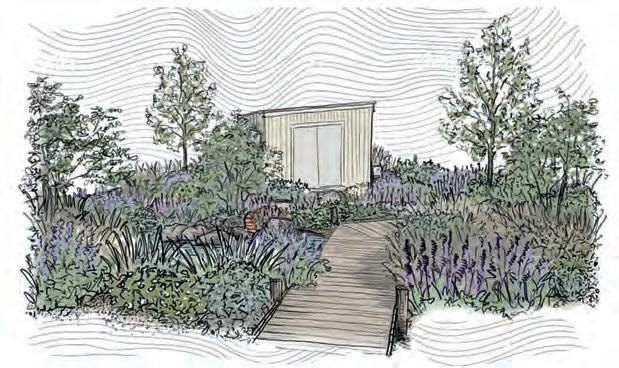
ABOUT:
A garden that shines a light on beauty and ecology, the RHS Crafted from Nature Garden is a meadow-inspired space filled with rich textures, artisan features and wildlife-friendly planting. Based on traditional crafts, the design reinterprets these skills through a contemporary lens. Norfolk Broads traditionally uses Norfolk water reed as roofing material, which has been reimagined by local thatcher Nick Walker into a tactile wall. In the centre of the garden sits a hand-carved sculpture of two York stone benches, created by stone carver Teucer Wilson.
A few of the suppliers
Creepers Nursery, Deepdale Trees
Designer Joe and Laura Carey Contractor
Neil Askew Landscapes
Sponsor
The RHS
Garden legacy Pensthorpe Nature
Reserve
Designer Catherine MacDonald
Contractor
Gadd Brothers Trees & Landscapes
Sponsor
The RHS Garden legacy Sandringham Estate
ABOUT:
Anchored on creating space for water-loving wildlife, the garden is inspired by Norfolk’s unique pingo pools and the successful reintroduction of the endangered northern pool frog. Formed at the end of the ice age, the pools provide wetland habitats rich in biodiversity but are being threatened by water extraction and expanding farmland. With this garden, the designers are helping gardeners incorporate water for wildlife even in hot weather. Demonstrating how water can be embraced as an asset, a boardwalk leads visitors through areas of wet ground throughout the garden.
A few of the suppliers
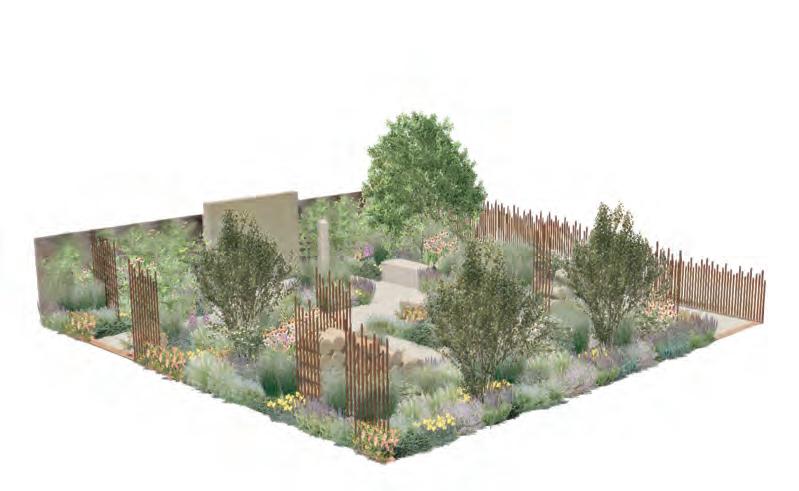
A few of the suppliers
Katie’s Garden Plant Centre, Barcham Trees, Nick Walker, Teucer Wilson
Designer Laura Strand and Sam Stark-Kemp
Contractor
Norfolk County Landscapes
Sponsor
The RHS
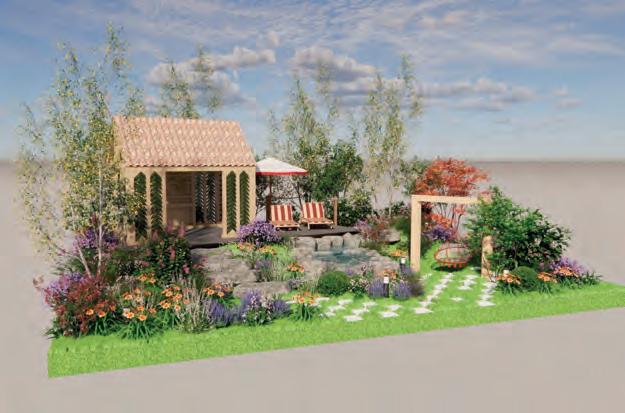
A few of the suppliers
Green Oak, London Stone, Mamou-Mani, Bury Hill, Bioo, Aquascape, Caradon Stone, Bernhards Nursery, Norfork Herbs, Farmer Gracy, Sarah Raven, Creepers Nursery, Baum & Bonheur
Designer
Frederic Whyte
Contractor
DTaylor Landscapes
Sponsor
DTaylor Landscapes and Ca’ Pietra
Garden legacy
Various locations or returned to suppliers
ABOUT:
Imagined as a retired couple’s garden this space celebrates the simple pleasures and cherished memories. Balancing nostalgia and innovation, the central oak-framed cabin is surrounded by flowers from their past while a forward-thinking outlook is demonstrated through sustainability. Harnessing natural biological processes to generate electricity Bioo panels provide lighting while reclaimed scaffolding boards are used for decking. Planting supports biodiversity and has seasonal interest featuring Eryngium × olivierianum Big Blue and Zinnia elegans Jazz Mixed. A chamomile lawn is planted between stepping stones adding fragrance and texture.
Designer Kitti Kovacs
Contractor
Cobham Court
Landscaping
Sponsor QVC
Garden legacy
Kitti Kovacs Garden
Design’s clients homes
A few of the suppliers
Malvern Garden Buildings, Haddonstone, Adezz, Practical Plants Ltd, Elveden Hedges, David Austin Roses, Dahlia Addiction
ABOUT:
Inspired by artist Thomas Gainsborough, this garden is a living canvas of his cultural landscape. Garden elements reference Gainsborough House, where limewashed walls recall Suffolk buildings and the colour of the property's garden elevation. Capturing an artist’s workspace, the garden features its own garden studio, fitted with a small specimen of the famous 400-year-old Mulberry tree. The garden’s planting palette is drawn from the artist’s attention to fabric, texture and colour. While the predominance of roses echoes floral details in his portraits, trees such as Acer campestre reference the Suffolk landscapes.

Designer
Paul Hervey-Brookes
Contractor
G K Wilson
Sponsor
RNIB, Postcode Lottery Garden legacy Tapping House
A few of the suppliers
Bernhards Nurseries
ABOUT:
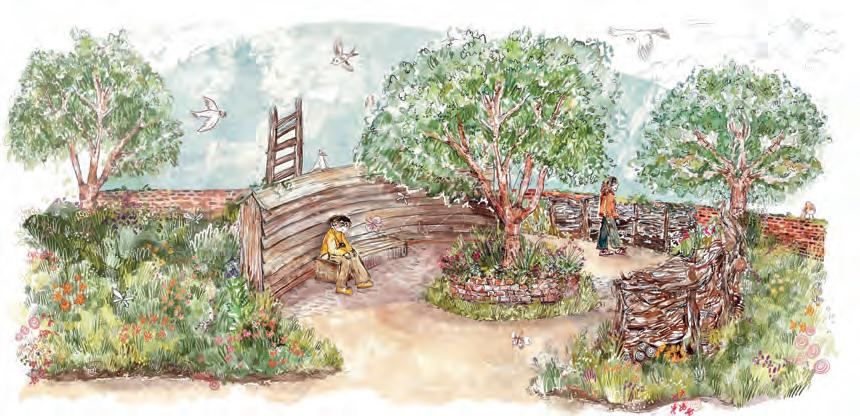
Celebrating the 90th anniversary of RNIB Talking Books, which gives thousands of people with sight loss access to books, this garden takes inspiration from the imagination conjured through reading. A nod to libraries, curved shingle walls with ladders reaching skyward feature on the garden. Planting will be textural with Betula and Miscanthus used for their sound effects. Designed by Paul Hervey-Brookes and built by G K Wilson, the garden will be concrete-free while resilient planting has been chosen to cope with the changing climate.
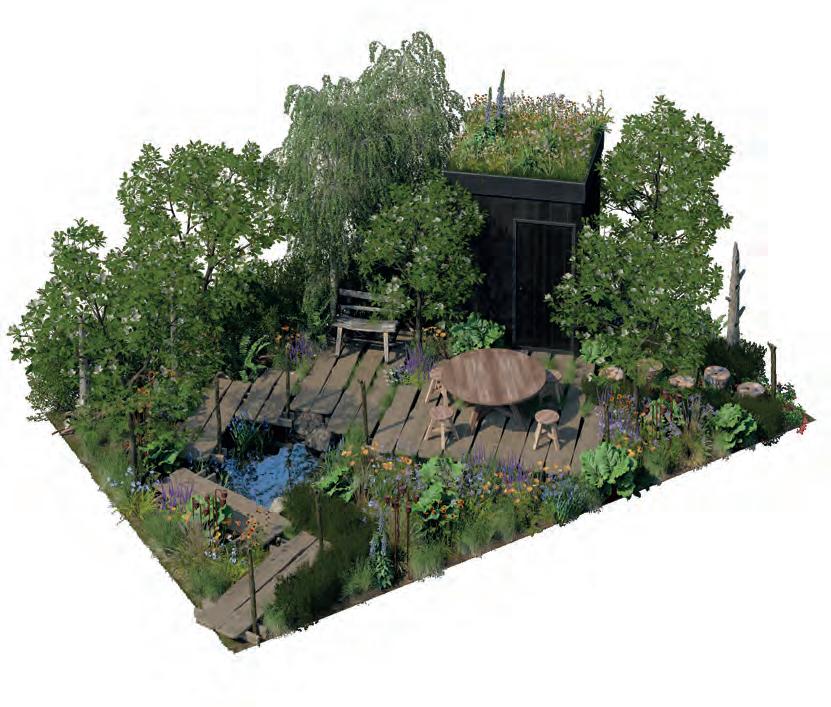
A few of the suppliers
DG Ross Nursery, Clare Hicken, Viridis Plants, Majestic Trees, Elveden Instant Hedge, Nice Ponds, Peak Boxes
Designer
Sophie Godber
Contractor
High Peak Garden Construction with Michael Robinson
Sponsor
Mindful Chef Garden legacy
Litton Primary School, Derbyshire
In demonstration of how gardens can be created with minimal intervention and unprocessed materials, Mindful Chef’s Gathering reimagines a traditional orchard as a solution-focused design that brings together the growing and harvesting of home produce. A highly sustainable and naturalistic space, the garden features fruiting and nut trees, a wildlife-friendly understorey of edible and ornamental planting, wildlife boxes and a natural pond. The central deck provides a gathering area, underpinning the idea that a domestic garden isn’t an isolated private space, but a series of interconnected habitats.
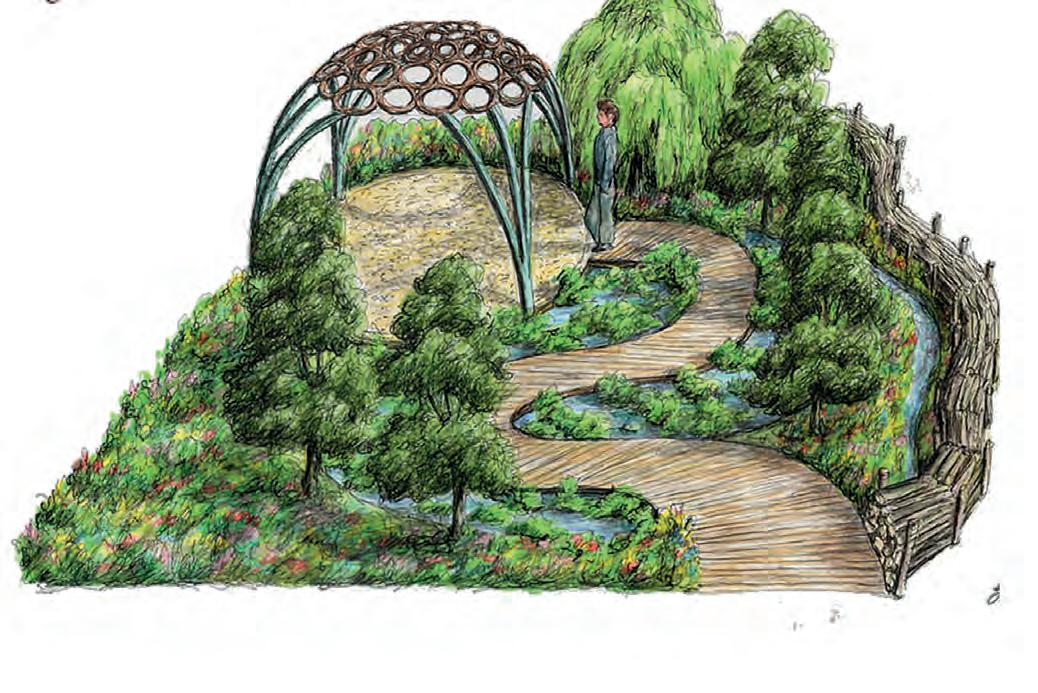
Designer
Constructing Minds with Nature
Contractor
Constructing Minds with Nature, Urban Groundscapes, Posh Ponds and Students from Luminate Education and Wirral Met College
Sponsor
Places for People, Talasey Landscape Solutions and Breedon Special Aggregates Garden legacy Ascot Park
A few of the suppliers Greenwood Nursery, All Turf and Talasey
ABOUT:
One-in-six homes face flood threats, according to the Environment Agency. The Mindful Meadowlands garden aims to shine a light on this risk. The design, crafted by Constructing Minds with Nature, also emphasises the measures which can help mitigate both extreme drought and flash flooding. A dead hedge acts not only as shelter and food for small mammals but also as a natural barrier to stem excess water flow while crushed gravel drains surface water away. A pergola provides shade while underfoot the path is elevated above waterlogged ground. Made from Pioneer Advanced Composite, it also contains built-in antibacterial properties.
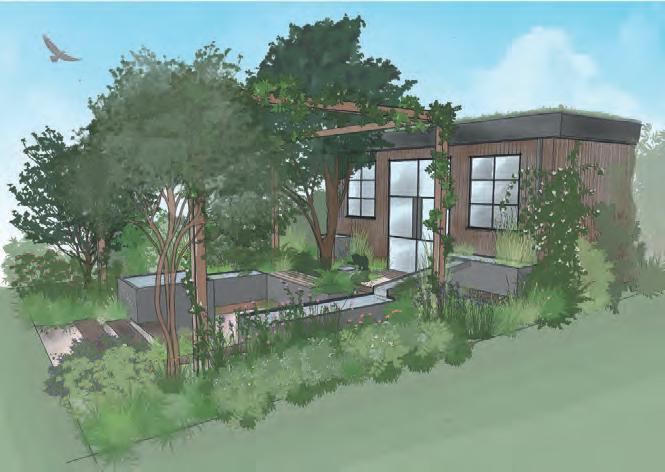
Designer
Anthony Purdy
Contractor
Conway Landscapes
Sponsor
The Dipping Tank Company
Garden legacy
Vinyl bar, The Parlecoot
A few of the suppliers
Palmstead Nurseries, Deepdale Trees
The Environment Agency predicts that England could face a daily water shortfall of up to five billion litres by 2055. With this stark warning in mind, The Rhythm of Rainwater garden explores how this challenge can be mitigated and demonstrates how rainwater harvesting can be more than just functional. Seven aluminium dipping tanks store harvested water with two interlinked by a narrow rill. Droplets falling onto steel tongue drums alongside hydrophones capturing the sounds from underground creates a musical experience. Extending this theme, an artist’s studio sits at the back of the garden. Planting will be lush vivid greens and white with accents of colours.
A few of the suppliers
Comprised of three areas, The Chestnut Group garden for The Gurkha Welfare Trust features a woodland area, a rain garden and a gravel garden area. Featuring modern cultivators derived from genera found in the Himalyan region, the garden also uses waterloving and moist soil-tolerant planting. Water captured from the pergola’s roof travels down a rain chain before going through a subterranean pipe into the concave rain garden. On top of this, drought-tolerant planting protected by a gravel mulch sit in the gravel garden. Overall, the garden promotes the charity’s vital work providing financial, medical and development aid to Gurkha veterans, their families and communities in Nepal.
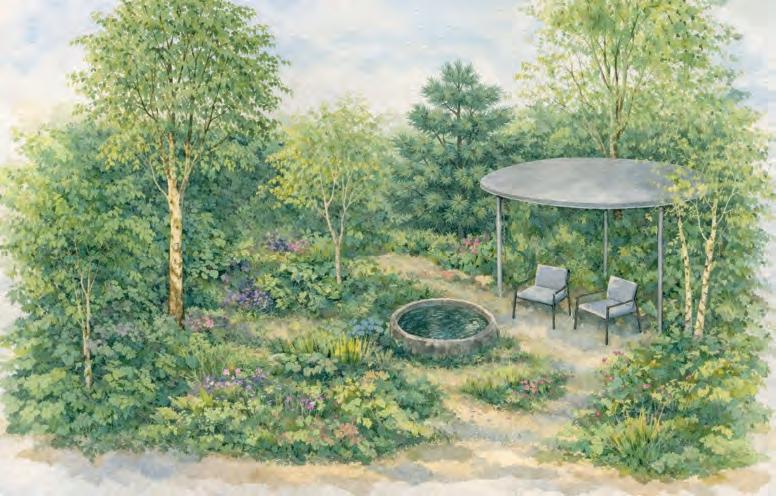
Designer
Jane Scott Moncrieff
Contractor
James Cawston, JMC Gardens & Landscapes
Sponsor
The Chestnut Group, JM Finn, Norse Group and Wilsons Solicitors LLP
Garden legacy
Local projects and The Chestnut Group’s gardens

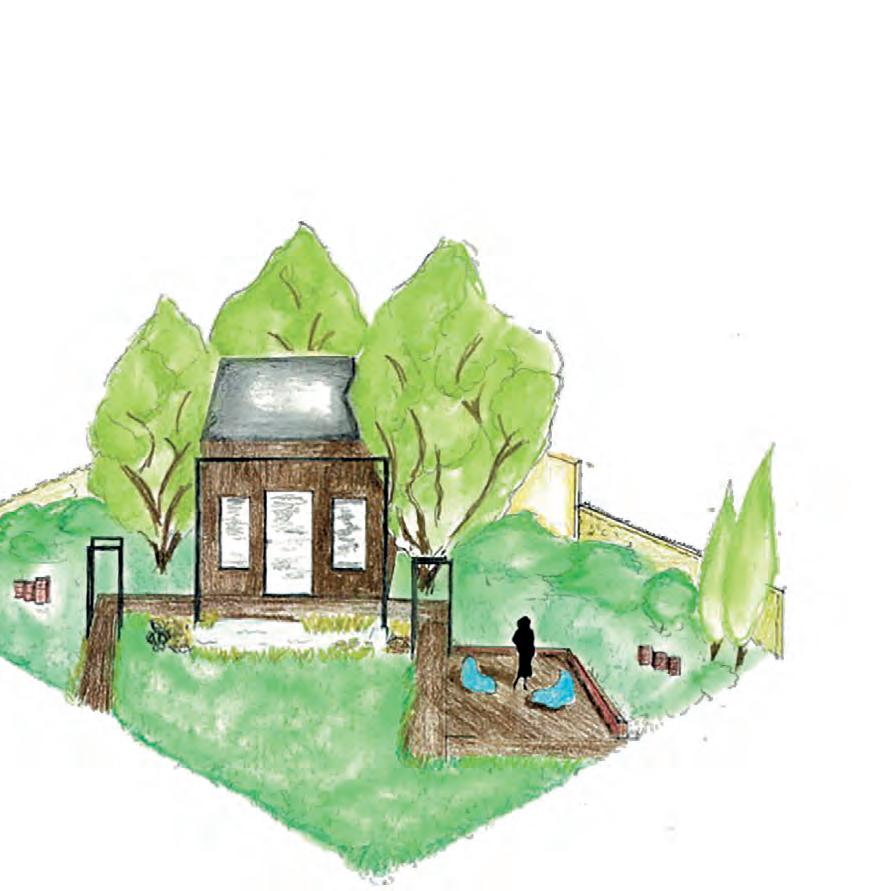
ABOUT:
Designer Amanda Thomas
Contractor
Arkscape
Sponsor King and Co, Scott Timber Buildings and The MacDonald Partnership Garden legacy Kings House Gardens in Thetford
In support of butterfly survival, this garden looks to encourage more people to plant butterflyfriendly plants featuring a garden room, decking and seating area. A stream runs through the garden from a down pipe into a pond, which is designed to overflow into a rain garden which demonstrates how to use run-off water to create a wildlife pond and irrigate the garden. In collaboration with The Butterfly Conservation Society, the planting will flit between a pink, purple, white and silver colour palette.
A few of the suppliers
Howard Nurseries, Tamar Nurseries
What inspired the Grow Forward category?
We like to make sure that the content at the shows is as imbued with what the RHS is all about as much as possible. One way is through our categories. With this being at Sandringham, we decided that it would be great to connect a category to His Majesty King Charles III and his passion for sustainable horticulture.
The funded category encourages designers to think outside the box when approaching sustainable garden design. It doesn’t have to be all through the design – it could be planting in a new way, or a new way of using a product. The funding is to help with a sponsorship journey, to encourage people newer to design to bring a garden to the show. It’s been an incredibly popular category. We’re hoping to do the same category at RHS Flower Show Tatton Park next year.
It’s really important that we look to the future in an open and proactive way. That we look at the opportunities and challenges that climate change is presenting and how we’re going to work to make sure we’re able to have beautiful gardens in the future.
Why is it important to support new designers?
The RHS shows are very much about fostering garden design, landscaping and growers’ talent. Alongside the Long Borders category, we now have this. Nobody finds it easy to get sponsorship but it’s particularly hard if you’ve just started out so that’s why there’s a grant. Hopefully our support allows new designers to flourish and continue their show experience.
It’s also important that there’s something that visitors can get out of it and new people means fresh ideas, a new perspective and that can’t be a bad thing when we’re looking to make the most of gardens of the future and to get people excited about gardening.
What else do you hope visitors will take away from these gardens?
Inspiration is the main thing – as cliché as it sounds. But they really are about sparking passion and ideas so they can go home and look at their garden differently. They can explore different ways of irrigating their garden or choose different plants. I really hope that they also get joy out of these gardens. Joy of seeing something beautiful, joy of seeing fun ways to tackle challenges, and the potential to have new and different and exciting plants in their garden that they maybe haven't thought of before.



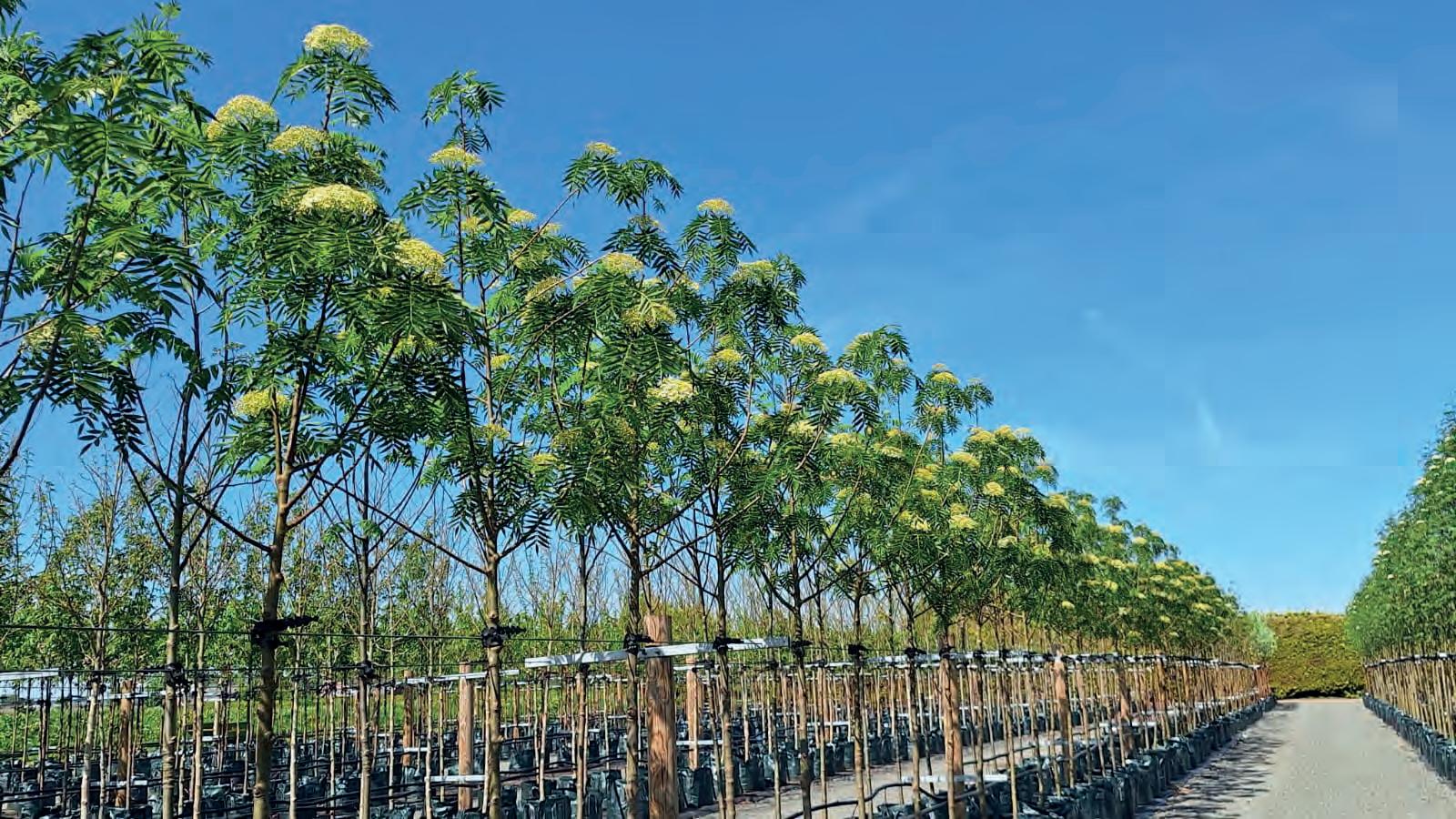
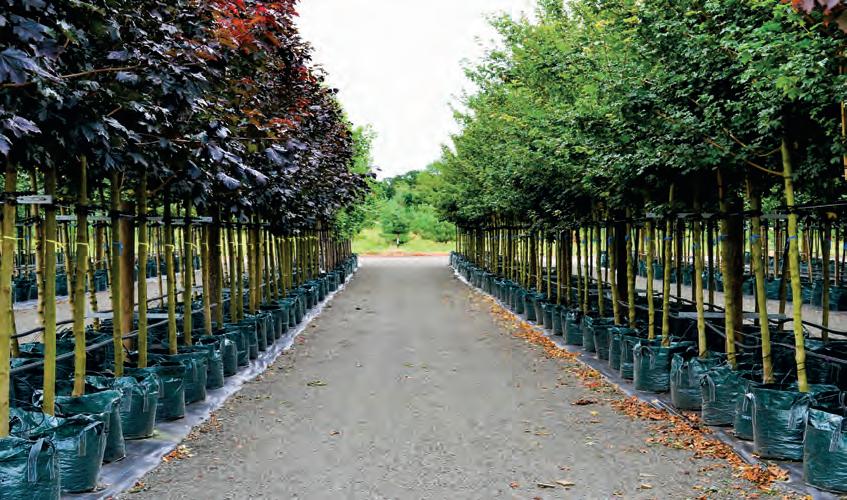
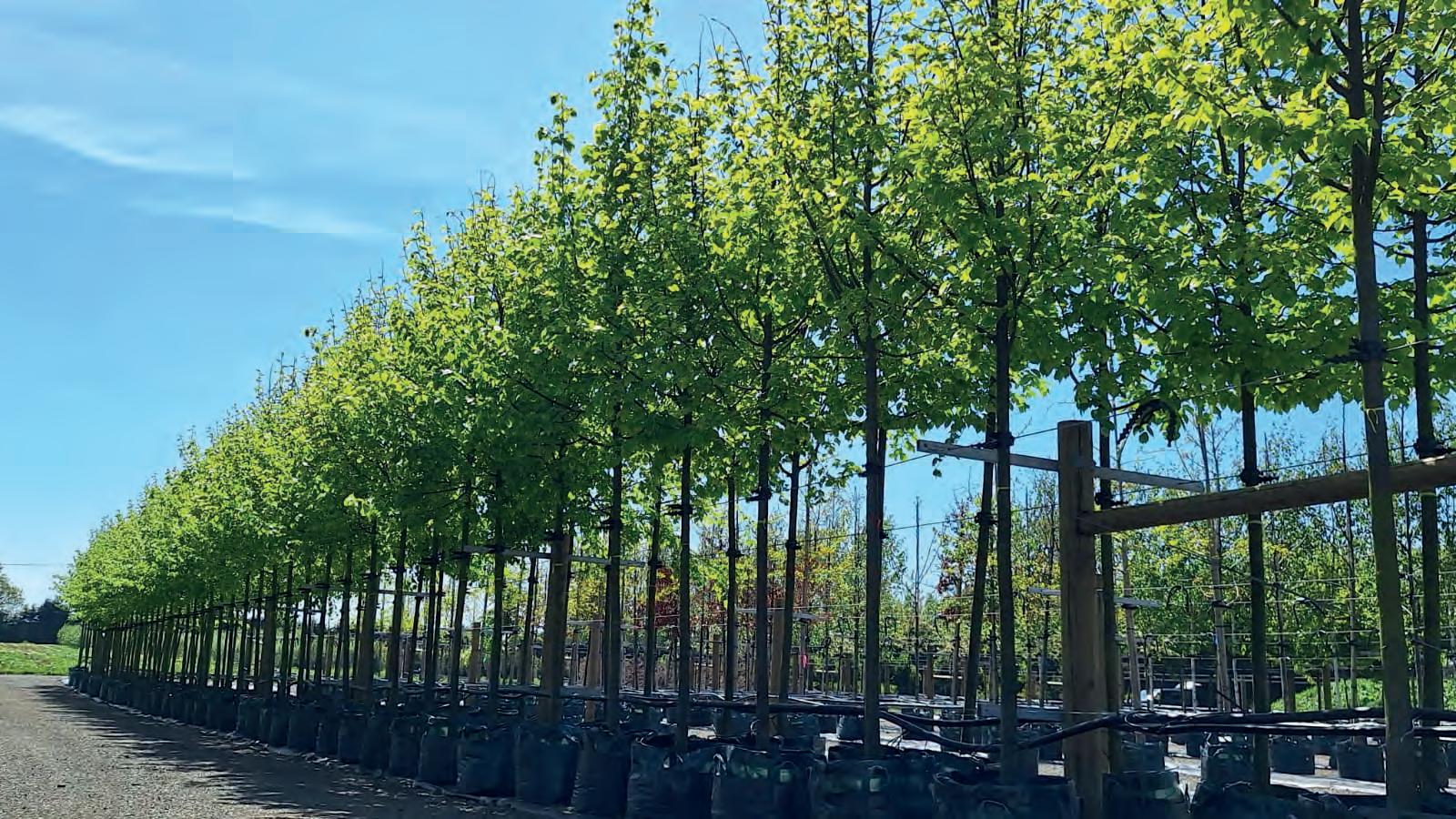
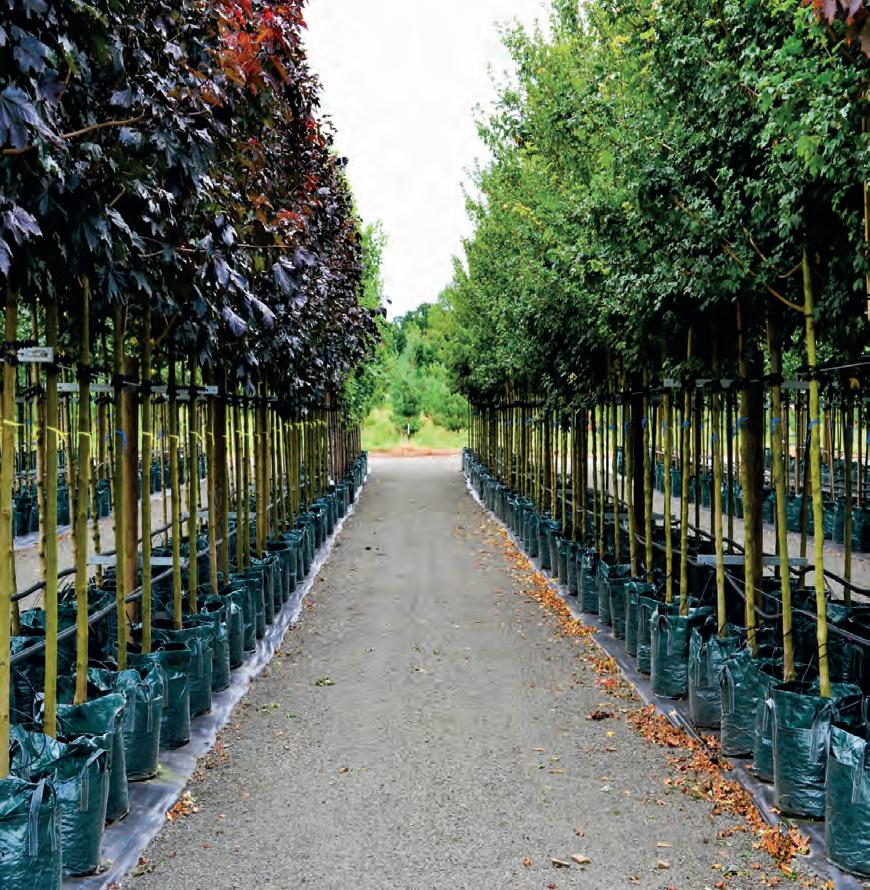










Rolling lawns might have become synonymous with a ‘traditional’ English garden but is the next generation falling out of love with them?
WORDS: RACHAEL FORSYTH
Picture a traditional English garden. Overflowing herbaceous borders, rambling roses, and most likely, a gently rolling lawn. But this perception of the ‘great British lawn’ might be shifting.“Lawns were perhaps more desirable for the older generation, more than the young,” explains Richard Owens, chairman of The Turfgrass Growers Association.“With time constraints as tight as ever I sense a real shift towards low maintenance gardening.”
David Hedges-Gower, lawn consultant and chairman of The Lawn Association, also believes some people are falling out of love with lawns. But he puts this down to failures.
"People are getting brand new homes and brand new
lawns and sometimes, within two years and many failures, they end up with a piece of plastic there. People are falling out of love with lawns because they’ve been mis-sold, in my opinion, the wrong turf.”
The issue, Hedges-Gower explains, is that seed mixes have become ryegrass heavy. “Ryegrass originates from cattle feed and it’s still good for that because it grows very quickly. But now it’s been bred into domestic lawns. We assume it’s going to be the same as the grass we have in the countryside but it’s a singular plant and it grows upwards. The reason the grass grows all over the countryside is because it grows sideways, it creeps over any gaps.
good shape you probably would be put off. They feel it’s too difficult and too much effort.”
In reality, Hedges-Gower states that when you look at sustainable lawn care, it means a grass that looks after itself and improves the soil structure, ecofriendly fertilisers if desired, and robot mowers, which remove the need for fossil fuels. “There, you’ve got the perfect sustainable lawn system,” argues Hedges-Gower.
People are falling out of love with lawns because they’ve been mis-sold, in my opinion, the wrong turf
Owens also argues that time constraints should no longer be a reason for not having a real lawn with the widespread availability of domestic autonomous mowers.
“At the moment we’ve got grasses that do fail. They’re hard work, not good for the environment, you’ve got to use enormous amounts of fertiliser, and mowing. If you were Monty Don, for example, and attempted lawn care using ryegrass and your lawn ended up in 12 months in not very
What could be the repercussions?
The fear, both Hedges-Gower and Owens stress, is that people might turn to artificial turf. “The biggest worry is that real grass is being replaced with artificial and low maintenance hard landscaping,” says Owens. “We’re seeing a huge shift towards artificial plants in houses, and this is sadly now extending out to gardens.
“Climate change is definitely having an influence on preferences, but sadly not in a good way. People see artificial lawns as a way to avoid drought stressed or wet lawns and achieve a permanently
green lawn space all year round, without any thought to the negative environmental impact. Artificial grass may have its place in certain areas where natural grass can’t grow, or an area impractical to mow, however I strongly believe it shouldn’t be a choice.”
Grass and the environment
Is the perception of a lawn evolving along with the perception of wildlifefriendly gardens?
“Unquestionably so,” argues Owens. “Gone are the days of overgrown corners for nature to thrive – planting specifically for birds and pollinators and weeds being accepted as an integral part of the lawn.”
“It doesn’t make any sense that we’re not governed,” says Hedges-Gower. “There should be set-ups in horticulture where there’s some form of governance in lawns – at the moment anyone could bring in a plasticcoated fertiliser, call it organic, and nobody is there to stop them. There’s no seat at the table for a lawn expert.”
Climate change is definitely having an influence on preferences, but sadly not in good way
Wildflower Turf is also becoming a popular way of negating the problems associated with establishing perennial wildflower areas from seed, Owens explains, however this tends to be a feature rather than an alternative to a traditional lawn.
The environmental benefits of grass are, in fact, huge, Owens argues, “Grass produces a vital source of oxygen along with many other benefits including carbon intake and heat absorption to name just a couple. In terms of the environment and sustainability old turf should be replaced with new net free turf.”
Hedges-Gower argues that we only need to look to the countryside to understand how grass can benefit soil structure, “If you dig into the soil in the countryside, you’ll find beautiful soil,” he says. “But that hasn’t had any products used on it. What it has is the right grass mixture. Our natural grass mixture has a massive root system and millions more plants per square metre. Those roots improve the soil structure on their own every day without any human intervention. You take those out and replace it with singular species and it’s going to die. That’s why lawns fail. We have 'right plant, right place', why don’t we do the same with grass?”
An education piece needs to be done, argues Hedges-Gower who strives to do just this. But there are challenges and one of those is the lack of governance.
Hedges-Gower also stresses the importance of a communication piece. He expresses, “In my opinion our traditional landscape is slowly disappearing under bricks and mortar. Housebuilders and developers must reverse the negative environmental impact of construction with more considered planting for nature and where lawns form part of the green space installing accredited and more importantly net free turf products. Sadly, many don’t. Never has there been a more important time to get the message out to the wider public that natural grass and turf is vital to our very existence – and if that’s not a wakeup call then I don’t know what is.”
What's the picture in public gardens? In the 17th and 18th centuries, lawns became a status symbol. Back then, anyone who was rich enough to own
a lawn – and use their land for recreation rather than for farming – was considered extremely wealthy. And these country estates wanted these lawns to be immaculate. But “that’s not why we’re gardening anymore,” points out Rebecca Bevan, environmental horticulture specialist at the National Trust. So how are lawns in these spaces changing?
“In public gardens I think a lot of people are looking at lawns differently,” argues Bevan. “They’re thinking about leaving grass longer for drought resilience and hopefully thinking about how silly it is to remove clippings and then have to fertilise them. It’s understandable for a sports pitch, but that’s not what we’re doing.”
In early 2023, King Charles III opened a new topiary garden at Sandringham Estate replacing the expanse of lawn. The estate said in a statement at the time that the lawn had been affected by warm weather and excessive rainfall. The new garden was introduced as a biodiverse and climateresilient alternative. Designed by Mark Gregory and Catherine MacDonald from Landform Consultants, the garden featured,
alongside topiary, herbaceous perennial plants and bulbs as well as yellow and pink rose varieties.
The National Trust isn‘t replacing lawns, but it is reviewing how they are maintained. “We’ve got a philosophy of gardening at the moment which we call slow gardening,” says Bevan. “It’s about being more mindful in the way our gardeners garden and not just doing things because they’ve always done them. We want to really try and reduce inputs and boost soil health everywhere
so plants can look after themselves better.”
The gardens are driven by head gardeners, and each has its own style, but when it comes to the lawns, they are all managed in the most sustainable way possible. “It’s about
Never has there been a more important time to get the message out to the wider public that natural grass and turf is vital to our very existence
making the lawns as useful to visitors as possible, and as good for nature as possible,” explains Rebecca Bevan, Environmental Horticulture Specialist at the National Trust. “We’re also considering drought and climate resilience.”
Bringing in the slow gardening philosophy, for the National Trust’s lawns this means encouraging everywhere to have clover and other species, even in the formal lawns as they’re much less likely to need fertiliser, for example.
This mix of species means the plants are rooting at different depths and therefore taking up nutrients and water from the soil better as well as improving soil structure. “Compaction is often the killer,” stresses Bevan. “We don’t tend to spend a lot of time on endless spiking. We’d rather the structure and health of the soil was maintained through this mixture of species.”
We have lots of places where we don’t
Bateman’s
At the family home of Rudyard Kipling in Sussex, Bateman’s, the lawns are being left longer between cuts. The team is leaving it three weeks between cuts to let some of the species they’ve got in their lawns flower. Here, they have clover and daisies and will be monitoring the pollinating insect life. “That looks really appropriate for that site as well,” Bevan explains. “They don’t need short, formal lawns. This looks relaxed, but they’re still lawnsthey’re not meadows, they can still be walked on.”
Nostell
In West Yorkshire, at the Georgian house of Nostell, the mowing regime has been relaxed, allowing other things to flower. In the spring they had masses of dandelions in flower which Bevan says is “an amazing resource for insects”.
Dyrham Park
The 17th-century Dyrham Park in South Gloucestershire is formal, so the lawns need to reflect this. The lawns are mown more regularly and so they don’t have such a vast diversity of species, but they do contain clover. While this isn’t left to flower, it still has benefits. And, while the lawn needs to look like a neat green sward, the team isn’t worrying about achieving stripes.
The 1,600-acre estate and Edwardian house of Polesden Lacey in Surrey the well-loved front lawn was struggling. With deck chairs and beautiful views over the Surrey Hills, it was a popular spot for visitors. But the sunny spot and free-draining soil meant it got very dry. Keeping the area both a formal lawn and a heavy-traffic area meant the lawn was stressed. So, the team left it longer between mowings, not necessarily to allow other species to grow but to let the grass itself have more resilience. They’ve also been mulch mowing to return some of the nutrients and moisture to the ground. This has proved a success for the grass, and the public have embraced the change especially after communication about why this decision has been made.
At Hardwick in Derbyshire meadows have been created under their orchards which aesthetically look good and is less work. Here, they are monitoring butterflies and bees to demonstrate the meadow’s benefit to biodiversity.
In Cambridgeshire the Georgian town house of Peckover House and Garden needs to remain accessible. Converting the lawn to meadow wouldn’t work in this instance. But they do want the lawn to be more interesting, colourful, and biodiverse. Here, they are exploring species that tolerate mowing and being trampled on – but still flower. Species like yarrow, selfheal, as well as daisies and clover. “These will tolerate mowing, and then the flower spike will come up really short,” explains Bevan. “It’s more of a flowering lawn than a meadow.”
need people to be able to walk on the grass, and in those instances, they have been converted into meadows. But the key to this is cues to care. These might be mown paths through the meadow, or a strip of mown edging around it to signal that these spaces are deliberately managed and intentional. “Ultimately, we want our places to be enjoyed by the public and be good for nature,” says Bevan.
While there does appear to be a shift in the desire to have lawns in domestic spaces, it seems there is an education piece to be shared about which turf or seed mix should be used and how lawns should be maintained – or, indeed, how little they need to be maintained – rather than a wave of people falling out of love with them. There is a fear that this is giving rise to artificial turf and, in turn, that our landscape is disappearing under brick and mortar. Whatever clients choose for their back gardens, it’s undoubtedly important that they have all the information needed to make an informed decision. The likes of Hedges-Gower, Owens and the National Trustthrough its own shift in the management of its lawns and accompanying interpretation for visitors – are working to do just this. After all, the consequence of not doing so could be huge, expresses Owens, “If it becomes unviable to grow a "traditional" lawn, or our green spaces reduce much further, then we have much bigger problems to face.”
We don’t tend to spend a lot of time on endless spiking. We’d rather the structure and health of the soil was maintained through this mixture of species
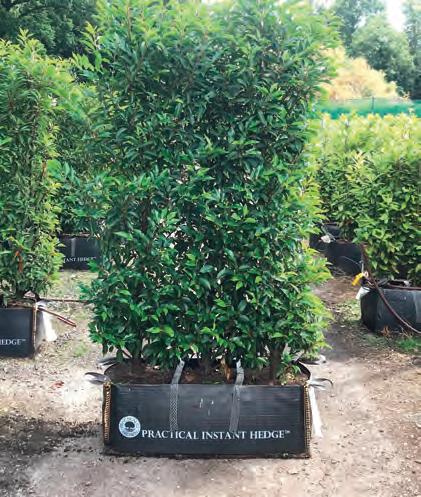
Current stock of 1.8m high Portuguese Laurel
Create Immediate Structure, Screening and Maturity
Our UK-grown Portuguese Laurel Practical Instant Hedge™ offers an immediate, mature evergreen screening solution for gardens, developments and landscaping projects from installation day.
Why choose Portuguese Laurel?
• Instant impact from day one
• Evergreen privacy all year round
• Elegant dark green foliage
• Suitale for sun or partial shade
• Ideal for homeowners, landscapers and developers
We currently have 800 metres of 1.8m high Portuguese Laurel available for immediate delivery, making this the perfect time to secure stock for your next project.




Artificial intelligence (AI) can help with almost any task, from money-saving hacks to completing back-office admin tasks. The fastest-growing technology the world has ever seen, its growth doubles every seven months, finds research institute METR. And this is expected to increase. As the landscaping industry turns towards more quick wins and ways to enhance their businesses, companies could see their own growth follow suit.
“We’ve spoken to our members, and they tell us they’ve started using AI quite a lot for basic business operations, such as daily client CRM, monitoring design, and progress on meetings and quotes. One member told me he feeds AI with estimates, so it can look for weakness and risks on increases in time or materials,” explains Phil Tremayne, general manager at the Association of Professional Landscapers (APL).
“Some go further,” he adds. From project monitoring to uploading the scope of works, daily logs of material purchases, plant hire, waste, and labour task-specific man-hours, these wins could be saving both time and money. Some APL members also use it for weekly wages, tracking them against budgets, and others for ‘end-of-project autopsy’, which can then form the basis of future project models.
Other helpful features include using AI for project scheduling, monitoring cash flow, drafting emails as well as managing marketing or supporting things such as SEO and AIO for websites.
Taking the pressure off Craig Nester, co-founder and managing director of Habitat Landscapes, says “one of the most practical benefits is the way it tackles the tasks people avoid.
Social media marketing is a perfect example.”
WORDS: HOLLY CHAPMAN
As more landscaping companies are investing in AI tools, the industry explores the balance between technological innovation and human expertise
staff can focus on other areas, and overall, it’s boosted productivity.”
A big win for Nester sits within site surveys. “I already use programmes where I fly a drone, take aerial shots, and feed those photos into AI. The AI can scale the image and give full measurements, including heights and site details. It’s fast, it’s accurate, and it removes a lot of the legwork. That kind of tech isn’t just a nice extra - it changes the game when it comes to time and cost-saving.”
On top of this, “rendering is another area where AI makes a lot of sense,” he says. “AI can generate visuals faster and make changes quickly, which helps when you’re iterating with clients or testing options. Used properly, it can speed up the process without taking away the creative thinking that matters most.”
We can't get away from this, and actually, the people that don't embrace it are going to be left behind
After a long day on site, the last thing people would want to do is spend all evening creating and planning content. “AI can take the pressure off,” adds Nester. In his own business, “it’s freed up admin time so
Perhaps not always popular with everyone, “the reality is simple: AI isn’t going away, and the people who use it well will move forward faster than those who don’t,” argues Nester. A fact agreed by accountancy professional Kim Sones. She points out: “We can't get away from this, and actually, the people that don't embrace it are going to be left behind. They can produce much more content in a shorter space of time, so they're in front of more people, hopefully getting more opportunities to grow their business.”
Several of her clients have been successfully using business coach
Nick Ruddle’s Landscape Business AI Assistant tool. By combining the productivity of AI with Ruddle’s landscaping knowledge and expertise – when using the tool for processes such as recruitment, onboarding tasks and monitoring client journeys – “we’re seeing exceptional results,” says Sones. She adds: “AI is really powerful, and the landscapers that are embracing it are doing really great things. I don't think that anyone is looking to replace their team. Instead, they're looking for new opportunities while replacing the mundane stuff to spend more time developing the business.”
With an abundance of new tools popping up, it can be difficult to know what to invest in and what to avoid. Trusting technology with a business can be scary, which is why Sones advises business owners to be prepared: “Do your research on the people that are creating these tools, make sure what they’re doing is ethical and do the right thing. Also, if you start to give it personal details, you don’t know who could get hold of that, so it’s worth being security conscious, too.”
Within her consultancy, Sones Accountancy Services, she uses software such as Xero, Sage UK and
QuickBooks, which are incorporating new technologies to improve productivity and overall service. The technology creates automated workflows which can help with tasks surrounding finance, quoting and tax. Free trials can be helpful when researching which tools to trust but investing in these should also come with caution. Nester says, “the goal isn’t to become a fully automated business overnight - it’s to become a more efficient one, without losing control of what matters.”
In addition, while investing in help for back-end tasks can be extremely beneficial, “the real question, for me, is which tasks should be helped by AI - and which ones we should keep firmly in human hands,” Nester questions. Where AI doesn’t hold the same gut instinct as people, especially in relation to a business owner who knows their company inside out, it can be trickier to track when
things aren’t feeling quite right if AI takes over. With that comes caution.
According to David Denny, director of research and knowledge transfer at the Horticultural Trades Association (HTA), “artificial intelligence is exactly what it says on the tin – artificial. It can’t think or feel for itself and can only go on the information it’s been given or trained on. For that reason, it’s important to check what comes out of AI. AIs have been known to
‘hallucinate’, generating false, fabricated, or nonsensical information.”
The irreplaceable Lynne Taylor founded VirtuScapes last year, a virtual assistant to help landscaping companies with everyday admin tasks from email organisation to scheduling and general duties. With AI taking over these mundane tasks, where does it leave her and her business? “AI is certainly changing how businesses approach administration and organisation,” she begins, “but I don't see it replacing the role of a specialist
virtual assistant.”
With an abundance of knowledge and experience, Taylor offers more than any online bot. “Many landscaping businesses need support that goes beyond completing individual tasks. They need someone who understands the industry, their clients, their projects and the day-to-day challenges of running a business.” Offering services that range to project coordination, consultancy and expert witness queries, she offers strengths that technology simply doesn't.
Taylor adds: “AI can be helpful for repetitive or time-consuming tasks such as summarising information
or helping to organise data. However, operational support within a landscaping business is often more complex. Prioritising enquiries, understanding client expectations, coordinating projects and making decisions all require context and judgement. Those are areas where people continue to add significant value.”
Embrace AI for the jobs it does well, and protect the areas where your judgement, responsibility, and personality are the real value
As the technology continues to develop, “I think businesses will still rely on people to oversee processes and make informed decisions,” predicts Taylor. And as fears of falling behind stay prevalent, there could be a silver lining when handing some tasks to the human
AI TOOLS THAT COULD HELP YOUR BUSINESS
• Landscape Business AI Assistant
• Apron Payments William AI
• Fyxer
• Leanscaper
• Powered Now AI features
• Sage Ai
• Xero JAX
• QuickBooks Intuit Intelligence
hand. “The companies that keep a human touch in communication may end up with a unique selling point,” argues Nester.
Not only will human interaction seemingly prevail, but real risks are also being acknowledged as the AI boom grows. “There are downsides, and they should be taken seriously. The environmental impact is one. Creating AI outputs takes energy, and in some cases significant resources, so it’s worth weighing up what you’re generating and whether it’s genuinely needed,” advises Nester.
On top of this, “like any powerful tool, it can be abused,” which is followed closely by the risk of losing identity and personality within the company. “Every business has its own identity, its own style, its own soul. If everyone uses the same tools in the same way, companies can start sounding and looking the same,” he adds.
This is when balance can bring the best results. “Embrace AI for the jobs it does well, and protect the areas where your judgement, responsibility, and personality are the real value,” Nester says. “Whatever tools you’re using, it’s important to make sure that you know how any information you are putting into AI is being used by the platform,” adds Denny, because then comes less risk.
When recommending a balanced approach, from acknowledging environmental concerns, data risks and where opportunities lie, AI can be at its most powerful. By understanding that it might not always be accurate, and with the correct instructions and prompts, it’s clear these tools can accelerate any business. However, industry knowledge and experienced insight seem irreplaceable.
Read more about the environmental concerns surrounding AI in the March 2026 issue

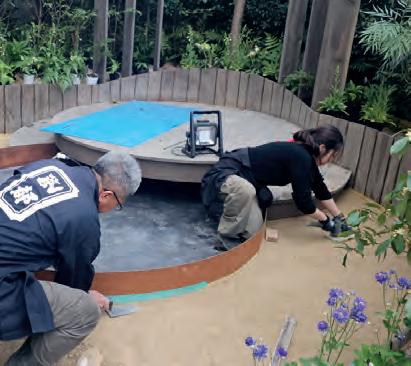
The planting team and landscaping team work together to finish the path in the Show Garden
Drawing on recent experience in Japan, Dave Green explores how to succeed when implementing an international project
In my previous article, I explored the preparation required before taking on an overseas project. What I quickly discovered in Japan, however, was that preparation only gets you so far. Once you arrive, success depends on something quite different: Your ability to adapt, collaborate and build relationships.
After months of video calls and emails, one of the biggest reliefs was finally meeting the people I had been working with remotely. My local coordinator, Ai Kimura, helped me settle into life in Fukuoka and navigate those first few days. It was an early reminder that international projects are built on people just as much as plans, drawings and budgets.
One of the first lessons I learned was that things rarely unfold exactly as expected. The weather varied – sometimes colder and wetter than anticipated, sometimes hotter –and even simple tasks took longer than they would at home. Rather than fighting the differences, I found it was better to accept them and try to adapt. Patience quickly became one of the most valuable skills I carried throughout the project.
Looking after yourself should never be overlooked. Flower show projects are demanding in any country, but working abroad introduces additional pressures. A good routine, taking occasional time for myself and using translation apps all helped, while regular contact with family and friends at home provided a vital source of support. With Japan nine hours ahead of the UK, those conversations required planning, but they helped me stay grounded throughout the build.
Rather than fighting the differences, I found it was better to accept them and try to adapt
The most important lesson, however, came from embracing the local culture. The Japanese team took enormous pride in their work and were exceptionally generous with their time and support. Daily tea breaks and shared lunches became an important part of the working day, creating opportunities to build relationships and understand one another beyond the project itself. I tried to contribute in small ways too, sharing snacks from the UK and taking an interest in local customs.
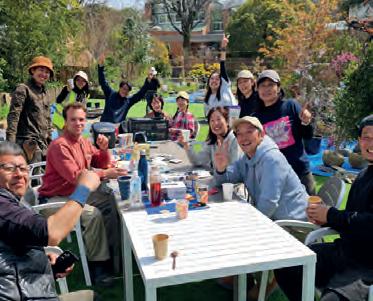
flower show provided an opportunity to celebrate what had been achieved together and see visitors engaging with the finished garden. The experience reminded me that successful show gardens are always built on collective effort. The difference in Japan was seeing how that collaboration could flourish across cultures, languages and different ways of working.
Communication was equally important. Despite extensive planning before travelling, there were still countless decisions to make once I arrived. Visiting nurseries, selecting trees, inspecting prefabricated elements and reviewing materials in person helped resolve issues before they reached site.
Towards the end of the project, I also learned more about the importance of gift-giving in Japanese culture and wanted to ensure the efforts of the team were recognised. Taking time to thank people properly felt appropriate given the commitment and support they had shown throughout the build.
Once the garden was complete, another phase of the project began. The opening of the
Looking back, the biggest lesson was that success abroad is not defined solely by the finished project. Technical skills, planning and organisation all matter, but they are only part of the picture. The real key is building trust, showing respect for different ways of working and being willing to learn from the people around you. The relationships formed during my time in Japan are every bit as important to me as the garden itself, and they remain the most valuable part of the experience.

Gareth Wilson explores the differences in landscaping today compared to when he first started
Recently I sat down with Jason Clarke, owner of Classic Paving, a third-generation paving and landscaping company. Jason is arguably the most successful Marshalls installer of all time. He is widely respected throughout the industry and, in my opinion, was one of the first contractors to bring innovative, design-led driveways into the mainstream.
As we got talking, conversation quickly turned to the early days. Perhaps one of the biggest differences was the lack of recognised industry standards and technical guidance. Installation methods were often passed down from one generation to the next, learned on site rather than from manuals or training courses.
Jason also recalled that during the 1980s and early 1990s, hiring a mini excavator simply wasn’t an option. If you needed a machine, you generally hired a man and digger. For most patio installations, however, excavation was still carried out by hand.
Micro diggers/excavators were rarely seen.
When they did become available during the late 1990s and early 2000s, demand was so high they often had to be booked weeks or months in advance. What was once considered specialist equipment has now become an everyday site tool. The same applies to micro dumpers.
Installation methods were often passed down from one generation to the next, learned on site rather than from manuals or training courses
Modern tracked dumpers, particularly high-tip machines, have transformed material handling. Back then, scaffolding boards, wheelbarrows and sheer determination did most of the heavy lifting.
I still remember receiving my first mortar mixer from a customer called Margaret Martin. She had removed the previous contractors from the project and promised that if I completed the work properly, I could keep the mixer they left behind. At the time, it felt like winning the lottery.
Before that, mortar was mixed entirely by hand. My father viewed a mortar mixer as an unnecessary expense and would only hire on larger projects. That old mixer stayed with me from 1991 until 2009. Looking
back, I probably looked after it better than some people look after their cars.
During the early years, petrol cut-off saws were often hired in. Most cutting was carried out using nine-inch electric grinders. Compared with today’s machines, they lacked power, struggled with prolonged use and required far more effort to achieve accurate cuts.
One thing both Jason and I remember well was the cost of cutting blades. Back in the early 1990s, a quality 300mm diamond blade could cost well in excess of £120. That’s the equivalent of more than £400 today.
Instead, tungsten carbide blades were commonly used. Whilst they got the job done, they were slower, wore rapidly and had an unfortunate habit of shattering when attempting tight curves or detailed cuts. Jason laughed, remembering how much thought went into every cut because mistakes were expensive.
Today’s blades, grinders and specialist attachments have transformed the way paving can be detailed. In many ways, modern equipment has helped raise both the quality and creativity of paving installations.
Despite all the advances in machinery, tools and technology, one thing hasn’t changed. Landscaping remains a hands-on profession built on skill, experience and hard work.
Looking back, neither Jason nor I would want to return to mixing every load of mortar by hand. But those experiences shaped our careers and taught lessons that still influence the way we work today.

GARETH WILSON
Gareth Wilson is a leading paving installation expert in the UK. He has won 14 RHS Gold medals and five Best in Show & six Best Construction Awards, and he is a member of multiple professional bodies. He provides technical advice to large companies, and he mentors and trains contractors and garden designers in landscape construction and on show garden logistics. He also provides on-site training, expert witness reports and mediation services. He is a B/507 modular paving committee member, BS7533:102 panellist, and an industry awards judge.
gkwilsonlandscaping.co.uk paving.site
David Keegan reflects on RHS Chelsea Flower Show 2026 calling for more recognition for landscapers and debating the presence of AI.
It’s that time of year again – the pinnacle of the horticultural calendar: the RHS Chelsea Flower Show. And yet, I find myself thinking about MasterChef.
Specifically, what the programme would look like if we stripped out the part where chefs select their ingredients and craft their dishes – if we were shown only the final plate. Beautiful, immaculate… but entirely disconnected from the process that made it.
Because that, increasingly, is what Chelsea feels like.
We are presented with finished masterpieces – sumptuous, polished, photogenic – but the people who physically build them, whose skill transforms a muddy plot into a show garden in just two weeks, remain largely invisible. The landscapers quite literally make the show, yet they are rarely seen or meaningfully acknowledged.
The landscapers quite literally make the show, yet they are rarely seen or meaningfully acknowledged
I saw this firsthand in 2005, working on one of Diarmuid Gavin’s Chelsea show gardens as part of the BBC2 Garden School programme. As a complete novice, I was struck by the sheer level of craftsmanship required to create the illusion of permanence – gardens assembled in a matter of days that appear to have settled for years. Plants stood in hidden pots, hard landscaping was meticulously detailed, and every element contributed to a seamless final impression. It was, quite simply, extraordinary work. And yet, that work remains largely in the background.
What makes this even more striking is the scale of what’s being achieved. The garden that won Best Construction in 2026 was built by just two people: Gregory himself and his assistant, Thomas. Around them, comparable gardens were delivered by teams of up to 10.
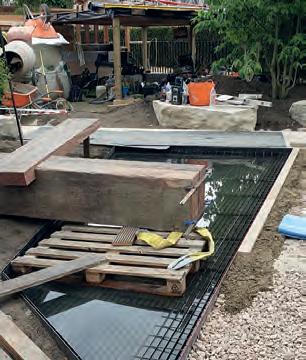
Speak to almost any landscape professional and they will tell you: building a garden at Chelsea is the pinnacle of their craft. And yet, for those achieving it, the recognition is minimal. This is especially puzzling given that judging weighs heavily on the quality and precision of the build itself – the translation of design into reality.
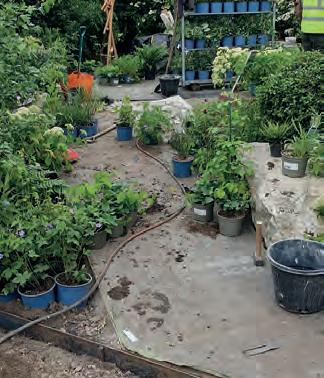
This year, Peter Gregory Landscapes – who build most of my own projects – completed their seventh Chelsea show garden and were awarded Best Construction for this year’s install: a significant achievement by any standard. But even with multiple builds and awards to their name, Gregory readily acknowledges that landscapers at Chelsea –and across RHS shows more broadly – receive little public recognition. The spotlight remains fixed on

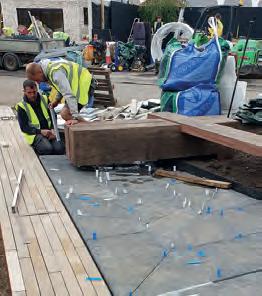
Of course, it’s also worth noting that most gardens are planted by teams of specialists who swoop in once the hard landscaping is complete – and they, too, receive little mention or attention. But that’s a whole other article, and one that doesn’t resonate with me to the same degree, given I do my own plant selection and set out on all my projects. That disparity matters –because it speaks directly to a broader issue.
As a designer, it might seem counterintuitive to champion landscapers so strongly. It’s not though, as I started out as a designer-builder myself, working on the install of my early designs. But the reality is also this: we are facing a serious shortage of skilled landscape professionals. Demand for high-quality garden builds continues to grow, but the workforce is not keeping pace. That should concern everyone in the industry – from the RHS and the BBC to designers, contractors and professional bodies.


What’s missing from Chelsea – and from much of its media coverage – is the how. How are these gardens built, never mind the fact that they are then deconstructed in just three days? What challenges are faced on site? What problemsolving, collaboration and expertise are required?
I would say there’s a whole untapped programme in there of itself, but surely, at the very least, it’s not too much to ask that daily coverage includes even a short segment dedicated to the build process – profiling the teams behind the scenes, documenting the pressures, and giving proper credit to the craft. Because the reality is far from glamorous.
driven by energy-intensive data centres and resource-heavy polluting infrastructure. Closer to home, there are practical implications too.
AI has its place – but not everywhere. And certainly not, in my view, at the expense of skilled craftsmanship and creative integrity
During build week, delivery lorries can wait hours for site access, sometimes leaving altogether before unloading. Schedules are tight, conditions demanding, and the margin for error almost nonexistent. These are not just aesthetic achievements – they are feats of logistics and technical skill.
And yet, you would struggle to find more than a passing mention of this in the RHS official Chelsea Flower Show guide. Yes, landscapers are credited – but no more prominently than any other contributor, despite their central role in realising the gardens themselves. This was my main concern – until another, not disconnected, issue emerged: AI designed gardens.
In the days leading up to the show, headlines announced that AI-designed gardens would feature at Chelsea. When one designer was asked to respond, the reported reaction was bleak: “Point me to the nearest job centre.” My response is different – but no less serious.
Take the argument that AI opens garden design to a wider public – those who may not otherwise engage a professional. On the surface, it is an appealing idea. But in an industry already struggling with a shortage of skilled landscapers, increasing demand without increasing capability creates a dangerous imbalance. That gap will not remain empty for long. It will be filled – often by less experienced or less scrupulous operators, cutting corners and compromising standards.
Even now, AI struggles with the
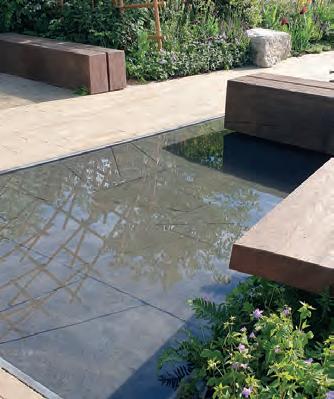
The debate around AI in garden design is not just about creativity – it is also about consequence. At a global level, the environmental cost of AI is significant,
from datasets. The risk with AI is not just inefficiency – it is dilution: a gradual erosion of authorship, replaced by iterations of what has already been done. Garden and landscape design is an emotional and contextual creative process that no AI can replicate.
Perhaps I am placing too much weight on this year’s AI debut. Chelsea has always embraced innovation, and not every idea endures. Last year’s concepts have already faded quietly from view. This one may follow the same path. But it may not.
By allowing AI into the showground, the RHS is signalling acceptance – if not endorsement. More broadly, we risk drifting into a passive acceptance of technology as inevitable. It isn’t.
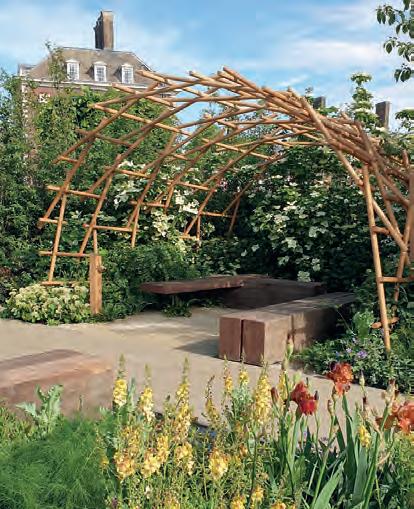
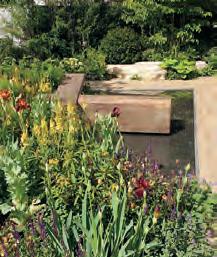
fundamentals. It cannot reliably produce detailed planting plans or construction drawings – the very elements that underpin a successful garden. Design is not simply about visual composition; it is about buildability, context and long-term performance. And then there is the question of originality.
Garden design is a creative discipline. Ideas are shaped by experience, observation and intent – not assembled
There are already examples of resistance – communities pushing back against the environmental cost of AI infrastructure, challenging the assumption that progress must come at any cost. The same principle applies here. AI has its place – but not everywhere. And certainly not, in my view, at the expense of skilled craftsmanship and creative integrity. Because in the end, Chelsea is about more than spectacle. It is about people – their expertise, their judgement, their hands. And that is something no algorithm can replicate.
After all, AI cannot smell the roses.

David Keegan is a multiaward-winning garden designer and writer. His work has achieved international recognition, winning awards at the International Landscape Design Awards in the US. He writes extensively on garden and landscape design for magazines and book publishers in the UK and overseas. He describes his apporach as tailored to each client rather than having a particular house style, with emphasis on the connection between plants, hard surfaces and the garden users' interaction with both. His motto would be 'It's All About the Plants'. dkgardendesign.co.uk
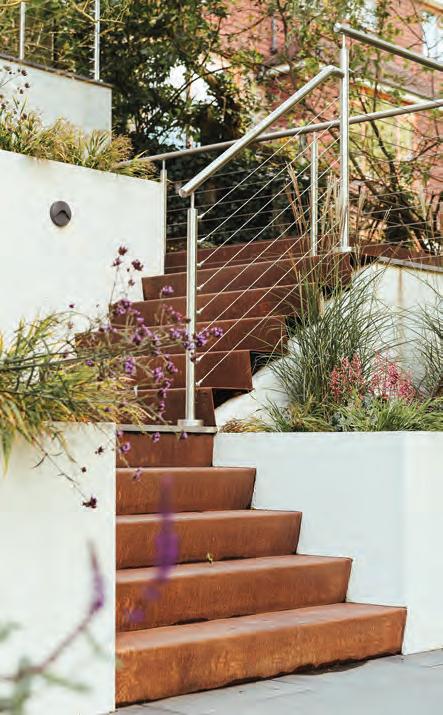























Pro Landscaper asks quick-fire questions to gain a small insight into the people who make up our industry. To take part, email content@eljays44.com.


BUSINESS OWNER, KIRMAN GARDEN DESIGNER
What do you hope to see for the industry this year?
A widespread appreciation that good design, skilled labour that have an interest in horticulture, and quality materials all cost money.

What’s your favourite project you’ve worked on?
The one where the client trusted the process, the contractors turned up on time, the plants thrived, and nobody changed their mind halfway through.
What did you gain from the Pro Landscaper Project Awards?
Pride in what we do and several new reasons to overanalyse old projects. Also, validation that all those late nights obsessing over paving alignment wasn’t entirely for my own entertainment.
Who has been your biggest inspiration?
Nature. It manages to produce extraordinary landscapes with no mood boards, no budgets and best of all, no human involvement.

Who would play you in a film?
Dame Maggie Smith.



DIRECTOR, FORMOSA LANDSCAPES
What is the importance of implementing sustainable techniques within projects?
Sustainability isn't a trend anymore; it should be a fundamental part of every project. Whether it's thoughtful planting or responsible material choices, sustainable landscapes are better for the environment and perform better for the client in the long term.

What did you gain from the Pro Landscaper Project Awards?
The awards are always a calendar highlight for me and the team. They're a great opportunity to celebrate the hard work that goes into our projects and catch up with others in the industry.
What has been the highlight of your career so far?
Accepting the award for Supreme Winner was a massive highlight and a complete surprise. That said, every day can be rewarding in this industry.

Who would play you in a film?
Arnold Schwarzenegger –although perhaps with a few more clothes.
GARDEN AND LANDSCAPE DESIGNER, ROSEMARY COLDSTREAM GARDEN DESIGN
What do you hope to see for the industry this year?
Stability and growth for everyone. It has been an unpredictable few years and that hasn’t changed yet. I know many are finding it tough –the house market is very sluggish which affects residential design.
What is the importance of implementing sustainable techniques within projects?
Extremely important – resources are valuable and need to be used carefully. A garden needs careful management of the soil during the build to stay healthy. Water management on site is essential whether the site is clay or sand.
Would you recommend entering the Pro Landscaper Project Awards?
Absolutely! As small companies, we are our own marketing team as well as everything else. If you don’t shout about yourself, who will?

Who has been your biggest inspiration?
My mum. She had a love of gardening and sensitivity to the natural world and passed it on to me from a very early age. On the professional side – all the women designers out there.
What’s your go-to karaoke song? Chappell Roan – Pink Pony Club.
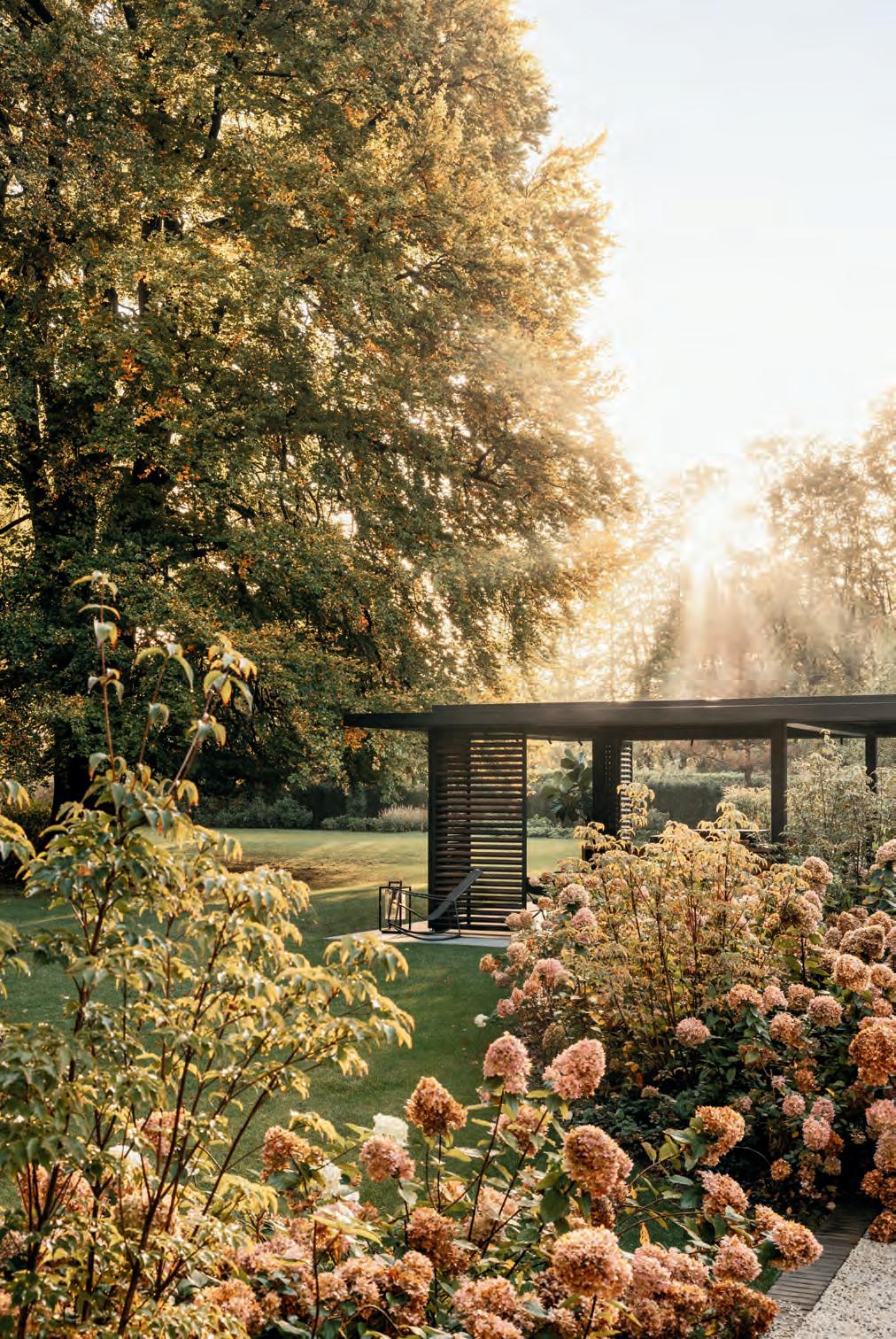


Meet Amani. Renson.net/amani