THE MISSING VASE

Pauline Russo

Illustrated by Rodolfo Brocchini
Activities 20 Chapter 2 Gloria Talks to the Inspector
Activities
Chapter 3 Giovanni Disappears
Activities 38 Chapter 4 A Conversation with Mrs Marchetti
Activities
Chapter 5 The CCTV Evidence
Investigates
Activities
Chapter 7 Back to Glasgow
Activities
Chapter 8 The Case is Closed!
Activities 88 Focus on… Glasgow Art Galleries and Museums
on…
on…
Syllabus
Chapter 1
The Kelvin Museum is fictional.
Kelvin is the name of one of the rivers in Glasgow. Real places in the city’s west end are Kelvingrove Park, Kelvingrove Museum and Art Gallery, and Kelvin Hall.
2
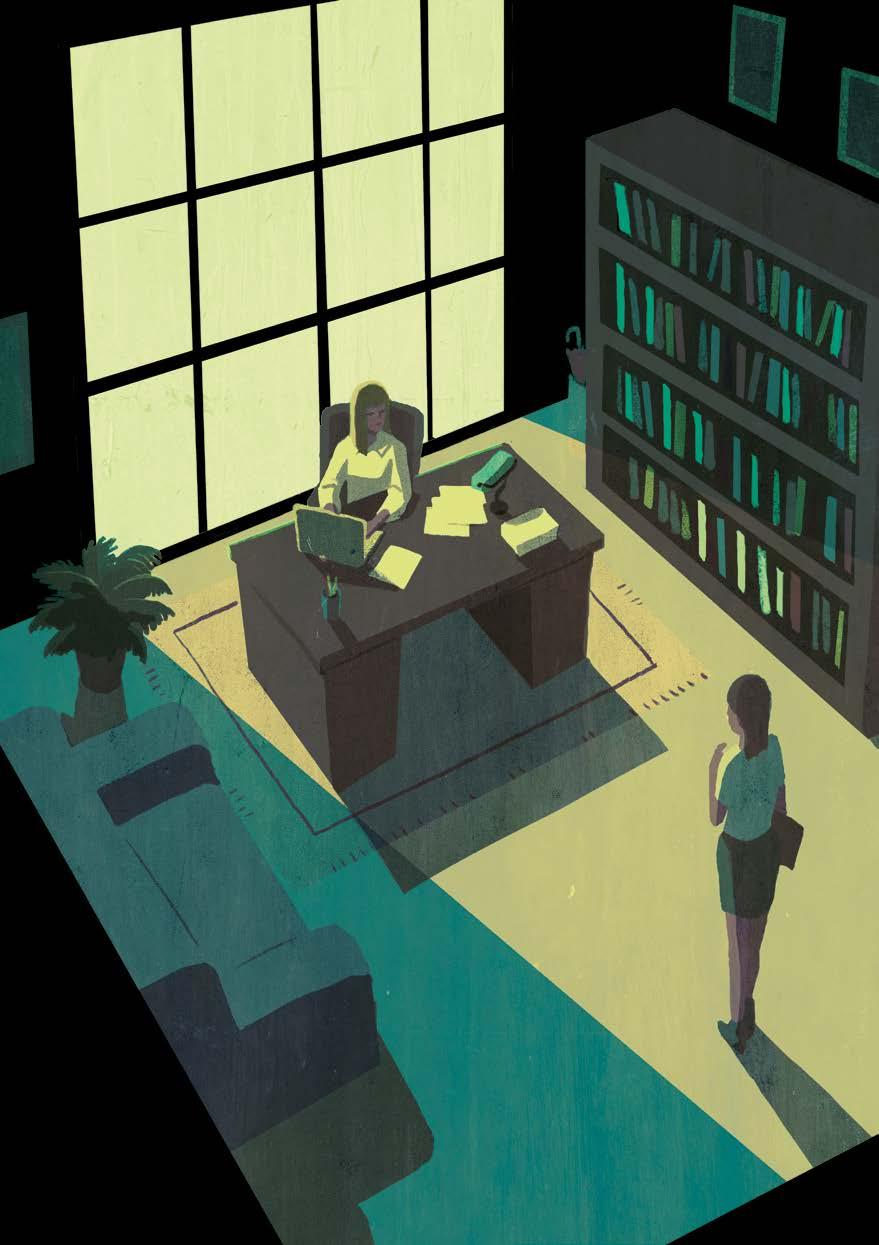
Annabel rushed into her boss’s office, and cried out, ‘It’s gone.’
‘What do you mean? What’s gone?’ said Sylvia Mackenzie, jumping up from her chair.
The young curator of the Kelvin Museum in Glasgow had been checking over the lists of items* for a new exhibition that month. The sound of the constant rain outside the window and the heat from the radiator in her small office had made her feel sleepy. Even in the summer, these old buildings felt cold when it rained. She’d almost been nodding off* when her secretary had come in and surprised her.
Annabel continued, talking very quickly, ‘Our vase! Our Chinese vase! It wasn’t there when they opened the box. It’s been stolen!’
Just a month before, Sylvia had authorised the loan of a precious vase from their Chinese collection to a small museum in London.
Originally, it was part of a series* of four blue and white porcelain vases each showing different garden scenes in each of the four seasons of the year. Three of them were now on display in a museum in China. The vase with a winter scene had been sold over 80 years before and had found its way into the Kelvin Museum. It was the only
item a single thing nod off to fall asleep series a collection of similar things
Sylvia gets bad news!
In the 14th century, Chinese blue and white porcelain was introduced to Europe, and was considered a rare and luxurious item.
piece in the series that the museum in China didn’t have, and some said they would love to have it to complete their collection. However, the owner of the Kelvin Museum, a rich businessman, refused to sell it.
The vase was very beautiful, and an excellent example of Chinese porcelain from the 14 century. It was one of their finest pieces, admired by everyone who came to visit the museum. Sylvia’s friend, Gloria Robbins, had asked to borrow the piece. Gloria was bringing together pieces of Chinese porcelain borrowed from museums all around the United Kingdom for a special exhibition, that she was having at her own small museum in London that month. Sylvia had arranged for it to be taken down there personally by her assistant curator, Giovanni Marchetti. The vase was priceless, and she had wanted to make sure that it would arrive in London safely.
Giovanni was a young man who had come from England to work at the museum a few years before. She trusted him completely and knew that he was the right person for the job. After two months of preparations and a lot of paperwork*, the day had finally arrived when Giovanni had to fly to London with the precious item. Sylvia thought back to early that morning when she had called him into her office before he left for London.
‘Good morning, Giovanni! Are you ready for this important trip?’
‘Absolutely,’ replied Giovanni, sitting down in the chair in front of her desk. ‘I have all my documents and instructions here’ he
th paperwork documents to be prepared
said, pointing to the left inside pocket of his jacket. ‘I’m just a little nervous, but I’ll be fine,’ he said with a laugh, and he pushed his long dark hair behind his right ear, a habit of his that showed he was, in fact, nervous.
Sylvia lifted the beautiful Chinese vase from her desk, placed it in a strong box, especially designed to carry the object, and locked it. She handed the key to Giovanni.
‘Keep this in a safe place. And do not open the box until you arrive at the museum.’
‘Of course. I’ll put the key in a place that’s a secret only to me. I won’t even tell you,’ he said, laughing.
‘Okay, but make sure nothing happens to you, or we won’t be able to get into the box without damaging the vase,’ said Sylvia, crossing her fingers for luck, and laughing. ‘Don’t forget to tell Gloria that I’ve put a letter inside the vase with some extra information and some ideas for her exhibition. I’ve seen photographs of other exhibitions at her museum. I now think the perfect place for our vase would be at the entrance, and not at the back of the room near the window, as we had thought before. I’ll call her this evening to talk about it more.’
‘Okay, I’ll tell her about the letter,’ said Giovanni. Then, he placed the box in a large holdall that he would carry with him on to the plane.
‘Would you like a cup of coffee before we go to the airport?’ asked Sylvia.
‘No, thanks. I don’t like coffee, remember?’ answered Giovanni, with a smile.
‘Of course! I forgot. You must be the only Italian I know who doesn’t drink coffee!’
Irn Bru (pronounced like iron brew) is an orangecoloured, fizzy drink, made in Scotland.
First made in 1901, its recipe is still a secret.
Scotland is well-known for its rainy weather, even in summer, and quite often gets brighter and sunnier in the evening.
In summer, it doesn’t get dark until 10 p.m.
‘Well, I grew up in England,’ he said, laughing. ‘But I do like Irn Bru.’
‘That’s only because you live in Scotland now!’
‘Don’t remind me,’ he groaned*, looking out of the window. ‘By the way, has it stopped raining yet?’
‘Not yet, but it will – eventually,’ said Sylvia. ‘The sun will probably come out about 7 this evening – a typical Scottish summer’s day!’
‘I think the weather forecast for London is dry and sunny, but I’ll take an umbrella with me anyway, just in case. The weather can be unpredictable there too.’
Sylvia had driven Giovanni to Glasgow Airport and watched him go into the terminal building to check in.
‘Call me when you get to the museum!’ she’d shouted from the car window.
So far so good, she had thought, as she drove away. Lending our vase to this important London exhibition will give our own museum more publicity.
But now, this theft was going to get the wrong type of publicity for the museum. She could not believe the vase had been stolen.
‘How did this happen? What about Giovanni?’ she asked Annabel. ‘I told him to always keep the box with him. Is he okay?’
Scotland Yard is the headquarters of the London Metropolitan Police.
‘Yes, he’s fine. But shocked, of course. He doesn’t know how this could have happened. He’s at Scotland Yard now. That’s where he called me from.’
‘I must go to London immediately! Book me a seat on the first flight from Glasgow, Annabel. I’m going home now to pack a case.’
groan to make a noise showing pain or disappointment
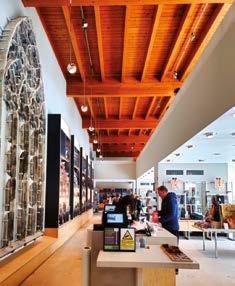
Museums in the United Kingdom are usually free to enter. Here are some of the most important ones in Glasgow, Scotland’s second city, where visitors can see artworks from all over the world. In some museums, there are also free guided tours.
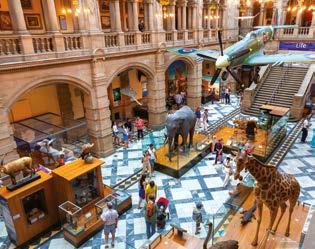
Built in the West End of Glasgow in 1901, the museum has wonderful artworks and natural history displays and is a cultural centre for both adults and children. Its 22 galleries are full of wonderful pieces of art: from Ancient Egyptian to Scottish Art: Impressionist paintings to beautiful marble sculptures; Salvador Dali’s masterpiece ‘Christ of St John of the Cross’ to Sir Roger, the Asian elephant. In the large halls, the famous ‘floating heads*’ and the World War II Spitfire plane hang from the ceiling. Every day, visitors can hear a short concert played on the beautiful pipe organ in the central hall.
floating heads heads suspended in the air
tapestry a carpet showing country scenes that hangs on the wall
Sir William Burrell, born in Glasgow in 1861, made a fortune in shipping, which allowed him to collect art and antiques, including late Gothic and early Renaissance European art, Medieval tapestries*, beautiful stained glass*, and late 19th century French art. He generously gifted* the Collection to the City of Glasgow, on the condition that the museum would always be free to visitors. The Burrell Collection consists of 9,000 objects from all over the world. The oldest object is a Chinese urn*, which is over 5000 years old. The Collection also includes paintings by French artists Manet, Cézanne and Degas, and a wonderful Chinese porcelain collection.
stained glass coloured glass, with patterns or scenes gift to give as a present urn a vase with a lid
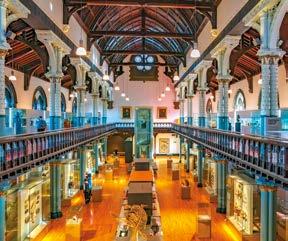
The Hunterian, which belongs to the University of Glasgow, is Scotland’s oldest public museum. Founded in 1807 by the collector, Dr William Hunter, the museum has over a million items: from meteorites to mummies*; from Charles Rennie Mackintosh to a vast selection of scientific and preserved medical specimens. There is also a particularly interesting exhibition with Ancient Roman pieces and parts of the Antonine Wall, which the Romans built across central Scotland, from the west to the east coast, in 142 AD.
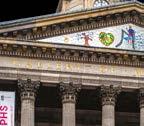
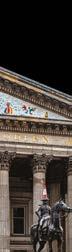
This contemporary art museum opened in Glasgow City Centre in 1996 in a beautiful Greco-Roman style building, built in 1777 as a mansion for the rich Glasgow merchant, William Cunninghame. Forty years later it became a bank, and then from 1827, it was the Glasgow Royal Exchange, where merchants traded goods. It was then a public library before it became the Gallery of Modern Art. The museum’s collection includes contemporary artworks: paintings, sculptures, videos and digital art. It also has educational programmes, workshops, talks, and events. The triangular mirror mosaic above the entrance to the building shows the patron saint of Glasgow, St Mungo, and the symbols of Glasgow: the bird, the bell, the fish, and the tree.
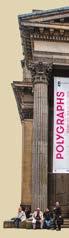
In front of the GoMA, there is a statue of the Duke of Wellington on his horse. This statue has a red traffic cone* on the duke’s head. Over 30 years ago, the cone was first placed there probably by students who were brave enough to climb the tall statue late at night – and this tradition continues today. Occasionally, the City Council removes it, but it always returns! It has become a Glasgow landmark*, often seen on postcards and T-shirts.

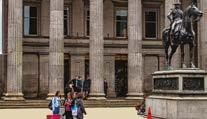

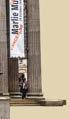
At which museum can visitors see…
1 … the ‘floating heads’?
2 … the symbols of the City of Glasgow?
3 … stained glass and tapestries?
landmark an important object or building that shows where you are
4 … parts of a Roman wall?
Complete the sentences about the story with A, B, C or D.
1 The missing vase was made in the ............................ century.
■ A 8th ■ B 14th
■ C 16th ■ D 19th
2 Sylvia was the curator of a museum in ............................ .
■ A Glasgow.
■ C Edinburgh.
■ B London.
■ D Brighton.
3 Gloria’s museum in London was in ............................
■ A Camden Town.
■ C Westminster.
■ B Heathrow.
■ D Kensington.
4 Sylvia had known Gloria for about ............................
■ A five years.
■ C a year and a half.
■ B six years.
■ D six months.
5 Scotland Yard experts examined the box that the vase had been in for ............................
■ A damage. ■ B DNA.
■ C fingerprints. ■ D hairs.
6 Sylvia remembered that Giovanni had left his mobile phone ............................
■ A in the taxi.
■ C in the hotel dining room.
■ B at the police station.
■ D at Gloria’s museum.
7 Giovanni had last been in Brighton for ............................
■ A Christmas.
■ C his mum’s birthday.
■ B Franco’s birthday.
■ D his birthday.
8 There was a photo of the stolen vase ............................
■ A in the newspaper.
■ B in the Kelvin Museum catalogue.
■ C at the police station. ■ D at Gloria’s museum.
9 The Scottish Police found Giovanni ............................
■ A at the hospital.
■ C at the airport.
■ B at a farmhouse.
■ D at the museum.
10 When Sylvia and Inspector Wilson went to Glasgow, they had dinner at ............................
■ A a hotel.
■ C Sylvia’s apartment.
■ B the airport.
■ D an Indian restaurant.
11 After Franco stole the vase, he wanted to ............................
■ A leave England. ■ B go to Brighton.
■ C stay in London.
■ D go to Glasgow.
12 Giovanni’s secret hiding place for the key was ............................
■ A in his trouser pocket.
■ C in his jacket pocket.
■ B in his wallet.
■ D in his lapel.
Level B2
This reader contains the items listed below as well as those included in previous levels of the ELI Readers syllabus.
Topics
Crime/Mystery
Museums and art
UK cities
Grammar
Present and Past Tenses
Present and Past Perfect Tenses
Modals of obligation, Modal auxiliaries, Modals of deduction
Modal perfects (must have, could have etc)
Passive forms
Gerunds
Zero, First, Second and Third Conditionals
Infinitive constructions
Relative pronouns
Direct and Indirect Speech
Phrasal verbs
The Missing Vase is a detective story about a stolen Chinese vase. The story starts in Glasgow, Scotland, where Sylvia Mackenzie is the curator of a small museum. She asks her assistant, Giovanni, to take a precious vase to her friend’s exhibition in London, but when he arrives there, the box is empty! Inspector Wilson from Scotland Yard investigates the crime with Sylvia’s help. Can you find the clues in the story and solve the mystery?
In this reader you’ll find:
- Information about Glasgow Art Galleries and Museums, Chinese Porcelain and Scotland Yard
- Notes providing background and contextual information
- A glossary of difficult words
- Comprehension and grammar activities including B2 style exercises and 21st-century Skills activities
- Final test
Tag
Mystery, Crime, Art
STAGE 1 600 headwords Elementary A1 STAGE 2 800 headwords Pre-Intermediate A2 Key STAGE 3 1000 headwords Intermediate B1 Preliminary STAGE 4 1800 headwords Upper Intermediate B2 First STAGE 5 2500 headwords Advanced C1 Advanced
STAGE 6 Unabridged Texts