THE MISSING VASE

Pauline Russo
1 2 3 4 5

1 2 3 4 5
The Missing Vase is a detective story about the theft of a priceless Chinese porcelain vase.
The story takes place in Glasgow, Scotland and in London, England.
The main characters in the story are Sylvia Mackenzie, the curator of a museum in Glasgow and Inspector Andrew Wilson, the Scotland Yard detective in charge of the investigation.
Readers can try to solve the mystery themselves by finding the clues in the story. The full solution to the mystery is not revealed till the last chapter.
The story also gives readers the opportunity to read about two major cities in the two largest nations that make up the United Kingdom and learn some cultural and modern-day facts about them.
Illustrated by Rodolfo Brocchini
The ELI Readers collection is a complete range of books and plays for readers of all ages, ranging from captivating contemporary stories to timeless classics. There are four series, each catering for a different age group: First ELI Readers, Young ELI Readers, Teen ELI Readers and Young Adult ELI Readers. The books are carefully edited and beautifully illustrated to capture the essence of the stories and plots. The readers are supplemented with ’Focus on’ texts packed with background cultural information about the writers and their lives and times.
The Missing Vase
Pauline Russo
Illustrations
Rodolfo Brocchini
ELI Readers
Founder and Series Editors
Paola Accattoli, Grazia Ancillani, Daniele Garbuglia (Art Director)
Graphic Design
Emilia Coari
Production Manager
Francesco Capitano
Photo credits
Shutterstock © 2026
Gruppo editoriale ELi P.O. Box 6 62019 Recanati (MC)
Italy
T +39 071750701
F +39 071977851 support@elipublishing.com www.elipublishing.com
Typeset in 10,5 / 15 pt Monotype Fulmar Printed in Italy by Tecnostampa –Pigini Group Printing Division Loreto – Trevi (Italia) – ERA 428.10
ISBN 978-88-536-4823-5 www.eligradedreaders.com
Activities 20 Chapter 2 Gloria Talks to the Inspector
Activities
Chapter 3 Giovanni Disappears
Activities 38 Chapter 4 A Conversation with Mrs Marchetti
Activities
Chapter 5 The CCTV Evidence
Investigates
Activities
Chapter 7 Back to Glasgow
Activities
Chapter 8 The Case is Closed!
Activities 88 Focus on… Glasgow Art Galleries and Museums
on…
on…
Syllabus











1 Complete the text with one suitable word in each gap. Sylvia is the young curator of a small museum (1) .............................. Glasgow. She has agreed to lend (2) .............................. of the museum’s most valuable vases to her friend, Gloria, (3) .............................. is organising a special exhibition of Chinese porcelain pieces in London. Sylvia asks her assistant, Giovanni, to fly (4) .............................. London and take the vase to Gloria. When Giovanni arrives (5) .............................. Gloria’s museum, he discovers the vase is missing. When Sylvia finds (6) .............................., she goes to London and meets Giovanni at Scotland Yard. Inspector Wilson tells her what (7) .............................. happened. Sylvia offers to help him investigate the theft (8) .............................. the vase.
2 Match the words (1-10) to the meanings (a-j) opposite.
1 ■ precious a a large bag used for travelling
2 ■ exhibition b to get something back
3 ■ recover c a person in charge of a museum
4 ■ priceless d rare and valuable
5 ■ lend e a type of ceramics
6 ■ holdall f so valuable that it has no price
7 ■ unpredictable g to give something temporarily;
8 ■ publicity opposite of borrow
9 ■ curator h not expected
10 ■ porcelain i advertising, attention j a show or display of objects
3 Listen to the beginning of Chapter 1. Decide if the following sentences are true (T) or false (F).
1 Sylvia’s museum was having a new exhibition that month. ■ ■
2 Sylvia’s museum was in London. ■ ■
3 It was snowing in Glasgow. ■ ■ 2
4 The vase in the Kelvin Museum had a spring scene on it. ■ ■
5 The vase had been sold 18 years before. ■ ■
6 The owner didn’t want to sell the vase to the museum in China. ■ ■
4a Look at the map. Work with a partner to identify the four nations that make up the United Kingdom. Use the Internet to help you. Write the names in the correct boxes (1-4) on the map.

4B Name the four capital cities of these nations.
4C In The Missing Vase, the story begins in Glasgow, Scotland’s second city. What do you know about Glasgow? Compare notes with your classmates.
Chapter 1
The Kelvin Museum is fictional.
Kelvin is the name of one of the rivers in Glasgow. Real places in the city’s west end are Kelvingrove Park, Kelvingrove Museum and Art Gallery, and Kelvin Hall.
2
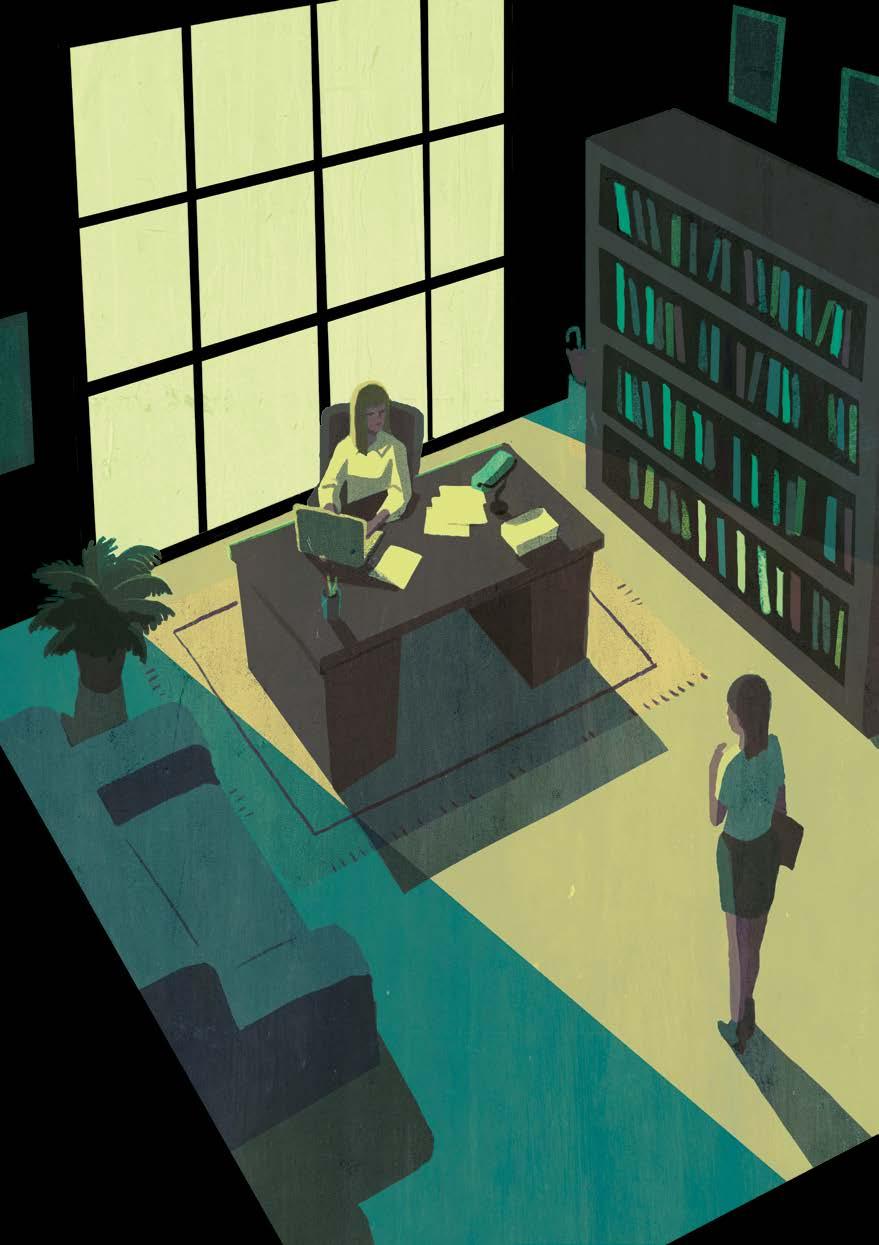
Annabel rushed into her boss’s office, and cried out, ‘It’s gone.’
‘What do you mean? What’s gone?’ said Sylvia Mackenzie, jumping up from her chair.
The young curator of the Kelvin Museum in Glasgow had been checking over the lists of items* for a new exhibition that month. The sound of the constant rain outside the window and the heat from the radiator in her small office had made her feel sleepy. Even in the summer, these old buildings felt cold when it rained. She’d almost been nodding off* when her secretary had come in and surprised her.
Annabel continued, talking very quickly, ‘Our vase! Our Chinese vase! It wasn’t there when they opened the box. It’s been stolen!’
Just a month before, Sylvia had authorised the loan of a precious vase from their Chinese collection to a small museum in London.
Originally, it was part of a series* of four blue and white porcelain vases each showing different garden scenes in each of the four seasons of the year. Three of them were now on display in a museum in China. The vase with a winter scene had been sold over 80 years before and had found its way into the Kelvin Museum. It was the only
item a single thing nod off to fall asleep series a collection of similar things
Sylvia gets bad news!
In the 14th century, Chinese blue and white porcelain was introduced to Europe, and was considered a rare and luxurious item.
piece in the series that the museum in China didn’t have, and some said they would love to have it to complete their collection. However, the owner of the Kelvin Museum, a rich businessman, refused to sell it.
The vase was very beautiful, and an excellent example of Chinese porcelain from the 14 century. It was one of their finest pieces, admired by everyone who came to visit the museum. Sylvia’s friend, Gloria Robbins, had asked to borrow the piece. Gloria was bringing together pieces of Chinese porcelain borrowed from museums all around the United Kingdom for a special exhibition, that she was having at her own small museum in London that month. Sylvia had arranged for it to be taken down there personally by her assistant curator, Giovanni Marchetti. The vase was priceless, and she had wanted to make sure that it would arrive in London safely.
Giovanni was a young man who had come from England to work at the museum a few years before. She trusted him completely and knew that he was the right person for the job. After two months of preparations and a lot of paperwork*, the day had finally arrived when Giovanni had to fly to London with the precious item. Sylvia thought back to early that morning when she had called him into her office before he left for London.
‘Good morning, Giovanni! Are you ready for this important trip?’
‘Absolutely,’ replied Giovanni, sitting down in the chair in front of her desk. ‘I have all my documents and instructions here’ he
th paperwork documents to be prepared
said, pointing to the left inside pocket of his jacket. ‘I’m just a little nervous, but I’ll be fine,’ he said with a laugh, and he pushed his long dark hair behind his right ear, a habit of his that showed he was, in fact, nervous.
Sylvia lifted the beautiful Chinese vase from her desk, placed it in a strong box, especially designed to carry the object, and locked it. She handed the key to Giovanni.
‘Keep this in a safe place. And do not open the box until you arrive at the museum.’
‘Of course. I’ll put the key in a place that’s a secret only to me. I won’t even tell you,’ he said, laughing.
‘Okay, but make sure nothing happens to you, or we won’t be able to get into the box without damaging the vase,’ said Sylvia, crossing her fingers for luck, and laughing. ‘Don’t forget to tell Gloria that I’ve put a letter inside the vase with some extra information and some ideas for her exhibition. I’ve seen photographs of other exhibitions at her museum. I now think the perfect place for our vase would be at the entrance, and not at the back of the room near the window, as we had thought before. I’ll call her this evening to talk about it more.’
‘Okay, I’ll tell her about the letter,’ said Giovanni. Then, he placed the box in a large holdall that he would carry with him on to the plane.
‘Would you like a cup of coffee before we go to the airport?’ asked Sylvia.
‘No, thanks. I don’t like coffee, remember?’ answered Giovanni, with a smile.
‘Of course! I forgot. You must be the only Italian I know who doesn’t drink coffee!’
Irn Bru (pronounced like iron brew) is an orangecoloured, fizzy drink, made in Scotland.
First made in 1901, its recipe is still a secret.
Scotland is well-known for its rainy weather, even in summer, and quite often gets brighter and sunnier in the evening.
In summer, it doesn’t get dark until 10 p.m.
‘Well, I grew up in England,’ he said, laughing. ‘But I do like Irn Bru.’
‘That’s only because you live in Scotland now!’
‘Don’t remind me,’ he groaned*, looking out of the window. ‘By the way, has it stopped raining yet?’
‘Not yet, but it will – eventually,’ said Sylvia. ‘The sun will probably come out about 7 this evening – a typical Scottish summer’s day!’
‘I think the weather forecast for London is dry and sunny, but I’ll take an umbrella with me anyway, just in case. The weather can be unpredictable there too.’
Sylvia had driven Giovanni to Glasgow Airport and watched him go into the terminal building to check in.
‘Call me when you get to the museum!’ she’d shouted from the car window.
So far so good, she had thought, as she drove away. Lending our vase to this important London exhibition will give our own museum more publicity.
But now, this theft was going to get the wrong type of publicity for the museum. She could not believe the vase had been stolen.
‘How did this happen? What about Giovanni?’ she asked Annabel. ‘I told him to always keep the box with him. Is he okay?’
Scotland Yard is the headquarters of the London Metropolitan Police.
‘Yes, he’s fine. But shocked, of course. He doesn’t know how this could have happened. He’s at Scotland Yard now. That’s where he called me from.’
‘I must go to London immediately! Book me a seat on the first flight from Glasgow, Annabel. I’m going home now to pack a case.’
groan to make a noise showing pain or disappointment
Sylvia arrived at Heathrow Airport three hours later and took a taxi straight to Scotland Yard. She was welcomed by Inspector Andrew Wilson, who told her what they knew so far.
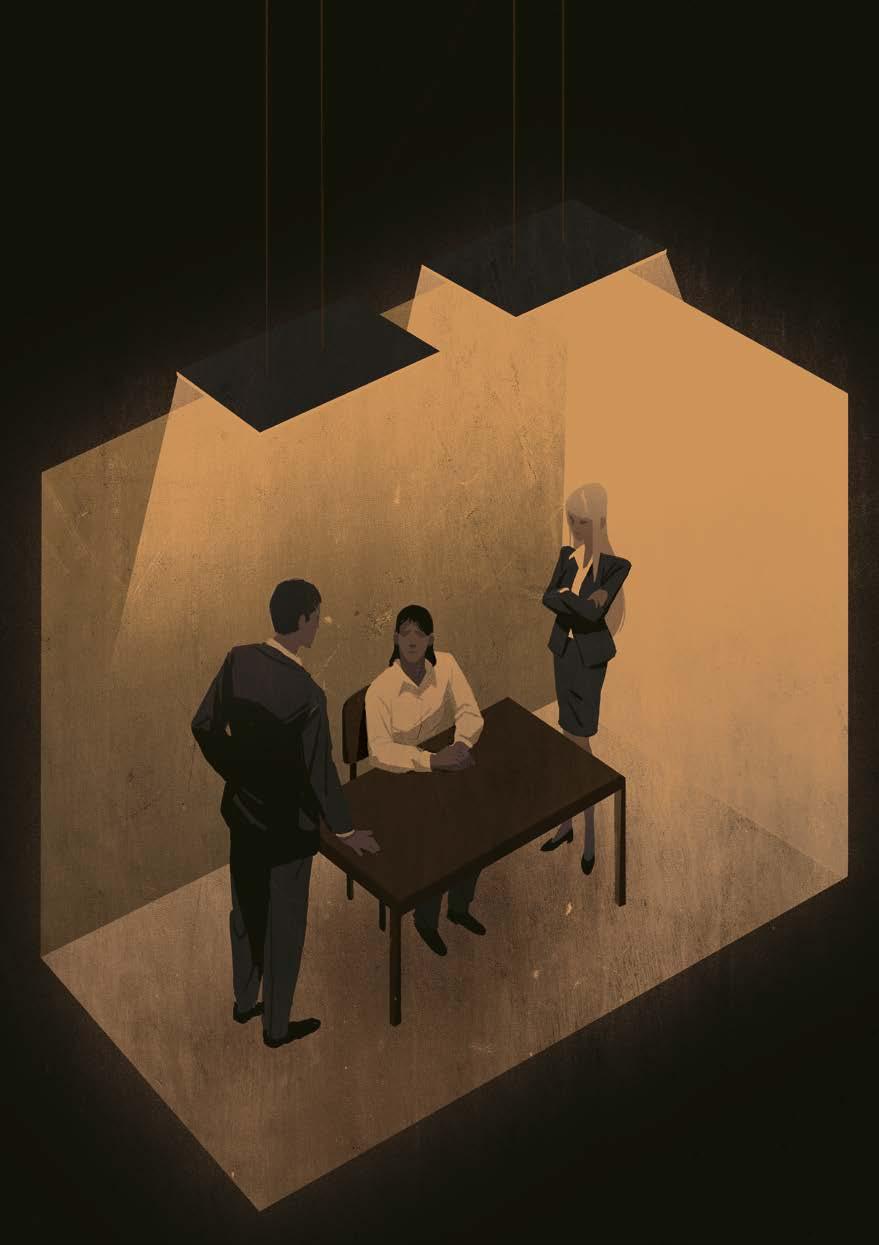
Giovanni had told them that he had flown to London from Glasgow and had taken a taxi straight to Gloria’s small museum in Kensington. When they opened the box together, it was empty. The vase had disappeared. He had no idea how it could have happened. The Inspector said that, for the moment, they had no reason to suspect that Giovanni was involved in the theft. Inspector Wilson offered to take Sylvia to Giovanni, who was in the interrogation room*.
‘Giovanni!’ she cried, when she saw him. ‘Thank goodness you’re ok. But what happened? How could the vase have disappeared from the box?’
Giovanni was obviously upset and kept pushing his hair behind his left ear.
‘I’m so sorry, Sylvia. I don’t know how it could have happened. I kept the holdall with me at all times. I didn’t even open it. Even when I went through security at the airport, they didn’t ask me to open the bag. I was so glad, because I noticed someone looking at me suspiciously in the queue. I didn’t want anyone to know there was something valuable in it. I had my eyes on it all the time, except when I had to put it in the tray to go through the X-ray machine, of course. The airport was busy, but I managed to pick it up quite quickly at the other side. I followed all your instructions,’ he said nervously, pulling some papers out of his inside right pocket. ‘Look, I still have them here! I’m so sorry!’
interrogation room a room where the police ask suspects questions
‘Don’t worry, Giovanni. I believe you. And I’m sure Inspector Wilson doesn’t think you had anything to do with this. You are not a suspect.’
She turned towards the Inspector for confirmation, and he nodded. ‘However, you must stay in London while we are investigating,’ he said. ‘I’d like you to stay too, Miss Mackenzie, if possible. Please give your addresses to one of my officers so that I can contact you.’
‘Of course, Inspector,’ she replied. ‘I’d like to help in any way I can.’
‘Well, perhaps you’d like to come with me to speak to your friend who is organising the exhibition here in London?’
‘Certainly, Inspector. Shall we go now?’ said Sylvia.
She turned to Giovanni and said, ‘Giovanni, before leaving Glasgow, I booked rooms for us at this hotel.’ She handed him a piece of paper. ‘Here is the name of the hotel and the room numbers. Why don’t you take a taxi there now and get some rest?’ I’ll speak to you later.’
Before they left, the Inspector said, ‘One other thing I’d like to ask you first, Mr Marchetti. If, at any time during the journey, the vase was somehow no longer in the box, why didn’t you notice that the holdall felt lighter than before?’
‘I could never have guessed that the vase wasn’t in the box. The box is quite heavy even without the vase in it, and the vase itself doesn’t weigh very much.’
Giovanni shook his head and said, desperately, ‘You must believe me. I honestly don’t know what happened to the vase!’
Inspector Wilson interrogates Giovanni.
1 Read Chapter 1 again and choose the correct answer A, B, C or D.
1 Annabel was Sylvia’s ….
■ A boss. ■ B secretary. ■ C assistant. ■ D friend.
2 When Annabel entered the office, Sylvia was ….
■ A listening to music. ■ B falling asleep.
■ C putting a vase in a box. ■ D looking out of the window.
3 The stolen vase was made of …
■ A terracotta. ■ B crystal. ■ C porcelain. ■ D glass.
4 Sylvia had agreed to lend the vase to a museum in …
■ A China. ■ B Glasgow. ■ C London. ■ D Italy.
5 Giovanni put the key for the box in …
■ A his secret place.
■ C the vase.
6 Giovanni grew up in …
■ B the holdall.
■ D his jacket pocket.
■ A Scotland. ■ B England. ■ C Italy. ■ D China.
7 After the theft, Sylvia met Giovanni at …
■ A the hotel.
■ B Heathrow Airport.
■ C Gloria’s museum. ■ D Scotland Yard.
8 When Sylvia left Scotland Yard, she and Inspector Wilson went to … ■ A the hotel.
■ C Kensington.
■ B the airport.
■ D the train station.
2 Find the words or expressions in the chapter that mean the same as the following:
1 tired
2 to give permission .....................................................................
3 exhibited, on show
4 to say no .....................................................................
5 something you do all the time .....................................................................
6 advertisement .....................................................................
3 Solve the clues and complete the crossword.

2 Too valuable to have a price.
3 The manager of a museum.
4 Unexpected.
5 Type of pottery made in China.
6 A journey on a plane.
7 Take something you don’t own.

Pre-Reading Activity • Chapter 2
4 In Chapter 2, inspector Wilson asks Gloria questions about Giovanni and the theft of the vase. If you were the Inspector, what would you ask her? Work with a partner and play the roles of Inspector Wilson and Gloria.
Museums in the United Kingdom are usually free to enter. Here are some of the most important ones in Glasgow, Scotland’s second city, where visitors can see artworks from all over the world. In some museums, there are also free guided tours.
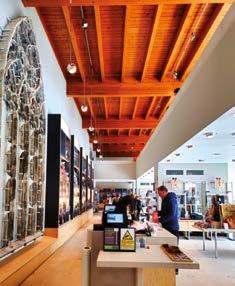
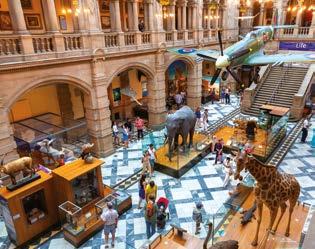
Built in the West End of Glasgow in 1901, the museum has wonderful artworks and natural history displays and is a cultural centre for both adults and children. Its 22 galleries are full of wonderful pieces of art: from Ancient Egyptian to Scottish Art: Impressionist paintings to beautiful marble sculptures; Salvador Dali’s masterpiece ‘Christ of St John of the Cross’ to Sir Roger, the Asian elephant. In the large halls, the famous ‘floating heads*’ and the World War II Spitfire plane hang from the ceiling. Every day, visitors can hear a short concert played on the beautiful pipe organ in the central hall.
floating heads heads suspended in the air
tapestry a carpet showing country scenes that hangs on the wall
Sir William Burrell, born in Glasgow in 1861, made a fortune in shipping, which allowed him to collect art and antiques, including late Gothic and early Renaissance European art, Medieval tapestries*, beautiful stained glass*, and late 19th century French art. He generously gifted* the Collection to the City of Glasgow, on the condition that the museum would always be free to visitors. The Burrell Collection consists of 9,000 objects from all over the world. The oldest object is a Chinese urn*, which is over 5000 years old. The Collection also includes paintings by French artists Manet, Cézanne and Degas, and a wonderful Chinese porcelain collection.
stained glass coloured glass, with patterns or scenes gift to give as a present urn a vase with a lid
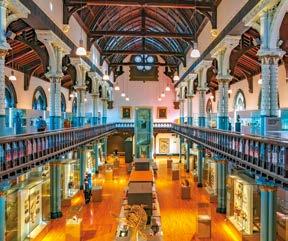
The Hunterian, which belongs to the University of Glasgow, is Scotland’s oldest public museum. Founded in 1807 by the collector, Dr William Hunter, the museum has over a million items: from meteorites to mummies*; from Charles Rennie Mackintosh to a vast selection of scientific and preserved medical specimens. There is also a particularly interesting exhibition with Ancient Roman pieces and parts of the Antonine Wall, which the Romans built across central Scotland, from the west to the east coast, in 142 AD.
This contemporary art museum opened in Glasgow City Centre in 1996 in a beautiful Greco-Roman style building, built in 1777 as a mansion for the rich Glasgow merchant, William Cunninghame. Forty years later it became a bank, and then from 1827, it was the Glasgow Royal Exchange, where merchants traded goods. It was then a public library before it became the Gallery of Modern Art. The museum’s collection includes contemporary artworks: paintings, sculptures, videos and digital art. It also has educational programmes, workshops, talks, and events. The triangular mirror mosaic above the entrance to the building shows the patron saint of Glasgow, St Mungo, and the symbols of Glasgow: the bird, the bell, the fish, and the tree.
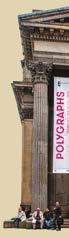
In front of the GoMA, there is a statue of the Duke of Wellington on his horse. This statue has a red traffic cone* on the duke’s head. Over 30 years ago, the cone was first placed there probably by students who were brave enough to climb the tall statue late at night – and this tradition continues today. Occasionally, the City Council removes it, but it always returns! It has become a Glasgow landmark*, often seen on postcards and T-shirts.
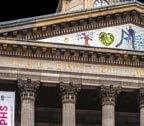


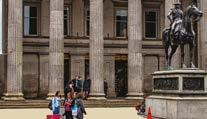

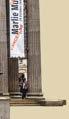
At which museum can visitors see…
1 … the ‘floating heads’?
2 … the symbols of the City of Glasgow?
3 … stained glass and tapestries?
landmark an important object or building that shows where you are
4 … parts of a Roman wall?
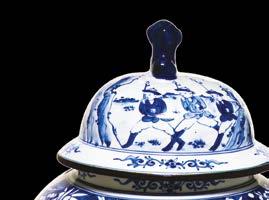
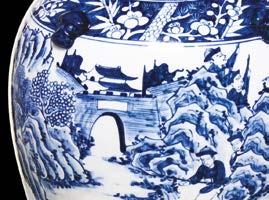

Porcelain, first produced in China around 600 AD, is a type of pottery* which is like ceramic but is made using a special heating process that makes it finer and more translucent*. It was named by the Italian explorer, Marco Polo, who called it porcellana when he first saw the Chinese pottery on his visits to China. Since it is a Chinese invention, the word china is still used in English as a collective word for plates, dishes and cups.


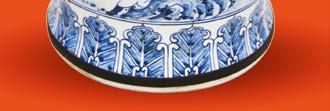

rich history of producing pottery. Early examples of dishes, vases and ornaments* date back more than 20,000 years. One of the most famous examples of Chinese pottery is the iconic* Terracotta Army of Xi’an. Discovered by farmers in 1974, it contains more than 8,000 life-sized terracotta* warriors and horses, all unique and individual in their design.
Chinese porcelain, the most advanced in the world, was made for the imperial court, the domestic market or for export. Several types of Chinese antique porcelain are considered both expensive and rare due to their historical significance, artistic quality, and scarcity*. Some of the most precious examples include Blue and White Porcelain from the Ming Dynasty (1368-1644), which is probably the most well-known. The Ming Dynasty also marked the start of China’s export empire, with porcelain leaving China for all corners of the world along the Silk Road.



pottery dishes made from fired clay translucent shiny, like glass scarcity when very few exist ornament a small object used to decorate a house iconic symbolic, important terracotta pottery made from brown or orange clay
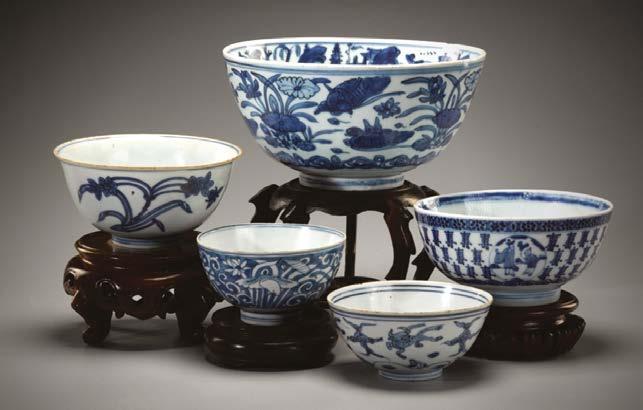
There are many styles of porcelain vases. Some have a variety of colours, with images of flowers, birds, animals, dragons, and village scenes with people in them. Others are monochrome* and are painted in just one colour. The most common types are: with the colours blue or pink and white; with green and orange; a Cantonese style of panels* of figures, birds, and insects, on a background* of green and pink, gold and blue.
The Silk Road, so-called because of the valuable silk cloth that was carried along it from China, was an ancient trade route that linked the Western world with the Middle East and Asia. It was a major road between the Roman Empire and China, and later between medieval Europe and China.
monochrome having only one colour panel a square or rectangular area background the area behind something


Task
Answer the questions.
1 Who gave porcelain its name?
2 Which dynasty marked the beginning of exports of Chinese porcelain?
3 How did the Silk Road get its name?
4 What sorts of images can be seen on Chinese porcelain vases?

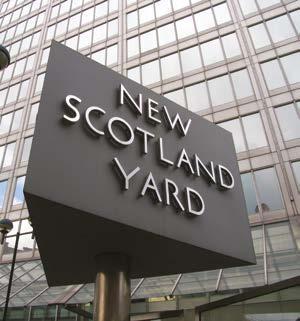
Scotland Yard is the name used for the headquarters* of the London Metropolitan Police and is often used to refer to the London Police themselves.









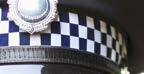
At the beginning of the 19th century, there was no official police force* for the City of London. There were only groups of men called watchmen and the River Police on the River Thames to keep order. Then a group of men, called the Bow Street Runners, was organised by the author and magistrate* Henry Fielding. The London police force was finally created in 1829 by the Home Secretary*, Sir Robert Peel. Policemen were often called peelers and then bobbies because of this. (Bobby is a short name for Robert). Although Scotland Yard’ is mainly responsible for the city of London, police forces in other parts of England often ask for their help in difficult cases.





It is called Scotland Yard because the original building was in a square called Great Scotland Yard, in Whitehall, where there used to be a medieval palace for Scottish kings and queens who visited London. At the end of the 19th century, the London Police Force had become too big for the original building, and they had to move to the Thames Embankment, and it was then named New Scotland Yard. When they had to move again in 1967 and then more recently in 2016, they kept the name of New Scotland Yard, which can be seen on the world-famous rotating* metal sign outside the building.
headquarters main offices police force large unit/group of policemen magistrate: judge in a court of law
Home Secretary: Member of Parliament responsible for the country rotating: turning
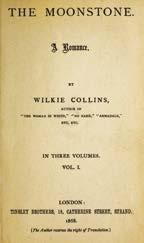
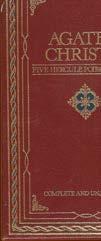
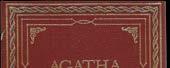
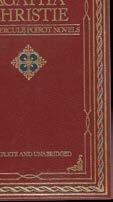
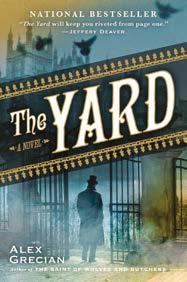
Since Victorian times, Scotland Yard has appeared in books, films and television. Scotland Yard detectives have played important roles in the stories of Sherlock Holmes by Sir Arthur Conan Doyle, in Agatha Christie’s Poirot novels, in Wilkie Collins’ novel The Moonstone (1868), and in Louis Stevenson’s gothic novella*, The Strange Case of Dr Jekyll and Mr Hyde (1886). More recently, the American author, Alex Grecian, has written a series of books called Scotland Yard’s Murder Squad, based on a real-life detective unit formed in 1889, which tell the stories of Jack the Ripper and other criminals of the Victorian period.
novella: short book/novel
Crossword

1 The river that flows through London.





2 ………......…… Fielding organised the Bow Street Runners.
3 Jack the ……......……… was a famous murderer in Victorian times.
4 The name of Agatha Christie’s famous Belgian detective.
5 Bobby is a short name for ……......……… .














Complete the sentences about the story with A, B, C or D.
1 The missing vase was made in the ............................ century.
■ A 8th ■ B 14th
■ C 16th ■ D 19th
2 Sylvia was the curator of a museum in ............................ .
■ A Glasgow.
■ C Edinburgh.
■ B London.
■ D Brighton.
3 Gloria’s museum in London was in ............................
■ A Camden Town.
■ C Westminster.
■ B Heathrow.
■ D Kensington.
4 Sylvia had known Gloria for about ............................
■ A five years.
■ C a year and a half.
■ B six years.
■ D six months.
5 Scotland Yard experts examined the box that the vase had been in for ............................
■ A damage. ■ B DNA.
■ C fingerprints. ■ D hairs.
6 Sylvia remembered that Giovanni had left his mobile phone ............................
■ A in the taxi.
■ C in the hotel dining room.
■ B at the police station.
■ D at Gloria’s museum.
7 Giovanni had last been in Brighton for ............................
■ A Christmas.
■ C his mum’s birthday.
■ B Franco’s birthday.
■ D his birthday.
8 There was a photo of the stolen vase ............................
■ A in the newspaper.
■ B in the Kelvin Museum catalogue.
■ C at the police station. ■ D at Gloria’s museum.
9 The Scottish Police found Giovanni ............................
■ A at the hospital.
■ C at the airport.
■ B at a farmhouse.
■ D at the museum.
10 When Sylvia and Inspector Wilson went to Glasgow, they had dinner at ............................
■ A a hotel.
■ C Sylvia’s apartment.
■ B the airport.
■ D an Indian restaurant.
11 After Franco stole the vase, he wanted to ............................
■ A leave England. ■ B go to Brighton.
■ C stay in London.
■ D go to Glasgow.
12 Giovanni’s secret hiding place for the key was ............................
■ A in his trouser pocket.
■ C in his jacket pocket.
■ B in his wallet.
■ D in his lapel.
Level B2
This reader contains the items listed below as well as those included in previous levels of the ELI Readers syllabus.
Topics
Crime/Mystery
Museums and art
UK cities
Grammar
Present and Past Tenses
Present and Past Perfect Tenses
Modals of obligation, Modal auxiliaries, Modals of deduction
Modal perfects (must have, could have etc)
Passive forms
Gerunds
Zero, First, Second and Third Conditionals
Infinitive constructions
Relative pronouns
Direct and Indirect Speech
Phrasal verbs
STAGE 1
· Sir Arthur Conan Doyle, A Study in Scarlet
· Jonathan Swift, Gulliver’s Travels
· Sir Arthur Conan Doyle, The Hound of the Baskervilles
· Daniel Defoe, Robinson Crusoe
STAGE 2
· Shakespeare, Hamlet Prince of Denmark
· Charles Dickens, Great Expectations
· William Shakespeare, Romeo and Juliet
· Bram Stoker, Dracula
· William Shakespeare, A Midsummer Night’s Dream
· Robert Louis Stevenson, The Strange Case of Dr Jekyll and Mr Hyde
· Jerome K. Jerome, Three Men in a Boat
· John Buchan, Thirty-Nine Steps
STAGE 3
· Charlotte Brontë, Jane Eyre
· Jane Austen, Pride and Prejudice
· Oscar Wilde, The Picture of Dorian Gray
· William Shakespeare, Macbeth
· Jane Austen, Sense and Sensibility
· Edith Wharton, The Age of Innocence
· Charles Dickens, A Christmas Carol
· Wilkie Collins, The Woman in White
· Anonymous, Beowulf
· Robert Louis Stevenson, Kidnapped
· Elizabeth Ferretti, The Earthkeepers
· Thomas Hardy, Tess of the d’Ubervilles
· George Orwell, 1984
· Chiara Michelon, Changing the World!
· Chiara Michelon, Wonders
STAGE 4
· James Joyce, Dubliners
· Mary Shelley, Frankenstein
· Henry James, The Turn of the Screw
· Emily Brontë, Wuthering Heights
· Edgar Allan Poe, Stories of Mystery and Suspense
· Charles and Mary Lamb, Tales from Shakespeare
· Charles Dickens, A Tale of Two Cities
· Hermann Melville, Moby Dick
· Jane Austen, Emma
· Nathaniel Hawthorne, The Scarlet Letter
· E.M.Forster, A Passage to India
· Joseph Conrad, The Shadow Line
· Sir Arthur Conan Doyle, The Valley of Fear
· Pauline Russo, The Missing Vase
STAGE 5
· Virginia Woolf, Mrs Dalloway
· Francis Scott Fitzgerald, The Great Gatsby
STAGE 6
· Joseph Conrad, Heart of Darkness
· J. Borsbey & R. Swan, Editors, A Collection of First World War Poetry
· Oscar Wilde, The Importance of Being Earnest
The Missing Vase is a detective story about a stolen Chinese vase. The story starts in Glasgow, Scotland, where Sylvia Mackenzie is the curator of a small museum. She asks her assistant, Giovanni, to take a precious vase to her friend’s exhibition in London, but when he arrives there, the box is empty! Inspector Wilson from Scotland Yard investigates the crime with Sylvia’s help. Can you find the clues in the story and solve the mystery?
In this reader you’ll find:
- Information about Glasgow Art Galleries and Museums, Chinese Porcelain and Scotland Yard
- Notes providing background and contextual information
- A glossary of difficult words
- Comprehension and grammar activities including B2 style exercises and 21st-century Skills activities
- Final test
Tag
Mystery, Crime, Art
STAGE 1 600 headwords Elementary A1 STAGE 2 800 headwords Pre-Intermediate A2 Key STAGE 3 1000 headwords Intermediate B1 Preliminary STAGE 4 1800 headwords Upper Intermediate B2 First STAGE 5 2500 headwords Advanced C1 Advanced
STAGE 6 Unabridged Texts