Naoko: My Japan
The FSC® certification guarantees that the paper used in these publications comes from certified forests, promoting responsible forestry management worldwide.

For this series of ELI graded readers, we have planted 5000 new trees.

Before
you Read
Grammar for KEY (KET)
1 Read about Naoko and Japan. Choose the correct word (A, B or C) to complete the text.
This (0) ............................ the story of a Japanese girl (1) ............................ Naoko from Tokyo. Naoko talks about (2) ............................ school day and what she likes (3) ............................ in her free time. We also learn about (4) ............................ of her family and friends. There is (5) ............................ a lot of information about Japanese food and nature. Japanese people think that the seasons are (6) ............................ important and (7) ........................... are different plants and flowers that you can see in each season. After reading this story, you’ll want to visit Japan for sure!
0 A speaks B is C talks
1 A called B who C she
2 A his B her C their
3 A do B does C doing
4 A any B no C some
5 A also B too C else
6 A much B such C very
7 A here B there C where
Writing
2 Write an email to Naoko. Tell her your plans for today and who you think you’ll spend the day with.
Write 35-45 words. is




Vocabulary
3 Complete the definitions (1-6) with a word from the box. Then match the definition to the correct word (A-F). hears watches catches rings keep does
1 These .......................... Naoko warm in bed.
2 She .......................... her favourite programmes on this.
3 She .......................... this first thing in the morning.
4 She .......................... a train from here to go to school.
5 This is where Naoko .......................... her lessons.
6 This .......................... at school when it’s time for lunch.
A bell
B station
C classroom
D covers
E alarm clock
F television
Speaking / Writing
4 Discuss these questions with a partner and write your answers.
1 What countries have you visited or would you like to visit? Why?
2 Why do you think it’s important to know about people from other countries?
3 What differences do you think you’ll find between Naoko’s way of life and yours?
4 What things do you think will be the same about Naoko’s way of life and yours?
5 Have you ever used your English to speak to somebody from another country? Tell us about it!
1
A day with Naoko
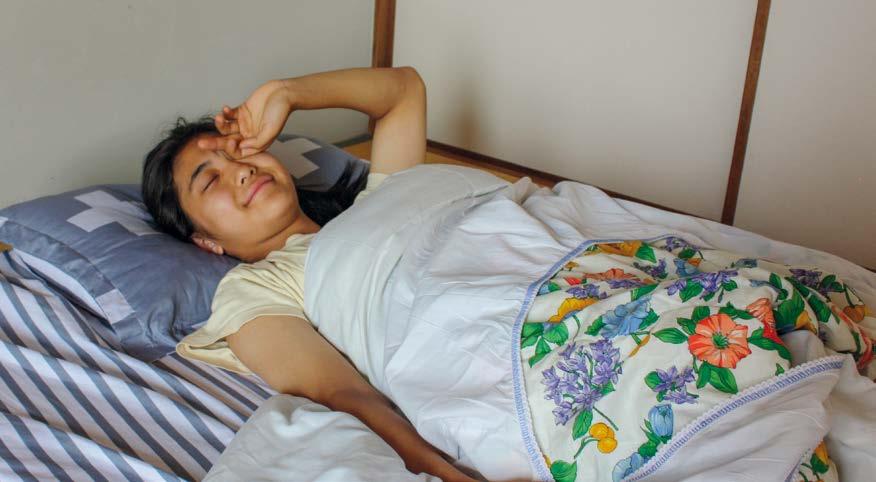
‘Naoko, Ohayo! Good morning Naoko!’ says my mum. ‘It’s time to get ready for school!’ My only answer is to pull up the covers on my futon so I can sleep a little more. Then the alarm clock starts to ring too. Still half asleep*, I get up and put on the TV to watch my favourite programme. It’s about exercises to do in the morning and I do them too on the special floor we have here called tatami.
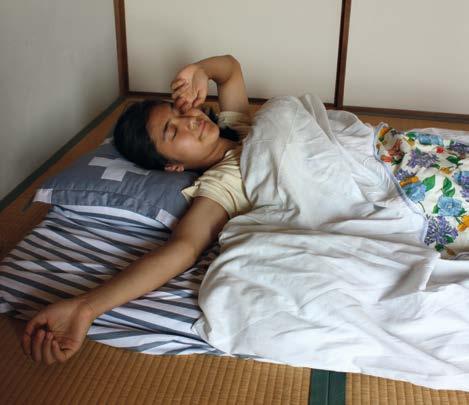
Futon
It’s the traditional Japanese bed. It’s a thin mattress* that we put on the floor. There’s a blanket (kakebuton) and a pillow* (makura). It’s very comfortable.
asleep when you haven’t woken up mattress you sleep on this
pillow you put your head on this when you sleep
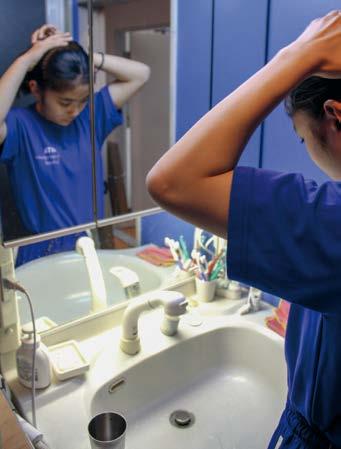
Then I go to the bathroom and wash my face. I put on my school uniform and then I run downstairs for breakfast.
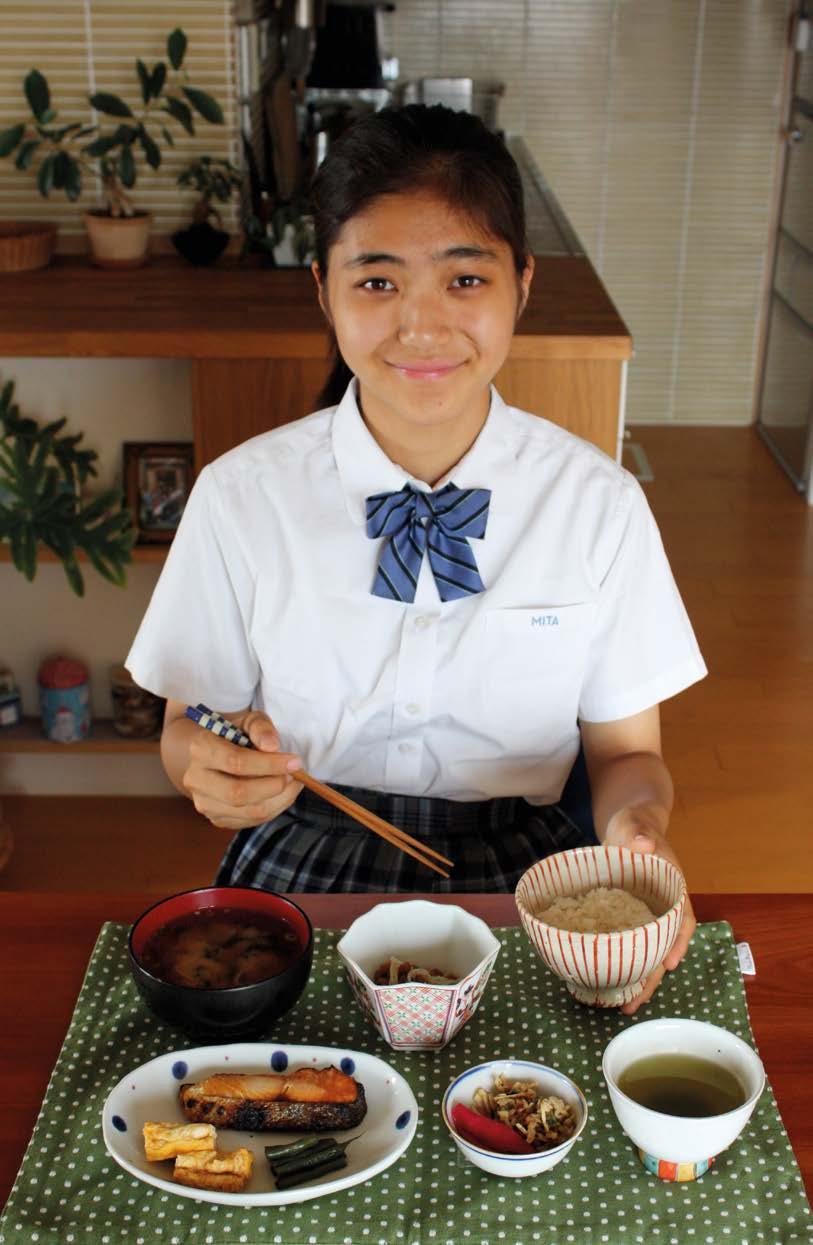
There are all my favourite dishes on the table: miso soup, natto (beans) and a big bowl of hot white rice. There is also the fish I caught with my grandfather in the river the day before, tamagoyaki (made with eggs) and tsukemono (vegetables in salt).
There is also green tea!
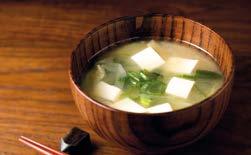
Miso soup
A kind of seaweed* and bean soup that the Japanese eat at breakfast, lunch and dinner.
We all have breakfast together: my dad, Daisuke, who is always late, has already finished eating and he’s putting on his tie to hurry to work. Kumiko my mum, is wearing an apron* with flowers and is busy in the kitchen. Then there’s my brother Riki who is still half asleep as he starts eating his breakfast. He still goes to primary* school while I have been at secondary high school since I was 14.
seaweed a kind of vegetable you find in the sea
apron what you wear when you’re cooking to keep your clothes clean
primary school for children from 6 to 12 years old
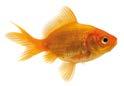
Finally, there’s Lea my goldfish* who watches us all from her glass bowl. Maybe she’d like some breakfast too! We all live in Tokyo!
After my yummy breakfast, I say goodbye to everybody, take my bentō (lunch box) and leave home to go to the station.
Today the train is really crowded: it’s full of salarymen (people who work in the offices of Japanese companies). Some are having a nap* until they arrive at their station, others are working or playing with their mobiles. I’m standing because there are no seats left and I’m looking around to see if Chika has managed to get on.
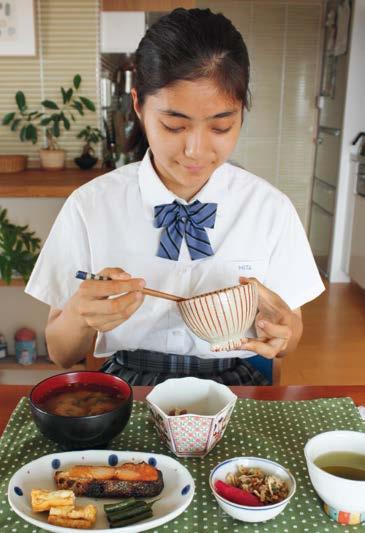
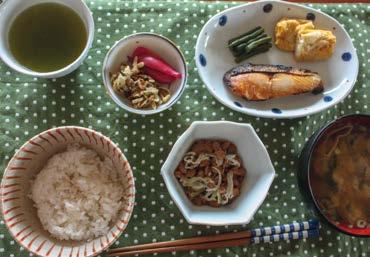
A typical Japanese breakfast
Chika is one of my classmates who gets the same train as me every morning. There she is! She’s lucky: she’s found a seat and is reading a book! The next stop is ours!
nap when you sleep for a short time
goldfish
Our school is on a hill near a Buddhist Temple. There are lots of big old trees around it and there is a big playground where there is also a swimming pool that is open all summer. There are 25 boys and girls in my class. Every morning the teacher calls out our names to see if we are all there, then we start our Japanese lesson where we learn kanji. We start learning kanji when we are very young as it’s very difficult to remember; in fact there’s so much to learn that I don’t think we’ll ever finish.
After this, we have another two lessons that aren’t very interesting, but then Professor Smith arrives to teach us English. He’s tall with a long beard and is about 35 years old. I love his lessons even if it’s really difficult to understand him sometimes because he doesn’t speak a word of Japanese.
Kanji
Kanji is the Chinese way of writing that we use to write in Japanese. In our daily life we use 1850 characters called tōyō kanji. In Japan we have three ways of writing: kanji, hiragana and katakana.
Karaage chicken
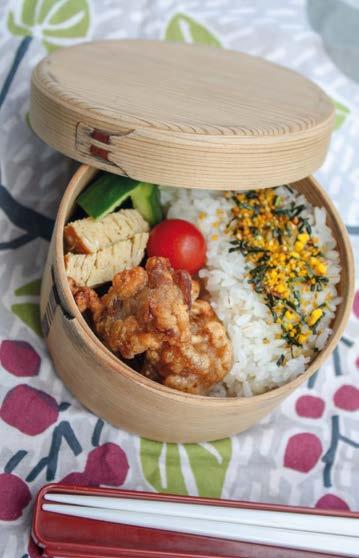
Then the bell rings: it’s already lunchtime. We all pull out our lunch boxes. They are all different colours – pink, yellow – and it’s great fun to open them and see what’s inside. Chika and I sit next to each other and we look at what we both have in our lunch boxes: I’ve got karaage chicken (fried* chicken) rice with egg and kombu (seaweed). For Chika there’s fried fish and other vegetables. We share our food and chat about what we like best. Our lunchbreak is always too short, only 20 minutes. I’d like it to be longer.
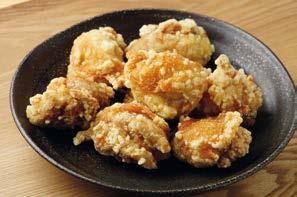
Fried Japanese chicken, yummy to eat hot or cold. It’s lighter than western fried food and is eaten with white rice. People often take it in their lunchboxes or on picnics during the season when the cherry trees are in flower.
fried cooked in hot oil
My bento
Lessons finish at 3.35 pm. I say bye to Chika who has to hurry to her theatre club: this year she’ll be ‘Juliet’ and Tatsurō ‘Romeo’. Tatsurō is the guy I like, and today we have to clean the classroom together. Every day two students have to do this. He’s really quiet and doesn’t speak much except when he’s on stage. I’d clean all day just to be with him! We take the things out of the cupboard and start cleaning. We don’t say much while we’re cleaning but I’m really happy just the same. The classroom is spotless* when we’ve finished. We put everything back in the cupboard and Tatsurō goes to the theatre club while I go to Chika’s house to finish our homework.
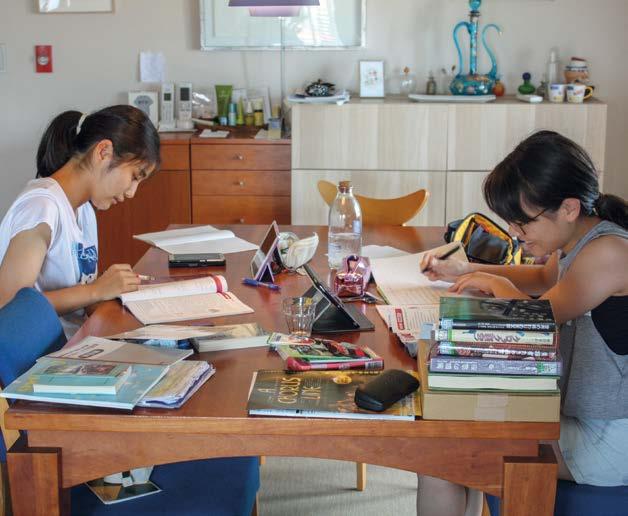
spotless very clean
After-reading Activities
Stop & Check
1 Choose A, B or C to make true sentences about Naoko’s day in Chapter 1.
In the morning Naoko watches a TV programme about… A cooking. B exercises. C travelling.
1 At breakfast, Naoko drinks…
A green tea. B milk. C coffee.
2 Naoko goes to school by…
A bus. B car. C train.
3 Naoko’s school is…
A only for girls. B on a hill. C near a river.
4 Naoko has lunch…
A at home. B at her C at school. grandparent’s.
5 After school, Naoko…
A plays B goes C goes to her the guitar. swimming. theatre club.
Grammar
2 Choose the correct word.
Naoko puts on /wears her school uniform before having breakfast.
1 Professor Smith, the English teacher doesn’t speak/speaks a word of Japanese.
2 At lunchtime, Naoko and Chika chat/say about what they like best in their lunchboxes.
3 Naoko have/has to clean the classroom with Tatsuro, the boy she likes.
4 When Naoko gets home, her mum is making/makes dinner in the kitchen.
5 Naoko knows/has known Mic-chan since primary school.
Writing
3 In Chapter 1, Naoko describes what she does every day. Write to her about your day. Talk about:
- Mealtimes and what you eat
- What you study at school
- What you do in your free time
Write about 100 words.
Speaking
4 Naoko talks about what they eat in Japan for breakfast, lunch and dinner. Discuss with a partner what things you’d like to try and what your favourite dishes are.
Vocabulary
5 Circle the odd one out in each line. a face
chicken b rice c beans d tea
6 a hate b enjoy c love d like
Before-reading Activity
Speaking
6 Chapter 2 is called Autumn Days. With a friend, try and think of what Japanese people do at this time of year. Then read the chapter and see if your ideas were right.
How much can you remember? Choose A, B or C to complete the sentences about Naoko’s story.
In Naoko’s class there are…
A 20 boys B 15 boys C 25 boys and girls. and girls. and girls.
1 Naoko has a A dog and B cat and C goldfish a cat. a bird. and a dog.
2 Naoko’s lunchbreak is…
A 20 minutes
B 40 minutes C 30 minutes long. long. long.
3 Before going to bed, Naoko has a… A bath. B shower. C cup of tea.
4 The ‘Day of Culture’ in Japan is on…
A Nov 30th. B Nov 3rd. C Nov 13th.
5 During the school show…
A Tatsuro kisses B Tatsuro kisses C Mic-chan kisses Naoko. Chika. Naoko.
6 Naoko likes ………… ice-cream.
A coffee B strawberry C chocolate
7 Naoko lives in a…
A big flat. B big house. C small flat.
8 Naoko and her friends go to Kyoto by… A plane. B car. C train.
9 Their school trip to Kyoto is …………. days long.
A three B two C four
10 Naoko watches the fireworks…
A on the beach. B from a hill. C at home.
Syllabus
Topics Family
Friends
Daily Routine
Traditions
Verbs
Positive and negative imperative forms
Present simple and present continuous
Past simple and past continuous
Present perfect simple
Future with going to and will
Can, have to, need, must, would like
Common phrasal verbs
Passive forms – present and past simple
Adjectives
Comparative and superlative forms



Teen Readers
Stage 1
Maureen Simpson, In Search of a Missing Friend
Charles Dickens, Oliver Twist
Geoffrey Chaucer, The Canterbury Tales
Janet Borsbey & Ruth Swan, The Boat Race Mystery
Lucy Maud Montgomery, Anne of Green Gables
Mark Twain, A Connecticut Yankee in King Arthur’s Court
Mark Twain, The Adventures of Huckleberry Finn
Angela Tomkinson, Great Friends!
Edith Nesbit, The Railway Children
Eleanor H. Porter, Pollyanna
Anna Sewell, Black Beauty
Kenneth Grahame, The Wind in the Willows
Stage 2
Elizabeth Ferretti, Dear Diary…
Angela Tomkinson, Loving London
Mark Twain, The Adventures of Tom Sawyer
Mary Flagan, The Egyptian Souvenir
Maria Luisa Banfi, A Faraway World
Frances Hodgson Burnett, The Secret Garden
Robert Louis Stevenson, Treasure Island
Elizabeth Ferretti, Adventure at Haydon Point
William Shakespeare, The Tempest
Angela Tomkinson, Enjoy New York
Frances Hodgson Burnett, Little Lord Fauntleroy
Michael Lacey Freeman, Egghead
Michael Lacey Freeman, Dot to Dot
Silvana Sardi, The Boy with the Red Balloon
Silvana Sardi, Scotland is Magic!
Silvana Sardi, Garpur: My Iceland
Silvana Sardi, Follow your Dreams
Gabriele Rebagliati, Naoko: my Japan
Stage 3
Anna Claudia Ramos, Expedition Brazil
Charles Dickens, David Copperfield
Mary Flagan, Val’s Diary
Maureen Simpson, Destination Karminia
Anonymous, Robin Hood
Jack London, The Call of the Wild
Louisa May Alcott, Little Women
Gordon Gamlin, Allan: My Vancouver