Edward Alden, Sabrina Richards Sopranzi
Flash on
English for MECHANICS & ELECTRONICS
Third Edition with Digital Book
The pleasure of learning

Edward Alden, Sabrina Richards Sopranzi
Flash on
English for MECHANICS & ELECTRONICS
Third Edition with Digital Book
The pleasure of learning
Unit Topic
1
pp. 4-7
2
pp. 8-11
3
pp. 12-15
4
16-19
Matter, substance and materials
Vocabulary Skills
The states of matter; Materials
Reading: Matter and substances; Materials
Listening: Materials and substances; Metals and their characteristics
Speaking: Talking about materials
Materials properties
Reading: Mechanical, thermal, electrical-magnetic and chemical properties of materials Properties of materials
Metals and alloys; Metalworking processes
Writing: A metal joining process Metals and metal processes
Different types of machine tools; The parts of a lathe
Reading: Metallurgy; Metal joining processes; Metalworking processes and their applications
Listening: How to use a welding gun; Metal processes and their use
Reading: Different types of machine tools; Components and working of a lathe
Listening: CNC machines; How a lathe works
Speaking: Asking and answering questions about machine tools and their processes
5
20-21
and electric circuits pp. 22-25
6
pp. 26-29
7
How energy is produced
What is electronics? pp. 30-33
8
Sustainable engineering and circular economy pp. 34-37 R
2 pp. 38-39
9
Technical drawing pp. 40-43
10
Computer evolution pp. 44-47
11
Computer technology pp. 48-51
Electricity, conductors and insulators; Electric circuits
Conventional and alternatives sources of energy
Electronic devices; Electronic circuits
Responsible engineering; Circular economy
Reading: Different types of current; How to measure current; How an electric circuit works
Listening: AC and DC; Series and parallel circuits
Reading: Conventional power plants; Alternative energy sources
Listening: The advantages of alternative energy sources; Energy distribution system
Speaking: Describing electric power distribution
Reading: The history of electronics; Electronic circuits
Listening: The difference between electricity and electronics; Mobile phones
Writing: An electronic device of everyday use
Reading: What’s responsible engineering?; Secondary materials
Listening: Circular economy; How to produce sustainably
Speaking: Researching and discussing planned obsolescence
Drawing tools; Types of projections; Drawing softare
Calculating machines through histor y; Different types of Internet connections
Computer components
Reading: Techincal drawing and its tools; Graphical projections; Computeraided design
Listening: CAD/CAM systems; 3D modelling
Reading: From the abacus to AI; The origin of the Internet; Different types of Internet connections
Listening: Steve Jobs
Writing: A short text about Internet
Reading: Computer equipment; Different types of computers
Listening: The Cloud
Speaking: Computer knowledge; Input and output devices; Asking and answering questions about different types of computers
Means of transmission; Networks
and networks pp. 52-55
Reading: Ground and air trasmission; Networks and topologies
Listening: Network topologies
Writing: Pros and cons of networks
Mind map
Computer history Revision 3 pp. 56-57
Automation and robotics pp. 58-61
Automation; Sensors
Reading: The history of mechanisation; Types and uses of sensors; Numerical control
Listening: Robots and cobots
Speaking: Answering questions about NC and NCN
Smart manufacturing
Writing: Write about improvements in Industry 4.0 Smart manufacturing and Industry 4.0 pp. 62-65
3D printing and additive manufacturing pp. 66-69
Health and safety at work pp. 71-73
Additive manufacturing: processes and materials
Safety signs; Safety equipment
Reading: Industry 4.0; Three case studies; Industrial drones
Listening: Industrial IoT
Reading: 3D printing; Materials in 3D printing and their applications
Listening: A conversation between a junior engineer and a senior technician
Writing: Describing a 3D printing process
Speaking: Asking and answering questions about 3D printing
Reading: Safety regulations in the UK; Safety signs and their meanings; Safety equipment
Listening: The UK workers' safety committee
Writing: A formal report
74-75
76-79 18
19
and cobots Revision 4
Mind map
The drive train; The engine
Reading: The drive train; The four-stroke engine; The two-stroke engine
Listening: A mechanic talking about the differential
Writing: The two-stroke engine compared to a four-stroke one
The diesel engine; Biofuels
Writing: A flow chart of biofuels production processes Fuels and engine systems pp. 80-83
Components of an electric motor; Systems of an electric vehicle
Maintenance; Car components
Reading: The diesel engine; Biofuels and their production process; The fuel system
Listening: Different types of biofuels
Speaking: Discussing the present and future of electric vehicles Electric and hybrid vehicles pp. 84-87 20
88-91
5
92-93
Reading: The electric motor; How electric and hybrid vehicles work
Listening: Maintenance of an electric vehicle; Charghing an EV
Reading: Technical assistance; Main car systems; Car maintenance
Quiz: Car maintenance
1 Matter, substance and materials
Matter and substance
READING COMPREHENSION
1 Read the text and label the pictures (1-5) with words from the text.
Matter is anything that has mass and occupies space, which means everything we can touch or observe is made of matter. Depending on how its particles are arranged and how they move, matter can be found in three basic states: solid, liquid, and gaseous.
Solids have a fied shape and a fied volume. They tend to be rigid because their particles are closely packed and can only vibrate around fied positions.
Liquids have a fied volume but do not have a fied shape, so liquids flw and adapt to the shape of the container they are in. Their particles are still close together but can move past one another.
Gases do not have a fied shape or a fied volume. It means they expand and fillany container they are placed in. This is possible because their particles are far apart and move freely.
Matter can change from one state to another when it gains or loses energy, usually in the form of heat. A solid, for example, can melt and become a liquid, while a liquid can evaporate and turn into a gas.
A type of matter with a fied composition and specific poperties is a pure substance. This means that its chemical composition does not change. Pure substances can be classified ino elements, such as iron, copper and oxygen, and compounds, such as water and carbon dioxide. When two or more substances are brought together without any chemical reaction taking place, they form a mixture. Unlike pure substances, mixtures do not have a fied composition and their components can be combined in different proportions. Mixtures can be homogeneous or heterogeneous, depending on how their components are distributed.
A homogeneous mixture has a uniform appearance because the components are evenly distributed. Examples include air, salt dissolved in water, and many metal alloys.
A heterogeneous mixture has a non-uniform appearance. The different components can be seen or identified separately. Examples include oil and water, sand mixed with water, and concrete.
2 Read the text and label the picture with the name of each component.
All substances, solids, liquids or gases, are composed of one or more of the chemical elements. Each element is composed of identical atoms. Each atom is composed of a small central nucleus consisting of protons and neutrons around which orbit shells of electrons. These electrons are very much smaller than protons and neutrons.
The electrons in the outermost shell are called valence electrons and the electrical properties of the substance depend on the number of these electrons.
Neutrons have no electric charge, but protons have a positive charge while electrons have a negative charge. In a stable or 'neutral' atom, the number of electrons equals the number of protons, meaning the opposite charges cancel each other out perfectly.
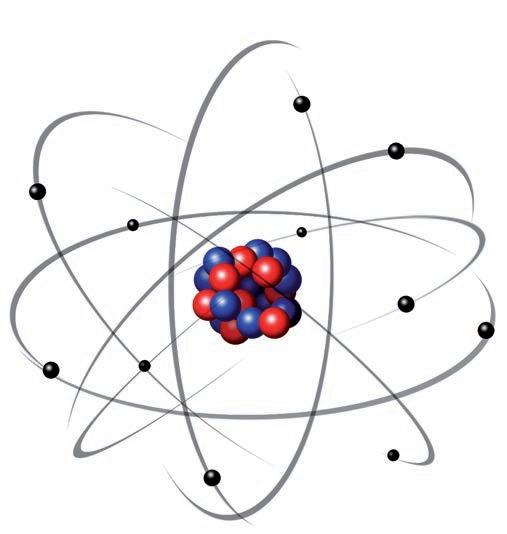
When an external force, like a battery, pushes valence electrons to flow together in one direction, it produces a steady flow of charge, called an electric current. Materials that let electrons flow easily are called conductors, while those that block the flow are called insulators
3 Read the text again and complete the sentences with the missing information.
1 Elements make up .
2 Identical atoms
3 Atoms consist of , and .
4 Inside there are and , while outside there are
5 Shells
6 Valence electrons .
7 Neutrons do not have
8 Electricity is generated when .
LISTENING
4 1 Listen and complete the text about matter, materials and substances.
When we look at objects around us, we know they are made of matter, and that matter is made of (1) . But in engineering, this idea alone is not enough. Engineers need to choose what kind of matter works best for a specific jo. This is where (2) come in.
A material is simply matter that is chosen for a practical use. Matter is everything that has (3) and occupies space, but a material is matter used to make something useful. Take (4) as an example. Iron is a (5) , but when it is used to build a bridge, a machine, or a tool, it becomes a material. The same substance can be used in different ways, so it can act as different materials.
From a scientific point of viw, we talk about substances. A substance is a (6) form of matter, like water, oxygen, or iron. This helps describe what matter is made of. In engineering, the focus is different. Materials are described by how they perform. A material can be made of one substance, like pure copper, or a mix of substances, like steel, which is an (7) .
Materials can also be grouped by where they come from. Some materials are natural, such as wood or stone. Others are synthetic, like plastics and engineered alloys, used in highly specialised fields lie aerospace engineering.
Today, most engineering applications use synthetic materials because their (8) can be controlled and improved. A mechanical engineer uses different materials to build machinery or tools. A specific knwledge of materials is required, concerning qualities, properties and costs.
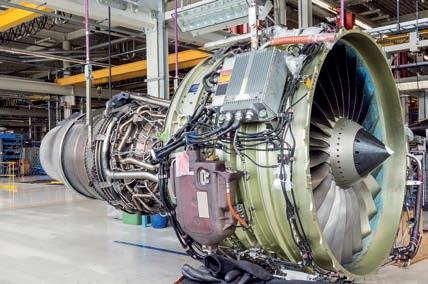
A mechanical engineer uses different materials to build machinery or tools. A specific knwledge of materials is required, concerning qualities, properties, costs and general characteristics.
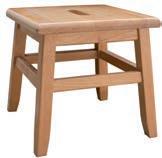
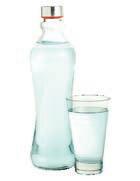
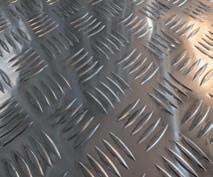
5 What are these objects made of? Match the words from the box with the pictures, then read the text and check your answers.


WVOCABULARY


hen a machine or a tool is made, the most suitable material must be chosen by considering its properties, which can be classified as mechanical, thermal, electrical and chemical. The main types of materials used in mechanical engineering are metals, polymer materials, ceramics and composite materials. The most commonly used materials are metals, which can be divided into ferrous and non-ferrous. They can be used in their pure form or mixed with other elements. In this second case we have an alloy and it is used to improve some properties of the metals. The most commonly used ferrous metals are iron and alloys which use iron. Because iron is softand ductile it is not suitable to be used as a structural material, so a small amount of carbon is added to it to make steel alloy.
Non-ferrous metals contain little or no iron. The most common non-ferrous metals used in mechanics are copper, zinc, tin and aluminium. Some common nonferrous alloys are brass (formed by mixing copper and zinc), bronze (formed by mixing copper and tin) and other aluminium alloys which are used in the aircraftindustry. Other examples of materials used in mechanical engineering are plastic and rubber. PVC or polyvinyl chloride is a type of plastic and is used to insulate electric wires and cables. Rubber is a polymer and its best property is elasticity, as it returns to its original size and shape after deformation. Ceramic materials are good insulators: hard, resistant and strong, but brittle Composite materials are made up of two or more materials combined to improve their mechanical properties. Concrete is reinforced with steel and is used in building engineering.
6 Read the text again and match the words (1-8) with their definitions (a-h)
1 alloy a a type of plastic used for insulation
2 steel b a combination of different metals
3 PVC c an alloy formed by mixing iron and carbon
4 concrete
5 brass
6 ferrous materials
d an alloy formed by mixing copper and zinc
e metals containing iron
f a composite material used to build houses
7 ceramic g a metal not suitable as structural material
8 iron h a good insulator but brittle
SPEAKING
7 Read the text again and answer the questions below.
1 What is the basic classifiation of metals?
2 What are the characteristics of iron?
3 Why are alloys created?
4 Which materials are good insulators?
5 Is steel an alloy? Which metal does it contain?
LISTENING
8 2 Listen and complete the table below with the words from the box.
air copper wires steel carbon gold ferrum ductile
Material
Iron
(3)
(5)
(7)
VOCABULARY
Description
Its Latin name is (1) ferrum. It is magnetic and has a silvery colour. In prehistoric times it was used to make ornaments and weapons. If exposed to the (2) , it oxidises.
It is one of the most widely used metals by humans. In prehistoric times it was used to make cooking utensils, coins and ornamental objects. It is used in (4) and cables.
It is the most expensive metal and is used to create precious jewellery. It is one of the most (6) metals.
It is an alloy formed from iron and (8) . It can contain between 2.1% and 4% carbon. It is also used for cooking utensils and pans.
9 Complete the diagram below with words from the unit.
MATERIALS
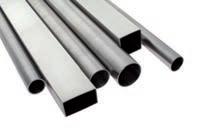
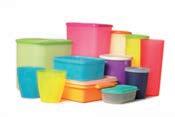
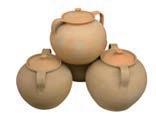
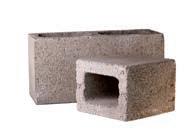
(1) polymer materials (2) (3) plastic (4) concrete ferrous non-ferrous (5)
(6) copper (7) tin (8)
(9)
MY GLOSSARY
alloy /ælɔɪ/ aluminium /ˌæljəˈmɪniəm/ brass /brɑːs/ brittle /ˈbrɪtəl/ bronze /brɒnz/ carbon /ˈkɑːbən/ concrete /ˈkɒŋkriːt/ copper /ˈkɒpə/ heterogeneous /ˌhɛtərəˈʤiːniəs/ homogeneous /ˌhɒməˈʤiːniəs/ to improve /tuː ɪmˈpruːv/ to insulate /tuː ˈɪnsjuleɪt/
iron /aɪən/ mass /mæs/ matter /ˈmætə/ mixture /ˈmɪksʧə/ to oxidise /tuː ˈɒksɪdaɪz/ rubber /ˈrʌbə/ steel /stiːl/ tin /tɪn/ tool /tuːl/ valence /ˈveɪləns/ wire /ˈwaɪə/ zinc /zɪŋk/
(10)
2 Properties of materials
According to the reaction of a material to the application of a force, there are different material properties which are included in the following categories: mechanical, thermal, electrical-magnetic, chemical
READING COMPREHENSION
1 Read the text and write under the pictures which of the mechanical properties they refer to.
Mechanical properties
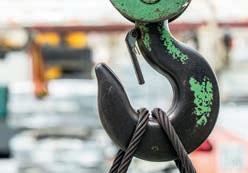
Strength The most common mechanical property is strength, or the ability of a material to resist forces without breaking, bending, shattering or changing in any permanent way. For example: if elastic material is stretched, the change will be temporary; but it will be permanent with plastic or metal materials. When a force is applied to a material, as when a weight is put on the end of a rope, certain forces inside the rope cause it to stretch. In mechanics, the weight that is applied is called the load. The force within the rope that causes it to stretch is called the stress. The actual change, in this case the stretching, is called the strain
A material can undergo three changes due to stress. It can stretch, it can get shorter, or it may divide into layers. The stress that causes a material to stretch is called tensile stress. The stress that causes a material to get shorter is called compressive stress, while the stress that causes a material to divide into layers is called shearing stress
STRENGTH OF MATERIALS (in pounds per square inch)
Plasticity This is the ability of a material to be permanently changed in shape. For example, the plasticity of molten aluminium can be demonstrated by pouring it into a mould. Once the aluminium has cooled down, it can be removed from the mould and has a new shape. Malleability, which occurs when metals are hammered or rolled into thin sheets, is also a property associated with plasticity. Gold, for example, is one of the most malleable metals. Other common metals in order of malleability are silver, copper, aluminium, tin, zinc, and lead.
Ductility, which is the ability of certain solid substances to undergo permanent changes in shape without breaking usually by stretching the length, is another property. For example, a piece of copper can be stretched to make a thin wire, but the shape of a brick cannot be permanently changed except by breaking it. Ductility is a valuable property of many metals including aluminium, gold, iron, nickel, and silver. The term malleability is often used in place of ductility when describing the property of metals that allows them to be hammered into thin sheets.

Elasticity This is the ability of a substance to return to its original shape or volume after it has been changed by a force. All substances have some elasticity. Some familiar uses of elasticity are the springs in vehicles and the rubber and air in balls.
Hardness This is the resistance of a material to surface abrasion, scratching and indentation. Hardness is measured by the Mohs scale, and materials are classified as ollows, from the softest to the hardest: talc (or soapstone), gypsum, chalk, fluorie, apatite, feldspar, quartz, topaz, corundum, diamond.
Brittleness This is the property of a material that is hard but breaks easily; the less plastic a material is, the more brittle it becomes.
Fatigue This occurs when a material weakens over time due to repeated stress; this process eventually leads to a break even if the stress is lower than the material's maximum strength.
2 Read the text again and decide if the sentences below are true (T) or false (F).
1 The ability of a material to resist forces is the most common mechanical property.
2 Strain means the weight applied to a material.
3 A material doesnʼt undergo any changes when under stress.
4 Shearing is the stress that divides materials into layers.
5 Aluminium is less tensile than bronze, but more than brick.
6 Cast iron is as compressive as concrete.
7 The ability of metals to be hammered or rolled into thin sheets is called plasticity.
8 Diamond is the hardest and chalk is the softest
3 Read the text again and answer the questions below.
1 What changes does a material undergo because of stress?
2 What does tensile stress cause?
3 What does compressive stress cause?
4 What does shearing stress cause?
5 What is the difference between plasticity and elasticity?
6 What happens when repeated stress is applied to a material? How is this property called?
VOCABULARY
4 Match the words (1-4) with their definitions (a-d)
1 brittleness a the state of a material which is distorted by forces acting on it
2 strain b resistance to cutting, indentation, abrasion
3 plasticity c the tendency to fracture without appreciable deformation and under low stress
4 hardness d a property of certain materials by which deformation due to a stress is largely retained after removal of the stress
Thermal properties
Thermal properties describe how a material behaves when its temperature changes. The main ones are: thermal conductivity, thermal expansion and melting point.
Thermal conductivity In physics, thermal conductivity is the ability of a material to conduct heat. Metals in general have high thermal conductivity, as they are able to transmit heat energy. Thermal conductivity is important in materials science, research, electronics, building insulation and related fields, especially when high opeating temperatures are achieved. Cooling solutions for electronics or turbines usually use high-thermal conductivity materials such as copper, aluminium, and silver to cool down specific elemens. However, applications in buildings or furnaces use low thermal conductive materials such as polystyrene and alumina for insulation purposes.
Thermal expansion This is the change in dimensions that occurs with most materials as the temperature is increased or decreased.
Heat causes expansion because it increases the vibrations of atoms or molecules in a material. Different materials expand by different amounts when the temperature is raised by one degree. For example: aluminium expands twice as much as iron under the same temperature increase.
Melting point This is the temperature at which a material changes from solid to liquid. For metals, the maximum operating temperature is usually about two-thirds of its melting temperature. Once the material goes beyond this critical limit, the metal may lose its strength or begin to deform under intense pressure, even if it has not melted yet.
Melting points
Metal Fahrenheit (°F) Celsius (°C)
Aluminium 1218 659
Brass 1700 927
Bronze 1675 913
Cast Iron 2200 1204
Copper 1981 1083
Gold 1950 1065
Iron 2800 1538
Lead 1945 1063
Magnesium 1204 651
Nickel 2646 1452
Silver 1761 951
Steel 2500 1371
Tin 449 232
Tungsten 6150 3399
Wrought Iron 2700 1482
Zinc 787 419
READING COMPREHENSION
5 Read the text about thermal properties and answer the questions below.
1 What is the property of thermal conductivity?
2 Which materials are more able to transmit heat energy?
3 What is meant by thermal expansion?
Electrical-magnetic properties
4 Do all materials expand in the same way?
5 What happens when the temperature reaches melting point?
Electrical conductivity This is the ability of a material to conduct electrical charge. All materials conduct electricity, but some materials such as rubber and glass allow so few electrons to get through that the current is hardly noticeable. These materials are called insulators. Other materials, such as metals, conduct current readily. These materials are called conductors. Metal, in general, is the best conductor, and silver, copper, gold, and aluminium are among the best metallic conductors.
Electrical resistivity This is the ability of a material to resist, or oppose, the transport of electrical charge in response to an external electrical field
Magnetism is the force of attraction or repulsion between some substances, called magnets, made of materials such as iron, nickel, or cobalt. A magnet is an object or device that produces a magnetic fiel , due to the motion of electric charges. A magnet has two poles, called the north pole and the south pole: opposite poles of two magnets always attract each other, while like poles always repel each other.
Chemical properties
A chemical property is any of the properties of a material that appears during a chemical reaction. Chemical properties can be useful to identify an unknown substance or to purify it or separate it from other substances.
Resistance to chemicals This is the ability of a material to resist chemical attack and to withstand corrosion.
Atomic volume This is the volume occupied by one mole of an element in the solid state.
Density This is the mass of material per unit volume (kg/m3).
6 Read the texts about electrical and chemical properties and find the ollowing information.
• Difference between insulators and conductors.
• Best electrical conductors.
• Properties useful to identify unknown substances.
• The nature of a magnetic field
7 Read the paragraph about the chemical reaction and label the picture.
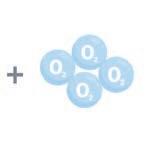
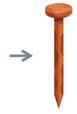
One of the most common chemical reactions is corrosion, also called oxidation. This process occurs when a metal reacts with oxygen in the presence of water. For example, when iron is exposed to water and oxygen, it forms rust, a reddish-brown substance called iron oxide. This reaction gradually weakens the metal over time.


8 Complete the text about insulators and conductors with the words from the box.
heat plastic conductors insulators thermal material hot dangerous electricity copper
Some materials let heat pass or flw through easily and these are called (1) conductors. Other materials donʼt let (2) pass or flw through them and these are called thermal insulators. Among the best (3) are carbon and most metals (especially silver and copper). Think about metal saucepans; they allow the heat from the cooker to pass through easily to heat up the water and food inside them. The best (4) include wood, cork, concrete, plastic and fabrics such as thermal vests and oven gloves. If a (5) is a good insulator then itʼs a poor conductor. Heat only moves from (6) things to colder things. As well as conducting or insulating against heat, materials can also conduct or insulate against (7) . As a general rule, materials that conduct heat well are also good conductors of electricity (e.g. metals such as copper, iron, steel and aluminium). Wood, plastic, glass and rubber are both thermal and electrical insulators. These are very important and have really essential uses. For example, (8) wires allow electricity to flw through them, but each wire is covered in (9) and all are encased in plastic tubing so electricity wonʼt flw out and give you a shock; itʼs insulated. Remember, electricity can be (10) . It can even be conducted through the sweat on your body!
MY GLOSSARY
brittleness /"brIt(´)ln´s/ conductivity /kÅndøk"tIvIti/ density /"dEnsIti/ ductility /døk"tIlIti/ elasticity /Ela"stIsIti/ expansion /Ik"spanS(´)n/ fatigue /f´"ti…g/ hardness /"hA…dn´s/ layer /"leI´/ malleability /malI´"bIlIti/ to melt /t´ mElt/ oxidation /ˌɑːksəˈdeɪʃən/ plasticity /pla"stIsIti/ resistivity /ÆrIzI"stIvIti/ rust /rʌst/ tensile /ˈtensaɪl/ to shear /t´ SI´/ to shatter /t´ "Sæt´/ to strain /t´ streIn/ to stretch /t´ strEtS/
3 Metals and metal processes
Metals
Metals are all around us in everyday life. Coins, bolts, car parts, buildings, appliances, and machines are all made of metal or alloy. It is difficult o imagine the modern world without metals. The science that studies how metals are extracted from rocks and prepared for use is called metallurgy.
From an engineering point of view, metals are engineering materials that are solid at room temperature. As solids, metals have a defined shape and a definedolume, which means they do not flw or expand under normal conditions. This makes them suitable for structural and mechanical uses.
In solid metals, atoms are closely packed and arranged in an ordered structure. This internal structure is responsible for important metal properties such as strength, hardness, and stability. Because of these properties, metals like iron and steel are essential materials in construction, transportation, and manufacturing.
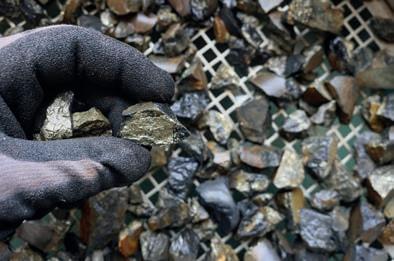
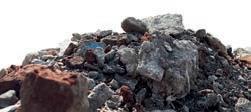
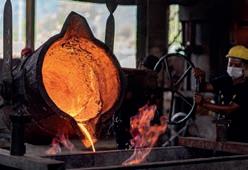
Metals come from ores, which are special types of rocks found in the ground. The process of turning ore into metal begins with extraction. The raw material is taken from the ground and placed in a furnace. When the furnace reaches very high temperatures, the metal melts and becomes liquid, separating from the rock. This process produces molten metal, such as molten iron, which can then be used to make steel.
When a metal reaches its melting point, it changes from a solid to a liquid state. In the liquid state, metal can be shaped more easily.
One common industrial process that uses molten metal is casting. In casting, liquid metal is poured into a mould, where it cools and solidifies, orming a new solid shape.
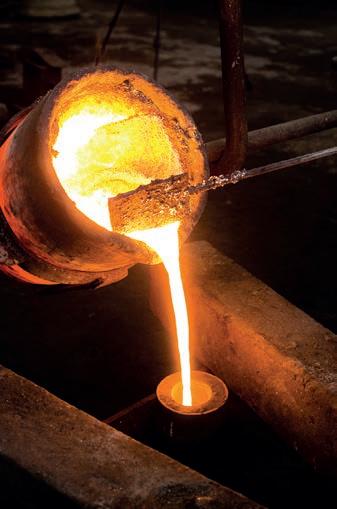
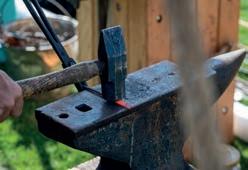
However, metals do not always need to be melted to be shaped. Many metals can be deformed in the solid state through mechanical processes such as rolling, bending, or pressing. This ability to change shape without breaking is one of the most important characteristics of metals. Because metals can resist forces, change shape, and be processed in different ways, they are essential materials for making cars, ships, trains, machines, and tools.
VOCABULARY
1 Read the text and match the words (1-7) with their definition (a-g).
1 ores a changed shape without breaking
2 furnace b taken out from the ground
3 molten c a very hot container used to heat metals
4 mould d liquid metal
5 extracted e rocks that contain metal
6 solidifie f becomes solid after cooling
7 deformed g a container used to give shape to liquid metal
READING COMPREHENSION
2 Read the text again and answer the questions below.
1 Why are metals and alloys suitable for structural and mechanical uses at room temperature?
2 How does the internal structure of metals and alloys influene their properties?
3 Where do metals come from, and what is the fist step in turning them into usable materials?
4 What happens to metal when it is heated in a furnace?
5 Why are metals and alloys suitable for use in construction and manufacturing?
Metal joining processes
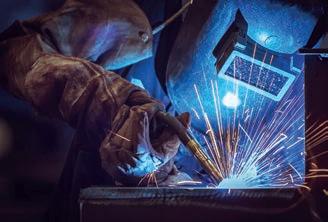
The most common means of joining metals are welding, brazing and soldering. These processes are widely used by metalworkers in the fabrication, maintenance and repair of parts and structures. Each one has its own advantages and disadvantages depending on the application. While there are many methods for joining metals, welding is one of the most convenient and rapid methods available. It is the process of joining suitable metals or plastics by raising the temperature at the joint so the materials can unite by fusion, forging, or pressure. The required temperature can be achieved through external heating, electric current passing through the joint, or friction. Because of its strength, welding is used in shipbuilding, car manufacturing, aerospace applications and many other manufacturing activities.
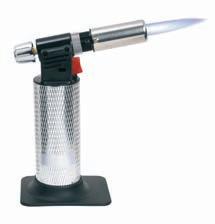
Brazing is a method of joining two pieces of metal together using a fille alloy called hard solder. The filler is meled by a blowtorch and placed between the surfaces of the metals to be joined. It is heated slightly above its melting point and protected by a suitable atmosphere, usually a flu , allowing it to flw over the base metal and then cool to join the parts. Brazing is similar to soldering higher temperatures. In addition, brazing creates an extremely strong joint, usually stronger than the base metal pieces themselves, without melting or deforming the components. erent metals, or base metals such as silver and an alloy such as bronze, are perfect for brazing, and can create nearly invisible bonds that resist temperature changes, jolting, and twisting. Different filler allys are used depending on the application. These brazing alloys usually contain three or more metals to achieve the desired properties.
READING COMPREHENSION
3 Read the text and match the two parts of the sentences.
1 Welding, brazing and soldering a is one of the most rapid and convenient methods.
2 Welding b used as filler mtals.
3 Pieces of metal or plastic are usually joined c in which metal items are joined.
4 Brazing is a process d are the most common means of joining metals.
5 Soldering and brazing e have different melting temperatures.
6 There is a variety of alloys f by raising the temperatures at the joint.
LISTENING
4 3 Listen to this description of a welding gun and match the two parts of the sentences.
1 Welding guns use an electrical current
2 The most common type of arc welding gun
3 MIG is usually employed
4 It can be used on
5 The wire feed system is
6 The contact tip is usually
a stainless steel, aluminium, and plastic.
b to create an arc between the electrode and the workpiece.
c controlled by a trigger.
d made of copper.
e for indoor welding.
f is the MIG (metal inert gas) welding gun.
WRITING
5 Choose one of the joining processes and prepare a short presentation using the guidelines below.
• introduction;
• description of how it works;
• presentation of the joining metal process chosen;
• conclusion.