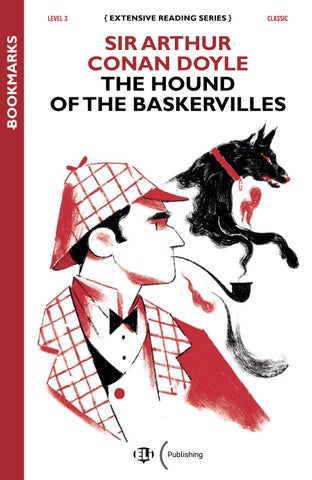

SIR ARTHUR CONAN DOYLE
THE HOUND OF THE BASKERVILLES
About the Author
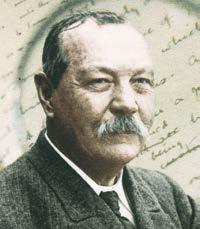
Sir Arthur Conan Doyle (1859-1930) was a Scottish writer, best known for his books about Sherlock Holmes, one of the most famous fictional detectives. A doctor, writer and believer in the supernatural, Conan Doyle's great imagination made his books famous all over the world.
His Early Life
Conan Doyle loved adventure and travel. While he was studying medicine, he worked as a ship’s doctor on short trips to Antarctica and Africa. Based on these experiences and the stories he loved as a child, he began to write short stories. He graduated from Edinburgh University with a medical degree at the age of 22.
Conan Doyle: Spiritualism and Fairies
In 1916, Conan Doyle publicly declared he was a spiritualist. He believed that communication with spirits was possible and wrote books articles and made speeches about it. He also believed in fairies, and in 1922, he wrote a book called
The Coming of the Fairies, about two young girls who said they had photos of themselves playing with real fairies. A long time after Conan Doyle's death, they finally said it was all false.
First Novels
In 1886, Conan Doyle finished the first Sherlock Holmes story, A Study in Scarlet. His second book with Sherlock Holmes and Dr Watson was Sign of the Four. While writing the early Holmes stories, Doyle also wrote novels about British history, which he thought were more important. However, none of these novels had the success of the Sherlock Holmes short stories that appeared in The Strand Magazine, starting in 1891.
After writing three series of Holmes stories, which earned him a lot of money, Conan Doyle was tired of the popular detective and killed him off in the 1893 story, The Final Problem. His readers wrote letters to him, asking him to bring Holmes back. In 1902, he decided to write his third Holmes story, The Hound of the Baskervilles, which appeared in nine parts in The Strand Magazine. He continued, reluctantly, to write Holmes stories until 1927.
An Important Figure
Conan Doyle was an important public and political figure. He was knighted for his volunteer work during the Boer War, and during the First World War, he worked for the Foreign Office. He even solved real-life mysteries to free two unjustly imprisoned men.
Sir Arthur Conan Doyle
The Hound of the Baskervilles
Retold by Pauline Russo
Illustrated by Giacomo Agnello Modica
About the Story
The story starts at Sherlock Holmes’ house at 221B Baker Street in London, but most of it takes place on Dartmoor, in the county of Devon, in England.
Holmes is asked to investigate the legend of a supernatural hound that the local people say is responsible for the deaths of some of the Baskerville family.
The new Baskerville heir, Sir Henry, thinks that the legend of the hound could be true, so Holmes sends Dr Watson to Baskerville Hall to protect him while he investigates.
Holmes doesn’t believe in the legend and believes that Sir Henry’s life is in danger, not from a supernatural creature but from a real person.
Chapter 1
The Curse of the Baskervilles
Sherlock Holmes was sitting at a table having breakfast. I was standing behind him, looking at a walking stick left by a stranger the evening before while Holmes and I were out. Some writing on it said, “To James Mortimer, M.R.C.S., from his friends of the C.C.H.”
‘So, what do you think, Watson?’ Holmes asked me.
‘How did you know what I was looking at?’ I asked him in surprise.
‘I can see your reflection* in the silver teapot in front of me,’ replied Holmes. ‘What do you think about our mysterious visitor’s stick?’
‘I think that it belongs to a successful elderly doctor who is greatly appreciated* by the people who know him,’ I said.
‘Excellent, Watson.’
‘The letters M.R.C.S. tell me he’s a doctor - probably a country doctor, as I can see the stick is well-worn*. He probably walks a lot to visit his patients.’
‘Very good,’ said Holmes.
‘The writing also says, “from his friends of C.C.H.”, so the “H” could mean the stick is a gift from the members of a local hunt*.’
‘Well done, Watson!’
I was pleased to hear his words of praise*. I asked him what else I could say about the mysterious visitor. Sherlock took the stick and examined it.
‘I’m sorry, dear Watson, but I have to say that most of what you said is wrong. You’re right that he’s a country doctor and he walks a lot, but that’s all. I think that C.C.H. stands for Charing Cross Hospital. A senior doctor wouldn’t leave such an important hospital. So, I think he’s a young man under 30 who left the hospital to go and work in the country, and this stick was a present from his friends. He owns a small dog that sometimes carries it in its mouth.’
I laughed and checked my medical directory*.
‘You’re right, Holmes. Here’s his name: Mortimer, James, M.R.C.S., 1882, Grimpen, Dartmoor, Devon. Doctor, from 1882 to 1884, at Charing Cross Hospital. But what about the dog?’
Holmes was now standing at the window. He pointed to the bite marks on the wood in the middle of the stick.
‘These show that the dog is neither too small nor too big. In fact, it may be… a curly-haired spaniel.’
I looked at him, amazed.
‘But Holmes, how can you be so sure of that?’
‘Because I can see it at our door with its owner,’ answered Holmes, looking out of the window.
Our visitor came into the study and was pleased to see his walking stick. He was very tall and thin, and he wore a pair of gold-rimmed* glasses on his long nose.
‘I’m so pleased to see you have my walking stick,’ he said. ‘It was given to me when I got married and left Charing Cross Hospital to open my own business in the country. Are you Mr Sherlock Holmes?’
‘Yes, I am. And this is my friend Dr Watson.’
‘Pleased to meet you. You have an interesting dolichocephalic skull*. May I touch it?’
Sherlock smiled and said,
‘You clearly love your work, but I’m sure you didn’t come here to examine my skull. Please sit down and tell me why you have come to see me.’
‘Mr Holmes, I have a very serious and strange problem. I have a document in my pocket.’
‘Yes, I saw it when you entered the room,’ said Holmes. I see it’s old and, as an expert in these things, I can say that it’s probably from about 1730.’
‘The exact date is 1742,’ said Mortimer, as he took it out of his top pocket and handed it to Sherlock.
‘Sir Charles Baskerville, my patient and friend, gave me this paper before he died tragically three months ago. His father wrote it to him and his brothers, before he died.’
Holmes put the document on his knee to read it.
ACTIVITIES
Reading Comprehension
1 Find the correct answers A, B or C in the text.
1 Dr Mortimer was a…
A vet.
B hunter. C doctor.
2 The document that Dr Mortimer showed Sherlock Holmes talked about…
A a fairy tale.
B a family legend. C Sir Charles’ life.
3 The footprints found near Sir Charles’ body belonged to…
A a man.
B a woman. C a hound.
4 On the night of his death, Sir Charles stopped at the gate on the Yew Alley…
A to lock it.
B to meet a woman.
C to look for the hound.
5 Holmes and Watson had lunch with Sir Henry and Dr Mortimer…
A at Sir Henry’s hotel. B near the train station.
C at Sherlock Holmes’ house.
6 Barrymore held the candle up to the window to…
A signal to his brother-in-law.
B look out of the window.
C see marks on the glass.
7 Laura Lyons was related to…
A Sir Charles.
8 Mr Frankland was…
B Mr Frankland. C Mr Stapleton.
A an astrologist. B an astronomist. C a doctor.
9 When Mr Frankland and Dr Watson looked through the telescope, they saw…
A the escaped criminal.
B a black hound. C a young boy.
7 Write the opposite of the adjectives 1-
What do you remember about the following characters?
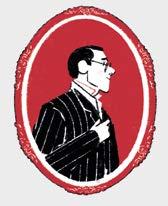
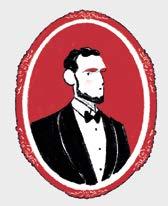
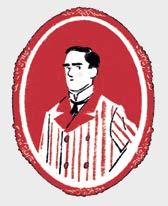
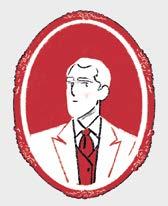
Dr Mortimer
Sir Henry
Barrymore
Mr Stapleton
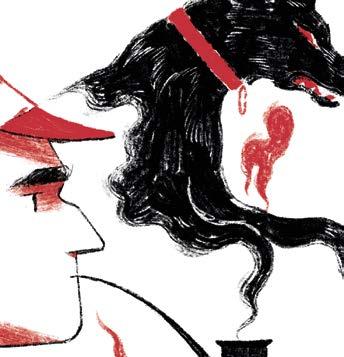
Sherlock Holmes, with the help of his friend Dr Watson, investigates the legend of a mysterious hound. The local people believe in the superstition and think it has caused the death of Sir Charles Baskerville, but is the story true? When Sir Henry, the new heir, arrives at Baskerville Hall on Dartmoor, he asks Holmes to find out if this mysterious hound is real or a supernatural creature.
EXTENSIVE READING SERIES
LEVEL 1 BEGINNER (400 HEADWORDS) A1
LEVEL 2 ELEMENTARY (700 HEADWORDS) A2
LEVEL 3 PRE-INTERMEDIATE (100 HEADWORDS) A2/B1
LEVEL 4 INTERMEDIATE (1400 HEADWORDS) B1
LEVEL 5 UPPER INTERMEDIATE (1800 HEADWORDS) B2
LEVEL 6 ADVANCED (2500 HEADWORDS) C1
Classic
To download audio tracks
• Scan the QR code inside your book with your mobile phone or tablet and listen to the recordings.
• With PC or Mac download audio tracks from www.eligradedreaders.com