Gruppo Editoriale ELi
MARIAGRAZIA BERTARINI

Il piacere di apprendere

STRATEGIE GRAFICHE PER APPRENDERE MEGLIO
Caratteri tipografici facilmente leggibili
Si usano font semplici, con corpo adeguato.
Si differenzia il testo di lettura da quello delle attività.

Spaziature adeguate
La lunghezza delle frasi e dei paragrafi e l’interlinea sono tali da consentire una lettura fluida.

Uso funzionale di colori e illustrazioni
Le immagini sono a sostegno dei testi. I colori sono usati per evidenziare concetti importanti, guidare l’attenzione o suscitare emozioni.

Struttura della pagina ordinata e lineare
Ogni pagina ha una gerarchia visiva chiara e coerente: titoli ben evidenti; sottotitoli riconoscibili, laddove presenti; riquadri o fondini per informazioni speciali e/o attività.

Equilibrio tra testo e immagini
Le illustrazioni non sovraccaricano la pagina, ma aiutano a capire: si mantiene un equilibrio armonioso che favorisca la lettura e la comprensione, riducendo quindi la distrazione.
MARIAGRAZIA BERTARINI
I N D I C E
Unit 1 • Be p. 2
Unit 2 • Have p. 14 Unit 3 • Can p. 26
Unit 4 • Like p. 38
Unit 5 • Smiling p. 50
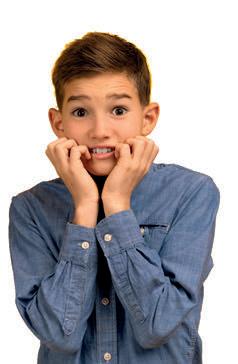
1 Leggi il dialogo e rispondi alle domande.
Emma : Today is the last day of primary school. I’m happy.
Liam : I’m sad. I don’t want t o leave our school.
Sofia : New school, new teachers, new friends. I’m excited!
Ben : Hmm… The new school is big. I’m a little scared.
Emma : Don’t worry, Ben. We go together.
Sofia : We can help each other.
Ben : And we can play together.
Liam : Thank you, friends. Now I feel better.

1. How is Emma? Why? ............................................................................................................................... .....................................................................................................
2. How is Liam? Why?
3. How is Sofia? Why?
4. How is Ben? Why? ............................................................................................................................... .............................................................................................................
5. Imagine that it’s the last day of school. Ho w are you? Why?
2 Abbina ogni agget tivo all’espressione appropriata. 1 sad • 2 scared • 3 happy • 4 excited • 5 worried • 6 surprised
3 Ascolta e collega ogni parola all’elemento appropriato.
1. vet
2. nurse
3. basketball player
4. photographer
5. journalist
6. mechanic
7. chef
8. teacher

4 Ascolta e segna vero ( True ) o falso ( False ).
thirty-four sixty-two twelve forty-three twenty-three ninety-eight fifty-nine seventy-six thirty-four



5 Scegli. Poi ascolt a e controlla.
1. How many days are there in a week? Seventeen. Seven. Seventy.
2. How many weeks are there in a year? Fifty-two. Fifty-three. Fifty-four.
3. How many minutes are there in an hour? Sixteen. Sixty-six. Sixty.
6 Complet a le coppie con il vocabolo di parentela appropriato.
1. My grandma Elly and my John.
2. My mother Sue and my Paul.
3. My uncle Tom and my .......................................................... Mary.
4. My brother Max and my .......................................................... Bella.

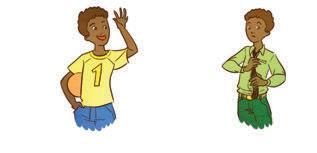
7 Scrivi il pronome per sonale soggetto appropriato sotto a ogni immagine.






8 Riscrivi le frasi usando i pr onomi personali soggetto appropriati.
1. My sisters are nice.
2. Tom is my best friend.
3. Two cats are in the garden.
4. The window is open.
5. John and I are at school.
6. Sandra is in the kitchen.
7. You and your brother are Italian.
9 Collega il pronome per sonale all’aggettivo possessivo corretto.
1. he A my
2. you B its
3. she C your
4. I D their
5. we E her
6. they F his
7. it G our
10 Scegli l’aggettivo possessivo corretto.
1. Welcome to my / your party!
2. Leo and his / her sister are at home.
3. We are English. England is their / our country.
4. Pam and his / her father are in the living room.
5. Sue! Open your / our book!
6. Leo and Pam are in their / its kitchen.
Il pronome personale soggetto • Gli aggettivi possessivi





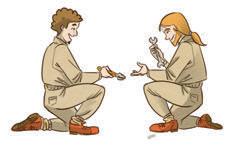
What’s Peter’s job?
What’s Ian’s job?
What’s Lia’s job?
What’s Jasmine’s job?
He is a vet. glasses Peter’s glasses.
What’s Eve’s job?
What’s Omar and Sam’s job?
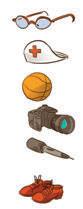
Whose are these? They are
Scrivi i mestieri al po sto giusto. 12 Rispondi. Segui l'e sempio. 13 Completa. Segui l'esempio.
14
Scegli la parola giust a e completa le descrizioni.

1. I’m from Italy / Italian. The Italy / Italian flag is ...........................................................................................................................
2. He’s from French / France. The French / France flag is
3. They’re from Greek / Greece. The Greek / Greece flag is ..........................................................................................
4. She’s from Great Britain / British. The Britain / British flag is
5. We’re from German / Germany. The German / Germany flag is .......................................................................
6. You’re from the USA / American. The USA / American flag is
7. He’s from Chinese / China. The Chinese / China flag is ......................................................................................................
8. They’re from Japan / Japanese. The Japan / Japanese flag is
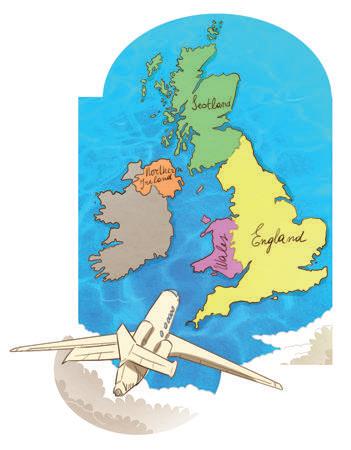
15 Osserva la cartina e completa le frasi. Poi ascolta e controlla.
This is the flag of ....................................................................... On the map it is coloured in ..........................................................................................................................
This is the flag of ....................................................................... On the map it is coloured in ..........................................................................................................................
This is the flag of ....................................................................... On the map it is coloured in ..........................................................................................................................
This is the flag of ....................................................................... On the map it is coloured in ..........................................................................................................................
16 Cerchia il verbo corretto.
1. I am / is a chef.
2. Your bike aren’t / isn’t old.
3. My mother is / am a teacher.
4. My hair is / are red.
5. Our shoes am / are new.
6. Are / Is you from Greece?
17 Riscrivi le frasi alla forma negativa.
1. We are American. .........................................................................................................................
2. My cat is beautiful.
3. Your parents are from Italy.
4. My shoes are red. .........................................................................................................................
5. Our kitchen is small.
6. Their flag is blue and white.
7. Her mother is a nurse. .........................................................................................................................
8. I am from Paris.
18 Cerchia l’opzione corretta.
1. Their / They’re teacher is American.
2. His / He’s notebook is old.
3. His / He’s a journalist.
4. Their / They’re teachers.
5. Your / You’re tablet is new.
6. Your / You’re Chinese.
19 Riscrivi le frasi alla forma interrogativa.
1. Their flag is red and yellow.
2. They are from Madrid. .....................................................................................................................
3. She is a nurse .
4. Your sister is at school.
5. You are good boys.
6. We are eleven years old.
7. Pete is intelligent. .....................................................................................................................
8. They are vets.
20 Completa le risposte brevi.
To be or not to be: that is the question.
1. Is your mother from Japan? Yes,
2. Is he your grandfather? No, ..............................................................................................................
3. Are they your friends? Yes,
4. Are you a mechanic? No,
21 Collega ogni domanda alla rispost a appropriata.
1. Are you Italian?
2. Is your aunt Italian?
3. What’s her job?
4. Where is she from?
5. How old is your father?
6. Whose pizza is this?
7. What’s her father’s job?
8. Is this your bike?
22 Ascolta e completa le carte d’identità.
Name: Josh
Age: ...........................................................................................................
Nationality:
Name: Rosemary
Age: ...........................................................................................................
Nationality: ......................................................................................
Job: ............................................................................................................
a. He’s fifty-two.
b. It’s my sister’s.
c. He’s a photographer.
d. No, she isn’t.
e. She’s a chef.
f. She is from Japan.
g. No, it’s my brother’s.
h. Yes, I am.
Name: Harold
Age:
Nationality:
Job: ............................................................................................................
Name: Alice
Age: ...........................................................................................................
Nationality: ......................................................................................




Eddy Eliana Kenzo
Scrivere un breve testo
KEEPING IN TOUCH
1 Leggi che cosa scriv e Scarlett a Tom e rispondi alle domande.
Hi Tom,
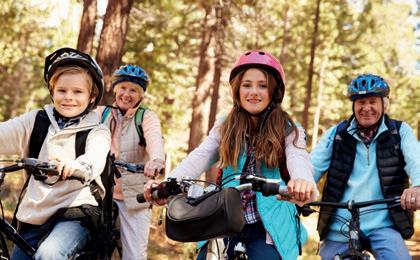
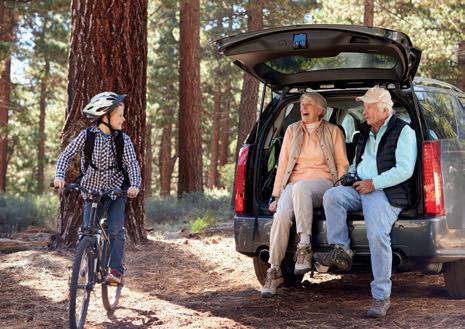
I’m in the mountains with my brother and my grandparents. It’s very beautiful here. Grandma is 68 years old. She’s English and she’s a teacher. She likes walking and cycling. Every morning, she takes us on a path in the mountains. Grandad is 70. He’s French and he’s a vet. He likes cooking. In the afternoon he makes soup, pasta or pancakes. I always help him in the kitchen. My brother and I play outside. We climb rocks, we run, and we laugh.
I’m very happy here!
Your friend,
Scarlett
1. Who is Scarlet t with in the mountains?
2. How old is grandma?

3. What does grandma like to do? .............................................................................................................................
4. What is grandad’s job?
5. What does grandad like to do? .............................................................................................................................
6. How does Scarlett feel in the mountains?
2 Ascolta Tom che racconta le sue vacanze estive. Poi leggi le frasi e scegli se sono vere ( True ) o false ( False ).
1 Tom is in the mountains this summer.
2 He stays at his aunt’s house.
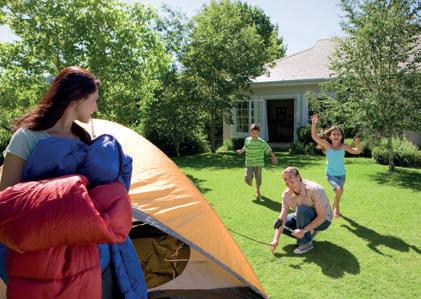
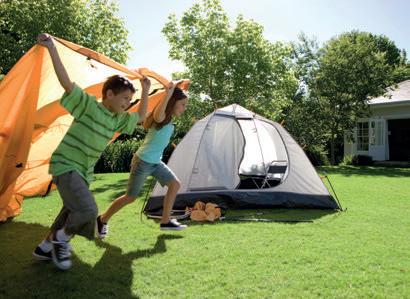
3 There is a tent in the garden.
4 He plays camping with his cousin.
5 They put sleeping bags inside the tent.
6 They drink juice and eat biscuits in the tent.
7 In the evening, they watch television.
8 They tell stories and sing songs.
9 Tom isn’t happy in the city.
3 Rispondi alle domande.
Which holidays do you like: Scarlett’s or Tom’s? Why?
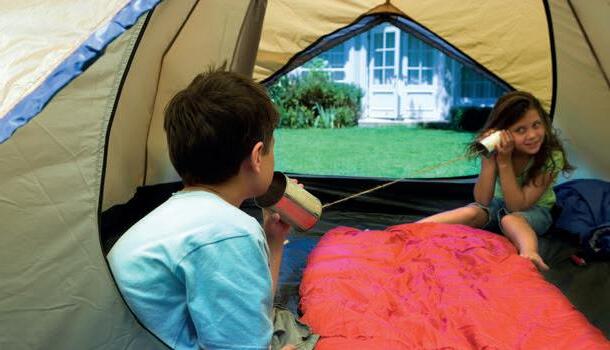
WORD FUN UNDER THE SUN

2 Riordina le lettere dell’alfabeto inglese nella tabella che trovi sotto. Fai attenzione: c’è una lettera doppia.
Usa la tabella che hai compilato e scopri il messaggio.



1 Leggi il brano e poi scegli: vero ( True ) o falso ( False )?
Hi, my name’s Carol.
My favourite day is Monday. On Monday I have science, English, art and maths.
I’m good at English and art, but I’m not very good at maths.
My favourite subject is science, because I love animals.
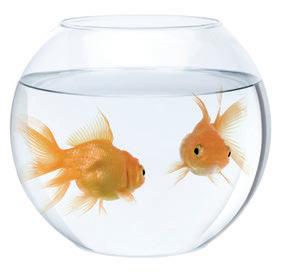
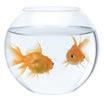
I’ve got two goldfish and two dogs.
My best friend is Molly.
She has got short blonde hair, and I have got long brown hair.
She’s tall, I’m short.
She has got brown eyes. I have got green eyes.
She’s not very good at science, and her favourite subjects are maths and ICT.
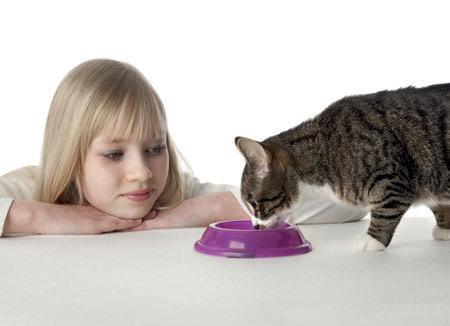
She has got three cats. We are different but we are best friends!

1. Carol’s favourite day is Monday.
2. She doesn’t like science.
3. Carol is good at English and art.
4. She has got tw o cats.
5. Her best friend’s name is Molly.
6. Carol has got short blonde hair.
7. Molly’s favourite subjects are maths and ICT.
2 Abbina ogni parola alla part e del corpo corrispondente, poi ascolta e controlla. 3 Riordina i giorni della settimana, poi ascolta e controlla.


4 Togli dal nome di ogni materia scolastica la lettera in più e scrivila sui trattini.
5 Scrivi l’opposto di ogni aggettivo.
Scrivi il plurale . 7 Cerchia solo i plurali corretti, poi ascolta e controlla.
1. I have got two goldfishes / goldfish.
2. Two men / mans are in the garden.
3. The childs / children are at school.
4. Father Christmas has got nine reindeers / reindeer.
5. Those people / persons are from Greece.
Conta e completa la frase.
6. Here is your moneys / money. I can see cats and .......................................................... dogs.
9 Complet a il testo scrivendo le parole al posto dei disegni. Poi ascolta e controlla.
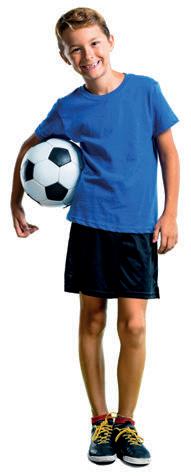
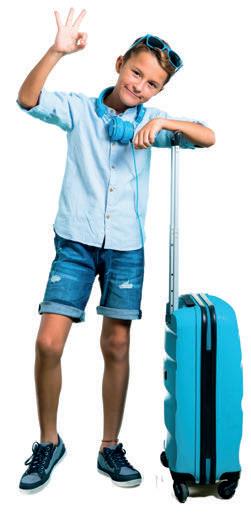
I’m going to my friend Alex’s house for the weekend.
We play in the same football team. Together we are the best!
I have my case and I’m packing my things.


First, I put my .............................................................


Then I add two


I take my and my I put in three and two .............................................................


I take my ............................................................. , because I need them to read.
I also bring two and some for the trip.
Now my bag is full!
I’m ready for the weekend!
Alex, wait for me. I’m coming!
10 Completa con have got oppure has got .
1. You .............................................................. a big dog.
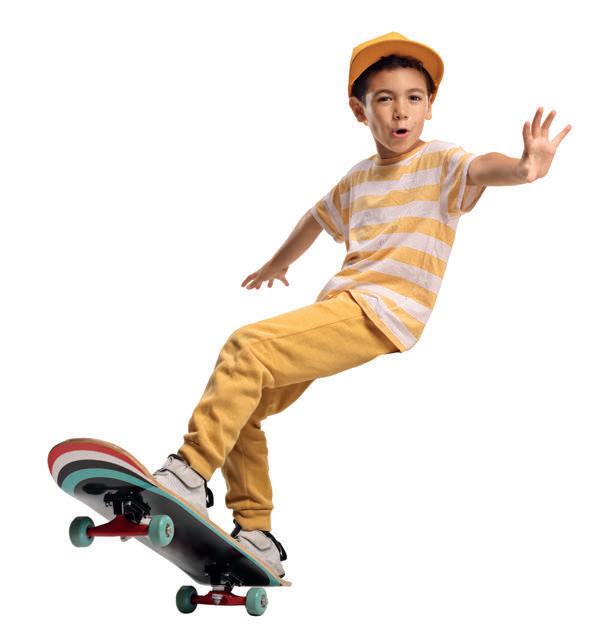
2. He a cool skateboard.
3. They a new computer.
4. We .............................................................. a secret diary.
5. He .............................................................. two sisters.
6. I blue eyes.
11 Riscrivi le frasi dell’esercizio 10 con la forma contratta: ‘ve got oppure ‘s got .
12 Riscrivi le frasi alla forma negativa usando la forma contratta.
1. She’s got a red wardrobe with a mirror inside. 2. We’ve got a new blackboard in our classroom.
3. I’ve got long, black hair and blue eyes.
4. He’s got a new smartphone and a new laptop.
5. They’ve got a very small house with a big garden.
6. It’s got a long tail and very short legs.
7. You’ve got just a sandwich and an apple for lunch.
13 Riordina le parole e scrivi frasi interrogative, poi ascolta e controlla.
1. father / your / a / got / car / has ?
2. a / have / tablet / new / got / you ?
3. has / cat / long / your / go t / tail / a ?
4. book / her / Martha / got / has ?
5. got / they / their / skateboards / have ?
............................................................................................................................... .......
6. got / Sally / secret / has / a / diary ?
14 Completa le risposte brevi.
1. Has she got beautiful hands? No,
2. Have you got a photo album? Yes,
3. Has he got a tennis racket? No, .........................................................................................................................
4. Has your mum got short hair? Yes, .........................................................................................................................
5. Has Tom got red shoes?
Yes,
6. Have they got green hair? No,
15 Osserva l’immagine e descrivi il ragazzo seguendo la traccia. Usa il verbo avere (have got).
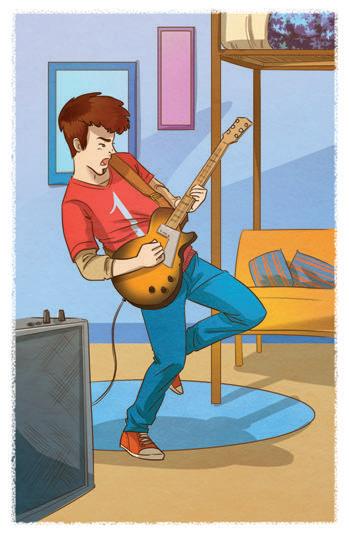
16 Riscrivi le frasi so stituendo ’s con is oppure con has in modo appropriato.
1. She’s my friend Emma.
2. She’s got an English penfriend.
4. She’s got two brothers. Il verbo avere hair: T-shirt: ............................................................................. jeans: trainers: instrument: ...............................................................
3. She’s fourteen years old. ............................................................................................................................... ................................................
17 Ascolta e completa l’orario scolastico di Connor.

1. He has maths on Wedne sday.
2. He doesn’t have English on Monday.
3. He has history on Wednesday.
4. He has science on Friday.
5. He has art on Thursday.
6. He doesn’t have geography on Tuesday.
19 In quali discipline riesci meglio? Comple ta.
I’m excellent at I’m very good at ........................................................................................................................
I’m good at I’m not very good at
20 Scrivi l’orario scolastico dei tuoi sogni.
I have ..................................................................................................... on Monday. I have on Tuesday. I have on Wednesday.
I have ..................................................................................................... on Thursday.
I have ..................................................................................................... on Friday.
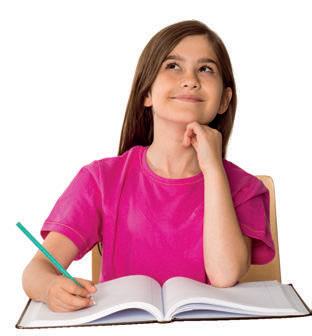
18 Leggi e segna se le frasi sono vere ( True ) o false ( False ).
21 Leggi e ascolta. De scrivi in prima persona e disegna qualcuno che è l’opposto di Max.
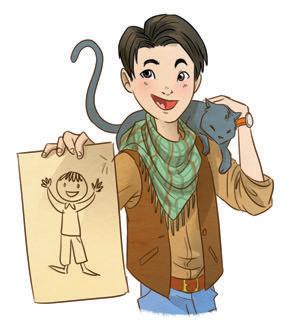
Hi, my name’s Max. I live in the USA.
I’m tall and thin.
I’ve got dark eyes and short dark hair. I’m excellent at English, but I’m not very good at art.
I’ve got a cat. I love cats!
22 Ora descrivi te stesso/a e il tuo migliore amico o la tua migliore amica.
KEEPING IN TOUCH
1 Leggi che cosa scriv e Sophie a Martin, poi rispondi alle domande.
Dear Martin, Hello!
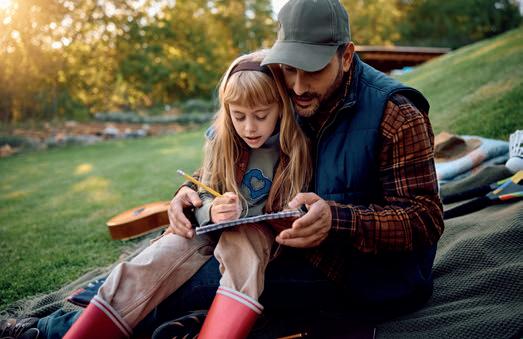
Every Saturday, in summer, I go fishing with my dad. We get up very early. I don’t like it because I’m sleepy, but my dad is very happy. He says, “Let’s go, the fish are waiting!” We go to the lake. The air is cool and the water is calm. My dad helps me with the fishing rod. Sometimes we catch a little fish. At midday, we cook together. My dad makes soup or pasta. I help him. Then I do my homework. It’s always a nice day with my dad. See you soon

1. When does Sophie go f ishing with her dad?
2. Does Sophie like getting up early?
Sophie

3. How does her dad feel in the morning?
4. Where do they go fishing?
5. What do Sophie and her dad do at midday?
6. What does Sophie do after cooking?
7. Do you like fishing?
2 Ascolta Martin che racconta una sua giornata delle vacanze estive. Poi leggi le frasi e scegli se sono vere ( True ) o false ( False ).
1. Martin lives in Spain.
2. Martin lives near the mountains.
3. Martin goes t o the beach with his family every summer.
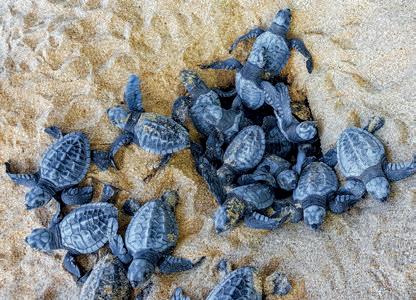
4. There is a turtle nest in the sand.
5. The turtle nest is in the forest.
6. People from the nature centre take care of the eggs.
7. The baby turtles run fast to the sea.
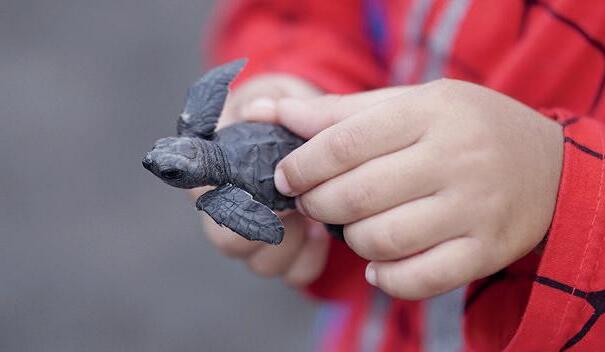
8. The baby turtles are small and cute.
9. Martin likes to watch the turtles every summer.
3 Rispondi alle domande.
Which day do you like best: Sophie’s or Martin’s? Why?
WORD FUN UNDER THE SUN
1 Leggi le definizioni e comple ta l’incrocio di parole con i vocaboli delle discipline scolastiche.
2 You solve problems using numbers and logic.
4 You learn all about plants, animals and human body.
8 You learn to use a computer.
9 You learn about rivers, lakes, mountains and seas.
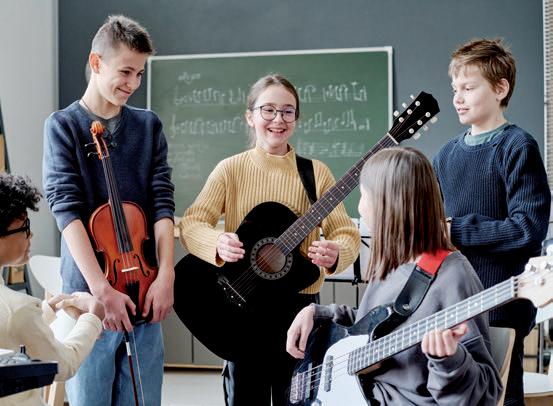
1 You learn to play an instrument.
3 You learn how to play different sports.
5 You learn to speak the language people speak in the UK.
6 You learn about ancient Rome and Egypt.
7 You learn all about artists, pictures and sculptures.



2 Risolvi gli indovinelli sui giorni della se ttimana.
3 Ora risolvi gli indovinelli sulle parti del giorno.
1. I wake with birds and breakfast. The sky is bright and new. .....................................................................................
2. Stars are out; most people sleep. .....................................................................................
3. The sun is highest; shado ws are short; lunch time!
4. Homework, sports, a long shadow on the ground.
5. I am 12 hours after midday, very dark and very quiet. .....................................................................................
6. The
1 Leggi il brano e poi scegli: vero ( True ) o falso ( False )?
Hello, my name’s Aron.
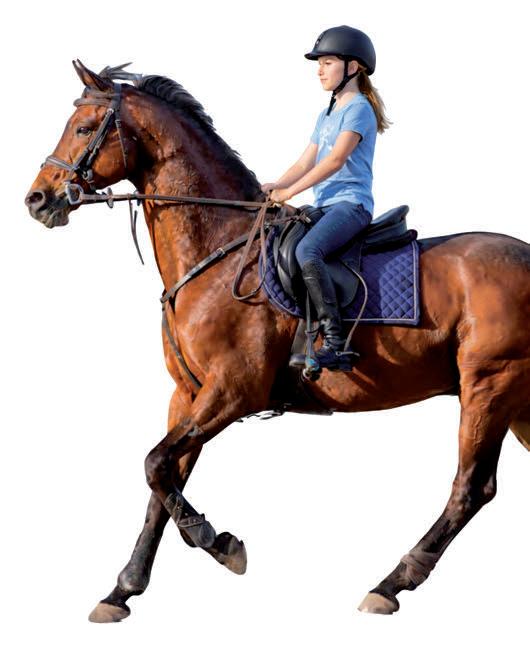
I’m 12 years old and I live in Edinburgh, in Scotland. I love sports and I can play football and basketball very well. I can swim and play tennis, and on Sundays I usually cycle to the lake with my brother Jim. Jim is older than me and he can cycle very well. Now, we have a guest at home. Her name’s Debby. She’s from Melbourne, Australia. She’s younger than me. She’s 11. She can’t swim, she can’t play football or tennis. But she can sing, dance and ride a horse. And she’s beautiful too! Today is Sunday and we are at the park. We are riding a horse, but… I can’t ride at all!
1. Aron can play football very well.
2. Aron can't play basketball.
3. Jim can’t cy cle.
4. Jim is older than Aron.
5. Aron is younger than Debby.
6. Debby can’t swim.
7. Debby can't sing.
8. Aron can ride a horse.
T F
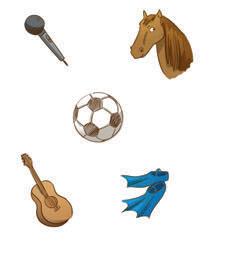
2 Collega ogni verbo all’elemento appropriato.
3 Cerchia l'aggettivo appropriato. 4 Cerca sul vocabolario l’opposto degli aggettivi. 1. cycle 2. play football
a. easy b. difficult
a. ugly b. beautiful
a. expensive b. cheap dangerous boring
intelligent
disgusting wonderful fast
Disegna. an ugly face a cheap car a beautiful bike
6 Riscrivi le frasi nella forma negativa.
1. We can ride a horse. ..........................................................................................................................
2. Elly can play the guitar.
3. Sue and Aron can ride a bike.
4. Tom can play video games.
5. Cats can talk.
6. A snake can run.
7 Riscrivi le frasi nella forma interrogativa.
1. We can go to the cinema.
2. She can play the piano.
3. They can ride an elephant. ..........................................................................................................................
4. Jim can play tennis.
5. Dogs can talk.
6. A parrot can swim.
8 Osserva la tabella e rispondi. Usa le risposte brevi.
1. Can Kai swim?
2. Can Alex skate? ..................................................................................
3. Can Kai and Sam do karate?
4. Can Alex and Sam swim? .....................................................
5. Can Kai skate?
6. Can Kai do karate? ........................................................................
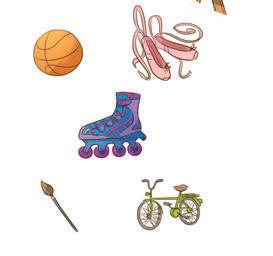
9 Collega ogni sport all’element o che si usa per giocarlo.

Osserva
tabella
completa
can’t at all well very well
1. Mary can’t ........................................... at all.
2. Eddy can well.
3. Mary can very well.
4. Mary can ........................................... well.
5. Eddy can’t at all.
12 E tu? Complet a le frasi in modo personale.
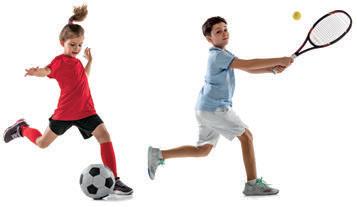
6. Eddy can very well. 1. I can / can’t play ice hockey
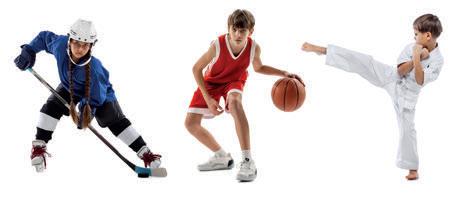

I can / can’t play basketball
I can / can’t do karate
I can / can’t play football
I can / can’t play tennis
I can / can’t do gymnastics
13 Ascolta che cosa dice Thomas e completa la tabella. Metti un ✓ al posto giusto.

14 Ascolta di nuovo e segna se le frasi sono vere ( True ) o false ( False ).
1. Thomas is ten y ears old.
2. He has got one sister and one brother.
3. Mary can play tennis and basketball.
4. Josh can play tennis very well.
5. Alex can do karate.
6. Thomas can rollerblade .
7. Thomas like s music.
8. The family has fun together.
15 Scrivi che cosa sanno fare e che cosa non sanno fare. Thomas Josh
Thomas Mary Josh Alex
SaytheEnglish alphabet.

Write 4 clothes starting with S.
Write the capital cities of the UK.


Say the numbers from 1 to 20 and back.
17 Completa le frasi.
I can ...................................................................................... very well. I can well. I can but not very well. I can’t ...................................................................................... at all. My goal is to learn to Produrre brevi testi orali e scritti a ball 20 times.
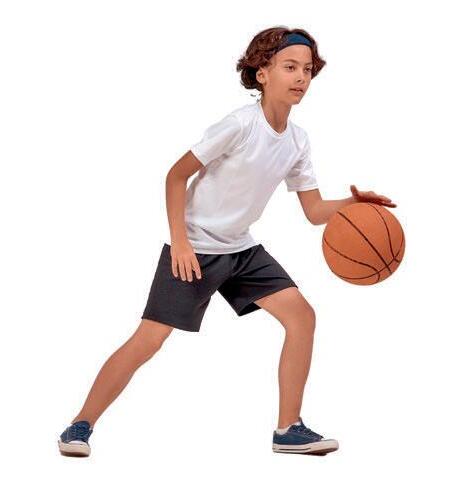
18 Completa le frasi con this / these oppure con that / those in modo appropriato.
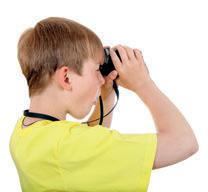
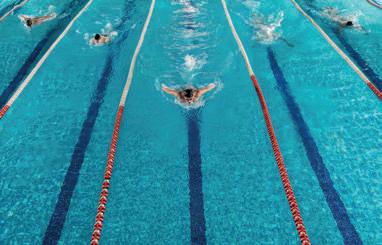



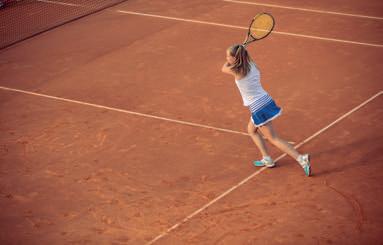


5. is a rugby player.
1. ......................................... are swimmers. 6. are divers.
2. ......................................... is a basketball player.
3. are basketball players. 4. is a tennis player.
19 Leggi e cerchia l’aggettivo dimostrativo appropriato.
1. These / That is my phone number.
2. These / That pencils are Mary’s.
3. These / This is my secret diary.
4. Those / That are my shoes.
5. This / These are my jeans.
6. These / That is John’s cap.
7. Are this / those your books?
8. Is that / those your father’s car?
21 Abbina ogni frase all’immagine appr opriata.
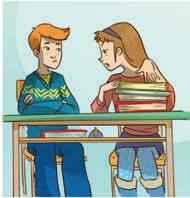
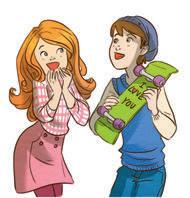
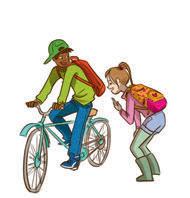
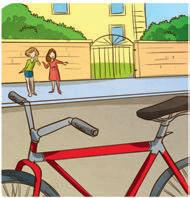
1. This is my bike.
2. Those are my teachers.
3. That is your brother’s bike.
4. Is that your schoolbag?
20 Ascolta e prova anche tu. Riesci a pronunciare lo scioglilingua tre volte?
This is this, that is that.
These are cats, those are hats!
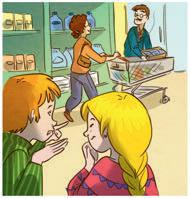

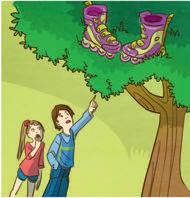
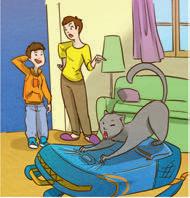
5. These are my books.
6. These are Sally’s teachers.
7. Those are Tom’s rollerblades.
8. Is that your skateboard?
KEEPING IN TOUCH
1 Leggi che cosa scriv e Max alla sua amica Elizabeth, poi rispondi alle domande. 1. Where is Max on holiday?
Dear Elizabeth,
Hello! How are you?
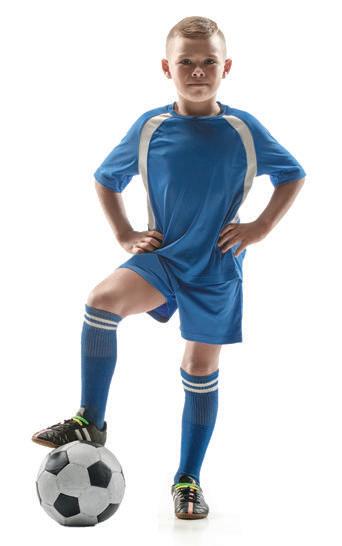
I’m on holiday at a sports camp this week. It’s fun, but a bit hard too! I really like playing football. It’s my favourite sport. I play every day with my new friends. We run, kick the ball, and score goals! But we must do other sports too. In the morning, we play tennis, and I don’t like it very much. We also go swimming. The water is very cold! In the afternoon we do athletics. I’m always tired after that!
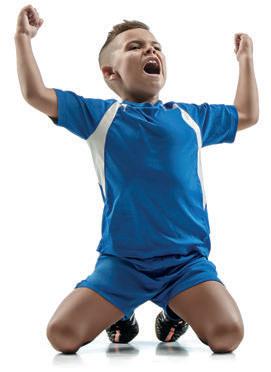
In the evening, we have dinner and play games together. I like the camp, but football is the best! See you soon,
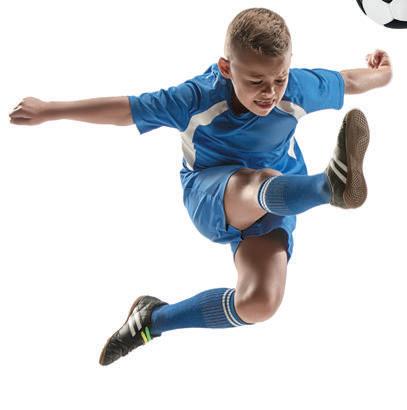
2. What is Max’s favourite sport? 3. Who does Max play football with?
4. What other sports does Max do in the morning?
5. What is the wat er like when Max goes swimming?
6. What does Max do in the evening? 7. Does Max like football or tennis more?
2 Ascolta Elizabeth che racconta una sua giornata delle vacanze estive. Poi leggi le frasi e scegli se sono vere ( True ) o false ( False ).


1. Elizabeth loves basketball.
2. She goes to the park every morning.
3. She plays basketball with her family.
4. At midday they eat sandwiche s near the duck pond.
5. Elizabeth and her friends sit on the grass and talk.
6. Sometimes new friends come to play with them.
7. In the evening Elizabeth goes home and has a shower.
8. Elizabeth doesn’t like summer days at the park.
3 Rispondi alle domande.
Which holidays do you like best: Max’s or Elizabeth’s? Why?

T F
WORD FUN UNDER THE SUN
Scrivi le azioni al post o giusto e decifra il codice.
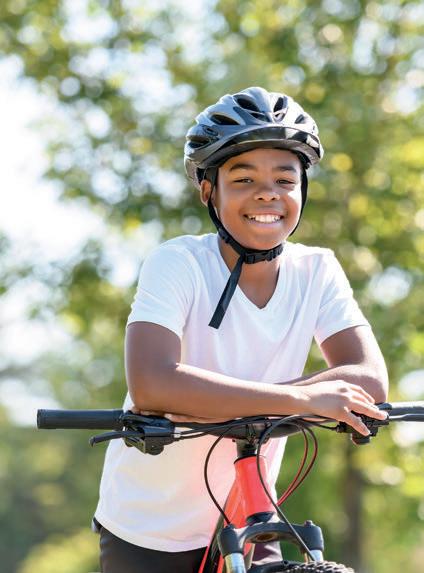
karate • cycling judo • boxing
The odd one out is
football • basketball rugby • volleyball
The odd one out is

skiing • snowboarding ice hockey • surfing
The odd one out is
climbing • sledging curling • ice skating
The odd one out is .........................................................................
tennis • badminton padel • baseball
The odd one out is
skateboarding • surfing snowboarding • windsurfing
The odd one out is .....................................................................................
surfing • sailing skiing • diving
The odd one out is
boxing • golf running • beach volley
The odd one out is
football • handball water polo • volleyball
The odd one out is .........................................................................
2 Trova l’intruso.
2 Aguzza la vista e conta.
Hi, I’m Rachel.
Every day I get up at a quarter to seven. I usually have milk and biscuits for breakfast, but sometimes I prefer fruit and yoghurt. Then I go to school. At midday I have lunch with my class in the school canteen. After lunch I play until two o’clock. Lessons finish at ten to four. In the afternoon I play with my friends and watch TV. Before dinner I do my homework. I always go to bed at a quarter to ten. I like my school friends, my teachers and my school, but my favourite day is Sunday!


1. Rachel get s up at 7:15 a.m.
2. She usually has milk and biscuits for breakfast.
3. At twelve o’clock she has lunch at school.
4. Lessons finish at 4:10 p.m.
5. In the afternoon she plays and watches TV.
6. She goes to bed at 10:15 p.m.
1 Leggi il brano e poi scegli: vero ( True ) o falso ( False )?
2 Abbina i pasti alla parte del giorno e alle immagini.
Riordina le azioni che compi normalmente iniziando dal mattino.

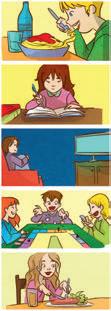
have lunch do my homework
watch television play with friends have dinner
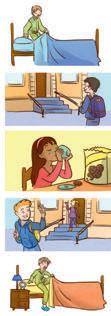
4 Elimina la let tera in più in ogni parola e scopri il messaggio.
sandpwiches sausagies
go to bed
go to school
have breakfast
finish school get up
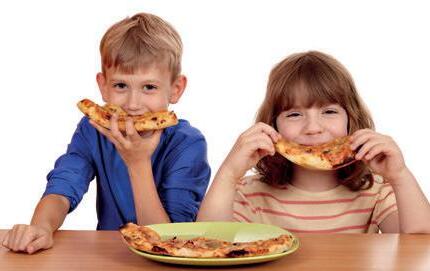
5 Abbina ogni parte del giorno all’ora appropriata.
1. in the afternoon
2. at midnight
3. in the morning
4. in the evening
5. at midday
6. at night


Ascolta e cerchia. 9 Rispondi.
1. a quarter to eight • a quarter past eight
2. half past ten • half past nine
3. five to ten • ten to five
4. twelve o’clock • twenty to twelve
the time?
T F

7 Ascolta e segna vero ( True ) o falso ( False ). 8 Leggi e disegna le lancet te.
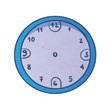
It’s half past two. It’s a quarter to three.
It’s a quarter past six. It’s twenty to one.
the time?
the time?
the time?
the time?
10 Scrivi la terz a persona singolare dei seguenti verbi.
12 Riscrivi le frasi nella forma negativa.
1. Jim and Ellen like fish.
11 Cerchia il verbo giusto.
1. They has / have dinner at ten past seven.
2. I get up / gets up at a quarter past seven.
3. Alvin and Tom have / has lunch at midday.
4. Daisy have / has breakfast at eight o’clock.
5. We goes / go to school at half past eight.
6. Tim goes / go home at a quarter to four.
7. You plays / play with your friends.
8. Claire likes / like rice. read .......................................................................................................................... play .......................................................................................................................... go run study .......................................................................................................................... eat kiss get .......................................................................................................................... watch jump have .......................................................................................................................... write do finish ..........................................................................................................................
14 Che cosa ha comprato la signora?
2. Alison goes to school on Saturday.
3. Terry plays with his friends.
4. I get up early. ..............................................................................................................
5. You go to bed at eleven o’clock. ..............................................................................................................
6. We have lunch at school.
13 Riscrivi le frasi nella forma interrogativa.
1. We play volleyball in the park.
2. She finishes her homework at six o’clock.
3. You watch TV in your bedroom. ..............................................................................................................
4. Tim has lunch in the garden. ..............................................................................................................
5. They go to the cinema on Sunday.
15 Completa le risposte brevi.
1. Do you get up at six o’clock in the morning? No,
2. Do you have breakfast at seven o’clock? Yes,
3. Does Alison go to school at half past nine? No,
4. Do they have lunch at school? Yes,
5. Do we play with our friends? Yes,
6. Does he do his homework? Yes, ....................................................................................................


16 Rispondi in modo personale . 17 Osserva la tabella e completa le risposte.
Alison Ralph
1. Does Alison like rice? Yes, , but she prefers
2. Does Ralph like pasta? Yes, , but Does Alison like meat? Yes, , but Does Ralph like sausages? Yes, , but Does Alison like biscuits?
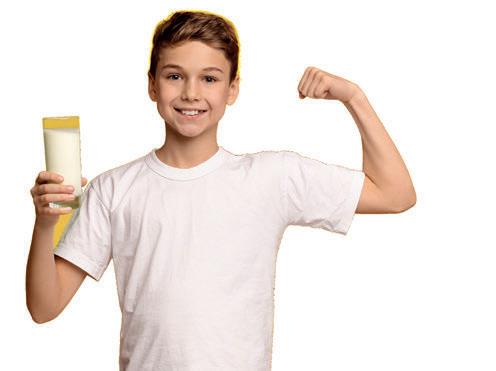
Yes, ................................ , but ........................................................................... Does Ralph like ice cream? Yes, ................................ , but ...........................................................................

18 Osserva, completa la tabella e scrivi delle frasi vere. Inizia sempre con ciò che i ragazzi e le ragazze mangiano più spesso.
pasta or rice vegetables fruit meat or fish
Rayan
Alexia
Rayan always eats pasta or rice. He usually eats always usually often sometimes never
Milly
Dave
Alexia
Milly
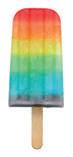
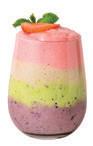
19 Che cosa ti piace di più in estate? Completa.
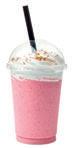

In
20 Leggi e complet a il testo con le parole date. Poi ascolta e controlla.
friends chef grandmother lesson week book
Hi, my name’s Violet.
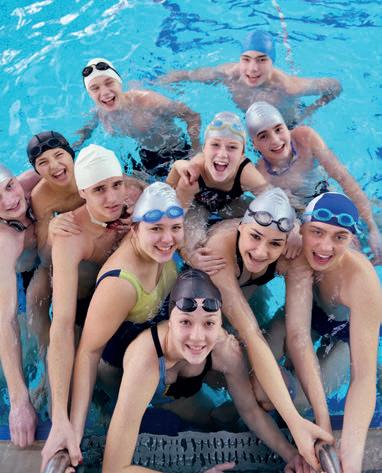
It’s the school holidays, so I don’t go to school this ............................................................. But I am very busy. In the morning, I usually do my homework and then I’m free and I can play with my ............................................................!
I love cooking and when I’m on holiday I can cook with my ............................................................ . Sometimes I cook pizza or sausages, but I love pasta. My grandmother says I’m an excellent ............................................................ .
In the afternoon I read a ............................................................ , then I go to the swimming pool with Zoe, my best friend. Zoe can swim very well. I can’t swim, but every day I have a swimming ............................................................ . In the evening I’m very tired and I go to bed at nine o’clock.

21 Riscrivi il te sto in terza persona.
Her name’s Violet.
22 Pensa e rispondi in modo personale.
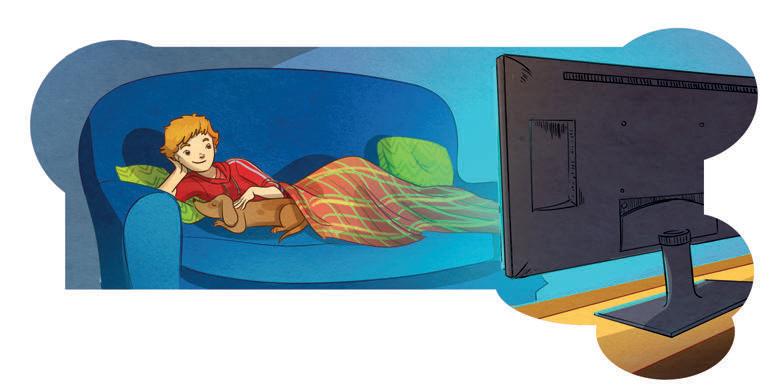
Do you watch TV at night?
Can you swim?
Do you eat at school on Sundays?
Do you often go to a swimming pool?
Do you like hamburgers?
Are you at school today?
KEEPING IN TOUCH
1 Leggi che cosa scriv e Lily all’amico Brian e rispondi alle domande. 1. Who is Lily on holiday with? 2. What do Lily’s par ents have?
Hi Brian, I’m on holiday with my mum and dad. You know they have a restaurant, so every summer we eat food from all over the world. I love Italian and Indian food. Pasta and curry are delicious! I like Chinese food too. Noodles are amazing! But this year is crazy! Mum and Dad want to try insects! They say it’s “new” and “healthy”, but I think it’s disgusting! Today they are eating fried crickets and laughing. I don’t laugh.


I’m angry and very hungry! I only eat some bread and fruit. I hope tomorrow we eat normal food. Lily


3. What do they do e very summer? 4. What kind of food doe s Lily love?
5. What food do Lily’s parents want to try this year?
6. How does Lily feel about eating insects?
7. What food does Lily want to eat tomorrow?
2 Ascolta Brian che racconta una sua giornata delle vacanze estive. Poi leggi le frasi e scegli se sono vere ( True ) o false ( False ).

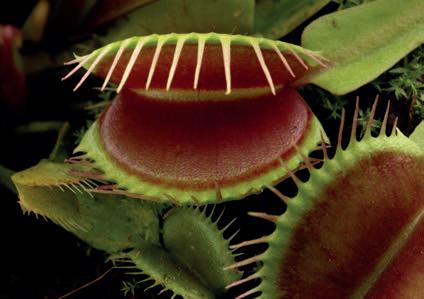
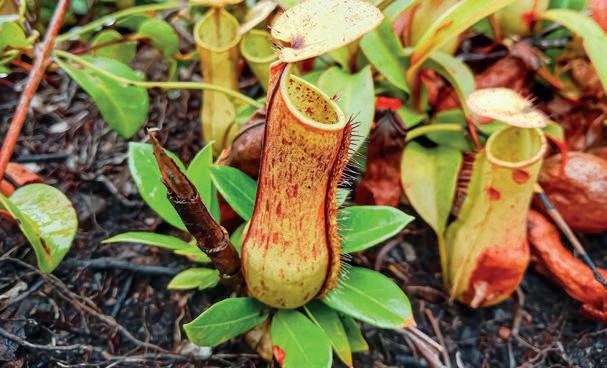
1. Brian thinks eating insec ts is delicious.
2. Brian’s dad is a gardener.
3. This summer they ar e visiting the zoo.
4. Brian is taking pictures with his phone.
5. The carnivor ous plants are eating flies and crickets.
6. Brian thinks the gar dens are noisy and hot.
7. Brian doesn’t like the gardens.
8. Brian is enjoying the summer.
3 Rispondi alle domande.
Which holidays do you like best: Lily’s or Brian’s? Why?
T F
carrot potato onion lettuce garlic beetroot
The odd one out is
strawberry apple pear
orange peach cherry
The odd one out is
cheese oil milk yogurt butter cream
The odd one out is
sandwich
omelette wrap with ham hotdog toast
hamburger
The odd one out is
Are they fruit or vegetables? .................................................................................................
Are they fruit or vegetables?
olive avocado kiwi
apricot
orange plum
The odd one out is
coconut pistachio
banana
almond hazelnut
peanut
The odd one out is
Are they fruit or vegetables?


Is it a fruit or a vegetable? .................................................................................................
Are they fruit or vegetables?

Are they fruit or vegetables?

Indovina!
UNIT 5 • SMILING
1 Leggi il brano e poi scegli: vero ( True ) o falso ( False )?
Hello, I’m Robert. Today it’s my birthday. I’ve got lots of nice presents: fantastic new trainers from my mum, a red T-shirt from my dad, wonderful white jeans from my grandmother, some money from my grandfather and… a horrible jacket from my brother Mike. It's his jacket, but he doesn’t like it, so now it’s mine!
Now, I’m on the bus. I’m going to school, but I’m not wearing my new clothes. I’m wearing my old shoes, my brown trousers, my white T-shirt and Mike’s horrible jacket. Why? Because it’s cold and rainy!



1. Robert is not w earing his new clothes.
2. Mike is Robert’s grandfather.
3. Robert is wearing his old shoe s.
4. Robert is wearing Mike’s shirt.
5. Robert is wearing whit e jeans.
6. The weather is warm and rainy.
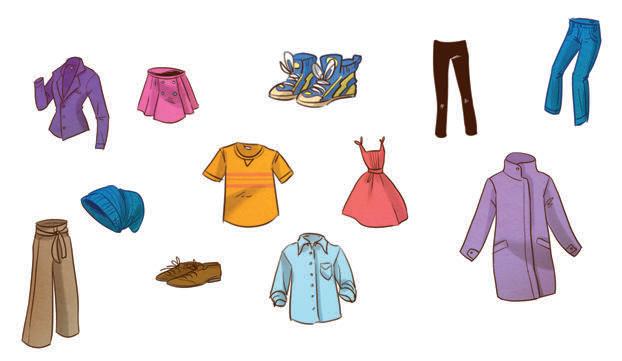
2 Abbina ogni parola all’immagine corrispondent e. Mancano i disegni di due indumenti. Scrivi quali sono.
1. T-shirt
jeans
trainers
shirt
trousers
shoes
hat 8. scarf
dress 10. jumper
skirt
12. coat 13. leggings 14. jacket
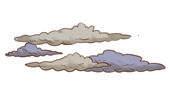
3 Scrivi sot to a ogni immagine che tempo fa.







4 Inserisci il verbo corr etto.
1. Sue drinking a cup of tea?
2. We .................................. wearing yellow T-shirts. We are wearing blue ones.
3. they going to the cinema?
4. I wearing a beautiful hat?
5. Max .................................. wearing a skirt.
6. I writing an email. I’m reading.
5 Riordina le parole.
1. wearing / a / Alice / dress / is / red
2. geography / studying / is / She
3. to / Are / you / the / going / park?
7 Complet a le frasi.



Complet a le risposte brevi.
1. Are you eating a sandwich? Yes,
2. Is she wearing your hat? No,
3. Are we going to the supermarket? Yes,
4. Is it raining? No,
5. Are they watching a film? Yes,
6. Is it sleeping under the sofa? No,
7. Are you and Mary going to the park? Yes,

• David is from London. He is wearing the T-shirt number
• Mark is wearing the T-shirt number 1 because he is
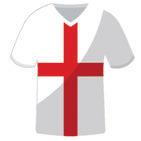

• Eddy is from Brazil. He is wearing the T-shirt number .....................................................................
• Alex is from Tunisia. He’s wearing the T-shirt number .....................................................................
• Martina is wearing the T-shirt number 2. She is from
• Helen is wearing the blue, white and yellow T-shirt. She is
• Charlie is wearing the T-shirt with a green star. She is from

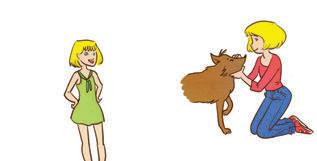
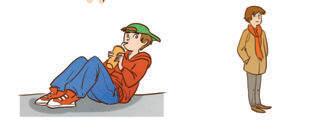


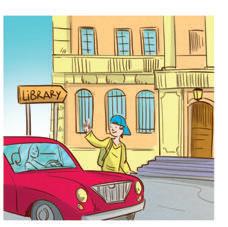
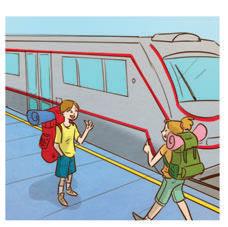
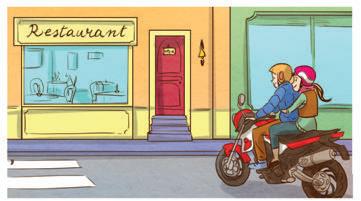
• I’m going to the library by car. • We’re going to the restaurant by motorbike.
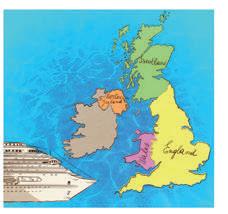
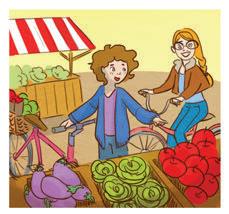
• We’re going to England by ship. • We’re going to the market by bike.
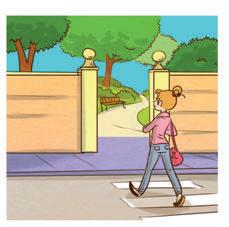
• I’m going to the park on foot. • I’m going to New York by plane.
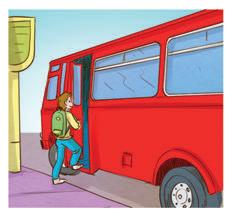
• We’re going on holiday by train. • I’m going to school by bus.

9 Scrivi le frasi al po sto giusto.
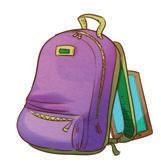
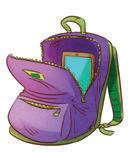
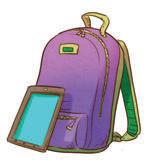
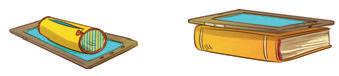

1. The tablet is 2. 3. 4. ............................................................................................................................... ............................................................................................................................... ...................... 5. 6. ............................................................................................................................... ...............................................................................................................................
11 Inserisci le prepo sizioni in , at , to , from quando necessario e in modo appropriato.
1. He’s studying history the kitchen.
2. I live Edinburgh, Scotland.
3. I’m going ........................................ home.
4. On Sundays we have lunch my grandparent’s house.
5. Here is a present for you. It’s London.
6. My sister is reading a book the garden.
7. He’s cycling the park to the supermarket.
8. We are going ........................................ the park.
9. My friend Ann is French. She is France.
10. I’m cycling home.
11. Now they are school.
12. In August I usually go England.
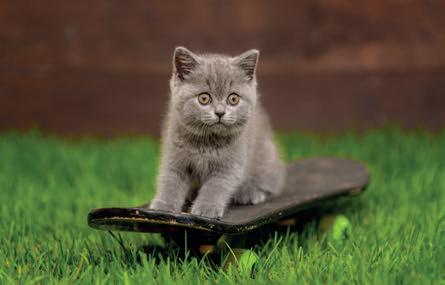
12 Completa con There is , There are , Is there , Are there .
1. a car in the garage.
2. two dolls on the sofa?
3. ...................................... four apples on the table.
4. a teacher in the classroom?
5. ...................................... a bag in the wardrobe.
6. two tomatoes in the fridge.
7. ...................................... two books on the chair?
8. a skateboard in the garden?
1. There is a restaurant near the school.
2. There are two buses in front of the park.
............................................................................................................................... .....
3. There is a hamster under the bed. ............................................................................................................................... .....
4. There are two rabbits in the kitchen.
5. There is a dictionary in her school bag.
6. There are ten pencils in my pencil case.
7. There is a pair of shoes in my wardrobe.
1. Is there a bed in your bedroom? Yes,
2. Is there a jumper on the chair? No,
3. Are there three restaurants in your town? Yes,
4. Is there a library near the school? Yes,
5. Are there two windows in your kitchen? No,
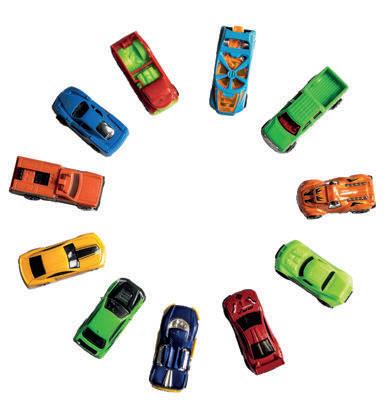
15 Completa le frasi.
There .......................... eleven cars. There forty-six wheels. There a white car. There .......................... two orange cars. There a black car. There a yellow car. There .......................... a green car.
There is – There are
Completa le risposte brevi. 14 Riscrivi le frasi nella forma negativa.
Completa il dialogo. Poi ascolta e controlla.
Hello, mum! , Denny!
I’m hungry, mum. Look in the kitchen, Denny.
Is there an ice cream?
No, an ice cream. Is there a sandwich?
Yes, an ice cream in the freezer.
Yes, there is a ham sandwich in the fridge.
No, there isn’t a sandwich. an apple or a banana? The cupboard is empty!
I’m hungry! No, three apples on the table. Where are my chocolate biscuits?
I’m at grandma’s house!

Yes, ...................................... three apples on the table.
Denny… in the cupboard!
Denny... are you? Oh, dear...

KEEPING IN TOUCH
1 Leggi che cosa scriv e Jake al suo amico Tim e rispondi alle domande.
Dear Tim,
Hello! How are you?
The summer holidays are finishing, and school is starting soon.
I’m very happy because I’m in the same class as you! It’s so cool! We can go to school together in the morning and sit next to each other. I’m really excited! At break time we can play football in the playground, talk, and laugh. Maybe we can start a little football team with our friends! I can’t wait to see everyone again and meet our new teacher. I hope she is nice and funny. After school we can do our homework together or play outside. I think this year is going to be great!
See you soon,
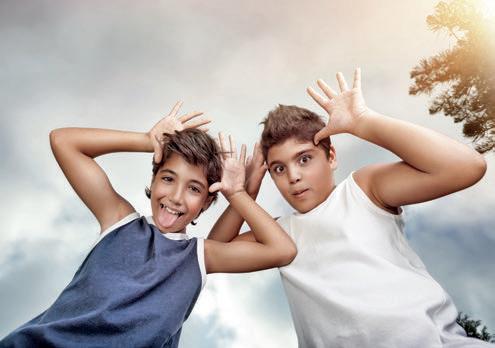

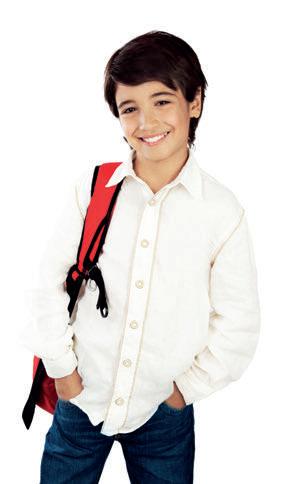
Who is
2. Why is Jake happy?
3. When is school starting?
4. What can Jake and Tim do in the morning?
5. Where can they play football?
6. What do they w ant to do with their friends?
7. What does Jake hope about the new English teacher?
1.
Jake writing t o?
2 Ascolta che cosa scrive Ann alla sua migliore amica. Poi leggi le frasi e scegli se sono vere ( True ) o false ( False ).

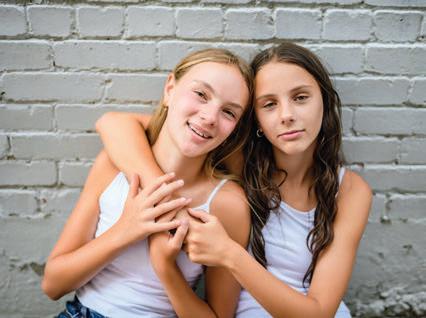
1. Ann and Emma are in the same class this y ear.
2. At first, Ann feels sad.
3. Ann doesn’t want to meet new people.
4. Ann thinks it’s OK to be in different classes.
5. Ann and Emma can play toge ther at break time.
6. Ann wants to make new friends.
7. Ann doesn’t like parties.
8. Ann thinks this year will be fun.
3 Rispondi alle domande.
Have you got a best friend?
Are you in the same class this year?
Are you happy or sad?

Responsabile editoriale: Mafalda Brancaccio
Responsabile di progetto: Giulia Abbiati
Redazione: Giulia Abbiati
Consulenza psicopedagogica: Valentina Falanga
Responsabile di produzione: Francesco Capitano
Progetto grafico e impaginazione: A come Ape di Alessia Zucchi
Supervisione grafica: Carmen Fragnelli
Illustrazioni: Archivio Gruppo Editoriale ELi
Copertina: A come Ape di Alessia Zucchi
Ricerca iconografica: Paola Rainaldi
Referenze iconografiche: Shutterstock, Archivio Gruppo Editoriale ELi
Stampa: Tecnostampa – Pigini Group Printing Division Loreto – Trevi 26.83.108.0
È assolutamente vietata la riproduzione totale o parziale di questa pubblicazione, così come la trasmissione sotto qualsiasi forma o con qualunque mezzo, senza l’autorizzazione della Casa Editrice.
Produrre un testo scolastico comporta diversi e ripetuti controlli a ogni livello, soprattutto relativamente alla correttezza dei contenuti. Ciononostante, a pubblicazione avvenuta, è possibile che errori, refusi, imprecisioni permangano. Ce ne scusiamo fin da ora e vi saremo grati se vorrete segnalarceli al seguente indirizzo: redazione@elionline.com
Tutti i diritti riservati © 2026 – ELI S.r.l.
CP 6
62019 Recanati (MC) • Italia info@gruppoeli.it
equilibri
#PROGETTOPARITÀ
EquiLibri • Progetto Parità è un percorso intrapreso dal Gruppo Editoriale ELi, in collaborazione con l’Università di Macerata, per promuovere una cultura delle pari opportunità rispettosa delle differenze di genere, della multiculturalità e dell’inclusione. Si tratta di un progetto complesso e in continuo divenire, per questo ringraziamo anticipatamente il corpo docente e coloro che vorranno contribuire con i loro suggerimenti al fine di rendere i nostri testi liberi da pregiudizi e sempre più adeguati alla realtà.