Alison Smith Claire Moore

Alison Smith Claire Moore


Gruppo Editoriale ELi


LE 6C DELL'APPRENDIMENTO
COMUNICAZIONE ATTIVA
MEDIAZIONE
LIFE SKILLS, SOFT SKILLS & CLIL
ASSESSMENT FOR LEARNING (AfL)
ORIENTAMENTO
NUOVA EDUCAZIONE CIVICA

Il piacere di apprendere

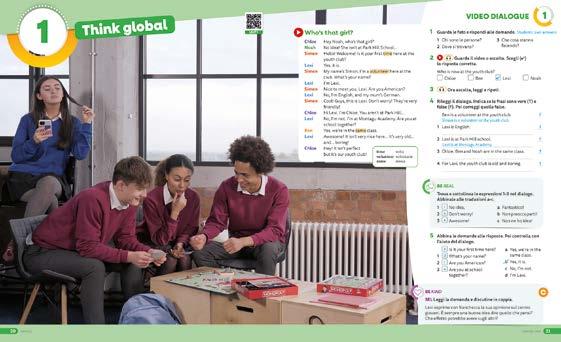
In apertura di unità un video-dialogo accompagnato da una grande foto ti farà entrare nella vita di un gruppo di ragazzi inglesi. Il box BE REAL ti insegnerà tanti modi di dire, mentre a chiusura della sezione troverai una riflessione personale.
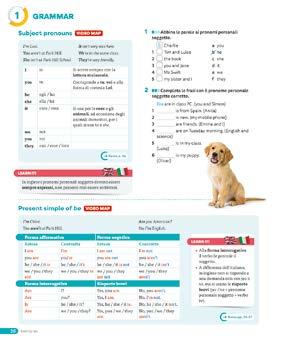
Nelle pagine di grammatica troverai tabelle complete, video-animazioni con esempi pratici, esercizi graduati. A fine libro troverai le mappe riepilogative con esercizi di consolidamento, e una ricca sezione di giochi nel GRAMMAR & VOCABULARY FUN
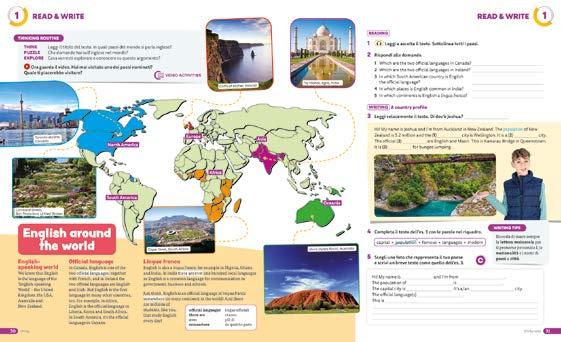
Un video di cultura introduce la sezione finale dello Student’s Book. Insieme al brano da leggere su aspetti della cultura anglosassone, ti eserciterai nell’abilità di scrittura che ti servirà per l’Esame di Stato.
Scopri come funziona il tuo libro di inglese
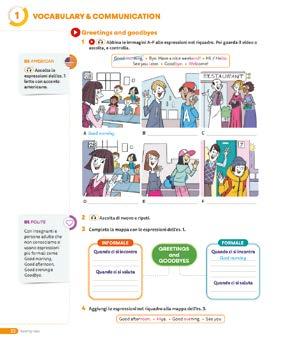
Una sezione in cui le parole nuove, accompagnate da un video, si inseriscono in contesti comunicativi che ti insegneranno a esprimerti e a comprendere con facilità. La doppia pronuncia britannica-americana ti sarà utile per la comprensione globale.
Un’intera pagina dedicata all’abilità di ascolto e alla produzione orale con lavori a coppie e presentazioni alla classe, per metterti alla prova e misurare i tuoi progressi.
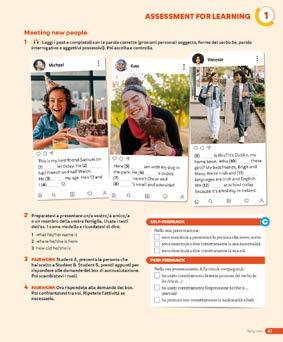
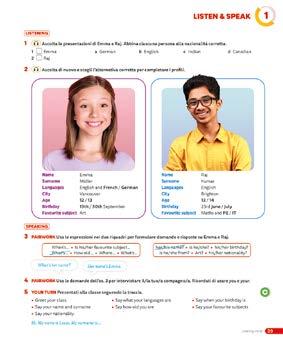
Una pagina finale dedicata alla riflessione sui tuoi progressi, con un momento di verifica personale e di confronto con il resto della classe.
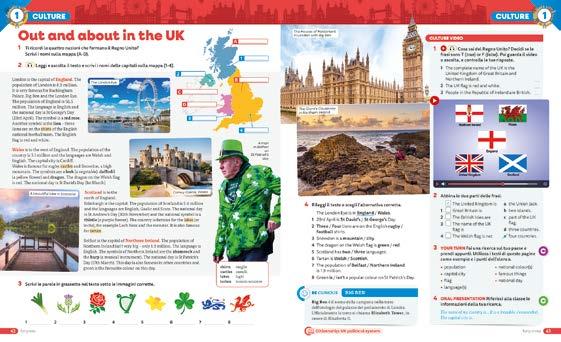
Scoprirai il mondo anglosassone con le sue tradizioni in questa sezione che chiude ogni unità. Un video di civiltà ti guiderà verso la produzione di un elaborato che presenterai alla classe.
Lezioni di Educazione civica con quiz e compiti di realtà, video e progetti da sviluppare insieme. Le rubriche CLIL ti aiuteranno ad affrontare temi di altre materie in lingua inglese.
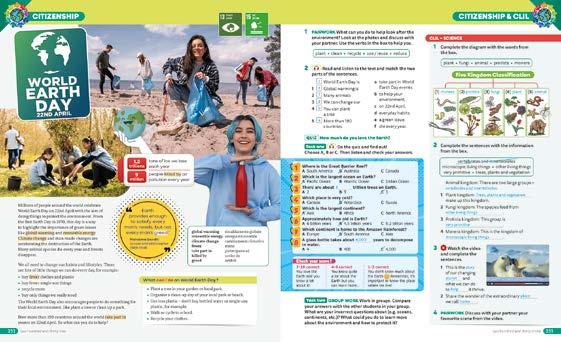
In tutti i volumi, pagine di allenamento alla prova INVALSI del terzo anno con tutte le tipologie di attività e utilissimi consigli e strategie di studio.
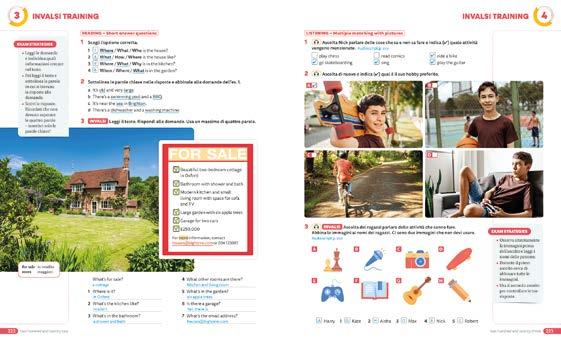
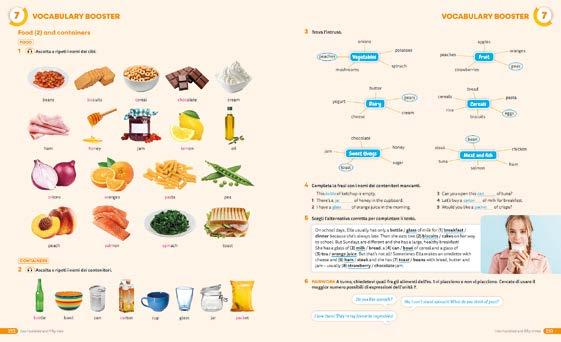
Potrai consolidare e arricchire il tuo vocabolario in questa sezione con immagini, audio e attività divertenti di catalogazione e memorizzazione.
Un’intera unità dedicata all’orientamento e alle scelte che farai in futuro con attività e quiz per conoscere meglio te stesso/a, riconoscere i tuoi talenti e le tue ambizioni.








Per concludere, ti eserciterai con le prove scritte e orali dell’Esame di Stato nella sezione Exam Training. Una vasta offerta di argomenti cross-curriculari con attività che rispecchiano quelle dell’esame e tanti consigli ti aiuteranno a prepararti nel miglior modo possibile.


STARTER UNIT
Quiz Time! p. 8
Vocabulary
The alphabet • Cardinal numbers • Classroom objects • Colours • School subjects and places
Classroom language • Days of the week • Months and seasons • Ordinal numbers and dates
Body and face • Pets • Adjectives of personality
Grammar
Plural nouns (1) • Articles a/an, the • Imperatives • Prepositions on, in UNIT
1 Think global
p. 20
WORKBOOK p. 32 Who’s that girl?
2 Love your family p. 44
SEL Be kind
SEL Be proud
WORKBOOK p. 56 I’ve got an idea!
3 Enjoy your home p. 70
WORKBOOK p. 82 There’s a small room
SEL Be persistent
Greetings and goodbyes
Greeting and introducing people
Countries and nationalities
Talking about nationality
PRONUNCIATION
The /w/ sound
Family
Talking about families
Physical appearance
Describing people
PRONUNCIATION
The /θ/ and /ð/ sounds
SOFT-SKILL: Emotional intelligence
Preparare un photo collage
Rooms and furniture
Describing places
Prepositions of place
Saying where things are
PRONUNCIATION
The /h/ sound
4 Show your talents p. 94
WORKBOOK p. 106 Can I ride it?
Personal possessions
SEL Be confident
Talking about personal possessions
Free-time activities (1)
Talking about abilities
PRONUNCIATION can / can’t
SOFT-SKILL: Self-management
Organizzare il proprio spazio: Decluttering
Communication
Fare lo spelling • Identificare oggetti • Riconoscere gli oggetti scolastici • Capire le indicazioni durante la lezione
Chiedere e dire l’età
Exit test
GRAMMAR
VIDEO MAP Subject pronouns
VIDEO MAP Present simple of be
Questions words
Possessive adjectives
LISTEN & SPEAK
Ascoltare la presentazione di una ragazza e un ragazzo
Intervistare un/una compagno/a
Presentare il lavoro alla classe
READ & WRITE
THINKING ROUTINE
The English-speaking world
Leggere un brano sull’inglese nel mondo
Scrivere il profilo di una città o di un paese
END OF UNIT
Self-evaluation Test 1
Assessment for Learning: Meeting new people
Culture: Out and about in the UK
VIDEO MAP Present simple of have got this, that, these, those
Possessive ’s
Ascoltare una ragazza parlare della sua famiglia
Intervistare un/una compagno/a sulla sua famiglia
Presentare una famiglia alla classe
MEDIATION – MEDIATING TEXTS
Descrivere una persona famosa partendo da un fact-file
VIDEO MAP there is / there are
VIDEO MAP some / any (1)
Plural nouns (2)
Ascoltare un ragazzo parlare della sua classe
Descrivere e presentare la propria classe
THINKING ROUTINE
Animal lovers
Leggere un brano sugli animali da compagnia
Scrivere un’email
THINKING ROUTINE
Our special homes
Leggere un brano sui tipi di abitazione
Scrivere la descrizione di una casa ideale
Self-evaluation Test 2
Assessment for Learning: Describing people and families
Culture: This is my royal family
Self-evaluation Test 3
Assessment for Learning: Describing places and things
Culture: English homes
VIDEO MAP can / can’t for abilities and permissions
Degrees of ability
Adverbs of manner
Ascoltare dei ragazzi parlare dei loro hobby
Intervistare un/una compagno/a sui suoi hobby
Presentare il lavoro alla classe
MEDIATION – MEDIATING TEXTS
Presentare i propri oggetti preferiti
THINKING ROUTINE
What’s your hobby?
Leggere un brano sui passatempi degli adolescenti
Scrivere un’email a un/una amico/a
Self-evaluation Test 4
Assessment for Learning: Organising a talent show
Culture: Animations and games
5 Have a routine p. 120
WORKBOOK p. 132
6 Enjoy free time p. 144
WORKBOOK p. 156
What time is it?
SEL Be organised
The time
Asking and telling the time
Daily routine
Talking about school routine
She never washes her car!
SEL Be green
SOFT SKILLS & MEDIATION 5-6 p. 168
7 Eat well p. 170
WORKBOOK p. 182 I’m starving!
SEL Be a team player
8 Follow your style p. 194
WORKBOOK p. 206
What are you wearing?
SEL Be satisfied
SOFT SKILLS & MEDIATION 7-8 p. 218
INVALSI TRAINING p. 220
CITIZENSHIP & CLIL p. 228
VOCABULARY BOOSTER p. 240
GRAMMAR MAPS p. 256
GRAMMAR & VOCABULARY FUN p. 272
WORDLIST p. 283
Free-time activities (2)
Making suggestions
Sports
Talking about habits
PRONUNCIATION
The /ŋ/ and /n/ sounds
SOFT-SKILL: Time management
Organizzare il proprio tempo: Journalling
Food and drink
Talking about likes and dislikes
Adjectives for food
Describing food
PRONUNCIATION
The /ı -/ and /i:/ sounds
Clothes and accessories
Adjectives for clothes
Buying clothes – talking to a shop assistant
Buying clothes – talking to a friend
SOFT-SKILL: Creativity
Riutilizzare gli abiti: Upcycling
VIDEO MAP Present simple affirmative form
Spelling variations
Prepositions of time
PRONUNCIATION
The /s/, /z/ and /ı -z/ sounds
VIDEO MAP Present simple negative form
VIDEO MAP Present simple interrogative form and short answers
Present simple – Questions words
Adverbs of frequency
How often…? and expressions of frequency
Ascoltare un ragazzo e una ragazza parlare della propria routine
Intervistare un/una compagno/a
Presentare il lavoro alla classe
THINKING ROUTINE
Boarding schools
Leggere un brano sui tipi di scuola del Regno Unito
Scrivere una presentazione
Ascoltare un ragazzo e una ragazza parlare del weekend
Prendere accordi sul weekend con il/la proprio/a compagno/a
MEDIATION – MEDIATING CONCEPTS
Condividere un piano di studio
like, love, hate, can’t stand, don’t mind + -ing
Countable and uncountable nouns
VIDEO MAP a lot of, some / any (2)
VIDEO MAP Object pronouns
VIDEO MAP Present continuous
Present continuous – Questions words
Ascoltare presentazioni di cibo
Intervistarsi a vicenda sulle abitudini alimentari
Preparare una presentazione sul cibo quotidiano
THINKING ROUTINE
How adventurous are you?
Rispondere a un quiz attitudinale
Scrivere un’intervista
THINKING ROUTINE
Popular English foods
Leggere un brano sul cibo inglese
Scrivere un riassunto
Ascoltare due cugini parlare di vestiario
Intervistarsi a vicenda sul vestiario
Presentare il lavoro alla classe
MEDIATION – MEDIATING TEXTS
Spiegare i rischi degli acquisti online
SONGS p. 236
FESTIVALS p. 238
THINKING ROUTINE
Teens’ top shops
Leggere un brano sullo shopping in città
Descrivere immagini
Self-evaluation Test 5
Assessment for Learning: Talking about after-school activities
Culture: The English school system
Self-evaluation Test 6
Assessment for Learning: Talking about your habits
Culture: What’s your sport?
Self-evaluation Test 7
Assessment for Learning: Explaining your favourite recipe
Culture: Celebration food
Self-evaluation Test 8
Assessment for Learning: Sending text messages
Culture: London street markets




A Buckingham House
B Buckingham Castle
C Buckingham Palace
1
A Edinburgh
B London
C Cardiff

4
A red, white and blue
B red, green and yellow
C red, blue and black
5
Cosa sai del mondo inglese? Fai il quiz e scoprilo.
3
A Charles Dickens
B Roald Dahl
C J.K. Rowling
A Chelsea F.C.
B Arsenal F.C.
C Hannover 96
A Hello!
B Good night! C Goodbye!
A the Tube B Youtube
Metro

CHECK YOUR SCORE! Da 8 a 10: Well done! Sai già tantissime cose del mondo inglese!


chips
cheddar
curry

A England, Wales, Scotland and Northern Ireland
B England, Wales and Scotland
C England, Wales, Scotland and Ireland

BE CAREFUL
Per fare lo spelling di una parola che contiene una doppia, si dice double umbrella: U – M – B –R – E – double L


1 Quante lettere compongono l’alfabeto inglese? Guarda il video o ascolta, e controlla la tua risposta.
2 Ascolta e ripeti.
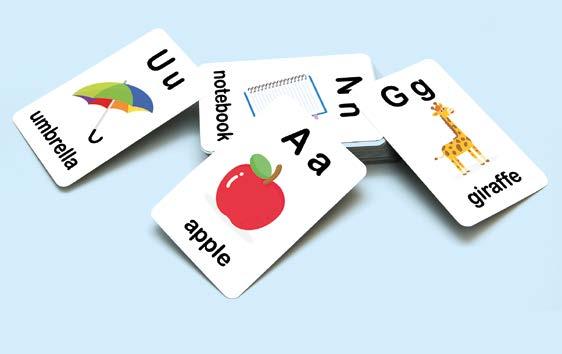
3 Ascolta e sottolinea la lettera che senti.
IT!
Mr = signor
Mrs = signora (sposata)
Miss = signorina
Ms = signora o signorina (senza specificare se sposata o meno)
4 Ascolta e completa i nomi delle persone.






5 PAIRWORK A turno, fate lo spelling del vostro nome e cognome.
6 GAME A turno, scegliete una parola nel riquadro e fate lo spelling al/alla vostro/a compagno/a che deve scriverla correttamente. Vince la coppia che ne scrive di più in soli 2 minuti!
1 Abbina le parole nel riquadro ai numeri in cifra. Poi guarda il video o ascolta, e controlla le tue risposte.
twelve • two • eighteen • four • ten • six • sixteen • seven • zero / oh five • one • twenty-two • eight • nine • twenty • eleven • thirteen fifteen • seventeen • nineteen • three • fourteen • twenty-one • twenty-three
zero / oh
2 Ascolta di nuovo e ripeti.
3
Ascolta e scrivi il numero, prima in cifra e poi in lettere.
18 eighteen 1 2 3
4 PAIRWORK Quanti anni hai? Fatevi la domanda e rispondete.
How old are you?
5


BE CAREFUL I numeri composti sono sempre separati da un trattino.
28 twenty-eight 45 forty-five I’m … years old.
Abbina le parole al numero corrispondente. Poi ascolta e ripeti. thirty forty fifty sixty seventy eighty ninety a hundred
6 PAIRWORK A turno, contate gli elementi nell’immagine e dite quanti sono.
child • chair • rubber dog • woman • person
five children A /eI/


LEARN IT!
Il plurale dei sostantivi si forma aggiungendo una -s. pen pens Alcune parole hanno il plurale irregolare.
man men
woman women child children person people
A/An corrisponde all’articolo indeterminativo “un, uno, una”. a davanti a consonante an davanti a vocale (a, e, i, o, u) a book an orange book
1 Scrivi le parole del riquadro nell’immagine. Poi guarda il video o ascolta, e controlla le tue risposte.
chair • desk • lockers • bin • computer • tablet • teacher’s desk map • IWB (interactive whiteboard) • clock
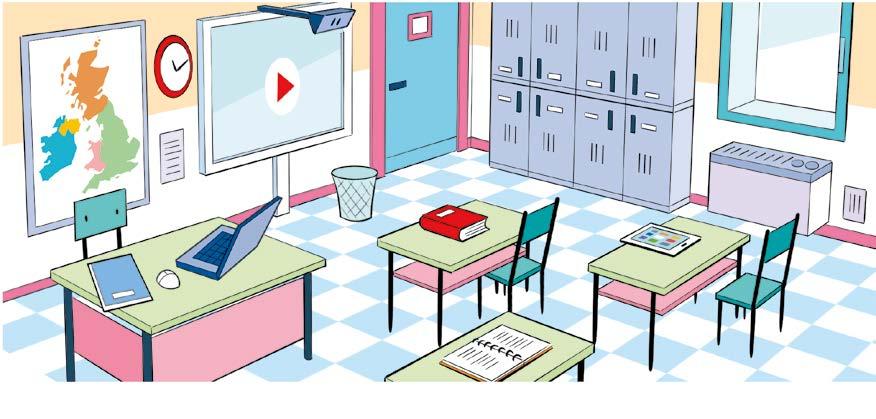
2 Ascolta di nuovo e ripeti.
3 Guarda le immagini e abbinale alle parole nel riquadro. Poi ascolta, controlla e ripeti.









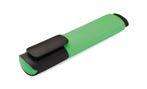

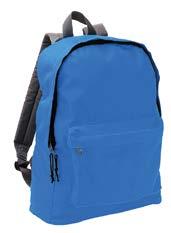
5
A
1 Abbina le parole nel riquadro ai colori. Poi ascolta, controlla e ripeti.
2 PAIRWORK Guardate di nuovo gli oggetti dell’esercizio 3 di p. 12 e, a turno, dite di che colore sono.
Brown! Pencil.
3 Guarda le immagini e scegli l’alternativa corretta. Poi ascolta, controlla e ripeti.
(design & technology) / IT
4 Cosa o chi c’è negli ambienti scolastici? Completa la tabella con le parole nel riquadro.
1 Completa le istruzioni con le parole nel riquadro. Poi guarda il video o ascolta, e controlla le tue risposte.
up • open • turn • board • door • hands • talk • sit • switch • write

A Switch off your phone!

F Put your up!
LEARN IT!
Per esprimere un comando si usa l’imperativo: Come here!
Per esprimere un divieto si usano le espressioni con don’t: Don’t talk in class!
Quando fai una richiesta non dimenticare mai la parola please LEARN IT!

B Look at the !
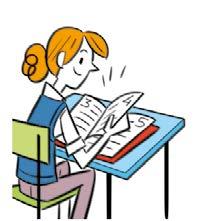
G to page 5.

C Don’t in class, please.

H your book.

D Stand .

I Close the , please.

E down.
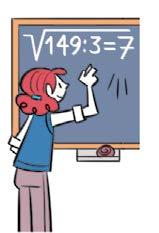
J the answer.
2
GAME A coppie e a turno, mimate un comando dell’es. 1 e indovinate qual è. Avete solo 2 minuti. Vince la coppia che ne mima di più.
Stand up! No!
Sit down! Yes!
3 Abbina le richieste alla loro traduzione.
b
Can I go to the toilet, please?
1 Can you repeat, please?
2 Can you help me, please?
3 Can I open the window?
4 Can I close the door?
a Può/Puoi aiutarmi, per favore?
b Posso andare al bagno, per favore?
c Posso chiudere la porta?
d Posso aprire la finestra?
e Può/Puoi ripetere, per favore?
Days of the week, months and seasons
1 Completa le parole. Poi ascolta e controlla.
2 Metti in ordine i giorni della settimana dell’es. 1. Poi ascolta, controlla e ripeti.
3 Abbina le due parti dei mesi. Poi ascolta, controlla e ripeti.
4 Guarda le immagini e completa i nomi delle stagioni.




BE CAREFUL
In inglese, i giorni della settimana e i mesi si scrivono sempre con l’iniziale maiuscola. Monday, Tuesday, … January, February, …
Davanti ai numeri ordinali si mette sempre l’articolo determinativo the. the ninth
1 Completa la tabella con i numeri ordinali nel riquadro. Poi ascolta, controlla e ripeti.
the twenty-third • the eleventh • the twenty-eighth • the thirty-first the twenty-second • the fourteenth • the sixth • the fifteenth • the twenty-sixth
the first the second the third the fourth the fifth* the seventh the eighth the ninth* the
st the twelfth* the thirteenth the sixteenth the seventeenth the eighteenth the nineteenth the twentieth* the twenty-first 22nd 23rd 24th 25th 26th 27th 28th 29th 30th 31st the twenty-fourth the twenty-fifth* the twenty-seventh the twenty-ninth* the thirtieth*
*Fai attenzione alle variazioni ortografiche dei numeri con l’asterisco.
2 Ascolta e sottolinea i numeri ordinali che senti.
Si scrive: 10th February LEARN IT!
‘When’s your birthday?’ ‘It’s the tenth of February.’
Si legge: the tenth of February
15th / 5th 1 19th / 9th
2 23rd / 29
3 Abbina le date in cifra a quelle in parole. Poi ascolta e controlla.
08/12
1 13/10
2 29/04
3 12/01
4 16/07
5 23/06
4 Ascolta e scrivi le date. 12th June 1966
a 16th July
b 8th December
c 23rd June
d 13th October
e 29th April
f 12th January
5 GAME A coppie, chiedete la data dei vostri compleanni. Poi, chiedete al resto della classe. Qual è il mese con più compleanni?
When’s your birthday?
It’s on the fifth of June.
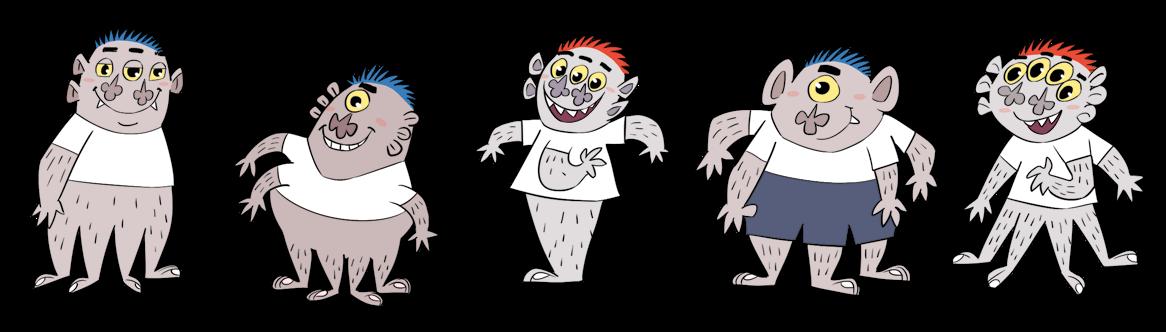
1 Guarda l’immagine e abbina le parole nel riquadro alle parti del corpo. Poi guarda il video o ascolta, e controlla le tue risposte.

2 GAME Giocate a Simon says… Simon says: Touch your nose.
3 PAIRWORK A turno, descrivete uno dei mostri nelle immagini e indovinate qual è.
1 Abbina le parole nel riquadro alle immagini. Poi ascolta, controlla e ripeti.
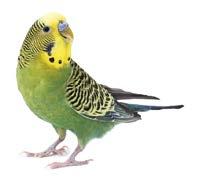
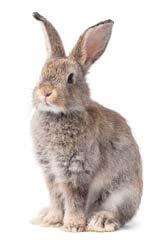

tortoise


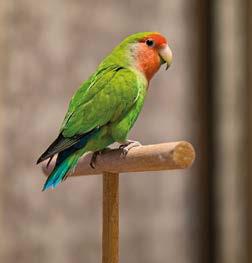
parrot


2 Abbina gli aggettivi nel riquadro alle immagini. Poi ascolta, controlla e ripeti.

3


Ascolta i dialoghi e abbinali alle immagini. Poi completa le informazioni.











Chloe Hey Noah, who’s that girl?
Noah No idea! She isn’t at Park Hill School…
Simon Hello! Welcome! Is it your first time here at the youth club?
Lexi Yes, it is.
Simon My name’s Simon. I’m a volunteer here at the club. What’s your name?
Lexi I’m Lexi.
Simon Nice to meet you, Lexi. Are you American?
Lexi No, I’m English, and my mum’s German.
Simon Cool! Guys, this is Lexi. Don’t worry! They’re very friendly!
Chloe Hi Lexi. I’m Chloe. You aren’t at Park Hill…
Lexi No, I’m not. I’m at Montagu Academy. Are you at school together?
Ben Yes, we’re in the same class.
Lexi Awesome! It isn’t very nice here… It’s very old... and… boring!
Chloe Hey! It isn’t perfect but it’s our youth club! time volta volunteer volontario same stessa
1 Guarda le foto e rispondi alle domande.
1 Chi sono le persone?
2 Dove si trovano?
3 Che cosa stanno facendo?
2 Guarda il video o ascolta. Scegli (4) la risposta corretta.
Who is new at the youth club?
Chloe Ben Lexi Noah
3 Ora ascolta, leggi e ripeti.
4 Rileggi il dialogo. Indica se le frasi sono vere (T) o false (F). Poi correggi quelle false.
Ben is a volunteer at the youth club. F Simon is a volunteer at the youth club.
1 Lexi is English.
2 Lexi is at Park Hill school.
3 Chloe, Ben and Noah are in the same class.
4 For Lexi, the youth club is old and boring.
Trova e sottolinea le espressioni 1-3 nel dialogo. Abbinale alle traduzioni a-c.
1 No idea.
2 Don’t worry!
3 Awesome!
a Fantastico!
b Non preoccuparti!
c Non ne ho idea!
5 Abbina le domande alle risposte. Poi controlla con l’aiuto del dialogo.
b
Is it your first time here?
1 What’s your name?
2 Are you American?
3 Are you at school together?
a Yes, we’re in the same class.
b Yes, it is.
c No, I’m not.
d I’m Lexi.
SEL Leggi la domanda e discutine in coppia.
Lexi esprime con franchezza la sua opinione sul centro giovani. È sempre una buona idea dire quello che pensi? Che effetto potrebbe avere sugli altri?
BE AMERICAN
Ascolta le espressioni dell’es. 1 lette con accento americano.
1 Abbina le immagini A-F alle espressioni nel riquadro. Poi guarda il video o ascolta, e controlla.
Good morning. • Bye. Have a nice weekend! • Hi. / Hello. See you later. • Goodbye • Welcome!
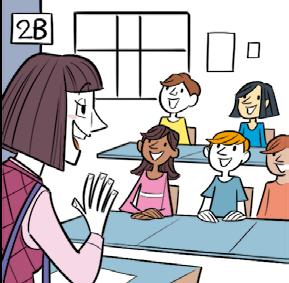
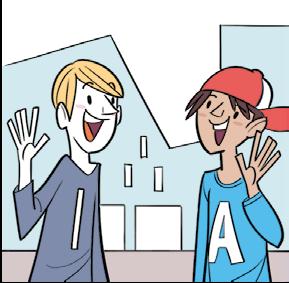
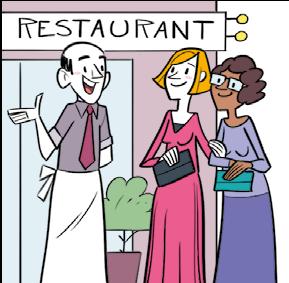
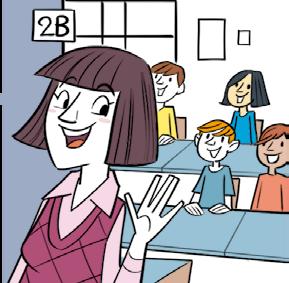
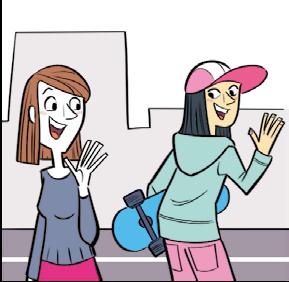
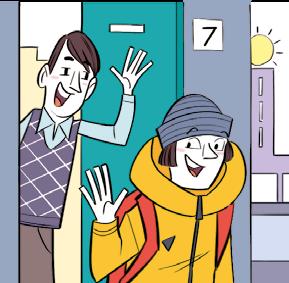
BE POLITE
Con insegnanti e persone adulte che non conosciamo si usano espressioni più formali come
Good morning, Good afternoon, Good evening e Goodbye
2 Ascolta di nuovo e ripeti.
3 Completa la mappa con le espressioni dell’es. 1.
INFORMALE
Quando ci si incontra
Quando ci si saluta
GREETINGS and GOODBYES
4 Aggiungi le espressioni nel riquadro alla mappa dell’es. 3.
FORMALE
Quando ci si incontra
Good morning.
Quando ci si saluta
Good afternoon. • Hiya. • Good evening. • See you.
5 Guarda il video o ascolta. Che tipo di situazione è? formale informale
6 Ora leggi il dialogo e completalo con le parole nel riquadro. Poi ascolta di nuovo e controlla.
Not bad • How are • meet you • Nice to • This is
Chloe Hello Ms Harris. How are you?
Ms Harris Oh Chloe! Hi! (1) , thanks. Ben Mum! Mum! (2) Lexi. Lexi, this is my mum.


Lexi, this is my mum.

Lexi Hello. (3) meet you Ms Harris. Ms Harris Nice to (4) too, Lexi. See you later!
Greetings
Hello. / Hi. How are you?
Introductions
I’m Ben. What’s your name? This is Lexi.
Hi. / Hiya. I’m fine thanks. You? / Not bad.
My name is Chloe. Nice/Good to meet you.
7 Quale risposta NON è corretta?
1 Lexi, this is my mum.
A Hiya Ms Harris.
B Nice to meet you.
C Hello Ms Harris.



2 How are you?
A Not bad.
B See you later.
C Fine, thank you.
3 What’s your name?
A I’m Emily.
B I’m fine.
C My name’s Harry.
8 PAIRWORK Guardate le immagini e create dei mini-dialoghi per le situazioni rappresentate. Usate le espressioni nella tabella Be Fluent come aiuto.
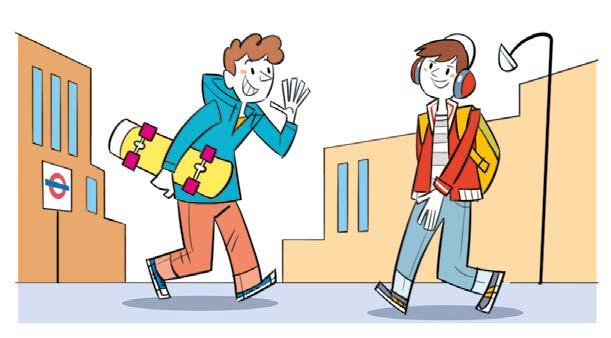
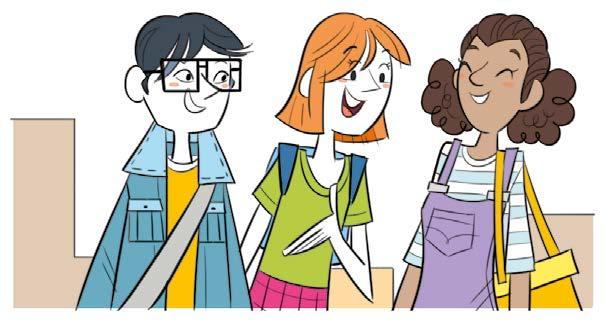
12 Guarda il video o ascolta.
Di che nazionalità sono i genitori di Lexi?
1 Her mum is .
2 Her dad is .
13 Ora leggi e ascolta di nuovo il dialogo e controlla.
Ms Harris Where are you from, Lexi?
Lexi I’m from London, but my mum’s German. She’s from Berlin.
Ms Harris And your dad?
Lexi My dad is from York.
Ms Harris Oh, so he’s American!! New York, New…

Ben Mum! He’s from York, not New York! He’s English.
Are you American? Where are you from? Yes, I am. / No, I’m not. I’m from New York.
Where are you from?

14 Ora completa il dialogo con le espressioni nel riquadro. Poi ascolta e controlla.
she’s from • are you from • where is she • I am
Emma Are you from London?
Lucy Yes, . My dad is English and my mum is French.
Emma from?
Lucy Paris.

15 YOUR TURN A turno, chiedete ai vostri compagni e alle vostre compagne di classe da dove vengono.
Siete tutti della stessa nazionalità?
16 PAIRWORK Usate le informazioni delle carte d’identità per creare dei mini-dialoghi. I’m Yasmin. Hello. What’s your name? St Mary’s High School Madrid, Spain

Yasmin Ansari 13 Class F


I’m Lexi.
You aren’t at Park Hill. She isn’t at Park Hill School.
It isn’t very nice here. We’re in the same class. They’re very friendly.
I io Si scrive sempre con la lettera maiuscola
you tu Corrisponde a tu, voi e alla forma di cortesia Lei. he egli / lui she ella / lei it esso / essa Si usa per le cose e gli animali, ad eccezione degli animali domestici, per i quali si usa he o she. we noi you voi they essi / esse / loro
Rules p. 36
LEARN IT!
In inglese i pronomi personali soggetto devono essere sempre espressi, non possono mai essere sottintesi.
Present simple of be VIDEO MAP
I’m Chloe.
You aren’t at Park Hill.
Forma affermativa
Forma negativa
1 Abbina le parole ai pronomi personali soggetto.
Charlie
1 Tim and Luisa 2 the book
3 you and Jane
4 Ms Swift
5 my sister and I a you b he c she d it e we f they
2 Completa le frasi con il pronome personale soggetto corretto. You are in class 7C. (you and Simon)
1 is from Spain. (Anita)
2 is new. (my mobile phone)
3 are friends. (Emma and I)
4 are on Tuesday morning. (English and science)
5 is in my class. (Luke)
6 is my puppy. (Oliver)
Are you American? No, I’m English.
I am I’m I am not I’m not you are you’re you are not you aren’t he / she / it is he / she / it’s he / she / it is not he / she / it isn’t we / you / they are we / you / they’re we / you / they are not we / you / they aren’t
Forma interrogativa Risposte brevi
Am I? Yes, you are No, you aren’t
Are you? Yes, I am. No, I’m not. Is he / she / it? Yes, he / she / it is. No, he / she / it isn’t. Are we / you / they? Yes, you / we / they are. No, you / we / they aren’t.
Rules pp. 36-37 b

LEARN IT!
• Alla forma interrogativa il verbo be precede il soggetto.
• A differenza dell’italiano, in inglese non si risponde a una domanda solo con yes o no, ma si usano le risposte brevi (yes / no + pronome personale soggetto + verbo be).
3 Scegli l’alternativa corretta.
Sam are / is Canadian.
1 Hannah and Matthew am / are happy.
2 Rome is / am the capital of Italy.
3 I are / am from France.
4 My dad and mum is / are British.
5 It are / is a new mobile phone.
6 Giulia are / is in the classroom.
4 Completa le frasi con la forma affermativa contratta del verbo be.
I’m a student.
1 Clara Italian.
2 We at school.
3 They from Istanbul.
4 Thirteen my favourite number!
5 You in the football team.
6 My twin sister eleven.
5 Riscrivi le frasi alla forma negativa contratta.
We are Albanian.
We aren’t Albanian.
1 My mum is from Egypt.
2 The children are from Russia.
3 My twin brother is in class 7A.
4 You are a good friend.
5 I am Italian.
6 The youth centre is open.
6 Completa le frasi con la forma interrogativa del verbo be. Poi rispondi con le risposte brevi.
‘Is Demis from Greece?’ (4)
‘Yes, he is.’
1 ‘ Benedita and Camila Portuguese names?’ (4) ‘ ’
2 ‘ Ms Evans a teacher at Greenwich school?’ (4)
3 ‘ you from Venice?’ (8)
4 ‘ you and Dan in class 7B?’ (8)
5 ‘ I in your science class?’ (4)
6 ‘ your email address sally79@gkmail.com?’ (8) ‘ ’
Who’s that girl?
What’s your name?
Who Chi
What Che cosa / Quale/i
Which Quale/i Si usa quando il numero di opzioni è limitato.
When Quando
Where Dove
How Come
How old Quanti anni
Why Perché Si usa why solo nelle domande, nelle risposte si usa because
7 Scegli l’alternativa corretta. Poi ascolta e controlla.
‘Why / How are you at home now?’ ‘Because it’s Sunday!’
1 ‘Where / Which is Tom?’ ‘At school.’
2 ‘How / Where are you?’ ‘Good, thanks.’
3 ‘Where / What nationality are they?’ ‘American.’
4 ‘How / How old is Freddie?’ ‘Eleven.’
5 ‘Why / Who is the girl in the photo?’ ‘My friend Molly.’
6 ‘When / Where is your birthday?’ ‘In May.’
SOUNDS GOOD
8 Ascolta e ripeti le parole con il suono /w/.
what weekend where Wednesday we
9 Ora ascolta e indica (4) le parole che contengono il suono /w/. window who write when wrong white
10 Abbina le domande nel riquadro alle risposte.
What’s your favourite subject? • Who are you? Which flag is blue and white?
How’s your grandmother? • Why are you here? When is your birthday?
‘When is your birthday?’ ‘In April.’
1 ‘ ’ ‘She’s fine, thanks.’
2 ‘ ’ ‘Maths.’
3 ‘ ’ ‘I’m Sophie.’
4 ‘ ’ ‘The Greek flag.’
5 ‘ ’ ‘For a music lesson.’
Is it your first time here?
It’s our youth club.
my il mio, la mia, i miei, le mie your il tuo, la tua, i tuoi, le tue his il suo, la sua, i suoi, le sue (di lui) her il suo, la sua, i suoi, le sue (di lei) its il suo, la sua, i suoi, le sue (di un oggetto o animale)
our il nostro, la nostra, i nostri, le nostre your il vostro, la vostra, i vostri, le vostre their il loro, la loro, i loro, le loro
Rules p. 38
IT!
• In inglese, gli aggettivi possessivi concordano sempre con il possessore, non con la cosa posseduta. Thomas is with his sister Hannah. Jane is in Italy with her friend Robbie.
11 Scegli l’alternativa corretta.
I love football. It’s my / his favourite sport.
1 What’s your / her email address, Katie?
2 My brother and I love our / their new dog Rex.
3 Liam’s brother is 15 and her / his sister is 10.
4 My parents are Japanese. His / Their names are Akira and Akemi.
5 My house is number eight. Its / Her front door is green.
6 She is my new friend. Her / Its house is very big.
12 Completa le frasi con l’aggettivo possessivo corretto.
Where’s my phone? (I)
1 What’s phone number? (you)
2 That’s new school. (we)
3 Is school bag red and black? (Joe)
4 This is friend, Rebecca. (I)
5 Is she mum? (you and Jack)
6 Is the phone in bag? (Rosie)
13 Completa il blog di Douglas con le parole nel riquadro. Poi ascolta e controlla.
Our • ’m • she • Where • his • he How • my • isn’t • What • her
Hello! My name’s Angus and I’m from Edinburgh in Scotland. I’m thirteen years old. In (1) family there is my mum, (2) name is Christine, my dad, (3) name’s Robert, my sister Fiona and me. My mum (4) Scottish, (5) from Toronto in Canada. My dad is Scottish, (6) ’s from Glasgow. (7) family name is MacDonald – it’s a very Scottish name! What about you?
(8) are you from?
(9) old are you?
(10) ’s your family name?

14 Completa domande e risposte con le parole mancanti.
A What’s your name?
B My name is Olivia.
A (1) are you from?
B I (2) from Belgium.
A How old are you? 13?
B No, I’m (3) . I’m 12
A (4) ’s your favourite singer?
B My favourite singer’s Adele.
A (5) is your favourite TV show?

B My favourite TV show is Scooby-Doo!
1
Ascolta le presentazioni di Emma e Raj. Abbina ciascuna persona alla nazionalità corretta.
2 Ascolta di nuovo e scegli l’alternativa corretta per completare i profili.



Name Emma Surname Müller
Languages English and French / German
City Vancouver
Age 12 / 13
Birthday 13th / 30th September
Favourite subject Art
SPEAKING
When’s... • Is his/her favourite subject... What’s... • How old... • Where... • What’s...
What’s her name?
Her name’s Emma.


Name Raj Surname Kumar
Languages English
City Brighton
Age 13 / 14
Birthday 23rd June / July
Favourite subject Maths and PE / IT
3 PAIRWORK Usa le espressioni nei due riquadri per formulare domande e risposte su Emma e Raj.
her/his name? • is he/she? • his/her birthday? is he/she from? • Art? • his/her nationality?
5 YOUR TURN Presentati alla classe seguendo la traccia.
• Greet your class
• Say your name and surname
• Say your nationality
Hi. My name is Lucia. My surname is… a German b English c Indian d Canadian

4 PAIRWORK Usa le domande dell’es. 3 per intervistare il/la tuo/a compagno/a. Ricordati di usare you e your.
• Say what your languages are
• Say how old you are
• Say when your birthday is
• Say your favourite subjects
THINK Leggi il titolo del testo. In quali paesi del mondo si parla inglese?
PUZZLE Che domande hai sull'inglese nel mondo?
EXPLORE Cosa vorresti esplorare e conoscere su questo argomento?
Ora guarda il video. Hai mai visitato uno dei paesi nominati?
Quale ti piacerebbe visitare?


We know that English is the language of the ‘English-speaking World’ – the United Kingdom, the USA, Australia and New Zealand.
In Canada, English is one of the two official languages, together with French, and in Ireland the two official languages are English and Irish. But English is the first language in many other countries, too. For example, in Africa, English is the official language in Liberia, Kenya and South Africa. In South America, it’s the official language in Guyana.


English is also a lingua franca, for example in Nigeria, Ghana and India. In India there are over one hundred local languages so English is a common language for communication in government, business and schools.
Just think, English is an official language or lingua franca somewhere on every continent in the world! And there are millions of students, like you, that study English every day!
official languages lingue ufficiali there are ci sono over più di somewhere da qualche parte


READING
1 Leggi e ascolta il testo. Sottolinea tutti i paesi.
2 Rispondi alle domande.
1 Which are the two official languages in Canada?
2 Which are the two official languages in Ireland?
3 In which South American country is English the official language?
4 In which places is English common in India?
5 In which continents is English a lingua franca?
WRITING A country profile
3 Leggi velocemente il testo. Di dov’è Joshua?
Hi! My name is Joshua and I’m from Auckland in New Zealand. The population of New Zealand is 5.2 million and the (1) city is Wellington. It is a (2) city. The official (2) are English and Maori. This is Kawarau Bridge in Queenstown. It is (3) for bungee jumping.


WRITING TIPS

4 Completa il testo dell’es. 3 con le parole nel riquadro. capital • population • famous • languages • modern
5 Scegli una foto che rappresenta il tuo paese e scrivi un breve testo come quello dell’es. 3.
Ricorda di usare sempre la lettera maiuscola per il pronome personale I, le nazionalità e i nomi di paesi e città
Hi! My name is and I’m from . The population of is The capital city is . It’s a/an city. The official language(s) . This is
1 Completa l’estratto dal dialogo di pagina 21 con le parole nel riquadro. Poi guarda o ascolta di nuovo e controlla.
is • I’m • English • Are you • Welcome What • Hello
Simon Hello! (1) ! Is it your first time here?
Lexi Yes, it (2) .
Simon My name’s Simon. I’m a volunteer here at the club. (3) ’s your name?
Lexi (4) Lexi.
Simon Nice to meet you, Lexi. (5) American?
Lexi No, I’m (6) . And my mum's German.
Simon Cool! Guys, this is Lexi. Don’t worry! They’re very friendly!
2 Riordina le frasi dell’estratto del dialogo. Poi guarda o ascolta di nuovo e controlla.
Ben Yes, we’re in the same class.
1
Chloe Hi Lexi. I’m Chloe. You aren’t at Park Hill School...
Chloe Hey! It isn’t perfect but it’s our youth club!
Lexi No, I’m not. I’m at Montagu Academy. Are you at school together?
Lexi Awesome! It isn’t very nice here… It’s very old... and… boring!
3 BE REAL Scegli l’opzione corretta.
Carl This is my friend, Alek. He’s Polish.
Niko Where are you from in Poland, Alek?
Alek Warsaw, the capital.
Niko (1) Awesome! / No idea! / Don’t worry!
Gail Where’s the new student from?
Mike He’s from Seattle.
Gail Is that in California?
Mike (2) Don’t worry! / Awesome! / No idea!
1
Ascolta e ripeti. Poi scrivi la traduzione. Greetings and goodbyes Bye.
Good afternoon. Good evening. Good morning. Goodbye. Have a nice weekend! Hi. / Hello. / Hiya. See you later. / See you. Welcome!
Countries and nationalities
Brazil / Brazilian Canada / Canadian China / Chinese Egypt / Egyptian France / French Germany / German Ireland / Irish Italy / Italian Poland / Polish Spain / Spanish the United Kingdom / British the United States / American
Argentina / Argentinian Australia / Australian Chile / Chilean England / English Greece / Greek India / Indian Japan / Japanese Mexico / Mexican Morocco / Moroccan New Zealand / New Zealander Nigeria / Nigerian Northern Ireland / Northern Irish Peru / Peruvian Portugal / Portuguese Russia / Russian Scotland / Scottish South Africa / South African Switzerland / Swiss The Netherlands / Dutch Tunisia / Tunisian Turkey / Turkish Wales / Welsh
VOCABULARY MAPS
2 Completa la mappa con le espressioni di saluto che conosci.
Quando ci si incontra
Hi,
INFORMAL
Quando ci si saluta
3 Completa la mappa con le nazionalità corrispondenti ai paesi nel riquadro.
COUNTRIES and NATIONALITIES
Quando ci si incontra
4 Aggiungi un’altra nazionalità che conosci a ciascun gruppo.
Quando ci si saluta
5 Completa il dialogo con una parola per ogni spazio.
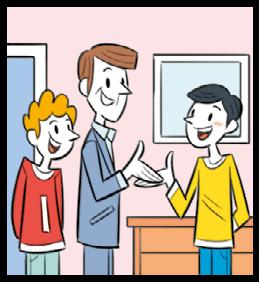
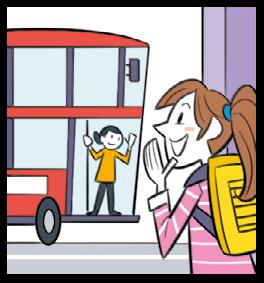
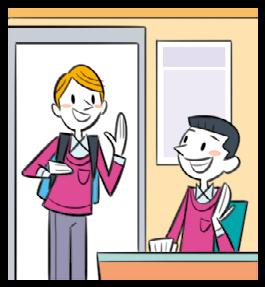
1 Hi Paul! How are you?
2 Nice to meet you, Mr Smith!
3 Bye! See you.
2 Scegli le risposte appropriate per rispondere alle frasi dell’es. 1. C’è una frase in più.
Bye. • Good afternoon. Nice to meet you too, Jordan. I’m fine thanks, you? 1 2 3
3 Completa le risposte con una o due parole.
1 ‘How are you?’ ‘Not . You?’
2 ‘What’s your name?’ ‘ Lucy.’
3 ‘This is Harry.’ ‘Nice to .’
4 Riordina le frasi per creare un dialogo.
Harry Nice to meet you too, Noah.
Emilia Fine, thanks. Oh, this is Harry.
Noah Nice to meet you, Harry.
1 Abbina le frasi alle immagini. 1
Emilia Hi Noah. How are you?
Noah Hi Emilia. Not bad. You?
A Hello, I’m Susie.
B (1) , my (2) ’s Luis and I’m 15 years (3) . And you?
A I’m 14.
B (4) to London!
A Thank you. See (5) later. Bye!
B Yes. (6) !
6 Completa la tabella con le nazionalità corrette. Country
1
2
3
4
7 Completa le frasi con i paesi o le nazionalità corretti.
My English teacher is from Dublin. She is Irish
1 Sofia is from . She is Spanish.
2 James Bond is from Britain. He is .
3 Måneskin is from Italy. The musicians are
4 Ahmed is from . He is Egyptian.
5 Christian is from Berlin. He is .
6 Lady Gaga is from She is American.
8 Sottolinea la sillaba accentata. Poi ascolta e controlla.
Poland • Canada • American • Good morning Egypt • British • Italian • Welcome Germany • Good afternoon • Brazil
9 Leggi la presentazione di Lucien e completala con le parole nel riquadro.
English • Irish • Italian • France Germany • Ireland • French
Hi, I’m Lucien and I’m eleven. I’m French. I’m from Bordeaux in (1) .
My dad is from Paris but my mum is from Dublin in (2) , so I’m half (3)
My favourite subject at school is (4) of course!
My best friend, Constantine, is from Berlin in (5) but he is half (6) because his dad is from Rome!

10 Abbina le domande alle risposte.
1 Where are you from?
2 Where’s Rupert from?
3 Are you Australian?
4 Is Suzanne from Switzerland?
a No, I’m from New Zealand.
b Yes, she is.
c He’s from Scotland.
d I’m from Trieste, in Italy.
11 Completa il dialogo in modo personale.
Jennie Hello.
You Hi.
Jennie I’m Jennie. What’s your name?
You
Jennie Are you French? You .
Jennie Where are you from? You
Jennie Cool! I’m from the UK.
COMMUNICATION ROUND-UP
12 Traduci le espressioni in italiano.
1 I’m fine, thanks.
2 This is Paola.
3 Good evening.
4 Not bad.
5 Are you German?
6 Nice to meet you.
13 Ascolta le domande e scegli l’opzione corretta (A, B o C).
A Yes, you are.
B No, I’m not.
C I’m from the USA.
1 A I’m fine. You?
B Yes, I am.
C I’m Silvia.
2 A Hi!
B Good morning, Mr Smith.
C Fine.
3 A Hello!
B Bye!
C Thanks.
4 A Fine, thanks.
B Yes, she is.
C Nice to meet you.
5 A No, they aren’t.
B Yes, they’re from Italy.
C They’re from China.
14 Ascolta e completa i profili con le informazioni mancanti.

Name: Tom
Surname: Curtis
Age: 13
Nationality: (1)


Name: Irena


Surname: (2)
Age: 12


Nationality: (3)



LEARN IT!
I pronomi personali soggetto si usano sempre davanti al verbo e non sono mai sottintesi.
I’m English.
1 Sostituisci le parole sottolineate con i pronomi personali soggetto corretti e riscrivi le frasi.
Mark is from Ireland. He is from Ireland.
1 Alice and Jack are Australian.
2 Hannah is from America.
3 Izabella and I are from Poland.
4 Tower Bridge is in London.
5 José is Spanish.
6 You and Marcella are from Venice.
2 Completa il testo con i pronomi personali soggetto corretti.
Here is a photo of me with Liam and Grace. I’m Luke and (1) ’m from Spain. Liam is British and (2) ’s 14. Grace is from the USA. (3) ’s American. (4) are my friends. In the photo, (5) are in Barcelona – (6) is a beautiful city!

LEARN IT!
Il verbo be si usa per:
• presentarsi.
Hi, I’m Alice.
• domandare e dire la provenienza.
I’m from Wales.
• domandare e dire l’età.
She’s 11
• esprimere una condizione o uno stato d’animo.
He’s happy.
• descrivere cose o persone.
The pens are red.
La forma affermativa ha tre forme: am, is, are
La forma contratta ’re si usa solo con i pronomi personali soggetto, mai con i nomi propri e comuni.
We’re Italian.
Luca and Francesco are Italian.
(Non: Luca and Francesco’re Italian.)
3 Completa le frasi. Usa la forma contratta quando possibile.
Ben’s English.
1 Alice and I from Liverpool.
2 Tom and Emma at school.
3 I Spanish.
4 Lucille from Switzerland.
5 You and Harry eleven.
6 The pyramids very famous.
4 Completa le frasi con la forma corretta di be e le parole nel riquadro.
from Egypt • years old • in Brazil
blue and orange • American • funny • at home
Kerry is from Boston. She is American.
1 My sister 16
2 Rio de Janeiro .
3 My brother and friendly.
4 I’m not at school. I .
5 His bike .
6 My friend Samir
Present simple of be Negative and interrogative forms
Alla forma negativa, si mette sempre not dopo il verbo be.
Ci sono due forme negative contratte: isn’t e ’s not, aren’t e ’re not. She isn’t / ’s not Greek. We aren’t / ’re not from Rome. La negazione not non si contrae mai con am ➞ I’m not I’m not Italian.
Alla forma interrogativa, si invertono verbo e soggetto. Nelle risposte brevi affermative non si usa la forma contratta; in quelle negative si usa solo la forma contratta.
‘Are you from Manchester?’ ‘Yes, I am.’ ‘Is she Finnish?’ ‘No, she isn’t.’
5 Riscrivi le frasi alla forma negativa. Liam is from my town. Liam isn’t from my town.
1 I am Irish.
2 My grandmother is English.
3 Alex and I are at school today.
4 Una and Tim are in the classroom.
5 Pietro is from Milan.
6 The science lesson is in the lab today.
6 Scrivi le domande e le risposte brevi. you / from London? (4) ‘Are you from London?’ ‘Yes, I am.’
1 you and Owen / in the same class? (8)
2 Michael / Chinese? (8)
3 Moussaka / a type of Greek food? (4)
4 Beth and Liam / from Birmingham? (4)
5 you / 14? (8)
6 Alice / half German? (4)
7 Scegli l’alternativa corretta.

Hello, I’m / ’s Ava and I (1) ’m / ’re from Nottingham in England. Nottingham (2) aren’t / isn’t a big city but it (3) ’s / isn’t very beautiful. I (4) ’m / aren’t twelve and my favourite subject at school (5) are / is French. What about you? (6) Is / Are you from a big city? Write and tell me.
• Le parole interrogative si mettono sempre all’inizio della domanda. What’s her name?
• Eventuali preposizioni vanno alla fine della frase. Where are you from?
• La forma contratta di be si usa solo alla terza persona singolare. When’s your birthday?
• What e Which significano entrambi “quale”, ma which si usa per indicare una scelta tra un numero di opzioni limitato.
What’s your favourite colour? Which is your favourite, green or blue?
8
Completa le domande con where, who, when, which, what e how. Where is your school? 1 is your favourite city?
old are you?
is he? 4 is your favourite animal? 5 is the maths test?
6 is your class – 7A or 7B?
9 Scrivi le domande per queste risposte. In alcuni casi ci sono più domande possibili.
‘What’s your name?’ ‘My name’s Christine.’
1 ‘ ’ ‘He’s 21.’
2 ‘ ’ ‘She’s fine, thanks.’
3 ‘ ’ ‘It’s in September.’
4 ‘ ’ ‘Basketball.’
5 ‘ ’ ‘He’s Luke.’
6 ‘ ’ ‘It’s in King Street.’
• Gli aggettivi possessivi si usano davanti a un nome per indicare possesso (my book) o rapporti di amicizia e parentela (my friend).
• Concordano sempre con il possessore. She's with her brother.
• Sono invariabili in genere e numero. Where’s your bike / Where are your pens?
• Non sono mai preceduti dall'articolo. This is the my school.
10 Abbina le frasi.
This is my dog.
1 Laura is from Berlin.
2 He’s my new classmate.
3 Is this your backpack?
4 Her car isn’t red.
5 Who’s your maths teacher?
a His name’s Paul.
b His name is Black.
c Their car is red.
d No, my backpack is there.
e Her family is German.
f Her name’s Miss Lewis.
11 Completa le frasi con l’aggettivo possessivo corretto.
Is this your glue? (you)
1 mum is Spanish. (Lucy)
2 classroom is big. (me and my classmates)
3 What’s name? (Jack)
4 friends are nice. (you and Kieran)
5 car is old. (Nick and Sue)
6 This is house. (I)
GRAMMAR ROUND-UP
12 Scegli l’opzione corretta (A, B o C) per completare le frasi.
Alice is from Manchester.
A is B are C am
1 My aunt isn’t from America, she Canadian.
A are B isn’t C ’s
2 Where you from?
A are B is C am
3 We in the same class at school.
A isn’t B aren’t C am not
4 Is grandma French?
A you B him C your
5 is your best friend’s birthday?
A Why B Where C When
6 Chile in Europe?
A Is B Are C Am
13 Ascolta il dettato e scrivi il testo.
14 Traduci le frasi.
I’m 11 years old. Ho 11 anni.
1 My dog is black. 2 Where is your bike? 3 They aren’t Egyptian. 4 You and Laura are in class 1B. 5 When is your party?
6 Her teacher is Irish.
READING
1 Leggi e ascolta le presentazioni di Jenny e Alfie. Indica (4) cosa hanno in comune. their nationality their age the name of their city



Hello! My name’s Jenny Whittaker and I’m from Birmingham. Am I English? No, I’m American! I’m from Birmingham in Alabama in the USA.
My parents are American too. My mum is from Memphis in Tennessee and my dad is from Birmingham. I’m 12 and I’m in Grade 7. My school is Parker Junior High School. It’s OK. My favourite subject is history.

2 Leggi di nuovo le presentazioni e completa i due profili.
Name Jenny Whittaker
Favourite Subject
LISTENING
3 Ascolta la conversazione tra due ragazzi e scegli l’alternativa corretta. They are / aren’t friends.
4 K Ascolta di nuovo e completa.
The boy’s name is Finn.
1 The girl’s name is
2 The girl is from .
3 The boy isn’t , he’s Irish.
4 He’s from .
5 They are years old.


Hi! My name’s Alfie. Alfie Woods. I’m 13 years old and I’m in Year 8 at Holte Secondary School. That’s in Birmingham.
Birmingham is a big city in the centre of England. My dad is from London but my mum isn’t English. She’s Polish, so I’m half Polish and half English. What’s my favourite subject? English – it isn’t an easy language but I like it!

Name Nationality


School Name
School Year
Favourite Subject

VOCABULARY
1 Completa le espressioni di saluto.
1 G m
2 See y l
3 B
4 He
5 Go
2 Scrivi le nazionalità nel riquadro nel gruppo corretto.
China • Australia • Poland • Ireland • Egypt -an/-ian -ish -ese
GRAMMAR
3 Scegli l’alternativa corretta.
Hi! (1) I / My name is Daniel. And this (2) is / am Jack. (3) We / Our are good friends and (4) we’re / you’re in the same class at school. (5) Its / It’s in Glasgow in Scotland. Mrs Davies is (6) your / our class teacher. (7) Her / She is very kind and sporty. (8) Her / She subject is PE. Mr Smith is another (un altro) good teacher. (9) He’s / His funny and (10) he’s / his subject is Science. (11) They’re / Their our two favourite teachers, because (12) they’re / their lessons are fun! And (13) you / your? Who are (14) you / your favourite teachers?
4 Completa con la forma affermativa di be.
1 He the head teacher of the school.
2 My name Sara Williams.
3 It’ Monday morning and we’ in our English lesson.
4 You’ good students.
5 They’ British.
6 The school blog post online.
5 Riscrivi le frasi dell’es. 4 alla forma negativa.
6 Completa le domande e le risposte brevi.
1 ‘ Athens the Capital of Greece?’
‘Yes, .’
2 ‘ you thirteen years old?’
‘Yes, .’
3 ‘ they from Spain?’
‘No, .’
4 ‘ you and Sam British?’
‘Yes, .’
5 ‘ you fine?’
‘No, .’
7 Completa le domande con una parola nel riquadro. What • Where • How • Why • When
is Max from?
old are they?
is your favourite school subject?
are they here now? 5 is your birthday?
8 Riordina le frasi per creare un dialogo e completalo con le parole nel riquadro.
Where • too • bad • American • Nice
Nick Hi. I’m Nick.
Euan Australia. Are you ?
Nick Nice to meet you . How are you?
Euan Hi Nick. I’m Euan. to meet you.
Nick Yeah, I’m fine, thanks. are you from?
Euan Not . You?
Nick No, I’m Irish.
1 Leggi i post e completali con le parole corrette (pronomi personali soggetto, forme del verbo be, parole interrogative e aggettivi possessivi). Poi ascolta e controlla.

Michael

This is my best friend Samuel on (1) birthday. He (2) half French and half Welsh. He (3) my age. He’s 13 and I (4) 12.

Kate


Here (5) am with my dog in the park. He (6) a puppy. (7) name’s Oscar and (8) ’s small and adorable!
2 Preparatevi a presentare un/a vostro/a amico/a o un membro della vostra famiglia. Usate i testi dell’es. 1 come modello e ricordatevi di dire:
1 what his/her name is
2 where he/she is from
3 how old he/she is
3 PAIRWORK Student A, presenta la persona che hai scelto a Student B. Student B, prendi appunti per rispondere alle domande del box di autovalutazione. Poi scambiatevi i ruoli.
4 PAIRWORK Ora rispondete alle domande del box. Poi confrontatevi tra voi. Ripetete l’attività se necessario.
Vanessa

(9) is this? It’s Dublin, my home town. Who (10) these girls? My best friends, Brigit and Mavy. We’re Irish and (11) languages are Irish and English. We (12) at school today because it’s a holiday in Ireland.
Nella mia presentazione:
sono riuscito/a a presentare la persona che avevo scelto sono riuscito/a a dire correttamente la sua nazionalità sono riuscito/a a dire correttamente la sua età
Nella sua presentazione, il/la mio/a compagno/a: ha usato correttamente la terza persona del verbo be (he/she is…) ha usato correttamente l’espressione he/she is … years old ha pronunciato correttamente la nazionalità e l’età
1 Ti ricordi le quattro nazioni che formano il Regno Unito?
Scrivi i nomi sulla mappa (A-D).
2 Leggi e ascolta il testo e scrivi i nomi delle capitali sulla mappa (1-4).
London is the capital of England. The population of London is 8.9 million. It is very famous for Buckingham Palace, Big Ben and the London Eye. The population of England is 56.5 million. The language is English and the national day is St George’s Day (23rd April). The symbol is a red rose Another symbol is the lion – three lions are on the shirts of the English national football team. The English flag is red and white.

Wales is to the west of England. The population of the country is 3.1 million and the languages are Welsh and English. The capital city is Cardiff. Wales is famous for rugby, castles and Snowdon, a high mountain. The symbols are a leek (a vegetable), daffodil (a yellow flower) and dragon. The dragon on the Welsh flag is red. The national day is St David’s Day (1st March).

Scotland is to the north of England.

Edinburgh is the capital. The population of Scotland is 5.4 million and the languages are English, Gaelic and Scots. The national day is St Andrew’s Day (30th November) and the national symbol is a thistle (a purple flower). The country is famous for the lakes (or lochs), for example Loch Ness and the monster. It is also famous for tartan.
Belfast is the capital of Northern Ireland. The population of Northern Ireland isn’t very big – only 1.9 million. The language is English. The symbols of Northern Ireland are the shamrock and the harp (a musical instrument). The national day is St Patrick’s Day (17th March). This day is also famous in other countries and green is the favourite colour on this day.





1 Cosa sai del Regno Unito? Decidi se le frasi sono T (true) o F (false). Poi guarda il video o ascolta, e controlla le tue risposte.
1 The complete name of the UK is the United Kingdom of Great Britain and Northern Ireland.
2 The UK flag is red and white.
3 People in the Republic of Ireland are British.

4 Rileggi il testo e scegli l’alternativa corretta.
The London Eye is in England / Wales.
1 23rd April is St David’s / St George’s Day.
2 Three / Four lions are on the English rugby / football shirts.
3 Snowdon is a mountain / city.
4 The dragon on the Welsh flag is green / red
5 Scotland has two / three languages.
6 Tartan is Welsh / Scottish.
7 The population of Belfast / Northern Ireland is 1.9 million.
8 Green is / isn’t a popular colour on St Patrick’s Day.
BE CURIOUS
Big Ben è il nome della campana nella torre dell’orologio del palazzo del parlamento di Londra. Ufficialmente la torre si chiama Elizabeth Tower, in onore di Elisabetta II. BIG BEN
2 Abbina le due parti delle frasi.
e
The United Kingdom is
1 Great Britain is
2 The British Isles are
3 The name of the UK flag is
4 The Welsh flag is not a the Union Jack. b two islands. c part of the UK flag. d three countries. e four countries.
3 YOUR TURN Fai una ricerca sul tuo paese e prendi appunti. Utilizza i testi di queste pagine come esempio e i punti dell’elenco.
• population
• capital city
• flag
• language(s)
• national colour(s)
• famous things
• national day
4 ORAL PRESENTATION Riferisci alla classe le informazioni della tua ricerca.
The name of my country is… It is a (republic / monarchy). The capital city is…